Category: Healthcare Services

  • A key trend shaping the Tumor Microenvironment Market involves the Aubex Therapeutics Launches Novel Compounds To Revolutionize Cancer Treatment By Targeting The Tumor Microenvironment

    A key trend shaping the Tumor Microenvironment Market involves the Aubex Therapeutics Launches Novel Compounds To Revolutionize Cancer Treatment By Targeting The Tumor Microenvironment

    The Business Research Company’s 2026 market reports include new capabilities such as market attractiveness scoring and analysis, total addressable market analysis, company scoring matrix, interactive excel data dashboard, improved supply chain analysis, upcoming startups in the market, and overview of key products, aimed at improving the depth, usability, and strategic value of the insights delivered.

    What Market Size Growth Is Projected For The Tumor Microenvironment Market During The Forecast Period 2026–2030?

    The tumor microenvironment market size has experienced swift expansion in recent years. It is forecast to grow from $1.54 billion in 2025 to $1.73 billion in 2026, achieving a compound annual growth rate (CAGR) of 12.4%. This historical growth can be linked to factors such as advancements in cancer biology research, an enhanced understanding of tumor-immune interactions, the expansion of immuno-oncology pipelines, a rise in academic and clinical cancer research, and the accessibility of sophisticated laboratory technologies.

    The tumor microenvironment market is anticipated to experience substantial growth in the upcoming years. It is projected to expand to $2.73 billion by 2030, achieving a compound annual growth rate (CAGR) of 12.1%. The expansion during this forecast period is largely driven by escalating investments in personalized oncology therapies, a growing demand for next-generation immunotherapies, the broadening scope of translational cancer research, increasing partnerships between pharmaceutical firms and research institutions, and heightened clinical trial activity within oncology. Noteworthy trends for the forecast period include an increasing focus on immune cell modulation strategies, the progressive development of TME-targeted therapies, wider adoption of biomarker-based patient stratification, the expansion of combination immunotherapy approaches, and the enhanced application of advanced molecular profiling.

    Download the Free Sample Report to Explore Key Market Insights:

    https://www.thebusinessresearchcompany.com/sample.aspx?id=24732&type=smp

    What Underlying Factors Are Accelerating The Growth Of The Tumor Microenvironment Market?

    The increasing prevalence of cancer is anticipated to fuel the expansion of the tumor microenvironment market moving forward. Cancer denotes a class of conditions distinguished by the unregulated multiplication and dissemination of atypical cells throughout the body. The growing occurrence of cancer is largely due to an aging demographic, as the risk of developing the disease elevates with age because of prolonged environmental exposure and a diminished capacity for cellular damage repair. The tumor microenvironment (TME) plays a crucial role in supporting cancer by providing nutrients, aiding immune evasion, and boosting cancer cell proliferation and metastasis via signaling pathways and interactions with surrounding cells and the extracellular matrix. For instance, in July 2024, according to the Australian Institute of Health and Welfare, an Australia-based government agency, in Australia the number of cancer cases diagnosed increased from 160,570 in 2022 to 164,694 in 2023, reflecting a notable rise over the year. Consequently, the escalating cancer incidence is propelling the growth of the tumor microenvironment market.

    What Market Segments Are Evaluated Within The Tumor Microenvironment Market?

    The tumor microenvironment market covered in this report is segmented –

    1) By Cancer Type: Lung Cancer, Colorectal Cancer, Breast Cancer, Prostate Cancer, Bladder Cancer, Kidney Cancer, Other Cancer Types

    2) By Target: T Cells, Tumor-Associated Macrophages (TAMs), Myeloid-Derived Suppressor Cells (MDSCs), Cancer-Associated Fibroblasts (CAFs), Regulatory T Cells (Tregs), Other Targets

    3) By Therapy: Monoclonal Antibodies, Cytokines, Cancer Vaccines, Oncolytic Viruses, Adoptive Cell Therapies, Other Therapies

    4) By End User: Biopharmaceutical Companies, Hospitals, Diagnostic Laboratories, Research Institutes, Contract Research Organizations, Other End Users

    Subsegments:

    1) By Lung Cancer: Non-Small Cell Lung Cancer (NSCLC), Small Cell Lung Cancer (SCLC)

    2) By Colorectal Cancer: Colon Cancer, Rectal Cancer

    3) By Breast Cancer: Hormone Receptor Positive Breast Cancer, Triple-Negative Breast Cancer, HER2-Positive Breast Cancer

    4) By Prostate Cancer: Hormone-Sensitive Prostate Cancer, Castration-Resistant Prostate Cancer

    5) By Bladder Cancer: Non-Muscle Invasive Bladder Cancer (NMIBC), Muscle Invasive Bladder Cancer (MIBC)

    6) By Kidney Cancer: Renal Cell Carcinoma (RCC), Urothelial Carcinoma of the Renal Pelvis

    7) By Other Cancer Types: Pancreatic Cancer, Head and Neck Cancer, Ovarian Cancer

    What Major Market Trends Are Driving Changes In The Tumor Microenvironment Market?

    Leading companies in the tumor microenvironment market are concentrating on creating advanced treatment modalities, such as targeted therapies, to improve treatment outcomes and overcome resistance. Targeted treatments are therapeutic approaches formulated to specifically recognize and attack cancer cells based on distinct molecular markers, generally leaving most healthy cells unharmed. For instance, in April 2024, Aubex Therapeutics Inc., a US-based biotechnology company, introduced a novel category of substances designed to revolutionize cancer treatment by precisely targeting the tumor microenvironment (TME). These innovative compounds are engineered to interact with the intricate network within the TME, which encompasses cancer cells, immune cells, blood vessels, and stromal components. By influencing these interactions, Aubex’s methodology strengthens the immune system’s capability to fight tumors and disrupts the processes that facilitate tumor growth and metastasis. This approach is intended to overcome resistance to traditional therapies, providing a promising alternative for patients who have not responded to available treatment options.

    Who Are The Top Market Participants Influencing The Tumor Microenvironment Market?

    Major companies operating in the tumor microenvironment market are Pfizer Inc., Johnson & Johnson, Merck & Co. Inc., AbbVie Inc., Bayer AG, Sanofi S.A., AstraZeneca plc, Novartis International AG, GlaxoSmithKline plc, Takeda Pharmaceutical Company Limited, Eli Lilly and Company, Gilead Sciences Inc., Amgen Inc., Boehringer Ingelheim GmbH, Regeneron Pharmaceuticals Inc., Genentech Inc., BeiGene Ltd., MacroGenics Inc., Arcus Biosciences Inc., Adaptimmune Therapeutics plc

    Read the full tumor microenvironment market report here:

    https://www.thebusinessresearchcompany.com/report/tumor-microenvironment-global-market-report

    Which Region Is Projected To Dominate The Tumor Microenvironment Market During The Forecast Period?

    North America was the largest region in the tumor microenvironment market in 2025. Asia-Pacific is expected to be the fastest-growing region in the forecast period. The regions covered in the tumor microenvironment market report are Asia-Pacific, South East Asia, Western Europe, Eastern Europe, North America, South America, Middle East, Africa.

    Request A Tailored Tumor Microenvironment Market Research Report For Competitive Advantage:

    https://www.thebusinessresearchcompany.com/customise?id=24732&type=smp

    Browse Through More Reports Similar to the Global Tumor Microenvironment Market 2026, By The Business Research Company

    Circulating Tumor Cells Global Market Report

    https://www.thebusinessresearchcompany.com/report/circulating-tumor-cells-global-market-report

    Tumor Necrosis Factor Inhibitor Drugs Global Market Report

    https://www.thebusinessresearchcompany.com/report/tumor-necrosis-factor-inhibitor-drugs-global-market-report

    Tumor Infiltrating Lymphocytes Global Market Report

    https://www.thebusinessresearchcompany.com/report/tumor-infiltrating-lymphocytes-global-market-report

    Get in touch with us:

    The Business Research Company: https://www.thebusinessresearchcompany.com/

    Americas +1 310-496-7795

    Asia +44 7882 955267 & +91 8897263534

    Europe +44 7882 955267

    Email us at info@tbrc.info

    Follow us on:

    LinkedIn: https://in.linkedin.com/company/the-business-research-company

    YouTube: https://www.youtube.com/channel/UC24_fI0rV8cR5DxlCpgmyFQ

    Global Market Model: https://www.thebusinessresearchcompany.com/global-market-model
  • A Significant Growth Driver for the Telemedicine Equipment Market Is the The Role of Telemedicine Equipment in Addressing the Global Surge in Infectious Diseases

    A Significant Growth Driver for the Telemedicine Equipment Market Is the The Role of Telemedicine Equipment in Addressing the Global Surge in Infectious Diseases

    The Business Research Company’s 2026 market reports include new capabilities such as market attractiveness scoring and analysis, total addressable market analysis, company scoring matrix, interactive excel data dashboard, improved supply chain analysis, upcoming startups in the market, and overview of key products, aimed at improving the depth, usability, and strategic value of the insights delivered.

    What Market Valuation Is Forecasted For The Telemedicine Equipment Market By 2030 Starting From Its 2026 Size?

    The telemedicine equipment market size has observed substantial growth in recent years. This market is anticipated to expand from $6.9 billion in 2025 to $8.1 billion in 2026, demonstrating a compound annual growth rate (CAGR) of 17.3%. The historic period’s growth can be linked to factors such as the heightened demand for remote healthcare delivery, the expansion of hospital telemedicine programs, increased adoption of digital diagnostic tools, the proliferation of outpatient care settings, and advancements in medical device connectivity.

    The telemedicine equipment market is projected to experience swift expansion over the coming years. This market is forecast to reach $15.42 billion by 2030, demonstrating a compound annual growth rate (CAGR) of 17.5%. Factors contributing to this growth during the projection period include increased investment in connected medical devices, a rise in the adoption of home-based care models, the broadening of telemedicine infrastructure in developing areas, an escalating demand for portable diagnostic equipment, and a heightened emphasis on device interoperability standards. Key trends anticipated during the forecast period encompass a growing acceptance of integrated telemedicine hardware solutions, an escalating need for mobile telemedicine carts, wider utilization of remote diagnostic peripherals, an expansion in home-based telemedicine equipment, and an intensified focus on interoperable medical devices.

    Download the Free Sample Report to Explore Key Market Insights:

    https://www.thebusinessresearchcompany.com/sample.aspx?id=14213&type=smp

    What Drivers Are Shaping The Future Growth Of The Telemedicine Equipment Market?

    The increasing prevalence of infectious diseases is anticipated to drive the growth of the telemedicine equipment market in the future. Infectious diseases are illnesses caused by pathogenic microorganisms such as bacteria, viruses, parasites, or fungi, capable of transmission from person to person or from animal to human. Telemedicine enables healthcare providers to conduct remote consultations, allowing patients to receive medical advice and guidance without requiring an in-person visit to a healthcare facility. For example, in August 2024, a report released by the UK Health Security Agency, a UK-based government agency, indicated that in 2023, the West Midlands region recorded the highest number of measles cases, with 160 cases (44%), followed by London with 122 cases (33%). Significantly, children under the age of 10 accounted for 63% of the total cases, amounting to 232 cases. Measles activity saw a notable increase towards the close of the year, with 157 new cases reported in December, compared to just 45 cases in November. Thus, the growing prevalence of infectious diseases is fueling the expansion of the telemedicine equipment market.

    Which Segment Categories Define The Telemedicine Equipment Market?

    The telemedicine equipment market covered in this report is segmented –

    1) By Product: Telemedicine Cart, Telemedicine Kit, Telemedicine Kiosk, Peripherals

    2) By Application: Teleradiology, Telepsychiatry, Telepathology, Teledermatology, Telecardiology, Other Applications

    3) By End User: Hospitals, Clinics, Specialty Centers, Home Care Settings, Other End Users

    Subsegments:

    1) By Telemedicine Cart: Mobile Telemedicine Carts, Stationary Telemedicine Carts

    2) By Telemedicine Kit: Basic Telemedicine Kits, Advanced Telemedicine Kits

    3) By Telemedicine Kiosk: Self-Service Kiosks, Staff-Assisted Kiosks

    4) By Peripherals: Diagnostic Cameras, Vital Signs Monitors, Stethoscopes, Otoscopes

    Which Upcoming Trends Are Expected To Influence The Telemedicine Equipment Market?

    Leading companies in the telemedicine equipment market are concentrating on developing advanced solutions, such as AI-driven telemedicine devices, to enhance remote healthcare delivery and improve patient outcomes. AI-powered telemedicine equipment refers to sophisticated healthcare devices and systems that integrate artificial intelligence to facilitate remote diagnosis, monitoring, and treatment of patients. For instance, in June 2024, C3 Med-Tech Private Limited, an India-based company manufacturing affordable and portable smartphone ophthalmic screening devices, secured an undisclosed investment from Industrial Metal Powders. This funding is intended to launch innovative telemedicine and AI-enabled portable equipment designed for efficient eye checkups and real-time detection of eye diseases. This integration of telemedicine and AI technology facilitates immediate and accurate diagnoses, enhancing the potential for timely interventions to prevent visual impairment and blindness. This strategic funding represents a significant milestone for C3 Med-Tech, enabling the company to expand its presence in India and globally through enhanced marketing, team development, and research and development efforts for future product innovations.

    Who Are The Top Companies Competing In The Telemedicine Equipment Market?

    Major companies operating in the telemedicine equipment market are Medtronic plc, Koninklijke Philips N.V., Omron Healthcare Inc., TytoCare Inc., Butterfly Network Inc., AliveCor Inc., AMD Global Telemedicine Inc., iHealth Labs Inc., InTouch Technologies Inc., Visionary Medical Devices Inc., Eko Devices Inc., MedWand Technologies Inc., Welch Allyn Inc., BioIntelliSense Inc., Parsys Medical Inc., BioTel Systems Inc, Cloud DX Inc, GlobalMed, Thinklabs, Nonin Medical, Masimo

    Read the full telemedicine equipment market report here:

    https://www.thebusinessresearchcompany.com/report/telemedicine-equipment-global-market-report

    Which Geographic Regions Are Influencing Demand In The Telemedicine Equipment Market?

    North America was the largest region in the telemedicine equipment market in 2025. The regions covered in the telemedicine equipment market report are Asia-Pacific, South East Asia, Western Europe, Eastern Europe, North America, South America, Middle East, Africa.

    Request A Tailored Telemedicine Equipment Market Research Report For Competitive Advantage:

    https://www.thebusinessresearchcompany.com/customise?id=14213&type=smp

    Browse Through More Reports Similar to the Global Telemedicine Equipment Market 2026, By The Business Research Company

    Telemedicine Services Market

    https://www.thebusinessresearchcompany.com/report/telemedicine-services-market

    Telemetry Global Market Report

    https://www.thebusinessresearchcompany.com/report/telemetry-global-market-report

    Network Telemetry Global Market Report

    https://www.thebusinessresearchcompany.com/report/network-telemetry-global-market-report

    Get in touch with us:

    The Business Research Company: https://www.thebusinessresearchcompany.com/

    Americas +1 310-496-7795

    Asia +44 7882 955267 & +91 8897263534

    Europe +44 7882 955267

    Email us at info@tbrc.info

    Follow us on:

    LinkedIn: https://in.linkedin.com/company/the-business-research-company

    YouTube: https://www.youtube.com/channel/UC24_fI0rV8cR5DxlCpgmyFQ

    Global Market Model: https://www.thebusinessresearchcompany.com/global-market-model

  • An Important Factor Driving the Tumor Marker Testing Market Is the Rising Cancer Prevalence Driving Growth In Tumor Marker Testing Market

    An Important Factor Driving the Tumor Marker Testing Market Is the Rising Cancer Prevalence Driving Growth In Tumor Marker Testing Market

    The Business Research Company’s 2026 market reports include new capabilities such as market attractiveness scoring and analysis, total addressable market analysis, company scoring matrix, interactive excel data dashboard, improved supply chain analysis, upcoming startups in the market, and overview of key products, aimed at improving the depth, usability, and strategic value of the insights delivered.

    How Will The Market Size Of The Tumor Marker Testing Market Evolve From 2026 To 2030?

    The tumor marker testing market has experienced robust expansion in recent years. This market is projected to expand from $18.6 billion in 2025 to $20.12 billion in 2026, demonstrating a compound annual growth rate (CAGR) of 8.2%. Historically, this expansion has been driven by factors such as a rise in cancer incidence rates, the increased adoption of laboratory diagnostics within oncology, the broadening of hospital-based cancer testing services, the presence of well-established biochemical markers, and the development of diagnostic laboratory networks.

    The tumor marker testing market is projected to experience substantial expansion over the upcoming years. This market is set to reach $27.23 billion by 2030, demonstrating a compound annual growth rate (CAGR) of 7.9%. Factors driving this growth during the projected timeframe include the escalating need for prompt cancer identification, the wider implementation of precision oncology strategies, the broadening scope of companion diagnostics, the increasing application of biomarkers for selecting therapies, and progress in cancer biomarker investigations. Key trends anticipated within this forecast period encompass the greater uptake of multiplex tumor marker panels, the surge in the utilization of blood-based cancer diagnostics, the increasing incorporation of tumor markers into treatment oversight, the expansion of initiatives for early cancer screening, and a heightened emphasis on individualized oncology care.

    Download the Free Sample Report to Explore Key Market Insights:

    https://www.thebusinessresearchcompany.com/sample.aspx?id=20668&type=smp

    Which Growth Drivers Are Contributing To The Progress Of The Tumor Marker Testing Market?

    The rising incidence of cancer is anticipated to fuel the expansion of the tumor marker testing market in the future. Cancer is defined as a condition marked by the uncontrolled multiplication of atypical cells within the body. These malignant cells possess the ability to infiltrate adjacent tissues and disseminate to various bodily regions via the bloodstream and lymphatic systems. The escalation in cancer rates stems from contributors like an aging populace, heightened exposure to environmental factors, shifts in lifestyle, and advancements in detection and diagnostic methods. Tumor marker testing serves the purpose of diagnosing, tracking the effectiveness of treatment, and identifying the re-emergence of different cancers through the measurement of particular substances generated by cancerous cells. As an illustration, the National Health Service, a Uk-based government agency, reported that in October 2025, the year 2023 saw 354,820 new cancer diagnoses, averaging 972 daily, which represented an increase of 8,605 compared to 2022. Consequently, the escalating prevalence of cancer is propelling the growth of the tumor marker testing market.

    Which Segment Areas Are Covered In The Tumor Marker Testing Market Analysis?

    The tumor marker testing market covered in this report is segmented –

    1) By Product: Biochemical Markers, Oncogenes, Growth Factors, Hormones, Colony Stimulating Factors, Lymphokines

    2) By Methods: Screening, Imaging, Theranostics, Other Methods

    3) By Application: Hospitals, Commercial Or Private Laboratories, Physician Offices Or Group Practices, Cancer Clinics, Ambulatory Care Centers

    Subsegments:

    1) By Biochemical Markers: Alpha-fetoprotein (AFP), Prostate-Specific Antigen (PSA), Carcinoembryonic Antigen (CEA), Cancer Antigen 125 (CA 125), Cancer Antigen 19-9 (CA 19-9), Human Chorionic Gonadotropin (hCG)

    2) By Oncogenes: HER2 Or neu, KRAS, BRAF, EGFR (Epidermal Growth Factor Receptor), c-MYC, p53

    3) By Growth Factors: Vascular Endothelial Growth Factor (VEGF), Platelet-Derived Growth Factor (PDGF), Transforming Growth Factor-beta (TGF-ß), Fibroblast Growth Factor (FGF), Insulin-like Growth Factor (IGF)

    4) By Hormones: Estrogen Receptors (ER), Progesterone Receptors (PR), Thyroglobulin, Calcitonin, Adrenocorticotropic Hormone (ACTH), Gastrin

    5) By Colony Stimulating Factors: Granulocyte Colony-Stimulating Factor (G-CSF), Granulocyte-Macrophage Colony-Stimulating Factor (GM-CSF), Macrophage Colony-Stimulating Factor (M-CSF)

    6) By Lymphokines: Interleukin-2 (IL-2), Interferon-gamma (IFN-?), Tumor Necrosis Factor-alpha (TNF-a), Interleukin-6 (IL-6)

    Which Trends Are Shaping The Future Of The Tumor Marker Testing Market?

    Leading companies engaged in the tumor marker testing market are intensifying their efforts to develop sophisticated tests, like molecular testing solutions, to achieve a competitive edge. Molecular testing solutions are defined as advanced diagnostic methods that examine genetic material (DNA or RNA) to identify mutations, pathogens, or particular biomarkers at a molecular level. For instance, in April 2024, RGCC International GmbH, a Switzerland-based firm specializing in personalized cancer treatment, launched Onco-D-clare, an innovative cancer detection test. This novel test empowers individuals to detect cancer before symptoms emerge by utilizing a combination of molecular biology and artificial neural networks. Onco-D-clare operates by extracting peripheral blood mononuclear cells from blood samples and then performing an extensive gene expression analysis across more than 90 genes.

    Which Global Companies Are Actively Competing In The Tumor Marker Testing Market?

    Major companies operating in the tumor marker testing market are Thermo Fisher Scientific Inc., Abbott Laboratories, F. Hoffmann-La Roche AG, Danaher Corporation, Siemens Healthineers AG, Becton Dickinson and Company (BD), Quest Diagnostics Inc., Agilent Technologies Inc, Hologic Inc., Illumina Inc., bioMérieux SA, Bio-Rad Laboratories Inc., Qiagen N.V., DiaSorin S.p.A., Myriad Genetics, Ortho Clinical Diagnostics PLC, Veracyte Inc., Biodesix Inc., Biocept Inc., Proteomedix AG, OncoCyte Corporation, Biocartis NV

    Read the full tumor marker testing market report here:

    https://www.thebusinessresearchcompany.com/report/tumor-marker-testing-global-market-report

    What Are The Leading Geographic Regions In The Tumor Marker Testing Market?

    North America was the largest region in the tumor marker testing market in 2025. The regions covered in the tumor marker testing market report are Asia-Pacific, South East Asia, Western Europe, Eastern Europe, North America, South America, Middle East, Africa.

    Request A Tailored Tumor Marker Testing Market Research Report For Competitive Advantage:

    https://www.thebusinessresearchcompany.com/customise?id=20668&type=smp

    Browse Through More Reports Similar to the Global Tumor Marker Testing Market 2026, By The Business Research Company

    Circulating Tumor Cells Global Market Report

    https://www.thebusinessresearchcompany.com/report/circulating-tumor-cells-global-market-report

    Tumor Necrosis Factor Inhibitor Drugs Global Market Report

    https://www.thebusinessresearchcompany.com/report/tumor-necrosis-factor-inhibitor-drugs-global-market-report

    Tumor Infiltrating Lymphocytes Global Market Report

    https://www.thebusinessresearchcompany.com/report/tumor-infiltrating-lymphocytes-global-market-report

    Get in touch with us:

    The Business Research Company: https://www.thebusinessresearchcompany.com/

    Americas +1 310-496-7795

    Asia +44 7882 955267 & +91 8897263534

    Europe +44 7882 955267

    Email us at info@tbrc.info

    Follow us on:

    LinkedIn: https://in.linkedin.com/company/the-business-research-company

    YouTube: https://www.youtube.com/channel/UC24_fI0rV8cR5DxlCpgmyFQ

    Global Market Model: https://www.thebusinessresearchcompany.com/global-market-model

  • Global Telemedicine Industry Trends and Market Growth Forecast for 2026–2030

    Global Telemedicine Industry Trends and Market Growth Forecast for 2026–2030

    The Business Research Company’s 2026 market reports include new capabilities such as market attractiveness scoring and analysis, total addressable market analysis, company scoring matrix, interactive excel data dashboard, improved supply chain analysis, upcoming startups in the market, and overview of key products, aimed at improving the depth, usability, and strategic value of the insights delivered.

    How Is The Market Size Of The Telemedicine Market Expected To Change Between 2026 And 2030?

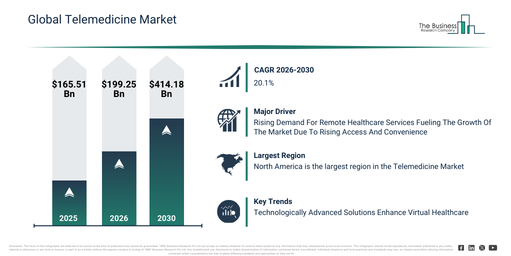
    The telemedicine market has undergone substantial expansion in recent years. Its valuation is projected to rise from $165.51 billion in 2025 to $199.25 billion by 2026, indicating a compound annual growth rate (CAGR) of 20.4%. The historical progress in this market is largely due to factors such as the broader availability of broadband connectivity, the growing disparities in healthcare access within rural areas, the increased adoption of digital healthcare services, an uptick in chronic disease prevalence, and advancements in video conferencing technologies.

    The telemedicine market is projected to experience substantial expansion in the coming years. Its valuation is forecast to reach $414.18 billion by 2030, demonstrating a compound annual growth rate (CAGR) of 20.1%. This anticipated growth during the forecast period is driven by several factors, including a heightened need for economical healthcare services, increased capital allocation towards digital health infrastructure, the broadening of value-based care frameworks, the greater embrace of AI-powered clinical decision support systems, and a sharpened emphasis on healthcare approaches centered around the patient. Key trends anticipated during this period encompass a surge in the uptake of virtual consultations, the escalating deployment of remote patient monitoring systems, the deeper integration of wearable health technology, the wider availability of mobile health applications, and a reinforced commitment to data security and regulatory adherence.

    Download the Free Sample Report to Explore Key Market Insights:

    https://www.thebusinessresearchcompany.com/sample.aspx?id=24720&type=smp

    Which Economic Or Industry Drivers Are Impacting The Telemedicine Market?

    The growing need for remote healthcare solutions is anticipated to drive the expansion of the telemedicine market in the future. Remote healthcare services involve the delivery of medical care, consultations, monitoring, and support at a distance through digital communication technologies, including virtual appointments, telehealth options, digital prescriptions, mental health assistance, and online health education. The increasing adoption of these services is primarily driven by improved access to healthcare, enabling patients in remote or underserved areas to receive timely medical care without the need for travel. Telemedicine supports remote healthcare services by facilitating real-time virtual consultations between patients and healthcare providers, thereby reducing the necessity for in-person visits and enhancing access to care, especially in distant locations. For instance, in April 2023, according to FAIR Health Inc., a US-based non-profit organization, national telehealth use in 2023 increased by 7.3%, rising from 5.5% of medical claim lines in December 2022 to 5.9% in January 2023. Consequently, the rising demand for remote healthcare services is driving the growth of the telemedicine market.

    How Is The Telemedicine Market Structured Across Different Segments?

    The telemedicine market covered in this report is segmented –

    1) By Type: Telehospital, Telehome

    2) By Service Type: Real-Time Consultation, Remote Patient Monitoring, Store-And-Forward Telemedicine, Mobile Health Applications

    3) By Technology: Video Conferencing, Mobile Health Applications, Web-based Platforms, Wearable Devices

    4) By Application: Teleradiology, Telepathology, Teledermatology, Telepsychiatry, Telecardiology, Other Applications

    5) By End User: Providers, Payers, Patients, Other End Users

    Subsegments:

    1) By Telehospital: Tele- Intensive Care Unit (ICU), Telepsychiatry, Teleradiology, Telecardiology, Telepathology

    2) By Telehome: Remote Patient Monitoring (RPM), Chronic Disease Management, Mobile Health (mHealth) Applications, Home-Based Tele-Rehabilitation, Virtual Consultations

    How Are Trends Shaping The Direction Of The Telemedicine Market?

    Major companies operating in the telemedicine market are concentrating on developing advanced technological solutions, such as telemedicine platforms, to improve virtual healthcare services, including online consultations, mental wellness support, and remote patient monitoring. A telemedicine platform is a digital system that facilitates remote medical services, enabling patients to engage with healthcare providers, receive medical advice, and manage their health conditions remotely. For instance, in June 2024, VS Digital Health Inc., a Canada-based company, launched VSDHOne. This telemedicine platform allows companies to quickly establish compliant, nationwide telemedicine brands, offering convenient, accessible healthcare across all 50 states. It simplifies virtual consultations, prescriptions, and delivery, boosting patient access and enhancing provider efficiency.

    Which Major Players Dominate The Telemedicine Market?

    Major companies operating in the telemedicine market are Cisco Systems Inc., Oracle Corporation, Siemens Healthineers AG, Koninklijke Philips NV, GE HealthCare Technologies Inc., Resideo Technologies Inc., Zoom Video Communications Inc., Teladoc Health Inc., Ping An Healthcare and Technology Company Limited, Veradigm LLC, Practo Technologies Private Limited, American Well Corporation, MDlive Inc., Doctor On Demand Inc., AMC Health LLC, SOC Telemed Inc., Eagle Telemedicine LLC, VSee Lab Inc., AMD Global Telemedicine Inc., NXGN Management LLC, Specialist Telemed LLC.

    Read the full telemedicine market report here:

    https://www.thebusinessresearchcompany.com/report/telemedicine-global-market-report

    What Are The Top-Performing Regions Within The Telemedicine Market?

    North America was the largest region in the telemedicine market in 2025. Asia-Pacific is expected to be the fastest-growing region in the forecast period. The regions covered in the telemedicine market report are Asia-Pacific, South East Asia, Western Europe, Eastern Europe, North America, South America, Middle East, Africa.

    Request A Tailored Telemedicine Market Research Report For Competitive Advantage:

    https://www.thebusinessresearchcompany.com/customise?id=24720&type=smp

    Browse Through More Reports Similar to the Global Telemedicine Market 2026, By The Business Research Company

    Video Telemedicine Global Market Report

    https://www.thebusinessresearchcompany.com/report/video-telemedicine-global-market-report

    Telemedicine Equipment Global Market Report

    https://www.thebusinessresearchcompany.com/report/telemedicine-equipment-global-market-report

    Telehealth Global Market Report

    https://www.thebusinessresearchcompany.com/report/telehealth-global-market-report

    Get in touch with us:

    The Business Research Company: https://www.thebusinessresearchcompany.com/

    Americas +1 310-496-7795

    Asia +44 7882 955267 & +91 8897263534

    Europe +44 7882 955267

    Email us at info@tbrc.info

    Follow us on:

    LinkedIn: https://in.linkedin.com/company/the-business-research-company

    YouTube: https://www.youtube.com/channel/UC24_fI0rV8cR5DxlCpgmyFQ

    Global Market Model: https://www.thebusinessresearchcompany.com/global-market-model
  • A Significant Growth Driver for the Tubular External Fixation System Market Is the Increasing Incidence Of Orthopedic Injuries Is Driving The Growth Of The Tubular External Fixation System Market

    A Significant Growth Driver for the Tubular External Fixation System Market Is the Increasing Incidence Of Orthopedic Injuries Is Driving The Growth Of The Tubular External Fixation System Market

    The Business Research Company’s 2026 market reports include new capabilities such as market attractiveness scoring and analysis, total addressable market analysis, company scoring matrix, interactive excel data dashboard, improved supply chain analysis, upcoming startups in the market, and overview of key products, aimed at improving the depth, usability, and strategic value of the insights delivered.

    What Is The Forecasted Market Value Of The Tubular External Fixation System Market Across 2026–2030?

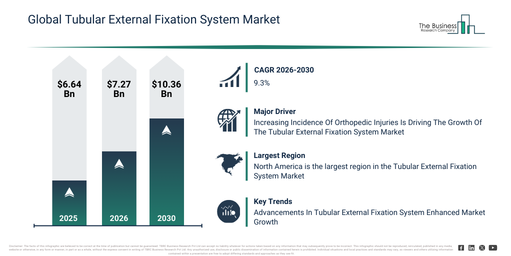
    The tubular external fixation system market has shown significant growth in recent years. This market is anticipated to expand from $6.64 billion in 2025 to $7.27 billion in 2026, registering a compound annual growth rate (CAGR) of 9.6%. The expansion observed historically can be attributed to several factors including an increased occurrence of road traffic accidents, a rise in the prevalence of complex fractures, the development of more trauma care centers, greater acceptance of external fixation methods in orthopedics, and the accessibility of advanced fixation materials.

    The tubular external fixation system market size is poised for robust expansion in the upcoming years, with projections indicating it will reach $10.36 billion in 2030, growing at a compound annual growth rate (CAGR) of 9.3%. This forecasted growth is primarily driven by factors such as the increasing demand for rapid fracture stabilization, a surge in orthopedic surgical volumes, a heightened focus on patient-centric recovery solutions, the expansion of healthcare infrastructure in emerging markets, and ongoing innovation in fixation system design. Throughout the forecast period, significant trends are expected to include the increasing adoption of modular external fixation systems, a rising demand for lightweight fixation materials, a growing preference for minimally invasive orthopedic solutions, the expansion of trauma and emergency care applications, and an enhanced focus on fixation stability and patient mobility.

    Download the Free Sample Report to Explore Key Market Insights:

    https://www.thebusinessresearchcompany.com/sample.aspx?id=19736&type=smp

    What Primary Drivers Are Shaping The Development Of The Tubular External Fixation System Market?

    The escalating occurrence of orthopedic injuries is projected to fuel the expansion of the tubular external fixation system market. Orthopedic injuries denote harm or trauma impacting the musculoskeletal system, including bones, joints, ligaments, tendons, and muscles. The surge in orthopedic injuries stems from several factors, such as increased participation in sports and physical activities, an aging population more prone to falls and fractures, and sedentary habits leading to weakened muscles and joints. A tubular external fixation system proves beneficial for orthopedic injuries by offering stable and adjustable support to fractured or injured bones while causing minimal disruption to surrounding tissues. For instance, in January 2024, information from the National Institutes of Health, a US-based governmental organization, indicates that the annual number of hip fractures is expected to reach 10,311 by 2029, with an incidence rate of 463 per 100,000 people, marking a 32% increase compared to 2021. Therefore, the rising incidence of orthopedic injuries is a primary driver for the growth of the tubular external fixation system market.

    What Segmentation Levels Are Considered In The Tubular External Fixation System Market?

    The tubular external fixation system market covered in this report is segmented –

    1) By Type: Tibia External Fixation System, Knee External Fixation System, Femur External Fixation System, Ankle External Fixation System, Pelvis External Fixation System, Elbow External Fixation System, Other Types

    2) By Fixation Type: Unilateral And Bilateral, Circular, Hybrid And Other Fixation Types

    3) By Application: Hospitals And Clinics, Rehabilitation Center, Other Applications

    Subsegments:

    1) By Tibia External Fixation System: Unilateral Tibia Fixation, Bilateral Tibia Fixation

    2) By Knee External Fixation System: Unilateral Knee Fixation, Bilateral Knee Fixation

    3) By Femur External Fixation System: Unilateral Femur Fixation, Bilateral Femur Fixation

    4) By Ankle External Fixation System: Unilateral Ankle Fixation, Bilateral Ankle Fixation

    5) By Pelvis External Fixation System: Unilateral Pelvis Fixation, Bilateral Pelvis Fixation

    6) By Elbow External Fixation System: Unilateral Elbow Fixation, Bilateral Elbow Fixation

    7) By Other Types: Shoulder External Fixation System, Wrist External Fixation System

    What Key Trends Are Influencing The Development Of The Tubular External Fixation System Market?

    Major companies in the tubular external fixation system market are focused on creating advanced solutions, such as stable external fixation systems, to enhance patient outcomes and improve the effectiveness of orthopedic treatments. A stable external fixation system is a medical device designed to externally immobilize and stabilize fractures, ensuring proper bone alignment throughout the healing process. For instance, in September 2023, Orthofix Medical Inc., a US-based spine and orthopedics company, launched the Galaxy Fixation Gemini system. This new stable external fixation system is specifically engineered for treating fractures resulting from trauma in both lower and upper limbs. A key feature of this system is its availability in multiple sterile procedure kit configurations, offering medical professionals a quick, off-the-shelf solution. These innovative sterile procedure kits eliminate the requirement for tray sterilization, significantly cutting down on costs and reducing operating room delays. The system ultimately improves operational efficiency and is well-suited for rapid deployment in trauma settings, making it a valuable enhancement to Orthofix’s portfolio of procedural solutions.

    Which Leading Firms Are Contributing To The Growth Of The Tubular External Fixation System Market?

    Major companies operating in the tubular external fixation system market are Johnson & Johnson, Zimmer Biomet Holdings Inc., NuVasive Inc., Globus Medical Inc., Lepu Medical Technology Co Ltd., Wright Medical Group N.V., Orthofix Medical Inc., Aesculap Inc., Medartis Holding AG, Acumed LLC, KLS Martin Group GmbH & Co. KG, OrthoPediatrics Corp., OsteoMed LLC, Narang Medical Limited, Citieffe S.r.l., GPC Medical Limited, WishBone Medical Inc., Siora Surgicals Pvt. Ltd., Spinamer Health Products Inc., HankilTech Medical Co Ltd., TAEYEON Medical Co Ltd., TASARIMMED Medical Devices Ltd., Zimed Medical Co Ltd., Selaz Medical Devices S.A.

    Read the full tubular external fixation system market report here:

    https://www.thebusinessresearchcompany.com/report/tubular-external-fixation-system-global-market-report

    How Does The Tubular External Fixation System Market Perform Across Major Global Regions?

    North America was the largest region in the tubular external fixation system market in 2025. The regions covered in the tubular external fixation system market report are Asia-Pacific, South East Asia, Western Europe, Eastern Europe, North America, South America, Middle East, Africa.

    Request A Tailored Tubular External Fixation System Market Research Report For Competitive Advantage:

    https://www.thebusinessresearchcompany.com/customise?id=19736&type=smp

    Browse Through More Reports Similar to the Global Tubular External Fixation System Market 2026, By The Business Research Company

    External Storage Global Market Report

    https://www.thebusinessresearchcompany.com/report/external-storage-global-market-report

    External Disk System Global Market Report

    https://www.thebusinessresearchcompany.com/report/external-disk-system-global-market-report

    Automated External Defibrillators Aed Global Market Report

    https://www.thebusinessresearchcompany.com/report/automated-external-defibrillators-aed-global-market-report

    Get in touch with us:

    The Business Research Company: https://www.thebusinessresearchcompany.com/

    Americas +1 310-496-7795

    Asia +44 7882 955267 & +91 8897263534

    Europe +44 7882 955267

    Email us at info@tbrc.info

    Follow us on:

    LinkedIn: https://in.linkedin.com/company/the-business-research-company

    YouTube: https://www.youtube.com/channel/UC24_fI0rV8cR5DxlCpgmyFQ

    Global Market Model: https://www.thebusinessresearchcompany.com/global-market-model
  • Tele–Intensive Care Unit (ICU) Command Center Market Size Outlook and Demand Growth Across 2026–2030

    Tele–Intensive Care Unit (ICU) Command Center Market Size Outlook and Demand Growth Across 2026–2030

    The Business Research Company’s 2026 market reports include new capabilities such as market attractiveness scoring and analysis, total addressable market analysis, company scoring matrix, interactive excel data dashboard, improved supply chain analysis, upcoming startups in the market, and overview of key products, aimed at improving the depth, usability, and strategic value of the insights delivered.

    What Is The Market Size Of The Tele–Intensive Care Unit (ICU) Command Center Market In 2026 And What Value Is Projected For 2030?

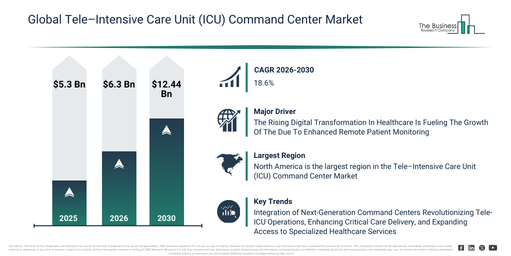
    In recent years, the tele–intensive care unit (icu) command center market has experienced swift growth in its size. It is projected to expand from $5.3 billion in 2025 to $6.3 billion in 2026, demonstrating a compound annual growth rate (CAGR) of 18.9%. Historically, this market expansion can be attributed to an increasing shortage of intensivists, rising icu patient volumes, the expansion of hospital digital infrastructure, the growing adoption of remote monitoring technologies, and an increased focus on the quality of critical care delivery.

    The tele–intensive care unit (icu) command center market size is anticipated to expand rapidly in the coming years, projected to reach $12.44 billion by 2030, demonstrating a compound annual growth rate (CAGR) of 18.6%. This expected growth during the forecast period can be attributed to factors such as increasing investments in tele-critical care systems, a rising demand for scalable icu management solutions, the expansion of cloud-based clinical platforms, the growing integration of ai-driven alerts, and increasing adoption across regional healthcare networks. Prominent trends observed in this period include the increasing deployment of centralized remote icu monitoring platforms, rising integration of predictive clinical decision support tools, the growing use of real-time multisite patient surveillance, the expansion of data-driven icu workflow optimization, and an enhanced focus on continuous critical care monitoring.

    Download the Free Sample Report to Explore Key Market Insights:

    https://www.thebusinessresearchcompany.com/sample.aspx?id=29226&type=smp

    What Major Drivers Are Influencing Demand In The Tele–Intensive Care Unit (ICU) Command Center Market?

    The increasing digital transformation within the healthcare sector is anticipated to stimulate the expansion of the tele-intensive care unit (ICU) command center market in the future. This transformation involves incorporating sophisticated digital technologies, including telemedicine, remote patient monitoring, and virtual care systems, to enhance healthcare provision and patient results. The growth of digital transformation in healthcare is fueled by the demand for more efficient patient care, which in turn encourages the adoption of digital instruments designed to optimize procedures and improve treatment efficacy. Through digital transformation, tele-ICU command centers gain the capability to remotely observe patients in real time and examine vital data to effectively manage care, thereby improving response times and patient outcomes, concurrently providing on-site personnel with advanced support for decision-making. An illustrative example comes from December 2023, where the National Health Service, a government department in the UK, reported approximately 33.6 million monthly logins by NHS app users, marking a 54% increase over the preceding year, climbing from 16.8 million to 25.8 million. Consequently, the expanding digital transformation within the healthcare sector is a primary impetus for the growth of the tele-intensive care unit (ICU) command center market.

    What Are The Key Segments Of The Tele–Intensive Care Unit (ICU) Command Center Market?

    The tele–intensive care unit (icu) command center market covered in this report is segmented –

    1) By Component: Hardware, Software, Services

    2) By Type: Centralized, Decentralized, Hybrid

    3) By Application: Patient Monitoring, Clinical Decision Support, Workflow Management, Other Applications

    4) By End-User: Hospitals, Specialty Clinics, Long-Term Care Facilities, Other End-Users

    Subsegments:

    1) By Hardware: Patient Monitoring Devices, Tele-Intensive Care Unit (ICU) Workstations, Communication Devices, Display Screens, Networking Equipment

    2) By Software: Remote Patient Monitoring Software, Electronic Health Record (EHR) Integration Software, Clinical Decision Support Systems (CDSS), Analytics And Reporting Software, Alarm Management Software

    3) By Services: Remote Monitoring Services, Implementation And Integration Services, Maintenance And Support Services, Training And Consultation Services, Data Management And Security Services

    Which Market Trends Are Creating New Opportunities In The Tele–Intensive Care Unit (ICU) Command Center Market?

    Leading companies within the tele-intensive care unit (ICU) command center market are concentrating on integrating advanced command centers. This initiative aims to enhance real-time patient monitoring, streamline critical care coordination, and improve clinical decision-making, leveraging sophisticated data analytics and remote connectivity. These state-of-the-art command centers function as advanced, technology-driven hubs, incorporating real-time data analytics, artificial intelligence, high-speed communication networks, and centralized monitoring systems. Their purpose is to enable seamless coordination, rapid decision-making, and proactive management of complex operations, such as patient care in tele-ICUs across multiple locations. For instance, in July 2023, Medanta, an India-based multispecialty hospital group, collaborated with GE HealthCare Technologies Inc., a US-based health technology company, to launch Tele-ICU services in India through the Medanta e-ICU project. This program endeavors to broaden access to superspeciality critical care by providing 24/7 remote monitoring, advanced consultation, and early interventions via a state-of-the-art command center, supported by GE’s cutting-edge technology. The service is designed to address the significant scarcity of qualified intensivists, particularly in remote and smaller towns, thereby improving clinical outcomes and reducing healthcare costs.

    Who Are The Leading Companies Operating In The Tele–Intensive Care Unit (ICU) Command Center Market?

    Major companies operating in the tele–intensive care unit (icu) command center market are Koninklijke Philips N.V., GE HealthCare Technologies Inc., Teladoc Health Inc, Access TeleCare Inc., Eagle Telemedicine LLC, iMDsoft Ltd., Etiometry Inc., Ceiba Health, Apollo TeleHealth, American TelePhysicians LLC, Intercept TeleMed Inc., EQUUM Medical, RemoteICU Ltd., VeeOne Health Inc., Teslon Technologies Private Limited, zMed Healthcare Technologies Pvt. Ltd., Masimo Corporation, Medtronic plc, Allscripts Healthcare Solutions, Drägerwerk AG & Co. KGaA

    Read the full tele–intensive care unit (icu) command center market report here:

    https://www.thebusinessresearchcompany.com/report/tele-intensive-care-unit-icu-command-center-global-market-report

    Which Region Shows The Strongest Potential For Future Growth In The Tele–Intensive Care Unit (ICU) Command Center Market?

    North America was the largest region in the tele–intensive care unit (ICU) command center market in 2025. Asia-Pacific is expected to be the fastest-growing region in the forecast period. The regions covered in the tele–intensive care unit (icu) command center market report are Asia-Pacific, South East Asia, Western Europe, Eastern Europe, North America, South America, Middle East, Africa.

    Request A Tailored Tele–Intensive Care Unit (ICU) Command Center Market Research Report For Competitive Advantage:

    https://www.thebusinessresearchcompany.com/customise?id=29226&type=smp

    Browse Through More Reports Similar to the Global Tele–Intensive Care Unit (ICU) Command Center Market 2026, By The Business Research Company

    Tele Intensive Care Global Market Report

    https://www.thebusinessresearchcompany.com/report/tele-intensive-care-global-market-report

    Tele Radiology Global Market Report

    https://www.thebusinessresearchcompany.com/report/tele-radiology-global-market-report

    Teleradiology Global Market Report

    https://www.thebusinessresearchcompany.com/report/teleradiology-global-market-report

    Get in touch with us:

    The Business Research Company: https://www.thebusinessresearchcompany.com/

    Americas +1 310-496-7795

    Asia +44 7882 955267 & +91 8897263534

    Europe +44 7882 955267

    Email us at info@tbrc.info

    Follow us on:

    LinkedIn: https://in.linkedin.com/company/the-business-research-company

    YouTube: https://www.youtube.com/channel/UC24_fI0rV8cR5DxlCpgmyFQ

    Global Market Model: https://www.thebusinessresearchcompany.com/global-market-model
  • Global Tuberculosis Therapeutics Industry Trends and Market Growth Forecast for 2026–2030

    Global Tuberculosis Therapeutics Industry Trends and Market Growth Forecast for 2026–2030

    The Business Research Company’s 2026 market reports include new capabilities such as market attractiveness scoring and analysis, total addressable market analysis, company scoring matrix, interactive excel data dashboard, improved supply chain analysis, upcoming startups in the market, and overview of key products, aimed at improving the depth, usability, and strategic value of the insights delivered.

    What Market Size Increase Is Anticipated For The Tuberculosis Therapeutics Market Over The 2026–2030 Period?

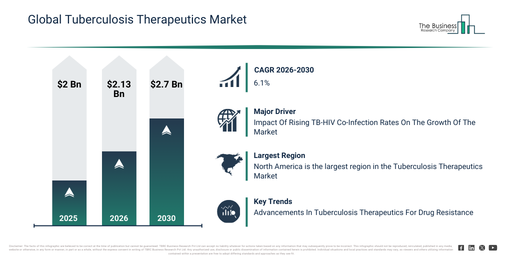
    The tuberculosis therapeutics market has experienced substantial growth in recent years. This market is projected to expand from $2 billion in 2025 to $2.13 billion by 2026, exhibiting a compound annual growth rate (CAGR) of 6.3%. Historically, this growth can be attributed to factors such as the global burden of TB disease, the extensive application of first-line TB medications, the expansion of government-led TB control programs, the accessibility of generic TB drugs, and international financial backing for TB initiatives.

    The tuberculosis therapeutics market is projected to experience significant expansion over the next few years, with its size expected to reach $2.7 billion by 2030, advancing at a compound annual growth rate (CAGR) of 6.1%. This anticipated growth during the forecast period is primarily driven by the increasing prevalence of multidrug-resistant TB, continuous advancements in the creation of novel TB drugs, a rise in global health funding, the broader implementation of digital adherence technologies, and an escalating focus on preventive TB treatment strategies. Prominent trends within this forecast period include the accelerated development of therapies for drug-resistant TB, the increasing adoption of combination treatment regimens, a growing emphasis on achieving shorter treatment durations, the expansion of public health TB programs, and improvements in patient adherence monitoring.

    Download the Free Sample Report to Explore Key Market Insights:

    https://www.thebusinessresearchcompany.com/sample.aspx?id=20983&type=smp

    Which Major Factors Are Driving The Expansion Of The Tuberculosis Therapeutics Market?

    The anticipated expansion of the tuberculosis therapeutics market is attributed to the increasing co-infection rates of tuberculosis (TB) and human immunodeficiency virus (HIV). TB-HIV co-infection rates describe the frequency of people simultaneously affected by both diseases, a situation that complicates diagnosis, therapy, and patient prognoses because of immune system suppression and concurrent epidemics. This rise in co-infections fuels the necessity for integrated therapeutic strategies designed to treat TB infection in HIV-positive individuals, thereby enhancing overall health results and alleviating the strain of both conditions. For example, data from March 2024 published by the Centers for Disease Control and Prevention, a US-based government agency, indicated a rise in tuberculosis cases from 8,320 in 2022 to 9,615 in 2023, marking an increase of 1,295 cases. Consequently, the growing rates of TB-HIV co-infection are propelling the expansion of the tuberculosis therapeutics market.

    How Is The Tuberculosis Therapeutics Market Segmented Across Key Categories?

    The tuberculosis therapeutics market covered in this report is segmented –

    1) By Type: Active Tuberculosis (TB), Latent Tuberculosis (TB)

    2) By Drug Type: Isoniazid, Rifampin, Pyrazinamide, Hydrazine derivatives, Miscellaneous anti-tubercular drugs, Ethambutol

    3) By Route of Administration: Oral, Parenteral, Other route of administration

    4) By Distribution Channel: Hospital Pharmacy, Retail Pharmacy, Online Pharmacy

    5) By End-User: Hospitals, Clinics, Ambulatory Surgical Centers, Other End-Users

    Subsegments:

    1) By Active Tuberculosis (TB): First-Line Drugs (Rifampicin, Isoniazid, Pyrazinamide, Ethambutol), Second-Line Drugs (Fluoroquinolones, Aminoglycosides), Combination Therapies, Drug-Resistant TB Treatments (MDR-TB, XDR-TB)

    2) By Latent Tuberculosis (TB): Isoniazid Prophylaxis, Rifampicin-Based Regimens, Rifapentine-Based Regimens, Combination Prophylactic Therapies

    What Key Trends Are Influencing The Development Of The Tuberculosis Therapeutics Market?

    Leading enterprises within the tuberculosis therapeutics market are actively pursuing the creation of novel solutions, prominently featuring combination therapy, with the goal of enhancing treatment effectiveness, shortening therapy duration, and combating drug-resistant tuberculosis strains. This approach involves employing multiple medications from distinct categories to address a disease, thereby seeking to boost treatment efficacy, mitigate resistance, and achieve superior patient results. A notable example occurred in July 2024, when Johnson & Johnson, a US-based pharmaceutical company, reached a significant achievement in tuberculosis treatment through the approval of SIRTURO (bedaquiline) by both the U.S. FDA and the European Commission. This groundbreaking medication represents the first in more than four decades specifically engineered to combat multidrug-resistant tuberculosis (MDR-TB). Its distinctive mode of action involves inhibiting the ATP synthase enzyme, which is vital for the energy production of TB bacteria, thus providing a precise and potent therapeutic strategy. Integrating SIRTURO into combination therapies significantly boosts the overall effectiveness of MDR-TB regimens, leading to shorter treatment periods and enhanced patient adherence.

    Who Are The Dominant Players Shaping The Tuberculosis Therapeutics Market Landscape?

    Major companies operating in the tuberculosis therapeutics market are Pfizer Inc, Johnson & Johnson, Roche Holding AG, Merck & Co. Inc, Sanofi S.A, Novartis AG, GlaxoSmithKline plc, Viatris Inc, Cipla Limited, Lupin Limited, Alkem Laboratories Limited, Emcure Pharmaceuticals Limited, Sequella Inc, AstraZeneca plc, Eli Lilly and Company, Biofabri S L, LegoChem Biosciences, BioVersys AG, SENTAN Pharma Inc, ViChem Pharmaceuticals Inc, PDS Biotechnology Corporation, BioNTech SE, Qurient Co Ltd

    Read the full tuberculosis therapeutics market report here:

    https://www.thebusinessresearchcompany.com/report/tuberculosis-therapeutics-global-market-report

    Which Region Currently Holds The Largest Share Of The Tuberculosis Therapeutics Market?

    North America was the largest region in the tuberculosis therapeutics market in 2025. Asia-Pacific is expected to be the fastest-growing region in the forecast period. The regions covered in the tuberculosis therapeutics market report are Asia-Pacific, South East Asia, Western Europe, Eastern Europe, North America, South America, Middle East, Africa.

    Request A Tailored Tuberculosis Therapeutics Market Research Report For Competitive Advantage:

    https://www.thebusinessresearchcompany.com/customise?id=20983&type=smp

    Browse Through More Reports Similar to the Global Tuberculosis Therapeutics Market 2026, By The Business Research Company

    Hepatitis Therapeutics Global Market Report

    https://www.thebusinessresearchcompany.com/report/hepatitis-therapeutics-global-market-report

    Anti Infective Drugs Global Market Report

    https://www.thebusinessresearchcompany.com/report/anti-infective-drugs-global-market-report

    Therapeutic Bcg Vaccines Global Market Report

    https://www.thebusinessresearchcompany.com/report/therapeutic-bcg-vaccines-global-market-report

    Get in touch with us:

    The Business Research Company: https://www.thebusinessresearchcompany.com/

    Americas +1 310-496-7795

    Asia +44 7882 955267 & +91 8897263534

    Europe +44 7882 955267

    Email us at info@tbrc.info

    Follow us on:

    LinkedIn: https://in.linkedin.com/company/the-business-research-company

    YouTube: https://www.youtube.com/channel/UC24_fI0rV8cR5DxlCpgmyFQ

    Global Market Model: https://www.thebusinessresearchcompany.com/global-market-model
  • Tele-Intensive Care Market Insights Highlighting Opportunities and Drivers Supporting Growth to 2030

    Tele-Intensive Care Market Insights Highlighting Opportunities and Drivers Supporting Growth to 2030

    The Business Research Company’s 2026 market reports include new capabilities such as market attractiveness scoring and analysis, total addressable market analysis, company scoring matrix, interactive excel data dashboard, improved supply chain analysis, upcoming startups in the market, and overview of key products, aimed at improving the depth, usability, and strategic value of the insights delivered.

    What Will Be The Estimated Market Valuation Of The Tele-Intensive Care Market By The End Of 2030?

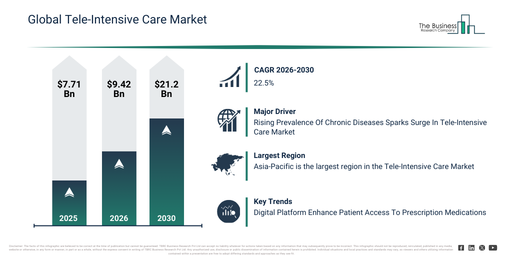
    The tele-intensive care market has experienced substantial expansion in recent years. This market is projected to expand from $7.71 billion in 2025 to $9.42 billion in 2026, at a compound annual growth rate (CAGR) of 22.1%. Historically, this growth can be attributed to several factors including increasing demand for critical care capacity, a shortage of intensivist staff, the expansion of hospital ICU infrastructure, the adoption of electronic clinical monitoring systems, and a heightened focus on patient safety in critical care.

    The tele-intensive care market is anticipated to experience rapid expansion over the coming years. By 2030, this market is projected to reach $21.2 billion, demonstrating a compound annual growth rate (CAGR) of 22.5%. This projected growth is driven by several factors, including greater investments in virtual critical care platforms, a heightened need for continuous remote ICU coverage, the extension of tele-ICU services to community hospitals, the increasing application of AI for patient risk scoring, and a stronger focus on achieving cost-effective ICU management. Key trends during this period involve the wider implementation of centralized tele-ICU monitoring systems, a surge in the use of real-time patient surveillance technologies, the deeper integration of predictive analytics in critical care, the broadening of remote intensivist support models, and an intensified effort towards optimizing ICU resources.

    Download the Free Sample Report to Explore Key Market Insights:

    https://www.thebusinessresearchcompany.com/sample.aspx?id=7081&type=smp

    Which Market Drivers Are Supporting The Expansion Of The Tele-Intensive Care Market?

    The expanding occurrence of chronic illnesses is propelling the expansion of the tele-intensive care market. Chronic diseases refer to a broad collection of conditions that can impact any part of the body, potentially spreading to adjacent parts and other organs, and contributing to causes of death. Tele-intensive care finds application in ongoing monitoring, remote evaluation and oversight of devices (such as pacemakers and defibrillators), and the continuous supervision of patients with chronic conditions, among other uses. As an illustration, in June 2023, the Institute for Health Metrics and Evaluation, a US-based public health research institute, indicated that more than half a billion individuals worldwide suffered from diabetes. This figure is projected to exceed double, reaching 1.3 billion people by 2050. Consequently, the rising occurrence of chronic illnesses within the population is anticipated to drive the future expansion of the tele-intensive care market.

    Which Segment Classifications Shape The Tele-Intensive Care Market?

    The tele-intensive care market covered in this report is segmented –

    1) By Type: Centralized Models, Decentralized Models, Other Types

    2) By Component: Hardware System, Software

    3) By Type of Management: Intensivist, Open, Co-Managed, Open with Consultant, Other Management Types

    Subsegments:

    1) By Centralized Models: Remote Monitoring Centers, Integrated Tele-ICU Services, Centralized Decision Support Systems

    2) By Decentralized Models: Bedside Telemedicine Systems, Distributed Tele-ICU Services, Localized Remote Patient Monitoring

    3) By Other Types: Hybrid Models, Mobile Tele-ICU Solutions, Specialized Telemedicine Platforms For Specific Conditions

    What Trends Are Affecting The Expansion Of The Tele-Intensive Care Market?

    Major companies operating in the tele-intensive care market are implementing advanced technologies, such as digital platforms, to enhance patient monitoring, improve communication between healthcare providers, and facilitate timely interventions, which ultimately contributes to better patient outcomes and more efficient resource utilization. A digital platform is an online infrastructure that facilitates the creation, sharing, and exchange of information, products, or services among users. For instance, in January 2024, Eli Lilly, a US-based pharmaceutical company, launched a digital platform called LillyDirect, which is designed to sell certain prescription drugs directly to consumers for conditions such as diabetes, obesity, and migraine. This platform connects patients with independent telehealth providers, enabling them to obtain prescriptions and access medications through a convenient home delivery service. The initiative aims to simplify the patient experience and improve healthcare access, while also offering affordability solutions for eligible patients.

    Which Companies Are Expanding Their Footprint In The Tele-Intensive Care Market?

    Major companies operating in the tele-intensive care market are Apollo TeleHealth Services Pvt. Ltd., Banner Health System, Ceiba Tele ICU, Cerner Corporation, Eagle Telemedicine, iMDsoft Ltd., Koninklijke Philips N.V., SOC Telemed Inc., University of Pittsburgh Medical Center, Advanced Medical Reviews, Banner iCare, Cambio Healthcare Systems AB, Harris Healthcare Group, Hicuity Health Inc., Honeywell Life Care Solutions, INTeLeICU, Intensive Care On-line Network, InTouch Health, Spacelabs Healthcare, Vivify Health Inc., Vocera Communications Inc., BioTelemetry Inc., Healthcare Business Intelligence Solutions, ICU Medical Inc., LifeWatch AG, Sotera Wireless Inc.

    Read the full tele-intensive care market report here:

    https://www.thebusinessresearchcompany.com/report/tele-intensive-care-global-market-report

    How Is The Tele-Intensive Care Market Distributed Across Key Geographic Regions?

    Asia-Pacific was the largest region in the tele-intensive care market in 2025. Asia-Pacific is expected to be the fastest growing region in the forecast period. The regions covered in the tele-intensive care market report are Asia-Pacific, South East Asia, Western Europe, Eastern Europe, North America, South America, Middle East, Africa.

    Request A Tailored Tele-Intensive Care Market Research Report For Competitive Advantage:

    https://www.thebusinessresearchcompany.com/customise?id=7081&type=smp

    Browse Through More Reports Similar to the Global Tele-Intensive Care Market 2026, By The Business Research Company

    Tele Intensive Care Unit Global Market Report

    https://www.thebusinessresearchcompany.com/report/tele-intensive-care-unit-global-market-report

    Tele Radiology Global Market Report

    https://www.thebusinessresearchcompany.com/report/tele-radiology-global-market-report

    Telehealth Global Market Report

    https://www.thebusinessresearchcompany.com/report/telehealth-global-market-report

    Get in touch with us:

    The Business Research Company: https://www.thebusinessresearchcompany.com/

    Americas +1 310-496-7795

    Asia +44 7882 955267 & +91 8897263534

    Europe +44 7882 955267

    Email us at info@tbrc.info

    Follow us on:

    LinkedIn: https://in.linkedin.com/company/the-business-research-company

    YouTube: https://www.youtube.com/channel/UC24_fI0rV8cR5DxlCpgmyFQ

    Global Market Model: https://www.thebusinessresearchcompany.com/global-market-model
  • Trypsin-EDTA Solution For Cell Dissociation Market Size Outlook and Demand Growth Across 2026–2030

    Trypsin-EDTA Solution For Cell Dissociation Market Size Outlook and Demand Growth Across 2026–2030

    The Business Research Company’s 2026 market reports include new capabilities such as market attractiveness scoring and analysis, total addressable market analysis, company scoring matrix, interactive excel data dashboard, improved supply chain analysis, upcoming startups in the market, and overview of key products, aimed at improving the depth, usability, and strategic value of the insights delivered.

    How Much Is The Trypsin-EDTA Solution For Cell Dissociation Market Expected To Grow In Terms Of Market Value Between 2026 And 2030?

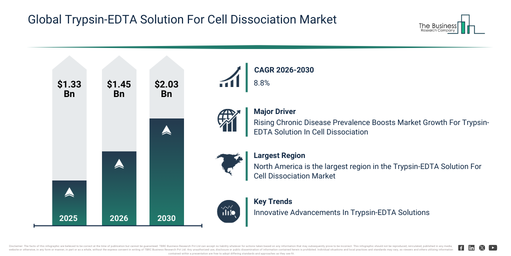
    The market size for trypsin-edta solution for cell dissociation has demonstrated significant growth in recent years. It is projected to expand from $1.33 billion in 2025 to $1.45 billion in 2026, at a compound annual growth rate (CAGR) of 9.1%. Historically, this growth has been driven by the expansion of cell culture-based research activities, increasing production of biologics and vaccines, wider adoption of adherent cell lines, the proliferation of academic and clinical research laboratories, and improved availability of standardized reagents.

    The trypsin-edta solution for cell dissociation market is anticipated to experience significant expansion over the next few years. It is projected to reach $2.03 billion by 2030, growing at a compound annual growth rate (CAGR) of 8.8%. This growth during the forecast period is primarily driven by the increasing demand for cell-based therapies, the expanded scaling up of biopharmaceutical manufacturing, a heightened focus on automation within cell processing, the ongoing expansion of regenerative medicine research, and a greater regulatory emphasis on process consistency. Key trends in the upcoming period include the rising adoption of serum-free cell dissociation reagents, an increased need for reliable cell harvesting solutions, their broadening use in large-scale biomanufacturing, the expansion of applications involving stem cells and primary cells, and an improved focus on reproducibility and cell viability.

    Download the Free Sample Report to Explore Key Market Insights:

    https://www.thebusinessresearchcompany.com/sample.aspx?id=20667&type=smp

    What Key Drivers Are Influencing The Growth Of The Trypsin-EDTA Solution For Cell Dissociation Market?

    The increasing occurrence of chronic illnesses is anticipated to fuel the expansion of the trypsin-EDTA solution for cell dissociation market in the future. These long-term health conditions endure for prolonged durations, frequently for a lifetime, and often necessitate continuous medical care, encompassing conditions like diabetes, heart disease, and chronic respiratory issues. The surge in chronic diseases can be attributed to factors such as an aging global population, a higher incidence of risk factors including inadequate diet and lack of physical activity, and advancements in medical science leading to earlier detection and better management of these ailments. Trypsin-EDTA solution finds application in cell dissociation within chronic disease research, facilitating the efficient separation and collection of cells from tissues or cultures for subsequent examination or therapeutic purposes. For example, in February 2024, a report by the World Health Organization (WHO), a Switzerland-based intergovernmental body, indicated that approximately 20 million new cancer cases were recorded in 2022, alongside 9.7 million deaths. Projections show that by 2050, the number of new cancer cases is expected to exceed 35 million, marking a 77% increase compared to the 2022 statistics. Consequently, the growing prevalence of chronic diseases is a significant factor propelling the growth of the trypsin-EDTA solution for cell dissociation market.

    What Major Segment Divisions Exist Within The Trypsin-EDTA Solution For Cell Dissociation Market?

    The trypsin-edta solution for cell dissociation market covered in this report is segmented –

    1) By Type: 0.25% Solution, 0.05% Solution

    2) By Distribution Channel: Online Sales, Direct Sales, Retail

    3) By Application: Insulin Manufacturing, Vaccines Manufacturing, Cell Culture, Other Applications

    Subsegments:

    1) By 0.25% Solution: General Cell Culture, Adherent Cell Lines, Suspension Cell Lines, Tissue-Derived Cells

    2) By 0.05% Solution: Gentler Dissociation for Sensitive Cells, Primary Cell Cultures, Stem Cell Cultures, Short-Term Cell Cultures

    How Are Trends Impacting The Trypsin-EDTA Solution For Cell Dissociation Market?

    Companies leading in the trypsin-EDTA solution sector for cell dissociation are developing innovative offerings, such as animal-based ECM dissociation solutions, to gain a competitive advantage in the market. Animal-based ECM dissociation solutions are defined as enzymatic or chemical preparations derived from animal sources, utilized to break down extracellular matrix components and assist in the detachment of cells from tissue or culture surfaces. For instance, in February 2023, TheWell Bioscience, a US-based biomedical technology company, unveiled its VitroGel Organoid Recovery Solution. This VitroGel Organoid Recovery Solution represents a significant advancement, enabling rapid and efficient recovery of organoids from both animal-based extracellular matrix (ECM) and synthetic VitroGel hydrogels. It achieves total dissociation of animal-based ECM in merely 2 minutes, with the complete cell harvesting process concluded in only 15 minutes, which is a considerable improvement compared to the leading alternative that takes over 60 minutes. Engineered for the high-quality, intact recovery of organoids, this solution provides superior yields, cell viability, and quality for procedures like passaging, cryopreservation, or biochemical analysis. Additionally, it operates at room temperature, eliminating the need for heating or cooling equipment and supporting full lab automation for high-throughput organoid production.

    Which Companies Are Leading Innovation In The Trypsin-EDTA Solution For Cell Dissociation Market?

    Major companies operating in the trypsin-edta solution for cell dissociation market are Thermo Fisher Scientific Inc., Merck KGaA, GE Healthcare, Corning Incorporated, Lonza Group AG, VWR International LLC, Sartorius AG, STEMCELL Technologies Inc., Miltenyi Biotec B.V. & Co. KG, MP Biomedicals LLC, American Type Culture Collection (ATCC), Cyagen Biosciences Inc., HiMedia Laboratories Private Limited, FUJIFILM Irvine Scientific Inc., Nacalai Tesque Inc., Creative Dynamics Inc., PromoCell GmbH, Biological Industries Israel Beit Haemek Ltd., Worthington Biochemical Corporation, Capricorn Scientific GmbH, PAN-Biotech GmbH, Cell Applications Inc., Innovative Cell Technologies Inc., Wisent Bioproducts Inc., ZenBio Inc

    Read the full trypsin-edta solution for cell dissociation market report here:

    https://www.thebusinessresearchcompany.com/report/trypsin-edta-solution-for-cell-dissociation-global-market-report

    Which Region Is Expected To Register The Fastest Growth In The Trypsin-EDTA Solution For Cell Dissociation Market?

    North America was the largest region in the trypsin-EDTA solution for cell dissociation market in 2025. Asia-Pacific is expected to be the fastest-growing region in the forecast period. The regions covered in the trypsin-edta solution for cell dissociation market report are Asia-Pacific, South East Asia, Western Europe, Eastern Europe, North America, South America, Middle East, Africa.

    Request A Tailored Trypsin-EDTA Solution For Cell Dissociation Market Research Report For Competitive Advantage:

    https://www.thebusinessresearchcompany.com/customise?id=20667&type=smp

    Browse Through More Reports Similar to the Global Trypsin-EDTA Solution For Cell Dissociation Market 2026, By The Business Research Company

    Cellular Telephone Global Market Report

    https://www.thebusinessresearchcompany.com/report/cellular-telephone-global-market-report

    Cell Cultures Global Market Report

    https://www.thebusinessresearchcompany.com/report/cell-cultures-global-market-report

    Cells Therapy Global Market Report

    https://www.thebusinessresearchcompany.com/report/cells-therapy-global-market-report

    Get in touch with us:

    The Business Research Company: https://www.thebusinessresearchcompany.com/

    Americas +1 310-496-7795

    Asia +44 7882 955267 & +91 8897263534

    Europe +44 7882 955267

    Email us at info@tbrc.info

    Follow us on:

    LinkedIn: https://in.linkedin.com/company/the-business-research-company

    YouTube: https://www.youtube.com/channel/UC24_fI0rV8cR5DxlCpgmyFQ

    Global Market Model: https://www.thebusinessresearchcompany.com/global-market-model
  • Global Telehealth Software Market Expected to Reach $23.55 Billion by 2030 with 15.4% CAGR

    Global Telehealth Software Market Expected to Reach $23.55 Billion by 2030 with 15.4% CAGR

    The Business Research Company’s 2026 market reports include new capabilities such as market attractiveness scoring and analysis, total addressable market analysis, company scoring matrix, interactive excel data dashboard, improved supply chain analysis, upcoming startups in the market, and overview of key products, aimed at improving the depth, usability, and strategic value of the insights delivered.

    What Market Size Growth Is Projected For The Telehealth Software Market During The Forecast Period 2026–2030?

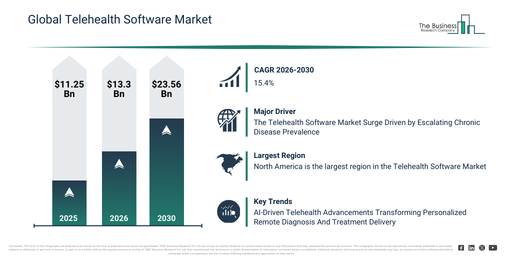
    The telehealth software market size has experienced rapid growth in recent years. It is projected to expand from $11.25 billion in 2025 to $13.3 billion in 2026, achieving a compound annual growth rate (CAGR) of 18.2%. The expansion observed in the historic period is attributable to the increasing digitization of healthcare workflows, rising adoption of electronic prescribing systems, the proliferation of cloud computing in healthcare, a growing demand for care coordination tools, and enhancements in healthcare data interoperability.

    The telehealth software market is anticipated to experience substantial growth over the coming years. By 2030, its size is projected to reach $23.56 billion, demonstrating a compound annual growth rate (CAGR) of 15.4%. This expansion during the forecast period can be attributed to factors such as increasing investments in AI-driven healthcare software, a rising demand for remote chronic disease management, the expansion of value-based care models, a growing focus on cybersecurity compliance, and the increasing integration of telehealth software with clinical systems. Major trends expected in the forecast period include the increasing adoption of integrated telehealth software platforms, the rising use of AI-based clinical decision support tools, a growing demand for medication adherence monitoring solutions, the expansion of cloud-based telehealth applications, and an enhanced focus on secure health data management.

    Download the Free Sample Report to Explore Key Market Insights:

    https://www.thebusinessresearchcompany.com/sample.aspx?id=14809&type=smp

    What Underlying Factors Are Accelerating The Growth Of The Telehealth Software Market?

    The expanding occurrence of chronic illnesses is anticipated to boost the growth of the telehealth software market in the foreseeable future. Chronic diseases are defined as enduring conditions marked by ongoing or recurring symptoms, typically demanding continuous management and therapeutic interventions. The rise in chronic diseases is attributed to factors such as aging demographics, tobacco and alcohol consumption, and insufficient access to medical services. Telehealth software aids in the management of chronic diseases by offering virtual access to healthcare provisions, allowing individuals to receive regular check-ups and consultations without requiring physical visits. This improved access promotes prompt identification, uninterrupted care, and patient empowerment, ultimately contributing to enhanced management and outcomes for those with chronic conditions. For instance, in June 2023, the Institute for Health Metrics and Evaluation, a US-based public health research institute, reported that over half a billion people globally were living with diabetes. This number is expected to more than double, reaching 1.3 billion people by 2050. Consequently, the increasing prevalence of chronic diseases is driving the growth of the telehealth software market.

    What Market Segments Are Evaluated Within The Telehealth Software Market?

    The telehealth software market covered in this report is segmented –

    1) By Component: Software, Services

    2) By Deployment: Cloud-Based, On-Premises

    3) By End User: Healthcare Providers, Healthcare Payers And Patients

    Subsegments:

    1) By Software: Telemedicine Software, Remote Patient Monitoring Software, Video Conferencing Software, Electronic Health Record (EHR) Integration Software, Clinical Decision Support Software, mHealth Applications, Patient Portals, Appointment Scheduling Software

    2) By Services: Telehealth Consulting Services, Telehealth Integration Services, Managed Services, Training And Support Services, Maintenance Services

    Which Trends Are Influencing The Telehealth Software Market?

    Leading entities within the telehealth software market are prioritizing the creation of sophisticated, AI-powered platforms engineered to provide tailored, highly effective treatments and efficient virtual diagnostic services. An example of this trend is seen in November 2025, when ODDITY Tech Ltd., a technology firm based in Israel, unveiled METHODIQ. This telehealth platform aims to revolutionize healthcare delivery by providing customized, highly effective treatments via digital diagnostics. Initially launched in the field of dermatology, the platform addresses prevalent issues like acne, eczema and hyperpigmentation. Its goal is to bridge the existing divide between inefficient over-the-counter solutions and expensive traditional clinic visits. Developed in collaboration with dermatologists, METHODIQ integrates AI-powered skin assessment, computer-vision tracking capabilities, and an extensive array of prescription, OTC, and cosmetic items, featuring exclusive ingredients from ODDITY Labs. Offering more than 100 customized treatment protocols alongside live clinician oversight, METHODIQ provides a data-informed, readily available, and patient-centric methodology, supported by extensive research and significant consumer studies.

    Who Are The Top Market Participants Influencing The Telehealth Software Market?

    Major companies operating in the telehealth software market are Teladoc Health Inc, American Well Corporation, Cerner Corporation, Allscripts Healthcare LLC, Oracle Corporation, Koninklijke Philips N.V, Zoom Video Communications Inc, Zocdoc Inc, CureMD Healthcare, Vocera Communications Inc, Care Innovations LLC, GlobalMedia Group LLC, Updox LLC, Capsule Technologies Inc, Biotricity Inc, BioTelemetry, Medtronic Inc, Masimo Corporation, Aerotel Medical Systems Ltd, PatientSafe Solutions Inc

    Read the full telehealth software market report here:

    https://www.thebusinessresearchcompany.com/report/telehealth-software-global-market-report

    Which Region Is Projected To Dominate The Telehealth Software Market During The Forecast Period?

    North America was the largest region in the telehealth software market in 2025. Asia-Pacific is expected to be the fastest-growing region in the forecast period. The regions covered in the telehealth software market report are Asia-Pacific, South East Asia, Western Europe, Eastern Europe, North America, South America, Middle East, Africa.

    Request A Tailored Telehealth Software Market Research Report For Competitive Advantage:

    https://www.thebusinessresearchcompany.com/customise?id=14809&type=smp

    Browse Through More Reports Similar to the Global Telehealth Software Market 2026, By The Business Research Company

    Telehealth Global Market Report

    https://www.thebusinessresearchcompany.com/report/telehealth-global-market-report

    Telemetry Global Market Report

    https://www.thebusinessresearchcompany.com/report/telemetry-global-market-report

    Telemedicine Equipment Global Market Report

    https://www.thebusinessresearchcompany.com/report/telemedicine-equipment-global-market-report

    Get in touch with us:

    The Business Research Company: https://www.thebusinessresearchcompany.com/

    Americas +1 310-496-7795

    Asia +44 7882 955267 & +91 8897263534

    Europe +44 7882 955267

    Email us at info@tbrc.info

    Follow us on:

    LinkedIn: https://in.linkedin.com/company/the-business-research-company

    YouTube: https://www.youtube.com/channel/UC24_fI0rV8cR5DxlCpgmyFQ

    Global Market Model: https://www.thebusinessresearchcompany.com/global-market-model