Category: HealthcareServices

  • Prurigo Nodularis Treatment Market Outlook: Growth and Forecast Highlights 2030

    Prurigo Nodularis Treatment Market Outlook: Growth and Forecast Highlights 2030

    Uncover key drivers, emerging technologies, and competitive movements shaping the prurigo nodularis treatment market from 2026–2035 with trusted insights from The Business Research Company

    What market expansion outlook does the Prurigo Nodularis Treatment Market show for the 2026–2030 period?

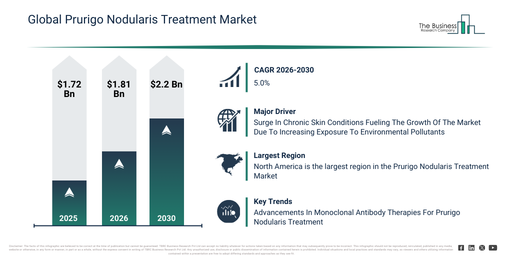
    The prurigo nodularis treatment market has shown significant expansion in recent years. This market is set to increase from $1.72 billion in 2025 to $1.81 billion in 2026, achieving a compound annual growth rate (CAGR) of 5.2%. The historical growth of this market is attributable to heightened awareness of chronic inflammatory skin disorders, an increase in prurigo nodularis diagnosis rates, broader access to dermatology specialty clinics, expanded use of topical corticosteroids, and a growing focus among physicians on managing itch.

    The prurigo nodularis treatment market size is anticipated to experience steady expansion in the next few years, projected to reach $2.2 billion by 2030, exhibiting a compound annual growth rate (CAGR) of 5.0%. This growth during the forecast period is driven by increasing approvals of novel biologics, rising investments in dermatology R&D, the expanding use of precision medicine approaches, a growing demand for long-term symptom control, and increasing adoption of advanced laser-based therapies. Prominent trends expected in this period include an increasing adoption of biologic therapies, a rising focus on targeted anti-inflammatory treatments, the growing use of combination therapy approaches, an expansion of advanced phototherapy techniques, and an enhanced emphasis on patient-centric treatment protocols.

    Access Your Free Sample Report for In-Depth Market Insights:

    https://www.thebusinessresearchcompany.com/sample.aspx?id=24390&type=smp

    What Drivers Are Shaping The Development Of The Prurigo Nodularis Treatment Market?

    The future expansion of the prurigo nodularis treatment market is anticipated to be driven by the increasing occurrence of chronic skin conditions. These conditions are defined as persistent or recurrent dermatological ailments frequently necessitating continuous care, which can considerably impact an individual’s well-being. This rise in chronic skin conditions is linked to heightened exposure to environmental pollutants, capable of compromising the skin’s protective barrier and inducing extended inflammation. Treatments for prurigo nodularis tackle the underlying causes of chronic skin issues by focusing on the inflammatory mechanisms that lead to persistent itching and skin lesions. Through the regulation of the immune system’s excessive activity, these therapeutic approaches efficiently alleviate symptoms and improve the quality of life for individuals suffering from chronic prurigo nodularis. As an illustration, data from July 2023, provided by the Office of Health Economics (OHE), a UK-based registered charity, indicates that hidradenitis suppurativa (HS), a painful chronic skin disease, impacts a minimum of 200,000 people in the UK, with its economic burden estimated at approximately £3.83 ($4.35) billion annually. Consequently, the increasing prevalence of chronic skin conditions is propelling the expansion of the prurigo nodularis treatment market.

    What Segment Types Are Examined In The Prurigo Nodularis Treatment Market?

    The prurigo nodularis treatment market covered in this report is segmented –

    1) By Treatment: Medication, Cryotherapy, Phototherapy, Pulsed Dye Laser, Other Treatments

    2) By Diagnosis: Skin Biopsy, Blood Tests, Other Diagnosis

    3) By Route Of Administration: Topical Administration, Oral Administration, Parenteral Administration

    4) By Distribution Channel: Hospital Pharmacies, Retail Pharmacies, Online Pharmacies

    5) By End-Users: Clinic, Hospital, Other End-Users

    Subsegments:

    1) By Medication: Topical Corticosteroids, Antihistamines, Immunosuppressants, Neuromodulators, Biologic Therapies

    2) By Cryotherapy: Liquid Nitrogen Application, Spray-Freezing Techniques, Cryoprobe Therapy

    3) By Phototherapy: Narrowband Ultraviolet B (NB-UVB), Broadband Ultraviolet B (BB-UVB), Psoralen Plus Ultraviolet A (PUVA)

    4) By Pulsed Dye Laser: 585 Nanometer (nm) Wavelength Therapy, 595 Nanometer (nm) Wavelength Therapy

    5) By Other Treatments: Behavioral Therapy, Psychological Itch Management Programs, Emollients and Moisturizers, Surgical Excision

    What Trends Are Reshaping The Dynamics Of The Prurigo Nodularis Treatment Market?

    Companies operating prominently within the prurigo nodularis treatment market are dedicating efforts to developing advanced therapies, such as monoclonal antibodies, aimed at targeting specific immune pathways to deliver more effective symptom relief. Monoclonal antibodies are synthetically produced molecules engineered to emulate the immune system’s capacity to combat detrimental pathogens like viruses. As an illustration, in August 2024, Galderma, a Switzerland-based pharmaceutical company, disclosed the U.S. Food and Drug Administration (FDA) had given its approval to Nemluvio (nemolizumab) for treating adult patients with prurigo nodularis. This approval was granted following favorable results from the OLYMPIA clinical trials, where Nemluvio exhibited substantial enhancement in both itch intensity and skin nodules. The treatment specifically targets IL-31 signaling, thereby addressing a crucial factor instigating prurigo nodularis symptoms.

    Who Are The Major Companies Operating In The Prurigo Nodularis Treatment Market?

    Major companies operating in the prurigo nodularis treatment market are Roche Holding AG, Sanofi S.A., Amgen Inc., Regeneron Pharmaceuticals Inc., Galderma S.A, Incyte Corporation, LEO Pharma A/S, Almirall S.A., Maruho Co. Ltd., VYNE Therapeutics Inc., Kiniksa Pharmaceuticals Ltd., Trevi Therapeutics Inc., Keymed Biosciences Inc., Shanghai SIGMA High-tech Co. Ltd., Celgene Corporation, Celldex Therapeutics Inc., Pfizer Inc., Eli Lilly And Company, AbbVie Inc., Johnson And Johnson, Bristol Myers Squibb, Novartis AG, AstraZeneca PLC

    Access The Complete Report For Deeper Market Insights:

    https://www.thebusinessresearchcompany.com/report/prurigo-nodularis-treatment-global-market-report

    Which Region Is Anticipated To See The Fastest Growth In The Prurigo Nodularis Treatment Market?

    North America was the largest region in the prurigo nodularis treatment market in 2025. Asia-Pacific is expected to be the fastest-growing region in the forecast period. The regions covered in the prurigo nodularis treatment market report are Asia-Pacific, South East Asia, Western Europe, Eastern Europe, North America, South America, Middle East, Africa.

    Request Your Customized Prurigo Nodularis Treatment Market Research Report for Competitive Advantage:

    https://www.thebusinessresearchcompany.com/customise?id=24390&type=smp

    Browse Through More Reports Similar to the Global Prurigo Nodularis Treatment Market 2026, By The Business Research Company

    Vitiligo Treatment Market Report 2026

    https://www.thebusinessresearchcompany.com/report/vitiligo-treatment-global-market-report

    Pruritus Therapeutics Market Report 2026

    https://www.thebusinessresearchcompany.com/report/pruritus-therapeutics-global-market-report

    Tinea Pedis Treatment Market Report 2026

    https://www.thebusinessresearchcompany.com/report/tinea-pedis-treatment-global-market-report

    Get in touch with us:

    The Business Research Company: https://www.thebusinessresearchcompany.com/

    Americas +1 310-496-7795

    Asia +44 7882 955267 & +91 8897263534

    Europe +44 7882 955267

    Email us at info@tbrc.info

    Follow us on:

    LinkedIn: https://in.linkedin.com/company/the-business-research-company

    YouTube: https://www.youtube.com/channel/UC24_fI0rV8cR5DxlCpgmyFQ

    Global Market Model: https://www.thebusinessresearchcompany.com/global-market-model
  • Prothrombin Complex Concentrate Market Insights Report: Opportunities and Drivers 2030

    Prothrombin Complex Concentrate Market Insights Report: Opportunities and Drivers 2030

    Uncover key drivers, emerging technologies, and competitive movements shaping the prothrombin complex concentrate market from 2026–2035 with trusted insights from The Business Research Company

    What level of growth is expected in the Prothrombin Complex Concentrate Market between 2026 and 2030?

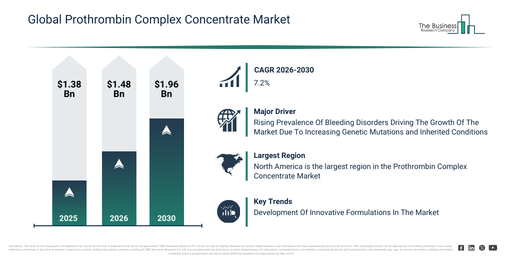
    The market for prothrombin complex concentrate has demonstrated substantial growth in recent years. Its value is projected to rise from $1.38 billion in 2025 to $1.48 billion in 2026, at a compound annual growth rate (CAGR) of 7.4%. This historical expansion can be attributed to factors such as the increasing prevalence of coagulation disorders, the expansion of emergency care infrastructure, the availability of plasma-derived therapies, a rise in surgical procedure volumes, and the growing use of anticoagulant medications.

    The prothrombin complex concentrate market is projected for substantial expansion in the coming years. This market is forecast to reach $1.96 billion by 2030, exhibiting a compound annual growth rate (CAGR) of 7.2%. This expansion during the projection period stems from several factors, including a heightened need for swift coagulation treatments, escalating investments in developing recombinant factors, an increase in trauma care infrastructure, an intensified emphasis on ensuring patient safety in anticoagulant treatments, and the wider acceptance of standardized bleeding management guidelines. Key developments anticipated over the forecast timeframe involve the growing acceptance of four-factor PCC products, an increased application of PCC for quick reversal of anticoagulation, a heightened requirement for immediate bleeding management solutions, the broadened availability of recombinant coagulation products, and a stronger emphasis on fast-acting hemostatic treatments.

    Access Your Free Sample Report for In-Depth Market Insights:

    https://www.thebusinessresearchcompany.com/sample.aspx?id=23488&type=smp

    Which Drivers Are Expected To Impact The Prothrombin Complex Concentrate Market During The Forecast Period?

    The expansion of the prothrombin complex concentrate market is anticipated to be spurred by the rising occurrence of bleeding disorders. These conditions, characterized by inadequate blood clotting and subsequent excessive bleeding due to deficient or faulty clotting factors or platelets, are becoming more common. This increase is primarily attributed to a greater incidence of genetic disorders such as hemophilia, a surge in liver disease cases, the expanding application of anticoagulant medications, and a higher frequency of vitamin K deficiencies. Prothrombin complex concentrate offers a solution by quickly restoring clotting factors, which are crucial for effective blood coagulation and stopping bleeding. For example, a report from the World Federation of Hemophilia, published in October 2024, revealed that in 2023, there were 179,703 documented cases of hemophilia A. Of these, 162,040 cases, accounting for 90%, were male, 6,990 cases were female, and 10,673 cases, or 6%, did not specify the patient’s sex. Consequently, the growing prevalence of bleeding disorders is a key factor propelling the growth of the prothrombin complex concentrate market.

    Which Segments Are Driving Activity In The Prothrombin Complex Concentrate Market?

    The prothrombin complex concentrate market covered in this report is segmented –

    1) By Product: 3-Factor Prothrombin Complex Concentrates, 4-Factor Prothrombin Complex Concentrates, Other Products

    2) By Indication: Haemorrhagic Episodes In Factor IX Deficiency (Haemophilia B), Trauma, Life-Threatening Coagulopathy With Acute Bleeding, Warfarin-Associated Acute, Life-Threatening Bleeding, Non-Warfarin Anticoagulant Reversal With Acute Bleeding

    3) By Route Of Administration: Intravenous, Intravenous Infusion Variants, Intravenous Bolus Administration

    4) By End-Use: Hospital And Ambulatory Surgical Centers, Specialty Clinics, Other End Users

    Subsegments:

    1) By 3-Factor PCC Type: Low-Dose 3-Factor Prothrombin Complex Concentrates (PCC), High-Dose 3-Factor Prothrombin Complex Concentrates (PCC), Lyophilized 3-Factor Prothrombin Complex Concentrates (PCC)

    2) By 4-Factor PCC Typ: Low-Dose 4-Factor Prothrombin Complex Concentrates (PCC), High-Dose 4-Factor Prothrombin Complex Concentrates (PCC), Activated 4-Factor Prothrombin Complex Concentrates (PCC)

    3) By Other Products: Recombinant Coagulation Factor Complexes, Plasma-Derived Coagulation Factor Complexes, Combination Therapy Products

    How Are New Market Trends Shaping The Landscape Of The Prothrombin Complex Concentrate Market?

    Key companies in the prothrombin complex concentrate market are actively developing novel formulations, like lyophilized powder, to improve stability, optimize storage, and simplify administration. This lyophilized powder is a freeze-dried preparation that removes water, thereby extending its shelf life and preserving its potency. This allows for improved storage conditions and rapid reconstitution for emergency use. For instance, in July 2023, Octapharma USA Inc., a US-based biotechnology company, obtained FDA approval for Balfaxar, a four-factor prothrombin complex concentrate (4F-PCC) for urgent warfarin reversal during surgeries and invasive procedures. This approval was granted based on the LEX-209 trial, which revealed 94.6% hemostatic efficacy, demonstrating its effectiveness comparable to Kcentra. This progression emphasizes the industry’s dedication to advancing coagulation therapies to enhance patient outcomes in critical care situations.

    Which Major Firms Are Strengthening Their Position In The Prothrombin Complex Concentrate Market?

    Major companies operating in the prothrombin complex concentrate market are Pfizer Inc., Takeda Pharmaceutical Company Limited, CSL Behring GmbH, Baxter International Inc, Grifols S.A., Octapharma AG, Kedrion S.p.A, Green Cross Corporation, Shanghai RAAS Blood Products Co. Ltd, LFB Group, Hualan Biological Engineering Chongqing Co. Ltd., Sanquin Blood Supply Foundation, Bio Products Laboratory Ltd BPL, Prothya Biosolutions B.V., China Biologic Products Holdings Inc., Intas Pharmaceuticals Ltd, Biotest AG, Octapharma Plasma, Kamada Ltd, SK Plasma Co. Ltd, Reliance Life Sciences, Bharat Serums And Vaccines Limited

    Access The Complete Report For Deeper Market Insights:

    https://www.thebusinessresearchcompany.com/report/prothrombin-complex-concentrate-global-market-report

    Which Region Is Anticipated To See The Fastest Growth In The Prothrombin Complex Concentrate Market?

    North America was the largest region in the prothrombin complex concentrate market in 2025. The regions covered in the prothrombin complex concentrate market report are Asia-Pacific, South East Asia, Western Europe, Eastern Europe, North America, South America, Middle East, Africa.

    Request Your Customized Prothrombin Complex Concentrate Market Research Report for Competitive Advantage:

    https://www.thebusinessresearchcompany.com/customise?id=23488&type=smp

    Browse Through More Reports Similar to the Global Prothrombin Complex Concentrate Market 2026, By The Business Research Company

    Juice Concentrates Market Report 2026

    https://www.thebusinessresearchcompany.com/report/juice-concentrates-global-market-report

    Bilirubin Blood Test Market Report 2026

    https://www.thebusinessresearchcompany.com/report/bilirubin-blood-test-global-market-report

    Proteomics Market Report 2026

    https://www.thebusinessresearchcompany.com/report/proteomics-global-market-report

    Get in touch with us:

    The Business Research Company: https://www.thebusinessresearchcompany.com/

    Americas +1 310-496-7795

    Asia +44 7882 955267 & +91 8897263534

    Europe +44 7882 955267

    Email us at info@tbrc.info

    Follow us on:

    LinkedIn: https://in.linkedin.com/company/the-business-research-company

    YouTube: https://www.youtube.com/channel/UC24_fI0rV8cR5DxlCpgmyFQ

    Global Market Model: https://www.thebusinessresearchcompany.com/global-market-model
  • Proteus Syndrome Global Forecast: Market to Scale Up to $1.72 Billion by 2030 at 4.8% CAGR

    Proteus Syndrome Global Forecast: Market to Scale Up to $1.72 Billion by 2030 at 4.8% CAGR

    Uncover key drivers, emerging technologies, and competitive movements shaping the proteus syndrome market from 2026–2035 with trusted insights from The Business Research Company

    How much is the Proteus Syndrome Market valued at in 2026, and what valuation is forecast for 2030?

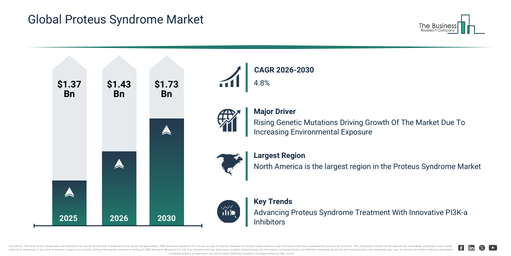
    The Proteus syndrome market size has experienced significant expansion in recent years. It is projected to increase from $1.37 billion in 2025 to $1.43 billion in 2026, showing a compound annual growth rate (CAGR) of 5.1%. This historical growth can be attributed to factors such as a deeper understanding of genetic mutation pathways, the availability of supportive treatment options, the broadening of rare disease research initiatives, the rise of patient advocacy programs, and greater clinical awareness of rare disorders.

    The proteus syndrome market size is anticipated to demonstrate steady expansion over the next few years. It is projected to attain a value of $1.73 billion by 2030, advancing at a compound annual growth rate (CAGR) of 4.8%. This growth during the forecast period is attributable to factors such as increasing investments in rare disease drug development, the rising adoption of personalized treatment approaches, the expansion of genetic screening programs, a growing focus on orphan drug development, and increasing collaboration among research institutions. Significant trends expected in the forecast period include an increasing emphasis on targeted therapeutic development, the rising utilization of precision diagnostics for rare disorders, the growing integration of genetic testing in disease management, the expansion of specialized treatment protocols, and an enhanced focus on early diagnosis.

    Access Your Free Sample Report for In-Depth Market Insights:

    https://www.thebusinessresearchcompany.com/sample.aspx?id=23487&type=smp

    What Drivers Are Influencing The Growth Of The Proteus Syndrome Market?

    The Proteus syndrome market is projected to expand due to a growing number of genetic mutations. These mutations represent lasting alterations in DNA sequences that modify genetic data, potentially leading to various diseases or distinct characteristics. The rise in genetic mutation occurrences primarily stems from environmental exposure to substances like radiation, pollutants, and chemicals, which cause DNA damage and subsequent genetic changes. Proteus syndrome offers valuable insights into genetic mutations by demonstrating how a somatic AKT1 gene mutation can trigger abnormal cell proliferation, thereby shedding light on mosaicism and disease progression. For example, according to the UK Health Security Agency in November 2025, 12.5% of referred carbapenemase-positive Enterobacterales isolates in 2024 carried more than one carbapenemase gene, an increase from 7% in 2023. Consequently, the increasing frequency of genetic mutations is fueling the expansion of the Proteus syndrome market.

    How Is The Proteus Syndrome Market Organized Into Various Segments?

    The proteus syndrome market covered in this report is segmented –

    1) By Product Type: Tablets, Capsules, Injectables, Other Product Types

    2) By Route of Administration: Oral, Parenteral, Other Route Of Administration

    3) By Distribution Channel: Online, Offline

    4) By End User: Hospital Pharmacy, Retail Pharmacy, Specialty Clinics

    Subsegments:

    1) By Tablets: Immediate-Release Tablets, Extended-Release Tablets, Effervescent Tablets

    2) By Capsules: Hard Gelatin Capsules, Soft Gelatin Capsules, Delayed-Release Capsules

    3) By Injectables: Intravenous (IV) Injectables, Intramuscular (IM) Injectables, Subcutaneous (SC) Injectables

    4) By Other Product Types: Oral Liquid Formulations, Targeted Molecular Therapies, Liquid Suspensions

    Which Trends Are Expected To Influence The Proteus Syndrome Market In The Upcoming Years?

    Leading companies in the proteus syndrome market are prioritizing clinical trials to develop cutting-edge products, such as PI3K-α inhibitors, aimed at improving treatment efficacy and broadening therapeutic possibilities. PI3K-α inhibitors are medications that specifically target the PI3K-alpha enzyme, which plays a key role in regulating cell growth and division. These inhibitors contribute to managing proteus syndrome by alleviating abnormal tissue overgrowth, a condition triggered by mutations in the PIK3CA gene that lead to excessive activation of the PI3K/AKT pathway. For example, in November 2024, Risen (Suzhou) Pharma Technology Co., Ltd., a China-based pharmaceutical enterprise, announced that its joint venture had received implicit approval for two clinical trials of its Class 1 new drug, RP903 tablets, designated by acceptance numbers CXHL2400566 and CXHL2400565. RP903 is a PI3K-α inhibitor specifically formulated to target PIK3CA gene mutations associated with proteus syndrome (PROS). This achievement emphasizes the company’s dedication to advancing innovative therapies for rare diseases and expanding treatment choices for PROS patients.

    Who Are The Primary Competitors In The Global Proteus Syndrome Market?

    Major companies operating in the proteus syndrome market are Pfizer Inc., Merck Sharp & Dohme Corp, Intas Pharmaceuticals Ltd, Dr Reddy’s Laboratories Ltd, Zydus Pharmaceuticals Inc., Biocon Limited, Glenmark Pharmaceuticals Ltd, Curia Global, Concord Biotech Limited, Camber Pharmaceuticals, Chunghwa Chemical Synthesis & Biotech Co Ltd, Farmhispania Group SL, LGM Pharma LLC, ChemWerth Inc, Simson Pharma Limited, Actiza Pharmaceutical, AXXO GmbH, MedicaPharma, Sumar Biotech LLP, Kachhela Medex Private Limited.

    Access The Complete Report For Deeper Market Insights:

    https://www.thebusinessresearchcompany.com/report/proteus-syndrome-global-market-report

    Which Global Regions Are Shaping The Competitive Landscape Of The Proteus Syndrome Market?

    North America was the largest region in the proteus syndrome market in 2025 and it is expected to be the fastest-growing region in the forecast period. The regions covered in the proteus syndrome market report are Asia-Pacific, South East Asia, Western Europe, Eastern Europe, North America, South America, Middle East, Africa.

    Request Your Customized Proteus Syndrome Market Research Report for Competitive Advantage:

    https://www.thebusinessresearchcompany.com/customise?id=23487&type=smp

    Browse Through More Reports Similar to the Global Proteus Syndrome Market 2026, By The Business Research Company

    Pruritus Therapeutic Market Report 2026

    https://www.thebusinessresearchcompany.com/report/pruritus-therapeutic-global-market-report

    Proteomics Market Report 2026

    https://www.thebusinessresearchcompany.com/report/proteomics-global-market-report

    Serine Proteases Market Report 2026

    https://www.thebusinessresearchcompany.com/report/serine-proteases-global-market-report

    Get in touch with us:

    The Business Research Company: https://www.thebusinessresearchcompany.com/

    Americas +1 310-496-7795

    Asia +44 7882 955267 & +91 8897263534

    Europe +44 7882 955267

    Email us at info@tbrc.info

    Follow us on:

    LinkedIn: https://in.linkedin.com/company/the-business-research-company

    YouTube: https://www.youtube.com/channel/UC24_fI0rV8cR5DxlCpgmyFQ

    Global Market Model: https://www.thebusinessresearchcompany.com/global-market-model
  • Proteomics Market Future Outlook: Strong Growth Expected Toward $73.33 Billion by 2030

    Proteomics Market Future Outlook: Strong Growth Expected Toward $73.33 Billion by 2030

    Uncover key drivers, emerging technologies, and competitive movements shaping the proteomics market from 2026–2035 with trusted insights from The Business Research Company

    By how much is the Proteomics Market expected to grow between 2026 and 2030?

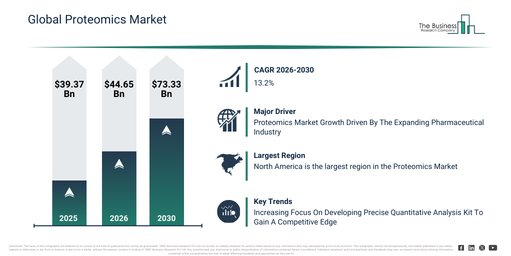
    The proteomics market size has experienced rapid growth in recent years. It is projected to expand from $39.37 billion in 2025 to $44.65 billion in 2026, at a compound annual growth rate (CAGR) of 13.4%. The expansion observed in the historic period can be attributed to several factors, including the increased funding for life sciences research, the growing application of proteomics in drug discovery, the availability of high-performance analytical instruments, the development of academic research programs, and a rising demand for biomarker discovery.

    The proteomics market is projected for significant expansion in the coming years, with its valuation expected to reach $73.33 billion by 2030, exhibiting a compound annual growth rate (CAGR) of 13.2%. This anticipated growth throughout the forecast period stems from greater investment in precision medicine initiatives, an escalating need for multi-omics analysis, the broader application of clinical proteomics, the rising embrace of AI-powered data analysis tools, and a heightened emphasis on understanding disease pathways. Key developments during this timeframe involve a wider uptake of sophisticated proteomic analysis methods, the increasing prevalence of mass spectrometry-based proteomics, closer integration of proteomics with genomics data, the proliferation of cloud-based proteomics platforms, and a sharper concentration on quantitative proteomics.

    Access Your Free Sample Report for In-Depth Market Insights:

    https://www.thebusinessresearchcompany.com/sample.aspx?id=2828&type=smp

    Which Drivers Are Influencing Market Acceleration In The Proteomics Market?

    The expanding pharmaceutical sector is anticipated to drive forward the proteomics market. This industry is dedicated to the research, development, production, and supply of medicines and drugs for healthcare applications. Its growth is spurred by the escalating global prevalence of chronic illnesses, which necessitates ongoing drug innovation and sophisticated therapeutic approaches, thereby fostering continuous market expansion. Proteomics is essential in drug creation, as it involves finding, defining, and observing proteins for identifying drug targets and discovering biomarkers. A noteworthy example illustrating this trend is provided by the European Federation of Pharmaceutical Industries and Associations (EFPIA), a trade group based in Belgium that represents Europe’s pharmaceutical industry. They reported that in June 2023, total pharmaceutical production in Europe reached €390,000 million ($422,803 million) in 2023, an increase from €363,300 million ($393,857 million) in 2022. Consequently, the expanding pharmaceutical industry is a key factor propelling the growth of the proteomics market.

    What Segments Are Identified Within The Structure Of The Proteomics Market?

    The proteomics market covered in this report is segmented –

    1) By Component: Reagents, Instruments, Software

    2) By Instrument: Protein Microarrays, Spectroscopy, X-ray Crystallography, Chromatography, Electrophoresis, Surface Plasmon Resonance, Protein Fractionation

    3) By Type: Core Instrument Services, Proteomic Analytical Services

    Subsegments:

    1) By Reagents: Protein Assays, Immunoassay Reagents, Spectroscopy Reagents, Chromatography Reagents, Electrophoresis Reagents

    2) By Instruments: Mass Spectrometry, Chromatography Equipment, Electrophoresis Equipment, Microarray Instruments, X-ray Crystallography Instruments

    3) By Software: Data Analysis Software, Bioinformatics Tools, Cloud-Based Platforms For Proteomics

    What Trends Are Driving The Growth Trajectory Of The Proteomics Market?

    Leading companies in the proteomics market are concentrating on developing accurate quantitative analysis kits to achieve a competitive advantage. These kits for precise quantitative analyses are employed for the accurate measurement of protein expression levels and the identification of biomarkers in various biological samples. For example, in January 2023, SCIEX, a US-based producer of mass spectrometry instrumentation, launched the Fast Glycan Labeling and Analysis kit, intended for exact quantitative glycan analysis, and also released an update for its Biologics Explorer software, which seeks to improve essential workflows for analyzing protein therapeutics. These solutions are developed to hasten the investigation and recognition of glycans linked to proteins. They provide researchers with advanced materials for comprehensive biopharmaceutical analysis. The software allows researchers to make educated decisions regarding the most suitable analytical approaches and instruments for their specific purposes. This ultimately boosts the efficiency and impact of protein characterization research.

    Which Key Market Players Are Investing In Expansion And Innovation Within The Proteomics Market?

    Major companies operating in the proteomics market are Thermo Fisher Scientific Inc., Merck KGaA, Agilent Technologies Inc., PerkinElmer Inc., Bruker Corporation, Bio-Rad Laboratories Inc., Promega Corporation, Waters Corporation, Creative Proteomics, Sino Biological, EIAab, DIMA Biotechnology, GE Healthcare, Perseus Proteomics Inc., JEOL, APTBIO, Vproteomics, Shimadzu Corporation, Abcam plc, MRM Proteomics Inc., Biognosys AG, Olink Proteomics, Horiba, MS Bioworks, LC Sciences, MtoZ Biolabs, Integrated Proteomics Applications, Quantumbio Inc., Luminex Corporation, Applied Biomics Inc., Isoplexis Corporation, Caprion Proteomics Inc.

    Access The Complete Report For Deeper Market Insights:

    https://www.thebusinessresearchcompany.com/report/proteomics-global-market-report

    Which Regions Are Poised For Strategic Growth In The Proteomics Market?

    North America was the largest region in the proteomics market in 2025. Western Europe was the second largest region in the global proteomics market share. The regions covered in the proteomics market report are Asia-Pacific, South East Asia, Western Europe, Eastern Europe, North America, South America, Middle East, Africa.

    Request Your Customized Proteomics Market Research Report for Competitive Advantage:

    https://www.thebusinessresearchcompany.com/customise?id=2828&type=smp

    Browse Through More Reports Similar to the Global Proteomics Market 2026, By The Business Research Company

    Metabolomics Market Report 2026

    https://www.thebusinessresearchcompany.com/report/metabolomics-global-market-report

    Genomics Market Report 2026

    https://www.thebusinessresearchcompany.com/report/genomics-global-market-report

    Metagenomics Market Report 2026

    https://www.thebusinessresearchcompany.com/report/metagenomics-global-market-report

    Get in touch with us:

    The Business Research Company: https://www.thebusinessresearchcompany.com/

    Americas +1 310-496-7795

    Asia +44 7882 955267 & +91 8897263534

    Europe +44 7882 955267

    Email us at info@tbrc.info

    Follow us on:

    LinkedIn: https://in.linkedin.com/company/the-business-research-company

    YouTube: https://www.youtube.com/channel/UC24_fI0rV8cR5DxlCpgmyFQ

    Global Market Model: https://www.thebusinessresearchcompany.com/global-market-model
  • Revenue of the Protein Stability Analysis Market Predicted to Achieve $4.7 Billion by 2030, Driven by 12.4% CAGR

    Revenue of the Protein Stability Analysis Market Predicted to Achieve $4.7 Billion by 2030, Driven by 12.4% CAGR

    Uncover key drivers, emerging technologies, and competitive movements shaping the protein stability analysis market from 2026–2035 with trusted insights from The Business Research Company

    What is the estimated market size of the Protein Stability Analysis Market by the end of 2030?

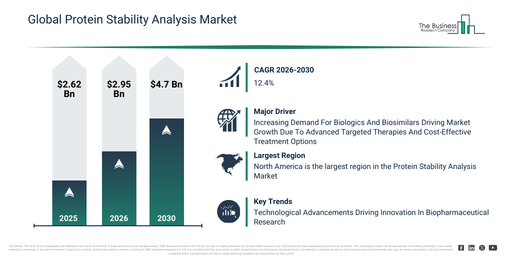
    The protein stability analysis market size has observed rapid expansion in recent years. This market is set to expand from $2.62 billion in 2025 to $2.95 billion in 2026, at a compound annual growth rate (CAGR) of 12.7%. Historically, this growth can be ascribed to elements such as the increased development of biologics and biosimilars, the presence of advanced analytical instruments, a stronger focus on formulation optimization, a rise in pharmaceutical R&D spending, and the broader acceptance of stability testing protocols.

    The protein stability analysis market is projected to experience substantial expansion over the coming years. This market is set to reach a valuation of $4.7 billion by 2030, exhibiting a compound annual growth rate (CAGR) of 12.4%. Several factors are driving this anticipated growth, including a heightened demand for accelerated stability studies, the increasing integration of AI-driven data analysis, the expansion of contract research services, the growing complexity of protein therapeutics, and an increasing regulatory focus on product stability. Key trends expected during this forecast period involve the rising adoption of high-throughput stability testing, an increased utilization of advanced spectroscopy techniques, the growing integration of automation in protein analysis, the expansion of data-driven stability modeling, and an enhanced emphasis on biologic drug development.

    Access Your Free Sample Report for In-Depth Market Insights:

    https://www.thebusinessresearchcompany.com/sample.aspx?id=24672&type=smp

    What Drivers Are Shaping Future Opportunities In The Protein Stability Analysis Market?

    The rising demand for biologics and biosimilars is anticipated to drive the expansion of the protein stability analysis market in the future. Biologics are intricate, large-molecule medications sourced from living entities for disease treatment, whereas biosimilars represent very similar, more affordable versions of established biologics, demonstrating no significant clinical distinctions. This increasing demand stems from patients and healthcare professionals seeking innovative, specific treatments that provide enhanced therapeutic results, improved access, and lower expenses for persistent and complicated illnesses. Protein stability analysis plays a crucial role for biologics and biosimilars in guaranteeing their safety, efficacy, and longevity by overseeing their structural integrity and preventing deterioration. As an illustration, Samsung Bioepis Co. Ltd., a biopharmaceutical firm based in South Korea, reported that in 2024, the US federal agency, the Food and Drug Administration (FDA), cleared 45 biosimilars, with 38 of these subsequently introduced in the US, indicating substantial market adoption relative to overall approvals. Consequently, the expanding need for biologics and biosimilars approaches is fostering expansion within the protein stability analysis market.

    Which Segments Are Gaining Traction In The Protein Stability Analysis Market?

    The protein stability analysis market covered in this report is segmented –

    1) By Product: Reagents And Assay Kits, Instruments, Consumable And Accessories, Software, Other Products

    2) By Technique: Chromatography, Spectroscopy, Surface Plasma Resonance Imaging (SPRI), Differential Scanning Calorimetry (DSC), Differential Scanning Fluorimetry (DSF), Others Techniques

    3) By End-User: Pharmaceutical And Biotechnology Companies, Contract Research Organizations, Academic And Research Institutes, Other End-Users

    Subsegments:

    1) By Reagents And Assay Kits: Thermal Shift Assay Kits, Fluorescence-Based Assay Kits, Colorimetric Assay Kits, Binding Assay Kits, Aggregation Detection Kits

    2) By Instruments: Differential Scanning Calorimeters, Fluorescence Spectrometers, Chromatography Systems, Mass Spectrometers, Circular Dichroism Spectrometers, Surface Plasmon Resonance Instruments

    3) By Consumable And Accessories: Microplates And Cuvettes, Pipette Tips, Filters And Membranes, Sample Tubes And Vials, Calibration Standards

    4) By Software: Data Analysis Software, Protein Modeling Software, Thermal Stability Analysis Software, Chromatography Data Systems, Mass Spectrometry Data Software

    5) By Other Products: Calibration Kits, Sample Preparation Devices, Automation Systems, Maintenance Kits, Laboratory Storage Solutions

    What Upcoming Trends Are Likely To Define The Future Path Of The Protein Stability Analysis Market?

    Major companies operating in the protein stability analysis market are increasingly concentrating on technological innovations, such as the Veloci biopharma analyzer, to provide enhanced molecular fingerprinting tools that boost precision, velocity, and productivity in protein assessment and quality evaluation. The Veloci biopharma analyzer represents a cutting-edge instrument utilizing A-TEEM technology to enable rapid, label-free molecular fingerprinting for various life science applications, including protein stability analysis and vaccine characterization. For instance, in March 2025, Horiba Advanced Techno Co. Ltd., a Japan-based firm specializing in analytical solutions and measurement equipment, unveiled four new analytical instruments. These introductions comprised a biopharma analyzer incorporating A-TEEM technology, a high-throughput Raman plate reader, and an advanced atomic force microscopy system, engineered to refine molecular fingerprinting, real-time reaction monitoring, and multimodal material analysis. These innovations are intended to support vital applications within biopharmaceutical research, such as cell culture media analysis, vaccine development, and protein characterization.

    Who Are The Core Companies Influencing Trends In The Protein Stability Analysis Market?

    Major companies operating in the protein stability analysis market are Roche Diagnostics GmbH, Thermo Fisher Scientific Inc, General Electric Healthcare Inc, Agilent Technologies Inc, Charles River Laboratories International Inc, PerkinElmer Inc, Shimadzu Corporation, Sartorius AG, Waters Corporation, Bruker Corporation, HORIBA Ltd, Spectris plc, Unchained Labs Inc, NanoTemper Technologies GmbH, Enzo Life Sciences Inc, Jasco Inc, Setaram Instrumentation SAS, Luminex Corporation, Malvern Panalytical Ltd, BioRad Laboratories Inc, Danaher Corporation, Merck KGaA

    Access The Complete Report For Deeper Market Insights:

    https://www.thebusinessresearchcompany.com/report/protein-stability-analysis-global-market-report

    Which Regions Are Projected To Dominate The Protein Stability Analysis Market In The Coming Years?

    North America was the largest region in the protein stability analysis market in 2025. Asia-Pacific is expected to be the fastest-growing region in the forecast period. The regions covered in the protein stability analysis market report are Asia-Pacific, South East Asia, Western Europe, Eastern Europe, North America, South America, Middle East, Africa.

    Request Your Customized Protein Stability Analysis Market Research Report for Competitive Advantage:

    https://www.thebusinessresearchcompany.com/customise?id=24672&type=smp

    Browse Through More Reports Similar to the Global Protein Stability Analysis Market 2026, By The Business Research Company

    Protein Inhibitor Market Report 2026

    https://www.thebusinessresearchcompany.com/report/protein-inhibitor-global-market-report

    Therapeutic Proteins Market Report 2026

    https://www.thebusinessresearchcompany.com/report/therapeutic-proteins-global-market-report

    Protein Labelings Market Report 2026

    https://www.thebusinessresearchcompany.com/report/protein-labelings-global-market-report

    Get in touch with us:

    The Business Research Company: https://www.thebusinessresearchcompany.com/

    Americas +1 310-496-7795

    Asia +44 7882 955267 & +91 8897263534

    Europe +44 7882 955267

    Email us at info@tbrc.info

    Follow us on:

    LinkedIn: https://in.linkedin.com/company/the-business-research-company

    YouTube: https://www.youtube.com/channel/UC24_fI0rV8cR5DxlCpgmyFQ

    Global Market Model: https://www.thebusinessresearchcompany.com/global-market-model
  • Protein Sequencing Sector Forecast Shows Robust Momentum, Climbing to $2.86 Billion With 8.5% CAGR

    Protein Sequencing Sector Forecast Shows Robust Momentum, Climbing to $2.86 Billion With 8.5% CAGR

    Uncover key drivers, emerging technologies, and competitive movements shaping the protein sequencing market from 2026–2035 with trusted insights from The Business Research Company

    What was the valuation of the Protein Sequencing Market in 2026, and what figure is it projected to hit by 2030?

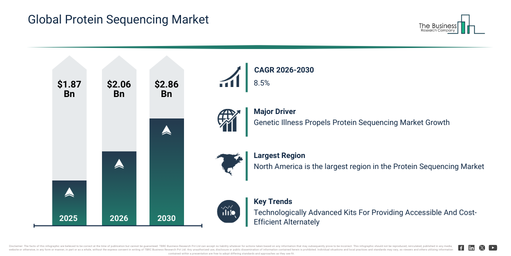
    The protein sequencing market has experienced swift expansion recently. Its size is projected to increase from $1.87 billion in 2025 to $2.06 billion by 2026, demonstrating a compound annual growth rate (CAGR) of 10.1%. Historically, this growth can be attributed to several factors including the expansion of biomedical research activities, a rising demand for protein structure analysis, increased pharmaceutical R&D investments, the availability of sophisticated analytical instruments, and an enhanced focus on molecular biology studies.

    The protein sequencing market size is expected to achieve substantial growth over the next few years, projected to reach $2.86 billion by 2030, with a compound annual growth rate (CAGR) of 8.5%. This expansion during the forecast period is driven by several factors, including the escalating demand for personalized medicine research, a rise in investments directed towards proteomics-based drug discovery, the broadening of bioinformatics-enabled sequencing platforms, an increasing embrace of automated sequencing workflows, and a greater emphasis on biomarker identification. Key trends anticipated in the upcoming period involve the growing adoption of high-throughput protein sequencing methods, an increased utilization of advanced mass spectrometry techniques, the deeper integration of bioinformatics into sequencing workflows, the expansion of customized protein sequencing services, and an intensified focus on delivering high-accuracy sequencing outputs.

    Access Your Free Sample Report for In-Depth Market Insights:

    https://www.thebusinessresearchcompany.com/sample.aspx?id=14981&type=smp

    Which Drivers Are Affecting Market Participation In The Protein Sequencing Market?

    The increasing prevalence of genetic illness is anticipated to fuel the expansion of the protein sequencing market moving forward. A genetic illness refers to any disease or disorder caused by abnormalities or mutations in an individual’s genetic material, typically their DNA. This rise in genetic illness is attributed to genetic mutations that can occur spontaneously or be inherited from parents. Protein sequencing can assist in identifying specific genetic variants responsible for disease causation, thereby aiding in the discovery of protein biomarkers, which are molecules indicative of a particular disease state or physiological condition. For instance, in October 2024, data from the Cystic Fibrosis Trust, a UK-based national charity, reported that 11,148 people were living with cystic fibrosis (CF) in the UK in 2022, a number that increased to 11,318 in 2023. Therefore, the growing incidence of genetic illness is driving the growth of the protein sequencing market.

    What Segment Categories Are Covered In The Protein Sequencing Market?

    The protein sequencing market covered in this report is segmented –

    1) By Product And Service: Protein Sequencing Products, Protein Sequencing Services

    2) By Application: Bio-Therapeutics, Genetic Engineering, Other Applications

    3) By End User: Pharmaceutical And Biotechnology Companies, Other End-Users

    Subsegments:

    1) By Protein Sequencing Products: Sequencing Kits, Reagents, Instruments, Consumables

    2) By Protein Sequencing Services: Custom Protein Sequencing, Analytical Protein Sequencing, Bioinformatics Services, Proteomics Services

    Which Trends Are Shaping Activity Within The Protein Sequencing Market?

    Leading companies operating within the protein sequencing market are developing enhanced, advanced technology products, such as sequencing kits, to secure a competitive edge. Sequencing kits are collections of reagents, chemicals, and materials necessary for preparing samples and conducting sequencing experiments. For instance, in February 2024, Quantum-Si, a US-based protein sequencing company, launched Protein Sequencing Kit V2, which serves as an enhancement for its Platinum protein sequencing platform. This new kit delivers increased sequencing performance through assay improvements, including the addition of a new amino acid recognizer, along with the capability to identify unknown proteins using sophisticated analytical and inference tools. These advancements provide elevated sequencing performance, the ability to identify unknown proteins, high reproducibility, and a three-fold reduction in cost per amino acid.

    Which Major Industry Participants Are Leading The Protein Sequencing Market Growth?

    Major companies operating in the protein sequencing market are F Hoffmann-La Roche Ltd, Thermo Fisher Scientific Inc, Merck KGaA, Eurofins Scientific SE, Beckman Coulter Inc, PerkinElmer Inc, GenScript Biotech Corporation, Agilent Technologies Inc, CeMIA SA, Shimadzu Corporation, Bruker Corporation, Waters Corporation, Bio-Rad Laboratories Inc, SCIEX, Protein Metrics Inc, Alphalyse A S, Rapid Novor Inc, Creative Proteomics, Bioproximity LLC, Protagen AG, MS Bioworks LLC, Charles River Laboratories Inc

    Access The Complete Report For Deeper Market Insights:

    https://www.thebusinessresearchcompany.com/report/protein-sequencing-global-market-report

    Which Region Is Expected To Experience The Fastest Growth In The Protein Sequencing Market?

    North America was the largest region in the protein sequencing market in 2025. Europe is expected to be the fastest-growing region in the forecast period. The regions covered in the protein sequencing market report are Asia-Pacific, South East Asia, Western Europe, Eastern Europe, North America, South America, Middle East, Africa.

    Request Your Customized Protein Sequencing Market Research Report for Competitive Advantage:

    https://www.thebusinessresearchcompany.com/customise?id=14981&type=smp

    Browse Through More Reports Similar to the Global Protein Sequencing Market 2026, By The Business Research Company

    Metagenomic Sequencing Market Report 2026

    https://www.thebusinessresearchcompany.com/report/metagenomic-sequencing-global-market-report

    Dna Sequencing Market Report 2026

    https://www.thebusinessresearchcompany.com/report/dna-sequencing-global-market-report

    Next Generation Sequencing Market 2026

    https://www.thebusinessresearchcompany.com/report/next-generation-sequencing-market

    Get in touch with us:

    The Business Research Company: https://www.thebusinessresearchcompany.com/

    Americas +1 310-496-7795

    Asia +44 7882 955267 & +91 8897263534

    Europe +44 7882 955267

    Email us at info@tbrc.info

    Follow us on:

    LinkedIn: https://in.linkedin.com/company/the-business-research-company

    YouTube: https://www.youtube.com/channel/UC24_fI0rV8cR5DxlCpgmyFQ

    Global Market Model: https://www.thebusinessresearchcompany.com/global-market-model
  • Protein Microarray Market Anticipated to Record Steady Gains, Advancing to $6.69 Billion by 2030

    Protein Microarray Market Anticipated to Record Steady Gains, Advancing to $6.69 Billion by 2030

    Uncover key drivers, emerging technologies, and competitive movements shaping the protein microarray market from 2026–2035 with trusted insights from The Business Research Company

    What are the forecasted starting (2026) and ending (2030) market sizes for the Protein Microarray Market?

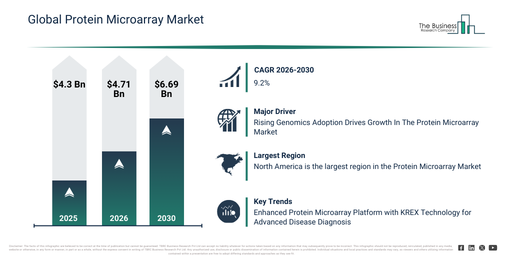
    The protein microarray market has demonstrated significant expansion in recent years. It is anticipated to grow from $4.3 billion in 2025 to $4.71 billion in 2026, reflecting a compound annual growth rate (CAGR) of 9.5%. This historical rise can be attributed to various factors, including the increasing number of proteomics research initiatives, the wider adoption of microarrays in disease research, the expansion of academic and clinical research facilities, improvements in surface chemistry technologies, and the accessibility of high-density microarray platforms.

    The protein microarray market size is anticipated to experience robust expansion in the coming years. This market is projected to reach $6.69 billion by 2030, reflecting a compound annual growth rate (CAGR) of 9.2%. The expansion during the forecast period is primarily attributable to several factors, including the escalating demand for personalized diagnostics, the increasing integration with AI-based protein analytics, the broadening of translational research activities, the expanding application in drug target validation, and the rising investment in precision medicine research. Furthermore, key trends anticipated over the forecast period encompass the growing adoption of high-throughput protein microarrays, their increasing utilization in biomarker discovery programs, the expanding integration with automated sample processing, the proliferation of multiplex protein profiling applications, and a heightened emphasis on data-rich proteomic analysis.

    Access Your Free Sample Report for In-Depth Market Insights:

    https://www.thebusinessresearchcompany.com/sample.aspx?id=20605&type=smp

    What Drivers Are Supporting Technological Adoption In The Protein Microarray Market?

    The increasing integration of genomics is projected to stimulate the expansion of the protein microarray market moving forward. Genomics involves the comprehensive examination of an organism’s complete genetic material, including its structure, function, and evolutionary transformations. The surge in genomics adoption stems from technological advancements, decreased sequencing expenses, and the promise of personalized medical therapies. Genomics aids protein microarrays by delivering extensive genetic information that assists in identifying and analyzing proteins, their interactions, and functions, thus facilitating more targeted and high-throughput protein profiling. For example, in December 2023, the World Health Organization, a public health agency situated in Switzerland, indicated that 163 of 194 countries surveyed, roughly 84%, reported maintaining national capacity for pathogen genomic sequencing. Hence, the rising adoption of genomics is a significant factor propelling the protein microarray market.

    Which Segments Are Contributing To The Growth Of The Protein Microarray Market?

    The protein microarray market covered in this report is segmented –

    1) By Type: Lab On Chips, Protein Chips, Arrayers, Integrated Systems, Microarray Systems

    2) By Technology: Functional Protein Microarrays, Analytical Microarrays, Reverse Phase Protein Microarrays

    3) By Application: Proteomics, Diagnostics, Antibody Characterization, Protein Functional Analysis

    4) By End User: Hospitals And Clinics, Research Centers, Academic Institutes, Diagnostic Centers

    Subsegments:

    1) By Lab On Chips: Diagnostic Lab-on-Chip, Analytical Lab-on-Chip, Microfluidic Chips

    2) By Protein Chips: Analytical Protein Microarrays, Functional Protein Microarrays, Reverse Phase Protein Microarrays

    3) By Arrayers: Contact Spotting Arrayers, Non-contact Spotting Arrayers

    4) By Integrated Systems: Automated Sample Processing Systems, Integrated Analysis Systems

    5) By Microarray Systems: High-density Microarray Systems, Low-density Microarray Systems, Multiplex Microarray Systems

    Which Trends Are Influencing The Development Of The Protein Microarray Market?

    Leading companies operating within the protein microarray market are developing innovative platforms by utilizing advanced technologies, such as KREX technology, to enable high-throughput analysis of protein interactions, biomarker discovery, and disease diagnostics. KREX technology ensures that only correctly folded, full-length proteins are immobilized on the protein microarray surface, while misfolded proteins are washed away. For instance, in October 2023, Sengenics Corporation LLC, a US-based biotechnology company, launched i-ome discovery. This comprehensive protein microarray platform enhances disease diagnosis and therapeutic interventions by analyzing over 1,800 autoantigens. Utilizing patented KREX technology and an advanced AI-based pipeline offers susceptible and precise autoantibody detection, marking a significant advancement in the protein microarray market.

    Who Are The Prominent Global Companies Shaping The Protein Microarray Market Landscape?

    Major companies operating in the protein microarray market are PerkinElmer Inc., Merck Group, Thermo Fisher Scientific Inc., Agilent Technologies Inc., Bio-Rad Laboratories Inc., GenScript Biotech Corporation, Quanterix Corporation, Standard BioTools Inc., RayBiotech Life Inc., Sengenics Corporation LLC, PepperPrint GmbH, Quansys Biosciences Inc., Sciomics GmbH, Arrayit Corporation, LC Sciences, Full Moon BioSystems Inc., Meso Scale Diagnostics LLC, CDI Laboratories Inc., Grace Bio-Labs Inc., Zyomyx Inc.

    Access The Complete Report For Deeper Market Insights:

    https://www.thebusinessresearchcompany.com/report/protein-microarray-global-market-report

    Which Geographic Areas Are Emerging As Strong Markets For The Protein Microarray Market?

    North America was the largest region in the protein microarray market in 2025. Asia-Pacific is expected to be the fastest-growing region in the forecast period. The regions covered in the protein microarray market report are Asia-Pacific, South East Asia, Western Europe, Eastern Europe, North America, South America, Middle East, Africa.

    Request Your Customized Protein Microarray Market Research Report for Competitive Advantage:

    https://www.thebusinessresearchcompany.com/customise?id=20605&type=smp

    Browse Through More Reports Similar to the Global Protein Microarray Market 2026, By The Business Research Company

    Egg Protein Powder Market Report 2026

    https://www.thebusinessresearchcompany.com/report/egg-protein-powder-global-market-report

    Soy Protein Market 2026

    https://www.thebusinessresearchcompany.com/report/soy-protein-market

    C Reactive Protein Testing Market Report 2026

    https://www.thebusinessresearchcompany.com/report/c-reactive-protein-testing-global-market-report

    Get in touch with us:

    The Business Research Company: https://www.thebusinessresearchcompany.com/

    Americas +1 310-496-7795

    Asia +44 7882 955267 & +91 8897263534

    Europe +44 7882 955267

    Email us at info@tbrc.info

    Follow us on:

    LinkedIn: https://in.linkedin.com/company/the-business-research-company

    YouTube: https://www.youtube.com/channel/UC24_fI0rV8cR5DxlCpgmyFQ

    Global Market Model: https://www.thebusinessresearchcompany.com/global-market-model
  • Protein Extracts From Single Cell Protein And Other Conventional Sources Industry Poised for Rapid Growth, Forecast to Touch $42.8 Billion by 2030 at 8.4% CAGR

    Protein Extracts From Single Cell Protein And Other Conventional Sources Industry Poised for Rapid Growth, Forecast to Touch $42.8 Billion by 2030 at 8.4% CAGR

    Uncover key drivers, emerging technologies, and competitive movements shaping the protein extracts from single cell protein and other conventional sources market from 2026–2035 with trusted insights from The Business Research Company

    What upper market value could the Protein Extracts From Single Cell Protein And Other Conventional Sources Market reach by 2030 starting from 2026 levels?

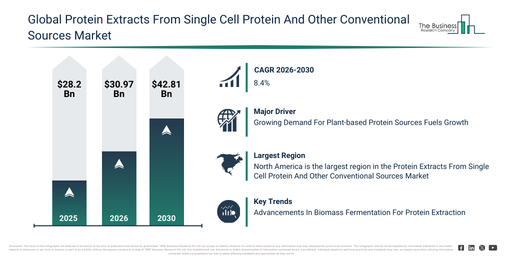
    The market size for protein extracts derived from single cell protein and other conventional sources has experienced significant growth in recent years. It is projected to expand from $28.2 billion in 2025 to $30.97 billion in 2026, achieving a compound annual growth rate (CAGR) of 9.8%. The historical growth in this market can be attributed to several factors, including an increasing demand for alternative protein sources, the expansion of animal nutrition industries, a rising use of protein supplements, the availability of large-scale fermentation infrastructure, and the growth of food and feed processing industries.

    The market size for protein extracts from single cell protein and other conventional sources is anticipated to show robust expansion over the next few years. It is projected to reach $42.81 billion by 2030, exhibiting a compound annual growth rate (CAGR) of 8.4%. This growth during the forecast period can be primarily linked to a growing emphasis on sustainable protein manufacturing, increased investment in microbial fermentation technologies, the broadening of alternative protein applications, a surging demand for high-quality protein ingredients, and enhanced regulatory support for new protein sources. Significant trends expected during this period include the increased uptake of single cell protein sources, a rising appetite for plant-based protein extracts, the expanding application of fermentation-based protein production, the advancement of high-purity protein extraction processes, and an intensified focus on functional protein applications.

    Access Your Free Sample Report for In-Depth Market Insights:

    https://www.thebusinessresearchcompany.com/sample.aspx?id=15644&type=smp

    Which Drivers Are Influencing Long-Term Growth In The Protein Extracts From Single Cell Protein And Other Conventional Sources Market?

    The increasing consumer demand for plant-derived protein sources is projected to stimulate the growth of protein extracts from single-cell protein and other traditional origins. Plant-based protein sources refer to edible items derived from protein-rich plants, such as legumes (like beans and lentils), nuts, seeds, tofu, tempeh, and whole grains including quinoa and buckwheat. This escalating demand for plant-based proteins is fueled by growing understanding of environmental sustainability, various health benefits, and ethical concerns surrounding animal agriculture. As a result, consumers are actively seeking alternative protein options derived from plants. Protein extracts from single-cell sources, alongside conventional options, are increasingly adopted as plant-based protein sources due to their rich nutritional content and sustainability. These extracts offer diverse amino acid profiles, satisfying dietary needs while supporting eco-friendly food production methods. For example, a July 2025 assessment by the Good Food Institute, a US-based non-profit organization, indicated that in the United States, the retail plant-based food market was worth approximately $8.1 billion in 2024. Therefore, the rising demand for plant-based protein sources is a key driver for the expansion of protein extracts from single-cell protein and other conventional sources.

    How Is The Protein Extracts From Single Cell Protein And Other Conventional Sources Market Divided Into Segments?

    The protein extracts from single cell protein and other conventional sources market covered in this report is segmented –

    1) By Source: Plant Protein Extract Sources, Microbial Sources – Single Cell Proteins, Microbial Sources – Direct Use

    2) By Feedstock: Organic, Conventional

    3) By Application: Biotechnology, Animal Feed, Agriculture And Fertilizers, Other Applications

    Subsegments:

    1) By Plant Protein Extract Sources: Soy Protein Extracts, Pea Protein Extracts, Rice Protein Extracts, Hemp Protein Extracts, Wheat Protein Extracts, Chickpea Protein Extracts, Potato Protein Extracts, Algae Protein Extracts, Other Plant-Based Protein Extracts

    2) By Microbial Sources – Single Cell Proteins: Yeast-Based Proteins, Bacterial Proteins, Fungal Proteins, Algal Proteins, Protozoan Proteins, Other Single-cell Proteins

    3) By Microbial Sources – Direct Use: Bacterial Protein Extracts, Fungal Protein Extracts, Algal Protein Extracts, Bacteriophage Proteins, Enzyme-Based Proteins

    What Trends Are Expected To Impact The Competitive Landscape Of The Protein Extracts From Single Cell Protein And Other Conventional Sources Market?

    Leading companies active in the market for protein extracts from single-cell protein and other conventional sources are concentrating on establishing swift production methods employing biomass fermentation technology to secure their standing in the market. The expedited production process for single-cell protein ingredients entails utilizing biomass fermentation technology to grow microorganisms such as bacteria or yeast, enabling the effective conversion of organic material into protein-dense biomass for various uses. As an illustration, in November 2023, MicroHarvest GmbH, a biotechnology company based in Germany, unveiled a pilot facility in Lisbon to speed up the commercialization of its single-cell protein ingredients. This plant allows the company to optimize its technology, develop new prototypes, and conduct trial production runs in preparation for launching its initial commercial product in early 2024. It is designed to generate sustainable, high-quality protein ingredients with more than 60% raw protein within 24 hours, by means of biomass fermentation technology.

    Which Key Players Are Driving Competition In The Protein Extracts From Single Cell Protein And Other Conventional Sources Market?

    Major companies operating in the protein extracts from single cell protein and other conventional sources market are Cargill Incorporated, The Archer-Daniels-Midland Company, BASF SE, DuPont de Nemours Inc., International Flavors & Fragrances Inc., Koninklijke DSM N.V., Ajinomoto Co. Inc., Kerry Group plc, Ingredion Inc., Lonza Group AG, Glanbia plc, Symrise AG, Roquette Frères, Novozymes A/S, Ashland Global Holdings Inc., Bioproton Pty Ltd., CP Kelco ApS, Omega Protein Corporation, Axiom Foods, Fermentalg SA, Cellana LLC

    Access The Complete Report For Deeper Market Insights:

    https://www.thebusinessresearchcompany.com/report/protein-extracts-from-single-cell-protein-and-other-conventional-sources-global-market-report

    Which Region Is Projected To Lead The Protein Extracts From Single Cell Protein And Other Conventional Sources Market During The Forecast Period?

    North America was the largest region in the protein extracts from single cell protein and other conventional sources market in 2025. The regions covered in the protein extracts from single cell protein and other conventional sources market report are Asia-Pacific, South East Asia, Western Europe, Eastern Europe, North America, South America, Middle East, Africa.

    Request Your Customized Protein Extracts From Single Cell Protein And Other Conventional Sources Market Research Report for Competitive Advantage:

    https://www.thebusinessresearchcompany.com/customise?id=15644&type=smp

    Browse Through More Reports Similar to the Global Protein Extracts From Single Cell Protein And Other Conventional Sources Market 2026, By The Business Research Company

    Alternative Protein Market Report 2026

    https://www.thebusinessresearchcompany.com/report/alternative-protein-global-market-report

    Protein Purification And Isolation Market Report 2026

    https://www.thebusinessresearchcompany.com/report/protein-purification-and-isolation-global-market-report

    Animal Based Protein Supplements Market Report 2026

    https://www.thebusinessresearchcompany.com/report/animal-based-protein-supplements-global-market-report

    Get in touch with us:

    The Business Research Company: https://www.thebusinessresearchcompany.com/

    Americas +1 310-496-7795

    Asia +44 7882 955267 & +91 8897263534

    Europe +44 7882 955267

    Email us at info@tbrc.info

    Follow us on:

    LinkedIn: https://in.linkedin.com/company/the-business-research-company

    YouTube: https://www.youtube.com/channel/UC24_fI0rV8cR5DxlCpgmyFQ

    Global Market Model: https://www.thebusinessresearchcompany.com/global-market-model
  • Protein Expression Market Performance Outlook 2026–2030: Revenue to Hit $7.36 Billion at 13.2% CAGR

    Protein Expression Market Performance Outlook 2026–2030: Revenue to Hit $7.36 Billion at 13.2% CAGR

    Uncover key drivers, emerging technologies, and competitive movements shaping the protein expression market from 2026–2035 with trusted insights from The Business Research Company

    What level of CAGR-driven expansion is anticipated in the Protein Expression Market between 2026 and 2030?

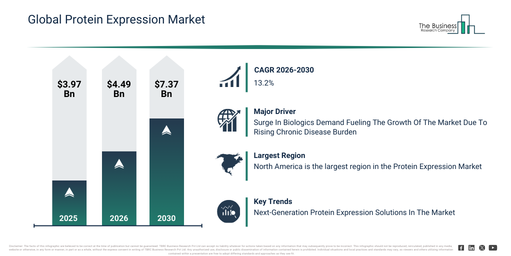
    The protein expression market has seen considerable growth in recent years. It is projected to increase from $3.97 billion in 2025 to $4.49 billion in 2026, demonstrating a compound annual growth rate (CAGR) of 13.3%. Historically, this expansion has been driven by the broadening of biologics development programs, a heightened demand for recombinant proteins, the advancement of academic protein research, the presence of various expression host systems, and the increased utilization of contract research services.

    The protein expression market is projected for substantial expansion over the coming years, with an anticipated value of $7.37 billion in 2030, exhibiting a compound annual growth rate (CAGR) of 13.2%. This growth in the forecast period is fueled by factors such as the escalating demand for therapeutic protein production, the increasing adoption of cell-free expression technologies, the expansion of industrial enzyme applications, growing investment in synthetic biology, and a heightened focus on rapid protein production platforms. Noteworthy trends for the forecast period include a greater integration of mammalian and cell-free expression systems, a rising utilization of recombinant protein production, an increasing need for scalable expression platforms, an expansion of custom protein expression services, and an enhanced emphasis on optimizing expression yields.

    Access Your Free Sample Report for In-Depth Market Insights:

    https://www.thebusinessresearchcompany.com/sample.aspx?id=2493&type=smp

    What Drivers Are Affecting Demand-Supply Dynamics In The Protein Expression Market?

    The increasing need for biologics is anticipated to stimulate expansion within the protein expression market. Biologics, which are medications derived from living organisms or contain components like proteins, tissues, genes, cells, and blood derivatives, offer highly precise and effective treatment options. The heightened demand for these substances stems from the rising occurrence of chronic and complex illnesses, which necessitates more tailored and advanced therapeutic approaches. Protein expression is crucial in this scenario, as it facilitates the efficient creation of therapeutic proteins vital for the development and manufacturing of biologic drugs. For example, Cardinal Health Inc., a US-based healthcare company, reported in January 2023 that the US had 33 biosimilar products approved by the FDA as of January 2022, with 21 already on the market. This figure increased to 40 FDA-approved biosimilars by 2023, with 25 commercially available. Consequently, the escalating demand for biologics is a significant driver for the growth of the protein expression market.

    What Segments Are Included Within The Protein Expression Market?

    The protein expression market covered in this report is segmented –

    1) By Protein Expression: Yeast Expression, Mammalian Expression, Algae Expression, Insect Expression, Bacterial Expression, Cell-free Expression

    2) By Product: Reagents, Competent Cells, Expression vectors, Services, Instruments

    3) By Application: Therapeutic, Industrial, Research

    4) By End Use: Pharmaceutical And Biotechnological Companies, Academic Research, Contract Research Organizations

    Subsegments:

    1) By Yeast Expression: Saccharomyces Cerevisiae, Pichia Pastoris, Kluyveromyces Lactis

    2) By Mammalian Expression: Chinese Hamster Ovary (CHO) Cells, Human Embryonic Kidney (HEK) Cells, Vero Cells

    3) By Algae Expression: Green Algae, Blue-green Algae (Cyanobacteria)

    4) By Insect Expression: Sf9 Cells, Hi5 Cells

    5) By Bacterial Expression: Escherichia Coli (E. coli), Bacillus Subtilis

    6) By Cell-free Expression: Wheat germ Extract, Rabbit Reticulocyte Lysate

    Which Trends Are Guiding The Evolution Of The Protein Expression Market?

    Leading companies in the protein expression market are increasingly focused on introducing advanced solutions, such as Visium CytAssist Gene and Protein Expression Assay, to maximize their revenue in the sector. Next-generation solutions involve the application of sophisticated technologies and techniques to enhance the efficiency, accuracy, and speed of protein expression. For example, in May 2023, 10x Genomics Inc., a US-based biotechnology company, introduced the Visium CytAssist Gene and Protein Expression Assay, enabling researchers to investigate the relative expression patterns of proteins within the human immune system. Thanks to Visium’s distinct morphology-first method, H&E (Hematoxylin and Eosin) staining can be conducted before any chemical treatments are applied to the tissue section. This facilitates three-dimensional spatial analysis on the identical sample, allowing researchers to study the morphology of their tissue on the same slice used for more profound spatial multiomic inquiry. Utilizing a sequencing-based readout, Visium CytAssist Gene and Protein Expression allows for the simultaneous collection of protein and entire transcriptome gene expression, along with histological analysis, in a single experiment from one tissue section.

    Who Are The Top-Performing Companies In The Protein Expression Market In Recent Years?

    Major companies operating in the protein expression market are Agilent Technologies Inc., Bio-Rad Laboratories Inc., Thermo Fisher Scientific Inc., New England Biolabs Inc., Promega Corporation, Qiagen NV, Takara Bio Inc., Merck KGaA, GenScript Biotech Corporation, Sigma-Aldrich Corporation, Lucigen Corporation, Lonza Group Ltd., Viva Biotech Holdings, ARTES Biotechnology GmbH, Addgene Inc., Profacgen, ProteoGenix Inc., Oxford Expression Technologies Ltd., Creative Biolabs Inc., Abnova Taiwan Corp., Accelagen Inc., Jena Bioscience GmbH

    Access The Complete Report For Deeper Market Insights:

    https://www.thebusinessresearchcompany.com/report/protein-expression-global-market-report

    Which Region Currently Holds The Largest Share Of The Protein Expression Market?

    North America was the largest region in the protein expression market in 2025. Western Europe was the second largest region in the protein expression market. The regions covered in the protein expression market report are Asia-Pacific, South East Asia, Western Europe, Eastern Europe, North America, South America, Middle East, Africa.

    Request Your Customized Protein Expression Market Research Report for Competitive Advantage:

    https://www.thebusinessresearchcompany.com/customise?id=2493&type=smp

    Browse Through More Reports Similar to the Global Protein Expression Market 2026, By The Business Research Company

    Protein Engineering Market Report 2026

    https://www.thebusinessresearchcompany.com/report/protein-engineering-global-market-report

    Gene Expression Market Report 2026

    https://www.thebusinessresearchcompany.com/report/gene-expression-global-market-report

    Difficult To Express Proteins Market Report 2026

    https://www.thebusinessresearchcompany.com/report/difficult-to-express-proteins-global-market-report

    Get in touch with us:

    The Business Research Company: https://www.thebusinessresearchcompany.com/

    Americas +1 310-496-7795

    Asia +44 7882 955267 & +91 8897263534

    Europe +44 7882 955267

    Email us at info@tbrc.info

    Follow us on:

    LinkedIn: https://in.linkedin.com/company/the-business-research-company

    YouTube: https://www.youtube.com/channel/UC24_fI0rV8cR5DxlCpgmyFQ

    Global Market Model: https://www.thebusinessresearchcompany.com/global-market-model
  • Global Protein Electrophoresis Market Set for Strong Expansion, Reaching $4.26 Billion With 6.3% CAGR by 2030

    Global Protein Electrophoresis Market Set for Strong Expansion, Reaching $4.26 Billion With 6.3% CAGR by 2030

    Uncover key drivers, emerging technologies, and competitive movements shaping the protein electrophoresis market from 2026–2035 with trusted insights from The Business Research Company

    What long-term size projections exist for the Protein Electrophoresis Market covering 2026–2035?

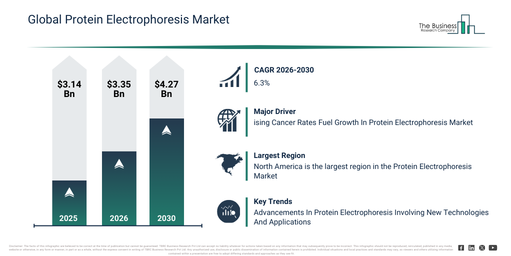
    The protein electrophoresis market has experienced robust growth in recent years. It is projected to expand from $3.14 billion in 2025 to $3.35 billion in 2026, driven by a compound annual growth rate (CAGR) of 6.6%. The market’s historical growth can be attributed to the increasing number of clinical diagnostic laboratories, the rising incidence of protein-related disorders, advancements in academic proteomics research, the broader application of electrophoresis in molecular biology, and the availability of standardized electrophoresis reagents.

    The protein electrophoresis market is projected to experience substantial growth in the upcoming years, reaching $4.27 billion by 2030, driven by a compound annual growth rate (CAGR) of 6.3%. This anticipated expansion is fueled by factors such as the increasing demand for personalized medicine diagnostics, the growing integration of electrophoresis with digital imaging systems, the broadening of hospital-based diagnostic testing, its expanding application in therapeutic monitoring, and rising investments in proteomics research. Key trends during this period are expected to encompass the increased adoption of automated electrophoresis systems, the growing utilization of high-resolution gel technologies, a rising need for clinical protein diagnostics, the expansion of multiplex protein analysis applications, and an intensified emphasis on reproducibility and accuracy.

    Access Your Free Sample Report for In-Depth Market Insights:

    https://www.thebusinessresearchcompany.com/sample.aspx?id=20604&type=smp

    Which Drivers Are Impacting The Competitive Landscape Of The Protein Electrophoresis Market?

    The expanding incidence of cancer is anticipated to drive the future expansion of the protein electrophoresis market. This increase in cancer cases stems from factors including aging populations, shifts in lifestyle, environmental exposures, and advancements in diagnostic techniques. Protein electrophoresis assists cancer patients by identifying unusual proteins in the bloodstream, thereby supporting the diagnosis, monitoring, and treatment of specific cancers. For example, in April 2024, data from the International Agency for Research on Cancer (IARC), a France-based intergovernmental organization, and the American Cancer Society (ACS), a US-based non-profit focused on cancer prevention and awareness, indicated that around 20 million new cancer diagnoses occurred worldwide in 2022. This report also forecasted a 77% increase, predicting that annual cases would reach 35 million by 2050. Lung cancer emerged as the most frequent diagnosis, making up 12.4% of all cases, trailed by breast cancer at 11.6% and colorectal cancer at 9.6%. Furthermore, Lung cancer was responsible for the highest number of deaths, totaling 1.8 million fatalities (18.7%), with colorectal cancer following at 9.3% and liver cancer at 7.8%. Consequently, the growing incidence of cancer is set to fuel the expansion of the protein electrophoresis market.

    What Leading Segments Are Studied In The Protein Electrophoresis Market?

    The protein electrophoresis market covered in this report is segmented –

    1) By Type: Serum Protein Electrophoresis, Immunostationary Electrophoresis, Isoenzyme Electrophoresis, Lipoprotein Electrophoresis, Hemoglobin Electrophoresis, Glycosylated Hemoglobin Electrophoresis, Non-Concentrated Urine Protein Electrophoresis, Cerebrospinal Fluid Electrophoresis

    2) By Technique: Sodium Dodecyl Sulfate Polyacrylamide Gel Electrophoresis (SDS-Page), Native Page, 1-D Page, 2-D Page

    3) By Gel: Agarose Gel Electrophoresis, Polyacrylamide Gel Electrophoresis

    4) By Application: Protein Analysis, Molecular Biology, Clinical Diagnostics

    5) By End-User: Hospitals And Diagnostics, Academic And Research Institutes, Pharmaceutical And Biotechnology Companies, Other End Users

    Subsegments:

    1) By Serum Protein Electrophoresis (SPEP): Albumin Electrophoresis, Globulin Electrophoresis (Alpha-1, Alpha-2, Beta, And Gamma), Monoclonal Gammopathy Identification, Serum-Free Light Chain Assay (sFLC), Paraprotein Detection, Protein Fractions Analysis

    2) By Immunostationary Electrophoresis (Immunoelectrophoresis): Immunofixation Electrophoresis (IFE), Rocket Immunoelectrophoresis, Counter Immunoelectrophoresis, Two-Dimensional Immunoelectrophoresis, Immunoblotting Techniques, Western Blotting

    3) By Isoenzyme Electrophoresis: Lactate Dehydrogenase (LDH) Isoenzyme Electrophoresis, Creatine Kinase (CK) Isoenzyme Electrophoresis, Alkaline Phosphatase Isoenzyme Electrophoresis, Amylase Isoenzyme Electrophoresis, Glutamate Dehydrogenase (GDH) Isoenzyme Electrophoresis, Malate Dehydrogenase (MDH) Isoenzyme Electrophoresis

    4) By Lipoprotein Electrophoresis: High-Density Lipoproteins (HDL), Low-Density Lipoproteins (LDL), Very Low-Density Lipoproteins (VLDL), Chylomicrons, Intermediate-Density Lipoproteins (IDL)

    5) By Hemoglobin Electrophoresis: Normal Hemoglobin (HbA, HbA2), Sickle Cell Hemoglobin (HbS), Hemoglobin C (HbC), Hemoglobin D (HbD), Thalassemia (HbF, HbH, Hb Bart’s), Hemoglobin E (HbE)

    6) By Glycosylated Hemoglobin Electrophoresis (HbA1c Electrophoresis): Glycated Hemoglobin A1c (HbA1c), Hemoglobin A1a And A1b, Non-Glycated Hemoglobin, Assessment Of Glycemic Control (For Diabetes)

    7) By Non-Concentrated Urine Protein Electrophoresis: Albumin Detection, Bence Jones Proteins Detection, Tubular Proteinuria, Glomerular Proteinuria, Tamm-Horsfall Protein, Urinary Monoclonal Free Light Chains (κ And λ)

    8) By Cerebrospinal Fluid (CSF) Electrophoresis: Oligoclonal Bands Detection (For Multiple Sclerosis Diagnosis), CSF IgG Index, CSF Albumin, CSF/Serum Albumin Ratio, CSF Total Protein Fractionation, CSF Free Light Chain Assay (FLC)

    What Trends Are Projected To Support The Growth Of The Protein Electrophoresis Market?

    Leading companies in the protein electrophoresis market are focused on creating advanced products, such as vertical electrophoresis systems, to gain a competitive advantage. A vertical electrophoresis system is laboratory apparatus used for the separation of biomolecules, including proteins or nucleic acids, according to their size, charge, or other characteristics through gel electrophoresis. As an illustration, in November 2023, TransGen Biotech Co. Ltd., a France-based producer of molecular and cellular biology reagents, launched the TSE-P Mini Vertical Electrophoresis System. This particular system is designed to enable efficient protein separation and transfer, allowing researchers to explore protein composition, diversity, and interactions within samples. The vertical electrophoresis unit facilitates the separation of proteins or nucleic acids based on their size and charge. The system is compatible with either precast or hand-cast gels and can accommodate various gel thicknesses and well sizes. Its transfer system ensures the efficient movement of separated proteins or nucleic acids from the gel to a membrane, such as nitrocellulose, for subsequent analysis or detection.

    Which Leading Companies Dominate The Protein Electrophoresis Market Share?

    Major companies operating in the protein electrophoresis market are Bio-Rad Laboratories Inc., Thermo Fisher Scientific Inc., Agilent Technologies Inc., Merck KGaA, Danaher Corporation, Beckman Coulter Inc., Sebia Group, Helena Laboratories Corporation, Shimadzu Corporation, PerkinElmer Inc., Cleaver Scientific Ltd., C.B.S. Scientific Company, Analytik Jena, Serva Electrophoresis GmbH, Takara Bio Inc., Lonza Group Ltd, Promega Corporation, Abcam plc, GE Healthcare, Hoefer Inc.

    Access The Complete Report For Deeper Market Insights:

    https://www.thebusinessresearchcompany.com/report/protein-electrophoresis-global-market-report

    How Does The Protein Electrophoresis Market Perform Across Major Global Regions?

    North America was the largest region in the protein electrophoresis market in 2025. The regions covered in the protein electrophoresis market report are Asia-Pacific, South East Asia, Western Europe, Eastern Europe, North America, South America, Middle East, Africa.

    Request Your Customized Protein Electrophoresis Market Research Report for Competitive Advantage:

    https://www.thebusinessresearchcompany.com/customise?id=20604&type=smp

    Browse Through More Reports Similar to the Global Protein Electrophoresis Market 2026, By The Business Research Company

    Protein Ingredients In Infant Nutrition Market Report 2026

    https://www.thebusinessresearchcompany.com/report/protein-ingredients-in-infant-nutrition-global-market-report

    Protein Hydrolysis Enzymes Market Report 2026

    https://www.thebusinessresearchcompany.com/report/protein-hydrolysis-enzymes-global-market-report

    Protein Assays Market Report 2026

    https://www.thebusinessresearchcompany.com/report/protein-assays-global-market-report

    Get in touch with us:

    The Business Research Company: https://www.thebusinessresearchcompany.com/

    Americas +1 310-496-7795

    Asia +44 7882 955267 & +91 8897263534

    Europe +44 7882 955267

    Email us at info@tbrc.info

    Follow us on:

    LinkedIn: https://in.linkedin.com/company/the-business-research-company

    YouTube: https://www.youtube.com/channel/UC24_fI0rV8cR5DxlCpgmyFQ

    Global Market Model: https://www.thebusinessresearchcompany.com/global-market-model