Category: HealthcareServices

  • Medical PendantMarket Overview 2025–2034: CAGR Trends, Long-Term Growth Paths, and Business Implications

    Medical PendantMarket Overview 2025–2034: CAGR Trends, Long-Term Growth Paths, and Business Implications

    Get 30% off on our Global Market Reports with code ONLINE30 – Hurry, limited time offer!

    What Are the Key Milestones in the Medical Pendant Market’s Growth Trajectory From 2025 To 2034?

    The size of the medical pendant market has seen strong growth in the preceding years. This market is projected to expand from a valuation of $0.62 billion in 2024 to $0.67 billion in 2025, reflecting a compound annual growth rate (CAGR) of 9.5%. Factors that have contributed to the growth during the historical period include the escalating demand for ergonomic solutions, the aging population, increasing cases of chronic diseases, a surge in healthcare spending, and the growing requirements of critical care settings.

    The medical pendant industry’s enlargement is projected to drastically escalate in the imminent years, with projections indicating it will reach $0.96 billion by 2029 with a Compound Annual Growth Rate (CAGR) of 9.2%. This prospective amplification during the forecast phase is linked to many factors: tailored development practices, a surge in surgical procedures, an escalating count of healthcare institutions, an augmented consciousness about personal health, and a burgeoning number of health care professionals. Noteworthy trends anticipated during the forecast period encompass the amalgamation of state-of-the-art technologies, tactical partnership, the incorporation of telemedicine, the automation in healthcare systems, and the manufacture of user-friendly medical pendant solutions.

    Download a free sample to assess the report’s scope and structure:

    https://www.thebusinessresearchcompany.com/sample.aspx?id=23448&type=smp

    What Are the Primary Drivers Supporting the Market Growth of the Medical Pendant Market?

    The increase in surgical operations is anticipated to fuel the expansion of the medical pendant market during the projected period. Surgical operations, encompassing incisions or manipulations to heal ailments, injuries, or conditions, are escalating due to the higher incident rate of chronic illnesses like cardiovascular diseases and cancer. These diseases, necessitating surgical procedures for their cure, are propelled by factors like growing elderly population, lifestyle modifications, and medical technology improvements, which augment the success and accessibility of surgeries. A medical pendant features as an essential tool in surgeries to streamline and organize vital medical tools, gases, and electrical connections, thereby facilitating a sterile, clutter-free, and safe operation environment. Such an environment aids in enhancing surgical accuracy, shortening procedure duration, and diminishing the risk associated with equipment. For instance, the Australian Institute of Health and Welfare, a government agency of Australia, reported in November 2024 that there was a 4.9% rise to a total of 771,600 patients admitted for surgery from public hospital elective surgery waiting lists during 2023-24, as opposed to the previous year, 2022-23. Consequently, the upsurge in surgical operations is stimulating the expansion of the medical pendant market.

    Which Primary Segments of the Medical Pendant Market Are Driving Growth and Industry Transformations?

    The medical pendant market covered in this report is segmented –

    1) By Type: Fixed Pendant, Single Arm Movable Pendant, Double And Multi Arm Movable Pendant, Accessories

    2) By Technology: Manual, Motorized, Pneumatic

    3) By Installation: Ceiling Mounted Pendants, Wall Mounted Pendants, Other Installations

    4) By Application: Surgery, Endoscopy, Anesthesia, Intensive Care Unit (ICU), Other Applications

    5) By End-User: Hospitals, Clinics, Other End-Users

    Subsegments:

    1) By Fixed Pendant: Ceiling-Mounted Fixed Pendant, Wall-Mounted Fixed Pendant

    2) By Single Arm Movable Pendant: Motorized Single Arm Pendant, Manual Single Arm Pendant

    3) By Double And Multi-Arm Movable Pendant: Motorized Multi-Arm Pendant, Manual Multi-Arm Pendant

    4) By Accessories: Gas Outlets, Shelves And Drawers, IV Poles, Monitor Holders, Cable Management Systems

    Request customized data on this market:

    https://www.thebusinessresearchcompany.com/customise?id=23448&type=smp

    Which Regions Are Key Players in the Growth of the Medical Pendant Market?

    North America was the largest region in the medical pendant market in 2024. Asia-Pacific is expected to be the fastest-growing region in the forecast period. The regions covered in the medical pendant market report are Asia-Pacific, Western Europe, Eastern Europe, North America, South America, Middle East, Africa.

    Which Technological Trends Are Reshaping the Medical Pendant Industry Dynamics?

    The medical pendant market’s dominant players are intensifying their focus on strategic alliances as a tool to incorporate their collective strengths, mitigate uncertainties, speed up breakthroughs, and extend their market sphere more effectively. Typically, these strategic alliances refer to partnerships between organizations wherein resources, expertise, or technologies are intermingled to achieve shared objectives, spur innovation, or secure a competitive edge. An illustration of this came in July 2022, when Arthrex, a US company specializing in less invasive orthopedic products, formed an alliance with Skytron, a US firm manufacturing medical pendants. The aim was to deliver a wide range of comprehensive room solutions catering to the changing demands and obstacles faced by surgical healthcare facilities. This alliance has empowered the company to bring advanced technology and a fully consolidated operating room set-up within one single offering. This deliverable comprises a full set of harmonized products developed to heighten surgical productivity and elevate patient results. Working in unison, Arthrex and Skytron are poised to provide top-tier solutions tailored to the needs of hospitals and surgical centers.

    View the full report here:

    https://www.thebusinessresearchcompany.com/report/medical-pendant-global-market-report

    What Parameters Are Used to Define the Medical Pendant Market?

    A medical pendant is a ceiling-mounted device used in hospitals and healthcare facilities to efficiently manage medical gases, electrical outlets, and equipment in critical care areas such as operating rooms, intensive care units (ICUs), and emergency rooms. It provides a space-saving solution by suspending essential medical utilities, allowing for improved workflow, easy access to life-support systems, and enhanced infection control.

    Purchase the full report and get a swift delivery:

    https://www.thebusinessresearchcompany.com/purchaseoptions.aspx?id=23448

    About The Business Research Company:

    With over 15000+ reports from 27 industries covering 60+ geographies, The Business Research Company has built a reputation for offering comprehensive, data-rich research and insights. Armed with 1,500,000 datasets, the optimistic contribution of in-depth secondary research, and unique insights from industry leaders, you can get the information you need to stay ahead in the game.

    Get in touch with us:

    The Business Research Company: https://www.thebusinessresearchcompany.com/

    Americas +1 3156230293

    Asia +44 2071930708

    Europe +44 2071930708

    Email us at info@tbrc.info

    Follow us on:

    LinkedIn: https://in.linkedin.com/company/the-business-research-company

    YouTube: https://www.youtube.com/channel/UC24_fI0rV8cR5DxlCpgmyFQ

    Global Market Model: https://www.thebusinessresearchcompany.com/global-market-model

  • Medical Mammography Equipment  Outlook 2034: Key Drivers, Trends, and Market Frontiers

    Medical Mammography Equipment Outlook 2034: Key Drivers, Trends, and Market Frontiers

    Get 30% off on our Global Market Reports with code ONLINE30 – Hurry, limited time offer!

    How Has The Medical Mammography Equipment Market Size Shifted, And What Is the Outlook Through 2034?

    In recent years, the market size for medical mammography equipment has seen strong growth. The market is forecasted to expand from $2.07 billion in 2024 to $2.23 billion in 2025, with a compound annual growth rate (CAGR) of 7.4%. The historic growth has been fueled by factors such as growing cognizance of breast cancer, an upward trend in demand for early detection technologies, increased government initiatives and funding for breast cancer screenings, a boost in healthcare spending, and an increase in breast cancer cases amongst women.

    The market size of medical mammography equipment is anticipated to experience robust growth in the upcoming years, expected to reach a worth of $2.93 billion in 2029, with a compound annual growth rate (CAGR) of 7.1%. Factors contributing to the growth during this period include the accelerating adoption of digital mammography systems, an increase in the elderly population, development in healthcare infrastructure, advances in AI for breast cancer detection, and an increased emphasis on preventive healthcare and initial diagnosis. Noteworthy trends expected during this period encompass advancements in 3D mammography techniques, superior unification of AI, and machine learning for enhanced diagnosis, the creation of portable and compact mammography units, and new developments in customised breast cancer screening alongside progress in contrast-enhanced mammography methods.

    Download a free sample to assess the report’s scope and structure:

    https://www.thebusinessresearchcompany.com/sample.aspx?id=23447&type=smp

    How Are Key Drivers in the Industry Acting as Catalysts for the Growth of the Medical Mammography Equipment Market?

    The medical mammography equipment market’s expansion is anticipated to be fuelled by the growing incidence of breast cancer. This disease is characterized by uncontrolled cell growth in the breast, which creates a tumor often detectable on an x-ray or by touch as a lump. The increasing instances of breast cancer are attributed to heightened exposure to endocrine-disrupting chemicals, increasing hormone-related tumor growth risk due to disturbances in hormonal balance. Medical mammography equipment plays a crucial role in early breast cancer detection, paving the way for prompt treatment and enhanced survival rates. For example, Cancer Australia, a government agency, stated in September 2024 that in 2022, 12.7% of all new cancer cases were attributable to breast cancer with 20,640 diagnoses and 3,214 related deaths. Hence, the increasing occurrence of breast cancer is propelling the medical mammography equipment market’s growth.

    Which Segments in the Medical Mammography Equipment Offer the Most Growth?

    The medical mammography equipment market covered in this report is segmented –

    1) By Product Type: Analog Mammography Equipment, Digital Mammography Equipment, 3D Mammography (Tomosynthesis), MRI Mammography, Screening Mammography Systems

    2) By Technology: Film-Based Technology, Digital Technology, Computed Radiography, Computed Radiography

    3) By Application: Screening For Breast Cancer, Diagnostic Mammography, Monitoring Treatment Responses, Research And Development In Breast Health

    4) By End-User: Hospitals, Diagnostic Imaging Centers, Specialized Clinics, Research Institutions

    Sub Segments:

    1) By Analog Mammography Equipment: Film-Screen Mammography Systems, Dedicated Analog Mammography Units, Retrofit Analog Systems

    2) By Digital Mammography Equipment: Full-Field Digital Mammography (FFDM), Computed Radiography (CR) Mammography, Digital Breast Imaging Workstations

    3) By 3D Mammography (Tomosynthesis): Standalone Tomosynthesis Systems, Combo 2D/3D Systems, Mobile Tomosynthesis Units

    4) By MRI Mammography: Breast MRI Scanners, Dedicated Breast Coils, Contrast Agents for Breast MRI

    5) By Screening Mammography Systems: Hospital-Based Screening Systems, Mobile Screening Units, Public Health Screening Programs

    Request customized data on this market:

    https://www.thebusinessresearchcompany.com/customise?id=23447&type=smp

    What Are the Fastest-Growing Geographies in the Medical Mammography Equipment Market?

    North America was the largest region in the medical mammography equipment market in 2024. Asia-Pacific is expected to be the fastest-growing region in the forecast period. The regions covered in the medical mammography equipment market report are Asia-Pacific, Western Europe, Eastern Europe, North America, South America, Middle East, Africa.

    Which Cutting-Edge Market Trends Are Expected to Drive the Medical Mammography Equipment Market’s Growth?

    Key players in the medical mammography equipment market are striving to introduce innovative technologies such as digital breast chemosynthesis (DBT). This approach not only enhances early detection of breast cancer but also improves diagnostic precision, minimizes recall rates, and enables more personalized and effective patient care. Digital breast tomosynthesis (DBT) is an advanced imaging procedure that generates 3D-like breast images by capturing multiple X-ray shots from various angles. For example, in October 2023, Siemens Healthineers, a medical technology firm based in Germany, unveiled the Mammomat B. Brilliant, a revolutionary tomosynthesis mammography system. This groundbreaking device comes with a wide-angle tube design that enhances 3D imaging of the breast, thereby improving cancer detection. The system is engineered to provide high-resolution images while ensuring patient comfort and minimizing radiation. The goal is to revolutionize breast cancer diagnostics by enabling more precise and efficient screening. The introduction of the Mammomat B. Brilliant underscores the company’s dedication to utilizing leading-edge imaging technologies in women’s health.

    View the full report here:

    https://www.thebusinessresearchcompany.com/report/medical-mammography-equipment-global-market-report

    What Are the Key Elements That Define the Medical Mammography Equipment Market?

    Medical mammography equipment is specialized imaging technology used for early detection and diagnosis of breast cancer. It utilizes low-dose X-rays to create detailed images of the breast tissue, helping identify abnormalities such as tumors or calcifications. The equipment typically includes a mammography machine, image processing systems, and advanced software for analysis.

    Purchase the full report and get a swift delivery:

    https://www.thebusinessresearchcompany.com/purchaseoptions.aspx?id=23447

    About The Business Research Company:

    With over 15000+ reports from 27 industries covering 60+ geographies, The Business Research Company has built a reputation for offering comprehensive, data-rich research and insights. Armed with 1,500,000 datasets, the optimistic contribution of in-depth secondary research, and unique insights from industry leaders, you can get the information you need to stay ahead in the game.

    Get in touch with us:

    The Business Research Company: https://www.thebusinessresearchcompany.com/

    Americas +1 3156230293

    Asia +44 2071930708

    Europe +44 2071930708

    Email us at info@tbrc.info

    Follow us on:

    LinkedIn: https://in.linkedin.com/company/the-business-research-company

    YouTube: https://www.youtube.com/channel/UC24_fI0rV8cR5DxlCpgmyFQ

    Global Market Model: https://www.thebusinessresearchcompany.com/global-market-model

  • Leber Hereditary Optic Neuropathy Treatment Market Forecast 2025–2034: Trends Reshaping Demand, Investment, and Innovation

    Leber Hereditary Optic Neuropathy Treatment Market Forecast 2025–2034: Trends Reshaping Demand, Investment, and Innovation

    Get 30% off on our Global Market Reports with code ONLINE30 – Hurry, limited time offer!

    What is the Anticipated CAGR of the Leber Hereditary Optic Neuropathy Treatment Market, and What Factors Will Drive It?

    In the past few years, the market size for treatments of leber hereditary optic neuropathy has seen substantial growth. This market is projected to expand from $0.36 billion in 2024 to $0.39 billion in 2025, with a compound annual growth rate (CAGR) of 8.1%. This significant growth during the historical period is largely due to factors such as an increase in the cases of leber hereditary optic neuropathy, an aging global population, a higher incidence of diabetes, a growing demand for cell-free DNA in maternal plasma tests, as well as increased investments in the healthcare sector.

    In the coming years, the market for leber hereditary optic neuropathy treatment is projected to experience robust growth, with its value expected to reach $0.53 billion in 2029, which means a compound annual growth rate (CAGR) of 7.8%. This growth in the projected period can be linked to the rise in demand for innovative therapy options and interventions, the growing need for specialized diagnostic services, enhanced awareness, and early diagnosis of optic neuropathies. There’s also an increased demand for new LHON treatments, and continuous advancement in product design and quality upliftment. Key trends to track in this forecast period include the evolution of targeted therapies, breakthroughs in genetic testing, developments in surgical and pharmacological treatments, technological progress in gene therapy, and the broadening scope of gene therapy.

    Download a free sample to assess the report’s scope and structure:

    https://www.thebusinessresearchcompany.com/sample.aspx?id=23438&type=smp

    What Are the Primary Drivers Supporting the Market Growth of the Leber Hereditary Optic Neuropathy Treatment Market?

    The leber hereditary optic neuropathy treatment market is poised for growth, driven by the rising cases of glaucomas and optic neuritis. These eye conditions, which result in optic nerve damage, are typically caused by increased intraocular pressure in glaucoma, while optic neuritis is often linked to inflammatory autoimmune diseases causing vision loss. The escalation in glaucoma and optic neuritis cases is attributed to an aging global populace and enhanced diagnostic methods. As people age, the likelihood of developing glaucoma, characterized by increased intraocular pressure causing optic nerve damage, significantly spikes. Glaucoma and optic neuritis, both involving optic nerve damage and vision loss, share commonalities with LHON. As the rate of these conditions increases, more research is being conducted to create treatments focusing on optic nerve degeneration, which can also benefit LHON therapies since the optic nerve damage mechanisms are critical to all three conditions. For example, The Centers for Disease Control and Prevention, a US federal agency, reported in October 2024 that over 3 million Americans have glaucoma and this figure is expected to jump to 6.3 million by 2050 due to the aging US population. Therefore, the rising cases of glaucoma and optic neuritis are propelling the leber hereditary optic neuropathy treatment market growth.

    Which Primary Segments of the Leber Hereditary Optic Neuropathy Treatment Market Are Driving Growth and Industry Transformations?

    The leber hereditary optic neuropathy treatment market covered in this report is segmented –

    1) By Treatment: Medication, Stem Cell Therapy, Gene Therapy, Genetic Counseling

    2) By Route Of Administration: Intramuscular, Oral, Other Routes Of Administration

    3) By Diagnosis: Molecular Genetic Testing, Magnetic Resonance Imaging (MRI), Blood tests, Other Diagnosis

    4) By Distribution Channel: Hospital Pharmacy, Retail Pharmacy, Online Pharmacy

    5) By End-Users: Clinic, Hospital, Other End-Users

    Subsegments:

    1) By Medication: Idebenone, Antioxidants, Mitochondrial-Targeted Therapies, Neuroprotective Agents

    2) By Stem Cell Therapy: Autologous Stem Cell Therapy, Allogeneic Stem Cell Therapy, Induced Pluripotent Stem Cell (iPSC) Therapy

    3) By Gene Therapy: Adeno-Associated Virus (AAV)-Mediated Therapy, Mitochondrial Gene Editing, RNA-Based Therapies

    4) By Genetic Counseling: Carrier Screening, Predictive Testing, Family Risk Assessment, Pre-Symptomatic Genetic Counseling

    Request customized data on this market:

    https://www.thebusinessresearchcompany.com/customise?id=23438&type=smp

    Which Regions Are Key Players in the Growth of the Leber Hereditary Optic Neuropathy Treatment Market?

    North America was the largest region in the leber hereditary optic neuropathy treatment market in 2024. Asia-Pacific is expected to be the fastest-growing region in the forecast period. The regions covered in the leber hereditary optic neuropathy treatment market report are Asia-Pacific, Western Europe, Eastern Europe, North America, South America, Middle East, Africa.

    Which Technological Trends Are Reshaping the Leber Hereditary Optic Neuropathy Treatment Industry Dynamics?

    Leading firms in the leber hereditary optic neuropathy (LHON) treatment market are concentrating on creating novel solutions, such as clinical trials for gene therapy, in order to enhance treatment effectiveness, revive mitochondrial activity, and tackle the integral genetic origins of LHON. These gene therapy trials are designed to restore vision by introducing functional versions of faulty mitochondrial genes like ND4 into the body. Such studies need to progress through several stages like preclinical testing, phase 1, 2, and 3 trials before they can be given regulatory clearance. For example, Neurophth Therapeutics, a Chinese-based gene therapy firm, initiated a Phase I/II clinical trial targeting ND1-LHON to cure leber hereditary optic neuropathy in China and the U.S. in August 2023. The goal of the trial is to determine the safety, tolerability, and effectiveness of NFS-02 after it has been approved by the U.S. FDA and China’s NMPA. The first patient has received the treatment, symbolizing a significant progress in Neurophth’s global pursuit for early drug approval and market launch. The company is also expediting patient recruitment and investigating further gene therapy uses for other unfulfilled medical requirements.

    View the full report here:

    https://www.thebusinessresearchcompany.com/report/leber-hereditary-optic-neuropathy-treatment-global-market-report

    What Parameters Are Used to Define the Leber Hereditary Optic Neuropathy Treatment Market?

    Leber hereditary optic neuropathy (LHON) treatment refers to medical approaches aimed at managing or mitigating the effects of LHON, a rare genetic disorder that causes sudden vision loss, typically in young adults. LHON is caused by mutations in mitochondrial DNA, leading to optic nerve degeneration and severe vision impairment. The disorder stems from impaired retinal ganglion cell function, resulting in optic nerve degeneration.

    Purchase the full report and get a swift delivery:

    https://www.thebusinessresearchcompany.com/purchaseoptions.aspx?id=23438

    About The Business Research Company:

    With over 15000+ reports from 27 industries covering 60+ geographies, The Business Research Company has built a reputation for offering comprehensive, data-rich research and insights. Armed with 1,500,000 datasets, the optimistic contribution of in-depth secondary research, and unique insights from industry leaders, you can get the information you need to stay ahead in the game.

    Get in touch with us:

    The Business Research Company: https://www.thebusinessresearchcompany.com/

    Americas +1 3156230293

    Asia +44 2071930708

    Europe +44 2071930708

    Email us at info@tbrc.info

    Follow us on:

    LinkedIn: https://in.linkedin.com/company/the-business-research-company

    YouTube: https://www.youtube.com/channel/UC24_fI0rV8cR5DxlCpgmyFQ

    Global Market Model: https://www.thebusinessresearchcompany.com/global-market-model

  • Microtome Market Forecast 2025–2034: Trends Reshaping Demand, Investment, and Innovation

    Microtome Market Forecast 2025–2034: Trends Reshaping Demand, Investment, and Innovation

    Our market reports now include the latest updates on global tariffs, trade impacts, and evolving supply chain dynamics.

    What is the Anticipated CAGR of the Minimal Residual Disease Market, and What Factors Will Drive It?

    The market size of minimal residual disease has been burgeoning in recent times. From being evaluated at $1.78 billion in 2024, it is predicted to escalate to $2.01 billion in 2025, showcasing a compound annual growth rate (CAGR) of 12.9%. The aforementioned surge during the historical period is linked with factors such as the augmenting count of cancer patients, growing expenditure on research & development, enhanced accessibility of healthcare, an increasing occurrence of blood cancer, and a surge in public awareness.

    The market size for minimal residual disease is predicted to experience a swift surge in the coming years and is estimated to expand to $3.22 billion by 2029 with a compound annual growth rate of 12.5%. Multiple factors will contribute to this predicted growth within the projected period including an increasing cancer patient count, elevated awareness efforts by the government, improvements in healthcare affordability, rising per capita income in developing economies, and government-led initiatives to raise cancer awareness. Trends that are anticipated to prevail during the forecast period encompass the advancement of next-generation sequencing technology, normalization of MRD testing, personalized MRD monitoring adoption, advancements in liquid biopsy methodologies, and treatment focusing on minimal residual disease.

    Download a free sample to assess the report’s scope and structure:

    https://www.thebusinessresearchcompany.com/sample.aspx?id=21224&type=smp

    What Are the Primary Drivers Supporting the Market Growth of the Minimal Residual Disease Market?

    The escalating incidence of cancer is projected to fuel the expansion of the minimal residual disease market in the future. Cancer refers to a collection of diseases marked by uninhibited growth and distribution of abnormal cells within the body. The surge in cancer incidence can be attributed to elements such as an aging demographic, greater exposure to environmental carcinogens, unhealthy ways of living, and genetic predispositions. The increased occurrence of cancer heightens the need for accurate MRD testing to identify remaining cancer cells, facilitating early action and tailored treatment. This enhances the forecast of relapse and improves the results for patients. For example, as reported by the National Cancer Institute (NCI), a government agency in the United States, in May 2024, there were approximately 20 million new cancer cases and 9.7 million cancer-induced deaths globally in 2022. The estimates for 2040 indicate 29.9 million fresh cases and 15.3 million cancer-related fatalities. Thus, the escalating incidence of cancer is a significant factor contributing to the expansion of the minimal residual disease market.

    Which Primary Segments of the Minimal Residual Disease Market Are Driving Growth and Industry Transformations?

    The minimal residual disease market covered in this report is segmented –

    1) By Detection Target: Lymphoma, Leukemia, Solid Tumors, Other Detection Targets

    2) By Test Technique: Flow Cytometry, Polymerase Chain Reaction (PCR), Next Generation Sequencing (NGS), Other Test Techniques

    3) By End-User: Banking, Financial Services, And Insurance (BFSI), Retail And E-Commerce, Hospitals, Diagnostic Laboratories, Research Institutions

    Subsegments:

    1) By Lymphoma: Hodgkin Lymphoma, Non-Hodgkin Lymphoma

    2) By Leukemia: Acute Lymphoblastic Leukemia, Acute Myeloid Leukemia, Chronic Lymphocytic Leukemia, Chronic Myeloid Leukemia

    3) By Solid Tumors: Breast Cancer, Lung Cancer, Colorectal Cancer, Prostate Cancer

    4) By Other Detection Targets: Multiple Myeloma, Neuroblastoma, Sarcomas

    Request customized data on this market:

    https://www.thebusinessresearchcompany.com/customise?id=21224&type=smp

    Which Regions Are Key Players in the Growth of the What Are the Primary Drivers Supporting the Market Growth of the Minimal Residual Disease Market? Market?

    North America was the largest region in the minimal residual disease market in 2024. Asia-Pacific is expected to be the fastest-growing region in the forecast period. The regions covered in the minimal residual disease market report are Asia-Pacific, Western Europe, Eastern Europe, North America, South America, Middle East, Africa.

    What Are the Most Significant Market Trends in the Minimal Residual Disease Market?

    Key players in the minimal residual disease (MRD) market are focusing on the creation of advanced In Vitro Diagnostic (IVD) testing services. These services aim to offer bespoke therapy options that will improve patient results. Specifically, an In Vitro Diagnostic (IVD) test service can identify remaining cancer cells following treatment in a lab setting, enabling the prediction of recurrence and refinement of therapeutic strategies. For example, Adaptive Biotechnologies Corporation, a biotechnology firm based in the US, launched clonoSEQ Assay in December 2022. This test was designed to detect MRD in patients with diffuse large B-cell lymphoma (DLBCL) by examining circulating tumor DNA (ctDNA) in blood samples. This approach allows for a non-invasive, highly sensitive way to observe cancer progression and early signs of a relapse. This assay gives medical professionals a more detailed view of a patient’s disease load, assisting them in creating tailored treatment plans. This is the first MRD test for DLBCL to be covered by Medicare, bringing it into wide accessibility for all treatment schedules and time points.

    View the full report here:

    https://www.thebusinessresearchcompany.com/report/minimal-residual-disease-global-market-report

    What Parameters Are Used to Define the Minimal Residual Disease Market?

    Minimal residual disease (MRD) refers to the few cancer cells that persist in the body after treatment, despite clinical remission. Monitoring minimal residual disease (MRD) helps detect early signs of relapse, evaluate treatment effectiveness, and predict the risk of recurrence. This sensitive detection can guide tailored therapies to improve outcomes and reduce the likelihood of relapse.

    Purchase the full report and get a swift delivery:

    https://www.thebusinessresearchcompany.com/purchaseoptions.aspx?id=21224

    About The Business Research Company:

    With over 15000+ reports from 27 industries covering 60+ geographies, The Business Research Company has built a reputation for offering comprehensive, data-rich research and insights. Armed with 1,500,000 datasets, the optimistic contribution of in-depth secondary research, and unique insights from industry leaders, you can get the information you need to stay ahead in the game.

    Get in touch with us:

    The Business Research Company: https://www.thebusinessresearchcompany.com/

    Americas +1 3156230293

    Asia +44 2071930708

    Europe +44 2071930708

    Email us at info@tbrc.info

    Follow us on:

    LinkedIn: https://in.linkedin.com/company/the-business-research-company

    YouTube: https://www.youtube.com/channel/UC24_fI0rV8cR5DxlCpgmyFQ

    Global Market Model: https://www.thebusinessresearchcompany.com/global-market-model
  • Key Factors Fueling the Growth of the Traveler’s Diarrhea Treatment Market in 2025: Impact Of Increasing Travel On The Market

    Key Factors Fueling the Growth of the Traveler’s Diarrhea Treatment Market in 2025: Impact Of Increasing Travel On The Market

    Our market reports now include the latest updates on global tariffs, trade impacts, and evolving supply chain dynamics.

    #What Are the Key Projections for the CAGR of the Traveler’s Diarrhea Treatment Market Size From 2025 to 2034?#_x000D_

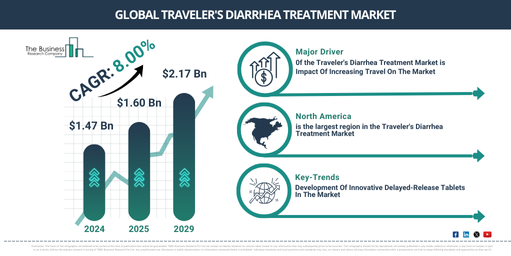
    In recent times, there has been substantial growth in the market size of treatments for traveler’s diarrhea. Predictions suggest this market will expand from $1.47 billion in 2024 to $1.60 billion in 2025, with a compound annual growth rate (CAGR) of 8.3%. The past rise in this sector is linked to increasing instances of viral, bacterial, and parasitic infections, growing incidence of chronic diseases, heightened awareness about illnesses related to travel, an amplified prevalence of traveler’s diarrhea, and a surge in food poisoning cases._x000D_

    _x000D_

    The market size for treatment of traveler’s diarrhea is projected to experience significant expansion in the forthcoming years, reaching a valuation of $2.17 billion by 2029 with an 8.0% compound annual growth rate (CAGR). This surge in the predicted timeframe can be linked to a rising number of food poisoning incidents, an increased prevalence of celiac disease, a growing need for anti-diarrheal medications, the emerging popularity of adventure and eco-tourism, and an uptick in international travel. Key anticipated trends during this forecasted period include the introduction of novel therapies, the use of probiotics and treatments based on microbiomes, advancement in diagnostic tools, preventative vaccines, and gastrointestinal drugs._x000D_

    _x000D_

    #Download a free sample to assess the report’s scope and structure:#_x000D_

    https://www.thebusinessresearchcompany.com/sample.aspx?id=21305&type=smp_x000D_

    _x000D_

    #What are the Fundamental Drivers and Innovations Shaping the Traveler’s Diarrhea Treatment Market?#_x000D_

    The traveler’s diarrhea treatment market is projected to experience significant growth due to the increasing number of people traveling. Whether for pleasure, business, or other reasons, more people are traveling, and this can be credited to factors such as higher disposable income, the rise of budget airlines, easier visa procedures, and a heightened interest in exploring new experiences. Treatments for traveler’s diarrhea can swiftly alleviate symptoms and prevent dehydration, facilitating faster recovery and continuation of travels. The U.S.-based Bureau of Transportation Statistics reported that U.S. airlines saw an increase in passenger numbers, transporting 853 million passengers between January and December 2022. This was a rise of 194 million from the 658 million passengers they carried in the preceding year, 2021. As such, the increasing number of travelers is clearly fueling the traveler’s diarrhea treatment market’s growth. The traveler’s diarrhea treatment market will also benefit from the rise in food poisoning instances. Food poisoning typically occurs when people consume food or drinks that are contaminated, usually by bacteria, viruses, parasites, or toxins. The increase of food contamination is attributed to factors such as poor food handling, bacterial contamination, inefficient refrigeration, and more consumption of ready-made and processed foods. Treating traveler’s diarrhea can address issues like dehydration and abdominal cramps, brought about by food poisoning, through rehydration therapy, antimicrobial medications, and probiotics. This promotes swift recovery and decreases complications. The Italy-based European Food Safety Authority reported a 44% increase in foodborne outbreaks in 2022, with the figure standing at 5,763 compared to the previous year, 2021. Hence, the escalation in the number of food poisoning incidents is triggering the growth of the traveler’s diarrhea treatment market._x000D_

    _x000D_

    #How Is the Traveler’s Diarrhea Treatment Market Segmented?#_x000D_

    The traveler’s diarrhea treatment market covered in this report is segmented –_x000D_

    _x000D_

    1) By Drug Type: Antibiotics, Anti-diarrheal, Other Drug Types_x000D_

    2) By Route Of Administration: Oral, Parenteral_x000D_

    3) By Application: Adult Traveler’s Diarrhea, Children Traveler’s Diarrhea_x000D_

    4) By End-Users: Hospitals, Homecare, Specialty Clinics, Other End-Users_x000D_

    _x000D_

    Subsegments:_x000D_

    1) By Antibiotics: Fluoroquinolones, Macrolides, Rifamycins_x000D_

    2) By Anti-diarrheal: Loperamide, Bismuth Subsalicylate_x000D_

    3) By Other Drug Types: Oral Rehydration Therapy, Probiotics, Zinc Supplements_x000D_

    _x000D_

    #Request customized data on this market:#_x000D_

    https://www.thebusinessresearchcompany.com/customise?id=21305&type=smp_x000D_

    _x000D_

    #Which Regions Are Driving the Next Phase of the Traveler’s Diarrhea Treatment Market Growth?#_x000D_

    North America was the largest region in the traveler’s diarrhea treatment market in 2024. Asia-Pacific is expected to be the fastest-growing region in the forecast period. The regions covered in the traveler’s diarrhea treatment market report are Asia-Pacific, Western Europe, Eastern Europe, North America, South America, Middle East, Africa._x000D_

    _x000D_

    #What Key Trends Are Shaping the Future of the Traveler’s Diarrhea Treatment Market?#_x000D_

    Leading corporations in the traveler’s diarrhea treatment market are channeling their efforts towards the creation of groundbreaking drugs such as delayed-release tablets. These tablets are designed to ensure extended drug activity and cut back on the frequency of dosage. These are drugs engineered to discharge their active components at designated timings post ingestion, ensuring they make it to the intestines prior to dissolution. This method allows for effective traveler’s diarrhea treatment while mitigating stomach irritation. To illustrate, in September 2023, Adalvo Ltd., a pharmaceutical firm based in Malta, collaborated with Cosmo Pharmaceuticals N.V., a medical company from Ireland, to develop Rifamycin SV MMX 200 mg, commercially known as Aemcolo. This drug combats traveler’s diarrhea by dispensing a non-absorbable antibiotic straight to the colon, lessening symptoms and limiting disturbance to beneficial gut microbiota. The targeted delivery method contributes to effective relief with a decreased risk of systemic side effects and resistance to multiple drugs._x000D_

    _x000D_

    #View the full report here:#_x000D_

    https://www.thebusinessresearchcompany.com/report/travelers-diarrhea-treatment-global-market-report_x000D_

    _x000D_

    #How Is the Traveler’s Diarrhea Treatment Market Defined and What Are Its Core Parameters?#_x000D_

    Traveler’s diarrhea is a common illness caused by consuming contaminated food or water while traveling. It is typically characterized by frequent, loose stools, abdominal cramps, and sometimes nausea or vomiting. Treatment includes rehydration with oral rehydration solutions, taking anti-diarrheal medications such as loperamide, and antibiotics in severe cases._x000D_

    _x000D_

    #Purchase the full report and get a swift delivery:#_x000D_

    https://www.thebusinessresearchcompany.com/purchaseoptions.aspx?id=21305_x000D_

    _x000D_

    #About The Business Research Company:#_x000D_

    With over 15000+ reports from 27 industries covering 60+ geographies, The Business Research Company has built a reputation for offering comprehensive, data-rich research and insights. Armed with 1,500,000 datasets, the optimistic contribution of in-depth secondary research, and unique insights from industry leaders, you can get the information you need to stay ahead in the game._x000D_

    _x000D_

    #Get in touch with us:#_x000D_

    The Business Research Company: https://www.thebusinessresearchcompany.com/_x000D_

    Americas +1 3156230293_x000D_

    Asia +44 2071930708_x000D_

    Europe +44 2071930708_x000D_

    Email us at info@tbrc.info_x000D_

    _x000D_

    #Follow us on:#_x000D_

    _x000D_

    LinkedIn: https://in.linkedin.com/company/the-business-research-company_x000D_

    YouTube: https://www.youtube.com/channel/UC24_fI0rV8cR5DxlCpgmyFQ_x000D_

    Global Market Model: https://www.thebusinessresearchcompany.com/global-market-model

  • Emerging Growth Drivers in the Juvenile Macular Degeneration Treatment Market Landscape: Rising Retinal Disorders Driving The Growth Of The Market Due To Increasing Diabetes Prevalence

    Emerging Growth Drivers in the Juvenile Macular Degeneration Treatment Market Landscape: Rising Retinal Disorders Driving The Growth Of The Market Due To Increasing Diabetes Prevalence

    Get 30% off on our Global Market Reports with code ONLINE30 – Hurry, limited time offer!

    What Is the Estimated Market Size of the Juvenile Macular Degeneration Treatment Market In 2029?

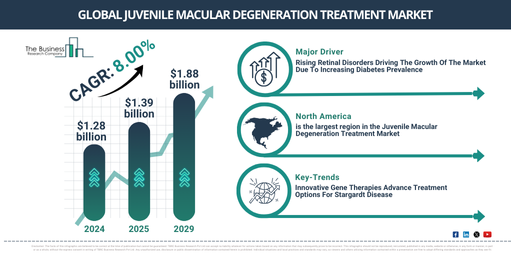
    The market for treating juvenile macular degeneration has experienced substantial growth in recent years. The market is projected to expand from $1.28 billion in 2024 to $1.39 billion in 2025, with a compound annual growth rate (CAGR) of 8.2%. Growth during the historic period is due to factors such as the increased occurrence of genetic eye diseases, more investment in ophthalmology research, heightened attention on eye care for children, increasing instances of vision problems in children, and the advancing integration of artificial intelligence in eye care diagnostics.

    There is a prediction for substantial expansion in the juvenile macular degeneration treatment market in the foreseeable future. This market is set to escalate to $1.88 billion in 2029 with an 8.0% Compound Annual Growth Rate (CAGR). Factors contributing to this projected growth during the forecast period include an increasing elderly population, the emergence of ophthalmic biotechnology startups, heightened focus on targeted drug delivery systems, more clinical trials, and amplified investments in gene therapy. Foreseeable trends during this period encompass advancements in genetic testing, the progress of gene therapies, stem cell research, regulatory backing for innovative therapies, and the adoption of personalized medicine tactics.

    Download a free sample to assess the report’s scope and structure:

    https://www.thebusinessresearchcompany.com/sample.aspx?id=23433&type=smp

    Which Primay Drivers Are Accelerating Growth in the Juvenile Macular Degeneration Treatment Market?

    The expansion of the juvenile macular degeneration treatment market is poised to get influenced by the growing instances of retinal disorders. These disorders, linked to the retina’s functionality – the light-sensitive aspect of the eye, can prompt vision deterioration or even loss. Escalating diabetes instances contribute significantly to these disorders, causing conditions such as diabetic retinopathy, resulting in progressive retina damage. Treatments targeted towards juvenile macular degeneration aid to control retinal disorders by safeguarding vision through early treatment methods, which are extremely beneficial for young patients. As indicated by a report from Retina Australia, a non-profit organization from Australia, in November 2024, approximately 19,000 people or around 1 in every 1,380 individuals, are presumed to be affected by inherited retinal disease (IRD) in Australia. Moreover, as per the National Eye Institute, a health institute based in the US, the count for Americans dealing with advanced age-related macular degeneration (AMD) is projected to rise from the present 2.1 million to somewhere around 3.7 million by 2030. Hence, the climbing occurrences of retinal disorders act as a significant driving factor for the upward trend in the juvenile macular degeneration treatment market.

    Which Primary Segments of the Juvenile Macular Degeneration Treatment Market Are Driving Growth and Industry Transformations?

    The juvenile macular degeneration treatment market covered in this report is segmented –

    1) By Type: Wet Age-Related Macular Degeneration, Dry Age-Related Macular Degeneration

    2) By Treatment: Devices, Drugs, Surgery

    3) By Application: Vision Preservation, Disease Management, Symptom Relief, Preventive Care, Clinical Trials

    4) By Sales Channel: Hospitals, Ambulatory Surgical Centres, Other Sales Channel

    Subsegments:

    1) By Wet Age-Related Macular Degeneration: Anti-Vascular Endothelial Growth Factor (Anti-VEGF) Therapy, Photodynamic Therapy (PDT), Laser Therapy

    2) By Dry Age-Related Macular Degeneration: Nutritional Supplements, Gene Therapy, Stem Cell Therapy

    Request customized data on this market:

    https://www.thebusinessresearchcompany.com/customise?id=23433&type=smp

    Which Regions Are Key Players in the Growth of the Juvenile Macular Degeneration Treatment Market?

    North America was the largest region in the juvenile macular degeneration treatment market in 2024. The regions covered in the juvenile macular degeneration treatment market report are Asia-Pacific, Western Europe, Eastern Europe, North America, South America, Middle East, Africa.

    What Are the Most Significant Market Trends in the Juvenile Macular Degeneration Treatment Market?

    Major corporations in the juvenile macular degeneration treatment market are concentrating their efforts on pioneering innovative solutions, such as dual adeno-associated viral (AAV) vectors, with the aim of advancing gene therapy delivery and augmenting the effectiveness of the treatment for juvenile macular degeneration patients. The function of a dual AAV vector in gene therapy is to utilise two AAV vectors for the delivery of therapeutic genes which are too large to be packed within one AAV. To illustrate, in March 2025, SpliceBio, a biotechnology firm based in Spain, revealed the first patient dosage in its Phase 1/2 ASTRA study for SB-007. SB-007 is a dual AAV vector gene therapy constructed to restore the full expression of the ABCA4 protein. The objective of this therapy is to offer a potential cure for juvenile macular degeneration, also known as Stargardt disease. This is an inherited retinal disorder which currently has no approved treatments, aiming to assist all patients regardless of the type of mutations they have. This progress marks a considerable advancement towards the creation of effective gene therapies for uncommon retinal disorders.

    View the full report here:

    https://www.thebusinessresearchcompany.com/report/juvenile-macular-degeneration-treatment-global-market-report

    What Parameters Are Used to Define the Juvenile Macular Degeneration Treatment Market?

    Juvenile macular degeneration (stargardt disease) treatment refers to a range of strategies aimed at managing vision loss and improving quality of life for individuals affected by this genetic eye disorder. It is caused by genetic mutations that damage the macula, the central part of the retina, leading to gradual vision loss and difficulty with tasks like reading and recognizing faces.

    Purchase the full report and get a swift delivery:

    https://www.thebusinessresearchcompany.com/purchaseoptions.aspx?id=23433

    About The Business Research Company:

    With over 15000+ reports from 27 industries covering 60+ geographies, The Business Research Company has built a reputation for offering comprehensive, data-rich research and insights. Armed with 1,500,000 datasets, the optimistic contribution of in-depth secondary research, and unique insights from industry leaders, you can get the information you need to stay ahead in the game.

    Get in touch with us:

    The Business Research Company: https://www.thebusinessresearchcompany.com/

    Americas +1 3156230293

    Asia +44 2071930708

    Europe +44 2071930708

    Email us at info@tbrc.info

    Follow us on:

    LinkedIn: https://in.linkedin.com/company/the-business-research-company

    YouTube: https://www.youtube.com/channel/UC24_fI0rV8cR5DxlCpgmyFQ

    Global Market Model: https://www.thebusinessresearchcompany.com/global-market-model
  • Major Trends and Emerging Patterns in the Transthyretin Amyloid Cardiomyopathy (ATTR-CM) Treatment Market: Innovative Oral Treatments Drive Growth In The Market

    Major Trends and Emerging Patterns in the Transthyretin Amyloid Cardiomyopathy (ATTR-CM) Treatment Market: Innovative Oral Treatments Drive Growth In The Market

    Our market reports now include the latest updates on global tariffs, trade impacts, and evolving supply chain dynamics.

    #How Has The Transthyretin Amyloid Cardiomyopathy (ATTR-CM) Treatment Market Growth Evolved From 2024 To 2025, And What’s Ahead?#_x000D_

    The market for transthyretin amyloid cardiomyopathy (ATTR-CM) treatment has seen a significant uptick in recent years. Projections indicate growth from $10.36 billion in 2024 to $13.32 billion in 2025 with a compound annual growth rate (CAGR) of 28.5%. The expansion in the preceding years can be associated with a growing number of transthyretin amyloid cardiomyopathy cases, an uptick in transthyretin amyloidosis amongst the elderly population, increased awareness amongst healthcare providers and patients, and the development and enhancement of healthcare services._x000D_

    _x000D_

    The market size for transthyretin amyloid cardiomyopathy (ATTR-CM) treatment is predicted to experience remarkable growth in the approaching years, skyrocketing to $35.93 billion by 2029, growing at a compound annual growth rate (CAGR) of 28.2%. Factors fueling this expansion during the forecast period include the rising incidence of transthyretin amyloidosis, an increase in diagnoses of neuropathic conditions, a growing elderly population, a rising demand for specific medication to treat this rare disorder’s symptoms, and a surge in healthcare needs. Noteworthy trends expected during the forecast period include the emergence of novel diagnostic technologies, the creation of innovative approaches for therapy management, new and targeted treatments for transthyretin amyloidosis, as well as advancements in diagnostic methods, such as cardiac MRI techniques._x000D_

    _x000D_

    #Download a free sample to assess the report’s scope and structure:#_x000D_

    https://www.thebusinessresearchcompany.com/sample.aspx?id=21304&type=smp_x000D_

    _x000D_

    #What Are the Primary Drivers Supporting the Market Growth of the Transthyretin Amyloid Cardiomyopathy (ATTR-CM) Treatment Market?#_x000D_

    The increase in chronic conditions is projected to boost the growth of the transthyretin amyloid cardiomyopathy (ATTR-CM) treatment market. Chronic diseases, which are long-term and advance at a gradual pace, often enduring over a year and needing continuous healthcare, are increasingly becoming prevalent. This rise is due to a variety of reasons such as an aging population, inactive lifestyles, unhealthy food habits, a growing obesity epidemic, and exposure to environmental pollutants. Treatments for transthyretin amyloid cardiomyopathy work by stabilizing transthyretin, minimizing amyloid accumulation, enhancing cardiac performance, and easing symptoms to manage related chronic diseases more effectively. For example, as per the World Health Organization, a specialized agency of the United Nations based in Switzerland, in September 2023, out of the 41 million deaths, 74% were due to non-communicable diseases (NCDs) or chronic diseases, annually. Worldwide, cardiovascular diseases claimed 17.9 million lives, cancer caused 9.3 million deaths, chronic respiratory diseases resulted in 4.1 million deaths and diabetes was responsible for 2.0 million fatalities. Consequently, the upswing in chronic illness prevalence is propelling the transthyretin amyloid cardiomyopathy (ATTR-CM) treatment market._x000D_

    _x000D_

    #Which Primary Segments of the Transthyretin Amyloid Cardiomyopathy (ATTR-CM) Treatment Market Are Driving Growth and Industry Transformations?#_x000D_

    The transthyretin amyloid cardiomyopathy (ATTR-CM) treatment market covered in this report is segmented –_x000D_

    _x000D_

    1) By Type: Transthyretin Stabilizers, Nonsteroidal Anti-inflammatory Drugs (NSAID), RNAi Therapy, Other Types_x000D_

    2) By Indication: Wild type ATTR Amyloidosis, Hereditary ATTR amyloidosis_x000D_

    3) By End-Users: Hospitals, Homecare, Specialty Clinics, Other End Users_x000D_

    _x000D_

    Subsegments:_x000D_

    1) By Transthyretin Stabilizers: Tafamidis, Diflunisal_x000D_

    2) By Nonsteroidal Anti-inflammatory Drugs (NSAIDs): Aspirin, Ibuprofen, Other NSAIDs_x000D_

    3) By RNAi Therapy: Patisiran, Vutrisiran_x000D_

    4) By Other Types: Gene Silencing Therapies, Immunotherapy Approaches, Emerging Small Molecule Therapies_x000D_

    _x000D_

    #Request customized data on this market:#_x000D_

    https://www.thebusinessresearchcompany.com/customise?id=21304&type=smp_x000D_

    _x000D_

    #Which Regions Are Key Players in the Growth of the #What Are the Primary Drivers Supporting the Market Growth of the Transthyretin Amyloid Cardiomyopathy (ATTR-CM) Treatment Market?# Market?#_x000D_

    North America was the largest region in the transthyretin amyloid cardiomyopathy (ATTR-CM) treatment market in 2024. Asia-Pacific is expected to be the fastest-growing region in the forecast period. The regions covered in the transthyretin amyloid cardiomyopathy (ATTR-CM) treatment market report are Asia-Pacific, Western Europe, Eastern Europe, North America, South America, Middle East, Africa._x000D_

    _x000D_

    #What Are the Most Significant Market Trends in the Transthyretin Amyloid Cardiomyopathy (ATTR-CM) Treatment Market?#_x000D_

    Key players in the transthyretin amyloid cardiomyopathy (ATTR-CM) treatment marketplace are concentrating on the creation of groundbreaking therapies for ATTR-CM, including orally administered prescription medications designed to stabilize transthyretin (TTR) proteins and minimize amyloid fibril accumulation in the heart. Oral prescription drugs, usually in the form of tablets, capsules, or liquid solutions, are those prescribed by healthcare professionals to be ingested orally. For instance, BridgeBio Pharma Inc., a biotech firm based in the United States, got approval from the U.S. Food and Drug Administration in November 2024 for Attruby (acoramidis) which is intended for the treatment of adults suffering from transthyretin amyloid cardiomyopathy (ATTR-CM). This medication works by stabilizing the TTR protein, leading to a decrease in heart-related deaths and hospitalizations. Clinical studies suggest that this treatment is well-tolerated and offers quick benefits by directly addressing the disease’s root cause._x000D_

    _x000D_

    #View the full report here:#_x000D_

    https://www.thebusinessresearchcompany.com/report/transthyretin-amyloid-cardiomyopathy-attr-cm-treatment-global-market-report_x000D_

    _x000D_

    #What Parameters Are Used to Define the Transthyretin Amyloid Cardiomyopathy (ATTR-CM) Treatment Market?#_x000D_

    Transthyretin amyloid cardiomyopathy (ATTR-CM) treatment refers to medical therapies and interventions aimed at managing ATTR-CM, a progressive and life-threatening disease caused by the buildup of misfolded transthyretin (TTR) proteins in the heart, leading to restrictive cardiomyopathy and heart failure._x000D_

    _x000D_

    #Purchase the full report and get a swift delivery:#_x000D_

    https://www.thebusinessresearchcompany.com/purchaseoptions.aspx?id=21304_x000D_

    _x000D_

    #About The Business Research Company:#_x000D_

    With over 15000+ reports from 27 industries covering 60+ geographies, The Business Research Company has built a reputation for offering comprehensive, data-rich research and insights. Armed with 1,500,000 datasets, the optimistic contribution of in-depth secondary research, and unique insights from industry leaders, you can get the information you need to stay ahead in the game._x000D_

    _x000D_

    #Get in touch with us:#_x000D_

    The Business Research Company: https://www.thebusinessresearchcompany.com/_x000D_

    Americas +1 3156230293_x000D_

    Asia +44 2071930708_x000D_

    Europe +44 2071930708_x000D_

    Email us at info@tbrc.info_x000D_

    _x000D_

    #Follow us on:#_x000D_

    _x000D_

    LinkedIn: https://in.linkedin.com/company/the-business-research-company_x000D_

    YouTube: https://www.youtube.com/channel/UC24_fI0rV8cR5DxlCpgmyFQ_x000D_

    Global Market Model: https://www.thebusinessresearchcompany.com/global-market-model

  • Strategic Growth Drivers Shaping the Juvenile Idiopathic Arthritis Diagnostic Market Outlook 2025- 2034:Rising Prevalence Of Autoimmune Disorders Driving Growth Of The Market Due To Increasing Cases Of Immune-Mediated Joint Inflammation

    Strategic Growth Drivers Shaping the Juvenile Idiopathic Arthritis Diagnostic Market Outlook 2025- 2034:Rising Prevalence Of Autoimmune Disorders Driving Growth Of The Market Due To Increasing Cases Of Immune-Mediated Joint Inflammation

    Get 30% off on our Global Market Reports with code ONLINE30 – Hurry, limited time offer!

    How Fast Is The Juvenile Idiopathic Arthritis Diagnostic Market Expected to Grow Between 2025 And 2029?

    The market for diagnosing juvenile idiopathic arthritis has seen significant expansion in recent times. The market value is projected to increase from $4.75 billion in 2024 to $5.04 billion in 2025, reflecting a compound annual growth rate (CAGR) of 6.1%. The aforementioned growth in the historic period is a result of a rise in reported cases of juvenile idiopathic arthritis, an increase in cognizance of pediatric autoimmune conditions, early diagnosis, augmentation in healthcare funding, and an enhanced emphasis on child healthcare.

    Over the coming years, the juvenile idiopathic arthritis diagnostic market is forecasted to flourish at a significant rate. By 2029, this market is projected to be worth $6.32 billion with a compound annual growth rate (CAGR) of 5.8%. This predicted expansion within the period is due to various contributing factors including amplified collaboration among research institutions, escalating demand for early and precise diagnostic options, a rise in the prevalence of autoimmune and inflammatory ailments, initiatives by governmental and healthcare organizations, and the emergence of telemedicine and digital health platforms. Technological progression, improvements in diagnostic technologies, bespoke treatment plans, and groundbreaking diagnostic tools are set to be the significant trends within this forecast period.

    Download a free sample to assess the report’s scope and structure:

    https://www.thebusinessresearchcompany.com/sample.aspx?id=23432&type=smp

    Which Factors and External Forces Are Driving Demand in the Juvenile Idiopathic Arthritis Diagnostic Market?

    The rise in autoimmune disorders is predicted to drive the growth of the juvenile idiopathic arthritis diagnostic market. Autoimmune disorders occur when the body’s immune system targets its own healthy cells, leading to inflammation, tissue harm, and ongoing health issues. The growth in these diseases is credited to a complex synergy of environmental factors, genetic inclinations, and changes in lifestyle. In juvenile idiopathic arthritis (JIA), these autoimmune diseases set off the immune system to erroneously target the synovial tissue in the joints, resulting in inflammation and damage. For instance, as per data from Versorgungsatlas.de, a Germany-based interactive online platform, in 2022, of 73,241,305 insured people, 6,304,340 were identified with at least one autoimmune disease. This exhibited a raw prevalence rate of 8.61% in November 2024. Thus the expanding prevalence of autoimmune disorders is propelling the juvenile idiopathic arthritis diagnostic market’s expansion.

    Which Segments in the Juvenile Idiopathic Arthritis Diagnostic Offer the Most Growth?

    The juvenile idiopathic arthritis diagnostic market covered in this report is segmented –

    1) By Type: Serological Tests, Imaging Tests, Genetic Tests

    2) By Technology: Molecular Diagnostics, Immunoassays, Flow Cytometry

    3) By Services: Diagnostic Services, Consultation Services, Laboratory Services

    4) By Application: Hospital Laboratories, Diagnostic Centres, Research Institutes

    Subsegments:

    1) By Serological Tests: Rheumatoid Factor (RF) Test, Antinuclear Antibody (ANA) Test, Erythrocyte Sedimentation Rate (ESR) Test, C-Reactive Protein (CRP) Test, Anti-Cyclic Citrullinated Peptide (Anti-CCP) Test, Complete Blood Count (CBC)

    2) By Imaging Tests: X-Ray, Magnetic Resonance Imaging (MRI), Ultrasound, Computed Tomography (CT) Scan, Bone Scintigraphy (Bone Scan)

    3) By Genetic Tests: HLA-B27 Genetic Marker Test, Whole Exome Sequencing (WES), Next-Generation Sequencing (NGS), Polymerase Chain Reaction (PCR)-Based Testing

    Request customized data on this market:

    https://www.thebusinessresearchcompany.com/customise?id=23432&type=smp

    What Are the Fastest-Growing Geographies in the Juvenile Idiopathic Arthritis Diagnostic Market?

    North America was the largest region in the juvenile idiopathic arthritis diagnostic market in 2024. Asia-Pacific is expected to be the fastest-growing region in the forecast period. The regions covered in the juvenile idiopathic arthritis diagnostic market report are Asia-Pacific, Western Europe, Eastern Europe, North America, South America, Middle East, Africa.

    What Are the Current Market Growth and Trends in the Juvenile Idiopathic Arthritis Diagnostic Industry?

    Leading firms in the juvenile idiopathic arthritis diagnostic market are adopting strategic alliances as a method to broaden their product range, enhance research prowess, and consolidate their global market standing. These tactical collaborations between organizations are designed to encourage early detection and diagnosis. A good example of this is the partnership in November 2024 between Augurex Life Sciences Corp., a biotech firm hailing from Canada, and the US-based Quest Diagnostics. Their common goal is to advance the diagnosis and treatment of rheumatoid arthritis (RA) by utilizing the 14-3-3η (eta) biomarker. As part of this cooperative effort, Quest Diagnostics is set to validate and provide a lab-developed test in the United States, founded on Augurex’s 14-3-3η biomarker. The test aims to identify increased amounts of the 14-3-3η protein, an indicator of rheumatoid arthritis that correlates with more severe disease and increased likelihood of joint damage.

    View the full report here:

    https://www.thebusinessresearchcompany.com/report/juvenile-idiopathic-arthritis-diagnostic-global-market-report

    What Are the Key Elements That Define the Juvenile Idiopathic Arthritis Diagnostic Market?

    Juvenile idiopathic arthritis (JIA) diagnostic refers to the medical processes and tests used to identify JIA, a chronic autoimmune condition in children that causes persistent joint inflammation, pain, and stiffness, potentially leading to long-term joint damage and mobility issues. It is caused by an overactive immune system mistakenly attacking the body’s own joint tissues due to genetic and environmental factors, triggering inflammation that, if left untreated, can result in growth complications, vision problems, and reduced quality of life.

    Purchase the full report and get a swift delivery:

    https://www.thebusinessresearchcompany.com/purchaseoptions.aspx?id=23432

    About The Business Research Company:

    With over 15000+ reports from 27 industries covering 60+ geographies, The Business Research Company has built a reputation for offering comprehensive, data-rich research and insights. Armed with 1,500,000 datasets, the optimistic contribution of in-depth secondary research, and unique insights from industry leaders, you can get the information you need to stay ahead in the game.

    Get in touch with us:

    The Business Research Company: https://www.thebusinessresearchcompany.com/

    Americas +1 3156230293

    Asia +44 2071930708

    Europe +44 2071930708

    Email us at info@tbrc.info

    Follow us on:

    LinkedIn: https://in.linkedin.com/company/the-business-research-company

    YouTube: https://www.youtube.com/channel/UC24_fI0rV8cR5DxlCpgmyFQ

    Global Market Model: https://www.thebusinessresearchcompany.com/global-market-model

  • Metastatic Urothelial Carcinoma Market Insights: In-Depth Look at Growth Trends, Market Size, and Opportunities for 2025-2034

    Metastatic Urothelial Carcinoma Market Insights: In-Depth Look at Growth Trends, Market Size, and Opportunities for 2025-2034

    Our market reports now include the latest updates on global tariffs, trade impacts, and evolving supply chain dynamics.

    How Has the Metastatic Urothelial Carcinoma Market Growth Performance Trended Historically, And What Lies Ahead?

    The market scope for metastatic urothelial carcinoma has seen a steep rise in recent times. It is projected to escalate from a value of $1.18 billion in 2024 to a substantial figure of $1.42 billion by 2025, with the compound annual growth rate (CAGR) standing at 20.2%. The significant growth observed in the historic period is due to elements like a supportive regulatory framework, increasing occurrence of cancers linked to smoking, the introduction of combination therapies, constructive government strategies, and the rise of awareness and early disease detection.

    Accelerating expansion is anticipated in the metastatic urothelial carcinoma market in the ensuing years, with predictions suggesting its growth to $2.94 billion by 2029 at a 19.9% compound annual growth rate (CAGR). This ascension during the projected period can be linked to enhanced patient advocacy, governmental schemes favoring cancer treatment, the development of the biopharmaceutical sector, the rising importance of chemotherapy, and the rapid stride towards urbanization and lifestyle changes. Significant trends projected in the future encompass progress in immunotherapy, the inclusion of artificial intelligence, alliances between pharmaceutical and biotech enterprises, advancements in telemedicine, and the production of next-generation drugs.

    Download a free sample to assess the report’s scope and structure:

    https://www.thebusinessresearchcompany.com/sample.aspx?id=21221&type=smp

    What External and Internal Drivers Are Contributing to the Growth of the Metastatic Urothelial Carcinoma Market?

    The metastatic urothelial carcinoma market is anticipated to expand due to the increase in incidence of bladder cancer. This condition is characterized by the formation of malignant cells in the bladder’s tissues, often initiated in the urothelial cells lining the bladder. Factors contributing to a spike in cases include smoking, exposure to chemicals, constant bladder inflammation, and enhanced ways of detecting the disease. Metastatic urothelial carcinoma, considered as a severe and aggressive stage of bladder cancer, underscores the urgent necessity for early diagnosis, improved therapeutic procedures, and escalated research initiatives. This will lead to the development of new approaches in handling bladder cancer cases and improvement in patient outcomes dealing with this deadly disease. For example, predictions from a Cancer Research UK-based charity in February 2023 indicate that the number of new bladder cancer cases in the UK will rise from about 9,800 cases annually between 2023 and 2025, to nearly 10,700 cases per year by 2038-2040. As a result, the increase in the occurrence of bladder cancer will fuel the growth of the metastatic urothelial carcinoma market.

    What Segment Types Define the Metastatic Urothelial Carcinoma Market Structure?

    The metastatic urothelial carcinoma market covered in this report is segmented –

    1) By Treatment: Chemotherapy, Targeted Therapy, Immunotherapy, Radiation Therapy, Intravesical Therapy

    2) By Diagnosis: Urine Lab Tests, Cystoscopy, Intravenous Pyelogram (IVP), Biopsy

    3) By End User: Hospital, Oncology Clinics, Research Institutes, Other End User

    Subsegments:

    1) By Chemotherapy: Platinum-based Chemotherapy, Gemcitabine-based Chemotherapy, Other Chemotherapy Regimens

    2) By Targeted Therapy: FGFR Inhibitors, Immune Checkpoint Inhibitors, Other Targeted Agents

    3) By Immunotherapy: PD-1 Or PD-L1 Inhibitors, CTLA-4 Inhibitors, Combination Immunotherapies

    4) By Radiation Therapy: External Beam Radiation Therapy, Stereotactic Body Radiation Therapy

    5) By Intravesical Therapy: Bacillus Calmette-Guérin Therapy, Chemotherapy-based Intravesical Therapy

    Request customized data on this market:

    https://www.thebusinessresearchcompany.com/customise?id=21221&type=smp

    Which Geographic Areas Hold the Strongest Growth Potential in the Metastatic Urothelial Carcinoma Market?

    North America was the largest region in the metastatic urothelial carcinoma market in 2024. Asia-Pacific is expected to be the fastest-growing region in the forecast period. The regions covered in the metastatic urothelial carcinoma market report are Asia-Pacific, Western Europe, Eastern Europe, North America, South America, Middle East, Africa.

    What Long-Term Trends Are Transforming the Competitive Landscape of the Metastatic Urothelial Carcinoma Market?

    Leading companies involved in the metastatic urothelial carcinoma market are gaining regulatory authorization for their medicines, aiming to broaden their influence and solidify their place in treating adults with locally advanced or metastatic urothelial carcinoma (la/mUC). Regulatory approvals are essentially the formal consent given by governmental or regulatory agencies for a drug, medical device, or treatment to be advertised and utilized by the public. For example, in April 2023, Merck & Co. Inc. secured FDA approval for KEYTRUDA (pembrolizumab) as a front-line treatment for specific patients with locally advanced or metastatic urothelial cancer. This signifies a crucial progress in urothelial cancer treatment, as the combination of KEYTRUDA (pembrolizumab) and enfortumab vedotin has become the first anti-PD-1 therapy approved in the U.S. to be paired with an antibody-drug conjugate for patients with locally advanced or metastatic urothelial cancer. Notably, the combination therapy resulted in a statistically significant increase in overall survival (OS) and progression-free survival (PFS) as compared to traditional platinum-based chemotherapy (gemcitabine plus cisplatin or carboplatin). This provides a new treatment alternative for patients who may not have had effective treatments before.

    View the full report here:

    https://www.thebusinessresearchcompany.com/report/metastatic-urothelial-carcinoma-global-market-report

    What Is the Definition of the Metastatic Urothelial Carcinoma Market?

    Metastatic urothelial carcinoma refers to an advanced form of bladder cancer that has spread beyond the urothelium to distant organs or lymph nodes. Metastatic urothelial carcinoma utilizes advanced diagnostic technologies, targeted therapies, and immunotherapies to manage and treat cancer that has spread beyond the bladder or urinary tract.

    Purchase the full report and get a swift delivery:

    https://www.thebusinessresearchcompany.com/purchaseoptions.aspx?id=21221

    About The Business Research Company:

    With over 15000+ reports from 27 industries covering 60+ geographies, The Business Research Company has built a reputation for offering comprehensive, data-rich research and insights. Armed with 1,500,000 datasets, the optimistic contribution of in-depth secondary research, and unique insights from industry leaders, you can get the information you need to stay ahead in the game.

    Get in touch with us:

    The Business Research Company: https://www.thebusinessresearchcompany.com/

    Americas +1 3156230293

    Asia +44 2071930708

    Europe +44 2071930708

    Email us at info@tbrc.info

    Follow us on:

    LinkedIn: https://in.linkedin.com/company/the-business-research-company

    YouTube: https://www.youtube.com/channel/UC24_fI0rV8cR5DxlCpgmyFQ

    Global Market Model: https://www.thebusinessresearchcompany.com/global-market-model

  • Key Factors Fueling the Growth of the Intravenous (IV) Ibuprofen Market in 2025: Rising Prevalence Of Pain Disorders Fueling The Growth Of The Market Due To Increasing Demand For Effective Pain Management

    Key Factors Fueling the Growth of the Intravenous (IV) Ibuprofen Market in 2025: Rising Prevalence Of Pain Disorders Fueling The Growth Of The Market Due To Increasing Demand For Effective Pain Management

    Get 30% off on our Global Market Reports with code ONLINE30 – Hurry, limited time offer!

    What is the Projected CAGR for the Intravenous (IV) Ibuprofen Market Size from 2025 to 2034?

    In recent times, there has been a swift expansion in the market size of intravenous (IV) ibuprofen. It’s projected to rise from $8.35 billion in 2024 to $9.4 billion in 2025, with a compound annual growth rate (CAGR) of 12.5%. This growth in the past period is primarily due to factors such as a rise in chronic diseases, an increase in surgical interventions, a growing focus on reducing opioid use, an increase in per capita income, and the expansion of medical tourism.

    Rapid expansion is anticipated for the intravenous (IV) ibuprofen market, which is projected to reach $14.86 billion by 2029 with a compound annual growth rate (CAGR) of 12.1%. This predicted growth during the forecast period is primarily driven by growing investments in healthcare, a surge in pediatric patients, a rise in the number of people suffering from pain and fever, an increasing elderly population and widespread adopting of progressive pharmaceutical therapies. The forecast period is also expected to witness trends such as innovative therapeutic solutions, single-dose formulation systems, progress in personalized medicine, integration of multimodal pain management protocols, and evolution in combination therapies.

    Download a free sample to assess the report’s scope and structure:

    https://www.thebusinessresearchcompany.com/sample.aspx?id=23429&type=smp

    What are the Fundamental Drivers and Innovations Shaping the Intravenous (IV) Ibuprofen Market?

    Growth in the intravenous ibuprofen market is set to gain momentum due to an increase in the occurrence of pain disorders. These are medical conditions featuring persistent or recurring pain that hampers daily activities, commonly resulting from nerve, musculoskeletal, or inflammatory problems. The surge in pain disorders can be attributed to an aging population, since elderly people are more prone to chronic ailments such as arthritis, osteoarthritis, and nerve pain. These factors raise the demand for potent pain alleviation solutions. Intravenous ibuprofen aids in pain control by offering rapid relief, rendering it perfect for acute and post-surgical pain situations. It aids in reducing inflammation and boosting patient comfort, thereby enhancing the efficacy of treatments in healthcare settings. Supporting this point, the Office for Health Improvement and Disparities, a government department in the UK, reported in January 2024 that the proportion of individuals aged 16 and above self-reporting long-term musculoskeletal conditions had increased to 18.4% in 2023 from the previous year’s 17.6%. Thus, the escalating incidence of pain disorders predicts a robust growth trajectory for the intravenous ibuprofen market.

    How Is the Intravenous (IV) Ibuprofen Market Segmented?

    The intravenous (IV) ibuprofen market covered in this report is segmented –

    1) By Product Type: Conventional Intravenous (IV) Ibuprofen, High-Concentration Intravenous (IV) Ibuprofen

    2) By Strength: 100 Milligrams (mg), 200 Milligrams (mg), 400 Milligrams (mg), 800 Milligrams (mg)

    3) By Age Group: Pediatrics, Adults

    4) By Application: Pain, Fever, Inflammation, Other Applications

    5) By End-User: Hospitals, Ambulatory Surgical Centers, Clinics, Other End-Users

    Subsegments:

    1) By Conventional Intravenous (IV) Ibuprofen: Pediatric Intravenous (IV) Ibuprofen, Adult Intravenous (IV) Ibuprofen

    2) By High-Concentration Intravenous (IV) Ibuprofen: Single-Dose Vial, Multi-Dose Vial

    Request customized data on this market:

    https://www.thebusinessresearchcompany.com/customise?id=23429&type=smp

    Which Regions Are Driving the Next Phase of the Intravenous (IV) Ibuprofen Market Growth?

    North America was the largest region in the intravenous (IV) ibuprofen market in 2024. Asia-Pacific is expected to be the fastest-growing region in the forecast period. The regions covered in the intravenous (IV) ibuprofen market report are Asia-Pacific, Western Europe, Eastern Europe, North America, South America, Middle East, Africa.

    What Key Market Trends and Innovations Are Shaping the Future of the Intravenous (IV) Ibuprofen Industry?

    The central players in the intravenous ibuprofen market are striving to innovate by formulating improved versions of drugs, such as analgesics that do not include opioids. This allows for superior pain control while lessening the widespread issue of opioid dependence. Opioid-free analgesics do not contain any opioids, eliminating the possibility of addiction and subsequent opioid-related side effects. For example, in February 2024, Hikma Pharmaceuticals plc, a UK-based pharmaceutical organization, debuted their COMBOGESIC IV (acetaminophen and ibuprofen) injection in the US; a development that follows US Food and Drug Administration (FDA) approval in October 2023. This new form of intravenous, opioid-less analgesic is recommended for easing mild to moderate pain and for aiding in the treatment of moderate to severe pain. The unique combination of two active ingredients in COMBOGESIC IV offers a fresh, non-opioid pain managing solution for medical professionals.

    View the full report here:

    https://www.thebusinessresearchcompany.com/report/intravenous-iv-ibuprofen-global-market-report

    How Is the Intravenous (IV) Ibuprofen Market Defined and What Are Its Core Parameters?

    Intravenous (IV) Ibuprofen is a form of ibuprofen administered directly into the bloodstream through an intravenous route. The primary purpose of intravenous (IV) ibuprofen is to provide rapid pain relief and reduce inflammation or fever, especially in patients who cannot take oral medications. It works by inhibiting the production of prostaglandins, which cause pain and inflammation. Intravenous ibuprofen is commonly used for postoperative pain and acute conditions requiring quick relief.

    Purchase the full report and get a swift delivery:

    https://www.thebusinessresearchcompany.com/purchaseoptions.aspx?id=23429

    About The Business Research Company:

    With over 15000+ reports from 27 industries covering 60+ geographies, The Business Research Company has built a reputation for offering comprehensive, data-rich research and insights. Armed with 1,500,000 datasets, the optimistic contribution of in-depth secondary research, and unique insights from industry leaders, you can get the information you need to stay ahead in the game.

    Get in touch with us:

    The Business Research Company: https://www.thebusinessresearchcompany.com/

    Americas +1 3156230293

    Asia +44 2071930708

    Europe +44 2071930708

    Email us at info@tbrc.info

    Follow us on:

    LinkedIn: https://in.linkedin.com/company/the-business-research-company

    YouTube: https://www.youtube.com/channel/UC24_fI0rV8cR5DxlCpgmyFQ

    Global Market Model: https://www.thebusinessresearchcompany.com/global-market-model