Category: HealthcareServices

  • Hemophagocytic Lymphohistiocytosis Market in Focus: Forecasting Growth Drivers, Scaling Potential, and Global Opportunities

    Hemophagocytic Lymphohistiocytosis Market in Focus: Forecasting Growth Drivers, Scaling Potential, and Global Opportunities

    Our market reports now include the latest updates on global tariffs, trade impacts, and evolving supply chain dynamics.

    How Has The Hemophagocytic Lymphohistiocytosis Market Size Shifted, And What Is the Outlook Through 2034?

    The market for hemophagocytic lymphohistiocytosis has notably expanded over the past few years. It is expected to increase from a $2.30 billion value in 2024 to a $2.45 billion value in 2025, with a compound annual growth rate (CAGR) of 6.3%. Factors that contributed to growth during the historic period include escalated research and development investments, a surge in musculoskeletal disorders, heightened awareness about rare diseases, more informed healthcare professionals and a rise in chronic conditions incidence.

    The market for hemophagocytic lymphohistiocytosis is predicted to experience significant expansion in the coming years, with projections suggesting a growth to $3.09 billion by 2029, at a compound annual growth rate (CAGR) of 6.0%. Factors contributing to this predicted growth during the forecast period include the rising incidence rates of immuno-oncology diseases, an increase in healthcare spending, the growing prevalence of infectious and autoimmune diseases, and a marked increase in HIV cases. Notable trends that will shape the forecast period consist of progress in hematopoietic stem cell transplantation, continued research on targeted therapies, the evolution of monoclonal antibody therapies, novel gene therapy tactics, and the adoption of individualized medicine and precision therapies.

    Download a free sample to assess the report’s scope and structure:

    https://www.thebusinessresearchcompany.com/sample.aspx?id=21200&type=smp

    What Are the Core Market Drivers Propelling Growth in the Hemophagocytic Lymphohistiocytosis Industry?

    Increased occurrences of autoimmune diseases are likely to boost the hemophagocytic lymphohistiocytosis market’s progress. These diseases arise when the immune system mistakenly attacks healthy cells and tissues of the body. The surge in autoimmune diseases is tied to factors including genetic disposition, environmental catalysts, infections, hormonal fluctuations, alongside growing early diagnosis and awareness. Treatment for hemophagocytic lymphohistiocytosis offers relief for autoimmune patients by limiting excessive immune system activation, lessening inflammation, and regaining immune system equilibrium. This can mitigate severe immune-related complications and better the management of the overall disease. For instance, as per the Australian Institute of Health and Welfare – an Australian government organization, rheumatoid arthritis is a systemic autoimmune disorder where the body’s immune system acts against its own tissues. In 2022, it was reportedly impacting about 514,000 individuals, or 2.0% of Australia’s population, with 2.5% of females and 1.6% of males affected. Therefore, the increasing incidence of autoimmune diseases is fueling the growth of the hemophagocytic lymphohistiocytosis market. An upward shift in healthcare spending is also anticipated to prompt the expansion of the hemophagocytic lymphohistiocytosis market. Healthcare expenditure denotes the total expenditure on medical commodities, services, and public health initiatives in a specific country or region. The escalation in healthcare spending is primarily attributed to an aging population, burgeoning chronic diseases, advancements in medical technologies, more expensive services, and a heightened demand for superior care. Augmented healthcare expenditure aids HLH treatments by allocating funds for state-of-the-art diagnostics, therapies, and research. This facilitates access to specialized care, improves patient results, and bolsters the invention of new therapies and early detection. For example, the Centers for Medicare & Medicaid Services, a U.S. federal agency, reports that in December 2023, the U.S. saw a 4.1% increase in healthcare spending, reaching $4.5 trillion in 2022, outpacing the 3.2% growth seen in 2021. Hence, growing healthcare expenditure is instigating the growth of the hemophagocytic lymphohistiocytosis market.

    How Is the Hemophagocytic Lymphohistiocytosis Market Segmented?

    The hemophagocytic lymphohistiocytosis market covered in this report is segmented –

    1) By Type: Familial, Acquired

    2) By Diagnosis: Blood Tests, Bone Marrow Biopsy, Genetic Testing, Blood Cultures

    3) By Treatment: Steroids, Chemotherapy, Antibiotics, Antiviral Drugs, Other Treatments

    4) By Distribution Channel: Hospital Pharmacy, Retail Pharmacy, Online Pharmacy, Other Distribution Channels

    5) By End-Users: Hospitals, Homecare, Specialty Clinics, Other End-Users

    Subsegments:

    1) By Familial Hemophagocytic Lymphohistiocytosis (FHL): FHL Type 1, FHL Type 2, FHL Type 3, FHL Type 4, FHL Type 5

    2) By Acquired Hemophagocytic Lymphohistiocytosis (HLH): Infection-Associated HLH, Malignancy-Associated HLH, Autoimmune-Associated HLH, Drug-Induced HLH

    Request customized data on this market:

    https://www.thebusinessresearchcompany.com/customise?id=21200&type=smp

    Which Regions Are Driving the Next Phase of the Hemophagocytic Lymphohistiocytosis Market Growth?

    North America was the largest region in the hemophagocytic lymphohistiocytosis market in 2024. The regions covered in the hemophagocytic lymphohistiocytosis market report are Asia-Pacific, Western Europe, Eastern Europe, North America, South America, Middle East, Africa.

    What Key Market Trends and Innovations Are Shaping the Future of the Hemophagocytic Lymphohistiocytosis Industry?

    Major corporations in the hemophagocytic lymphohistiocytosis market are concentrating their efforts on creating cutting-edge solutions such as monoclonal antibody therapy which targets and selectively purges harmful immune cells. This therapy utilizes antibodies produced in the lab, specifically designed to target unique antigens on cells, with the aim to alter immune responses or cure diseases. For example, in October 2024, the biotechnology company based in the United States, Electra Therapeutics, Inc., introduced ELA026. This received an Orphan Drug Designation (ODD) from the Food and Drug Administration for the treatment of hemophagocytic lymphohistiocytosis (HLH). The pioneering ELA026 antibody therapy targets signal regulatory proteins (SIRP) and provides an innovative method for treating secondary HLH (sHLH), a rare and fatal condition that currently lacks approved treatments.

    View the full report here:

    https://www.thebusinessresearchcompany.com/report/hemophagocytic-lymphohistiocytosis-global-market-report

    How Is the Hemophagocytic Lymphohistiocytosis Market Defined and What Are Its Core Parameters?

    Hemophagocytic lymphohistiocytosis (HLH) is a rare, life-threatening condition caused by excessive immune activation, leading to severe inflammation and multi-organ failure. The main objective in managing HLH is to control the overactive immune response and avoid organ failure. Timely diagnosis and intervention are essential for enhancing survival chances.

    Purchase the full report and get a swift delivery:

    https://www.thebusinessresearchcompany.com/purchaseoptions.aspx?id=21200

    About The Business Research Company:

    With over 15000+ reports from 27 industries covering 60+ geographies, The Business Research Company has built a reputation for offering comprehensive, data-rich research and insights. Armed with 1,500,000 datasets, the optimistic contribution of in-depth secondary research, and unique insights from industry leaders, you can get the information you need to stay ahead in the game.

    Get in touch with us:

    The Business Research Company: https://www.thebusinessresearchcompany.com/

    Americas +1 3156230293

    Asia +44 2071930708

    Europe +44 2071930708

    Email us at info@tbrc.info

    Follow us on:

    LinkedIn: https://in.linkedin.com/company/the-business-research-company

    YouTube: https://www.youtube.com/channel/UC24_fI0rV8cR5DxlCpgmyFQ

    Global Market Model: https://www.thebusinessresearchcompany.com/global-market-model

  • Emerging Growth Drivers in the Urinary Retention Therapeutics Market Landscape: Rise In Prostate Cancer Fueling The Growth Of The Market Due To Increasing Life Expectancy

    Emerging Growth Drivers in the Urinary Retention Therapeutics Market Landscape: Rise In Prostate Cancer Fueling The Growth Of The Market Due To Increasing Life Expectancy

    Get 30% off on our Global Market Reports with code ONLINE30 – Hurry, limited time offer!

    How Fast Is The Urinary Retention Therapeutics Market Expected to Grow Between 2025 And 2029?

    In recent years, there has been robust growth in the market size of urinary retention therapeutics. The market, which will expand from $3.33 billion in 2024 to $3.58 billion in 2025, is projected to have a compound annual growth rate (CAGR) of 7.5%. The surge in the market during the historical period can be attributed to an increase in the number of urological disorders, a rise in healthcare spending, an expanding elderly population worldwide, a heightened prevalence of urinary incontinence (UI), and a growing risk of associated urological conditions in individuals.

    In the upcoming years, the market for urinary retention therapeutics is anticipated to witness robust growth. It is predicted to expand to a value of $4.75 billion by 2029, achieving a compound annual growth rate of 7.3%. This predicted surge in the market during the forecast period can be attributed to factors such as the increased desire for home-based treatment, rising occurrences of prostate cancer, increasing demand for minimally invasive methods, more research projects, and a growing elderly population. Notable trends through the forecast period include the creation of novel treatment choices, the advent of cutting-edge urinary incontinence devices, advancements in technology, strategic alliances and collaborations, invasive over-the-counter devices, and wearable devices.

    Download a free sample to assess the report’s scope and structure:

    https://www.thebusinessresearchcompany.com/sample.aspx?id=23553&type=smp

    Which Primay Drivers Are Accelerating Growth in the Urinary Retention Therapeutics Market?

    The urinary retention therapeutics market is anticipated to expand in response to the increasing incidence of prostate cancer. Prostate cancer, a malignant disease marked by the unchecked proliferation of cells within the prostate gland, is growing predominately due to demographic changes, particularly the extended lifespan of men. As the population continues to age, the rate of developing age-associated ailments like prostate cancer inevitably rises. Urinary retention therapeutics are crucial in the management of prostate cancer as the growth of a tumor or a swollen prostate can block the urethra, complicating urination and necessitating intervention to reinstate regular urinary flow. For example, the Centers for Disease Control and Prevention, a health-protection agency based in the US, reported in June 2024 that 33,363 men within the US succumbed to prostate cancer in 2022 while 236,659 fresh cases were identified in 2021. Consequently, the escalating prostate cancer cases will bolster the urinary retention therapeutics market’s progression.

    Which Primary Segments of the Urinary Retention Therapeutics Market Are Driving Growth and Industry Transformations?

    The urinary retention therapeutics market covered in this report is segmented –

    1) By Drug Class: 5-Alpha-Reductase Inhibitor And Alpha-Blocker Drugs, Anticholinergic Or Antispasmodic Agents, Antidepressants, Skeletal Muscle Relaxants, Topical Estrogens, Other Drugs

    2) By Incontinence Type: Stress Incontinence, Urge Incontinence, Over-Flow Incontinence, Mixed Incontinence, Other Incontinence Types

    3) By Administration Route: Oral, Intravesical, Intravenous, Transdermal

    4) By Distribution Channel: Retail Pharmacy, Hospital Pharmacy, Online Pharmacy

    Subsegments:

    1) By 5-Alpha-Reductase Inhibitor And Alpha-Blocker Drugs: Finasteride, Dutasteride, Tamsulosin, Alfuzosin, Terazosin, Doxazosin

    2) By Anticholinergic or Antispasmodic Agents: Oxybutynin, Tolterodine, Solifenacin, Darifenacin, Trospium, Fesoterodine

    3) By Antidepressants: Imipramine, Amitriptyline, Duloxetine

    4) By Skeletal Muscle Relaxants: Baclofen, Tizanidine, Diazepam, Cyclobenzaprine

    5) By Topical Estrogens: Estradiol Cream, Conjugated Estrogens, Estriol Vaginal Cream

    6) By Other Drugs: Botulinum Toxin (Botox), Mirabegron, Desmopressin

    Request customized data on this market:

    https://www.thebusinessresearchcompany.com/customise?id=23553&type=smp

    Which Regions Are Key Players in the Growth of the Urinary Retention Therapeutics Market?

    North America was the largest region in the urinary retention therapeutics market in 2024. Asia-Pacific is expected to be the fastest-growing region in the forecast period. The regions covered in the urinary retention therapeutics market report are Asia-Pacific, Western Europe, Eastern Europe, North America, South America, Middle East, Africa.

    Which Emerging Trends that Are Influencing the Urinary Retention Therapeutics Industry Evolution?

    Leading businesses in the urinary retention therapeutics market are prioritizing cutting-edge technologies like next-generation sacral nerve stimulation therapy to enhance bladder and bowel management. This therapy involves deploying mild electrical impulses to stimulate the sacral nerves, thus easing urinary retention or overactive bladder symptoms. For example, Medtronic Plc, a medical device company based in Ireland, was approved by the U.S. Food and Drug Administration (FDA) in February 2022 for their InterStim X system. This marks a significant progression in personalized sacral nerve stimulation therapy. The InterStim X system is designed with a durable, non-rechargeable battery and is MRI-friendly. It also includes a smart programmer for custom therapy. Moreover, its two-step implantation permits a trial phase before dedicating to a permanent placement. These advancements enhance ease-of-use and safety in managing bladder and bowel regulation. The company provides two long-term options – the non-rechargeable InterStim X and the rechargeable InterStim Micro for conditions such as overactive bladder and chronic fecal incontinence.

    View the full report here:

    https://www.thebusinessresearchcompany.com/report/urinary-retention-therapeutics-global-market-report

    What Parameters Are Used to Define the Urinary Retention Therapeutics Market?

    Urinary retention therapeutics refer to a variety of medical approaches aimed at treating the inability to fully empty the bladder. These treatments focus on relieving bladder pressure, restoring normal urinary flow, and preventing potential complications such as infections or kidney damage. The ultimate goal is to improve bladder function and enhance the patient’s overall comfort and quality of life.

    Purchase the full report and get a swift delivery:

    https://www.thebusinessresearchcompany.com/purchaseoptions.aspx?id=23553

    About The Business Research Company:

    With over 15000+ reports from 27 industries covering 60+ geographies, The Business Research Company has built a reputation for offering comprehensive, data-rich research and insights. Armed with 1,500,000 datasets, the optimistic contribution of in-depth secondary research, and unique insights from industry leaders, you can get the information you need to stay ahead in the game.

    Get in touch with us:

    The Business Research Company: https://www.thebusinessresearchcompany.com/

    Americas +1 3156230293

    Asia +44 2071930708

    Europe +44 2071930708

    Email us at info@tbrc.info

    Follow us on:

    LinkedIn: https://in.linkedin.com/company/the-business-research-company

    YouTube: https://www.youtube.com/channel/UC24_fI0rV8cR5DxlCpgmyFQ

    Global Market Model: https://www.thebusinessresearchcompany.com/global-market-model

  • Global Skin Tightening Market Projected to Reach $3.08 Billion by 2029 at a CAGR of 10.7%

    Global Skin Tightening Market Projected to Reach $3.08 Billion by 2029 at a CAGR of 10.7%

    Discover trends, market shifts, and competitive outlooks for the skin tightening industry through 2025-2034 with The Business Research Company’s reliable data and in-depth research

    How Has The Skin Tightening Market Size Shifted, And What Is the Outlook Through 2034?

    In recent times, the market size for skin tightening procedures has seen significant growth. Forecasts suggest growth from $1.85 billion in 2024, reaching up to $2.05 billion in 2025, with a compound annual growth rate (CAGR) of 10.9%. The historic growth of this market is often linked to a rise in consumer spending, an uptick in cosmetic surgeries, the emergence of more beauty clinics, an increase in reported skin disorders, and the implications of increasing screen exposure.

    It is projected that the market for skin tightening will experience swift expansion in the ensuing years, reaching $3.08 billion in 2029 with a compound annual growth rate (CAGR) of 10.7%. This development over the projected period can be tied to the escalating demand for a youthful look, the rise in aesthetic procedures, increased knowledge about skin health, growing healthcare expenditure in developed areas, and heightened awareness about physical aesthetics. Dominant trends during this forecast period encompass technological advancements, product innovation, the inception of combination treatments, the creation of devices for home usage, and the launch of cutting-edge laser technology.

    Download a free sample to assess the report’s scope and structure:

    https://www.thebusinessresearchcompany.com/sample.aspx?id=20634&type=smp

    What are the Fundamental Drivers and Innovations Shaping the Skin Tightening Market?

    The growth of the skin tightening market is projected to be spurred by the increase in medical aesthetic procedures. Aesthetic procedures, which are either medical or cosmetic treatments, aim to enhance a person’s appearance, usually through surgical or minimally invasive techniques. The spotlight on medical aesthetic procedures is growing owing to the surging demand for minimally invasive treatments, the influence of social media platforms, advancements in technology, and an aging population preferring non-surgical options for preserving a youthful look. Skin tightening is often a crucial part of aesthetic procedures as it enhances skin elasticity, diminishes sagging, and contributes to a firmer, younger appearance post-aging, weight loss, or other factors affecting skin texture. For example, a survey carried out in June 2024 by the International Society of Aesthetic Plastic Surgery (ISAPS), a professional organization based in the US, revealed a significant 5.5% increase in surgical procedures in 2023. Over 15.8 million surgeries and 19.1 million non-surgical procedures were performed by plastic surgeons, according to over 1,000 participants from 90 different nations. These escalating numbers in aesthetic procedures are in turn stimulating the growth of the skin tightening market.

    How Is the Skin Tightening Market Segmented?

    The skin tightening market covered in this report is segmented –

    1) By Type: Radiofrequency (RF) Skin Tightening, Ultrasound Skin Tightening, Laser Skin Tightening, Infrared Skin Tightening, Other Types

    2) By Portability: Portable, Stand-Alone

    3) By Treatment Type: Non-invasive, Minimally Invasive

    4) By Application: Reduce Wrinkles, Face Lifting, Anti-Aging

    5) By End Use: Hospitals And Clinics, Beauty And Aesthetic Centers, Home Use, Others End User

    Subsegments:

    1) By Radiofrequency (RF) Skin Tightening: Monopolar RF Devices, Bipolar RF Devices, Fractional RF Devices

    2) By Ultrasound Skin Tightening: High-Intensity Focused Ultrasound (HIFU), Ultrasound-Lift Devices, Microfocused Ultrasound Systems

    3) By Laser Skin Tightening: Ablative Laser Treatments, Non-Ablative Laser Treatments, Fractional Laser Systems

    4) By Infrared Skin Tightening: Infrared Light Therapy Devices, Near-Infrared Systems, Combination Infrared Devices

    5) By Other Types: Microneedling With Radiofrequency, Combination Therapies, Chemical Peels For Skin Tightening

    Request customized data on this market:

    https://www.thebusinessresearchcompany.com/customise?id=20634&type=smp

    Which Regions Are Driving the Next Phase of the Skin Tightening Market Growth?

    North America was the largest region in the skin tightening market in 2024. Asia-Pacific is expected to be the fastest-growing region in the forecast period. The regions covered in the skin tightening market report are Asia-Pacific, Western Europe, Eastern Europe, North America, South America, Middle East, Africa.

    What Are the Strategic Trends Steering the Skin Tightening Market Direction?

    Leading companies in the skin tightening market are pioneering advancements in products like radiofrequency (RF) skin tightening machines to offer customers more sophisticated features. A device of this caliber utilizes RF energy to heat skin’s deeper layers, promoting collagen production and amending skin elasticity, reducing sagging to create a tauter look. Reveal Lasers LLC, a US-based company that specializes in energy-based technologies for the aesthetics industry, for instance, introduced the Denza in October 2023. Denza differentiates itself with its contemporary deployment of sequential monopolar and bipolar RF technology. This innovation achieves unparalleled skin tightening outcomes that were not accessible with only monopolar RF treatments. Its advanced blueprint incorporates adjustable cooling grades for superior patient safety and comfort, alongside an auto-pulsing mode that enhances treatment efficiency without compromising on effectiveness. Notably, Denza delivers transformative outcomes with negligible downtime, enabling patients to return to their regular routine almost instantly after a single session, depending on the area under treatment.

    View the full report here:

    https://www.thebusinessresearchcompany.com/report/skin-tightening-global-market-report

    How Is the Skin Tightening Market Defined and What Are Its Core Parameters?

    Skin tightening refers to cosmetic procedures or treatments aimed at improving skin elasticity, reducing sagging, and creating a more firm, youthful appearance. These procedures can be non-invasive, minimally invasive, or surgical, depending on the desired results and the technology used. Skin tightening is commonly performed to address aging signs, including wrinkles, fine lines, and loose skin, which occur due to the loss of collagen and elastin over time. These treatments are often customized based on individual skin types, concerns, and areas needing improvement.

    Purchase the full report and get a swift delivery:

    https://www.thebusinessresearchcompany.com/purchaseoptions.aspx?id=20634

    About The Business Research Company:

    With over 15000+ reports from 27 industries covering 60+ geographies, The Business Research Company has built a reputation for offering comprehensive, data-rich research and insights. Armed with 1,500,000 datasets, the optimistic contribution of in-depth secondary research, and unique insights from industry leaders, you can get the information you need to stay ahead in the game.

    Get in touch with us:

    The Business Research Company: https://www.thebusinessresearchcompany.com/

    Americas +1 3156230293

    Asia +44 2071930708

    Europe +44 2071930708

    Email us at info@tbrc.info

    Follow us on:

    LinkedIn: https://in.linkedin.com/company/the-business-research-company

    YouTube: https://www.youtube.com/channel/UC24_fI0rV8cR5DxlCpgmyFQ

    Global Market Model: https://www.thebusinessresearchcompany.com/global-market-model

  • Strong CAGR to Propel in the Healthcare Extended Reality Market and Beyond upto $34.83 Billion by 2029

    Strong CAGR to Propel in the Healthcare Extended Reality Market and Beyond upto $34.83 Billion by 2029

    Our market reports now include the latest updates on global tariffs, trade impacts, and evolving supply chain dynamics.

    How Has the Healthcare Extended Reality Market Growth Performance Trended Historically, And What Lies Ahead?

    The market size of extended reality in healthcare has seen exponential expansion over the past few years. It is set to catapult from $8.43 billion in 2024 to $11.22 billion in 2025, boasting a compound annual growth rate (CAGR) of 33.1%. Several factors contribute to this boom during the previous period, including the surge in surgical procedures, an augmented requirement for pain control, the escalating occurrence of chronic illnesses, a rise in healthcare expenditure, and improvements in medical teaching and training.

    In the coming years, the healthcare extended reality market is predicted to undergo substantial expansion, reaching $34.83 billion by 2029, with a compound annual growth rate (CAGR) of 32.7%. Factors contributing to this growth during the forecast period are an increase in innovative uses in medical education and training, a surge in mental health challenges, an escalation in the use of XR technology in medical learning, and an upsurge in the quantity of healthcare institutions. Key trends in the forecast period span advances in telemedicine technology, technological progression, display technology innovation, development in virtual reality headset technology, and advancements in digital health technology.

    Download a free sample to assess the report’s scope and structure:

    https://www.thebusinessresearchcompany.com/sample.aspx?id=21199&type=smp

    Which Primay Drivers Are Accelerating Growth in the Healthcare Extended Reality Market?

    The growth of the healthcare extended reality market is anticipated to be spurred by the increasing uptake of telemedicine. Telemedicine, which utilizes telecommunications technology to deliver medical services remotely, allows patients to interact with healthcare experts without physically visiting a clinic. The enhanced demand for easy access to healthcare coupled with technological advancements facilitating remote consultations and monitoring, are driving telemedicine adoption rates higher. Healthcare extended reality (XR) amplifies the benefits of telemedicine with immersive remote consultations, virtual check-ups, and interactive training, enhancing patient engagement, precision in diagnosis, and collaborative healthcare professional care. The Centers for Disease Control and Prevention, a US government agency, cited an example in June 2024 stating that the percentage of adult telemedicine users in 2022 escalated by 30.1% from the preceding year. Moreover, as per the Australian Digital Health Agency, a government agency located in Australia, from 13 March 2020 to 31 July 2022, 118.2 million telehealth services affected 18 million patients, with over 95,000 practitioners utilizing telehealth services in 2022. Consequently, the upsurge in telemedicine adoption is fuelling the growth of the healthcare extended reality market.

    Which Primary Segments of the Healthcare Extended Reality Market Are Driving Growth and Industry Transformations?

    The healthcare extended reality market covered in this report is segmented –

    1) By Component: Hardware, Software, Services

    2) By Technology: Augmented Reality, Virtual Reality, Mixed Reality

    3) By Application: Surgery, Therapy, Education And Training, Rehabilitation, Pain Management, Other Applications

    4) By End User: Hospitals Clinics And Surgical Centers, Pharma Companies, Research Organization And Diagnostics Laboratories, Other End Users

    Subsegments:

    1) By Hardware: Head-Mounted Displays (HMDs), Smart Glasses, Haptic Feedback Devices, Sensors and Cameras

    2) By Software: Virtual Reality (VR) Software, Augmented Reality (AR) Software, Mixed Reality (MR) Software, Simulation and Training Software

    3) By Services: Consulting Services, Integration And Deployment Services, Support And Maintenance Services, Training And Education Services

    Request customized data on this market:

    https://www.thebusinessresearchcompany.com/customise?id=21199&type=smp

    Which Regions Are Key Players in the Growth of the Which Primay Drivers Are Accelerating Growth in the Healthcare Extended Reality Market? Market?

    North America was the largest region in the healthcare extended reality market in 2024. The regions covered in the healthcare extended reality market report are Asia-Pacific, Western Europe, Eastern Europe, North America, South America, Middle East, Africa.

    Which Technological Trends Are Reshaping the Healthcare Extended Reality Industry Dynamics?

    Key players in the healthcare extended reality sector are prioritizing the advancement of revolutionary technologies like the incorporation of virtual and augmented reality techniques to upgrade medical education, patient care, and surgical preparation. The amalgamation of these two technologies augments user experiences by creatively merging digital substance with the physical world, thereby generating engaging and interactive settings. To exemplify, SindyXR Inc., an American telehealth group therapy platform corporation, in April 2024, launched its inaugural extended reality (XR)-based group health assistance system. This system improves patient management by offering immersive educational experiences that heighten interaction and provide remote healthcare services accessibility. Additionally, it contributes to mental health therapies, lessens pain awareness, and encourages teamwork among healthcare experts, leading to enhanced health results.

    View the full report here:

    https://www.thebusinessresearchcompany.com/report/healthcare-extended-reality-global-market-report2024-

    What Parameters Are Used to Define the Healthcare Extended Reality Market?

    Healthcare extended reality refers to the integration of virtual reality (VR), augmented reality (AR), and mixed reality (MR) technologies to enhance medical training, patient treatment, and surgical procedures. It is used for improving patient outcomes, enabling immersive simulations for healthcare professionals, and facilitating remote consultations and rehabilitation.

    Purchase the full report and get a swift delivery:

    https://www.thebusinessresearchcompany.com/purchaseoptions.aspx?id=21199

    About The Business Research Company:

    With over 15000+ reports from 27 industries covering 60+ geographies, The Business Research Company has built a reputation for offering comprehensive, data-rich research and insights. Armed with 1,500,000 datasets, the optimistic contribution of in-depth secondary research, and unique insights from industry leaders, you can get the information you need to stay ahead in the game.

    Get in touch with us:

    The Business Research Company: https://www.thebusinessresearchcompany.com/

    Americas +1 3156230293

    Asia +44 2071930708

    Europe +44 2071930708

    Email us at info@tbrc.info

    Follow us on:

    LinkedIn: https://in.linkedin.com/company/the-business-research-company

    YouTube: https://www.youtube.com/channel/UC24_fI0rV8cR5DxlCpgmyFQ

    Global Market Model: https://www.thebusinessresearchcompany.com/global-market-model
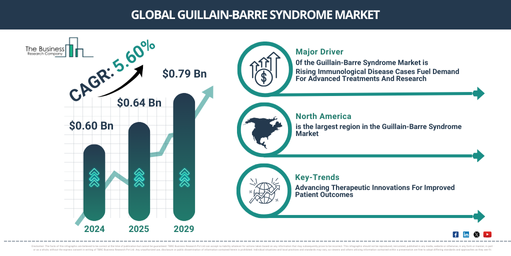
  • Guillain-Barre Syndrome Market Valuation Expected To Reach $0.79 Billion By 2029, Growing At A Rate Of 5.6%

    Guillain-Barre Syndrome Market Valuation Expected To Reach $0.79 Billion By 2029, Growing At A Rate Of 5.6%

    Our market reports now include the latest updates on global tariffs, trade impacts, and evolving supply chain dynamics.

    What Are the Projected Market Size and Growth Rates for the Guillain-Barre Syndrome Market From 2025 To 2029?

    In recent times, the market size for Guillain-Barre Syndrome (GBS) has seen robust growth. The market, which stands at $0.60 billion in 2024, is projected to expand to $0.64 billion in 2025, driving a compound annual growth rate (CAGR) of 5.9%. Several factors have spurred this growth in the historic period, including a burgeoning demand for GBS treatments, an uptick in viral infections, intensifying worldwide vaccination initiatives, deepening comprehension of autoimmune mechanisms, and a rising consciousness and diagnosis rate.

    Strong expansion is anticipated for the Guillain-Barre syndrome market in the coming years, with projections indicating it will reach a value of $0.79 billion by 2029, exhibiting a compound annual growth rate (CAGR) of 5.6%. This projected growth could be ascribed to factors such as the rising incidence of Guillain-Barre syndrome, the impacts of climate change, higher utilization of immunotherapies and medications, the escalation in diagnostic competences, and an increase in the rates of multifocal motor neuropathy. Key future trends encompass advancements in diagnostic procedures, the advent of immunoglobulin treatments, betterment of plasmapheresis techniques, the pursuit of gene therapy, an emphasis on early intervention, new prognosis biomarkers, and broader clinical investigations for innovative therapies.

    Download a free sample to assess the report’s scope and structure:

    https://www.thebusinessresearchcompany.com/sample.aspx?id=21198&type=smp

    Which Factors and External Forces Are Driving Demand in the Guillain-Barre Syndrome Market?

    The escalation in immunological diseases is anticipated to drive the growth of the guillain-barre syndrome market. Such conditions occur when the immune system becomes too active, too passive, or misdirected, leading to disorders like autoimmune diseases, allergies, or immunodeficiencies. The increase in these diseases can be attributed to factors such as environmental changes, lifestyle shifts, improved diagnostics, and genetic factors. An autoimmune response triggered by these diseases can lead to guillain-barré syndrome, where the body’s immune system erroneously attacks the peripheral nerves causing inflammation and nerve damage. For example, in July 2024, data from the Joint United Nations Programme on HIV/AIDS (UNAIDS), a Swiss-based government body, showed that about 39.5 million individuals globally were living with HIV at the end of 2022, with 1.3 million new infections and 630,000 AIDS-related deaths reported that year. By 2023, the number of people infected with HIV globally increased to nearly 39.9 million. Consequently, the heightened risk of immunological diseases is propelling the guillain-barre syndrome market.

    Which Segments in the Guillain-Barre Syndrome Offer the Most Growth?

    The guillain-barre syndrome market covered in this report is segmented –

    1) By Type: Acute Inflammatory Demyelinating Polyneuropathy (AIDP), Chronic Inflammatory Demyelinating Polyradiculoneuropathy (CIDP), Miller Fisher Syndrome (MFS), Acute Motor Axonal Neuropathy (AMAN), Other Types

    2) By Therapeutics: Intravenous Immunoglobulin (IVIG), Plasma Exchange, Other Therapeutics

    3) By Route Of Administration: Parenteral, Oral

    4) By End User: Hospitals, Clinics, Diagnostic Centers, Other End Users

    Subsegments:

    1) By Acute Inflammatory Demyelinating Polyneuropathy (AIDP): Classical AIDP, AIDP with Autonomic Involvement

    2) By Chronic Inflammatory Demyelinating Polyradiculoneuropathy (CIDP): Progressive CIDP, Relapsing-Remitting CIDP, Multifocal CIDP

    3) By Miller Fisher Syndrome (MFS): Classical MFS, MFS With Ataxia, MFS With Ophthalmoplegia

    4) By Acute Motor Axonal Neuropathy (AMAN): Classical AMAN, AMAN with Respiratory Involvement

    5) By Other Types: Acute Sensory Ganglionopathy, Variants With Cranial Nerve Involvement, Bickerstaff Brainstem Encephalitis

    Request customized data on this market:

    https://www.thebusinessresearchcompany.com/customise?id=21198&type=smp

    What Are the Fastest-Growing Geographies in the Which Factors and External Forces Are Driving Demand in the Guillain-Barre Syndrome Market? Market?

    North America was the largest region in the guillain-barre syndrome market in 2024. Asia-Pacific is expected to be the fastest-growing region in the forecast period. The regions covered in the guillain-barre syndrome market report are Asia-Pacific, Western Europe, Eastern Europe, North America, South America, Middle East, Africa.

    Which Cutting-Edge Market Trends Are Expected to Drive theGuillain-Barre Syndrome Market’s Growth?

    Leading corporations in the Guillain-Barre syndrome market are focusing on the development of innovative drugs such as monoclonal antibodies, with the goals of improving treatment effectiveness, addressing unmet medical needs, and broadening their market footprint. Monoclonal antibodies are proteins engineered in a lab to focus on specific antigens, contributing to the moderation of immune responses and the enhancement of therapeutic outcomes. For example, the US-based biopharmaceutical firm, Annexon Inc., was granted orphan drug status by the European Medicines Agency (EMA) in October 2023 for its ANX005 drug for treating Guillain-Barre syndrome (GBS). This monoclonal antibody, which targets C1q, has shown early improvements in muscle strength and a decreased reliance on ventilation compared to IVIg, signifying a substantial progression in therapy.

    View the full report here:

    https://www.thebusinessresearchcompany.com/report/guillain-barre-syndrome-global-market-report

    What Are the Key Elements That Define the Guillain-Barre Syndrome Market?

    Guillain-barre syndrome is a rare neurological disorder in which the body’s immune system mistakenly attacks the peripheral nervous system. This can lead to muscle weakness, numbness, tingling, and, in severe cases, paralysis. The exact cause is unknown, but it is triggered by infections, such as respiratory or gastrointestinal infections, and sometimes by vaccinations or surgery.

    Purchase the full report and get a swift delivery:

    https://www.thebusinessresearchcompany.com/purchaseoptions.aspx?id=21198

    About The Business Research Company:

    With over 15000+ reports from 27 industries covering 60+ geographies, The Business Research Company has built a reputation for offering comprehensive, data-rich research and insights. Armed with 1,500,000 datasets, the optimistic contribution of in-depth secondary research, and unique insights from industry leaders, you can get the information you need to stay ahead in the game.

    Get in touch with us:

    The Business Research Company: https://www.thebusinessresearchcompany.com/

    Americas +1 3156230293

    Asia +44 2071930708

    Europe +44 2071930708

    Email us at info@tbrc.info

    Follow us on:

    LinkedIn: https://in.linkedin.com/company/the-business-research-company

    YouTube: https://www.youtube.com/channel/UC24_fI0rV8cR5DxlCpgmyFQ

    Global Market Model: https://www.thebusinessresearchcompany.com/global-market-model
  • Growth Hormone Deficiency Market Forecast Reaching $5.42 Billion by 2029 at 5.9% CAGR

    Our market reports now include the latest updates on global tariffs, trade impacts, and evolving supply chain dynamics.

    What Is the Estimated Market Size of the Growth Hormone Deficiency Market In 2029?

    The market size for growth hormone deficiency has seen a robust expansion in the past few years. The market, which stood at $4.06 billion in 2024, is projected to rise to $4.31 billion in 2025, with a compound annual growth rate (CAGR) of 6.1%. The surge observed in the historical period can be credited to several factors, including an increase in strategic initiatives, a rise in reported brain tumor cases, growing demand for hormone therapies, a swelling aged population, and escalated government healthcare funding.

    In the coming years, the market size for growth hormone deficiency is projected to experience robust expansion. With a compound annual growth rate (CAGR) of 5.9%, it is anticipated to reach $5.42 billion by 2029. The substantial growth during the predicted period is primarily due to the escalating occurrence of genetic ailments, the increasing count of strategic measures taken, augmented research and development efforts, the escalating morbidity of Gh disease, and a rise in clinical trials. The forecast period will also see key trends like progress in technology, widening range of treatments, improvements in diagnostic procedures, fresh advancements, and progress in biotechnological applications.

    Download a free sample to assess the report’s scope and structure:

    https://www.thebusinessresearchcompany.com/sample.aspx?id=21197&type=smp

    Which Major Market Drivers Are Expected to Boost the Growth Potential of the Growth Hormone Deficiency Market?

    The upsurge in the incidence of genetic disorders is predicted to accelerate the expansion of the growth hormone deficiency market in the future. Genetic disorders are health problems resulting from irregularities or changes in a person’s DNA, which can be inherited or develop spontaneously. Progress in diagnostic technology, heightened awareness, increasing maternal age, environmental factors leading to mutations, population expansion, and better survival rates for those affected contribute to the increasing prevalence of genetic disorders. Growth hormone deficiency is employed to control growth-related issues in certain genetic disorders. For instance, as stated by the Department of Health & Social Care (DHSC), a government department based in the UK, about 33,000 whole genome equivalents were sequenced in October 2022, boasting an average diagnostic yield of 32%, which increased to 61% in certain conditions as mentioned in their December 2022 report. Hence, the escalating incidence of genetic disorders propels the expansion of the growth hormone deficiency market.

    Which Key Market Segments Comprise the Growth Hormone Deficiency Market and Drive Its Revenue Growth?

    The growth hormone deficiency market covered in this report is segmented –

    1) By Type: Pediatric Growth Hormone Deficiency, Adult Growth Hormone Deficiency

    2) By Treatment: Pharmacological Therapy, Recombinant Human Growth Hormone, Human Pituitary Gland Extracts, Surgery

    3) By Route Of Administration: Intravenous, Intramuscular, Other Routes Of Administration

    4) By Distribution Channel: Hospital Pharmacy, Online Pharmacy, Retail Pharmacy

    5) By End User: Hospitals, Homecare, Specialty Clinics, Other End Users

    Subsegments:

    1) By Pediatric Growth Hormone Deficiency: Idiopathic Growth Hormone Deficiency, Genetic Growth Hormone Deficiency, Acquired Growth Hormone Deficiency

    2) By Adult Growth Hormone Deficiency: Primary Growth Hormone Deficiency, Secondary Growth Hormone Deficiency

    Request customized data on this market:

    https://www.thebusinessresearchcompany.com/customise?id=21197&type=smp

    Which Areas Are Leading Regions in the Growth Hormone Deficiency Market Expansion Across the Globe?

    North America was the largest region in the growth hormone deficiency market in 2024. Asia-Pacific is expected to be the fastest-growing region in the forecast period. The regions covered in the growth hormone deficiency market report are Asia-Pacific, Western Europe, Eastern Europe, North America, South America, Middle East, Africa.

    What Are the Key Market Trends in theGrowth Hormone Deficiency Market Over the Coming Years?

    Leading corporations in the growth hormone deficiency sector are emphasizing the creation of unique products like unmodified somatropin, intended for daily administration in pediatric growth hormone deficiency (GHD) procedures. Unmodified somatropin is the same growth hormone applied in daily pediatric GHD treatments, but it is presented in a once-a-week dosage through Skytrofa. For example, in September 2023, Ascendis Pharma A/S, a biopharmaceutical firm based in Denmark, unveiled SKYTROFA (lonapegsomatropin) for the once-a-week management of pediatric growth hormone deficiency (GHD). This ground-breaking therapy presents improved convenience, enhanced compliance, and possibly superior treatment results compared to conventional daily growth hormone treatments. It is the first and only FDA-endorsed once-a-week treatment for pediatric GHD, setting it as a revolutionary breakthrough in the fields of endocrinology and child healthcare.

    View the full report here:

    https://www.thebusinessresearchcompany.com/report/growth-hormone-deficiency-global-market-report

    How Is the Growth Hormone Deficiency Market Conceptually Defined?

    Growth hormone deficiency (GHD) is a medical condition in which the pituitary gland does not produce enough growth hormone (GH). This deficiency leads to stunted growth and development in children and various metabolic issues in adults. Growth hormone deficiency can be congenital (present at birth) or acquired due to injury, tumors, infections, or other medical conditions affecting the pituitary gland.

    Purchase the full report and get a swift delivery:

    https://www.thebusinessresearchcompany.com/purchaseoptions.aspx?id=21197

    About The Business Research Company:

    With over 15000+ reports from 27 industries covering 60+ geographies, The Business Research Company has built a reputation for offering comprehensive, data-rich research and insights. Armed with 1,500,000 datasets, the optimistic contribution of in-depth secondary research, and unique insights from industry leaders, you can get the information you need to stay ahead in the game.

    Get in touch with us:

    The Business Research Company: https://www.thebusinessresearchcompany.com/

    Americas +1 3156230293

    Asia +44 2071930708

    Europe +44 2071930708

    Email us at info@tbrc.info

    Follow us on:

    LinkedIn: https://in.linkedin.com/company/the-business-research-company

    YouTube: https://www.youtube.com/channel/UC24_fI0rV8cR5DxlCpgmyFQ

    Global Market Model: https://www.thebusinessresearchcompany.com/global-market-model

  • $3.47 Billion Forecast for Granulomatosis With Polyangiitis Treatment Market by 2029, Backed by Demand and Innovation

    $3.47 Billion Forecast for Granulomatosis With Polyangiitis Treatment Market by 2029, Backed by Demand and Innovation

    Our market reports now include the latest updates on global tariffs, trade impacts, and evolving supply chain dynamics.

    How Fast Is The Granulomatosis With Polyangiitis Treatment Market Expected to Grow Between 2025 And 2029?

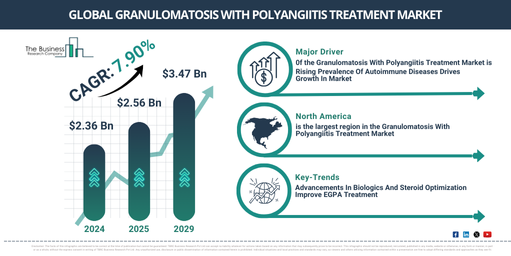
    In recent times, there has been significant growth in the market size for granulomatosis with polyangiitis treatment. This market is projected to expand from $2.36 billion in 2024 to $2.56 billion in 2025, demonstrating a compound annual growth rate (CAGR) of 8.2%. Factors prompting this increase during the historical period include a rising demand for the medications, an increase in clinical trials, a surge in demand for potent treatments, an amplified focus on personalized medicine, and escalating diagnosis rates of this disorder.

    Projected robust growth is on the horizon for the granulomatosis with polyangiitis treatment market over the coming years. By 2029, it’s expected to expand to $3.47 billion, with an impressive compound annual growth rate (CAGR) of 7.9%. This anticipated growth during the forecast period is due to several factors, including an increased detection and prevalence of autoimmune diseases, a rise in incidences of granulomatosis, as well as polyangiitis, and a heightened frequency of immunological disorders. Key trends forecast for this period include progress in medicinal development, improvements in healthcare facilities, innovations in diagnostic methods, enhanced treatment options, and the expansion of biologics and biosimilars.

    Download a free sample to assess the report’s scope and structure:

    https://www.thebusinessresearchcompany.com/sample.aspx?id=21196&type=smp

    What Are the Core Growth Drivers Propelling the Granulomatosis With Polyangiitis Treatment Market Forward?

    With a rise in autoimmune diseases, the growth of the granulomatosis with polyangiitis treatment market is anticipated to be bolstered. Autoimmune diseases, which are conditions where the body’s immune system wrongfully targets its healthy cells and tissues resulting in inflammation and potential damage to various organs, are becoming more common because of environmental factors like infections, chemicals, or pollutants, as well as lifestyle modifications. The treatment for granulomatosis with polyangiitis plays an important role in managing autoimmune diseases by using immunosuppressive therapies like corticosteroids and cyclophosphamide to control inflammation and avert organ damage. This emphasizes the importance of early intervention and customized treatment strategies in managing other autoimmune conditions that operate in similar ways. For example, a June 2023 report from the Office for National Statistics, a UK governmental department, stated that the worldwide population of individuals living with multiple sclerosis (MS), an autoimmune disease, reached 2.9 million in 2023, an increase from 2.8 million in 2022. Hence, the rising occurrence of autoimmune diseases is fueling the expansion of the granulomatosis with polyangiitis treatment market.

    What Segment Types Define the Granulomatosis With Polyangiitis Treatment Market Structure?

    The granulomatosis with polyangiitis treatment market covered in this report is segmented –

    1) By Drug Type: Steroids, Immunosuppressant, Other Drug Types

    2) By Treatment Type: Immunosuppressants, Corticosteroids

    3) By Route Of Administration: Oral, Intravenous

    4) By Distribution Channel: Hospital Pharmacies, Retail Pharmacies, Online Pharmacies

    5) By End User: Hospitals, Homecare, Specialty Clinics, Other End Users

    Subsegments:

    1) By Steroids: Prednisone, Methylprednisolone, Dexamethasone, Hydrocortisone

    2) By Immunosuppressants: Cyclophosphamide, Methotrexate, Azathioprine, Mycophenolate mofetil, Rituximab

    3) By Other Drug Types: Plasma Exchange Therapy, Intravenous Immunoglobulin (IVIG), Biologic Agents, Non-Steroidal Anti-Inflammatory Drugs (NSAIDs)

    Request customized data on this market:

    https://www.thebusinessresearchcompany.com/customise?id=21196&type=smp

    Which Geographic Areas Hold the Strongest Growth Potential in the Granulomatosis With Polyangiitis Treatment Market?

    North America was the largest region in the granulomatosis with polyangiitis treatment market in 2024. The regions covered in the granulomatosis with polyangiitis treatment market report are Asia-Pacific, Western Europe, Eastern Europe, North America, South America, Middle East, Africa.

    Which Emerging Trends that Are Influencing theGranulomatosis With Polyangiitis Treatment Industry Evolution?

    The market for granulomatosis with polyangiitis treatment is witnessing a shift towards innovative product development by major market players, with oral corticosteroids being a primary focus. These medications not only reduce inflammation and suppress the immune system, but are also utilized in managing allergies, autoimmune diseases, and inflammatory disorders by mitigating steroid-induced long-term side effects. An example of this is AstraZeneca plc, a UK-based pharmaceutical enterprise, which announced in October 2024 that Fasenra (bevacizumab) was approved by the European Union, a coalition of European nations with political and economic ties, as supplemental therapy for adults with relapsing or refractory eosinophilic granulomatosis with polyangiitis (EGPA). This approval was subsequent to the positive outcome from the MANDARA Phase III trial that demonstrated the effectiveness of Fasenra in inducing remission and reducing dependence on oral corticosteroids among EGPA patients.

    View the full report here:

    https://www.thebusinessresearchcompany.com/report/granulomatosis-with-polyangiitis-treatment-global-market-report

    What Is the Definition of the Granulomatosis With Polyangiitis Treatment Market?

    Granulomatosis with Polyangiitis (GPA) treatment involves the use of medications to control inflammation, suppress the immune system, and prevent organ damage. Granulomatosis with polyangiitis (GPA) is a rare autoimmune disorder causing inflammation of small to medium blood vessels, leading to restricted blood flow and tissue damage, particularly in the respiratory tract and kidneys. Treatment primarily involves immunosuppressive therapies, such as corticosteroids and biologics, to reduce inflammation and prevent organ damage.

    Purchase the full report and get a swift delivery:

    https://www.thebusinessresearchcompany.com/purchaseoptions.aspx?id=21196

    About The Business Research Company:

    With over 15000+ reports from 27 industries covering 60+ geographies, The Business Research Company has built a reputation for offering comprehensive, data-rich research and insights. Armed with 1,500,000 datasets, the optimistic contribution of in-depth secondary research, and unique insights from industry leaders, you can get the information you need to stay ahead in the game.

    Get in touch with us:

    The Business Research Company: https://www.thebusinessresearchcompany.com/

    Americas +1 3156230293

    Asia +44 2071930708

    Europe +44 2071930708

    Email us at info@tbrc.info

    Follow us on:

    LinkedIn: https://in.linkedin.com/company/the-business-research-company

    YouTube: https://www.youtube.com/channel/UC24_fI0rV8cR5DxlCpgmyFQ

    Global Market Model: https://www.thebusinessresearchcompany.com/global-market-model

  • Global Gonorrhea Therapeutics Market Projected to Reach $2.42 Billion by 2029 at a CAGR of 5.2%

    Global Gonorrhea Therapeutics Market Projected to Reach $2.42 Billion by 2029 at a CAGR of 5.2%

    Our market reports now include the latest updates on global tariffs, trade impacts, and evolving supply chain dynamics.

    What Are the Key Projections for the CAGR of the Gonorrhea Therapeutics Market Size From 2025 to 2034?

    The market size for gonorrhea therapeutics has seen a significant increase in recent years, expected to escalate from $1.88 billion in 2024 to $1.98 billion in 2025, exhibiting a compound annual growth rate (CAGR) of 5.4%. The driving factors behind the historical period’s growth include the escalating resistance of Neisseria gonorrhoeae, the rising occurrence of gonorrhea, the growing prevalence of antimicrobial resistance (AMR), heightened antibiotic resistance, and the expanded use of dual therapy treatments.

    Expectations for the gonorrhea therapeutics market size reveal a robust growth in the subsequent years. By 2029, it is projected that it will reach $2.42 billion, with a compound annual growth rate (CAGR) of 5.2%. This growth within the forecast period derived from rising rates of sexually transmitted infections, an increased attention towards personalized medicine, emerging antibiotic resistance patterns, the expanding prevalence of gonorrhea, and a burgeoning demand for effective treatment solutions. Key trends set to dominate the forecast period include technological advancements, innovative diagnostic tests, the introduction of new therapeutics, the conception of combination therapies, and fast-tracked drug approvals due to regulatory support.

    Download a free sample to assess the report’s scope and structure:

    https://www.thebusinessresearchcompany.com/sample.aspx?id=21195&type=smp

    What are the Fundamental Drivers and Innovations Shaping the Gonorrhea Therapeutics Market?

    The surge in sexually transmitted infections (STIs) is predicted to fuel the expansion of the gonorrhea therapeutics market. An STI is an infection that spreads via sexual contact, originating from bacteria, viruses, or parasites. Rising STI rates are linked to factors such as unprotected sexual encounters, insufficient knowledge or education, an uptick in sexual partners, underuse of condoms, and delayed or insufficient testing and treatment. Remedies for gonorrhea are employed to manage STIs by attacking the neisseria gonorrhoeae bacteria, halting potential complications and transmission. For example, in June 2024, a report from the National Institute for Public Health and the Environment, a government agency in the Netherlands, disclosed a marked annual increasing pattern in gonorrhea cases diagnosed at SHCs, leaping from 10,600 in 2022 to 13,853 in 2023, denoting a 31% escalation. Consequently, the rising STIrates are propelling the gonorrhea therapeutics market’s development.

    How Is the Gonorrhea Therapeutics Market Segmented?

    The gonorrhea therapeutics market covered in this report is segmented –

    1) By Therapeutic Class: Antibiotics, Combination Therapy, Monotherapy

    2) By Route Of Administration: Oral, Intravenous, Intramuscular

    3) By Age Group: Pediatric, Adult, Geriatric

    4) By Distribution Channel: Hospital Pharmacies, Retail Pharmacies, Online Pharmacies

    5) By End User: Hospitals, Clinics, Home Care

    Subsegments:

    1) By Antibiotics: Beta-lactams, Macrolides, Fluoroquinolones, Aminoglycosides

    2) By Combination Therapy: Dual Antibiotic Therapy, Triple Antibiotic Therapy

    3) By Monotherapy: Single Antibiotic Treatment, Other Monotherapy Options

    Request customized data on this market:

    https://www.thebusinessresearchcompany.com/customise?id=21195&type=smp

    Which Regions Are Driving the Next Phase of the Gonorrhea Therapeutics Market Growth?

    North America was the largest region in the gonorrhea therapeutics market in 2024. Asia-Pacific is expected to be the fastest-growing region in the forecast period. The regions covered in the gonorrhea therapeutics market report are Asia-Pacific, Western Europe, Eastern Europe, North America, South America, Middle East, Africa.

    What Key Trends Are Shaping the Future of the Gonorrhea Therapeutics Market?

    Leading businesses in the gonorrhea therapeutics market sphere are working towards innovative product creation, including rapid polymerase chain reaction (PCR) tests, aimed at swift and precise pathogen detection, along with determining characteristics like antibiotic resistance, at the care point. The rapid polymerase chain reaction (PCR) test is a diagnostic tool enabling rapid magnification and identification of specific DNA or RNA sequences, thus offering speedy recognition of pathogens or genetic material. An instance of this is the gonorrhea test, inclusive of an antimicrobial resistance check, launched by Visby Medical, Inc., a medical tech firm based in the US, in February 2024. The objective of this quick diagnostic test is to identify the presence of Neisseria gonorrhoeae, the bacteria causing gonorrhea, and evaluate its reaction to ciprofloxacin, an antibiotic that some gonorrhea strains have resisted. This test forms part of a ready-to-use, equipment-free PCR system for immediate testing at the care point. With financial support from the US non-profit group CARB-X, Visby Medical, Inc. aims to broaden the test’s scope to cover detection of other sexually transmitted diseases, like Chlamydia trachomatis and Trichomonas vaginalis, particularly in males.

    View the full report here:

    https://www.thebusinessresearchcompany.com/report/gonorrhea-therapeutics-global-market-report

    How Is the Gonorrhea Therapeutics Market Defined and What Are Its Core Parameters?

    Gonorrhea therapeutics are treatments and medications designed to manage and cure gonorrhea, a sexually transmitted infection (STI) caused by the bacterium neisseria gonorrhoeae. These therapies mainly rely on antibiotics, as the infection is usually treated with a combination of drugs to prevent resistance and ensure effective eradication of the bacteria.

    Purchase the full report and get a swift delivery:

    https://www.thebusinessresearchcompany.com/purchaseoptions.aspx?id=21195

    About The Business Research Company:

    With over 15000+ reports from 27 industries covering 60+ geographies, The Business Research Company has built a reputation for offering comprehensive, data-rich research and insights. Armed with 1,500,000 datasets, the optimistic contribution of in-depth secondary research, and unique insights from industry leaders, you can get the information you need to stay ahead in the game.

    Get in touch with us:

    The Business Research Company: https://www.thebusinessresearchcompany.com/

    Americas +1 3156230293

    Asia +44 2071930708

    Europe +44 2071930708

    Email us at info@tbrc.info

    Follow us on:

    LinkedIn: https://in.linkedin.com/company/the-business-research-company

    YouTube: https://www.youtube.com/channel/UC24_fI0rV8cR5DxlCpgmyFQ

    Global Market Model: https://www.thebusinessresearchcompany.com/global-market-model
  • Glomerulonephritis Market Forecast 2025–2034: Trends Reshaping Demand, Investment, and Innovation

    Glomerulonephritis Market Forecast 2025–2034: Trends Reshaping Demand, Investment, and Innovation

    Our market reports now include the latest updates on global tariffs, trade impacts, and evolving supply chain dynamics.

    How Has The GM1 Gangliosidosis Market Growth Evolved From 2024 To 2025, And What’s Ahead?

    In recent times, there has been a quick upswing in the GM1 gangliosidosis market size. From 2024 to 2025, it is projected to rise from $0.51 billion to $0.57 billion with a CAGR of 11.4%. This significant increase during the historical period is due to a surge in the patient count suffering from GM1 gangliosidosis, an expanded focus in the GM1 gangliosidosis sector, a growing awareness of rare diseases, rising popularity of research centered around patients, and an amplifying emphasis on early intervention.

    The market size of GM1 gangliosidosis is projected to undergo fast-paced growth in the coming years. By 2029, it is anticipated to reach $0.87 billion, at a compound annual growth rate (CAGR) of 11.1%. The proliferation in the forecast period is owed to a surge in GM1 gangliosidosis cases, an increased prevalence of lysosomal storage disorders, a rising count of clinical trials, an enhanced focus on gene therapy and editing, a growing emphasis on personalized and precision medicine, and an uptick in the acceptance of genetic screening programs. Notable trends in the projected period encompass advancements in gene-editing technologies, the incorporation of technology in healthcare, improvements in diagnostic methods, cutting-edge formulations, and progress in genetic therapies.

    Download a free sample to assess the report’s scope and structure:

    https://www.thebusinessresearchcompany.com/sample.aspx?id=21194&type=smp

    What Are the Primary Drivers Supporting the Market Growth of the GM1 Gangliosidosis Market?

    The growth of the GM1 gangliosidosis market is expected to be propelled by the rising acceptance of gene therapy. Gene therapy, a medical procedure that modifies or substitutes genes in a person’s cells to cure or prevent diseases, is becoming increasingly popular. This growing acceptance is a result of progress in genetic research, improved results for conditions previously considered untreatable, and increasing regulatory endorsement for pioneering therapies. Gene therapy for GM1 gangliosidosis administers a functioning version of the faulty gene (GLB1) into patient cells to revitalize ß-galactosidase enzyme activity and decrease toxic substrate accretion. For example, in April 2024, as per the American Society of Gene & Cell Therapy, a US-base non-profit medical and scientific establishment, there was a 10% increase in the number of phase III gene therapy clinical trials in the fourth quarter. This was the premier quarterly increase since the third quarter of 2022. Consequently, the booming acceptance of gene therapy propels the GM1 gangliosidosis market’s growth.

    Which Primary Segments of the GM1 Gangliosidosis Market Are Driving Growth and Industry Transformations?

    The GM1 gangliosidosis market covered in this report is segmented –

    1) By Disease Type: Type 1 GM1 Gangliosidosis, Type 2 GMT Gangliosidosis, Type 3 GMT Gangliosidosis

    2) By Treatment: Anticonvulsants, Bone Marrow Transplantation, Cord-Blood Hematopoietic Stem-Cell Transplantation, Enzyme Replacement, Gene Therapy

    3) By End-User: Research Institutes, Hospitals, Other End-Users

    Subsegments:

    1) By Type 1 GM1 Gangliosidosis: Classic Infantile Onset, Atypical Infantile Onset

    2) By Type 2 GM1 Gangliosidosis: Classic Juvenile Onset, Atypical Juvenile Onset

    3) By Type 3 GM1 Gangliosidosis: Classic Adult Onset, Atypical Adult Onset

    Request customized data on this market:

    https://www.thebusinessresearchcompany.com/customise?id=21194&type=smp

    Which Regions Are Key Players in the Growth of the What Are the Primary Drivers Supporting the Market Growth of the GM1 Gangliosidosis Market? Market?

    North America was the largest region in the GM1 gangliosidosis market in 2024. The regions covered in the GM1 gangliosidosis market report are Asia-Pacific, Western Europe, Eastern Europe, North America, South America, Middle East, Africa.

    What Are the Most Significant Market Trends in the GM1 Gangliosidosis Market?

    Key players in the GM1 gangliosidosis market are strengthening their market stand by focusing on strategic alliances. These partnerships are pivotal in propelling the progress of gene therapy by uniting experience, resources and cutting-edge technology to expedite research, clinical assessments and product distribution. As an illustration, GEMMA Biotherapeutics Inc., a biotechnology firm based in the U.S., formed a partnership with Oswaldo Cruz Foundation (Fiocruz), a Brazil-based medical research establishment, to create gene treatments for uncommon diseases, including GM1 gangliosidosis, in October 2024. The deal encompasses up to $100 million that Fiocruz will provide for clinical studies and production, with a goal to facilitate the availability of these complex therapies through Brazil’s government-run healthcare system. The partnership is centered around technology exchange and strives to make treatments, formerly available only to higher-income groups, accessible to all.

    View the full report here:

    https://www.thebusinessresearchcompany.com/report/gm1-gangliosidosis-global-market-report

    What Parameters Are Used to Define the GM1 Gangliosidosis Market?

    GM1 gangliosidosis is a rare, inherited neurodegenerative disorder caused by a deficiency of the ß-galactosidase (GLB1) enzyme, leading to toxic accumulation of GM1 gangliosides in the brain and other tissues. It results in progressive neurological decline, developmental delays, muscle weakness, and organ enlargement.

    Purchase the full report and get a swift delivery:

    https://www.thebusinessresearchcompany.com/purchaseoptions.aspx?id=21194

    About The Business Research Company:

    With over 15000+ reports from 27 industries covering 60+ geographies, The Business Research Company has built a reputation for offering comprehensive, data-rich research and insights. Armed with 1,500,000 datasets, the optimistic contribution of in-depth secondary research, and unique insights from industry leaders, you can get the information you need to stay ahead in the game.

    Get in touch with us:

    The Business Research Company: https://www.thebusinessresearchcompany.com/

    Americas +1 3156230293

    Asia +44 2071930708

    Europe +44 2071930708

    Email us at info@tbrc.info

    Follow us on:

    LinkedIn: https://in.linkedin.com/company/the-business-research-company

    YouTube: https://www.youtube.com/channel/UC24_fI0rV8cR5DxlCpgmyFQ

    Global Market Model: https://www.thebusinessresearchcompany.com/global-market-model

  • Glomerulonephritis Market 2025-2034: Key Highlights, Growth Dynamics, and Emerging Trends

    Glomerulonephritis Market 2025-2034: Key Highlights, Growth Dynamics, and Emerging Trends

    Our market reports now include the latest updates on global tariffs, trade impacts, and evolving supply chain dynamics.

    What is the Projected CAGR for the Glomerulonephritis Market Size from 2025 to 2034?

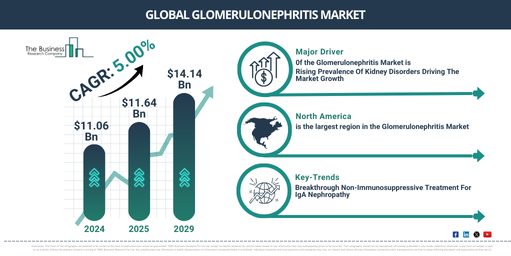
    The market size for glomerulonephritis has seen considerable growth in recent times. The market is set to expand from $11.06 billion in 2024 to $11.64 billion in 2025, indicating a compound annual growth rate (CAGR) of 5.3%. Historic period growth has been driven by a surge in kidney disorders, the rise in post-streptococcal glomerulonephritis infections, an upswing in research and development and an increase in kidney failure incidence. Growing awareness about kidney diseases is also contributing to this growth.

    Robust expansion is predicted for the glomerulonephritis market in the upcoming years, escalating to $14.14 billion by 2029 with a compound annual growth rate (CAGR) of 5.0%. The anticipated growth during this period is attributed to factors such as rising instances of diabetes, an aged population, increased healthcare spending, a growing number of dialysis patients, and an escalation in autoimmune disease cases. Key trend projections for this period comprise the introduction of new treatments and therapy methods, advancements in diagnostic technology, innovative therapeutics and treatments, inter-company collaboration, and intravenous immunoglobulin therapy.

    Download a free sample to assess the report’s scope and structure:

    https://www.thebusinessresearchcompany.com/sample.aspx?id=21193&type=smp

    How Are Key Drivers in the Industry Acting as Catalysts for the Growth of the Glomerulonephritis Market?

    The growth of the glomerulonephritis market is anticipated to be fueled by the escalating incidences of kidney disorders. Kidney disorders encompass a spectrum of conditions that impact the kidneys’ structure or function, resulting in hindered filtration, waste elimination, and fluid regulation. The escalating incidences of kidney disorders can be attributed to factors like aging demographics, increasing instances of chronic ailments such as diabetes and hypertension, and lifestyle decisions. Kidney disorders spur glomerulonephritis by instigating disorders of the immune system, persistent inflammation, or structural harm, culminating in disrupted kidney filtration and performance. For example, the Australian Institute of Health and Welfare, a government agency based in Australia, revealed in December 2024 that mortality rates from chronic kidney disease (CKD) surged by 4.2% in 2021 and 6.2% in 2022. For the year 2021-22, nearly 2 million hospitalizations were attributed to CKD, accounting for 18% of all hospitalizations in Australia. Therefore, the escalating incidences of kidney disorders are anticipated to bolster the growth of the glomerulonephritis market.

    Which Segments in the Glomerulonephritis Offer the Most Growth?

    The glomerulonephritis market covered in this report is segmented –

    1) By Type: Acute Glomerulonephritis, Chronic Glomerulonephritis

    2) By Diagnosis: Urine And Blood Tests, Imaging Tests, Kidney Biopsy, Other Diagnosis

    3) By Treatment: Medication, Surgery, Dialysis, Other Treatments

    4) By Distribution Channel: Hospital Pharmacy, Retail Pharmacy, Other Distribution Channels

    5) By End-User: Hospitals, Specialty Clinics, Other End-Users

    Subsegments:

    1) By Acute Glomerulonephritis: Post-infectious Glomerulonephritis, IgA Nephropathy, Lupus Nephritis, Rapidly Progressive Glomerulonephritis (RPGN), Goodpasture Syndrome

    2) By Chronic Glomerulonephritis: Focal Segmental Glomerulosclerosis (FSGS), Membranous Nephropathy, Minimal Change Disease, Alport Syndrome, Diabetic Nephropathy, Hypertensive Nephrosclerosis

    Request customized data on this market:

    https://www.thebusinessresearchcompany.com/customise?id=21193&type=smp

    What Are the Fastest-Growing Geographies in the How Are Key Drivers in the Industry Acting as Catalysts for the Growth of the Glomerulonephritis Market? Market?

    North America was the largest region in the glomerulonephritis market in 2024. The regions covered in the glomerulonephritis market report are Asia-Pacific, Western Europe, Eastern Europe, North America, South America, Middle East, Africa.

    What Are the Current Market Growth and Trends in the Glomerulonephritis Industry?

    Significant players in the glomerulonephritis market are dedicating efforts towards the creation of progressive non-immunosuppressive solutions. This is in response to the unfulfilled medical needs and in pursuit of enhancing patient experiences. These non-immunosuppressive solutions represent therapies that neither suppress nor weaken the immune system, with the aim to manage conditions without negatively impacting the immune functions. For example, in September 2024, FILSPARI (sparsentan) was launched by US-based biopharmaceutical company, Travere Therapeutics Inc. This drug, having received FDA approval, is intended for treating IgA nephropathy, a type of kidney disease. Being the only non-immunosuppressive therapy proven to notably slow down kidney function deterioration in patients, FILSPARI’s approval is a monumental milestone in the treatment of IgA nephropathy. This is significant as IgA nephropathy is the most prevalent form of primary glomerulonephritis. This therapy extends an innovative choice for patients who previously had limited options. This progress demonstrates Travere Therapeutics Inc.’s dedication to enhancing patient experiences in kidney disease.

    View the full report here:

    https://www.thebusinessresearchcompany.com/report/glomerulonephritis-global-market-report

    What Are the Key Elements That Define the Glomerulonephritis Market?

    Glomerulonephritis is a kidney disorder characterized by inflammation of the glomeruli, the tiny filters in the kidneys that remove waste and excess fluids from the blood. It can result from infections, autoimmune diseases, or other underlying conditions, leading to symptoms such as blood in urine, proteinuria, and swelling. If left untreated, it may progress to chronic kidney disease or kidney failure.

    Purchase the full report and get a swift delivery:

    https://www.thebusinessresearchcompany.com/purchaseoptions.aspx?id=21193

    About The Business Research Company:

    With over 15000+ reports from 27 industries covering 60+ geographies, The Business Research Company has built a reputation for offering comprehensive, data-rich research and insights. Armed with 1,500,000 datasets, the optimistic contribution of in-depth secondary research, and unique insights from industry leaders, you can get the information you need to stay ahead in the game.

    Get in touch with us:

    The Business Research Company: https://www.thebusinessresearchcompany.com/

    Americas +1 3156230293

    Asia +44 2071930708

    Europe +44 2071930708

    Email us at info@tbrc.info

    Follow us on:

    LinkedIn: https://in.linkedin.com/company/the-business-research-company

    YouTube: https://www.youtube.com/channel/UC24_fI0rV8cR5DxlCpgmyFQ

    Global Market Model: https://www.thebusinessresearchcompany.com/global-market-model