Category: HealthcareServices

  • Robotic Process Automation In Healthcare Market Report 2024: Market Size, Drivers, And Trends

    Robotic Process Automation In Healthcare Market Report 2024: Market Size, Drivers, And Trends

    The Business Research Company’s global market reports are now updated with the latest market sizing information for the year 2024 and forecasted to 2033

    The healthcare industry is undergoing a significant transformation, with robotic process automation (RPA) playing a crucial role in streamlining operations, reducing costs, and enhancing patient care. This blog explores the rapid growth of the RPA in healthcare market, its drivers, major trends, and key players shaping the future of healthcare automation.

    Market Growth Overview

    • 2023 Market Size: $1.71 billion.
    • 2024 Market Size: Expected to reach $1.97 billion.
    • CAGR (2023-2024): 15.3%.
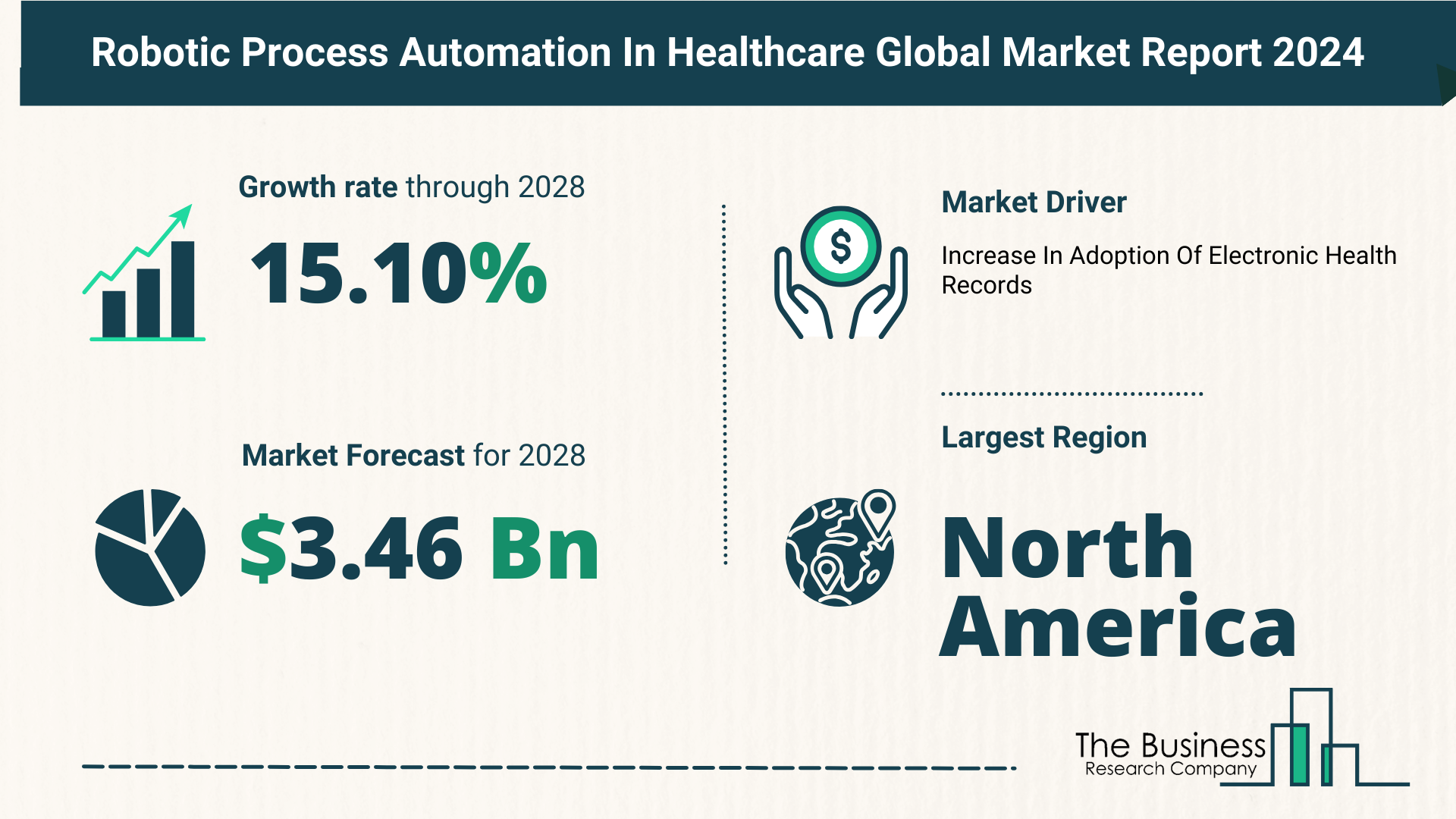
    • 2028 Market Size: Projected to reach $3.46 billion.
    • CAGR (2024-2028): 15.1%.

    Key Drivers of Growth (2023-2024)

    • Rising Demand for Telehealth Services: The increasing reliance on telehealth during and post-pandemic has accelerated the need for automated processes to manage patient interactions and data.
    • Supply Chain Optimization: With the growing complexity of healthcare supply chains, RPA helps in streamlining procurement, inventory management, and logistics.
    • Interoperability Solutions: The need for seamless data exchange across different healthcare systems has boosted the adoption of RPA to ensure accurate and timely data flow.
    • Complex Healthcare Billing Processes: RPA reduces errors and inefficiencies in billing, leading to faster and more accurate claims processing.
    • Digitization of Healthcare Data: The shift towards digital healthcare records and data management has increased the demand for automation to handle large volumes of data efficiently.

    View More On The Robotic Process Automation In Healthcare Market Report 2024 – https://www.thebusinessresearchcompany.com/report/robotic-process-automation-in-healthcare-global-market-report

    Future Growth Drivers (2024-2028)

    • Cost Reduction: RPA helps in minimizing operational costs by automating repetitive and time-consuming tasks, allowing healthcare providers to focus on patient care.
    • Operational Efficiency: Enhanced RPA solutions are expected to improve workflow efficiency, reduce administrative burdens, and improve overall healthcare delivery.
    • Enhanced Patient Experience: Automation of administrative tasks allows healthcare providers to spend more time on patient care, leading to improved patient satisfaction.
    • Electronic Health Records (EHR): The increasing adoption of EHR systems continues to drive the demand for RPA to manage and streamline patient data.
    • Rising Healthcare Labor Costs: Automation helps mitigate the impact of rising labor costs by reducing the need for manual intervention in routine tasks.

    Trends Shaping the Market

    • Advanced Technology Integration: The incorporation of artificial intelligence (AI) and machine learning (ML) into RPA is transforming healthcare operations, enabling more complex and intelligent automation.
    • Blockchain Technology: The integration of blockchain in healthcare processes enhances data security, transparency, and interoperability, further driving the adoption of RPA.
    • Outcome-Based Reimbursement Models: The shift towards value-based care and outcome-based reimbursement models is prompting healthcare providers to adopt RPA for more efficient management of patient outcomes and financial transactions.
    • AI in Healthcare Processes: AI-powered RPA is expected to revolutionize healthcare by enabling predictive analytics, personalized treatment plans, and enhanced decision-making processes.
    • Value-Based Care Models: The focus on value-based care is pushing healthcare organizations to adopt RPA to improve efficiency and reduce costs while delivering high-quality patient care.

    Key Players in the RPA in Healthcare Market

    • Major Companies:IBM, EnterBridge, NICE Ltd., Thoughtonomy Limited, Datamatics Global Services Limited, Pegasystems Inc., UiPath Inc., Verint Systems, Celonis SE, Automation Anywhere Inc., and others.
    • Recent Developments:
      • Exela Technologies (2021):Launched EON, an RPA platform, to automate tasks for a large health insurance company, enhancing operational efficiency.
      • SS&C Technologies (2022):Acquired Blue Prism Group Plc for $1.6 billion to enhance its healthcare automation offerings.

    Regional Insights

    • North America:The largest market for RPA in healthcare in 2023, driven by advanced healthcare infrastructure, high adoption rates of EHR, and significant investment in healthcare technology.

    Conclusion

    The robotic process automation in healthcare market is on a rapid growth trajectory, driven by technological advancements, rising demand for efficiency, and the increasing complexity of healthcare operations. As the market continues to evolve, healthcare providers and technology companies alike are poised to benefit from the transformative impact of RPA on the healthcare industry.

    Request A Sample Of The Global Robotic Process Automation In Healthcare Market Report 2024:
    https://www.thebusinessresearchcompany.com/sample_request?id=14480&type=smp
  • How Is The Resistance Bands Market Expected To Grow Through 2024-2033

    How Is The Resistance Bands Market Expected To Grow Through 2024-2033

    The Business Research Company’s global market reports are now updated with the latest market sizing information for the year 2024 and forecasted to 2033

    According to The Business Research Company’s Resistance Bands Global Market Report 2024, the resistance bands market is expected to show promising growth in the forecast period.

    The resistance bands market has seen remarkable growth, with a significant rise in market size over the past few years. In 2023, the market size was valued at $1.31 billion, and it is expected to reach $1.48 billion in 2024, reflecting a compound annual growth rate (CAGR) of 13.1%.

    Key Drivers of Market Growth:

    • Heightened Physical Activities: Increased daily exercise routines among individuals.
    • Affordability and Accessibility: Resistance bands are becoming more affordable and easily accessible to the general public.
    • Home-Based Gym Activities: A growing trend of setting up home gyms has fueled demand.

    Future Prospects: A Look Ahead to 2028

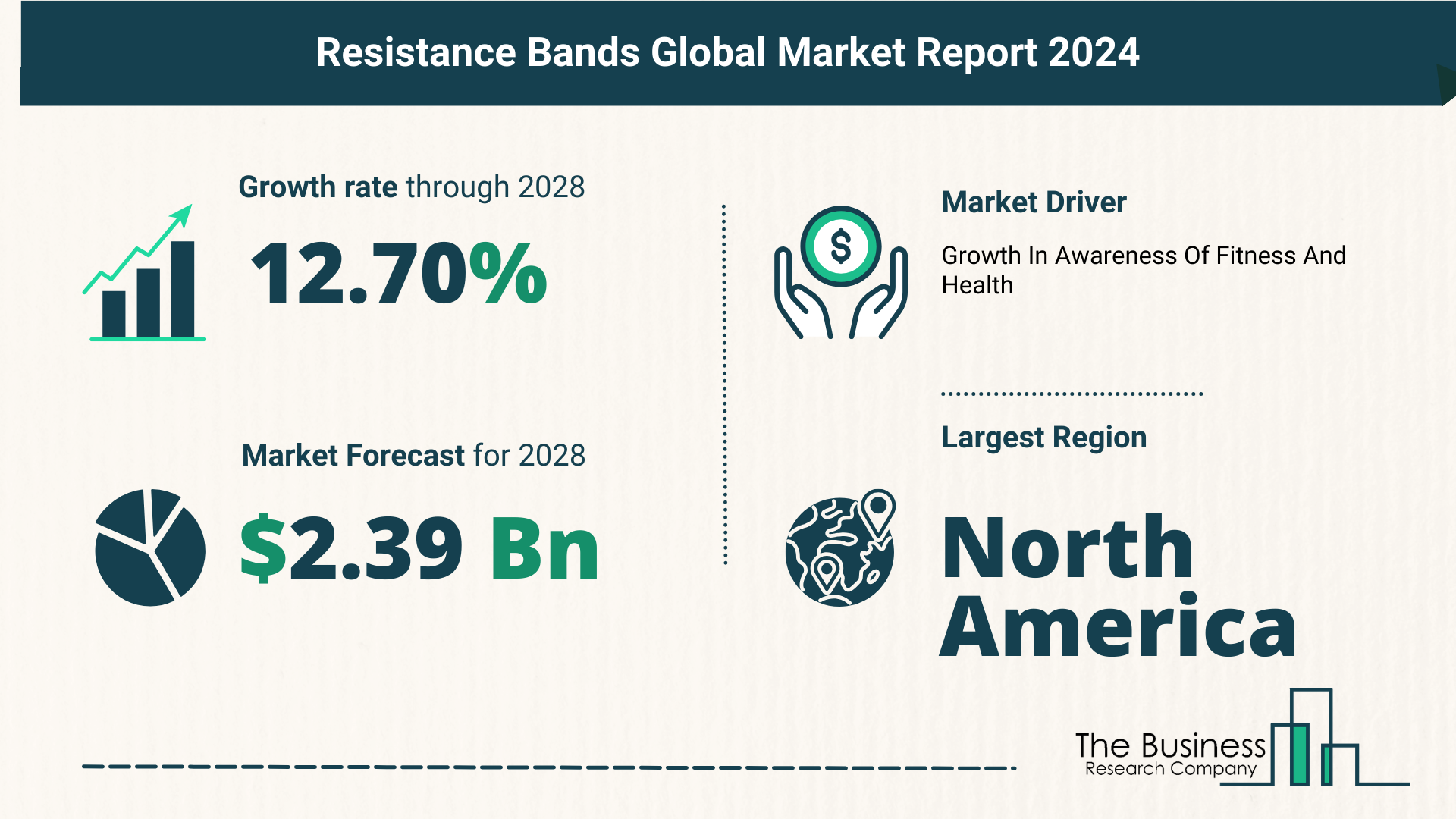
    Looking forward, the resistance bands market is poised for continued expansion. By 2028, the market is projected to reach $2.39 billion, growing at a CAGR of 12.7%.

    Factors Contributing to Future Growth:

    • Demand in Physical Therapy: Resistance bands are increasingly being used in physical therapy, contributing to market expansion.
    • Adoption of Physical Activities: Rising awareness of the importance of regular exercise is driving market growth.
    • Compact and Portable: The preference for compact and portable exercise tools continues to rise.
    • Technological Integration: Resistance bands are being enhanced with technology, increasing their appeal.

    View More On The Resistance Bands Market Report 2024 – https://www.thebusinessresearchcompany.com/report/resistance-bands-global-market-report

    Growing Awareness of Fitness and Health

    The increasing awareness of fitness and health is a significant driver of the resistance bands market. Fitness, encompassing both physical and mental well-being, is a key focus area for many individuals.

    Benefits of Resistance Bands:

    • Ease of Use: Suitable for all fitness levels.
    • Strength Training: Ideal for building strength and endurance.
    • Injury Rehabilitation: Widely used in recovery and physical therapy.
    • Functional Fitness: Supports a wide range of exercises for overall fitness.

    Market Impact:

    • Fitness Industry Revenue:The fitness and health club industry achieved $33.25 billion in revenue in 2021, indicating a growing market for fitness-related products like resistance bands.

    Innovative Products and Technological Advancements

    The resistance bands market is witnessing significant innovation, particularly in the integration of technology.

    Example: The STRAFFR Band

    • Bluetooth and Sensor-Based: The STRAFFR band, launched by a German startup, incorporates a patented sensor system to measure workout performance.
    • Durable Materials: Made from medical-grade silicone, offering enhanced durability.
    • Performance Tracking: Tracks metrics like repetitions, calories burned, and weight moved via a companion app.

    Strategic Acquisitions to Expand Market Reach

    Acquisitions are playing a key role in expanding the resistance bands market. In February 2022, GlobalBees Brands Pvt. Ltd. acquired Reach Fitness, an Indian manufacturer of fitness products, including resistance bands.

    Impact of the Acquisition:

    • Portfolio Expansion: Strengthens GlobalBees’ fitness product offerings.
    • Market Growth: Capitalizes on the growing demand for accessible fitness solutions.
    • Shared Vision: Promotes the goal of making fitness products more accessible.

    Market Segmentation and Regional Insights

    The resistance bands market is segmented by type, material, distribution channel, and application.

    Market Segments:

    • By Type: Includes tube resistance bands, pull-up resistance bands, therapy resistance bands, and others.
    • By Material: Fabric and latex are the primary materials used.
    • By Distribution Channel: Products are sold through specialty stores, supermarkets and hypermarkets, online retail, and other channels.
    • By Application: Primarily used by individuals and health and sports clubs.

    Regional Insights:

    • North America Dominates:In 2023, North America was the largest region in the resistance bands market, indicating a strong demand for fitness products in this region.

    The resistance bands market is set for continued growth, driven by increasing fitness awareness, technological advancements, and strategic acquisitions. With a promising future ahead, resistance bands are likely to remain a staple in fitness routines worldwide.

    Request A Sample Of The Global Resistance Bands Market Report 2024:
    https://www.thebusinessresearchcompany.com/sample_request?id=14476&type=smp

  • Understand How The Chatbots For Mental Health And Therapy Market Is Poised To Grow Through 2024-2033

    Understand How The Chatbots For Mental Health And Therapy Market Is Poised To Grow Through 2024-2033

    The Business Research Company’s global market reports are now updated with the latest market sizing information for the year 2024 and forecasted to 2033

    As per The Business Research Company’s Chatbots For Mental Health And Therapy Global Market Report 2024, the chatbots for mental health and therapy market is expected to show significant growth in the forecast period.

    • Steady Market Growth: The chatbots for mental health and therapy market is experiencing significant growth, expanding from $1.17 billion in 2023 to $1.27 billion in 2024 at a CAGR of 8.5%.
    • Drivers of Growth: The rise in demand for accessible mental health services and increased awareness about mental health issues are primary growth drivers. The market is also benefiting from advancements in natural language processing (NLP) and machine learning algorithms.

    Future Market Projections

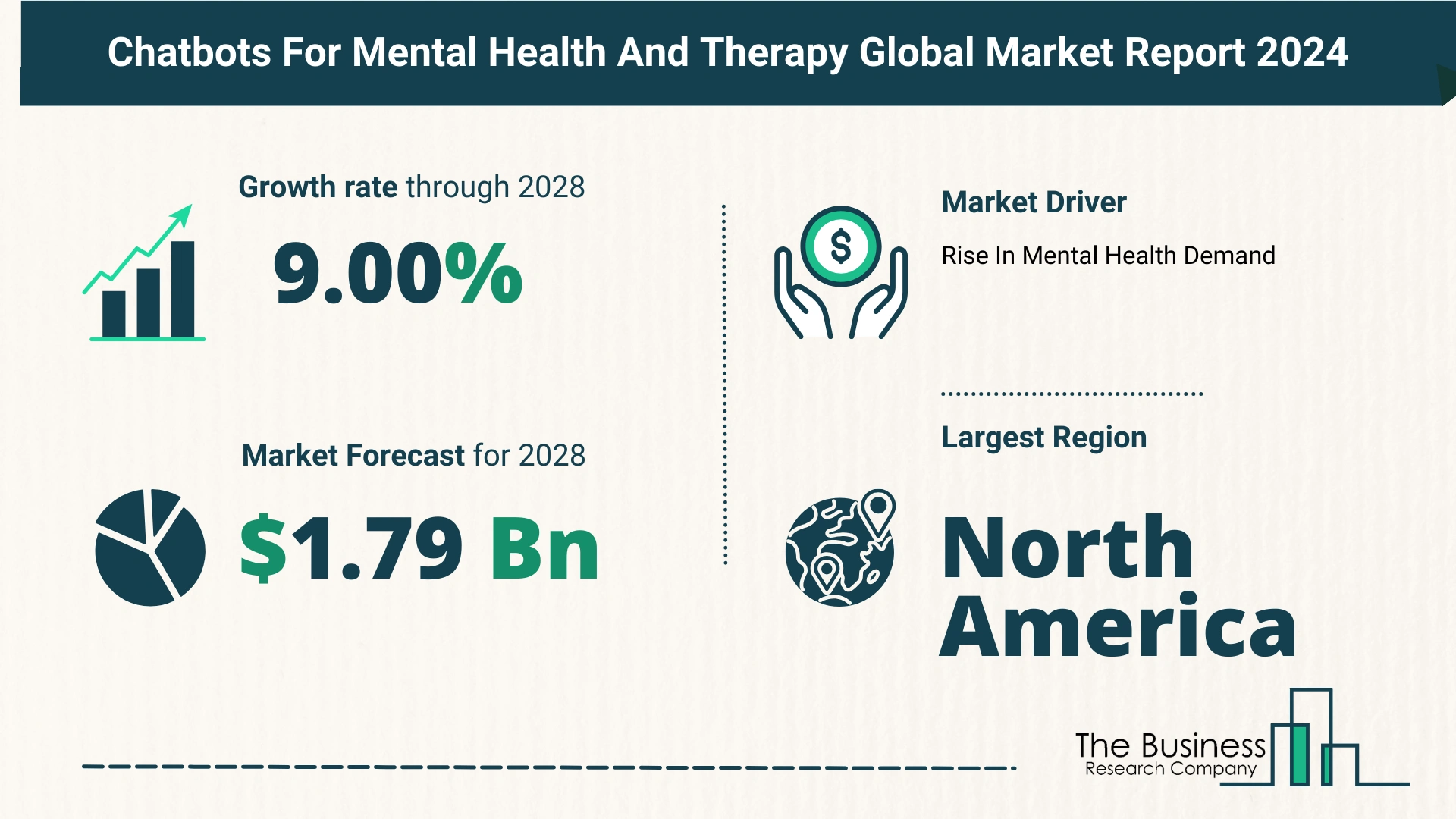
    • Projected Expansion: The market size is expected to grow to $1.79 billion by 2028, with a higher CAGR of 9.0%.
    • Key Growth Factors: The growing need for scalable therapy solutions and the increasing acceptance of digital health technologies are expected to drive this growth. Additionally, there is rising awareness of the benefits of chatbots for mental health.

    Trends Shaping the Future

    • Technological Advancements: Innovations in NLP and machine learning are enhancing chatbot capabilities, making them more effective in mental health support.
    • Teletherapy and Virtual Reality Integration: The expansion of teletherapy and the integration of virtual reality (VR) are creating more immersive and personalized therapy experiences.
    • Wearable Device Integration: Chatbots are increasingly being integrated with wearable devices and other digital health tools, providing users with real-time feedback and support.
    • Crisis Intervention Features: The development of more sophisticated crisis intervention capabilities is expected to improve the immediate response to users in distress.

    View More On The Chatbots For Mental Health And Therapy Market Report 2024 – https://www.thebusinessresearchcompany.com/report/chatbots-for-mental-health-and-therapy-global-market-report

    Rise in Mental Health Demand and Its Impact

    • Increasing Mental Health Demand: The growing prevalence of mental health disorders is driving demand for accessible mental health services.
    • Role of Chatbots: Chatbots are meeting this demand by providing round-the-clock availability and offering psychoeducational resources, self-help tools, and evidence-based treatments.
    • Impact on Market Growth: The increased demand for mental health services is significantly contributing to the expansion of the chatbots for mental health and therapy market.

    Leading Companies in the Market

    • Key Players: Major companies in this market include Talkspace Online Therapy Inc., IBM, Cisco Systems Inc., Oracle Corporation, and BetterHelp, among others.
    • Focus on Advanced AI Solutions: These companies are focusing on integrating advanced AI technologies, particularly NLP algorithms, to improve the effectiveness of their mental health chatbots.

    Revolutionizing Mental Health Support

    • AI Therapist Technology: Companies are leveraging advanced AI therapist technology to revolutionize mental health support.
    • Example – TalkThru: In July 2023, TalkThru launched an AI therapist chatbot that uses innovative NLP algorithms, allowing for sensitive and meaningful user interactions. This AI-driven solution provides 24/7 accessibility and personalized support.

    Strategic Acquisitions Enhancing Market Position

    • Amwell’s Strategic Moves: In August 2021, American Well Corporation acquired Silvercloud Health Limited and Conversa Health Inc. to expand its digital healthcare integration and mental health services.
    • Impact of Acquisitions: These acquisitions enable Amwell to create new digital care workflows, enhance patient engagement, and provide an integrated system combining physical, virtual, and automated care experiences.

    Market Segmentation and Regional Insights

    • Segmentation: The chatbots for mental health and therapy market is segmented by component (SaaS and others), technology (Machine Learning, NLP, etc.), and application (Conversational Interfaces, Behavioral Pattern Recognition, etc.).
    • Regional Insights: North America was the largest region in 2023, while Asia-Pacific is expected to be the fastest-growing region in the forecast period.

    The chatbots for mental health and therapy market is poised for robust growth, driven by increasing mental health demand, technological advancements, and strategic industry moves. As the market evolves, it will play an increasingly vital role in making mental health support more accessible and effective for individuals worldwide.

    Request A Sample Of The Global Chatbots For Mental Health And Therapy Market Report 2024:
    https://www.thebusinessresearchcompany.com/sample_request?id=14666&type=smp

  • Dental Practice Management Software Market Report 2024: Market Size, Drivers, And Trends

    Dental Practice Management Software Market Report 2024: Market Size, Drivers, And Trends

    The Business Research Company’s global market reports are now updated with the latest market sizing information for the year 2024 and forecasted to 2033

    Rapid Market Growth

    • The dental practice management software market has seen significant growth, with the market size increasing from $1.47 billion in 2023 to $1.62 billion in 2024, representing a compound annual growth rate (CAGR) of 10.3%.
    • This growth is driven by the rising demand for efficient practice management, the prevalence of dental diseases, regulatory compliance, increasing awareness of dental care, and the integration of billing and payment solutions.

    Future Market Expansion

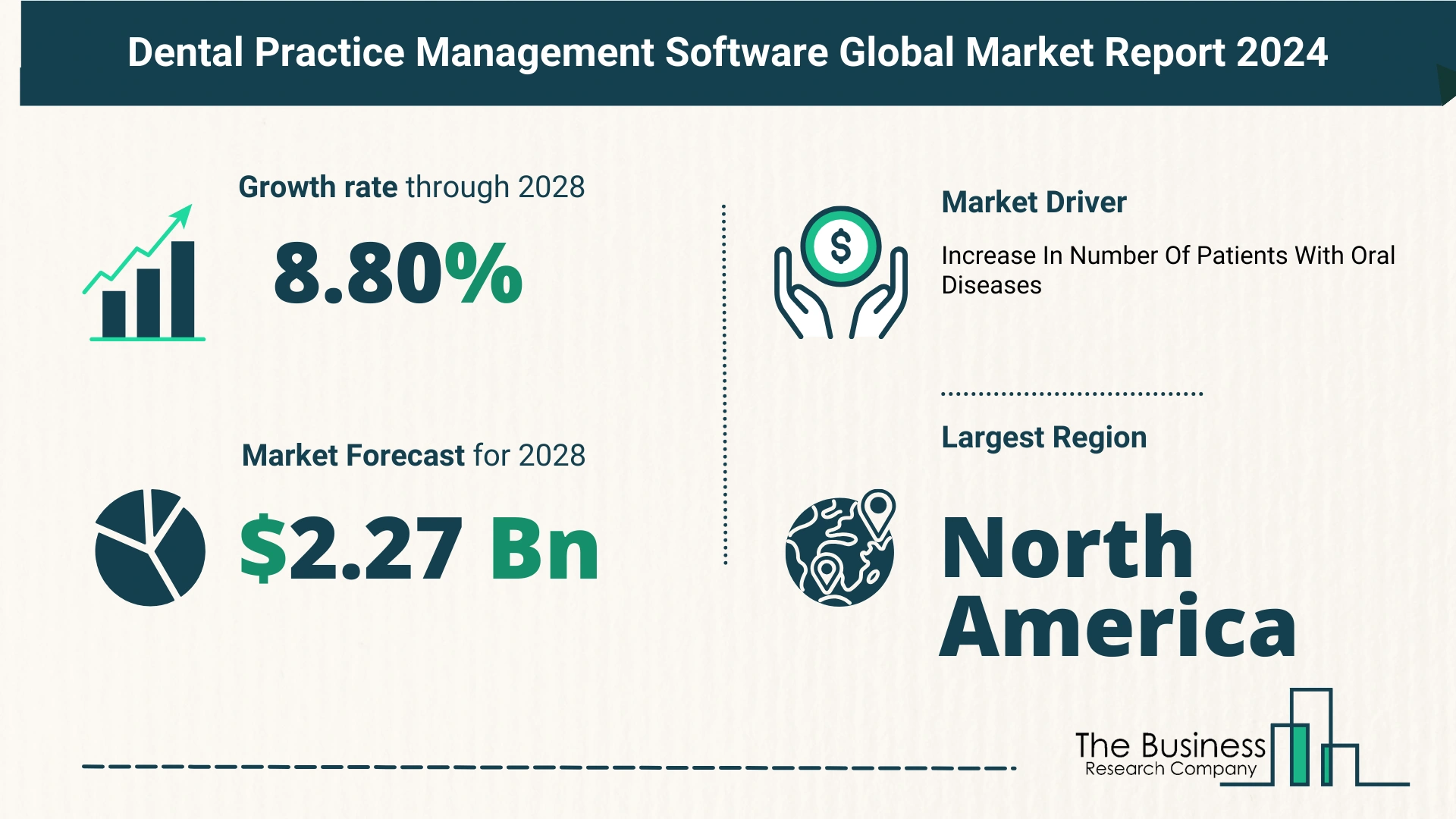
    • The market is expected to continue its strong growth trajectory, reaching $2.27 billion by 2028 with a CAGR of 8.8%.
    • Factors contributing to this growth include the adoption of cloud-based software, tele-dentistry services, interoperability with other healthcare systems, and personalized patient engagement tools.
    • Trends to watch include a shift towards subscription-based models, the emergence of virtual consultation platforms, the integration of virtual reality, and the rise of predictive analytics and dental software-as-a-service (SaaS) offerings.

    View More On The Dental Practice Management Software Market Report 2024 – https://www.thebusinessresearchcompany.com/report/dental-practice-management-software-global-market-report

    Managing Increasing Patient Influx

    Rising Oral Health Issues

    • The increasing number of patients with oral diseases is driving the demand for dental practice management software, which helps practices manage patient care efficiently.
    • Poor oral health habits, financial constraints, and limited access to dental services are leading to a higher prevalence of oral diseases, including oral cancer.
    • In 2023, an estimated 54,540 adults in the US were projected to be diagnosed with oral or oropharyngeal cancer, underscoring the need for effective dental practice management tools.

    Benefits of Dental Practice Management Software

    • Dental practice management software streamlines workflows, enhances efficiency, and improves patient care.
    • It enables dental practices to manage an increasing number of patients effectively, ensuring better health outcomes and patient satisfaction.

    Advancements by Leading Companies

    Innovation in Treatment Planning

    • Major companies are focusing on developing advanced software solutions, such as AI-powered treatment plan software, to gain a competitive edge.
    • For example, in April 2023, Adit launched a revolutionary dental treatment plan software that uses AI and machine learning to improve patient monitoring and provide timely data.
    • This platform offers customizable treatment plans with integrated features like practice management and patient communication, reducing administrative burdens and enhancing patient engagement.

    Strategic Acquisitions

    • Acquisitions are reshaping the dental practice management software market, with companies expanding their service offerings and market reach.
    • In January 2023, Planet DDS acquired Cloud 9 Software, enhancing its cloud-based solutions and market leadership, particularly in orthodontic and pediatric care.
    • Such acquisitions highlight the consolidation trend in the market and the emphasis on improving efficiency and patient care.

    Regional Market Insights

    North America and Asia-Pacific

    • North America was the largest region in the dental practice management software market in 2023, reflecting the region’s advanced healthcare infrastructure and high adoption rates of digital solutions.
    • Asia-Pacific is expected to be the fastest-growing region during the forecast period, driven by increasing healthcare investments, growing awareness of dental care, and the adoption of new technologies in dental practices.

    Request A Sample Of The Global Dental Practice Management Software Market Report 2024:
    https://www.thebusinessresearchcompany.com/sample_request?id=14322&type=smp

  • How Is The Automated Microscopy Market Expected To Grow Through 2024-2033

    How Is The Automated Microscopy Market Expected To Grow Through 2024-2033

    The Business Research Company’s global market reports are now updated with the latest market sizing information for the year 2024 and forecasted to 2033

    According to The Business Research Company’s Automated Microscopy Global Market Report 2024, the automated microscopy market is expected to show promising growth in the forecast period.

    Strong Growth in the Automated Microscopy Market

    • The automated microscopy market has experienced robust growth in recent years, with the market size increasing from $7.31 billion in 2023 to an anticipated $7.85 billion in 2024 at a CAGR of 7.3%.
    • This growth is driven by advancements in imaging technology, the increasing complexity of biological research, and the rising demand for high-throughput screenings.
    • Additional factors include automation and workflow integration, cost reductions, improved accessibility, and the emergence of multimodal imaging techniques.

    Projected Market Expansion by 2028

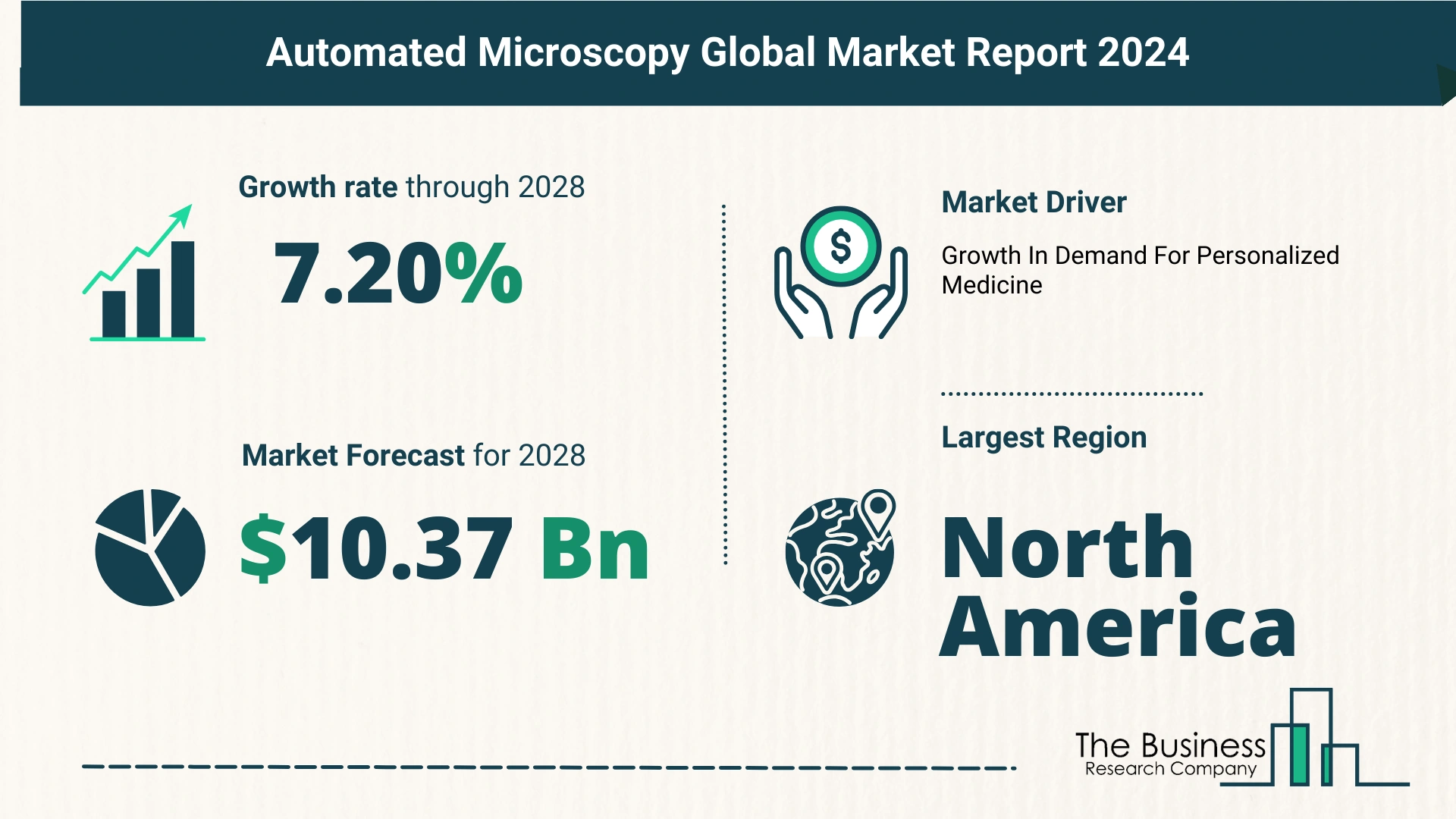
    • Looking forward, the market is expected to grow to $10.37 billion by 2028, reflecting a steady CAGR of 7.2%.
    • Key drivers for future growth include the integration of artificial intelligence, miniaturization and portability of devices, and the rise of multiplexed imaging and multimodal integration.
    • The demand for personalized medicine, precision diagnostics, and interdisciplinary research challenges will also play a significant role in the market’s expansion.

    View More On The Automated Microscopy Market Report 2024 – https://www.thebusinessresearchcompany.com/report/automated-microscopy-global-market-report

    Impact of Personalized Medicine on Market Growth

    • The increasing demand for personalized medicine is a major factor contributing to the growth of the automated microscopy market.
    • Personalized medicine, which tailors healthcare to individual genetic, environmental, and lifestyle factors, is gaining traction due to advances in genomics and the rise in chronic diseases.
    • Automated microscopy aids this field by providing tools for understanding disease mechanisms, identifying biomarkers, and optimizing treatments.
    • As of October 2022, over 75,000 genetic testing products and 300 personalized medicines were available, further driving market growth.

    Innovations in Automated Cryo PFIB Microscopes

    • Major players in the automated microscopy market, such as Thermo Fisher Scientific Inc., are developing advanced products like the Automated Cryo PFIB microscope.
    • This innovative technology is designed for high-throughput preparation of cryo-lamellae, crucial for cellular cryo-electron tomography, enhancing workflow efficiency and improving application outcomes.
    • The Cryo PFIB microscope offers rapid sample preparation, minimized contamination risks, and automation features that enable remote operation, significantly advancing life sciences research.

    Strategic Acquisitions and Market Leadership

    • In June 2021, CELLINK acquired Discover Echo for $110 million, strengthening its position in the market by integrating innovative hybrid microscopes into its portfolio.
    • Discover Echo’s products, which combine advanced optical technologies with disruptive software, align with CELLINK’s bio convergence strategy, enabling significant biological breakthroughs.
    • North America dominated the automated microscopy market in 2023, while the Asia-Pacific region is poised to be the fastest-growing region in the coming years.

    Market Segmentation

    • The automated microscopy market is segmented by product type into Optical Microscopes, Electron Microscopes, and Scanning Probe Microscopes.
    • Applications of these technologies span across Medical Diagnostics, Nanotechnology, Material Science, Life Sciences, and Semiconductors.
    • End users include Hospitals, Research Facilities, and Diagnostic Clinics, with North America leading the market and Asia-Pacific expected to show rapid growth during the forecast period.

    Request A Sample Of The Global Automated Microscopy Market Report 2024:
    https://www.thebusinessresearchcompany.com/sample_request?id=14259&type=smp

  • Growth Trajectory Of The Multi Cancer Early Detection Market 2024-2033

    Growth Trajectory Of The Multi Cancer Early Detection Market 2024-2033

    The Business Research Company’s global market reports are now updated with the latest market sizing information for the year 2024 and forecasted to 2033

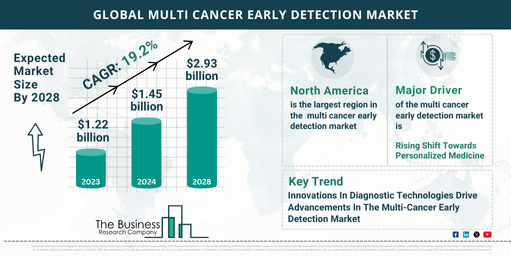
    • Market Size and Growth: The multi-cancer early detection market has experienced significant growth, expanding from $1.22 billion in 2023 to an anticipated $1.45 billion in 2024, reflecting a compound annual growth rate (CAGR) of 19%. This growth is driven by factors such as the increasing prevalence of cancer, government initiatives, greater awareness about early cancer detection, and advancements in healthcare infrastructure and personalized medicine.

    Factors Driving Historic Market Growth

    • Rising Cancer Prevalence: The increasing number of cancer cases worldwide has spurred demand for early detection solutions.
    • Government Initiatives and Funding: Public sector support and funding have played a crucial role in promoting cancer awareness and early detection.
    • Advancements in Healthcare Infrastructure: The expansion and modernization of healthcare systems globally have facilitated better access to early detection technologies.
    • Decreasing Costs of Genetic Testing: As the cost of genetic testing drops, more patients can afford personalized medicine, driving market growth.

    View More On The Multi Cancer Early Detection Market Report 2024 – https://www.thebusinessresearchcompany.com/report/multi-cancer-early-detection-global-market-report

    Future Market Projections and Trends

    • Continued Growth: The market is projected to nearly double, reaching $2.93 billion by 2028, with a CAGR of 19.2%.
    • Expansion of Telemedicine and Digital Health: The growing adoption of digital health solutions and telemedicine is expected to further drive the market, making early detection more accessible.
    • Advancements in Precision Oncology: Precision oncology and biomarker discovery are set to enhance the accuracy and effectiveness of early cancer detection methods.

    Major Trends Shaping the Future

    • AI and Machine Learning: The integration of AI and machine learning into diagnostics is anticipated to improve early cancer detection accuracy.
    • Liquid Biopsy Techniques: Increasing use of liquid biopsy techniques offers a less invasive method for cancer detection.
    • Multi-Omics Approaches: The integration of multi-omics data (e.g., genomics, proteomics) is expected to provide a more comprehensive view of cancer, aiding in earlier detection.
    • At-Home Testing Kits: The rise in at-home testing kits will likely make early cancer detection more convenient and accessible to the public.

    The Role of Personalized Medicine

    • Tailored Treatment Plans: The shift towards personalized medicine is a key driver in the multi-cancer early detection market. By customizing treatment and screening based on an individual’s genetic profile, personalized medicine enhances the efficacy of cancer detection.
    • Regulatory Support: Supportive regulatory measures have facilitated the development and approval of personalized therapies, further fueling market growth.
    • Recent Approvals: The FDA’s approval of 16 novel personalized therapies in 2023, compared to six in 2022, highlights the increasing focus on personalized treatment options, including those for cancer.

    Innovations in Diagnostic Technologies

    • ctDNA-Based Liquid Biopsy: Companies like Lucence are leading the way with ctDNA-based liquid biopsy tests, which offer non-invasive cancer detection and monitoring. These tests improve early detection rates and patient outcomes by identifying circulating tumor DNA in the bloodstream.
    • Recent Product Launches: Lucence’s launch of the LucenceINSIGHT test in May 2023, which screens for 10 prevalent cancers with a single blood sample, exemplifies the innovation occurring in this market.

    Strategic Industry Moves

    • Illumina’s Acquisition of GRAIL: In August 2021, Illumina Inc.’s acquisition of GRAIL Inc. was a strategic move to advance multi-cancer early detection. This acquisition aims to make life-saving genomic tests more accessible, marking a significant step towards revolutionizing cancer care.

    Market Segmentation and Regional Insights

    • Market Segmentation: The multi-cancer early detection market is segmented by type (Liquid Biopsy, Gene Panel, Laboratory Developed Tests), cancer type (Solid Tumors, Hematological Malignancies), and end-user (Hospitals, Diagnostic Laboratories).
    • Regional Insights: North America dominated the market in 2023, while Asia-Pacific is expected to be the fastest-growing region through 2028, driven by advancements in healthcare infrastructure and growing awareness.

    Conclusion

    The multi-cancer early detection market is poised for rapid growth, driven by technological advancements, increasing adoption of personalized medicine, and strategic industry moves. As the market continues to expand, innovations in diagnostics and a focus on early-stage detection will play a critical role in improving patient outcomes and reducing cancer-related mortality worldwide.

    Request A Sample Of The Global Multi Cancer Early Detection Market Report 2024:
    https://www.thebusinessresearchcompany.com/sample_request?id=15864&type=smp

  • What’s The Growth Forecast For Medical Drone Delivery Services Market Through 2024-2033?

    What’s The Growth Forecast For Medical Drone Delivery Services Market Through 2024-2033?

    The Business Research Company’s global market reports provide comprehensive analysis on the various markets in 27 industries across 60 geographies. 

    • Exponential Market Growth: The medical drone delivery services market has seen rapid expansion, growing from $0.26 billion in 2023 to an expected $0.33 billion in 2024, with a compound annual growth rate (CAGR) of 25.9%.
    • Historical Drivers: Growth during this period has been driven by emergency response needs, improved rural healthcare access, cost reduction pressures, infrastructure challenges, and the globalization of healthcare.

    Forecast for Future Expansion

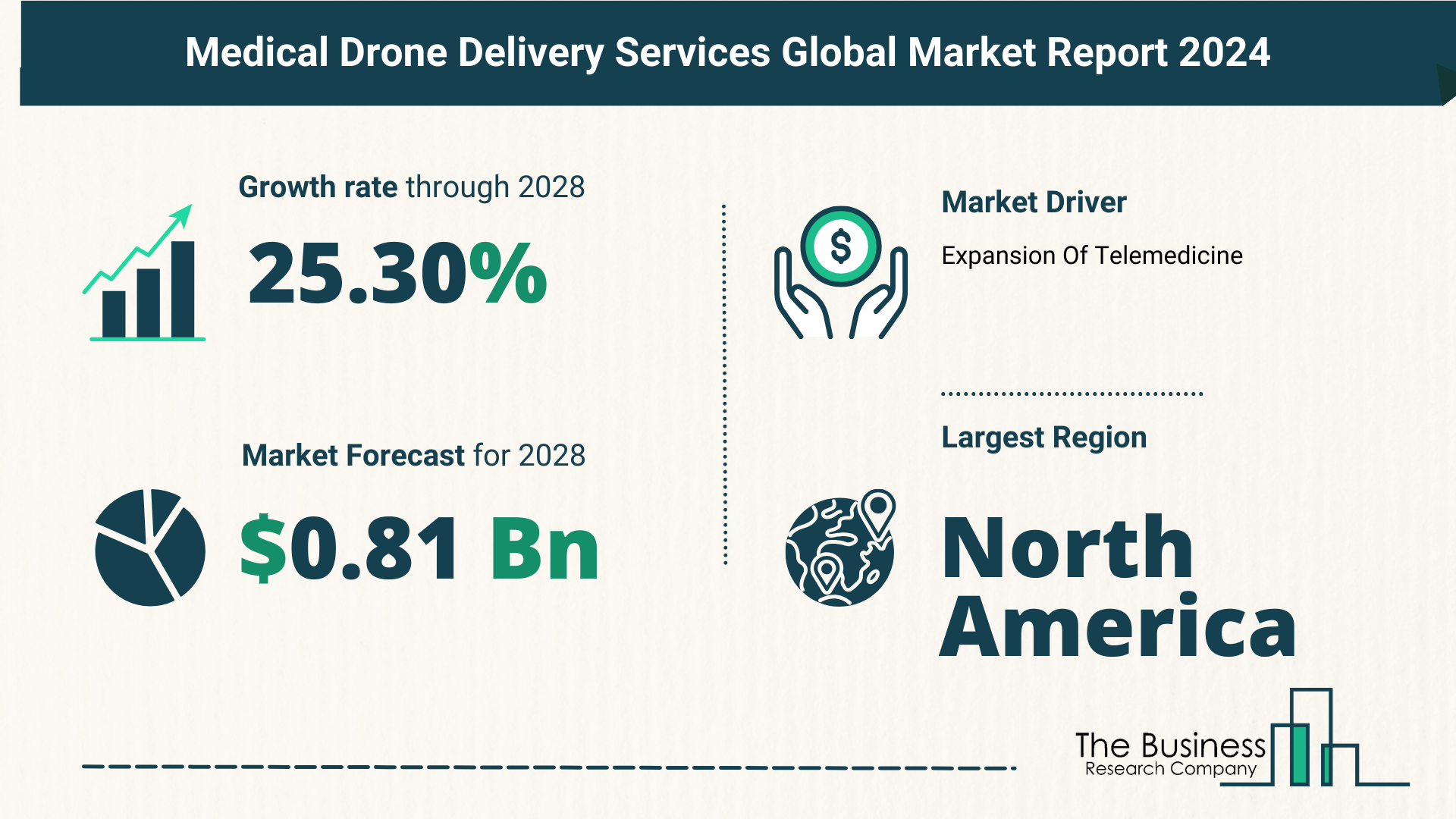
    • Future Market Projections: The market is projected to reach $0.81 billion by 2028, with a CAGR of 25.3%.
    • Key Growth Factors: Urbanization, climate change impacts, an aging population, government initiatives, increasing market competition, innovation, and healthcare digitization are the main drivers for future growth.
    • Emerging Trends: Trends include integration with air traffic management systems, healthcare professional training, drone fleet management solutions, global health security initiatives, and partnerships with e-commerce platforms.

    View More On The Medical Drone Delivery Services Market Report 2024 – https://www.thebusinessresearchcompany.com/report/medical-drone-delivery-services-global-market-report

    Telemedicine Expansion Propels Market Growth

    • Telemedicine’s Role: The expansion of telemedicine is a significant growth driver for the medical drone delivery services market. Telemedicine’s role in providing remote healthcare services enhances the efficiency and reach of healthcare delivery.
    • Supporting Data: Between 2020 and 2022, 118.2 million telehealth services were provided to 18 million patients in Australia. In the U.S., 80% of respondents accessed care remotely in 2022, up from 72% in 2021.
    • Market Impact: The widespread adoption of telemedicine drives the demand for medical drone delivery services, particularly in remote or underserved areas.

    Innovations and Strategic Partnerships

    • Amazon Pharmacy’s Drone Delivery Service: In October 2023, Amazon Pharmacy launched a drone delivery service for prescription medications, delivering drugs within 60 minutes to customers in College Station, Texas. This service utilizes advanced drone technology to ensure safe and quick delivery.
    • Zipline and Cleveland Clinic Partnership: In November 2023, Zipline International Inc. partnered with Cleveland Clinic to enhance patient delivery options through automated drone delivery of medical supplies. This collaboration aims to improve the patient experience, reduce costs, and promote environmentally friendly practices.

    Regional Insights and Market Segmentation

    • Market Segmentation: The market is segmented by drone type (Fixed Wing, Rotor Drones, Hybrid Drones), application (Blood Transfer, Drugs or Pharmaceutical Transfer, Vaccination Program), and end user (Government Organizations, Emergency Medical Services, Blood Banks).
    • Regional Leadership: North America was the largest region in the medical drone delivery services market in 2023, reflecting its advanced infrastructure and early adoption of drone technology in healthcare.

    Conclusion

    The medical drone delivery services market is poised for significant growth, driven by advancements in technology, expanding telemedicine services, and strategic partnerships. As the market continues to evolve, innovations and government initiatives will likely shape the future of healthcare delivery, making it more efficient, accessible, and environmentally sustainable.

    Request A Sample Of The Global Medical Drone Delivery Services Market Report 2024:
    https://www.thebusinessresearchcompany.com/sample_request?id=14428&type=smp

  • Top 5 Insights From The Optical Genome Mapping Market Report 2024

    Top 5 Insights From The Optical Genome Mapping Market Report 2024

    The Business Research Company’s global market reports are now updated with the latest market sizing information for the year 2024 and forecasted to 2033

    According to The Business Research Company’s Optical Genome Mapping Global Market Report 2024, the optical genome mapping market is expected to show promising growth in the forecast period.

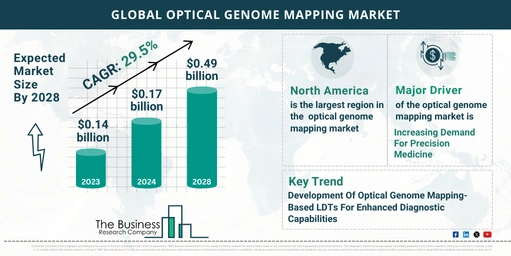
    The optical genome mapping (OGM) market has seen significant growth in recent years and is poised for continued expansion. From a market size of $0.14 billion in 2023, it is expected to reach $0.17 billion in 2024, growing at a compound annual growth rate (CAGR) of 29.4%.

    • Key Drivers:
      • Increasing demand for advanced genomic analysis tools.
      • Rising research in large-scale genome identification.
      • Growing collaborations between instrument manufacturers and hospitals.
      • Adoption of OGM in research institutions and pharmaceutical companies.
      • Cost-effectiveness and efficiency in analyzing large genomes with high accuracy.

    Market Projections and Future Growth

    Looking ahead, the OGM market is set to experience exponential growth, with projections estimating a market size of $0.49 billion by 2028, at a CAGR of 29.5%. This growth is driven by several factors that are shaping the future of genomics.

    • Growth Factors:
      • Advancements in genomic research.
      • Increasing demand for precision medicine.
      • Rising government funding and initiatives.
      • Strong healthcare infrastructure.
      • Growing prevalence of genetic diseases and cancer.
    • Major Trends:
      • Development of advanced OGM services.
      • Initiatives in genomic research.
      • Advancements in DNA mapping technologies.
      • Integration of AI and ML in genomic data processing.

    View More On The Optical Genome Mapping Market Report 2024 – https://www.thebusinessresearchcompany.com/report/optical-genome-mapping-global-market-report

    Precision Medicine as a Catalyst for Market Expansion

    The rising demand for precision medicine is a key driver for the OGM market. Precision medicine tailors medical treatments to individual genetic profiles, making it highly effective in managing chronic diseases and enhancing patient care.

    • Driving Factors:
      • Rising prevalence of chronic diseases.
      • Advancements in genomic technologies.
      • Increased investment and funding.
      • Growing patient demand for personalized care.
    • Impact of OGM: Optical genome mapping plays a crucial role in precision medicine by offering detailed insights into genomic alterations linked to various diseases. This technology enables more accurate diagnosis and treatment planning.

    Development of OGM-Based Laboratory-Developed Tests (LDTs)

    Leading companies in the OGM market are innovating with the development of OGM-based laboratory-developed tests (LDTs) to enhance diagnostic capabilities.

    • Innovation Example:
      • Bionano Genomics Inc. launched an OGM-based LDT for facioscapulohumeral muscular dystrophy (FSHD) in September 2022. This test allows Bionano Laboratories to offer diagnostic services using OGM technology, catering to hospitals, pharmaceutical companies, and research institutions.

    Strategic Acquisitions to Enhance OGM Capabilities

    Strategic acquisitions are playing a vital role in expanding the capabilities of OGM companies. Bionano Genomics Inc. made a significant move by acquiring BioDiscovery Inc. in October 2022 for $100 million.

    • Acquisition Highlights:
      • Integration of BioDiscovery’s NxClinical software enhances Bionano’s OGM capabilities.
      • NxClinical software provides a platform-agnostic solution for comprehensive variant analysis, combining next-generation sequencing (NGS) and microarray data.

    Market Segmentation and Regional Insights

    The OGM market is segmented by product, application, and end-user. The segmentation allows for a detailed understanding of the market dynamics across various sectors.

    • Segmentation:
      • By Product: Instruments, Consumables and Reagents, Software, Services.
      • By Application: Structural Variant Detection, Genome Assembly, Microbial Strain Typing, Other Applications.
      • By End-User: Biotechnology and Pharmaceutical Companies, Clinical Laboratories, Academic Research Institutes, Other End-Users.
    • Regional Insights:
      • North America was the largest region in the OGM market in 2023, reflecting its robust healthcare infrastructure and advanced research capabilities.
      • Asia-Pacific is anticipated to be the fastest-growing region in the forecast period, driven by increasing government initiatives and rising healthcare investments.

    Conclusion
    The optical genome mapping market is on a trajectory of rapid growth, driven by technological advancements, increasing demand for precision medicine, and strategic industry moves. As the market continues to evolve, companies are expected to focus on innovation and expansion to capitalize on the growing opportunities in the genomics sector.

    Request A Sample Of The Global Optical Genome Mapping Market Report 2024:
    https://www.thebusinessresearchcompany.com/sample_request?id=15882&type=smp

  • Non Invasive Fat Reduction Global Market Outlook 2024-2033: Size And Growth Rate Analysis

    Non Invasive Fat Reduction Global Market Outlook 2024-2033: Size And Growth Rate Analysis

    The Business Research Company’s global market reports provide comprehensive analysis on the various markets in 27 industries across 60 geographies.

    The non-invasive fat reduction market has seen significant growth in recent years, driven by various factors including increased awareness of body image and technological advancements. As people become more conscious of their appearance and seek minimally invasive solutions, the demand for non-invasive fat reduction procedures has surged.

    Market Overview

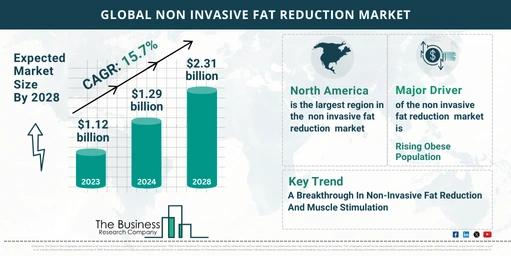
    • 2023 Market Size: $1.12 billion
    • 2024 Market Size: $1.29 billion
    • CAGR (2023-2024): 15.6%

    The market’s growth from 2023 to 2024 reflects a strong interest in non-invasive procedures. The rising disposable income and an aging population seeking aesthetic treatments further fuel this growth.

    Future Projections

    • 2028 Market Size: $2.31 billion
    • CAGR (2024-2028): 15.7%

    The market is expected to continue its rapid expansion, with continuous technological innovations making procedures more effective and safer. Emerging economies are also contributing to this growth as they adopt these technologies.

    Key Growth Drivers

    Several factors are propelling the market’s expansion:

    • Technological Advancements: Innovations in non-invasive procedures are leading to better results and safety profiles.
    • Increased Awareness: More people are becoming aware of body positivity and the availability of these procedures.
    • Rising Demand for Minimally Invasive Procedures: As people prefer less invasive options, the market for non-invasive fat reduction is booming.
    • Expanding Aging Population: Older individuals are seeking treatments to maintain a youthful appearance, driving demand.

    View More On The Non Invasive Fat Reduction Market Report 2024 – https://www.thebusinessresearchcompany.com/report/non-invasive-fat-reduction-global-market-report

    Obesity Epidemic Fuels Market Growth

    The global obesity epidemic is a significant factor driving the non-invasive fat reduction market.

    • Rising Obesity Rates: The obese population, defined by a BMI of 30 or higher, is increasing due to high-calorie diets and sedentary lifestyles.
    • Non-Invasive Solutions: Techniques like cryolipolysis and laser lipolysis offer non-surgical options to reduce localized fat, appealing to those looking for less invasive alternatives.
    • Projected Increase: According to the World Obesity Federation, the number of adults living with obesity is expected to rise from 0.81 billion in 2020 to 1.53 billion in 2035.

    Technological Breakthroughs

    Leading companies in the market are continuously innovating to enhance treatment outcomes.

    • Muscle-Stimulating Technologies: These new methods use electrical impulses to contract muscles, improving fat reduction and body toning.
    • PHYSIQ 360 Launch: In April 2024, Cartessa Aesthetics introduced PHYSIQ 360, a cutting-edge body contouring technology that combines laser energy and electrical muscle stimulation for enhanced results.

    Strategic Acquisitions

    Acquisitions are playing a crucial role in expanding the market’s reach and capabilities.

    • Carlyle Group Acquires VLCC Healthcare: In January 2023, Carlyle Group acquired a majority stake in VLCC Healthcare for $300 million. This acquisition aims to enhance VLCC’s brand, diversify its product offerings, and expand its digital and retail presence.

    Market Segmentation

    The non-invasive fat reduction market is segmented into various categories:

    • By Technology: Cryolipolysis, Ultrasound, Low Level Lasers
    • By Gender: Female, Male
    • By End Users: Hospitals, Stand Alone Practices, Multispecialty Clinics

    Regional Insights

    • North America: This region was the largest market for non-invasive fat reduction in 2023, driven by high disposable incomes and a strong emphasis on physical appearance.

    Conclusion

    The non-invasive fat reduction market is poised for substantial growth, driven by technological advancements, rising obesity rates, and increasing consumer demand for minimally invasive procedures. As the market continues to evolve, it will likely see further innovations and strategic investments, making non-invasive fat reduction an increasingly popular choice for individuals seeking aesthetic treatments.

    Request A Sample Of The Global Non Invasive Fat Reduction Market Report 2024:
    https://www.thebusinessresearchcompany.com/sample_request?id=15872&type=smp

  • Neurocognitive Assessment And Rehabilitation Market Report 2024: Market Size, Drivers, And Trends

    Neurocognitive Assessment And Rehabilitation Market Report 2024: Market Size, Drivers, And Trends

    The Business Research Company’s global market reports are now updated with the latest market sizing information for the year 2024 and forecasted to 2033

    The neurocognitive assessment and rehabilitation market has seen substantial growth in recent years and is expected to continue its upward trajectory. This blog explores the factors driving this growth, key trends, and significant developments in the industry.

    Current Market Overview

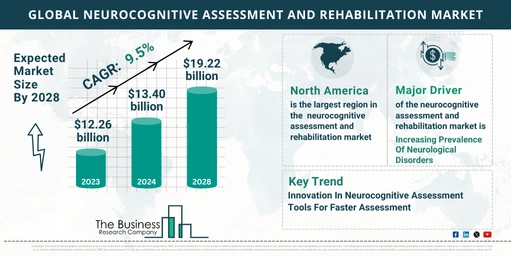
    • Market Size and Growth Rate: The neurocognitive assessment and rehabilitation market grew from $12.26 billion in 2023 to $13.40 billion in 2024, representing a compound annual growth rate (CAGR) of 9.2%.
    • Key Drivers: This growth is largely due to the increasing incidence of neurocognitive disorders, an aging population, enhanced awareness, improved diagnostic techniques, and rising mental health concerns.

    Future Market Prospects

    • Projected Growth: The market is expected to grow to $19.23 billion by 2028, at a CAGR of 9.5%.
    • Factors Contributing to Growth: The future growth will be driven by personalized medicine, corporate wellness programs, technological advancements, better insurance coverage, and telehealth integration.

    View More On The Neurocognitive Assessment And Rehabilitation Market Report 2024 – https://www.thebusinessresearchcompany.com/report/neurocognitive-assessment-and-rehabilitation-global-market-report

    Rising Prevalence of Neurological Disorders

    • Impact on Market: The growing prevalence of neurological disorders is a major factor driving the market’s expansion.
    • Statistics: For instance, Alzheimer’s dementia, prevalent among those aged 85 and older, is projected to affect 2.4 million people in the US by 2024 and 6.7 million by 2060.
    • Role of Assessment and Rehabilitation: Neurocognitive assessment aids in diagnosing and planning treatment for neurological disorders, while rehabilitation interventions aim to improve cognitive function and quality of life.

    Key Players in the Market

    • Leading Companies: Major players include Cogstate Ltd., Posit Science Corporation, Lumos Labs Inc., The Magstim Company Ltd., and MindMaze SA, among others.
    • Innovation: These companies are at the forefront of developing advanced tools and therapies to address neurocognitive disorders.

    Innovations in Neurocognitive Assessment Tools

    • Digital Solutions: Companies are innovating with digital tests to assess cognitive impairment quickly and accurately.
    • Example: In November 2022, Neurotrack Technologies launched a 3-minute digital test for cognitive impairment screening, enabling early detection of neurodegenerative diseases.

    Strategic Acquisitions to Expand Services

    • Recent Acquisition: In September 2023, Enlyte Group LLC acquired Therapy Direct LLC, enhancing its clinical services and network offerings.
    • Impact: This acquisition underscores the importance of expanding capabilities to meet growing demand in the neurocognitive assessment and rehabilitation market.

    Market Segmentation

    • Components: The market is segmented into Neurocognitive Assessment Testing and Neurorehabilitation Therapy.
    • Providers: Key providers include rehab centers, hospitals and clinics, homecare settings, and physiotherapy centers.
    • Organization Size: The market serves both large enterprises and small and medium-sized enterprises (SMEs).

    Regional Insights

    • North America Dominance: North America was the largest region in the neurocognitive assessment and rehabilitation market in 2023, reflecting the region’s advanced healthcare infrastructure and high prevalence of neurocognitive disorders.

    Conclusion
    The neurocognitive assessment and rehabilitation market is poised for significant growth in the coming years, driven by increasing demand, technological advancements, and strategic expansions by key players. With the rising prevalence of neurological disorders and continued innovation, the market will likely see continued robust development.

    Request A Sample Of The Global Neurocognitive Assessment And Rehabilitation Market Report 2024:
    https://www.thebusinessresearchcompany.com/sample_request?id=15870&type=smp