Category: HealthcareServices

  • Key Trends And Drivers In The Nanoparticles Contract Manufacturing Market 2024

    Key Trends And Drivers In The Nanoparticles Contract Manufacturing Market 2024

    The Business Research Company’s market reports offer an in-depth analysis on the market’s growth potential, major drivers, key trends and more.

    The nanoparticles contract manufacturing market has seen significant expansion in recent years.

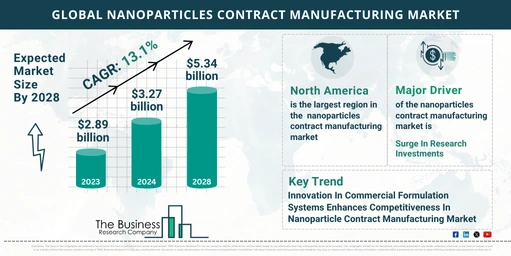
    • Market Size Growth: The market grew from $2.89 billion in 2023 to an anticipated $3.27 billion in 2024, reflecting a strong CAGR of 13.0%.
    • Key Drivers: This growth has been fueled by the rising preference for contract manufacturing, increasing demand for nanomaterials across various applications, especially in drug delivery, and the expanding need for high-quality nanoparticles.

    Projected Market Expansion and Future Trends
    The future of the nanoparticles contract manufacturing market looks promising, with robust growth expected in the coming years.

    • Forecasted Growth: The market is projected to reach $5.53 billion by 2028, with a CAGR of 13.1%.
    • Growth Factors: Key contributors to this growth include advancements in nanotechnology and materials science, increasing knowledge about pharmaceutical delivery systems, and the rising demand for metal nanoparticles in cancer therapy.
    • Emerging Trends: Industry trends include strategic partnerships, technological advancements, a shift towards sustainable nanoparticle production, and the integration of nanoparticles in food and beverage packaging.

    Impact of Research Investments on Market Growth
    Research investments play a crucial role in the continued growth of the nanoparticles contract manufacturing market.

    • Research Investments: Increased financial resources allocated for research are driving innovation and technological advancements in nanoparticle manufacturing.
    • Government Support: For example, the UK government announced plans to significantly boost its R&D budget to £22 billion by 2024-2025, underlining the commitment to innovation.
    • Benefits: These investments promote customization, quality control, scalability, and cross-disciplinary collaboration, all of which are critical for market expansion.

    Read More On The Nanoparticles Contract Manufacturing Market Report 2024 – https://www.thebusinessresearchcompany.com/report/nanoparticles-contract-manufacturing-global-market-report

    Innovation in Commercial Formulation Systems
    Innovation in commercial formulation systems is enhancing the competitiveness of companies in the nanoparticle contract manufacturing market.

    • Technological Advancements: Companies like Cytiva are developing new technologies, such as the NanoAssemblr commercial formulation system, to streamline the production of nanoparticle-based medicines.
    • Competitive Edge: These systems minimize cross-contamination risks and boost production efficiency, allowing companies to gain a competitive edge in the market.

    Strategic Acquisitions Strengthen Market Position
    Strategic acquisitions are playing a significant role in expanding capabilities and product offerings in the nanoparticle contract manufacturing market.

    • Fortis Life Sciences Acquisition: In July 2021, Fortis Life Sciences acquired nanoComposix to enhance its nanotechnology capabilities.
    • Market Impact: This acquisition allows Fortis to expand its product offerings and improve its competitive position in the rapidly growing market.

    Market Segmentation and Regional Insights
    The nanoparticles contract manufacturing market is segmented based on various factors, offering insights into different areas of growth.

    • Segmentation:
      • By Type of Nanoparticle: Metal Nanoparticles, Lipid Nanoparticles, Other Nanoparticles.
      • By Manufacturing Scale: Commercial, Clinical, Pre-Clinical.
      • By Application: Therapeutics, Diagnostics, Vaccines.
      • By End-User: Pharmaceutical Companies, Biotechnology Companies.
    • Regional Insights: North America was the largest region in the nanoparticles contract manufacturing market in 2023, highlighting its leadership in the industry.

    The nanoparticles contract manufacturing market is poised for continued growth, driven by advancements in nanotechnology, strategic partnerships, and increasing research investments. With innovation and strategic acquisitions enhancing market competitiveness, the future of this industry looks bright.

    Request for A Sample Of The Global Nanoparticles Contract Manufacturing Market Report:
    https://www.thebusinessresearchcompany.com/sample_request?id=15869&type=smp
  • 5 Key Insights On The Multiomics Market 2024

    5 Key Insights On The Multiomics Market 2024

    The Business Research Company’s global market reports are now updated with the latest market sizing information for the year 2024 and forecasted to 2033

    As per The Business Research Company’s Multiomics Global Market Report 2024, the multiomics market is expected to show significant growth in the forecast period.

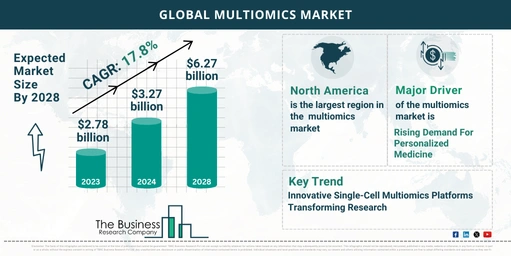
    • Market Size Surge: The multiomics market has witnessed significant growth, expanding from $2.78 billion in 2023 to $3.27 billion in 2024, with a compound annual growth rate (CAGR) of 17.7%.
    • Historical Drivers: This surge can be attributed to increased biomedical research, enhanced funding from both government and private sectors, rising prevalence of chronic diseases, technological advancements, and improved computational tools for data analysis.

    Continued Expansion Predicted for the Future

    • Forecasted Growth: The market is expected to continue its upward trajectory, reaching $6.28 billion by 2028, with a CAGR of 17.8%.
    • Growth Factors: Key contributors to this future growth include advancements in artificial intelligence (AI) and machine learning (ML), expansion of clinical applications, the growing biopharmaceutical industry, the emergence of integrated multiomics platforms, and increasing applications in agricultural and environmental research.

    Major Trends Shaping the Market

    • Technological Advancements: Continuous technological innovations and the launch of new commercial multiomics platforms are driving the market forward.
    • Spatially Resolved Multiomics: The adoption of spatially resolved multiomics analysis is gaining traction, particularly in biopharmaceutical research and development.
    • Clinical Diagnostics Expansion: The application of multiomics in clinical diagnostics is expanding, further fueling market growth.

    View More On The Multiomics Market Report 2024 – https://www.thebusinessresearchcompany.com/report/multiomics-global-market-report

    Personalized Medicine: A Key Market Driver

    • Rising Demand: The growing demand for personalized medicine, which tailors healthcare treatments to individual patients based on their genetic, environmental, and lifestyle factors, is a major driver of the multiomics market.
    • Technological Contributions: Multiomics provides a detailed understanding of an individual’s genetic, molecular, and metabolic profile, allowing healthcare providers to customize treatments.
    • Industry Impact: For example, in 2023, the FDA approved 16 novel personalized therapies for rare diseases, a significant increase from 6 in 2022, demonstrating the rising importance of personalized medicine.

    Key Players in the Multiomics Market

    • Leading Companies: Major companies in the multiomics market include Bayer AG, Thermo Fisher Scientific Inc., Novartis AG, Becton Dickinson and Company, Eurofins Scientific SE, Agilent Technologies Inc., Illumina Inc., and others.
    • Innovation Focus: These companies are continuously innovating, developing advanced platforms and expanding their capabilities to stay competitive in the rapidly growing market.

    Innovative Single-Cell Multiomics Platforms Transforming Research

    • Single-Cell Advancements: Single-cell multiomics platforms are at the forefront of innovation, allowing researchers to conduct large-scale studies with high sample integrity.
    • Example: Becton, Dickinson, and Company’s BD Rhapsody HT Xpress, launched in February 2023, exemplifies this innovation. This high-throughput platform allows for the isolation, barcoding, and analysis of single cells with greater efficiency and flexibility, enhancing research outcomes.

    Strategic Acquisitions Strengthen Market Position

    • Notable Acquisition: In October 2022, Clinical Microbiomics acquired MS-Omics, bolstering its capabilities in microbiome analysis and solidifying its leadership in the field.
    • Comprehensive Solutions: This acquisition enables Clinical Microbiomics to offer a comprehensive suite of multiomics solutions, providing deeper insights into the role of the microbiome in health and disease.

    Market Segmentation and Regional Insights

    • Segmentation: The multiomics market is segmented by type (Single-Cell Multiomics, Bulk Multiomics), platform (Genomics, Transcriptomics, Proteomics, Metabolomics, Integrated Omics Platforms), application (Diagnostics, Drug Discovery and Development, Personalized Medicine, AgriGenomics, Other Applications), and end user (Academics and Research Organizations, Pharmaceutical and Biotechnology Companies, Clinical Research Organizations, Other End-Users).
    • Regional Analysis: North America was the largest region in the multiomics market in 2023, while Asia-Pacific is expected to be the fastest-growing region during the forecast period.

    Request A Sample Of The Global Multiomics Market Report 2024:
    https://www.thebusinessresearchcompany.com/sample_request?id=15866&type=smp

  • Pediatric Radiology Market Report 2024: Market Size, Drivers, And Trends

    Pediatric Radiology Market Report 2024: Market Size, Drivers, And Trends

    The Business Research Company’s global market reports are now updated with the latest market sizing information for the year 2024 and forecasted to 2033

    The pediatric radiology market has witnessed significant growth in recent years and is set for continued expansion. Key factors driving this growth include medical imaging innovations, rising pediatric disease incidence, and advancements in imaging quality and safety. This blog delves into the market’s current and future trends, major players, and innovations shaping the landscape.

    Current Market Growth

    Market Size and Growth Rate

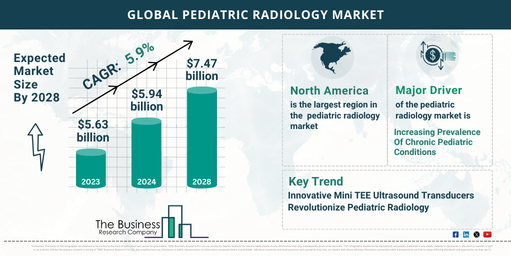
    • The pediatric radiology market grew from $5.63 billion in 2023 to $5.94 billion in 2024, marking a compound annual growth rate (CAGR) of 5.6%.
    • Growth has been driven by:
      • Innovations in medical imaging technology.
      • Increased incidence of pediatric diseases.
      • Greater awareness and adoption of pediatric radiology.
      • Improvements in imaging quality and safety.
      • Focused research and training in pediatric radiology.

    Future Market Outlook

    Projected Growth

    • The market is expected to reach $7.47 billion by 2028, with a CAGR of 5.9%.
    • Key drivers of future growth include:
      • Integration of artificial intelligence (AI) in imaging.
      • Expansion of telemedicine and remote imaging solutions.
      • Advances in personalized medicine and precision imaging.
      • Shift towards value-based healthcare models.
      • Innovations in emerging markets.

    View More On The Pediatric Radiology Market Report 2024 – https://www.thebusinessresearchcompany.com/report/pediatric-radiology-global-market-report

    Trends Shaping the Future

    Major Trends

    • Advancements in pediatric-specific imaging techniques.
    • Increased use of AI and machine learning in radiology.
    • Expansion of point-of-care imaging solutions.
    • Growth in remote monitoring and telemedicine.
    • Emphasis on patient-centered and family-centered imaging approaches.

    Chronic Pediatric Conditions Fuel Market Growth

    Impact of Chronic Conditions

    • The rise in chronic pediatric conditions is a significant growth driver for the pediatric radiology market.
    • Chronic conditions, which require long-term medical attention, are increasing due to genetic, environmental, and lifestyle factors.
    • Pediatric radiology is essential in diagnosing, monitoring, and managing these conditions, using imaging techniques like X-rays, MRI, and CT scans.
    • Example: In 2022, hospital admissions for children with asthma in England and Wales surged by 149% compared to the previous year, highlighting the increasing need for pediatric radiology services.

    Key Market Players

    Leading Companies

    • Major companies in the pediatric radiology market include:
      • Samsung Electronics Co. Ltd.
      • Hitachi Ltd.
      • Siemens AG
      • General Electric Company
      • Toshiba Corporation
      • Fujifilm Holdings Corporation
      • Koninklijke Philips N.V.
      • Agilent Technologies Inc.
      • Hologic Inc.
      • Shimadzu Corporation

    Innovative Mini TEE Ultrasound Transducers

    Product Innovations

    • Companies are developing advanced products like mini transesophageal echocardiography (TEE) ultrasound transducers.
    • These devices provide detailed images of the heart through the esophagus, enhancing diagnostic precision and patient comfort.
    • Example: In May 2024, Koninklijke Philips N.V. launched the X11-4t Mini 3D TEE transducer, designed for pediatric patients and adults at risk of complications, offering high-quality 3D imaging with minimal anesthesia needs.

    Strategic Acquisitions

    GE Healthcare’s Acquisition of IMACTIS

    • In April 2023, GE HealthCare Technologies Inc. acquired IMACTIS, enhancing its portfolio in interventional guidance.
    • This acquisition brings IMACTIS’ CT-Navigation system into GE’s offerings, improving workflow efficiency and procedural accuracy in minimally invasive procedures.

    Market Segmentation

    Product Type, Modality, Application, and End-User

    • The market is segmented by product type, including ultrasound, MRI, X-ray, and CT scanners.
    • Modality categories include standalone devices, table-top devices, and portable devices.
    • Applications span oncology, orthopedics, cardiology, and more.
    • End-users include hospitals, pediatric clinics, diagnostic centers, and others.

    Regional Insights

    Geographic Growth

    • North America was the largest market for pediatric radiology in 2023.
    • The Asia-Pacific region is expected to be the fastest-growing market in the forecast period, driven by advancements in healthcare infrastructure and increasing adoption of advanced imaging technologies.

    The pediatric radiology market is poised for robust growth, driven by technological advancements, increasing chronic pediatric conditions, and strategic initiatives by key market players. As innovations continue to emerge, the market will see enhanced diagnostic and treatment capabilities, improving patient outcomes and shaping the future of pediatric healthcare.

    Request A Sample Of The Global Pediatric Radiology Market Report 2024:
    https://www.thebusinessresearchcompany.com/sample_request?id=15891&type=smp

  • Opioid-Induced Constipation Treatment Market Growth Analysis Till 2033 By The Business Research Company

    Opioid-Induced Constipation Treatment Market Growth Analysis Till 2033 By The Business Research Company

    The Business Research Company’s market reports offer an in-depth analysis on the market’s growth potential, major drivers, key trends and more.

    Market Growth Overview

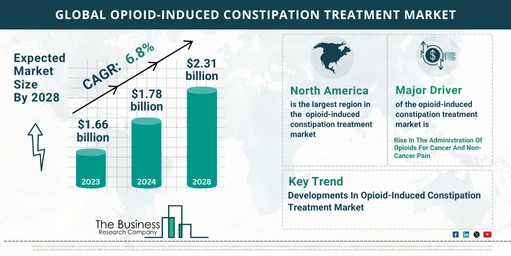
    • Recent Growth: The opioid-induced constipation (OIC) treatment market has seen significant growth, increasing from $1.66 billion in 2023 to $1.78 billion in 2024, with a CAGR of 6.7%.
    • Future Projections: Expected to grow to $2.31 billion by 2028 at a CAGR of 6.8%, driven by several factors.

    Key Drivers in the Historic Period

    • Expanding Geriatric Population: Older adults are more likely to use opioids, leading to higher instances of OIC.
    • Personalized Treatments: Tailored OIC treatments have become more available, enhancing effectiveness.
    • Effective OIC Drugs: Increased availability of drugs specifically targeting OIC.
    • Prevalence of Opioid Use: Rising opioid prescriptions contribute to the need for OIC treatments.
    • Gastrointestinal Disorders: A higher incidence of gastrointestinal issues boosts the demand for OIC therapies.

    Drivers for Future Growth

    • Accelerated Drug Approval: Faster approval processes for new drugs.
    • Opioid Analgesic Prescriptions: Increasing use of opioids for pain management.
    • R&D Expenditure: Significant investments in research and development for novel treatments.
    • Development of Biologics: Advances in biologic treatments for OIC.

    Read More On The Opioid-Induced Constipation Treatment Market Report 2024 – https://www.thebusinessresearchcompany.com/report/opioid-induced-constipation-treatment-global-market-report

    Emerging Trends

    • Patient Education: Increased efforts in educating patients about OIC and its treatments.
    • Targeted Therapies: Development of therapies specifically targeting OIC mechanisms.
    • Non-pharmacological interventions: Exploration of alternative treatments beyond medications.
    • Biotechnology Innovations: Cutting-edge biotech solutions for managing OIC.
    • Increased Investment: More financial resources directed towards OIC treatment advancements.

    Rising Opioid Use for Pain Management

    • Cancer and Non-Cancer Pain: Opioids are widely used for managing both cancer-related and non-cancer pain.
    • Quality of Life: Effective OIC treatments improve patient comfort and adherence to pain management regimens without compromising pain relief.
    • Statistics: According to the CDC, 20.9% of U.S. adults reported chronic pain in 2021, highlighting the need for OIC treatments.

    Major Players in the Market

    • Companies: Key players include Pfizer Inc., Merck & Co. Inc., Bayer AG, Sanofi S.A., AstraZeneca plc, Takeda Pharmaceutical Company Limited, and many others.

    Developments in OIC Treatments

    • Mu-Opioid Receptor Antagonists: Companies are focusing on these antagonists to manage OIC effectively.
    • Notable Approval: In December 2021, Shionogi & Co. Ltd. received approval for Symproic (naldemedine) in Taiwan, expanding treatment options.

    Grünenthal and Kyowa Kirin Joint Venture

    • Collaboration: In August 2023, Grünenthal GmbH and Kyowa Kirin International formed a joint venture to market pain management and OIC medications.
    • Focus Areas: The collaboration includes a range of products, emphasizing OIC and pain management.

    Market Segmentation

    • By Drug Class: Includes laxatives, peripherally acting µ-opioid receptor antagonists, serotonin receptor agonists, and prostaglandin.
    • By Type: Oral and parenteral treatments.
    • By Distribution Channel: Hospital pharmacies, online pharmacies, and retail pharmacies.

    Regional Insights

    • North America: Largest market in 2023.
    • Asia-Pacific: Expected to be the fastest-growing region during the forecast period.

    The opioid-induced constipation treatment market is poised for continued growth, driven by increasing opioid use, advancements in treatment options, and significant investments in R&D. With major players innovating and forming strategic collaborations, the market is set to expand, offering improved solutions for patients suffering from OIC.

    Request for A Sample Of The Global Opioid-Induced Constipation Treatment Market Report:
    https://www.thebusinessresearchcompany.com/sample_request?id=15881&type=smp

  • 5 Key Insights On The Platysmaplasty Treatment Market 2024

    5 Key Insights On The Platysmaplasty Treatment Market 2024

    The Business Research Company’s global market reports are now updated with the latest market sizing information for the year 2024 and forecasted to 2033

    As per The Business Research Company’s Platysmaplasty Treatment Global Market Report 2024, the platysmaplasty treatment market is expected to show significant growth in the forecast period.

    The platysmaplasty treatment market has seen significant growth in recent years, driven by various factors that continue to boost its demand. This blog explores the current market size, future projections, and key trends influencing the growth of this market.

    Market Size and Growth Rates

    Current Market Size

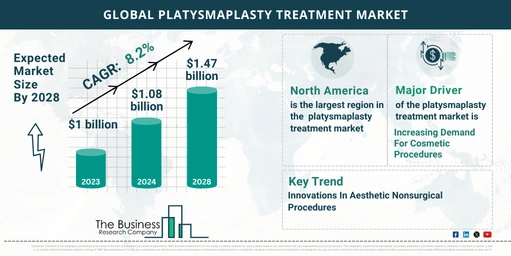
    • 2023: $1 billion
    • 2024: $1.08 billion
    • CAGR: 8.1%

    The growth from 2023 to 2024 reflects the increasing demand for cosmetic procedures and advancements in surgical techniques.

    Future Market Projections

    • 2028: $1.47 billion
    • CAGR: 8.2%

    The forecast period anticipates continued growth due to the rising popularity of minimally invasive procedures and advancements in non-surgical alternatives.

    Key Drivers of Market Growth

    Aging Population and Cosmetic Awareness

    • Aging Demographics: An aging population leads to a higher demand for cosmetic procedures, including platysmaplasty.
    • Awareness: Increased awareness about cosmetic procedures contributes to market growth.

    Technological Advancements

    • Surgical Techniques: Improvements in surgical methods make procedures safer and more effective.
    • Non-Surgical Alternatives: Innovations in non-invasive technologies provide patients with more options.

    Economic and Cultural Factors

    • Disposable Income: Rising disposable incomes allow more people to afford cosmetic treatments.
    • Celebrity Influence: The influence of celebrity culture promotes the desirability of cosmetic enhancements.

    View More On The Platysmaplasty Treatment Market Report 2024 – https://www.thebusinessresearchcompany.com/report/platysmaplasty-treatment-global-market-report

    Trends Shaping the Market

    Minimally Invasive Procedures

    • Growing Preference: There is a notable shift towards minimally invasive procedures for their reduced recovery times and lower risk.
    • Technological Adoption: Adoption of advanced technologies such as robotic-assisted surgery is on the rise.

    Outpatient Procedures

    • Convenience: Increasing preference for outpatient procedures due to their convenience and efficiency.

    Customized Treatments

    • Personalization: The development of customized treatment plans tailored to individual patient needs is becoming more prevalent.

    Increasing Demand for Cosmetic Procedures

    Surge in Cosmetic Interventions

    • ISAPS Report: In 2023, the International Society of Aesthetic Plastic Surgery reported a 11.2% increase in cosmetic procedures, totaling over 14.9 million surgical and 18.8 million non-surgical interventions.

    Role of Platysmaplasty

    • Rejuvenation: Platysmaplasty addresses sagging or aging skin in the neck area, providing a rejuvenated appearance.

    Major Players in the Market

    Leading Companies

    • Healthcare Providers: Mayo Clinic, Cleveland Clinic Foundation, Duke Health
    • Medical Device Companies: Lumenis Ltd., Cutera Inc., Lutronic Corporation
    • Aesthetic Clinics: Allergan Aesthetics, The Esthetic Clinics, Cadogan Clinic

    Innovations in Nonsurgical Procedures

    Non-Invasive Technologies

    • Ultrasound Parallel Beams: Companies like Sofwave Medical Ltd. are developing non-invasive ultrasound technologies for effective platysmaplasty treatments.
    • FDA Approvals: Innovations are receiving regulatory approvals, enhancing their market acceptance.

    Strategic Acquisitions

    Sono Bello’s Market Dominance

    • Acquisition: In June 2022, Sono Bello acquired Body Sculpt International, strengthening its position in the market for liposuction and body contouring procedures.

    Market Segmentation

    By Procedure

    • Surgical: Traditional surgical methods
    • Non-Surgical: Minimally invasive and non-invasive options

    By Gender

    • Male: Increasing interest among men
    • Female: Continued high demand among women

    By End-Use

    • Cosmetic Surgery Clinics: Specialized facilities
    • Hospitals: General medical centers

    Regional Insights

    North America

    • Largest Market: North America was the largest region in the platysmaplasty treatment market in 2023, driven by high demand and advanced healthcare infrastructure.

    The platysmaplasty treatment market is poised for continued growth, fueled by technological advancements, rising demand for cosmetic procedures, and strategic industry developments. As societal attitudes towards aging and appearance continue to evolve, the market will likely see further expansion and innovation.

    Request A Sample Of The Global Platysmaplasty Treatment Market Report 2024:
    https://www.thebusinessresearchcompany.com/sample_request?id=15897&type=smp

  • How Is The Plasmid DNA Manufacturing Market Expected To Grow Through 2024-2033

    How Is The Plasmid DNA Manufacturing Market Expected To Grow Through 2024-2033

    The Business Research Company’s global market reports are now updated with the latest market sizing information for the year 2024 and forecasted to 2033

    According to The Business Research Company’s Plasmid DNA Manufacturing Global Market Report 2024, the plasmid DNA manufacturing market is expected to show promising growth in the forecast period.

    Exponential Growth in Recent Years

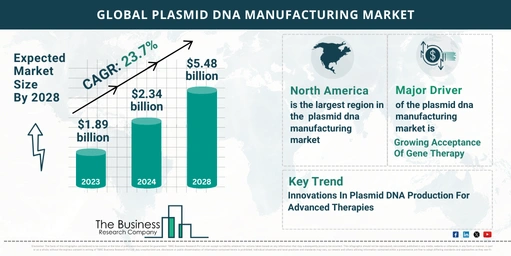
    • Market Size Increase: The plasmid DNA manufacturing market has experienced significant growth, increasing from $1.89 billion in 2023 to $2.34 billion in 2024, marking a compound annual growth rate (CAGR) of 23.6%.
    • Key Drivers: Factors contributing to this growth include:
      • Application in industrial processes.
      • Use in genetically modified organisms.
      • Production of monoclonal antibodies.
      • International health initiatives.
      • Environmental applications like bioremediation.
      • Microbiome studies.

    Future Growth Projections

    • Continued Expansion: The market is projected to grow to $5.49 billion by 2028, with a CAGR of 23.7%.
    • Drivers of Future Growth:
      • Development of DNA vaccines for infectious diseases.
      • Adoption in antibody-drug conjugates and personalized therapies.
      • Use in cancer treatments.
      • Advancements in intellectual property.

    Trends Shaping the Market

    • Licensing Agreements: Increased activity in licensing agreements for plasmid DNA technologies.
    • Customized Solutions: Development of tailored solutions to meet specific needs.
    • Cost Reduction: Implementation of strategies to lower production costs.
    • High-Throughput Screening: Adoption of high-throughput screening methods.
    • Scalable Manufacturing: Creation of scalable manufacturing solutions.

    View More On The Plasmid DNA Manufacturing Market Report 2024 – https://www.thebusinessresearchcompany.com/report/plasmid-dna-manufacturing-global-market-report

    Gene Therapy Driving Market Growth

    • Gene Therapy Boom: Growing acceptance of gene therapy, which modifies genes to treat or prevent diseases, is a significant market driver.
      • Advancements: Improvements in genetic engineering technologies and increased R&D investment.
      • Clinical Trials: Successful clinical trials and the rise in genetic disorders highlight the potential of gene therapy for long-term cures.
    • Plasmid DNA’s Role: Essential in producing vectors for gene therapy, facilitating genetic disorder treatments.
      • Clinical Trials Data: According to the American Society of Gene & Cell Therapy, the number of gene therapies in Phase III trials increased by 10% in Q3 2023.

    Leading Companies in the Market

    • Major Players: Key companies include Thermo Fisher Scientific Inc., Eurofins Genomics LLC, Catalent Inc., Charles River Laboratories, and Recipharm AB.
    • Other Notable Firms: Genscript Biotech Corporation, Aldevron LLC, Genewiz, OriGene Technologies, and Celonic AG.

    Innovations in Plasmid DNA Production

    • Advanced Bioprocessing Technologies: Companies are developing technologies to enhance efficiency, scalability, and quality.
      • Example: In January 2023, Charles River Laboratories launched the eXpDNA platform, integrating advanced technologies for high-quality plasmid DNA production.
      • Applications: Used in gene therapy, DNA vaccine development, and other biopharmaceutical applications requiring high yield, purity, and consistency.

    Strategic Acquisitions

    • Danaher Corporation and Aldevron: In August 2021, Danaher Corporation acquired Aldevron for $9.6 billion.
      • Impact: This acquisition enhances Danaher’s biotech capabilities, supporting the development of genetic treatments and advancing biotech research.

    Market Segmentation

    • By Grade:
      • Research and Development Grade
      • Good Manufacturing Practice (GMP) Grade
    • By Development Phase:
      • Pre-Clinical Therapeutics
      • Clinical Therapeutics
      • Marketed Therapeutics
    • By Disease:
      • Infectious Disease
      • Cancer
      • Genetic Disorder
      • Other Diseases
    • By Application:
      • DNA Vaccines
      • Cell and Gene Therapy
      • Immunotherapy
      • Other Applications

    Regional Insights

    • North America: Largest market in 2023.
    • Asia-Pacific: Expected to be the fastest-growing region during the forecast period.

    Request A Sample Of The Global Plasmid DNA Manufacturing Market Report 2024:
    https://www.thebusinessresearchcompany.com/sample_request?id=15895&type=smp

  • Top 5 Insights From The Primary Health Care Service Market Report 2024

    Top 5 Insights From The Primary Health Care Service Market Report 2024

    The Business Research Company’s global market reports are now updated with the latest market sizing information for the year 2024 and forecasted to 2033

    According to The Business Research Company’s Primary Health Care Service Global Market Report 2024, the primary health care service market is expected to show promising growth in the forecast period.

    Recent Market Growth

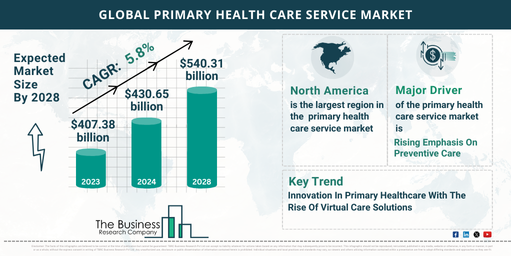
    • Strong Growth:The primary health care service market size has grown from $407.38 billion in 2023 to $430.65 billion in 2024, at a CAGR of 5.7%.
    • Key Drivers:Factors contributing to this growth include the rise of managed care, epidemiological transitions, healthcare reform initiatives, and the patient-centered medical home (PCMH) model.

    Future Market Projections

    • Expected Expansion: The market is anticipated to grow to $540.31 billion by 2028, with a CAGR of 5.8%.
    • Driving Factors: Growth will be driven by health education and awareness, patient preferences and expectations, collaboration and integration, healthcare expenditure and funding, and quality of care metrics.

    Major Trends Shaping the Future

    • Technological Innovations:
      • 3D printing and bioprinting
      • Wearable sensors and IoT devices
      • Digital stethoscopes and point-of-care diagnostics
    • Personalized Approaches: Personalized nutrition and wellness
    • Engagement Strategies: Gamification and behavioral economics

    View More On The Primary Health Care Service Market Report 2024 – https://www.thebusinessresearchcompany.com/report/primary-health-care-service-global-market-report

    Role Of Preventive Care In Expanding The Market

    Emphasis on Preventive Care

    • Preventive Services: Focus on services aimed at preventing disease, early detection, and promoting overall health.
    • Proactive Management: Preventive care in primary health services aims to lower healthcare expenses and enhance long-term health outcomes.

    Impact of Preventive Care

    • Cost Reduction: Investing in preventive care reduces overall healthcare costs.
    • Improved Outcomes: Enhances long-term sustainability and health outcomes.
    • Statistical Evidence:
      • Eurostat reported an 88.2% increase in preventive healthcare spending in the EU in 2021 compared to 2020.
      • Immunization programs saw a significant rise in expenditure, from 13.7% in 2020 to 29.1% in 2021.

    Key Players in the Market

    Leading Companies

    • Major Corporations:
      • UnitedHealth Group
      • CVS Health Corporation
      • Centene Corporation
      • Kaiser Permanente
      • Humana Inc.
      • HCA Healthcare
      • Ascension Health
      • Providence Health & Services
      • Tenet Healthcare
      • Cedars-Sinai Medical Center
      • Cerner Corporation
      • Trinity Health Corporation
      • Massachusetts General Hospital
      • Arthrex Inc.
      • Apollo Hospitals Enterprise Limited
      • UCSF Health
      • Primary Health Care Corporation

    Innovation In Primary Healthcare With Virtual Care Solutions

    Focus on Digital Telehealth Platforms

    • Virtual Care Solutions: Enhancing patient access, improving care coordination, and streamlining healthcare delivery through digital platforms.
    • Example: CVS Health Corporation launched CVS Health Virtual Primary Care in May 2022, offering telemedicine consultations, personalized health management plans, and convenient medication delivery services.

    CVS Health Expands Reach With Acquisition Of Oak Street Health

    Strategic Acquisition

    • Acquisition Details: In May 2023, CVS Health acquired Oak Street Health for $10.6 billion.
    • Objective: Leverage expertise in value-based primary care for Medicare adults, achieve synergies in healthcare services, enhance capabilities in comprehensive care, and expand Medicare population reach.

    Market Segmentation

    Segmentation Overview

    • By Service: Injury, Preventive Care, Chronic Conditions, Acute Conditions, Pre Or Post-Surgery
    • By Mode Of Consultation: Virtual, Physical
    • By Age Group: Infants, Pediatrics, Adults, Geriatrics
    • By Provider: Hospitals, Clinics, Outpatient Department, Other Providers

    Regional Insights

    • Largest Region: North America was the largest region in the primary health care service market in 2023. 

    Request A Sample Of The Global Primary Health Care Service Market Report 2024:
    https://www.thebusinessresearchcompany.com/sample_request?id=15904&type=smp

  • Top 5 Insights From The Rare Biomarkers Specimen Collection And Stabilization Market Report 2024

    Top 5 Insights From The Rare Biomarkers Specimen Collection And Stabilization Market Report 2024

    The Business Research Company’s global market reports are now updated with the latest market sizing information for the year 2024 and forecasted to 2033

    According to The Business Research Company’s Rare Biomarkers Specimen Collection And Stabilization Global Market Report 2024, the rare biomarkers specimen collection and stabilization market is expected to show promising growth in the forecast period.

    Introduction

    The rare biomarkers specimen collection and stabilization market has witnessed substantial growth in recent years and is poised for further expansion. This blog explores the market dynamics, major drivers, and future trends shaping this sector.

    Current Market Overview

    • 2023 Market Size:$29.02 billion
    • 2024 Projected Market Size:$32.01 billion
    • CAGR (2023-2024):3%

    The market’s recent growth is driven by advancements in the human genome project, increased cancer research, pharmaceutical R&D investments, and progress in genomics and proteomics. Improved data management and bioinformatics also contribute significantly.

    Future Growth Projections

    • 2028 Projected Market Size: $47.59 billion
    • CAGR (2024-2028): 10.4%

    The market is expected to continue its robust growth due to several key factors:

    • Expansion of Liquid Biopsy Applications: Enhancing non-invasive diagnostic techniques.
    • Consumer Awareness and Demand: Increased focus on personalized medicine.
    • Biomarker Discovery in Rare Diseases: Facilitating early detection and treatment.

    Major Trends Shaping the Market

    • Advancements in Preservation Technology: Innovations improving sample integrity.
    • Growth in Genomic and Proteomic Research: Expanding the scope of research and diagnostics.
    • Emergence of Point-of-Care Testing: Streamlining the diagnostic process.
    • Regulatory Advancements and Standardization: Ensuring quality and consistency.
    • Enhanced Data Analytics and AI Integration: Leveraging technology for better insights.

    View More On The Rare Biomarkers Specimen Collection And Stabilization Market Report 2024 – https://www.thebusinessresearchcompany.com/report/rare-biomarkers-specimen-collection-and-stabilization-global-market-report

    Cancer Prevalence Driving Market Growth

    The rising prevalence of cancer significantly impacts the rare biomarkers specimen collection and stabilization market. Key factors include:

    • Environmental Pollutants and Lifestyle Factors:Contributing to higher cancer rates.
    • Utilization in Cancer Studies:Enhancing the accuracy of cancer detection and monitoring.

    For instance, new cancer cases in Europe rose to 2.74 million in 2022, indicating a 2.3% increase from 2020, highlighting the urgent need for advanced biomarker collection and stabilization methods.

    Innovative Solutions in the Market

    • Automated Pre-Analytical Platforms:Companies are developing platforms like Tethis S.p.A.’s See.d, which automates plasma and cell sample preparation, ensuring sample integrity and consistency.
    • Technological Innovations:Features include precise sample handling, efficient plasma separation, and quality control scoring for sample stability.

    Strategic Acquisitions and Market Expansion

    • DiaSorin’s Acquisition of Luminex Corporation:In October 2022, DiaSorin acquired Luminex to enhance its diagnostic testing capabilities and expand its market presence. This move leverages multiplexing technology to strengthen rare biomarker specimen collection and stabilization.

    Market Segmentation

    1. By Type:
      • Circulating Cell Free DNA (CCFDNA)
      • Circulating Tumor Cells (CTCs)
      • Exosomes or Extracellular Vesicles
    2. By Specimen:
      • Serum or Plasma
      • Other Specimens
    3. By Application:
      • Non-Invasive Prenatal Testing (NIPT)
      • Oncology
      • Transcriptomics
      • Pharmacogenomics
      • Transplant Rejection
      • Population Screening
      • Cardiovascular Diseases
      • Other Applications
    4. By End-User:
      • Hospitals
      • Perinatal Clinics
      • Public Health Labs
      • Private or Commercial Labs
      • Physician Labs
      • Research Institutes
      • Other End-Users

    Regional Insights

    • North America:The largest market region in 2023.
    • Asia-Pacific:Expected to be the fastest-growing region during the forecast period.

    Conclusion

    The rare biomarkers specimen collection and stabilization market is set for significant growth, driven by advancements in technology, increasing cancer prevalence, and a growing demand for non-invasive diagnostic methods. With innovative solutions and strategic acquisitions, the market is evolving rapidly, offering new opportunities and advancements in biomarker research and applications.

    Request A Sample Of The Global Rare Biomarkers Specimen Collection And Stabilization Market Report 2024:
    https://www.thebusinessresearchcompany.com/sample_request?id=15913&type=smp

  • What’s The Growth Forecast For Radiation Dose Management Market Through 2024-2033?

    What’s The Growth Forecast For Radiation Dose Management Market Through 2024-2033?

    The Business Research Company’s global market reports provide comprehensive analysis on the various markets in 27 industries across 60 geographies.

    Market Overview

    • Current Market Size and Growth
      • The radiation dose management market has experienced significant growth, with its size increasing from $0.71 billion in 2023 to $0.85 billion in 2024. This growth reflects a robust compound annual growth rate (CAGR) of 19.1%.
      • Factors contributing to this growth include heightened awareness of radiation risks, stricter regulatory requirements, an increase in diagnostic imaging procedures, and advancements in imaging technologies.
    • Future Projections
      • The market is anticipated to reach $1.73 billion by 2028, with a CAGR of 19.4%.
      • Key drivers include the expansion of cloud-based solutions, increased awareness of patient safety, integration of artificial intelligence (AI), a rise in diagnostic centers, and advancements in imaging modalities.

    Key Trends Influencing the Market

    • Technological Advancements
      • The market is witnessing rapid advancements in technology, including the development of new radiation dose-managing devices and innovations in product offerings.
    • Integration of AI and IoT
      • The integration of artificial intelligence (AI) and the Internet of Things (IoT) is enhancing radiation dose management, leading to more efficient and accurate monitoring solutions.

    View More On The Radiation Dose Management Market Report 2024 – https://www.thebusinessresearchcompany.com/report/radiation-dose-management-global-market-report

    Increasing Cancer Incidences Driving Growth

    • Rising Cancer Cases
      • The growing incidence of cancer is a major factor driving the radiation dose management market. Cancer’s prevalence is attributed to various factors such as family history, lifestyle choices, genetic predispositions, and environmental exposures.
    • Market Impact
      • With over 35 million new cancer cases expected by 2050, radiation dose management solutions are crucial in diagnosing and treating cancer while minimizing radiation risks. This significant increase in cancer cases is set to further propel market growth.

    Innovative Developments by Major Companies

    • Tracerco’s Next-Generation Dosimeters
      • In March 2022, Tracerco launched the PED2 range of personal electronic dosimeters. These devices offer advanced detection technology and are supported by the DoseVision2 cloud-based management platform, enhancing radiological safety and compliance.
    • AURELIUS Group’s Acquisition
      • In April 2023, AURELIUS Group acquired Agfa-Gevaert’s Offset Solutions division. This strategic move is aimed at bolstering the company’s consumables and services portfolio, further strengthening its position in the market.

    Market Segmentation

    • By Component
      • The market is divided into Software and Services.
    • By Modality
      • Segments include Computed Tomography, Fluoroscopy and Interventional Imaging, Radiography and Mammography, and Nuclear Medicine.
    • By Application
      • The market serves applications in Oncology, Cardiology, Orthopedic Applications, and other fields.
    • By End-User
      • End-users include Hospitals, Ambulatory Care Settings, and other institutions.

    Regional Insights

    • North America
      • North America was the largest market in 2023, reflecting strong demand and established infrastructure.
    • Asia-Pacific
      • Asia-Pacific is expected to be the fastest-growing region, driven by increasing healthcare investments and rising awareness of radiation safety.

    Conclusion

    The radiation dose management market is poised for continued rapid growth, driven by technological advancements, increasing cancer incidences, and strategic moves by major players. As the industry evolves, the integration of AI and IoT will play a crucial role in enhancing radiation safety and efficiency. With a promising outlook, the market is set to expand significantly, benefiting from advancements and innovations in radiation dose management.

    Request A Sample Of The Global Radiation Dose Management Market Report 2024:
    https://www.thebusinessresearchcompany.com/sample_request?id=15912&type=smp

  • How Is The Sacroiliac Joint Fusion Market Expected To Grow Through 2024-2033

    How Is The Sacroiliac Joint Fusion Market Expected To Grow Through 2024-2033

    The Business Research Company’s global market reports are now updated with the latest market sizing information for the year 2024 and forecasted to 2033

    According to The Business Research Company’s Sacroiliac Joint Fusion Global Market Report 2024, the sacroiliac joint fusion market is expected to show promising growth in the forecast period.

    Market Overview

    • Recent Growth: The sacroiliac joint fusion market has seen substantial growth, expanding from $0.57 billion in 2023 to $0.68 billion in 2024, marking a compound annual growth rate (CAGR) of 17.8%.
    • Historic Growth Drivers: This growth is driven by increasing chronic diseases, the rise in joint pain prevalence, improved surgical techniques, demand for safer joint fusion systems, and expanded reimbursement coverage for minimally invasive procedures.

    Future Market Projections

    • Forecast Growth: The market is projected to reach $1.32 billion by 2028, with a CAGR of 18.1%.
    • Forecast Drivers: Expected growth factors include the rising prevalence of lower back pain, increasing incidence of sacroiliitis, demand for less painful procedures, preference for minimally invasive surgeries, and a growing geriatric population.

    Key Trends

    • Innovative Technologies: Significant investments are being made in new technologies and procedures.
    • Advanced Materials: Adoption of new materials and 3D-printed titanium implants.
    • Enhanced Diagnostics: Improvements in diagnostic capabilities for sacroiliac joint disorders.
    • Healthcare Infrastructure: Advancements in healthcare infrastructure support the market’s growth.

    View More On The Sacroiliac Joint Fusion Market Report 2024 – https://www.thebusinessresearchcompany.com/report/sacroiliac-joint-fusion-global-market-report

    Rising Prevalence of Lower Back and Sacroiliac Joint Pain

    • Prevalence Impact: The increasing prevalence of lower back pain is a major driver for the sacroiliac joint fusion market.
      • Conditions: Lower back pain, often caused by stress, sedentary lifestyles, obesity, and poor diet, can vary from a dull ache to sharp pain.
      • Market Demand: Sacroiliac joint fusion helps stabilize the joint, reducing pain and improving quality of life.
      • Statistics: As reported by the National Center for Biotechnology Information, low back pain affected 619 million people globally in 2020, expected to rise to 843 million by 2050.

    Leading Companies

    • Key Players: Major companies in the market include Medtronic Plc, Zimmer Biomet Holdings Inc., Integra LifeSciences, NuVasive Inc., and SI-BONE Inc.
      • Innovations: Companies are developing advanced implants, such as the granite implant system for sacroiliac joint fusion.
      • Example: In May 2024, SI-BONE Inc. launched the iFuse Bedrock Granite Implant System, which received Breakthrough Device Designation from the FDA.

    Strategic Acquisitions

    • Nevro Corp’s Move: In November 2023, Nevro Corp acquired Vyrsa Technologies for $75 million.
      • Purpose: This acquisition aims to enhance Nevro’s offerings in minimally invasive treatments for chronic sacroiliac joint pain.
      • Focus: Vyrsa Technologies specializes in minimally invasive solutions, complementing Nevro’s strategic goals.

    Market Segmentation

    • By Product: Implants, Accessories, Injections, Diagnosis, Treatment, RF Ablation.
    • By Indication Type: Degenerative Sacroiliitis, Sacral Disruption, Trauma.
    • By Approach: Dorsal, Anterior.
    • By End-user: Hospitals, Ambulatory Surgical Centers, Other End Users.

    Regional Insights

    • Current Leader: North America was the largest market region in 2023.
    • Future Growth: Asia-Pacific is expected to be the fastest-growing region in the forecast period.

    The sacroiliac joint fusion market is poised for continued growth, driven by advancements in technology, increasing prevalence of lower back pain, and strategic expansions by major players. The focus on minimally invasive procedures and innovative implants will shape the future of the market.

    Request A Sample Of The Global Sacroiliac Joint Fusion Market Report 2024:
    https://www.thebusinessresearchcompany.com/sample_request?id=15921&type=smp