Category: HealthcareServices

  • Clinical Nutrition For Cancer Care Global Market Outlook 2024-2033: Size And Growth Rate Analysis

    Clinical Nutrition For Cancer Care Global Market Outlook 2024-2033: Size And Growth Rate Analysis

    The Business Research Company’s global market reports provide comprehensive analysis on the various markets in 27 industries across 60 geographies.

    Market Size and Growth Rates

    • The clinical nutrition for cancer care market has seen significant growth, expanding from $4.67 billion in 2023 to $4.92 billion in 2024, reflecting a CAGR of 5.5%.
    • This growth is set to continue, with projections showing the market reaching $6.14 billion by 2028 at a CAGR of 5.7%.

    Key Drivers of Growth

    • Raising Awareness: Increased understanding of nutritional needs among cancer patients has boosted market growth.
    • Precision Nutrition: The emergence of personalized nutrition approaches tailored to individual needs.
    • Healthcare Policy Changes: Improved healthcare policies and reimbursement models have facilitated greater access to nutritional support.
    • Surgical Interventions: Nutritional support is becoming crucial for patients undergoing cancer surgeries.
    • Functional Foods and Supplements: There is growing interest in functional foods, nutraceuticals, and dietary supplements to aid in cancer care.

    View More On The Clinical Nutrition For Cancer Care Market Report 2024 – https://www.thebusinessresearchcompany.com/report/clinical-nutrition-for-cancer-care-global-market-report

    Future Growth Prospects

    • Personalized Medicine: A shift towards personalized medicine and precision nutrition approaches is expected to drive future market growth.
    • Clinical Nutrition Demand: Rising demand for clinical nutrition interventions to support cancer patients.
    • Impact Awareness: Increasing awareness of how nutrition impacts cancer treatment outcomes.
    • Technological Advancements: Innovations in cancer treatment are integrating structured clinical nutrition pathways in oncology.

    Major Trends Shaping the Market

    • Nutritional Biomarker Research: Advances in identifying biomarkers to tailor nutritional interventions.
    • Technological Innovations: New nutritional products and delivery systems are enhancing patient care.
    • Oncologist Collaboration: Increased collaboration between oncologists and nutritionists to optimize patient outcomes.
    • Nutritional Science Advancements: Ongoing research and development in nutritional science continue to improve clinical nutrition products.

    Rising Cancer Prevalence

    • Cancer Cases: The increasing prevalence of cancer is a significant driver of the clinical nutrition market. With life expectancy rising, more aging individuals are becoming susceptible to cancer.
    • Projected Growth: According to the World Health Organization, new cancer cases are expected to reach approximately 35 million by 2050, a 77% increase from 2022.
    • Nutritional Support: Clinical nutrition is crucial for providing specialized dietary management and nutritional support tailored to cancer patients.

    Key Players in the Market

    • Major Companies: Pfizer Inc., Bayer AG, Abbott Nutrition, GlaxoSmithKline plc, Reckitt Benckiser Group plc, Evonik Industries AG, Baxter International Inc., Otsuka Holdings Co. Ltd., B. Braun Melsungen AG, Koninklijke DSM N.V., Glanbia plc, Kyowa Kirin Co. Ltd., Nestle Health Science S.A., Danone Nutricia, BioGaia AB, Meiji Holdings Company Ltd., Hormel Health Labs, Victus Inc., Taiho Pharmaceutical Co. Ltd., Global Health Products Inc.

    Innovative Clinical Nutrition Products

    • Oral Nutritional Supplements: Companies are developing advanced products like oral nutritional supplements to provide targeted support for cancer patients.
    • Nestle’s Launch: In July 2022, Nestle launched Oral Impact Su Yi Su in China, a supplement formulated with arginine and fish omega-3 to support tumor-related conditions.

    Strategic Partnerships

    • Danone and Resilience: In January 2024, Danone partnered with Resilience to create a nutrition and oncology module within Resilience’s digital oncology solution, addressing cancer-related malnutrition affecting up to 70% of cancer patients.

    Market Segmentation

    • By Type: Oral Nutrition, Parenteral Nutrition, Enteral Feeding Formulas.
    • By Cancer Type: Head and Neck Cancer, Stomach and Gastrointestinal Cancers, Blood Cancer, Breast Cancer, Lung Cancer, Other Cancer Types.
    • By Age Group: Adult, Pediatric.
    • By Sales Channel: Online, Retail, Institutional Sales.

    Regional Insights

    • North America: The largest region in the clinical nutrition for cancer care market in 2023, reflecting advanced healthcare infrastructure and high awareness levels.

    In conclusion, the clinical nutrition for cancer care market is poised for robust growth, driven by rising cancer prevalence, advancements in nutritional science, and the increasing integration of personalized and precision nutrition approaches in oncology care.

    Request A Sample Of The Global Clinical Nutrition For Cancer Care Market Report 2024:
    https://www.thebusinessresearchcompany.com/sample_request?id=16017&type=smp

  • 5 Key Insights On The Cell Viability Assays Market 2024

    5 Key Insights On The Cell Viability Assays Market 2024

    The Business Research Company’s global market reports are now updated with the latest market sizing information for the year 2024 and forecasted to 2033

    As per The Business Research Company’s Cell Viability Assays Global Market Report 2024, the cell viability assays market is expected to show significant growth in the forecast period.

    The cell viability assays market has experienced significant growth, increasing from $1.41 billion in 2023 to $1.56 billion in 2024 at a CAGR of 10.5%. This growth is projected to continue, reaching $2.34 billion by 2028 with a CAGR of 10.6%.

    Key Drivers of Growth

    • Investment in Cancer Research:
      • Increased funding and research initiatives targeting cancer have propelled the demand for cell viability assays.
    • Pharmaceutical R&D Expenditure:
      • Rising investment in pharmaceutical research and development has driven the market forward.
    • Biotechnology Sector Expansion:
      • Growth in the biotechnology sector has significantly contributed to the market’s expansion.
    • Advancements in Cell Culture Techniques:
      • Improvements in cell culture techniques have enhanced the accuracy and efficiency of cell viability assays.
    • Stem Cell Research Demand:
      • Increasing interest in stem cell research has led to a higher demand for cell viability assays.
    • Need for Toxicity Testing:
      • The necessity for rigorous toxicity testing in drug development has fueled market growth.
    • Real-Time Cell Analysis Systems:
      • The rise in utilization of real-time cell analysis systems has optimized the efficiency of cell viability assays.
    • Contract Research Organizations (CROs):
      • The growing number of CROs has expanded the availability and accessibility of cell viability assays.

    View More On The Cell Viability Assays Market Report 2024 – https://www.thebusinessresearchcompany.com/report/cell-viability-assays-global-market-report

    Future Growth Prospects
    The forecast period is expected to see rapid growth due to several factors:

    • Personalized Medicine:
      • Increasing demand for personalized medicine is driving the market.
    • Government Funding for Cell-Based Research:
      • Enhanced government funding is supporting cell-based research initiatives.
    • Precision Medicine Focus:
      • A greater emphasis on precision medicine is boosting market growth.
    • Stem Cell Research and Applications:
      • Continued advancements and applications in stem cell research are propelling the market forward.
    • Automated Cell Viability Analyzers:
      • Increasing availability of automated analyzers is improving assay efficiency.
    • Infectious Disease Incidence:
      • A rise in the incidence of infectious diseases is elevating the demand for cell viability assays.
    • Improved Assay Accuracy and Sensitivity:
      • Focus on enhancing assay accuracy and sensitivity is driving market growth.
    • Awareness of Assay Benefits:
      • Growing awareness about the advantages of cell viability assays is boosting market adoption.
    • Organ on a Chip Technologies:
      • Development of organ on a chip technologies is expected to drive the market.
    • Regenerative Medicine Demand:
      • Increasing demand for regenerative medicine is contributing to market growth.

    Emerging Trends

    • High Throughput Screening Methods:
      • Advances in high throughput screening methods are revolutionizing the market.
    • AI and Machine Learning:
      • Implementation of AI and machine learning algorithms is enhancing assay accuracy.
    • Real-Time Monitoring Systems:
      • Development of real-time monitoring systems is improving cell viability assays.
    • Automated Liquid Handling Systems:
      • Adoption of automated liquid handling systems is increasing assay efficiency.
    • Multiplex Assays:
      • Development of multiplex assays allows simultaneous measurement of cell viability.
    • Eco-Friendly Reagents:
      • Adoption of more sustainable and eco-friendly reagents is a key trend.
    • User-Friendly Assay Kits:
      • Development of user-friendly assay kits is making cell viability assays more accessible.
    • Electrochemical Assays:
      • Advancements in electrochemical assays are enhancing the market.
    • Scalable Cell Viability Assays:
      • Implementation of scalable assays is addressing growing demand.
    • Compatibility with Primary Cells and Stem Cells:
      • Development of assays compatible with primary and stem cells is driving innovation.

    Role of Cell-Based Therapeutics
    Cell-based therapeutics are driving the growth of the cell viability assays market. These treatments use living cells to repair or replace damaged tissue and treat diseases. Advances in biotechnology, investment in regenerative medicine, and improvements in cell engineering are fueling this growth. For instance, 38 trials for non-genetically modified cell therapies were initiated in Q1 2023, highlighting the increasing adoption of cell-based therapeutics.

    Major Players in the Market
    Key companies in the cell viability assays market include:

    • Thermo Fisher Scientific Inc.
    • Danaher Corporation
    • Merck KGaA
    • Becton, Dickinson, and Company
    • Agilent Technologies Inc.
    • Lonza Group Ltd.
    • PerkinElmer Inc.
    • Sartorius AG
    • Charles River Laboratories
    • Bio-Rad Laboratories Inc.

    Innovative Technologies in Drug Discovery
    Companies are developing innovative cell screening technologies to improve drug discovery. For example, Arralyze introduced CellShepherd in May 2024, a platform for single-cell analysis using proprietary nanowell glass arrays, enhancing real-time monitoring and analysis.

    Strategic Acquisitions
    BD Biosciences acquired Cytognos in February 2022 to expand its portfolio in blood cancer diagnostics and immune monitoring. This acquisition highlights the strategic moves by companies to strengthen their market position.

    Market Segmentation

    • By Product: Consumables, Instruments
    • By Application: Basic Research, Stem Cell Research, Drug Discovery and Development, Clinical and Diagnostic Applications, Other Applications
    • By End-User: Academic and Research Institutes, Pharmaceutical and Biotechnology Companies, Hospital and Diagnostic Laboratories, Other End-Users

    North America was the largest region in the market in 2023, with Asia-Pacific expected to be the fastest-growing region in the forecast period.

    Request A Sample Of The Global Cell Viability Assays Market Report 2024:
    https://www.thebusinessresearchcompany.com/sample_request?id=16014&type=smp

  • Top 5 Insights From The Hyperbaric Oxygen Therapy Market Report 2024

    Top 5 Insights From The Hyperbaric Oxygen Therapy Market Report 2024

    The Business Research Company’s global market reports are now updated with the latest market sizing information for the year 2024 and forecasted to 2033

    According to The Business Research Company’s Hyperbaric Oxygen Therapy Global Market Report 2024, the hyperbaric oxygen therapy market is expected to show promising growth in the forecast period.

    The hyperbaric oxygen therapy (HBOT) market has experienced robust growth recently and is projected to continue this upward trajectory. The market size surged from $3.98 billion in 2023 to $4.42 billion in 2024, reflecting a compound annual growth rate (CAGR) of 11.0%. Looking further ahead, it is expected to reach $6.74 billion by 2028, with a slightly higher CAGR of 11.1%. This growth is driven by several factors including advancements in medical technology, increased awareness of HBOT benefits, and an expanding diabetic population.

    Key Drivers of Market Growth

    • Rising Diabetes Prevalence:Diabetes, characterized by prolonged high blood sugar levels, is a major driver of the HBOT market. The increasing incidence of diabetic foot ulcers and chronic wounds, compounded by lifestyle factors such as poor diet and obesity, boosts demand for HBOT. The International Diabetes Federation projects the number of people affected by diabetes will grow from 537 million in 2021 to 783 million by 2045.
    • Growing Incidence of Soft Tissue Radio Necrosis and Carbon Monoxide Poisoning:These conditions, alongside an aging population and increased healthcare expenditure, contribute to the market’s expansion.
    • Expansion in Aesthetic Medicine Applications:HBOT is increasingly used in cosmetic procedures, adding to its market potential.

    View More On The Hyperbaric Oxygen Therapy Market Report 2024 – https://www.thebusinessresearchcompany.com/report/hyperbaric-oxygen-therapy-global-market-report

    Innovations in Hyperbaric Oxygen Therapy

    • Advanced Hyperbaric Chambers:Companies are developing new products with enhanced features. For instance, Sechrist Industries Inc. launched the 3300 HM Hyperbaric Chamber in January 2024. This chamber features a spacious interior for patient comfort, advanced monitoring systems, and state-of-the-art oxygen delivery systems, improving both efficiency and safety.
    • Integration with Telemedicine:The integration of HBOT with telemedicine platforms is a notable trend, providing remote monitoring and enhancing patient care.

    Industry Developments

    • Pommec Hytech Holding B.V. Formation:In December 2021, Pommec B.V. and IHC Hytech B.V. merged to form Pommec Hytech Holding B.V. This merger aims to enhance the global supply of high-end hyperbaric equipment, combining the strengths of both companies in hyperbaric technology.

    Market Segmentation

    The hyperbaric oxygen therapy market is segmented as follows:

    1. By Product Type:
      • Monoplace Hyperbaric Oxygen Therapy
      • Multiplace Hyperbaric Oxygen Therapy
      • Topical Hyperbaric Oxygen Therapy Devices
    2. By Application:
      • Wound Healing
      • Decompression Sickness
      • Infection Treatment
      • Gas Embolism
      • Other Applications
    3. By End-Users:
      • Hospitals and Clinics
      • Ambulatory Surgery Centers
      • Other End-Users

    Regional Insights

    • North America:The largest market for HBOT in 2023, driven by advanced healthcare infrastructure and high adoption rates.
    • Asia-Pacific:Expected to be the fastest-growing region during the forecast period due to increasing healthcare investments and growing awareness of HBOT.

    Conclusion

    The hyperbaric oxygen therapy market is on a strong growth trajectory, fueled by technological advancements, increased prevalence of chronic conditions like diabetes, and innovations in treatment methods. As the market evolves, the integration of new technologies and the expansion into diverse applications will likely drive continued growth and transformation in the HBOT landscape.

    Request A Sample Of The Global Hyperbaric Oxygen Therapy Market Report 2024:
    https://www.thebusinessresearchcompany.com/sample_request?id=16087&type=smp

  • Growth Trajectory Of The Human Embryonic Stem Cells Market 2024-2033

    Growth Trajectory Of The Human Embryonic Stem Cells Market 2024-2033

    The Business Research Company’s global market reports are now updated with the latest market sizing information for the year 2024 and forecasted to 2033

    The human embryonic stem cells market has witnessed significant growth in recent years and is poised for continued expansion. Here’s a comprehensive overview of the market’s current state and future prospects.

    Market Growth and Projections

    • Current Market Size: The market reached $1.13 billion in 2023.
    • Short-Term Forecast: Expected to grow to $1.24 billion by 2024, reflecting a compound annual growth rate (CAGR) of 10.1%.
    • Long-Term Forecast: Anticipated to expand to $1.83 billion by 2028, with a CAGR of 10.3%.

    Growth Drivers:

    • Increased funding and investments
    • Favorable regulatory approvals
    • Rising public awareness
    • Advancements in regenerative medicine
    • Expanded clinical applications

    Key Trends and Future Drivers

    • Regenerative Medicine: The field is advancing rapidly with increased applications and research, driving demand for human embryonic stem cells.
    • Personalized Medicine: Growing focus on tailored treatments enhances the market’s growth.
    • Drug Discovery and Toxicology: Enhanced applications in these areas are contributing to market expansion.
    • Technological Innovations: Continuous advancements are improving stem cell research and applications.
    • Biobanking Expansion: Increased biobanking efforts are facilitating the availability of stem cells for research and therapy.

    View More On The Human Embryonic Stem Cells Market Report 2024 – https://www.thebusinessresearchcompany.com/report/human-embryonic-stem-cells-global-market-report

    Government Funding Boosts Market Growth

    Government investments are crucial in driving the market forward:

    • Regenerative Medicine: The development of regenerative therapies to repair or replace damaged tissues or organs is a key focus.
    • Recent Funding: In May 2022, Canada allocated $45 million over three years to bolster stem cell and regenerative medicine research, illustrating the growing governmental support.

    Major Players and Strategic Developments

    Several key companies are shaping the human embryonic stem cells market:

    • Thermo Fisher Scientific Inc.
    • Takeda Pharmaceutical Company Limited
    • Gilead Sciences Inc.
    • Merck KgaA
    • Astellas Pharma Inc.
    • Lonza Group
    • PerkinElmer Inc.
    • LifeCell
    • Takara Bio Inc.
    • ViaCyte Inc.

    Recent Developments:

    • Bayer AG: Opened a $250 million Cell Therapy Manufacturing Facility in California, focusing on cell and gene therapies for Parkinson’s disease.
    • Charles River Laboratories: Partnered with Pluristyx Inc. to expand its portfolio with high-quality stem cells, enhancing therapeutic development capabilities.

    Market Segmentation

    The human embryonic stem cells market is categorized into:

    1. By Type:
      • Totipotent Stem Cells
      • Pluripotent Stem Cells
      • Unipotent Stem Cells
    2. By Product:
      • Regenerative Medicine
      • Stem Cell Biology Research
      • Tissue Engineering
      • Toxicology Testing
    3. By Application:
      • Research
      • Clinical Trials
      • Other Applications

    Regional Insights

    • North America: The largest market region in 2023, leading in both research and clinical applications.
    • Asia-Pacific: Expected to be the fastest-growing region, driven by increasing investments in stem cell research and therapeutic applications.

    Conclusion

    The human embryonic stem cells market is on a robust growth trajectory, supported by advancements in research, increased government funding, and expanding applications in regenerative medicine. With a forecasted growth rate of over 10% CAGR, the market presents significant opportunities for innovation and development in the coming years.

    Request A Sample Of The Global Human Embryonic Stem Cells Market Report 2024:
    https://www.thebusinessresearchcompany.com/sample_request?id=16086&type=smp

  • Understand How The Hollow Fiber Membranes Market Is Poised To Grow Through 2024-2033

    Understand How The Hollow Fiber Membranes Market Is Poised To Grow Through 2024-2033

    The Business Research Company’s global market reports are now updated with the latest market sizing information for the year 2024 and forecasted to 2033

    As per The Business Research Company’s Hollow Fiber Membranes Global Market Report 2024, the hollow fiber membranes market is expected to show significant growth in the forecast period.

    The hollow fiber membranes market has witnessed substantial growth in recent years and is poised for continued expansion. This blog explores the current market size, growth drivers, major trends, and key players shaping the future of this industry.

    Market Overview and Growth Projections

    • Current Market Size: The hollow fiber membranes market reached $10.97 billion in 2023.
    • Short-Term Growth: Expected to grow to $12.08 billion in 2024, with a compound annual growth rate (CAGR) of 10.2%.
    • Long-Term Outlook: Projected to expand to $17.88 billion by 2028, at a CAGR of 10.3%.

    The rapid growth is driven by several factors including increased demand for clean water, industrial expansion, and advancements in biotechnology.

    Key Growth Drivers

    • Water and Wastewater Treatment: The primary driver is the increasing need for efficient water and wastewater treatment solutions. Hollow fiber membranes play a crucial role in purifying freshwater and treating wastewater to meet health and safety standards.
    • Population Growth: Rising global population intensifies the demand for clean water, further fueling market growth.
    • Industrial and Biotechnology Expansion: Rapid industrialization and the expanding biotechnology sector contribute to higher adoption of hollow fiber membranes.

    View More On The Hollow Fiber Membranes Market Report 2024 – https://www.thebusinessresearchcompany.com/report/hollow-fiber-membranes-global-market-report

    Major Trends Shaping the Market

    • Technological Innovations: Advances in membrane technology, such as large membrane area technology, enhance filtration efficiency and capacity.
    • Medical Advancements: Ongoing developments in medical applications of hollow fiber membranes drive their use in healthcare settings.
    • Integration with Smart Technologies: Integration with smart technologies and a focus on energy efficiency are prominent trends in the industry.

    Notable Developments and Innovations

    • Advanced Ultrafiltration Modules: Companies like Toray Industries Inc. are leading innovations with new hollow fiber ultrafiltration membrane modules. These modules reduce CO2 emissions and lower operational costs, contributing to more efficient food and beverage manufacturing and biotechnology processes.
    • Strategic Partnerships: In November 2023, Nijhuis Saur Industries partnered with NX Filtration to address water scarcity through innovative mobile water treatment solutions. This collaboration highlights the ongoing efforts to leverage advanced filtration technologies.

    Major Companies in the Market

    • Leading Players: Veolia, LG Chem, 3M Company, Mitsubishi Chemical Group Corporation, and Sumitomo Electric Industries Ltd. are key players in the hollow fiber membranes market.
    • Innovative Firms: Companies like Toray Industries, NX Filtration, and Asahi Kasei Corporation are driving innovation with advanced membrane technologies and strategic partnerships.

    Market Segmentation

    • By Filtration Type: Microfiltration, Ultrafiltration, and Reverse Osmosis.
    • By Material: Polymer and Ceramic.
    • By End-User: Water and Wastewater Treatment, Food and Beverages, Biotechnology, Pharmaceuticals and Chemicals, and Other End-Users.

    Regional Insights

    • Asia-Pacific: The largest region in the hollow fiber membranes market in 2023.
    • Europe: Expected to be the fastest-growing region during the forecast period, driven by technological advancements and increased investment in water treatment solutions.

    Conclusion

    The hollow fiber membranes market is on a robust growth trajectory, driven by the increasing need for effective water and wastewater treatment solutions, industrial growth, and technological advancements. As the industry continues to evolve, innovations in membrane technology and strategic partnerships will play a crucial role in shaping the future of the market.

    Request A Sample Of The Global Hollow Fiber Membranes Market Report 2024:
    https://www.thebusinessresearchcompany.com/sample_request?id=16081&type=smp

  • How Is The Generative Artificial Intelligence (AI) In Drug Discovery Market Expected To Grow Through 2024-2033

    How Is The Generative Artificial Intelligence (AI) In Drug Discovery Market Expected To Grow Through 2024-2033

    The Business Research Company’s global market reports are now updated with the latest market sizing information for the year 2024 and forecasted to 2033

    According to The Business Research Company’s Generative Artificial Intelligence (AI) In Drug Discovery Global Market Report 2024, the generative artificial intelligence (AI) in drug discovery market is expected to show promising growth in the forecast period.

    Market Growth Overview

    • Rapid Expansion: The generative AI in drug discovery market has seen significant growth recently.
    • 2023 to 2024: Market size will grow from $0.15 billion in 2023 to $0.19 billion in 2024, reflecting a robust compound annual growth rate (CAGR) of 30.6%.
    • Future Projections: By 2028, the market is expected to reach $0.57 billion, maintaining a strong CAGR of 30.7%.

    Key Drivers of Growth

    • Rising Chronic Diseases: Increased prevalence of chronic diseases is boosting demand for advanced drug discovery methods.
    • AI Integration: Growing support for integrating AI into healthcare and drug development enhances market expansion.
    • Biotech Industry Growth: Expansion of biotech industries and government support are contributing to market growth.

    Growth Trends and Predictions

    • Cost-Effective Solutions: Demand for cost-effective drug discovery methods drives the adoption of generative AI.
    • Collaborations and Technology: Increasing collaborations among market players and advancements in computational power are accelerating growth.
    • Integration with Emerging Technologies: The integration of generative AI with technologies like high-throughput screening and experimental biology is transforming drug discovery.

    View More On The Generative Artificial Intelligence (AI) In Drug Discovery Market Report 2024 – https://www.thebusinessresearchcompany.com/report/generative-artificial-intelligence-ai-in-drug-discovery-global-market-report

    Rising Clinical Trials Impact

    • Increasing Trials: The number of clinical trials is on the rise, propelling the growth of generative AI in drug discovery.
    • Clinical Trials Data: Clinical trial data enhances AI models, speeding up drug discovery by predicting interactions and designing compounds.
    • Global Data Growth: As of the end of 2023, there were 477,234 clinical trials registered globally, up from 437,512 in 2022, highlighting the growing importance of clinical trials in AI-driven drug discovery.

    Major Companies and Innovations

    • Leading Players: Key companies in the market include Bayer AG, NVIDIA Corporation, Merck KGaA, IBM Research, and Schrödinger Inc.
    • Advanced AI Tools: Companies are developing AI-powered tools that streamline drug discovery and development processes. For example:
      • Google Cloud Innovations: Google Cloud introduced the Target and Lead Identification Suite and the Multiomics Suite in May 2023, enhancing drug discovery and precision medicine.

    Notable Acquisitions

    • Recursion Pharmaceuticals: In May 2023, Recursion Pharmaceuticals acquired Cyclica and Valence, enhancing its AI-driven drug discovery capabilities. This positions Recursion as a key player in the industry, leveraging advanced technologies for innovative drug discovery.

    Market Segmentation

    • By Type: The market is segmented into Small Molecule and Large Molecule.
    • By Technology: Key technologies include Deep Learning, Machine Learning, Reinforcement Learning, Molecular Docking, and Quantum Computing.
    • By End-User: The market serves Pharmaceutical and Biotechnology Companies, Academic and Research Institutions, Contract Research Organizations (CROs), and other end-users.

    Regional Insights

    • North America: The largest market region in 2023.
    • Asia-Pacific: Expected to be the fastest-growing region during the forecast period, driven by increasing investments and research activities in the region.

    Generative AI is set to revolutionize drug discovery and precision medicine, offering exciting opportunities for accelerating drug development and improving patient outcomes. With continued advancements and increasing adoption, the market is poised for remarkable growth in the coming years.

    Request A Sample Of The Global Generative Artificial Intelligence (AI) In Drug Discovery Market Report 2024:
    https://www.thebusinessresearchcompany.com/sample_request?id=16067&type=smp

  • Global Multiplex Biomarker Imaging Market Key Insights 2024-2033

    Global Multiplex Biomarker Imaging Market Key Insights 2024-2033

    The Business Research Company’s global market reports are now updated with the latest market sizing information for the year 2024 and forecasted to 2033

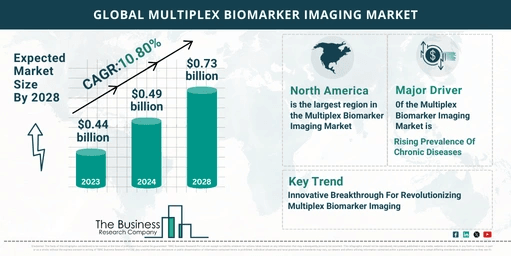
    According to The Business Research Company’s Multiplex Biomarker Imaging Global Market Report 2024, the multiplex biomarker imaging market is expected to show promising growth in the forecast period.

    Market Overview

    • Recent Growth: The multiplex biomarker imaging market has grown from $0.44 billion in 2023 to $0.49 billion in 2024, at a CAGR of 10.7%.
    • Future Projection: Expected to reach $0.74 billion by 2028, with a CAGR of 10.8%.

    Factors Driving Market Growth

    • High Incidence of Cancer: Increasing cases of cancer necessitate precise diagnostic tools.
    • Prevalence of Chronic Diseases: Rise in chronic diseases demands better management and diagnostic methods.
    • Aging Population: Older populations require more comprehensive healthcare solutions.
    • Shift to Personalized Medicine: Tailored treatments increase the need for detailed biomarker imaging.

    Future Growth Drivers

    • Personalized Medicine Emphasis: Growing focus on personalized treatments.
    • R&D Activities: Increased research and development efforts.
    • Clinical Trials: Surge in clinical trials boosts the demand for high throughput screening methods.
    • Regulatory Support: Favorable regulatory frameworks and guidelines aid market expansion.

    View More On The Multiplex Biomarker Imaging Market Report 2024 – https://www.thebusinessresearchcompany.com/report/multiplex-biomarker-imaging-global-market-report

    Trends in Multiplex Biomarker Imaging

    Technological Advancements

    • Innovations in Imaging: Cutting-edge imaging technologies are enhancing diagnostic accuracy.
    • Digital Pathology Advances: Developments in digital pathology improve disease analysis.
    • AI and Machine Learning: Integration with imaging technologies offers advanced analytical capabilities.

    Data Analysis Improvements

    • Enhanced Software: Advances in imaging software streamline data interpretation.
    • High-Throughput Methods: New methods in drug discovery and diagnostics improve efficiency and outcomes.

    Rising Chronic Disease Prevalence

    Impact on Market

    • Chronic Diseases: Persistent and complex health conditions drive the need for advanced diagnostic tools.
    • Aging Population: Increased aging population leads to a higher prevalence of chronic illnesses.
    • Better Disease Management: Improved treatment and management practices increase demand for biomarker imaging.

    Statistical Insight

    • NIH Report: By 2050, people aged 50+ with at least one chronic illness are expected to rise by 99.5%, from 71.52 million in 2020 to 142.66 million.

    Key Players in the Market

    • Leading Companies: Major players include Merck KGaA, Thermo Fisher Scientific Inc., Danaher Corporation, Becton Dickinson and Company (BD), Carl Zeiss AG, Illumina Inc., PerkinElmer Inc., and others.

    Innovations in Multiplex Biomarker Imaging

    Advanced Imaging Solutions

    • Automated Slide Loaders: Enhance throughput and reduce hands-on time.
    • Standard BioTools Inc.: Launched the Hyperion XTi Imaging System with high-throughput multiplexed whole slide imaging.

    Breakthrough Technologies

    • Imaging Mass Cytometry (IMC): Offers up to 10 times higher throughput than traditional methods.
    • High-Throughput Imaging: Novel automated slide loaders facilitate efficient and standardized imaging.

    Strategic Mergers

    Calyx and Invicro Merger

    • Creation of a Global Leader: The merger of Calyx and Invicro in March 2024 combines expertise to redefine medical imaging solutions.
    • Customer Proposition: Provides broad support for the biopharma industry, from large pharma companies to specialty biotech firms.

    Market Segmentation

    Component Type

    • Instruments
    • Software
    • Services

    Imaging Techniques

    • Immuno Fluorescence (IF) Assay
    • Tissue Microarray (TMA) Assay
    • Immunohistochemistry (IHC) Assay
    • Fluorescent In Situ Hybridization (FISH) Assay
    • Toponome Imaging System (TIS)

    Application

    • Drug Safety
    • Oncology Studies
    • Genetic Characterization Studies

    End User

    • Research Institutes (Government and Private)
    • Clinical Labs
    • Pharmaceutical and Biotechnology

    Regional Insights

    Largest and Fastest-Growing Regions

    • North America: Largest region in the multiplex biomarker imaging market in 2023.
    • Asia-Pacific: Expected to be the fastest-growing region in the forecast period.

    Request A Sample Of The Global Multiplex Biomarker Imaging Market Report 2024:
    https://www.thebusinessresearchcompany.com/sample_request?id=16127&type=smp

  • Overview Of The Microbial Identification Methods Market 2024-2033: Growth And Major Players Analysis

    Overview Of The Microbial Identification Methods Market 2024-2033: Growth And Major Players Analysis

    The Business Research Company’s global market reports are now updated with the latest market sizing information for the year 2024 and forecasted to 2033

    Market Overview

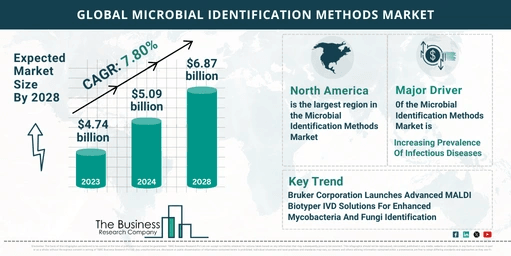
    • The microbial identification methods market has experienced significant growth.
    • Market size: $4.74 billion in 2023.
    • Projected growth: $5.09 billion in 2024 at a CAGR of 7.4%.
    • Factors: Increase in infectious diseases, funding for diagnostics, infection control measures, food safety concerns, and demand for microbial identification.

    Future Growth Projections

    • Expected market size: $6.87 billion in 2028.
    • CAGR: 7.8%.
    • Drivers: Rapid microbiology testing, advancements in microbial studies, adoption of automated systems, rising disposable incomes, and government initiatives for food safety.
    • Trends: New product launches, advancements in techniques, automated bacterial identification systems, microfluidics, robotics, nanotechnology, and strategic partnerships.

    View More On The Microbial Identification Methods Market Report 2024 – https://www.thebusinessresearchcompany.com/report/microbial-identification-methods-global-market-report

    Key Drivers and Trends

    Role of Infectious Diseases

    • Infectious diseases significantly impact market growth.
    • Major diseases: HIV/AIDS, tuberculosis, malaria.
    • Contributing factors: Antimicrobial resistance, climate change, population growth.
    • Importance: Microbial identification methods are crucial for diagnosing, treating, and preventing infectious diseases.
    • Example: UNAIDS reported over 39 million people with HIV in July 2023, up from 37.7 million in 2020.
    • Example: CDC reported a 5.9% increase in tuberculosis cases in the US from 2021 to 2022.

    Major Companies

    • Key players: Merck KGaA, Sumitomo Corporation, Thermo Fisher Scientific Inc., Abbott Laboratories, Becton Dickinson and Company, GE Healthcare, Avantor Inc., Eurofins Scientific SE, Lonza Group AG, Sartorius AG, Charles River Laboratories International Inc., bioMerieux SA, Shimadzu Corporation, Waters Corporation, Bio-Rad Laboratories Inc., Bruker Corporation, Qiagen N.V., Beckman Coulter Inc., HiMedia Laboratories, Hardy Diagnostics, LuminUltra Technologies Ltd., Biolog Inc.

    Innovations in Microbial Identification

    • Companies focus on developing advanced solutions.
    • Example: Bruker Corporation launched MALDI Biotyper IVD software in April 2023.
      • Features: Enhanced accuracy and speed, MALDI-TOF mass spectrometry technology, rapid identification within minutes, expanded databases, improved specificity and sensitivity.

    Strategic Acquisitions

    • Example: Biolog Inc. acquired MIDI Labs and MIDI, Inc. in January 2023.
      • Goal: Enhance microbial identification capabilities.
      • Integration: MIDI’s fatty acid methyl ester (FAME) analysis with Biolog’s phenotype-based systems.

    Market Segmentation

    By Method

    • Genotypic
    • Phenotypic
    • Proteotypic

    By Type

    • Bacterial Identification System
    • Microbial Enumeration System
    • Bacterial Resistance Identification Systems
    • Microbiology Analyzer
    • Other Types

    By End User

    • Pharmaceutical and Biotechnology Companies
    • Hospitals and Diagnostic Laboratories
    • Food Testing Laboratories
    • Other End-Users

    Regional Insights

    • North America was the largest region in the microbial identification methods market in 2023.

    Request A Sample Of The Global Microbial Identification Methods Market Report 2024:
    https://www.thebusinessresearchcompany.com/sample_request?id=16118&type=smp

  • What Is The Forecast Growth Rate For The Metagenomic Sequencing Market?

    What Is The Forecast Growth Rate For The Metagenomic Sequencing Market?

    The Business Research Company’s market reports offer an in-depth analysis on the market’s growth potential, major drivers, key trends and more.

    Rapid Market Expansion

    • Current Market Size: The metagenomic sequencing market has seen significant growth, increasing from $1.82 billion in 2023 to an estimated $2.13 billion in 2024, at a CAGR of 16.9%.
    • Historic Growth Factors: Key drivers include government involvement, rising metagenome sequencing research projects, and advancements in genomics and diagnostics research. Additionally, research funding and the development of Next-Generation Sequencing (NGS) data analysis tools have played crucial roles.

    Future Market Projections

    • Future Market Size: The market is expected to grow to $4.02 billion by 2028, with a CAGR of 17.2%.
    • Forecast Growth Factors: Factors driving future growth include decreasing computational costs, a focus on discovering novel biomolecules, the increasing adoption of high-throughput sequencing technologies, and the growing demand for personalized medicine and disease diagnosis. The prevalence of infectious diseases also contributes to market expansion.

    Read More On The Metagenomic Sequencing Market Report 2024 – https://www.thebusinessresearchcompany.com/report/metagenomic-sequencing-global-market-report

    Drivers of Market Growth

    Rising Prevalence of Infectious Diseases

    • Infectious Diseases: Disorders caused by pathogenic microorganisms, such as bacteria, viruses, parasites, or fungi, are driving the demand for metagenomic sequencing.
    • Immune System Conditions: Conditions like HIV/AIDS, cancer treatments, and autoimmune disorders increase susceptibility to infectious diseases.
    • Metagenomic Sequencing: This technology offers insights into pathogen diversity, transmission dynamics, antimicrobial resistance, and outbreak surveillance.
      • HIV Statistics: According to UNAIDS, the global HIV population exceeded 39 million in 2023.
      • TB Cases: The CDC reported a 5.9% increase in tuberculosis cases in the US from 2021 to 2022.

    Major Companies in the Metagenomic Sequencing Market

    Leading Companies

    • Key Players: Major companies include F. Hoffmann-La Roche Ltd., Thermo Fisher Scientific Inc., Merck Co. & KGaA, Eurofins Scientific SE, PerkinElmer Inc., Illumina Inc., Bio-Rad Laboratories Inc., QIAGEN N.V., Beijing Genomics Institute Group, and others.

    Innovation in Sequencing Services

    • Advanced Technologies: Companies are innovating to improve sequencing accuracy, throughput, and cost-effectiveness.
    • Clinical Microbiomics A/S: In April 2024, they launched advanced long-read sequencing services, enhancing microbial analysis and metagenome-assembled genomes.

    Notable Acquisitions

    Illumina Inc. and IDbyDNA

    • Acquisition Details: In January 2022, Illumina Inc. acquired IDbyDNA, a company specializing in metagenomic technologies for pathogen surveillance and infectious illness testing.
    • Strategic Integration: This acquisition aims to strengthen Illumina’s capabilities in infectious disease diagnostics and microbial genomics.

    Market Segmentation

    Product and Service Segmentation

    • Categories: The market is segmented by products and services including reagents and consumables, instruments, sequencing services, and analysis and data interpretation solutions.

    Technological Segmentation

    • Technologies: Includes 16S rRNA sequencing, shotgun metagenomic sequencing, whole-genome sequencing and de novo assembly, and metatranscriptomics.

    Application Segmentation

    • Applications: Covers clinical diagnostics, environmental remediation, gut microbe characterization, drug discovery, biofuel, agriculture, and other applications.

    Regional Insights

    Largest and Fastest Growing Regions

    • North America: Dominated the metagenomic sequencing market in 2023.
    • Asia-Pacific: Expected to be the fastest-growing region in the coming years.

    The metagenomic sequencing market is poised for substantial growth, driven by advancements in technology, increasing research initiatives, and rising demand for personalized medicine and effective disease diagnosis.

    Request for A Sample Of The Global Metagenomic Sequencing Market Report:
    https://www.thebusinessresearchcompany.com/sample_request?id=16117&type=smp

  • Key Trends And Drivers In The Mesenchymal Stem Cells Market 2024

    Key Trends And Drivers In The Mesenchymal Stem Cells Market 2024

    The Business Research Company’s market reports offer an in-depth analysis on the market’s growth potential, major drivers, key trends and more.

    Recent Growth and Future Projections

    • Current Market Size: The mesenchymal stem cells (MSC) market has experienced substantial growth, increasing from $3.00 billion in 2023 to $3.38 billion in 2024, reflecting a compound annual growth rate (CAGR) of 12.5%.
    • Forecast: The market is projected to continue its rapid expansion, reaching $5.45 billion by 2028 with a CAGR of 12.7%.

    Factors Driving Historic Growth

    • Regenerative Medicine Paradigm Shift: Increased focus on regenerative medicine has significantly contributed to market growth.
    • Collaborative Research Efforts: Partnerships and collaborative research have accelerated advancements.
    • Public Awareness and Patient Advocacy: Growing awareness and advocacy have propelled interest and investment in MSC research.
    • International Collaboration and Standardization: Global collaboration and standardization initiatives have facilitated market expansion.

    Read More On The Mesenchymal Stem Cells Market Report 2024 – https://www.thebusinessresearchcompany.com/report/mesenchymal-stem-cells-global-market-report

    Future Growth Drivers and Trends
    Key Growth Drivers

    • Advancements in Genetic Engineering: Continued progress in genetic engineering technologies is expected to drive market growth.
    • Adoption of Personalized Medicine: Personalized medicine approaches are increasingly being integrated into MSC therapies.
    • Integration of AI and Data Analytics: The use of AI and data analytics is enhancing research and development in the MSC market.
    • Advances in Biomaterials and 3D Bioprinting: Innovations in biomaterials science and 3D bioprinting technologies are expanding the applications of MSCs.
    • Development of Microfluidic Devices and Organ-on-a-Chip Models: These technologies are revolutionizing MSC research and applications.
    • Next-Generation Manufacturing Technologies: The adoption of advanced manufacturing technologies ensures quality and scalability.

    Major Trends

    • Bioprinting and Tissue Engineering: The development of bioprinting and tissue engineering is a significant trend in MSC applications.
    • Gene Editing: Advancements in gene editing technologies are enhancing MSC therapies.
    • Clinical Application Expansion: The range of clinical applications for MSCs is continuously expanding.
    • Combination Therapies: The use of MSCs in combination therapies is a growing trend.
    • MSC-Derived Extracellular Vesicles (EVs): The study and application of MSC-derived EVs are gaining traction.

    Regenerative Medicine Driving MSC Market Growth
    Importance of Regenerative Medicine

    • Interdisciplinary Field: Regenerative medicine focuses on repairing or regenerating cells, tissues, or organs.
    • Clinical Trials and Chronic Conditions: Increased clinical trials and the prevalence of chronic and age-related conditions are boosting regenerative medicine.

    MSC Potential in Regenerative Medicine

    • Differentiation and Immune Modulation: MSCs can differentiate into multiple cell types and modulate immune responses, making them ideal for regenerative therapies.
    • Global Investment: Significant investment and development activities are taking place globally. For example, in Q1 2023, there were 2,760 therapeutic developers worldwide, up from 1,369 in Q1 2022.

    Innovations Strengthening the MSC Market
    GMP-Compliant Products

    • GMP Isolation: Companies are adopting GMP-compliant isolation technologies to ensure quality.
    • Example: In July 2023, PromoCell launched PromoExQ MSC Growth Medium XF, a GMP-compliant medium for MSC expansion.

    Strategic Acquisitions
    Brooklyn ImmunoTherapeutics and Novellus Therapeutics

    • Acquisition: In July 2021, Brooklyn ImmunoTherapeutics acquired Novellus Therapeutics for $125 million.
    • Impact: This acquisition enhances Brooklyn’s capabilities in next-generation engineered MSCs and gene editing.

    Market Segmentation
    Segmentation Details

    • By Type: Autologous, Allogeneic
    • By Product Type: Cells and Cell Lines, Kits, Media and Reagents, Other Product Types
    • By Workflow Type: Cell Sourcing and Isolation, Culture and Cryopreservation, Differentiation, Characterization
    • By Indication: Bone and Cartilage Repair, Cardiovascular Diseases, Inflammatory and Immunological Diseases, Liver Diseases, Cancer, GvHD, Other Indications
    • By Application: Disease Modeling, Drug Development and Discovery, Stem Cell Banking, Tissue Engineering, Toxicology Studies, Other Applications

    Regional Insights

    • Largest Market: North America was the largest region in the MSC market in 2023.
    • Fastest-Growing Region: Asia-Pacific is expected to be the fastest-growing region in the forecast period.

    The mesenchymal stem cells market is poised for significant growth, driven by advancements in technology, increasing investment in regenerative medicine, and expanding clinical applications. Major companies are adopting innovative technologies and making strategic acquisitions to strengthen their market positions.

    Request for A Sample Of The Global Mesenchymal Stem Cells Market Report:
    https://www.thebusinessresearchcompany.com/sample_request?id=16116&type=smp