Category: HealthcareServices

  • Global De-Identified Health Data Market Report 2026: Emerging Trends and Growth Scenarios

    Global De-Identified Health Data Market Report 2026: Emerging Trends and Growth Scenarios

    Uncover key drivers, emerging technologies, and competitive movements shaping the de-identified health data market from 2026–2035 with trusted insights from The Business Research Company

    What is the estimated market size of the De-Identified Health Data Market by the end of 2030?

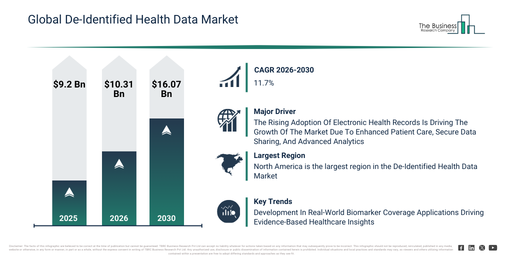
    The de-identified health data market has seen rapid expansion in recent years. This market is anticipated to expand from $9.2 billion in 2025 to $10.31 billion in 2026, demonstrating a compound annual growth rate (CAGR) of 12.1%. The historical growth can be linked to the increased adoption of electronic health records, the rising demand for population health analytics, the expansion of clinical research databases, a growing focus on patient privacy compliance, and the increasing availability of structured healthcare data.

    The de-identified health data market size is projected for substantial expansion over the upcoming years. Its valuation is anticipated to reach $16.07 billion by 2030, demonstrating a compound annual growth rate (CAGR) of 11.7%. This expansion during the forecast timeframe is propelled by factors such as the increasing application of AI-driven health insights, greater investments in precision medicine research, the broadening scope of value-based care analytics, a heightened need for secure health data exchange, and the more extensive integration of real-world evidence into regulatory judgments. Key developments expected in this period encompass the proliferation of large-scale de-identified data platforms, the expanding utilization of real-world evidence analytics, a surging need for privacy-preserving data sharing frameworks, increased implementation of longitudinal patient data analysis, and the consolidation of multi-source healthcare datasets.

    Access Your Free Sample Report for In-Depth Market Insights:

    https://www.thebusinessresearchcompany.com/sample.aspx?id=28191&type=smp

    What Drivers Are Shaping Future Opportunities In The De-Identified Health Data Market?

    The growing acceptance of electronic health records (EHRs) is projected to drive the expansion of the de-identified health data market in the coming years. Electronic health records (EHR) represent a digital version of an individual’s complete medical history, encompassing diagnoses, treatments, medications, laboratory results, and other health details, all securely stored and shared among authorized healthcare providers. The increased adoption of electronic health records is attributed to their capacity to improve patient care and safety through immediate and accurate access to comprehensive medical information. De-identified health data enhances these records by facilitating secure data sharing and advanced analytical processes while simultaneously protecting patient privacy, leading to better clinical decision-making and improved healthcare outcomes. For example, the National Center for Biotechnology Information, a US-based National Library of Medicine (NLM) under the U.S. National Institutes of Health (NIH), reported in 2024 that by August 2025, most hospitals had implemented patient engagement capabilities. These capabilities allowed patients to electronically view (99%), download (96%), and transmit (84%) their health information, such as test results, to a third party. Consequently, the increasing use of electronic health records (EHRs) is fueling the growth of the de-identified health data market.

    Which Segment Groups Are Influencing The De-Identified Health Data Market?

    The de-identified health data market covered in this report is segmented –

    1) By Type: Clinical Data, Genomic Data, Patient Demographics, Prescription Data, Hospital And Provider Data, Pharmacogenomic Data

    2) By Application: Clinical Research And Trials, Public Health, Precision Medicine, Health Economics And Outcomes Research (HEOR), Population Health Management, Drug Discovery And Development, Healthcare Quality Improvement, Insurance Underwriting And Risk Assessment, Other Applications

    3) By End-User: Pharmaceutical Companies, Biotechnology Firms, Healthcare Providers, Insurance Companies Or Healthcare Payers, Research Institutions, Government Agencies, Other End-Users

    Subsegments:

    1) By Clinical Data: Electronic Health Records, Medical Imaging Data, Laboratory Test Results, Surgical Reports, Pathology Reports, Vital Signs Measurements

    2) By Genomic Data: Whole Genome Sequencing Data, Exome Sequencing Data, Single Nucleotide Polymorphism Data, Gene Expression Profiles, Epigenetic Data

    3) By Patient Demographics: Age Information, Gender Information, Ethnicity Information, Geographic Location, Socioeconomic Status, Marital Status

    4) By Prescription Data: Medication Orders, Dosage Information, Prescription Refill History, Drug Allergies, Pharmacy Dispensation Records

    5) By Hospital And Provider Data: Provider Performance Metrics, Care Delivery Outcomes, Billing And Claims Data, Resource Utilization Data

    6) By Pharmacogenomic Data: Gene–Drug Interaction Data, Adverse Drug Reaction Data, Personalized Therapy Response Data, Drug Efficacy Variation Data

    Which Trends Are Expected To Influence The De-Identified Health Data Market In The Upcoming Years?

    Major companies operating in the de-identified health data market are concentrating on developing advanced solutions, such as real-world biomarker coverage applications, to support evidence-based healthcare decision-making. These applications utilize de-identified patient data to monitor and assess biomarker patterns and effectiveness across diverse populations outside clinical trials, thereby enabling researchers and healthcare providers to gain valuable insights into treatment responses and disease trends. For instance, in July 2025, Datma Inc., a US-based healthcare technology company, introduced the Federated Biomarker Explorer, a free application designed for pharmaceutical teams to quickly validate real-world biomarker coverage across Datma’s federated network of participating data contributors. This tool provides aggregate, cohort-level insights into biomarker presence, allowing teams to assess coverage rapidly without needing contracts or IT support. It also facilitates the secure integration of users’ own data for overlap analysis and aids in early-stage feasibility assessments through clinical and demographic filtering, helping to confirm that datasets include the necessary patient populations before committing resources.

    Who Are The Prominent Global Companies Shaping The De-Identified Health Data Market Landscape?

    Major companies operating in the de-identified health data market are UnitedHealth Group Incorporated, Oracle Corporation, IQVIA Holdings Inc, ICON Public Limited Company, Datavant Inc, Premier Inc., iMerit Technology Services Pvt. Ltd., Tempus Labs Inc., Medidata Solutions Inc., Veradigm Inc., Flatiron Health, Merative LP, Komodo Health Inc., Shaip Inc., Truveta Inc., Evidation Health Inc., TriNetX Inc., Clarify Health Solutions Inc., Akrivia Health Ltd., Gradient Health Inc.

    Access The Complete Report For Deeper Market Insights:

    https://www.thebusinessresearchcompany.com/report/de-identified-health-data-global-market-report

    Which Geographic Areas Are Emerging As Strong Markets For The De-Identified Health Data Market?

    North America was the largest region in the de-identified health data market in 2025. Asia-Pacific is expected to be the fastest-growing region in the forecast period. The regions covered in the de-identified health data market report are Asia-Pacific, South East Asia, Western Europe, Eastern Europe, North America, South America, Middle East, Africa.

    Request Your Customized De-Identified Health Data Market Research Report for Competitive Advantage:

    https://www.thebusinessresearchcompany.com/customise?id=28191&type=smp

    Browse Through More Reports Similar to the Global De-Identified Health Data Market 2026, By The Business Research Company

    Genomics Personalized Health Market Report 2026

    https://www.thebusinessresearchcompany.com/report/genomics-personalized-health-global-market-report

    Healthcare Data Integration Market Report 2026

    https://www.thebusinessresearchcompany.com/report/healthcare-data-integration-global-market-report

    Personal Health Record Software Market Report 2026

    https://www.thebusinessresearchcompany.com/report/personal-health-record-software-global-market-report

    Get in touch with us:

    The Business Research Company: https://www.thebusinessresearchcompany.com/

    Americas +1 310-496-7795

    Asia +44 7882 955267 & +91 8897263534

    Europe +44 7882 955267

    Email us at info@tbrc.info

    Follow us on:

    LinkedIn: https://in.linkedin.com/company/the-business-research-company

    YouTube: https://www.youtube.com/channel/UC24_fI0rV8cR5DxlCpgmyFQ

    Global Market Model: https://www.thebusinessresearchcompany.com/global-market-model
  • Deep Partial-Thickness Thermal Burns Market Forecast 2026: Where the Industry Is Headed

    Deep Partial-Thickness Thermal Burns Market Forecast 2026: Where the Industry Is Headed

    Uncover key drivers, emerging technologies, and competitive movements shaping the deep partial-thickness thermal burns market from 2026–2035 with trusted insights from The Business Research Company

    What was the valuation of the Deep Partial-Thickness Thermal Burns Market in 2026, and what figure is it projected to hit by 2030?

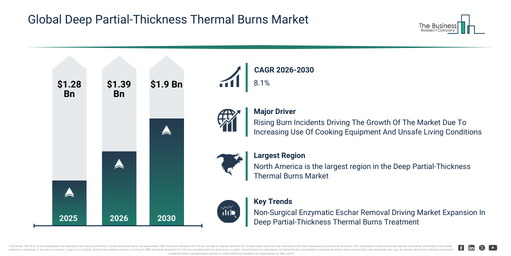
    The deep partial-thickness thermal burns market has demonstrated significant expansion in recent years. This market is anticipated to expand from $1.28 billion in 2025 to $1.39 billion in 2026, achieving a compound annual growth rate (CAGR) of 8.5%. The historical development of this market can be attributed to several factors including a higher prevalence of thermal burn injuries, an increase in specialized burn treatment centers, the widespread availability of surgical wound management techniques, an expansion of emergency care services, and a growing understanding of advanced burn treatment alternatives.

    The deep partial-thickness thermal burns market size is projected to experience substantial growth over the next few years. This market is anticipated to reach a valuation of $1.9 billion by 2030, displaying a compound annual growth rate (CAGR) of 8.1%. The expansion during the forecast period is primarily driven by the increasing integration of regenerative medicine in burn management, rising investments in biologic wound treatments, the broader availability of home-based burn care services, a heightened emphasis on achieving functional recovery outcomes, and the greater implementation of advanced surgical reconstruction techniques. Furthermore, significant trends shaping this period encompass the wider adoption of advanced wound care therapies, an increase in the use of biologic dressings and skin substitutes, the progressive incorporation of multidisciplinary burn care protocols, an expansion in surgical intervention methods, and an intensified focus on scar reduction.

    Access Your Free Sample Report for In-Depth Market Insights:

    https://www.thebusinessresearchcompany.com/sample.aspx?id=24515&type=smp

    Which Drivers Are Affecting Market Participation In The Deep Partial-Thickness Thermal Burns Market?

    An increase in burn incidents is anticipated to drive the expansion of the deep partial-thickness thermal burns market moving forward. Burn cases are defined as instances where an individual’s skin sustains damage from heat, fire, hot items, electrical sources, or chemical exposure. The growing occurrence of burn cases primarily stems from the increased use of cooking apparatus and open flames within homes, resulting in more accidental blazes and contact with heated surfaces, especially in densely populated or hazardous living environments. Management of deep partial-thickness thermal burns involves advanced treatment solutions like specialized wound coverings, skin graft substances, and regenerative therapeutic approaches. Such interventions contribute to better healing results, fewer complications, and quicker recuperation for patients suffering from severe burns. Furthermore, they aid in minimizing scar formation and the potential for long-term functional impairments. As an illustration, a report from November 2023 by the East London NHS Foundation Trust, a UK-based entity, estimated that approximately 250,000 people experience burn injuries each year in the UK. Among these, roughly 175,000 seek care at A&E departments, and nearly 16,000 necessitate hospital admittance for specialized burn treatment. Consequently, the increasing incidence of burn cases is fueling the expansion of the deep partial-thickness thermal burns market.

    What Segment Classifications Make Up The Deep Partial-Thickness Thermal Burns Market?

    The deep partial-thickness thermal burns market covered in this report is segmented –

    1) By Treatment: Initial Wound Care, Physical And Occupational Therapy, Other Treatments

    2) By Burn Type: Fire Burn Injuries, Scald Burn, Hot Objects

    3) By Distribution Channel: Direct Tender, Hospital Pharmacy, Online Pharmacy, Retail Pharmacy, Other Distribution Channels

    4) By End-User: Hospitals, Specialty Clinics, Ambulatory Surgical Centers, Home Healthcare, Other End-Users

    Subsegments:

    1) By Initial Wound Care: Debridement, Topical Antimicrobial Agents, Dressings And Bandages, Pain Management

    2) By Physical And Occupational Therapy: Range Of Motion Exercises, Scar Management, Strengthening Exercises, Activities Of Daily Living (ADL) Training

    3) By Other Treatments: Skin Grafting, Biologic Dressings, Negative Pressure Wound Therapy (NPWT), Hyperbaric Oxygen Therapy (HBOT)

    What Trends Are Driving The Growth Trajectory Of The Deep Partial-Thickness Thermal Burns Market?

    Major companies operating in the deep partial-thickness thermal burns treatment market are focusing on advanced technologies such as non-surgical enzymatic eschar removal to enhance treatment outcomes for both adult and pediatric burn patients. Non-surgical enzymatic eschar removal is a technique that enables the rapid and selective dissolution of burn eschar using topically applied biological agents, eliminating the need for traditional surgical debridement. For instance, in August 2024, Vericel Corporation, a US-based biopharmaceutical company, received FDA approval for a pediatric indication for NexoBrid (anacaulase-bcdb) for eschar removal in pediatric patients with deep partial-thickness and full-thickness thermal burns. NexoBrid is contraindicated in patients with known allergies to pineapple, bromelain, papain, or any other components of the product, as it may cause hypersensitivity reactions, including anaphylaxis. It should be used with caution in patients receiving anticoagulant therapy due to the potential risk of bleeding.

    Which Key Players Are Driving Competition In The Deep Partial-Thickness Thermal Burns Market?

    Major companies operating in the deep partial-thickness thermal burns market are Smith & Nephew plc, Coloplast A/S, Convatec Group plc, Integra LifeSciences Holdings Corporation, Mölnlycke Health Care AB, Organogenesis Holdings Inc., MiMedx Group Inc., Vericel Corporation, AlloSource Inc., PolyNovo Limited, AVITA Medical Inc., MediWound Ltd., Stratatech Corporation, RenovaCare Inc., Aroa Biosurgery Limited, 3M Company, Anika Therapeutics Inc., B Braun SE, Osiris Therapeutics Inc., Celularity Inc., Amnio Technology LLC, Tissue Regenix Group plc, CUTISS AG, Tides Medical Inc.

    Access The Complete Report For Deeper Market Insights:

    https://www.thebusinessresearchcompany.com/report/deep-partial-thickness-thermal-burns-global-market-report

    Which Region Is Projected To Lead The Deep Partial-Thickness Thermal Burns Market During The Forecast Period?

    North America was the largest region in the deep partial-thickness thermal burns market in 2025. Asia-Pacific is expected to be the fastest-growing region in the forecast period. The regions covered in the deep partial-thickness thermal burns market report are Asia-Pacific, South East Asia, Western Europe, Eastern Europe, North America, South America, Middle East, Africa.

    Request Your Customized Deep Partial-Thickness Thermal Burns Market Research Report for Competitive Advantage:

    https://www.thebusinessresearchcompany.com/customise?id=24515&type=smp

    Browse Through More Reports Similar to the Global Deep Partial-Thickness Thermal Burns Market 2026, By The Business Research Company

    Thermal Paper Market Report 2026

    https://www.thebusinessresearchcompany.com/report/thermal-paper-global-market-report

    Heat Shrink Tubing And Sleeves Market Report 2026

    https://www.thebusinessresearchcompany.com/report/heat-shrink-tubing-and-sleeves-global-market-report

    High Temperature Insulation Market Report 2026

    https://www.thebusinessresearchcompany.com/report/high-temperature-insulation-global-market-report

    Get in touch with us:

    The Business Research Company: https://www.thebusinessresearchcompany.com/

    Americas +1 310-496-7795

    Asia +44 7882 955267 & +91 8897263534

    Europe +44 7882 955267

    Email us at info@tbrc.info

    Follow us on:

    LinkedIn: https://in.linkedin.com/company/the-business-research-company

    YouTube: https://www.youtube.com/channel/UC24_fI0rV8cR5DxlCpgmyFQ

    Global Market Model: https://www.thebusinessresearchcompany.com/global-market-model
  • Deep Learning In Drug Discovery And Diagnostics Industry Growth Insights: Revenue Forecast to 2030

    Deep Learning In Drug Discovery And Diagnostics Industry Growth Insights: Revenue Forecast to 2030

    Uncover key drivers, emerging technologies, and competitive movements shaping the deep learning in drug discovery and diagnostics market from 2026–2035 with trusted insights from The Business Research Company

    What are the forecasted starting (2026) and ending (2030) market sizes for the Deep Learning In Drug Discovery And Diagnostics Market?

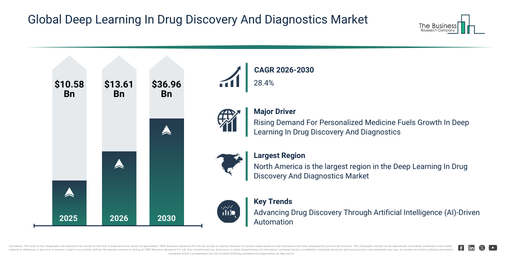
    The deep learning in drug discovery and diagnostics market size has seen substantial expansion in recent years. This market is projected to expand from $10.58 billion in 2025 to $13.61 billion in 2026, demonstrating a compound annual growth rate (CAGR) of 28.7%. Historically, this growth can be attributed to several factors such as the increasing availability of large biomedical datasets, rising computational power for model training, the expansion of AI adoption in pharmaceutical R&D, a growing demand for faster drug discovery cycles, and the early success of deep learning diagnostic models.

    The market for deep learning in drug discovery and diagnostics is projected to experience substantial expansion in the coming years. This market is anticipated to reach a valuation of $36.96 billion by 2030, exhibiting a compound annual growth rate (CAGR) of 28.4%. Factors contributing to this growth during the forecast period include greater financial commitments to AI-driven healthcare solutions, a surging need for precision medicine, broader integration of AI into clinical processes, wider utilization of real-world evidence data, and increasing regulatory approval for AI-supported diagnostics. Key trends expected over the forecast period encompass the growing incorporation of deep neural networks into drug screening, the escalating application of AI-powered predictive modeling in diagnostics, enhanced integration of multi-omics data analysis, the proliferation of automated clinical decision support systems, and a heightened emphasis on platforms for personalized medicine.

    Access Your Free Sample Report for In-Depth Market Insights:

    https://www.thebusinessresearchcompany.com/sample.aspx?id=19394&type=smp

    What Drivers Are Supporting Technological Adoption In The Deep Learning In Drug Discovery And Diagnostics Market?

    The expanding need for personalized medicine is projected to stimulate the growth of the deep learning in drug discovery and diagnostics market in the coming period. This approach involves customizing medical treatments and interventions for individuals based on their unique genetic, environmental, and lifestyle characteristics, aiming to enhance effectiveness and reduce adverse reactions. The increasing requirement for personalized medicine stems from progress in genomics and data analytics, allowing for more accurate and potent therapies designed around specific patient profiles. Within drug discovery and diagnostics, deep learning improves personalized medicine by examining intricate biological data to pinpoint distinct biomarkers and forecast how patients will respond to treatments with greater precision. As an illustration, in February 2024, data from the Personalized Medicine Coalition, a US-based non-profit entity, showed that the FDA granted approval to 16 new personalized therapies for individuals with rare diseases in 2023, an increase from six in 2022. Consequently, the rising demand for personalized medicine is a key driver for the deep learning in drug discovery and diagnostics market.

    What Segment Types Are Examined In The Deep Learning In Drug Discovery And Diagnostics Market?

    The deep learning in drug discovery and diagnostics market covered in this report is segmented –

    1) By Type: Drug Discovery, Diagnostics, Forensic Interventions, Other Types

    2) By Drug Type: Small Molecule Drugs, Biologics Drugs

    3) By End Use Industry: Pharmaceutical Companies, Biotechnology Companies, Contract Research Organizations (CROs), Healthcare Information Technology (IT)

    Subsegments:

    1) By Drug Discovery: Target Identification, Drug Screening, Lead Optimization, Predictive Modeling

    2) By Diagnostics: Medical Imaging Analysis, Genomic Data Interpretation, Disease Detection Algorithms, Personalized Medicine

    3) By Forensic Interventions: Digital Pathology, Forensic DNA Analysis, Toxicology Screening, Crime Scene Reconstruction

    4) By Other Types: Biomarker Discovery, Predictive Analytics in Healthcare, Patient Data Management Systems

    What Upcoming Trends Are Likely To Define The Future Path Of The Deep Learning In Drug Discovery And Diagnostics Market?

    Key companies operating within the deep learning in drug discovery and diagnostics market are integrating advanced technologies, such as generative artificial intelligence (AI) and machine-learning (ML)–driven automation platforms. This strategy aims to enhance efficiency, reduce research and development (R&D) costs, and accelerate the initial stages of therapeutic discovery. Generative AI and ML-driven automation platforms represent computational systems that learn from chemical and biological data to digitally design new drug candidates, predict molecular behavior, and automatically synthesize and test compounds using robotic systems, thereby decreasing dependence on traditional high-throughput screening. For instance, in July 2024, Exscientia, a UK-based AI-driven drug-design company, introduced its AWS-powered AI/ML platform. This platform integrates a “DesignStudio” for AI-based molecule generation with an “AutomationStudio” for robotic lab synthesis and testing. Operating in a closed “design–make–test–learn” loop, the platform continuously refines its AI models with experimental data, significantly speeding up discovery, improving scalability, and enabling the more precise and cost-effective development of novel therapeutics.

    Who Are The Top-Performing Companies In The Deep Learning In Drug Discovery And Diagnostics Market In Recent Years?

    Major companies operating in the deep learning in drug discovery and diagnostics market are Google Inc., Microsoft Corporation, International Business Machines Corporation, NVIDIA Corporation, Zebra Medical Vision Ltd, Tempus Labs Inc., Nanostring Technologies Inc., Owkin Inc., Insilico Medicine Inc., SOPHiA GENETICS SA, Qureai Technologies Pvt Ltd, H2Oai Inc., Arterys Inc., Deep Genomics Inc., GNS Healthcare Inc., MedAware Systems Inc., PathAI Inc., Kheiron Medical Technologies Ltd, CureMetrix Inc., OncoImmunity AS, Proscia Inc., BenevolentAI Ltd, BioXcel Therapeutics Inc.

    Access The Complete Report For Deeper Market Insights:

    https://www.thebusinessresearchcompany.com/report/deep-learning-in-drug-discovery-and-diagnostics-global-market-report

    Which Region Currently Holds The Largest Share Of The Deep Learning In Drug Discovery And Diagnostics Market?

    North America was the largest region in the deep learning in drug discovery and diagnostics market in 2025. The regions covered in the deep learning in drug discovery and diagnostics market report are Asia-Pacific, South East Asia, Western Europe, Eastern Europe, North America, South America, Middle East, Africa.

    Request Your Customized Deep Learning In Drug Discovery And Diagnostics Market Research Report for Competitive Advantage:

    https://www.thebusinessresearchcompany.com/customise?id=19394&type=smp

    Browse Through More Reports Similar to the Global Deep Learning In Drug Discovery And Diagnostics Market 2026, By The Business Research Company

    Drug Discovery Services Market Report 2026

    https://www.thebusinessresearchcompany.com/report/drug-discovery-services-global-market-report

    Artificial Intelligence In Drug Discovery Market Report 2026

    https://www.thebusinessresearchcompany.com/report/artificial-intelligence-in-drug-discovery-global-market-report

    Drug Discovery Market Report 2026

    https://www.thebusinessresearchcompany.com/report/drug-discovery-global-market-report

    Get in touch with us:

    The Business Research Company: https://www.thebusinessresearchcompany.com/

    Americas +1 310-496-7795

    Asia +44 7882 955267 & +91 8897263534

    Europe +44 7882 955267

    Email us at info@tbrc.info

    Follow us on:

    LinkedIn: https://in.linkedin.com/company/the-business-research-company

    YouTube: https://www.youtube.com/channel/UC24_fI0rV8cR5DxlCpgmyFQ

    Global Market Model: https://www.thebusinessresearchcompany.com/global-market-model
  • Global Deep Learning In Diagnostics Market Performance Report: Global Trends 2026–2030

    Global Deep Learning In Diagnostics Market Performance Report: Global Trends 2026–2030

    Uncover key drivers, emerging technologies, and competitive movements shaping the deep learning in diagnostics market from 2026–2035 with trusted insights from The Business Research Company

    What upper market value could the Deep Learning In Diagnostics Market reach by 2030 starting from 2026 levels?

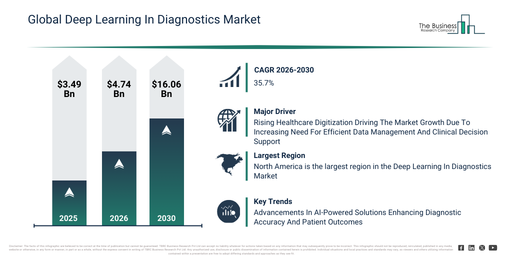
    The deep learning in diagnostics market size has experienced rapid expansion in recent years. This market is projected to grow from $3.49 billion in 2025 to $4.74 billion in 2026, at a compound annual growth rate (CAGR) of 35.9%. The historical growth can be attributed to several factors, including the increasing digitization of medical imaging, rising diagnostic workload pressures, the expansion of radiology and pathology services, the growing availability of annotated medical datasets, and the increasing adoption of clinical decision support.

    The deep learning in diagnostics market size is anticipated to experience rapid growth in the near future. This market is projected to reach $16.06 billion by 2030, advancing at a compound annual growth rate (CAGR) of 35.7%. This significant expansion during the forecast period is driven by factors such as the heightened demand for early disease detection, increasing investment in AI-powered diagnostics, the proliferation of cloud-based diagnostic platforms, a rise in regulatory approvals for AI tools, and a greater emphasis on workflow automation in healthcare. Furthermore, major trends for this period include the increasing adoption of AI-based medical imaging analysis, the expanding use of deep learning in disease detection, the development of automated diagnostic workflows, a rising integration of multi-modal clinical data, and an enhanced focus on diagnostic accuracy.

    Access Your Free Sample Report for In-Depth Market Insights:

    https://www.thebusinessresearchcompany.com/sample.aspx?id=28190&type=smp

    Which Drivers Are Influencing Long-Term Growth In The Deep Learning In Diagnostics Market?

    The anticipated expansion of the deep learning in diagnostics market is driven by the growing digitization within healthcare systems. This involves integrating digital technologies into healthcare to improve efficiency, accessibility, data handling, and comprehensive patient care. The increasing adoption of healthcare digitization is fueled by its capacity to effectively manage and securely share the vast and growing amounts of patient data, thereby facilitating improved care coordination and more informed decisions. With healthcare digitization generating significant data volumes from sources like medical imaging, electronic health records, and connected devices, there’s a clear demand for deep learning in diagnostics, which excels at analyzing this data to provide quicker and more precise insights compared to conventional approaches. An example of this trend is observed in April 2023, when FAIR Health Inc., a non-profit organization in the US, reported a 7.3% national surge in telehealth utilization, increasing from 5.5% of medical claim lines in December 2022 to 5.9% in January 2023. Consequently, the expanding digitization in healthcare is a primary impetus for the growth of the deep learning in diagnostics market.

    Which Segments Are Driving Activity In The Deep Learning In Diagnostics Market?

    The deep learning in diagnostics market covered in this report is segmented –

    1) By Component: Software, Hardware, Services

    2) By Deployment Mode: Cloud-Based, On-Premises

    3) By Application: Medical Imaging, Pathology, Genomics, Drug Discovery, Other Applications

    4) By End-User: Hospitals, Diagnostic Laboratories, Research Institutes, Other End-Users

    Subsegments:

    1) By Software: Diagnostic Imaging Software, Pathology Analysis Software, Genomic Data Analysis Software

    2) By Hardware: Storage Devices, Networking Devices, Diagnostic Imaging Equipment

    3) By Services: Deployment And Integration Services, Training And Education Services, Consulting Services

    Which Trends Are Shaping Activity Within The Deep Learning In Diagnostics Market?

    Companies prominent in the deep learning in diagnostics market are prioritizing the development of advanced solutions, such as AI-driven deep learning systems, to elevate diagnostic precision, speed, and personalized patient care. An AI-driven deep learning solution represents a sophisticated system that leverages artificial intelligence and layered neural networks to automatically analyze complex medical data, identify patterns, and produce highly accurate diagnostic insights without extensive human intervention. For example, in May 2025, GE Healthcare Technologies Inc., a US-based medical technology and diagnostics company, introduced CleaRecon DL, which is intended to improve image reconstruction and diagnostic accuracy. This solution enhances cone-beam CT (CBCT) images by effectively removing streak artifacts, resulting in significantly clearer and more accurate imaging for interventional procedures. The technology boosts clinicians’ confidence in interpreting images and improves precision during interventions, with clinical studies indicating 98% clearer images and 94% improved confidence. Ultimately, it supports better patient outcomes by streamlining workflow and enabling more effective, image-guided treatments.

    Which Leading Companies Dominate The Deep Learning In Diagnostics Market Share?

    Major companies operating in the deep learning in diagnostics market are International Business Machines Corporation, Siemens Healthineers AG, Koninklijke Philips N.V., GE HealthCare Technologies Inc., Tempus AI Inc., Qure.ai Technologies Pvt. Ltd., Freenome Holdings Inc., PathAI Inc., Aidoc Medical Ltd., Viz.ai Inc., SOPHiA GENETICS SA, Lunit Inc., Paige.AI Inc., Beijing Infervision Technology Co. Ltd., Indica Labs Inc., CureMetrix Inc., Deep Bio Inc., Enlitic Inc., ScreenPoint Medical B.V., VUNO Inc., Mindpeak GmbH, Arterys Inc.

    Access The Complete Report For Deeper Market Insights:

    https://www.thebusinessresearchcompany.com/report/deep-learning-in-diagnostics-global-market-report

    How Does The Deep Learning In Diagnostics Market Perform Across Major Global Regions?

    North America was the largest region in the deep learning in diagnostics market in 2025. Asia-Pacific is expected to be the fastest-growing region in the forecast period. The regions covered in the deep learning in diagnostics market report are Asia-Pacific, South East Asia, Western Europe, Eastern Europe, North America, South America, Middle East, Africa.

    Request Your Customized Deep Learning In Diagnostics Market Research Report for Competitive Advantage:

    https://www.thebusinessresearchcompany.com/customise?id=28190&type=smp

    Browse Through More Reports Similar to the Global Deep Learning In Diagnostics Market 2026, By The Business Research Company

    Artificial Intelligence In Healthcare Diagnosis Market Report 2026

    https://www.thebusinessresearchcompany.com/report/artificial-intelligence-in-healthcare-diagnosis-global-market-report

    Artificial Intelligence In Cancer Diagnostics Market Report 2026

    https://www.thebusinessresearchcompany.com/report/artificial-intelligence-in-cancer-diagnostics-global-market-report

    Ai In Medical Diagnostics Market Report 2026

    https://www.thebusinessresearchcompany.com/report/ai-in-medical-diagnostics-global-market-report

    Get in touch with us:

    The Business Research Company: https://www.thebusinessresearchcompany.com/

    Americas +1 310-496-7795

    Asia +44 7882 955267 & +91 8897263534

    Europe +44 7882 955267

    Email us at info@tbrc.info

    Follow us on:

    LinkedIn: https://in.linkedin.com/company/the-business-research-company

    YouTube: https://www.youtube.com/channel/UC24_fI0rV8cR5DxlCpgmyFQ

    Global Market Model: https://www.thebusinessresearchcompany.com/global-market-model
  • Decentralized Trial Wearable Kit Market Future Outlook 2026: Key Drivers and Growth Potential

    Decentralized Trial Wearable Kit Market Future Outlook 2026: Key Drivers and Growth Potential

    Uncover key drivers, emerging technologies, and competitive movements shaping the decentralized trial wearable kit market from 2026–2035 with trusted insights from The Business Research Company

    What level of CAGR-driven expansion is anticipated in the Decentralized Trial Wearable Kit Market between 2026 and 2030?

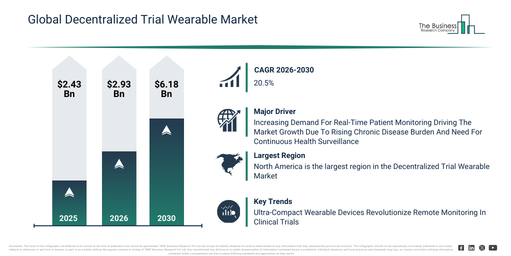
    The decentralized trial wearable kit market size has seen rapid expansion in recent years. This market is expected to increase from $2.86 billion in 2025 to $3.41 billion in 2026, demonstrating a compound annual growth rate (CAGR) of 19.3%. The historical growth can be linked to factors such as a greater shift towards decentralized clinical trials, the expanding use of mobile health applications in research, the development of remote data collection methods, increased investments in digital trial infrastructure, and better interoperability of wearable devices.

    The decentralized trial wearable kit market is projected to experience substantial expansion in the coming years, anticipated to reach $6.83 billion by 2030 with a compound annual growth rate (CAGR) of 19.0%. This growth is primarily fueled by an increasing demand for turnkey decentralized trial solutions, the expansion of chronic disease monitoring trials, a rising focus on patient retention strategies, the growing use of cloud-based trial data platforms, and increasing regulatory acceptance of remote data capture. Significant trends observed include the wider deployment of integrated wearable trial kits, rising adoption of app-connected health monitoring devices, a growing demand for all-in-one trial participation solutions, the expansion of home-based clinical trial enablement, and an enhanced focus on data continuity and patient compliance.

    Access Your Free Sample Report for In-Depth Market Insights:

    https://www.thebusinessresearchcompany.com/sample.aspx?id=29013&type=smp

    What Drivers Are Affecting Demand-Supply Dynamics In The Decentralized Trial Wearable Kit Market?

    Increased use of remote patient monitoring is anticipated to fuel expansion in the decentralized trial wearable kit market moving forward. Remote patient monitoring involves employing digital technologies and connected tools to continuously gather and send patients’ health information, including vital signs or chronic disease indicators, to healthcare professionals. This facilitates prompt medical interventions, better care management, and less frequent in-person appointments. This surge in remote patient monitoring adoption stems from enhanced patient convenience, offering continuous health tracking from home and minimizing the need for regular hospital visits. Decentralized trial wearable kits support remote patient monitoring by supplying wearable devices and digital instruments that constantly monitor patients’ vital signs, physiological data, and activity levels. This empowers healthcare providers to gain real-time insights, guarantee prompt interventions, and boost overall trial efficiency, all without requiring frequent on-site visits. For example, a report from October 2024 by the World Health Organization (WHO), the Switzerland-based intergovernmental body, indicated that teleradiology is the most widely adopted service, present in 84% of countries. Furthermore, telemedicine and telepsychiatry are also seeing increased adoption, with 77% of countries providing telemedicine or remote patient monitoring and 51% offering telepsychiatry services. Consequently, the increasing embrace of remote patient monitoring is propelling the expansion of the decentralized trial wearable kit market.

    How Is The Decentralized Trial Wearable Kit Market Organized Into Various Segments?

    The decentralized trial wearable kit market covered in this report is segmented –

    1) By Product Type: Smartwatches, Fitness Bands, Biosensors, Smart Clothing, Other Products

    2) By Distribution Channel: Online, Offline

    3) By Application: Clinical Trials, Remote Patient Monitoring, Chronic Disease Management, Other Applications

    4) By End-User: Pharmaceutical Companies, Contract Research Organizations, Hospitals And Clinics, Other End Users

    Subsegments:

    1) By Smartwatches: Heart Rate Monitoring, Sleep Tracking, Activity Tracking, Electrocardiogram Monitoring, Blood Pressure Monitoring

    2) By Fitness Bands: Step Counting, Calorie Tracking, Distance Tracking, Sleep Monitoring, Heart Rate Monitoring

    3) By Biosensors: Glucose Monitoring, Oxygen Saturation Monitoring, Electrocardiogram Monitoring, Temperature Monitoring, Blood Pressure Monitoring

    4) By Smart Clothing: Posture Monitoring, Muscle Activity Monitoring, Heart Rate Monitoring, Respiration Monitoring, Temperature Monitoring

    5) By Other Products: Portable Electrocardiogram Devices, Glucometers, Pulse Oximeters, Smart Inhalers, Mobile Health Kits

    Which Trends Are Influencing The Development Of The Decentralized Trial Wearable Kit Market?

    Leading companies in the decentralized trial wearable kit market are concentrating on developing innovative technologies, such as wireless data transmission, to boost data accuracy and streamline remote clinical trial operations. Wireless data transmission involves the transfer of digital information between devices without physical cables, utilizing technologies like Wi-Fi, Bluetooth, or cellular networks, which enables real-time communication, remote monitoring, and seamless connectivity across various devices and locations. For example, in June 2025, Empatica Inc., a US-based digital health company, unveiled the EmbraceMini, the world’s smallest actigraphy wearable designed for clinical trials, offering compact, comfortable, and continuous monitoring of patients’ physiological data. This device aims to enhance data collection in decentralized and hybrid studies while improving patient convenience and overall trial efficiency. This product launch seeks to advance decentralized clinical trials by providing precise, continuous patient monitoring, minimizing the necessity for frequent site visits, and facilitating more efficient, data-driven decision-making throughout the study.

    Who Are The Major Companies Operating In The Decentralized Trial Wearable Kit Market?

    Major companies operating in the decentralized trial wearable kit market are Dassault Systèmes SE, IQVIA Holdings Inc, THREAD Research Inc., ARCHIMED SAS, Google LLC, Alivecor Inc., ICON Public Limited Company, Oracle Corporation, Withings SAS, Clario Inc., Veeva Systems Inc., Koneksa Health Inc., Science 37 Holdings Inc., Medable Inc., Medidata Solutions Inc., Obvio Health USA Inc., ActiGraph LLC., Garmin Ltd., Signant Health Private Limited, Koninklijke Philips N.V.

    Access The Complete Report For Deeper Market Insights:

    https://www.thebusinessresearchcompany.com/report/decentralized-trial-wearable-kit-global-market-report

    Which Region Is Anticipated To See The Fastest Growth In The Decentralized Trial Wearable Kit Market?

    North America was the largest region in the decentralized trial wearable Kit market in 2025. Asia-Pacific is expected to be the fastest-growing region in the forecast period. The regions covered in the decentralized trial wearable kit market report are Asia-Pacific, South East Asia, Western Europe, Eastern Europe, North America, South America, Middle East, Africa.

    Request Your Customized Decentralized Trial Wearable Kit Market Research Report for Competitive Advantage:

    https://www.thebusinessresearchcompany.com/customise?id=29013&type=smp

    Browse Through More Reports Similar to the Global Decentralized Trial Wearable Kit Market 2026, By The Business Research Company

    Wearable Medical Devices Market 2026

    https://www.thebusinessresearchcompany.com/report/wearable-medical-devices-market

    Smart Wearables Market Report 2026

    https://www.thebusinessresearchcompany.com/report/smart-wearables-global-market-report

    Wearable Computing Market Report 2026

    https://www.thebusinessresearchcompany.com/report/wearable-computing-global-market-report

    Get in touch with us:

    The Business Research Company: https://www.thebusinessresearchcompany.com/

    Americas +1 310-496-7795

    Asia +44 7882 955267 & +91 8897263534

    Europe +44 7882 955267

    Email us at info@tbrc.info

    Follow us on:

    LinkedIn: https://in.linkedin.com/company/the-business-research-company

    YouTube: https://www.youtube.com/channel/UC24_fI0rV8cR5DxlCpgmyFQ

    Global Market Model: https://www.thebusinessresearchcompany.com/global-market-model
  • Decentralized Trial Wearable Market Trends and Insights: Global Forecast to 2030

    Decentralized Trial Wearable Market Trends and Insights: Global Forecast to 2030

    Uncover key drivers, emerging technologies, and competitive movements shaping the decentralized trial wearable market from 2026–2035 with trusted insights from The Business Research Company

    What long-term size projections exist for the Decentralized Trial Wearable Market covering 2026–2035?

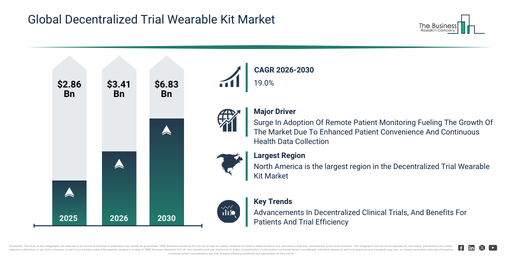
    The decentralized trial wearable market has experienced significant expansion in recent years. Projections indicate it will increase from $2.43 billion in 2025 to $2.93 billion in 2026, reflecting a compound annual growth rate (CAGR) of 20.8%. This historical growth stems from the rising adoption of decentralized clinical trial models, increased utilization of wearable health devices in research, a growing need for remote patient engagement, advancements in sensor miniaturization, and the development of digital clinical trial infrastructure.

    The decentralized trial wearable market is poised for significant growth in the upcoming years, with projections indicating it will reach $6.18 billion by 2030, driven by a compound annual growth rate (CAGR) of 20.5%. This anticipated expansion over the forecast period is attributed to several factors, including escalating investments in virtual trial platforms, an increasing demand for real-world evidence generation, the broader adoption of hybrid clinical trials, a heightened focus on regulatory-compliant remote monitoring, and the growing application of AI-driven trial analytics. Key trends expected during this period involve the wider embrace of continuous remote health monitoring wearables, the rising integration of multi-parameter biosensing devices, an increase in real-time data transmission within clinical trials, the expansion of capabilities for patient-centric trial design, and an enhanced emphasis on data accuracy and compliance.

    Access Your Free Sample Report for In-Depth Market Insights:

    https://www.thebusinessresearchcompany.com/sample.aspx?id=29012&type=smp

    Which Drivers Are Impacting The Competitive Landscape Of The Decentralized Trial Wearable Market?

    The expanding need for real-time patient monitoring is anticipated to drive the advancement of the decentralized trial wearable market in the future. Real-time patient monitoring involves the ongoing gathering and transfer of health data via connected medical devices, which automatically send physiological readings to healthcare providers for prompt evaluation and action. This demand for real-time patient monitoring is growing due to the rising occurrence of chronic conditions like diabetes, cardiovascular disorders, and respiratory illnesses, necessitating continuous health tracking for timely intervention and improved disease management. A decentralized trial wearable kit facilitates real-time patient monitoring by continuously collecting and sending health data from patients in their everyday settings to centralized databases. This allows researchers and healthcare professionals to remotely monitor patient health, identify irregularities early, and make prompt, data-informed clinical decisions. For example, a survey released in August 2023 by Vivalink, a US-based healthcare technology company, indicated that 84% of existing remote patient monitoring (RPM) users plan to increase their usage in 2024. Additionally, 45% of healthcare providers are employing RPM for acute monitoring in hospital-at-home initiatives, and 77% foresee RPM-based care surpassing conventional inpatient hospital care within the next five years. Consequently, the rising requirement for real-time patient monitoring is stimulating the expansion of the decentralized trial wearable market.

    What Segments Are Identified Within The Structure Of The Decentralized Trial Wearable Market?

    The decentralized trial wearable market covered in this report is segmented –

    1) By Product Type: Smartwatches, Fitness Trackers, Biosensors, Smart Clothing, Other Product Types

    2) By Distribution Channel: Online, Offline

    3) By Application: Remote Patient Monitoring, Clinical Trials, Disease Management, Other Applications

    4) By End-User: Pharmaceutical Companies, Contract Research Organizations, Healthcare Providers, Other End-Users

    Subsegments:

    1) By Smartwatches: Health Monitoring Smartwatches, Electrocardiogram (ECG) Smartwatches, Blood Oxygen Tracking Smartwatches, Multi-Sensor Smartwatches

    2) By Fitness Trackers: Heart Rate Monitoring Fitness Trackers, Activity Tracking Fitness Trackers, Sleep Tracking Fitness Trackers, Multi-Metric Fitness Trackers

    3) By Biosensors: Glucose Monitoring Biosensors, Electrocardiogram (ECG) Biosensors, Temperature Sensing Biosensors, Multi-Parameter Biosensors

    4) By Smart Clothing: Sensor-Embedded Smart Shirts, Smart Pants With Biometric Sensors, Compression Wear Smart Clothing, Smart Athletic Wear

    5) By Other Product Types: Hybrid Wearable Devices, Remote Patient Monitoring Wearables, Medical Grade Wearables, Innovative Material Wearables

    What Trends Are Expected To Impact The Competitive Landscape Of The Decentralized Trial Wearable Market?

    Leading firms within the decentralized trial wearable market are prioritizing the creation of advanced solutions, specifically ultra-compact health monitoring devices, with the aim of boosting patient comfort and refining the process of remote data acquisition. These ultra-compact health monitoring devices represent miniature, wearable instruments engineered for continuous tracking of physiological and behavioral metrics, ensuring minimal disturbance. This approach contributes to better patient compliance, facilitates remote oversight, and delivers superior data quality for clinical investigations. As an illustration, in June 2025, Empatica Inc., a medical technology firm based in the US, introduced EmbraceMini, which holds the distinction of being the world’s most compact wristworn actigraphy device intended for clinical research. Measuring merely 12mm thick and 14mm wide—a size comparable to a USB flash drive or an AA battery—this device is built for extremely comfortable, non-intrusive wear. It permits the ongoing surveillance of over 200 digital measures, encompassing activity, sleep patterns, gait, and exposure to light. Data from the device is transmitted wirelessly to Empatica’s FDA-cleared Health Monitoring Platform, which supports remote data collection, analysis of digital biomarkers, and seamless integration with current clinical trial systems, all while emphasizing participant experience and sustained adherence. It is specifically engineered for research concerning conditions such as sleep disorders, movement disorders, obesity, depression, and pain, among others, offering detailed insights into the physiological and behavioral patterns of participants. With its extended battery life, it facilitates at least seven days of continuous monitoring, thereby lessening the burden on participants and improving their compliance. Furthermore, its modular design enables placement on the wrist, ankle, leg, or waist, and multiple devices can be employed concurrently to generate more comprehensive datasets.

    Which Major Firms Are Strengthening Their Position In The Decentralized Trial Wearable Market?

    Major companies operating in the decentralized trial wearable market are Oracle Corporation, IQVIA Holdings Inc., LabCorp Drug Development Inc., ICON Public Limited Company, Garmin Ltd., Clario Inc., Medidata Solutions Inc., BioTelemetry Inc., Signant Health Holding Corp, Withings France SA, Medable Inc., Science 37 Holdings Inc., THREAD Research Inc., Huma Therapeutics Ltd., Empatica S.r.l., Clinical Ink Inc., VivaLNK Inc., Sempulse Ltd., Activinsights Ltd., Mahalo Health Inc.

    Access The Complete Report For Deeper Market Insights:

    https://www.thebusinessresearchcompany.com/report/decentralized-trial-wearable-global-market-report

    Which Region Is Anticipated To See The Fastest Growth In The Decentralized Trial Wearable Market?

    North America was the largest region in the decentralized trial wearable market in 2025. Asia-Pacific is expected to be the fastest-growing region in the forecast period. The regions covered in the decentralized trial wearable market report are Asia-Pacific, South East Asia, Western Europe, Eastern Europe, North America, South America, Middle East, Africa.

    Request Your Customized Decentralized Trial Wearable Market Research Report for Competitive Advantage:

    https://www.thebusinessresearchcompany.com/customise?id=29012&type=smp

    Browse Through More Reports Similar to the Global Decentralized Trial Wearable Market 2026, By The Business Research Company

    Wearable Medical Devices Market 2026

    https://www.thebusinessresearchcompany.com/report/wearable-medical-devices-market

    Wearable Computing Market Report 2026

    https://www.thebusinessresearchcompany.com/report/wearable-computing-global-market-report

    Smart Wearables Market Report 2026

    https://www.thebusinessresearchcompany.com/report/smart-wearables-global-market-report

    Get in touch with us:

    The Business Research Company: https://www.thebusinessresearchcompany.com/

    Americas +1 310-496-7795

    Asia +44 7882 955267 & +91 8897263534

    Europe +44 7882 955267

    Email us at info@tbrc.info

    Follow us on:

    LinkedIn: https://in.linkedin.com/company/the-business-research-company

    YouTube: https://www.youtube.com/channel/UC24_fI0rV8cR5DxlCpgmyFQ

    Global Market Model: https://www.thebusinessresearchcompany.com/global-market-model
  • Global Decentralized Clinical Trials Market Report 2026–2030: Data-Driven Growth Insights

    Global Decentralized Clinical Trials Market Report 2026–2030: Data-Driven Growth Insights

    Uncover key drivers, emerging technologies, and competitive movements shaping the decentralized clinical trials market from 2026–2035 with trusted insights from The Business Research Company

    What total market size is anticipated for the Decentralized Clinical Trials Market in 2030?

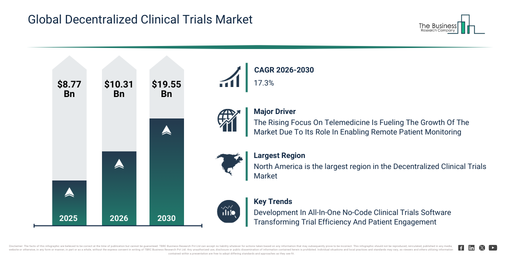
    The decentralized clinical trials market size has experienced rapid growth in recent years. Its value is projected to escalate from $8.77 billion in 2025 to $10.31 billion in 2026, demonstrating a compound annual growth rate (CAGR) of 17.7%. This historical expansion can be ascribed to several factors, including the increasing complexity of clinical trials, the rising imperative for patient recruitment efficiency, the wider adoption of digital health technologies, the growing utilization of electronic data capture systems, and an increasing regulatory receptiveness towards decentralized models.

    The decentralized clinical trials market size is anticipated to experience substantial growth over the next few years, projected to reach $19.55 billion by 2030, demonstrating a compound annual growth rate (CAGR) of 17.3%. This expansion during the forecast period is fueled by several factors, including the increasing adoption of hybrid trial designs, a rising demand for expedited drug development timelines, the ongoing expansion of global virtual trials, the growing utilization of AI-driven trial optimization, and an increasing focus on achieving diverse patient participation. Prominent trends observed in this period involve the increasing adoption of remote patient monitoring tools, the growing use of virtual trial platforms, the expansion of data collection via wearable devices, the rising implementation of real-time trial analytics, and an enhanced emphasis on patient-centric trial design.

    Access Your Free Sample Report for In-Depth Market Insights:

    https://www.thebusinessresearchcompany.com/sample.aspx?id=28189&type=smp

    What Drivers Are Influencing Production Trends In The Decentralized Clinical Trials Market?

    The increasing emphasis on telemedicine is projected to stimulate growth within the decentralized clinical trials market in the future. Telemedicine involves providing healthcare services remotely using digital communication tools, allowing medical consultations and patient monitoring without the necessity of physical presence at medical sites. This elevated focus on telemedicine primarily arises from the demand for readily available healthcare solutions in response to worldwide health crises and social distancing mandates. Decentralized clinical trials employ telemedicine to remotely interact with and oversee patients, thereby reducing the need for in-person visits while facilitating real-time data collection, improved accessibility, and continuous supervision. For example, data from the Australian Bureau of Statistics (ABS), Australia’s national statistical agency, revealed in September 2024 that in 2023–24, 83.5% of males reported utilizing telehealth services, marking an increase from 78.6% in 2022–23. Thus, the growing attention on telemedicine is a significant driver for the expansion of the decentralized clinical trials market.

    Which Segments Are Gaining Traction In The Decentralized Clinical Trials Market?

    The decentralized clinical trials market covered in this report is segmented –

    1) By Type: Interventional, Observational, Expanded Access

    2) By Technology Used: Wearable Devices, Mobile Health Applications, Telemedicine Platforms, Electronic Data Capture Systems

    3) By Study Phase: Phase I, Phase II, Phase III, Phase IV

    4) By Therapeutic Area: Oncology, Cardiology, Neurology, Infectious Diseases

    5) By End-User: Pharmaceutical Companies, Biotechnology Firms, Contract Research Organizations, Regulatory Authorities, Academic And Research Institutions

    Subsegments:

    1) By Interventional: Randomized Controlled Trials (RCTs), Non-Randomized Trials, Adaptive Clinical Trials, Pragmatic Clinical Trials

    2) By Observational: Cohort Studies, Case-Control Studies, Cross-Sectional Studies, Prospective Studies, Retrospective Studies, Longitudinal Studies

    3) By Expanded Access: Treatment Investigational New Drug (IND) Applications, Intermediate-Size Patient Population Investigational New Drug (IND) Applications, Single-Patient Investigational New Drug (IND) Applications, Emergency Use Investigational New Drug (IND) Applications

    Which Trends Are Guiding The Evolution Of The Decentralized Clinical Trials Market?

    Leading companies within the decentralized clinical trials market are concentrating on developing advanced solutions, such as integrated, no-code clinical trials software, to streamline trial setup and management, thereby enhancing overall efficiency and patient engagement. This all-in-one, no-code clinical trials software empowers researchers to design, manage, and execute trials without programming, seamlessly incorporating patient recruitment, data capture, monitoring, and analytics into a single, user-friendly platform. For instance, in August 2024, Medable, a US-based clinical technology company, unveiled Medable Studio, a comprehensive no-code software solution engineered to simplify and accelerate the configuration, translation, validation, and launch of electronic Clinical Outcome Assessments (eCOA), eConsent, Televisit, and sensors Plus into clinical trials. This platform allows biopharmaceutical companies to develop protocol-compliant study designs in hours instead of months, providing users with increased control, transparency, and speed, along with flexible self-service, full-service, or hybrid options that significantly shorten study startup timelines and reduce costs. The fundamental goal of this platform is to revolutionize trial execution by making the study build process quicker, more efficient, and less reliant on professional services.

    Who Are The Primary Competitors In The Global Decentralized Clinical Trials Market?

    Major companies operating in the decentralized clinical trials market are Walgreens Boots Alliance Inc., Pfizer Inc., Oracle Corporation, Thermo Fisher Scientific Inc., IQVIA Holdings Inc., Labcorp Holdings Inc., ICON Public Limited Company, Dassault Systèmes SE, LEO Pharma A/S, Verily Life Sciences LLC, ProPharma, Signant Health Holding Corp., PCM Trials, Huma Therapeutics Limited, Medable Inc., Science 37 Inc., Obvio Health, EmVenio Research Inc., Grove AI Inc., Phesi Inc.

    Access The Complete Report For Deeper Market Insights:

    https://www.thebusinessresearchcompany.com/report/decentralized-clinical-trials-global-market-report

    Which Global Regions Are Shaping The Competitive Landscape Of The Decentralized Clinical Trials Market?

    North America was the largest region in the decentralized clinical trials market in 2025. Asia-Pacific is expected to be the fastest-growing region in the forecast period. The regions covered in the decentralized clinical trials market report are Asia-Pacific, South East Asia, Western Europe, Eastern Europe, North America, South America, Middle East, Africa.

    Request Your Customized Decentralized Clinical Trials Market Research Report for Competitive Advantage:

    https://www.thebusinessresearchcompany.com/customise?id=28189&type=smp

    Browse Through More Reports Similar to the Global Decentralized Clinical Trials Market 2026, By The Business Research Company

    Clinical Trial Supply And Logistics Market Report 2026

    https://www.thebusinessresearchcompany.com/report/clinical-trial-supply-and-logistics-global-market-report

    Virtual Clinical Trials Market Report 2026

    https://www.thebusinessresearchcompany.com/report/virtual-clinical-trials-global-market-report

    Clinical Trial Management System Market Report 2026

    https://www.thebusinessresearchcompany.com/report/clinical-trial-management-system-global-market-report

    Get in touch with us:

    The Business Research Company: https://www.thebusinessresearchcompany.com/

    Americas +1 310-496-7795

    Asia +44 7882 955267 & +91 8897263534

    Europe +44 7882 955267

    Email us at info@tbrc.info

    Follow us on:

    LinkedIn: https://in.linkedin.com/company/the-business-research-company

    YouTube: https://www.youtube.com/channel/UC24_fI0rV8cR5DxlCpgmyFQ

    Global Market Model: https://www.thebusinessresearchcompany.com/global-market-model
  • Data-Driven Precision Medical Service Market Dynamics 2026: Future Outlook and Key Insights

    Data-Driven Precision Medical Service Market Dynamics 2026: Future Outlook and Key Insights

    Uncover key drivers, emerging technologies, and competitive movements shaping the data-driven precision medical service market from 2026–2035 with trusted insights from The Business Research Company

    What is the expected shift in the Data-Driven Precision Medical Service Market’s size between 2026 and 2030?

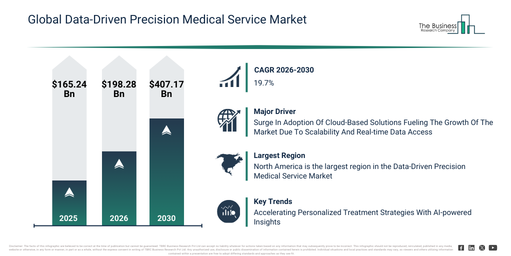
    The data-driven precision medical service market size has seen a rapid increase in recent years. It is anticipated to expand from $165.24 billion in 2025 to $198.28 billion in 2026, achieving a compound annual growth rate (CAGR) of 20.0%. This historical growth can be attributed to several factors, including the increasing digitization of healthcare records, the growing availability of genomic data, the rising adoption of analytics-driven care models, the expansion of healthcare IT infrastructure, and increased collaboration between technology and healthcare providers.

    The data-driven precision medical service market size is anticipated to experience rapid growth over the next few years. It is expected to reach $407.17 billion by 2030, at a compound annual growth rate (CAGR) of 19.7%. This expansion during the forecast period can be attributed to heightened investments in AI-powered healthcare platforms, a surging demand for personalized treatment pathways, the broadening of real-time clinical decision support, increasing integration of wearable health data, and an intensified focus on preventive precision medicine. Significant trends in the forecast period will also include the wider uptake of AI-driven clinical analytics, greater incorporation of multi-omics data platforms, the proliferation of cloud-based precision medicine services, an increase in the application of predictive healthcare models, and a stronger emphasis on outcome-based care.

    Access Your Free Sample Report for In-Depth Market Insights:

    https://www.thebusinessresearchcompany.com/sample.aspx?id=28188&type=smp

    Which Drivers Are Shaping Strategic Decisions In The Data-Driven Precision Medical Service Market?

    The continued rise in the adoption of cloud-based solutions is projected to drive the expansion of the data-driven precision medical service market moving forward. Cloud-based solutions are defined as software, platforms, or infrastructure provided over the internet, allowing for on-demand access, storage, and computing without requiring local installation. Their appeal stems from their scalability, which enables organizations to quickly adapt computing resources to demand without major initial infrastructure investments. This scalability of cloud solutions allows healthcare organizations to rapidly adjust resources based on needs, supporting real-time patient data analysis, predictive modeling, and personalized care. For instance, according to Ace Cloud (Ace Cloud Hosting), a US-based cloud computing solution specialized for healthcare and HealthTech applications, the healthcare sector is rapidly embracing cloud technology, with 95% of organizations using it for patient data management. In 2025, cloud adoption in healthcare experienced a substantial 41% year-over-year surge, marking it as the highest growth across all industry sectors. Thus, the increasing adoption of cloud-based solutions is anticipated to stimulate the growth of the data-driven precision medical service market.

    What Segment Categories Are Covered In The Data-Driven Precision Medical Service Market?

    The data-driven precision medical service market covered in this report is segmented –

    1) By Type: Cloud-Based, On-Premises

    2) By Technology: Artificial Intelligence And Machine Learning, Big Data Analytics, Genomics And Sequencing, Cloud Computing, Blockchain, Digital Twin Technology, Wearables And Internet Of Things

    3) By Application: Hospital, Clinic, Other Applications

    Subsegments:

    1) By Cloud-Based: Public Cloud Deployment, Private Cloud Deployment, Hybrid Cloud Deployment

    2) By On Premises: Dedicated Server Infrastructure, Enterprise Data Center Deployment, Localized Computing Environment

    What Trends Are Projected To Support The Growth Of The Data-Driven Precision Medical Service Market?

    Leading companies in the data-driven precision medical service market are increasingly concentrating on advanced innovations, such as deep learning for multi-omics discovery. This focus aims to expedite biomarker identification, refine personalized treatment strategies, and enhance clinical decision-making across oncology and other therapeutic areas. Deep learning for multi-omics discovery involves leveraging AI algorithms to analyze complex genomic, epigenomic, transcriptomic, and proteomic data, thereby enabling the identification of novel biomarkers and therapeutic targets. For instance, in January 2023, Guardant Health, a US-based biotechnology company, introduced Guardant Galaxy, an extensive suite of advanced analytical tools. This platform, developed through both internal research and external collaborations, seeks to improve the accuracy and clinical utility of Guardant Health’s existing cancer testing portfolio. By integrating cutting-edge analytics, Guardant Galaxy supports more precise patient diagnostics and personalized treatment planning, while simultaneously accelerating the discovery of new biomarkers and therapeutic targets, thus fueling the next generation of drug development.

    Which Key Market Players Are Investing In Expansion And Innovation Within The Data-Driven Precision Medical Service Market?

    Major companies operating in the data-driven precision medical service market are Samsung Electronics Co. Ltd., Roche Holding AG, Novartis AG, Thermo Fisher Scientific Inc., Agilent Technologies Inc., Illumina Inc., BioNTech SE, QIAGEN N.V., Natera Inc., Precision Medicine Group Inc., Guardant Health Inc., Tempus Labs Inc., Flatiron Health Inc., Certara L.P., Verily Life Sciences LLC, GenomOncology Inc., SOPHiA GENETICS SA, Recursion Pharmaceuticals Inc., DNAnexus Inc., Biomea Fusion Inc.

    Access The Complete Report For Deeper Market Insights:

    https://www.thebusinessresearchcompany.com/report/data-driven-precision-medical-service-global-market-report

    Which Regions Are Poised For Strategic Growth In The Data-Driven Precision Medical Service Market?

    North America was the largest region in the data-driven precision medical service market in 2025. The regions covered in the data-driven precision medical service market report are Asia-Pacific, South East Asia, Western Europe, Eastern Europe, North America, South America, Middle East, Africa.

    Request Your Customized Data-Driven Precision Medical Service Market Research Report for Competitive Advantage:

    https://www.thebusinessresearchcompany.com/customise?id=28188&type=smp

    Browse Through More Reports Similar to the Global Data-Driven Precision Medical Service Market 2026, By The Business Research Company

    Healthcare Data Interoperability Market Report 2026

    https://www.thebusinessresearchcompany.com/report/healthcare-data-interoperability-global-market-report

    Artificial Intelligence Ai In Precision Medicine Market Report 2026

    https://www.thebusinessresearchcompany.com/report/artificial-intelligence-ai-in-precision-medicine-global-market-report

    Healthcare Data Integration Market Report 2026

    https://www.thebusinessresearchcompany.com/report/healthcare-data-integration-global-market-report

    Get in touch with us:

    The Business Research Company: https://www.thebusinessresearchcompany.com/

    Americas +1 310-496-7795

    Asia +44 7882 955267 & +91 8897263534

    Europe +44 7882 955267

    Email us at info@tbrc.info

    Follow us on:

    LinkedIn: https://in.linkedin.com/company/the-business-research-company

    YouTube: https://www.youtube.com/channel/UC24_fI0rV8cR5DxlCpgmyFQ

    Global Market Model: https://www.thebusinessresearchcompany.com/global-market-model
  • Da Vinci Systems Market Research: Growth Projections and Trends 2030

    Da Vinci Systems Market Research: Growth Projections and Trends 2030

    Uncover key drivers, emerging technologies, and competitive movements shaping the da vinci systems market from 2026–2035 with trusted insights from The Business Research Company

    What growth pattern is forecast for the Da Vinci Systems Market size between 2026 and 2035?

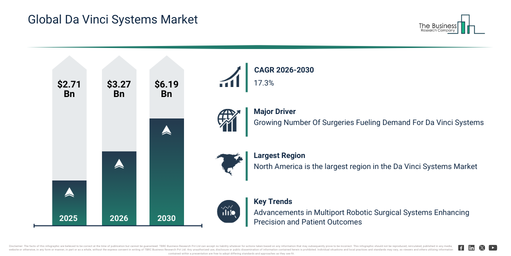
    The da vinci systems market has witnessed substantial growth in recent years. It is forecast to expand from $2.71 billion in 2025 to $3.27 billion by 2026, achieving a compound annual growth rate (CAGR) of 20.5%. This historical upward trend can be attributed to several factors, including the imperative for surgical precision, the constraints associated with laparoscopic surgery, the significant investments made by hospitals in robotics, the increasing demand for enhanced surgeon skills, and the notable improvements in patient recovery.

    The da vinci systems market is anticipated to undergo substantial expansion in the coming years. Its value is projected to reach $6.19 billion by 2030, exhibiting a compound annual growth rate (CAGR) of 17.3%. This anticipated growth is propelled by factors such as advancements in robotic platforms, the spread into emerging markets, the increase in outpatient robotic surgery, initiatives for cost optimization, and a rise in surgical volumes. Prominent developments for this period encompass the growing adoption of robotic-assisted surgery, the proliferation of minimally invasive procedures, the integration of surgical data analytics, the development of surgeon training programs, and a broader application in multi-specialty surgeries.

    Access Your Free Sample Report for In-Depth Market Insights:

    https://www.thebusinessresearchcompany.com/sample.aspx?id=14890&type=smp

    Which Drivers Are Impacting Market Performance In The Da Vinci Systems Market?

    The expansion of the da Vinci systems market is anticipated to be fueled by an increasing volume of surgical procedures going forward. This rise in surgical procedures stems from progress in medical technology, an older demographic experiencing more health concerns, improved healthcare awareness and availability, and a move towards proactive and preventative surgical methods. Da Vinci surgical systems find application across diverse surgical fields, such as urology, gynecology, general surgery, cardiothoracic surgery, and colorectal surgery. These systems empower surgeons to execute intricate operations with enhanced accuracy, minimal incisions, decreased blood loss, and quicker patient recovery, contrasting with conventional open surgical techniques. As an illustration, data from June 2024, provided by the International Society of Aesthetic Plastic Surgery (ISAPS), a US-based non-profit professional organization, indicated that approximately 15.8 million surgical aesthetic procedures took place globally in 2023. Of these, face and head procedures constituted 6.5 million surgeries, with eyelid surgery seeing a 24% increase to 1.7 million procedures, rhinoplasty an ascent of 21.6% to 1.1 million procedures, and lip enhancement/perioral procedures a 29% growth to 0.9 million. For women, liposuction (1.8 million procedures) surpassed breast augmentation as the most common surgical procedure. The United States was the worldwide leader, conducting over 6.1 million surgical aesthetic procedures in 2023. Consequently, the increasing volume of surgical interventions is propelling the expansion of the da Vinci systems market into the future.

    Which Segments Are Contributing To The Growth Of The Da Vinci Systems Market?

    The da vinci systems market covered in this report is segmented –

    1) By Product Type: Systems, Instruments And Accessories, Services, Data Analytics Software

    2) By Application: General Surgery, Urological Surgery, Gynecological Surgery, Cardiothoracic Surgery, Colorectal Surgery, Other Applications

    3) By End User: Hospitals, Ambulatory Surgical Centers, Academic And Research Centers

    Subsegments:

    1) By Systems: Robotic Surgical Systems, Robotic Surgery Platforms, Surgical Robots

    2) By Instruments And Accessories: Surgical Instruments, Endoscopic Instruments, Robotic Arms And Tools, Specialized Accessories

    3) By Services: Maintenance And Repair Services, Training And Support Services, Installation And Setup Services, Consulting Services

    4) By Data Analytics Software: Surgical Data Management Software, Patient Monitoring Software, Performance And Analytics Software, Post-Operative Care Software

    Which Trends Are Influencing The Performance And Direction Of The Da Vinci Systems Market?

    Leading companies in the surgical robotics market are actively developing innovative products, such as multiport robotic surgical systems, to solidify their market standing. These multiport robotic systems, exemplified by the da Vinci platform, offer surgeons improved dexterity, 3D high-definition visualization, and precise instrument control via minimally invasive small incisions, thereby enhancing patient outcomes and shortening recovery periods compared to conventional open or laparoscopic surgery. For instance, in March 2024, Intuitive Surgical, a US-based medical device company, successfully acquired U.S. Food and Drug Administration (FDA) 510(k) clearance for its fifth-generation multiport robotic platform, the da Vinci 5. This advanced system boasts over 150 design and performance enhancements, including optional force-feedback instruments that enable surgeons to perceive tissue resistance, sophisticated tremor reduction, a cutting-edge surgeon console, and significantly increased onboard computing power. These integrated features improve surgical precision, lessen tissue trauma, and facilitate integration with real-time software tools, ultimately leading to greater procedural efficiency and superior patient outcomes.

    Who Are The Core Companies Influencing Trends In The Da Vinci Systems Market?

    Major companies operating in the da vinci systems market are Johnson & Johnson, Medtronic Plc, Stryker Corporation, Zimmer Biomet Holdings Inc, Intuitive Surgical Inc, Smith & Nephew plc, Karl Storz, Applied Medical, CMR Surgical Ltd, Avatera Medical, THINK Surgical Inc, Titan Medical, XACT Robotics Ltd, Asensus Surgical, Medrobotics Corporation, Renishaw plc, Distalmotion, AVRA Medical Robotics Inc, EndoMaster Surgical, Synaptive Medical, Virtual Incision Corporation, SS Innovations International Inc, Sina Robotics and Medical Innovators Co, Neocis Inc, Dextera Surgical, Human Xtensions, Procept BioRobotics

    Access The Complete Report For Deeper Market Insights:

    https://www.thebusinessresearchcompany.com/report/da-vinci-systems-global-market-report

    Which Regions Are Projected To Dominate The Da Vinci Systems Market In The Coming Years?

    North America was the largest region in the da Vinci systems market in 2025. Asia Pacific is expected to be the fastest-growing region in the forecast period. The regions covered in the da vinci systems market report are Asia-Pacific, South East Asia, Western Europe, Eastern Europe, North America, South America, Middle East, Africa.

    Request Your Customized Da Vinci Systems Market Research Report for Competitive Advantage:

    https://www.thebusinessresearchcompany.com/customise?id=14890&type=smp

    Browse Through More Reports Similar to the Global Da Vinci Systems Market 2026, By The Business Research Company

    Immersive Technology Market Report 2026

    https://www.thebusinessresearchcompany.com/report/immersive-technology-global-market-report

    Fiction Books Market Report 2026

    https://www.thebusinessresearchcompany.com/report/fiction-books-global-market-report

    Non Fiction Books Market Report 2026

    https://www.thebusinessresearchcompany.com/report/non-fiction-books-global-market-report

    Get in touch with us:

    The Business Research Company: https://www.thebusinessresearchcompany.com/

    Americas +1 310-496-7795

    Asia +44 7882 955267 & +91 8897263534

    Europe +44 7882 955267

    Email us at info@tbrc.info

    Follow us on:

    LinkedIn: https://in.linkedin.com/company/the-business-research-company

    YouTube: https://www.youtube.com/channel/UC24_fI0rV8cR5DxlCpgmyFQ

    Global Market Model: https://www.thebusinessresearchcompany.com/global-market-model
  • Global D Dimer Testing Industry Insights: Key Trends and Growth Estimates

    Global D Dimer Testing Industry Insights: Key Trends and Growth Estimates

    Uncover key drivers, emerging technologies, and competitive movements shaping the d dimer testing market from 2026–2035 with trusted insights from The Business Research Company

    How much larger will the D Dimer Testing Market be in 2030 compared with 2026?

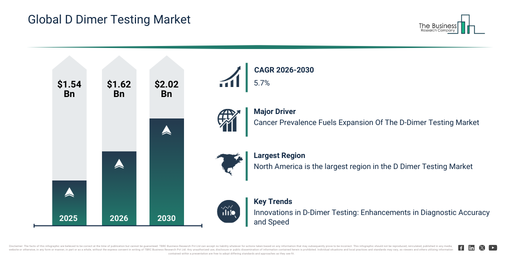
    The d dimer testing market has demonstrated significant growth over recent years. It is anticipated to increase from $1.54 billion in 2025 to $1.62 billion in 2026, achieving a compound annual growth rate (CAGR) of 5.2%. This historical expansion can be primarily attributed to factors such as the high incidence of thrombotic disorders, widespread hospital-based laboratory testing, a dependence on elisa methods, the demand for emergency diagnostics, and limited availability of rapid testing options.

    The d dimer testing market is anticipated to experience robust growth in the coming years. It is projected to expand to $2.02 billion by 2030, demonstrating a compound annual growth rate (CAGR) of 5.7%. This forecasted growth can be attributed to several factors, including the advancement of point-of-care diagnostics, a rising burden of cardiovascular diseases, technological innovations in immunoassays, the demand for faster turnaround times, and the broader expansion of decentralized testing. Major trends expected during this period include the increasing adoption of point-of-care testing, its enhanced utilization in emergency diagnostics, the proliferation of automated laboratory analyzers, the development of rapid testing kits, and their integration into clinical decision protocols.

    Access Your Free Sample Report for In-Depth Market Insights:

    https://www.thebusinessresearchcompany.com/sample.aspx?id=12341&type=smp

    What Drivers Are Guiding Growth Patterns In The D Dimer Testing Market?

    The d-dimer testing market is anticipated to expand due to the rising incidence of cancer. Cancer refers to a group of diseases characterized by the uncontrolled multiplication of abnormal cells in almost any body organ or tissue, which then exceed their normal limits, spreading to other organs or invading adjacent areas. Primarily, d-dimer testing aids in the diagnosis, monitoring, and treatment of cancer patients, while also evaluating the likelihood of blood clot formation. It serves to track thrombotic events across diverse clinical environments. As an illustration, the National Cancer Institute (NCI), a US government entity focused on cancer research and education, projected that in May 2025, approximately 2,041,910 new cancer cases would be diagnosed in the United States during 2025, with 618,120 deaths attributed to the illness. For men, prostate, lung, and colorectal cancers are forecasted to constitute about 48% of all new cancer diagnoses, whereas for women, breast, lung, and colorectal cancers are expected to make up around 51% of all new cases. Furthermore, an estimated 14,690 children and adolescents aged 0 to 19 are predicted to be diagnosed with cancer in 2025, and 1,650 are anticipated to succumb to the condition. Consequently, the rising occurrence of cancer is a key factor driving the expansion of the d-dimer testing market.

    How Is The D Dimer Testing Market Divided Into Segments?

    The d dimer testing market covered in this report is segmented –

    1) By Test: Clinical Laboratory Tests, Point-Of-Care Tests

    2) By Product: Analyzers, Reagents And Consumables

    3) By Method: Enzyme-Linked Immunosorbent Assay (ELISA), Latex-Enhanced Immuno-Turbidimetric Assays, Fluorescence Immunoassays, Other Testing Methods

    4) By Application: Deep Vein Thrombosis (DVT), Pulmonary Embolism (PE), Disseminated Intravascular Coagulation (DIC), Other Applications

    5) By End-User: Hospitals, Academic And Research Institutes, Diagnostic Centers, Other End-Users

    Subsegments:

    1) By Clinical Laboratory Tests: Enzyme-Linked Immunosorbent Assay (Elisa), Chemiluminescent Immunoassay (CLIA), Latex Agglutination Assays

    2) By Point-Of-Care Tests: Rapid Test Kits, Portable Testing Devices, Lateral Flow Assays

    What Long-Term Trends Are Expected To Shape The Future Of The D Dimer Testing Market?

    Major companies operating in the d-dimer testing market are developing innovative products, such as D-dimer test kits, to enhance the accuracy and speed of diagnosing conditions related to blood clots. A D-dimer test kit is a medical diagnostic instrument utilized to measure the concentration of D-dimer, a fibrin degradation product, in the bloodstream, which assists in assessing the existence of blood clots and conditions like deep vein thrombosis, pulmonary embolism, or disseminated intravascular coagulation. For instance, in July 2024, Bionote Inc., a medical equipment manufacturing company located in South Korea, launched Vcheck D-dimer 5Tests/Kit. This new D-dimer 5-Test Kit for Vcheck immunodiagnostic equipment has been specifically designed for veterinary clinics. It helps in diagnosing conditions such as thrombosis and DIC, making it suitable for smaller clinics with fewer emergency cases.

    Which Major Industry Participants Are Leading The D Dimer Testing Market Growth?

    Major companies operating in the d dimer testing market are F. Hoffmann-La Roche Ltd., Thermo Fisher Scientific Inc., Abbott Laboratories, Siemens Healthcare GmbH, Becton Dickinson and Company (BD), Laboratory Corporation, Quest Diagnostics Inc., bioMérieux SA, Beckman Coulter Inc., Quidel Corporation, QuidelOrtho Corporation, Sysmex Corporation, Horiba Ltd., Werfen SA, Helena Laboratories Corporation, Abcam plc, LumiraDx Limited, Sekisui Diagnostics LLC, Diagnostica Stago S.A.S., RayBiotech Inc., CTK Biotech Inc., Diazyme Laboratories Inc., UCP Biosciences Inc., AccuBioTech Co Ltd., Response Biomedical Corporation

    Access The Complete Report For Deeper Market Insights:

    https://www.thebusinessresearchcompany.com/report/d-dimer-testing-global-market-report

    Which Region Is Expected To Experience The Fastest Growth In The D Dimer Testing Market?

    North America was the largest region in the D dimer testing market in 2025. Asia-Pacific is expected to be the fastest-growing region in the forecast period. The regions covered in the d dimer testing market report are Asia-Pacific, South East Asia, Western Europe, Eastern Europe, North America, South America, Middle East, Africa.

    Request Your Customized D Dimer Testing Market Research Report for Competitive Advantage:

    https://www.thebusinessresearchcompany.com/customise?id=12341&type=smp

    Browse Through More Reports Similar to the Global D Dimer Testing Market 2026, By The Business Research Company

    Medical Device Testing Market Report 2026

    https://www.thebusinessresearchcompany.com/report/medical-device-testing-global-market-report

    Dimer Acid Market Report 2026

    https://www.thebusinessresearchcompany.com/report/dimer-acid-global-market-report

    Dimethyl Ether Market Report 2026

    https://www.thebusinessresearchcompany.com/report/dimethyl-ether-global-market-report

    Get in touch with us:

    The Business Research Company: https://www.thebusinessresearchcompany.com/

    Americas +1 310-496-7795

    Asia +44 7882 955267 & +91 8897263534

    Europe +44 7882 955267

    Email us at info@tbrc.info

    Follow us on:

    LinkedIn: https://in.linkedin.com/company/the-business-research-company

    YouTube: https://www.youtube.com/channel/UC24_fI0rV8cR5DxlCpgmyFQ

    Global Market Model: https://www.thebusinessresearchcompany.com/global-market-model