Category: HealthcareServices

  • Skin Microbiome Industry Insights: Market Forecast to 2029

    Skin Microbiome Industry Insights: Market Forecast to 2029

    Unlock Global Insights – Save 20% on Market Reports with Code ONLINE20

    How Much Larger Is The Skin Microbiome Market Expected To Become By 2029 Compared With Its 2025 Level?

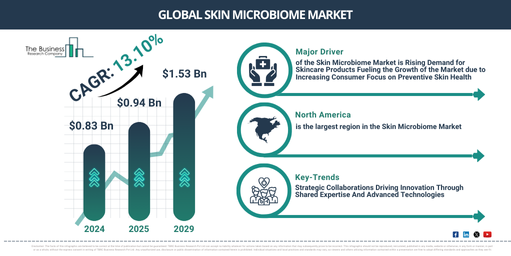
    The skin microbiome market size has seen rapid growth in recent years. It is expected to expand from $0.83 billion in 2024 to $0.94 billion in 2025, reflecting a compound annual growth rate (CAGR) of 12.9%. This historical increase can be attributed to an elevated awareness of skin health, a growing demand for natural and organic skincare products, an uptick in consumer preference for personalized skincare, a greater focus on the gut-skin connection, and rising interest in microbiome-based therapies.

    The skin microbiome market size is anticipated to experience substantial expansion in the coming years. This market is projected to reach $1.53 billion by 2029, exhibiting a compound annual growth rate (CAGR) of 13.1%. Factors contributing to this growth during the forecast period include intensified research into the advantages of the skin microbiome, increased acceptance of skincare items leveraging the microbiome, a growing desire for clean and sustainable beauty products, expanded funding in microbiome science, and an elevated emphasis on preventative skincare strategies. Key trends expected in this period encompass improvements in microbiome research technologies, sophisticated formulation methods for precise skincare, breakthroughs in customized skincare solutions, the incorporation of AI and data analytics into product development, and progress in probiotics and prebiotics for dermal well-being.

    Unlock Your Free Sample Report for Exclusive Market Data:

    https://www.thebusinessresearchcompany.com/sample.aspx?id=23518&type=smp

    Which Drivers Are Impacting The Skin Microbiome Market?

    The increasing consumer demand for skincare items is anticipated to drive the future expansion of the skin microbiome market. These products are specific preparations crafted to cleanse, protect, nourish, or improve the skin’s look and well-being. The escalation in demand stems from heightened consumer understanding regarding skin health and the significance of proactive self-care, prompting more individuals to embrace daily skincare regimens for enduring well-being and aesthetic benefits. Skin microbiomes play a crucial role in skincare items as they aid in preserving a stable skin barrier and ward off problems like dryness, inflammation, and acne by bolstering the skin’s inherent protective mechanisms. As an illustration, in April 2023, a report published by L’Oréal S.A., a France-based beauty products manufacturer, indicated that its Dermatological Beauty division achieved sales of $1869.7 million (€1,685.7 million) in the first quarter of 2023, surpassing the $1389.5 million (€1,252.7 million) reported for the same period in 2022. This performance signifies a year-over-year growth of 30.6% on a like-for-like basis and 34.6% on a reported basis. Consequently, the growing consumer preference for skincare items is set to significantly drive the expansion of the skin microbiome market.

    How Is The Skin Microbiome Market Segmented?

    The skin microbiomemarket covered in this report is segmented –

    1) By Product Type: Skin Care Products; Dietary Supplements; Medical Devices; Diagnostic Tests

    2) By Skin Type: Normal; Dry; Oily; Combination

    3) By Distribution Channel: Online; Retail Stores; Pharmacies; Hospitals

    4) By Application : Acne; Eczema; Psoriasis; Anti-Aging; Wound Healing

    5) By End User: Consumers; Healthcare Professionals; Research Institutions

    Subsegments:

    1) By Skin Care Products: Moisturizers; Cleansers; Serums And Oils; Face Masks; Sunscreens; Anti-Aging Products; Acne Treatment Products

    2) By Dietary Supplements: Probiotics; Prebiotics; Postbiotics; Collagen Supplements; Antioxidants; Vitamins And Minerals

    3) By Medical Devices: Microbiome-based Topical Therapeutics; Skin Microbiome Modulation Devices; Light And Laser Therapy Devices; Electrotherapy Devices

    4) By Diagnostic Tests: Skin Microbiome Profiling Kits; PCR-based Testing Kits; Next-Generation Sequencing (NGS) Tests; Microbial Culture-Based Tests; Biomarker-based Skin Analysis

    What Key Innovation Trends Are Fueling Advancements In The Skin Microbiome Market?

    Leading companies in the skin microbiome market are concentrating on strategic alliances to lessen risks and accelerate innovation within a highly competitive and rapidly evolving industry landscape. Strategic partnerships involve cooperative agreements among two or more entities designed to harness each other’s advantages to achieve common aims, such as expanding market presence, fostering new developments, or securing a competitive lead. For instance, in September 2024, Terra Quantum, a quantum technology company based in Switzerland, collaborated with Unilever, a consumer goods company from the UK, to further skin microbiome research utilizing quantum machine learning. This alliance intends to uncover novel insights into skin biology and health, potentially impacting future skincare product creation. By merging quantum computing with traditional machine learning methods, this initiative showcases the practical applications of quantum AI in consumer health and skincare, enabling a deeper understanding of how the skin microbiome influences both health and appearance.

    Which Key Market Players Are Investing In Expansion And Innovation Of Skin Microbiome Market?

    Major companies operating in the skin microbiome market are The Procter & Gamble Company, Johnson & Johnson, Unilever PLC, L’Oréal S.A., Beiersdorf AG, Clinique LaboratoriesLLC, Symrise AG, Amorepacific Corporation, Lallemand Inc., Elizabeth ArdenInc., Drunk Elephant, AOBiome LLC, Codex Labs, SkinBioTherapeutics, Naturium LLC, AzitraInc., GALLINÉE Ltd, BEBE & BELLALLC, Esse Skincare, Glowbiotics Inc.

    Download The Full Report For Exclusive Market Findings:

    https://www.thebusinessresearchcompany.com/report/skin-microbiome-global-market-report

    Which Region Is Projected To Lead The Skin Microbiome Market During The Forecast Period?

    North America was the largest region in the skin microbiome market in 2024. Asia-Pacific is expected to be the fastest-growing region in the forecast period. The regions covered in the skin microbiome market report are Asia-Pacific, Western Europe, Eastern Europe, North America, South America, Middle East, Africa.

    Request A Customized Version Of The Skin Microbiome Market Report:

    https://www.thebusinessresearchcompany.com/customise?id=23518&type=smp

    Browse Through More Reports Similar to the Global Skin Microbiome Market 2025, By The Business Research Company

    Skin Cancer Drugs Global Market Report 2025

    https://www.thebusinessresearchcompany.com/report/skin-cancer-drugs-global-market-report

    Transdermal Skin Patche Global Market Report 2025

    https://www.thebusinessresearchcompany.com/report/transdermal-skin-patche-global-market-report

    Transdermal Skin Patches Market 2025

    https://www.thebusinessresearchcompany.com/report/transdermal-skin-patches-market

    Get in touch with us:

    The Business Research Company: https://www.thebusinessresearchcompany.com/

    Americas +1 310-496-7795

    Asia +44 7882 955267 & +91 8897263534

    Europe +44 7882 955267

    Email us at info@tbrc.info

    Follow us on:

    LinkedIn: https://in.linkedin.com/company/the-business-research-company

    YouTube: https://www.youtube.com/channel/UC24_fI0rV8cR5DxlCpgmyFQ

    Global Market Model: https://www.thebusinessresearchcompany.com/global-market-model
  • Short Bowel Syndrome Market Size and Growth Forecast for Businesses 2025–2029

    Short Bowel Syndrome Market Size and Growth Forecast for Businesses 2025–2029

    Unlock Global Insights – Save 20% on Market Reports with Code ONLINE20

    #What Are The Current (2025) And Forecast (2029) Sizes Of The Short Bowel Syndrome Market?

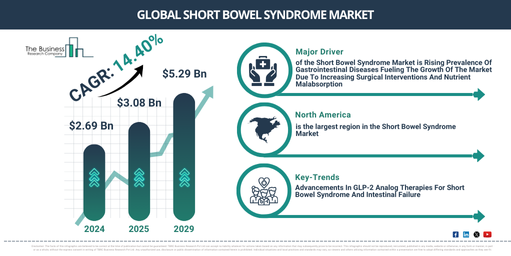
    The short bowel syndrome market size has seen rapid expansion in recent years. It is anticipated to increase from $2.69 billion in 2024 to $3.08 billion in 2025, achieving a compound annual growth rate (CAGR) of 14.6%. The historical growth of this market can be attributed to several factors including the rising prevalence of gastrointestinal disorders, increasing healthcare expenditure and insurance coverage, enhancements in the post-surgical management of SBS, an uptick in the prevalence of Crohn’s disease and other GI disorders, and improved parenteral nutrition formulations and administration techniques.

    The market for short bowel syndrome is projected to experience swift expansion over the coming years. This market is anticipated to reach $5.29 billion by 2029, exhibiting a compound annual growth rate (CAGR) of 14.4%. This projected growth is primarily driven by factors such as the increasing incidence of short bowel syndrome (SBS), wider acceptance of parenteral and enteral nutrition therapies, advancements in clinical research and drug discovery, greater healthcare spending, and improved public awareness leading to earlier diagnosis of SBS. Key trends expected during this period involve enhancements in intestinal rehabilitation treatments, the evolution of small intestine transplantation methods, the utilization of telemedicine for managing SBS, innovations in enteral feeding device technology, and the incorporation of artificial intelligence into SBS treatment strategies.

    Unlock Your Free Sample Report for Exclusive Market Data:

    https://www.thebusinessresearchcompany.com/sample.aspx?id=23515&type=smp

    Which Industry Drivers Are Expected To Accelerate The Short Bowel Syndrome Market From 2025 To 2029?

    The short bowel syndrome market is anticipated to expand due to the rising occurrence of gastrointestinal illnesses. Gastrointestinal diseases encompass various conditions affecting the digestive system, such as those impacting the stomach, intestines, liver, and pancreas, frequently resulting in poor digestion and nutrient uptake. Unhealthy eating patterns, which negatively affect gut health and trigger inflammation, are a major contributor to the increasing incidence of gastrointestinal diseases. These diseases can lead to short bowel syndrome when surgical removal of compromised intestinal parts becomes necessary, thereby diminishing the gut’s ability to absorb nutrients. For example, data from September 2023, provided by the Inflammatory Bowel Disease (IBD) Clinical and Research Centre, a Canadian organization focused on enhancing the lives of patients with Crohn’s disease and ulcerative colitis, indicated that in 2023, over 320,000 people in Canada were affected by inflammatory bowel disease (IBD), showing a prevalence of 825 per 100,000. With an anticipated annual increase in prevalence of 2.44%, projections suggest that by 2035, 1.1% of the population, or 470,000 Canadians, will be living with IBD. Consequently, the rising occurrence of gastrointestinal conditions is a key factor propelling the expansion of the short bowel syndrome market.

    What Are The Key Segments In The Short Bowel Syndrome Market?

    The short bowel syndromemarket covered in this report is segmented –

    1) By Type: Glucagon-Like Peptide (GLP-2); Growth Hormone; Glutamine

    2) By Diagnosis: Physical Exam; Blood Tests; Fecal Fat Tests; Imaging Procedures; Other Diagnosis

    3) By Treatment: Nutritional Therapy; Medications; Surgery; Transplant

    4) By Distribution Channel: Hospital Pharmacies; Specialty Pharmacies; Other Distribution Channels

    Subsegments:

    1) By Glucagon-Like Peptide (GLP-2): Teduglutide; Other GLP-2 Analogues

    2) By Growth Hormone: Somatropin; Other Growth Hormone Therapies

    3) By Glutamine: Oral Glutamine; Intravenous Glutamine

    Which Ongoing Trends Are Expected To Shape The Short Bowel Syndrome Market Outlook?

    Leading companies in the short bowel syndrome market are prioritizing the development of innovative breakthroughs in medical science, such as therapies for intestinal failure, to offer an advanced treatment choice that enhances results for individuals with gastrointestinal conditions. Intestinal failure is a severe condition where the small intestine cannot adequately absorb enough nutrients, fluids, and electrolytes to maintain proper hydration and nutrition. For instance, in May 2024, Ironwood Pharmaceuticals, Inc., a US healthcare enterprise, presented new data from studies assessing apraglutide in adults with short bowel syndrome and intestinal failure (SBS-IF). As a next-generation GLP-2 analog, apraglutide exhibited the potential to improve intestinal absorption and lessen dependence on parenteral support. These findings underscore the drug’s effectiveness, safety, and long-term advantages, reflecting Ironwood’s dedication to developing innovative treatments for gastrointestinal disorders.

    Who Are The Core Companies Influencing The Short Bowel Syndrome Market Landscape?

    Major companies operating in the short bowel syndrome market are Nestlé SA, Pfizer Inc, Johnson & Johnson, Sanofi SA, Nutrinia, GlaxoSmithKline plc, Takeda Pharmaceutical Company Limited, Zealand Pharma, Baxter International Inc., Alnylam Pharmaceuticals, OPKO Health Inc, Ironwood Pharmaceuticals Inc., Hanmi Pharm Co. Ltd, Ardelyx Inc, Emmaus Life Sciences Inc, Jaguar Health, 9 Meters Biopharma Inc., OxThera Inc. , Adocia SAS, EnteraBio Ltd, GLyPharma Therapeutic Inc.

    Download The Full Report For Exclusive Market Findings:

    https://www.thebusinessresearchcompany.com/report/short-bowel-syndrome-global-market-report

    What Are The Key Regional Factors Influencing The Short Bowel Syndrome Market Growth?

    North America was the largest region in the short bowel syndrome market in 2024. Asia-Pacific is expected to be the fastest-growing region in the forecast period. The regions covered in the short bowel syndrome market report are Asia-Pacific, Western Europe, Eastern Europe, North America, South America, Middle East, Africa.

    Request A Customized Version Of The Short Bowel Syndrome Market Report:

    https://www.thebusinessresearchcompany.com/customise?id=23515&type=smp

    Browse Through More Reports Similar to the Global Short Bowel Syndrome Market 2025, By The Business Research Company

    Inflammatory Bowel Disease Treatment Global Market Report 2025

    https://www.thebusinessresearchcompany.com/report/inflammatory-bowel-disease-treatment-global-market-report

    Irritable Bowel Syndrome Ibs Treatment Global Market Report 2025

    https://www.thebusinessresearchcompany.com/report/irritable-bowel-syndrome-ibs-treatment-global-market-report

    Cough Hypersensitivity Syndrome Global Market Report 2025

    https://www.thebusinessresearchcompany.com/report/cough-hypersensitivity-syndrome-global-market-report

    Get in touch with us:

    The Business Research Company: https://www.thebusinessresearchcompany.com/

    Americas +1 310-496-7795

    Asia +44 7882 955267 & +91 8897263534

    Europe +44 7882 955267

    Email us at info@tbrc.info

    Follow us on:

    LinkedIn: https://in.linkedin.com/company/the-business-research-company

    YouTube: https://www.youtube.com/channel/UC24_fI0rV8cR5DxlCpgmyFQ

    Global Market Model: https://www.thebusinessresearchcompany.com/global-market-model
  • Protein Crystallization Market Forecast: What to Expect by 2029

    Protein Crystallization Market Forecast: What to Expect by 2029

    Unlock Global Insights – Save 20% on Market Reports with Code ONLINE20

    What Is The Predicted Market Size Trajectory For The Protein Crystallization Market From 2025 To 2034?

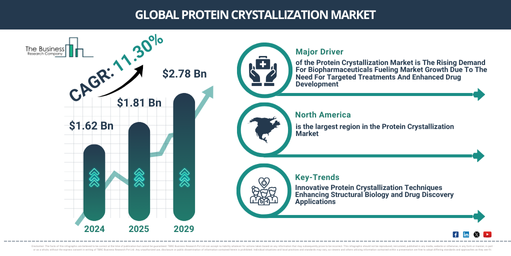
    The protein crystallization market has experienced substantial expansion recently. Its size is projected to increase from $1.62 billion in 2024 to $1.81 billion in 2025, demonstrating a compound annual growth rate (CAGR) of 12.0%. The factors contributing to this historical growth include the rising demand for personalized medicine, rising demand for biologics, growth in structural proteomics, rising academic research program, and growing need for biologics development.

    The protein crystallization market size is projected to experience substantial expansion over the upcoming years. Its value is anticipated to reach $2.78 billion by 2029, demonstrating a compound annual growth rate (CAGR) of 11.3%. This expansion during the prediction timeframe stems from factors such as the heightened requirement for developing protein-based drugs, the increasing occurrence of chronic illnesses, advancements in research concerning protein-ligand interactions, a stronger focus on high-throughput screening techniques, and an escalating necessity for specialized crystallography software. Key developments expected during this period encompass progress in technology, the incorporation of AI into crystallization processes, streamlining laboratory workflows through automation, the creation of hybrid methodologies, and the evolution of next-generation X-ray technologies.

    Unlock Your Free Sample Report for Exclusive Market Data:

    https://www.thebusinessresearchcompany.com/sample.aspx?id=22117&type=smp

    What Are The Main Drivers Boosting The Protein Crystallization Industry’s Expansion?

    The protein crystallization market is anticipated to expand due to the increasing need for biopharmaceuticals. These are medical drugs created through biological methods or sources, including proteins, vaccines, and gene therapies, designed to treat diverse illnesses and conditions. The surge in demand for biopharmaceuticals stems from their capacity to deliver targeted treatments, improve patient results, and manage numerous chronic and intricate diseases, providing tailored solutions superior to conventional therapies. Protein crystallization improves biopharmaceuticals by allowing for exact protein structure determination, which in turn advances the creation of targeted therapies, leading to enhanced effectiveness and stability in biopharmaceutical products. As an illustration, in June 2024, data from the Australian Bureau of Statistics, a government agency in Australia, indicated that during 2022-23, Australian government bodies invested $4,344 million in research and development, marking an increase of $726 million from 2020-21. Concurrently, private non-profit entities allocated $1,595 million, which was a rise of $196 million over the prior period. Consequently, the expanding demand for biopharmaceuticals is propelling the development of the protein crystallization market.

    What Are The Major Segment Categories Driving The Protein Crystallization Market Growth?

    The protein crystallizationmarket covered in this report is segmented –

    1) By Product: Instruments; Consumables; Software And Services

    2) By Technology: X-Ray Crystallography; Cryo-electron Microscopy; NMR Spectroscopy; Other Technologies

    3) By End-User: Pharmaceutical And Biotechnology Companies; Academic And Research Institutes

    Subsegments:

    1) By Instruments Type: X-ray Diffractometers; Liquid Handling Systems; Crystallization Imaging Systems; Microfluidic Systems; Incubators & Temperature Control Devices

    2) By Consumables Type: Crystallization Reagents; Microplates & Crystallization Plates; Screens & Buffers; Cryoprotectants; Protein Purification Kits

    3) By Software and Services Type: Crystallography Data Analysis Software; Molecular Modeling Software; AI-Based Structure Prediction Tools; Custom Crystallization Services; Training & Consulting Services

    What Are The Major Trends Driving The Growth Of The Protein Crystallization Market?

    Major companies operating in the protein crystallization market are concentrating on creating novel techniques to improve protein crystallization efficiency and resolution, employing advanced approaches such as cell-free protein crystallization to facilitate the study of unstable proteins for structural biology and drug discovery. Cell-free protein crystallization refers to a method that enables the formation of protein crystals without using living cells, allowing for more effective crystallization and analysis of proteins. For instance, in October 2022, Tokyo Institute of Technology, a Japan-based public university, unveiled a groundbreaking cell-free protein crystallization technique that allows for the direct formation of protein crystals. This method boosts protein crystallization efficiency and resolution for applications in structural biology studies and drug discovery, offering a more streamlined way to analyze unstable proteins that were previously challenging to examine with conventional methods, and is anticipated to significantly further the comprehension of intricate cellular processes and contribute to the development of new therapeutic approaches.

    Who Are The Prominent Global Companies Shaping The Protein Crystallization Market?

    Major companies operating in the protein crystallization market are Thermo Fisher Scientific, Corning Incorporated, Charles River Laboratories, Mettler-Toledo International Inc., Douglas Instruments Limited, Bruker Corporation, Tecan Group, Greiner Bio-One International GmbH, Rigaku Corporation, Viva Biotech, Formulatrix Inc., Creative Biostructure, Calibre Scientific Inc., Creative Biolabs, Molecular Dimensions, Creative Proteomics, Jena Bioscience GmbH, Saromics Biostructures, Art Robbins Instruments, Mitegen

    Download The Full Report For Exclusive Market Findings:

    https://www.thebusinessresearchcompany.com/report/protein-crystallization-global-market-report

    Which Region Is Expected To Witness The Fastest Growth In The Protein Crystallization Market?

    North America was the largest region in the protein crystallization market in 2024. Asia-Pacific is expected to be the fastest-growing region in the forecast period. The regions covered in the protein crystallization market report are Asia-Pacific, Western Europe, Eastern Europe, North America, South America, Middle East, Africa.

    Request A Customized Version Of The Protein Crystallization Market Report:

    https://www.thebusinessresearchcompany.com/customise?id=22117&type=smp

    Browse Through More Reports Similar to the Global Protein Crystallization Market 2025, By The Business Research Company

    Protein Expression Global Market Report 2025

    https://www.thebusinessresearchcompany.com/report/protein-expression-global-market-report

    Therapeutic Proteins Global Market Report 2025

    https://www.thebusinessresearchcompany.com/report/therapeutic-proteins-global-market-report

    Protein Labelings Global Market Report 2025

    https://www.thebusinessresearchcompany.com/report/protein-labelings-global-market-report

    Get in touch with us:

    The Business Research Company: https://www.thebusinessresearchcompany.com/

    Americas +1 310-496-7795

    Asia +44 7882 955267 & +91 8897263534

    Europe +44 7882 955267

    Email us at info@tbrc.info

    Follow us on:

    LinkedIn: https://in.linkedin.com/company/the-business-research-company

    YouTube: https://www.youtube.com/channel/UC24_fI0rV8cR5DxlCpgmyFQ

    Global Market Model: https://www.thebusinessresearchcompany.com/global-market-model
  • Post-Operative Nausea And Vomiting Industry Insights: Market Forecast to 2029

    Post-Operative Nausea And Vomiting Industry Insights: Market Forecast to 2029

    Unlock Global Insights – Save 20% on Market Reports with Code ONLINE20

    How Much Larger Is The Post-Operative Nausea And Vomiting Market Expected To Become By 2029 Compared With Its 2025 Level?

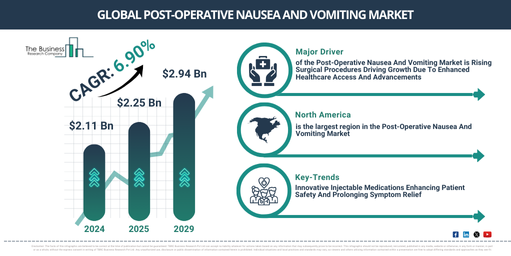
    Recent years have witnessed robust expansion in the post-operative nausea and vomiting market size. This market is anticipated to expand from $2.11 billion in 2024 to $2.25 billion in 2025, exhibiting a compound annual growth rate (CAGR) of 6.8%. The historical growth experienced by the market can be ascribed to several factors, including heightened research and development activities, an escalating demand for sophisticated therapies, an increase in healthcare expenditure, a stronger emphasis on personalized medicine, and the expanding integration of digital health technologies.

    The post-operative nausea and vomiting market is projected to experience substantial expansion over the upcoming years. This market is anticipated to reach $2.94 billion by 2029, exhibiting a compound annual growth rate (CAGR) of 6.9%. Several factors contribute to this growth during the projection period, including an increasing need for pharmaceuticals, the proliferation of combination therapy, heightened awareness coupled with greater healthcare investments, an expanding elderly demographic, and a growing incidence of cancer. Key developments expected within the forecast timeframe encompass advanced antiemetic treatments, collaborative strategies, novel drug formulations, the incorporation of sophisticated diagnostic instruments, and electronic simulation technologies.

    Unlock Your Free Sample Report for Exclusive Market Data:

    https://www.thebusinessresearchcompany.com/sample.aspx?id=22109&type=smp

    Which Factors And Drivers Are Influencing The Post-Operative Nausea And Vomiting Market In 2025?

    The increasing volume of surgical operations is anticipated to drive expansion in the post-operative nausea and vomiting market in the future. These procedures involve medical interventions employing instruments to identify, address, or extract compromised tissues, organs, or anomalies through incision or manipulation. The escalation in surgical volumes stems from progress in medical technology, making operations safer, more efficacious, and less invasive, thus boosting patient willingness and broader utilization. Effective management of post-operative nausea and vomiting improves surgical processes by elevating patient comfort, shortening recovery periods, lowering complication risks, facilitating seamless post-operative care, and ultimately bettering overall surgical results. For example, data from November 2024, released by the Australian Institute of Health and Welfare, an Australian government body, indicated that during the 2023–24 timeframe, 771,600 patients underwent surgery from public hospital elective waiting lists. This figure represents a 4.9% rise when contrasted with 2022–23. Consequently, the growing frequency of surgical interventions is a key factor propelling the expansion of the post-operative nausea and vomiting market.

    How Is The Post-Operative Nausea And Vomiting Market Segmented?

    The post-operative nausea and vomitingmarket covered in this report is segmented –

    1) By Treatment Type: Serotonin Antagonists; Steroids; Dopamine Antagonists; Neurokinin NK-1 Receptor Antagonists; Non-pharmacological Treatment; Other Treatment Types

    2) By Route Of Administration: Oral; Intravenous; Transdermal; Other Route Of Administrations

    3) By Patient Demographics: Pediatric Patients; Adult Patients; Geriatric Patients

    4) By Surgical Procedure Type: Orthopedic Surgery; Gynecological Surgery; General Surgery; Cardiac Surgery; Ophthalmic Surgery

    5) By End-User: Hospitals; Ambulatory Surgical Centers; Specialty Clinics; Other End-Users

    Subsegments:

    1) By Serotonin Antagonists Type: Ondansetron; Granisetron; Palonosetron; Dolasetron; Tropisetron

    2) By Steroids Type: Dexamethasone; Methylprednisolone; Hydrocortisone; Prednisolone; Betamethasone

    3) By Dopamine Antagonists Type: Metoclopramide; Droperidol; Prochlorperazine; Domperidone; Chlorpromazine

    4) By Neurokinin NK-1 Receptor Antagonists Type: Aprepitant; Fosaprepitant; Rolapitant; Netupitant; Casopitant

    5) By Non-Pharmacological Treatment Type: Acupressure; Aromatherapy; Hypnotherapy; Electroacupuncture; Ginger Supplements

    6) By Other Treatment Types: Antihistamines; Anticholinergics; Cannabinoids; Combination Therapy; Herbal & Natural Remedies

    What Trends Are Expected To Drive The Post-Operative Nausea And Vomiting Market?

    Leading companies in the post-operative nausea and vomiting market are concentrating on developing crucial injectable medications that use advanced emulsion formulations and sustained-release technology. This effort aims to improve efficacy and deliver extended symptom relief for surgical patients. Critical injectable medications are defined as essential drugs administered via injection, designed to offer immediate and effective treatment for serious or urgent medical conditions. For instance, in July 2024, Avenacy, a US-based specialty pharmaceutical company, launched Palonosetron Hydrochloride Injection in 0.25 mg/5 mL single-dose vials, intended to help healthcare providers reduce dosing errors and enhance patient safety. This injection is indicated for preventing nausea and vomiting caused by chemotherapy and for managing postoperative nausea and vomiting (PONV) for up to 24 hours following surgery, providing a reliable treatment option for patients at risk of these conditions.

    Which Key Players Are Driving Competition In The Post-Operative Nausea And Vomiting Market?

    Major companies operating in the post-operative nausea and vomiting market are Pfizer Inc., Merck KGaA, Novartis AG, GlaxoSmithKline Plc, Takeda Pharmaceutical Company Limited. , Baxter Corporation, Teva Pharmaceutical Industries Ltd., Sandoz Group AG, Daiichi Sankyo Inc., Fresenius Kabi AG, Eisai Co. Ltd., Dr. Reddy’s Laboratories, Kyowa Hakko Kirin Taiwan Co. Ltd., Cipla Ltd., Alkem Laboratories Ltd., Eagle Pharmaceuticals Inc. , Camurus AB, Helsinn Healthcare SA, Heron Therapeutics Inc., Advacare Pharma

    Download The Full Report For Exclusive Market Findings:

    https://www.thebusinessresearchcompany.com/report/post-operative-nausea-and-vomiting-global-market-report

    Which Global Regions Are Influencing The Competitive Landscape Of The Post-Operative Nausea And Vomiting Market?

    North America was the largest region in the post-operative nausea and vomiting market in 2024. Asia-Pacific is expected to be the fastest-growing region in the forecast period. The regions covered in the post-operative nausea and vomiting market report are Asia-Pacific, Western Europe, Eastern Europe, North America, South America, Middle East, Africa.

    Request A Customized Version Of The Post-Operative Nausea And Vomiting Market Report:

    https://www.thebusinessresearchcompany.com/customise?id=22109&type=smp

    Browse Through More Reports Similar to the Global Post-Operative Nausea And Vomiting Market 2025, By The Business Research Company

    Antiemetics And Antinauseants Global Market Report 2025

    https://www.thebusinessresearchcompany.com/report/antiemetics-and-antinauseants-global-market-report

    Chemotherapy Induced Nausea And Vomiting Cinv Global Market Report 2025

    https://www.thebusinessresearchcompany.com/report/chemotherapy-induced-nausea-and-vomiting-cinv-global-market-report

    Chemotherapy Induced Nausea And Vomiting Cinv Global Market Report 2025

    https://www.thebusinessresearchcompany.com/report/chemotherapy-induced-nausea-and-vomiting-cinv-global-market-report

    Get in touch with us:

    The Business Research Company: https://www.thebusinessresearchcompany.com/

    Americas +1 310-496-7795

    Asia +44 7882 955267 & +91 8897263534

    Europe +44 7882 955267

    Email us at info@tbrc.info

    Follow us on:

    LinkedIn: https://in.linkedin.com/company/the-business-research-company

    YouTube: https://www.youtube.com/channel/UC24_fI0rV8cR5DxlCpgmyFQ

    Global Market Model: https://www.thebusinessresearchcompany.com/global-market-model
  • Polymyositis Market Size and Growth Forecast for Businesses 2025–2029

    Polymyositis Market Size and Growth Forecast for Businesses 2025–2029

    Unlock Global Insights – Save 20% on Market Reports with Code ONLINE20

    #What Are The Current (2025) And Forecast (2029) Sizes Of The Polymyositis Market?

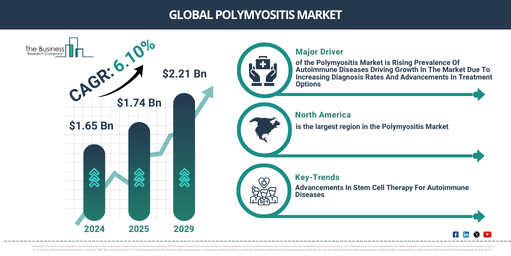
    The polymyositis market size has shown robust growth in recent years. It is projected to expand from $1.65 billion in 2024 to $1.74 billion in 2025, exhibiting a compound annual growth rate (CAGR) of 5.7%. The expansion observed in the historic period can be ascribed to improved access in developing regions, increased deployment of prednisone, the growing preference for methotrexate in symptom management, the expanding use of TNF inhibitors, and a rise in the application of antibody testing.

    The polymyositis market is anticipated to experience robust expansion over the next few years. Its valuation is set to climb to $2.21 billion by 2029, demonstrating a compound annual growth rate (CAGR) of 6.1%. This projected increase during the forecast period stems from factors such as the broadening use of telemedicine, the rise in remote patient monitoring, the increasing application of immunosuppressants, a surge in stem cell therapy, and the growing adoption of biosimilars. Significant trends foreseen in this period include the integration of artificial intelligence in pharmaceutical discovery, progress in targeted therapeutic approaches, the development of innovative immunomodulators, burgeoning research in regenerative medicine, and the incorporation of big data analytics.

    Unlock Your Free Sample Report for Exclusive Market Data:

    https://www.thebusinessresearchcompany.com/sample.aspx?id=22104&type=smp

    What Are The Key Drivers Of Growth In The Polymyositis Market?

    The rising occurrence of autoimmune diseases is anticipated to propel the growth of the polymyositis market in the future. Autoimmune diseases are medical conditions where the body’s immune system mistakenly attacks its own healthy cells, tissues, or organs, leading to inflammation and damage. The prevalence of these conditions is increasing because certain genetic variations can result in an overactive immune response, making individuals more prone to mistakenly attacking their own tissues. This genetic predisposition, combined with environmental factors such as infections, stress, and lifestyle choices, contributes to the growing incidence of autoimmune conditions. Polymyositis enhances the understanding of autoimmune diseases by demonstrating how immune system dysfunction leads to muscle inflammation, offering insights into underlying mechanisms and potential treatments for related conditions. For instance, in November 2024, according to Versorgungsatlas.de, a Germany-based organization, in 2022, among 73,241,305 insured individuals, 6,304,340 were diagnosed with at least one autoimmune disease, resulting in a raw prevalence rate of 8.61%. Consequently, the increasing prevalence of autoimmune diseases is driving the Polymyositis market.

    What Are The Key Segments In The Polymyositis Market?

    The polymyositismarket covered in this report is segmented –

    1) By Type: Idiopathic Polymyositis; Dermatomyositis; Inclusion Body Myositis; Overlapping Myositis Syndromes

    2) By Diagnosis: Physical Examination; Muscle Biopsy; Electromyography (EMG); Blood Tests; Magnetic Resonance Imaging (MRI)

    3) By Treatment: Immunosuppressant; Immunoglobulins; Corticosteroids; Alkylating agents; Monoclonal Antibodies

    4) By Distribution Channel: Offline; Online

    5) By End User: Hospital pharmacy; Online pharmacy; Retail pharmacy

    Subsegments:

    1) By Idiopathic Polymyositis: Immune-Mediated Polymyositis; Virus-Associated Polymyositis

    2) By Dermatomyositis: Classic Dermatomyositis; Amyopathic Dermatomyositis; Juvenile Dermatomyositis

    3) By Inclusion Body Myositis: Sporadic Inclusion Body Myositis; Hereditary Inclusion Body Myopathy

    4) By Overlapping Myositis Syndromes:Polymyositis with Systemic Lupus Erythematosus (SLE); Polymyositis with Rheumatoid Arthritis (RA); Polymyositis with Systemic Sclerosis; Polymyositis with Mixed Connective Tissue Disease (MCTD)

    Which Trends Are Impacting The Polymyositis Market?

    Key players within the polymyositis market are actively pursuing the creation of innovative therapies, notably stem cell therapy, aiming to boost treatment effectiveness and retard the advancement of the condition. Stem cell therapy involves the application of umbilical cord-derived stem cells for regenerative medical purposes. These specific stem cells exhibit powerful immunomodulatory and anti-inflammatory attributes, establishing them as a promising choice for treating autoimmune disorders such as polymyositis. An illustrative example occurred in December 2024, when RESTEM, a US-based clinical-stage biotechnology firm, secured Orphan Drug Designation (ODD) from the U.S. Food and Drug Administration (FDA) for its stem cell initiative utilizing umbilical cord outer lining stem cells (ULSCs). This particular program employs umbilical cord outer lining stem cells to manage polymyositis and Dermatomyositis by fine-tuning the immune system and alleviating muscle inflammation. Early clinical evaluations have demonstrated encouraging safety and efficacy for the therapy, alongside a potential to decrease patients’ reliance on steroids.

    Who Are The Top Performing Companies In The Polymyositis Market In Recent Years?

    Major companies operating in the polymyositis market are Pfizer Inc., F. Hoffmann-La Roche AG, Bristol-Myers Squibb Company, AstraZeneca plc, Novartis AG, GlaxoSmithKline plc, Merck & Co. Inc., C.H. Boehringer Sohn AG & Co. KG, Regeneron Pharmaceuticals Inc., Astellas Pharma Inc., Fresenius SE & Co. KGaA, UCB S.A., Reliance Life Sciences Private Limited, ARUP Laboratories, Teva Pharmaceuticals USA Inc., Kezar Life Sciences Inc., Argenx SE, Mallinckrodt Pharmaceuticals plc, Mitsubishi Tanabe Pharma Corporation, ViiV Healthcare Limited

    Download The Full Report For Exclusive Market Findings:

    https://www.thebusinessresearchcompany.com/report/polymyositis-global-market-report

    What Are The Regional Market Dynamics Impacting The Polymyositis Industry?

    North America was the largest region in the polymyositis market in 2024. Asia-Pacific is expected to be the fastest-growing region in the forecast period. The regions covered in the polymyositis market report are Asia-Pacific, Western Europe, Eastern Europe, North America, South America, Middle East, Africa.

    Request A Customized Version Of The Polymyositis Market Report:

    https://www.thebusinessresearchcompany.com/customise?id=22104&type=smp

    Browse Through More Reports Similar to the Global Polymyositis Market 2025, By The Business Research Company

    Inflammatory Bowel Disease Treatment Global Market Report 2025

    https://www.thebusinessresearchcompany.com/report/inflammatory-bowel-disease-treatment-global-market-report

    Non Steroidal Anti Inflammatory Drugs Global Market Report 2025

    https://www.thebusinessresearchcompany.com/report/non-steroidal-anti-inflammatory-drugs-global-market-report

    Anti Inflammatory Therapeutics Global Market Report 2025

    https://www.thebusinessresearchcompany.com/report/anti-inflammatory-therapeutics-global-market-report

    Get in touch with us:

    The Business Research Company: https://www.thebusinessresearchcompany.com/

    Americas +1 310-496-7795

    Asia +44 7882 955267 & +91 8897263534

    Europe +44 7882 955267

    Email us at info@tbrc.info

    Follow us on:

    LinkedIn: https://in.linkedin.com/company/the-business-research-company

    YouTube: https://www.youtube.com/channel/UC24_fI0rV8cR5DxlCpgmyFQ

    Global Market Model: https://www.thebusinessresearchcompany.com/global-market-model
  • Global Polymyalgia Rheumatica Market Overview: Trends Shaping Growth to 2029

    Global Polymyalgia Rheumatica Market Overview: Trends Shaping Growth to 2029

    Unlock Global Insights – Save 20% on Market Reports with Code ONLINE20

    What Market Value Is The Polymyalgia Rheumatica Industry Expected To Reach By 2029, Starting From 2025 Levels?

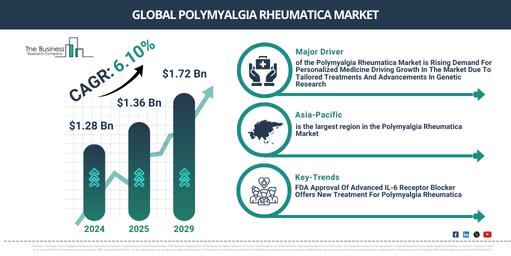
    The market for polymyalgia rheumatica has experienced substantial growth in recent years. It is anticipated to increase from $1.28 billion in 2024 to $1.36 billion in 2025, achieving a compound annual growth rate (CAGR) of 5.9%. This historical growth can be attributed to heightened awareness among healthcare providers, the increasing adoption of corticosteroids, the expansion of specialty clinics, the introduction of biologic therapies, and rising healthcare budgets.

    The polymyalgia rheumatica market is projected to experience significant expansion over the next few years, with its size anticipated to reach $1.72 billion by 2029, exhibiting a compound annual growth rate (CAGR) of 6.1%. This growth during the forecast period is primarily fueled by increasing adoption of biologics, the expanding field of precision medicine, accelerated drug approvals, broader reimbursement policies, and an increase in clinical trials. Furthermore, major trends anticipated in this period include the development of combination therapies, advancements in personalized medicine, continued evolution of precision medicine, the integration of electronic health records, and breakthroughs in biomarkers.

    Unlock Your Free Sample Report for Exclusive Market Data:

    https://www.thebusinessresearchcompany.com/sample.aspx?id=22103&type=smp

    Which Drivers Are Supporting Growth Of The Polymyalgia Rheumatica Market?

    The expanding need for personalized medicine is anticipated to drive the future expansion of the polymyalgia rheumatica market. This approach involves medical care customized to an individual’s unique genetic makeup, way of life, and particular health status, aiming for superior results. The impetus for personalized medicine stems from progress in genetic studies, increasing patient desires for customized therapies, and enhancements in diagnostic tools. Genetic research has deepened our comprehension of individual genetic differences, facilitating more bespoke treatments that target particular genetic markers. It aids in choosing medications most likely to be effective given a patient’s traits, resulting in a safer and more impactful treatment strategy. As an illustration, in February 2024, data from the Personalised Medicine Coalition, a US-based hospital and health care entity, revealed that in 2023, the Food and Drug Administration cleared 16 new personalized therapies for rare disease patients, an increase from six in 2022. Consequently, the emergence of personalized medicine is a key factor propelling the expansion of the polymyalgia rheumatica market.

    What Are The Leading Segments Analyzed In The Polymyalgia Rheumatica Market?

    The polymyalgia rheumaticamarket covered in this report is segmented –

    1) By Treatment: Corticosteroids; Nonsteroidal Anti-Inflammatory Drugs; Disease-Modifying Antirheumatic Drugs; Biologics

    2) By Route Of Administration: Oral; Intravenous; Subcutaneous

    3) By Patient Type: Adult; Geriatric; Periatric

    4) By Distribution Channel: Hospital Pharmacies; Retail Pharmacies; Online Pharmacies

    Subsegments:

    1) By Corticosteroids: Prednisone; Methylprednisolone; Hydrocortisone; Dexamethasone

    2) By Nonsteroidal Anti-Inflammatory Drugs (NSAIDs): Ibuprofen; Naproxen; Aspirin; Celecoxib

    3) By Disease-Modifying Antirheumatic Drugs (DMARDs): Methotrexate; Leflunomide; Sulfasalazine; Hydroxychloroquine

    4) By Biologics: Tumor Necrosis Factor (TNF) Inhibitors; Interleukin-6 (IL-6) Inhibitors; B-Cell Inhibitors; Janus Kinase (JAK) Inhibitors

    What Long-Term Trends Will Shape The Future Growth Of The Polymyalgia Rheumatica Industry?

    Companies prominent in the polymyalgia rheumatica market are prioritizing the development of advanced medications, such as interleukin-6 (IL-6) receptor blockers, to offer more targeted and effective treatment options. Interleukin-6 (IL-6) receptor blockers are biological drugs that work by inhibiting IL-6, a key pro-inflammatory cytokine in autoimmune diseases. By blocking IL-6, these therapies reduce inflammation and alleviate symptoms, thereby improving the quality of life for PMR patients. As an illustration, in February 2023, Regeneron Pharmaceuticals, Inc., a US-based biotechnology company, and Sanofi, a France-based healthcare company, announced that the Food and Drug Administration (FDA) had approved Kevzara (sarilumab) for treating polymyalgia rheumatica (PMR) in adults who either did not respond adequately to corticosteroids or could not tolerate their tapering. Kevzara, which is the first and only biologic approved for this condition, operates by inhibiting IL-6-mediated signaling. This approval was granted based on a study where 28.3% of patients on sarilumab achieved sustained remission at week 52, compared to 10.3% of those on placebo. Kevzara is administered via subcutaneous injection once every two weeks and is also approved for treating moderately to severely active rheumatoid arthritis. Sanofi’s stock (SNY) is currently valued at $54.13 on the NASDAQ.

    Which Leading Companies Dominate The Polymyalgia Rheumatica Market Share?

    Major companies operating in the polymyalgia rheumatica market are AbbVie Inc., Sanofi S.A., Eli Lilly and Co., Regeneron Pharmaceuticals Inc., Mount Sinai, NYU Langone Health, Mayo Foundation for Medical Education and Research, Hartford HealthCare, Horizon Therapeutics plc, Massachusetts General Hospital, Brigham and Women’s Hospital, Stanford Health Care, University Hospitals Bristol NHS Foundation Trust, Circle Health Group Ltd., Siloam Hospital, UC San Diego Health, Vejthani Hospital, Sparrow Pharmaceuticals Inc., Johns Hopkins Arthritis Center, Upstate University Hospital

    Download The Full Report For Exclusive Market Findings:

    https://www.thebusinessresearchcompany.com/report/polymyalgia-rheumatica-global-market-report

    Which Region Shows The Highest Potential For Future Expansion In The Polymyalgia Rheumatica Market?

    Asia-Pacific was the largest region in the polymyalgia rheumatica market in 2024. The regions covered in the polymyalgia rheumatica market report are Asia-Pacific, Western Europe, Eastern Europe, North America, South America, Middle East, Africa.

    Request A Customized Version Of The Polymyalgia Rheumatica Market Report:

    https://www.thebusinessresearchcompany.com/customise?id=22103&type=smp

    Browse Through More Reports Similar to the Global Polymyalgia Rheumatica Market 2025, By The Business Research Company

    Bipolar Disorder Therapeutics Global Market Report 2025

    https://www.thebusinessresearchcompany.com/report/bipolar-disorder-therapeutics-global-market-report

    Hpv Associated Disorders Global Market Report 2025

    https://www.thebusinessresearchcompany.com/report/hpv-associated-disorders-global-market-report

    Bleeding Disorders Treatment Global Market Report 2025

    https://www.thebusinessresearchcompany.com/report/bleeding-disorders-treatment-global-market-report

    Get in touch with us:

    The Business Research Company: https://www.thebusinessresearchcompany.com/

    Americas +1 310-496-7795

    Asia +44 7882 955267 & +91 8897263534

    Europe +44 7882 955267

    Email us at info@tbrc.info

    Follow us on:

    LinkedIn: https://in.linkedin.com/company/the-business-research-company

    YouTube: https://www.youtube.com/channel/UC24_fI0rV8cR5DxlCpgmyFQ

    Global Market Model: https://www.thebusinessresearchcompany.com/global-market-model

  • Poly (ADP-Ribose) Polymerase (PARP) Inhibitors Market Growth Opportunities: Insights from 2025–2029

    Poly (ADP-Ribose) Polymerase (PARP) Inhibitors Market Growth Opportunities: Insights from 2025–2029

    Unlock Global Insights – Save 20% on Market Reports with Code ONLINE20

    What Is The Anticipated Size Of The Poly (ADP-Ribose) Polymerase (PARP) Inhibitors Market Over The Five-Year Period 2025–2029?

    The poly (adp-ribose) polymerase (parp) inhibitors market has experienced swift expansion recently. Forecasts indicate it will expand from $6.53 billion in 2024 to $7.49 billion in 2025, demonstrating a compound annual growth rate (CAGR) of 14.8%. This historical growth is linked to factors such as a rise in cancer cases, expanded genetic testing, greater success in clinical trials, broader insurance coverage, and enhanced cancer research efforts.

    The poly (adp-ribose) polymerase (parp) inhibitors market is poised for significant expansion in the coming years. Projections indicate its size will reach $13.15 billion by 2029, demonstrating a compound annual growth rate (CAGR) of 15.1%. This anticipated growth during the forecast period is primarily driven by factors such as increased drug production and supply, the escalating incidence of BRCA-mutated cancers, the rising prevalence of breast cancer, the expanded application of monoclonal antibodies, and increasing healthcare spending. Key trends influencing this market include progress in biomarker research, the emergence of combination therapies, the incorporation of artificial intelligence into drug development processes, strides in biomarker-driven therapy, and the creation of next-generation PARP inhibitors.

    Unlock Your Free Sample Report for Exclusive Market Data:

    https://www.thebusinessresearchcompany.com/sample.aspx?id=22102&type=smp

    Which Drivers Are Shaping The Poly (ADP-Ribose) Polymerase (PARP) Inhibitors Industry’s Market Share?

    The increasing incidence of breast cancer is anticipated to drive the expansion of the poly(ADP-ribose) polymerase (PARP) inhibitors market in the future. Breast cancer is defined as a condition where breast cells multiply without control, creating a malignant tumor capable of metastasizing to other bodily regions. This growing prevalence stems from factors including an aging global population, shifts in lifestyle, genetic susceptibilities, hormonal disruptions, obesity, alcohol intake, and heightened exposure to environmental hazards. PARP inhibitors offer therapeutic benefits to breast cancer patients by obstructing the PARP enzyme’s capacity to mend DNA damage within cancer cells, thereby inducing cell demise, especially in tumors possessing BRCA1 or BRCA2 mutations. For example, the National Breast Cancer Foundation, a US-based entity, reported in January 2025 that one in every eight women in the United States is projected to receive a breast cancer diagnosis at some point in her life. During 2024, 310,720 women and 2,800 men were diagnosed with invasive forms of breast cancer. Consequently, the increasing incidence of breast cancer is a key driver for the expansion of the poly(ADP-ribose) polymerase (PARP) inhibitors market.

    What Are The Segment Types Shaping The Poly (ADP-Ribose) Polymerase (PARP) Inhibitors Market?

    The poly (adp-ribose) polymerase (parp) inhibitorsmarket covered in this report is segmented –

    1) By Type: Olaparib; Rucaparib; Niraparib; Talazoparib; Other Types

    2) By Indication: Ovarian Cancer; Breast Cancer; Prostate Cancer; Pancreatic Cancer

    3) By Distribution Channel: Hospital Pharmacies; Retail Pharmacies; Online Pharmacies

    4) By End-User: Hospitals; Specialty Clinics; Research Institutions; Other End-Users

    Subsegments:

    1) By Olaparib: BRCA-Mutated Cancers; HRD-Positive Cancers; Maintenance Therapy

    2) By Rucaparib: Ovarian Cancer; Prostate Cancer; Pancreatic Cancer

    3) By Niraparib: First-Line Treatment; Recurrent Cancer Treatment; Late-Stage Cancer

    4) By Talazoparib: Breast Cancer; Germline BRCA-Mutated Tumors; Neoadjuvant Or Adjuvant Therapy

    5) By Other Types: Emerging PARP Inhibitors; Investigational Therapies; Novel Combinations

    Which Market Trends Are Creating New Opportunities In The Poly (ADP-Ribose) Polymerase (PARP) Inhibitors Industry?

    Major companies operating in the poly(ADP-ribose) polymerase (PARP) inhibitors market are concentrating on developing advanced cancer treatments, specifically anticancer medicines, to target particular genetic mutations found in certain cancers. These medicines are utilized to combat cancer by either inhibiting the growth of cancer cells, preventing their spread, or destroying them, working through diverse mechanisms such as interfering with cell division, blocking specific proteins vital for tumor growth, or stimulating the immune system to fight the disease. For example, in March 2024, Zydus Lifesciences Limited, an India-based pharmaceutical company, introduced IBYRA, a generic version of the PARP inhibitor olaparib, in India. This drug offers an affordable and targeted treatment option for patients with HRD-positive and BRCA-positive cancers, significantly reducing treatment costs compared to the innovator drug.

    Who Are The Major Companies Operating In The Poly (ADP-Ribose) Polymerase (PARP) Inhibitors Market?

    Major companies operating in the poly(ADP-ribose) polymerase (PARP) inhibitors market are Pfizer Inc., Johnson & Johnson Services Inc., AbbVie Inc., Merck & Co. Inc., Bayer AG, AstraZeneca plc, Bristol-Myers Squibb Company, GSK plc, Takeda Pharmaceutical Company Limited, Boehringer Ingelheim, Vertex Pharmaceuticals Inc., Jiangsu Hengrui Pharmaceuticals Co. Ltd., BeiGene LTD, Karyopharm Therapeutics Inc., Clovis Oncology Inc., Repare Therapeutics Inc., Ribon Therapeutics, Artios Pharma, IMPACT Therapeutics Inc., BiPar Sciences Inc., Allarity Therapeutics Inc.

    Download The Full Report For Exclusive Market Findings:

    https://www.thebusinessresearchcompany.com/report/polyadp-ribose-polymerase-parp-inhibitors-global-market-report

    How Is Poly (ADP-Ribose) Polymerase (PARP) Inhibitors Market Demand Varying Across Different Regions?

    North America was the largest region in the poly(ADP-ribose) polymerase (PARP) inhibitors market in 2024. Asia-Pacific is expected to be the fastest-growing region in the forecast period. The regions covered in the poly(ADP-ribose) polymerase (PARP) inhibitors market report are Asia-Pacific, Western Europe, Eastern Europe, North America, South America, Middle East, Africa.

    Request A Customized Version Of The Poly (ADP-Ribose) Polymerase (PARP) Inhibitors Market Report:

    https://www.thebusinessresearchcompany.com/customise?id=22102&type=smp

    Browse Through More Reports Similar to the Global Poly (ADP-Ribose) Polymerase (PARP) Inhibitors Market 2025, By The Business Research Company

    Her2 Inhibitor Global Market Report 2025

    https://www.thebusinessresearchcompany.com/report/her2-inhibitor-global-market-report

    Checkpoint Inhibitor Global Market Report 2025

    https://www.thebusinessresearchcompany.com/report/checkpoint-inhibitor-global-market-report

    Protein Inhibitor Global Market Report 2025

    https://www.thebusinessresearchcompany.com/report/protein-inhibitor-global-market-report

    Get in touch with us:

    The Business Research Company: https://www.thebusinessresearchcompany.com/

    Americas +1 310-496-7795

    Asia +44 7882 955267 & +91 8897263534

    Europe +44 7882 955267

    Email us at info@tbrc.info

    Follow us on:

    LinkedIn: https://in.linkedin.com/company/the-business-research-company

    YouTube: https://www.youtube.com/channel/UC24_fI0rV8cR5DxlCpgmyFQ

    Global Market Model: https://www.thebusinessresearchcompany.com/global-market-model
  • Pleural Diseases Market Expansion Outlook: $6.88 Billion by 2029 Forecast

    Pleural Diseases Market Expansion Outlook: $6.88 Billion by 2029 Forecast

    Unlock Global Insights – Save 20% on Market Reports with Code ONLINE20

    What Are The Forecasted Market Size Estimates For The Pleural Diseases Market Between 2025 And 2029?

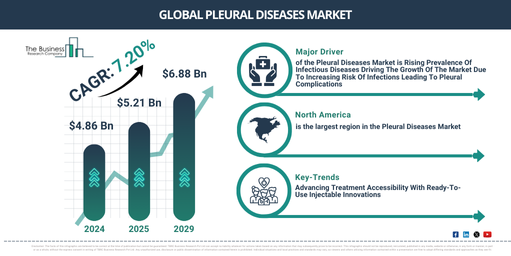
    The pleural diseases market has experienced robust growth in recent years. This market is projected to expand from $4.86 billion in 2024 to $5.21 billion in 2025, demonstrating a compound annual growth rate (CAGR) of 7.3%. The growth observed in the historic period can be attributed to the rising incidence of pleural effusion, growing awareness regarding pleural diseases, an increasing focus on early diagnosis, a growing number of healthcare facilities, and a rising number of pleural disease clinical trials.

    The pleural diseases market is projected to experience substantial expansion over the upcoming years, with its valuation expected to reach $6.88 billion by 2029, growing at a compound annual growth rate (CAGR) of 7.2%. This anticipated growth during the forecast period stems from several factors, including an increase in the prevalence of pleural diseases, an expanding aging population, a rise in occupational hazards, an uptick in clinical trials, and a proliferation of diagnostic centers. Key developments shaping this period encompass progress in diagnostics, enhanced diagnostic tools, the implementation of minimally invasive procedures, improvements in drug development, and the increasing embrace of telemedicine.

    Unlock Your Free Sample Report for Exclusive Market Data:

    https://www.thebusinessresearchcompany.com/sample.aspx?id=22099&type=smp

    What Are The Drivers Pushing New Developments In The Pleural Diseases Market?

    The rising occurrence of infectious diseases is anticipated to propel the expansion of the pleural diseases market in the future. These diseases are health conditions stemming from detrimental microorganisms like bacteria, viruses, fungi, or parasites. Shifts in human behavior due to environmental factors and progress in worldwide travel contribute to the growing frequency of infectious diseases. Conditions like bacterial pneumonia, tuberculosis, or viral infections, which are infectious diseases, are capable of inducing pleural disease through the stimulation of inflammation, infection, or the buildup of fluid within the pleural cavity. As an illustration, in January 2023, data from the National Library of Medicine, a US-based medical library for research and information, indicated that infectious diseases are responsible for more than 52 million deaths each year, endangering half of the global population. Moreover, around 14 million children under the age of five perish annually, and 70% of these fatalities are linked to illnesses preventable by vaccination. Consequently, the growing incidence of infectious diseases stimulates the expansion of the pleural diseases market.

    What Are The Different Segment Classifications Within The Pleural Diseases Market?

    The pleural diseasesmarket covered in this report is segmented –

    1) By Disease Type: Pleurisy; Pleural Effusion; Pneumothelioma; Mesothelioma; Other Disease Types

    2) By Treatment Modalities: Medications; Thoracentesis And Pleurodesis; Minimally Invasive Interventions; Surgical Interventions

    3) By Diagnostic Tools: Imaging Techniques; Molecular Diagnostics; Thoracoscopy; Pleuroscopy

    4) By End User: Hospitals And Clinics; Diagnostic Centers; Research And Academic Institutions

    Subsegments:

    1) By Pleurisy: Acute Pleurisy; Chronic Pleurisy; Infectious Pleurisy; Non-infectious Pleurisy

    2) By Pleural Effusion: Transudative Pleural Effusion; Exudative Pleural Effusion; Malignant Pleural Effusion; Parapneumonic Pleural Effusion; Hemothorax; Chylothorax

    3) By Pneumothelioma: Primary Pneumothelioma; Secondary Pneumothelioma (Metastatic); Localized Pneumothelioma; Diffuse Pneumothelioma

    4) By Mesothelioma: Pleural Mesothelioma; Peritoneal Mesothelioma; Pericardial Mesothelioma; Testicular Mesothelioma

    5) Other Disease Types: Pulmonary Embolism; Fibrothorax; Pneumothorax; Lung Cancer; Tuberculosis-Related Pleural Disease; Sarcoidosis

    How Are Trends Influencing The Pleural Diseases Market?

    Leading companies in the pleural diseases market are concentrating on creating innovative treatment options, such as the development of ready-to-use injectable treatments, to enhance convenience, decrease preparation time, and reduce dosing errors. These ready-to-use injectable treatments are pre-formulated, pre-diluted medications that do not require reconstitution or mixing before administration, thereby ensuring accuracy, ease of use, and reduced preparation time. For example, in April 2024, Amneal Pharmaceuticals, a US-based pharmaceutical company, unveiled PEMRYDI RTU, which is the first ready-to-use version of pemetrexed for injection. This development assists patients with pleural diseases by offering a convenient, pre-prepared treatment that eliminates the need for reconstitution or dilution, shortens preparation time, minimizes the likelihood of dosing errors, and improves access to effective therapy for conditions like malignant pleural mesothelioma.

    Which Global Market Leaders Are Shaping The Future Of The Pleural Diseases Sector?

    Major companies operating in the pleural diseases market are Pfizer Inc., Merck & Co. Inc., Bristol Myers Squibb Company, GSK plc, Astrazeneca plc, Koninklijke Philips N.V., Becton Dickinson and Company, Boehringer Ingelheim International GmbH, Sanofi SA, Penn Medicine, Henry Ford Health, Dragerwerk AG, Emory Healthcare, Boston Medical Center, Cook Medical, WakeMed, Weill Cornell Medicine, Fox Chase Cancer Center, B. Braun SE, Bicakcilar, Redax S.p.a, Rocket Medical

    Download The Full Report For Exclusive Market Findings:

    https://www.thebusinessresearchcompany.com/report/pleural-diseases-global-market-report

    Which Geographies Are Emerging As Strong Markets For The Pleural Diseases Industry?

    North America was the largest region in the pleural diseases market in 2024. Asia-Pacific is expected to be the fastest-growing region in the forecast period. The regions covered in the pleural diseases market report are Asia-Pacific, Western Europe, Eastern Europe, North America, South America, Middle East, Africa.

    Request A Customized Version Of The Pleural Diseases Market Report:

    https://www.thebusinessresearchcompany.com/customise?id=22099&type=smp

    Browse Through More Reports Similar to the Global Pleural Diseases Market 2025, By The Business Research Company

    Liver Diseases Therapeutics Global Market Report 2025

    https://www.thebusinessresearchcompany.com/report/liver-diseases-therapeutics-global-market-report

    Rare Diseases Treatment Global Market Report 2025

    https://www.thebusinessresearchcompany.com/report/rare-diseases-treatment-global-market-report

    Rare Kidney Diseases Global Market Report 2025

    https://www.thebusinessresearchcompany.com/report/rare-kidney-diseases-global-market-report

    Get in touch with us:

    The Business Research Company: https://www.thebusinessresearchcompany.com/

    Americas +1 310-496-7795

    Asia +44 7882 955267 & +91 8897263534

    Europe +44 7882 955267

    Email us at info@tbrc.info

    Follow us on:

    LinkedIn: https://in.linkedin.com/company/the-business-research-company

    YouTube: https://www.youtube.com/channel/UC24_fI0rV8cR5DxlCpgmyFQ

    Global Market Model: https://www.thebusinessresearchcompany.com/global-market-model
  • Global Pemphigus Vulgaris Industry Trends: Where the Market Is Headed by 2029

    Global Pemphigus Vulgaris Industry Trends: Where the Market Is Headed by 2029

    Unlock Global Insights – Save 20% on Market Reports with Code ONLINE20

    How Is The Pemphigus Vulgaris Market Size Likely To Evolve From 2025 Through 2034?

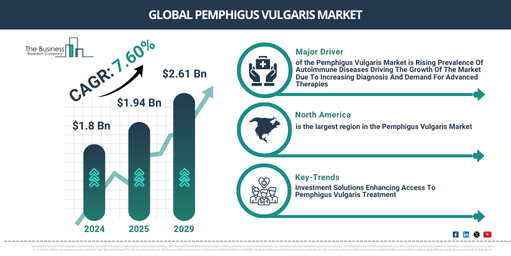
    The pemphigus vulgaris market has experienced significant growth in recent years. It is anticipated to increase from $1.8 billion in 2024 to $1.94 billion in 2025, demonstrating a compound annual growth rate (CAGR) of 8.0%. The expansion observed historically can be attributed to factors such as the increasing adoption of biologic therapies, a rising incidence of genetic predisposition, the growing prevalence of pemphigus vulgaris, the expanding role of biosimilars, and improvements in healthcare infrastructure.

    The market for pemphigus vulgaris is projected to experience robust expansion over the coming years. This market is anticipated to reach $2.61 billion by 2029, exhibiting a compound annual growth rate (CAGR) of 7.6%. Factors contributing to this growth during the forecast period include a surge in clinical trials, the expansion of precision medicine, an increase in digital health solutions, rising demand for biologics, and the growing application of telemedicine. Key trends anticipated during the forecast period encompass progress in biologic therapies, a rise in regulatory approvals, the embrace of combination therapies, advancements in personalized medicine, and new developments in oral formulations of biologic therapies.

    Unlock Your Free Sample Report for Exclusive Market Data:

    https://www.thebusinessresearchcompany.com/sample.aspx?id=22094&type=smp

    What Are The Emerging Market Drivers Creating New Opportunities In The Pemphigus Vulgaris Industry?

    The rising prevalence of autoimmune diseases is anticipated to propel the growth of the pemphigus vulgaris market moving forward. Autoimmune diseases involve the immune system mistakenly attacking and harming the body’s healthy cells, tissues, or organs. The increase in their occurrence is attributed to genetic predisposition, environmental triggers, and lifestyle shifts. Genetic factors are significant, making individuals with a family history more prone to developing these conditions due to inherited immune vulnerabilities. As autoimmune diseases become more widespread due to these genetic, environmental, and lifestyle factors, more individuals are being diagnosed with conditions like pemphigus vulgaris, thus increasing the demand for advanced therapies. For instance, in January 2025, the Mayo Clinic Health System indicated that the global incidence and prevalence of autoimmune diseases are on the rise, with estimated annual increases of 19.1% and 12.5%, respectively. Therefore, the expanding prevalence of autoimmune diseases is a key driver for the growth of the pemphigus vulgaris market.

    What Are The Primary Types Of Segments Analyzed In The Pemphigus Vulgaris Market?

    The pemphigus vulgarismarket covered in this report is segmented –

    1) By Diagnosis And Treatment: Diagnosis; Treatment

    2) By Population Type: Pediatric; Adults; Geriatric

    3) By Distribution Channel: Hospitals Pharmacy; Retail Pharmacy; Online Pharmacy

    4) By End-User: Hospitals; Specialty Clinics; Research Institutes; Other End-Users

    Subsegments:

    1) By Diagnosis: Clinical Examination; Skin Biopsy; Direct Immunofluorescence; Serological Tests; Polymerase Chain Reaction (PCR)

    2) By Treatment: Pharmacological Therapy; Non-Pharmacological Therapy

    What Key Innovation Trends Are Fueling Advancements In The Pemphigus Vulgaris Market?

    Major companies in the pemphigus vulgaris market are directing their efforts towards investment strategies aimed at enhancing treatment effectiveness and expanding therapeutic options. These investment solutions involve financial plans and resources allocated for treatment development, research, and market introduction. For example, in January 2023, the US-based non-profit Patient Access Network Foundation (PAN) Foundation initiated a financial assistance program. This program provides up to $6,600 annually for eligible patients with pemphigus vulgaris to assist with deductibles, copayments, and coinsurance costs. To qualify, patients must be undergoing treatment for pemphigus vulgaris, hold Medicare health insurance that covers their required medications, and have an income at or below 400% of the federal poverty level. Additionally, the PAN Foundation offers transportation assistance and connects patients with supportive organizations.

    Which Industry Leaders Are Driving Innovation Across The Pemphigus Vulgaris Market?

    Major companies operating in the pemphigus vulgaris market are Pfizer Inc., F. Hoffmann-La Roche Ltd, Thermo Fisher Scientific Inc., GlaxoSmithKline plc, Amgen Inc., Sanofi S.A, Biogen Inc., Genentech, Genmab A/S, argenx SE, Daewoong Pharmaceutical Co. Ltd., HanAll Biopharma Co. Ltd., Artiva Biotherapeutics, Cabaletta Bio Inc., SinoMab BioScience Limited, Topas Therapeutics GmbH, Principia Biopharma Inc., Serpin Pharma LLC, Syntimmune Inc., International Pemphigus & Pemphigoid Foundation

    Download The Full Report For Exclusive Market Findings:

    https://www.thebusinessresearchcompany.com/report/pemphigus-vulgaris-global-market-report

    Which Region Is Projected To Lead The Pemphigus Vulgaris Market During The Forecast Period?

    North America was the largest region in the pemphigus vulgaris market in 2024. Asia-Pacific is expected to be the fastest-growing region in the forecast period. The regions covered in the pemphigus vulgaris market report are Asia-Pacific, Western Europe, Eastern Europe, North America, South America, Middle East, Africa.

    Request A Customized Version Of The Pemphigus Vulgaris Market Report:

    https://www.thebusinessresearchcompany.com/customise?id=22094&type=smp

    Browse Through More Reports Similar to the Global Pemphigus Vulgaris Market 2025, By The Business Research Company

    Autoimmune Disease Diagnosis Global Market Report 2025

    https://www.thebusinessresearchcompany.com/report/autoimmune-disease-diagnosis-global-market-report

    Autoimmune Treatment Global Market Report 2025

    https://www.thebusinessresearchcompany.com/report/autoimmune-treatment-global-market-report

    Inflammatory Bowel Disease Treatment Global Market Report 2025

    https://www.thebusinessresearchcompany.com/report/inflammatory-bowel-disease-treatment-global-market-report

    Get in touch with us:

    The Business Research Company: https://www.thebusinessresearchcompany.com/

    Americas +1 310-496-7795

    Asia +44 7882 955267 & +91 8897263534

    Europe +44 7882 955267

    Email us at info@tbrc.info

    Follow us on:

    LinkedIn: https://in.linkedin.com/company/the-business-research-company

    YouTube: https://www.youtube.com/channel/UC24_fI0rV8cR5DxlCpgmyFQ

    Global Market Model: https://www.thebusinessresearchcompany.com/global-market-model

  • PD-1 Resistant Head And Neck Cancer Industry Forecast to Hit $2.17 Billion by 2029 With a Strong 11.1% CAGR

    PD-1 Resistant Head And Neck Cancer Industry Forecast to Hit $2.17 Billion by 2029 With a Strong 11.1% CAGR

    Unlock Global Insights – Save 20% on Market Reports with Code ONLINE20

    What Are The Growth Projections For The PD-1 Resistant Head And Neck Cancer Market Size During 2025–2029?

    The market size for pd-1 resistant head and neck cancer has seen rapid expansion in recent years. Projections show it will grow from $1.28 billion in 2024 to $1.43 billion in 2025, achieving a compound annual growth rate (CAGR) of 11.4%. This historical growth can be attributed to an increase in prevalence, the rising adoption of immunotherapy, a surge in clinical trial activities, escalating resistance to PD-1 inhibitors, and a heightened focus on combination therapies.

    The market size for pd-1 resistant head and neck cancer is poised for rapid expansion over the next few years. It is projected to reach $2.17 billion by 2029, demonstrating a compound annual growth rate (CAGR) of 11.1%. This growth during the forecast period can be attributed to several factors, including an increase in biomarker research, the growing development of novel therapies, a rise in personalized medicine approaches, escalating investment in oncology research and development, and increasing regulatory approvals. Prominent trends expected in the forecast period involve advanced combination therapies, progress in precision oncology, the adoption of next-generation sequencing, enhanced tumor microenvironment research, and the integration of AI-driven drug discovery.

    Unlock Your Free Sample Report for Exclusive Market Data:

    https://www.thebusinessresearchcompany.com/sample.aspx?id=22092&type=smp

    Which Drivers Are Impacting The PD-1 Resistant Head And Neck Cancer Market?

    Heightened awareness and prompt diagnosis are anticipated to fuel expansion in the PD-1-resistant head and neck cancer market moving ahead. The rise in cancer awareness and early diagnosis is attributed to enhancements in screening initiatives, healthcare programs, and sophisticated diagnostic tools, facilitating prompt identification and management. Detecting PD-1-resistant head and neck cancer early permits swift intervention with alternative treatments, thereby enhancing therapeutic results and patient survival rates. As an illustration, rapid cancer registration data from The National Health Service (NHS), a UK-based government department, reported in January 2025 that between September 2023 and August 2024, an early stage diagnosis was made for 120,958 out of 206,038 common cancers (58.7%). This represents a 2.7 percentage point rise compared to pre-pandemic periods, corresponding to an estimated 7,000 more patients identified early. Consequently, heightened awareness and prompt diagnosis are propelling the expansion of the PD-1-resistant head and neck cancer market.

    Which Key Segments Fueling The PD-1 Resistant Head And Neck Cancer Market?

    The pd-1 resistant head and neck cancermarket covered in this report is segmented –

    1) By Treatment Type: Chemotherapy; Radiation Therapy; Surgery; Targeted Therapy

    2) By Stage Of Cancer: Early Stage; Locally Advanced Stage; Metastatic Stage

    3) By Application: Squamous Cell Carcinoma; Adenocarcinoma; Nasopharyngeal Carcinoma; Throat Cancer

    4) By End User: Hospitals; Cancer Research Centers; Clinics

    Subsegments:

    1) By Chemotherapy: Platinum-Based Chemotherapy; Taxanes; Antimetabolites; Topoisomerase Inhibitors

    2) By Radiation Therapy: Intensity-Modulated Radiation Therapy (IMRT); Stereotactic Body Radiation Therapy (SBRT); Proton Beam Therapy; Brachytherapy

    3) By Surgery: Tumor Resection; Neck Dissection; Reconstructive Surgery; Laser Surgery

    4) By Targeted Therapy: EGFR Inhibitors; Angiogenesis Inhibitors; Cyclin-Dependent Kinase Inhibitors; PI3K/AKT/mTOR Inhibitors

    Which Ongoing Trends Are Expected To Shape The PD-1 Resistant Head And Neck Cancer Market Outlook?

    Companies operating in the PD-1 resistant head and neck cancer market are focusing on advanced innovations, like personalized cancer treatments, to improve efficacy and overcome resistance. This approach tailors therapies to a patient’s genetic profile, tumor characteristics, and immune response, enabling more precise and effective care. For instance, in November 2024, CEL-SCI Corporation, a US-based biotechnology company, obtained FDA approval for using the PD-L1 biomarker in a head and neck cancer study. This trial, set to begin in early 2025, will recruit newly diagnosed patients with low PD-L1 expression and no lymph node involvement to evaluate the safety and efficacy of Multikine (Leukocyte Interleukin, Injection). Following positive results from a previous Phase 3 study, this research marks a significant advancement in personalized cancer treatment, offering new prospects for more effective management of PD-1-resistant cancers.

    Who Are The Key Multinational Companies Dominating The PD-1 Resistant Head And Neck Cancer Market?

    Major companies operating in the PD-1 resistant head and neck cancer market are Pfizer Inc., Roche Holding AG, Merck & Co. Inc., Novartis AG, Bristol-Myers Squibb Company, AstraZeneca PLC, GSK plc, Amgen Inc., Boehringer Ingelheim International GmbH, Regeneron Pharmaceuticals Inc., Incyte Corporation, Coherus BioSciences Inc., Akeso Biopharma, Rakuten Medical Inc., PDS Biotechnology Corporation, LARVOL, Nanobiotix, ALX Oncology Holdings Inc., RAPT Therapeutics Inc., Immutep Limited.

    Download The Full Report For Exclusive Market Findings:

    https://www.thebusinessresearchcompany.com/report/pd-1-resistant-head-and-neck-cancer-global-market-report

    What Are The Key Regional Factors Influencing The PD-1 Resistant Head And Neck Cancer Market Growth?

    North America was the largest region in the PD-1 resistant head and neck cancer market 2024. The regions covered in the PD-1 resistant head and neck cancer market report are Asia-Pacific, Western Europe, Eastern Europe, North America, South America, Middle East, Africa.

    Request A Customized Version Of The PD-1 Resistant Head And Neck Cancer Market Report:

    https://www.thebusinessresearchcompany.com/customise?id=22092&type=smp

    Browse Through More Reports Similar to the Global PD-1 Resistant Head And Neck Cancer Market 2025, By The Business Research Company

    Head And Neck Cancer Diagnostics Global Market Report 2025

    https://www.thebusinessresearchcompany.com/report/head-and-neck-cancer-diagnostics-global-market-report

    Head And Neck Cancer Therapeutics Global Market Report 2025

    https://www.thebusinessresearchcompany.com/report/head-and-neck-cancer-therapeutics-global-market-report

    Pd 1 And Pdl1 Inhibitors Or Immune Checkpoint Inhibitors Global Market Report 2025

    https://www.thebusinessresearchcompany.com/report/pd-1-and-pdl1-inhibitors-or-immune-checkpoint-inhibitors-global-market-report

    Get in touch with us:

    The Business Research Company: https://www.thebusinessresearchcompany.com/

    Americas +1 310-496-7795

    Asia +44 7882 955267 & +91 8897263534

    Europe +44 7882 955267

    Email us at info@tbrc.info

    Follow us on:

    LinkedIn: https://in.linkedin.com/company/the-business-research-company

    YouTube: https://www.youtube.com/channel/UC24_fI0rV8cR5DxlCpgmyFQ

    Global Market Model: https://www.thebusinessresearchcompany.com/global-market-model