Category: Medical Equipment

  • Next Generation Surgical Robotics Market Expansion Is Reshaping Competitive Dynamics Across The Industry

    Next Generation Surgical Robotics Market Expansion Is Reshaping Competitive Dynamics Across The Industry

    Enhanced with market attractiveness analysis, total addressable market evaluation, company benchmarking matrices, interactive Excel dashboards, expanded supply chain intelligence, emerging startup coverage, and detailed product insights, The Business Research Company’s 2026 market reports deliver more actionable and strategically valuable research.

    Next Generation Surgical Robotics Market Forecast: What Market Value Is Expected By 2030?

    The next generation surgical robotics market has seen explosive expansion over the past few years. Its value is projected to increase from $6.29 billion in 2025 to $7.84 billion in 2026, reflecting a compound annual growth rate (CAGR) of 24.7%. Growth during the historic period was driven by several factors, including the elevated expense of conventional surgical methods, insufficient surgeon familiarity with robotic systems, dependence on manual instruments, early-stage adoption of robotics technology, and the gradual incorporation of artificial intelligence into surgical practices.

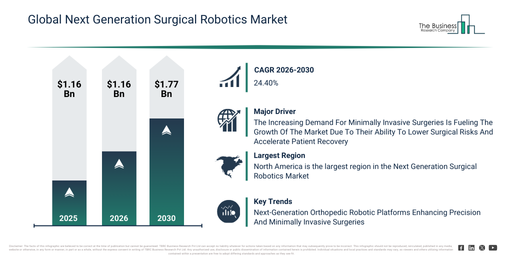
    The market for next-generation surgical robotics is projected to experience rapid expansion over the coming years. By 2030, its value is expected to reach $18.8 billion, reflecting a compound annual growth rate (CAGR) of 24.4%. This forecasted growth is driven by several key factors, including progress in artificial intelligence and machine learning applications for surgical procedures, the creation of telesurgical and semi-autonomous robotic systems, a worldwide uptick in the number of surgeries performed, increased financial commitments from hospitals to robotic technology, and the broadening of integrated software and support offerings. Notable trends shaping this period encompass a greater shift toward minimally invasive techniques, the incorporation of haptic feedback and enhanced precision controls, the growth of specialized training and educational initiatives for surgeons, a heightened emphasis on patient safety and better surgical results, and rising investments in robotic-assisted surgery infrastructure.

    Download A Free Sample Report For Comprehensive Market Insights:

    https://www.thebusinessresearchcompany.com/sample.aspx?id=27362&type=smp

    Next Generation Surgical Robotics Market Growth Momentum: Which Factors Are Influencing Demand?

    The growth of the next-generation surgical robotics market is set to be driven by the rising preference for minimally invasive surgeries. These procedures are performed through small incisions using specialized instruments, thereby reducing pain, accelerating recovery, and lowering surgical complications. Their growing popularity stems from benefits such as smaller cuts, decreased infection risk, shorter hospital stays, and quicker healing times. Next-generation surgical robotics supports these procedures by granting surgeons enhanced precision, better visibility, and finer instrument control, all while minimizing mistakes, limiting harm to tissues, and speeding up patient convalescence. In June 2024, the American Society of Plastic Surgeons (ASPS), a US-based nonprofit professional organization, reported that minimally invasive procedures rose by 7% in 2023, outpacing surgical procedures by 2%. Consequently, the escalating demand for minimally invasive surgeries is fueling the expansion of the next-generation surgical robotics market.

    Next Generation Surgical Robotics Market Segment Outlook: Which Categories Are Expanding The Fastest?

    The next generation surgical robotics market covered in this report is segmented –

    1) By Components: Systems, Accessories, Services

    2) By Technology: Master-Slave Robotic Technology, Minimally Invasive Robotic Technology, Robotic-Assisted Laparoscopy, Artificial Intelligence And Machine Learning Integration

    3) By Application: Gynecological Surgery, Urological Surgery, Neurosurgery, Orthopedic Surgery, General Surgery, Other Applications

    4) By End-User: Hospitals, Ambulatory Surgical Centers, Other End-Users

    Subsegments:

    1) By Systems: Autonomous Surgical Robots, Semi-Autonomous Surgical Robots, Telesurgical Robots, Haptic Feedback Robots

    2) By Accessories: Surgical Instrument Sets, Endoscopic Tools, Robotic Arms And Graspers, Visualization And Imaging Modules

    3) By Services: Maintenance And Support Services, Training And Education Services, Software Updates And Integration Services, Consulting And Implementation Services

    Next Generation Surgical Robotics Market Trends Reshaping Industry Growth

    Key players in the next-generation surgical robotics market are concentrating on creating cutting-edge technologies, such as orthopedic robotic platforms, aimed at improving patient outcomes through minimally invasive methods. These advanced platforms enable surgeons to perform bone and joint surgeries with exceptional precision, enhance implant positioning, and support less invasive procedures. For example, in March 2025, Stryker Corporation, a medical technology firm headquartered in the US, unveiled the Mako 4, the latest iteration of its Mako SmartRobotics system. This system incorporates sophisticated three-dimensional CT-based planning along with the company’s fourth-generation Q Guidance System, broadening its use to include hip, knee, spine, and shoulder surgeries. It helps surgeons in both primary and revision operations by facilitating tailored surgical planning, providing real-time guidance during procedures, and boosting workflow efficiency, all while handling challenging cases like robotic hip revision through features such as augment and screw planning, intraoperative screw trajectory guidance, and compatibility with revision implant sets.

    Next Generation Surgical Robotics Market Key Companies And Competitive Benchmarking

    Major companies operating in the next generation surgical robotics market are Johnson & Johnson Services Inc., Medtronic plc, Stryker Corporation, Zimmer Biomet Holdings Inc., Smith & Nephew plc, Intuitive Surgical Inc., Accuray Incorporated, Medical Microinstruments Inc., PROCEPT BioRobotics Corporation, CMR Surgical Ltd., Noah Medical Inc., Distalmotion SA, Stereotaxis Inc., Neocis Inc., Moon Surgical SAS, Quantum Surgical SAS, Activ Surgical Inc., THINK Surgical Inc., Mendaera Inc., Galen Robotics Inc.

    Access The Complete Next Generation Surgical Robotics Market Report:

    https://www.thebusinessresearchcompany.com/report/next-generation-surgical-robotics-global-market-report

    Next Generation Surgical Robotics Market Geographic Analysis: Where Is Demand Growing The Fastest?

    North America was the largest region in the next-generation surgical robotics market in 2025. Asia-Pacific is expected to be the fastest-growing region in the forecast period. The regions covered in the next generation surgical robotics market report are Asia-Pacific, South East Asia, Western Europe, Eastern Europe, North America, South America, Middle East, Africa.

    Access a Customized Next Generation Surgical Robotics Market Report for Deeper Competitive Insights

    https://www.thebusinessresearchcompany.com/customise?id=27362&type=smp

    Get in touch with us:

    The Business Research Company: https://www.thebusinessresearchcompany.com/

    Americas: +1 310-496-7795

    Asia: +44 7882 955267 & +91 8897263534

    Europe: +44 7882 955267

    Email us at: marketing@tbrc.info

    Follow us on:

    LinkedIn: https://in.linkedin.com/company/the-business-research-company

    YouTube: https://www.youtube.com/channel/UC24_fI0rV8cR5DxlCpgmyFQ

    Global Market Model: https://www.thebusinessresearchcompany.com/global-market-model
  • Autonomous Surgical Robotics Market Forecast Reveals Where Future Industry Value Will Be Created

    Autonomous Surgical Robotics Market Forecast Reveals Where Future Industry Value Will Be Created

    Through market attractiveness analysis, total addressable market evaluation, company benchmarking matrices, interactive Excel dashboards, expanded supply chain intelligence, emerging startup coverage, and detailed product insights, The Business Research Company’s 2026 market reports provide more actionable and strategically valuable research.

    Autonomous Surgical Robotics Market Size Outlook: How Fast Will Revenue Grow Through 2030?

    The autonomous surgical robotics market has experienced rapid expansion in recent years. Starting at $2.61 billion in 2025, it is projected to reach $3.05 billion by 2026, reflecting a compound annual growth rate (CAGR) of 16.9%. Historical growth was driven by a strong reliance on manual surgical techniques, initial uptake of fundamental robotic-assisted procedures, constrained artificial intelligence functionalities within operating rooms, an increasing demand for complex operations, and the ongoing development of hospital facilities across advanced economies.

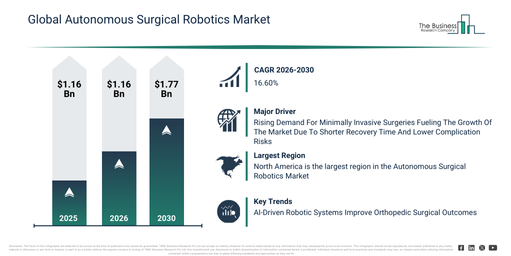
    The autonomous surgical robotics market is anticipated to experience significant expansion over the coming years, reaching a projected value of $5.64 billion by 2030, with a compound annual growth rate (CAGR) of 16.6%. This forecasted growth is driven by factors such as progress in autonomous surgical robotics, the incorporation of artificial intelligence and machine learning algorithms, the broadening of robotic surgery uses across various medical fields, heightened funding for smart operating rooms, and growing healthcare spending in developing nations. Key trends shaping this period include the growing preference for minimally invasive surgical methods, a heightened demand for surgical precision and accuracy, the use of real-time data analytics in procedures, the expansion of robotic surgery into emerging markets, and a concentrated effort to minimize human mistakes and enhance patient outcomes.

    Download A Free Sample Report For Comprehensive Market Insights:

    https://www.thebusinessresearchcompany.com/sample.aspx?id=27218&type=smp

    Autonomous Surgical Robotics Market Expansion Drivers: What Is Shaping Future Growth?

    The growth of the autonomous surgical robotics market is anticipated to be fueled by an increasing preference for minimally invasive surgeries. These procedures are performed using small incisions or openings, which help minimize patient trauma and shorten recovery periods. Their appeal stems from benefits like faster healing, lower complication risks, reduced pain, and less noticeable scarring, making them particularly attractive to individuals seeking safer and more efficient healthcare options. Autonomous surgical robots support these operations by delivering precise and consistent assistance, thereby eliminating the necessity for larger cuts. This technology enhances surgical precision, boosts patient outcomes, cuts down on recovery durations, and alleviates surgeon exhaustion. As an example, the American Society of Plastic Surgeons, a non-profit organization in the US, reported in June 2024 that minimally invasive treatments increased by 7% from 2022 to 2023. Consequently, the surging demand for such procedures is propelling expansion in the autonomous surgical robotics sector.

    Autonomous Surgical Robotics Market Segment Landscape: Which Areas Lead Market Development?

    The autonomous surgical robotics market covered in this report is segmented –

    1) By Type: Interventional Surgical Robots, Assisted Surgical Robots, Minimally Invasive Surgical Robots, Other Types

    2) By Application: Urology Surgery, Orthopedic Surgery, Cardiology Surgery, Neurology Surgery, Other Applications

    3) By End-Users: Hospitals, Ambulatory Surgery Centers, Other End-Users

    Subsegments:

    1) By Interventional Surgical Robots: Catheter-Based Interventional Robots, Endovascular Robots, Interventional Radiology Robots, Percutaneous Robots

    2) By Assisted Surgical Robots: Robotic Arm Systems, Robotic Navigation Systems, Robotic Visualization Platforms, Robotic Positioning Systems

    3) By Minimally Invasive Surgical Robots: Laparoscopic Robots, Thoracoscopic Robots, Robotic Endoscopes, Single-Port Surgical Robots

    4) By Other Types: Orthopedic Surgical Robots, Neurosurgical Robots, Dental Surgical Robots, Microsurgical Robots, Autonomous Surgical Robots

    Autonomous Surgical Robotics Market Strategic Trends: What Is Defining The Next Phase Of Growth?

    Major players in the autonomous surgical robotics industry are concentrating on the creation of cutting-edge solutions, including fully autonomous guidance systems, aimed at boosting precision, elevating surgical success rates, and lessening surgeon fatigue. These fully autonomous guidance systems are defined as intelligent robotic platforms that help surgeons by carrying out predetermined surgical steps with exceptional accuracy, requiring no manual oversight. As an example, in July 2023, Stryker Corporation, a medical technology firm based in the United States, introduced the Ortho Q Guidance system. This state-of-the-art robotic surgical system, tailored for orthopedic operations, leverages AI-driven automation to handle bone resections and implant placements independently. It is equipped with a sophisticated camera featuring improved optical tracking, a dual-PC setup for instantaneous data processing, and implant-agnostic software that works with express knee, precision knee, and versatile hip procedures. Moreover, the system offers real-time intraoperative modifications and predictive analytics, ensuring correct alignment and minimizing the potential for human mistakes.

    Autonomous Surgical Robotics Market Industry Leaders And Market Competition

    Major companies operating in the autonomous surgical robotics market are Johnson & Johnson, Medtronic plc, Stryker Corporation, Intuitive Surgical Inc., Zimmer Biomet Holdings Inc., Smith & Nephew plc, Globus Medical Inc., Renishaw plc, Memic Innovative Surgery Ltd., CMR Surgical Ltd., Noah Medical Inc., THINK Surgical Inc., Medical Microinstruments S.p.A., Distalmotion SA, Moon Surgical SAS, Activ Surgical Inc., Curexo Inc., Virtual Incision Corporation, Andromeda Surgical Inc, Beijing Tuodao Medical Technology Co. Ltd.

    Access The Complete Autonomous Surgical Robotics Market Report:

    https://www.thebusinessresearchcompany.com/report/autonomous-surgical-robotics-global-market-report

    Autonomous Surgical Robotics Market Global Footprint: Which Region Holds Market Leadership?

    North America was the largest region in the autonomous surgical robotics market in 2025. Asia-Pacific is expected to be the fastest-growing region in the forecast period. The regions covered in the autonomous surgical robotics market report are Asia-Pacific, South East Asia, Western Europe, Eastern Europe, North America, South America, Middle East, Africa.

    Access a Customized Autonomous Surgical Robotics Market Report for Deeper Competitive Insights

    https://www.thebusinessresearchcompany.com/customise?id=27218&type=smp

    Get in touch with us:

    The Business Research Company: https://www.thebusinessresearchcompany.com/

    Americas: +1 310-496-7795

    Asia: +44 7882 955267 & +91 8897263534

    Europe: +44 7882 955267

    Email us at: marketing@tbrc.info

    Follow us on:

    LinkedIn: https://in.linkedin.com/company/the-business-research-company

    YouTube: https://www.youtube.com/channel/UC24_fI0rV8cR5DxlCpgmyFQ

    Global Market Model: https://www.thebusinessresearchcompany.com/global-market-model
  • Artificial Intelligence-Powered Seizure Prediction Wearable Market Growth Through 2030 Creates New Strategic Opportunities

    Artificial Intelligence-Powered Seizure Prediction Wearable Market Growth Through 2030 Creates New Strategic Opportunities

    Delivering more actionable and strategically valuable research, The Business Research Company’s 2026 market reports feature market attractiveness analysis, total addressable market evaluation, company benchmarking matrices, interactive Excel dashboards, expanded supply chain intelligence, emerging startup coverage, and detailed product insights.

    Artificial Intelligence-Powered Seizure Prediction Wearable Market Size, Value And Growth Trends Through 2030

    The market for wearable devices that predict seizures using artificial intelligence has seen explosive growth over recent years. Valued at $1.41 billion in 2025, it is projected to increase to $1.73 billion by 2026, achieving a compound annual growth rate (CAGR) of 22.5%. This historical expansion has been driven by several key factors: the rising prevalence of epilepsy, progress in wearable biosensor technology, the demand for early seizure alerts, the shortcomings of traditional monitoring methods, and an uptick in neurological research activities.

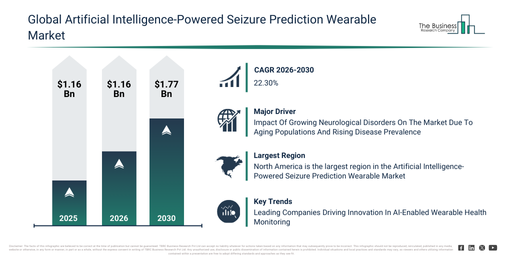
    Over the coming years, the market for seizure detection wearables driven by artificial intelligence is projected to experience explosive expansion. By 2030, its value is anticipated to climb to $3.87 billion, reflecting a compound annual growth rate (CAGR) of 22.3%. Factors fueling this upward trajectory include enhancements in AI-based predictive accuracy, the broadening scope of remote neurological services, a rising need for instant alerts, integration with mobile health platforms, and a shift toward patient-focused epilepsy care. Key developments shaping this period involve predictive detection of neurological episodes, ongoing EEG monitoring via wearable devices, customizable seizure notification systems, AI-facilitated identification of risk patterns, and the management of epilepsy within home environments.

    Download A Free Sample Report For Comprehensive Market Insights:

    https://www.thebusinessresearchcompany.com/sample.aspx?id=28934&type=smp

    Artificial Intelligence-Powered Seizure Prediction Wearable Market Development Factors: Which Trends Are Supporting Demand?

    The growing incidence of neurological conditions is anticipated to drive expansion in the market for wearable devices that predict seizures using artificial intelligence. These disorders involve disruptions to the nervous system, impairing normal brain, spinal cord, or nerve function. Their rising frequency can be largely attributed to aging populations, which increase susceptibility to neurodegeneration and associated brain and nerve diseases. By continuously monitoring physiological signals and leveraging AI to forecast episodes, these wearables enable timely intervention and improve patient safety. According to the National Library of Medicine, a US-based medical library in April 2024, around 6.9 million Americans aged 65 and over currently have Alzheimer’s dementia, with projections indicating this number could reach 13.8 million by 2060. Consequently, the escalating prevalence of neurological disorders is fueling growth in the artificial intelligence-powered seizure prediction wearable market.

    Artificial Intelligence-Powered Seizure Prediction Wearable Market Segments: Where Are The Largest Growth Opportunities?

    The artificial intelligence-powered seizure prediction wearable market covered in this report is segmented –

    1) By Product Type: Wristbands, Headbands, Smartwatches, Patches

    2) By Technology: Electroencephalography-Based, Accelerometer-based, Multi-Sensor, Other Technologies

    3) By Distribution Channel: Online, Offline

    4) By Application: Hospitals And Clinics, Home Care, Research Institutes, Other Applications

    5) By End User: Adults, Pediatrics, Geriatrics

    Subsegments:

    1) By Wristbands: Heart Rate Monitoring, Motion Detection

    2) By Headbands: Brainwave Analysis, Stress Level Detection

    3) By Smartwatches: Heart Rate Monitoring, Motion Detection

    4) By Patches: Electrodermal Activity Monitoring, Heart Rate Monitoring

    Artificial Intelligence-Powered Seizure Prediction Wearable Market Transformation Trends: Which Innovations Are Driving Change?

    Major players in the artificial intelligence-driven seizure prediction wearable market are increasingly concentrating on the creation of cutting-edge solutions, specifically sophisticated wearable devices that utilize AI together with real-time data analytics to precisely anticipate seizures and improve patient well-being. These advanced wearables are electronic gadgets worn on the body, equipped with sensors and AI functionality, capable of continuously observing physiological indicators to identify, examine, and foresee medical occurrences such as seizures. To illustrate, in February 2024, Empatica Inc., which is a spinoff from the MIT Media Lab in the United States, unveiled the EpiMonitor epilepsy monitoring system to facilitate real-time seizure identification and notifications. This device is engineered to identify generalized tonic-clonic seizures with a 98% accuracy rate and promptly dispatch immediate alerts to caregivers, enabling timely assistance. It provides a battery life of up to seven days, monitors both sleep patterns and physical activity, and produces thorough health reports to support clinical care. The system aims to boost safety and empower individuals with epilepsy through dependable seizure oversight and comprehensive health data.

    Artificial Intelligence-Powered Seizure Prediction Wearable Market Major Participants And Competitive Dynamics

    Major companies operating in the artificial intelligence-powered seizure prediction wearable market are Empatica Inc., BioSerenity, Epitel Inc., Seer Medical Pty Ltd., mjn.cat (mjn neuro), Neureka Inc., LivAssured B V NightWatch, SeizAlarm, Cove Neurosciences Inc., CeriBell Inc., Brain Sentinel Inc., Epilert Inc., Byteflies, Danish Care Technology ApS Epi-Care, Neurava Inc., NeuroHelp Ltd., Emfit Ltd., Alert-iT, EpiUSA, Zeto Inc., Cadwell Industries

    Access The Complete Artificial Intelligence-Powered Seizure Prediction Wearable Market Report:

    https://www.thebusinessresearchcompany.com/report/artificial-intelligence-powered-seizure-prediction-wearable-global-market-report

    Artificial Intelligence-Powered Seizure Prediction Wearable Market Regional Distribution: Which Areas Drive Market Expansion?

    North America was the largest region in the artificial intelligence-powered seizure prediction wearable market in 2025. Asia-Pacific is expected to be the fastest-growing region in the forecast period. The regions covered in the artificial intelligence-powered seizure prediction wearable market report are Asia-Pacific, South East Asia, Western Europe, Eastern Europe, North America, South America, Middle East, Africa.

    Access a Customized Artificial Intelligence-Powered Seizure Prediction Wearable Market Report for Deeper Competitive Insights

    https://www.thebusinessresearchcompany.com/customise?id=28934&type=smp

    Get in touch with us:

    The Business Research Company: https://www.thebusinessresearchcompany.com/

    Americas: +1 310-496-7795

    Asia: +44 7882 955267 & +91 8897263534

    Europe: +44 7882 955267

    Email us at: marketing@tbrc.info

    Follow us on:

    LinkedIn: https://in.linkedin.com/company/the-business-research-company

    YouTube: https://www.youtube.com/channel/UC24_fI0rV8cR5DxlCpgmyFQ

    Global Market Model: https://www.thebusinessresearchcompany.com/global-market-model
  • Artificial Intelligence Microscopy Market Size Projected To Increase From $1.33 Billion To $2.34 Billion During The Forecast Period

    Artificial Intelligence Microscopy Market Size Projected To Increase From $1.33 Billion To $2.34 Billion During The Forecast Period

    Enhanced with market attractiveness analysis, total addressable market evaluation, company benchmarking matrices, interactive Excel dashboards, expanded supply chain intelligence, emerging startup coverage, and detailed product insights, The Business Research Company’s 2026 market reports deliver more actionable and strategically valuable research.

    Artificial Intelligence Microscopy Market CAGR Analysis And Future Market Development

    The market for artificial intelligence microscopy has experienced swift expansion in recent times. Valued at $1.16 billion in 2025, it is projected to reach $1.33 billion by 2026, reflecting a compound annual growth rate (CAGR) of 15.4%. This historical growth was driven by increased research and academic applications, improvements in microscopy equipment, a rising need for precise cellular analysis, the uptake of digital microscopy techniques, and the initial incorporation of AI technologies into laboratory settings.

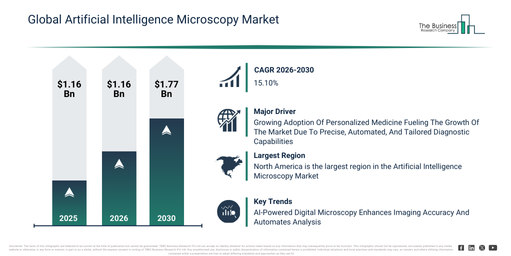
    The market for artificial intelligence microscopy is projected to experience substantial expansion over the coming years, with its value anticipated to reach $2.34 billion by 2030, reflecting a compound annual growth rate (CAGR) of 15.1%. This forecasted growth is driven by factors such as the broadening of pharmaceutical research, heightened adoption within the biotechnology sector, the rise of AI-enabled predictive modeling, seamless integration with cloud-based laboratory platforms, and an increasing need for applications in industrial quality control. Key developments shaping this period include the automation of cellular analysis, AI-powered detection in pathology, cloud-centered image management, compatibility with laboratory information systems (LIS), and the emergence of predictive biological modeling.

    Download A Free Sample Report For Comprehensive Market Insights:

    https://www.thebusinessresearchcompany.com/sample.aspx?id=28143&type=smp

    Artificial Intelligence Microscopy Market Industry Drivers: What Is Driving Revenue Growth?

    The increasing embrace of personalized medicine is set to drive the expansion of the artificial intelligence microscopy market in the coming years. Personalized medicine is defined as a medical model that customizes therapies and preventive measures based on an individual’s distinct genetic profile, lifestyle, and environmental factors. This rise in personalized medicine is largely fueled by progress in genomics, which facilitates the accurate detection of genetic differences and the development of customized treatments. Artificial intelligence microscopy supports personalized medicine by delivering precise, automated examination of cells and tissues, thereby enabling the creation of tailored therapeutic approaches. It lessens the manual burden and speeds up diagnostic processes, thereby enhancing clinical decision-making and patient results. As an example, in February 2024, the Personalized Medicine Coalition (PMC), a nonprofit organization based in the United States, reported that the U.S. Food and Drug Administration (FDA) authorized 26 new personalized treatments in 2023, a notable jump from the 12 approved in 2022. Consequently, the growing implementation of personalized medicine is fueling the advancement of the artificial intelligence microscopy market.

    Artificial Intelligence Microscopy Market Segment Analysis: What Are The Major Market Categories?

    The artificial intelligence microscopy market covered in this report is segmented –

    1) By Component: Software, Hardware, Services

    2) By Product Type: Artificial Intelligence-Enabled Cloud Software, Artificial Intelligence-Enabled Microscopes

    3) By Imaging Modalities: Optical Microscopy, Electron Microscopy, Scanning Probe Microscopy

    4) By Technology: Deep Learning, Machine Learning, Computer Vision, Other Technologies

    5) By End-User: Research Institutions, Healthcare Organizations, Pharmaceutical Companies, Biotechnology Firms, Industrial Laboratories

    Subsegments:

    1) By Software: Image Analysis Software, Data Management Software, Visualization Software, Simulation Software

    2) By Hardware: Microscopes, Cameras, Sensors, Computational Units

    3) By Services: Installation Services, Maintenance Services, Training Services, Consulting Service

    #Artificial Intelligence Microscopy Market Growth Trends: What Is Influencing The Future Outlook?

    Key industry participants in the artificial intelligence microscopy sector are prioritizing the development of cutting-edge products, including digital microscopy, with the goal of enhancing imaging precision and automating analytical processes. Digital microscopy involves the integration of cameras and computer systems to capture, display, and interpret microscopic images, serving as a replacement for or supplement to traditional optical microscopes. In February 2025, for example, Honeywell International Inc., an industrial technology firm based in the United States, introduced Digital Holographic Microscopy (DHM), an innovation that incorporates artificial intelligence to precisely enumerate and categorize microscopic particles and cells. This system employs AI algorithms to interpret holographic images obtained via a portable device, facilitating rapid cell counting and classification without the need for extensive sample preparation or staining. Designed for point-of-care applications, such as detecting infections in peritoneal dialysis patients, it cuts diagnosis time from several days to just minutes, while also proving useful in environmental monitoring and quality assurance contexts.

    Artificial Intelligence Microscopy Market Leading Companies Driving Competitive Growth

    Major companies operating in the artificial intelligence microscopy market are Roche Diagnostics International Ltd., Thermo Fisher Scientific Inc., Agilent Technologies Inc., Olympus Corporation, Nikon Corporation, Shimadzu Corporation, Bruker Corporation, Carl Zeiss AG, Jenoptik AG, JEOL Ltd., Leica Microsystems GmbH, OneCell Diagnostics, Scopio Labs Ltd., Park Systems Corp., Ariadne.ai, Mindpeak GmbH, Celly.AI, SVision LLC, aetherAI, Aiforia Technologies Oy

    Access The Complete Artificial Intelligence Microscopy Market Report:

    https://www.thebusinessresearchcompany.com/report/artificial-intelligence-microscopy-global-market-report

    Artificial Intelligence Microscopy Market Leading Geography: Which Region Generates The Most Revenue?

    North America was the largest region in the artificial intelligence microscopy market in 2025. Asia-Pacific is expected to be the fastest-growing region in the forecast period. The regions covered in the artificial intelligence microscopy market report are Asia-Pacific, South East Asia, Western Europe, Eastern Europe, North America, South America, Middle East, Africa.

    Access a Customized Artificial Intelligence Microscopy Market Report for Deeper Competitive Insights

    https://www.thebusinessresearchcompany.com/customise?id=28143&type=smp

    Get in touch with us:

    The Business Research Company: https://www.thebusinessresearchcompany.com/

    Americas: +1 310-496-7795

    Asia: +44 7882 955267 & +91 8897263534

    Europe: +44 7882 955267

    Email us at: marketing@tbrc.info

    Follow us on:

    LinkedIn: https://in.linkedin.com/company/the-business-research-company

    YouTube: https://www.youtube.com/channel/UC24_fI0rV8cR5DxlCpgmyFQ

    Global Market Model: https://www.thebusinessresearchcompany.com/global-market-model
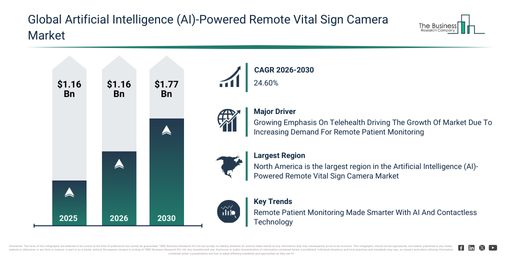
  • Artificial Intelligence (AI)-Powered Remote Vital Sign Camera Market Growth Outlook Reveals A CAGR Of 24.6% And A Market Value Of $6.59 Billion By 2030

    Artificial Intelligence (AI)-Powered Remote Vital Sign Camera Market Growth Outlook Reveals A CAGR Of 24.6% And A Market Value Of $6.59 Billion By 2030

    Through market attractiveness analysis, total addressable market evaluation, company benchmarking matrices, interactive Excel dashboards, expanded supply chain intelligence, emerging startup coverage, and detailed product insights, The Business Research Company’s 2026 market reports provide more actionable and strategically valuable research.

    Artificial Intelligence (AI)-Powered Remote Vital Sign Camera Market Expansion From $2.73 Billion In 2026 To $6.59 Billion In 2030

    The market for artificial intelligence (ai)-powered remote vital sign cameras has experienced exponential growth in recent years; its size is forecasted to increase from $2.19 billion in 2025 to $2.74 billion in 2026, registering a compound annual growth rate (CAGR) of 24.9%. This historical growth has been fueled by rising telehealth adoption, the demand for non-invasive monitoring, COVID-19-induced remote care needs, advancements in camera sensors, and hospital capacity constraints.

    The market for artificial intelligence-driven remote vital sign cameras is poised for explosive expansion over the coming years, projected to reach $6.6 billion by 2030 with a compound annual growth rate (CAGR) of 24.6%. This upward trajectory in the forecast period is driven by enhanced precision in AI-based video analytics, the broadening scope of home healthcare, rising demands for monitoring the aging population, seamless integration with intelligent hospital infrastructure, and a growing need for scalable monitoring solutions. Key developments shaping the near future encompass contactless patient observation, real-time detection of physiological signals, implementation of continuous remote care programs, AI-enabled motion and noise reduction techniques, and remote monitoring of crucial vital signs within home environments.

    Download A Free Sample Report For Comprehensive Market Insights:

    https://www.thebusinessresearchcompany.com/sample.aspx?id=28930&type=smp

    #Artificial Intelligence (AI)-Powered Remote Vital Sign Camera Market Growth Factors: Which Forces Are Supporting Market Expansion?

    The increasing focus on telehealth is anticipated to drive expansion in the artificial intelligence (AI)-powered remote vital sign camera market moving forward. Telehealth involves leveraging digital information and communication tools, including computers and mobile devices, to remotely access and manage healthcare services. This heightened emphasis stems from the growing demand for convenient and accessible care, enabling patients to consult with providers from a distance without needing to visit clinics or hospitals. AI-driven remote vital sign cameras support telehealth by allowing providers to precisely monitor patients’ vital signs in real time from afar, facilitating timely diagnoses, continuous health tracking, and personalized treatment without requiring in-person appointments. For example, in April 2023, FAIR Health Inc., a US-based nonprofit, reported that national telehealth utilization rose by 7.3%, climbing from 5.5% of medical claim lines in December 2022 to 5.9% in January 2023. Consequently, the rising prominence of telehealth is fueling growth in the AI-powered remote vital sign camera market.

    Artificial Intelligence (AI)-Powered Remote Vital Sign Camera Market Segment Breakdown: Which Categories Generate The Most Revenue?

    The artificial intelligence (ai)-powered remote vital sign camera market covered in this report is segmented –

    1) By Product Type: Handheld Cameras, Fixed Cameras

    2) By Technology: Computer Vision, Deep Learning

    3) By Vital Sign Monitored: Heart Rate, Respiratory Rate, Temperature

    4) By Distribution Channel: Online, Offline

    5) By End-User: Hospitals And Clinics, Home Care, Telemedicine Providers, Research And Academic Institutes, Other End-Users

    Subsegments:

    1) By Handheld Cameras: Portable Optical Cameras, Infrared Handheld Cameras, Thermal Imaging Handheld Cameras

    2) By Fixed Cameras: Ceiling Mounted Cameras, Wall Mounted Cameras, Desk Mounted Cameras

    Artificial Intelligence (AI)-Powered Remote Vital Sign Camera Market Industry Trends: What Changes Are Reshaping Demand?

    Major players in the artificial intelligence (AI)-driven remote vital sign camera market are concentrating their efforts on creating advanced solutions like contactless health monitoring systems, which allow for real-time tracking of vital signs and early detection of disease risks. These contactless health monitoring solutions are designed to measure vital signs and health indicators without requiring any physical touch, enabling continuous health tracking, minimizing the necessity for in-person appointments, and facilitating early identification of medical conditions. As an illustration, in January 2023, NuraLogix Corporation, a software firm based in Canada, unveiled Anura Telehealth, an AI-enabled contactless health monitoring platform that conducts ongoing vital sign measurements during video calls. Through its proprietary Transdermal Optical Imaging (TOI) technology, Anura captures facial blood flow data using standard video cameras to compute vital signs such as heart rate, blood pressure, respiratory rate, and others. This platform further delivers health risk evaluations for chronic diseases like type 2 diabetes, hypertension, cardiovascular conditions, and mental health disorders, empowering healthcare providers to remotely monitor patients in real time, make proactive clinical choices, refine treatment approaches, decrease hospital visits, boost patient involvement, and back early intervention measures that can halt the advancement of long-term illnesses.

    Artificial Intelligence (AI)-Powered Remote Vital Sign Camera Market Key Players And Strategic Industry Positioning

    Major companies operating in the artificial intelligence (ai)-powered remote vital sign camera market are Binah.ai, FaceHeart Inc., NuraLogix Corporation, Oxehealth Limited, PanopticAI Limited, DarwinEdge Technologies Ltd., Vastmindz Ltd., Mindset Medical Inc., Upvio Healthtech Pty Ltd., Shen.AI OÜ, EdgeVitals Inc., VitalSignAI Inc., Rouast Labs Pty Ltd, Vitalerter Ltd., Neurobit Technologies Co. Ltd., Elion Inc., Cardiolyse Oy, Breathing.ai, Vitalthings, Philips

    Access The Complete Artificial Intelligence (AI)-Powered Remote Vital Sign Camera Market Report:

    https://www.thebusinessresearchcompany.com/report/artificial-intelligence-ai-powered-remote-vital-sign-camera-global-market-report

    Artificial Intelligence (AI)-Powered Remote Vital Sign Camera Market Regional Outlook: Where Are The Largest Opportunities Located?

    North America was the largest region in the artificial intelligence (AI)-powered remote vital sign camera market in 2025. Asia-Pacific is expected to be the fastest-growing region in the forecast period. The regions covered in the artificial intelligence (AI)-powered remote vital sign camera market report are Asia-Pacific, South East Asia, Western Europe, Eastern Europe, North America, South America, Middle East, Africa.

    Access a Customized Artificial Intelligence (AI)-Powered Remote Vital Sign Camera Market Report for Deeper Competitive Insights

    https://www.thebusinessresearchcompany.com/customise?id=28930&type=smp

    Get in touch with us:

    The Business Research Company: https://www.thebusinessresearchcompany.com/

    Americas: +1 310-496-7795

    Asia: +44 7882 955267 & +91 8897263534

    Europe: +44 7882 955267

    Email us at: marketing@tbrc.info

    Follow us on:

    LinkedIn: https://in.linkedin.com/company/the-business-research-company

    YouTube: https://www.youtube.com/channel/UC24_fI0rV8cR5DxlCpgmyFQ

    Global Market Model: https://www.thebusinessresearchcompany.com/global-market-model
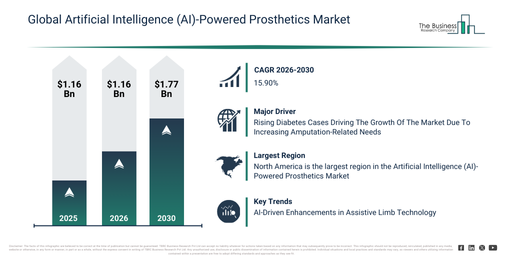
  • Artificial Intelligence (AI)-Powered Prosthetics Market Forecast Highlights Expansion From $1.98 Billion To $3.57 Billion Through 2030

    Artificial Intelligence (AI)-Powered Prosthetics Market Forecast Highlights Expansion From $1.98 Billion To $3.57 Billion Through 2030

    Delivering more actionable and strategically valuable research, The Business Research Company’s 2026 market reports feature market attractiveness analysis, total addressable market evaluation, company benchmarking matrices, interactive Excel dashboards, expanded supply chain intelligence, emerging startup coverage, and detailed product insights.

    Artificial Intelligence (AI)-Powered Prosthetics Market Forecast Highlighting Growth From $1.98 Billion To $3.57 Billion

    The market for prosthetics driven by artificial intelligence (AI) has seen swift expansion over the last few years. Projected to rise from $1.71 billion in 2025 to $1.98 billion in 2026, this growth reflects a compound annual growth rate (CAGR) of 15.8%. Several factors contributed to the historical period’s development, including the constrained application of AI within prosthetic technology, the significant expense associated with these devices, insufficient awareness regarding more sophisticated prosthetic options, conventional approaches to rehabilitation, and limited uptake in developing regions.

    The artificial intelligence-powered prosthetics market is projected to experience substantial expansion in the coming years. By 2030, it is anticipated to reach a value of $3.57 billion, advancing at a compound annual growth rate (CAGR) of 15.9%. This forecasted growth is driven by developments in AI and machine learning technologies, heightened investment in robotic and myoelectric prosthetic devices, increased demand from both sports and military sectors, the growth of prosthetic clinics and rehabilitation centers, and improvements in healthcare infrastructure and insurance coverage. Key trends expected to shape this period include a growing emphasis on custom-designed prosthetics, the incorporation of sensor-based feedback mechanisms, the spread of rehabilitation and mobility initiatives, wider adoption of prosthetics for athletic and military use, and an increased focus on cosmetic and aesthetic prosthetic solutions.

    Download A Free Sample Report For Comprehensive Market Insights:

    https://www.thebusinessresearchcompany.com/sample.aspx?id=27204&type=smp

    Artificial Intelligence (AI)-Powered Prosthetics Market Demand Drivers: What Is Fueling Industry Growth?

    Growth in the AI-powered prosthetics market is anticipated to be driven by the rising prevalence of diabetes. Diabetes is a chronic condition characterized by persistently high blood sugar levels, resulting from the body’s inability to produce enough insulin or utilize it effectively. The growing incidence of diabetes stems largely from sedentary lifestyles, where reduced physical activity slows metabolism and contributes to weight gain, thereby increasing the risk of insulin resistance. Complications arising from diabetes, including poor circulation and nerve damage, often lead to limb amputations, which in turn boosts demand for AI-powered prosthetics designed to restore mobility and improve patients’ quality of life. For example, data from the National Health Service—a UK-based publicly funded healthcare system—released in June 2024 shows that in 2023, the number of individuals identified as having pre-diabetes in England reached 3,615,330, reflecting an 18% rise from 3,065,825 in 2022. Among those under 40, cases increased by nearly 25%, climbing from 173,166 in 2022 to 216,440 in 2023. Consequently, the escalating incidence of diabetes is propelling expansion in the artificial intelligence (AI)-powered prosthetics market.

    Artificial Intelligence (AI)-Powered Prosthetics Market Segmentation: How Is The Market Structured Across Key Categories?

    The artificial intelligence (ai)-powered prosthetics market covered in this report is segmented –

    1) By Type: Implantable Prosthesis, Non-Implantable Prosthesis

    2) By Technology: Microprocessor-Controlled Prosthetics, Myoelectric Prosthetics, Robotic Prosthetics, Electric-Powered Prosthetics, Hybrid Technologies

    3) By Application: Amputee Mobility, Rehabilitation, Sports Prosthetics, Military, Daily Activities

    4) By End User: Hospitals, Prosthetic Clinics, Rehabilitation Centers, Other End Users

    Subsegments:

    1) By Implantable Prosthesis: Cochlear Implants, Retinal Implants, Deep Brain Stimulation Implants, Artificial Heart Valves, Dental Implants, Orthopedic Joint Implants

    2) By Non-Implantable Prosthesis: Upper Limb Prosthetics, Lower Limb Prosthetics, Exoskeletons, Cosmetic Prosthetics, Prosthetic Liners And Sockets

    Artificial Intelligence (AI)-Powered Prosthetics Market Innovation Trends: Which Developments Are Transforming The Industry?

    Major global players within the AI-powered prosthetics market are concentrating their efforts on pioneering novel strategies, with one key example being the incorporation of neural interfaces. This approach aims to bolster limb performance, increase how seamlessly users can adapt, and grant individuals with amputations near-natural movement capabilities for both routine tasks and more demanding applications. As a concept, neural interface integration involves artificial intelligence systems that interpret neural or muscular impulses by utilizing machine learning algorithms and arrays of sensors. These systems are engineered to facilitate instantaneous and instinctive manipulation of prosthetic limbs, replicating authentic human-like traits such as exactness and quick reaction. A concrete demonstration occurred in May 2025, when Esper Bionics, a firm headquartered in Ukraine specializing in bionic prosthetic devices, unveiled the Esper Hand 2. This novel device is a water-resistant, AI-driven prosthetic hand that customizes its operation to the user’s habits, provides superior gripping force, and performs effectively under adverse conditions, such as wet weather. This product release constitutes a notable step forward within assistive prosthetic innovation, supplying users with a smart, resilient instrument crafted to boost practical utility and elevate performance in everyday activities.

    Artificial Intelligence (AI)-Powered Prosthetics Market Competitive Landscape And Leading Companies

    Major companies operating in the artificial intelligence (ai)-powered prosthetics market are Ottobock SE & Co. KGaA, Össur hf, Blatchford Limited, BrainCo Inc., BrainRobotics Inc., Open Bionics Ltd., Point Designs Inc., Ambionics Ltd., Coapt LLC, Vincent Systems GmbH, PSYONIC Inc., BionIT Labs Ltd., Aether Biomedical Inc., BionicM Inc., Esper Bionics Inc., Mobius Bionics LLC, Covvi Limited, Unlimited Tomorrow Inc., Prensilia S.r.l., Bioniks Pvt. Ltd.

    Access The Complete Artificial Intelligence (AI)-Powered Prosthetics Market Report:

    https://www.thebusinessresearchcompany.com/report/artificial-intelligence-ai-powered-prosthetics-global-market-report

    Artificial Intelligence (AI)-Powered Prosthetics Market Geographic Landscape: Which Region Dominates Industry Growth?

    North America was the largest region in the artificial intelligence (AI)-powered prosthetics market in 2025. Asia-Pacific is expected to be the fastest-growing region in the forecast period. The regions covered in the artificial intelligence (AI)-powered prosthetics market report are Asia-Pacific, South East Asia, Western Europe, Eastern Europe, North America, South America, Middle East, Africa.

    Access a Customized Artificial Intelligence (AI)-Powered Prosthetics Market Report for Deeper Competitive Insights

    https://www.thebusinessresearchcompany.com/customise?id=27204&type=smp

    Get in touch with us:

    The Business Research Company: https://www.thebusinessresearchcompany.com/

    Americas: +1 310-496-7795

    Asia: +44 7882 955267 & +91 8897263534

    Europe: +44 7882 955267

    Email us at: marketing@tbrc.info

    Follow us on:

    LinkedIn: https://in.linkedin.com/company/the-business-research-company

    YouTube: https://www.youtube.com/channel/UC24_fI0rV8cR5DxlCpgmyFQ

    Global Market Model: https://www.thebusinessresearchcompany.com/global-market-model

  • Artificial Intelligence (AI)-Powered Hearing Aid Fitting Assistant Market Expected To Reach $3.92 Billion By 2030 As Growth Accelerates At 22.6% CAGR

    Artificial Intelligence (AI)-Powered Hearing Aid Fitting Assistant Market Expected To Reach $3.92 Billion By 2030 As Growth Accelerates At 22.6% CAGR

    Enhanced with market attractiveness analysis, total addressable market evaluation, company benchmarking matrices, interactive Excel dashboards, expanded supply chain intelligence, emerging startup coverage, and detailed product insights, The Business Research Company’s 2026 market reports deliver more actionable and strategically valuable research.

    Artificial Intelligence (AI)-Powered Hearing Aid Fitting Assistant Market Revenue Growth Supported By A CAGR Of 3.92% Through 2030

    The market for hearing aid fitting assistants powered by artificial intelligence has seen explosive growth over the last several years. Expanding from $1.42 billion in 2025 to $1.74 billion in 2026, this segment is projected to achieve a compound annual growth rate (CAGR) of 22.8%. Expansion in the historical period is linked to the increasing number of elderly individuals, a greater incidence of hearing impairments, the shift toward digital audiology services, the early integration of AI technologies into hearing aids, and a rising demand for customized solutions.

    The market size for hearing aid fitting assistants powered by artificial intelligence (AI) is projected to experience exponential expansion in the years ahead. It is anticipated to reach $3.92 billion by 2030, achieving a compound annual growth rate (CAGR) of 22.6%. This forecasted growth is driven by the expansion of remote audiology services, the increasing adoption of AI-driven self-fitting capabilities, seamless integration with mobile applications, a rising demand for enhanced user comfort, and the emergence of cloud-based hearing analytics. Key trends shaping this period include the optimization of personalized hearing profiles, the facilitation of remote hearing aid fittings, the implementation of continuous learning algorithms, the development of self-fitting hearing solutions, and real-time adaptation to environmental conditions.

    Download A Free Sample Report For Comprehensive Market Insights:

    https://www.thebusinessresearchcompany.com/sample.aspx?id=28928&type=smp

    Artificial Intelligence (AI)-Powered Hearing Aid Fitting Assistant Market Growth Drivers: What Factors Are Accelerating Expansion?

    The rising incidence of hearing loss is anticipated to fuel the expansion of the artificial intelligence (AI)-powered hearing aid fitting assistant market going forward. Hearing loss denotes a partial or total inability to perceive sounds, with severity ranging from mild to profound, potentially impacting one or both ears. This condition is becoming more common as the world’s population ages, with a growing number of older adults experiencing gradual deterioration of the delicate sensory cells in the inner ear, which over time results in age-related hearing impairment. AI-driven hearing aid fitting assistants address hearing loss by autonomously assessing an individual’s auditory profile and everyday surroundings, delivering personalized real-time modifications that improve sound clarity, reduce background noise, and boost overall listening comfort. As an example, in February 2025, the World Health Organization (WHO), a Switzerland-based intergovernmental body, reported that over 1.5 billion people worldwide have some form of hearing loss, with 430 million needing rehabilitation for disabling hearing loss, a figure expected to exceed 700 million by 2050. Consequently, the growing prevalence of hearing loss is propelling the artificial intelligence (AI)-powered hearing aid fitting assistant market’s growth.

    Artificial Intelligence (AI)-Powered Hearing Aid Fitting Assistant Market Segmentation Trends And Revenue Drivers

    The artificial intelligence (ai)-powered hearing aid fitting assistant market covered in this report is segmented –

    1) By Component: Software, Services

    2) By Distribution Channel: Direct Sales, Online Platforms, Distributors, Other Distribution Channels

    3) By Application: In-Clinic Fitting, Remote Fitting, Self-Fitting, Other Applications

    4) By End-User: Hospitals And Clinics, Audiology Centers, Homecare Settings, Other End-Users

    Subsegments:

    1) By Software: Configuration Tools, Fitting Algorithms, Mobile Applications, Cloud Platforms, Remote Monitoring Systems

    2) By Services: In-Clinic Fitting, Remote Fitting, Technical Support, Maintenance Services, Training And Consultation

    Artificial Intelligence (AI)-Powered Hearing Aid Fitting Assistant Market Trends: What Is Shaping Future Industry Growth?

    Leading enterprises in the artificial intelligence (AI)-powered hearing aid fitting assistant sector are emphasizing the creation of sophisticated products, including small AI-driven hearing aids, aimed at improving user satisfaction through tailored, instantaneous modifications and assistance. These compact AI-powered hearing aids are inconspicuous devices that leverage artificial intelligence to dynamically refine sound quality and customize auditory experiences on the fly. For example, in February 2025, GN Store Nord A/S, a hearing aid manufacturer based in Denmark, unveiled its most sophisticated hearing portfolio, featuring the ReSound Vivia, the most compact AI-powered hearing aid globally. The ReSound Vivia is a micro-receiver-in-ear hearing aid that employs cutting-edge AI to emulate the brain’s natural sound processing, thereby enhancing speech clarity in noisy settings. It is equipped with a proprietary deep neural network chip that performs 4.9 trillion operations daily to prioritize speech and minimize ambient noise, achieving efficiency up to 17 times greater than rival hearing aids. This device delivers up to 30 hours of battery life, Bluetooth LE Audio streaming with Auracast compatibility, and a water- and dust-resistant design that remains unobtrusive.

    #Artificial Intelligence (AI)-Powered Hearing Aid Fitting Assistant Market Industry Leaders: Which Organizations Are Driving Competition?

    Major companies operating in the artificial intelligence (ai)-powered hearing aid fitting assistant market are Sonova Holding AG, Demant A/S, GN Store Nord A/S, WS Audiology A/S, Starkey Laboratories Inc., Cochlear Limited, MED-EL GmbH, Eargo Inc., HearX Group Pty Ltd., hear.com GmbH, Nuheara Limited, Alango Technologies Ltd., SonicCloud Inc., Tuned Care, Soundwave Hearing Pty Ltd., Whisper AI, Mimi Hearing Technologies GmbH, Concha Labs Inc., Brainphonics, AudioNotch

    Access The Complete Artificial Intelligence (AI)-Powered Hearing Aid Fitting Assistant Market Report:

    https://www.thebusinessresearchcompany.com/report/artificial-intelligence-ai-powered-hearing-aid-fitting-assistant-global-market-report

    #Artificial Intelligence (AI)-Powered Hearing Aid Fitting Assistant Market Largest Region: Which Geography Holds The Highest Market Share?

    North America was the largest region in the artificial intelligence (AI)-powered hearing aid fitting assistant market in 2025. Asia-Pacific is expected to be the fastest-growing region in the forecast period. The regions covered in the artificial intelligence (AI)-powered hearing aid fitting assistant market report are Asia-Pacific, South East Asia, Western Europe, Eastern Europe, North America, South America, Middle East, Africa.

    Access a Customized Artificial Intelligence (AI)-Powered Hearing Aid Fitting Assistant Market Report for Deeper Competitive Insights

    https://www.thebusinessresearchcompany.com/customise?id=28928&type=smp

    Get in touch with us:

    The Business Research Company: https://www.thebusinessresearchcompany.com/

    Americas: +1 310-496-7795

    Asia: +44 7882 955267 & +91 8897263534

    Europe: +44 7882 955267

    Email us at: marketing@tbrc.info

    Follow us on:

    LinkedIn: https://in.linkedin.com/company/the-business-research-company

    YouTube: https://www.youtube.com/channel/UC24_fI0rV8cR5DxlCpgmyFQ

    Global Market Model: https://www.thebusinessresearchcompany.com/global-market-model
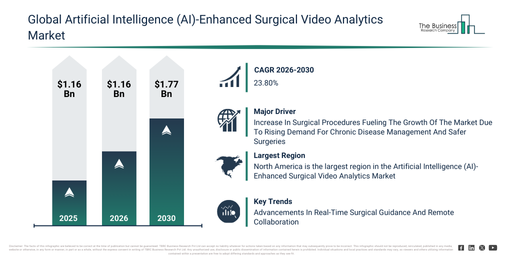
  • Artificial Intelligence (AI)-Enhanced Surgical Video Analytics Market Set To Grow From $0.91 Billion In 2026 To $2.13 Billion By 2030 At A CAGR Of 23.8%

    Artificial Intelligence (AI)-Enhanced Surgical Video Analytics Market Set To Grow From $0.91 Billion In 2026 To $2.13 Billion By 2030 At A CAGR Of 23.8%

    Through market attractiveness analysis, total addressable market evaluation, company benchmarking matrices, interactive Excel dashboards, expanded supply chain intelligence, emerging startup coverage, and detailed product insights, The Business Research Company’s 2026 market reports provide more actionable and strategically valuable research.

    Artificial Intelligence (AI)-Enhanced Surgical Video Analytics Market Value Expansion And Long-Term Growth Outlook

    The market for artificial intelligence (AI)-enhanced surgical video analytics has seen remarkable exponential expansion in recent years. Projections indicate it will rise from $0.73 billion in 2025 to $0.91 billion in 2026, reflecting a compound annual growth rate (CAGR) of 24.1%. This historic growth is driven by increasing volumes of minimally invasive procedures, the ongoing digitization of operating rooms, access to extensive surgical video data, early implementation of computer vision technologies, and a pressing demand for quality enhancement initiatives.

    The artificial intelligence-driven surgical video analytics market is projected to experience explosive expansion over the coming years, with forecasts indicating a rise to $2.14 billion by 2030, representing a compound annual growth rate (CAGR) of 23.8%. This anticipated growth during the forecast period is driven by factors such as AI-powered real-time analytics, the incorporation of these systems into robotic surgery platforms, a growing emphasis on outcome-oriented healthcare, the increasing adoption of cloud-based analytics, and the enhancement of surgeon training methodologies. Key trends shaping this period encompass automated analysis of surgical workflows, immediate identification of errors, evidence-based surgical instruction, development of performance assessment frameworks, and evaluation of postoperative outcomes.

    Download A Free Sample Report For Comprehensive Market Insights:

    https://www.thebusinessresearchcompany.com/sample.aspx?id=28923&type=smp

    Artificial Intelligence (AI)-Enhanced Surgical Video Analytics Market Growth Factors Supporting Long-Term Expansion

    The anticipated expansion of the artificial intelligence (AI)-enhanced surgical video analytics market is primarily driven by a rise in surgical procedure volumes. Surgical procedures, defined as medical interventions where doctors use their hands or tools to treat, repair, or remove body tissues to manage health conditions or injuries, are becoming more common. This uptick is largely attributed to a growing prevalence of chronic diseases such as diabetes, heart disease, and cancer, which frequently necessitate surgery to manage complications and enhance patient outcomes. By providing real-time guidance, AI-enhanced surgical video analytics supports these procedures, enabling surgeons to accurately pinpoint critical anatomical structures and make safer, more informed decisions during operations. For example, data from the American Society of Plastic Surgeons, a US-based organization of board-certified plastic surgeons, released in June 2024, shows that liposuction procedures totaled 347,782 in 2023, reflecting a 7% increase from 2022. Consequently, the rising number of surgical procedures is fueling growth in the artificial intelligence (AI)-enhanced surgical video analytics market.

    Artificial Intelligence (AI)-Enhanced Surgical Video Analytics Market Segment Analysis Highlighting Growth Areas

    The artificial intelligence (ai)-enhanced surgical video analytics market covered in this report is segmented –

    1) By Component: Software, Hardware, Services

    2) By Deployment Mode: On-Premises, Cloud-Based

    3) By Application: Laparoscopic Surgery, Robotic Surgery, Endoscopic Surgery, Other Applications

    4) By End-User: Hospitals, Ambulatory Surgical Centers, Specialty Clinics, Research Institutes, Other End-Users

    Subsegments:

    1) By Software: Surgical Video Analytics Platforms, Real-Time Data Processing Software, Machine Learning Algorithms

    2) By Hardware: High-Definition Cameras, Edge Computing Devices, Graphics Processing Units

    3) By Services: Integration And Deployment Services, Training And Education Services, Maintenance And Support Services

    Artificial Intelligence (AI)-Enhanced Surgical Video Analytics Market Industry Trends Shaping Future Revenue Growth

    Major players in the artificial intelligence-enhanced surgical video analytics market are prioritizing the creation of cutting-edge solutions, particularly touch surgery live streams, designed to facilitate real-time surgical guidance, remote collaboration, and heightened procedural precision. A touch surgery live stream functions as a digital system that enables the instantaneous broadcast of operations, empowering surgeons and medical teams to observe, direct, and cooperate from a distance for educational purposes, consultations, and improved accuracy during procedures. As an example, in April 2024, Medtronic plc., a healthcare firm headquartered in Ireland, introduced a service delivering secure, live surgical broadcasts to over 20 countries, thereby enhancing the accessibility and collaborative nature of surgical training. This innovation allows surgeons and trainees to participate in virtual coaching, acquire valuable insights, and remotely exchange procedural techniques, which accelerates skill acquisition and boosts operational efficiency. Additionally, artificial intelligence enhancements, incorporating 14 algorithms, examine surgeries after the fact to support workflow optimization, instrument identification, and anatomical detection, ultimately encouraging superior training, greater surgical throughput, and better patient results.

    Artificial Intelligence (AI)-Enhanced Surgical Video Analytics Market Leading Companies: Who Holds Significant Market Presence?

    Major companies operating in the artificial intelligence (ai)-enhanced surgical video analytics market are Johnson & Johnson, Medtronic Plc, Intuitive Surgical Inc., Olympus Corporation, Carl Zeiss Meditec AG, Brainlab AG, Surgical Science Sweden AB, Activ-Surgical-Inc., Caresyntax GmbH, Proximie Ltd., Proprio Inc., Surgical Safety Technologies Inc., Apella Health Management Inc., Aibo Health, Beyeonics Surgical Ltd., C-SATS Inc., nSight Surgical Inc., Orsi Academy S.r.l., Pristine Surgical Inc., Theator Inc., Virgo Surgical Technologies Inc., Surgical Data Science Collective (SDSC).

    Access The Complete Artificial Intelligence (AI)-Enhanced Surgical Video Analytics Market Report:

    https://www.thebusinessresearchcompany.com/report/artificial-intelligence-ai-enhanced-surgical-video-analytics-global-market-report

    Artificial Intelligence (AI)-Enhanced Surgical Video Analytics Market Regional Analysis: Which Region Leads By Revenue?

    North America was the largest region in the artificial intelligence (AI)-enhanced surgical video analytics market in 2025. Asia-Pacific is expected to be the fastest-growing region in the forecast period. The regions covered in the artificial intelligence (AI)-enhanced surgical video analytics market report are Asia-Pacific, South East Asia, Western Europe, Eastern Europe, North America, South America, Middle East, Africa.

    Access a Customized Artificial Intelligence (AI)-Enhanced Surgical Video Analytics Market Report for Deeper Competitive Insights

    https://www.thebusinessresearchcompany.com/customise?id=28923&type=smp

    Get in touch with us:

    The Business Research Company: https://www.thebusinessresearchcompany.com/

    Americas: +1 310-496-7795

    Asia: +44 7882 955267 & +91 8897263534

    Europe: +44 7882 955267

    Email us at: marketing@tbrc.info

    Follow us on:

    LinkedIn: https://in.linkedin.com/company/the-business-research-company

    YouTube: https://www.youtube.com/channel/UC24_fI0rV8cR5DxlCpgmyFQ

    Global Market Model: https://www.thebusinessresearchcompany.com/global-market-model
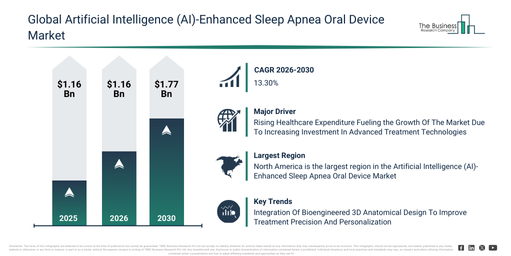
  • Artificial Intelligence (AI)-Enhanced Sleep Apnea Oral Device Market Opportunities Are Emerging Beyond Traditional Growth Areas

    Artificial Intelligence (AI)-Enhanced Sleep Apnea Oral Device Market Opportunities Are Emerging Beyond Traditional Growth Areas

    Delivering more actionable and strategically valuable research, The Business Research Company’s 2026 market reports feature market attractiveness analysis, total addressable market evaluation, company benchmarking matrices, interactive Excel dashboards, expanded supply chain intelligence, emerging startup coverage, and detailed product insights.

    Artificial Intelligence (AI)-Enhanced Sleep Apnea Oral Device Market Expected To Reach $2.49 Billion By 2030 At 13.3%% CAGR

    The artificial intelligence (AI)-enabled sleep apnea oral device market has experienced rapid expansion over recent years. Its value is set to increase from $1.33 billion in 2025 to $1.51 billion in 2026, representing a compound annual growth rate (CAGR) of 13.6%. This historic growth is driven by factors such as the growing prevalence of sleep apnea, the drawbacks of CPAP therapy, the rise of dental sleep medicine, the early uptake of smart oral devices, and heightened awareness around sleep health.

    The market for oral devices designed to treat sleep apnea, now enhanced by artificial intelligence, is projected to experience significant expansion over the coming years. By 2030, its value is anticipated to reach $2.5 billion, reflecting a compound annual growth rate of 13.3%. This growth during the forecast period is driven by several key factors, including AI-powered adaptive sleep therapy, an increasing shift toward home-based sleep treatments, seamless integration with sleep monitoring applications, a rising preference for non-invasive treatment options, and the provision of personalized sleep analytics. Among the prominent trends shaping this period are the adoption of customized oral appliance therapy, real-time refinement of sleep patterns, intelligent comfort adjustments managed by AI, management of sleep disorders within the home environment, and the use of data-driven approaches to enhance therapy adherence.

    Download A Free Sample Report For Comprehensive Market Insights:

    https://www.thebusinessresearchcompany.com/sample.aspx?id=28922&type=smp

    #Artificial Intelligence (AI)-Enhanced Sleep Apnea Oral Device Market Demand Drivers Creating New Revenue Opportunities

    The anticipated rise in healthcare spending is expected to drive the market for artificial intelligence (AI)-enhanced sleep apnea oral devices. Healthcare expenditure encompasses all financial outlays for medical services, treatments, and health-related products aimed at sustaining or improving public health. This spending is increasing largely due to the growing prevalence of chronic conditions, which demand prolonged therapies and ongoing medical supervision, substantially elevating overall healthcare costs. Such expenditure supports the adoption of AI-enhanced sleep apnea oral devices by facilitating greater investment in sophisticated diagnostic and therapeutic technologies that enhance patient outcomes and lower long-term healthcare expenses. For example, in April 2025, the Office for National Statistics, a UK government agency, reported that government-funded healthcare constituted the majority of total health spending in the UK, reaching $346 billion (£258 billion) in 2024—a real-term increase of 2.5% compared to 2023. Consequently, rising healthcare expenditure is fueling the growth of the AI-enhanced sleep apnea oral device market.

    Artificial Intelligence (AI)-Enhanced Sleep Apnea Oral Device Market Segment Performance And Strategic Opportunities

    The artificial intelligence (ai)-enhanced sleep apnea oral device market covered in this report is segmented –

    1) By Product Type: Mandibular Advancement Devices, Tongue Retaining Devices, Hybrid Devices

    2) By Technology: Artificial Intelligence (AI)-Based Monitoring, Smart Sensors, Data Analytics, Other Technologies

    3) By Distribution Channel: Online, Offline

    4) By End User: Hospitals, Sleep Clinics, Homecare Settings, Other End-Users

    Subsegments:

    1) By Mandibular Advancement Devices: Mandibular Repositioning Devices, Adjustable Mandibular Devices, Custom-Fit Mandibular Devices

    2) By Tongue Retaining Devices: Standard Tongue Retaining Devices, Custom Tongue Retaining Devices, Vacuum-Based Tongue Retaining Devices

    3) By Hybrid Devices: Dual-Mechanism Hybrid Devices, Combined Mandibular-Tongue Hybrid Devices

    Artificial Intelligence (AI)-Enhanced Sleep Apnea Oral Device Market Trends Driving Strategic Industry Expansion

    Key players in the AI-enhanced sleep apnea oral device market are placing significant emphasis on creating cutting-edge designs, with a particular focus on bioengineered 3D anatomical models to boost device accuracy, customization, and therapeutic outcomes. This advanced technology leverages artificial intelligence and robotic manufacturing to craft customized oral appliances tailored to each patient’s unique dental and airway anatomy, thereby enhancing comfort, optimizing jaw alignment, and promoting better breathing efficiency. A notable example occurred in June 2025 when ProSomnus Inc., a medical device firm based in the United States, introduced the EVO Guided—a precisely engineered, custom oral appliance specifically developed to address obstructive sleep apnea (OSA). Featuring a lingual-less design that provides superior comfort, this device significantly increases patient adherence while minimizing common side effects often associated with conventional appliances. With its sophisticated anatomical fit and a patented post mechanism that effectively dilates airway regions, the EVO Guided serves as a highly efficient, FDA-approved substitute for CPAP therapy.

    Artificial Intelligence (AI)-Enhanced Sleep Apnea Oral Device Market Key Players: Which Companies Shape Industry Competition?

    Major companies operating in the artificial intelligence (ai)-enhanced sleep apnea oral device market are SomnoMed Limited, ProSomnus Sleep Technologies, Panthera Dental, Glidewell Laboratories Inc., DynaFlex Inc., Vivos Therapeutics Inc., OpenAirway Dental Solutions Ltd., Airway Management Inc., Apnea Sciences Corporation, OravanOSA, Myerson LLC, Braebon Medical Corporation, Klearway Inc., TOMED GmbH, Apex Dental Sleep Lab Inc., Dream Systems LLC, OrthoApnea S.L., Dentulu Inc., Airway Labs, Zyppah Inc.

    Access The Complete Artificial Intelligence (AI)-Enhanced Sleep Apnea Oral Device Market Report:

    https://www.thebusinessresearchcompany.com/report/artificial-intelligence-ai-enhanced-sleep-apnea-oral-device-global-market-report

    Artificial Intelligence (AI)-Enhanced Sleep Apnea Oral Device Market Geographic Distribution And Regional Opportunities

    North America was the largest region in the artificial intelligence (AI)-enhanced sleep apnea oral device market in 2025. Asia-Pacific is expected to be the fastest-growing region in the forecast period. The regions covered in the artificial intelligence (AI)-enhanced sleep apnea oral device market report are Asia-Pacific, South East Asia, Western Europe, Eastern Europe, North America, South America, Middle East, Africa.

    Access a Customized Artificial Intelligence (AI)-Enhanced Sleep Apnea Oral Device Market Report for Deeper Competitive Insights

    https://www.thebusinessresearchcompany.com/customise?id=28922&type=smp

    Get in touch with us:

    The Business Research Company: https://www.thebusinessresearchcompany.com/

    Americas: +1 310-496-7795

    Asia: +44 7882 955267 & +91 8897263534

    Europe: +44 7882 955267

    Email us at: marketing@tbrc.info

    Follow us on:

    LinkedIn: https://in.linkedin.com/company/the-business-research-company

    YouTube: https://www.youtube.com/channel/UC24_fI0rV8cR5DxlCpgmyFQ

    Global Market Model: https://www.thebusinessresearchcompany.com/global-market-model
  • Artificial Intelligence (AI)-Enhanced Post-Operative Monitoring Patch Market Expansion Is Opening New Pathways For Strategic Investment

    Artificial Intelligence (AI)-Enhanced Post-Operative Monitoring Patch Market Expansion Is Opening New Pathways For Strategic Investment

    Enhanced with market attractiveness analysis, total addressable market evaluation, company benchmarking matrices, interactive Excel dashboards, expanded supply chain intelligence, emerging startup coverage, and detailed product insights, The Business Research Company’s 2026 market reports deliver more actionable and strategically valuable research.

    #Artificial Intelligence (AI)-Enhanced Post-Operative Monitoring Patch Market Size And Revenue Forecast Through 2030

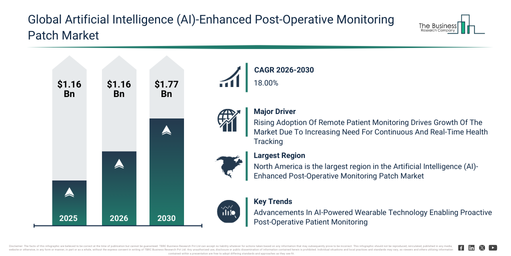
    The market for AI-enhanced post-operative monitoring patches has seen rapid expansion in recent years. Projections indicate an increase from $2.22 billion in 2025 to $2.63 billion in 2026, achieving a compound annual growth rate (CAGR) of 18.3%. Historical growth has been driven by factors such as a rise in surgical procedure volumes, greater use of wearable medical sensors, efforts to lower hospital readmission rates, an uptick in outpatient surgeries, and early-stage adoption of digital health technologies.

    The market for artificial intelligence-enhanced post-operative monitoring patches is anticipated to experience swift expansion over the coming years. By 2030, its value is projected to reach $5.11 billion, driven by a compound annual growth rate (CAGR) of 18.0%. This forecasted growth is fueled by factors such as AI-driven predictive recovery analytics, the broadening of remote patient monitoring initiatives, a growing preference for care delivered at home, seamless integration with hospital information systems, and a rising need for instantaneous alerts. Among the key developments shaping this period are continuous remote patient monitoring, early identification of complications after surgery, wireless wearable devices for tracking recovery, data-informed decisions for hospital discharge, and the provision of postoperative care within home environments.

    Download A Free Sample Report For Comprehensive Market Insights:

    https://www.thebusinessresearchcompany.com/sample.aspx?id=28919&type=smp

    Artificial Intelligence (AI)-Enhanced Post-Operative Monitoring Patch Market Expansion Supported By Key Demand Factors

    The growing need for remote patient monitoring is anticipated to drive the expansion of the artificial intelligence (AI)-enhanced post-operative monitoring patch market in the coming period. Remote patient monitoring (RPM) involves using digital tools to collect patient health information from a distance and share it with healthcare professionals for continuous evaluation and care management. The adoption of RPM is rising, largely due to the increasing occurrence of chronic conditions that demand ongoing, real-time health surveillance to enhance patient outcomes and minimize hospital visits. AI-enabled post-operative monitoring patches support RPM by consistently assessing patients’ vital signs to identify potential complications early, facilitating prompt medical action and lowering readmission rates. For example, in August 2025, the Department of Health and Human Services, a U.S. government agency, reported that nearly 1 million enrollees utilized remote patient monitoring in 2024, marking a 27 percent rise compared to 2023. Consequently, the heightened demand for remote patient monitoring is fueling growth in the artificial intelligence (AI)-enhanced post-operative monitoring patch market.

    #Artificial Intelligence (AI)-Enhanced Post-Operative Monitoring Patch Market Segment Landscape And Growth Potential

    The artificial intelligence (ai)-enhanced post-operative monitoring patch market covered in this report is segmented –

    1) By Product Type: Wearable Patches, Disposable Patches, Reusable Patches

    2) By Distribution Channel: Online, Offline

    3) By Application: Cardiac Monitoring, Respiratory Monitoring, Temperature Monitoring, Mobility Monitoring, Others Applications

    4) By End-User: Hospitals, Ambulatory Surgical Centers, Home Care Settings, Others End-Users

    Subsegments:

    1) By Wearable Patches: Vital Sign Monitoring Patch, Cardiac Monitoring Patch, Temperature Monitoring Patch

    2) By Disposable Patches: Single Use Postoperative Patch, Adhesive Biosensor Patch, Sterile Surgical Recovery Patch

    3) By Reusable Patches: Rechargeable Smart Patch, Washable Sensor Patch

    Artificial Intelligence (AI)-Enhanced Post-Operative Monitoring Patch Market Growth Trends Influencing Competitive Dynamics

    Key players in the artificial intelligence (AI)-integrated post-surgery monitoring patch industry are concentrating on creating cutting-edge solutions, particularly wearable gadgets, that empower users to actively manage their health. These wearable devices are electronic accessories placed on the body that gather and analyze information about fitness, health, or routine activities. As an example, in November 2023, BioIntelliSense, a biotechnology firm based in the United States, in collaboration with UC Davis Health, an American medical facility, introduced a continuous surveillance initiative for patients undergoing bone marrow transplants. This program incorporates the FDA-approved BioButton wearable, which is paired with AI-driven analytics and a clinical intelligence platform to detect early shifts in vital signs, facilitating prompt medical interventions. This state-of-the-art postoperative monitoring patch captures up to 1,440 vital sign measurements per patient each day, aiding in the identification of potential issues following surgery. Affixed to the left upper chest area, it persistently tracks essential physiological metrics like heart rate, respiratory rate, and skin temperature. Through artificial intelligence algorithms, the system provides intelligent notifications and clear graphical insights, fostering proactive and well-informed postsurgical patient care.

    Artificial Intelligence (AI)-Enhanced Post-Operative Monitoring Patch Market Competitive Landscape: Who Are The Leading Companies?

    Major companies operating in the artificial intelligence (ai)-enhanced post-operative monitoring patch market are Medtronic PLC, Koninklijke Philips N V, Masimo Corporation, ZOLL Medical Corporation, iRhythm Technologies Inc, VitalConnect Inc, BioIntelliSense Inc, Biotricity Inc, Vivalink Inc, Blue Spark Technologies Inc, Biobeat Technologies Ltd, SmartCardia SA, Current Health Ltd, Isansys Lifecare Ltd, Sensium Healthcare Ltd, Mintti Health Pvt Ltd, SmartQare Technologies Pvt Ltd, Pulsify Medical, WearOptimo Ltd, Crely Healthcare Pvt Ltd, Epicore Biosystems Inc

    Access The Complete Artificial Intelligence (AI)-Enhanced Post-Operative Monitoring Patch Market Report:

    https://www.thebusinessresearchcompany.com/report/artificial-intelligence-ai-enhanced-post-operative-monitoring-patch-global-market-report

    Artificial Intelligence (AI)-Enhanced Post-Operative Monitoring Patch Market Largest Region By Revenue And Market Share

    North America was the largest region in the artificial intelligence (AI)-enhanced post-operative monitoring patch market in 2025. Asia-Pacific is expected to be the fastest-growing region in the forecast period. The regions covered in the artificial intelligence (AI)-enhanced post-operative monitoring patch market report are Asia-Pacific, South East Asia, Western Europe, Eastern Europe, North America, South America, Middle East, Africa.

    Access a Customized Artificial Intelligence (AI)-Enhanced Post-Operative Monitoring Patch Market Report for Deeper Competitive Insights

    https://www.thebusinessresearchcompany.com/customise?id=28919&type=smp

    Get in touch with us:

    The Business Research Company: https://www.thebusinessresearchcompany.com/

    Americas: +1 310-496-7795

    Asia: +44 7882 955267 & +91 8897263534

    Europe: +44 7882 955267

    Email us at: marketing@tbrc.info

    Follow us on:

    LinkedIn: https://in.linkedin.com/company/the-business-research-company

    YouTube: https://www.youtube.com/channel/UC24_fI0rV8cR5DxlCpgmyFQ

    Global Market Model: https://www.thebusinessresearchcompany.com/global-market-model