Category: Medical Equipment

  • Fifth Generation (5G) Remote Orthopedic Robot Surgery Market Expected To Reach $5.03 Billion By 2030 As Growth Accelerates At 26.5% CAGR

    Fifth Generation (5G) Remote Orthopedic Robot Surgery Market Expected To Reach $5.03 Billion By 2030 As Growth Accelerates At 26.5% CAGR

    Delivering more actionable and strategically valuable research, The Business Research Company’s 2026 market reports feature market attractiveness analysis, total addressable market evaluation, company benchmarking matrices, interactive Excel dashboards, expanded supply chain intelligence, emerging startup coverage, and detailed product insights.

    Fifth Generation (5G) Remote Orthopedic Robot Surgery Market Value Expansion And Long-Term Growth Outlook

    The market for fifth-generation (5G) remote orthopedic robot surgery has seen explosive expansion in recent years. Valued at $1.55 billion in 2025, it is projected to reach $1.96 billion by 2026, reflecting a compound annual growth rate (CAGR) of 26.8%. This historic growth has been driven by an increasing incidence of orthopedic disorders, early implementation of robotic surgical systems, a growing preference for minimally invasive procedures, a scarcity of experienced surgeons, and the ongoing digital transformation within hospitals.

    The market for fifth-generation (5G) remote orthopedic robot surgery is projected to experience exponential growth over the coming years. By 2030, its value is anticipated to reach $5.03 billion, reflecting a compound annual growth rate (CAGR) of 26.5%. This upward trajectory during the forecast period is driven by factors such as the expansion of 5G infrastructure, the rise of remote healthcare models, increased healthcare investments, a growing demand for precision surgery, and an aging population. Key trends shaping this period include the broadening of remote orthopedic procedures, enhancements in real-time robotic precision, cross-border surgical collaborations, advanced surgeon training facilitated by remote platforms, and the integration of multi-robot surgical suites.

    Download A Free Sample Report For Comprehensive Market Insights:

    https://www.thebusinessresearchcompany.com/sample.aspx?id=28220&type=smp

    Fifth Generation (5G) Remote Orthopedic Robot Surgery Market Development Factors: Which Trends Are Supporting Demand?

    The upward trend in musculoskeletal disorders is anticipated to drive the expansion of the fifth-generation (5G) remote orthopedic robot surgery market in the coming period. Musculoskeletal disorders encompass conditions that impact bones, joints, muscles, and connective tissues, leading to pain and functional impairments across the body. This rising incidence is largely fueled by aging populations in developed nations, where age-related deterioration in joints and bones heightens the risk of disorders like osteoarthritis, osteoporosis, and chronic back pain. 5G remote orthopedic robot surgery offers precise, minimally invasive treatments that enhance patient outcomes and facilitate quicker recovery for those suffering from such conditions. For example, in January 2024, data from the Office for Health Improvement and Disparities, a UK government agency, revealed that 18.4% of individuals aged 16 and older reported a long-term musculoskeletal condition in 2023, a slight increase from 17.6% in 2022. These issues were less frequently reported by men (15.8%) compared to women (20.9%). As a result, the growing prevalence of musculoskeletal disorders is fueling the growth of the fifth-generation (5G) remote orthopedic robot surgery market.

    The growing demand for minimally invasive orthopedic procedures is expected to accelerate the growth of the fifth-generation (5G) remote orthopedic robot surgery market moving forward. These procedures involve surgical approaches that employ smaller incisions and specialized tools to minimize tissue damage and speed up patient recovery when compared to conventional open surgery. This increasing demand is driven by an aging worldwide population that more frequently requires orthopedic care, as older individuals face a higher likelihood of joint degeneration, fractures, and musculoskeletal issues that require surgical intervention. Fifth-generation (5G) remote orthopedic robot surgery improves these minimally invasive techniques by utilizing ultra-low latency and high-bandwidth connectivity, allowing surgeons to execute precise, remotely controlled operations with real-time haptic feedback and superior visualization. This enables smaller incisions, less tissue trauma, and greater surgical accuracy, even when the surgeon is located far from the patient. For instance, in November 2024, the American Academy of Orthopaedic Surgeons, a US-based orthopedic body, reported that with over 4 million hip and knee arthroplasty procedures logged, the AJRR has become the largest orthopedic registry based on annual procedure volume. By the end of 2023, 631 out of 1,447 sites (44%) had submitted PROMs, representing a 27% rise in participating sites compared to the prior year. Consequently, the escalating demand for minimally invasive orthopedic procedures is propelling the growth of the fifth-generation (5G) remote orthopedic robot surgery market.

    Fifth Generation (5G) Remote Orthopedic Robot Surgery Market Segment Analysis: What Are The Major Market Categories?

    The fifth generation (5g) remote orthopedic robot surgery market covered in this report is segmented –

    1) By Component: Robotic Systems, Fifth Generation (5G) Communication Devices, Software, Services

    2) By Application: Joint Replacement, Spine Surgery, Trauma Surgery, Sports Medicine, Other Applications

    3) By End-User: Hospitals, Ambulatory Surgical Centers, Specialty Clinics, Other End-Users

    Subsegments:

    1) By Robotic Systems: Surgical Robots, Navigation Systems, Imaging Robots, Rehabilitation Robots

    2) By Fifth Generation (5G) Communication Devices: Network Hardware, Communication Modules, Antenna Systems, Monitoring Devices

    3) By Software: Surgical Planning Software, Imaging And Visualization Software, Data Management Software, Artificial Intelligence Software

    4) By Services: Installation Services, Training Services, Maintenance Services, Technical Support Services

    Fifth Generation (5G) Remote Orthopedic Robot Surgery Market Transformation Trends: Which Innovations Are Driving Change?

    Major players within the fifth generation (5G) remote orthopedic robot surgery sector are concentrating on creating innovative solutions, such as the incorporation of cutting-edge imaging technologies, to boost surgical accuracy, facilitate live remote direction, lower operational dangers, and enhance patient results. The integration of sophisticated imaging technologies involves merging medical imaging tools with surgical robots to offer real-time visualization of the patient’s anatomy, enabling surgeons to execute highly accurate, minimally invasive operations while decreasing mistakes and surgical hazards. For example, in May 2023, Shanghai MicroPort MedBot (Group) Co. Ltd., a manufacturer based in China, secured market clearance from Brazil’s ANVISA for its Honghu orthopedic surgical robot, marketed overseas as SkyWalker. This robot combines 5G remote capabilities with CT-guided imaging to aid surgeons in performing highly precise joint replacement surgeries, including minimally invasive procedures. It utilizes robotic arms to improve accuracy, enables detailed preoperative surgical planning, and can manage challenging scenarios like severe rheumatoid arthritis or post-fracture surgeries. Having gained approvals across multiple regions and proven through hundreds of robotic-assisted surgeries, the robot demonstrates dependability and is experiencing growing adoption in diverse markets.

    Fifth Generation (5G) Remote Orthopedic Robot Surgery Market Leading Companies Driving Competitive Growth

    Major companies operating in the fifth generation (5g) remote orthopedic robot surgery market are Huawei Technologies Co. Ltd., Johnson & Johnson, Medtronic plc, Stryker Corporation, Zimmer Biomet Holdings Inc., Intuitive Surgical Inc., Smith & Nephew plc, Globus Medical Inc., Renishaw plc, Brainlab AG, CMR Surgical Limited, Vicarious Surgical Inc., Curexo Inc., Shanghai MicroPort MedBot (Group) Co. Ltd., Avatera Medical GmbH, Virtual Incision Corporation, Moon Surgical SAS, EndoQuest Robotics Inc., Medicaroid Corporation, Galen Robotics Inc.

    Access The Complete Fifth Generation (5G) Remote Orthopedic Robot Surgery Market Report:

    https://www.thebusinessresearchcompany.com/report/fifth-generation-5g-remote-orthopedic-robot-surgery-global-market-report

    Fifth Generation (5G) Remote Orthopedic Robot Surgery Market Global Footprint: Which Region Holds Market Leadership?

    North America was the largest region in the fifth generation (5G) remote orthopedic robot surgery market in 2025. The regions covered in the fifth generation (5g) remote orthopedic robot surgery market report are Asia-Pacific, South East Asia, Western Europe, Eastern Europe, North America, South America, Middle East, Africa.

    Access a Customized Fifth Generation (5G) Remote Orthopedic Robot Surgery Market Report for Deeper Competitive Insights

    https://www.thebusinessresearchcompany.com/sample.aspx?id=28121&type=smp

    Get in touch with us:

    The Business Research Company: https://www.thebusinessresearchcompany.com/

    Americas: +1 310-496-7795

    Asia: +44 7882 955267 & +91 8897263534

    Europe: +44 7882 955267

    Email us at: marketing@tbrc.info

    Follow us on:

    LinkedIn: https://in.linkedin.com/company/the-business-research-company

    YouTube: https://www.youtube.com/channel/UC24_fI0rV8cR5DxlCpgmyFQ

    Global Market Model: https://www.thebusinessresearchcompany.com/global-market-model
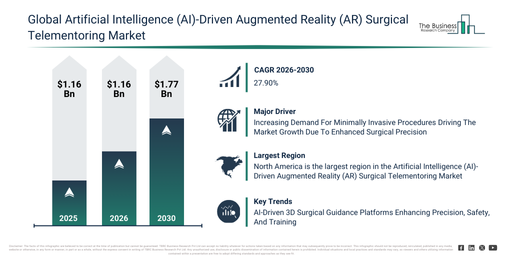
  • Artificial Intelligence (AI)-Driven Augmented Reality (AR) Surgical Telementoring Market Set To Grow From $2.19 Billion In 2026 To $5.87 Billion By 2030 At A CAGR Of 27.9%

    Artificial Intelligence (AI)-Driven Augmented Reality (AR) Surgical Telementoring Market Set To Grow From $2.19 Billion In 2026 To $5.87 Billion By 2030 At A CAGR Of 27.9%

    Enhanced with market attractiveness analysis, total addressable market evaluation, company benchmarking matrices, interactive Excel dashboards, expanded supply chain intelligence, emerging startup coverage, and detailed product insights, The Business Research Company’s 2026 market reports deliver more actionable and strategically valuable research.

    Artificial Intelligence (AI)-Driven Augmented Reality (AR) Surgical Telementoring Market Expected To Reach $5.87 Billion By 2030 At 27.9%% CAGR

    The market for artificial intelligence-powered augmented reality surgical telementoring has experienced explosive expansion in recent years. Valued at $1.71 billion in 2025, it is projected to reach $2.2 billion by 2026, reflecting a compound annual growth rate (CAGR) of 28.2%. This historic surge has been driven by a scarcity of experienced surgeons, the rising adoption of telemedicine, a growing need for surgical training, enhancements in connectivity, and the launch of experimental telementoring programs.

    The market for artificial intelligence-powered augmented reality surgical telementoring is anticipated to experience substantial expansion over the coming years. Projections indicate it will reach a value of $5.88 billion by 2030, reflecting a compound annual growth rate (CAGR) of 27.9%. Several factors are expected to drive this growth during the forecast period, including the expansion of 5G networks, the increasing adoption of AI-guided surgical techniques, the global push for surgical education, improved access to healthcare in rural areas, and a rising demand for complex surgical procedures. Key trends shaping this period encompass enhanced remote surgical collaboration, real-time visualization during operations, better access to specialists in underserved regions, more precise surgical guidance, and improved training methods for surgeons.

    Download A Free Sample Report For Comprehensive Market Insights:

    https://www.thebusinessresearchcompany.com/sample.aspx?id=28911&type=smp

    Artificial Intelligence (AI)-Driven Augmented Reality (AR) Surgical Telementoring Market Industry Drivers: What Is Driving Revenue Growth?

    The rising preference for minimally invasive techniques is set to accelerate expansion within the artificial intelligence (AI)-powered augmented reality (AR) surgical telementoring market moving forward. These techniques involve small cuts and specialized tools that minimize trauma, discomfort, and healing time when contrasted with conventional open surgeries. An aging demographic, which increasingly requires surgical interventions and prioritizes quicker recoveries and shorter hospital stays, fuels the growing appetite for such procedures. Advanced minimally invasive methods depend on sophisticated guidance systems that integrate AI and AR to deliver live visualization and remote expert support during intricate operations, thereby boosting surgical accuracy, lowering mistakes, and enhancing patient outcomes. For example, the British Association of Aesthetic Plastic Surgeons reported in April 2025 that cosmetic surgical procedures rose by 5% between 2023 and 2024, reaching 27,462 procedures in 2024. Consequently, the escalating demand for minimally invasive procedures is propelling the artificial intelligence (AI)-driven augmented reality (AR) surgical telementoring market forward.

    Artificial Intelligence (AI)-Driven Augmented Reality (AR) Surgical Telementoring Market Segment Breakdown: Which Categories Generate The Most Revenue?

    The artificial intelligence (ai)-driven augmented reality (ar) surgical telementoring market covered in this report is segmented –

    1) By Component: Hardware, Software, Services

    2) By Deployment Mode: On-Premises, Cloud-Based

    3) By Application: General Surgery, Orthopedic Surgery, Neurosurgery, Cardiovascular Surgery, Other Applications

    4) By End-User: Hospitals, Ambulatory Surgical Centers, Specialty Clinics, Other End-Users

    Subsegments:

    1) By Hardware: Surgical Imaging Cameras, Depth Sensing Modules, Optical Tracking Systems, Electromagnetic Tracking Systems, Head Mounted Displays, Three Dimensional Monitors, Spatial Computing Sensors, Graphics Processing Unit Accelerators

    2) By Software: Real Time Computer Vision Algorithms, Three Dimensional Reconstruction Engines, Spatial Registration And Mapping, Annotation And Telestration Tools, Streaming And Telepresence Platform, Workflow Orchestration And Case Management

    3) By Services: Site Assessment And Readiness Planning, Installation And Commissioning, Clinical Workflow Design And Optimization, Staff Training And Credentialing Support, Remote Proctoring Program Setup

    #Artificial Intelligence (AI)-Driven Augmented Reality (AR) Surgical Telementoring Market Growth Trends: What Is Influencing The Future Outlook?

    Major industry players in the artificial intelligence (AI)-driven augmented reality (AR) surgical telementoring market are concentrating on advancing offerings like real-time 3D surgical guidance platforms, aimed at boosting surgical accuracy, cutting radiation exposure, and enhancing training capabilities. These platforms, powered by AI and AR, give surgeons dynamic, segmented views of patient anatomy during operations, supporting informed choices and immediate assessment of surgical outcomes. A notable example is Proprio, a US-based AI-powered surgical technology firm, which in April 2025 launched its Paradigm platform, equipped with AI-guided visualization and data-driven analytics. By merging multimodal data sources such as CT scans, MRIs, and operative plans, Paradigm creates live 3D anatomical mapping, comparable to a navigation system for surgery. This platform adjusts to bodily changes, offering surgeons tools and insights to enhance results. During its first 50 procedures, surgical teams placed hundreds of implants with favorable outcomes across diverse complex cases, from scoliosis to collapsed discs. Paradigm decreased reliance on radiation-based imaging by an average factor of 10, enabling both seasoned surgeons and less experienced residents to navigate intricate anatomical structures safely and efficiently to meet their goals.

    Artificial Intelligence (AI)-Driven Augmented Reality (AR) Surgical Telementoring Market Key Players And Strategic Industry Positioning

    Major companies operating in the artificial intelligence (ai)-driven augmented reality (ar) surgical telementoring market are Microsoft Corporation, Johnson & Johnson, Medtronic plc, Siemens Healthineers AG, Stryker Corporation, Koninklijke Philips NV, Intuitive Surgical Inc, Olympus Corporation, Karl Storz SE & Co KG, Osso VR Inc, Augmedics Ltd, VirtaMed AG, Surgical Theater Inc, Medivis Inc, Vuzix Corporation, XACT Robotics Inc, FundamentalVR Ltd, SentiAR Inc, EchoPixel Inc, VSI HoloMedicine.

    Access The Complete Artificial Intelligence (AI)-Driven Augmented Reality (AR) Surgical Telementoring Market Report:

    https://www.thebusinessresearchcompany.com/report/artificial-intelligence-ai-driven-augmented-reality-ar-surgical-telementoring-global-market-report

    Artificial Intelligence (AI)-Driven Augmented Reality (AR) Surgical Telementoring Market Regional Distribution: Which Areas Drive Market Expansion?

    North America was the largest region in the artificial intelligence (AI)-driven augmented reality (AR) surgical telementoring market in 2025. The regions covered in the artificial intelligence (AI)-driven augmented reality (ar) surgical telementoring market report are Asia-Pacific, South East Asia, Western Europe, Eastern Europe, North America, South America, Middle East, Africa.

    Access a Customized Artificial Intelligence (AI)-Driven Augmented Reality (AR) Surgical Telementoring Market Report for Deeper Competitive Insights

    https://www.thebusinessresearchcompany.com/sample.aspx?id=25698&type=smp

    Get in touch with us:

    The Business Research Company: https://www.thebusinessresearchcompany.com/

    Americas: +1 310-496-7795

    Asia: +44 7882 955267 & +91 8897263534

    Europe: +44 7882 955267

    Email us at: marketing@tbrc.info

    Follow us on:

    LinkedIn: https://in.linkedin.com/company/the-business-research-company

    YouTube: https://www.youtube.com/channel/UC24_fI0rV8cR5DxlCpgmyFQ

    Global Market Model: https://www.thebusinessresearchcompany.com/global-market-model
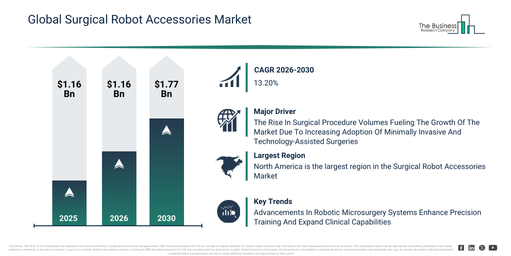
  • Surgical Robot Accessories Market Opportunities Are Emerging Beyond Traditional Growth Areas

    Surgical Robot Accessories Market Opportunities Are Emerging Beyond Traditional Growth Areas

    Through market attractiveness analysis, total addressable market evaluation, company benchmarking matrices, interactive Excel dashboards, expanded supply chain intelligence, emerging startup coverage, and detailed product insights, The Business Research Company’s 2026 market reports provide more actionable and strategically valuable research.

    #Surgical Robot Accessories Market Size And Revenue Forecast Through 2030

    The market for surgical robot accessories has experienced swift expansion in recent years. Projected to rise from $5.61 billion in 2025 to $6.44 billion in 2026, this growth reflects a robust compound annual growth rate (CAGR) of 14.6%. Several factors have driven this historical increase, including the broadening of robotic-assisted surgery initiatives, a greater preference for minimally invasive robotic techniques, heightened financial backing in surgical robotics, an expanding array of robotic surgery systems, and continued progress in the design of robotic instruments.

    The surgical robot accessories market is forecasted to experience robust expansion over the coming years. By 2030, it is projected to reach a value of $10.55 billion, driven by a 13.2% compound annual growth rate. This upward trajectory is fueled by factors such as a greater uptake of next-generation robotic systems, an increased number of multi-specialty robotic interventions, a heightened emphasis on surgical automation, a broader performance of robotic procedures in outpatient settings, and the growing incorporation of AI-powered instruments into operative workflows. Key developments shaping the period include a surge in demand for advanced robotic surgical equipment, a notable shift toward precision-focused accessory designs, a deeper integration of imaging and visualization hardware into robotic systems, the emergence of modular, customizable accessory options, and a strengthened focus on achieving superior surgical outcomes.

    Download A Free Sample Report For Comprehensive Market Insights:

    https://www.thebusinessresearchcompany.com/sample.aspx?id=15939&type=smp

    #Surgical Robot Accessories Market Growth Factors: Which Forces Are Supporting Market Expansion?

    The forecasted growth of the surgical robot accessories market is being driven by an increasing volume of surgical procedures. These medical interventions, performed by surgeons to diagnose, treat, or manage a wide range of diseases, injuries, and health conditions, are becoming more common. This rise in surgical activity can be attributed to a higher prevalence of chronic illnesses, ongoing innovations in medical technology, and a global movement toward less invasive surgical methods. By improving precision, visualization, and overall operational efficiency, surgical robot accessories play a crucial role in supporting these complex operations, allowing surgeons to achieve greater accuracy than with traditional techniques. As reported by the International Society of Aesthetic Plastic Surgery, Inc., a US-based professional medical organization, in June 2025, approximately 17,415,678 surgical and 20,535,686 non-surgical procedures were performed worldwide. Consequently, the expanding number of surgical procedures is fueling growth in the surgical robot accessories market.

    Surgical Robot Accessories Market Segmentation: How Is The Market Structured Across Key Categories?

    The surgical robot accessories market covered in this report is segmented –

    1) By Type: Instrument, Accessories

    2) By Application: Orthopedics, Neurology, Urology, Gynecology, Other Applications

    3) By End-Use: Inpatient, Outpatient

    Subsegments:

    1) By Instrument: Surgical Tools, Robotic Arms, Endoscopic Tools, Manipulators

    2) By Accessories: Cables, Power Supplies, Cameras, Drivetrains, Control Units

    Surgical Robot Accessories Market Industry Trends: What Changes Are Reshaping Demand?

    Key players in the surgical robot accessories industry are prioritizing the creation of cutting-edge innovations, including robotic microsurgery simulators, to boost microsurgical precision and refine surgeon training via robotic technologies. These simulators are specialized training tools that recreate complex microsurgical operations using robotic systems, allowing surgeons to practice precise tissue handling within a controlled and lifelike environment. In April 2024, for example, MMI Inc., a medical device company based in the United States, secured approval from the U.S. Food and Drug Administration (FDA) for the Symani Surgical System. As the only robotic system commercially accessible in the U.S. for reconstructive microsurgery, it is engineered for soft tissue manipulation and microsurgical tasks that involve scaling the surgeon’s motions. This platform seeks to meet specialized surgical demands, such as reconnecting blood vessels, repairing lymphatic systems, and handling other complex open surgeries, which could potentially increase the number of physicians capable of executing these procedures and enhance patient access to advanced robot-assisted care.

    Surgical Robot Accessories Market Competitive Landscape And Leading Companies

    Major companies operating in the surgical robot accessories market are Johnson & Johnson, Stryker Corporation, Titan Medical Inc., Zimmer Biomet Holdings Inc., Smith & Nephew plc, Intuitive Surgical Inc., MicroPort Scientific Corporation, Renishaw plc, CMR Surgical Limited, Noah Medical Inc., THINK Surgical Inc., Vicarious Surgical Inc., Distalmotion SA, OmniGuide Holdings Inc., CUREXO Inc., Human Xtensions Ltd., Moon Surgical Inc., Verb Surgical Inc., Corindus Vascular Robotics Inc., AdEchoTech, Biobot Surgical Pte Ltd., Medicaroid Corporation, Asensus Surgical Inc.

    Access The Complete Surgical Robot Accessories Market Report:

    https://www.thebusinessresearchcompany.com/report/surgical-robot-accessories-global-market-report

    Surgical Robot Accessories Market Leading Geography: Which Region Generates The Most Revenue?

    North America was the largest region in the surgical robot accessories market in 2025. Asia-Pacific is expected to be the fastest-growing region in the forecast period. The regions covered in the surgical robot accessories market report are Asia-Pacific, South East Asia, Western Europe, Eastern Europe, North America, South America, Middle East, Africa.

    Access a Customized Surgical Robot Accessories Market Report for Deeper Competitive Insights

    https://www.thebusinessresearchcompany.com/customise?id=15939&type=smp

    Get in touch with us:

    The Business Research Company: https://www.thebusinessresearchcompany.com/

    Americas: +1 310-496-7795

    Asia: +44 7882 955267 & +91 8897263534

    Europe: +44 7882 955267

    Email us at: marketing@tbrc.info

    Follow us on:

    LinkedIn: https://in.linkedin.com/company/the-business-research-company

    YouTube: https://www.youtube.com/channel/UC24_fI0rV8cR5DxlCpgmyFQ

    Global Market Model: https://www.thebusinessresearchcompany.com/global-market-model
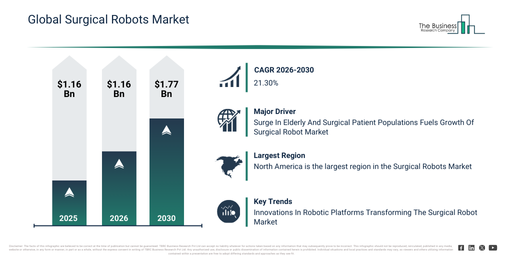
  • Surgical Robots Market Expansion Is Opening New Pathways For Strategic Investment

    Surgical Robots Market Expansion Is Opening New Pathways For Strategic Investment

    Delivering more actionable and strategically valuable research, The Business Research Company’s 2026 market reports feature market attractiveness analysis, total addressable market evaluation, company benchmarking matrices, interactive Excel dashboards, expanded supply chain intelligence, emerging startup coverage, and detailed product insights.

    Surgical Robots Market Growth From $13.51 Billion In 2026 To $29.22 Billion By 2030 At A CAGR Of 21.3%%

    The market for surgical robots has experienced exponential expansion in recent years. Its value is projected to rise from $11.15 billion in 2025 to $13.52 billion in 2026, reflecting a compound annual growth rate (CAGR) of 21.3%. Several factors drove this historic growth, including a growing need for minimally invasive surgeries, the broadening of specialized surgical fields, surgeons’ increasing inclination toward robotic support, the accessibility of sophisticated imaging tools, and the enhancement of hospital surgical capabilities.

    The surgical robots market is projected to experience rapid expansion over the next several years, reaching a value of $29.23 billion by 2030 with a compound annual growth rate (CAGR) of 21.3%. This anticipated growth during the forecast period is driven by rising investments in robotic surgery platforms, broader utilization across emerging surgical fields, the growth of outpatient robotic procedures, an intensified emphasis on surgical precision and safety, and deeper integration of digital surgery ecosystems. Key trends shaping this period include the growing preference for robot-assisted minimally invasive surgery, the incorporation of AI-guided surgical systems, increased reliance on advanced imaging and visualization technologies, the development of modular and specialty-specific surgical robots, and a sustained focus on improving accuracy and patient outcomes.

    Download A Free Sample Report For Comprehensive Market Insights:

    https://www.thebusinessresearchcompany.com/sample.aspx?id=10032&type=smp

    Surgical Robots Market Demand Drivers: What Is Fueling Industry Growth?

    The growing numbers of elderly individuals and patients undergoing surgery are anticipated to drive expansion in the surgical robot market moving forward. This demographic shift significantly influences both the adoption and advancement of surgical robots. By enabling minimally invasive procedures, these robots help decrease patient trauma, accelerate recovery periods, and lower the risk of complications. Such advantages are especially vital for older adults, as they contribute to reduced mortality and morbidity rates. For example, the World Health Organization (WHO), an intergovernmental agency headquartered in Switzerland, reports that by 2030, one in six people worldwide will be aged 60 or above, with this age group growing from 1 billion in 2020 to 1.4 billion by 2030, and eventually reaching 2.1 billion by 2050. Additionally, the International Society of Aesthetic Plastic Surgery (ISAPS), a US-based professional organization for board-certified aesthetic plastic surgeons, noted that in 2023, the overall count of surgical and non-surgical procedures climbed to 34.9 million, marking a 3.4% increase. Consequently, the rising elderly and surgical patient populations are propelling the surgical robot market forward.

    Surgical Robots Market Segmentation Trends And Revenue Drivers

    The surgical robots market covered in this report is segmented –

    1) By Component: Systems, Accessories, Services

    2) By Surgery Type: Gynecology Surgery, Urology Surgery, Neurosurgery, Orthopedic Surgery, General Surgery, Other Surgeries

    3) By End-Users: Clinic, Hospital, Ambulatory Care Centers, Other End Users

    Subsegments:

    1) By Systems: Robotic Surgical Systems, Robotic Arm Systems, Tele-surgery Systems, Modular Robotic Systems

    2) By Accessories: Surgical Instruments, Camera Systems, Console And Control Units, Power Supply Units

    3) By Services: Installation And Training Services, Maintenance And Repair Services, Technical Support Services, Upgrades And Software Services

    Surgical Robots Market Innovation Trends: Which Developments Are Transforming The Industry?

    Major players within the surgical robotics sector are advancing cutting-edge solutions like robotic platforms to broaden their customer reach, boost sales, and drive revenue growth. A robotic platform is defined as a physical or digital framework that serves as a base for hosting and integrating robotic systems. For example, in May 2023, Robocath, a medical robotics firm based in France, introduced the R-One+ system designed for coronary angioplasties. What makes the R-One+ robotic solution stand out is its capability not only to reduce radiation-induced harm but also to improve the safety and simplicity of medical interventions. This groundbreaking technology enables interventional cardiologists to perform coronary angioplasties by controlling devices through an integrated command unit located either within the catheterization lab or the control room. This dual functionality delivers two key benefits: first, it protects both the cardiologist and the medical staff from radiation-related injuries, and second, it simplifies and secures the percutaneous coronary intervention (PCI) process. The R-One+ allows cardiologists to execute precise hand movements with greater accuracy, promoting a more ergonomic working environment and ultimately improving outcomes for the patient.

    #Surgical Robots Market Industry Leaders: Which Organizations Are Driving Competition?

    Major companies operating in the surgical robots market are Stryker Corporation, Medrobotics Corporation, Smith & Nephew plc, TransEnterix Inc., Renishaw plc, Intuitive Surgical Inc., Medtronic plc, THINK Surgical Inc., Zimmer Biomet Holdings Inc., Johnson & Johnson, Titan Medical Inc., Mazor Robotics Ltd., KUKA Aktiengesellschaft, Avatera Medical GmbH, Corindus Vascular Robotics Inc., MicroSure (Pty) Ltd, Asensus Surgical Inc., Siemens Healthcare GmbH, CMR Surgical Ltd., Auris Health Inc., Verb Surgical Inc., OMNIlife Science Inc., Vicarious Surgical Inc., Microbot Medical Inc., Virtual Incision Corporation, Memic Innovative Surgery Ltd., XACT Robotics Ltd., EndoMaster Pte. Ltd., MST Medical Surgery Technologies Ltd., Medtech SA

    Access The Complete Surgical Robots Market Report:

    https://www.thebusinessresearchcompany.com/report/surgical-robots-global-market-report

    Surgical Robots Market Regional Outlook: Where Are The Largest Opportunities Located?

    North America was the largest region in the surgical robots market in 2025. Asia-Pacific is expected to be the fastest-growing region in the global surgical robots market report forecast period. The regions covered in the surgical robots market report are Asia-Pacific, South East Asia, Western Europe, Eastern Europe, North America, South America, Middle East, Africa.

    Access a Customized Surgical Robots Market Report for Deeper Competitive Insights

    https://www.thebusinessresearchcompany.com/customise?id=10032&type=smp

    Get in touch with us:

    The Business Research Company: https://www.thebusinessresearchcompany.com/

    Americas: +1 310-496-7795

    Asia: +44 7882 955267 & +91 8897263534

    Europe: +44 7882 955267

    Email us at: marketing@tbrc.info

    Follow us on:

    LinkedIn: https://in.linkedin.com/company/the-business-research-company

    YouTube: https://www.youtube.com/channel/UC24_fI0rV8cR5DxlCpgmyFQ

    Global Market Model: https://www.thebusinessresearchcompany.com/global-market-model
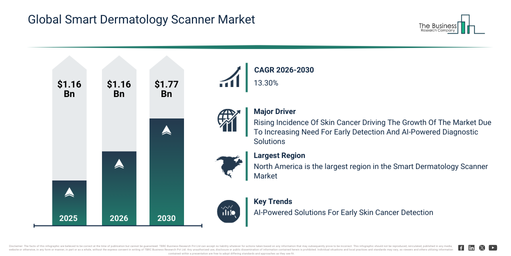
  • Smart Dermatology Scanner Market Trends Are Creating New Opportunities For Industry Leaders

    Smart Dermatology Scanner Market Trends Are Creating New Opportunities For Industry Leaders

    Enhanced with market attractiveness analysis, total addressable market evaluation, company benchmarking matrices, interactive Excel dashboards, expanded supply chain intelligence, emerging startup coverage, and detailed product insights, The Business Research Company’s 2026 market reports deliver more actionable and strategically valuable research.

    Smart Dermatology Scanner Market Expansion Outlook: What Revenue Opportunities Lie Ahead?

    The market for smart dermatology scanners has experienced swift expansion in recent years. Its value is projected to rise from $1.48 billion in 2025 to $1.68 billion in 2026, reflecting a compound annual growth rate (CAGR) of 13.6%. This historic growth has been driven by factors such as an increasing prevalence of skin cancer, a growing need for early detection, a shortage of dermatology specialists, the expansion of cosmetic dermatology, and ongoing advancements in imaging technologies.

    The smart dermatology scanner market is projected to experience significant expansion over the coming years, with its value anticipated to reach $2.77 billion by 2030, reflecting a compound annual growth rate (CAGR) of 13.3%. Several factors are expected to drive this growth in the forecast period, including enhancements in AI diagnostic precision, the emergence of skin scanners designed for home use, the increasing reach of telemedicine, growing awareness regarding preventive skincare practices, and the adoption of data-centric dermatology approaches. Key trends shaping the market’s future include AI-powered detection of skin lesions, non-invasive imaging techniques, the development of portable dermatology scanners, teledermatology diagnostic capabilities, and the rising emphasis on early detection of skin cancers.

    Download A Free Sample Report For Comprehensive Market Insights:

    https://www.thebusinessresearchcompany.com/sample.aspx?id=29193&type=smp

    Smart Dermatology Scanner Market Growth Drivers: What Factors Are Accelerating Expansion?

    The anticipated growth of the smart dermatology scanner market is being driven by the increasing prevalence of skin cancer. Skin cancer is defined as the abnormal proliferation of skin cells, typically initiated by DNA damage caused by ultraviolet (UV) radiation. Its rising frequency is attributed to heightened exposure to UV radiation from natural sunlight and artificial tanning devices. Smart dermatology scanners are employed in skin cancer care to facilitate the early detection and analysis of questionable skin lesions by utilizing AI-driven imaging and diagnostic capabilities. As an example, the American Cancer Society, a U.S.-based nonprofit focused on cancer eradication through research, education, advocacy, and support, reported in January 2025 that melanoma cases totaled 100,640 in 2024 and escalated to 104,960 in 2025. Consequently, the upward trend in skin cancer incidence is fueling the expansion of the smart dermatology scanner market.

    Smart Dermatology Scanner Market Segment Analysis Highlighting Growth Areas

    The smart dermatology scanner market covered in this report is segmented –

    1) By Product Type: Handheld Scanners, Tabletop Scanners

    2) By Technology: Artificial Intelligence, Non Artificial Intelligence

    3) By Distribution Channel: Online, Offline

    4) By Application: Skin Care Detection, Acne And Lesion Analysis

    5) By End-User: Hospitals And Clinics, Dermatology Centers

    Subsegments:

    1) By Handheld Scanners: Portable Digital Scanner, Compact Imaging Scanner, Mobile Skin Analyzer,

    2) By Tabletop Scanners: Desktop Imaging Device, Clinical Diagnostic Scanner

    Smart Dermatology Scanner Market Trends: What Is Shaping Future Industry Growth?

    Leading companies in the smart dermatology scanner market are prioritizing the creation of advanced tools, including artificial intelligence-powered diagnostic systems, to enhance the early identification of skin cancer. An AI-powered diagnostic system is a technology that leverages artificial intelligence to examine skin lesions, determine risk levels, and deliver precise guidance, consequently improving early diagnosis and patient results. For example, in March 2025, Fraunhofer HHI, a research organization based in Germany, launched an AI diagnostic system for detecting skin cancer. This solution scans a patient’s complete body in six minutes, automatically evaluating each skin irregularity and offering risk assessments without relying on manual analysis. It provides immediate evaluation of suspicious lesions while enabling clinicians to incorporate findings smoothly into patient treatment. Integrated with Fraunhofer’s digital health projects, including AI imaging, data analysis, and risk evaluation, it gives a streamlined diagnostic process. This AI-powered diagnostic system boosts early detection rates, simplifies clinical tasks, and improves patient care.

    Smart Dermatology Scanner Market Leading Companies: Who Holds Significant Market Presence?

    Major companies operating in the smart dermatology scanner market are Canfield Scientific Inc., MedX Health Corp., MolecuLight Inc., DermLite LLC, SkinVision B.V., MetaOptima Technology Inc., Caliber Imaging & Diagnostics Inc., SciBase Holding AB, Veriskin Inc., IQONIC.AI, Skin Analytics Ltd., Skinive AI SIA, Miiskin Group ApS, DermDetect SAS, DermaSensor Inc., Teleskin d.o.o., FotoFinder Systems GmbH, Barco NV, Strata Skin Sciences Inc., Mela Sciences Inc., DeepSense Medical Ltd., Spectral AI Inc.

    Access The Complete Smart Dermatology Scanner Market Report:

    https://www.thebusinessresearchcompany.com/report/smart-dermatology-scanner-global-market-report

    Smart Dermatology Scanner Market Geographic Landscape: Which Region Dominates Industry Growth?

    North America was the largest region in the smart dermatology scanner market in 2025. Asia-Pacific is expected to be the fastest-growing region in the forecast period. The regions covered in the smart dermatology scanner market report are Asia-Pacific, South East Asia, Western Europe, Eastern Europe, North America, South America, Middle East, Africa.

    Access a Customized Smart Dermatology Scanner Market Report for Deeper Competitive Insights

    https://www.thebusinessresearchcompany.com/customise?id=29193&type=smp

    Get in touch with us:

    The Business Research Company: https://www.thebusinessresearchcompany.com/

    Americas: +1 310-496-7795

    Asia: +44 7882 955267 & +91 8897263534

    Europe: +44 7882 955267

    Email us at: marketing@tbrc.info

    Follow us on:

    LinkedIn: https://in.linkedin.com/company/the-business-research-company

    YouTube: https://www.youtube.com/channel/UC24_fI0rV8cR5DxlCpgmyFQ

    Global Market Model: https://www.thebusinessresearchcompany.com/global-market-model
  • Robotic Surgical Companion Market Growth Is Reshaping Competitive Advantage Across The Industry

    Robotic Surgical Companion Market Growth Is Reshaping Competitive Advantage Across The Industry

    Through market attractiveness analysis, total addressable market evaluation, company benchmarking matrices, interactive Excel dashboards, expanded supply chain intelligence, emerging startup coverage, and detailed product insights, The Business Research Company’s 2026 market reports provide more actionable and strategically valuable research.

    Robotic Surgical Companion Market Growth Potential: How Will Market Size Change Through 2030?

    Between 2025 and 2026, the robotic surgical companion market is projected to expand from $6.9 billion to $7.86 billion, reflecting a compound annual growth rate (CAGR) of 13.8%. The market has experienced significant growth over the historic period, driven by a deficit of qualified surgeons, increasingly intricate surgical procedures, heightened demand for minimally invasive interventions, breakthroughs in robotic technology, and heightened hospital spending on cutting-edge surgical systems. This upward trajectory has been fueled by these combined factors, leading to rapid market expansion in recent years.

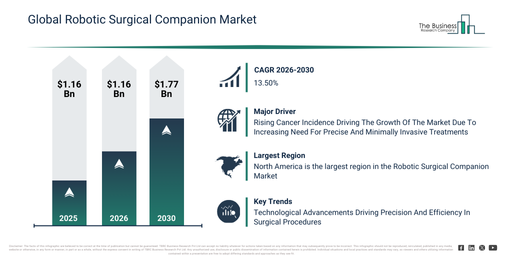
    The size of the market for robotic surgical companions is projected to experience swift expansion over the coming years. By 2030, it is anticipated to reach $13.07 billion, achieving a compound annual growth rate (CAGR) of 13.5%. This forecasted growth is driven by factors such as AI-powered surgical support, the broadening of training programs for robotic surgery, a rise in outpatient procedures, the need for accelerated patient recovery, and the incorporation of imaging systems. Key developments expected during this period include surgical operations with precision assistance, minimally invasive techniques conducted by robots, guidance and decision-making tools for surgeons, enhanced systems for surgical dexterity, and the optimization of operating room workflows.

    Download A Free Sample Report For Comprehensive Market Insights:

    https://www.thebusinessresearchcompany.com/sample.aspx?id=29182&type=smp

    Robotic Surgical Companion Market Growth Factors Supporting Long-Term Expansion

    The rising occurrence of cancer is anticipated to drive expansion in the robotic surgical companion market in the coming period. Cancer is characterized by uncontrolled cell multiplication in the body, which damages adjacent tissues and can spread to other regions. This condition is becoming more common, primarily due to unhealthy habits such as poor nutrition, physical inactivity, and tobacco use, all of which elevate the likelihood of cellular harm and unregulated growth. Robotic surgical companions play a key role in cancer care by enabling highly precise, less invasive operations that reduce damage to healthy tissue and accelerate patient recovery. As an example, in February 2024, the World Health Organization, an intergovernmental body based in Switzerland, projected that new cancer cases will surpass 35 million by 2050—a 77% increase from the roughly 20 million cases reported in 2022. Consequently, the growing prevalence of cancer is fueling demand in the robotic surgical companion market.

    Robotic Surgical Companion Market Segment Performance And Strategic Opportunities

    The robotic surgical companion market covered in this report is segmented –

    1) By Component: Hardware, Software, Services

    2) By Product Type: Surgical Robots, Robotic Surgical Assistants, Robotic Navigation Systems, Other Product Types

    3) By Application: General Surgery, Urology, Gynecology, Orthopedics, Cardiovascular, Neurosurgery, Other Applications

    4) By End-User: Hospitals, Ambulatory Surgical Centers, Specialty Clinics, Other End-Users

    Subsegments:

    1) By Hardware: Surgical Robots, Accessories And Consumables

    2) By Software: Surgical Planning Software Artificial Intelligence And Analytics Software, Imaging And Navigation Software

    3) By Services: Maintenance And Support, Remote Monitoring And Upgrades, Training And Consulting

    Robotic Surgical Companion Market Industry Trends Shaping Future Revenue Growth

    Key players in the robotic surgical companion market are concentrating on creating cutting-edge solutions, including AI-driven robotic surgery systems, to boost surgical precision, shorten operation times, and enhance patient recovery. An AI-powered robotic surgery system is a surgical platform that integrates artificial intelligence algorithms with robotic tools, aiding surgeons in planning, directing, and executing procedures with greater accuracy, efficiency, and control. For example, in July 2025, CARE Hospitals, a healthcare provider based in India, introduced the Stryker Mako Robotic System to improve precision in orthopedic surgeries. This advanced AI technology facilitates highly accurate, customized joint replacement procedures through detailed 3D modeling and real-time robotic guidance. Its key advantages include heightened surgical accuracy, minimized tissue damage, reduced postoperative discomfort, quicker recovery, and more consistent results. The system is designed to elevate the quality and reliability of orthopedic surgeries, enabling patients to achieve superior long-term joint function while experiencing shorter hospital stays and fewer complications compared to conventional approaches.

    Robotic Surgical Companion Market Key Players: Which Companies Shape Industry Competition?

    Major companies operating in the robotic surgical companion market are Intuitive Surgical Inc., Medtronic plc, Stryker Corporation, Zimmer Biomet Holdings Inc., Asensus Surgical Inc., Globus Medical Inc., Distalmotion SA, Medicaroid Corporation, CMR Surgical Ltd., Johnson & Johnson, Smith & Nephew plc, eCential Robotics SAS, Renishaw plc, Meere Company Inc., avateramedical GmbH, Robocath SAS, Preceyes B.V., Neocis Inc., Microbot Medical Inc., NDR Medical Technology Pte. Ltd., Accuray Incorporated

    Access The Complete Robotic Surgical Companion Market Report:

    https://www.thebusinessresearchcompany.com/report/robotic-surgical-companion-global-market-report

    #Robotic Surgical Companion Market Largest Region: Which Geography Holds The Highest Market Share?

    North America was the largest region in the robotic surgical companion market in 2025. The regions covered in the robotic surgical companion market report are Asia-Pacific, South East Asia, Western Europe, Eastern Europe, North America, South America, Middle East, Africa.

    Access a Customized Robotic Surgical Companion Market Report for Deeper Competitive Insights

    https://www.thebusinessresearchcompany.com/customise?id=29182&type=smp

    Get in touch with us:

    The Business Research Company: https://www.thebusinessresearchcompany.com/

    Americas: +1 310-496-7795

    Asia: +44 7882 955267 & +91 8897263534

    Europe: +44 7882 955267

    Email us at: marketing@tbrc.info

    Follow us on:

    LinkedIn: https://in.linkedin.com/company/the-business-research-company

    YouTube: https://www.youtube.com/channel/UC24_fI0rV8cR5DxlCpgmyFQ

    Global Market Model: https://www.thebusinessresearchcompany.com/global-market-model
  • Robotic Surgery Devices Market Forecast Signals New Revenue Opportunities Through 2030

    Robotic Surgery Devices Market Forecast Signals New Revenue Opportunities Through 2030

    Delivering more actionable and strategically valuable research, The Business Research Company’s 2026 market reports feature market attractiveness analysis, total addressable market evaluation, company benchmarking matrices, interactive Excel dashboards, expanded supply chain intelligence, emerging startup coverage, and detailed product insights.

    Robotic Surgery Devices Market Value Analysis: What Growth Is Expected Over The Forecast Period?

    The robotic surgery devices market has experienced significant expansion in recent years, with its valuation projected to climb from $8.81 billion in 2025 to $10.19 billion in 2026, reflecting a compound annual growth rate (CAGR) of 15.7%. This historical growth has been fueled by the broader adoption of minimally invasive surgical techniques, a growing inclination among surgeons to utilize robotic assistance, heightened hospital spending on cutting-edge surgical systems, an uptick in complex surgical cases, and enhancements in robotic instrumentation.

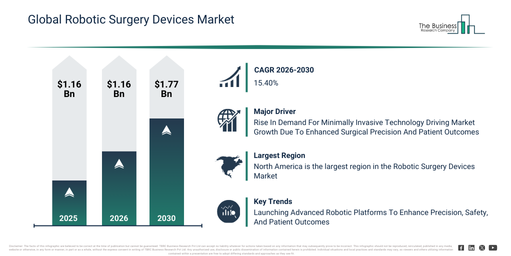
    The robotic surgery devices market is projected to experience significant expansion in the coming years. By 2030, its value is forecasted to reach $18.08 billion, expanding at a compound annual growth rate (CAGR) of 15.4%. This growth during the forecast period is driven by factors such as a higher uptake of autonomous surgical capabilities, an increased need for precise surgical procedures, the growth of training initiatives in robotic surgery, deeper incorporation of artificial intelligence for decision support, and a rise in outpatient surgeries performed with robots. Key developments within the forecast period include a growing preference for minimally invasive surgeries assisted by robots, a heightened demand for robotic platforms that serve multiple specialties, the wider application of sophisticated visualization systems for surgery, the spread of remotely operated and teleoperated surgical techniques, and a sharper emphasis on enhancing both surgical precision and patient outcomes.

    Download A Free Sample Report For Comprehensive Market Insights:

    https://www.thebusinessresearchcompany.com/sample.aspx?id=2482&type=smp

    #Robotic Surgery Devices Market Demand Drivers Creating New Revenue Opportunities

    The growing preference for minimally invasive techniques is expected to fuel the expansion of the robotic surgery devices market in the coming years. Minimally invasive technology involves performing surgeries through tiny incisions with the aid of advanced instruments and robotic systems, which help minimize tissue trauma and speed up patient recovery. This increasing demand is driven by patients’ desire for quicker healing, fewer postoperative complications, and reduced hospital stays. Consequently, the trend is accelerating the uptake of robotic-assisted platforms, which offer greater precision, allow for more complex surgical interventions, and lead to superior patient outcomes. For example, in June 2024, the American Society of Plastic Surgeons—a nonprofit organization based in the United States—reported that minimally invasive procedures grew by 7% in 2023, surpassing the surgical procedure growth rate by 2%. Hand surgeries, including those for carpal tunnel, arthritis, and trigger finger, reached 207,887 procedures, representing a 2% increase from 2022. Thus, the rising demand for minimally invasive technology is propelling the robotic surgery devices market forward.

    #Robotic Surgery Devices Market Segment Landscape And Growth Potential

    The robotic surgery devices market covered in this report is segmented –

    1) By Product: Robotic systems, Instruments & Accessories, Services

    2) By Application: General Surgery, Urological Surgery, Gynecological Surgery, Orthopaedics Surgery, Neurosurgery, Other Applications.

    3) By End-Use: Hospitals, Ambulatory Surgery Centers (Ascs)

    Subsegments:

    1) By Robotic Systems: Surgical Robotic Systems, Teleoperated Robotic Systems, Autonomous Robotic Systems

    2) By Instruments And Accessories: Surgical Instruments, Endoscopes, Vision Systems, Energy Devices

    3) By Services: Maintenance And Repair Services, Training And Support Services, Consulting Services

    Robotic Surgery Devices Market Trends Driving Strategic Industry Expansion

    Key players in the robotic surgery devices market are placing significant emphasis on technological innovation, particularly through the development of robotic surgery platforms aimed at boosting procedural efficiency, treatment accuracy, and overall financial returns. These platforms are engineered to minimize radiation exposure, better ergonomic conditions for surgeons, and accelerate patient recovery via minimally invasive approaches. One such example is the R-One+, a medical robotic system specifically created for cardiac procedures. In May 2023, Robocath, a medical technology company headquartered in France, introduced the R-One+, a new robotic system for heart surgery. This platform is designed to improve precision and safety during treatments, lower radiation risks, and elevate the overall patient experience. The system allows interventional cardiologists to perform coronary angioplasties using a tablet and joystick. Representing a notable advancement in interventional cardiology, the R-One+ provides physicians with an innovative means to enhance patient outcomes and decrease the likelihood of complications during surgical interventions.

    Robotic Surgery Devices Market Competitive Landscape: Who Are The Leading Companies?

    Major companies operating in the robotic surgery devices market are Intuitive Surgical Inc., Stryker Corporation, Medtronic plc, Smith & Nephew plc, Johnson & Johnson, TransEnterix Inc., Zimmer Biomet Holdings Inc., Auris Health Inc., CMR Surgical Ltd., Verb Surgical Inc., Renishaw plc, Think Surgical Inc., Corindus Vascular Robotics Inc., Mazor Robotics Ltd., Titan Medical Inc., Virtual Incision Corporation, Medrobotics Corporation, Preceyes BV, Microbot Medical Inc., Asensus Surgical Inc., Avatera Medical GmbH, Medicaroid Corporation, Hansen Medical Inc., Edge Surgical Inc., Synaptive Medical, Aesculap Inc.

    Access The Complete Robotic Surgery Devices Market Report:

    https://www.thebusinessresearchcompany.com/report/robotic-surgery-devices-global-market-report

    Robotic Surgery Devices Market Regional Analysis: Which Region Leads By Revenue?

    North America was the largest region in the robotic surgery devices market in 2025. Western Europe was the second largest market in global robotic surgery devices market. The regions covered in the robotic surgery devices market report are Asia-Pacific, South East Asia, Western Europe, Eastern Europe, North America, South America, Middle East, Africa.

    Access a Customized Robotic Surgery Devices Market Report for Deeper Competitive Insights

    https://www.thebusinessresearchcompany.com/customise?id=2482&type=smp

    Get in touch with us:

    The Business Research Company: https://www.thebusinessresearchcompany.com/

    Americas: +1 310-496-7795

    Asia: +44 7882 955267 & +91 8897263534

    Europe: +44 7882 955267

    Email us at: marketing@tbrc.info

    Follow us on:

    LinkedIn: https://in.linkedin.com/company/the-business-research-company

    YouTube: https://www.youtube.com/channel/UC24_fI0rV8cR5DxlCpgmyFQ

    Global Market Model: https://www.thebusinessresearchcompany.com/global-market-model
  • Robot Assisted Endoscope Market Growth Is Accelerating As Industry Transformation Continues

    Robot Assisted Endoscope Market Growth Is Accelerating As Industry Transformation Continues

    Enhanced with market attractiveness analysis, total addressable market evaluation, company benchmarking matrices, interactive Excel dashboards, expanded supply chain intelligence, emerging startup coverage, and detailed product insights, The Business Research Company’s 2026 market reports deliver more actionable and strategically valuable research.

    Robot Assisted Endoscope Market Size Forecast: How Large Could The Market Become By 2030?

    The market for robot-assisted endoscopes has experienced rapid expansion in recent years. Valued at $2.63 billion in 2025, it is projected to reach $3 billion by 2026, reflecting a compound annual growth rate (CAGR) of 14.3%. This historical growth has been driven by a rising demand for minimally invasive surgical techniques, a broadening scope of endoscopic diagnostic applications, continuous innovation in medical robotics, increased capital expenditure by hospitals on robotic platforms, and a higher prevalence of gastrointestinal diseases.

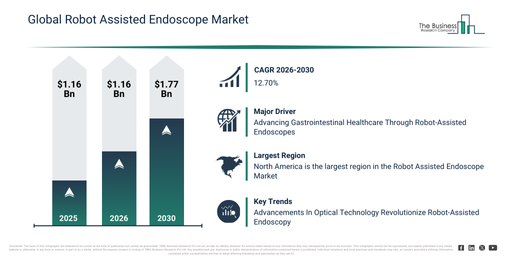
    The robot-assisted endoscope market is anticipated to experience substantial expansion in the coming years, with projections indicating a rise to $4.85 billion by 2030, reflecting a compound annual growth rate (CAGR) of 12.7%. This forecasted growth is driven by factors such as the widespread use of robotic platforms in outpatient settings, a growing need for highly accurate diagnostic tools, the integration of AI-powered clinical decision support, the application of robotic endoscopy in complex medical procedures, and increased spending on healthcare automation. Key developments shaping this period include a rising preference for robot-assisted endoscopic surgeries, a greater demand for minimally invasive diagnostic methods, the incorporation of AI-driven endoscopic navigation, improvements in sophisticated visualization and imaging technologies, and a heightened focus on precision during therapeutic endoscopic procedures.

    Download A Free Sample Report For Comprehensive Market Insights:

    https://www.thebusinessresearchcompany.com/sample.aspx?id=15920&type=smp

    Robot Assisted Endoscope Market Expansion Supported By Key Demand Factors

    The rising occurrence of gastrointestinal disorders is anticipated to boost the growth of the robot-assisted endoscope market moving forward. Gastrointestinal diseases cover a range of medical conditions that impact the digestive system, such as the stomach, intestines, liver, and pancreas. These illnesses are becoming more common due to shifting dietary patterns, intake of tainted food or water, infections from pathogens, and lifestyle elements like inactivity, smoking, and alcohol use. Robot-assisted endoscopes support the diagnosis and treatment of gastrointestinal diseases by offering healthcare providers improved visualization and maneuverability during procedures, which leads to better patient outcomes and facilitates early detection and intervention. As an example, in March 2024, data from the World Health Organization (WHO), a United Nations specialized agency based in Switzerland, indicated that diarrheal diseases cause around 1.7 billion cases each year and lead to roughly 443,832 deaths in children under 5, along with an extra 50,851 deaths in children aged 5 to 9. Thus, the growing frequency of gastrointestinal illnesses acts as a key driver for the robot-assisted endoscope market.

    Robot Assisted Endoscope Market Categorization By Product Type And Application

    The robot assisted endoscope market covered in this report is segmented –

    1) By Product: Diagnostic, Therapeutic

    2) By Application: Laparoscopy, Bronchoscopy, Colonoscopy

    3) By End-User: Hospitals, Ambulatory Surgical Centers, Other End-User

    Subsegments:

    1) By Diagnostic: Laparoscopy Endoscopes, Bronchoscopy Endoscopes, Colonoscopy Endoscopes, Cystoscopy Endoscopes

    2) By Therapeutic: Robotic-Assisted Surgical Endoscopes, Endoscopic Surgery Instruments

    Robot Assisted Endoscope Market Growth Trends Influencing Competitive Dynamics

    In the robot-assisted endoscope market, leading firms are increasingly turning to advanced medical technologies like aspherical lenses to improve visualization and minimize distortion. This lens technology enhances image quality, boosts resolution, and cuts down on optical artifacts, allowing for more accurate and precise views of internal structures while strengthening diagnostic capabilities during medical procedures. A case in point: in February 2023, AnX Robotica Corporation—a US-based medical device company that employs artificial intelligence and robotics—launched the NaviCam Small Bowel System. This system advances endoscopic technology, specifically created for diagnosing minor bowel diseases, and uses innovative features such as aspherical lens technology to reduce distortion and broaden the field of vision, both essential for accurate diagnoses. Additionally, the system improves efficiencies for clinicians and patients by markedly reducing download and processing times, enabling prompt analysis and diagnosis.

    Robot Assisted Endoscope Market Company Landscape And Strategic Competition

    Major companies operating in the robot assisted endoscope market are Johnson And Johnson Inc., Medtronic plc, Fujifilm Holdings Corporation, Stryker Corporation, Olympus Corporation, Intuitive Surgical Inc., Karl Storz SE And Co. KG, Renishaw plc, Pentax Medical, CMR Surgical Ltd., Meere Company Inc., Avatera Medical GmbH, Titan Medical Inc., Microbot Medical Inc., Verb Surgical, Medrobotics Corporation, Levita Magnetics Inc., Asensus Surgical Inc., FlexDex Surgical Inc., EndoControl SA, Renovis Surgical Technologies Inc., Medineering GmbH

    Access The Complete Robot Assisted Endoscope Market Report:

    https://www.thebusinessresearchcompany.com/report/robot-assisted-endoscope-global-market-report

    Robot Assisted Endoscope Market Geographic Distribution And Regional Opportunities

    North America was the largest region in the robot assisted endoscope market in 2025. The regions covered in the robot assisted endoscope market report are Asia-Pacific, South East Asia, Western Europe, Eastern Europe, North America, South America, Middle East, Africa.

    Access a Customized Robot Assisted Endoscope Market Report for Deeper Competitive Insights

    https://www.thebusinessresearchcompany.com/customise?id=15920&type=smp

    Get in touch with us:

    The Business Research Company: https://www.thebusinessresearchcompany.com/

    Americas: +1 310-496-7795

    Asia: +44 7882 955267 & +91 8897263534

    Europe: +44 7882 955267

    Email us at: marketing@tbrc.info

    Follow us on:

    LinkedIn: https://in.linkedin.com/company/the-business-research-company

    YouTube: https://www.youtube.com/channel/UC24_fI0rV8cR5DxlCpgmyFQ

    Global Market Model: https://www.thebusinessresearchcompany.com/global-market-model
  • Orthopedic Surgical Robots Market Outlook Highlights The Next Major Growth Opportunities

    Orthopedic Surgical Robots Market Outlook Highlights The Next Major Growth Opportunities

    Through market attractiveness analysis, total addressable market evaluation, company benchmarking matrices, interactive Excel dashboards, expanded supply chain intelligence, emerging startup coverage, and detailed product insights, The Business Research Company’s 2026 market reports provide more actionable and strategically valuable research.

    Orthopedic Surgical Robots Market Revenue Outlook: What CAGR Is Expected Through 2030?

    The orthopedic surgical robots market has experienced considerable expansion in recent years, with projections indicating an increase from $1.26 billion in 2025 to $1.41 billion in 2026, reflecting a compound annual growth rate (CAGR) of 12.0%. This historical growth was driven by several key factors, including a rise in orthopedic implant procedures, a growing inclination among surgeons toward precision-guided systems, the broader implementation of robotic surgery training initiatives, heightened hospital investments in surgical robotics, and the availability of cutting-edge navigation technologies.

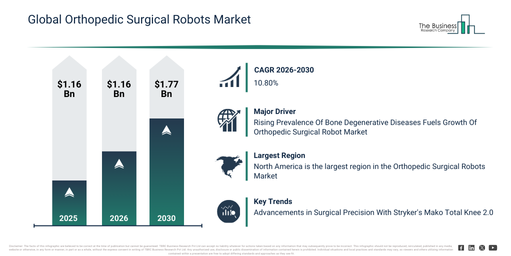
    Over the next several years, the orthopedic surgical robots market is anticipated to experience significant expansion. By 2030, it is projected to reach a value of $2.13 billion, driven by a compound annual growth rate (CAGR) of 10.8%. This forecasted growth is fueled by a heightened demand for customized orthopedic treatments, a greater prevalence of outpatient robotic surgeries, the development of software-centric surgical platforms, an intensified emphasis on minimizing surgical revision rates, and the deeper incorporation of robotics with advanced imaging technologies. Key trends influencing the future include the growing use of robot-assisted joint replacement operations, wider application of real-time surgical navigation tools, increased adoption of AI-powered surgical planning software, a rise in minimally invasive robotic orthopedic interventions, and a stronger commitment to improving surgical precision and consistency.

    Download A Free Sample Report For Comprehensive Market Insights:

    https://www.thebusinessresearchcompany.com/sample.aspx?id=15884&type=smp

    #Orthopedic Surgical Robots Market Growth Drivers And Industry Catalysts

    The ongoing rise in bone degenerative diseases is anticipated to significantly boost the orthopedic surgical robot market in the near future. These conditions progressively damage bone tissue, causing weakened bones, pain, and a greater likelihood of fractures and related complications. This increase is driven by factors such as an aging population, sedentary lifestyles, poor nutrition, and the growing prevalence of chronic illnesses like obesity and diabetes. Orthopedic surgical robots are utilized in treating these diseases to improve precision and accuracy during surgeries, thereby enhancing patient outcomes. For example, in August 2023, the Institute for Health Metrics and Evaluation (IHME), a US-based research institution, projected that nearly 1 billion people will suffer from osteoarthritis, with knee osteoarthritis expected to increase by 75% and hand osteoarthritis by 50% by 2050. Consequently, the growing incidence of bone degenerative diseases is propelling the expansion of the orthopedic surgical robot market.

    Orthopedic Surgical Robots Market Segment Analysis And Revenue Opportunities

    The orthopedic surgical robots market covered in this report is segmented –

    1) By Product: Robotic System, Robotic Accessories, Software And Services

    2) By Application: Partial Knee Replacement, Total Knee Replacement, Minimally Invasive Surgery (MIS) Fusion, Other Applications

    3) By End-User: Ambulatory Surgical Centers, Hospitals, Specialty Clinics, Other End-Users

    Subsegments:

    1) By Robotic System: Surgical Robotic Systems For Joint Replacement, Spine Surgery Robotic Systems, Robotic Systems For Trauma And Fracture Care

    2) By Robotic Accessories: Robotic End Effectors, Instrumentation Kits, Positioning And Support Tools

    3) By Software And Services: Robotic System Software, Surgical Planning And Simulation Software, Maintenance And Support Services

    #Orthopedic Surgical Robots Market Trends Influencing Long-Term Demand

    Key players in the orthopedic surgical robot industry are advancing smart robotics solutions aimed at transforming surgical procedures. These smart robotics solutions are defined as sophisticated robotic systems that leverage artificial intelligence (AI), machine learning, and Internet of Things (IoT) technologies, enabling them to execute intricate tasks with remarkable autonomy, precision, and flexibility. An example of this is Stryker Corporation, a medical device firm based in the United States, which launched the Mako Total Knee 2.0 in March 2023 as part of its Mako SmartRobotics lineup. The Mako Total Knee 2.0 integrates AccuStop haptic technology, which delivers tactile feedback to surgeons during operations, thereby boosting accuracy and safety. Furthermore, the system includes surgical planning and navigation capabilities that streamline complex procedures through a comprehensive hybrid optical tracking system—combining both active and passive elements—featuring a state-of-the-art camera and advanced processing algorithms.

    Orthopedic Surgical Robots Market Leading Players Shaping Industry Direction

    Major companies operating in the orthopedic surgical robots market are Johnson & Johnson, Medtronic plc, Stryker Corporation, Zimmer Biomet Holdings Inc., Smith & Nephew plc, Globus Medical Inc., MicroPort Orthopedics Inc., Renishaw plc, Medacta International, Aesculap Inc., Brainlab, Exactech Inc., Corin Group, THINK Surgical Inc., TINAVI Medical Technologies Co Ltd., CUREXO Inc., Monogram Technologies Inc., MAKO Surgical Corp, Orthotaxy Inc., Medical Microinstruments SA

    Access The Complete Orthopedic Surgical Robots Market Report:

    https://www.thebusinessresearchcompany.com/report/orthopedic-surgical-robots-global-market-report

    Orthopedic Surgical Robots Market Largest Region By Revenue And Market Share

    North America was the largest region in the orthopedic surgical robots market in 2025. Asia-Pacific is expected to be the fastest-growing region in the forecast period. The regions covered in the orthopedic surgical robots market report are Asia-Pacific, South East Asia, Western Europe, Eastern Europe, North America, South America, Middle East, Africa.

    Access a Customized Orthopedic Surgical Robots Market Report for Deeper Competitive Insights

    https://www.thebusinessresearchcompany.com/customise?id=15884&type=smp

    Get in touch with us:

    The Business Research Company: https://www.thebusinessresearchcompany.com/

    Americas: +1 310-496-7795

    Asia: +44 7882 955267 & +91 8897263534

    Europe: +44 7882 955267

    Email us at: marketing@tbrc.info

    Follow us on:

    LinkedIn: https://in.linkedin.com/company/the-business-research-company

    YouTube: https://www.youtube.com/channel/UC24_fI0rV8cR5DxlCpgmyFQ

    Global Market Model: https://www.thebusinessresearchcompany.com/global-market-model

  • Ophthalmic Artificial Intelligence-Assisted Diagnosis Market Trends And Growth Drivers Point To Strong Future Potential

    Ophthalmic Artificial Intelligence-Assisted Diagnosis Market Trends And Growth Drivers Point To Strong Future Potential

    Delivering more actionable and strategically valuable research, The Business Research Company’s 2026 market reports feature market attractiveness analysis, total addressable market evaluation, company benchmarking matrices, interactive Excel dashboards, expanded supply chain intelligence, emerging startup coverage, and detailed product insights.

    Ophthalmic Artificial Intelligence-Assisted Diagnosis Market Growth Analysis: How Will Revenue Expand During The Forecast Period?

    The market for ophthalmic artificial intelligence-assisted diagnosis has experienced significant expansion in recent years. From $2.17 billion in 2025, it is projected to reach $2.57 billion in 2026, reflecting a compound annual growth rate (CAGR) of 18.5%. The historic period’s growth has been driven by factors such as the growing use of digital imaging devices, a higher incidence of eye conditions, greater emphasis on early detection, the incorporation of AI into clinical studies, and progress in retinal imaging technology.

    The size of the market for ophthalmic artificial intelligence-assisted diagnosis is projected to experience swift expansion over the coming years. By 2030, it is forecasted to reach $5.03 billion, driven by a compound annual growth rate (CAGR) of 18.2%. This anticipated growth during the forecast period is fueled by the rise of cloud-based AI diagnostic platforms, the broadening of tele-ophthalmology services, the enhancement of AI algorithms specifically designed for rare eye disorders, strategic partnerships forged between AI developers and hospitals, and an increasing uptake of predictive ophthalmology. Key trends shaping this period include the use of AI for retinal imaging analysis, disease detection powered by deep learning, the development of predictive ophthalmology models, the automation of patient record analysis, and the seamless incorporation of AI into clinical workflows.

    Download A Free Sample Report For Comprehensive Market Insights:

    https://www.thebusinessresearchcompany.com/sample.aspx?id=28285&type=smp

    Ophthalmic Artificial Intelligence-Assisted Diagnosis Market Opportunity Drivers: What Is Creating New Revenue Potential?

    The increasing frequency of eye diseases is anticipated to fuel the expansion of the ophthalmic artificial intelligence-assisted diagnosis market in the coming years. Eye diseases encompass medical conditions or anomalies that impair the structure or functionality of the eye, potentially compromising vision or ocular health. Their rise is attributed to extended screen time from use of digital devices, resulting in digital eye strain, dryness, and lasting vision problems due to prolonged blue light exposure and decreased blink rates. Ophthalmic artificial intelligence-assisted diagnosis aids by examining medical imagery and patient information to identify, categorize, and forecast eye diseases early and with precision, facilitating prompt intervention and lowering the likelihood of vision loss. For example, in August 2023, the World Health Organization (WHO), a United Nations agency based in Switzerland, reported that estimates from 2023 indicate over 2.2 billion people globally have near or distance vision impairment—more than 1 billion of these cases are preventable or untreated—while refractive errors and cataracts remain the primary causes, and access to effective treatment reaches just 36% of those with refractive error-related impairment and only 17% of individuals with cataract-related impairment. As a result, the growing prevalence of eye disorders is propelling the ophthalmic artificial intelligence-assisted diagnosis market forward.

    Ophthalmic Artificial Intelligence-Assisted Diagnosis Market Segmentation And Category Breakdown

    The ophthalmic artificial intelligence-assisted diagnosis market covered in this report is segmented –

    1) By Type: Cloud-Based, On-Premises

    2) By Technology: Deep Learning, Machine Learning, Computer Vision, Other Technologies

    3) By Application: Hospital, Clinic, Imaging Centre

    Subsegments:

    1) By Cloud-Based: Public Cloud, Private Cloud, Hybrid Cloud

    2) By On-Premises: Local Server Deployment, Enterprise Data Center Deployment, Private Network Deployment

    Ophthalmic Artificial Intelligence-Assisted Diagnosis Market Innovation Trends Driving Future Development

    Leading players within the ophthalmic AI-driven diagnostic sector are concentrating on the creation of cutting-edge tools, such as an ocular data-as-a-service platform, aimed at boosting diagnostic precision, simplifying patient management, and offering forward-looking insights for eye conditions. An ocular data-as-a-service platform is a digital system that supplies eye health information on request, allowing eye care professionals, medical facilities, and AI diagnostic applications to remotely retrieve, exchange, and evaluate retinal images and other ocular data for enhanced diagnosis, observation, and research activities. For example, in May 2025, Topcon Healthcare Solutions Inc., a U.S.-headquartered firm specializing in digital healthcare technologies, introduced IDHea, a solution intended to streamline ophthalmic evaluations and elevate patient results. This cloud-based system expedites AI and digital health progress by offering rapid and secure access to authentic and clinical ocular data sets. It enables investigators to achieve notable advances in managing both eye and systemic illnesses by turning clinical data into useful, AI-generated insights. Based on the FAST framework—Fast, Accessible, Safe, and Transparent—IDHea facilitates predictive, customized, and preemptive patient care while maintaining stringent privacy and governance protocols.

    Ophthalmic Artificial Intelligence-Assisted Diagnosis Market Competitive Analysis Of Major Industry Participants

    Major companies operating in the ophthalmic artificial intelligence-assisted diagnosis market are IDx Technologies Inc., Digital Diagnostics Inc., AEYE Health Inc., Eyenuk Inc., OphtAI, Oivi Tech Private Limited, Altris Inc., JuneBrain Inc., Mediwhale Inc., MONA.health BV, Remidio Innovative Solutions Pvt. Ltd., Retinalyze System A/S, Retmarker, RetinaRisk, Ikerian AG, VoxelCloud Inc., Visulytix Ltd., Aiforia Technologies Plc, DeepTek Inc., EyRIS Pte Ltd., Neurodynamics Solutions Inc.

    Access The Complete Ophthalmic Artificial Intelligence-Assisted Diagnosis Market Report:

    https://www.thebusinessresearchcompany.com/report/ophthalmic-artificial-intelligence-assisted-diagnosis-global-market-report

    Ophthalmic Artificial Intelligence-Assisted Diagnosis Market Regional Analysis And Leading Geography

    North America was the largest region in the ophthalmic artificial intelligence-assisted diagnosis market in 2025. Asia-Pacific is expected to be the fastest-growing region in the forecast period. The regions covered in the ophthalmic artificial intelligence-assisted diagnosis market report are Asia-Pacific, South East Asia, Western Europe, Eastern Europe, North America, South America, Middle East, Africa.

    Access a Customized Ophthalmic Artificial Intelligence-Assisted Diagnosis Market Report for Deeper Competitive Insights

    https://www.thebusinessresearchcompany.com/customise?id=28285&type=smp

    Get in touch with us:

    The Business Research Company: https://www.thebusinessresearchcompany.com/

    Americas: +1 310-496-7795

    Asia: +44 7882 955267 & +91 8897263534

    Europe: +44 7882 955267

    Email us at: marketing@tbrc.info

    Follow us on:

    LinkedIn: https://in.linkedin.com/company/the-business-research-company

    YouTube: https://www.youtube.com/channel/UC24_fI0rV8cR5DxlCpgmyFQ

    Global Market Model: https://www.thebusinessresearchcompany.com/global-market-model