Category: Medical Equipment

  • Artificial Intelligence (AI)-Enhanced Neurorehabilitation Exoskeleton Market Trends Are Creating New Opportunities For Industry Leaders

    Artificial Intelligence (AI)-Enhanced Neurorehabilitation Exoskeleton Market Trends Are Creating New Opportunities For Industry Leaders

    Through market attractiveness analysis, total addressable market evaluation, company benchmarking matrices, interactive Excel dashboards, expanded supply chain intelligence, emerging startup coverage, and detailed product insights, The Business Research Company’s 2026 market reports provide more actionable and strategically valuable research.

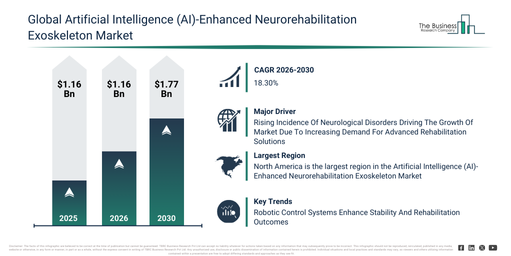
    Artificial Intelligence (AI)-Enhanced Neurorehabilitation Exoskeleton Market Growth From $1.46 Billion In 2026 To $2.86 Billion By 2030 At A CAGR Of 18.3%%

    The market for neurorehabilitation exoskeletons powered by artificial intelligence has experienced rapid expansion in recent years. It is projected to increase from $1.24 billion in 2025 to $1.47 billion in 2026, achieving a compound annual growth rate (CAGR) of 18.6%. This historical growth has been driven by factors such as the increasing prevalence of neurological disorders, the early integration of robotic rehabilitation technologies, improvements in sensor systems, a growing need for intensive therapy regimens, and the expansion of rehabilitation facilities.

    The artificial intelligence-enhanced neurorehabilitation exoskeleton market is projected to experience substantial expansion in the coming years. By 2030, its value is anticipated to reach $2.87 billion, reflecting a compound annual growth rate (CAGR) of 18.3%. This forecasted growth is driven by factors such as AI-powered adaptive rehabilitation, the rise of home-based neurorehabilitation, a growing elderly population, increased reimbursement support for robotic therapy, and the integration of cloud-based analytics. Key trends shaping this period include personalized AI-driven rehabilitation programs, adaptive motion assistance systems, data-driven tracking of therapy outcomes, home-based robotic rehabilitation, and alignment with clinical rehabilitation protocols.

    Download A Free Sample Report For Comprehensive Market Insights:

    https://www.thebusinessresearchcompany.com/sample.aspx?id=28918&type=smp

    #Artificial Intelligence (AI)-Enhanced Neurorehabilitation Exoskeleton Market Growth Drivers And Industry Catalysts

    The increasing frequency of neurological conditions is anticipated to fuel expansion in the market for artificial intelligence (AI)-enhanced neurorehabilitation exoskeletons going forward. These disorders encompass medical issues affecting the brain, spinal cord, and nerves, resulting in difficulties with movement, cognition, sensation, or other bodily operations. The global uptick in such conditions is largely attributed to an aging population, since older individuals are more susceptible to illnesses like stroke, dementia, and Parkinson’s disease, whose prevalence climbs as age advances. AI-powered neurorehabilitation exoskeletons assist those with neurological disorders by offering customized, adaptable therapy that enhances motor abilities, speeds up recovery, and offsets impaired movement through constant monitoring and intelligent modifications tailored to each patient’s unique requirements. For example, in March 2023, the Alzheimer’s Association—a US-based nonprofit voluntary health organization—reported that roughly 6.7 million Americans aged 65 and older are currently affected by Alzheimer’s dementia, with projections indicating a rise to 13.8 million by 2060. Hence, the growing occurrence of neurological disorders is propelling the advancement of the AI-enhanced neurorehabilitation exoskeleton market.

    Artificial Intelligence (AI)-Enhanced Neurorehabilitation Exoskeleton Market Categorization By Product Type And Application

    The artificial intelligence (ai)-enhanced neurorehabilitation exoskeleton market covered in this report is segmented –

    1) By Component: Hardware, Software, Services

    2) By Mobility Type: Mobile, Stationary

    3) By Application: Stroke Rehabilitation, Spinal Cord Injury, Traumatic Brain Injury, Multiple Sclerosis

    4) By End-User: Hospitals And Clinics, Rehabilitation Centers, Home Care Settings

    Subsegments:

    1) By Hardware: Exoskeleton Frames, Actuators And Motors, Sensors And Wearable Devices, Control Units And Embedded Electronics

    2) By Software: Motion Planning Software, Rehabilitation Protocol Software, Data Analytics And Monitoring Software, Connectivity And Integration Software

    3) By Services: Implementation And Setup Services, Training And Education Services, Maintenance And Support Services, Remote Monitoring And Assistance Services

    #Artificial Intelligence (AI)-Enhanced Neurorehabilitation Exoskeleton Market Trends Influencing Long-Term Demand

    Leading players in the AI-enhanced neurorehabilitation exoskeleton market are increasingly incorporating robotic control systems into their products to boost mobility, stability, and tailored therapy results. These robotic control systems, which oversee and coordinate exoskeleton movements, enable users to walk, stand, and carry out daily tasks with safety and efficiency by delivering accurate, stable, and adaptive motion. A case in point is in May 2025, when Wandercraft SAS, a robotics firm based in France, launched clinical trials in the United States for its AI-driven Personal Exoskeleton. This device merges advanced physical AI with robotic control systems, allowing individuals with spinal cord injuries, strokes, or other movement disorders to stand, walk, and traverse different terrains safely. By constantly adjusting to the user’s motions in real time, it improves mobility, stability, and rehabilitation progress. Featuring a joystick-operated control system paired with intelligent algorithms that predict shifts in weight, terrain, and speed, the exoskeleton fosters greater autonomy while lowering secondary health issues linked to extended wheelchair use.

    Artificial Intelligence (AI)-Enhanced Neurorehabilitation Exoskeleton Market Company Landscape And Strategic Competition

    Major companies operating in the artificial intelligence (ai)-enhanced neurorehabilitation exoskeleton market are Ottobock SE & Co. KGaA, Shanghai Fourier Intelligence Co. Ltd., Kinova Inc., Cyberdyne Inc., Hocoma AG, Myomo Inc., Neofect Co. Ltd., Ekso Bionics Holdings Inc., ReWalk Robotics Ltd., AlterG Inc., RENU ROBOTICS CORPORATION, ExoAtlet Global S.A., REEV Robotics, Bionik Laboratories Corp., Rex Bionics PLC, Wearable Robotics Srl, Gogoa Mobility Robots S.L., Technaid S.L., Bionic Yantra Pvt. Ltd., MediTouch Inc.

    Access The Complete Artificial Intelligence (AI)-Enhanced Neurorehabilitation Exoskeleton Market Report:

    https://www.thebusinessresearchcompany.com/report/artificial-intelligence-ai-enhanced-neurorehabilitation-exoskeleton-global-market-report

    Artificial Intelligence (AI)-Enhanced Neurorehabilitation Exoskeleton Market Regional Analysis And Leading Geography

    North America was the largest region in the artificial intelligence (AI)-enhanced neurorehabilitation exoskeleton market in 2025. The regions covered in the artificial intelligence (AI)-enhanced neurorehabilitation exoskeleton market report are Asia-Pacific, South East Asia, Western Europe, Eastern Europe, North America, South America, Middle East, Africa.

    Access a Customized Artificial Intelligence (AI)-Enhanced Neurorehabilitation Exoskeleton Market Report for Deeper Competitive Insights

    https://www.thebusinessresearchcompany.com/customise?id=28918&type=smp

    Get in touch with us:

    The Business Research Company: https://www.thebusinessresearchcompany.com/

    Americas: +1 310-496-7795

    Asia: +44 7882 955267 & +91 8897263534

    Europe: +44 7882 955267

    Email us at: marketing@tbrc.info

    Follow us on:

    LinkedIn: https://in.linkedin.com/company/the-business-research-company

    YouTube: https://www.youtube.com/channel/UC24_fI0rV8cR5DxlCpgmyFQ

    Global Market Model: https://www.thebusinessresearchcompany.com/global-market-model
  • Artificial Intelligence (AI)-Enhanced Medication Adherence Sensor Market Growth Is Reshaping Competitive Advantage Across The Industry

    Artificial Intelligence (AI)-Enhanced Medication Adherence Sensor Market Growth Is Reshaping Competitive Advantage Across The Industry

    Delivering more actionable and strategically valuable research, The Business Research Company’s 2026 market reports feature market attractiveness analysis, total addressable market evaluation, company benchmarking matrices, interactive Excel dashboards, expanded supply chain intelligence, emerging startup coverage, and detailed product insights.

    Artificial Intelligence (AI)-Enhanced Medication Adherence Sensor Market Expansion Outlook: What Revenue Opportunities Lie Ahead?

    The market for medication adherence sensors enhanced by artificial intelligence (AI) has experienced swift expansion in recent times. Projected to rise from $1.96 billion in 2025 to $2.34 billion in 2026, this growth reflects a compound annual growth rate (CAGR) of 19.7%. Historical expansion has been driven by factors such as challenges with medication non-adherence, the increasing prevalence of chronic diseases, the uptake of digital health solutions, requirements for monitoring in clinical trials, and advancements in wearable sensor technology.

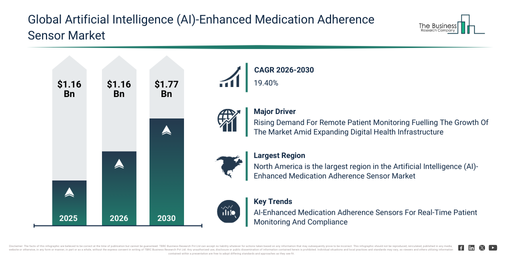
    The market for medication adherence sensors enhanced by artificial intelligence is projected to experience substantial expansion in the coming years, with a forecasted value of $4.75 billion by 2030, reflecting a compound annual growth rate of 19.4%. This anticipated growth during the forecast period is driven by factors such as the rise of remote patient monitoring, the application of AI-driven analytics to adherence, the adoption of value-based care models, an increasing elderly demographic, and the digitization of pharmaceutical trials. Key trends shaping this period encompass real-time monitoring of medication intake, tools designed to support compliance with chronic disease treatments, ongoing remote patient oversight, strategies for managing medication in older populations, and systems that track adherence within clinical trial settings.

    Download A Free Sample Report For Comprehensive Market Insights:

    https://www.thebusinessresearchcompany.com/sample.aspx?id=28917&type=smp

    Artificial Intelligence (AI)-Enhanced Medication Adherence Sensor Market Opportunity Drivers: What Is Creating New Revenue Potential?

    The increasing need for remote patient monitoring is set to fuel expansion in the artificial intelligence (AI)-enhanced medication adherence sensor market. Remote patient monitoring (RPM) involves employing connected digital tools to gather and transmit patients’ health information outside traditional hospital or clinic settings, allowing healthcare professionals to oversee and manage conditions in real time. This approach is quickly gaining traction, driven by growing investments from healthcare systems in digital health infrastructure, which has sped up the adoption of connected monitoring technologies within patient care. Through AI-enhanced medication adherence sensors, medication consumption is tracked instantly, and adherence data is relayed to providers, enabling timely interventions and lowering the frequency of missed doses, while also allowing clinicians to remotely monitor treatment compliance and patient well-being. As an example, in April 2025, the Parliamentary Office of Science and Technology, a UK-based non-partisan body of the UK Parliament, reported that England had 12,825 virtual ward beds in March 2025, equal to 20 beds per 100,000 GP-registered individuals, with 76.2% occupancy housing 9,767 patients. Consequently, the growing demand for remote patient monitoring is propelling the growth of the artificial intelligence (AI)-enhanced medication adherence sensor market.

    Artificial Intelligence (AI)-Enhanced Medication Adherence Sensor Market Segment Analysis And Revenue Opportunities

    The artificial intelligence (ai)-enhanced medication adherence sensor market covered in this report is segmented –

    1) By Product Type: Wearable Sensors, Ingestible Sensors, Smart Pill Bottles, Smart Packaging

    2) By Technology: Artificial Intelligence (AI) Algorithms, Internet Of Things (IoT) Integration, Cloud-Based Solutions, Mobile Applications, Other Technologies

    3) By Distribution Channel: Online, Offline

    4) By Application: Chronic Disease Management, Elderly Care, Clinical Trials, Home Healthcare, Other Applications

    5) By End-User: Patients, Healthcare Providers, Pharmaceutical Companies, Other End-Users

    Subsegments:

    1) By Wearable Sensors: Smart Wristbands, Adhesive Patches, Smartwatches, Clothing-Embedded Sensors, Arm Bands

    2) By Ingestible Sensors: Sensor-Embedded Pills, Biocompatible Capsules, Digestive Monitoring Sensors, pH Tracking Sensors, Temperature-Sensing Capsules

    3) By Smart Pill Bottles: Bluetooth-Enabled Pill Bottles, Reminder-Integrated Bottles, Dose-Tracking Bottles, Automatic Dispensing Bottles, Sensor-Activated Bottles

    4) By Smart Packaging: Blister Pack Sensors, Smart Labels, Pressure-Sensitive Packaging, Temperature-Monitoring Packaging, Tamper-Evident Smart Packs

    Artificial Intelligence (AI)-Enhanced Medication Adherence Sensor Market Innovation Trends Driving Future Development

    Leading players in the artificial intelligence (AI)-enhanced medication adherence sensor market are prioritizing the development of user-friendly integration tools, specifically smart pill bottle-based medication adherence systems, to improve patient monitoring, boost medication compliance, and enable smooth data exchange with healthcare professionals. These systems monitor patients’ medication consumption in real time, log adherence data, and deliver alerts and reminders to guarantee timely dosing while providing valuable insights to clinicians. A notable example is the June 2024 launch of PatchRx Connect by PatchRx, a US-based digital health technology company. This solution functions as an easily integrable tool that incorporates real-time medication adherence information directly into current care management platforms. Clinical teams can thus access immediate understanding of patients’ medication-taking habits without interfering with their workflows or patient experiences. The system features a smart pill bottle cap, known as PatchCap, for tracking medication usage; a cellular gateway that securely transmits data without requiring WiFi or a mobile application; and a Connect API that enables providers to view adherence metrics within their own software. Such integration supports better treatment outcomes and reduces expenses by facilitating timely clinical actions grounded in actual adherence information.

    Artificial Intelligence (AI)-Enhanced Medication Adherence Sensor Market Leading Players Shaping Industry Direction

    Major companies operating in the artificial intelligence (ai)-enhanced medication adherence sensor market are AiCure Inc., AdhereTech Inc., AARDEX Group Ltd., EtectRx Inc., Proteus Digital Health, Adherium Limited, Wisepill Technologies Proprietary Ltd., SMRxT Inc., Amiko Digital Health Limited, MedMinder Systems Inc., Spencer Health Solutions Inc., iZafe Group AB, Evalan B.V., Mango Health, DoseSmart, CarePredict, Catalia Health, Sentrian, MedAdherence, Pilloxa

    Access The Complete Artificial Intelligence (AI)-Enhanced Medication Adherence Sensor Market Report:

    https://www.thebusinessresearchcompany.com/report/artificial-intelligence-ai-enhanced-medication-adherence-sensor-global-market-report

    Artificial Intelligence (AI)-Enhanced Medication Adherence Sensor Market Geographic Analysis: Where Is Demand Growing The Fastest?

    North America was the largest region in the artificial intelligence (AI)-enhanced medication adherence sensor market in 2025. The regions covered in the artificial intelligence (AI)-enhanced medication adherence sensor market report are Asia-Pacific, South East Asia, Western Europe, Eastern Europe, North America, South America, Middle East, Africa.

    Access a Customized Artificial Intelligence (AI)-Enhanced Medication Adherence Sensor Market Report for Deeper Competitive Insights

    https://www.thebusinessresearchcompany.com/customise?id=28917&type=smp

    Get in touch with us:

    The Business Research Company: https://www.thebusinessresearchcompany.com/

    Americas: +1 310-496-7795

    Asia: +44 7882 955267 & +91 8897263534

    Europe: +44 7882 955267

    Email us at: marketing@tbrc.info

    Follow us on:

    LinkedIn: https://in.linkedin.com/company/the-business-research-company

    YouTube: https://www.youtube.com/channel/UC24_fI0rV8cR5DxlCpgmyFQ

    Global Market Model: https://www.thebusinessresearchcompany.com/global-market-model
  • Artificial Intelligence (AI)-Driven Tele-Dermatoscope Market Forecast Signals New Revenue Opportunities Through 2030

    Artificial Intelligence (AI)-Driven Tele-Dermatoscope Market Forecast Signals New Revenue Opportunities Through 2030

    Enhanced with market attractiveness analysis, total addressable market evaluation, company benchmarking matrices, interactive Excel dashboards, expanded supply chain intelligence, emerging startup coverage, and detailed product insights, The Business Research Company’s 2026 market reports deliver more actionable and strategically valuable research.

    Artificial Intelligence (AI)-Driven Tele-Dermatoscope Market Growth Potential: How Will Market Size Change Through 2030?

    The market for artificial intelligence (AI)-powered tele-dermatoscopes has seen explosive expansion in recent years. Projections indicate an increase from $1.51 billion in 2025 to $1.94 billion in 2026, reflecting a compound annual growth rate (CAGR) of 28.2%. This historical growth has been driven by a higher prevalence of skin conditions, growing interest in remote dermatology services, improvements in imaging sensor technology, early integration of AI into dermatological practices, and the rapid evolution of telemedicine platforms.

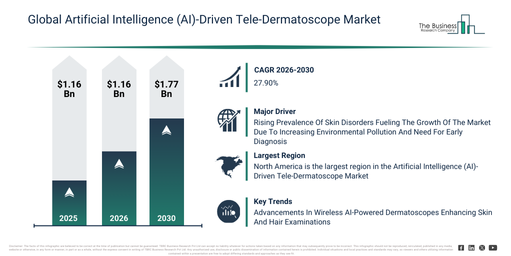
    The market for artificial intelligence-driven tele-dermatoscopes is anticipated to experience exponential expansion in the coming years. Projections indicate it will reach $5.19 billion by 2030, achieving a compound annual growth rate (CAGR) of 27.9%. This forecasted growth is fueled by factors such as the rising adoption of tele-dermatology, the incorporation of AI analytics, regulatory clearances for skin imaging devices, the proliferation of cloud-based dermatology systems, and heightened awareness regarding early skin cancer detection. Key developments during this period encompass remote assessment of skin lesions, automated identification of skin cancer, mobile solutions for dermatology, cloud-based management of dermatological data, and seamless connectivity with telemedicine platforms.

    Download A Free Sample Report For Comprehensive Market Insights:

    https://www.thebusinessresearchcompany.com/sample.aspx?id=28130&type=smp

    Artificial Intelligence (AI)-Driven Tele-Dermatoscope Market Growth Momentum: Which Factors Are Influencing Demand?

    The rise in skin disorders is set to accelerate demand for the artificial intelligence (AI)-powered tele-dermatoscope market moving forward. Skin disorders involve conditions that disrupt the skin’s normal structure or function, causing issues like redness, itching, scaling, or lesions. A key factor behind the surge in these conditions is growing environmental pollution, as airborne pollutants and chemicals compromise the skin’s protective layer, triggering irritation, allergic reactions, and persistent skin diseases. AI-enabled tele-dermatoscopes address skin disorders by using advanced algorithms to swiftly and precisely examine high-resolution skin images, enabling early detection and diagnosis without the need for in-person dermatologist visits. For example, in January 2025, the American Cancer Society, a US-based professional organization, projected roughly 105,000 new melanoma cases and about 8,400 deaths from it in the US for 2025. Consequently, the increasing prevalence of skin disorders is fueling the expansion of the artificial intelligence (AI)-driven tele-dermatoscope market.

    Artificial Intelligence (AI)-Driven Tele-Dermatoscope Market Segmentation And Category Breakdown

    The artificial intelligence (ai)-driven tele-dermatoscope market covered in this report is segmented –

    1) By Product: Handheld Tele-Dermatoscopes, Desktop Tele-Dermatoscopes, Smartphone-Integrated Tele-Dermatoscopes

    2) By Technology: Machine Learning, Deep Learning, Computer Vision, Other Technologies

    3) By Distribution Channel: Online, Offline

    4) By Application: Skin Cancer Detection, Lesion Tracking, General Dermatology, Other Applications

    5) By End User: Hospitals And Clinics, Diagnostic Centers, Research Institutes, Homecare Settings, Other End Users

    Subsegments:

    1) By Handheld Tele-Dermatoscopes: USB-Connected Digital Dermatoscopes, Wireless Digital Dermatoscopes, Smartphone-Compatible Dermatoscopes

    2) By Desktop Tele-Dermatoscopes: Table-Top Dermatoscopes, Trolley-Mounted Dermatoscopes

    3) By Smartphone-Integrated Tele-Dermatoscopes: Clip-On Attachments, Integrated Systems

    Artificial Intelligence (AI)-Driven Tele-Dermatoscope Market Trends Reshaping Industry Growth

    Leading enterprises in the AI-driven tele-dermatoscope sector are emphasizing the creation of cutting-edge tools like wireless digital dermatoscopes to enhance flexibility and ease of use. These portable devices capture comprehensive images of the skin and transmit them wirelessly to computers or mobile devices for remote analysis and diagnosis. A notable example occurred in March 2024, when FotoFinder Systems, a Germany-based firm specializing in skin imaging equipment, introduced skeen—an advanced wireless digital dermatoscope featuring cloud storage, designed to transform skin and hair assessments through sophisticated technology and AI. This innovation sets a fresh benchmark in dermoscopy and trichoscopy by facilitating rapid, precise, and convenient image capture and storage via a fully compliant cloud-based system. Equipped with a high-resolution camera and a magnetically attached optical system offering 20x or 40x magnification, it enables detailed observation of skin and hair structures in both polarized and non-polarized modes. The device operates with a completely wireless setup, eliminating the necessity for smartphones, tablets, or additional adapters. Developed by FotoFinder Systems, skeen incorporates state-of-the-art AI capabilities, such as the AIMEE assistant, which aids physicians in evaluating skin lesions by delivering an AI-derived score from a clinically validated deep-learning model.

    Artificial Intelligence (AI)-Driven Tele-Dermatoscope Market Competitive Analysis Of Major Industry Participants

    Major companies operating in the artificial intelligence (ai)-driven tele-dermatoscope market are Heine Optotechnik GmbH & Co. KG, Digital Diagnostics, FotoFinder Systems GmbH, Epiphany Dermatology PA, Canfield Scientific Inc., MetaOptima Technology Inc., Base Plus Limited, Skin Analytics, DermaSensor Inc., SkinVision, First Derm, Pixience, VERISKIN INC, Skinive B.V., Miiskin, DermaDetect, Triage Technologies Inc., SkinIO LLC, DermEngine, MoleScope, Stratum Biosciences

    Access The Complete Artificial Intelligence (AI)-Driven Tele-Dermatoscope Market Report:

    https://www.thebusinessresearchcompany.com/report/artificial-intelligence-ai-driven-tele-dermatoscope-global-market-report

    Artificial Intelligence (AI)-Driven Tele-Dermatoscope Market Global Footprint: Which Region Holds Market Leadership?

    North America was the largest region in the artificial intelligence (AI)-driven tele-dermatoscope market in 2025. Asia-Pacific is expected to be the fastest-growing region in the forecast period. The regions covered in the artificial intelligence (AI)-driven tele-dermatoscope market report are Asia-Pacific, South East Asia, Western Europe, Eastern Europe, North America, South America, Middle East, Africa.

    Access a Customized Artificial Intelligence (AI)-Driven Tele-Dermatoscope Market Report for Deeper Competitive Insights

    https://www.thebusinessresearchcompany.com/customise?id=28130&type=smp

    Get in touch with us:

    The Business Research Company: https://www.thebusinessresearchcompany.com/

    Americas: +1 310-496-7795

    Asia: +44 7882 955267 & +91 8897263534

    Europe: +44 7882 955267

    Email us at: marketing@tbrc.info

    Follow us on:

    LinkedIn: https://in.linkedin.com/company/the-business-research-company

    YouTube: https://www.youtube.com/channel/UC24_fI0rV8cR5DxlCpgmyFQ

    Global Market Model: https://www.thebusinessresearchcompany.com/global-market-model
  • Artificial Intelligence (AI)-Based Orthopedic Imaging Market Growth Is Accelerating As Industry Transformation Continues

    Artificial Intelligence (AI)-Based Orthopedic Imaging Market Growth Is Accelerating As Industry Transformation Continues

    Through market attractiveness analysis, total addressable market evaluation, company benchmarking matrices, interactive Excel dashboards, expanded supply chain intelligence, emerging startup coverage, and detailed product insights, The Business Research Company’s 2026 market reports provide more actionable and strategically valuable research.

    Artificial Intelligence (AI)-Based Orthopedic Imaging Market Value Analysis: What Growth Is Expected Over The Forecast Period?

    The market for orthopedic imaging solutions powered by artificial intelligence has seen an explosive increase in size over recent years. Projected to climb from $2.2 billion in 2025 to $2.95 billion in 2026, this expansion reflects a compound annual growth rate (CAGR) of 34.4%. Several factors drove the historic growth, including the rising incidence of orthopedic disorders, a greater number of imaging centers being established, the widespread shift toward digital radiography, the early integration of AI into imaging practices, and the ongoing development of hospital IT infrastructure.

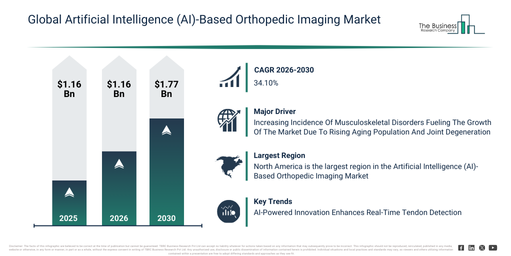
    The market for AI-based orthopedic imaging is anticipated to experience rapid expansion in the coming years, projected to reach $9.56 billion by 2030 with a compound annual growth rate of 34.1%. Drivers behind this growth in the forecast period include the rising need for personalized orthopedic treatment, the incorporation of predictive analytics, the spread of cloud-based imaging solutions, the growing use of AI-driven diagnostic tools, and an increase in minimally invasive orthopedic surgeries. Key trends shaping this period involve the application of AI for detecting fractures, sophisticated predictive analytics in orthopedics, the advancement of cloud-based imaging systems, their integration with hospital PACS, and automated assessments of bone density.

    Download A Free Sample Report For Comprehensive Market Insights:

    https://www.thebusinessresearchcompany.com/sample.aspx?id=28127&type=smp

    Artificial Intelligence (AI)-Based Orthopedic Imaging Market Expansion Drivers: What Is Shaping Future Growth?

    The rising frequency of musculoskeletal disorders is anticipated to boost the growth of the AI-driven orthopedic imaging market in the coming years. Musculoskeletal disorders encompass conditions that impact muscles, bones, joints, tendons, and ligaments, leading to pain or restricted movement. This increase is largely driven by an aging population, where joint deterioration and decreased bone density naturally occur over time. AI-powered orthopedic imaging assists in diagnosing these disorders by offering accurate image analysis, which facilitates the early identification of abnormalities. It minimizes diagnostic mistakes through automated assessments, enhances clinical efficiency, and aids in crafting tailored treatment strategies. For example, data from January 2024 from the Office for Health Improvement and Disparities, a UK government body, showed that 18.4% of individuals aged 16 and over self-reported long-term musculoskeletal conditions in 2023, up from 17.6% in 2022. As a result, the growing prevalence of musculoskeletal disorders is fueling the expansion of the AI-based orthopedic imaging market.

    Artificial Intelligence (AI)-Based Orthopedic Imaging Market Segment Outlook: Which Categories Are Expanding The Fastest?

    The artificial intelligence (ai)-based orthopedic imaging market covered in this report is segmented –

    1) By Component: Software, Hardware, Services

    2) By Modality: X-Ray, Computed Tomography (CT), Magnetic Resonance Imaging (MRI), Other Modalities

    3) By Deployment Mode: On-Premises, Cloud-Based

    4) By Application: Fracture Detection, Bone Age Assessment, Joint Disease Diagnosis, Bone Tumor Detection, Other Applications

    Subsegments:

    1) By Software: Image Analysis And Processing Software, Visualization And Detection Software, Workflow Management Software, Diagnostic And Predictive Analytics Software, Machine Learning And Deep Learning Algorithms

    2) By Hardware: Imaging Systems, AI-Integrated Imaging Devices, Graphics Processing Units (GPUs) Or Processing Units, Workstations And Servers, Data Storage Systems

    3) By Services: Installation And Integration Services, Training And Education Services, Consulting Services, Maintenance And Support Services, Cloud-Based Artificial Intelligence (AI) Services

    Artificial Intelligence (AI)-Based Orthopedic Imaging Market Strategic Trends: What Is Defining The Next Phase Of Growth?

    Key players in the artificial intelligence-driven orthopedic imaging market are concentrating on creating state-of-the-art solutions, like sophisticated AI models, to improve diagnostic accuracy, optimize workflow efficiency, and enable individualized treatment plans. These advanced AI models consist of complex algorithms that process medical images to identify anomalies, automate interpretation processes, and facilitate customized therapeutic approaches. As an example, in February 2023, Clarius Mobile Health, a medical imaging firm based in Canada, secured U.S. Food and Drug Administration (FDA) 510(k) clearance for its Clarius musculoskeletal (MSK) AI model. This model is engineered to automatically detect and measure tendons in the foot, ankle, and knee by leveraging artificial intelligence, and it is designed to function with the Clarius L7 HD3 and L15 HD3 handheld ultrasound devices. This development aims to streamline musculoskeletal ultrasound by providing clinicians with real-time support for tendon identification, labeling, and measurement, thereby enhancing workflow, standardizing metrics, and minimizing variability between observers. By integrating AI, this enhanced scanner makes high-definition imaging more accessible and user-friendly, facilitating faster and more accurate patient care.

    Artificial Intelligence (AI)-Based Orthopedic Imaging Market Key Companies And Competitive Benchmarking

    Major companies operating in the artificial intelligence (ai)-based orthopedic imaging market are United Imaging Intelligence Co. Ltd., Carestream Health Inc., Brainlab AG, Materialise NV, Aidoc Medical Ltd., Qure.ai Technologies Private Limited, Clarius Mobile Health Corp., Quibim S.L., RSIP Vision Ltd., GLEAMER SAS, Nano-X Imaging Ltd., CurveBeam AI Inc., AZmed SAS, VUNO Inc., Radiobotics ApS, PeekMed – Peek Health S.A., ImageBiopsy Lab GmbH, Synapsica Healthcare Pvt. Ltd., Oxipit UAB, Milvue SAS, Raylytic Software GmbH

    Access The Complete Artificial Intelligence (AI)-Based Orthopedic Imaging Market Report:

    https://www.thebusinessresearchcompany.com/report/artificial-intelligence-ai-based-orthopedic-imaging-global-market-report

    Artificial Intelligence (AI)-Based Orthopedic Imaging Market Regional Distribution: Which Areas Drive Market Expansion?

    North America was the largest region in the artificial intelligence (AI)-based orthopedic imaging market in 2025. Asia-Pacific is expected to be the fastest-growing region in the forecast period. The regions covered in the artificial intelligence (AI)-based orthopedic imaging market report are Asia-Pacific, South East Asia, Western Europe, Eastern Europe, North America, South America, Middle East, Africa.

    Access a Customized Artificial Intelligence (AI)-Based Orthopedic Imaging Market Report for Deeper Competitive Insights

    https://www.thebusinessresearchcompany.com/customise?id=28127&type=smp

    Get in touch with us:

    The Business Research Company: https://www.thebusinessresearchcompany.com/

    Americas: +1 310-496-7795

    Asia: +44 7882 955267 & +91 8897263534

    Europe: +44 7882 955267

    Email us at: marketing@tbrc.info

    Follow us on:

    LinkedIn: https://in.linkedin.com/company/the-business-research-company

    YouTube: https://www.youtube.com/channel/UC24_fI0rV8cR5DxlCpgmyFQ

    Global Market Model: https://www.thebusinessresearchcompany.com/global-market-model
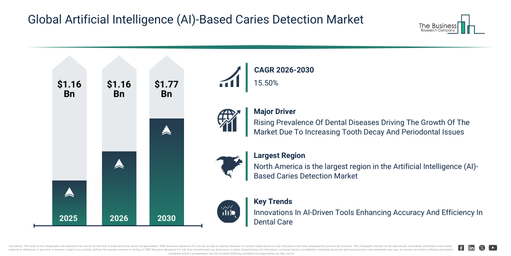
  • Artificial Intelligence (AI)-Based Caries Detection Market Outlook Highlights The Next Major Growth Opportunities

    Artificial Intelligence (AI)-Based Caries Detection Market Outlook Highlights The Next Major Growth Opportunities

    Delivering more actionable and strategically valuable research, The Business Research Company’s 2026 market reports feature market attractiveness analysis, total addressable market evaluation, company benchmarking matrices, interactive Excel dashboards, expanded supply chain intelligence, emerging startup coverage, and detailed product insights.

    Artificial Intelligence (AI)-Based Caries Detection Market Size Forecast: How Large Could The Market Become By 2030?

    The market for artificial intelligence-based caries detection has experienced swift expansion in recent years, with its value climbing from $0.62 billion in 2025 to an anticipated $0.72 billion in 2026, reflecting a compound annual growth rate (CAGR) of 15.8%. This historical growth has been propelled by the increasing integration of digital imaging in dental practices, a rising incidence of dental caries, continuous improvements in AI-driven image analysis algorithms, greater public awareness regarding preventive oral care, and the wider availability of cost-effective dental imaging equipment.

    The market for AI-driven caries detection is anticipated to experience significant expansion in the coming years, reaching a projected value of $1.29 billion by 2030, with a compound annual growth rate (CAGR) of 15.5%. This forecasted growth is driven by factors such as the increasing availability of tele-dentistry services, the incorporation of artificial intelligence into cloud-based dental systems, the emergence of portable intraoral imaging tools, heightened investment in AI-enabled healthcare solutions, and a growing preference for customized dental care. Key developments shaping the market during this period encompass enhanced diagnostic capabilities through AI, utilization of predictive analytics for earlier condition identification, remote monitoring of dental health, the fusion of imaging technologies with AI software, and the creation of individualized treatment strategies.

    Download A Free Sample Report For Comprehensive Market Insights:

    https://www.thebusinessresearchcompany.com/sample.aspx?id=28126&type=smp

    Artificial Intelligence (AI)-Based Caries Detection Market Development Factors: Which Trends Are Supporting Demand?

    The rising prevalence of dental conditions is anticipated to fuel the expansion of the artificial intelligence (AI)-powered caries detection market moving forward. Dental diseases refer to ailments that affect the teeth, gums, or adjacent oral structures, often causing discomfort, infection, or impaired oral function. These oral health issues are on the rise due to the growing intake of sugary and processed foods, which contribute to tooth decay and gum infections by nourishing harmful bacteria in the mouth. AI-driven caries detection aids in addressing dental diseases by precisely identifying early-stage tooth decay, facilitating timely intervention and lowering the likelihood of severe complications. For example, in September 2023, the National Institutes of Health (NIH), a US-based federal organization, reported that around 62.06% of older adults are projected to encounter tooth decay, while approximately 54.57% are likely to be affected by periodontal disease by 2050. Hence, the mounting burden of oral diseases is propelling the growth of the artificial intelligence (AI)-based caries detection market.

    Artificial Intelligence (AI)-Based Caries Detection Market Segment Landscape: Which Areas Lead Market Development?

    The artificial intelligence (ai)-based caries detection market covered in this report is segmented –

    1) By Product: Software, Hardware, Services

    2) By Deployment Mode: On-Premises, Cloud-Based

    3) By Application: Hospitals, Dental Clinics, Academic And Research Institutes, Other Applications

    4) By End User: General Dentists, Pediatric Dentists, Orthodontists, Other End Users

    Subsegments:

    1) By Software: Diagnostic Software, Imaging Analysis Software, Data Management Software, Predictive Analytics Software, Cloud-Based Software Solutions

    2) By Hardware: Intraoral Cameras, Digital X-Ray Machines, Optical Coherence Tomography (OCT) Devices, Near-Infrared (NIR) Imaging Devices, Laser Fluorescence Devices

    3) By Services: Remote Diagnostic Services, Software As A Service (SaaS), Maintenance And Support Services, Training And Consultation Services, Data Storage And Management Services

    Artificial Intelligence (AI)-Based Caries Detection Market Transformation Trends: Which Innovations Are Driving Change?

    Major players in the artificial intelligence (AI)-driven caries detection market are concentrating on creating cutting-edge solutions, including sophisticated clinical enhancers, designed to optimize clinical workflows, conserve time, and minimize the likelihood of human mistakes. Such advanced clinical enhancers represent innovative tools or technologies that boost the accuracy, efficacy, and comprehensive results of patient care. As an example, VideaHealth, a dental technology company based in the United States, introduced the Caries 3.0 model in January 2025. This model incorporates a sophisticated clinical enhancer that enhances diagnostic precision by filtering out false positives based on factors like lesion size, tooth location, and other relevant clinical criteria. It ensures broad patient applicability, standing as the sole FDA-approved AI system for identifying caries in those aged three and older through bitewing and periapical X-rays. Additionally, the model facilitates improved patient communication via enhanced visualizations that simplify the explanation of conditions and promote treatment acceptance. These breakthroughs allow dental clinics to offer precise, evidence-based care while maintaining a leading edge in technology.

    Artificial Intelligence (AI)-Based Caries Detection Market Industry Leaders And Market Competition

    Major companies operating in the artificial intelligence (ai)-based caries detection market are Dentsply Sirona, Straumann AG, Envista, Planmeca Oy, 3Shape Inc., Dexis Corp., Acteon Group, Carestream Dental LLC, Vatech Co. Ltd., RapidAI, Pearl Inc., Overjet, Videa Health, Dentomo, CranioCatch, Denti.AI Technology Inc., Diagnocat Inc., Genoray Co. Ltd., Manchester Imaging Ltd., Owandy Radiology, Tab32

    Access The Complete Artificial Intelligence (AI)-Based Caries Detection Market Report:

    https://www.thebusinessresearchcompany.com/report/artificial-intelligence-ai-based-caries-detection-global-market-report

    Artificial Intelligence (AI)-Based Caries Detection Market Leading Geography: Which Region Generates The Most Revenue?

    North America was the largest region in the artificial intelligence (AI)-based caries detection market in 2025. Asia-Pacific is expected to be the fastest-growing region in the forecast period. The regions covered in the artificial intelligence (AI)-based caries detection market report are Asia-Pacific, South East Asia, Western Europe, Eastern Europe, North America, South America, Middle East, Africa.

    Access a Customized Artificial Intelligence (AI)-Based Caries Detection Market Report for Deeper Competitive Insights

    https://www.thebusinessresearchcompany.com/customise?id=28126&type=smp

    Get in touch with us:

    The Business Research Company: https://www.thebusinessresearchcompany.com/

    Americas: +1 310-496-7795

    Asia: +44 7882 955267 & +91 8897263534

    Europe: +44 7882 955267

    Email us at: marketing@tbrc.info

    Follow us on:

    LinkedIn: https://in.linkedin.com/company/the-business-research-company

    YouTube: https://www.youtube.com/channel/UC24_fI0rV8cR5DxlCpgmyFQ

    Global Market Model: https://www.thebusinessresearchcompany.com/global-market-model
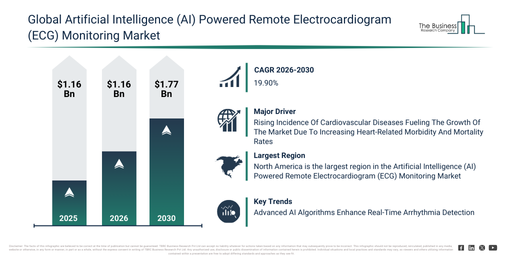
  • Artificial Intelligence (AI) Powered Remote Electrocardiogram (ECG) Monitoring Market Trends And Growth Drivers Point To Strong Future Potential

    Artificial Intelligence (AI) Powered Remote Electrocardiogram (ECG) Monitoring Market Trends And Growth Drivers Point To Strong Future Potential

    Enhanced with market attractiveness analysis, total addressable market evaluation, company benchmarking matrices, interactive Excel dashboards, expanded supply chain intelligence, emerging startup coverage, and detailed product insights, The Business Research Company’s 2026 market reports deliver more actionable and strategically valuable research.

    Artificial Intelligence (AI) Powered Remote Electrocardiogram (ECG) Monitoring Market Revenue Outlook: What CAGR Is Expected Through 2030?

    The market for artificial intelligence (AI)-driven remote electrocardiogram (ECG) monitoring has experienced explosive expansion in recent years. Valued at $1.61 billion in 2025, it is projected to reach $1.94 billion by 2026, reflecting a compound annual growth rate (CAGR) of 20.2%. This historic growth has been fueled by factors such as the increasing incidence of cardiovascular conditions, the widespread use of wearable ECG devices, a growing need for uninterrupted cardiac surveillance, the incorporation of AI into heart disease diagnostics, and the rise of telemedicine services.

    The market for artificial intelligence-powered remote electrocardiogram (ECG) monitoring is projected to experience rapid expansion in the coming years. By 2030, it is anticipated to reach $4.01 billion, reflecting a compound annual growth rate (CAGR) of 19.9%. This forecasted growth is driven by several factors, including the emergence of cloud-based ECG monitoring platforms, the integration of predictive analytics for arrhythmia detection, the expansion of services for remote patient monitoring, investments in portable and wearable ECG devices, and a rising uptake in homecare and ambulatory environments. Among the key trends shaping this period are remote cardiac monitoring, AI-based arrhythmia identification, predictive cardiovascular analytics, cloud-integrated ECG systems, and the provision of real-time heart health insights.

    Download A Free Sample Report For Comprehensive Market Insights:

    https://www.thebusinessresearchcompany.com/sample.aspx?id=28125&type=smp

    Artificial Intelligence (AI) Powered Remote Electrocardiogram (ECG) Monitoring Market Industry Drivers: What Is Driving Revenue Growth?

    The growing prevalence of cardiovascular diseases is anticipated to drive the expansion of the artificial intelligence-powered remote electrocardiogram (ECG) monitoring market moving forward. Cardiovascular diseases encompass a range of disorders impacting the heart and blood vessels, including coronary artery disease, heart failure, and stroke. This increase in cases is largely due to unhealthy dietary patterns, where excessive intake of processed foods and fats elevates cholesterol levels, thereby raising heart-related risks. By enabling continuous, real-time analysis of heart rhythms, AI-driven remote ECG monitoring plays a vital role in managing cardiovascular conditions. It facilitates early detection of irregularities, supports timely medical interventions, and improves patient oversight from distant locations, ultimately promoting better long-term cardiac health. For example, in October 2024, the Centers for Disease Control, a U.S. government agency, reported that roughly 919,032 individuals died from cardiovascular disease in 2023, representing 1 out of every 3 deaths. As a result, the rising rate of cardiovascular diseases is fueling growth in the artificial intelligence-powered remote ECG monitoring market.

    Artificial Intelligence (AI) Powered Remote Electrocardiogram (ECG) Monitoring Market Segments: Where Are The Largest Growth Opportunities?

    The artificial intelligence (ai) powered remote electrocardiogram (ecg) monitoring market covered in this report is segmented –

    1) By Component: Hardware, Software, Services

    2) By Deployment Mode: Cloud-Based, On-Premises

    3) By End-User: Hospitals And Clinics, Ambulatory Surgical Centers, Homecare Settings, Research Institutes, Other End User

    Subsegments:

    1) By Hardware: Wearable Devices, Electrocardiogram Machines, Sensors And Electrodes, Mobile Devices

    2) By Software: Data Analytics Platforms, Artificial Intelligence Algorithms, Cloud-Based Monitoring Solutions, Mobile Applications

    3) By Services: Remote Patient Monitoring, Technical Support And Maintenance, Training And Consultation, Data Management Services

    #Artificial Intelligence (AI) Powered Remote Electrocardiogram (ECG) Monitoring Market Growth Trends: What Is Influencing The Future Outlook?

    Major players in the artificial intelligence (AI)-powered remote electrocardiogram (ECG) monitoring market are concentrating on creating sophisticated products, including AI-based arrhythmia detection tools, to improve diagnostic precision, elevate patient outcomes, and lower healthcare expenses. These AI-driven arrhythmia detection tools are systems that leverage artificial intelligence to automatically interpret ECG data and spot irregular heart rhythms, facilitating early identification, instant alerts, and enhanced cardiac treatment. For example, in April 2024, BIOTRONIK, a medical technology firm based in Germany, introduced the BIOMONITOR IV insertable cardiac monitor equipped with AI capabilities, aimed at boosting arrhythmia detection and patient care. This device employs advanced AI algorithms to process cardiac signals in real time, effectively pinpointing clinically significant arrhythmias while reducing false alarms. The BioMonitor IV ICM offers automated rhythm classification and adaptive monitoring features, allowing for proactive interventions and customized treatment strategies without the need for manual data analysis by healthcare professionals.

    Artificial Intelligence (AI) Powered Remote Electrocardiogram (ECG) Monitoring Market Major Participants And Competitive Dynamics

    Major companies operating in the artificial intelligence (ai) powered remote electrocardiogram (ecg) monitoring market are Koninklijke Philips N.V., GE Healthcare, Masimo Corporation, Biotronik SE & Co. KG, Nihon Kohden Corporation, iRhythm Technologies Inc., Biofourmis Pte. Ltd., BioSerenity Inc., Withings SA, Eko Devices Inc., AliveCor Inc., Compumedics Limited, Anumana Inc., Electrical Geodesics Inc. (EGI), InfoBionic Inc., Neurable Inc., Cardiomatics Sp. z o.o., IDOVEN S.L., Zeto Inc., NextGen Neuro Inc.

    Access The Complete Artificial Intelligence (AI) Powered Remote Electrocardiogram (ECG) Monitoring Market Report:

    https://www.thebusinessresearchcompany.com/report/artificial-intelligence-ai-powered-remote-electrocardiogram-ecg-monitoring-global-market-report

    Artificial Intelligence (AI) Powered Remote Electrocardiogram (ECG) Monitoring Market Regional Outlook: Where Are The Largest Opportunities Located?

    North America was the largest region in the artificial intelligence (AI) powered remote electrocardiogram (ECG) monitoring market in 2025. Asia-Pacific is expected to be the fastest-growing region in the forecast period. The regions covered in the artificial intelligence (AI) powered remote electrocardiogram (ecg) monitoring market report are Asia-Pacific, South East Asia, Western Europe, Eastern Europe, North America, South America, Middle East, Africa.

    Access a Customized Artificial Intelligence (AI) Powered Remote Electrocardiogram (ECG) Monitoring Market Report for Deeper Competitive Insights

    https://www.thebusinessresearchcompany.com/customise?id=28125&type=smp

    Get in touch with us:

    The Business Research Company: https://www.thebusinessresearchcompany.com/

    Americas: +1 310-496-7795

    Asia: +44 7882 955267 & +91 8897263534

    Europe: +44 7882 955267

    Email us at: marketing@tbrc.info

    Follow us on:

    LinkedIn: https://in.linkedin.com/company/the-business-research-company

    YouTube: https://www.youtube.com/channel/UC24_fI0rV8cR5DxlCpgmyFQ

    Global Market Model: https://www.thebusinessresearchcompany.com/global-market-model
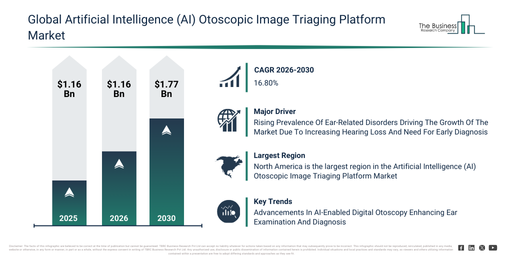
  • Artificial Intelligence (AI) Otoscopic Image Triaging Platform Market Expansion Is Reshaping Competitive Dynamics Across The Industry

    Artificial Intelligence (AI) Otoscopic Image Triaging Platform Market Expansion Is Reshaping Competitive Dynamics Across The Industry

    Through market attractiveness analysis, total addressable market evaluation, company benchmarking matrices, interactive Excel dashboards, expanded supply chain intelligence, emerging startup coverage, and detailed product insights, The Business Research Company’s 2026 market reports provide more actionable and strategically valuable research.

    Artificial Intelligence (AI) Otoscopic Image Triaging Platform Market Growth Analysis: How Will Revenue Expand During The Forecast Period?

    The market for artificial intelligence-based otoscopic image triaging platforms has seen rapid expansion in recent years. Projected to rise from $0.64 billion in 2025 to $0.75 billion in 2026, this growth corresponds to a compound annual rate of 17.1%. Historical expansion has been driven by the uptake of digital otoscopes, the broadening of telemedicine offerings, a higher incidence of ear infections, a growing need for streamlined ear, nose, and throat (ENT) diagnostics, and progress in imaging sensor technology.

    The artificial intelligence (AI) otoscopic image triaging platform market is poised for rapid expansion over the coming years, with projections indicating it will reach $1.4 billion by 2030, driven by a compound annual growth rate (CAGR) of 16.8%. This forecasted growth is largely fueled by the integration of AI into portable otoscopes, the broader implementation of cloud-based triaging systems, the creation of predictive diagnostic algorithms, increased funding for remote ear, nose, and throat (ENT) monitoring technologies, and a surge in adoption within primary care and telehealth settings. Key trends expected to shape this period include automated ear image classification, AI-enhanced workflow optimization, remote otoscopy services, cloud-driven image analysis, and systems that prioritize patient triage.

    Download A Free Sample Report For Comprehensive Market Insights:

    https://www.thebusinessresearchcompany.com/sample.aspx?id=28123&type=smp

    #Artificial Intelligence (AI) Otoscopic Image Triaging Platform Market Growth Factors: Which Forces Are Supporting Market Expansion?

    The market for artificial intelligence (AI) otoscopic image triaging platforms is anticipated to expand due to the escalating prevalence of ear-related disorders. These conditions, which disrupt normal ear function and impact hearing, balance, or overall ear health, are increasingly triggered by heightened exposure to loud noises. Persistent or repetitive loud sounds can harm the delicate inner ear structures, resulting in hearing impairment and balance issues. AI-driven otoscopic image triaging platforms address this challenge by swiftly and precisely analyzing ear images to detect irregularities, enabling early diagnosis, effective prioritization of critical cases, and improved treatment strategies. For example, as reported by the World Health Organization (WHO), an intergovernmental entity based in Switzerland, in February 2025, approximately 2.5 billion individuals are projected to experience hearing loss by 2050, with over 700 million requiring hearing rehabilitation. Consequently, the rising incidence of ear-related disorders is fueling growth in the AI otoscopic image triaging platform market.

    Artificial Intelligence (AI) Otoscopic Image Triaging Platform Market Segment Analysis: What Are The Major Market Categories?

    The artificial intelligence (ai) otoscopic image triaging platform market covered in this report is segmented –

    1) By Component: Software, Hardware, Services

    2) By Deployment Mode: Cloud-Based, On-Premises

    3) By Application: Telemedicine, Primary Care, ENT Clinics, Hospitals, Research And Academic Institutes, Other Applications

    Subsegments:

    1) By Software: AI Algorithms, Image Analysis Tools, Diagnostic Support Systems, Workflow Management Solutions, Cloud-Based Platforms

    2) By Hardware: Digital Otoscopes, Imaging Sensors And Detectors, Workstations And Displays, AI-Enhanced Imaging Devices

    3) By Services: Implementation And Integration Services, Training And Maintenance Services, Consulting Services, Data Management Services, Technical Support Services

    Artificial Intelligence (AI) Otoscopic Image Triaging Platform Market Industry Trends: What Changes Are Reshaping Demand?

    Leading players in the artificial intelligence (AI)-based otoscopic image triaging platform market are concentrating on creating advanced offerings, such as digital otoscopes, to facilitate simpler documentation and remote consultations. A digital otoscope is an electronic device that delivers high-quality images or videos of the ear canal and eardrum, aiding in accurate examination and diagnosis. For example, in February 2025, JEDMED, a US-based medical equipment firm, partnered with Otologic Tech, a US company focused on AI-powered digital otoscopy, to release an AI-enabled digital otoscope. This tool seamlessly integrates with Otologic Technologies’ platform, providing automated diagnostic support to healthcare professionals. It offers real-time evaluation of middle ear conditions, which improves clinical decision-making. By transforming captured video into a single, sharp image, it streamlines the examination and review process. Furthermore, it includes a probability assessment that determines if the ear is healthy or diseased, allowing for quicker and more well-informed treatment choices.

    Artificial Intelligence (AI) Otoscopic Image Triaging Platform Market Leading Companies Driving Competitive Growth

    Major companies operating in the artificial intelligence (ai) otoscopic image triaging platform market are TytoCare Ltd, Digital Diagnostics Inc, Tympa Health Technologies, hearX, Otologic Technologies, OtoNexus Medical Technologies Inc, Siemens Healthineers AG, Philips Healthcare, Folio3 Software Inc, Aidoc Medical Ltd, Ajackus, DeepTek, CARPL AI, Zebra Medical Vision, Enlitic, VUNO Inc, CellScope, PhotoniCare, Otovation, Cupris Health, Aural Analytics, Earscan, Otoharmonics, ResApp Health

    Access The Complete Artificial Intelligence (AI) Otoscopic Image Triaging Platform Market Report:

    https://www.thebusinessresearchcompany.com/report/artificial-intelligence-ai-otoscopic-image-triaging-platform-global-market-report

    Artificial Intelligence (AI) Otoscopic Image Triaging Platform Market Geographic Landscape: Which Region Dominates Industry Growth?

    North America was the largest region in the artificial intelligence (AI) otoscopic image triaging platform market in 2025. Asia-Pacific is expected to be the fastest-growing region in the forecast period. The regions covered in the artificial intelligence (AI) otoscopic image triaging platform market report are Asia-Pacific, South East Asia, Western Europe, Eastern Europe, North America, South America, Middle East, Africa.

    Access a Customized Artificial Intelligence (AI) Otoscopic Image Triaging Platform Market Report for Deeper Competitive Insights

    https://www.thebusinessresearchcompany.com/customise?id=28123&type=smp

    Get in touch with us:

    The Business Research Company: https://www.thebusinessresearchcompany.com/

    Americas: +1 310-496-7795

    Asia: +44 7882 955267 & +91 8897263534

    Europe: +44 7882 955267

    Email us at: marketing@tbrc.info

    Follow us on:

    LinkedIn: https://in.linkedin.com/company/the-business-research-company

    YouTube: https://www.youtube.com/channel/UC24_fI0rV8cR5DxlCpgmyFQ

    Global Market Model: https://www.thebusinessresearchcompany.com/global-market-model
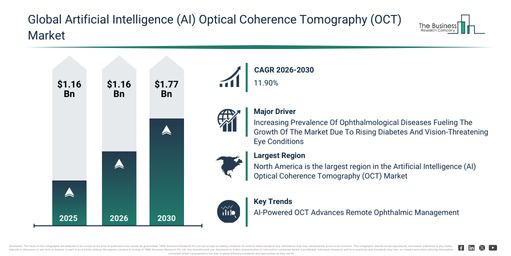
  • Artificial Intelligence (AI) Optical Coherence Tomography (OCT) Market Forecast Reveals Where Future Industry Value Will Be Created

    Artificial Intelligence (AI) Optical Coherence Tomography (OCT) Market Forecast Reveals Where Future Industry Value Will Be Created

    Delivering more actionable and strategically valuable research, The Business Research Company’s 2026 market reports feature market attractiveness analysis, total addressable market evaluation, company benchmarking matrices, interactive Excel dashboards, expanded supply chain intelligence, emerging startup coverage, and detailed product insights.

    Artificial Intelligence (AI) Optical Coherence Tomography (OCT) Market Forecast: What Market Value Is Expected By 2030?

    The artificial intelligence (AI) optical coherence tomography (OCT) market has experienced robust expansion in recent times. Its value is projected to climb from $2.06 billion in 2025 to $2.32 billion in 2026, reflecting a compound annual growth rate (CAGR) of 12.2%. This historical increase is driven by factors such as the adoption of OCT technology in ophthalmology, a rising demand for early disease diagnosis, progress in retinal imaging equipment, a growing frequency of eye conditions, and the incorporation of digital imaging solutions.

    The artificial intelligence-driven optical coherence tomography market is projected to experience rapid expansion over the coming years. By 2030, its value is anticipated to climb to $3.63 billion, reflecting a compound annual growth rate of 11.9%. This forecast period growth is fueled by several factors: the incorporation of AI into portable OCT devices, the evolution of cloud-based ophthalmic systems, the creation of algorithms enabling real-time diagnostics, rising financial support for tele-ophthalmology, and a growing need for customized eye care solutions. Notable developments shaping this period include AI-enhanced retinal imaging, automated disease identification, predictive analytics for ophthalmology, cloud-based OCT platforms, and high-resolution image interpretation.

    Download A Free Sample Report For Comprehensive Market Insights:

    https://www.thebusinessresearchcompany.com/sample.aspx?id=28121&type=smp

    Artificial Intelligence (AI) Optical Coherence Tomography (OCT) Market Demand Drivers: What Is Fueling Industry Growth?

    The rising frequency of eye-related disorders is anticipated to drive expansion in the artificial intelligence (AI) optical coherence tomography (OCT) market in the coming period. Ophthalmological diseases encompass a range of conditions that impair the eyes and visual system, affecting sight, ocular structure, or overall eye health. Their growing prevalence is largely attributed to the escalating rate of diabetes, which harms retinal blood vessels and results in sight-compromising complications. AI-powered OCT systems assist in diagnosing these conditions by delivering detailed retinal images, making them well-suited for the timely identification and ongoing management of eye problems. These tools streamline diagnostic processes by automatically evaluating retinal scans, thus enhancing clinical workflow and patient outcomes. As an example, the Centers for Disease Control and Prevention (CDC), a US public health organization, reported in May 2024 that over 3 million individuals were affected by glaucoma, with projections indicating this figure could climb to 6.3 million by 2050. Consequently, the heightened occurrence of ophthalmological diseases is fueling growth in the AI optical coherence tomography market.

    Artificial Intelligence (AI) Optical Coherence Tomography (OCT) Market Segment Breakdown: Which Categories Generate The Most Revenue?

    The artificial intelligence (ai) optical coherence tomography (oct) market covered in this report is segmented –

    1) By Type: Table Type, Portable

    2) By Technology: Time Domain Optical Coherence Tomography, Spectral Domain Optical Coherence Tomography, Swept Source Optical Coherence Tomography

    3) By Application: Hospitals, Clinic, Other Applications

    Subsegments:

    1) By Table Type: Spectral-Domain Optical Coherence Tomography (SD-OCT), Time-Domain Optical Coherence Tomography (TD-OCT), Swept-Source Optical Coherence Tomography (SS-OCT), Full-Field Optical Coherence Tomography, Doppler Optical Coherence Tomography

    2) By Portable: Handheld Optical Coherence Tomography, Smartphone Or Tablet-Based Optical Coherence Tomography, Point-Of-Care Optical Coherence Tomography Devices, Compact Or Bedside Optical Coherence Tomography Units, Wearable Optical Coherence Tomography

    Artificial Intelligence (AI) Optical Coherence Tomography (OCT) Market Innovation Trends: Which Developments Are Transforming The Industry?

    Key players in the artificial intelligence (AI)-enhanced optical coherence tomography (OCT) market are concentrating on creating innovative solutions, particularly home-use optical coherence tomography (OCT) systems, to improve diagnostic accuracy, facilitate remote patient oversight, and optimize ophthalmic care processes. These at-home optical coherence tomography (OCT) devices are portable instruments that allow individuals to obtain retinal scans from their own residences, supporting remote tracking of ocular conditions. As an example, in May 2024, Notal Vision Inc., a healthcare firm based in the United States, secured de novo approval from the US Food and Drug Administration (FDA) for its SCANLY Home OCT device, which incorporates artificial intelligence (AI). This marks the first self-operated retinal imaging system designed to track wet age-related macular degeneration (AMD) in elderly patients. The device utilizes spectral-domain optical coherence tomography (OCT) along with the AI-powered Notal OCT analyzer (NOA) to detect and quantify retinal biomarkers, allowing for high-resolution remote monitoring during intervals between clinical appointments. Images captured are securely transmitted to the Notal Health cloud for assessment by physicians. Additionally, SCANLY is supported by current procedural terminology (CPT) billing codes.

    Artificial Intelligence (AI) Optical Coherence Tomography (OCT) Market Key Players And Strategic Industry Positioning

    Major companies operating in the artificial intelligence (ai) optical coherence tomography (oct) market are Abbott Laboratories, Canon Inc., Carl Zeiss AG, Excelitas Technologies Corp., Topcon Corporation, Thorlabs Inc., Santec Holdings Corporation, Notal Vision Inc., Optopol Technology Sp. z o.o., BigVision Tech Inc., Shenzhen Certainn Technology Co. Ltd., Conavi Medical Inc., Wasatch Photonics Inc., RSIP Vision Ltd., Visionix Ltd., Altris AI Ltd., NIDEK Co. Ltd., Perimeter Medical Imaging AI Inc., Michelson Diagnostics Ltd., Artelus Private Limited

    Access The Complete Artificial Intelligence (AI) Optical Coherence Tomography (OCT) Market Report:

    https://www.thebusinessresearchcompany.com/report/artificial-intelligence-ai-optical-coherence-tomography-oct-global-market-report

    #Artificial Intelligence (AI) Optical Coherence Tomography (OCT) Market Largest Region: Which Geography Holds The Highest Market Share?

    North America was the largest region in the artificial intelligence (AI) optical coherence tomography (OCT) market in 2025. Asia-Pacific is expected to be the fastest-growing region in the forecast period. The regions covered in the artificial intelligence (AI) optical coherence tomography (oct) market report are Asia-Pacific, South East Asia, Western Europe, Eastern Europe, North America, South America, Middle East, Africa.

    Access a Customized Artificial Intelligence (AI) Optical Coherence Tomography (OCT) Market Report for Deeper Competitive Insights

    https://www.thebusinessresearchcompany.com/customise?id=28121&type=smp

    Get in touch with us:

    The Business Research Company: https://www.thebusinessresearchcompany.com/

    Americas: +1 310-496-7795

    Asia: +44 7882 955267 & +91 8897263534

    Europe: +44 7882 955267

    Email us at: marketing@tbrc.info

    Follow us on:

    LinkedIn: https://in.linkedin.com/company/the-business-research-company

    YouTube: https://www.youtube.com/channel/UC24_fI0rV8cR5DxlCpgmyFQ

    Global Market Model: https://www.thebusinessresearchcompany.com/global-market-model
  • Artificial Intelligence (AI) In Endoscopy Market Growth Through 2030 Creates New Strategic Opportunities

    Artificial Intelligence (AI) In Endoscopy Market Growth Through 2030 Creates New Strategic Opportunities

    Enhanced with market attractiveness analysis, total addressable market evaluation, company benchmarking matrices, interactive Excel dashboards, expanded supply chain intelligence, emerging startup coverage, and detailed product insights, The Business Research Company’s 2026 market reports deliver more actionable and strategically valuable research.

    Artificial Intelligence (AI) In Endoscopy Market Size Outlook: How Fast Will Revenue Grow Through 2030?

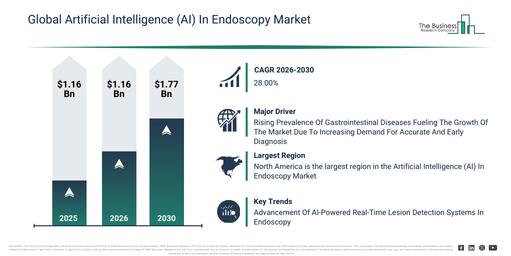
    The artificial intelligence (AI) in endoscopy market has experienced exponential expansion in recent years. Its value is projected to rise from $13.52 billion in 2025 to $17.34 billion in 2026, reflecting a compound annual growth rate (CAGR) of 28.3%. Historic growth was driven by the increasing incidence of gastrointestinal and colorectal conditions, inherent limitations in conventional endoscopic analysis, a surge in the number of endoscopic procedures, heightened awareness surrounding early cancer diagnosis, and the widespread adoption of digital endoscopy systems.

    The artificial intelligence (AI) market within endoscopy is projected to experience dramatic expansion in the coming years, reaching an estimated value of $46.53 billion by 2030, driven by a compound annual growth rate (CAGR) of 28.0%. This anticipated growth during the forecast period is fueled by progress in machine learning algorithms tailored for medical imaging, heightened investments in AI-driven healthcare technologies, a broader adoption of minimally invasive diagnostic procedures, a rising endorsement of clinical decision support systems, and the establishment of favorable regulatory frameworks for AI-based medical devices. Key trends shaping this phase include the widespread integration of real-time lesion detection during endoscopic procedures, the seamless incorporation of AI software into existing endoscopic equipment, an escalating need for enhanced diagnostic precision to minimize overlooked lesions, the proliferation of AI-powered training and simulation platforms in endoscopy, and an intensified emphasis on optimizing workflow efficiency and standardizing procedural protocols.

    Download A Free Sample Report For Comprehensive Market Insights:

    https://www.thebusinessresearchcompany.com/sample.aspx?id=25698&type=smp

    Artificial Intelligence (AI) In Endoscopy Market Growth Drivers: What Factors Are Accelerating Expansion?

    The growth of the artificial intelligence (AI) in endoscopy market is anticipated to be fueled by the increasing incidence of gastrointestinal diseases. These conditions, which impact the digestive tract and manifest through symptoms like abdominal discomfort, bloating, and irregular bowel patterns, are becoming more common due to a higher intake of ultra-processed foods that disturb gut microbiota and trigger persistent inflammation and digestive disturbances. By leveraging AI in endoscopy, real-time image analysis is enhanced for more accurate identification of abnormalities, facilitating earlier medical intervention, reducing diagnostic mistakes, and improving patient outcomes. An example is provided by the IBD Registry, a UK nonprofit, which reported in December 2023 that the number of individuals with inflammatory bowel disease registered had surpassed 5,300 in 2023, marking an increase of over 3,000 from 2022. This trend highlights how the mounting prevalence of gastrointestinal disorders is driving the expansion of the AI in endoscopy market.

    Artificial Intelligence (AI) In Endoscopy Market Segmentation: How Is The Market Structured Across Key Categories?

    The artificial intelligence (ai) in endoscopy market covered in this report is segmented –

    1) By Product Type: Artificial Intelligence-Driven Imaging Systems, Artificial Intelligence-Powered Endoscopic Equipment, Wearable Endoscopy Devices, Consumables Used In Artificial Intelligence Endoscopy, Software Solutions For Artificial Intelligence Integration

    2) By Functionality: Image Capture And Processing, Data Management, Enhanced Visualization, Real-Time Decision Support, Training And Simulation Systems

    3) By Application: Gastrointestinal Endoscopy, Respiratory Endoscopy, Urological Endoscopy, Pancreatic Endoscopy, Neurological Endoscopy

    4) By End-User: Hospitals, Endoscopy Centers, Outpatient Surgical Centers, Research Institutions, Specialized Clinics

    Subsegments:

    1) By Artificial Intelligence-Driven Imaging Systems: High Definition Imaging Platforms, Three-Dimensional (3D) Visualization Systems, Fluorescence-Based Imaging Devices, Low Light Sensitivity Imaging Systems, Contrast-Enhanced Endoscopic Imaging Systems

    2) By Artificial Intelligence-Powered Endoscopic Equipment: Flexible Endoscopic Systems With Artificial Intelligence Integration, Rigid Endoscopic Systems With Artificial Intelligence Support, Capsule-Based Endoscopic Devices With Smart Processing, Robotic Assisted Endoscopic Instrumentation, Navigation-Enabled Endoscopic Equipment With Artificial Intelligence

    3) By Wearable Endoscopy Devices: Swallowable Capsule Endoscopy Units, Sensor Integrated Wearable Endoscopy Devices, Wireless Data Enabled Endoscopic Monitoring Devices, Artificial Intelligence-Based Wearable Imaging Systems, Miniature High Resolution Endoscopic Cameras

    4) By Consumables Used In Artificial Intelligence Endoscopy: Biopsy Forceps Compatible With Artificial Intelligence Systems, Single Use Endoscopic Protective Sheaths, Medical-Grade Contrast Media For Enhanced Imaging, Artificial Intelligence Compatible Irrigation Tubing, Disposable Accessories For Visualization And Sampling

    5) By Software Solutions For Artificial Intelligence Integration: Real-Time Lesion Detection Software Modules, Computer-Aided Diagnostic Imaging Platforms, Cloud-Based Endoscopic Data Management Systems, Image Segmentation And Classification Software Tools, Data Visualization And Automated Reporting Interfaces

    Artificial Intelligence (AI) In Endoscopy Market Trends: What Is Shaping Future Industry Growth?

    Key players in the artificial intelligence in endoscopy market are prioritizing the development of cutting-edge technologies, including AI-driven real-time lesion detection systems, to improve clinical decision-making during gastrointestinal exams. These systems are advanced software tools that continuously analyze live endoscopic video feeds to precisely identify and highlight suspicious lesions, such as polyps and tumors, throughout endoscopic procedures. For example, in August 2024, Ainex Corporation, a medical technology firm based in Singapore, introduced the Endoscopy AI system to boost real-time detection and diagnosis of gastrointestinal abnormalities during endoscopies. This system incorporates sophisticated machine learning algorithms to identify gastrointestinal lesions in real time during both upper and lower endoscopy procedures. It increases diagnostic precision, minimizes false positives, and enhances the visualization of mucosal irregularities. Designed to optimize clinical workflows, shorten procedure durations, and facilitate earlier detection of gastrointestinal cancers and other conditions, this product represents a significant advancement in the field.

    Artificial Intelligence (AI) In Endoscopy Market Competitive Landscape And Leading Companies

    Major companies operating in the artificial intelligence (ai) in endoscopy market are Medtronic plc, Fujifilm Holdings Corporation, Olympus Corporation, Iterative Health, CapsoVision Inc, EndoSoft Inc, Mauna Kea Technologies SA, LPixel Inc, Sky Engine Limited, Endovision Limited, BioCam Sp z o o, MAIA Labs Inc, Magentiq Eye Ltd, EndoSurg AI Inc, iEndoscopic GmbH, Intelliscopes LLC, Odin Vision, Wision AI, NEC Corporation Medical AI, Shanghai Wision AI Co Ltd, Shanghai Ankon Technologies Co Ltd, Fujifilm Medical AI Solutions

    Access The Complete Artificial Intelligence (AI) In Endoscopy Market Report:

    https://www.thebusinessresearchcompany.com/report/artificial-intelligence-ai-in-endoscopy-global-market-report

    Artificial Intelligence (AI) In Endoscopy Market Regional Analysis: Which Region Leads By Revenue?

    North America was the largest region in the artificial intelligence (AI) in endoscopy market in 2025. Asia-Pacific is expected to be the fastest-growing region in the forecast period. The regions covered in the artificial intelligence (AI) in endoscopy market report are Asia-Pacific, South East Asia, Western Europe, Eastern Europe, North America, South America, Middle East, Africa.

    Access a Customized Artificial Intelligence (AI) In Endoscopy Market Report for Deeper Competitive Insights

    https://www.thebusinessresearchcompany.com/customise?id=25698&type=smp

    Get in touch with us:

    The Business Research Company: https://www.thebusinessresearchcompany.com/

    Americas: +1 310-496-7795

    Asia: +44 7882 955267 & +91 8897263534

    Europe: +44 7882 955267

    Email us at: marketing@tbrc.info

    Follow us on:

    LinkedIn: https://in.linkedin.com/company/the-business-research-company

    YouTube: https://www.youtube.com/channel/UC24_fI0rV8cR5DxlCpgmyFQ

    Global Market Model: https://www.thebusinessresearchcompany.com/global-market-model

  • Artificial Intelligence (AI) Powered Remote Electrocardiogram (ECG) Monitoring Market Trends And Growth Drivers Point To Strong Future Potential

    Enhanced with market attractiveness analysis, total addressable market evaluation, company benchmarking matrices, interactive Excel dashboards, expanded supply chain intelligence, emerging startup coverage, and detailed product insights, The Business Research Company’s 2026 market reports deliver more actionable and strategically valuable research.

    Artificial Intelligence (AI) Powered Remote Electrocardiogram (ECG) Monitoring Market Revenue Outlook: What CAGR Is Expected Through 2030?

    The market for artificial intelligence (AI)-driven remote electrocardiogram (ECG) monitoring has experienced explosive expansion in recent years. Valued at $1.61 billion in 2025, it is projected to reach $1.94 billion by 2026, reflecting a compound annual growth rate (CAGR) of 20.2%. This historic growth has been fueled by factors such as the increasing incidence of cardiovascular conditions, the widespread use of wearable ECG devices, a growing need for uninterrupted cardiac surveillance, the incorporation of AI into heart disease diagnostics, and the rise of telemedicine services.

    The market for artificial intelligence-powered remote electrocardiogram (ECG) monitoring is projected to experience rapid expansion in the coming years. By 2030, it is anticipated to reach $4.01 billion, reflecting a compound annual growth rate (CAGR) of 19.9%. This forecasted growth is driven by several factors, including the emergence of cloud-based ECG monitoring platforms, the integration of predictive analytics for arrhythmia detection, the expansion of services for remote patient monitoring, investments in portable and wearable ECG devices, and a rising uptake in homecare and ambulatory environments. Among the key trends shaping this period are remote cardiac monitoring, AI-based arrhythmia identification, predictive cardiovascular analytics, cloud-integrated ECG systems, and the provision of real-time heart health insights.

    Download A Free Sample Report For Comprehensive Market Insights:

    https://www.thebusinessresearchcompany.com/sample.aspx?id=28125&type=smp

    Artificial Intelligence (AI) Powered Remote Electrocardiogram (ECG) Monitoring Market Industry Drivers: What Is Driving Revenue Growth?

    The growing prevalence of cardiovascular diseases is anticipated to drive the expansion of the artificial intelligence-powered remote electrocardiogram (ECG) monitoring market moving forward. Cardiovascular diseases encompass a range of disorders impacting the heart and blood vessels, including coronary artery disease, heart failure, and stroke. This increase in cases is largely due to unhealthy dietary patterns, where excessive intake of processed foods and fats elevates cholesterol levels, thereby raising heart-related risks. By enabling continuous, real-time analysis of heart rhythms, AI-driven remote ECG monitoring plays a vital role in managing cardiovascular conditions. It facilitates early detection of irregularities, supports timely medical interventions, and improves patient oversight from distant locations, ultimately promoting better long-term cardiac health. For example, in October 2024, the Centers for Disease Control, a U.S. government agency, reported that roughly 919,032 individuals died from cardiovascular disease in 2023, representing 1 out of every 3 deaths. As a result, the rising rate of cardiovascular diseases is fueling growth in the artificial intelligence-powered remote ECG monitoring market.

    Artificial Intelligence (AI) Powered Remote Electrocardiogram (ECG) Monitoring Market Segments: Where Are The Largest Growth Opportunities?

    The artificial intelligence (ai) powered remote electrocardiogram (ecg) monitoring market covered in this report is segmented –

    1) By Component: Hardware, Software, Services

    2) By Deployment Mode: Cloud-Based, On-Premises

    3) By End-User: Hospitals And Clinics, Ambulatory Surgical Centers, Homecare Settings, Research Institutes, Other End User

    Subsegments:

    1) By Hardware: Wearable Devices, Electrocardiogram Machines, Sensors And Electrodes, Mobile Devices

    2) By Software: Data Analytics Platforms, Artificial Intelligence Algorithms, Cloud-Based Monitoring Solutions, Mobile Applications

    3) By Services: Remote Patient Monitoring, Technical Support And Maintenance, Training And Consultation, Data Management Services

    #Artificial Intelligence (AI) Powered Remote Electrocardiogram (ECG) Monitoring Market Growth Trends: What Is Influencing The Future Outlook?

    Major players in the artificial intelligence (AI)-powered remote electrocardiogram (ECG) monitoring market are concentrating on creating sophisticated products, including AI-based arrhythmia detection tools, to improve diagnostic precision, elevate patient outcomes, and lower healthcare expenses. These AI-driven arrhythmia detection tools are systems that leverage artificial intelligence to automatically interpret ECG data and spot irregular heart rhythms, facilitating early identification, instant alerts, and enhanced cardiac treatment. For example, in April 2024, BIOTRONIK, a medical technology firm based in Germany, introduced the BIOMONITOR IV insertable cardiac monitor equipped with AI capabilities, aimed at boosting arrhythmia detection and patient care. This device employs advanced AI algorithms to process cardiac signals in real time, effectively pinpointing clinically significant arrhythmias while reducing false alarms. The BioMonitor IV ICM offers automated rhythm classification and adaptive monitoring features, allowing for proactive interventions and customized treatment strategies without the need for manual data analysis by healthcare professionals.

    Artificial Intelligence (AI) Powered Remote Electrocardiogram (ECG) Monitoring Market Major Participants And Competitive Dynamics

    Major companies operating in the artificial intelligence (ai) powered remote electrocardiogram (ecg) monitoring market are Koninklijke Philips N.V., GE Healthcare, Masimo Corporation, Biotronik SE & Co. KG, Nihon Kohden Corporation, iRhythm Technologies Inc., Biofourmis Pte. Ltd., BioSerenity Inc., Withings SA, Eko Devices Inc., AliveCor Inc., Compumedics Limited, Anumana Inc., Electrical Geodesics Inc. (EGI), InfoBionic Inc., Neurable Inc., Cardiomatics Sp. z o.o., IDOVEN S.L., Zeto Inc., NextGen Neuro Inc.

    Access The Complete Artificial Intelligence (AI) Powered Remote Electrocardiogram (ECG) Monitoring Market Report:

    https://www.thebusinessresearchcompany.com/report/artificial-intelligence-ai-powered-remote-electrocardiogram-ecg-monitoring-global-market-report

    Artificial Intelligence (AI) Powered Remote Electrocardiogram (ECG) Monitoring Market Regional Outlook: Where Are The Largest Opportunities Located?

    North America was the largest region in the artificial intelligence (AI) powered remote electrocardiogram (ECG) monitoring market in 2025. Asia-Pacific is expected to be the fastest-growing region in the forecast period. The regions covered in the artificial intelligence (AI) powered remote electrocardiogram (ecg) monitoring market report are Asia-Pacific, South East Asia, Western Europe, Eastern Europe, North America, South America, Middle East, Africa.

    Access a Customized Artificial Intelligence (AI) Powered Remote Electrocardiogram (ECG) Monitoring Market Report for Deeper Competitive Insights

    https://www.thebusinessresearchcompany.com/customise?id=28125&type=smp

    Get in touch with us:

    The Business Research Company: https://www.thebusinessresearchcompany.com/

    Americas: +1 310-496-7795

    Asia: +44 7882 955267 & +91 8897263534

    Europe: +44 7882 955267

    Email us at: marketing@tbrc.info

    Follow us on:

    LinkedIn: https://in.linkedin.com/company/the-business-research-company

    YouTube: https://www.youtube.com/channel/UC24_fI0rV8cR5DxlCpgmyFQ

    Global Market Model: https://www.thebusinessresearchcompany.com/global-market-model