Category: Medical Equipment

  • Artificial Intelligence (AI) Otoscopic Image Triaging Platform Market Expansion Is Reshaping Competitive Dynamics Across The Industry

    Through market attractiveness analysis, total addressable market evaluation, company benchmarking matrices, interactive Excel dashboards, expanded supply chain intelligence, emerging startup coverage, and detailed product insights, The Business Research Company’s 2026 market reports provide more actionable and strategically valuable research.

    Artificial Intelligence (AI) Otoscopic Image Triaging Platform Market Growth Analysis: How Will Revenue Expand During The Forecast Period?

    The market for artificial intelligence-based otoscopic image triaging platforms has seen rapid expansion in recent years. Projected to rise from $0.64 billion in 2025 to $0.75 billion in 2026, this growth corresponds to a compound annual rate of 17.1%. Historical expansion has been driven by the uptake of digital otoscopes, the broadening of telemedicine offerings, a higher incidence of ear infections, a growing need for streamlined ear, nose, and throat (ENT) diagnostics, and progress in imaging sensor technology.

    The artificial intelligence (AI) otoscopic image triaging platform market is poised for rapid expansion over the coming years, with projections indicating it will reach $1.4 billion by 2030, driven by a compound annual growth rate (CAGR) of 16.8%. This forecasted growth is largely fueled by the integration of AI into portable otoscopes, the broader implementation of cloud-based triaging systems, the creation of predictive diagnostic algorithms, increased funding for remote ear, nose, and throat (ENT) monitoring technologies, and a surge in adoption within primary care and telehealth settings. Key trends expected to shape this period include automated ear image classification, AI-enhanced workflow optimization, remote otoscopy services, cloud-driven image analysis, and systems that prioritize patient triage.

    Download A Free Sample Report For Comprehensive Market Insights:

    https://www.thebusinessresearchcompany.com/sample.aspx?id=28123&type=smp

    #Artificial Intelligence (AI) Otoscopic Image Triaging Platform Market Growth Factors: Which Forces Are Supporting Market Expansion?

    The market for artificial intelligence (AI) otoscopic image triaging platforms is anticipated to expand due to the escalating prevalence of ear-related disorders. These conditions, which disrupt normal ear function and impact hearing, balance, or overall ear health, are increasingly triggered by heightened exposure to loud noises. Persistent or repetitive loud sounds can harm the delicate inner ear structures, resulting in hearing impairment and balance issues. AI-driven otoscopic image triaging platforms address this challenge by swiftly and precisely analyzing ear images to detect irregularities, enabling early diagnosis, effective prioritization of critical cases, and improved treatment strategies. For example, as reported by the World Health Organization (WHO), an intergovernmental entity based in Switzerland, in February 2025, approximately 2.5 billion individuals are projected to experience hearing loss by 2050, with over 700 million requiring hearing rehabilitation. Consequently, the rising incidence of ear-related disorders is fueling growth in the AI otoscopic image triaging platform market.

    Artificial Intelligence (AI) Otoscopic Image Triaging Platform Market Segment Analysis: What Are The Major Market Categories?

    The artificial intelligence (ai) otoscopic image triaging platform market covered in this report is segmented –

    1) By Component: Software, Hardware, Services

    2) By Deployment Mode: Cloud-Based, On-Premises

    3) By Application: Telemedicine, Primary Care, ENT Clinics, Hospitals, Research And Academic Institutes, Other Applications

    Subsegments:

    1) By Software: AI Algorithms, Image Analysis Tools, Diagnostic Support Systems, Workflow Management Solutions, Cloud-Based Platforms

    2) By Hardware: Digital Otoscopes, Imaging Sensors And Detectors, Workstations And Displays, AI-Enhanced Imaging Devices

    3) By Services: Implementation And Integration Services, Training And Maintenance Services, Consulting Services, Data Management Services, Technical Support Services

    Artificial Intelligence (AI) Otoscopic Image Triaging Platform Market Industry Trends: What Changes Are Reshaping Demand?

    Leading players in the artificial intelligence (AI)-based otoscopic image triaging platform market are concentrating on creating advanced offerings, such as digital otoscopes, to facilitate simpler documentation and remote consultations. A digital otoscope is an electronic device that delivers high-quality images or videos of the ear canal and eardrum, aiding in accurate examination and diagnosis. For example, in February 2025, JEDMED, a US-based medical equipment firm, partnered with Otologic Tech, a US company focused on AI-powered digital otoscopy, to release an AI-enabled digital otoscope. This tool seamlessly integrates with Otologic Technologies’ platform, providing automated diagnostic support to healthcare professionals. It offers real-time evaluation of middle ear conditions, which improves clinical decision-making. By transforming captured video into a single, sharp image, it streamlines the examination and review process. Furthermore, it includes a probability assessment that determines if the ear is healthy or diseased, allowing for quicker and more well-informed treatment choices.

    Artificial Intelligence (AI) Otoscopic Image Triaging Platform Market Leading Companies Driving Competitive Growth

    Major companies operating in the artificial intelligence (ai) otoscopic image triaging platform market are TytoCare Ltd, Digital Diagnostics Inc, Tympa Health Technologies, hearX, Otologic Technologies, OtoNexus Medical Technologies Inc, Siemens Healthineers AG, Philips Healthcare, Folio3 Software Inc, Aidoc Medical Ltd, Ajackus, DeepTek, CARPL AI, Zebra Medical Vision, Enlitic, VUNO Inc, CellScope, PhotoniCare, Otovation, Cupris Health, Aural Analytics, Earscan, Otoharmonics, ResApp Health

    Access The Complete Artificial Intelligence (AI) Otoscopic Image Triaging Platform Market Report:

    https://www.thebusinessresearchcompany.com/report/artificial-intelligence-ai-otoscopic-image-triaging-platform-global-market-report

    Artificial Intelligence (AI) Otoscopic Image Triaging Platform Market Geographic Landscape: Which Region Dominates Industry Growth?

    North America was the largest region in the artificial intelligence (AI) otoscopic image triaging platform market in 2025. Asia-Pacific is expected to be the fastest-growing region in the forecast period. The regions covered in the artificial intelligence (AI) otoscopic image triaging platform market report are Asia-Pacific, South East Asia, Western Europe, Eastern Europe, North America, South America, Middle East, Africa.

    Access a Customized Artificial Intelligence (AI) Otoscopic Image Triaging Platform Market Report for Deeper Competitive Insights

    https://www.thebusinessresearchcompany.com/customise?id=28123&type=smp

    Get in touch with us:

    The Business Research Company: https://www.thebusinessresearchcompany.com/

    Americas: +1 310-496-7795

    Asia: +44 7882 955267 & +91 8897263534

    Europe: +44 7882 955267

    Email us at: marketing@tbrc.info

    Follow us on:

    LinkedIn: https://in.linkedin.com/company/the-business-research-company

    YouTube: https://www.youtube.com/channel/UC24_fI0rV8cR5DxlCpgmyFQ

    Global Market Model: https://www.thebusinessresearchcompany.com/global-market-model
  • Artificial Intelligence (AI) Optical Coherence Tomography (OCT) Market Forecast Reveals Where Future Industry Value Will Be Created

    Delivering more actionable and strategically valuable research, The Business Research Company’s 2026 market reports feature market attractiveness analysis, total addressable market evaluation, company benchmarking matrices, interactive Excel dashboards, expanded supply chain intelligence, emerging startup coverage, and detailed product insights.

    Artificial Intelligence (AI) Optical Coherence Tomography (OCT) Market Forecast: What Market Value Is Expected By 2030?

    The artificial intelligence (AI) optical coherence tomography (OCT) market has experienced robust expansion in recent times. Its value is projected to climb from $2.06 billion in 2025 to $2.32 billion in 2026, reflecting a compound annual growth rate (CAGR) of 12.2%. This historical increase is driven by factors such as the adoption of OCT technology in ophthalmology, a rising demand for early disease diagnosis, progress in retinal imaging equipment, a growing frequency of eye conditions, and the incorporation of digital imaging solutions.

    The artificial intelligence-driven optical coherence tomography market is projected to experience rapid expansion over the coming years. By 2030, its value is anticipated to climb to $3.63 billion, reflecting a compound annual growth rate of 11.9%. This forecast period growth is fueled by several factors: the incorporation of AI into portable OCT devices, the evolution of cloud-based ophthalmic systems, the creation of algorithms enabling real-time diagnostics, rising financial support for tele-ophthalmology, and a growing need for customized eye care solutions. Notable developments shaping this period include AI-enhanced retinal imaging, automated disease identification, predictive analytics for ophthalmology, cloud-based OCT platforms, and high-resolution image interpretation.

    Download A Free Sample Report For Comprehensive Market Insights:

    https://www.thebusinessresearchcompany.com/sample.aspx?id=28121&type=smp

    Artificial Intelligence (AI) Optical Coherence Tomography (OCT) Market Demand Drivers: What Is Fueling Industry Growth?

    The rising frequency of eye-related disorders is anticipated to drive expansion in the artificial intelligence (AI) optical coherence tomography (OCT) market in the coming period. Ophthalmological diseases encompass a range of conditions that impair the eyes and visual system, affecting sight, ocular structure, or overall eye health. Their growing prevalence is largely attributed to the escalating rate of diabetes, which harms retinal blood vessels and results in sight-compromising complications. AI-powered OCT systems assist in diagnosing these conditions by delivering detailed retinal images, making them well-suited for the timely identification and ongoing management of eye problems. These tools streamline diagnostic processes by automatically evaluating retinal scans, thus enhancing clinical workflow and patient outcomes. As an example, the Centers for Disease Control and Prevention (CDC), a US public health organization, reported in May 2024 that over 3 million individuals were affected by glaucoma, with projections indicating this figure could climb to 6.3 million by 2050. Consequently, the heightened occurrence of ophthalmological diseases is fueling growth in the AI optical coherence tomography market.

    Artificial Intelligence (AI) Optical Coherence Tomography (OCT) Market Segment Breakdown: Which Categories Generate The Most Revenue?

    The artificial intelligence (ai) optical coherence tomography (oct) market covered in this report is segmented –

    1) By Type: Table Type, Portable

    2) By Technology: Time Domain Optical Coherence Tomography, Spectral Domain Optical Coherence Tomography, Swept Source Optical Coherence Tomography

    3) By Application: Hospitals, Clinic, Other Applications

    Subsegments:

    1) By Table Type: Spectral-Domain Optical Coherence Tomography (SD-OCT), Time-Domain Optical Coherence Tomography (TD-OCT), Swept-Source Optical Coherence Tomography (SS-OCT), Full-Field Optical Coherence Tomography, Doppler Optical Coherence Tomography

    2) By Portable: Handheld Optical Coherence Tomography, Smartphone Or Tablet-Based Optical Coherence Tomography, Point-Of-Care Optical Coherence Tomography Devices, Compact Or Bedside Optical Coherence Tomography Units, Wearable Optical Coherence Tomography

    Artificial Intelligence (AI) Optical Coherence Tomography (OCT) Market Innovation Trends: Which Developments Are Transforming The Industry?

    Key players in the artificial intelligence (AI)-enhanced optical coherence tomography (OCT) market are concentrating on creating innovative solutions, particularly home-use optical coherence tomography (OCT) systems, to improve diagnostic accuracy, facilitate remote patient oversight, and optimize ophthalmic care processes. These at-home optical coherence tomography (OCT) devices are portable instruments that allow individuals to obtain retinal scans from their own residences, supporting remote tracking of ocular conditions. As an example, in May 2024, Notal Vision Inc., a healthcare firm based in the United States, secured de novo approval from the US Food and Drug Administration (FDA) for its SCANLY Home OCT device, which incorporates artificial intelligence (AI). This marks the first self-operated retinal imaging system designed to track wet age-related macular degeneration (AMD) in elderly patients. The device utilizes spectral-domain optical coherence tomography (OCT) along with the AI-powered Notal OCT analyzer (NOA) to detect and quantify retinal biomarkers, allowing for high-resolution remote monitoring during intervals between clinical appointments. Images captured are securely transmitted to the Notal Health cloud for assessment by physicians. Additionally, SCANLY is supported by current procedural terminology (CPT) billing codes.

    Artificial Intelligence (AI) Optical Coherence Tomography (OCT) Market Key Players And Strategic Industry Positioning

    Major companies operating in the artificial intelligence (ai) optical coherence tomography (oct) market are Abbott Laboratories, Canon Inc., Carl Zeiss AG, Excelitas Technologies Corp., Topcon Corporation, Thorlabs Inc., Santec Holdings Corporation, Notal Vision Inc., Optopol Technology Sp. z o.o., BigVision Tech Inc., Shenzhen Certainn Technology Co. Ltd., Conavi Medical Inc., Wasatch Photonics Inc., RSIP Vision Ltd., Visionix Ltd., Altris AI Ltd., NIDEK Co. Ltd., Perimeter Medical Imaging AI Inc., Michelson Diagnostics Ltd., Artelus Private Limited

    Access The Complete Artificial Intelligence (AI) Optical Coherence Tomography (OCT) Market Report:

    https://www.thebusinessresearchcompany.com/report/artificial-intelligence-ai-optical-coherence-tomography-oct-global-market-report

    #Artificial Intelligence (AI) Optical Coherence Tomography (OCT) Market Largest Region: Which Geography Holds The Highest Market Share?

    North America was the largest region in the artificial intelligence (AI) optical coherence tomography (OCT) market in 2025. Asia-Pacific is expected to be the fastest-growing region in the forecast period. The regions covered in the artificial intelligence (AI) optical coherence tomography (oct) market report are Asia-Pacific, South East Asia, Western Europe, Eastern Europe, North America, South America, Middle East, Africa.

    Access a Customized Artificial Intelligence (AI) Optical Coherence Tomography (OCT) Market Report for Deeper Competitive Insights

    https://www.thebusinessresearchcompany.com/customise?id=28121&type=smp

    Get in touch with us:

    The Business Research Company: https://www.thebusinessresearchcompany.com/

    Americas: +1 310-496-7795

    Asia: +44 7882 955267 & +91 8897263534

    Europe: +44 7882 955267

    Email us at: marketing@tbrc.info

    Follow us on:

    LinkedIn: https://in.linkedin.com/company/the-business-research-company

    YouTube: https://www.youtube.com/channel/UC24_fI0rV8cR5DxlCpgmyFQ

    Global Market Model: https://www.thebusinessresearchcompany.com/global-market-model
  • Artificial Intelligence (AI) In Endoscopy Market Growth Through 2030 Creates New Strategic Opportunities

    Enhanced with market attractiveness analysis, total addressable market evaluation, company benchmarking matrices, interactive Excel dashboards, expanded supply chain intelligence, emerging startup coverage, and detailed product insights, The Business Research Company’s 2026 market reports deliver more actionable and strategically valuable research.

    Artificial Intelligence (AI) In Endoscopy Market Size Outlook: How Fast Will Revenue Grow Through 2030?

    The artificial intelligence (AI) in endoscopy market has experienced exponential expansion in recent years. Its value is projected to rise from $13.52 billion in 2025 to $17.34 billion in 2026, reflecting a compound annual growth rate (CAGR) of 28.3%. Historic growth was driven by the increasing incidence of gastrointestinal and colorectal conditions, inherent limitations in conventional endoscopic analysis, a surge in the number of endoscopic procedures, heightened awareness surrounding early cancer diagnosis, and the widespread adoption of digital endoscopy systems.

    The artificial intelligence (AI) market within endoscopy is projected to experience dramatic expansion in the coming years, reaching an estimated value of $46.53 billion by 2030, driven by a compound annual growth rate (CAGR) of 28.0%. This anticipated growth during the forecast period is fueled by progress in machine learning algorithms tailored for medical imaging, heightened investments in AI-driven healthcare technologies, a broader adoption of minimally invasive diagnostic procedures, a rising endorsement of clinical decision support systems, and the establishment of favorable regulatory frameworks for AI-based medical devices. Key trends shaping this phase include the widespread integration of real-time lesion detection during endoscopic procedures, the seamless incorporation of AI software into existing endoscopic equipment, an escalating need for enhanced diagnostic precision to minimize overlooked lesions, the proliferation of AI-powered training and simulation platforms in endoscopy, and an intensified emphasis on optimizing workflow efficiency and standardizing procedural protocols.

    Download A Free Sample Report For Comprehensive Market Insights:

    https://www.thebusinessresearchcompany.com/sample.aspx?id=25698&type=smp

    Artificial Intelligence (AI) In Endoscopy Market Growth Drivers: What Factors Are Accelerating Expansion?

    The growth of the artificial intelligence (AI) in endoscopy market is anticipated to be fueled by the increasing incidence of gastrointestinal diseases. These conditions, which impact the digestive tract and manifest through symptoms like abdominal discomfort, bloating, and irregular bowel patterns, are becoming more common due to a higher intake of ultra-processed foods that disturb gut microbiota and trigger persistent inflammation and digestive disturbances. By leveraging AI in endoscopy, real-time image analysis is enhanced for more accurate identification of abnormalities, facilitating earlier medical intervention, reducing diagnostic mistakes, and improving patient outcomes. An example is provided by the IBD Registry, a UK nonprofit, which reported in December 2023 that the number of individuals with inflammatory bowel disease registered had surpassed 5,300 in 2023, marking an increase of over 3,000 from 2022. This trend highlights how the mounting prevalence of gastrointestinal disorders is driving the expansion of the AI in endoscopy market.

    Artificial Intelligence (AI) In Endoscopy Market Segmentation: How Is The Market Structured Across Key Categories?

    The artificial intelligence (ai) in endoscopy market covered in this report is segmented –

    1) By Product Type: Artificial Intelligence-Driven Imaging Systems, Artificial Intelligence-Powered Endoscopic Equipment, Wearable Endoscopy Devices, Consumables Used In Artificial Intelligence Endoscopy, Software Solutions For Artificial Intelligence Integration

    2) By Functionality: Image Capture And Processing, Data Management, Enhanced Visualization, Real-Time Decision Support, Training And Simulation Systems

    3) By Application: Gastrointestinal Endoscopy, Respiratory Endoscopy, Urological Endoscopy, Pancreatic Endoscopy, Neurological Endoscopy

    4) By End-User: Hospitals, Endoscopy Centers, Outpatient Surgical Centers, Research Institutions, Specialized Clinics

    Subsegments:

    1) By Artificial Intelligence-Driven Imaging Systems: High Definition Imaging Platforms, Three-Dimensional (3D) Visualization Systems, Fluorescence-Based Imaging Devices, Low Light Sensitivity Imaging Systems, Contrast-Enhanced Endoscopic Imaging Systems

    2) By Artificial Intelligence-Powered Endoscopic Equipment: Flexible Endoscopic Systems With Artificial Intelligence Integration, Rigid Endoscopic Systems With Artificial Intelligence Support, Capsule-Based Endoscopic Devices With Smart Processing, Robotic Assisted Endoscopic Instrumentation, Navigation-Enabled Endoscopic Equipment With Artificial Intelligence

    3) By Wearable Endoscopy Devices: Swallowable Capsule Endoscopy Units, Sensor Integrated Wearable Endoscopy Devices, Wireless Data Enabled Endoscopic Monitoring Devices, Artificial Intelligence-Based Wearable Imaging Systems, Miniature High Resolution Endoscopic Cameras

    4) By Consumables Used In Artificial Intelligence Endoscopy: Biopsy Forceps Compatible With Artificial Intelligence Systems, Single Use Endoscopic Protective Sheaths, Medical-Grade Contrast Media For Enhanced Imaging, Artificial Intelligence Compatible Irrigation Tubing, Disposable Accessories For Visualization And Sampling

    5) By Software Solutions For Artificial Intelligence Integration: Real-Time Lesion Detection Software Modules, Computer-Aided Diagnostic Imaging Platforms, Cloud-Based Endoscopic Data Management Systems, Image Segmentation And Classification Software Tools, Data Visualization And Automated Reporting Interfaces

    Artificial Intelligence (AI) In Endoscopy Market Trends: What Is Shaping Future Industry Growth?

    Key players in the artificial intelligence in endoscopy market are prioritizing the development of cutting-edge technologies, including AI-driven real-time lesion detection systems, to improve clinical decision-making during gastrointestinal exams. These systems are advanced software tools that continuously analyze live endoscopic video feeds to precisely identify and highlight suspicious lesions, such as polyps and tumors, throughout endoscopic procedures. For example, in August 2024, Ainex Corporation, a medical technology firm based in Singapore, introduced the Endoscopy AI system to boost real-time detection and diagnosis of gastrointestinal abnormalities during endoscopies. This system incorporates sophisticated machine learning algorithms to identify gastrointestinal lesions in real time during both upper and lower endoscopy procedures. It increases diagnostic precision, minimizes false positives, and enhances the visualization of mucosal irregularities. Designed to optimize clinical workflows, shorten procedure durations, and facilitate earlier detection of gastrointestinal cancers and other conditions, this product represents a significant advancement in the field.

    Artificial Intelligence (AI) In Endoscopy Market Competitive Landscape And Leading Companies

    Major companies operating in the artificial intelligence (ai) in endoscopy market are Medtronic plc, Fujifilm Holdings Corporation, Olympus Corporation, Iterative Health, CapsoVision Inc, EndoSoft Inc, Mauna Kea Technologies SA, LPixel Inc, Sky Engine Limited, Endovision Limited, BioCam Sp z o o, MAIA Labs Inc, Magentiq Eye Ltd, EndoSurg AI Inc, iEndoscopic GmbH, Intelliscopes LLC, Odin Vision, Wision AI, NEC Corporation Medical AI, Shanghai Wision AI Co Ltd, Shanghai Ankon Technologies Co Ltd, Fujifilm Medical AI Solutions

    Access The Complete Artificial Intelligence (AI) In Endoscopy Market Report:

    https://www.thebusinessresearchcompany.com/report/artificial-intelligence-ai-in-endoscopy-global-market-report

    Artificial Intelligence (AI) In Endoscopy Market Regional Analysis: Which Region Leads By Revenue?

    North America was the largest region in the artificial intelligence (AI) in endoscopy market in 2025. Asia-Pacific is expected to be the fastest-growing region in the forecast period. The regions covered in the artificial intelligence (AI) in endoscopy market report are Asia-Pacific, South East Asia, Western Europe, Eastern Europe, North America, South America, Middle East, Africa.

    Access a Customized Artificial Intelligence (AI) In Endoscopy Market Report for Deeper Competitive Insights

    https://www.thebusinessresearchcompany.com/customise?id=25698&type=smp

    Get in touch with us:

    The Business Research Company: https://www.thebusinessresearchcompany.com/

    Americas: +1 310-496-7795

    Asia: +44 7882 955267 & +91 8897263534

    Europe: +44 7882 955267

    Email us at: marketing@tbrc.info

    Follow us on:

    LinkedIn: https://in.linkedin.com/company/the-business-research-company

    YouTube: https://www.youtube.com/channel/UC24_fI0rV8cR5DxlCpgmyFQ

    Global Market Model: https://www.thebusinessresearchcompany.com/global-market-model
  • Sterility Indicators Market Growth Is Reshaping Competitive Advantage Across The Industry

    Sterility Indicators Market Growth Is Reshaping Competitive Advantage Across The Industry

    Through market attractiveness analysis, total addressable market evaluation, company benchmarking matrices, interactive Excel dashboards, expanded supply chain intelligence, emerging startup coverage, and detailed product insights, The Business Research Company’s 2026 market reports provide more actionable and strategically valuable research.

    The sterility indicators market has been experiencing rapid growth, reflecting increasing demands for effective sterilization monitoring across healthcare and pharmaceutical sectors. This market is poised for sustained expansion as infection control and sterilization validation gain greater prominence worldwide. Below is a closer examination of the market’s size, growth factors, segmentation, trends, key players, and regional outlook.

    Sterility Indicators Market Size and Anticipated Growth Trajectory

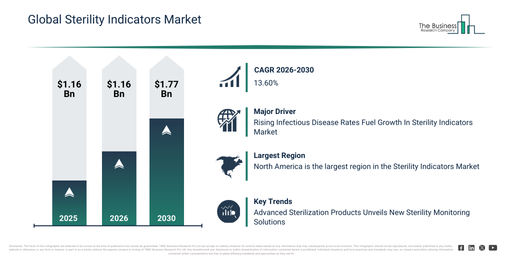
    The sterility indicators market is on a strong upward path, expected to rise from $1.4 billion in 2025 to $1.59 billion in 2026, representing a compound annual growth rate (CAGR) of 13.8%. This expansion over recent years is largely driven by increased hospital sterilization activities, growth in pharmaceutical manufacturing, more frequent use of reusable medical instruments, stricter infection control regulations, and broader implementation of standardized sterilization protocols. Looking ahead, the market is projected to reach $2.65 billion by 2030, maintaining a CAGR of 13.6%. Key forces behind this forecast include rising surgical procedure volumes, a stronger focus on patient safety, growth in biologics and injectable drug production, investments in automated sterilization technologies, and heightened regulatory demands on sterilization validation. Emerging trends anticipated to influence growth include greater adoption of advanced chemical and biological indicators, increased use of multi-parameter sterilization monitoring systems, heightened demand for precise sterility validation products, rapid readout indicator technologies, and a sharper focus on compliance with international sterilization standards.

    Download A Free Sample Report For Comprehensive Market Insights:

    https://www.thebusinessresearchcompany.com/sample.aspx?id=19205&type=smp

    Rising Infectious Diseases as a Major Growth Driver in the Sterility Indicators Market

    A significant factor propelling the sterility indicators market is the growing incidence of infectious diseases worldwide. These diseases, caused by bacteria, viruses, fungi, or parasites, spread either directly or indirectly between individuals. Common illnesses such as tuberculosis (TB), urinary tract infections, and influenza have seen increasing prevalence, driven by factors like global travel, urbanization, and higher population densities that facilitate pathogen transmission. Sterility indicators play a crucial role in validating sterilization processes, ensuring that harmful microorganisms are fully eliminated. This verification is essential in healthcare environments to maintain strict safety standards and reduce the risk of contamination or infection spread. For example, a report from the UK Health Security Agency in February 2024 highlighted a 10.7% rise in TB cases in England during 2023, with 4,850 infections recorded compared to 4,380 in 2022. Such trends underscore the critical need for effective sterility monitoring, reinforcing demand for sterility indicators.

    How Infection Control Measures Bolster Demand for Sterility Indicators

    Beyond just disease prevalence, increased regulatory emphasis on infection prevention is also encouraging wider uptake of sterility indicators. Healthcare facilities and pharmaceutical companies are adopting rigorous sterilization protocols to meet evolving safety guidelines. This regulatory focus ensures that sterilization processes are consistently validated, further driving the need for reliable and accurate sterility indicators. The growing emphasis on patient safety outcomes and minimizing healthcare-associated infections aligns closely with this market’s expansion.

    Access The Complete Sterility Indicators Market Report:

    https://www.thebusinessresearchcompany.com/report/sterility-indicators-global-market-report

    Breakdown of Segments Within the Sterility Indicators Market

    The sterility indicators market is segmented by type, technique, and end user to capture diverse needs and applications.

    – By Type: Chemical indicators and biological indicators

    – By Technique: Heat sterilization, low-temperature sterilization, ethylene oxide and gas sterilization, radiation sterilization, and chemical vapor sterilization

    – By End User: Hospitals, pharmaceutical companies, medical device manufacturers, clinical laboratories, and research centers

    Further subcategories in chemical indicators include Class 1 through Class 6 indicators, while biological indicators comprise spore ampoules, self-contained biological indicators (SCBIs), spore strips, and vials.

    Advancements in Sterility Indicator Technologies Shaping Market Trends

    Leading firms in the sterility indicators market are innovating by developing sophisticated steam monitoring products aimed at improving sterilization oversight. These devices help healthcare providers track sterilization effectiveness, analyze operational data, and ensure compliance with standards. Steam monitoring is especially important in environments requiring strict sterility, such as hospitals and laboratories that handle infectious or sensitive medical materials. For instance, in October 2023, Advanced Sterilization Products, a US-based healthcare company, expanded its sterilization monitoring portfolio by introducing new steam monitoring tools including BIOTRACE Readers, BIOTRACE Biological Indicators, VERISURE Chemical Indicators, and SEALSURE Steam Indicator Tape. These products offer rapid results and enhance workflow efficiency through improved connectivity and traceability. The BIOTRACE Biological Indicator simplifies steam sterilization monitoring with integrated traceability, VERISURE Chemical Indicator enables quick sterilization process checks, and SEALSURE Steam Indicator Tape visually distinguishes between sterilized and unsterilized items, streamlining equipment tracking.

    Key Players Driving Competition in the Sterility Indicators Market

    The market features a competitive landscape with several prominent companies advancing product development and innovation. Notable participants include Cardinal Health Inc., Thermo Fisher Scientific Inc., 3M Company, Propper Manufacturing Co. Inc., Andersen Products Inc., Ecolab Inc., Medline Industries Inc., VWR International LLC, STERIS PLC, Getinge AB, Sigma-Aldrich Corporation, Aesculap Inc., Hu-Friedy Mfg. Co. LLC, Mesa Laboratories Inc., Nelson Laboratories LLC, Crosstex International Inc., Tuttnauer, Matachana Group, Etigam B.V., and GKE GmbH.

    Regional Market Outlook Highlighting North America and Asia-Pacific

    In terms of geography, North America held the largest share of the sterility indicators market as of 2025. Meanwhile, the Asia-Pacific region is poised to exhibit the fastest growth during the forecast period. Other regions analyzed in the market report include South East Asia, Western Europe, Eastern Europe, South America, the Middle East, and Africa, providing a comprehensive global perspective on market trends and opportunities.

    Get in touch with us:

    The Business Research Company: https://www.thebusinessresearchcompany.com/

    Americas: +1 310-496-7795

    Asia: +44 7882 955267 & +91 8897263534

    Europe: +44 7882 955267

    Email us at: marketing@tbrc.info

    Follow us on:

    LinkedIn: https://in.linkedin.com/company/the-business-research-company

    YouTube: https://www.youtube.com/channel/UC24_fI0rV8cR5DxlCpgmyFQ

    Global Market Model: https://www.thebusinessresearchcompany.com/global-market-model
  • Sterile Tubing Welder Market Forecast Signals New Revenue Opportunities Through 2030

    Sterile Tubing Welder Market Forecast Signals New Revenue Opportunities Through 2030

    Delivering more actionable and strategically valuable research, The Business Research Company’s 2026 market reports feature market attractiveness analysis, total addressable market evaluation, company benchmarking matrices, interactive Excel dashboards, expanded supply chain intelligence, emerging startup coverage, and detailed product insights.

    The sterile tubing welder market is witnessing significant progress, driven by multiple factors shaping its growth trajectory. With rising demand in biopharmaceutical production and healthcare infrastructure improvements, this sector is set to expand steadily over the coming years. Let’s explore the current market size, growth drivers, key players, segmentation, and regional outlook to understand the opportunities ahead.

    Steady Market Size Growth in the Sterile Tubing Welder Market

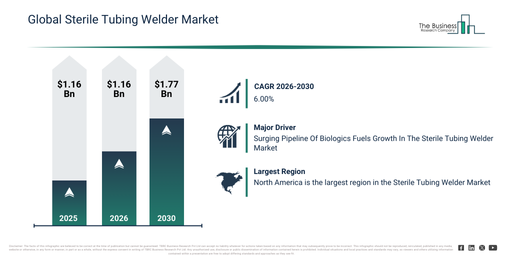
    The sterile tubing welder market has shown robust growth recently, with its value increasing from $2.49 billion in 2025 to $2.65 billion in 2026, representing a compound annual growth rate (CAGR) of 6.7%. This expanding market is largely fueled by a surge in biopharmaceutical manufacturing, wider use of single-use fluid systems, rising demand for aseptic processing, growth in diagnostic labs, and stricter regulations governing sterility compliance. Looking ahead, the market is forecasted to grow further, reaching $3.35 billion by 2030 with a CAGR of 6.0%. The anticipated expansion will be supported by growing biologics and cell therapy production, increased investments in automated bioprocessing, the spread of decentralized manufacturing, stronger focus on contamination risk mitigation, and adoption of smart laboratory technologies. Key emerging trends include the uptake of fully automated sterile welding systems, demand for contamination-free fluid transfer solutions, integration of digital monitoring and control, compatibility with single-use bioprocessing, and development of compact, portable welder designs.

    Download A Free Sample Report For Comprehensive Market Insights:

    https://www.thebusinessresearchcompany.com/sample.aspx?id=15933&type=smp

    How the Growing Biologics Pipeline Fuels Sterile Tubing Welder Market Growth

    The expanding pipeline of biologic products is a major factor accelerating the sterile tubing welder market’s growth. Biologics encompass a wide range of medicinal products derived from living organisms, such as vaccines, gene therapies, blood components, tissues, and recombinant proteins. Advances in biotechnology and deeper insights into disease mechanisms have driven this expansion. Sterile tubing welders are essential tools in producing biologics, facilitating aseptic connections that maintain the purity and integrity of fluid transfer systems. For instance, the US Food and Drug Administration (FDA) approved 55 new drugs in 2023, including 29 new chemical entities and 25 new biological entities, marking a 50% increase compared to 2022. This surge clearly supports the growing need for sterile tubing welders in biologics manufacturing.

    Rising Chronic Disease Prevalence Strengthens Demand for Sterile Tubing Welders

    Another important driver is the increasing prevalence of chronic diseases worldwide. Chronic illnesses—long-lasting conditions that typically worsen over time—require continual medical management. Factors such as aging populations, unhealthy lifestyles, environmental influences, and improved diagnostics contribute to this rise. Sterile tubing welders play a critical role in producing sterile intravenous therapies and other medical treatments vital to managing chronic diseases by ensuring contamination-free delivery systems. According to projections reported by the National Centre for Biotechnology Information (NCBI), the number of people aged 50 and above with at least one chronic disease is expected to almost double by 2050, reaching 142.66 million. This demographic trend underlines the expanding market for sterile tubing welders driven by chronic disease management needs.

    Access The Complete Sterile Tubing Welder Market Report:

    https://www.thebusinessresearchcompany.com/report/sterile-tubing-welder-global-market-report

    Healthcare Infrastructure Expansion and Spending Propel Market Growth

    The ongoing enhancement of healthcare infrastructure and increased medical expenditures are key factors boosting the sterile tubing welder market. These elements involve the development of healthcare facilities, availability of medical equipment, skilled workforce expansion, and higher financial investment in quality healthcare delivery. The growing burden of diseases, both chronic and acute, necessitates more comprehensive healthcare services, prompting hospitals and clinics to invest in advanced medical technologies like sterile tubing welders. For example, national health expenditure in the US rose by 7.5% in 2023 to $4.9 trillion, accounting for 17.6% of GDP. Spending on Medicare alone increased by 8.1%, reaching $1,029.8 billion. Such rising investments in healthcare infrastructure directly support the adoption and growth of sterile tubing welders.

    Sterile Tubing Welder Market Segmentation Highlights

    This market is segmented based on mode, application, and end-use, offering a detailed breakdown of product types and usage areas. By mode, it includes manual and automatic systems. Manual welders are further divided into handheld and bench-top models, while automatic welders include fully automatic and semi-automatic variants. Application categories encompass biopharmaceutical manufacturing, blood processing, diagnostic laboratories, and others. End-use sectors cover hospitals, research clinics, blood centers, and additional users. This segmentation reflects the diverse needs and technological variations within the sterile tubing welder market.

    Key Market Players Driving Innovation and Competition

    Several prominent companies lead the sterile tubing welder market, advancing innovation and competitive growth. These include GE Healthcare, Terumo BCT Inc., Sartorius AG, Entegris Inc., Racer Technology, LePure Biotech, NewAge Industries, GDM Electronics, Bioengineering AG, Biopharm Engineering, Schunk Sonosystems, Hangzhou Wu Zhou Medical Equipment, MGA Technologies, Aseptic Group, Genesis BPS, Biomen Biosystems Co. Ltd., Sentinel Process Systems Inc., AdvantaPure, Pall Corporation, and Saint-Gobain Life Sciences. Their contributions shape product development and market expansion globally.

    Regional Insights Reveal Opportunities for Market Expansion

    In 2025, North America held the largest share of the sterile tubing welder market, reflecting its advanced healthcare infrastructure and investment capacity. However, the Asia-Pacific region is projected to be the fastest-growing market during the forecast period, driven by increasing healthcare spending, expanding biopharmaceutical industries, and rising demand for advanced medical technologies. The report covers key geographic areas including Asia-Pacific, Southeast Asia, Western Europe, Eastern Europe, North America, South America, the Middle East, and Africa, offering a comprehensive view of regional market dynamics and opportunities.

    Get in touch with us:

    The Business Research Company: https://www.thebusinessresearchcompany.com/

    Americas: +1 310-496-7795

    Asia: +44 7882 955267 & +91 8897263534

    Europe: +44 7882 955267

    Email us at: marketing@tbrc.info

    Follow us on:

    LinkedIn: https://in.linkedin.com/company/the-business-research-company

    YouTube: https://www.youtube.com/channel/UC24_fI0rV8cR5DxlCpgmyFQ

    Global Market Model: https://www.thebusinessresearchcompany.com/global-market-model
  • Sterile IV Containers Market Growth Is Accelerating As Industry Transformation Continues

    Sterile IV Containers Market Growth Is Accelerating As Industry Transformation Continues

    Enhanced with market attractiveness analysis, total addressable market evaluation, company benchmarking matrices, interactive Excel dashboards, expanded supply chain intelligence, emerging startup coverage, and detailed product insights, The Business Research Company’s 2026 market reports deliver more actionable and strategically valuable research.

    The sterile IV containers market is witnessing substantial growth, driven by increasing healthcare demands and advancements in intravenous therapy. This report delves into the market’s size, the main factors fueling its expansion, key players, and emerging trends poised to shape its future trajectory.

    Sterile IV Containers Market Size and Projected Expansion

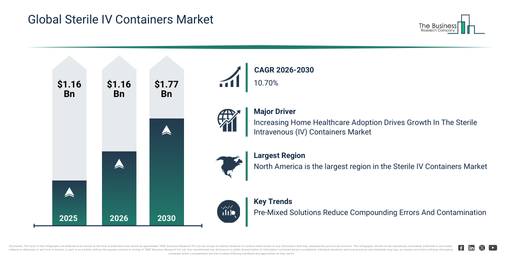
    The sterile IV containers market has shown remarkable growth recently, with its size rising from $6.36 billion in 2025 to $7.06 billion in 2026. This represents a strong compound annual growth rate (CAGR) of 11.1%. Factors such as more hospital admissions, a rise in intravenous therapy treatments, stringent infection control protocols, growing pharmaceutical demands, and expanding emergency care services have contributed to this increase in the past. Looking ahead, the market is projected to climb further, reaching $10.61 billion by 2030, driven by a CAGR of 10.7%. The forecasted growth is supported by the expansion of ambulatory care, sustainability efforts, increased demand for IV drug delivery, rising chronic disease cases, and improvements in healthcare infrastructure. Key trends expected to influence this market include the shift toward non-PVC IV containers, a rise in pre-filled IV solutions, a stronger emphasis on infection prevention, expanded hospital and clinic facilities, and the adoption of customizable IV packaging.

    Download A Free Sample Report For Comprehensive Market Insights:

    https://www.thebusinessresearchcompany.com/sample.aspx?id=20651&type=smp

    Growing Popularity of Home Healthcare Boosting Sterile IV Containers

    One significant factor propelling the sterile IV containers market is the increasing acceptance of home healthcare services. Home healthcare allows patients to receive medical and personal care in their own residences rather than traditional medical facilities. This model is gaining traction particularly because of the aging population, many of whom require long-term intravenous treatments and chronic condition management at home. Sterile IV containers play a crucial role in ensuring these therapies are delivered safely and without infection risks. For example, in December 2024, the Centers for Medicare & Medicaid Services (CMS) reported that spending on freestanding home health care agencies in the U.S. rose by 10.8% in 2023, reaching $147.8 billion, marking a 6.7% increase from 2022. This surge in home care adoption is a key driver behind the rising demand for sterile IV containers.

    Sterile IV Containers Market Segmentation by Type, Material, and Application

    The sterile IV containers market can be broken down into several core segments. By type, it includes pour bottles and flexible bags. The material category covers non-polyvinyl chloride (PVC) and polyvinyl chloride (PVC). Applications span hospitals, clinics, ambulatory care centers, and other healthcare settings. Further detailed subsegments include glass and plastic pour bottles, single-dose and multi-dose pour bottles, as well as PVC bags, polyolefin bags, non-PVC flexible bags, customizable IV bags designed for specific solutions, and pre-filled flexible bags.

    Access The Complete Sterile IV Containers Market Report:

    https://www.thebusinessresearchcompany.com/report/sterile-iv-containers-global-market-report

    How Innovations Are Influencing Competitive Trends in the Sterile IV Containers Market

    To stay competitive, leading companies in the sterile IV containers market are focusing on developing advanced drug delivery technologies, such as pre-mixed solutions in duplex containers. These systems enhance efficiency, improve medication safety, and reduce risks related to manual compounding errors and contamination. Duplex containers feature dual chambers that keep the drug powder and diluent separated until use, activating the solution only when needed. For instance, in March 2025, B. Braun Medical Inc. launched its Ready-to-Activate Cefazolin 3-gram pre-mix in Duplex containers. This product allows healthcare professionals to easily mix the solution by activating the container, eliminating the need for complex manual preparation and minimizing the chance of contamination or dosing mistakes.

    Key Players Leading the Sterile IV Containers Market

    The sterile IV containers market is shaped by several prominent companies including Cardinal Health Inc., Fresenius Kabi, Medline Industries Inc., Becton Dickinson and Company BD, Baxter International Inc., B Braun SE, Terumo Medical Corporation, Nipro Corporation, West Pharmaceutical Services Inc., ICU Medical Inc., Amsino International Inc., Technoflex, MedicoPack, JW Life Science Corp, SSY Group Limited, Vioser SA, Polycine GmbH, Grifols SA, EuroLife Healthcare Pvt Ltd, Huaren Pharmaceutical Co Ltd, Sichuan Kelun Pharmaceutical Co Ltd, IVEN Pharmatech, and Nephron Pharmaceuticals.

    Regional Analysis of the Sterile IV Containers Market

    In 2025, North America held the largest share of the sterile IV containers market. The overall market analysis includes regions such as Asia-Pacific, South East Asia, Western Europe, Eastern Europe, North America, South America, the Middle East, and Africa, providing a broad perspective on global industry growth and regional market dynamics.

    Get in touch with us:

    The Business Research Company: https://www.thebusinessresearchcompany.com/

    Americas: +1 310-496-7795

    Asia: +44 7882 955267 & +91 8897263534

    Europe: +44 7882 955267

    Email us at: marketing@tbrc.info

    Follow us on:

    LinkedIn: https://in.linkedin.com/company/the-business-research-company

    YouTube: https://www.youtube.com/channel/UC24_fI0rV8cR5DxlCpgmyFQ

    Global Market Model: https://www.thebusinessresearchcompany.com/global-market-model
  • Stereotactic Surgery Devices Market Outlook Highlights The Next Major Growth Opportunities

    Stereotactic Surgery Devices Market Outlook Highlights The Next Major Growth Opportunities

    Through market attractiveness analysis, total addressable market evaluation, company benchmarking matrices, interactive Excel dashboards, expanded supply chain intelligence, emerging startup coverage, and detailed product insights, The Business Research Company’s 2026 market reports provide more actionable and strategically valuable research.

    The market for stereotactic surgery devices has seen remarkable growth recently, driven by advances in medical technology and increasing demand for precise neurological treatments. This sector is evolving rapidly as healthcare providers seek innovative solutions for minimally invasive brain procedures. Below is a detailed overview of the current market landscape, key growth factors, segmentation, emerging trends, major players, and regional insights.

    Stereotactic Surgery Devices Market Size and Growth Outlook

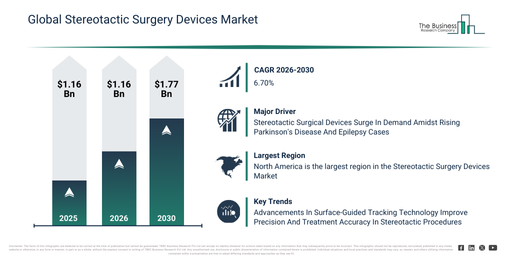
    The stereotactic surgery devices market experienced significant expansion over recent years and is projected to continue this upward trajectory. From a market value of $22.44 billion in 2025, it is expected to rise to $23.84 billion in 2026, reflecting a compound annual growth rate (CAGR) of 6.2%. Looking ahead, the market is forecasted to reach $30.94 billion by 2030, growing at a CAGR of 6.7%. This expansion is primarily due to the growing prevalence of neurological disorders, increased establishment of neurosurgical centers, widespread use of gamma knife technology, adoption of minimally invasive brain surgeries, and ongoing improvements in medical imaging systems.

    Download A Free Sample Report For Comprehensive Market Insights:

    https://www.thebusinessresearchcompany.com/sample.aspx?id=10495&type=smp

    Factors Encouraging Market Expansion in the Coming Years

    The surge in demand for precision neurosurgery is a major factor driving the stereotactic surgery devices market forward. More healthcare providers are investing in cutting-edge radiosurgery platforms that enable highly accurate, targeted treatments. Additionally, the incorporation of artificial intelligence (AI) in surgical planning is revolutionizing the field by offering enhanced capabilities and greater customization. Alongside these technological advancements, there is a rising preference for non-invasive treatment methods, which reduce patient risk and recovery time.

    Key Trends Shaping the Future of the Stereotactic Surgery Devices Market

    The market is witnessing an increasing adoption of image-guided stereotactic systems, which allow surgeons to navigate complex brain structures with improved precision. Another notable trend is the growing use of robotic-assisted platforms that facilitate minimally invasive procedures. High-precision navigation technologies are becoming more integrated into surgical workflows, contributing to better treatment outcomes. Furthermore, the expansion of non-invasive radiosurgery solutions underscores the industry’s focus on patient safety and treatment accuracy.

    Access The Complete Stereotactic Surgery Devices Market Report:

    https://www.thebusinessresearchcompany.com/report/stereotactic-surgery-devices-global-market-report

    How Rising Neurological Disorders Influence Market Demand

    The increasing incidence of Parkinson’s disease and epilepsy is significantly contributing to market growth. Parkinson’s disease, characterized by symptoms such as tremors, slow movement, and muscle rigidity, alongside epilepsy, which leads to recurrent seizures, represent major neurological challenges worldwide. Stereotactic surgical devices play a vital role in managing these conditions by offering targeted therapies. For example, a report from the British Psychological Society in November 2024 highlights that in Wales alone, around 100,000 people live with long-term neurological diseases, including over 41,000 individuals affected by conditions like Parkinson’s, epilepsy, multiple sclerosis, and others. With approximately 2,500 new cases diagnosed annually, these trends are accelerating demand for stereotactic surgery solutions.

    The Impact of Aging Populations on Market Growth

    An expanding elderly population is further propelling the need for stereotactic surgery devices. Defined as individuals aged 65 and above, this demographic often requires specialized, minimally invasive treatments to address age-associated neurological disorders. According to the World Health Organization (WHO) in October 2025, by 2030, one out of every six people globally will be aged 60 or older. The number of elderly individuals is projected to double by 2050, reaching 2.1 billion. This demographic shift underscores the growing necessity for advanced stereotactic surgical interventions tailored to geriatric health needs.

    Market Segmentation Overview for Stereotactic Surgery Devices

    This market is categorized based on product type, application, and end user. The product segment includes Gamma Knife systems, Linear Accelerator (LINAC) machines, and CyberKnife platforms. From an application standpoint, treatments cover brain tumors, arteriovenous malformations, Parkinson’s disease, epilepsy, and other neurological conditions. End users comprise hospitals, specialized neurosurgical centers, cancer treatment facilities, and academic and research medical institutions. Further subcategories break down product lines, such as Leksell Gamma Knife Perfexion and Icon models, conventional and IGRT LINAC systems, and CyberKnife M6 and VSI systems.

    Innovations and Technological Advances Shaping Market Dynamics

    Leading companies in the stereotactic surgery devices field are focusing on enhancing tracking and positioning technologies to boost procedural precision and improve patient safety. These innovations enable real-time monitoring and more efficient workflows during stereotactic interventions like radiosurgery and radiation therapy. For example, in May 2023, Brainlab launched the ExacTrac Dynamic Surface system, which combines high-speed thermal surface tracking with improved X-ray monitoring. This technology uses structured blue light patterns and thermal imaging to enable highly accurate patient alignment, especially for cranial and spine treatments, thereby elevating the reliability and control of stereotactic procedures.

    Key Players Dominating the Stereotactic Surgery Devices Market

    Prominent organizations leading this market include Elekta AB, Varian Medical Systems Inc., Accuray Incorporated, Ion Beam Applications S.A., ZAP Surgical Systems Inc., Brainlab AG, Monteris Medical Holding AG, Renishaw plc, Medtronic plc, Nexstim Plc, FHC Inc., Alpha Omega Engineering Inc., Mitsubishi Heavy Industries Ltd., Inomed Medizintechnik GmbH, MRI Interventions Inc., Modus Medical Devices Inc., Scopis GmbH, Neuropace Inc., Adeor Medical AG, and Huiheng Group Co Ltd.

    Regional Market Leadership and Outlook

    In 2025, North America was the dominant region in the stereotactic surgery devices market. The comprehensive market report also covers other critical regions including Asia-Pacific, South East Asia, Western Europe, Eastern Europe, South America, the Middle East, and Africa, providing a global perspective on evolving market trends and growth potential.

    Get in touch with us:

    The Business Research Company: https://www.thebusinessresearchcompany.com/

    Americas: +1 310-496-7795

    Asia: +44 7882 955267 & +91 8897263534

    Europe: +44 7882 955267

    Email us at: marketing@tbrc.info

    Follow us on:

    LinkedIn: https://in.linkedin.com/company/the-business-research-company

    YouTube: https://www.youtube.com/channel/UC24_fI0rV8cR5DxlCpgmyFQ

    Global Market Model: https://www.thebusinessresearchcompany.com/global-market-model
  • Stents Market Trends And Growth Drivers Point To Strong Future Potential

    Stents Market Trends And Growth Drivers Point To Strong Future Potential

    Delivering more actionable and strategically valuable research, The Business Research Company’s 2026 market reports feature market attractiveness analysis, total addressable market evaluation, company benchmarking matrices, interactive Excel dashboards, expanded supply chain intelligence, emerging startup coverage, and detailed product insights.

    The stents market has experienced significant growth in recent years, driven by advancements in medical technology and increasing demand for cardiovascular treatments. As healthcare infrastructures improve and new innovations emerge, this sector is poised for continued expansion. Below, we explore the current market size, key factors fueling growth, segmentation details, technological trends, leading players, and regional dynamics shaping the future of the stents industry.

    Stents Market Size Overview and Growth Forecast

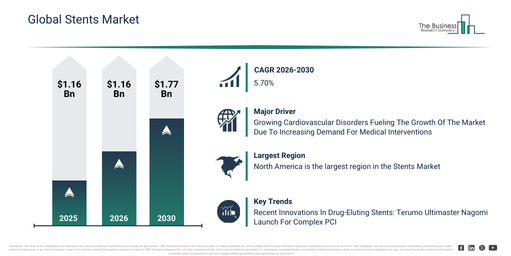
    The stents market has shown strong expansion recently, with its value rising from $11.81 billion in 2025 to $12.49 billion in 2026, representing a compound annual growth rate (CAGR) of 5.8%. This historical growth is linked to limited options for stent materials, widespread use of bare-metal stents, a rising incidence of coronary artery disease, enhanced hospital infrastructure, and increased adoption of angioplasty procedures. Looking ahead, the market is expected to grow to $15.62 billion by 2030, maintaining a CAGR of 5.7%. Factors contributing to this future growth include the development of drug-eluting and bioabsorbable stents, expansion in neurovascular and peripheral interventions, rising investments in stent research and development, an aging population with cardiovascular issues, and the integration of smart and AI-assisted stent deployment technologies. Key trends anticipated during the forecast period involve broader use of drug-eluting and bioabsorbable stents, increased peripheral and neurovascular stent applications, emphasis on minimally invasive and endovascular surgeries, growing demand for customized stents, and improved regulatory and post-market monitoring.

    Download A Free Sample Report For Comprehensive Market Insights:

    https://www.thebusinessresearchcompany.com/sample.aspx?id=24408&type=smp

    Primary Health Factors Driving Growth in the Stents Market

    An important driver of the stents market is the rising prevalence of cardiovascular disorders, which affect heart and blood vessel function, leading to impaired circulation and heart performance. Sedentary lifestyles contribute to obesity, hypertension, and cardiovascular deterioration, heightening the need for effective treatments. Stent placement plays a critical role by reopening and maintaining blood flow through narrowed or blocked arteries, thereby preventing heart attacks and other serious complications. For instance, in January 2025, the British Heart Foundation reported that about 7.6 million people in the UK were living with heart and circulatory diseases, consisting of roughly 4 million men and 3.6 million women. These conditions account for nearly 27% of all deaths in the country, equating to over 170,000 fatalities annually or approximately 480 deaths every day. This widespread burden of cardiovascular disease is a strong factor propelling demand for stents.

    Breakdown of Stents Market Segmentation and Revenue Sources

    This report segments the stents market by product, material, and end user categories. Product-wise, it includes coronary stents, peripheral stents, stent-related implants, biliary stents, carotid stents, and neurovascular stents. The materials used are categorized as metallic biomaterials and polymer biomaterials. End users consist of hospitals and clinics, ambulatory surgical centers, and other healthcare providers. Further product subsegments include drug-eluting, bare-metal, and bioabsorbable coronary stents; iliac artery, femoral-popliteal artery, renal artery, and tibial artery peripheral stents; stent grafts such as endovascular and covered stents; plastic, metallic, and self-expanding biliary stents; balloon-expandable and self-expanding carotid stents; and neurovascular stents including flow diverter, self-expanding, and balloon-expandable types.

    Access The Complete Stents Market Report:

    https://www.thebusinessresearchcompany.com/report/stents-global-market-report

    Innovations and Technological Advances Shaping the Stents Market

    Key players in the stents industry are focusing heavily on innovation to improve the performance and safety of their products. Drug-eluting stents, which slowly release medication to prevent artery re-narrowing after placement, are a major area of development. For example, in April 2023, Terumo Europe N.V. introduced the Ultimaster Nagomi sirolimus-eluting coronary stent system, designed for complex percutaneous coronary intervention (PCI) cases. This stent system aims to enhance deliverability in difficult anatomies, support shorter dual-antiplatelet therapy for patients at high bleeding risk, and maintain strong radial support. It features advanced polymer technology for consistent drug release and improved endothelial healing, reflecting the ongoing trend toward smarter, more effective stent solutions.

    Leading Companies Shaping the Stents Industry Landscape

    The competitive landscape of the stents market includes several prominent organizations such as Abbott Laboratories, Medtronic plc, Boston Scientific Corporation, Terumo Corporation, B Braun Melsungen AG, Cook Medical, Biotronik SE and Co KG, MicroPort Scientific Corporation, Meril Life Sciences, Biosensors International Group Ltd, Elixir Medical Corporation, Veryan Medical Limited, Vascular Concepts Ltd, Novatech SA, Merit Medical Systems Inc, Teleflex Incorporated, Micro Tech Europe, Balton Sp z oo, Endologix Inc, Cardinal Health Interventional, Nipro Medical Corporation, and Optimed Medizinische Instrumente GmbH. These companies are competing through product innovation, strategic partnerships, and expansion of market reach.

    Regional Insights and Revenue Leadership in the Stents Market

    In 2025, North America held the largest share of the stents market, supported by advanced healthcare infrastructure and high patient awareness. Meanwhile, the Asia-Pacific region is expected to exhibit the fastest growth during the forecast period, driven by improving healthcare facilities, increasing patient population, and rising investments in medical technology. The report covers detailed regional analysis across Asia-Pacific, South East Asia, Western Europe, Eastern Europe, North America, South America, the Middle East, and Africa, providing a comprehensive view of the global market landscape.

    Get in touch with us:

    The Business Research Company: https://www.thebusinessresearchcompany.com/

    Americas: +1 310-496-7795

    Asia: +44 7882 955267 & +91 8897263534

    Europe: +44 7882 955267

    Email us at: marketing@tbrc.info

    Follow us on:

    LinkedIn: https://in.linkedin.com/company/the-business-research-company

    YouTube: https://www.youtube.com/channel/UC24_fI0rV8cR5DxlCpgmyFQ

    Global Market Model: https://www.thebusinessresearchcompany.com/global-market-model

  • Steerable Needles Market Expansion Is Reshaping Competitive Dynamics Across The Industry

    Steerable Needles Market Expansion Is Reshaping Competitive Dynamics Across The Industry

    Enhanced with market attractiveness analysis, total addressable market evaluation, company benchmarking matrices, interactive Excel dashboards, expanded supply chain intelligence, emerging startup coverage, and detailed product insights, The Business Research Company’s 2026 market reports deliver more actionable and strategically valuable research.

    The steerable needles market is gaining considerable traction as advancements in medical technology and surgical techniques continue to evolve. With rising demand for precision and minimally invasive procedures, this market is set to experience significant growth in the coming years. Let’s explore the current market size, factors driving expansion, key players, prominent trends, and regional insights shaping this sector.

    Steerable Needles Market Size and Growth Outlook

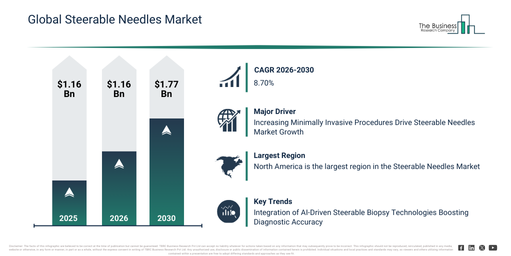
    The steerable needles market has witnessed substantial growth recently, with its value expected to rise from $1.76 billion in 2025 to $1.93 billion in 2026, reflecting a strong compound annual growth rate (CAGR) of 9.7%. This increase is largely driven by the growing preference for minimally invasive procedures, advancements in imaging technologies, a surge in interventional radiology, wider acceptance of precise surgical instruments, and the expansion of robotic-assisted surgeries. Looking ahead, the market is projected to reach $2.69 billion by 2030, maintaining a steady CAGR of 8.7%. Factors such as the integration of AI in surgical navigation, increased demand for complex tumor targeting, growth in robotic surgery platforms, and investments in advanced interventional devices are expected to fuel this upward trajectory.

    Download A Free Sample Report For Comprehensive Market Insights:

    https://www.thebusinessresearchcompany.com/sample.aspx?id=15932&type=smp

    Rising Adoption of Minimally Invasive Procedures Boosting Demand

    One of the primary factors propelling the steerable needles market is the increasing use of minimally invasive procedures. These interventions involve small incisions or natural body openings, resulting in less tissue damage and shorter recovery times. Patients benefit from reduced postoperative pain and lower complication risks, making these procedures highly preferred. Steerable needles play a crucial role by enabling precise navigation and targeting of tissues, which enhances accuracy while minimizing harm to surrounding areas. For instance, data from June 2024 by the American Society of Plastic Surgeons highlights a 7% rise in minimally invasive procedures in 2023, surpassing the growth rate of traditional surgeries by 2%. Hand surgeries like carpal tunnel release and trigger finger treatments also saw a 2% increase, further signaling the growing adoption of minimally invasive techniques.

    Breakdown of Steerable Needles Market Segments

    The steerable needles market is segmented in this report based on several key criteria:

    – By Type: Bevel-Tip Flexible Needles, Symmetric-Tip Needles, Tendon Actuated Tip Needles

    – By Application: Biopsy, Tumor Ablation, Pain Management, Robotic Assisted Surgery, and Other Applications

    – By End User: Hospitals, Ambulatory Surgical Centers, and Other End Users

    Further subcategories include single and double bevel-tip needles under bevel-tip flexible needles, standard and curved symmetric-tip needles, as well as single and dual tendon actuated tip needles, providing a detailed view of the product landscape.

    Access The Complete Steerable Needles Market Report:

    https://www.thebusinessresearchcompany.com/report/steerable-needles-global-market-report

    Collaborations and Technological Advances Driving Market Trends

    Leading companies in the steerable needles sector are focusing on strategic collaborations to create advanced, image-guided needle systems that offer higher precision and support minimally invasive techniques. These partnerships help combine technological expertise, broaden the clinical applications, and speed up the availability of innovative, patient-centered solutions. A notable example occurred in March 2023, when Body Vision Medical LTD. joined forces with Serpex Medical Inc. to perform the first lung nodule biopsy using Serpex’s Compass steerable needle guided by Body Vision’s LungVision real-time intraoperative CT imaging. This breakthrough, conducted by Dr. Michael Machuzak at Cleveland Clinic, demonstrated how integrating steerable needles with real-time imaging improves the accuracy and safety of lung biopsies.

    Key Market Players Making an Impact in Steerable Needles

    The steerable needles market features several influential companies that maintain a strong presence globally, including Johnson & Johnson, Medtronic Plc, Becton Dickinson and Company, Stryker Corporation, Boston Scientific Corporation, Olympus Corporation, Terumo Corporation, Intuitive Surgical Inc, Smith & Nephew plc, Cook Medical Incorporated, Teleflex Incorporated, KARL STORZ SE & Co KG, Merit Medical Systems Inc, ConMed Corporation, Penumbra Inc, AngioDynamics Inc, AprioMed Inc, Argon Medical Devices Inc, and Creo Medical Group plc along with Creo Medical GmbH.

    Regional Distribution and Growth Prospects in the Steerable Needles Space

    In 2025, North America held the largest share of the steerable needles market, reflecting a mature and technologically advanced healthcare infrastructure. Meanwhile, the Asia-Pacific region is anticipated to exhibit the fastest growth over the forecast period due to increasing healthcare investments, rising awareness, and expanding medical facilities. The full market scope also covers other significant regions such as South East Asia, Western and Eastern Europe, South America, the Middle East, and Africa, providing a comprehensive global perspective.

    Get in touch with us:

    The Business Research Company: https://www.thebusinessresearchcompany.com/

    Americas: +1 310-496-7795

    Asia: +44 7882 955267 & +91 8897263534

    Europe: +44 7882 955267

    Email us at: marketing@tbrc.info

    Follow us on:

    LinkedIn: https://in.linkedin.com/company/the-business-research-company

    YouTube: https://www.youtube.com/channel/UC24_fI0rV8cR5DxlCpgmyFQ

    Global Market Model: https://www.thebusinessresearchcompany.com/global-market-model

  • Steam Autoclaves Market Forecast Reveals Where Future Industry Value Will Be Created

    Steam Autoclaves Market Forecast Reveals Where Future Industry Value Will Be Created

    Through market attractiveness analysis, total addressable market evaluation, company benchmarking matrices, interactive Excel dashboards, expanded supply chain intelligence, emerging startup coverage, and detailed product insights, The Business Research Company’s 2026 market reports provide more actionable and strategically valuable research.

    The steam autoclaves sector is experiencing significant momentum, driven by advancements in healthcare and sterilization technologies. As infection control remains a critical priority in medical settings, the demand for efficient and reliable sterilization solutions continues to rise. This overview explores the market size, growth drivers, key players, and future trends shaping the steam autoclaves industry through 2030.

    Market Size and Revenue Growth Prospects in the Steam Autoclaves Market

    The steam autoclaves market has witnessed rapid expansion in recent years. It is projected to grow from $3.49 billion in 2025 to $3.86 billion in 2026, registering a compound annual growth rate (CAGR) of 10.5%. This past growth has been largely driven by the expansion of hospital sterilization infrastructure, increased usage of reusable surgical tools, growth in pharmaceutical manufacturing, heightened laboratory testing activities, and the widespread adoption of steam sterilization methods.

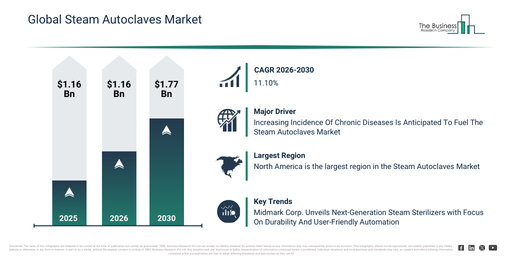
    Looking ahead, the market is expected to accelerate further, reaching $5.88 billion by 2030 with a CAGR of 11.1%. This growth will be fueled by rising investments in advanced healthcare infrastructure, growing demand for infection control solutions, expansion of pharmaceutical and biotech production, a surge in smart sterilization monitoring technologies, and a greater focus on operational efficiency. Key trends anticipated in the coming years include increasing use of automated sterilization systems, enhanced integration of digital monitoring and validation, demand for high-capacity autoclaves, advancements in energy-efficient sterilization technologies, and stricter emphasis on regulatory compliance and traceability.

    Download A Free Sample Report For Comprehensive Market Insights:

    https://www.thebusinessresearchcompany.com/sample.aspx?id=10260&type=smp

    Key Factors Driving Growth in the Steam Autoclaves Market

    The increasing prevalence of chronic diseases is a significant factor propelling the growth of the steam autoclaves market. Chronic illnesses, which require long-term healthcare management, necessitate stringent sterilization of medical equipment to avoid infections and disease transmission. Steam autoclaves play a vital role in maintaining hygiene and safety in such settings.

    For example, in April 2024, Allergy UK reported that over 21 million people in the United Kingdom suffer from allergies, which became the most frequently reported chronic health condition in 2022. Projections suggest that by 2026, half of Europe’s population will be affected by at least one allergy. This rising burden of chronic health issues is driving demand for reliable sterilization solutions such as steam autoclaves.

    Detailed Market Segmentation and Strategic Growth Opportunities in Steam Autoclaves

    The steam autoclaves market is divided into several key segments for a thorough understanding:

    1) Product Type: Table Top, Vertical, Horizontal, Floor Standing, High Pressure

    2) Technology: Gravity Displacement, Pre-vacuum, Steam Flush

    3) Functioning: Downward Displacement Autoclaves, Positive Pressure Displacement Autoclaves, Negative Pressure Displacement Autoclaves, Triple Vacuum Autoclaves

    4) Application: Medical Steam Autoclaves, Dental Steam Autoclaves, Laboratory Steam Autoclaves

    5) End-Use: Hospitals, Clinics, Research and Academic Institutes, Other End-Uses

    Access The Complete Steam Autoclaves Market Report:

    https://www.thebusinessresearchcompany.com/report/steam-autoclaves-global-market-report

    Further breakdowns include:

    – Table Top: Benchtop Autoclaves, Compact Autoclaves

    – Vertical: Floor-Standing Vertical Autoclaves, Laboratory Vertical Autoclaves

    – Horizontal: Standard Horizontal Autoclaves, Large-Capacity Horizontal Autoclaves

    – Floor Standing: Manual Floor Standing Autoclaves, Automatic Floor Standing Autoclaves

    – High Pressure: High-Pressure Steam Autoclaves for Industrial Use, High-Pressure Steam Autoclaves for Laboratory Use

    Innovative Trends Shaping the Future of the Steam Autoclaves Market

    Leading companies in the steam autoclave industry are focusing on enhancing sustainability through durable system designs paired with user-friendly automation. These improvements not only boost environmental responsibility but also provide a competitive edge by streamlining operations and extending equipment lifespan.

    A case in point is Midmark Corp., a U.S.-based medical equipment manufacturer, which in July 2024 launched the next-generation M9 and M11 Steam Sterilizers tailored for dental practices. These models emphasize durability and automation, offering up to 25,000 cycles with reduced maintenance needs. They feature a 5-inch, fingerprint-resistant touchscreen operable even with gloves, available in both light and dark modes. As dynamic-air-removal sterilizers, they comply with CDC and AAMI standards for wrapped instruments and include convenient functions like autofill and auto-drain, alongside optional accessories to optimize performance and patient care.

    Key Industry Players Driving Competition in the Steam Autoclaves Market

    The steam autoclaves market is shaped by a range of influential companies, including Astell Scientific Ltd., Belimed GmbH, BMM Weston Ltd., Celitron Medical Technologies Kft, Consolidated Sterilizer Systems, Getinge Group, Matachana, Medi Safe International, Eryigit Medical Devices Inc., Hirayama Manufacturing Corporation, Priorclave Ltd., LTE Scientific Ltd., MELAG Medizintechnik GmbH & Co. KG, Tuttnauer Co. Ltd., Benchmark Scientific Inc., Rodwell Autoclave Company, BMT Medical Technology S.R.O., Steris Corporation, ZIRBUS technology GmbH, Shinva Medical Instruments Co. Ltd., SAKURA SEIKI Co. Ltd., Systec GmbH & Co. KG, Wuxi Med-Clean Equipment Co. Ltd., TESALYS Group, PHC Holdings Corporation, and R. Espinar S.L.

    Regional Market Leadership and Growth Forecasts for Steam Autoclaves

    In 2025, North America held the largest share of the steam autoclaves market. However, the Asia-Pacific region is projected to experience the fastest growth during the forecast period. The market analysis spans multiple regions, including Asia-Pacific, South East Asia, Western Europe, Eastern Europe, North America, South America, the Middle East, and Africa, providing a comprehensive global perspective on market dynamics and opportunities.

    Get in touch with us:

    The Business Research Company: https://www.thebusinessresearchcompany.com/

    Americas: +1 310-496-7795

    Asia: +44 7882 955267 & +91 8897263534

    Europe: +44 7882 955267

    Email us at: marketing@tbrc.info

    Follow us on:

    LinkedIn: https://in.linkedin.com/company/the-business-research-company

    YouTube: https://www.youtube.com/channel/UC24_fI0rV8cR5DxlCpgmyFQ

    Global Market Model: https://www.thebusinessresearchcompany.com/global-market-model