Category: Medical Equipment

  • STD Diagnostics Market Growth Through 2030 Creates New Strategic Opportunities

    STD Diagnostics Market Growth Through 2030 Creates New Strategic Opportunities

    Delivering more actionable and strategically valuable research, The Business Research Company’s 2026 market reports feature market attractiveness analysis, total addressable market evaluation, company benchmarking matrices, interactive Excel dashboards, expanded supply chain intelligence, emerging startup coverage, and detailed product insights.

    The STD diagnostics market is rapidly evolving as awareness and demand for effective testing solutions increase worldwide. With sexually transmitted infections becoming more prevalent, healthcare systems and diagnostic providers are expanding their capabilities to offer timely and accurate detection. The following analysis explores the market’s current scale, growth drivers, segmentation, innovation trends, leading players, and regional outlook.

    Current Market Size and Growth Outlook for the STD Diagnostics Market

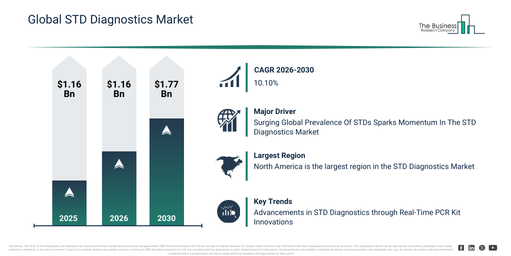
    The STD diagnostics market has experienced swift growth recently, rising from $10.77 billion in 2025 to an anticipated $11.91 billion in 2026, corresponding to a compound annual growth rate (CAGR) of 10.6%. This expansion during the historical period is largely due to the increasing rates of sexually transmitted infections, the development of diagnostic laboratory infrastructure, enhanced public health screening initiatives, better sexual health awareness, and the availability of advanced nucleic acid testing technologies.

    Looking ahead, the market is projected to continue its rapid advancement, reaching $17.52 billion by 2030 with a CAGR of 10.1%. This forecasted surge is driven by growing demand for rapid diagnostic tests, greater uptake of home-based testing kits, wider adoption of molecular diagnostic techniques, increased investment in public health surveillance, and a stronger focus on providing confidential and easily accessible testing services. Important trends expected to influence the market include the growing use of point-of-care and rapid tests, molecular diagnostic innovations, automation of laboratory systems, expansion of at-home testing options, and heightened emphasis on early and precise disease detection.

    Download A Free Sample Report For Comprehensive Market Insights:

    https://www.thebusinessresearchcompany.com/sample.aspx?id=8507&type=smp

    Factors Contributing to the Growth of the STD Diagnostics Market

    One of the primary factors encouraging growth in the STD diagnostics market is the rising prevalence of sexually transmitted diseases themselves. These infections, transmitted primarily through sexual contact, require accurate diagnosis and treatment to prevent further spread. The increase in STD cases is linked to higher sexual activity rates and changing social behaviors, especially among younger demographics. Reduced stigma around sexual health and increased mobility have created more diverse sexual networks, fueling transmission.

    This growing prevalence leads to intensified demand for diagnostic tools, as healthcare providers require reliable laboratory tests, screening kits, and detection technologies to identify infections promptly. For example, data from September 2025 by the U.S. Centers for Disease Control and Prevention revealed that congenital syphilis cases increased for the twelfth consecutive year, nearly reaching 4,000 reported instances in 2024. Such statistics exemplify how rising infection rates directly support market expansion for STD diagnostics.

    How the STD Diagnostics Market Is Divided for Better Understanding

    The STD diagnostics market is categorized in this report based on several essential segments:

    1) By Type of test: Chlamydia Testing, Syphilis Testing, Gonorrhea Testing, Herpes Simplex Virus Testing, Human Papilloma Virus (HPV) Testing, Human Immunodeficiency Virus (HIV) Testing, and Chancroid Testing.

    2) By Testing Location: Laboratory Testing and Point of Care (PoC) Testing.

    3) By End-User: Hospitals and Clinics, Diagnostic Centers, and Homecare settings.

    Access The Complete STD Diagnostics Market Report:

    https://www.thebusinessresearchcompany.com/report/std-diagnostics-global-market-report

    Within these categories, subsegments are further detailed, including types of tests used for each infection. For instance, Chlamydia Testing includes Nucleic Acid Amplification Tests (NAAT) and Antigen Tests; Syphilis Testing comprises Rapid Plasma Reagin (RPR) and Treponemal Tests; Gonorrhea Testing involves NAAT and Culture Tests; Herpes Simplex Virus Testing includes PCR and Serological Tests; HPV Testing is divided into HPV DNA and HPV RNA Tests; HIV Testing features Antibody, Antigen or Antibody, and Nucleic Acid Tests (NAT); and Chancroid Testing covers Culture and Nucleic Acid Tests.

    Innovations Shaping the Future of the STD Diagnostics Market

    Market leaders are heavily investing in innovative diagnostic tools to address unmet needs and improve testing accuracy and speed. Among the key advancements is the development of real-time PCR kits, which use real-time polymerase chain reaction technology to detect and quantify specific nucleic acid sequences with high sensitivity and specificity.

    For example, in March 2023, Jiangsu Bioperfectus Technologies Co. Ltd., a China-based R&D firm, launched two notable products: the Mycoplasma Hominis Real Time PCR Kit and the Treponema Pallidum Real Time PCR Kit. These kits offer rapid turnaround times, ease of use, and the ability to detect multiple pathogens in a single test, marking significant progress in the diagnostic landscape.

    The Main Players Driving the STD Diagnostics Market

    Several prominent companies dominate the STD diagnostics space, including Abbott Laboratories, Qiagen Inc., Danaher Corporation, F. Hoffmann-La Roche AG, Hologic Inc., Bio-Rad Laboratories Inc., Becton Dickinson and Company, Thermo Fisher Scientific Inc., Biocartis NV, Trinity Biotech PLC, Binx Health Inc., NOWDiagnostics Inc., Atlas Genetics Ltd., BioFire Diagnostics LLC, BioMérieux SA, Chembio Diagnostic Systems Inc., Corgenix Medical Corporation, Creative Diagnostics, Curetis AG, Daktari Diagnostics, Enzo Biochem Inc., Fujirebio Diagnostics Inc., GenePOC Inc., GenMark Diagnostics Inc., Grifols Diagnostic Solutions Inc., Hain Lifescience GmbH, Luminex Corporation, Meridian Bioscience Inc., Mesa Biotech Inc., and Mobidiag Oy. These companies continuously pursue product innovation to maintain competitive advantage and meet growing market demands.

    Regional Analysis Highlights North America and Asia-Pacific

    In 2025, North America held the largest share of the STD diagnostics market, benefiting from advanced healthcare infrastructure and widespread testing programs. Meanwhile, the Asia-Pacific region is expected to experience the fastest growth during the forecast period, driven by rising healthcare investments, increasing STD prevalence, and expanding diagnostic capabilities. The report covers additional regions such as South East Asia, Western Europe, Eastern Europe, South America, the Middle East, and Africa to provide a comprehensive global perspective on market trends and opportunities.

    Get in touch with us:

    The Business Research Company: https://www.thebusinessresearchcompany.com/

    Americas: +1 310-496-7795

    Asia: +44 7882 955267 & +91 8897263534

    Europe: +44 7882 955267

    Email us at: marketing@tbrc.info

    Follow us on:

    LinkedIn: https://in.linkedin.com/company/the-business-research-company

    YouTube: https://www.youtube.com/channel/UC24_fI0rV8cR5DxlCpgmyFQ

    Global Market Model: https://www.thebusinessresearchcompany.com/global-market-model
  • Spirometer Market Size Projected To Increase From $1.36 Billion To $1.83 Billion During The Forecast Period

    Spirometer Market Size Projected To Increase From $1.36 Billion To $1.83 Billion During The Forecast Period

    Enhanced with market attractiveness analysis, total addressable market evaluation, company benchmarking matrices, interactive Excel dashboards, expanded supply chain intelligence, emerging startup coverage, and detailed product insights, The Business Research Company’s 2026 market reports deliver more actionable and strategically valuable research.

    The spirometer market has seen significant growth recently and is set to continue expanding in the coming years. Driven by rising respiratory health concerns and advances in technology, this sector is evolving rapidly. Let’s explore the market’s current size, key growth factors, major players, and future trends shaping the spirometer landscape.

    Current Size and Future Growth Prospects of the Spirometer Market

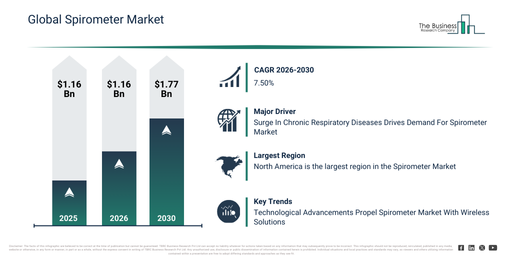
    The spirometer market has grown impressively over the past few years. It is projected to increase from $1.27 billion in 2025 to $1.37 billion in 2026, reflecting a compound annual growth rate (CAGR) of 7.9%. This growth during the historical period is primarily due to the increasing prevalence of respiratory disorders, expanded pulmonary diagnostics in hospitals, heightened lung health awareness, the availability of standardized spirometry guidelines, and broader use of diagnostic equipment. Looking ahead, the market is expected to reach $1.83 billion by 2030, growing at a CAGR of 7.5%. Factors contributing to this forecasted growth include rising adoption of home-based respiratory monitoring, demand for telehealth-supported diagnostics, investments in digital healthcare infrastructure, a stronger emphasis on early disease detection, and expansion of software-integrated spirometry platforms. Key trends expected to influence the market include wider use of digital and connected spirometers, integration of software for lung function analysis, greater reliance on portable and handheld devices, growth in remote respiratory monitoring, and a focus on improving diagnostic accuracy and standardization.

    Download A Free Sample Report For Comprehensive Market Insights:

    https://www.thebusinessresearchcompany.com/sample.aspx?id=8364&type=smp

    Rising Prevalence of Chronic Respiratory Diseases Boosting Spirometer Demand

    An important factor driving demand in the spirometer market is the growing incidence of chronic respiratory diseases. These conditions, which include asthma, chronic obstructive pulmonary disease (COPD), lung cancer, cystic fibrosis, sleep apnea, and occupational lung diseases, are caused by factors like smoking, air pollution, workplace exposures, and genetic predisposition. Spirometers play a critical role in managing these diseases by measuring lung function, enabling physicians to monitor disease progression and adjust treatments accordingly. This leads to more tailored care plans and better respiratory health outcomes. For example, in November 2024, the Australian Institute of Health and Welfare reported that respiratory conditions accounted for 7.2% of the overall disease burden, 8.5% of non-fatal disabling illnesses, and 5.8% of premature deaths in Australia during 2023. This data highlights the increasing necessity for spirometers as respiratory disease prevalence rises globally.

    Technological Advances Enhancing Spirometer Utility

    The spirometer market is increasingly benefiting from innovations that improve how respiratory health is monitored and managed. Advanced technologies, particularly app-based platforms, are enabling users to track their lung function more conveniently and share data with healthcare providers for better disease management. These technological solutions support real-time feedback and personalized care, empowering patients to take active roles in their health. For instance, in May 2023, CMI Health Inc., a US-based medical device maker, unveiled AsthmaGo—an app-based asthma management system that integrates the SpiroLink digital spirometer. This platform allows asthma patients, including children, to effortlessly monitor lung performance and oxygen levels from home while sharing vital health information with caregivers and medical professionals for optimized treatment.

    Access The Complete Spirometer Market Report:

    https://www.thebusinessresearchcompany.com/report/spirometer-global-market-report

    How the Spirometer Market Is Categorized by Products and Applications

    The spirometer market is segmented into various categories to address different user needs and technological features. By type, the market includes handheld, table top, and desktop spirometers. Technologically, devices are divided into volume measurement and flow measurement systems. Application-wise, spirometers are used for asthma, COPD, cystic fibrosis, pulmonary fibrosis, and other respiratory conditions. End-users range from hospitals and clinics to home healthcare settings. Further subcategories include digital and mechanical handheld spirometers; electronic and ultrasonic table top models; and digital or software-integrated desktop spirometers, allowing customers to select devices suited to specific clinical or personal requirements.

    Leading Companies Competing in the Spirometer Market

    Several key players dominate the spirometer industry, investing heavily in innovation and expanding their product portfolios. Prominent companies include Fukuda Sangyo Co. Ltd., Geratherm Respiratory GmbH, Jones Medical Instrument Company, Koninklijke Philips N.V., Ndd Medical Technologies Inc., nSpire Health Inc., Schiller AG, Sibelmed Sau, Smiths Medical Inc., Vitalograph Ltd., Vyaire Medical Inc., Welch Allyn Inc., Baxter International Inc., Benson Medical Instruments Co., Chest M.I. Inc., COSMED srl, Depisteo LLC, Henry Schein Inc., ICU Medical Inc., MGC Diagnostics Corporation, Midmark Corporation, Minato Medical Science Co Ltd., Nuvoair AB, OHD (SCHAUENBURG International), Recorders & Medicare Systems Pvt Ltd., Teleflex Incorporated, Morgan Scientific Inc., and Futuremed America Inc. These companies are shaping the market through product development, strategic partnerships, and expanding digital integration.

    Geographical Insights on Spirometer Market Growth

    In 2025, North America held the largest share of the global spirometer market. However, regions such as Asia-Pacific, South East Asia, Western Europe, Eastern Europe, South America, the Middle East, and Africa are also significant markets, each showing varying growth rates and opportunities. Asia-Pacific, in particular, is expected to witness rapid expansion due to rising healthcare investments and increasing respiratory disease prevalence. This geographic analysis provides a comprehensive view of where demand for spirometers is intensifying worldwide.

    Get in touch with us:

    The Business Research Company: https://www.thebusinessresearchcompany.com/

    Americas: +1 310-496-7795

    Asia: +44 7882 955267 & +91 8897263534

    Europe: +44 7882 955267

    Email us at: marketing@tbrc.info

    Follow us on:

    LinkedIn: https://in.linkedin.com/company/the-business-research-company

    YouTube: https://www.youtube.com/channel/UC24_fI0rV8cR5DxlCpgmyFQ

    Global Market Model: https://www.thebusinessresearchcompany.com/global-market-model
  • Spine Implants Market Growth Outlook Reveals A CAGR Of 5.5% And A Market Value Of $15.64 Billion By 2030

    Spine Implants Market Growth Outlook Reveals A CAGR Of 5.5% And A Market Value Of $15.64 Billion By 2030

    Through market attractiveness analysis, total addressable market evaluation, company benchmarking matrices, interactive Excel dashboards, expanded supply chain intelligence, emerging startup coverage, and detailed product insights, The Business Research Company’s 2026 market reports provide more actionable and strategically valuable research.

    The spine implants sector has experienced substantial growth in recent years, driven by advancements in medical technology and increasing patient needs. As demand for spinal treatments rises worldwide, this market is poised for continued expansion through 2030. Let’s explore the current market size, growth factors, key segments, industry trends, and regional dynamics shaping this important healthcare field.

    Spine Implants Market Size and Projected Growth Through 2030

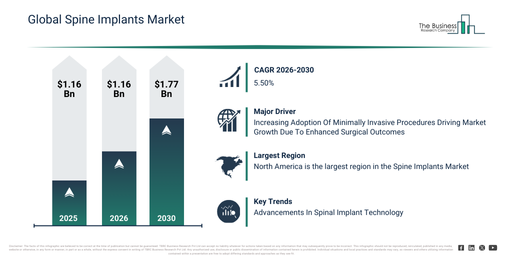
    The spine implants market has seen strong performance recently, with its value expected to rise from $11.95 billion in 2025 to $12.62 billion in 2026, marking a compound annual growth rate (CAGR) of 5.6%. This growth to date reflects factors such as the increasing prevalence of degenerative spine conditions, higher rates of surgical interventions, the expansion of specialized spine hospitals, improved access to implant materials, and the growing preference for spinal fusion surgeries. Over the coming years, the market is projected to reach $15.65 billion by 2030, maintaining a steady CAGR of 5.5%. This anticipated growth is driven by a rising demand for patient-specific implants, wider adoption of minimally invasive spine procedures, expansion of biologics-based solutions, greater emphasis on faster patient recovery, and ongoing innovations in implant design. Emerging trends include the use of motion preservation devices, advanced spinal fusion implants, biologic materials in surgery, minimally invasive implant technologies, and a focus on long-lasting implant durability.

    Download A Free Sample Report For Comprehensive Market Insights:

    https://www.thebusinessresearchcompany.com/sample.aspx?id=3279&type=smp

    Factors Fueling Expansion in the Spine Implants Market

    One significant contributor to the market’s growth is the increasing use of minimally invasive procedures in spine surgery. These techniques involve small incisions, precision instruments, and advanced imaging methods to perform surgeries with minimal disruption to surrounding tissues. The benefits to patients include reduced pain after surgery, shorter hospital stays, and quicker recoveries compared to traditional open surgeries. As a result, minimally invasive approaches are becoming more common within spine implant procedures.

    For example, in January 2025, Intuitive Surgical, a U.S.-based medical technology firm, reported that the number of da Vinci robotic-assisted surgeries worldwide grew by approximately 18% in the fourth quarter of 2024 compared to the same period in 2023. The company also noted a 17% increase in full-year procedures for 2024 over 2023 and expects an additional 13% to 16% rise in 2025. This surge in minimally invasive robotic-assisted surgeries clearly supports the expanding spine implants market.

    Detailed Segmentation and Revenue Potential in the Spine Implants Industry

    This market is segmented by various factors to provide a comprehensive view:

    1) By Product Type: Spinal Fusion Devices, Non-Fusion/Motion Preservation Devices, Vertebral Compression Fracture (VCF) Treatment Devices, Spinal Bone Stimulators, and Spine Biologics

    2) By Procedure: Open Surgery vs. Minimally Invasive Surgery (MIS)

    3) By Material: Metallic, Polymeric, and Ceramic materials

    4) By End User: Hospitals, Specialty Orthopedic and Spine Centers, Ambulatory Surgical Centers

    Within these categories, subsegments include Interbody Fusion Cages, Pedicle Screws and Rods, Bone Grafts and Substitutes under spinal fusion devices; Artificial Discs, Dynamic Stabilization Devices, and Interspinous Spacers for motion preservation; Kyphoplasty Balloons and Vertebroplasty Kits for VCF treatment; Electrical and Ultrasound Bone Stimulators; and bone graft materials, growth factors, and stem cell products under spine biologics.

    Access The Complete Spine Implants Market Report:

    https://www.thebusinessresearchcompany.com/report/spine-implants-global-market-report

    Innovations and Trends Transforming the Spine Implants Market

    Leading companies in the spine implants sector are focusing on developing innovative products that support minimally invasive approaches while improving patient outcomes. For example, vertebral compression fracture repair systems are designed to relieve pain, restore vertebral height, and facilitate faster recovery through less invasive techniques such as vertebroplasty and kyphoplasty.

    In January 2024, Accelus, a U.S.-based surgical instrument and implant provider, introduced the Linesider Modular-Cortical System for spinal implant procedures. This technology stands out because it allows surgeons to place screw shanks early during surgery, enhancing procedural efficiency. It also offers modular components like tulips and rods for customizable constructs and is available in open modular and cortical modular sets to suit different surgical methods.

    Top Companies Shaping the Direction of the Spine Implants Market

    The spine implants market is influenced by major players including Medtronic, Johnson & Johnson, Stryker, NuVasive, Zimmer Biomet, Orthofix, SeaSpine, Atlas Surgical, Auxein Medical, Sharma Spine Medical, Teijin Nakashima Medical, Seikagaku, Anatomics, NZOA, Tianjin Walkman Biomaterials, Sunan Zimede, Smith & Nephew, aap Implantate AG, Orthopaedic & Spine Development (OSD), Waldemar Link, Amplitude SAS, Precision Medical Technologies, Baltic Implants, Beznoska Company Ltd, SpineGuard, Integra Life Sciences, B. Braun, Benvenue Medical, DePuy Synthes, Globus Medical, Aesculap, Alphatec Spine, Neoortho, NOVAX DMA, Spine Argentina, SAI, Shaarani Group, SASpine, EliteSurgical, and TiTaMED. These organizations drive innovation, expand market reach, and set industry standards.

    Geographical Footprint and Regional Market Leadership in Spine Implants

    In 2025, North America was the largest market for spine implants, followed by Western Europe holding the second position. The spine implants market report covers key regions including Asia-Pacific, South East Asia, Western Europe, Eastern Europe, North America, South America, the Middle East, and Africa, offering insights into the global distribution and growth patterns of the industry.

    Get in touch with us:

    The Business Research Company: https://www.thebusinessresearchcompany.com/

    Americas: +1 310-496-7795

    Asia: +44 7882 955267 & +91 8897263534

    Europe: +44 7882 955267

    Email us at: marketing@tbrc.info

    Follow us on:

    LinkedIn: https://in.linkedin.com/company/the-business-research-company

    YouTube: https://www.youtube.com/channel/UC24_fI0rV8cR5DxlCpgmyFQ

    Global Market Model: https://www.thebusinessresearchcompany.com/global-market-model
  • Spine Augmentation Systems Market Forecast Highlights Expansion From $2.3 Billion To $3.08 Billion Through 2030

    Spine Augmentation Systems Market Forecast Highlights Expansion From $2.3 Billion To $3.08 Billion Through 2030

    Delivering more actionable and strategically valuable research, The Business Research Company’s 2026 market reports feature market attractiveness analysis, total addressable market evaluation, company benchmarking matrices, interactive Excel dashboards, expanded supply chain intelligence, emerging startup coverage, and detailed product insights.

    The spine augmentation systems market has witnessed significant growth recently, driven by various factors influencing patient care and technological advancements. As the prevalence of spinal conditions rises globally, this market is set for continued expansion, supported by innovative medical procedures and an aging population. Let’s explore the current market size, key growth drivers, segmentation details, latest technological trends, competitive landscape, and regional insights shaping this industry.

    Spine Augmentation Systems Market Size and Expected Growth

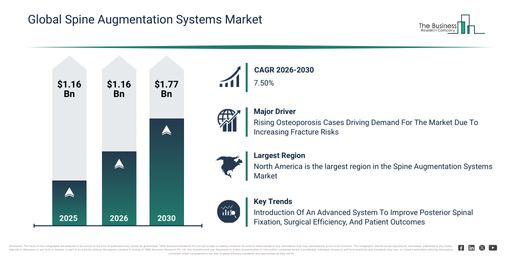
    The market for spine augmentation systems has shown robust growth over past years and is projected to continue expanding. It is estimated to increase from $2.14 billion in 2025 to $2.31 billion in 2026, reflecting a compound annual growth rate (CAGR) of 7.6%. This past growth is largely attributed to rising vertebral compression fractures, greater use of kyphoplasty and vertebroplasty techniques, improvements in bone cement technology, wider adoption of minimally invasive spinal surgeries, and increased awareness around osteoporosis management. Looking further ahead, the market is expected to reach $3.08 billion by 2030, growing at a CAGR of 7.5%. Factors propelling this future growth include an aging population affected by osteoporosis, demand for outpatient procedures, the use of bioactive bone cements, expansion of image-guided spinal interventions, and a focus on rapid pain relief solutions. Emerging trends include the increased uptake of minimally invasive vertebral augmentation, advanced bone cement formulations, expandable vertebral implants, and the broader deployment of image-guided augmentation systems emphasizing osteoporosis-related treatments.

    Download A Free Sample Report For Comprehensive Market Insights:

    https://www.thebusinessresearchcompany.com/sample.aspx?id=23526&type=smp

    Key Factors Driving the Spine Augmentation Systems Market

    A major contributor to market growth is the high prevalence of osteoporosis, a condition that weakens bones and increases fracture risk due to decreased density and structural degradation. Lifestyle factors like poor diet, lack of exercise, and inadequate calcium intake have led to rising osteoporosis cases worldwide. Spine augmentation systems offer crucial benefits by stabilizing fractured vertebrae, alleviating pain, and realigning the spine through minimally invasive procedures. In support of this, an Australian health institute reported that in 2023, a bone fracture occurred every 2.7 minutes, with projections pointing to an increase to one fracture every 30 seconds by 2033. This growing burden of osteoporosis-related fractures continues to fuel demand for spine augmentation solutions.

    Additional Market Drivers Supporting Industry Expansion

    Alongside osteoporosis prevalence, advancements in surgical techniques such as kyphoplasty and vertebroplasty have expanded treatment options for patients with spinal fractures. The growing acceptance of minimally invasive spine surgeries allows for quicker recovery times and less procedural risk, encouraging more widespread use of augmentation systems. Moreover, innovations in bone cement technology, including bioactive and composite formulations, enhance outcomes by improving bone integration and durability. Increased awareness among healthcare providers and patients about spine health and fracture prevention also supports sustained market growth.

    Access The Complete Spine Augmentation Systems Market Report:

    https://www.thebusinessresearchcompany.com/report/spine-augmentation-systems-global-market-report

    Detailed Segmentation of the Spine Augmentation Systems Market

    The spine augmentation systems market is categorized across several dimensions in this report:

    1) Product Types: Vertebroplasty Systems, Kyphoplasty Systems, Bone Cement Systems, Biologic Agents, and Implants

    2) Materials: Polymethylmethacrylate (PMMA), Calcium Phosphate, Hydroxyapatite, and Bioactive Glass

    3) Applications: Spinal Fractures, Spinal Deformities, Spinal Tumors, Degenerative Disc Disease, and Osteoporosis-Related Fractures

    4) End Users: Hospitals, Ambulatory Surgery Centers, Orthopedic Clinics, Spine Specialty Centers, and Interventional Spine Centers

    The report also highlights subcategories such as vertebroplasty system components—bone cement delivery devices, needles and cannulas, and guidance/navigation systems; kyphoplasty components including balloon catheters and inflation devices; bone cement types like PMMA, calcium phosphate, and composite cements; biologic agents including bone grafts and bone morphogenetic proteins; and implants such as expandable devices, vertebral body stents, and fixation hardware like pedicle screws.

    Innovations Transforming the Spine Augmentation Systems Industry

    Leading companies in this market are introducing advanced technologies aimed at improving surgical outcomes and efficiency. One example is the development of posterior spinal fixation systems, which stabilize the spine from the back during fusion surgeries. In February 2025, Globus Medical Inc., a US-based orthopedic device manufacturer, unveiled the HILINE System—an innovative posterior fixation solution designed to enhance precision, versatility, and ease of use in complex spinal procedures. Its modular implants, streamlined instruments, and novel screw delivery mechanisms provide surgeons with greater flexibility, potentially improving patient recovery and care standards.

    Competitive Landscape Among Major Industry Players

    Prominent organizations active in the spine augmentation systems market include Johnson & Johnson, Medtronic plc, Stryker Corporation, Zimmer Biomet Holdings Inc., NuVasive Inc., Globus Medical Inc., Orthofix Medical Inc., Aesculap Implant Systems LLC, Alphatec Spine Inc., RTI Surgical Inc., B. Braun Melsungen AG, Autocam Medical Devices LLC, ulrich GmbH & Co. KG, ChoiceSpine LLC, Spine Wave Inc., Benvenue Medical Inc., CarboFix Orthopedics Ltd., Amber Implants BV, Osseus Fusion Systems LLC, GS Medical LLC, and Neuro France Implants SAS. These companies continuously invest in research and development to maintain competitive advantage and address evolving clinical needs.

    Regional Market Dynamics and Growth Potential

    In 2025, North America held the largest share of the spine augmentation systems market, driven by advanced healthcare infrastructure and high adoption of innovative treatments. Meanwhile, the Asia-Pacific region is anticipated to experience the fastest growth during the forecast period, fueled by increasing healthcare spending, rising awareness of spinal disorders, and expanding access to minimally invasive procedures. Other regions covered in the market analysis include South East Asia, Western Europe, Eastern Europe, South America, the Middle East, and Africa, indicating broad geographic opportunities for market expansion.

    Get in touch with us:

    The Business Research Company: https://www.thebusinessresearchcompany.com/

    Americas: +1 310-496-7795

    Asia: +44 7882 955267 & +91 8897263534

    Europe: +44 7882 955267

    Email us at: marketing@tbrc.info

    Follow us on:

    LinkedIn: https://in.linkedin.com/company/the-business-research-company

    YouTube: https://www.youtube.com/channel/UC24_fI0rV8cR5DxlCpgmyFQ

    Global Market Model: https://www.thebusinessresearchcompany.com/global-market-model
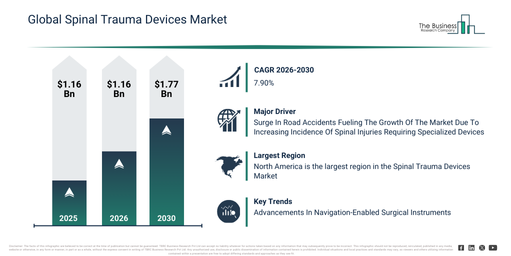
  • Spinal Trauma Devices Market Expected To Reach $13.07 Billion By 2030 As Growth Accelerates At 7.9% CAGR

    Spinal Trauma Devices Market Expected To Reach $13.07 Billion By 2030 As Growth Accelerates At 7.9% CAGR

    Enhanced with market attractiveness analysis, total addressable market evaluation, company benchmarking matrices, interactive Excel dashboards, expanded supply chain intelligence, emerging startup coverage, and detailed product insights, The Business Research Company’s 2026 market reports deliver more actionable and strategically valuable research.

    The spinal trauma devices industry has witnessed significant growth in recent years, driven by advancements in medical technology and increasing cases of spinal injuries. As healthcare infrastructure improves and surgical techniques evolve, the market is set to expand further. Here, we explore the market size, growth drivers, key segments, current trends, leading companies, and regional outlook shaping this sector.

    Spinal Trauma Devices Market Size and Forecast Through 2030

    The market for spinal trauma devices has experienced strong growth and is projected to continue on this upward trajectory. It is anticipated to increase from $8.91 billion in 2025 to $9.64 billion in 2026, representing a compound annual growth rate (CAGR) of 8.1%. Looking ahead, the market is expected to reach $13.08 billion by 2030, growing at a CAGR of 7.9%. This expansion is fueled by factors such as the rising number of road accidents causing spinal injuries, greater use of spinal fusion devices in trauma care, technological progress in vertebral fracture treatments, wider availability of specialized trauma centers, and increased adoption of surgical spinal stabilization techniques.

    Download A Free Sample Report For Comprehensive Market Insights:

    https://www.thebusinessresearchcompany.com/sample.aspx?id=23525&type=smp

    Key Factors Boosting Growth in the Spinal Trauma Devices Market

    One of the primary factors driving this market is the increasing frequency of road accidents worldwide. These incidents, involving vehicles, pedestrians, and cyclists, often result in severe spinal trauma. The rise in such accidents is linked to unsafe driving habits including speeding, distracted driving, driving under the influence, and failure to adhere to traffic signals. Sudden impacts during these collisions cause spinal injuries that require stabilization through spinal trauma devices.

    Supporting this, data from October 2025 released by the Road Safety Data Hub—a government initiative in Australia—reported a national road fatality rate of 4.9 deaths per 100,000 people for the 12 months ending that month. This marks a 5.2% increase compared to the previous year. Such statistics highlight the continuous need for effective spinal trauma interventions, thereby propelling market demand.

    Access The Complete Spinal Trauma Devices Market Report:

    https://www.thebusinessresearchcompany.com/report/spinal-trauma-devices-global-market-report

    Another significant driver is the growing adoption of minimally invasive surgical techniques in spinal trauma care. These less invasive procedures lead to quicker patient recovery, less post-operative pain, and reduced hospital stays. Alongside this, increased investment in trauma care facilities, utilization of biologics to aid spinal healing, and expansion of ambulatory surgery centers contribute to the market’s growth outlook.

    Diverse Segmentation Defining the Spinal Trauma Devices Market

    The spinal trauma devices market is segmented into several categories that reflect the wide range of products and technologies involved. By product type, the market includes spinal fusion devices, spinal biologics, vertebral compression fracture treatment devices, spinal bone growth stimulators, and spinal bone grafts. Technologically, the market covers fusion and fixation technology, vertebral compression fracture treatments, and motion preservation technologies.

    Surgical approaches are divided into open surgery and minimally invasive surgery, while end users comprise hospitals and clinics as well as ambulatory surgery centers.

    Further subsegments elaborate on product specifics: spinal fusion devices feature pedicle screw systems, plates, rods, and cages; spinal biologics include bone graft substitutes, platelet-rich plasma (PRP), and bone morphogenetic proteins (BMPs). Vertebral compression fracture treatments involve balloon kyphoplasty and vertebroplasty devices. Bone growth stimulators come in implanted, external, and ultrasonic forms. Lastly, spinal bone grafts consist of autografts, allografts, and synthetic grafts.

    Innovative Trends Shaping the Spinal Trauma Devices Sector

    Leading companies in the spinal trauma devices market are focusing on creating advanced, integrated solutions that boost surgical precision and improve patient outcomes. One notable innovation is the development of navigation-enabled instrument systems that combine implants with smart devices designed to work seamlessly with digital technologies. These systems aim to tackle complex spinal conditions more effectively.

    For example, in April 2024, DePuy Synthes introduced the TriALTIS Spine System in the US. This next-generation posterior thoracolumbar pedicle screw system offers a comprehensive range of implants and instruments engineered to integrate with power tools and navigation systems. The TriALTIS system is designed to meet unmet clinical needs and assist surgeons in achieving consistent results across degenerative, tumor, trauma, and deformity spine cases.

    Key Players Competing in the Spinal Trauma Devices Industry

    Several prominent companies dominate the spinal trauma devices market. These include Johnson & Johnson, Medtronic plc, Stryker Corporation, Zimmer Biomet Holdings Inc., Smith & Nephew plc, Globus Medical Inc., MicroPort Scientific Corporation, ZimVie Inc., Orthofix Medical Inc., Alphatec Holdings Inc., RTI Surgical Inc., B. Braun SE, Xtant Medical Holdings Inc., Spineart SA, GS Medical, Genesys Orthopedic Systems LLC, ChoiceSpine LLC, DePuy Synthes, NuVasive Inc., SeaSpine Holdings Corporation, K2M Group Holdings Inc., and Life Spine Inc. Their innovations and competitive strategies play a vital role in shaping market dynamics.

    Regional Overview and Market Leadership in Spinal Trauma Devices

    In 2025, North America held the largest share of the spinal trauma devices market, due to well-established healthcare infrastructure and high adoption of advanced medical technologies. Meanwhile, the Asia-Pacific region is forecasted to be the fastest-growing market over the coming years, driven by expanding healthcare facilities, rising accident rates, and increasing government focus on trauma care.

    Other important regions covered in the market analysis include South East Asia, Western Europe, Eastern Europe, South America, the Middle East, and Africa, providing a comprehensive view of global market trends and opportunities.

    Get in touch with us:

    The Business Research Company: https://www.thebusinessresearchcompany.com/

    Americas: +1 310-496-7795

    Asia: +44 7882 955267 & +91 8897263534

    Europe: +44 7882 955267

    Email us at: marketing@tbrc.info

    Follow us on:

    LinkedIn: https://in.linkedin.com/company/the-business-research-company

    YouTube: https://www.youtube.com/channel/UC24_fI0rV8cR5DxlCpgmyFQ

    Global Market Model: https://www.thebusinessresearchcompany.com/global-market-model
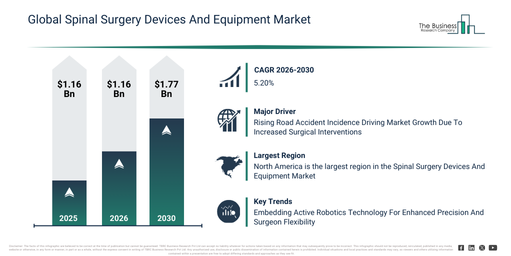
  • Spinal Surgery Devices And Equipment Market Set To Grow From $11.68 Billion In 2026 To $14.3 Billion By 2030 At A CAGR Of 5.2%

    Spinal Surgery Devices And Equipment Market Set To Grow From $11.68 Billion In 2026 To $14.3 Billion By 2030 At A CAGR Of 5.2%

    Through market attractiveness analysis, total addressable market evaluation, company benchmarking matrices, interactive Excel dashboards, expanded supply chain intelligence, emerging startup coverage, and detailed product insights, The Business Research Company’s 2026 market reports provide more actionable and strategically valuable research.

    The spinal surgery devices and equipment market has been steadily expanding, driven by rising cases of spinal disorders and advancements in surgical technology. As healthcare systems evolve and demand for precision surgical solutions grows, this sector is poised for continued growth through the next decade. Here is a detailed overview of the market’s size, key drivers, segments, and future trends shaping its trajectory.

    Steady Market Growth Forecast for the Spinal Surgery Devices and Equipment Market

    The market for spinal surgery devices and equipment has shown consistent growth in recent years. It is projected to increase from $11.17 billion in 2025 to $11.69 billion in 2026, exhibiting a compound annual growth rate (CAGR) of 4.7%. This historical growth has been fueled by factors such as a rising prevalence of spinal conditions, an aging global population, expansion of specialized spine care centers, increased adoption of minimally invasive procedures, and the availability of sophisticated surgical instruments.

    Download A Free Sample Report For Comprehensive Market Insights:

    https://www.thebusinessresearchcompany.com/sample.aspx?id=2402&type=smp

    Looking ahead, the market is expected to perform strongly, reaching $14.3 billion by 2030 with a CAGR of 5.2%. The anticipated growth is driven by increasing demand for robotic-assisted spinal surgeries, greater investments in precision surgical technologies, expansion of outpatient spine surgery facilities, and a stronger focus on optimizing patient outcomes. Additionally, the forecast period will see trends such as wider use of minimally invasive spinal surgery tools, more computer-assisted navigation systems, advanced spinal implants, growth in image-guided surgical platforms, and enhanced emphasis on surgical accuracy and safety.

    Key Factors Propelling Market Expansion Amid Rising Road Accidents

    One major factor boosting growth in the spinal surgery devices and equipment market is the increasing number of road accidents worldwide. These incidents typically involve vehicles, pedestrians, cyclists, and others on roadways. A notable contributor to the rise in accidents is driver distraction, largely due to mobile phone usage and in-car infotainment systems, which reduce attention and reaction times.

    Access The Complete Spinal Surgery Devices And Equipment Market Report:

    https://www.thebusinessresearchcompany.com/report/spinal-surgery-devices-and-equipment-global-market-report

    Spinal surgery devices play a critical role in addressing injuries from road accidents by enabling precise diagnosis, minimizing further damage, managing pain effectively, accelerating recovery, and improving overall quality of life. For example, in April 2025, data from the National Highway Traffic Safety Administration revealed that the estimated number of people injured in road incidents increased to 2.44 million in 2023, a 2.5% rise from 2022. Police-reported traffic crashes similarly rose by 3.5%, from 5.93 million in 2022 to 6.14 million in 2023. This upward trend in road accidents is directly supporting the demand for spinal surgery devices and equipment.

    Overview of Market Segments Defining Spinal Surgery Devices and Equipment

    The spinal surgery devices and equipment market is segmented into several key categories for a detailed understanding of its structure. These include:

    1) Product Type: Non-Fusion Devices, Fusion Devices, and Equipment

    2) Type of Surgery: Open Surgery and Minimally Invasive Surgery (MIS)

    3) End User: Hospitals, Ambulatory Surgical Centers, and Specialty Orthopedic and Spine Centers

    Further breakdown of product types includes:

    – Non-Fusion Devices such as Dynamic Stabilization Devices, Interspinous Spacers, and Artificial Discs

    – Fusion Devices such as Spinal Fusion Cages, Bone Grafts and Substitutes, and Pedicle Screws and Rods

    – Equipment including Surgical Instruments, Imaging Equipment, and Navigation Systems designed specifically for spinal surgery

    Technological Innovations Driving the Spinal Surgery Devices and Equipment Market

    Leading companies in this market are focusing heavily on integrating cutting-edge technologies, especially active robotics, to enhance surgical precision, workflow customization, and reduce surgeon fatigue. Active robotic systems provide real-time guidance tailored to the surgeon’s style and work seamlessly with standalone navigation platforms, offering both flexibility and improved control.

    For instance, in August 2024, DePuy Synthes, part of Johnson & Johnson MedTech, introduced the VELYS Active Robotic-Assisted System (VELYS SPINE), developed with eCential Robotics. This system supports spinal fusion surgeries across cervical, thoracolumbar, and sacroiliac regions and has received FDA 510(k) clearance. It features specialized workflows such as VELYS Adaptive Tracking Technology and Trajectory Assistance, enabling surgeons to personalize surgical guidance according to their preferences.

    Main Players Competing in the Spinal Surgery Devices and Equipment Market

    The spinal surgery devices and equipment market features prominent companies including Medtronic plc, Johnson & Johnson, Stryker Corporation, NuVasive Inc., Zimmer Biomet Holdings Inc., Globus Medical Inc., Orthofix Medical Inc., SeaSpine Holdings Corporation, RTI Surgical, B. Braun Melsungen AG, Atlas Surgical, Teijin Nakashima Medical Co, Anatomics, New Zealand Spine (NZOA), Amedica Corporation, Evispine, SpineGuard, Alphatec Holdings Inc., Integra Life Sciences, Benvenue Medical, DePuy Synthes, OSTEOMED Implantes, Osimplant, Tria Spine, SASpine, iSpine, and GE Healthcare. These companies are driving innovation and competition in the sector.

    Regional Market Outlook Highlights Areas of Opportunity

    In 2025, North America represented the largest regional market for spinal surgery devices and equipment. Western Europe ranked as the second-largest region. The comprehensive market analysis also covers Asia-Pacific, South East Asia, Eastern Europe, South America, the Middle East, and Africa, providing a global perspective on growth opportunities and regional trends within this expanding industry.

    Get in touch with us:

    The Business Research Company: https://www.thebusinessresearchcompany.com/

    Americas: +1 310-496-7795

    Asia: +44 7882 955267 & +91 8897263534

    Europe: +44 7882 955267

    Email us at: marketing@tbrc.info

    Follow us on:

    LinkedIn: https://in.linkedin.com/company/the-business-research-company

    YouTube: https://www.youtube.com/channel/UC24_fI0rV8cR5DxlCpgmyFQ

    Global Market Model: https://www.thebusinessresearchcompany.com/global-market-model
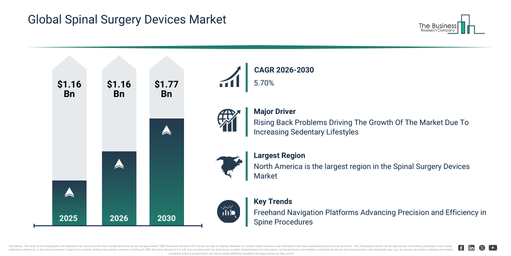
  • Spinal Surgery Devices Market Opportunities Are Emerging Beyond Traditional Growth Areas

    Spinal Surgery Devices Market Opportunities Are Emerging Beyond Traditional Growth Areas

    Delivering more actionable and strategically valuable research, The Business Research Company’s 2026 market reports feature market attractiveness analysis, total addressable market evaluation, company benchmarking matrices, interactive Excel dashboards, expanded supply chain intelligence, emerging startup coverage, and detailed product insights.

    The spinal surgery devices industry has experienced significant growth recently, driven by rising spinal health issues and advancements in surgical technology. As demand continues to increase, this sector is set to undergo further expansion in the coming years. Below is a detailed analysis of the market size, key drivers, segments, trends, major players, and regional outlook shaping this dynamic field.

    Spinal Surgery Devices Market Size and Expected Growth Trajectory

    The spinal surgery devices market has seen robust development over recent years, with revenues projected to rise from $13.37 billion in 2025 to $14.15 billion in 2026, representing a compound annual growth rate (CAGR) of 5.9%. This past growth has been fueled by an upsurge in spinal disorders, more trauma cases, the proliferation of orthopedic surgery centers, an aging population, and surgeons becoming more proficient with fusion procedures. Looking ahead, the market is anticipated to expand further, reaching $17.68 billion by 2030 with a CAGR of 5.7%. Factors supporting this forecast include the adoption of robot-assisted spine surgeries, growth in outpatient spine procedures, continuous implant innovations, demand for faster recovery options, and improved healthcare infrastructure. Key trends expected to influence the market encompass minimally invasive surgeries, increased use of motion-preservation devices, advances in image-guided spine surgery, rising application of spinal biologics, and a growing preference for patient-specific implants.

    Increasing Prevalence of Back Problems Boosting Market Demand

    One of the primary factors driving the spinal surgery devices market is the rising incidence of back problems. These conditions encompass a variety of issues causing pain, discomfort, or restricted movement in different sections of the back due to muscular, nerve-related, or structural causes. A sedentary lifestyle is a significant contributor to this rise, as long hours of sitting, poor posture, and lack of physical activity put excessive pressure on the spine, weaken core muscles, and accelerate disc degeneration, leading to chronic pain and mobility challenges. Spinal surgery devices play a crucial role in addressing these problems by providing structural support, alleviating nerve compression, correcting spinal alignment, and improving mobility. This ultimately leads to pain relief, better function, and an enhanced quality of life for patients. For instance, a January 2024 report from the UK’s Office for Health Improvement and Disparities noted that in 2023, 18.4% of people aged 16 and above self-reported having a long-term musculoskeletal condition, marking an increase from 17.6% in 2022. This upward trend in back-related issues continues to fuel demand for spinal surgery devices.

    Key Segments Identifying Growth Opportunities in the Spinal Surgery Devices Market

    The spinal surgery devices market is broadly categorized into several segments to better understand growth prospects:

    1) Device Type: Spinal Decompression, Spinal Fusion, Fracture Repair Devices, Arthroplasty Devices, and Non-Fusion Devices.

    2) Disease Indication: Degenerative Disc Disease, Complex Deformity, Traumas, and Fractures.

    3) Technology: Fusion, Non-Fusion, Vertebral Compression Fracture treatments, Spine Biologics, and Spinal Decompression approaches.

    4) End Users: Hospitals and Ambulatory Surgery Centers, Specialty Clinics, and Orthopedic and Spine Specialty Hospitals.

    Further subdivisions focus on specific device types such as cervical, lumbar, and thoracic decompression devices; fusion devices including Anterior Cervical Discectomy and Fusion (ACDF) and various lumbar interbody fusion techniques; fracture repair devices like pedicle screws, vertebroplasty, and kyphoplasty devices; arthroplasty devices for cervical and lumbar regions; as well as non-fusion options including artificial discs and dynamic stabilization devices.

    Access The Complete Spinal Surgery Devices Market Report:

    https://www.thebusinessresearchcompany.com/report/spinal-surgery-devices-global-market-report

    Innovative Trends Enhancing the Spinal Surgery Devices Market

    Leading companies in this sector are emphasizing the development of advanced intraoperative navigation technologies to improve surgical precision and efficiency. Freehand navigation systems, for example, offer real-time visualization of surgical instruments and implants relative to patient anatomy, which not only boosts accuracy but also reduces reliance on fluoroscopy and lowers radiation exposure during surgery. A case in point is Globus Medical’s launch on November 22, 2024, of ExcelsiusHub—a navigation platform that expands the Excelsius system to offer freehand navigation throughout the spine from the cervical region down to the sacrum. This system boasts features such as real-time patient array monitoring, tissue-sparing drills, multiple registration workflows, and compatibility with Globus’ instruments and implants.

    Key Players Shaping the Competitive Landscape of Spinal Surgery Devices

    Several prominent companies dominate the spinal surgery devices market, including Johnson & Johnson, Medtronic plc, Stryker Corporation, NuVasive Inc., SeaSpine Holdings Corporation, Globus Medical Inc., Orthofix Medical Inc., Aesculap Inc., Alphatec Holdings Inc., Innovasis Inc., Nexus Spine, Spinal Elements Inc., Spineart SA, B. Braun Melsungen AG, SpineWave Inc., Centinel Spine LLC, Life Spine Inc., Camber Spine Technologies, Captiva Spine Inc., and Aurora Spine Corporation. These organizations play vital roles in innovation, product development, and expanding market reach.

    Regional Market Dynamics and Dominance

    In 2025, North America held the largest share of the spinal surgery devices market. Meanwhile, the Asia-Pacific region is projected to be the fastest-growing market throughout the forecast period. The market overview includes analysis of key regions such as Asia-Pacific, South East Asia, Western Europe, Eastern Europe, North America, South America, the Middle East, and Africa, offering insights into global growth patterns and opportunities.

    Get in touch with us:

    The Business Research Company: https://www.thebusinessresearchcompany.com/

    Americas: +1 310-496-7795

    Asia: +44 7882 955267 & +91 8897263534

    Europe: +44 7882 955267

    Email us at: marketing@tbrc.info

    Follow us on:

    LinkedIn: https://in.linkedin.com/company/the-business-research-company

    YouTube: https://www.youtube.com/channel/UC24_fI0rV8cR5DxlCpgmyFQ

    Global Market Model: https://www.thebusinessresearchcompany.com/global-market-model
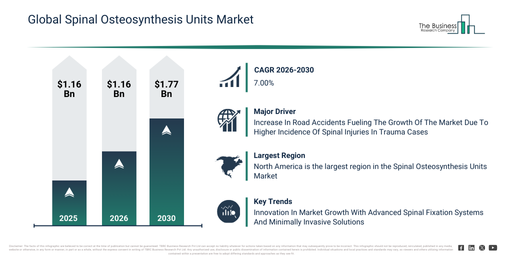
  • Spinal Osteosynthesis Units Market Expansion Is Opening New Pathways For Strategic Investment

    Spinal Osteosynthesis Units Market Expansion Is Opening New Pathways For Strategic Investment

    Enhanced with market attractiveness analysis, total addressable market evaluation, company benchmarking matrices, interactive Excel dashboards, expanded supply chain intelligence, emerging startup coverage, and detailed product insights, The Business Research Company’s 2026 market reports deliver more actionable and strategically valuable research.

    The spinal osteosynthesis units market has witnessed significant expansion in recent years, driven by various clinical and technological advances. As spinal disorders become more prevalent and surgical techniques evolve, this market is set to experience continued growth. Below is a detailed analysis of the market’s size, key drivers, segmentation, competitive landscape, and regional outlook.

    Spinal Osteosynthesis Units Market Size and Growth Outlook

    The market for spinal osteosynthesis units is expected to increase notably, rising from $4.48 billion in 2025 to $4.79 billion in 2026, reflecting a compound annual growth rate (CAGR) of 7.1%. This strong performance during the past years has been fueled by factors such as the growing incidence of degenerative spinal conditions, a higher number of spinal fusion procedures, technological improvements in spinal implant design, increased acceptance of pedicle screw systems, and the expansion of spine surgery programs within hospitals. Looking ahead, the market is projected to reach $6.28 billion by 2030, with a CAGR of 7.0%. This forecasted growth is driven by the rising elderly population affected by spinal issues, greater demand for minimally invasive spine surgeries, increased investments in cutting-edge spinal implant technology, the broader use of personalized spinal fixation devices, and the growing preference for motion-preserving spinal systems.

    Download A Free Sample Report For Comprehensive Market Insights:

    https://www.thebusinessresearchcompany.com/sample.aspx?id=23524&type=smp

    Factors Fueling Demand for Spinal Osteosynthesis Units

    One significant factor propelling market growth is the increasing number of road traffic accidents worldwide. These accidents, often caused by rising traffic congestion and unsafe driving habits, lead to spinal injuries requiring surgical stabilization. Spinal osteosynthesis units play a crucial role in improving patient outcomes by enabling effective surgical fixation of damaged vertebrae, which aids in faster recovery and reduces long-term disabilities. For instance, in October 2025, the Australia-based Road Safety Data Hub reported a national road fatality rate of 4.9 deaths per 100,000 population over the prior 12 months, marking a 5.2% year-on-year increase. This upward trend in road accidents underscores the growing need for surgical interventions supported by osteosynthesis units.

    Spinal Osteosynthesis Units Market Categorization and Core Segments

    This market can be segmented into several key categories:

    1) Product Type: Thoracolumbar Osteosynthesis Unit, Lumbar Spinal Osteosynthesis Unit, Lumbosacral Osteosynthesis Unit, Thoracolumbosacral Osteosynthesis Unit, Occipitocervicothoracic Osteosynthesis Unit, Cervical Thoracic Lumbo Sacral Osteosynthesis Unit

    2) Surgical Approach: Posterior, Anterior, Lateral

    3) Application: Adult, Pediatric

    4) End User: Hospitals, Specialty Clinics, Other End Users

    Access The Complete Spinal Osteosynthesis Units Market Report:

    https://www.thebusinessresearchcompany.com/report/spinal-osteosynthesis-units-global-market-report

    Within these groups, further subcategories include:

    – Thoracolumbar Units: Pedicle Screw Systems, Rod and Plate Systems, Interbody Fusion Devices

    – Lumbar Units: Lumbar Interbody Fusion Cages, Lumbar Pedicle Screws and Rods, Dynamic Stabilization Devices

    – Lumbosacral Units: Sacroiliac Joint Fixation Devices, Lumbosacral Interbody Fusion Cages, Iliac Screws and Rod Systems

    – Thoracolumbosacral Units: Multilevel Fixation Systems, Spinal Deformity Correction Devices, Hybrid Stabilization Systems

    – Occipitocervicothoracic Units: Occipital Plate and Rod Systems, Cervicothoracic Fusion Implants, Posterior Cervical Fixation Devices

    – Cervical Thoracic Lumbo Sacral Units: Full-Spine Fixation Systems, Motion Preservation Devices, Vertebral Body Replacement Implants

    Innovations and Market Trends Defining Competitive Strategies

    Leading companies in the spinal osteosynthesis space are heavily investing in developing innovative spinal fixation technologies designed to improve surgical precision, enhance patient recovery, and address complex spinal conditions more effectively. Spinal fixation systems, which typically include screws, rods, plates, and other hardware, are crucial for stabilizing and aligning vertebrae during healing after injuries or deformities. For example, in October 2023, ulrich medical USA introduced the Momentum MIS Posterior Spinal Fixation System, tailored for minimally invasive surgery. This system features a sleek, versatile design with a slim profile, extended screw tabs, and compatibility with Medtronic’s StealthStation navigation technology, offering percutaneous solutions that enhance support and integrated reduction capabilities.

    Key Players Leading the Spinal Osteosynthesis Units Market

    Several prominent companies actively compete in this market, including Johnson & Johnson, Medtronic plc, Stryker Corporation, Zimmer Biomet Holdings Inc., NuVasive Inc., Globus Medical Inc., MicroPort Scientific Corporation, Orthofix Medical Inc., Aesculap Implant Systems LLC, Alphatec Spine Inc., RTI Surgical Inc., B Braun Melsungen AG, Xtant Medical Holdings Inc., Autocam Medical Devices LLC, Ulrich GmbH & Co. KG, Spinal Elements Inc., ChoiceSpine LLC, Königsee Implantate GmbH, GS Medical LLC, Neuro France Implants, and HPI Implants GmbH. These companies focus on advancing product innovation and expanding their portfolios to meet evolving clinical demands.

    Regional Market Leadership and Growth Dynamics

    In 2025, North America held the largest share of the spinal osteosynthesis units market, benefiting from advanced healthcare infrastructure and high adoption rates of innovative surgical technologies. Meanwhile, the Asia-Pacific region is expected to experience the fastest growth during the forecast period, driven by increasing healthcare investments, a growing elderly population, and rising awareness regarding spinal care. The market report covers a broad geographical scope, including Asia-Pacific, South East Asia, Western Europe, Eastern Europe, North America, South America, the Middle East, and Africa, providing a comprehensive view of global market trends and opportunities.

    Get in touch with us:

    The Business Research Company: https://www.thebusinessresearchcompany.com/

    Americas: +1 310-496-7795

    Asia: +44 7882 955267 & +91 8897263534

    Europe: +44 7882 955267

    Email us at: marketing@tbrc.info

    Follow us on:

    LinkedIn: https://in.linkedin.com/company/the-business-research-company

    YouTube: https://www.youtube.com/channel/UC24_fI0rV8cR5DxlCpgmyFQ

    Global Market Model: https://www.thebusinessresearchcompany.com/global-market-model
  • Spinal Fusion Devices Market Trends Are Creating New Opportunities For Industry Leaders

    Spinal Fusion Devices Market Trends Are Creating New Opportunities For Industry Leaders

    Through market attractiveness analysis, total addressable market evaluation, company benchmarking matrices, interactive Excel dashboards, expanded supply chain intelligence, emerging startup coverage, and detailed product insights, The Business Research Company’s 2026 market reports provide more actionable and strategically valuable research.

    The spinal fusion devices market has witnessed significant growth over recent years and continues to show promising potential. Driven by medical advancements and increasing demand for effective spine treatments, this sector is set to expand steadily through the coming decade. Below, we explore the current market size, key growth drivers, important segments, influential trends, leading companies, and regional outlook shaping the future of spinal fusion devices.

    Market Size and Projected Growth in the Spinal Fusion Devices Market

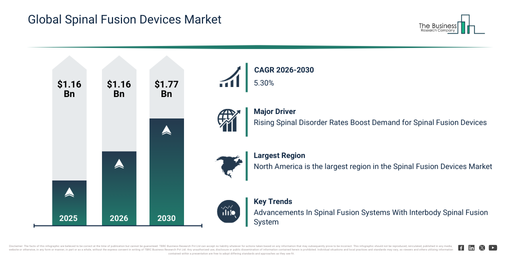
    The spinal fusion devices market has shown strong expansion and is expected to grow from $8.31 billion in 2025 to $8.77 billion in 2026, achieving a compound annual growth rate (CAGR) of 5.6%. This growth during the recent period is largely fueled by rising cases of degenerative spine diseases, trauma incidents, surgical innovations, expansion of orthopedic services in hospitals, and an aging population. Looking ahead, the market is projected to reach $10.78 billion by 2030, growing at a CAGR of 5.3%. Factors like the increasing adoption of minimally invasive surgical techniques, the rise of outpatient spine surgeries, treatment of spinal deformities, demand for quicker patient recovery, and specialization in orthopedics are expected to drive this continued growth. Key trends anticipated in this timeframe include the broader use of minimally invasive spine surgery, increasing acceptance of non-metallic implants, growing demand for lumbar fusion devices, advances in implant design technology, and expansion of outpatient procedures.

    Download A Free Sample Report For Comprehensive Market Insights:

    https://www.thebusinessresearchcompany.com/sample.aspx?id=20648&type=smp

    Rising Prevalence of Spinal Disorders as a Major Growth Driver

    One of the primary forces propelling the spinal fusion devices market is the growing incidence of spinal disorders. These conditions affect various parts of the spine, including vertebrae, intervertebral discs, spinal cord, nerves, and ligaments. Factors such as an aging population, sedentary lifestyles, and improved diagnostic tools have contributed to the rise in spinal disorder cases. Spinal fusion devices play a crucial role by helping to stabilize the spine, reduce pain, and restore function through surgical interventions. For example, in February 2024, the National Spinal Cord Injury Statistical Center (NSCISC) reported that in 2023, the yearly incidence of traumatic spinal cord injury in the U.S. was approximately 54 cases per million people, amounting to about 18,000 new cases annually. This growing patient base is a significant factor driving demand for spinal fusion devices.

    Advancement in Surgical Innovation Fueling Market Development

    Alongside the increased incidence of spinal conditions, technological innovation in surgical procedures is boosting market growth. Improvements in minimally invasive spine surgery techniques enable less traumatic interventions with faster recovery times, making spinal fusion devices increasingly essential. The rising trend toward outpatient surgery centers also supports market expansion by making procedures more accessible and cost-effective.

    Access The Complete Spinal Fusion Devices Market Report:

    https://www.thebusinessresearchcompany.com/report/spinal-fusion-devices-global-market-report

    Breakdown of Segments Within the Spinal Fusion Devices Market

    This market is divided into multiple segments based on various factors:

    1) By Type: Cervical Fusion Device, Thoracic Fusion Device, Lumbar Fusion Device

    2) By Material: Metallic Devices, Non Metallic Devices

    3) By Surgery Type: Open Spine Surgery, Minimally Invasive Spine Surgery

    4) By Disease Type: Degenerative Disc, Complex Deformity, Trauma and Fractures, Other Disease Types

    5) By End-User: Hospitals, Ambulatory Service Centers, Orthopedic Centers, Other End-Users

    Further subsegments include:

    – Cervical Fusion Devices such as Anterior Cervical Discectomy and Fusion (ACDF) Devices, Cervical Plates and Screws, Cervical Interbody Fusion Devices (IBFDs), and Minimally Invasive Cervical Fusion Devices

    – Thoracic Fusion Devices including Thoracic Interbody Fusion Devices, Thoracic Plates and Screws, Anterior and Posterior Thoracic Fusion Devices

    – Lumbar Fusion Devices encompassing Lumbar Interbody Fusion Devices (LIFDs), Pedicle Screws and Rods, Expandable Interbody Fusion Devices, and Minimally Invasive Lumbar Fusion Devices

    Innovations and Trends Shaping the Future of Spinal Fusion Devices

    Key players in this market are heavily investing in the development of advanced products such as interbody spinal fusion systems aimed at improving surgical precision, implant stability, and patient outcomes. These systems help stabilize the spine and promote vertebral fusion during surgery. For instance, in October 2023, NovApproach Spine, a U.S.-based medical technology firm, introduced OneLIF. This interbody spinal fusion system enhances the accuracy and efficiency of lumbar fusion surgeries by providing sophisticated instrumentation and implant technology that supports optimal alignment, stability, and fusion success. It is designed for treating lumbar spinal conditions including degenerative disc disease and spinal stenosis, facilitating minimally invasive procedures that aim to reduce recovery periods and improve patient results.

    Leading Organizations Driving the Spinal Fusion Devices Market

    Several prominent companies dominate the spinal fusion devices landscape, including Johnson & Johnson, Medtronic plc, Stryker Corporation, Zimmer Biomet Holdings Inc., NuVasive Inc., Globus Medical Inc., Medacta International SA, Orthofix Medical Inc., Exactech Inc., Paradigm Corp, SeaSpine Holdings Corporation, Xtant Medical Holdings Inc., Spinal Elements Inc., Surgalign Holdings Inc., Precision Spine Inc., Spine Wave Inc., SpineFrontier Inc., Zavation Medical Products, Aurora Spine Corporation, Nexxt Spine LLC, Camber Spine Technologies LLC, Captiva Spine Inc., and Viseon Inc.

    Regional Market Leadership and Growth Patterns

    In 2025, North America was the largest regional market for spinal fusion devices. Meanwhile, the Asia-Pacific region is anticipated to register the fastest growth during the forecast period. The analysis encompasses regions such as Asia-Pacific, South East Asia, Western Europe, Eastern Europe, North America, South America, the Middle East, and Africa, providing a comprehensive view of the global market dynamics.

    Get in touch with us:

    The Business Research Company: https://www.thebusinessresearchcompany.com/

    Americas: +1 310-496-7795

    Asia: +44 7882 955267 & +91 8897263534

    Europe: +44 7882 955267

    Email us at: marketing@tbrc.info

    Follow us on:

    LinkedIn: https://in.linkedin.com/company/the-business-research-company

    YouTube: https://www.youtube.com/channel/UC24_fI0rV8cR5DxlCpgmyFQ

    Global Market Model: https://www.thebusinessresearchcompany.com/global-market-model
  • Spinal Cord Stimulation Devices Market Growth Is Reshaping Competitive Advantage Across The Industry

    Spinal Cord Stimulation Devices Market Growth Is Reshaping Competitive Advantage Across The Industry

    Delivering more actionable and strategically valuable research, The Business Research Company’s 2026 market reports feature market attractiveness analysis, total addressable market evaluation, company benchmarking matrices, interactive Excel dashboards, expanded supply chain intelligence, emerging startup coverage, and detailed product insights.

    The spinal cord stimulation devices market is experiencing significant growth, driven by increasing chronic pain cases and advances in medical technology. This sector is evolving rapidly with innovations that promise improved patient outcomes and greater adoption worldwide. Let’s explore the market size, key growth drivers, segmentation, innovation trends, leading companies, and regional insights shaping this dynamic field.

    Spinal Cord Stimulation Devices Market Size and Growth Outlook

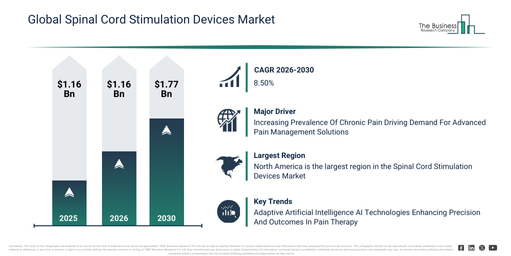
    The market for spinal cord stimulation devices has witnessed robust expansion in recent years. It is projected to grow from $2.97 billion in 2025 to $3.23 billion in 2026, representing a compound annual growth rate (CAGR) of 8.7%. This upward trend during the historical period is mainly due to the increasing number of chronic pain sufferers, a rise in failed back surgery syndrome cases, growing demand for opioid alternatives, an increase in neurology procedures, and wider acceptance of implantable devices. Looking ahead, the market is expected to reach $4.47 billion by 2030, sustaining an 8.5% CAGR. Factors fueling this growth include advancements in AI-driven stimulation algorithms, expansion of wearable stimulators, more pain management clinics, broader adoption of long-term pain therapy, and the incorporation of remote device monitoring. Key market trends anticipated during the forecast period involve personalized pain management, rechargeable neurostimulation devices, minimally invasive neuromodulation, wireless programming systems, and multi-lead stimulation technology.

    Download A Free Sample Report For Comprehensive Market Insights:

    https://www.thebusinessresearchcompany.com/sample.aspx?id=20964&type=smp

    Rising Chronic Pain Cases as a Major Growth Driver

    One of the primary factors propelling the spinal cord stimulation devices market is the increasing prevalence of chronic pain conditions. Chronic pain, defined as persistent pain lasting 12 weeks or longer, can result from a variety of causes such as arthritis, neuropathy, or lower back pain. This rise is influenced by an aging global population, lifestyle changes, chronic illnesses, and injuries or trauma. Spinal cord stimulation devices work by modifying pain signals with electrical impulses, offering relief to those with persistent pain conditions. For instance, in November 2024, the US Centers for Disease Control and Prevention reported that in 2023, 24.3% of adults experienced chronic pain, with 8.5% suffering from high-impact chronic pain, which makes up 34.9% of all chronic pain cases. This growing patient base is a significant factor driving demand for spinal cord stimulation technologies.

    Additional Factors Encouraging Market Expansion

    Beyond chronic pain prevalence, other elements contribute to market growth. There is increasing interest in alternatives to opioid painkillers, given concerns over addiction and side effects. Moreover, advances in neurology procedures are expanding treatment options, and the acceptance of implantable devices continues to rise among patients and clinicians alike. Together, these factors are stimulating broader adoption of spinal cord stimulation devices and encouraging ongoing investment in new technologies.

    Access The Complete Spinal Cord Stimulation Devices Market Report:

    https://www.thebusinessresearchcompany.com/report/spinal-cord-stimulation-devices-global-market-report

    Detailed Segmentation of the Spinal Cord Stimulation Devices Market

    This market is categorized across several key dimensions to capture its complexity. By device configuration, it is divided into implantable spinal cord stimulators and non-implantable spinal cord stimulators. The product type segment separates rechargeable devices from non-rechargeable devices. Application-wise, the market covers conditions such as failed back surgery syndrome, complex regional pain syndrome, degenerative disc disease, unsuccessful disk surgery, and other uses. Lastly, end users include hospitals, ambulatory surgical centers, and neuro clinics. Subcategories under implantable stimulators feature rechargeable, non-rechargeable, and multi-lead implantable devices, while non-implantable products include external stimulators, wearable stimulators, and transcutaneous stimulators.

    Innovation Trends Shaping the Future of Spinal Cord Stimulation Devices

    Leading companies in this field are heavily investing in cutting-edge technologies, especially artificial intelligence, to enhance therapy outcomes. AI-powered spinal cord stimulation systems utilize machine learning models trained on patient and device data to fine-tune stimulation settings in real time. This approach aims to maintain optimal pain relief while reducing the need for frequent clinician adjustments. A notable example is Nevro Corp., which in September 2024 launched the HFX iQ with HFX AdaptivAI platform. This AI-enabled SCS system uses millions of data points and adaptive algorithms to personalize 10 kHz therapy and supports remote clinician monitoring. It automatically adjusts stimulation parameters based on individual patient responses, improving pain management effectiveness and minimizing in-person programming sessions. By combining real-time insights with remote management, this platform enhances precision, streamlines workflows, and delivers a more consistent therapy experience for patients suffering from chronic pain.

    Key Players Defining the Spinal Cord Stimulation Devices Market

    The competitive landscape features several influential companies driving innovation and market growth. These include Abbott Laboratories, Medtronic plc, Boston Scientific Corporation, Nevro Corp., Bluewind Medical, NeuroPace Inc., Vertos Medical Inc., SPR Therapeutics Inc., Saluda Medical Pty Ltd., Stimwave Technologies Inc., Nuvectra Inc., Soterix Medical Inc., Synapse Biomedical, ONWARD Medical NV, NeuroSigma Inc., Nalu Medical Inc., Neurostim Technologies, SpineX Inc., Aleva Neurotherapeutics SA, and GTX Medical BV. These organizations are instrumental in developing new technologies and expanding access to spinal cord stimulation therapies worldwide.

    Regional Market Presence and Growth Opportunities

    In 2025, North America held the largest share of the spinal cord stimulation devices market, reflecting strong healthcare infrastructure and high adoption rates. However, the Asia-Pacific region is expected to be the fastest-growing market during the forecast period. The report covers major regions including Asia-Pacific, South East Asia, Western Europe, Eastern Europe, North America, South America, the Middle East, and Africa, providing a broad perspective on the geographic distribution and potential areas for expansion in this sector.

    Get in touch with us:

    The Business Research Company: https://www.thebusinessresearchcompany.com/

    Americas: +1 310-496-7795

    Asia: +44 7882 955267 & +91 8897263534

    Europe: +44 7882 955267

    Email us at: marketing@tbrc.info

    Follow us on:

    LinkedIn: https://in.linkedin.com/company/the-business-research-company

    YouTube: https://www.youtube.com/channel/UC24_fI0rV8cR5DxlCpgmyFQ

    Global Market Model: https://www.thebusinessresearchcompany.com/global-market-model