Category: Medical Equipment

  • Personal Care Robotics Market Outlook Highlights The Next Major Growth Opportunities

    Personal Care Robotics Market Outlook Highlights The Next Major Growth Opportunities

    Delivering more actionable and strategically valuable research, The Business Research Company’s 2026 market reports feature market attractiveness analysis, total addressable market evaluation, company benchmarking matrices, interactive Excel dashboards, expanded supply chain intelligence, emerging startup coverage, and detailed product insights.

    The personal care robotics sector is experiencing rapid expansion as technological advancements and demographic changes drive demand. With innovations in artificial intelligence and an aging global population, this industry is set to witness substantial growth in the coming years. Let’s explore the current market size, growth drivers, key segments, technological trends, major players, and regional outlook to understand this dynamic field better.

    Personal Care Robotics Market Size and Growth Projections

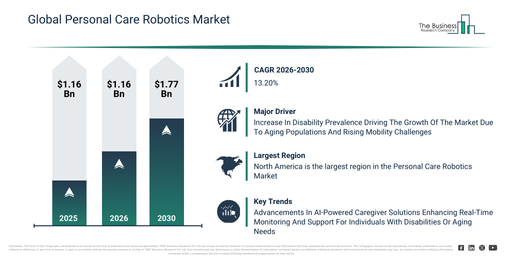
    The personal care robotics market has seen swift growth in recent times. Forecasts suggest it will increase from $16.69 billion in 2025 to $18.92 billion in 2026, exhibiting a compound annual growth rate (CAGR) of 13.3%. This earlier growth phase was influenced by factors such as limited availability of fully autonomous personal care robots, reliance on semi-automated devices, a rising elderly population, greater awareness of assisted living technologies, and early adoption of AI-powered healthcare tools.

    Download A Free Sample Report For Comprehensive Market Insights:

    https://www.thebusinessresearchcompany.com/sample.aspx?id=24361&type=smp

    Looking ahead, the market is expected to continue its rapid ascent, reaching $31.02 billion by 2030 with a CAGR of 13.2%. Key drivers for this projected growth include ongoing advances in AI and machine learning technologies, increased penetration of smart home devices, higher investments in home care and nursing infrastructures, improvements in sensor and actuator technologies, and rising demand for customized care solutions for the elderly and disabled. Emerging trends during this period feature widespread use of personal care robots in eldercare, growing emphasis on health monitoring and remote assistance, integration of robotic wearables for everyday tasks, expansion of companion robots to support mental health, and more automated hygiene and cleaning functions in home care settings.

    Rising Incidence of Disabilities Bolstering Market Demand

    One of the primary forces fueling the personal care robotics market is the growing prevalence of disabilities worldwide. Disabilities, which can be physical, mental, sensory, or cognitive impairments, often limit an individual’s ability to perform daily activities or interact with their environment. As populations age and life expectancy increases, the incidence of conditions such as mobility challenges, cognitive decline, and chronic diseases is also rising.

    Access The Complete Personal Care Robotics Market Report:

    https://www.thebusinessresearchcompany.com/report/personal-care-robotics-global-market-report

    Personal care robots play a crucial role in assisting individuals with disabilities by promoting independence, safety, and improved quality of life. These robots help with routine tasks that may otherwise be difficult or impossible, including feeding, dressing, grooming, and mobility support. For example, a report published by the House of Commons Library in October 2024 highlighted that during the 2022–2023 fiscal year, around 16.1 million people in the UK were living with disabilities, accounting for roughly 24% of the population. Disability rates varied by age, affecting about 11% of children, 23% of working-age adults, and 45% of those above the state pension age. This growing demographic need directly supports increased demand for personal care robotics solutions.

    Personal Care Robotics Market Segmentation Overview

    The market for personal care robotics is categorized along several dimensions to capture its diverse applications and technologies:

    1) By Product Category: Smart Robots and Half Smart Robots

    2) By Technology: Artificial Intelligence (AI) and Machine Learning, Sensors and Actuators, Speech Recognition, and Other Innovations

    3) By Application: Elderly Care, Disabled Assistance, Personal Hygiene, and Other Uses

    4) By End-User: Hospitals, Nursing Homes, Home Care Environments, and Various Other Settings

    Further subcategories include:

    – Smart Robots such as Personal Assistants, Health Monitoring Robots, Cleaning Robots, Robotic Wearables, and Companion Robots

    – Half Smart Robots including Semi-Automated Cleaning Robots, Semi-Automated Health Monitoring Devices, and Semi-Automated Personal Care Robots

    Technological Innovations Driving the Personal Care Robotics Market

    Leading companies in the personal care robotics field are prioritizing the development of advanced AI-powered caregiving solutions that can continuously monitor and respond to users’ needs in real-time. These AI-driven systems enhance caregiving efficiency and support individuals requiring assistance due to age or disability.

    For instance, in January 2025, Intuition Robotics Inc., an Israeli firm specializing in digital companion technology, launched the ElliQ Caregiver Solution. This system combines the ElliQ companion robot with a dedicated Caregiver App, creating an integrated platform that employs artificial intelligence to aid senior care. It allows caregivers to maintain close remote contact, stay informed, and actively manage care plans. ElliQ monitors health and activity, sets personalized goals, and delivers proactive AI-generated updates. By serving as both companion and care assistant, ElliQ alerts caregivers to significant changes in behavior or health, enabling effective remote care without the need for physical presence.

    Competitive Landscape of the Personal Care Robotics Industry

    The personal care robotics market features several major players driving innovation and competition, including:

    – SoftBank Robotics

    – Blue Ocean Robotics

    – Aethon Inc

    – Toyota Motor Corporation

    – Omron Corporation

    – Cyberdyne Care Robotics GmbH

    – ReWalk Robotics Ltd

    – REX Bionics Ltd

    – Paro Therapeutic Robots

    – Blue Frog Robotics

    – Labrador Systems Inc

    – Pillo Health

    – KOMPAÏ Robotics

    – Service Robotics Limited

    – PAL Robotics

    – Ekso Bionics Holdings Inc

    – Sarcos Technology and Robotics Corporation

    – Honda Robotics

    – Focal Meditech BV

    – Intuition Robotics

    – Ubtech Robotics

    – Giraff Technologies AB

    Regional Outlook and Market Share Dynamics

    In 2025, North America held the largest share of the personal care robotics market by revenue. Meanwhile, Asia-Pacific is forecasted to be the region with the fastest growth during the upcoming years. The market report covers a broad geographic scope, including Asia-Pacific, South East Asia, Western Europe, Eastern Europe, North America, South America, the Middle East, and Africa, providing a comprehensive view of global market trends and opportunities.

    Get in touch with us:

    The Business Research Company: https://www.thebusinessresearchcompany.com/

    Americas: +1 310-496-7795

    Asia: +44 7882 955267 & +91 8897263534

    Europe: +44 7882 955267

    Email us at: marketing@tbrc.info

    Follow us on:

    LinkedIn: https://in.linkedin.com/company/the-business-research-company

    YouTube: https://www.youtube.com/channel/UC24_fI0rV8cR5DxlCpgmyFQ

    Global Market Model: https://www.thebusinessresearchcompany.com/global-market-model
  • Ophthalmic Devices Market Size Projected To Increase From $51.1 Billion To $70.18 Billion During The Forecast Period

    Ophthalmic Devices Market Size Projected To Increase From $51.1 Billion To $70.18 Billion During The Forecast Period

    Through market attractiveness analysis, total addressable market evaluation, company benchmarking matrices, interactive Excel dashboards, expanded supply chain intelligence, emerging startup coverage, and detailed product insights, The Business Research Company’s 2026 market reports provide more actionable and strategically valuable research.

    The ophthalmic devices industry is experiencing rapid growth fueled by advancements in technology and an increasing global need for eye care solutions. As vision-related health concerns rise, this market is set to expand significantly in both established and emerging regions. Below, we explore the current market size, critical growth factors, segmentation, leading companies, and geographic trends shaping the future of ophthalmic devices.

    Steady Expansion of the Ophthalmic Devices Market Size

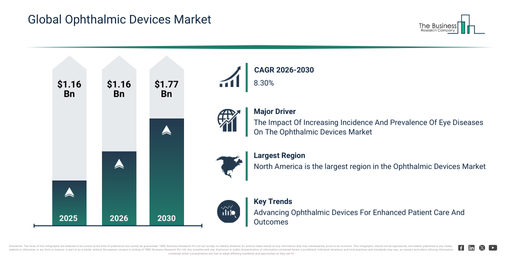
    The market for ophthalmic devices has seen remarkable progress in recent years. It is projected to grow from $47.31 billion in 2025 to $51.1 billion in 2026, representing a compound annual growth rate (CAGR) of 8.0%. This historical growth has been driven by a surge in vision impairments, the growing number of specialized eye clinics and hospitals, increased cataract surgeries, wider adoption of corrective devices, and advancements in diagnostic technologies for eye care.

    Download A Free Sample Report For Comprehensive Market Insights:

    https://www.thebusinessresearchcompany.com/sample.aspx?id=1970&type=smp

    Strong Future Growth Prospects for Ophthalmic Devices

    Looking ahead, the ophthalmic devices market is expected to reach $70.19 billion by 2030, growing at a CAGR of 8.3%. This forecasted expansion is supported by a rising demand for treatments targeting age-related eye disorders, greater use of AI-powered diagnostics, the expansion of outpatient eye surgery centers, increased emphasis on preventative eye care, and significant investments in ophthalmic technology innovation. Key trends shaping the market include the widespread adoption of advanced diagnostic imaging, minimally invasive surgical tools, digital eye examination technologies, laser-based vision correction, and early disease detection systems.

    Major Drivers Accelerating the Ophthalmic Devices Market

    The increasing prevalence of eye diseases is a significant factor propelling the ophthalmic devices sector. Conditions such as age-related macular degeneration (AMD), glaucoma, and cataracts continue to be leading causes of vision loss worldwide. Ophthalmic devices are essential for the effective diagnosis, treatment, and management of these disorders.

    Access The Complete Ophthalmic Devices Market Report:

    https://www.thebusinessresearchcompany.com/report/ophthalmic-devices-global-market-report

    Rising Demand Linked to Eye Health Awareness

    For instance, in August 2024, the National Health Service (NHS) reported a record number of NHS-funded sight tests—over 841,000 in 2024—marking a 6.6% increase compared to 2023. This upward trend reflects growing awareness and the rising incidence of eye conditions, which in turn boosts the utilization of ophthalmic diagnostic and treatment devices.

    Detailed Market Segmentation and Opportunities in Ophthalmic Devices

    This report segments the ophthalmic devices market into several categories:

    1) By Device Type: Vision Care Devices and Equipment, Cataract Surgery Devices and Equipment, Refractive Surgery Devices and Equipment, Diagnostic and Monitoring Ophthalmic Devices and Equipment.

    2) By Product Type: Instruments or Equipment, and Disposables.

    3) By End User: Hospitals and Clinics, Diagnostic Laboratories, and Other End Users.

    4) By Type of Expenditure: Public and Private.

    Further breakdown includes:

    – Vision Care Devices and Equipment: Eyeglasses, Contact Lenses, Low Vision Aids.

    – Cataract Surgery Devices and Equipment: Cataract Surgery Instruments, Intraocular Lenses (Implants), Phacoemulsification Systems.

    – Refractive Surgery Devices and Equipment: LASIK Devices, SMILE Surgery Devices, PRK Surgery Devices.

    – Diagnostic and Monitoring Devices: Fundus Cameras, Optical Coherence Tomography (OCT) Scanners, Perimeters, Retinal Imaging Systems, Slit Lamps.

    Innovations and Emerging Technologies Influencing Market Growth

    Leading companies in the ophthalmic devices sector are committed to innovation, investing heavily in research and development to maintain competitiveness. For example, in May 2023, US-based Sight Sciences Inc. announced two new ophthalmic systems designed to improve clinical outcomes. The OMNI Surgical System facilitates minimally invasive, implant-free glaucoma surgeries for patients with primary open-angle glaucoma, while the TearCare System offers an interventional eyelid treatment using localized heat therapy for adults suffering from evaporative dry eye disease due to meibomian gland dysfunction.

    Key Players Driving the Ophthalmic Devices Industry

    The market is influenced by several prominent companies, including Luxottica Group S.p.A., Johnson & Johnson, Hoya Corporation, CooperVision AG, Bausch Health Companies Inc., Carl Zeiss AG, Flex Ltd., Nidek Co. Ltd., Topcon Corporation, Alcon Inc., EssilorLuxottica, Novartis AG, Regeneron Pharmaceuticals Inc., Roche Holding AG, Santen Pharmaceutical Co. Ltd., Rohto Pharmaceutical Co. Ltd., Menicon Co. Ltd., Chengdu Kanghong Pharmaceutical, Glaukos Corporation, STAAR Surgical Company, Omeros Corporation, Aerie Pharmaceuticals Inc., Alimera Sciences Inc., and Iridex.

    Regional Market Insights Highlighting Growth Hotspots

    In 2025, North America held the largest share of the global ophthalmic devices market. The Asia-Pacific region ranked second in size and is anticipated to experience significant growth over the coming years. Africa remains the smallest regional market. The analysis covers key regions including Asia-Pacific, South East Asia, Western Europe, Eastern Europe, North America, South America, the Middle East, and Africa, providing a comprehensive view of global market dynamics.

    Get in touch with us:

    The Business Research Company: https://www.thebusinessresearchcompany.com/

    Americas: +1 310-496-7795

    Asia: +44 7882 955267 & +91 8897263534

    Europe: +44 7882 955267

    Email us at: marketing@tbrc.info

    Follow us on:

    LinkedIn: https://in.linkedin.com/company/the-business-research-company

    YouTube: https://www.youtube.com/channel/UC24_fI0rV8cR5DxlCpgmyFQ

    Global Market Model: https://www.thebusinessresearchcompany.com/global-market-model
  • Ophthalmic Cryo Unit Market Growth Outlook Reveals A CAGR Of 8.2% And A Market Value Of $0.71 Billion By 2030

    Ophthalmic Cryo Unit Market Growth Outlook Reveals A CAGR Of 8.2% And A Market Value Of $0.71 Billion By 2030

    Delivering more actionable and strategically valuable research, The Business Research Company’s 2026 market reports feature market attractiveness analysis, total addressable market evaluation, company benchmarking matrices, interactive Excel dashboards, expanded supply chain intelligence, emerging startup coverage, and detailed product insights.

    The ophthalmic cryo unit market is witnessing significant advancement driven by technological progress and increasing demand for effective eye disorder treatments. With rising healthcare investments and innovations in cryosurgery, this sector is positioned for steady growth in the coming years. Below is a detailed exploration of the current market landscape, key drivers, leading players, and regional trends shaping the future of ophthalmic cryo units.

    Ophthalmic Cryo Unit Market Size and Projected Growth

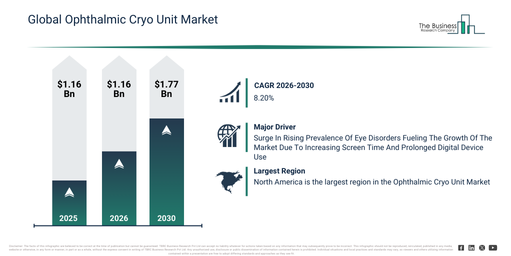
    The market for ophthalmic cryo units has shown robust expansion recently, with its value expected to rise from $0.48 billion in 2025 to $0.52 billion in 2026, reflecting a compound annual growth rate (CAGR) of 8.5%. This upward trend during the historical period can be linked to an increase in ophthalmic surgeries, progress in cryosurgery methods, higher prevalence of eye diseases, growing adoption of portable cryo devices, and expansion of ophthalmic clinics. Looking ahead, the market is forecast to grow to $0.72 billion by 2030 at a CAGR of 8.2%. Factors fueling this growth include integration with digital surgery systems, development of advanced cryo technology, expansion in emerging ophthalmic markets, adoption of minimally invasive cryotherapy, and enhanced portability. Emerging trends spotlight portable cryo units, high-precision cryotherapy, battery-powered devices, surgical suite integration, and multi-use ophthalmic cryo solutions.

    Download A Free Sample Report For Comprehensive Market Insights:

    https://www.thebusinessresearchcompany.com/sample.aspx?id=29141&type=smp

    Rising Eye Disorders Driving Demand for Ophthalmic Cryo Units

    The increasing incidence of eye disorders is a major force behind the ophthalmic cryo unit market growth. Eye disorders encompass a range of conditions affecting the eye and surrounding areas, often worsened by prolonged exposure to digital screens resulting in eye strain, dry eye, and myopia. Ophthalmic cryo units play a critical role in treating these conditions by employing controlled freezing techniques to repair or remove damaged tissue. This enables precise, minimally invasive treatment options for issues such as retinal tears, glaucoma, and cataracts. For instance, in July 2025, a report from GOV.UK highlighted that 3.7 million individuals accounted for 9.8 million hospital outpatient visits related to vision in England during the fiscal year ending 2024. The Northwest region showed the highest attendance rate at 6,432 per 100,000 people, marking a 4% increase from the previous year. Such statistics underscore how the growing prevalence of eye ailments is pushing market demand higher.

    How Healthcare Spending Boosts Ophthalmic Cryo Unit Expansion

    Increasing investments in healthcare infrastructure are also propelling the ophthalmic cryo unit market forward. These investments involve allocating funds to hospitals, clinics, and other medical facilities aimed at improving patient care and advancing healthcare services. As medical technologies and treatment methods become more sophisticated, healthcare providers are better equipped to diagnose and manage diseases effectively. Financial backing supports the adoption of high-end ophthalmic cryo units, helping facilities enhance surgical precision, safety, and patient outcomes. For example, in April 2025, GOV.UK data revealed that healthcare expenditure in the UK rose to $423 billion (£317 billion) in 2024, an increase from the previous year, with government-funded healthcare growing by 2.5% to $344 billion (£258 billion). This upward trend in spending highlights the ongoing support for technologies like ophthalmic cryo units that improve treatment quality.

    Access The Complete Ophthalmic Cryo Unit Market Report:

    https://www.thebusinessresearchcompany.com/report/ophthalmic-cryo-unit-global-market-report

    Breakdown of Ophthalmic Cryo Unit Market Segments

    This market is categorized by product type, technology, reimbursement channel, and end user. Under product types, it includes portable ophthalmic cryo units and stationary units. The technology segment covers traditional cryosurgery and high-tech cryo devices. Reimbursement channels comprise private insurance, public insurance, and out-of-pocket payments. End users span hospitals, ophthalmic clinics, ambulatory surgical centers, and other healthcare providers. Further subdivisions of portable units include handheld cryo units, compact tabletop devices, and battery-operated units. Stationary units are classified into floor-mounted, tabletop, and integrated surgical suite cryo units.

    Key Players Influencing the Ophthalmic Cryo Unit Market

    Several prominent companies are actively shaping the ophthalmic cryo unit industry. Leading names include Metrum Cryoflex, Cryo Concepts LP, Cryo IQ Inc., Appasamy Associates, Phakos Co., Beijing Brightway Medical Instrument Co. Ltd., RS Surgicles, Advin Health Care, Basco India, Keeler Ltd., Erbe Elektromedizin GmbH, Inomed, BVI Medical Inc., Topcon Corporation, Bausch + Lomb Corp., Halma Plc, MIRA Inc., Oertli Instrumente AG, Alcon, and Ziemer Ophthalmic Systems AG. These firms continue to innovate and expand their product portfolios to meet evolving market demands.

    Geographical Overview and Market Leadership in Ophthalmic Cryo Units

    In 2025, North America held the largest share of the ophthalmic cryo unit market. However, the Asia-Pacific region is expected to experience the fastest growth during the forecast period. The market analysis covers several regions including Asia-Pacific, South East Asia, Western Europe, Eastern Europe, North America, South America, the Middle East, and Africa, providing a comprehensive global perspective on market trends and expansions.

    Get in touch with us:

    The Business Research Company: https://www.thebusinessresearchcompany.com/

    Americas: +1 310-496-7795

    Asia: +44 7882 955267 & +91 8897263534

    Europe: +44 7882 955267

    Email us at: marketing@tbrc.info

    Follow us on:

    LinkedIn: https://in.linkedin.com/company/the-business-research-company

    YouTube: https://www.youtube.com/channel/UC24_fI0rV8cR5DxlCpgmyFQ

    Global Market Model: https://www.thebusinessresearchcompany.com/global-market-model
  • Peripherally Inserted Central Catheter (PICC) Market Trends And Growth Drivers Point To Strong Future Potential

    Peripherally Inserted Central Catheter (PICC) Market Trends And Growth Drivers Point To Strong Future Potential

    Enhanced with market attractiveness analysis, total addressable market evaluation, company benchmarking matrices, interactive Excel dashboards, expanded supply chain intelligence, emerging startup coverage, and detailed product insights, The Business Research Company’s 2026 market reports deliver more actionable and strategically valuable research.

    The peripherally inserted central catheter (PICC) market has been showing consistent growth, driven by rising healthcare needs and technological advancements. This market is evolving as more healthcare providers adopt PICC lines for various medical treatments. Here, we explore the market’s current status, growth factors, segmentation, technological innovations, major players, and regional trends shaping its future.

    Market Size and Growth Trajectory of the Peripherally Inserted Central Catheter Market

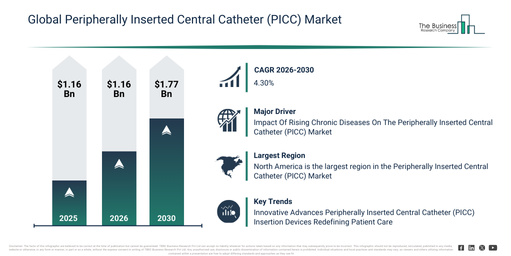
    The PICC market is on a steady upward path, with its valuation expected to rise from $1.07 billion in 2025 to $1.12 billion in 2026, representing a compound annual growth rate (CAGR) of 4.4%. This upward trend is supported by factors like the increasing prevalence of chronic diseases that require long-term intravenous therapy, greater hospital adoption of PICC lines for chemotherapy and antibiotics, and the expansion of catheterization lab services. The market is forecast to reach $1.32 billion by 2030, growing at a CAGR of 4.3%. Rising demand for power-injectable and multi-lumen PICC systems, as well as the use of tip-placement kits for enhanced procedural precision, are expected to propel this growth further. Additionally, increasing procedure volumes in ambulatory surgical centers and extended use of PICCs in home infusion and outpatient care contribute to market expansion.

    Download A Free Sample Report For Comprehensive Market Insights:

    https://www.thebusinessresearchcompany.com/sample.aspx?id=13908&type=smp

    Primary Drivers Behind the Growth of the Peripherally Inserted Central Catheter Market

    One of the main forces fueling the PICC market is the growing incidence of chronic diseases worldwide. These long-lasting health conditions, such as cancer, diabetes, hypertension, and heart disease, often require prolonged intravenous access for medication, fluids, and nutrition. PICCs offer a reliable solution for such needs, making their adoption more widespread.

    To illustrate, a report from the National Library of Medicine in January 2023 emphasized that the number of people aged 50 and above living with one or more chronic illnesses in the United States is expected to nearly double by 2050, reaching 142.66 million from 71.52 million in 2022. This significant rise in chronic conditions is directly boosting the demand for PICC lines.

    Additional Factors Supporting Revenue Expansion in the PICC Market

    Hospitals and clinics are increasingly preferring power-injectable and multi-lumen PICC systems due to their versatility in handling complex therapies. Furthermore, the growing focus on reducing complications and enhancing long-term vascular access outcomes is encouraging the adoption of advanced PICC technologies. The rise in outpatient procedures and home healthcare settings also presents fresh opportunities for market growth, as demand for convenient and safe intravenous access continues to increase.

    Access The Complete Peripherally Inserted Central Catheter (PICC) Market Report:

    https://www.thebusinessresearchcompany.com/report/peripherally-inserted-central-catheter-picc-global-market-report

    Breakdown of the Peripherally Inserted Central Catheter Market by Key Segments

    The PICC market is categorized into several important segments:

    1) Device Type: Power-Injectable and Non-Power Injectable

    2) Lumen Type: Single, Double, and Triple lumen

    3) Kit Type: Tip-Placement Kit and Conventional Kit

    4) End User: Hospitals and Clinics, Ambulatory Surgical Centers, and Catheterization Laboratories

    Within these groups, subcategories include single, double, and triple lumen options for both power-injectable and non-power injectable PICCs, allowing for tailored solutions across various clinical needs.

    Innovations and Trends Shaping the Future of the PICC Market

    Leading companies in the PICC industry are focusing on cutting-edge technologies to improve catheter insertion procedures. Devices designed specifically for PICC placement help ensure precision and safety.

    For example, in May 2023, Teleflex Incorporated introduced two new PICC insertion devices—the Arrow VPS Rhythm DLX Device and the NaviCurve Stylet. The VPS Rhythm DLX uses cardiac electrical signals to provide real-time feedback on catheter tip location and integrates ultrasonography tools to assist vessel measurement. This technology eliminates the need for confirmatory x-rays by combining ultrasound vascular evaluation, catheter navigation, and tip verification, streamlining the insertion process.

    Major Players Influencing the Peripherally Inserted Central Catheter Market Landscape

    The PICC market features several key companies competing and innovating, including Cardinal Health Inc., Medtronic plc, Becton Dickinson and Company, B. Braun Medical Ltd, Teleflex Incorporated, ICU Medical Inc., Cook Medical, AngioDynamics, Argon Medical, PFM Medical Inc., Poly Medicure Ltd., and others. These organizations continue to develop advanced products and expand their market reach.

    Regional Market Performance and Growth Outlook for PICCs

    In 2025, North America held the largest share of the PICC market, reflecting its well-established healthcare infrastructure and high adoption rates. However, the fastest growth is expected in the Asia-Pacific region in the coming years, driven by increasing healthcare investments and a growing patient base. Other regions covered in the analysis include South East Asia, Western Europe, Eastern Europe, South America, the Middle East, and Africa, offering a full global perspective on market trends.

    Get in touch with us:

    The Business Research Company: https://www.thebusinessresearchcompany.com/

    Americas: +1 310-496-7795

    Asia: +44 7882 955267 & +91 8897263534

    Europe: +44 7882 955267

    Email us at: marketing@tbrc.info

    Follow us on:

    LinkedIn: https://in.linkedin.com/company/the-business-research-company

    YouTube: https://www.youtube.com/channel/UC24_fI0rV8cR5DxlCpgmyFQ

    Global Market Model: https://www.thebusinessresearchcompany.com/global-market-model
  • Ophthalmic Artificial Intelligence-Assisted Diagnosis Market Forecast Highlights Expansion From $2.57 Billion To $5.03 Billion Through 2030

    Ophthalmic Artificial Intelligence-Assisted Diagnosis Market Forecast Highlights Expansion From $2.57 Billion To $5.03 Billion Through 2030

    Enhanced with market attractiveness analysis, total addressable market evaluation, company benchmarking matrices, interactive Excel dashboards, expanded supply chain intelligence, emerging startup coverage, and detailed product insights, The Business Research Company’s 2026 market reports deliver more actionable and strategically valuable research.

    The field of ophthalmic artificial intelligence-assisted diagnosis is experiencing rapid growth as advanced technologies increasingly support early and accurate detection of eye diseases. With rising eye health concerns worldwide and technological innovations enhancing diagnostic capabilities, this market is set for significant expansion in the coming years. Here’s a detailed overview of the market size, key growth drivers, segments, leading companies, and regional trends shaping its future.

    Market Size and Projected Growth Trajectory of the Ophthalmic AI-Assisted Diagnosis Market

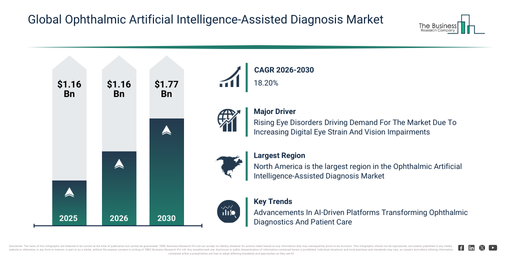
    The ophthalmic AI-assisted diagnosis market has witnessed swift development recently, poised to rise from $2.17 billion in 2025 to $2.57 billion in 2026, reflecting a compound annual growth rate (CAGR) of 18.5%. This historical growth stems from factors such as expanding use of digital imaging devices, a growing number of eye disease cases, increased emphasis on early diagnosis, integration of AI technologies in clinical trials, and advancements in retinal imaging techniques. Looking ahead, the market is forecast to reach $5.03 billion by 2030, growing at a CAGR of 18.2%. Key contributors to this projected surge include the rise of cloud-based AI diagnostic platforms, the expansion of tele-ophthalmology services, enhanced AI algorithms for rare eye conditions, strategic partnerships between AI developers and healthcare providers, and broader adoption of predictive ophthalmology models. Significant market trends during this period involve AI-powered retinal image analysis, deep learning-enabled disease detection, predictive models for eye health, automated analysis of patient records, and seamless AI integration into clinical workflows.

    Download A Free Sample Report For Comprehensive Market Insights:

    https://www.thebusinessresearchcompany.com/sample.aspx?id=28285&type=smp

    Key Factors Fueling Growth in the Ophthalmic AI-Assisted Diagnosis Market

    One of the main elements driving this market is the increasing prevalence of eye disorders, which affect eye structure or function and can diminish vision or eye health. The rise in these conditions is linked to lifestyle changes such as longer screen times, causing digital eye strain, dryness, and vision complications stemming from prolonged blue light exposure and decreased blinking. AI-assisted ophthalmic diagnosis plays a crucial role by utilizing medical imaging and patient data to identify, categorize, and predict eye diseases with greater accuracy and speed. This facilitates early intervention and reduces the chances of vision loss. For example, in August 2023, the World Health Organization reported that over 2.2 billion people worldwide suffer from either near or distance vision impairment, with more than a billion cases being preventable or untreated. Common causes include refractive errors and cataracts, yet only about 36% of those affected by refractive errors and 17% with cataracts have access to adequate treatments. This widespread unmet need is a significant factor propelling the demand for AI-driven ophthalmic diagnostic solutions.

    Detailed Segmentation and Expanding Categories in the Ophthalmic AI-Assisted Diagnosis Market

    This market is segmented by type, technology, and application to provide a comprehensive view of its scope. By type, the market is divided into cloud-based and on-premises solutions. The cloud-based segment further includes public cloud, private cloud, and hybrid cloud options, while on-premises deployments consist of local server deployment, enterprise data center deployment, and private network deployment. Technologically, the market encompasses deep learning, machine learning, computer vision, and other AI-related technologies. Applications are categorized into hospitals, clinics, and imaging centers, reflecting the diverse settings where AI-assisted ophthalmic tools are utilized.

    Access The Complete Ophthalmic Artificial Intelligence-Assisted Diagnosis Market Report:

    https://www.thebusinessresearchcompany.com/report/ophthalmic-artificial-intelligence-assisted-diagnosis-global-market-report

    Innovations and Competitive Strategies Shaping Market Dynamics

    Leading players in the ophthalmic AI-assisted diagnosis sector are concentrating on cutting-edge solutions designed to improve diagnostic precision, streamline patient care, and offer predictive insights for eye diseases. A notable development is the emergence of ocular data-as-a-service platforms, which provide on-demand access to eye health data. These platforms enable ophthalmologists, clinics, and AI diagnostic applications to remotely access, share, and analyze retinal images and other ocular information, enhancing diagnosis, monitoring, and research efforts. For instance, in May 2025, US-based Topcon Healthcare Solutions Inc. introduced IDHea, a cloud-based platform aimed at accelerating innovation in AI and digital health. IDHea offers fast, secure access to real-world and clinical ocular datasets, empowering researchers to advance treatments for both eye and systemic diseases. Built on the principles of being Fast, Accessible, Safe, and Transparent (FAST), the platform supports predictive, personalized, and proactive patient care while maintaining strict privacy and governance standards.

    Key Market Players Driving Innovation and Competition

    The ophthalmic AI-assisted diagnosis market features numerous influential companies including IDx Technologies Inc., Digital Diagnostics Inc., AEYE Health Inc., Eyenuk Inc., OphtAI, Oivi Tech Private Limited, Altris Inc., JuneBrain Inc., Mediwhale Inc., MONA.health BV, Remidio Innovative Solutions Pvt. Ltd., Retinalyze System A/S, Retmarker, RetinaRisk, Ikerian AG, VoxelCloud Inc., Visulytix Ltd., Aiforia Technologies Plc, DeepTek Inc., EyRIS Pte Ltd., and Neurodynamics Solutions Inc. These organizations are actively developing innovative tools and platforms to advance AI applications in ophthalmology.

    Regional Market Insights Highlighting Growth Hotspots

    In 2025, North America held the largest share of the ophthalmic AI-assisted diagnosis market. However, the Asia-Pacific region is anticipated to be the fastest-growing market during the forecast period. The analysis encompasses significant regions such as Asia-Pacific, South East Asia, Western Europe, Eastern Europe, North America, South America, the Middle East, and Africa, offering a broad perspective on global market trends and opportunities.

    Get in touch with us:

    The Business Research Company: https://www.thebusinessresearchcompany.com/

    Americas: +1 310-496-7795

    Asia: +44 7882 955267 & +91 8897263534

    Europe: +44 7882 955267

    Email us at: marketing@tbrc.info

    Follow us on:

    LinkedIn: https://in.linkedin.com/company/the-business-research-company

    YouTube: https://www.youtube.com/channel/UC24_fI0rV8cR5DxlCpgmyFQ

    Global Market Model: https://www.thebusinessresearchcompany.com/global-market-model
  • Peripheral Vascular Devices And Equipment Market Expansion Is Reshaping Competitive Dynamics Across The Industry

    Peripheral Vascular Devices And Equipment Market Expansion Is Reshaping Competitive Dynamics Across The Industry

    Through market attractiveness analysis, total addressable market evaluation, company benchmarking matrices, interactive Excel dashboards, expanded supply chain intelligence, emerging startup coverage, and detailed product insights, The Business Research Company’s 2026 market reports provide more actionable and strategically valuable research.

    The peripheral vascular devices and equipment market is steadily evolving, driven by ongoing advancements in medical technology and increasing demand for effective vascular treatments. This sector is witnessing consistent growth, supported by demographic shifts and expanding healthcare infrastructure worldwide. Let’s explore the market’s current size, key growth drivers, segmentation, emerging trends, leading companies, and regional dynamics shaping its future.

    Peripheral Vascular Devices And Equipment Market Size and Projected Revenue Growth

    The market for peripheral vascular devices and equipment has shown steady growth over recent years. It is projected to increase from $10.29 billion in 2025 to $10.56 billion in 2026, representing a compound annual growth rate (CAGR) of 2.5%. This expansion during the historical period is largely due to the rising prevalence of peripheral artery disease, an aging population, the broadening scope of interventional cardiology, greater adoption of catheter-based therapies, and increased investment in hospital infrastructure.

    Download A Free Sample Report For Comprehensive Market Insights:

    https://www.thebusinessresearchcompany.com/sample.aspx?id=2408&type=smp

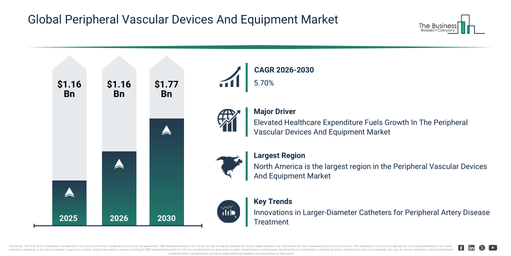
    Looking ahead, the market is expected to experience robust growth, reaching $13.15 billion by 2030 with a CAGR of 5.7%. This positive outlook stems from growing demand for minimally invasive vascular procedures, the rising use of bioresorbable materials, the expansion of outpatient vascular treatments, a stronger focus on precision-guided interventions, and continuous innovation in peripheral stent technologies. Key trends influencing the market include greater adoption of drug-coated vascular devices, increased use of minimally invasive endovascular techniques, rising demand for advanced atherectomy systems, the expansion of image-guided peripheral interventions, and an enhanced emphasis on long-term device patency.

    Important Factors Fueling Growth in the Peripheral Vascular Devices Market

    A primary driver for the peripheral vascular devices and equipment market is the rising healthcare expenditure worldwide. Healthcare expenditure — the total funds spent on healthcare goods and services by individuals, organizations, or governments — is increasing and enabling investments in advanced medical technologies. This financial commitment supports improved diagnosis and treatment of diseases such as peripheral artery disease, which in turn boosts demand for these devices.

    Access The Complete Peripheral Vascular Devices And Equipment Market Report:

    https://www.thebusinessresearchcompany.com/report/peripheral-vascular-devices-and-equipment-global-market-report

    For example, in April 2025, the UK’s Office for National Statistics (ONS) reported that government-funded healthcare spending reached USD 2.91 billion (£258 billion) in 2024, marking a real-terms increase of 2.5% from the prior year. This growth in funding underscores stronger support for healthcare delivery and medical equipment acquisition, contributing significantly to market expansion.

    Peripheral Vascular Devices and Equipment Market Categories and Segmentation

    This market can be divided into several crucial segments:

    1) By Type: Peripheral vascular stents, percutaneous transluminal angioplasty (PTA) balloons, catheters, PTA guide wires, atherectomy devices, chronic total occlusion devices, aortic stents, synthetic surgical grafts, embolic protection devices, and inferior vena cava filters.

    2) By Application: Treatment of peripheral blood vessel damage and treatment of peripheral blood vessel blockage.

    3) By End User: Hospital and clinic applications.

    Further subcategories include:

    – Peripheral Vascular Stents: balloon-expandable stents and self-expanding stents.

    – PTA Balloons: drug-coated balloons and non-drug-coated balloons.

    – Catheters: diagnostic and therapeutic types.

    – PTA Guide Wires: hydrophilic and non-hydrophilic guide wires.

    – Atherectomy Devices: rotational, orbital, laser, and directional.

    – Chronic Total Occlusion Devices: CTO crossing and CTO re-entry devices.

    – Aortic Stents: self-expanding and balloon-expandable.

    – Synthetic Surgical Grafts: polyester, polytetrafluoroethylene (PTFE), and dacron grafts.

    – Embolic Protection Devices: distal and proximal protection devices.

    – Inferior Vena Cava Filters: permanent and retrievable filters.

    How Industry Developments Are Transforming Peripheral Vascular Device Demand

    Leading companies in the peripheral vascular devices space are focusing on innovating larger-diameter catheters to improve interventions for peripheral artery disease. These catheters assist in fluid drainage or medication delivery and aim to enhance treatment outcomes.

    For instance, in March 2023, Shockwave Medical Inc., a US medical device firm, introduced the peripheral intravascular lithotripsy (IVL) catheter. The Shockwave L6 Peripheral IVL catheter is specifically designed to modify calcified lesions in large peripheral arteries like the iliac and common femoral arteries. This targeted technology helps overcome complications commonly caused by artery calcification, which often reduces the success rates of standard endovascular treatments.

    Key Players Competing in the Peripheral Vascular Devices and Equipment Market

    Several prominent companies play a significant role in driving competition and innovation in this market, including:

    Medtronic plc, Boston Scientific Corporation, Abbott Laboratories, Cook Group, Angiomed GmbH & Co. Medizintechnik KG, Terumo Corporation, ENDOLOGIX Inc., Bolton Medical Inc., JOTEC GmbH, Clearstream Technologies, Aesculap AG, Curative Medical Devices, Lepu Medical Technology, MicroPort, Bioteque Corporation Co. Ltd., Cardinal Health, iVascular, B. Braun Group, Biosensors International Group, BIOTRONIK SE & Co., COVIDien, Volcano Corporation, AngioScore, Edwards Lifesciences Corporation, Cordis Corporation, Koninklijke Philips N.V., Nipro Corporation, Bluesail Medical Co. Ltd, Rex Medical, Teleflex Incorporated, Penumbra Inc., Lombard Medical Technologies PLC, W.L. Gore & Associates Inc., Merit Medical Systems Inc., Vascular Solutions Inc., LeMaitre Vascular Inc., and Spectranetics Corporation.

    Geographical Overview of the Peripheral Vascular Devices Market Growth

    In 2025, North America represented the largest segment of the global peripheral vascular devices and equipment market. Western Europe ranked as the second largest market. The analysis covers multiple regions including Asia-Pacific, Southeast Asia, Western Europe, Eastern Europe, North America, South America, the Middle East, and Africa, providing a comprehensive picture of global demand and growth opportunities.

    Get in touch with us:

    The Business Research Company: https://www.thebusinessresearchcompany.com/

    Americas: +1 310-496-7795

    Asia: +44 7882 955267 & +91 8897263534

    Europe: +44 7882 955267

    Email us at: marketing@tbrc.info

    Follow us on:

    LinkedIn: https://in.linkedin.com/company/the-business-research-company

    YouTube: https://www.youtube.com/channel/UC24_fI0rV8cR5DxlCpgmyFQ

    Global Market Model: https://www.thebusinessresearchcompany.com/global-market-model
  • Operating-Room Instrument Sterile Robot Market Expected To Reach $3.6 Billion By 2030 As Growth Accelerates At 13.4% CAGR

    Operating-Room Instrument Sterile Robot Market Expected To Reach $3.6 Billion By 2030 As Growth Accelerates At 13.4% CAGR

    Through market attractiveness analysis, total addressable market evaluation, company benchmarking matrices, interactive Excel dashboards, expanded supply chain intelligence, emerging startup coverage, and detailed product insights, The Business Research Company’s 2026 market reports provide more actionable and strategically valuable research.

    The market for operating-room instrument sterile robots has been evolving swiftly, driven by technological progress and increasing healthcare needs. These specialized robotic systems are becoming essential in modern operating rooms to ensure surgical instruments remain sterile while enhancing procedural efficiency. Let’s explore the market’s current stature, growth drivers, segmentation, innovations, and competitive landscape.

    Market Size and Revenue Projections for Operating-Room Instrument Sterile Robots

    The operating-room instrument sterile robot market has witnessed significant expansion recently. It is projected to increase from $1.92 billion in 2025 to $2.18 billion in 2026, marking a compound annual growth rate (CAGR) of 13.7%. This increase during the historical period is largely because of higher rates of hospital-acquired infections, wider adoption of robotic-assisted surgeries, improvements in sterilization technologies, a growing demand for efficient procedural workflows, and the overall rise in healthcare robotics.

    Download A Free Sample Report For Comprehensive Market Insights:

    https://www.thebusinessresearchcompany.com/sample.aspx?id=29140&type=smp

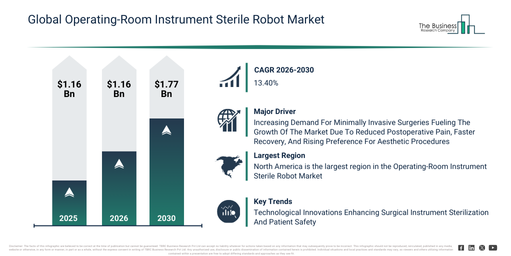
    Looking ahead, the market is expected to maintain rapid growth, reaching $3.61 billion by 2030, with a CAGR of 13.4%. Anticipated growth factors include the integration of these robots with smart hospital ecosystems, AI-driven tracking of surgical instruments, expansion of ambulatory surgical centers, the use of advanced chemical sterilization techniques, and more cost-effective robotic systems. Key trends forecasted for the coming years involve automated sterilization workflows, utilization of UV-C and hydrogen peroxide sterilization technologies, mobile sterile instrument robots, enhanced integration with hospital IT infrastructure, and hybrid semi-automated sterilization solutions.

    Main Forces Behind Growth in the Operating-Room Instrument Sterile Robot Market

    One of the primary factors propelling this market forward is the increasing preference for minimally invasive surgeries. These procedures involve small incisions and specialized instruments to minimize tissue damage and speed up patient recovery. The demand for such surgeries has been rising due to benefits like reduced postoperative pain and enhanced patient comfort.

    Access The Complete Operating-Room Instrument Sterile Robot Market Report:

    https://www.thebusinessresearchcompany.com/report/operating-room-instrument-sterile-robot-global-market-report

    Operating-room instrument sterile robots are critical in supporting these surgeries by consistently ensuring instrument sterility, reducing infection risks, and enabling the precision required for delicate operations. For example, in June 2024, the American Society of Plastic Surgeons reported that minimally invasive procedures grew by 7% in 2023, outpacing traditional surgeries by 2%. This growing preference for less invasive surgical methods is a key market driver.

    Additional Market Drivers Encouraging Expansion

    Technological advancements in sterilization methods and robotics continue to support market growth. Innovations that increase the speed, accuracy, and automation of instrument sterilization processes make these robots more attractive to healthcare providers. Moreover, the rising global focus on reducing hospital-acquired infections is encouraging hospitals to adopt automated sterile instrument handling systems.

    Also, the expansion of ambulatory surgical centers and outpatient surgery settings presents new opportunities for these robotic solutions. These centers benefit from efficient, reliable sterilization workflows that sterile instrument robots can provide, boosting procedural turnaround and patient safety.

    Segmentation Overview of the Operating-Room Instrument Sterile Robot Market

    This market can be categorized across multiple dimensions:

    1) Product Type:

    – Fully Automated Instrument Handling Robots

    – Semi-Automated Instrument Handling Robots

    – Hybrid Instrument Management Robots

    2) Sterility Maintenance Technology:

    – UV-C Assisted Instrument Sterility Robots

    – Chemical-Based Local Instrument Sterility Robots

    – Enclosed Sterile Compartment Robots

    – Touchless Handling and Containment Robots

    3) Mobility Type:

    – Mobile Operating-Room Instrument Robots

    – Fixed or Ceiling-Mounted Instrument Robots

    4) Application Area:

    – General Surgery Operating Rooms

    – Orthopedic Surgery Operating Rooms

    – Cardiovascular Surgery Operating Rooms

    – Neurosurgery Operating Rooms

    – Minimally Invasive Surgery Operating Rooms

    5) End-User:

    – Public Hospitals

    – Private Hospitals

    – Specialty Surgical Centers

    – Ambulatory Surgical Centers

    Further breakdowns include various subcategories under each product type, such as autonomous instrument delivery and retrieval robots, staff-assisted robotic handling systems, integrated instrument tracking, and hybrid robots combining multiple functionalities and workflow integration.

    Innovations and Trends Shaping the Future of Operating-Room Instrument Sterile Robots

    Leading players in this market are investing in cutting-edge technologies like whole-room pulsed UV germicidal sterilization. This approach uses bursts of high-intensity ultraviolet light to disinfect entire room surfaces quickly and effectively, reducing microbial contamination in unoccupied operating theaters.

    For example, in February 2023, Xenex Disinfection Services Inc., a US-based innovator, introduced the LightStrike+ system. This device offers rapid microbial reduction on non-porous medical surfaces with built-in safety features and software controls. It complements manual cleaning methods and aims to lower hospital-acquired infection rates, enhancing patient safety and operational efficiency.

    Competitive Landscape and Major Industry Participants

    The operating-room instrument sterile robot market features key players such as Intuitive Surgical Inc., Stryker Corporation, Johnson and Johnson, Medtronic plc, Zimmer Biomet Holdings Inc., Smith and Nephew plc, Asensus Surgical Inc., CMR Surgical Ltd., Medrobotics Corporation, Titan Medical Inc., Avateramedical GmbH, Medicaroid Corporation, Rob Surgical Systems S L, Moon Surgical SAS, SS Innovations International Inc., Virtuoso Surgical Inc., Vicarious Surgical Inc., Noah Medical Corporation, EndoQuest Robotics Inc., and Medical Microinstruments SpA.

    Geographical Market Insights Indicate North America at the Forefront

    North America held the largest share of the operating-room instrument sterile robot market in 2025. However, the Asia-Pacific region is anticipated to be the fastest-growing market during the forecast period. The report covers regions including Asia-Pacific, South East Asia, Western Europe, Eastern Europe, North America, South America, the Middle East, and Africa, providing a thorough understanding of global market trends and opportunities.

    Get in touch with us:

    The Business Research Company: https://www.thebusinessresearchcompany.com/

    Americas: +1 310-496-7795

    Asia: +44 7882 955267 & +91 8897263534

    Europe: +44 7882 955267

    Email us at: marketing@tbrc.info

    Follow us on:

    LinkedIn: https://in.linkedin.com/company/the-business-research-company

    YouTube: https://www.youtube.com/channel/UC24_fI0rV8cR5DxlCpgmyFQ

    Global Market Model: https://www.thebusinessresearchcompany.com/global-market-model
  • Operating Tables And Lights Market Set To Grow From $1.53 Billion In 2026 To $1.79 Billion By 2030 At A CAGR Of 4%

    Operating Tables And Lights Market Set To Grow From $1.53 Billion In 2026 To $1.79 Billion By 2030 At A CAGR Of 4%

    Delivering more actionable and strategically valuable research, The Business Research Company’s 2026 market reports feature market attractiveness analysis, total addressable market evaluation, company benchmarking matrices, interactive Excel dashboards, expanded supply chain intelligence, emerging startup coverage, and detailed product insights.

    The market for operating tables and lights has seen consistent growth, driven by advancements in healthcare and surgical technologies. As the demand for efficient surgical environments continues to rise, this sector is positioned for ongoing expansion. Let’s explore the market size, key factors influencing growth, innovation trends, leading players, and regional prospects shaping this industry.

    Steady Market Expansion Forecast for Operating Tables and Lights

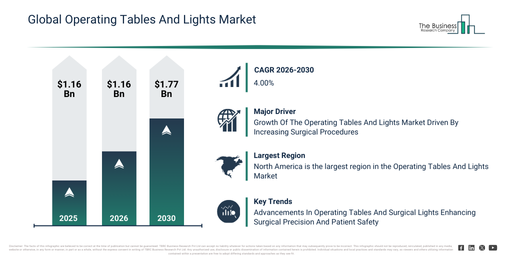
    The operating tables and lights market is on a steady upward trajectory. From $1.47 billion in 2025, the market is projected to reach $1.53 billion by 2026, growing at a compound annual growth rate (CAGR) of 4.5%. This growth during the past years has been influenced by a growing number of surgical procedures across the globe, the expansion of hospital operating rooms, increased investments in advanced surgical infrastructure, a rising preference for minimally invasive surgeries, and enhanced availability of cutting-edge operating room equipment. Looking ahead, the market size is expected to climb to $1.79 billion by 2030 at a CAGR of 4.0%. Factors fueling this forecast include the rising demand for smart operating rooms, a stronger focus on improving surgical workflow efficiency, the growth of outpatient surgical centers, increased investment in energy-efficient medical devices, and the replacement of outdated operating tables and lights. Upcoming trends also involve greater adoption of electrically powered tables, increased use of LED surgical lighting, modular and adjustable table designs, expansion in hybrid operating room technologies, and a deeper focus on surgical ergonomics.

    Download A Free Sample Report For Comprehensive Market Insights:

    https://www.thebusinessresearchcompany.com/sample.aspx?id=17215&type=smp

    The Increasing Number of Surgeries as a Key Growth Driver

    One of the most significant factors driving the operating tables and lights market is the escalating volume of surgical procedures globally. Surgeries involve a range of manual and instrumental techniques used by surgeons to diagnose, treat, or repair health conditions. This surge is largely attributed to an aging population, advancements in medical technology, improved healthcare access, and enhanced diagnostic capabilities. Operating tables and surgical lights are essential tools that contribute to greater precision, safety, and efficiency during operations, ultimately improving patient outcomes. For instance, in November 2023, the Australian Institute of Health and Welfare (AIHW) reported that approximately 735,500 people underwent surgery from public hospital elective surgery waiting lists in 2022–2023, marking an 18% increase compared to the previous year. This data highlights how the rise in surgical procedures fuels demand for advanced operating room equipment, boosting market growth.

    Expansion in Operating Tables and Lights Market Segments

    This market is segmented based on product type, operation method, and end-user categories. The product types include Operating Tables and Operating Room Lights, while operations are divided into Manual Operating Tables and Power Operating Tables. The key end-users consist of Hospitals, Ambulatory Surgical Centers, Emergency Centers, and other healthcare facilities. Within these segments, further subcategories break down into Manual, Electric, Hydraulic, and Surgical Stretcher Tables under Operating Tables. Operating Room Lights are further classified into Ceiling-Mounted Surgical Lights, Wall-Mounted Surgical Lights, Mobile Surgical Lights, and Examination Lights. These varied segments give insight into the broad range of equipment and applications driving the sector.

    Access The Complete Operating Tables And Lights Market Report:

    https://www.thebusinessresearchcompany.com/report/operating-tables-and-lights-global-market-report

    Innovative Solutions Enhancing Surgical Efficiency and Usability

    Leading companies in the operating tables and lights market are heavily investing in innovation to improve surgical precision and patient care. A major focus is on developing user-friendly products designed for ease of use, minimizing the need for extensive training. These products typically feature intuitive controls, straightforward interfaces, and ergonomic designs that enhance the overall user experience in operating rooms. For example, in August 2024, Sweden-based medical technology firm Getinge AB introduced the Maquet Corin operating room table and the Maquet Ezea surgical light. The Maquet Corin table comes with an intuitive interface that simplifies workflows and promotes better teamwork among surgical staff, featuring smart safety functions like collision detection and overload alerts. Meanwhile, the Maquet Ezea light emphasizes durability and user-friendliness, offering robust illumination with advanced features such as eye-sensitive dimming and a high color rendering index for accurate color representation during surgeries.

    Key Players Competing in the Operating Tables and Lights Industry

    Several major companies are influential in the operating tables and lights market. These include Siemens AG, Stryker Corporation, GE Healthcare, STERIS Corporation, Shenzhen Mindray Bio-Medical Electronics Co. Ltd., Drägerwerk AG & Co. KGaA, Getinge AB, Heal Force Bio-Meditech Holdings Limited, AGA Sanitaetsartikel GmbH, Famed Zywiec Sp. z o.o., Alvo Medical Sp. z o.o., Mizuho OSI, Merivaara Corp, Mediland Enterprise Corporation, BenQ Medical Technology, UFSK-International OSYS GmbH, Fazzini SRL, Lojer Oy, Medifa-hesse GmbH & Co. KG, Ningbo Techart Medical Equipment Co. Ltd., and OPT Surgisystems S.R.L. These organizations drive competition and innovation throughout the sector.

    Regional Market Outlook Highlights North America’s Lead

    In 2025, North America held the largest share of the operating tables and lights market. Meanwhile, other important regions covered in market analyses include Asia-Pacific, South East Asia, Western Europe, Eastern Europe, South America, the Middle East, and Africa. These regions are expected to offer varying growth opportunities, with emerging markets showing promising potential for future expansion based on healthcare infrastructure development and rising surgical volumes.

    Get in touch with us:

    The Business Research Company: https://www.thebusinessresearchcompany.com/

    Americas: +1 310-496-7795

    Asia: +44 7882 955267 & +91 8897263534

    Europe: +44 7882 955267

    Email us at: marketing@tbrc.info

    Follow us on:

    LinkedIn: https://in.linkedin.com/company/the-business-research-company

    YouTube: https://www.youtube.com/channel/UC24_fI0rV8cR5DxlCpgmyFQ

    Global Market Model: https://www.thebusinessresearchcompany.com/global-market-model
  • Peripheral Nerve Repair Devices Market Forecast Reveals Where Future Industry Value Will Be Created

    Peripheral Nerve Repair Devices Market Forecast Reveals Where Future Industry Value Will Be Created

    Delivering more actionable and strategically valuable research, The Business Research Company’s 2026 market reports feature market attractiveness analysis, total addressable market evaluation, company benchmarking matrices, interactive Excel dashboards, expanded supply chain intelligence, emerging startup coverage, and detailed product insights.

    The peripheral nerve repair devices sector has witnessed significant progress recently, driven by advancements in medical technology and rising healthcare needs. As the incidence of nerve injuries and neurological conditions grows, this market is set to experience substantial development. Below, we explore the current market size, key drivers, major segments, innovative trends, leading players, and regional dynamics shaping this industry’s future.

    Peripheral Nerve Repair Devices Market Size Expansion and Future Outlook

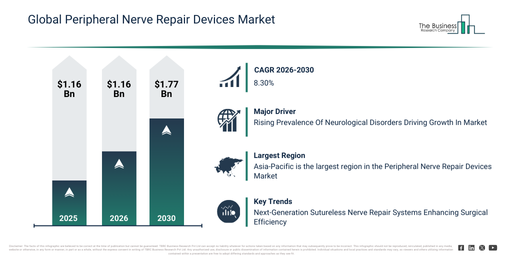
    The peripheral nerve repair devices market has demonstrated robust growth in recent years. From $6.67 billion in 2025, the market is projected to reach $7.24 billion in 2026, reflecting a compound annual growth rate (CAGR) of 8.5%. This past expansion has been fueled by factors such as rising trauma-related injuries, an increase in reconstructive surgeries, growing adoption of nerve grafting techniques, orthopedic surgery advancements, and progress in microsurgical methods.

    Looking ahead, the market is expected to continue its upward trajectory, reaching $9.96 billion by 2030 with a CAGR of 8.3%. Key elements driving growth during this forecast include the development of bioengineered nerve scaffolds, the evolution of regenerative medicine, an aging population facing nerve disorders, the adoption of robotic-assisted surgeries, and innovations in synthetic graft materials. Important trends shaping the market involve biodegradable nerve conduits, state-of-the-art nerve regeneration substances, minimally invasive repair approaches, tailored nerve graft solutions, and enhanced surgical handling designs.

    Download A Free Sample Report For Comprehensive Market Insights:

    https://www.thebusinessresearchcompany.com/sample.aspx?id=20922&type=smp

    Factors Propelling Growth in the Peripheral Nerve Repair Devices Market

    One significant driver of market growth is the rising prevalence of neurological disorders globally. These disorders affect the brain, spinal cord, and peripheral nerves, resulting in impaired movement, cognition, and other nervous system functions. The increasing number of cases is largely attributed to an aging population, improved diagnostic technologies, environmental influences, genetic factors, and lifestyle habits such as unhealthy diets and lack of physical activity.

    Peripheral nerve repair devices play a crucial role in managing these disorders by facilitating nerve regeneration, enhancing functional recovery, and promoting healing through methods like electrical stimulation and the use of bioactive materials. For example, data from May 2024, provided by the UK’s Alzheimer’s Society, indicates that around one million people in the UK are living with dementia in 2024, with projections rising to 1.4 million by 2040. This growing patient population underscores the expanding demand for effective nerve repair solutions.

    Peripheral Nerve Repair Devices Market Segmentation and Revenue Contributors

    This market is categorized based on several key factors:

    1) By Device Type: Nerve Grafts, Nerve Protectors, and Nerve Conduits

    2) By Application Area: Extremity Trauma, Breast Neurotization, Carpal and Cubital Tunnel Revision, Oral and Maxillofacial Procedures

    3) By End-User: Hospitals, Ambulatory Surgical Centers, Clinics

    Further subdivision of these categories includes:

    – Nerve Grafts: Autografts, Allografts, Xenografts, Synthetic Nerve Grafts

    – Nerve Protectors: Nerve Wrapping Devices, Nerve Repair Gels and Films, Nerve Protection Matrices, Biodegradable Nerve Protectors

    – Nerve Conduits: Hollow Nerve Conduits, Collagen-Based, Silicone-Based, Tubular, and Biodegradable Nerve Conduits

    These segments highlight the diverse range of products and applications driving revenue and innovation in the market.

    Access The Complete Peripheral Nerve Repair Devices Market Report:

    https://www.thebusinessresearchcompany.com/report/peripheral-nerve-repair-devices-global-market-report

    Innovations Transforming the Peripheral Nerve Repair Devices Industry

    Leading companies in this sector are focusing on breakthrough technologies like sutureless nerve-coaptation to enhance surgical efficiency and improve patient outcomes. These devices allow nerve ends to be aligned and fixed without traditional microsutures, using alternatives such as microhooks, adhesives, or mechanical clips to reduce tissue trauma and shorten operation times.

    For example, in June 2024, BioCircuit Technologies from the US introduced Nerve Tape, a sutureless nerve-repair device featuring a resorbable SIS backing embedded with nitinol microhooks. This product facilitates quick and precise nerve coaptation, simplifying the repair process. Early clinical usage of Nerve Tape exemplifies the progress being made in regenerative medicine, aiming to provide surgeons with more reliable and less complex nerve repair options.

    Key Players Steering the Peripheral Nerve Repair Devices Market

    The market features several prominent companies driving innovation and growth, including Abbott Laboratories Inc., Medtronic Plc, Stryker Corporation, Baxter International Inc., Boston Scientific Corporation, Terumo Corporation, Teleflex Incorporated, Integra LifeSciences Holdings Corporation, LivaNova PLC, Nevro Corp., KLS Martin Group, Axonics Modulation Technologies Inc., Axogen Corporation, Toyobo Co. Ltd., NeuroPace Inc., SPR Therapeutics Inc., Biotronik, Neuraptive Therapeutics Inc., Synovis Micro Companies Alliance Inc., and Synapse Biomedical Inc. These organizations contribute to the development and commercialization of advanced peripheral nerve repair devices globally.

    Geographical Market Leadership and Growth Opportunities

    In 2025, Asia-Pacific held the largest share of the peripheral nerve repair devices market. However, over the forecast period, North America is projected to be the fastest-growing region due to technological advancements, increasing healthcare expenditure, and rising awareness. The market report also covers other important regions including South East Asia, Western Europe, Eastern Europe, South America, the Middle East, and Africa, offering a comprehensive view of global market trends and opportunities.

    Get in touch with us:

    The Business Research Company: https://www.thebusinessresearchcompany.com/

    Americas: +1 310-496-7795

    Asia: +44 7882 955267 & +91 8897263534

    Europe: +44 7882 955267

    Email us at: marketing@tbrc.info

    Follow us on:

    LinkedIn: https://in.linkedin.com/company/the-business-research-company

    YouTube: https://www.youtube.com/channel/UC24_fI0rV8cR5DxlCpgmyFQ

    Global Market Model: https://www.thebusinessresearchcompany.com/global-market-model
  • Operating Room Equipment Market Opportunities Are Emerging Beyond Traditional Growth Areas

    Operating Room Equipment Market Opportunities Are Emerging Beyond Traditional Growth Areas

    Enhanced with market attractiveness analysis, total addressable market evaluation, company benchmarking matrices, interactive Excel dashboards, expanded supply chain intelligence, emerging startup coverage, and detailed product insights, The Business Research Company’s 2026 market reports deliver more actionable and strategically valuable research.

    The operating room equipment market has been experiencing steady expansion fueled by several healthcare trends and technological advancements. This sector plays a critical role in supporting surgical procedures and improving patient outcomes, with increasing investments and innovations shaping its evolving landscape. Below, we explore the current market size, driving forces, key segments, emerging trends, major players, and regional outlooks.

    Steady Growth Forecast for the Operating Room Equipment Market

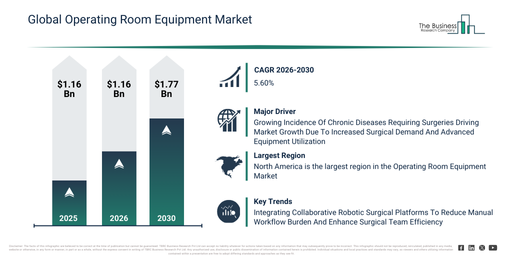
    The market for operating room equipment has seen significant growth in recent years, with its value projected to rise from $17.05 billion in 2025 to $17.95 billion in 2026, marking a compound annual growth rate (CAGR) of 5.2%. This upward trend has been driven by factors such as increases in surgical procedure volumes, expanded hospital infrastructure, a higher number of chronic disease cases necessitating surgery, wider access to advanced surgical technologies, and a growing preference for minimally invasive techniques. Looking ahead, the market is expected to continue this momentum, reaching $22.36 billion by 2030 with a CAGR of 5.6%. Growth in this period will be fueled by investments in smart hospital technologies, demand for real-time surgical data integration, the rise of outpatient and ambulatory surgery centers, enhanced patient safety technologies, and ongoing innovations in surgical equipment design. Key trends expected to influence the market include the adoption of integrated operating room systems, advanced patient monitoring tools, minimally invasive surgical devices, smart anesthesia delivery systems, and efforts to optimize surgical workflows.

    Download A Free Sample Report For Comprehensive Market Insights:

    https://www.thebusinessresearchcompany.com/sample.aspx?id=3804&type=smp

    Rising Burden of Chronic Diseases as a Market Growth Catalyst

    One of the primary factors driving expansion in the operating room equipment market is the increasing prevalence of chronic diseases that require surgical intervention. These long-term medical conditions, which often last for three months or more, are becoming more common due to an aging global population and lifestyle factors such as sedentary behavior and poor dietary habits. This growing chronic disease burden directly impacts demand for sophisticated surgical tools, patient monitoring devices, operating tables, and imaging equipment essential for effective and safe surgeries. For example, in June 2024, the UK’s National Health Service reported that 3,615,330 people registered with a general practitioner were diagnosed with non-diabetic hyperglycemia or pre-diabetes in 2023—an 18% increase from the previous year’s 3,065,825 cases. This rising incidence of conditions requiring surgery is thus a key driver behind the expanding operating room equipment market.

    Segment Breakdown of the Operating Room Equipment Market

    The operating room equipment market is categorized into several important segments to better understand its structure and demand areas. By type, it includes anesthesia devices, endoscopes, operating room lights, operating tables, electrosurgical devices, surgical imaging devices, and patient monitors. Application-wise, it covers cardiovascular surgery, thoracic surgery, neurosurgery, and other types of procedures. In terms of end users, the market serves hospitals, outpatient facilities, and ambulatory surgery centers. Further subsegments detail specific product categories such as anesthesia machines, vaporizers, and anesthesia monitors within anesthesia devices; rigid and flexible endoscopes and accessories; surgical LED and halogen lights; general, specialty, and adjustable operating tables; electrosurgical generators, instruments, and smoke evacuators; surgical imaging equipment like C-arms, ultrasound systems, and intraoperative CT scanners; and patient monitors including multi-parameter, bedside, and portable models.

    Access The Complete Operating Room Equipment Market Report:

    https://www.thebusinessresearchcompany.com/report/operating-room-equipment-global-market-report

    Innovations and Technological Trends Transforming the Operating Room Equipment Market

    Leading companies in this market are increasingly embracing collaborative robotic assistance technologies to reduce manual labor, enhance surgical precision, and improve workflow efficiency in operating rooms. These robotic platforms provide automated control over surgical instruments, stabilized assistance during operations, and workflow optimization features that help reduce physical strain on surgical staff and speed up procedures. For instance, in November 2024, Moon Surgical, a US-based surgical robotics firm, introduced its Maestro Platform at Lee Health. This system supports surgical teams by automating repetitive tasks and enhancing intraoperative consistency, reportedly saving operating rooms the equivalent of 8.3 full working days of surgical technologist time. Such advancements reflect a wider shift toward augmentative robotics aimed at minimizing staff fatigue, avoiding procedural delays, and boosting overall efficiency in surgical environments.

    Prominent Companies Leading the Operating Room Equipment Industry

    The operating room equipment market is shaped by many influential players, including Medtronic, Olympus, GE, Stryker, Philips, Getinge, Drägerwerk, Hill-Rom, Nihon Kohden, Steris, STAAN Bio-Med Engineering, GE Healthcare, Covidien, Philips Healthcare, Smiths Medical, Metran, Siemens Healthcare, Opto Circuits, Fukuda Denshi, Canon Medical Systems, Mindray, Boston Scientific, DePuy Synthes, Simeon Medical, Teleflex, Johnson & Johnson, Alvo Medical, Mizuho OSI, Karl Storz, and KLS Martin Group. These companies are at the forefront of innovation and product development within the operating room equipment space, driving competitive growth and market expansion.

    Regional Outlook Highlighting Market Leaders and Growth Hotspots

    In 2025, North America was the leading region in terms of market size for operating room equipment. However, the Asia-Pacific region is expected to experience the fastest growth rate during the upcoming forecast period. The market analysis encompasses key geographic areas including Asia-Pacific, South East Asia, Western and Eastern Europe, North America, South America, the Middle East, and Africa, providing a comprehensive view of the global operating room equipment market landscape.

    Get in touch with us:

    The Business Research Company: https://www.thebusinessresearchcompany.com/

    Americas: +1 310-496-7795

    Asia: +44 7882 955267 & +91 8897263534

    Europe: +44 7882 955267

    Email us at: marketing@tbrc.info

    Follow us on:

    LinkedIn: https://in.linkedin.com/company/the-business-research-company

    YouTube: https://www.youtube.com/channel/UC24_fI0rV8cR5DxlCpgmyFQ

    Global Market Model: https://www.thebusinessresearchcompany.com/global-market-model