Category: Medical Equipment

  • Pharmacy Automation Devices Market Growth Outlook Reveals A CAGR Of 10.1% And A Market Value Of $10.73 Billion By 2030

    Pharmacy Automation Devices Market Growth Outlook Reveals A CAGR Of 10.1% And A Market Value Of $10.73 Billion By 2030

    Through market attractiveness analysis, total addressable market evaluation, company benchmarking matrices, interactive Excel dashboards, expanded supply chain intelligence, emerging startup coverage, and detailed product insights, The Business Research Company’s 2026 market reports provide more actionable and strategically valuable research.

    The pharmacy automation devices market is witnessing significant momentum as healthcare systems increasingly adopt technologies to streamline medication management. This sector is expanding rapidly due to growing prescription demands, technological advancements, and a focus on improving patient safety. Let’s explore the market’s size, driving factors, key players, and emerging trends shaping its future.

    Pharmacy Automation Devices Market Size and Growth Outlook

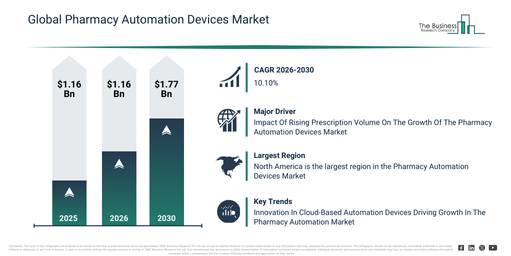
    The pharmacy automation devices market has experienced a fast pace of growth in recent years and is set to continue on this trajectory. The market is projected to increase from $6.62 billion in 2025 to $7.31 billion in 2026, representing a compound annual growth rate (CAGR) of 10.3%. Looking ahead, the market is expected to reach $10.73 billion by 2030 with a CAGR of 10.1%. This expansion is driven by factors such as increasing prescription volumes, workforce shortages in pharmacies, hospital pharmacy infrastructure development, wider use of automated dispensing cabinets, and a growing emphasis on patient safety. Future growth will also be supported by rising demand for high-throughput pharmacy operations, adoption of centralized fill pharmacies, expansion of mail-order and specialty pharmacies, increasing investments in healthcare automation, and stringent regulatory focus on reducing medication errors.

    Download A Free Sample Report For Comprehensive Market Insights:

    https://www.thebusinessresearchcompany.com/sample.aspx?id=7894&type=smp

    Prescription Volume as a Key Growth Driver in the Pharmacy Automation Devices Market

    One of the primary forces behind the growth of the pharmacy automation devices market is the steady rise in prescription volumes. This increase is fueled by an aging population, higher occurrence of chronic diseases, and broader access to healthcare services. Automation devices help streamline prescription workflows, reduce errors, and boost efficiency to manage this growing demand. For instance, in July 2024, the Australian Institute of Health and Welfare reported that during 2022–23, PBS prescriptions were dispensed to 17.8 million Australians, covering 67% of the population. Prescription rates were lowest among children aged 0–14, with 184 prescriptions per 100 individuals, while the highest rates were observed in those aged 85 and over, at 6,031 prescriptions per 100 people. This data highlights how rising prescription volumes are propelling advancements in pharmacy automation.

    Additional Factors Supporting Expansion in Pharmacy Automation Devices

    Besides prescription growth, other market forces are boosting expansion. The increasing adoption of automated dispensing cabinets and advancement of hospital pharmacy infrastructures offer more efficient medication management. There is also a growing prioritization of patient safety, which promotes the use of automation systems that minimize human error. The cumulative impact of these influences is expected to drive sustained growth in the pharmacy automation devices market over the coming years.

    Access The Complete Pharmacy Automation Devices Market Report:

    https://www.thebusinessresearchcompany.com/report/pharmacy-automation-devices-global-market-report

    Breakdown of the Pharmacy Automation Devices Market by Product and User Segments

    This market can be categorized across multiple segments as follows:

    1) By Product: Medication Dispensing Systems, Packaging and Labeling Systems, Storage and Retrieval Systems, Automated Medication Compounding Systems, and Tabletop Tablet Counters

    2) By Component: Hardware, Software, and Services

    3) By End-User: Retail Pharmacies, Inpatient Pharmacies, Outpatient Pharmacies, Pharmacy Benefit Management Organizations, and Mail-Order Pharmacies

    Further classifications include:

    – Medication Dispensing Systems subdivided into Automated Dispensing Machines and Robotic Dispensing Systems

    – Packaging and Labeling Systems into Automated Packaging Machines and Labeling Systems for Prescription Medications

    – Storage and Retrieval Systems split between Automated Storage Systems and Carousel Storage Systems

    – Automated Medication Compounding Systems divided into IV Compounding Systems and Oral Compounding Systems

    – Tabletop Tablet Counters separated into Electronic Tablet Counters and Manual Tablet Counters

    Innovations Reshaping Demand in the Pharmacy Automation Devices Market

    Leading companies in the pharmacy automation devices space are innovating rapidly, particularly with cloud-based automation technologies designed to enhance operational efficiency. Cloud computing enables remote data management and automation without relying heavily on on-site hardware, offering flexibility and scalability. For example, in March 2023, US firm iA introduced advanced fulfillment solutions including Shared Central Fulfillment, which uses cloud-based technology to allow multiple pharmacy partners to be served from a single central location. This system combines iA’s NEXiA fulfillment and cloud software with cutting-edge automation and robotics, improving prescription fulfillment workflows for pharmacies of varying sizes.

    Key Players Driving the Pharmacy Automation Devices Market Forward

    Several prominent companies dominate this market landscape, including Omnicell Inc., ARxIUM Inc., ScriptPro LLC, Capsa Healthcare, Swisslog Healthcare, RxSafe LLC, Yuyama Co Ltd., Parata Systems LLC, Aesynt Incorporated, Talyst LLC, Kirby Lester, TouchPoint Medical, Health Robotics Srl, Innovation PharmaAssist Robotics Pvt Ltd., R/X Automation Solutions Inc., Pearson Medical Technologies LLC, Becton Dickinson & Company, Baxter International Inc., McKesson Corporation, AmerisourceBergen Corp, Danaher Corporation, and KUKA AG. These organizations are instrumental in innovating and expanding pharmacy automation solutions globally.

    Regional Overview of the Pharmacy Automation Devices Market

    In 2025, North America held the largest share of the pharmacy automation devices market. The market report also covers other regions, including Asia-Pacific, South East Asia, Western Europe, Eastern Europe, South America, the Middle East, and Africa, providing a thorough view of regional trends and growth opportunities worldwide.

    Get in touch with us:

    The Business Research Company: https://www.thebusinessresearchcompany.com/

    Americas: +1 310-496-7795

    Asia: +44 7882 955267 & +91 8897263534

    Europe: +44 7882 955267

    Email us at: marketing@tbrc.info

    Follow us on:

    LinkedIn: https://in.linkedin.com/company/the-business-research-company

    YouTube: https://www.youtube.com/channel/UC24_fI0rV8cR5DxlCpgmyFQ

    Global Market Model: https://www.thebusinessresearchcompany.com/global-market-model
  • Pharmacogenomics Market Forecast Highlights Expansion From $10.85 Billion To $15.97 Billion Through 2030

    Pharmacogenomics Market Forecast Highlights Expansion From $10.85 Billion To $15.97 Billion Through 2030

    Delivering more actionable and strategically valuable research, The Business Research Company’s 2026 market reports feature market attractiveness analysis, total addressable market evaluation, company benchmarking matrices, interactive Excel dashboards, expanded supply chain intelligence, emerging startup coverage, and detailed product insights.

    The pharmacogenomics sector is rapidly evolving as advancements in genetic research and personalized medicine transform healthcare approaches. With a growing focus on tailoring treatments to individual genetic profiles, this market is set to experience substantial growth driven by technological innovations and increasing demand for precision therapies. Below is a detailed overview of the market size, key drivers, segmentation, innovation trends, major players, and regional insights shaping the future of pharmacogenomics.

    Pharmacogenomics Market Size and Growth Projections

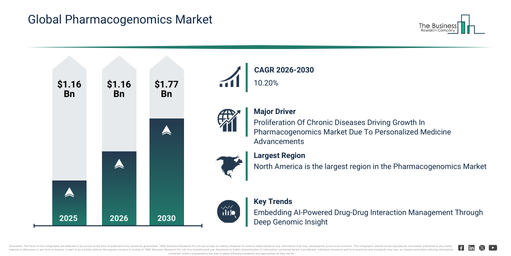
    The pharmacogenomics market has witnessed significant expansion in recent years. It is projected to increase from $9.84 billion in 2025 to $10.85 billion in 2026, demonstrating a compound annual growth rate (CAGR) of 10.3%. This historic growth stems from a surge in genomic research activities, advancements in targeted therapy development, a rising prevalence of chronic diseases, enhancements in sequencing technologies, and wider access to genetic testing services. Looking ahead, the market is expected to reach $15.98 billion by 2030, maintaining a CAGR of 10.2%. Factors propelling this forecasted growth include increased investments in precision medicine, broader adoption of AI-driven genomic analyses, expansion of pharmacogenomics applications in oncology and cardiology, a focus on personalized drug development, and continuous progress in bioinformatics platforms. Emerging trends during this period involve greater use of personalized medicine, genetic testing for drug selection, integration of pharmacogenomic data into clinical workflows, growth in companion diagnostics, and heightened emphasis on precision therapeutics.

    Download A Free Sample Report For Comprehensive Market Insights:

    https://www.thebusinessresearchcompany.com/sample.aspx?id=7072&type=smp

    Primary Factors Boosting Demand in the Pharmacogenomics Market

    One of the main drivers of the pharmacogenomics market is the rising incidence of chronic diseases worldwide. Chronic conditions often persist throughout a patient’s life and are becoming increasingly common due to longer life expectancies and lifestyle factors like sedentary behavior, unhealthy diets, and tobacco use. Pharmacogenomics provides a way to tailor treatments based on an individual’s genetic makeup, which influences their response to medications. For instance, as per the International Diabetes Federation in 2025, approximately 589 million adults aged 20-79 had diabetes in 2024, with projections reaching 853 million by 2050. Notably, over 80% of these individuals live in low- and middle-income countries. This growing burden of chronic illnesses is a key factor driving the pharmacogenomics market forward.

    Expanding Role of Genetic Testing and Precision Medicine in Market Growth

    In addition to chronic diseases, the increasing availability and adoption of genetic testing and precision medicine programs are fueling market expansion. These approaches enable more effective and safer treatments by considering genetic differences among patients. As a result, healthcare providers are integrating pharmacogenomic data more frequently into clinical decision-making processes, further accelerating demand for related technologies and services.

    Access The Complete Pharmacogenomics Market Report:

    https://www.thebusinessresearchcompany.com/report/pharmacogenomics-global-market-report

    Detailed Market Segmentation of Pharmacogenomics

    This market is categorized across several important dimensions:

    1) By Technology: Next Generation Sequencing (NGS), Polymerase Chain Reaction (PCR), Gel Electrophoresis, Mass Spectrometry, Microarray, and Other Technologies

    2) By Application: Neurological Diseases, Infectious Diseases, Oncology, Cardiovascular Diseases, Pain Management, and Other Applications

    3) By End User: Hospitals and Clinics, Research Institutions, Academic Institutes, and Other End Users

    Further breakdowns include:

    – NGS subdivided into Whole Genome Sequencing, Targeted Sequencing, and Exome Sequencing

    – PCR categories such as Quantitative PCR (qPCR), Reverse Transcription PCR (RT-PCR), and Digital PCR

    – Gel Electrophoresis split into Agarose, Polyacrylamide, and Capillary methods

    – Mass Spectrometry types including LC-MS/MS, MALDI-TOF MS, and High-Resolution MS

    – Microarray variants like SNP Microarrays, Expression Microarrays, and Comparative Genomic Hybridization Arrays

    – Other Technologies encompassing Sanger Sequencing, CRISPR-based tools, and Bioinformatics platforms

    Key Innovations in Pharmacogenomics Shaping the Industry

    Leading players in pharmacogenomics are increasingly turning to artificial intelligence (AI) to enhance drug safety and personalize treatment plans. AI-powered pharmacogenetic engines analyze genetic profiles to predict drug responses and manage drug-drug interactions more effectively, reducing adverse effects and improving outcomes. For example, in December 2024, US-based company PGxAI introduced its Sirius model—a sophisticated AI-driven pharmacogenetics platform. Covering 730 medications and 40 key pharmacogenes, Sirius supports hospitals, diagnostic labs, and clinical research organizations by optimizing drug choice, dosage, and interaction management at an individual genetic level. This initiative represents a significant leap beyond traditional pharmacogenomics solutions.

    Major Competitors Leading the Pharmacogenomics Market

    The market features several prominent companies driving innovation and growth, including: Illumina Inc, Eurofins Scientific, Myriad Genetics Inc, PerkinElmer Inc, Centogene N.V, Invitae Corporation, Genomind, Pacific Biosciences of California Inc, Oneome LLC, Admera Health, MapMyGenome, Positive Bioscience, Xcode Life Sciences, Takeda Pharmaceutical Company Limited, Garvan Institute of Medical Research, 3D Medicines Inc, Berry Genomics, BGI, GenomiCare Biotechnology, F Hoffmann-La Roche AG, Merck KGaA, QIAGEN N.V, Centro de Genoma e Biologia de Sistemas, Datar Cancer Genetics Limited, MedGenome Labs, 23andMe, Color Genomics, Pathway Genomics, and Genomika Diagnósticos.

    Regional Outlook and Areas of Rapid Market Growth

    In 2025, North America held the largest share of the pharmacogenomics market, driven by advanced healthcare infrastructure and ongoing research investments. However, the Asia-Pacific region is projected to be the fastest-growing market in the coming years. The comprehensive market analysis includes regions such as Asia-Pacific, South East Asia, Western Europe, Eastern Europe, North America, South America, the Middle East, and Africa, reflecting the global reach and expanding demand for pharmacogenomics solutions.

    Get in touch with us:

    The Business Research Company: https://www.thebusinessresearchcompany.com/

    Americas: +1 310-496-7795

    Asia: +44 7882 955267 & +91 8897263534

    Europe: +44 7882 955267

    Email us at: marketing@tbrc.info

    Follow us on:

    LinkedIn: https://in.linkedin.com/company/the-business-research-company

    YouTube: https://www.youtube.com/channel/UC24_fI0rV8cR5DxlCpgmyFQ

    Global Market Model: https://www.thebusinessresearchcompany.com/global-market-model
  • Needle Market Expansion Is Reshaping Competitive Dynamics Across The Industry

    Needle Market Expansion Is Reshaping Competitive Dynamics Across The Industry

    Enhanced with market attractiveness analysis, total addressable market evaluation, company benchmarking matrices, interactive Excel dashboards, expanded supply chain intelligence, emerging startup coverage, and detailed product insights, The Business Research Company’s 2026 market reports deliver more actionable and strategically valuable research.

    The needle market has seen significant growth over recent years, driven by expanding healthcare demands and technological advancements. As the use of needles remains essential across various medical procedures, the market is positioned for continued expansion. Below is an overview of the current market size, key factors influencing growth, emerging trends, major players, and geographic insights shaping the needle industry’s future.

    Needle Market Size and Projected Growth Through 2030

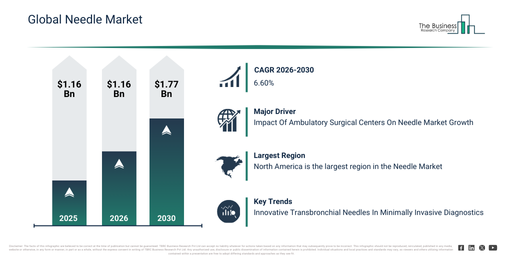
    The needle market has experienced robust growth, with revenues expected to increase from $8.82 billion in 2025 to $9.5 billion in 2026, reflecting a compound annual growth rate (CAGR) of 7.7%. This rise has been fueled by the expansion of vaccination campaigns, greater use of injectable therapies, growth in hospital and clinical procedures, increasing chronic disease prevalence, and the broadening scope of diagnostic testing services. Looking ahead, the market is forecast to reach $12.27 billion by 2030, with a steady CAGR of 6.6%. Key drivers during this period include a stronger emphasis on healthcare worker safety, the rise in home-based care and self-injection practices, growing global diabetes rates, expanding outpatient and ambulatory care services, and increasing demand for minimally invasive medical procedures. Notable trends anticipated in the market are the adoption of safety needles to minimize needle-stick injuries, rising use of disposable and single-use needles, increased demand for pen needles in diabetes management, expanding applications in blood collection and diagnostics, and a preference for sterile, pre-packaged needle solutions.

    Download A Free Sample Report For Comprehensive Market Insights:

    https://www.thebusinessresearchcompany.com/sample.aspx?id=15614&type=smp

    Factors Behind the Rising Demand for Needles

    One of the main contributors to needle market growth is the increasing number of ambulatory surgical centers (ASCs) worldwide. These facilities specialize in outpatient procedures that do not require overnight hospital stays, driven by technological advances and increasing patient preference for less invasive care settings. Needles play a critical role in various ASC procedures such as injections, suturing, tissue sampling, medication delivery, blood collection, and wound closure. For example, a report from Olympus America Inc. in July 2023 noted that the number of ASCs in the US grew from 6,109 in the previous year to 6,223 in 2023, with an expected 12% increase over the following five years. This growth in ASCs is a significant factor supporting the expanding needle market.

    Categories Within the Needle Market by Type and Application

    The needle market is segmented into key categories to better understand its composition. By type, it is divided into conventional needles and safety needles. Conventional needles include hypodermic needles, intravenous (IV) needles, insulin needles, and blood collection needles. Safety needles are further categorized into safety hypodermic needles, safety insulin needles, safety blood collection needles, and auto-disable safety needles designed to prevent reuse. Regarding application, the market covers pen needles for diabetes management, blood collection needles, ophthalmic procedure needles, and dentistry needles. End users of these products primarily include hospitals, clinics, diagnostic centers, and home-based care settings.

    Access The Complete Needle Market Report:

    https://www.thebusinessresearchcompany.com/report/needle-global-market-report

    Innovations Shaping the Needle Industry Landscape

    Leading companies in the needle market are investing heavily in innovative technologies to enhance minimally invasive diagnostic procedures. A prime example is the introduction of advanced conventional transbronchial needles, which are used during bronchoscopy to obtain lung tissue samples with greater accuracy and sensitivity. In September 2023, US-based Broncus Medical Inc. launched the BIOSTAR line of transbronchial needle aspiration (cTBNA) and endobronchial ultrasound (EBUS) TBNA needles that significantly improve diagnostic outcomes for conditions like lung cancer and sarcoidosis. These needles come in sizes 25G, 22G, 21G, and 19G, with size impacting sample quality, blood aspiration, and diagnostic yield. The BIOSTAR needles represent a major step forward in diagnostic needle technology, offering enhanced patient care.

    Key Players Competing in the Needle Market

    The needle market features several prominent companies driving innovation and competition. Noteworthy industry leaders include Becton Dickinson, Terumo Corporation, B. Braun AG, NIPRO Corporation, Smiths Medical, Cardinal Health, Hindustan Syringes and Medical Devices, Retractable Technologies, Owen Mumford, Ypsomed, Vygon, ICU Medical, Novo Nordisk, Medtronic, Boston Scientific, Cook Medical, Stryker, Teleflex, Nipro Medical Europe, and Baxter International. These companies are pivotal in shaping market trends and technological advancements.

    Regional Demand and Growth Patterns in the Needle Market

    In 2025, North America held the largest share of the needle market, supported by its advanced healthcare infrastructure and high demand for medical devices. Meanwhile, the Asia-Pacific region is anticipated to be the fastest-growing market during the forecast period. Other regions covered in market analyses include South East Asia, Western Europe, Eastern Europe, South America, the Middle East, and Africa, each contributing to the global dynamics of the needle market.

    Get in touch with us:

    The Business Research Company: https://www.thebusinessresearchcompany.com/

    Americas: +1 310-496-7795

    Asia: +44 7882 955267 & +91 8897263534

    Europe: +44 7882 955267

    Email us at: marketing@tbrc.info

    Follow us on:

    LinkedIn: https://in.linkedin.com/company/the-business-research-company

    YouTube: https://www.youtube.com/channel/UC24_fI0rV8cR5DxlCpgmyFQ

    Global Market Model: https://www.thebusinessresearchcompany.com/global-market-model
  • Nebulizers Market Forecast Reveals Where Future Industry Value Will Be Created

    Nebulizers Market Forecast Reveals Where Future Industry Value Will Be Created

    Through market attractiveness analysis, total addressable market evaluation, company benchmarking matrices, interactive Excel dashboards, expanded supply chain intelligence, emerging startup coverage, and detailed product insights, The Business Research Company’s 2026 market reports provide more actionable and strategically valuable research.

    The nebulizers market has seen significant progress recently, reflecting a growing need for effective respiratory care solutions worldwide. As healthcare technologies evolve and patient awareness increases, this sector is poised for continued expansion. Let’s explore the market’s size, key growth drivers, important segments, leading players, and regional outlook to understand what lies ahead.

    Nebulizers Market Size and Expected Growth Trajectory

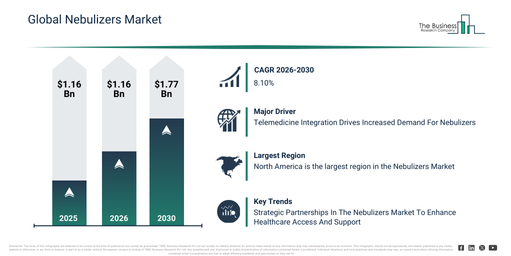
    The nebulizers market has experienced strong growth in recent years, with revenues projected to rise from $1.4 billion in 2025 to $1.52 billion in 2026. This corresponds to a compound annual growth rate (CAGR) of 8.7%. The past expansion is largely driven by the increasing prevalence of respiratory diseases, the broadening scope of home healthcare services, more frequent use of respiratory devices in hospitals, enhancements in aerosol drug delivery technology, and heightened patient awareness about respiratory care.

    Download A Free Sample Report For Comprehensive Market Insights:

    https://www.thebusinessresearchcompany.com/sample.aspx?id=3790&type=smp

    Looking ahead, the nebulizers market is anticipated to continue its upward trend, reaching $2.07 billion by 2030 at a CAGR of 8.1%. The forecast period’s growth will be supported by factors such as rising demand for remote patient monitoring, wider adoption of connected medical devices, growth in home-based chronic disease management, and increased attention to pediatric and geriatric care. Innovation in compact and portable nebulizer designs will also play a crucial role. Emerging trends include the growing use of portable and smart nebulizers, expansion of home respiratory care options, integration of app-enabled devices, advancement of mesh nebulizer technology, and enhanced focus on patient convenience and adherence to treatment plans.

    Key Drivers Behind the Nebulizers Market Expansion

    The rise of telemedicine is a major factor propelling the nebulizers market forward. By enabling healthcare providers to deliver services remotely through telecommunications technology, telemedicine offers patients access to consultations and treatment without needing to visit healthcare facilities. This approach improves patient care by incorporating nebulizer therapy into remote respiratory management, especially for chronic conditions.

    Access The Complete Nebulizers Market Report:

    https://www.thebusinessresearchcompany.com/report/nebulizers-global-market-report

    For example, in April 2023, FAIR Health Inc., a nonprofit organization based in the US, reported that medical claim lines involving telemedicine increased from 5.5% in December 2022 to 5.9% in January 2023, marking a 7.3% rise nationally. This growing acceptance of telehealth services is a significant force driving the demand and adoption of nebulizers, particularly in home and remote care settings.

    Detailed Segmentation and Revenue Opportunities in the Nebulizers Market

    This report divides the nebulizers market into several key categories:

    1) By Type: Pneumatic Nebulizer, Ultrasonic Nebulizer, Mesh Nebulizer

    2) By Portability: Portable Nebulizer, Tabletop Nebulizer

    3) By Application: COPD, Cystic Fibrosis, Asthma, Other Applications

    4) By End Use: Hospitals and Clinics, Emergency Centers, Home Healthcare

    Further subsegments include:

    – Pneumatic Nebulizer: Jet Nebulizers, Handheld Pneumatic Nebulizers, Tabletop Pneumatic Nebulizers

    – Ultrasonic Nebulizer: Portable Ultrasonic Nebulizers, Stationary Ultrasonic Nebulizers

    – Mesh Nebulizer: Portable Mesh Nebulizers, Battery-Operated Mesh Nebulizers, Hospital-Grade Mesh Nebulizers

    These classifications provide a comprehensive view of market opportunities across device types, portability options, medical uses, and care settings.

    Strategic Industry Movements Shaping the Nebulizers Market

    Leading companies in the nebulizers field are forging strategic partnerships and integrating advanced technologies like smart inhalers and digital health platforms to improve respiratory care. These collaborations are aimed at enhancing treatment effectiveness for conditions such as asthma and COPD by delivering medication more efficiently to the lungs.

    For instance, in September 2024, India-based drug delivery company Aptar Pharma partnered with Pulmotree to enhance the Kolibri inhaler. This device features a breath-triggered vibrating mesh aerosolization engine, which improves drug delivery directly to the lungs, exemplifying innovation in respiratory treatment solutions.

    Top Organizations Influencing the Nebulizers Market

    Key players shaping the market landscape include Vyaire Medical Inc., Aerogen, Omron Corporation, PARI, GF Health Products, Trudell Medical International, Feellife Health Inc., CF Pharmtech Inc., Hoyo Scitech Co. Ltd, Simzon, Yirdoc (Qingdao Future Medical Technology Co. Ltd), Healthgenie, Meditive, Agaro, Dr Trust, Dr. Morepen, Handyneb, Nuwik, Philips Healthcare, Nagashima Medical Instruments Co. Ltd, Shenzhen Bi-rich, Yuyao Dengyue Medical Devices Co. Ltd, Shenzhen Aeon Technology Co. Ltd., EverGreen, MediSave, ResMed, Draegerwerk AG, Fisher & Paykel Healthcare Limited, Drive DeVilbiss Healthcare, Invacare Corporation, and Smiths Medical. These companies contribute to innovation, product development, and market expansion efforts worldwide.

    Regional Market Leadership and Growth Prospects

    In 2025, North America held the largest market share in the nebulizers sector. However, Asia-Pacific is expected to be the fastest-growing region during the forecast period, driven by rising healthcare infrastructure development and increasing respiratory disease prevalence. The global market analysis includes regions such as Asia-Pacific, South East Asia, Western Europe, Eastern Europe, North America, South America, the Middle East, and Africa, providing a broad perspective on market dynamics worldwide.

    Get in touch with us:

    The Business Research Company: https://www.thebusinessresearchcompany.com/

    Americas: +1 310-496-7795

    Asia: +44 7882 955267 & +91 8897263534

    Europe: +44 7882 955267

    Email us at: marketing@tbrc.info

    Follow us on:

    LinkedIn: https://in.linkedin.com/company/the-business-research-company

    YouTube: https://www.youtube.com/channel/UC24_fI0rV8cR5DxlCpgmyFQ

    Global Market Model: https://www.thebusinessresearchcompany.com/global-market-model
  • Nasal Splints Market Growth Through 2030 Creates New Strategic Opportunities

    Nasal Splints Market Growth Through 2030 Creates New Strategic Opportunities

    Delivering more actionable and strategically valuable research, The Business Research Company’s 2026 market reports feature market attractiveness analysis, total addressable market evaluation, company benchmarking matrices, interactive Excel dashboards, expanded supply chain intelligence, emerging startup coverage, and detailed product insights.

    The nasal splints market has experienced significant growth in recent years, driven by advancements in surgical techniques and rising awareness about post-operative care. As more patients undergo nasal and septal surgeries along with cosmetic rhinoplasty procedures, the demand for effective nasal splint solutions is steadily climbing. This report explores the current market size, growth drivers, key segments, innovations, and regional dynamics shaping the nasal splints industry.

    Steady Growth Forecast for the Nasal Splints Market

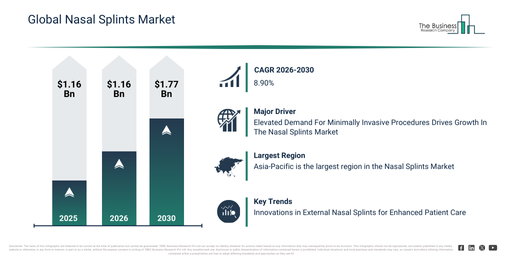
    The nasal splints market is projected to expand from $7.07 billion in 2025 to $7.64 billion in 2026, reflecting an 8.1% compound annual growth rate (CAGR). This upward trend in recent years has been primarily fueled by an increasing volume of nasal and septal surgeries, growing interest in cosmetic rhinoplasty, the widespread adoption of ENT surgical procedures, enhanced awareness of post-surgical care, and the availability of advanced materials for nasal splints. Looking ahead, the market is expected to reach $10.76 billion by 2030, growing at an even higher CAGR of 8.9%. Key factors supporting this growth include the rising use of personalized medical devices, the growing focus on outpatient recovery, expansion of aesthetic surgeries, demand for biocompatible materials, and greater investments in surgical innovation within the ENT field.

    Download A Free Sample Report For Comprehensive Market Insights:

    https://www.thebusinessresearchcompany.com/sample.aspx?id=2424&type=smp

    Increasing Popularity of Minimally Invasive Procedures Enhances Market Demand

    One of the main forces driving the nasal splints market is the rising preference for minimally invasive nasal surgeries. These procedures aim to achieve therapeutic or diagnostic goals while minimizing damage to tissues. Nasal splints play a crucial role in these interventions by supporting nasal structures, preserving the shape of the nose or sinuses, and aiding the healing process. For example, Intuitive Surgical Inc., a US-based manufacturer of robotic surgical systems, reported a 22% increase in da Vinci minimally invasive surgeries in 2023, with expectations of a further 13% to 16% rise in 2024. That same year, the company installed 1,370 such systems, marking an 8% increase from 2022. This surge in minimally invasive surgeries is a major contributor to the expanding nasal splints market.

    Market Growth Also Fueled by Advances in ENT Surgical Practices

    In addition to minimally invasive trends, the broader growth of ENT surgical procedures is stimulating the nasal splints market. As more patients seek effective treatments for nasal conditions, surgeons are increasingly implementing modern splint designs and materials that improve patient comfort and recovery outcomes. The continuous development of ENT technologies and the expanding pool of aesthetic surgery procedures further strengthen demand for nasal splints.

    Access The Complete Nasal Splints Market Report:

    https://www.thebusinessresearchcompany.com/report/nasal-splints-global-market-report

    Detailed Segmentation of the Nasal Splints Market

    This market is divided into several key categories for thorough analysis. By type, the market includes malleable nasal splints, airway nasal splints, and bivalve nasal splints. Regarding administration routes, there are intranasal and extranasal segments. Applications cover plastic surgery, rhinological operations, ENT surgery, and other uses. End user groups include hospitals and clinics, homecare settings, research centers, and various other users. Subcategories provide further granularity, such as customizable and preformed malleable splints, silicone and plastic airway splints, and pre-formed versus adjustable bivalve splints.

    Innovations and Product Development Trends Transforming the Market

    Leading companies in the nasal splints sector are investing in new products designed to improve patient experience and outcomes. A notable innovation is the development of external nasal splints, which support and protect the nose externally after surgeries like rhinoplasty or septoplasty. For instance, in August 2023, Orfit Industries NV from Belgium introduced NoseFit, an external nasal splint featuring small ventilation holes to enhance airflow and patient comfort while maintaining optimal stabilization. Such advancements highlight the market’s movement toward more functional and patient-friendly solutions.

    Competitive Landscape Featuring Key Industry Players

    The nasal splints market is highly competitive, with several prominent companies shaping its direction. Major players include Boston Medical Products Inc., Innovia Medical, Medtronic Plc, Olympus Corporation, Smith & Nephew plc, DTR Medical, Mentor Worldwide LLC, Network Medical Products Ltd., Summit Medical Group, Surgiform Technologies LLC, Shippert Medical Technologies, Spiggle & Theis Medizintechnik GmbH, Stryker Corporation, Acclarent Inc., Cook Medical, KARL STORZ SE & Co. KG, Integra LifeSciences, Medline Industries LP, B. Braun Melsungen AG, Merit Medical Systems, Intersect ENT, ArthroCare Corporation, Lumenis, ConMed Corporation, DePuy Synthes Companies, Zimmer Biomet, KLS Martin Group, Becton Dickinson and Company, Terumo Corporation, Johnson & Johnson, 3M, and Teleflex Medical OEM. These companies focus on product innovation, expanding their portfolios, and enhancing global reach.

    Regional Insights Highlight Asia-Pacific as a Market Leader

    Geographically, Asia-Pacific held the largest share of the nasal splints market in 2025, followed closely by North America. Other regions covered in the market report include South East Asia, Western Europe, Eastern Europe, South America, the Middle East, and Africa. The strong presence of manufacturing hubs, increasing healthcare infrastructure, and rising adoption of advanced surgical procedures in Asia-Pacific are key reasons for its market dominance. Meanwhile, North America remains a significant market due to high healthcare expenditure and technological advancements.

    In summary, the nasal splints market is positioned for robust growth thanks to evolving surgical techniques, rising demand for minimally invasive procedures, and ongoing product innovations. With expanding applications and growing awareness about post-surgical care, this sector is expected to continue its upward trajectory well into 2030.

    Get in touch with us:

    The Business Research Company: https://www.thebusinessresearchcompany.com/

    Americas: +1 310-496-7795

    Asia: +44 7882 955267 & +91 8897263534

    Europe: +44 7882 955267

    Email us at: marketing@tbrc.info

    Follow us on:

    LinkedIn: https://in.linkedin.com/company/the-business-research-company

    YouTube: https://www.youtube.com/channel/UC24_fI0rV8cR5DxlCpgmyFQ

    Global Market Model: https://www.thebusinessresearchcompany.com/global-market-model
  • Nasal Drug Delivery Technology Market Size Projected To Increase From $92.27 Billion To $129.22 Billion During The Forecast Period

    Nasal Drug Delivery Technology Market Size Projected To Increase From $92.27 Billion To $129.22 Billion During The Forecast Period

    Enhanced with market attractiveness analysis, total addressable market evaluation, company benchmarking matrices, interactive Excel dashboards, expanded supply chain intelligence, emerging startup coverage, and detailed product insights, The Business Research Company’s 2026 market reports deliver more actionable and strategically valuable research.

    The nasal drug delivery technology market has experienced notable growth recently, driven by advancements in medical treatments and increasing demand for patient-friendly drug administration methods. As healthcare evolves, this sector is set to expand further, fueled by ongoing innovations and rising prevalence of various health conditions requiring nasal therapeutic solutions. Let’s explore the current market size, key factors propelling growth, segment analysis, emerging trends, and leading players shaping this industry.

    Nasal Drug Delivery Technology Market Size and Future Growth Potential

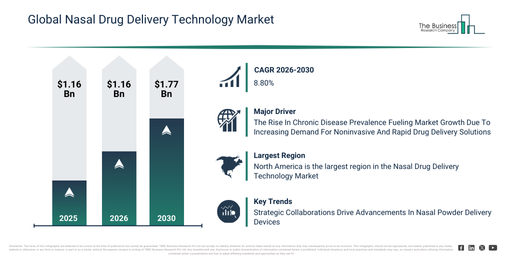
    The market for nasal drug delivery technology has seen significant expansion in recent years. It is projected to grow from $85.23 billion in 2025 to $92.28 billion in 2026, representing a compound annual growth rate (CAGR) of 8.3%. This historical growth results from an increase in respiratory and neurological disorders, a preference for non-invasive drug delivery methods, broader use of nasal allergy treatments, easy-to-use self-administration devices, and a rising acceptance of nasal-based therapies. Looking ahead, the market is forecasted to reach $129.23 billion by 2030, with a CAGR of 8.8%. This expected growth is driven by higher investments in central nervous system (CNS) drug development, demand for quicker-acting treatments, expanding nasal vaccine research, and continuous innovation in drug formulations and patient-friendly delivery systems. Key trends anticipated during this period include the increasing use of nasal spray formulations, stronger focus on targeting brain delivery, development of innovative nasal devices, wider use of vaccines and emergency treatments through nasal routes, and enhanced emphasis on rapid drug absorption.

    Download A Free Sample Report For Comprehensive Market Insights:

    https://www.thebusinessresearchcompany.com/sample.aspx?id=10037&type=smp

    Factors Fueling Growth in the Nasal Drug Delivery Technology Market

    The rising prevalence of chronic diseases plays a significant role in pushing the nasal drug delivery technology market forward. Chronic illnesses, which often last a year or more and require ongoing care, are becoming more common due to aging populations, sedentary lifestyles, and growing exposure to environmental risks. These conditions increase demand for effective and convenient drug delivery methods. Nasal drug delivery offers a non-invasive, fast-acting, and efficient option particularly beneficial for chronic respiratory conditions such as chronic rhinosinusitis, where targeted nasal absorption and improved mucociliary clearance are essential. For example, data from June 2024 published by the UK’s National Health Service showed that 3,615,330 patients were diagnosed with pre-diabetes in 2023, marking an 18% rise from the previous year’s figure of 3,065,825. This increase in chronic conditions highlights the growing market need for nasal drug delivery technologies.

    Key Drivers Behind Market Expansion in Nasal Drug Delivery Technology

    In addition to chronic disease prevalence, the expanding acceptance of nasal therapeutics is another important growth driver. Patients and healthcare providers increasingly favor nasal delivery due to its non-invasive nature, ease of self-administration, and rapid onset of drug action. This has encouraged pharmaceutical companies and device manufacturers to innovate and invest in nasal formulations and delivery systems to meet this growing demand. Furthermore, the development of user-friendly devices and enhanced drug absorption techniques are helping to improve treatment outcomes across various therapeutic areas, including allergy relief, vaccination, and neurological disorders.

    Access The Complete Nasal Drug Delivery Technology Market Report:

    https://www.thebusinessresearchcompany.com/report/nasal-drug-delivery-technology-global-market-report

    Breakdown of Nasal Drug Delivery Technology Market Segments

    This market can be categorized across several important segments:

    1) Dosage Form: nasal sprays, nasal drops, nasal gels and ointments, nasal powders, and other forms

    2) Container Type: pressurized and non-pressurized containers

    3) Therapeutic Applications: allergic and non-allergic rhinitis, nasal congestion, vaccination, and other uses

    4) Distribution Channels: hospital pharmacies, retail pharmacies, and online pharmacies

    5) End Users: home care settings and hospitals

    Further subcategories include types of nasal sprays (metered-dose and non-metered-dose), nasal drops (liquid and gel-based), nasal gels and ointments (hydrogel and oil-based), nasal powders (dry powder inhalers and spray-dried powders), and other forms such as nasal patches and inserts.

    Emerging Innovations Shaping the Nasal Drug Delivery Market

    Leading players focus heavily on developing technologically advanced products, especially nasal powder delivery devices that improve precision, ease of use, and therapeutic effectiveness. These devices are designed to deliver medication locally, systemically, or directly to the brain, increasing treatment efficiency. For example, in November 2023, Hovione LLC from Portugal partnered with UK-based Industrial Design Consultancy (IDC) to create innovative nasal powder delivery technologies. These include both single-use and multidose devices that offer precise nasal deposition and compatibility with standard manufacturing processes. Hovione plans to provide these devices exclusively as part of its comprehensive nasal drug development and manufacturing solutions, highlighting the industry’s commitment to innovation.

    Major Players in the Nasal Drug Delivery Technology Market

    The nasal drug delivery technology market features several prominent companies driving competition and innovation. These include AptarGroup Inc., Becton Dickinson and Company, GlaxoSmithKline plc, Johnson & Johnson Private Limited, Novartis AG, Pfizer Inc., 3M Company, Cadila Healthcare Limited, Neurelis Inc., OptiNose Inc., Bausch Health Companies Inc., Naveh Pharma Ltd., Teva Pharmaceutical Industries Ltd., Consort Medical plc, Douglas Pharmaceuticals Ltd., ENT Technologies Pty Ltd, Merck & Co Inc, Sanofi SA, AstraZeneca plc, Boehringer Ingelheim International GmbH, Bayer AG, Abbott Laboratories, Eli Lilly and Company, Bristol-Myers Squibb Company, Takeda Pharmaceutical Company Limited, Roche Holding AG, and Allergan plc.

    Regional Market Leadership in Nasal Drug Delivery Technology

    In 2025, North America was the leading region in terms of revenue for the nasal drug delivery technology market. The broader market scope covers regions including Asia-Pacific, South East Asia, Western Europe, Eastern Europe, South America, the Middle East, and Africa, providing a global perspective on market trends and growth opportunities.

    Get in touch with us:

    The Business Research Company: https://www.thebusinessresearchcompany.com/

    Americas: +1 310-496-7795

    Asia: +44 7882 955267 & +91 8897263534

    Europe: +44 7882 955267

    Email us at: marketing@tbrc.info

    Follow us on:

    LinkedIn: https://in.linkedin.com/company/the-business-research-company

    YouTube: https://www.youtube.com/channel/UC24_fI0rV8cR5DxlCpgmyFQ

    Global Market Model: https://www.thebusinessresearchcompany.com/global-market-model
  • Narcotics Scanner Market Growth Outlook Reveals A CAGR Of 8.6% And A Market Value Of $12.13 Billion By 2030

    Narcotics Scanner Market Growth Outlook Reveals A CAGR Of 8.6% And A Market Value Of $12.13 Billion By 2030

    Through market attractiveness analysis, total addressable market evaluation, company benchmarking matrices, interactive Excel dashboards, expanded supply chain intelligence, emerging startup coverage, and detailed product insights, The Business Research Company’s 2026 market reports provide more actionable and strategically valuable research.

    The narcotics scanner market is witnessing significant momentum as global efforts to combat drug trafficking and enhance public safety intensify. With rapid technological advancements and growing security concerns, this sector is positioned for strong expansion in the coming years. Let’s explore the current market size, key growth drivers, segmentation, industry trends, major players, and regional opportunities shaping the future of narcotics scanning.

    Narcotics Scanner Market Size and Growth Prospects Through 2030

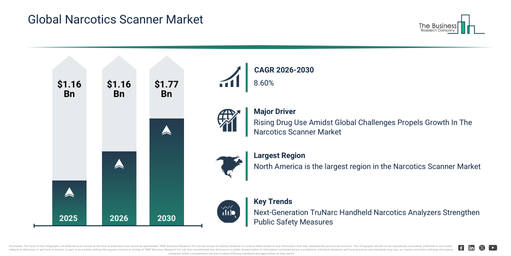
    The narcotics scanner market has experienced robust growth recently and is expected to continue this upward trajectory. Market value is projected to rise from $8.03 billion in 2025 to $8.73 billion in 2026, reflecting a compound annual growth rate (CAGR) of 8.7%. This historical growth is driven by increasing drug trafficking activities, expanded border security infrastructure, heightened investments in security at transport hubs, wider adoption of ion mobility spectroscopy technology, and ongoing modernization efforts in law enforcement agencies. Looking ahead, the market is poised to expand further, reaching $12.14 billion by 2030 at a CAGR of 8.6%. Factors such as increased funding for smart border security systems, demand for real-time narcotics detection, growth in automated security checkpoints, integration of AI-powered analytics, and heightened emphasis on public safety and regulatory compliance are expected to fuel this growth. Key trends shaping the market include the deployment of AI-based drug detection systems, rising use of portable and handheld scanners, incorporation of multi-sensor detection technologies, expansion of automated screening infrastructure, and a stronger focus on rapid, non-intrusive inspections.

    Download A Free Sample Report For Comprehensive Market Insights:

    https://www.thebusinessresearchcompany.com/sample.aspx?id=5709&type=smp

    Primary Factors Driving Growth in the Narcotics Scanner Market

    One of the central forces propelling the narcotics scanner market is the persistent increase in drug consumption worldwide. Narcotics scanners serve a critical role in detecting illicit drugs and hazardous materials carried by individuals, enhancing security in public venues, law enforcement operations, and correctional institutions. The surge in drug use is influenced by socioeconomic challenges such as poverty, unemployment, social pressures, and mental health issues, which have been exacerbated by crises like the COVID-19 pandemic. This has led to more individuals turning to substance abuse, thereby raising the need for effective detection technologies.

    These scanners contribute significantly to public safety by enabling swift and precise identification of narcotics, deterring trafficking activities, and reducing the risks linked to drug use. For example, in November 2024, the Office for Health Improvement & Disparities in the UK reported that between April 2023 and March 2024, 310,863 adults aged 18 and above accessed drug and alcohol treatment services, marking a 7% rise compared to 290,635 adults in 2023. This ongoing growth in drug treatment cases reflects the increasing prevalence of substance abuse, which in turn drives demand for narcotics scanners.

    Access The Complete Narcotics Scanner Market Report:

    https://www.thebusinessresearchcompany.com/report/narcotics-scanner-global-market-report

    Breakdown of Narcotics Scanner Market Segments Leading Industry Growth

    This market can be segmented by product type, technology, and end-user to better understand its structure and key growth areas. Product types include handheld scanners, tabletop scanners, and walkthrough scanners. Technology categories cover ion mobility spectrum technology, contraband detection equipment, videoscope inspection systems, and infrared spectroscopy. End-users span airports, seaports, railway terminals, law enforcement agencies, defense and military, and other sectors.

    Further subcategories provide additional granularity: handheld scanners comprise portable narcotics detection devices and battery-operated handheld scanners; tabletop scanners include fixed detection systems and high-throughput tabletop scanners; walkthrough scanners consist of standard walkthrough detection systems and automated walkthrough scanners designed for security checkpoints.

    Industry Trends Shaping the Future of Narcotics Scanners

    Leading players in the narcotics scanner sector are focused on developing more advanced handheld devices that improve on-site drug detection capabilities while enhancing law enforcement effectiveness and public safety. Handheld narcotics analyzers are essential tools that allow for rapid identification of controlled substances, enabling authorities to quickly evaluate and address threats in real-time.

    For instance, in May 2025, Thermo Fisher Scientific, a US-based life sciences and technology company, launched the newest generation of its TruNarc handheld narcotics analyzers. These devices offer fast, nondestructive detection of a broad range of illicit drugs including fentanyl, cocaine, heroin, and methamphetamine. This innovation helps law enforcement officers make informed decisions on the spot, minimizing risk during field operations.

    Leading Competitors in the Narcotics Scanner Market

    The narcotics scanner market features several prominent companies competing to innovate and capture market share. Key industry players include OSI Systems Inc, Smiths Detection Inc, FLIR Systems Inc, Bruker Corporation, L3Harris Technologies Inc, Nuctech Company Limited, Viken Detection, Thermo Fisher Scientific Inc, DetectaChem LLC, Autoclear LLC, Astrophysics Inc, CEIA SpA, Leidos Holdings Inc, QinetiQ Group PLC, Teledyne Photon Machines, Rigaku Analytical Devices Inc, Aventura Technologies Inc, Metrohm AG, TactiScan, and Apstec Systems Ltd.

    Regional Viewpoint on Narcotics Scanner Market Opportunities

    In 2025, North America accounted for the largest share of the narcotics scanner market. However, the Asia-Pacific region is forecasted to experience the fastest growth over the coming years. The market analysis encompasses major regions including Asia-Pacific, South East Asia, Western Europe, Eastern Europe, North America, South America, the Middle East, and Africa, providing a comprehensive overview of global market dynamics and growth opportunities.

    Get in touch with us:

    The Business Research Company: https://www.thebusinessresearchcompany.com/

    Americas: +1 310-496-7795

    Asia: +44 7882 955267 & +91 8897263534

    Europe: +44 7882 955267

    Email us at: marketing@tbrc.info

    Follow us on:

    LinkedIn: https://in.linkedin.com/company/the-business-research-company

    YouTube: https://www.youtube.com/channel/UC24_fI0rV8cR5DxlCpgmyFQ

    Global Market Model: https://www.thebusinessresearchcompany.com/global-market-model
  • Nanofiber Materials For Biomedical Market Forecast Highlights Expansion From $2.77 Billion To $6.38 Billion Through 2030

    Nanofiber Materials For Biomedical Market Forecast Highlights Expansion From $2.77 Billion To $6.38 Billion Through 2030

    Delivering more actionable and strategically valuable research, The Business Research Company’s 2026 market reports feature market attractiveness analysis, total addressable market evaluation, company benchmarking matrices, interactive Excel dashboards, expanded supply chain intelligence, emerging startup coverage, and detailed product insights.

    The nanofiber materials used in biomedical applications have seen remarkable expansion recently, driven by advancements in technology and increasing healthcare needs. This market is set for substantial growth as innovations and clinical applications continue to evolve, offering promising prospects for medical research and patient care. Below is an overview of the current market status, key factors driving growth, major segments, innovation trends, leading players, and regional dynamics shaping this sector.

    Market Size and Expansion Trajectory in Nanofiber Materials for Biomedical Use

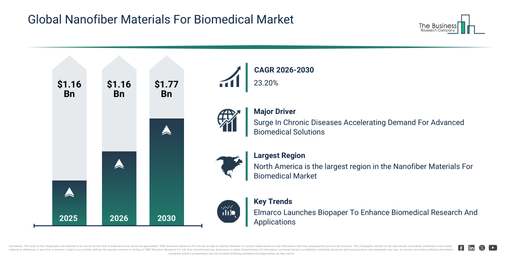
    The nanofiber materials for the biomedical market has experienced rapid growth, with its size projected to rise from $2.25 billion in 2025 to $2.77 billion in 2026, reflecting a strong compound annual growth rate (CAGR) of 23.2%. This historic expansion is mainly attributed to advancements in nanotechnology research, increased funding for biomedical studies, the growing need for sophisticated wound care solutions, early adoption in tissue engineering research, and enhanced polymer processing techniques. Looking ahead, the market is expected to continue its upward trajectory, reaching $6.38 billion by 2030 at the same impressive CAGR of 23.2%. The forecast growth is driven by factors such as the clinical translation of nanofiber-based products, rising demand for regenerative medicine, the spread of personalized medicine approaches, increased investment in pharmaceutical R&D, and greater incorporation of nanomaterials into medical devices. Key trends shaping the market include wider adoption of electrospun nanofibers in tissue engineering, increased use of biocompatible polymer nanofibers, expansion of controlled drug delivery applications, advancement in wound care products, and a stronger focus on scaffold-based regenerative treatments.

    Download A Free Sample Report For Comprehensive Market Insights:

    https://www.thebusinessresearchcompany.com/sample.aspx?id=19121&type=smp

    Primary Factors Accelerating Growth in the Nanofiber Materials for Biomedical Market

    One of the most critical drivers of market growth is the rising prevalence of chronic diseases worldwide. These long-term health conditions, such as heart disease and diabetes, often develop gradually and persist for many years or a lifetime. The increase in chronic diseases is largely due to an aging global population and lifestyle factors like poor diet and sedentary habits. Nanofiber materials play a vital role in addressing these challenges by enabling targeted drug delivery systems, promoting tissue regeneration, and improving diagnostic accuracy. For instance, data from the National Institutes of Health in January 2023 highlights that the number of Americans aged 50 and above living with at least one chronic condition is expected to nearly double—rising by 99.5% from 71.522 million in 2020 to 142.66 million by 2050. This surge in chronic illnesses creates substantial demand for nanofiber-based biomedical solutions.

    Supporting Growth Through Biomedical Innovations and Research Funding

    Additionally, increased investments in biomedical research and development are fueling advancements in nanofiber technologies. Enhanced funding supports the exploration of novel polymer processing methods, facilitates early adoption in tissue engineering, and accelerates the integration of nanofiber materials into medical devices and wound care products. These factors collectively contribute to the robust expansion of the market while enabling new clinical applications and improved patient outcomes.

    Access The Complete Nanofiber Materials For Biomedical Market Report:

    https://www.thebusinessresearchcompany.com/report/nanofiber-materials-for-biomedical-global-market-report

    Detailed Breakdown of the Nanofiber Materials for Biomedical Market Segments

    This market is categorized into various segments to better understand the areas of greatest opportunity. By type, the market includes synthetic polymers, natural polymers, ceramics and inorganic materials, carbon and graphene, and metallic nanofibers. Application-wise, it covers research, pharmaceuticals, medical devices, tissue engineering, drug delivery, wound healing, diagnostics, and other uses. End-users comprise hospitals, laboratories, research institutes, pharmaceutical companies, and additional sectors. Further subcategories within these types include synthetic polymers like polycaprolactone (PCL), polylactic acid (PLA), polyethylene oxide (PEO), and polyvinyl alcohol (PVA); natural polymers such as collagen, chitosan, alginate, and gelatin; ceramic and inorganic nanofibers including silica, hydroxyapatite, and zirconia; carbon and graphene fibers like carbon nanofibers, graphene oxide nanofibers, and graphene nanoribbons; and metallic nanofibers comprising silver, gold, and copper.

    Innovative Developments Driving the Nanofiber Materials for Biomedical Market Forward

    Leading companies in this sector are emphasizing the development of advanced biocompatible solutions, particularly nanofiber cell scaffolds designed to support tissue regeneration and cellular growth. These three-dimensional nanofiber structures are crucial in regenerative medicine and tissue engineering. For example, in December 2023, Elmarco Ltd., based in the Czech Republic, introduced BioPaper, a gelatin-based nanofiber cell scaffold. Utilizing Elmarco’s proprietary Nanospider technology, BioPaper offers precise control over fiber size, porosity, and mechanical properties, making it a versatile tool for life sciences and pharmaceutical research such as tissue engineering and drug screening. This innovation exemplifies how advanced manufacturing techniques are enabling reproducible and customizable biomedical materials.

    Top Companies Leading the Nanofiber Materials for Biomedical Market

    The competitive landscape features several prominent players, including Asahi Kasei Corporation, Toray Industries Inc., Nouryon Chemicals Holding B.V., Kuraray Co. Ltd., Johns Manville Corporation, Ahlstrom-Munksjö Oyj, Ashland Inc., Collagen Matrix Inc., Elmarco Ltd., Polymer Molding Inc., Catalytic Materials LLC, eSpin Technologies Inc., NAFIGATE Park s.r.o., Nanofiber Solutions LLC, Nanoshel LLC, Revolution Fibres Ltd., Nanofiber Labs Inc., FibeRio Technology Corporation, SNS Nano Fiber Technology Co. Ltd., and TEKNIKER Research & Technology Alliance. These companies are driving innovation, expanding production capabilities, and advancing market penetration globally.

    Regional Market Dynamics and Geographic Growth Patterns

    In 2025, North America dominated the nanofiber materials for biomedical market in terms of size. However, the Asia-Pacific region is expected to emerge as the fastest-growing market during the forecast period. The comprehensive geographic analysis includes Asia-Pacific, South East Asia, Western Europe, Eastern Europe, North America, South America, the Middle East, and Africa, providing a broad perspective on market trends and growth opportunities worldwide.

    Get in touch with us:

    The Business Research Company: https://www.thebusinessresearchcompany.com/

    Americas: +1 310-496-7795

    Asia: +44 7882 955267 & +91 8897263534

    Europe: +44 7882 955267

    Email us at: marketing@tbrc.info

    Follow us on:

    LinkedIn: https://in.linkedin.com/company/the-business-research-company

    YouTube: https://www.youtube.com/channel/UC24_fI0rV8cR5DxlCpgmyFQ

    Global Market Model: https://www.thebusinessresearchcompany.com/global-market-model
  • Myopia Treatment Devices Market Expected To Reach $11.51 Billion By 2030 As Growth Accelerates At 9% CAGR

    Myopia Treatment Devices Market Expected To Reach $11.51 Billion By 2030 As Growth Accelerates At 9% CAGR

    Enhanced with market attractiveness analysis, total addressable market evaluation, company benchmarking matrices, interactive Excel dashboards, expanded supply chain intelligence, emerging startup coverage, and detailed product insights, The Business Research Company’s 2026 market reports deliver more actionable and strategically valuable research.

    The myopia treatment devices market is experiencing significant growth as increasing numbers of people suffer from vision-related issues worldwide. Advances in technology and rising awareness about eye health are driving this expansion, making these devices crucial for managing and correcting myopia. Let’s explore the market size, growth factors, major players, and evolving trends that shape this industry’s future.

    Current and Projected Market Size of Myopia Treatment Devices

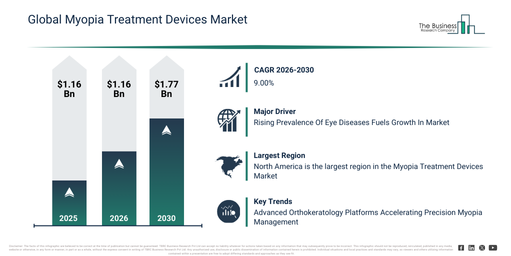
    The market for myopia treatment devices has seen strong growth in recent years. In 2025, the market size is valued at $7.48 billion and is expected to rise to $8.17 billion in 2026, reflecting a compound annual growth rate (CAGR) of 9.2%. Looking ahead, the market is projected to grow further to $11.52 billion by 2030, maintaining a steady CAGR of 9.0%. This upward trend stems from multiple factors including the widespread use of digital screens, increasing pediatric myopia cases, growing adoption of corrective eyewear, urban lifestyle changes, and improved awareness about vision care. Future growth will also be supported by innovations such as AI-driven eye diagnostics, the expanding use of ortho-k lenses, advances in laser vision correction, and personalized ophthalmic solutions.

    Download A Free Sample Report For Comprehensive Market Insights:

    https://www.thebusinessresearchcompany.com/sample.aspx?id=20893&type=smp

    Key Factors Fueling the Rise of the Myopia Treatment Devices Market

    The rising prevalence of eye disorders is a major factor propelling the market forward. Eye diseases encompass a variety of conditions that impact the structure or function of the eye, often leading to impaired vision. Contributing to their increase are aging populations, longer screen exposure, shifts in lifestyle, and greater environmental pollution. Myopia treatment devices play a critical role by slowing myopia progression, enhancing visual clarity, and minimizing the risk of complications. This proactive approach not only protects eye health but also improves the quality of life for affected individuals. For example, as reported by the Centers for Disease Control and Prevention in May 2024, approximately 17.2% of Americans aged 40 and above—around 20.5 million people—have cataracts in at least one eye, a figure expected to exceed 30 million by 2028. This growing burden of eye diseases is a key driver for increased demand in myopia treatment technologies.

    Additional Drivers Supporting Market Expansion

    Beyond health concerns, technological developments in diagnosis and treatment methods are also accelerating market growth. Enhanced accessibility to advanced ophthalmic devices and rising consumer willingness to seek vision correction contribute to expanding adoption. Furthermore, increased emphasis on early intervention, especially in pediatric eye care, is strengthening demand for non-invasive and customized treatment options, reinforcing the market’s positive trajectory.

    Access The Complete Myopia Treatment Devices Market Report:

    https://www.thebusinessresearchcompany.com/report/myopia-treatment-devices-global-market-report

    How Myopia Treatment Devices Market is Segmented

    This market is categorized across several dimensions to better understand product usage and application areas:

    1) Product Type: Eye Glasses, Contact Lenses, Ortho-K Lenses, Phakic Intraocular Lenses, and Excimer Laser Refractive Surgery Devices

    2) Treatment Method: Corrective Lenses, Laser Eye Surgery, and Lens Implant Surgery

    3) End-Use Channels: Hospitals and Clinics, Ophthalmic Centers, Retail Stores, and Online Platforms

    Further breakdown includes:

    – Eye Glasses: Single Vision and Multifocal

    – Contact Lenses: Soft, Rigid Gas Permeable (RGP), and Hybrid

    – Ortho-K Lenses: Overnight and Daytime

    – Phakic Intraocular Lenses: Anterior Chamber and Posterior Chamber

    – Excimer Laser Devices: LASIK, PRK, and SMILE systems

    Emerging Trends Reshaping the Myopia Treatment Devices Industry

    Innovations in technology are playing a vital role in the development of this market. Companies are focusing on integrating cloud-based platforms and intelligent tools to enhance the efficiency and precision of myopia management. For example, orthokeratology (ortho-k) lenses, which reshape the cornea overnight to correct myopia without daytime eyewear, are gaining traction.

    In March 2025, Bausch + Lomb Corporation introduced the Arise system in the United States, featuring cloud-based intelligent design software that enables faster and more accurate fitting of ortho-k lenses. This new system, which includes FDA-approved shaping lenses for overnight myopia reduction, aims to improve patient outcomes while reducing fitting time for eye care professionals. Additionally, it provides real-time data and design recommendations to better customize treatments, especially for pediatric patients, thereby enhancing overall care quality.

    Leading Players Driving the Myopia Treatment Devices Market

    The competitive landscape includes a range of prominent companies that are innovating and expanding their product lines in this space. Key market participants include EssilorLuxottica S.A., Carl Zeiss Meditec AG, Alcon Inc., Hoya Corporation, Bausch & Lomb Incorporated, CooperVision Inc., Johnson & Johnson Vision Care Inc., Topcon Corporation, Menicon Co. Ltd., STAAR Surgical Company, Paragon Vision Sciences Inc., Ziemer Ophthalmic Systems AG, Euclid Systems Corporation, Art Optical Contact Lens Inc., Schwind Eye Tech Solutions GmbH, Kubota Pharmaceutical Holdings Co Ltd., Visioneering Technologies Inc., Eyerising International, Nidek Co Ltd., and Falco Linsen AG.

    Geographical Overview of the Myopia Treatment Devices Market

    In 2025, North America held the largest share of the myopia treatment devices market, reflecting a mature healthcare infrastructure and high awareness levels. Meanwhile, the Asia-Pacific region is predicted to register the fastest growth during the forecast period, driven by increasing healthcare investments and growing prevalence of myopia. The study covers key regions such as Asia-Pacific, South East Asia, Western Europe, Eastern Europe, North America, South America, the Middle East, and Africa, providing a comprehensive view of global market dynamics.

    Get in touch with us:

    The Business Research Company: https://www.thebusinessresearchcompany.com/

    Americas: +1 310-496-7795

    Asia: +44 7882 955267 & +91 8897263534

    Europe: +44 7882 955267

    Email us at: marketing@tbrc.info

    Follow us on:

    LinkedIn: https://in.linkedin.com/company/the-business-research-company

    YouTube: https://www.youtube.com/channel/UC24_fI0rV8cR5DxlCpgmyFQ

    Global Market Model: https://www.thebusinessresearchcompany.com/global-market-model
  • Multiplex PCR Assays Market Set To Grow From $1.92 Billion In 2026 To $3.17 Billion By 2030 At A CAGR Of 13.2%

    Multiplex PCR Assays Market Set To Grow From $1.92 Billion In 2026 To $3.17 Billion By 2030 At A CAGR Of 13.2%

    Through market attractiveness analysis, total addressable market evaluation, company benchmarking matrices, interactive Excel dashboards, expanded supply chain intelligence, emerging startup coverage, and detailed product insights, The Business Research Company’s 2026 market reports provide more actionable and strategically valuable research.

    The multiplex PCR assays market is witnessing significant momentum as the demand for advanced diagnostic tools continues to rise. With the increasing need for rapid, accurate testing methods, this sector is expected to experience considerable growth in the coming years. Let’s explore the current market size, growth drivers, key segments, industry trends, major players, and regional dynamics shaping the future of multiplex PCR assays.

    Market Expansion and Future Outlook of the Multiplex PCR Assays Market

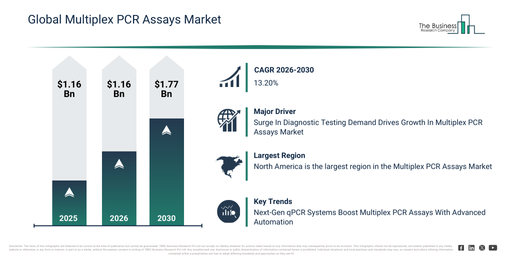
    The multiplex PCR assays market has rapidly expanded over recent years. It is predicted to increase from $1.7 billion in 2025 to $1.93 billion in 2026, growing at a compound annual growth rate (CAGR) of 13.4%. This historical growth is largely due to the escalating burden of infectious diseases, greater adoption of molecular diagnostics, shortcomings of singleplex PCR testing, heightened demand for quick diagnostic outcomes, and the broadening of diagnostic laboratory infrastructure. Looking ahead, the market is expected to reach $3.17 billion by 2030, with a CAGR of 13.2%. Factors contributing to this forecast include a stronger emphasis on early disease detection, rising need for comprehensive diagnostic approaches, expansion in personalized medicine, increased investments in molecular diagnostics, and wider routine use of multiplex assays. Key trends anticipated include growing adoption of multiplex testing for infectious diseases, increased demand for high-throughput assays, expanding use of syndromic testing panels, broader application in clinical diagnostics, and a preference for cost-efficient multi-target assays.

    Download A Free Sample Report For Comprehensive Market Insights:

    https://www.thebusinessresearchcompany.com/sample.aspx?id=18681&type=smp

    Primary Factors Stimulating Growth in the Multiplex PCR Assays Market

    The rising requirement for diagnostic testing is a major driver for the multiplex PCR assays industry moving forward. Diagnostic testing encompasses procedures aimed at confirming the presence or absence of diseases or conditions in patients. This demand is largely fueled by the increasing prevalence of chronic illnesses such as cancer and diabetes, where early and accurate diagnosis is critical for effective treatment management. Furthermore, the focus on preventive healthcare is prompting more frequent testing to catch potential health issues early. Multiplex PCR assays enhance diagnostic efficiency by enabling simultaneous detection of multiple pathogens or genetic markers from one sample, making the testing process more thorough and time-saving. For example, in July 2024, the National Health Service (NHS) in the U.K. reported that diagnostic activities in 2023 surpassed pre-pandemic levels, with a 21% increase in tests performed in May 2024 compared to the previous year, totaling 2.4 million diagnostic tests in that month alone. Such data underscores how growing diagnostic needs are propelling the multiplex PCR assays market forward.

    Breakdown of Market Segments Generating Revenue in the Multiplex PCR Assays Market

    The multiplex PCR assays market is divided into several important segments:

    1) Assay Type: Planar Assay and Bead Based Assay

    2) Product and Services: Consumables, Instruments, Software and Services

    3) Application: Disease Diagnosis, Research and Development, and Other Applications

    4) End User: Biopharmaceutical Companies, Clinical Research Organizations, Academic Research Institutes, Diagnostic Centers, and Other End Users

    Further subcategories include:

    – Planar Assay: Microarray-Based Assays, DNA Chip-Based Assays

    – Bead Based Assay: Luminex Xmap Assays, Magpix Assays, Flow Cytometry-Based Bead Assays

    These segments reflect the diversity of the multiplex PCR assays market and its broad usability across different testing methods and end-user groups.

    Access The Complete Multiplex PCR Assays Market Report:

    https://www.thebusinessresearchcompany.com/report/multiplex-pcr-assays-global-market-report

    Innovations and Trends Driving Revenue Growth in the Multiplex PCR Assays Industry

    Leading companies in the multiplex PCR assays sector are increasingly focusing on integrating automation technologies. For example, next-generation quantitative PCR (qPCR) systems are being developed to deliver highly accurate and flexible nucleic acid quantification, enhancing advanced clinical diagnostics and public health efforts. These next-generation systems enable high-throughput and simultaneous detection of multiple targets, significantly improving diagnostic precision and efficiency. A case in point is Roche Diagnostics Corporation, a Switzerland-based company that launched the LightCycler PRO System in November 2023. This cutting-edge qPCR platform offers superior temperature uniformity, advanced software capabilities, and compatibility with over 200 LightMix Modular and 60 CE-IVD assays, facilitating improved diagnostic outcomes. Such innovations highlight the role of automation in advancing the multiplex PCR assays market and supporting better healthcare diagnostics.

    Leading Market Players and Their Strategic Positions in the Multiplex PCR Assays Sector

    The multiplex PCR assays market features several prominent companies shaping industry progress, including:

    F. Hoffmann-La Roche Ltd, Thermo Fisher Scientific Inc, Abbott Laboratories, Danaher Corporation, Merck KGaA, Siemens Healthineers, Becton Dickinson and Company, Agilent Technologies Inc, PerkinElmer Inc, Bio-Rad Laboratories Inc, QIAGEN NV, Tecan Group Ltd, DiaSorin SpA, Bio-Techne Corporation, Promega Corporation, Randox Laboratories Ltd, BioFire Diagnostics Inc, Seegene Inc, NanoString Technologies, Standard BioTools Inc, Agena Bioscience, and Fluidigm Corporation.

    These firms are instrumental in driving innovation, market expansion, and technological advancements within the multiplex PCR assays landscape.

    Regional Market Insights on Multiplex PCR Assays Revenue Leadership

    In 2025, North America emerged as the largest region in the multiplex PCR assays market by revenue. The market report also covers other key regions including Asia-Pacific, South East Asia, Western Europe, Eastern Europe, South America, the Middle East, and Africa. While North America leads currently, other regions, especially Asia-Pacific and South East Asia, are expected to witness significant growth as molecular diagnostic technologies become more widespread globally.

    Get in touch with us:

    The Business Research Company: https://www.thebusinessresearchcompany.com/

    Americas: +1 310-496-7795

    Asia: +44 7882 955267 & +91 8897263534

    Europe: +44 7882 955267

    Email us at: marketing@tbrc.info

    Follow us on:

    LinkedIn: https://in.linkedin.com/company/the-business-research-company

    YouTube: https://www.youtube.com/channel/UC24_fI0rV8cR5DxlCpgmyFQ

    Global Market Model: https://www.thebusinessresearchcompany.com/global-market-model