Category: Medical Equipment

  • Minimally Invasive Neurosurgical Devices Market Forecast Signals New Revenue Opportunities Through 2030

    Minimally Invasive Neurosurgical Devices Market Forecast Signals New Revenue Opportunities Through 2030

    Through market attractiveness analysis, total addressable market evaluation, company benchmarking matrices, interactive Excel dashboards, expanded supply chain intelligence, emerging startup coverage, and detailed product insights, The Business Research Company’s 2026 market reports provide more actionable and strategically valuable research.

    The field of minimally invasive neurosurgical devices has seen impressive growth recently, driven by advancements in technology and rising healthcare needs. As neurological disorders become more common and surgical techniques evolve, this market is on track to expand steadily. Let’s explore the current market size, key growth drivers, segmentation, emerging trends, major players, and regional insights shaping this industry.

    Market Size and Revenue Expectations in the Minimally Invasive Neurosurgical Devices Market

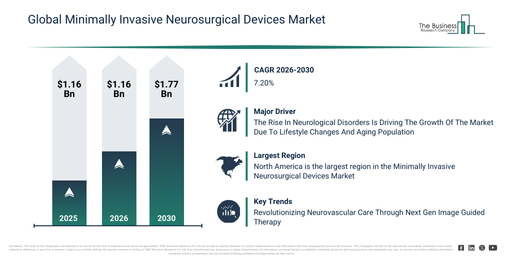
    The market for minimally invasive neurosurgical devices has experienced significant expansion in recent years. It is projected to increase from $3.04 billion in 2025 to $3.27 billion in 2026, marking a compound annual growth rate (CAGR) of 7.6%. This growth during the historical period can be linked to the rising incidence of neurological disorders, a higher volume of neurosurgical procedures, improvements in endoscopic imaging technologies, a growing pool of skilled neurosurgeons, and increased hospital investments in cutting-edge surgical infrastructure.

    Looking ahead, the market is expected to maintain strong momentum, reaching $4.32 billion by 2030 with a CAGR of 7.2%. Factors driving this forecasted expansion include the integration of AI-powered surgical navigation systems, wider adoption of robotic neurosurgery platforms, growing demand for minimally invasive spine surgeries, advancements in real-time intraoperative imaging technologies, and the rise of ambulatory surgical centers. Key trends shaping the market over the coming years involve greater use of image-guided minimally invasive procedures, robotic-assisted neurosurgery, demand for smaller and more precise surgical instruments, a shift toward outpatient and short-stay neurosurgical interventions, and expanded application of endoscopic and keyhole neurosurgery techniques.

    Download A Free Sample Report For Comprehensive Market Insights:

    https://www.thebusinessresearchcompany.com/sample.aspx?id=25837&type=smp

    Primary Growth Stimuli Behind the Minimally Invasive Neurosurgical Devices Market

    The increasing prevalence of neurological disorders is a major factor boosting the minimally invasive neurosurgical devices market. Neurological disorders encompass a range of medical conditions affecting the brain, spinal cord, or peripheral nerves, resulting in difficulties with mobility, sensation, cognition, or behavior. The upward trend in these disorders is mainly attributed to lifestyle factors including unhealthy diets, lack of exercise, chronic stress, and prolonged exposure to environmental toxins, all of which negatively impact brain health over time.

    Minimally invasive neurosurgical devices play a vital role in managing these disorders by enabling more precise and less traumatic procedures. These devices help reduce recovery times, lower the risk of complications, and improve overall patient outcomes. For instance, in March 2023, the Alzheimer’s Association reported that approximately 6.7 million Americans aged 65 and older were living with Alzheimer’s dementia in 2023, with projections rising to 13.8 million by 2060. This alarming increase in neurological disorders directly fuels demand for minimally invasive neurosurgical technologies.

    Detailed Breakdown of the Minimally Invasive Neurosurgical Devices Market Segments

    This market is categorized into several segments for a thorough understanding:

    1) Product Type: Miniature video cameras, fiber optic cables, external video monitors, and specialized surgical instruments.

    2) Technology: Image-guided surgery, robotic surgery, navigation systems, optical coherence tomography, and endoscopic techniques.

    3) Surgery Type: Neurosurgical endoscopic procedures, vascular surgery, cerebrovascular surgery, skull base surgery, spine surgery, functional neurosurgery, neuroendoscopic ventricular surgery, neuroplastic and reconstructive surgery, bariatric surgery, and neurovascular access procedures.

    4) Application: Brain tumor resection, spinal surgery, aneurysm repair, epilepsy surgery, trauma and fracture repair.

    5) End User: Hospitals, ambulatory surgical centers, neurology clinics, research institutions, and outpatient surgical centers.

    Further subsegments include types of miniature video cameras such as high-definition, 4K ultra-HD, wireless endoscopic, integrated systems, and disposable cameras. Fiber optic cables are divided by light transmission, imaging fiber bundles, laser fibers, reusable versus disposable types, and sterilizable variants. External video monitors range from standard definition to touchscreen-controlled 4K surgical monitors. Special surgical instruments include neuroendoscopes, microforceps, microscissors, biopsy needles, suction-irrigation devices, and navigation-enabled tools.

    Access The Complete Minimally Invasive Neurosurgical Devices Market Report:

    https://www.thebusinessresearchcompany.com/report/minimally-invasive-neurosurgical-devices-global-market-report

    Recent Advances and Trends Reshaping Demand in the Minimally Invasive Neurosurgical Devices Market

    Leading companies in this space are focusing on enhancing surgical precision and safety by developing sophisticated image-guided therapy systems. These technologies utilize real-time imaging to help surgeons accurately target and treat areas of the brain during minimally invasive operations.

    For example, in February 2024, Koninklijke Philips N.V. introduced the Azurion neuro biplane system, an advanced platform designed to improve the diagnosis and treatment of neurovascular conditions. This system delivers superior 2D and 3D imaging capabilities, flexible positioning of X-ray detectors, and comprehensive table-side controls. Features such as enhanced C-arm rotation and angulation facilitate rapid imaging adjustments, automatic beam rotation ensures properly oriented images, a newly designed head immobilizer supports stroke care, and AI-driven remote monitoring maximizes system uptime.

    Key Industry Players Driving the Minimally Invasive Neurosurgical Devices Market

    The minimally invasive neurosurgical devices market is dominated by several prominent companies, including Medtronic Plc, Fujifilm Holdings Corporation, Koninklijke Philips N.V., Stryker Corporation, Olympus Corporation, Karl Storz GmbH and Co. KG, Integra LifeSciences Holdings Corporation, Elekta AB, Penumbra Inc., KLS Martin Group, B. Braun Melsungen AG, Ackermann Instrumente GmbH, Scanlan International Inc., OmniGuide Holdings Inc., Biolitec AG, Adeor Medical AG, Vycor Medical Inc., Brainlab AG, Leica Microsystems GmbH, Zeiss Meditec AG, Natus Medical Incorporated, Mizuho Medical Co. Ltd., and Adept Medical Ltd. These companies continuously innovate to meet evolving clinical needs and expand their market presence globally.

    Regional Market Leadership and Growth Forecasts in Minimally Invasive Neurosurgical Devices

    In 2025, North America held the largest share of the minimally invasive neurosurgical devices market, reflecting strong healthcare infrastructure and early adoption of advanced technologies. Meanwhile, the Asia-Pacific region is anticipated to be the fastest-growing market during the forecast period. This growth is driven by increasing healthcare investments, rising awareness of neurological conditions, and expanding healthcare access across countries in Asia-Pacific. The market assessment includes key geographical regions such as Asia-Pacific, Southeast Asia, Western Europe, Eastern Europe, North America, South America, the Middle East, and Africa, providing a well-rounded view of global market dynamics.

    Get in touch with us:

    The Business Research Company: https://www.thebusinessresearchcompany.com/

    Americas: +1 310-496-7795

    Asia: +44 7882 955267 & +91 8897263534

    Europe: +44 7882 955267

    Email us at: marketing@tbrc.info

    Follow us on:

    LinkedIn: https://in.linkedin.com/company/the-business-research-company

    YouTube: https://www.youtube.com/channel/UC24_fI0rV8cR5DxlCpgmyFQ

    Global Market Model: https://www.thebusinessresearchcompany.com/global-market-model
  • Medical Deferoxamine Mesylate Market Growth Is Accelerating As Industry Transformation Continues

    Medical Deferoxamine Mesylate Market Growth Is Accelerating As Industry Transformation Continues

    Delivering more actionable and strategically valuable research, The Business Research Company’s 2026 market reports feature market attractiveness analysis, total addressable market evaluation, company benchmarking matrices, interactive Excel dashboards, expanded supply chain intelligence, emerging startup coverage, and detailed product insights.

    The medical deferoxamine mesylate market has experienced robust expansion in recent years, driven by growing healthcare needs and advancements in treatment options. This report delves into the current market size, key factors propelling demand, segmentation, innovation trends, leading companies, and regional outlook to provide a comprehensive understanding of this dynamic pharmaceutical sector.

    Medical Deferoxamine Mesylate Market Size and Projected Growth

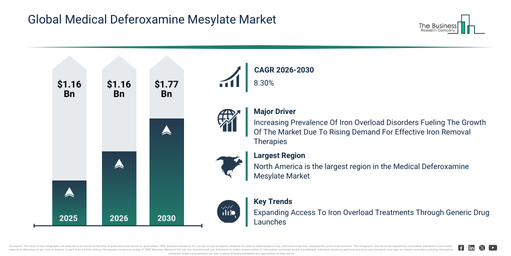
    The medical deferoxamine mesylate market is on an upward trajectory, increasing from $1.28 billion in 2025 to $1.38 billion in 2026 at a compound annual growth rate (CAGR) of 8.4%. This positive momentum is expected to continue, with the market forecasted to reach $1.91 billion by 2030, growing at a CAGR of 8.3%. The expansion during the historical period is largely due to the rising incidence of transfusion-dependent anemia, thalassemia, and sickle cell disease, along with enhanced hospital treatment protocols, better diagnosis of iron overload disorders, and availability of effective chelation therapies. Looking ahead, growth will be supported by the development of alternative chelation drugs, a focus on patient-friendly formulations, broader rare disease treatment programs, increased investment in specialty pharmaceuticals, and greater awareness about managing iron toxicity.

    Download A Free Sample Report For Comprehensive Market Insights:

    https://www.thebusinessresearchcompany.com/sample.aspx?id=24294&type=smp

    Key Factors Fueling the Medical Deferoxamine Mesylate Market Growth

    A primary driver behind the medical deferoxamine mesylate market growth is the increasing prevalence of iron overload disorders. These conditions arise when excess iron accumulates in the body due to genetic causes, frequent blood transfusions, or chronic illnesses. The expanding use of long-term blood transfusions to treat chronic hemoglobinopathies and improved patient survival rates have broadened the pool of individuals at risk for iron overload. Medical deferoxamine mesylate plays a critical role in treating this condition by removing surplus iron, preventing organ damage, and supporting patients with diseases like thalassemia and hemochromatosis.

    Supporting this trend, a March 2023 report in the Electronic Journal of General Medicine from the UK highlighted that 10.73% of patients (1,085 individuals) have alpha-thalassemia, 2.24% (227) have beta-thalassemia, and 0.29% (29) carry mutations for both types. This growing prevalence continues to spur demand for deferoxamine mesylate therapies, strengthening market prospects.

    Access The Complete Medical Deferoxamine Mesylate Market Report:

    https://www.thebusinessresearchcompany.com/report/medical-deferoxamine-mesylate-global-market-report

    Understanding the Structure of the Medical Deferoxamine Mesylate Market

    The medical deferoxamine mesylate market is segmented into several key categories to better capture its diverse applications and delivery methods. By product type, it includes Injectable and Parenteral Formulations. The market is further divided by route of administration into Subcutaneous, Intramuscular, and Intravenous. Distribution channels consist of Hospital Pharmacies, Retail Pharmacies, Online Pharmacies, and other pathways. Applications focus on treating Iron Overload Disorders, Aluminum Toxicity, Acute Iron Poisoning, and other uses. End-users primarily include Hospitals and Clinics. Additional subsegments break down injectables into Intramuscular (IM), Intravenous (IV), and Subcutaneous (SC) forms, while parenteral formulations also cover Intravenous, Subcutaneous, and Intramuscular types.

    Innovative Developments Shaping the Medical Deferoxamine Mesylate Industry

    Innovation in the medical deferoxamine mesylate market is largely driven by efforts to develop generic versions of existing drugs. These alternatives aim to expand patient accessibility, reduce costs, and strengthen companies’ positions in the competitive landscape. Generics contain the same active ingredients as brand-name drugs, providing equivalent therapeutic benefits once patents expire. For example, in January 2023, Canada-based Pharmascience Inc. introduced PRpms-DEFERASIROX (TYPE J), a cost-effective option comparable to Jadenu for treating chronic iron overload in adults and children with anemia or thalassemia. This product offers the same safety and efficacy in 90 mg and 360 mg tablet dosages, making treatment more affordable and accessible.

    Leading Companies Driving the Medical Deferoxamine Mesylate Market

    The market features several prominent players competing globally, including Novartis AG, Merck KGaA, Teva Pharmaceutical Industries Inc., Intas Pharmaceuticals Ltd., Fresenius Kabi AG, Apotex Inc., Lupin Limited, Glenmark Pharmaceuticals Ltd., Torrent Pharmaceuticals Ltd., Wockhardt Ltd., Hospira Inc., Manus Aktteva Biopharma LLP, Merit Pharmaceuticals Inc., Aurobindo Pharma Ltd., Cipla Limited, Cadila Healthcare Ltd., Sun Pharmaceutical Industries Ltd., Alkem Laboratories Ltd., Pharmacosmos A/S, American Regent Inc., Ferring Pharmaceuticals, Sandoz Inc., Emcure Pharmaceuticals Ltd., Akorn Incorporated, and Dr. Reddy’s Laboratories Ltd. These companies drive innovation, expand distribution, and enhance treatment options worldwide.

    Regional Perspectives Highlighting Opportunities in the Medical Deferoxamine Mesylate Market

    In 2025, North America held the largest share of the medical deferoxamine mesylate market, reflecting well-established healthcare infrastructure and high awareness. Meanwhile, the Asia-Pacific region is expected to experience the fastest growth during the forecast period, driven by increasing healthcare expenditure, rising prevalence of related disorders, and improved access to medical treatments. The report also encompasses other key regions such as South East Asia, Western Europe, Eastern Europe, South America, the Middle East, and Africa, providing a thorough view of the global market landscape.

    Get in touch with us:

    The Business Research Company: https://www.thebusinessresearchcompany.com/

    Americas: +1 310-496-7795

    Asia: +44 7882 955267 & +91 8897263534

    Europe: +44 7882 955267

    Email us at: marketing@tbrc.info

    Follow us on:

    LinkedIn: https://in.linkedin.com/company/the-business-research-company

    YouTube: https://www.youtube.com/channel/UC24_fI0rV8cR5DxlCpgmyFQ

    Global Market Model: https://www.thebusinessresearchcompany.com/global-market-model
  • Medical Crutches Market Outlook Highlights The Next Major Growth Opportunities

    Medical Crutches Market Outlook Highlights The Next Major Growth Opportunities

    Enhanced with market attractiveness analysis, total addressable market evaluation, company benchmarking matrices, interactive Excel dashboards, expanded supply chain intelligence, emerging startup coverage, and detailed product insights, The Business Research Company’s 2026 market reports deliver more actionable and strategically valuable research.

    The medical crutches market has been experiencing steady growth, driven by various factors that highlight the increasing need for mobility aids. As more people require assistance due to injuries or health conditions, the demand for advanced and user-friendly crutches is rising. This overview explores the current market size, growth drivers, product segments, industry trends, key players, and regional developments shaping the sector.

    Medical Crutches Market Size and Growth Potential

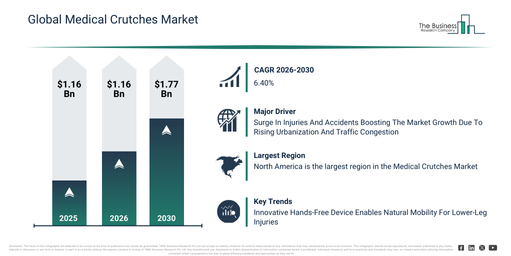
    The medical crutches market has shown robust expansion recently, with its value expected to rise from $0.73 billion in 2025 to $0.78 billion in 2026, reflecting a compound annual growth rate (CAGR) of 6.8%. This positive historical growth stems from factors such as an increase in lower limb injuries, more post-operative rehabilitation cases, the aging population, better awareness about mobility aids, and limited access to advanced crutches in developing countries. Looking ahead, the market is projected to reach $1 billion by 2030, growing at a CAGR of 6.4%. The forecasted growth is driven by innovations like smart crutches, the use of lightweight composite materials, rising demand in home healthcare, expanded e-commerce channels, and supportive government initiatives aimed at disability aids. Prominent trends expected to influence the market include ergonomic design improvements, customizable mobility solutions, and the integration of durable yet lightweight materials.

    Download A Free Sample Report For Comprehensive Market Insights:

    https://www.thebusinessresearchcompany.com/sample.aspx?id=25821&type=smp

    Key Factors Accelerating Growth in the Medical Crutches Market

    One of the primary drivers for the market’s expansion is the increasing frequency of injuries and accidents. These incidents often cause physical harm necessitating the use of supportive devices like crutches. The rise in urbanization and traffic congestion contributes significantly to this trend, as denser populations lead to more collisions, falls, and other risks. Medical crutches provide essential support by helping users maintain balance, reduce pressure on injured limbs, and move safely during recovery.

    For instance, data from December 2024 by the Transport Accident Commission in Australia highlights this issue, reporting 267 fatal crashes on Victorian roads—20 more than the previous year’s figure of 247 fatal crashes recorded in the 12 months ending June 2023. Such statistics underscore the growing need for mobility aids, boosting the demand for medical crutches worldwide.

    Access The Complete Medical Crutches Market Report:

    https://www.thebusinessresearchcompany.com/report/medical-crutches-global-market-report

    Detailed Segmentation of the Medical Crutches Market

    This market is categorized into several segments to better address the diverse needs of users. By product type, offerings include Underarm Crutches, Forearm Crutches, Tetrapod Crutches, Leg Support Crutches, Platform Crutches, and other specialized types. Materials used encompass Wood, Metal Alloys, Carbon or Glass Fiber Reinforced Composites, Thermoplastic, and Carbon Fiber Reinforced Polymer. Distribution channels cover Hospital Pharmacies, Retail Pharmacies, and Online Stores. Application areas range from Post-Operative Recovery to Chronic Conditions, Short-Term Use, and Long-Term Use. End users include Home Healthcare, Hospitals and Clinics, Rehabilitation Centers, and Nursing Homes.

    Further subcategories provide a fine-tuned focus on types within each product group, such as adjustable and padded variants of underarm crutches, different cuff styles for forearm crutches, and various configurations in tetrapod and platform crutches. Other types include smart crutches, pediatric models, and foldable options, catering to specific patient requirements.

    Innovations and Trends Shaping the Future of Medical Crutches

    Leading companies in this sector are investing in the development of advanced solutions like hands-free crutches, which promote independence and aid in maintaining a natural walking gait. These devices strap onto the thigh and free the user’s hands, enhancing mobility during recovery. Such innovations help improve healing outcomes while reducing muscle atrophy.

    For example, in June 2024, iWALKFree, a US-based mobility device manufacturer, introduced its FDA-registered hands-free crutch. This device offers a painless, cost-effective alternative to traditional crutches, enabling users with below-knee injuries to walk naturally and engage in daily tasks. Clinical studies indicate it also supports better blood flow and muscle preservation. The company is continuously improving its product, with versions 4.0 and 5.0 in development, and emphasizes rigorous quality control and regulatory compliance to distinguish itself from inferior alternatives.

    Prominent Companies Steering Competition in the Medical Crutches Market

    Several key players dominate the medical crutches industry, including Cardinal Health Inc., Medline Industries LP, Ottobock SE & Co. KGaA, Invacare Corporation, Drive Medical, Sunrise Medical, GF Health Products Inc., Drive DeVilbiss Healthcare, Vive Health, AMG Medical Inc., Aidacare, Carex Health Brands, Nova Medical Products, Tynor Orthotics Pvt. Ltd., Chinesport S.p.A., Ergoactives Inc., iWALKFree Inc., Ossenberg GmbH, MABIS Healthcare, Millennial Medical LLC, Thuasne Group, Kowsky GmbH, and Meyra Group GmbH. These companies are at the forefront of innovation and market expansion, competing to offer effective, comfortable, and technologically advanced mobility solutions.

    Regional Market Leadership and Emerging Growth Areas

    North America held the largest share of the medical crutches market in 2025, driven by advanced healthcare infrastructure and widespread adoption of mobility aids. However, the Asia-Pacific region is expected to experience the fastest growth during the forecast period, fueled by increasing healthcare investments, rising awareness about mobility support devices, and expanding distribution networks. The market analysis also covers other important regions, including South East Asia, Western Europe, Eastern Europe, South America, the Middle East, and Africa, providing a comprehensive global perspective on market trends and opportunities.

    Get in touch with us:

    The Business Research Company: https://www.thebusinessresearchcompany.com/

    Americas: +1 310-496-7795

    Asia: +44 7882 955267 & +91 8897263534

    Europe: +44 7882 955267

    Email us at: marketing@tbrc.info

    Follow us on:

    LinkedIn: https://in.linkedin.com/company/the-business-research-company

    YouTube: https://www.youtube.com/channel/UC24_fI0rV8cR5DxlCpgmyFQ

    Global Market Model: https://www.thebusinessresearchcompany.com/global-market-model
  • Minimally Invasive Glaucoma Surgery (MIGS) Devices Market Growth Is Accelerating As Industry Transformation Continues

    Minimally Invasive Glaucoma Surgery (MIGS) Devices Market Growth Is Accelerating As Industry Transformation Continues

    Delivering more actionable and strategically valuable research, The Business Research Company’s 2026 market reports feature market attractiveness analysis, total addressable market evaluation, company benchmarking matrices, interactive Excel dashboards, expanded supply chain intelligence, emerging startup coverage, and detailed product insights.

    The minimally invasive glaucoma surgery (MIGS) devices market is undergoing rapid expansion, driven by advancements in surgical techniques and growing awareness of eye health. As glaucoma continues to affect millions worldwide, the demand for less invasive and more effective treatment options has never been higher. Let’s explore the market’s current size, key growth drivers, leading players, and emerging trends shaping the future of MIGS devices.

    Strong Growth Trajectory in the Minimally Invasive Glaucoma Surgery Devices Market

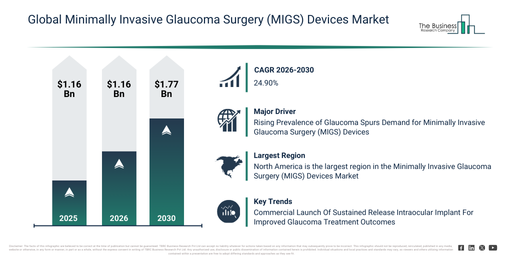
    The MIGS devices market has seen remarkable growth in recent years. It is projected to rise from $0.89 billion in 2025 to $1.14 billion in 2026, representing a compound annual growth rate (CAGR) of 28.1%. Several factors contributed to this growth, including the rising prevalence of glaucoma, an aging global population, the limitations of traditional glaucoma surgeries, greater awareness about vision preservation, and increasing rates of cataract surgeries. Looking ahead, the market is expected to expand even further, reaching $2.79 billion by 2030 with a CAGR of 24.9%. This forecasted growth is supported by an expanding pool of glaucoma patients, wider acceptance of minimally invasive procedures, increasing demand for outpatient eye surgeries, a stronger focus on patients’ quality of life, and the growing availability of specialized eye care clinics.

    Download A Free Sample Report For Comprehensive Market Insights:

    https://www.thebusinessresearchcompany.com/sample.aspx?id=15863&type=smp

    Key Factors Supporting Growth in the MIGS Devices Market

    The rising incidence of eye disorders plays a significant role in driving the demand for MIGS devices. Eye conditions, including glaucoma, are becoming more common due to lifestyle changes, environmental factors, and an aging population worldwide. MIGS devices are designed to manage these diseases by effectively lowering intraocular pressure (IOP), which is critical in preventing the progression of glaucoma. For instance, according to the National Eye Institute, approximately 2.2 million Americans will be blind or partially blind by 2030, underscoring the urgent need for improved treatment options like MIGS.

    Expanding Patient Acceptance and Technology Adoption in MIGS

    Another key driver is the growing acceptance of minimally invasive surgical options among patients and healthcare providers. These procedures offer benefits such as quicker recovery times, reduced complications, and suitability for outpatient settings. Additionally, combining MIGS with cataract surgery has become increasingly popular, allowing for dual treatment in one surgical session. This integration supports the market’s expansion by appealing to a broader patient base seeking safer and more efficient eye care.

    Access The Complete Minimally Invasive Glaucoma Surgery (MIGS) Devices Market Report:

    https://www.thebusinessresearchcompany.com/report/minimally-invasive-glaucoma-surgery-migs-devices-global-market-report

    How the MIGS Devices Market Is Categorized for In-Depth Analysis

    This market is segmented into several categories to better understand its dynamics:

    1) By Product Type: Trabecular Micro-Stents, Subconjunctival Micro-Shunts, Suprachoroidal Stents, and Canaloplasty & Schlemm’s Canal Devices

    2) By Surgical Approach: MIGS performed alongside cataract surgery, and Stand-Alone MIGS procedures

    3) By Target Anatomical Pathway: Trabecular Meshwork, Schlemm’s Canal, Suprachoroidal Space, and Subconjunctival Space

    4) By Procedure Type: Ab-Interno MIGS and Ab-Externo MIGS

    5) By End User: Ophthalmology Clinics, Ambulatory Surgery Centers (ASCs), and Specialized Eye Hospitals

    The report further breaks down subsegments such as single-lumen and multi-lumen trabecular micro-stents, various types of subconjunctival micro-shunts, passive and flow-regulated suprachoroidal stents, and different canaloplasty devices including implant-free systems.

    Innovations Transforming the Minimally Invasive Glaucoma Surgery Devices Market

    Leading companies in the MIGS space are focusing on breakthroughs like sustained-release drug-delivery implants to replace conventional eye-drop treatments. These implants provide continuous medication delivery, improving patient adherence and treatment effectiveness by reducing the need for frequent dosing. A notable example is the February 2024 launch by Celanese Corporation in partnership with Glaukos of the iDose® TR Implant, which uses Celanese’s VitalDose® Ethylene Vinyl Acetate platform. This device delivers travoprost directly inside the eye over several months, offering a minimally invasive alternative to daily eye drops and enhancing long-term control of intraocular pressure.

    Competitive Landscape of the MIGS Devices Industry

    The minimally invasive glaucoma surgery devices market is populated by several prominent companies, including Glaukos Corporation, Sight Sciences Inc., Alcon Inc., Johnson & Johnson Vision Care Inc., Bausch & Lomb Incorporated, Carl Zeiss Meditec AG, Nova Eye Medical Limited, iSTAR Medical SA, New World Medical Inc., MicroSurgical Technology Inc., ASICO LLC, Ziemer Ophthalmic Systems AG, Ellex Medical Lasers Ltd., Lumenis Ltd., Iridex Corporation, Katena Products Inc., Oertli Instrumente AG, Sifi S.p.A., Aquesys Inc., and Beaver-Visitec International. These players compete through continuous innovation and strategic partnerships to maintain market leadership.

    Geographic Highlights Demonstrate Market Leaders and Emerging Regions

    In 2025, North America held the largest share of the MIGS devices market, benefiting from high healthcare expenditure and advanced ophthalmic infrastructure. However, the Asia-Pacific region is anticipated to exhibit the fastest growth during the forecast period, driven by increasing healthcare investments, rising awareness of glaucoma treatment options, and expanding access to specialized eye care across countries such as China, India, and Japan. Other important markets include South East Asia, Western and Eastern Europe, South America, the Middle East, and Africa, providing a comprehensive global perspective on the market’s development.

    Get in touch with us:

    The Business Research Company: https://www.thebusinessresearchcompany.com/

    Americas: +1 310-496-7795

    Asia: +44 7882 955267 & +91 8897263534

    Europe: +44 7882 955267

    Email us at: marketing@tbrc.info

    Follow us on:

    LinkedIn: https://in.linkedin.com/company/the-business-research-company

    YouTube: https://www.youtube.com/channel/UC24_fI0rV8cR5DxlCpgmyFQ

    Global Market Model: https://www.thebusinessresearchcompany.com/global-market-model
  • Medical Copper Tubing Market Trends And Growth Drivers Point To Strong Future Potential

    Medical Copper Tubing Market Trends And Growth Drivers Point To Strong Future Potential

    Through market attractiveness analysis, total addressable market evaluation, company benchmarking matrices, interactive Excel dashboards, expanded supply chain intelligence, emerging startup coverage, and detailed product insights, The Business Research Company’s 2026 market reports provide more actionable and strategically valuable research.

    The medical copper tubing market has been experiencing steady growth, driven by advancements in healthcare infrastructure and evolving medical needs. As hospitals and healthcare facilities expand and modernize, the demand for reliable, high-quality copper tubing used in various medical gas delivery systems continues to rise. This overview explores the market size, key drivers, important segments, industry trends, and leading players shaping this sector.

    Medical Copper Tubing Market Size and Forecasted Expansion

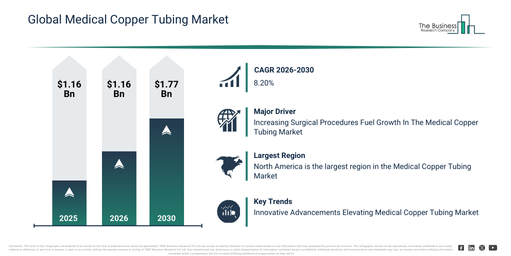
    The market for medical copper tubing has demonstrated strong growth in recent years. It is projected to increase from $1.88 billion in 2025 to $2.04 billion in 2026, reflecting an impressive compound annual growth rate (CAGR) of 8.7%. This growth during the historical period is mainly due to the expansion of hospital infrastructure, greater demand for centralized medical gas systems, stricter medical piping standards, modernization of healthcare facilities, and the increased use of copper to ensure gas purity. Looking ahead, the market is expected to continue its upward trajectory, reaching $2.8 billion by 2030 with a CAGR of 8.2%. Key factors driving this future growth include the development of healthcare infrastructure in emerging economies, rising investments in hospital expansion, heightened patient safety protocols, demand for durable piping solutions, and the adoption of advanced medical gas delivery networks. Emerging trends poised to influence the market encompass increased demand for medical-grade copper tubing, greater use of pre-cleaned and deoxidized tubes, emphasis on infection-control compliant materials, the growth of hospital gas pipeline installations, and a focus on corrosion-resistant tubing.

    Download A Free Sample Report For Comprehensive Market Insights:

    https://www.thebusinessresearchcompany.com/sample.aspx?id=9397&type=smp

    Rising Number of Surgical Procedures Fueling Medical Copper Tubing Demand

    One of the main growth drivers for the medical copper tubing market is the increasing volume of surgical procedures worldwide. Surgical interventions, which include operations to diagnose, repair, or replace tissues and organs, are growing due to the rising popularity of elective and minimally invasive surgeries. This increase boosts demand for dependable, long-lasting, and contamination-resistant tubing systems used in medical gas distribution and operating room setups. For example, in June 2024, the American Society of Plastic Surgeons reported a 7% rise in minimally invasive procedures in 2023, outpacing the overall growth in surgical procedures by 2%. This trend highlights how the expansion in surgical operations is propelling the medical copper tubing market forward.

    Growing Healthcare Expenditure Supporting Market Growth

    Another important factor advancing the medical copper tubing market is the steady rise in healthcare spending globally. Healthcare expenditure covers all costs related to family planning, nutritional programs, emergency health initiatives, and overall medical services. Increased spending in this area often leads to better access to advanced medical equipment, including high-quality copper tubing. For instance, according to the Centers for Medicare and Medicaid Services (CMS), US healthcare spending grew by 7.5% in 2023, reaching $4.9 trillion or approximately $14,570 per person, compared to 2022. This surge in investment supports the development and adoption of improved medical copper tubing solutions, driving market growth.

    Access The Complete Medical Copper Tubing Market Report:

    https://www.thebusinessresearchcompany.com/report/medical-copper-tubing-global-market-report

    Key Market Segments Highlighting Medical Copper Tubing Applications

    The medical copper tubing market is segmented into three primary categories: product type, application, and end-user. Product types include bracketing, fittings, and tubing. Applications cover medical gases such as carbon dioxide, medical air, medical vacuum, nitrogen, nitrous oxide, and oxygen. End-user segments encompass nursing homes, hospitals, ambulatory surgical centers, and specialty clinics. Further subdivisions break down bracketing into mounting and support brackets, fittings into elbows, tees, couplings, and connectors, and tubing into straight, coiled, and flexible variants. These classifications provide a detailed understanding of the market’s scope and areas of growth.

    Innovations and Industry Trends Boosting Future Market Potential

    Leading companies in the medical copper tubing sector are actively innovating to secure a stronger foothold in the market. For example, Lawton Tubes, a UK-based manufacturer, specializes in copper pipelines designed for medical gas transport such as oxygen. Copper’s natural antimicrobial properties help eliminate bacteria, fungi, and viruses, making it an ideal material for healthcare environments. Additionally, copper is fully recyclable, aligning with healthcare providers’ goals to reduce environmental impact. During the COVID-19 pandemic, Lawton Tubes supplied copper pipelines to more than 35 countries, showcasing copper’s dual benefits of safety and sustainability in medical gas delivery systems.

    Prominent Market Players Driving the Medical Copper Tubing Industry

    Several major companies hold significant positions in the medical copper tubing market. These include KME Group, Mueller Industries Inc., Mueller Streamline Co., Cerro Flow Products LLC, Cambridge-Lee Industries LLC, Wieland-Werke AG, Luvata Oy, Mehta Tubes Ltd., Great Lakes Copper Ltd., Brassco Tube Industries, Jugal Tube Pvt. Ltd., ABC Tube Company Pvt. Ltd., Zhejiang Hailiang Co. Ltd., Golden Dragon Precise Copper Tube Group Inc., Ningbo Jintian Copper Group Co. Ltd., Qingdao Hongtai Metal Products Co. Ltd., Poongsan Corporation, SeAH Metal Corporation, Hailiang Group Co. Ltd., and Hubei Sanxin Copper Co. Ltd. These organizations are instrumental in driving innovation and meeting growing market demands.

    Geographical Insights Into the Medical Copper Tubing Market

    In 2025, North America accounted for the largest share of the medical copper tubing market. The report also covers other important regions such as Asia-Pacific, South East Asia, Western Europe, Eastern Europe, South America, the Middle East, and Africa. While North America currently leads, emerging markets in Asia-Pacific and other regions are expected to contribute significantly to future growth, driven by expanding healthcare infrastructure and rising demand for advanced medical gas systems.

    Get in touch with us:

    The Business Research Company: https://www.thebusinessresearchcompany.com/

    Americas: +1 310-496-7795

    Asia: +44 7882 955267 & +91 8897263534

    Europe: +44 7882 955267

    Email us at: marketing@tbrc.info

    Follow us on:

    LinkedIn: https://in.linkedin.com/company/the-business-research-company

    YouTube: https://www.youtube.com/channel/UC24_fI0rV8cR5DxlCpgmyFQ

    Global Market Model: https://www.thebusinessresearchcompany.com/global-market-model
  • Medical Consumables Market Expansion Is Reshaping Competitive Dynamics Across The Industry

    Medical Consumables Market Expansion Is Reshaping Competitive Dynamics Across The Industry

    Delivering more actionable and strategically valuable research, The Business Research Company’s 2026 market reports feature market attractiveness analysis, total addressable market evaluation, company benchmarking matrices, interactive Excel dashboards, expanded supply chain intelligence, emerging startup coverage, and detailed product insights.

    The medical consumables market has witnessed significant growth in recent years, driven by various factors related to healthcare demands and advancements. As the healthcare sector evolves, the need for disposable and efficient medical supplies continues to create new opportunities and challenges for the industry. Below is an overview of the market’s current status, growth drivers, segmentation, emerging trends, key players, and regional dynamics.

    Medical Consumables Market Size and Growth Trajectory

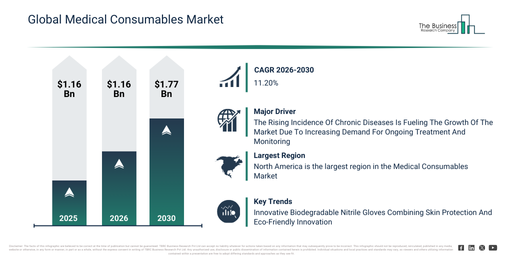
    The medical consumables market has experienced rapid expansion and is projected to continue this trend. The market size is expected to increase from $445.45 billion in 2025 to $495.99 billion in 2026, marking a robust compound annual growth rate (CAGR) of 11.3%. This growth over previous years can be linked to a rise in surgical procedures, a growing incidence of hospital-acquired infections, expansion in healthcare infrastructure, increased consumption of disposable medical products, and stricter regulatory hygiene standards.

    Download A Free Sample Report For Comprehensive Market Insights:

    https://www.thebusinessresearchcompany.com/sample.aspx?id=24293&type=smp

    Looking ahead, the market is anticipated to reach $757.8 billion by 2030, growing at a CAGR of 11.2%. This outlook is supported by factors such as higher demand for home healthcare consumables, greater investment in safety products for healthcare, the increasing needs of an aging population, a stronger focus on sustainable disposable medical supplies, and enhanced emergency preparedness through stockpiling. Key trends expected to shape the market include a surge in single-use medical devices, wider adoption of infection control consumables, growth in non-woven disposable products, emphasis on sterility and safety, and improved supply chain standardization.

    Primary Drivers Behind the Surge in Medical Consumables Demand

    A major factor accelerating growth in the medical consumables market is the rising prevalence of chronic diseases. These long-term health conditions generally develop over time and often require continuous medical management and hygiene maintenance. The increase in chronic disorders is largely attributed to sedentary lifestyles, which contribute to issues like obesity and other health risks. Medical consumables play a crucial role in managing such diseases by helping prevent infections, facilitating symptom control, and enhancing patient comfort during treatment and recovery.

    Access The Complete Medical Consumables Market Report:

    https://www.thebusinessresearchcompany.com/report/medical-consumables-global-market-report

    To illustrate, in February 2024, the World Health Organization, based in Switzerland, projected over 35 million new cancer cases by 2050—a 77% increase from approximately 20 million cases in 2022. This significant rise in chronic illness incidence directly fuels demand for medical consumables used in ongoing care and monitoring, reinforcing the market’s growth trajectory.

    Detailed Segmentation of the Medical Consumables Market

    The medical consumables market is categorized into several segments to address diverse product types, applications, and end-users:

    1) By Product Type: Medical Gloves, Intravenous (IV) Kits, Medical Gauze and Tapes, Disposable Syringes, Sharps Disposable Containers, Catheters, Non-Woven Disposable Products, Surgical Blades, Medicine Cups, and Other Products.

    2) By Application Area: Surgical, Diagnostic, Wound Care, Infection Control, Cardiology, Urology, Oncology, Respiratory, Intravenous (IV) Therapy, and Diabetes Care.

    3) By End-User Group: Hospitals, Home Healthcare, and Other End-Users.

    Within these broad categories, subsegments offer further specificity. For example, medical gloves are divided into examination gloves, surgical gloves, and chemotherapy gloves. Intravenous kits include various components such as catheters, infusion sets, cannulas, and extension sets. Medical gauze and tapes are differentiated by sterility and adhesive properties. Other product subcategories cover items such as alcohol prep pads, bandages, specimen collection containers, thermometers, and disposable tourniquets, among others.

    Emerging Trends Fueling Innovation and Sustainability in Medical Consumables

    Leading companies in the sector are increasingly focusing on innovation, especially in developing eco-friendly products. One notable advancement is the introduction of sustainable nitrile gloves, which combine high performance with environmental benefits. These gloves, made from synthetic rubber, are designed to biodegrade more efficiently than traditional disposable gloves while maintaining durability, chemical resistance, and puncture protection.

    For instance, in September 2024, Mun Australia launched its GloveOn COATS range—biodegradable nitrile examination gloves featuring a unique inner lining with colloidal oatmeal. This ingredient helps soothe and moisturize hands, reducing contact dermatitis risks. Additionally, the gloves include organic additives that speed up biodegradation in landfill conditions, offering healthcare professionals a safer and more sustainable option for hand protection without compromising performance.

    Leading Players Driving Competition in the Medical Consumables Industry

    The medical consumables market features several major companies shaping its competitive landscape. Prominent players include Cardinal Health Inc., Thermo Fisher Scientific Inc., 3M Company, Medline Industries LP, Fresenius Medical Care, Becton Dickinson and Company (BD), Baxter International Inc., Owens & Minor Inc., Terumo Corporation, Smith & Nephew plc, Nipro Corporation, Coloplast A/S, Teleflex Incorporated, Mölnlycke Health Care AB, ConvaTec Group PLC, Ansell Limited, Lohmann & Rauscher GmbH & Co. KG, GPC Medical Ltd., Hindustan Syringes & Medical Devices Ltd., B. Braun Melsungen AG, Hartmann Group (Paul Hartmann AG), Medtronic plc, Vygon SA, ICU Medical Inc., and Merit Medical Systems Inc. These companies play pivotal roles through continuous product innovation, strategic partnerships, and expanding global reach.

    Regional Analysis Highlighting Market Leaders and Growth Hotspots

    In terms of regional market share, North America held the largest portion of the medical consumables market in 2025. However, the Asia-Pacific region is forecasted to experience the fastest growth during the upcoming years. The report covers key geographical segments including Asia-Pacific, South East Asia, Western Europe, Eastern Europe, North America, South America, Middle East, and Africa, providing a broad perspective on market expansion and regional opportunities.

    Get in touch with us:

    The Business Research Company: https://www.thebusinessresearchcompany.com/

    Americas: +1 310-496-7795

    Asia: +44 7882 955267 & +91 8897263534

    Europe: +44 7882 955267

    Email us at: marketing@tbrc.info

    Follow us on:

    LinkedIn: https://in.linkedin.com/company/the-business-research-company

    YouTube: https://www.youtube.com/channel/UC24_fI0rV8cR5DxlCpgmyFQ

    Global Market Model: https://www.thebusinessresearchcompany.com/global-market-model
  • Minimally Invasive Gastrointestinal Surgical Systems Market Outlook Highlights The Next Major Growth Opportunities

    Minimally Invasive Gastrointestinal Surgical Systems Market Outlook Highlights The Next Major Growth Opportunities

    Enhanced with market attractiveness analysis, total addressable market evaluation, company benchmarking matrices, interactive Excel dashboards, expanded supply chain intelligence, emerging startup coverage, and detailed product insights, The Business Research Company’s 2026 market reports deliver more actionable and strategically valuable research.

    The minimally invasive gastrointestinal surgical systems market has seen remarkable growth recently, driven by technological advancements and rising healthcare needs. As medical procedures evolve toward less invasive methods, this sector is positioned for further expansion. Let’s explore the current market size, key growth drivers, prominent players, and emerging trends shaping the future of this dynamic industry.

    Market Size and Projected Growth in the Minimally Invasive Gastrointestinal Surgical Systems Market

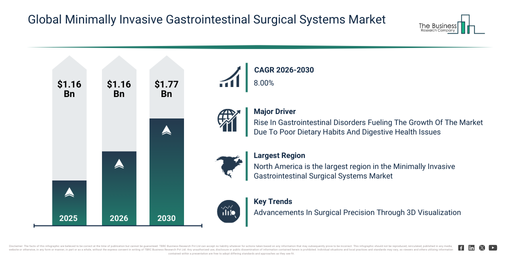
    The market for minimally invasive gastrointestinal surgical systems has grown steadily, with its value rising from $7.22 billion in 2025 to an anticipated $7.81 billion in 2026, representing a compound annual growth rate (CAGR) of 8.2%. This historical growth was primarily influenced by the continued use of conventional open surgeries, limited access to robotic surgical technologies, rising rates of gastrointestinal conditions, improvements in laparoscopic instruments, and widespread adoption of standard endoscopic techniques. Looking ahead, the market is expected to reach $10.61 billion by 2030, growing at a CAGR of 8.0%. Future expansion is anticipated due to breakthroughs in robotic-assisted and augmented reality-guided surgical technologies, increased hospital investments in minimally invasive surgery infrastructure, enhanced surgeon training programs, rising cases of gastrointestinal diseases, and the integration of artificial intelligence to improve surgical precision and planning. Key trends projected for this period include greater adoption of minimally invasive gastrointestinal surgeries, use of advanced imaging and visualization tools, preference for single-incision and natural orifice surgeries, wider deployment of robotic-assisted laparoscopic procedures, and a stronger emphasis on patient safety and recovery.

    Download A Free Sample Report For Comprehensive Market Insights:

    https://www.thebusinessresearchcompany.com/sample.aspx?id=27347&type=smp

    Rising Prevalence of Gastrointestinal Disorders Fueling Market Demand

    An important factor driving the minimally invasive gastrointestinal surgical systems market is the growing incidence of gastrointestinal disorders. These conditions affect the digestive tract—including the stomach, intestines, and related organs—and cause symptoms such as abdominal pain, bloating, diarrhea, and constipation. The increase in gastrointestinal ailments is largely linked to unhealthy eating patterns, particularly high consumption of processed foods and low dietary fiber, which negatively impact digestive health over time. Minimally invasive surgical systems facilitate treatment by enabling precise and efficient interventions that minimize complications and shorten patient recovery times. For example, data from June 2025 published by the UK Health Security Agency reveals that gastrointestinal infections in England rose by 27%, climbing from 96.1 cases per 100,000 people in 2022 to 122.0 in 2024. This upward trend in gastrointestinal diseases directly supports the growth of related surgical systems.

    Technological Advancements Boosting Market Expansion

    The ongoing development and adoption of innovative technologies are propelling the minimally invasive gastrointestinal surgical systems market forward. Enhanced robotic platforms and augmented reality-guided surgeries offer improved precision, visualization, and surgical outcomes. Hospitals and healthcare providers are investing more in these cutting-edge technologies, which also support surgeon education and training in advanced procedures. These factors are expected to significantly influence market growth throughout the forecast period.

    Access The Complete Minimally Invasive Gastrointestinal Surgical Systems Market Report:

    https://www.thebusinessresearchcompany.com/report/minimally-invasive-gastrointestinal-surgical-systems-global-market-report

    Segmentation Overview of the Minimally Invasive Gastrointestinal Surgical Systems Market

    This market is segmented by product type, technology, surgery, application, and end user. Key product categories include endoscopic equipment, laparoscopic instruments, robotic surgical systems, access devices, and visualization systems. The technology segment features traditional laparoscopy, robotic-assisted laparoscopy, single-incision surgery, natural orifice transluminal endoscopic surgery (NOTES), and augmented reality-guided surgery. Surgical procedures covered include adrenalectomy, appendectomy, bariatric surgery, cholecystectomy, colon and rectal surgery, foregut surgery, hernia repair, and other related surgeries. The market also accounts for different applications such as diagnostic, therapeutic, preventive, reconstructive, and palliative uses. End users comprise hospitals, ambulatory surgical centers (ASCs), clinics, research and academic institutions, and healthcare compliance organizations. Subcategories further detail specific instruments like flexible and rigid endoscopes, trocars, multi-port and single-port robotic systems, speculums, and camera systems, among others.

    Innovation Trends Shaping the Future of the Market

    Leading companies in this sector are focusing on innovations that enhance surgical precision and visualization. For instance, integration of an open console with 3D display technology is gaining traction as it offers surgeons a more interactive and detailed visual interface during operations. Notably, in May 2025, Medtronic Plc introduced the Hugo robotic-assisted surgery system in Korea. This system features a modular design and an open console with a 33-inch 3D display, catering to a variety of surgical specialties including urology, gynecology, and general surgery. The launch not only improves surgical accuracy and team communication but also establishes Seoul National University Hospital as a hub for robotic surgery research, education, and clinical practice in Korea.

    Key Players Driving the Minimally Invasive Gastrointestinal Surgical Systems Market

    The competitive landscape includes several major companies such as Johnson & Johnson, Fujifilm Holdings Corporation, Boston Scientific Corporation, Intuitive Surgical Inc., HOYA Corporation, Karl Storz SE & Co. KG, Cook Medical LLC, CONMED Corporation, Applied Medical Resources Corporation, Pentax Medical Corp., Ambu A/S, Richard Wolf GmbH, B. Braun Melsungen AG, W. L. Gore & Associates Inc., Medtronic plc, Olympus Corporation, CMR Surgical, Asensus Surgical, Endo Tools Therapeutics, GI View, Medrobotics, Endotics, EndoQuest Robotics, and Aurora Medical Technologies. These organizations are actively engaged in product development, technological innovation, and strategic partnerships to maintain market leadership.

    Geographic Distribution and Regional Market Outlook

    In terms of regional markets, North America led the minimally invasive gastrointestinal surgical systems sector in 2025. Meanwhile, Asia-Pacific is projected to be the fastest-growing region during the forecast period, driven by increasing healthcare investments, rising disease prevalence, and growing adoption of advanced surgical technologies. The market report covers key regions including Asia-Pacific, South East Asia, Western Europe, Eastern Europe, North America, South America, the Middle East, and Africa, providing a comprehensive view of global market dynamics and opportunities.

    Get in touch with us:

    The Business Research Company: https://www.thebusinessresearchcompany.com/

    Americas: +1 310-496-7795

    Asia: +44 7882 955267 & +91 8897263534

    Europe: +44 7882 955267

    Email us at: marketing@tbrc.info

    Follow us on:

    LinkedIn: https://in.linkedin.com/company/the-business-research-company

    YouTube: https://www.youtube.com/channel/UC24_fI0rV8cR5DxlCpgmyFQ

    Global Market Model: https://www.thebusinessresearchcompany.com/global-market-model
  • Medical Connectors Market Forecast Reveals Where Future Industry Value Will Be Created

    Medical Connectors Market Forecast Reveals Where Future Industry Value Will Be Created

    Enhanced with market attractiveness analysis, total addressable market evaluation, company benchmarking matrices, interactive Excel dashboards, expanded supply chain intelligence, emerging startup coverage, and detailed product insights, The Business Research Company’s 2026 market reports deliver more actionable and strategically valuable research.

    The medical connectors market has been experiencing significant growth in recent years, driven by technological advancements and increasing healthcare demands. As medical procedures become more sophisticated and patient care standards rise, the need for reliable and innovative connector solutions is expanding rapidly. This overview explores the current market size, key growth drivers, major players, and emerging trends shaping this vital sector.

    Medical Connectors Market Size and Expected Growth Trajectory

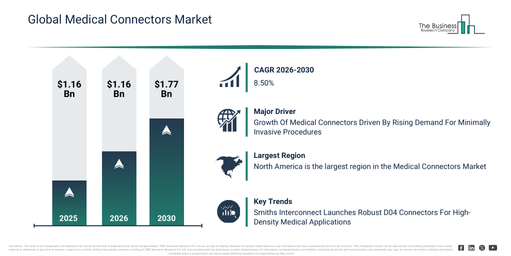
    The market for medical connectors has seen robust expansion, with its value projected to increase from $2.79 billion in 2025 to $3.04 billion in 2026, marking a compound annual growth rate (CAGR) of 8.9%. Historically, this growth was supported by the use of conventional plastic and metal connectors, limited device integration in hospitals, and steady demand in patient monitoring, electrosurgery, and endoscopy applications alongside diagnostic imaging connectivity. Looking ahead, the market is set to reach $4.22 billion by 2030, growing at a CAGR of 8.5%. This anticipated rise is fueled by innovations such as hybrid and push-pull connectors, expanding hospital-grade and LED-lighted cords, better integration with dental and respiratory devices, the growth of ambulatory surgical centers, and a focus on miniaturized, high-frequency RF connectivity. Additional trends include increased adoption of disposable and sterilizable connectors, demand for high-speed embedded connectors, hybrid circular and receptacle systems, and the use of illuminated and magnetic medical connectors as well as customizable surgical cables with strain relief.

    Download A Free Sample Report For Comprehensive Market Insights:

    https://www.thebusinessresearchcompany.com/sample.aspx?id=19569&type=smp

    Key Drivers Behind the Surge in Medical Connectors Demand

    A significant factor propelling the medical connectors market is the growing popularity of minimally invasive procedures. These techniques involve small incisions or non-invasive methods that reduce tissue damage, accelerate recovery, and minimize pain compared to traditional surgeries. The rise in such procedures stems from technological advancements, patient preference for quicker recovery, and the increasing incidence of chronic diseases that benefit from less invasive interventions. Medical connectors play a crucial role in these procedures by ensuring secure and reliable connections between complex device components, such as endoscopes, laparoscopes, and robotic surgical systems.

    Growing Patient Demand for Less Invasive Treatments

    Statistics from the American Society of Plastic Surgeons highlight this trend, showing cosmetic minimally invasive procedures rising from 23.7 million in 2022 to 25.4 million in 2023. This surge reflects an overall shift toward treatments that prioritize patient comfort and efficiency, which in turn is driving the need for advanced medical connectors compatible with these technologies.

    Access The Complete Medical Connectors Market Report:

    https://www.thebusinessresearchcompany.com/report/medical-connectors-global-market-report

    Product and Application Segmentation in the Medical Connectors Market

    This market is divided into several key segments based on product type, material, application, and end-user. Product categories include flat silicone surgical cables, embedded electronic connectors, radio-frequency connectors, disposable plastic connectors, hybrid circular connectors and receptacle systems, power cords with retention systems, lighted hospital-grade cords, magnetic medical connectors, and push-pull connectors. Materials used primarily consist of plastic and metal. Applications cover patient monitoring, electrosurgery, endoscopy, diagnostic imaging, respiratory and dental devices, among others. End-users span hospitals and clinics, diagnostic labs and imaging centers, ambulatory surgical centers, and additional medical facilities. Each product category also has further subsegments, such as customizable flat silicone cables, high-speed and miniature embedded connectors, various types of RF connectors, single-use and sterilizable plastic connectors, multi-pin hybrid circular connectors, hospital-grade power cords with locking features, LED-lighted cords, magnetic charging and data connectors, and specialized push-pull connectors for medical devices.

    Innovations and Competitive Dynamics in the Medical Connectors Industry

    Leading companies are heavily investing in innovative solutions to improve the performance and reliability of medical connectors. A notable focus is on high-density connectors that manage numerous electrical connections within compact spaces, meeting stringent medical standards for durability and sterilization. For example, in April 2024, Smiths Interconnect Inc., a US-based connectivity provider, introduced their D04 connectors designed for high-density applications without compromising durability. These connectors feature an advanced contact design that ensures excellent electrical reliability and signal integrity, which is critical for precise medical device functionality.

    Key Players Driving the Medical Connectors Market Forward

    Several major corporations dominate this market, including Kyocera AVX, TE Connectivity Ltd., Amphenol Corporation, Rosenberger Hochfrequenztechnik GmbH & Co. KG, Molex LLC, Interplex, Smiths Group plc, B. Braun SE, ITT Interconnect Solutions, Nordson Corporation, Stäubli International AG, Samtec Inc., Mouser Electronics Inc., Winchester Interconnect, Lemo S.A., Axon’ Cable, Souriau Sunbank Connection Technologies, Nicomatic, KEL Corporation, Omnetics Connector Corporation, Positronic Industries Inc., Fischer Connectors SA, PalPilot International Corp., and ODU GmbH & Co. KG, along with Qosina Corporation.

    Regional Outlook and Growth Opportunities for Medical Connectors

    In 2025, North America held the largest medical connectors market share, reflecting its advanced healthcare infrastructure and technology adoption. However, the Asia-Pacific region is expected to be the fastest-growing market in the coming years, driven by expanding healthcare facilities, rising medical device usage, and increased investment in healthcare infrastructure. Other regions covered in the market report include South East Asia, Western Europe, Eastern Europe, South America, the Middle East, and Africa, providing a comprehensive global perspective on opportunities and challenges.

    Get in touch with us:

    The Business Research Company: https://www.thebusinessresearchcompany.com/

    Americas: +1 310-496-7795

    Asia: +44 7882 955267 & +91 8897263534

    Europe: +44 7882 955267

    Email us at: marketing@tbrc.info

    Follow us on:

    LinkedIn: https://in.linkedin.com/company/the-business-research-company

    YouTube: https://www.youtube.com/channel/UC24_fI0rV8cR5DxlCpgmyFQ

    Global Market Model: https://www.thebusinessresearchcompany.com/global-market-model
  • Medical Composites Market Growth Through 2030 Creates New Strategic Opportunities

    Medical Composites Market Growth Through 2030 Creates New Strategic Opportunities

    Through market attractiveness analysis, total addressable market evaluation, company benchmarking matrices, interactive Excel dashboards, expanded supply chain intelligence, emerging startup coverage, and detailed product insights, The Business Research Company’s 2026 market reports provide more actionable and strategically valuable research.

    The medical composites industry is witnessing significant growth, driven by innovations and expanding applications in healthcare. As these advanced materials become increasingly integral to medical devices and procedures, the market is poised for substantial progress in the coming years. Let’s explore the current market size, growth factors, key players, and emerging trends shaping this field.

    Medical Composites Market Size and Growth Outlook

    The medical composites market has experienced rapid expansion in recent years. It is projected to increase from $1.6 billion in 2025 to $1.84 billion in 2026, registering a compound annual growth rate (CAGR) of 14.5%. This past growth has been fueled by the rising use of composites in medical devices, a surge in orthopedic and dental procedures, advancements in material science, growing adoption of minimally invasive surgical tools, and wider availability of composite processing technologies.

    Download A Free Sample Report For Comprehensive Market Insights:

    https://www.thebusinessresearchcompany.com/sample.aspx?id=7489&type=smp

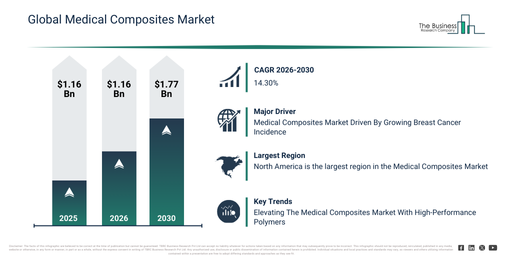
    Looking ahead, the market is expected to continue its strong upward trajectory, reaching $3.13 billion by 2030 with a CAGR of 14.3%. This future growth will be propelled by the rising demand for next-generation implant materials, increased investments in biomedical engineering, expansion of personalized medical devices, a stronger focus on sustainable and recyclable composites, and broader applications in advanced diagnostics. Key trends forecasted to drive the market include the use of advanced composite materials in implants, growing preference for lightweight surgical instruments, higher demand for biocompatible high-strength materials, and enhanced attention to durability and performance in composite applications.

    Drivers Encouraging Expansion in the Medical Composites Market

    One of the major factors accelerating the medical composites market is the growing incidence of breast cancer worldwide. Breast cancer, a malignant tumor affecting breast tissue, requires innovative treatment devices that improve patient comfort and effectiveness. Medical composites serve as essential materials in the production of lightweight, customized radiation therapy devices and implants that enhance treatment outcomes.

    Access The Complete Medical Composites Market Report:

    https://www.thebusinessresearchcompany.com/report/medical-composites-global-market-report

    To illustrate, the Centers for Disease Control and Prevention reported in July 2023 that annually in the United States, approximately 240,000 women and 2,100 men are diagnosed with breast cancer, while about 42,000 women and 500 men succumb to the disease. This rising patient population directly contributes to increased demand for medical composites used in breast cancer care, thus fueling market growth.

    Medical Composites Market Segmentation by Product and Application

    The report divides the medical composites market into several key segments:

    1) Fiber Type: Carbon Fiber, Ceramic Fiber, and Other Fiber Types

    2) Process: Wet Lamination, Prepreg, and Other Processes

    3) Application: Diagnostic Imaging, Composite Body Implants, Surgical Instruments, Dental, and Other Applications

    Additional subcategories include:

    – Carbon Fiber Types: Continuous Carbon Fiber, Short Carbon Fiber, Carbon Fiber Reinforced Polymers (CFRP)

    – Ceramic Fiber Types: Alumina Fiber, Zirconia Fiber

    – Other Fiber Types: Glass Fiber, Aramid Fiber

    How Trends Are Shaping Long-Term Demand in Medical Composites

    Leading companies in the medical composites field are focusing on introducing high-performance polymers to strengthen their market positions. One notable example is Magnolia Trinity PEEK, a medical-grade PEEK composite made up of three clinically validated biomaterials that enhance the performance characteristics needed in medical devices.

    For instance, in October 2023, Superior Polymers, a US polymer manufacturer, launched Magnolia Trinity PEEK, designed specifically for implantable devices that contact bodily fluids or tissues for over 24 hours. This composite combines carbon fiber, hydroxyapatite, and PEEK, offering superior strength, stiffness, and durability, making it a preferred choice for medical device manufacturers.

    Competitive Landscape and Key Players in the Medical Composites Market

    The medical composites market features a number of prominent companies, including 3M Company, Toray Industries Inc, SGL Carbon SE, CeramTec GmbH, Composiflex Inc, Dentsply Sirona Inc, Mitsubishi Chemical Holdings Corporation, Avient Corporation, Zeus Industrial Products Inc, Kulzer GmbH, Den Mat Holdings LLC, Ivoclar Vivadent Inc, Tokuyama Dental Corporation Inc, Teijin Limited, Koninklijke DSM N V, Fillauer LLC, Getinge Group, Hill Rom Holdings Inc, icotec AG, Nippon Sheet Glass Co Ltd, Ossur, Ottobock SE & Co KG, Owens Corning, Shofu Inc, and Stryker Corporation. These players are actively involved in innovation, product development, and strategic partnerships to capture greater market share.

    Regional Market Leadership and Share

    In 2025, North America held the largest share of the medical composites market. The report also examines the market across other major regions including Asia-Pacific, South East Asia, Western Europe, Eastern Europe, South America, the Middle East, and Africa, providing a well-rounded view of global market dynamics.

    Get in touch with us:

    The Business Research Company: https://www.thebusinessresearchcompany.com/

    Americas: +1 310-496-7795

    Asia: +44 7882 955267 & +91 8897263534

    Europe: +44 7882 955267

    Email us at: marketing@tbrc.info

    Follow us on:

    LinkedIn: https://in.linkedin.com/company/the-business-research-company

    YouTube: https://www.youtube.com/channel/UC24_fI0rV8cR5DxlCpgmyFQ

    Global Market Model: https://www.thebusinessresearchcompany.com/global-market-model
  • Minimally Invasive And Non Invasive Product And Service Market Trends And Growth Drivers Point To Strong Future Potential

    Minimally Invasive And Non Invasive Product And Service Market Trends And Growth Drivers Point To Strong Future Potential

    Through market attractiveness analysis, total addressable market evaluation, company benchmarking matrices, interactive Excel dashboards, expanded supply chain intelligence, emerging startup coverage, and detailed product insights, The Business Research Company’s 2026 market reports provide more actionable and strategically valuable research.

    The minimally invasive and non-invasive product and service market is experiencing significant growth, driven by advancements in medical technology and increasing patient preference for less invasive treatment options. This sector is evolving rapidly, with expanding applications and a focus on improving patient outcomes while reducing recovery times. Let’s explore the market’s size, key growth factors, segment details, major industry players, and regional perspectives to understand its future trajectory.

    Market Size and Growth Outlook for the Minimally Invasive and Non-Invasive Product and Service Market

    The market for minimally invasive and non-invasive products and services has shown strong expansion in recent years. It is projected to grow from $148.77 billion in 2025 to $160.81 billion in 2026, representing a compound annual growth rate (CAGR) of 8.1%. This past growth is primarily due to an increasing preference for minimally invasive procedures, improved surgical success rates with fewer complications, the expansion of hospital surgical infrastructure, better availability of advanced imaging technologies, and wider acceptance of non-invasive treatment options.

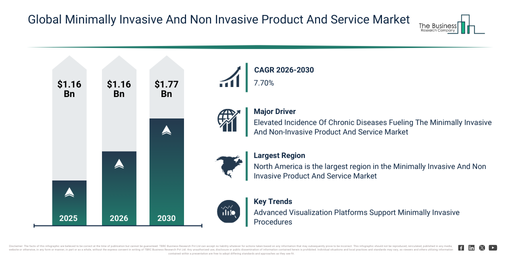
    Looking ahead, the market is expected to continue its robust growth, reaching $216.48 billion by 2030 at a CAGR of 7.7%. Factors contributing to this growth include rising demand for outpatient and day-care surgeries, greater adoption of robotic surgical platforms, broader use of precision medicine, focus on cost-effective surgical solutions, and the integration of advanced imaging into surgical workflows. Emerging trends during this period include the growing use of image-guided surgical systems, expansion of robotic-assisted minimally invasive procedures, increased application of non-invasive diagnostic tools, development of precision-control surgical instruments, and an enhanced emphasis on patient safety and quicker recovery times.

    Download A Free Sample Report For Comprehensive Market Insights:

    https://www.thebusinessresearchcompany.com/sample.aspx?id=9313&type=smp

    Key Factors Propelling Growth in the Minimally Invasive and Non-Invasive Product and Service Market

    One of the primary drivers fueling this market is the rising prevalence of chronic diseases worldwide. Chronic conditions, defined as long-lasting illnesses typically persisting for three months or more, create a growing demand for treatments that minimize pain and recovery time while allowing patients to maintain daily activities. Minimally invasive and non-invasive procedures offer effective management of these illnesses with fewer disruptions.

    For example, in June 2024, the UK’s National Health Service reported that 3,615,330 people registered with general practitioners were diagnosed with non-diabetic hyperglycemia or pre-diabetes in 2023. This figure represents an 18% increase from 3,065,825 cases in 2022, highlighting the rising burden of chronic disease and reinforcing the market’s potential for expansion.

    Market Segmentation: Growth Opportunities Within the Minimally Invasive and Non-Invasive Product and Service Market

    This market is segmented across several dimensions to capture the full spectrum of products and procedures:

    1) Procedure Type: Minimally Invasive Procedures and Non-Invasive Procedures

    2) Product and Service Category: Diagnostic and Imaging Devices, Monitoring and Assessment Devices, Therapeutic and Treatment Devices, Robotic and Computer-Assisted Systems, and Procedure-Supporting Services

    3) Technology Type: Imaging-Based Technologies, Energy-Based Technologies, Catheter-Free and Incision-Free Technologies, Robotic and Navigation-Assisted Technologies, and Sensor-Based and Digital Health Technologies

    4) Application Area: Cardiovascular Care, Neurology and Brain Health, Gastrointestinal Care, Orthopedic and Musculoskeletal Care, Aesthetic and Cosmetic Care, and Dental and Oral Care

    5) Care Setting: Hospitals, Ambulatory and Outpatient Care Centers, Specialty Clinics, Diagnostic and Imaging Centers, and Home-Based and Remote Care Settings

    Further subcategories include types of minimally invasive procedures such as laparoscopic, endoscopic, catheter-based, robotic-assisted, and image-guided techniques. Non-invasive procedures cover imaging-based diagnostics, energy-based therapies, non-contact monitoring, external device therapies, and digital sensor diagnostics.

    Access The Complete Minimally Invasive And Non Invasive Product And Service Market Report:

    https://www.thebusinessresearchcompany.com/report/minimally-invasive-and-non-invasive-product-and-service-global-market-report

    Emerging Industry Trends Boosting Revenue Growth in the Minimally Invasive and Non-Invasive Market

    Leading players in this market are investing heavily in cutting-edge visualization platforms that combine multiple imaging methods to improve diagnostic accuracy and procedural efficiency. These advanced systems enable clinicians to switch effortlessly between imaging modes and gain detailed insights into surgical fields, enhancing tissue visualization, real-time evaluation, and decision-making.

    For instance, in September 2025, Japan-based medical technology company Olympus introduced the VISERA S OTV-S500 imaging platform. This sophisticated system supports ENT and urology surgeries by integrating white-light imaging, Narrow Band Imaging (NBI), and stroboscopy into one unified interface. It offers high-definition image capture, modality switching for minimally invasive assessments, and better visualization for early disease detection, significantly improving procedural performance, diagnostic confidence, and documentation.

    Key Players and Competitive Landscape in the Minimally Invasive and Non-Invasive Product and Service Market

    The market is shaped by several prominent companies including Medtronic Plc, Olympus Corporation, Smith & Nephew Plc, Stryker Corporation, Teleflex Incorporated, Boston Scientific Corporation, CONMED Corporation, Intuitive Surgical Inc., Fujifilm Holdings Corporation, Zimmer Biomet Holdings Inc., B. Braun Holding GmbH & Co. KG, HOYA Corporation, GE Healthcare, Siemens Healthineers, Koninklijke Philips N.V., Integra LifeSciences Corporation, NuVasive Inc., Surgical Innovations Group Plc, Clarus Medical LLC, Alphatec Holdings Inc., CooperSurgical Inc., Abbott Laboratories, Terumo Medical Corporation, Johnson & Johnson Inc., and AtriCure Inc. These companies are actively advancing their product lines and technologies to maintain leadership in this rapidly evolving market.

    Regional Market Size Leadership and Growth Forecasts for Minimally Invasive and Non-Invasive Products and Services

    In 2025, North America held the largest share of the minimally invasive and non-invasive product and service market. The report also includes comprehensive insights into other regions such as Asia-Pacific, South East Asia, Western Europe, Eastern Europe, South America, the Middle East, and Africa, highlighting varying growth rates and opportunities across these markets.

    Get in touch with us:

    The Business Research Company: https://www.thebusinessresearchcompany.com/

    Americas: +1 310-496-7795

    Asia: +44 7882 955267 & +91 8897263534

    Europe: +44 7882 955267

    Email us at: marketing@tbrc.info

    Follow us on:

    LinkedIn: https://in.linkedin.com/company/the-business-research-company

    YouTube: https://www.youtube.com/channel/UC24_fI0rV8cR5DxlCpgmyFQ

    Global Market Model: https://www.thebusinessresearchcompany.com/global-market-model