Category: Medical Equipment

  • Mammography Devices Market Forecast Highlights Expansion From $2.46 Billion To $3.81 Billion Through 2030

    Mammography Devices Market Forecast Highlights Expansion From $2.46 Billion To $3.81 Billion Through 2030

    Delivering more actionable and strategically valuable research, The Business Research Company’s 2026 market reports feature market attractiveness analysis, total addressable market evaluation, company benchmarking matrices, interactive Excel dashboards, expanded supply chain intelligence, emerging startup coverage, and detailed product insights.

    The mammography devices market is experiencing swift expansion, driven by technological advancements and increasing awareness about breast cancer screening. This sector is set to offer substantial revenue potential as innovations and rising demand shape its future landscape. Let’s explore the current market size, key growth drivers, segmentation, innovation trends, leading companies, and regional insights to understand the opportunities ahead.

    Current Market Size and Projected Growth of Mammography Devices

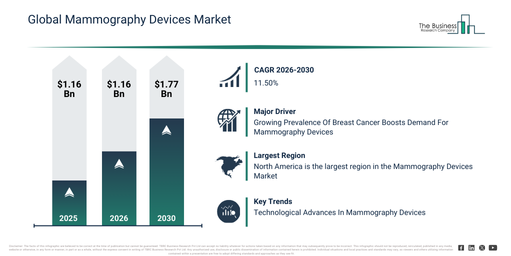
    The mammography devices market has seen rapid growth in recent years. It is anticipated to increase from $2.2 billion in 2025 to $2.46 billion in 2026, reflecting a strong compound annual growth rate (CAGR) of 11.8%. This past growth has been influenced by continued reliance on analog mammography devices, limited breast imaging access in rural areas, rising breast cancer awareness, widespread use of screen-film mammography, and the expansion of specialty clinics and diagnostic centers. Looking further ahead, the market is projected to reach $3.81 billion by 2030, growing at a CAGR of 11.5%. This forecasted surge is expected to be fueled by advancements in full-field digital mammography, increasing demand for 3D digital mammography and digital breast tomosynthesis (DBT), integration of computer-aided detection (CAD) and AI-powered imaging analysis, the rise of portable mammography systems, and enhanced government initiatives supporting breast cancer screening programs.

    Download A Free Sample Report For Comprehensive Market Insights:

    https://www.thebusinessresearchcompany.com/sample.aspx?id=19558&type=smp

    Rising Prevalence of Breast Cancer Driving Mammography Device Demand

    A major factor propelling the mammography devices market is the growing incidence of breast cancer worldwide. This disease involves abnormal cell growth in breast tissue that can develop into malignant tumors capable of spreading to other body parts. The increasing number of breast cancer cases is linked to lifestyle changes, aging populations, genetic mutations, and hormonal influences. Mammography devices play a vital role in early detection, accurate diagnosis, and effective treatment of breast cancer, significantly improving patient survival rates. For example, in January 2024, the American Cancer Society reported that around 310,720 new invasive breast cancer cases are expected to be diagnosed in U.S. women, with approximately 42,250 deaths projected from the disease in the same year. Additionally, incidence rates have been rising at about 0.6% annually overall, and at a faster rate of 1.0% each year among women under 50, highlighting an urgent need for enhanced screening technologies.

    Key Segments Defining the Mammography Devices Market

    This market is divided into several important segments for detailed analysis:

    1) By Device Type: Analog, Digital, and Other Device Types

    2) By Modality: Portable Mammography Systems and Non-Portable Mammography Systems

    3) By End User: Hospitals, Specialty Clinics, and Diagnostic Centers

    Further breakdown includes:

    – Analog devices such as Screen-Film Mammography (SFM) and Full-Field Analog Mammography

    – Digital devices including Full-Field Digital Mammography (FFDM), 2D Digital Mammography, 3D Digital Mammography (Tomosynthesis), CAD Mammography, and Digital Breast Tomosynthesis (DBT)

    – Other device types like Portable Mammography Units, Cone Beam Breast Computed Tomography (CBBCT), Automated Breast Ultrasound Systems (ABUS), Molecular Breast Imaging (MBI), and Contrast-Enhanced Mammography (CEM)

    This comprehensive segmentation allows for a nuanced understanding of the market’s diverse offerings and customer needs.

    Access The Complete Mammography Devices Market Report:

    https://www.thebusinessresearchcompany.com/report/mammography-devices-global-market-report

    Innovations Advancing the Mammography Devices Market

    Leading companies in this market are heavily investing in cutting-edge technologies to enhance imaging quality and diagnostic precision. One such breakthrough is mammography systems equipped with wide-angle tomosynthesis, which provide three-dimensional images of breast tissue for improved cancer detection, especially in dense breasts where traditional 2D mammography may struggle. For instance, in September 2023, Siemens Healthineers launched the Mammomat B. Brilliant system featuring PlatinumTomo technology. This innovation boasts a 50-degree tube movement—the widest angle currently available—allowing extremely detailed 3D imaging with a rapid scan time of roughly five seconds, making it the fastest device in its category. The system also incorporates Flying Focus Spot technology, which reduces image blurring caused by tube movement, ensuring sharp and clear images even at high speeds. These features collectively improve diagnostic accuracy while enhancing patient comfort during scans.

    Prominent Players Leading the Mammography Devices Industry

    Several major companies are shaping the competitive landscape of the mammography devices market. These include Siemens Healthineers AG, Fujifilm Holdings Corporation, Koninklijke Philips N.V., GE HealthCare Technologies Inc., Konica Minolta Inc., Hologic Inc., Carestream Health Inc., Analogic Corporation, Canon Medical Systems Corporation, Aurora Health Care Inc., DMS Group, SuperSonic Imagine Ltd., Villa Sistemi Medicali S.p.A, Planmed Oy, Allengers Medical Systems Limited, General Medical Merate S.p.A., KUB Technologies Inc., Delphinus Medical Technologies Inc., Metaltronica S.p.A., SonoCiné Inc., Micrima Limited, IMS Giotto S.p.A., CMR Naviscan Corporation, and SternMed GmbH. These organizations focus on product innovation, expanding their product lines, and enhancing imaging technologies to stay ahead in a rapidly evolving market.

    Geographical Market Leadership and Regional Growth Potential

    In 2025, North America held the largest share of the mammography devices market, benefiting from advanced healthcare infrastructure and high awareness levels. However, the Asia-Pacific region is expected to experience the fastest market growth in the coming years. Other significant regions covered in the market analysis include South East Asia, Western Europe, Eastern Europe, South America, the Middle East, and Africa. The rising healthcare investments, increasing breast cancer prevalence, and expanding screening programs in these regions contribute to their promising growth trajectories.

    Get in touch with us:

    The Business Research Company: https://www.thebusinessresearchcompany.com/

    Americas: +1 310-496-7795

    Asia: +44 7882 955267 & +91 8897263534

    Europe: +44 7882 955267

    Email us at: marketing@tbrc.info

    Follow us on:

    LinkedIn: https://in.linkedin.com/company/the-business-research-company

    YouTube: https://www.youtube.com/channel/UC24_fI0rV8cR5DxlCpgmyFQ

    Global Market Model: https://www.thebusinessresearchcompany.com/global-market-model
  • Microelectronic Medical Implants Market Forecast Signals New Revenue Opportunities Through 2030

    Microelectronic Medical Implants Market Forecast Signals New Revenue Opportunities Through 2030

    Delivering more actionable and strategically valuable research, The Business Research Company’s 2026 market reports feature market attractiveness analysis, total addressable market evaluation, company benchmarking matrices, interactive Excel dashboards, expanded supply chain intelligence, emerging startup coverage, and detailed product insights.

    The microelectronic medical implants sector is rapidly evolving, driven by significant technological progress and increasing healthcare needs worldwide. This industry is witnessing substantial growth as innovations improve patient care and new applications emerge. Let’s explore the current market size, key factors propelling growth, major players, prevailing trends, and promising segments shaping the future of microelectronic medical implants.

    Market Expansion and Projections for Microelectronic Medical Implants

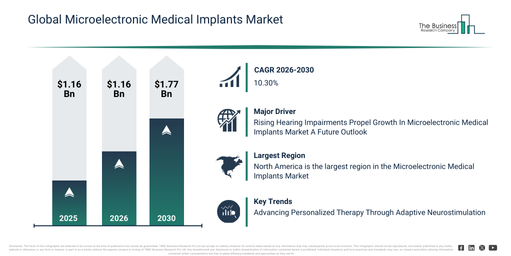
    The market for microelectronic medical implants has experienced swift growth in recent years. From a valuation of $48.23 billion in 2025, it is projected to rise to $53.42 billion by 2026, reflecting a compound annual growth rate (CAGR) of 10.8%. This growth has been driven by advances in microelectronics manufacturing, a rising number of chronic illness cases, increased use of implantable cardiac devices, improvements in biocompatible materials, and the expansion of minimally invasive treatments. Looking ahead, the market is forecasted to reach $79.08 billion by 2030, growing at a CAGR of 10.3%. Several factors will fuel this expansion, including greater investments in bioelectronic medicine, wider adoption of personalized implant therapies, growth in wireless and remote monitoring implants, higher demand for long-term therapeutic solutions, and a stronger focus on integrating digital health technologies.

    Download A Free Sample Report For Comprehensive Market Insights:

    https://www.thebusinessresearchcompany.com/sample.aspx?id=8992&type=smp

    Key Factors Encouraging Growth in Microelectronic Medical Implants

    An important driver behind the market’s growth is the increasing prevalence of hearing impairments worldwide. Hearing loss, defined as the inability to hear as well as those with normal hearing (hearing thresholds of 20 dB or better in both ears), affects millions globally. Microelectronic medical implants offer effective solutions for individuals with severe hearing loss who no longer benefit from hearing aids, thereby boosting demand for these devices. For example, in February 2024, the World Health Organization (WHO) reported that over 5% of the global population—approximately 430 million people, including 34 million children—require rehabilitation for disabling hearing loss. This number is expected to exceed 700 million by 2050, highlighting a significant opportunity for market growth.

    Additional Growth Drivers Supporting Market Expansion

    Beyond hearing-related implants, several other factors contribute to the upward trajectory of the microelectronic medical implants market. Enhanced biocompatible materials, ongoing improvements in implant design, and the increasing shift toward minimally invasive therapeutic procedures all play a role. Moreover, rising awareness of chronic diseases and technological advances in monitoring systems encourage the adoption of implantable devices across diverse medical fields, further expanding market opportunities.

    Access The Complete Microelectronic Medical Implants Market Report:

    https://www.thebusinessresearchcompany.com/report/microelectronic-medical-implants-global-market-report

    Segments Offering the Largest Opportunities in the Microelectronic Medical Implants Market

    This report categorizes the microelectronic medical implants market into several key segments:

    1) By Product: Neurostimulators, Drug Infusion Pumps, Pacemakers, Spinal Fusion Stimulators, Implantable Drug Pumps, Hearing Implants, Eye Implants, Ocular Implants, and Other Products.

    2) By Technology: Radiofrequency, Sensors, and Other Technologies.

    3) By Material: Metals, Titanium, Stainless Steel, Platinum, Gold Brazed Alloys, Polymers, Ceramics, and Other Materials.

    4) By Application: Cardiology, Neurology, Ophthalmology, Oncology, and Other Applications.

    5) By End-Users: Hospitals and Clinics, Ambulatory Surgical Centers.

    Further breakdowns include subcategories such as Deep Brain Stimulators and Peripheral Nerve Stimulators within neurostimulators; insulin and pain management pumps under drug infusion pumps; various pacemaker types including single-chamber, dual-chamber, and biventricular; bone growth stimulators and electrical stimulation devices in spinal fusion stimulators; intrathecal and programmable drug pumps; cochlear and bone-anchored hearing implants; retinal and glaucoma implants for eye care; intraocular lenses and sustained-release drug delivery implants for ocular use; and wireless monitoring devices under other bioelectronic implants.

    Innovative Trends Steering the Future of Microelectronic Medical Implants

    Leading companies in the microelectronic medical implants field are increasingly investing in adaptive neuromodulation technologies such as adaptive deep brain stimulation (aDBS) to enhance treatment precision and patient outcomes. These advanced systems operate in a closed-loop manner, sensing neural activity and adjusting electrical stimulation in real time based on brain signals. This allows dynamic therapy modulation, reduces overstimulation, and improves symptom control. For instance, in February 2025, Medtronic plc received FDA approval for its BrainSense Adaptive Deep Brain Stimulation system. This innovation is designed to optimize Parkinson’s disease treatment by continuously monitoring neural signals and automatically adapting stimulation. Features include real-time brain-signal tracking, automated stimulation adjustments, and an Electrode Identifier tool that simplifies programming, ultimately improving therapy consistency and clinician workflow.

    Main Players in the Microelectronic Medical Implants Industry

    The competitive landscape of this market includes major companies such as Medtronic PLC, Abbott Laboratories, Boston Scientific Corporation, BIOTRONIK SE & Co. KG, Cochlear Limited, LivaNova PLC, MicroPort Scientific Corporation, Zimmer Biomet Holdings Inc., Edwards Lifesciences Corporation, Inspire Medical Systems Inc., NeuroPace Inc., Envoy Medical Corporation, ImThera Medical Inc., EndoStim Inc., Integra LifeSciences Corporation, MED-EL Elektromedizinische Geräte GmbH, Abiomed Inc., Lepu Medical Technology Co. Ltd., Beijing PINS Medical Co. Ltd., and Nurotron Biotechnology Co. Ltd.

    Regions Leading Demand and Growth in Microelectronic Medical Implants

    In 2025, North America held the largest share of the microelectronic medical implants market. However, the Asia-Pacific region is predicted to register the fastest growth throughout the forecast period. The market analysis encompasses important regions including Asia-Pacific, South East Asia, Western Europe, Eastern Europe, North America, South America, the Middle East, and Africa, providing a comprehensive view of global market dynamics.

    Get in touch with us:

    The Business Research Company: https://www.thebusinessresearchcompany.com/

    Americas: +1 310-496-7795

    Asia: +44 7882 955267 & +91 8897263534

    Europe: +44 7882 955267

    Email us at: marketing@tbrc.info

    Follow us on:

    LinkedIn: https://in.linkedin.com/company/the-business-research-company

    YouTube: https://www.youtube.com/channel/UC24_fI0rV8cR5DxlCpgmyFQ

    Global Market Model: https://www.thebusinessresearchcompany.com/global-market-model
  • Mammalian Cell Banking Market Expected To Reach $5.31 Billion By 2030 As Growth Accelerates At 11% CAGR

    Mammalian Cell Banking Market Expected To Reach $5.31 Billion By 2030 As Growth Accelerates At 11% CAGR

    Enhanced with market attractiveness analysis, total addressable market evaluation, company benchmarking matrices, interactive Excel dashboards, expanded supply chain intelligence, emerging startup coverage, and detailed product insights, The Business Research Company’s 2026 market reports deliver more actionable and strategically valuable research.

    The mammalian cell banking sector has witnessed significant growth recently, driven by advancements in biopharmaceuticals and regenerative medicine. As demand for innovative therapies rises, this market is set to expand further, supported by technological progress and increasing research investments. Below, we explore the current market size, growth drivers, key players, trends, and regional outlook shaping this vital industry.

    Mammalian Cell Banking Market Size and Growth Trajectory Through 2030

    The mammalian cell banking market has experienced rapid expansion in recent years. It is projected to increase from $3.14 billion in 2025 to $3.5 billion in 2026, achieving a compound annual growth rate (CAGR) of 11.3%. This growth during the past period has been primarily fueled by advancements in monoclonal antibody production, the rise in vaccine manufacturing, stricter regulatory quality standards, the expansion of academic research, and the commercialization of biologics.

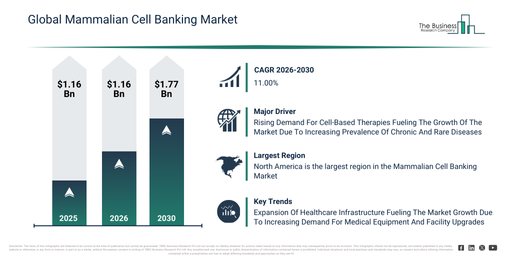
    Looking ahead, the market is forecast to grow even more significantly, reaching $5.31 billion by 2030 with a CAGR of 11.0%. Factors expected to drive this future expansion include progress in gene therapy, the increasing adoption of personalized medicine, developments in biosimilars, growth in cell-based therapy pipelines, and the need for long-term cell traceability. Emerging trends predicted in the coming years involve the standardization of cell line preservation, growth in biopharmaceutical pipelines, expansion of CGMP-compliant cell banks, heightened focus on genetic stability, and greater outsourcing to specialized facilities.

    Download A Free Sample Report For Comprehensive Market Insights:

    https://www.thebusinessresearchcompany.com/sample.aspx?id=28262&type=smp

    What Is Fueling the Mammalian Cell Banking Market’s Expansion?

    One of the primary forces propelling the mammalian cell banking market is the growing demand for cell-based therapies. These therapies use living cells that are often modified or engineered to repair, replace, or regenerate damaged tissues and organs, providing targeted treatment options for a variety of diseases. The rising prevalence of chronic and rare diseases has increased the urgency for more effective and specific medical solutions, boosting the need for these therapies.

    Mammalian cell banking plays a critical role by offering a reliable and standardized supply of high-quality cells. This ensures consistency, safety, and scalability in developing and manufacturing regenerative treatments. For example, in April 2024, the American Society of Gene and Cell Therapy reported an 11% increase in therapies entering Phase I clinical trials since late 2022, highlighting the growing pipeline of cell-based treatments. This surge clearly supports the expanding mammalian cell banking market.

    Segments That Drive Revenue in the Mammalian Cell Banking Market

    This report divides the mammalian cell banking market into several key segments:

    1) Product Type: Master Cell Bank and Working Cell Bank

    2) Cell Type: Including Chinese Hamster Ovary (CHO), Baby Hamster Kidney (BHK), Non-Secreting 0 (NS0), YB2/0 and P2/0, Human Embryonic Kidney 293 (HEK293) and derivatives, and Henrietta Lacks (HELA) cells

    3) Storage Type: Liquid Nitrogen, Controlled Rate Freezer, and Flash Freezing

    4) Application Areas: Drug Development, Vaccine Production, Gene Therapy, and Monoclonal Antibody Production

    5) End Users: Academic and Research Laboratories, Biopharmaceutical Companies, and Contract Research Organizations (CROs)

    Further subcategories include master cell bank types such as recombinant cell lines, hybridoma cell lines, primary cell lines, genetically engineered cell lines, and viral vector-producing cell lines. Working cell banks are broken down into CGMP-compliant cell banks, research-grade cell banks, clinical trial cell banks, commercial production cell banks, and stability testing cell banks.

    Access The Complete Mammalian Cell Banking Market Report:

    https://www.thebusinessresearchcompany.com/report/mammalian-cell-banking-global-market-report

    How Innovations Are Influencing Future Growth in the Mammalian Cell Banking Market

    Leading companies in this field are focusing on creating novel solutions like stable cell line systems that improve productivity, maintain long-term genetic stability, and optimize biopharmaceutical manufacturing processes. These stable cell lines are genetically modified mammalian cells designed to consistently produce therapeutic proteins with high reproducibility across multiple generations.

    For instance, in August 2024, WuXi Biologics introduced the WuXia293 Stable platform, an HEK293-based stable cell line system specifically engineered for producing difficult-to-express biologics. This platform uses proprietary technology to ensure stable expression and quality over extended cell passages, overcoming challenges such as low yields and quality issues common with traditional CHO cell systems. It offers high protein output, improved human-like glycosylation, and scalable production suitable for both clinical and commercial needs.

    Key Players Defining the Mammalian Cell Banking Market’s Competitive Landscape

    Several major companies dominate the mammalian cell banking market, including Merck KGaA, Thermo Fisher Scientific Inc., Lonza Group AG, Eurofins Scientific SE, Charles River Laboratories International Inc., Catalent Inc., Sartorius Stedim Biotech S A, Samsung Biologics Co Ltd, CMIC Holdings Co Ltd, WuXi Biologics Inc., Evotec SE, AGC Biologics Inc., GenScript ProBio Co Ltd, Syngene International Limited, KBI Biopharma Inc., Rentschler Biopharma SE, Polpharma Biologics S A, Abzena plc, 53Biologics, Cellistic, GBI Biomanufacturing, ABL Inc, OmniaBio, and uBriGene Biosciences. These firms are actively pursuing growth through innovation, strategic partnerships, and expanding global footprints.

    Regional Outlook Reveals North America as the Market Leader

    In 2025, North America stood as the largest regional market for mammalian cell banking. The comprehensive market analysis also covers other important regions such as Asia-Pacific, South East Asia, Western Europe, Eastern Europe, South America, the Middle East, and Africa, providing a global perspective on market dynamics and opportunities.

    Get in touch with us:

    The Business Research Company: https://www.thebusinessresearchcompany.com/

    Americas: +1 310-496-7795

    Asia: +44 7882 955267 & +91 8897263534

    Europe: +44 7882 955267

    Email us at: marketing@tbrc.info

    Follow us on:

    LinkedIn: https://in.linkedin.com/company/the-business-research-company

    YouTube: https://www.youtube.com/channel/UC24_fI0rV8cR5DxlCpgmyFQ

    Global Market Model: https://www.thebusinessresearchcompany.com/global-market-model
  • Magnetic Resonance Imaging Systems Devices And Equipment Market Set To Grow From $10.03 Billion In 2026 To $11.67 Billion By 2030 At A CAGR Of 3.8%

    Magnetic Resonance Imaging Systems Devices And Equipment Market Set To Grow From $10.03 Billion In 2026 To $11.67 Billion By 2030 At A CAGR Of 3.8%

    Through market attractiveness analysis, total addressable market evaluation, company benchmarking matrices, interactive Excel dashboards, expanded supply chain intelligence, emerging startup coverage, and detailed product insights, The Business Research Company’s 2026 market reports provide more actionable and strategically valuable research.

    The market for magnetic resonance imaging (MRI) systems, devices, and equipment has shown consistent growth over recent years, driven by advances in medical technology and increasing healthcare demands. As diagnostic capabilities improve and healthcare infrastructure expands globally, this sector is expected to continue its steady development. Below is a detailed overview of the market’s current size, growth drivers, segmentation, key industry trends, leading companies, and regional outlook.

    Magnetic Resonance Imaging Systems Market Size and Growth Outlook

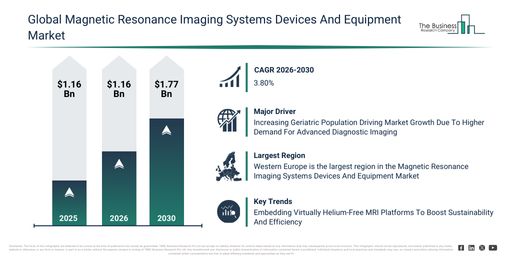
    The magnetic resonance imaging systems devices and equipment market has demonstrated steady expansion, with its value projected to rise from $9.69 billion in 2025 to $10.04 billion in 2026, representing a compound annual growth rate (CAGR) of 3.6%. This rise has been supported by factors such as an increasing prevalence of chronic and neurological diseases, growing investments in diagnostic imaging infrastructure, heightened awareness of early disease detection, and the availability of advanced high-field MRI technologies. Looking further ahead, the market is expected to reach $11.67 billion by 2030, growing at a CAGR of 3.8%. This future growth will be driven by the integration of artificial intelligence in imaging, a growing demand for precision diagnostics, expansion of outpatient imaging centers, a focus on optimizing radiology workflows, and the adoption of value-based healthcare models. Key trends shaping the market include AI-assisted image reconstruction, increased preference for high-field and ultra-high-field MRI systems, patient-friendly open MRI designs, advanced MRI software and analytics, and improvements in imaging speed and resolution.

    Download A Free Sample Report For Comprehensive Market Insights:

    https://www.thebusinessresearchcompany.com/sample.aspx?id=3812&type=smp

    Factors Encouraging Long-Term Growth in the Magnetic Resonance Imaging Market

    One of the main elements fostering the expansion of the MRI systems market is the increasing size of the geriatric population. Individuals aged 65 and older tend to have a higher incidence of chronic conditions such as neurological disorders, cardiovascular diseases, musculoskeletal issues, and various cancers. This demographic shift is driven by longer life expectancies and lower fertility rates, resulting in a larger proportion of elderly individuals. MRI devices play a crucial role in addressing the healthcare needs of this population by supporting early diagnosis and personalized treatment plans, ultimately improving health outcomes for older patients. For example, in September 2025, the World Economic Forum reported that Japan had 36.25 million people aged 65 and above in 2024—accounting for 29.3% of the total population—with projections showing this could rise to 34.8% by 2040 and 36.3% by 2045. This demographic trend is a significant driver of demand within the MRI devices market.

    Breakdown of the Magnetic Resonance Imaging Systems Market Segments

    This report segments the magnetic resonance imaging systems devices and equipment market into several key categories:

    1) By Type: Close MRI and Open MRI

    2) By Application: Oncology, Neurology, Cardiology, Inflammatory and Infectious Diseases, and Other Applications

    3) By End User: Hospitals, Imaging Centers, and Ambulatory Surgical Centers

    Access The Complete Magnetic Resonance Imaging Systems Devices And Equipment Market Report:

    https://www.thebusinessresearchcompany.com/report/magnetic-resonance-imaging-systems-devices-and-equipment-global-market-report

    Further subcategories specify types of Close MRI as High-field MRI, Low-field MRI, and Very High-field MRI, while Open MRI includes Open High-field MRI and Open Low-field MRI models. This segmentation helps in understanding how different technologies and applications contribute to the overall market landscape.

    Emerging Industry Trends Impacting Future Revenue in MRI Systems

    Leading MRI manufacturers are focusing heavily on technological innovation to reduce operational costs and improve sustainability. A key development is the creation of virtually helium-free MRI platforms that minimize reliance on scarce cryogenic resources. These systems employ advanced cooling technologies and energy-efficient modes, while also integrating automation and AI-driven workflows to enhance imaging quality with reduced resource consumption. For example, in February 2024, Siemens Healthineers from Germany launched their MAGNETOM Flow, a 1.5 Tesla MRI platform that uses DryCool technology to limit helium usage to just 0.7 liters within a closed helium circuit, removing the need for a quench pipe. This system features automated workflows and AI-based image reconstruction, enabling scan times to be cut by up to 50% while improving image clarity. Additionally, it incorporates energy-saving modes such as Eco Gradient Mode and Eco Power Mode, reducing cooling energy use by 30 to 45%. Its compact design and minimal infrastructure requirements make it suitable for a wide range of clinical environments and reduce installation costs.

    Key Players Competing in the Magnetic Resonance Imaging Systems Market

    The MRI market includes several prominent corporations that lead in innovation and market share. These companies include Siemens Healthineers, GE Healthcare, Philips Healthcare, Hitachi Ltd., Canon Medical Systems, Esaote S.p.A, Bruker Corporation, Fonar Corporation, Neusoft Medical Systems Co. Ltd., Time Medical Systems, Aurora Imaging Technology, AllTech Medical Systems, Magnetica, Tomtec Imaging Systems GMBH, Sanrad Medical Systems Pvt. Ltd., Analogic Corporation, Hologic Inc, IMRIS Inc., Innervision MRI, Medinus Co., Millennium Technology Inc., Mindray Medical International Ltd., MR Solutions, Toshiba Corporation, Koninklijke Philips N.V., and Hyperfine. Their ongoing research and development efforts continue to push the boundaries of MRI technology and clinical application.

    Regional Market Landscape and Opportunities in Magnetic Resonance Imaging

    In terms of geographical distribution, Western Europe held the largest share of the global magnetic resonance imaging devices and equipment market in 2025, followed by North America. Other important regions covered in the market analysis include Asia-Pacific, Southeast Asia, Eastern Europe, South America, the Middle East, and Africa. Each region offers unique growth opportunities influenced by factors such as healthcare infrastructure development, government initiatives, demographic shifts, and economic conditions, shaping the overall global market trajectory for MRI systems.

    Get in touch with us:

    The Business Research Company: https://www.thebusinessresearchcompany.com/

    Americas: +1 310-496-7795

    Asia: +44 7882 955267 & +91 8897263534

    Europe: +44 7882 955267

    Email us at: marketing@tbrc.info

    Follow us on:

    LinkedIn: https://in.linkedin.com/company/the-business-research-company

    YouTube: https://www.youtube.com/channel/UC24_fI0rV8cR5DxlCpgmyFQ

    Global Market Model: https://www.thebusinessresearchcompany.com/global-market-model
  • Microcatheter Market Growth Is Accelerating As Industry Transformation Continues

    Microcatheter Market Growth Is Accelerating As Industry Transformation Continues

    Enhanced with market attractiveness analysis, total addressable market evaluation, company benchmarking matrices, interactive Excel dashboards, expanded supply chain intelligence, emerging startup coverage, and detailed product insights, The Business Research Company’s 2026 market reports deliver more actionable and strategically valuable research.

    The microcatheter market is experiencing rapid expansion, driven by advancements in medical technology and a growing preference for less invasive treatment options. As the demand for precision in complex procedures rises, this sector is set to witness significant growth over the coming years. Let’s explore the current market size, key drivers, main players, and regional trends shaping the future of microcatheters.

    Microcatheter Market Size and Revenue Outlook Through 2030

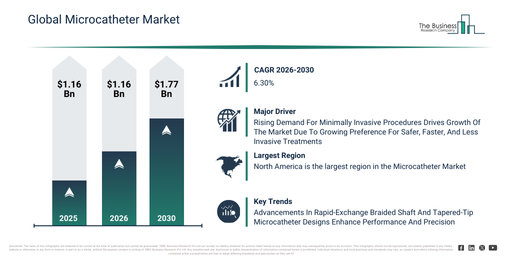
    The microcatheter market has seen impressive growth recently. It is projected to increase from $1.6 billion in 2025 to $1.71 billion in 2026, representing a compound annual growth rate (CAGR) of 6.6%. This past growth has been fueled by a rise in cardiovascular procedures, advances in interventional radiology, growing demand for minimally invasive surgeries, early innovations in catheter technology, and an aging population. Looking ahead, the market is expected to continue its strong trajectory, reaching $2.18 billion by 2030 with a CAGR of 6.3%. Factors such as the increasing number of neurovascular cases, technological miniaturization of catheters, expansion in oncology interventions, adoption of robotic-assisted surgeries, and growth in surgical centers will contribute to this upward trend. Key trends during the forecast period include the rise of minimally invasive procedures, development of highly flexible catheter designs, precision drug delivery applications, expansion of neurovascular interventions, and the integration of advanced imaging-compatible catheters.

    Download A Free Sample Report For Comprehensive Market Insights:

    https://www.thebusinessresearchcompany.com/sample.aspx?id=30324&type=smp

    Growing Demand for Minimally Invasive Procedures Driving Microcatheter Market Growth

    The rising popularity of minimally invasive procedures is a significant force behind the expanding microcatheter market. These procedures involve performing medical interventions through small incisions or natural body openings, using specialized tools that reduce tissue damage, speed up recovery, and lower complication rates compared to traditional surgery.

    Patients and healthcare providers alike favor minimally invasive techniques because they offer less pain, faster healing, and fewer risks. Microcatheters play a vital role in enabling these procedures by allowing doctors to navigate small, complex blood vessels with high precision. This capability supports targeted delivery of therapeutic agents or medical devices while minimizing trauma and procedural risks.

    For example, in June 2024, the International Society of Aesthetic Plastic Surgery (ISAPS) reported that global aesthetic procedures reached nearly 35 million, marking a 3.4% increase from 2023. This growth is largely driven by the rising demand for minimally invasive cosmetic treatments, reflecting a broader patient preference for less disruptive medical interventions. Such trends underscore how the preference for minimally invasive procedures is propelling growth in the microcatheter market.

    Breakdown of Microcatheter Market Segments and Categories

    This report categorizes the microcatheter market into several key segments:

    1) Product Types: Delivery Microcatheters, Diagnostic Microcatheters, Aspiration Microcatheters, Steerable Microcatheters, and Micro-Guide Catheters.

    2) Design Variations: Single-Lumen and Dual-Lumen.

    3) Applications: Cardiovascular, Neurovascular, Peripheral Vascular, and Oncological treatments.

    Further subcategories include:

    – Delivery Microcatheters: single-lumen, dual-lumen, drug or therapeutic agent delivery, and device deployment variants.

    – Diagnostic Microcatheters: imaging-guided, sampling or biopsy, angiographic, and hybrid diagnostic-therapeutic models.

    – Aspiration Microcatheters: large-bore, small-bore, combined aspiration and embolization, and disposable types.

    – Steerable Microcatheters: manual, robotic or actuated, shape-memory alloy tips, and multi-directional or omni-directional designs.

    – Micro-Guide Catheters: over-the-wire, flow-directed, single-lumen, and dual-lumen options.

    Access The Complete Microcatheter Market Report:

    https://www.thebusinessresearchcompany.com/report/global-microcatheter-market-report

    Recent Innovations and Trends Enhancing Market Competition

    Leading companies in the microcatheter industry are focusing on innovations such as rapid-exchange braided shafts and tapered-tip designs to improve performance and maintain a competitive edge. These technical advancements involve constructing microcatheters with multi-layer reinforced braided shafts for enhanced pushability and torque control, along with ultra-fine tapered tips that allow for easier vessel penetration while minimizing trauma.

    For instance, in February 2024, Switzerland-based BIOTRONIK introduced the Micro Rx catheter, which features a reinforced distal shaft composed of a core wire sandwiched between two braided layers. This design offers superior push transmission, along with a tapered tip known for having one of the smallest leading edges to improve penetration. Additionally, it includes a proximal-end stop compatible with guide extension catheters for increased stability. These improvements help physicians navigate complex vascular structures more effectively, reduce procedure times, and improve patient outcomes.

    Top Players Powering Growth in the Microcatheter Market

    The microcatheter market is shaped by several prominent companies, including Cardinal Health Inc., Medtronic PLC, Stryker Corporation, Koninklijke Philips N.V., Becton Dickinson and Company, Boston Scientific Corporation, B. Braun Melsungen AG, Terumo Corporation, Teleflex Incorporated, Cook Group Incorporated, Integer Holdings, Merit Medical Systems Inc., Penumbra Inc., MicroPort Scientific Corp., Asahi Intecc Co. Ltd., Phenox GmbH, Rapid Medical, Acandis GmbH & Co. KG, Evasc Neurovascular, and Vantis Vascular Inc.

    Regional Breakdown and Market Leadership in the Microcatheter Industry

    In 2025, North America held the largest share of the microcatheter market. However, the Asia-Pacific region is expected to demonstrate the fastest growth throughout the forecast period. The market report covers a wide array of geographical areas, including Asia-Pacific, South East Asia, Western Europe, Eastern Europe, North America, South America, the Middle East, and Africa, providing a comprehensive global perspective on market dynamics.

    Get in touch with us:

    The Business Research Company: https://www.thebusinessresearchcompany.com/

    Americas: +1 310-496-7795

    Asia: +44 7882 955267 & +91 8897263534

    Europe: +44 7882 955267

    Email us at: marketing@tbrc.info

    Follow us on:

    LinkedIn: https://in.linkedin.com/company/the-business-research-company

    YouTube: https://www.youtube.com/channel/UC24_fI0rV8cR5DxlCpgmyFQ

    Global Market Model: https://www.thebusinessresearchcompany.com/global-market-model
  • Magnetic Resonance Imaging (MRI) Guided And Focused Ultrasound Devices Market Opportunities Are Emerging Beyond Traditional Growth Areas

    Magnetic Resonance Imaging (MRI) Guided And Focused Ultrasound Devices Market Opportunities Are Emerging Beyond Traditional Growth Areas

    Delivering more actionable and strategically valuable research, The Business Research Company’s 2026 market reports feature market attractiveness analysis, total addressable market evaluation, company benchmarking matrices, interactive Excel dashboards, expanded supply chain intelligence, emerging startup coverage, and detailed product insights.

    The market for magnetic resonance imaging (MRI) guided and focused ultrasound devices is rapidly evolving, driven by technological advancements and growing medical needs. As these devices gain traction for their precision and non-invasive treatment capabilities, the industry is set for significant expansion in the coming years. Let’s explore the current market size, key growth drivers, segmentation, major players, and regional outlook for this promising sector.

    Current Market Size and Forecast for MRI Guided and Focused Ultrasound Devices

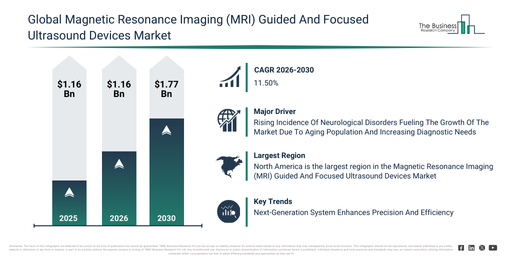
    The MRI guided and focused ultrasound devices market has witnessed swift growth recently, with its value expected to rise from $3.14 billion in 2025 to $3.51 billion in 2026, reflecting a strong compound annual growth rate (CAGR) of 11.8%. This expansion during the past period has been fueled by the increasing use of minimally invasive procedures, improvements in MRI imaging resolution, the rising prevalence of cancer-related disorders, greater adoption of image-guided therapies, and clinical validation supporting focused ultrasound technology. Looking ahead, the market is projected to reach $5.43 billion by 2030, maintaining a CAGR of 11.5%. Future growth will be driven by the broadening scope of non-invasive neurosurgical treatments, the integration of artificial intelligence (AI) in therapy control, rising demand for outpatient care, increased investment in precision medicine, and wider regulatory approvals for focused ultrasound devices. Emerging trends set to influence the market include MRI-guided non-invasive therapies, AI-assisted treatment planning, real-time image-guided precision ablation, combined imaging and therapeutic platforms, and data-driven treatment monitoring.

    Download A Free Sample Report For Comprehensive Market Insights:

    https://www.thebusinessresearchcompany.com/sample.aspx?id=28261&type=smp

    Rising Neurological Disorders as a Key Growth Catalyst for MRI Guided and Focused Ultrasound Devices

    A significant factor propelling market growth is the increasing incidence of neurological disorders worldwide. These conditions impact the brain, spinal cord, and nerves, causing a range of cognitive, motor, and sensory challenges. The aging global population contributes heavily to this trend, as age-related declines in neuronal functioning, reduced brain plasticity, and increased oxidative stress accelerate the onset and progression of neurological diseases. MRI guided focused ultrasound devices play a vital role in diagnosing and treating these disorders by combining detailed, real-time imaging with non-invasive therapeutic capabilities. This enables precise targeting of affected brain areas, improving diagnostic accuracy, treatment outcomes, and overall clinical efficiency. For example, as of June 2024, the UK’s National Health Service reported 487,432 dementia cases, marking an increase of 3,155 patients from the previous month. This rise in neurological conditions is a major contributor to the growing demand for MRI guided and focused ultrasound devices.

    Segment Breakdown in the MRI Guided and Focused Ultrasound Devices Market

    This market is segmented into several key categories to better understand its scope:

    – By Type: MRI Guided, Focused Ultrasound

    – By Treatment Type: Thermal Ablation, Non-Thermal Ablation, Drug Delivery Systems

    – By Technology: MRI Guided Ultrasound, Focused Ultrasound Therapy, Combination Systems

    – By Application: Oncology, Neurology, Cardiology, Urology, and Other Applications

    – By End User: Hospitals, Clinics, Ambulatory Surgical Centers, Research and Academic Institutes

    Additional subsegments further refine the market, such as differentiating MRI guided devices into High-Intensity Focused Ultrasound (HIFU) and Low-Intensity Focused Ultrasound (LIFU), while focused ultrasound applications cover therapeutic and diagnostic uses across neurological, urological, and oncological fields.

    Access The Complete Magnetic Resonance Imaging (MRI) Guided And Focused Ultrasound Devices Market Report:

    https://www.thebusinessresearchcompany.com/report/magnetic-resonance-imaging-mri-guided-and-focused-ultrasound-devices-global-market-report

    Ongoing Innovations Boosting the MRI Guided and Focused Ultrasound Devices Market

    Leading companies in this industry are heavily investing in next-generation products to enhance precision, expand therapeutic options, and improve patient outcomes. These advanced systems combine real-time MRI imaging with high-intensity focused ultrasound technologies, offering greater automation, usability, and clinical versatility. For instance, in January 2024, Israel-based Insightec Ltd. introduced the Exablate Prime system, a cutting-edge MR-guided focused ultrasound platform. This system incorporates intelligent algorithms and automated workflows, integrates seamlessly with hospital systems such as PACS, and allows remote physician planning and technical support. It supports extensive reporting capabilities and features a high-resolution monitor alongside a cross transducer optimized for MRI-guided procedures. Designed after extensive research and user feedback, the Exablate Prime aims to deliver exceptional precision in neurosurgical treatments like managing essential tremor and Parkinson’s disease, while reducing procedure duration and enhancing operational efficiency.

    Prominent Companies Leading the MRI Guided and Focused Ultrasound Devices Market

    The competitive landscape includes notable players such as InSightec Ltd, EDAP TMS SA, Image Guided Therapy SA, Profound Medical Inc, Cardiawave, Focal One, FUS Instruments Inc, Theraclion SA, Siemens Healthineers, GE Healthcare, Koninklijke Philips NV, EpiSonica Corp, Kona Medical Inc, Mirabilis Medical Inc, Chongqing Haifu Technology Co Ltd, Shanghai A&S Co Ltd, Shenzhen PRO-HIFU Medical Tech Co Ltd, Changjiangyuan Technology Development Co Ltd, Wuxi Haiying Medical Co Ltd, Elekta AB, CarThera, Monteris Medical, Eye Tech Care, HistoSonics Inc, NaviFUS Corp, NeuroBlate (Monteris Medical), and HIFU Devices Inc. These companies are focused on continuous innovation and expanding applications of MRI guided and focused ultrasound technologies.

    Regional Market Leadership and Growth Patterns in MRI Guided and Focused Ultrasound Devices

    In 2025, North America holds the largest share of the MRI guided and focused ultrasound devices market. However, the Asia-Pacific region is expected to experience the fastest growth over the forecast period. Other important geographical areas covered in the market analysis include South East Asia, Western Europe, Eastern Europe, South America, the Middle East, and Africa, providing a comprehensive view of global market trends and opportunities.

    Get in touch with us:

    The Business Research Company: https://www.thebusinessresearchcompany.com/

    Americas: +1 310-496-7795

    Asia: +44 7882 955267 & +91 8897263534

    Europe: +44 7882 955267

    Email us at: marketing@tbrc.info

    Follow us on:

    LinkedIn: https://in.linkedin.com/company/the-business-research-company

    YouTube: https://www.youtube.com/channel/UC24_fI0rV8cR5DxlCpgmyFQ

    Global Market Model: https://www.thebusinessresearchcompany.com/global-market-model
  • Microbiome Testing Kit Market Outlook Highlights The Next Major Growth Opportunities

    Microbiome Testing Kit Market Outlook Highlights The Next Major Growth Opportunities

    Through market attractiveness analysis, total addressable market evaluation, company benchmarking matrices, interactive Excel dashboards, expanded supply chain intelligence, emerging startup coverage, and detailed product insights, The Business Research Company’s 2026 market reports provide more actionable and strategically valuable research.

    The microbiome testing kit market is rapidly evolving, driven by growing consumer interest in personalized health and advances in genetic technologies. This sector is poised for significant growth as more people seek tailored health insights and convenient testing solutions. Let’s explore the current market scenario, the factors propelling its expansion, leading players, and emerging trends shaping its future trajectory.

    Market Size and Growth Outlook for the Microbiome Testing Kit Market

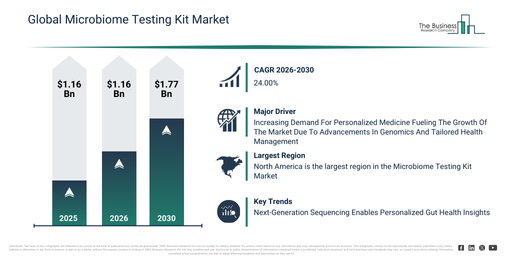
    The microbiome testing kit market has witnessed remarkable growth in recent years. Its value is projected to rise from $1.63 billion in 2025 to $2.03 billion in 2026, reflecting a compound annual growth rate (CAGR) of 24.3%. This earlier growth phase was fueled by advancements in microbiome research, increased consumer focus on wellness, greater accessibility to DNA sequencing, heightened awareness of digestive health, and expanding research funding. Looking ahead, the market is expected to surge further, reaching $4.8 billion by 2030 with a CAGR of 24.0%. This forecasted expansion is supported by rising demand for precision nutrition, AI-enhanced microbiome analytics, an emphasis on chronic disease prevention, the growth of e-commerce health platforms, and the adoption of personalized healthcare models. Key trends anticipated to influence the market include the rise of at-home diagnostic kits, personalized nutrition and wellness insights, broader applications for gut health, increased preventive health screening, and growing consumer awareness around health.

    Download A Free Sample Report For Comprehensive Market Insights:

    https://www.thebusinessresearchcompany.com/sample.aspx?id=28271&type=smp

    Factors Behind the Rising Demand for Microbiome Testing Kits

    One of the primary drivers of growth in the microbiome testing kit market is the increasing focus on personalized medicine. This approach tweaks treatment and prevention methods based on an individual’s genetic makeup, lifestyle, and environment. Advances in genomics have made it easier to identify genetic differences and develop targeted therapies tailored to individuals. Microbiome testing kits play a crucial role in this trend by providing detailed analyses of a person’s microbial ecosystem, allowing for more precise health management. By reducing guesswork in diet and lifestyle adjustments, these kits offer data-driven guidance that enhances wellness and disease prevention.

    Supporting data highlights this trend: in February 2024, the Personalized Medicine Coalition (PMC) reported that the U.S. Food and Drug Administration (FDA) approved 26 new personalized medicines in 2023, nearly doubling the 12 approvals in 2022. This surge in personalized medical solutions underscores the growing demand for microbiome testing kits as tools to support tailored healthcare strategies.

    Access The Complete Microbiome Testing Kit Market Report:

    https://www.thebusinessresearchcompany.com/report/microbiome-testing-kit-global-market-report

    Detailed Market Segments Within the Microbiome Testing Kit Industry

    This market is categorized by several key segments:

    1) Product Type: At-Home Testing Kits and Laboratory-Based Testing Kits

    2) Sample Type: Stool, Saliva, Skin, and Other Sample Types

    3) Application: Gut Health, Skin Health, Nutrition and Diet, Disease Risk Assessment, and Other Areas

    4) Distribution Channel: Online Retailers, Pharmacies, Physical Retail Stores, and Other Channels

    5) End-User: Individuals, Hospitals and Clinics, Research and Academic Institutes, and Other Users

    Further subcategories include:

    – For At-Home Testing: Gut Health Analysis, Digestive Function Assessment, Personalized Nutrition Guidance, Probiotic Response Evaluation

    – For Laboratory-Based Kits: Microbial Diversity Profiling, Pathogen Detection, Metabolic Activity Analysis, Antibiotic Resistance Screening

    Innovation Trends and Their Impact on Market Demand

    Leading companies in this sector are focusing on cutting-edge technologies, such as next-generation sequencing (NGS) for gut microbiome analysis. This method rapidly deciphers the DNA of gut microbes to identify their types, quantities, and potential health impacts, enabling highly personalized health recommendations.

    For instance, in January 2025, CJ Bioscience Inc., a biotechnology firm based in South Korea, introduced SMILE GUT—a direct-to-consumer gut microbiome test kit. It applies next-generation sequencing alongside artificial intelligence to analyze stool samples and generate a gut microbiome index score. This score reflects microbial diversity, the balance between beneficial and harmful bacteria, and alignment with healthy gut profiles. The kit delivers tailored health advice, including probiotic and dietary recommendations, with results provided within 14 business days, empowering users to actively manage their gut health.

    Prominent Players Steering the Microbiome Testing Kit Market

    The market features several key companies driving innovation and expansion, including:

    OraSure Technologies Inc., Genova Diagnostics Inc., Ombre Health Inc., Viome Inc., Zymo Research Corporation, EasyDNA Pty Ltd., Psomagen Inc., DayTwo Ltd., Atlas Biomed Group Limited, BIOHM Health Inc., Mapmygenome India Limited, Biomes NGS GmbH, Carbiotix AB, CosmosID Inc., Juno Bio Ltd., Microba Life Sciences Limited, Sun Genomics Inc., Unseen Bio ApS, InnerBuddies, and MyMicroZoo B.V.

    Regional Market Distribution and Growth Dynamics

    In 2025, North America held the largest share of the personalized genomics market. However, the Asia-Pacific region is anticipated to experience the fastest growth over the forecast period. The microbiome testing kit market report covers major regions including Asia-Pacific, South East Asia, Western Europe, Eastern Europe, North America, South America, the Middle East, and Africa, offering a comprehensive overview of global market trends.

    Get in touch with us:

    The Business Research Company: https://www.thebusinessresearchcompany.com/

    Americas: +1 310-496-7795

    Asia: +44 7882 955267 & +91 8897263534

    Europe: +44 7882 955267

    Email us at: marketing@tbrc.info

    Follow us on:

    LinkedIn: https://in.linkedin.com/company/the-business-research-company

    YouTube: https://www.youtube.com/channel/UC24_fI0rV8cR5DxlCpgmyFQ

    Global Market Model: https://www.thebusinessresearchcompany.com/global-market-model
  • Magnetic Bead Purification Kits Market Expansion Is Opening New Pathways For Strategic Investment

    Magnetic Bead Purification Kits Market Expansion Is Opening New Pathways For Strategic Investment

    Enhanced with market attractiveness analysis, total addressable market evaluation, company benchmarking matrices, interactive Excel dashboards, expanded supply chain intelligence, emerging startup coverage, and detailed product insights, The Business Research Company’s 2026 market reports deliver more actionable and strategically valuable research.

    The magnetic bead purification kits market is experiencing swift growth due to advancements in biotechnology and increasing demand for precise nucleic acid and protein purification. This expanding sector reflects rising research activities and enhanced diagnostic needs worldwide. Let’s explore the current market size, key growth drivers, prominent players, and emerging trends shaping the future of magnetic bead purification kits.

    Market Size and Forecast Growth of the Magnetic Bead Purification Kits Market

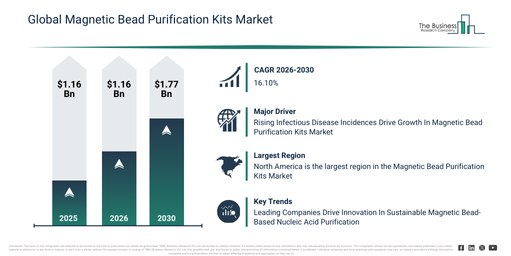
    The market for magnetic bead purification kits has seen rapid expansion in recent years. It is projected to grow from $4.08 billion in 2025 to $4.75 billion in 2026, exhibiting a compound annual growth rate (CAGR) of 16.4%. This historical growth has been driven by continued dependence on manual membrane column kits, limited availability of standardized reagents, increasing investments in biotech research, higher diagnostic testing demands, and greater awareness regarding the importance of nucleic acid purification. Looking ahead, the market is expected to reach $8.64 billion by 2030 with a CAGR of 16.1%. This future expansion is anticipated to be fueled by the development of advanced semi-automated purification systems, growth in genomics and proteomics research, broader pharmaceutical and diagnostic usage, stricter regulatory compliance, and the adoption of high-throughput laboratory automation. Key trends for the coming years include rising demand for high-purity DNA, RNA, and protein isolation, widespread use of semi-automated magnetic bead kits, increased application in academic and pharma research, growing reliance on miRNA purification kits in diagnostics, as well as a focus on rapid and efficient purification methods with minimal sample handling.

    Download A Free Sample Report For Comprehensive Market Insights:

    https://www.thebusinessresearchcompany.com/sample.aspx?id=20570&type=smp

    Key Demand Factors Accelerating Growth in the Magnetic Bead Purification Kits Market

    One major factor driving the magnetic bead purification kits market is the rising prevalence of infectious diseases globally. These illnesses, caused by pathogens such as bacteria, viruses, fungi, and parasites, continue to affect populations worldwide. Examples include tuberculosis (TB), streptococcal infections, methicillin-resistant Staphylococcus aureus (MRSA), and influenza. Factors like antimicrobial resistance, environmental shifts, and social behaviors contribute to the increasing incidence of these diseases. Testing for viruses and bacteria plays a crucial role in diagnosing infections by identifying the specific causative agents, enabling targeted treatment and management. For instance, according to the UK government department GOV.UK, TB cases in England rose by 10.7% in 2023, increasing from 4,380 in 2022 to 4,850. This upward trend in infectious diseases is an important driver behind the growing demand for magnetic bead purification kits.

    Segment Breakdown Highlighting Key Areas in the Magnetic Bead Purification Kits Market

    This market is segmented into several categories to better understand growth opportunities:

    1) By Type: Semi-Automated Magnetic Bead-based Kits, Manual Membrane Column-Based Kits, and Isolation Reagents

    2) By Nucleic Acid Type: DNA Purification Kits, RNA Purification Kits, and miRNA Purification Kits

    3) By End-User: Biotechnology and Pharmaceutical Companies, Academic and Research Institutes, and Diagnostic Laboratories

    Access The Complete Magnetic Bead Purification Kits Market Report:

    https://www.thebusinessresearchcompany.com/report/magnetic-bead-purification-kits-global-market-report

    Further subsegments include:

    – Semi-Automated Magnetic Bead-based Kits: RNA, DNA, Protein Purification Kits, Cell Isolation Kits, and Immunoprecipitation Kits

    – Manual Membrane Column-Based Kits: RNA, DNA, Protein Purification Kits, Antibody Purification Kits, and Cell Isolation Kits

    – Isolation Reagents: RNA, DNA, Protein, Cell Isolation, and Immunoprecipitation Reagents

    Innovations and Trends Influencing Competitive Dynamics in the Magnetic Bead Purification Kits Market

    Leading companies in this field focus on creating innovative magnetic bead-based extraction kits designed to improve the efficiency and accuracy of nucleic acid and protein purification. These products aim to streamline sample preparation and reduce processing time for research, diagnostic, and biotech applications. A magnetic bead-based extraction kit works by using magnetic beads coated with capture molecules that specifically bind target biomolecules such as DNA, RNA, or proteins. For example, in April 2024, New England Biolabs, Inc., a US-based life sciences firm, introduced the Monarch Mag Viral DNA/RNA Extraction Kit. This product enhances recovery of low quantities of viral nucleic acids, enabling more sensitive detection. It employs a magnetic bead method to efficiently and reproducibly extract viral RNA and DNA and is scalable for high-throughput automation. The kit is compatible with various sample types including saliva, respiratory swabs, and wastewater (after enrichment). It also integrates smoothly with NEB’s downstream amplification and library preparation tools for next-generation sequencing applications.

    Companies With a Strong Presence in the Magnetic Bead Purification Kits Market

    Some of the key players dominating this market include Thermo Fisher Scientific Inc., Roche Holdings AG, E. Merck KG, Corning Inc., Agilent Technologies Inc., Bio-Rad Laboratories Inc., Qiagen N.V., Promega Corporation, Takara Bio Inc., New England Biolabs Inc., Analytik Jena AG, Omega Bio-tek Inc., RayBiotech Inc., Diagenode Inc., Zymo Research Corporation, Covaris LLC, Bioneer Corporation, Creative Diagnostics Inc., TIANGEN Biotech Co. Ltd., Geneaid Ltd., Norgen Biotek Corp., and Magbio Genomics Inc. These companies are continually investing in research and development to introduce new and enhanced products for magnetic bead-based purification.

    Regional Distribution and Market Leadership in Magnetic Bead Purification Kits

    In 2025, North America accounted for the largest market share in the magnetic bead purification kits industry. The market report also covers significant regions including Asia-Pacific, South East Asia, Western Europe, Eastern Europe, South America, the Middle East, and Africa, providing a broad perspective on regional growth patterns and opportunities worldwide.

    Get in touch with us:

    The Business Research Company: https://www.thebusinessresearchcompany.com/

    Americas: +1 310-496-7795

    Asia: +44 7882 955267 & +91 8897263534

    Europe: +44 7882 955267

    Email us at: marketing@tbrc.info

    Follow us on:

    LinkedIn: https://in.linkedin.com/company/the-business-research-company

    YouTube: https://www.youtube.com/channel/UC24_fI0rV8cR5DxlCpgmyFQ

    Global Market Model: https://www.thebusinessresearchcompany.com/global-market-model
  • Lyophilization Equipment Market Trends Are Creating New Opportunities For Industry Leaders

    Lyophilization Equipment Market Trends Are Creating New Opportunities For Industry Leaders

    Through market attractiveness analysis, total addressable market evaluation, company benchmarking matrices, interactive Excel dashboards, expanded supply chain intelligence, emerging startup coverage, and detailed product insights, The Business Research Company’s 2026 market reports provide more actionable and strategically valuable research.

    The lyophilization equipment sector has seen significant expansion recently, driven by advancements in pharmaceuticals and food preservation. This market is set to continue growing steadily as demand rises across various industries. Let’s explore the current market size, key growth drivers, notable companies, emerging trends, segment details, and geographic outlook shaping this industry’s future.

    Current and Projected Market Size of the Lyophilization Equipment Market

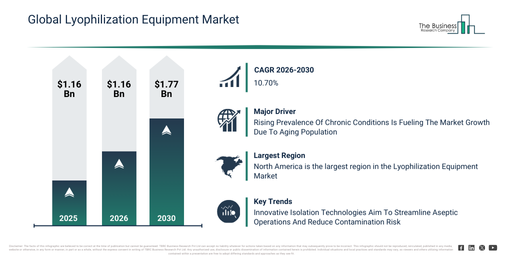
    The lyophilization equipment market has experienced rapid growth over recent years. It is forecasted to increase from $7.32 billion in 2025 to $8.13 billion in 2026, reflecting a compound annual growth rate (CAGR) of 11.1%. This growth has mainly been fueled by expanding biopharmaceutical production, rising vaccine manufacturing, the need for stable drug formulations, the use of freeze-drying in the food industry, and improvements in lab-scale freeze-drying equipment. Looking ahead, the market is expected to reach $12.21 billion by 2030, growing at a CAGR of 10.7%. Factors contributing to this growth include heightened investments in biopharma and biotech, rising demand for continuous freeze-drying technologies, increasing contract research organizations (CROs), the adoption of automated lyophilization systems, and expanding nutraceutical and functional food sectors. Key trends anticipated in the coming years involve greater preservation needs for heat-sensitive drugs, growth in vaccines and biopharma, miniaturization of laboratory freeze dryers, automation innovations, and broadening applications in food and nutraceutical freeze-drying.

    Download A Free Sample Report For Comprehensive Market Insights:

    https://www.thebusinessresearchcompany.com/sample.aspx?id=25818&type=smp

    Important Factors Stimulating the Growth of the Lyophilization Equipment Market

    One major force behind market growth is the rising incidence of chronic diseases. Chronic conditions—long-term health issues often requiring continuous treatment or limiting daily activities—are increasing due to aging populations globally. Diseases such as heart disease, diabetes, and arthritis are becoming more prevalent, driving demand for lyophilization equipment. This technology plays a crucial role in preserving biopharmaceuticals and injectable drugs used to manage these illnesses, ensuring the medicines remain stable, safe, and effective for patients needing ongoing care.

    To illustrate, in June 2024, the UK’s National Health Service reported that 3,615,330 individuals diagnosed with pre-diabetes (non-diabetic hyperglycemia) were registered with general practitioners in 2023, marking an 18% increase from 3,065,825 in 2022. This surge in chronic health issues directly supports the expansion of the lyophilization equipment market.

    Breakdown and Opportunities Within the Lyophilization Equipment Market Segments

    The lyophilization equipment market is categorized into multiple segments:

    1) By Equipment Type: Freeze Dryers, Pharmaceutical Lyophilizers, Laboratory Freeze Dryers, Industrial Freeze Dryers, Portable Freeze Dryers

    2) By Product Form: Powders, Cakes, Granules, Semi-Solid Forms

    3) By Technology: Manifold Lyophilization, Tray Lyophilization, Batch Freeze Drying, Continuous Freeze Drying

    4) By Application: Autoimmune Diseases, Respiratory Diseases, Gastrointestinal Disorders, Oncology, Cardiovascular Diseases, Infectious Diseases, Metabolic Disorders, Other Applications

    5) By End User: Pharmaceutical Companies, Biotechnology Firms, Academic and Research Institutions, Food Manufacturers, Contract Research Organizations (CROs)

    Further subcategories refine these classifications, such as tray, manifold, and rotary freeze dryers under freeze dryers; pilot-scale, production-scale, and GMP pharmaceutical lyophilizers; benchtop, floor-standing, and small-scale research laboratory freeze dryers; food processing, bulk production, and continuous industrial freeze dryers; as well as home-use, field-use, and compact research portable freeze dryers.

    Access The Complete Lyophilization Equipment Market Report:

    https://www.thebusinessresearchcompany.com/report/lyophilization-equipment-global-market-report

    Innovations and Trends Shaping the Future Demand for Lyophilization Equipment

    Leading companies in the lyophilization equipment industry increasingly focus on creating advanced technologies that improve efficiency, sterility, and containment. A notable innovation is the development of dual-mode isolator systems, which combine aseptic filling and containment operations in one unit. This integration reduces equipment needs, saves space, and maintains stringent sterility standards.

    For example, in March 2024, pharmaceutical equipment manufacturer Telstar from Spain introduced a dual-mode isolator system at Pharma Congress 2024. The system boosts operational flexibility by supporting multiple functions such as maintenance, pressure hold, biodecontamination, and both sterile and non-sterile processing. It also incorporates an innovative bio-decontamination process that enhances microbial reduction, speeds up cycles, and lowers operating costs, reflecting the cutting-edge advancements driving market evolution.

    Key Players Influencing the Lyophilization Equipment Market Landscape

    Several prominent companies dominate the lyophilization equipment market, including: GEA Group AG, OPTIMA packaging group GmbH, Dara Pharmaceutical Equipment, Büchi Labortechnik AG, Tofflon Science and Technology Group Co Ltd., Spinco Biotech Pvt Ltd., Labconco Corporation, HOF Sonderanlagenbau GmbH, Harvest Right LLC, Cuddon Freeze Dry, ZIRBUS technology GmbH, MechaTech Systems Ltd., IlShin BioBase Co Ltd., SP Industries Inc., Millrock Technology Inc., Tofflon Dehui Pharmaceutical Equipment Co Ltd., Freeze Drying Systems Pvt Ltd., Martin Christ Gefriertrocknungsanlagen GmbH, Telstar Life Sciences, IMA Life, Lyomac AG, and GEA Lyophil GmbH. These companies are instrumental in pushing technological boundaries and expanding market reach.

    Geographic Insights Highlighting Regions with Rapid Market Growth

    In 2025, North America held the largest share of the lyophilization equipment market. However, the Asia-Pacific region is projected to be the fastest-growing market segment during the forecast period. Other key regions analyzed include South East Asia, Western Europe, Eastern Europe, South America, the Middle East, and Africa, offering a detailed global perspective on market dynamics and opportunities.

    Get in touch with us:

    The Business Research Company: https://www.thebusinessresearchcompany.com/

    Americas: +1 310-496-7795

    Asia: +44 7882 955267 & +91 8897263534

    Europe: +44 7882 955267

    Email us at: marketing@tbrc.info

    Follow us on:

    LinkedIn: https://in.linkedin.com/company/the-business-research-company

    YouTube: https://www.youtube.com/channel/UC24_fI0rV8cR5DxlCpgmyFQ

    Global Market Model: https://www.thebusinessresearchcompany.com/global-market-model
  • Microbiology Diagnostic Devices And Equipment Market Trends And Growth Drivers Point To Strong Future Potential

    Microbiology Diagnostic Devices And Equipment Market Trends And Growth Drivers Point To Strong Future Potential

    Delivering more actionable and strategically valuable research, The Business Research Company’s 2026 market reports feature market attractiveness analysis, total addressable market evaluation, company benchmarking matrices, interactive Excel dashboards, expanded supply chain intelligence, emerging startup coverage, and detailed product insights.

    The microbiology diagnostic devices and equipment sector has witnessed substantial growth in recent years, propelled by advancements in healthcare infrastructure and rising health concerns. As diagnostic technologies evolve, this market is set to offer significant revenue potential in the coming years. Let’s explore the current market size, the factors driving growth, notable innovations, and key players shaping this dynamic industry.

    Market Size and Growth Trajectory of the Microbiology Diagnostic Devices and Equipment Market

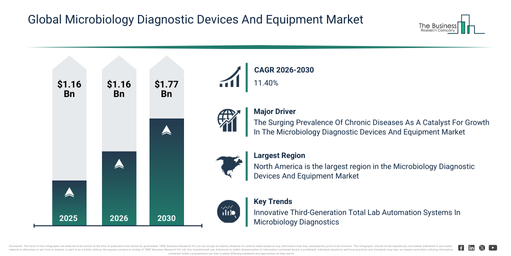
    The market for microbiology diagnostic devices and equipment has expanded rapidly and is projected to increase from $6.43 billion in 2025 to $7.5 billion in 2026, reflecting a compound annual growth rate (CAGR) of 16.6%. This growth during the historic period has been driven by the development of diagnostic laboratory infrastructures, a rising number of infectious disease cases, increased hospital testing volumes, improvements in laboratory automation, and broader access to microbiology consumables.

    Looking ahead, the market is expected to grow further to $11.53 billion by 2030, with a CAGR of 11.4%. Key factors fueling this expansion include growing demand for rapid diagnostic testing, heightened investments in laboratory automation, integration of molecular and microbiology techniques, increased focus on detecting antimicrobial resistance, and wider adoption of point-of-care microbiology solutions. Emerging trends point to greater use of automated microbiology analyzers, rapid pathogen detection technologies, high-throughput instruments, advanced culture and identification methods, and enhanced laboratory workflow automation.

    Download A Free Sample Report For Comprehensive Market Insights:

    https://www.thebusinessresearchcompany.com/sample.aspx?id=3408&type=smp

    Rising Impact of Noncommunicable Diseases as a Market Growth Driver

    One of the significant factors propelling the microbiology diagnostic devices and equipment market is the increasing prevalence of noncommunicable diseases (NCDs). These illnesses, which include cardiovascular diseases, cancer, chronic respiratory diseases, and diabetes, do not transmit from person to person but often entail complications that require microbiological testing to detect infections and monitor patient conditions.

    For instance, according to the World Health Organization in February 2024, cancer cases worldwide are expected to surge by 77%, reaching over 35 million new cases by 2050 compared to 20 million in 2022. This steep rise in NCDs contributes to greater demand for microbiology diagnostic tools, thereby driving market growth.

    Detailed Market Segmentation in Microbiology Diagnostic Devices and Equipment

    This market is categorized based on various parameters to provide a comprehensive understanding of its structure.

    By Type, the market includes Laboratory Instruments, Microbiology Analyzers, and Reagents and Consumables.

    By Reagents, the segments are Pathogen-Specific Kits and General Reagents.

    By End-User, key categories comprise Diagnostic Laboratories, Hospitals, and Other End-Users.

    Access The Complete Microbiology Diagnostic Devices And Equipment Market Report:

    https://www.thebusinessresearchcompany.com/report/microbiology-diagnostic-devices-and-equipment-global-market-report

    Further subsegments within Laboratory Instruments feature Incubators, Autoclaves and Sterilizers, Refrigerators and Freezers, Centrifuges, and Microscopes. Microbiology Analyzers include Automated Microbiology Analyzers, Polymerase Chain Reaction (PCR) Analyzers, Mass Spectrometers, Immunoassay Analyzers, and Flow Cytometers. The Reagents and Consumables segment covers Culture Media, Stains and Dyes, Reagent Kits, Sample Collection Devices, and Test Strips and Kits designed for specific pathogens.

    Innovations Powering the Future of the Microbiology Diagnostic Devices and Equipment Market

    Major players in this field are focusing on cutting-edge innovations to enhance laboratory efficiency and accuracy while lowering costs. Among these developments are third-generation total lab automation (TLA) systems, which represent the most advanced automation technologies currently available. These systems are designed to automate a wide variety of laboratory procedures, from specimen processing and plating to incubation, imaging, and culture reading.

    For example, in January 2023, Becton, Dickinson, and Company (BD), a US medical device firm, introduced a modular third-generation TLA system. This system integrates robotic track technology, advanced informatics, and artificial intelligence (AI), allowing customizable automation solutions for microbiology labs. Such innovations are valuable for labs aiming to improve operational efficiency, reduce expenses, and deliver enhanced patient care.

    Leading Companies Defining the Microbiology Diagnostic Devices and Equipment Market

    Several prominent companies dominate this sector, including Danaher, Abbott Laboratories, Thermo Fisher Scientific, Becton Dickinson and Company, Biomerieux, Bio-Rad Laboratories Inc., Roche, Bruker Corporation, Merck KGaA, Siemens Healthcare, Beckman Coulter Inc., Ortho Clinical Diagnostics, Sysmex Corporation, Siemens Healthineers, TestLine Clinical Diagnostics s.r.o., Cepheid, Hologic, Meridian Bioscience, Qiagen N.V., Immunodiagnostic Systems Holdings PLC, Mesa Biotech Inc., PerkinElmer Inc., and Neogen Corporation. These firms lead market innovations and expansions globally.

    Regional Market Leadership and Revenue Generation in Microbiology Diagnostic Devices and Equipment

    In 2025, North America held the largest share of the microbiology diagnostic devices and equipment market, establishing itself as the leading revenue-generating region. Asia-Pacific ranked as the second largest market globally. The comprehensive analysis covers multiple regions, including Asia-Pacific, South East Asia, Western Europe, Eastern Europe, North America, South America, the Middle East, and Africa, providing a global perspective on market trends and opportunities.

    Get in touch with us:

    The Business Research Company: https://www.thebusinessresearchcompany.com/

    Americas: +1 310-496-7795

    Asia: +44 7882 955267 & +91 8897263534

    Europe: +44 7882 955267

    Email us at: marketing@tbrc.info

    Follow us on:

    LinkedIn: https://in.linkedin.com/company/the-business-research-company

    YouTube: https://www.youtube.com/channel/UC24_fI0rV8cR5DxlCpgmyFQ

    Global Market Model: https://www.thebusinessresearchcompany.com/global-market-model