Category: Medical Equipment

  • Lyme Disease Testing Market Growth Is Reshaping Competitive Advantage Across The Industry

    Lyme Disease Testing Market Growth Is Reshaping Competitive Advantage Across The Industry

    Delivering more actionable and strategically valuable research, The Business Research Company’s 2026 market reports feature market attractiveness analysis, total addressable market evaluation, company benchmarking matrices, interactive Excel dashboards, expanded supply chain intelligence, emerging startup coverage, and detailed product insights.

    The Lyme disease testing market has seen remarkable growth in recent years, driven by increasing awareness and advances in diagnostic technology. As the prevalence of tick-borne illnesses continues to rise globally, the demand for accurate and timely Lyme disease testing is expected to grow significantly. Let’s examine the current market status, key growth factors, emerging innovations, and the competitive landscape shaping this important healthcare sector.

    Steady Expansion in Lyme Disease Testing Market Size and Future Outlook

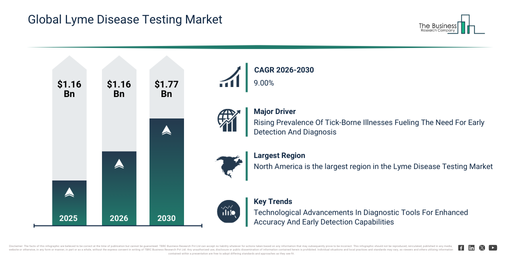
    The market for Lyme disease testing has experienced strong growth, with its size projected to increase from $10.68 billion in 2025 to $11.67 billion in 2026, representing a compound annual growth rate (CAGR) of 9.3%. This positive momentum during the past years is linked to factors such as the rising incidence of Lyme disease, limited awareness around early diagnosis, continued reliance on traditional serological testing methods, an increase in hospital-based diagnostics, and expanding research efforts focused on tick-borne infections. Looking ahead, the market is expected to expand further, reaching $16.46 billion by 2030 with a CAGR of 9.0%. This sustained growth will be driven by the adoption of AI-assisted diagnostic tools, increased availability of home-testing kits, broader use of multi-disease panels, enhanced government funding for surveillance programs, and the integration of cloud-based laboratory data management systems. Key trends in the forecast period also include the growth of point-of-care testing, home-based Lyme disease diagnostics, rapid test kit adoption, multi-pathogen tick-borne panels, and the development of personalized diagnostic protocols.

    Download A Free Sample Report For Comprehensive Market Insights:

    https://www.thebusinessresearchcompany.com/sample.aspx?id=25817&type=smp

    Increasing Prevalence of Tick-Borne Illnesses Fueling Lyme Disease Testing Demand

    One of the primary factors propelling the Lyme disease testing market is the growing occurrence of tick-borne illnesses worldwide. These diseases are transmitted to humans through bites from infected ticks, which are commonly found in grassy, wooded, or rural regions. The expansion of tick habitats, largely attributed to climate change, has heightened exposure risks and infection rates among populations. This increased prevalence of tick-borne diseases raises the demand for effective Lyme disease testing, as early detection is crucial for managing and treating infections promptly. For example, in March 2025, the U.S. Centers for Disease Control and Prevention (CDC) reported over 89,000 Lyme disease cases in 2023—a number that highlights the persistent burden of tick-related illnesses and reinforces the need for comprehensive testing solutions.

    Detailed Segmentation of the Lyme Disease Testing Market

    The Lyme disease testing market is comprehensively segmented to cover various testing types, methods, disease stages, sample types, and end-users. Key test types include serological tests, nucleic acid tests, urine antigen tests, and other emerging test types. Testing methodologies encompass Enzyme-Linked Immunosorbent Assay (ELISA), Western Blot, Polymerase Chain Reaction (PCR), Immunofluorescence Assay (IFA), and other cutting-edge technologies. The market also considers disease stages such as early Lyme disease, disseminated Lyme disease, chronic Lyme disease, and asymptomatic detection. Sample types analyzed include blood, urine, cerebrospinal fluid (CSF), and other blood derivatives. End-user categories consist of hospitals and clinics, diagnostic laboratories, home care settings, research institutions, and public health organizations. Further subsegments break down serological tests into ELISA, Western Blot, Immunofluorescence Assay (IFA), and Line Immunoassay (LIA); nucleic acid tests into PCR, Loop-Mediated Isothermal Amplification (LAMP), and Next-Generation Sequencing (NGS); urine antigen tests into lateral flow assay, enzyme immunoassay (EIA), and immunoblot urine tests; and other tests including culture-based assays, tick-borne co-infection panels, and AI-assisted diagnostic tools.

    Access The Complete Lyme Disease Testing Market Report:

    https://www.thebusinessresearchcompany.com/report/lyme-disease-testing-global-market-report

    Innovative Diagnostic Technologies Shaping the Lyme Disease Testing Market

    Leading players in the Lyme disease testing industry are heavily investing in the development of advanced diagnostic tools aimed at improving test accuracy, reducing response times, and enabling early detection of the disease. These diagnostic technologies identify specific antibodies, antigens, or genetic material related to the Borrelia burgdorferi bacteria, the causative agent of Lyme disease. For example, in August 2024, UK-based biotechnology firm EpitogenX Ltd. introduced a state-of-the-art Lyme Disease Diagnostic Kit utilizing their proprietary EpitoGen platform. This ELISA-based assay features approximately 120 distinct Borrelia epitopes, providing high sensitivity and specificity for strain-specific detection. Designed for research use, it supports customization for various laboratory settings, enhancing detection precision and enabling deeper understanding of Lyme disease.

    Recognized Industry Leaders in the Lyme Disease Testing Market

    The competitive environment of the Lyme disease testing market includes several prominent companies such as Roche Holding AG, Thermo Fisher Scientific Inc., Labcorp Holdings Inc., Quest Diagnostics Incorporated, Eurofins Scientific, BIOMÉRIEUX, Quidel Corporation, Bio Rad Laboratories Inc., QIAGEN N.V., DiaSorin S.p.A, Meridian Bioscience, Trinity Biotech, T2 Biosystems, IGeneX, Viramed Biotech AG, Ceres Nanosciences, Galaxy Diagnostics, Lyme Diagnostics Ltd, Abbott Laboratories, Siemens Healthineers AG, Hologic Inc., and Seegene Inc. These organizations are actively advancing diagnostic technologies and expanding service offerings to meet growing market demand.

    Geographical Distribution and Growth Patterns in the Lyme Disease Testing Market

    In 2025, North America held the largest share of the Lyme disease testing market, driven by robust healthcare infrastructure and high disease prevalence. Meanwhile, the Asia-Pacific region is anticipated to register the fastest growth during the forecast period due to rising awareness, expanding healthcare access, and increasing government initiatives focused on infectious disease monitoring. The market study encompasses key regions including Asia-Pacific, South East Asia, Western Europe, Eastern Europe, North America, South America, the Middle East, and Africa, providing a comprehensive view of the global Lyme disease testing landscape.

    Get in touch with us:

    The Business Research Company: https://www.thebusinessresearchcompany.com/

    Americas: +1 310-496-7795

    Asia: +44 7882 955267 & +91 8897263534

    Europe: +44 7882 955267

    Email us at: marketing@tbrc.info

    Follow us on:

    LinkedIn: https://in.linkedin.com/company/the-business-research-company

    YouTube: https://www.youtube.com/channel/UC24_fI0rV8cR5DxlCpgmyFQ

    Global Market Model: https://www.thebusinessresearchcompany.com/global-market-model
  • Lung Cancer Surgery Equipment Market Forecast Signals New Revenue Opportunities Through 2030

    Lung Cancer Surgery Equipment Market Forecast Signals New Revenue Opportunities Through 2030

    Enhanced with market attractiveness analysis, total addressable market evaluation, company benchmarking matrices, interactive Excel dashboards, expanded supply chain intelligence, emerging startup coverage, and detailed product insights, The Business Research Company’s 2026 market reports deliver more actionable and strategically valuable research.

    The market for lung cancer surgery equipment has been experiencing strong growth recently, driven by advances in technology and an increasing number of lung cancer cases worldwide. As medical procedures evolve and more specialized treatment centers emerge, this sector is set to expand further in the coming years. Here is a detailed overview of the market size, key growth factors, trends, major players, and regional dynamics shaping this industry.

    Projected Growth and Market Size of the Lung Cancer Surgery Equipment Market

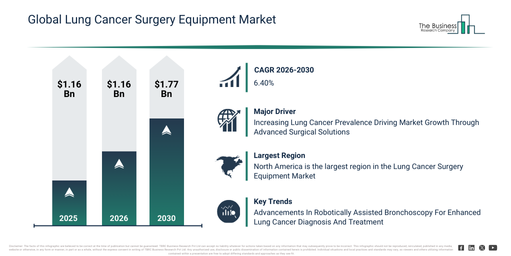
    The lung cancer surgery equipment market has shown significant growth and is poised to continue this trajectory. It is expected to increase from $3.73 billion in 2025 to $3.98 billion in 2026, marking a compound annual growth rate (CAGR) of 6.7%. This historical growth phase was largely driven by the limited availability of advanced thoracic surgery equipment, continued reliance on traditional open surgeries, a rising incidence of lung cancer, expansion in the number of hospitals and surgical clinics, and widespread adoption of standard biopsy and imaging techniques. Looking ahead, the market is forecasted to reach $5.1 billion by 2030, growing at a CAGR of 6.4%. This surge is attributed to the development of robotic-assisted and minimally invasive surgical tools, the integration of AI-enabled imaging and monitoring systems, increased funding for research and academic institutions, growing use of enhanced recovery after surgery (ERAS) protocols, and the expansion of specialized lung cancer treatment centers. Key trends expected in this period include the rise of minimally invasive lung surgeries, greater demand for advanced diagnostic and imaging equipment, integration of patient monitoring with surgical devices, heightened focus on postoperative care, and the growth of robotic-assisted thoracic surgery.

    Download A Free Sample Report For Comprehensive Market Insights:

    https://www.thebusinessresearchcompany.com/sample.aspx?id=24594&type=smp

    Factors Contributing to Demand in the Lung Cancer Surgery Equipment Market

    One of the primary drivers of growth in this market is the increasing prevalence of lung cancer globally. Lung cancer arises when abnormal cells multiply uncontrollably in the lungs, typically linked to smoking and harmful environmental exposures. Rising cases are connected to factors such as tobacco smoke, air pollution, occupational carcinogens, and an aging population. Lung cancer surgery equipment plays a vital role in diagnosing the disease, surgically removing cancerous tissue, and supporting postoperative care through precise surgical and monitoring technologies. For example, in February 2025, the Cancer Council of Australia reported that approximately 15,122 people were diagnosed with lung cancer in 2024, with the average age at diagnosis being 72. Lung cancer ranks as the fifth most common cancer in the country, with about one in 20 Australians expected to receive a diagnosis by age 85. These statistics highlight how the growing lung cancer burden is propelling demand for surgical equipment tailored to this disease.

    Key Trends Shaping the Lung Cancer Surgery Equipment Industry

    Leading companies in the lung cancer surgery equipment market are focusing on advancing technologies such as robotically assisted bronchoscopy. This technique improves the accuracy and safety of localizing tumors and performing biopsies, especially for hard-to-reach lung nodules, facilitating early and precise diagnosis. Robotically assisted bronchoscopy uses robotic technology to guide a flexible bronchoscope into the lungs with greater precision than manual methods. For instance, in March 2025, Johnson & Johnson announced that its MONARCH QUEST system, a sophisticated robotic bronchoscopy platform, received U.S. FDA 510(k) clearance. This system represents the latest version of the MONARCH Platform designed to enhance lung cancer diagnosis through minimally invasive procedures. It integrates with the GE HealthCare OEC 3D mobile CBCT Imaging System, enabling real-time intraprocedural 3D imaging that significantly improves the accuracy of targeting lung nodules in difficult locations.

    Access The Complete Lung Cancer Surgery Equipment Market Report:

    https://www.thebusinessresearchcompany.com/report/lung-cancer-surgery-equipment-global-market-report

    Detailed Product Types and Applications in the Lung Cancer Surgery Equipment Market

    This market is categorized based on product type, surgery type, application, and end user. By product type, it includes surgical instruments, access devices, imaging equipment, electrosurgical devices, biopsy devices, and patient monitoring equipment. Surgical instruments cover tools such as scalpels, forceps, retractors, scissors, and sutures. Access devices include trocars, catheters, guidewires, and introducers. Imaging equipment comprises CT scanners, MRI machines, PET scanners, X-ray systems, and ultrasound devices. Electrosurgical devices feature generators, probes, electrodes, and smoke evacuation systems. Biopsy devices are divided into needle, core, vacuum-assisted, and endoscopic biopsy tools. Patient monitoring equipment encompasses pulse oximeters, ECG monitors, respiratory monitors, blood pressure monitors, and temperature monitors. Surgery types include lobectomy, pneumonectomy, wedge resection, video-assisted thoracoscopic surgery (VATS), and robotic-assisted surgery. Applications span diagnosis, treatment, and aftercare or rehabilitation. End users mainly consist of hospitals, surgical clinics, ambulatory surgical centers, and research and academic institutions.

    Competitive Landscape of the Lung Cancer Surgery Equipment Market

    The lung cancer surgery equipment industry features several prominent companies competing strategically to expand their market presence. Major players include Johnson & Johnson, Medtronic plc, Siemens Healthcare AG, Fujifilm Limited, GE Healthcare Technologies Inc, Boston Scientific Corporation, Olympus Corporation, Intuitive Surgical Inc, Teleflex Incorporated, KARL STORZ GmbH & Co KG, Integra LifeSciences Corporation, Richard Wolf GmbH, Angiodynamics Inc, B Braun Melsungen AG, Sontec Instruments Inc, Novadaq Technologies Inc, Stryker Corporation, CONMED Corporation, Smith & Nephew plc, and Ambu A S. These companies are focusing on innovation, product development, and strategic partnerships to strengthen their foothold in this competitive market.

    Regional Outlook and Market Expansion Drivers for Lung Cancer Surgery Equipment

    In 2025, North America emerged as the largest regional market for lung cancer surgery equipment. However, the Asia-Pacific region is expected to witness the fastest growth during the forecast period. The report covers multiple regions including Asia-Pacific, South East Asia, Western Europe, Eastern Europe, North America, South America, the Middle East, and Africa, providing a comprehensive view of global market dynamics and regional growth opportunities.

    Get in touch with us:

    The Business Research Company: https://www.thebusinessresearchcompany.com/

    Americas: +1 310-496-7795

    Asia: +44 7882 955267 & +91 8897263534

    Europe: +44 7882 955267

    Email us at: marketing@tbrc.info

    Follow us on:

    LinkedIn: https://in.linkedin.com/company/the-business-research-company

    YouTube: https://www.youtube.com/channel/UC24_fI0rV8cR5DxlCpgmyFQ

    Global Market Model: https://www.thebusinessresearchcompany.com/global-market-model
  • Microarray Scanners Market Expansion Is Reshaping Competitive Dynamics Across The Industry

    Microarray Scanners Market Expansion Is Reshaping Competitive Dynamics Across The Industry

    Enhanced with market attractiveness analysis, total addressable market evaluation, company benchmarking matrices, interactive Excel dashboards, expanded supply chain intelligence, emerging startup coverage, and detailed product insights, The Business Research Company’s 2026 market reports deliver more actionable and strategically valuable research.

    The microarray scanners market is experiencing significant momentum, driven by advances in genomics and biotechnology research. As this technology becomes increasingly vital for gene expression analysis and precision medicine, the market is set for steady growth over the coming years. Let’s explore the current market size, key driving factors, segmentation, emerging trends, leading companies, and regional outlook shaping the future of this industry.

    Current Size and Expected Growth of the Microarray Scanners Market

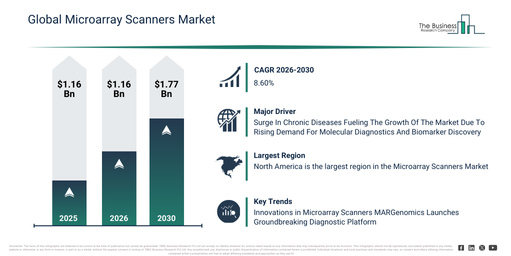
    The microarray scanners market has witnessed strong expansion recently, moving from $1 billion in 2025 to an anticipated $1.08 billion in 2026, growing at a compound annual growth rate (CAGR) of 8.1%. This historical growth is largely attributed to the rising focus on genomics research, increased funding for academic and scientific projects, broader adoption of microarray technologies, a growing need for gene expression analysis, and improvements in fluorescence detection techniques. Looking ahead, the market is set to accelerate even further, reaching $1.5 billion by 2030 with a projected CAGR of 8.6%. This forecasted surge will be driven by factors such as the growing use of precision medicine research, heightened investments in biotechnology and pharmaceutical R&D, expanding large-scale genomic studies, deeper integration of AI-based data analytics, and a rising demand for tools that support high-throughput experimentation.

    Download A Free Sample Report For Comprehensive Market Insights:

    https://www.thebusinessresearchcompany.com/sample.aspx?id=12491&type=smp

    Key Factors Encouraging Growth in the Microarray Scanners Market

    The increasing prevalence of chronic diseases plays a critical role in boosting demand for microarray scanners. Chronic diseases, which persist for three months or more and tend to worsen over time, require in-depth molecular research for improved diagnosis and treatment. Microarray scanners allow scientists to analyze gene expression patterns, providing insights into the molecular basis of these illnesses and helping to identify biomarkers essential for prognosis and therapy development. For example, data released in January 2023 by the National Center for Biotechnology Information (NCBI) highlights that by 2050 there will be approximately 142.66 million people worldwide living with chronic diseases, emphasizing the growing need for advanced diagnostic tools like microarray scanners.

    Technological Advancements and Research Funding Boost Market Demand

    In addition to disease prevalence, expanding funding for genomics and biotech research is directly impacting market growth. Governments and private organizations are increasing investments in research projects that leverage microarray technology to accelerate drug discovery and personalized treatment strategies. Furthermore, continuous improvements in fluorescence detection and imaging capabilities are enhancing the accuracy and efficiency of microarray scanners, further encouraging adoption across research institutions and pharmaceutical companies.

    Access The Complete Microarray Scanners Market Report:

    https://www.thebusinessresearchcompany.com/report/microarray-scanners-global-market-report

    Detailed Segmentation of the Microarray Scanners Market

    The microarray scanners market is divided into several key segments to capture the diversity of products and applications:

    1) By Product Type: Fluorescence Microarray Scanners, Charge-Coupled Devices (CCD) Microarray Scanners, Colorimetric Microarray Scanners, and Other Product Types.

    2) By Application: Gene Expression, Drug Discovery, and Other Applications.

    3) By End User: Hospitals, Diagnostic Laboratories, Pharmaceutical and Biotechnology Companies, and Academic and Research Institutes.

    Within these categories, further breakdowns include subtypes such as laser scanners and multispectral scanners under fluorescence scanners; standard and high-resolution CCD scanners; slide scanners and digital colorimetric scanners; as well as hybrid and customized microarray scanners.

    Innovative Advances Influencing Microarray Technology Development

    Innovation remains a key driver in shaping the microarray scanners industry. Companies are focusing on developing next-generation platforms that offer higher throughput and greater sensitivity. For example, in June 2023, Spain-based MARGenomics introduced the Applied Biosystems GeneChip 3000 Dx v2, an advanced microarray platform that enables simultaneous analysis of thousands of genes and biomarkers with superior data precision. This platform is notable for being the first to receive regulatory approval in both Europe and the United States for diagnostic use, highlighting its potential to revolutionize clinical genomics and personalized medicine.

    Key Industry Players Leading the Microarray Scanners Market

    Several well-established companies dominate the competitive landscape of the microarray scanners market. These include F. Hoffmann-La Roche AG, Thermo Fisher Scientific Inc., GE Healthcare Life Sciences, Hitachi High-Tech Corporation, Innopsys Inc., PerkinElmer Inc., VWR International LLC, Illumina Inc., Bio-Rad Laboratories Inc., Agilent Technologies Inc., Tecan Group AG, and a range of other specialized players such as Huron Technologies International Inc., Miltenyi Biotec B.V. & Co. KG, Luminex Corporation, Molecular Devices LLC, CapitalBio Technology Inc., Berthold Technologies GmbH & Co. KG, RayBiotech Inc., Scienion AG, Oxford Gene Technology IP Limited, Applied Microarrays Inc., and Arrayit Corporation.

    Geographical Insights and Market Expansion Opportunities

    North America held the largest share of the microarray scanners market in 2025, reflecting the region’s robust research infrastructure and investment environment. However, significant growth potential is also present in other regions, including Asia-Pacific, South East Asia, Western Europe, Eastern Europe, South America, the Middle East, and Africa. These regions are increasingly investing in genomics research and healthcare infrastructure, which is expected to fuel demand for microarray scanning technologies in the coming years.

    Get in touch with us:

    The Business Research Company: https://www.thebusinessresearchcompany.com/

    Americas: +1 310-496-7795

    Asia: +44 7882 955267 & +91 8897263534

    Europe: +44 7882 955267

    Email us at: marketing@tbrc.info

    Follow us on:

    LinkedIn: https://in.linkedin.com/company/the-business-research-company

    YouTube: https://www.youtube.com/channel/UC24_fI0rV8cR5DxlCpgmyFQ

    Global Market Model: https://www.thebusinessresearchcompany.com/global-market-model
  • Lumbar Disc Replacement Devices Market Growth Is Accelerating As Industry Transformation Continues

    Lumbar Disc Replacement Devices Market Growth Is Accelerating As Industry Transformation Continues

    Through market attractiveness analysis, total addressable market evaluation, company benchmarking matrices, interactive Excel dashboards, expanded supply chain intelligence, emerging startup coverage, and detailed product insights, The Business Research Company’s 2026 market reports provide more actionable and strategically valuable research.

    The lumbar disc replacement devices market has witnessed significant growth recently, driven by advancements in medical technology and a rising number of spinal health issues worldwide. As the demand for improved spinal care continues to grow, this market is set to expand further, fueled by innovation and growing healthcare infrastructure. Here’s a detailed overview of the market size, key drivers, segments, and leading players shaping the industry’s future.

    The Current and Projected Size of the Lumbar Disc Replacement Devices Market

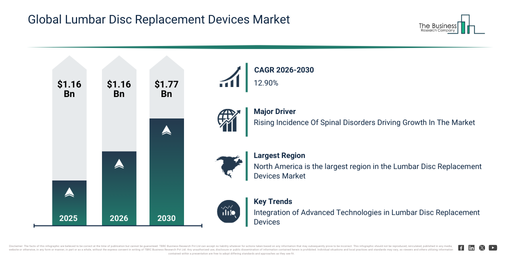
    The market for lumbar disc replacement devices has expanded rapidly and is expected to continue this upward trajectory. From a value of $1.3 billion in 2025, it is projected to reach $1.47 billion in 2026, reflecting a robust compound annual growth rate (CAGR) of 13.1%. Looking ahead, the market is forecasted to grow to $2.39 billion by 2030, maintaining a strong CAGR of 12.9%. This expansion is largely due to increasing cases of degenerative disc disease, more spinal injuries, the growth of orthopedic surgical centers, wider acceptance of disc replacement surgeries, and the availability of advanced implant materials.

    Download A Free Sample Report For Comprehensive Market Insights:

    https://www.thebusinessresearchcompany.com/sample.aspx?id=20864&type=smp

    Factors Supporting Growth in the Lumbar Disc Replacement Devices Market

    One of the primary contributors to market growth is the rising prevalence of spinal disorders. These conditions, which include abnormalities, injuries, and diseases affecting the spine’s vertebrae, discs, nerves, and surrounding tissues, often result in pain and limited mobility. The increase in spinal disorders can be traced to an aging population, sedentary lifestyles, obesity, and a higher occurrence of conditions such as osteoarthritis and herniated discs. Lumbar disc replacement devices provide a vital alternative to traditional spinal fusion surgeries by restoring mobility and reducing pain in patients suffering from degenerative disc disease. For example, according to the World Health Organization in April 2024, over 15 million people worldwide live with spinal cord injuries, highlighting the critical need for advanced treatment options.

    Growing Healthcare Infrastructure Enhancing Market Adoption

    Expanding healthcare infrastructure is another key factor driving the lumbar disc replacement devices market. This infrastructure comprises hospitals, clinics, diagnostic centers, and other medical facilities that provide access to quality healthcare. Increased investments from both government and private sectors, along with rising populations and demand for sophisticated medical care, are fueling this expansion. Enhanced healthcare infrastructure improves patient access to innovative treatments and supports the integration of new medical technologies. For instance, a report from the UK’s Office for National Statistics in May 2023 showed a 5.6% increase in healthcare spending between 2022 and 2023, compared to only 0.9% growth in 2022, demonstrating growing investment in health services. This development is instrumental in boosting the adoption of lumbar disc replacement devices.

    Access The Complete Lumbar Disc Replacement Devices Market Report:

    https://www.thebusinessresearchcompany.com/report/lumbar-disc-replacement-devices-global-market-report

    Breaking Down the Lumbar Disc Replacement Devices Market Segments

    The market is divided into several key segments to better understand its dynamics:

    1) By Product Type: Metal-On-Metal and Metal-On-Biopolymer devices

    2) By Pain Type: Chronic, Acute, Radicular, and Other pain categories

    3) By End-User: Hospitals, Ambulatory Surgical Centers, and other healthcare providers

    Within these categories, subsegments include types of metal-on-metal devices such as those made from cobalt-chromium and titanium alloys, and metal-on-biopolymer devices like metal-on-PEEK (Polyether Ether Ketone) and metal-on-polymer composites.

    Innovations and Strategic Trends Influencing Market Growth

    Leading companies in the lumbar disc replacement device sector are embracing advanced technologies to improve patient outcomes and procedural precision. Among these innovations is numerical code technology that uses sophisticated algorithms and simulations to optimize device design and implantation techniques. For example, in January 2023, the American Medical Association introduced a Current Procedural Terminology (CPT) code for second-level lumbar total disc replacement (TDR) surgeries. Centinel Spine LLC utilized this new code to broaden patient access to two-level lumbar TDR procedures, marking a significant step toward enhancing treatment options and healthcare efficiency.

    Key Players Driving the Lumbar Disc Replacement Devices Market

    Several prominent companies are at the forefront of the lumbar disc replacement devices market, including Medtronic Inc., Stryker Corporation, Zimmer Biomet Holdings Inc., NuVasive Inc., Globus Medical Inc., Orthofix International NV, Medacta International, Aesculap Inc., Alphatec Spine Inc., Paradigm Spine GmbH, B. Braun Melsungen AG, Neoflex Spine Inc., Centinel Spine Inc., Spineart SA, DePuy Synthes, AxioMed LLC, Spinal Stabilization Technologies LLC, NEURO FRANCE Implants SARL, SINTX Technologies Inc., and SIGNUS Medizintechnik GmbH. These companies continue to innovate and expand their market presence through research, product development, and strategic collaborations.

    Geographical Landscape Highlighting North America’s Market Lead

    In 2025, North America dominated the lumbar disc replacement devices market, holding the largest share due to advanced healthcare infrastructure and high awareness levels. The market report also covers other important regions including Asia-Pacific, South East Asia, Western Europe, Eastern Europe, South America, the Middle East, and Africa, providing a comprehensive view of global market trends and future opportunities.

    Get in touch with us:

    The Business Research Company: https://www.thebusinessresearchcompany.com/

    Americas: +1 310-496-7795

    Asia: +44 7882 955267 & +91 8897263534

    Europe: +44 7882 955267

    Email us at: marketing@tbrc.info

    Follow us on:

    LinkedIn: https://in.linkedin.com/company/the-business-research-company

    YouTube: https://www.youtube.com/channel/UC24_fI0rV8cR5DxlCpgmyFQ

    Global Market Model: https://www.thebusinessresearchcompany.com/global-market-model
  • Metzenbaum Scissors Market Forecast Reveals Where Future Industry Value Will Be Created

    Metzenbaum Scissors Market Forecast Reveals Where Future Industry Value Will Be Created

    Through market attractiveness analysis, total addressable market evaluation, company benchmarking matrices, interactive Excel dashboards, expanded supply chain intelligence, emerging startup coverage, and detailed product insights, The Business Research Company’s 2026 market reports provide more actionable and strategically valuable research.

    The metzenbaum scissors market has demonstrated consistent growth over recent years, driven by advancements in surgical techniques and increasing healthcare infrastructure development. This market is expected to continue expanding as medical procedures become more sophisticated and demand for specialized surgical tools rises. Let’s explore the current market size, the key factors fueling growth, prominent market players, and the segment-wise breakdown shaping this industry.

    Metzenbaum Scissors Market Size and Forecasted Expansion

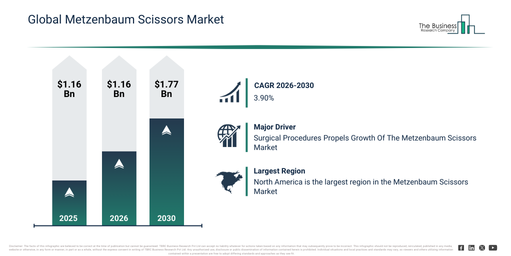
    The market for metzenbaum scissors has been steadily growing, with its value anticipated to increase from $1.7 billion in 2025 to $1.77 billion in 2026, reflecting a compound annual growth rate (CAGR) of 4.2%. This growth during the historical period is mainly driven by the widespread use of stainless steel instruments, limited availability of precision surgical tools, a rise in general surgery procedures, expansion of hospital and clinic infrastructure, and continued reliance on traditional surgical scissors. Looking ahead, the market is forecasted to reach $2.06 billion by 2030, growing at a CAGR of 3.9%. This expected growth will be supported by the incorporation of titanium and advanced materials, increased adoption of minimally invasive and robotic-assisted surgeries, growth in veterinary and dental surgical procedures, greater investment in surgical tool innovation, and a strong regulatory focus on safety and sterilization standards. Key trends in this period include growing demand for precision instruments, greater use of titanium and premium stainless steel, expansion of delicate tissue surgeries, increased applications in veterinary and dental fields, and emphasis on ergonomic designs to enhance surgeon comfort.

    Download A Free Sample Report For Comprehensive Market Insights:

    https://www.thebusinessresearchcompany.com/sample.aspx?id=20574&type=smp

    Factors Contributing to Market Growth: Increasing Surgical Procedures

    One of the primary factors driving the expansion of the metzenbaum scissors market is the rising number of surgical procedures performed worldwide. Surgical interventions are critical treatments carried out by trained surgeons to address various diseases, injuries, or other health conditions, often involving cutting or manipulating tissues and organs. Several factors contribute to this increase, including aging populations, medical advancements, higher prevalence of chronic illnesses, and improved access to healthcare services. Metzenbaum scissors are especially valued in surgeries for their long, slender blades with blunt tips, designed to delicately cut and dissect tissues without causing unnecessary trauma. For example, data from June 2024 by the International Society of Aesthetic Plastic Surgery (ISAPS) showed a 3.4% increase in total surgical and non-surgical procedures in 2023, reaching 34.9 million. Surgical procedures increased by 5.5%, with plastic surgeons performing over 15.8 million surgeries and 19.1 million non-surgical treatments. This steady rise in surgical activity significantly supports market growth for metzenbaum scissors.

    Impact of Growing Cancer Incidence on Market Demand

    Another important driver for the metzenbaum scissors market is the increasing prevalence of cancer globally. Cancer involves uncontrolled growth and spread of abnormal cells, posing serious health risks if untreated. Risk factors such as smoking, heavy alcohol use, and poor diets contribute to higher cancer rates. Metzenbaum scissors play a crucial role in cancer surgeries by enabling precise tissue separation with minimal damage, which allows surgeons to remove tumors thoroughly while preserving healthy surrounding tissue. Their fine blades reduce trauma and bleeding, improving surgical visibility and control during complex oncology procedures. According to the World Health Organization in February 2024, new cancer cases are projected to rise from 20 million in 2022 to 35 million by 2050. This growing burden of cancer is expected to further enhance demand for specialized surgical instruments like metzenbaum scissors.

    Access The Complete Metzenbaum Scissors Market Report:

    https://www.thebusinessresearchcompany.com/report/metzenbaum-scissors-global-market-report

    Healthcare Infrastructure Development as a Growth Catalyst

    Investment in healthcare infrastructure is also a significant factor encouraging expansion in the metzenbaum scissors market. Such investments involve funding for constructing, upgrading, and modernizing healthcare facilities, equipment, and systems to improve patient care access and quality. Rising demand for advanced medical centers, diagnostic and treatment technologies, and increased patient capacity drive this infrastructure growth. Upgrading aging hospitals and building new healthcare facilities are essential to accommodate growing populations and evolving medical needs. Metzenbaum scissors contribute to these developments by facilitating precise tissue dissection and enhancing surgical efficiency, which helps hospitals optimize operating room workflows, improve patient outcomes, and justify investments in high-tech surgical environments. For instance, in November 2025, a report from Unbiased, a UK financial advice platform, noted that home healthcare service costs average around $30 per hour, totaling approximately $18,144 monthly, and expenses are expected to rise by 5.4% to 8.5% in 2024. This upward trend in healthcare spending reflects broader infrastructure growth, which in turn supports market demand for surgical instruments like metzenbaum scissors.

    Breakdown of Metzenbaum Scissors Market Segments

    The metzenbaum scissors market is segmented by various factors to highlight growth opportunities:

    1) Type: Bending, Straight

    2) Material: Stainless Steel, Titanium, Plastic

    3) Jaw Design: Straight, Angled, Curved

    4) Application: Surgical, Dental, Veterinary

    5) End-User: Hospitals, Clinics, Private Practices, Veterinary Clinics

    Within these, subcategories include:

    – Bending: Curved bending, heavy-duty bending, micro bending, precision surgery bending

    – Straight: Standard straight, long straight, general surgery, delicate procedure straight scissors

    Key Players Making an Impact on the Metzenbaum Scissors Market

    Several leading companies hold significant positions in the metzenbaum scissors market. Notable players include Olympus Corporation, CooperSurgical Inc., Karl Storz SE & Co. KG, Integra LifeSciences Corporation, ConMed Corporation, Aspen Surgical Products Inc., Nopa Instruments Medizintechnik GmbH, Electro Surgical Instrument Co., HARFINS GmbH, Wexler Surgical Inc., Xelpov Surgical Ltd., Sontec Instruments Inc., DTR Medical Ltd., Johnson & Johnson (Ethicon), B Braun Melsungen AG, Medtronic plc, KLS Martin Group, Scanlan International Inc., Stille AB, Zimmer Biomet Holdings Inc., Arthrex Inc., Swann-Morton Ltd., World Precision Instruments LLC, and Sklar Surgical Instruments.

    Geographical Overview of the Market’s Leading Regions

    In 2025, North America accounted for the largest share of the metzenbaum scissors market. The broader regional analysis includes Asia-Pacific, South East Asia, Western Europe, Eastern Europe, South America, the Middle East, and Africa. While North America leads in market size, emerging economies in regions like Asia-Pacific are expected to present significant growth opportunities as healthcare infrastructure and surgical procedure volumes increase.

    Get in touch with us:

    The Business Research Company: https://www.thebusinessresearchcompany.com/

    Americas: +1 310-496-7795

    Asia: +44 7882 955267 & +91 8897263534

    Europe: +44 7882 955267

    Email us at: marketing@tbrc.info

    Follow us on:

    LinkedIn: https://in.linkedin.com/company/the-business-research-company

    YouTube: https://www.youtube.com/channel/UC24_fI0rV8cR5DxlCpgmyFQ

    Global Market Model: https://www.thebusinessresearchcompany.com/global-market-model
  • Low Vision Electronic Visual Aids Market Outlook Highlights The Next Major Growth Opportunities

    Low Vision Electronic Visual Aids Market Outlook Highlights The Next Major Growth Opportunities

    Delivering more actionable and strategically valuable research, The Business Research Company’s 2026 market reports feature market attractiveness analysis, total addressable market evaluation, company benchmarking matrices, interactive Excel dashboards, expanded supply chain intelligence, emerging startup coverage, and detailed product insights.

    The low vision electronic visual aids market is steadily gaining traction as the demand for vision enhancement technologies rises globally. With advances in technology and increasing awareness, this sector is set for significant growth in the coming years. Let’s explore the market size, key drivers, innovative trends, major players, and regional opportunities shaping this evolving industry.

    Market Size and Growth Prospects of the Low Vision Electronic Visual Aids Market

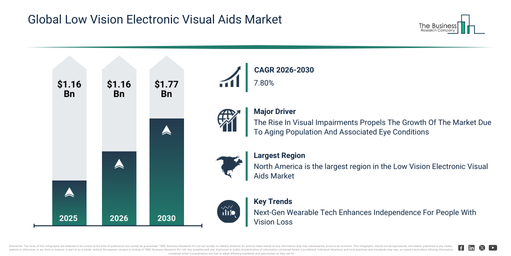
    The low vision electronic visual aids market has witnessed strong growth recently and is projected to expand further. From $1.25 billion in 2025, it is expected to increase to $1.35 billion in 2026, growing at a compound annual growth rate (CAGR) of 8.0%. Looking ahead, the market is forecasted to reach $1.82 billion by 2030, with a CAGR of 7.8%. This growth is driven by factors such as a rising number of people with visual impairments, limited access to affordable aids, increased awareness about low vision devices, improvements in optical magnification technologies, and an aging global population. The market’s future trajectory will also be shaped by the integration of artificial intelligence (AI) and the Internet of Things (IoT), along with growing demand for portable and wearable products, government support initiatives, wider acceptance in educational settings, and expanded e-commerce sales channels.

    Download A Free Sample Report For Comprehensive Market Insights:

    https://www.thebusinessresearchcompany.com/sample.aspx?id=25815&type=smp

    Growing Impact of Visual Impairments Boosting Market Demand

    A key factor propelling the low vision electronic visual aids market is the increasing prevalence of visual impairments worldwide. These impairments encompass a range of vision loss conditions that cannot be fully corrected by conventional means like glasses, contact lenses, medication, or surgery. Age-related eye diseases such as macular degeneration, cataracts, and glaucoma are becoming more common due to population aging, contributing significantly to this rise. Low vision aids help enhance remaining vision by providing magnification, improved contrast, and digital image processing, thereby supporting greater independence in day-to-day activities for affected individuals. For example, in August 2023, the World Health Organization reported that at least 2.2 billion people globally experience near or distance vision impairment. However, only 36% of those with refractive error-related distance vision impairment and just 17% of cataract patients have received adequate treatment. This treatment gap highlights the need and opportunity for electronic low vision aids to improve quality of life.

    Technological Innovations Transforming the Market Landscape

    The low vision electronic visual aids market is witnessing dynamic innovation driven by technology integration. Companies are increasingly developing AI-powered wearable smart glasses and other advanced devices to enhance real-time visual interpretation and user autonomy. These aids utilize AI for image processing, object recognition, and voice output, enabling users to better perceive and interact with their environments. A notable example is Eyedaptic Inc., a US-based medical technology firm, which in August 2024 launched EYE6 with Ivy—a next-generation wearable visual assistant designed for individuals with age-related macular degeneration and other retinal conditions. This lightweight smart glasses system combines advanced vision enhancement with an AI assistant named Ivy, capable of reading text, identifying objects, describing surroundings, and supporting communication in 99 languages. The device features full HD 1080p displays, hands-free voice control, and remote upgrade capabilities, offering a highly customizable and user-friendly experience for people with low vision.

    Access The Complete Low Vision Electronic Visual Aids Market Report:

    https://www.thebusinessresearchcompany.com/report/low-vision-electronic-visual-aids-global-market-report

    Low Vision Electronic Visual Aids Market Segments and Product Categories

    This market is segmented comprehensively across various categories to address diverse user needs. By type, the market includes Portable Electronic Magnifiers, Closed Circuit Television (CCTV) systems, Voice Readers, and other devices. Technology classifications cover Optical Devices, Electronic Magnifiers, Text-to-Speech Devices, and Speech Recognition Systems. Applications are categorized into Reading Assistance, Navigation Assistance, Social Interaction and Communication, and Entertainment. Distribution channels span Online Retail, Specialty Stores, Optical Stores, and others. The end-user segments involve Individuals, Hospitals and Clinics, Rehabilitation Centers, and Educational Institutions.

    Further subcategories provide detailed breakdowns such as Portable Electronic Magnifiers including handheld, stand, wearable, and digital tablet magnifiers; CCTV devices divided into desktop, transportable, wearable, and those with text-to-speech integration; Voice Readers comprising screen readers, book readers, OCR-based readers, and smart audio assistants; and other types like Braille notetakers, smart glasses, screen magnification software, and navigation aids.

    Key Players in the Low Vision Electronic Visual Aids Industry

    Several prominent companies lead the low vision electronic visual aids market, driving innovation and accessibility. These players include Eschenbach Optik GmbH, Vispero, HumanWare Group, Freedom Scientific Inc., IrisVision Global Inc., VisionAid International Ltd., Zoomax Technology Co. Ltd., HIMS Inc., LS And S Products Inc., CTECH Low Vision And Blindness Solutions, Low Vision International AB, NuEyes Technologies Inc., Optelec U.S. Inc., Reinecker Vision GmbH, OrCam Technologies Ltd., Enhanced Vision, Dolphin Computer Access, Acesight, Eyedaptic Inc., eSight Corporation, Eurobraille, and Help Tech GmbH & Co. KG. Their efforts continue to expand the reach and capabilities of electronic visual aids worldwide.

    Regional Market Outlook: North America Leads While Asia-Pacific Grows Rapidly

    In 2025, North America held the largest share of the low vision electronic visual aids market, benefiting from advanced healthcare infrastructure and strong awareness levels. Meanwhile, the Asia-Pacific region is expected to experience the fastest growth during the forecast period, driven by rising population, increasing prevalence of visual impairments, improving healthcare access, and growing adoption of innovative technologies. The market report covers key geographical areas including Asia-Pacific, Southeast Asia, Western Europe, Eastern Europe, North America, South America, the Middle East, and Africa, providing a thorough understanding of global developments and regional opportunities.

    Get in touch with us:

    The Business Research Company: https://www.thebusinessresearchcompany.com/

    Americas: +1 310-496-7795

    Asia: +44 7882 955267 & +91 8897263534

    Europe: +44 7882 955267

    Email us at: marketing@tbrc.info

    Follow us on:

    LinkedIn: https://in.linkedin.com/company/the-business-research-company

    YouTube: https://www.youtube.com/channel/UC24_fI0rV8cR5DxlCpgmyFQ

    Global Market Model: https://www.thebusinessresearchcompany.com/global-market-model
  • Low Vision Electronic Glasses Market Trends And Growth Drivers Point To Strong Future Potential

    Low Vision Electronic Glasses Market Trends And Growth Drivers Point To Strong Future Potential

    Enhanced with market attractiveness analysis, total addressable market evaluation, company benchmarking matrices, interactive Excel dashboards, expanded supply chain intelligence, emerging startup coverage, and detailed product insights, The Business Research Company’s 2026 market reports deliver more actionable and strategically valuable research.

    The market for low vision electronic glasses has witnessed significant growth recently, driven by technological advancements and a growing need among visually impaired individuals. As innovations continue to emerge, this sector is set to expand further, offering enhanced solutions to improve vision and quality of life. Below is an in-depth overview of the market size, key drivers, segmentation, competitive landscape, and regional developments shaping this industry.

    Steady Growth Projection for the Low Vision Electronic Glasses Market

    The low vision electronic glasses market demonstrated rapid expansion over recent years, with its size expected to rise from $0.97 billion in 2025 to $1.08 billion in 2026. This growth reflects a compound annual growth rate (CAGR) of 11.6%. The earlier phase of market growth was influenced by factors such as the increasing prevalence of visual impairments, technological restrictions of traditional optical aids, the high pricing of earlier devices, limited awareness about low vision aids, and a shortage of trained eye care professionals.

    Download A Free Sample Report For Comprehensive Market Insights:

    https://www.thebusinessresearchcompany.com/sample.aspx?id=25814&type=smp

    Future Expansion Forecast for Low Vision Electronic Glasses

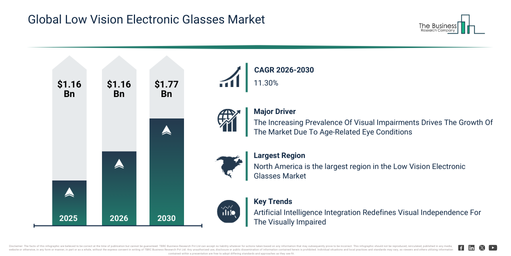
    Looking ahead, the market is projected to continue this upward trend, reaching $1.66 billion by 2030 with a CAGR of 11.3%. This anticipated growth results from advances in AI-driven vision enhancement, the integration of augmented reality (AR) and virtual reality (VR) technologies to create immersive experiences, cost reductions achieved through mass production, a growing elderly population, and a stronger focus on enabling independent living for those with visual impairments. Key trends expected to shape the market include the miniaturization of devices, real-time image enhancement features, improved comfort and ergonomic designs for wearability, integration of voice and gesture controls, and customized vision assistance.

    Rising Visual Impairments Fuel Demand for Low Vision Electronic Glasses

    An important factor propelling the market forward is the increasing number of people affected by visual impairments. These impairments involve significant vision loss that cannot be corrected fully by glasses, contact lenses, medication, or surgical methods, impacting individuals’ ability to perform daily tasks. The growth in visual impairments is largely driven by aging populations, as age-related eye conditions such as cataracts, glaucoma, and macular degeneration become more common. Low vision electronic glasses enhance the remaining vision through magnification, contrast adjustments, and real-time image processing, thereby supporting greater autonomy in everyday life. For example, the World Health Organization reported in August 2023 that at least 2.2 billion people globally have either near or distance vision impairment. However, treatment rates remain low, with only 36% of those affected by refractive errors and a mere 17% with cataract-related vision impairment receiving adequate care. This gap underscores the rising demand for assistive devices like low vision electronic glasses.

    Access The Complete Low Vision Electronic Glasses Market Report:

    https://www.thebusinessresearchcompany.com/report/low-vision-electronic-glasses-global-market-report

    Technological Progress and AI Integration Drive Market Growth

    The enhancement of vision through low vision electronic glasses is increasingly being powered by artificial intelligence, which offers dynamic image optimization and environmental awareness. These AI-enabled devices help users recognize objects, read text aloud, and improve overall visual clarity. For instance, in August 2024, US-based company Eyedaptic Inc. introduced the EYE6 smart glasses designed for individuals with central vision loss. Combining augmented reality with AI-driven vision enhancement, these glasses provide real-time image adjustment to boost clarity and contrast. Additional features include a lightweight design, hands-free operation, multilingual visual assistance supporting 99 languages, and capabilities such as text reading and environmental descriptions to assist users with daily activities.

    Comprehensive Segmentation of the Low Vision Electronic Glasses Market

    The market analysis divides the low vision electronic glasses sector into several key segments:

    1) Product Type: Wearable Glasses, Smart Glasses, Augmented Reality Glasses, Night Vision Glasses

    2) Technology: Optical Technology, Digital Technology, Adaptive Technology, Artificial Intelligence Integrated Technology

    3) Application: Personal Use, Professional Use

    4) Distribution Channel: Online Retail, Offline Retail, Direct Sales, Healthcare Providers

    5) End-User: Individuals with Visual Impairments, Healthcare Institutions, Educational Institutions, Occupational Rehabilitation Centers

    Further subcategories include specific types of wearable glasses such as head-mounted low vision glasses, clip-on assistive glasses, and full-frame digital glasses. Smart glasses categories cover voice-controlled models, Bluetooth-enabled visual aids, and integrated camera glasses. Augmented reality glasses include varieties meant for object recognition, navigation assistance, and text-to-speech functionalities. Night vision glasses feature infrared-based, thermal imaging, and low-light enhancement technologies.

    Leading Companies Driving Innovation in the Low Vision Electronic Glasses Market

    The competitive landscape of the low vision electronic glasses market features major players who are innovating to meet the needs of visually impaired users. Prominent companies include OrCam Technologies Ltd., Enhanced Vision Systems Inc., Vuzix Corporation, Zoomax Technology Co. Ltd., IrisVision Global Inc., Acesight, Ceciaa SAS, Envision Technologies BV, Eyedaptic Inc., GiveVision Ltd., NuEyes Technologies Inc., OXSIGHT Ltd., Vision Buddy Inc., eSight Corporation, Everysight Labs Ltd., Nreal Technology Ltd., Rokid Corporation, Avegant Corporation, Magic Leap Inc., Lenovo Smart Glasses Division, Sony Smart Vision Systems, and Epson Smart Glasses Division.

    Geographical Distribution and Market Leadership

    In 2025, North America held the largest share of the low vision electronic glasses market. However, the Asia-Pacific region is expected to register the fastest growth rate during the forecast period. The market report covers key geographic regions including Asia-Pacific, South East Asia, Western Europe, Eastern Europe, North America, South America, the Middle East, and Africa, providing a comprehensive view of global market trends.

    Get in touch with us:

    The Business Research Company: https://www.thebusinessresearchcompany.com/

    Americas: +1 310-496-7795

    Asia: +44 7882 955267 & +91 8897263534

    Europe: +44 7882 955267

    Email us at: marketing@tbrc.info

    Follow us on:

    LinkedIn: https://in.linkedin.com/company/the-business-research-company

    YouTube: https://www.youtube.com/channel/UC24_fI0rV8cR5DxlCpgmyFQ

    Global Market Model: https://www.thebusinessresearchcompany.com/global-market-model

  • Metered Dose Inhaler Devices Market Growth Through 2030 Creates New Strategic Opportunities

    Metered Dose Inhaler Devices Market Growth Through 2030 Creates New Strategic Opportunities

    Delivering more actionable and strategically valuable research, The Business Research Company’s 2026 market reports feature market attractiveness analysis, total addressable market evaluation, company benchmarking matrices, interactive Excel dashboards, expanded supply chain intelligence, emerging startup coverage, and detailed product insights.

    The market for metered dose inhaler devices has witnessed significant expansion in recent years, driven by rising respiratory health challenges worldwide. As demand for effective inhalation therapies grows, this sector is set to continue its upward trajectory, shaped by technological advancements and changing healthcare needs. Here is an in-depth look at the current market size, growth drivers, segmentation, innovations, key players, and regional insights.

    Strong Growth Prospects in the Metered Dose Inhaler Devices Market

    The metered dose inhaler devices market is projected to increase from $16.23 billion in 2025 to $17.12 billion in 2026, growing at a compound annual growth rate (CAGR) of 5.5%. This growth reflects the historical rise in asthma prevalence, increasing cases of chronic obstructive pulmonary disease (COPD), widespread adoption of inhalation therapies, physician preference for MDIs, and the availability of generic inhalers. Looking ahead, the market is expected to reach $21.06 billion by 2030, with a CAGR of 5.3%. Factors contributing to this anticipated expansion include the emergence of smart inhalers, stricter environmental regulations concerning propellants, growth in homecare treatments, rising demand for digital adherence monitoring, and advancements in respiratory therapies. Prominent trends likely to influence the market during this period are smart dose-tracking inhalers, breath-actuated inhalation technology, compact portable designs, improved dose accuracy, and the adoption of eco-friendly propellants.

    Download A Free Sample Report For Comprehensive Market Insights:

    https://www.thebusinessresearchcompany.com/sample.aspx?id=20878&type=smp

    Chronic Obstructive Pulmonary Disease as a Key Growth Driver

    A significant factor boosting the metered dose inhaler devices market is the rising prevalence of chronic obstructive pulmonary disease (COPD). COPD is a progressive condition characterized by airflow obstruction, most often resulting from long-term exposure to irritants such as cigarette smoke. Symptoms include shortness of breath, coughing, and wheezing. The increasing number of COPD cases is linked to tobacco use, air pollution, aging populations, and delays in diagnosis or treatment. Metered dose inhalers play an important role in managing COPD by delivering medication directly to the lungs, providing quick relief and improving airflow. For example, in December 2023, the National Institutes of Health projected that COPD cases worldwide will increase from 532 million in 2030 to 592 million by 2050, underlining the impact of this disease on market growth.

    Air Pollution’s Role in Rising Demand for Metered Dose Inhalers

    Another critical element fueling market expansion is the growing problem of air pollution, which significantly contributes to respiratory health challenges. Air pollution consists of harmful substances such as particulate matter, gases, and biological molecules in the atmosphere that adversely impact health. Exposure to polluted air is a major risk factor for diseases like asthma and COPD. The increase in air pollution is primarily caused by industrialization, urbanization, higher vehicular emissions, and fossil fuel combustion. Metered dose inhalers help mitigate the effects of these environmental factors by delivering targeted medication to patients suffering from pollution-induced respiratory issues. For instance, in October 2025, the Clean Air Fund, a UK-based nonprofit, reported an 80% surge in funding for fossil fuel-related projects, rising from $5.3 billion to $9.5 billion in 2023, highlighting the continuing impact of fossil fuel use on air quality and public health. Notably, fossil fuel combustion accounts for over 5 million of the 8.1 million annual premature deaths caused by air pollution, reinforcing the connection between air pollution and the growing need for MDIs.

    Access The Complete Metered Dose Inhaler Devices Market Report:

    https://www.thebusinessresearchcompany.com/report/metered-dose-inhaler-devices-global-market-report

    Segmentation of the Metered Dose Inhaler Devices Market and Strategic Outlook

    This market is divided into various segments to better understand demand and tailor strategies:

    1) By Type: Desktop Metered Dose Inhaler Devices, Portable Metered Dose Inhaler Devices, and Other Types

    2) By Distribution Channel: Online and Offline

    3) By Application: Asthma, Chronic Obstructive Pulmonary Disease, and Other Applications

    4) By End-User: Hospitals, Clinics, Homecare Settings, and Other End Users

    Further subcategories include:

    – Desktop MDIs: Standard, High-performance, and Smart desktop devices

    – Portable MDIs: Conventional, Advanced, and Smart portable devices

    – Other types: Nebulizer-based MDIs, Dry powder inhaler (DPI) combination devices, Soft mist inhaler (SMI) devices, and other specialized MDIs

    Technological Advancements Shaping the Metered Dose Inhaler Devices Market

    Leading companies in the metered dose inhaler devices space are concentrating on developing cutting-edge technologies, such as pressurized metered dose inhalers (pMDIs), which enhance drug delivery efficiency and improve patient compliance. These devices deliver a precise aerosolized dose using pressurized propellants. For instance, in July 2023, Lupin Limited from India launched Luforbec 100/6 in Germany—a pMDI designed to treat adult asthma and COPD by combining beclometasone (100 µg) and formoterol (6 µg). Remarkably, this product is priced roughly 47% below the fixed reference price, making it more accessible to patients. Since about 5% of adults in Germany suffer from asthma, this launch highlights Lupin’s commitment to addressing vital respiratory health needs and improving treatment outcomes.

    Key Market Players Influencing Competition in the Metered Dose Inhaler Devices Sector

    The metered dose inhaler devices industry features several influential companies, including Pfizer Inc., Merck & Co. Inc., AstraZeneca PLC, GlaxoSmithKline plc, 3M Company, Boehringer Ingelheim GmbH, Teva Pharmaceutical Industries Ltd., Berry Global Inc., AptarGroup Inc., Philips Healthcare, Chiesi Farmaceutici S.p.A., Cipla Limited, Gerresheimer AG, Zydus Lifesciences Limited, Mylan N.V., Nemera, Beximco Pharmaceuticals Limited, Cohero Health Inc., Bespak Europe Ltd., Trudell Medical International, and Iconovo AB.

    Geographical Insights Highlighting Market Leadership and Growth Potential

    In 2025, North America held the largest share of the metered dose inhaler devices market. Meanwhile, the Asia-Pacific region is forecasted to experience the fastest growth during the upcoming years. The market report covers several key regions, including Asia-Pacific, South East Asia, Western Europe, Eastern Europe, North America, South America, the Middle East, and Africa, thereby providing a comprehensive overview of global market trends and opportunities.

    Get in touch with us:

    The Business Research Company: https://www.thebusinessresearchcompany.com/

    Americas: +1 310-496-7795

    Asia: +44 7882 955267 & +91 8897263534

    Europe: +44 7882 955267

    Email us at: marketing@tbrc.info

    Follow us on:

    LinkedIn: https://in.linkedin.com/company/the-business-research-company

    YouTube: https://www.youtube.com/channel/UC24_fI0rV8cR5DxlCpgmyFQ

    Global Market Model: https://www.thebusinessresearchcompany.com/global-market-model
  • Low Vision Assistive Devices Market Expansion Is Reshaping Competitive Dynamics Across The Industry

    Low Vision Assistive Devices Market Expansion Is Reshaping Competitive Dynamics Across The Industry

    Through market attractiveness analysis, total addressable market evaluation, company benchmarking matrices, interactive Excel dashboards, expanded supply chain intelligence, emerging startup coverage, and detailed product insights, The Business Research Company’s 2026 market reports provide more actionable and strategically valuable research.

    The low vision assistive devices market is experiencing significant growth, driven by advances in technology and increasing awareness of visual impairments. With a rising number of individuals affected by vision loss and new innovations improving accessibility, this market is set for continued expansion. Let’s explore the current market size, growth factors, segmentation, key players, and emerging trends shaping this important sector.

    Market Size and Expected Growth of the Low Vision Assistive Devices Market

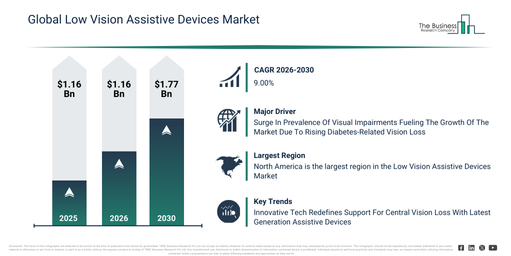
    The low vision assistive devices market has seen substantial expansion in recent years. It is projected to grow from $1.23 billion in 2025 to $1.34 billion in 2026, reflecting a compound annual growth rate (CAGR) of 8.9%. Looking ahead, this market is expected to reach $1.89 billion by 2030, with a CAGR of 9.0%. This upward trajectory is fueled by developments such as AI-powered assistive technologies, integration of augmented and virtual reality, increased healthcare investments, growing demand for wearable devices, and the rise of online retail channels. Key trends anticipated to influence the market include a shift toward portable and wearable solutions, greater use of electronic magnifiers, seamless incorporation of assistive software into everyday devices, enhanced access in educational and workplace settings, and the delivery of personalized vision support.

    Download A Free Sample Report For Comprehensive Market Insights:

    https://www.thebusinessresearchcompany.com/sample.aspx?id=25813&type=smp

    Primary Factors Stimulating Growth in the Low Vision Assistive Devices Market

    The rising prevalence of visual impairments is a major driver behind the expanding demand for low vision assistive devices. Visual impairment includes a spectrum of conditions ranging from partial vision loss to complete blindness that standard corrective lenses cannot fully address. The increase in visual impairment cases is closely linked to the growing incidence of diabetes, which can lead to retinal damage over time. Low vision assistive devices play a vital role by improving the remaining vision, aiding daily activities, and enhancing independence and quality of life for affected individuals.

    A concrete example comes from Australia, where Vision Australia reported that approximately 453,000 people live with blindness or low vision as of February 2025. This number is projected to rise to 564,000 by 2030, as noted by Developing Australia Communities, an organization supporting the disability sector. This growth in the visually impaired population is helping to drive the market forward.

    Access The Complete Low Vision Assistive Devices Market Report:

    https://www.thebusinessresearchcompany.com/report/low-vision-assistive-devices-global-market-report

    Market Segmentation Overview of the Low Vision Assistive Devices Industry

    This market is categorized into several key segments for a detailed understanding:

    1) Product Type: Magnifiers, Reading Devices, Wearable Devices, Screen Readers, Other Products

    2) Application: Education, Healthcare, Personal Use

    3) Distribution Channel: Online Stores, Specialty Stores, Optical Stores, Other Channels

    4) End-User: Children, Adults, Elderly

    Further breakdowns include:

    – Magnifiers such as handheld, stand, electronic, and pocket types

    – Reading devices including Optical Character Recognition (OCR) tools, text-to-speech devices, desktop video magnifiers, and portable readers

    – Wearable devices like smart glasses, head-mounted displays, AR-based solutions, and camera-based systems

    – Screen readers covering software-based, web-based, mobile, and Braille-integrated readers

    – Other products including Braille embossers, tactile graphics tools, speech-to-text converters, as well as audio books and e-readers

    Innovative Technology Trends Influencing the Low Vision Assistive Devices Market

    Leading companies in this space are increasingly focusing on cutting-edge technologies designed to enhance visual clarity, mobility, and independence for people with central vision loss. The latest assistive devices combine high-resolution imaging, real-time processing, and wearable organic light-emitting diode (OLED) displays to provide enhanced visuals that integrate with remaining eyesight while maintaining peripheral awareness.

    For instance, in July 2025, Canadian tech firm eSight introduced the eSight Go wearable device. It features a 12-megapixel camera with 4K resolution, dual full HD OLED screens, and a 45-degree field of view that offers an immersive and natural viewing experience. Additional benefits include advanced image stabilization, a user-friendly interface, and a neck-distributed battery pack for comfort during extended use. Such advanced devices aim to help users engage fully in daily activities at school, work, and home while accommodating over 20 different vision impairments worldwide.

    Major Players Driving Competition in the Low Vision Assistive Devices Sector

    Key companies that shape the competitive landscape in this market include HIMS Inc., OrCam Technologies Ltd., HumanWare Group, Freedom Scientific Inc., eSight Corporation, IrisVision Global Inc., Zoomax Technology Co. Limited, Optelec U.S. Inc., Cobolt Systems Ltd., NuEyes Technologies Inc., Vision Buddy Inc., Acesight, Eyedaptic Inc., LVI Low Vision International AB, Reinecker Vision GmbH, Ash Technologies Ltd., RevoSight Inc., Enhanced Vision, Dolphin Computer Access, Vispero, Eurobraille, and Help Tech GmbH & Co. KG. These firms focus on innovation and expanding accessibility to meet growing user needs.

    Regional Market Share Insights for the Low Vision Assistive Devices Industry

    In 2025, North America held the largest market share in the low vision assistive devices sector. Other significant regions covered in market analyses include Asia-Pacific, South East Asia, Western Europe, Eastern Europe, South America, Middle East, and Africa. While North America leads currently, emerging regions are expected to contribute to market expansion in the coming years.

    Get in touch with us:

    The Business Research Company: https://www.thebusinessresearchcompany.com/

    Americas: +1 310-496-7795

    Asia: +44 7882 955267 & +91 8897263534

    Europe: +44 7882 955267

    Email us at: marketing@tbrc.info

    Follow us on:

    LinkedIn: https://in.linkedin.com/company/the-business-research-company

    YouTube: https://www.youtube.com/channel/UC24_fI0rV8cR5DxlCpgmyFQ

    Global Market Model: https://www.thebusinessresearchcompany.com/global-market-model
  • Low Vision And Blind Aids Products Market Forecast Reveals Where Future Industry Value Will Be Created

    Low Vision And Blind Aids Products Market Forecast Reveals Where Future Industry Value Will Be Created

    Delivering more actionable and strategically valuable research, The Business Research Company’s 2026 market reports feature market attractiveness analysis, total addressable market evaluation, company benchmarking matrices, interactive Excel dashboards, expanded supply chain intelligence, emerging startup coverage, and detailed product insights.

    The market for low vision and blind aids products has witnessed remarkable growth recently, driven by advances in technology and increased awareness of visual impairments. With ongoing innovations and expanding applications, this sector is set to continue its strong upward trajectory in the coming years. Let’s explore the current market size, key growth drivers, segment breakdowns, technological trends, major players, and regional dynamics shaping this industry.

    Market Expansion and Projected Growth of the Low Vision and Blind Aids Products Market

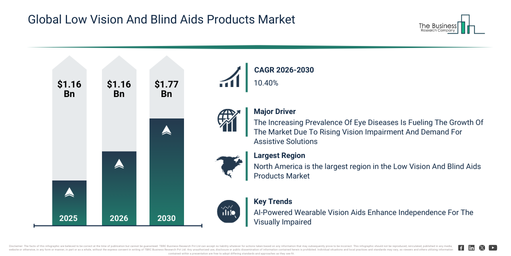
    The low vision and blind aids products market has seen rapid expansion over recent years. It is forecasted to increase from $3.32 billion in 2025 to $3.68 billion in 2026, marking a compound annual growth rate (CAGR) of 10.8%. This historic growth is largely fueled by the rising prevalence of visual impairments, greater public awareness of available aids, supportive government initiatives for people with disabilities, technological progress in optical devices, and early adoption by educational institutions. Looking ahead, the market is expected to continue growing swiftly, reaching $5.46 billion by 2030 with a CAGR of 10.4%. Factors contributing to future growth include the integration of artificial intelligence (AI) into vision aids, the rise of wearable technologies, growing demand for portable electronic devices, expansion of online retail channels, and heightened focus on inclusive education and employment. Emerging trends forecasted to dominate the market include personalized vision enhancement solutions, voice-activated assistive tools, mobile accessibility features, smart navigation aids for both indoor and outdoor mobility, and affordable, inclusive low vision technologies.

    Download A Free Sample Report For Comprehensive Market Insights:

    https://www.thebusinessresearchcompany.com/sample.aspx?id=25812&type=smp

    Key Factors Propelling Demand in the Low Vision and Blind Aids Products Market

    One of the primary drivers boosting this market is the increasing prevalence of eye diseases worldwide. These conditions affect the structure or function of the eyes, often leading to impaired vision or blindness. The surge in eye-related disorders is closely linked to lifestyle changes such as prolonged screen time, which causes eye strain and accelerates vision problems. Low vision and blind aids products help individuals with these conditions by maximizing the use of their remaining vision or providing non-visual alternatives for accessing information. These aids play a crucial role in improving daily activities, mobility, and independence for people with permanent vision loss. For example, in May 2024, the Centers for Disease Control and Prevention (CDC) reported that over 90 million Americans aged 40 and above currently face vision challenges. Projections indicate that by 2050, vision impairment and blindness in the U.S. will increase by 150%, with diabetic retinopathy cases rising by 72%, cataracts by 87%, and glaucoma and macular degeneration expected to double. Such alarming statistics underscore the critical need for low vision and blind aids, which in turn is driving market expansion.

    Additional Market Drivers Shaping Future Opportunities

    Alongside the rise in eye diseases, increasing incorporation of advanced technologies like AI in vision aids is accelerating the market’s growth. Wearable devices equipped with smart features are gaining popularity for their ability to provide real-time assistance and improved functionality. Moreover, the expansion of online sales channels has made these products more accessible to a wider audience. There is also growing emphasis on creating inclusive environments within education and employment sectors, which further stimulates demand for assistive vision products. These factors combined are expected to significantly contribute to the market’s rapid development over the next few years.

    Access The Complete Low Vision And Blind Aids Products Market Report:

    https://www.thebusinessresearchcompany.com/report/low-vision-and-blind-aids-products-global-market-report

    Breaking Down the Low Vision and Blind Aids Products Market Segments

    This market is categorized into multiple key segments to better understand opportunities and focus areas:

    1) By Product Type: Optical Aids, Non-Optical Aids, Electronic Aids, Assistive Software, Wearable Technology

    2) By Age Group: Children, Adults, Seniors, Teenagers, Middle-Aged

    3) By Distribution Channel: Online Stores, Retail Pharmacies, Specialized Medical and Assistive Device Retailers, Specialty Stores, Direct Sales

    4) By Application: Blind Schools, Disabled Persons Federations and Hospitals, Enterprises and Social Organizations

    5) By End-User: Individuals, Healthcare Professionals, Educational Institutions, Community Organizations, Government Agencies

    These categories further include subsegments such as:

    – Optical Aids: Magnifying Glasses, Telescopic Glasses, Spectacle-Mounted Magnifiers, Handheld Magnifiers, Stand Magnifiers

    – Non-Optical Aids: Braille Books, Large Print Materials, Tactile Graphics, Signature Guides, Writing Templates

    – Electronic Aids: Video Magnifiers, Digital Readers, Screen Enlargers, Electronic Braille Displays, Talking Devices

    – Assistive Software: Screen Readers, Screen Magnification Software, Text-To-Speech Software, Optical Character Recognition (OCR) Tools, Navigation and Mapping Software

    – Wearable Technology: Smart Glasses, AI-Powered Vision Aids, Wearable Cameras, Voice-Enabled Smart Devices, Haptic Feedback Wearables

    Innovations Transforming the Low Vision and Blind Aids Product Market

    Leading companies in this market are heavily investing in advanced technologies to enhance the independence and quality of life for visually impaired users. A notable example is the development of AI-powered wearable vision aids—smart, head-mounted devices that combine artificial intelligence with vision enhancement to assist users in interpreting visual information, performing daily tasks, and navigating their surroundings more effectively. For instance, in August 2024, Eyedaptic, a US-based provider specializing in vision enhancement, introduced the EYE6 with Ivy. This innovative product utilizes multimodal generative AI and large language model technology to help individuals with age-related macular degeneration and other retinal disorders. It can read text, identify objects, and interpret environments in 99 languages, offering a lightweight, smart glasses solution that blends high-definition visual augmentation with an interactive AI assistant designed to enable greater autonomy and ease in everyday activities.

    Key Industry Players and Competitive Landscape in the Low Vision and Blind Aids Sector

    The low vision and blind aids products market features several prominent companies shaping its trajectory. These include Eschenbach Optik GmbH, Tobii Dynavox, OrCam Inc., Vispero, HumanWare, Freedom Scientific, MaxiAids, Enhanced Vision, Dolphin Computer Access, Zoomax, IRIS Vision, SELVAS Healthcare Inc., LS&S LLC, LVI Low Vision International, VisionAid, Eurobraille, HHW Care Products India Private Limited, Nippon Telesoft Co. Ltd., Help Tech GmbH & Co. KG, eSight Corporation, Vuzix Corporation, and Aira Tech Corp. These firms compete by innovating technologies, expanding product portfolios, and enhancing global reach to better serve the growing population of visually impaired individuals.

    Regional Market Analysis Highlighting Geographic Leaders

    In 2025, North America held the largest share of the low vision and blind aids products market, establishing itself as a key revenue leader. Meanwhile, the Asia-Pacific region is anticipated to experience the fastest growth during the forecast period, driven by increasing healthcare infrastructure and growing awareness of vision impairment solutions. Other important regions analyzed in the market report include South East Asia, Western Europe, Eastern Europe, South America, the Middle East, and Africa, providing a comprehensive global perspective on market trends and opportunities.

    Get in touch with us:

    The Business Research Company: https://www.thebusinessresearchcompany.com/

    Americas: +1 310-496-7795

    Asia: +44 7882 955267 & +91 8897263534

    Europe: +44 7882 955267

    Email us at: marketing@tbrc.info

    Follow us on:

    LinkedIn: https://in.linkedin.com/company/the-business-research-company

    YouTube: https://www.youtube.com/channel/UC24_fI0rV8cR5DxlCpgmyFQ

    Global Market Model: https://www.thebusinessresearchcompany.com/global-market-model