Category: Medical Equipment

  • Maternal Infant Care Equipment Market Trends And Growth Drivers Point To Strong Future Potential

    Maternal Infant Care Equipment Market Trends And Growth Drivers Point To Strong Future Potential

    Delivering more actionable and strategically valuable research, The Business Research Company’s 2026 market reports feature market attractiveness analysis, total addressable market evaluation, company benchmarking matrices, interactive Excel dashboards, expanded supply chain intelligence, emerging startup coverage, and detailed product insights.

    The maternal infant care equipment sector is experiencing notable growth as advancements in technology and rising healthcare needs drive demand globally. This market plays a crucial role in supporting neonatal and maternal health, with increasing investments and innovations shaping its trajectory. Below, we explore the market’s size, growth factors, key players, emerging trends, product segments, and regional outlook.

    Strong Growth Trajectory of the Maternal Infant Care Equipment Market

    The maternal infant care equipment market has witnessed steady expansion in recent years. It is projected to grow from $6.28 billion in 2025 to $6.73 billion in 2026, marking a compound annual growth rate (CAGR) of 7.3%. This growth during the historical period is attributed to a shortage of advanced maternal-infant care devices, widespread dependence on traditional infant incubators and warmers, a rising number of neonatal patients, expanding hospital and clinic infrastructure, and heightened awareness of maternal and newborn care.

    Download A Free Sample Report For Comprehensive Market Insights:

    https://www.thebusinessresearchcompany.com/sample.aspx?id=27333&type=smp

    Promising Outlook and Future Expansion of the Maternal Infant Care Equipment Market

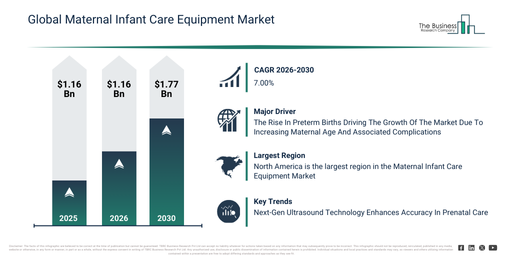
    Looking ahead, the market is expected to maintain its robust growth momentum, reaching $8.82 billion by 2030 with a CAGR of 7.0%. This forecasted increase is driven by innovations in phototherapy and suction technologies, broader use of electric and hospital-grade breast pumps, growth in home healthcare services, higher healthcare spending in emerging markets, and the integration of smart monitoring and IoT-enabled maternal-infant care systems. Key trends during this period include greater adoption of advanced neonatal monitoring, demand for portable and home-care devices, emphasis on energy-efficient and environmentally friendly equipment, expansion of maternal and neonatal services in developing regions, and improved training programs for healthcare professionals.

    Rising Preterm Births Fueling Demand in the Maternal Infant Care Equipment Market

    An important factor propelling market growth is the increasing incidence of preterm births, where babies are delivered before completing 37 weeks of gestation. This rise is largely linked to older maternal age, which carries a higher risk for pregnancy complications leading to early delivery. Maternal infant care devices support these preterm infants by offering advanced monitoring, respiratory support, and thermal regulation to enhance survival and health outcomes. For instance, data from the Centers for Disease Control and Prevention (CDC) indicates that singleton preterm births in the US rose slightly from 8.67% in 2022 to 8.71% in 2023, underscoring the growing need for such equipment.

    Access The Complete Maternal Infant Care Equipment Market Report:

    https://www.thebusinessresearchcompany.com/report/maternal-infant-care-equipment-global-market-report

    The Role of Increasing Healthcare Expenditure in Boosting Market Growth

    Healthcare spending plays a significant role in expanding the maternal-infant care equipment market. This expenditure encompasses all costs related to healthcare services and products consumed by individuals, governments, and organizations. As the global population ages, demand for complex and frequent medical care rises, prompting increased investment in advanced maternal and neonatal care technologies. For example, the Centers for Medicare and Medicaid Services reported a 10.4% surge in hospital expenditures in 2023, reaching $1,519.7 billion, a sharp rise from 3.2% growth in 2022. This trend supports the market’s growth by enabling better funding for high-quality maternal and infant care devices.

    Detailed Segmentation of the Maternal Infant Care Equipment Market

    This market is divided into several key categories:

    1) Product Type: Infant Incubators, Infant Warmers, Phototherapy Equipment, Suction Devices, Breast Pumps

    2) Material Type: Plastic, Wood, Fabric, Metal, Organic Materials

    3) Application: Neonatal Care, Maternal Care, Pediatric Care

    4) Distribution Channel: Online Stores, Offline Stores

    5) End-User: Hospitals, Clinics, Home Care, Ambulatory Surgical Centers

    Subdivisions within product types include: Closed, Open, and Transport Incubators; Radiant, Conductive, and Combination Warmers; Conventional, Fiber-Optic, and Compact Phototherapy Devices; Portable, Wall-Mounted, and Battery-Operated Suction Devices; as well as Manual, Electric, and Hospital-Grade Breast Pumps.

    Innovations Shaping the Future of the Maternal Infant Care Equipment Market

    Leaders in this industry are prioritizing technological advancements to enhance diagnostic capabilities and clinical workflows. One significant area is the development of artificial intelligence (AI)-enabled ultrasound systems that improve image clarity, automate tasks, and support healthcare providers in making faster and more accurate decisions. For example, in April 2024, GE Healthcare Technologies introduced the Voluson Signature 20 and 18 ultrasound systems, which incorporate AI-powered tools such as sonolyst and sonobiometry. These devices feature ergonomic designs, customizable settings, advanced reporting, and enhanced connectivity, all aimed at improving maternal and fetal health monitoring, especially in high-risk pregnancies.

    Key Players Influencing the Maternal Infant Care Equipment Industry

    The market is dominated by several prominent companies, including Cardinal Health Inc., Koninklijke Philips N.V., GE Healthcare Technologies Inc., Drägerwerk AG and Co KGaA, Masimo Corporation, Natus Medical Incorporated, Atom Medical Corporation, Edan Instruments Inc., OxygenCare Private Limited, Janitri Innovations Private Limited, Maternova Inc., Spectra Baby USA LLC, Fisher & Paykel Healthcare Corporation Limited, Shenzhen Mindray Bio-Medical Electronics Co Ltd., Nihon Kohden Corporation, OSI Systems Inc., Contec Medical Systems Co Ltd., Bistos Co Ltd., Fanem Ltd., Phoenix Medical Systems, nice Neotech Medical Systems Pvt Ltd., IndoSurgicals Private Limited, and Hosmed-Inc.

    Regional Dynamics and Growth Outlook for the Maternal Infant Care Equipment Market

    In 2025, North America represented the largest regional market for maternal infant care equipment. However, the Asia-Pacific region is anticipated to experience the fastest growth over the forecast period. The comprehensive regional analysis encompasses Asia-Pacific, South East Asia, Western Europe, Eastern Europe, North America, South America, the Middle East, and Africa, highlighting global demand trends and investment opportunities.

    Get in touch with us:

    The Business Research Company: https://www.thebusinessresearchcompany.com/

    Americas: +1 310-496-7795

    Asia: +44 7882 955267 & +91 8897263534

    Europe: +44 7882 955267

    Email us at: marketing@tbrc.info

    Follow us on:

    LinkedIn: https://in.linkedin.com/company/the-business-research-company

    YouTube: https://www.youtube.com/channel/UC24_fI0rV8cR5DxlCpgmyFQ

    Global Market Model: https://www.thebusinessresearchcompany.com/global-market-model
  • Micro-Perforated Films Market Opportunities Are Emerging Beyond Traditional Growth Areas

    Micro-Perforated Films Market Opportunities Are Emerging Beyond Traditional Growth Areas

    Through market attractiveness analysis, total addressable market evaluation, company benchmarking matrices, interactive Excel dashboards, expanded supply chain intelligence, emerging startup coverage, and detailed product insights, The Business Research Company’s 2026 market reports provide more actionable and strategically valuable research.

    The micro-perforated films market has demonstrated remarkable growth in recent years, driven by evolving packaging needs and technological advancements. As demand for innovative and sustainable packaging solutions intensifies, this market is set to undergo further significant expansion. Below is an overview of the current market status, key growth drivers, leading companies, and emerging trends shaping the industry’s future.

    Steady Market Expansion and Future Projections for Micro-Perforated Films

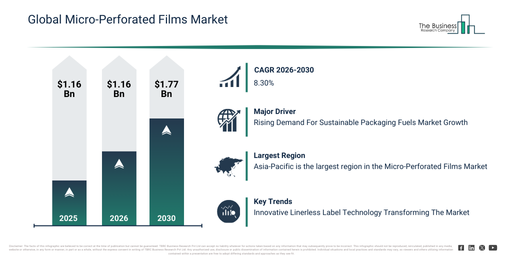
    The micro-perforated films market has seen robust development, with its value increasing from $1.78 billion in 2025 to $1.93 billion in 2026, reflecting a compound annual growth rate (CAGR) of 8.5%. This upward trend during the historical period has been largely driven by rising packaged food consumption, stronger demand for fresh produce packaging, the growth of cold chain logistics, expanding agricultural exports, and the cost advantages of plastic films. Looking ahead, the market is forecasted to reach $2.65 billion by 2030, maintaining a strong CAGR of 8.3%. Anticipated factors behind this growth include a shift toward sustainable packaging options, increasing demand for recyclable films, adoption of precision perforation technologies, initiatives aimed at reducing food waste, and rising pharmaceutical packaging needs. Key trends expected to influence the market in the coming years include controlled atmosphere packaging, solutions for extending shelf life, moisture regulation films, customization of hole sizes, and the use of lightweight flexible packaging materials.

    Download A Free Sample Report For Comprehensive Market Insights:

    https://www.thebusinessresearchcompany.com/sample.aspx?id=20881&type=smp

    Sustainability as a Major Growth Factor in the Micro-Perforated Films Market

    One of the strongest forces propelling the micro-perforated films market forward is the growing emphasis on sustainable packaging. These eco-conscious solutions prioritize the use of materials and manufacturing processes that minimize environmental impact throughout the product lifecycle, focusing on recyclability, biodegradability, and conservation of resources. Heightened consumer environmental awareness, stricter regulatory requirements, corporate social responsibility, and efforts to reduce plastic waste and carbon emissions are driving demand for sustainable alternatives. Micro-perforated films contribute to these goals by enhancing breathability and shelf life while enabling the use of eco-friendly materials and reducing waste.

    Consumer Preferences Further Boost Sustainable Packaging Demand

    For example, in April 2023, the 2023 Buying Green Report from Trivium Packaging, based in the Netherlands, revealed that 82% of consumers are willing to pay more for sustainable packaging, marking a 4-point increase from 2022. Notably, younger consumers aged 18 to 24 led the way at a 90% willingness to pay a premium, highlighting ongoing environmental concerns even amid economic challenges. This trend clearly supports continued expansion in the micro-perforated films market driven by sustainability priorities.

    Access The Complete Micro-Perforated Films Market Report:

    https://www.thebusinessresearchcompany.com/report/micro-perforated-films-global-market-report

    Micro-Perforated Films Market Segmentation and Revenue Opportunities

    This market is categorized into several segments for a detailed analysis:

    By material, the film types include Polypropylene (PP), Polyethylene (PE), Polyvinyl Chloride (PVC), and Polyethylene Terephthalate (PET).

    Hole size segments are classified as less than 0.1 mm, 0.1-0.5 mm, 0.5-1.0 mm, and more than 1.0 mm.

    By application, the primary sectors include packaging, agriculture, automotive, electronics, and construction.

    Subcategories provide further granularity, such as:

    – Polypropylene divided into BOPP (Biaxially Oriented Polypropylene) and CPP (Cast Polypropylene)

    – Polyethylene split into LDPE (Low-Density Polyethylene), HDPE (High-Density Polyethylene), and LLDPE (Linear Low-Density Polyethylene)

    – Polyvinyl Chloride separated into rigid and flexible PVC

    – Polyethylene Terephthalate categorized into APET (Amorphous PET), RPET (Recycled PET), and PETG (Glycol-Modified PET)

    Innovations Reshaping Demand in the Micro-Perforated Films Market

    Leading players in the micro-perforated films industry are embracing cutting-edge technologies to enhance product offerings and reduce environmental impact. One notable advancement is linerless label technology, which eliminates the backing paper traditionally used in pressure-sensitive labels. By printing and applying labels directly without liners, this innovation significantly cuts down waste and boosts operational efficiency.

    To illustrate, in September 2023, Avery Dennison, a US-based labeling and packaging company, introduced its AD LinrSave technology. This new decorative linerless labeling system features micro-perforations that enable easy application without generating liner waste, alongside a versatile adhesive and release system compatible with current converting equipment. This innovation supports sustainability goals by reducing liner waste and carbon footprints while helping brands improve efficiency and lower labeling costs.

    Top Companies Steering the Micro-Perforated Films Market

    Key industry participants driving the micro-perforated films market include:

    The 3M Company, Mitsubishi Chemical Corporation, Bolloré SE, Amcor Plc, Avery Dennison Corporation, ProAmpac, Coveris, Jindal Films, RKW Group, Printpack, TCL Packaging, Hexis Graphics, Amerplast, Speciality Polyfilms, Now Plastics Inc., FlexPak Services, Jiangyin Bairuijia Plastics Science & Technology Co. Ltd., Penguin Plastics, Folene Packaging, A-Roo Company, Golden Eagle Extrusions Inc., Aristo Flexi Pack, Aera Sa, and Hipex Group.

    Regional Market Leadership and Growth Outlook

    In 2025, Asia-Pacific held the largest share of the micro-perforated films market. However, North America is expected to emerge as the fastest-growing region during the forecast period. Other key regions covered in the market analysis include South East Asia, Western Europe, Eastern Europe, South America, the Middle East, and Africa, offering a comprehensive perspective on global market dynamics.

    Get in touch with us:

    The Business Research Company: https://www.thebusinessresearchcompany.com/

    Americas: +1 310-496-7795

    Asia: +44 7882 955267 & +91 8897263534

    Europe: +44 7882 955267

    Email us at: marketing@tbrc.info

    Follow us on:

    LinkedIn: https://in.linkedin.com/company/the-business-research-company

    YouTube: https://www.youtube.com/channel/UC24_fI0rV8cR5DxlCpgmyFQ

    Global Market Model: https://www.thebusinessresearchcompany.com/global-market-model
  • Maternal And Baby Grade Wipes Market Expansion Is Reshaping Competitive Dynamics Across The Industry

    Maternal And Baby Grade Wipes Market Expansion Is Reshaping Competitive Dynamics Across The Industry

    Enhanced with market attractiveness analysis, total addressable market evaluation, company benchmarking matrices, interactive Excel dashboards, expanded supply chain intelligence, emerging startup coverage, and detailed product insights, The Business Research Company’s 2026 market reports deliver more actionable and strategically valuable research.

    The maternal and baby-grade wipes sector has witnessed remarkable expansion recently, driven by evolving consumer awareness and demand for gentle hygiene products. As concerns about infant care and sustainable solutions grow, the market is set to experience robust development in the coming years. Let’s explore the current market size, the factors propelling its growth, key players, emerging trends, and the regional outlook shaping this industry.

    Market Size and Growth Outlook for Maternal and Baby Grade Wipes

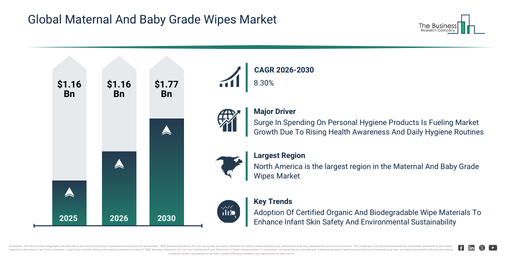
    The maternal and baby-grade wipes market has shown strong growth, with its value rising from $6.37 billion in 2025 to $6.91 billion in 2026, reflecting a compound annual growth rate (CAGR) of 8.6%. This increase during the past years is largely due to higher birth rates in developing countries, improved awareness about infant hygiene, broader use of maternal care products, increased availability of disposable hygiene items, and greater retail penetration of baby care goods. Looking ahead, the market is projected to continue this positive trend, reaching $9.53 billion by 2030 with a CAGR of 8.3%. This projected growth is supported by rising consumer interest in sustainable personal care products, a shift towards eco-friendly packaging, the expansion of premium hygiene segments for babies, increasing online retail adoption, and enhanced regulatory oversight regarding chemical ingredients. Key trends forecasted include heightened demand for biodegradable wipes, greater preference for hypoallergenic formulations, growth in organic and chemical-free product lines, innovations in skin-safe materials, and more dermatologically tested wipes.

    Download A Free Sample Report For Comprehensive Market Insights:

    https://www.thebusinessresearchcompany.com/sample.aspx?id=24290&type=smp

    Main Factors Contributing to Demand in the Maternal and Baby Grade Wipes Market

    The growing expenditure on personal hygiene products is playing a pivotal role in expanding the maternal and baby-grade wipes market. Personal hygiene items are essential for maintaining cleanliness and reducing infection risks, which has led to heightened consumer spending driven by increased awareness about health and sanitation.

    Maternal and baby wipes offer gentle, safe cleansing options tailored for sensitive skin, supporting daily hygiene routines by minimizing irritation and infection risks. These qualities make them an integral part of personal care for mothers and infants alike. For example, in September 2024, the US Bureau of Labor Statistics reported a 9.7% increase in spending on personal care products and services from 2022 to 2023, while their proportion of total annual spending held steady at 1.2%. This increasing investment in hygiene products directly supports the rising demand within the maternal and baby-grade wipes market.

    Detailed Breakdown of Maternal and Baby Grade Wipes Market Segments

    This market is segmented into several categories to better understand revenue opportunities and consumer preferences:

    1) Product Type: Moist Wipes, Dry Wipes, Biodegradable Wipes, Organic Wipes, Antibacterial Wipes

    2) Material Type: Non-Woven Fabric, Cotton, Bamboo, Polyester, Wood Pulp

    3) Functionality: Cleansing, Moisturizing, Cooling, Anti-Inflammatory, Hypoallergenic

    4) Distribution Channels: Online Retail, Supermarkets or Hypermarkets, Pharmacies or Drugstores, Specialty Stores, Department Stores

    5) End Users: Mothers, Babies (including infants and toddlers), Healthcare Providers, Childcare Facilities, Skin Care Enthusiasts

    Access The Complete Maternal And Baby Grade Wipes Market Report:

    https://www.thebusinessresearchcompany.com/report/maternal-and-baby-grade-wipes-global-market-report

    Each category includes specialized subsegments. For example, moist wipes cover fragrance-free, aloe vera-infused, vitamin E-enriched, and alcohol-free variants. Dry wipes include cotton, bamboo fiber, spunlace non-woven, and reusable options. Biodegradable wipes feature plant-based fiber, compostable wet wipes, flushable wipes, and plastic-free varieties. Organic wipes may be certified by the USDA, made from organic cotton, based on natural extracts, or hypoallergenic. Antibacterial wipes include benzalkonium chloride, herbal antibacterial, alcohol-based sanitizing, and hypoallergenic versions.

    Innovations and Trends Steering Growth in the Maternal and Baby Grade Wipes Market

    Key players in the maternal and baby-grade wipes market are focusing on creating certified organic and biodegradable wipes, meeting the rising consumer demand for safer, toxin-free, and environmentally responsible baby care products. These wipes typically use plant-based fibers like FSC-certified bamboo combined with high-purity water formulas, providing a natural and chemical-free alternative to traditional synthetic wipes made with plastic-based materials and harsher preservatives.

    For instance, in November 2023, New Zealand’s eco-conscious personal care brand TERRA launched its Premium Certified Organic Biodegradable Baby Wipes line in India. Their product range includes variants such as Manuka Honey Baby Wipes, Kiwifruit Baby Wipes, and Pure Water Wipes, all featuring natural extracts, over 99% pure water content, and certifications from SGS, Dermatest, Intertek, and FernMark. These wipes biodegrade up to 10 times faster than conventional wipes while offering gentle, hypoallergenic, fragrance-free, and chemical-free cleansing for babies and mothers.

    Leading Companies Driving the Maternal and Baby Grade Wipes Industry Forward

    The maternal and baby-grade wipes market features several prominent companies shaping its direction. These include Johnson & Johnson Services Inc., Kimberly-Clark Corporation, Oji Holdings Corporation, Georgia-Pacific LLC, Unicharm Corporation, Hengan International Group Company Limited, Pigeon Corporation, The Honest Company Inc., WaterWipes UC, Nuby, TerraCare Ltd., Farlin Industrial Co. Ltd., Mustela, Natracare, Millie Moon, Doctor Butler’s Rx Formulations LLC, Kanga Care LLC, Bambo Nature, Kressa, and KAS Direct LLC. These organizations are investing in research, product innovation, and sustainable practices to meet evolving consumer needs.

    Geographical Insights and Regional Market Leadership in Maternal and Baby Grade Wipes

    In 2025, North America held the largest share of the maternal and baby-grade wipes market. However, the Asia-Pacific region is poised to emerge as the fastest-growing market over the forecast period. The comprehensive market report also includes detailed analyses of regions such as South East Asia, Western Europe, Eastern Europe, South America, the Middle East, and Africa, providing a global perspective on the market’s evolving landscape.

    Get in touch with us:

    The Business Research Company: https://www.thebusinessresearchcompany.com/

    Americas: +1 310-496-7795

    Asia: +44 7882 955267 & +91 8897263534

    Europe: +44 7882 955267

    Email us at: marketing@tbrc.info

    Follow us on:

    LinkedIn: https://in.linkedin.com/company/the-business-research-company

    YouTube: https://www.youtube.com/channel/UC24_fI0rV8cR5DxlCpgmyFQ

    Global Market Model: https://www.thebusinessresearchcompany.com/global-market-model

  • Microneedle Flu Vaccine Market Expansion Is Opening New Pathways For Strategic Investment

    Microneedle Flu Vaccine Market Expansion Is Opening New Pathways For Strategic Investment

    Delivering more actionable and strategically valuable research, The Business Research Company’s 2026 market reports feature market attractiveness analysis, total addressable market evaluation, company benchmarking matrices, interactive Excel dashboards, expanded supply chain intelligence, emerging startup coverage, and detailed product insights.

    The market for microneedle flu vaccines is rapidly evolving, driven by advancements in vaccine technology and changing healthcare needs. As the demand for less invasive and more patient-friendly vaccination options increases, this sector is experiencing significant growth. Let’s explore the current market size, key growth drivers, emerging trends, leading players, and regional dynamics shaping the future of this innovative vaccine delivery system.

    Current Market Size and Growth Trajectory of the Microneedle Flu Vaccine Market

    The microneedle flu vaccine market has demonstrated strong expansion recently, with its size growing from $1.66 billion in 2025 to $1.82 billion in 2026, reflecting a compound annual growth rate (CAGR) of 10.0%. This rise can be linked to enhanced global influenza vaccination initiatives, progress in transdermal drug delivery research, broader public immunization campaigns, initial clinical trials of microneedle technology, and increasing preference for minimally invasive vaccines. Looking ahead, the market is forecasted to continue this momentum, reaching $2.67 billion by 2030 at the same robust CAGR of 10.0%. Factors expected to drive future growth include greater investment in next-generation vaccines, heightened attention to pandemic preparedness, wider adoption of decentralized vaccination programs, increased uptake among pediatric and elderly groups, and more regulatory approvals for microneedle platforms. Key trends projected for this period include the evolution of painless delivery methods, rising use of self-administration, development of vaccines that do not require cold storage, expansion of mass immunization efforts, and stronger focus on ensuring patient adherence.

    Download A Free Sample Report For Comprehensive Market Insights:

    https://www.thebusinessresearchcompany.com/sample.aspx?id=24322&type=smp

    Growing Impact of Needle Phobia on Market Demand

    One of the significant factors propelling the microneedle flu vaccine market is the increasing prevalence of needle phobia—an intense fear or anxiety related to needles that often leads people to avoid important medical procedures. This condition is typically caused by psychological sensitivity and negative prior experiences, resulting in long-lasting aversion. Microneedle flu vaccines provide a minimally invasive and almost pain-free alternative that helps reduce these psychological barriers, thereby encouraging greater vaccination compliance. For example, in February 2025, the American Society for Clinical Pathology (ASCP) reported that approximately 50% to 60% of children in the U.S. experience needle phobia, especially between ages 4 and 6. The widespread nature of this fear is a key factor driving demand within this market.

    Advancements in Vaccine Technology and Immunization Programs Supporting Growth

    The expansion of influenza vaccination programs worldwide is also a major driver behind the microneedle flu vaccine market. These initiatives aim to increase vaccine accessibility and coverage, particularly in vulnerable populations. Additionally, ongoing research into transdermal drug delivery methods has improved the effectiveness and patient experience of microneedle vaccines. Early clinical trials of microneedle platforms are advancing the technology toward broader adoption, while public health efforts increasingly endorse minimally invasive vaccination options as safer and more acceptable alternatives to traditional injections.

    Access The Complete Microneedle Flu Vaccine Market Report:

    https://www.thebusinessresearchcompany.com/report/microneedle-flu-vaccine-global-market-report

    Microneedle Flu Vaccine Market Segmentation Explained

    This market is segmented based on several categories to capture the diversity of products and applications:

    1) Product Type: Hollow Microneedle, Solid Microneedle, Coated Microneedle, Dissolving Microneedle

    2) Route of Administration: Transdermal, Intradermal

    3) Distribution Channel: Hospital Pharmacies, Retail Pharmacies, Online Pharmacies

    4) Application: Flu Vaccination, Seasonal Flu Prevention, Pediatric Vaccines, Elderly Vaccines

    Further subdivisions include:

    – Hollow Microneedles such as Single-Use, Pre-Filled Disposable, Polymer-Based, and Silicon-Based variants

    – Solid Microneedles including Metal, Silicon, and Polymer types

    – Coated Microneedles categorized into Antigen-Coated, Vaccine-Coated, Biodegradable, and Nano-Coated types

    – Dissolving Microneedles comprising Fast-Dissolving, Slow-Release, Hydrogel-Based, and Sugar-Based forms

    Innovations Shaping the Future of the Microneedle Flu Vaccine Market

    Leading companies are heavily investing in the development of patch-based RNA vaccines that utilize microneedle technology. These efforts support early-stage research and foster collaboration within the vaccine and delivery system sectors. A notable example occurred in March 2024 when the U.S.-based Biomedical Advanced Research and Development Authority (BARDA) committed $50 million via the Patch Forward Prize initiative to accelerate the development of microneedle patch vaccines targeting influenza and COVID-19. This funding aims to overcome technical and regulatory challenges, promote innovation, and enhance vaccine availability. The program also supports advancing products into Phase I clinical trials, ultimately strengthening preparedness against infectious diseases.

    Key Industry Players Driving Innovation and Market Growth

    The microneedle flu vaccine market features a number of prominent companies contributing to its expansion and technological advances. These include Merck & Co. Inc., Sanofi SA, GlaxoSmithKline plc, Seqirus, Vaxxas, Micron Biomedical Inc., Vaxess Technologies, Debiotech S.A., NanoPass Technologies Limited, Microdermics Inc., Micropoint Technologies Pte Ltd., CosMED Pharmaceutical Co. Ltd., TSRL Inc., Corium International, Becton Dickinson and Company (BD), AptarGroup, FluGen Inc., 3M Drug Delivery Systems, Nitto Denko Corporation, Zosano Pharma Corporation, Camurus AB, and Raphas Co. Ltd.

    Regional Market Overview and Growth Potential

    In 2025, North America held the largest share of the microneedle flu vaccine market, reflecting strong adoption and innovation in this region. However, the Asia-Pacific area is projected to experience the fastest growth during the forecast period. The market analysis covers key territories including Asia-Pacific, South East Asia, Western Europe, Eastern Europe, North America, South America, the Middle East, and Africa, providing a detailed perspective on global opportunities and trends.

    Get in touch with us:

    The Business Research Company: https://www.thebusinessresearchcompany.com/

    Americas: +1 310-496-7795

    Asia: +44 7882 955267 & +91 8897263534

    Europe: +44 7882 955267

    Email us at: marketing@tbrc.info

    Follow us on:

    LinkedIn: https://in.linkedin.com/company/the-business-research-company

    YouTube: https://www.youtube.com/channel/UC24_fI0rV8cR5DxlCpgmyFQ

    Global Market Model: https://www.thebusinessresearchcompany.com/global-market-model
  • Mastectomy Reconstruction Implants Market Forecast Reveals Where Future Industry Value Will Be Created

    Mastectomy Reconstruction Implants Market Forecast Reveals Where Future Industry Value Will Be Created

    Through market attractiveness analysis, total addressable market evaluation, company benchmarking matrices, interactive Excel dashboards, expanded supply chain intelligence, emerging startup coverage, and detailed product insights, The Business Research Company’s 2026 market reports provide more actionable and strategically valuable research.

    The mastectomy reconstruction implants market has witnessed substantial growth recently, reflecting increased demand for advanced reconstructive options following breast cancer surgeries. With improvements in implant technology and expanding healthcare infrastructure, this sector is set for continued expansion in the coming years. Let’s explore the current market size, growth drivers, segmentation, key trends, competitive landscape, and regional distribution shaping this market’s future.

    Current Market Size and Growth Projections for the Mastectomy Reconstruction Implants Market

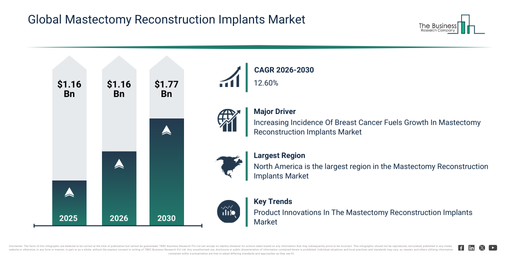
    The market for mastectomy reconstruction implants has experienced rapid growth, moving from $1.97 billion in 2025 to an anticipated $2.23 billion in 2026. This represents a strong compound annual growth rate (CAGR) of 12.9%. Historically, this rise has been driven by factors such as the increasing incidence of breast cancer, limited reconstruction choices in the past, heightened awareness regarding post-mastectomy aesthetic options, widespread adoption of silicone and saline implants, and a heavy reliance on hospital-based reconstructive surgeries. Looking ahead, the market is expected to maintain its upward trajectory, reaching $3.58 billion by 2030 with a CAGR of 12.6%. This forecasted growth is fueled by advancements in implant materials and customization, a rise in outpatient and ambulatory surgery centers, the integration of tissue expanders with direct-to-implant techniques, growing use of anatomical and teardrop-shaped implants, and a stronger emphasis on improving patient outcomes through minimally invasive procedures. Key trends anticipated include increasing demand for aesthetic breast reconstruction, expansion in two-stage and direct-to-implant surgeries, wider use of customizable and anatomical implants, growth in ambulatory surgery centers, and enhanced focus on post-surgical recovery and patient satisfaction.

    Download A Free Sample Report For Comprehensive Market Insights:

    https://www.thebusinessresearchcompany.com/sample.aspx?id=20571&type=smp

    Factors Contributing to Growth in the Mastectomy Reconstruction Implants Market

    One of the primary forces propelling the mastectomy reconstruction implants market is the rising incidence of breast cancer globally. Breast cancer, which originates in breast cells, has been increasing due to factors such as an aging population, lifestyle choices, hormonal changes, genetics, and dietary habits. Women who undergo mastectomy often rely on reconstruction implants to restore the breast’s shape and appearance, which helps improve both physical appearance and psychological well-being. For instance, in January 2024, the American Cancer Society reported approximately 297,790 new invasive breast cancer cases diagnosed in women throughout 2023 in the United States alone, with an annual increase rate of 0.6%. This growing patient population directly supports the expanding demand for reconstruction implants.

    Additional Drivers Stimulating Market Expansion

    Beyond the rise in breast cancer cases, increasing awareness about post-mastectomy aesthetic solutions is also encouraging more patients to opt for reconstruction implants. The adoption of advanced silicone and saline implants, which offer more natural appearance and feel, has improved patient acceptance. Moreover, the preference for reconstructive procedures conducted in outpatient and ambulatory surgery centers is growing, due to lower costs and reduced recovery times compared to traditional hospital settings. Together, these factors contribute significantly to the ongoing expansion of the mastectomy reconstruction implant market.

    Access The Complete Mastectomy Reconstruction Implants Market Report:

    https://www.thebusinessresearchcompany.com/report/mastectomy-reconstruction-implants-global-market-report

    Detailed Segmentation of the Mastectomy Reconstruction Implants Market

    This market is categorized broadly into product types, shapes, and application areas. By product, it is divided into Two-Stage Implant Reconstruction and Direct-To-Implant Reconstruction. Shapes include Round and Anatomical implants. In terms of application, the market encompasses Hospitals, Beauty Clinics, Ambulatory Surgery Centers (ASCs), and other settings. Further breakdowns under Two-Stage Implant Reconstruction include tissue expander-based procedures, expander to implant conversions, silicone and saline two-stage implants, and customizable options. Meanwhile, Direct-To-Implant Reconstruction covers silicone and saline direct implants, pre-formed implants, hybrid implants involving tissue grafting, anatomical or teardrop-shaped implants, and round direct implants.

    Innovations Defining the Next Growth Phase in the Mastectomy Reconstruction Implants Market

    Leading companies in this market are investing heavily in technological innovations to enhance breast reconstruction outcomes. A notable example is the FixNip NRI (Nipple Reconstruction Implant), designed to improve reconstruction of the nipple-areola complex (NAC), which is vital for a natural breast appearance and patient satisfaction. In March 2024, GC Aesthetics France SAS introduced the FixNip NRI, a novel nipple implant made from biocompatible smooth silicone and featuring a floral-shaped nitinol frame. This design enables a minimally invasive insertion procedure, which takes approximately 15 minutes and results in minimal scarring and downtime for patients. Such advancements are expected to set higher standards for reconstructive surgery and help drive market growth.

    Competitive Landscape of the Mastectomy Reconstruction Implants Market

    The market features several prominent players who are shaping industry dynamics through innovation and strategic initiatives. Leading companies include Johnson & Johnson, Integra LifeSciences Corporation, CollPlant Biotechnologies Ltd., RTI Surgical Holdings Inc., Sientra Inc., Aesthetic Medical International Holdings Group Ltd., GC Aesthetics Inc., Hans Biomed Co. Ltd., Establishment Labs S.A., PMT Corporation, POLYTECH Health & Aesthetics GmbH, Symatese SAS, Groupe Sebbin SAS, Ideal Implant Inc., Nagor Ltd., BellaSeno GmbH, Guangzhou Wanhe Plastic Materials Co. Ltd., Koken Co Ltd., Laboratoires Arion, CEREPLAS, Silimed S.A., AART Inc., Shanghai Kangning Medical Devices Co Ltd., Beijing Yimei Medical Technology Co Ltd., and Sebbin Innovation Group. These companies continue to focus on product development and expanding their market reach.

    Regional Market Distribution and Growth Hotspots

    In 2025, North America held the largest share of the mastectomy reconstruction implants market. However, the market report also highlights other important regions including Asia-Pacific, South East Asia, Western Europe, Eastern Europe, South America, the Middle East, and Africa. These regions are anticipated to contribute significantly to the market’s expansion due to increasing healthcare investments, rising breast cancer awareness, and improvements in surgical infrastructure.

    Get in touch with us:

    The Business Research Company: https://www.thebusinessresearchcompany.com/

    Americas: +1 310-496-7795

    Asia: +44 7882 955267 & +91 8897263534

    Europe: +44 7882 955267

    Email us at: marketing@tbrc.info

    Follow us on:

    LinkedIn: https://in.linkedin.com/company/the-business-research-company

    YouTube: https://www.youtube.com/channel/UC24_fI0rV8cR5DxlCpgmyFQ

    Global Market Model: https://www.thebusinessresearchcompany.com/global-market-model

  • Massage Chair Market Growth Through 2030 Creates New Strategic Opportunities

    Massage Chair Market Growth Through 2030 Creates New Strategic Opportunities

    Delivering more actionable and strategically valuable research, The Business Research Company’s 2026 market reports feature market attractiveness analysis, total addressable market evaluation, company benchmarking matrices, interactive Excel dashboards, expanded supply chain intelligence, emerging startup coverage, and detailed product insights.

    The massage chair industry has experienced notable growth in recent years, driven by increasing consumer interest in wellness and relaxation solutions. As people seek effective ways to manage stress and improve their health from home, this market is positioned for significant expansion. Let’s explore the current market size, growth drivers, key segments, innovations, and leading players shaping the future of massage chairs.

    Massage Chair Market Size and Growth Forecast Through 2030

    The massage chair market has seen a strong upward trajectory, with its value rising from $4.82 billion in 2025 to $5.27 billion in 2026, representing a 9.4% compound annual growth rate (CAGR). Looking ahead, the market is expected to expand further, reaching an estimated $7.51 billion by 2030 at a CAGR of 9.2%. This robust growth is fueled by an increasing demand for smart wellness products tailored for home use, growing investments in connected health furniture, and a broader availability of premium massage chair models. Additionally, corporate wellness programs are incorporating massage chairs as part of their employee health initiatives, contributing to the market’s positive outlook.

    Download A Free Sample Report For Comprehensive Market Insights:

    https://www.thebusinessresearchcompany.com/sample.aspx?id=24289&type=smp

    Key Drivers Boosting Demand in the Massage Chair Industry

    One major factor propelling the massage chair market is the rising stress and hectic lifestyles that many people face today. Long work hours, high-pressure environments, and limited leisure time have made relaxation and stress relief more important than ever. Massage chairs provide a convenient and cost-effective way to unwind at home, making them highly appealing for those with busy schedules.

    Furthermore, wellness centers and spas are expanding rapidly worldwide, increasing awareness about stress management and the benefits of massage therapy. As disposable incomes rise, more consumers are inclined to invest in advanced massage technologies, contributing to the growing adoption of massage chairs in residential settings.

    Trends Supporting Market Growth in Smart and Personalized Massage Chairs

    Technological advancements are playing a crucial role in shaping the massage chair market. There is a growing trend toward AI-enabled massage chairs that offer customized massage programs based on user preferences and health data. This integration of smart sensors and adaptive technology enhances the overall relaxation experience and meets the evolving demands of consumers.

    Another popular feature gaining traction is zero gravity massage, which mimics the sensation of weightlessness and promotes deeper muscle relaxation. The inclusion of ergonomic designs and health monitoring sensors is also becoming standard in premium models, supporting a holistic approach to user comfort and wellness.

    Access The Complete Massage Chair Market Report:

    https://www.thebusinessresearchcompany.com/report/massage-chair-global-market-report

    Massage Chair Market Segmentation and Expanding Categories

    This market encompasses several key segments:

    1) By Type: Air Bag Massage Chair, Zero Gravity Massage Chair, Full Body Massage Chair, Heated Massage Chair, 2D, 3D, and 4D Massage Chair, and Other Types

    2) By Nature: Conventional and Robotics

    3) By Application: Residential, Commercial, and Clubs

    4) By Distribution Channels: Specialty Stores, Online Retailers, Supermarkets and Hypermarkets, and Other Distribution Channels

    5) By Use: Professional and Consumer

    The subcategories within these include specific types of air bag massage (e.g., upper body, lower body, adjustable intensity), zero gravity chairs with manual or automatic recline adjustments, full-body massage options targeting neck, back, arms, and legs, heated massage chairs with adjustable temperature zones, and massage chairs featuring 2D to 4D roller technologies with AI-driven adaptive motions. Other types include recliner, portable, office, and coin-operated massage chairs.

    Innovations Driving Transformations in the Massage Chair Market

    Leading companies in this sector are leveraging advanced technologies such as duosync technology, which synchronizes vertical and horizontal massage movements for a more precise and effective experience. For example, in October 2024, Human Touch LLC released the Super Novo X, a state-of-the-art massage chair that combines DuoSync dual massage motors, an HT Flex S- and L-Track system, and voice-controlled virtual therapist features. This model employs AI automation and ergonomic design to deliver tailored full-body massages, reflecting a shift toward holistic wellness devices suitable for both home and commercial use.

    Key Industry Players Competing in the Massage Chair Market

    The massage chair market features numerous prominent companies, including Panasonic Corporation, Brookstone Company Inc., Bodyfriend Inc., Fujiiryoki Co. Ltd., Family Inada Co. Ltd., Ogawa World Bhd, Infinity Massage Chairs, Sharper Image, Cozzia, Osaki Massage Chair, Human Touch LLC, Hutech Co. Ltd., OHCO, Luraco Technologies Inc., OSIM International Ltd., Kahuna Massage Chair, Zarifa, iRest Health Science and Technology Co. Ltd., Daiwa Massage Chairs, Fujita Massage Chair, OTA World LLC, and Synca Wellness.

    Regional Overview of Massage Chair Market Revenue Generation

    In 2025, North America led the global massage chair market in terms of revenue generation. The industry report also examines other key regions including Asia-Pacific, South East Asia, Western Europe, Eastern Europe, South America, the Middle East, and Africa, providing a broad perspective on regional market trends and growth potential.

    Get in touch with us:

    The Business Research Company: https://www.thebusinessresearchcompany.com/

    Americas: +1 310-496-7795

    Asia: +44 7882 955267 & +91 8897263534

    Europe: +44 7882 955267

    Email us at: marketing@tbrc.info

    Follow us on:

    LinkedIn: https://in.linkedin.com/company/the-business-research-company

    YouTube: https://www.youtube.com/channel/UC24_fI0rV8cR5DxlCpgmyFQ

    Global Market Model: https://www.thebusinessresearchcompany.com/global-market-model

  • Microneedle Drug Delivery Systems Market Trends Are Creating New Opportunities For Industry Leaders

    Microneedle Drug Delivery Systems Market Trends Are Creating New Opportunities For Industry Leaders

    Enhanced with market attractiveness analysis, total addressable market evaluation, company benchmarking matrices, interactive Excel dashboards, expanded supply chain intelligence, emerging startup coverage, and detailed product insights, The Business Research Company’s 2026 market reports deliver more actionable and strategically valuable research.

    The microneedle drug delivery systems market has been expanding swiftly, driven by technological advancements and increasing patient demand for less invasive treatment options. This sector is gaining traction as healthcare providers and researchers focus on improving drug delivery efficiency and patient comfort. Let’s explore the current market status, key growth factors, segment developments, emerging trends, and leading companies shaping this promising industry.

    Rapid Growth and Market Size of the Microneedle Drug Delivery Systems Market

    The market for microneedle drug delivery systems has seen significant growth in recent years. From $5.86 billion in 2025, it is projected to rise to $6.92 billion in 2026, representing a robust compound annual growth rate (CAGR) of 18.1%. This historical expansion is largely driven by increased research in transdermal drug delivery, patients’ growing preference for minimally invasive therapies, the expansion of vaccination programs, more clinical trials involving microneedles, and advancements in microfabrication technology.

    Download A Free Sample Report For Comprehensive Market Insights:

    https://www.thebusinessresearchcompany.com/sample.aspx?id=5338&type=smp

    Forecasted Market Rise and Future Potential of the Microneedle Drug Delivery Systems Market

    Looking ahead, the market is expected to continue its upward trajectory, reaching $13.16 billion by 2030 with a compound annual growth rate (CAGR) of 17.4%. This surge will be fueled by the rising adoption of self-care medical devices, heightened investments in biologics drug delivery, the growth of wearable drug delivery platforms, an increased focus on patient adherence, and the commercialization of microneedle products. Significant trends shaping this growth include the adoption of dissolving microneedle technologies, increasing demand for painless delivery methods, emphasis on vaccine delivery, expansion of self-administered drugs, and greater use of biodegradable microneedles.

    Obesity’s Role in Accelerating the Microneedle Drug Delivery Systems Market

    One of the major factors propelling this market is the rising prevalence of obesity, a condition characterized by excessive body fat that negatively impacts health. Microneedle drug delivery systems offer a convenient and minimally painful method for administering medications associated with obesity treatment. For instance, in May 2024, data from the Office for Health Improvement and Disparities in the UK revealed that 64.0% of adults aged 18 and above in England were overweight or living with obesity between 2022 and 2023. This growing health concern is directly contributing to increased demand for microneedle drug delivery solutions.

    Access The Complete Microneedle Drug Delivery Systems Market Report:

    https://www.thebusinessresearchcompany.com/report/microneedle-drug-delivery-systems-global-market-report

    Segment Breakdown and Fastest Growing Categories in the Microneedle Drug Delivery Systems Market

    This market is segmented based on technology, application, and end-user groups:

    – Technology: Hollow, Porous, Solid, and Other technologies

    – Application: Drug Delivery, Vaccine Delivery, and other applications

    – End-User: Life Sciences, Research Laboratories, Hospitals, Ambulatory Surgical Centers, and others

    Subcategories include:

    – Hollow microneedles divided into Solid Hollow and Coated Hollow types

    – Porous microneedles consisting of Porous Silicon and Hydrogel-Based variants

    – Solid microneedles used specifically for Vaccination or Drug Delivery

    – Other technologies covering Dissolving and Biodegradable microneedles

    Innovative Product Trends Driving the Microneedle Drug Delivery Systems Market

    Leading companies in this market are focusing on groundbreaking product innovations, such as radiofrequency (RF) microneedle systems, to meet customer demand for enhanced therapeutic and cosmetic solutions. RF microneedle technology combines microneedles with radiofrequency energy to improve drug delivery and stimulate skin collagen production. For example, in February 2023, Candela, a US-based medical aesthetic device manufacturer, introduced the Profound Matrix system. This multi-use platform includes the Sublime, Sublative RF, and Matrix Pro applicators. While Sublime and Sublative RF employ bipolar radiofrequency to reduce fine lines and wrinkles, the Matrix Pro uses thin microneedles to deliver short-pulse RF energy, promoting collagen regeneration with improved patient comfort and reduced recovery time.

    Key Players Shaping the Microneedle Drug Delivery Systems Market

    Several prominent companies dominate the microneedle drug delivery systems industry, including Zosano Pharma Corporation, Nanopass Technologies, Raphas Co. Ltd., Micron Biomedical Inc., Vaxess Technologies, Debiotech, TheraJect Inc., Corium Inc., Valeritas Inc., LTS Lohmann Therapie-Systeme AG, Cutanos, Moonlight Therapeutics Inc., QuadMedicine, SNVIA Co. Ltd., NanoPass Technologies Ltd., BioSerenTach, Innoture Medical Technology Limited, AdminMed nanoBioSciences LLC, MyLife Technologies, and Micropoint Technologies. These firms are continuously pushing innovation and expanding market reach.

    Geographical Market Leadership and Regional Insights for Microneedle Drug Delivery Systems

    In 2025, North America held the largest share of the microneedle drug delivery systems market, followed by Europe as the second-largest market. The report also covers other key regions, including Asia-Pacific, South East Asia, Western Europe, Eastern Europe, South America, the Middle East, and Africa, providing a broad view of global market trends and growth opportunities.

    Get in touch with us:

    The Business Research Company: https://www.thebusinessresearchcompany.com/

    Americas: +1 310-496-7795

    Asia: +44 7882 955267 & +91 8897263534

    Europe: +44 7882 955267

    Email us at: marketing@tbrc.info

    Follow us on:

    LinkedIn: https://in.linkedin.com/company/the-business-research-company

    YouTube: https://www.youtube.com/channel/UC24_fI0rV8cR5DxlCpgmyFQ

    Global Market Model: https://www.thebusinessresearchcompany.com/global-market-model
  • Masks (N95 Respirators And Other Surgical Masks) Market Size Projected To Increase From $9.75 Billion To $6.54 Billion During The Forecast Period

    Masks (N95 Respirators And Other Surgical Masks) Market Size Projected To Increase From $9.75 Billion To $6.54 Billion During The Forecast Period

    Enhanced with market attractiveness analysis, total addressable market evaluation, company benchmarking matrices, interactive Excel dashboards, expanded supply chain intelligence, emerging startup coverage, and detailed product insights, The Business Research Company’s 2026 market reports deliver more actionable and strategically valuable research.

    The market for masks, including N95 respirators and other surgical masks, has seen notable changes in recent years. With shifting demands and evolving health concerns, this sector is navigating through a period of decline but still holds opportunities shaped by innovation and varying regional growth patterns. Let’s explore the market size, factors influencing its trajectory, key players, and emerging trends that define its current and future landscape.

    Market Size and Revenue Trends in the Masks Market

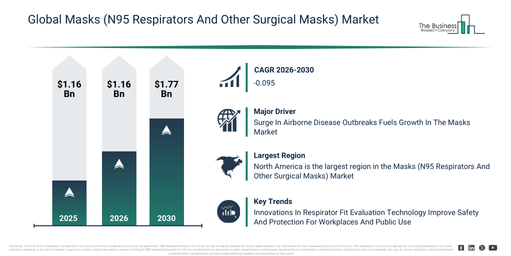
    The masks market, encompassing N95 respirators and other surgical masks, has experienced a sharp decline recently. From an anticipated value of $10.75 billion in 2025, it is expected to drop to $9.76 billion in 2026, reflecting a compound annual growth rate (CAGR) of -9.3%. This contraction can largely be linked to fewer airborne infectious diseases, slower growth in healthcare infrastructure, limited expansion in preventing hospital-acquired infections, and reduced large-scale emergency purchases of medical masks.

    Looking further ahead, the market is projected to continue shrinking, reaching $6.54 billion by 2030 with a CAGR of -9.5%. The forecasted decline factors include a diminished focus on pandemic preparedness, decreased demand from non-medical workplace settings, slower growth in sustainable PPE production, and less frequent use of reusable medical masks. Despite this downward trend, key developments during the forecast period involve a rising shift to high-filtration respiratory protection, stronger demand for fluid-resistant surgical masks, increased use of reusable and environmentally friendly mask materials, automation in mask production, and a growing emphasis on comfort and breathability.

    Download A Free Sample Report For Comprehensive Market Insights:

    https://www.thebusinessresearchcompany.com/sample.aspx?id=3992&type=smp

    Rising Impact of Airborne Infections on Masks Market Growth

    One of the main factors propelling the masks market is the increasing occurrence of airborne infections. These infections spread through droplet nuclei that remain infectious over long distances and time when suspended in the air. Preventing transmission involves barriers and procedures to reduce or eliminate microbes from environments or on personal items.

    For example, data from the Centers for Disease Control and Prevention (CDC) shows that tuberculosis cases in the US rose from 8,320 in 2022 to 9,615 in 2023, an increase of 1,295 cases. The incidence rate climbed from 2.5 to 2.9 per 100,000 people during the same period. This rise in airborne infections plays a significant role in sustaining demand for masks such as N95 respirators and surgical types.

    Market Segmentation Overview for Masks (N95 Respirators and Surgical Masks)

    This market is divided into several key segments based on type, nature, and end users. The types include N95 Respirators, Common Grade Surgical Masks, and Other Types.

    When categorized by nature, the masks are segmented into reusable and disposable varieties.

    End users comprise Hospitals and Clinics, Individuals, and Other End Users.

    Further subcategories include distinctions within the N95 Respirator group, such as Standard N95 Respirators, N95 Respirators with Valves, and those with Additional Features. The Common Grade Surgical Masks segment is further divided into Disposable Surgical Masks, Medical-Grade Surgical Masks, and Fluid-Resistant Surgical Masks. Other Types include Cloth Masks, Dust Masks, and Comfort Masks with Additional Filtration capabilities.

    Access The Complete Masks (N95 Respirators And Other Surgical Masks) Market Report:

    https://www.thebusinessresearchcompany.com/report/masks-n95-respirators-and-other-surgical-masks-global-market-report

    Innovations Shaping the Future of the Masks Market

    Leading companies and federal agencies are concentrating efforts on improving mask fit, user comfort, and protective efficiency to meet ongoing challenges. Technologies that evaluate respirator fit aim to ensure devices like N95s and surgical masks deliver the expected protection against infectious diseases, pollution, and wildfire smoke.

    In January 2023, the National Institute for Occupational Safety and Health (NIOSH) in the US launched the Respirator Fit Evaluation Challenge. This initiative invited innovators to develop real-time, easy-to-use feedback systems for respirator fit. The competition includes several evaluation stages, offers rewards to top ideas, and targets solutions suitable for smaller or underserved workplaces with limited fit-testing access. The goal is to enhance respiratory protection for both occupational and public use.

    Key Players Competing in the Masks Market

    Prominent companies active in the masks sector include Honeywell, BYD, 3M, Intco Medical Technology, Unicharm, Moldex-Metric, Kimberly-Clark, Alpha Pro-Tech, Prestige Ameritech, The Gerson Company, Halyard Health, Salus Products, Louis M. Gerson Company, Shanghai Dasheng, DuPont, Toray Industries, Koken, Yamamoto Kogaku, Protect U, MSA Safety, Irema, Kolmi-Hopen, Segetex-EIF, Paul Boyé Technologies, Cambridge Mask Co, Vostok Service, Technoavia, Zelinsky Group, Respiratorniy Kompleks, Alvateks, CERVA GROUP, Medline Industries, Johnson and Johnson, Dukal Corporation, Key Surgical, Dynarex Corporation, Canada Medical Ltd, Medicom, CPMC, Fine Hygienic Holding, GreenLine, and U-Mask.

    Regional Insights Highlighting Market Opportunities

    In 2025, North America represented the largest market for N95 respirators and other surgical masks. However, Asia-Pacific is forecasted to be the fastest-growing region during the upcoming years. The comprehensive regional analysis includes Asia-Pacific, South East Asia, Western Europe, Eastern Europe, North America, South America, the Middle East, and Africa, offering a broad perspective on geographic market dynamics.

    Get in touch with us:

    The Business Research Company: https://www.thebusinessresearchcompany.com/

    Americas: +1 310-496-7795

    Asia: +44 7882 955267 & +91 8897263534

    Europe: +44 7882 955267

    Email us at: marketing@tbrc.info

    Follow us on:

    LinkedIn: https://in.linkedin.com/company/the-business-research-company

    YouTube: https://www.youtube.com/channel/UC24_fI0rV8cR5DxlCpgmyFQ

    Global Market Model: https://www.thebusinessresearchcompany.com/global-market-model
  • Mammography Systems Market Growth Outlook Reveals A CAGR Of 7.5% And A Market Value Of $3.96 Billion By 2030

    Mammography Systems Market Growth Outlook Reveals A CAGR Of 7.5% And A Market Value Of $3.96 Billion By 2030

    Through market attractiveness analysis, total addressable market evaluation, company benchmarking matrices, interactive Excel dashboards, expanded supply chain intelligence, emerging startup coverage, and detailed product insights, The Business Research Company’s 2026 market reports provide more actionable and strategically valuable research.

    The mammography systems market is witnessing significant momentum, driven by advancements in technology and increasing awareness about the importance of early breast cancer detection. As healthcare providers adopt more sophisticated imaging solutions, the market is set to experience robust growth in the coming years. Let’s explore the current market size, key growth drivers, segments, emerging trends, major players, and regional dynamics shaping this important healthcare sector.

    Growth Trajectory and Market Size of Mammography Systems

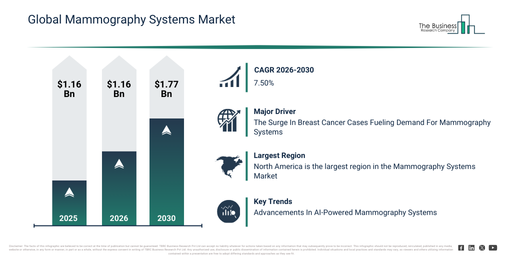
    The mammography systems market has shown strong expansion recently, rising from $2.72 billion in 2025 to an estimated $2.96 billion in 2026 at a compound annual growth rate (CAGR) of 8.9%. This upward trend is rooted in growing awareness of breast cancer, widespread implementation of screening programs, adoption of digital imaging technologies, increased hospital investments in imaging infrastructure, and a rising incidence of breast cancer cases. Looking ahead, the market is projected to continue this robust growth, reaching $3.96 billion by 2030 with a CAGR of 7.5%. Factors such as rising demand for advanced diagnostic tools, AI integration in imaging, growth of outpatient diagnostic centers, emphasis on detecting diseases early, and increased healthcare spending on imaging equipment are expected to drive this expansion. Key trends anticipated include greater use of 3D breast tomosynthesis, AI-assisted image analysis, portable mammography systems, expanded digital screening efforts, and enhanced dose reduction technologies.

    Download A Free Sample Report For Comprehensive Market Insights:

    https://www.thebusinessresearchcompany.com/sample.aspx?id=15214&type=smp

    Key Factors Fueling Mammography Systems Market Expansion

    The rising incidence of breast cancer is a primary force propelling the mammography systems market forward. Breast cancer involves abnormal cell growth in breast tissue, which can develop into malignant tumors and potentially spread. This increase is linked to lifestyle changes, aging populations, genetic factors, and hormonal influences. Mammography plays a crucial role in addressing this health challenge by enabling early detection, accurate diagnosis, and effective treatment planning, thereby improving patient survival and outcomes. For example, the American Cancer Society reported a 5.76% increase in breast cancer cases in the US from 284,200 to 300,590 in 2023, underscoring the necessity of mammography technologies in combating this disease.

    Market Segmentation Highlighting Opportunities in Mammography Systems

    This market is categorized into several segments that help identify growth prospects:

    1) By Product: Analog Systems, Full Field Digital Mammography Systems, Breast Tomosynthesis Systems

    2) By Technology: Screen Film, 2D Mammography, 3D Mammography, Other Technologies

    3) By Modality: Portable Mammography Systems, Non-Portable Mammography Systems

    4) By End-User: Hospitals, Ambulatory Surgical Centers, Other End-Users

    Further subsegments include distinct types within product categories, such as film-based and screen-film mammography under Analog Systems; direct radiography (DR) and computed radiography (CR) within Full Field Digital Mammography Systems; as well as digital breast tomosynthesis (DBT) and 3D mammography systems under Breast Tomosynthesis Systems.

    Access The Complete Mammography Systems Market Report:

    https://www.thebusinessresearchcompany.com/report/mammography-systems-global-market-report

    How Industry Trends Are Shaping Mammography Systems Demand

    Leading companies in the mammography space are increasingly incorporating artificial intelligence (AI) technologies to boost diagnostic precision and streamline medical workflows. AI-powered mammography systems are designed to enhance image quality and patient comfort while facilitating earlier breast cancer detection. For instance, Fujifilm Holdings Corporation, a Japan-based medical imaging leader, launched the Amulet Sophinity system in February 2024. This digital mammography platform offers low-dose imaging, superior picture clarity, and AI-driven features such as dual-angle tomosynthesis, improved calcification detection, and AI-guided breast positioning based on prior images, exemplifying cutting-edge advancements in the field.

    Key Players and Competitive Landscape in Mammography Systems

    The mammography systems market features a range of prominent companies, including Toshiba Corporation, Siemens Healthineers AG, Fujifilm Holdings Corporation, Koninklijke Philips N.V., GE Healthcare Inc., Delphinus Medical Technologies Inc., Konica Minolta Inc., Hologic Inc., Carestream Health Inc., Analogic Corporation, Canon Medical Systems Corporation, Genoray Co. Ltd., Planmed Oy, General Medical Merate SpA, Allengers Medical Systems Limited, BET Medical, Arcoma AB, BMI Biomedical International Ltd., Apex Medical Systems Pvt. Ltd., Metaltronica S.p.A., Perlong Medical Equipment Co. Ltd., and DRGEM Corporation. These players are actively innovating and expanding their portfolios to meet evolving clinical demands.

    Regional Overview and Market Growth Patterns for Mammography Systems

    In 2025, North America accounted for the largest share of the mammography systems market, reflecting its advanced healthcare infrastructure and widespread screening programs. Meanwhile, the Asia Pacific region is poised to be the fastest-growing market segment during the forecast period, driven by increasing healthcare investments, rising breast cancer awareness, and expanding diagnostic services. The comprehensive market analysis covers key geographic regions such as Asia-Pacific, South East Asia, Western Europe, Eastern Europe, North America, South America, the Middle East, and Africa, providing a global perspective on market dynamics.

    Get in touch with us:

    The Business Research Company: https://www.thebusinessresearchcompany.com/

    Americas: +1 310-496-7795

    Asia: +44 7882 955267 & +91 8897263534

    Europe: +44 7882 955267

    Email us at: marketing@tbrc.info

    Follow us on:

    LinkedIn: https://in.linkedin.com/company/the-business-research-company

    YouTube: https://www.youtube.com/channel/UC24_fI0rV8cR5DxlCpgmyFQ

    Global Market Model: https://www.thebusinessresearchcompany.com/global-market-model
  • Microfluidic Devices Market Growth Is Reshaping Competitive Advantage Across The Industry

    Microfluidic Devices Market Growth Is Reshaping Competitive Advantage Across The Industry

    Through market attractiveness analysis, total addressable market evaluation, company benchmarking matrices, interactive Excel dashboards, expanded supply chain intelligence, emerging startup coverage, and detailed product insights, The Business Research Company’s 2026 market reports provide more actionable and strategically valuable research.

    The microfluidic devices sector has witnessed remarkable growth recently, driven by technological advancements and increasing applications across various fields. This market is set for continued expansion as innovations improve device functionality and broaden their usage in research, diagnostics, and healthcare. Let’s explore the current market status, key growth factors, segment details, industry trends, leading companies, and regional insights shaping the future of microfluidic devices.

    Steady Rise in Market Size and Promising Growth for Microfluidic Devices

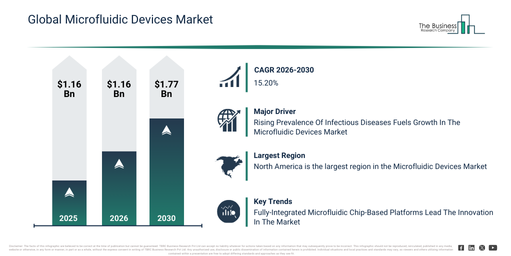
    The microfluidic devices market size has expanded significantly over recent years and is forecasted to grow from $10.14 billion in 2025 to $11.72 billion in 2026, representing a robust compound annual growth rate (CAGR) of 15.5%. Early growth was primarily driven by limitations in microfabrication technologies, the high costs associated with initial devices, continued dependence on traditional fluid handling techniques, and increasing research activities in pharmaceutical and biotechnology sectors utilizing basic lab-on-a-chip applications.

    Download A Free Sample Report For Comprehensive Market Insights:

    https://www.thebusinessresearchcompany.com/sample.aspx?id=19589&type=smp

    Looking ahead, the market is expected to accelerate further, reaching an estimated $20.65 billion by 2030 with a CAGR of 15.2%. This surge will be supported by improvements in microfabrication and 3D printing technologies, growing demand for point-of-care diagnostic tools, incorporation of sensors and actuators within microfluidic platforms, and increased investments in precision medicine research. The forecast period will also see a rise in high-throughput screening applications, along with trends such as greater acceptance of lab-on-a-chip and digital microfluidic devices, enhanced microfluidic sensor integration for diagnostics, expanded pharmaceutical research use, increased adoption of polymer and silicon materials, and an emphasis on miniaturization and efficient fluid handling.

    Infectious Disease Prevalence as a Major Growth Driver in the Microfluidic Devices Market

    The growing incidence of infectious diseases is expected to significantly stimulate the microfluidic devices market moving forward. Infectious diseases are caused by various pathogens including bacteria, viruses, fungi, and parasites. Their prevalence is influenced by pathogen characteristics, environmental conditions, human behaviors, and healthcare infrastructure availability. Microfluidic devices play a crucial role in combating these diseases because of their ability to precisely manipulate and analyze tiny biological sample volumes with high efficiency.

    Access The Complete Microfluidic Devices Market Report:

    https://www.thebusinessresearchcompany.com/report/microfluidic-devices-global-market-report

    This capability greatly enhances the detection, diagnosis, and management of infectious diseases, leading to better health outcomes and disease control measures. For example, in November 2025, the European Centre for Disease Prevention and Control (ECDC) reported 266,165 cases of CHIKVD with 118 deaths in 2025, marking a 35.2% drop compared to 2024, with Brazil in South America being the most affected. Such data underline how infectious disease prevalence continues to drive demand for microfluidic technologies.

    Different Segments Defining the Microfluidic Devices Market

    This market is categorized into several key segments to better understand its landscape:

    1) By Device Type: This includes chips, sensors, and other device types.

    2) By Material: Comprising glass, silicon, polymer, and other materials.

    3) By End-User: Including pharmaceutical and biotechnology companies, research institutes, diagnostic centers, healthcare facilities, and other users.

    Further breakdown by chips covers lab-on-a-chip (LoC) devices, digital microfluidic chips, microfluidic flow control chips, integrated microfluidic platforms, and diagnostic microfluidic chips. Sensor types include pressure, flow, temperature, chemical, and optical sensors. Other device types feature microfluidic pumps, valves and actuators, microarray devices, analytical devices, and bioreactors.

    Innovative Trends Steering Growth in Microfluidic Device Technologies

    Leading companies in this market are focusing on developing cutting-edge platforms, particularly microfluidic chip-based systems, to automate and simplify complex laboratory workflows. These miniaturized devices integrate multiple laboratory functions onto a single chip, enabling precise fluid control and analysis in small volumes. Such innovation enhances experimental accuracy and broadens potential applications.

    For instance, in January 2023, SCIEX, a US-based manufacturer of mass spectrometry equipment, introduced the Intabio ZT system—the first fully integrated microfluidic chip-based platform combining imaged capillary isoelectric focusing (icIEF) separation with UV detection. The system incorporates Biologics Explorer software, which improves data processing and offers deeper insights into biopharmaceutical analysis.

    Key Players Driving Competition in the Microfluidic Devices Industry

    Several major organizations are shaping the competitive landscape of the microfluidic devices market, including Thermo Fisher Scientific Inc., Danaher Corporation, Agilent Technologies Inc., Teledyne Technologies Incorporated, Illumina Inc., PerkinElmer Inc., Bio-Rad Laboratories Inc., Zeon Corporation, Standard BioTools Inc., Biosurfit SA, Blacktrace Holdings Ltd., LioniX International B.V., CMC Microsystems Inc., Micronit Microfluidics B.V., Sphere Fluidics Limited, Microfluidic ChipShop GmbH, BlackHole Lab Inc., Bartels-Mikrotechnik GmbH, Hesperos Inc., and Fluigent SA. These companies are investing heavily in research and development to maintain leadership and expand market reach.

    Geographical Market Leaders and Regional Growth Potential

    In 2025, North America accounted for the largest share of the microfluidic devices market. However, Asia-Pacific is poised to emerge as the fastest-growing region in the coming years. This regional analysis covers key areas such as Asia-Pacific, South East Asia, Western Europe, Eastern Europe, North America, South America, the Middle East, and Africa, providing a global perspective on market dynamics and growth opportunities.

    Get in touch with us:

    The Business Research Company: https://www.thebusinessresearchcompany.com/

    Americas: +1 310-496-7795

    Asia: +44 7882 955267 & +91 8897263534

    Europe: +44 7882 955267

    Email us at: marketing@tbrc.info

    Follow us on:

    LinkedIn: https://in.linkedin.com/company/the-business-research-company

    YouTube: https://www.youtube.com/channel/UC24_fI0rV8cR5DxlCpgmyFQ

    Global Market Model: https://www.thebusinessresearchcompany.com/global-market-model