Category: Medical Equipment

  • Library Preparation And Target Enrichment For Next-Generation Sequencing Product Market Growth Outlook Reveals A CAGR Of 11.6% And A Market Value Of $5.95 Billion By 2030

    Library Preparation And Target Enrichment For Next-Generation Sequencing Product Market Growth Outlook Reveals A CAGR Of 11.6% And A Market Value Of $5.95 Billion By 2030

    Enhanced with market attractiveness analysis, total addressable market evaluation, company benchmarking matrices, interactive Excel dashboards, expanded supply chain intelligence, emerging startup coverage, and detailed product insights, The Business Research Company’s 2026 market reports deliver more actionable and strategically valuable research.

    The market for library preparation and target enrichment products used in next-generation sequencing (NGS) has seen rapid growth driven by advances in genomics and increasing research applications. As precision medicine continues to evolve, these technologies are becoming critical in enhancing genomic analysis, leading to promising future expansion. Let’s explore the market size, growth factors, segmentation, emerging trends, key players, and regional insights shaping this sector.

    Current and Projected Market Size of the Library Preparation and Target Enrichment for Next-Generation Sequencing Product Market

    The market size for library preparation and target enrichment products in next-generation sequencing has been expanding swiftly. It is projected to grow from $3.43 billion in 2025 to $3.84 billion in 2026, representing a compound annual growth rate (CAGR) of 11.9%. This growth during the historical period is largely fueled by increased cancer genomics research, broader adoption of NGS platforms, surging demand for targeted sequencing, rising biomarker studies, and improvements in enrichment chemistry. Looking ahead, the market is expected to reach $5.96 billion by 2030, with a CAGR of 11.6%. Factors driving this anticipated growth include the advancement of precision diagnostics, growing use in clinical laboratories, expansion in rare disease testing, innovations improving enrichment efficiency, and stronger regulatory support for genomic research. Key trends shaping the future landscape involve expanding targeted sequencing applications, wider adoption of enrichment kits, demand for affordable sequencing options, growth in clinical genomics testing, and customized panel development.

    Download A Free Sample Report For Comprehensive Market Insights:

    https://www.thebusinessresearchcompany.com/sample.aspx?id=28257&type=smp

    Personalized Medicine as a Major Driver for the NGS Library Preparation and Target Enrichment Market

    One of the primary forces propelling this market forward is the rising demand for personalized medicine, which tailors healthcare based on an individual’s genetic profile, lifestyle, and environment. Advances in genomics have made it possible to precisely identify genetic variations, allowing highly customized treatment approaches. Library preparation and target enrichment products enable this precision by streamlining workflows and focusing sequencing efforts on clinically relevant genomic regions, enhancing diagnostic accuracy and personalized therapy design.

    Supporting this trend, data from February 2024 published by the Personalized Medicine Coalition (PMC) reveals that the U.S. Food and Drug Administration (FDA) approved 26 new personalized medicines in 2023, a significant jump from the 12 approvals in 2022. This increase highlights the growing emphasis on personalized treatments, which is driving demand for efficient NGS library preparation and target enrichment solutions.

    Access The Complete Library Preparation And Target Enrichment For Next-Generation Sequencing Product Market Report:

    https://www.thebusinessresearchcompany.com/report/library-preparation-and-target-enrichment-for-next-generation-sequencing-product-global-market-report

    Segment Breakdown and Strategic Opportunities in the Library Preparation and Target Enrichment for Next-Generation Sequencing Product Market

    This market is segmented based on several key categories to offer a detailed understanding of product and application areas.

    By product type, the market includes Library Preparation Kits, Target Enrichment Kits, Instrument Systems, Reagents, and Consumables and Accessories.

    The technology segment covers Targeted Sequencing, Whole Exome Sequencing, Whole Genome Sequencing, RNA Sequencing, and Single-Cell Sequencing.

    Workflow stages comprise Sample Preparation, Library Construction, Enrichment, Sequencing, and Data Analysis.

    Applications include Clinical Diagnostics, Research and Development, Forensic Applications, and other specialized fields.

    End users span Academic and Research Institutions, Clinical Laboratories, Pharmaceutical and Biotech Companies, Hospitals and Diagnostic Centers, as well as Government and Non-Profit Organizations.

    Further subsegment details encompass various kits such as DNA Fragmentation Kits, Adapter Ligation Kits, Indexing Kits, and PCR Amplification Kits within library preparation; Hybridization Capture Kits, Amplicon-Based Enrichment Kits, Custom Panel Kits, and Pre-Capture Pooling Kits under target enrichment; automated preparation systems and quality control instruments; reagents including DNA polymerases and ligases; and consumables like magnetic beads and pipette tips.

    Innovations and Trends Boosting Efficiency and Capabilities in the Library Preparation and Target Enrichment Market

    Leading companies are investing heavily in innovative products that enhance sequencing efficiency and coverage. Among key innovations are multimodal NGS library preparation kits that allow simultaneous preparation of both DNA and RNA libraries from a single sample. This approach reduces the amount of sample needed, simplifies workflows, and cuts turnaround time while supporting downstream enrichment processes.

    For example, in May 2024, QIAGEN N.V., based in the Netherlands, introduced the QIAseq Multimodal DNA or RNA Library Kit. This kit is the first integrated solution capable of generating DNA and RNA sequencing libraries from one sample, compatible with various sample types including blood, formalin-fixed paraffin-embedded tissue, and cell-free DNA. It offers high sensitivity and variant detection, streamlines multiple lab procedures into a single platform, shortens processing time, and supports compatibility with different sequencing instruments and enrichment panels. Such innovations are vital for advancing research into complex conditions like cancer.

    Key Market Participants Steering Competition in the Library Preparation and Target Enrichment for Next-Generation Sequencing Product Sector

    The competitive landscape includes several major players driving technological progress and market growth. Notable companies in this market are F. Hoffmann-La Roche AG, Thermo Fisher Scientific Inc., Danaher Corporation, Becton Dickinson And Company, Eurofins Scientific SE, Agilent Technologies Inc., Illumina Inc., Sysmex Corporation, Bruker Corporation, Revvity Inc., Bio-Rad Laboratories Inc., QIAGEN N.V., Tecan Group Ltd., Hamilton Company, BGI Genomics Co. Ltd., Takara Bio Inc., Twist Bioscience Corporation, Pacific Biosciences of California Inc., New England Biolabs Inc., Zymo Research Corporation, Lexogen GmbH, and Paragon Genomics Inc.

    These organizations are pivotal in developing cutting-edge solutions and expanding the market’s capabilities to meet increasing demand.

    Regional Landscape and Growth Outlook in the Library Preparation and Target Enrichment for Next-Generation Sequencing Product Market

    North America held the largest share of this market in 2025, benefiting from well-established healthcare infrastructure and strong research funding. Meanwhile, the Asia-Pacific region is forecasted to experience the fastest growth during the coming years, driven by expanding clinical genomics testing, rising healthcare investments, and increasing adoption of innovative NGS technologies. The market analysis encompasses major geographic areas, including Asia-Pacific, South East Asia, Western Europe, Eastern Europe, North America, South America, the Middle East, and Africa, providing a comprehensive view of opportunities and trends worldwide.

    Get in touch with us:

    The Business Research Company: https://www.thebusinessresearchcompany.com/

    Americas: +1 310-496-7795

    Asia: +44 7882 955267 & +91 8897263534

    Europe: +44 7882 955267

    Email us at: marketing@tbrc.info

    Follow us on:

    LinkedIn: https://in.linkedin.com/company/the-business-research-company

    YouTube: https://www.youtube.com/channel/UC24_fI0rV8cR5DxlCpgmyFQ

    Global Market Model: https://www.thebusinessresearchcompany.com/global-market-model

  • Library Preparation (Prep) System Market Forecast Highlights Expansion From $1.53 Billion To $2.36 Billion Through 2030

    Library Preparation (Prep) System Market Forecast Highlights Expansion From $1.53 Billion To $2.36 Billion Through 2030

    Through market attractiveness analysis, total addressable market evaluation, company benchmarking matrices, interactive Excel dashboards, expanded supply chain intelligence, emerging startup coverage, and detailed product insights, The Business Research Company’s 2026 market reports provide more actionable and strategically valuable research.

    The library preparation (prep) system market is experiencing significant momentum as advancements in genomic research and personalized medicine continue to gain ground. This sector is witnessing rapid growth, driven by technological progress and increasing demand in clinical and research settings. Below, we explore the market’s size, growth drivers, key players, and future trends shaping this dynamic industry.

    Current Market Size and Projected Growth for Library Preparation Systems

    The market for library preparation systems has expanded swiftly in recent years. Forecasts indicate an increase from $1.37 billion in 2025 to $1.53 billion in 2026, representing a compound annual growth rate (CAGR) of 11.8%. This historical growth is largely fueled by the expanding use of next-generation sequencing (NGS), rising investments in genomic research, growing requirements for sequencing accuracy, the emergence of clinical genomics, and falling costs of sequencing technologies.

    Looking ahead, the market is expected to continue its upward trajectory, reaching $2.36 billion by 2030 with a CAGR of 11.5%. Key factors contributing to this growth include the rise of precision medicine, an increase in clinical sequencing volumes, the integration of automated platforms, the expansion of population genomics initiatives, and demand for quicker turnaround times. Emerging trends such as automation of library preparation workflows, the growing need for high-throughput sequencing, the development of single-cell sequencing preparation, standardization of genomic workflows, and emphasis on reproducibility will shape the market’s future.

    Download A Free Sample Report For Comprehensive Market Insights:

    https://www.thebusinessresearchcompany.com/sample.aspx?id=28256&type=smp

    Personalized Medicine’s Role in Driving Library Preparation System Demand

    One of the primary growth drivers for the library preparation system market is the increasing adoption of personalized medicine. This approach customizes treatment and prevention strategies based on an individual’s genetics, lifestyle, and environment. Breakthroughs in genomics have made it possible to identify genetic variations precisely and tailor treatments accordingly. Library preparation systems are crucial in this process, as they enable the accurate preparation of DNA and RNA samples, facilitating precise genomic analysis. These systems simplify complex workflows, minimize errors, and speed up the development of targeted therapies, thereby enhancing patient-specific outcomes.

    For example, in February 2024, the Personalized Medicine Coalition (PMC), a US-based nonprofit, reported that the U.S. Food and Drug Administration (FDA) approved 26 new personalized medicines in 2023, compared to 12 approvals the previous year. This growing emphasis on personalized medicine continues to fuel demand for advanced library preparation technologies.

    Detailed Segmentation of the Library Preparation System Market

    The library preparation system market can be classified across several dimensions:

    1) Product Type: Manual Library Prep Systems, Automated Library Prep Systems

    2) Technology: Next-Generation Sequencing (NGS), Sanger Sequencing, Microarray

    3) Workflow Stage: Sample Preparation, Library Preparation, Quality Control, Data Analysis

    4) Application: Whole Genome Sequencing, Targeted Sequencing, RNA Sequencing, Exome Sequencing, Metagenomics

    5) End User: Academic and Research Institutes, Pharmaceutical and Biotechnology Companies, Clinical Laboratories, Diagnostics Laboratories

    Access The Complete Library Preparation (Prep) System Market Report:

    https://www.thebusinessresearchcompany.com/report/library-preparation-prep-system-global-market-report

    Further subcategories include:

    – Manual Systems such as DNA Library Prep Kits, RNA Library Prep Kits, Amplicon Kits, Targeted Library Prep Kits, and Low-input or Single-cell Kits

    – Automated Systems including Automated DNA Library Prep Instruments, Automated RNA Library Prep Instruments, High-throughput Platforms, Benchtop Systems, and Integrated NGS Workflow Systems.

    Innovations Shaping the Future of Library Preparation Systems

    Leading companies in this market are investing in cutting-edge solutions like multimodal library preparation kits designed to improve efficiency and research capabilities while reducing manual labor and sample requirements. These kits enable simultaneous processing of DNA and RNA from a single sample, allowing comprehensive genomic and transcriptomic analysis.

    For instance, in May 2024, Qiagen N.V., based in the Netherlands, introduced the QIAseq Multimodal DNA or RNA library kit. This innovative product is the first of its kind to prepare both DNA and RNA libraries simultaneously for next-generation sequencing (NGS), facilitating whole genome and whole transcriptome sequencing from one sample. It features automated workflow integration and optimized chemistry, significantly reducing processing time and sample volume without requiring operator involvement.

    Top Companies Leading the Library Preparation System Market

    The library preparation system market is dominated by major industry players such as F. Hoffmann-La Roche AG, Thermo Fisher Scientific Inc., Siemens Healthineers AG, Agilent Technologies Inc., Illumina Inc., Bio-Rad Laboratories Inc., QIAGEN N.V., Tecan Group Ltd., GenScript Biotech Corporation, Promega Corporation, Takara Bio Inc., Oxford Nanopore Technologies Limited, Pacific Biosciences of California Inc., New England Biolabs Inc., Singleron Biotechnologies Co. Ltd., Bionano Genomics Inc., Automata Technologies Ltd., Zymo Research Corporation, Dolomite Bio Limited, Micronit Microtechnologies B.V., Opentrons Labworks Inc., and EpigenDx Inc. These companies continually focus on innovation and expanding their product portfolios to meet evolving market demands.

    Geographical Trends in the Library Preparation System Market

    In 2025, North America held the largest share of the library preparation system market. However, the Asia-Pacific region is expected to experience the fastest growth during the forecast period. The market overview includes regions such as Asia-Pacific, South East Asia, Western Europe, Eastern Europe, North America, South America, the Middle East, and Africa, providing a comprehensive global perspective on market developments and opportunities.

    Get in touch with us:

    The Business Research Company: https://www.thebusinessresearchcompany.com/

    Americas: +1 310-496-7795

    Asia: +44 7882 955267 & +91 8897263534

    Europe: +44 7882 955267

    Email us at: marketing@tbrc.info

    Follow us on:

    LinkedIn: https://in.linkedin.com/company/the-business-research-company

    YouTube: https://www.youtube.com/channel/UC24_fI0rV8cR5DxlCpgmyFQ

    Global Market Model: https://www.thebusinessresearchcompany.com/global-market-model
  • Leukapheresis Device Market Expected To Reach $1.01 Billion By 2030 As Growth Accelerates At 7.4% CAGR

    Leukapheresis Device Market Expected To Reach $1.01 Billion By 2030 As Growth Accelerates At 7.4% CAGR

    Delivering more actionable and strategically valuable research, The Business Research Company’s 2026 market reports feature market attractiveness analysis, total addressable market evaluation, company benchmarking matrices, interactive Excel dashboards, expanded supply chain intelligence, emerging startup coverage, and detailed product insights.

    The leukapheresis device market is experiencing rapid growth driven by advances in medical technology and increasing demand for specialized treatments. As the prevalence of blood disorders rises and research activity expands, this market is set to evolve significantly in the coming years. Here, we explore the current market size, factors fueling expansion, key players, and emerging trends shaping the future of leukapheresis devices.

    Leukapheresis Device Market Size and Projected Growth Outlook

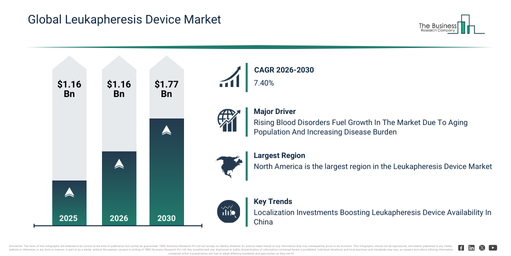
    The leukapheresis device market has seen marked growth recently, with its size expected to increase from $0.7 billion in 2025 to $0.76 billion in 2026, representing a compound annual growth rate (CAGR) of 8.6%. This expansion during the historical period has been driven by factors such as the rising incidence of leukemia and autoimmune diseases, the growing adoption of stem cell therapies, improvements in blood cell separation technologies, an increase in clinical research activities, and the expansion of hospital-based apheresis services. Moving forward, the market is forecasted to reach $1.01 billion by 2030, growing at a CAGR of 7.4%. Key contributors to this anticipated growth include heightened demand for portable leukapheresis devices, the integration of artificial intelligence and automation in equipment, growth in biopharmaceutical research, regulatory approvals for next-generation devices, and increased investment in precision medicine. Important trends expected to influence the market include the development of personalized leukapheresis treatments, minimally invasive apheresis techniques, portable and point-of-care device options, real-time monitoring system integration, and enhanced automation to improve workflow efficiency.

    Download A Free Sample Report For Comprehensive Market Insights:

    https://www.thebusinessresearchcompany.com/sample.aspx?id=25807&type=smp

    Rising Blood Disorders as a Major Growth Catalyst in the Leukapheresis Device Market

    The increasing prevalence of blood-related disorders is a key driver supporting the leukapheresis device market’s expansion. These conditions affect blood cell function or structure, disrupting oxygen transport, immune defenses, or coagulation processes. An aging global population contributes significantly to the rise in these disorders, such as anemia, leukemia, and other hematological diseases, which predominantly affect older adults. Leukapheresis devices play a crucial role by selectively removing excess or abnormal white blood cells from the bloodstream. This helps manage symptoms and reduce complications in illnesses like leukemia and autoimmune diseases.

    Highlighting this trend, the Leukaemia Foundation of Australia reported in March 2024 that about 19,500 Australians were diagnosed with blood cancers including leukemia, lymphoma, and myeloma, with nearly 43% facing substantial out-of-pocket treatment costs. Furthermore, 42% of patients took more than three months off work, underscoring both the growing incidence and the financial burdens associated with these diseases. This situation is fuelling demand for leukapheresis devices as a therapeutic solution.

    Access The Complete Leukapheresis Device Market Report:

    https://www.thebusinessresearchcompany.com/report/leukapheresis-device-global-market-report

    Leukapheresis Device Market Segmentation by Product Types and End Users

    This report breaks down the leukapheresis device market into multiple segments to provide detailed insights. By device type, the market includes therapeutic leukapheresis systems, cytapheresis devices, stem cell collection units, research application systems, leukapheresis columns and cell separators, disposables, and general apheresis devices. Components are segmented into machines, blood collection sets, medical consumables, and filters. End users consist of hospitals, academic research institutes, pharmaceutical and biotechnology companies, blood component providers, and blood centers.

    Further subcategories include therapeutic leukapheresis devices for leukemia treatment, sepsis management, and autoimmune disease care. Cytapheresis covers plateletpheresis, lymphapheresis, and erythrocytapheresis systems. Stem cell collection devices include peripheral blood stem cell collectors, umbilical cord blood collection systems, and bone marrow stem cell apheresis units. Research applications feature cell separation technologies used for development and clinical trials. Leukapheresis columns and separators encompass adsorption columns, membrane-based systems, and centrifugal separators. Disposables involve tubing, needles, catheters, and collection bags. Apheresis devices include continuous flow, portable/mobile, and intermittent flow machines.

    How Regional Manufacturing Efforts Are Transforming the Leukapheresis Device Market

    Leading companies in the leukapheresis device field are increasingly investing in regional manufacturing capabilities to improve access to high-quality devices and support local healthcare infrastructure. Establishing production facilities closer to key markets enables more efficient supply chains, reduces reliance on imports, and lowers costs for advanced blood collection and separation technologies. For example, in November 2024, Terumo Blood and Cell Technologies partnered with its China-based subsidiary, Terumo Medical Products (Hangzhou) Co., Ltd., to launch localized manufacturing in Hangzhou. This initiative focuses on producing widely used leukapheresis devices such as the Trima Accel Automated Blood Collection System and the Spectra Optia Apheresis System, which are essential for therapeutic apheresis, stem cell collection, and blood component separation across China.

    Market Competition and Key Players in the Leukapheresis Device Sector

    The leukapheresis device market features competition among several prominent companies, including Fresenius SE and Co. KGaA, Asahi Kasei Medical Co. Ltd, Baxter International Inc., Grifols S.A., TERUMO BCT INC., Kaneka Corporation, Nikkiso Co. Ltd, Haemonetics Corporation, Miltenyi Biotec GmbH, Macopharma, B. Braun Melsungen AG, Kawasumi Laboratories Inc., Beijing Zksk Technology Co. Ltd, Puriblood Medical Co. Ltd, Fresenius Kabi AG, JMS Co. Ltd, HemaCare Corporation, Medica Group PLC, LivaNova PLC, Cytiva, BioSafe Group SA, and Terumo Corporation. These organizations are continually innovating and expanding their portfolios to meet evolving clinical needs.

    North America Leads the Leukapheresis Device Market by Market Share

    In 2025, North America held the leading position in the global leukapheresis device market. The report covers various geographic regions including Asia-Pacific, South East Asia, Western Europe, Eastern Europe, North America, South America, the Middle East, and Africa, offering a comprehensive view of regional market dynamics and future growth opportunities.

    Get in touch with us:

    The Business Research Company: https://www.thebusinessresearchcompany.com/

    Americas: +1 310-496-7795

    Asia: +44 7882 955267 & +91 8897263534

    Europe: +44 7882 955267

    Email us at: marketing@tbrc.info

    Follow us on:

    LinkedIn: https://in.linkedin.com/company/the-business-research-company

    YouTube: https://www.youtube.com/channel/UC24_fI0rV8cR5DxlCpgmyFQ

    Global Market Model: https://www.thebusinessresearchcompany.com/global-market-model
  • Left Ventricular Assist Devices Market Set To Grow From $1.89 Billion In 2026 To $2.78 Billion By 2030 At A CAGR Of 10%

    Left Ventricular Assist Devices Market Set To Grow From $1.89 Billion In 2026 To $2.78 Billion By 2030 At A CAGR Of 10%

    Enhanced with market attractiveness analysis, total addressable market evaluation, company benchmarking matrices, interactive Excel dashboards, expanded supply chain intelligence, emerging startup coverage, and detailed product insights, The Business Research Company’s 2026 market reports deliver more actionable and strategically valuable research.

    The left ventricular assist devices market has experienced significant growth recently, driven by advancements in cardiac care and rising cases of heart failure. As medical technology continues to evolve, this sector is expected to offer promising revenue opportunities and expand rapidly over the coming years. Let’s explore the current market size, key growth drivers, segment breakdowns, industry trends, and leading companies shaping this dynamic field.

    Current Market Size and Growth Projections for Left Ventricular Assist Devices

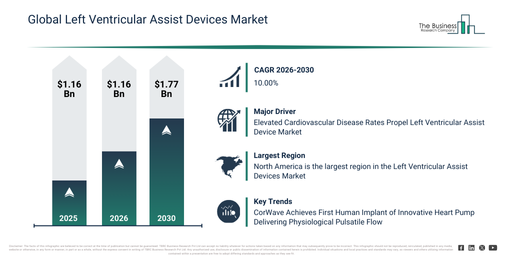
    The market for left ventricular assist devices has steadily increased, with revenues expected to rise from $1.73 billion in 2025 to $1.9 billion in 2026, reflecting a compound annual growth rate (CAGR) of 9.7%. This expansion during the historical period is mainly due to a higher prevalence of advanced heart failure, limited donor hearts for transplant, the growth of specialized cardiac care facilities, improvements in surgical implantation methods, and greater clinical acceptance of mechanical circulatory support devices. Looking ahead, the market is predicted to grow further to $2.78 billion by 2030 at a CAGR of 10.0%, driven by factors such as an aging population with cardiac conditions, increasing demand for long-term heart failure therapies, innovations in biocompatible materials, enhanced remote monitoring integration, and broader reimbursement policies.

    Download A Free Sample Report For Comprehensive Market Insights:

    https://www.thebusinessresearchcompany.com/sample.aspx?id=12042&type=smp

    Key Factors Propelling the Left Ventricular Assist Devices Market Growth

    The rising incidence of cardiovascular diseases is a major factor encouraging expansion in the left ventricular assist devices market. Cardiovascular diseases encompass various heart and blood vessel disorders, including coronary artery disease and congenital heart defects. In advanced cases of heart failure, left ventricular assist devices support the left ventricle’s pumping function, helping maintain adequate blood flow throughout the body.

    For instance, a report released by the American Heart Association in January 2024 highlighted that the age-adjusted death rate from cardiovascular disease in the United States increased to 233.3 per 100,000 people, marking a 4.0% rise from 224.4 per 100,000 in 2023. This upward trend underscores the growing burden of cardiovascular conditions, which in turn drives demand for left ventricular assist devices.

    Segment Breakdown and Revenue Opportunities Within the Left Ventricular Assist Devices Market

    This market is segmented by device type, flow type, application, and end-user. The main categories include:

    1) Device Type: Percutaneous Left Ventricular Assist Devices and Implantable Left Ventricular Assist Devices

    2) Flow Type: Pulsatile and Non-Pulsatile Devices

    3) Application: Bridge-To-Recovery (BTR) Therapy, Bridge-To-Transplant (BTT) Therapy, Destination Therapy, and Bridge-To-Candidacy (BTC) Therapy

    4) End-User: Cardiology Centers and Hospitals

    Further subsegments include Axial-Flow and Centrifugal-Flow Percutaneous LVADs, as well as Continuous Flow and Pulsatile Flow Implantable LVADs, highlighting the variety of technology adopted in the market.

    Access The Complete Left Ventricular Assist Devices Market Report:

    https://www.thebusinessresearchcompany.com/report/left-ventricular-assist-devices-global-market-report

    Emerging Development Trends Shaping the Future of Left Ventricular Assist Devices

    Leading companies in the market are focusing on next-generation technologies to improve patient outcomes and device performance. One example is the development of wave membrane technology, which aims to replace traditional rotary LVADs by mimicking the natural pulsatility and blood flow characteristics of a healthy heart. This innovation could reduce complications associated with current devices.

    For instance, in September 2025, CorWave SA, a France-based medical device manufacturer, successfully implanted its Left Ventricular Assisting System (LVAS) in a patient at St Vincent’s Hospital in Sydney. This device provides full cardiac support by efficiently unloading the left ventricle while maintaining physiological aortic pulse pressure and consistent valve function. The patient experienced no device-related adverse events during the 30-day primary study period and later underwent successful heart transplantation after 84 days on support. CorWave’s LVAS marks a significant step forward in mechanical circulatory support by offering safe and physiological pulsatile flow.

    Major Players Influencing the Left Ventricular Assist Devices Market Landscape

    Some of the prominent companies driving innovation and market growth in this sector include Abbott Laboratories, Medtronic plc, Terumo Corporation, St. Jude Medical, MAQUET GmbH & Co., LivaNova Plc, Thoratec Corporation, Abiomed Inc, Berlin Heart GmbH, BioVentrix, Cleveland Heart Inc., Jarvik Heart Inc., CorWave SA, SynCardia Systems LLC, NuPulseCV Inc., Fineheart, Procyrion Inc, Carmat SA, BiVACOR Inc, Cardiac Assist Inc., Leviticus Cardio Ltd., Calon Cardio-Technology Ltd, Evaheart Inc., Sunshine Heart Inc., and CH Biomedical Inc. These companies are at the forefront of developing advanced LVAD solutions and expanding patient access.

    Regional Market Overview Highlighting North America’s Leadership

    In 2025, North America emerged as the largest regional market for left ventricular assist devices, benefiting from well-established healthcare infrastructure, increasing cardiovascular disease prevalence, and strong reimbursement frameworks. The market analysis also covers regions including Asia-Pacific, South East Asia, Western Europe, Eastern Europe, South America, Middle East, and Africa, providing a comprehensive global perspective on market dynamics and growth potential.

    Get in touch with us:

    The Business Research Company: https://www.thebusinessresearchcompany.com/

    Americas: +1 310-496-7795

    Asia: +44 7882 955267 & +91 8897263534

    Europe: +44 7882 955267

    Email us at: marketing@tbrc.info

    Follow us on:

    LinkedIn: https://in.linkedin.com/company/the-business-research-company

    YouTube: https://www.youtube.com/channel/UC24_fI0rV8cR5DxlCpgmyFQ

    Global Market Model: https://www.thebusinessresearchcompany.com/global-market-model

  • Left Atrial Appendage Closure Device Market Opportunities Are Emerging Beyond Traditional Growth Areas

    Left Atrial Appendage Closure Device Market Opportunities Are Emerging Beyond Traditional Growth Areas

    Through market attractiveness analysis, total addressable market evaluation, company benchmarking matrices, interactive Excel dashboards, expanded supply chain intelligence, emerging startup coverage, and detailed product insights, The Business Research Company’s 2026 market reports provide more actionable and strategically valuable research.

    The market for left atrial appendage closure devices has seen remarkable expansion recently, driven by various medical advancements and rising health concerns. This sector is anticipated to maintain strong growth through the coming years, fueled by technological progress and increasing patient demand. Let’s explore the current market size, driving factors, segmentation, industry trends, key players, and regional prospects shaping this dynamic landscape.

    Market Size and Growth Outlook of the Left Atrial Appendage Closure Device Market

    The left atrial appendage closure device market has experienced rapid growth in recent years. It is projected to increase from $1.99 billion in 2025 to $2.33 billion in 2026, demonstrating a compound annual growth rate (CAGR) of 17.4%. This historical expansion is linked to the rising prevalence of atrial fibrillation, a growing incidence of strokes among aging populations, the proliferation of interventional cardiology procedures, broader access to minimally invasive cardiac treatments, and improved clinical outcomes data.

    Download A Free Sample Report For Comprehensive Market Insights:

    https://www.thebusinessresearchcompany.com/sample.aspx?id=13474&type=smp

    Looking ahead, the market is expected to continue its strong upward trajectory, reaching $4.37 billion by 2030 with a CAGR of 17.0%. Factors contributing to this forecast include the increasing adoption of non-pharmacological stroke prevention methods, expansion in cardiac catheterization laboratories, heightened demand for personalized cardiac implants, rising investments in treatments for structural heart diseases, and continuous technological innovation in implant materials and delivery systems. Emerging trends in this period feature widespread use of minimally invasive cardiac implants, growing preference for stroke prevention devices, a rise in percutaneous LAA closure procedures, enhanced occlusion device designs, and a focus on patient-specific cardiac solutions.

    Key Drivers Behind the Surge in Left Atrial Appendage Closure Device Demand

    One major factor propelling market expansion is the escalating prevalence of atrial fibrillation. This condition, characterized by irregular and often accelerated heartbeats due to uncoordinated atrial contractions, significantly increases the risk of stroke. Left atrial appendage closure devices play a critical role in managing atrial fibrillation by preventing blood clots from forming or escaping the heart, thereby lowering stroke risk.

    Access The Complete Left Atrial Appendage Closure Device Market Report:

    https://www.thebusinessresearchcompany.com/report/left-atrial-appendage-closure-device-global-market-report

    To illustrate this trend, data from the Centre for Disease Control and Prevention in the United States highlights a sharp rise in atrial fibrillation cases. In 2023, about 12.1 million adults in the US were reported to be living with this condition, more than doubling from approximately 5.2 million in 2022. This surge directly influences the growing demand for LAA closure devices as a vital component of stroke prevention strategies.

    Further Drivers Supporting Market Expansion

    Beyond disease prevalence, the expanding scope of interventional cardiology and minimally invasive treatment options also serve as significant growth catalysts. The evolution of cardiac catheterization labs worldwide and advancements in device technology have facilitated wider adoption of LAA closure procedures. Moreover, increasing investments in structural heart disease research and development encourage innovations in device design and personalized treatment approaches, sustaining the market’s momentum.

    Comprehensive Segmentation of the Left Atrial Appendage Closure Device Market

    This market is divided into key segments for a thorough understanding of its components:

    By Product Type:

    – Epicardial Left Atrial Appendage Devices

    – Endocardial Left Atrial Appendage Devices

    By Procedure:

    – Percutaneous

    – Surgical

    By End-User Setting:

    – Hospitals

    – Ambulatory Surgical Centers

    – Other End-Users

    Delving deeper, epicardial devices include suture-based closure devices, ligation-based closure devices, and clip-based closure devices. Endocardial devices are categorized into plug-based closure devices, disc-based closure devices, and mesh-based closure devices, capturing the varied technological approaches in this field.

    Technological Advancements Reshaping the Market Landscape

    Leading companies in this sector are focusing heavily on innovation to boost procedural accuracy, safety, and patient outcomes. A notable development involves the introduction of expanded-size, radiopaque-marked closure systems with advanced polymer coatings. These improvements enhance visibility during implantation, allow better adaptation to diverse left atrial appendage anatomies, and reduce complications linked to anticoagulation therapy.

    For example, in April 2024, Boston Scientific Japan Co., Ltd. launched the WATCHMAN FLX Pro Left Atrial Appendage Closure System across Japan. The latest model features a new 40mm device size tailored for larger atrial appendages, three radiopaque markers for enhanced imaging visibility, and HEMOCOAT polymer coating known for improving procedural performance and safety. This launch underlines ongoing efforts to refine device capabilities and expand treatment options for patients with non-valvular atrial fibrillation.

    Major Industry Players in the Left Atrial Appendage Closure Device Market

    The competitive landscape includes several prominent companies contributing to market growth and innovation. Some of the key players are Boston Scientific Corporation, Abbott Laboratories, Medtronic plc, AtriCure Inc, Lifetech Scientific Corporation, Occlutech GmbH, Cardia Inc, SentreHEART Inc, Coherex Medical Inc, Lepu Medical Technology Co Ltd, MicroPort Scientific Corporation, NMT Medical Inc, Transcatheter Technologies GmbH, Shanghai Shape Memory Alloy Co Ltd, Braile Biomedica, Innovative Cardiovascular Solutions LLC, Eclipse Medical, PushMed Medical, Cardiawave, and Catheter Precision Inc.

    Regional Market Distribution and Growth Opportunities

    North America held the largest share of the left atrial appendage closure device market in 2025. Besides North America, significant regional markets include Asia-Pacific, South East Asia, Western Europe, Eastern Europe, South America, the Middle East, and Africa. The Asia-Pacific region, in particular, is expected to showcase rapid growth due to improving healthcare infrastructure, rising awareness, and increasing adoption of advanced cardiac treatments.

    In summary, the left atrial appendage closure device market is positioned for substantial growth, driven by rising atrial fibrillation cases, technological advancements, and expanding treatment options worldwide. This momentum is supported by a diverse range of products, procedural innovations, and strong participation from leading industry players across key geographic markets.

    Get in touch with us:

    The Business Research Company: https://www.thebusinessresearchcompany.com/

    Americas: +1 310-496-7795

    Asia: +44 7882 955267 & +91 8897263534

    Europe: +44 7882 955267

    Email us at: marketing@tbrc.info

    Follow us on:

    LinkedIn: https://in.linkedin.com/company/the-business-research-company

    YouTube: https://www.youtube.com/channel/UC24_fI0rV8cR5DxlCpgmyFQ

    Global Market Model: https://www.thebusinessresearchcompany.com/global-market-model

  • Lead Poisoning Treatment Market Expansion Is Opening New Pathways For Strategic Investment

    Lead Poisoning Treatment Market Expansion Is Opening New Pathways For Strategic Investment

    Delivering more actionable and strategically valuable research, The Business Research Company’s 2026 market reports feature market attractiveness analysis, total addressable market evaluation, company benchmarking matrices, interactive Excel dashboards, expanded supply chain intelligence, emerging startup coverage, and detailed product insights.

    The market for lead poisoning treatment has experienced significant growth in recent years, driven by various environmental and health-related factors. As awareness increases and regulatory measures strengthen, this sector is set to continue expanding steadily in the coming years. Let’s explore the current market size, key drivers propelling this growth, important segments, ongoing innovations, leading companies, and regional market insights.

    Lead Poisoning Treatment Market Size and Its Growth Outlook

    The lead poisoning treatment market has shown strong expansion recently. It is expected to grow from $6.07 billion in 2025 to $6.39 billion in 2026, reflecting a compound annual growth rate (CAGR) of 5.2%. This upward trend during the historical period has been driven by factors such as the rise in industrial and environmental lead exposure incidents, enhanced occupational health monitoring, the availability of chelation agents, increased pediatric screening efforts, and the establishment of standardized treatment guidelines. Looking ahead, the market is projected to reach $7.77 billion by 2030, maintaining a CAGR of 5.0%. This growth is supported by stricter regulatory enforcement on lead exposure, heightened public health awareness initiatives, broader community screening programs, investments in safer and more effective chelation therapies, and advancements in diagnostic testing methods. Key trends anticipated during this forecast period include wider adoption of chelation-based treatments, greater emphasis on early diagnosis and screening, increased use of supportive and nutritional therapies, expansion in pediatric treatment, and improvements in monitoring and follow-up protocols.

    Download A Free Sample Report For Comprehensive Market Insights:

    https://www.thebusinessresearchcompany.com/sample.aspx?id=24275&type=smp

    Factors Contributing to the Expansion of the Lead Poisoning Treatment Market

    One major factor driving the lead poisoning treatment market is the growing prevalence of environmental contamination linked to industrial activities. Environmental contamination involves the introduction of hazardous substances into natural resources such as air, water, and soil, disrupting ecosystems and posing serious health risks. The rise in industrialization has led to increased release of pollutants through manufacturing processes, improper waste disposal, and the use of harmful chemicals, often surpassing the capacity of regulatory frameworks to manage these emissions effectively. This persistent contamination results in continuous lead exposure, which accumulates in the body and causes toxic effects that necessitate medical intervention through lead poisoning treatment.

    A real-world example highlighting this issue is the data released by the Environmental Protection Agency in January 2025, which reported that 66 million tons of pollution were emitted into the air across the United States in 2023. This significant pollution burden underscores the ongoing environmental challenges contributing to lead exposure and subsequently driving demand for treatments to combat lead poisoning.

    Access The Complete Lead Poisoning Treatment Market Report:

    https://www.thebusinessresearchcompany.com/report/lead-poisoning-treatment-global-market-report

    Lead Poisoning Treatment Market Segmentation: Identifying Fast-Growing Categories

    The lead poisoning treatment market is categorized by several segments to better understand its structure and growth areas. These include:

    1) Treatment Type: Chelation Therapy, Contemporary Treatment, and Supportive Care

    2) Route of Administration: Oral, Intravenous, and Intramuscular

    3) Patient Type: Pediatric, Adult, and Geriatric

    4) End-User: Hospitals, Clinics, and Homecare Settings

    Within these categories, more specific subsegments exist. Chelation Therapy, for example, is broken down into agents like Ethylenediaminetetraacetic Acid (EDTA), Dimercaptosuccinic Acid (DMSA), Dimercaptopropane Sulfonate (DMPS), and British Anti-Lewisite (BAL). Contemporary Treatment includes Nutritional Therapy and Antioxidant Therapy, while Supportive Care covers Hydration Therapy, Monitoring and Observation, Pain and Symptom Management, and Psychological Support and Counseling. These subcategories highlight the variety of approaches and patient needs addressed within the market.

    Innovations Transforming the Lead Poisoning Treatment Industry

    Leading companies in the lead poisoning treatment field are dedicating efforts to improve chelation drug formulations, aiming to enhance their effectiveness, bioavailability, and safety. Chelation formulations refer to pharmaceutical compounds designed to bind heavy metals like lead in the bloodstream, facilitating their removal. A notable example occurred in August 2023, when Rising Pharmaceuticals, a US-based firm, announced the approval and commercial launch of Edetate Calcium Disodium Injection in the United States. This prescription medication is used to lower blood lead levels and remove lead deposits in both acute and chronic lead poisoning cases, including lead encephalopathy, and is applicable for treating both pediatric and adult patients.

    Key Players Defining the Competitive Landscape of Lead Poisoning Treatment

    The lead poisoning treatment market features several prominent companies actively shaping its development. These include Pfizer Inc., Merck & Co. Inc., GlaxoSmithKline plc, Takeda Pharmaceutical Company Limited, Bayer AG, Teva Pharmaceutical Industries Ltd., Sun Pharmaceutical Industries Ltd., Bausch Health Companies Inc., Cipla Limited, Dr. Reddy’s Laboratories Ltd., Lupin Pharmaceuticals Inc., Recordati Rare Diseases Inc., Rising Pharmaceuticals, Akorn Incorporated, Mylan N.V. (Viatris), Hikma Pharmaceuticals plc, Aurobindo Pharma Ltd., Zydus Lifesciences Limited, Amneal Pharmaceuticals Inc., Glenmark Pharmaceuticals Ltd., Intas Pharmaceuticals Ltd., Torrent Pharmaceuticals Ltd., Alkem Laboratories Ltd., and Wockhardt Ltd. These organizations are at the forefront of innovation, production, and distribution within this specialized market.

    Regional Market Dominance and Growth Patterns in Lead Poisoning Treatment

    North America held the largest share of the lead poisoning treatment market in 2025. The market analysis includes important regions such as Asia-Pacific, South East Asia, Western Europe, Eastern Europe, North America, South America, the Middle East, and Africa. While North America remains the dominant player by revenue and market size, other regions show potential for significant growth driven by rising awareness, expanding healthcare infrastructure, and increased regulatory focus on lead exposure prevention and treatment.

    Get in touch with us:

    The Business Research Company: https://www.thebusinessresearchcompany.com/

    Americas: +1 310-496-7795

    Asia: +44 7882 955267 & +91 8897263534

    Europe: +44 7882 955267

    Email us at: marketing@tbrc.info

    Follow us on:

    LinkedIn: https://in.linkedin.com/company/the-business-research-company

    YouTube: https://www.youtube.com/channel/UC24_fI0rV8cR5DxlCpgmyFQ

    Global Market Model: https://www.thebusinessresearchcompany.com/global-market-model

  • Lead Extraction Tools Market Trends Are Creating New Opportunities For Industry Leaders

    Lead Extraction Tools Market Trends Are Creating New Opportunities For Industry Leaders

    Enhanced with market attractiveness analysis, total addressable market evaluation, company benchmarking matrices, interactive Excel dashboards, expanded supply chain intelligence, emerging startup coverage, and detailed product insights, The Business Research Company’s 2026 market reports deliver more actionable and strategically valuable research.

    The lead extraction tools market is experiencing notable growth as advances in cardiac care and rising cardiovascular disease prevalence drive increased demand. With technological innovations and expanding healthcare infrastructure, this sector is set for substantial expansion in the coming years. Below is an in-depth overview of the market’s size, key growth drivers, major players, trends, and regional outlook.

    Lead Extraction Tools Market Size and Expected Growth Through 2030

    The lead extraction tools market has witnessed rapid expansion recently, valued at $1.24 billion in 2025 and projected to reach $1.37 billion in 2026. This represents a compound annual growth rate (CAGR) of 10.2%. The historical growth is largely influenced by a rise in pacemaker implantations, the frequency of device infections, an aging cardiac patient population, the availability of early mechanical extraction tools, and the development of specialized cardiac centers in hospitals. Looking ahead, the market is forecasted to grow further to $2.01 billion by 2030, sustaining a strong CAGR of 10.0%. Key factors fueling this development include increasing complications related to device longevity, ongoing technological advancements in extraction systems, the expansion of electrophysiology centers, a growing number of trained specialists, and the rising burden of cardiovascular diseases. Important trends expected to shape this future growth involve greater demand for lead removal procedures, adoption of advanced laser-based extraction tools, innovations that improve procedural safety, an increase in cardiac implantable electronic device (CIED) replacement surgeries, and the establishment of dedicated cardiac extraction centers.

    Download A Free Sample Report For Comprehensive Market Insights:

    https://www.thebusinessresearchcompany.com/sample.aspx?id=30311&type=smp

    Rising Cardiovascular Disease Prevalence Boosting Lead Extraction Tools Demand

    The escalating incidence of cardiovascular disease is a major factor propelling the lead extraction tools market forward. Cardiovascular disease encompasses a range of heart and blood vessel disorders driven by genetic, lifestyle, and environmental influences, and remains one of the top causes of mortality worldwide. Unhealthy habits such as poor diet and physical inactivity exacerbate the strain on cardiovascular health, leading to an increasing number of heart-related conditions. Lead extraction tools play a crucial role by safely removing malfunctioning or infected cardiac device leads, thereby reducing complications and improving patient outcomes and heart function.

    Recent data from the World Health Organization (WHO) highlights the significance of this health challenge. According to a May 2024 report by the Switzerland-based WHO, cardiovascular diseases are the leading cause of disability and premature death in the European region, accounting for over 42.5% of all annual deaths—equivalent to roughly 10,000 fatalities each day. This stark reality underscores why the prevalence of cardiovascular conditions is a key driver for the growth of the lead extraction tools sector.

    Access The Complete Lead Extraction Tools Market Report:

    https://www.thebusinessresearchcompany.com/report/global-lead-extraction-tools-market-report

    Lead Extraction Tools Market Segmentation Insights

    The market for lead extraction tools is categorized by product type, application, and end user. Product-wise, it includes Mechanical Lead Extraction Tools, Laser Lead Extraction Tools, and Powered Sheath Extraction Tools. Applications cover pacemaker lead extraction and defibrillator lead extraction procedures. In terms of end users, hospitals, ambulatory surgical centers, and specialty clinics constitute the primary buyers.

    Delving into subcategories, Mechanical Lead Extraction Tools include manual extraction devices, mechanical dilation sheaths, rotational extraction tools, and threaded locking stylets. Laser Lead Extraction Tools are further broken down into excimer laser sheaths, pulsed laser systems, laser control units, and fiber optic delivery mechanisms. Powered Sheath Extraction Tools comprise electric powered sheaths, battery-operated sheaths, rotational powered sheaths, and motor-driven extraction systems. This segmentation allows targeted development and marketing strategies tailored to specific clinical needs and operational settings.

    Innovations and Trends Steering the Market’s Future

    Leading companies in the lead extraction tools market are concentrating on innovations such as mechanical dilation sheaths to improve efficiency, safety, and control during cardiac lead removals. Mechanical dilation sheaths are specialized devices designed to gently dilate fibrotic tissue around implanted leads, facilitating their extraction with minimal trauma to surrounding structures.

    For example, in August 2025, China-based Mednovo Group Co., Ltd. introduced a proprietary set of medical devices that enhance the safety and effectiveness of cardiac lead extraction. This product lineup combines precise engineering and advanced mechanical dilation technology, offering clinicians improved procedural control and patient safety. Mednovo’s launch highlights the importance of continued technological advancement in supporting complex cardiac interventions and improving clinical outcomes.

    Key Players and Competitive Landscape in Lead Extraction Tools

    The lead extraction tools market features several prominent players driving innovation and competition. Notable companies include Medtronic plc, Abbott Laboratories, Boston Scientific Corporation, Cook Medical LLC, Spectranetics Corporation, Biotronik SE & Co. KG, MicroPort Scientific Corporation, Merit Medical Systems Inc., Terumo Corporation, Teleflex Incorporated, B. Braun Melsungen AG, Oscor Inc., Lepu Medical Technology Co. Ltd., Beijing Demax Medical Technology Co. Ltd., Meril Life Sciences Private Limited, VascoMed GmbH, Invamed Inc., Philips Healthcare, Xtrac O.S. Ltd., Jainam Invamed Private Limited, Cardinal Health Inc., and Edwards Lifesciences Corporation. These firms are actively investing in research and development to maintain leadership and meet evolving clinical demands.

    Regional Market Breakdown and Growth Prospects

    In 2025, North America represented the largest market for lead extraction tools, driven by advanced healthcare infrastructure, high awareness, and strong adoption of cardiac technologies. Meanwhile, the Asia-Pacific region is projected to be the fastest-growing market during the forecast period due to expanding healthcare access, rising cardiovascular disease prevalence, and increasing investment in specialized cardiac care facilities. The market report covers a broad geographic scope, including Asia-Pacific, South East Asia, Western Europe, Eastern Europe, North America, South America, the Middle East, and Africa, providing a comprehensive global perspective on market trends.

    In summary, the lead extraction tools market is poised for significant growth, fueled by rising cardiovascular disease rates, technological advancements, and expanding healthcare capabilities worldwide. This combination of factors is creating ample opportunities for innovation, competition, and improved patient care in the coming years.

    Get in touch with us:

    The Business Research Company: https://www.thebusinessresearchcompany.com/

    Americas: +1 310-496-7795

    Asia: +44 7882 955267 & +91 8897263534

    Europe: +44 7882 955267

    Email us at: marketing@tbrc.info

    Follow us on:

    LinkedIn: https://in.linkedin.com/company/the-business-research-company

    YouTube: https://www.youtube.com/channel/UC24_fI0rV8cR5DxlCpgmyFQ

    Global Market Model: https://www.thebusinessresearchcompany.com/global-market-model
  • Handheld Arthroscopic Instruments Market Forecast Signals New Revenue Opportunities Through 2030

    Handheld Arthroscopic Instruments Market Forecast Signals New Revenue Opportunities Through 2030

    Through market attractiveness analysis, total addressable market evaluation, company benchmarking matrices, interactive Excel dashboards, expanded supply chain intelligence, emerging startup coverage, and detailed product insights, The Business Research Company’s 2026 market reports provide more actionable and strategically valuable research.

    The handheld arthroscopic instruments market is experiencing significant growth, driven by advancements in surgical technology and expanding healthcare infrastructure. As more patients undergo orthopedic procedures, the demand for precise and efficient surgical tools continues to rise. Let’s explore the current market size, key growth factors, segmentation, industry innovations, leading companies, and regional dynamics shaping this sector.

    Current Market Size and Projected Growth in the Handheld Arthroscopic Instruments Market

    The handheld arthroscopic instruments market has shown strong growth in recent years, with its value increasing from $3.41 billion in 2025 to an anticipated $3.63 billion in 2026, representing a compound annual growth rate (CAGR) of 6.6%. This expansion during the historical period is mainly due to the dependence on reusable instruments, limited availability of highly precise arthroscopic tools, a rise in orthopedic surgeries, improvements in hospital and clinic infrastructure, and the continued use of conventional surgical methods.

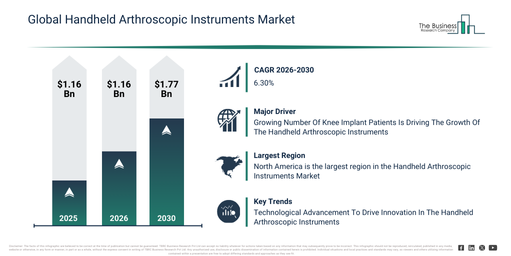
    Looking ahead, the market is expected to maintain robust growth, reaching $4.63 billion by 2030, with a CAGR of 6.3%. This forecasted increase is attributed to the development of disposable and ergonomically optimized instruments, growing preference for minimally invasive surgeries, expansion of ambulatory surgical centers, stricter regulatory compliance and quality certifications, and integration with robotic-assisted arthroscopic systems. Important trends in this period include a surge in minimally invasive arthroscopic surgeries, a growing shift toward disposable instruments to minimize infection risks, wider adoption of precision and ergonomic designs, an increase in knee, shoulder, and hip surgical procedures, and enhanced focus on sterilization standards and instrument durability.

    Download A Free Sample Report For Comprehensive Market Insights:

    https://www.thebusinessresearchcompany.com/sample.aspx?id=19495&type=smp

    Factors Encouraging Growth in the Handheld Arthroscopic Instruments Market

    An important driver behind the market’s expansion is the increasing number of patients undergoing knee implant surgeries. These surgeries involve replacing damaged or arthritic knee joints with artificial ones to relieve pain and restore mobility. The rise in knee implant cases stems from an aging population, higher prevalence of osteoarthritis and other joint disorders, and advancements in surgical techniques that have made these procedures more effective and accessible.

    Handheld arthroscopic instruments play a crucial role in knee implant procedures by enabling surgeons to perform minimally invasive operations with improved precision and better visualization of the joint. For instance, in February 2025, Springer Nature Group reported that in 2022, there were approximately 12.94 million male and 18.80 million female patients diagnosed with knee osteoarthritis. These numbers are expected to rise significantly by 2046, reaching 18.45 million males and 25.60 million females. This growing patient base directly fuels demand for handheld arthroscopic instruments.

    Market Segmentation and Revenue Sources Within the Handheld Arthroscopic Instruments Industry

    This report segments the handheld arthroscopic instruments market into several categories:

    1) By Type: Disposable handheld arthroscopic instruments and reusable handheld arthroscopic instruments.

    2) By Instrument Category: Knives, graspers, scissors, and other specialized instrument types.

    3) By Application: Surgeries involving the knee, shoulder, hip, and other medical uses.

    4) By End User: Hospitals, ambulatory surgical centers (ASCs), and specialty clinics.

    Further breakdowns include subcategories under disposable instruments such as disposable arthroscopes, graspers, scissors, shavers, electrocautery tools, and probe and hook instruments. Similarly, reusable instruments are divided into reusable arthroscopes, graspers, scissors, shavers, electrocautery devices, and probe and hook tools.

    Access The Complete Handheld Arthroscopic Instruments Market Report:

    https://www.thebusinessresearchcompany.com/report/handheld-arthroscopic-instruments-global-market-report

    Technology and Innovation Trends Reshaping the Handheld Arthroscopic Instruments Market

    Leading companies are focusing on technological advancements to improve surgical outcomes and patient safety. One notable innovation is the development of 4K single-use surgical arthroscopes, which offer high-definition imaging and eliminate the need for cleaning reusable devices, thus reducing infection risks.

    For example, in November 2023, US-based medical technology firm Pristine Surgical introduced its Summit 4K single-use surgical arthroscope. This device combines crystal-clear 4K resolution with a sterile, ready-to-use format, and integrates with Pristine Connect, a cloud-based software system for managing surgical images and inventory. This innovation addresses challenges related to maintenance of reusable scopes and provides healthcare facilities with a cost-effective subscription option.

    Key Market Players Energizing Competition in the Handheld Arthroscopic Instruments Sector

    Several major companies dominate the handheld arthroscopic instruments market, including Johnson & Johnson Services Inc., Stryker Corporation, Zimmer Biomet Holdings Inc., Olympus Corporation, Smith & Nephew plc, B. Braun Medical Inc., Arthrex Inc., KARL STORZ SE & Co. KG, Joint Engineering Inc., CONMED Corporation, KLS Martin Group, Richard Wolf GmbH, TEKNO-MEDICAL Optik-Chirurgie GmbH, Millennium Surgical Corp., Innomed Inc., Henke Sass Wolf GmbH, JOIMAX GmbH, EndoMed Systems GmbH, Sklar Surgical Instruments, Medacta International Ltd, Auxein Medical Pvt Ltd, and MJS Surgical Pvt Ltd. These organizations are pivotal in driving innovation, expanding product portfolios, and increasing market reach.

    Regional Market Outlook: Geographic Trends in Handheld Arthroscopic Instruments

    In 2025, North America was the leading region in the handheld arthroscopic instruments market, holding the largest share. However, the Asia-Pacific region is expected to exhibit the fastest growth during the forecast period. The market report encompasses major regions such as Asia-Pacific, South East Asia, Western Europe, Eastern Europe, North America, South America, the Middle East, and Africa, providing a comprehensive global perspective on market trends and expansion opportunities.

    Get in touch with us:

    The Business Research Company: https://www.thebusinessresearchcompany.com/

    Americas: +1 310-496-7795

    Asia: +44 7882 955267 & +91 8897263534

    Europe: +44 7882 955267

    Email us at: marketing@tbrc.info

    Follow us on:

    LinkedIn: https://in.linkedin.com/company/the-business-research-company

    YouTube: https://www.youtube.com/channel/UC24_fI0rV8cR5DxlCpgmyFQ

    Global Market Model: https://www.thebusinessresearchcompany.com/global-market-model
  • Hand Rehabilitation Devices Market Growth Is Accelerating As Industry Transformation Continues

    Hand Rehabilitation Devices Market Growth Is Accelerating As Industry Transformation Continues

    Delivering more actionable and strategically valuable research, The Business Research Company’s 2026 market reports feature market attractiveness analysis, total addressable market evaluation, company benchmarking matrices, interactive Excel dashboards, expanded supply chain intelligence, emerging startup coverage, and detailed product insights.

    The hand rehabilitation devices market has witnessed significant expansion recently, reflecting growing demand driven by medical advancements and an aging population. As rehabilitation technologies evolve, this sector is set to experience further impressive growth over the coming years. Below is a detailed overview of market size, key growth factors, innovations, major players, and regional trends shaping the industry’s future.

    Hand Rehabilitation Devices Market Size and Growth Projections

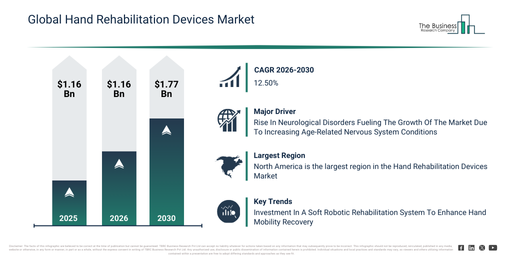
    The market for hand rehabilitation devices is rapidly expanding, with its size expected to increase from $1.74 billion in 2025 to $1.97 billion in 2026, representing a compound annual growth rate (CAGR) of 12.8%. This growth during the past years has been primarily driven by rising stroke rehabilitation cases, orthopedic injuries, post-operative recovery needs, increased demand for restoring hand mobility, and continuous innovation in therapeutic equipment. Looking ahead, the market is projected to reach $3.15 billion by 2030, supported by a strong CAGR of 12.5%. Factors influencing this expansion include the rise of home-based rehabilitation, the integration of AI for personalized therapies, an aging global population, remote monitoring technologies, and the growing use of smart wearable devices. Key emerging trends include robot-assisted hand therapy, wearable rehabilitation tools, sensor-driven exercise monitoring, and customized treatment programs delivered at home.

    Download A Free Sample Report For Comprehensive Market Insights:

    https://www.thebusinessresearchcompany.com/sample.aspx?id=30290&type=smp

    Increasing Neurological Disorders as a Primary Growth Driver in the Hand Rehabilitation Devices Market

    A major factor propelling the hand rehabilitation devices market is the rising prevalence of neurological disorders worldwide. These disorders, which affect the brain, spinal cord, or nerves, impair movement, cognition, sensation, or bodily functions due to nervous system dysfunction or damage. The increase is largely tied to longer life expectancies, as older adults are more susceptible to neurological decline and related conditions. Hand rehabilitation devices play a vital role in managing these disorders by facilitating recovery of hand function and strength through guided exercises that retrain neural pathways and muscle control. For example, as of March 2025, the National Institutes of Health (NIH) reported that the UK has between 50,000 to 100,000 cases of functional neurological disorder (FND), with numbers continuing to rise annually. This growing patient pool supports demand within the hand rehabilitation device segment.

    Healthcare Investments Bolstering the Hand Rehabilitation Devices Market Expansion

    Another significant driver of market growth is the increasing amount of investment being funneled into healthcare infrastructure and services globally. Such funding improves medical facilities’ capabilities, supports the adoption of advanced treatment technologies, and enhances overall patient care quality. Specifically, this financial backing facilitates research into rehabilitation equipment, subsidizes device costs, and promotes integration of hand rehabilitation devices into clinical and home care settings. For instance, in April 2025, the UK’s Office for National Statistics (ONS) reported healthcare spending reached USD 2.91 billion (£258 billion) in 2024, marking a 2.5% real-term increase from the previous year. This reflects strengthened commitment to healthcare delivery and medical technology adoption, which supports the hand rehabilitation devices market’s steady growth.

    Access The Complete Hand Rehabilitation Devices Market Report:

    https://www.thebusinessresearchcompany.com/report/global-hand-rehabilitation-devices-market-report

    Overview of Hand Rehabilitation Devices Market Segments Highlighting Growth Opportunities

    This market is segmented by product type, technology, distribution channels, applications, and end users, allowing for detailed analysis of growth areas:

    1) Product Type includes Exercise Equipment, Therapy Balls, Splints, Robotic Devices, and Other Products.

    2) Technology is broken down into Conventional Devices, Robotic Devices, and Wearable Devices.

    3) Distribution Channels cover Direct Sales, Online Retail, and Other Channels.

    4) Applications include Stroke Rehabilitation, Orthopedic Rehabilitation, Neurological Rehabilitation, and others.

    5) End Users encompass Hospitals, Rehabilitation Centers, Home Care Settings, and additional users.

    Subcategories delve deeper, such as resistance bands, grip strengtheners, finger exercisers within exercise equipment; types of therapy balls like stress balls and weighted balls; various splints including static and dynamic types; robotic devices such as hand exoskeletons and sensor-based gloves; and other products like massage rollers and therapy mats.

    Innovation Trends Driving Transformation in Hand Rehabilitation Devices

    Leading companies in the hand rehabilitation sector are investing heavily in creating advanced technologies, including soft robotic rehabilitation systems designed to improve motor recovery. These systems use flexible robotic actuators that assist and guide finger and hand movements gently, making therapy safer and more effective. For example, in July 2024, Imago Rehab, a US-based firm specializing in telerehabilitation and wearable robotics, secured $250,000 in funding toward its $2.5 million fundraising goal. The proceeds support development of their soft robotic glove, which helps stroke survivors regain hand mobility through inflatable chambers bending and straightening fingers. Coupled with Imago’s remote therapy platform, this system allows clinicians to monitor patients remotely, tailor exercises, and deliver therapy at home, increasing accessibility and improving recovery outcomes.

    Key Players Holding Strong Positions in the Hand Rehabilitation Devices Market

    The hand rehabilitation devices market features several prominent companies shaping its growth, including Enovis Corporation, Fourier Intelligence Co. Ltd., Hocoma A.G., Neofect Co. Ltd., Tyromotion GmbH, Shenzhen XFT Medical Ltd., MediTouch Ltd., Idrogenet Srl., Bioness Inc., Rehab Robotics Co. Ltd., Bionik Laboratories Corp., Saebo Inc., Hand Biomechanics Lab Inc., Kinestica d.o.o., Imago Rehab, Motus Nova LLC., HandyRehab, Rehabtronics Inc., Man&Tel Co. Ltd., and RehabSwift Pty Ltd. These firms are spearheading innovation and expanding availability of rehabilitation technologies worldwide.

    Regional Market Share and Growth Outlook for Hand Rehabilitation Devices

    In 2025, North America was the dominant region in terms of market size for hand rehabilitation devices. However, the Asia-Pacific region is forecast to exhibit the fastest growth during the coming years. The market report covers multiple geographic areas including Asia-Pacific, South East Asia, Western Europe, Eastern Europe, North America, South America, the Middle East, and Africa, offering a comprehensive perspective on global growth patterns and emerging opportunities.

    Get in touch with us:

    The Business Research Company: https://www.thebusinessresearchcompany.com/

    Americas: +1 310-496-7795

    Asia: +44 7882 955267 & +91 8897263534

    Europe: +44 7882 955267

    Email us at: marketing@tbrc.info

    Follow us on:

    LinkedIn: https://in.linkedin.com/company/the-business-research-company

    YouTube: https://www.youtube.com/channel/UC24_fI0rV8cR5DxlCpgmyFQ

    Global Market Model: https://www.thebusinessresearchcompany.com/global-market-model
  • Hand Protection Equipment Market Outlook Highlights The Next Major Growth Opportunities

    Hand Protection Equipment Market Outlook Highlights The Next Major Growth Opportunities

    Enhanced with market attractiveness analysis, total addressable market evaluation, company benchmarking matrices, interactive Excel dashboards, expanded supply chain intelligence, emerging startup coverage, and detailed product insights, The Business Research Company’s 2026 market reports deliver more actionable and strategically valuable research.

    The hand protection equipment sector has witnessed strong growth recently, driven by a mix of regulatory, industrial, and healthcare factors. As industrial activities expand and safety standards become more stringent, demand for reliable hand protection continues to rise. Let’s explore the current market size, key growth contributors, emerging trends, and the major players shaping this important safety gear market.

    Hand Protection Equipment Market Size and Projected Growth

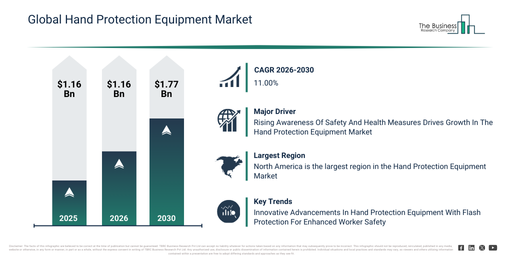
    The hand protection equipment market is expanding rapidly, with its value expected to rise from $36.77 billion in 2025 to $40.79 billion in 2026. This growth reflects a compound annual growth rate (CAGR) of 10.9%. Factors fueling this increase during the historical period include stricter industrial safety laws, heightened healthcare services, increased personal protective equipment (PPE) usage, growth in chemical handling industries, and greater public awareness about preventing hand injuries. Looking ahead, the market is set to accelerate further, reaching $61.9 billion by 2030 with an 11.0% CAGR. This anticipated surge will be driven by higher demand for environmentally friendly protective gear, intensified infection control protocols, expanding industrial automation safety requirements, growing investments in cutting-edge glove materials, and wider adoption of smart protective equipment. Noteworthy trends expected to influence market dynamics include rising demand for cut-resistant and chemical-resistant gloves, increased use of disposable gloves in healthcare, focus on ergonomic glove designs, growth in sustainable and recyclable glove materials, and stronger workplace safety compliance.

    Download A Free Sample Report For Comprehensive Market Insights:

    https://www.thebusinessresearchcompany.com/sample.aspx?id=6350&type=smp

    Growing Awareness Boosts the Hand Protection Equipment Market

    One of the primary factors accelerating the hand protection equipment market is the rising awareness around workplace safety and health. Proper safety measures significantly reduce the risk of injuries to hands and arms during operational tasks, prompting companies to adopt stricter safety standards. Government regulations and company policies are increasingly designed to eliminate hazards at the source through technological or organizational interventions. For example, in May 2025, VelocityEHS, a US-based software firm dedicated to environmental, health, and safety (EHS) management, reported that approximately 1.5 million work-related injuries and illnesses were documented in the US during 2024. This data highlights the critical need for protective equipment and strengthens market demand.

    Industrial Safety Regulations and Healthcare Sector Expansion Influence Growth

    Beyond awareness, the expansion of healthcare services and the introduction of more rigorous industrial safety regulations are key contributors to market growth. As industries such as chemical handling and manufacturing grow, the need for effective hand protection rises accordingly. Personal protective equipment usage is becoming more commonplace, reflecting an overall increase in safety culture across sectors. Together, these factors are driving steady growth in the hand protection equipment industry.

    Access The Complete Hand Protection Equipment Market Report:

    https://www.thebusinessresearchcompany.com/report/hand-protection-equipment-global-market-report

    Market Segmentation Highlights Opportunities Across Various Products and End Users

    The hand protection equipment market is categorized into several segments that reflect product types, materials, and end-user industries. By product, the market is divided into durable gloves and disposable gloves. Durable gloves include leather, cut-resistant, chemical-resistant, and thermal gloves, while disposable gloves cover latex, nitrile, vinyl, and polyethylene types. Material-wise, the market involves natural rubber gloves or latex, nitrile gloves, vinyl gloves, and other materials. Key end-user industries encompass healthcare, industrial safety and chemical sectors, construction, automotive, and other sectors. This segmentation helps identify specific growth areas and tailor product development to meet diverse customer needs.

    Innovations and Technological Advancements Shape Future Market Trends

    Leading companies within the hand protection equipment space are innovating to maintain competitive advantage, especially by focusing on advanced protective features such as flash protection. Flash protection gear is designed to shield workers from electrical hazards including arc flash and electrical shock. For instance, in April 2023, Pyramex, a US-based personal protective products manufacturer, launched the GL3000 series of arc flash protection gloves. These gloves emphasize comfort, fit, and dexterity while offering high-level protection against arc flash incidents. Tested rigorously according to ASTM F2675 and NFPA 70E standards, the GL3000 gloves represent the latest in electrical hazard protection equipment and demonstrate how innovation is driving market growth.

    Key Industry Players Driving Competition and Innovation

    The hand protection equipment market features a number of prominent companies shaping industry trends and competition. Some of the major players include Top Glove Corporation Bhd, Hartalega Holdings Berhad, Honeywell International Inc., 3M Company, Alpha Pro Tech Ltd., Halyard Health Inc., Medline Industries Inc., Cardinal Health Inc., Kossan Rubber Industries Bhd, Ansell Limited, Mallcom Limited, Kimberly-Clark Corporation, Lakeland Industries Inc., Delta Plus Group, Protective Industrial Products Inc., Showa Group, Towa Corporation, COFRA Holding AG, Ejendals AB, Rubberex Corporation (M) Berhad, and MCR Safety. These companies are investing heavily in research and development to meet evolving safety requirements and customer preferences.

    Regional Dynamics Indicate North America as Market Leader with Asia-Pacific Poised for Rapid Growth

    In terms of regional market distribution, North America held the largest share of the hand protection equipment market in 2025. This leadership reflects well-established industrial safety regulations and widespread adoption of PPE. Meanwhile, the Asia-Pacific region is expected to experience the fastest growth during the forecast period, driven by industrialization, expanding healthcare infrastructure, and growing safety awareness. The market report covers key regions including Asia-Pacific, South East Asia, Western Europe, Eastern Europe, North America, South America, the Middle East, and Africa, providing a comprehensive view of global market trends.

    Get in touch with us:

    The Business Research Company: https://www.thebusinessresearchcompany.com/

    Americas: +1 310-496-7795

    Asia: +44 7882 955267 & +91 8897263534

    Europe: +44 7882 955267

    Email us at: marketing@tbrc.info

    Follow us on:

    LinkedIn: https://in.linkedin.com/company/the-business-research-company

    YouTube: https://www.youtube.com/channel/UC24_fI0rV8cR5DxlCpgmyFQ

    Global Market Model: https://www.thebusinessresearchcompany.com/global-market-model