Category: Medical Equipment

  • Forceps And Spatulas Market Growth Is Accelerating As Industry Transformation Continues

    Forceps And Spatulas Market Growth Is Accelerating As Industry Transformation Continues

    Through market attractiveness analysis, total addressable market evaluation, company benchmarking matrices, interactive Excel dashboards, expanded supply chain intelligence, emerging startup coverage, and detailed product insights, The Business Research Company’s 2026 market reports provide more actionable and strategically valuable research.

    The market for forceps and spatulas has experienced notable growth in recent years, driven by advancements in surgical practices and increasing healthcare infrastructure. As medical technologies evolve and demand for precision tools rises, this market is set to continue expanding steadily through the next decade. Below is an overview of the current market status, key growth drivers, prominent segments, strategic trends, and leading companies shaping the future.

    Forceps and Spatulas Market Size and Growth Forecast

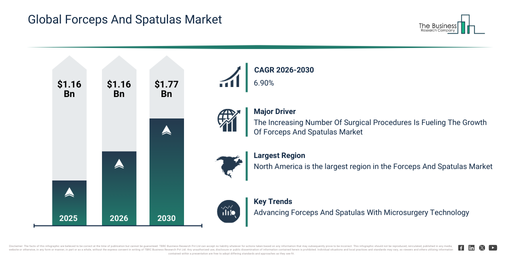
    The forceps and spatulas market demonstrated strong expansion historically and is anticipated to maintain this momentum. Market value is projected to rise from $2.08 billion in 2025 to $2.24 billion in 2026, representing a compound annual growth rate (CAGR) of 7.8%. Factors that have supported this growth include an increase in surgical procedure volumes, broader hospital and surgical infrastructure development, heightened attention to infection prevention, growing preference for reusable stainless steel instruments, and the advancement of specialty surgical fields. Moving forward, the market is expected to reach $2.93 billion by 2030, growing at a CAGR of 6.9%. This anticipated growth is attributed to the rising uptake of minimally invasive surgeries, a shift toward disposable surgical tools, expanding demand for high-precision instruments, growth in ambulatory surgical centers, and increased investment in advanced surgical care technologies. Key trends shaping this future include greater adoption of disposable instruments, heightened use of precision tools for complex surgeries, specialized forceps for micro and cardiovascular procedures, and the growing emphasis on sterile, single-use medical devices across diverse surgical specialties.

    Download A Free Sample Report For Comprehensive Market Insights:

    https://www.thebusinessresearchcompany.com/sample.aspx?id=17155&type=smp

    Factors Driving Growth in the Forceps and Spatulas Market

    The expanding number of surgical procedures plays a vital role in propelling the forceps and spatulas market forward. Surgical interventions, which involve modifying body tissues or organs for treatment or diagnosis, are on the rise due to advancements in medical technology, an aging global population requiring more care, higher incidence of chronic diseases, and elevated patient expectations for better post-operative outcomes. These trends collectively boost the demand for surgical instruments including forceps and spatulas, which are crucial for tissue handling and precise manipulation during procedures.

    Forceps enable surgeons to grasp and control tissues accurately, while spatulas assist in spreading, mixing, and applying substances during surgery, making them indispensable for achieving better surgical precision and patient outcomes. For example, in June 2024, the International Society of Aesthetic Plastic Surgery (ISAPS) reported a 3.4% increase in total surgical and non-surgical procedures in 2023, reaching 34.9 million. This growth was driven predominantly by a 5.5% rise in surgical procedures, with plastic surgeons performing over 15.8 million surgeries and 19.1 million non-surgical treatments—a 40% overall surge in the last four years. Such statistics strongly underline how the rising volume of surgeries fuels demand in this market.

    Access The Complete Forceps And Spatulas Market Report:

    https://www.thebusinessresearchcompany.com/report/forceps-and-spatulas-global-market-report

    Market Segmentation Highlighting the Expanding Categories in Forceps and Spatulas

    This report categorizes the forceps and spatulas market into several distinct segments for better clarity:

    1) By Type: Includes Trulla Spatulas, Taper Blade Spatulas, Nuffield Spatulas, Porcelain Spatulas, Micro Spatulas, Sterile Spatulas, Double or Spoon Spatulas, and other types.

    2) By Spatula Material: Polystyrene or Nylon, Polypropylene and Polytetrafluoroethylene (PTFE) or Porcelain, Stainless Steel and Nickel.

    3) By Forceps Type: Disposable Forceps, Reusable PTFE-Coated Forceps, Stainless Steel Forceps, Dissecting Forceps, Tissue Forceps, Iris Forceps, Pointed Forceps, Filter Forceps, among others.

    4) By Usability: Disposable Surgical Equipment and Reusable Surgical Equipment.

    5) By Application: Neurosurgery, Plastic and Reconstructive Surgeries, Wound Closure, Urology, Obstetrics and Gynecology, Thoracic Surgery, Micro-Vascular Surgery, Cardiovascular Surgery, Orthopedic Surgery.

    Further subcategories detail various spatula forms such as laboratory versus surgical Trulla spatulas, flexible versus rigid taper blade spatulas, standard and wide blade Nuffield spatulas, short- and long-handled porcelain spatulas, single- and double-ended micro spatulas, individually or bulk packaged sterile spatulas, flat- and curved-end spoon spatulas, plus plastic, metal, wooden, and silicone spatulas.

    Emerging Technological Trends Steering Market Advancements

    Leading manufacturers in the forceps and spatulas field are prioritizing the development of technologically advanced instruments, particularly focusing on microsurgery capabilities. Microsurgery involves the use of highly specialized tools and techniques that enable surgeons to operate on tiny and delicate structures such as nerves, blood vessels, and small tumors, using microscopes and precision instruments to minimize tissue damage and improve outcomes.

    For instance, in November 2023, Surtex Instruments Limited from the UK introduced its Infinex series for microsurgical instruments designed to provide surgeons with enhanced control and precision even in the most demanding procedures. This product line represents a notable leap in microsurgery technology, offering meticulously engineered micro scissors, forceps, and needle holders aimed at improving surgical accuracy, reducing patient trauma, and accelerating recovery. Such innovations are pivotal in defining the next era of growth and competitiveness in the market.

    Key Players Shaping the Competitive Landscape of the Forceps and Spatulas Industry

    The forceps and spatulas market features several prominent companies driving innovation and market expansion. Leading organizations include Thermo Fisher Scientific Inc., Paramount Industries, Merck KGaA, Stryker Corporation, B. Braun Melsungen AG, VWR International LLC, Integra LifeSciences Corporation, KLS Martin Group, Aesculap Inc., Teleflex Medical OEM, Symmetry Surgical Inc., Sklar Surgical Instruments, Bharat Surgical Co., Boss Instruments Ltd., Uteshiya Medicare, Jay Shakti Industries, Stingray Surgical Products LLC, Surtex Instruments Ltd., Sontec Instruments Inc., GSource LLC, Roboz Surgical Instrument Co., Kumpulan Saintifik, and Stille AB. These companies maintain competitive advantages through continuous technological innovation, product diversification, and strategic collaborations.

    Regional Market Presence and Growth Dynamics

    In 2025, North America held the largest share in the forceps and spatulas market, reflecting the region’s advanced healthcare infrastructure and high surgical procedure volumes. The market’s geographic coverage also encompasses Asia-Pacific, South East Asia, Western Europe, Eastern Europe, South America, the Middle East, and Africa. While North America currently dominates, the Asia-Pacific region is anticipated to experience significant growth in the coming years due to expanding healthcare facilities, increasing surgical awareness, and rising investments in medical technologies.

    Overall, the forceps and spatulas market is positioned for sustained expansion driven by evolving surgical techniques, growing procedure numbers, and continuous technological advancements shaping future healthcare delivery.

    Get in touch with us:

    The Business Research Company: https://www.thebusinessresearchcompany.com/

    Americas: +1 310-496-7795

    Asia: +44 7882 955267 & +91 8897263534

    Europe: +44 7882 955267

    Email us at: marketing@tbrc.info

    Follow us on:

    LinkedIn: https://in.linkedin.com/company/the-business-research-company

    YouTube: https://www.youtube.com/channel/UC24_fI0rV8cR5DxlCpgmyFQ

    Global Market Model: https://www.thebusinessresearchcompany.com/global-market-model
  • Foot Drop Treatment Devices Market Outlook Highlights The Next Major Growth Opportunities

    Foot Drop Treatment Devices Market Outlook Highlights The Next Major Growth Opportunities

    Delivering more actionable and strategically valuable research, The Business Research Company’s 2026 market reports feature market attractiveness analysis, total addressable market evaluation, company benchmarking matrices, interactive Excel dashboards, expanded supply chain intelligence, emerging startup coverage, and detailed product insights.

    The market for foot drop treatment devices has seen impressive growth recently, driven by medical advancements and increased awareness of neurological conditions. As the prevalence of mobility impairments rises, so does the demand for effective treatment solutions. This report explores the current market landscape, key factors propelling growth, main players involved, and emerging innovations shaping the future of this vital healthcare segment.

    Market Size and Growth Outlook for the Foot Drop Treatment Devices Market

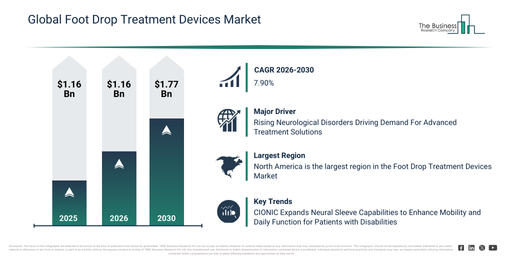
    The foot drop treatment devices sector has experienced significant expansion in recent years. Its market value is projected to increase from $2.45 billion in 2025 to $2.65 billion in 2026, representing a compound annual growth rate (CAGR) of 8.1%. This upward trend during the past period is largely due to a rise in neurological disorders, growing stroke-related mobility impairments, the establishment of more rehabilitation facilities, wider availability of orthotic devices, and heightened clinical awareness regarding foot drop management. Looking ahead, the market is expected to surge further, reaching $3.59 billion by 2030 with a CAGR of 7.9%. Factors influencing this forecasted growth include the uptake of advanced neurorehabilitation technologies, increased demand for mobility aids suitable for home care, expansion of personalized orthotic solutions, a stronger focus on enhancing patients’ quality of life, and rapid advancements in wearable medical devices. Important trends anticipated to shape the market include greater adoption of functional electrical stimulation devices, rising preference for custom-fitted orthotic braces, the use of lightweight and flexible materials, growth in home-based rehabilitation programs, and intensified efforts aimed at improving patient mobility.

    Download A Free Sample Report For Comprehensive Market Insights:

    https://www.thebusinessresearchcompany.com/sample.aspx?id=20792&type=smp

    Key Factors Propelling the Foot Drop Treatment Devices Market Expansion

    A major driver behind the growth of the foot drop treatment devices market is the rising incidence of neurological disorders and injuries. These conditions affect the brain, spinal cord, and nerves, resulting in impairments in motor skills, sensation, cognition, or behavior due to damage or degeneration of the nervous system. Several factors contribute to the increasing prevalence of these disorders, such as an aging global population, better diagnostic capabilities, lifestyle influences, environmental factors, and advances in medical technologies that enhance detection and treatment.

    Foot drop treatment devices play a critical role for individuals suffering from these neurological conditions as they often impair the ability to lift the foot, making walking difficult and increasing the risk of falls. These devices provide essential support by aiding foot lifting, thereby improving mobility and enhancing the overall quality of life for patients. For example, in October 2023, the World Federation of Neurology—a UK-based association representing neurological societies worldwide—reported that over 40% of the global population currently experiences some form of neurological condition, and this figure is expected to nearly double by 2050. Consequently, the growing prevalence of neurological disorders directly fuels demand for foot drop treatment devices.

    Access The Complete Foot Drop Treatment Devices Market Report:

    https://www.thebusinessresearchcompany.com/report/foot-drop-treatment-devices-global-market-report

    Foot Drop Treatment Devices Market Segmentation and Areas Leading Growth

    The market is organized into several key segments to better understand its scope:

    1) Product Type: Electrical Stimulators and Braces or Splints

    2) Application Areas: Neuropathy, Muscle Disorders, Brain and Spinal Disorders, and Other Uses

    3) End Users: Hospitals, Ambulatory Surgical Centers, Clinics, and Homecare Settings

    Within these broader segments, subcategories provide further detail:

    – Electrical Stimulators include Functional Electrical Stimulation (FES) Devices, Neuromuscular Electrical Stimulation (NMES) Devices, Transcutaneous Electrical Nerve Stimulation (TENS) Devices, and others.

    – Braces or Splints cover Ankle-Foot Orthoses (AFO), Dynamic Ankle-Foot Orthoses (DAFO), Hinged Ankle Braces, Custom-Made Braces, and additional types.

    This classification highlights the diversity of products and applications addressing different patient needs and care environments.

    Innovations and Technological Advancements Transforming the Foot Drop Treatment Market

    Leading companies in this market are investing heavily in cutting-edge technologies to improve treatment outcomes. One key area of innovation is software-powered wearable bionic devices that combine functional electrical stimulation with real-time mobility tracking. These devices aim to enhance walking ability, increase strength, and foster greater independence for people living with neuromuscular conditions. Such wearable tech enables personalized functional training, thorough progress monitoring, and integration into daily activities, allowing patients to regain mobility, navigate stairs, and perform essential tasks more independently.

    An illustration of this trend occurred in May 2024 when CIONIC, a US-based neurotechnology firm, updated its FDA-cleared Cionic Neural Sleeve. The new features include additional functional exercises and detailed activity tracking reports for patients with conditions such as multiple sclerosis, stroke, and spinal cord injuries. This lightweight, durable leg sleeve merges gait lab diagnostics with functional electrical stimulation and is controlled through a smartphone app, allowing for software updates to be rolled out simultaneously to all users. Such advancements empower patients to improve their mobility and independence in everyday life.

    Prominent Companies Shaping the Foot Drop Treatment Devices Industry

    The competitive landscape includes several key players that have established themselves as market leaders. These include:

    Cardinal Health Inc., Stryker Corporation, Henry Schein Inc., Smith & Nephew LLC, Ottobock, Hanger Inc., Ossur, Bauerfeind USA Inc., Breg Inc., B. Braun Melsungen AG, Trulife Ltd., Orthomerica Products Inc., Bioness Inc., Evolution Health Care Pvt. Ltd., Aspen Medical Products, Allard Inc., Footmaxx, ProCare, DJO Global Inc., ALIMCO, Saebo Inc., Axio Bionics LLC, Thrive Orthopedics, Turbomed Orthotics, and Accord Medical Products Private Limited.

    These companies continue to innovate and expand their product offerings to meet the growing and varied needs of patients worldwide.

    Geographical Market Analysis Highlighting the Largest and Fastest-Growing Regions

    In 2025, North America maintained its position as the largest regional market for foot drop treatment devices, benefiting from well-established healthcare infrastructure and high adoption rates of advanced technologies. Meanwhile, the Asia-Pacific region is forecasted to be the fastest-growing market during the forecast period. This growth is driven by increasing healthcare investments, rising awareness of neurological disorders, expanding rehabilitation facilities, and improving access to advanced medical devices. The foot drop treatment devices market report also covers other regions such as South East Asia, Western Europe, Eastern Europe, South America, the Middle East, and Africa, providing a comprehensive global perspective on market trends and opportunities.

    Get in touch with us:

    The Business Research Company: https://www.thebusinessresearchcompany.com/

    Americas: +1 310-496-7795

    Asia: +44 7882 955267 & +91 8897263534

    Europe: +44 7882 955267

    Email us at: marketing@tbrc.info

    Follow us on:

    LinkedIn: https://in.linkedin.com/company/the-business-research-company

    YouTube: https://www.youtube.com/channel/UC24_fI0rV8cR5DxlCpgmyFQ

    Global Market Model: https://www.thebusinessresearchcompany.com/global-market-model
  • Foot And Ankle Devices Market Trends And Growth Drivers Point To Strong Future Potential

    Foot And Ankle Devices Market Trends And Growth Drivers Point To Strong Future Potential

    Enhanced with market attractiveness analysis, total addressable market evaluation, company benchmarking matrices, interactive Excel dashboards, expanded supply chain intelligence, emerging startup coverage, and detailed product insights, The Business Research Company’s 2026 market reports deliver more actionable and strategically valuable research.

    The foot and ankle devices market has experienced significant growth recently, driven by a combination of demographic shifts and medical advancements. With an expanding patient base and technological progress, this sector is set for continued expansion in the coming years. Let’s explore the market size, growth factors, key players, and emerging trends shaping this industry.

    Market Size and Growth Outlook for the Foot and Ankle Devices Market

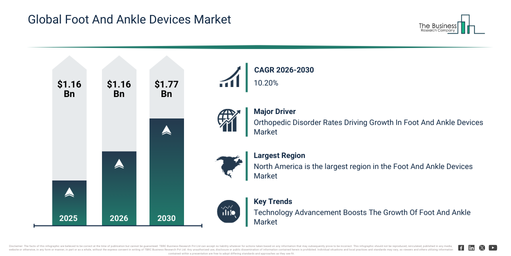
    The foot and ankle devices market has surged impressively, with its size projected to grow from $6.6 billion in 2025 to $7.3 billion in 2026, reflecting a strong compound annual growth rate (CAGR) of 10.6%. This expansion over recent years is largely due to the rising occurrence of foot and ankle disorders, an aging global population, increasing diabetes-related foot complications, a surge in orthopedic surgeries, and improved access to specialized orthopedic treatments. Looking ahead, the market is expected to reach $10.77 billion by 2030, with a CAGR of 10.2%. Factors fueling this future growth include a growing demand for personalized orthopedic solutions, wider adoption of minimally invasive surgeries, enhanced focus on rehabilitation after surgery, innovations in biomaterials, and rising investments in orthopedic device technologies. Key trends anticipated include more customized orthopedic implants, advanced bracing and support products, minimally invasive procedures, expanding diabetic foot care devices, and patient-specific prosthetics.

    Download A Free Sample Report For Comprehensive Market Insights:

    https://www.thebusinessresearchcompany.com/sample.aspx?id=6324&type=smp

    Rising Prevalence of Orthopedic Disorders as a Driving Force

    One of the main drivers behind the growth of the foot and ankle devices market is the increasing frequency of orthopedic conditions. These disorders affect the musculoskeletal system, impacting bones, cartilage, ligaments, tendons, and connective tissues. Foot and ankle devices address various surgical interventions such as fusions, fractures, and osteotomies across different parts of the foot. For example, in October 2023, data from the National Center for Biotechnology Information (NCBI) revealed that cases of musculoskeletal disorders are expected to rise by 115% from 2020 to 2050, reaching an estimated 1.06 billion cases worldwide. Most regions are predicted to experience at least a 50% increase in these disorders over the same period. This trend strongly supports the growing demand for foot and ankle devices.

    Expanding Surgical Procedures Boosting Market Demand

    The expansion of orthopedic surgical procedures also plays a significant role in the rising demand for foot and ankle devices. With advances in surgical techniques and greater availability of specialized care, more patients are undergoing treatments that require implants and braces. This growth in surgeries aligns closely with the increasing prevalence of conditions requiring such interventions, thus further driving the market’s upward trajectory.

    Access The Complete Foot And Ankle Devices Market Report:

    https://www.thebusinessresearchcompany.com/report/foot-and-ankle-devices-global-market-report

    Comprehensive Segmentation Highlights Growth Areas in the Foot and Ankle Devices Market

    This market is categorized based on several factors to identify key growth opportunities: by product type, cause of injury, and end user. Product categories include bracing and support devices, such as ankle braces, foot orthoses (arch supports), and night splints, as well as foot and ankle surgical implants like plates and screws, intramedullary nails and rods, arthrodesis (fusion) devices, total ankle replacement systems, external fixation devices, and bioabsorbable fixation devices. Injury causes are segmented into trauma, diabetes, and neurological disorders. The end-user groups include hospitals, ambulatory surgery centers, orthopedic clinics, and rehabilitation centers, each representing important avenues for market expansion.

    Technological Advances Shaping the Future of the Foot and Ankle Devices Market

    Cutting-edge technologies are playing a vital role in advancing the foot and ankle device sector. For instance, navigation systems designed to enhance surgical accuracy and improve patient outcomes are gaining traction. These computer-assisted surgical tools provide real-time, three-dimensional guidance, allowing surgeons to precisely align and position implants during complex procedures. A notable example is the launch of Exactech’s GPS Ankle navigation system in March 2025. This innovative system integrates intraoperative guidance with 3D ankle implants, enabling surgeons to match surgical resections with preoperative CT scans within a high degree of accuracy. By reducing reliance on fluoroscopy and supporting data-driven decisions, this technology marks a significant step forward in surgical precision and efficiency.

    Prominent Players Driving Competition and Innovation in the Market

    Several leading companies shape the competitive landscape of the foot and ankle devices market. These include Aap Implantate AG, Acumed LLC, Advanced Orthopaedic Solutions Inc., Arthrex Inc., CONMED Corporation, DePuy Synthes Companies, DonJoy Inc., Extremity Medical LLC, FH ORTHOPEDICS S.A.S., Integra LifeSciences Holdings Corporation, Medartis Holding AG, Mondeal Medical Systems GmbH, Orthofix Medical Inc., Smith & Nephew plc, Stryker Corporation, Tornier N.V., Vilex in Tennessee Inc., Wright Medical Technology Inc., Zimmer Biomet Holdings Inc., KYOCERA Medical Corporation, Medacta International SA, Merete Medical GmbH, Inovedis SAS, and OsteoMed LLC. These companies continue to invest heavily in research, innovation, and product development to maintain their market positions.

    Regional Market Analysis Indicates Growth Leaders

    In terms of geography, North America held the largest share of the foot and ankle devices market in 2025. However, the Asia-Pacific region is forecasted to experience the fastest growth during the upcoming years. The regional scope of this market analysis also includes South East Asia, Western Europe, Eastern Europe, South America, the Middle East, and Africa, providing a global perspective on market trends and opportunities.

    Get in touch with us:

    The Business Research Company: https://www.thebusinessresearchcompany.com/

    Americas: +1 310-496-7795

    Asia: +44 7882 955267 & +91 8897263534

    Europe: +44 7882 955267

    Email us at: marketing@tbrc.info

    Follow us on:

    LinkedIn: https://in.linkedin.com/company/the-business-research-company

    YouTube: https://www.youtube.com/channel/UC24_fI0rV8cR5DxlCpgmyFQ

    Global Market Model: https://www.thebusinessresearchcompany.com/global-market-model
  • Food Testing Kits Market Expansion Is Reshaping Competitive Dynamics Across The Industry

    Food Testing Kits Market Expansion Is Reshaping Competitive Dynamics Across The Industry

    Through market attractiveness analysis, total addressable market evaluation, company benchmarking matrices, interactive Excel dashboards, expanded supply chain intelligence, emerging startup coverage, and detailed product insights, The Business Research Company’s 2026 market reports provide more actionable and strategically valuable research.

    The food testing kits industry has witnessed substantial growth in recent years, driven by heightened concerns over food safety and quality. As demand for rapid, accurate testing solutions increases, the market is positioned for significant expansion in the coming years. This overview explores the current market size, growth drivers, key segments, industry trends, leading companies, and regional developments shaping the future of food testing kits.

    Food Testing Kits Market Size and Projected Growth Trajectory

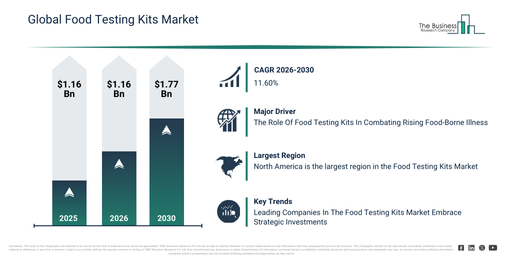
    The market for food testing kits has expanded rapidly, with its size rising from $3.33 billion in 2025 to $3.72 billion in 2026, reflecting a strong compound annual growth rate (CAGR) of 11.8%. This historical growth is largely fueled by stricter food safety regulations, increased consumption of packaged foods, growth in food processing infrastructure, a rising prevalence of foodborne illnesses, and greater availability of standardized testing products. Looking ahead, the market is set to continue its upward trend, reaching $5.76 billion by 2030, with a projected CAGR of 11.6%. This forecasted surge is supported by growing demands for real-time monitoring of food quality, the rising uptake of portable testing devices, expanded compliance testing for food exports, enhanced supply chain transparency, and the integration of digital food safety management platforms. Key trends expected to influence market growth include broader adoption of rapid testing kits, emphasis on onsite food safety assessments, increased use of PCR-based detection techniques, growth in allergen and GMO testing services, and a heightened focus on regulatory compliance.

    Download A Free Sample Report For Comprehensive Market Insights:

    https://www.thebusinessresearchcompany.com/sample.aspx?id=5491&type=smp

    Increasing Prevalence of Foodborne Illnesses Boosting Market Demand

    A significant factor propelling the food testing kits market is the rise in foodborne illnesses, which result from consuming contaminated food or beverages. Food testing kits play a crucial role in minimizing the risks associated with these illnesses by enabling early detection of contaminants. For instance, according to the European Food Safety Authority (EFSA) in December 2024, Italy reported 5,691 foodborne outbreak cases in 2023—marking a 1.2% rise compared to 2022. This upward trend highlights the urgent need for effective food safety measures, thereby driving demand for food testing kits.

    Key Segments Defining the Food Testing Kits Market

    This market is structured across several core segments to address diverse testing needs. By technology, the market includes PCR-based kits, immunoassay-based kits, and enzyme substrate-based kits. Target analytes cover pathogens, meat species, GMOs, allergens, mycotoxins, and other specific substances. Sample types span meat, poultry, seafood, dairy products, packaged food, fruits and vegetables, cereals, grains, pulses, nuts, seeds, spices, and additional samples. Subcategories further break down PCR-based kits into real-time, conventional, and multiplex options. Immunoassay-based kits encompass enzyme-linked immunosorbent assay (ELISA), lateral flow immunoassay, and radioimmunoassay kits. Enzyme substrate-based kits include colorimetric, fluorometric, and chemiluminescent assay types.

    Access The Complete Food Testing Kits Market Report:

    https://www.thebusinessresearchcompany.com/report/food-testing-kits-global-market-report

    Emerging Industry Trends Influencing Food Testing Kits Market

    Leading companies in this sector are heavily investing in innovations to make food testing kits more accessible for consumers, including options for home use. Investment in technology and product development is expanding the availability of user-friendly kits that enhance food safety monitoring. For example, in August 2023, Genetic Systems Diagnostics, a German biotechnology firm, introduced DNAllergen real-time PCR kits. These kits enable highly accurate detection of specific allergen DNA sequences in food products using molecular methods. The DNAllergen system automates processes such as loading and counting of Petrifilm plates, which are diagnostic tools designed to identify allergenic sequences that are often difficult to detect with traditional immunoassays. A major advantage of these kits lies in their superior sensitivity and specificity, allowing precise differentiation between closely related species like celery, mustard, and rapeseed. Each kit supports 50 reactions, offering a cost-efficient solution suitable for laboratories and food manufacturers alike.

    Top Companies Energizing Competition in the Food Testing Kits Industry

    The food testing kits market features several prominent players driving innovation and growth. Leading companies include Agilent Technologies Inc., Bio-Rad Laboratories Inc., bioMérieux SA, EnviroLogix Inc., Merck KGaA, Neogen Corporation, PerkinElmer Inc., QIAGEN N.V., Romer Labs Inc., Thermo Fisher Scientific Inc., Erber Group, DNA Diagnostic A/S, Elabscience Biotechnology Co. Ltd., Creative Diagnostics, AES Laboratories Pvt. Ltd., Luminex Corporation, Randox Laboratories Ltd., Hygiena LLC, Charm Sciences Inc., Bruker Corporation, FOSS A/S, and IDEXX Laboratories Inc. These organizations continue to focus on product innovation, strategic partnerships, and market expansion to meet rising global demand.

    Regional Market Breakdown and Growth Outlook

    In 2025, North America dominated the food testing kits market, holding the largest regional share. However, the Asia-Pacific region is anticipated to experience the fastest growth during the forecast period. The market overview includes detailed analysis of regions such as Asia-Pacific, South East Asia, Western Europe, Eastern Europe, North America, South America, the Middle East, and Africa, providing a comprehensive understanding of geographic opportunities and challenges shaping the global market landscape.

    Get in touch with us:

    The Business Research Company: https://www.thebusinessresearchcompany.com/

    Americas: +1 310-496-7795

    Asia: +44 7882 955267 & +91 8897263534

    Europe: +44 7882 955267

    Email us at: marketing@tbrc.info

    Follow us on:

    LinkedIn: https://in.linkedin.com/company/the-business-research-company

    YouTube: https://www.youtube.com/channel/UC24_fI0rV8cR5DxlCpgmyFQ

    Global Market Model: https://www.thebusinessresearchcompany.com/global-market-model
  • Food and Beverage Testing Kits Market Forecast Reveals Where Future Industry Value Will Be Created

    Food and Beverage Testing Kits Market Forecast Reveals Where Future Industry Value Will Be Created

    Delivering more actionable and strategically valuable research, The Business Research Company’s 2026 market reports feature market attractiveness analysis, total addressable market evaluation, company benchmarking matrices, interactive Excel dashboards, expanded supply chain intelligence, emerging startup coverage, and detailed product insights.

    The food and beverage testing kits industry has witnessed substantial development recently, driven by the increasing need to ensure food safety and quality in a highly complex global supply chain. As consumer awareness and regulatory demands rise, this market is set for significant expansion in the coming years. Let’s explore the current market size, growth drivers, key segments, emerging trends, major players, and regional dynamics shaping this sector.

    Market Size Progression and Future Outlook in the Food and Beverage Testing Kits Market

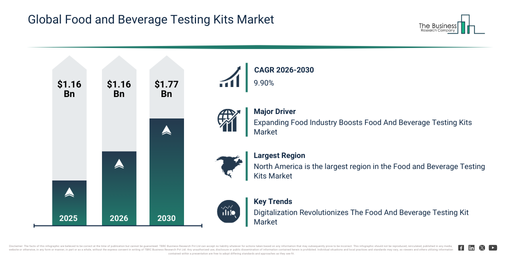
    The market for food and beverage testing kits has experienced strong growth in recent years. It is projected to increase from $23.29 billion in 2025 to $24.93 billion in 2026, growing at a compound annual growth rate (CAGR) of 7.0%. This progress during the historical period has been largely driven by the reliance on manual and traditional testing procedures, a limited supply of rapid testing kits, rising incidents of foodborne illnesses, stringent food safety regulations, and dependence on laboratory-based testing apparatus.

    Looking ahead, this market is expected to accelerate its expansion, reaching $36.39 billion by 2030 with an even higher CAGR of 9.9%. The anticipated growth is fueled by advances in portable testing devices, a surge in the adoption of rapid testing technologies, increasing demand for detection of GMOs and pesticides, growth in the processed food and beverage sectors, and integration of cloud-based data management and analytics platforms. Key trends shaping the future include a rising focus on rapid testing, enhanced detection of pathogens and contaminants, the use of portable and onsite testing instruments, expanded quality control in dairy, meat, and seafood industries, as well as growing consumption of sample collection kits and consumables.

    Download A Free Sample Report For Comprehensive Market Insights:

    https://www.thebusinessresearchcompany.com/sample.aspx?id=2495&type=smp

    Driving Forces Behind the Expansion of the Food and Beverage Testing Kits Market

    The expanding global food industry is a major catalyst behind the increasing demand for food and beverage testing kits. This industry encompasses a complex network responsible for delivering most of the food consumed worldwide, covering everything from agriculture and food production to packaging, distribution, retail, and catering services. Testing kits play a critical role in ensuring food safety by identifying chemical, microbiological, and physical contaminants.

    For instance, in June 2023, the Food and Agriculture Organization of the United Nations highlighted significant increases in global agricultural stocks and production, including a 1.7% rise in cereal stocks to a record 873 million tons and a 3.0% increase in coarse grain output for 2023 compared to the previous year. Furthermore, global sugar consumption grew for the third consecutive season in 2022–2023, increasing by 1.6 million tons or 0.9%. These statistics underscore the growth of the food sector, directly supporting the rising demand for testing kits to maintain food safety standards.

    Breakdown of Revenue-Generating Categories Within the Food and Beverage Testing Kits Market

    This market is segmented into various categories to cover diverse product types and applications:

    1) By Product Type: Consumables and Equipment

    2) By Technology: Traditional testing methods and Rapid testing technologies

    3) By Contaminant Type: Pathogens, GMOs, Pesticides, and Toxins

    4) By Application Area: Meat, Poultry, Seafood, Dairy, Processed Foods, and Fruits & Vegetables

    Further subcategories include consumables such as test strips, reagents and chemicals, and sample collection kits. Equipment types include portable testing devices, laboratory analyzers, spectrophotometers, and pH meters, addressing a broad spectrum of testing needs.

    Access The Complete Food and Beverage Testing Kits Market Report:

    https://www.thebusinessresearchcompany.com/report/food-and-beverage-testing-kits-global-market-report

    Emerging Innovations Transforming the Food and Beverage Testing Kits Sector

    Leading companies in this market are increasingly embracing digitalization to boost sustainability and gain competitive advantages. Digital technologies improve the efficiency, quality, and safety of food testing operations.

    For example, in June 2023, the Food Safety and Standards Authority of India (FSSAI) launched the Rapid Food Testing Kit (RAFT) portal, a digital platform designed to streamline the RAFT Scheme’s processes. This portal enables applicants to complete all procedures electronically — from applications to certificate issuance and renewal — promoting transparency and accountability while encouraging paperless operations. Such advancements signal a broader industry shift toward cutting-edge digital tools for food safety screening and surveillance.

    Key Industry Players and Their Strategic Market Positions in Food and Beverage Testing Kits

    The food and beverage testing kits market features numerous well-established companies, including Eurofins Scientific, Thermo Fisher Scientific Inc., Bio-Rad Laboratories Inc., Neogen Corporation, PerkinElmer Inc., Merck KGaA, Agilent Technologies Inc., Danaher Corporation, 3M Company, Qiagen N.V., Intertek Group plc, TÜV SÜD, ALS Limited, Romer Labs Division Holding GmbH, Charm Sciences Inc., Hygiena LLC, IDEXX Laboratories Inc., EnviroLogix Inc., Randox Laboratories Ltd., Biomerieux SA, R-Biopharm AG, Biocheck Inc., Ab Sciex LLC, Merck Millipore, SGS SA, Bureau Veritas SA, Covance Inc., and GeneDisc Technologies, Envirologix. These firms are pivotal in driving innovation and expanding market reach.

    Regional Market Leaders and Revenue Shares in the Food and Beverage Testing Kits Industry

    In 2025, North America held the largest market share in the food and beverage testing kits sector, asserting its dominance. Western Europe followed as the second-largest market region. Additional regions analyzed in the market include Asia-Pacific, South East Asia, Eastern Europe, South America, the Middle East, and Africa, providing a global perspective on market trends and growth opportunities.

    Get in touch with us:

    The Business Research Company: https://www.thebusinessresearchcompany.com/

    Americas: +1 310-496-7795

    Asia: +44 7882 955267 & +91 8897263534

    Europe: +44 7882 955267

    Email us at: marketing@tbrc.info

    Follow us on:

    LinkedIn: https://in.linkedin.com/company/the-business-research-company

    YouTube: https://www.youtube.com/channel/UC24_fI0rV8cR5DxlCpgmyFQ

    Global Market Model: https://www.thebusinessresearchcompany.com/global-market-model
  • Folding-Wheel Personal Mobility Robot Market Growth Through 2030 Creates New Strategic Opportunities

    Folding-Wheel Personal Mobility Robot Market Growth Through 2030 Creates New Strategic Opportunities

    Enhanced with market attractiveness analysis, total addressable market evaluation, company benchmarking matrices, interactive Excel dashboards, expanded supply chain intelligence, emerging startup coverage, and detailed product insights, The Business Research Company’s 2026 market reports deliver more actionable and strategically valuable research.

    The folding-wheel personal mobility robot market is rapidly evolving as a practical solution to modern mobility challenges. With innovations in technology and increasing demand for convenient, portable mobility aids, this market is set to experience substantial growth. Let’s explore the current market size, the factors driving expansion, key segments, emerging trends, major players, and regional dynamics shaping this industry.

    Market Growth Trajectory and Projections for the Folding-Wheel Personal Mobility Robot Market

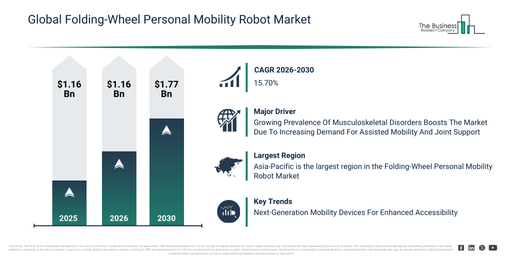
    The market for folding-wheel personal mobility robots has witnessed significant growth in recent years. It is projected to increase from $1.67 billion in 2025 to $1.93 billion in 2026, representing a notable CAGR of 16.0%. This earlier growth phase has been driven by factors such as the rise in urban commuting difficulties, early adoption of personal mobility robots, advancements in foldable wheel designs, increased awareness of mobility assistance devices, and the integration of electric mobility technologies. Looking ahead, the market is expected to reach $3.47 billion by 2030, maintaining a strong CAGR of 15.7%. Key contributors to this future growth include AI-powered route optimization, the expansion of smart city infrastructure, increased usage in elderly care and rehabilitation, improvements in battery longevity and capacity, and IoT connectivity. Important trends anticipated during this period encompass compact and foldable designs, sensor-driven navigation, AI-supported personal commuting, enhanced battery efficiency, and remote-controlled mobility features.

    Download A Free Sample Report For Comprehensive Market Insights:

    https://www.thebusinessresearchcompany.com/sample.aspx?id=29066&type=smp

    Rising Prevalence of Musculoskeletal Disorders Boosting Market Demand

    One of the main factors propelling the folding-wheel personal mobility robot market is the increasing occurrence of musculoskeletal disorders (MSDs). These conditions affect muscles, bones, joints, and connective tissues, leading to pain and restricted movement. Sedentary lifestyles contribute to muscle weakening and joint strain, thereby increasing the prevalence of MSDs. Folding-wheel personal mobility robots assist those affected by reducing joint stress and facilitating mobility, which allows users to move longer distances comfortably and safely. For instance, data from GOV.UK revealed that in 2023, 18.4% of individuals aged 16 and above in the UK reported living with long-term musculoskeletal conditions, up from 17.6% in 2022. This rising prevalence is a significant factor driving market growth.

    Growing Healthcare Spending Supporting Market Expansion

    Another key driver of the folding-wheel personal mobility robot market is the surge in healthcare expenditure worldwide. This spending encompasses investments in medical services, equipment, and advanced technologies designed to improve patient care. As hospitals and healthcare providers increase their budgets for innovative tools and digital solutions, the availability of folding-wheel personal mobility robots in both clinical and homecare settings expands. These robots enhance mobility, comfort, and independence for individuals with limited physical abilities. According to the Centers for Medicare & Medicaid Services, national health expenditures in the US grew by 7.5% in 2023, reaching $4.9 trillion, which equates to $14,570 per person and accounts for 17.6% of GDP. Medicare spending alone rose by 8.1% to $1,029.8 billion, representing 21% of total healthcare expenditure. This rising investment in healthcare technologies is a major factor encouraging market growth.

    Access The Complete Folding-Wheel Personal Mobility Robot Market Report:

    https://www.thebusinessresearchcompany.com/report/folding-wheel-personal-mobility-robot-global-market-report

    How the Folding-Wheel Personal Mobility Robot Market is Organized Across Key Segments

    The folding-wheel personal mobility robot market is segmented into multiple categories for comprehensive analysis:

    1) Product Type: This includes Automatic Folding-Wheel Personal Mobility Robots, Semi-Automatic Folding-Wheel Personal Mobility Robots, Self-Balancing Folding-Wheel Personal Mobility Robots, and Smart Robotic Folding Mobility Robots.

    2) Folding and Control Technology: Options such as Remote-Controlled Folding Robots, Sensor-Based Automatic Folding Robots, App-Controlled Folding Mobility Robots, and AI-Assisted Self-Balancing Folding Robots are covered.

    3) Wheel Configuration: The market includes Two-Wheel, Three-Wheel, and Four-Wheel Folding Mobility Robots.

    4) Application: Key uses include Personal Urban Mobility, Assisted Mobility for Elderly Users, Healthcare Mobility Assistance, Rehabilitation and Recovery Mobility, and Travel and Portable Mobility Assistance.

    5) End-User: Categories include Individual Users, Elderly and Mobility-Impaired Users, Hospitals and Clinics, Rehabilitation Centers, and Assisted Living and Care Facilities.

    Additional subsegments provide further detail, such as types of automatic folding robots including one-touch button and fully autonomous mechanisms, semi-automatic variants like motor-assisted and sensor-triggered folding systems, self-balancing robots with AI stabilization and dynamic terrain adaptation, and smart robotic mobility devices integrated with IoT and health monitoring.

    Innovations and Trends Shaping the Folding-Wheel Personal Mobility Robot Market

    Leading companies in this market are focusing on developing advanced technologies to improve maneuverability and user convenience. One such innovation is the omni traction drive system, which allows personal mobility robots to move smoothly in any direction—including sideways and diagonally—while maintaining stability across various surfaces. For example, in September 2025, Honda Motor Co. Ltd. released the UNI-ONE personal mobility device in Japan. This hands-free, self-balancing system enables users to control movement by shifting body weight, allowing them to keep their hands free and multitask naturally. Its adjustable height allows users to maintain eye level with standing individuals, promoting easier communication and social interaction. UNI-ONE is designed to reduce physical strain, expand mobility options for diverse users, and enhance productivity in workplaces, large venues, and everyday activities.

    Key Players Defining the Folding-Wheel Personal Mobility Robot Market

    The competitive landscape of the folding-wheel personal mobility robot market is shaped by several prominent companies, including WHILL Inc., Airwheel, Cheelcare, Robooter, XSTO Mobility, Mobius Mobility, ComfyGo, Golden Technologies, Pride Mobility Products, ZiiLIF, SUPERPI, ALBA Robot, Care for Mobility, Zuowei Technology, Mobot, Bbr Robot, Zinger Chair, KD Smart Chair, EzLite Cruiser, and Trident Mobility. These organizations are driving innovation and expanding market reach through diverse product offerings and technology advancements.

    Regional Presence and Market Leadership in Folding-Wheel Personal Mobility Robots

    In 2025, the Asia-Pacific region emerged as the largest market for folding-wheel personal mobility robots. The broader market analysis also covers regions such as South East Asia, Western Europe, Eastern Europe, North America, South America, the Middle East, and Africa. This geographical segmentation provides a comprehensive view of global market trends and growth opportunities across diverse economic and demographic landscapes.

    Get in touch with us:

    The Business Research Company: https://www.thebusinessresearchcompany.com/

    Americas: +1 310-496-7795

    Asia: +44 7882 955267 & +91 8897263534

    Europe: +44 7882 955267

    Email us at: marketing@tbrc.info

    Follow us on:

    LinkedIn: https://in.linkedin.com/company/the-business-research-company

    YouTube: https://www.youtube.com/channel/UC24_fI0rV8cR5DxlCpgmyFQ

    Global Market Model: https://www.thebusinessresearchcompany.com/global-market-model
  • Focused Ultrasound System Market Size Projected To Increase From $4.79 Billion To $7.12 Billion During The Forecast Period

    Focused Ultrasound System Market Size Projected To Increase From $4.79 Billion To $7.12 Billion During The Forecast Period

    Through market attractiveness analysis, total addressable market evaluation, company benchmarking matrices, interactive Excel dashboards, expanded supply chain intelligence, emerging startup coverage, and detailed product insights, The Business Research Company’s 2026 market reports provide more actionable and strategically valuable research.

    The focused ultrasound system market has been experiencing rapid expansion, driven by advancements in medical technology and a growing demand for less invasive treatment options. This sector is poised for substantial growth as new therapeutic applications emerge and the prevalence of chronic diseases increases globally. Let’s explore the current market valuation, key growth drivers, segmentation, industry trends, leading players, and regional opportunities shaping the future of focused ultrasound systems.

    Focused Ultrasound System Market Size and Growth Outlook

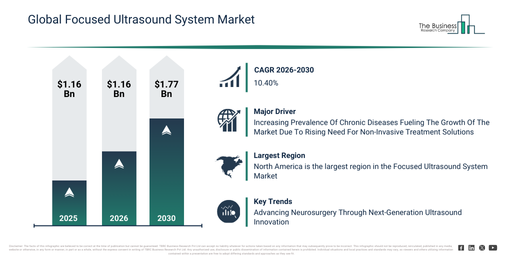
    The focused ultrasound system market is on an upward trajectory, expected to rise from $4.33 billion in 2025 to $4.79 billion in 2026, reflecting a compound annual growth rate (CAGR) of 10.7%. This growth during the historical period has been driven by improvements in ultrasound imaging technology, rising preference for non-invasive treatment methods, successful results in tumor ablation, clinical validation studies, and ongoing upgrades in hospital technologies. Looking ahead, the market is projected to reach $7.13 billion by 2030, growing at a CAGR of 10.4%. Factors fueling this future growth include an aging population, increasing therapeutic uses, investments in precision medicine, regulatory clearances, and a rise in neurological disorders. Key trends expected to influence the market involve expanding non-invasive procedures, broadening neurological applications, greater adoption in oncology therapies, advances in image-guided precision treatments, and a surge in clinical research activities.

    Download A Free Sample Report For Comprehensive Market Insights:

    https://www.thebusinessresearchcompany.com/sample.aspx?id=28224&type=smp

    The Impact of Chronic Diseases on Focused Ultrasound System Market Growth

    A significant factor propelling the focused ultrasound system market is the rising incidence of chronic diseases worldwide. These long-lasting health conditions, which often require ongoing management, are becoming more common due to sedentary lifestyles that contribute to obesity, diabetes, and cardiovascular issues. Focused ultrasound technology is valuable in managing these diseases by non-invasively targeting and destroying damaged tissue, reducing pain, and enhancing patient functionality without the need for surgery. To illustrate, in August 2024, Macmillan Cancer Support—a UK-based organization—reported that over 3 million people were living with cancer in the UK, with projections increasing to 3.5 million in 2025, 4 million by 2030, and reaching 5.3 million by 2040. This growing patient population underscores the expanding need for effective chronic disease treatments, supporting growth in this market.

    Focused Ultrasound System Market Segmentation and Key Revenue Drivers

    This market is categorized into several segments for a comprehensive analysis. By component, it includes devices, consumables, software, and accessories. Type segmentation covers thermal ablation systems, mechanical ablation systems, microbubble ultrasound systems, and high-intensity focused ultrasound (HIFU) systems. Technology classifications involve ultrasound imaging systems, non-linear ultrasound systems, thermal imaging systems, and diagnostic ultrasound systems. Application areas encompass clinical applications such as uterine fibroids, prostate cancer, essential tremor, dermatology, breast cancer, glaucoma, back pain, research applications, and others. End-users comprise hospitals, specialty clinics, ambulatory surgical centers, and additional healthcare providers. Further subcategories drill down into specifics, like MR-guided and ultrasound-guided focused ultrasound devices, various consumables such as coupling gels and treatment kits, software solutions for treatment planning and data management, and accessories including patient tables and cooling systems.

    Access The Complete Focused Ultrasound System Market Report:

    https://www.thebusinessresearchcompany.com/report/focused-ultrasound-system-global-market-report

    Innovative Trends Shaping the Focused Ultrasound System Market

    Leading market players are investing in developing sophisticated products to enhance treatment precision and patient outcomes. A notable innovation is the MR-guided focused ultrasound (MRgFUS) system, which combines high-intensity focused ultrasound with magnetic resonance imaging, enabling non-invasive, highly precise tissue treatment. For example, in January 2024, Israel-based Insightec launched Exablate Prime, the latest iteration of its MRgFUS system. This advanced device improves incisionless neurosurgery by offering an intuitive user interface, automated calculations, sub-millimeter targeting, real-time thermal monitoring, enhanced lesion shaping, and superior MRI visualization. Additional upgrades include strengthened cybersecurity, PACS connectivity, and an optional 3T head coil for higher-resolution imaging. These advancements position Exablate Prime as a breakthrough for treating movement disorders and expanding therapeutic possibilities in focused ultrasound applications.

    Top Companies Driving Competition in the Focused Ultrasound System Market

    Several prominent organizations are leading competition in this rapidly evolving market. These include Medtronic plc, InSightec Ltd., EDAP TMS S.A., Image Guided Therapy S.A., Chongqing Haifu Medical Technology Co. Ltd., Shanghai A&S Technology Development Co. Ltd., Alpinion Medical Systems Co Ltd, SonaCare Medical LLC, Profound Medical Inc., Mianyang Sonic Electronic Ltd., Theraclion SA, Focal One, Ultrasound Technologies Ltd., Sonic Concepts Inc., HistoSonics Inc., FUS Instruments Inc., Changjiangyuan Technology Development Co Ltd, NaviFUS Corp, Neurosona Co Ltd, EpiSonica Corp, Wuxi Haiying Medical Technology Co Ltd, Kona Medical Inc, EyeTechCare SA, IMGT Co Ltd, NanoFUS Ltd, Mirabilis Medical Inc, and AeonMD. These companies continuously push innovation and expand their product portfolios to maintain a competitive edge.

    Geographical Insights and Regions Leading Market Expansion

    In 2025, North America holds the largest share of the focused ultrasound system market, supported by strong healthcare infrastructure and adoption of advanced medical technologies. Meanwhile, the Asia-Pacific region is expected to experience the fastest growth during the forecast period, driven by increasing healthcare investments and rising demand for non-invasive therapies. The market analysis covers regions including Asia-Pacific, South East Asia, Western Europe, Eastern Europe, North America, South America, the Middle East, and Africa, providing a global perspective on demand and growth opportunities.

    Get in touch with us:

    The Business Research Company: https://www.thebusinessresearchcompany.com/

    Americas: +1 310-496-7795

    Asia: +44 7882 955267 & +91 8897263534

    Europe: +44 7882 955267

    Email us at: marketing@tbrc.info

    Follow us on:

    LinkedIn: https://in.linkedin.com/company/the-business-research-company

    YouTube: https://www.youtube.com/channel/UC24_fI0rV8cR5DxlCpgmyFQ

    Global Market Model: https://www.thebusinessresearchcompany.com/global-market-model
  • Fluoroscopy Equipment Market Growth Outlook Reveals A CAGR Of 6.1% And A Market Value Of $9.07 Billion By 2030

    Fluoroscopy Equipment Market Growth Outlook Reveals A CAGR Of 6.1% And A Market Value Of $9.07 Billion By 2030

    Delivering more actionable and strategically valuable research, The Business Research Company’s 2026 market reports feature market attractiveness analysis, total addressable market evaluation, company benchmarking matrices, interactive Excel dashboards, expanded supply chain intelligence, emerging startup coverage, and detailed product insights.

    The fluoroscopy equipment industry has experienced significant growth recently and is set for continued expansion in the coming years. Driven by advances in medical imaging and increasing demand for real-time diagnostic tools, this sector is attracting considerable attention from healthcare providers globally. Let’s explore the current market size, key growth drivers, prominent trends, leading companies, and regional dynamics shaping the future of fluoroscopy equipment.

    Fluoroscopy Equipment Market Size and Growth Outlook

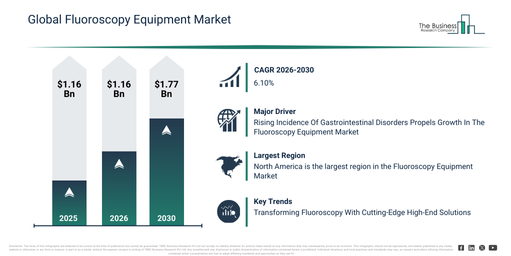
    The fluoroscopy equipment market has shown strong progress over recent years. From $6.79 billion in 2025, it is projected to rise to $7.15 billion by 2026, marking a compound annual growth rate (CAGR) of 5.4%. This expansion during the historic period is largely attributable to the increase in interventional procedures, growth in diagnostic imaging infrastructure, wider use of fluoroscopy in orthopedic surgeries, technological improvements in X-ray imaging, and more hospital investments in imaging devices. Looking ahead, the market is expected to reach $9.07 billion by 2030, growing at a CAGR of 6.1%. Future growth will likely be driven by rising demand for real-time imaging guidance, greater incorporation of AI-powered diagnostic tools, expansion of outpatient surgical centers, heightened attention to radiation safety standards, and the replacement of older imaging systems. Key trends include the adoption of digital fluoroscopy systems, increasing preference for mobile C-arm imaging, integration of AI-assisted image processing, growth of minimally invasive procedure guidance, and stronger emphasis on reducing radiation doses.

    Download A Free Sample Report For Comprehensive Market Insights:

    https://www.thebusinessresearchcompany.com/sample.aspx?id=12470&type=smp

    Rising Prevalence of Gastrointestinal Disorders Boosting Fluoroscopy Equipment Demand

    One of the main factors propelling the fluoroscopy equipment market is the growing incidence of gastrointestinal (GI) disorders. These disorders affect various parts of the GI tract and often require dynamic imaging to diagnose and manage effectively. Fluoroscopy’s ability to provide real-time X-ray visualization of internal organs and their movements makes it indispensable for assessing functions like swallowing, digestion, and bowel motility. For example, in January 2024, the American Cancer Society reported an expected 26,890 new cases of stomach cancer in the U.S. alone, with 16,160 among men and 10,730 among women. The same report projected about 10,880 deaths resulting from this cancer type in 2024. This rising burden of GI conditions is a critical driver for the expansion of the fluoroscopy equipment market.

    Fluoroscopy Equipment Market Segmentation Revealing Key Growth Areas

    This market is categorized into several segments for a detailed analysis:

    1) By Product Type: Fixed Fluoroscopy Equipment, Mobile C-Arms, and Fixed C-Arms

    2) By Application: Diagnostic, Surgical, and Other Uses

    3) By End-User: Hospitals, Diagnostic Centers, and Other End-Users

    Subdivisions include conventional and digital fluoroscopy systems under fixed equipment; mini and full-size mobile C-arms; and high-performance versus standard fixed C-arms. These various subcategories highlight the diversity of fluoroscopy products meeting different clinical needs and settings.

    Access The Complete Fluoroscopy Equipment Market Report:

    https://www.thebusinessresearchcompany.com/report/fluoroscopy-equipment-global-market-report

    Innovation Trends Advancing Fluoroscopy Equipment Market Expansion

    Industry players are focusing on developing cutting-edge solutions like motorized mobile C-arms to enhance their competitive positioning. Motorized mobile C-arms are versatile imaging systems mounted on wheeled platforms, offering real-time X-ray imaging with easy maneuverability during surgical and diagnostic procedures. For instance, in February 2024, Royal Philips from the Netherlands unveiled its Zenition 90 Motorized mobile C-arm. This device is distinguished by its exceptional speed, intuitive table-side controls, and user-friendly design, allowing surgeons greater flexibility and independence. It delivers high-quality imaging tailored for complex vascular procedures and incorporates automated workflows, a touch screen module for image management, and advanced software to boost clinical efficiency significantly.

    Key Industry Players Driving the Fluoroscopy Equipment Market

    Several globally recognized companies dominate the fluoroscopy equipment landscape, including Siemens Healthineers AG, Koninklijke Philips N.V., GE HealthCare Technologies Inc., Canon Medical Systems Corporation, Fujifilm Holdings Corporation, Shimadzu Corporation, Hitachi Medical Corporation, Mindray Medical International Limited, Hologic Inc., Ziehm Imaging GmbH, Carestream Health Inc., Agfa-Gevaert N.V., Allengers Medical Systems Limited, Orthoscan Inc., Toshiba Medical Systems Corporation, Analogic Corporation, Medonica Co. Ltd., Perlove Medical Equipment Co. Ltd., Villa Sistemi Medicali S.p.A., and MS Westfalia GmbH. These organizations continue to invest in research and development to deliver innovative fluoroscopy solutions.

    Regional Market Overview Highlighting Leadership and Growth Prospects

    In 2025, North America held the largest share of the fluoroscopy equipment market, reflecting its advanced healthcare infrastructure and high adoption of medical technologies. Meanwhile, the Asia-Pacific region is projected to register the fastest growth rate during the forecast period, driven by expanding healthcare facilities, increasing awareness, and rising demand for advanced diagnostic tools. The report covers key geographical regions including Asia-Pacific, South East Asia, Western Europe, Eastern Europe, North America, South America, the Middle East, and Africa, providing a comprehensive perspective on global market trends.

    Get in touch with us:

    The Business Research Company: https://www.thebusinessresearchcompany.com/

    Americas: +1 310-496-7795

    Asia: +44 7882 955267 & +91 8897263534

    Europe: +44 7882 955267

    Email us at: marketing@tbrc.info

    Follow us on:

    LinkedIn: https://in.linkedin.com/company/the-business-research-company

    YouTube: https://www.youtube.com/channel/UC24_fI0rV8cR5DxlCpgmyFQ

    Global Market Model: https://www.thebusinessresearchcompany.com/global-market-model
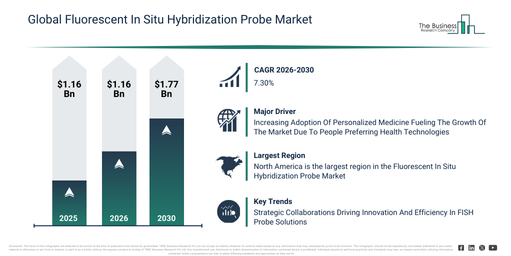
  • Fluorescent In Situ Hybridization Probe Market Forecast Highlights Expansion From $1.8 Billion To $2.39 Billion Through 2030

    Fluorescent In Situ Hybridization Probe Market Forecast Highlights Expansion From $1.8 Billion To $2.39 Billion Through 2030

    Enhanced with market attractiveness analysis, total addressable market evaluation, company benchmarking matrices, interactive Excel dashboards, expanded supply chain intelligence, emerging startup coverage, and detailed product insights, The Business Research Company’s 2026 market reports deliver more actionable and strategically valuable research.

    The fluorescent in situ hybridization (FISH) probe market has experienced significant advancement recently, supported by technological progress and increasing demand in genetic diagnostics. As research and clinical applications expand, this market is set for continued growth, driven by innovations and broader adoption in personalized medicine. Below, we explore the market size, key growth factors, competitive landscape, and regional dynamics shaping this evolving industry.

    Current Market Size and Growth Projections for the Fluorescent In Situ Hybridization Probe Market

    The fluorescent in situ hybridization probe market has demonstrated strong growth over recent years. It is projected to rise from $1.68 billion in 2025 to $1.8 billion in 2026, growing at a compound annual growth rate (CAGR) of 7.1%. This increase has historically been driven by limited availability of fluorescent probes, ongoing reliance on traditional single-color FISH, growing awareness of genetic diagnostic tools, increased funding for molecular biology research, and widespread adoption of fluorescence microscopy techniques. Looking ahead, the market is expected to reach $2.39 billion by 2030, with a CAGR of 7.3%. This anticipated expansion is fueled by advancements in multiplex and combinatorial barcoded probes, wider use in personalized medicine, growth in pharmaceutical and biotech research, heightened regulatory compliance, and integration with AI-powered image analysis and data processing technologies. Key trends in the forecast period include a growing clinical use of FISH probes, expansion of multiplex and high-throughput screening methods, increasing applications in genetic and agricultural research, incorporation of sophisticated imaging tools, and emphasis on custom probe development tailored for personalized therapies.

    Download A Free Sample Report For Comprehensive Market Insights:

    https://www.thebusinessresearchcompany.com/sample.aspx?id=27289&type=smp

    Factors Supporting Growth in the Fluorescent In Situ Hybridization Probe Market

    The rising acceptance of personalized medicine is a major driver behind the fluorescent in situ hybridization probe market’s expansion. Personalized medicine tailors treatments and healthcare strategies based on an individual’s genetic makeup and lifestyle, offering more precise and effective solutions. Patients and clinicians increasingly prefer health technologies that provide real-time monitoring and individualized treatment plans. FISH probes play a critical role by accurately detecting genetic abnormalities at the chromosomal level, which helps inform customized therapeutic decisions. For example, in February 2024, the Personalized Medicine Coalition reported that the FDA approved 16 new personalized therapies for rare diseases in 2023, up from six in 2022. This growth highlights the increasing relevance of personalized medicine in healthcare and its significant contribution to driving demand for fluorescent in situ hybridization probes.

    Additional Market Drivers Shaping FISH Probe Demand

    Beyond personalized medicine, the expansion of pharmaceutical and biotechnology research continues to spur demand for FISH probes. The growing investment in molecular diagnostics and genetic research fuels the need for advanced probe technologies. Additionally, regulatory authorities are placing more emphasis on compliance and standardization in diagnostic procedures, encouraging the adoption of reliable and reproducible FISH probe technologies. Integration with AI-enabled image analysis and data analytics further enhances probe functionality and usability, thereby supporting broader market growth.

    Access The Complete Fluorescent In Situ Hybridization Probe Market Report:

    https://www.thebusinessresearchcompany.com/report/fluorescent-in-situ-hybridization-probe-global-market-report

    Detailed Market Segmentation and Strategic Opportunities in the Fluorescent In Situ Hybridization Probe Market

    This market is segmented based on various criteria:

    1) By Type: Deoxyribonucleic Acid (DNA) Probes, Ribonucleic Acid (RNA) Probes, and Multiplex Probes

    2) By Target: Genes, Chromosomes, and Other Targets

    3) By Technology: Single-Color Fluorescence In Situ Hybridization (FISH), Multiplex Fluorescence In Situ Hybridization (FISH), Quantitative Fluorescence In Situ Hybridization (FISH), and Other Technologies

    4) By Application: Clinical Diagnostics, Research Applications, Agricultural Biotechnology, Pharmaceutical Research, and Genetic Research

    5) By End User: Hospitals and Clinics, Research Laboratories, Pharmaceutical Companies, and Biotechnology Companies

    Within these categories, further subsegments include:

    – DNA Probes such as Centromeric, Telomeric, Whole Chromosome Paint, Locus-Specific Identifier (LSI), Comparative Genomic Hybridization (CGH), and Gene Fusion Probes

    – RNA Probes including mRNA, Long Non-Coding RNA (lncRNA), MicroRNA (miRNA), Single-Molecule RNA FISH (smFISH), Circular RNA (circRNA), and Multiplexed Error-Robust FISH (MERFISH) Probes

    – Multiplex Probes such as Multicolor DNA FISH, Multigene Expression Analysis, High-Throughput Screening, Multiplex smFISH, Combinatorial Barcoded Probes, and Simultaneous DNA/RNA Detection Probes

    This segmentation allows for targeted innovation and strategic product development to meet specific research and clinical needs.

    Strategic Collaborations Driving Innovation and Market Competitiveness

    Leading companies in the fluorescent in situ hybridization probe market are pursuing strategic partnerships to access novel technologies, expand market reach, or combine expertise for mutual advantage. These collaborations help overcome challenges and accelerate product innovation. For instance, in April 2025, Empire Genomics, a molecular diagnostics firm based in the US, partnered with BioDot, a provider of precision dispensing automation, to introduce the BDot Probe Line. This product line offers FISH probes pre-optimized for automated platforms, simplifying workflows in clinical cytogenetics and molecular pathology labs. These probes are designed for immediate use without manual calibration, ensuring compatibility with the BioDot CellWriter S system and reducing technician intervention. The initial set of BDot Probe Panels supports analysis of a broad spectrum of hematologic cancers, including multiple myeloma (MM), myelodysplastic syndromes (MDS), chronic myelogenous leukemia (CML), acute myeloid leukemia (AML), acute lymphoblastic leukemia (ALL), and other common blood disorders.

    Key Industry Players Shaping the Fluorescent In Situ Hybridization Probe Market

    The competitive landscape features prominent companies such as Thermo Fisher Scientific Inc., Abbott Laboratories, Oxford Gene Technology IP Limited, Sigma-Aldrich Co. LLC, Agilent Technologies Inc., Bio-Rad Laboratories Inc., QIAGEN N.V., Leica Biosystems Nussloch GmbH, Biocare Medical LLC, Enzo Biochem Inc., LGC Biosearch Technologies, ZytoVision GmbH, Creative Biolabs Inc., Empire Genomics LLC, MetaSystems GmbH, Abnova Corporation, Mirus Bio LLC, Genemed Biotechnologies Inc., Molecular Instruments Inc., and Cytocell Technologies Limited. These players drive innovation and maintain the market’s competitive edge through ongoing research and development efforts.

    Regional Market Distribution and Growth Forecasts

    In 2025, North America held the largest share of the fluorescent in situ hybridization probe market, benefiting from well-established healthcare infrastructure and extensive research activities. Meanwhile, the Asia-Pacific region is expected to register the fastest growth during the forecast period, driven by expanding healthcare access, increasing investments in life sciences research, and rising adoption of advanced diagnostic tools. Other regions analyzed in the market report include South East Asia, Western Europe, Eastern Europe, South America, the Middle East, and Africa, providing a comprehensive global perspective on market trajectories.

    Get in touch with us:

    The Business Research Company: https://www.thebusinessresearchcompany.com/

    Americas: +1 310-496-7795

    Asia: +44 7882 955267 & +91 8897263534

    Europe: +44 7882 955267

    Email us at: marketing@tbrc.info

    Follow us on:

    LinkedIn: https://in.linkedin.com/company/the-business-research-company

    YouTube: https://www.youtube.com/channel/UC24_fI0rV8cR5DxlCpgmyFQ

    Global Market Model: https://www.thebusinessresearchcompany.com/global-market-model

  • Fluid-Cooled Radiofrequency Ablation Market Expected To Reach $4.33 Billion By 2030 As Growth Accelerates At 9.1% CAGR

    Fluid-Cooled Radiofrequency Ablation Market Expected To Reach $4.33 Billion By 2030 As Growth Accelerates At 9.1% CAGR

    Through market attractiveness analysis, total addressable market evaluation, company benchmarking matrices, interactive Excel dashboards, expanded supply chain intelligence, emerging startup coverage, and detailed product insights, The Business Research Company’s 2026 market reports provide more actionable and strategically valuable research.

    The fluid-cooled radiofrequency ablation market is demonstrating robust growth, driven by advancements in technology and increasing demand for minimally invasive treatment options. As healthcare providers seek more effective pain management and cancer treatment solutions, this market is positioned for significant expansion over the coming years. Let’s explore the current market size, key growth factors, main players, and trends shaping the future of this sector.

    Steady Growth Outlook for the Fluid-Cooled Radiofrequency Ablation Market

    The fluid-cooled radiofrequency ablation market has shown considerable growth in recent years. It is projected to increase from $2.79 billion in 2025 to $3.06 billion in 2026, reflecting a compound annual growth rate (CAGR) of 9.4%. This rise during the historical period is largely due to limited availability of internally cooled RF ablation devices, continued reliance on traditional RF ablation systems, a growing number of patients suffering from cardiac arrhythmias and tumors, expanding hospital and surgical center infrastructure, and greater adoption of standard accessory products.

    Download A Free Sample Report For Comprehensive Market Insights:

    https://www.thebusinessresearchcompany.com/sample.aspx?id=27288&type=smp

    Looking ahead, the market is expected to maintain strong momentum, reaching $4.34 billion by 2030 at a CAGR of 9.1%. Factors driving growth in this forecast period include innovations in fluid-cooling technology, increased investments in minimally invasive procedures, broader use of integrated imaging and real-time feedback technologies, expansion of oncology and cardiology interventions, and increasing awareness and adoption of these procedures in ambulatory surgical centers and specialty clinics. Key trends involve rising use of fluid-cooled RF ablation for cardiology and oncology, development of both monopolar and bipolar RF ablation devices, incorporation of real-time monitoring systems for precise tissue targeting, growing use of accessory products like catheters and electrodes, and demand for closed-loop and disposable cooling systems.

    Rising Prevalence of Chronic Diseases Boosting Fluid-Cooled Radiofrequency Ablation Market

    One of the main factors propelling the fluid-cooled radiofrequency ablation market is the increasing incidence of chronic diseases worldwide. Chronic conditions tend to last a year or longer, requiring ongoing medical care and often restricting daily activities. The aging population is a significant contributor to this trend, as older adults are more susceptible to long-term health issues. Fluid-cooled RF ablation offers a targeted solution by delivering controlled heat to nerve tissues, blocking pain signals and providing lasting relief for ailments such as chronic back pain and arthritis.

    Access The Complete Fluid-Cooled Radiofrequency Ablation Market Report:

    https://www.thebusinessresearchcompany.com/report/fluid-cooled-radiofrequency-ablation-global-market-report

    For instance, in July 2024, the Australian Institute of Health and Welfare reported that chronic diseases caused an estimated 4.4 million years of healthy life lost in Australia during 2023, making up 85% of the total disease burden. This data highlights the growing need for effective pain management solutions, which is driving demand for fluid-cooled radiofrequency ablation systems.

    Expanding Geriatric Population Increasing Demand for Minimally Invasive Pain Relief

    The growth of the elderly population—those aged 65 and above—is another significant driver for the fluid-cooled radiofrequency ablation market. Advances in healthcare have extended life expectancy, resulting in a larger proportion of older adults who often require specialized medical care due to age-related conditions. These individuals benefit from minimally invasive treatments that reduce tissue damage and speed recovery, improving their quality of life and mobility.

    According to a January 2024 report by the World Bank, 17.4% of the U.S. population in 2023 were aged 65 or older. This demographic shift is increasing demand for effective and less invasive pain relief options like fluid-cooled radiofrequency ablation, which is well-suited to address the unique healthcare needs of the geriatric population.

    Detailed Segmentation of the Fluid-Cooled Radiofrequency Ablation Market

    This market is categorized into several key segments to better understand its landscape and growth potential:

    – By Product Type: Radiofrequency Ablation Devices, Accessory Products, Fluid-Cooling Systems

    – By Technology: Integrated Imaging Technology, Real-Time Feedback Systems

    – By Target Tissue: Solid Tumors, Soft Tissue Tumors, Bone Tumors

    – By Application: Cardiology, Oncology, Pain Management, Urology, Other Applications

    – By End-User: Hospitals, Ambulatory Surgical Centers, Specialty Clinics, Other End Users

    Subsegments include:

    – Radiofrequency Ablation Devices: Monopolar, Bipolar, and Internally Cooled Devices

    – Accessory Products: Catheters, Electrodes, Introducers, and Sheaths

    – Fluid-Cooling Systems: Peristaltic Pump Systems, Closed-Loop Cooling Systems, Disposable Tubing Sets

    Innovations and Trends Driving Market Expansion

    Leading players in the fluid-cooled radiofrequency ablation space are focused on improving device efficiency and safety. They are developing internally cooled RF ablation systems that circulate fluid within the electrode to prevent overheating, enabling deeper and more precise tissue ablation while minimizing damage to surrounding healthy areas.

    For example, in March 2024, Medtronic Plc gained FDA 510(k) clearance for the OsteoCool 2.0 bone tumor ablation system. This device offers enhanced precision and efficiency by allowing the simultaneous use of four internally cooled probes, capable of treating multiple vertebral bodies or creating larger ablation zones. Delivering 20 watts per channel, it is currently the most powerful bone tumor ablation system available. Its internal water-cooling technology ensures predictable ablation zones and reduces the risk of overheating adjacent tissues, making treatments safer and more effective. The system is designed to provide pain relief and palliative care for malignant bone metastases and benign tumors such as osteoid osteoma, improving patient outcomes through minimally invasive techniques.

    Major Players Leading the Fluid-Cooled Radiofrequency Ablation Market

    Some of the top companies operating in this market include Johnson & Johnson, Abbott Laboratories, Medtronic plc, Stryker Corporation, Boston Scientific Corporation, Olympus Corporation, CONMED Corporation, Lepu Medical Technology, MicroPort Scientific Corporation, Avanos Medical, Japan Lifeline Co. Ltd., AtriCure Inc, AngioDynamics, SyMap Medical, CardioFocus Inc, Imricor Medical Systems Inc., Stereotaxis Inc., Autonomix Medical, Innoblative Designs Inc, and livetec Ingenieurbüro GmbH.

    Regional Market Dynamics Highlight North America’s Lead

    In 2025, North America held the largest share of the fluid-cooled radiofrequency ablation market. However, the Asia-Pacific region is expected to witness the fastest growth throughout the forecast period. The market analysis covers major regions including Asia-Pacific, South East Asia, Western Europe, Eastern Europe, North America, South America, the Middle East, and Africa, providing a comprehensive view of global market trends and opportunities.

    Get in touch with us:

    The Business Research Company: https://www.thebusinessresearchcompany.com/

    Americas: +1 310-496-7795

    Asia: +44 7882 955267 & +91 8897263534

    Europe: +44 7882 955267

    Email us at: marketing@tbrc.info

    Follow us on:

    LinkedIn: https://in.linkedin.com/company/the-business-research-company

    YouTube: https://www.youtube.com/channel/UC24_fI0rV8cR5DxlCpgmyFQ

    Global Market Model: https://www.thebusinessresearchcompany.com/global-market-model