Category: Medical Equipment

  • Fetal Monitoring Market Forecast Reveals Where Future Industry Value Will Be Created

    Fetal Monitoring Market Forecast Reveals Where Future Industry Value Will Be Created

    Enhanced with market attractiveness analysis, total addressable market evaluation, company benchmarking matrices, interactive Excel dashboards, expanded supply chain intelligence, emerging startup coverage, and detailed product insights, The Business Research Company’s 2026 market reports deliver more actionable and strategically valuable research.

    The fetal monitoring market has witnessed significant growth recently, driven by several advancements in healthcare and technology. As prenatal care continues to improve and more hospitals adopt advanced monitoring systems, this sector is positioned for remarkable expansion in the coming years. Let’s explore the current market size, key growth drivers, segmentation, competitive landscape, and regional outlook in more detail.

    Strong Growth Prospects for the Fetal Monitoring Market Size

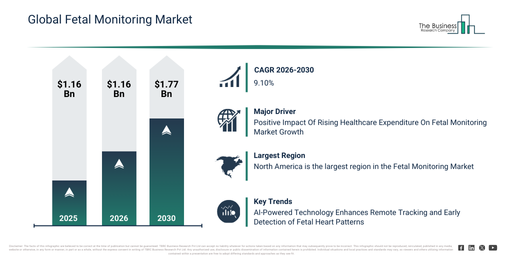
    The fetal monitoring market has demonstrated steady growth and is projected to continue expanding rapidly. From $4.05 billion in 2025, it is expected to reach $4.4 billion in 2026, growing at a compound annual growth rate (CAGR) of 8.7%. Looking further ahead, the market is forecasted to grow to $6.24 billion by 2030, with an even higher CAGR of 9.1%. This momentum reflects increasing hospital birth rates, expanded obstetric care infrastructure, wider use of electronic fetal monitoring, enhancements in ultrasound technology, and greater awareness around prenatal care standards. Demand for remote and digital maternity care, telehealth-enabled monitoring, early risk detection, and investments in maternal healthcare innovations will also contribute significantly to this growth phase.

    Download A Free Sample Report For Comprehensive Market Insights:

    https://www.thebusinessresearchcompany.com/sample.aspx?id=10056&type=smp

    Rising Healthcare Spending as a Crucial Driver for the Fetal Monitoring Market

    A key factor propelling the fetal monitoring market is the continuous rise in healthcare expenditure worldwide. This spending includes the financial and non-financial resources invested by governments, organizations, and individuals in healthcare products and services. Increased healthcare budgets facilitate technology upgrades, better accessibility, advanced research and development, and overall improvements in maternal and fetal health care quality. For example, in June 2025, data from the U.S. Centers for Medicare & Medicaid Services revealed that national health expenditures grew by 7.5% in 2023, reaching a total of $4.9 trillion, or $14,570 per capita, accounting for 17.6% of the U.S. GDP. Medicare spending increased by 8.1%, totaling $1,029.8 billion and representing 21% of the total health expenditure. Such financial growth supports the ongoing expansion within the fetal monitoring market.

    Additional Factors Supporting Market Expansion

    Beyond expenditure, the fetal monitoring market benefits from technological advancements and the shift toward personalized, remote, and continuous fetal care. Increasing adoption of wireless fetal monitoring devices, continuous intrapartum monitoring systems, AI-based risk assessment tools, and portable home-monitoring solutions reflect ongoing innovation. These developments prioritize maternal-fetal safety and convenience, driving broader acceptance and use.

    Access The Complete Fetal Monitoring Market Report:

    https://www.thebusinessresearchcompany.com/report/fetal-monitoring-global-market-report

    Detailed Segmentation of the Fetal Monitoring Market

    The fetal monitoring market is categorized based on several key factors, providing insight into growth areas and product preferences:

    1) Product Types: Ultrasound Devices, Electronic Maternal or Fetal Monitors, Uterine Contraction Monitors, Fetal Electrodes, Fetal Doppler Devices, and Telemetry Devices

    2) Methods: Invasive and Non-Invasive

    3) Applications: Intrapartum Fetal Monitoring and Antepartum Fetal Monitoring

    4) End-Users: Diagnostic Laboratories, Hospitals and Clinics, and Other Users

    Further breakdown includes:

    – Ultrasound Devices: 2D Ultrasound, 3D or 4D Ultrasound, Doppler Ultrasound

    – Electronic Maternal or Fetal Monitors: Continuous Fetal Monitoring Systems, Wireless Fetal Monitoring Systems, Maternal Vital Signs Monitors

    – Uterine Contraction Monitors: External Monitors and Internal Uterine Pressure Catheters

    – Fetal Electrodes: Scalp and Surface Electrodes

    – Fetal Doppler Devices: Handheld and Tabletop Dopplers

    – Telemetry Devices: Wireless Telemetry and Portable Monitoring Systems

    Innovations Shaping Competitive Trends in the Fetal Monitoring Market

    Leading companies in the fetal monitoring sector are pioneering innovative technologies such as connected baby monitors, which allow real-time tracking of a baby’s vital signs and seamless remote monitoring via smartphones or cloud platforms. For example, in February 2025, US-based Perigean Technologies LLC received FDA clearance for Patterns 3.0. This system expands the use of its AI-driven fetal heart rate pattern recognition technology to pregnancies from 32 weeks onward, utilizing advanced neural networks like Long Short-Term Memory (LSTM) models. Patterns 3.0 assists clinicians by detecting and classifying fetal heart rate patterns—such as accelerations, decelerations, baseline levels, and uterine contractions—providing early alerts for abnormal conditions. Designed to support both antepartum and intrapartum monitoring, this tool improves clinical workflow and decision-making, enabling timely interventions in high-risk pregnancies.

    Prominent Players in the Fetal Monitoring Market

    The fetal monitoring market features several key companies that hold significant market presence, including Koninklijke Philips N.V., Medtronic plc, Drägerwerk AG & Co. KGaA, Mindray Medical International Limited, Masimo Corporation, Neoventa Medical AB, EDAN Instruments Inc., Shenzhen Comen Medical Instruments Co. Ltd., Contec Medical Systems Co. Ltd., Bionet Co. Ltd., Atom Medical Corporation, Bistos Inc., OBMedical Company, PeriGen Inc., Sunray Medical Apparatus Co. Ltd., Mediana Co. Ltd., Nonin Medical Inc., Analogic Corporation, Dixion Vertrieb medizinischer Geräte GmbH, and Fisher & Paykel Healthcare Corporation Limited. These companies continue to drive innovation and market expansion through new product launches and strategic initiatives.

    Geographical Insights Highlighting Market Leaders and Growth Opportunities

    In 2025, North America emerged as the largest regional market for fetal monitoring, supported by advanced healthcare infrastructure and high healthcare expenditure. Meanwhile, the Asia-Pacific region is expected to experience the fastest growth during the forecast period, fueled by improving healthcare access, increasing birth rates, and rising investments in maternal care technologies. The market report covers a broad geographic scope including Asia-Pacific, South East Asia, Western Europe, Eastern Europe, North America, South America, Middle East, and Africa, offering a comprehensive understanding of regional trends and opportunities.

    Get in touch with us:

    The Business Research Company: https://www.thebusinessresearchcompany.com/

    Americas: +1 310-496-7795

    Asia: +44 7882 955267 & +91 8897263534

    Europe: +44 7882 955267

    Email us at: marketing@tbrc.info

    Follow us on:

    LinkedIn: https://in.linkedin.com/company/the-business-research-company

    YouTube: https://www.youtube.com/channel/UC24_fI0rV8cR5DxlCpgmyFQ

    Global Market Model: https://www.thebusinessresearchcompany.com/global-market-model
  • Fetal And Neonatal Monitoring Devices Market Growth Through 2030 Creates New Strategic Opportunities

    Fetal And Neonatal Monitoring Devices Market Growth Through 2030 Creates New Strategic Opportunities

    Through market attractiveness analysis, total addressable market evaluation, company benchmarking matrices, interactive Excel dashboards, expanded supply chain intelligence, emerging startup coverage, and detailed product insights, The Business Research Company’s 2026 market reports provide more actionable and strategically valuable research.

    The fetal and neonatal monitoring devices market has witnessed significant growth recently, driven by advancements in healthcare and increasing attention to maternal and infant health. As medical technology evolves, this sector continues to expand, supporting improved outcomes for newborns and their mothers. Below, we explore the market size, key growth factors, leading companies, and emerging trends shaping this important healthcare segment.

    Fetal and Neonatal Monitoring Devices Market Size and Forecast

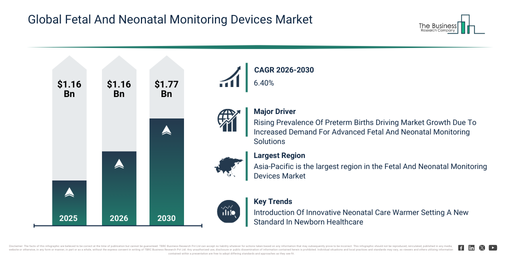
    The size of the fetal and neonatal monitoring devices market has experienced robust growth and is projected to continue on this upward trajectory. Starting at $9.92 billion in 2025, the market is expected to reach $10.6 billion by 2026, expanding at a compound annual growth rate (CAGR) of 6.8%. This growth is attributed to higher rates of institutional childbirth, expansion of neonatal intensive care units, increasing emphasis on maternal and infant health, widespread adoption of electronic fetal monitoring, and the availability of advanced neonatal care equipment. Looking further ahead, the market is forecast to grow to $13.57 billion by 2030, with a CAGR of 6.4%. This future growth is driven by investments in smart maternity care solutions, growing demand for remote patient monitoring, enhancements in neonatal care infrastructure particularly in emerging markets, an increased focus on early detection of complications, and the rising use of AI-assisted monitoring technologies. Key trends in the coming years will include a greater use of continuous fetal monitoring systems, advanced neonatal vital sign monitors, wireless monitoring integration, portable monitoring devices, and a focus on early risk identification.

    Download A Free Sample Report For Comprehensive Market Insights:

    https://www.thebusinessresearchcompany.com/sample.aspx?id=2525&type=smp

    Rising Preterm Births as a Primary Growth Driver

    One of the main factors fueling market expansion is the increasing incidence of preterm births worldwide. Preterm birth, defined as delivery before 37 weeks of gestation, often results in complications such as developmental delays, sensory impairments, cerebral palsy, and other health challenges. This rise is influenced by growing medical interventions for maternal or fetal complications like preeclampsia or intrauterine growth restrictions that necessitate early labor induction or cesarean sections. Fetal and neonatal monitoring devices play a critical role in managing these high-risk births by continuously tracking vital signs and health parameters, allowing healthcare providers to detect complications promptly and intervene effectively, thereby improving survival and long-term outcomes.

    Statistical Evidence Supporting Market Growth

    For instance, data from the UK Department of Health and Social Care showed that in 2023, 8.1 percent of all births in England were preterm between 24 and 36 weeks of gestation. The global average for preterm births hovers around 10 percent. This high prevalence of premature births and low birth weight infants underscores the increasing need for reliable monitoring devices, directly contributing to the growth of the fetal and neonatal monitoring market.

    Access The Complete Fetal And Neonatal Monitoring Devices Market Report:

    https://www.thebusinessresearchcompany.com/report/fetal-and-neonatal-monitoring-devices-global-market-report

    Segmented Structure of the Fetal and Neonatal Monitoring Devices Market

    This market is broadly segmented to cover a diverse range of equipment and user categories:

    1) Equipment type includes fetal and neonatal devices.

    2) Portability options range from portable to non-portable equipment.

    3) Fetal care devices break down into ultrasound devices, fetal dopplers, fetal monitors, and fetal pulse oximeters.

    4) Neonatal care equipment comprises infant warmers, incubators, convertible warmers and incubators, phototherapy equipment, respiratory devices, and neonatal monitoring systems.

    5) End users consist of hospitals, diagnostic centers, and pediatric clinics.

    Further subdivisions include specialized fetal monitoring tools such as fetal ultrasound devices, fetal electrodes, cardiotocography (CTG) machines, and fetal heart rate monitors. Neonatal monitoring encompasses incubators, pulse oximeters, ventilators, ECG machines, respiratory monitoring devices, and temperature management systems.

    Innovations and Trends Shaping Market Demand

    Leading companies in this market are focusing on developing cutting-edge neonatal care devices to strengthen their competitive position. For example, neonatal care warmers are designed to create a controlled, warm environment for premature or medically fragile infants. In June 2023, Germany-based Dräger introduced the Neonatal Care Warmer Babyroo TN300, a device aimed at improving newborn care in delivery rooms and neonatal intensive care units (NICUs). This open-care warmer features configurable designs, advanced thermoregulation, and a pre-warm function to ensure the mattress is ready at the ideal temperature, highlighting a strong commitment to infant safety and comfort.

    Prominent Players Leading the Fetal and Neonatal Monitoring Devices Sector

    Key companies shaping the competitive landscape include GE Healthcare, Fisher & Paykel Healthcare Limited, Philips Healthcare, Atom Medical Corporation, Natus Medical Incorporated, Phoenix Medical Systems (P) Ltd., Becton Dickinson and Company, Masimo Corporation, Drägerwerk AG & Co. KGAA, CareFusion Corporation, Nonin Medical, Koninklijke Philips N.V., Welch Allyn Inc., Spacelabs Healthcare, Smiths Medical Inc., Getinge AB, FUJIFILM SonoSite Inc., Siemens Healthcare GMBH, Utah Medical Products Inc., Neoventa Medical AB, International Biomedical Ltd., Medtronic Plc, Hill-Rom, Shenzhen Mindray Bio-Medical Electronics Co. Ltd., CooperSurgical Inc., Huntleigh Healthcare Limited, Nihon Kohden Corporation, Arjohuntleigh Healthcare India Private Limited, Advanced Instrumentations, Dixion Vertrieb medizinischer Geräte GmbH, Mediana Co. Ltd., and NCC Medical Co. Ltd.

    Regional Market Insights and Growth Opportunities

    In 2025, Asia-Pacific emerged as the leading region for fetal and neonatal monitoring devices, holding the largest market share globally. North America was the second-largest market in this sector. The market report covers key geographic areas including Asia-Pacific, South East Asia, Western Europe, Eastern Europe, North America, South America, the Middle East, and Africa, providing a comprehensive perspective on regional trends and growth prospects.

    Get in touch with us:

    The Business Research Company: https://www.thebusinessresearchcompany.com/

    Americas: +1 310-496-7795

    Asia: +44 7882 955267 & +91 8897263534

    Europe: +44 7882 955267

    Email us at: marketing@tbrc.info

    Follow us on:

    LinkedIn: https://in.linkedin.com/company/the-business-research-company

    YouTube: https://www.youtube.com/channel/UC24_fI0rV8cR5DxlCpgmyFQ

    Global Market Model: https://www.thebusinessresearchcompany.com/global-market-model
  • Fetal And Neonatal Care Equipment Market Size Projected To Increase From $9.66 Billion To $12.78 Billion During The Forecast Period

    Fetal And Neonatal Care Equipment Market Size Projected To Increase From $9.66 Billion To $12.78 Billion During The Forecast Period

    Delivering more actionable and strategically valuable research, The Business Research Company’s 2026 market reports feature market attractiveness analysis, total addressable market evaluation, company benchmarking matrices, interactive Excel dashboards, expanded supply chain intelligence, emerging startup coverage, and detailed product insights.

    The fetal and neonatal care equipment market has witnessed substantial growth recently, driven by advancements in medical technology and increasing awareness of neonatal health needs. As healthcare facilities upgrade their infrastructure and demand for specialized neonatal care rises, this market is set to continue its upward trajectory. Let’s explore the current market status, the primary factors pushing growth, segmentation details, innovative trends, competitive players, and regional dynamics shaping the industry’s future.

    Strong Market Expansion Forecast for Fetal and Neonatal Care Equipment

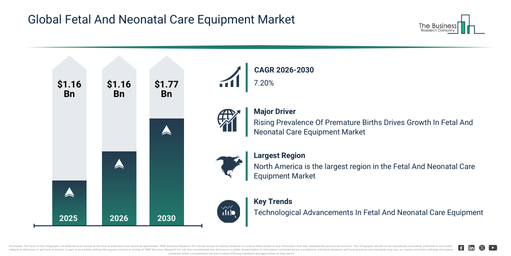
    The market for fetal and neonatal care equipment has shown significant expansion over recent years. Projections indicate that its value will increase from $8.99 billion in 2025 to $9.67 billion in 2026, reflecting a compound annual growth rate (CAGR) of 7.6%. The growth observed during the historic period is largely due to the limited availability of advanced fetal and neonatal devices, continued dependence on traditional incubators and monitoring systems, growing awareness about neonatal care, expansion of hospital infrastructure, and rising birth rates in developing regions. Looking ahead, this market is expected to reach $12.79 billion by 2030, growing at a CAGR of 7.2%. Factors supporting this forecast include technological innovations in portable and smart neonatal equipment, broader prenatal and neonatal care services, increased investments in neonatal intensive care units (NICUs), higher rates of premature births, and the integration of connected monitoring technologies.

    Download A Free Sample Report For Comprehensive Market Insights:

    https://www.thebusinessresearchcompany.com/sample.aspx?id=19432&type=smp

    Rising Premature Birth Rates as a Market Growth Catalyst

    One of the main drivers propelling the fetal and neonatal care equipment market is the increasing occurrence of premature births. Premature birth is defined as a baby being born before completing 37 weeks of gestation. This trend is influenced by factors such as advanced maternal age, which elevates the risk of pregnancy complications, and maternal chronic conditions including diabetes, hypertension, obesity, and infections, all of which contribute to early labor and delivery. The use of fetal and neonatal care equipment is critical in improving health outcomes for these premature infants by enabling healthcare providers to closely monitor vital signs, administer essential treatments, and safeguard the well-being of newborns in intensive care units. For example, in January 2025, the Government’s response to the House of Lords inquiry into preterm birth in the UK reported that 8.1% of all births in 2023 were preterm, occurring between 24 and 36 completed weeks of gestation. This increasing prevalence clearly supports expanded demand for specialized care equipment.

    Additional Drivers Enhancing Market Growth Potential

    Beyond premature birth rates, the fetal and neonatal care equipment market benefits from growing investments in NICU infrastructure and an expanding emphasis on prenatal and neonatal healthcare services worldwide. Healthcare providers are adopting advanced monitoring and respiratory support devices that improve survival rates and reduce complications for newborns. Additionally, the rising demand for portable neonatal care solutions is addressing the need for flexible and immediate care in various settings, including transport and outpatient facilities. These factors collectively contribute to the market’s robust growth outlook.

    Access The Complete Fetal And Neonatal Care Equipment Market Report:

    https://www.thebusinessresearchcompany.com/report/fetal-and-neonatal-care-equipment-global-market-report

    Detailed Segmentation of the Fetal and Neonatal Care Equipment Market

    This market is categorized into several key segments to help understand its scope and potential:

    1) By Type: Fetal Care Equipment and Neonatal Care Equipment

    2) By Portability: Portable Devices and Non-Portable Devices

    3) By End-User: Hospitals, Diagnostic Centers, Clinics, and Other End-Users

    Further breakdown includes subcategories such as:

    – Fetal Care Equipment: Fetal Monitoring Equipment, Ultrasound Equipment, Fetal Surgery Equipment, Fetal Diagnostics Equipment, Fetal Assessment Systems

    – Neonatal Care Equipment: Incubators, Phototherapy Equipment, Respiratory Support Equipment, Neonatal Monitoring Equipment, Feeding Equipment, Suction Devices, Transport Incubators

    These segments reflect the wide range of technologies and applications involved in fetal and neonatal care, addressing various clinical needs.

    Innovative Technological Trends Driving Market Development

    Leading companies in this space are investing heavily in innovative solutions that improve monitoring and care for high-risk pregnancies and premature infants. A notable advancement is the development of wireless maternal and fetal monitoring systems offering noninvasive and continuous health tracking. For instance, in February 2024, GE HealthCare Technologies Inc. received FDA 510(k) clearance for its Novii+ Wireless Patch Solution. This technology monitors fetal heart rate, maternal heart rate, and uterine activity starting from 34 weeks of gestation, extending previous capabilities from 37 weeks onward. Its wireless, belt-free design allows mothers to remain mobile and comfortable during labor, potentially shortening delivery times and enhancing overall patient experience.

    Key Players Leading the Fetal and Neonatal Care Equipment Industry

    The competitive landscape includes prominent global corporations such as Cardinal Health, Medtronic PLC, Becton Dickinson and Company, Koninklijke Philips N.V., GE Healthcare, B. Braun Melsungen AG, Shenzhen Mindray Bio-Medical Electronics Co. Ltd., Drägerwerk AG and Co KGaA, Canon Medical Systems Corporation, Masimo Corporation, Nihon Kohden Corporation, Fisher and Paykel Healthcare Limited, Contec Medical Systems Co. Ltd., Natus Medical Incorporated, Vyaire Medical Inc, Atom Medical Corporation, Amico Corporation, Mennen Medical Ltd, Phoenix Medical Systems Pvt Ltd, CareFusion Corporation, and Olympus Corporation. These companies drive innovation and maintain significant market shares through product development and global reach.

    Regional Market Insights Highlighting Growth Hotspots

    In 2025, North America held the largest share of the fetal and neonatal care equipment market, benefiting from advanced healthcare infrastructure and high adoption rates of innovative technologies. However, the Asia-Pacific region is projected to experience the fastest growth over the coming years, driven by expanding healthcare access, rising birth rates, and increasing investments in neonatal care facilities. The comprehensive market report covers regions including Asia-Pacific, South East Asia, Western Europe, Eastern Europe, North America, South America, the Middle East, and Africa, providing a global perspective on trends and opportunities.

    Get in touch with us:

    The Business Research Company: https://www.thebusinessresearchcompany.com/

    Americas: +1 310-496-7795

    Asia: +44 7882 955267 & +91 8897263534

    Europe: +44 7882 955267

    Email us at: marketing@tbrc.info

    Follow us on:

    LinkedIn: https://in.linkedin.com/company/the-business-research-company

    YouTube: https://www.youtube.com/channel/UC24_fI0rV8cR5DxlCpgmyFQ

    Global Market Model: https://www.thebusinessresearchcompany.com/global-market-model
  • Feminine Wipes Market Growth Outlook Reveals A CAGR Of 8.2% And A Market Value Of $3.56 Billion By 2030

    Feminine Wipes Market Growth Outlook Reveals A CAGR Of 8.2% And A Market Value Of $3.56 Billion By 2030

    Enhanced with market attractiveness analysis, total addressable market evaluation, company benchmarking matrices, interactive Excel dashboards, expanded supply chain intelligence, emerging startup coverage, and detailed product insights, The Business Research Company’s 2026 market reports deliver more actionable and strategically valuable research.

    The feminine wipes market has seen significant growth recently, driven by rising awareness of feminine hygiene and expanding product availability. As consumer habits evolve and demand for personal care products increases, the market is set to continue on a strong growth trajectory. Below, we explore the current market size, key factors influencing demand, product segmentation, emerging trends, leading companies, and regional insights shaping the future of this industry.

    Feminine Wipes Market Size and Growth Outlook

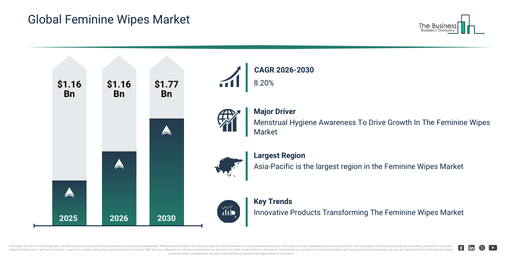
    The feminine wipes market has experienced robust expansion in recent years. It is projected to grow from $2.4 billion in 2025 to $2.6 billion in 2026, with a compound annual growth rate (CAGR) of 8.6%. This historic growth reflects greater awareness around feminine hygiene, increased participation of women in the workforce, wider availability of personal care products, higher disposable incomes, and deeper penetration of hygiene products. Looking ahead, the market is expected to reach $3.56 billion by 2030, growing at a CAGR of 8.2%. Factors driving this future growth include rising consumer demand for sustainable hygiene options, eco-friendly packaging, growth in e-commerce sales of personal care items, heightened focus on intimate health, and ongoing innovation in feminine care products. Key trends forecasted for the upcoming years include increased preference for organic and natural wipes, adoption of biodegradable materials, popularity of pH-balanced products, expansion of online retail channels, and emphasis on gentle, skin-friendly formulations.

    Download A Free Sample Report For Comprehensive Market Insights:

    https://www.thebusinessresearchcompany.com/sample.aspx?id=7120&type=smp

    Key Factors Supporting Demand Growth in the Feminine Wipes Market

    One of the main drivers behind the feminine wipes market expansion is growing education on menstrual hygiene among women. Proper menstrual hygiene practices help prevent infections in the reproductive and urinary tracts, protect dignity, boost confidence, and support sexual and reproductive health. For example, in May 2024, the World Health Organization (WHO) reported that only 39% of schools worldwide provide menstrual health education, though this rises to 84% in secondary schools across Central and Southern Asia. This increased awareness is expected to contribute significantly to the rising demand for feminine wipes during the forecast period.

    Additional Elements Bolstering Feminine Wipes Market Expansion

    Besides education, several other societal and market factors are pushing growth. Increased female workforce participation demands convenient hygiene solutions. Rising disposable incomes enable more consumers to purchase premium personal care products. Moreover, expanding product availability across various retail channels makes feminine wipes more accessible than ever, supporting sustained market momentum.

    Access The Complete Feminine Wipes Market Report:

    https://www.thebusinessresearchcompany.com/report/feminine-wipes-global-market-report

    Detailed Product and Application Segmentation in the Feminine Wipes Market

    The feminine wipes market is segmented based on product type, age group, and distribution channels. By type, it includes ordinary wipes and sanitary wipes. The age groups covered range from 5–15 years, 16–30 years, 31–45 years, 46–60 years, to 61 years and above. Distribution channels consist of supermarkets and hypermarkets, convenience stores, pharmacies and drugstores, online sellers, and other outlets. Further subcategories break down ordinary wipes into unscented, scented, and sensitive skin varieties, while sanitary wipes include antibacterial, pH-balanced, and organic or natural options.

    Emerging Trends Influencing Feminine Wipes Market Growth

    Leading companies in this space are focusing on innovation to meet consumer needs for comfort and convenience. For instance, the development of integrated tampon and liner systems offers comprehensive menstrual hygiene solutions by combining internal protection with external comfort. In May 2023, Victoria’s Secret introduced intimate care wipes specially formulated to maintain hygiene in sensitive areas. These wipes are typically pH-balanced, hypoallergenic, and made from gentle materials, making them ideal for use during menstruation, after exercise, or anytime a refreshing cleanse is desired. Their portable packaging enhances convenience, helping users feel clean and confident throughout the day.

    Competitive Landscape Within the Feminine Wipes Market

    The feminine wipes market features a range of prominent players including Albaad Massuot Yitzhak Ltd., Corman SpA., LA Fresh Group Inc., Guy & O’Neill Inc., Healthy Hoohoo Inc., The Procter & Gamble Company, Kimberly-Clark Corporation, Edgewell Personal Care Brands LLC, Johnson & Johnson, Unicharm Corporation, Essity AB, Nice-Pak Products Inc., Rockline Industries Limited, Diamond Wipes International Inc., Body Wipe Company LLC, SweetSpot Labs LLC, Goodwipes Products Inc., Rael Inc., The Honey Pot Company Inc., Cora Health Inc., L. Organic Cotton LLC, Maxim Hygiene Products LLC, Natracare LLC, Seventh Generation Inc., The Honest Company Inc., PureTouch Skin Care Inc., and Summer’s Eve. These companies compete through product innovation, expanded distribution, and marketing strategies to capture growing consumer demand.

    Leading Region in Feminine Wipes Market Share

    In 2025, Asia-Pacific held the largest share of the feminine wipes market. Other key regions analyzed include South East Asia, Western Europe, Eastern Europe, North America, South America, the Middle East, and Africa. The strong market presence in Asia-Pacific reflects rising awareness, improving hygiene education, and increasing product availability, positioning the region as a major growth driver on the global stage.

    Get in touch with us:

    The Business Research Company: https://www.thebusinessresearchcompany.com/

    Americas: +1 310-496-7795

    Asia: +44 7882 955267 & +91 8897263534

    Europe: +44 7882 955267

    Email us at: marketing@tbrc.info

    Follow us on:

    LinkedIn: https://in.linkedin.com/company/the-business-research-company

    YouTube: https://www.youtube.com/channel/UC24_fI0rV8cR5DxlCpgmyFQ

    Global Market Model: https://www.thebusinessresearchcompany.com/global-market-model
  • Female Fertility And Pregnancy Rapid Test Market Forecast Highlights Expansion From $1.58 Billion To $2.05 Billion Through 2030

    Female Fertility And Pregnancy Rapid Test Market Forecast Highlights Expansion From $1.58 Billion To $2.05 Billion Through 2030

    Through market attractiveness analysis, total addressable market evaluation, company benchmarking matrices, interactive Excel dashboards, expanded supply chain intelligence, emerging startup coverage, and detailed product insights, The Business Research Company’s 2026 market reports provide more actionable and strategically valuable research.

    The female fertility and pregnancy rapid test market is witnessing significant momentum, fueled by growing awareness and advancements in diagnostic technologies. This sector is evolving rapidly as consumers and healthcare providers seek more reliable, accessible, and user-friendly testing solutions. Let’s explore the market’s current scale, key growth drivers, segmentation, strategic trends, major players, and regional outlook.

    Steady Expansion and Market Size of the Female Fertility and Pregnancy Rapid Test Industry

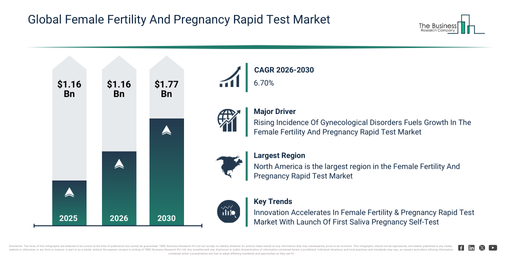
    The female fertility and pregnancy rapid test market has seen robust growth in recent years. From $1.48 billion in 2025, it is expected to reach $1.58 billion in 2026, experiencing a compound annual growth rate (CAGR) of 7.2%. This growth during the historical period has been driven by rising awareness about female reproductive health, increased use of ovulation predictor kits, expanding availability of rapid tests in retail settings, growth in hospital-based diagnostic testing, and a higher incidence of infertility diagnoses. Looking ahead, the market is projected to grow to $2.05 billion by 2030, with a CAGR of 6.7%. The forecast period’s expansion is supported by rising demand for early pregnancy detection, greater adoption of digital health monitoring tools, increased attention to personalized fertility management, growth of telehealth-supported diagnostics, and wider penetration of e-commerce platforms for healthcare products. Key market trends include growing preference for at-home rapid test kits, demand for digital and app-connected testing devices, popularity of combined fertility and pregnancy tests, expansion of online sales channels, and a focus on user-friendly and accurate test designs.

    Download A Free Sample Report For Comprehensive Market Insights:

    https://www.thebusinessresearchcompany.com/sample.aspx?id=8966&type=smp

    Increasing Prevalence of Gynecological Disorders Spurs Market Growth

    A major factor contributing to the female fertility and pregnancy rapid test market’s growth is the rising incidence of gynecological disorders. These conditions affect female reproductive organs such as the uterus, ovaries, vagina, fallopian tubes, breasts, and vulva. Rapid fertility and pregnancy tests assist in the early detection of hormonal imbalances and pregnancy-related complications, enabling timely diagnosis and effective management of these health issues. For example, a May 2025 report by the National Library of Medicine revealed that around 61.2% of women experienced at least one gynecological morbidity. Dysmenorrhea was the most common condition at 61.3%, followed by irregular menstruation and infertility, both at 36.1%. This increasing prevalence of gynecological problems is an important driver for the female fertility and pregnancy rapid test market.

    Market Segmentation Offers Diverse Revenue Opportunities

    The female fertility and pregnancy rapid test market is categorized into several important segments to capture its diversity and revenue potential. By product, the market is divided into fertility rapid test kits and pregnancy rapid test kits. Device types include digital devices and line-indicator devices. Tests are segmented into FSH urine tests, LH urine tests, hCG blood tests, and hCG urine tests. Distribution channels cover hospital, retail, and online channels. Further subsegments in fertility test kits include ovulation predictor kits, luteinizing hormone (LH) test kits, and follicle-stimulating hormone (FSH) test kits. Pregnancy test kits break down into urine-based tests, blood-based tests, and combo fertility and pregnancy tests, highlighting the range of options available to consumers and healthcare providers.

    Access The Complete Female Fertility And Pregnancy Rapid Test Market Report:

    https://www.thebusinessresearchcompany.com/report/female-fertility-and-pregnancy-rapid-test-global-market-report

    Innovations and Technological Advances Define Market’s Future

    Leading companies in the female fertility and pregnancy rapid test industry are pushing the envelope by developing novel, non-invasive testing methods to meet evolving consumer demands. One notable innovation is saliva-based home pregnancy tests, which detect pregnancy biomarkers in oral fluid instead of urine. For instance, in May 2024, UK-based Abingdon Health plc launched the world’s first Boots-branded saliva pregnancy self-test available both in physical stores and online. This saliva-based lateral-flow immunoassay removes the need for urine collection, enhancing user comfort and hygiene. Packaged as a rapid single-use test, it delivers results within minutes and is designed for over-the-counter sale. The test uses a familiar stick or cassette format that encourages consumer adoption and provides reliable early pregnancy confirmation with trusted retail branding.

    Top Companies Driving the Female Fertility and Pregnancy Rapid Test Market

    The market is shaped by a range of prominent companies focusing on innovation and expanding their product portfolios. Key players include Abbott Laboratories, Atlas Medical GmbH, bioMérieux SA, Church & Dwight Co. Inc., Quidel Corporation, Egens Group, Eurofins Scientific SE, Everlywell Inc., Genea Pty Limited, Geratherm Medical AG, SA Scientific Ltd., Artron Laboratories Inc., PRIMA Lab SA, The Procter & Gamble Company, Alere Inc., Prestige Brands Holdings Inc., SPD Swiss Precision Diagnostics GmbH, Fairhaven Health LLC, Fertility Focus Limited, HiLin Life Products Inc., Inverness Medical Innovations Inc., UEBE Medical GmbH, and Wondfo Biotech Co. Ltd. These companies are instrumental in advancing technology and increasing market penetration globally.

    Regional Market Leadership and Growth Patterns

    In 2025, North America led the female fertility and pregnancy rapid test market in terms of revenue share. The market assessment covers key regions such as Asia-Pacific, South East Asia, Western Europe, Eastern Europe, South America, the Middle East, and Africa. While North America currently holds the largest market share, emerging regions are expected to witness dynamic growth as awareness, healthcare infrastructure, and digital penetration improve.

    Get in touch with us:

    The Business Research Company: https://www.thebusinessresearchcompany.com/

    Americas: +1 310-496-7795

    Asia: +44 7882 955267 & +91 8897263534

    Europe: +44 7882 955267

    Email us at: marketing@tbrc.info

    Follow us on:

    LinkedIn: https://in.linkedin.com/company/the-business-research-company

    YouTube: https://www.youtube.com/channel/UC24_fI0rV8cR5DxlCpgmyFQ

    Global Market Model: https://www.thebusinessresearchcompany.com/global-market-model
  • Fast Biological Reader Market Expected To Reach $3.99 Billion By 2030 As Growth Accelerates At 11.5% CAGR

    Fast Biological Reader Market Expected To Reach $3.99 Billion By 2030 As Growth Accelerates At 11.5% CAGR

    Delivering more actionable and strategically valuable research, The Business Research Company’s 2026 market reports feature market attractiveness analysis, total addressable market evaluation, company benchmarking matrices, interactive Excel dashboards, expanded supply chain intelligence, emerging startup coverage, and detailed product insights.

    The fast biological reader market is experiencing impressive growth driven by advances in laboratory technology and increasing demands for quicker diagnostic tools. With expanding applications in healthcare, research, and testing industries, this market is set to continue its upward trajectory. Let’s explore the current market size, key growth drivers, emerging trends, and leading players shaping this dynamic sector.

    Fast Biological Reader Market Size and Revenue Forecast from 2025 to 2030

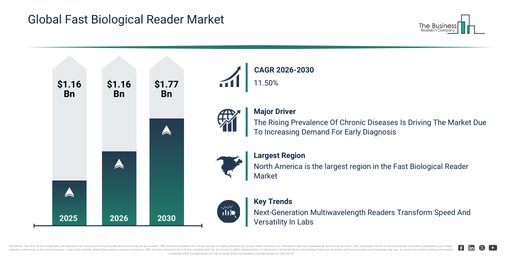
    The market for fast biological readers has seen rapid expansion in recent years. It is projected to grow from $2.31 billion in 2025 to $2.58 billion in 2026, with a compound annual growth rate (CAGR) of 11.8%. This historical growth has been fueled by the increasing adoption of laboratory automation, a higher demand for faster diagnostic results, the expansion of pharmaceutical research, growing use of fluorescence-based assays, and increased funding for biomedical research.

    Looking ahead, the market is expected to maintain strong momentum, reaching $3.99 billion by 2030 at a CAGR of 11.5%. Factors contributing to this forecasted rise include the growing need for rapid point-of-care testing, integration of AI-driven data analytics, expansion in personalized medicine research, rising applications in food and environmental testing, and the development of portable fast biological readers. Key trends shaping the market include real-time biological detection, high-throughput assay screening, miniaturization of analytical instruments, multi-modal detection capabilities, and heightened laboratory workflow automation.

    Download A Free Sample Report For Comprehensive Market Insights:

    https://www.thebusinessresearchcompany.com/sample.aspx?id=28219&type=smp

    Key Factors Propelling Growth in the Fast Biological Reader Market

    One of the main forces driving the market is the rising prevalence of chronic diseases globally. Chronic illnesses, such as cardiovascular conditions, diabetes, and respiratory disorders, develop over time and require ongoing medical attention. These diseases often arise from a combination of genetic, environmental, and lifestyle factors.

    A significant contributor to the increasing incidence of chronic diseases is the widespread adoption of sedentary lifestyles. Reduced physical activity, unhealthy diets, and metabolic imbalances raise the risk of long-term health problems. Fast biological readers facilitate early and accurate detection of biomarkers, which supports timely diagnosis and clinical intervention, ultimately improving patient outcomes. For instance, a July 2023 report by The Health Foundation noted that England is expected to have 9.1 million people living with major chronic diseases by 2040. This growing health burden is stimulating demand for fast biological readers.

    Detailed Segmentation of the Fast Biological Reader Market

    This report divides the fast biological reader market into several key segments:

    1) Product Type: Portable Fast Biological Readers and Benchtop Fast Biological Readers

    2) Technology: Fluorescence, Luminescence, Absorbance, and Other Technologies

    3) Application Areas: Clinical Diagnostics, Research Laboratories, Pharmaceutical and Biotechnology Companies, Environmental Testing, Food and Beverage Testing, and Other Applications

    4) End-Users: Hospitals, Diagnostic Centers, Academic and Research Institutes, and Other Users

    Access The Complete Fast Biological Reader Market Report:

    https://www.thebusinessresearchcompany.com/report/fast-biological-reader-global-market-report

    Further breakdowns include:

    – Portable Fast Biological Readers subdivided into Colorimetric Detection, Electrochemical Detection, Surface Plasmon Resonance Detection, Molecular Hybridization Detection, and Immunological Assay Detection

    – Benchtop Fast Biological Readers grouped into Mass Spectrometry Detection, Chromatographic Detection, Isothermal Amplification Detection, Digital Image Analysis Detection, and Optical Sensor Detection

    Innovations Driving Change in the Fast Biological Reader Market

    Leading companies in this sector are focusing on the development of cutting-edge technologies such as multiwavelength microplate readers to boost assay speed, versatility, and integration. These instruments measure absorbance at multiple wavelengths across microplate wells, enabling quick and flexible analysis of biological, biochemical, and environmental samples in both endpoint and kinetic formats.

    For example, in September 2025, US-based biotechnology firm Cerillo introduced Rayo, a multiwavelength platform designed for ELISA assays, protein quantification, and kinetic growth curve monitoring in plants, algae, and microbial cells. Rayo measures absorbance at four wavelengths, offering both rapid endpoint and continuous kinetic analysis. Its compact, automation-friendly design with standalone operation, local data storage, and remote data transfer capabilities allows easy integration into confined lab spaces and automated workflows, enhancing efficiency and accessibility.

    Competitive Landscape and Leading Players in the Fast Biological Reader Market

    Prominent companies competing in this market include Hoffmann-La Roche Ltd., Thermo Fisher Scientific Inc., Abbott Laboratories, Medtronic Plc, Danaher Corporation, Lonza Group AG, Agilent Technologies Inc., Sartorius AG, Revvity Inc., Bio-Rad Laboratories Inc., Horiba Ltd., Tecan Group Ltd., Eppendorf SE, Hamilton Company, Promega Corporation, Advanced Sterilization Products (ASP), Analytik Jena, Berthold Technologies GmbH & Co. KG, BMG LABTECH GmbH, and Hidex Oy.

    Regional Outlook and Growth Opportunities for the Fast Biological Reader Market

    In 2025, North America held the largest share of the fast biological reader market. Meanwhile, the Asia-Pacific region is anticipated to experience the fastest growth over the forecast period. The market report covers significant regions including Asia-Pacific, South East Asia, Western Europe, Eastern Europe, North America, South America, the Middle East, and Africa, providing a broad perspective on regional dynamics and opportunities.

    Get in touch with us:

    The Business Research Company: https://www.thebusinessresearchcompany.com/

    Americas: +1 310-496-7795

    Asia: +44 7882 955267 & +91 8897263534

    Europe: +44 7882 955267

    Email us at: marketing@tbrc.info

    Follow us on:

    LinkedIn: https://in.linkedin.com/company/the-business-research-company

    YouTube: https://www.youtube.com/channel/UC24_fI0rV8cR5DxlCpgmyFQ

    Global Market Model: https://www.thebusinessresearchcompany.com/global-market-model
  • Faecal Extraction Systems Market Set To Grow From $1.79 Billion In 2026 To $2.2 Billion By 2030 At A CAGR Of 5.4%

    Faecal Extraction Systems Market Set To Grow From $1.79 Billion In 2026 To $2.2 Billion By 2030 At A CAGR Of 5.4%

    Enhanced with market attractiveness analysis, total addressable market evaluation, company benchmarking matrices, interactive Excel dashboards, expanded supply chain intelligence, emerging startup coverage, and detailed product insights, The Business Research Company’s 2026 market reports deliver more actionable and strategically valuable research.

    The faecal extraction systems market is witnessing steady expansion, driven by growing healthcare needs and advancements in diagnostic technologies. As awareness about gastrointestinal health increases, this sector is expected to see continued growth, supported by innovations and rising adoption of advanced testing methods. Let’s explore the current market landscape, its key growth drivers, emerging trends, major players, and segment performance.

    Market Size and Growth Trajectory of the Faecal Extraction Systems Market

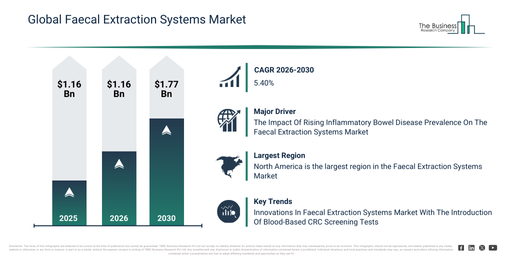
    The market for faecal extraction systems has experienced notable growth, increasing from $1.7 billion in 2025 to $1.79 billion in 2026, representing a compound annual growth rate (CAGR) of 5.5%. This upward trend during the past years is attributed to factors such as a higher incidence of gastrointestinal infections, expansion in diagnostic laboratory infrastructure, broader use of fecal biomarker testing, growth in parasite screening efforts, and improved clinical understanding of gut health. Looking ahead, the market is projected to reach $2.21 billion by 2030, maintaining a CAGR of 5.4%. This forecasted growth is fueled by rising demand for early detection of diseases, increased investments in sophisticated diagnostic assays, expansion of outpatient diagnostic services, growing preventive healthcare focus, and greater adoption of automated laboratory processes.

    Download A Free Sample Report For Comprehensive Market Insights:

    https://www.thebusinessresearchcompany.com/sample.aspx?id=8297&type=smp

    Key Influences Fueling Growth in the Faecal Extraction Systems Market

    An important factor driving market expansion is the rising prevalence of inflammatory bowel disease (IBD). IBD encompasses chronic conditions characterized by inflammation within the digestive tract. Faecal extraction systems play a critical role in diagnosing, monitoring disease progression, guiding treatment plans, and predicting relapse or post-surgical recurrence in IBD patients. Consequently, as the number of people affected by IBD increases, so does the demand for these systems. For instance, a report published in September 2023 by the IBD Clinical and Research Centre in Canada highlights that over 320,000 Canadians currently live with IBD, with a prevalence rate of 825 per 100,000 individuals. This figure is expected to rise annually by 2.44%, potentially reaching 470,000 people or 1.1% of the population by 2035. This growing patient base is a significant impetus for market growth.

    Additional Factors Boosting Market Demand

    Besides IBD prevalence, the faecal extraction systems market benefits from innovations enhancing diagnostic accuracy and hygiene. Increasing emphasis on early disease screening, particularly for colorectal cancer and parasitic infections, also supports market momentum. Furthermore, expanding healthcare infrastructure and rising awareness about gut health contribute to sustained demand. The integration of automated workflows in laboratories further streamlines testing processes, making faecal extraction systems more efficient and accessible.

    Access The Complete Faecal Extraction Systems Market Report:

    https://www.thebusinessresearchcompany.com/report/faecal-extraction-systems-global-market-report

    Breakdown of the Faecal Extraction Systems Market Segmentation

    This market is analyzed across several key segments:

    1) Assay Type: Calprotectin and Hemoglobin assays

    2) Analysis Test Method: Microscopic, Chemical, Immunological, and Microbiological tests

    3) Indications: Parasitic infections, bacterial indications, and poor nutrient absorption

    4) End-Use Settings: Diagnostic centers, hospitals, and clinics

    Further classification includes:

    – Calprotectin assays subdivided into quantitative and qualitative types

    – Hemoglobin tests broken down into Fecal Occult Blood Tests (FOBT) and Immunochemical Fecal Hemoglobin Tests

    Innovative Trends Shaping the Faecal Extraction Systems Market

    Market players are focusing on developing cutting-edge products such as colorectal cancer (CRC) screening tests to broaden their customer base and increase revenues. CRC screening tests aim to detect colorectal cancer or its precursors in asymptomatic individuals. For example, in November 2023, US-based diagnostics company Guardant Health introduced Shield, a blood-based colorectal cancer screening assay. This test stands out by identifying unique DNA markers associated with cancer presence. Its effectiveness was validated in the ECLIPSE registrational study, which enrolled over 20,000 participants across the United States, demonstrating Shield’s potential as a non-invasive and reliable screening tool.

    Competitive Landscape and Leading Companies in the Faecal Extraction Systems Market

    Several key companies dominate this market, including Alpha Laboratories Ltd., Arbor Assays, Buhlmann Laboratories AG, Calpro AS, DRG Instruments GmbH, Biohit Healthcare Ltd., Meridian Bioscience Inc., Quidel Corporation, DiaSorin SpA, Sekisui Diagnostics LLC, Abbott Laboratories, Roche Diagnostics Corporation, Randox Laboratories Ltd., Trinity Biotech plc, bioMérieux SA, Werfen SA, Mobidiag Oy, Hologic Inc., Siemens Healthineers, Beckman Coulter Inc., and Thermo Fisher Scientific Inc. These industry leaders continuously innovate to maintain competitiveness and meet evolving diagnostic needs.

    Regional Market Leadership and Growth Patterns

    In 2025, North America held the largest share of the faecal extraction systems market. However, the report also covers other significant regions, including Asia-Pacific, South East Asia, Western Europe, Eastern Europe, South America, the Middle East, and Africa, highlighting a comprehensive global market perspective. The Asia-Pacific region is anticipated to witness the fastest growth in the coming years, driven by expanding healthcare infrastructure and increasing awareness of gastrointestinal diseases.

    Get in touch with us:

    The Business Research Company: https://www.thebusinessresearchcompany.com/

    Americas: +1 310-496-7795

    Asia: +44 7882 955267 & +91 8897263534

    Europe: +44 7882 955267

    Email us at: marketing@tbrc.info

    Follow us on:

    LinkedIn: https://in.linkedin.com/company/the-business-research-company

    YouTube: https://www.youtube.com/channel/UC24_fI0rV8cR5DxlCpgmyFQ

    Global Market Model: https://www.thebusinessresearchcompany.com/global-market-model
  • Facial Implants Market Opportunities Are Emerging Beyond Traditional Growth Areas

    Facial Implants Market Opportunities Are Emerging Beyond Traditional Growth Areas

    Through market attractiveness analysis, total addressable market evaluation, company benchmarking matrices, interactive Excel dashboards, expanded supply chain intelligence, emerging startup coverage, and detailed product insights, The Business Research Company’s 2026 market reports provide more actionable and strategically valuable research.

    The facial implants market is experiencing remarkable growth driven by increasing awareness of facial aesthetics and advancements in cosmetic procedures. As more people seek ways to enhance their appearance, this market is poised for considerable expansion in the coming years. Let’s explore the current market size, key growth factors, prominent segments, emerging trends, important players, and regional insights shaping the facial implants industry.

    Facial Implants Market Size and Projected Growth

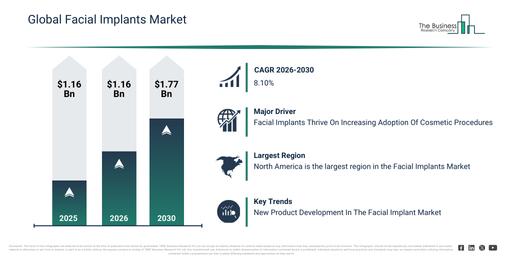
    The facial implants market has witnessed robust growth recently and is expected to expand from $2.95 billion in 2025 to $3.19 billion in 2026, representing a compound annual growth rate (CAGR) of 8.2%. This growth during the historical period is mainly due to rising awareness about facial aesthetics, higher disposable income, the influence of beauty standards promoted by media, increased accessibility to cosmetic surgery centers, and a surge in demand for facial reconstruction procedures. Looking ahead, the market is anticipated to reach $4.36 billion by 2030, maintaining a CAGR of 8.1%. Factors underpinning this forecast include growing demand for personalized facial treatments, an aging population seeking rejuvenation, broader acceptance of cosmetic surgery among all genders, expansion of medical tourism for aesthetic procedures, and heightened attention to facial symmetry and contouring.

    Download A Free Sample Report For Comprehensive Market Insights:

    https://www.thebusinessresearchcompany.com/sample.aspx?id=18605&type=smp

    Key Drivers Behind the Facial Implants Market Expansion

    The rising popularity of cosmetic surgeries is a major driver fostering the growth of the facial implants market. These elective procedures aim to enhance individuals’ aesthetic appearance and have gained wide acceptance due to changing social attitudes and technological advancements that make treatments safer and more effective.

    Facial implants play a critical role in these surgeries by providing innovative solutions for contouring and enhancement. They deliver natural-looking, long-lasting results that help patients achieve their aesthetic goals. For example, in March 2025, the Yellow Bus ABA, a US-based therapy group, reported that in 2023, approximately 34.9 million aesthetic procedures were performed globally, marking a 3.4% increase compared to 2022. This trend clearly reflects the growing demand for cosmetic surgeries, which is propelling the facial implants market forward.

    Facial Implants Market Segmentation and Key Categories

    This report segments the facial implants market into distinct categories based on product type, material, and procedure.

    By product, the market includes Chin and Mandibular implants, Cheek implants, and Nasal implants.

    Materials used range from Metal, Biologicals, Polymers, to Ceramic.

    Procedures covered include Eyelid Surgery, Facelift, and Rhinoplasty.

    Further subcategories under Chin and Mandibular implants include Chin Implants, Mandibular (Jaw) Implants, Custom Chin and Mandibular Implants, Biocompatible Chin and Mandibular Implants, as well as Silicone and Polyethylene Chin Implants.

    Cheek implants are subdivided into Malar Implants (Cheekbone Implants), Submalar Implants, High-projection Cheek Implants, Biocompatible and Silicone Cheek Implants, plus Custom and 3D Printed Cheek Implants.

    Nasal implants cover Nasal Implants targeting the nose tip or bridge, Septal Implants, Rhinoplasty Implants, Custom Nasal Implants, and Biocompatible Nasal Implants.

    Access The Complete Facial Implants Market Report:

    https://www.thebusinessresearchcompany.com/report/facial-implants-global-market-report

    Innovations and Industry Trends Influencing Facial Implant Demand

    Leading companies in the facial implants sector are investing heavily in new product development to maintain competitive advantage. One notable innovation is the introduction of arthroplasty implants, which are prosthetic devices designed for facial reconstruction and cosmetic surgery to restore or enhance function and aesthetics.

    For instance, in February 2024, Belgium-based 3D printing company Materialise launched its Personalized TMJ Total Arthroplasty System. This system is tailored for total temporomandibular joint (TMJ) arthroplasty, replacing the joint connecting the jawbone to the skull. It utilizes personalized titanium implants customized to each patient’s anatomy, providing an advanced solution for severe TMJ disorders requiring joint replacement.

    Prominent Companies Leading the Facial Implants Market

    The facial implants market features several major players actively shaping the industry landscape. Key companies include Johnson & Johnson, Medtronic plc, Stryker Corporation, Zimmer Biomet Holdings Inc., Galderma SA, W.L. Gore & Associates Inc., Integra LifeSciences Corporation, Anthony Products Inc., Hugel Inc., Revance Therapeutics Inc., Sientra Inc., OsteoMed L.P., Spectrims Design Medicals Inc., Implantech Associates Inc., Sebbin International, AART Inc., Surgiform Technology Ltd., Guangzhou Wanhe Plastic Material Co. Ltd., Hanson Medical Inc., and Xilloc Medical Int. B.V.

    Regional Overview and Market Leadership in Facial Implants

    In 2025, North America held the largest share of the facial implants market, reflecting strong demand and well-established healthcare infrastructure. Meanwhile, the Asia-Pacific region is projected to experience the fastest growth during the forecast period, driven by increasing adoption of cosmetic procedures and rising healthcare investments. The facial implants market report covers other major regions as well, including South East Asia, Western Europe, Eastern Europe, South America, the Middle East, and Africa, providing a detailed global perspective.

    Get in touch with us:

    The Business Research Company: https://www.thebusinessresearchcompany.com/

    Americas: +1 310-496-7795

    Asia: +44 7882 955267 & +91 8897263534

    Europe: +44 7882 955267

    Email us at: marketing@tbrc.info

    Follow us on:

    LinkedIn: https://in.linkedin.com/company/the-business-research-company

    YouTube: https://www.youtube.com/channel/UC24_fI0rV8cR5DxlCpgmyFQ

    Global Market Model: https://www.thebusinessresearchcompany.com/global-market-model
  • Eyewear Market Expansion Is Opening New Pathways For Strategic Investment

    Eyewear Market Expansion Is Opening New Pathways For Strategic Investment

    Delivering more actionable and strategically valuable research, The Business Research Company’s 2026 market reports feature market attractiveness analysis, total addressable market evaluation, company benchmarking matrices, interactive Excel dashboards, expanded supply chain intelligence, emerging startup coverage, and detailed product insights.

    The global eyewear industry has witnessed remarkable growth recently, driven by a variety of factors that cater to both healthcare needs and fashion trends. As technology advances and consumer preferences evolve, this market is set to experience substantial expansion in the coming years. Below, we explore the current market size, key growth drivers, segmentation, innovation trends, major players, and geographic dynamics shaping the eyewear sector.

    Eyewear Market Size and Expected Growth Through 2030

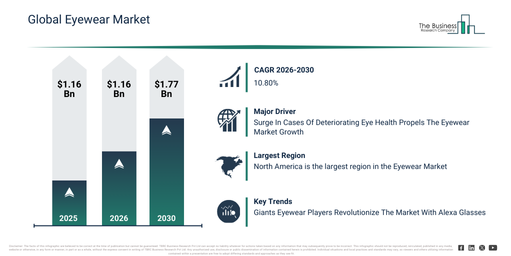
    The eyewear market has been rapidly expanding and is projected to increase from $173.89 billion in 2025 to $193.58 billion in 2026, representing a compound annual growth rate (CAGR) of 11.3%. This growth over the recent years has been fueled by a rise in vision impairments, greater screen time across all age groups, increased consumption of fashionable eyewear, wider optical retail networks, and the availability of affordable products. Looking ahead, the market is anticipated to reach $291.65 billion by 2030 with a CAGR of 10.8%. This future growth is supported by the growing adoption of smart eyewear technologies, demand for customized vision solutions, expansion of sustainable eyewear options, increasing online sales, and a stronger consumer focus on eye health. Key trends likely to influence the market include rising popularity of blue light blocking glasses, use of sustainable materials, growth in connected smart eyewear, omnichannel retail expansion, and a stronger emphasis on eyewear that blends fashion with functionality.

    Download A Free Sample Report For Comprehensive Market Insights:

    https://www.thebusinessresearchcompany.com/sample.aspx?id=6910&type=smp

    Factors Propelling Growth in the Eyewear Market

    One of the primary drivers for the eyewear market is the increasing incidence of eye health issues worldwide. Eye deterioration, which includes conditions that impair clear vision, stems from causes such as age-related macular degeneration, cataracts, diabetic retinopathy, glaucoma, and prolonged exposure to digital screens. As these conditions become more prevalent, the demand for corrective eyewear continues to rise.

    For example, in May 2024, the Centers for Disease Control and Prevention (CDC) reported that approximately 90 million Americans aged 40 and above—nearly three in five—experience vision problems. Projections indicate that by 2050, vision-related ailments in the United States will escalate dramatically, with diabetic retinopathy expected to increase by 72%, cataracts by 87%, and glaucoma along with age-related macular degeneration doubling in incidence. Vision impairment and blindness cases may rise by 150%, with the associated economic burden increasing by 157% to reach $373 billion. Such statistics highlight the substantial growth potential for eyewear demand during the forecast period.

    Access The Complete Eyewear Market Report:

    https://www.thebusinessresearchcompany.com/report/eyewear-global-market-report

    Breaking Down the Eyewear Market Segments

    This report divides the eyewear industry into several key segments to better understand where growth opportunities lie. The market is categorized by product type into Contact Lenses, Spectacles, and Sunglasses. By gender, it is segmented into Men, Women, and Unisex categories. Distribution channels include Optical Stores, Independent Brand Showrooms, Online Stores, and Retail Stores.

    Further subcategories within these groups include:

    – Contact Lenses: Soft Contact Lenses, Rigid Gas Permeable (RGP) Lenses, and Colored Contact Lenses

    – Spectacles: Prescription Glasses, Reading Glasses, and Blue Light Blocking Glasses

    – Sunglasses: Polarized Sunglasses, Fashion Sunglasses, and Sports Sunglasses

    These detailed classifications help manufacturers and retailers target specific consumer needs and preferences.

    Innovative Advances Transforming the Eyewear Industry

    Leading companies in the eyewear sector are investing heavily in advanced technologies to stay competitive and address modern consumer demands. One notable innovation is the development of Alexa-powered smart glasses, which integrate Amazon’s virtual assistant for hands-free voice control and seamless connectivity.

    For instance, in September 2023, Amazon.com, Inc. introduced ‘Echo Frames,’ smart eyewear equipped with Alexa that allows users to manage calls, music, and other functions effortlessly. These glasses come with various lens options such as UV400-protected sunglass lenses, prescription-ready lenses, and blue light blocking lenses. They are designed with IPX4 water resistance and scratch-resistant coatings. On a single charge, the Echo Frames offer up to six hours of continuous media playback, delivering 40% more audio playback time and 80% more talk time compared to previous models. Additional features include easy playlist control via button press and multipoint Bluetooth pairing, making them a versatile accessory for everyday use.

    Key Players Leading the Eyewear Market Landscape

    The eyewear market features several prominent companies that shape industry trends and competition. Some of the major participants include Silhouette International Schmied AG, JAND Inc., LVMH Moët Hennessy Louis Vuitton SE, Essilor International S.A., Carl Zeiss AG, Alcon Vision LLC, Hoya Corporation, Johnson & Johnson Vision Care Inc., Specsavers Optical Group Limited, GrandVision BV, Burberry Group plc, Bausch & Lomb Incorporated, The Cooper Companies Inc., Italia Independent Group S.p.A., Fielmann AG, Safilo Group S.p.A., Kering Eyewear, Marchon Eyewear Inc., Rodenstock GmbH, TAG Heuer SA, De Rigo Vision S.p.A., Marcolin S.p.A., Oakley Inc., Maui Jim Inc., Charmant Group Inc., Seiko Optical Products Co. Ltd., Lafont Paris, Luxottica Group S.p.A., and Luxexcel Group BV. These organizations play critical roles in innovation, production, and distribution worldwide.

    Where the Eyewear Market Is Expanding Fastest

    In terms of regional demand, North America held the largest share of the eyewear market in 2025. However, the Asia-Pacific region is expected to demonstrate the fastest growth during the forecast period. The report covers key markets including Asia-Pacific, South East Asia, Western Europe, Eastern Europe, North America, South America, the Middle East, and Africa, providing a global perspective on emerging opportunities and challenges within the eyewear industry.

    Get in touch with us:

    The Business Research Company: https://www.thebusinessresearchcompany.com/

    Americas: +1 310-496-7795

    Asia: +44 7882 955267 & +91 8897263534

    Europe: +44 7882 955267

    Email us at: marketing@tbrc.info

    Follow us on:

    LinkedIn: https://in.linkedin.com/company/the-business-research-company

    YouTube: https://www.youtube.com/channel/UC24_fI0rV8cR5DxlCpgmyFQ

    Global Market Model: https://www.thebusinessresearchcompany.com/global-market-model
  • Eye Testing Equipment Market Trends Are Creating New Opportunities For Industry Leaders

    Eye Testing Equipment Market Trends Are Creating New Opportunities For Industry Leaders

    Enhanced with market attractiveness analysis, total addressable market evaluation, company benchmarking matrices, interactive Excel dashboards, expanded supply chain intelligence, emerging startup coverage, and detailed product insights, The Business Research Company’s 2026 market reports deliver more actionable and strategically valuable research.

    The eye testing equipment industry has witnessed considerable expansion recently, driven by growing awareness about eye health and the increasing number of vision-related disorders worldwide. As technological advancements continue to emerge, this market is set to experience further growth, offering innovative solutions for early detection and treatment of eye conditions. Let’s explore the current market size, key factors influencing growth, segmentation, prominent trends, leading companies, and regional insights shaping this sector.

    Eye Testing Equipment Market Size and Growth Forecast

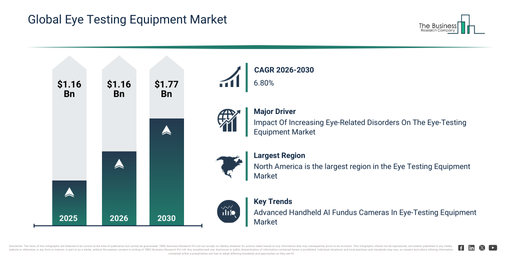
    The eye testing equipment market has shown robust growth in recent years and is projected to expand from $3.51 billion in 2025 to $3.78 billion in 2026, reflecting a compound annual growth rate (CAGR) of 7.7%. This expansion during the historical period has been fueled by the increasing prevalence of vision impairments, a rising elderly population, more eye clinics and hospitals, greater incidence of cataracts and glaucoma, and the broader adoption of routine eye examinations. Looking ahead, the market is expected to reach $4.92 billion by 2030, growing at a CAGR of 6.8%. This forecasted growth is driven by heightened demand for early eye disease detection, increased awareness about regular eye check-ups, improvements in ophthalmology infrastructure, growth in optometry education, and a stronger focus on vision care among aging populations. Important trends include greater adoption of advanced diagnostic devices, comprehensive vision screening tools, multifunction ophthalmic equipment, preventive eye health measures, and the integration of digital displays with automated measurements.

    Download A Free Sample Report For Comprehensive Market Insights:

    https://www.thebusinessresearchcompany.com/sample.aspx?id=17147&type=smp

    Rising Prevalence of Eye Disorders as a Market Growth Driver

    The growing number of people suffering from eye-related disorders is a key factor contributing to the expansion of the eye testing equipment market. These disorders encompass a range of conditions such as glaucoma, cataracts, macular degeneration, myopia, and hyperopia. Factors like aging populations, lifestyle shifts, environmental influences, and limited access to timely diagnostics often delay detection and worsen outcomes. Eye testing devices play a crucial role in early diagnosis, accurate monitoring, and effective treatment of these conditions. For example, in January 2024, the Centers for Disease Control and Prevention reported that over 3.4 million Americans aged 40 and above were blind or visually impaired, with numbers expected to double by 2030. This alarming data highlights the urgent need for eye testing equipment, which drives market growth.

    Increasing Adoption of Routine Eye Exams Boosts Market Demand

    Alongside the rise in eye disorders, the growing emphasis on preventive eye care and regular check-ups further supports market expansion. Healthcare initiatives and public education campaigns are encouraging people to prioritize eye health, helping to detect diseases at earlier stages and reduce complications. As a result, there is greater demand for advanced and reliable eye testing equipment across clinics and hospitals worldwide.

    Access The Complete Eye Testing Equipment Market Report:

    https://www.thebusinessresearchcompany.com/report/eye-testing-equipment-global-market-report

    How the Eye Testing Equipment Market Is Structured

    This market is divided into several key segments to address the diverse needs of healthcare providers. By device, it includes Slit Lamps, Biometers, Perimeters, Tonometers, Optical Coherence Tomography (OCT) devices, Fundus Cameras, Autorefractors and Keratometers, and other related instruments. Applications cover general eye examinations, glaucoma screening, cataract diagnosis, and other specific uses. Major end users encompass hospitals, eye clinics, and optometry academic institutions. Further subcategories break down devices into more specific types, such as tabletop, handheld, and digital slit lamps; optical and ultrasound biometers; static and kinetic perimeters; various tonometer types; spectral domain and swept-source OCT; different types of fundus cameras; standalone and combined autorefractors and keratometers; and additional devices like phoropters, retinoscopes, visual field analyzers, and corneal topographers.

    Innovations and Trends Shaping the Future of Eye Testing Equipment

    Leading companies in the eye testing equipment sector are focusing on developing cutting-edge devices designed to improve diagnostic accuracy and streamline eye screenings. One notable advancement is the introduction of handheld artificial intelligence (AI)-powered fundus cameras. These devices facilitate detailed imaging of the eye’s fundus, aiding in rapid and precise diagnosis of conditions such as diabetic retinopathy. For instance, in May 2024, Optomed USA unveiled the Optomed Aurora AEYE, a handheld AI-based fundus camera that detects diabetic retinopathy beyond mild stages. Its easy-to-use design requires only a single image per eye and delivers results within a minute, making it ideal for primary care environments and expanding accessibility to early diagnosis.

    Prominent Players Driving Competitive Growth in the Market

    The eye testing equipment market is dominated by several major companies known for their technological expertise and broad product portfolios. These include Carl Zeiss Meditec AG, Topcon Corporation, Nidek Co. Ltd., Canon Medical Systems Inc., Heidelberg Engineering GmbH, Takagi Seiko Co. Ltd., Huvitz Co. Ltd., Revenio Group PLC, Tomey Corporation, Kowa Company Ltd., Oculus Optikgeräte GmbH, HEINE Optotechnik GmbH & Co. KG, Luneau Technology Group, Coburn Technologies Inc., Shanghai Bolan Optical Electric Co. Ltd., Rexxam Co. Ltd., CSO Costruzione Strumenti Oftalmici Srl, Righton Ophthalmic Instruments, Suoer Optical Technology Co. Ltd., and Inami & Co. Ltd. These organizations continue to invest in research and development to maintain a competitive edge.

    Eye Testing Equipment Market Regional Overview and Growth Prospects

    In 2025, North America held the largest share of the eye testing equipment market, reflecting strong healthcare infrastructure and high awareness levels. Meanwhile, the Asia-Pacific region is projected to experience the fastest growth over the coming years, driven by expanding healthcare accessibility, increasing population, and rising vision care awareness. Other important regions examined by the market report include South East Asia, Western Europe, Eastern Europe, South America, the Middle East, and Africa, providing a broad perspective on global market dynamics.

    Get in touch with us:

    The Business Research Company: https://www.thebusinessresearchcompany.com/

    Americas: +1 310-496-7795

    Asia: +44 7882 955267 & +91 8897263534

    Europe: +44 7882 955267

    Email us at: marketing@tbrc.info

    Follow us on:

    LinkedIn: https://in.linkedin.com/company/the-business-research-company

    YouTube: https://www.youtube.com/channel/UC24_fI0rV8cR5DxlCpgmyFQ

    Global Market Model: https://www.thebusinessresearchcompany.com/global-market-model