Category: Medical Equipment

  • External Ventricular Drain Market Growth Is Reshaping Competitive Advantage Across The Industry

    External Ventricular Drain Market Growth Is Reshaping Competitive Advantage Across The Industry

    Through market attractiveness analysis, total addressable market evaluation, company benchmarking matrices, interactive Excel dashboards, expanded supply chain intelligence, emerging startup coverage, and detailed product insights, The Business Research Company’s 2026 market reports provide more actionable and strategically valuable research.

    The external ventricular drain market has witnessed significant growth recently, driven by rising neurological health challenges worldwide. As healthcare infrastructure advances and awareness around brain injury management improves, this sector is positioned for continuous expansion. Let us explore the market’s current size, key growth factors, segmentation, industry trends, major players, and regional outlook.

    Market Size and Growth Forecast for the External Ventricular Drain Market

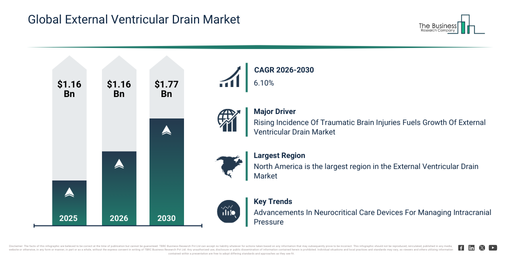
    The external ventricular drain market has shown robust development, with its valuation expected to rise from $4.99 billion in 2025 to $5.33 billion in 2026, representing a compound annual growth rate (CAGR) of 6.7%. This historical growth is fueled by a growing incidence of traumatic brain injuries, increasing cases of intracranial hemorrhage, a higher prevalence of hydrocephalus, expansion in neurosurgical care facilities, and wider adoption of critical care monitoring protocols.

    Download A Free Sample Report For Comprehensive Market Insights:

    https://www.thebusinessresearchcompany.com/sample.aspx?id=15808&type=smp

    Looking ahead, the market is projected to expand further, reaching $6.74 billion by 2030 at a CAGR of 6.1%. This anticipated growth is supported by an increasing burden of neurological disorders, rising demand for advanced neurocritical care solutions, escalating investments in neurosurgical infrastructure, enhanced awareness about intracranial pressure management, and broader accessibility to specialized neurological hospitals. Key market trends expected during this period include greater usage of external ventricular drains in neurocritical care, adoption of adjustable and continuous EVD systems, increased focus on precise intracranial pressure control, strengthening infection control measures in cerebrospinal fluid drainage, and expanding applications of EVDs for traumatic brain injury management.

    Critical Factors Fueling Growth in the External Ventricular Drain Market

    The rising number of traumatic brain injury (TBI) cases is a primary driver for this market’s expansion. TBI, caused by external forces impacting the brain, can lead to temporary or lasting impairments affecting cognitive, physical, and social functions. The surge in TBI occurrences is linked to factors such as more individuals participating in contact sports, higher motor vehicle accident rates, and an aging population susceptible to falls. These injuries often cause elevated intracranial pressure due to swelling, bleeding, or cerebrospinal fluid accumulation, which can worsen brain damage.

    Access The Complete External Ventricular Drain Market Report:

    https://www.thebusinessresearchcompany.com/report/external-ventricular-drain-global-market-report

    External ventricular drains play a crucial role by removing excess cerebrospinal fluid and enabling continuous monitoring of intracranial pressure, preventing further harm. For example, in October 2023, the World Federation of Neurology reported that over 40% of the global population suffers from neurological conditions, a number projected to nearly double by 2050. This growing neurological disease burden underscores the increasing demand for EVDs.

    Detailed Segmentation of the External Ventricular Drain Market

    This report organizes the external ventricular drain market into several key segments:

    1) Product Categories:

    – External Ventricular Drainage Sets

    – Accessories

    2) Applications:

    – Traumatic Brain Injury

    – Intracranial Hemorrhage

    – Hydrocephalus

    – Other Applications

    3) End-User Groups:

    – Hospitals

    – Specialty Hospitals

    – Specialty Clinics

    – Other End-Users

    Within the External Ventricular Drainage Sets category, subtypes include:

    – Standard External Ventricular Drainage Set

    – Adjustable External Ventricular Drainage Set

    – Continuous External Ventricular Drainage Set

    Accessories encompass items such as catheters, pressure monitoring devices, drainage bags, and connecting tubes.

    Innovations and Trends Shaping the External Ventricular Drain Market’s Future

    Leading companies in the external ventricular drain sector are concentrating on developing cutting-edge neurocritical care devices to enhance treatment efficacy and streamline clinical workflows. These devices support critical functions like intracranial pressure monitoring and cerebrospinal fluid drainage for patients with severe neurological conditions.

    For instance, in March 2025, Anuncia Medical Inc., a US-based neurotherapeutic device developer, received FDA Breakthrough Device Designation for its ReFlow External Ventricular Drains. This innovative device offers a unique, noninvasive manual flushing mechanism that restores and maintains cerebrospinal fluid flow. It can be operated by nursing staff during routine checks, potentially reducing the length of ICU stays, necessity for additional surgeries, and the costs associated with EVD replacements. This approval expands Anuncia’s product range from hydrocephalus management into acute neurocritical care, promising improved patient outcomes and more efficient clinical processes.

    Key Players and Competitive Positioning in the External Ventricular Drain Market

    Important companies active in this market include Medtronic Plc, B. Braun SE, Integra LifeSciences, Teleflex Incorporated, Spiegelberg GmbH & Co. KG, IRRAS AB, Sophysa, Raumedic AG, Luciole Medical AG, Fuji Systems Corporation, Ad-Tech Medical Instrument Corporation, Mizuho Medical Co. Ltd., Nipro Corporation, Kaneka Corporation, Samyang Biopharmaceuticals Corporation, Neuromedex GmbH, SILMAG S.A., Tokibo Co. Ltd., Well Lead Medical Co. Ltd., and Beijing Xinlingwei Technology Co. Ltd. These firms are strategically positioning themselves by investing in innovation and expanding their product portfolios.

    Regional Market Outlook and Growth Drivers for External Ventricular Drains

    In 2025, North America held the largest share of the external ventricular drain market. However, the Asia-Pacific region is anticipated to be the fastest-growing market over the forecast period. The market report covers major regions including Asia-Pacific, South East Asia, Western Europe, Eastern Europe, North America, South America, the Middle East, and Africa, providing a comprehensive view of global market trends and growth opportunities.

    Get in touch with us:

    The Business Research Company: https://www.thebusinessresearchcompany.com/

    Americas: +1 310-496-7795

    Asia: +44 7882 955267 & +91 8897263534

    Europe: +44 7882 955267

    Email us at: marketing@tbrc.info

    Follow us on:

    LinkedIn: https://in.linkedin.com/company/the-business-research-company

    YouTube: https://www.youtube.com/channel/UC24_fI0rV8cR5DxlCpgmyFQ

    Global Market Model: https://www.thebusinessresearchcompany.com/global-market-model
  • External Pacemakers Market Forecast Signals New Revenue Opportunities Through 2030

    External Pacemakers Market Forecast Signals New Revenue Opportunities Through 2030

    Delivering more actionable and strategically valuable research, The Business Research Company’s 2026 market reports feature market attractiveness analysis, total addressable market evaluation, company benchmarking matrices, interactive Excel dashboards, expanded supply chain intelligence, emerging startup coverage, and detailed product insights.

    The external pacemakers market has experienced notable growth in recent years, driven by various healthcare developments and increasing medical needs. With ongoing advancements and rising demand, this sector is expected to continue expanding steadily over the coming years. Below is an overview of the market size, key growth drivers, segmentation, emerging trends, major players, and regional insights shaping the external pacemakers industry.

    Expected Market Growth Trajectory of the External Pacemakers Market

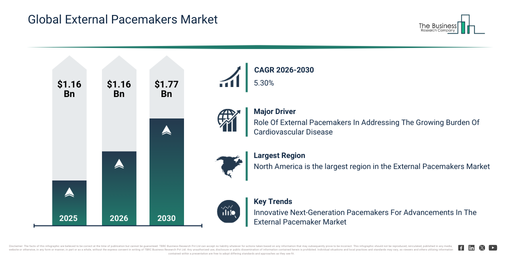
    The external pacemakers market has seen a strong increase in size, rising from $1.6 billion in 2025 to $1.7 billion in 2026, reflecting a compound annual growth rate (CAGR) of 5.9%. This past growth is largely due to factors such as the rising prevalence of bradycardia, more frequent occurrences of acute myocardial infarction, a boost in cardiac surgeries, expanded emergency medical infrastructure, and greater access to cardiac critical care units. Looking ahead, the market is projected to grow further, reaching $2.09 billion by 2030, with a CAGR of 5.3%. The anticipated growth is fueled by the increasing burden of cardiovascular diseases, a growing elderly population, higher demand for temporary cardiac pacing devices, the rise of advanced cardiac care centers, and improved availability of emergency and critical care services.

    Factors Fueling Demand in the External Pacemakers Market

    One of the main factors driving market growth is the increasing incidence of cardiovascular diseases worldwide. Cardiovascular disease (CVD) encompasses conditions affecting the heart and blood vessels and has been rising due to sedentary lifestyles, poor nutrition, obesity, smoking, hypertension, and stress. External pacemakers play a vital role in managing these conditions by regulating abnormal heart rhythms and supporting cardiac function. For instance, in 2023, the Centers for Disease Control and Prevention in the US reported that cardiovascular disease caused 919,032 deaths, representing roughly one-third of all deaths in the country. This alarming statistic highlights the critical need for cardiac devices like external pacemakers, which in turn propels the market’s expansion.

    Healthcare Spending as a Key Driver of External Pacemaker Market Growth

    Rising healthcare expenditure is another significant factor encouraging the growth of the external pacemakers market. Healthcare spending, which includes investments in medical goods, services, and research, helps advance technologies and improves access to life-saving devices. This increased funding supports innovations in external pacemaker development and facilitates broader availability of these therapies. For example, the Centers for Medicare & Medicaid Services reported that US healthcare spending grew by 7.5% in 2023, reaching $4.9 trillion, which equates to approximately $14,570 per person. This upward trend in healthcare investment is expected to continue driving advancements and adoption in the external pacemaker sector.

    Access The Complete External Pacemakers Market Report:

    https://www.thebusinessresearchcompany.com/report/external-pacemakers-global-market-report

    How the External Pacemakers Market Is Organized Across Key Segments

    The external pacemakers market is categorized into several important segments to better understand its structure:

    1) Product Types: Single Chamber and Dual Chamber pacemakers.

    2) Applications: Bradycardia and Acute Myocardial Infarction.

    3) End-users: Hospitals, Ambulatory Surgical Centers, and Other End-users.

    Further segmentation includes subcategories such as unipolar and bipolar single chamber pacemakers, as well as unipolar and bipolar dual chamber pacemakers, reflecting device variations tailored to specific medical needs.

    Innovations and Trends Shaping the External Pacemakers Market

    Manufacturers in the external pacemakers market are focusing on innovative technologies, particularly miniaturized or leadless pacemakers, which enhance battery life and improve patient comfort. These smaller devices reduce complications by eliminating leads and surgical pockets. For example, in May 2023, Medtronic Plc, based in Ireland, received FDA approval for its next-generation Micra AV2 and Micra VR2 leadless pacemakers. These models offer up to 40% longer battery life than earlier versions, with an estimated median battery life of about 16 to 17 years. Additionally, they feature improved algorithms for automatic AV synchrony programming and enhanced tracking for active patients, representing a significant advancement in cardiac rhythm management technology.

    Key Players Driving the External Pacemakers Market Forward

    Several prominent companies dominate the external pacemakers market landscape. These include ZOLL Medical Corporation, Shree Pacetronix Ltd, Osypka Medical Inc, Medtronic plc, Abbott Laboratories, Boston Scientific Corporation, Lepu Medical Technology Co Ltd, Biotronik SE & Co KG, LivaNova PLC, MicroPort CRM, Nihon Kohden Corporation, BPL Medical Technologies, Schiller AG, Progetti Medical Equipment Solutions, Instramed Indústria Médico Hospitalar, Corpuls GmbH, Skanray Technologies Ltd, Bexen Cardio, CU Medical Systems Inc, and Advanced Instrumentations. These key players contribute to technological innovation, product development, and market expansion globally.

    Regional Market Insights and Growth Opportunities

    In terms of geography, North America held the largest share of the external pacemakers market in 2025. However, the Asia-Pacific region is anticipated to experience the fastest growth over the forecast period. The comprehensive market analysis covers regions including Asia-Pacific, South East Asia, Western Europe, Eastern Europe, North America, South America, the Middle East, and Africa, offering a global perspective on trends, demand drivers, and investment opportunities in the external pacemakers space.

    Get in touch with us:

    The Business Research Company: https://www.thebusinessresearchcompany.com/

    Americas: +1 310-496-7795

    Asia: +44 7882 955267 & +91 8897263534

    Europe: +44 7882 955267

    Email us at: marketing@tbrc.info

    Follow us on:

    LinkedIn: https://in.linkedin.com/company/the-business-research-company

    YouTube: https://www.youtube.com/channel/UC24_fI0rV8cR5DxlCpgmyFQ

    Global Market Model: https://www.thebusinessresearchcompany.com/global-market-model
  • Exosome Diagnostic And Therapeutic Market Growth Is Accelerating As Industry Transformation Continues

    Exosome Diagnostic And Therapeutic Market Growth Is Accelerating As Industry Transformation Continues

    Enhanced with market attractiveness analysis, total addressable market evaluation, company benchmarking matrices, interactive Excel dashboards, expanded supply chain intelligence, emerging startup coverage, and detailed product insights, The Business Research Company’s 2026 market reports deliver more actionable and strategically valuable research.

    The exosome diagnostic and therapeutic sector has witnessed remarkable expansion recently, driven by scientific breakthroughs and increasing investment in related fields. As the market evolves, new technologies and growing clinical applications promise substantial revenue growth in the years ahead. Let’s explore the current market size, important growth drivers, segmentation, competitive landscape, and regional outlook to better understand this dynamic industry.

    Rapid Market Growth Projections for the Exosome Diagnostic and Therapeutic Sector

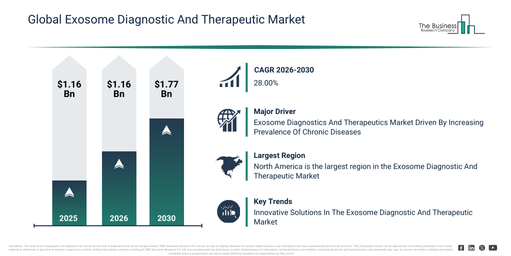
    The exosome diagnostic and therapeutic market has experienced significant growth, rising from $0.6 billion in 2025 to an expected $0.77 billion in 2026, reflecting a strong compound annual growth rate (CAGR) of 28.0%. This surge during the historical period has been propelled by progress in molecular biology, increased funding in regenerative medicine, expanding academic research on extracellular vesicles, improvements in biotech infrastructure, and broader availability of analytical tools for exosomes. Looking ahead, the market is projected to accelerate further, reaching $2.07 billion by 2030 at the same CAGR of 28.0%. Factors contributing to this future growth include the clinical adoption of exosome therapies, rising interest in personalized medicine, AI-driven data analysis for exosomes, pharmaceutical investment in biologic delivery platforms, and clearer regulatory frameworks for advanced treatments. Key trends shaping this period involve enhanced targeted drug delivery using exosomes, wider uptake of liquid biopsy diagnostics, growing demand for regenerative applications, advanced isolation technologies, and a concentrated focus on precision therapeutics.

    Download A Free Sample Report For Comprehensive Market Insights:

    https://www.thebusinessresearchcompany.com/sample.aspx?id=12346&type=smp

    The Rising Burden of Chronic Diseases Bolsters Market Expansion

    One of the main forces fueling growth in the exosome diagnostic and therapeutic market is the increasing prevalence of chronic illnesses worldwide. Chronic diseases, defined as conditions lasting three months or more and often worsening over time, create a critical need for improved monitoring and treatment strategies. Exosomes provide promising biomarkers in cancer and other diseases, enabling more sensitive detection methods and advancing personalized medicine approaches. For example, a January 2023 report from the National Center for Biotechnology Information (NCBI) projects that by 2050, approximately 142.66 million individuals globally will be living with chronic diseases. This growing patient population is driving demand for innovative exosome-based diagnostics and therapies.

    How the Exosome Diagnostic and Therapeutic Market Is Structured

    This market divides into distinct categories based on product types, applications, and end users. Product segments include instruments, software, and reagents and kits. Instruments further break down into exosome isolation systems, characterization tools, and analysis devices. Software consists of data analysis programs and exosome profiling software. Reagents and kits encompass isolation kits, characterization reagents, and assay kits. Application areas cover diagnostics and therapeutic uses. End users range from academic and research institutions to pharmaceutical and biotechnology companies, hospitals and clinics, as well as other healthcare providers. This detailed segmentation highlights the diverse scope and multifaceted nature of the exosome market.

    Access The Complete Exosome Diagnostic And Therapeutic Market Report:

    https://www.thebusinessresearchcompany.com/report/exosome-diagnostic-and-therapeutic-global-market-report

    Innovations and Competitive Moves Driving Market Dynamics

    Leading companies in this space are focusing on developing cutting-edge products designed to broaden their customer base and boost revenues. Notably, sample purification systems, which remove impurities from biological samples, are gaining attention. For instance, in February 2023, Biological Dynamics Inc., a US biotechnology firm, introduced ExoVerita, an exosome isolation platform that supports early disease detection and other clinical applications. Their ExoVita Pancreas assay can identify specific exosomal proteins associated with Stage 1 and Stage 2 pancreatic ductal adenocarcinoma (PDAC) from blood samples processed with the proprietary ExoVerita technology. This platform is being validated through the ExoLuminate registry trial (NCT05625529), which is actively enrolling patients at high risk for PDAC, including those with pancreatitis, genetic predispositions, or new diabetes diagnoses over age 50. Such innovations exemplify how companies are enhancing diagnostic precision and therapeutic potential.

    Leading Organizations Shaping the Future of the Exosome Market

    The competitive landscape is shaped by numerous key players actively advancing exosome diagnostics and therapeutics. Prominent companies include Thermo Fisher Scientific Inc., Miltenyi Biotec GmbH, Malvern Instruments Inc., System Biosciences LLC, NanoSomix Inc., Exosome Diagnostics Inc., Evox Therapeutics Ltd., ExCoBio Inc., Codiak BioSciences Inc., Capricor Therapeutics Inc., Aethlon Medical Inc., NX Pharmagen Inc., Aegle Therapeutic Corporation, Ciloa, Sistemic Inc., Theoria Science, Mantra Bio Inc., Lonza Group AG, and Bio-Techne Corp. These organizations are investing in research, product development, and strategic partnerships to lead innovations and capture market share.

    Regional Market Distribution and Growth Opportunities

    In 2025, North America held the largest share of the exosome diagnostic and therapeutic market. However, the Asia-Pacific region is anticipated to exhibit the fastest growth during the forecast period. The comprehensive market analysis covers major geographical areas including Asia-Pacific, South East Asia, Western Europe, Eastern Europe, North America, South America, the Middle East, and Africa, providing insight into where the most significant opportunities will emerge globally.

    Get in touch with us:

    The Business Research Company: https://www.thebusinessresearchcompany.com/

    Americas: +1 310-496-7795

    Asia: +44 7882 955267 & +91 8897263534

    Europe: +44 7882 955267

    Email us at: marketing@tbrc.info

    Follow us on:

    LinkedIn: https://in.linkedin.com/company/the-business-research-company

    YouTube: https://www.youtube.com/channel/UC24_fI0rV8cR5DxlCpgmyFQ

    Global Market Model: https://www.thebusinessresearchcompany.com/global-market-model
  • Exoskeleton Rehabilitation Market Outlook Highlights The Next Major Growth Opportunities

    Exoskeleton Rehabilitation Market Outlook Highlights The Next Major Growth Opportunities

    Through market attractiveness analysis, total addressable market evaluation, company benchmarking matrices, interactive Excel dashboards, expanded supply chain intelligence, emerging startup coverage, and detailed product insights, The Business Research Company’s 2026 market reports provide more actionable and strategically valuable research.

    The use of exoskeletons in rehabilitation is gaining rapid traction as a promising approach to assist individuals with mobility challenges. This innovative technology is transforming therapy methods by enabling more effective and intensive rehabilitation, especially for those with neurological and physical impairments. Let’s explore the current market status, key growth drivers, major players, and future trends shaping the exoskeleton rehabilitation landscape.

    Current Market Value and Expected Growth of the Exoskeleton Rehabilitation Market

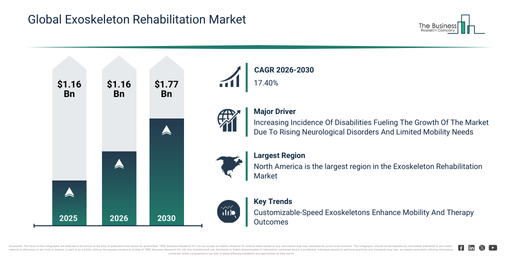
    The exoskeleton rehabilitation market has seen significant expansion recently and is projected to continue growing swiftly. Market size is anticipated to increase from $1.3 billion in 2025 to $1.53 billion in 2026, marking a strong compound annual growth rate (CAGR) of 17.7%. This advancement has been driven by rising stroke incidents, spinal cord injuries, the widespread adoption of rehabilitation technologies, a shortage of therapists, and a growing demand for intensive rehabilitation programs. Looking ahead, the market is forecasted to reach $2.91 billion by 2030, sustaining a CAGR of 17.4%. Key factors supporting this future growth include the rise of home-based rehabilitation solutions, AI-supported therapy systems, aging populations, expansion in neurorehabilitation services, and remote therapy monitoring capabilities.

    Download A Free Sample Report For Comprehensive Market Insights:

    https://www.thebusinessresearchcompany.com/sample.aspx?id=30277&type=smp

    Primary Factors Fueling the Expansion of the Exoskeleton Rehabilitation Market

    One of the main forces behind the exoskeleton rehabilitation market’s growth is the increasing prevalence of disabilities worldwide. Disabilities often involve long-lasting physical, sensory, or cognitive limitations that impair daily functioning. This rise is mainly due to neurological conditions, with improved survival rates after strokes and injuries leading to chronic impairments requiring ongoing rehabilitation.

    Exoskeleton rehabilitation devices cater well to these needs by offering wearable robotic support that assists patients with reduced mobility. These systems reduce physical fatigue through guided movement and repetitive therapy, which enhances recovery outcomes and promotes patient independence. For instance, data from Eurostat in July 2025 showed that in 2024, nearly 23.9% of people aged 16 and older across the European Union reported some form of disability or activity limitation, underscoring a growing need for effective rehabilitation technologies like exoskeletons.

    Detailed Market Segmentation and High-Growth Areas in the Exoskeleton Rehabilitation Sector

    This market is broken down into several key segments to better understand growth opportunities:

    By Product Type: Lower Limb Exoskeletons, Upper Limb Exoskeletons, and Full Body Exoskeletons

    By Mobility Mode: Mobile and Stationary Devices

    By Application: Neurological Disorders, Orthopedic Disorders, Spinal Cord Injury, Stroke, and other uses

    By End-User: Hospitals and Clinics, Rehabilitation Centers, and other consumers

    Within these categories, subsegments include specialized systems such as neurorehabilitation, gait training, mobility assistance, and balance support for lower limbs; arm, hand, shoulder, elbow, and wrist support for upper limbs; and integrated full-body support providing multi-joint assistance and postural control.

    Access The Complete Exoskeleton Rehabilitation Market Report:

    https://www.thebusinessresearchcompany.com/report/global-exoskeleton-rehabilitation-market-report

    Noteworthy Innovations and Trends Driving Long-Term Demand in Exoskeleton Rehabilitation

    Leading companies in this sector are pushing the envelope by developing advanced, customizable exoskeletons that enhance therapy precision and patient comfort. A key innovation is customizable speed exoskeleton systems, which allow therapists or users to tailor walking or movement speeds according to individual needs.

    For example, in April 2025, Lifeward Ltd., an Israeli medical device manufacturer, introduced the ReWalk 7 Personal Exoskeleton. This wearable robotic suit supports powered hip and knee motion, enabling individuals with paraplegia to stand, walk, and climb stairs with improved stability. It features a user-friendly interface that simplifies transitioning between daily activities, reducing physical effort and boosting user confidence.

    Who Are the Leading Companies Influencing the Exoskeleton Rehabilitation Market?

    The market features several prominent players driving innovation and adoption, including Ottobock SE and Co KGaA, Fourier Intelligence, DIH Holding US Inc., Cyberdyne Inc., Wandercraft SAS, Myomo Inc., Ekso Bionics Holdings Inc., Tyromotion GmbH, Lifeward Inc., Able Human Motion SL, Bioservo Technologies AB, ExoAtlet Global SA, Bama Teknoloji, Focal Meditech BV, B Temia Inc., Bionik Laboratories Corp, Gogoa Mobility Robots SL, Rex Bionics Ltd., Wearable Robotics Srl, and Bionic Yantra Private Limited.

    Regional Market Leaders and Growth Outlook for Exoskeleton Rehabilitation

    In 2025, North America emerged as the largest market for exoskeleton rehabilitation, reflecting strong healthcare infrastructure and technology adoption. However, the Asia-Pacific region is expected to experience the fastest growth during the forecast period, driven by expanding healthcare access, increasing aging populations, and rising investments in rehabilitation technology. The report also covers market trends across other regions, including South East Asia, Western Europe, Eastern Europe, South America, the Middle East, and Africa, providing a global perspective on this evolving industry.

    Get in touch with us:

    The Business Research Company: https://www.thebusinessresearchcompany.com/

    Americas: +1 310-496-7795

    Asia: +44 7882 955267 & +91 8897263534

    Europe: +44 7882 955267

    Email us at: marketing@tbrc.info

    Follow us on:

    LinkedIn: https://in.linkedin.com/company/the-business-research-company

    YouTube: https://www.youtube.com/channel/UC24_fI0rV8cR5DxlCpgmyFQ

    Global Market Model: https://www.thebusinessresearchcompany.com/global-market-model
  • E-Textile Health Monitoring Market Trends And Growth Drivers Point To Strong Future Potential

    E-Textile Health Monitoring Market Trends And Growth Drivers Point To Strong Future Potential

    Delivering more actionable and strategically valuable research, The Business Research Company’s 2026 market reports feature market attractiveness analysis, total addressable market evaluation, company benchmarking matrices, interactive Excel dashboards, expanded supply chain intelligence, emerging startup coverage, and detailed product insights.

    The e-textile health monitoring market is rapidly evolving and gaining traction as wearable technology becomes more sophisticated and widely adopted. This sector combines textile innovation with health monitoring capabilities, creating new opportunities for patient care and fitness tracking. Let’s explore the current market size, growth drivers, key segments, major players, and regional dynamics shaping this exciting industry.

    Significant Expansion in the E-Textile Health Monitoring Market Size

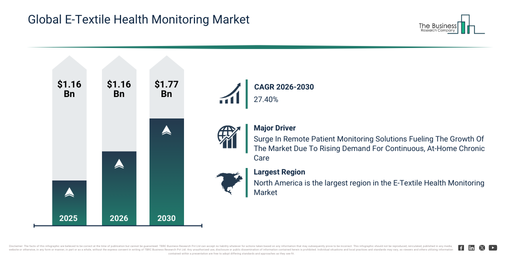
    The e-textile health monitoring market has witnessed remarkable growth recently. It is projected to increase from $3.59 billion in 2025 to $4.59 billion in 2026, achieving a strong compound annual growth rate (CAGR) of 27.7%. This historical growth is largely fueled by the rising adoption of wearable health devices, advancements in flexible electronics, the growing prevalence of chronic illnesses, increased demand for remote patient monitoring, and innovations in conductive textile materials. Moving forward, the market is expected to surge even further, reaching $12.09 billion by 2030 with a CAGR of 27.4%. Factors driving this future expansion include integration with AI-powered health platforms, broader wireless communication adoption, increasing use in sports and fitness, regulatory approvals for clinical use, and a rising demand for personalized healthcare solutions. Key trends anticipated during this period encompass real-time health data analytics, integrated wearable sensors, remote patient monitoring, predictive health assessments, and smart textile-enabled diagnostics.

    Download A Free Sample Report For Comprehensive Market Insights:

    https://www.thebusinessresearchcompany.com/sample.aspx?id=29056&type=smp

    Growing Demand for Remote Patient Monitoring Boosts Market Growth

    A major factor propelling the e-textile health monitoring market is the increasing need for remote patient monitoring (RPM) solutions. RPM technologies allow healthcare providers to continuously track and manage patient health data through connected devices and digital platforms. The surge in chronic diseases globally has heightened the adoption of these solutions, as they offer continuous monitoring of vital signs and early detection of potential health problems, leading to timely interventions and fewer hospital readmissions. E-textile health monitoring supports this trend by embedding sensors into textiles to measure physiological parameters such as heart rate, respiration, and body temperature in real-time, providing a comfortable and ongoing monitoring option for patients. For instance, in August 2025, the US Department of Health and Human Services reported that nearly 1 million people were enrolled in remote patient monitoring programs in 2024—a 27% increase from the previous year—highlighting the growing acceptance and demand for these technologies.

    Impact of Rising Respiratory Disorders on E-Textile Health Monitoring Market

    Another key driver of growth in the e-textile health monitoring market is the increasing prevalence of respiratory disorders, which creates a heightened need for continuous breathing monitoring and early detection. Respiratory conditions disrupt normal lung and airway functions, making breathing difficult and oxygen exchange less effective. The rise in pollution-related lung damage has led to more cases of asthma, chronic bronchitis, and other respiratory ailments. E-textiles assist in managing these disorders by continuously tracking breathing patterns, enabling early identification of abnormalities and prompting timely medical interventions to avoid complications. For example, the Center for Infectious Disease Research and Policy (CIDRAP) noted that in 2023, 8.2 million new tuberculosis cases were diagnosed worldwide, up from 7.5 million in 2022. This growing patient population underscores the expanding demand for e-textile solutions in respiratory care.

    Access The Complete E-Textile Health Monitoring Market Report:

    https://www.thebusinessresearchcompany.com/report/e-textile-health-monitoring-global-market-report

    Breakdown of E-Textile Health Monitoring Market Segments and Strategic Avenues

    This market is segmented into several categories to better understand product offerings and applications:

    1) Product Type includes Wearable Health-Monitoring E-Textiles, Medical-Grade Monitoring E-Textiles, Consumer Fitness & Wellness E-Textiles, Rehabilitation & Assistive E-Textiles, and other types.

    2) Technology covers Sensor Integration, Wireless Communication, Conductive Materials, and other innovations.

    3) Material segments are Conductive Yarns, Conductive Fabrics, and other materials.

    4) Application areas include Cardiac Monitoring, Respiratory Monitoring, Activity Monitoring, Temperature Monitoring, and additional uses.

    5) End-Users comprise Hospitals and Clinics, Homecare Settings, Sports and Fitness, Military and Defense, and others.

    Further subcategories provide detailed insights such as types of wearable e-textiles—smart shirts, pants, socks, and undergarments—and medical-grade textiles designed for cardiac or respiratory monitoring, continuous vital sign tracking, and clinical remote monitoring. Likewise, consumer fitness apparel, rehabilitation garments, and other sensor-embedded textile products like smart bandages and monitoring patches are included.

    Key Industry Players Leading the E-Textile Health Monitoring Market

    Several prominent companies are shaping the competitive landscape of the e-textile health monitoring market, including Myant Health Inc., Smartex Srl, Siren Care Inc., Carre Technologies Inc., BioSerenity, Chronolife SAS, Sensoria Health Inc., Xenoma Inc., AiQ Smart Clothing Inc., Embro GmbH, Interactive Wear AG, Loomia Technologies Inc., Ohmatex ApS, Nextiles Inc., Wearable X Inc., Sensing Tex S.L., TexRay Industrial Co. Ltd., Clothing Plus Oy, HealthWatch Ltd., and Athos Works Inc.

    Geographic Market Leadership and Growth Prospects

    In 2025, North America held the largest share of the e-textile health monitoring market. However, the Asia-Pacific region is expected to experience the fastest growth during the forecast period. The market report covers key areas including Asia-Pacific, South East Asia, Western Europe, Eastern Europe, North America, South America, the Middle East, and Africa, providing a detailed global perspective on emerging trends and regional market dynamics.

    Get in touch with us:

    The Business Research Company: https://www.thebusinessresearchcompany.com/

    Americas: +1 310-496-7795

    Asia: +44 7882 955267 & +91 8897263534

    Europe: +44 7882 955267

    Email us at: marketing@tbrc.info

    Follow us on:

    LinkedIn: https://in.linkedin.com/company/the-business-research-company

    YouTube: https://www.youtube.com/channel/UC24_fI0rV8cR5DxlCpgmyFQ

    Global Market Model: https://www.thebusinessresearchcompany.com/global-market-model
  • Esophagoscopes And Gastroscopes Market Expansion Is Reshaping Competitive Dynamics Across The Industry

    Esophagoscopes And Gastroscopes Market Expansion Is Reshaping Competitive Dynamics Across The Industry

    Enhanced with market attractiveness analysis, total addressable market evaluation, company benchmarking matrices, interactive Excel dashboards, expanded supply chain intelligence, emerging startup coverage, and detailed product insights, The Business Research Company’s 2026 market reports deliver more actionable and strategically valuable research.

    The esophagoscopes and gastroscopes market is experiencing notable growth as advancements in medical technology and rising disease prevalence drive demand for improved diagnostic tools. Increasing awareness and adoption of innovative endoscopic procedures are setting the stage for significant expansion in this specialized healthcare segment.

    Steady Expansion in the Esophagoscopes and Gastroscopes Market Size

    The market for esophagoscopes and gastroscopes has seen considerable growth in recent years. It is projected to grow from $1.77 billion in 2025 to $1.88 billion in 2026, reflecting a compound annual growth rate (CAGR) of 6.2%. This growth during the historical period is largely due to the rising incidence of gastrointestinal disorders, expanded adoption of endoscopic diagnostics, growth in hospital gastroenterology units, increased awareness about early diagnosis, and a larger pool of trained endoscopy specialists.

    Download A Free Sample Report For Comprehensive Market Insights:

    https://www.thebusinessresearchcompany.com/sample.aspx?id=12979&type=smp

    Future Growth Prospects for Esophagoscopes and Gastroscopes

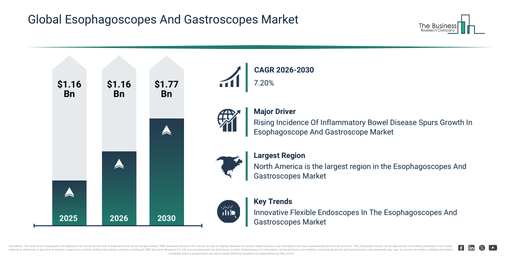
    Looking ahead, the market is expected to continue its upward trajectory, reaching $2.48 billion by 2030 with a CAGR of 7.2%. Factors contributing to this forecasted expansion include the growing preference for minimally invasive therapeutic procedures, rising investments in advanced endoscopic imaging technologies, increased use of disposable endoscopes, growth in outpatient diagnostic services, and heightened emphasis on patient safety and infection control. Key trends anticipated to influence the market involve wider adoption of high-definition imaging endoscopes, expanded use of minimally invasive diagnostics, rising demand for single-use devices, growth in therapeutic endoscopy applications, and stronger infection prevention protocols.

    Rising Inflammatory Bowel Disease Cases Bolster Market Demand

    One of the primary factors propelling the esophagoscopes and gastroscopes market is the increasing prevalence of inflammatory bowel disease (IBD), a chronic condition causing inflammation within the digestive tract. These endoscopic devices play a crucial role in diagnosing and managing IBD by providing clear visualization of gastrointestinal interiors. For instance, a March 2023 study published in the Journal of the Canadian Association of Gastroenterology forecasts that the incidence rate of IBD in Canada will rise from 825 per 100,000 people in 2023 to 1,075 per 100,000 by 2035. This upward trend in IBD cases underpins growing demand for esophagoscopes and gastroscopes.

    Access The Complete Esophagoscopes And Gastroscopes Market Report:

    https://www.thebusinessresearchcompany.com/report/esophagoscopes-and-gastroscopes-global-market-report

    The Esophagoscopes and Gastroscopes Market Segmentation Overview

    This market is categorized into distinct segments for better insight. By type, products include rigid, flexible, transnasal, and other varieties. Application segments cover conditions such as gastroesophageal reflux disease, ulcers, Barrett’s esophagus, celiac disease, and others. End users span hospitals, ambulatory surgical centers, specialty clinics, diagnostic centers, and additional healthcare facilities. Further subcategories divide types into rigid esophagoscopes and gastroscopes, flexible esophagoscopes and gastroscopes, transnasal variants, as well as single-use and dual-use endoscopes.

    Innovative Technologies Shaping the Esophagoscopes and Gastroscopes Market

    Leading companies in this field are heavily investing in innovation, particularly in flexible endoscopy technology, to maintain a competitive edge. Flexible endoscopes consist of a bendable tube equipped with a camera that sends real-time images, facilitating minimally invasive examination of internal organs like the gastrointestinal tract. For example, in October 2024, US biotechnology firm Lumicell received a $400,000 Phase I Small Business Innovation Research (SBIR) grant from the National Cancer Institute (NCI). This funding supports development of a cutting-edge flexible endoscope aimed at diagnosing Barrett’s esophagus. The device will integrate far infrared fluorescence with reflected light imaging to detect potentially cancerous lesions instantly. This novel technology seeks to improve early detection of esophageal adenocarcinoma, reduce reliance on random biopsies, and allow immediate treatment of identified abnormalities.

    Key Players Dominating the Esophagoscopes and Gastroscopes Market

    The esophagoscopes and gastroscopes industry features several prominent companies, including Medtronic plc, FUJIFILM Corporation, Boston Scientific Corporation, B Braun Melsungen AG, Olympus Corporation, HOYA Corporation, Karl Storz SE & Co. KG, CONMED Corporation, Ambu A/S, Richard Wolf GmbH, SonoScape Medical Corporation, Vimex Endoscopy Sp. z o.o., Smart Medical Systems Ltd., Jedmed Instrument Co, Endomed Systems GmbH, Maxer Endoscopy GmbH, Surtex Instruments Limited, FENTEX medical GmbH, Machida Endoscope Co. Ltd., Aohua Endoscopy Co. Ltd., Zhejiang Shendasiao Medical Instrument Co. Ltd., Hangzhou Orient Medical Co. Ltd., and Optec Endoscopy Systems GmbH. These companies continue to push forward with research and development to meet evolving clinical needs.

    Regional Market Dynamics Highlight North America’s Leadership

    In 2025, North America held the largest revenue share in the esophagoscopes and gastroscopes market. Meanwhile, the Asia-Pacific region is expected to experience the fastest growth in the coming years. The market report covers important regional areas such as Asia-Pacific, South East Asia, Western Europe, Eastern Europe, North America, South America, the Middle East, and Africa, providing a comprehensive view of global market trends and opportunities.

    Get in touch with us:

    The Business Research Company: https://www.thebusinessresearchcompany.com/

    Americas: +1 310-496-7795

    Asia: +44 7882 955267 & +91 8897263534

    Europe: +44 7882 955267

    Email us at: marketing@tbrc.info

    Follow us on:

    LinkedIn: https://in.linkedin.com/company/the-business-research-company

    YouTube: https://www.youtube.com/channel/UC24_fI0rV8cR5DxlCpgmyFQ

    Global Market Model: https://www.thebusinessresearchcompany.com/global-market-model
  • Esophageal Dilator Market Forecast Reveals Where Future Industry Value Will Be Created

    Esophageal Dilator Market Forecast Reveals Where Future Industry Value Will Be Created

    Through market attractiveness analysis, total addressable market evaluation, company benchmarking matrices, interactive Excel dashboards, expanded supply chain intelligence, emerging startup coverage, and detailed product insights, The Business Research Company’s 2026 market reports provide more actionable and strategically valuable research.

    The esophageal dilator market has experienced significant growth recently, driven by advances in medical technology and increasing awareness of esophageal health issues. As demand rises for more effective and less invasive treatment options, this market is set for steady expansion over the coming years. Let’s explore the market’s size, key growth factors, segmentation, competitive landscape, and regional outlook in detail.

    Market Size and Expected Growth in the Esophageal Dilator Market

    The esophageal dilator market has strengthened considerably in recent years. It is projected to increase from a valuation of $1.57 billion in 2025 to $1.65 billion in 2026, exhibiting a compound annual growth rate (CAGR) of 5.2%. This historical growth is largely due to the limited availability of advanced esophageal dilators, continued dependence on traditional mechanical dilators, heightened awareness about esophageal conditions, expansion of hospital and clinic infrastructure, and wider adoption of standardized surgical techniques.

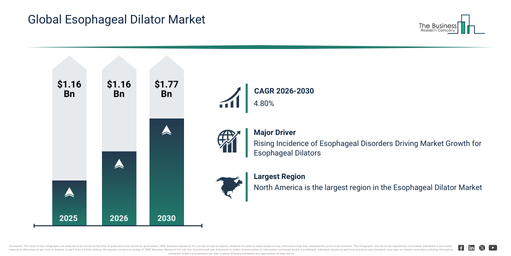
    Looking ahead, the market is expected to continue its upward trajectory, reaching $1.99 billion by 2030 with a CAGR of 4.8%. Factors anticipated to drive growth in this forecast period include innovations like controlled-release and pre-loaded balloon dilators, increased use of flexible and hydrostatic dilators, growth in ambulatory surgical centers, a rising elderly population with esophageal ailments, and progress in materials science and guided procedural technologies. Key trends shaping the market include a growing preference for minimally invasive esophageal treatments, increased adoption of balloon and hydrostatic dilators, rising prevalence of esophageal disorders, emphasis on patient safety and procedural precision, and integration of advanced materials to enhance durability and flexibility.

    Download A Free Sample Report For Comprehensive Market Insights:

    https://www.thebusinessresearchcompany.com/sample.aspx?id=19421&type=smp

    Rising Incidence of Esophageal Disorders as a Growth Catalyst

    One of the primary factors propelling the esophageal dilator market is the increasing prevalence of esophageal disorders. These conditions affect the esophagus, the passage that carries food and liquids from the mouth to the stomach. The rising rates of gastroesophageal reflux disease (GERD), obesity, and lifestyle changes have contributed to this upsurge. Esophageal dilators help alleviate symptoms by expanding narrowed sections of the esophagus, improving swallowing function and reducing discomfort.

    For example, data from the American Cancer Society in January 2024 highlights that in 2023, the US recorded 16,120 deaths due to esophageal cancer, with projections indicating a slight increase to 16,130 in 2024. Such statistics emphasize the growing burden of esophageal diseases and highlight the expanding need for effective dilator devices, thereby supporting market growth.

    Role of Minimally Invasive Procedures in Market Expansion

    The trend toward minimally invasive medical procedures is another key driver of the esophageal dilator market. These procedures involve smaller incisions and specialized instruments, reducing pain, recovery time, and tissue damage compared to traditional surgery. Patients increasingly prefer these options for faster recovery and less postoperative discomfort.

    Esophageal dilators play a vital role in these minimally invasive treatments by gently widening constricted parts of the esophagus, restoring smooth swallowing. For instance, the American Society of Plastic Surgeons reported in June 2024 that minimally invasive procedures grew by 7% in 2023, outpacing the 2% growth seen in traditional surgeries. This shift towards less invasive options is significantly contributing to the rising demand for esophageal dilators.

    Access The Complete Esophageal Dilator Market Report:

    https://www.thebusinessresearchcompany.com/report/esophageal-dilator-global-market-report

    Detailed Segmentation of the Esophageal Dilator Market

    The esophageal dilator market can be broken down into several key segments:

    1) By Dilator Type: Balloon Dilators, Mechanical Dilators, and Hydrostatic Dilators

    2) By Material: Plastic, Metal, and Other Materials

    3) By Esophageal Disease: Achalasia, Esophageal Strictures, Zenker’s Diverticulum, and Esophageal Cancer

    4) By End User: Hospitals, Ambulatory Surgical Centers, Clinics, and Doctors’ Offices

    Further subcategories include:

    • Balloon Dilators: Inflatable, Non-Inflatable, Pre-loaded, and Controlled-Release variants

    • Mechanical Dilators: Bougie, Metal, Flexible Mechanical, and Rigid Mechanical types

    • Hydrostatic Dilators: Fluid-Filled, High-Pressure, Low-Pressure, and Guide Wire-assisted Hydrostatic Dilators

    Competitive Landscape of the Esophageal Dilator Market

    Numerous prominent companies shape the competitive field of the esophageal dilator market. Leading players include Medtronic plc, Boston Scientific Corporation, Olympus Corporation, Cook Medical, Karl Storz SE & Co. KG, Micro-Tech Endoscopy, Endo-med Technologies Private Limited, Shaili Endoscopy, Bard Medical, GE Healthcare, Telemed Systems, Fiagon AG, Crospon Ltd., MFI Medical Equipments, Merit Medical Systems Inc., Becton Dickinson and Company, PENTAX Medical, M I Tech Co. Ltd., ELLA-CS, Taewoong Medical Co. Ltd., Albyn Medical, Ankon Medical, Alton Shanghai Medical Instruments, and Anrei Medical. These companies continue to innovate and expand their offerings to meet growing market demand.

    Geographical Distribution and Regional Market Insights

    In 2025, North America stood as the dominant region in the esophageal dilator market. The report also covers important regional markets including Asia-Pacific, South East Asia, Western Europe, Eastern Europe, South America, the Middle East, and Africa. While North America currently leads in market size, regions like Asia-Pacific are expected to demonstrate faster growth due to improving healthcare infrastructure and increasing awareness of esophageal health issues.

    Overall, the esophageal dilator market is positioned for steady growth driven by technological advancements, rising disease prevalence, and shifting patient preferences towards less invasive treatment options.

    Get in touch with us:

    The Business Research Company: https://www.thebusinessresearchcompany.com/

    Americas: +1 310-496-7795

    Asia: +44 7882 955267 & +91 8897263534

    Europe: +44 7882 955267

    Email us at: marketing@tbrc.info

    Follow us on:

    LinkedIn: https://in.linkedin.com/company/the-business-research-company

    YouTube: https://www.youtube.com/channel/UC24_fI0rV8cR5DxlCpgmyFQ

    Global Market Model: https://www.thebusinessresearchcompany.com/global-market-model
  • Esophageal Catheters Market Growth Through 2030 Creates New Strategic Opportunities

    Esophageal Catheters Market Growth Through 2030 Creates New Strategic Opportunities

    Delivering more actionable and strategically valuable research, The Business Research Company’s 2026 market reports feature market attractiveness analysis, total addressable market evaluation, company benchmarking matrices, interactive Excel dashboards, expanded supply chain intelligence, emerging startup coverage, and detailed product insights.

    The esophageal catheters market is witnessing significant growth, driven by advances in medical technology and increasing healthcare needs related to esophageal conditions. As diagnostic and therapeutic procedures continue to evolve, this industry is set to expand substantially, fueled by innovations and rising demand across various healthcare settings. Here’s a detailed look at the current market landscape, key growth factors, market segments, innovations, and regional dynamics.

    Steady Growth and Future Outlook for the Esophageal Catheters Market

    The esophageal catheters market has demonstrated strong growth in recent years, with its size expected to rise from $2.62 billion in 2025 to $2.82 billion in 2026, marking a compound annual growth rate (CAGR) of 7.6%. This growth during the past period has been supported by factors such as the increasing incidence of gastrointestinal disorders, more frequent diagnosis of GERD and dysphagia, expansion of gastroenterology departments, availability of advanced catheter designs, and the widespread use of diagnostic esophageal procedures.

    Download A Free Sample Report For Comprehensive Market Insights:

    https://www.thebusinessresearchcompany.com/sample.aspx?id=13010&type=smp

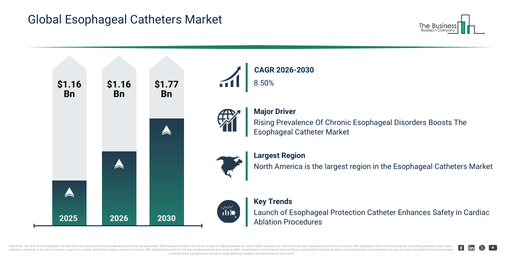
    Looking ahead, the market is projected to reach $3.91 billion by 2030, growing at an accelerated CAGR of 8.5%. Key drivers for this forecast include the rising preference for outpatient diagnostic solutions, wider adoption of minimally invasive treatments, growth in precision diagnostics, increased healthcare investments focused on gastrointestinal diseases, and an emphasis on patient-centered care approaches. Emerging trends in this period also highlight the growing use of single-use esophageal catheters, demand for precise pressure monitoring, expansion of minimally invasive diagnostic methods, rising radiofrequency ablation procedures, and an intensified focus on patient safety and comfort.

    Factors Fueling Demand in the Esophageal Catheters Market

    The market’s expansion is strongly influenced by the increasing prevalence of chronic esophageal disorders, which encompass medical conditions affecting the esophagus over extended periods. Esophageal catheters, such as manometry catheters, are essential for diagnosing these disorders by assessing pressure changes and motility along the esophageal tract.

    Access The Complete Esophageal Catheters Market Report:

    https://www.thebusinessresearchcompany.com/report/esophageal-catheters-global-market-report

    For instance, a report published by the National Library of Medicine in January 2023 predicted that esophageal cancer cases in the US would reach 739,666 with 723,466 deaths by 2030, and globally, 987,723 cases with 914,304 fatalities by 2040. This alarming rise in chronic esophageal conditions is a significant factor driving the demand for esophageal catheters used in diagnosis and treatment.

    Detailed Segment Breakdown of the Esophageal Catheters Market

    This market is segmented based on product type, applications, and end-users to provide a comprehensive overview:

    1) By Product Type:

    – Balloon Dilation Catheter

    – Irrigation Catheter

    – Pressure Monitoring Catheter

    – Radiofrequency Ablation Catheter

    – Suction Catheter

    2) By Application:

    – Gastroesophageal Reflux Disease (GERD)

    – Dysphagia

    – Chest Pain

    – Other Applications

    3) By End-User:

    – Hospitals

    – Clinics

    – Ambulatory Surgical Centers

    Further subcategories include distinctions such as single-use versus multi-use balloon dilation catheters, standard and specialty irrigation catheters, continuous and intermittent pressure monitoring catheters, circular and linear radiofrequency ablation catheters, as well as standard and pediatric suction catheters.

    Innovations Driving Transformation in the Esophageal Catheters Market

    Leading companies in the esophageal catheters sector are focusing on developing advanced technologies to enhance procedural safety and efficacy. One notable innovation is esophageal protection devices designed to minimize thermal injury during cardiac ablation treatments by physically displacing the esophagus away from ablation sites.

    For example, in February 2025, the US-based S4 Medical Corp. received FDA clearance and launched the esolution Atrial Fibrillation Esophageal Protection Device. This catheter-based device features a dual-lumen design with an outer sheath and an inner mechanical deflection component, tailored to conform to patient anatomy. Such devices represent important strides in improving patient safety and procedural outcomes.

    Prominent Companies Shaping the Future of the Esophageal Catheters Industry

    Some of the key players driving growth and innovation in this market include:

    Medtronic plc, Boston Scientific Corporation, B Braun Melsungen AG, Olympus Corporation, Teleflex Incorporated, Cook Medical Inc., Merit Medical Systems Inc., Avanos Medical Inc., Laborie Medical Technologies Inc., FUJIFILM Medical Systems, Taewoong Medical Co, Alicn Medical Co Ltd, Medcaptain Medical Technology Co Ltd, PENTAX Medical Co, EndoControl Medical, MicroTech Medical, Rotech Healthcare, Steris Medical Devices, SMI Endoscopy, and Halyard Health.

    Regional Market Dynamics Highlighting Growth Patterns

    In 2025, North America held the largest market share in the esophageal catheters industry, reflecting well-established healthcare infrastructure and advanced medical technology adoption. Meanwhile, the Asia-Pacific region is expected to be the fastest-growing market during the forecast period, driven by increasing healthcare investments, growing patient awareness, and expanding medical facilities. Other important regions covered in the market analysis include South East Asia, Western Europe, Eastern Europe, South America, the Middle East, and Africa, offering a global perspective on market developments.

    Get in touch with us:

    The Business Research Company: https://www.thebusinessresearchcompany.com/

    Americas: +1 310-496-7795

    Asia: +44 7882 955267 & +91 8897263534

    Europe: +44 7882 955267

    Email us at: marketing@tbrc.info

    Follow us on:

    LinkedIn: https://in.linkedin.com/company/the-business-research-company

    YouTube: https://www.youtube.com/channel/UC24_fI0rV8cR5DxlCpgmyFQ

    Global Market Model: https://www.thebusinessresearchcompany.com/global-market-model
  • Erectile Dysfunction Devices Market Size Projected To Increase From $2.34 Billion To $3.73 Billion During The Forecast Period

    Erectile Dysfunction Devices Market Size Projected To Increase From $2.34 Billion To $3.73 Billion During The Forecast Period

    Enhanced with market attractiveness analysis, total addressable market evaluation, company benchmarking matrices, interactive Excel dashboards, expanded supply chain intelligence, emerging startup coverage, and detailed product insights, The Business Research Company’s 2026 market reports deliver more actionable and strategically valuable research.

    The erectile dysfunction devices market has been experiencing swift growth, driven by a variety of health, demographic, and technological factors. This market is poised for continued expansion as awareness rises and new treatment options become more accessible worldwide. Let’s explore the current market size, key growth drivers, segmentation, emerging trends, and leading players shaping the future of this sector.

    Steady Market Expansion Projected for the Erectile Dysfunction Devices Market

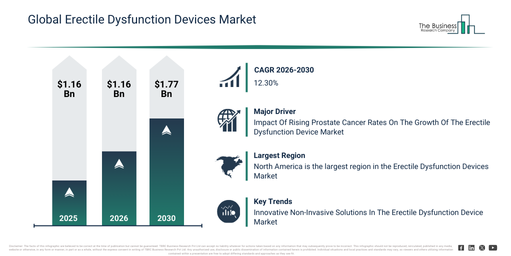
    The erectile dysfunction devices market is on a rapid growth trajectory, increasing from $2.09 billion in 2025 to $2.35 billion in 2026, supported by a compound annual growth rate (CAGR) of 12.3%. This upward trend is largely attributed to factors such as the growing prevalence of diabetes, rising cases of cardiovascular diseases, an aging male population, heightened awareness about erectile dysfunction therapies, and broader availability of urology care services. Looking ahead, this market is expected to reach $3.73 billion by 2030, maintaining the same CAGR of 12.3%. The anticipated growth during this period is fueled by a rise in lifestyle-related disorders, increasing focus on male health awareness, greater acceptance of medical devices for sexual health, wider access to minimally invasive treatments, and ongoing improvements in healthcare infrastructure, especially in emerging markets.

    Download A Free Sample Report For Comprehensive Market Insights:

    https://www.thebusinessresearchcompany.com/sample.aspx?id=18813&type=smp

    Key Factors Boosting the Erectile Dysfunction Devices Industry

    One significant driver propelling the market is the rising incidence of prostate cancer. This cancer originates in the prostate gland, a small male organ involved in semen production. Increasing prostate cancer cases stem from aging populations, better diagnostic tools, and lifestyle shifts that contribute to the disease’s prevalence. After treatment, prostate cancer patients often face erectile dysfunction, making erectile dysfunction devices crucial for restoring sexual function and enhancing quality of life. For instance, in September 2025, the American Cancer Society projected approximately 313,780 new prostate cancer cases in the United States alone. The risk of prostate cancer escalates with age, climbing from 0.2% in men under 50 to 6.5% in those aged 70 to 79. This growing prevalence plays a vital role in driving demand for erectile dysfunction devices.

    Additional Elements Encouraging Market Growth

    Beyond prostate cancer, factors such as increasing male health consciousness and broader acceptance of sexual health devices are fueling market expansion. The willingness to adopt medical solutions for erectile dysfunction, including non-invasive and surgical options, is on the rise. Furthermore, advancements in minimally invasive treatments and improved healthcare access in developing regions are creating new growth opportunities for companies operating in this space.

    Access The Complete Erectile Dysfunction Devices Market Report:

    https://www.thebusinessresearchcompany.com/report/erectile-dysfunction-devices-global-market-report

    A Closer Look at Erectile Dysfunction Devices Market Segmentation

    This market is categorized based on device type, causes, approach, age group, and end-user segments. Device types are split into non-surgical and surgical devices. Causes include diabetes, neurological disorders, hypertension, and other factors influencing erectile dysfunction. Approaches are divided into invasive and non-invasive methods. Age groups considered are under 40 years, 40 to 60 years, and over 60 years. Finally, end-users encompass hospitals, clinics, ambulatory surgical centers, and other healthcare facilities.

    Breaking down device types further, non-surgical devices include penile pumps (vacuum erection devices), external penile prostheses, erectile dysfunction medications (oral and topical), penile traction devices, and intraurethral suppositories. Surgical options cover penile implants (inflatable and semi-rigid), penile prostheses (inflatable and non-inflatable), and vascular surgery devices such as penile artery surgery tools.

    Emerging Trends Shaping the Erectile Dysfunction Devices Market

    Innovation is a major focus for market leaders who are developing advanced, non-invasive erectile dysfunction devices to stay competitive. These devices aim to improve erectile function without requiring surgery, often using technology like vacuum therapy or electrical stimulation. For example, in June 2024, Ohh-Med Medical, based in Israel, introduced the VerticaPlus device. This cutting-edge solution integrates a cloud-based mobile app that enhances therapy by providing real-time feedback, quality tracking, and personalized coaching throughout treatment. Such innovations are making erectile dysfunction management more effective and user-friendly.

    Additional Innovations Highlighting Industry Progress

    The integration of digital health technologies, such as mobile applications and cloud computing, is revolutionizing treatment experiences. These advancements allow patients to receive customized guidance, monitor progress, and adjust therapy settings conveniently, which can improve overall treatment adherence and outcomes. Increasingly, manufacturers are focusing on products that combine medical efficacy with user engagement tools.

    Leading Industry Players in the Erectile Dysfunction Devices Market

    Several prominent companies dominate this field, including Boston Scientific Corporation, Coloplast Corporation, MTS Medical AG, Alma Lasers Ltd., Shenzhen Huikang Medical Apparatus Co Ltd, Storz Medical AG, UroMatrix Medical Systems, Medispec Ltd., Zephyr Surgical Implants, Timm Medical Technologies Inc., Promedon GmbH, Zimmer MedizinSysteme GmbH, Rigicon Inc., NOVAmedtek, Vacurect, The Elator, Silimed Indústria de Implantes, Restore Medical Inc, Medtronic plc, Titan Medical Inc, and Encore Medical Ltd. These organizations are actively investing in research and development to expand their product portfolios and address evolving patient needs.

    Regional Insights and Market Growth Across Geographies

    In 2025, North America held the largest share of the erectile dysfunction devices market. Meanwhile, the Asia-Pacific region is projected to experience the fastest growth throughout the coming years. Other key regions analyzed in the market report include South East Asia, Western Europe, Eastern Europe, South America, the Middle East, and Africa, providing a comprehensive view of global market dynamics and expansion opportunities.

    Get in touch with us:

    The Business Research Company: https://www.thebusinessresearchcompany.com/

    Americas: +1 310-496-7795

    Asia: +44 7882 955267 & +91 8897263534

    Europe: +44 7882 955267

    Email us at: marketing@tbrc.info

    Follow us on:

    LinkedIn: https://in.linkedin.com/company/the-business-research-company

    YouTube: https://www.youtube.com/channel/UC24_fI0rV8cR5DxlCpgmyFQ

    Global Market Model: https://www.thebusinessresearchcompany.com/global-market-model
  • Epithelioma Treatment Market Growth Outlook Reveals A CAGR Of 9.5% And A Market Value Of $8.16 Billion By 2030

    Epithelioma Treatment Market Growth Outlook Reveals A CAGR Of 9.5% And A Market Value Of $8.16 Billion By 2030

    Through market attractiveness analysis, total addressable market evaluation, company benchmarking matrices, interactive Excel dashboards, expanded supply chain intelligence, emerging startup coverage, and detailed product insights, The Business Research Company’s 2026 market reports provide more actionable and strategically valuable research.

    The epithelioma treatment market has been experiencing notable growth recently, driven by advances in medical technology and increasing cancer incidence worldwide. This sector is expected to continue expanding steadily, supported by innovative therapies and rising demand for personalized treatment approaches. Let’s explore the current market size, key growth factors, prominent segments, industry trends, leading companies, and geographic insights shaping this evolving market.

    Market Size Expansion and Projected Growth in the Epithelioma Treatment Market

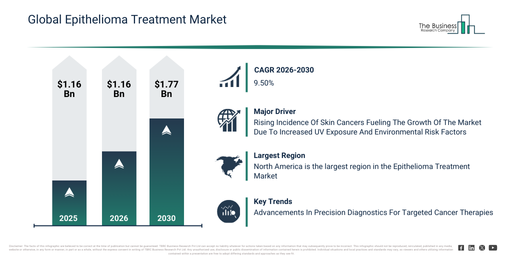
    The market size for epithelioma treatment has shown strong growth in recent years. From $5.19 billion in 2025, it is expected to reach $5.69 billion in 2026, representing a compound annual growth rate (CAGR) of 9.5%. This upward trend during the historical period can be linked to the rising incidence of epithelial tumors, the expansion of oncology treatment centers, advancements in surgical oncology techniques, increased use of radiation therapy technologies, and growing clinical research efforts focused on cancer therapies. Looking ahead, the market is forecasted to expand further, reaching $8.16 billion by 2030 with a steady CAGR of 9.5%. Growth drivers for this forecast period include heightened demand for personalized cancer treatments, increased investments in oncology drug development, wider adoption of advanced diagnostic imaging, the popularity of combination therapy regimens, and a stronger emphasis on improving patient survival outcomes. Key trends shaping the market in the coming years involve the rising use of targeted cancer therapies, expanded combination treatment approaches, integration of precision oncology diagnostics, advances in minimally invasive surgeries, and enhanced focus on early tumor detection.

    Download A Free Sample Report For Comprehensive Market Insights:

    https://www.thebusinessresearchcompany.com/sample.aspx?id=24217&type=smp

    Factors Fueling Growth in the Epithelioma Treatment Market

    An important contributor to the market’s expansion is the increasing occurrence of skin cancers globally. Skin cancer arises from uncontrolled growth of abnormal skin cells caused by unrepaired DNA damage leading to mutations. Greater exposure to ultraviolet (UV) radiation from both sunlight and tanning beds, combined with environmental issues such as ozone layer depletion, plays a significant role in the rising incidence of skin cancers. Epithelioma treatments specifically target and eliminate cancerous epithelial cells, effectively addressing the underlying cause of these cancers. For instance, in January 2024, the American Cancer Society reported an estimated 100,640 new melanoma cases in the United States alone, with approximately 59,170 in men and 41,470 in women. This rising prevalence is a key driver boosting demand for epithelioma therapies.

    Additional Drivers Shaping Market Growth

    Alongside increasing incidence rates, advancements in oncology treatment infrastructure are accelerating market expansion. More oncology centers are being established, offering state-of-the-art surgical and radiation therapies. Progress in surgical oncology techniques and the integration of newer radiation therapy technologies are improving treatment outcomes, encouraging more patients to seek care. Additionally, growing clinical research and innovation in cancer treatments are opening pathways for novel therapies. These combined factors are stimulating positive momentum in the epithelioma treatment market.

    Access The Complete Epithelioma Treatment Market Report:

    https://www.thebusinessresearchcompany.com/report/epithelioma-treatment-global-market-report

    Segment Breakdown and Expanding Categories in the Epithelioma Treatment Market

    This market is segmented based on several key criteria:

    1) Disease Type: Basal Cell Epithelioma, Squamous Cell Epithelioma, Malignant Epithelioma

    2) Treatment Type: Drug Class, Surgical Treatments, Radiation Therapy, Photodynamic Therapy, Combination Therapies

    3) Distribution Channel: Hospital Pharmacies, Retail Pharmacies, E-Commerce, Other Distribution Channels

    4) End-User: Hospitals, Specialty Clinics, Ambulatory Surgical Centers, Research and Academic Institutes

    Within these categories, further subsegments are identified:

    – Basal Cell Epithelioma includes superficial, nodular, infiltrative, morpheaform (sclerosing), and pigmented forms.

    – Squamous Cell Epithelioma covers cutaneous, oral, esophageal, pulmonary, and cervical types.

    – Malignant Epithelioma comprises epithelioid sarcoma, clear cell sarcoma, spindle cell carcinoma, adenoid cystic carcinoma, and mucoepidermoid carcinoma.

    By breaking down the market this way, stakeholders can better understand growth potentials across different treatment types and disease subcategories.

    Innovations and Emerging Trends Transforming Demand in the Epithelioma Treatment Market

    Leading companies in the epithelioma treatment sector are actively focusing on developing innovative therapies, including companion diagnostics, that aim to improve treatment precision and patient outcomes while promoting personalized medicine. Companion diagnostics are specialized tests that help identify which patients are most likely to benefit from specific treatments, thereby enhancing safety and effectiveness. For example, in November 2024, Roche Holdings AG received FDA approval for an expanded use of its PATHWAY anti-HER2/neu (4B5) rabbit monoclonal primary antibody test. This test now helps detect patients with previously treated, unresectable, or metastatic HER2-positive biliary tract cancer who may be suitable candidates for treatment with Ziihera (zanidatamab-hrii). Such advancements highlight the industry’s commitment to targeted therapies guided by reliable diagnostic tools.

    Key Players Shaping the Competitive Landscape of the Epithelioma Treatment Market

    Several prominent companies are driving innovation and competition within this market, including Pfizer Inc., F. Hoffmann-La Roche Ltd, Merck & Co. Inc., Sanofi, Bristol-Myers Squibb Company, Novartis AG, Eli Lilly and Company, Amgen Inc., Regeneron Pharmaceuticals Inc., Sun Pharmaceutical Industries Ltd., Zhejiang Hisun Pharmaceutical Co. Ltd., Verrica Pharmaceuticals Inc., Sirnaomics Inc., MediWound Ltd, Philogen SpA, PellePharm Inc., Kintor Pharmaceutical Limited, DermBiont, Transgene SA, and AiViva BioPharma Inc. These organizations are investing heavily in research and development to introduce new treatments and diagnostic options.

    Geographic Insights and Regions Leading Growth in the Epithelioma Treatment Market

    In 2025, North America held the largest market share for epithelioma treatment, owing to its advanced healthcare infrastructure and high disease prevalence. Meanwhile, the Asia-Pacific region is expected to experience the fastest growth throughout the forecast period. Other key regions covered in the market analysis include South East Asia, Western Europe, Eastern Europe, South America, the Middle East, and Africa. These geographic insights provide a broad perspective on where demand is strongest and where future opportunities are emerging globally.

    Get in touch with us:

    The Business Research Company: https://www.thebusinessresearchcompany.com/

    Americas: +1 310-496-7795

    Asia: +44 7882 955267 & +91 8897263534

    Europe: +44 7882 955267

    Email us at: marketing@tbrc.info

    Follow us on:

    LinkedIn: https://in.linkedin.com/company/the-business-research-company

    YouTube: https://www.youtube.com/channel/UC24_fI0rV8cR5DxlCpgmyFQ

    Global Market Model: https://www.thebusinessresearchcompany.com/global-market-model