Category: Medical Equipment

  • Epigenetics Diagnostics Market Forecast Highlights Expansion From $19.29 Billion To $35.17 Billion Through 2030

    Epigenetics Diagnostics Market Forecast Highlights Expansion From $19.29 Billion To $35.17 Billion Through 2030

    Delivering more actionable and strategically valuable research, The Business Research Company’s 2026 market reports feature market attractiveness analysis, total addressable market evaluation, company benchmarking matrices, interactive Excel dashboards, expanded supply chain intelligence, emerging startup coverage, and detailed product insights.

    The epigenetics diagnostics sector is rapidly evolving, driven by breakthroughs in technology and increasing demand for personalized healthcare solutions. This market is set to experience significant growth as new advances emerge and more industries recognize the value of epigenetic insights in disease detection and treatment. Let’s explore the current market size, growth factors, key players, innovations, and regional dynamics shaping this promising field.

    Steady Increase in Epigenetics Diagnostics Market Size and Future Growth Estimates

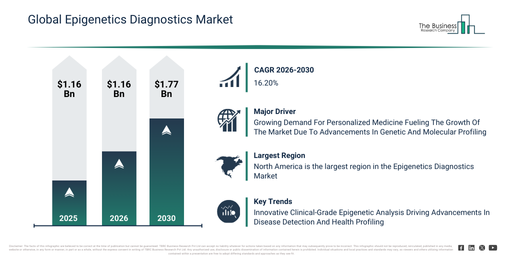
    The epigenetics diagnostics market has seen swift expansion recently. From $16.56 billion in 2025, it is expected to rise to $19.29 billion in 2026, reflecting a strong compound annual growth rate (CAGR) of 16.5%. Historically, this growth was constrained by the limited availability of specialized epigenetic diagnostic tools and a heavy reliance on traditional molecular biology methods. However, rising awareness of epigenetic science, increasing academic and clinical research efforts, and gradual adoption of automated technologies have contributed to market development.

    Download A Free Sample Report For Comprehensive Market Insights:

    https://www.thebusinessresearchcompany.com/sample.aspx?id=27286&type=smp

    Looking ahead, the market is forecasted to grow even faster, reaching $35.17 billion by 2030 with a CAGR of 16.2%. This anticipated surge is fueled by innovations in sequencing and epigenetic analysis, a growing focus on personalized medicine, expansion in oncology and metabolic diagnostics, adoption of cloud-based bioinformatics, and rising demand from pharmaceutical and biotechnology companies. Key trends during this period include wider use of epigenetic biomarker kits, next-generation sequencing, microarray technologies, enhanced data analysis services, and automated high-throughput platforms.

    The Rising Demand for Personalized Medicine Driving Epigenetics Diagnostics

    One of the main factors propelling growth in this market is the expanding demand for personalized medicine. This approach tailors medical treatment to an individual’s genetic profile, biological characteristics, and lifestyle, aiming to boost treatment effectiveness and minimize side effects. Advances in genetic and molecular profiling techniques have increased the feasibility and popularity of customized healthcare.

    Access The Complete Epigenetics Diagnostics Market Report:

    https://www.thebusinessresearchcompany.com/report/epigenetics-diagnostics-global-market-report

    Epigenetics diagnostics play a crucial role by identifying specific epigenetic signatures unique to each patient, enabling more precise prevention and therapy options. For example, in February 2024, the Personalized Medicine Coalition reported that the FDA approved 16 new personalized therapies for rare diseases in 2023, compared with only six approvals in 2022. This trend highlights how personalized medicine is becoming a key driver for the epigenetics diagnostics market’s expansion.

    Market Segmentation Reveals Core Areas Leading Epigenetics Diagnostics Development

    This market is divided into several important segments:

    1) Product categories include Kits and Reagents, Software and Services, and Instruments.

    2) Technologies covered range from DNA Methylation, Histone Methylation and Acetylation, Large Non-Coding RNA, microRNA modifications, to Chromatin structure analysis.

    3) Applications focus on Oncology, Metabolic Diseases, Developmental Biology, Immunology, Cardiovascular Diseases, and others.

    4) End users encompass Pharmaceutical and Biotechnology firms, Academic and Research Institutions, and Clinical Diagnostic Laboratories.

    Further subcategories detail specific product types such as DNA Methylation Kits, Histone Modification Kits, Chromatin Accessibility Kits, Bisulfite Conversion Kits, PCR reagents, antibodies, enzymes, and buffers. Software and services include data analysis tools, bioinformatics, epigenetic data interpretation, cloud storage, custom assay creation, and consulting. Instruments cover next-generation sequencers, microarray systems, PCR and qPCR machines, mass spectrometry, imaging systems, and automated liquid handling platforms.

    Innovations in Clinical-Grade Epigenetic Analysis Transform the Diagnostics Industry

    Leading companies in this market are focusing on developing cutting-edge clinical-grade epigenetic tests that improve accuracy, sensitivity, and practical application in healthcare. Clinical-grade analysis involves using validated, standardized procedures to detect epigenetic alterations reliably enough to inform clinical decisions.

    For instance, in October 2024, Singapore’s EpiMedTech introduced epiGeneComplete, a comprehensive clinical-grade test combining genetic and epigenetic analysis via next-generation sequencing and advanced DNA methylation technologies. This non-invasive saliva test, performed in CAP-accredited labs, offers high accuracy and sensitivity for profiling important health factors like aging, stress, inflammation, addiction risk, and metabolism. Designed as a flexible platform for future diagnostic uses, epiGeneComplete represents a significant step forward for routine health screenings and early disease detection.

    Top Competitors Driving Innovation and Market Expansion

    Key players shaping the epigenetics diagnostics field include F. Hoffmann-La Roche Ltd., Merck KGaA, Thermo Fisher Scientific Inc., Agilent Technologies Inc., Illumina Inc., PerkinElmer Inc., Bio-Rad Laboratories Inc., QIAGEN N.V., GeneTex Inc., Bio-Techne Corporation, Promega Corporation, New England Biolabs Incorporated, Pacific Biosciences of California Inc., Enzo Biochem Inc., Diagenode Société Anonyme, Zymo Research Corporation, Active Motif Inc., ADmit Therapeutics SL, Epigentek Group Inc., and INHERENT Biosciences Inc. These companies are investing heavily in research and product development to maintain leadership and meet evolving market demands.

    Regional Market Overview Highlights North America’s Lead and Asia-Pacific’s Rapid Growth

    In 2025, North America held the largest share of the epigenetics diagnostics market, benefiting from its strong research infrastructure and healthcare networks. Meanwhile, the Asia-Pacific region is expected to be the fastest-growing market during the forecast period, driven by rising healthcare investments, growing research activities, and increasing adoption of advanced diagnostic technologies. Other regions covered in the market analysis include South East Asia, Western Europe, Eastern Europe, South America, the Middle East, and Africa, offering a global perspective on market penetration and growth opportunities.

    Get in touch with us:

    The Business Research Company: https://www.thebusinessresearchcompany.com/

    Americas: +1 310-496-7795

    Asia: +44 7882 955267 & +91 8897263534

    Europe: +44 7882 955267

    Email us at: marketing@tbrc.info

    Follow us on:

    LinkedIn: https://in.linkedin.com/company/the-business-research-company

    YouTube: https://www.youtube.com/channel/UC24_fI0rV8cR5DxlCpgmyFQ

    Global Market Model: https://www.thebusinessresearchcompany.com/global-market-model
  • Epigenetics Market Expected To Reach $35 Billion By 2030 As Growth Accelerates At 22.3% CAGR

    Epigenetics Market Expected To Reach $35 Billion By 2030 As Growth Accelerates At 22.3% CAGR

    Enhanced with market attractiveness analysis, total addressable market evaluation, company benchmarking matrices, interactive Excel dashboards, expanded supply chain intelligence, emerging startup coverage, and detailed product insights, The Business Research Company’s 2026 market reports deliver more actionable and strategically valuable research.

    The epigenetics market has witnessed remarkable growth recently and is set to continue this upward trajectory in the coming years. Driven by advancements in research and technology, this sector is becoming increasingly vital in precision medicine and cancer treatment. Let’s explore the market’s current size, growth drivers, emerging trends, major players, and regional dynamics shaping its future.

    Rapid Expansion and Size Forecast of the Epigenetics Market

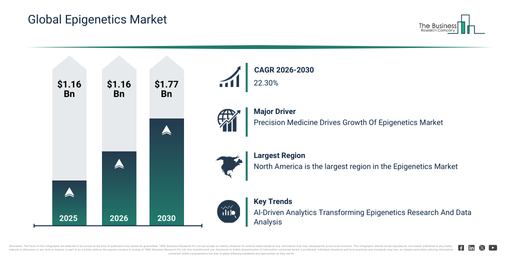
    The epigenetics market has experienced significant growth, expanding from $12.74 billion in 2025 to an estimated $15.62 billion in 2026, reflecting a compound annual growth rate (CAGR) of 22.6%. This surge during the past period results from heightened cancer research activities, the broadening scope of academic genomics studies, improved availability of advanced sequencing instruments, and an increased focus on molecular diagnostics backed by rising funding in life sciences research. Looking ahead, the market is projected to soar to $35.01 billion by 2030 at a CAGR of 22.3%, fueled by investments in precision medicine, growing acceptance of epigenetic therapies, expansion of personalized oncology, AI-powered genomic analysis, and stronger partnerships between pharmaceutical companies and research institutions. Important trends expected to influence this growth include wider use of epigenetic biomarkers in cancer, adoption of high-throughput analysis tools, increasing demand for DNA methylation assays, advances in drug discovery based on epigenetics, and better integration of bioinformatics platforms.

    Download A Free Sample Report For Comprehensive Market Insights:

    https://www.thebusinessresearchcompany.com/sample.aspx?id=7070&type=smp

    Precision Medicine as a Major Catalyst in Epigenetics Market Growth

    An intensified emphasis on precision medicine is one of the primary factors driving the epigenetics market forward. Precision medicine tailors treatments based on an individual’s genetic makeup, environmental factors, and lifestyle, enabling more personalized and effective healthcare approaches. Within epigenetics, this means utilizing unique epigenetic profiles alongside genetic data to design targeted treatment strategies for patients. For example, in March 2024, Novotech, an Australian biotechnology firm, reported that in 2023, 43% of the 217 oncology therapies approved by the FDA were precision oncology treatments, with 78 of these involving DNA or next-generation sequencing (NGS) biomarkers. Such data highlights how the focus on precision medicine is instrumental in accelerating epigenetics market expansion.

    Segmentation Highlights Uncovering Key Opportunities in the Epigenetics Market

    This report breaks down the epigenetics market by several key segments:

    1) Product categories including reagents, enzymes, instruments, and kits;

    2) Technology types such as DNA methylation, histone methylation, histone acetylation, large noncoding RNA, microRNA modification, and chromatin structures;

    3) Applications across oncology, metabolic diseases, developmental biology, immunology, cardiovascular disorders, and others;

    4) End users comprising academic and research institutes, pharmaceutical and biotechnology firms, contract research organizations, and additional user groups.

    Further subcategories dive deeper, for instance, reagents include DNA methylation reagents, histone modification reagents, RNA modification reagents, and enzymes; enzymes are divided into DNA methyltransferases, histone acetyltransferases, and histone deacetylases; instruments cover sequencers, PCR machines, microarray platforms, and mass spectrometers; kits include DNA methylation kits, chromatin immunoprecipitation (ChIP) kits, RNA-Seq kits, and bisulfite conversion kits.

    Access The Complete Epigenetics Market Report:

    https://www.thebusinessresearchcompany.com/report/epigenetics-global-market-report

    How AI and Bioinformatics Are Influencing Epigenetics Market Trends

    Leading companies in the epigenetics sector are increasingly leveraging artificial intelligence (AI) to gain a competitive advantage by enhancing data analytics capabilities. AI-driven analytics involve using advanced AI technologies to automatically process and interpret vast quantities of data, accelerating research and discovery. For example, in July 2023, FOXO Technologies, a US-based company, launched Bioinformatics Services designed to transform epigenetic data analysis. Their platform offers a range of customizable data solutions tailored to the needs of academic institutions, healthcare providers, and pharmaceutical researchers. By employing innovative bioinformatic tools, FOXO aims to improve the speed and accuracy of data processing, helping clients advance their understanding of complex diseases more efficiently.

    Top Companies Influencing the Direction of the Epigenetics Market

    Key players dominating the epigenetics industry include Illumina Inc., Thermo Fisher Scientific, Merck Millipore, Active Motif, Abcam PLC, Qiagen NV, Diagenode SA, CellCentric Ltd., Chroma Medicine Inc., Constellation Pharmaceuticals Inc., Domainex Ltd., Eisai Co. Ltd., Epigen Biosciences Inc., EpigenDx Inc., Epigenomics AG, Epizyme Inc., Gilead Sciences Inc., GlaxoSmithKline plc, Janssen Pharmaceuticals Inc., MDxHealth SA, Novartis AG, OncoDNA SA, Oryzon Genomics S.A., Pfizer Inc., Syndax Pharmaceuticals Inc., and Valirx plc. These organizations are at the forefront of innovation, research, and market expansion within this field.

    Regional Patterns Revealing Growth Hotspots in the Epigenetics Market

    In 2025, North America held the largest share of the epigenetics market, driven by strong research infrastructure and funding. Looking toward the future, the Asia-Pacific region is expected to exhibit the fastest growth during the forecast period, fueled by increasing investments, expanding research activities, and growing healthcare awareness. The market report covers key regions including Asia-Pacific, South East Asia, Western Europe, Eastern Europe, North America, South America, the Middle East, and Africa, offering a broad perspective on global expansion trends.

    Get in touch with us:

    The Business Research Company: https://www.thebusinessresearchcompany.com/

    Americas: +1 310-496-7795

    Asia: +44 7882 955267 & +91 8897263534

    Europe: +44 7882 955267

    Email us at: marketing@tbrc.info

    Follow us on:

    LinkedIn: https://in.linkedin.com/company/the-business-research-company

    YouTube: https://www.youtube.com/channel/UC24_fI0rV8cR5DxlCpgmyFQ

    Global Market Model: https://www.thebusinessresearchcompany.com/global-market-model
  • Hospital Supplies Market Forecast Reveals Where Future Industry Value Will Be Created

    Hospital Supplies Market Forecast Reveals Where Future Industry Value Will Be Created

    Through market attractiveness analysis, total addressable market evaluation, company benchmarking matrices, interactive Excel dashboards, expanded supply chain intelligence, emerging startup coverage, and detailed product insights, The Business Research Company’s 2026 market reports provide more actionable and strategically valuable research.

    The hospital supplies market has seen remarkable growth recently, driven by expanding healthcare infrastructure and increasing patient needs. As healthcare systems evolve, the demand for medical supplies continues to rise, reflecting broader trends in hospital admissions, surgical procedures, and product innovations. Let’s explore the market’s size, key growth drivers, segment breakdowns, strategic trends, and competitive landscape to understand its future trajectory.

    Hospital Supplies Market Size and Expected Growth Through 2030

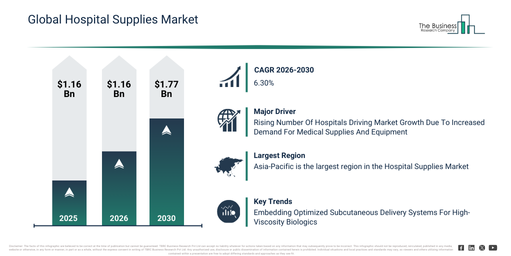
    The market for hospital supplies has grown steadily and is projected to continue expanding. From $54.19 billion in 2025, it is expected to reach $57.29 billion in 2026, growing at a compound annual growth rate (CAGR) of 5.7%. This historical growth has been largely driven by the expansion of healthcare facilities, increased hospital admissions, widespread use of single-use medical products, rising surgical interventions, and advancements in supply management systems within hospitals. Looking ahead, the market is anticipated to grow even faster, reaching $73.14 billion by 2030 with a CAGR of 6.3%. Factors fueling this future growth include greater investments in healthcare modernization, heightened demand for eco-friendly hospital supplies, the rise of outpatient and home healthcare services, adoption of digital inventory systems, and increased focus on patient safety and hygiene standards. Key trends shaping the market include growing use of disposable medical supplies, advanced sterilization techniques, enhanced infection prevention products, expanded modular operating room equipment, and improved supply chain reliability.

    Download A Free Sample Report For Comprehensive Market Insights:

    https://www.thebusinessresearchcompany.com/sample.aspx?id=1973&type=smp

    Increasing Number of Hospitals as a Major Market Driver

    The rising number of hospitals globally is a significant factor propelling the hospital supplies market forward. Hospitals serve as essential facilities offering medical and surgical care to patients, and their growth is driven by aging populations, higher demand for healthcare services, and longer patient stays, all of which require expanded and updated infrastructure. Hospitals depend on a wide range of medical supplies and equipment to provide quality care. For instance, in May 2023, the American Hospital Association (AHA) reported an increase in the total number of hospitals in the U.S. to 6,129, up from 6,093 in 2022. Moreover, total hospital admissions climbed to 34,011,386 in 2023 from 33,356,853 the previous year. This upward trend in hospital numbers and admissions is expected to continue driving demand for hospital supplies.

    Additional Factors Supporting Market Growth

    Beyond the sheer number of hospitals, various other factors support the expansion of the hospital supplies market. These include technological advancements, regulatory support for improved healthcare infrastructure, and the increasing emphasis on infection control and patient hygiene. Growing investments in digital inventory management and supply chain optimization further enhance service delivery and efficiency, creating additional market opportunities.

    Access The Complete Hospital Supplies Market Report:

    https://www.thebusinessresearchcompany.com/report/hospital-supplies-global-market-report

    The Hospital Supplies Market Segmentation and Its Diverse Components

    This report segments the hospital supplies market according to several key categories:

    1) Supply Type: Disposable Hospital Supplies, Sterilization Equipment and Disinfectants, Mobility Aids and Transportation Equipment, Operating Room Equipment

    2) Product Type: Instruments or Equipment, Disposables

    3) End User: Hospitals and Clinics, Diagnostic Laboratories, Other End Users

    4) Type of Expenditure: Public, Private

    Further detailed subcategories include:

    – Disposable Hospital Supplies such as surgical masks, gloves, drapes and gowns, IV consumables, and wound care products

    – Sterilization Equipment and Disinfectants including autoclaves, disinfectants and sanitizers, sterilization indicators, and UV sterilizers

    – Mobility Aids and Transportation Equipment such as wheelchairs, walkers, crutches, patient lifts, and stretchers

    – Operating Room Equipment including surgical tables, operating room lights, surgical instruments, anesthesia machines, and patient monitors

    Emerging Technological Trends Driving Innovation in Hospital Supplies

    Leading companies in the hospital supplies sector are focusing on innovative injectable delivery systems designed for next-generation biologics, particularly those with high viscosity, to reduce injection force and enhance patient comfort. These advancements enable pharmaceutical developers to utilize more concentrated therapies safely and effectively via subcutaneous administration. For example, in September 2024, BD (Becton, Dickinson & Co.) introduced the BD Neopak XtraFlow syringe, featuring an 8 mm needle and a thinner-wall cannula optimized for reducing injection force and administration time for high-viscosity drugs.

    Expansion of Manufacturing Capabilities to Meet Growing Demand

    To keep up with rising demand, BD also expanded production capacity at its Le Pont-de-Claix, France facility, adding a high-volume manufacturing line that increases output by seven times. By lowering the mechanical challenges associated with injecting viscous biologics, BD supports the delivery of more concentrated, high-dose therapies such as antibodies and GLP-1 formulations, improving patient experience and treatment efficacy.

    Key Players Shaping the Hospital Supplies Market

    The hospital supplies market features a range of influential companies driving the industry forward. Prominent names include Becton Dickinson and Company, B. Braun Melsungen AG, Steris plc, Baxter International Inc., Stryker Corporation, Cardinal Health Inc., Hill-Rom Holdings Inc., Terumo Corporation, 3M Company, McKesson Corporation, Cencora Inc., GE HealthCare Technologies Inc., Koninklijke Philips NV, Dentsply Sirona Inc., Masimo Corporation, Olympus Corporation, ResMed Inc., Smith & Nephew plc, The Cooper Companies Inc., Teleflex Incorporated, West Pharmaceutical Services Inc., Straumann Group, and Fresenius Medical Care AG & Co KGaA.

    Regional Market Leadership and Emerging Areas

    In 2025, Asia-Pacific led the global hospital supplies market in terms of revenue, followed by North America as the second-largest region. The report also examines other key regions, including South East Asia, Western Europe, Eastern Europe, South America, the Middle East, and Africa, providing a comprehensive view of the global market dynamics and growth prospects.

    Get in touch with us:

    The Business Research Company: https://www.thebusinessresearchcompany.com/

    Americas: +1 310-496-7795

    Asia: +44 7882 955267 & +91 8897263534

    Europe: +44 7882 955267

    Email us at: marketing@tbrc.info

    Follow us on:

    LinkedIn: https://in.linkedin.com/company/the-business-research-company

    YouTube: https://www.youtube.com/channel/UC24_fI0rV8cR5DxlCpgmyFQ

    Global Market Model: https://www.thebusinessresearchcompany.com/global-market-model
  • Hospital Stretchers Market Growth Through 2030 Creates New Strategic Opportunities

    Hospital Stretchers Market Growth Through 2030 Creates New Strategic Opportunities

    Delivering more actionable and strategically valuable research, The Business Research Company’s 2026 market reports feature market attractiveness analysis, total addressable market evaluation, company benchmarking matrices, interactive Excel dashboards, expanded supply chain intelligence, emerging startup coverage, and detailed product insights.

    The hospital stretchers market is experiencing consistent growth, driven by increasing healthcare demands and advancements in medical equipment. As hospitals focus on improving patient care and operational efficiency, the demand for innovative stretcher solutions is rising steadily. Below is an in-depth look at market size, key drivers, product segments, trends, leading companies, and regional insights shaping this sector.

    Hospital Stretchers Market Size and Expected Growth Trajectory

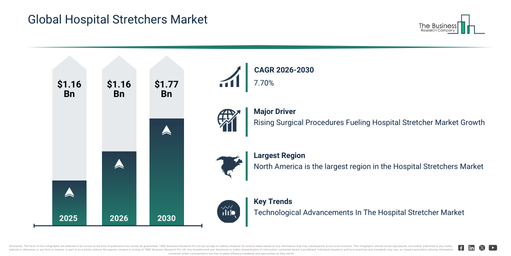
    The market for hospital stretchers has seen significant expansion recently, with its value projected to rise from $2.98 billion in 2025 to $3.19 billion in 2026, representing a compound annual growth rate (CAGR) of 7.1%. This rise during the historical period is mainly due to growing emergency room visits, the expansion of hospital facilities, an increase in trauma and accident cases, a greater need for patient mobility solutions, and advancements in medical transport equipment. Looking ahead, the market is forecasted to reach $4.29 billion by 2030, with an enhanced CAGR of 7.7%. This growth is expected to be fueled by escalating investments in emergency medical services, heightened emphasis on reducing staff injuries, expansion of ambulance fleets, increased adoption of powered mobility devices, and rising demand for sophisticated patient handling technologies. Key trends influencing the market include a shift towards motorized and powered stretchers, specialized bariatric transport options, ergonomic and lightweight designs, expansion in emergency and trauma care applications, and improved safety locking mechanisms.

    Download A Free Sample Report For Comprehensive Market Insights:

    https://www.thebusinessresearchcompany.com/sample.aspx?id=10598&type=smp

    Factors Contributing to Growth in the Hospital Stretchers Market

    An important driver behind the hospital stretcher market expansion is the rising volume of surgical procedures. Surgical interventions, performed by qualified healthcare professionals to treat or diagnose medical conditions, rely heavily on hospital stretchers to efficiently move patients through preoperative, operative, and postoperative stages. For instance, in December 2023, the UK Health Security agency reported a notable 10.2% increase in mandatory orthopedic procedure submissions, totaling 102,025 cases for the fiscal year 2022-2023. More broadly, surveillance data indicated an overall 8.4% rise in surgical activity across various categories compared to the previous year. These trends highlight how increasing surgical workloads are directly supporting demand for reliable and advanced hospital stretchers.

    Breakdown of Hospital Stretchers by Type, Technology, and Application

    The hospital stretchers market is categorized into several key segments to reflect its diverse offerings:

    1) Product Type: Fixed Height Stretchers, Adjustable Stretchers, Bariatric Stretchers, and Other Types

    2) Technology: Motorized Stretchers and Non-Motorized Stretchers

    3) Application: Intra-Hospital use, Pediatric Care, Emergency Departments, Radiology Departments, and Other uses

    Access The Complete Hospital Stretchers Market Report:

    https://www.thebusinessresearchcompany.com/report/hospital-stretchers-global-market-report

    Further subcategories provide more detailed classification:

    – Fixed Height Stretchers include Standard and Foldable models

    – Adjustable Stretchers cover Manual and Electric variants

    – Bariatric Stretchers consist of Heavy-Duty and Wider designs

    – Other product types encompass Neonatal and Emergency Transport Stretchers

    Innovations and Technological Advances Driving Market Transformation

    Leading companies in the hospital stretcher sector are focusing on integrating smart technologies to enhance patient care and operational efficiency. Smart stretchers are advanced medical devices equipped with features that improve monitoring, safety, and workflow in healthcare environments. For example, in October 2023, Stryker Corporation introduced Prime Connect, a connected hospital stretcher designed to enhance fall prevention protocols. It includes both visual and audible bed exit alarms and integrates seamlessly with hospital communication systems such as nurse call dome lights. Additionally, Prime Connect offers wireless transmission of vital patient data in near real-time to nursing staff via devices like the Vocera Badge and management dashboards. This innovation supports more efficient workflows and continuous patient monitoring, ultimately improving safety and care quality.

    Key Players and Competitors in the Hospital Stretchers Market

    The hospital stretchers market features a competitive landscape with numerous prominent companies, including:

    Stryker Corporation, TransMotion Medical Inc., Mac Medical Inc., Narang Medical Limited, ROYAX s.r.o., Anetic Aid Ltd., LINET Group SE, Fu Shun Hsing Technology Co. Ltd., Venture Medical Technologies Inc., Zhangjiagang Xiehe Medical Instrument Co. Ltd., Advin Healthcare Pty. Ltd., Joson Care Enterprise Co. Ltd., Desco Medical Limited, Invacare Corporation, Paramount Bed Holdings Co. Ltd., Stiegelmeyer GmbH & Co. KG, Joerns Healthcare LLC, Spencer S.p.A., Midmark Corporation, Howard Wright Limited, and Getinge AB.

    Regional Distribution and Growth Potential in the Hospital Stretchers Market

    In 2025, North America held the largest share of the hospital stretchers market. However, the Asia-Pacific region is expected to emerge as the fastest-growing market over the forecast period. The report covers key geographic regions including Asia-Pacific, South East Asia, Western Europe, Eastern Europe, North America, South America, the Middle East, and Africa, providing a comprehensive overview of global market dynamics and regional opportunities.

    Get in touch with us:

    The Business Research Company: https://www.thebusinessresearchcompany.com/

    Americas: +1 310-496-7795

    Asia: +44 7882 955267 & +91 8897263534

    Europe: +44 7882 955267

    Email us at: marketing@tbrc.info

    Follow us on:

    LinkedIn: https://in.linkedin.com/company/the-business-research-company

    YouTube: https://www.youtube.com/channel/UC24_fI0rV8cR5DxlCpgmyFQ

    Global Market Model: https://www.thebusinessresearchcompany.com/global-market-model
  • Hospital Lights Market Size Projected To Increase From $11.24 Billion To $16.03 Billion During The Forecast Period

    Hospital Lights Market Size Projected To Increase From $11.24 Billion To $16.03 Billion During The Forecast Period

    Enhanced with market attractiveness analysis, total addressable market evaluation, company benchmarking matrices, interactive Excel dashboards, expanded supply chain intelligence, emerging startup coverage, and detailed product insights, The Business Research Company’s 2026 market reports deliver more actionable and strategically valuable research.

    The hospital lighting industry is experiencing significant growth, driven by advancements in healthcare infrastructure and technology. As hospitals evolve to meet modern demands, the role of specialized lighting systems becomes increasingly crucial. This overview explores the current market size, key growth drivers, segment classifications, leading companies, emerging trends, and regional insights shaping the hospital lights market.

    Hospital Lights Market Size and Growth Expectations Through 2030

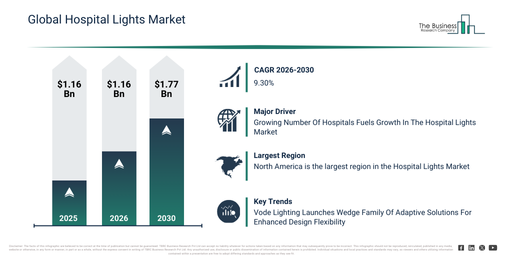
    The hospital lights market has seen robust expansion in recent years, with its value projected to rise from $10.28 billion in 2025 to $11.24 billion in 2026, reflecting a healthy compound annual growth rate (CAGR) of 9.4%. This growth during the past period can be attributed to the expansion of hospital infrastructure, replacement of outdated lighting systems, a growing emphasis on energy efficiency within healthcare facilities, an increase in surgical procedures, and enhancements in the durability and performance of lighting products. Looking ahead, the market is anticipated to continue its upward trajectory, reaching $16.04 billion by 2030 with a CAGR of 9.3%. Factors supporting this forecast include greater investments in smart hospital technologies, wider adoption of intelligent lighting solutions, expansion of energy-efficient medical infrastructure, heightened attention to infection control lighting, and technological advancements in surgical illumination. Emerging trends expected to influence this market include increasing use of LED-based hospital lighting, a growing demand for energy-efficient medical lighting systems, integration of smart lighting controls, improvements in surgical lighting precision, and an enhanced focus on lighting designed for patient comfort.

    Download A Free Sample Report For Comprehensive Market Insights:

    https://www.thebusinessresearchcompany.com/sample.aspx?id=8069&type=smp

    Factors Boosting Demand in the Hospital Lights Market

    One of the primary drivers of growth in the hospital lights market is the rising number of hospitals worldwide. Hospitals serve as critical institutions that provide medical and surgical treatment alongside continuous patient care, requiring specialized lighting to support various functions. Hospital lighting systems deliver adequate illumination for medical staff, act as signaling devices during emergencies, and ensure patient rest is not disturbed by inappropriate lighting. For instance, according to the American Hospital Association, the number of hospitals in the United States increased from 6,093 in 2022 to 6,120 in 2024. This steady growth in healthcare facilities directly contributes to the increased demand for hospital lighting solutions.

    Additional Drivers Powering Market Expansion

    Beyond hospital growth, the shift towards energy-efficient and intelligent lighting systems is stimulating market development. Healthcare providers are prioritizing lighting options that reduce energy consumption while improving clinical environments. This includes investments in smart lighting controls and systems that support infection prevention efforts. Such strategic improvements in lighting technology deliver operational efficiencies and enhance patient care quality, further propelling market growth.

    Access The Complete Hospital Lights Market Report:

    https://www.thebusinessresearchcompany.com/report/hospital-lights-global-market-report

    Hospital Lights Market Segmentation and Revenue Opportunities

    The hospital lights market can be segmented into key categories based on product type, technology, and application areas. Product types include troffers, surface-mounted lights, surgical lamps, and other lighting products. Technology segments comprise fluorescent, LED, and other lighting technologies. Application areas cover patient wards and intensive care units (ICUs), surgical suites, examination rooms, and other healthcare spaces. Further subcategories include LED troffers, fluorescent troffers, and smart troffers; LED, traditional, and adjustable surface-mounted lights; LED, halogen, and shadowless surgical lamps; as well as exam room lights, emergency and exit lights, and portable lighting solutions. This diverse range of products and technologies offers multiple revenue streams and opportunities for innovation within the hospital lighting market.

    Emerging Trends Shaping the Future of Hospital Lights

    Industry players are innovating by introducing adaptive and energy-efficient lighting fixtures designed to improve patient comfort and optimize clinical environments. These advanced lighting systems automatically adjust brightness, color temperature, or direction based on factors such as time of day, patient activity, or room occupancy, all while minimizing energy use. This approach helps reduce operational costs and supports better healthcare outcomes. A notable example is Vode Lighting, a US-based company that, in July 2024, launched its Wedge series—adaptive lighting solutions that offer architects and designers considerable creative freedom. The family includes the Peak and Slope models, characterized by their unique triangular shapes and innovative optics, delivering both style and functionality alongside easy installation and versatile mounting options.

    Key Players Influencing the Hospital Lights Market

    Several prominent companies are shaping the direction of the hospital lighting industry. These include Koninklijke Philips N.V., The Zumtobel Group, Wolfspeed Inc., Signify N.V., Acuity Brands Inc., Skytron LLC, S.I.M.E.O.N. Medical GmbH & Co. KG, General Electric Company, Hubbell Incorporated, KLS Martin Group, Brandon Medical Co. Ltd., Best Lighting Products Inc., Kenall Manufacturing, Shenzhen Comen Medical Instruments Co. Ltd., Medifa, Hill-Rom Holdings Inc., Eaton Corporation, Osram Licht AG, Cooper Lighting Solutions, Dialight PLC, LEDVANCE GmbH, and Stryker Corporation. These companies lead innovation and offer extensive product portfolios catering to diverse healthcare lighting needs.

    Regional Market Share and Growth Dynamics

    In 2025, North America accounted for the largest share of the hospital lights market. However, the Asia-Pacific region is expected to experience the fastest growth in the coming years. The market analysis also covers other key regions such as South East Asia, Western Europe, Eastern Europe, South America, the Middle East, and Africa, providing a comprehensive picture of global market trends and opportunities.

    Get in touch with us:

    The Business Research Company: https://www.thebusinessresearchcompany.com/

    Americas: +1 310-496-7795

    Asia: +44 7882 955267 & +91 8897263534

    Europe: +44 7882 955267

    Email us at: marketing@tbrc.info

    Follow us on:

    LinkedIn: https://in.linkedin.com/company/the-business-research-company

    YouTube: https://www.youtube.com/channel/UC24_fI0rV8cR5DxlCpgmyFQ

    Global Market Model: https://www.thebusinessresearchcompany.com/global-market-model
  • Hospital Gowns Market Growth Outlook Reveals A CAGR Of 11.4% And A Market Value Of $10.88 Billion By 2030

    Hospital Gowns Market Growth Outlook Reveals A CAGR Of 11.4% And A Market Value Of $10.88 Billion By 2030

    Through market attractiveness analysis, total addressable market evaluation, company benchmarking matrices, interactive Excel dashboards, expanded supply chain intelligence, emerging startup coverage, and detailed product insights, The Business Research Company’s 2026 market reports provide more actionable and strategically valuable research.

    The hospital gowns market has experienced significant growth recently, driven by various healthcare trends and expanding medical infrastructure. This market is set to continue its upward trajectory as healthcare providers increasingly focus on infection prevention and patient-centered care. Let’s explore the current market size, key growth drivers, segmentation, industry trends, major players, and regional insights shaping this sector.

    Hospital Gowns Market Size and Projected Growth Through 2030

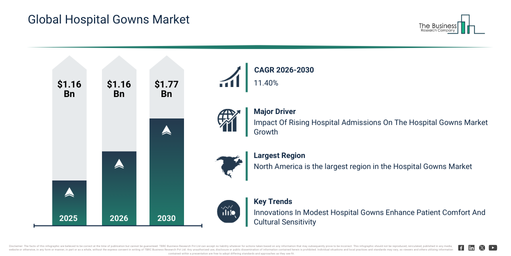
    The hospital gowns market has shown impressive expansion, with revenues rising from $6.25 billion in 2025 to an anticipated $7.06 billion in 2026, reflecting a strong compound annual growth rate (CAGR) of 12.8%. This historical growth is largely attributed to increased hospital admissions, a rise in surgical procedures, heightened awareness of hospital-acquired infections, healthcare infrastructure development, and steady demand for essential protective medical apparel. Looking ahead, the market is expected to continue growing robustly, reaching $10.88 billion by 2030 at a CAGR of 11.4%. This forecasted growth is supported by stricter infection control standards, the rise in outpatient and day-care treatments, a focus on patient-centric care models, increasing healthcare expenditure, and the expansion of specialty clinics and diagnostic centers. Key trends during this period include a growing preference for disposable and single-use gowns, a simultaneous demand for reusable and cost-efficient options, enhanced emphasis on comfort and ergonomic design, tighter infection control protocols, and a shift towards bulk buying and long-term supply agreements.

    Download A Free Sample Report For Comprehensive Market Insights:

    https://www.thebusinessresearchcompany.com/sample.aspx?id=15823&type=smp

    Factors Contributing to the Growth of the Hospital Gowns Market

    One major driver behind the hospital gowns market expansion is the rise in hospital admissions worldwide. Hospital admissions, which involve patients being formally admitted to healthcare facilities for treatment or care, have been increasing due to population growth, aging populations, advancements in medical technologies enabling complex procedures, and a higher prevalence of chronic diseases requiring hospitalization. Hospital gowns play a critical role in this process by providing infection control, ease of medical examination access, patient comfort, and operational efficiency, thus maintaining high safety and hygiene standards.

    To illustrate, in May 2025, the Australian Institute of Health and Welfare reported that public hospitals in England recorded 12.6 million admissions during 2023–24, with 91% being acute cases. These hospitals saw 33.9 million patient days and an average hospital stay of 2.7 days. Of all same-day cases, 23% involved dialysis treatments, and patients aged 65 and above accounted for 44% of admissions. These figures highlight the increasing demand for hospital gowns as hospital admissions continue to grow.

    Access The Complete Hospital Gowns Market Report:

    https://www.thebusinessresearchcompany.com/report/hospital-gowns-global-market-report

    Hospital Gowns Market Segmentation and Key Categories

    The hospital gowns market is categorized based on several factors:

    1) Type: Surgical Gowns, Non-Surgical Gowns, Patient Gowns

    2) Usability: Disposable, Reusable

    3) Distribution Channel: Online Sales, Retail Pharmacies, Direct Sales

    4) End User: Hospitals, Specialty Clinics, Other End Users

    Further breakdown includes subcategories such as Disposable and Reusable Surgical Gowns, Disposable and Reusable Non-Surgical Gowns, and Disposable and Reusable Patient Gowns.

    Innovations and Trends Shaping the Hospital Gowns Market

    Companies in the hospital gowns market are innovating to improve patient comfort and dignity by developing modest hospital gowns. These gowns are designed to offer greater coverage and respect patients’ privacy and cultural preferences, which is especially important in diverse social settings. For example, in March 2024, Children’s Minnesota, a US-based healthcare provider, introduced a modest hospital gown tailored for pediatric patients. This gown features a detachable hijab for head coverage, three-quarter-length sleeves, and versatile closures that can be worn on the front or back to enable medical access while maintaining modesty. Buttons along the collar allow attachment of a head covering, and the back closures provide additional privacy. The design process involved input from clinical staff and patients to balance medical functionality with comfort and respect.

    Competitive Landscape of the Hospital Gowns Market

    Key players in the hospital gowns market include well-established companies such as Cardinal Health Inc., Medline Industries Inc., Kimberly-Clark Corporation, Owens & Minor Inc., Paul Hartmann AG, Mölnlycke Health Care AB, Halyard Health Inc., Hogy Medical Co Ltd., Lohmann & Rauscher GmbH & Co. KG, Dynarex Corporation, priMED Medical Products Inc., Standard Textile Co Inc., Angelica Corporation, AmeriPride Services Inc., Vygon S.A., Vestagen Technical Textiles LLC, Priontex Ltd., Sara Healthcare Pvt. Ltd., Surgiene Healthcare (India) Private Limited, Bellcross Industries Pvt Ltd., and Atlas Infiniti. These organizations continue to invest in R&D and supply chain improvements to meet evolving market demands.

    Regional Growth Analysis in the Hospital Gowns Market

    In 2025, North America emerged as the largest regional market for hospital gowns. However, the Asia-Pacific region is expected to experience the fastest growth during the forecast period. The market report covers several geographical areas including Asia-Pacific, South East Asia, Western Europe, Eastern Europe, North America, South America, the Middle East, and Africa, providing an extensive view of global market dynamics.

    Get in touch with us:

    The Business Research Company: https://www.thebusinessresearchcompany.com/

    Americas: +1 310-496-7795

    Asia: +44 7882 955267 & +91 8897263534

    Europe: +44 7882 955267

    Email us at: marketing@tbrc.info

    Follow us on:

    LinkedIn: https://in.linkedin.com/company/the-business-research-company

    YouTube: https://www.youtube.com/channel/UC24_fI0rV8cR5DxlCpgmyFQ

    Global Market Model: https://www.thebusinessresearchcompany.com/global-market-model
  • Hospital Beds Market Forecast Highlights Expansion From $4.98 Billion To $7.1 Billion Through 2030

    Hospital Beds Market Forecast Highlights Expansion From $4.98 Billion To $7.1 Billion Through 2030

    Delivering more actionable and strategically valuable research, The Business Research Company’s 2026 market reports feature market attractiveness analysis, total addressable market evaluation, company benchmarking matrices, interactive Excel dashboards, expanded supply chain intelligence, emerging startup coverage, and detailed product insights.

    The hospital beds market has been witnessing significant growth, driven by increasing healthcare demands and advancements in medical infrastructure. As healthcare systems evolve and patient care standards rise, this industry is poised for substantial expansion in the coming years. Let’s explore the current market size, key growth drivers, emerging trends, leading players, and geographic insights shaping this sector.

    Hospital Beds Market Size and Growth Outlook

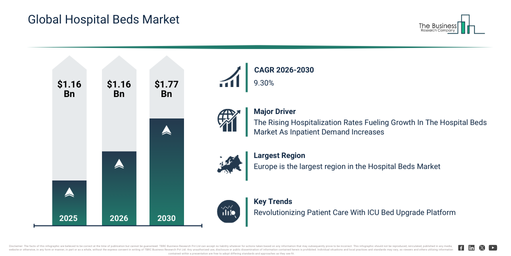
    The hospital beds market has experienced strong growth, with its value expected to rise from $4.6 billion in 2025 to $4.99 billion in 2026, reflecting an 8.5% compound annual growth rate (CAGR). This growth during the past years has been fueled by the expansion of hospital infrastructure, a higher prevalence of chronic illnesses, increased hospitalization rates, greater demand for intensive care units, and the modernization of healthcare facilities. Looking ahead, the market is forecasted to reach $7.11 billion by 2030, growing at a CAGR of 9.3%. Factors contributing to this anticipated rise include investments in smart hospital technologies, demand for connected patient care equipment, growth in elderly care services, increased emphasis on infection control solutions, and wider adoption of home healthcare beds. Key trends expected to shape the market include the introduction of smart and connected hospital beds, rising preference for electrically adjustable bed systems, enhanced patient safety and comfort features, ICU-specific bed designs, and improved remote monitoring capabilities.

    Download A Free Sample Report For Comprehensive Market Insights:

    https://www.thebusinessresearchcompany.com/sample.aspx?id=12408&type=smp

    Hospital Beds Market Growth Fueled by Rising Hospitalization Rates

    One of the primary factors driving the hospital beds market is the increasing hospitalization rate. Hospitalization involves admitting patients to healthcare facilities for medical treatment, monitoring, or recovery, during which hospital beds are essential for patient care and rest. For example, in November 2024, the Australian Institute of Health and Welfare reported that in 2022–23, hospital-acquired complications were documented in 115,000 public hospital admissions (2% of hospitalizations) and 34,200 private hospital admissions (0.8%). This increase in hospital stays directly supports the growing demand for hospital beds across healthcare settings.

    Additional Factors Supporting Hospital Beds Market Expansion

    Beyond hospitalization rates, ongoing improvements in healthcare infrastructure and the rising prevalence of chronic diseases also contribute to the expanding market. As healthcare providers upgrade facilities and incorporate advanced technologies, the need for modern and specialized hospital beds continues to grow, further stimulating market demand worldwide.

    Access The Complete Hospital Beds Market Report:

    https://www.thebusinessresearchcompany.com/report/hospital-beds-global-market-report

    Hospital Beds Market Segments Shaping Industry Growth

    The hospital beds market is categorized based on several criteria:

    1) Type: Semi-Electric Beds, Electric Beds, Manual Beds

    2) Usage: Acute Care Beds, Long-Term Care Beds, Psychiatric Care Beds, Other Usages

    3) Application: Non-Intensive Care Beds, Intensive Care Beds

    4) End User: Hospitals, Clinics, Other End Users

    Further subcategories include:

    – Semi-Electric Beds, distinguishing between backrest and knee-rest electrically adjustable beds and adjustable height beds

    – Electric Beds, including ICU electric beds, standard electric beds, and specialty electric beds

    – Manual Beds, classified into adjustable manual and fixed height manual beds

    Technological Advances in Hospital Beds Market

    Leading companies in the hospital beds sector are introducing innovative technologies to maintain competitive advantage. One example is the development of ICU bed upgrade platforms, which enhance the features and functionality of existing intensive care beds. For instance, in March 2023, Stryker, a US-based medical device manufacturer, launched SmartMedic, India’s first ICU bed upgrade platform. This system improves patient care and caregiver safety by enabling weight management, remote monitoring of patient repositioning from nurse stations, and facilitating X-ray procedures without moving the patient, thereby reducing discomfort and elevating care standards.

    Key Players Driving the Hospital Beds Market

    The hospital beds market is dominated by several major companies, including Paramount Bed Co. Ltd., Linet spol s.r.o., Joh. Stiegelmeyer & Co. GmbH, Invacare Corporation, Joerns Healthcare LLC, Stryker Corporation, Getinge AB, Arjo AB, Merivaara Corporation, Malvestio SpA, Haelvoet NV, Savion Industries, Kanghui Medical Technology Co. Ltd., Besco Medical Co. Ltd., Gendron Inc., Midmark Corporation, Span-America Medical Systems, Amico Corporation, Nitrocare, Proma Reha Inc., Hopefull Medical Equipment Co. Ltd., Novak M d.o.o., and Royax s.r.o.

    Hospital Beds Market Regional Demand Patterns

    In 2025, Europe accounted for the largest share of the hospital beds market. However, the Asia-Pacific region is poised to exhibit the fastest growth during the forecast period. The market analysis covers regions such as Asia-Pacific, South East Asia, Western Europe, Eastern Europe, North America, South America, the Middle East, and Africa, offering a comprehensive view of global demand and regional growth trajectories.

    Get in touch with us:

    The Business Research Company: https://www.thebusinessresearchcompany.com/

    Americas: +1 310-496-7795

    Asia: +44 7882 955267 & +91 8897263534

    Europe: +44 7882 955267

    Email us at: marketing@tbrc.info

    Follow us on:

    LinkedIn: https://in.linkedin.com/company/the-business-research-company

    YouTube: https://www.youtube.com/channel/UC24_fI0rV8cR5DxlCpgmyFQ

    Global Market Model: https://www.thebusinessresearchcompany.com/global-market-model
  • Hospital Acquired Infections Testing Kits Market Expected To Reach $7.19 Billion By 2030 As Growth Accelerates At 8.5% CAGR

    Hospital Acquired Infections Testing Kits Market Expected To Reach $7.19 Billion By 2030 As Growth Accelerates At 8.5% CAGR

    Enhanced with market attractiveness analysis, total addressable market evaluation, company benchmarking matrices, interactive Excel dashboards, expanded supply chain intelligence, emerging startup coverage, and detailed product insights, The Business Research Company’s 2026 market reports deliver more actionable and strategically valuable research.

    The hospital-acquired infections testing kits market has witnessed substantial growth in recent years and shows promising prospects for the future. With rising concerns about infections contracted within healthcare environments, this market is becoming increasingly vital for improving patient safety and optimizing infection control measures. Let’s explore the current market size, driving factors, key players, emerging trends, and regional insights shaping this important sector.

    Hospital Acquired Infections Testing Kits Market Size and Expected Growth

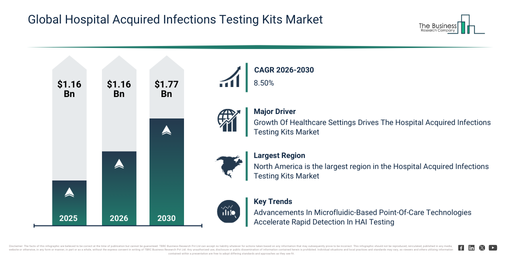
    The hospital-acquired infections testing kits market has grown significantly and is projected to expand further, increasing from $4.79 billion in 2025 to $5.19 billion in 2026 at a compound annual growth rate (CAGR) of 8.5%. This historical growth has been driven by enhanced infection surveillance in hospitals, a rise in antibiotic-resistant pathogens, the expansion of clinical microbiology laboratories, better infection control protocols, and the availability of advanced molecular diagnostic tools. Looking ahead, the market is forecast to reach $7.2 billion by 2030, maintaining the same CAGR of 8.5%. Factors such as heightened focus on early infection detection, increased investment in hospital safety infrastructure, broader adoption of rapid testing methods, growing demand for automated diagnostic workflows, and technological advances in molecular diagnostics will continue to underpin this growth. Key trends expected to influence the market include increased use of rapid diagnostic test kits, expanded molecular testing for hospital-acquired infections, integration of automated diagnostic instruments, growth in point-of-care infection testing, and a stronger emphasis on detecting multiple pathogens simultaneously.

    Download A Free Sample Report For Comprehensive Market Insights:

    https://www.thebusinessresearchcompany.com/sample.aspx?id=2469&type=smp

    Expanding Healthcare Settings as a Major Growth Driver in the Hospital Acquired Infections Testing Kits Market

    The growing number of healthcare facilities worldwide is playing a crucial role in driving demand for hospital-acquired infections testing kits. Healthcare settings encompass a variety of institutions such as acute care hospitals, urgent care centers, rehabilitation facilities, nursing homes, and long-term care facilities, all of which require robust infection detection and prevention tools to ensure patient safety. For example, in May 2023, the American Hospital Association reported a significant increase in the total number of hospitals in the U.S., rising from 6,093 in 2022 to 60,129 in 2023. Alongside this, admissions in community hospitals also grew from over 31.3 million in 2022 to nearly 32 million in 2023. This expansion of healthcare infrastructure directly feeds into the rising need for infection testing kits.

    Impact of Growing Surgical Procedures on the Hospital Acquired Infections Testing Kits Market

    Another important factor boosting the hospital-acquired infections testing kits market is the rise in surgical procedures. Surgical operations, which involve incisions and require anesthesia or sedation, create potential entry points for infections, thus increasing the necessity for effective infection detection methods. The aging global population is a significant contributor to this trend, as older adults typically require more medical interventions related to chronic and age-related health issues. Evidence of this growth is seen in Australia, where hospitalizations involving surgery rose from 3.0 million cases in 2022-23 to 3.1 million cases in 2023-24, an increase of 100,000. Such increases in surgical volume naturally fuel demand for diagnostic kits that help monitor and manage postoperative infections.

    Access The Complete Hospital Acquired Infections Testing Kits Market Report:

    https://www.thebusinessresearchcompany.com/report/hospital-acquired-infections-testing-kits-global-market-report

    Product and Test Type Segments Defining the Hospital Acquired Infections Testing Kits Market

    The hospital-acquired infections testing kits market is divided into several key segments that highlight its diverse product offerings and applications. By product, the market is split into consumables and reagents as well as instruments. Consumables and reagents include culture media used for pathogen isolation and identification, molecular testing reagents such as PCR kits, rapid test kits for various infections, and other related supplies like swabs and preservation solutions. Instrument categories cover automated analyzers for blood culture and pathogen identification, molecular diagnostic devices for PCR and other methods, microscopes, and incubators used for culturing samples. Test types focus on infections such as pneumonia, urinary tract infections, bloodstream infections, surgical site infections, MRSA infections, and others. Additionally, pathogen types are classified into viral, bacterial, and fungal, while application areas revolve around drug resistance testing and disease diagnostics.

    Emerging Trends Shaping the Future of the Hospital Acquired Infections Testing Kits Market

    Recent innovations in the hospital-acquired infections testing kits market emphasize the development of rapid point-of-care antimicrobial susceptibility testing (AST) solutions. These technologies enable faster diagnosis, guide more effective targeted therapies, and help combat the global challenge of antimicrobial resistance (AMR). Point-of-care AST systems use advanced microfluidic technology to quickly identify bacterial infections and assess antibiotic efficacy from patient samples, reducing diagnostic delays and improving treatment decisions. For example, in June 2023, Japan-based Sysmex Corporation launched the first point-of-care AST system in Europe capable of delivering results in just 30 minutes for urinary tract infections. This breakthrough technology supports antimicrobial stewardship by enabling timely and accurate antibiotic administration in primary care settings, contributing to global AMR mitigation efforts.

    Key Players Leading the Hospital Acquired Infections Testing Kits Market

    The hospital-acquired infections testing kits market features several prominent companies driving innovation and competition. Some of the major players include Becton Dickinson and Company, Abbott Laboratories, Cepheid, F. Hoffmann-La Roche Ltd, STERIS plc, QIAGEN, Meridian Bioscience Inc., BioMérieux SA, GE Healthcare, Seegene, SD Biosensor, Fujirebio, Sysmex Corporation, Getein Biotech, Hangzhou Biotest Biotech, AmonMed Biotechnology, Beijing Tigsun Diagnostics, Hunan Lituo Biotechnology, ImmunoScience, and Vivacheck Lab. These organizations are actively involved in advancing diagnostic technologies and expanding product portfolios to meet growing market demands.

    Regional Market Leadership and Growth Outlook in Hospital Acquired Infections Testing Kits

    In 2025, North America held the largest share of the hospital-acquired infections testing kits market, reflecting its well-established healthcare infrastructure and high adoption of advanced diagnostic tools. Meanwhile, the Asia-Pacific region is expected to experience the fastest growth during the forecast period, driven by increasing healthcare investments, expanding hospital networks, and rising awareness of infection control. The market analysis encompasses key regions including Asia-Pacific, South East Asia, Western Europe, Eastern Europe, North America, South America, the Middle East, and Africa, providing a comprehensive view of global market dynamics.

    Get in touch with us:

    The Business Research Company: https://www.thebusinessresearchcompany.com/

    Americas: +1 310-496-7795

    Asia: +44 7882 955267 & +91 8897263534

    Europe: +44 7882 955267

    Email us at: marketing@tbrc.info

    Follow us on:

    LinkedIn: https://in.linkedin.com/company/the-business-research-company

    YouTube: https://www.youtube.com/channel/UC24_fI0rV8cR5DxlCpgmyFQ

    Global Market Model: https://www.thebusinessresearchcompany.com/global-market-model
  • Hormonal Intrauterine Devices (IUDs) Market Set To Grow From $3.17 Billion In 2026 To $4.74 Billion By 2030 At A CAGR Of 10.5%

    Hormonal Intrauterine Devices (IUDs) Market Set To Grow From $3.17 Billion In 2026 To $4.74 Billion By 2030 At A CAGR Of 10.5%

    Through market attractiveness analysis, total addressable market evaluation, company benchmarking matrices, interactive Excel dashboards, expanded supply chain intelligence, emerging startup coverage, and detailed product insights, The Business Research Company’s 2026 market reports provide more actionable and strategically valuable research.

    The hormonal intrauterine devices (IUDs) market has witnessed significant expansion recently, reflecting a growing preference for effective long-term contraceptive options. Rising awareness about family planning and advancements in women’s reproductive health are contributing to this rapid growth. Here, we explore the current market size, key growth drivers, important market segments, industry trends, major players, and regional outlook shaping the future of hormonal IUDs.

    Market Size and Projected Growth in the Hormonal Intrauterine Devices Market

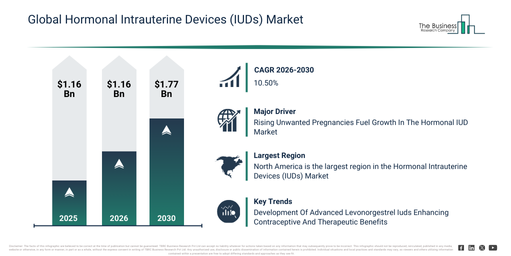
    The hormonal intrauterine devices market has shown impressive growth, expanding from $2.87 billion in 2025 to an expected $3.18 billion in 2026, with a compound annual growth rate (CAGR) of 10.6%. This growth reflects increasing awareness of family planning choices, broader reproductive healthcare initiatives, a rising preference for long-acting contraceptive methods, and greater availability of hormone-based intrauterine devices. Public health programs supporting contraception have also played a crucial role in this expansion. Looking ahead, the market is forecasted to reach $4.74 billion by 2030, growing at a steady CAGR of 10.5%. The anticipated growth is fueled by a surge in demand for non-surgical contraceptive methods, increased attention to menstrual health management, wider access in developing regions, and continuous innovation in hormone delivery technologies. Notable trends include greater adoption of low-dose hormonal IUDs, rising interest in long-acting reversible contraceptives, increasing popularity of frameless IUD designs, expanded therapeutic uses, and a heightened focus on patient comfort and safety.

    Download A Free Sample Report For Comprehensive Market Insights:

    https://www.thebusinessresearchcompany.com/sample.aspx?id=19091&type=smp

    Factors Fueling Hormonal Intrauterine Devices Market Expansion

    A significant contributor to the hormonal IUD market growth is the rising incidence of unwanted pregnancies worldwide. Unintended pregnancies, defined as those not planned or desired at conception, can result from contraceptive failure, limited access to birth control, incorrect usage, or even sexual violence. Restricted availability of effective contraception diminishes individuals’ control over their reproductive choices, thereby increasing the risk of unplanned pregnancies. Hormonal IUDs, known for their high efficacy with a failure rate of less than 1%, offer reliable, long-term contraception ranging from 3 to 7 years depending on the type. For example, data from the Society for Family Planning in July 2025 highlighted an increase in abortions in the US to 1.14 million in 2024, up from 1.05 million in 2023. This rise in unintended pregnancies directly stimulates demand for hormonal IUDs as a preventive measure.

    Market Segmentation Reveals Key Opportunities Within the Hormonal IUD Industry

    This market is categorized across several dimensions to capture its full diversity. The segments include:

    1) Type of hormonal IUD: 13 milligram, 19 milligram, and 52 milligram devices

    2) Device design: framed and frameless intrauterine devices

    3) Hormone type: levonorgestrel-releasing and progesterone-releasing IUDs

    4) Application by age groups: 20-24 years, 25-34 years, 35-44 years, and other uses

    Further subcategories break down into distinctions such as low-dose versus specialty devices within each milligram grouping. For example, 13 mg IUDs include low-dose and specialty options for specific medical conditions. The 19 mg devices are similarly divided, while 52 mg IUDs include standard, extended-release, and specialty devices designed to address heavy menstrual bleeding or endometriosis.

    Access The Complete Hormonal Intrauterine Devices (IUDs) Market Report:

    https://www.thebusinessresearchcompany.com/report/hormonal-intrauterine-devices-iuds-global-market-report

    Current Industry Trends Advancing Hormonal Intrauterine Devices Market Growth

    Leading players in the hormonal IUD space are focusing on creating advanced solutions that not only prevent pregnancy but also address menstrual health issues. Levonorgestrel-releasing IUDs are gaining traction as they offer long-term contraception while helping reduce menstrual bleeding and cramps. For instance, in October 2024, the US nonprofit Medicines360 introduced Avibela, a 52 mg levonorgestrel IUD in Zambia. This device provides up to eight years of pregnancy prevention and up to five years of relief from heavy menstrual bleeding. It works by thickening cervical mucus to block sperm and thinning the uterine lining to lessen menstrual flow.

    Competitive Landscape of Key Players in the Hormonal IUD Market

    Several major companies are actively competing and innovating in the hormonal intrauterine devices market. Prominent industry participants include Bayer AG, Organon & Companies, Gedeon Richter Plc, Meril Life Science Pvt Ltd., Teva UK Limited, Medicines360, HLL Lifecare Limited, Pregna International Ltd., DKT WomanCare Global, SMB Corporation of India, Oy Leiras, OCON Healthcare, Bayer Healthcare Pharmaceuticals, CooperSurgical Inc., Mithra Pharmaceuticals, Shanghai Dahua Medical Apparatus Co. Ltd., Beijing Zizhu Pharmaceutical Co. Ltd., Shanghai Jiansheng Medical Devices Co. Ltd., Zhejiang Xianju Pharmaceutical Co. Ltd., and Shanghai Chuangling Medical Devices Co. Ltd. These companies focus on expanding product portfolios, enhancing hormone delivery technologies, and increasing market penetration globally.

    Regional Outlook Highlights North America’s Lead and Asia-Pacific’s Rapid Growth

    In 2025, North America dominated the hormonal intrauterine devices market, holding the largest regional share. However, the Asia-Pacific region is projected to experience the fastest growth throughout the forecast period. The market analysis encompasses major regions including Asia-Pacific, South East Asia, Western Europe, Eastern Europe, North America, South America, the Middle East, and Africa, providing a comprehensive global perspective on evolving demand and regional dynamics.

    Get in touch with us:

    The Business Research Company: https://www.thebusinessresearchcompany.com/

    Americas: +1 310-496-7795

    Asia: +44 7882 955267 & +91 8897263534

    Europe: +44 7882 955267

    Email us at: marketing@tbrc.info

    Follow us on:

    LinkedIn: https://in.linkedin.com/company/the-business-research-company

    YouTube: https://www.youtube.com/channel/UC24_fI0rV8cR5DxlCpgmyFQ

    Global Market Model: https://www.thebusinessresearchcompany.com/global-market-model
  • Homeopathic Products Market Opportunities Are Emerging Beyond Traditional Growth Areas

    Homeopathic Products Market Opportunities Are Emerging Beyond Traditional Growth Areas

    Delivering more actionable and strategically valuable research, The Business Research Company’s 2026 market reports feature market attractiveness analysis, total addressable market evaluation, company benchmarking matrices, interactive Excel dashboards, expanded supply chain intelligence, emerging startup coverage, and detailed product insights.

    The global homeopathic products market has been experiencing swift growth, driven by rising consumer interest in natural and alternative healthcare options. As more people turn toward holistic treatments, this sector is set to expand even more in the coming years. Let’s explore the current market size, key forces behind this growth, major players, and emerging trends shaping the industry’s future.

    Steady Expansion in the Homeopathic Products Market Size

    The homeopathic products market has seen remarkable expansion recently. Its value is projected to increase from $16.77 billion in 2025 to $19.54 billion in 2026, reflecting a strong compound annual growth rate (CAGR) of 16.6%. This surge over the past years is largely due to a growing consumer preference for natural therapies, the entrenched use of homeopathy in developing markets, the broadening reach of alternative medicine practices, a stronger self-care culture, and wider accessibility of homeopathic products in retail outlets.

    Download A Free Sample Report For Comprehensive Market Insights:

    https://www.thebusinessresearchcompany.com/sample.aspx?id=24240&type=smp

    Anticipated Growth Trajectory in the Homeopathic Products Market Through 2030

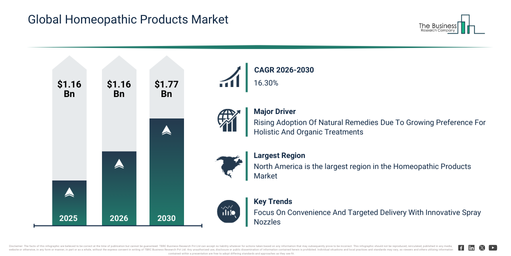
    Looking ahead, the market is poised for even faster growth, expected to reach $35.75 billion by 2030 with a CAGR of 16.3%. The forecast period’s expansion is fueled by increasing demand for holistic health approaches, greater emphasis on immune-supportive products, the rise of digital sales channels, tighter regulatory standards ensuring product quality, and improved consumer education about complementary medicine. Emerging trends include a surge in preference for natural remedies, growing interest in preventive healthcare, wider adoption of plant-based homeopathic products, increased acceptance of integrative medicine, and a stronger focus on standardization and quality assurance.

    Natural and Holistic Remedies as a Major Growth Driver

    One of the main factors propelling the homeopathic products market is the growing consumer inclination toward natural and holistic treatments. These approaches leverage natural substances to support overall health by addressing physical, emotional, and spiritual wellness. Consumers are increasingly aware of the benefits of organic, plant-based therapies and seek alternatives to synthetic chemicals in healthcare.

    Access The Complete Homeopathic Products Market Report:

    https://www.thebusinessresearchcompany.com/report/homeopathic-products-global-market-report

    Supporting this shift, homeopathic products offer gentle, non-invasive remedies that aid the body’s healing processes and provide alternatives to traditional medicine for sustained health benefits. For instance, the American Botanical Council reported that sales of herbal dietary supplements in the United States reached $12.551 billion in 2023, marking a 4.4% growth from the previous year and adding $533 million in sales compared to 2022. This growing preference for natural wellness solutions is a key factor driving market expansion.

    Detailed Segmentation Defines the Homeopathic Products Market

    The homeopathic products market can be broken down into several important segments:

    1) By Product Type: tinctures, dilutions, biochemics, ointments, tablets, and other types

    2) By Source: plant-based, animal-based, and mineral-based ingredients

    3) By Application: analgesic and antipyretic, respiratory, neurology, immunology, gastroenterology, dermatology, and other medical uses

    4) By End User: men, women, and other user groups

    Within these broader segments, there are further distinctions such as:

    – Tinctures including alcohol-based, glycerin-based, and hydro-alcoholic types

    – Dilutions covering single potency, multiple potency, low potency, and high potency

    – Biochemics like tissue salts and Schuessler’s tissue salts

    – Ointments categorized into herbal, pain relief, and skin care

    – Tablets such as homeopathic remedy tablets, sugar pills, and lactose-free options

    – Other product types including sprays, syrups, gels, and lozenges

    Convenience and Innovation as Emerging Trends in the Market

    Leading companies in the homeopathic sector are focusing increasingly on product convenience and ease of use to meet consumer demands. Innovations such as advanced spray nozzle designs improve the delivery of natural treatments, making them more user-friendly and targeted. Spray nozzles help by controlling liquid flow and distribution, allowing precise and gentle application.

    For example, in October 2024, Boiron, a pharmaceutical company based in France, introduced ThroatCalm Spray, a plant-based homeopathic product designed to relieve occasional sore throat discomfort. This remedy includes ingredients like Echinacea and Plantago major and is offered in a portable spray bottle that avoids the numbing effects typical of conventional sore throat treatments, providing a natural, convenient alternative.

    Top Companies Driving Competition in the Homeopathic Products Market

    Several key players dominate this market, including:

    – Dr. Willmar Schwabe GmbH & Co. KG

    – Boiron Laboratories

    – Hyland’s Inc.

    – SBL Pvt. Ltd.

    – Excel Pharma

    – Bakson Drugs & Pharmaceuticals Pvt. Ltd.

    – Ainsworths Ltd.

    – Bio-India Pharma Pvt. Ltd.

    – Lord’s Homeopathic Laboratory Pvt. Ltd.

    – Bioforce AG

    – Hevert-Arzneimittel GmbH & Co. KG

    – Helios Homeopathy

    – Hahnemann Laboratories Inc.

    – Homeocan Inc.

    – A. Nelson & Co. Limited

    – Rxhomeo Inc.

    – Washington Homeopathic Products

    – Powell Laboratories Pvt. Ltd.

    – Dr. Reckeweg & Co. GmbH

    – Allen Healthcare Co. Limited

    These organizations are highly influential in shaping product development, quality standards, and market reach.

    Regional Market Insights Highlighting Key Growth Areas

    In 2025, North America accounted for the largest share of the homeopathic products market. However, the Asia-Pacific region is expected to lead in terms of growth rate during the forecast period. The market analysis encompasses important geographies including Asia-Pacific, South East Asia, Western Europe, Eastern Europe, North America, South America, the Middle East, and Africa, providing a comprehensive view of global market dynamics.

    Get in touch with us:

    The Business Research Company: https://www.thebusinessresearchcompany.com/

    Americas: +1 310-496-7795

    Asia: +44 7882 955267 & +91 8897263534

    Europe: +44 7882 955267

    Email us at: marketing@tbrc.info

    Follow us on:

    LinkedIn: https://in.linkedin.com/company/the-business-research-company

    YouTube: https://www.youtube.com/channel/UC24_fI0rV8cR5DxlCpgmyFQ

    Global Market Model: https://www.thebusinessresearchcompany.com/global-market-model