Category: Medical Equipment

  • Hollow Fiber Dialyzer Market Size Projected To Increase From $6.78 Billion To $8.39 Billion During The Forecast Period

    Hollow Fiber Dialyzer Market Size Projected To Increase From $6.78 Billion To $8.39 Billion During The Forecast Period

    Through market attractiveness analysis, total addressable market evaluation, company benchmarking matrices, interactive Excel dashboards, expanded supply chain intelligence, emerging startup coverage, and detailed product insights, The Business Research Company’s 2026 market reports provide more actionable and strategically valuable research.

    The hollow fiber dialyzer market has been witnessing robust growth, driven by increasing healthcare needs and technological progress in renal care. As kidney-related health issues become more common globally, demand for effective dialysis solutions continues to rise. Let’s explore the market’s current scale, key drivers, segment distribution, industry trends, leading companies, and regional outlook.

    Hollow Fiber Dialyzer Market Size and Growth Outlook

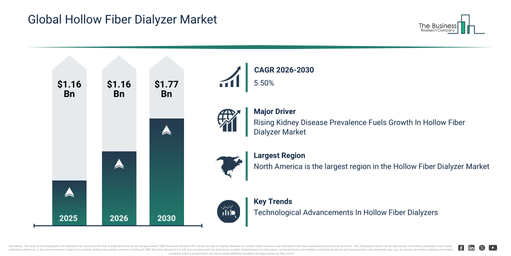
    The hollow fiber dialyzer market has experienced significant expansion recently and is expected to continue this trend. Market value is forecasted to rise from $6.41 billion in 2025 to $6.78 billion in 2026, reflecting a compound annual growth rate (CAGR) of 5.8%. This growth during the historical period has been driven by a rise in chronic kidney disease cases, increased availability of hospital-based dialysis services, the dominance of low flux membrane technologies, a growing elderly population, and enhanced awareness about renal replacement therapies. Looking ahead, the market is projected to reach $8.4 billion by 2030, growing at a CAGR of 5.5%. Factors such as wider adoption of high flux and high efficiency dialyzers, innovations in hollow fiber membrane technology, expansion of dialysis centers in emerging markets, increased healthcare spending on kidney care, and a focus on improving dialysis treatment outcomes will fuel this growth. Trends expected to influence the market include a surge in demand for high-flux dialyzers, greater use of biocompatible membranes, rising application in pediatric and geriatric patients, a shift toward synthetic polymer hollow fiber dialyzers, and heightened emphasis on filtration efficiency and patient safety.

    Download A Free Sample Report For Comprehensive Market Insights:

    https://www.thebusinessresearchcompany.com/sample.aspx?id=20561&type=smp

    Rising Kidney Disease Cases Bolster Hollow Fiber Dialyzer Market Expansion

    One of the primary factors propelling the growth of the hollow fiber dialyzer market is the increasing prevalence of kidney diseases. These disorders, including chronic kidney disease (CKD) and acute kidney injury, impair the kidneys’ ability to filter waste and maintain fluid balance. The surge in kidney disease cases is closely linked to the rising incidence of chronic conditions such as diabetes and hypertension, along with an aging population. Hollow fiber dialyzers serve a critical role in managing these diseases by functioning as artificial kidneys, removing toxins and excess fluids from the bloodstream. For example, Kidney Research UK reported in June 2023 that by 2033, approximately 3.9 million people in the UK will be living with CKD stages 3–5. This growing patient population directly fuels demand for effective dialysis products like hollow fiber dialyzers.

    Segment Breakdown of the Hollow Fiber Dialyzer Market

    This market can be segmented into distinct categories for a clearer understanding of its structure:

    1) By Type: Low Flux Membrane and High Flux Membrane

    2) By Material: Synthetic Polymer Hollow Fiber Dialyzers and Cellulose-Based Hollow Fiber Dialyzers

    3) By Application: Hospitals, Dialysis Centers, and Other Uses

    Further subcategories include:

    – Low Flux Membrane types such as Standard Low Flux Dialyzers, Biocompatible Low Flux Dialyzers, and Low Flux Dialyzers designed for pediatric patients

    – High Flux Membrane types including Standard High Flux Dialyzers, Modified High Flux Dialyzers, High Flux Dialyzers for Pediatric Use, and High Efficiency Dialyzers

    Access The Complete Hollow Fiber Dialyzer Market Report:

    https://www.thebusinessresearchcompany.com/report/hollow-fiber-dialyzer-global-market-report

    Innovations and Industry Trends Influencing Hollow Fiber Dialyzer Market

    Leading players in this market are concentrating on developing advanced dialysis therapies to improve blood filtration efficiency and patient outcomes. Dialysis therapy serves as a substitute for kidney function by removing waste, toxins, and excess fluids in patients with impaired kidney activity. An example of innovation is the August 2024 FDA approval granted to Germany-based Fresenius Medical Care for the 5008X Hemodialysis System. This device offers high-volume hemodiafiltration (Hv-HDF), which combines diffusion and convection mechanisms to more effectively eliminate toxins and excess fluid compared to traditional high-flux hemodialysis. The system’s advanced membrane technology and user-friendly design make it suitable for both clinical and home use, significantly enhancing treatment quality and patient safety.

    Key Companies Driving Competition in the Hollow Fiber Dialyzer Market

    Several major corporations are key players in the hollow fiber dialyzer industry, including:

    Fresenius Medical Care AG & Co. KGaA, Asahi Kasei Medical Co. Ltd., Toray Industries Inc., Baxter International Inc., B. Braun Melsungen AG, Nipro Corporation, Shandong Weigao Group Medical Polymer Company Limited, Nikkiso Co. Ltd., Jiangxi Sanxin Medtec Co. Ltd., BLT Biolight, SB-Kawasumi Laboratories Inc., Shanghai Peony Medical Devices Co. Ltd., Medica S.p.A., Gambro, Medtronic plc, JMS Co. Ltd., Dialife SA, Farmasol Medical Products Ind and Trd Co., SWS Hemodialysis Care Co. Ltd., Chengdu OCI Medical Devices Co. Ltd., Shenzhen Landwind Industry Co. Ltd., and Sundial Medical Co. Ltd.

    Geographic Market Leaders and Growth Potential in Hollow Fiber Dialyzers

    In 2025, North America emerged as the largest market for hollow fiber dialyzers in terms of revenue. However, the Asia-Pacific region is predicted to be the fastest-growing market throughout the forecast period. The global analysis includes key regions such as Asia-Pacific, South East Asia, Western Europe, Eastern Europe, North America, South America, the Middle East, and Africa, providing a comprehensive view of regional market developments and opportunities.

    Get in touch with us:

    The Business Research Company: https://www.thebusinessresearchcompany.com/

    Americas: +1 310-496-7795

    Asia: +44 7882 955267 & +91 8897263534

    Europe: +44 7882 955267

    Email us at: marketing@tbrc.info

    Follow us on:

    LinkedIn: https://in.linkedin.com/company/the-business-research-company

    YouTube: https://www.youtube.com/channel/UC24_fI0rV8cR5DxlCpgmyFQ

    Global Market Model: https://www.thebusinessresearchcompany.com/global-market-model
  • Histology Equipment Market Growth Outlook Reveals A CAGR Of 3.9% And A Market Value Of $0.82 Billion By 2030

    Histology Equipment Market Growth Outlook Reveals A CAGR Of 3.9% And A Market Value Of $0.82 Billion By 2030

    Delivering more actionable and strategically valuable research, The Business Research Company’s 2026 market reports feature market attractiveness analysis, total addressable market evaluation, company benchmarking matrices, interactive Excel dashboards, expanded supply chain intelligence, emerging startup coverage, and detailed product insights.

    The histology equipment market has been steadily evolving, driven by increasing demands for accurate tissue analysis and advancements in diagnostic technologies. This sector plays a vital role in medical research and clinical diagnostics, with significant growth anticipated over the coming years. Below, we explore the market’s size, key drivers, segmentation, emerging trends, major players, and regional prospects shaping its future.

    Projected Expansion and Market Size of the Histology Equipment Market

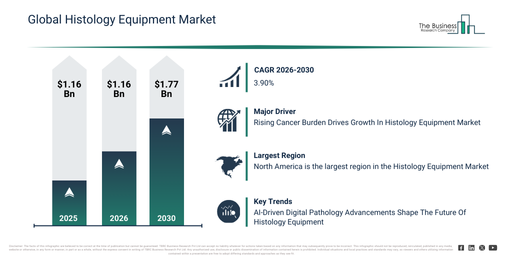
    The histology equipment market has shown consistent growth, with its size expected to rise from $0.68 billion in 2025 to $0.71 billion in 2026, representing a compound annual growth rate (CAGR) of 4.4%. This growth during the historical period has been largely fueled by the expanding use of histopathology in disease diagnosis, the development of hospital and diagnostic laboratory infrastructure, increasing cancer prevalence which necessitates detailed tissue analysis, heightened academic and research activities in life sciences, and a growing shift towards laboratory automation. Looking ahead, the market is forecast to expand further, reaching $0.83 billion by 2030 at a CAGR of 3.9%. The anticipated growth will be driven by the rising need for precision medicine diagnostics, greater investments in digital pathology platforms, expansion of pharmaceutical and biotechnology research pipelines, increased clinical trial activities, and a demand for faster, more accurate tissue analysis. Notable trends expected to influence this period include the adoption of automated histology workflow systems, wider use of digital pathology and slide scanning technologies, increased demand for high-throughput tissue processing, growth in clinical diagnostics applications, and a stronger focus on lab standardization and workflow efficiency.

    Download A Free Sample Report For Comprehensive Market Insights:

    https://www.thebusinessresearchcompany.com/sample.aspx?id=16080&type=smp

    The Rising Impact of Cancer as a Catalyst for Market Growth

    One of the primary factors propelling the histology equipment market forward is the increasing burden of cancer worldwide. Cancer is characterized by uncontrolled growth and spread of abnormal cells, which can be fatal if left untreated. Its rising incidence is influenced by both lifestyle choices that can be modified and inherent biological and demographic factors. Histology equipment is essential for diagnosing and evaluating cancer by enabling detailed examination of tissue samples, allowing clinicians to identify cancer types, stages, and tailor treatment strategies accordingly. For instance, a report from the Australian Institute of Health and Welfare in July 2024 highlighted that cancer diagnoses in Australia increased from 160,570 cases in 2022 to 164,694 in 2023, illustrating a significant year-over-year rise. This upward trend in cancer prevalence directly supports the expanding demand for histology equipment.

    Breaking Down the Histology Equipment Market Segments

    The histology equipment market is categorized into several key segments to capture its broad application spectrum:

    1) Equipment Types: Slide Staining Systems, Scanners, Tissue Processing Systems, Microtomes, Coverslippers, and Other Equipment

    2) Product Categories: Instruments and Analysis Software Systems, Consumables and Reagents

    3) Application Areas: Hospitals, Pharmaceutical Companies, Diagnostic Centers, Academic Institutes, Research Laboratories, and Other Uses

    Further detail includes subcategories such as manual, automated, and hybrid staining systems within slide staining systems; digital slide scanners, whole slide imaging scanners, and confocal scanners under scanners; as well as various microtome types including rotary, cryostat, sliding, manual, and semi-automated models. Other equipment encompasses embedding stations, tissue embedding centers, cryostats, staining racks, and histology printers, illustrating the diverse and specialized nature of this market.

    Access The Complete Histology Equipment Market Report:

    https://www.thebusinessresearchcompany.com/report/histology-equipment-global-market-report

    Technological Advances and Trends Steering Market Innovation

    Leading companies in the histology equipment sector are increasingly focusing on integrating artificial intelligence (AI) into digital pathology solutions to enhance diagnostic accuracy and workflow efficiency. For example, in May 2024, the European medical equipment manufacturer 3DHISTECH launched the P480 2nd Generation slide scanner, featuring polarization imaging, a touchscreen interface, and an upgraded stepper-motor focusing system designed for faster and more reliable operation. Similarly, Roche obtained FDA 510(k) clearance in June 2024 for its VENTANA DP 200 whole-slide scanner, a part of its Digital Pathology Dx platform, which offers high-resolution imaging and capabilities for remote diagnostics. These developments demonstrate how AI-enabled technologies are becoming central to improving histology equipment performance, although challenges remain due to the high initial investment and infrastructure requirements for widespread adoption.

    Key Players Driving Competitive Dynamics in Histology Equipment

    The global histology equipment market features several influential companies that shape the competitive landscape. Prominent participants include Thermo Fisher Scientific Inc., Roche Diagnostics International Ltd, Agilent Technologies Inc., Hologic Inc., Leica Microsystems Nussloch GmbH, Cole-Parmer Instrument Company LLC, Sakura Finetechnical Company Ltd., Biogenex Laboratories Inc., StatLab Medical Products Inc., Biocare Medical LLC, Andwin Scientific, Covaris Inc., A. Menarini Diagnostics S.r.l., Diapath S.p.A., PolyScience Inc., CellPath USA, Medite Medical GmbH, Hacker Instruments & Industries Inc., Amos Scientific Pty. Ltd., TissueGnostics GmbH, Konfoong Bioinformation Tech Co. Ltd (KFBIO), Labstac USA, Intelsint Srl, Milestone Medical Inc., and Histo-Line Laboratories s.r.l. These organizations are actively investing in innovation and digital integration to maintain leadership within the field.

    Regional Market Overview and Areas with the Most Potential

    In 2025, North America held the largest share of the histology equipment market, benefiting from advanced healthcare infrastructure and high adoption of new technologies. Meanwhile, the Asia-Pacific region is projected to experience the fastest growth throughout the forecast period, driven by expanding healthcare sectors, increasing research activities, and rising incidences of cancer and other diseases requiring histopathological diagnosis. The market report covers a wide geographical scope, including Asia-Pacific, South East Asia, Western Europe, Eastern Europe, North America, South America, the Middle East, and Africa, offering a comprehensive understanding of global market trends and regional opportunities.

    Get in touch with us:

    The Business Research Company: https://www.thebusinessresearchcompany.com/

    Americas: +1 310-496-7795

    Asia: +44 7882 955267 & +91 8897263534

    Europe: +44 7882 955267

    Email us at: marketing@tbrc.info

    Follow us on:

    LinkedIn: https://in.linkedin.com/company/the-business-research-company

    YouTube: https://www.youtube.com/channel/UC24_fI0rV8cR5DxlCpgmyFQ

    Global Market Model: https://www.thebusinessresearchcompany.com/global-market-model
  • Hip Replacement Implants Market Forecast Highlights Expansion From $9.16 Billion To $12.73 Billion Through 2030

    Hip Replacement Implants Market Forecast Highlights Expansion From $9.16 Billion To $12.73 Billion Through 2030

    Enhanced with market attractiveness analysis, total addressable market evaluation, company benchmarking matrices, interactive Excel dashboards, expanded supply chain intelligence, emerging startup coverage, and detailed product insights, The Business Research Company’s 2026 market reports deliver more actionable and strategically valuable research.

    The hip replacement implants market is experiencing substantial growth as advances in medical technology and rising patient needs drive demand. With the increasing prevalence of joint-related conditions and improvements in surgical techniques, this market is set to expand notably over the next several years. Below, we explore the current market size, key growth drivers, important segments, competitive developments, and regional trends shaping the industry’s future.

    Steady Expansion Forecast for the Hip Replacement Implants Market

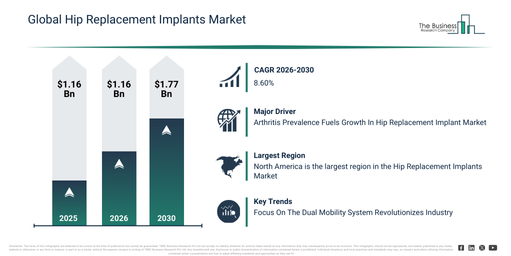
    The hip replacement implants market has seen robust growth recently and is anticipated to continue this trend. Market value is expected to rise from $8.43 billion in 2025 to $9.17 billion in 2026, representing a compound annual growth rate (CAGR) of 8.8%. Looking ahead, this upward trajectory is projected to persist, with the market reaching $12.73 billion by 2030 at a CAGR of 8.6%. This growth is fueled by factors such as the rising incidence of osteoarthritis, an aging global population, broader access to orthopedic surgeries, advancements in implant materials, and enhanced expertise among orthopedic surgeons.

    Download A Free Sample Report For Comprehensive Market Insights:

    https://www.thebusinessresearchcompany.com/sample.aspx?id=9157&type=smp

    Key Factors Boosting Demand for Hip Replacement Implants

    A significant driver of market growth is the increasing number of arthritis cases worldwide. Arthritis, characterized by joint swelling and pain, commonly involves osteoarthritis and rheumatoid arthritis. Hip replacement implants are essential in hip arthroplasty procedures, where damaged hip joints are replaced with artificial components to relieve pain and restore function. For example, data from the UK’s Office for Health Improvement and Disparities indicates that in 2023, 18.4% of people aged 16 and over reported having a long-term musculoskeletal condition, a slight increase from 17.6% in 2022. Women reported these conditions more frequently (20.9%) than men (15.8%). This upward trend in arthritis prevalence directly supports sustained growth in the hip replacement implant market.

    Additional Market Growth Drivers Enhancing Mobility and Technology Adoption

    The demand for procedures that restore mobility is rising rapidly, contributing to market expansion. There is a growing preference for minimally invasive orthopedic surgeries, which offer reduced recovery times and less trauma to patients. Furthermore, personalized and 3D-printed hip implants are gaining traction, allowing for better fit and functionality tailored to individual patients. Innovations focusing on implant durability and longevity, along with advancements in bearing surface technologies, are also important factors encouraging market growth.

    Access The Complete Hip Replacement Implants Market Report:

    https://www.thebusinessresearchcompany.com/report/hip-replacement-implants-global-market-report

    Key Segments Defining the Hip Replacement Implants Market

    This market is categorized into several primary segments, including:

    1) Product Type: Femoral Reconstruction, Acetabular Reconstruction, and Revision Hip Implants

    2) Component Type: Acetabular Cup Systems, Hip Stem Systems, and Revision Accessories and Components

    3) Material Type: Metal-On-Polyethylene, Ceramic-On-Polyethylene, and Ceramic-On-Ceramic

    4) End-User: Orthopedic Clinics, Hospitals, and Surgical Centers

    Further subcategories specify components such as femoral heads and stems, acetabular cups and liners, and revision components for both femoral and acetabular reconstructions.

    Innovations Shaping Competitive Advantage in the Hip Replacement Implant Market

    Leading companies in this sector are focusing on developing cutting-edge products to capture market share. One notable innovation is the Dual Mobility System, which incorporates the OXINIUM DH bearing surface to enhance implant stability, reduce dislocation risk, and improve range of motion. Unlike traditional implants, this system minimizes wear and corrosion by replacing certain metallic components with proprietary materials. For example, in August 2023, Smith & Nephew PLC launched the OR3O Dual Mobility System in India, highlighting these advanced features to improve clinical outcomes in both primary and revision hip arthroplasty procedures.

    Top Market Players Driving Growth and Innovation

    The hip replacement implants market is dominated by several prominent companies, including Zimmer Biomet Holdings Inc., DePuy Synthes, Stryker Corporation, Smith & Nephew PLC, Corin Group PLC, Waldemar Link GmbH & Co KG, Wright Medical Group NV, Corentec Co Ltd., MicroPort Scientific Corporation, Exactech Inc., OMNI Life Science Inc., Medacta International SA, PETER BREHM GmbH, Gruppo Bioimpianti srl., LimaCorporate SPA, Mathys AG Bettlach, Merete GmbH, Ortho Development Corporation, Shanghai MicroPort Orthopedics Inc., FH Orthopedics Inc., ConforMIS Inc., AK Medical Holdings Limited, and Beijing Chunlizhengda Medical Instruments Co. Ltd. These companies are actively investing in research and development to enhance product portfolios and maintain competitive advantage.

    Regional Market Overview Highlighting Growth Leaders

    In 2025, North America held the largest share of the hip replacement implants market. However, the Asia-Pacific region is expected to be the fastest-growing market during the forecast period, driven by rising healthcare investments and increasing demand for orthopedic solutions. The geographic analysis includes regions such as Asia-Pacific, South East Asia, Western Europe, Eastern Europe, North America, South America, the Middle East, and Africa, providing a comprehensive perspective of global market dynamics.

    Get in touch with us:

    The Business Research Company: https://www.thebusinessresearchcompany.com/

    Americas: +1 310-496-7795

    Asia: +44 7882 955267 & +91 8897263534

    Europe: +44 7882 955267

    Email us at: marketing@tbrc.info

    Follow us on:

    LinkedIn: https://in.linkedin.com/company/the-business-research-company

    YouTube: https://www.youtube.com/channel/UC24_fI0rV8cR5DxlCpgmyFQ

    Global Market Model: https://www.thebusinessresearchcompany.com/global-market-model
  • High-Resolution Anoscopy Market Expected To Reach $22.43 Billion By 2030 As Growth Accelerates At 7.2% CAGR

    High-Resolution Anoscopy Market Expected To Reach $22.43 Billion By 2030 As Growth Accelerates At 7.2% CAGR

    Through market attractiveness analysis, total addressable market evaluation, company benchmarking matrices, interactive Excel dashboards, expanded supply chain intelligence, emerging startup coverage, and detailed product insights, The Business Research Company’s 2026 market reports provide more actionable and strategically valuable research.

    The high-resolution anoscopy market is experiencing significant growth driven by advancements in diagnostic technology and rising awareness of anal health conditions. As medical professionals increasingly adopt innovative tools for early cancer detection, the market is positioned for steady expansion in the coming years. Let’s explore the current market size, the main factors fueling growth, important trends, key segments, and leading companies shaping this industry.

    Market Size and Expected Growth Trajectory in High-Resolution Anoscopy

    The market for high-resolution anoscopy has seen robust growth recently, expanding from $16 billion in 2025 to an anticipated $17 billion in 2026, with a compound annual growth rate (CAGR) of 6.2%. Factors behind this rise include growing awareness about anal cancer and anal intraepithelial neoplasia (aIN), the establishment of more specialty diagnostic centers, the adoption of colposcopy-based diagnostic techniques, enhanced visualization technologies in anoscopy, and the expansion of preventive screening programs.

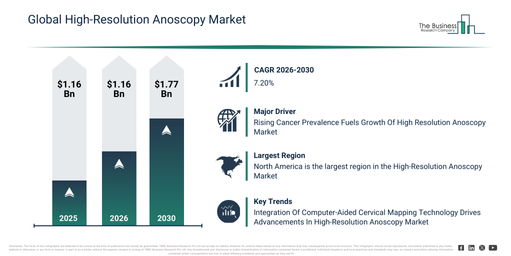
    Looking ahead, the market is projected to reach $22.43 billion by 2030, growing at a CAGR of 7.2%. This forecasted growth reflects increased investments in early cancer detection initiatives, greater demand for portable diagnostic devices, expanded use of telemedicine in diagnostics, wider adoption of AI-assisted image analysis, and a stronger emphasis on minimally invasive procedures. Key trends expected to influence the market include the rising popularity of digital and portable anoscopy devices, greater application of high-resolution imaging for early diagnosis, a boost in anal cancer screening programs, growth in outpatient diagnostic services, and enhanced integration of image documentation systems.

    Download A Free Sample Report For Comprehensive Market Insights:

    https://www.thebusinessresearchcompany.com/sample.aspx?id=13011&type=smp

    Key Factors Propelling Growth in the High-Resolution Anoscopy Market

    One of the primary growth drivers for the high-resolution anoscopy market is the increasing prevalence of cancer worldwide. Cancer, characterized by uncontrolled cell growth, underscores the importance of advanced diagnostic tools like high-resolution anoscopy, which provides detailed imaging through colposcopes or operating microscopes. These devices enable more accurate detection and evaluation of abnormalities in the anal canal. For example, data from the American Cancer Society in January 2024 indicated a rise in cancer cases in the United States from 1,958,310 in 2023 to 2,001,140, marking a 2.19% increase. This upward trend in cancer incidence is directly fueling demand for disposable endoscopes, including those used in high-resolution anoscopy.

    The Role of Rising Sexually Transmitted Infections in Expanding Market Demand

    Another significant factor contributing to market growth is the increasing incidence of sexually transmitted diseases (STDs), also known as sexually transmitted infections (STIs). These infections, caused by bacteria, viruses, or parasites, are commonly spread through sexual contact. Human papillomavirus (HPV), which can lead to anal dysplasia, is a key condition diagnosed and monitored using high-resolution anoscopy. The growing prevalence of STIs highlights the need for early cancer detection and management, boosting demand for HRA technology. For instance, the Joint United Nations Programme on HIV/AIDS reported in July 2025 that around 40.8 million people worldwide were living with HIV in 2024, with 1.3 million new infections occurring that year. This rise in sexually transmitted infections supports the expanding use of high-resolution anoscopy devices.

    Access The Complete High-Resolution Anoscopy Market Report:

    https://www.thebusinessresearchcompany.com/report/high-resolution-anoscopy-global-market-report

    Market Segmentation Overview for High-Resolution Anoscopy

    This report categorizes the high-resolution anoscopy market into several key segments:

    1) Product Type: Including colposcopes, portable colposcopes, hand-held colposcopes, anoscopes, disposable anoscopes, and reusable anoscopes.

    2) Patient Population: Divided into adults and pediatrics.

    3) End Use: Comprising hospitals and specialty clinics.

    Further subcategories break down product types such as standard and digital colposcopes; battery-powered and rechargeable portable colposcopes; standard and advanced hand-held colposcopes; standard and lighted anoscopes; single-use and specialty disposable anoscopes; and standard and advanced reusable anoscopes.

    How Technological Innovations Shape Future Demand in High-Resolution Anoscopy

    Leading companies in the high-resolution anoscopy market are continuously adopting cutting-edge technologies, such as computer-aided cervical mapping, to enhance diagnostic accuracy and treatment outcomes. This innovative technology assists healthcare providers in rapidly identifying cervical abnormalities during clinical examinations. For example, in 2023, Rudolf Riester GmbH, a German manufacturer of medical devices, introduced the LT-300 SD Digital Colposcope. This device facilitates detailed clinical examinations of the cervix, vulva, vagina, and lower uterus for healthcare facilities worldwide, including hospitals, clinics, medical schools, telemedicine providers, and assault advocacy programs. Such advancements are helping maintain competitive market positions while improving patient care.

    Prominent Players and Their Strategic Roles in the High-Resolution Anoscopy Market

    Key companies leading the high-resolution anoscopy market include Philips Medical Systems Technologies Ltd., Olympus Corporation, Hoya Corporation, Karl Storz SE & Co. KG, CooperSurgical, Ecleris S.R.L, Pentax Medical, Fujifilm Medical Systems, Carl Zeiss Meditec AG, Optomic, Narang Medical Limited, Medorah Meditek Pvt Ltd., Welch Allyn, Leisegang Feinmechanik Optik GmbH, Medimar S.A., DYSIS Medical, Gynius Plus AB, Lutech Medical, Ottomed Endoscopy, and Seiler Garepa Pvt. Ltd. These organizations focus on innovation, expanding product portfolios, and strategic partnerships to strengthen their market presence.

    Geographic Market Distribution and Regional Leadership

    In 2025, North America held the largest share of the high-resolution anoscopy market. The comprehensive market analysis also includes important regions such as Asia-Pacific, South East Asia, Western Europe, Eastern Europe, South America, the Middle East, and Africa. While North America currently leads, emerging markets in Asia-Pacific and other regions are expected to contribute significantly to future growth.

    Get in touch with us:

    The Business Research Company: https://www.thebusinessresearchcompany.com/

    Americas: +1 310-496-7795

    Asia: +44 7882 955267 & +91 8897263534

    Europe: +44 7882 955267

    Email us at: marketing@tbrc.info

    Follow us on:

    LinkedIn: https://in.linkedin.com/company/the-business-research-company

    YouTube: https://www.youtube.com/channel/UC24_fI0rV8cR5DxlCpgmyFQ

    Global Market Model: https://www.thebusinessresearchcompany.com/global-market-model
  • High-Frequency Chest-Wall Oscillation Devices Market Set To Grow From $2.86 Billion In 2026 To $3.77 Billion By 2030 At A CAGR Of 7.2%

    High-Frequency Chest-Wall Oscillation Devices Market Set To Grow From $2.86 Billion In 2026 To $3.77 Billion By 2030 At A CAGR Of 7.2%

    Delivering more actionable and strategically valuable research, The Business Research Company’s 2026 market reports feature market attractiveness analysis, total addressable market evaluation, company benchmarking matrices, interactive Excel dashboards, expanded supply chain intelligence, emerging startup coverage, and detailed product insights.

    The market for high-frequency chest-wall oscillation (HFCWO) devices has been experiencing strong growth driven by increasing respiratory health concerns worldwide. As chronic respiratory diseases become more prevalent and medical technology advances, the demand for effective airway clearance solutions is on the rise. Here is a detailed overview of the current market status, key growth factors, segmentation, innovations, major players, and regional insights.

    Projected Expansion of the High-Frequency Chest-Wall Oscillation Devices Market

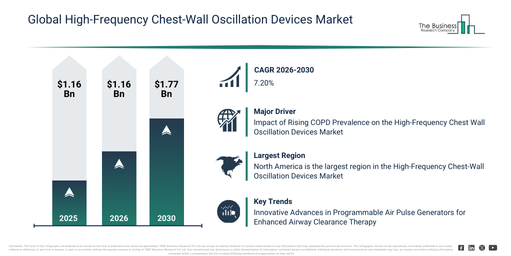
    The market for high-frequency chest-wall oscillation devices has shown robust growth recently and is projected to continue expanding. From a market size of $2.65 billion in 2025, it is expected to reach $2.86 billion in 2026, reflecting an 8.0% compound annual growth rate (CAGR). This upward trend during the historic period is primarily fueled by the increasing incidence of chronic respiratory diseases, greater acceptance of airway clearance therapies by hospitals, rising awareness about the importance of mucus clearance, growing respiratory care infrastructure, and the expanding application of mechanical chest physiotherapy.

    Download A Free Sample Report For Comprehensive Market Insights:

    https://www.thebusinessresearchcompany.com/sample.aspx?id=16703&type=smp

    Looking beyond 2026, the market is forecasted to grow to $3.77 billion by 2030, with a CAGR of 7.2% during the forecast period. Key factors supporting this future growth include an aging population suffering from respiratory disorders, a growing preference for home healthcare respiratory devices, higher cases of cystic fibrosis and bronchiectasis, expansion in outpatient respiratory services, and an increased focus on managing long-term respiratory diseases. Emerging trends such as the rising adoption of home-based airway clearance therapies, demand for portable and wearable HFCWO devices, and expanding use in pediatric and geriatric care create additional growth opportunities.

    Rising Chronic Respiratory Conditions Fueling Market Demand

    One of the primary drivers for the expansion of the HFCWO devices market is the increasing prevalence of chronic obstructive pulmonary diseases (COPD) globally. COPD is a progressive lung disease characterized by persistent respiratory symptoms and airflow limitations. The condition is often caused by smoking, exposure to environmental pollutants, genetic factors, and aging populations. High-frequency chest-wall oscillation devices play a key role in managing COPD by helping patients clear mucus from their airways, reducing infection risks, improving lung function, and enhancing overall comfort.

    Access The Complete High-Frequency Chest-Wall Oscillation Devices Market Report:

    https://www.thebusinessresearchcompany.com/report/high-frequency-chest-wall-oscillation-devices-global-market-report

    For example, according to the Australian Institute of Health and Welfare in June 2024, COPD was responsible for 3.6% of the total disease burden in Australia in 2023 and accounted for 4% of all deaths in 2022, totaling 7,691 fatalities. Such statistics underscore the growing demand for effective respiratory care solutions that contribute to the rising sales of HFCWO devices worldwide.

    Chronic Respiratory Diseases’ Impact on Market Growth and Patient Care

    The increasing rates of chronic respiratory diseases more broadly are also pushing market growth. These long-term illnesses affect the lungs and airways, leading to breathing difficulties and reduced respiratory function. Factors such as worsening air pollution, smoking habits, occupational hazards, and an aging global population contribute to higher incidences of asthma, COPD, and other chronic lung conditions.

    High-frequency chest-wall oscillation devices are increasingly used to assist patients in managing these diseases by helping to mobilize and remove mucus from the lungs, thereby improving breathing efficiency, reducing infections, and enhancing lung capacity. According to the European Environment Agency in November 2024, chronic respiratory diseases rank as the third leading cause of death across EEA countries, responsible for over 60% of nearly 420,000 annual fatalities. This significant health burden directly influences the rising demand for advanced respiratory care technologies such as HFCWO devices.

    Breaking Down the High-Frequency Chest-Wall Oscillation Devices Market Structure

    The report categorizes the high-frequency chest-wall oscillation devices market into several key segments:

    1) Product Type includes Vest-Based HFCWO Devices, Wrap-Around or Jacket-Based HFCWO Devices, and Modular HFCWO Systems.

    2) Technology covers Pneumatic Oscillation Technology, Mechanical Vibration Technology, and Compression–Oscillation Combination Technology.

    3) Mobility or Power Source divides the market into Stationary (AC-Powered) and Portable (Battery-Powered) HFCWO Devices.

    4) Patient Population segments users into Pediatric, Adult, and Geriatric patients.

    5) End-Use Setting encompasses Hospitals, Clinics, Home Healthcare Settings, and Other Healthcare Facilities.

    Further subcategories detail variations such as standard-fit, adjustable, and pediatric vests; full-torso and partial-coverage jackets; and modular systems that are console-based, portable, or upgradable with interchangeable garments.

    Innovations Shaping the Future of High-Frequency Chest-Wall Oscillation Devices

    Leading companies in the HFCWO device market are pushing innovation by developing programmable air pulse generators aimed at improving treatment customization and patient comfort. These advanced systems deliver controlled air pulses with adjustable frequencies and intensities to mobilize mucus and enhance airway clearance for conditions like cystic fibrosis and bronchiectasis.

    For instance, Electromed Inc., a U.S.-based company, launched its fifth-generation SmartVest Clearway airway clearance system in November 2023. This device uses HFCWO therapy by delivering alternating air pulses to a vest garment that rapidly compresses and releases the chest wall, effectively oscillating airflow inside the airways. The SmartVest Clearway is designed to provide relief for patients who struggle with ineffective secretion clearance due to muscle weakness, poor cough, or impaired ventilation.

    Key Players Leading the High-Frequency Chest-Wall Oscillation Devices Market

    The competitive landscape of the HFCWO devices market is dominated by several prominent companies, including Electromed Inc., Tactile Medical, Trudell Medical International, Monaghan Medical Corporation, Respinova Ltd., PARI Medical Holding GmbH, Dymedso Medical, ABM Respiratory Care, Airway Clearance Inc., Sentec AG, Inogen Inc., Smiths Medical, Nihon Kohden Corporation, Getinge AB, Fisher & Paykel Healthcare, Vyaire Medical, Hamilton Medical, Lowenstein Medical, Breath Technologies, and Medical Depot Inc.

    Regional Market Leadership and Growth Prospects

    In 2025, North America held the largest market share for high-frequency chest-wall oscillation devices, supported by advanced healthcare infrastructure and high awareness. Meanwhile, the Asia-Pacific region is expected to experience the fastest market growth over the forecast period, driven by increasing healthcare investments and a rising prevalence of chronic respiratory conditions. Other significant regions analyzed in this market report include South East Asia, Western Europe, Eastern Europe, South America, the Middle East, and Africa, providing a comprehensive view of global market dynamics.

    Get in touch with us:

    The Business Research Company: https://www.thebusinessresearchcompany.com/

    Americas: +1 310-496-7795

    Asia: +44 7882 955267 & +91 8897263534

    Europe: +44 7882 955267

    Email us at: marketing@tbrc.info

    Follow us on:

    LinkedIn: https://in.linkedin.com/company/the-business-research-company

    YouTube: https://www.youtube.com/channel/UC24_fI0rV8cR5DxlCpgmyFQ

    Global Market Model: https://www.thebusinessresearchcompany.com/global-market-model
  • High Speed Laser Ablation System Market Opportunities Are Emerging Beyond Traditional Growth Areas

    High Speed Laser Ablation System Market Opportunities Are Emerging Beyond Traditional Growth Areas

    Enhanced with market attractiveness analysis, total addressable market evaluation, company benchmarking matrices, interactive Excel dashboards, expanded supply chain intelligence, emerging startup coverage, and detailed product insights, The Business Research Company’s 2026 market reports deliver more actionable and strategically valuable research.

    The high speed laser ablation system market is experiencing notable growth driven by technological advances and expanding applications across various industries. As industries increasingly adopt laser-based solutions for precision manufacturing and medical procedures, this market is set to continue its upward trajectory. Let’s explore the current market size, key growth drivers, significant trends, leading players, and regional insights shaping this dynamic sector.

    Current Market Size and Expected Growth in the High Speed Laser Ablation System Market

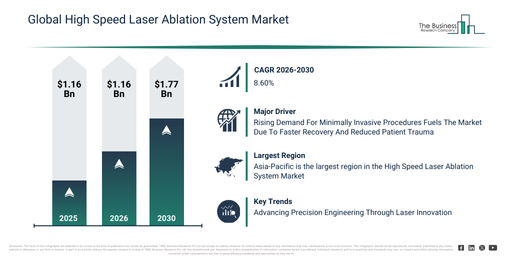
    The high speed laser ablation system market has seen robust expansion in recent years, with projections indicating a rise from $1.88 billion in 2025 to $2.05 billion in 2026, representing a compound annual growth rate (CAGR) of 8.9%. Historically, this growth was influenced by the scarcity of high-speed laser systems, reliance on conventional machining, increasing industrial manufacturing demand, early adoption in healthcare, and the high cost of equipment acting as a limiting factor. Looking ahead, the market is forecasted to reach $2.86 billion by 2030, growing at a CAGR of 8.6%. This future growth is expected to be driven by advancements in femtosecond and picosecond laser technologies, broader use in automotive and aerospace sectors, heightened demand for precise tissue ablation in healthcare, integration with automated systems, and strengthened research investments in laser technologies. Key trends during the forecast period include the rising use of ultrafast and precision lasers, growth in surgical and medical laser applications, expanding semiconductor and electronics manufacturing use, increased research applications, and a stronger focus on safety standards and minimally invasive approaches.

    Download A Free Sample Report For Comprehensive Market Insights:

    https://www.thebusinessresearchcompany.com/sample.aspx?id=27306&type=smp

    Primary Drivers Behind the High Speed Laser Ablation System Market Growth

    One of the main factors boosting the high speed laser ablation system market is the growing preference for minimally invasive medical procedures. These techniques involve smaller incisions with specialized tools that reduce tissue damage, decrease pain, and shorten recovery time, making them increasingly popular among patients and healthcare providers.

    High-speed laser ablation systems facilitate these procedures by precisely removing or vaporizing targeted tissues while minimizing harm to surrounding areas. This precision supports accurate treatments with smaller incisions and quicker healing processes. As an example, in June 2024, the American Society of Plastic Surgeons reported that nearly 25.4 million minimally invasive procedures were performed in the US in 2023, marking a 7% increase from 2022. Such growing demand for minimally invasive interventions is a major catalyst for market expansion.

    Breakdown of Segments in the High Speed Laser Ablation System Market

    This market is segmented by laser type, applications, and end-use industries.

    By laser type, the categories include ultrafast, nanosecond, picosecond, and femtosecond lasers.

    Applications cover industrial manufacturing, medical and healthcare, scientific research, and semiconductor and electronics fields.

    End-use industries comprise automotive, aerospace and defense, electronics and semiconductor, medical devices, research institutions, energy and power, along with other sectors.

    Further subsegments detail specific laser types, such as mode-locked, fiber, and solid-state lasers for ultrafast; Q-switched Nd:Yag, excimer, and diode-pumped solid-state lasers for nanosecond; picosecond fiber, solid-state picosecond, and mode-locked semiconductor lasers for picosecond; and Ti:Sapphire, femtosecond fiber, and diode-pumped femtosecond lasers for femtosecond categories.

    Access The Complete High Speed Laser Ablation System Market Report:

    https://www.thebusinessresearchcompany.com/report/high-speed-laser-ablation-system-global-market-report

    High Speed Laser Ablation System Market Trends Driving Innovation and Growth

    Leading players in the high speed laser ablation system sector are pushing the boundaries of technology by focusing on micromachining and 3D surface processing solutions. These laser-based techniques enable precise material modification at a microscale level, which is crucial for manufacturing intricate, high-precision components.

    For instance, in June 2024, GF Machining Solutions GmbH from Switzerland introduced the LASER S 500 (U), a groundbreaking laser micromachining system designed for ultra-precise 3D surface texturing and engraving. This solution is tailored for industries such as electronics, medical technology, and watchmaking. It offers exceptional accuracy (±5 microns), superior surface finishes (Ra 0.1 microns), and high-speed productivity, utilizing thermoregulated components, high-dynamic motors, and a fast 3D scanner. The system supports three- or five-axis configurations and works with nanosecond or femtosecond laser sources. It is adept at micro-shaping, engraving, texturing, and structuring on hard materials like silicon carbide, alumina, tungsten carbide, and softer metals.

    Key Players Competing Within the High Speed Laser Ablation System Market

    The high speed laser ablation system market features a range of prominent companies driving innovation and competition. Notable organizations include Hitachi Ltd., Thermo Fisher Scientific Inc., KEYENCE Corporation, Teledyne Technologies Incorporated, Lumentum Holdings Inc., IPG Photonics Corporation, Resonetics Inc., Ekspla, Laserax Inc., Preco LLC., LasX Industries Ltd., SCHWIND eye-tech-solutions GmbH, Pantec Biosolutions AG., Applied Spectra Inc., Intelligent Imaging Innovations Inc., Jenoptik AG., JPT Laser, Clark-MXR Inc., PolarOnyx Inc., Quantum Composers Inc., Suresh Indu Lasers Pvt. Ltd., and Laser Photonics LLC.

    Regional Overview and Market Opportunities in the High Speed Laser Ablation System Sector

    In 2025, Asia-Pacific emerged as the largest regional market for high speed laser ablation systems. The market analysis spans key geographic areas, including Asia-Pacific, Southeast Asia, Western Europe, Eastern Europe, North America, South America, the Middle East, and Africa, providing a detailed view of growth patterns and opportunities across different regions.

    Get in touch with us:

    The Business Research Company: https://www.thebusinessresearchcompany.com/

    Americas: +1 310-496-7795

    Asia: +44 7882 955267 & +91 8897263534

    Europe: +44 7882 955267

    Email us at: marketing@tbrc.info

    Follow us on:

    LinkedIn: https://in.linkedin.com/company/the-business-research-company

    YouTube: https://www.youtube.com/channel/UC24_fI0rV8cR5DxlCpgmyFQ

    Global Market Model: https://www.thebusinessresearchcompany.com/global-market-model
  • High Intensity Focused Ultrasound (HIFU) Market Expansion Is Opening New Pathways For Strategic Investment

    High Intensity Focused Ultrasound (HIFU) Market Expansion Is Opening New Pathways For Strategic Investment

    Through market attractiveness analysis, total addressable market evaluation, company benchmarking matrices, interactive Excel dashboards, expanded supply chain intelligence, emerging startup coverage, and detailed product insights, The Business Research Company’s 2026 market reports provide more actionable and strategically valuable research.

    The high intensity focused ultrasound (HIFU) market is rapidly evolving, driven by technological breakthroughs and increasing demand for non-invasive treatment options. As awareness grows around its applications, especially in oncology and other medical fields, this market is set for substantial growth in the coming years. Let’s explore the current market size, key drivers, segments, major players, and regional trends shaping the future of HIFU technology.

    The Expanding Market Size and Future Outlook for High Intensity Focused Ultrasound

    The high intensity focused ultrasound market has experienced swift growth recently, with its value rising from $1.66 billion in 2025 to an estimated $1.84 billion in 2026, reflecting a compound annual growth rate (CAGR) of 10.8%. This past growth has been fueled by the rising number of uterine fibroid cases, an increase in prostate cancer incidences, technological progress in ultrasound devices, growing acceptance of non-invasive treatment methods, and the availability of highly skilled healthcare professionals.

    Download A Free Sample Report For Comprehensive Market Insights:

    https://www.thebusinessresearchcompany.com/sample.aspx?id=25783&type=smp

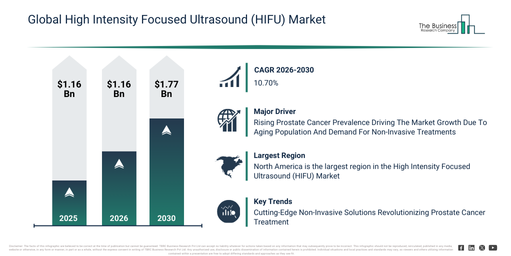
    Looking ahead, the market is projected to continue its rapid expansion, reaching $2.76 billion by 2030 at a CAGR of 10.7%. This expected growth is supported by advancements in robotic HIFU systems, the integration of artificial intelligence and enhanced imaging techniques for precise therapies, rising adoption in emerging economies, increased healthcare infrastructure investments, and the development of portable and home-care HIFU devices. Key trends shaping the forecast period include greater use of focused ultrasound in cancer treatments, growth in non-invasive therapeutic options, combined imaging-HIFU technologies, and portable solutions for pain management.

    Primary Factors Propelling Growth in the High Intensity Focused Ultrasound Market

    An important driver behind the HIFU market expansion is the increasing incidence of prostate cancer. This disease, which typically develops slowly but can become aggressive if untreated, primarily affects older men, making age a significant risk factor. The HIFU technique offers a highly targeted treatment by using focused ultrasound waves to generate intense heat that destroys cancerous tissues in the prostate, while sparing the surrounding healthy areas.

    Access The Complete High Intensity Focused Ultrasound (HIFU) Market Report:

    https://www.thebusinessresearchcompany.com/report/high-intensity-focused-ultrasound-hifu-global-market-report

    For instance, according to Prostate Cancer UK in January 2025, 50,751 men in England were diagnosed with prostate cancer in 2022, with the number rising to 55,033 in 2023. This upward trend in prostate cancer cases is a major contributor to the growing demand for HIFU therapies, as it provides a less invasive alternative to conventional surgical treatments.

    Breaking Down the High Intensity Focused Ultrasound Market Segments

    This report categorizes the high intensity focused ultrasound market into several detailed segments:

    1) Device Type: Standalone HIFU devices, portable HIFU units, combination HIFU devices, robotic HIFU systems, and ultrasound-guided HIFU devices.

    2) Method: Non-invasive and minimally invasive approaches.

    3) Application: Treatments for uterine fibroids, prostate cancer, essential tremor, dermatology issues, breast cancer, glaucoma, back pain, facetogenic pain, and other applications.

    4) End-User: Hospitals, ambulatory surgical centers, clinics, research institutions, and home care environments.

    Further subcategories include:

    – Standalone devices divided into fixed-site and hospital-based systems.

    – Portable devices featuring handheld units and mobile cart-based setups.

    – Combination devices integrating HIFU with magnetic resonance imaging or ultrasound imaging.

    – Robotic systems encompassing robotic-assisted laparoscopic HIFU and robotic arm-integrated platforms.

    – Ultrasound-guided devices utilizing real-time ultrasound navigation and Doppler-based targeting technologies.

    Innovations Defining the Next Era of Growth in the HIFU Market

    Leading companies in the high intensity focused ultrasound market are focused on developing cutting-edge, non-invasive surgical devices that enhance treatment accuracy, reduce recovery times, and minimize complications typically associated with traditional surgery. Non-invasive technologies use focused ultrasound or laser-based methods to address internal conditions without making surgical incisions.

    As an example, in April 2025, EDAP TMS S.A., a French firm specializing in minimally invasive medical technology, launched the advanced focal one i system. This system combines sophisticated imaging techniques such as PSMA PET and micro-ultrasound with AI-driven algorithms to deliver precise, customized robotic HIFU therapy for prostate cancer. The platform also supports workflow efficiency and enables remote collaboration through features like real-time streaming and proctoring, aiming to improve treatment outcomes and broaden access to expert care.

    Key Players Shaping the High Intensity Focused Ultrasound Market Landscape

    The HIFU market includes several prominent companies such as Siemens Healthineers AG, Koninklijke Philips NV, GE HealthCare Technologies Inc, Merz Pharma GmbH Co KGaA, Insightec Ltd, EDAP TMS SA, Chongqing Haifu Medical Technology Co Ltd, SuperSonic Imagine SA, Alpinion Medical Systems Co Ltd, ILJIN Holdings Co Ltd, Sonablate Corp, SonaCare Medical LLC, Profound Medical Corp, Mianyang Sonic Electronic LTD, Verasonics Inc, FUS Instruments Inc, Sonic Concepts Inc, Theraclion SA, CARThera SA, HIFU Tech Ltd, and Chongqing Institute of Ultrasound Equipment. These organizations are driving innovation and expanding the accessibility of HIFU treatments worldwide.

    Regional Market Leadership and Growth Patterns in High Intensity Focused Ultrasound

    In 2025, North America held the largest share of the high intensity focused ultrasound market. Meanwhile, the Asia-Pacific region is expected to lead in terms of the fastest growth rate during the forecast period. The comprehensive market analysis includes regions such as Asia-Pacific, South East Asia, Western Europe, Eastern Europe, North America, South America, the Middle East, and Africa, providing a detailed global perspective on market dynamics.

    Get in touch with us:

    The Business Research Company: https://www.thebusinessresearchcompany.com/

    Americas: +1 310-496-7795

    Asia: +44 7882 955267 & +91 8897263534

    Europe: +44 7882 955267

    Email us at: marketing@tbrc.info

    Follow us on:

    LinkedIn: https://in.linkedin.com/company/the-business-research-company

    YouTube: https://www.youtube.com/channel/UC24_fI0rV8cR5DxlCpgmyFQ

    Global Market Model: https://www.thebusinessresearchcompany.com/global-market-model

  • High Flux Dialyzer Market Trends Are Creating New Opportunities For Industry Leaders

    High Flux Dialyzer Market Trends Are Creating New Opportunities For Industry Leaders

    Delivering more actionable and strategically valuable research, The Business Research Company’s 2026 market reports feature market attractiveness analysis, total addressable market evaluation, company benchmarking matrices, interactive Excel dashboards, expanded supply chain intelligence, emerging startup coverage, and detailed product insights.

    The high flux dialyzer market is experiencing significant momentum, driven by increasing health concerns and advancements in dialysis technology. As the number of patients requiring dialysis rises worldwide, this sector is poised for rapid expansion, supported by innovations designed to improve treatment outcomes and patient safety. Let’s explore the current market size, key growth factors, major players, and emerging transformations shaping this industry.

    Steady Market Growth and Size Projections for High Flux Dialyzers

    The high flux dialyzer market has expanded swiftly in recent years, with its value expected to rise from $2.25 billion in 2025 to $2.52 billion in 2026. This reflects a compound annual growth rate (CAGR) of 11.7%. The sustained growth during this period has been fueled by the rising incidence of chronic kidney disease, continued reliance on traditional low flux dialyzers, the growth of hospital-based dialysis centers, increased patient awareness about dialysis options, and improvements in hemodialysis infrastructure.

    Download A Free Sample Report For Comprehensive Market Insights:

    https://www.thebusinessresearchcompany.com/sample.aspx?id=20560&type=smp

    Looking ahead, the market is anticipated to grow even more robustly, reaching $3.87 billion by 2030, at a CAGR of 11.4%. The forecast period’s expansion is supported by a growing global population of dialysis patients, advancements in high permeability membrane technology, a shift toward more efficient dialysis therapies, the spread of clinic-based dialysis facilities, and higher healthcare spending focused on renal care. Key trends expected to drive demand include greater use of high flux dialyzers for enhanced toxin removal, preference for disposable dialyzers to minimize infection risk, increased need for intensive and long-term dialysis treatments, innovations in membrane materials, and a growing emphasis on improving patient outcomes and treatment efficiency.

    Chronic Kidney Disease as a Central Driver in the High Flux Dialyzer Market

    The rising prevalence of chronic kidney disease (CKD) is a major factor propelling the high flux dialyzer market forward. CKD is a progressive condition where the kidneys gradually lose their ability to filter waste and excess fluids effectively. Its increasing incidence is linked to growing rates of diabetes, hypertension, an aging population, and lifestyle factors such as unhealthy diets and physical inactivity. High flux dialyzers are particularly effective in CKD management as they improve the clearance of larger molecules during dialysis, resulting in better clinical outcomes for patients.

    Access The Complete High Flux Dialyzer Market Report:

    https://www.thebusinessresearchcompany.com/report/high-flux-dialyzer-global-market-report

    For example, data from Kidney Research UK published in June 2023 highlights that the number of people living with CKD in the UK is expected to rise from 7.19 million in 2023 to 7.61 million by 2033. This trend underscores the expanding patient base reliant on dialysis treatments, which in turn drives demand for advanced dialyzers like high flux models.

    High Flux Dialyzer Market Segmentation and Strategic Growth Opportunities

    This market is segmented in several ways to better understand and address diverse customer needs:

    1) By Type:

    – 20-30 ml/h.mmHg

    – Over 30 ml/h.mmHg

    2) By Usage Type:

    – Disposable

    – Reusable

    3) By Application:

    – Hospitals

    – Clinic Centers

    – Other Applications

    Within the 20-30 ml/h.mmHg category, subtypes include Low-Range High Flux Dialyzers, Standard High Flux Dialyzers, and Moderate Permeability Dialyzers. For those over 30 ml/h.mmHg, the segments feature High-Range High Flux Dialyzers, Ultra-High Permeability Dialyzers, and Dialyzers designed for Intensive Dialysis Treatments. These classifications allow manufacturers and healthcare providers to tailor solutions according to patient requirements and treatment settings.

    Innovations Shaping the Future of the High Flux Dialyzer Market

    Leading companies in this field are prioritizing the development of products featuring the helixone membrane, a synthetic membrane known for its superior performance in dialysis. The helixone membrane enhances the removal of middle-molecular-weight toxins and maintains excellent hemocompatibility, reducing risks such as blood clotting during treatment.

    A notable example occurred in November 2023, when Germany-based Fresenius Medical Care launched the FX CorAL high-flux dialyzer. This product incorporates the helixone membrane technology to deliver stable, high-performance dialysis even at elevated flux rates. Such innovations reflect the ongoing commitment within the industry to improve the safety, efficiency, and effectiveness of dialysis therapies in response to growing patient needs.

    Key Industry Players Influencing Competition in the High Flux Dialyzer Sector

    The high flux dialyzer market features several prominent companies that drive innovation and competition, including: Medtronic plc, Fresenius Medical Care AG, Asahi Kasei Corporation, Toray Industries Inc., Baxter International Inc., DaVita Inc., Nipro Corporation, B. Braun Medical, Nikkiso Co. Ltd., JMS Co. Ltd., Bain Medical Equipment-Guangzhou Co. Ltd., Shandong Weigao, Quanta Dialysis Technologies Limited, Farmasol srl., Mozarc Medical Holdings LLC., Kawasumi Laboratories America Inc., Medica S.p.A., Shanghai Peony Medical Technologies Ltd., Allmed Medical Care Holdings Limited, and Dialife S.A.

    Geographical Insights and Market Leadership by Region

    In 2025, North America held the largest share of the high flux dialyzer market. The comprehensive market analysis also includes regions such as Asia-Pacific, South East Asia, Western Europe, Eastern Europe, South America, the Middle East, and Africa. While North America leads in market size, other regions are expected to demonstrate notable growth in the coming years, reflecting global demand variations and healthcare infrastructure developments.

    Get in touch with us:

    The Business Research Company: https://www.thebusinessresearchcompany.com/

    Americas: +1 310-496-7795

    Asia: +44 7882 955267 & +91 8897263534

    Europe: +44 7882 955267

    Email us at: marketing@tbrc.info

    Follow us on:

    LinkedIn: https://in.linkedin.com/company/the-business-research-company

    YouTube: https://www.youtube.com/channel/UC24_fI0rV8cR5DxlCpgmyFQ

    Global Market Model: https://www.thebusinessresearchcompany.com/global-market-model
  • High Flow Ventilators Market Growth Is Reshaping Competitive Advantage Across The Industry

    High Flow Ventilators Market Growth Is Reshaping Competitive Advantage Across The Industry

    Enhanced with market attractiveness analysis, total addressable market evaluation, company benchmarking matrices, interactive Excel dashboards, expanded supply chain intelligence, emerging startup coverage, and detailed product insights, The Business Research Company’s 2026 market reports deliver more actionable and strategically valuable research.

    The market for high flow ventilators has been experiencing substantial growth, driven by advances in technology and increasing healthcare needs worldwide. As respiratory conditions become more prevalent and healthcare infrastructures improve, this sector is poised for significant expansion in the coming years. Let’s explore the current market size, key drivers, segment details, competitive landscape, and regional growth trends shaping the future of high flow ventilators.

    High Flow Ventilators Market Size and Projected Growth

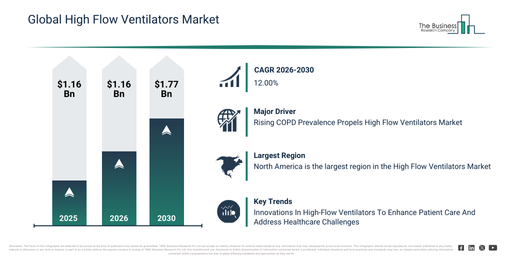
    The high flow ventilators market has witnessed rapid expansion recently, rising from $36.77 billion in 2025 to $40.97 billion in 2026, reflecting a robust compound annual growth rate (CAGR) of 11.4%. This growth is largely due to the increasing incidence of respiratory diseases, enhancements in intensive care facilities, higher hospital admissions for chronic obstructive pulmonary disease (COPD), advancements in ventilator technology, and the availability of sophisticated respiratory consumables. Looking ahead, the market is expected to accelerate further, reaching a value of $64.47 billion by 2030 with an even stronger CAGR of 12.0%. Factors such as greater adoption of home-based respiratory care, rising investments in portable ventilators, the growth of tele-respiratory monitoring, emphasis on early respiratory intervention, and continuous innovation in oxygen delivery systems will contribute significantly to this expansion. Key trends anticipated during the forecast period include wider use of high flow oxygen therapy, increasing demand for non-invasive ventilation, growing use of portable ventilators, expansion of remote monitoring capabilities, and a focus on improving patient comfort and humidification.

    Download A Free Sample Report For Comprehensive Market Insights:

    https://www.thebusinessresearchcompany.com/sample.aspx?id=10624&type=smp

    Increasing Prevalence of COPD as a Key Market Driver

    One of the primary factors fueling the high flow ventilators market is the rising prevalence of chronic obstructive pulmonary disease (COPD). COPD is a progressive inflammatory lung condition that limits airflow and makes breathing difficult. Smoking remains the main cause, as long-term exposure to cigarette smoke damages the lungs and airways, leading to worsening respiratory function. High flow ventilators play a critical role in managing COPD by enhancing oxygen delivery, reducing the effort required to breathe, and providing positive end-expiratory pressure, especially during exacerbations or when advanced respiratory support is necessary. For example, in 2023, the Australian Institute of Health and Welfare reported that COPD accounted for 3.6% of the overall disease burden in Australia and was responsible for half of the respiratory disease burden nationwide. Moreover, in 2022, COPD was the leading cause of 7,691 deaths, with a mortality rate of 29.6 per 100,000 people, representing 4.0% of all deaths in the country. This growing disease burden is expected to significantly boost demand for high flow ventilators.

    Additional Factors Accelerating Market Expansion

    Besides COPD prevalence, several other factors are contributing to the growth of the high flow ventilators market. Improvements in intensive care infrastructure worldwide, increased hospital admissions for respiratory illnesses, and technological advancements in ventilator design and consumables are all playing a part. The expanding availability of portable and user-friendly ventilators is making respiratory support more accessible, while innovations in oxygen delivery systems enhance treatment efficacy. These combined elements create a strong foundation for continued market growth through the forecast period.

    Access The Complete High Flow Ventilators Market Report:

    https://www.thebusinessresearchcompany.com/report/high-flow-ventilators-global-market-report

    Diverse Segmentation of the High Flow Ventilators Market

    This report segments the high flow ventilators market by modality type, interface, and end-user categories. Under modality type, the market is divided into portable high flow ventilators and trolley mounted high flow ventilators. Portable units include battery-powered and compact designs, while trolley mounted ventilators are classified as standard or advanced models. Interface segmentation covers high-flow nasal cannula (HFNC) and tracheostomy interfaces. As for end-users, the market comprises hospitals, specialty clinics, long-term care centers, and other healthcare facilities. This detailed segmentation helps in understanding the specific needs and growth potential across various product types and healthcare settings.

    Innovations and Trends Shaping the Future of High Flow Ventilators

    Leading companies in the high flow ventilators industry are focusing on developing next-generation oxygen therapy ventilators to improve patient outcomes and address current healthcare challenges. These advanced devices deliver higher oxygen flow rates, enhancing respiratory support especially for patients with acute respiratory failure or those needing intensified ventilation. For instance, in October 2024, Nihon Kohden America, a US-based medical technology company, launched the NKV-440. This product aims to tackle issues such as healthcare staff shortages and budget constraints by providing reliable and adaptable respiratory solutions that are accessible to a broader range of healthcare providers. Such innovations highlight the market’s commitment to evolving technology and increasing usability in clinical environments.

    Leading Players Influencing the High Flow Ventilators Market

    The competitive landscape of the high flow ventilators market is shaped by several prominent companies, including ResMed Inc., Hamilton Medical AG, Vyaire Medical Inc., Koninklijke Philips N.V., Medtronic plc, Fisher & Paykel Healthcare Corporation Limited, Drägerwerk AG & Co. KGaA, Getinge AB, Mindray Medical International Limited, Nihon Kohden Corporation, Ventec Life Systems Inc., Magnamed Tecnologia Médica S.A., Acutronic Medical Systems AG, Hamilton Medical USA Inc., Metan Co. Ltd., Sechrist Industries Inc., Pulmodyne Systems Inc., ZOLL Medical Corporation, Laerdal Medical AS, Smiths Group plc, and Percussionaire Corporation. These companies are investing heavily in research and development to deliver innovative, efficient, and patient-friendly ventilator solutions.

    Regional Market Dynamics and Growth Hotspots

    In 2025, North America held the largest share of the global high flow ventilators market, benefiting from advanced healthcare infrastructure and high adoption rates of innovative medical equipment. Meanwhile, the Asia-Pacific region is expected to experience the fastest growth during the forecast period, driven by increasing healthcare investments, expanding hospital networks, and rising respiratory disease prevalence. The report covers multiple regions including Asia-Pacific, South East Asia, Western Europe, Eastern Europe, North America, South America, the Middle East, and Africa to provide a comprehensive view of global market trends and opportunities.

    Get in touch with us:

    The Business Research Company: https://www.thebusinessresearchcompany.com/

    Americas: +1 310-496-7795

    Asia: +44 7882 955267 & +91 8897263534

    Europe: +44 7882 955267

    Email us at: marketing@tbrc.info

    Follow us on:

    LinkedIn: https://in.linkedin.com/company/the-business-research-company

    YouTube: https://www.youtube.com/channel/UC24_fI0rV8cR5DxlCpgmyFQ

    Global Market Model: https://www.thebusinessresearchcompany.com/global-market-model
  • High Flow Needle Sets Market Forecast Signals New Revenue Opportunities Through 2030

    High Flow Needle Sets Market Forecast Signals New Revenue Opportunities Through 2030

    Through market attractiveness analysis, total addressable market evaluation, company benchmarking matrices, interactive Excel dashboards, expanded supply chain intelligence, emerging startup coverage, and detailed product insights, The Business Research Company’s 2026 market reports provide more actionable and strategically valuable research.

    The high flow needle sets market is experiencing significant growth driven by advancements in medical procedures and increasing healthcare demands. As surgical interventions and emergency care continue to expand globally, the market is poised for notable progress in the coming years. Below is an in-depth look at the market size, growth drivers, segmentation, emerging trends, competitive landscape, and regional insights shaping the future of this industry.

    Market Size and Anticipated Growth Trajectory of the High Flow Needle Sets Market

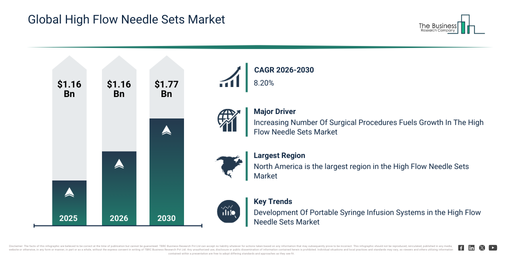
    The high flow needle sets market has demonstrated robust expansion in recent years. The market value is expected to rise from $1.27 billion in 2025 to $1.38 billion in 2026, reflecting a 9.2% compound annual growth rate (CAGR). This historical growth has been supported by an increase in emergency and critical care procedures, a higher volume of surgical interventions, growing demand for blood transfusions, hospital infrastructure development, and increased use of contrast media in diagnostic imaging. Looking ahead, the market is forecasted to reach $1.89 billion by 2030, growing at a CAGR of 8.2%. Factors fueling this future growth include the rising incidence of trauma and emergency cases, wider adoption of minimally invasive procedures that require high flow delivery systems, expansion of ambulatory surgical centers, heightened focus on rapid-response healthcare, and increased healthcare spending on acute care services. Key trends expected to influence the market encompass a greater need for rapid fluid and blood administration devices, expanded use of high flow needle sets in trauma and emergency care, preference for single-use needle sets, broader application of high flow infusion in diagnostic imaging, and an increased emphasis on patient safety and flow efficiency.

    Download A Free Sample Report For Comprehensive Market Insights:

    https://www.thebusinessresearchcompany.com/sample.aspx?id=15821&type=smp

    Primary Factors Propelling the High Flow Needle Sets Market Expansion

    One of the crucial elements driving market growth is the surge in the number of surgical procedures worldwide. These procedures, which involve manual and instrumental techniques to diagnose, treat, or repair tissues and organs, aim to improve patient health or bodily function. This increase is linked to various factors, including the aging global population, technological advancements in medical care, rising chronic disease prevalence, improved healthcare access, and the growing popularity of minimally invasive surgeries. High flow needle sets play a vital role during these surgeries by enabling rapid administration of fluids, medications, or blood products directly into the bloodstream, ensuring efficient patient management. For instance, in June 2024, the International Society of Aesthetic Plastic Surgery (ISAPS) reported that total surgical and non-surgical procedures increased by 3.4% in 2023, reaching 34.9 million procedures. Surgical operations rose by 5.5%, with plastic surgeons performing over 15.8 million surgical procedures and 19.1 million non-surgical ones, marking a 40% overall increase over four years. This data highlights how the rising number of surgical interventions is a key force expanding the high flow needle sets market.

    Additional Growth Drivers Supporting Market Development

    Besides surgery-related factors, the growing use of high flow needle sets in emergency and trauma care is a significant growth catalyst. The increasing need for fast and efficient fluid delivery in critical situations propels demand. Additionally, the expansion of ambulatory surgical centers and the shift towards minimally invasive and rapid-response healthcare models further support market growth. Increasing healthcare expenditure on acute care services worldwide also contributes to the expanding market landscape by enabling wider adoption of advanced medical devices like high flow needle systems.

    Access The Complete High Flow Needle Sets Market Report:

    https://www.thebusinessresearchcompany.com/report/high-flow-needle-sets-global-market-report

    Breakdown of the High Flow Needle Sets Market by Product and Application

    This report segments the high flow needle sets market into various categories for a detailed understanding:

    1) Product Type: This includes High Flow Needle Sets, High Flow Winged (Butterfly) Needle Sets, and High Flow Safety Needle Sets.

    2) Gauge Size: Covered sizes are 18 Gauge, 20 Gauge, 22 Gauge, 24 Gauge, and other gauge sizes.

    3) Usage Type: Divided into Single-Use High Flow Needle Sets and Safety-Engineered High Flow Needle Sets.

    4) Material: Comprises Stainless Steel Needle Cannula and Polymer Hub & Connector.

    Further subcategories delve deeper, such as Standard, Large-Bore, Short-Bevel, and Long-Bevel within High Flow Needle Sets; Single-Use, Safety-Integrated, Pediatric, and Adult types in High Flow Winged Needle Sets; and Passive Safety, Active Safety, Retractable, and Shielded designs in High Flow Safety Needle Sets.

    Shifts and Innovations Influencing Demand in the High Flow Needle Sets Market

    Leading companies in this sector are focusing on developing portable syringe infusion systems to enhance patient comfort and mobility while facilitating controlled fluid administration. These systems provide extended, regulated delivery of medications or fluids, improving therapy management. For example, in August 2024, UK-based Innovative Health Sciences expanded its commercialization team following FDA clearance for its Insignis Syringe Infusion System. This non-electric, portable syringe driver supports both intravenous and subcutaneous use and features selectable rate flow control, addressing common infusion challenges such as painful injections and enhancing overall patient comfort.

    Competitive Landscape and Key Players in the High Flow Needle Sets Market

    The high flow needle sets market is dominated by several prominent companies including Becton Dickinson and Company, B. Braun SE, Terumo Corporation, Nipro Corporation, Teleflex Incorporated, Smiths Medical, ICU Medical Inc., Baxter International Inc., Cardinal Health Inc., Medline Industries Inc., Retractable Technologies Inc., Vygon SA, Natus Medical Incorporated, Polymedicure Limited, Hindustan Syringes and Medical Devices, Weigao Group, Fresenius Kabi, Zibo Shanchuan Medical Instrument, KB Medical Group, and Argon Medical Devices. These players continue to innovate and expand their product portfolios to meet growing market needs.

    Regional Market Leadership and Growth Patterns

    In 2025, North America held the largest share of the high flow needle sets market, benefiting from advanced healthcare infrastructure and high adoption rates of medical technologies. Meanwhile, the Asia-Pacific region is set to become the fastest-growing market during the forecast period, driven by increasing healthcare investments, expanding hospital infrastructure, and rising demand for advanced medical devices. The report covers key regions including Asia-Pacific, South East Asia, Western Europe, Eastern Europe, North America, South America, the Middle East, and Africa, offering a comprehensive view of market dynamics across the globe.

    Get in touch with us:

    The Business Research Company: https://www.thebusinessresearchcompany.com/

    Americas: +1 310-496-7795

    Asia: +44 7882 955267 & +91 8897263534

    Europe: +44 7882 955267

    Email us at: marketing@tbrc.info

    Follow us on:

    LinkedIn: https://in.linkedin.com/company/the-business-research-company

    YouTube: https://www.youtube.com/channel/UC24_fI0rV8cR5DxlCpgmyFQ

    Global Market Model: https://www.thebusinessresearchcompany.com/global-market-model