Category: Medical Equipment

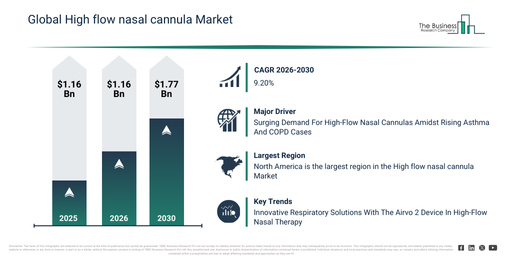
  • High flow nasal cannula Market Growth Is Accelerating As Industry Transformation Continues

    High flow nasal cannula Market Growth Is Accelerating As Industry Transformation Continues

    Delivering more actionable and strategically valuable research, The Business Research Company’s 2026 market reports feature market attractiveness analysis, total addressable market evaluation, company benchmarking matrices, interactive Excel dashboards, expanded supply chain intelligence, emerging startup coverage, and detailed product insights.

    The high flow nasal cannula market is experiencing significant momentum, driven by advancements in respiratory care and growing awareness of respiratory disorders. This sector is expanding rapidly as healthcare providers adopt innovative oxygen therapy solutions to improve patient outcomes. Below is a detailed overview of the market’s size, growth drivers, segments, innovation trends, key players, and regional dynamics.

    Market Size and Growth Outlook for the High Flow Nasal Cannula Market

    The high flow nasal cannula market has witnessed robust growth recently, reaching $6.22 billion in 2025. It is projected to increase further to $6.79 billion in 2026, reflecting a compound annual growth rate (CAGR) of 9.3%. This expansion has been fueled by the rising incidence of respiratory illnesses, more hospital admissions due to acute respiratory failure, wider adoption of high-flow oxygen therapy protocols, the development of intensive care units, and increased clinical recognition of the benefits provided by HFNC technology. Looking ahead, the market is expected to grow strongly, reaching $9.64 billion by 2030 at a CAGR of 9.2%. Growth factors for this forecast period include the expanded use of HFNC in home care, heightened demand for portable respiratory devices, broader access to respiratory care services, a focus on early intervention therapies, and continuous technological improvements in airflow and humidification systems. Key trends shaping the market will involve greater adoption of advanced heated humidification, increased HFNC use in acute care, preference for non-invasive oxygen therapies, proliferation of portable and home-based HFNC devices, and an emphasis on patient comfort and adherence.

    Download A Free Sample Report For Comprehensive Market Insights:

    https://www.thebusinessresearchcompany.com/sample.aspx?id=13454&type=smp

    Factors Contributing to Growth in the High Flow Nasal Cannula Market

    One major factor propelling the high flow nasal cannula market is the rising prevalence of asthma and chronic obstructive pulmonary disease (COPD). Asthma involves airway constriction, swelling, and excess mucus, while COPD comprises a group of lung diseases that progressively impair breathing. HFNC offers a valuable treatment option by improving oxygen levels (PO2) while reducing heart rate (HR) and respiratory rate (RR), making it effective for patients suffering from severe bronchial asthma worsened by respiratory failure. These capabilities help address the growing burden of respiratory diseases by enhancing oxygenation and alleviating breathing difficulties.

    Supporting this trend, a December 2023 study published in JAMA Network Open projected that global COPD cases could approach 600 million by 2050, marking a 23% increase in prevalence. This anticipated rise in asthma and COPD cases is a key driver boosting demand for high flow nasal cannula devices worldwide.

    Access The Complete High flow nasal cannula Market Report:

    https://www.thebusinessresearchcompany.com/report/high-flow-nasal-cannula-global-market-report

    Segmentation and Revenue Opportunities in the High Flow Nasal Cannula Market

    This report segments the high flow nasal cannula market into several categories:

    1) By Type: Air or Oxygen Blenders, Nasal Cannulas, Active Humidifiers, Single Heated Tubes, and Other Types

    2) By Application: Acute Respiratory Failure, Chronic Obstructive Pulmonary Disease (COPD), Carbon Monoxide Toxicity, Bronchiectasis, Sleep Apnea, and Other Applications

    3) By Sales Channel: Direct Channel and Distribution Channel

    4) By End-User: Hospitals and Clinics, Ambulatory Care Centers, Long-Term Care Centers, and Other End-Users

    Within these categories, subsegments include manual and digital oxygen blenders, adult and pediatric nasal cannulas, heated and non-heated active humidifiers, single heated tubes for adults and children, plus disposable HFNC units and non-invasive ventilation (NIV) interfaces, providing a comprehensive overview of revenue-generating opportunities.

    Innovations Transforming the High Flow Nasal Cannula Market

    Leading companies in the HFNC market are focusing on developing advanced products to enhance patient care. One example is the SoftFlow High-Flow Nasal Cannula, a device designed to supply warm, humidified, oxygen-enriched air for respiratory support. In 2024, Fisher & Paykel Healthcare from New Zealand introduced the Airvo 2 device, part of the Optiflow Nasal High Flow Therapy system. This system delivers heated, humidified air and oxygen at high flow rates, which aids in oxygenation and reduces the effort needed for breathing, particularly for patients with COVID-19 and other respiratory illnesses. Maintaining optimal humidity levels preserves mucociliary function and prevents airway dryness, improving patient comfort. The device’s user-friendly design also makes it suitable for different hospital environments, contributing to better clinical results.

    Top Companies Leading the High Flow Nasal Cannula Industry

    The high flow nasal cannula market is shaped by several prominent players, including Air Liquide Medical Systems Pvt. Ltd., Becton Dickinson and Company, Koninklijke Philips N.V., ResMed Inc., Drägerwerk AG & Co. KGaA, Teleflex Incorporated, Medical Dynamics Inc., Fisher & Paykel Healthcare Corporation Limited, Smiths Medical Inc., Vyaire Medical Inc., DeVilbiss Healthcare LLC, Armstrong Medical Ltd, Vapotherm Inc., SunMed LLC, Medin Medical Innovations GmbH, MEK-ICS Co. Ltd., Narang Medical Limited, Breas Medical AB, Bio-Med Devices Inc., Flexicare Medical Ltd., Fairmont Medical Products Pty Ltd, Besmed Health Business Corp., Löwenstein GmbH & Co. KG, Great Group Medical Co. Ltd., TNI Medical AG, Guangdong Pigeon Medical Apparatus Co. LTD, and BLS Systems Limited. These companies are pivotal in driving market advancements and expanding the availability of HFNC technologies globally.

    Regional Market Distribution and Growth Drivers

    In 2025, North America held the largest share of the high flow nasal cannula market. However, the report also highlights significant growth potential in regions such as Asia-Pacific, South East Asia, Western Europe, Eastern Europe, South America, the Middle East, and Africa. These regions are becoming increasingly important contributors to the overall market expansion, driven by growing healthcare infrastructure, increasing respiratory disease burden, and rising adoption of HFNC technologies.

    Get in touch with us:

    The Business Research Company: https://www.thebusinessresearchcompany.com/

    Americas: +1 310-496-7795

    Asia: +44 7882 955267 & +91 8897263534

    Europe: +44 7882 955267

    Email us at: marketing@tbrc.info

    Follow us on:

    LinkedIn: https://in.linkedin.com/company/the-business-research-company

    YouTube: https://www.youtube.com/channel/UC24_fI0rV8cR5DxlCpgmyFQ

    Global Market Model: https://www.thebusinessresearchcompany.com/global-market-model

  • High Care Transfer Hatches Market Outlook Highlights The Next Major Growth Opportunities

    High Care Transfer Hatches Market Outlook Highlights The Next Major Growth Opportunities

    Enhanced with market attractiveness analysis, total addressable market evaluation, company benchmarking matrices, interactive Excel dashboards, expanded supply chain intelligence, emerging startup coverage, and detailed product insights, The Business Research Company’s 2026 market reports deliver more actionable and strategically valuable research.

    The demand for high care transfer hatches has been steadily increasing, driven by the need for safer and more efficient contamination control in various industries. As cleanroom environments become more critical in sectors like pharmaceuticals and food processing, the market for these specialized transfer systems is poised for significant growth. Below is a detailed overview of the market’s size, growth factors, segmentation, emerging trends, key players, and regional dynamics.

    Market Expansion and Forecast for High Care Transfer Hatches

    The high care transfer hatches market has seen rapid development in recent years, with its value projected to rise from $1.37 billion in 2025 to $1.52 billion in 2026, marking a compound annual growth rate (CAGR) of 10.6%. This past growth is largely due to the expansion of pharmaceutical manufacturing, stricter hygiene protocols, increasing cleanroom facilities, rising food safety standards, and growth in laboratory infrastructure. Looking ahead, the market is expected to continue this momentum, reaching $2.25 billion by 2030 at a CAGR of 10.3%. Factors fueling this future growth include automation in cleanroom logistics, the integration of smart facility technologies, investments in biosecurity, expansion of pharmaceutical production, and more rigorous regulatory compliance. Key trends during the forecast period will feature contamination-controlled material transfer, interlocked safety transfer systems, hygienic cleanroom design principles, automated hatch operations, and compliance-driven upgrades.

    Download A Free Sample Report For Comprehensive Market Insights:

    https://www.thebusinessresearchcompany.com/sample.aspx?id=30295&type=smp

    Factors Propelling Growth in the High Care Transfer Hatches Market

    One of the primary drivers behind the high care transfer hatches market is the increasing emphasis on contamination control. This involves the implementation of systems and procedures to prevent unwanted particles, microbes, and impurities from entering or spreading within controlled environments. As industries enforce stricter hygiene and safety standards, the reliance on effective contamination control technologies grows. High care transfer hatches play a vital role in maintaining this control by enabling the secure movement of sensitive materials, such as testing samples and monitoring equipment, between clean zones. This ensures accurate quality analysis without contamination risks, especially in dust-prone processing areas.

    An example highlighting this trend is from the UK, where according to GOV.UK in July 2025, the Environment Agency reported a 7% year-on-year increase in the most serious pollution incidents, rising from 44 to 47 cases in 2023. Such developments underscore the critical need for advanced contamination control measures that drive demand for high care transfer hatches.

    Access The Complete High Care Transfer Hatches Market Report:

    https://www.thebusinessresearchcompany.com/report/global-high-care-transfer-hatches-market-report

    Diverse Product and Application Segments Within the High Care Transfer Hatches Market

    This market is segmented across several categories to address varied industry needs:

    1) Product Type: Mechanical Transfer Hatches, Electronic Transfer Hatches, Automatic Transfer Hatches, and Other Product Types

    2) Material: Stainless Steel, Powder Coated Steel, Aluminum, and Other Materials

    3) Application Areas: Pharmaceuticals, Food Processing, Biotechnology, Hospitals and Healthcare, Laboratories, and Other Applications

    4) End-Users: Pharmaceutical Companies, Hospitals, Research Laboratories, Food and Beverage Companies, and Other End-Users

    Further subcategories include:

    – Mechanical Transfer Hatches: standard, interlocked, flush mounted, floor mounted, and cleanroom grade versions

    – Electronic Transfer Hatches: touch screen, sensor activated, programmable control, alarm integrated, and building management connected types

    – Automatic Transfer Hatches: sliding door, swing door, touchless sensor, air shower integrated, and ultraviolet disinfection models

    – Other Products: explosion resistant, temperature controlled, biological safety, fire rated, and custom engineered transfer hatches

    Technological Advances and Industry Trends Influencing High Care Transfer Hatches

    Leading companies in this sector are increasingly focusing on sophisticated technologies such as integrated interlocked systems. These systems improve contamination control by ensuring that transfer actions occur only under safe and coordinated conditions, thereby enhancing operational safety and material security between controlled areas. Interlocked mechanisms link multiple components so that one cannot operate unless specified conditions are met, preventing errors and contamination.

    For instance, in February 2025, Getinge AB from Sweden launched the DPTE-FLEX—a manual, externally openable port designed to allow secure gloveless transfer of components. This innovation reduces the need for human contact, minimizing contamination risks in pharmaceutical manufacturing. It features a fully mechanical interlock for safe and user-friendly operation, a compact design, controlled door movements, and a wide 160-degree opening angle for better installation flexibility and usability in sterile environments.

    Key Players Driving Competition in the High Care Transfer Hatches Market

    Some of the major companies dominating the high care transfer hatches industry include Esco Lifesciences Group, SKAN AG, Terra Universal Inc., Ortner Reinraumtechnik GmbH, MECART Inc., Cleatech LLC, ACMAS Technologies Pvt. Ltd., Felcon Ltd, Hemair Systems India Limited, Hangzhou Tailin Bioengineering Equipment Co. Ltd., PBSC Inc., MK Clean Room Project Pvt. Ltd., Guardtech Group, Airkey Envirotech Co. Ltd., Stericox India, Cleanroom Pharma Co. Ltd., Isotech Design, Clean Air Products, Block Technology Ltd., Extract Technology Ltd., Pharmaceutical Systems Inc., and Fedegari Group.

    Geographical Leaders in Revenue Generation for High Care Transfer Hatches

    In 2025, North America led the high care transfer hatches market in terms of revenue. However, the Asia-Pacific region is forecasted to be the fastest-growing market during the upcoming years. The analysis covers several key regions including Asia-Pacific, South East Asia, Western Europe, Eastern Europe, North America, South America, the Middle East, and Africa, providing a broad perspective on global market trends and opportunities.

    Get in touch with us:

    The Business Research Company: https://www.thebusinessresearchcompany.com/

    Americas: +1 310-496-7795

    Asia: +44 7882 955267 & +91 8897263534

    Europe: +44 7882 955267

    Email us at: marketing@tbrc.info

    Follow us on:

    LinkedIn: https://in.linkedin.com/company/the-business-research-company

    YouTube: https://www.youtube.com/channel/UC24_fI0rV8cR5DxlCpgmyFQ

    Global Market Model: https://www.thebusinessresearchcompany.com/global-market-model

  • Hernia Repair Devices And Consumables Market Trends And Growth Drivers Point To Strong Future Potential

    Hernia Repair Devices And Consumables Market Trends And Growth Drivers Point To Strong Future Potential

    Through market attractiveness analysis, total addressable market evaluation, company benchmarking matrices, interactive Excel dashboards, expanded supply chain intelligence, emerging startup coverage, and detailed product insights, The Business Research Company’s 2026 market reports provide more actionable and strategically valuable research.

    The hernia repair devices and consumables market is experiencing notable growth, driven by advancements in surgical techniques and expanding healthcare infrastructure. As medical technology evolves, demand for efficient and innovative hernia repair solutions continues to rise, indicating promising prospects for this sector. Below, we explore the market’s current size, key growth drivers, leading companies, and emerging trends shaping its future.

    Current Market Size and Forecast for Hernia Repair Devices and Consumables

    The market for hernia repair devices and consumables has shown significant expansion in recent years. It is projected to increase from $5.82 billion in 2025 to $6.31 billion in 2026, growing at a compound annual growth rate (CAGR) of 8.5%. This historical growth stems from a rising number of hernia cases, widespread adoption of tension-free repair methods, improved surgical facilities, greater availability of specialized consumables, and enhanced surgeon expertise with mesh-based repairs. Looking ahead, the market is expected to reach $8.65 billion by 2030, maintaining a CAGR of 8.2%. Factors fueling this future growth include the rising popularity of minimally invasive surgeries, a stronger focus on faster patient recovery, advancements in biomaterials, increased use of outpatient procedures, and innovations in fixation devices. Key trends anticipated during the forecast period involve expanded use of advanced hernia mesh materials, laparoscopic repair devices, absorbable fixation products, minimally invasive procedures, and infection prevention consumables.

    Download A Free Sample Report For Comprehensive Market Insights:

    https://www.thebusinessresearchcompany.com/sample.aspx?id=9167&type=smp

    Primary Factors Supporting the Growth of the Hernia Repair Devices Market

    The expanding healthcare sector plays a crucial role in driving demand for industrial power supply solutions, which indirectly supports the hernia repair devices market. Healthcare facilities require reliable and energy-efficient technologies to meet their operational and technological needs. For instance, according to the Centers for Medicare & Medicaid Services, national health expenditures in the US grew by 7.5% in 2023, reaching $4.9 trillion, which averages $14,570 per person and accounts for 17.6% of GDP. Medicare spending alone rose by 8.1% to $1,029.8 billion, representing 21% of total health expenditures. These figures underscore the rapid growth of healthcare, which correlates with increased demand for medical devices including those used in hernia repair.

    Expanding Segments Within the Hernia Repair Devices and Consumables Market

    This market is segmented broadly by product, surgery type, and hernia type. Product categories include fixation devices and consumables. Surgical approaches are divided into open tension-free repair surgery and laparoscopic surgery. Hernia types covered include umbilical, incisional, inguinal, femoral, and other hernia varieties. Subcategories within fixation devices encompass tacks and anchors, staplers, mesh fixation devices, and clips and sutures. Consumables include hernia mesh, surgical sutures, adhesives and sealants, as well as infection prevention products. These segments highlight the diverse range of products and procedures contributing to market growth.

    Access The Complete Hernia Repair Devices And Consumables Market Report:

    https://www.thebusinessresearchcompany.com/report/hernia-repair-devices-and-consumables-global-market-report

    Technological Innovations Driving Market Developments in Hernia Repair

    Leading companies in the hernia repair devices sector are focusing on creating advanced solutions that improve surgical outcomes and speed recovery. One notable innovation is surgical mesh designed specifically for inguinal hernia repair, which strengthens weakened abdominal tissue while minimizing complications. For example, in April 2024, TELA Bio Inc., a US-based medical technology firm, introduced the OviTex IHR Reinforced Tissue Matrix in the United States. This product is tailored for laparoscopic and robotic-assisted hernia repairs and comes in three configurations, including anatomically shaped three-layer and four-layer devices, plus a three-layer rectangular option for customizable surgical use. Made from ovine rumen and minimal polymer sutures, OviTex IHR aims to balance strength with a reduced synthetic footprint.

    Prominent Companies Leading the Hernia Repair Devices and Consumables Market

    The competitive landscape of this market features several key players such as Baxter International Inc., Becton Dickinson and Company, Cook Medical Inc., Herniamesh Srl, Johnson & Johnson, Medtronic plc, W. L. Gore & Associates Inc., Via Surgical Ltd., Zimmer Biomet Inc., LifeCell Corporation, Atrium Medical Corporation, Integra Life Sciences Corporation, Cousin Biotech SAS, Cryolife Inc., Olympus Corporation, TELA Bio Inc., Aspide Medical, pfm medical ag, Poly Medicure Limited, Purple Surgical, Sutures India Pvt. Ltd., Angiologica B.M. Srl, Dipromed Srl, B. Braun SE, and Medline Industries Inc. These companies are instrumental in driving innovation and expanding market reach.

    Geographical Markets with Significant Opportunities in Hernia Repair Devices

    In 2025, North America held the largest share of the hernia repair devices and consumables market. However, the Asia-Pacific region is poised to become the fastest-growing market during the forecast period. The market analysis covers a variety of regions, including Asia-Pacific, South East Asia, Western Europe, Eastern Europe, North America, South America, the Middle East, and Africa, providing a comprehensive view of global market trends and opportunities.

    Get in touch with us:

    The Business Research Company: https://www.thebusinessresearchcompany.com/

    Americas: +1 310-496-7795

    Asia: +44 7882 955267 & +91 8897263534

    Europe: +44 7882 955267

    Email us at: marketing@tbrc.info

    Follow us on:

    LinkedIn: https://in.linkedin.com/company/the-business-research-company

    YouTube: https://www.youtube.com/channel/UC24_fI0rV8cR5DxlCpgmyFQ

    Global Market Model: https://www.thebusinessresearchcompany.com/global-market-model
  • Hernia Mesh Devices Market Expansion Is Reshaping Competitive Dynamics Across The Industry

    Hernia Mesh Devices Market Expansion Is Reshaping Competitive Dynamics Across The Industry

    Delivering more actionable and strategically valuable research, The Business Research Company’s 2026 market reports feature market attractiveness analysis, total addressable market evaluation, company benchmarking matrices, interactive Excel dashboards, expanded supply chain intelligence, emerging startup coverage, and detailed product insights.

    The hernia mesh devices market has been witnessing consistent growth, driven by advancements in medical technology and increasing clinical needs. This sector is set to continue expanding as innovations and rising patient demand shape its trajectory. Let’s explore the current market landscape, growth factors, key players, and emerging trends influencing this important medical device industry.

    Steady Expansion in Hernia Mesh Devices Market Size and Revenue

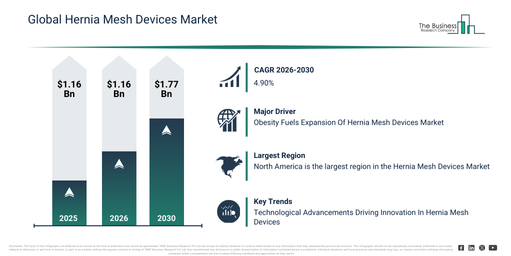
    The hernia mesh devices market has demonstrated steady growth, with its value rising from $4.51 billion in 2025 to $4.73 billion in 2026, marking a compound annual growth rate (CAGR) of 4.9%. Historically, this expansion has been supported by a rise in abdominal and inguinal hernia cases, an increasing number of surgical repairs, wider use of synthetic mesh products, enhanced surgical techniques, and improved hospital infrastructure for surgeries. Moving ahead, the market is expected to sustain this momentum, reaching $5.73 billion by 2030 with the same CAGR of 4.9%. This projected growth is fueled by heightened demand for advanced biocompatible meshes, greater adoption of robotic-assisted hernia surgeries, a stronger focus on patient-specific mesh designs, growth in outpatient surgeries, and increased investments in surgical innovations. Key trends expected to shape the market include the use of lightweight and composite mesh materials, preference for minimally invasive repair methods, a rise in biologic mesh utilization for complex cases, expansion in laparoscopic and robotic procedures, and a focus on reducing hernia recurrence and infection rates.

    Download A Free Sample Report For Comprehensive Market Insights:

    https://www.thebusinessresearchcompany.com/sample.aspx?id=13453&type=smp

    Growing Obesity Rates as a Major Driver for Hernia Mesh Devices Market

    The rising prevalence of obesity is a significant factor pushing the hernia mesh devices market forward. Obesity, characterized by excessive fat accumulation, weakens the abdominal wall and increases the risk of hernias. With sedentary lifestyles and poor dietary habits becoming more common, more people face hernia-related complications. Hernia mesh devices provide stronger and more durable support for obese patients compared to traditional suture methods, lowering recurrence rates and aiding quicker recovery. For example, between 2023 and 2024, 64.5% of adults aged 18 and above in England were overweight or living with obesity, up slightly from 64.0% the previous year, according to the UK’s Office for Health Improvement & Disparities. This upward trend in obesity directly contributes to higher demand for hernia mesh solutions.

    Additional Market Drivers Fueling Hernia Mesh Device Demand

    Beyond obesity, the hernia mesh devices market is propelled by other factors such as improvements in surgical technology and growing awareness about minimally invasive procedures. The increasing number of hernia repair surgeries worldwide, coupled with expanding surgical infrastructure, also plays a role. Moreover, patient preference for faster recovery and reduced complications encourages the adoption of advanced mesh materials and innovative techniques, further supporting market growth.

    Access The Complete Hernia Mesh Devices Market Report:

    https://www.thebusinessresearchcompany.com/report/hernia-mesh-devices-global-market-report

    Segment Breakdown Reveals Key Areas in Hernia Mesh Devices Market

    This market is segmented across several key categories that define its scope. By mesh type, it includes biologic mesh and synthetic mesh. Surgical procedures are divided into open surgeries, laparoscopic surgeries, and robotic surgeries. The market also segments by hernia type, encompassing incisional, umbilical, inguinal, femoral, and other hernia varieties. End users are categorized as hospitals, clinics, ambulatory surgical centers, and others. Subsegments refine the mesh types further: biologic mesh is split into human-derived and animal-derived options, while synthetic mesh includes polyester, polypropylene, expanded polytetrafluoroethylene (ePTFE), and composites.

    Innovations and Technological Advances Driving Hernia Mesh Market Growth

    Leading companies in the hernia mesh devices field are pushing the envelope with new technologies such as tri-layer hybrid preperitoneal biomaterials. These materials combine permanent synthetic strength with biointegrative properties to enhance reinforcement during both minimally invasive and open hernia repair surgeries. Such multi-layer designs provide durability, fluid absorption, and flexibility, helping surgeons achieve secure mesh placement and effective bridging in complicated hernia cases. For instance, in April 2025, US-based W. L. Gore & Associates introduced its GORE SYNECOR Preperitoneal Biomaterial in Europe, the Middle East, and South Africa. This product features a flexible, conformable construction with material memory for easy handling, requires no pre-soaking, and supports laparoscopic, robotic, and open procedures, offering a unique solution to reduce hernia recurrence and improve surgical workflow.

    Major Companies Competing in the Hernia Mesh Devices Industry

    The hernia mesh devices market features several prominent players, including Johnson & Johnson Services Inc., Medtronic plc, Betatech Medical, Ethicon Inc., B. Braun Melsungen AG, W.L. Gore & Associates Inc., Cook Medical Inc., Samyang Corporation, Integra Life Sciences Pvt. Ltd., LifeCell Corporation, Meril Life Sciences Pvt Ltd., Sinolinks Medical Innovation Inc., Aspide Medical S.A.S., C.R. Bard Inc., Bard Inc., Deep Blue Medical Inc., Changzhou Medical Equipment General Factory Co. Ltd., Katsan Katgut Sanayi ve Tic. A.S., BioCer Entwicklungs-GmbH, Dipromed S.r.l., Herniamesh S.r.l., Novus Scientific AB, Gem S.r.l., and Primequal SA. These companies drive innovation, market penetration, and competition through their wide-ranging product portfolios and global reach.

    Regional Insights Highlight Market Leadership and Growth Opportunities

    North America held the largest share of the hernia mesh devices market in 2025, demonstrating its dominance in this sector. Meanwhile, Asia-Pacific is forecasted to be the fastest-growing region during the upcoming years, driven by increasing healthcare investments and growing surgical infrastructure. The market analysis includes regions such as Asia-Pacific, South East Asia, Western Europe, Eastern Europe, North America, South America, the Middle East, and Africa to provide a comprehensive global perspective on the market’s development trajectory.

    Get in touch with us:

    The Business Research Company: https://www.thebusinessresearchcompany.com/

    Americas: +1 310-496-7795

    Asia: +44 7882 955267 & +91 8897263534

    Europe: +44 7882 955267

    Email us at: marketing@tbrc.info

    Follow us on:

    LinkedIn: https://in.linkedin.com/company/the-business-research-company

    YouTube: https://www.youtube.com/channel/UC24_fI0rV8cR5DxlCpgmyFQ

    Global Market Model: https://www.thebusinessresearchcompany.com/global-market-model
  • Hereditary Genetic Testing Market Forecast Reveals Where Future Industry Value Will Be Created

    Hereditary Genetic Testing Market Forecast Reveals Where Future Industry Value Will Be Created

    Enhanced with market attractiveness analysis, total addressable market evaluation, company benchmarking matrices, interactive Excel dashboards, expanded supply chain intelligence, emerging startup coverage, and detailed product insights, The Business Research Company’s 2026 market reports deliver more actionable and strategically valuable research.

    The hereditary genetic testing market has seen rapid development recently, driven by advances in technology and growing awareness of genetic disorders. With increasing acceptance of molecular diagnostics and expanding healthcare infrastructure, this sector is set for continued robust growth. Below, we explore the market’s current size, key growth drivers, segmentation, notable industry players, and regional dynamics shaping its future.

    Hereditary Genetic Testing Market Size and Projected Growth

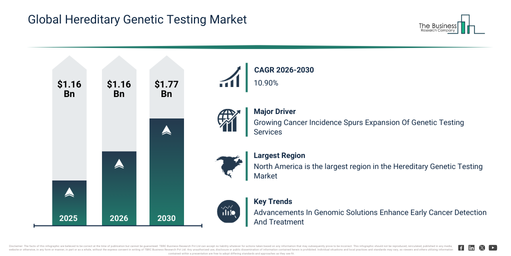
    The hereditary genetic testing market has experienced significant expansion, rising from $23.88 billion in 2025 to $26.56 billion in 2026 at a compound annual growth rate (CAGR) of 11.2%. This upward trend is largely the result of heightened incidence of hereditary diseases, broader clinical use of molecular diagnostic tools, growth in diagnostic labs, increased public awareness about genetic conditions, and improved accessibility of basic genetic testing technologies. Looking ahead, the market is anticipated to grow even faster, reaching $40.12 billion by 2030 with a CAGR of 10.9%. This forecasted surge will be supported by breakthroughs in next-generation sequencing, rising demand for personalized medicine, expansion of pharmacogenomics, growing healthcare investments in preventive care, and wider use of genetic counseling services. Key trends expected to influence this growth include the increasing use of preventive and predictive genetic testing, early cancer risk assessment, the rise of direct-to-consumer testing services, expanded prenatal and newborn screening, and greater recognition of inherited cardiovascular and rare disorders.

    Download A Free Sample Report For Comprehensive Market Insights:

    https://www.thebusinessresearchcompany.com/sample.aspx?id=20559&type=smp

    Factors Driving Growth in the Hereditary Genetic Testing Market

    One major factor boosting the hereditary genetic testing market is the rising prevalence of cancer, a group of diseases characterized by abnormal cell growth that can spread throughout the body. This rise is attributed to an aging population, lifestyle changes, environmental factors, genetic predispositions, and advancements in diagnostic methods. Hereditary genetic testing plays a crucial role in cancer prevention by detecting gene mutations linked to increased risk, which enables early monitoring and targeted prevention strategies. For instance, according to Macmillan Cancer Support in August 2024, over 3 million people in the UK are living with cancer in 2024, with projections estimating this will rise to 3.5 million by 2025, 4 million by 2030, and 5.3 million by 2040. This growing cancer burden is a key impetus for expanding hereditary genetic testing services.

    Segmentation Insights: Key Areas of Opportunity in the Hereditary Genetic Testing Market

    The hereditary genetic testing market is categorized into several segments based on various parameters. By type, it includes predictive and presymptomatic testing, carrier testing, prenatal and newborn testing, diagnostic testing, pharmacogenomic testing, and other types. Technologically, it is divided into cytogenetic testing, biochemical testing, and molecular testing. Clinical applications encompass cancer genetic testing, cardiovascular genetic testing, neurological genetic testing, and rare diseases genetic testing. The market also segments by end users into hospitals and clinics, diagnostic laboratories, research institutes, and direct-to-consumer genetic testing companies. Further subcategories detail various specialized testing services within these broader groups, such as genetic screening for inherited disorders, non-invasive prenatal testing, newborn screening, genetic testing for drug responses, and wellness or ancestry testing.

    Access The Complete Hereditary Genetic Testing Market Report:

    https://www.thebusinessresearchcompany.com/report/hereditary-genetic-testing-global-market-report

    How Innovation and Advanced Genomic Solutions Shape Market Competition

    Leading companies in the hereditary genetic testing market are concentrating on developing sophisticated genomic tools such as multi-cancer multigene panels to improve early detection and enable precision therapies. Multi-cancer multigene panels analyze numerous genes simultaneously to identify mutations linked with different cancer types, helping guide diagnosis and personalized treatment. For example, in February 2024, US-based Exact Sciences Corporation introduced the Riskguard hereditary cancer test. This test provides a personalized report on gene-specific and familial cancer risks for 10 common cancers using a simple blood or saliva sample. It assists in assessing cancer risk, facilitating screening and treatment decisions, and evaluating risks for family members, as well as supporting tailored treatment strategies for diagnosed patients.

    Major Market Players and Their Roles in the Hereditary Genetic Testing Sector

    Key participants shaping the hereditary genetic testing industry include well-established companies such as F. Hoffmann-La Roche Ltd., Abbott Laboratories, Laboratory Corporation of America Holdings, Quest Diagnostics Incorporated, Eurofins Scientific SE, Hologic Inc., Exact Sciences Corporation, Fulgent Genetics Inc., BioReference Laboratories Inc., BGI Group, Invitae Corporation, Color Health Inc., MedGenome Inc., Devyser AB, Mapmygenome India Ltd., Igenomix S.L.P., Myriad Genetics Inc., Natera Inc., Ambry Genetics Corporation, GeneDx LLC, Centogene N.V., CooperSurgical Inc., and Sema4. These firms are driving innovation and expanding access to hereditary genetic testing worldwide.

    Regional Analysis: North America Leads Hereditary Genetic Testing Market

    In 2025, North America held the largest share of the hereditary genetic testing market and is also predicted to be the fastest-growing region during the forecast period. The market report encompasses detailed analyses across various geographies including Asia-Pacific, South East Asia, Western Europe, Eastern Europe, North America, South America, the Middle East, and Africa, providing a comprehensive understanding of regional trends and growth prospects.

    Get in touch with us:

    The Business Research Company: https://www.thebusinessresearchcompany.com/

    Americas: +1 310-496-7795

    Asia: +44 7882 955267 & +91 8897263534

    Europe: +44 7882 955267

    Email us at: marketing@tbrc.info

    Follow us on:

    LinkedIn: https://in.linkedin.com/company/the-business-research-company

    YouTube: https://www.youtube.com/channel/UC24_fI0rV8cR5DxlCpgmyFQ

    Global Market Model: https://www.thebusinessresearchcompany.com/global-market-model
  • Hepato-Pancreatico-Biliary (HPB) Surgeries Surgical Devices Market Growth Through 2030 Creates New Strategic Opportunities

    Hepato-Pancreatico-Biliary (HPB) Surgeries Surgical Devices Market Growth Through 2030 Creates New Strategic Opportunities

    Through market attractiveness analysis, total addressable market evaluation, company benchmarking matrices, interactive Excel dashboards, expanded supply chain intelligence, emerging startup coverage, and detailed product insights, The Business Research Company’s 2026 market reports provide more actionable and strategically valuable research.

    The hepato-pancreatico-biliary (HPB) surgeries surgical devices market has witnessed substantial growth recently, driven by advances in medical technology and increasing cases of related diseases. This sector is poised for continued expansion as innovations in surgical techniques and devices meet the needs of healthcare providers worldwide. This overview explores the current market size, growth drivers, key segments, emerging trends, leading companies, and regional developments shaping the future of the HPB surgical devices market.

    Strong Growth Trajectory in the Hepato-Pancreatico-Biliary Surgeries Surgical Devices Market

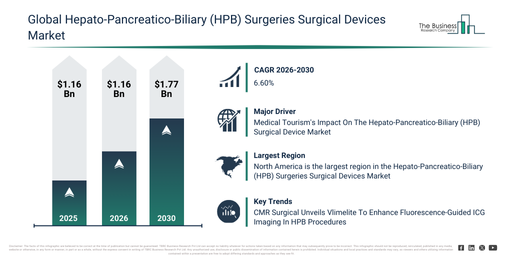
    The HPB surgeries surgical devices market has experienced robust growth and is projected to increase from $5.62 billion in 2025 to $5.99 billion in 2026, registering a compound annual growth rate (CAGR) of 6.6%. The market’s historical growth has been fueled by rising incidences of liver and pancreatic diseases, the expansion of specialized surgical centers, increased use of laparoscopic techniques, availability of advanced surgical instruments, and enhanced surgeon training and expertise. Looking ahead, this market is expected to reach $7.73 billion by 2030, maintaining the same CAGR of 6.6%. Factors contributing to this growth include growing demand for robotic-assisted surgeries, investments in high-definition visualization technologies, a rise in minimally invasive oncology procedures, focus on precision and patient safety during complex operations, and the adoption of integrated surgical platforms.

    Download A Free Sample Report For Comprehensive Market Insights:

    https://www.thebusinessresearchcompany.com/sample.aspx?id=13856&type=smp

    Key Factors Supporting the Expansion of the HPB Surgical Devices Market

    An important factor propelling market growth is the surge in medical tourism, where patients travel internationally seeking high-quality, advanced medical care combined with shorter wait times. This trend is particularly pronounced in HPB surgeries, where minimally invasive and precise surgical interventions are highly valued. Specialized healthcare centers offering state-of-the-art HPB surgical devices are attracting patients worldwide, increasing demand in this sector. For example, the Centers for Medicare and Medicaid Services reported that U.S. healthcare spending rose by 4.1% in 2023, reaching $4.5 trillion, with hospital care services alone increasing by 2.2% to $1.4 trillion, demonstrating the rising demand for advanced surgical care.

    Growing Demand for Medical Tourism is Driving Market Expansion

    With more patients seeking cost-effective and specialized treatments abroad, the HPB surgical devices market benefits from this global shift. These devices facilitate accurate, minimally invasive procedures related to liver, pancreas, and bile duct conditions, making them an essential element in meeting the needs of medical tourists.

    Access The Complete Hepato-Pancreatico-Biliary (HPB) Surgeries Surgical Devices Market Report:

    https://www.thebusinessresearchcompany.com/report/hepato-pancreatico-biliary-hpb-surgeries-surgical-devices-global-market-report

    Comprehensive Market Segmentation in HPB Surgical Devices

    This market is categorized by product, indication, and end user. Product segments include electrosurgery instruments, endoscopes, hand instruments, access instruments, stents, energy and vessel sealing devices, visualization and robotic surgical systems, surgical sutures and staplers, and fluid management systems. Indications cover liver cancer, pancreatic cancer, gallstones, bile duct cancer, cirrhosis, pancreatitis, and cholecystitis. End users comprise hospitals, specialty clinics, trauma centers, and ambulatory surgical centers. Further subcategories detail specific instrument types such as monopolar and bipolar electrosurgical devices, rigid and flexible endoscopes, scissors and forceps, trocar and cannula systems, biliary and pancreatic stents, ultrasonic and radiofrequency devices, robotic surgical platforms, absorbable and non-absorbable sutures, and fluid warming and suction systems.

    Innovative Technologies Shaping the Future of the HPB Surgical Devices Market

    Leading companies are emphasizing technological advancements, particularly the integration of fluorescence-guided Indocyanine Green (ICG) imaging. This technology enhances intraoperative precision by providing real-time visualization of tissue perfusion, vascular structures, and biliary anatomy. Using near-infrared imaging, surgeons can see beyond the visible spectrum to identify critical HPB structures more clearly during minimally invasive procedures. For instance, in February 2024, CMR Surgical launched the vLimeLite fluorescence imaging system integrated with its Versius Plus robotic platform. This system offers flexible viewing modes and customizable ICG color options, improving surgeons’ ability to assess blood flow and tissue integrity during complex HPB surgeries.

    Top Market Players Driving Innovation and Competition

    The competitive landscape of the HPB surgical devices market includes major companies such as Johnson & Johnson Services Ltd., Medtronic Plc, KARL STORZ SE & Co. KG, FUJIFILM Holdings Corporation, BD CooperSurgical Inc., Stryker Corporation, Boston Scientific Corporation, B. Braun Melsungen AG, Olympus Corporation, Terumo Corporation, Smith & Nephew plc, W.L. Gore & Associates Inc., Cook Medical Inc., CONMED Corporation, Richard Wolf GmbH, CooperSurgical Inc., Medi-Globe GmbH, Thompson Surgical Instruments Inc., Lotus Surgicals Pvt. Ltd., Hobbs Medical Inc., and Medorah Meditek Pvt. Ltd. These companies focus on product innovation, expanding surgical capabilities, and addressing diverse clinical needs.

    Regional Market Leadership and Growth Patterns

    In 2025, North America held the largest share of the HPB surgical devices market. However, the Asia-Pacific region is predicted to experience the fastest growth during the forecast period. The report covers key geographic areas including Asia-Pacific, South East Asia, Western Europe, Eastern Europe, North America, South America, the Middle East, and Africa, providing a thorough analysis of regional developments and market potential.

    Get in touch with us:

    The Business Research Company: https://www.thebusinessresearchcompany.com/

    Americas: +1 310-496-7795

    Asia: +44 7882 955267 & +91 8897263534

    Europe: +44 7882 955267

    Email us at: marketing@tbrc.info

    Follow us on:

    LinkedIn: https://in.linkedin.com/company/the-business-research-company

    YouTube: https://www.youtube.com/channel/UC24_fI0rV8cR5DxlCpgmyFQ

    Global Market Model: https://www.thebusinessresearchcompany.com/global-market-model
  • Hemostats And Tissue Sealants Market Size Projected To Increase From $4.64 Billion To $5.97 Billion During The Forecast Period

    Hemostats And Tissue Sealants Market Size Projected To Increase From $4.64 Billion To $5.97 Billion During The Forecast Period

    Delivering more actionable and strategically valuable research, The Business Research Company’s 2026 market reports feature market attractiveness analysis, total addressable market evaluation, company benchmarking matrices, interactive Excel dashboards, expanded supply chain intelligence, emerging startup coverage, and detailed product insights.

    The market for hemostats and tissue sealants has shown impressive growth over recent years, reflecting an increasing demand driven by advancements in surgical techniques and healthcare infrastructure. This overview explores the current market size, growth drivers, key segments, innovation trends, leading players, and regional dynamics shaping the future of this critical medical sector.

    Hemostats and Tissue Sealants Market Size and Projected Growth

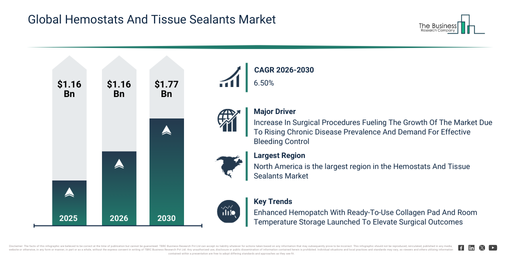
    The hemostats and tissue sealants market has expanded significantly, with its value expected to rise from $4.35 billion in 2025 to $4.64 billion in 2026, marking a compound annual growth rate (CAGR) of 6.7%. This expansion during the historical period stems from a heavy reliance on traditional mechanical hemostats, limited synthetic sealant options, increasing surgical volumes, enhanced hospital infrastructure, and early adoption of fibrin-based sealants. Looking ahead, the market is forecast to grow further, reaching $5.97 billion by 2030 with a CAGR of 6.5%. Driving this future growth are innovations in next-generation tissue adhesives, a rise in minimally invasive and cardiovascular surgeries, expanded research in hemostasis technologies, and broader distribution channels, including direct and online sales. Key market trends include increased use of synthetic and combination sealants, growth in cardiovascular and trauma surgeries, emphasis on faster recovery techniques, and greater research applications in hemostasis.

    Download A Free Sample Report For Comprehensive Market Insights:

    https://www.thebusinessresearchcompany.com/sample.aspx?id=25781&type=smp

    Primary Factors Boosting Hemostats and Tissue Sealants Market Expansion

    A major contributor to the market’s growth is the rising volume of surgical procedures worldwide. These surgeries—encompassing manual and instrumental techniques performed to diagnose, treat, or repair organs and tissues—are becoming more frequent due to the growing prevalence of chronic diseases that often require surgical intervention for effective management. Hemostats and tissue sealants play a crucial role in such procedures by controlling bleeding and sealing tissues, thereby reducing complications and improving outcomes. For instance, according to the International Society of Aesthetic Plastic Surgery (ISAPS), June 2024 data revealed a 5.5% increase in surgical procedures in 2023, with over 15.8 million surgeries and 19.1 million non-surgical treatments performed globally. This trend clearly supports the expanding demand within the hemostats and tissue sealants market.

    Emerging Developments in Surgical Techniques That Propel Market Demand

    The surge in minimally invasive surgeries is another important market driver. These procedures offer faster recovery and fewer complications, creating a higher need for advanced hemostatic and sealing products. Additionally, the rise in cardiovascular and trauma surgeries further fuels the demand for effective hemostats and tissue sealants, as these interventions require precise bleeding control and tissue sealing to ensure patient safety and surgical success.

    Access The Complete Hemostats And Tissue Sealants Market Report:

    https://www.thebusinessresearchcompany.com/report/hemostats-and-tissue-sealants-global-market-report

    Hemostats and Tissue Sealants Market: Breakdown of Leading Product and Application Segments

    This market is segmented across several categories to address diverse clinical needs:

    1) By Product Type: Topical Hemostats, Adhesives and Tissue Sealants, Fibrin Sealants, and Other Products

    2) By Composition: Biological-Based, Synthetic-Based, and Combination Types

    3) By Distribution Channel: Direct Sales, Distributors, and Online Sales

    4) By Application: Surgical Procedures, Trauma Cases, Cardiovascular Surgery, General Surgery, and Others

    5) By End-User: Hospitals, Ambulatory Surgical Centers (ASCs), Specialized Clinics, and Research & Academic Institutes

    Further subdivisions include:

    – Topical Hemostats: Mechanical, Active, Flowable, and Combination Hemostats

    – Adhesives and Tissue Sealants: Synthetic, Biological, and Cyanoacrylate-Based Adhesives

    – Fibrin Sealants: Liquid and Patch-Based Types

    – Other Products: Gelatin-Based, Collagen-Based, and Oxidized Regenerated Cellulose-Based Hemostats

    Innovation Trends Advancing the Hemostats and Tissue Sealants Market

    Key players in the market are focusing on introducing cutting-edge products to enhance surgical efficiency and patient outcomes. A notable innovation is the development of ready-to-use absorbable collagen pads that facilitate quick application without preparation. These pads are bioactive and resorbable, offering effective tissue sealing and hemostasis. For example, in April 2025, Baxter International Inc. launched the Hemopatch Sealing Hemostat at a surgical symposium in Austria. This product stands out for its room temperature storage capabilities and immediate usability without pre-warming, making it suitable for both open and minimally invasive surgeries. Features such as strong adhesive properties, extended shelf life, and rapid hemostatic effect allow surgeons to better manage bleeding and leakage, improving precision and accelerating patient recovery.

    Key Market Players and Their Strategic Roles in the Hemostats and Tissue Sealants Sector

    The competitive landscape of the hemostats and tissue sealants market includes influential companies such as Johnson & Johnson, Medtronic plc, Becton Dickinson and Company (BD), Stryker Corporation, Baxter International Inc., Meril Life Sciences Pvt. Ltd., Teleflex Incorporated, Integra LifeSciences Holdings Corporation, Corza Medical Inc., Artivion Inc., Ethicon Inc., Advanced Medical Solutions Group plc, Marine Polymer Technologies Inc., Samyang Holdings Corporation, 3-D Matrix Medical Technology Co Ltd., GELITA AG, BioCer Entwicklungs-GmbH, AEGIS Lifesciences Pvt. Ltd., Betatech Medical Ltd., and Cohera Medical Inc., among others. These organizations are continuously innovating and expanding their product portfolios to maintain a leading edge in this dynamic healthcare market.

    Regional Perspective on Hemostats and Tissue Sealants Market Growth

    In 2025, North America held the largest share of the hemostats and tissue sealants market, driven by advanced healthcare infrastructure and high surgical procedure volumes. The market analysis also encompasses key regions such as Asia-Pacific, South East Asia, Western Europe, Eastern Europe, South America, the Middle East, and Africa, highlighting diverse growth opportunities and regional demand variations. The Asia-Pacific region, in particular, is expected to demonstrate notable growth potential in the coming years due to increasing healthcare investments and rising surgical rates.

    Get in touch with us:

    The Business Research Company: https://www.thebusinessresearchcompany.com/

    Americas: +1 310-496-7795

    Asia: +44 7882 955267 & +91 8897263534

    Europe: +44 7882 955267

    Email us at: marketing@tbrc.info

    Follow us on:

    LinkedIn: https://in.linkedin.com/company/the-business-research-company

    YouTube: https://www.youtube.com/channel/UC24_fI0rV8cR5DxlCpgmyFQ

    Global Market Model: https://www.thebusinessresearchcompany.com/global-market-model
  • Hemostats Market Growth Outlook Reveals A CAGR Of 7.2% And A Market Value Of $5.01 Billion By 2030

    Hemostats Market Growth Outlook Reveals A CAGR Of 7.2% And A Market Value Of $5.01 Billion By 2030

    Enhanced with market attractiveness analysis, total addressable market evaluation, company benchmarking matrices, interactive Excel dashboards, expanded supply chain intelligence, emerging startup coverage, and detailed product insights, The Business Research Company’s 2026 market reports deliver more actionable and strategically valuable research.

    The hemostats market is experiencing robust growth, driven by expanding surgical procedures and advancements in medical technology. As healthcare systems continue to develop, the demand for effective blood loss control tools is rising steadily. This overview explores the current market size, key growth drivers, emerging trends, leading companies, and regional dynamics shaping the future of the hemostats industry.

    Hemostats Market Size and Expected Growth Through 2030

    The hemostats market has witnessed significant expansion in recent years, with its value projected to rise from $3.56 billion in 2025 to $3.8 billion in 2026, reflecting a healthy compound annual growth rate (CAGR) of 6.7%. This growth owes much to the increasing number of surgical operations, improvements in hospital surgical infrastructure, advancements in biomaterial technologies, and the growing need for efficient blood management techniques during surgery. Additionally, the adoption of minimally invasive surgical approaches is further contributing to market expansion.

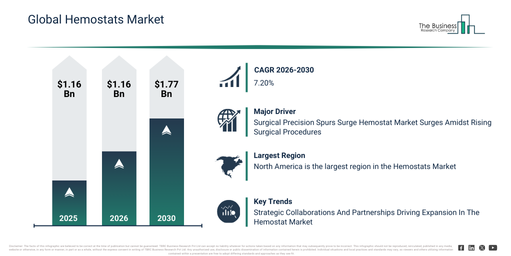
    Looking ahead, the market is forecasted to reach $5.02 billion by 2030, maintaining an even stronger CAGR of 7.2%. Factors propelling this future growth include heightened emphasis on patient safety, increased demand for faster recovery post-surgery, the growth of specialized trauma care centers, ongoing innovations in bioactive hemostatic materials, and the rising use of specialized surgical products. Key trends set to influence the market encompass greater utilization of advanced combination hemostats, growing preference for ready-to-use hemostatic agents, demand for faster bleeding control solutions, expansion of biocompatible and absorbable materials, and a sharpened focus on surgical safety and efficiency.

    Download A Free Sample Report For Comprehensive Market Insights:

    https://www.thebusinessresearchcompany.com/sample.aspx?id=8226&type=smp

    Increasing Volume of Surgical Procedures Promotes Hemostats Market Expansion

    The continued rise in surgical interventions plays a vital role in driving the demand for hemostats. Surgical procedures broadly include all invasive treatments performed to diagnose or address medical conditions. Hemostats are indispensable in these operations, as they help control blood loss and maintain a clear surgical field.

    For instance, data released in June 2024 by the American Society of Plastic Surgeons highlights a 7% increase in minimally invasive procedures in 2023, surpassing the overall growth rate of surgical interventions by 2%. Hand surgeries addressing conditions like carpal tunnel syndrome, arthritis, and trigger finger reached 207,887 procedures—a 2% rise compared to 2022. This upward trend in surgical volume directly stimulates demand for effective hemostatic devices.

    Rising Trauma Cases Due to Road Accidents Fuel Hemostats Market Growth

    Another significant factor propelling the hemostats market is the escalating number of trauma cases, particularly those resulting from road traffic accidents. Trauma refers to injuries caused by external forces that require immediate medical attention and intervention.

    The increase in traffic density and unsafe driving behaviors contribute to more severe injuries, which necessitate rapid bleeding control to stabilize patients. Hemostats are critical in these emergency scenarios, enabling clinicians to quickly manage blood loss and improve survival rates. For example, statistics from October 2024, provided by the Alaska Department of Health, reveal that in 2023 approximately 3,373 individuals in Alaska suffered traumatic brain injuries, including both fatal and non-fatal cases treated in hospitals or emergency departments. Such data underscores how rising trauma incidents are boosting hemostats market demand.

    Access The Complete Hemostats Market Report:

    https://www.thebusinessresearchcompany.com/report/hemostats-global-market-report

    Detailed Segmentation Offers Insight Into the Hemostats Market Structure

    This report segments the hemostats market comprehensively as follows:

    By Composition: Thrombin-Based Hemostats, Oxidized Regenerated Cellulose-Based Hemostats, Combination Hemostats, Gelatin-Based Hemostats, Collagen-Based Hemostats

    By Product Type: Active Hemostats, Passive Hemostats, Combination Hemostats, Other Related Products

    By Formulation: Matrix and Gel Hemostats, Sheet and Pad Hemostats, Sponge Hemostats, Powder Hemostats

    By Application Area: Orthopedic Surgery, General Surgery, Neurological Surgery, Cardiovascular Surgery, Reconstructive Surgery, Gynecological Surgery, and Other Applications

    Further subcategories include topical and lyophilized thrombin within thrombin-based hemostats; pads and granules among oxidized regenerated cellulose varieties; thrombin combined with gelatin or collagen for combination types; gel foam and gelatin sponge for gelatin-based products; and collagen sheets and powders under collagen-based hemostats.

    Collaborations and Partnerships Driving Innovation in the Hemostats Market

    Leading players in the hemostats industry are increasingly forming strategic alliances and partnerships with startups and mid-sized companies to diversify their product ranges and strengthen their market presence. Such collaborations enable companies to expand geographically and introduce innovative solutions faster.

    For example, in May 2023, Olympus, a Japan-based manufacturer specializing in optics and reprography, extended its partnership with US-based medical device company Endoclot to launch new hemostatic agents. This collaboration is geared toward improving patient outcomes during gastrointestinal procedures, raising the overall standard of care through safer treatment options.

    Top Companies Shaping the Hemostats Market Landscape

    The hemostats market is dominated by several prominent firms, including B. Braun Melsungen AG, Baxter International Inc., Integra LifeSciences Corporation, Becton Dickinson and Company, Teleflex Incorporated, Medtronic PLC, Hemostasis LLC, Stryker Corporation, Advanced Medical Solutions Group PLC, Samyang Holdings Corporation, Gelita Medical GmbH, CryoLife Inc., CuraMedical B.V., Meril Life Sciences Pvt. Ltd., Beijing Datsing Bio-Tech Co. Ltd., Zhonghui Shengxi (Beijing) Medical Technology Co. Ltd., Biotemed Inc., Biom’up SA, Shandong Foryou Medical Devices Co. Ltd., Z-Medica LLC, and Anika Therapeutics Inc. These companies collectively drive technological advances and market expansion worldwide.

    Regional Market Insights Highlighting Hemostats Industry Growth

    In 2025, North America accounted for the largest share of the hemostats market, supported by strong healthcare infrastructure and technological advancement. Meanwhile, the Asia-Pacific region is poised to emerge as the fastest-growing market throughout the forecast period, driven by increasing healthcare investments and rising surgical volumes. The analysis covers key geographies such as Asia-Pacific, South East Asia, Western Europe, Eastern Europe, North America, South America, the Middle East, and Africa to provide a global perspective on market trends and opportunities.

    Get in touch with us:

    The Business Research Company: https://www.thebusinessresearchcompany.com/

    Americas: +1 310-496-7795

    Asia: +44 7882 955267 & +91 8897263534

    Europe: +44 7882 955267

    Email us at: marketing@tbrc.info

    Follow us on:

    LinkedIn: https://in.linkedin.com/company/the-business-research-company

    YouTube: https://www.youtube.com/channel/UC24_fI0rV8cR5DxlCpgmyFQ

    Global Market Model: https://www.thebusinessresearchcompany.com/global-market-model
  • Hemostatic Agents Market Forecast Highlights Expansion From $4.66 Billion To $5.71 Billion Through 2030

    Hemostatic Agents Market Forecast Highlights Expansion From $4.66 Billion To $5.71 Billion Through 2030

    Through market attractiveness analysis, total addressable market evaluation, company benchmarking matrices, interactive Excel dashboards, expanded supply chain intelligence, emerging startup coverage, and detailed product insights, The Business Research Company’s 2026 market reports provide more actionable and strategically valuable research.

    The market for hemostatic agents has witnessed significant growth recently, driven by evolving medical needs and advancements in surgical techniques. With increasing surgical procedures and rising demand for innovative products, this sector is positioned for continued expansion. Below, we explore the current market size, key growth drivers, segmentation, strategic developments, and regional outlook for hemostatic agents.

    Hemostatic Agents Market Size Projections and Growth Potential

    The hemostatic agents market has experienced robust growth over recent years. It is projected to rise from $4.42 billion in 2025 to $4.66 billion in 2026, growing at a compound annual growth rate (CAGR) of 5.4%. This historical growth is largely due to the limited variety of hemostatic agents available, dependence on traditional thrombin and gelatin products, an increasing volume of surgical procedures, expansion in hospital infrastructure, and heightened awareness regarding the management of blood loss.

    Download A Free Sample Report For Comprehensive Market Insights:

    https://www.thebusinessresearchcompany.com/sample.aspx?id=25780&type=smp

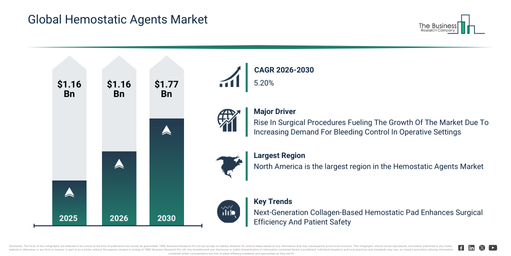
    Looking ahead, the market is forecasted to continue its upward trajectory, reaching $5.71 billion by 2030 with a CAGR of 5.2%. The anticipated growth is driven by innovations such as recombinant and sprayable fibrin sealants, a surge in minimally invasive and orthopedic surgeries, greater demand for combination and multi-agent hemostats, and increased use in plastic and neurosurgical procedures. The market will also be influenced by stricter regulatory requirements focused on sterility and biocompatibility. Key trends expected to shape the market include rising adoption of advanced hemostatic agents during surgeries, growth in fibrin sealants and biologically sourced products, expanded use in trauma and cardiovascular surgeries, and a stronger emphasis on safety and regulatory compliance.

    Growing Number of Surgeries Boosting Hemostatic Agents Demand

    One of the primary factors propelling the hemostatic agents market is the rising volume of surgical procedures worldwide. Surgical operations, which involve specialized techniques to treat, repair, or remove bodily tissues, are increasingly performed to address a growing number of chronic health conditions. These procedures often require effective blood loss control, and hemostatic agents play a crucial role in quickly stopping bleeding, reducing blood loss, and improving surgical visibility for precise interventions.

    Access The Complete Hemostatic Agents Market Report:

    https://www.thebusinessresearchcompany.com/report/hemostatic-agents-global-market-report

    Supporting this trend, data from the UK Health Security Agency (UKHSA) revealed that during the 2023–24 period, there were 135,619 recorded operations with 1,276 surgical site infections identified, marking an 8.4% increase in reported procedures compared to the prior year. This rise in surgeries directly contributes to greater demand for hemostatic agents.

    Detailed Segmentation of the Hemostatic Agents Market

    The market for hemostatic agents is categorized based on type, application, and end-user:

    By Type:

    – Thrombin-Based Hemostats

    – Gelatin-Based Hemostats

    – Collagen-Based Hemostats

    – Oxidized Regenerated Cellulose-Based Hemostats

    – Combination Hemostats

    – Fibrin Sealants

    – Other Types

    By Application:

    – Trauma

    – Cardiovascular Surgery

    – General Surgery

    – Plastic Surgery

    – Orthopedic Surgery

    – Neurosurgery

    – Other Applications

    By End-User:

    – Hospitals

    – Surgery Centers

    – Nursing Homes

    – Other End Users

    Further subcategories include thrombin-based products like bovine and human thrombin, gelatin-based forms such as absorbable sponges and powders, collagen sponges and sheets, oxidized cellulose pads and meshes, combination agents merging various bases, fibrin sealants including recombinant and sprayable types, and other varieties such as polysaccharide- and synthetic polymer-based hemostats.

    Advances in Hemostatic Technology Guiding Market Evolution

    Key players in the hemostatic agents industry are concentrating on innovating more efficient products, especially collagen-based hemostats that enable rapid hemostasis and tissue sealing in both open and minimally invasive surgeries. These collagen-based materials work by supporting the body’s natural clotting response at wound sites.

    For example, in March 2025, Baxter introduced HEMOPATCH Sealing Hemostat, a collagen-based absorbable pad featuring a dual-action system combining a collagen matrix with an NHS-PEG layer that forms a hydrogel upon contact with moisture. This design allows for fast sealing of bleeding areas, strong adhesion to wet tissues, and suitability for diverse surgical approaches. The patch achieves hemostasis in under two minutes without requiring cold storage or special preparation, simplifying surgical workflows. It also biodegrades naturally within 6 to 8 weeks and can be stored at room temperature for up to three years, fulfilling key clinical and logistical needs.

    Prominent Companies Shaping the Hemostatic Agents Industry

    The competitive landscape of the hemostatic agents market includes several leading corporations such as Pfizer Inc., Johnson & Johnson Services Inc., Becton Dickinson & Co., CSL Ltd., Baxter International Inc., Teleflex Inc., Integra LifeSciences Holdings Corp., Gelita Medical, Artivion Inc., B. Braun Melsungen AG, Advanced Medical Solutions Group Plc, Z‑Medica, Marine Polymer Technologies Inc., MedTrade Products Ltd., Samyang Holdings Corp., Vascular Solutions Pc, BioCer Entwicklungs GmbH, Starch Medical Inc., Arch Therapeutics Inc., Medcura Inc., and Biom’Up SAS.

    Regional Perspective and Market Share Insights

    In 2025, North America held the largest share of the hemostatic agents market. The market report further analyzes regions including Asia-Pacific, South East Asia, Western Europe, Eastern Europe, South America, the Middle East, and Africa, providing a comprehensive view of geographic trends and growth opportunities worldwide.

    Get in touch with us:

    The Business Research Company: https://www.thebusinessresearchcompany.com/

    Americas: +1 310-496-7795

    Asia: +44 7882 955267 & +91 8897263534

    Europe: +44 7882 955267

    Email us at: marketing@tbrc.info

    Follow us on:

    LinkedIn: https://in.linkedin.com/company/the-business-research-company

    YouTube: https://www.youtube.com/channel/UC24_fI0rV8cR5DxlCpgmyFQ

    Global Market Model: https://www.thebusinessresearchcompany.com/global-market-model
  • Hemostasis Products Market Expected To Reach $2.52 Billion By 2030 As Growth Accelerates At 7.2% CAGR

    Hemostasis Products Market Expected To Reach $2.52 Billion By 2030 As Growth Accelerates At 7.2% CAGR

    Delivering more actionable and strategically valuable research, The Business Research Company’s 2026 market reports feature market attractiveness analysis, total addressable market evaluation, company benchmarking matrices, interactive Excel dashboards, expanded supply chain intelligence, emerging startup coverage, and detailed product insights.

    The hemostasis products market has been experiencing noteworthy expansion, driven by a combination of rising healthcare needs and technological advancements. As surgical procedures become more common and trauma cases increase globally, the demand for effective bleeding control solutions continues to grow. This overview explores the market size, key growth drivers, segment breakdowns, innovations, leading companies, and regional trends shaping the future of this industry.

    Current Market Size and Projected Growth of the Hemostasis Products Market

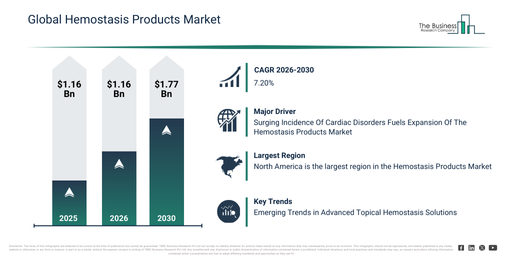
    The market for hemostasis products is on a steady upward trajectory. It is expected to increase from $1.8 billion in 2025 to $1.91 billion in 2026, reflecting a compound annual growth rate (CAGR) of 6.1%. This historical growth has been fueled by a rise in the number of surgical interventions, more trauma incidents, the prevalence of bleeding disorders, expansion in hospital surgical capacities, and the availability of a variety of hemostatic products. Looking ahead, the market is poised to reach $2.52 billion by 2030, with a CAGR of 7.2%, supported by greater adoption of advanced synthetic and biological hemostatic agents, a shift towards minimally invasive surgeries, growth in trauma care infrastructure, increased emphasis on faster wound healing, and innovations in clotting technologies.

    Download A Free Sample Report For Comprehensive Market Insights:

    https://www.thebusinessresearchcompany.com/sample.aspx?id=13244&type=smp

    Key Factors Propelling the Hemostasis Products Market Growth

    One of the primary elements driving market expansion is the growing prevalence of cardiac disorders. These conditions, affecting the heart and blood vessels, often require effective bleeding management during treatment, which relies heavily on hemostasis products. By minimizing blood loss, these products help reduce the necessity for blood transfusions and lower the risk of complications in patients with cardiac issues.

    For instance, data from January 2024 by the American Heart Association highlights an increase in the age-adjusted death rate from cardiovascular disease in the US, rising to 233.3 per 100,000—a 4.0% increase from the previous year’s 224.4 per 100,000. This trend underscores the increasing demand for effective hemostasis solutions in cardiac care, thereby contributing to market growth.

    Segment Overview of the Hemostasis Products Market Highlighting Growth Areas

    The hemostasis products market is categorized into three main segments by product type: topical hemostasis products, infusible hemostasis products, and advanced hemostasis products. The application segment includes trauma, surgery, hemophilia, myocardial infarction, and other uses. End users are classified mainly as hospitals, clinics, and other healthcare providers.

    Further sub-segmentation under topical products includes hemostatic agents, tissue sealants, and fibrin sealants. Infusible products are divided into platelet-rich plasma (PRP), coagulation factors, and prothrombin complex concentrates. Advanced hemostasis products encompass biological adhesives, synthetic agents, and hemostatic dressings.

    Access The Complete Hemostasis Products Market Report:

    https://www.thebusinessresearchcompany.com/report/hemostasis-products-global-market-report

    Innovations Transforming the Hemostasis Products Market

    Leading companies are focusing efforts on next-generation topical hemostatic powders designed to deliver rapid bleeding control in both surgical and emergency settings. These powders work passively by absorbing blood components and expediting the body’s natural clotting process at the site of bleeding.

    For example, in July 2023, Baxter International Inc. introduced its PERCLOT Absorbable Hemostatic Powder in the US. This plant-based, ready-to-use product targets mild bleeding during surgeries and offers features like quick wettability, compatibility with laparoscopic applicators, and versatility across various procedures. Such innovations enhance surgeons’ ability to manage intraoperative bleeding effectively with greater ease and efficiency.

    Key Players Shaping the Hemostasis Products Industry

    The hemostasis products market features several influential companies driving innovation and market presence. These include Pfizer Inc., Medtronic plc, Johnson And Johnson Pvt. Ltd., Stryker Corporation, Baxter International Inc., F. Hoffmann-La Roche Ltd., BBraun Melsungen AG, Fresenius Kabi AG, Grifols S.A., Terumo BCT Inc., Smith And Nephew plc, Ethicon Suture Laboratories, Cook Medical, Teleflex Incorporated, Integra LifeSciences Corporation, Haemonetics Corporation, Z-Medica LLC, Tricol Biomedical, Hem Con Medical Technologies Inc., Hemostasis LLC, and CuraMedical BV.

    Regional Market Insights and Growth Forecasts

    In 2025, North America held the largest share of the hemostasis products market, reflecting its advanced healthcare infrastructure and high adoption rates of innovative treatments. Meanwhile, the Asia-Pacific region is anticipated to experience the fastest growth during the forecast period, driven by increasing healthcare investments, rising awareness, and expanding medical care facilities. The market report covers key regions such as Asia-Pacific, South East Asia, Western Europe, Eastern Europe, North America, South America, the Middle East, and Africa, providing a comprehensive global outlook.

    Get in touch with us:

    The Business Research Company: https://www.thebusinessresearchcompany.com/

    Americas: +1 310-496-7795

    Asia: +44 7882 955267 & +91 8897263534

    Europe: +44 7882 955267

    Email us at: marketing@tbrc.info

    Follow us on:

    LinkedIn: https://in.linkedin.com/company/the-business-research-company

    YouTube: https://www.youtube.com/channel/UC24_fI0rV8cR5DxlCpgmyFQ

    Global Market Model: https://www.thebusinessresearchcompany.com/global-market-model