Category: Medical Equipment

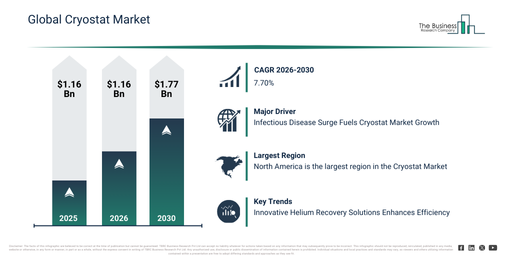
  • Cryostat Market Set To Grow From $2.88 Billion In 2026 To $3.88 Billion By 2030 At A CAGR Of 7.7%

    Cryostat Market Set To Grow From $2.88 Billion In 2026 To $3.88 Billion By 2030 At A CAGR Of 7.7%

    Through market attractiveness analysis, total addressable market evaluation, company benchmarking matrices, interactive Excel dashboards, expanded supply chain intelligence, emerging startup coverage, and detailed product insights, The Business Research Company’s 2026 market reports provide more actionable and strategically valuable research.

    The cryostat market has been experiencing significant growth and shows promising potential for continued expansion in the coming years. As advancements in medical diagnostics, biotechnology, and research continue to accelerate, the demand for cryostats is rising steadily. Let’s explore the market size, driving factors, key segments, notable trends, and regional outlook of this evolving sector.

    Cryostat Market Size and Growth Projections Through 2030

    The cryostat market has demonstrated strong growth recently and is expected to maintain this momentum. Forecasts indicate the market will increase from $2.68 billion in 2025 to $2.89 billion in 2026, growing at a compound annual growth rate (CAGR) of 7.8%. This expansion during the past years is largely due to the growing utilization of frozen section diagnostics, the proliferation of pathology laboratories, heightened demand for sophisticated histological analyses, growth in biomedical research, and the availability of liquid nitrogen infrastructure. Looking ahead, the market is projected to reach $3.88 billion by 2030 at a CAGR of 7.7%. The anticipated growth is driven by rising demand for quick intraoperative diagnostic tools, higher investments in automation of laboratories, greater emphasis on precision medicine, expanding biotechnology applications, and continuous technological improvements in cryogenic systems. Key trends shaping the future include wider adoption of precision cryosectioning devices, growing use of automated temperature control features, integration of digital monitoring systems, development of multi-stage cryostat setups, and a stronger focus on maintaining sample integrity.

    Download A Free Sample Report For Comprehensive Market Insights:

    https://www.thebusinessresearchcompany.com/sample.aspx?id=9055&type=smp

    How Increasing Infectious Disease Cases Affect Cryostat Market Growth

    The surge in infectious disease prevalence is playing a major role in boosting the cryostat market. Infectious diseases, caused by pathogens such as viruses, bacteria, fungi, or parasites, require careful handling of tissue samples to prevent risk exposure. Cryostats are essential in managing these samples safely during diagnosis and research. For example, between week 40 of 2022 and week 15 of 2023, 108 NHS trusts in England reported 1,681 critical care admissions for confirmed influenza cases, a significant increase compared to previous years. This rising burden of infectious diseases underscores the need for efficient cryostat systems in clinical settings, which is expected to fuel market demand further.

    Cryostat Market Segmentation and Fastest Growing Categories

    This report segments the cryostat market by various key categories:

    1) By Type: Closed-Cycle Cryostats, Continuous-Flow Cryostats, Bath Cryostats, Multistage Cryostats

    2) By System Component: Dewars, Transfer Tubes, Gas Flow Pumps, Temperature Controllers, High Vacuum Pumps, Microtome Blades

    3) By Cryogen Type: Helium, Nitrogen

    4) By End-Use Industry: Healthcare, Energy and Power, Aerospace, Metallurgy, Biotechnology, Forensic Science, Marine Biology

    Access The Complete Cryostat Market Report:

    https://www.thebusinessresearchcompany.com/report/cryostat-global-market-report

    Within these groups, subcategories include specific types such as Helium and Nitrogen Closed-Cycle Cryostats, Flowing Helium and Nitrogen Continuous-Flow Cryostats, Liquid Helium and Nitrogen Bath Cryostats, as well as Two-Stage and Three-Stage Multistage Cryostats. This detailed segmentation helps identify high-growth opportunities across different technologies and application areas.

    Innovations and Industry Trends Shaping the Cryostat Market

    Leading players in the cryostat industry are focusing on introducing innovative products to enhance system efficiency and sustainability. A notable advancement is the development of helium recovery solutions designed to capture and recycle helium—a scarce and costly resource widely used in cryogenic applications. For instance, Bluefors, a UK-based cryogenic systems manufacturer, launched the Cryomech HeRL02-RM in April 2024. This helium recovery system is tailored for single Nuclear Magnetic Resonance (NMR) devices, creating a closed-loop setup that collects boiled-off helium from NMR magnets, liquefies it using a Pulse Tube Cryocooler, and returns it to the magnet’s helium bath. Such innovations help reduce operational costs while supporting environmental sustainability.

    Key Players Competing in the Cryostat Market

    The cryostat market features several prominent companies driving innovation and growth. Leading firms include Lake Shore Cryotronics Inc, Cryomech Inc, Epredia, Hacker Instruments & Industries Inc, Histo-Line Laboratories Srl, Jinhua YIDI Medical Appliance Co Ltd, SLEE Medical GmbH, Leica Biosystems, MEDITE Medical GmbH, Boeckeler Instruments Inc, Bright Instruments Ltd, Precision Cryogenics Systems Inc, Biobase Biodusty Co Ltd, Thermo Fisher Scientific Inc, Oxford Instruments, Quantum Design, ICE Oxford, Cryogenic Limited, Bluefors, Cryoquip, CryoMagnetics, and Vacree Technologies. These companies are continuously enhancing product capabilities and expanding market reach.

    Regional Overview and Growth Potential in the Cryostat Market

    In 2025, North America accounted for the largest share of the cryostat market, benefiting from advanced healthcare infrastructure and strong research activities. Meanwhile, Asia-Pacific is anticipated to be the fastest-growing region during the forecast period, driven by increasing investments in healthcare, biotechnology, and industrial applications. Other regions covered in the market analysis include South East Asia, Western Europe, Eastern Europe, South America, the Middle East, and Africa, all contributing to the global cryostat market’s growth prospects.

    Get in touch with us:

    The Business Research Company: https://www.thebusinessresearchcompany.com/

    Americas: +1 310-496-7795

    Asia: +44 7882 955267 & +91 8897263534

    Europe: +44 7882 955267

    Email us at: marketing@tbrc.info

    Follow us on:

    LinkedIn: https://in.linkedin.com/company/the-business-research-company

    YouTube: https://www.youtube.com/channel/UC24_fI0rV8cR5DxlCpgmyFQ

    Global Market Model: https://www.thebusinessresearchcompany.com/global-market-model
  • Continuous Glucose Monitoring Devices Market Expansion Is Opening New Pathways For Strategic Investment

    Continuous Glucose Monitoring Devices Market Expansion Is Opening New Pathways For Strategic Investment

    Delivering more actionable and strategically valuable research, The Business Research Company’s 2026 market reports feature market attractiveness analysis, total addressable market evaluation, company benchmarking matrices, interactive Excel dashboards, expanded supply chain intelligence, emerging startup coverage, and detailed product insights.

    The continuous glucose monitoring (CGM) devices market is experiencing significant growth, driven by advancements in technology and an increasing number of individuals living with diabetes. As healthcare shifts toward more personalized and data-driven management approaches, the demand for effective glucose monitoring solutions continues to rise. Let’s explore the market’s current scale, key factors fueling its expansion, important segments, innovative trends, leading companies, and regional performance.

    Continuous Glucose Monitoring Devices Market Size and Growth Outlook

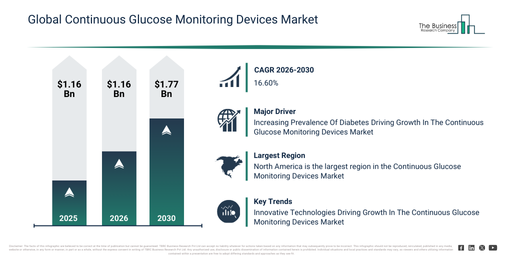
    The market for continuous glucose monitoring devices has expanded swiftly in recent years. It is projected to grow from $9.79 billion in 2025 to $11.45 billion in 2026, representing a compound annual growth rate (CAGR) of 16.9%. This growth during the historical period is largely due to the rising prevalence of diabetes across various age groups, greater adoption of home-based glucose monitoring systems, advancements in sensor miniaturization, increasing patient preference for continuous glucose monitoring, and the growing use of digital health technologies.

    Download A Free Sample Report For Comprehensive Market Insights:

    https://www.thebusinessresearchcompany.com/sample.aspx?id=20733&type=smp

    Looking ahead, the market is expected to maintain a robust expansion, reaching $21.13 billion by 2030 with a CAGR of 16.6%. Key factors propelling this forecast include increased demand for interoperable diabetes management devices, rising investments in artificial intelligence-driven glucose prediction tools, growth in remote diabetes care models, a stronger focus on data-driven treatment optimization, and wider adoption of next-generation sensor materials. Prominent trends shaping the market involve greater acceptance of non-invasive CGM technologies, a surge in cloud-connected glucose monitoring systems, expanded use of predictive glucose analytics, development of long-wear sensor solutions, and improvements in user-friendly device designs.

    Factors Propelling the Expansion of the Continuous Glucose Monitoring Devices Market

    The increasing number of diabetes cases worldwide is a major driver of CGM device market growth. Diabetes, characterized by the body’s inability to properly regulate blood sugar due to insufficient insulin or insulin resistance, is becoming more common because of unhealthy diets, sedentary lifestyles, obesity, aging populations, and genetic factors. CGM devices assist in managing this condition by delivering real-time glucose level information, enabling timely adjustments to treatment and lifestyle.

    Access The Complete Continuous Glucose Monitoring Devices Market Report:

    https://www.thebusinessresearchcompany.com/report/continuous-glucose-monitoring-devices-global-market-report

    For instance, data from the UK’s Office for Health Improvement & Disparities in March 2024 indicated that between March 2022 and March 2023, the proportion of type 1 diabetes patients receiving all eight recommended care processes increased by 22%, while for type 2 diabetes, it rose by 21%. Additionally, the percentage of patients achieving target HbA1c levels reached 37.9%, the highest ever recorded by the National Diabetes Audit. These improvements highlight enhanced diabetes management efforts, which in turn boost demand for continuous glucose monitoring devices.

    Breaking Down the Continuous Glucose Monitoring Devices Market Segments

    The continuous glucose monitoring devices market can be categorized based on several key factors:

    1) Component types such as transmitters, sensors, and receivers;

    2) Connectivity options including Bluetooth and 4G;

    3) Demographic groups like child and adult populations;

    4) Application areas covering gestational diabetes, type-2 diabetes, and type-1 diabetes;

    5) End-use settings such as hospitals, homecare environments, and other users.

    Within the component segment, transmitters include Bluetooth-enabled transmitters, wireless transmitters, and integrated transmitter-receiver systems. Sensor types feature enzyme-based sensors, electrochemical sensors, and non-invasive sensors. Receivers consist of smartphone-integrated devices, standalone receivers, and cloud-synced data receivers.

    Innovative Trends Transforming the Continuous Glucose Monitoring Devices Industry

    Leading companies in the CGM market are prioritizing the development of cutting-edge technologies aimed at improving user accessibility, accuracy, and convenience. One notable advancement is the introduction of over-the-counter continuous glucose monitors, which allow individuals to track their glucose levels without a prescription.

    For example, in September 2024, Abbott Laboratories launched the Lingo continuous glucose monitoring system, designed to provide real-time glucose information throughout the day. This device features a sleek and user-friendly design with easy-to-read displays, delivering continuous feedback on blood sugar levels. It also integrates smoothly with mobile applications to help users monitor trends and receive alerts, enhancing the overall management experience.

    Key Players Driving the Continuous Glucose Monitoring Devices Market Competition

    The continuous glucose monitoring devices industry is shaped by several prominent companies, including Johnson & Johnson, F. Hoffmann-La Roche AG, Sanofi S.A., Abbott Laboratories, Medtronic Public Limited Company, Novo Nordisk A/S, Becton Dickinson and Company, A. Menarini Diagnostics S.r.l., Dexcom Inc., Bionime Corporation, Insulet Corporation, Ascensia Diabetes Care Holdings AG, Tandem Diabetes Care Inc., i-Sens Inc., Senseonics Holdings Inc., Medtrum Technologies Inc., Biolinq Inc., GlySens Incorporated, Glucotrack Inc., and Nemaura Medical Inc.

    Regional Market Insights with Focus on Revenue and Growth

    In 2025, North America was the leading region in terms of revenue and market share for continuous glucose monitoring devices. However, the Asia-Pacific region is anticipated to experience the fastest growth during the forecast period. The market report covers a comprehensive range of regions, including Asia-Pacific, South East Asia, Western Europe, Eastern Europe, North America, South America, the Middle East, and Africa, providing a global perspective on market trends and development opportunities.

    Get in touch with us:

    The Business Research Company: https://www.thebusinessresearchcompany.com/

    Americas: +1 310-496-7795

    Asia: +44 7882 955267 & +91 8897263534

    Europe: +44 7882 955267

    Email us at: marketing@tbrc.info

    Follow us on:

    LinkedIn: https://in.linkedin.com/company/the-business-research-company

    YouTube: https://www.youtube.com/channel/UC24_fI0rV8cR5DxlCpgmyFQ

    Global Market Model: https://www.thebusinessresearchcompany.com/global-market-model
  • Continuous Glucose Monitoring Market Trends Are Creating New Opportunities For Industry Leaders

    Continuous Glucose Monitoring Market Trends Are Creating New Opportunities For Industry Leaders

    Enhanced with market attractiveness analysis, total addressable market evaluation, company benchmarking matrices, interactive Excel dashboards, expanded supply chain intelligence, emerging startup coverage, and detailed product insights, The Business Research Company’s 2026 market reports deliver more actionable and strategically valuable research.

    The continuous glucose monitoring (CGM) market has seen remarkable growth recently, driven by advancements in technology and an increasing global focus on diabetes management. As more people seek effective and convenient ways to monitor their blood sugar levels, this market is set to expand significantly over the coming years. Let’s explore the market’s current size, growth drivers, major players, evolving trends, and segmentation to understand the landscape in greater detail.

    Continuous Glucose Monitoring Market Size and Growth Projections

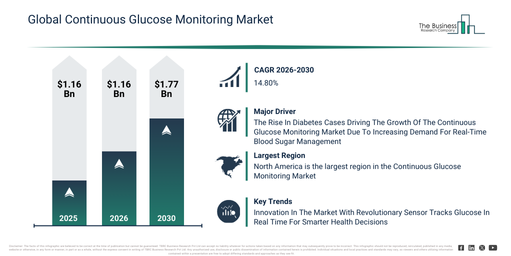
    The continuous glucose monitoring market has been growing rapidly and is expected to continue this trend. From a market size of $9.44 billion in 2025, it is projected to reach $10.87 billion in 2026, representing a healthy compound annual growth rate (CAGR) of 15.1%. This expansion during the historical period stems from factors like limited availability of real-time glucose monitoring devices, the high price of earlier CGM systems, increasing awareness of diabetes care, reliance on traditional finger-prick testing, and wider adoption of monitoring solutions in hospitals. Looking further ahead, the market is forecasted to reach $18.86 billion by 2030, growing at a CAGR of 14.8%. The anticipated growth is driven by innovations in implantable and wearable sensors, integration with mobile health and telemedicine technologies, a rising global diabetes population, development of non-invasive glucose monitoring methods, and the growing use of home healthcare and remote patient monitoring services.

    Download A Free Sample Report For Comprehensive Market Insights:

    https://www.thebusinessresearchcompany.com/sample.aspx?id=24512&type=smp

    Key Factors Fueling the Growth of the CGM Market

    One of the most significant forces behind the rapid growth of the continuous glucose monitoring market is the increasing prevalence of diabetes worldwide. Diabetes, a chronic condition characterized by insufficient insulin production or ineffective insulin use, results in elevated blood sugar levels. The surge in diabetes cases is largely linked to unhealthy diets rich in sugars, fats, and processed foods, which contribute to obesity and insulin resistance. Continuous glucose monitoring offers a valuable tool in managing diabetes by providing real-time insights into blood sugar trends, allowing patients to make timely decisions regarding diet, medication, and physical activity to improve glucose control.

    For example, in June 2024, the UK’s National Health Service reported that 3,615,330 people registered with general practitioners were diagnosed with non-diabetic hyperglycemia or pre-diabetes in 2023, marking an 18% increase from 3,065,825 cases in 2022. This rise in pre-diabetes highlights the growing need for effective glucose monitoring technologies, which is a key market driver.

    Continuous Glucose Monitoring Market Segmentation and Growth Opportunities

    The CGM market is categorized by several segments, which help to define the scope and potential of this industry. The main divisions include:

    1) Component Type: Transmitters, Sensors, and Receivers

    2) Age Group: Adults and Children

    3) End Use: Hospitals, Home Care Settings, Diagnostic Centers and Clinics, and Other End Uses

    Further breakdown includes transmitter types such as reusable, disposable, and rechargeable transmitters; various sensor types like implantable, transcutaneous, disposable, and real-time sensors; and receiver types including standalone devices, integrated receivers, and wearable display units. These segments pave the way for targeted product development and service delivery catering to different patient needs and healthcare environments.

    Access The Complete Continuous Glucose Monitoring Market Report:

    https://www.thebusinessresearchcompany.com/report/continuous-glucose-monitoring-global-market-report

    Trends Driving Innovation in the Continuous Glucose Monitoring Market

    Leading companies in the CGM sector are heavily investing in innovative technologies aimed at improving accuracy, ease of use, and patient experience. Sensor-based glucose monitors, which continuously track glucose levels through sensors placed under the skin, are a major focus area for product development.

    For instance, in August 2024, DexCom, Inc., a US-based healthcare firm, launched Stelo, the first over-the-counter continuous glucose monitor designed for adults who do not use insulin. Stelo provides 24/7 real-time glucose readings from a small sensor worn on the back of the upper arm, transmitting data directly to a smartphone without requiring prescriptions or fingerstick calibration. It offers personalized insights and trend analysis to help users understand how factors like diet, exercise, and sleep impact glucose levels, supporting smarter decisions. The sensor has a lifespan of up to 15 days and integrates with health applications. This product is ideal for individuals with Type 2 diabetes not on insulin, those with prediabetes, or people interested in monitoring their glucose health.

    Who Are the Key Players Shaping the Continuous Glucose Monitoring Market

    The CGM market features several prominent companies that dominate the competitive landscape. These include Roche Diabetes Care, Abbott Laboratories, Medtronic plc, Dexcom Inc, Insulet Corporation, Tandem Diabetes Care Inc, Ypsomed AG, Nova Biomedical, Ascensia Diabetes Care, Bionime Corporation, Biolinq Inc, Beta Bionics Inc, AgaMatrix Inc, A Menarini Diagnostics SRL, Senseonics Holdings Inc, Medtrum Technologies Inc, Nemaura Medical Inc, LifeScan Inc, EOFlow Co Ltd, and POCTech Co Ltd. These companies are continuously advancing CGM technology and expanding their product portfolios to meet diverse patient needs worldwide.

    Regional Overview and Market Growth by Geography

    In 2025, North America held the largest share of the continuous glucose monitoring market, reflecting the region’s well-established healthcare infrastructure and high adoption rates of advanced medical devices. Meanwhile, the Asia-Pacific region is expected to experience the fastest growth over the forecast period. This surge is driven by increasing diabetes prevalence, improving healthcare systems, rising disposable incomes, and expanding access to medical technology in countries across Asia-Pacific. The continuous glucose monitoring market report also covers other key regions such as South East Asia, Western Europe, Eastern Europe, South America, the Middle East, and Africa, providing a comprehensive view of global market dynamics.

    Get in touch with us:

    The Business Research Company: https://www.thebusinessresearchcompany.com/

    Americas: +1 310-496-7795

    Asia: +44 7882 955267 & +91 8897263534

    Europe: +44 7882 955267

    Email us at: marketing@tbrc.info

    Follow us on:

    LinkedIn: https://in.linkedin.com/company/the-business-research-company

    YouTube: https://www.youtube.com/channel/UC24_fI0rV8cR5DxlCpgmyFQ

    Global Market Model: https://www.thebusinessresearchcompany.com/global-market-model
  • Cryopreservation Equipment Market Opportunities Are Emerging Beyond Traditional Growth Areas

    Cryopreservation Equipment Market Opportunities Are Emerging Beyond Traditional Growth Areas

    Delivering more actionable and strategically valuable research, The Business Research Company’s 2026 market reports feature market attractiveness analysis, total addressable market evaluation, company benchmarking matrices, interactive Excel dashboards, expanded supply chain intelligence, emerging startup coverage, and detailed product insights.

    The cryopreservation equipment market is rapidly evolving, driven by technological advances and expanding applications in regenerative medicine and biobanking. As interest grows in preserving biological materials such as stem cells, embryos, and tissues, the market is set to experience significant growth in the coming years. Let’s explore the current market outlook, key drivers, major players, and emerging trends shaping this sector.

    Cryopreservation Equipment Market Size and Growth Forecast

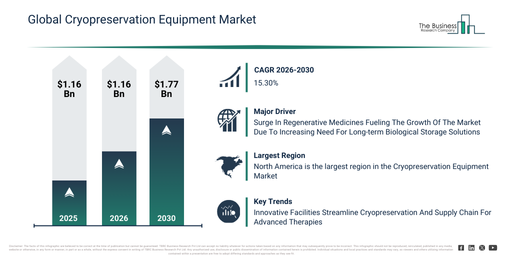
    The cryopreservation equipment market has seen impressive expansion recently, with its value expected to increase from $11.01 billion in 2025 to $12.74 billion in 2026. This growth reflects a compound annual growth rate (CAGR) of 15.7%. Past market expansion has been fueled by factors such as the limited availability of ultra-low temperature freezers, dependence on manual sample preparation techniques, rising stem cell banking activities, increased research in regenerative medicine, and the adoption of standardized cryogenic safety protocols. Looking ahead, the market is projected to grow even more robustly, reaching $22.53 billion by 2030, with a CAGR of 15.3%. Future growth drivers include advances in automated freezing and thawing systems, increased investments in biobanking and stem cell research, growing demand for embryo and oocyte preservation, stricter regulatory compliance, and the integration of smart monitoring and IoT-enabled cryogenic devices. Key trends expected to shape the market involve a rising need for ultra-low temperature freezers, adoption of automated sample preparation systems, expansion in stem cell and embryo preservation applications, enhanced temperature monitoring and safety solutions, and a focus on portable and modular cryopreservation equipment.

    Download A Free Sample Report For Comprehensive Market Insights:

    https://www.thebusinessresearchcompany.com/sample.aspx?id=25732&type=smp

    Factors Propelling Demand in the Cryopreservation Equipment Market

    The growing demand for regenerative medicines is a significant force behind the cryopreservation equipment market’s expansion. Regenerative therapies aim to repair or replace damaged tissues and organs, restoring normal function and often reducing the need for repeated treatments. The increasing interest in these therapies has led to greater reliance on cryopreservation equipment, which enables long-term storage of cells, tissues, and other biological materials while maintaining their viability and therapeutic potential. For example, in January 2025, the UK-based biotech firm Catapult reported that clinical trials involving gene therapies, cell therapies, and tissue-engineered products accounted for 9.5% of global trials and nearly half of all European trials in 2024. This surge in regenerative medicine research is directly stimulating demand for advanced cryopreservation solutions.

    Additional Market Demand Drivers Supporting Growth

    Another important contributor to market growth is the ongoing technological innovation in cryopreservation equipment, which improves processing efficiency, safety, and automation. The rise in stem cell banking and biobanking activities across research and healthcare settings increases the need for reliable and efficient cryogenic storage solutions. Moreover, there is a growing emphasis on regulatory compliance and quality certifications, which pushes manufacturers to develop advanced equipment adhering to stringent standards. Collectively, these factors are creating new revenue opportunities and expanding the market landscape.

    Access The Complete Cryopreservation Equipment Market Report:

    https://www.thebusinessresearchcompany.com/report/cryopreservation-equipment-global-market-report

    Breakdown of Cryopreservation Equipment Market Segments

    This market is analyzed through multiple segmentation lenses:

    1) By Type: Freezers, Incubators, Sample Preparation Systems, and Accessories.

    2) By Application: Cord Blood Stem Cells; Sperms, Semen, and Testicular Tissues; Embryos and Oocytes; and Other Applications.

    3) By End User: Stem Cell Banks; Biotechnology and Pharmaceutical Companies; Contract Research Organizations; Stem Cell Research Labs; and Academic and Research Institutes.

    Further subcategories include:

    – Freezers: Ultra-Low Temperature Freezers (ULT), Mechanical Freezers, Liquid Nitrogen Freezers, Cryogenic Freezers, Portable Freezers.

    – Incubators: CO2 Incubators, Non-CO2 Incubators, Hypoxia Incubators, Shaking Incubators, Vacuum Incubators.

    – Sample Preparation Systems: Automated Sample Thawing Systems, Controlled Rate Freezing Systems, Vial Filling and Sealing Systems, Cryovial Handling Systems, Cell Processing Systems.

    – Accessories: Cryovials and Cryotubes, Storage Boxes and Racks, Temperature Monitoring Devices, Labels and Markers, Cryogenic Gloves and Protective Gear.

    How Innovations and Strategic Moves Are Shaping the Cryopreservation Equipment Market

    Leading companies in this sector are focusing on developing integrated solutions such as one-stop hubs for cell and gene therapy. These hubs combine processing, cryopreservation, storage, and distribution services under one roof to streamline workflows, increase efficiency, and support the commercialization of cutting-edge therapies. For instance, in October 2024, Cryoport Inc., a US-based life sciences temperature-controlled logistics provider, launched its IntegriCell cryopreservation service. This offering operates from a state-of-the-art facility on Cryoport’s Houston supply chain campus and specializes in standardized cryopreservation of leukapheresis material. It is fully integrated with Cryoport’s global logistics network to bolster cell therapy development and commercialization efforts.

    Key Players Competing in the Cryopreservation Equipment Market

    The cryopreservation equipment industry features numerous prominent companies, including Thermo Fisher Scientific Inc, Linde LLC, Danaher Corporation, Merck KGaA, Avantor Inc, Beckman Coulter Inc, PHC Corporation, Chart Biomedical Co Ltd, Hamilton Company, Azenta Life Sciences, Cryoport Systems Inc, Chemglass Life Sciences Inc, BioLife Solutions Inc, Charter Medicals, Planer PLC, CellBios Healthcare and Lifesciences Pvt Ltd, Cryologic Pty Ltd, Bluechiip Ltd, Haimen United Laboratory Equipment Development Co Ltd, Taylor Wharton Cryogenics, Panasonic Healthcare Holdings, and CBS Scientific Company. These firms are driving innovation and expanding market reach globally.

    Regional Market Overview and Growth Trajectories

    As of 2025, North America holds the largest share of the cryopreservation equipment market. Nonetheless, the fastest growth is anticipated in the Asia-Pacific region throughout the forecast period. The market report spans key geographic areas including Asia-Pacific, South East Asia, Western Europe, Eastern Europe, North America, South America, the Middle East, and Africa, providing a comprehensive outlook on regional trends and opportunities.

    Get in touch with us:

    The Business Research Company: https://www.thebusinessresearchcompany.com/

    Americas: +1 310-496-7795

    Asia: +44 7882 955267 & +91 8897263534

    Europe: +44 7882 955267

    Email us at: marketing@tbrc.info

    Follow us on:

    LinkedIn: https://in.linkedin.com/company/the-business-research-company

    YouTube: https://www.youtube.com/channel/UC24_fI0rV8cR5DxlCpgmyFQ

    Global Market Model: https://www.thebusinessresearchcompany.com/global-market-model
  • Continuous Glucose Monitor System Market Growth Is Reshaping Competitive Advantage Across The Industry

    Continuous Glucose Monitor System Market Growth Is Reshaping Competitive Advantage Across The Industry

    Through market attractiveness analysis, total addressable market evaluation, company benchmarking matrices, interactive Excel dashboards, expanded supply chain intelligence, emerging startup coverage, and detailed product insights, The Business Research Company’s 2026 market reports provide more actionable and strategically valuable research.

    The continuous glucose monitor system market is experiencing significant momentum, driven by advances in technology and increasing global health awareness. As diabetes prevalence rises worldwide, these monitoring systems are becoming essential tools for both patients and healthcare providers. Let’s explore the current market size, growth factors, key players, and emerging trends shaping this important healthcare segment.

    Continuous Glucose Monitor System Market Size and Anticipated Growth

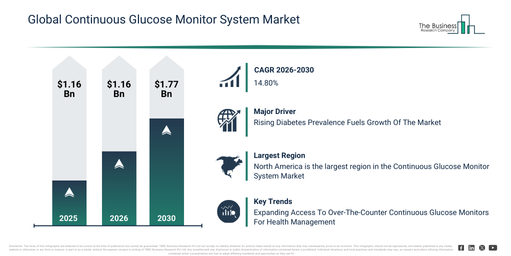
    The continuous glucose monitor system market has shown rapid expansion in recent years. Forecasts indicate the market will grow from $9.6 billion in 2025 to $11.05 billion in 2026, representing a compound annual growth rate (CAGR) of 15.1%. This growth during the past period is largely a result of the increasing global diabetes cases, heightened awareness regarding glucose self-monitoring, improvements in sensor accuracy, broader outpatient diabetes care programs, and a growing acceptance of wearable medical devices.

    Download A Free Sample Report For Comprehensive Market Insights:

    https://www.thebusinessresearchcompany.com/sample.aspx?id=20732&type=smp

    Looking ahead, the market is expected to continue its strong upward trajectory, reaching $19.18 billion by 2030 with a CAGR of 14.8%. Key factors driving this future growth include the rising use of closed-loop insulin delivery systems, growing demand for remote patient monitoring solutions, expansion of personalized diabetes management platforms, integration with digital health technologies, and a focus on developing non-invasive glucose sensing methods. Emerging trends in this period also highlight increased adoption of smartphone-connected CGM devices, real-time monitoring solutions, AI-powered glucose analytics, advancements in wearable sensors, and enhanced continuous monitoring efforts.

    Increasing Diabetes Cases as a Major Growth Driver in the Continuous Glucose Monitor System Market

    The rising prevalence of diabetes worldwide is a primary factor supporting the growth of the continuous glucose monitor system market. Diabetes, a chronic condition marked by elevated blood sugar levels due to insufficient insulin production or use, is becoming more common due to factors such as higher obesity rates, poor dietary habits, sedentary lifestyles, and an aging population. Continuous glucose monitors offer real-time insights into glucose levels, aiding in better disease management by identifying trends and alerting users to abnormal readings, all while reducing the need for frequent finger-prick tests.

    Access The Complete Continuous Glucose Monitor System Market Report:

    https://www.thebusinessresearchcompany.com/report/continuous-glucose-monitor-system-global-market-report

    For example, in June 2024, the UK’s National Health Service (NHS) reported that in 2023 over half a million additional people in England were identified as being at risk for type 2 diabetes. This brought the total number of individuals with pre-diabetes, or non-diabetic hyperglycemia, registered with general practitioners to 3,615,330, reflecting a nearly 20% increase compared to 3,065,825 in 2022. Such data underscores the growing diabetes burden that is fuelling demand for continuous glucose monitoring technologies.

    Segmenting the Continuous Glucose Monitor System Market by Product and Application

    This market is categorized by several key parameters:

    1) Component categories including transmitters, receivers, and sensors.

    2) Technology types such as real-time continuous glucose monitoring and intermittently scanned continuous glucose monitoring.

    3) Demographic segments covering child and adult populations.

    4) Application areas including type-1 diabetes, type-2 diabetes, and gestational diabetes.

    5) End-users comprising diagnostic centers, hospitals, clinics, intensive care units (ICUs), and home healthcare settings.

    Further detailed subsegments include:

    – Transmitters: Bluetooth-enabled and wireless types.

    – Receivers: Dedicated CGM devices, smartphone-based receivers, and cloud-connected receivers.

    – Sensors: Enzyme-based, non-enzyme-based, and electrochemical sensors.

    Industry Trends Driving Innovation and Accessibility in Continuous Glucose Monitor Systems

    Leading companies in this market are investing heavily in developing over-the-counter (OTC) continuous glucose monitors to broaden accessibility for consumers who do not require prescriptions. OTC CGMs allow individuals to track glucose in real time independently, making glucose monitoring more convenient and user-friendly.

    For instance, in September 2024, Abbott Laboratories introduced Lingo in the U.S., a device designed for adults without diabetes. This CGM offers continuous glucose tracking to provide insights into how diet and exercise affect overall health. With a wear time of up to 14 days, Lingo reflects Abbott’s strategic focus on the growing consumer segment interested in managing prediabetes and wellness without needing a prescription.

    Key Players Competing in the Continuous Glucose Monitor System Market

    Several prominent companies dominate the continuous glucose monitor system industry, including Abbott Corporation, Medtronic PLC, Murata Manufacturing Co. Ltd., Dexcom Inc., Sinocare Inc., Tandem Diabetes Care Inc., Ascensia Diabetes Care Holdings AG, Glooko Inc., DarioHealth Corp., Menarini Diagnostics SRL, Senseonics Holdings Inc., WaveForm Technologies Inc., Medtrum Technologies Inc., Biolinq Incorporated, Ultrahuman Inc., GlySens Incorporated, Glucotrack, EOFLOW CO. LTD., Nemaura Medical Inc., Meiqi Medical Equipment, and Nipro Diagnostics UK Limited. These corporations are central to innovation, product development, and expanding market reach globally.

    Regional Dynamics and Growth Patterns in the Continuous Glucose Monitor System Market

    In 2025, North America held the largest share of the continuous glucose monitor system market, reflecting strong healthcare infrastructure and widespread adoption. However, the report also highlights other key regions, including Asia-Pacific, South East Asia, Western Europe, Eastern Europe, South America, the Middle East, and Africa, each contributing to the global market landscape with varying growth rates and opportunities.

    Get in touch with us:

    The Business Research Company: https://www.thebusinessresearchcompany.com/

    Americas: +1 310-496-7795

    Asia: +44 7882 955267 & +91 8897263534

    Europe: +44 7882 955267

    Email us at: marketing@tbrc.info

    Follow us on:

    LinkedIn: https://in.linkedin.com/company/the-business-research-company

    YouTube: https://www.youtube.com/channel/UC24_fI0rV8cR5DxlCpgmyFQ

    Global Market Model: https://www.thebusinessresearchcompany.com/global-market-model
  • Continuous Blood Glucose Monitoring Market Forecast Signals New Revenue Opportunities Through 2030

    Continuous Blood Glucose Monitoring Market Forecast Signals New Revenue Opportunities Through 2030

    Delivering more actionable and strategically valuable research, The Business Research Company’s 2026 market reports feature market attractiveness analysis, total addressable market evaluation, company benchmarking matrices, interactive Excel dashboards, expanded supply chain intelligence, emerging startup coverage, and detailed product insights.

    The continuous blood glucose monitoring market has experienced significant growth in recent years, driven by technological advancements and an increasing global prevalence of diabetes. As healthcare systems evolve and patients seek more convenient and effective glucose management solutions, the market is set for substantial expansion. Let’s explore the current landscape, key drivers, market segments, leading players, and regional outlook for this vital healthcare sector.

    Growth Trajectory and Market Size of Continuous Blood Glucose Monitoring

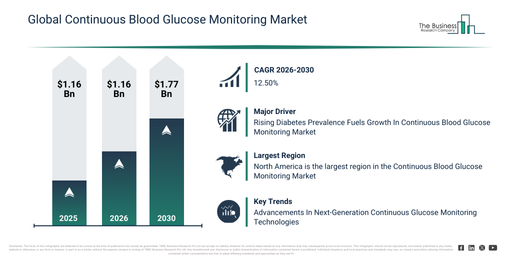
    The continuous blood glucose monitoring market has shown strong momentum, with its size expected to rise from $14.87 billion in 2025 to $16.29 billion in 2026, reflecting a healthy compound annual growth rate (CAGR) of 9.6%. This growth during the historical period has been fueled by limited access to real-time glucose monitoring, dependency on traditional finger-prick testing, the rising number of diabetes cases, increased hospital and clinical monitoring, and early adoption of insulin pump therapies. Looking ahead, the market is projected to expand rapidly, reaching $26.11 billion by 2030 with an accelerated CAGR of 12.5%. Factors contributing to this forecast include advancements in implantable and flash glucose sensors, growth in homecare and remote monitoring solutions, integration with digital health platforms, greater awareness of diabetes self-management, and adoption of AI-driven predictive analytics. Emerging trends such as wider use of continuous glucose monitoring devices, smartphone and wearable connectivity, expansion of home diagnostics for diabetes, development of minimally invasive sensors, and enhanced real-time data analytics will shape the market’s future.

    Download A Free Sample Report For Comprehensive Market Insights:

    https://www.thebusinessresearchcompany.com/sample.aspx?id=13079&type=smp

    Rising Diabetes Prevalence as a Major Growth Driver in Continuous Blood Glucose Monitoring

    The growing number of diabetes cases worldwide is a primary catalyst for the continuous blood glucose monitoring market’s expansion. Diabetes, characterized by fluctuating blood glucose levels, requires consistent monitoring to manage the condition effectively. Continuous glucose monitoring devices help detect trends and provide a comprehensive understanding of a diabetic patient’s health status. For example, data from June 2024 by the UK’s National Health Service shows a sharp rise in diabetes cases among individuals under 40, increasing from 173,166 in 2022 to 216,440 in 2023. This alarming growth in younger populations highlights the urgent need for advanced glucose monitoring solutions, further driving demand for continuous blood glucose monitoring technologies.

    Innovations Boosting Continuous Blood Glucose Monitoring Market Potential

    Technological improvements in continuous blood glucose monitoring devices are opening new revenue opportunities. Enhanced sensor accuracy, longer wear times, and better patient convenience are some of the advancements encouraging widespread adoption. Furthermore, integrating these devices with digital platforms helps users and healthcare providers monitor glucose trends more effectively and make informed decisions.

    Access The Complete Continuous Blood Glucose Monitoring Market Report:

    https://www.thebusinessresearchcompany.com/report/continuous-blood-glucose-monitoring-global-market-report

    Increasing Acceptance of Digital and Remote Health Solutions in Diabetes Care

    The rise of homecare diagnostics and telehealth has expanded opportunities for continuous blood glucose monitoring by enabling remote patient management. Integration with smartphone apps and wearable technology provides real-time alerts and data sharing, empowering patients to manage their diabetes proactively. These developments contribute to more personalized and efficient diabetes treatment strategies, which is further fueling market growth.

    Key Segments and Revenue Streams Within the Continuous Blood Glucose Monitoring Market

    This market is divided into several important segments:

    By Component: Insulin Pumps, Sensors, Transmitters, Receivers

    By Application: Type 1 Diabetic Patients, Type 2 Diabetic Patients, Gestational Diabetes, Critical Care Patients

    By End User: Hospitals, Homecare Diagnostics, Other End Users

    Each component category is further broken down as follows:

    Insulin Pumps include Tubeless Insulin Pumps, Tubed Insulin Pumps, and Patch Pumps.

    Sensors are categorized into Continuous Glucose Monitoring Sensors, Flash Glucose Monitoring Sensors, and Implantable Sensors.

    Transmitters encompass Integrated Transmitters, Wireless Transmitters, and Bluetooth-Enabled Transmitters.

    Receivers consist of Standalone Receivers, Smartphone Apps, and Integrated Devices.

    Innovative Product Launches Shaping Industry Growth

    Leading companies in the continuous blood glucose monitoring space are focused on delivering cutting-edge solutions that improve real-time glucose tracking and patient experience. A notable example is Abbott Laboratories, which in August 2025 introduced the FreeStyle Libre 2 Plus system. This advanced CGM sensor provides continuous glucose readings every minute directly to compatible smartphones without requiring manual scans. It features optional alarms for low and high glucose levels, a 15-day wear period, and seamless integration with Abbott’s digital health ecosystem, including LibreView and LibreLink Up. These capabilities allow users and caregivers to monitor glucose trends proactively, reduce hypoglycemia risk, and minimize the need for routine finger-prick tests.

    Prominent Players Driving the Continuous Blood Glucose Monitoring Market

    The continuous blood glucose monitoring sector is shaped by a range of influential companies, including:

    F. Hoffmann-La Roche Ltd., Medtronic plc., Abbott Laboratories, GlySens Inc., Senseonics Holdings Inc., Glysure Limited, Nemaura Medical Inc., Tandem Diabetes Care Inc., Ypsomed Holding AG, Orsense Ltd., Dexcom Inc., Insulet Corporation, Medtrum Technologies Inc., Beta Bionics Inc., Bigfoot Biomedical Inc., GluSense Ltd., i-SENS Inc., Osang Healthcare Co Ltd., WaveForm Technologies, EyeSense GmbH, Calisto Medical, Biorasis, DirectSens GmbH, and Ultrahuman Healthcare.

    Regional Market Leadership and Growth Outlook

    In 2025, North America held the largest share of the continuous blood glucose monitoring market. The comprehensive market analysis includes key regions such as Asia-Pacific, South East Asia, Western Europe, Eastern Europe, North America, South America, the Middle East, and Africa. Among these, Asia-Pacific is expected to witness rapid growth in the coming years, driven by increasing diabetes prevalence, improving healthcare infrastructure, and rising adoption of digital health technologies in the region.

    Get in touch with us:

    The Business Research Company: https://www.thebusinessresearchcompany.com/

    Americas: +1 310-496-7795

    Asia: +44 7882 955267 & +91 8897263534

    Europe: +44 7882 955267

    Email us at: marketing@tbrc.info

    Follow us on:

    LinkedIn: https://in.linkedin.com/company/the-business-research-company

    YouTube: https://www.youtube.com/channel/UC24_fI0rV8cR5DxlCpgmyFQ

    Global Market Model: https://www.thebusinessresearchcompany.com/global-market-model
  • Cryogenic Equipment Market Expansion Is Opening New Pathways For Strategic Investment

    Cryogenic Equipment Market Expansion Is Opening New Pathways For Strategic Investment

    Enhanced with market attractiveness analysis, total addressable market evaluation, company benchmarking matrices, interactive Excel dashboards, expanded supply chain intelligence, emerging startup coverage, and detailed product insights, The Business Research Company’s 2026 market reports deliver more actionable and strategically valuable research.

    The cryogenic equipment sector has witnessed significant advancement recently, driven by rising demands across various industries. As technology evolves and new applications emerge, the market is set to expand further. Below is an in-depth look at the current market size, key factors influencing growth, segmentation, competitive landscape, and regional dynamics shaping this industry.

    Current Market Size and Growth Trajectory of the Cryogenic Equipment Market

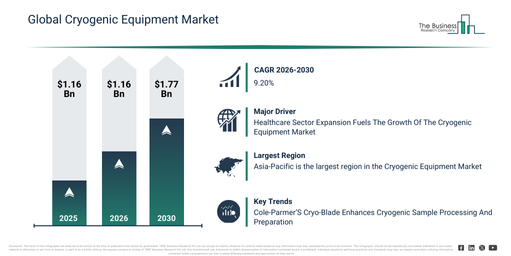
    The cryogenic equipment market has experienced strong growth in recent years, with its value expected to increase from $22.7 billion in 2025 to $24.89 billion in 2026, reflecting a compound annual growth rate (CAGR) of 9.6%. This surge during the historical period is primarily due to the expansion of industrial gas applications, development of LNG transportation infrastructure, growing use of cryogenic storage in healthcare, increased metallurgical processing, and advances in insulation technology.

    Download A Free Sample Report For Comprehensive Market Insights:

    https://www.thebusinessresearchcompany.com/sample.aspx?id=6411&type=smp

    Looking ahead, the market is projected to continue its robust growth, reaching $35.33 billion by 2030 at a CAGR of 9.2%. The anticipated expansion is fueled by rising investments in hydrogen energy infrastructure, a greater demand for superconducting and cryogenic research systems, growth in semiconductor manufacturing, a stronger emphasis on low-loss energy storage, and broader adoption of cryogenic technologies in clean energy projects. Emerging trends in this period include a rising need for LNG and hydrogen cryogenic systems, deployment of energy-efficient storage solutions, increased use of cryogenic equipment in electronics production, expanded applications in healthcare and research, and an enhanced focus on safety and thermal performance.

    Increasing Demand for LNG Boosts Cryogenic Equipment Market

    One of the primary drivers steering the growth of the cryogenic equipment market is the rising demand for liquefied natural gas (LNG). LNG, which is natural gas cooled to a liquid state, allows for more efficient and safe transportation. Cryogenic equipment, including tanks and storage systems, plays a crucial role in safely storing and moving LNG from production sites to consumers. In 2025, data from the International Energy Agency (IEA) highlighted a 2% year-over-year increase (equivalent to 6 billion cubic meters) in global LNG supply during the 2024-25 heating season. This growing LNG market directly supports the expanding need for cryogenic equipment.

    Access The Complete Cryogenic Equipment Market Report:

    https://www.thebusinessresearchcompany.com/report/cryogenic-equipment-global-market-report

    Expanding Industrial Applications Propel Cryogenic Equipment Market

    Beyond LNG, the growth of metallurgical processing activities and the increasing use of cryogenic storage in healthcare are important contributors to the market’s development. Innovations in insulation technologies have further enhanced the efficiency and reliability of cryogenic systems. These improvements help industries handle ultra-low temperature applications more effectively, making cryogenic equipment indispensable across multiple sectors.

    How the Cryogenic Equipment Market is Categorized for Growth Opportunities

    The cryogenic equipment market is segmented across various categories:

    1) Equipment types, including tanks, valves, vaporizers, pumps, and other specialized gear.

    2) Cryogens used, such as nitrogen, argon, oxygen, LNG, hydrogen, helium, and others.

    3) Applications, covering storage, transportation, processing, and other uses.

    4) End-users, spanning energy and power, chemicals, metallurgy, electronics, shipping, and more.

    Further subcategories describe specific product types, for example: vertical, horizontal, and cryogenic storage tanks; cryogenic globe, gate, check, and ball valves; ambient, heated, and steam vaporizers; centrifugal, positive displacement, and submersible cryogenic pumps; as well as transfer hoses, safety equipment, pressure regulators, and insulation materials.

    Innovations Shaping the Competitive Landscape in Cryogenic Equipment

    Key players in the cryogenic equipment industry are driving profitability by introducing innovative products, such as the Cryo-Blade, a powerful cryogenic grinder designed for sample processing in scientific and research environments. In May 2023, US-based Cole-Parmer Instrument Company launched the Cryo-Blade, which combines cryogenic temperature control with effective grinding to prepare samples for detailed analysis. This tool offers researchers a reliable and automated method for sample pulverization, making it highly valuable for laboratories and research institutions due to its flexible usage and high processing capacity.

    Major Players and Market Competition in Cryogenic Equipment

    Leading companies in this market include Air Liquide S.A., Beijing Tianhai Industry Co. Ltd., Chart Industries Inc., Emerson Electric Co., Flowserve Corporation, Herose GmbH, Inoxca India Ltd., Linde plc, Taylor Wharton International LLC, Wessington Cryogenics Ltd., ACME Cryogenics Inc., Nikkiso Cryo Inc., Sumitomo Heavy Industries Ltd., Parker Hannifin Corporation, SHI Cryogenics Group, Sulzer Ltd., INOX India Pvt. Ltd., Fives SAS, Cryofab Inc., Shell-n-Tube Pvt. Ltd., and Chase Research Cryogenics Ltd. These players are actively engaged in product development, expanding their portfolios and strengthening their market positions.

    Regional Market Trends and Dominance in Cryogenic Equipment

    In 2025, Asia-Pacific emerged as the largest regional market for cryogenic equipment. The report covers multiple geographic areas including Asia-Pacific, South East Asia, Western Europe, Eastern Europe, North America, South America, the Middle East, and Africa, providing a broad perspective on market growth and regional opportunities. The Asia-Pacific region’s leadership is driven by rapid industrialization, increasing energy demands, and strategic investments in cryogenic infrastructure.

    Get in touch with us:

    The Business Research Company: https://www.thebusinessresearchcompany.com/

    Americas: +1 310-496-7795

    Asia: +44 7882 955267 & +91 8897263534

    Europe: +44 7882 955267

    Email us at: marketing@tbrc.info

    Follow us on:

    LinkedIn: https://in.linkedin.com/company/the-business-research-company

    YouTube: https://www.youtube.com/channel/UC24_fI0rV8cR5DxlCpgmyFQ

    Global Market Model: https://www.thebusinessresearchcompany.com/global-market-model
  • Continuous Bladder Irrigation Devices Market Growth Is Accelerating As Industry Transformation Continues

    Continuous Bladder Irrigation Devices Market Growth Is Accelerating As Industry Transformation Continues

    Enhanced with market attractiveness analysis, total addressable market evaluation, company benchmarking matrices, interactive Excel dashboards, expanded supply chain intelligence, emerging startup coverage, and detailed product insights, The Business Research Company’s 2026 market reports deliver more actionable and strategically valuable research.

    The continuous bladder irrigation devices market is steadily expanding as healthcare providers seek improved solutions for managing urinary conditions, particularly following surgical procedures. With advancements in medical technology and a growing prevalence of urological disorders, this sector is set to experience steady growth through the coming years. Let’s explore the current market outlook, key factors driving its expansion, segmentation, and the competitive landscape shaping its future.

    Market Size and Growth Trajectory of the Continuous Bladder Irrigation Devices Market

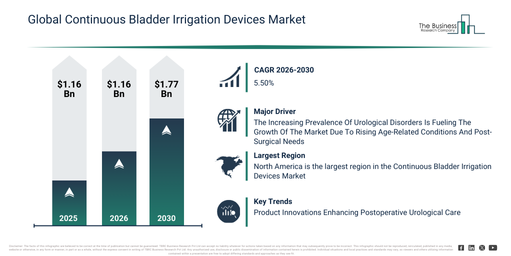
    The market for continuous bladder irrigation devices has witnessed significant progress recently. It is projected to rise from $1.42 billion in 2025 to $1.5 billion in 2026, growing at a compound annual growth rate (CAGR) of 5.6%. This historical growth has been driven by factors such as limited access to advanced Foley catheters, dependence on hospital-based irrigation systems, a rising incidence of bladder cancer and urinary tract complications, continued use of conventional irrigation bags, and a relatively low adoption rate of home-care devices. Looking ahead, the market is expected to reach $1.86 billion by 2030, maintaining a CAGR of 5.5%. This forecasted expansion is supported by innovations like silicone and antimicrobial-coated catheters, the growth of home-based urological care, an increase in post-surgical interventions, stronger regulatory compliance and quality standards, and the integration of smart monitoring and IoT-enabled irrigation systems. Key emerging trends include increasing use of continuous bladder irrigation after surgery, greater adoption of antimicrobial-coated and temperature-sensing catheters, expansion of home-based irrigation options, rising demand for sterile and refillable irrigation bags, and a heightened emphasis on patient safety and infection prevention.

    Download A Free Sample Report For Comprehensive Market Insights:

    https://www.thebusinessresearchcompany.com/sample.aspx?id=25729&type=smp

    Rising Incidence of Urological Disorders as a Primary Market Driver

    The growing prevalence of urological disorders is a major factor propelling the continuous bladder irrigation devices market forward. Urological disorders encompass medical issues affecting the urinary tract or male reproductive organs and are becoming more common largely due to aging populations. Age-related physiological changes increase susceptibility to urinary and prostate conditions. Continuous bladder irrigation (CBI) devices play a critical role in managing these disorders by continuously flushing the bladder to clear clots, debris, and infections, thereby preventing catheter blockages and aiding recovery, especially post-surgery. To illustrate, data released in October 2023 by NHS England showed that during 2022/23, there were 147,285 hospital admissions with a primary diagnosis of urinary tract infection (UTI), with 56% of these cases involving individuals aged over 65. The age group 80-84 accounted for the highest number of admissions at 17,280 cases. This increasing burden of urological conditions is directly boosting the demand for continuous bladder irrigation devices.

    Impact of Growing Surgical Procedures on Market Demand

    The expansion of surgical procedures is another significant factor supporting the market growth for continuous bladder irrigation devices. Surgical volume refers to the total number of operations conducted across healthcare facilities within a specific timeframe. This volume is climbing due to the rising elderly population, who are more prone to chronic illnesses requiring surgical intervention. CBI devices are essential during and after these procedures, as they help flush the bladder continuously to remove blood, clots, and debris. This process prevents catheter obstruction, maintains clear urine flow, and facilitates quicker healing. For example, in April 2025, the Australian Institute of Health and Welfare reported that public hospital elective surgery waitlists saw 778,500 admissions in 2023–24, marking a 5.8% increase from the previous year’s 735,500 admissions. Consequently, the surge in surgical procedures is driving demand for continuous bladder irrigation devices.

    Access The Complete Continuous Bladder Irrigation Devices Market Report:

    https://www.thebusinessresearchcompany.com/report/continuous-bladder-irrigation-devices-global-market-report

    Detailed Segmentation of the Continuous Bladder Irrigation Devices Market

    This market can be broken down into several key segments for a clearer understanding of product and application diversity.

    1) By Product Type: Foley 3 Way Catheters, Accessories, Irrigation Bags

    2) By Application: Post-Surgical Irrigation, Bladder Cancer Management, Hemorrhagic Cystitis, Urinary Tract Infections, Trauma and Urinary Retention, Home-Based Irrigation

    3) By End-Use Setting: Hospitals, Long Term Care Facilities, Other End-Uses

    Subcategories include:

    – Foley 3 Way Catheters: Silicone, Latex, Antimicrobial-Coated, Pediatric, and Temperature Sensing variants

    – Accessories: Catheter Connectors, Stabilization Devices, Leg Drainage Bags, Extension Tubing, Clamps and Valves

    – Irrigation Bags: Sterile, Non-Sterile, Pressure, Manual, and Refillable options

    Owing to this segmentation, manufacturers and healthcare providers can better tailor solutions to meet specific clinical needs and patient preferences.

    Competitive Trends and Product Innovations in the Market

    Leading players in the continuous bladder irrigation devices sector are actively focusing on launching advanced products aimed at enhancing postoperative care. These innovations are designed to support recovery, reduce infection risks, and improve overall patient comfort after surgical interventions. For example, in January 2025, Switzerland-based UNOQUIP GmbH expanded its portfolio with new postoperative catheter products, including the Hematuria Management Catheter and the 3-Way Silicone Foley Catheter. These devices are engineered to address clinical challenges such as clot retention while ensuring effective bladder drainage following urological surgeries. This product development highlights UNOQUIP’s commitment to advancing patient safety and comfort in continuous bladder irrigation therapy and strengthening its market position.

    Overview of Leading Companies Shaping the Continuous Bladder Irrigation Devices Market

    The continuous bladder irrigation devices market features several prominent companies actively contributing to its growth and innovation. These include Cardinal Health Inc, Medline Industries LP, Coloplast AS, Teleflex Incorporated, Cook Medical LLC, Hollister Incorporated, B Braun Melsungen AG, Poly Medicure Limited, Angiplast Pvt Ltd, Sterimed Group, Narang Medical Limited, Advin Health Care, AdvaCare Pharma, Ribbel International Ltd, UROMED Kurt Drews KG, Romsons Group Of Industries, GCMEDICA, Medilivescare Manufacturing Pvt Ltd, CODAN Companies, Becton Dickinson Urology Care, Amsino Medical Group, and Medtronic Urology Solutions. Their combined expertise and product offerings continue to drive competitive dynamics and technological progress within this field.

    Geographical Insights into Market Expansion

    In 2025, North America emerged as the largest regional market for continuous bladder irrigation devices. The market’s geographic scope also extends to regions including Asia-Pacific, South East Asia, Western Europe, Eastern Europe, South America, the Middle East, and Africa. Among these, Asia-Pacific and South East Asia are expected to witness significant growth due to increased healthcare infrastructure development and rising prevalence of urological conditions, contributing to the overall global market expansion.

    Get in touch with us:

    The Business Research Company: https://www.thebusinessresearchcompany.com/

    Americas: +1 310-496-7795

    Asia: +44 7882 955267 & +91 8897263534

    Europe: +44 7882 955267

    Email us at: marketing@tbrc.info

    Follow us on:

    LinkedIn: https://in.linkedin.com/company/the-business-research-company

    YouTube: https://www.youtube.com/channel/UC24_fI0rV8cR5DxlCpgmyFQ

    Global Market Model: https://www.thebusinessresearchcompany.com/global-market-model
  • Contact Lenses Market Outlook Highlights The Next Major Growth Opportunities

    Contact Lenses Market Outlook Highlights The Next Major Growth Opportunities

    Through market attractiveness analysis, total addressable market evaluation, company benchmarking matrices, interactive Excel dashboards, expanded supply chain intelligence, emerging startup coverage, and detailed product insights, The Business Research Company’s 2026 market reports provide more actionable and strategically valuable research.

    The contact lenses market has experienced substantial growth recently, driven by rising vision care needs and evolving consumer preferences. As more people seek effective and convenient alternatives to glasses, this sector is set to continue expanding steadily. Let’s explore the current market size, key factors fueling growth, emerging trends, and the competitive landscape shaping the industry’s future.

    Contact Lenses Market Size and Growth Outlook

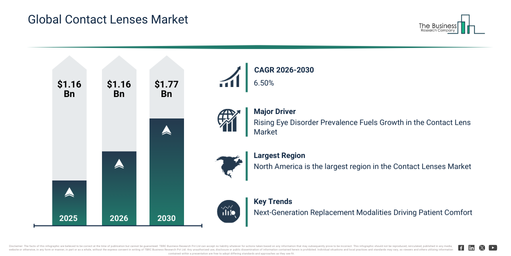
    The contact lenses market is set to increase from $9.73 billion in 2025 to $10.37 billion in 2026, reflecting a healthy compound annual growth rate (CAGR) of 6.6%. This upward trend during the historical period is attributed to a higher prevalence of refractive errors, growing awareness of vision correction methods, urbanization, increased screen exposure, expansion of eye care services, and greater acceptance of contact lenses as alternatives to spectacles. Looking ahead, the market is projected to reach $13.36 billion by 2030, growing at a CAGR of 6.5%. Expected drivers include rising cases of myopia and presbyopia, heightened demand for hygienic and convenient vision solutions, increased spending on eye care and personal grooming, growth of e-commerce platforms for eye care products, and wider adoption of advanced lens materials.

    Download A Free Sample Report For Comprehensive Market Insights:

    https://www.thebusinessresearchcompany.com/sample.aspx?id=18547&type=smp

    Factors Accelerating Contact Lenses Market Expansion

    The increasing incidence of eye disorders is a primary catalyst for market growth. Eye disorders, which impair vision or cause ocular discomfort, are becoming more common due to lifestyle shifts such as prolonged screen time, aging populations, pollution, and other environmental factors. Contact lenses provide effective corrective options for refractive errors, help alleviate dry eye symptoms, manage specific conditions like keratoconus with specialized lenses, and serve therapeutic purposes through protective or bandage lenses.

    For example, in March 2024, the UK’s Office for Health Improvement and Disparities reported that approximately 2 million people in the UK suffer from vision loss, and this number is expected to rise to 2.7 million by 2030. This increasing prevalence of eye-related issues is a significant driver pushing demand in the contact lenses market.

    Access The Complete Contact Lenses Market Report:

    https://www.thebusinessresearchcompany.com/report/contact-lenses-global-market-report

    Contact Lenses Market Segmentation: Which Categories are Leading Growth?

    This market is segmented based on several key factors:

    1) Type: Corrective Lenses, Therapeutic Lenses, and Cosmetic & Lifestyle-Oriented Lenses

    2) Wear Type: Daily Disposable, Disposable (two weeks or sooner), Frequent Replacement (monthly or quarterly), and Conventional Lenses

    3) Material: Silicone Hydrogel Soft Lenses, Methacrylate Hydrogel Soft Lenses, Gas-Permeable Lenses, and Others

    4) Design: Spherical, Toric, Multifocal, and Other Designs

    5) Distribution Channel: Ophthalmologists, Retail Stores, and Online Stores

    Further detailed subcategories include spherical, toric, multifocal, and bifocal lenses under corrective lenses; scleral, bandage, and orthokeratology lenses under therapeutic lenses; and colored, special effect, and cosmetic enhancers under cosmetic and lifestyle lenses.

    Emerging Trends Shaping Contact Lenses Market Demand

    Leading companies are innovating with new lens modalities, such as one-week replacement silicone hydrogel lenses. These lenses offer improved convenience, ocular health benefits, and a flexible replacement schedule that bridges the gap between daily and monthly lenses. The one-week replacement model combines sustained comfort, high oxygen permeability, and reduced maintenance.

    For instance, in November 2024, Alcon Inc., a US-based eye care firm, introduced PRECISION7, a novel lens designed to meet consumer preferences for convenience and healthier wear habits. This product strengthens Alcon’s standing in the premium segment by delivering long-lasting comfort and excellent visual performance.

    Major Players Competing in the Contact Lenses Market

    The contact lenses market features a range of established companies including Abbott Medical Optics Inc., EssilorLuxottica SA, Alcon Inc., Bausch Health Companies Inc., HOYA Corporation, The Cooper Companies Inc., Johnson & Johnson Vision Care Inc., Menicon Co. Ltd., STAAR Surgical Company, SynergEyes Inc., Euclid Systems Corporation, Lenstec Inc., Paragon Vision Sciences, X-Cel Specialty Contacts, Medennium Inc., NEO Vision, Blanchard Contact Lens Inc., Weicon Contact Lens Co. Ltd., Lucid Korea Co. Ltd., Bescon Co. Ltd., and Conforma Contact Lens Inc.

    Geographical Insights: Regions Leading Contact Lenses Market Revenue

    In 2025, North America was the largest regional market for contact lenses. However, the Asia-Pacific region is expected to exhibit the fastest growth during the forecast period. The report covers key territories including Asia-Pacific, South East Asia, Western Europe, Eastern Europe, North America, South America, the Middle East, and Africa, providing a comprehensive view of global market dynamics.

    Get in touch with us:

    The Business Research Company: https://www.thebusinessresearchcompany.com/

    Americas: +1 310-496-7795

    Asia: +44 7882 955267 & +91 8897263534

    Europe: +44 7882 955267

    Email us at: marketing@tbrc.info

    Follow us on:

    LinkedIn: https://in.linkedin.com/company/the-business-research-company

    YouTube: https://www.youtube.com/channel/UC24_fI0rV8cR5DxlCpgmyFQ

    Global Market Model: https://www.thebusinessresearchcompany.com/global-market-model
  • Cryo-Electron Microscopy Market Trends Are Creating New Opportunities For Industry Leaders

    Cryo-Electron Microscopy Market Trends Are Creating New Opportunities For Industry Leaders

    Through market attractiveness analysis, total addressable market evaluation, company benchmarking matrices, interactive Excel dashboards, expanded supply chain intelligence, emerging startup coverage, and detailed product insights, The Business Research Company’s 2026 market reports provide more actionable and strategically valuable research.

    The field of cryo-electron microscopy has witnessed remarkable growth recently, driven by technological progress and expanding research applications. As this market continues to evolve, understanding its current size, key drivers, leading players, and regional dynamics offers valuable insight into its future trajectory. Let’s explore these aspects in detail to grasp where the cryo-electron microscopy market is headed by 2030.

    Cryo-Electron Microscopy Market Size and Growth Outlook

    The cryo-electron microscopy market has experienced rapid expansion over the past few years. It is projected to increase from $1.69 billion in 2025 to $1.93 billion in 2026, exhibiting a strong compound annual growth rate (CAGR) of 14.2%. This upward trend during the historical period has been driven by factors such as limited availability of cryo-electron microscopy instruments, the high costs associated with electron microscopes, the manual nature of sample preparation, substantial growth in life sciences and structural biology research, and early adoption by academic institutions.

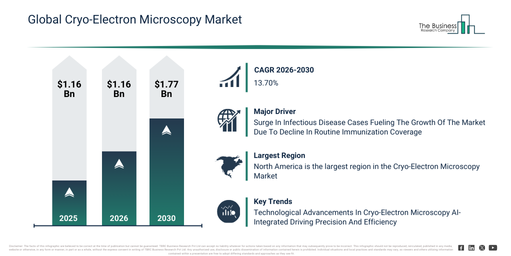
    Looking ahead, the market is expected to continue its rapid ascent, reaching $3.23 billion by 2030 with a CAGR of 13.7%. This forecasted expansion is supported by advancements in automated imaging and data acquisition technologies, growing investments by pharmaceutical and biotech companies in drug discovery, increasing adoption of cryo-EM in cell and gene therapy research, the rise of contract research organizations, and the development of high-resolution detectors and cameras. Key trends anticipated during this period include the broader use of fully automated cryo-electron microscopy instruments, growth in single particle analysis and cryo-electron tomography applications, heightened demand for advanced sample preparation and detection technologies, expansion of cryo-EM software and 3D reconstruction tools, and increased focus on preclinical, clinical, and pharmaceutical research.

    Download A Free Sample Report For Comprehensive Market Insights:

    https://www.thebusinessresearchcompany.com/sample.aspx?id=25731&type=smp

    Factors Fueling Growth in the Cryo-Electron Microscopy Market

    A major factor propelling the cryo-electron microscopy market forward is the rising prevalence of infectious diseases worldwide. These diseases, caused by pathogens such as bacteria, viruses, fungi, and parasites—including illnesses like malaria—are spreading more rapidly due to urbanization, which leads to higher population density and closer human interactions.

    Cryo-electron microscopy plays a vital role in infectious disease research by providing high-resolution images of viruses, bacteria, and host-pathogen interactions in near-native states. This capability accelerates the identification of viral structures, deepens understanding of infection mechanisms, and supports the development of antivirals and vaccines. For example, data from the Centers for Disease Control and Prevention revealed that tuberculosis cases in the United States rose from 8,320 in 2022 to 9,615 in 2023, marking an increase of 1,295 cases. Such trends underscore the growing reliance on cryo-EM for combating infectious diseases, thereby supporting the market’s expansion.

    Core Segments Defining the Cryo-Electron Microscopy Market

    This report segments the cryo-electron microscopy market into several key categories to clarify its scope:

    1) By Product: Instruments, Fully Automated Instruments, Semi-Automated Instruments, Software, Services

    2) By Nano Formulations: Lipid Nanoparticle Formulations (LNFs), Metal Oxide Formulations, Metal Formulations, Other Nanomaterials

    3) By Technology: Electron Crystallography, Single Particle Analysis, Cryo-Electron Tomography, Other Technologies

    4) By Application: Life Science Research and Academia, Cancer Research, Omics Research, Pharma and Biotech Manufacturing, Cell and Gene Therapy, Vaccines, Preclinical and Clinical Research, Healthcare and Medical Applications, Disease Diagnosis and Pathology

    5) By End-User: Research Laboratories and Institutes, Forensic and Diagnostic Laboratories, Pharmaceutical and Biotechnology Companies, Contract Research Organizations, Other End-Users

    Further breakdowns include instruments like sample preparation equipment, detectors and cameras, and cryo-transfer holders; fully automated instruments such as automated sample loading, data acquisition, and imaging systems; semi-automated instruments comprising sample preparation, imaging, and data processing units; software categories covering image analysis, 3D reconstruction, data processing, and workflow management; as well as services that include sample preparation, data analysis, training and support, and maintenance.

    Access The Complete Cryo-Electron Microscopy Market Report:

    https://www.thebusinessresearchcompany.com/report/cryo-electron-microscopy-global-market-report

    Technological Innovations and Trends Shaping the Cryo-Electron Microscopy Market

    Industry leaders are increasingly focusing on integrating artificial intelligence (AI) into cryo-transmission electron microscope (cryo-TEM) systems to enhance imaging quality, automate data collection, improve resolution, and speed up 3D reconstruction of biomolecular structures. AI-powered cryo-TEM systems combine advanced optics with machine learning to optimize sample targeting, minimize user variability, and accelerate data acquisition.

    For example, in April 2025, Thermo Fisher Scientific introduced the Thermo Scientific Krios 5 Cryo-TEM, a next-generation platform offering atomic-level resolution enhanced by AI automation. This instrument delivers features such as automated data collection, higher sample throughput, and superior imaging clarity, allowing researchers to observe molecular and cellular structures with exceptional detail. Additionally, it provides increased operational stability and minimizes manual intervention, boosting productivity for laboratories handling high volumes of cryo-EM workflows.

    Leading Companies Driving the Cryo-Electron Microscopy Market Forward

    Several prominent companies are shaping the competitive landscape of the cryo-electron microscopy market. These include Hitachi High Tech Corporation, Thermo Fisher Scientific Inc, Danaher Corporation, Bruker Corporation, Carl Zeiss AG, Japan Electron Optics Laboratory Ltd, Leica Microsystems GmbH, Gatan Inc, Oxford Instruments plc, Rigaku Corporation, TESCAN ORSAY HOLDING as, Nanoscience Instruments Inc, Protochips Inc, E A Fischione Instruments Inc, NanoImaging Services Inc, DENSsolutions BV, Direct Electron LP, Hummingbird Scientific LLC, TVIPS GmbH, Delmic BV, Attocube Systems AG, and Nion Co. Their innovations and product developments continue to propel the market forward.

    Regional Market Distribution and Growth Patterns

    In 2025, North America held the largest share of the cryo-electron microscopy market, establishing itself as the dominant regional player. However, the Asia-Pacific region is expected to demonstrate the fastest growth throughout the forecast period, driven by increasing research activities, rising investments, and expanding healthcare infrastructure. The report covers major regional markets including Asia-Pacific, South East Asia, Western Europe, Eastern Europe, North America, South America, the Middle East, and Africa, providing a comprehensive geographic perspective on market trends and opportunities.

    Get in touch with us:

    The Business Research Company: https://www.thebusinessresearchcompany.com/

    Americas: +1 310-496-7795

    Asia: +44 7882 955267 & +91 8897263534

    Europe: +44 7882 955267

    Email us at: marketing@tbrc.info

    Follow us on:

    LinkedIn: https://in.linkedin.com/company/the-business-research-company

    YouTube: https://www.youtube.com/channel/UC24_fI0rV8cR5DxlCpgmyFQ

    Global Market Model: https://www.thebusinessresearchcompany.com/global-market-model