Category: Medical Equipment

  • Global Robotic Balance Training Systems Market Report 2026–2035: Key Forecasts and Growth Areas

    Global Robotic Balance Training Systems Market Report 2026–2035: Key Forecasts and Growth Areas

    Uncover key drivers, emerging technologies, and competitive movements shaping the robotic balance training systems market from 2026–2035 with trusted insights from The Business Research Company

    How much is the Robotic Balance Training Systems Market valued at in 2026, and what valuation is forecast for 2030?

    The market for robotic balance training systems has experienced significant growth recently. Projections indicate a rise from $1.50 billion in 2025 to $1.75 billion in 2026, demonstrating a compound annual growth rate (CAGR) of 17.0%. This historical expansion is largely due to factors such as the increasing occurrence of balance and mobility issues, the rising integration of robotic technologies in rehabilitation, a greater need for quantifiable therapy results, increased investment in rehabilitation infrastructure, and a heightened emphasis on initiatives to prevent falls.

    The robotic balance training systems market size is projected to experience substantial expansion in the coming years, reaching $3.25 billion in 2030 with a compound annual growth rate (CAGR) of 16.7%. This anticipated growth during the forecast period is fueled by several factors, including a globally increasing aging population, the rising uptake of AI-enabled rehabilitation systems, greater integration of robotics into clinical workflows, the expanding presence of service and support networks, and an increasing need for advanced post-acute rehabilitation solutions. Key developments expected over this period encompass advancements in AI-driven adaptive training algorithms, novelties in VR and AR-based immersive rehabilitation, progress in multi-sensor fusion technologies, dedicated research and development for compact robotic system designs, and breakthroughs in cloud-connected rehabilitation platforms.

    Access Your Free Sample Report for In-Depth Market Insights:

    https://www.thebusinessresearchcompany.com/sample.aspx?id=30730&type=smp

    What Drivers Are Influencing The Growth Of The Robotic Balance Training Systems Market?

    The expansion of the robotic balance training systems market is anticipated to be driven by the growing incidence of neurological disorders. These conditions are medical ailments that impact the brain, spinal cord, and nerves, thus disrupting normal nervous system functions and resulting in impairments in movement, cognition, sensation, behavior, or overall bodily control. The increasing occurrence of neurological disorders is attributed to unhealthy lifestyle practices, including a poor diet, physical inactivity, smoking, excessive alcohol consumption, and chronic stress. Robotic balance training systems aid in managing neurological disorders by offering guided, repetitive, and controlled exercises to enhance stability, coordination, and motor function. They also improve patient recovery by fostering neuroplasticity, reducing fall risk, and accelerating rehabilitation outcomes. For instance, Brain Research UK, a neurological charity located in the United Kingdom, reported in June 2025 that the prevalence of neurological conditions grew from 10.5 million people in 2024 to an estimated 11 million in 2025, showing a 4.8 % rise year over year. Consequently, the expanding need for focused CNS drug delivery is fueling the growth of the robotic balance training systems market.

    What Segments Are Included Within The Robotic Balance Training Systems Market?

    The robotic balance training systems market covered in this report is segmented –

    1) By Product Type: Treadmill-Based Systems, Platform-Based Systems, Wearable Systems, Others Product Types

    2) By Technology: Sensor-Based, AI-Enabled, Virtual Reality Integrated, Others Technology

    3) By Distribution Or Channel Type: Direct Sales, Distributor-Based Sales, Online Or Partner-Based Procurement Channels

    4) By Application: Rehabilitation Centers, Hospitals And Clinics, Home Care Settings, Others Application

    5) By End User: Hospitals, Physical Therapy Clinics, Sports Facilities, Home Care

    Subsegments:

    1) By Treadmill-Based Systems: Body Weight Support Treadmill, Fixed Speed Treadmill, Adjustable Speed Treadmill, Split Belt Treadmill

    2) By Platform-Based Systems: Static Platform Systems, Dynamic Platform Systems, Force Plate Systems, Multi-Axis Balance Platforms

    3) By Wearable Systems: Lower Limb Exoskeleton, Full Body Exoskeleton, Ankle And Foot Orthosis, Hip And Knee Support Devices

    4) By Other Product Types: Robotic Walker Systems, Hybrid Balance Training Devices, Multi-Modal Rehabilitation Devices, Assistive Balance Robots

    Which Innovation Trends Are Advancing Developments Within The Robotic Balance Training Systems Market?

    Leading companies within the robotic balance training systems market are concentrating on developing sophisticated robotic systems, such as 3D robotic body-weight support systems, to ensure unrestricted movement during rehabilitation exercises. These 3D Robotic Body-Weight Support Systems are defined as rehabilitation tools designed to assist patients in walking or performing motor exercises by offering partial body weight support across three dimensions. For example, in March 2023, Aretech LLC, a US-based developer of advanced rehabilitation technologies, unveiled ZeroG 3D. This platform is engineered to support patients weighing up to 450 pounds while enabling complete freedom of movement in any direction, incorporating adaptable boundaries and multi-directional tracking capabilities. Furthermore, the solution delivers dynamic body-weight support reaching up to 200 pounds and offers flexible workspaces suitable for training on treadmills or stairs, thereby enhancing the efficacy of gait and balance therapy within clinical environments.

    Who Are The Primary Competitors In The Global Robotic Balance Training Systems Market?

    Major companies operating in the robotic balance training systems market are Yaskawa Electric Corporation, Fourier Intelligence Co. Ltd., Reha Technology AG, Stereotaxis Inc., Cyberdyne Inc., Genrobotics Medical & Mobility Co. Ltd., Neofect Co. Ltd., Ekso Bionics Holdings Inc., Tyromotion GmbH, ReWalk Robotics Ltd., Bertec Corporation, DIH Medical Group, Rex Bionics Ltd., Bionik Laboratories Corp., Aretech LLC, Kinestica d.o.o., Shenzhen Milebot Robotics Co. Ltd., Guangzhou Yikang Medical Equipment Co. Ltd., Balance International Innovations GmbH, Motorika USA Inc.

    Access The Complete Report For Deeper Market Insights:

    https://www.thebusinessresearchcompany.com/report/robotic-balance-training-systems-market-report

    Which Global Regions Are Shaping The Competitive Landscape Of The Robotic Balance Training Systems Market?

    North America was the largest region in the robotic balance training systems market in 2025. Asia-Pacific is expected to be the fastest-growing region in the forecast period. The regions covered in the robotic balance training systems market report are Asia-Pacific, South East Asia, Western Europe, Eastern Europe, North America, South America, Middle East, Africa.

    Request Your Customized Robotic Balance Training Systems Market Research Report for Competitive Advantage:

    https://www.thebusinessresearchcompany.com/customise?id=30730&type=smp

    Browse Through More Reports Similar to the Global Robotic Balance Training Systems Market 2026, By The Business Research Company

    Rehabilitation Robotics Market Report 2026

    https://www.thebusinessresearchcompany.com/report/rehabilitation-robotics-global-market-report

    Balance Bike Market Report 2026

    https://www.thebusinessresearchcompany.com/report/balance-bike-global-market-report

    fitness equipment global market report

    https://www.thebusinessresearchcompany.com/report/fitness-equipment-global-market-report

    Get in touch with us:

    The Business Research Company: https://www.thebusinessresearchcompany.com/

    Americas +1 310-496-7795

    Asia +44 7882 955267 & +91 8897263534

    Europe +44 7882 955267

    Email us at marketing@tbrc.info

    Follow us on:

    LinkedIn: https://in.linkedin.com/company/the-business-research-company

    YouTube: https://www.youtube.com/channel/UC24_fI0rV8cR5DxlCpgmyFQ

    Global Market Model: https://www.thebusinessresearchcompany.com/global-market-model

  • Robot-Assisted Rehabilitation Treadmills Market 2026–2030: Forecast, Innovation, and Competitive Trends

    Robot-Assisted Rehabilitation Treadmills Market 2026–2030: Forecast, Innovation, and Competitive Trends

    Uncover key drivers, emerging technologies, and competitive movements shaping the robot-assisted rehabilitation treadmills market from 2026–2035 with trusted insights from The Business Research Company

    By how much is the Robot-Assisted Rehabilitation Treadmills Market expected to grow between 2026 and 2030?

    The robot-assisted rehabilitation treadmills market size has experienced rapid growth in recent years. This market is expected to expand from $0.97 billion in 2025 to $1.09 billion in 2026, achieving a compound annual growth rate (CAGR) of 12.4%. The historical growth can be linked to factors such as the increasing adoption of robotic rehabilitation devices, the growing prevalence of neurological disorders, the rising demand for advanced physiotherapy solutions, the expansion of rehabilitation centers, and an increasing focus on patient mobility restoration.

    The robot-assisted rehabilitation treadmills market is projected to experience substantial expansion in the coming years, reaching $1.72 billion by 2030, demonstrating a compound annual growth rate (CAGR) of 12.1%. This expansion during the forecast period is driven by factors such as increasing investment in medical robotics, a rising need for rehabilitation aided by technology, an intensified focus on customized therapy options, the enlargement of outpatient rehabilitation services, and the expanding senior population requiring mobility assistance. Key developments anticipated in this period encompass technological progress in robotic gait training systems, novelties in sensor-integrated rehabilitation treadmills, advancements in AI-powered rehabilitation, increased research and development in neurorehabilitation robotics, and improvements in immersive rehabilitation technologies.

    Access Your Free Sample Report for In-Depth Market Insights:

    https://www.thebusinessresearchcompany.com/sample.aspx?id=30729&type=smp

    Which Drivers Are Influencing Market Acceleration In The Robot-Assisted Rehabilitation Treadmills Market?

    The expanding occurrence of neurological disorders is anticipated to stimulate expansion within the robot-assisted rehabilitation treadmills market in the future. These conditions involve medical ailments impacting the brain, spinal cord, and nerves, which interfere with typical nervous system operations and result in difficulties with movement, cognitive abilities, sensation, conduct, or general bodily regulation. The rise in neurological disorder cases stems from unhealthy lifestyle practices, such as inadequate diet, a lack of physical activity, smoking, overconsumption of alcohol, and prolonged stress. Robot-assisted rehabilitation treadmills contribute to managing neurological disorders through offering guided, repetitive gait training, complemented by real-time feedback and assistance. They enhance patient results by boosting mobility, muscular strength, balance, and the restoration of functional capabilities during the rehabilitation process. As an illustration, in June 2025, Brain Research UK, a neurological charity located in the United Kingdom, reported that the prevalence of neurological conditions grew from 10.5 million people in 2024 to an estimated 11 million in 2025, indicating a 4.8 % annual increase. Consequently, the increasing need for targeted CNS drug delivery is propelling the expansion of the robot-assisted rehabilitation treadmills market.

    What Leading Segments Are Studied In The Robot-Assisted Rehabilitation Treadmills Market?

    The robot-assisted rehabilitation treadmills market covered in this report is segmented –

    1) By Product Type: End-Effector Based Treadmills, Exoskeleton Based Treadmills, Gait Training Treadmills, Other Product Types

    2) By Technology: Semi-Automated, Fully Automated

    3) By Application: Neurological Rehabilitation, Orthopedic Rehabilitation, Geriatric Rehabilitation, Other Applications

    4) By End-User: Hospitals, Rehabilitation Centers, Clinics, Home Care Settings, Other End-Users

    Subsegments:

    1) By End-Effector Based Treadmills: Footplate Based Gait Systems, Distal Joint Guidance Systems, Force Feedback Assisted Platforms, Balance And Stability Training Platforms

    2) By Exoskeleton Based Treadmills: Lower Limb Robotic Exoskeletons, Hip And Knee Joint Assisted Exoskeletons, Full Leg Support Robotic Frames, Wearable Motorized Gait Support Systems

    3) By Gait Training Treadmills: Body Weight Support Treadmills, Robotic Assisted Speed Regulated Treadmills, Dynamic Gait And Posture Training Systems, Multidirectional Gait Correction Treadmills

    4) By Other Product Types: Hybrid Gait Rehabilitation Systems, Robotic Balance Training Platforms, Neuromuscular Reeducation Devices, Specialized Rehabilitation Motion Platforms

    Which Competitive Trends Are Impacting The Structure Of The Robot-Assisted Rehabilitation Treadmills Market?

    Key entities in the robot-assisted rehabilitation treadmills market are concentrating on bringing forth sophisticated products, like anti-gravity body weight support systems, to uplift patient mobility outcomes, expedite recovery periods, and enhance clinical rehabilitation procedures. Anti-gravity body weight support systems are integrated mechanisms that decrease a patient’s actual body weight during treadmill use, thereby enabling individuals with mobility challenges to engage in gait training with a reduced likelihood of falls and decreased physical exertion. For example, in June 2024, ReWalk Robotics Ltd., an Israel-based provider of rehabilitation technology solutions, introduced the AlterG NEO Anti-Gravity Treadmill. This treadmill is an affordable, easy-to-use device featuring the company’s patented Differential Air Pressure (DAP) technology. This foundational technology delivers precise and consistent unweighting, facilitating safe rehabilitation and athletic training by mitigating stress on compromised joints and muscles. Its modernized design and accessible pricing are specifically aimed at making the advantages of anti-gravity therapy available to a broader spectrum of physical rehabilitation clinics and athletic training facilities.

    Which Key Market Players Are Investing In Expansion And Innovation Within The Robot-Assisted Rehabilitation Treadmills Market?

    Major companies operating in the robot-assisted rehabilitation treadmills market are HIWIN Corp., Biodex Medical Systems Inc., Reha Technology AG, Guangzhou Longest Science & Technology Co. Ltd., Hocoma AG, Motek Medical B.V., Ekso Bionics Holdings Inc., Tyromotion GmbH, ReWalk Robotics Ltd., Meditouch Ltd., Woodway USA Inc., Restorative Therapies Inc., BAMA Teknoloji A.S., Aretech LLC, Bionik Laboratories Corp., Techno Concept Inc., Rex Bionics Plc, Rehab-Robotics Company Limited, LokoHelp Group GmbH, ZARYA

    Access The Complete Report For Deeper Market Insights:

    https://www.thebusinessresearchcompany.com/report/robot-assisted-rehabilitation-treadmills-market-report

    Which Regions Are Poised For Strategic Growth In The Robot-Assisted Rehabilitation Treadmills Market?

    North America was the largest region in the robot-assisted rehabilitation treadmills market in 2025. Asia-Pacific is expected to be the fastest-growing region in the forecast period. The regions covered in the robot-assisted rehabilitation treadmills market report are Asia-Pacific, South East Asia, Western Europe, Eastern Europe, North America, South America, Middle East, Africa.

    Request Your Customized Robot-Assisted Rehabilitation Treadmills Market Research Report for Competitive Advantage:

    https://www.thebusinessresearchcompany.com/customise?id=30729&type=smp

    Browse Through More Reports Similar to the Global Robot-Assisted Rehabilitation Treadmills Market 2026, By The Business Research Company

    Rehabilitation Robotics Market Report 2026

    https://www.thebusinessresearchcompany.com/report/rehabilitation-robotics-global-market-report

    Rehabilitation Equipment Market Report 2026

    https://www.thebusinessresearchcompany.com/report/rehabilitation-equipment-global-market-report

    fitness platforms for disabled global market report

    https://www.thebusinessresearchcompany.com/report/fitness-platforms-for-disabled-global-market-report

    Get in touch with us:

    The Business Research Company: https://www.thebusinessresearchcompany.com/

    Americas +1 310-496-7795

    Asia +44 7882 955267 & +91 8897263534

    Europe +44 7882 955267

    Email us at marketing@tbrc.info

    Follow us on:

    LinkedIn: https://in.linkedin.com/company/the-business-research-company

    YouTube: https://www.youtube.com/channel/UC24_fI0rV8cR5DxlCpgmyFQ

    Global Market Model: https://www.thebusinessresearchcompany.com/global-market-model
  • Responder Hydration Monitoring Systems Market Forecast 2026–2035: Data Trends and Industry Insights

    Responder Hydration Monitoring Systems Market Forecast 2026–2035: Data Trends and Industry Insights

    Uncover key drivers, emerging technologies, and competitive movements shaping the responder hydration monitoring systems market from 2026–2035 with trusted insights from The Business Research Company

    What is the estimated market size of the Responder Hydration Monitoring Systems Market by the end of 2030?

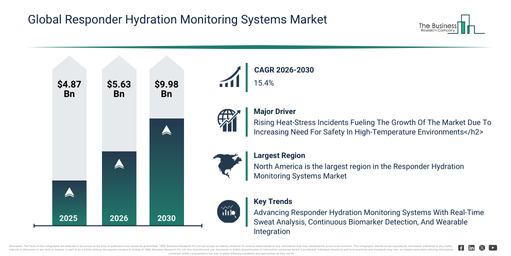
    The market for responder hydration monitoring systems has experienced swift expansion recently. This market is projected to expand from $4.87 billion in 2025 to $5.63 billion in 2026, demonstrating a compound annual growth rate (CAGR) of 15.7%. Historically, this expansion has been driven by several factors, including the increasing uptake of wearable health devices, heightened consciousness regarding hydration and overall wellness, a surge in demand from individuals engaged in sports and fitness activities, the proliferation of occupational safety programs, and the broader utilization of remote patient monitoring.

    The responder hydration monitoring systems market is projected to experience substantial expansion in the coming years. It is expected to grow to $9.98 billion in 2030, achieving a compound annual growth rate (CAGR) of 15.4%. This anticipated growth during the forecast period is driven by factors such as the increasing integration of hydration sensors in smart wearables, wider adoption by first responders and industrial workers, a growing emphasis on preventive healthcare, the expansion of corporate wellness programs, and a rising demand for cloud-based analytics services. Significant trends shaping this forecast period include technological advancements in hydration sensing, innovations in non-invasive wearable patches, developments in AI-based hydration analytics, ongoing research and development to improve biosensor accuracy, and the increasing integration of IoT and cloud platforms.

    Access Your Free Sample Report for In-Depth Market Insights:

    https://www.thebusinessresearchcompany.com/sample.aspx?id=30728&type=smp

    What Drivers Are Shaping Future Opportunities In The Responder Hydration Monitoring Systems Market?

    The growing occurrence of heat-stress events is anticipated to drive the expansion of the responder hydration monitoring systems market in the future. These incidents represent health crises arising when the body fails to regulate its temperature, frequently stemming from extended periods in hot conditions or intense physical activity. The heightened frequency of heat-stress occurrences is primarily attributable to increasingly common and severe heatwaves coupled with demanding professional and emergency duties. Responder hydration monitoring systems aid in alleviating heat-stress events by consistently monitoring fluid depletion, core body temperature, and physiological stress levels instantaneously. Such systems enhance the safety and effectiveness of responders through providing prompt warnings and opportune actions to avert illnesses linked to heat. As an illustration, in July 2024, data from the Korea Disease Control and Prevention Agency (KDCA), a South Korea-based government body overseeing organ transplant management and disease control, indicated that in 2023, a total of 2,818 individuals suffered from heat-related illnesses, including 32 presumed fatalities. This figure marked an 80.2% rise compared to 2022, with male individuals constituting 77.8% or 2,192 cases and female individuals making up 22.2% or 626 cases. Consequently, the escalation in heat-stress incidents is propelling the expansion of the responder hydration monitoring systems market.

    Which Segment Groups Are Influencing The Responder Hydration Monitoring Systems Market?

    The responder hydration monitoring systems market covered in this report is segmented –

    1) By Product Type: Wearable Hydration Monitors, Smart Water Bottles, Patch-Based Sensors, Other Products

    2) By Technology: Bioimpedance, Optical Sensors, Electrochemical Sensors, Other Technologies

    3) By Sales / Distribution Channel: Direct Device Sales, B2B Institutional Sales, E-Commerce And Retail Sales

    4) By Application: Military, Firefighters, Emergency Medical Services, Sports And Fitness, Other Applications

    5) By End-User: Individual, Institutional

    Subsegments:

    1) By Wearable Hydration Monitors: Wrist-Worn Hydration Trackers, Chest-Strap Hydration Monitoring Devices, Headband Hydration Sensor Units, Smart Armband Hydration Monitors, Clip-On Hydration Detection Devices

    2) By Smart Water Bottles: Hydration-Tracking Smart Bottles, Temperature-Sensing Smart Bottles, App-Connected Water Intake Bottles, Self-Monitoring Fluid Level Bottles, Sensor-Embedded Hydration Bottles

    3) By Patch-Based Sensors: Sweat-Analysis Hydration Patches, Skin-Adhesive Hydration Sensor Patches, Real-Time Hydration Tracking Patches, Heat-Responsive Hydration Patch Sensors, Flexible Wearable Hydration Patches

    4) By Other Products: Handheld Hydration Testing Devices, Hydration Monitoring Chest Modules, Portable Electrolyte Measurement Tools, Hydration Assessment Field Kits, Multi-Parameter Wearable Sensor Units

    What Industry Trends Are Transforming The Responder Hydration Monitoring Systems Market?

    Leading companies in the responder hydration monitoring systems market are concentrating on developing advanced capabilities, such as real-time sweat analysis, to enhance hydration assessment, electrolyte balance tracking, and overall physiological understanding for first responders, athletes, and high-performance professionals. Real-time sweat analysis involves the continuous measurement of biomarkers present in sweat, including electrolytes and hydration indicators, using wearable sensors that provide instant feedback on an individual’s hydration status as conditions change. For example, in October 2025, Innovosens AB, a Sweden-based wearable sensing solutions company, launched HydroSense, a next-generation sweat sensor designed for ongoing hydration and electrolyte monitoring. The HydroSense platform integrates miniature, skin-mounted sensors that analyze sweat composition in real time, providing actionable hydration data directly to wearable devices or mobile applications. This empowers users and support teams to make informed choices regarding fluid and electrolyte replacement to optimize performance and lessen heat-related stress.

    Who Are The Core Companies Influencing Trends In The Responder Hydration Monitoring Systems Market?

    Major companies operating in the responder hydration monitoring systems market are GE HealthCare Technologies Inc., Masimo Corporation, Abena A/S, John Wiley & Sons Inc., ResearchGate GmbH, Nix Biosensors Inc., Wearable Technologies AG, BSX Technologies Inc., Mode Sensors Inc., Kenzen Inc., WearOptimo Pty Ltd., GraphWear Technologies Inc., MX3 Diagonistics Inc., DC Rainmaker Inc., Intake Health Inc., Epicore Biosystems Inc, Sixty Inc., HDrop Inc., iHydrate Technologies Inc., Oura Health Oy

    Access The Complete Report For Deeper Market Insights:

    https://www.thebusinessresearchcompany.com/report/responder-hydration-monitoring-systems-market-report

    Which Regions Are Projected To Dominate The Responder Hydration Monitoring Systems Market In The Coming Years?

    North America was the largest region in the responder hydration monitoring systems market in 2025. Asia-Pacific is expected to be the fastest-growing region in the forecast period. The regions covered in the responder hydration monitoring systems market report are Asia-Pacific, South East Asia, Western Europe, Eastern Europe, North America, South America, Middle East, Africa.

    Request Your Customized Responder Hydration Monitoring Systems Market Research Report for Competitive Advantage:

    https://www.thebusinessresearchcompany.com/customise?id=30728&type=smp

    Browse Through More Reports Similar to the Global Responder Hydration Monitoring Systems Market 2026, By The Business Research Company

    Water Management Systems Market Report 2026

    https://www.thebusinessresearchcompany.com/report/water-management-systems-global-market-report

    Fluid Sensors Market Report 2026

    https://www.thebusinessresearchcompany.com/report/fluid-sensors-global-market-report

    water testing equipment global market report

    https://www.thebusinessresearchcompany.com/report/water-testing-equipment-global-market-report

    Get in touch with us:

    The Business Research Company: https://www.thebusinessresearchcompany.com/

    Americas +1 310-496-7795

    Asia +44 7882 955267 & +91 8897263534

    Europe +44 7882 955267

    Email us at marketing@tbrc.info

    Follow us on:

    LinkedIn: https://in.linkedin.com/company/the-business-research-company

    YouTube: https://www.youtube.com/channel/UC24_fI0rV8cR5DxlCpgmyFQ

    Global Market Model: https://www.thebusinessresearchcompany.com/global-market-model

  • Rescue Airway Devices Market Outlook 2026–2030: Key Business Drivers and Trends

    Rescue Airway Devices Market Outlook 2026–2030: Key Business Drivers and Trends

    Uncover key drivers, emerging technologies, and competitive movements shaping the rescue airway devices market from 2026–2035 with trusted insights from The Business Research Company

    What was the valuation of the Rescue Airway Devices Market in 2026, and what figure is it projected to hit by 2030?

    The rescue airway devices market has experienced rapid growth in recent years. It is projected to expand from $2.76 billion in 2025 to $3.05 billion in 2026, at a compound annual growth rate (CAGR) of 10.4%. The historical growth in this market can be attributed to factors such as increasing mobile connectivity, rising sensor integration, expanding IoT adoption, growing data analytics usage, and increasing indoor positioning demand.

    The rescue airway devices market is anticipated to show substantial growth over the next few years. It is projected to reach $4.49 billion in 2030, achieving a compound annual growth rate (CAGR) of 10.2%. This growth within the forecast period can be linked to the increasing adoption of context-aware automation, the rising requirements for real-time localization, the expansion of smart infrastructure, the broader application of AI-enabled processing, and the growing integration of multi-modal sensing. Noteworthy trends during this forecast period are expected to include advancements in adaptive sensing, innovations in ambient automation, developments in multimodal fusion, research initiatives in predictive intelligence, and technological enhancements in spatial computing.

    Access Your Free Sample Report for In-Depth Market Insights:

    https://www.thebusinessresearchcompany.com/sample.aspx?id=30727&type=smp

    Which Drivers Are Affecting Market Participation In The Rescue Airway Devices Market?

    The growing occurrence of emergency situations is anticipated to drive the expansion of the rescue airway devices market. These acute medical events, including road accidents, cardiac arrests, respiratory failure, and serious injuries, demand immediate life-saving aid. The increase in such cases stems from more road traffic accidents and violence-related injuries in populations becoming more urbanized and motorized, leading to a greater demand for urgent hospital services. Rescue airway devices play a crucial role in addressing these emergencies by providing swift, dependable, and efficient airway management both before and within hospitals, thereby ensuring sufficient oxygenation and minimizing the risk of complications during urgent care. For example, in October 2025, the NHS England, a UK-based government health agency, reported approximately 401,800 emergency hospital admissions through all accident and emergency departments in September 2025, which averaged 13,400 individuals daily, alongside an additional 133,800 emergency admissions not originating from accident and emergency, averaging 4,500 per day. Consequently, the increasing volume of emergency cases is fueling the growth of the rescue airway devices market.

    What Segment Classifications Make Up The Rescue Airway Devices Market?

    The rescue airway devices market covered in this report is segmented –

    1) By Product Type: Supraglottic Airway Devices (SGA), Laryngeal Mask Airways (LMA), Intubating Laryngeal Mask Airways (ILMA), Laryngeal Tubes, I-Gel Airway Devices, Other Product Types

    2) By Material: Silicone, Polyvinyl Chloride (PVC), Thermoplastic Elastomers (TPE), Other Materials

    3) By Anatomical Placement: Simple Adjuncts (Upper Airway), Supraglottic Or Extraglottic Airway Devices (SADs Or EGDs), Infraglottic Or Tracheal Devices (Definitive Airway), Airway Access Or Visualization Tools, Ventilation Or Resuscitation Devices

    4) By End User: Hospitals, Ambulatory Surgery Centers (ASC), Clinics, Emergency Medical Services (EMS) Providers, Military And Government Medical Units, Other End Users

    Subsegments:

    1) By Supraglottic Airway Devices (SGA): First Generation Supraglottic Devices, Second Generation Supraglottic Devices, Reusable Supraglottic Devices, Disposable Supraglottic Devices

    2) By Laryngeal Mask Airways (LMA): Reusable Laryngeal Mask Airways, Disposable Laryngeal Mask Airways, First Generation Laryngeal Mask Airways, Second Generation Laryngeal Mask Airways

    3) By Intubating Laryngeal Mask Airways (ILMA): Reusable Intubating Laryngeal Mask Airways, Disposable Intubating Laryngeal Mask Airways, Silicone Intubating Mask Airways, Polyvinyl Chloride Intubating Mask Airways

    4) By Laryngeal Tubes: Single Lumen Laryngeal Tubes, Dual Lumen Laryngeal Tubes, Reusable Laryngeal Tubes, Disposable Laryngeal Tubes

    5) By I-Gel Airway Devices: Standard I-Gel Airway Devices, Pediatric I-Gel Airway Devices, Adult I-Gel Airway Devices, Disposable I-Gel Airway Devices

    6) By Other Product Types: Pharyngeal Airway Devices, Oropharyngeal Airway Devices, Nasopharyngeal Airway Devices, Cuffed Pharyngeal Airway Devices

    What Trends Are Reshaping The Dynamics Of The Rescue Airway Devices Market?

    Leading companies in the rescue airway devices market are prioritizing the development of sophisticated visual technologies, such as integrated video laryngoscopy solutions. This focus aims to enhance clinician visibility, boost procedural accuracy, and ensure patient safety during airway management in both standard and challenging clinical situations. These integrated video laryngoscopy solutions are devices that merge high-resolution video imaging with user-friendly ergonomic controls and software connectivity, allowing clinicians to visually guide intubation in real time and effortlessly transmit imaging data to hospital information systems. As an example, in January 2025, Ambu A/S, a medical technology firm from Denmark, introduced its Ambu SureSight Connect video laryngoscopy solution. This product is engineered to streamline endotracheal intubation in both operating rooms and intensive care units. The solution seamlessly integrates with Ambu’s digital platforms, such as Ambu aView 2 Advance and Ambu aBox 2, thereby simplifying workflows, lessening task complexity, and equipping clinicians with extensive airway visualization capabilities. Notably, it stands as the sole airway visualization offering that incorporates a one-lung ventilation solution and provides all essential devices for airway assessment and intubation, significantly extending its applicability across various clinical environments.

    Which Major Industry Participants Are Leading The Rescue Airway Devices Market Growth?

    Major companies operating in the rescue airway devices market are Medtronic plc, Medline Industries LP, GE HealthCare Technologies Inc., Becton, Dickinson and Company, Olympus Corporation, Smiths Group plc, Drägerwerk AG & Co. KGaA, Teleflex Incorporated, Cook Medical LLC, Nihon Kohden Corporation, Fisher & Paykel Healthcare Corporation Limited, Ambu A/S, Armstrong Medical Ltd., Vyaire Medical Inc., Vygon S.A., Intersurgical Ltd., Mercury Enterprises LLC, SunMed LLC, Verathon Inc., SourceMark LLC

    Access The Complete Report For Deeper Market Insights:

    https://www.thebusinessresearchcompany.com/report/rescue-airway-devices-market-report

    Which Region Is Expected To Experience The Fastest Growth In The Rescue Airway Devices Market?

    North America was the largest region in the rescue airway devices market in 2025. Asia-Pacific is expected to be the fastest-growing region in the forecast period. The regions covered in the rescue airway devices market report are Asia-Pacific, South East Asia, Western Europe, Eastern Europe, North America, South America, Middle East, Africa.

    Request Your Customized Rescue Airway Devices Market Research Report for Competitive Advantage:

    https://www.thebusinessresearchcompany.com/customise?id=30727&type=smp

    Browse Through More Reports Similar to the Global Rescue Airway Devices Market 2026, By The Business Research Company

    Positive Airway Pressure Devices Market Report 2026

    https://www.thebusinessresearchcompany.com/report/positive-airway-pressure-devices-global-market-report

    Respiratory Protection Equipment Market Report 2026

    https://www.thebusinessresearchcompany.com/report/respiratory-protection-equipment-global-market-report

    air ambulance services global market report

    https://www.thebusinessresearchcompany.com/report/air-ambulance-services-global-market-report

    Get in touch with us:

    The Business Research Company: https://www.thebusinessresearchcompany.com/

    Americas +1 310-496-7795

    Asia +44 7882 955267 & +91 8897263534

    Europe +44 7882 955267

    Email us at marketing@tbrc.info

    Follow us on:

    LinkedIn: https://in.linkedin.com/company/the-business-research-company

    YouTube: https://www.youtube.com/channel/UC24_fI0rV8cR5DxlCpgmyFQ

    Global Market Model: https://www.thebusinessresearchcompany.com/global-market-model
  • Remote Visualization Workstations Sector Forecast Shows Robust Momentum, Climbing to $9.53 Billion With 15% CAGR

    Remote Visualization Workstations Sector Forecast Shows Robust Momentum, Climbing to $9.53 Billion With 15% CAGR

    Uncover key drivers, emerging technologies, and competitive movements shaping the remote visualization workstations market from 2026–2035 with trusted insights from The Business Research Company

    What are the forecasted starting (2026) and ending (2030) market sizes for the Remote Visualization Workstations Market?

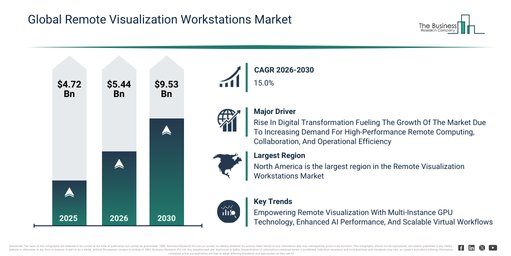
    The remote visualization workstations market has observed substantial growth in recent years. This market is expected to expand from $4.72 billion in 2025 to $5.44 billion in 2026, registering a compound annual growth rate (CAGR) of 15.3%. Over the past period, this expansion can be ascribed to several factors, including the increasing adoption of remote work models, a rising demand for high-performance remote computing solutions, the ongoing digital transformation across industries, the broadened use of virtualization and remote desktop infrastructure, and the heightened necessity for secure remote access and collaboration.

    The market for remote visualization workstations is projected to experience substantial growth over the next few years. It is anticipated to expand to $9.53 billion by 2030, demonstrating a compound annual growth rate (CAGR) of 15.0%. This expansion during the forecast period is attributable to an escalating demand for hybrid and remote work solutions, the increasing deployment of cloud-based remote visualization platforms, a wider adoption of AI and machine learning-powered visualization tools, deeper market penetration in emerging economies and underserved industries, and a rising need for integrated hardware, software, and services for remote visualization. Major trends expected in this period include technological advancements in graphics processing unit (GPU)/processor performance and graphics capabilities, innovations in the integration of artificial intelligence (AI)/machine learning (ML) and advanced analytics, the evolution of immersive visualization through augmented reality (AR)/virtual reality (VR) and sophisticated remote collaboration tools, an increase in cloud-based and hybrid deployment models for visualization workstations, and greater research and development investment leading to more scalable, efficient, and secure remote visualization environments.

    Access Your Free Sample Report for In-Depth Market Insights:

    https://www.thebusinessresearchcompany.com/sample.aspx?id=30726&type=smp

    What Drivers Are Supporting Technological Adoption In The Remote Visualization Workstations Market?

    The remote visualization workstations market is expected to grow in the future, driven by the increasing adoption of digital transformation. Digital transformation involves the integration of digital technologies throughout business processes to improve operations, enhance value delivery, and enable innovation, while also promoting agile and data-driven practices. This transformation is accelerating due to the growing need for businesses to provide faster, more personalized, and seamless customer experiences to remain competitive. Remote visualization workstations contribute significantly to digital transformation by offering secure, remote access to high-performance computing and graphics processing. They facilitate collaborative workflows, reduce dependency on physical infrastructure, and accelerate decision-making in various sectors such as engineering, healthcare, and media, by boosting flexibility, scalability, and operational efficiency. For example, in July 2024, the Office for National Statistics, a UK-based government agency, stated that the digital infrastructure program received a $535 million (£434 million) investment by 2022, with an additional $907 million (£736 million) allocated for the period of 2023 to 2025. Therefore, the expansion of digital transformation is a key factor propelling the growth of the remote visualization workstations market.

    What Segment Types Are Examined In The Remote Visualization Workstations Market?

    The remote visualization workstations market covered in this report is segmented –

    1) By Component: Hardware, Software, Services

    2) By Deployment Mode: On-Premises, Cloud-Based, Hybrid

    3) By Application: Engineering And Design, Medical Imaging, Scientific Research, Media And Entertainment, Oil And Gas, Other Applications

    4) By End-User: Healthcare, Education, Manufacturing, Energy, Media And Entertainment, Research Institutes, Other End-Users

    Subsegments:

    1) By Hardware: Central Processing Unit, Graphics Processing Unit, Memory, Storage, Input Devices, Output Devices

    2) By Software: Virtualization Software, Rendering Software, Simulation Software, Monitoring Software, Collaboration Software

    3) By Services: Installation Services, Maintenance Services, Consulting Services, Training Services, Technical Support Services

    How Are New Market Trends Shaping The Landscape Of The Remote Visualization Workstations Market?

    Major companies operating in the remote visualization workstations market are prioritizing the development of advanced hardware and software capabilities, such as Multi-Instance GPU (MIG) technology. This development is geared towards supporting high-density virtualized graphics, accelerated AI workloads, and responsive remote compute experiences. Multi-Instance GPU (MIG) refers to a GPU architecture that segments a single physical GPU into multiple isolated instances, facilitating the concurrent execution of various tasks or user sessions with assured performance and resource allocation, making it ideal for distributed visualization, simulation, and AI inference in virtual environments. For example, in March 2025, NVIDIA Corporation, a US-based provider of accelerated computing, unveiled its Blackwell RTX platform designed for professional workstations and servers, which includes support for Multi-Instance GPU (MIG) configurations. This technology allows enterprises to simultaneously run multiple remote visualization sessions and agentic AI workflows from a single GPU, thereby enhancing utilization efficiency and delivering consistent performance for designers, engineers, and content creators working with complex 3D visuals or large datasets. By integrating Multi-Instance GPU technology into its RTX-powered workstations and servers, NVIDIA enables organizations to efficiently virtualize high-end graphics and AI workloads, reduce infrastructure costs, and support flexible distributed work environments across sectors like media and entertainment, engineering, and scientific research.

    Who Are The Prominent Global Companies Shaping The Remote Visualization Workstations Market Landscape?

    Major companies operating in the remote visualization workstations market are Amazon Web Services Inc., Google LLC, Microsoft Corporation, Dell Technologies Inc., Lenovo Group Limited, Intel Corporation, HP Inc., NVIDIA Corporation, Fujitsu Limited, Atos SE, Super Micro Computer Inc., CoreWeave Inc., Red Hat Inc., Penguin Solutions Inc., Recently Published, Scale Computing Inc., Cirrascale Cloud Services LLC, Puget Systems Inc., BOXX Technologies Inc., NoMachine S.à r.l.

    Access The Complete Report For Deeper Market Insights:

    https://www.thebusinessresearchcompany.com/report/remote-visualization-workstations-market-report

    Which Geographic Areas Are Emerging As Strong Markets For The Remote Visualization Workstations Market?

    North America was the largest region in the remote visualization workstations market in 2025. Asia-Pacific is expected to be the fastest-growing region in the forecast period. The regions covered in the remote visualization workstations market report are Asia-Pacific, South East Asia, Western Europe, Eastern Europe, North America, South America, Middle East, Africa.

    Request Your Customized Remote Visualization Workstations Market Research Report for Competitive Advantage:

    https://www.thebusinessresearchcompany.com/customise?id=30726&type=smp

    Browse Through More Reports Similar to the Global Remote Visualization Workstations Market 2026, By The Business Research Company

    Remote Desktop Software Market Report 2026

    https://www.thebusinessresearchcompany.com/report/remote-desktop-software-global-market-report

    Workstation Software Market Report 2026

    https://www.thebusinessresearchcompany.com/report/workstation-software-global-market-report

    data visualization tools global market report

    https://www.thebusinessresearchcompany.com/report/data-visualization-tools-global-market-report

    Get in touch with us:

    The Business Research Company: https://www.thebusinessresearchcompany.com/

    Americas +1 310-496-7795

    Asia +44 7882 955267 & +91 8897263534

    Europe +44 7882 955267

    Email us at marketing@tbrc.info

    Follow us on:

    LinkedIn: https://in.linkedin.com/company/the-business-research-company

    YouTube: https://www.youtube.com/channel/UC24_fI0rV8cR5DxlCpgmyFQ

    Global Market Model: https://www.thebusinessresearchcompany.com/global-market-model

  • Remote Patient Monitoring Market Anticipated to Record Steady Gains, Advancing to $111.92 Billion by 2030

    Remote Patient Monitoring Market Anticipated to Record Steady Gains, Advancing to $111.92 Billion by 2030

    Uncover key drivers, emerging technologies, and competitive movements shaping the remote patient monitoring market from 2026–2035 with trusted insights from The Business Research Company

    What upper market value could the Remote Patient Monitoring Market reach by 2030 starting from 2026 levels?

    The remote patient monitoring market has witnessed rapid growth in recent years. Its expansion is projected to see it grow from $55.24 billion in 2025 to $63.75 billion in 2026, achieving a compound annual growth rate (CAGR) of 15.4%. The historical increase in this market can be attributed to several factors, including the escalating burden of chronic diseases, an aging global population, the rising demand for home-based healthcare, the broader adoption of telehealth services, and an increasing focus on reducing hospital readmissions.

    The remote patient monitoring market is projected to experience significant expansion in the coming years. This market is anticipated to reach $111.93 billion by 2030, exhibiting a compound annual growth rate (CAGR) of 15.1%. This projected growth during the forecast period can be primarily attributed to several factors, including the rising incidence of chronic and lifestyle-related illnesses, a growing need for home-based healthcare, increased patient understanding of the advantages of remote monitoring, a global increase in healthcare spending, and an intensified emphasis on value-based and outcome-oriented care. Key trends expected during this period involve progress in wearable sensor technologies, new developments in remote monitoring platforms and software, improved integration of remote patient data with electronic health records, ongoing research and development in predictive analytics for patient oversight, and progress in artificial intelligence-powered clinical decision support.

    Access Your Free Sample Report for In-Depth Market Insights:

    https://www.thebusinessresearchcompany.com/sample.aspx?id=30725&type=smp

    Which Drivers Are Influencing Long-Term Growth In The Remote Patient Monitoring Market?

    The increasing occurrence of chronic illnesses is anticipated to boost the expansion of the remote patient monitoring market in the coming years. Chronic diseases encompass long-term medical conditions like hypertension, diabetes, and cardiovascular disorders, which demand continuous oversight and ongoing care. The prevalence of these conditions is growing due to the combination of an aging global population and widespread unhealthy lifestyle choices such as a lack of physical activity, poor dietary habits, tobacco use, and excessive alcohol consumption, all of which contribute to long-term health issues including obesity, hypertension, and diabetes. Remote patient monitoring plays a crucial role in managing chronic diseases by continuously tracking patients’ vital signs, symptoms, and adherence to treatment regimens from their homes. This technology enhances patient outcomes through facilitating the early identification of complications, ensuring prompt interventions, and allowing for customized care modifications. For instance, in June 2024, data from the National Health Service, a UK-based government department, revealed that 3,615,330 individuals registered with a general practitioner (GP) were diagnosed with non-diabetic hyperglycemia or pre-diabetes (a state with elevated blood sugar levels, not high enough to be classified as diabetes) in 2023, indicating an 18% rise from 3,065,825 instances in 2022. Consequently, the escalating prevalence of chronic diseases is fueling the growth of the remote patient monitoring market.

    Which Segments Are Driving Activity In The Remote Patient Monitoring Market?

    The remote patient monitoring market covered in this report is segmented –

    1) By Component: Devices, Services, Software

    2) By Application: Chronic Disease Management, Post-Acute Care Monitoring, Preventive Care And Wellness, Home Health Monitoring, Rehabilitation Monitoring

    3) By End User: Hospitals, Clinics, Home Healthcare Providers, Ambulatory Care Centers, Long-Term Care Facilities

    Subsegments:

    1) By Devices: Remote Monitoring Sensors, Wearable Health Trackers, Blood Pressure Monitors, Blood Glucose Monitors, Pulse Oximetry Devices, Electrocardiogram Devices, Temperature Monitoring Devices, Smart Scales, Multi-Parameter Monitoring Devices

    2) By Services: Installation Services, Maintenance Services, Training Services, Technical Support Services, Remote Monitoring Services, Data Management Services, Consultation Services

    3) By Software: Patient Data Management Software, Clinical Decision Support Software, Remote Monitoring Platforms, Mobile Health Applications, Cloud-Based Analytics Software, Alert And Notification Software, Electronic Health Record Integration Software

    Which Trends Are Expected To Influence The Remote Patient Monitoring Market In The Upcoming Years?

    Leading companies within the remote patient monitoring market are prioritizing the development of advanced remote monitoring products to enhance patient care, improve clinical decision-making, and broaden access to medical-grade data. Remote vital signs monitoring systems are defined as wearable devices that consistently and accurately track crucial physiological parameters for use across clinical, emergency, and home environments. For example, in May 2024, Sempulse Corporation, a US-based medical device manufacturer, introduced its FDA 510(k)-cleared Halo Vital Signs Monitoring System, a small wearable device that integrates with the LiveCharts mobile app and the Command Cloud platform for centralized data visualization and management. This solution offers features such as a reusable design for both home and clinical application, cloud-based data analytics for prioritizing patient care, and continuous monitoring of vital signs even when patients are active.

    Which Key Players Are Driving Competition In The Remote Patient Monitoring Market?

    Major companies operating in the remote patient monitoring market are Siemens AG, Abbott Laboratories, Medtronic plc, Koninklijke Philips N.V., GE HealthCare Technologies Inc., Boston Scientific Corporation, Baxter International Inc., Roche Diagnostics, Omron Corporation, Shenzhen Mindray Bio-Medical Electronics Co. Ltd., ResMed Inc., Dräger Medical, Dexcom Inc., Teladoc Health Inc., Nihon Kohden Corporation, OSI Systems Inc, Biofourmis Inc., Masimo Corp., VitalConnect Inc., Guangdong Transtek Medical Electronics Co. Ltd.

    Access The Complete Report For Deeper Market Insights:

    https://www.thebusinessresearchcompany.com/report/remote-patient-monitoring-market-report

    Which Region Is Projected To Lead The Remote Patient Monitoring Market During The Forecast Period?

    North America was the largest region in the remote patient monitoring market in 2025. Asia-Pacific is expected to be the fastest-growing region in the forecast period. The regions covered in the remote patient monitoring market report are Asia-Pacific, South East Asia, Western Europe, Eastern Europe, North America, South America, Middle East, Africa.

    Request Your Customized Remote Patient Monitoring Market Research Report for Competitive Advantage:

    https://www.thebusinessresearchcompany.com/customise?id=30725&type=smp

    Browse Through More Reports Similar to the Global Remote Patient Monitoring Market 2026, By The Business Research Company

    Remote Patient Monitoring Devices And Equipment Market Report 2026

    https://www.thebusinessresearchcompany.com/report/remote-patient-monitoring-devices-and-equipment-global-market-report

    Remote Health Monitoring Market Report 2026

    https://www.thebusinessresearchcompany.com/report/remote-health-monitoring-global-market-report

    Patient Monitoring Devices Market

    https://www.thebusinessresearchcompany.com/report/patient-monitoring-devices-market

    Get in touch with us:

    The Business Research Company: https://www.thebusinessresearchcompany.com/

    Americas +1 310-496-7795

    Asia +44 7882 955267 & +91 8897263534

    Europe +44 7882 955267

    Email us at marketing@tbrc.info

    Follow us on:

    LinkedIn: https://in.linkedin.com/company/the-business-research-company

    YouTube: https://www.youtube.com/channel/UC24_fI0rV8cR5DxlCpgmyFQ

    Global Market Model: https://www.thebusinessresearchcompany.com/global-market-model

  • Radiation Therapy Planning Artificial Intelligence (AI) Market Forecast 2026–2035: How to Leverage Market Growth

    Radiation Therapy Planning Artificial Intelligence (AI) Market Forecast 2026–2035: How to Leverage Market Growth

    Uncover key drivers, emerging technologies, and competitive movements shaping the radiation therapy planning artificial intelligence (ai) market from 2026–2035 with trusted insights from The Business Research Company

    What growth pattern is forecast for the Radiation Therapy Planning Artificial Intelligence (AI) Market size between 2026 and 2035?

    The market size of radiation therapy planning artificial intelligence (AI) has experienced rapid expansion in recent years. This market is projected to expand from $1.45 billion in 2025 to reach $1.79 billion in 2026, demonstrating a compound annual growth rate (CAGR) of 23.9%. Historically, this expansion has been driven by factors such as the increasing uptake of AI-based radiotherapy solutions, a growing need for personalized cancer treatments, the rising implementation of automation in radiation planning, the proliferation of oncology centers in developed areas, and a heightened emphasis on enhancing treatment precision.

    The radiation therapy planning artificial intelligence (AI) market is anticipated to show significant expansion in the coming years. It will grow to $4.18 billion in 2030 at a compound annual growth rate (CAGR) of 23.6%. This expected growth during the forecast period can be attributed to the increasing adoption of cloud-based AI platforms, rising investment in healthcare digitalization, a growing need for multi-cancer AI planning tools, an expansion of research and development in oncology AI, and increasing uptake in developing markets. Major developments projected for the forecast period include technological progress in AI-driven contouring and dose calculation, innovations in cloud-based radiation therapy platforms, the creation of predictive models for treatment outcomes, ongoing research and development in adaptive radiotherapy, and advancements in workflow automation and quality assurance.

    Access Your Free Sample Report for In-Depth Market Insights:

    https://www.thebusinessresearchcompany.com/sample.aspx?id=30718&type=smp

    Which Drivers Are Impacting Market Performance In The Radiation Therapy Planning Artificial Intelligence (AI) Market?

    An increasing emphasis on personalized and precision radiation therapy is anticipated to drive the expansion of the radiation therapy planning artificial intelligence (AI) market in the future. This type of therapy involves customizing radiation dosage, delivery methods, and treatment plans according to each patient’s unique tumor attributes and anatomical structure. The heightened interest in personalized and precision radiation therapy stems from healthcare professionals’ efforts to enhance tumor eradication and reduce harm to healthy tissues, achieved by adjusting the dose, targeting, and timing for individual tumor biology and anatomy. Radiation therapy planning AI facilitates this approach by providing automated solutions capable of creating optimal, patient-specific treatment plans more rapidly and consistently than conventional manual processes. For example, in May 2024, the Department for Health and Social Care, a UK government body, reported that all National Health Service radiotherapy departments in England received artificial intelligence technology via £15.5 million in government funding. This technology autonomously reviews scans, identifying cancerous cells and healthy organs 2.5 times faster than prior techniques, showcasing an increasing embrace of precision radiotherapy. Consequently, the growing emphasis on personalized and precision radiation therapy is a key factor propelling the expansion of the radiation therapy planning artificial intelligence (AI) market.

    Which Segments Are Contributing To The Growth Of The Radiation Therapy Planning Artificial Intelligence (AI) Market?

    The radiation therapy planning artificial intelligence (AI) market covered in this report is segmented –

    1) By Component: Software, Hardware, Services

    2) By Technology: Machine Learning (ML), Deep Learning (DL), Knowledge-Based Planning (KBP)

    3) By Deployment Mode: On-Premises, Cloud-Based

    4) By Application: Breast Cancer, Lung Cancer, Prostate Cancer, Head And Neck Cancer, Other Applications

    5) By End-User: Hospitals, Cancer Treatment Centers, Research Institutes, Other End-Users

    Subsegments:

    1) By Software: Automated Contouring Software, Dose Prediction Software, Plan Optimization Software, Quality Assurance Software, Outcome Analytics Software

    2) By Hardware: Graphics Processing Unit Servers, High Performance Computing Clusters, Dedicated Workstation Hardware, Edge Computing Devices

    3) By Services: Implementation And Integration Services, Training And Support Services, Data Management Services, Clinical Validation Services

    What Trends Are Expected To Impact The Competitive Landscape Of The Radiation Therapy Planning Artificial Intelligence (AI) Market?

    Major companies operating in the radiation therapy planning artificial intelligence (AI) market are actively developing advanced solutions, including AI-driven automation and integrated tools, to improve precision, boost clinical efficiency, and cut down manual planning time. These AI-driven automation and integrated tools refer to sophisticated algorithms that streamline complex treatment planning processes, minimizing user intervention and variability. For instance, in July 2024, RaySearch Laboratories AB, a Sweden-based medical technology company, introduced the RayStation 2024B treatment planning system. This comprehensive platform features advanced AI-based auto-contouring and a new Proton Monte Carlo dose calculation engine for exceptional accuracy. It incorporates automated tools for adaptive therapy and plan optimization, enabling seamless integration of MR-Linac workflows and simplified proton beam therapy planning without extensive manual effort. The system also includes enhanced scripting and module integration, thereby extending its versatility and reducing operational complexity for oncology clinics and research institutions.

    Who Are The Primary Competitors In The Global Radiation Therapy Planning Artificial Intelligence (AI) Market?

    Major companies operating in the radiation therapy planning artificial intelligence (AI) market are Philips Healthcare, Siemens Healthineers AG, Elekta AB, Brainlab SE, Accuray Incorporated, RaySearch Laboratories AB, GE HealthCare, MVision AI, Spectra Medical India Pvt. Ltd., Coexya, LAP GmbH Laser Applikationen, Radformation Inc., TheraPanacea, DOSIsoft SA, Siris Medical Inc., Prowess Inc., Manteia Medical Technologies, Oncora Medical Inc., Adaptiiv Medical Technologies Inc., ViewRay Systems Inc., Pvmed Inc., Doctors App, Mirada Medical Ltd., Vision RT Ltd.

    Access The Complete Report For Deeper Market Insights:

    https://www.thebusinessresearchcompany.com/report/radiation-therapy-planning-artificial-intelligence-ai-market-report

    Which Global Regions Are Shaping The Competitive Landscape Of The Radiation Therapy Planning Artificial Intelligence (AI) Market?

    North America was the largest region in the radiation therapy planning artificial intelligence (AI) market in 2025. Asia-Pacific is expected to be the fastest-growing region in the forecast period. The regions covered in the radiation therapy planning artificial intelligence (AI) market report are Asia-Pacific, South East Asia, Western Europe, Eastern Europe, North America, South America, Middle East, Africa.

    Request Your Customized Radiation Therapy Planning Artificial Intelligence (AI) Market Research Report for Competitive Advantage:

    https://www.thebusinessresearchcompany.com/customise?id=30718&type=smp

    Browse Through More Reports Similar to the Global Radiation Therapy Planning Artificial Intelligence (AI) Market 2026, By The Business Research Company

    Artificial Intelligence In Radiology Market Report 2026

    https://www.thebusinessresearchcompany.com/report/artificial-intelligence-in-radiology-global-market-report

    Artificial Intelligence In Oncology Market Report 2026

    https://www.thebusinessresearchcompany.com/report/artificial-intelligence-in-oncology-global-market-report

    artificial intelligence in medical imaging global market report

    https://www.thebusinessresearchcompany.com/report/artificial-intelligence-in-medical-imaging-global-market-report

    Get in touch with us:

    The Business Research Company: https://www.thebusinessresearchcompany.com/

    Americas +1 310-496-7795

    Asia +44 7882 955267 & +91 8897263534

    Europe +44 7882 955267

    Email us at marketing@tbrc.info

    Follow us on:

    LinkedIn: https://in.linkedin.com/company/the-business-research-company

    YouTube: https://www.youtube.com/channel/UC24_fI0rV8cR5DxlCpgmyFQ

    Global Market Model: https://www.thebusinessresearchcompany.com/global-market-model
  • Global Portable Full Digital Color Ultrasound Diagnosis System Market Forecast 2026–2035: Long-Term Growth Insights

    Global Portable Full Digital Color Ultrasound Diagnosis System Market Forecast 2026–2035: Long-Term Growth Insights

    Uncover key drivers, emerging technologies, and competitive movements shaping the portable full digital color ultrasound diagnosis system market from 2026–2035 with trusted insights from The Business Research Company

    What size range is anticipated for the Portable Full Digital Color Ultrasound Diagnosis System Market from 2026 to 2030?

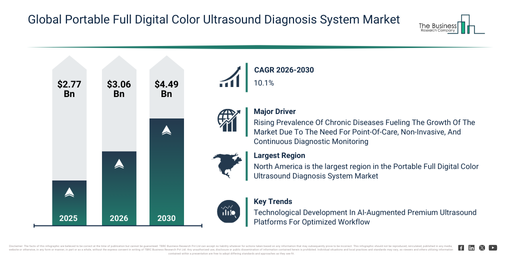
    The portable full digital color ultrasound diagnosis system market size has witnessed substantial growth in recent years. It is anticipated to expand from $2.77 billion in 2025 to $3.06 billion in 2026, achieving a compound annual growth rate (CAGR) of 10.3%. This historical growth can be attributed to increased diagnostic adoption, the rising use of portable devices, a growing burden of chronic diseases, expanding demand for point-of-care services, and enhanced healthcare digitization.

    The market size for portable full digital color ultrasound diagnosis systems is anticipated to experience substantial growth over the next few years. This market is projected to expand to $4.49 billion by 2030, achieving a compound annual growth rate (CAGR) of 10.1%. The expansion during this forecast period stems from factors such as the increasing reach of remote healthcare, a growing inclination towards mobile imaging, heightened investment in medical devices, the wider adoption of real-time imaging, and an escalating demand for rapid diagnostics. Prominent trends for the upcoming period include advancements in technology, innovations in imaging, developments in software, increased research and development activities, and the modernization of digital workflows.

    Access Your Free Sample Report for In-Depth Market Insights:

    https://www.thebusinessresearchcompany.com/sample.aspx?id=30707&type=smp

    What Drivers Are Affecting Demand In The Portable Full Digital Color Ultrasound Diagnosis System Market?

    An increasing incidence of chronic illnesses is anticipated to boost the expansion of the portable full digital color ultrasound diagnosis system market in the future. These long-term health issues, which include conditions such as diabetes, heart disease, arthritis, asthma, and numerous autoimmune disorders, typically require continuous care or treatment. The growing occurrence of chronic diseases stems from inactive lifestyles marked by insufficient physical activity, alongside sustained exposure to various environmental and behavioral risk factors. Portable full digital color ultrasound diagnosis systems assist individuals with chronic conditions by offering rapid, precise, and non-invasive surveillance of internal organs and blood circulation directly at the point of care, thereby enhancing early detection, informing treatment choices, and improving long-term management of these diseases. As an illustration, in April 2025, the NHS Confederation, a UK-based national association, projected that by 2035, approximately 17% of the UK population might experience four or more chronic conditions. Consequently, the escalating prevalence of chronic diseases is a significant impetus for the portable full digital color ultrasound diagnosis system market.

    Which Segment Groups Are Influencing The Portable Full Digital Color Ultrasound Diagnosis System Market?

    The portable full digital color ultrasound diagnosis system market covered in this report is segmented –

    1) By Device Type: Portable Ultrasound System, Handheld Ultrasound System, Laptop-Based Ultrasound System, Tablet-Based Ultrasound System

    2) By Imaging Modality: Color Ultrasound Imaging, Color Doppler Ultrasound Imaging, Full Digital Ultrasound Imaging, Real Time Ultrasound Imaging

    3) By Technology: Digital Beamforming Technology, Color Doppler Imaging Systems, Three Dimensional (3D) And Four Dimensional (4D) Ultrasound Imaging, Artificial Intelligence (AI) Enhanced Systems

    4) By Application: Cardiology Imaging, Obstetrics And Gynecology Imaging, Musculoskeletal Imaging, Radiology Imaging, Urology Imaging, Gastroenterology Imaging, Emergency Care Imaging

    5) By End User: Hospitals And Clinics, Diagnostic Imaging Centers, Ambulatory Surgical Centers, Point-Of-Care Settings, Veterinary Hospitals And Clinics

    Subsegments:

    1) By Portable Ultrasound System: Compact Portable Device, Mobile Portable Device, Wireless Portable Device

    2) By Handheld Ultrasound System: Single Probe Handheld Device, Dual Probe Handheld Device, Multi Probe Handheld Device

    3) By Laptop-Based Ultrasound System: Standard Laptop Integrated Device, Advanced Laptop Imaging Device, High Performance Laptop Diagnostic Device

    4) By Tablet-Based Ultrasound System: Touchscreen Tablet Imaging Device, Detachable Tablet Diagnostic Device, Hybrid Tablet Ultrasound Device

    What Long-Term Trends Are Expected To Shape The Future Of The Portable Full Digital Color Ultrasound Diagnosis System Market?

    Leading firms within the portable full digital color ultrasound diagnosis system market are prioritizing the creation of advanced products, like artificial intelligence-integrated ultrasound systems, with the aim of elevating diagnostic efficiency, improving operator experience, and bettering clinical outcomes. Artificial intelligence-integrated ultrasound systems are defined as premium imaging devices that employ native AI-based application management for automating workflows, accelerating analysis speed, and facilitating advanced clinical solutions. For instance, in January 2023, Esaote S.p.A., an Italy-based biomedical company, introduced the MyLab X90. This cutting-edge premium ultrasound system incorporates an updated XCrystal probe family and a proprietary dual-layer eLed monitor by Barco. This combination guarantees exceptional on-screen image display with extremely high contrast resolution, significantly surpassing competitor offerings. Additionally, it features native AI-based application management and advanced ergonomic solutions, which allows for the effortless streamlining of daily workflows and expands data analysis capabilities while maintaining diagnostic accuracy. Furthermore, its design strategically emphasizes automation to enhance the accessibility and practicality of advanced technologies in everyday clinical practice, with the goal of transforming operator experience and patient care within healthcare settings.

    Who Are The Prominent Global Companies Shaping The Portable Full Digital Color Ultrasound Diagnosis System Market Landscape?

    Major companies operating in the portable full digital color ultrasound diagnosis system market are General Electric Company, Siemens Healthineers AG, FUJIFILM Holdings Corporation, Koninklijke Philips N.V., Konica Minolta Inc., Canon Medical Systems Corporation, Samsung Medison Co. Ltd., SonoScape Medical Corp., Esaote S.p.A., Edan Instruments Inc., Butterfly Network Inc., Chison Medical Imaging Co. Ltd., Clarius Mobile Health Corp., Terason Ultrasound Inc., BenQ Medical Devices Co. Ltd., Mindray Medical International Limited, Healcerion Co. Ltd., Wuhan Youcare Technology Co. Ltd., ZONARE Medical Systems Inc., Mobisante Inc.

    Access The Complete Report For Deeper Market Insights:

    https://www.thebusinessresearchcompany.com/report/portable-full-digital-color-ultrasound-diagnosis-system-market-report

    Which Geographic Areas Are Emerging As Strong Markets For The Portable Full Digital Color Ultrasound Diagnosis System Market?

    North America was the largest region in the portable full digital color ultrasound diagnosis system in 2025. Asia-Pacific is expected to be the fastest-growing region in the forecast period. The regions covered in the portable full digital color ultrasound diagnosis system market report are Asia-Pacific, South East Asia, Western Europe, Eastern Europe, North America, South America, Middle East, Africa.

    Request Your Customized Portable Full Digital Color Ultrasound Diagnosis System Market Research Report for Competitive Advantage:

    https://www.thebusinessresearchcompany.com/customise?id=30707&type=smp

    Browse Through More Reports Similar to the Global Portable Full Digital Color Ultrasound Diagnosis System Market 2026, By The Business Research Company

    Ultrasound Systems Devices And Equipment Market Report 2026

    https://www.thebusinessresearchcompany.com/report/ultrasound-systems-devices-and-equipment-global-market-report

    Ultrasound Transducer Market Report 2026

    https://www.thebusinessresearchcompany.com/report/ultrasound-transducer-global-market-report

    diagnostic imaging equipment global market report

    https://www.thebusinessresearchcompany.com/report/diagnostic-imaging-equipment-global-market-report

    Get in touch with us:

    The Business Research Company: https://www.thebusinessresearchcompany.com/

    Americas +1 310-496-7795

    Asia +44 7882 955267 & +91 8897263534

    Europe +44 7882 955267

    Email us at marketing@tbrc.info

    Follow us on:

    LinkedIn: https://in.linkedin.com/company/the-business-research-company

    YouTube: https://www.youtube.com/channel/UC24_fI0rV8cR5DxlCpgmyFQ

    Global Market Model: https://www.thebusinessresearchcompany.com/global-market-model
  • Polyolefin Plastomer (POP) Market 2026–2030: Forecasting Business Opportunities Ahead

    Polyolefin Plastomer (POP) Market 2026–2030: Forecasting Business Opportunities Ahead

    Uncover key drivers, emerging technologies, and competitive movements shaping the polyolefin plastomer (pop) market from 2026–2035 with trusted insights from The Business Research Company

    How is the Polyolefin Plastomer (POP) Market size predicted to change over the forecast window of 2026–2035?

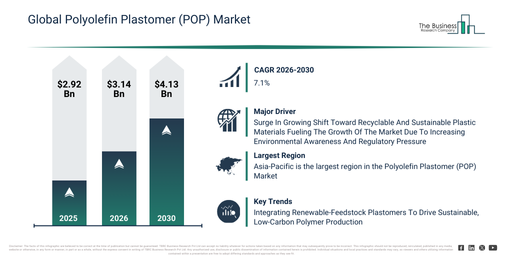
    The polyolefin plastomer (POP) market has demonstrated significant expansion in recent years. Its valuation is expected to ascend from $2.92 billion in 2025 to $3.14 billion in 2026, achieving a compound annual growth rate (CAGR) of 7.4%. This historical expansion can be primarily ascribed to the increased utilization of flexible packaging materials, a heightened demand for lightweight automotive components, the escalating consumption of high-performance polymer films, the broadening scope of applications in medical and hygiene products, and the continuous embrace of sustainable plastomer solutions.

    The polyolefin plastomer (POP) market size is predicted to undergo significant expansion in the upcoming years. It is projected to reach a valuation of $4.13 billion by 2030, demonstrating a compound annual growth rate (CAGR) of 7.1%. The growth during this forecast period stems from various factors such as an increasing move towards recyclable packaging, heightened demand for soft-touch consumer goods, expanded use of plastomers in solar and renewable energy applications, augmented investment in advanced film processing technologies, and a rising preference for high-clarity packaging films. Noteworthy trends for the forecast period include technological improvements in polymer catalyst systems, innovations in film processing and extrusion, advancements in recyclable and bio-based plastomers, continued research and development in high-performance elastomer blends, and progress in medical-grade polymer applications.

    Access Your Free Sample Report for In-Depth Market Insights:

    https://www.thebusinessresearchcompany.com/sample.aspx?id=30706&type=smp

    Which Drivers Are Contributing To The Expansion Of The Polyolefin Plastomer (POP) Market?

    The rising adoption of recyclable and sustainable plastic materials is projected to boost the polyolefin plastomer market in the coming years. These materials are polymer solutions crafted to lessen environmental impact by enhancing recyclability, lowering carbon footprints, and boosting material efficiency, all while maintaining performance standards. Manufacturers and brand owners are increasingly embracing sustainable plastic materials to cut down on plastic waste and foster a circular economy. Polyolefin plastomers support this shift by providing flexible, durable, and lightweight options that offer excellent recyclability and compatibility with circular economy initiatives, making them suitable for applications in packaging, automotive, and consumer goods. For instance, according to HM Revenue & Customs, a UK government agency, plastic packaging with at least 30% recycled content saw an increase from 1,289 thousand tonnes to 1,394 thousand tonnes between 2022 and 2023. Consequently, the growing move towards recyclable and sustainable plastic materials is a key driver for the polyolefin plastomer market. The expansion of construction and infrastructure applications is anticipated to propel the polyolefin plastomer market forward. Construction and infrastructure applications involve the use of materials in building, renovation, and extensive projects such as roads, bridges, pipelines, and commercial structures. Polyolefin plastomers are instrumental in these applications by offering superior flexibility, impact resistance, sealability, and durability, making them suitable for products like roofing membranes, waterproofing systems, pipes, and insulation materials. For example, in November 2024, the Office for National Statistics, a UK-based government statistical authority, reported that the value of new construction work in Great Britain increased by 4.2% in 2023 compared to 2022, reaching approximately $176,567 million (£139,029 million). This represented a year-on-year increase of around $7,147 million (£5,628 million), supported by a 2.1% growth in private new work and a more substantial 10.2% expansion in public new work. Therefore, the growth in construction and infrastructure applications is a significant factor driving the polyolefin plastomer market.

    What Segment Classifications Make Up The Polyolefin Plastomer (POP) Market?

    The polyolefin plastomer (pop) market covered in this report is segmented –

    1) By Product Type: Ethylene-Based POP, Propylene-Based POP

    2) By Processing Method: Injection Molding, Blow Molding, Extrusion, Other Processing Methods

    3) By Applications: Food Packaging, Medical And Health, Home And Personal Care, Hot Melt Adhesive, Other Applications

    4) By End-User Industry: Packaging, Automotive, Healthcare, Building And Construction, Other End-User Industries

    Subsegments:

    1) By Ethylene-Based POP: Linear Low-Density Ethylene, Very Low-Density Ethylene, Metallocene-Catalyzed Ethylene

    2) By Propylene-Based POP: Random Propylene Copolymer, Block Propylene Copolymer, Specialty Propylene Grades

    Which Market Trends Are Opening Growth Opportunities In The Polyolefin Plastomer (POP) Market?

    Major companies within the polyolefin plastomers market are concentrating on innovative products, such as ISCC-plus certified circular plastomers, to reduce carbon exposure and stabilize raw-material sourcing. ISCC-plus certified circular plastomers utilize a mass-balance chain of custody, which enables producers to attribute renewable feedstock to finished resins without modifying processing lines. For instance, in May 2023, Borealis GmbH, an Austria-based polyolefins company, unveiled the Bornewables Queo line of plastomers and elastomers. This ISCC PLUS-certified renewable feedstock ensures drop-in compatibility with existing processing and film structures, while also lowering the product carbon footprint compared with fossil-derived equivalents. This launch represents a significant technological advancement by extending renewable-feedstock solutions into high-performance plastomers, thereby bridging sustainable sourcing with industrial-scale polymer production. It provides a scalable, efficient solution for diminishing carbon impact and maintaining operational continuity in polyolefin manufacturing.

    Which Key Players Are Driving Competition In The Polyolefin Plastomer (POP) Market?

    Major companies operating in the polyolefin plastomer (pop) market are Sinopec Group, Exxon Mobil Corporation, Shell Plc, Dow Inc., LyondellBasell Industries N.V., Hanwha Group, LG Chem Ltd., Wanhua Chemical Group Co. Ltd., Sumitomo Chemical Co. Ltd., Westlake Chemical Corporation, Mitsui Chemicals Inc., Versalis S.p.A., Avient Corporation, Borealis AG, SK Geo Centric, RTP Company Inc., Americhem, Sekisui Voltek LLC, SABIC, SK Functional Polymer, Chemate Group

    Access The Complete Report For Deeper Market Insights:

    https://www.thebusinessresearchcompany.com/report/polyolefin-plastomer-pop-market-report

    Which Region Is Projected To Lead The Polyolefin Plastomer (POP) Market During The Forecast Period?

    Asia-Pacific was the largest region in the polyolefin plastomer (POP) market in 2025. Asia-Pacific is expected to be the fastest-growing region in the forecast period. The regions covered in the polyolefin plastomer (pop) market report are Asia-Pacific, South East Asia, Western Europe, Eastern Europe, North America, South America, Middle East, Africa.

    Request Your Customized Polyolefin Plastomer (POP) Market Research Report for Competitive Advantage:

    https://www.thebusinessresearchcompany.com/customise?id=30706&type=smp

    Browse Through More Reports Similar to the Global Polyolefin Plastomer (POP) Market 2026, By The Business Research Company

    Polyolefins Market Report 2026

    https://www.thebusinessresearchcompany.com/report/polyolefins-global-market-report

    Thermoplastic Elastomer Market Report 2026

    https://www.thebusinessresearchcompany.com/report/thermoplastic-elastomer-global-market-report

    polyurethane elastomers global market report

    https://www.thebusinessresearchcompany.com/report/polyurethane-elastomers-global-market-report

    Get in touch with us:

    The Business Research Company: https://www.thebusinessresearchcompany.com/

    Americas +1 310-496-7795

    Asia +44 7882 955267 & +91 8897263534

    Europe +44 7882 955267

    Email us at marketing@tbrc.info

    Follow us on:

    LinkedIn: https://in.linkedin.com/company/the-business-research-company

    YouTube: https://www.youtube.com/channel/UC24_fI0rV8cR5DxlCpgmyFQ

    Global Market Model: https://www.thebusinessresearchcompany.com/global-market-model
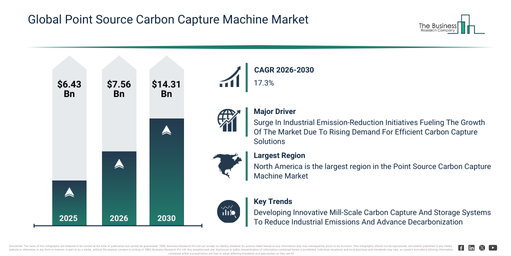
  • Point Source Carbon Capture Machine Market 2026–2030: Forecast, Innovation, and Competitive Trends

    Point Source Carbon Capture Machine Market 2026–2030: Forecast, Innovation, and Competitive Trends

    Uncover key drivers, emerging technologies, and competitive movements shaping the point source carbon capture machine market from 2026–2035 with trusted insights from The Business Research Company

    What level of growth is expected in the Point Source Carbon Capture Machine Market between 2026 and 2030?

    The point source carbon capture market size has seen rapid expansion in recent years. It is anticipated to expand from $6.43 billion in 2025 to $7.56 billion in 2026, registering a compound annual growth rate (CAGR) of 17.6%. This historical increase can be attributed to factors such as a rise in industrial emissions, a growing need for emission reduction systems, increased implementation in power generation plants, wider application in cement manufacturing, and enhanced deployment in chemical processing plants.

    The point source carbon capture market is projected to experience significant expansion in the upcoming years. This market is anticipated to reach $14.31 billion by 2030, exhibiting a compound annual growth rate (CAGR) of 17.3%. This projected growth is driven by several factors, including expanding government support for emission reduction, broader adoption of carbon pricing, increasing corporate dedication to sustainability, wider use in steel manufacturing plants, and greater investment in large-scale carbon capture initiatives. Key trends expected during this period involve progress in solvent regeneration techniques, novel membrane separation systems, the evolution of metal-organic framework capture materials, extensive research into highly efficient sorbent compositions, and the incorporation of automation into capture unit processes.

    Access Your Free Sample Report for In-Depth Market Insights:

    https://www.thebusinessresearchcompany.com/sample.aspx?id=30702&type=smp

    Which Drivers Are Expected To Impact The Point Source Carbon Capture Machine Market During The Forecast Period?

    The escalating demand for emission reductions from industrial facilities is projected to drive the growth of the point source carbon capture machine market. This reduction involves decreasing the release of carbon dioxide (CO2) and other greenhouse gases from production sites such as power plants, cement factories, and steel mills, aiming to mitigate climate change. The urgency for these reductions is increasing as governments implement stricter climate regulations and carbon pricing, while investors and communities pressure companies to curb pollution, protect public health, and meet net-zero commitments. The point source carbon capture machine assists in this by providing technology that captures CO2 at its origin, helping facilities achieve their emission goals and lessen their environmental impact. For instance, in March 2024, the UK Department for Business, Energy and Industrial Strategy reported that greenhouse gas emissions from the industry sector were provisionally estimated at 52.8 million tonnes of carbon dioxide equivalent in 2023, representing an 8.0% (4.6 million tonnes) decrease compared to 2022, largely attributed to reduced fuel consumption in the iron and steel industry. Thus, the growing imperative to reduce emissions from industrial facilities is fueling the expansion of the point source carbon capture machine market.

    Which Segments Are Driving Activity In The Point Source Carbon Capture Machine Market?

    The point source carbon capture machine market covered in this report is segmented –

    1) By Product Type: Carbon Capture Machines, Absorption Towers, Filtration Units, Sorbent Cartridges, Pressure Vessels, Heat Exchangers, Compressor Systems

    2) By Capture Capacity: Small-Scale Capture Systems, Medium-Scale Capture Systems, Large-Scale Capture Systems

    3) By End-Use Industry: Power Generation, Cement Industry, Steel And Metals, Chemicals And Petrochemicals, Oil And Gas, Waste-To-Energy, Pulp And Paper

    Subsegments:

    1) By Carbon Capture Machines: Pre-Combustion Capture Machines, Post-Combustion Capture Machines, Oxy-Fuel Combustion Capture Machines

    2) By Absorption Towers: Packed Bed Absorption Towers, Plate Column Absorption Towers, Spray Tower Absorption Units

    3) By Filtration Units: Membrane Filtration Units, Electrostatic Filtration Units, Ceramic Filtration Units

    4) By Sorbent Cartridges: Solid Sorbent Cartridges, Liquid Sorbent Cartridges, Regenerable Sorbent Cartridges

    5) By Pressure Vessels: High-Pressure Storage Vessels, Medium-Pressure Storage Vessels, Low-Pressure Storage Vessels

    6) By Heat Exchangers: Shell And Tube Heat Exchangers, Plate Heat Exchangers, Air-Cooled Heat Exchangers

    7) By Compressor Systems: Centrifugal Compressor Systems, Reciprocating Compressor Systems, Screw Compressor Systems

    Which Innovation Trends Are Advancing Developments Within The Point Source Carbon Capture Machine Market?

    Leading companies operating within the point source carbon capture market are actively concentrating on developing advanced carbon capture systems, including mill-scale capture and storage solutions, to significantly reduce emissions, enhance overall sustainability, and contribute to industrial decarbonization initiatives. Mill-scale capture and storage systems are specifically engineered to intercept carbon dioxide emissions directly at manufacturing locations, facilitating their potential reuse in production cycles or permanent sequestration, while also testing their operational integration and scalability. For example, in August 2025, Packaging Corporation of America (PCA), a US-based packaging manufacturer, commenced a carbon capture and storage pilot project at one of its mills. This experimental system is designed to capture process emissions, assess its performance in real-world environments, and generate crucial insights for future expansion. This initiative signifies a notable technological progression by demonstrating practical CO2 mitigation strategies at the facility level, establishing a link between initial pilot testing and potential broader deployment, and presenting a scalable, efficient approach for industrial carbon management.

    Which Leading Companies Dominate The Point Source Carbon Capture Machine Market Share?

    Major companies operating in the point source carbon capture machine market are Shell PLC, Honeywell International Inc., General Electric, Schlumberger Ltd., Linde PLC, Air Liquide, Baker Hughes Co., Halliburton, Fluor Corporation, Saipem, Air Products and Chemicals Inc., Dakota Gasification Co., Svante Technologies Inc., Carbon Clean Solutions Ltd., Climeworks AG, Mitsubishi Heavy Industries Ltd., Carbon Engineering Ltd., Calix Limited, Aker Carbon Capture ASA, Capsol Technologies ASA

    Access The Complete Report For Deeper Market Insights:

    https://www.thebusinessresearchcompany.com/report/point-source-carbon-capture-machine-market-report

    How Does The Point Source Carbon Capture Machine Market Perform Across Major Global Regions?

    North America was the largest region in the point source carbon capture market in 2025. Asia-Pacific is expected to be the fastest-growing region in the forecast period. The regions covered in the point source carbon capture machine market report are Asia-Pacific, South East Asia, Western Europe, Eastern Europe, North America, South America, Middle East, Africa.

    Request Your Customized Point Source Carbon Capture Machine Market Research Report for Competitive Advantage:

    https://www.thebusinessresearchcompany.com/customise?id=30702&type=smp

    Browse Through More Reports Similar to the Global Point Source Carbon Capture Machine Market 2026, By The Business Research Company

    Carbon Capture And Storage Market Report 2026

    https://www.thebusinessresearchcompany.com/report/carbon-capture-and-storage-global-market-report

    Carbon Capture Utilization And Storage Market 2026

    https://www.thebusinessresearchcompany.com/report/carbon-capture-utilization-and-storage-market

    carbon management system global market report

    https://www.thebusinessresearchcompany.com/report/carbon-management-system-global-market-report

    Get in touch with us:

    The Business Research Company: https://www.thebusinessresearchcompany.com/

    Americas +1 310-496-7795

    Asia +44 7882 955267 & +91 8897263534

    Europe +44 7882 955267

    Email us at marketing@tbrc.info

    Follow us on:

    LinkedIn: https://in.linkedin.com/company/the-business-research-company

    YouTube: https://www.youtube.com/channel/UC24_fI0rV8cR5DxlCpgmyFQ

    Global Market Model: https://www.thebusinessresearchcompany.com/global-market-model