Category: Medical Equipment

  • One To One Platform For Online English Foreign Teachers Market Forecast 2026–2035: Data Trends and Industry Insights

    One To One Platform For Online English Foreign Teachers Market Forecast 2026–2035: Data Trends and Industry Insights

    Uncover key drivers, emerging technologies, and competitive movements shaping the one to one platform for online english foreign teachers market from 2026–2035 with trusted insights from The Business Research Company

    How much is the One To One Platform For Online English Foreign Teachers Market valued at in 2026, and what valuation is forecast for 2030?

    The market size for one-to-one platforms assisting online English foreign teachers has experienced rapid expansion in recent years. It is projected to grow from $2.90 billion in 2025 to $3.40 billion in 2026, at a compound annual growth rate (CAGR) of 17.2%. This growth during the historic period can be ascribed to the increasing adoption of remote learning, growing availability of high-speed internet, rising demand for flexible tutoring options, expanding globalization-driven English needs, and increasing acceptance of digital learning platforms.

    The market size for one-to-one platforms connecting online English foreign teachers is set for significant expansion in the coming years. It is forecast to reach **$6.34 billion by 2030, with a compound annual growth rate (CAGR) of 16.9%**. This anticipated growth can be attributed to several factors such as an increasing preference for personalized language instruction, greater enrollment from corporate learners, the expanding use of AI-powered tutor matching, a rising demand for certified foreign English teachers, and the wider adoption of subscription-based learning models. Prominent trends expected in the forecast period include advancements in AI-driven teaching assistants, the creation of adaptive learning engines, technological innovations for virtual classrooms, ongoing research and development in real-time language assessment, and improvements in automated content creation tools.

    Access Your Free Sample Report for In-Depth Market Insights:

    https://www.thebusinessresearchcompany.com/sample.aspx?id=30684&type=smp

    What Drivers Are Influencing The Growth Of The One To One Platform For Online English Foreign Teachers Market?

    The future growth of the one-to-one platform for online English foreign teachers market is anticipated to be driven by the growing need for individualized one-on-one language education. This individualized one-on-one language education involves customized English teaching delivered through online platforms, where lesson materials, speed, feedback, and scheduling are adapted to suit each learner’s specific requirements and objectives. Students are increasingly looking for learning experiences tailored to their needs, as conventional classroom environments frequently do not align with their unique proficiency levels and learning approaches. One-on-one platforms facilitate this personalized learning by enabling direct interaction with native or foreign English teachers who can modify lesson plans and areas of focus based on student progress. As an illustration, in September 2024, data from the British Council, a UK-based executive non-departmental public body, indicated that in England, most parents support modern foreign language learning in secondary schools, with 68% supporting it as compulsory, 69% recognizing its advantages for their children, 49% expressing regret about not having learned another language themselves, and 64% prompting their children to learn Spanish. Consequently, the rising preference for personalized one-on-one language learning is propelling the expansion of the one-to-one platform for online English foreign teachers market.

    How Is The One To One Platform For Online English Foreign Teachers Market Organized Into Various Segments?

    The one to one platform for online english foreign teachers market covered in this report is segmented –

    1) By Learning Preference: One-on-One Lessons, Group Classes, Hybrid Learning (Online And Offline), Flexible Scheduling (On-Demand Learning)

    2) By Business Model: Commission-Based Model, Subscription-Based Model, Freemium Model, Hybrid Model

    3) By Purpose Of Learning: Academic Achievement, Professional Development, Travel And Migration, Personal Interest

    4) By Age Group: Children (Ages 5–12), Teenagers (Ages 13–19), Young Adults (Ages 20–35), Adults (Ages 36–60), Seniors (Ages 60+)

    5) By User Type: Individual Learners, Corporate Clients, Educational Institutions, Governmental Organizations

    Subsegments:

    1) By One-On-One Lessons: Structured Curriculum-Based Lessons, Conversational Practice Sessions, Goal-Specific Intensive Coaching, Flexible Topic-Based Lessons

    2) By Group Classes: Small Group Conversation Clubs, Themed Workshop Sessions, Exam Preparation Group Classes, Corporate Team Training Sessions

    3) By Hybrid Learning (Online And Offline): Blended Online And In-Person Programs, Flipped Classroom Models, Supplemental Online Practice Modules, Integrated Learning Management Systems

    4) By Flexible Scheduling (On-Demand Learning): Instant On-Demand Tutoring, Advance Booked Flexible Slots, Subscription-Based Credit Systems, Artificial Intelligence-Powered Practice Anytime Features

    Which Competitive Trends Are Impacting The Structure Of The One To One Platform For Online English Foreign Teachers Market?

    Leading companies in the one-to-one platform for online English foreign teachers market are concentrating on expanding digital learning initiatives, such as reservation-free online English conversation platforms. This focus aims to enhance accessibility, provide greater learner flexibility, and support equitable language education across diverse geographical areas. These reservation-free platforms allow learners to access unlimited one-on-one lessons with native-speaking tutors on demand through smartphones and various digital devices, effectively eliminating scheduling constraints and geographical barriers to language acquisition. For instance, in May 2025, Native Camp Inc., an EdTech company from Japan, introduced its English conversation platform Native Camp in Brazil. This platform is a proven global service trusted by over 3 million users worldwide, offering unlimited one-on-one English lessons with native-speaking tutors. It features a no-reservation-required system and an instant lesson start functionality, enabling continuous learning during short breaks throughout the day without prior scheduling. Additionally, it includes a 7-day free trial, making high-quality English education more accessible and reducing initial costs for new learners in the Brazilian market.

    Who Are The Major Companies Operating In The One To One Platform For Online English Foreign Teachers Market?

    Major companies operating in the one to one platform for online english foreign teachers market are EF Education First Ltd., Verbling Inc., Berlitz Corporation, Open English LLC, Preply Inc., Learnlight Global SA, PalFish Education Technology Co. Ltd., TutorABC Inc., Lingoda GmbH, AmazingTalker Inc., Engoo LLC, Cambly Inc., italki HK Limited, iTutorGroup Inc., NativeCamp Inc., SkimaTalk Inc., Rype Inc., GoGoKid Inc., Classgap SL, Qkids Teacher, English Ninjas Inc.

    Access The Complete Report For Deeper Market Insights:

    https://www.thebusinessresearchcompany.com/report/one-to-one-platform-for-online-english-foreign-teachers-market-report

    Which Region Is Anticipated To See The Fastest Growth In The One To One Platform For Online English Foreign Teachers Market?

    Asia-Pacific was the largest region in the one to one platform for online english foreign teachers market in 2025. Asia-Pacific is expected to be the fastest-growing region in the forecast period. The regions covered in the one to one platform for online english foreign teachers market report are Asia-Pacific, South East Asia, Western Europe, Eastern Europe, North America, South America, Middle East, Africa.

    Request Your Customized One To One Platform For Online English Foreign Teachers Market Research Report for Competitive Advantage:

    https://www.thebusinessresearchcompany.com/customise?id=30684&type=smp

    Browse Through More Reports Similar to the Global One To One Platform For Online English Foreign Teachers Market 2026, By The Business Research Company

    Carbon Capture And Storage Market Report 2026

    https://www.thebusinessresearchcompany.com/report/carbon-capture-and-storage-global-market-report

    Carbon Capture And Storage Technology Market Report 2026

    https://www.thebusinessresearchcompany.com/report/carbon-capture-and-storage-technology-global-market-report

    carbon management system global market report

    https://www.thebusinessresearchcompany.com/report/carbon-management-system-global-market-report

    Get in touch with us:

    The Business Research Company: https://www.thebusinessresearchcompany.com/

    Americas +1 310-496-7795

    Asia +44 7882 955267 & +91 8897263534

    Europe +44 7882 955267

    Email us at marketing@tbrc.info

    Follow us on:

    LinkedIn: https://in.linkedin.com/company/the-business-research-company

    YouTube: https://www.youtube.com/channel/UC24_fI0rV8cR5DxlCpgmyFQ

    Global Market Model: https://www.thebusinessresearchcompany.com/global-market-model

  • Neuromuscular Disorders Market Future Outlook: Strong Growth Expected Toward $12.07 Billion by 2030

    Neuromuscular Disorders Market Future Outlook: Strong Growth Expected Toward $12.07 Billion by 2030

    Uncover key drivers, emerging technologies, and competitive movements shaping the neuromuscular disorders market from 2026–2035 with trusted insights from The Business Research Company

    What was the valuation of the Neuromuscular Disorders Market in 2026, and what figure is it projected to hit by 2030?

    The neuromuscular disorders market has seen robust expansion over recent years. It is anticipated to increase from $8.31 billion in 2025 to $8.98 billion in 2026, progressing at a compound annual growth rate (CAGR) of 8.0%. This historical growth can be attributed to several factors, including the increasing prevalence of genetic neuromuscular conditions, greater awareness leading to earlier diagnosis and treatment options, a growing demand for effective therapies for rare disorders, increasing research initiatives in conditions like muscular dystrophy and ALS, and the rising adoption of advanced diagnostic technologies.

    The neuromuscular disorders market size is anticipated to undergo significant expansion over the coming years. It is projected to achieve a valuation of $12.07 billion in 2030, driven by a compound annual growth rate (CAGR) of 7.7%. This growth during the forecast period is attributable to increasing patient advocacy and support group activities, the growing demand for biologics and gene therapies, enhanced recognition of neuromuscular disorders in pediatric contexts, a rise in government initiatives for managing rare diseases, and a heightened focus on home-based care and rehabilitation services. Prominent trends for the forecast period include advancements in gene-editing technologies for targeted therapies, innovations in RNA-based treatment platforms, the integration of AI for more rapid neuromuscular diagnosis, progress in stem-cell-based regenerative treatments, and breakthroughs in wearable devices for continuous patient monitoring.

    Access Your Free Sample Report for In-Depth Market Insights:

    https://www.thebusinessresearchcompany.com/sample.aspx?id=30678&type=smp

    Which Drivers Are Affecting Market Participation In The Neuromuscular Disorders Market?

    The anticipated expansion of the neuromuscular disorders market is linked to the increasing need for personalized medicine. This medical strategy focuses on customizing therapies for each patient, considering their genetic makeup, environmental influences, and lifestyle choices to enhance treatment efficacy and patient care. Advances in genomic technologies, which facilitate precise identification of genetic variations and the creation of bespoke treatments, are fueling the growing demand for personalized medicine. It significantly improves the management of neuromuscular disorders by adapting treatments according to unique genetic, molecular, and physiological profiles of patients, leading to better patient outcomes through targeted interventions, maximized effectiveness, and reduced side effects. A notable example is provided by the Personalized Medicine Coalition (PMC), a US-based nonprofit organization, stating that in February 2024, the U.S. Food and Drug Administration (FDA) gave its approval to 26 new personalized medicines in 2023, which marks a substantial rise from the 12 approved in 2022. Consequently, the heightened demand for personalized medicine is serving as a primary catalyst for the expansion of the neuromuscular disorders market.

    What Segment Categories Are Covered In The Neuromuscular Disorders Market?

    The neuromuscular disorders market covered in this report is segmented –

    1) By Disease Type: Spinal Muscular Atrophy (SMA), Amyotrophic Lateral Sclerosis (ALS), Duchenne Muscular Dystrophy (DMD), Myasthenia Gravis, Other Muscular Dystrophies

    2) By Product Type: Pharmaceuticals, Biologics, Diagnostic Tools, Assistive Devices

    3) By Route of Administration: Oral, Injectable, Other Route of Administrations

    4) By Treatment: Gene Therapy, Drug Therapy, RNA-Based Therapy, Enzyme Replacement Therapy, Physical Therapy And Rehabilitation, Respiratory Care

    Subsegments:

    1) By Spinal Muscular Atrophy: SMA Type 1, SMA Type 2, SMA Type 3, SMA Type 4, SMA with Respiratory Distress (SMARD)

    2) By Amyotrophic Lateral Sclerosis: Sporadic ALS, Familial ALS, Limb-Onset ALS, Bulbar-Onset ALS, Respiratory-Onset ALS

    3) By Duchenne Muscular Dystrophy: Early-Onset DMD, Late-Onset DMD, Exon Deletion Mutations, Exon Duplication Mutations, Point Mutations

    4) By Myasthenia Gravis: Generalized Myasthenia Gravis, Ocular Myasthenia Gravis, Seropositive MG, MuSK-Positive MG, Seronegative MG

    5) By Other Muscular Dystrophies: Becker Muscular Dystrophy (BMD), Limb-Girdle Muscular Dystrophy (LGMD), Facioscapulohumeral Muscular Dystrophy (FSHD), Congenital Muscular Dystrophies, Myotonic Dystrophy

    How Are New Market Trends Shaping The Landscape Of The Neuromuscular Disorders Market?

    Major companies operating in the neuromuscular disorders market are focusing on developing advanced treatments, such as gene replacement therapies, to address the underlying genetic causes of conditions like Duchenne muscular dystrophy and spinal muscular atrophy. Gene replacement therapy involves engineered biological products that deliver functional copies of defective genes to restore or improve muscle function in patients with inherited neuromuscular conditions, offering a potential one-time treatment that reduces the need for long-term chronic therapy. For instance, in November 2025, Novartis, a Switzerland-based pharmaceuticals company, received the US Food and Drug Administration (FDA) approval for Itvisma (onasemnogeneabeparvovec-brve), representing the first and only gene replacement therapy for the treatment of children two years of age and older, teens, and adults with spinal muscular atrophy (SMA) who have a confirmed mutation in the survival motor neurone 1 (SMN1) gene. This therapy is specifically designed to treat the genetic underlying cause of SMA with a single, fixed dosage that does not require body weight or age adjustments. Itvisma can enhance motor function by substituting the SMN1 gene, which may lessen the requirement for long-term medication used in conjunction with other current treatments for this population.

    Which Key Market Players Are Investing In Expansion And Innovation Within The Neuromuscular Disorders Market?

    Major companies operating in the neuromuscular disorders market are AbbVie Inc., Novartis AG, Takeda Pharmaceutical Company Limited, The Trustees of the University of Pennsylvania, Biogen Inc., Sarepta Therapeutics Inc., argenx SE, PTC Therapeutics Inc., Catalyst Pharmaceuticals Inc., Mayo Clinic Laboratories, Fulgent Genetics Inc., Dyne Therapeutics Inc., The Regents of the University of California, GeneDx LLC, PepGen Inc., Centogene N.V., Scholar Rock Holding Corporation, Solid Biosciences Inc., Vita Therapeutics Inc., NMD Pharma A/S, Cytokinetics Incorporated, Sudo Biosciences Inc.

    Access The Complete Report For Deeper Market Insights:

    https://www.thebusinessresearchcompany.com/report/neuromuscular-disorders-market-report

    Which Regions Are Poised For Strategic Growth In The Neuromuscular Disorders Market?

    North America was the largest region in the neuromuscular disorders market in 2025. Asia-Pacific is expected to be the fastest-growing region in the forecast period. The regions covered in the neuromuscular disorders market report are Asia-Pacific, South East Asia, Western Europe, Eastern Europe, North America, South America, Middle East, Africa.

    Request Your Customized Neuromuscular Disorders Market Research Report for Competitive Advantage:

    https://www.thebusinessresearchcompany.com/customise?id=30678&type=smp

    Browse Through More Reports Similar to the Global Neuromuscular Disorders Market 2026, By The Business Research Company

    Muscle Spasticity Market Report 2026

    https://www.thebusinessresearchcompany.com/report/muscle-spasticity-global-market-report

    Muscle Wasting Disorders Market Report 2026

    https://www.thebusinessresearchcompany.com/report/muscle-wasting-disorders-global-market-report

    neurological disorder drugs global market report

    https://www.thebusinessresearchcompany.com/report/neurological-disorder-drugs-global-market-report

    Get in touch with us:

    The Business Research Company: https://www.thebusinessresearchcompany.com/

    Americas +1 310-496-7795

    Asia +44 7882 955267 & +91 8897263534

    Europe +44 7882 955267

    Email us at marketing@tbrc.info

    Follow us on:

    LinkedIn: https://in.linkedin.com/company/the-business-research-company

    YouTube: https://www.youtube.com/channel/UC24_fI0rV8cR5DxlCpgmyFQ

    Global Market Model: https://www.thebusinessresearchcompany.com/global-market-model

  • Neural Processing Units (NPUs) Market Anticipated to Record Steady Gains, Advancing to $15.05 Billion by 2030

    Neural Processing Units (NPUs) Market Anticipated to Record Steady Gains, Advancing to $15.05 Billion by 2030

    Uncover key drivers, emerging technologies, and competitive movements shaping the neural processing units (npus) market from 2026–2035 with trusted insights from The Business Research Company

    What level of CAGR-driven expansion is anticipated in the Neural Processing Units (NPUs) Market between 2026 and 2030?

    The neural processing unit (NPU) market size has demonstrated significant growth in recent years. It will grow from $5.01 billion in 2025 to $6.25 billion in 2026 at a compound annual growth rate (CAGR) of 24.9%. The market’s past expansion is a result of the rising integration of artificial intelligence (AI)-enabled devices, increasing demand for on-device neural computing capabilities, wider deployment of edge artificial intelligence (AI) applications, greater utilization of deep learning workloads, and the growing need for low-power, high-performance processors.

    The neural processing unit (NPU) market is projected to experience substantial growth over the coming years. It is forecast to reach $15.06 billion in 2030, demonstrating a compound annual growth rate (CAGR) of 24.6%. This expansion during the projection period stems from factors such as the increasing integration of neural processing units (NPUs) into smartphones and wearables, the wider uptake of autonomous and artificial intelligence (AI)-powered systems, the heightened need for real-time inference processing, the broader implementation of intelligent edge infrastructure, and a stronger focus on energy-efficient artificial intelligence (AI) accelerators. Key trends anticipated during the forecast span include technological progress in heterogeneous artificial intelligence (AI) architectures, breakthroughs in low-power neural acceleration, advancements in chiplet-based neural processing unit (NPU) designs, ongoing research and development in sophisticated artificial intelligence (AI) model optimization, and progress in on-device learning and federated artificial intelligence (AI) systems.

    Access Your Free Sample Report for In-Depth Market Insights:

    https://www.thebusinessresearchcompany.com/sample.aspx?id=30675&type=smp

    What Drivers Are Affecting Demand-Supply Dynamics In The Neural Processing Units (NPUs) Market?

    The rising use of smartphones is anticipated to stimulate the expansion of the neural processing units (NPUs) market moving forward. Smartphones are defined as advanced mobile devices that offer internet connectivity, application functionality, and live communication. The increase in smartphone utilization is attributed to the rapid proliferation of mobile internet connectivity, which allows consumers to access online platforms and shop globally at any time and from any location. Smartphone usage enhances neural processing units (NPUs) by generating demand for quicker, more efficient on-device AI computation. This improves performance and user experience by enabling real-time processing for tasks such as image recognition, natural language understanding, and augmented reality applications. For instance, in November 2024, data from Eurostat, the official statistical office of the European Union (EU) based in Luxembourg, showed that roughly 89% of EU residents aged 16–74 in cities used their smartphones to access the internet in 2023, compared with 86% in towns and suburbs and 82% in rural areas. Consequently, the increasing penetration of smartphones is fueling the growth of the neural processing units (NPUs) market.

    What Segments Are Included Within The Neural Processing Units (NPUs) Market?

    The neural processing units (npus) market covered in this report is segmented –

    1) By Type: Standalone Neural Processing Units (NPUs), Integrated Neural Processing Units (NPUs)

    2) By Technology: Deep Learning, Machine Learning, Natural Language Processing, Other Technologies

    3) By Form Factor: Embedded Neural Processing Units (NPUs), Discrete Neural Processing Units (NPUs), Cloud-based Neural Processing Units (NPUs)

    4) By Application: Natural Language Processing, Computer Vision, Robotics, Autonomous Vehicles, Healthcare and Diagnostics

    5) By End-User: Consumer Electronics, Automotive, Healthcare, Information Technology (IT) and Telecommunications, Other End-Users

    Subsegments:

    1) By Standalone Neural Processing Units (NPUs): High Performance Neural Compute Modules, Dedicated Artificial Intelligence Acceleration Units, Edge Deployment Processing Systems, Independent Neural Inference Engines, Customizable Artificial Intelligence Hardware Platforms

    2) By Integrated Neural Processing Units (NPUs): System on Chip Embedded Neural Modules, Processor Integrated Artificial Intelligence Cores, Mobile Device Neural Acceleration Units, Multi Function Computing Chipsets, Hybrid Processing and Neural Optimization Engines

    What Upcoming Trends Are Likely To Define The Future Path Of The Neural Processing Units (NPUs) Market?

    Leading companies within the neural processing units (NPUs) market are concentrating on developing advanced products, such as on-device NPUs, to enable real-time artificial intelligence processing directly on end-user devices. On-device NPUs refer to neural processing units integrated directly into hardware like smartphones, laptops, and IoT devices to execute AI workloads locally, resulting in faster, lower-power, and more private AI operations. For instance, in October 2023, Qualcomm Technologies Inc., a US-based semiconductor company, unveiled the Snapdragon 8 Gen 3 mobile platform. This platform features an upgraded Hexagon NPU, delivering up to 98% faster AI performance and around 40% better performance-per-watt compared to its predecessor, and it supports on-device generative AI and advanced camera AI pipelines for real-time inference. This launch represents a significant technological stride by extending high-efficiency neural processing capabilities to mainstream mobile and edge platforms, effectively merging on-device intelligence with energy-optimized performance. It provides a scalable, efficient solution for delivering responsive AI experiences while reducing dependence on cloud infrastructure.

    Who Are The Prominent Global Companies Shaping The Neural Processing Units (NPUs) Market Landscape?

    Major companies operating in the neural processing units (npus) market are Amazon.com Inc., Apple Inc., Google LLC, Samsung Electronics Co. Ltd., Huawei Technologies Co. Ltd., NVIDIA Corporation, Intel Corporation, Qualcomm Incorporated, Advanced Micro Devices Inc., Baidu Inc., MediaTek Inc., Synopsys Inc., Cadence Design Systems Inc., Arm Ltd., VeriSilicon Holdings Co. Ltd., BrainChip Holdings Ltd., Cambricon Technologies Corporation, Cerebras Systems Inc., Mythic Inc., SiMa.ai Inc., Kneron Inc., Syntiant Corp., Horizon Robotics Inc., Graphcore Ltd., Blaize Inc.

    Access The Complete Report For Deeper Market Insights:

    https://www.thebusinessresearchcompany.com/report/neural-processing-units-npus-market-report

    Which Geographic Areas Are Emerging As Strong Markets For The Neural Processing Units (NPUs) Market?

    North America was the largest region in the neural processing unit (NPU) market in 2025. Asia-Pacific is expected to be the fastest-growing region in the forecast period. The regions covered in the neural processing units (npus) market report are Asia-Pacific, South East Asia, Western Europe, Eastern Europe, North America, South America, Middle East, Africa.

    Request Your Customized Neural Processing Units (NPUs) Market Research Report for Competitive Advantage:

    https://www.thebusinessresearchcompany.com/customise?id=30675&type=smp

    Browse Through More Reports Similar to the Global Neural Processing Units (NPUs) Market 2026, By The Business Research Company

    Vision Processing Unit Market Report 2026

    https://www.thebusinessresearchcompany.com/report/vision-processing-unit-global-market-report

    Neural Network Software Market Report 2026

    https://www.thebusinessresearchcompany.com/report/neural-network-software-global-market-report

    neuronavigation systems global market report

    https://www.thebusinessresearchcompany.com/report/neuronavigation-systems-global-market-report

    Get in touch with us:

    The Business Research Company: https://www.thebusinessresearchcompany.com/

    Americas +1 310-496-7795

    Asia +44 7882 955267 & +91 8897263534

    Europe +44 7882 955267

    Email us at marketing@tbrc.info

    Follow us on:

    LinkedIn: https://in.linkedin.com/company/the-business-research-company

    YouTube: https://www.youtube.com/channel/UC24_fI0rV8cR5DxlCpgmyFQ

    Global Market Model: https://www.thebusinessresearchcompany.com/global-market-model

  • Network Application Programming Interface (API) Industry Poised for Rapid Growth, Forecast to Touch $17.63 Billion by 2030 at 50.6% CAGR

    Network Application Programming Interface (API) Industry Poised for Rapid Growth, Forecast to Touch $17.63 Billion by 2030 at 50.6% CAGR

    Uncover key drivers, emerging technologies, and competitive movements shaping the network application programming interface (api) market from 2026–2035 with trusted insights from The Business Research Company

    What long-term size projections exist for the Network Application Programming Interface (API) Market covering 2026–2035?

    The network application programming interface (API) market has witnessed significant expansion in recent years. This market is set to expand from $2.27 billion in 2025 to $3.43 billion in 2026, achieving a compound annual growth rate (CAGR) of 50.9%. Historically, this growth can be ascribed to the increasing adoption of cloud computing, the emergence of mobile and web applications, the broadening of digital transformation initiatives, a greater demand for system interoperability, and the increasing utilization of microservices architecture.

    The network application programming interface (API) market is poised for significant expansion in the coming years. It is projected to achieve a value of $17.63 billion by 2030, exhibiting a compound annual growth rate (CAGR) of 50.6%. This anticipated growth can be attributed to several factors, including the increasing adoption of fifth-generation (5G) and edge computing, a rising demand for real-time data exchange, the growing integration of artificial intelligence (AI) and automation, the evolution of application programming interface monetization models, and the expanding embrace of open banking and open data frameworks. During this forecast period, prominent trends are expected to include API-first development approaches, an intensified focus on application programming interface security, the rapid emergence of low-code and no-code API tools, the diversification of industry-specific APIs, and the broader utilization of unified application programming interface management platforms.

    Access Your Free Sample Report for In-Depth Market Insights:

    https://www.thebusinessresearchcompany.com/sample.aspx?id=30673&type=smp

    Which Drivers Are Impacting The Competitive Landscape Of The Network Application Programming Interface (API) Market?

    The widespread integration of cloud and dispersed network setups is anticipated to fuel expansion in the network API market in the future. These systems define computing environments where resources like servers, storage, and applications function across numerous internet-accessible remote data centers, diverging from singular local infrastructures. The growing embrace of such systems stems from the demand for continuously available, scalable infrastructure capable of providing low-latency performance and accommodating expanding data and application demands. Network APIs facilitate cloud and distributed network systems by offering interfaces that allow developers and various systems to interact with, automate, and administer cloud networking services. For example, in September 2024, Cloud Institute, a US-based organization specializing in cloud training and advice, reported that companies were projected to invest 678.8 billion dollars in public cloud services in 2024, showing a 20.4 percent increase from 2023. Concurrently, worldwide cloud infrastructure expenditures were anticipated to exceed 1 trillion dollars during the identical timeframe. Consequently, the expanding use of cloud-based and distributed network systems is stimulating the expansion of the network API market.

    What Leading Segments Are Studied In The Network Application Programming Interface (API) Market?

    The network application programming interface (api) market covered in this report is segmented –

    1) By Application Programming Interface Type: Open Application Programming Interfaces, Internal Application Programming Interfaces, Partner Application Programming Interfaces, Composite Application Programming Interfaces, Streaming Application Programming Interfaces

    2) By Deployment Model: Cloud-Based Application Programming Interfaces, On-Premise Application Programming Interfaces, Hybrid Application Programming Interfaces

    3) By Communication Protocol: Representational State Transfer Application Programming Interfaces, Simple Object Access Protocol Application Programming Interfaces, Graph Query Language Application Programming Interfaces, Google Remote Procedure Call Application Programming Interfaces, WebSocket Application Programming Interfaces

    4) By Organization Size: Large Enterprises, Small And Medium Enterprises

    5) By Industry Vertical: Information Technology And Telecommunications, Banking, Financial Services And Insurance, Healthcare, Retail And E-Commerce, Manufacturing, Transportation And Logistics, Media And Entertainment

    Subsegments:

    1) By Open Application Programming Interfaces: Access Control, Documentation Management, Rate Limiting, Developer Portal Services, Usage Analytics

    2) By Internal Application Programming Interfaces: System Integration, Data Synchronization, Workflow Automation, Security And Authentication, Internal Monitoring

    3) By Partner Application Programming Interfaces: Third-Party Integration, Revenue Sharing, Partner Onboarding Tools, Transaction Management, Service Level Management

    4) By Composite Application Programming Interfaces: Aggregated Data Services, Multi-Service Orchestration, Cross-Platform Integration, Unified Endpoint Management, Request Routing

    5) By Streaming Application Programming Interfaces: Event Streaming, Real-Time Analytics, Push Notification Services, Internet Of Things Device Streaming, Low-Latency Data Processing

    Which Trends Are Shaping Activity Within The Network Application Programming Interface (API) Market?

    Companies prominent in the network application programming interface (API) market are concentrating on creating sophisticated technologies like network API aggregation platforms to streamline connections, enhance interoperability, and simplify application development. A network API aggregation platform functions as a centralized interface that consolidates multiple network APIs into a single system, giving developers access to various network services, efficient connection management, and reduced integration complexity. For example, in October 2025, Proximus Global, a Belgium-based digital communications firm, introduced Konera, its network API aggregation platform. Konera empowers developers and businesses to effortlessly link to diverse network services through a unified API interface, thus speeding up integration, improving service flexibility, and supporting inventive fintech and enterprise applications. By centralizing network API access, the platform lowers technical demands and allows for quicker deployment of interconnected solutions across multiple environments.

    Which Key Players Are Driving Competition In The Network Application Programming Interface (API) Market?

    Major companies operating in the network application programming interface (api) market are Verizon Communications Inc., AT&T Inc., Deutsche Telekom AG, T-Mobile US Inc., China Telecom Corporation Limited, Cisco Systems Inc., Orange S.A., Vodafone Group Plc, SoftBank Group Corp., América Móvil S.A.B. de C.V., Telefónica S.A., Telefonaktiebolaget LM Ericsson, Nokia Corporation, KT Corporation, Reliance Industries Limited, Swisscom AG, Rogers Communications Inc., PT Telkom Indonesia (Persero) Tbk, Telia Company AB, Chunghwa Telecom Co. Ltd., Telecom Italia S.p.A., Axiata Group Berhad, Twilio Inc.

    Access The Complete Report For Deeper Market Insights:

    https://www.thebusinessresearchcompany.com/report/network-application-programming-interface-api-market-report

    Which Region Is Projected To Lead The Network Application Programming Interface (API) Market During The Forecast Period?

    North America was the largest region in the network application programming interface(API) market in 2025. Asia-Pacific is expected to be the fastest-growing region in the forecast period. The regions covered in the network application programming interface (api) market report are Asia-Pacific, South East Asia, Western Europe, Eastern Europe, North America, South America, Middle East, Africa.

    Request Your Customized Network Application Programming Interface (API) Market Research Report for Competitive Advantage:

    https://www.thebusinessresearchcompany.com/customise?id=30673&type=smp

    Browse Through More Reports Similar to the Global Network Application Programming Interface (API) Market 2026, By The Business Research Company

    Application Programming Interface Api Security Market Report 2026

    https://www.thebusinessresearchcompany.com/report/application-programming-interface-api-security-global-market-report

    Application Delivery Network Market Report 2026

    https://www.thebusinessresearchcompany.com/report/application-delivery-network-global-market-report

    network automation global market report

    https://www.thebusinessresearchcompany.com/report/network-automation-global-market-report

    Get in touch with us:

    The Business Research Company: https://www.thebusinessresearchcompany.com/

    Americas +1 310-496-7795

    Asia +44 7882 955267 & +91 8897263534

    Europe +44 7882 955267

    Email us at marketing@tbrc.info

    Follow us on:

    LinkedIn: https://in.linkedin.com/company/the-business-research-company

    YouTube: https://www.youtube.com/channel/UC24_fI0rV8cR5DxlCpgmyFQ

    Global Market Model: https://www.thebusinessresearchcompany.com/global-market-model
  • Neonatal Radiant Warmer Market Performance Outlook 2026–2030: Revenue to Hit $0.87 Billion at 7.5% CAGR

    Neonatal Radiant Warmer Market Performance Outlook 2026–2030: Revenue to Hit $0.87 Billion at 7.5% CAGR

    Uncover key drivers, emerging technologies, and competitive movements shaping the neonatal radiant warmer market from 2026–2035 with trusted insights from The Business Research Company

    What total market size is anticipated for the Neonatal Radiant Warmer Market in 2030?

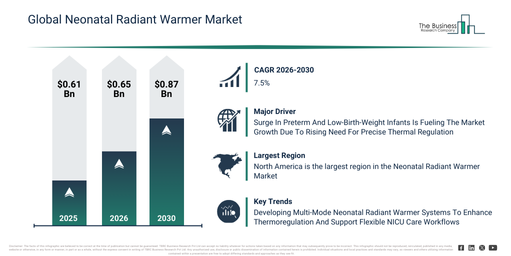
    The neonatal radiant warmer market has demonstrated significant expansion in recent years. Its value is anticipated to increase from $0.61 billion in 2025 to $0.65 billion in 2026, reflecting a compound annual growth rate (CAGR) of 7.7%. This historical growth can be linked to factors such as elevated neonatal mortality rates, a rising incidence of preterm births, enhanced understanding of neonatal hypothermia management, expanded maternal and child healthcare initiatives, and a greater number of hospital deliveries in urban settings.

    The neonatal radiant warmer market is projected to experience robust expansion over the coming years. By 2030, this market is anticipated to reach $0.87 billion, demonstrating a compound annual growth rate (CAGR) of 7.5%. This forecasted growth is largely driven by a global rise in preterm birth rates, increased investments directed towards neonatal intensive care units, escalating healthcare spending within developing nations, the broadening of hospital infrastructure and birthing facilities, and a heightened understanding of advanced neonatal thermal care solutions. Significant trends during this period are expected to encompass technological progress in radiant warmer temperature regulation, new developments in integrated monitoring and sensor technologies, the creation of energy-efficient neonatal warmers, ongoing research and development into intelligent and automated warming solutions, and improvements in the design of portable and compact radiant warmers.

    Access Your Free Sample Report for In-Depth Market Insights:

    https://www.thebusinessresearchcompany.com/sample.aspx?id=30671&type=smp

    What Drivers Are Influencing Production Trends In The Neonatal Radiant Warmer Market?

    The escalating need for accurate thermal management in premature and low-birth-weight infants is projected to drive the expansion of the neonatal radiant warmer market moving forward. Accurate thermal management involves the clinical necessity of maintaining a newborn’s body temperature within a safe range, especially for infants born early or with low birth weight who lack adequate physiological thermoregulation. This heightened demand for precise thermal regulation in premature and low-birth-weight infants results from the increasing occurrence of preterm deliveries, which are often caused by maternal health complications, advanced maternal age, and higher rates of multiple pregnancies. Neonatal radiant warmers assist precise thermal regulation in premature and low-birth-weight infants by supplying controlled, consistent heat to ensure stable body temperature. They enhance neonatal outcomes by averting hypothermia and bolstering vital physiological functions during critical initial care. For instance, in August 2024, as per the Centers for Disease Control and Prevention, a US-based national public health agency, the proportion of infants born preterm showed minimal change, from 10.38% in 2022 to 10.41% in 2023, while the proportion of infants born early term saw a 2% increase, from 29.31% in 2022 to 29.84% in 2023. Thus, the growing demand for precise thermal regulation in premature and low-birth-weight infants is propelling the growth of the neonatal radiant warmer market.

    Which Segment Groups Are Influencing The Neonatal Radiant Warmer Market?

    The neonatal radiant warmer market covered in this report is segmented –

    1) By Product Type: Conventional Radiant Warmers, Intensive Care Radiant Warmers, Transportable Radiant Warmers, Phototherapy Radiant Warmers

    2) By Component: Heating Units, Control Panels, Ultraviolet Lamps, Temperature Sensors

    3) By Technology: Infrared Technology, Contact Heating Systems, Integrated Heating Systems, Smart Technologies For Temperature Control

    4) By End-User: Hospitals, Clinics, Ambulatory Surgical Centers, Other End-Users

    Subsegments:

    1) By Conventional Radiant Warmers: Basic Radiant Warmers, Servo-Controlled Warmers, Open-Bed Warmers, Height-Adjustable Warmers, Standard Hospital-Grade Warmers

    2) By Intensive Care Radiant Warmers: Advanced neonatal ICU warmers, Integrated monitoring warmers, Warmers with ventilator compatibility, High-acuity thermal management warmers, Warmers with built-in resuscitation units

    3) By Transportable Radiant Warmers: Portable Emergency Transport Warmers, Ambulance-Compatible Warmers, Battery-Powered Mobile Warmers, Lightweight Intra-Hospital Transport Warmers, Foldable Or Compact Transport Warmers

    4) By Phototherapy Radiant Warmers: LED Phototherapy Warmers, Dual-Function Radiant Warmer And Phototherapy Units, UV-Based Phototherapy Warmers, Fiber-Optic Phototherapy Warmers, Jaundice Treatment Phototherapy Warmers

    Which Trends Are Influencing The Development Of The Neonatal Radiant Warmer Market?

    Leading companies in the neonatal radiant warmer market are concentrating on developing advanced systems, such as multi-mode radiant warmer systems. These systems are designed to support open care, closed care, and transport, while synchronizing heat sources to maintain optimal neonatal temperature. Multi-mode radiant warmer systems are technologies that provide stable thermoregulation, enable rapid clinical access, and facilitate the safe handling of newborns across various care settings. For instance, in March 2024, Drägerwerk AG, a Germany-based acute care and neonatal equipment provider, introduced the Babyleo TN500 IncuWarmer. This sophisticated thermoregulation system combines convective heating, multi-mode radiant warming, and a heated mattress to maintain stable body temperature, while also offering quick access for clinical staff throughout NICU workflows. This launch signifies a substantial technological advancement by integrating multi-mode warming and incubator functions, thereby connecting traditional neonatal care with flexible, workflow-efficient solutions, and equipping clinicians with a scalable, efficient system for better neonatal outcomes.

    Who Are The Top-Performing Companies In The Neonatal Radiant Warmer Market In Recent Years?

    Major companies operating in the neonatal radiant warmer market are Koninklijke Philips N.V., General Electric (GE) Healthcare, Drägerwerk AG & Co. KGaA (Dräger), Natus Medical Incorporated, Heal Force Bio-Medical Engineering, Shenzhen Comen Medical Instruments Co. Ltd., Comen Medical Instruments Co. Ltd., Advent International LP, Okuman Medikal Sistemler Anonim Sirketi, Ningbo David Medical Device Co. Ltd., Fanem Indústria e Comércio Ltd., IndoSurgicals Private Limited, Löwenstein Medical GmbH & Co. KG, Zhengzhou Dison Instrument and Meter Co. Ltd., Phoenix Medical Systems Pvt. Ltd., Procare Medical Furnishings, Atom Medical International Co. Ltd., Weyer GmbH, Western Surgical, Anhui Weemed Medical Co. Ltd.

    Access The Complete Report For Deeper Market Insights:

    https://www.thebusinessresearchcompany.com/report/neonatal-radiant-warmer-market-report

    Which Region Currently Holds The Largest Share Of The Neonatal Radiant Warmer Market?

    North America was the largest region in the neonatal radiant warmer market in 2025. Asia-Pacific is expected to be the fastest-growing region in the forecast period. The regions covered in the neonatal radiant warmer market report are Asia-Pacific, South East Asia, Western Europe, Eastern Europe, North America, South America, Middle East, Africa.

    Request Your Customized Neonatal Radiant Warmer Market Research Report for Competitive Advantage:

    https://www.thebusinessresearchcompany.com/customise?id=30671&type=smp

    Browse Through More Reports Similar to the Global Neonatal Radiant Warmer Market 2026, By The Business Research Company

    Cold Insulation Market Report 2026

    https://www.thebusinessresearchcompany.com/report/cold-insulation-global-market-report

    Heating Pad Market Report 2026

    https://www.thebusinessresearchcompany.com/report/heating-pad-global-market-report

    neonatal infant care global market report

    https://www.thebusinessresearchcompany.com/report/neonatal-infant-care-global-market-report

    Get in touch with us:

    The Business Research Company: https://www.thebusinessresearchcompany.com/

    Americas +1 310-496-7795

    Asia +44 7882 955267 & +91 8897263534

    Europe +44 7882 955267

    Email us at marketing@tbrc.info

    Follow us on:

    LinkedIn: https://in.linkedin.com/company/the-business-research-company

    YouTube: https://www.youtube.com/channel/UC24_fI0rV8cR5DxlCpgmyFQ

    Global Market Model: https://www.thebusinessresearchcompany.com/global-market-model

  • Global Neonatal Intensive Care Respiratory Devices Market Set for Strong Expansion, Reaching $4.34 Billion With 10.7% CAGR by 2030

    Global Neonatal Intensive Care Respiratory Devices Market Set for Strong Expansion, Reaching $4.34 Billion With 10.7% CAGR by 2030

    Uncover key drivers, emerging technologies, and competitive movements shaping the neonatal intensive care respiratory devices market from 2026–2035 with trusted insights from The Business Research Company

    What is the expected shift in the Neonatal Intensive Care Respiratory Devices Market’s size between 2026 and 2030?

    The market for neonatal intensive care respiratory devices has experienced swift expansion recently. This market is projected to expand from $2.61 billion in 2025 to $2.89 billion in 2026, demonstrating a compound annual growth rate (CAGR) of 11.0%. Historically, this expansion has stemmed from factors such as a greater occurrence of preterm births, an escalating need for sophisticated respiratory aid for newborns, enhanced understanding of health issues in neonates, wider deployment of ventilators within NICUs, a global increase in neonatal intensive care units, expanded application of non-invasive respiratory methods, increased funding in neonatal healthcare infrastructure, a higher incidence of respiratory conditions in newborns, the broader accessibility of advanced technological equipment, and a heightened emphasis on boosting survival rates for neonates.

    The neonatal intensive care respiratory devices market size is forecasted to experience substantial growth in the upcoming years. It is predicted to expand to $4.35 billion in 2030, achieving a compound annual growth rate (CAGR) of 10.7%. This projected expansion is driven by a wider embrace of non-invasive respiratory technologies, a heightened demand for advanced NICU respiratory equipment, increased investments in neonatal critical care, the pressing need for enhanced neonatal survival outcomes, rising awareness concerning preterm birth complications, greater healthcare spending on infant care, expanded deployment of automated respiratory monitoring, continuous technological improvements in neonatal devices, a stronger focus on early intervention respiratory support, and a growing preference for safe and effective ventilation systems. Prominent trends throughout this period include advancements in non-invasive neonatal ventilation, progress in compact and portable respiratory devices, developments in automated respiratory monitoring, innovations in neonatal oxygen delivery systems, breakthroughs in AI-assisted ventilation tools, novelties in high-flow nasal cannula devices, the integration of smart monitoring sensors, connectivity with real-time NICU data platforms, the inclusion of tele-neonatology capabilities, and enhancements in hybrid ventilation technologies.

    Access Your Free Sample Report for In-Depth Market Insights:

    https://www.thebusinessresearchcompany.com/sample.aspx?id=30670&type=smp

    Which Drivers Are Shaping Strategic Decisions In The Neonatal Intensive Care Respiratory Devices Market?

    The rising occurrence of neonatal respiratory complications is anticipated to fuel the expansion of the neonatal intensive care respiratory devices market. These complications are breathing issues in newborns, including conditions like respiratory distress syndrome and transient tachypnea, which affect lung function soon after birth and are a primary contributor to neonatal sickness and fatalities. The surge in these complications stems from increased prematurity rates and more complex medical conditions at birth, necessitating intensive respiratory support for a greater number of infants. Neonatal intensive care respiratory devices address these complications by facilitating assisted ventilation, accurate oxygen delivery, and ongoing respiratory monitoring, which helps healthcare professionals stabilize infants and enhance survival rates. For example, in October 2024, data from the Royal College of Paediatrics and Child Health, a UK-based professional medical body, indicated that the percentage of infants experiencing bronchopulmonary dysplasia or death differed geographically, from 32.6% in the East of England to 46.8% in the Northern Operational Delivery Network, with specific neonatal units showing rates between 0% and 61.7% for units caring for at least 10 eligible babies. Consequently, the growing prevalence of neonatal respiratory complications is propelling the growth of the neonatal intensive care respiratory devices market.

    What Segment Classifications Make Up The Neonatal Intensive Care Respiratory Devices Market?

    The neonatal intensive care respiratory devices market covered in this report is segmented –

    1) By Product Type: Ventilators, Continuous Positive Airway Pressure (CPAP) Devices, Oxygen Delivery Devices, Inhalers, Humidifiers, Others Product Types

    2) By Modality: Invasive Ventilation, Non-Invasive Ventilation, Combined Or Hybrid Systems

    3) By Gestational Age: Extremely Preterm (<28 Weeks), Very Preterm (28–32 Weeks), Moderate To Late Preterm (32–37 Weeks), Full Term With Respiratory Conditions

    4) By End User: Hospitals, Neonatal Clinics, Ambulatory Surgical Centers, Others End User

    Subsegments:

    1) By Ventilators: Invasive Mechanical Ventilators, Non-Invasive Ventilators, Portable Ventilators, Intensive Care Unit (ICU) Ventilators, Emergency Or Transport Ventilators

    2) By Continuous Positive Airway Pressure (CPAP) Devices: Fixed-Pressure CPAP Devices, Auto-Adjusting (APAP) CPAP Devices, Bi-Level Positive Airway Pressure (BiPAP) Devices, Portable Or Home CPAP Devices, Hospital Or Clinical CPAP Devices

    3) By Oxygen Delivery Devices: Oxygen Concentrators, Oxygen Cylinders Or Tanks, Oxygen Masks, Nasal Cannulas, Portable Oxygen Systems

    4) By Inhalers: Metered Dose Inhalers (MDI), Dry Powder Inhalers (DPI), Soft Mist Inhalers (SMI), Nebulizer Inhalers, Combination Drug Inhalers

    5) By Humidifiers: Ultrasonic Humidifiers, Evaporative Humidifiers, Steam Vaporizers, Impeller Humidifiers, Hospital-Grade Respiratory Humidifiers

    6) By Others Product Types: Nebulizers (Standalone), Suction Devices, Respiratory Monitors, Airway Clearance Devices, Tracheostomy Care Devices

    Which Leading Companies Dominate The Neonatal Intensive Care Respiratory Devices Market Share?

    Major companies operating in the neonatal intensive care respiratory devices market are Medtronic plc, Koninklijke Philips N.V., GE Healthcare Technologies Inc., Becton, Dickinson and Company (BD), ResMed Inc., Drägerwerk AG & Co. KGaA, Getinge AB, Smiths Group plc, Teleflex Incorporated, Masimo Corporation, Fisher & Paykel Healthcare Limited, Comen Medical, Hamilton Medical AG, GaleMed Corporation, Heyer Medical AG, Inspiration Healthcare Group plc, Mercury Medical, Trudell Medical International Co., Atom Medical International Co. Ltd., Airon Corporation, Lowenstein Medical Technology GmbH

    Access The Complete Report For Deeper Market Insights:

    https://www.thebusinessresearchcompany.com/report/neonatal-intensive-care-respiratory-devices-market-report

    How Does The Neonatal Intensive Care Respiratory Devices Market Perform Across Major Global Regions?

    North America was the largest region in the neonatal intensive care respiratory devices market in 2025. Asia-Pacific is expected to be the fastest-growing region in the forecast period. The regions covered in the neonatal intensive care respiratory devices market report are Asia-Pacific, South East Asia, Western Europe, Eastern Europe, North America, South America, Middle East, Africa.

    Request Your Customized Neonatal Intensive Care Respiratory Devices Market Research Report for Competitive Advantage:

    https://www.thebusinessresearchcompany.com/customise?id=30670&type=smp

    Browse Through More Reports Similar to the Global Neonatal Intensive Care Respiratory Devices Market 2026, By The Business Research Company

    Neonatal Intensive Care Units Nicu Catheters Market Report 2026

    https://www.thebusinessresearchcompany.com/report/neonatal-intensive-care-units-nicu-catheters-global-market-report

    Fetal And Neonatal Monitoring Devices Market Report 2026

    https://www.thebusinessresearchcompany.com/report/fetal-and-neonatal-monitoring-devices-global-market-report

    respiratory devices and equipment therapeutic and diagnostic global market report

    https://www.thebusinessresearchcompany.com/report/respiratory-devices-and-equipment-therapeutic-and-diagnostic-global-market-report

    Get in touch with us:

    The Business Research Company: https://www.thebusinessresearchcompany.com/

    Americas +1 310-496-7795

    Asia +44 7882 955267 & +91 8897263534

    Europe +44 7882 955267

    Email us at marketing@tbrc.info

    Follow us on:

    LinkedIn: https://in.linkedin.com/company/the-business-research-company

    YouTube: https://www.youtube.com/channel/UC24_fI0rV8cR5DxlCpgmyFQ

    Global Market Model: https://www.thebusinessresearchcompany.com/global-market-model

  • Natural Leaf Alcohol Market Growth Projection: Expected to Surpass $0.72 Billion by 2030 at 8.3% CAGR

    Natural Leaf Alcohol Market Growth Projection: Expected to Surpass $0.72 Billion by 2030 at 8.3% CAGR

    Uncover key drivers, emerging technologies, and competitive movements shaping the natural leaf alcohol market from 2026–2035 with trusted insights from The Business Research Company

    What growth pattern is forecast for the Natural Leaf Alcohol Market size between 2026 and 2035?

    The natural leaf alcohol market has shown robust expansion in recent years. This market is projected to grow from $0.48 billion in 2025 to $0.52 billion in 2026, achieving a compound annual growth rate (CAGR) of 8.6%. Historically, this growth can be ascribed to an escalating demand for natural and organic ingredients, increased incorporation into fragrance and personal care products, expanded usage in food and beverage flavoring, the development of cosmetic and pharmaceutical applications, and a heightened awareness regarding health and wellness.

    The natural leaf alcohol market is anticipated to experience substantial expansion over the upcoming years. This market is projected to reach $0.72 billion by 2030, demonstrating a compound annual growth rate (CAGR) of 8.3%. Factors contributing to this growth during the forecast timeframe include greater industrial uptake in cleaning and household items, heightened investment in research and development, an increase in disposable income within developing economies, the widening of e-commerce and distribution networks, and a heightened emphasis on sustainable and environmentally friendly products. Key trends anticipated during this period encompass technological progress in extraction and distillation, breakthroughs in high-purity and specialized leaf alcohols, the evolution of sustainable and eco-conscious production techniques, ongoing research and development for novel applications, and enhancements in packaging and quality assurance technology.

    Access Your Free Sample Report for In-Depth Market Insights:

    https://www.thebusinessresearchcompany.com/sample.aspx?id=30669&type=smp

    Which Drivers Are Impacting Market Performance In The Natural Leaf Alcohol Market?

    The growing consumer demand for natural and organic components is projected to boost the expansion of the natural leaf alcohol market in the future. This increasing preference indicates that a larger portion of buyers opt for items crafted from plant-based, minimally processed constituents, consciously avoiding synthetic additives due to health and product clarity considerations. The surge in demand for natural and organic ingredients is evident as extensive surveys highlight consumers actively prioritizing organic content when selecting personal care and wellness products, thereby reflecting a stronger need for recognizable natural elements. Natural leaf alcohol supports this trend by being plant-derived and meeting the natural and organic ingredient standards that consumers specifically look for. For instance, in April 2025, data from the Organic Trade Association, a US-based membership organization for the organic industry, revealed that U.S. sales of certified organic products accelerated in 2024 with an annual growth rate of 5.2%, which was more than double that of the overall marketplace growing at 2.5% in the same period. Consequently, the escalating consumer preference for natural and organic ingredients is propelling the growth of the natural leaf alcohol market. The increasing consumer inclination towards clean-label ingredients is anticipated to drive the natural leaf alcohol market’s growth moving forward. Clean-label ingredients refer to food and beverage elements that are minimally processed, natural, and devoid of artificial additives, preservatives, and chemicals, aligning with consumers’ desire for openness and healthier options. This rise in preference for clean-label ingredients stems from heightened health awareness and a greater demand for natural and sustainable products. Natural leaf alcohol supports clean-label ingredients by providing a plant-derived, minimally processed component utilized in food, beverages, and nutraceuticals, thus meeting clean-label requirements while delivering functional advantages. For instance, in July 2025, according to the Consumer Brands Association, a US-based trade association, 90% of American adults are aware of the Facts Up Front label, with 79% consulting it prior to purchasing new products. Additionally, 78% believe it effectively conveys a product’s healthfulness, 76% consider it provides the appropriate amount of information, and 72% find it user-friendly. Therefore, the growing consumer preference for clean-label ingredients is fueling the expansion of the natural leaf alcohol market.

    What Segment Types Are Examined In The Natural Leaf Alcohol Market?

    The natural leaf alcohol market covered in this report is segmented –

    1) By Product Type: Herbal Leaf Alcohol, Mint Leaf Alcohol, Lemon Leaf Alcohol, Other Plant-Based Leaf Alcohol

    2) By Process: Fermentation, Distillation, Extraction And Purification

    3) By Quality Testing: Compliance Testing, Sensory Evaluation, Purity Analysis, Shelf-Life Studies

    4) By Logistics And Distribution: Raw Material Procurement, Warehousing And Storage, Transportation Management, Inventory Control

    5) By Application: Fragrance And Perfumes, Cosmetics And Personal Care, Food And Beverages, Pharmaceuticals, Household And Cleaning Products

    Subsegments:

    1) By Herbal Leaf Alcohol: Basil Leaf Alcohol, Sage Leaf Alcohol, Thyme Leaf Alcohol, Rosemary Leaf Alcohol

    2) By Mint Leaf Alcohol: Peppermint Leaf Alcohol, Spearmint Leaf Alcohol, Cornmint Leaf Alcohol, Wild Mint Leaf Alcohol

    3) By Lemon Leaf Alcohol: Lemon Balm Leaf Alcohol, Lemon Verbena Leaf Alcohol, Kaffir Lime Leaf Alcohol, Other Citrus Leaf Alcohol

    4) By Other Plant-Based Leaf Alcohol: Tea Leaf Alcohol, Violet Leaf Alcohol, Eucalyptus Leaf Alcohol, Other Exotic Leaf Alcohol

    Who Are The Major Companies Operating In The Natural Leaf Alcohol Market?

    Major companies operating in the natural leaf alcohol market are Kerry Group plc, Givaudan SA, Symrise AG, Dohler Group SE, Zeon Corporation, Takasago International Corporation, Robertet Group S.A, Bell Flavour And Fragrances Inc., Sensient Technologies Corporation, Natural Leaf Alcohol, Fleurchem Inc., Jinan Finer Chemical Co. Ltd., Thermochem Industries, Natural Aroma Products Pvt. Ltd., Kelvin Natural Mint Pvt. Ltd., Bioway (Xi’an) Organic Ingredients Co. Ltd., Dalian Handom Chemicals Co. Ltd., Huadai Chemical Co. Ltd., Utkarsh Aroma Chemicals, Veda Oils Pvt. Ltd.

    Access The Complete Report For Deeper Market Insights:

    https://www.thebusinessresearchcompany.com/report/natural-leaf-alcohol-market-report

    Which Region Is Anticipated To See The Fastest Growth In The Natural Leaf Alcohol Market?

    North America was the largest region in the natural leaf alcohol market in 2025. Asia-Pacific is expected to be the fastest-growing region in the forecast period. The regions covered in the natural leaf alcohol market report are Asia-Pacific, South East Asia, Western Europe, Eastern Europe, North America, South America, Middle East, Africa.

    Request Your Customized Natural Leaf Alcohol Market Research Report for Competitive Advantage:

    https://www.thebusinessresearchcompany.com/customise?id=30669&type=smp

    Browse Through More Reports Similar to the Global Natural Leaf Alcohol Market 2026, By The Business Research Company

    Coniferyl Alcohol Market Report 2026

    https://www.thebusinessresearchcompany.com/report/coniferyl-alcohol-global-market-report

    Ethyl Alcohol Market Report 2026

    https://www.thebusinessresearchcompany.com/report/ethyl-alcohol-global-market-report

    plant based beverages global market report

    https://www.thebusinessresearchcompany.com/report/plant-based-beverages-global-market-report

    Get in touch with us:

    The Business Research Company: https://www.thebusinessresearchcompany.com/

    Americas +1 310-496-7795

    Asia +44 7882 955267 & +91 8897263534

    Europe +44 7882 955267

    Email us at marketing@tbrc.info

    Follow us on:

    LinkedIn: https://in.linkedin.com/company/the-business-research-company

    YouTube: https://www.youtube.com/channel/UC24_fI0rV8cR5DxlCpgmyFQ

    Global Market Model: https://www.thebusinessresearchcompany.com/global-market-model
  • Multi-Port Robot Market Forecast 2026–2035: How to Leverage Market Growth

    Multi-Port Robot Market Forecast 2026–2035: How to Leverage Market Growth

    Uncover key drivers, emerging technologies, and competitive movements shaping the multi-port robot market from 2026–2035 with trusted insights from The Business Research Company

    How much larger will the Multi-Port Robot Market be in 2030 compared with 2026?

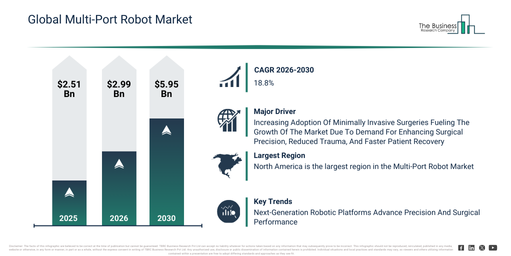
    The multi-port robot market has experienced rapid growth in recent years. This market is projected to expand from $2.51 billion in 2025 to $2.99 billion in 2026, indicating a compound annual growth rate (CAGR) of 19.1%. Historically, this expansion has been driven by the increasing adoption of minimally invasive procedures, a rising demand for high-precision surgical tools, growing investments in healthcare infrastructure, the expansion of robotic-assisted surgery programs, and improved availability of advanced imaging components.

    The multi-port robot market is anticipated to experience significant expansion in the coming years. This market is projected to reach $5.95 billion by 2030, exhibiting a compound annual growth rate (CAGR) of 18.8%. This forecasted growth is attributable to several factors, including the increasing incorporation of AI-enabled robotic control, a surge in the deployment of multi-port surgical systems, heightened demand for robotic instruments and accessories, the broadening scope of medical and industrial automation uses, and an increased emphasis on mobile and adaptable robotic platforms. Key trends expected during this period involve technological progress in multi-arm coordination, breakthroughs in imaging and visualization systems, the evolution of cloud-based robotic software, ongoing research and development in user-friendly robotic interfaces, and improvements in autonomous assistance technologies.

    Access Your Free Sample Report for In-Depth Market Insights:

    https://www.thebusinessresearchcompany.com/sample.aspx?id=30666&type=smp

    What Drivers Are Guiding Growth Patterns In The Multi-Port Robot Market?

    The multi-port robot market is anticipated to expand primarily due to the increasing acceptance of minimally invasive surgeries. These surgical procedures, characterized by small incisions or a single entry point, significantly lessen patient trauma, shorten recovery periods, and reduce complication risks. The growing preference for minimally invasive surgeries stems from hospitals and patients prioritizing quicker recovery times, diminished postoperative pain, reduced risk of complications, and minimal scarring, contrasting with traditional open surgeries. Multi-port robots enhance these minimally invasive operations by offering superior dexterity, precision, and control via multiple instrument access points. They contribute to better surgical outcomes by enabling intricate procedures with smaller incisions, less tissue damage, and accelerated patient recovery. For instance, in January 2025, Intuitive Surgical Inc., a US-based medical technology firm, reported that worldwide da Vinci procedures, a type of minimally invasive robotic-assisted surgery, saw growth of approximately 18% in the fourth quarter of 2024 compared to the fourth quarter of 2023. Furthermore, full year 2024 procedures increased by approximately 17% over 2023, and the company forecasts a rise of approximately 13% to 16% in worldwide da Vinci procedures for 2025 relative to 2024. Thus, the escalating adoption of minimally invasive and single-port surgeries is a key driver for the growth of the multi-port robot market.

    Which Segments Are Driving Activity In The Multi-Port Robot Market?

    The multi-port robot market covered in this report is segmented –

    1) By Product Type: Multi-Port Robotic Surgical Systems, Accessories And Instruments, System Services And Maintenance

    2) By Technology: Fully Automated Multi-Port Robots, Semi-Automated Multi-Port Robots, AI-Enabled Multi-Port Surgical Platforms, Teleoperated Multi-Port Robotic Systems

    3) By Application: General Surgery, Gynecological Surgery, Urological Surgery, Cardiothoracic Surgery, Orthopedic Surgery, Neurosurgery, Others

    4) By End-User: Hospitals, Ambulatory Surgical Centers, Specialty Surgical Centers, Academic And Research Institutions

    Subsegments:

    1) By Multi-Port Robotic Surgical Systems: Laparoscopic Multi-Port Surgical Systems, Thoracoscopic Multi-Port Surgical Systems, Robotic-Assisted General Surgery Systems, Robotic-Assisted Endoscopic Surgery Systems, Robotic-Assisted Specialty Surgery Systems

    2) By Accessories And Instruments: Robotic Surgical Arms, Endoscopic Visualization Instruments, Robotic Energy Devices, Suturing And Stapling Instruments, Robotic Surgical Consumables

    3) By System Services And Maintenance: Installation And Integration Services, Preventive Maintenance Services, Software Upgrade Services, Technical Support Services, Training And Education Services

    What Trends Are Projected To Support The Growth Of The Multi-Port Robot Market?

    Leading enterprises within the multi-port surgical robot market are prioritizing the creation of sophisticated robotic systems, specifically next-generation robotic platforms, with the goal of elevating surgical exactitude, streamlining operational efficiency, and broadening clinical applications across various medical fields. These innovative multi-port robotic platforms represent technologies designed to refine surgical accuracy, deliver immediate procedural information, and facilitate intricate workflows across diverse surgical procedures. A notable example is Intuitive Surgical, a US-based medical technology firm, which obtained CE clearance in July 2025 for the introduction of its da Vinci 5 Surgical System, a next-generation robotic platform, in the United States. This particular system integrates over 150 unique design advancements, features improved data analytics to achieve superior procedural results, and boasts an architectural framework engineered for broadened clinical applications. Furthermore, the da Vinci 5 secured CE marking for its expanded clinical deployment in Europe in 2025, thereby facilitating its more widespread integration across healthcare institutions. The unveiling of this system marks a substantial technological leap, as it combines high-precision robotic support with data-centric surgical methodologies, effectively connecting conventional surgical practices with cutting-edge robotic platforms, and equipping surgeons with an adaptable, effective tool for superior procedural execution.

    Which Major Firms Are Strengthening Their Position In The Multi-Port Robot Market?

    Major companies operating in the multi-port robot market are Johnson & Johnson, Hanwha Group, ABB Ltd., Medtronic plc, Stryker Corporation, Intuitive Surgical Inc., Avatera Medical GmbH, CMR Surgical Ltd., Flexiv Ltd., Distalmotion SA, RobotLAB Inc., Shanghai MicroPort MedBot (Group) Co. Ltd., WEGO Medical Holdings Ltd., Asensus Surgical Inc., Microsure BV, Medicaroid Corporation, Sudhir Srivastava Innovations Pvt. Ltd., Riverfield Inc., Beijing Surgerii Robotics Co. Ltd., Shenzhen Jingfeng Medical Technology Co. Ltd.

    Access The Complete Report For Deeper Market Insights:

    https://www.thebusinessresearchcompany.com/report/multi-port-robot-market-report

    Which Region Shows The Strongest Potential For Future Expansion In The Multi-Port Robot Market?

    North America was the largest region in the multi-port robot market in 2025. Asia-Pacific is expected to be the fastest-growing region in the forecast period. The regions covered in the multi-port robot market report are Asia-Pacific, South East Asia, Western Europe, Eastern Europe, North America, South America, Middle East, Africa.

    Request Your Customized Multi-Port Robot Market Research Report for Competitive Advantage:

    https://www.thebusinessresearchcompany.com/customise?id=30666&type=smp

    Browse Through More Reports Similar to the Global Multi-Port Robot Market 2026, By The Business Research Company

    Mobile Robots Market Report 2026

    https://www.thebusinessresearchcompany.com/report/mobile-robots-global-market-report

    Industrial Robots Warehousing And Storage Robots Market Report 2026

    https://www.thebusinessresearchcompany.com/report/industrial-robots-warehousing-and-storage-robots-global-market-report

    road logistics global market report

    https://www.thebusinessresearchcompany.com/report/road-logistics-global-market-report

    Get in touch with us:

    The Business Research Company: https://www.thebusinessresearchcompany.com/

    Americas +1 310-496-7795

    Asia +44 7882 955267 & +91 8897263534

    Europe +44 7882 955267

    Email us at marketing@tbrc.info

    Follow us on:

    LinkedIn: https://in.linkedin.com/company/the-business-research-company

    YouTube: https://www.youtube.com/channel/UC24_fI0rV8cR5DxlCpgmyFQ

    Global Market Model: https://www.thebusinessresearchcompany.com/global-market-model
  • Modular Process Skid Packages Market Outlook 2026–2035: Growth Drivers and Industry Forecast

    Modular Process Skid Packages Market Outlook 2026–2035: Growth Drivers and Industry Forecast

    Uncover key drivers, emerging technologies, and competitive movements shaping the modular process skid packages market from 2026–2035 with trusted insights from The Business Research Company

    Across 2026–2030, what is the expected market valuation path of the Modular Process Skid Packages Market?

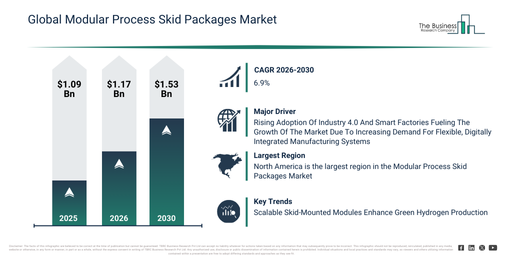
    The modular process skid packages market size has experienced robust growth in recent years. This market is projected to expand from $1.09 billion in 2025 to $1.17 billion in 2026, exhibiting a compound annual growth rate (CAGR) of 7.2%. The historical increase in market size can be attributed to several factors, including the provision of solutions in the chemical and oil sectors, the rise of industrial automation throughout manufacturing plants, the growing need for flexible and mobile processing systems, a noticeable shift towards offsite fabrication for safety reasons, an increased focus on reducing construction time within industries, rising investments in pharmaceutical and biotech facilities, and the expanded utilization of modular systems in energy and gas applications.

    The modular process skid packages market is anticipated to show robust expansion in the coming years, reaching $1.53 billion in 2030, driven by a compound annual growth rate (CAGR) of 6.9%. This projected growth throughout the forecast period stems from various factors, including advancements in automation-enabled skid systems, the development of compact and energy-efficient designs, and the integration of IoT monitoring for enhanced oversight. Further contributions come from advancements in modularization techniques, innovations in multifunctional skid units, and the integration of digital twin technology. The market also benefits from progress in sustainable and eco-friendly skid systems, the emergence of plug-and-play skid designs, the adoption of AI control systems, and improvements in durable and corrosion-resistant materials.

    Access Your Free Sample Report for In-Depth Market Insights:

    https://www.thebusinessresearchcompany.com/sample.aspx?id=30663&type=smp

    Which Drivers Are Supporting The Rise Of The Modular Process Skid Packages Market?

    The increasing integration of Industry 4.0 and smart manufacturing facilities is anticipated to fuel expansion within the modular process skid packages market moving ahead. Industry 4.0 and smart factories encompass the incorporation of cutting-edge digital technologies, including the Internet of Things (IoT), artificial intelligence, automation, robotics, and data analytics, into production operations to facilitate real-time oversight, informed choices, and exceptionally adaptable manufacturing. Manufacturers are increasingly embracing Industry 4.0 and smart factories due to their pursuit of enhanced productivity, lower operating expenses, extensive customization capabilities, and quicker product launches. Modular process skid packages facilitate Industry 4.0 and smart factories by offering standardized, pre-designed, and readily integrated production units. These packages boost operational efficiency and adaptability through their support for automation, live monitoring, and swift adjustments to fulfill evolving production requirements. As an illustration, in September 2025, data from the International Federation of Robotics, a Germany-based non-profit body, indicated that 4,664,000 robotic units were operational in factories worldwide in 2024. This represented a 9% rise from 4,281,585 units recorded in 2023. Consequently, the expanding adoption of Industry 4.0 and smart factories is propelling the advancement of the modular process skid packages market.

    What Segments Are Identified Within The Structure Of The Modular Process Skid Packages Market?

    The modular process skid packages market covered in this report is segmented –

    1) By Type: Open Type, Closed Type

    2) By Component: Pressure Vessels, Piping Systems, Pumping and Metering Systems

    3) By Deployment: Onsite Integrated Systems, Offsite Modular Units, Mobile Skid Packages

    4) By Skid Function: Pumping Skids, Filtration Skids, Separation Skids

    5) By Application: Oil And Gas, Chemical Processing, Pharmaceuticals, Food And Beverage, Water And Wastewater Treatment, Other Applications

    Subsegments:

    1) By Open Type: Non-Enclosed Insulator Design, Air-Cooled Configurations, Outdoor Installation Designs, Exposed Conductor Support Insulators, Low-Voltage Open Structure Insulators, Medium-Voltage Open Structure Insulators, Open-Frame Post Insulators, Open-Pin and Open-Suspension Styles

    2) By Closed Type: Enclosed Insulator Design, Weatherproof Insulated Housings, Fully Sealed Insulator Assemblies, Indoor Protection-Type Insulators, High-Voltage Enclosed Insulators, Composite Closed-Body Insulators, Encapsulated Post Insulators, Closed Suspension and Strain Designs

    What Long-Term Trends Are Expected To Shape The Future Of The Modular Process Skid Packages Market?

    Companies operating in the modular process skid packages market are directing their efforts toward creating advanced solutions, such as scalable skid-mounted electrolyser modules, to improve green hydrogen production efficiency. A scalable skid-mounted module is identified as a pre-fabricated and pre-tested unit that helps reduce deployment timelines, decrease construction expenses, and lessen risks for large-scale projects. For instance, in August 2023, ITM Power, a UK-based energy company, unveiled its POSEIDON 20 MW electrolyser module. This advancement supports large-scale hydrogen production through an optimized skid footprint, suitable for both indoor and outdoor installations, enabling developers to efficiently propose the module for commercial hydrogen projects. It delivers pre-fabricated and pre-tested units, simplifying project execution and mitigating risks. This module, when combined with ITM Power’s other electrolyser platforms like the Trident and Neptune 2 MW plug-and-play electrolyzers designed for small to mid-size projects, provides a seamless solution for extensive hydrogen production. The POSEIDON module contributes to better operational efficiency, simpler project implementation, and the expansion of green hydrogen infrastructure.

    Which Key Market Players Are Investing In Expansion And Innovation Within The Modular Process Skid Packages Market?

    Major companies operating in the modular process skid packages market are Fluor Corporation, Technip Energies N.V., GEA Group AG, Zeton Inc., Gray Construction Inc., INMA Steel Inc., Integrated Flow Solutions LLC, ASL Group, EPIC Systems Inc., ABJ Engineering & Contracting Co., ViENERG Resources Pvt Ltd., Udkam Process Equipment India Pvt Ltd., Nano-Purification Solutions, BlissFlow Systems, Robinson Inc., Petrak Industries Inc., SalCon SA, Khaas Designing and Engineering, Integra Skid Systems, Flomek Singapore Private Limited, PT Perkasa Marine Indonesia

    Access The Complete Report For Deeper Market Insights:

    https://www.thebusinessresearchcompany.com/report/modular-process-skid-packages-market-report

    Which Regions Are Poised For Strategic Growth In The Modular Process Skid Packages Market?

    North America was the largest region in the modular process skid packages market in 2025. Asia-Pacific is expected to be the fastest-growing region in the forecast period. The regions covered in the modular process skid packages market report are Asia-Pacific, South East Asia, Western Europe, Eastern Europe, North America, South America, Middle East, Africa.

    Request Your Customized Modular Process Skid Packages Market Research Report for Competitive Advantage:

    https://www.thebusinessresearchcompany.com/customise?id=30663&type=smp

    Browse Through More Reports Similar to the Global Modular Process Skid Packages Market 2026, By The Business Research Company

    Packaging Machinery Market Report 2026

    https://www.thebusinessresearchcompany.com/report/packaging-machinery-global-market-report

    Packaging Robots Market Report 2026

    https://www.thebusinessresearchcompany.com/report/packaging-robots-global-market-report

    packaging automation global market report

    https://www.thebusinessresearchcompany.com/report/packaging-automation-global-market-report

    Get in touch with us:

    The Business Research Company: https://www.thebusinessresearchcompany.com/

    Americas +1 310-496-7795

    Asia +44 7882 955267 & +91 8897263534

    Europe +44 7882 955267

    Email us at marketing@tbrc.info

    Follow us on:

    LinkedIn: https://in.linkedin.com/company/the-business-research-company

    YouTube: https://www.youtube.com/channel/UC24_fI0rV8cR5DxlCpgmyFQ

    Global Market Model: https://www.thebusinessresearchcompany.com/global-market-model
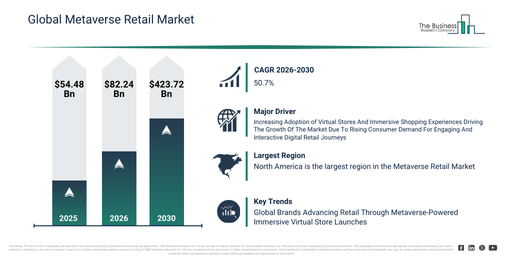
  • Global Metaverse Retail Market Forecast 2026–2035: Long-Term Growth Insights

    Global Metaverse Retail Market Forecast 2026–2035: Long-Term Growth Insights

    Uncover key drivers, emerging technologies, and competitive movements shaping the metaverse retail market from 2026–2035 with trusted insights from The Business Research Company

    How is the Metaverse Retail Market size predicted to change over the forecast window of 2026–2035?

    The metaverse retail market has seen significant expansion in recent years. This market is expected to increase from $54.48 billion in 2025 to $82.24 billion in 2026, registering a compound annual growth rate (CAGR) of 50.9%. The market’s past growth is primarily due to the increasing adoption of virtual and augmented reality platforms, enhanced consumer participation in digital realms, the wider implementation of immersive shopping experiences, the proliferation of online and interactive retail channels, and a heightened focus on brand innovation and experiential marketing.

    The metaverse retail market is projected to experience rapid expansion over the coming years, reaching $423.72 billion in 2030, demonstrating a compound annual growth rate (CAGR) of 50.7%. This significant growth during the projection period stems from several factors, including the increasing incorporation of artificial intelligence (AI) for tailored virtual shopping, a heightened demand for engaging and interactive retail experiences, wider acceptance of blockchain-driven digital ownership and transactions, the proliferation of virtual commerce platforms, and increased investment in retail solutions utilizing augmented and virtual reality. Key trends anticipated for the forecast period encompass technology-led innovations within immersive retail interfaces, progress in artificial intelligence (AI) powered recommendation systems, advancements in virtual reality (VR) and augmented reality (AR) shopping technologies, increased research and development efforts in digital asset and payment integration, and the creation of novel interactive and gamified consumer engagement platforms.

    Access Your Free Sample Report for In-Depth Market Insights:

    https://www.thebusinessresearchcompany.com/sample.aspx?id=30656&type=smp

    Which Drivers Are Contributing To The Expansion Of The Metaverse Retail Market?

    The increasing adoption of virtual stores and immersive shopping experiences is expected to propel the growth of the metaverse retail market going forward. Virtual stores and immersive shopping experiences refer to digital retail environments that allow consumers to browse, interact with, and purchase products through 3D and extended reality platforms such as virtual reality (VR) and augmented reality (AR). Their adoption is rising as consumers increasingly demand more engaging, interactive, and personalized shopping journeys that traditional e-commerce cannot deliver. Metaverse retail supports virtual stores and immersive shopping experiences by enabling brands to create digital storefronts, interactive try-on experiences, and avatar-based shopping environments that enhance customer engagement and expand access beyond physical locations. For instance, in 2023, according to Adobe Inc., a US-based software and digital experience company, retailers using 3D renders on their e-commerce sites saw the share of shoppers adding items to their carts rise from 32% in 2022 to 45% in 2023, representing a 40.6% year-on-year increase. Therefore, the increasing adoption of virtual stores and immersive shopping experiences is driving the growth of the metaverse retail market.

    What Segment Categories Are Covered In The Metaverse Retail Market?

    The metaverse retail market covered in this report is segmented –

    1) By Platform: Desktop, Virtual Reality (VR) Headsets, Mobile, Smart Glasses

    2) By Technology: Blockchain, Artificial Intelligence (AI), Augmented Reality (AR), Virtual Reality (VR), Cloud Computing, Other Technologies

    3) By Retail Activity Type: Virtual Storefronts And Showrooms, Virtual Try-On And Product Customization, Fashion And Apparel, Beauty And Cosmetics, Home And Automotive, Immersive Marketing And Live Events, Digital Product Commerce, Virtual Only Goods, Phygital Goods, Social Shopping And Advisory, Other Retail Activities

    4) By Application: Electronics, Automotive, Beauty And Personal Care, Clothing And Apparel, Footwear, Furniture And Home Décor, Sports And Fitness, Other Applications

    Subsegments:

    1) By Desktop: Web Browser Based Platform, Standalone Application Platform, Cloud Connected Platform

    2) By Virtual Reality (VR) Headsets: Tethered Headset Platform, Standalone Headset Platform, Mixed Reality Headset Platform

    3) By Mobile: iOS Platform, Android Platform, Cross Platform Mobile Application

    4) By Smart Glasses: Augmented Reality Glasses Platform, Mixed Reality Glasses Platform, Standalone Smart Glasses Platform

    How Are Emerging Trends Affecting The Progression Of The Metaverse Retail Market?

    Leading companies active in the metaverse retail market are concentrating on creating sophisticated user experiences, including immersive virtual store environments, to enable consumers to browse and acquire products in digital realms. These immersive virtual store experiences represent digitally crafted retail settings that permit customers to engage with items and brands in a realistic, captivating, and often 3D or VR-supported context. For example, in October 2023, Casio Computer Co. Ltd., a Japan-based electronics and watch manufacturer, debuted the virtual G-SHOCK STORE on the VRChat metaverse platform, delivering an immersive virtual store experience within a dedicated virtual reality environment. Users are able to craft their unique customized G-SHOCK watches in the G-SHOCK STORE virtual world by combining different components. Additionally, they can observe how their VRChat avatars appear wearing the watches they have designed.

    Which Major Industry Participants Are Leading The Metaverse Retail Market Growth?

    Major companies operating in the metaverse retail market are Walmart Inc., Samsung Electronics Co. Ltd., Meta Platforms Inc., Alibaba Group Holding Limited, Nike Inc., H&M Group, Adidas AG, Ralph Lauren Corporation, Louis Vuitton, Roblox Corporation, Epic Games Inc., Balenciaga, Guccio Gucci SPA, Immutable Pty Ltd., The Sandbox, OpenSea Inc., ZEPETO Corporation, Decentraland, VRChat Inc., Spatial Systems Inc., Voxels LLC, Somnium Space Ltd., DRESSX

    Access The Complete Report For Deeper Market Insights:

    https://www.thebusinessresearchcompany.com/report/metaverse-retail-market-report

    Which Region Is Expected To Experience The Fastest Growth In The Metaverse Retail Market?

    North America was the largest region in the metaverse retail market in 2025. Asia-Pacific is expected to be the fastest-growing region in the forecast period. The regions covered in the metaverse retail market report are Asia-Pacific, South East Asia, Western Europe, Eastern Europe, North America, South America, Middle East, Africa.

    Request Your Customized Metaverse Retail Market Research Report for Competitive Advantage:

    https://www.thebusinessresearchcompany.com/customise?id=30656&type=smp

    Browse Through More Reports Similar to the Global Metaverse Retail Market 2026, By The Business Research Company

    Retail Market Report 2026

    https://www.thebusinessresearchcompany.com/report/retail-global-market-report

    Miscellaneous Store Retailers Market Report 2026

    https://www.thebusinessresearchcompany.com/report/miscellaneous-store-retailers-global-market-report

    retail and wholesale global market report

    https://www.thebusinessresearchcompany.com/report/retail-and-wholesale-global-market-report

    Get in touch with us:

    The Business Research Company: https://www.thebusinessresearchcompany.com/

    Americas +1 310-496-7795

    Asia +44 7882 955267 & +91 8897263534

    Europe +44 7882 955267

    Email us at marketing@tbrc.info

    Follow us on:

    LinkedIn: https://in.linkedin.com/company/the-business-research-company

    YouTube: https://www.youtube.com/channel/UC24_fI0rV8cR5DxlCpgmyFQ

    Global Market Model: https://www.thebusinessresearchcompany.com/global-market-model