Category: Medical Equipment

  • Medical Microfluidic Devices Market 2026–2030: Forecast, Innovation, and Competitive Trends

    Medical Microfluidic Devices Market 2026–2030: Forecast, Innovation, and Competitive Trends

    Uncover key drivers, emerging technologies, and competitive movements shaping the medical microfluidic devices market from 2026–2035 with trusted insights from The Business Research Company

    How much is the Medical Microfluidic Devices Market valued at in 2026, and what valuation is forecast for 2030?

    The medical microfluidic devices market has experienced significant growth in recent years. It is projected to expand from $6.35 billion in 2025 to $7.32 billion in 2026, demonstrating a compound annual growth rate (CAGR) of 15.3%. This historic expansion can be linked to the increased adoption of point-of-care diagnostics, the growing utilization of lab-on-a-chip technology in research facilities, the rising demand for microfluidic-based clinical testing, the expansion of pharmaceutical and biotech R&D applications, and the increasing use of polymer-based microfluidic materials.

    The market for medical microfluidic devices is projected to experience substantial expansion in the coming years. This sector is anticipated to reach a valuation of $12.79 billion by 2030, exhibiting a compound annual growth rate (CAGR) of 15.0%. This projected expansion during the forecast period can be attributed to several factors, including the increasing need for personalized medicine and organ-on-chip models, the rising incorporation of microfluidics into decentralized and home diagnostic solutions, greater acceptance of microfluidic platforms for tracking infectious diseases, the broadening utility of microfluidic applications in high-throughput drug screening, and the expanding presence of these devices in developing healthcare markets. Significant developments expected in this period encompass technological progress in integrated lab-on-a-chip systems, breakthroughs in droplet-based and paper-based microfluidic technologies, the evolution of compact biosensors and detection systems, ongoing research and development efforts in organ-on-chip and tissue engineering technologies, and advancements in automated and AI-driven microfluidic analysis.

    Access Your Free Sample Report for In-Depth Market Insights:

    https://www.thebusinessresearchcompany.com/sample.aspx?id=30652&type=smp

    What Drivers Are Influencing The Growth Of The Medical Microfluidic Devices Market?

    The expanding occurrence of chronic illnesses is anticipated to drive the advancement of the medical microfluidic devices market in the future. These are enduring health conditions, including diabetes, heart disease, and arthritis, which typically advance gradually and necessitate continuous medical care and lifestyle adjustments for symptom management and complication prevention. The rise in chronic diseases is predominantly linked to unhealthy lifestyle choices, such as inadequate diet, lack of physical activity, and smoking, which elevate the likelihood of developing conditions like diabetes, heart disease, and obesity. Medical microfluidic devices assist in managing chronic diseases by facilitating precise manipulation and examination of minute fluid samples for ongoing monitoring and diagnostic purposes. These devices enhance patient care through their support for quick testing, tailored treatment modifications, and non-invasive long-term disease surveillance. As an illustration, the National Health Service, a UK-based government department, reported in June 2024 that 3,615,330 individuals registered with a general practitioner (GP) had a diagnosis of non-diabetic hyperglycemia or pre-diabetes (a state characterized by heightened blood sugar levels, though insufficient for a diabetes classification) in 2023. This represented an 18% surge from the 3,065,825 cases recorded in 2022. Consequently, the expanding occurrence of chronic diseases is fueling the expansion of the medical microfluidic devices market.

    What Segments Are Included Within The Medical Microfluidic Devices Market?

    The medical microfluidic devices market covered in this report is segmented –

    1) By Product Type: Lab-On-A-Chip (LOC) Systems, Microfluidic Chips And Cartridges, Droplet-Based Microfluidic Systems, Paper-Based Microfluidic Devices, Continuous-Flow Microfluidic Systems, Organ-On-A-Chip Platforms

    2) By Material: Glass, Polymer, Silicon, Metals, Ceramics

    3) By Application: Point-Of-Care Diagnostics, Drug Discovery And Development, Organ-On-Chip And Tissue Engineering, Infectious Disease Monitoring

    4) By End User: Hospitals And Diagnostic Clinics, Diagnostic And Research Laboratories, Pharmaceutical And Biotechnology Companies, Academic And Research Institutes, Home Care Settings

    Subsegments:

    1) By Lab-On-A-Chip Systems: Clinical Diagnostic Chips, Environmental Monitoring Chips, Biochemical Analysis Chips, Single-Cell Analysis Platforms

    2) By Microfluidic Chips And Cartridges: Point-Of-Care Diagnostic Cartridges, Sample Preparation Chips, Cell Culture And Assay Chips, Polymerase Chain Reaction Chips

    3) By Droplet-Based Microfluidic Systems: Water-In-Oil Emulsion Systems, Oil-In-Water Emulsion Systems, Digital Droplet Systems, High-Throughput Screening Platforms

    4) By Paper-Based Microfluidic Devices: Lateral Flow Assay Strips, Three-Dimensional Paper Networks, Multiplexed Detection Devices, Colorimetric Analysis Strips

    5) By Continuous-Flow Microfluidic Systems: Microreactor Systems, Cell Sorting And Separation Systems, Micromixer Devices, Chemical Synthesis Platforms

    6) By Organ-On-A-Chip Platforms: Liver-On-A-Chip Models, Lung-On-A-Chip Models, Heart-On-A-Chip Models, Multi-Organ System Models

    What Industry Trends Are Transforming The Medical Microfluidic Devices Market?

    Leading firms within the medical microfluidic devices market are concentrating their efforts on creating sophisticated platforms, including fully integrated microfluidic chip-based platforms, with the goal of expediting the creation of biopharmaceutical treatments for renal care and other ailments. These fully integrated microfluidic chip-based platforms are defined as lab-on-a-chip systems, which consolidate various laboratory operations—like sample preparation, fluid manipulation, chemical reactions, separation processes, and detection—onto a singular miniaturized chip. An illustrative example occurred in June 2023 when AB Sciex LLC, a life science analytical technology company located in the US, introduced the Intabio ZT system. This product represents the initial fully-integrated microfluidic chip-based platform that incorporates imaged capillary isoelectric focusing (icIEF) separation along with UV detection. This particular platform is engineered to gather exhaustive data concerning charge isoforms in biopharmaceuticals, featuring effortless integration with the ZenoTOF 7600 system. Furthermore, the solution offers advanced data processing capabilities through Biologics Explorer software, facilitating a more profound understanding of protein therapeutics and thereby speeding up the provision of safe and potent biological therapies.

    Who Are The Top-Performing Companies In The Medical Microfluidic Devices Market In Recent Years?

    Major companies operating in the medical microfluidic devices market are Roche Diagnostics, Thermo Fisher Scientific Inc, Abbott Laboratories, Danaher Corporation, Agilent Technologies Inc., Illumina Inc., BioMérieux, PerkinElmer Inc., Bio-Rad Laboratories Inc., Fluidigm Corporation, Spectrum Fluidics, Biosurfit SA, Cellix Ltd., 3M Company, Dolomite Microfluidics, Micronit Microtechnologies B.V., Sphere Fluidics Ltd., BioFluidica Inc., uFluidix Inc., Elveflow, On-chip Biotechnologies, Achira Labs Pvt. Ltd., Akkonni Biosystems Inc.

    Access The Complete Report For Deeper Market Insights:

    https://www.thebusinessresearchcompany.com/report/medical-microfluidic-devices-market-report

    Which Region Currently Holds The Largest Share Of The Medical Microfluidic Devices Market?

    North America was the largest region in the medical microfluidic devices market in 2025. Asia-Pacific is expected to be the fastest-growing region in the forecast period. The regions covered in the medical microfluidic devices market report are Asia-Pacific, South East Asia, Western Europe, Eastern Europe, North America, South America, Middle East, Africa.

    Request Your Customized Medical Microfluidic Devices Market Research Report for Competitive Advantage:

    https://www.thebusinessresearchcompany.com/customise?id=30652&type=smp

    Browse Through More Reports Similar to the Global Medical Microfluidic Devices Market 2026, By The Business Research Company

    Microfluidics Market Report 2026

    https://www.thebusinessresearchcompany.com/report/microfluidics-global-market-report

    Medical Device Technologies Market Report 2026

    https://www.thebusinessresearchcompany.com/report/medical-device-technologies-global-market-report

    nanotechnology based medical devices global market report

    https://www.thebusinessresearchcompany.com/report/nanotechnology-based-medical-devices-global-market-report

    Get in touch with us:

    The Business Research Company: https://www.thebusinessresearchcompany.com/

    Americas +1 310-496-7795

    Asia +44 7882 955267 & +91 8897263534

    Europe +44 7882 955267

    Email us at marketing@tbrc.info

    Follow us on:

    LinkedIn: https://in.linkedin.com/company/the-business-research-company

    YouTube: https://www.youtube.com/channel/UC24_fI0rV8cR5DxlCpgmyFQ

    Global Market Model: https://www.thebusinessresearchcompany.com/global-market-model

  • Medical Microbiology Testing Technology Market Forecast 2026–2035: Data Trends and Industry Insights

    Medical Microbiology Testing Technology Market Forecast 2026–2035: Data Trends and Industry Insights

    Uncover key drivers, emerging technologies, and competitive movements shaping the medical microbiology testing technology market from 2026–2035 with trusted insights from The Business Research Company

    By how much is the Medical Microbiology Testing Technology Market expected to grow between 2026 and 2030?

    The medical microbiology testing technology market has experienced robust expansion in recent years. Projections indicate it will expand from $6.00 billion in 2025 to $6.50 billion in 2026, exhibiting a compound annual growth rate (CAGR) of 8.2%. Several factors have fueled this historical growth, including a greater occurrence of infectious diseases, enhanced recognition of antimicrobial resistance, escalating healthcare costs, the expansion of clinical laboratories, and the growing uptake of automated systems.

    The medical microbiology testing technology market is projected to experience substantial expansion in the coming years. This market is set to reach a valuation of $8.82 billion by 2030, exhibiting a compound annual growth rate (CAGR) of 8.0%. This expansion during the forecast period is primarily driven by factors such as the increasing need for rapid and point-of-care testing, the proliferation of government initiatives and public health programs, a heightened emphasis on food and pharmaceutical safety testing, the widening presence in developing markets, and the enhanced integration of laboratory information systems. Key trends anticipated for the forecast period encompass progress in molecular diagnostics, novelties in high-throughput testing platforms, the evolution of multiplex and rapid diagnostic tests, a rise in microbiology research and development, and the merging of technology with serological and immunological testing.

    Access Your Free Sample Report for In-Depth Market Insights:

    https://www.thebusinessresearchcompany.com/sample.aspx?id=30651&type=smp

    Which Drivers Are Influencing Market Acceleration In The Medical Microbiology Testing Technology Market?

    The increasing requirement for swift pathogen detection and identification is projected to boost the growth of the medical microbiology testing technology market moving forward. Rapid pathogen detection and identification refer to the application of diagnostic methods that quickly and accurately pinpoint microbes such as bacteria, viruses, and other pathogens directly from patient samples without prolonged culture phases, thereby reducing the time to diagnosis and enabling faster medical judgments. The need for rapid pathogen detection is growing as public health organizations and clinical laboratories globally strive to improve processing times and effectively manage infectious disease outbreaks and pressures from antimicrobial resistance. Medical microbiology testing technology supports rapid pathogen detection by identifying infectious agents quickly and precisely using advanced diagnostic techniques, facilitating timely treatment and curbing the spread of infection. For instance, in November 2025, data from April 2025, provided by the Infectious Disease Surveillance Center, a Japan-based public health organization, indicated that between 2,104 and 2,153 respiratory pathogen tests were conducted per pathogen category within a single reporting period, with positivity rates for severe acute respiratory syndrome coronavirus 2, influenza, respiratory syncytial virus, and parainfluenza ranging from 5.7% to 11.5%. Therefore, the escalating demand for rapid pathogen detection and identification is propelling the expansion of the medical microbiology testing technology market.

    What Leading Segments Are Studied In The Medical Microbiology Testing Technology Market?

    The medical microbiology testing technology market covered in this report is segmented –

    1) By Product Type: Reagents, Instruments, Consumables, Software, Services

    2) By Testing Method: Culture Test, Polymerase Chain Reaction, Immunoassays, Deoxyribonucleic Acid Sequence

    3) By Technology: Cell Culture, Microscopy, Serology

    4) By Application: Infectious Diseases, Non-infectious Diseases, Research And Development, Clinical Trials

    5) By End Use: Hospitals, Diagnostic Laboratories, Pharmaceutical Companies, Research Institutes, Food And Beverage Industry

    Subsegments:

    1) By Reagents: Culture Media, Detection Reagents, Antigen And Antibody Reagents, Molecular Diagnostic Kits, Stains And Dyes, Antibiotic Or Susceptibility Testing Reagents

    2) By Instruments: Microscopes, Incubators, Automated Culture Systems Or Microbiology Analyzers, Spectrophotometers, Centrifuges, Colony Counters Or Plate Readers, Autoclaves Or Sterilizers, Bioreactors Or Environmental Monitoring Systems

    3) By Consumables: Petri Dishes, Test Tubes, Pipette Tips, Microplates, Sample Swabs Or Collection Containers, Slides And Cover Slips, Disposable Filters Or Membranes, Disposable Consumable Kits

    4) By Software: Laboratory Information Management Software, Data Analysis Or Result Reporting Software, Quality Control Or Workflow Management Software, Automated Instrument Control Software, Database Or Reference Strain Or Pathogen Registry Software

    5) By Services: Contract Testing Or Outsourced Microbiological Testing, Equipment Maintenance And Calibration, Training And Technical Support, Consulting And Compliance Services, Validation And Quality Assurance Services

    What Trends Are Reshaping The Dynamics Of The Medical Microbiology Testing Technology Market?

    Major companies within the medical microbiology testing technology market are concentrating on creating sophisticated molecular analysis products, such as digital PCR (dPCR) assays, to enhance research efficiency, boost detection accuracy, and improve public health surveillance. Digital PCR assays are highly sensitive technologies capable of identifying and precisely quantifying specific DNA sequences, even when present at very low concentrations, thereby enabling accurate pathogen detection and monitoring. For instance, in June 2024, QIAGEN N.V., a Netherlands-based provider of molecular biology and life sciences solutions, introduced 35 new wet-lab tested digital PCR Microbial DNA Detection Assays designed for its QIAcuity digital PCR platform. These assays are accessible via QIAGEN’s research platform, GeneGlobe, and are formulated to target a wide spectrum of pathogens responsible for tropical diseases (e.g., Dengue, Chikungunya, Malaria), sexually transmitted infections (STIs), and urinary tract infections (UTIs).

    Which Leading Companies Dominate The Medical Microbiology Testing Technology Market Share?

    Major companies operating in the medical microbiology testing technology market are F. Hoffmann-La Roche Ltd., Thermo Fisher Scientific Inc., Siemens Healthineers AG, Danaher Corporation, Becton Dickinson and Company, bioMérieux SA, Hologic Inc., Sysmex Corporation, Bruker Corporation, Bio-Rad Laboratories Inc., QIAGEN N.V., Abbott Laboratories, Meridian Bioscience Inc., Fujirebio Diagnostics Inc., Seegene Inc., Oxford Nanopore Technologies plc, Molbio Diagnostics Pvt. Ltd., Hardy Diagnostics, HiMedia Laboratories Pvt. Ltd., Accelerate Diagnostics Inc., Liofilchem S.r.l.

    Access The Complete Report For Deeper Market Insights:

    https://www.thebusinessresearchcompany.com/report/medical-microbiology-testing-technology-market-report

    How Does The Medical Microbiology Testing Technology Market Perform Across Major Global Regions?

    North America was the largest region in the medical microbiology testing technology market in 2025. Asia-Pacific is expected to be the fastest-growing region in the forecast period. The regions covered in the medical microbiology testing technology market report are Asia-Pacific, South East Asia, Western Europe, Eastern Europe, North America, South America, Middle East, Africa.

    Request Your Customized Medical Microbiology Testing Technology Market Research Report for Competitive Advantage:

    https://www.thebusinessresearchcompany.com/customise?id=30651&type=smp

    Browse Through More Reports Similar to the Global Medical Microbiology Testing Technology Market 2026, By The Business Research Company

    Microbiology And Bacterial Culture For Industrial Testing Market Report 2026

    https://www.thebusinessresearchcompany.com/report/microbiology-and-bacterial-culture-for-industrial-testing-global-market-report

    Clinical Microbiology Market Report 2026

    https://www.thebusinessresearchcompany.com/report/clinical-microbiology-global-market-report

    hospital acquired infections testing kits global market report

    https://www.thebusinessresearchcompany.com/report/hospital-acquired-infections-testing-kits-global-market-report

    Get in touch with us:

    The Business Research Company: https://www.thebusinessresearchcompany.com/

    Americas +1 310-496-7795

    Asia +44 7882 955267 & +91 8897263534

    Europe +44 7882 955267

    Email us at marketing@tbrc.info

    Follow us on:

    LinkedIn: https://in.linkedin.com/company/the-business-research-company

    YouTube: https://www.youtube.com/channel/UC24_fI0rV8cR5DxlCpgmyFQ

    Global Market Model: https://www.thebusinessresearchcompany.com/global-market-model
  • Medical Magnets Market Outlook 2026–2030: Key Business Drivers and Trends

    Medical Magnets Market Outlook 2026–2030: Key Business Drivers and Trends

    Uncover key drivers, emerging technologies, and competitive movements shaping the medical magnets market from 2026–2035 with trusted insights from The Business Research Company

    What is the estimated market size of the Medical Magnets Market by the end of 2030?

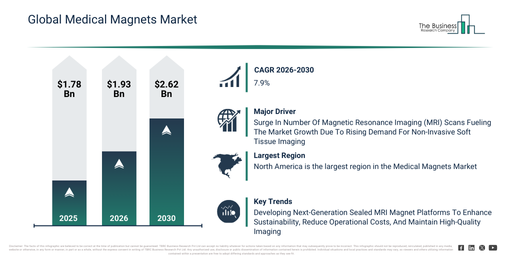
    The medical magnets market has experienced substantial growth in recent years. Forecasts indicate it will expand from $1.78 billion in 2025 to $1.93 billion in 2026, demonstrating a compound annual growth rate (CAGR) of 8.2%. Historically, this growth can be ascribed to several factors, including the increasing adoption of MRI systems, the growing prevalence of neurological disorders, rising investments in diagnostic infrastructure, the expansion of magnetic therapy usage, and the growing production of high-performance magnets.

    The medical magnets market is projected to experience robust expansion over the coming years. Its value is set to reach $2.62 billion by 2030, demonstrating a compound annual growth rate (CAGR) of 7.9%. This anticipated growth is driven by several factors, including a rising demand for minimally invasive diagnostic procedures, increasing research and development in magnetic drug delivery, the growing use of TMS devices, the expansion of hyperthermia applications for cancer treatment, and the expanding use of precision magnets in dental applications. Key trends anticipated during this period encompass technological advancements in high-field MRI magnet systems, innovations concerning TMS coil and magnet designs, the creation of lightweight and high-strength magnets, ongoing research and development in magnetic hyperthermia therapy, and progress in portable and compact magnetic device technologies.

    Access Your Free Sample Report for In-Depth Market Insights:

    https://www.thebusinessresearchcompany.com/sample.aspx?id=30650&type=smp

    What Drivers Are Shaping Future Opportunities In The Medical Magnets Market?

    The expanding volume of magnetic resonance imaging (MRI) scans is anticipated to stimulate the advancement of the medical magnets market. MRI scans are non-invasive diagnostic methods that utilize strong magnets and radio waves to generate detailed images of internal organs and tissues. The rise in MRI scans is attributed to the growing global elderly population, which frequently experiences chronic conditions that demand precise, non-invasive soft tissue imaging for proper diagnosis and treatment strategies. Medical magnets facilitate MRI scans by creating the powerful, stable magnetic fields necessary to produce intricate images of inner body structures. They improve diagnostic precision and image quality by allowing high-resolution viewing of soft tissues without ionizing radiation. As an illustration, in December 2024, data from NHS England, a publicly funded UK healthcare provider, showed that MRI scans in England rose from 361,705 in August 2023 to 365,270 in August 2024, with a cumulative 12-month total from September 2023 to August 2024 reaching 4,504,615 scans. Consequently, the increasing use in both therapeutic and diagnostic capacities is fueling the expansion of the medical magnets market.

    Which Segment Groups Are Influencing The Medical Magnets Market?

    The medical magnets market covered in this report is segmented –

    1) By Product Type: High-Performance Magnets, Lower-Performance Magnets, Superconducting Magnets, Electromagnets

    2) By Material Type: Neodymium Iron Boron, Ferrite, Samarium Cobalt, Other Materials

    3) By Technology: Permanent Magnet Technology, Electromagnetic Systems, Superconducting Magnet Technology, Hybrid Magnetic Systems

    4) By Application: Magnetic Resonance Imaging, Transcranial Magnetic Stimulation, Magnetic Therapy, Drug Delivery, Dentistry

    5) By End User: Hospitals, Diagnostic Imaging Centers, Specialty Neurology Centers, Research And Academic Institutions, Rehabilitation And Wellness Centers

    Subsegment:

    1) By High-Performance Magnets: Neodymium Iron Boron, Samarium Cobalt, Alnico

    2) By Lower-Performance Magnets: Ferrite, Ceramic

    3) By Superconducting Magnets: Niobium Titanium, Niobium Tin, Magnesium Diboride

    4) By Electromagnets: Solenoid, Toroidal, Helical

    How Are New Market Trends Shaping The Landscape Of The Medical Magnets Market?

    Leading companies within the medical magnets market are concentrating on creating advanced technology, such as helium-efficient MRI magnet technologies, to decrease operational expenditures and improve sustainability without sacrificing imaging performance. Helium-efficient MRI magnet technologies refer to next-generation superconducting magnet designs that employ minimal or no liquid helium via sealed or cryogen-free cooling systems to cut resource use, running costs, and environmental impact, all while maintaining high-quality imaging performance. For example, in February 2025, GE Healthcare Technologies Inc., a US-based medical technology company, launched the Freelium sealed magnet platform. This platform incorporates a helium-free design that utilizes less than 1% of the helium needed by traditional MRI magnets, integrates intelligent sensor technology for remote oversight and automated magnet recovery, and provides a permanent helium enclosure for sustainability. Further capabilities include compatibility with AI-enabled imaging solutions and a design optimized for placement in areas with restricted helium access, enabling wider deployment of high-performance MRI systems. This introduction signifies a major advancement in MRI technology by combining environmental efficiency, operational reliability, and high-quality diagnostic performance.

    Who Are The Major Companies Operating In The Medical Magnets Market?

    Major companies operating in the medical magnets market are Hitachi Ltd., Siemens Healthineers AG, Koninklijke Philips N.V., GE HealthCare Technologies Inc., Shin-Etsu Chemical Co. Ltd., Canon Medical Systems Corporation, Neo Performance Materials Inc., Ningbo Tongchuang Magnetic Materials Co. Ltd., Stereotaxis Inc., MagnetsTek LLC, SM Magnetics Inc., Zhejiang Zhaobao Magnet Group Co. Ltd., Bunting-DuBois Magnetics, I.M.A. Industria Macchine Automatiche S.p.A., Magnetica Limited, VACUUMSCHMELZE GmbH & Co. KG, Newland Magnetics Europe Ltd., Noveon Magnetics Inc., Goudsmit Magnetics Group B.V., MainRich Magnetics Co. Ltd.

    Access The Complete Report For Deeper Market Insights:

    https://www.thebusinessresearchcompany.com/report/medical-magnets-market-report

    Which Region Is Anticipated To See The Fastest Growth In The Medical Magnets Market?

    North America was the largest region in the medical magnets market in 2025. Asia-Pacific is expected to be the fastest-growing region in the forecast period. The regions covered in the medical magnets market report are Asia-Pacific, South East Asia, Western Europe, Eastern Europe, North America, South America, Middle East, Africa.

    Request Your Customized Medical Magnets Market Research Report for Competitive Advantage:

    https://www.thebusinessresearchcompany.com/customise?id=30650&type=smp

    Browse Through More Reports Similar to the Global Medical Magnets Market 2026, By The Business Research Company

    Electronic Device Magnets Market Report 2026

    https://www.thebusinessresearchcompany.com/report/electronic-device-magnets-global-market-report

    Magnetic Materials Market Report 2026

    https://www.thebusinessresearchcompany.com/report/magnetic-materials-global-market-report

    magnetometer global market report

    https://www.thebusinessresearchcompany.com/report/magnetometer-global-market-report

    Get in touch with us:

    The Business Research Company: https://www.thebusinessresearchcompany.com/

    Americas +1 310-496-7795

    Asia +44 7882 955267 & +91 8897263534

    Europe +44 7882 955267

    Email us at marketing@tbrc.info

    Follow us on:

    LinkedIn: https://in.linkedin.com/company/the-business-research-company

    YouTube: https://www.youtube.com/channel/UC24_fI0rV8cR5DxlCpgmyFQ

    Global Market Model: https://www.thebusinessresearchcompany.com/global-market-model
  • Medical Imaging Reconstruction Artificial Intelligence (AI) Sector Forecast Shows Robust Momentum, Climbing to $5.65 Billion With 25.7% CAGR

    Medical Imaging Reconstruction Artificial Intelligence (AI) Sector Forecast Shows Robust Momentum, Climbing to $5.65 Billion With 25.7% CAGR

    Uncover key drivers, emerging technologies, and competitive movements shaping the medical imaging reconstruction artificial intelligence (ai) market from 2026–2035 with trusted insights from The Business Research Company

    What was the valuation of the Medical Imaging Reconstruction Artificial Intelligence (AI) Market in 2026, and what figure is it projected to hit by 2030?

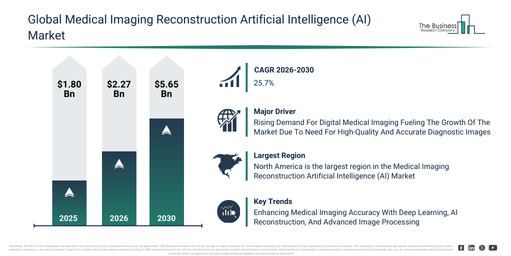
    The medical imaging reconstruction artificial intelligence (AI) market has seen rapid expansion in recent years. This market is projected to expand from $1.80 billion in 2025 to $2.27 billion in 2026, demonstrating a compound annual growth rate (CAGR) of 26.0%. The historical expansion can be linked to factors such as increasing medical imaging volumes, the wider uptake of digital radiology systems, a heightened requirement for swifter image reconstruction, a greater emphasis on lowering radiation exposure, and the expanded incorporation of deep learning methodologies.

    The medical imaging reconstruction artificial intelligence (AI) market size is projected to experience substantial expansion in the coming years. It is anticipated to reach $5.65 billion in 2030 at a compound annual growth rate (CAGR) of 25.7%. This projected growth throughout the forecast period stems from factors such as increasing demand for cloud-based imaging solutions, escalating investments in artificial intelligence healthcare innovation, broader deployment of advanced reconstruction software, expanding hospital digital transformation initiatives, and the rising need for radiologist workflow automation. Key trends shaping the forecast period encompass increasing adoption of multimodal image reconstruction, a growing reliance on real-time reconstruction algorithms, rising integration of generative artificial intelligence models, the expansion of hybrid cloud imaging platforms, and a growing movement towards fully automated imaging pipelines.

    Access Your Free Sample Report for In-Depth Market Insights:

    https://www.thebusinessresearchcompany.com/sample.aspx?id=30649&type=smp

    Which Drivers Are Affecting Market Participation In The Medical Imaging Reconstruction Artificial Intelligence (AI) Market?

    The medical imaging reconstruction artificial intelligence (AI) market is anticipated to expand due to the escalating need for digital medical imaging. Digital medical imaging involves employing digital technologies to capture, store, process, and display bodily medical images for diagnostic, monitoring, and treatment purposes. This surge in demand for digital imaging stems from a heightened requirement for premium visual content and precise diagnostic images, as digital solutions facilitate quicker processing, enhanced resolution, and streamlined data storage and sharing. Medical imaging reconstruction artificial intelligence (AI) bolsters digital medical imaging through improved image quality, faster reconstruction, and more precise interpretation of diagnostic scans, consequently elevating patient care by enabling accurate diagnoses and well-informed clinical judgments. For example, NHS England, a UK-based government health authority, reported in May 2025 that 48.9 million imaging tests were recorded throughout England from February 2024 to January 2025, including 4.03 million tests in January 2025 alone, demonstrating the consistent high volume of diagnostic imaging activity. Hence, the rising need for digital medical imaging is a significant factor propelling the expansion of the medical imaging reconstruction artificial intelligence (AI) market.

    What Segment Classifications Make Up The Medical Imaging Reconstruction Artificial Intelligence (AI) Market?

    The medical imaging reconstruction artificial intelligence (AI) market covered in this report is segmented –

    1) By Component: Software, Hardware, Services

    2) By Modality: Computed Tomography (CT), Magnetic Resonance Imaging (MRI), Positron Emission Tomography (PET), Ultrasound, X-Ray (X-Radiation), Other Modality

    3) By Deployment Mode: On-Premises, Cloud

    4) By Application: Oncology, Cardiology, Neurology, Orthopedics, Other Application

    5) By End-User: Hospitals, Diagnostic Imaging Centers, Research Institutes, Other End-User

    Subsegments:

    1) By Software: Image Reconstruction Software, Workflow Management Software, Cloud-Based Reconstruction Platforms, Artificial Intelligence Algorithm Software, Data Analytics And Visualization Software

    2) By Hardware: Imaging Processing Units, Medical Imaging Scanners, Storage And Server Systems, Graphics Processing Hardware, Edge Computing Devices

    3) By Services: Maintenance And Support Services, Training And Implementation Services, Consulting Services, Software As A Service, Research And Development Services

    Which Trends Are Expected To Influence The Medical Imaging Reconstruction Artificial Intelligence (AI) Market In The Upcoming Years?

    Leading companies in the medical imaging reconstruction artificial intelligence (AI) market are dedicated to developing advanced technological solutions, such as deep learning-based image processing software, to enhance diagnostic precision, decrease scan times, and improve image quality across various modalities. Deep learning-based image processing software involves AI algorithms trained on extensive datasets to reconstruct medical images with superior clarity, reduce unwanted noise, and accurately identify anatomical structures, thereby enabling more informed clinical decision-making. For instance, in May 2023, GE HealthCare, a US-based medical technology company, obtained FDA 510(k) clearance for Precision DL, which is deep learning image processing software designed for PET/CT scanners and implemented on the Omni Legend system. This solution utilizes deep learning image processing to elevate image quality while maintaining minimal radiation exposure, speeding up workflow, and providing clinicians with more exact diagnostic information. Its objectives also include improving the detection of small lesions, optimizing quantitative accuracy, and supporting faster, lower-dose imaging, allowing clinicians to deliver more precise and individualized patient care.

    Which Major Firms Are Strengthening Their Position In The Medical Imaging Reconstruction Artificial Intelligence (AI) Market?

    Major companies operating in the medical imaging reconstruction artificial intelligence (AI) market are NVIDIA Corporation, Siemens Healthineers AG, Fujifilm Holdings Corp., Philips International B.V., GE HealthCare Technologies Inc., United Imaging Healthcare Co. Ltd., Samsung Medison, Hitachi Medical Systems GmbH, Canon Medical Systems Corporation, Viz.ai Inc., Aidoc Medical Ltd., Lunit Inc., Infervision, Quibim SL, DeepHealth, Blackford Analysis Ltd., Airs Medical Inc., Subtle Medical Inc., Zebra Medical, Enlitic

    Access The Complete Report For Deeper Market Insights:

    https://www.thebusinessresearchcompany.com/report/medical-imaging-reconstruction-artificial-intelligence-ai-market-report

    Which Region Shows The Strongest Potential For Future Expansion In The Medical Imaging Reconstruction Artificial Intelligence (AI) Market?

    North America was the largest region in the medical imaging reconstruction artificial intelligence (AI) market in 2025. Asia-Pacific is expected to be the fastest-growing region in the forecast period. The regions covered in the medical imaging reconstruction artificial intelligence (AI) market report are Asia-Pacific, South East Asia, Western Europe, Eastern Europe, North America, South America, Middle East, Africa.

    Request Your Customized Medical Imaging Reconstruction Artificial Intelligence (AI) Market Research Report for Competitive Advantage:

    https://www.thebusinessresearchcompany.com/customise?id=30649&type=smp

    Browse Through More Reports Similar to the Global Medical Imaging Reconstruction Artificial Intelligence (AI) Market 2026, By The Business Research Company

    Artificial Intelligence In Medical Imaging Market Report 2026

    https://www.thebusinessresearchcompany.com/report/artificial-intelligence-in-medical-imaging-global-market-report

    Ai In Medical Imaging Market Report 2026

    https://www.thebusinessresearchcompany.com/report/ai-in-medical-imaging-global-market-report

    artificial intelligence in magnetic resonance imaging MRI global market report

    https://www.thebusinessresearchcompany.com/report/artificial-intelligence-in-magnetic-resonance-imaging-mri-global-market-report

    Get in touch with us:

    The Business Research Company: https://www.thebusinessresearchcompany.com/

    Americas +1 310-496-7795

    Asia +44 7882 955267 & +91 8897263534

    Europe +44 7882 955267

    Email us at marketing@tbrc.info

    Follow us on:

    LinkedIn: https://in.linkedin.com/company/the-business-research-company

    YouTube: https://www.youtube.com/channel/UC24_fI0rV8cR5DxlCpgmyFQ

    Global Market Model: https://www.thebusinessresearchcompany.com/global-market-model
  • Magnetic Overband Separator Market Anticipated to Record Steady Gains, Advancing to $0.96 Billion by 2030

    Magnetic Overband Separator Market Anticipated to Record Steady Gains, Advancing to $0.96 Billion by 2030

    Uncover key drivers, emerging technologies, and competitive movements shaping the magnetic overband separator market from 2026–2035 with trusted insights from The Business Research Company

    What are the forecasted starting (2026) and ending (2030) market sizes for the Magnetic Overband Separator Market?

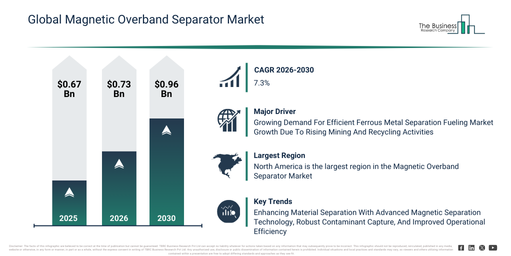
    The magnetic overband separator market has demonstrated strong expansion in recent years. Its valuation is set to rise from $0.67 billion in 2025 to $0.73 billion in 2026, at a compound annual growth rate (CAGR) of 7.6%. This growth experienced in the past can be attributed to the increasing demand within the mining sector, wider adoption in recycling processes, the growing requirement for equipment protection, the broadening of construction and manufacturing operations, and an enhanced focus on ensuring product purity.

    The magnetic overband separator market is anticipated to experience robust expansion over the coming years. By 2030, this market is projected to reach $0.96 billion, demonstrating a compound annual growth rate (CAGR) of 7.3%. This projected growth is largely driven by factors such as the rise in automation within material handling processes, increased use of both permanent and electromagnets, greater investment in smart separator technologies, wider applications in e-waste recycling, and heightened regulatory emphasis on safety and preventing contamination. Significant trends expected during this period involve enhancements in magnetic separator design, new developments in self-cleaning and automated solutions, the creation of more energy-efficient and long-lasting separators, exploration into hybrid separation methods and sensor-based sorting, and progress in integrating AI and IoT for predictive maintenance.

    Access Your Free Sample Report for In-Depth Market Insights:

    https://www.thebusinessresearchcompany.com/sample.aspx?id=30644&type=smp

    What Drivers Are Supporting Technological Adoption In The Magnetic Overband Separator Market?

    The magnetic overband separator market is anticipated to expand due to an increasing need for effective ferrous metal separation. This separation method involves employing magnetic force to extract iron-containing metallic impurities from bulk materials and scrap, thereby safeguarding machinery and preserving material quality. This heightened demand stems from an increasing global dependence on recycled ferrous scrap and greater mining production, leading to a larger quantity of metal-laden material needing separation. Magnetic overband separators facilitate this efficient separation by allowing for the continuous extraction of ferrous impurities, enhancing the dependability of processes, and guaranteeing a purer material flow within mining and recycling operations. For example, data from the World Steel Association, a Belgium-based steel industry body, indicates that in October 2024, global steel output in 2023 utilized around 630 million metric tons of recycled scrap, making up almost 30% of total crude steel production, an increase from approximately 28% in 2022. Consequently, the escalating requirement for efficient ferrous metal separation is fueling the expansion of the magnetic overband separator market.

    What Segment Types Are Examined In The Magnetic Overband Separator Market?

    The magnetic overband separator market covered in this report is segmented –

    1) By Magnet Type: Permanent Magnet, Electromagnet

    2) By Separator Type: Cross-Belt Separator, Over-Belt Separator, Inline Separator

    3) By Cleaning Mechanism: Self-Cleaning, Manual Cleaning

    4) By Application: Mining, Recycling, Material Handling, Power Generation

    5) By End Use: Construction, Manufacturing, Waste Management

    Subsegments:

    1) By Permanent Magnet: Ceramic Magnet, Alnico Magnet, Neodymium Magnet, Ferrite Magnet

    2) By Electromagnet: Solenoid Electromagnet, Coil Wound Electromagnet, Electro Permanent Magnet, Laminated Core Electromagnet

    What Trends Are Driving The Growth Trajectory Of The Magnetic Overband Separator Market?

    Leading companies active in the magnetic overband separator market are concentrating on developing advanced solutions, such as magnetic separation technology, to extract tramp metal and ferrous contaminants from bulk materials and conveyor lines. This endeavor aims to safeguard downstream equipment and enhance product quality. Magnetic separation technology refers to the application of permanent magnets or electromagnets to attract and secure metallic particles from material streams, thereby ensuring continuous operation and reducing wear on processing equipment. For instance, in September 2023, Magnetic Products Inc., a US-based manufacturer of industrial magnetic separation and material handling systems, introduced the Intell-I-Mag drawer magnet, which features two-inch-diameter magnetic tubes engineered to improve magnetic field strength and contaminant extraction performance. The Intell-I-Mag’s cavity design facilitates the effective capture of fine ferrous particles while also offering easy maintenance and removal, making it suitable for high-throughput operations in recycling, quarrying, mining, and other bulk material processing sectors. This launch underscores the growing industry emphasis on magnetic overband separator systems that integrate powerful magnetic separation technology with user-friendly designs to elevate material purity, minimize equipment downtime, and lower lifecycle costs.

    Who Are The Primary Competitors In The Global Magnetic Overband Separator Market?

    Major companies operating in the magnetic overband separator market are Metso Corporation, Multotec Group (Pty) Ltd, Eriez Manufacturing Co., Bunting Magnetics Co. Inc., Walker Magnetics Ltd., STEINERT GmbH, Saideep Magnetics Pvt. Ltd., Kumar Magnet Industries Pvt. Ltd., Jaykrishna Magnetics Pvt. Ltd., Vibromag Industries, Master Magnets Ltd., Goudsmit Magnetics Group B.V., Electro Flux Equipments Pvt. Ltd., IFE Aufbereitungstechnik GmbH, Excel Magnetics Pvt. Ltd., Dings Magnetics Group, Jaikar Magnet Equipments Pvt. Ltd., Shyam Magnet Pvt. Ltd., Magna Tronix Pvt. Ltd., Royal Magnetics Pvt. Ltd.

    Access The Complete Report For Deeper Market Insights:

    https://www.thebusinessresearchcompany.com/report/magnetic-overband-separator-market-report

    Which Global Regions Are Shaping The Competitive Landscape Of The Magnetic Overband Separator Market?

    North America was the largest region in the magnetic overbend separator market in 2025. Asia-Pacific is expected to be the fastest-growing region in the forecast period. The regions covered in the magnetic overband separator market report are Asia-Pacific, South East Asia, Western Europe, Eastern Europe, North America, South America, Middle East, Africa.

    Request Your Customized Magnetic Overband Separator Market Research Report for Competitive Advantage:

    https://www.thebusinessresearchcompany.com/customise?id=30644&type=smp

    Browse Through More Reports Similar to the Global Magnetic Overband Separator Market 2026, By The Business Research Company

    Magnetic Beads Market 2026

    https://www.thebusinessresearchcompany.com/report/magnetic-beads-market

    Magnetic Sensor Market Report 2026

    https://www.thebusinessresearchcompany.com/report/magnetic-sensor-global-market-report

    ultra wideband global market report

    https://www.thebusinessresearchcompany.com/report/ultra-wideband-global-market-report

    Get in touch with us:

    The Business Research Company: https://www.thebusinessresearchcompany.com/

    Americas +1 310-496-7795

    Asia +44 7882 955267 & +91 8897263534

    Europe +44 7882 955267

    Email us at marketing@tbrc.info

    Follow us on:

    LinkedIn: https://in.linkedin.com/company/the-business-research-company

    YouTube: https://www.youtube.com/channel/UC24_fI0rV8cR5DxlCpgmyFQ

    Global Market Model: https://www.thebusinessresearchcompany.com/global-market-model
  • Global Intravenous (IV) Compounding Automation Market 2026–2030: Forecast Insights for Business Planning

    Global Intravenous (IV) Compounding Automation Market 2026–2030: Forecast Insights for Business Planning

    Uncover key drivers, emerging technologies, and competitive movements shaping the intravenous (iv) compounding automation market from 2026–2035 with trusted insights from The Business Research Company

    What growth pattern is forecast for the Intravenous (IV) Compounding Automation Market size between 2026 and 2035?

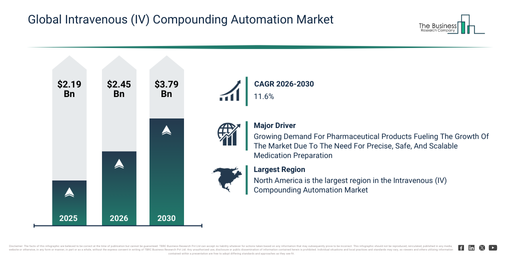
    The intravenous (IV) compounding automation market has witnessed substantial growth in recent years. This market is expected to expand from $2.19 billion in 2025 to $2.45 billion in 2026, achieving a compound annual growth rate (CAGR) of 11.9%. The past growth in this market can be attributed to several factors, including the increasing implementation of robotic compounding systems, a rising need for chemotherapy automation, a greater emphasis on medication safety, the expansion of automation in hospitals and pharmacies, and growing recognition of workflow efficiency.

    The intravenous (IV) compounding automation market is anticipated to experience substantial expansion in the coming years. The market is projected to expand to $3.79 billion in 2030, progressing at a compound annual growth rate (CAGR) of 11.6%. This growth throughout the forecast period stems from factors such as increasing investments in AI-enabled compounding solutions, the rising implementation of automated IV workstations, improved integration of software with hospital information systems, the expansion of remote monitoring and predictive maintenance capabilities, and the growing development of modular and customizable compounding systems. Significant trends anticipated in this period include innovations in AI and machine learning for compounding, advancements in robotic and automated devices, the evolution of smart pump and monitoring technologies, breakthroughs in sterile compounding isolators and safety cabinets, and progress in compact and space-saving automation solutions.

    Access Your Free Sample Report for In-Depth Market Insights:

    https://www.thebusinessresearchcompany.com/sample.aspx?id=30629&type=smp

    Which Drivers Are Impacting Market Performance In The Intravenous (IV) Compounding Automation Market?

    The increasing need for pharmaceutical products is anticipated to fuel the expansion of the intravenous (IV) compounding automation market in the future. A pharmaceutical product refers to a compound or mixture of compounds designed for the diagnosis, treatment, prevention, or relief of illnesses and medical conditions in humans or animals. IV compounding automation assists in the production of pharmaceutical products by facilitating the accurate, secure, and streamlined preparation of intricate intravenous medications, thereby ensuring precise dosages, minimizing contamination hazards, and enabling healthcare providers to satisfy the rising requirement for superior therapies. For example, in November 2023, data from the European Federation of Pharmaceutical Industries and Associations (EFPIA), a Belgium-based trade association, revealed that the overall pharmaceutical output in Europe reached €390,000 million ($422,803 million) in 2023, showing an increase from €363,300 million ($393,857 million) in 2022. Consequently, the escalating demand for pharmaceutical products is propelling the growth of the intravenous (IV) compounding automation market.

    Which Segments Are Contributing To The Growth Of The Intravenous (IV) Compounding Automation Market?

    The intravenous (iv) compounding automation market covered in this report is segmented –

    1) By Product Type: Robotic Compounding Systems, Automated Compounding Devices, Software Solutions, Other Product Types

    2) By Service: Installation, Maintenance, Training, Consulting, Support, System Integration, Validation, Software Updates, Calibration, Remote Monitoring

    3) By Application: Chemotherapy, Parenteral Nutrition, Antibiotics, Other Applications

    4) By End-User: Hospitals, Compounding Pharmacies, Oncology Centers, Other End-Users

    Subsegments:

    1) By Robotic Compounding Systems: Robotic Arm Based Systems, Closed System Robotic Compounding Units, Hazardous Drug Handling Robots, Sterile Preparation Robotic Platforms

    2) By Automated Compounding Devices: Volumetric Compounding Devices, Gravimetric Compounding Devices, Multi Chamber Compounding Units, Automated Parenteral Nutrition Compounding Devices

    3) By Software Solutions: Compounding Workflow Management Software, Dose Verification Software, Barcode Based Medication Safety Software, Compounding Data Analytics And Reporting Software

    4) By Other Product Types: Semi Automated Compounding Systems, Isolator Based Compounding Systems, Sterile Admixture Preparation Cabinets, Hybrid Compounding Assistance Devices

    Who Are The Top-Performing Companies In The Intravenous (IV) Compounding Automation Market In Recent Years?

    Major companies operating in the intravenous (iv) compounding automation market are Becton Dickinson and Company, Baxter International Inc., Grifols S.A., ICU Medical Inc., Omnicell Inc., Fresenius Kabi AG, Equashield Medical Ltd., Health Robotics S.r.l., Loccioni Group, Loccioni Group, OPTIMA pharma GmbH, Medimix Systems AG, ARxIUM Inc., General Healthy Co. Ltd., PharmaScope Onco Automation B.V., Comecer SpA, Syntegon Technology GmbH, Parata Pharmacy Automation, B. Braun SE, Aesynt Incorporated, Shenzhen Broadcare Robots Co. Ltd.

    Access The Complete Report For Deeper Market Insights:

    https://www.thebusinessresearchcompany.com/report/intravenous-iv-compounding-automation-market-report

    Which Region Currently Holds The Largest Share Of The Intravenous (IV) Compounding Automation Market?

    North America was the largest region in the intravenous (IV) compounding automation market in 2025. Asia-Pacific is expected to be the fastest-growing region in the forecast period. The regions covered in the intravenous (iv) compounding automation market report are Asia-Pacific, South East Asia, Western Europe, Eastern Europe, North America, South America, Middle East, Africa.

    Request Your Customized Intravenous (IV) Compounding Automation Market Research Report for Competitive Advantage:

    https://www.thebusinessresearchcompany.com/customise?id=30629&type=smp

    Browse Through More Reports Similar to the Global Intravenous (IV) Compounding Automation Market 2026, By The Business Research Company

    Automated Compounding Devices Market Report 2026

    https://www.thebusinessresearchcompany.com/report/automated-compounding-devices-global-market-report

    Intravenous Solutions Market Report 2026

    https://www.thebusinessresearchcompany.com/report/intravenous-solutions-global-market-report

    lab automation in drug discovery global market report

    https://www.thebusinessresearchcompany.com/report/lab-automation-in-drug-discovery-global-market-report

    Get in touch with us:

    The Business Research Company: https://www.thebusinessresearchcompany.com/

    Americas +1 310-496-7795

    Asia +44 7882 955267 & +91 8897263534

    Europe +44 7882 955267

    Email us at marketing@tbrc.info

    Follow us on:

    LinkedIn: https://in.linkedin.com/company/the-business-research-company

    YouTube: https://www.youtube.com/channel/UC24_fI0rV8cR5DxlCpgmyFQ

    Global Market Model: https://www.thebusinessresearchcompany.com/global-market-model
  • Intraoperative Neuromonitoring (IONM) Market Outlook 2026–2035: Growth Drivers and Industry Forecast

    Intraoperative Neuromonitoring (IONM) Market Outlook 2026–2035: Growth Drivers and Industry Forecast

    Uncover key drivers, emerging technologies, and competitive movements shaping the intraoperative neuromonitoring (ionm) market from 2026–2035 with trusted insights from The Business Research Company

    How much larger will the Intraoperative Neuromonitoring (IONM) Market be in 2030 compared with 2026?

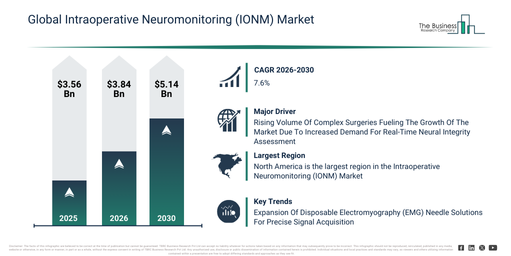
    The intraoperative neuromonitoring market size has demonstrated significant growth in recent years. This market is expected to expand from $3.56 billion in 2025 to $3.84 billion in 2026, reflecting a compound annual growth rate (CAGR) of 7.9%. Several factors contributed to this growth during the historical period, including an escalating demand for safer surgical procedures, the increased integration of intraoperative neuromonitoring in complex surgeries, a rise in the prevalence of neurological and spinal disorders, the expansion of hospital infrastructure in developed regions, and a heightened focus on patient safety during operations.

    The intraoperative neuromonitoring market is projected to experience substantial expansion in the coming years. By 2030, this market is anticipated to reach $5.14 billion, exhibiting a compound annual growth rate (CAGR) of 7.6%. This anticipated growth is driven by several factors, including the rising acceptance of multimodality neuromonitoring systems, the expanding application of artificial intelligence for interpreting signals, increased funding for research and development in neuromonitoring technologies, the proliferation of minimally invasive and robotic surgical procedures, and a greater supply of qualified neuromonitoring experts. Key trends expected during this period encompass enhancements in multimodality monitoring technologies, the deepening integration of artificial intelligence into neuromonitoring systems, the development of more portable and cloud-connected devices, a broader application of real-time data analytics during surgical operations, and continued advancements in wearable and intraoperative monitoring sensors.

    Access Your Free Sample Report for In-Depth Market Insights:

    https://www.thebusinessresearchcompany.com/sample.aspx?id=30628&type=smp

    What Drivers Are Guiding Growth Patterns In The Intraoperative Neuromonitoring (IONM) Market?

    The future expansion of the intraoperative neuromonitoring (IONM) market is anticipated to be driven by the increasing number of complex surgical procedures. These intricate medical procedures are characterized by elevated risks, a demand for specialized expertise, and frequently involve severe or multi-system health issues. This increase in complex surgeries stems from surgeons performing more operations on elderly individuals who often suffer from several chronic ailments such as diabetes, obesity, and heart disease, a trend supported by improved surgical methods that allow for high-risk interventions. Intraoperative neuromonitoring (IONM) facilitates complex surgical interventions by offering immediate data on neural activity, thereby reducing the potential for nerve injury during crucial operations. As an example, the Organ Procurement and Transplantation Network (OPTN), a national system in the US connecting professionals in organ donation and transplantation, reported in January 2025 that the total number of organ transplants in the United States reached 48,180 in 2024. This marked a 3.3% rise from the 46,632 transplants performed in 2023. Consequently, the expanding volume of complex surgical operations is a key factor propelling the intraoperative neuromonitoring (IONM) market’s growth.

    How Is The Intraoperative Neuromonitoring (IONM) Market Divided Into Segments?

    The intraoperative neuromonitoring (ionm) market covered in this report is segmented –

    1) By Type: Systems, Accessories And Consumables, Services

    2) By Source Type: Insourced Monitoring, Outsourced Monitoring

    3) By Modality: Somatosensory Evoked Potentials, Motor Evoked Potentials, Electroencephalography, Electromyography, Brainstem Auditory Evoked Potentials, Visual Evoked Potentials, Other Modalities

    4) By Application: Neurosurgery, Spinal Surgery, Vascular Surgery, Cardiothoracic Surgery, Ear, Nose, Throat Surgery, Orthopedic Surgery

    5) By End-User: Hospitals, Ambulatory Surgical Centers, Specialty Clinics, Other End-Users

    Subsegments:

    1) By Systems: Electromyography Monitoring System, Electroencephalography Monitoring System, Somatosensory Evoked Potential Monitoring System, Motor Evoked Potential Monitoring System, Brainstem Auditory Evoked Potential Monitoring System

    2) By Accessories And Consumables: Electrodes And Probes, Cables And Connectors, Monitoring Software, Disposable Sensors, Stimulators And Pads

    3) By Services: Preoperative Assessment Services, Intraoperative Monitoring Services, Postoperative Analysis Services, Remote Neuromonitoring Services, Consulting And Training Services

    Which Trends Are Influencing The Performance And Direction Of The Intraoperative Neuromonitoring (IONM) Market?

    Leading companies in the intraoperative neuromonitoring (IONM) market are focusing on developing product lines, such as specialized disposable concentric needle families, to enhance diagnostic precision and workflow optimization. These specialized disposable concentric needle families involve engineering disposable needles with consistent signal quality and precise recording capabilities, thereby eliminating the variability associated with reusable equipment while maintaining high fidelity in electromyography (EMG) and nerve conduction velocity (NCV) studies. For instance, in October 2023, Rhythmlink International LLC, a US-based designer and manufacturer of medical devices for intraoperative neuromonitoring, launched the Concentric Needle Family. This product line offers specialized disposable concentric needles in four sizes, designed to pair with a reusable cable specifically engineered for the system. The solution provides clinicians with a premium, customizable tool for identifying and recording from desired muscle areas with ultra-precise placement, thereby enhancing the reliability of intraoperative and diagnostic neurological assessments.

    Which Leading Companies Dominate The Intraoperative Neuromonitoring (IONM) Market Share?

    Major companies operating in the intraoperative neuromonitoring (ionm) market are Abbott Laboratories, Medtronic plc, Boston Scientific Corporation, Nihon Kohden Corporation, Nuvaise Inc., Natus Medical incorporated, Speciality care Inc., Brainlab AG, Neurosoft Ltd., Cadwell industries Inc., Neuromonitoring Associates LLC, Compummedics Ltd., Inomed medizintecknic Gmbh, Accurate Neuromonitoring Inc., Electrical Geodesics Inc., Blackrock NeuroTech LLC, Neuromonitoring Technologies Inc., Tucker Davis technologies Inc., Sentient Medical Systems Inc., Dr.Langer Medical Gmbh, Moller Wedel Gmbh, Ionm Solutions Inc., Axontronic GmbH & Co. KG, Alpha Omega Engineering Ltd.

    Access The Complete Report For Deeper Market Insights:

    https://www.thebusinessresearchcompany.com/report/intraoperative-neuromonitoring-ionm-market-report

    How Does The Intraoperative Neuromonitoring (IONM) Market Perform Across Major Global Regions?

    North America was the largest region in the intraoperative neuromonitoring market in 2025. Asia-Pacific is expected to be the fastest-growing region in the forecast period. The regions covered in the intraoperative neuromonitoring (ionm) market report are Asia-Pacific, South East Asia, Western Europe, Eastern Europe, North America, South America, Middle East, Africa.

    Request Your Customized Intraoperative Neuromonitoring (IONM) Market Research Report for Competitive Advantage:

    https://www.thebusinessresearchcompany.com/customise?id=30628&type=smp

    Browse Through More Reports Similar to the Global Intraoperative Neuromonitoring (IONM) Market 2026, By The Business Research Company

    Intraoperative Neuromonitoring Market Report 2026

    https://www.thebusinessresearchcompany.com/report/intraoperative-neuromonitoring-global-market-report

    Home Health Monitoring Devices Market Report 2026

    https://www.thebusinessresearchcompany.com/report/home-health-monitoring-devices-global-market-report

    medical electrodes global market report

    https://www.thebusinessresearchcompany.com/report/medical-electrodes-global-market-report

    Get in touch with us:

    The Business Research Company: https://www.thebusinessresearchcompany.com/

    Americas +1 310-496-7795

    Asia +44 7882 955267 & +91 8897263534

    Europe +44 7882 955267

    Email us at marketing@tbrc.info

    Follow us on:

    LinkedIn: https://in.linkedin.com/company/the-business-research-company

    YouTube: https://www.youtube.com/channel/UC24_fI0rV8cR5DxlCpgmyFQ

    Global Market Model: https://www.thebusinessresearchcompany.com/global-market-model
  • Internet Of Things (IoT)-Based Dialysis Machine Market 2026–2030: Emerging Trends and Forecast Opportunities

    Internet Of Things (IoT)-Based Dialysis Machine Market 2026–2030: Emerging Trends and Forecast Opportunities

    Uncover key drivers, emerging technologies, and competitive movements shaping the internet of things (iot)-based dialysis machine market from 2026–2035 with trusted insights from The Business Research Company

    Starting from its 2026 valuation, what market size is the Internet Of Things (IoT)-Based Dialysis Machine Market expected to reach by 2030?

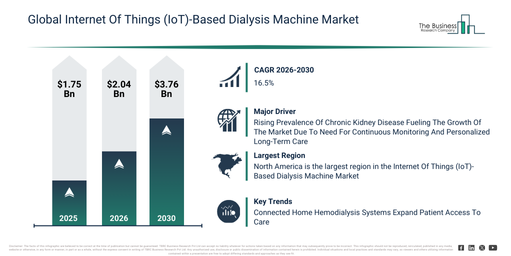
    The market size for IoT-based dialysis machines has experienced rapid growth in recent years. It is projected to expand from $1.75 billion in 2025 to $2.04 billion in 2026, exhibiting a compound annual growth rate (CAGR) of 16.8%. This historical growth can be attributed to factors such as the rising prevalence of chronic kidney disease, the growing adoption of home-based dialysis, an increasing demand for remote patient monitoring, the expansion of digital health infrastructure, and increased healthcare expenditure on renal care.

    The IoT-based dialysis machine market is projected to experience substantial expansion in the coming years. This market is expected to reach $3.76 billion in 2030, demonstrating a compound annual growth rate (CAGR) of 16.5%. Factors contributing to this anticipated growth include the increasing integration of IoT-enabled medical devices, a rising demand for home and portable dialysis options, the expanding embrace of telehealth and connected care services, the development of value-based renal care frameworks, and enhanced governmental backing for digital healthcare initiatives. Key trends expected during this period involve technological progress in connected dialysis systems, breakthroughs in real-time monitoring using sensors, advancements in artificial intelligence and data analytics, ongoing research and development into portable and wearable dialysis equipment, and the seamless integration of cloud platforms with electronic health records.

    Access Your Free Sample Report for In-Depth Market Insights:

    https://www.thebusinessresearchcompany.com/sample.aspx?id=30627&type=smp

    What Drivers Are Driving Adoption Within The Internet Of Things (IoT)-Based Dialysis Machine Market?

    The escalating prevalence of chronic kidney disease is anticipated to propel the expansion of the internet of things (IoT)-based dialysis machine market in the future. Chronic kidney disease is defined as a persistent ailment where kidneys fail to function optimally, leading to the accumulation of waste products and liquids within the body. The rise in this condition’s prevalence is largely due to the increasing incidence of diabetes and hypertension, which progressively harm renal blood vessels and hinder the organs’ ability to filter waste effectively. IoT-enabled dialysis machines assist in managing chronic kidney disease by allowing continuous monitoring of treatment variables and patient vital signs through remote data connections. These machines enhance patient outcomes by facilitating tailored therapy modifications, prompt complication identification, and streamlined long-term medical attention. For instance, in June 2023, Kidney Research UK, a non-profit organization based in the United Kingdom, reported that approximately 7.2 million individuals in the United Kingdom suffered from chronic kidney disease, accounting for over 10% of the populace. Among these, 3.25 million were in advanced stages and 3.9 million were in early stages, with projections indicating an increase to 7.61 million affected people by 2033. Consequently, the growing occurrence of chronic kidney disease is fueling the expansion of the internet of things (IoT)-based dialysis machine market.

    What Segments Are Included Within The Internet Of Things (IoT)-Based Dialysis Machine Market?

    The internet of things (iot)-based dialysis machine market covered in this report is segmented –

    1) By Component: Hardware, Software, Services, Consumables

    2) By Product Type: IoT-Enabled Hemodialysis Machines, IoT-Enabled Peritoneal Dialysis Machines, Portable And Wearable IoT-Based Dialysis Devices, Software Platforms And Connectivity Solutions, Accessories And Consumables

    3) By Connectivity: Wi-Fi And Broadband-Connected Dialysis Machines, Cellular Enabled Dialysis Devices, Cloud-Based Data Management And Analytics Platforms, Decision-Support Modules

    4) By Application: Chronic Kidney Disease Management, End-Stage Renal Disease Treatment, Acute Kidney Injury Management, Remote Patient Monitoring And Therapy Optimization

    5) By End User: Hospitals, Dialysis Centers, Home Care Settings, Ambulatory Care Centers, Specialty Clinics

    Subsegments:

    1) By Hardware: Dialysis Machine Units, Sensors And Monitoring Devices, Connectivity Modules, Embedded Control Systems, Power Supply Components

    2) By Software: Remote Monitoring Platforms, Data Analytics Software, Treatment Management Systems, Device Management Applications, Cloud Based Control Dashboards

    3) By Services: Installation And Integration Services, Maintenance And Support Services, Remote Monitoring Services, Training And Education Services, Data Management Services

    4) By Consumables: Dialyzers, Blood Tubing Sets, Dialysis Solutions, Filters And Cartridges, Disposable Sensors

    What Long-Term Trends Are Expected To Shape The Future Of The Internet Of Things (IoT)-Based Dialysis Machine Market?

    Leading companies active in the internet of things (IoT)-based dialysis machine market are concentrating on developing advanced products, such as connected home hemodialysis systems, with the goal of expanding patient access and improving treatment adherence. These connected home hemodialysis systems integrate intelligent software that guides patients through setup and treatment processes, thereby simplifying the learning curve and enabling remote monitoring by healthcare providers, which in turn fosters greater confidence and independence for patients managing kidney failure at home. For example, in September 2024, Fresenius Medical Care, a Germany-based healthcare company, launched its NxStage VersiHD with GuideMe Software. This platform is specifically designed to streamline connected home hemodialysis treatment by offering visual guidance and an easier learning experience, incorporating features that allow patients to complete training 7 to 10 days sooner than traditional methods. The solution also provides connected capabilities that support a growing network of over 14,000 U.S. patients, aiming to accelerate the adoption of home therapies and enhance the overall user experience for those requiring chronic renal replacement therapy.

    Who Are The Major Companies Operating In The Internet Of Things (IoT)-Based Dialysis Machine Market?

    Major companies operating in the internet of things (iot)-based dialysis machine market are Medtronic plc, Fresenius Medical Care AG & Co. KGaA, Toray Industries Inc., Toray Medical Co. Ltd., Baxter International Inc., B. Braun Melsungen AG, Nipro Corporation, Wego Group, Bellco S.p.A., Mar Cor Purification, Mozarc Medical Holding LLC, Poly Medicure Limited, Outset Medical Inc., Quanta Dialysis Technologies Ltd., Infomed SA, Allmed Medical Care Holdings Limited, Innovative Renal Care, Gambro, Nextkidney BV, Newsol Technologies

    Access The Complete Report For Deeper Market Insights:

    https://www.thebusinessresearchcompany.com/report/internet-of-things-iot-based-dialysis-machine-market-report

    Which Region Is Anticipated To See The Fastest Growth In The Internet Of Things (IoT)-Based Dialysis Machine Market?

    North America was the largest region in the IoT-based dialysis machine market in 2025. Asia-Pacific is expected to be the fastest-growing region in the forecast period. The regions covered in the internet of things (iot)-based dialysis machine market report are Asia-Pacific, South East Asia, Western Europe, Eastern Europe, North America, South America, Middle East, Africa.

    Request Your Customized Internet Of Things (IoT)-Based Dialysis Machine Market Research Report for Competitive Advantage:

    https://www.thebusinessresearchcompany.com/customise?id=30627&type=smp

    Browse Through More Reports Similar to the Global Internet Of Things (IoT)-Based Dialysis Machine Market 2026, By The Business Research Company

    Portable Dialysis Machines Market Report 2026

    https://www.thebusinessresearchcompany.com/report/portable-dialysis-machines-global-market-report

    Dialysis Devices And Equipment Market 2026

    https://www.thebusinessresearchcompany.com/report/dialysis-devices-and-equipment-market

    Internet Of Things IoT In Healthcare market

    https://www.thebusinessresearchcompany.com/report/internet-of-things-iot-in-healthcare-market

    Get in touch with us:

    The Business Research Company: https://www.thebusinessresearchcompany.com/

    Americas +1 310-496-7795

    Asia +44 7882 955267 & +91 8897263534

    Europe +44 7882 955267

    Email us at marketing@tbrc.info

    Follow us on:

    LinkedIn: https://in.linkedin.com/company/the-business-research-company

    YouTube: https://www.youtube.com/channel/UC24_fI0rV8cR5DxlCpgmyFQ

    Global Market Model: https://www.thebusinessresearchcompany.com/global-market-model
  • Global International Normalized Ratio (INR) Test Meter Market Forecast 2026–2035: Long-Term Growth Insights

    Global International Normalized Ratio (INR) Test Meter Market Forecast 2026–2035: Long-Term Growth Insights

    Uncover key drivers, emerging technologies, and competitive movements shaping the international normalized ratio (inr) test meter market from 2026–2035 with trusted insights from The Business Research Company

    Across 2026–2030, what is the expected market valuation path of the International Normalized Ratio (INR) Test Meter Market?

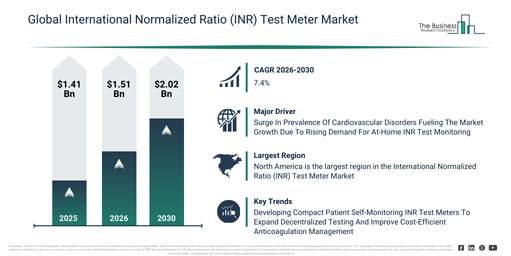
    The INR test meter market size has demonstrated significant expansion in recent years. It is anticipated to grow from $1.41 billion in 2025 to $1.51 billion in 2026, with a compound annual growth rate (CAGR) of 7.7%. Historically, this market’s development can be attributed to the rising prevalence of cardiovascular diseases, the increasing adoption of point-of-care testing, an expanding geriatric population, greater awareness of anticoagulant therapy, and a growing patient preference for home monitoring.

    The INR test meter market is anticipated to expand considerably over the coming years. Its valuation is projected to reach $2.02 billion in 2030, exhibiting a compound annual growth rate (CAGR) of 7.4%. This expansion during the projection period stems from factors such as increasing demand for at-home self-testing, the rising embrace of telemedicine, greater healthcare spending, the proliferation of point-of-care networks, and an enhanced emphasis on customized patient care. Key developments expected within this period involve progress in biosensor technology, the incorporation of technology with mobile applications, creative design of portable meters, ongoing research and development into non-invasive testing methods, and seamless integration with electronic health records.

    Access Your Free Sample Report for In-Depth Market Insights:

    https://www.thebusinessresearchcompany.com/sample.aspx?id=30626&type=smp

    Which Drivers Are Supporting The Rise Of The International Normalized Ratio (INR) Test Meter Market?

    The rising prevalence of cardiovascular disorders is anticipated to stimulate the expansion of the International Normalized Ratio (INR) test meter market. These conditions, which involve diseases of the heart and blood vessels, impair circulatory function and often necessitate long-term anticoagulant therapies to prevent serious complications such as stroke and thrombosis. The increase in cardiovascular disorders can be attributed to poor dietary habits, as excessive consumption of saturated fats, trans fats, added sugars, and sodium contributes to high blood pressure, obesity, and elevated cholesterol levels, all recognized as significant risk factors for heart-related conditions. INR test meters aid in the management of cardiovascular disorders by enabling frequent at-home monitoring of coagulation status, thereby ensuring safer and more effective anticoagulant treatment. For instance, in August 2025, the Centers for Disease Control and Prevention, a health agency based in Switzerland, reported that 90% of the nation’s 4.9 trillion dollars in annual health care spending is attributed to individuals with chronic and mental health conditions. Additionally, more than 84,000 Americans die each year from heart disease or stroke, with the costs associated with cardiovascular diseases projected to reach approximately $2 trillion by 2050. Consequently, the growing occurrence of cardiovascular disorders is a key factor driving the growth of the International Normalized Ratio (INR) test meter market.

    What Leading Segments Are Studied In The International Normalized Ratio (INR) Test Meter Market?

    The international normalized ratio (inr) test meter market covered in this report is segmented –

    1) By Product Type: Devices, Test Strips, Lancets, Reagents, Mobile App Integration

    2) By Technology: Electrochemical Biosensor-Based Meters, Photometric-Based Meters, Bluetooth, Non-Invasive

    3) By End User: Hospitals, Specialty Clinics, Ambulatory Surgical Centers, Homecare Settings

    Subsegments:

    1) By Devices: Handheld Meters, Portable Meters, Desktop Meters, Wireless Meters, Bluetooth Enabled Meters

    2) By Test Strips: Standard Test Strips, Ultra-Sensitive Test Strips, Fast-Acting Test Strips, Reusable Test Strips, Single-Use Test Strips

    3) By Lancets: Safety Lancets, Auto-Release Lancets, Adjustable Depth Lancets, Single-Use Lancets, Spring-Loaded Lancets

    4) By Reagents: Enzymatic Reagents, Chemical Reagents, Calibration Reagents, Buffer Solutions, Control Solutions

    5) By Mobile App Integration: iOS Applications, Android Applications, Cloud-Synced Applications, Real-Time Monitoring Applications, Personalized Health Recommendation Applications

    Which Market Trends Are Opening Growth Opportunities In The International Normalized Ratio (INR) Test Meter Market?

    Major companies operating in the International Normalized Ratio (INR) test meter market are directing their efforts toward developing advanced products, such as patient self-monitoring coagulation analyzers, with the aim of expanding decentralized testing and shifting recurring demand toward lower-cost consumables. These patient self-monitoring coagulation analyzers are portable devices that empower patients to conduct PT/INR testing at home using a small capillary blood sample, thereby supporting frequent monitoring and reducing reliance on clinical visits. For example, in March 2024, Universal Biosensors, an Australia-based medical device company, unveiled the Xprecia Prime 4U Coagulation Analyzer, intended for patient self-monitoring. This self-monitoring coagulation analyzer is designed to fit in the palm of the hand, provides rapid PT/INR results from a single drop of capillary blood, and utilizes an electrochemical strip format that supports various regulatory approvals, including 510(k) clearance and CLIA waiver for the U.S. market. This product launch signifies a crucial advancement in INR testing by facilitating broader access to home monitoring, increasing the frequency of tests, and improving cost efficiency through enhanced consumable utilization while ensuring clinical accuracy.

    Which Major Firms Are Strengthening Their Position In The International Normalized Ratio (INR) Test Meter Market?

    Major companies operating in the international normalized ratio (inr) test meter market are Abbott Laboratories, Siemens Healthineers AG, Roche Diagnostics International Ltd., Guangzhou Wondfo Biotech Co. Ltd., Nova Biomedical Corporation, Agappe Diagnostics Ltd., Helena Laboratories Corporation, Getein Biotech Inc., Transasia Bio-Medicals Limited, ACON Laboratories Inc., ERBA Diagnostics Mannheim GmbH, ARKRAY USA Inc., Genrui Biotech Inc., i-SENS Inc., Accurex Biomedical Pvt. Ltd., Trivitron Healthcare Private Limited, iLine Microsystems S.L, Meril Life Sciences Private Limited, Micropoint Biotechnologies Co. Ltd., Universal Biosensors Inc.

    Access The Complete Report For Deeper Market Insights:

    https://www.thebusinessresearchcompany.com/report/international-normalized-ratio-inr-test-meter-market-report

    Which Region Shows The Strongest Potential For Future Expansion In The International Normalized Ratio (INR) Test Meter Market?

    North America was the largest region in the INR test meter market in 2025. Asia-Pacific is expected to be the fastest-growing region in the forecast period. The regions covered in the international normalized ratio (inr) test meter market report are Asia-Pacific, South East Asia, Western Europe, Eastern Europe, North America, South America, Middle East, Africa.

    Request Your Customized International Normalized Ratio (INR) Test Meter Market Research Report for Competitive Advantage:

    https://www.thebusinessresearchcompany.com/customise?id=30626&type=smp

    Browse Through More Reports Similar to the Global International Normalized Ratio (INR) Test Meter Market 2026, By The Business Research Company

    Gas Meter Market Report 2026

    https://www.thebusinessresearchcompany.com/report/gas-meter-global-market-report

    Water Meter Market Report 2026

    https://www.thebusinessresearchcompany.com/report/water-meter-global-market-report

    digital multimeter global market report

    https://www.thebusinessresearchcompany.com/report/digital-multimeter-global-market-report

    Get in touch with us:

    The Business Research Company: https://www.thebusinessresearchcompany.com/

    Americas +1 310-496-7795

    Asia +44 7882 955267 & +91 8897263534

    Europe +44 7882 955267

    Email us at marketing@tbrc.info

    Follow us on:

    LinkedIn: https://in.linkedin.com/company/the-business-research-company

    YouTube: https://www.youtube.com/channel/UC24_fI0rV8cR5DxlCpgmyFQ

    Global Market Model: https://www.thebusinessresearchcompany.com/global-market-model
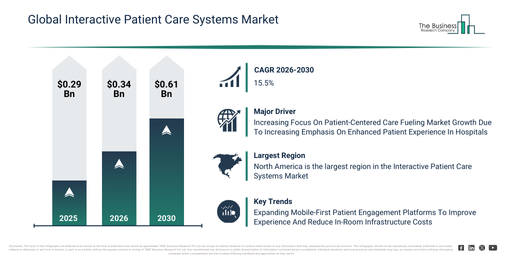
  • Interactive Patient Care Systems Market 2026–2030: Forecasting Business Opportunities Ahead

    Interactive Patient Care Systems Market 2026–2030: Forecasting Business Opportunities Ahead

    Uncover key drivers, emerging technologies, and competitive movements shaping the interactive patient care systems market from 2026–2035 with trusted insights from The Business Research Company

    What size range is anticipated for the Interactive Patient Care Systems Market from 2026 to 2030?

    The interactive patient care systems market size has experienced significant expansion in recent years. It will grow from $0.29 billion in 2025 to $0.34 billion in 2026 at a compound annual growth rate (CAGR) of 15.8%. The historical increase can be attributed to factors such as the growing adoption of digital health platforms, increased investment in patient engagement solutions, the rising integration of bedside terminals and mobile applications, the expansion of telehealth services, and an escalating focus on clinical workflow optimization.

    The interactive patient care systems market is anticipated to experience substantial expansion over the upcoming years. By 2030, this market is projected to reach $0.61 billion, expanding at a compound annual growth rate of 15.5%. This projected growth during the forecast period is fueled by several factors, including the escalating development of AI-driven analytics for tailored care, advancements in cloud-based patient engagement platforms, increased investment in remote patient monitoring tools, the proliferation of interactive kiosks and self-service terminals, and improved software interoperability and integration capabilities. Key trends expected throughout the forecast timeframe encompass breakthroughs in mobile care applications, enhancements in telehealth and virtual consultation platforms, the creation of integrated clinical workflow solutions, technological improvements in content management and educational modules, and ongoing research and development into hybrid deployment models and scalable interactive patient care systems.

    Access Your Free Sample Report for In-Depth Market Insights:

    https://www.thebusinessresearchcompany.com/sample.aspx?id=30625&type=smp

    What Drivers Are Affecting Demand In The Interactive Patient Care Systems Market?

    The growing emphasis on patient-centered care is anticipated to drive the expansion of the interactive patient care systems market. Patient-centered care refers to healthcare delivery that respects and caters to individual patient preferences, needs, and values, ensuring that these values guide clinical decisions and the provision of care. This heightened focus on patient-centered care is due to hospitals and health systems making patient experience a strategic priority to improve quality outcomes, patient satisfaction, and their institutional reputation. Interactive patient care systems support patient-centered care and improve the patient experience in hospitals by enabling real-time communication, personalized education, and engagement tools at the bedside, thereby boosting patient experience and workflow efficiency. For instance, in November 2025, Chief Healthcare Executive, a US-based healthcare leadership publication, noted that in 2023, 49% of hospital executives identified improving patient experience as their foremost strategic priority, an increase from 36% in 2023, indicating a 36% rise compared to previous years. Therefore, the increasing focus on patient-centered care is a key factor propelling the growth of the interactive patient care systems market.

    Which Segment Groups Are Influencing The Interactive Patient Care Systems Market?

    The interactive patient care systems market covered in this report is segmented –

    1) By Component: Hardware, Software, Services

    2) By Product Type: Bedside Terminals, Interactive Displays, Patient Monitoring Devices, Mobile Care Applications, In-Room Entertainment Systems, Other Product Types

    3) By Deployment Mode: On-Premises, Cloud-Based, Hybrid Deployment Models

    4) By Application: Patient Education, Entertainment, Communication, Medication Management, Other Applications

    5) By End-User: Hospitals, Clinics, Ambulatory Surgical Centers, Long-Term Care Centers, Other End-Users

    Subsegments:

    1) By Hardware: Bedside Terminals, Interactive Displays, Patient Monitoring Devices, Mobile Care Applications, In Room Entertainment Systems, Other Product Types

    2) By Software: Patient Education, Entertainment, Communication, Medication Management, Other Applications

    3) By Services: Implementation Support, Training And Education, Maintenance And Support, Consulting Services, Integration Services

    How Are Emerging Trends Affecting The Progression Of The Interactive Patient Care Systems Market?

    Leading companies within the interactive patient care systems market are prioritizing the creation of engagement applications, such as mobile-first patient engagement platforms, to boost patient involvement, streamline care communication, and decrease reliance on dedicated bedside hardware. Mobile-first patient engagement platforms are cloud-based digital solutions that empower patients to access care data, educational materials, service requests, and communication tools directly through their personal mobile devices while admitted to a hospital. For example, in February 2024, Oneview Healthcare PLC, an Ireland-based healthcare technology company, introduced MyStay Mobile, a software-as-a-service patient engagement platform developed to extend interactive care offerings beyond traditional in-room terminals. This mobile-first engagement platform allows patients to access customized stay details, order food, submit service requests, and offer immediate feedback using their personal smartphones without needing to install an application. It also integrates with hospital electronic health record systems and supports content delivery in multiple languages, enabling healthcare providers to improve patient experience while lowering capital and maintenance costs linked to bedside hardware deployment.

    Who Are The Primary Competitors In The Global Interactive Patient Care Systems Market?

    Major companies operating in the interactive patient care systems market are Epic Systems Corporation, Advantech Co. Ltd., Barco NV, HCI Group Inc., Vocera Communications Inc., PatientPoint Inc., Medhost Inc., CipherHealth Inc., Lincor Solutions Ltd., Sentrics, Aceso Interactive Inc., Aiva Health Inc., SONIFI Health Inc., BEWATEC ConnectedCare GmbH, GetWellNetwork Inc., Oneview Healthcare PLC, PDI Communications Inc., eVideon Inc., Onyx Healthcare Inc., ClinicAll

    Access The Complete Report For Deeper Market Insights:

    https://www.thebusinessresearchcompany.com/report/interactive-patient-care-systems-market-report

    Which Global Regions Are Shaping The Competitive Landscape Of The Interactive Patient Care Systems Market?

    North America was the largest region in the interactive patient care systems market in 2025. Asia-Pacific is expected to be the fastest-growing region in the forecast period. The regions covered in the interactive patient care systems market report are Asia-Pacific, South East Asia, Western Europe, Eastern Europe, North America, South America, Middle East, Africa.

    Request Your Customized Interactive Patient Care Systems Market Research Report for Competitive Advantage:

    https://www.thebusinessresearchcompany.com/customise?id=30625&type=smp

    Browse Through More Reports Similar to the Global Interactive Patient Care Systems Market 2026, By The Business Research Company

    Integrated Patient Care Systems Market Report 2026

    https://www.thebusinessresearchcompany.com/report/integrated-patient-care-systems-global-market-report

    Patient Simulators Market Report 2026

    https://www.thebusinessresearchcompany.com/report/patient-simulators-global-market-report

    healthcare information system global market report

    https://www.thebusinessresearchcompany.com/report/healthcare-information-system-global-market-report

    Get in touch with us:

    The Business Research Company: https://www.thebusinessresearchcompany.com/

    Americas +1 310-496-7795

    Asia +44 7882 955267 & +91 8897263534

    Europe +44 7882 955267

    Email us at marketing@tbrc.info

    Follow us on:

    LinkedIn: https://in.linkedin.com/company/the-business-research-company

    YouTube: https://www.youtube.com/channel/UC24_fI0rV8cR5DxlCpgmyFQ

    Global Market Model: https://www.thebusinessresearchcompany.com/global-market-model