Blog

  • Sanger Sequencing Market Explained: What Is Fueling Growth To $7.13 Billion By 2030?

    Sanger Sequencing Market Explained: What Is Fueling Growth To $7.13 Billion By 2030?

    Backed by market attractiveness analysis, total addressable market sizing, company benchmarking matrices, interactive Excel dashboards, wider supply chain intelligence, emerging startup coverage, and detailed product-level insights, The Business Research Company’s 2026 market reports are designed to offer research that is more actionable and strategically valuable than ever.

    Sanger Sequencing Market Revenue Outlook: What CAGR Lies Ahead Through 2030?

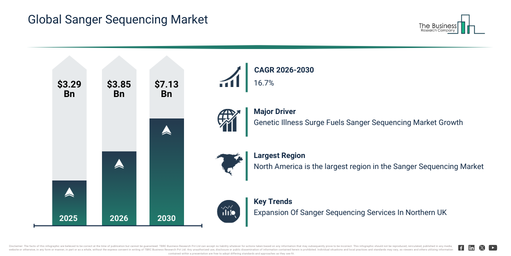
    The sanger sequencing market has experienced rapid expansion over the past few years. It is projected to expand from $3.29 billion in 2025 to $3.85 billion in 2026, demonstrating a compound annual growth rate (CAGR) of 17.1%. This historical growth can be attributed to the early adoption of sanger sequencing as the gold standard, increasing academic and government genomics research, a rise in genetic disorder testing, expanding use in forensic investigations, and growing pharmaceutical research and development activities.

    The sanger sequencing market is projected to experience swift expansion in the coming years. By 2030, its size is forecast to reach $7.13 billion, expanding at a compound annual growth rate (CAGR) of 16.7%. This anticipated growth stems from several factors, including the continuous requirement for confirmatory sequencing alongside next-generation sequencing (NGS), the expansion of personalized medicine applications, an increasing need for economical targeted sequencing, the development of clinical diagnostics in nascent markets, and a rise in partnerships between biotechnology companies and research institutions. Key trends expected during this period involve the persistent utilization of sanger sequencing for validating NGS outcomes, a consistent demand for targeted gene sequencing within diagnostics, its broadening application in biomarker and cancer research, the rising practice of entrusting sequencing services to expert laboratories, and its enduring use in forensics and reproductive health examinations.

    Get A Free Sample Report With In-Depth Market Insights:

    https://thebusinessresearchcompany.com/sample_request?id=30338536&type=smp&name=Sanger%20Sequencing%20Market%20Report%202026&utm_source=Blogs&utm_medium=Paid&utm_campaign=Nov_PR

    Sanger Sequencing Market Growth Momentum: What Factors Are Shaping Demand?

    An increase in genetic illnesses is anticipated to drive the future expansion of the sanger sequencing market. A genetic illness, also referred to as a genetic disorder, is a medical condition caused by anomalies or mutations in an individual’s DNA, which serves as the hereditary material carrying genetic information. Sanger sequencing is utilized for diagnosing genetic illnesses by precisely determining the order of nucleotides (the fundamental components of DNA) within a particular gene or DNA region.

    Sanger Sequencing Market Breakdown By Product Type And Application

    The sanger sequencing market covered in this report is segmented –

    1) By Sequencing: Shotgun Sequencing, Targeted Gene Sequencing, Other Sequencing

    2) By Laboratory: Wet Labs, Dry Labs

    3) By Research: In-House, Outsourced

    4) By Application: Diagnostics, Biomarkers And Cancer, Reproductive Health, Personalized Medicine, Forensics, Other Applications

    5) By End User: Academic, Government Research Institutes, Pharmaceutical Companies, Biotechnology Companies, Hospitals, Clinics

    Subsegments:

    1) By Shotgun Sequencing: Whole Genome Shotgun Sequencing, Metagenomic Shotgun Sequencing

    2) By Targeted Gene Sequencing: Amplicon Sequencing, Exome Sequencing

    3) By Other Sequencing: Nested PCR Sequencing, Capillary Electrophoresis Based Sanger Sequencing

    Sanger Sequencing Market Trends: What’s Defining The Industry’s Next Phase?

    Leading companies within the sanger sequencing market are prioritizing the expansion of genomic laboratories to deliver rapid sanger sequencing services to the North of the UK. Genomic laboratories are specialized establishments dedicated to conducting genetic testing and analysis, examining the structure, function, and inheritance patterns of genes and genomes, often for diagnostic, research, and personalized medicine applications.

    Sanger Sequencing Market Company Landscape And Competitive Strategy

    Major companies operating in the sanger sequencing market are Hoffmann La Roche, Thermo Fisher Scientific Inc, Merck KGaA, Eurofins Scientific, Beckman Coulter, PerkinElmer Inc, LGC Limited, GenScript, Macrogen Inc, GENEWIZ Inc, Quintara Biosciences, CeMIA SA, Source BioScience, Microsynth AG, Fasteris SA, GenHunter Corporation, Nucleics Pty Ltd, SciGenom Labs Pvt Ltd, StarSEQ GmbH, GATC Biotech AG, Agilent Technologies, Azenta Life Sciences, CD Genomics, Novogene Sanger Services

    View The Full Sanger Sequencing Market Report:

    https://thebusinessresearchcompany.com/report/sanger-sequencing-global-market-report?utm_source=Blogs&utm_medium=Paid&utm_campaign=Nov_PR

    Sanger Sequencing Market Geographic Analysis: Where Is Demand Rising Fastest?

    North America was the largest region in the sanger sequencing market in 2025. The regions covered in the sanger sequencing market report are Asia-Pacific, South East Asia, Western Europe, Eastern Europe, North America, South America, Middle East, Africa.

    Reach Out To Our Team:

    The Business Research Company: https://www.thebusinessresearchcompany.com/

    Americas: +1 310-496-7795

    Asia: +44 7882 955267 & +91 8897263534

    Europe: +44 7882 955267

    Email us at: marketing@tbrc.info

    Follow us on:

    LinkedIn: https://in.linkedin.com/company/the-business-research-company

    YouTube: https://www.youtube.com/channel/UC24_fI0rV8cR5DxlCpgmyFQ

    Global Market Model: https://www.thebusinessresearchcompany.com/global-market-model
  • Sanfilippo Syndrome Market Forecast To Reach $15.02 Billion By 2030: Key Trends Explained

    Sanfilippo Syndrome Market Forecast To Reach $15.02 Billion By 2030: Key Trends Explained

    Featuring market attractiveness scoring, total addressable market sizing, company benchmarking matrices, interactive Excel dashboards, deeper supply chain intelligence, emerging startup tracking, and granular product-level insights, The Business Research Company’s 2026 market reports are built to deliver research that is both more actionable and more strategically valuable.

    Sanfilippo Syndrome Market Growth Analysis: How Will Revenue Trend Over The Forecast Period?

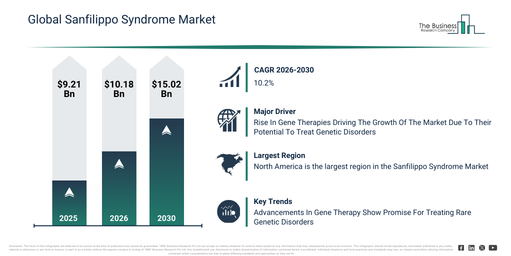
    The sanfilippo syndrome market has shown significant growth in recent years. It is anticipated to expand from $9.21 billion in 2025 to $10.18 billion in 2026, exhibiting a compound annual growth rate (CAGR) of 10.5%. The historical increase can be ascribed to elements like the restricted treatment options for sanfilippo syndrome, an increasing awareness of lysosomal storage disorders, the proliferation of rare disease advocacy groups, continuous improvements in diagnostic capabilities, and early-stage research funding dedicated to orphan diseases.

    The market for sanfilippo syndrome is projected to experience swift expansion over the coming years. By 2030, its value is anticipated to reach $15.02 billion, demonstrating a compound annual growth rate (CAGR) of 10.2%. This expansion during the prediction timeframe is driven by factors such as the progress in aav-based gene therapies, a rise in orphan drug designations and associated incentives, greater healthcare spending on uncommon illnesses, broadening newborn screening efforts, and increased funding from biotechnology and pharmaceutical firms. Key developments expected within this period involve heightened clinical trial engagement for sanfilippo syndrome treatments, a wider acceptance of gene therapy methods for childhood neurodegenerative conditions, more frequent application of sophisticated diagnostic tools for prompt identification, the proliferation of compassionate use and early access schemes for rare conditions, and enhanced partnerships among biotechnology companies and research organizations.

    Get A Free Sample Report With In-Depth Market Insights:

    https://thebusinessresearchcompany.com/sample_request?id=36378536&type=smp&name=Sanfilippo%20Syndrome%20Market%20Report%202026&utm_source=Blogs&utm_medium=Paid&utm_campaign=Nov_PR

    Sanfilippo Syndrome Market Expansion Drivers: What’s Shaping Future Growth?

    The heightened emphasis on gene therapies is projected to fuel the future expansion of the sanfilippo syndrome market. Gene therapies are defined as medical interventions that modify or substitute faulty genes to treat or avert diseases. This growing focus on gene therapies arises from their capability to address genetic disorders, rare diseases, and chronic conditions by targeting the core problem at a molecular level. Gene therapies aid in treating Sanfilippo syndrome by delivering functional copies of the defective gene to re-establish enzyme production, thereby reducing the accumulation of harmful substances within cells.

    Sanfilippo Syndrome Market Segment Analysis And Revenue Potential

    The sanfilippo syndrome market covered in this report is segmented –

    1) By Treatment: Enzyme Replacement Therapy, Gene Therapy, Genistein, Other Treatments

    2) By Diagnosis: Glycosaminoglycan Analysis (GAG Analysis), Genomic Deoxyribonucleic Acid Sequencing (Genomic DNA Sequencing), Activity Assay, Other Diagnosis

    3) By End-User: Hospitals, Research Institutions

    Subsegments:

    1) By Enzyme Replacement Therapy: Intravenous Enzyme Replacement Therapy, Intrathecal Enzyme Replacement Therapy, Intracerebroventricular (ICV) Enzyme Replacement Therapy

    2) By Gene Therapy: Adeno-Associated Virus (AAV)-Based In Vivo Gene Therapy, Lentiviral Vector–Based Ex Vivo Gene Therapy, Non-Viral Vector Gene Delivery

    3) By Genistein: Oral Genistein Supplementation, High-Dose Genistein Regimens, Low-Dose Genistein Regimens

    4) By Other Treatments: Substrate Reduction Therapy (SRT), Stem Cell Therapy, Anti-Inflammatory Agents, Symptomatic Management Drugs

    Sanfilippo Syndrome Market Industry Trends Fueling Future Revenue Growth

    Major companies in the sanfilippo syndrome market are concentrating on developing innovative treatments, such as gene therapies, to improve patient outcomes and slow disease progression. Gene therapy represents a medical strategy that employs genes to prevent, treat, or cure diseases by correcting or replacing faulty genes in the body. For instance, in February 2025, Ultragenyx Pharmaceutical Inc., a US-based biopharmaceutical company, disclosed new findings on UX111 (ABO-102), an AAV gene therapy for sanfilippo syndrome Type A (MPS IIIA). This treatment showed statistically significant improvements in Bayley-III raw scores for cognition, receptive communication, and expressive communication. Furthermore, it resulted in a substantial and sustained reduction in cerebrospinal fluid (CSF) heparan sulfate (HS) levels, which correlated with improved clinical outcomes.

    Sanfilippo Syndrome Market Key Players Shaping Industry Direction

    Major companies operating in the sanfilippo syndrome market are Takeda Pharmaceutical Company Limited, BioMarin Pharmaceutical Inc, Ultragenyx Pharmaceutical Inc, JCR Pharmaceuticals Co Ltd, Denali Therapeutics Inc, REGENXBIO Inc, Greenwood Genetic Center, ArmaGen Inc, Abeona Therapeutics Inc, Orchard Therapeutics plc, Allievex Corporation, Lysogene SA, Sio Gene Therapies Inc, Abeona Therapeutics Europe, Spark Therapeutics Inc, PTC Therapeutics Inc, Neurogene Inc, Taysha Gene Therapies Inc, MeiraGTx Holdings plc, Sangamo Therapeutics Inc, Freeline Therapeutics Holdings plc, LogicBio Therapeutics Inc

    View The Full Sanfilippo Syndrome Market Report:

    https://thebusinessresearchcompany.com/report/sanfilippo-syndrome-global-market-report?utm_source=Blogs&utm_medium=Paid&utm_campaign=Nov_PR

    Sanfilippo Syndrome Market Global Footprint: Which Region Leads The Market?

    North America was the largest region in the sanfilippo syndrome market in 2025. The regions covered in the sanfilippo syndrome market report are Asia-Pacific, South East Asia, Western Europe, Eastern Europe, North America, South America, Middle East, Africa.

    Reach Out To Our Team:

    The Business Research Company: https://www.thebusinessresearchcompany.com/

    Americas: +1 310-496-7795

    Asia: +44 7882 955267 & +91 8897263534

    Europe: +44 7882 955267

    Email us at: marketing@tbrc.info

    Follow us on:

    LinkedIn: https://in.linkedin.com/company/the-business-research-company

    YouTube: https://www.youtube.com/channel/UC24_fI0rV8cR5DxlCpgmyFQ

    Global Market Model: https://www.thebusinessresearchcompany.com/global-market-model
  • Sample Processing System Market Analysis: Understanding The Drivers Behind 8.2% CAGR Through 2030 Growth

    Sample Processing System Market Analysis: Understanding The Drivers Behind 8.2% CAGR Through 2030 Growth

    Built to provide research that’s more actionable and strategically valuable, The Business Research Company’s 2026 market reports include market attractiveness analysis, total addressable market sizing, company benchmarking matrices, interactive Excel dashboards, broader supply chain intelligence, emerging startup tracking, and in-depth product insights.

    Sample Processing System Market Forecast: What Value Will The Market Reach By 2030?

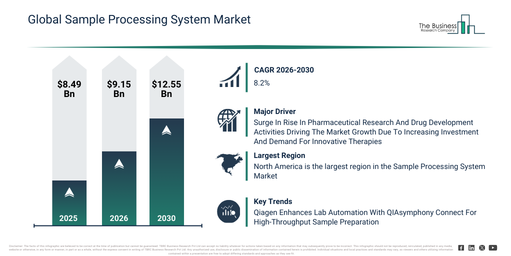
    The sample processing system market size has experienced robust growth in recent years. It is forecast to grow from $8.49 billion in 2025 to $9.15 billion in 2026, achieving a compound annual growth rate (CAGR) of 7.9%. Historically, this growth can be attributed to the expansion of pharmaceutical research activities, the increase in clinical diagnostics testing, the rising adoption of laboratory automation, a growing demand for consistent analytical results, and the availability of modular laboratory systems.

    The sample processing system market is anticipated to experience robust expansion over the next several years. It is projected to reach $12.55 billion by 2030, growing at a compound annual growth rate (CAGR) of 8.2%. This projected growth is driven by increasing investments in precision medicine research, a rising demand for scalable laboratory automation, the expansion of genomics and proteomics studies, the growing integration of AI-driven laboratory workflows, and an increasing focus on operational efficiency in laboratories. Significant trends expected during this forecast period include the increasing adoption of automated sample processing platforms, a rising demand for high-throughput laboratory systems, the growing integration of robotics in sample handling, the expansion of data-integrated processing workflows, and an enhanced focus on accuracy and reproducibility.

    Get A Free Sample Report With In-Depth Market Insights:

    https://thebusinessresearchcompany.com/sample_request?id=29184&type=smp&name=Sample%20Processing%20System%20Market%20Report%202026&utm_source=Blogs&utm_medium=Paid&utm_campaign=Nov_PR

    Sample Processing System Market Development Factors: What’s Supporting Demand?

    The escalation in pharmaceutical research and drug development initiatives is anticipated to stimulate the expansion of the sample processing system market. These initiatives involve the systematic procedures for discovering, designing, evaluating, and launching new drugs or treatments to prevent, manage, or cure illnesses. The increasing prevalence of chronic diseases is driving the demand for new, effective, and innovative therapies, thereby increasing pharmaceutical research and drug development activities. This necessitates substantial investment by companies in advanced technologies, clinical trials, and personalized medicine to enhance patient outcomes and address global healthcare needs. The sample processing system assists pharmaceutical research and drug development by enabling accurate, efficient, and high-throughput handling of biological and chemical samples, which expedites drug discovery and testing processes. For example, in June 2025, the UK Department for Science, Innovation & Technology, a government body, confirmed a $114.38 billion (£86 billion) investment over four years to advance science and technology research and development, including drug discovery, with annual funding of $29.93 billion (£22.5 billion). Therefore, the rise in pharmaceutical research and drug development activities is fostering the growth of the sample processing system market.

    Sample Processing System Market Segmentation And Category Overview

    The sample processing system market covered in this report is segmented –

    1) By Product Type: Automated Sample Processing Systems, Semi-Automated Sample Processing Systems, Manual Sample Processing Systems

    2) By Application: Genomics, Proteomics, Cell Culture, Diagnostics, Other Applications

    3) By End-User: Pharmaceutical and Biotechnology Companies, Hospitals And Diagnostic Laboratories, Academic And Research Institutes, Contract Research Organizations (CROs), Food And Beverage Industry, Forensic Laboratories

    Subsegments:

    1) By Automated Sample Processing Systems: High Throughput Processing, Laboratory Information Integrated Processing, Continuous Flow Processing

    2) By Semi-Automated Sample Processing Systems: Robotic Assisted Processing, Modular Bench Top Processing, Hybrid Manual Automated Processing

    3) By Manual Sample Processing Systems: Standalone Bench Processing, Multi Step Manual Processing, Basic Laboratory Processing

    Sample Processing System Market Trends Powering Strategic Industry Growth

    Major companies operating in the sample processing system market are increasingly concentrating on automation and enhancing throughput, as demonstrated by Qiagen’s advanced next-generation sample preparation instruments. These Qiagen instruments represent fully automated systems capable of high-throughput purification of DNA, RNA, and proteins from diverse sample types, utilizing integrated robotic workflows and pre-filled reagent cartridges. This approach facilitates efficient, standardized, and traceable processing in molecular biology. For instance, in July 2025, QIAGEN, a biotechnology company based in the Netherlands, unveiled QIAsymphony Connect, an automated solution for in vitro diagnostic sample preparation. This system supports the processing of up to 96 samples per run, improves assay sensitivity by yielding higher nucleic acid amounts, enhances sample tracking through digital connections, and reduces the need for manual intervention. This product launch highlights the broader trend of integrating automated, high-throughput sample processing technologies to satisfy increasing laboratory demands. The adoption of such platforms accelerates both the efficiency and accuracy of workflows, thereby strengthening competitive positions within the sample processing system market.

    Sample Processing System Market Competitive Analysis Of Leading Industry Participants

    Major companies operating in the sample processing system market are Thermo Fisher Scientific Inc., Danaher Corporation, Agilent Technologies Inc., Illumina Inc., F. Hoffmann-La Roche AG, PerkinElmer Inc., QIAGEN N.V., Merck KGaA, Becton, Dickinson and Company (BD), Shimadzu Corporation, bioMérieux SA, HORIBA Ltd., Eppendorf AG, Bruker Corporation, Miltenyi Biotec, Abbott Laboratories, Tecan Group Ltd., Sartorius AG, Promega Corporation, Analytik Jena GmbH+Co. KG, Biotage, CEM Corporation, Markes International, AusDiagnostics, Hitachi High-Tech Corporation, PromoChrom Technologies Ltd., MGI Tech Co. Ltd., Copan Italia SpA, A & T Corporation, Hamilton Bonaduz AG, P S Analytical Ltd.

    View The Full Sample Processing System Market Report:

    https://thebusinessresearchcompany.com/report/sample-processing-system-global-market-report?utm_source=Blogs&utm_medium=Paid&utm_campaign=Nov_PR

    Sample Processing System Market Regional Split: Which Areas Are Fueling Growth?

    North America was the largest region in the sample processing system market in 2025. Asia-Pacific is expected to be the fastest-growing region in the forecast period. The regions covered in the sample processing system market report are Asia-Pacific, South East Asia, Western Europe, Eastern Europe, North America, South America, Middle East, Africa.

    Reach Out To Our Team:

    The Business Research Company: https://www.thebusinessresearchcompany.com/

    Americas: +1 310-496-7795

    Asia: +44 7882 955267 & +91 8897263534

    Europe: +44 7882 955267

    Email us at: marketing@tbrc.info

    Follow us on:

    LinkedIn: https://in.linkedin.com/company/the-business-research-company

    YouTube: https://www.youtube.com/channel/UC24_fI0rV8cR5DxlCpgmyFQ

    Global Market Model: https://www.thebusinessresearchcompany.com/global-market-model
  • Sample Preparation Products For Next Generation Sequencing Market Growth To $85.54 Billion By 2030: What’s Driving The Expansion?

    Sample Preparation Products For Next Generation Sequencing Market Growth To $85.54 Billion By 2030: What’s Driving The Expansion?

    Backed by market attractiveness analysis, total addressable market sizing, company benchmarking matrices, interactive Excel dashboards, wider supply chain intelligence, emerging startup coverage, and detailed product-level insights, The Business Research Company’s 2026 market reports are designed to offer research that is more actionable and strategically valuable than ever.

    Sample Preparation Products For Next Generation Sequencing Market Size Outlook: How Quickly Will Revenue Expand Through 2030?

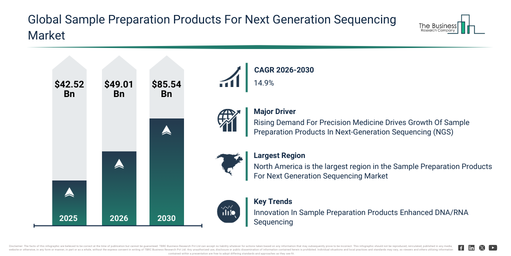
    The market size for sample preparation products used in next generation sequencing has experienced rapid expansion in recent years. This market is projected to grow from $42.52 billion in 2025 to $49.01 billion in 2026, demonstrating a compound annual growth rate (CAGR) of 15.3%. The historical increase in this market can be attributed to the growth in genomics research activities, the greater use of NGS in clinical research, the availability of advanced extraction and library preparation kits, the rise in oncology research applications, and the increasing adoption of sequencing technologies.

    The market size for sample preparation products tailored for next generation sequencing is anticipated to experience significant expansion over the next few years, reaching $85.54 billion by 2030, exhibiting a compound annual growth rate (CAGR) of 14.9%. This projected growth during the forecast period is primarily driven by factors such as the increasing demand for precision medicine applications, the expansion of clinical NGS diagnostics, rising investments in genomics research infrastructure, the growing adoption of automation in laboratories, and continuous innovation in sequencing sample preparation technologies. Furthermore, major trends in the forecast period include the increasing adoption of automated sample preparation workflows, a growing demand for high-throughput NGS sample processing, the expansion of targeted sequencing panels, a rising focus on workflow standardization, and enhanced integration with NGS platforms.

    Get A Free Sample Report With In-Depth Market Insights:

    https://thebusinessresearchcompany.com/sample_request?id=70859869&type=smp&name=Sample%20Preparation%20Products%20For%20Next%20Generation%20Sequencing%20Market%20Report%202026&utm_source=Blogs&utm_medium=Paid&utm_campaign=Nov_PR

    Sample Preparation Products For Next Generation Sequencing Market Industry Drivers: What’s Behind The Revenue Growth?

    The escalating need for precision medicine is anticipated to fuel the expansion of sample preparation products within the next-generation sequencing market. Precision medicine, also termed personalized medicine, is a medical framework that customizes treatment and healthcare approaches for individual patients, taking into account their unique genetic, environmental, and lifestyle elements. This increasing requirement for precision medicine arises from the rising occurrence of long-term health issues such as cancer, diabetes, and cardiovascular disorders. Sample preparation products for NGS are essential for the progress of precision medicine, enabling the accurate and efficient analysis of genetic information, which is critical for developing focused therapies and improving patient outcomes in personalized healthcare.

    Sample Preparation Products For Next Generation Sequencing Market Segment Outlook: Which Categories Are Growing Fastest?

    The sample preparation products for next generation sequencing market covered in this report is segmented –

    1) By Type: Deoxyribonucleic Acid (DNA) Extraction Purification And Isolation Products, Ribonucleic Acid (RNA) Extraction Purification And Isolation Products, Panels, Exome Kits And Target Enrichment Products, Deoxyribonucleic Acid (DNA) Library Construction Or Preparation Products, Ribonucleic Acid (RNA)-sequencing (Seq) Transcriptome And Gene Expression Products, Small Ribonucleic Acid (RNA) Next Generation Sequencing Sample Preparation Products

    2) By Therapeutic Area: Oncology, Infectious Diseases, Human Genetics Or Population Genetics

    3) By Application: Biotechnology, Medical, Pharmaceutical, Other Applications

    Subsegments:

    1) By Deoxyribonucleic Acid (DNA) Extraction Purification And Isolation Products: DNA Extraction Kits, DNA Purification Reagents, Isolation Columns And Magnetic Beads

    2) By Ribonucleic Acid (RNA) Extraction Purification And Isolation Products: RNA Extraction Kits, RNA Purification Reagents, Isolation Columns And Magnetic Beads

    3) By Panels, Exome Kits, And Target Enrichment Products: Exome Enrichment Kits, Targeted Panels For Specific Genes, Custom Enrichment Solutions

    4) By Deoxyribonucleic Acid (DNA) Library Construction Or Preparation Products: DNA Library Preparation Kits, Fragmentation And End Repair Kits, Adapter Ligation Kits

    5) By Ribonucleic Acid (RNA)-Sequencing (Seq) Transcriptome And Gene Expression Products: RNA-Seq Library Preparation Kits, Quantification Reagents For RNA-Seq, Transcriptome Analysis Tools

    6) By Small Ribonucleic Acid (RNA) Next Generation Sequencing Sample Preparation Products: Small RNA Library Preparation Kits, Mirna Extraction And Quantification Products, Small RNA Enrichment Kits

    Sample Preparation Products For Next Generation Sequencing Market Growth Trends Reshaping The Competitive Landscape

    Leading firms in the sample preparation products for the next-generation sequencing market are developing novel solutions, including advancements in next-generation sequencing technology, to gain a competitive edge. Next-generation sequencing (NGS) is a revolutionary method utilized for determining the sequence of deoxyribonucleic acid (DNA) or ribonucleic acid (RNA), enabling the analysis of genetic variation and the study of biological phenomena.

    Sample Preparation Products For Next Generation Sequencing Market Leading Companies And Competitive Benchmarking

    Major companies operating in the sample preparation products for next generation sequencing market are Merck & Co. Inc., Thermo Fisher Scientific Inc., F. Hoffmann-La Roche AG, Eurofins Scientific SE, Agilent Technologies Inc., PerkinElmer Inc., Illumina Inc., Beckman Coulter Inc., Bio-Rad Laboratories Inc., QIAGEN N.V., Eppendorf AG, Promega Corporation, Oxford Nanopore Technologies Ltd, Takara Bio Inc, New England Biolabs, Fluidigm Corporation, Pacific Biosciences of California Inc., Analytik Jena AG, SeraCare Life Sciences, Diagenode Inc., Zymo Research Corporation, Nugen Technologies Inc., Swift Biosciences Inc., Tecan Group Ltd.

    View The Full Sample Preparation Products For Next Generation Sequencing Market Report:

    https://thebusinessresearchcompany.com/report/sample-preparation-products-for-next-generation-sequencing-global-market-report?utm_source=Blogs&utm_medium=Paid&utm_campaign=Nov_PR

    Sample Preparation Products For Next Generation Sequencing Market Top Region: Where Does Most Revenue Come From?

    North America was the largest region in the sample preparation products for next generation sequencing (NGS) market in 2025. The regions covered in the sample preparation products for next generation sequencing market report are Asia-Pacific, South East Asia, Western Europe, Eastern Europe, North America, South America, Middle East, Africa.

    Reach Out To Our Team:

    The Business Research Company: https://www.thebusinessresearchcompany.com/

    Americas: +1 310-496-7795

    Asia: +44 7882 955267 & +91 8897263534

    Europe: +44 7882 955267

    Email us at: marketing@tbrc.info

    Follow us on:

    LinkedIn: https://in.linkedin.com/company/the-business-research-company

    YouTube: https://www.youtube.com/channel/UC24_fI0rV8cR5DxlCpgmyFQ

    Global Market Model: https://www.thebusinessresearchcompany.com/global-market-model
  • Salt Therapy Market Trends Reshaping Industry Growth Through 2030

    Salt Therapy Market Trends Reshaping Industry Growth Through 2030

    Featuring market attractiveness scoring, total addressable market sizing, company benchmarking matrices, interactive Excel dashboards, deeper supply chain intelligence, emerging startup tracking, and granular product-level insights, The Business Research Company’s 2026 market reports are built to deliver research that is both more actionable and more strategically valuable.

    Salt Therapy Market Size, Value And Growth Trajectory Through 2030

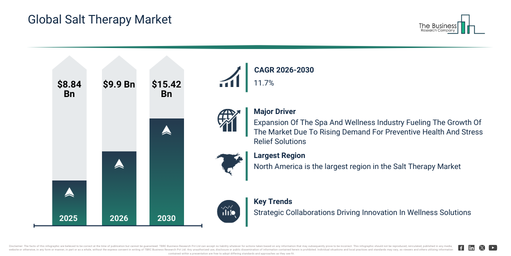
    The salt therapy market has experienced swift expansion recently. This market is projected to expand from $8.84 billion in 2025 to $9.9 billion in 2026, demonstrating a compound annual growth rate (CAGR) of 12.0%. The historical growth of this market stems from factors such as increasing awareness of respiratory wellness, a rising prevalence of asthma and allergies, the expansion of wellness and spa industries, a growing consumer preference for natural therapies, and the availability of commercial salt therapy installations.

    The salt therapy market size is projected to experience substantial expansion over the coming years. This market is anticipated to reach $15.42 billion by 2030, demonstrating a compound annual growth rate (CAGR) of 11.7%. Factors contributing to this growth during the projected period include a heightened emphasis on holistic health management, an increasing need for at-home wellness devices, the broadening of preventive healthcare expenditures, a burgeoning interest in alternative respiratory therapies, and the expanding digital promotion of wellness services. Key trends for the forecast duration encompass a rising demand for non-pharmaceutical respiratory therapies, the increasing establishment of halotherapy wellness centers, wider utilization of portable salt therapy devices, an expansion of home-based salt therapy options, and a greater emphasis on stress reduction and preventive care.

    Get A Free Sample Report With In-Depth Market Insights:

    https://thebusinessresearchcompany.com/sample_request?id=50594369&type=smp&name=Salt%20Therapy%20Market%20Report%202026&utm_source=Blogs&utm_medium=Paid&utm_campaign=Nov_PR

    Salt Therapy Market Growth Factors: What’s Supporting Expansion?

    The expansion of the spa and wellness industry is projected to drive the growth of the salt therapy market moving forward. This industry encompasses a wide array of services and products aimed at enhancing physical, mental, and emotional well-being through relaxation, therapeutic treatments, and holistic health practices. The spa and wellness sector is primarily growing due to increasing consumer awareness and demand for preventive health and stress management solutions. As lifestyles become more fast-paced and stress-related health concerns rise, individuals are increasingly turning to wellness experiences for relaxation and overall well-being. Salt therapy is utilized within the spa and wellness industry to promote respiratory health, skin rejuvenation, and relaxation by offering a natural, drug-free treatment that boosts overall well-being.

    Salt Therapy Market Segment Landscape: Which Areas Lead Development?

    The salt therapy market covered in this report is segmented –

    1) By Type Of Salt Therapy: Dry Salt Therapy, Wet Salt Therapy

    2) By Product Type: Halotherapy Equipment, Salt Inhalers, Bath Salts

    3) By Distribution Channel: Online Sales, Offline Sales, Direct Sales

    4) By Application Area: Respiratory Disorders, Skin Conditions, Stress Relief And Relaxation, General Wellness

    5) By End User: Individual Consumers, Commercial Facilities

    Subsegments:

    1) By Dry Salt Therapy: Halotherapy Rooms And Cabins, Salt Booths And Pods, Halogenerators, Dry Salt Inhalers, Salt Walls And Panels

    2) By Wet Salt Therapy: Saline Nebulization Therapy, Salt Baths And Soaking Treatments, Neti Pots And Nasal Irrigation, Salt Steam Inhalation, Saltwater Gargles And Rinses

    Salt Therapy Market Trends Shaping Long-Term Demand

    Leading companies within the salt therapy market are utilizing a strategic partnership strategy to improve technology incorporation and extend their market influence. A strategic partnership generally signifies a cooperative arrangement between two or more entities, where they merge their assets, knowledge, and actions to fulfill shared ambitions. As an illustration, in June 2025, Salt Cave Inc., a US-based enterprise focused on creating, constructing, and setting up bespoke salt therapy rooms and caves, and Oceanair Himalayan Salt Cave, a US-based wellness firm, initiated a new commercial enterprise dedicated to producing and distributing Himalayan salt items along with pre-assembled salt caves. This alliance is designed to deliver complete solutions for both individuals and businesses interested in salt therapy wellness locations. The collaboration seeks to broaden access to superior salt therapy settings and standardized prefabricated salt cave setups, meeting the increasing market demand in the wellness sector for therapeutic salt-derived facilities and merchandise.

    Salt Therapy Market Industry Leaders And Competitive Landscape

    Major companies operating in the salt therapy market are Infinity Salt Air, IIRIS Technologies, Aerosal GmbH, Salt of the Earth Ltd., Halotherapy Solutions LLC, Salina Plus Ltd., Prizma Halotherapy, SALT Chamber LLC, Salt Cave Paradise, SaltMed Corporation, Himalayan Wellness Company, Kangyan Medical Instrument Co. Ltd., HALOMED UAB, VIVA SALT Halogenerators, HALOGENERATOR LTD., Inhalo DSI Ltd., Salt Therapy Home, Salt Cocoon, Breathe Better Salt Rooms, Serene Salt Systems LLC.

    View The Full Salt Therapy Market Report:

    https://thebusinessresearchcompany.com/report/salt-therapy-global-market-report?utm_source=Blogs&utm_medium=Paid&utm_campaign=Nov_PR

    Salt Therapy Market Regional Breakdown: Where Is Demand Concentrated?

    North America was the largest region in the salt therapy market in 2025. Asia-Pacific is expected to be the fastest-growing region in the forecast period. The regions covered in the salt therapy market report are Asia-Pacific, South East Asia, Western Europe, Eastern Europe, North America, South America, Middle East, Africa.

    Reach Out To Our Team:

    The Business Research Company: https://www.thebusinessresearchcompany.com/

    Americas: +1 310-496-7795

    Asia: +44 7882 955267 & +91 8897263534

    Europe: +44 7882 955267

    Email us at: marketing@tbrc.info

    Follow us on:

    LinkedIn: https://in.linkedin.com/company/the-business-research-company

    YouTube: https://www.youtube.com/channel/UC24_fI0rV8cR5DxlCpgmyFQ

    Global Market Model: https://www.thebusinessresearchcompany.com/global-market-model
  • Salivary Gland Infection Market Growth To $6.5 Billion Creates New Opportunities Across The Industry

    Salivary Gland Infection Market Growth To $6.5 Billion Creates New Opportunities Across The Industry

    Built to provide research that’s more actionable and strategically valuable, The Business Research Company’s 2026 market reports include market attractiveness analysis, total addressable market sizing, company benchmarking matrices, interactive Excel dashboards, broader supply chain intelligence, emerging startup tracking, and in-depth product insights.

    Salivary Gland Infection Market CAGR Outlook And Future Development

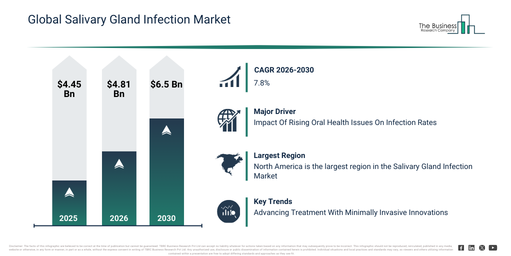
    The salivary gland infection market has demonstrated substantial growth in recent years. The market is projected to expand from $4.45 billion in 2025 to $4.81 billion in 2026, achieving a compound annual growth rate (CAGR) of 8.1%. Historically, this growth has been driven by factors such as a rise in the incidence of bacterial and viral salivary infections, better access to diagnostic imaging, the provision of broad-spectrum antibiotics, the broadening of hospital-based ENT services, and heightened clinical understanding of gland disorders.

    The salivary gland infection market size is anticipated to undergo significant expansion in the next few years, reaching $6.5 billion by 2030, propelled by a compound annual growth rate (CAGR) of 7.8%. This projected growth within the forecast period is attributable to an escalating demand for advanced diagnostic accuracy, increased investments in ENT diagnostic tools, the broadening of outpatient diagnostic services, a heightened focus on patient-centric treatment pathways, and the enhanced integration of imaging and laboratory diagnostics. Notable trends expected during this period include a rising adoption of advanced imaging diagnostics, an increase in the use of targeted antibiotic therapies, a stronger emphasis on early infection detection, the expansion of minimally invasive treatment approaches, and an enhanced focus on comprehensive diagnostic pathways.

    Get A Free Sample Report With In-Depth Market Insights:

    https://thebusinessresearchcompany.com/sample_request?id=66443719&type=smp&name=Salivary%20Gland%20Infection%20Market%20Report%202026&utm_source=Blogs&utm_medium=Paid&utm_campaign=Nov_PR

    Salivary Gland Infection Market Demand Drivers: What’s Powering Industry Growth?

    The increase in oral health problems is anticipated to propel the expansion of the salivary gland infections market. These problems encompass conditions such as tooth decay, gum infections, and other oral cavity ailments. The escalation of oral health problems stems from factors such as poor oral hygiene, detrimental eating habits, and insufficient access to dental care. Such issues heighten the likelihood of salivary gland infections by fostering bacterial proliferation and obstructions within the salivary ducts.

    Salivary Gland Infection Market Segments: Where Is Growth Concentrated?

    The salivary gland infection market covered in this report is segmented –

    1) By Diagnosis: Plain Radiography, Sialography, Computed Tomography (CT), Magnetic Resonance Imaging (MRI), Radionuclide Scintigraphy, High-resolution Ultrasonography, Other Diagnoses

    2) By Treatment: Medications, Surgery, Aspiration, Home Care, Other Treatments

    3) By End User: Hospitals And Clinics, Medical Research Centers, Academic Institutes, Other End User

    Subsegments:

    1) By Plain Radiography: X-ray Of Salivary Glands, Sialography With X-ray

    2) By Sialography: Conventional Sialography, Digital Subtraction Sialography (DSS)

    3) By Computed Tomography (CT): Non-contrast CT, Contrast-enhanced CT

    4) By Magnetic Resonance Imaging (MRI): MRI without contrast, MRI With contrast (Dynamic MRI)

    5) By Radionuclide Scintigraphy: Planar Scintigraphy, SPECT (Single Photon Emission Computed Tomography)

    6) By High-resolution Ultrasonography: Standard Ultrasonography, Doppler Ultrasonography

    7) By Other Diagnoses: Fine Needle Aspiration (FNA) Biopsy, Endoscopy, Salivary Flow Test

    Salivary Gland Infection Market Innovation Trends Shaping Future Development

    Major companies in the salivary gland infections market are directing their efforts towards technological progress, particularly in minimally invasive procedures. This initiative aims to enhance treatment results, expedite patient recovery, and boost overall healthcare efficacy. Minimally invasive methods involve smaller incisions and specialized instruments, leading to less tissue damage and promoting quicker healing.

    Salivary Gland Infection Market Key Participants And Competitive Landscape

    Major companies operating in the salivary gland infection market are Pfizer Inc., Johnson And Johnson, Roche Holding AG, Merck And Co Inc, AbbVie Inc, AstraZeneca plc, Novartis AG, GSK plc, Eli Lilly And Company, FUJIFILM Holdings Corporation, Teva Pharmaceutical Industries Ltd, Boehringer Ingelheim GmbH, Astellas Pharma Inc, Sandoz International GmbH, Hikma Pharmaceuticals PLC, Lupin Pharmaceuticals Inc, Mylan NV, Zydus Cadila Healthcare Ltd, Sun Pharmaceutical Industries Ltd, Dr Reddys Laboratories Ltd, Cipla Limited, Sanofi SA, Bayer AG, Perrigo Company plc

    View The Full Salivary Gland Infection Market Report:

    https://thebusinessresearchcompany.com/report/salivary-gland-infection-global-market-report?utm_source=Blogs&utm_medium=Paid&utm_campaign=Nov_PR

    Salivary Gland Infection Market Geographic Landscape: Which Region Leads Industry Growth?

    North America was the largest region in the salivary gland infection market in 2025. The regions covered in the salivary gland infection market report are Asia-Pacific, South East Asia, Western Europe, Eastern Europe, North America, South America, Middle East, Africa.

    Reach Out To Our Team:

    The Business Research Company: https://www.thebusinessresearchcompany.com/

    Americas: +1 310-496-7795

    Asia: +44 7882 955267 & +91 8897263534

    Europe: +44 7882 955267

    Email us at: marketing@tbrc.info

    Follow us on:

    LinkedIn: https://in.linkedin.com/company/the-business-research-company

    YouTube: https://www.youtube.com/channel/UC24_fI0rV8cR5DxlCpgmyFQ

    Global Market Model: https://www.thebusinessresearchcompany.com/global-market-model
  • Sacroiliitis Treatment Market Forecast: Breaking Down The Numbers Behind Future Expansion

    Sacroiliitis Treatment Market Forecast: Breaking Down The Numbers Behind Future Expansion

    Backed by market attractiveness analysis, total addressable market sizing, company benchmarking matrices, interactive Excel dashboards, wider supply chain intelligence, emerging startup coverage, and detailed product-level insights, The Business Research Company’s 2026 market reports are designed to offer research that is more actionable and strategically valuable than ever.

    Sacroiliitis Treatment Market Set To Climb From $1.9 Billion In 2026 To $2.5 Billion By 2030

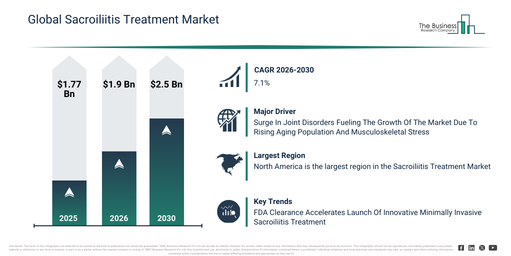
    The sacroiliitis treatment market has experienced robust expansion over the past few years. Projections indicate an increase from $1.77 billion in 2025 to $1.9 billion in 2026, demonstrating a compound annual growth rate (CAGR) of 7.4%. This historical growth is largely due to factors such as a rise in inflammatory spinal disorder cases, more extensive adoption of diagnostic imaging, enhanced comprehension of sacroiliac joint pathology, the proliferation of pain management clinics, and the introduction of advanced pharmacological treatments.

    The sacroiliitis treatment market size is projected to experience strong growth in the next few years. It is forecast to expand to $2.5 billion by 2030, achieving a compound annual growth rate (CAGR) of 7.1%. This projected growth during the forecast period can be attributed to the increasing adoption of biologic drugs, rising demand for minimally invasive pain treatments, the expansion of outpatient orthopedic procedures, growing integration of digital diagnostics, and an increasing focus on long-term mobility restoration. Significant trends anticipated during the forecast period include the increasing use of image-guided diagnostic techniques, rising adoption of minimally invasive SI joint fusion, a growing preference for biologic and targeted therapies, the expansion of radiofrequency-based pain management, and an enhanced focus on personalized treatment approaches.

    Get A Free Sample Report With In-Depth Market Insights:

    https://thebusinessresearchcompany.com/sample_request?id=72452731&type=smp&name=Sacroiliitis%20Treatment%20Market%20Report%202026&utm_source=Blogs&utm_medium=Paid&utm_campaign=Nov_PR

    Sacroiliitis Treatment Market Growth Drivers: What’s Behind The Acceleration?

    An anticipated rise in joint disorder cases is expected to propel the growth of the sacroiliitis treatment market in the future. These disorders encompass conditions impacting joints, leading to pain, inflammation, stiffness, and restricted movement, often stemming from injury, aging, autoimmune diseases, or infections. The growing occurrence of joint disorders is primarily attributed to aging populations experiencing natural wear and tear on their joints, which results in a higher prevalence of conditions like osteoarthritis and other degenerative joint diseases. Sacroiliitis treatment offers benefits for joint disorders by diminishing inflammation and pain within the sacroiliac joints, thereby enhancing mobility and general joint function, which can ease symptoms and hinder further joint deterioration.

    Sacroiliitis Treatment Market Segment Analysis: What Are The Core Market Categories?

    The sacroiliitis treatment market covered in this report is segmented –

    1) By Type: Medications, Joint Injections, Joint Fusion, Radiofrequency Denervation, Electrical Stimulation

    2) By Diagnosis: Imaging Tests, Physical Examination, Laboratory Tests, Other Diagnosis

    3) By Route Of Administration: Oral, Injectable, Topical

    4) By End-User: Hospitals, Specialty Clinics, Ambulatory Surgical Centers, Home Care Settings

    Subsegments:

    1) By Medications: NSAIDs (Nonsteroidal Anti-Inflammatory Drugs), Corticosteroids, Disease-Modifying Antirheumatic Drugs (DMARDs), Biologic Agents, Analgesics

    2) By Joint Injections: Corticosteroid Injections, Platelet-Rich Plasma (PRP) Injections, Hyaluronic Acid Injections, Prolotherapy

    3) By Joint Fusion: Minimally Invasive SI Joint Fusion, Open SI Joint Fusion, Robotic-Assisted Fusion Techniques, Posterior Approach Fusion, Lateral Approach Fusion

    4) By Radiofrequency Denervation: Conventional Radiofrequency Ablation, Cooled Radiofrequency Ablation, Pulsed Radiofrequency Ablation

    5) By Electrical Stimulation: Transcutaneous Electrical Nerve Stimulation (TENS), Spinal Cord Stimulation (SCS), Peripheral Nerve Stimulation (PNS)

    Sacroiliitis Treatment Market Trends Redefining Industry Growth

    Companies operating in the sacroiliitis treatment market are heavily focused on securing regulatory approvals to hasten the introduction of innovative therapies, guarantee market access, and bolster their competitive standing. Regulatory approvals denote the official consent from government health agencies, verifying that a medical treatment is both safe and effective for public use.

    Sacroiliitis Treatment Market Top Companies Driving Competitive Growth

    Major companies operating in the sacroiliitis treatment market are Pfizer Inc, Johnson And Johnson, AbbVie Inc, Novartis AG, Eli Lilly And Company, Boehringer Ingelheim International GmbH, Amgen Inc, Biogen Inc, Sandoz Group AG, UCB SA, Hikma Pharmaceuticals PLC, Samsung Bioepis Co Ltd, Lupin Limited, Zydus Lifesciences Limited, Celltrion Healthcare Co Ltd, Torrent Pharmaceuticals Limited, Globus Medical, Orthofix Medical Inc, Coherus BioSciences Inc, SI BONE Inc, Medtronic plc

    View The Full Sacroiliitis Treatment Market Report:

    https://thebusinessresearchcompany.com/report/sacroiliitis-treatment-global-market-report?utm_source=Blogs&utm_medium=Paid&utm_campaign=Nov_PR

    Sacroiliitis Treatment Market Largest Region: Which Geography Holds The Biggest Share?

    North America was the largest region in the sacroiliitis treatment market in2025. Asia-Pacific is expected to be the fastest-growing region in the forecast period. The regions covered in the sacroiliitis treatment market report are Asia-Pacific, South East Asia, Western Europe, Eastern Europe, North America, South America, Middle East, Africa.

    Reach Out To Our Team:

    The Business Research Company: https://www.thebusinessresearchcompany.com/

    Americas: +1 310-496-7795

    Asia: +44 7882 955267 & +91 8897263534

    Europe: +44 7882 955267

    Email us at: marketing@tbrc.info

    Follow us on:

    LinkedIn: https://in.linkedin.com/company/the-business-research-company

    YouTube: https://www.youtube.com/channel/UC24_fI0rV8cR5DxlCpgmyFQ

    Global Market Model: https://www.thebusinessresearchcompany.com/global-market-model
  • Sacroiliac Joint Fusion Market Expected To Grow At 16% CAGR Through 2030: What Businesses Need To Know

    Sacroiliac Joint Fusion Market Expected To Grow At 16% CAGR Through 2030: What Businesses Need To Know

    Featuring market attractiveness scoring, total addressable market sizing, company benchmarking matrices, interactive Excel dashboards, deeper supply chain intelligence, emerging startup tracking, and granular product-level insights, The Business Research Company’s 2026 market reports are built to deliver research that is both more actionable and more strategically valuable.

    Sacroiliac Joint Fusion Market Forecast: Value Set To Climb From $0.94 Billion To $1.7 Billion

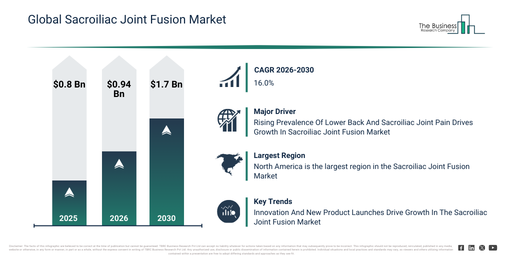
    The sacroiliac joint fusion market has seen substantial expansion in recent years. Its valuation is anticipated to increase from $0.8 billion in 2025 to $0.94 billion in 2026, exhibiting a compound annual growth rate (CAGR) of 18.0%. This past growth can be linked to the increasing occurrence of lower back pain disorders, a greater recognition of sacroiliac joint dysfunction through diagnosis, the accessibility of fusion implant systems, the broadening of expertise in spine surgery, and the embrace of minimally invasive surgical methods.

    The sacroiliac joint fusion market is projected to experience substantial expansion in the coming years. Its value is anticipated to reach $1.7 billion by 2030, achieving a compound annual growth rate (CAGR) of 16.0%. This growth during the forecast period is primarily driven by factors such as a surge in demand for outpatient orthopedic procedures, greater uptake of advanced spinal implants, an intensified emphasis on quicker patient recovery, the broadening availability of image-guided surgical systems, and increased capital flow into orthopedic innovation. Key trends anticipated during this period encompass the growing acceptance of minimally invasive fusion procedures, an increase in the utilization of advanced implant technologies, a heightened need for image-guided surgical techniques, the proliferation of outpatient spine surgery facilities, and a stronger emphasis on managing pain over the long term.

    Get A Free Sample Report With In-Depth Market Insights:

    https://thebusinessresearchcompany.com/sample_request?id=10159978&type=smp&name=Sacroiliac%20Joint%20Fusion%20Market%20Report%202026&utm_source=Blogs&utm_medium=Paid&utm_campaign=Nov_PR

    Sacroiliac Joint Fusion Market Growth Factors Behind Sustained Expansion

    The rising incidence of lower back pain is anticipated to drive the expansion of the sacroiliac joint fusion market in the coming period. Lower back pain describes discomfort or ache felt in the spinal lumbar region, specifically between the lower rib cage and the upper legs. This common condition presents with varying intensity, from a persistent dull ache to an abrupt, acute pain. Factors contributing to the widespread occurrence of low back pain include occupational stress, inactive lifestyles, excess weight, and nutritional habits. Sacroiliac joint fusion offers relief from lower back pain, enhancing overall function and quality of life through joint stabilization and the reduction of irregular motion.

    Sacroiliac Joint Fusion Market Segment Breakdown: Which Categories Lead On Revenue?

    The sacroiliac joint fusion market covered in this report is segmented –

    1) By Product: Implants, Accessories, Injections, Diagnosis, Treatment, RF Ablation

    2) By Indication Type: Degenerative Sacroiliitis, Sacral Disruption, Trauma

    3) By Approach: Dorsal, Anterior

    4) By End-user: Hospitals, Ambulatory Surgical Centers, Other End Users

    Subsegments:

    1) By Implants: Screws, Plates, Cages

    2) By Accessories: Instrumentation Kits, Spacers, Guides

    3) By Injections: Steroid Injections, Local Anesthetic Injections, Diagnostic Joint Injections

    4) By Diagnosis: X-Ray, CT Scan, MRI

    5) By Treatment: Minimally Invasive Surgery, Open Surgery, RF Ablation

    6) By RF Ablation: Radiofrequency (RF) Ablation Systems, RF Ablation Probes

    Sacroiliac Joint Fusion Market Strategic Trends: What Defines The Next Growth Phase?

    Leading companies in the sacroiliac joint fusion market are developing advanced implants, such as granite implant systems, with the goal of improving patient outcomes, reducing surgical durations, and enhancing overall procedural effectiveness. The granite implant system for SI joint fusion is a medical device specifically engineered to address conditions impacting the sacroiliac joint, including sacroiliac joint dysfunction or sacroiliitis, thereby facilitating an improved quality of life through robust joint stabilization and fusion.

    Sacroiliac Joint Fusion Market Leading Players And Competitive Positioning

    Major companies operating in the sacroiliac joint fusion market are Medtronic Plc, Zimmer Biomet Holdings Inc., Integra LifeSciences, NuVasive Inc., Globus Medical, Orthofix Inc., Medacta International SA, Alphatec Holdings Inc., RTI Surgical Holdings Inc., SeaSpine, SI-BONE Inc., Surgalign Holdings Inc., Xtant Medical, CoreLink, Life Spine Inc., Genesys Spine, Camber Spine Technologies LLC, Captiva Spine Inc., VGI Medical LLC, PainTEQ, CornerLoc, SIGNUS Medizintechnik GmbH, Tenon Medical Inc.

    View The Full Sacroiliac Joint Fusion Market Report:

    https://thebusinessresearchcompany.com/report/sacroiliac-joint-fusion-global-market-report?utm_source=Blogs&utm_medium=Paid&utm_campaign=Nov_PR

    Sacroiliac Joint Fusion Market Regional Analysis: Which Geography Leads On Revenue?

    North America was the largest region in the sacroiliac joint fusion market in 2025. Asia-Pacific is expected to be the fastest-growing region in the forecast period. The regions covered in the sacroiliac joint fusion market report are Asia-Pacific, South East Asia, Western Europe, Eastern Europe, North America, South America, Middle East, Africa.

    Reach Out To Our Team:

    The Business Research Company: https://www.thebusinessresearchcompany.com/

    Americas: +1 310-496-7795

    Asia: +44 7882 955267 & +91 8897263534

    Europe: +44 7882 955267

    Email us at: marketing@tbrc.info

    Follow us on:

    LinkedIn: https://in.linkedin.com/company/the-business-research-company

    YouTube: https://www.youtube.com/channel/UC24_fI0rV8cR5DxlCpgmyFQ

    Global Market Model: https://www.thebusinessresearchcompany.com/global-market-model
  • Rubella Diagnostic Testing Market Forecast To Reach $1.89 Billion By 2030: Key Trends Explained

    Rubella Diagnostic Testing Market Forecast To Reach $1.89 Billion By 2030: Key Trends Explained

    Built to provide research that’s more actionable and strategically valuable, The Business Research Company’s 2026 market reports include market attractiveness analysis, total addressable market sizing, company benchmarking matrices, interactive Excel dashboards, broader supply chain intelligence, emerging startup tracking, and in-depth product insights.

    Rubella Diagnostic Testing Market Revenue Growth On Track For A 6.4% CAGR Through 2030

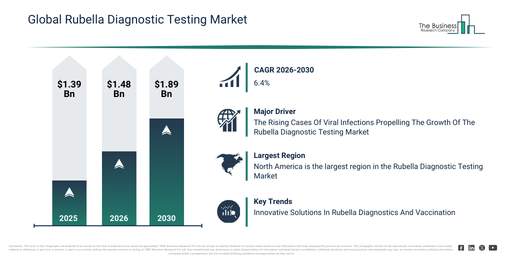
    The rubella diagnostic testing market has experienced robust growth in recent years. This market is projected to expand from $1.39 billion in 2025 to $1.48 billion in 2026, achieving a compound annual growth rate (CAGR) of 6.5%. Historically, this expansion has been propelled by the broadening of routine viral screening programs, enhanced awareness concerning congenital rubella syndrome, the accessibility of serological testing kits, the expansion of diagnostic laboratory networks, and the implementation of immunoassay technologies.

    The rubella diagnostic testing market is anticipated to experience substantial expansion over the coming years. It is projected to reach $1.89 billion by 2030, exhibiting a compound annual growth rate (CAGR) of 6.4%. This projected growth is driven by several factors, including heightened investments in sophisticated diagnostic platforms, an elevated emphasis on maternal health screening, the wider implementation of automated laboratory testing, the increasing uptake of point-of-care diagnostics, and the reinforcement of infectious disease surveillance systems. Key trends anticipated during this period encompass the growing integration of molecular diagnostic techniques, a surge in the application of PCR-based rubella testing, escalating demand for prenatal screening, the broadening availability of high-sensitivity immunoassays, and a heightened commitment to early disease detection.

    Get A Free Sample Report With In-Depth Market Insights:

    https://thebusinessresearchcompany.com/sample_request?id=87795203&type=smp&name=Rubella%20Diagnostic%20Testing%20Market%20Report%202026&utm_source=Blogs&utm_medium=Paid&utm_campaign=Nov_PR

    Rubella Diagnostic Testing Market Demand Drivers Opening New Revenue Streams

    The rubella diagnostic testing market is expected to grow as viral infections become more prevalent. Viral infections are illnesses caused by viruses, which are tiny infectious agents that can only reproduce inside an organism’s living cells. The increasing number of viral infection cases can be attributed to heightened global travel, which facilitates the cross-border spread of viruses, and climate change, which alters vector habitats and expands the reach of disease-carrying organisms. Rubella diagnostic testing is vital for the early detection and management of rubella infections, preventing complications, especially for pregnant women, and assisting in outbreak control to reduce virus transmission.

    Rubella Diagnostic Testing Market Segmentation: How Does The Market Break Down By Category?

    The rubella diagnostic testing market covered in this report is segmented –

    1) By Diagnostic Technique: Latex Agglutination, Enzyme Immunoassay (EIA), Radioimmunoassay (Ria), Fluorescent Immunoassay (FIA), Other Diagnostic Techniques

    2) By Age Group: Neonates, Teenagers, Adults

    3) By End User: Hospitals And Clinics, Diagnostic Laboratories, Public Health Laboratories, Other End Users

    Subsegments:

    1) By Latex Agglutination: Qualitative Latex Agglutination Tests, Quantitative Latex Agglutination Tests, Rapid Latex Agglutination Kits

    2) By Enzyme Immunoassay (EIA): Direct EIA, Indirect EIA, Sandwich EIA, Competitive EIA

    3) By Radioimmunoassay (RIA): Standard RIA, Modified RIA, Single-Antibody RIA

    4) By Fluorescent Immunoassay (FIA): Direct FIA, Indirect FIA, Sandwich FIA

    5) By Other Diagnostic Techniques: Polymerase Chain Reaction (PCR), Nucleic Acid Amplification Tests (NAAT), Microplate-Based Assays, Western Blotting

    Rubella Diagnostic Testing Market Transformation Trends: What Innovations Are Driving Change?

    Leading enterprises within the rubella diagnostic testing sector are concentrating their efforts on creating groundbreaking solutions, including the rubella virus vaccine, aimed at boosting diagnostic precision and strengthening preventative actions. This rubella virus vaccine offers protection against rubella, frequently given as an element of the MMR or MMRV combination vaccinations to avert the illness and its related complications.

    Rubella Diagnostic Testing Market Competitive Overview And Top Companies

    Major companies operating in the rubella diagnostic testing market are Cardinal Health Inc., Siemens Healthineers AG, Thermo Fisher Scientific Inc., Abbott Laboratories, F. Hoffmann-La Roche Ltd, bioMérieux S.A., Bio-Rad Laboratories Inc., Ortho-Clinical Diagnostics Inc., DiaSorin S.p.A., Meridian Bioscience Inc., Fortress Diagnostics Ltd., Mylab Discovery Solutions Pvt. Ltd., MP Biomedicals LLC, CTK Biotech Inc., ZEUS Scientific Inc., Creative Diagnostics, Arlington Scientific Inc., AccuBioTech Co. Ltd., Intec Products Inc., Vitrosens Biotechnology Ltd., Sprint Diagnostics Pvt. Ltd., InDevR Inc., Atlas Medical GmbH

    View The Full Rubella Diagnostic Testing Market Report:

    https://thebusinessresearchcompany.com/report/rubella-diagnostic-testing-global-market-report?utm_source=Blogs&utm_medium=Paid&utm_campaign=Nov_PR

    Rubella Diagnostic Testing Market Geographic Spread And Regional Opportunities

    North America was the largest region in the rubella diagnostic testing market in 2025. Asia-Pacific is expected to be the fastest-growing region in the forecast period. The regions covered in the rubella diagnostic testing market report are Asia-Pacific, South East Asia, Western Europe, Eastern Europe, North America, South America, Middle East, Africa.

    Reach Out To Our Team:

    The Business Research Company: https://www.thebusinessresearchcompany.com/

    Americas: +1 310-496-7795

    Asia: +44 7882 955267 & +91 8897263534

    Europe: +44 7882 955267

    Email us at: marketing@tbrc.info

    Follow us on:

    LinkedIn: https://in.linkedin.com/company/the-business-research-company

    YouTube: https://www.youtube.com/channel/UC24_fI0rV8cR5DxlCpgmyFQ

    Global Market Model: https://www.thebusinessresearchcompany.com/global-market-model
  • Routine Health Screening Market Analysis Through 2030: Market Size, Growth Trends And Industry Outlook

    Routine Health Screening Market Analysis Through 2030: Market Size, Growth Trends And Industry Outlook

    Backed by market attractiveness analysis, total addressable market sizing, company benchmarking matrices, interactive Excel dashboards, wider supply chain intelligence, emerging startup coverage, and detailed product-level insights, The Business Research Company’s 2026 market reports are designed to offer research that is more actionable and strategically valuable than ever.

    Routine Health Screening Market Value Growth And Long-Term Outlook

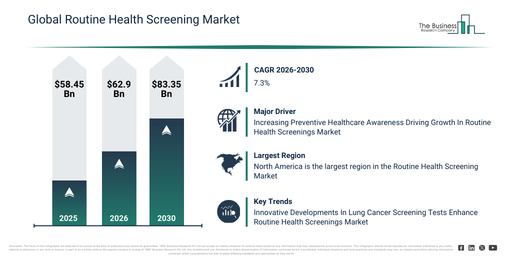
    The routine health screening market has shown strong expansion in recent years. Its value is projected to climb from $58.45 billion in 2025 to $62.9 billion in 2026, achieving a compound annual growth rate (CAGR) of 7.6%. This historical increase can be attributed to several factors including heightened public health awareness, an expanding network of diagnostic laboratories, a higher incidence of chronic conditions, improved access to essential healthcare services, and the increasing number of employer-sponsored health screening programs.

    The routine health screening market size is anticipated to experience substantial growth over the next few years. It is projected to reach $83.35 billion by 2030, achieving a compound annual growth rate (CAGR) of 7.3%. This expansion during the forecast period can be attributed to the increasing uptake of personalized preventive care, a growing demand for remote and home-based diagnostics, the broadening of digital health platforms, the escalating use of advanced screening technologies, and a heightened emphasis on population health management. Significant trends within this period include the rising adoption of preventive health screening programs, the expanding utilization of home-based diagnostic testing, the wider integration of digital health records, an increased focus on early disease detection, and improved accessibility to routine screening services.

    Get A Free Sample Report With In-Depth Market Insights:

    https://thebusinessresearchcompany.com/sample_request?id=39744388&type=smp&name=Routine%20Health%20Screening%20Market%20Report%202026&utm_source=Blogs&utm_medium=Paid&utm_campaign=Nov_PR

    Routine Health Screening Market Growth Backed By Core Demand Fundamentals

    A growing understanding of preventive healthcare is anticipated to drive the expansion of the routine health screenings market. Preventive healthcare encompasses actions and strategies designed to avert the development or worsening of illnesses and health issues through early identification, changes in lifestyle, and proactive measures. This awareness is on the rise because of its advantages, such as discovering diseases early, leading to improved health outcomes, and offering cost efficiencies, further fueled by enhanced public education and medical progress. Routine health screenings support preventive healthcare by enabling the early detection of potential health concerns, thereby facilitating prompt interventions and mitigating the risk of serious conditions.

    Routine Health Screening Market Segment Trends And Revenue Contributors

    The routine health screening market covered in this report is segmented –

    1) By Test Type: Blood Glucose Test, Kidney Function Test, Bone Profile Test, Electrolyte Test, Liver Function Test, Lipid Profile Test, Other Test Types

    2) By Sample Type: Blood, Urine, Serum, Saliva, Other Sample Types

    3) By Technology: Quantitative Polymerase Chain Reaction (QPCR), Quantitative Fluorescence In Situ Hybridization (Q-FISH), Immunoassays, Medical Imaging, Single Telomere Length Analysis (STELA), Other Technologies

    4) By Sample Collection Sites: Hospitals, Homes, Diagnostic Laboratories, Offices, Other Sample Collection Sites

    Subsegments:

    1) By Blood Glucose Test: Fasting Blood Glucose Test, HbA1c Test, Continuous Glucose Monitoring

    2) By Kidney Function Test: Serum Creatinine Test, Blood Urea Nitrogen (BUN) Test, Urinalysis

    3) By Bone Profile Test: Serum Calcium Test, Phosphate Test, Bone Mineral Density (BMD) Test

    4) By Electrolyte Test: Serum Sodium Test, Serum Potassium Test, Serum Chloride Test

    5) By Liver Function Test: Alanine Aminotransferase (ALT) Test, Aspartate Aminotransferase (AST) Test, Bilirubin Test

    6) By Lipid Profile Test: Total Cholesterol Test, Low-Density Lipoprotein (LDL) Test, High-Density Lipoprotein (HDL) Test

    7) By Other Test Types: Thyroid Function Test, Complete Blood Count (CBC), Prostate-Specific Antigen (PSA) Test

    #Routine Health Screening Market Growth Trends: What’s Shaping The Future Outlook?

    Leading companies in the routine health screenings market are concentrating on developing sophisticated solutions, such as lung cancer screening tests, to secure a competitive advantage. Lung cancer screening tests are medical assessments designed to detect lung cancer at an early stage in high-risk individuals, even before symptoms emerge.

    Routine Health Screening Market Competitive Landscape: Which Companies Lead The Industry?

    Major companies operating in the routine health screening market are Roche Holding AG, Thermo Fisher Scientific Inc., Siemens Healthineers, Laboratory Corporation, Quest Diagnostics Incorporated, Eurofins Scientific SE, Agilent Technologies Inc., Sonic Healthcare Limited, Hologic Inc., Illumina Inc., SYNLAB International GmbH, Sysmex Corporation, QIAGEN N.V., Exact Sciences Corporation, RadNet Inc., Opko Health Inc., UNILABS, Amedes Holding GmbH, Natera Inc., Grail Inc., Trinity Biotech PLC, Cerba HealthCare S.A.S., Quidel Corporation, Innova Medical Group

    View The Full Routine Health Screening Market Report:

    https://thebusinessresearchcompany.com/report/routine-health-screening-global-market-report?utm_source=Blogs&utm_medium=Paid&utm_campaign=Nov_PR

    Routine Health Screening Market Top Region By Revenue And Market Share

    North America was the largest region in the routine health screening market in 2025. Asia-Pacific is expected to be the fastest-growing region in the forecast period. The regions covered in the routine health screening market report are Asia-Pacific, South East Asia, Western Europe, Eastern Europe, North America, South America, Middle East, Africa.

    Reach Out To Our Team:

    The Business Research Company: https://www.thebusinessresearchcompany.com/

    Americas: +1 310-496-7795

    Asia: +44 7882 955267 & +91 8897263534

    Europe: +44 7882 955267

    Email us at: marketing@tbrc.info

    Follow us on:

    LinkedIn: https://in.linkedin.com/company/the-business-research-company

    YouTube: https://www.youtube.com/channel/UC24_fI0rV8cR5DxlCpgmyFQ

    Global Market Model: https://www.thebusinessresearchcompany.com/global-market-model