Blog

  • Rotavirus Prophylaxis Market Outlook From 2026 To 2030: Key Growth Factors And Future Opportunities

    Rotavirus Prophylaxis Market Outlook From 2026 To 2030: Key Growth Factors And Future Opportunities

    Featuring market attractiveness scoring, total addressable market sizing, company benchmarking matrices, interactive Excel dashboards, deeper supply chain intelligence, emerging startup tracking, and granular product-level insights, The Business Research Company’s 2026 market reports are built to deliver research that is both more actionable and more strategically valuable.

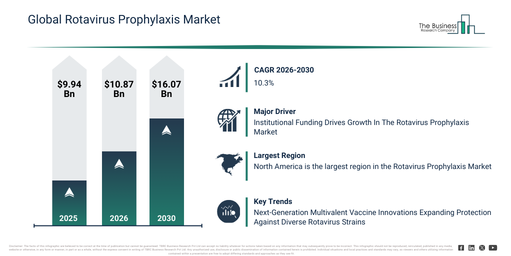
    Rotavirus Prophylaxis Market Poised To Hit $16.07 Billion By 2030 With A 10.3% CAGR

    The rotavirus prophylaxis market has seen significant expansion in recent years. Projections indicate its value will increase from $9.94 billion in 2025 to $10.87 billion by 2026, exhibiting a compound annual growth rate (CAGR) of 9.3%. Historically, this expansion is largely attributable to factors such as a decline in child mortality due to vaccination, broader global immunization initiatives, the increased accessibility of oral rotavirus vaccines, heightened backing from international health bodies, and the broadening of vaccination programs within hospitals.

    The rotavirus prophylaxis market size is anticipated to undergo substantial expansion in the next few years. It is projected to grow to $16.07 billion by 2030, exhibiting a compound annual growth rate (CAGR) of 10.3%. The market’s growth during this forecast period is attributable to an increasing emphasis on universal vaccine coverage, rising investments in pediatric vaccine development, the broadening of vaccination programs in emerging economies, a growing demand for affordable vaccine formulations, and the reinforcement of immunization infrastructure. Major trends expected in the forecast period include the continued expansion of national immunization programs, an increasing adoption of oral rotavirus vaccines, a heightened focus on pediatric preventive healthcare, enhanced cold-chain distribution management, and the widening of public-private vaccination initiatives.

    Get A Free Sample Report With In-Depth Market Insights:

    https://thebusinessresearchcompany.com/sample_request?id=28208148&type=smp&name=Rotavirus%20Prophylaxis%20Market%20Report%202026&utm_source=Blogs&utm_medium=Paid&utm_campaign=Nov_PR

    Rotavirus Prophylaxis Market Growth Catalysts And Demand Drivers

    Institutional funding is anticipated to propel the expansion of the rotavirus prophylaxis market. This funding from institutions signifies the allocation of resources, including money, effort, or time, to finance a specific need, program, or project. The rising incidence of rotavirus cases has drawn financial support from both governmental and private organizations. Such funding provides financial and technical assistance across various development phases of rotavirus vaccine and oral medication.

    Rotavirus Prophylaxis Market Segment Analysis Spotlighting Growth Areas

    The rotavirus prophylaxis market covered in this report is segmented –

    1) By Treatment: Rotarix, Rotavac, Rotavin-M1, Oral Rehydration Fluid, Other Treatments

    2) By Route of Administration: Oral, Other Route of Administrations

    3) By Distribution Channel: Hospital Pharmacy, Retail Pharmacy, Online Pharmacy, Other Distribution Channels

    4) By End-Users: Hospitals, Specialty Clinics, Homecare, Other End-Users

    Subsegments:

    1) By Rotarix: Single Dose, Multi-Dose

    2) By Rotavac: Liquid Formulation, Freeze-Dried Formulation

    3) By Rotavin-M1: Liquid Formulation, Freeze-Dried Formulation

    4) By Oral Rehydration Fluid: Electrolyte Solutions, Glucose-Based Solutions

    5) By Other Treatments: Supportive Care, Antidiarrheal Medications

    Rotavirus Prophylaxis Market Industry Trends: What’s Reshaping Demand?

    Key players within the rotavirus prophylaxis market are increasingly focusing on technological breakthroughs, such as reassortant hexavalent oral vaccines, to address the growing demand driven by the necessity for broader serotype coverage and enhanced defense against diverse rotavirus strains prevalent worldwide. These reassortant hexavalent vaccines are developed utilizing advanced viral reassortment technology to target six prominent rotavirus serotypes (G1, G2, G3, G4, G9, and P1A), thereby delivering broad-spectrum protection superior to that offered by traditional monovalent or pentavalent vaccines.

    Rotavirus Prophylaxis Market Leading Companies: Who Holds The Strongest Market Presence?

    Major companies operating in the rotavirus prophylaxis market are Merck And Co, GlaxoSmithKline plc, Bharat Biotech International Limited, Serum Institute Of India Pvt Ltd, Zydus Lifesciences Ltd, Sinovac Biotech Ltd, Hualan Biological Engineering Inc, Biological E Limited, PT Bio Farma, Panacea Biotec Ltd, Shanghai Institute Of Biological Products, Wuhan Institute Of Biological Products, Lanzhou Institute Of Biological Products, Changchun Institute Of Biological Products, Beijing Institute Of Biological Products, Shenzhen Kangtai Biological Products Co Ltd, Minhai Biotechnology Co Ltd, CanSino Biologics Inc, Bharat Serums And Vaccines Limited, Walvax Biotechnology Co Ltd, Clover Biopharmaceuticals Ltd, SK Bioscience Co Ltd

    View The Full Rotavirus Prophylaxis Market Report:

    https://thebusinessresearchcompany.com/report/rotavirus-prophylaxis-global-market-report?utm_source=Blogs&utm_medium=Paid&utm_campaign=Nov_PR

    Rotavirus Prophylaxis Market Regional Analysis And Top Geography

    North America was the largest region in the rotavirus prophylaxis market in 2025. The regions covered in the rotavirus prophylaxis market report are Asia-Pacific, South East Asia, Western Europe, Eastern Europe, North America, South America, Middle East, Africa.

    Reach Out To Our Team:

    The Business Research Company: https://www.thebusinessresearchcompany.com/

    Americas: +1 310-496-7795

    Asia: +44 7882 955267 & +91 8897263534

    Europe: +44 7882 955267

    Email us at: marketing@tbrc.info

    Follow us on:

    LinkedIn: https://in.linkedin.com/company/the-business-research-company

    YouTube: https://www.youtube.com/channel/UC24_fI0rV8cR5DxlCpgmyFQ

    Global Market Model: https://www.thebusinessresearchcompany.com/global-market-model
  • Rotator Cuff Repair Market Growth Forecast: Market Size, Key Trends And Emerging Opportunities Through 2030

    Rotator Cuff Repair Market Growth Forecast: Market Size, Key Trends And Emerging Opportunities Through 2030

    Built to provide research that’s more actionable and strategically valuable, The Business Research Company’s 2026 market reports include market attractiveness analysis, total addressable market sizing, company benchmarking matrices, interactive Excel dashboards, broader supply chain intelligence, emerging startup tracking, and in-depth product insights.

    Rotator Cuff Repair Market Size And Revenue Outlook Through 2030

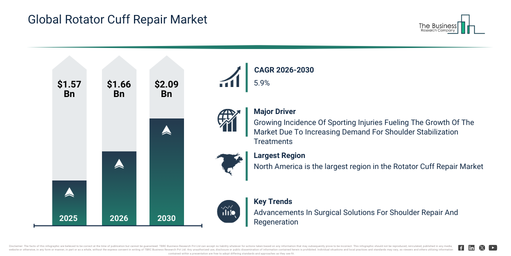
    The rotator cuff repair market size has experienced strong expansion in recent years. This market is set to increase from $1.57 billion in 2025 to $1.66 billion in 2026, registering a compound annual growth rate (CAGR) of 6.2%. Historically, this growth has been driven by the rising incidence of shoulder injuries, increasing sports-related musculoskeletal disorders, wider availability of orthopedic surgical facilities, growing awareness of early surgical intervention, and improvements in surgical instrumentation.

    The rotator cuff repair market is anticipated to experience significant expansion in the coming years, projected to reach $2.09 billion by 2030 with a compound annual growth rate (CAGR) of 5.9%. This projected increase is driven by factors such as an aging demographic experiencing degenerative conditions, the growing preference for minimally invasive orthopedic interventions, the wider use of robotic-assisted orthopedic operations, the increasing incorporation of orthobiologics for tendon repair, and heightened spending on sports medicine within healthcare. Key developments during this period encompass the expanded application of arthroscopic repair methods, an increase in the utilization of bioabsorbable anchors and sutures, a stronger inclination towards minimally invasive shoulder operations, the broader deployment of robotic-assisted rotator cuff interventions, and a greater emphasis on achieving optimal post-surgical rehabilitation results.

    Get A Free Sample Report With In-Depth Market Insights:

    https://thebusinessresearchcompany.com/sample_request?id=53082826&type=smp&name=Rotator%20Cuff%20Repair%20Market%20Report%202026&utm_source=Blogs&utm_medium=Paid&utm_campaign=Nov_PR

    Rotator Cuff Repair Market Opportunity Drivers: What’s Unlocking New Revenue Potential?

    The increasing occurrence of sports-related injuries is anticipated to fuel the expansion of the rotator cuff repair market in the future. These injuries are physical ailments sustained during athletic pursuits or physical exertion, commonly impacting muscles, bones, and joints. The escalating frequency of sporting injuries primarily stems from greater involvement in intense and competitive sports. Rotator cuff repair addresses sporting injuries by mending torn tendons, often resulting from repetitive movements or sudden trauma, to re-establish shoulder strength and stability.

    Rotator Cuff Repair Market Segment Performance And Emerging Opportunities

    The rotator cuff repair market covered in this report is segmented –

    1) By Type: Surgery, Preventive Treatment, Physiotherapy Or Palliative Treatment, Orthobiologics

    2) By Surgical Techniques: Arthroscopic Rotator Cuff Repair, Open Rotator Cuff Repair, Mini-Open Rotator Cuff Repair

    3) By Injury Severity: Partial Thickness, Full Thickness

    4) By Application: Sports Injuries, Age-Related Degeneration, Traumatic Injuries

    5) By End-User: Hospitals, Ambulatory Surgical Centers (ASCs), Orthopedic Clinics

    Subsegments:

    1) By Surgery: Arthroscopic Rotator Cuff Repair, Open Rotator Cuff Repair, Mini-Open Rotator Cuff Repair, Revision Rotator Cuff Surgery, Robotic-Assisted Rotator Cuff Surgery

    2) By Preventive Treatment: Activity Modification Programs, Ergonomic Training And Workplace Adjustments, Strengthening And Conditioning Programs, Patient Education And Lifestyle Counseling, Early Screening And Diagnostic Assessments

    3) By Physiotherapy Or Palliative Treatment: Manual Therapy, Therapeutic Ultrasound, Cryotherapy And Heat Therapy, Electrical Stimulation, Guided Range Of Motion (ROM) Exercises

    4) By Orthobiologics: Platelet-Rich Plasma (PRP) Therapy, Stem Cell Therapy, Hyaluronic Acid Injections, Bone Morphogenetic Proteins (BMPs), Amniotic Tissue And Allograft Products

    Rotator Cuff Repair Market Innovation Trends: What Developments Are Reshaping The Industry?

    Leading companies in the rotator cuff repair market are concentrating on advanced innovations, such as the integrity implant system, to improve tendon healing, stimulate regenerative tissue repair, and achieve better surgical outcomes through minimally invasive approaches. The integrity implant system is described as a hyaluronic acid-based, PET-reinforced scaffold created to support regenerative healing and tendon repair during rotator cuff surgeries.

    Rotator Cuff Repair Market Key Players: Which Companies Lead Industry Competition?

    Major companies operating in the rotator cuff repair market are Johnson And Johnson, Stryker Corporation, Zimmer Biomet Holdings Inc., Smith And Nephew plc, Arthrex Inc., CONMED Corporation, Bioventus LLC, Organogenesis Inc., Breg Inc., Exactech Inc., Paragon 28 Inc., Acumed LLC, Anika Therapeutics Inc., Xiros Ltd., Pega Medical Inc., Sawbones Worldwide, Biotek Orthopaedics Pvt. Ltd., Shoulder Innovations Inc., Atreon Orthopedics Inc., Regenexx LLC, Embody Inc.

    View The Full Rotator Cuff Repair Market Report:

    https://thebusinessresearchcompany.com/report/rotator-cuff-repair-global-market-report?utm_source=Blogs&utm_medium=Paid&utm_campaign=Nov_PR

    Rotator Cuff Repair Market Geographic Analysis: Where Is Demand Rising Fastest?

    North America was the largest region in the rotator cuff repair market in 2025. Asia-Pacific is expected to be the fastest-growing region in the forecast period. The regions covered in the rotator cuff repair market report are Asia-Pacific, South East Asia, Western Europe, Eastern Europe, North America, South America, Middle East, Africa.

    Reach Out To Our Team:

    The Business Research Company: https://www.thebusinessresearchcompany.com/

    Americas: +1 310-496-7795

    Asia: +44 7882 955267 & +91 8897263534

    Europe: +44 7882 955267

    Email us at: marketing@tbrc.info

    Follow us on:

    LinkedIn: https://in.linkedin.com/company/the-business-research-company

    YouTube: https://www.youtube.com/channel/UC24_fI0rV8cR5DxlCpgmyFQ

    Global Market Model: https://www.thebusinessresearchcompany.com/global-market-model
  • Rosacea Market CAGR Forecast Through 2030: Key Trends Shaping Industry Expansion

    Rosacea Market CAGR Forecast Through 2030: Key Trends Shaping Industry Expansion

    Backed by market attractiveness analysis, total addressable market sizing, company benchmarking matrices, interactive Excel dashboards, wider supply chain intelligence, emerging startup coverage, and detailed product-level insights, The Business Research Company’s 2026 market reports are designed to offer research that is more actionable and strategically valuable than ever.

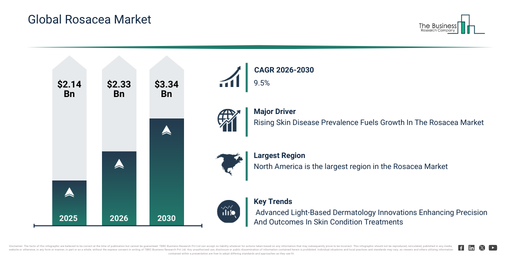
    Rosacea Market Growth From $2.33 Billion In 2026 To $3.34 Billion By 2030 At A CAGR Of 9.5%

    The rosacea market has experienced substantial growth in recent years. It is projected to expand from $2.14 billion in 2025 to $2.33 billion in 2026, demonstrating a compound annual growth rate (CAGR) of 8.7%. Historically, this expansion has been driven by factors such as the increasing prevalence of chronic inflammatory skin conditions, a rise in dermatology consultations, wider availability of topical antibiotics and alpha agonists, growing awareness of rosacea symptoms, and improved access to dermatology care.

    The rosacea market is projected to experience substantial expansion over the next few years, reaching $3.34 billion by 2030, driven by a compound annual growth rate (CAGR) of 9.5%. This growth during the forecast period is fueled by a heightened demand for personalized treatment regimens, increased research into inflammatory skin disorders, the wider adoption of novel drug classes, an expansion of teledermatology services, and a greater emphasis on improving quality of life. Significant trends identified for this period include the rising adoption of targeted topical therapies, an increasing focus on long-term disease management solutions, a growing demand for combination drug therapies, the expansion of personalized dermatology treatments, and an enhanced commitment to early diagnosis and symptom control.

    Get A Free Sample Report With In-Depth Market Insights:

    https://thebusinessresearchcompany.com/sample_request?id=69905850&type=smp&name=Rosacea%20Market%20Report%202026&utm_source=Blogs&utm_medium=Paid&utm_campaign=Nov_PR

    Rosacea Market Growth Momentum: What Factors Are Shaping Demand?

    The expanding occurrence of skin ailments is anticipated to drive the development of the rosacea market in the future. Skin diseases are health conditions that modify the skin’s look, composition, and operation. These ailments can affect the skin, hair, nails, and associated tissues. Rosacea, an inflammatory condition and skin issue, can originate from various fungal infections, including the proliferation of Candida. Furthermore, rosacea exhibits a statistically significant elevated chance of developing skin cancers like hepatic cancer, non-melanoma skin cancer, and breast cancer.

    Rosacea Market Segment Landscape And Growth Outlook

    The rosacea market covered in this report is segmented –

    1) By Type: Erythematotelangiectatic Rosacea, Papulopustular Rosacea, Ocular Rosacea, Phymatous Rosacea

    2) By Drug Class: Antibiotics, Alpha Agonists, Retinoid, Corticosteroids, Immunosuppressants, Other Drug Classes

    3) By Mode of Administration: Topical, Oral

    4) By End-User: Hospitals, Clinics, Retail pharmacies, Online pharmacies

    Subsegments:

    1) By Erythematotelangiectatic Rosacea: Persistent Facial Redness, Visible Blood Vessels

    2) By Papulopustular Rosacea: Red Bumps, Pus-Filled Pimples

    3) By Ocular Rosacea: Eye Irritation, Inflammation Of Eyelids, Dry Eyes

    4) By Phymatous Rosacea: Rhinophyma, Thickened Skin On The Face

    Rosacea Market Trends: What’s Defining The Industry’s Next Phase?

    Leading firms within the rosacea market are prioritizing technological innovations, including Expert Pulsed Light (XPL) systems, to address the growing need for treatments that are non-invasive, highly effective, and adaptable, largely due to patients’ preference for quicker recovery times and suitability across more skin types. This XPL technology signifies the most recent advancement in pulsed light therapies, incorporating sophisticated pulse design, various expert filters, and sub-pulsing methods, which facilitates accurate management of energy distribution and treatment plans, in contrast to older intense pulsed light (IPL) devices that frequently offer fewer personalized results. As an illustration, in November 2025, Lumenis Be. Ltd., an Israel-based company specializing in energy-based medical devices, introduced its Stellar M22 platform featuring XPL technology, an inventive multi-application aesthetic system capable of treating more than 30 skin conditions, such as rosacea. The Stellar M22 combines four advanced technologies, provides the innovative XPL Glide Mode for quicker, in-motion procedures, and includes over 850 integrated protocols to ensure reproducible and steady clinical outcomes among various patient groups. Its combination treatment options, including PhotoFABULOUS and SmoothGlo, enable customized skin rejuvenation plans, specifically addressing the vascular and pigment lesions often associated with rosacea, demonstrating confirmed effectiveness for swift lesion removal and enhanced patient comfort when contrasted with traditional equipment.

    Rosacea Market Competitive Landscape: Who Leads The Industry?

    Major companies operating in the rosacea market are Pfizer Inc., Johnson & Johnson, Merck & Co. Inc., AbbVie Inc., Bayer AG, Sanofi S.A., GlaxoSmithKline plc, Eli Lilly and Company, Viatris Inc., Teva Pharmaceutical Industries Ltd., Bausch Health Companies Inc., Sun Pharmaceutical Industries Ltd., Perrigo Company PLC, Galderma S.A., Dr. Reddy’s Laboratories Ltd., Lupin Limited, LEO Pharma A/S, Almirall S.A., Taro Pharmaceuticals, Mayne Pharma, Aclaris Therapeutics Inc., Sol-Gel Technologies Ltd., Nestle Skin Health S.A., Foamix Pharmaceuticals.

    View The Full Rosacea Market Report:

    https://thebusinessresearchcompany.com/report/rosacea-global-market-report?utm_source=Blogs&utm_medium=Paid&utm_campaign=Nov_PR

    Rosacea Market Global Footprint: Which Region Leads The Market?

    North America was the largest region in the rosacea market in 2025. Asia-Pacific is expected to the fastest-growing region in the forecast period. The regions covered in the rosacea market report are Asia-Pacific, South East Asia, Western Europe, Eastern Europe, North America, South America, Middle East, Africa.

    Reach Out To Our Team:

    The Business Research Company: https://www.thebusinessresearchcompany.com/

    Americas: +1 310-496-7795

    Asia: +44 7882 955267 & +91 8897263534

    Europe: +44 7882 955267

    Email us at: marketing@tbrc.info

    Follow us on:

    LinkedIn: https://in.linkedin.com/company/the-business-research-company

    YouTube: https://www.youtube.com/channel/UC24_fI0rV8cR5DxlCpgmyFQ

    Global Market Model: https://www.thebusinessresearchcompany.com/global-market-model
  • Root Canal Market To Witness 4.2% CAGR Growth Through 2030: Key Industry Drivers

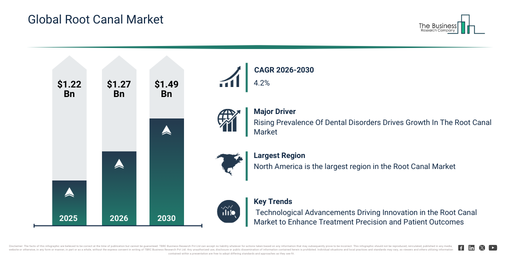
    Root Canal Market To Witness 4.2% CAGR Growth Through 2030: Key Industry Drivers

    Featuring market attractiveness scoring, total addressable market sizing, company benchmarking matrices, interactive Excel dashboards, deeper supply chain intelligence, emerging startup tracking, and granular product-level insights, The Business Research Company’s 2026 market reports are built to deliver research that is both more actionable and more strategically valuable.

    Root Canal Market Expansion Outlook: What Revenue Opportunities Are Ahead?

    The root canal market has experienced consistent growth in recent years. This market is projected to expand from $1.22 billion in 2025 to $1.27 billion in 2026, demonstrating a compound annual growth rate (CAGR) of 4.2%. Historically, this growth can be ascribed to factors such as the increasing prevalence of dental caries and infections, heightened awareness regarding oral health, the expansion of dental clinic infrastructure, advancements in endodontic instruments, and the growing availability of dental specialists.

    The root canal market size is projected to experience consistent expansion over the upcoming years. It is anticipated to reach $1.49 billion in 2030, growing at a compound annual growth rate (CAGR) of 4.2%. The progress during this forecast period is attributable to the increasing adoption of digital dentistry tools, a rising demand for precision endodontic care, the expansion of laser-assisted dental treatments, the growing integration of AI-based diagnostic tools, and an increasing focus on patient-centric dental care. Key developments expected within the forecast period include the increasing adoption of advanced endodontic imaging systems, the rising use of machine-assisted root canal instruments, a growing demand for precision endodontic procedures, the expansion of minimally invasive dental treatments, and an enhanced focus on pain reduction and treatment accuracy.

    Get A Free Sample Report With In-Depth Market Insights:

    https://thebusinessresearchcompany.com/sample_request?id=21638043&type=smp&name=Root%20Canal%20Market%20Report%202026&utm_source=Blogs&utm_medium=Paid&utm_campaign=Nov_PR

    Root Canal Market Expansion Drivers: What’s Shaping Future Growth?

    The increasing incidence of dental disorders is projected to fuel the expansion of the root canal market. Dental disorders encompass various conditions or illnesses affecting the teeth, gums, jaw, and related oral structures, such as tooth decay, gum disease, and malocclusion. Root canal treatment is a dental procedure where the damaged or infected interior of a tooth is replaced with a specialized filling.

    Root Canal Market Breakdown By Product Type And Application

    The root canal market covered in this report is segmented –

    1) By Type: Nonsurgical Root Canal, Secondary Root Canal, Apicoectomy, Pulpotomy, Pulpectomy

    2) By Drug: Anesthetics, Painkillers, Antibiotics

    3) By Instrument: Scalers, Apex Locators, Motors, Handpiece, Lasers, Machine Assisted Obturation Systems, Other Instruments

    4) By End Users: Hospitals, Dental Clinics, Other End Users

    Subsegments:

    1) By Nonsurgical Root Canal: Root Canal Therapy, Endodontic Retreatment

    2) By Secondary Root Canal: Re-Root Canal Procedure, Post-Treatment Procedures

    3) By Apicoectomy: Surgical Apicoectomy, Microsurgical Apicoectomy

    4) By Pulpotomy: Partial Pulpotomy, Full Pulpotomy

    5) By Pulpectomy: Primary Pulpectomy, Permanent Pulpectomy

    Root Canal Market Industry Trends Fueling Future Revenue Growth

    Major companies in the root canal market are concentrating on technological enhancements, such as heat-treated nickel-titanium (NiTi) rotary file systems, to address the increasing demand for minimally invasive, efficient, and precise endodontic procedures, which is driven by heightened dental awareness and the prevalence of dental caries. Heat-treated NiTi rotary files are designed to offer superior flexibility, durability, and resistance to cyclic fatigue when compared to conventional stainless-steel files, facilitating improved shaping and cleaning of complex root canal anatomies with a reduced likelihood of file breakage and procedural errors.

    Root Canal Market Company Landscape And Competitive Strategy

    Major companies operating in the root canal market are 3M Corporation, Dentsply Sirona Inc., Envista Holdings Corporation, NSK-Nakanishi International, W&H UK Ltd., KaVo Kerr, Ultradent Products Inc., Septodont Inc., Coltene Group, Hu-Friedy Group, Shofu Dental India Private Limited, Acteon Group, Mani Inc., Brasseler USA, GC Dental America, SS White Dental, Zest Dental Solutions, Sonendo Inc., Komet USA, Sultan Healthcare, Ivoclar Vivadent Group, Premier Dental Product Inc., Vista Dental, Zyris Isolite, J. Morita Corporation, FKG Dentaire Inc., Diadent Group International, EdgeEndo Inc., RTD Dental

    View The Full Root Canal Market Report:

    https://thebusinessresearchcompany.com/report/root-canal-global-market-report?utm_source=Blogs&utm_medium=Paid&utm_campaign=Nov_PR

    Root Canal Market Regional Split: Which Areas Are Fueling Growth?

    North America was the largest region in the root canal market in 2025. Asia-Pacific is expected to be the fastest-growing region in the forecast period. The regions covered in the root canal market report are Asia-Pacific, South East Asia, Western Europe, Eastern Europe, North America, South America, Middle East, Africa.

    Reach Out To Our Team:

    The Business Research Company: https://www.thebusinessresearchcompany.com/

    Americas: +1 310-496-7795

    Asia: +44 7882 955267 & +91 8897263534

    Europe: +44 7882 955267

    Email us at: marketing@tbrc.info

    Follow us on:

    LinkedIn: https://in.linkedin.com/company/the-business-research-company

    YouTube: https://www.youtube.com/channel/UC24_fI0rV8cR5DxlCpgmyFQ

    Global Market Model: https://www.thebusinessresearchcompany.com/global-market-model
  • Robotic-Assisted Laparoscopic Surgery Market Projected For Strong Expansion Through 2030: Key Trends And Future Outlook

    Robotic-Assisted Laparoscopic Surgery Market Projected For Strong Expansion Through 2030: Key Trends And Future Outlook

    Built to provide research that’s more actionable and strategically valuable, The Business Research Company’s 2026 market reports include market attractiveness analysis, total addressable market sizing, company benchmarking matrices, interactive Excel dashboards, broader supply chain intelligence, emerging startup tracking, and in-depth product insights.

    Robotic-Assisted Laparoscopic Surgery Market Growth Potential: How Will Market Size Shift Through 2030?

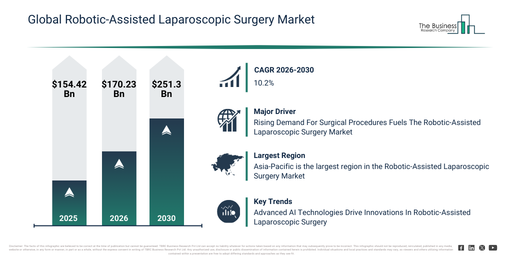
    The market for robotic-assisted laparoscopic surgery has seen swift expansion in recent years. It is anticipated to grow from $154.42 billion in 2025 to $170.23 billion in 2026, at a compound annual growth rate (CAGR) of 10.2%. This historical growth can be attributed to the broader adoption of laparoscopic surgery, enhanced surgeon proficiency in robotic systems, an increase in complex abdominal procedures, rising hospital investments in surgical robotics, and advancements in imaging-guided surgery.

    The robotic-assisted laparoscopic surgery market size is anticipated to undergo significant expansion in the coming years. It is projected to reach $251.3 billion by 2030, exhibiting a compound annual growth rate (CAGR) of 10.2%. This growth during the forecast period is attributable to the increasing demand for outpatient minimally invasive procedures, the rising integration of robotic platforms within community hospitals, the broadening of robotic-assisted surgeries in urology and gynecology, the growing incorporation of AI-driven surgical planning, and an intensified focus on swifter patient recovery. Prominent trends for the forecast period include the increasing adoption of robotic-assisted complex laparoscopic procedures, a rising utilization of high-definition 3D visualization systems, a growing need for enhanced surgical dexterity tools, the wider deployment of robotic platforms in minimally invasive surgery, and an enhanced emphasis on reducing surgical trauma.

    Get A Free Sample Report With In-Depth Market Insights:

    https://thebusinessresearchcompany.com/sample_request?id=89408165&type=smp&name=Robotic-Assisted%20Laparoscopic%20Surgery%20Market%20Report%202026&utm_source=Blogs&utm_medium=Paid&utm_campaign=Nov_PR

    Robotic-Assisted Laparoscopic Surgery Market Development Factors: What’s Supporting Demand?

    The increasing need for surgical interventions is projected to fuel the expansion of the robotic-assisted laparoscopic surgery market moving forward. Surgical procedures are medical treatments involving the physical modification of tissues and organs, performed either manually or with instruments. This demand arises from increased public awareness of health and cosmetic options, coupled with a rising incidence of chronic and age-related conditions. Robotic-assisted laparoscopic surgery signifies a major leap in surgical techniques, delivering superior precision and control, which makes complex operations more feasible while simultaneously reducing patient recovery periods and operative risks.

    Robotic-Assisted Laparoscopic Surgery Market Segment Analysis And Revenue Potential

    The robotic-assisted laparoscopic surgery market covered in this report is segmented –

    1) By Type: Robotic-Assisted Radical Prostatectomy, Robotic-Assisted Partial Nephrectomy, Robotic-Assisted Nephrectomy, Other Type

    2) By Application: Hospitals, Ambulatory Surgical Center, Other Applications

    3) By End-Use: Inpatient, Outpatient

    Subsegments:

    1) By Robotic-Assisted Radical Prostatectomy: Robotic Prostatectomy Systems, Surgical Instruments For Prostatectomy, Training And Simulation Tools, Consumables And Accessories

    2) By Robotic-Assisted Partial Nephrectomy: Robotic Surgical Systems, Specialized Instruments For Partial Nephrectomy, Software Solutions For Planning And Simulation, Support And Maintenance Services

    3) By Robotic-Assisted Nephrectomy: Robotic Nephrectomy Platforms, Instrument Sets For Nephrectomy Procedures, Imaging And Navigation Tools, Training Programs For Surgeons

    4) By Other Types: Robotic-Assisted Cholecystectomy, Robotic-Assisted Hysterectomy, Robotic-Assisted Bariatric Surgery, Robotic-Assisted Colorectal Surgery

    Robotic-Assisted Laparoscopic Surgery Market Trends Powering Strategic Industry Growth

    Major companies operating in the robotic-assisted laparoscopic surgery market are focused on developing advanced technologies, such as AI platforms for robotic surgery, designed to help surgeons review and improve their techniques. These AI platforms for robotic surgery integrate advanced artificial intelligence with robotic surgical systems to enhance precision, automate specific tasks, and improve decision-making during surgery. The aim of these platforms is to optimize surgical outcomes by offering surgeons real-time insights, analysis, and control tools.

    Robotic-Assisted Laparoscopic Surgery Market Key Players Shaping Industry Direction

    Major companies operating in the robotic-assisted laparoscopic surgery market are Johnson And Johnson, Medtronic PLC, Intuitive Surgical Inc, Vicarious Surgical Inc, Meril Life Sciences Pvt Ltd, MicroPort Scientific Corporation, Corza Medical, CMR Surgical Ltd, Distalmotion SA, Titan Medical Inc, Medrobotics Corporation, Asensus Surgical Inc, SS Innovations China Co Ltd, Moon Surgical Inc, Levita Magnetics, EndoQuest Robotics, FreeHand Surgeon, Shandong Weigao Surgical Robot, Zimmer Biomet Robotics, Stryker Corporation, Renishaw Plc, Smith And Nephew Robotics, Johnson And Johnson Ethicon Robotics, Olympus Surgical Robotics

    View The Full Robotic-Assisted Laparoscopic Surgery Market Report:

    https://thebusinessresearchcompany.com/report/robotic-assisted-laparoscopic-surgery-global-market-report?utm_source=Blogs&utm_medium=Paid&utm_campaign=Nov_PR

    Robotic-Assisted Laparoscopic Surgery Market Top Region: Where Does Most Revenue Come From?

    Asia-Pacific was the largest region in the robotic-assisted laparoscopic surgery market in 2025. North America is expected to be the fastest-growing region in the forecast period. The regions covered in the robotic-assisted laparoscopic surgery market report are Asia-Pacific, South East Asia, Western Europe, Eastern Europe, North America, South America, Middle East, Africa.

    Reach Out To Our Team:

    The Business Research Company: https://www.thebusinessresearchcompany.com/

    Americas: +1 310-496-7795

    Asia: +44 7882 955267 & +91 8897263534

    Europe: +44 7882 955267

    Email us at: marketing@tbrc.info

    Follow us on:

    LinkedIn: https://in.linkedin.com/company/the-business-research-company

    YouTube: https://www.youtube.com/channel/UC24_fI0rV8cR5DxlCpgmyFQ

    Global Market Model: https://www.thebusinessresearchcompany.com/global-market-model
  • Robotic Wheelchairs Market Outlook 2026–2030: Growth Trends, Market Dynamics And Emerging Opportunities

    Robotic Wheelchairs Market Outlook 2026–2030: Growth Trends, Market Dynamics And Emerging Opportunities

    Backed by market attractiveness analysis, total addressable market sizing, company benchmarking matrices, interactive Excel dashboards, wider supply chain intelligence, emerging startup coverage, and detailed product-level insights, The Business Research Company’s 2026 market reports are designed to offer research that is more actionable and strategically valuable than ever.

    Robotic Wheelchairs Market Value Analysis: What Growth Lies Ahead Over The Forecast Period?

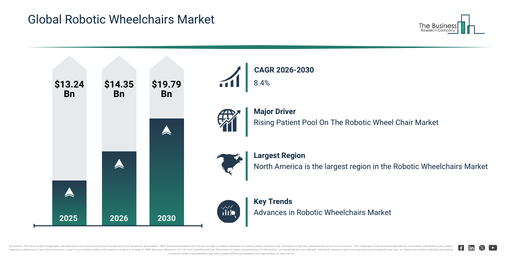
    The robotic wheelchairs market has demonstrated significant expansion in recent years. It is anticipated to increase from $13.24 billion in 2025 to $14.35 billion in 2026, recording a compound annual growth rate (CAGR) of 8.4%. This historical growth can be ascribed to a rising incidence of mobility impairments, an expanding older demographic, increasing need for assistive mobility solutions, developments in motorized wheelchair technologies, and improved availability of rehabilitation services.

    The robotic wheelchairs market is anticipated to experience robust expansion over the coming years. This market is projected to reach $19.79 billion by 2030, exhibiting a compound annual growth rate (CAGR) of 8.4%. Factors contributing to this growth during the forecast period include the increasing uptake of smart assistive technologies, heightened investments in AI-enabled mobility solutions, the expansion of home-based care infrastructure, a growing demand for personalized assistive devices, and the integration of cloud-connected mobility platforms. Key trends anticipated during this period encompass the increasing embrace of autonomous navigation wheelchairs, the rising integration of obstacle detection sensors, a growing demand for AI-based adaptive control systems, the broadening of connected mobility assistive devices, and a stronger emphasis on user independence and safety.

    Get A Free Sample Report With In-Depth Market Insights:

    https://thebusinessresearchcompany.com/sample_request?id=54059800&type=smp&name=Robotic%20Wheelchairs%20Market%20Report%202026&utm_source=Blogs&utm_medium=Paid&utm_campaign=Nov_PR

    Robotic Wheelchairs Market Industry Drivers: What’s Behind The Revenue Growth?

    An expanding patient base is projected to drive the advancement of the robotic wheelchair market in the future. This patient pool encompasses the collective count of individuals within a particular demographic or healthcare context who are in need of medical services or support. The increase in this patient population is fueled by elements like demographic expansion, an older populace, and better availability of healthcare provisions. Robotic wheelchairs offer patients improved movement and self-reliance, allowing them to traverse their surroundings using assistive technology designed to overcome physical challenges.

    Robotic Wheelchairs Market Segmentation And Category Overview

    The robotic wheelchairs market covered in this report is segmented –

    1) By Wheelchair: Rear-Wheel Drive, Front-Wheel Drive, Mid-Wheel Drive

    2) By Application: Personal Use, Commercial Use

    3) By Distribution Channel: Home Care Settings, Rehabilitation Centers, Online Sales Channel, Other Channels

    Subsegments:

    1) By Rear-Wheel Drive: Standard Rear-Wheel Drive Wheelchairs, Robotic Rear-Wheel Drive Wheelchairs

    2) By Front-Wheel Drive: Standard Front-Wheel Drive Wheelchairs, Robotic Front-Wheel Drive Wheelchairs

    3) By Mid-Wheel Drive: Standard Mid-Wheel Drive Wheelchairs, Robotic Mid-Wheel Drive Wheelchairs

    Robotic Wheelchairs Market Growth Trends Reshaping The Competitive Landscape

    Leading firms in the robotic wheelchairs market are innovating power wheelchairs, incorporating sophisticated capabilities such as AI integration and autonomous navigation, aiming to enhance the mobility and autonomy of people with disabilities. These power wheelchairs are electrically operated mobility aids designed to offer independent movement to those facing mobility challenges.

    Robotic Wheelchairs Market Competitive Analysis Of Leading Industry Participants

    Major companies operating in the robotic wheelchairs market are Honda Motor Co Ltd, Panasonic Corporation, Ottobock SE And Company, Invacare Corporation, Permobil Inc, Sunrise Medical Inc, Pride Mobility Products Corporation, DEKA Research And Development Corporation, Kinova Inc, Hoveround Corporation, Whill Inc, Merits Health Products Co Ltd, Shanghai Bangbang Robotics Co Ltd, Matia Mobility Inc, Karma Medical Products Co Ltd, Cyberworks Robotics Inc, Airwheel Holding Limited, Karman Healthcare Inc, Centaur Robotics Limited, Meyra GmbH, Upnride Robotics, Nino Robotics, LUCI Mobility, Robooter Technology Co Ltd

    View The Full Robotic Wheelchairs Market Report:

    https://thebusinessresearchcompany.com/report/robotic-wheelchairs-global-market-report?utm_source=Blogs&utm_medium=Paid&utm_campaign=Nov_PR

    Robotic Wheelchairs Market Regional Breakdown: Where Is Demand Concentrated?

    North America was the largest region in the robotic wheelchairs market in 2025. Asia-Pacific is expected to be the fastest-growing region in the forecast period. The regions covered in the robotic wheelchairs market report are Asia-Pacific, South East Asia, Western Europe, Eastern Europe, North America, South America, Middle East, Africa.

    Reach Out To Our Team:

    The Business Research Company: https://www.thebusinessresearchcompany.com/

    Americas: +1 310-496-7795

    Asia: +44 7882 955267 & +91 8897263534

    Europe: +44 7882 955267

    Email us at: marketing@tbrc.info

    Follow us on:

    LinkedIn: https://in.linkedin.com/company/the-business-research-company

    YouTube: https://www.youtube.com/channel/UC24_fI0rV8cR5DxlCpgmyFQ

    Global Market Model: https://www.thebusinessresearchcompany.com/global-market-model
  • Robotic Surgical Instrument Reprocessing Market Growth Outlook From $1.4 Billion In 2026 To $2.11 Billion By 2030

    Robotic Surgical Instrument Reprocessing Market Growth Outlook From $1.4 Billion In 2026 To $2.11 Billion By 2030

    Featuring market attractiveness scoring, total addressable market sizing, company benchmarking matrices, interactive Excel dashboards, deeper supply chain intelligence, emerging startup tracking, and granular product-level insights, The Business Research Company’s 2026 market reports are built to deliver research that is both more actionable and more strategically valuable.

    Robotic Surgical Instrument Reprocessing Market Size Forecast: How Big Could The Market Get By 2030?

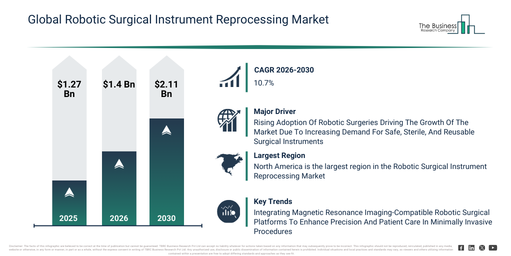
    The robotic surgical instrument reprocessing market has experienced significant expansion in recent years. This market is projected to grow from $1.27 billion in 2025 to $1.4 billion in 2026, showing a compound annual growth rate (CAGR) of 11.0%. Historically, this growth was primarily due to the increased adoption of robotic-assisted surgeries, more stringent hospital infection control requirements, the development of central sterile processing departments, the rising use of reusable robotic instruments, and the widespread availability of specialized reprocessing equipment.

    The robotic surgical instrument reprocessing market size is anticipated to undergo significant expansion in the coming years. By 2030, its value is projected to reach $2.11 billion, demonstrating a compound annual growth rate (CAGR) of 10.7%. This expansion throughout the forecast period can be linked to factors such as an escalating number of minimally invasive surgeries, increasing investments in robotic surgery infrastructure, the growth of outpatient surgical centers, a rising need for cost-efficient instrument reuse, and heightened regulatory scrutiny concerning sterilization processes. Furthermore, prominent trends during this period involve a greater demand for advanced instrument cleaning systems, the increasing adoption of automated sterilization technologies, a stronger focus on standardizing reprocessing workflows, the expanded integration of single-use instruments, and an enhanced emphasis on compliance with infection control measures.

    Get A Free Sample Report With In-Depth Market Insights:

    https://thebusinessresearchcompany.com/sample_request?id=28711048&type=smp&name=Robotic%20Surgical%20Instrument%20Reprocessing%20Market%20Report%202026&utm_source=Blogs&utm_medium=Paid&utm_campaign=Nov_PR

    Robotic Surgical Instrument Reprocessing Market Growth Factors: What’s Supporting Expansion?

    The growing integration of robotic surgeries is anticipated to fuel the expansion of the robotic surgical instrument reprocessing market in the future. Robotic surgeries encompass minimally invasive procedures executed using robotic systems, which provide surgeons with enhanced precision, control, and flexibility. The uptake of robotic surgeries is increasing because they improve surgical accuracy and shorten patient recovery times. Robotic surgical instrument reprocessing ensures that intricate robotic instruments are meticulously cleaned, sterilized, and safely prepared for reuse in subsequent operations.

    Robotic Surgical Instrument Reprocessing Market Segment Outlook: Which Categories Are Growing Fastest?

    The robotic surgical instrument reprocessing market covered in this report is segmented –

    1) By Product Type: Reusable Instruments, Single-Use Instruments, Reprocessing Equipment, Consumables

    2) By Process: Cleaning, Disinfection, Sterilization, Inspection And Packaging, Other Processes

    3) By End-User: Hospitals, Ambulatory Surgical Centers, Specialty Clinics, Other End-Users

    Subsegments:

    1) By Reusable Instruments: Surgical Forceps, Scissors, Graspers, Needle Holders, Trocars, Clamps

    2) By Single-Use Instruments: Disposable Scalpels, Single-Use Forceps, Disposable Scissors, Suction Tips, Disposable Trocars, Electrocautery Devices

    3) By Reprocessing Equipment: Cleaning Systems, Disinfection Units, Sterilization Equipment, Inspection Systems, Drying Cabinets, Packaging Machines

    4) By Consumables: Cleaning Agents, Disinfectants, Sterilization Wraps, Indicator Tapes, Lubricants, Biological Indicators

    Robotic Surgical Instrument Reprocessing Market Trends Shaping Long-Term Demand

    Leading companies active in the robotic surgical instrument reprocessing market are concentrating on innovations, such as magnetic resonance imaging-compatible robotic surgery platforms, to heighten accuracy, security, and live imaging direction during minimally invasive operations. An MRI-compatible robotic surgery platform is a sophisticated surgical apparatus crafted to conduct or assist in minimally invasive interventions within the magnetic surroundings of an MRI scanner, ensuring secure functioning, exact instrument handling, and immediate imaging guidance for enhanced patient results. For example, in September 2025, Insight Medbotics, a Canada-based organization specializing in interventional oncology, revealed Glenn, an MRI-compatible robotic surgery platform developed to tackle significant hurdles in prostate cancer treatments. Glenn connects effortlessly with MRI scanners, delivering real-time imaging, precise instrument supervision, and intuitive entry for biopsies and focal therapies. The system eradicates the requirement for conventional ultrasound guidance and rectal probes, elevates patient comfort, improves procedural exactness, and facilitates minimally invasive interventions, establishing it as a next-generation option for accurate prostate cancer management.

    Robotic Surgical Instrument Reprocessing Market Leading Companies And Competitive Benchmarking

    Major companies operating in the robotic surgical instrument reprocessing market are Ecolab Inc., B. Braun Melsungen SE, Zimmer Biomet Holdings Inc., STERIS plc, Getinge AB, Miele & Cie. KG, Acrotec Medtech, Belimed AG, SteraTek, Primo Medical Group, Matachana, Innovative Health, Restore Robotics, MMM Group, Vanguard AG, Medisafe International, Pure Processing, Steelco, ASP (Advanced Sterilization Products), Tuttnauer Ltd.

    View The Full Robotic Surgical Instrument Reprocessing Market Report:

    https://thebusinessresearchcompany.com/report/robotic-surgical-instrument-reprocessing-global-market-report?utm_source=Blogs&utm_medium=Paid&utm_campaign=Nov_PR

    Robotic Surgical Instrument Reprocessing Market Geographic Landscape: Which Region Leads Industry Growth?

    North America was the largest region in the robotic surgical instrument reprocessing market in 2025. Asia-Pacific is expected to be the fastest-growing region in the forecast period. The regions covered in the robotic surgical instrument reprocessing market report are Asia-Pacific, South East Asia, Western Europe, Eastern Europe, North America, South America, Middle East, Africa.

    Reach Out To Our Team:

    The Business Research Company: https://www.thebusinessresearchcompany.com/

    Americas: +1 310-496-7795

    Asia: +44 7882 955267 & +91 8897263534

    Europe: +44 7882 955267

    Email us at: marketing@tbrc.info

    Follow us on:

    LinkedIn: https://in.linkedin.com/company/the-business-research-company

    YouTube: https://www.youtube.com/channel/UC24_fI0rV8cR5DxlCpgmyFQ

    Global Market Model: https://www.thebusinessresearchcompany.com/global-market-model
  • Robotic Surgery Services Market Forecast To Reach $2.62 Billion By 2030: Key Growth Drivers And Industry Trends

    Robotic Surgery Services Market Forecast To Reach $2.62 Billion By 2030: Key Growth Drivers And Industry Trends

    Built to provide research that’s more actionable and strategically valuable, The Business Research Company’s 2026 market reports include market attractiveness analysis, total addressable market sizing, company benchmarking matrices, interactive Excel dashboards, broader supply chain intelligence, emerging startup tracking, and in-depth product insights.

    Robotic Surgery Services Market Revenue Outlook: What CAGR Lies Ahead Through 2030?

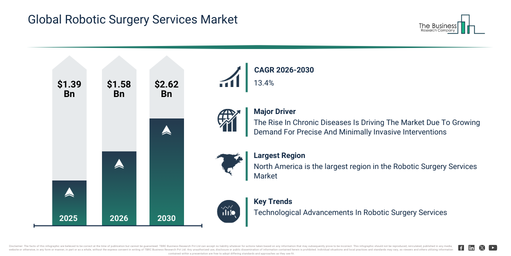
    The robotic surgery services market size has seen significant growth recently. It is anticipated to increase from $1.39 billion in 2025 to $1.58 billion in 2026, at a compound annual growth rate (CAGR) of 13.8%. This historical growth can be attributed to several factors, including the increased adoption of minimally invasive surgery, greater acceptance of robotic systems among surgeons, an uptick in complex surgical procedures, rising hospital investments in state-of-the-art operating rooms, and enhancements in robotic instrument design.

    The robotic surgery services market is projected to experience substantial expansion in the coming years, with its valuation expected to reach $2.62 billion by 2030 at a compound annual growth rate (CAGR) of 13.4%. This anticipated growth is driven by several factors, including the increasing demand for outpatient robotic surgeries, enhanced investments in advanced surgical robotics, the wider application of robotic procedures across various medical specialties, the greater integration of AI in surgical planning, and an intensified focus on outcome-based surgical care. Key trends shaping the market over this period encompass the growing acceptance of minimally invasive robotic techniques, an increasing need for specialized robotic platforms for specific procedures, the deeper integration of sophisticated surgical imaging technologies, the expansion of training initiatives for robotic surgery, and a heightened emphasis on surgical precision and overall outcomes.

    Get A Free Sample Report With In-Depth Market Insights:

    https://thebusinessresearchcompany.com/sample_request?id=81415138&type=smp&name=Robotic%20Surgery%20Services%20Market%20Report%202026&utm_source=Blogs&utm_medium=Paid&utm_campaign=Nov_PR

    Robotic Surgery Services Market Demand Drivers: What’s Powering Industry Growth?

    The increasing prevalence of chronic illnesses is anticipated to fuel the expansion of the robotic surgery services market. These are persistent health conditions that often advance gradually, necessitating ongoing treatment or oversight, encompassing ailments like cardiovascular diseases, diabetes, respiratory problems, and specific types of cancer. This surge in chronic diseases largely stems from more prevalent inactive lifestyles, which lead to compromised metabolic health, reduced physical stamina, and an elevated risk of acquiring enduring conditions requiring consistent intervention. Robotic surgical services offer a solution to this escalating challenge by facilitating accurate, minimally invasive operations that enhance treatment results, shorten recovery periods, and aid in the more effective handling of complications associated with chronic diseases. An illustrative example comes from September 2025, where data from the British Heart Foundation, a UK-based charitable organization, shows that over 7.6 million individuals throughout the UK—specifically more than 4 million men and more than 3.6 million women—are affected by cardiovascular disease. Furthermore, forecasts suggest that due to an aging demographic and better survival rates, this figure could increase by approximately 1 million by 2030 and by around 2 million by 2040. Consequently, the escalation of chronic illnesses is a key factor driving the expansion of the robotic surgery services market.

    Robotic Surgery Services Market Segment Landscape: Which Areas Lead Development?

    The robotic surgery services market covered in this report is segmented –

    1) By Component: Systems, Accessories, Services

    2) By Application: General Surgery, Urological Surgery, Gynecological Surgery, Orthopaedics Surgery, Neurosurgery And Other Applications.

    3) By End-Use: Hospitals, Ambulatory Surgery Centers (Ascs)

    Subsegments:

    1) By Systems: Surgical Robotic Systems, Robotic Surgical Platforms For Specific Procedures

    2) By Accessories: Surgical Instruments, Disposable And Reusable Accessories, Vision And Imaging Systems

    3) By Services: Maintenance And Repair Services, Training And Education Services, Technical Support Services, Consulting Services

    Robotic Surgery Services Market Innovation Trends Shaping Future Development

    Leading firms within the robotic surgery services market are concentrating on developing technologically advanced products, including the Da Vinci Xi Robotic Surgical System, to deliver dependable services to consumers. This system facilitates robotic surgery procedures by offering an efficient, less invasive option compared to traditional open surgery and laparoscopic methods.

    Robotic Surgery Services Market Industry Leaders And Competitive Landscape

    Major companies operating in the robotic surgery services market are Tenet Healthcare Corporation, HCA Healthcare Inc, Asklepios Kliniken Verwaltungsgesellschaft Mbh, Apollo Hospitals Enterprise Ltd, Bumrungrad International Hospital, Fortis Healthcare, Bangkok Hospital, Spire Healthcare Group plc, Saudi German Hospitals Group, Raffles Medical Group, Medtronic Australasia, Zimmer Biomet Robotics, Asensus Surgical, Intuitive, Medrobotics Corporation, Smith And Nephew, Restoration Robotics, Hansen Medical, Stryker Corporation, Mazor Robotics, Renishaw Plc, Stereotaxis Inc, Corindus, CMR Surgical Ltd, Johnson And Johnson MedTech

    View The Full Robotic Surgery Services Market Report:

    https://thebusinessresearchcompany.com/report/Robotic-Surgery-Services-Global-Market-Report?utm_source=Blogs&utm_medium=Paid&utm_campaign=Nov_PR

    Robotic Surgery Services Market Largest Region: Which Geography Holds The Biggest Share?

    North America was the largest region in the robotic surgery services market in 2025. Western Europe was the second largest region in the global robotic surgery services market share. The regions covered in the robotic surgery services market report are Asia-Pacific, South East Asia, Western Europe, Eastern Europe, North America, South America, Middle East, Africa.

    Reach Out To Our Team:

    The Business Research Company: https://www.thebusinessresearchcompany.com/

    Americas: +1 310-496-7795

    Asia: +44 7882 955267 & +91 8897263534

    Europe: +44 7882 955267

    Email us at: marketing@tbrc.info

    Follow us on:

    LinkedIn: https://in.linkedin.com/company/the-business-research-company

    YouTube: https://www.youtube.com/channel/UC24_fI0rV8cR5DxlCpgmyFQ

    Global Market Model: https://www.thebusinessresearchcompany.com/global-market-model
  • Robotic Radiotherapy Market Research 2026: Market Size, Trends, Segments And Growth Forecast

    Robotic Radiotherapy Market Research 2026: Market Size, Trends, Segments And Growth Forecast

    Backed by market attractiveness analysis, total addressable market sizing, company benchmarking matrices, interactive Excel dashboards, wider supply chain intelligence, emerging startup coverage, and detailed product-level insights, The Business Research Company’s 2026 market reports are designed to offer research that is more actionable and strategically valuable than ever.

    Robotic Radiotherapy Market Growth Analysis: How Will Revenue Trend Over The Forecast Period?

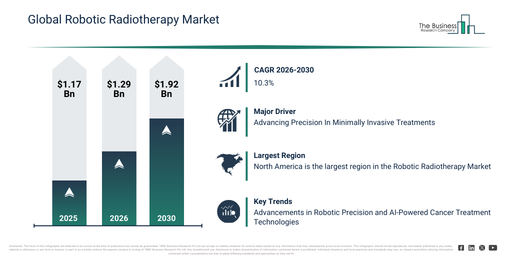
    The robotic radiotherapy market size has seen substantial growth in recent years. It is forecast to expand from $1.17 billion in 2025 to $1.29 billion in 2026, exhibiting a compound annual growth rate (CAGR) of 10.7%. This historic period’s growth can be linked to increasing cancer incidence rates, the expansion of radiotherapy infrastructure in hospitals, advancements in linear accelerator technologies, a rising preference for non-invasive cancer treatments, and improved availability of precision imaging systems.

    The robotic radiotherapy market size is projected for swift expansion over the coming years. By 2030, this market is anticipated to reach $1.92 billion, demonstrating a compound annual growth rate (CAGR) of 10.3%. This projected growth during the forecast period is due to factors such as the increasing uptake of personalized oncology treatments, greater investments in robotic cancer care infrastructure, a rising need for motion-adaptive radiotherapy, the expansion of proton and particle therapy centers, and advancements in AI-driven treatment planning technology. Key developments foreseen for this period include a greater implementation of real-time tumor motion tracking, an increased utilization of image-guided robotic radiation systems, a surging requirement for personalized radiotherapy planning, the broadening of non-invasive cancer treatment protocols, and a heightened emphasis on sub-millimeter radiation accuracy.

    Get A Free Sample Report With In-Depth Market Insights:

    https://thebusinessresearchcompany.com/sample_request?id=91595725&type=smp&name=Robotic%20Radiotherapy%20Market%20Report%202026&utm_source=Blogs&utm_medium=Paid&utm_campaign=Nov_PR

    Robotic Radiotherapy Market Growth Drivers: What’s Behind The Acceleration?

    The increasing demand for minimally invasive procedures is projected to propel the expansion of the robotic radiotherapy market moving forward. These minimally invasive procedures are primarily driven by advancements in medical technology, a rising patient preference for shorter recovery periods and reduced complications, and their growing adoption by healthcare providers due to their cost-effectiveness and improved clinical outcomes. Robotic radiotherapy boosts the precision and effectiveness of minimally invasive procedures by delivering highly focused radiation doses directly to tumors while concurrently minimizing harm to surrounding healthy tissues. This approach reduces complications, improves recovery times, and aligns with the growing need for advanced, patient-centric treatment options.

    Robotic Radiotherapy Market Segments: Where Is Growth Concentrated?

    The robotic radiotherapy market covered in this report is segmented –

    1) By Product: Radiotherapy Systems, Softwares, 3D Cameras (Surface Guided)

    2) By Technology: Linear Accelerators, Conventional Linear Accelerators, Magnetic Resonance Imaging (MRI) – Linear Accelerators, Stereotactic Radiation Therapy Systems, Cyberknife, Gamma Knife, Particle Therapy, Proton Beam Therapy

    3) By Application: Prostate Cancer, Breast Cancer, Lung Cancer, Head & Neck Cancer, Colorectal Cancer

    4) By End User: Hospitals, Independent Radiotherapy Centers

    Subsegments:

    1) By Radiotherapy Systems: Robotic Linear Accelerators, Proton Therapy Systems, Stereotactic Radiosurgery Systems, Image-Guided Radiotherapy (IGRT) Systems, Intensity-Modulated Radiotherapy (IMRT) Systems

    2) By Softwares: Treatment Planning Software, Radiation Therapy Management Software, Robotic Radiotherapy Control Software, Integration Software For Robotic Systems

    3) By 3D Cameras (Surface Guided): 3D Optical Surface Imaging Systems, 3D Camera Systems For Patient Positioning, 3D Motion Tracking Cameras For Radiotherapy, Real-Time 3D Surface Imaging For Tumor Localization

    Robotic Radiotherapy Market Trends Redefining Industry Growth

    Leading companies within the robotic radiotherapy market are concentrating on developing innovative products that incorporate advanced technologies, such as artificial intelligence (AI) precision, to execute tasks with exceptional accuracy, consistency, and minimal error. Robotic precision enhances accuracy, reduces human mistakes, improves consistency, minimizes tissue damage, and accelerates recovery by utilizing sensors, actuators, and algorithms.

    Robotic Radiotherapy Market Key Participants And Competitive Landscape

    Major companies operating in the robotic radiotherapy market are Siemens Healthineers AG, GE Healthcare Technologies Inc, Varian Medical Systems, Elekta AB, Accuray Incorporated, Brainlab AG, Mevion Medical Systems Inc, ViewRay Technologies Inc, RaySearch Laboratories AB, VisionRT Ltd, MIM Software Inc, CIVCO Radiotherapy, ProNova Solutions, IBA Group, Xcision Medical Systems LLC, C RAD AB, RefleXion Medical Inc, Zap Surgical Systems Inc, Hitachi High Tech Corporation, Toshiba Medical Systems Corporation, Philips Radiation Oncology Systems, Shinva Medical Instrument Co Ltd, Neusoft Medical Systems Co Ltd, United Imaging Healthcare Radiotherapy

    View The Full Robotic Radiotherapy Market Report:

    https://thebusinessresearchcompany.com/report/robotic-radiotherapy-global-market-report?utm_source=Blogs&utm_medium=Paid&utm_campaign=Nov_PR

    Robotic Radiotherapy Market Regional Analysis: Which Geography Leads On Revenue?

    North America was the largest region in the robotic radiotherapy market in 2025. Asia-Pacific is expected to be the fastest-growing region in the forecast period. The regions covered in the robotic radiotherapy market report are Asia-Pacific, South East Asia, Western Europe, Eastern Europe, North America, South America, Middle East, Africa.

    Reach Out To Our Team:

    The Business Research Company: https://www.thebusinessresearchcompany.com/

    Americas: +1 310-496-7795

    Asia: +44 7882 955267 & +91 8897263534

    Europe: +44 7882 955267

    Email us at: marketing@tbrc.info

    Follow us on:

    LinkedIn: https://in.linkedin.com/company/the-business-research-company

    YouTube: https://www.youtube.com/channel/UC24_fI0rV8cR5DxlCpgmyFQ

    Global Market Model: https://www.thebusinessresearchcompany.com/global-market-model
  • Robotic Prosthetics Market Forecast 2026: Market Size, Competitive Landscape And Growth Drivers

    Robotic Prosthetics Market Forecast 2026: Market Size, Competitive Landscape And Growth Drivers

    Featuring market attractiveness scoring, total addressable market sizing, company benchmarking matrices, interactive Excel dashboards, deeper supply chain intelligence, emerging startup tracking, and granular product-level insights, The Business Research Company’s 2026 market reports are built to deliver research that is both more actionable and more strategically valuable.

    Robotic Prosthetics Market Forecast: What Value Will The Market Reach By 2030?

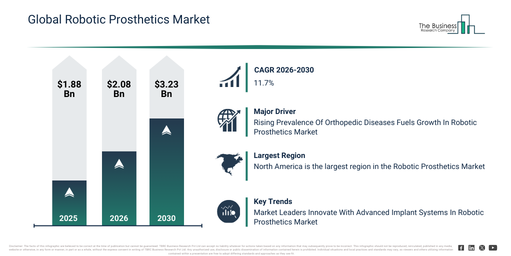
    The robotic prosthetics market has witnessed substantial expansion in recent years. This market is anticipated to expand from $1.88 billion in 2025 to $2.08 billion in 2026, reflecting a compound annual growth rate (CAGR) of 10.5%. Historically, this growth can be ascribed to a rising frequency of limb amputations, heightened awareness regarding advanced prosthetic solutions, the proliferation of rehabilitation centers, the existence of government reimbursement schemes, and technological enhancements in prosthetic components.

    The robotic prosthetics market is projected for significant expansion in the coming years. Its valuation is anticipated to reach $3.23 billion by 2030, demonstrating an 11.7% compound annual growth rate (CAGR). This expansion during the forecast period is fueled by factors such as the increasing integration of AI-powered control systems, a surge in demand for tailored prosthetic solutions, the proliferation of bionic and smart prosthetics, escalating investments in rehabilitation technologies, and the rising uptake of connected prosthetic devices. Key trends observed within this period encompass the wider acceptance of myoelectric prosthetic devices, a heightened demand for microprocessor-controlled limbs, an intensifying focus on neuro-controlled prosthetics, the broadening use of advanced materials in prosthetic design, and a stronger emphasis on both functional and aesthetic results.

    Get A Free Sample Report With In-Depth Market Insights:

    https://thebusinessresearchcompany.com/sample_request?id=38106015&type=smp&name=Robotic%20Prosthetics%20Market%20Report%202026&utm_source=Blogs&utm_medium=Paid&utm_campaign=Nov_PR

    Robotic Prosthetics Market Growth Factors Behind Sustained Expansion

    The expansion of the robotic prosthetics market is anticipated due to the increasing occurrence of orthopedic diseases. These conditions and disorders impact the musculoskeletal system, comprising muscles, bones, nerves, and joints. Within orthopedics, robotic prosthetics find critical uses in addressing and rectifying musculoskeletal injuries and disorders through limb replacement, improving gait, and providing greater accuracy in orthopedic surgical procedures.

    Robotic Prosthetics Market Segment Analysis: What Are The Core Market Categories?

    The robotic prosthetics market covered in this report is segmented –

    1) By Product Type: Prosthetic Arm, Prosthetic Knee, Prosthetic Feet Or Ankle, Prosthetic Hand, Other Products

    2) By Technology: Microprocessor-Controlled Prosthetics, Myoelectric Prosthetics

    3) By Extremity: Lower Body Prosthetics, Upper Body Prosthetics

    4) By End User: Hospitals, Specialty Clinics, Other End Users

    Subsegments:

    1) By Prosthetic Arm: Upper Limb Prosthetics, Body-Powered Prosthetics, Electrically Controlled Prosthetics

    2) By Prosthetic Knee: Mechanical Knee Prosthetics, Microprocessor-Controlled Knee Prosthetics, Hydraulic Knee Prosthetics

    3) By Prosthetic Feet Or Ankle: Energy-Storing Feet, Multi-Axis Feet, Microprocessor-Controlled Feet

    4) By Prosthetic Hand: Mechanical Hand Prosthetics, Myoelectric Hand Prosthetics, Hybrid Hand Prosthetics

    5) By Other Products: Exoskeletons, Adaptive Devices, Assistive Technologies

    Robotic Prosthetics Market Strategic Trends: What Defines The Next Growth Phase?

    Leading companies in the robotic prosthetics market are concentrating on developing advanced products, such as osseointegrated bone-anchored prosthetic systems, to enhance mobility, comfort, and long-term functionality for amputees. Osseointegrated bone-anchored prosthetic systems are sophisticated implant-based prosthetic technologies that directly connect an artificial limb to the skeletal structure, offering improved stability, sensory feedback, and range of motion compared to traditional socket-based prosthetics.

    Robotic Prosthetics Market Top Companies Driving Competitive Growth

    Major companies operating in the robotic prosthetics market are Ottobock SE And Co KGaA, Ossur hf, Blatchford Limited, DEKA Research And Development Corp, Cyberdyne Inc, College Park Industries Inc, Touch Bionics Ltd, Myomo Inc, Kinova Inc, Open Bionics Ltd, Sarcos Technology And Robotics Corporation, SynTouch LLC, Ekso Bionics Holdings Inc, Fillauer LLC, WillowWood Global LLC, Shadow Robot Company Limited, Infinite Biomedical Technologies LLC, Marsi Bionics SL, Aether Biomedical Pvt Ltd, Coapt LLC, Esper Bionics Inc, Psyonic Inc, Vincent Systems GmbH, Steeper Group Ltd

    View The Full Robotic Prosthetics Market Report:

    https://thebusinessresearchcompany.com/report/robotic-prosthetics-global-market-report?utm_source=Blogs&utm_medium=Paid&utm_campaign=Nov_PR

    Robotic Prosthetics Market Geographic Spread And Regional Opportunities

    North America was the largest region in the robotic prosthetics market in 2025. Asia-Pacific is expected to be the fastest-growing region in the forecast period. The regions covered in the robotic prosthetics market report are Asia-Pacific, South East Asia, Western Europe, Eastern Europe, North America, South America, Middle East, Africa.

    Reach Out To Our Team:

    The Business Research Company: https://www.thebusinessresearchcompany.com/

    Americas: +1 310-496-7795

    Asia: +44 7882 955267 & +91 8897263534

    Europe: +44 7882 955267

    Email us at: marketing@tbrc.info

    Follow us on:

    LinkedIn: https://in.linkedin.com/company/the-business-research-company

    YouTube: https://www.youtube.com/channel/UC24_fI0rV8cR5DxlCpgmyFQ

    Global Market Model: https://www.thebusinessresearchcompany.com/global-market-model