Blog

  • Percutaneous Transluminal Coronary Angioplasty (PTCA) Dilation Catheters Market Projected For Strong Expansion Through 2030: Key Trends And Future Outlook

    Percutaneous Transluminal Coronary Angioplasty (PTCA) Dilation Catheters Market Projected For Strong Expansion Through 2030: Key Trends And Future Outlook

    Built to provide research that’s more actionable and strategically valuable, The Business Research Company’s 2026 market reports include market attractiveness analysis, total addressable market sizing, company benchmarking matrices, interactive Excel dashboards, broader supply chain intelligence, emerging startup tracking, and in-depth product insights.

    Percutaneous Transluminal Coronary Angioplasty (PTCA) Dilation Catheters Market Revenue Growth On Track For A 6.4% CAGR Through 2030

    The percutaneous transluminal coronary angioplasty (ptca) dilation catheters market size has shown robust expansion in recent years. Its valuation is anticipated to climb from $1.95 billion in 2025 to $2.09 billion in 2026, progressing at a compound annual growth rate (CAGR) of 6.8%. The market’s growth during past periods was primarily influenced by the increasing occurrence of coronary artery disease, an aging demographic, advancements within interventional cardiology, improvements in diagnostic imaging, and the proliferation of hospital catheterization capabilities.

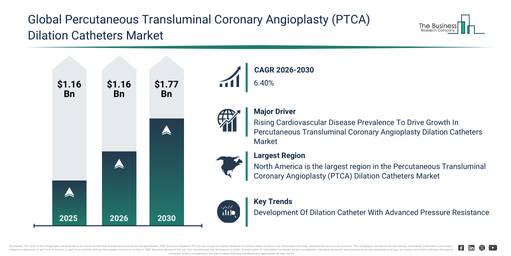
    The percutaneous transluminal coronary angioplasty (ptca) dilation catheters market is projected to experience substantial growth in the coming years. It is forecast to reach $2.68 billion in 2030, achieving a compound annual growth rate (CAGR) of 6.4%. This expansion during the forecast period can be attributed to factors such as an increase in cardiovascular interventions, healthcare investments in emerging markets, advancements in catheter materials, rising clinical expertise, and the embrace of precision cardiology. Key trends for the forecast period include an increasing preference for minimally invasive procedures, the growing utilization of high-pressure non-compliant catheters, a demand for enhanced balloon material durability, the expansion of cath lab infrastructure, and a focus on improving procedural success rates.

    Get A Free Sample Report With In-Depth Market Insights:

    https://thebusinessresearchcompany.com/sample_request?id=51509001&type=smp&name=Percutaneous%20Transluminal%20Coronary%20Angioplasty%20%28PTCA%29%20Dilation%20Catheters%20Market%20Report%202026&utm_source=Blogs&utm_medium=Paid&utm_campaign=Oct_PR

    Percutaneous Transluminal Coronary Angioplasty (PTCA) Dilation Catheters Market Development Factors: What’s Supporting Demand?

    The expanding prevalence of cardiovascular diseases is anticipated to boost the growth of the percutaneous transluminal coronary angioplasty (PTCA) dilation catheters market in the future. These conditions are escalating due to various lifestyle elements like inadequate diet, insufficient physical activity, heightened stress, coupled with an aging worldwide demographic. Percutaneous transluminal coronary angioplasty dilation catheters play a role in managing cardiovascular diseases by facilitating the opening of constricted or obstructed coronary arteries, thereby re-establishing blood circulation to the cardiac muscle. As an illustration, in June 2024, the American Heart Association, a US-based public health organization dedicated to supporting cardiovascular medical research, released a report indicating that 45 million adults in the USA are projected to suffer from some type of cardiovascular disease by 2050, an increase from 28 million in 2020. This forecast predicts substantial rises in hypertension, with an expected increase from 51.2% to 61.0%, and obesity, which is projected to expand from 43.1% to 60.6%. Consequently, the growing incidence of cardiovascular diseases is propelling the expansion of the percutaneous transluminal coronary angioplasty (PTCA) dilation catheters market.

    Percutaneous Transluminal Coronary Angioplasty (PTCA) Dilation Catheters Market Breakdown By Product Type And Application

    The percutaneous transluminal coronary angioplasty (ptca) dilation catheters market covered in this report is segmented –

    1) By Type: Semi-Compliant Type, Non-Compliant Type

    2) By Material Type: Polyurethane, Nylon, Other Material Types

    3) By Application: Hospitals, Medical Research Institute, Other Applications

    Subsegments:

    1) By Semi-Compliant Type: Standard Semi-Compliant Catheters, Specialized Semi-Compliant Catheters

    2) By Non-Compliant Type: Standard Non-Compliant Catheters, High-Pressure Non-Compliant Catheters

    Percutaneous Transluminal Coronary Angioplasty (PTCA) Dilation Catheters Market Transformation Trends: What Innovations Are Driving Change?

    Leading companies within the percutaneous transluminal coronary angioplasty (PTCA) dilation catheters market are concentrating on developing enhanced products, such as dilation catheters featuring twin-wall technology, to improve balloon strength and achieve effective artery dilation. Dilation catheters that incorporate twin-wall technology are medical instruments engineered for precise and controlled dilation procedures. Their distinctive construction includes two concentric layers, or walls, which significantly boost the catheter’s strength, flexibility, and durability. For instance, in February 2023, SIS Medical AG, a medical device company based in Switzerland, introduced the OPN NC percutaneous transluminal coronary angioplasty (PTCA) dilatation catheter, equipped with Twin-Wall technology, in the USA. This particular catheter provides superior high-pressure resistance with a rated burst pressure of 35 atm and exhibits low compliance, making it ideal for the post-dilatation of stents that are not fully expanded. This innovative design offers remarkable pressure resistance and extremely low compliance, allowing for the successful treatment of difficult coronary lesions without the danger of over-dilation.

    Percutaneous Transluminal Coronary Angioplasty (PTCA) Dilation Catheters Market Competitive Overview And Top Companies

    Major companies operating in the percutaneous transluminal coronary angioplasty (ptca) dilation catheters market are Cardinal Health Inc., Abbott Laboratories, Medtronic plc, Koninklijke Philips N.V., Becton Dickinson and Company, Boston Scientific Corporation, B. Braun Melsungen AG, Terumo Corporation, Nipro Corporation, Teleflex Incorporated, Lepu Medical Technology (Beijing) Co Ltd., Merit Medical Systems Inc., Cordis Corporation, MicroPort Scientific Corporation, Biosensors International Group Ltd., Alvimedica Medical Technologies, BrosMed Medical Co Ltd., iVascular SLU, Hexacath, Translumina Therapeutics LLP, Eurocor Tech GmbH, GADA S.p.A., Invamed Group

    View The Full Percutaneous Transluminal Coronary Angioplasty (PTCA) Dilation Catheters Market Report:

    https://thebusinessresearchcompany.com/report/percutaneous-transluminal-coronary-angioplasty-ptca-dilation-catheters-global-market-report?utm_source=Blogs&utm_medium=Paid&utm_campaign=Oct_PR

    Percutaneous Transluminal Coronary Angioplasty (PTCA) Dilation Catheters Market Leading Geography: Which Region Contributes The Most Revenue?

    North America was the largest region in the percutaneous transluminal coronary angioplasty dilation catheters market in 2025. The regions covered in the percutaneous transluminal coronary angioplasty (ptca) dilation catheters market report are Asia-Pacific, South East Asia, Western Europe, Eastern Europe, North America, South America, Middle East, Africa.

    Reach Out To Our Team:

    The Business Research Company: https://www.thebusinessresearchcompany.com/

    Americas: +1 310-496-7795

    Asia: +44 7882 955267 & +91 8897263534

    Europe: +44 7882 955267

    Email us at: marketing@tbrc.info

    Follow us on:

    LinkedIn: https://in.linkedin.com/company/the-business-research-company

    YouTube: https://www.youtube.com/channel/UC24_fI0rV8cR5DxlCpgmyFQ

    Global Market Model: https://www.thebusinessresearchcompany.com/global-market-model
  • Percutaneous Puncture Surgery Robot Market Outlook 2026–2030: Growth Trends, Market Dynamics And Emerging Opportunities

    Percutaneous Puncture Surgery Robot Market Outlook 2026–2030: Growth Trends, Market Dynamics And Emerging Opportunities

    Backed by market attractiveness analysis, total addressable market sizing, company benchmarking matrices, interactive Excel dashboards, wider supply chain intelligence, emerging startup coverage, and detailed product-level insights, The Business Research Company’s 2026 market reports are designed to offer research that is more actionable and strategically valuable than ever.

    Percutaneous Puncture Surgery Robot Market Value Growth And Long-Term Outlook

    The percutaneous puncture surgery robot market size has experienced swift expansion recently. It is anticipated to grow from $1.98 billion in 2025 to $2.23 billion in 2026, at a compound annual growth rate (CAGR) of 12.5%. The historical growth can be credited to factors such as the development of robotic surgical platforms, an increasing demand for minimally invasive procedures, progress in imaging-guided surgery, the rising prevalence of urological and orthopedic surgeries, and greater awareness of the advantages of surgical precision.

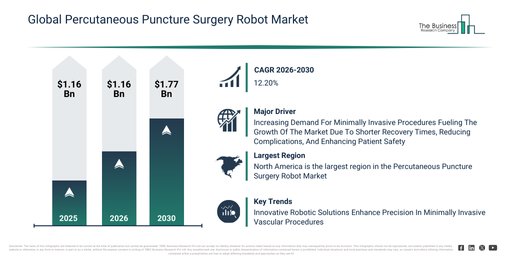
    The percutaneous puncture surgery robot market is anticipated to undergo significant expansion in the coming years. It is projected to achieve a value of $3.54 billion in 2030, exhibiting a compound annual growth rate (CAGR) of 12.2%. This growth over the forecast period is attributable to factors such as the increasing adoption of AI-guided surgical systems, the expansion of hospital and ambulatory surgical centers, the integration of augmented reality with robotics, innovations in percutaneous puncture procedures, and strategic partnerships between robot manufacturers and healthcare providers. Prominent trends observed during the forecast period include robotic-assisted percutaneous surgery, augmented reality navigation systems, AI-guided needle placement, minimally invasive surgical robotics, and their integration with various imaging modalities.

    Get A Free Sample Report With In-Depth Market Insights:

    https://thebusinessresearchcompany.com/sample_request?id=59303767&type=smp&name=Percutaneous%20Puncture%20Surgery%20Robot%20Market%20Report%202026&utm_source=Blogs&utm_medium=Paid&utm_campaign=Oct_PR

    Percutaneous Puncture Surgery Robot Market Industry Drivers: What’s Behind The Revenue Growth?

    The percutaneous puncture surgery robot market is projected to expand due to the increasing demand for minimally invasive procedures. These medical interventions, performed through small incisions or openings, minimize patient trauma and accelerate recovery. The rising appeal of minimally invasive surgical procedures stems from their advantages, including shorter recovery times, reduced complication risks, less pain, and smaller scars, offering patients quicker and safer treatment alternatives. Percutaneous Puncture Surgery Robots enhance these procedures by providing precise needle guidance, making them ideal for applications such as tumor ablations and biopsies. They mitigate surgical errors through accurate, real-time navigation, thereby improving patient safety and procedural efficiency. For instance, data from June 2024, published by the American Society of Plastic Surgeons, a US-based non-profit organization, revealed that minimally invasive procedures grew 7% in 2023, exceeding the growth of conventional surgical procedures by 2%. Therefore, the increasing demand for minimally invasive procedures is a primary driver behind the growth of the percutaneous puncture surgery robot market.

    Percutaneous Puncture Surgery Robot Market Segment Analysis And Revenue Potential

    The percutaneous puncture surgery robot market covered in this report is segmented –

    1) By Type: Prostate Puncture Robot, Lung Puncture Robot, Kidney Puncture Robot

    2) By Technology: Robotic Needle Guidance and Navigation, Artificial Intelligence–Enabled Target Planning, Motion Compensation and Respiratory Tracking, Image Fusion and 3D Targeting Software

    3) By Clinical Application: Urology (Prostate Biopsy, Renal Procedures), Pulmonology (Lung Biopsy, Lung Ablation Access), Oncology (Tumor Biopsy and Localized Interventions), Interventional Radiology, Nephrology

    4) By End User: Hospitals, Specialized Interventional Clinics, Diagnostic and Imaging Centers

    Subsegments:

    1) By Prostate Puncture Robot: Transperineal Prostate Puncture, Transrectal Prostate Puncture

    2) By Lung: Computed Tomography Guided Lung Puncture, Ultrasound Guided Lung Puncture

    3) By Kidney: Percutaneous Nephrolithotomy Puncture, Renal Biopsy Puncture

    #Percutaneous Puncture Surgery Robot Market Growth Trends: What’s Shaping The Future Outlook?

    Major companies in the percutaneous puncture surgery robot market are focused on creating innovative solutions, including vascular intervention surgical robots, to boost precision, reduce complications, and improve patient recovery. These vascular intervention surgical robots are robotic systems designed to aid surgeons in performing minimally invasive procedures on blood vessels, specifically in guiding catheters and guidewires with high accuracy and control. As an example, in December 2023, Robocath S.A.S., a MedTech company from France, partnered with Microport Medical B.V., a medical devices company from China, and secured market approval from the National Medical Products Administration (NMPA) for their R-ONE vascular intervention surgical robot. This particular vascular intervention surgical robot is engineered to assist interventional cardiologists in executing precise, minimally invasive procedures such as percutaneous coronary interventions (PCI) by improving operational control, enhancing safety, and lowering radiation exposure. The robot incorporates advanced dual-finger grasp mimic technology, facilitating continuous 0 to 360-degree rotation and exact, hand-like manipulation for superior handling of complex and tortuous vascular lesions. Additionally, the system substantially minimizes radiation exposure to both patients and operators through optimized robotic navigation and reduced dependence on fluoroscopy.

    Percutaneous Puncture Surgery Robot Market Competitive Landscape: Which Companies Lead The Industry?

    Major companies operating in the percutaneous puncture surgery robot market are Intuitive Surgical Inc., Quantum Surgical SAS, iSYS Medizintechnik GmbH, Perfint Healthcare Private Limited, MicroPort Corporation, Robocath S.A.S., XACT Robotics Inc., NDR Medical Technology, Yuanhua Technology Co. Ltd., BEC Medical, Perlove Medical, Biobot Surgical Pte Ltd, Veran Medical Technologies Inc., Clear Guide Medical, Aimooe Technology Co. Ltd., Renishaw plc, Zimmer Biomet Holdings Inc., Perfexion Robotics, NeuroPuncture Systems, Synaptive Medical

    View The Full Percutaneous Puncture Surgery Robot Market Report:

    https://thebusinessresearchcompany.com/report/percutaneous-puncture-surgery-robot-global-market-report?utm_source=Blogs&utm_medium=Paid&utm_campaign=Oct_PR

    Percutaneous Puncture Surgery Robot Market Regional Outlook: Where Is Opportunity Concentrated?

    North America was the largest region in the percutaneous puncture surgery robot market in 2025. Asia-pacific is expected to be the fastest-growing region in the forecast period. The regions covered in the percutaneous puncture surgery robot market report are Asia-Pacific, South East Asia, Western Europe, Eastern Europe, North America, South America, Middle East, Africa.

    Reach Out To Our Team:

    The Business Research Company: https://www.thebusinessresearchcompany.com/

    Americas: +1 310-496-7795

    Asia: +44 7882 955267 & +91 8897263534

    Europe: +44 7882 955267

    Email us at: marketing@tbrc.info

    Follow us on:

    LinkedIn: https://in.linkedin.com/company/the-business-research-company

    YouTube: https://www.youtube.com/channel/UC24_fI0rV8cR5DxlCpgmyFQ

    Global Market Model: https://www.thebusinessresearchcompany.com/global-market-model
  • Percutaneous Mechanical Circulatory Support Devices Market Growth Outlook From $2.7 Billion In 2026 To $3.87 Billion By 2030

    Percutaneous Mechanical Circulatory Support Devices Market Growth Outlook From $2.7 Billion In 2026 To $3.87 Billion By 2030

    Featuring market attractiveness scoring, total addressable market sizing, company benchmarking matrices, interactive Excel dashboards, deeper supply chain intelligence, emerging startup tracking, and granular product-level insights, The Business Research Company’s 2026 market reports are built to deliver research that is both more actionable and more strategically valuable.

    Percutaneous Mechanical Circulatory Support Devices Market Poised To Hit $3.87 Billion By 2030 With A 9.4% CAGR

    The percutaneous mechanical circulatory support devices market has shown significant expansion in recent years. This market is anticipated to expand from $2.46 billion in 2025 to $2.7 billion in 2026, registering a compound annual growth rate (CAGR) of 9.7%. The historical growth of this market can be linked to several factors, including the rising cardiovascular disease burden, increasing cardiogenic shock cases, adoption of minimally invasive procedures, ICU care expansion, and an aging population.

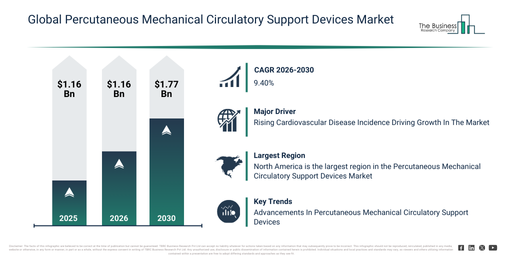
    The percutaneous mechanical circulatory support devices market is projected to experience robust growth in the upcoming years. This market is anticipated to expand to $3.87 billion in 2030, demonstrating a compound annual growth rate (CAGR) of 9.4%. The expansion during the forecast period is attributable to AI-assisted cardiac monitoring, an increase in complex cardiac interventions, the broadening of cath lab procedures, the demand for temporary heart support, and innovations in advanced pump technologies. Significant trends for this period include minimally invasive cardiac support, short-term hemodynamic assistance, high-risk PCI support devices, rapid deployment cardiac systems, and designs focused on enhanced patient safety.

    Get A Free Sample Report With In-Depth Market Insights:

    https://thebusinessresearchcompany.com/sample_request?id=21645547&type=smp&name=Percutaneous%20Mechanical%20Circulatory%20Support%20Devices%20Market%20Report%202026&utm_source=Blogs&utm_medium=Paid&utm_campaign=Oct_PR

    Percutaneous Mechanical Circulatory Support Devices Market Growth Factors: What’s Supporting Expansion?

    The rising occurrence of cardiovascular diseases is anticipated to advance the expansion of the percutaneous mechanical circulatory support devices market in the future. Cardiovascular diseases, also known as CVDs, encompass a collection of ailments that impact the heart and blood vessels, such as coronary artery disease, heart attacks, heart failure, stroke, and high blood pressure. The growing prevalence of these conditions stems from contributing factors like an aging population, detrimental lifestyle choices, obesity, hypertension, and genetic predisposition. Percutaneous mechanical circulatory support devices find application in cardiovascular diseases to enhance cardiac function, alleviate strain on the heart, and aid recovery in severe cardiac situations. For instance, in October 2024, data from the Centers for Disease Control and Prevention, a US-based public health institute, indicated that in 2023, approximately 1 out of every 6 deaths resulting from cardiovascular diseases occurred in adults younger than 65 years old, and a total of 919,032 people succumbed to cardiovascular disease, accounting for 1 in every 3 deaths. Consequently, the escalating incidence of cardiovascular diseases is fueling the growth of the percutaneous mechanical circulatory support (MCS) devices market.

    Percutaneous Mechanical Circulatory Support Devices Market Segmentation And Category Overview

    The percutaneous mechanical circulatory support devices market covered in this report is segmented –

    1) By Product Type: Intra-Aortic Balloon Pumps, Impella Devices, Extracorporeal Membrane Oxygenation, TandemHeart, Other Types

    2) By Application: Cardiogenic Shock, Acute Myocardial Infarction, Heart Failure, Other Applications

    3) By End-User: Hospitals, Ambulatory Surgical Centers, Other End Users

    Subsegments:

    1) By Intra-Aortic Balloon Pumps (IABP): Standard IABP Devices, Enhanced IABP Devices

    2) By Impella Devices: Impella 2.5, Impella 5.0, Impella CP (Cardiac Power)

    3) By Extracorporeal Membrane Oxygenation (ECMO): Veno-Venous ECMO (VV ECMO), Veno-Arterial ECMO (VA ECMO)

    4) By Tandemheart: Tandemheart PUMP System, Tandemheart PRO System

    5) By Other Types: Centrifugal Pumps, Pneumatic Assist Devices

    Percutaneous Mechanical Circulatory Support Devices Market Industry Trends: What’s Reshaping Demand?

    Major companies operating within the percutaneous mechanical circulatory support devices market are concentrating on developing technologically advanced solutions, including intra-aortic axial-flow devices, to improve patient outcomes and reduce surgical risks. An intra-aortic axial-flow device is a type of percutaneous mechanical circulatory support (MCS) device specifically engineered to assist heart function by increasing blood flow from the left ventricle to the aorta. For instance, in February 2023, Procyrion, Inc., a US-based medical device company, reported the successful first-in-human use of its Aortix pump. This innovative device aims to prevent acute kidney injury (AKI) in patients undergoing cardiac surgery. Delivered via a catheter in the descending thoracic aorta, the Aortix pump works by improving renal perfusion while simultaneously reducing the heart’s workload during surgery. It achieves this by enhancing both renal and systemic perfusion while decreasing the strain on the heart, making it particularly advantageous for individuals with compromised left ventricular function and renal impairment. Capable of delivering up to 5.0 liters of flow per minute, the Aortix pump is designed for temporary use during procedures such as percutaneous coronary interventions (PCI).

    Percutaneous Mechanical Circulatory Support Devices Market Competitive Landscape: Who Leads The Industry?

    Major companies operating in the percutaneous mechanical circulatory support devices market are Abbott Laboratories, Medtronic Plc, Getinge AB, Teleflex Incorporated, Biotronik, Abiomed Inc., LivaNova Plc, Bioventrix, Berlin Heart, Eurosets, Magenta Medical Ltd, SynCardia Systems LLC, CardiacAssist Inc., Jarvik Heart Inc., Procyrion, BiVACOR Inc., CardioBridge GmbH and Company, Circulite Medical Inc., NovaPump GmbH, Supira Medical Inc., Pulsatile Technologies Inc.

    View The Full Percutaneous Mechanical Circulatory Support Devices Market Report:

    https://thebusinessresearchcompany.com/report/percutaneous-mechanical-circulatory-support-devices-global-market-report?utm_source=Blogs&utm_medium=Paid&utm_campaign=Oct_PR

    Percutaneous Mechanical Circulatory Support Devices Market Geographic Landscape: Which Region Leads Industry Growth?

    North America was the largest region in the percutaneous mechanical circulatory support devices market in 2025. The regions covered in the percutaneous mechanical circulatory support devices market report are Asia-Pacific, South East Asia, Western Europe, Eastern Europe, North America, South America, Middle East, Africa.

    Reach Out To Our Team:

    The Business Research Company: https://www.thebusinessresearchcompany.com/

    Americas: +1 310-496-7795

    Asia: +44 7882 955267 & +91 8897263534

    Europe: +44 7882 955267

    Email us at: marketing@tbrc.info

    Follow us on:

    LinkedIn: https://in.linkedin.com/company/the-business-research-company

    YouTube: https://www.youtube.com/channel/UC24_fI0rV8cR5DxlCpgmyFQ

    Global Market Model: https://www.thebusinessresearchcompany.com/global-market-model
  • Pen Needles Market Forecast To Reach $4.34 Billion By 2030: Key Growth Drivers And Industry Trends

    Pen Needles Market Forecast To Reach $4.34 Billion By 2030: Key Growth Drivers And Industry Trends

    Built to provide research that’s more actionable and strategically valuable, The Business Research Company’s 2026 market reports include market attractiveness analysis, total addressable market sizing, company benchmarking matrices, interactive Excel dashboards, broader supply chain intelligence, emerging startup tracking, and in-depth product insights.

    Pen Needles Market Size And Revenue Outlook Through 2030

    The pen needles market size has experienced rapid expansion in recent years. It is projected to grow from $2.69 billion in 2025 to $2.99 billion in 2026, at a compound annual growth rate (CAGR) of 11.4%. The growth observed in prior periods can be attributed to the increasing global diabetes prevalence, broader adoption of insulin pen usage, enhanced availability of self-injection therapies, the expansion of home healthcare practices, and advancements in needle manufacturing technologies.

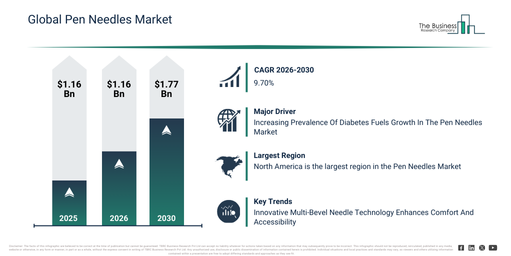
    The pen needles market is anticipated to experience substantial growth over the next few years. Its valuation is projected to reach $4.34 billion in 2030, demonstrating a compound annual growth rate (CAGR) of 9.7%. This expansion during the forecast period can be attributed to the increasing uptake of GLP-1 therapies, a rising focus on needle safety regulations, the broadening of sustainable disposable medical products, an escalating demand for painless injection solutions, and a growing preference for managing diseases at home. Dominant trends within the forecast period include the increasing adoption of ultra-thin pen needles, a heightened demand for safety pen needle solutions, a growing inclination towards short-length needles, the expansion of home-based injection therapies, and an enhanced emphasis on patient comfort and compliance.

    Get A Free Sample Report With In-Depth Market Insights:

    https://thebusinessresearchcompany.com/sample_request?id=78830182&type=smp&name=Pen%20Needles%20Market%20Report%202026&utm_source=Blogs&utm_medium=Paid&utm_campaign=Oct_PR

    Pen Needles Market Demand Drivers: What’s Powering Industry Growth?

    The growing incidence of diabetes is anticipated to stimulate the expansion of the pen needles market in the future. Diabetes is a chronic health condition characterized by elevated blood sugar levels, resulting from either insufficient insulin production or the body’s inefficient utilization of insulin. The rising occurrence of diabetes can be attributed to factors such as sedentary lifestyles, poor dietary habits, genetic predispositions, urbanization, and aging populations, further complicated by limited access to healthcare and increasing global obesity rates. Pen needles serve as crucial instruments for diabetes management, enabling precise insulin delivery through convenient, minimally invasive injections, which promotes better glycemic control and enhances patient adherence. For instance, in June 2024, according to the National Health Service, a UK-based government department, in 2023, the NHS identified over half a million (549,000) additional individuals in England at risk of developing type 2 diabetes, bringing the total number of people with non-diabetic hyperglycemia, or pre-diabetes, registered with a GP to 3,615,330. This represents a significant increase compared to 3,065,825 in 2022, highlighting a rise of nearly 20%. Therefore, the increasing prevalence of diabetes is fueling the growth of the pen needles market.

    Pen Needles Market Segment Outlook: Which Categories Are Growing Fastest?

    The pen needles market covered in this report is segmented –

    1) By Type: Standard Pen Needles, Safety Pen Needles

    2) By Needle Length: Short Length Pen Needles, Medium Length Pen Needles, Long Length Pen Needles

    3) By Therapy: Insulin, Glucagon-like-Peptide-1 (GLP-1), Growth Hormone

    4) By Mode Of Purchase: Retail, Non-Retail

    5) By End User: Hospitals And Clinics, Home Healthcare, Other End Users

    Subsegments:

    1) By Standard Pen Needles: Fixed-Needle Pen Needles, Removable-Needle Pen Needles, Short Pen Needles ( 4mm, 5mm), Long Pen Needles ( 8mm, 12mm)

    2) By Safety Pen Needles: Automatic Safety Pen Needles, Manual Safety Pen Needles, Retractable Safety Pen Needles, Shielded Safety Pen Needles

    Pen Needles Market Innovation Trends: What Developments Are Reshaping The Industry?

    Leading companies operating in the insulin pen-needle market are prioritizing the development of innovative solutions, such as sophisticated multi-bevel needles, to enhance injection comfort and boost patient adherence. Advanced multi-bevel needles are insulin pen needles engineered with multiple precision-cut bevels at the tip to make injections smoother, less painful, and more comfortable for patients. For instance, in August 2025, Trividia Health Inc., a US-based diabetes-care company, introduced its TRUEplus 5-Bevel Pen Needles in the UK. These pen needles are offered in multiple gauges and lengths (e.g., 31 G 5 mm, 6 mm, 8 mm; and 32 G 4 mm), feature a silicone coating to reduce friction, possess a sterile single-use construction, and have color-coded caps for simple size recognition—all designed to maximize comfort, safety, and ease of use. Additionally, they stand as the lowest-priced 5-bevel pen needles available on prescription in the UK, making them a cost-effective yet high-quality option compared to older 3-bevel designs.

    Pen Needles Market Company Landscape And Competitive Strategy

    Major companies operating in the pen needles market are Cardinal Health Inc., Novo Nordisk AS, Becton Dickinson And Company, B. Braun Melsungen AG, Terumo Corporation, Nipro Corporation, Artsana Group, Embecta Corp., Trividia Health Inc., Medical Technology And Devices S.p.A., Owen Mumford, Dynarex Corporation, UltiMed Inc., Bio-Med HealthCare Products Pvt. Ltd., Allison Medical Inc., GlucoRx Ltd., HTL-STREFA S.A., Hindustan Syringes And Medical Devices Ltd., Ypsomed AG, Haselmeier GmbH

    View The Full Pen Needles Market Report:

    https://thebusinessresearchcompany.com/report/pen-needles-global-market-report?utm_source=Blogs&utm_medium=Paid&utm_campaign=Oct_PR

    Pen Needles Market Largest Region: Which Geography Holds The Biggest Share?

    North America was the largest region in the pen needles market in 2025. Asia-Pacific is expected to be the fastest-growing region in the forecast period. The regions covered in the pen needles market report are Asia-Pacific, South East Asia, Western Europe, Eastern Europe, North America, South America, Middle East, Africa.

    Reach Out To Our Team:

    The Business Research Company: https://www.thebusinessresearchcompany.com/

    Americas: +1 310-496-7795

    Asia: +44 7882 955267 & +91 8897263534

    Europe: +44 7882 955267

    Email us at: marketing@tbrc.info

    Follow us on:

    LinkedIn: https://in.linkedin.com/company/the-business-research-company

    YouTube: https://www.youtube.com/channel/UC24_fI0rV8cR5DxlCpgmyFQ

    Global Market Model: https://www.thebusinessresearchcompany.com/global-market-model
  • Pedicle Screw Systems Market Research 2026: Market Size, Trends, Segments And Growth Forecast

    Pedicle Screw Systems Market Research 2026: Market Size, Trends, Segments And Growth Forecast

    Backed by market attractiveness analysis, total addressable market sizing, company benchmarking matrices, interactive Excel dashboards, wider supply chain intelligence, emerging startup coverage, and detailed product-level insights, The Business Research Company’s 2026 market reports are designed to offer research that is more actionable and strategically valuable than ever.

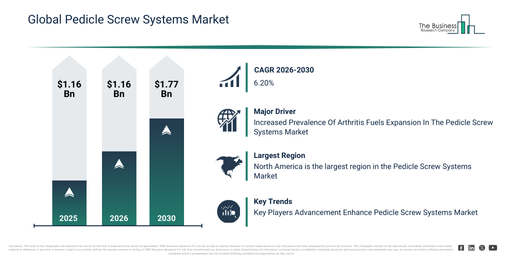
    Pedicle Screw Systems Market Growth From $6.02 Billion In 2026 To $7.65 Billion By 2030 At A CAGR Of 6.2%

    The pedicle screw systems market has experienced robust expansion recently. It is projected to increase from $5.69 billion in 2025 to reach $6.02 billion by 2026, exhibiting a compound annual growth rate (CAGR) of 5.8%. This historical expansion can be ascribed to several factors, including the increasing occurrence of spinal degeneration disorders, a rise in traumatic spinal injuries, the proliferation of spinal fusion surgical procedures, the expanding use of internal fixation devices, and advancements in orthopedic implant materials.

    The pedicle screw systems market is anticipated to experience robust expansion in the coming years. This market is projected to reach a valuation of $7.65 billion by 2030, exhibiting a compound annual growth rate (CAGR) of 6.2%. This projected growth throughout the forecast period stems from several factors, including the rising demand for minimally invasive spinal surgeries, the increasing embrace of navigation-assisted spine surgery, an expanding elderly population suffering from spinal disorders, the proliferation of outpatient spine surgery centers, and ongoing advancements in spinal implant technologies. Key trends emerging during this forecast period encompass a greater acceptance of minimally invasive spine fixation systems, an escalating requirement for polyaxial pedicle screws, the broadening application of image-guided screw placement, the development of more low-profile implant designs, and a heightened emphasis on surgical precision and stability.

    Get A Free Sample Report With In-Depth Market Insights:

    https://thebusinessresearchcompany.com/sample_request?id=93235653&type=smp&name=Pedicle%20Screw%20Systems%20Market%20Report%202026&utm_source=Blogs&utm_medium=Paid&utm_campaign=Oct_PR

    Pedicle Screw Systems Market Growth Drivers: What’s Behind The Acceleration?

    The increasing prevalence of arthritis is anticipated to drive the expansion of the pedicle screw systems market moving forward. Arthritis is defined as joint pain or joint disease. Pedicle screw systems are utilized to ensure the accuracy and safety of cervical pedicle screw insertion for patients suffering from cervical disorders, including those with rheumatoid arthritis (RA). For example, in February 2024, the CDC National Center for Health Statistics (NCHS), a US-based principal health statistics agency, reported that the age-adjusted prevalence of diagnosed arthritis among adults aged 18 and older stood at 18.9%, signifying a considerable increase in the condition’s occurrence. This statistic implies that approximately 1 in 5 adults in the U.S. experiences arthritis, with women (21.5%) showing a greater likelihood of being affected than men (16.1%). Hence, the growing prevalence of arthritis is projected to propel the pedicle screw systems market.

    Pedicle Screw Systems Market Segment Landscape: Which Areas Lead Development?

    The pedicle screw systems market covered in this report is segmented –

    1) By Product: Monoaxial Pedicle Screw, Polyaxial Pedicle Screw, Other Products

    2) By Surgery Type: Open Surgery, Minimally Invasive Surgery

    3) By Indication: Spinal Trauma Injuries, Spinal Deformities, Spinal Degeneration

    Subsegments:

    1) By Monoaxial Pedicle Screw: Standard Monoaxial Screws, Specialized Monoaxial Screws

    2) By Polyaxial Pedicle Screw: Standard Polyaxial Screws, Low-Profile Polyaxial Screws, Cannulated Polyaxial Screws

    3) By Other Products: Pedicle Screw Rods, Connector Systems, Instrumentation Sets

    Pedicle Screw Systems Market Trends: What’s Defining The Industry’s Next Phase?

    Leading firms within the pedicle screw systems market are concentrating on creating sophisticated products like reduction and correction instrumentation, aiming to improve spinal alignment, stability, and the overall success of surgical procedures. This instrumentation consists of specialized tools and devices applied in spinal operations for precisely realigning and correcting vertebral anomalies or injuries, leading to enhanced surgical results. As an illustration, in August 2023, Orthofix Medical Inc., a US-based medical device firm, introduced its new Mariner deformity pedicle screw system. The system’s commercial debut aims to integrate advanced reduction and correction instrumentation, alongside specialized implant technologies and osteotomy tools, to facilitate more effective surgical interventions. Furthermore, this system expands upon the distinct functionalities of the novel gimbal technology, which is incorporated across the Mariner product line to aid in the positioning of intricate instrumentation.

    Pedicle Screw Systems Market Key Players Shaping Industry Direction

    Major companies operating in the pedicle screw systems market are Globus Medical Inc., Medtronic plc, Orthofix Medical Inc., Stryker Corporation, DePuy Synthes Companies of Johnson & Johnson, Zimmer Biomet Holdings Inc., B. Braun Melsungen AG, Alphatec Holdings Inc., Atec Spine Inc., CoreLink Holding LLC, Xtant Medical Inc., Life Spine Inc., NuVasive Inc., Precision Spine Inc., Spineart SA, Aesculap Implant Systems LLC, K2M Inc., Paradigm Spine LLC, Spinal Elements Inc., Titan Spine LLC, X-spine Systems Inc., Aurora Spine Corporation, Captiva Spine Inc., ChoiceSpine LP, FH Orthopedics Inc., RTI Surgical Inc., Exactech Inc., CTL Amedica Corporation, Solco Biomedical Pvt Ltd

    View The Full Pedicle Screw Systems Market Report:

    https://thebusinessresearchcompany.com/report/pedicle-screw-systems-global-market-report?utm_source=Blogs&utm_medium=Paid&utm_campaign=Oct_PR

    Pedicle Screw Systems Market Regional Analysis: Which Geography Leads On Revenue?

    North America was the largest region in the pedicle screw systems market in 2025.Asia-Pacific is expected to be the fastest-growing region in the global pedicle screw systems market report during the forecast period. The regions covered in the pedicle screw systems market report are Asia-Pacific, South East Asia, Western Europe, Eastern Europe, North America, South America, Middle East, Africa.

    Reach Out To Our Team:

    The Business Research Company: https://www.thebusinessresearchcompany.com/

    Americas: +1 310-496-7795

    Asia: +44 7882 955267 & +91 8897263534

    Europe: +44 7882 955267

    Email us at: marketing@tbrc.info

    Follow us on:

    LinkedIn: https://in.linkedin.com/company/the-business-research-company

    YouTube: https://www.youtube.com/channel/UC24_fI0rV8cR5DxlCpgmyFQ

    Global Market Model: https://www.thebusinessresearchcompany.com/global-market-model
  • Pediatric Wheelchair Market Forecast 2026: Market Size, Competitive Landscape And Growth Drivers

    Pediatric Wheelchair Market Forecast 2026: Market Size, Competitive Landscape And Growth Drivers

    Featuring market attractiveness scoring, total addressable market sizing, company benchmarking matrices, interactive Excel dashboards, deeper supply chain intelligence, emerging startup tracking, and granular product-level insights, The Business Research Company’s 2026 market reports are built to deliver research that is both more actionable and more strategically valuable.

    Pediatric Wheelchair Market Expansion Outlook: What Revenue Opportunities Are Ahead?

    The pediatric wheelchair market has experienced robust growth in recent years. Its size is projected to increase from $2.12 billion in 2025 to $2.28 billion in 2026, achieving a compound annual growth rate (CAGR) of 7.7%. The expansion observed historically is linked to an increase in pediatric disabilities, improved survival rates of premature infants, the broadening of rehabilitation programs, enhancements in insurance coverage, and greater awareness concerning pediatric mobility aids.

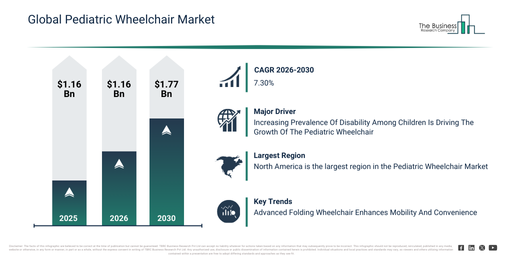
    The pediatric wheelchair market is projected to experience robust expansion over the coming years. Its valuation is anticipated to reach $3.02 billion by 2030, exhibiting a compound annual growth rate (CAGR) of 7.3%. This growth throughout the forecast period can be ascribed to factors such as inclusive education policies, increased adoption in homecare settings, progress in powered mobility technology, a heightened demand for customization, and the rising prevalence of pediatric neurological disorders. Key trends expected during this period encompass a growing preference for lightweight wheelchairs, the development of customizable pediatric mobility solutions, an uptick in powered pediatric wheelchair usage, a greater emphasis on posture support, and the broadening of online wheelchair sales channels.

    Get A Free Sample Report With In-Depth Market Insights:

    https://thebusinessresearchcompany.com/sample_request?id=38183687&type=smp&name=Pediatric%20Wheelchair%20Market%20Report%202026&utm_source=Blogs&utm_medium=Paid&utm_campaign=Oct_PR

    Pediatric Wheelchair Market Growth Factors Behind Sustained Expansion

    The escalating prevalence of disability among children is poised to fuel the expansion of the pediatric wheelchair market in the future. Disability in children refers to a wide array of physical, cognitive, developmental, or emotional conditions that hinder a child’s ability to perform routine activities and fully participate in society. The increasing incidence of childhood disability is largely due to improvements in diagnostic capabilities, better survival rates for premature infants, and enhanced recognition of developmental disorders. Pediatric wheelchairs assist children with disabilities by providing mobility and independence, enabling them to move through their environments more easily and engage in activities that could otherwise be challenging. For instance, in June 2023, according to the United Nations Children’s Fund (UNICEF), there are around 240 million children with disabilities worldwide compared to 2022. Therefore, the rising prevalence of disability among children is a key driver for the growth of the pediatric wheelchair market.

    Pediatric Wheelchair Market Segments: Where Is Growth Concentrated?

    The pediatric wheelchair market covered in this report is segmented –

    1) By Type: Manual Wheelchairs, Powered Wheelchairs

    2) By Portability: Standalone, Portable

    3) By Distribution Channel: Brick And Mortar, E-Commerce

    4) By Application: Mobility, Neurological Conditions

    5) By End-User: Hospitals, Home Care, Other End-Users

    Subsegments:

    1) By Manual Wheelchairs: Folding Manual Wheelchairs, Rigid Frame Manual Wheelchairs, Lightweight Manual Wheelchairs, Tilt-In-Space Manual Wheelchairs, Sport Manual Wheelchairs, Pediatric Reclining Manual Wheelchairs

    2) By Powered Wheelchairs: Rear-Wheel Drive Powered Wheelchairs, Front-Wheel Drive Powered Wheelchairs, Mid-Wheel Drive Powered Wheelchairs, Standing Powered Wheelchairs, Folding Powered Wheelchairs, Lightweight Powered Wheelchairs

    Pediatric Wheelchair Market Industry Trends Fueling Future Revenue Growth

    Leading companies in the pediatric wheelchair market are concentrating on developing advanced products, such as collapsible wheelchairs, to enhance mobility and convenience for children and their caregivers. Folding wheelchairs are characterized by a frame that can be collapsed, enabling effortless storage, transport, and portability without disassembling the unit. For instance, in November 2024, Sunrise Medical, a Germany-based wheelchair manufacturer company, introduced the QUICKIE QS5 X, a lightweight folding wheelchair crafted to improve ease of use and portability. This model features the FlexFold 2.0 mechanism and an optional S-Ergo 2.0 seating system, providing optimal posture and a highly adaptable fit for various user needs while maintaining its compact fold. Moreover, an optional Fold-n-Lock feature securely holds the wheelchair in its folded state with a simple click, allowing it to stand on its own for convenient transport and storage.

    Pediatric Wheelchair Market Competitive Analysis Of Leading Industry Participants

    Major companies operating in the pediatric wheelchair market are Medline Industries LP, Sunrise Medical LLC, Invacare Corporation, Numotion Inc., Permobil AB, Drive Medical Design & Manufacturing Inc., Etac AB, Vermeiren Group, Motion Composites Inc., SpinLife.com Inc., Roma Medical Aids Ltd., MEYRA Group, Karma Medical Products Co Ltd., Panthera Healthcare, Karman Healthcare Inc., Rehamo GmbH, SORG Rollstuhltechnik GmbH & Co. KG, Ottobock SE & Co KGaA, Quantum Rehab, RGK Wheelchairs Ltd, Ki Mobility, Convaid Products LLC

    View The Full Pediatric Wheelchair Market Report:

    https://thebusinessresearchcompany.com/report/pediatric-wheelchair-global-market-report?utm_source=Blogs&utm_medium=Paid&utm_campaign=Oct_PR

    Pediatric Wheelchair Market Geographic Spread And Regional Opportunities

    North America was the largest region in the pediatric wheelchair market in 2025. Asia-Pacific is expected to be the fastest-growing region in the forecast period. The regions covered in the pediatric wheelchair market report are Asia-Pacific, South East Asia, Western Europe, Eastern Europe, North America, South America, Middle East, Africa.

    Reach Out To Our Team:

    The Business Research Company: https://www.thebusinessresearchcompany.com/

    Americas: +1 310-496-7795

    Asia: +44 7882 955267 & +91 8897263534

    Europe: +44 7882 955267

    Email us at: marketing@tbrc.info

    Follow us on:

    LinkedIn: https://in.linkedin.com/company/the-business-research-company

    YouTube: https://www.youtube.com/channel/UC24_fI0rV8cR5DxlCpgmyFQ

    Global Market Model: https://www.thebusinessresearchcompany.com/global-market-model
  • Pediatric Perfusion Market Size In 2026: Regional Growth, Key Segments And Future Outlook

    Pediatric Perfusion Market Size In 2026: Regional Growth, Key Segments And Future Outlook

    Built to provide research that’s more actionable and strategically valuable, The Business Research Company’s 2026 market reports include market attractiveness analysis, total addressable market sizing, company benchmarking matrices, interactive Excel dashboards, broader supply chain intelligence, emerging startup tracking, and in-depth product insights.

    Pediatric Perfusion Market Growth Potential: How Will Market Size Shift Through 2030?

    The pediatric perfusion market has demonstrated robust expansion in recent years. Its value is projected to increase from $2.83 billion in 2025 to $3.09 billion by 2026, registering a compound annual growth rate (CAGR) of 8.9%. Historically, this growth has been influenced by factors such as a rising incidence of congenital heart defects, the expansion of pediatric cardiac surgery programs, the growing availability of specialized pediatric care centers, increasing survival rates in neonatal intensive care, and improvements in extracorporeal circulation techniques.

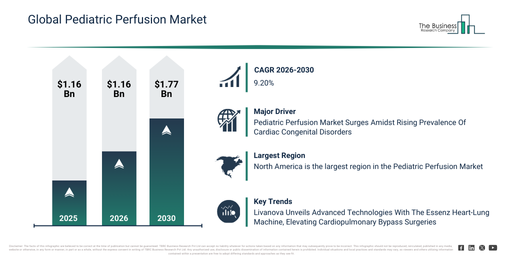
    The pediatric perfusion market size is anticipated to undergo significant expansion in the coming years, projected to reach $4.39 billion in 2030, demonstrating a compound annual growth rate (CAGR) of 9.2%. This growth throughout the forecast period is attributed to factors such as increasing investments in pediatric critical care infrastructure, a growing adoption of advanced monitoring technologies, a heightened focus on minimally invasive pediatric surgeries, the expanded use of ECMO in pediatric respiratory failure, and continuous innovation in biocompatible perfusion materials. Major trends expected during this period include the increasing adoption of miniaturized pediatric perfusion devices, rising demand for ECMO systems in neonatal care, the growing integration of real-time perfusion monitoring, the expansion of disposable and single-use perfusion components, and an enhanced focus on patient-specific perfusion solutions.

    Get A Free Sample Report With In-Depth Market Insights:

    https://thebusinessresearchcompany.com/sample_request?id=31231959&type=smp&name=Pediatric%20Perfusion%20Market%20Report%202026&utm_source=Blogs&utm_medium=Paid&utm_campaign=Oct_PR

    Pediatric Perfusion Market Demand Drivers Opening New Revenue Streams

    The rising incidence of cardiac congenital disorders is projected to boost the growth of the pediatric perfusion market. These conditions are defined as birth defects that can impact the development and function of a baby’s heart, consequently affecting blood flow from the heart to other vital organs. Pediatric perfusion is extensively utilized during cardiac surgeries to mend or correct structural heart defects; these procedures encompass ventricular septal defect (VSD) repair, atrial septal defect (ASD) repair, tetralogy of Fallot (TOF) repair, coarctation of the aorta repair, among others. For instance, in February 2023, the World Health Organization, a Switzerland-based specialized agency of the United Nations responsible for international public health, reported that congenital diseases are believed to cause 240,000 newborn deaths globally within 28 days of birth each year. Furthermore, according to a report published by the Centers for Disease Control (CDC) in January 2022, approximately 40,000 births in the United States annually are affected by a congenital cardiac abnormality, which accounts for about 1% of the global population. Therefore, the widespread occurrence of cardiac congenital disorders is a primary driver for the expansion of the pediatric perfusion market.

    Pediatric Perfusion Market Segment Analysis: What Are The Core Market Categories?

    The pediatric perfusion market covered in this report is segmented –

    1) By Product: Pediatric Cannulae, Pediatric Centrifugal Blood Pumps, Pediatric Arterial Filters, Hem concentrators, Pediatric Oxygenators

    2) By Procedure Type: Pediatric Cardiac Surgeries, Pediatric Organ Transplantation, Pediatric Extracorporeal Life Support (ECLS)

    3) By End-User: Hospitals (Tertiary and Pediatric Specialty Hospitals), Pediatric Cardiac and Transplant Centers, Critical Care and ECMO Centers, Academic and Research Medical Centers

    Subsegments:

    1) By Pediatric Cannulae: Venous Cannulae, Arterial Cannulae, Dual-Lumen Cannulae

    2) By Pediatric Centrifugal Blood Pumps: Continuous Flow Pumps, Pulsatile Pumps, Disposable Blood Pumps

    3) By Pediatric Arterial Filters: Inline Arterial Filters, Bubble Traps, Microaggregate Filters

    4) By Hemoconcentrators: Ultra-Filtration Hemoconcentrators, Continuous Renal Replacement Therapy (CRRT) Devices, Dialysis Hemoconcentrators

    5) By Pediatric Oxygenators: Membrane Oxygenators, Bubble Oxygenators, Extracorporeal Membrane Oxygenation (ECMO) Systems

    Pediatric Perfusion Market Trends Powering Strategic Industry Growth

    Leading companies within the pediatric perfusion market are innovating with advanced technologies, such as cardiopulmonary bypass (CPB) systems, to improve surgical safety and patient outcomes for infants and children. These cardiopulmonary bypass (CPB) systems are medical devices that temporarily take over the functions of the heart and lungs during surgery, ensuring circulation and oxygenation while the heart is stopped. For instance, in March 2023, LivaNova, a UK-based manufacturer of medical devices, introduced the Essenz Heart-Lung Machine in the US region after receiving 510 (k) clearance from the U.S. Food and Drug Administration. The Essenz Heart-Lung Machine, when used with LivaNova’s patient monitor, creates a perfusion system for cardiopulmonary bypass surgeries, effectively serving as the patient’s heart and lungs during open-heart operations. This system is designed for both adult and pediatric patients and features a mast-mounted setup to reduce visual clutter and maintain a tidy operational area. Its integrated cockpit offers a centralized view for device control and monitoring of all perfusion and patient data, in addition to interfacing with external operating room equipment and hospital information systems.

    Pediatric Perfusion Market Leading Companies And Competitive Benchmarking

    Major companies operating in the pediatric perfusion market are Medtronic plc, Terumo Cardiovascular Systems Corporation, LivaNova PLC, Eurosets, Getinge AB, Edwards Lifesciences Corporation, Smiths Medical Inc., Fresenius Kabi AG, Nipro Medical Corporation, Hemovent GmbH, Spectrum Medical Ltd., Braile Biomédica, Leviticus Cardio Ltd., B. Braun Melsungen AG, Baxter International Inc., ALung Technologies Inc., Novalung GmbH, Xenios AG, Xvivo Perfusion AB, Edwards Lifesciences Corporation

    View The Full Pediatric Perfusion Market Report:

    https://thebusinessresearchcompany.com/report/pediatric-perfusion-global-market-report?utm_source=Blogs&utm_medium=Paid&utm_campaign=Oct_PR

    Pediatric Perfusion Market Top Region By Revenue And Market Share

    North America was the largest region in the pediatric perfusion market in 2025. The regions covered in the pediatric perfusion market report are Asia-Pacific, South East Asia, Western Europe, Eastern Europe, North America, South America, Middle East, Africa.

    Reach Out To Our Team:

    The Business Research Company: https://www.thebusinessresearchcompany.com/

    Americas: +1 310-496-7795

    Asia: +44 7882 955267 & +91 8897263534

    Europe: +44 7882 955267

    Email us at: marketing@tbrc.info

    Follow us on:

    LinkedIn: https://in.linkedin.com/company/the-business-research-company

    YouTube: https://www.youtube.com/channel/UC24_fI0rV8cR5DxlCpgmyFQ

    Global Market Model: https://www.thebusinessresearchcompany.com/global-market-model
  • Pediatric Orthopedic Implants Market Growth Forecast Through 2030: Market Size And Trends In 2026

    Pediatric Orthopedic Implants Market Growth Forecast Through 2030: Market Size And Trends In 2026

    Backed by market attractiveness analysis, total addressable market sizing, company benchmarking matrices, interactive Excel dashboards, wider supply chain intelligence, emerging startup coverage, and detailed product-level insights, The Business Research Company’s 2026 market reports are designed to offer research that is more actionable and strategically valuable than ever.

    Pediatric Orthopedic Implants Market Value Analysis: What Growth Lies Ahead Over The Forecast Period?

    The pediatric orthopedic implants market has experienced significant expansion in recent years. This market is set to increase from $2 billion in 2025 to $2.21 billion in 2026, demonstrating a compound annual growth rate (CAGR) of 10.3%. Historically, this growth has been driven by the rising frequency of pediatric musculoskeletal disorders, the establishment of more pediatric orthopedic surgery programs, progress in implant material science, greater access to specialized pediatric medical services, and higher surgical success rates.

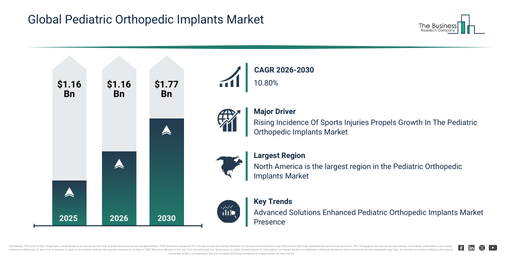
    The pediatric orthopedic implants market is poised for substantial expansion over the coming years, with projections indicating it will reach a value of $3.33 billion in 2030, exhibiting a compound annual growth rate (CAGR) of 10.8%. This projected growth during the forecast period is fueled by several factors, including the increasing availability of 3D-printed pediatric implants, a heightened emphasis on personalized orthopedic solutions, the growing adoption of advanced biomaterials, an increase in pediatric trauma and corrective surgeries, and the integration of digital surgical planning. Concurrently, significant trends for this period include the expanding use of growth-friendly orthopedic implants, a rising acceptance of custom pediatric implants, a surging demand for biocompatible materials, the proliferation of minimally invasive orthopedic procedures, and an enhanced focus on the long-term adaptability of implants.

    Get A Free Sample Report With In-Depth Market Insights:

    https://thebusinessresearchcompany.com/sample_request?id=42566785&type=smp&name=Pediatric%20Orthopedic%20Implants%20Market%20Report%202026&utm_source=Blogs&utm_medium=Paid&utm_campaign=Oct_PR

    Pediatric Orthopedic Implants Market Growth Backed By Core Demand Fundamentals

    The anticipated rise in sports injury occurrences is projected to advance the pediatric orthopedic implants market. Sports injuries are defined as physical harm or damage incurred during athletic pursuits or physical exertion. In cases of sports injuries, pediatric orthopedic implants serve to stabilize fractures or mend growth plate damage in children, offering structural reinforcement and facilitating optimal bone healing for the restoration of normal function. For example, data from Insideworldfootball, a UK-based web-based news-driven service, reported in October 2024 that sports injuries totaled 4,123 during the 2023-24 season, which represents a 4% increase over the 2022-23 period. Consequently, the growing frequency of sports injuries fuels the pediatric orthopedic implants market.

    Pediatric Orthopedic Implants Market Segment Breakdown: Which Categories Lead On Revenue?

    The pediatric orthopedic implants market covered in this report is segmented –

    1) By Type: Hip Implants, Spine Implants, Craniomaxillofacial Implants, Other Types

    2) By Application: Birth Deformities, Broken Bones, Spinal Deformities, Other Applications

    3) By End User: Hospitals, Pediatric Clinics, Other End Users

    Subsegments:

    1) By Hip Implants: Total Hip Replacement Implants, Partial Hip Replacement Implants, Hip Stabilization Implants

    2) By Spine Implants: Spinal Fusion Implants, Growth-Friendly Spinal Implants, Scoliosis Correction Implants

    3) By Craniomaxillofacial Implants: Cranial Implants, Facial Reconstruction Implants, Mandibular Implants

    4) By Other Types: Upper Extremity Implants, Lower Extremity Implants, Custom Pediatric Implants

    Pediatric Orthopedic Implants Market Growth Trends Reshaping The Competitive Landscape

    Major companies operating within the pediatric orthopedic implants market are concentrating on sophisticated solutions, such as patented modular quick-clip technology, to enhance surgical accuracy, reduce operative duration, and improve patient outcomes. This patented modular quick-clip technology represents a proprietary system designed to facilitate the rapid assembly or connection of modular components across various applications or devices. For example, in November 2023, OrthoPediatrics Corporation, a US-based medical devices company, unveiled the Mitchell Ponseti Plus Bar (MP+) as part of its specialized bracing portfolio for children afflicted with clubfoot. This orthopedic device is employed in the Ponseti method for clubfoot treatment, assisting in sustaining correction subsequent to initial casting and stretching. The MP+ was launched incorporating patented modular quick-clip technology and elastomer bumpers on the heels to broaden the width range for a customized fit.

    Pediatric Orthopedic Implants Market Industry Leaders And Competitive Landscape

    Major companies operating in the pediatric orthopedic implants market are Medtronic Plc., Stryker Corporation, B. Braun SE, Zimmer Biomet, Smith & Nephew Plc., Arthrex Inc., Globus Medical, Orthofix Medical Inc., OrthoPediatrics Corporation, FH Orthopedics, Wishbone Medical Inc., Acumed, Merete Medical GmbH, JRI Orthopaedics Limited, GPC Medical Ltd., Samay Surgical, Auxein Inc., Waldemar Link GmbH & Co. KG, Implantcast GmbH, Bioretec Ltd., Baumer S.A., Suhradam Ortho, Vast Ortho

    View The Full Pediatric Orthopedic Implants Market Report:

    https://thebusinessresearchcompany.com/report/pediatric-orthopedic-implants-global-market-report?utm_source=Blogs&utm_medium=Paid&utm_campaign=Oct_PR

    Pediatric Orthopedic Implants Market Regional Analysis And Top Geography

    North America was the largest region in the pediatric orthopedic implants market in 2025. The regions covered in the pediatric orthopedic implants market report are Asia-Pacific, South East Asia, Western Europe, Eastern Europe, North America, South America, Middle East, Africa.

    Reach Out To Our Team:

    The Business Research Company: https://www.thebusinessresearchcompany.com/

    Americas: +1 310-496-7795

    Asia: +44 7882 955267 & +91 8897263534

    Europe: +44 7882 955267

    Email us at: marketing@tbrc.info

    Follow us on:

    LinkedIn: https://in.linkedin.com/company/the-business-research-company

    YouTube: https://www.youtube.com/channel/UC24_fI0rV8cR5DxlCpgmyFQ

    Global Market Model: https://www.thebusinessresearchcompany.com/global-market-model

  • Pediatric Neurology Device Market Analysis: $2.8 Billion Market Size In 2026 And Future Growth Prospects

    Pediatric Neurology Device Market Analysis: $2.8 Billion Market Size In 2026 And Future Growth Prospects

    Featuring market attractiveness scoring, total addressable market sizing, company benchmarking matrices, interactive Excel dashboards, deeper supply chain intelligence, emerging startup tracking, and granular product-level insights, The Business Research Company’s 2026 market reports are built to deliver research that is both more actionable and more strategically valuable.

    Pediatric Neurology Device Market Size Forecast: How Big Could The Market Get By 2030?

    The pediatric neurology device market has demonstrated significant growth recently. It is anticipated to expand from $2.65 billion in 2025 to $2.8 billion in 2026, registering a compound annual growth rate (CAGR) of 5.5%. The historical growth of this market can be attributed to several factors, including an increase in pediatric neurological disorders and developmental conditions, greater availability of EEG and neurodiagnostic assessment services, the early adoption of neurosurgery and CSF shunt procedures in tertiary hospitals, the broadening of pediatric stroke and seizure management programs, and increased investment in pediatric neurology infrastructure within specialty centers.

    The pediatric neurology device market size is anticipated to experience robust growth over the next few years, with projections indicating it will expand to $3.45 billion in 2030 at a compound annual growth rate (CAGR) of 5.4%. This anticipated growth during the forecast period stems from several factors, including the increasing demand for neurostimulation and vagal nerve stimulation therapies in children, the rising utilization of interventional neurology devices for minimally invasive treatment, an increase in procedure volumes for hydrocephalus and oncology-related neurology care, expanding access to pediatric neurology services in emerging regions, and a rising focus on early diagnosis and long-term neurological outcome improvement. Major trends contributing to this growth in the forecast period involve the rising adoption of advanced neurostimulation and neuromodulation devices in pediatric neurology, increasing utilization of interventional neurology devices for complex pediatric stroke and vascular disorders, a growing preference for minimally invasive neurosurgical and navigation-assisted procedures, the expansion of pediatric cerebrospinal fluid management solutions for hydrocephalus care, and the increasing use of pediatric EEG monitoring and neurodiagnostic systems in clinical evaluation.

    Get A Free Sample Report With In-Depth Market Insights:

    https://thebusinessresearchcompany.com/sample_request?id=43299802&type=smp&name=Pediatric%20Neurology%20Device%20Market%20Report%202026&utm_source=Blogs&utm_medium=Paid&utm_campaign=Oct_PR

    Pediatric Neurology Device Market Growth Catalysts And Demand Drivers

    The increasing incidence of autism among children is anticipated to propel the expansion of the pediatric neurology devices market in the future. Autism is a developmental disorder that impacts an individual’s perception and interaction with others, creating challenges in communication and social engagement. This rise in autism diagnoses among children stems from enhanced awareness and more effective diagnostic methods, as a greater number of parents, educators, and healthcare providers identify early indicators, leading to more accurate diagnoses. Pediatric neurology devices are specifically designed to aid in the diagnosis and treatment of children with autism, simultaneously contributing to improvements in their quality of life, social competencies, and cognitive and behavioral challenges. For instance, data from March 2023, collected by the Centers for Disease Control and Prevention (CDC), a US-based government organization, across 11 communities within the Autism and Developmental Disabilities Monitoring (ADDM) Network in the US, revealed that one in 36 (2.8%) 8-year-old children had been identified with autism spectrum disorder (ASD). Consequently, the growing prevalence of autism in children is a key factor driving the growth of the pediatric neurology devices market.

    Pediatric Neurology Device Market Segmentation: How Does The Market Break Down By Category?

    The pediatric neurology device market covered in this report is segmented –

    1) By Product Type: Neurostimulation Devices, Neurosurgery Devices, Interventional Neurology Devices, Cerebrospinal Fluid Management Devices, Other Types

    2) By Condition: Stroke, Seizures, Hydrocephalus, Oncology, Other Conditions

    3) By Service And Treatment: Electroencephalogram, Intrathecal Baclofen Therapy, Neurological Evaluations, Vagal Nerve Stimulation, Other Services And Treatments

    4) By End User: Hospitals, Ambulatory Surgery Centers, Other End Users

    Subsegments:

    1) By Neurostimulation Devices: Deep Brain Stimulation (DBS) Devices, Transcranial Magnetic Stimulation (TMS) Devices, Vagus Nerve Stimulation (VNS) Devices, Spinal Cord Stimulation (SCS) Devices

    2) By Neurosurgery Devices: Craniotomy Instruments, Surgical Navigation Systems, Brain Tumor Resection Devices, Endoscopic Neurosurgical Devices, Intracranial Pressure Monitoring Systems

    3) By Interventional Neurology Devices: Catheters for Neurovascular Intervention, Neurovascular Stents, Embolization Devices, Thrombectomy Devices, Intracranial Aneurysm Coiling Systems

    4) By Cerebrospinal Fluid Management Devices: External Ventricular Drainage Systems, Lumbar Drainage Systems

    5) By Other Types: Pediatric EEG (Electroencephalogram) Devices, Pediatric MRI and CT Scanners, Pediatric Neurology Monitoring Systems, Neurodiagnostic Devices for Pediatrics

    Pediatric Neurology Device Market Trends Shaping Long-Term Demand

    Leading companies in the pediatric neurology sector are prioritizing technological advancements, such as AI-driven, point-of-care EEG systems, which facilitate the swift detection and diagnosis of electrographic seizures in children, thereby supporting prompt intervention and better neurological outcomes. These AI-powered point-of-care EEG systems incorporate real-time signal analysis, algorithmic seizure identification, and intuitive headband interfaces to furnish clinicians with practical information directly at the bedside, reducing treatment delays and mitigating potential brain injury in pediatric patients. For instance, in April 2025, Ceribell, Inc., a US-based medical technology company, secured FDA clearance for its Clarity algorithm, applicable to patients aged 1 year and older. This algorithm, when used with Ceribell EEG headbands, enables rapid bedside identification of non-convulsive seizures in children, encompassing the most extensive age range ever covered by a seizure detection technology, and draws upon EEG data from over 1,700 pediatric patients to provide trustworthy, real-time diagnostic aid for emergency and critical care settings.

    Pediatric Neurology Device Market Key Participants And Competitive Landscape

    Major companies operating in the pediatric neurology device market are Johnson & Johnson Co, Abbott Laboratories, Medtronic Plc, Siemens Healthineers AG, Koninklijke Philips NV, Stryker Corporation, GE HealthCare Technologies Inc., Boston Scientific Corporation, Masimo Corporation, KARL STORZ SE & Co. KG, Nihon Kohden Corporation, Integra LifeSciences Holdings Corp., Elekta AB, LivaNova PLC, Natus Medical Incorporated, Allengers Medical Systems Limited, Compumedics Limited, Cadwell Industries Inc., Spiegelberg GmbH & Co. KG

    View The Full Pediatric Neurology Device Market Report:

    https://thebusinessresearchcompany.com/report/pediatric-neurology-device-global-market-report?utm_source=Blogs&utm_medium=Paid&utm_campaign=Oct_PR

    Pediatric Neurology Device Market Geographic Analysis: Where Is Demand Rising Fastest?

    North America was the largest region in the pediatric neurology device market in 2025. The regions covered in the pediatric neurology device market report are Asia-Pacific, South East Asia, Western Europe, Eastern Europe, North America, South America, Middle East, Africa.

    Reach Out To Our Team:

    The Business Research Company: https://www.thebusinessresearchcompany.com/

    Americas: +1 310-496-7795

    Asia: +44 7882 955267 & +91 8897263534

    Europe: +44 7882 955267

    Email us at: marketing@tbrc.info

    Follow us on:

    LinkedIn: https://in.linkedin.com/company/the-business-research-company

    YouTube: https://www.youtube.com/channel/UC24_fI0rV8cR5DxlCpgmyFQ

    Global Market Model: https://www.thebusinessresearchcompany.com/global-market-model
  • Pediatric Medical Devices Market 2026 Market Size And Growth Forecast: Key Trends To Watch

    Pediatric Medical Devices Market 2026 Market Size And Growth Forecast: Key Trends To Watch

    Built to provide research that’s more actionable and strategically valuable, The Business Research Company’s 2026 market reports include market attractiveness analysis, total addressable market sizing, company benchmarking matrices, interactive Excel dashboards, broader supply chain intelligence, emerging startup tracking, and in-depth product insights.

    Pediatric Medical Devices Market Revenue Outlook: What CAGR Lies Ahead Through 2030?

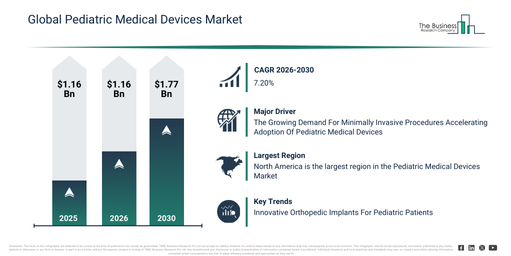
    The pediatric medical devices market has shown significant expansion in recent years. Its value is expected to rise from $36.42 billion in 2025 to $39.36 billion in 2026, achieving a compound annual growth rate (CAGR) of 8.1%. This historical growth can be attributed to several factors including the expansion of pediatric healthcare services, an increase in the prevalence of chronic pediatric conditions, improvements in neonatal survival rates, the development of specialized children’s hospitals, and a greater regulatory focus on the safety of pediatric devices.

    The pediatric medical devices market is anticipated to experience substantial expansion over the upcoming years. This market is projected to reach $51.97 billion in 2030, exhibiting a compound annual growth rate (CAGR) of 7.2%. The expansion during this forecast period is largely due to factors such as the increasing demand for interconnected pediatric monitoring devices, greater investments in neonatal intensive care units, the proliferation of home-based pediatric care options, the wider adoption of AI-powered diagnostics, and a heightened emphasis on individualized pediatric treatment approaches. Key trends anticipated during the forecast span encompass the escalating development of designs tailored specifically for children’s devices, the increasing incorporation of intelligent monitoring functionalities into pediatric equipment, the rising prevalence of portable pediatric diagnostic tools, the broadening of neonatal and infant care technologies, and a heightened commitment to ensuring patient safety and comfort.

    Get A Free Sample Report With In-Depth Market Insights:

    https://thebusinessresearchcompany.com/sample_request?id=34257520&type=smp&name=Pediatric%20Medical%20Devices%20Market%20Report%202026&utm_source=Blogs&utm_medium=Paid&utm_campaign=Oct_PR

    Pediatric Medical Devices Market Opportunity Drivers: What’s Unlocking New Revenue Potential?

    The future expansion of the pediatric medical devices market is anticipated to be significantly propelled by the increasing demand for minimally invasive pediatric surgical procedures. These procedures for children involve the use of small incisions or natural body openings, along with specialized instruments and imaging technology, to diagnose, treat, or manage pediatric health conditions, offering less trauma and quicker recovery compared to traditional open surgeries. The rising popularity of minimally invasive pediatric surgical procedures is fueled by ongoing advancements in technology, which facilitate safer and more precise interventions with reduced post-operative complications. Pediatric medical devices are essential in these minimally invasive settings, enabling precise access, clear visualization, and careful manipulation of pediatric anatomy through small incisions, thereby assisting in the safe and effective treatment of pediatric conditions while minimizing trauma to surrounding tissues. For example, in June 2024, data from the American Society of Plastic Surgeons, a US-based non-profit organization, indicated that minimally invasive procedures saw a 7% increase in 2023, which was 2% higher than the growth rate for surgical procedures. Hand surgeries, covering conditions like carpal tunnel, arthritis, and trigger finger, collectively reached 207,887 procedures, reflecting a 2% rise from 2022. This demonstrates that the expanding preference for minimally invasive procedures is a key driver for the growth of the pediatric medical devices market.

    Pediatric Medical Devices Market Segment Trends And Revenue Contributors

    The pediatric medical devices market covered in this report is segmented –

    1) By Product: Cardiology Devices, In Vitro Diagnostic (IVD) Devices, Diagnostic Imaging Devices, Anesthesia And Respiratory Care Devices, Neonatal Intensive Care Unit (ICU) Devices, Other Products

    2) By Age Group: Infants, Children, Adolescents

    3) By End-User: Hospitals, Diagnostic Laboratories, Ambulatory Surgical Centers, Other End-Users

    Subsegments:

    1) By Cardiology Devices: Pediatric ECG Machines, Pediatric Defibrillators, Pediatric Pacemakers, Pediatric Stethoscopes

    2) By In Vitro Diagnostic (IVD) Devices: Blood Glucose Monitoring Devices, Point-Of-Care Testing Devices, Molecular Diagnostic Devices, Immunoassay Analyzers

    3) By Diagnostic Imaging Devices: Pediatric Ultrasound Machines, Pediatric X-Ray Machines, Pediatric MRI Machines, Pediatric CT Scanners

    4) By Anesthesia And Respiratory Care Devices: Pediatric Ventilators, Pediatric Anesthesia Machines, CPAP Devices For Pediatrics, Oxygen Concentrators For Pediatrics

    5) By Neonatal Intensive Care Unit (ICU) Devices: Neonatal Incubators, Neonatal Ventilators, Neonatal Monitoring Devices, Phototherapy Devices

    6) By Other Products: Pediatric Surgical Instruments, Pediatric Infusion Pumps, Pediatric Monitoring Devices, Pediatric Rehabilitation Devices

    Pediatric Medical Devices Market Innovation Trends Shaping Future Development

    Leading companies in the pediatric medical devices market are developing orthopedic implants to address the distinct healthcare requirements of young patients, covering conditions from musculoskeletal issues to congenital abnormalities. Orthopedic implants are medical devices used to substitute or reinforce impaired or absent bone or joint structures within the musculoskeletal system. For instance, in March 2024, OrthoPediatrics Corporation, a US-based medical device company, launched the RESPONSE Rib and Pelvic Fixation system, tailored for pediatric patients with Early Onset Scoliosis (EOS). This extensive system comprises implants, instruments, and connecting devices, providing surgeons with a flexible solution for rib and pelvic fixation, including options for patients susceptible to Thoracic Insufficiency Syndrome. With features such as a variety of implant options, streamlined designs, and secure locking mechanisms, this system improves both accuracy and adaptability in managing EOS cases.

    Pediatric Medical Devices Market Top Companies Driving Competitive Growth

    Major companies operating in the pediatric medical devices market are Cardinal Health Inc., Johnson And Johnson, Siemens AG, F. Hoffmann-La Roche Ltd., Abbott Laboratories, Medtronic plc, Siemens Healthineers, Koninklijke Philips N.V., Becton Dickinson And Company, GE HealthCare Technologies, Baxter International Inc., Boston Scientific Corporation, Zimmer Biomet Holdings Inc., Olympus Corporation, Terumo Corporation, Smith And Nephew plc, Hamilton Medical, Ningbo David Medical Device Co. Ltd, Phoenix Medical Systems Pvt Ltd, Fritz Stephan GmbH, Atom Medical Corporation, Novonate Inc.

    View The Full Pediatric Medical Devices Market Report:

    https://thebusinessresearchcompany.com/report/pediatric-medical-devices-global-market-report?utm_source=Blogs&utm_medium=Paid&utm_campaign=Oct_PR

    Pediatric Medical Devices Market Global Footprint: Which Region Leads The Market?

    North America was the largest region in the pediatric medical devices market in 2025. Asia-Pacific is expected to be the fastest-growing region in the forecast period. The regions covered in the pediatric medical devices market report are Asia-Pacific, South East Asia, Western Europe, Eastern Europe, North America, South America, Middle East, Africa.

    Reach Out To Our Team:

    The Business Research Company: https://www.thebusinessresearchcompany.com/

    Americas: +1 310-496-7795

    Asia: +44 7882 955267 & +91 8897263534

    Europe: +44 7882 955267

    Email us at: marketing@tbrc.info

    Follow us on:

    LinkedIn: https://in.linkedin.com/company/the-business-research-company

    YouTube: https://www.youtube.com/channel/UC24_fI0rV8cR5DxlCpgmyFQ

    Global Market Model: https://www.thebusinessresearchcompany.com/global-market-model