Blog

  • Photochromic Lenses Market Forecast Highlights A $9.48 Billion Opportunity For Industry Participants

    Photochromic Lenses Market Forecast Highlights A $9.48 Billion Opportunity For Industry Participants

    Built to provide research that’s more actionable and strategically valuable, The Business Research Company’s 2026 market reports include market attractiveness analysis, total addressable market sizing, company benchmarking matrices, interactive Excel dashboards, broader supply chain intelligence, emerging startup tracking, and in-depth product insights.

    Photochromic Lenses Market CAGR Outlook And Future Development

    The photochromic lenses market has shown significant expansion in recent years. It is projected to increase from $6.98 billion in 2025 to $7.46 billion in 2026, achieving a compound annual growth rate (CAGR) of 7.0%. This historical growth can be attributed to factors such as the rising incidence of vision correction requirements, enhanced consumer understanding of UV eye protection, the proliferation of optical retail networks, an increase in the uptake of prescription eyewear, and advancements in lens material science.

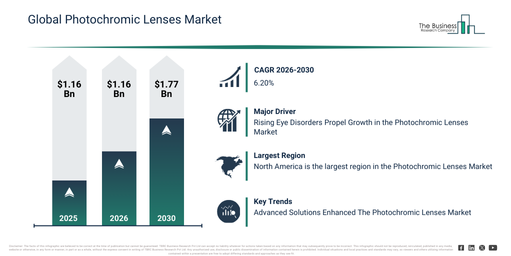
    The photochromic lenses market is anticipated to experience robust expansion over the next few years, with its valuation expected to reach $9.48 billion in 2030, demonstrating a compound annual growth rate (CAGR) of 6.2%. This projected growth throughout the forecast period is fueled by several factors, including an increasing need for adaptive eyewear options, a rising preference for premium optical goods, the broadening of online eyewear sales channels, a heightened emphasis on sustainable lens components, and ongoing innovations in photochromic technologies. Significant trends identified for this period encompass advancements in materials that respond more quickly to light, an escalating demand for coatings that are both scratch-resistant and durable, a greater adoption of lightweight, high-index lenses, an intensified focus on aesthetically pleasing and stylish designs, and the expansion of eyewear offerings with integrated UV protection.

    Get A Free Sample Report With In-Depth Market Insights:

    https://thebusinessresearchcompany.com/sample_request?id=10951654&type=smp&name=Photochromic%20Lenses%20Market%20Report%202026&utm_source=Blogs&utm_medium=Paid&utm_campaign=Oct_PR

    Photochromic Lenses Market Growth Drivers: What’s Behind The Acceleration?

    The growing incidence of eye-related conditions is anticipated to drive the expansion of the photochromic lenses market in the future. Eye-related disorders encompass various conditions impacting vision and general eye well-being, including myopia, cataracts, glaucoma, and age-related macular degeneration. This surge in eye conditions stems from factors such as aging populations, increased screen usage, environmental pollution, inadequate diet, and higher prevalence of chronic illnesses like diabetes. Photochromic lenses assist in reducing eye fatigue and offering protection from UV rays, thereby enhancing comfort and visual well-being for individuals experiencing these disorders. For instance, data from the UK government’s vision health profile indicated that in July 2025, approximately 3.7 million individuals in England had 9.8 million hospital outpatient vision appointments in the financial year ending 2024, with a notable rise in cataract surgery and injection therapy procedures. Consequently, the increasing need for professional eye-care services strengthens the market for adaptive optical solutions, such as photochromic lenses.

    Photochromic Lenses Market Segment Analysis: What Are The Core Market Categories?

    The photochromic lenses market covered in this report is segmented –

    1) By Material: Glass, Polycarbonate, Plastic, Other Materials

    2) By Technology: Ultra-Violet (UV) And Visible Light, Imbibing And Trans-bonding, In Mass, Other Technologies

    3) By Distribution Channel: Online, Optical Chains, Independent Eye Care Professionals (ECPs)

    4) By Application: Corrective, Preventive

    Subsegments:

    1) By Glass: Standard Glass Photochromic Lenses, High-Index Glass Photochromic Lenses, Ultra-Thin Glass Photochromic Lenses, Glass Lenses With Scratch-Resistant Coatings, Glass Lenses For Prescription Eyewear

    2) By Polycarbonate: Standard Polycarbonate Photochromic Lenses, High-Impact Polycarbonate Photochromic Lenses, Polycarbonate Lenses For Sports Eyewear, Polycarbonate Lenses With UV Protection, Polycarbonate Lenses For Children’s Eyewear

    3) By Plastic: Standard Plastic Photochromic Lenses (CR-39), High-Index Plastic Photochromic Lenses, Lightweight Plastic Photochromic Lenses, Plastic Lenses With Anti-Reflective Coatings, Plastic Lenses For Fashion Eyewear

    4) By Other Materials: Trivex Photochromic Lenses, Acrylic Photochromic Lenses, Biodegradable Plastic Photochromic Lenses, Polyurethane Photochromic Lenses, Photochromic Lenses Made From Recycled Materials

    Photochromic Lenses Market Trends: What’s Defining The Industry’s Next Phase?

    Leading companies operating within the photochromic lenses market are dedicated to developing advanced photochromic lenses to improve the user experience with enhanced clarity, faster adjustment times, and superior UV protection. An innovative photochromic lens is an optical device that automatically modifies its tint in response to changing light conditions, offering elevated visual comfort and safeguarding. For instance, in May 2024, LensCrafters, a US-based optical company, introduced Transitions GEN S. This novel product provides ultra-responsive light adaptation, a broad spectrum of vibrant colors at various darkness intensities, and augmented UV and blue-violet light defense. These characteristics aim to fulfill consumers’ requirements for smooth visual changes and strong eye protection.

    Photochromic Lenses Market Competitive Landscape: Who Leads The Industry?

    Major companies operating in the photochromic lenses market are EssilorLuxottica SA, Mitsui Chemicals Inc., Carl Zeiss AG, HOYA Corporation, Rodenstock GmbH, Shanghai Conant Optics Co. Ltd., Younger Optics Inc., Vision Ease LP, Signet Armorlite Inc., SEIKO Optical Europe GmbH, S.T International Ltd, Optiswiss AG, GKB Optic Technologies Pvt. Ltd., Nikon Lenswear, BBGR Ltd, Norville Opticians Co, Tokai Optical Co. Ltd., Shamir Optical Industry Ltd., Indo Optical Company, Essilor India Pvt. Ltd.

    View The Full Photochromic Lenses Market Report:

    https://thebusinessresearchcompany.com/report/photochromic-lenses-global-market-report?utm_source=Blogs&utm_medium=Paid&utm_campaign=Oct_PR

    Photochromic Lenses Market Geographic Landscape: Which Region Leads Industry Growth?

    North America was the largest region in the photochromic lenses market in 2025. Asia-Pacific is expected to be the fastest-growing region in the forecast period. The regions covered in the photochromic lenses market report are Asia-Pacific, South East Asia, Western Europe, Eastern Europe, North America, South America, Middle East, Africa.

    Reach Out To Our Team:

    The Business Research Company: https://www.thebusinessresearchcompany.com/

    Americas: +1 310-496-7795

    Asia: +44 7882 955267 & +91 8897263534

    Europe: +44 7882 955267

    Email us at: marketing@tbrc.info

    Follow us on:

    LinkedIn: https://in.linkedin.com/company/the-business-research-company

    YouTube: https://www.youtube.com/channel/UC24_fI0rV8cR5DxlCpgmyFQ

    Global Market Model: https://www.thebusinessresearchcompany.com/global-market-model
  • Pharmacy Repackaging Systems Market Analysis: How The Industry Is Evolving Toward A $3.69 Billion Future

    Pharmacy Repackaging Systems Market Analysis: How The Industry Is Evolving Toward A $3.69 Billion Future

    Backed by market attractiveness analysis, total addressable market sizing, company benchmarking matrices, interactive Excel dashboards, wider supply chain intelligence, emerging startup coverage, and detailed product-level insights, The Business Research Company’s 2026 market reports are designed to offer research that is more actionable and strategically valuable than ever.

    Pharmacy Repackaging Systems Market Set To Climb From $2.59 Billion In 2026 To $3.69 Billion By 2030

    The market size for pharmacy repackaging systems has experienced strong growth in recent years. It is anticipated to expand from $2.36 billion in 2025 to $2.59 billion in 2026, registering a compound annual growth rate (CAGR) of 9.3%. This historic growth can be attributed to several factors including the increase in hospital pharmacy automation, a rise in initiatives aimed at preventing medication errors, the expansion of long-term care pharmacies, growing prescription volumes, and enhancements in pharmaceutical packaging technologies.

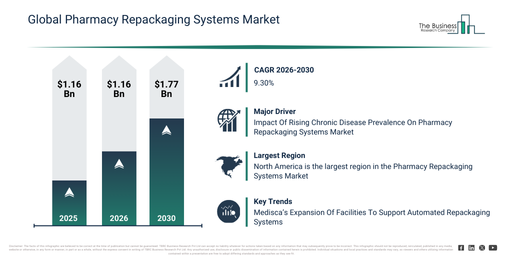
    The pharmacy repackaging systems market is projected to experience robust expansion over the coming years. This sector is anticipated to reach $3.69 billion by 2030, demonstrating a compound annual growth rate (CAGR) of 9.3%. Several factors contribute to this expansion during the forecast period, including the greater uptake of smart pharmacy systems, an increased emphasis on traceability and compliance, the broadening of mail-order pharmacy services, a rising need for high-throughput repackaging, and augmented investments in pharmacy automation. Key developments expected in the forecast timeframe encompass the wider implementation of automated unit dose packaging systems, an escalating requirement for blister and pouch packaging automation, the evolving integration of barcode and tracking technologies, the enlargement of high-speed repackaging options, and a heightened commitment to medication safety and precision.

    Get A Free Sample Report With In-Depth Market Insights:

    https://thebusinessresearchcompany.com/sample_request?id=65899438&type=smp&name=Pharmacy%20Repackaging%20Systems%20Market%20Report%202026&utm_source=Blogs&utm_medium=Paid&utm_campaign=Oct_PR

    Pharmacy Repackaging Systems Market Growth Factors Behind Sustained Expansion

    The increasing incidence of chronic diseases is projected to stimulate the expansion of the pharmacy repackaging systems market moving forward. Chronic diseases are defined as long-term medical ailments that typically progress and persist, often enduring for a year or more and necessitating continuous medical care or limiting daily activities. This growing prevalence of chronic diseases is mainly attributable to an aging population, lifestyle shifts such as poor diet and insufficient physical activity, heightened urbanization, and related environmental elements. Pharmacy repackaging systems play a vital role in managing chronic conditions by facilitating accurate medication handling, enhancing patient adherence, and improving safety through the efficient dispensing of patient-specific doses. For instance, in June 2024, data from the National Health Service, a UK-based government department, indicated that 3,615,330 individuals registered with a general practitioner (GP) had received a diagnosis of non-diabetic hyperglycemia or pre-diabetes (a state with elevated blood sugar levels, not severe enough to be classified as diabetes) in 2023. This figure marked an 18% increase from 3,065,825 cases recorded in 2022. Thus, the escalating prevalence of chronic diseases is a key driver for the growth of the pharmacy repackaging systems market.

    Pharmacy Repackaging Systems Market Segment Breakdown: Which Categories Lead On Revenue?

    The pharmacy repackaging systems market covered in this report is segmented –

    1) By Type: Blister Card Packaging Systems, Pouch Packaging Automation Systems, Liquid Medication Packaging Systems, Bottle Filling Automation Systems

    2) By Dosage Type: Unit Dose Packaging, Multiple Unit Packaging

    3) By End Use: Retail Or Community Pharmacies, Hospital Pharmacies, Long-Term Care (LTC) Pharmacies, Mail Order Pharmacies

    Subsegments:

    1) By Blister Card Packaging Systems: Manual Blister Card Packaging, Semi-Automatic Blister Card Systems, Fully Automatic Blister Packaging Systems

    2) By Pouch Packaging Automation Systems: Single-Use Pouch Packaging, Multi-Dose Pouch Systems, Automatic Pouch Sealing and Filling Systems

    3) By Liquid Medication Packaging Systems: Vial Filling Systems, Syringe and Ampoule Filling Systems, Bottle Liquid Filling and Capping Systems, Bottle Filling Automation Systems

    4) By Bottle Filling Systems: Single-Stage Bottle Filling Systems, Multi-Stage Filling and Capping Systems, High-Speed Bottle Filling Systems

    Pharmacy Repackaging Systems Market Industry Trends Fueling Future Revenue Growth

    Major companies operating in the pharmacy repackaging systems market are increasingly focusing on expanding their facilities by incorporating automated repackaging systems. This expansion aims to satisfy the rising global demand for accurate medication management within healthcare facilities. Automated repackaging systems are sophisticated machines built to efficiently and precisely package medications into various formats, thereby reducing human errors and improving productivity. For example, in June 2024, MEDISCA Plattsburgh, a US-based pharmaceutical compounding firm, launched a new pharmaceutical repackaging facility to address the increasing need for personalized medicine. This new site strengthens Medisca’s ability to offer customized medication repackaging services, featuring state-of-the-art equipment for exact dosage measurement and advanced labeling technology for precision and compliance. It will allow Medisca to supply high-quality, tailored pharmaceutical solutions to its worldwide customer base, ensuring prompt delivery and strict adherence to regulatory standards. The facility itself is designed with bespoke, ISO-rated production rooms and advanced warehouse management systems, facilitating end-to-end traceability and guaranteeing both product excellence and personnel safety.

    Pharmacy Repackaging Systems Market Company Landscape And Competitive Strategy

    Major companies operating in the pharmacy repackaging systems market are McKesson Corporation, Becton Dickinson And Company, Baxter International Inc., Syntegon Technology GmbH, Omnicell Inc., ACG Worldwide, Swisslog Holding Ltd., ScriptPro LLC, Capsa Healthcare, ARxIUM, Yuyama Co. Ltd., Kirby Lester, RxSafe LLC, Deenova S.r.l., Noritsu Pharmacy Automation, Pearson Medical Technologies, Takazono Corporation, JVM Co. Ltd., TCGRx, Parata Systems

    View The Full Pharmacy Repackaging Systems Market Report:

    https://thebusinessresearchcompany.com/report/pharmacy-repackaging-systems-global-market-report?utm_source=Blogs&utm_medium=Paid&utm_campaign=Oct_PR

    Pharmacy Repackaging Systems Market Largest Region: Which Geography Holds The Biggest Share?

    North America was the largest region in the pharmacy repackaging systems market in 2025. Asia-Pacific is expected to be the fastest-growing region in the forecast period. The regions covered in the pharmacy repackaging systems market report are Asia-Pacific, South East Asia, Western Europe, Eastern Europe, North America, South America, Middle East, Africa.

    Reach Out To Our Team:

    The Business Research Company: https://www.thebusinessresearchcompany.com/

    Americas: +1 310-496-7795

    Asia: +44 7882 955267 & +91 8897263534

    Europe: +44 7882 955267

    Email us at: marketing@tbrc.info

    Follow us on:

    LinkedIn: https://in.linkedin.com/company/the-business-research-company

    YouTube: https://www.youtube.com/channel/UC24_fI0rV8cR5DxlCpgmyFQ

    Global Market Model: https://www.thebusinessresearchcompany.com/global-market-model
  • Pharmacy Automation Devices Market Outlook Through 2030: Understanding The Growth Opportunity

    Pharmacy Automation Devices Market Outlook Through 2030: Understanding The Growth Opportunity

    Featuring market attractiveness scoring, total addressable market sizing, company benchmarking matrices, interactive Excel dashboards, deeper supply chain intelligence, emerging startup tracking, and granular product-level insights, The Business Research Company’s 2026 market reports are built to deliver research that is both more actionable and more strategically valuable.

    Pharmacy Automation Devices Market Forecast: Value Set To Climb From $7.31 Billion To $10.73 Billion

    The market size for pharmacy automation devices has seen rapid expansion in recent years. It is forecast to increase from $6.62 billion in 2025 to $7.31 billion in 2026, registering a compound annual growth rate (CAGR) of 10.3%. This historical growth can be attributed to elements like increasing prescription volumes, a shortage of pharmacy workforce, the expansion of hospital pharmacy infrastructure, the adoption of automated dispensing cabinets, and a rising focus on patient safety.

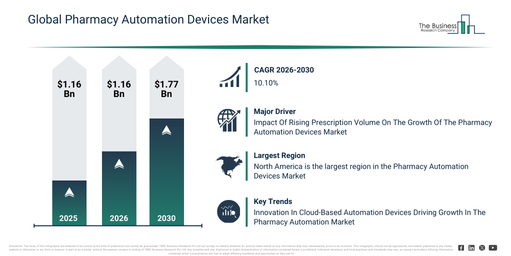
    The pharmacy automation devices market is projected for substantial expansion in the upcoming years. This market is set to reach a valuation of $10.73 billion by 2030, exhibiting a compound annual growth rate (CAGR) of 10.1%. This anticipated growth during the forecast timeframe is primarily driven by factors such as a heightened demand for high-volume pharmacy operations, the growing embrace of centralized fill pharmacies, the expanding reach of mail-order and specialty pharmacies, increasing capital allocation towards healthcare automation, and an intensified regulatory emphasis on medication precision. Key developments expected within this period encompass the greater implementation of robotic medication dispensing systems, an increasing uptake of automated packaging and labeling solutions, the expanding integration of pharmacy information systems, broader deployment of centralized pharmacy automation, and a sharpened focus on minimizing medication errors.

    Get A Free Sample Report With In-Depth Market Insights:

    https://thebusinessresearchcompany.com/sample_request?id=74829263&type=smp&name=Pharmacy%20Automation%20Devices%20Market%20Report%202026&utm_source=Blogs&utm_medium=Paid&utm_campaign=Oct_PR

    Pharmacy Automation Devices Market Demand Drivers Opening New Revenue Streams

    The increasing volume of prescriptions is anticipated to drive the expansion of the pharmacy automation devices market going forward. This rise in prescription volume is attributed to an aging population, a higher incidence of chronic diseases, and improved access to healthcare services. Pharmacy automation devices enhance prescription processing by reducing errors and boosting efficiency to manage these growing volumes. For instance, in July 2024, according to the Australian Institute of Health and Welfare, an Australia-based government agency, PBS prescriptions were dispensed to 17.8 million Australians, representing 67% of the population in 2022–23. Prescription dispensing rates were observed to increase with age, with the lowest rates among individuals aged 0–14 (184 prescriptions per 100 people in this age group), and the highest rates in those aged 85 and older (6,031 prescriptions per 100 people in this age group). Therefore, the expanding prescription volume is propelling the pharmacy automation devices market.

    Pharmacy Automation Devices Market Segmentation: How Does The Market Break Down By Category?

    The pharmacy automation devices market covered in this report is segmented –

    1) By Product: Medication Dispensing Systems, Packaging And Labeling Systems, Storage And Retrieval Systems, Automated Medication Compounding Systems, Tabletop Tablet Counters

    2) By Component: Hardware, Software, Services

    3) By End-User: Retail Pharmacy, Inpatient Pharmacies, Outpatient Pharmacies, Pharmacy Benefit Management Organizations And Mail-Order Pharmacies

    Subsegments:

    1) By Medication Dispensing Systems: Automated Dispensing Machines, Robotic Dispensing Systems

    2) By Packaging And Labeling Systems: Automated Packaging Machines, Labeling Systems For Prescription Medications

    3) By Storage And Retrieval Systems: Automated Storage Systems, Carousel Storage Systems

    4) By Automated Medication Compounding Systems: IV Compounding Systems, Oral Compounding Systems

    5) By Tabletop Tablet Counters: Electronic Tablet Counters, Manual Tablet Counters

    Pharmacy Automation Devices Market Trends Powering Strategic Industry Growth

    Leading companies within the pharmacy automation devices market are introducing innovative products, including cloud-based automation devices, to secure a competitive advantage. Such cloud-based automation devices are systems that leverage cloud computing for remote data management, storage, and processing, facilitating automation tasks independently of on-site hardware. An example is iA, a US-based provider of robotic and automation solutions, which in March 2023 introduced advanced fulfillment solutions to address the increasing demands within the pharmacy industry. Among these new offerings is Shared Central Fulfillment, a system employing cloud-based technology that enables pharmacy fulfillment centers to cater to numerous pharmacy partners from a unified location. This methodology integrates iA’s NEXiA fulfillment and NEXiA cloud software with sophisticated automation and robotics, thereby enhancing the efficiency of prescription fulfillment processes for pharmacies regardless of their size.

    Pharmacy Automation Devices Market Key Players Shaping Industry Direction

    Major companies operating in the pharmacy automation devices market are Omnicell Inc., ARxIUM Inc., ScriptPro LLC, Capsa Healthcare, Swisslog Healthcare, RxSafe LLC, Yuyama Co Ltd., Parata Systems LLC, Aesynt Incorporated, Talyst LLC, Kirby Lester, TouchPoint Medical, Health Robotics Srl, Innovation PharmaAssist Robotics Pvt Ltd., R/X Automation Solutions Inc., Pearson Medical Technologies LLC, Becton Dickinson & Company, Baxter International Inc., McKesson Corporation, AmerisourceBergen Corp, Danaher Corporation, KUKA AG

    View The Full Pharmacy Automation Devices Market Report:

    https://thebusinessresearchcompany.com/report/pharmacy-automation-devices-global-market-report?utm_source=Blogs&utm_medium=Paid&utm_campaign=Oct_PR

    Pharmacy Automation Devices Market Regional Analysis: Which Geography Leads On Revenue?

    North America was the largest region in the pharmacy automation devices market in 2025. The regions covered in the pharmacy automation devices market report are Asia-Pacific, South East Asia, Western Europe, Eastern Europe, North America, South America, Middle East, Africa.

    Reach Out To Our Team:

    The Business Research Company: https://www.thebusinessresearchcompany.com/

    Americas: +1 310-496-7795

    Asia: +44 7882 955267 & +91 8897263534

    Europe: +44 7882 955267

    Email us at: marketing@tbrc.info

    Follow us on:

    LinkedIn: https://in.linkedin.com/company/the-business-research-company

    YouTube: https://www.youtube.com/channel/UC24_fI0rV8cR5DxlCpgmyFQ

    Global Market Model: https://www.thebusinessresearchcompany.com/global-market-model
  • Pharmacogenomics Market Growth Potential: What The Latest Forecast Reveals

    Pharmacogenomics Market Growth Potential: What The Latest Forecast Reveals

    Built to provide research that’s more actionable and strategically valuable, The Business Research Company’s 2026 market reports include market attractiveness analysis, total addressable market sizing, company benchmarking matrices, interactive Excel dashboards, broader supply chain intelligence, emerging startup tracking, and in-depth product insights.

    Pharmacogenomics Market Revenue Growth On Track For A 10.2% CAGR Through 2030

    The pharmacogenomics market has seen significant expansion in recent years. This market is set to increase from $9.84 billion in 2025 to $10.85 billion in 2026, demonstrating a compound annual growth rate (CAGR) of 10.3%. Historically, this expansion has been driven by factors such as increasing genomic research activities, the development of targeted therapies, a rising prevalence of chronic diseases, advancements in sequencing technologies, and the growing availability of genetic testing services.

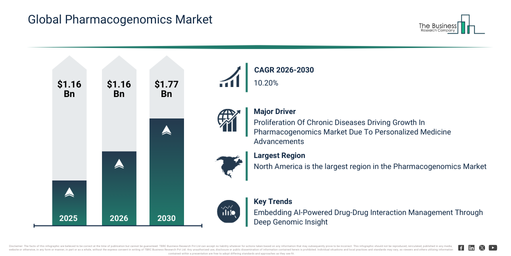
    The pharmacogenomics market is poised for substantial expansion over the next few years. It is projected to attain a value of $15.98 billion in 2030, growing at a compound annual growth rate (CAGR) of 10.2%. The anticipated surge throughout the forecast period stems from escalating investments in precision medicine programs, the increasing uptake of AI-driven genomic analysis, the broadened application of pharmacogenomics in oncology and cardiology, a heightened focus on individualized drug development, and continuous advancements in bioinformatics platforms. Noteworthy trends for this period encompass a greater adoption of personalized medicine approaches, the rising utilization of genetic testing in drug selection, deeper integration of pharmacogenomic data into clinical workflows, the expansion of companion diagnostics, and an enhanced emphasis on precision therapeutics.

    Get A Free Sample Report With In-Depth Market Insights:

    https://thebusinessresearchcompany.com/sample_request?id=65353591&type=smp&name=Pharmacogenomics%20Market%20Report%202026&utm_source=Blogs&utm_medium=Paid&utm_campaign=Oct_PR

    Pharmacogenomics Market Growth Backed By Core Demand Fundamentals

    The expansion of the pharmacogenomics market is anticipated to be driven by the rising incidence of chronic diseases. These are medical conditions that endure for prolonged durations, frequently throughout an individual’s life. The surge in chronic diseases can be attributed to the global population’s extended average lifespan, alongside the prevalent embrace of lifestyle risk factors like inactive habits, inadequate nutrition, and smoking. Pharmacogenomics provides a tailored treatment strategy for chronic ailments, considering unique genetic differences that influence how individuals react to medication. As an illustration, for the year 2025, the International Diabetes Federation, a Belgium-based health organization, noted that in 2024, around 589 million adults aged 20-79 were living with diabetes. This figure is forecasted to climb to 853 million by 2050, with over 4 in 5 diabetic adults residing in low and middle income countries. Consequently, the expanding prevalence of chronic diseases is fueling the development of the pharmacogenomics market.

    Pharmacogenomics Market Segment Trends And Revenue Contributors

    The pharmacogenomics market covered in this report is segmented –

    1) By Technology: Next Generation Sequencing, Polymerase Chain Reaction, Gel Electrophoresis, Mass Spectrometry, Microarray, Other Technologies

    2) By Application: Neurological Diseases, Infectious Diseases, Oncology, Cardiovascular Diseases, Pain Management, Other Applications

    3) By End User: Hospitals and Clinics, Research Institutions, Academic Institutes, Other End Users

    Subsegments:

    1) By Next Generation Sequencing (NGS): Whole Genome Sequencing, Targeted Sequencing, Exome Sequencing

    2) By Polymerase Chain Reaction (PCR): Quantitative PCR (qPCR), Reverse Transcription PCR (RT-PCR), Digital PCR

    3) By Gel Electrophoresis: Agarose Gel Electrophoresis, Polyacrylamide Gel Electrophoresis, Capillary Gel Electrophoresis

    4) By Mass Spectrometry: LC-MS/MS (Liquid Chromatography-Tandem Mass Spectrometry), MALDI-TOF MS (Matrix-Assisted Laser Desorption/Ionization Time of Flight), HRMS (High-Resolution Mass Spectrometry)

    5) By Microarray: SNP Microarrays, Expression Microarrays, Comparative Genomic Hybridization (CGH) Arrays

    6) By Other Technologies: Sanger Sequencing, CRISPR-Based Technologies, Bioinformatics Tools

    Pharmacogenomics Market Growth Trends Reshaping The Competitive Landscape

    Key companies active in the pharmacogenomics market are increasingly prioritizing artificial intelligence (AI) driven systems that manage drug-drug interactions (DDIs) at the genomic level, thereby enhancing medication safety, lessening adverse reactions, and enabling highly tailored prescribing. AI-powered pharmacogenetics engines are advanced digital systems that utilize artificial intelligence to analyze an individual’s genetic profile and forecast their response to specific medications. For example, in December 2024, PGxAI, a US-based artificial intelligence (AI) driven pharmacogenetics company, launched its Sirius model, an AI-powered pharmacogenetics engine that customizes drug selection, dosage, and drug-drug interaction management based on an individual’s genome. Sirius covers 730 drugs and 40 key pharmacogenes, allowing for much broader coverage than traditional pharmacogenomic solutions. This model is designed for use by hospital systems, diagnostic labs, and clinical research organizations, helping to mitigate adverse reactions and improve therapeutic outcomes.

    Pharmacogenomics Market Competitive Analysis Of Leading Industry Participants

    Major companies operating in the pharmacogenomics market are Illumina Inc, Eurofins Scientific, Myriad Genetics Inc, PerkinElmer Inc, Centogene N.V, Invitae Corporation, Genomind, Pacific Biosciences of California Inc, Oneome LLC, Admera Health, MapMyGenome, Positive Bioscience, Xcode Life Sciences, Takeda Pharmaceutical Company Limited, Garvan Institute of Medical Research, 3D Medicines Inc, Berry Genomics, BGI, GenomiCare Biotechnology, F Hoffmann-La Roche AG, Merck KGaA, QIAGEN N.V, Centro de Genoma e Biologia de Sistemas, Datar Cancer Genetics Limited, MedGenome Labs, 23andMe, Color Genomics, Pathway Genomics, Genomika Diagnósticos

    View The Full Pharmacogenomics Market Report:

    https://thebusinessresearchcompany.com/report/pharmacogenomics-global-market-report?utm_source=Blogs&utm_medium=Paid&utm_campaign=Oct_PR

    Pharmacogenomics Market Geographic Spread And Regional Opportunities

    North America was the largest region in the pharmacogenomics market in 2025. Asia-Pacific is expected to be the fastest-growing region in the forecast period. The regions covered in the pharmacogenomics market report are Asia-Pacific, South East Asia, Western Europe, Eastern Europe, North America, South America, Middle East, Africa.

    Reach Out To Our Team:

    The Business Research Company: https://www.thebusinessresearchcompany.com/

    Americas: +1 310-496-7795

    Asia: +44 7882 955267 & +91 8897263534

    Europe: +44 7882 955267

    Email us at: marketing@tbrc.info

    Follow us on:

    LinkedIn: https://in.linkedin.com/company/the-business-research-company

    YouTube: https://www.youtube.com/channel/UC24_fI0rV8cR5DxlCpgmyFQ

    Global Market Model: https://www.thebusinessresearchcompany.com/global-market-model
  • Pharmaceutical Isolator Market Growth Outlook: Why Analysts Expect Continued Expansion

    Pharmaceutical Isolator Market Growth Outlook: Why Analysts Expect Continued Expansion

    Backed by market attractiveness analysis, total addressable market sizing, company benchmarking matrices, interactive Excel dashboards, wider supply chain intelligence, emerging startup coverage, and detailed product-level insights, The Business Research Company’s 2026 market reports are designed to offer research that is more actionable and strategically valuable than ever.

    Pharmaceutical Isolator Market Value Growth And Long-Term Outlook

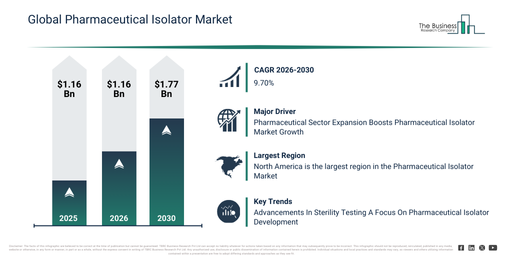
    The pharmaceutical isolator market has experienced significant expansion in recent years. Its value is projected to rise from $9.9 billion in 2025 to $10.81 billion in 2026, reflecting a compound annual growth rate (CAGR) of 9.2%. The historical increase can be attributed to the rise in sterile pharmaceutical manufacturing, more stringent regulatory demands for aseptic processing, the expansion of biologics and injectable drug production, an escalating adoption of containment technologies, and improvements in cleanroom standards.

    The pharmaceutical isolator market is anticipated to show robust expansion over the next few years. Its valuation is projected to reach $15.64 billion by 2030, achieving a compound annual growth rate (CAGR) of 9.7%. This expansion during the forecast period is primarily fueled by increased capital directed towards pharmaceutical manufacturing automation, a rising need for high-containment technologies, the growth of personalized medicine production, an intensified focus on ensuring operator safety, and ongoing innovations in isolator design and materials. Significant developments expected in this period encompass a wider implementation of automated isolator systems, an escalating requirement for modular and mobile isolators, a greater emphasis on adhering to aseptic processing regulations, an increase in containment isolator uses, and more sophisticated integration of monitoring and control mechanisms.

    Get A Free Sample Report With In-Depth Market Insights:

    https://thebusinessresearchcompany.com/sample_request?id=97284172&type=smp&name=Pharmaceutical%20Isolator%20Market%20Report%202026&utm_source=Blogs&utm_medium=Paid&utm_campaign=Oct_PR

    Pharmaceutical Isolator Market Growth Catalysts And Demand Drivers

    The anticipated sustained expansion of the pharmaceutical sector is projected to drive the future growth of the pharmaceutical isolator market. This sector encompasses public and commercial entities engaged in discovering, developing, and producing drugs and treatments. Within pharmaceutical manufacturing facilities, an isolator enables the containment of processes, necessitating a sterile environment free from live bacteria. It also segregates the production area from staff or the external environment, preventing the spread of contamination and offering superior containment compared to conventional clean rooms. As an illustration, data from June 2023, released by the European Federation of Pharmaceutical Industries and Associations (EFPIA), a Belgium-based trade group representing the European pharmaceutical industry, indicated that total pharmaceutical production in Europe reached €390,000 million ($422,803 million) in 2023. This marks an increase from €363,300 million ($393,857 million) recorded in 2022. Consequently, the ongoing expansion of the pharmaceutical sector is a key driver for the growth of the pharmaceutical isolator market.

    Pharmaceutical Isolator Market Segment Analysis Spotlighting Growth Areas

    The pharmaceutical isolator market covered in this report is segmented –

    1) By Type: Closed Isolator Systems, Open Isolator Systems

    2) By Configuration: Floor-Standing, Modular, Compact

    3) By Application: Aseptic Isolators, Containment Isolators, Other Applications

    4) By End-User: Pharmaceutical And Biotechnology Companies, Research Laboratories, Other End Users

    Subsegments:

    1) By Closed Isolator Systems: Glovebox Isolators, Barrier Isolators

    2) By Open Isolator Systems: Compounding Isolators, Sterility Testing Isolators

    Pharmaceutical Isolator Market Trends Shaping Long-Term Demand

    Major companies within the pharmaceutical isolator market are concentrating on developing products such as isolators and isolator platforms specifically for sterility testing, aiming to enhance the efficiency of these testing procedures. These isolators and isolator platforms for sterility testing represent specialized enclosures or containment systems engineered to maintain aseptic conditions during the assessment of pharmaceutical and medical products for microbial contamination. For instance, in June 2023, Getinge, a Sweden-based medical technology company, unveiled ISOPRIME. This product offers a versatile and cost-effective isolator solution for pharmaceutical applications, incorporating advanced connectivity and traceability features. It is engineered for aseptic filling, sterility testing, and other sterile processes, ensuring high quality and continuous operations. The ISOPRIME’s integrated hydrogen peroxide bio-decontamination system and adaptable airflow options position it as an ideal choice for upholding sterility in pharmaceutical manufacturing.

    Pharmaceutical Isolator Market Leading Companies And Competitive Benchmarking

    Major companies operating in the pharmaceutical isolator market are Getinge AB, Chiyoda Corporation, Azbil Corporation, Hosokawa Micron Ltd., Bioquell Limited, M Braun Inertgas-Systeme GmbH, Fedegari Group, Extract Technology Ltd., Germfree Laboratories Inc., COMECER SpA, Hosokawa Micron Powder Systems, ACIC Pharmaceutical Machinery, SKAN AG, Custom Powder Systems, NuAire Limited, Contained Air Solutions Ltd., DEC Group, ITECO Engineering Srl, Schematic Engineering Industries Private Limited, Containment Technologies Group Inc., Inert Corporation

    View The Full Pharmaceutical Isolator Market Report:

    https://thebusinessresearchcompany.com/report/pharmaceutical-isolator-global-market-report?utm_source=Blogs&utm_medium=Paid&utm_campaign=Oct_PR

    Pharmaceutical Isolator Market Top Region By Revenue And Market Share

    North America was the largest region in the pharmaceutical isolator market in 2025. Asia-Pacific is expected to be the fastest-growing region in the forecast period. The regions covered in the pharmaceutical isolator market report are Asia-Pacific, South East Asia, Western Europe, Eastern Europe, North America, South America, Middle East, Africa.

    Reach Out To Our Team:

    The Business Research Company: https://www.thebusinessresearchcompany.com/

    Americas: +1 310-496-7795

    Asia: +44 7882 955267 & +91 8897263534

    Europe: +44 7882 955267

    Email us at: marketing@tbrc.info

    Follow us on:

    LinkedIn: https://in.linkedin.com/company/the-business-research-company

    YouTube: https://www.youtube.com/channel/UC24_fI0rV8cR5DxlCpgmyFQ

    Global Market Model: https://www.thebusinessresearchcompany.com/global-market-model
  • Pharma Microbiology Testing Kits Market Forecast Insights: The Road To $11.98 Billion By 2030

    Pharma Microbiology Testing Kits Market Forecast Insights: The Road To $11.98 Billion By 2030

    Featuring market attractiveness scoring, total addressable market sizing, company benchmarking matrices, interactive Excel dashboards, deeper supply chain intelligence, emerging startup tracking, and granular product-level insights, The Business Research Company’s 2026 market reports are built to deliver research that is both more actionable and more strategically valuable.

    Pharma Microbiology Testing Kits Market Poised To Hit $11.98 Billion By 2030 With A 10.8% CAGR

    The pharma microbiology testing kits market size has demonstrated strong growth over recent years. It is anticipated to expand from $7.26 billion in 2025 to $7.94 billion in 2026, achieving a compound annual growth rate (CAGR) of 9.4%. The expansion observed in the historical period can be attributed to elements such as pharmaceutical quality regulations, an increase in biologics production, greater awareness of contamination risks, the enlargement of vaccine manufacturing, and the demands for GMP compliance.

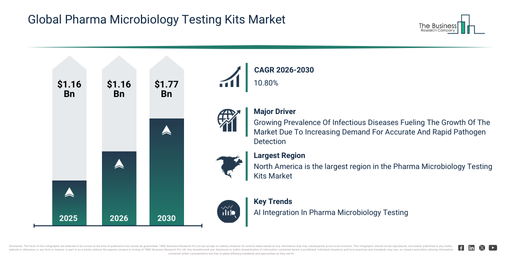
    The pharma microbiology testing kits market size is predicted to undergo significant expansion in the coming years, with its value projected to reach $11.98 billion in 2030, exhibiting a compound annual growth rate (CAGR) of 10.8%. This growth during the forecast period is propelled by factors such as an expanding biopharmaceutical pipeline, the increasing embrace of rapid testing technologies, tightening regulatory standards, the growth of contract manufacturing, and the integration of automation in quality control. Noteworthy trends anticipated in this period include an increased frequency of sterility testing, the rising adoption of rapid microbial detection techniques, the broadening of environmental monitoring programs, a heightened demand for ready-to-use test kits, and the outsourcing of microbiology testing services.

    Get A Free Sample Report With In-Depth Market Insights:

    https://thebusinessresearchcompany.com/sample_request?id=10348435&type=smp&name=Pharma%20Microbiology%20Testing%20Kits%20Market%20Report%202026&utm_source=Blogs&utm_medium=Paid&utm_campaign=Oct_PR

    Pharma Microbiology Testing Kits Market Opportunity Drivers: What’s Unlocking New Revenue Potential?

    The escalating incidence of infectious diseases is anticipated to drive the expansion of the pharma microbiology testing kits market. These diseases are defined as ailments stemming from pathogenic microorganisms, such as bacteria, viruses, fungi, or parasites, capable of direct or indirect human transmission. The frequency of infectious disease cases is climbing, largely attributable to increased global travel enabling swift pathogen dissemination internationally. Pharma microbiology testing kits play a crucial role in diagnosing infectious diseases by offering precise and quick pathogen identification, vital for prompt clinical decisions. They enhance laboratory productivity through dependable testing, thereby assisting in effective treatment and managing outbreaks. A notable example is the data from February 2024 by the UK Health Security Agency, a UK government body, indicating that tuberculosis (a contagious bacterial infection that primarily affects the lungs) cases in England increased to 4,850 in 2023, representing a 10.7% rise from 4,380 cases in 2022. Consequently, the increasing occurrence of infectious diseases is propelling the expansion of the pharma microbiology testing kits market.

    Pharma Microbiology Testing Kits Market Segment Performance And Emerging Opportunities

    The pharma microbiology testing kits market covered in this report is segmented –

    1) By Product: Consumables, Equipment

    2) By Test: Endotoxin Testing, Sterility Testing, Microbial Examination, Environmental Monitoring, Other Tests

    3) By End User: Hospitals And Diagnostic Centers, Custom Lab Service Providers, Academic And Research Institutes

    Subsegments:

    1) By Consumables: Media and Reagents, Test Kits, Sample Collection Containers

    2) By Equipment: Incubators, Autoclaves, Microbial Identification Systems

    Pharma Microbiology Testing Kits Market Innovation Trends Shaping Future Development

    Leading companies within the pharma microbiology testing kits market are prioritizing the implementation of cutting-edge technologies, such as artificial intelligence-driven software, to elevate efficiency, improve diagnostic precision, and optimize laboratory operations. In this context, artificial intelligence-powered software refers to sophisticated algorithms designed to analyze intricate data from diagnostic instruments, thereby assisting in the detection and identification of pathogens. For example, in May 2023, Becton, Dickinson, and Company, a US-based medical device firm, was granted 510(k) clearance by the U.S. Food and Drug Administration (FDA) for its innovative BD Kiestra MRSA Imaging Application. This application leverages artificial intelligence (AI) to enhance the diagnosis of Methicillin-resistant Staphylococcus aureus (MRSA). The system automates the inspection of Petri dishes, a task that has traditionally been labor-intensive and time-consuming. It analyzes bacterial growth on BBL CHROMagar MRSA II plates and can promptly identify specimens showing no significant growth, leading to more rapid processing and the release of negative results.

    Pharma Microbiology Testing Kits Market Industry Leaders And Competitive Landscape

    Major companies operating in the pharma microbiology testing kits market are F. Hoffmann-La Roche AG, Becton Dickinson and Company, Abbott Laboratories, ThermoFisher Scientific, SGS SA, Toxikon Corp., Pace Analytical Services, Boston Analytics, Charles River Laboratories International, Nelson Laboratories, Siemens healthcare AG, Hologic Inc., Neogen Corporation, Shimadzu Corporation, Merck KGaA, Agilent TechnologiesInc., QIAGEN N.V., Bruker Corporation, bioMérieux SA, Lucideon, Lonza Group AG, MilliporeSigma, Hardy Diagnostics, Sartorius AG, 3M Company, Waters Corporation, PerkinElmer Inc., Luminex Corporation

    View The Full Pharma Microbiology Testing Kits Market Report:

    https://thebusinessresearchcompany.com/report/pharma-microbiology-testing-kits-global-market-report?utm_source=Blogs&utm_medium=Paid&utm_campaign=Oct_PR

    Pharma Microbiology Testing Kits Market Regional Analysis And Top Geography

    North America was the largest region in the pharma microbiology testing kits market in 2025. Western Europe was the second-largest region in the global pharma microbiology testing kits market report. The regions covered in the pharma microbiology testing kits market report are Asia-Pacific, South East Asia, Western Europe, Eastern Europe, North America, South America, Middle East, Africa.

    Reach Out To Our Team:

    The Business Research Company: https://www.thebusinessresearchcompany.com/

    Americas: +1 310-496-7795

    Asia: +44 7882 955267 & +91 8897263534

    Europe: +44 7882 955267

    Email us at: marketing@tbrc.info

    Follow us on:

    LinkedIn: https://in.linkedin.com/company/the-business-research-company

    YouTube: https://www.youtube.com/channel/UC24_fI0rV8cR5DxlCpgmyFQ

    Global Market Model: https://www.thebusinessresearchcompany.com/global-market-model
  • Phacoemulsification System Market Explained: What Is Fueling Growth To $2.16 Billion By 2030?

    Phacoemulsification System Market Explained: What Is Fueling Growth To $2.16 Billion By 2030?

    Built to provide research that’s more actionable and strategically valuable, The Business Research Company’s 2026 market reports include market attractiveness analysis, total addressable market sizing, company benchmarking matrices, interactive Excel dashboards, broader supply chain intelligence, emerging startup tracking, and in-depth product insights.

    Phacoemulsification System Market Size And Revenue Outlook Through 2030

    The phacoemulsification system market size has shown robust growth in recent years. It is anticipated to expand from $1.51 billion in 2025 to $1.63 billion in 2026, achieving a compound annual growth rate (CAGR) of 7.6%. This historical expansion can be ascribed to several factors, including the increasing occurrence of cataracts, the rise in the aging demographic, the widespread adoption of phaco techniques, the development of ophthalmic infrastructure, and surgeons’ preference for less invasive instruments.

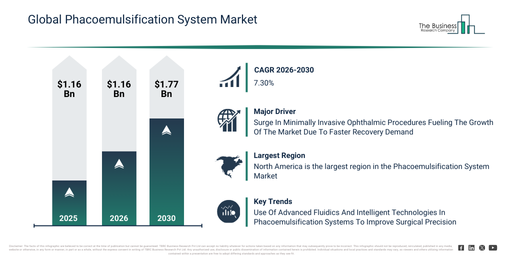
    The phacoemulsification system market size is anticipated to demonstrate significant expansion over the next few years. It is projected to reach $2.16 billion by 2030, growing at a compound annual growth rate (CAGR) of 7.3%. This expansion during the forecast period can be attributed to factors such as an increase in outpatient eye surgeries, technological advancements in ultrasound systems, a rising demand for premium IOLs, market growth in emerging economies, and greater awareness about vision care. Prominent trends expected in this period include sophisticated fluidics control systems, the increasing use of minimally invasive cataract surgery, highly precise ultrasonic energy delivery, reduced surgical procedure times, and better patient safety outcomes.

    Get A Free Sample Report With In-Depth Market Insights:

    https://thebusinessresearchcompany.com/sample_request?id=10336753&type=smp&name=Phacoemulsification%20System%20Market%20Report%202026&utm_source=Blogs&utm_medium=Paid&utm_campaign=Oct_PR

    Phacoemulsification System Market Growth Momentum: What Factors Are Shaping Demand?

    The phacoemulsification system market is expected to grow as minimally invasive ophthalmic procedures become increasingly adopted. Minimally invasive ophthalmic procedures are defined as advanced eye care methods that utilize small incisions, micro-instruments, or laser approaches to diagnose or treat eye conditions with minimal tissue disruption. The surge in these procedures is attributed to a growing preference for faster recovery, as they reduce surgical trauma and enable patients to resume daily activities much sooner. The phacoemulsification system facilitates minimally invasive ophthalmic procedures by using ultrasonic energy to break down and remove cataracts through a tiny incision, leading to quicker healing, less tissue damage, and improved surgical precision. For instance, according to Gov.UK, a UK-based government agency, in May 2024, England recorded 516,073 hospital admissions for cataract surgery among individuals aged 65 and above in 2023, representing a rate of 4,679 per 100,000 population. Therefore, the increasing embrace of minimally invasive ophthalmic procedures is propelling the expansion of the phacoemulsification system market.

    Phacoemulsification System Market Segment Landscape And Growth Outlook

    The phacoemulsification system market covered in this report is segmented –

    1) By Product Type: Standalone Phacoemulsification Systems, Portable Phacoemulsification Systems

    2) By Application: Cataract Surgery, Refractive Lens Exchange (RLE), Secondary Lens Removal Procedures

    3) By End-User: Hospitals, Ophthalmic Clinics, Ambulatory Surgical Centers, Other End-Users

    Subsegments:

    1) By Standalone Phacoemulsification Systems: Ultrasonic Handpiece Units, Control Console Units, Fluid Management Units, Illumination Module Units

    2) By Portable Phacoemulsification Systems: Battery Powered Units, Compact Console Units, Handheld Operation Units, Mobile Surgical Kits

    Phacoemulsification System Market Trends Redefining Industry Growth

    Major companies in the phacoemulsification system market are focusing on integrating femtosecond laser technology, such as the novel fluidics concept, to maintain stable intraocular pressure (IOP), enhance chamber stability, and ensure consistent fluid control throughout all phases of cataract surgery, thereby improving surgical precision and patient safety. The novel fluidics concept refers to an advanced fluid management technology in phacoemulsification systems that precisely regulates the balance between irrigation and aspiration during eye surgery. For instance, in September 2025, Beaver-Visitec International, Inc. (BVI), a US-based ophthalmic medical device company, unveiled Virtuoso, a novel dual-function phaco-vitrectomy surgical platform designed for both cataract and vitreoretinal procedures. The system features a novel fluidics concept that maintains target intraocular pressure (IOP) throughout all surgical steps, a hybrid flow and pressure pump design for superior chamber stability, and Load Sensing Phaco technology that automatically adjusts ultrasound energy based on lens resistance to enhance precision and surgical efficiency.

    Phacoemulsification System Market Key Participants And Competitive Landscape

    Major companies operating in the phacoemulsification system market are Alcon, Johnson & Johnson, Bausch + Lomb, NIDEK, Oertli Instrumente, Optikon, Geuder, Appasamy Associates, Biotech Visioncare, Meda, SIFI, Ziemer Ophthalmic Systems, Topcon, Carl Zeiss Meditec, Huvitz, Rumex International, DORC International, MicroSurgical Technology, LIGHTMED, Aurolab, MTP Medical Technical Products

    View The Full Phacoemulsification System Market Report:

    https://thebusinessresearchcompany.com/report/global-phacoemulsification-system-market-report?utm_source=Blogs&utm_medium=Paid&utm_campaign=Oct_PR

    Phacoemulsification System Market Geographic Analysis: Where Is Demand Rising Fastest?

    North America was the largest region in the phacoemulsification system market in 2025. Asia-Pacific is expected to be the fastest-growing region in the forecast period. The regions covered in the phacoemulsification system market report are Asia-Pacific, South East Asia, Western Europe, Eastern Europe, North America, South America, Middle East, Africa.

    Reach Out To Our Team:

    The Business Research Company: https://www.thebusinessresearchcompany.com/

    Americas: +1 310-496-7795

    Asia: +44 7882 955267 & +91 8897263534

    Europe: +44 7882 955267

    Email us at: marketing@tbrc.info

    Follow us on:

    LinkedIn: https://in.linkedin.com/company/the-business-research-company

    YouTube: https://www.youtube.com/channel/UC24_fI0rV8cR5DxlCpgmyFQ

    Global Market Model: https://www.thebusinessresearchcompany.com/global-market-model
  • Personalized Knee Implants Market Forecast To Reach $3.41 Billion By 2030: Key Trends Explained

    Personalized Knee Implants Market Forecast To Reach $3.41 Billion By 2030: Key Trends Explained

    Backed by market attractiveness analysis, total addressable market sizing, company benchmarking matrices, interactive Excel dashboards, wider supply chain intelligence, emerging startup coverage, and detailed product-level insights, The Business Research Company’s 2026 market reports are designed to offer research that is more actionable and strategically valuable than ever.

    Personalized Knee Implants Market Growth From $2.62 Billion In 2026 To $3.41 Billion By 2030 At A CAGR Of 6.8%

    The personalized knee implants market has seen significant expansion in recent years. It is projected to expand from $2.45 billion in 2025 to $2.62 billion in 2026, reflecting a compound annual growth rate (CAGR) of 6.9%. The expansion observed in previous periods is attributable to factors such as an escalating geriatric population, a rise in osteoarthritis prevalence, heightened understanding of personalized healthcare, progress in imaging technologies, and an increasing volume of orthopedic surgeries.

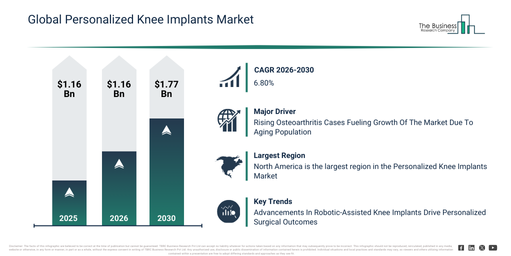
    The market for personalized knee implants is projected to experience substantial expansion over the upcoming years. It is forecast to reach $3.41 billion in 2030, exhibiting a compound annual growth rate (CAGR) of 6.8%. This expansion during the projection period is driven by factors such as the increasing embrace of 3D printing, the incorporation of AI into surgical planning, a rising demand for less invasive operations, innovations in implant materials, and the expansion into developing economies. Key developments anticipated within this forecast timeframe encompass bespoke 3D-printed implants, individualized surgical planning for patients, knee replacement procedures that are minimally invasive, improved post-operative recovery solutions, and the incorporation of wearable technology.

    Get A Free Sample Report With In-Depth Market Insights:

    https://thebusinessresearchcompany.com/sample_request?id=16079954&type=smp&name=Personalized%20Knee%20Implants%20Market%20Report%202026&utm_source=Blogs&utm_medium=Paid&utm_campaign=Oct_PR

    Personalized Knee Implants Market Expansion Drivers: What’s Shaping Future Growth?

    The rising incidence of osteoarthritis is anticipated to drive the expansion of the personalized knee implants market in the future. Osteoarthritis is characterized as a degenerative joint condition where the protective cartilage at the bone ends gradually erodes, resulting in discomfort, rigidity, and restricted joint motion. The growing prevalence of osteoarthritis is linked to an aging demographic, as the likelihood increases with age due to the progressive deterioration of joint cartilage. Personalized knee implants address osteoarthritis by offering a tailored fit that corresponds to each patient’s distinct anatomy, thereby improving joint alignment, lessening pain, and boosting mobility more effectively than conventional implants. For example, in June 2024, a report from the Australian Institute of Health and Welfare, an Australian-based government organization, indicated that in Australia, osteoarthritis was responsible for 143,410 disability-adjusted life years (DALYs) (4.46 per 1,000 people) in 2023 and 2,314 deaths (8.9 per 100,000) in 2022, constituting 2.5% of the total disease burden and 1.2% of all deaths, respectively. Consequently, the escalating incidence of osteoarthritis is propelling the expansion of the personalized knee implants market.

    Personalized Knee Implants Market Breakdown By Product Type And Application

    The personalized knee implants market covered in this report is segmented –

    1) By Type: Femoral, Tibia, Patella

    2) By Fixation Material: Cemented, Cementless, Hybrid

    3) By Material: Metal-On-Plastic, Ceramic-On-Plastic

    4) By Procedure: Primary, Partial, Revision

    5) By End Use: Hospitals, Ambulatory Surgical Centers, Other End Uses

    Subsegments:

    1) By Femoral Type: Standard Femoral Implants, Customized Femoral Implants, Gender-Specific Femoral Implants

    2) By Tibia Type: Standard Tibial Implants, Customized Tibial Implants, Modular Tibial Baseplates

    3) By Patella Type: Standard Patellar Implants, Customized Patellar Implants, Patellar Resurfacing Implants

    Personalized Knee Implants Market Strategic Trends: What Defines The Next Growth Phase?

    Leading companies within the personalized knee implants market are concentrating on technological innovations, such as robotic-assisted total knee arthroplasty, to enhance surgical precision, implant alignment accuracy, patient-specific customization, and overall clinical outcomes. Robotic-assisted total knee arthroplasty is defined as a knee replacement procedure where a robotic system assists the surgeon in planning and executing the surgery with increased exactitude. For example, in April 2025, THINK Surgical, Inc., a US-based supplier of robotic surgical systems, introduced and first utilized the Freedom Total Knee Implant, marking Maxx Orthopedics’ initial deployment using the TMINI miniature robotic system. The Freedom total knee implant offers a high level of patient-specific customization while maintaining surgical efficiency. It features a bone-sparing design, requiring less bone removal during implantation, and provides multiple sizing and configuration options to match individual patient anatomy. The system supports both cemented and cementless fixation, integrating an optimized polyethylene insert for superior wear resistance and smooth articulation. Its design is intended to provide natural knee kinematics, stability across the full range of motion, and long-term durability.

    Personalized Knee Implants Market Top Companies Driving Competitive Growth

    Major companies operating in the personalized knee implants market are Stryker Corporation, DePuy Synthes Inc., Zimmer Biomet Holdings Inc., Smith & Nephew plc, Stanmore Implants Worldwide Ltd, Exactech Inc., Medacta International SA, Corin Group PLC, MicroPort Orthopedics Inc., B. Braun Melsungen AG, LimaCorporate S.p.A., Waldemar Link GmbH & Co. KG, THINK Surgical Inc., Signature Orthopaedics Pty Ltd, Maxx Orthopedics Inc., restor3d Inc., NanoKnee LLC, Conformis Inc., Aesculap Implant Systems LLC, United Orthopedic Corporation, Kyocera Medical Corporation, Mathys Ltd Bettlach

    View The Full Personalized Knee Implants Market Report:

    https://thebusinessresearchcompany.com/report/personalized-knee-implants-global-market-report?utm_source=Blogs&utm_medium=Paid&utm_campaign=Oct_PR

    Personalized Knee Implants Market Global Footprint: Which Region Leads The Market?

    North America was the largest region in the personalized knee implants market in 2025. Asia-Pacific is expected to be the fastest-growing region in the forecast period. The regions covered in the personalized knee implants market report are Asia-Pacific, South East Asia, Western Europe, Eastern Europe, North America, South America, Middle East, Africa.

    Reach Out To Our Team:

    The Business Research Company: https://www.thebusinessresearchcompany.com/

    Americas: +1 310-496-7795

    Asia: +44 7882 955267 & +91 8897263534

    Europe: +44 7882 955267

    Email us at: marketing@tbrc.info

    Follow us on:

    LinkedIn: https://in.linkedin.com/company/the-business-research-company

    YouTube: https://www.youtube.com/channel/UC24_fI0rV8cR5DxlCpgmyFQ

    Global Market Model: https://www.thebusinessresearchcompany.com/global-market-model
  • Personalized Cranial Implant Market Analysis: Understanding The Drivers Behind 6.8% CAGR Through 2030 Growth

    Personalized Cranial Implant Market Analysis: Understanding The Drivers Behind 6.8% CAGR Through 2030 Growth

    Featuring market attractiveness scoring, total addressable market sizing, company benchmarking matrices, interactive Excel dashboards, deeper supply chain intelligence, emerging startup tracking, and granular product-level insights, The Business Research Company’s 2026 market reports are built to deliver research that is both more actionable and more strategically valuable.

    Personalized Cranial Implant Market Expansion Outlook: What Revenue Opportunities Are Ahead?

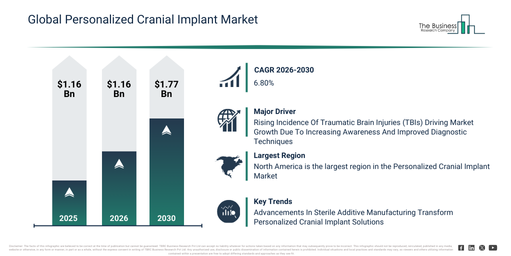
    The personalized cranial implant market size has shown significant growth in recent years. It is anticipated to increase from $0.96 billion in 2025 to $1.03 billion in 2026, achieving a compound annual growth rate (CAGR) of 7.3%. Historically, this expansion has been influenced by factors such as a rise in traumatic brain injury cases, an increasing number of tumor resection surgeries, developments in cranial imaging technologies, a growing volume of neurosurgical procedures, and improved availability of biocompatible implant materials.

    The personalized cranial implant market size is projected for substantial expansion in the coming years, anticipated to reach $1.34 billion by 2030, exhibiting a compound annual growth rate (CAGR) of 6.8%. This growth over the forecast period is fueled by several factors, including the increasing embrace of personalized medicine strategies, the expansion of 3D printing facilities within hospitals, a rising need for custom cosmetic corrections, advancements in implant design software technology, and heightened healthcare spending on sophisticated neurosurgical procedures. Key developments expected during this period involve the increasing integration of patient-specific cranial reconstruction, broader application of 3D printing in neurosurgical implants, a surge in demand for less invasive cranial operations, the wider use of personalized implants in intricate trauma scenarios, and superior aesthetic and functional results influencing surgeon preferences.

    Get A Free Sample Report With In-Depth Market Insights:

    https://thebusinessresearchcompany.com/sample_request?id=52014872&type=smp&name=Personalized%20Cranial%20Implant%20Market%20Report%202026&utm_source=Blogs&utm_medium=Paid&utm_campaign=Oct_PR

    Personalized Cranial Implant Market Development Factors: What’s Supporting Demand?

    The escalating frequency of traumatic brain injuries (TBIs) is projected to boost the expansion of the personalized cranial implant market. Traumatic brain injuries are defined as brain damage resulting from external mechanical forces. The heightened occurrence of these injuries is attributable to increased public consciousness regarding head injury risks and advancements in medical diagnostics. Personalized cranial implants hold significant importance for traumatic brain injuries, as they facilitate precise, custom-fit skull reconstruction, thereby improving brain protection, aesthetic results, and overall patient recovery. For instance, in 2024, according to the Tennessee Department of Health, a US-based government agency, the number of patients in the traumatic brain injury (TBI) registry rose by 2.4% in 2023 over 2022. Thus, the growing incidence of traumatic brain injuries (TBIs) and cranial defects is propelling growth in the personalized cranial implants market.

    Personalized Cranial Implant Market Segment Analysis And Revenue Potential

    The personalized cranial implant market covered in this report is segmented –

    1) By Implant Material: Titanium, Polymethylmethacrylate (PMMA), Polyether Ether Ketone (PEEK), Other Implant Materials

    2) By Indication: Traumatic Brain Injury, Oncology (Tumor Resection), Congenital Disorders, Infections, Cosmetic Or Deformity Correction

    3) By End Use: Hospitals, Ambulatory Surgical Centers, Other End Uses

    Subsegments:

    1) By Titanium: Pure Titanium, Titanium Alloy, Mesh Titanium Implants, Solid Titanium Plates

    2) By Polymethylmethacrylate: Preformed Polymethylmethacrylate Implants, Hand-Molded Polymethylmethacrylate, Custom Molded Polymethylmethacrylate, Antibiotic-Impregnated Polymethylmethacrylate

    3) By Polyether Ether Ketone: Standard Polyether Ether Ketone Implants, Reinforced Polyether Ether Ketone Implants, Three-Dimensionally Printed Polyether Ether Ketone Implants, Patient-Specific Polyether Ether Ketone Implants

    4) By Other Implant Materials: Ceramic Implants, Composite Material Implants, Bioactive Glass Implants, Bioresorbable Polymer Implants

    Personalized Cranial Implant Market Transformation Trends: What Innovations Are Driving Change?

    Leading companies in the personalized cranial implant market are concentrating on sophisticated technologies, such as hospital-site sterile 3D printing, to optimize manufacturing and enhance the provision of implants tailored to individual patients. This technology employs dedicated cleanroom-compliant 3D printers that can produce medical-quality implants right inside healthcare settings, thereby reducing contamination risks and accelerating the production cycle. An example of this is 3D Systems, a US-based additive manufacturing firm, which introduced the VSP PEEK Cranial Implant in April 2024. This solution offers patient-specific cranial implants, made from high-performance PEEK material, and follows an FDA-cleared 3D printing process that incorporates modeling software, a 3D printer for sterile environments, and an efficient post-processing system. Its design aims to mimic the mechanical characteristics of human bone. The implant provides excellent biocompatibility, radiolucency, and resists bodily fluids effectively. This system decreases material consumption by up to 85% compared to conventional machining methods, resulting in substantial cost reductions. Furthermore, its sterile deployment within hospitals facilitates quicker surgical planning and better patient results, establishing it as a transformative instrument in neurosurgery and cranioplasty.

    Personalized Cranial Implant Market Leading Players And Competitive Positioning

    Major companies operating in the personalized cranial implant market are Medtronic PLC, Stryker Corporation, Zimmer Biomet Holdings Inc., Renishaw PLC, KLS Martin Group, B. Braun Melsungen AAG, Medartis Holding AG, CranioTech GmbH, evonos GmbH & Co. KG, Matrix Surgical USA LLC, Jeil Medical Corporation, Anatomics Pty Ltd., Calavera Surgical Design Inc., KELYNIAM Global Incorporated, Xilloc Medical B.V., INCREDIBLE AM Private Limited, LUCID Implants Private Limited, Ortho Baltic Joint Stock Company, OssDsign AB, 3D Systems Healthcare, Materialise NV, Oxford Performance Materials

    View The Full Personalized Cranial Implant Market Report:

    https://thebusinessresearchcompany.com/report/personalized-cranial-implant-global-market-report?utm_source=Blogs&utm_medium=Paid&utm_campaign=Oct_PR

    Personalized Cranial Implant Market Regional Split: Which Areas Are Fueling Growth?

    North America was the largest region in the personalized cranial implant market in 2025. Asia-Pacific is expected to be the fastest-growing region in the forecast period. The regions covered in the personalized cranial implant market report are Asia-Pacific, South East Asia, Western Europe, Eastern Europe, North America, South America, Middle East, Africa.

    Reach Out To Our Team:

    The Business Research Company: https://www.thebusinessresearchcompany.com/

    Americas: +1 310-496-7795

    Asia: +44 7882 955267 & +91 8897263534

    Europe: +44 7882 955267

    Email us at: marketing@tbrc.info

    Follow us on:

    LinkedIn: https://in.linkedin.com/company/the-business-research-company

    YouTube: https://www.youtube.com/channel/UC24_fI0rV8cR5DxlCpgmyFQ

    Global Market Model: https://www.thebusinessresearchcompany.com/global-market-model
  • Personal Protective Equipment For Infection Control Market Growth To $35.31 Billion By 2030: What’s Driving The Expansion?

    Personal Protective Equipment For Infection Control Market Growth To $35.31 Billion By 2030: What’s Driving The Expansion?

    Built to provide research that’s more actionable and strategically valuable, The Business Research Company’s 2026 market reports include market attractiveness analysis, total addressable market sizing, company benchmarking matrices, interactive Excel dashboards, broader supply chain intelligence, emerging startup tracking, and in-depth product insights.

    Personal Protective Equipment For Infection Control Market Growth Potential: How Will Market Size Shift Through 2030?

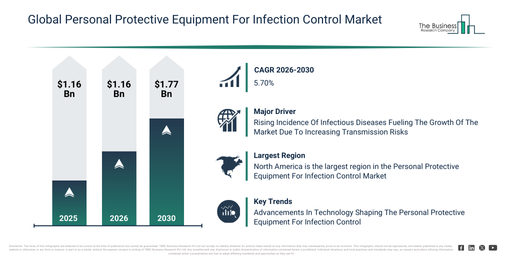
    The personal protective equipment for infection control market size has experienced strong growth in recent years. It is projected to increase from $26.64 billion in 2025 to $28.25 billion in 2026, at a compound annual growth rate (CAGR) of 6.0%. The expansion observed in the historical period can be attributed to a pandemic-driven surge in PPE demand, rising healthcare-associated infection rates, increased awareness of occupational safety, government-led infection control mandates, and the expansion of hospital infrastructure.

    The personal protective equipment for infection control market is anticipated to experience robust expansion in the coming years. It is projected to grow to $35.31 billion in 2030, achieving a compound annual growth rate (CAGR) of 5.7%. The projected growth is driven by factors such as the rise of outpatient and ambulatory care centers, an increased occurrence of infectious disease outbreaks, more rigorous global safety compliance standards, escalating healthcare expenditure in developing economies, and demand from non-healthcare sectors like public safety. Significant trends expected during this period include the broadening of antimicrobial and self-sterilizing PPE offerings, a transition towards reusable and more cost-effective PPE, an increase in stockpiling and emergency preparedness initiatives, a growing preference for comfort-focused and ergonomic PPE, and the standardization and regulatory harmonization of PPE.

    Get A Free Sample Report With In-Depth Market Insights:

    https://thebusinessresearchcompany.com/sample_request?id=66068758&type=smp&name=Personal%20Protective%20Equipment%20For%20Infection%20Control%20Market%20Report%202026&utm_source=Blogs&utm_medium=Paid&utm_campaign=Oct_PR

    Personal Protective Equipment For Infection Control Market Industry Drivers: What’s Behind The Revenue Growth?

    The increasing occurrence of infectious diseases is anticipated to drive the expansion of the personal protective equipment for infection control market moving forward. Infectious diseases are illnesses stemming from pathogenic microorganisms such as bacteria, viruses, fungi, or parasites, which can spread directly or indirectly between individuals, from animals, or from the environment to humans. This rise in infectious disease cases is attributed to preferences for crowded urban living and increasing global travel, both of which accelerate disease dissemination. Personal protective equipment (PPE) for infection control helps lessen the incidence of infectious diseases by enabling healthcare workers and individuals to establish a physical barrier against pathogens, thereby preventing direct contact with infectious agents. For instance, in March 2025, a report published by the UK Health Security Agency, a UK-based government department, indicated that in England, between 2023 and 2024, hospital admission rates for infectious diseases and infections were nearly twice as high among individuals residing in the most deprived 20% of areas compared to those in the least deprived areas. Moreover, in February 2024, GOV.UK, a UK-based government department, reported that the number of tuberculosis (TB) cases in England increased by 10.7%, from 4,380 in 2022 to 4,850 in 2023. Therefore, the growing incidence of infectious diseases is fueling the growth of the personal protective equipment for infection control market.

    Personal Protective Equipment For Infection Control Market Segmentation And Category Overview

    The personal protective equipment for infection control market covered in this report is segmented –

    1) By Product Type: Gloves, Face Masks, Gowns And Coveralls, Eye Protection, Respirators

    2) By Material Type: Latex, Nitrile, Polyethylene, Polypropylene, Other Advanced Materials

    3) By Distribution Channel: Direct Sales, Online Retail, Traditional Retail, Catalog Sales, Wholesalers And Distributors

    4) By Application Area: Infection Prevention, Occupational Safety, Emergency Response, Aerosol Transmission Protection, Healthcare Settings

    5) By End-User: Hospitals, Ambulatory Surgical Centers, Pharmacies, Diagnostic Laboratories, Public Health Institutions

    Subsegments:

    1) By Gloves: Disposable Gloves, Sterile Gloves, Non-Sterile Gloves, Latex Gloves, Nitrile Gloves, Vinyl Gloves, Polyethylene Gloves

    2) By Face Masks: Surgical Masks, N95 Respirators, KN95 Masks, Face Shields

    3) By Gowns And Coveralls: Isolation Gowns, Surgical Gowns, Coveralls, Reusable Gowns, Disposable Gowns, Fluid-Resistant Gowns

    4) By Eye Protection: Safety Goggles, Face Shields, Protective Glasses

    5) By Respirators: Half-Face Respirators, Full-Face Respirators, Powered Air-Purifying Respirators (PAPR), Reusable Respirators, Disposable Respirators

    #Personal Protective Equipment For Infection Control Market Growth Trends: What’s Shaping The Future Outlook?

    Major companies active in the personal protective equipment for infection control market are directing their efforts towards developing advanced solutions, such as next-generation personal protective shields, aimed at increasing user safety, improving comfort, and delivering enhanced protection against airborne pathogens. These next-generation personal protective shields refer to sophisticated face and body shielding equipment engineered with superior materials, ergonomic designs, and heightened protective features to provide exceptional defense against infectious agents. As an example, in March 2025, Stryker Corporation, a medical technology firm based in the US, unveiled the Steri-Shield 8 personal protection system, an innovative personal protective equipment (PPE) created for healthcare professionals. This system incorporates a customizable helmet that features three points of contact for a stable and adjustable fit, along with a distinct ponytail path to accommodate users with long hair. It offers superior visibility through a 22% wider field of vision and a brighter helmet light, complemented by a redesigned fan system that provides cooling to the front and back of the neck for better comfort. The system also comprises three toga styles that ensure AAMI level 4 (2012) protection, signifying the highest fluid and microbial barrier. Furthermore, it is equipped with a slimmer battery and a more efficient charging station, demonstrating Stryker’s commitment to innovation and user-centric design within PPE.

    Personal Protective Equipment For Infection Control Market Competitive Overview And Top Companies

    Major companies operating in the personal protective equipment for infection control market are Cardinal Health Inc., Honeywell International Inc., 3M Company, Kimberly Clark Corporation, DuPont de Nemours Inc., STERIS plc, ELIS UK Limited, Ansell Limited, SHOWA Group, SAS Safety Corp., Moldex Metric Inc., Uvex Arbeitsschutz GmbH, Alpha Pro Tech Ltd., Polyco Healthline Ltd., Gateway Safety Inc., Plasti Surge Industries Pvt. Ltd., Franz Mensch GmbH, Univet S.p.A., Dastex Reinraumzubehör GmbH & Co. KG, Medline Industries LP, Hartalega Holdings Berhad, Top Glove Corporation Berhad, Supermax Corporation Berhad

    View The Full Personal Protective Equipment For Infection Control Market Report:

    https://thebusinessresearchcompany.com/report/personal-protective-equipment-for-infection-control-global-market-report?utm_source=Blogs&utm_medium=Paid&utm_campaign=Oct_PR

    Personal Protective Equipment For Infection Control Market Top Region: Where Does Most Revenue Come From?

    North America was the largest region in the personal protective equipment for infection control market in 2025. Asia-Pacific is expected to be the fastest-growing region in the forecast period. The regions covered in the personal protective equipment for infection control market report are Asia-Pacific, South East Asia, Western Europe, Eastern Europe, North America, South America, Middle East, Africa.

    Reach Out To Our Team:

    The Business Research Company: https://www.thebusinessresearchcompany.com/

    Americas: +1 310-496-7795

    Asia: +44 7882 955267 & +91 8897263534

    Europe: +44 7882 955267

    Email us at: marketing@tbrc.info

    Follow us on:

    LinkedIn: https://in.linkedin.com/company/the-business-research-company

    YouTube: https://www.youtube.com/channel/UC24_fI0rV8cR5DxlCpgmyFQ

    Global Market Model: https://www.thebusinessresearchcompany.com/global-market-model