Blog

  • Paper Diagnostics Market Forecast Highlights A $17.31 Billion Opportunity For Industry Participants

    Paper Diagnostics Market Forecast Highlights A $17.31 Billion Opportunity For Industry Participants

    Built to provide research that’s more actionable and strategically valuable, The Business Research Company’s 2026 market reports include market attractiveness analysis, total addressable market sizing, company benchmarking matrices, interactive Excel dashboards, broader supply chain intelligence, emerging startup tracking, and in-depth product insights.

    Paper Diagnostics Market Size, Value And Growth Trajectory Through 2030

    The paper diagnostics market size has undergone rapid expansion in recent years. This market is projected to grow from $10.49 billion in 2025 to $11.62 billion in 2026, demonstrating a compound annual growth rate (CAGR) of 10.7%. Historically, this growth can be attributed to factors such as increased demand for point-of-care testing, the rising prevalence of infectious diseases, the expansion of decentralized healthcare services, the adoption of rapid screening tools, and the increased use of dipstick diagnostics.

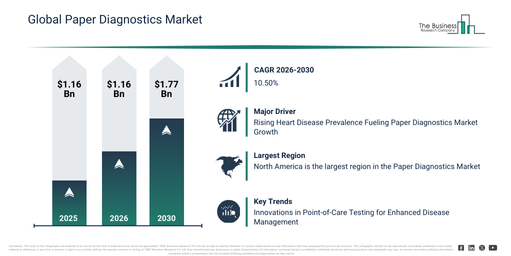
    The paper diagnostics market is projected to experience significant expansion over the coming years. This market is anticipated to reach a valuation of $17.31 billion by 2030, demonstrating a compound annual growth rate (CAGR) of 10.5%. Key factors contributing to this anticipated growth include an escalating demand for diagnostic tools used at home, increased funding for cost-effective healthcare innovations, the widening scope of preventive health checks, a heightened emphasis on identifying diseases early, and improvements in paper microfluidics technology. Significant trends expected during this period involve the wider acceptance of quick point-of-care paper tests, an increased need for economical diagnostic options, the expanded application of lateral flow assays, a proliferation of paper-based microfluidic instruments, and a greater emphasis on diagnostics that are both disposable and environmentally friendly.

    Get A Free Sample Report With In-Depth Market Insights:

    https://thebusinessresearchcompany.com/sample_request?id=31860110&type=smp&name=Paper%20Diagnostics%20Market%20Report%202026&utm_source=Blogs&utm_medium=Paid&utm_campaign=Oct_PR

    Paper Diagnostics Market Demand Drivers Opening New Revenue Streams

    The increasing prevalence of heart diseases is anticipated to propel the paper diagnostics market going forward. Heart disease refers to any condition that affects the cardiovascular system. A sensitive and rapid microfluidic paper-based device (PAD) aids in the simultaneous detection of numerous cardiac biomarkers, crucial for the early and late diagnosis of acute myocardial infarction, consequently, the growing incidence of heart diseases boosts the demand for paper diagnostics. For instance, in January 2024, the American Heart Association, a US-based non-profit organization, reported that the age-adjusted death rate from cardiovascular disease increased to 233.3 per 100,000 in 2024, an increase of 4.0% from 224.4 per 100,000 in 2023. Therefore, the rising prevalence of heart diseases is a key driver for the growth of the paper diagnostics market.

    Paper Diagnostics Market Segment Landscape: Which Areas Lead Development?

    The paper diagnostics market covered in this report is segmented –

    1) By Product: Dipsticks, Lateral Flow Assays: Paper-Based Microfluidics

    2) By Application: Environmental Monitoring, Clinical Diagnostics, Food Quality Testing

    3) By End-User: Home Healthcare, Assisted Living Healthcare Facilities, Hospital And Clinics

    Subsegments:

    1) By Dipsticks: Urinalysis Dipsticks, Blood Glucose Dipsticks, Pregnancy Test Dipsticks, Drug Test Dipsticks

    2) By Lateral Flow Assays: Point-Of-Care Testing (POCT) Assays, Rapid Infectious Disease Tests, Cardiovascular Marker Tests, Allergy Tests

    3) By Paper-Based Microfluidics: Integrated Microfluidic Devices, Environmental Testing Applications, Food Safety Testing Applications

    Paper Diagnostics Market Trends Powering Strategic Industry Growth

    Leading companies in the paper diagnostics market are concentrating on creating innovative point-of-care tests to secure a competitive advantage. A point-of-care test serves as a diagnostic procedure carried out at or close to where the patient receives care, facilitating immediate results and prompt clinical decision-making. For example, Mylab Discovery Solutions, an India-based company, introduced two rapid point-of-care tests in August 2023 for detecting dengue infections: the rapid gold test and the high-accuracy dry luminescence assay test. These tests deliver results within 15-20 minutes and do not require a laboratory setup. They are valuable in determining the infection’s stage and progression, thereby supporting dengue screening programs in regions with limited resources. The tests differentiate between IgM and IgG antibodies, providing healthcare professionals with precise instruments for timely diagnosis and effective disease management.

    Paper Diagnostics Market Key Participants And Competitive Landscape

    Major companies operating in the paper diagnostics market are Abbott Inc, Arkray Inc, Acon Laboratories Inc, Chembio Diagnostic Systems Inc, Abingdon Health, Micro Essential Laboratory Inc, Paperdrop Diagnostics, Diagnostics for All Inc, Mologic Ltd, BioMedomics Inc, EKF Diagnostics Holdings plc, Sysmex Corporation, Siemens Healthineers AG, BioPorto Diagnostics A/S, NanoEnTek Inc, BiognostiX GmbH, BioDot Inc, BioFluidica Inc, Cytodiagnostics Inc, Biopico Systems Inc

    View The Full Paper Diagnostics Market Report:

    https://thebusinessresearchcompany.com/report/paper-diagnostics-global-market-report?utm_source=Blogs&utm_medium=Paid&utm_campaign=Oct_PR

    Paper Diagnostics Market Geographic Analysis: Where Is Demand Rising Fastest?

    North America was the largest region in the paper diagnostics market share in 2025. Asia-Pacific is expected to be the fastest-growing region in the forecast period. The regions covered in the paper diagnostics market report are Asia-Pacific, South East Asia, Western Europe, Eastern Europe, North America, South America, Middle East, Africa.

    Reach Out To Our Team:

    The Business Research Company: https://www.thebusinessresearchcompany.com/

    Americas: +1 310-496-7795

    Asia: +44 7882 955267 & +91 8897263534

    Europe: +44 7882 955267

    Email us at: marketing@tbrc.info

    Follow us on:

    LinkedIn: https://in.linkedin.com/company/the-business-research-company

    YouTube: https://www.youtube.com/channel/UC24_fI0rV8cR5DxlCpgmyFQ

    Global Market Model: https://www.thebusinessresearchcompany.com/global-market-model
  • Pain Patch Market Analysis: How The Industry Is Evolving Toward A $6.29 Billion Future

    Pain Patch Market Analysis: How The Industry Is Evolving Toward A $6.29 Billion Future

    Backed by market attractiveness analysis, total addressable market sizing, company benchmarking matrices, interactive Excel dashboards, wider supply chain intelligence, emerging startup coverage, and detailed product-level insights, The Business Research Company’s 2026 market reports are designed to offer research that is more actionable and strategically valuable than ever.

    Pain Patch Market CAGR Outlook And Future Development

    The pain patch market has experienced significant growth in recent years. It is projected to expand from $4.44 billion in 2025 to $4.74 billion in 2026, exhibiting a compound annual growth rate (CAGR) of 6.7%. The market’s past growth can be attributed to the increasing prevalence of chronic pain conditions, rising needs for post-surgical pain management, the expansion of outpatient treatment settings, wider availability of transdermal therapies, and patient preference for non-invasive treatments.

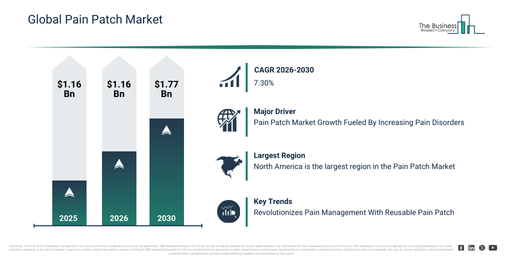
    The pain patch market is projected for significant expansion in the coming years, with expectations to reach $6.29 billion by 2030, demonstrating a compound annual growth rate (CAGR) of 7.3%. This anticipated growth during the forecast period is attributable to a heightened emphasis on opioid alternatives, increased investments in sophisticated drug delivery systems, the expansion of personalized pain therapies, a rising demand for sustained-release formulations, and a growing adoption of self-administered treatments. Furthermore, key trends anticipated in this period encompass a wider embrace of non-opioid pain management solutions, an increased utilization of microneedle patch technologies, a growing requirement for long-acting transdermal therapies, the proliferation of home-based pain management approaches, and a sharpened focus on controlled drug delivery.

    Get A Free Sample Report With In-Depth Market Insights:

    https://thebusinessresearchcompany.com/sample_request?id=73220254&type=smp&name=Pain%20Patch%20Market%20Report%202026&utm_source=Blogs&utm_medium=Paid&utm_campaign=Oct_PR

    Pain Patch Market Growth Backed By Core Demand Fundamentals

    The increasing incidence of pain disorders is projected to boost the expansion of the pain patch market. These disorders are defined as any physical condition where pain serves as the primary symptom, stemming from factors like psychological stress, inflammatory diseases, or physical trauma or injury. Pain patches effectively manage such conditions by administering medication directly through the skin into the bloodstream, ensuring a controlled and sustained drug release over an extended period. For example, in October 2024, the National Library of Medicine, a US-based biomedical library, reported that in 2023, 24.3% of adults experienced chronic pain, and 8.5% indicated high-impact chronic pain over the preceding three months. Thus, the growing prevalence of pain disorders is a significant impetus for the pain patch market’s growth.

    Pain Patch Market Segments: Where Is Growth Concentrated?

    The pain patch market covered in this report is segmented –

    1) By Type: Opioid, Non-Opioid

    2) By Route Of Administration: Metered Dose, Microneedle Patches

    3) By Distribution Channel: Online Pharmacies, Retail Pharmacies, Hospital Pharmacies

    Subsegments:

    1) By Opioid: Fentanyl Patches, Buprenorphine Patches

    2) By Non-Opioid: Lidocaine Patches, Capsaicin Patches, Diclofenac Patches

    Pain Patch Market Growth Trends Reshaping The Competitive Landscape

    Leading companies in the pain patch market are developing reusable pain relief products to enhance their profitability. Reusable pain patch products are medical patches designed for pain management that can be utilized multiple times without losing their effectiveness. For instance, in November 2023, Signal Relief, a US-based provider of pain management solutions, introduced the Signal Relief Pain Patch. The Signal Relief Pain Patch delivers drug-free, non-invasive, and enduring pain relief. Equipped with microscopic particles that function as pain signal antennas, the patch reroutes and interrupts pain messages, thereby reducing their impact and offering relief anytime, anywhere. This patch is reusable, free of chemicals, and wirelessly captures pain signals, proactively suppressing pain responses by intercepting signals before they reach the brain, which promotes a balanced physiological state.

    Pain Patch Market Top Companies Driving Competitive Growth

    Major companies operating in the pain patch market are Pfizer Inc., Bayer AG, Novartis AG, Sanofi S.A., GlaxoSmithKline plc, Viatris Inc., Mylan N.V., Sun Pharmaceutical Industries Ltd., Perrigo Company plc, Hikma Pharmaceuticals plc, Endo International plc, Amneal Pharmaceuticals LLC, Grünenthal Group, Allergan plc, Hisamitsu Pharmaceutical Co. Inc., NICHIBAN Co. Ltd., Teikoku Seiyaku Co. Ltd., Haw Par Corporation, Sorrento Therapeutics Inc., Nanjing Joyful Industrial Co. Ltd., NEXGEL Inc.

    View The Full Pain Patch Market Report:

    https://thebusinessresearchcompany.com/report/pain-patch-global-market-report?utm_source=Blogs&utm_medium=Paid&utm_campaign=Oct_PR

    Pain Patch Market Global Footprint: Which Region Leads The Market?

    North America was the largest region in the pain patch market in 2025. Asia-Pacific is expected to be the fastest-growing region in the forecast period. The regions covered in the pain patch market report are Asia-Pacific, South East Asia, Western Europe, Eastern Europe, North America, South America, Middle East, Africa.

    Reach Out To Our Team:

    The Business Research Company: https://www.thebusinessresearchcompany.com/

    Americas: +1 310-496-7795

    Asia: +44 7882 955267 & +91 8897263534

    Europe: +44 7882 955267

    Email us at: marketing@tbrc.info

    Follow us on:

    LinkedIn: https://in.linkedin.com/company/the-business-research-company

    YouTube: https://www.youtube.com/channel/UC24_fI0rV8cR5DxlCpgmyFQ

    Global Market Model: https://www.thebusinessresearchcompany.com/global-market-model
  • Pain Management Devices And Therapies Market Outlook Through 2030: Understanding The Growth Opportunity

    Pain Management Devices And Therapies Market Outlook Through 2030: Understanding The Growth Opportunity

    Featuring market attractiveness scoring, total addressable market sizing, company benchmarking matrices, interactive Excel dashboards, deeper supply chain intelligence, emerging startup tracking, and granular product-level insights, The Business Research Company’s 2026 market reports are built to deliver research that is both more actionable and more strategically valuable.

    Pain Management Devices And Therapies Market Set To Climb From $5.75 Billion In 2026 To $7.38 Billion By 2030

    The pain management devices and therapies market has demonstrated significant expansion in recent years. Its valuation is set to climb from $5.34 billion in 2025 to $5.75 billion in 2026, reflecting a compound annual growth rate (CAGR) of 7.7%. Historically, this market’s development can be attributed to several factors, including an increase in the occurrence of chronic pain, a rise in cancer pain cases, the hazards associated with opioids, advancements in neurology treatments, and the growing integration of stimulators within hospitals.

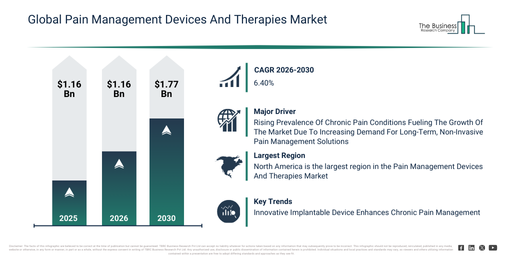
    The pain management devices and therapies market is anticipated to experience substantial growth in the upcoming years. It is projected to reach $7.38 billion in 2030, exhibiting a compound annual growth rate (CAGR) of 6.4%. This expansion over the forecast period is driven by factors such as an aging population, technological advancements in neurostimulators, the demand for sustained pain relief, the increase in outpatient pain clinics, and escalating healthcare expenditure. Significant trends for the forecast period include the growing adoption of neurostimulation therapies, an increase in non-opioid pain management solutions, the expansion of implantable pain devices, a rising need for chronic pain treatments, and a shift towards less invasive pain procedures.

    Get A Free Sample Report With In-Depth Market Insights:

    https://thebusinessresearchcompany.com/sample_request?id=64287683&type=smp&name=Pain%20Management%20Devices%20And%20Therapies%20Market%20Report%202026&utm_source=Blogs&utm_medium=Paid&utm_campaign=Oct_PR

    Pain Management Devices And Therapies Market Growth Catalysts And Demand Drivers

    The increasing occurrence of chronic pain conditions is projected to drive the expansion of the pain management devices and therapies market in the foreseeable future. Chronic pain conditions are characterized as persistent or recurring pain lasting three months or more, which interferes with daily activities and overall quality of life. The growing prevalence of chronic pain can be attributed to an aging population, as older individuals are more susceptible to degenerative joint diseases and other chronic ailments that result in ongoing discomfort. Pain management devices and therapies assist in chronic pain conditions by offering non-invasive and targeted relief, making them suitable for the long-term management of various pain disorders. They enhance patient comfort by providing consistent, personalized pain control, thereby improving overall quality of life. For instance, in November 2024, data from the National Center for Health Statistics, a US-based federal agency, indicated that roughly 24.3% of U.S. adults experienced chronic pain in 2023. Thus, the escalating prevalence of chronic pain conditions is a significant factor boosting the growth of the pain management devices and therapies market.

    Pain Management Devices And Therapies Market Segment Analysis: What Are The Core Market Categories?

    The pain management devices and therapies market covered in this report is segmented –

    1) By Product Type: Electrical Stimulation Devices, Thermal Therapy Devices, Minimally Invasive Devices, Injection And Infusion Systems, Ultrasound And Laser Therapy Devices, Other Product Types

    2) By Therapy Type: Pharmacologic Therapies, Non-Pharmacologic Therapies, Interventional Or Surgical Therapies

    3) By Pain Indication: Chronic Pain, Acute Pain, Other Pain Conditions

    4) By End User: Hospitals, Ambulatory Surgical Centers, Pain Clinics, Rehabilitation Centers, Home Healthcare, Specialty Clinics Or Outpatient Facilities

    Subsegments:

    1) By Electrical Stimulation Devices: Spinal Cord Stimulators (Scs), Transcutaneous Electrical Nerve Stimulation (Tens), Interferential Current Therapy Devices, Peripheral Nerve Stimulators (Pns), Deep Brain Stimulation (Dbs)

    2) By Thermal Therapy Devices: Cryotherapy Units, Heat Therapy Pads And Wraps

    3) By Minimally Invasive Devices: Radiofrequency Ablation Devices, Epidural Catheters, Intrathecal Drug Delivery Systems, Neuroablative Devices

    4) By Injection And Infusion Systems: Pain Infusion Pumps, Needle-Based Injectors

    5) By Ultrasound And Laser Therapy Devices: Therapeutic Ultrasound, Low-Level Laser Therapy (Lllt)

    6) By Other Product Types: Acupuncture Stimulators, Biofeedback And Rehabilitation Devices

    Pain Management Devices And Therapies Market Trends Shaping Long-Term Demand

    Leading companies in the pain management devices and therapies market are concentrating on advancing neuromodulation technologies, such as closed-loop spinal cord stimulation systems, with the goal of delivering personalized pain relief, enhancing patient outcomes, and boosting therapy effectiveness. Closed-loop spinal cord stimulation describes a sophisticated therapeutic system that administers electrical pulses to the spinal cord while concurrently recording its neural response, automatically modifying treatment in real-time to sustain consistent relief. For example, in April 2024, Medtronic plc, a US-based healthcare technology company, obtained Food and Drug Administration (FDA) approval for its Inceptiv closed-loop rechargeable spinal cord stimulator (SCS) specifically for chronic pain treatment. This is a fully implantable device featuring a proprietary sensing technology that captures the body’s biological signals to provide customized, data-driven therapy. It also integrates automatic adjustment functionality, facilitating real-time optimization of spinal cord stimulation to uphold a consistent therapeutic dose for chronic pain without requiring patient intervention.

    Pain Management Devices And Therapies Market Leading Players And Competitive Positioning

    Major companies operating in the pain management devices and therapies market are Abbott Laboratories, Boston Scientific Corporation, Medtronic plc, Baxter International Inc., Johnson & Johnson, Smiths Medical Inc., Becton Dickinson and Company, DJO Global Inc., B Braun Melsungen AG, Neurotech Na, Nevro Corp, NeuroMetrix Inc, Medovex Corporation, Halyard Health Inc, Flowonix Medical Inc, Pain Management Technologies Inc, Avanos Medical Inc, Stimwave Technologies LLC, Omron Healthcare Inc., Stryker Corporation, ICU Medical Inc., Nipro Corporation, Zynex Medical Inc., Saluda Medical Pty Ltd., SPR Therapeutics

    View The Full Pain Management Devices And Therapies Market Report:

    https://thebusinessresearchcompany.com/report/pain-management-devices-and-therapies-global-market-report?utm_source=Blogs&utm_medium=Paid&utm_campaign=Oct_PR

    Pain Management Devices And Therapies Market Regional Split: Which Areas Are Fueling Growth?

    North America was the largest region in the pain management devices and therapies market in 2025. Western Europe was the second-largest region in the pain management devices and therapies market report. The regions covered in the pain management devices and therapies market report are Asia-Pacific, South East Asia, Western Europe, Eastern Europe, North America, South America, Middle East, Africa.

    Reach Out To Our Team:

    The Business Research Company: https://www.thebusinessresearchcompany.com/

    Americas: +1 310-496-7795

    Asia: +44 7882 955267 & +91 8897263534

    Europe: +44 7882 955267

    Email us at: marketing@tbrc.info

    Follow us on:

    LinkedIn: https://in.linkedin.com/company/the-business-research-company

    YouTube: https://www.youtube.com/channel/UC24_fI0rV8cR5DxlCpgmyFQ

    Global Market Model: https://www.thebusinessresearchcompany.com/global-market-model
  • Pachymeter Device Market Growth Potential: What The Latest Forecast Reveals

    Pachymeter Device Market Growth Potential: What The Latest Forecast Reveals

    Built to provide research that’s more actionable and strategically valuable, The Business Research Company’s 2026 market reports include market attractiveness analysis, total addressable market sizing, company benchmarking matrices, interactive Excel dashboards, broader supply chain intelligence, emerging startup tracking, and in-depth product insights.

    Pachymeter Device Market Forecast: Value Set To Climb From $21.21 Billion To $25.28 Billion

    The pachymeter device market size has shown robust expansion in recent years. It is projected to increase from $20.19 billion in 2025 to $21.21 billion in 2026, registering a compound annual growth rate (CAGR) of 5.1%. Throughout the historic period, this market’s growth was primarily driven by the escalating prevalence of glaucoma and corneal disorders, the proliferation of ophthalmology clinics, an uptick in refractive surgeries, the integration of ultrasound-based eye diagnostics, and advancements in optical imaging technologies.

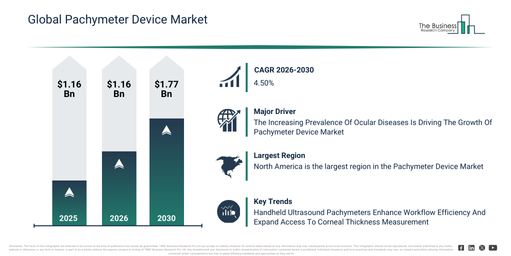
    The pachymeter device market is projected to experience consistent expansion in the coming years, anticipated to reach $25.28 billion by 2030, exhibiting a compound annual growth rate (CAGR) of 4.5%. This growth during the forecast period is primarily driven by the escalating demand for early glaucoma screening, the increasing embrace of advanced anterior segment imaging techniques, the broadening of outpatient eye care services, rising investments in ophthalmic diagnostic innovation, and a heightened emphasis on non-invasive eye examinations. Concurrently, significant trends expected in the same period involve the expanding adoption of non-contact optical pachymeters, the increasing utilization of OCT-based corneal measurement systems, a surging demand for portable ophthalmic devices, the expansion of integrated eye diagnostic platforms, and an elevated focus on enhancing measurement accuracy and speed.

    Get A Free Sample Report With In-Depth Market Insights:

    https://thebusinessresearchcompany.com/sample_request?id=66014597&type=smp&name=Pachymeter%20Device%20Market%20Report%202026&utm_source=Blogs&utm_medium=Paid&utm_campaign=Oct_PR

    Pachymeter Device Market Opportunity Drivers: What’s Unlocking New Revenue Potential?

    The growing occurrence of ocular diseases is anticipated to drive the future expansion of the pachymeter device market. Ocular diseases encompass a broad spectrum of conditions affecting the eye and its related structures. This heightened prevalence of eye conditions is influenced by increased contact lens use, changes in lifestyle, gender differences, and vitamin deficiencies. Pachymetry devices are employed in various ocular diseases to determine corneal thickness, a vital measurement for diagnosing and managing particular conditions. For instance, in May 2024, the Office for Health Improvement and Disparities, a UK-based government department, reported that approximately 2 million people in the UK currently experience some degree of sight loss, and this figure is expected to rise to 2.7 million by the year 2030. Therefore, the increasing prevalence of ocular diseases is fueling the growth of the pachymeter device market.

    Pachymeter Device Market Segment Breakdown: Which Categories Lead On Revenue?

    The pachymeter device market covered in this report is segmented –

    1) By Measurement Technology: Ultrasound Method, Optical Method

    2) By Product Type: Handheld Type, Non-Handheld Type

    3) By Application: Hospitals, Ophthal Clinics, Other Applications

    Subsegments:

    1) By Ultrasound Method: A-Scan Ultrasound Pachymeters, Contact Ultrasound Pachymeters, Non-Contact Ultrasound Pachymeters, Portable Ultrasound Pachymeters, High-Resolution Ultrasound Pachymeters

    2) By Optical Method: Optical Coherence Tomography (OCT) Pachymeters, Scheimpflug Imaging Pachymeters, Confocal Microscopy Pachymeters, Non-Contact Optical Pachymeters, Anterior Segment Optical Pachymeters, Laser Pachymeters

    Pachymeter Device Market Innovation Trends Shaping Future Development

    Leading companies operating in the pachymeter device market are developing innovative products like high-frequency ultrasound probes to improve measurement accuracy, portability, and the efficiency of clinical workflows. High-frequency ultrasound probes are instruments that employ high-frequency sound waves (typically above 20 MHz) to produce highly detailed images or measurements of small or superficial structures, such as the cornea in the eye. For example, in May 2024, Quantel Medical, an ophthalmic device company based in France, unveiled the POCKET III ultrasound pachymeter. This handheld device is equipped with a 30 MHz probe for high-resolution corneal measurements, provides an extended measurement range of 150–1,200 µm with ±5 µm accuracy, and features Bluetooth and USB-C connectivity for direct data transfer to computers and electronic records. These features contribute to faster screening, reduce the workload for operators, and offer versatility for ophthalmologists who require precise measurements in various clinical environments.

    Pachymeter Device Market Competitive Overview And Top Companies

    Major companies operating in the pachymeter device market are Bausch And Lomb Incorporated, Canon Medical Systems Corporation, Topcon Corporation, Quantel Medical Inc., Keeler Ltd., Reichert Inc., OCULUS Optikgeräte GmbH, Accutome Inc., Optovue Inc., Sonomed Escalon, Visionix Ltd., Tomey Corporation, Haag-Streit Group, DGH Technology Inc., MicroMedical Devices Inc. (MMD), NIDEK Co. Ltd., Costruzione Strumenti Oftalmici (CSO) S.r.l., Ziemer Ophthalmic Systems AG, iCare Finland Oy, Rexxam Co. Ltd.

    View The Full Pachymeter Device Market Report:

    https://thebusinessresearchcompany.com/report/pachymeter-device-global-market-report?utm_source=Blogs&utm_medium=Paid&utm_campaign=Oct_PR

    Pachymeter Device Market Top Region: Where Does Most Revenue Come From?

    North America was the largest region in the pachymeter device market in 2025. The regions covered in the pachymeter device market report are Asia-Pacific, South East Asia, Western Europe, Eastern Europe, North America, South America, Middle East, Africa.

    Reach Out To Our Team:

    The Business Research Company: https://www.thebusinessresearchcompany.com/

    Americas: +1 310-496-7795

    Asia: +44 7882 955267 & +91 8897263534

    Europe: +44 7882 955267

    Email us at: marketing@tbrc.info

    Follow us on:

    LinkedIn: https://in.linkedin.com/company/the-business-research-company

    YouTube: https://www.youtube.com/channel/UC24_fI0rV8cR5DxlCpgmyFQ

    Global Market Model: https://www.thebusinessresearchcompany.com/global-market-model
  • Oxygen Source Equipment Market Growth Outlook: Why Analysts Expect Continued Expansion

    Oxygen Source Equipment Market Growth Outlook: Why Analysts Expect Continued Expansion

    Backed by market attractiveness analysis, total addressable market sizing, company benchmarking matrices, interactive Excel dashboards, wider supply chain intelligence, emerging startup coverage, and detailed product-level insights, The Business Research Company’s 2026 market reports are designed to offer research that is more actionable and strategically valuable than ever.

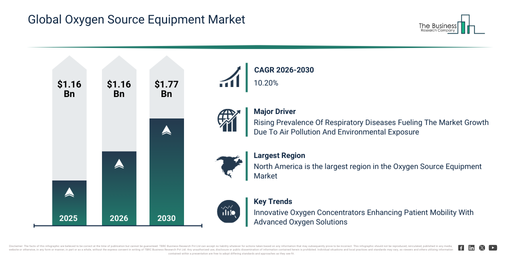
    Oxygen Source Equipment Market Revenue Growth On Track For A 10.2% CAGR Through 2030

    The oxygen source equipment market has experienced rapid expansion in recent years. This market is projected to grow from $3.97 billion in 2025 to $4.38 billion in 2026, exhibiting a compound annual growth rate (CAGR) of 10.3%. The historical expansion of this market can be linked to factors such as the increasing prevalence of respiratory disorders, the enlargement of hospital infrastructure, a rise in industrial manufacturing activities, the growing demand for medical oxygen in critical care, and government investments in healthcare facilities.

    The oxygen source equipment market size is projected for substantial growth in the coming years, with expectations to reach $6.46 billion in 2030, demonstrating a compound annual growth rate (CAGR) of 10.2%. This expansion during the forecast period can be attributed to an aging population dealing with chronic respiratory conditions, the development of home healthcare services, increasing adoption of portable oxygen concentrators, a wider range of industrial oxygen applications, and technological progress in oxygen generation systems. Key trends for the forecast period include the increasing uptake of home-based oxygen therapy, a rising need for portable and lightweight oxygen systems, the spread of on-site oxygen generation systems, more frequent use of oxygen equipment in emergency and disaster scenarios, and technological enhancements in oxygen storage and delivery safety.

    Get A Free Sample Report With In-Depth Market Insights:

    https://thebusinessresearchcompany.com/sample_request?id=18867924&type=smp&name=Oxygen%20Source%20Equipment%20Market%20Report%202026&utm_source=Blogs&utm_medium=Paid&utm_campaign=Oct_PR

    Oxygen Source Equipment Market Growth Momentum: What Factors Are Shaping Demand?

    The increasing prevalence of respiratory diseases is projected to drive the growth of the oxygen source equipment market in the coming years. Respiratory diseases are medical conditions that affect the lungs and other parts of the respiratory system, making it challenging to breathe. The rising occurrence of these diseases is primarily due to increasing air pollution and exposure to environmental toxins, which can damage lung tissue, impair respiratory function, and trigger or worsen conditions such as asthma, chronic obstructive pulmonary disease (COPD), and lung cancer. Oxygen source equipment is utilized in treating respiratory diseases to deliver supplemental oxygen, helping to maintain adequate blood oxygen levels when the lungs are unable to do so efficiently. For instance, in February 2024, the UK Health Security Agency, a UK-based government agency, stated that England saw a 10.7% year-over-year rise in tuberculosis (TB) cases in 2023, with reported cases increasing from 4,380 in 2022 to 4,850. Thus, the growing prevalence of respiratory diseases is a significant factor boosting the oxygen source equipment market.

    Oxygen Source Equipment Market Segmentation: How Does The Market Break Down By Category?

    The oxygen source equipment market covered in this report is segmented –

    1) By Product Type: Oxygen Cylinders, Oxygen Concentrators, Liquid Oxygen Equipment, Oxygen Systems For Industrial Use, Portable Oxygen Systems

    2) By Delivery Mode: Gas Delivery Systems, Cryogenic Liquid Delivery Systems, Portable Delivery Systems, Pipeline Delivery Systems, Bulk Oxygen Supply Systems

    3) By Application: Hospital, Clinic, Other Applications

    4) By End-User: Healthcare And Medical, Aerospace And Aviation, Industrial Manufacturing, Water Treatment Plants, Energy And Power Generation

    Subsegments:

    1) By Oxygen Cylinders: Steel Oxygen Cylinders, Aluminum Oxygen Cylinders, Composite Oxygen Cylinders, High-Pressure Oxygen Cylinders, Low-Pressure Oxygen Cylinders

    2) By Oxygen Concentrators: Portable Oxygen Concentrators, Stationary Oxygen Concentrators, Continuous Flow Concentrators, Pulse Dose Concentrators

    3) By Liquid Oxygen Equipment: Portable Liquid Oxygen Units, Home-Based Reservoir Systems, Hospital-Based Bulk Liquid Oxygen Systems, Mobile Cryogenic Containers

    4) By Oxygen Systems For Industrial Use: Pressure Swing Adsorption (PSA) Oxygen Plants, Vacuum Pressure Swing Adsorption (VPSA) Plants, Cryogenic Air Separation Units (ASUs), Membrane-Based Oxygen Generators

    5) By Portable Oxygen Systems: Wearable Oxygen Devices, Lightweight Cylindrical Kits, Portable Oxygen Concentrator Kits, Backpack Oxygen Delivery Systems

    Oxygen Source Equipment Market Trends Redefining Industry Growth

    Leading companies in the oxygen source equipment market are concentrating on innovative solutions, such as portable oxygen concentrators, to enhance patient mobility, improve their quality of life, and satisfy the growing demand for home-based and travel-friendly respiratory care. A portable oxygen concentrator is a compact medical instrument that extracts and delivers concentrated oxygen from ambient air, enabling individuals with respiratory conditions to receive oxygen therapy while in motion. For instance, in October 2024, Inogen, a U.S.-based medical technology company, unveiled the Rove 4, a lightweight portable oxygen concentrator weighing under 3 lbs. It offers four flow settings, providing up to 840 ml/min of medical-grade oxygen, and incorporates three battery configurations delivering up to 5 hours and 45 minutes of operation. The device is engineered to support patient movement and daily activities.

    Oxygen Source Equipment Market Competitive Landscape: Which Companies Lead The Industry?

    Major companies operating in the oxygen source equipment market are Air Liquide Healthcare, Koninklijke Philips N.V., GCE Healthcare, Teijin Limited, ResMed Inc., Fisher & Paykel Healthcare, Invacare Corporation, Contec Medical Systems, Inogen Inc., Drive DeVilbiss Healthcare, CAIRE Inc., Precision Medical Inc., OxyGo LLC, O2 Concepts LLC, Longfian Scitech Co. Ltd., Nidek Medical Products, Besco Medical Limited, Scaleo Medical SAS, Oxus Inc., Linde Healthcare, Taiyo Nippon Sanso Corporation, Messer Group

    View The Full Oxygen Source Equipment Market Report:

    https://thebusinessresearchcompany.com/report/oxygen-source-equipment-global-market-report?utm_source=Blogs&utm_medium=Paid&utm_campaign=Oct_PR

    Oxygen Source Equipment Market Regional Breakdown: Where Is Demand Concentrated?

    North America was the largest region in the oxygen source equipment market in 2025. Asia-Pacific is expected to be the fastest-growing region in the forecast period. The regions covered in the oxygen source equipment market report are Asia-Pacific, South East Asia, Western Europe, Eastern Europe, North America, South America, Middle East, Africa.

    Reach Out To Our Team:

    The Business Research Company: https://www.thebusinessresearchcompany.com/

    Americas: +1 310-496-7795

    Asia: +44 7882 955267 & +91 8897263534

    Europe: +44 7882 955267

    Email us at: marketing@tbrc.info

    Follow us on:

    LinkedIn: https://in.linkedin.com/company/the-business-research-company

    YouTube: https://www.youtube.com/channel/UC24_fI0rV8cR5DxlCpgmyFQ

    Global Market Model: https://www.thebusinessresearchcompany.com/global-market-model
  • Oxygen Conserving Devices Market Forecast Insights: The Road To $3.86 Billion By 2030

    Oxygen Conserving Devices Market Forecast Insights: The Road To $3.86 Billion By 2030

    Featuring market attractiveness scoring, total addressable market sizing, company benchmarking matrices, interactive Excel dashboards, deeper supply chain intelligence, emerging startup tracking, and granular product-level insights, The Business Research Company’s 2026 market reports are built to deliver research that is both more actionable and more strategically valuable.

    Oxygen Conserving Devices Market Value Growth And Long-Term Outlook

    The market for oxygen conserving devices has experienced swift expansion in recent times. This market is projected to expand from $1.91 billion in 2025 to $2.2 billion in 2026, demonstrating a compound annual growth rate (CAGR) of 15.4%. Historical growth has been driven by factors such as the rising occurrence of chronic respiratory illnesses, the development of home healthcare infrastructure, an increasing need for portable oxygen therapy, enhanced availability of oxygen delivery systems, and greater recognition of the advantages of oxygen conservation.

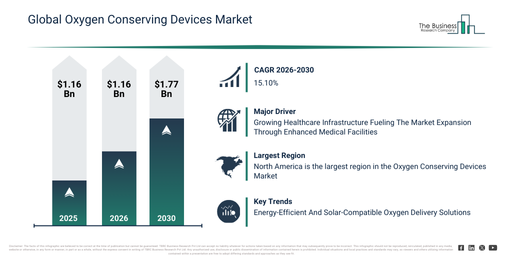
    The oxygen conserving devices market size is projected to experience swift expansion over the coming years, reaching $3.86 billion in 2030 at a compound annual growth rate (CAGR) of 15.1%. This expansion during the forecast period is attributed to several factors, including increasing demand for smart respiratory devices, rising adoption of wearable oxygen solutions, expansion of aging population care services, a growing focus on cost-effective oxygen therapy, and increasing technological advancements in oxygen delivery. Major trends anticipated in the forecast period encompass increasing adoption of intermittent flow oxygen delivery, rising use of portable oxygen conserving devices, growing integration of smart oxygen control mechanisms, expansion of home and long-term care oxygen solutions, and an enhanced focus on oxygen efficiency.

    Get A Free Sample Report With In-Depth Market Insights:

    https://thebusinessresearchcompany.com/sample_request?id=61870733&type=smp&name=Oxygen%20Conserving%20Devices%20Market%20Report%202026&utm_source=Blogs&utm_medium=Paid&utm_campaign=Oct_PR

    Oxygen Conserving Devices Market Expansion Drivers: What’s Shaping Future Growth?

    The future expansion of healthcare infrastructure is projected to drive the growth of the oxygen conserving devices market. Healthcare infrastructure refers to the physical and organizational structures, facilities, systems, and resources required to deliver healthcare services effectively. This infrastructure is expanding due to the rising prevalence of chronic diseases, such as diabetes and heart conditions, which increases the demand for specialized care facilities and resources to support long-term patient management. Healthcare infrastructure supports oxygen conserving devices by ensuring reliable access, efficient delivery, and proper maintenance in medical facilities and homecare settings. For instance, in October 2025, according to the ScienceSoft USA Corporation, a US-based consulting and software development company, as of 2023, the United States has 6,093 hospitals in total, including 5,112 community hospitals. Among these community facilities, 2,978 are nonprofit, 1,214 are for-profit, and 920 are operated by government entities. Therefore, increasing healthcare infrastructure is driving the growth of the oxygen conserving devices market.

    Oxygen Conserving Devices Market Segment Trends And Revenue Contributors

    The oxygen conserving devices market covered in this report is segmented –

    1) By Product: Reservoir Cannula, Transtracheal Catheters, Intermittent Flow Device, Continuous Flow Device, Other Products

    2) By Indication: Chronic Obstructive Pulmonary Disease (COPD), Pneumonia, Asthma, Other Respiratory Disorders

    3) By End-User: Hospitals And Clinics, Long-Term Care Units, Home Care, Other End-Users

    Subsegments:

    1) Reservoir Cannula: Pendant Reservoir Cannula, Mustache Reservoir Cannula, Pediatric Reservoir Cannula

    2) Transtracheal Catheters: Micro-Trach Catheter, Scoop-Tip Catheter, Extended-Length Catheter

    3) Intermittent Flow Device: Pulse Dose Oxygen Conserving Device, Demand Oxygen Delivery System, Electronic Oxygen Conserving Device

    4) Continuous Flow Device: Portable Oxygen Concentrators, Stationary Oxygen Concentrators, High-Flow Oxygen Therapy Device

    5) Other Products: Oxygen Masks, Oxygen-Conserving Regulators, Oxygen Reservoir Bags, Nasal Oxygen Prongs, Oxygen Humidifiers

    Oxygen Conserving Devices Market Strategic Trends: What Defines The Next Growth Phase?

    Leading firms in the oxygen-conserving devices market are prioritizing energy-efficient solutions for oxygen delivery, including low-power, solar-compatible oxygen concentrators. These are developed for electrical environments that are either unstable or lack sufficient resources, ensuring a steady oxygen supply while using minimal energy and allowing functionality where traditional power sources are inconsistent. Such systems commonly feature a broad voltage input range, soft-start mechanisms, and robust components, guaranteeing dependable operation even in difficult circumstances. For instance, in October 2024, Drive DeVilbiss Healthcare, a US-based respiratory-care company, launched its PulmO2 Oxygen Concentrator. This device boasts up to 67% reduced energy consumption, facilitating extended use in areas with limited resources. It incorporates a soft-start feature, ensuring its suitability for solar power setups and supporting off-grid functionality. Additionally, it offers a broad input voltage range (100–240 VAC) along with strong environmental resilience, ensuring consistent performance in conditions of high heat, humidity, dust, and at altitudes reaching 2,000 m.

    Oxygen Conserving Devices Market Competitive Landscape: Who Leads The Industry?

    Major companies operating in the oxygen conserving devices market are Medline Industries LP, Drive DeVilbiss Healthcare LLC, React Health, GF Health Products Inc., Essex Industries Inc., Compass Health Brands, Sunset Healthcare Solutions Inc., CHAD Therapeutics, Precision Medical Inc., Air Liquide Healthcare, Inovo Inc., HERSILL, GCE Group, Responsive Respiratory Inc., Caire Inc., Inogen Inc., Philips Respironics, ResMed Inc., Fisher & Paykel Healthcare, Oxus America, Longfian Scitech Co. Ltd., Beijing North Star Medical Equipment Co. Ltd.

    View The Full Oxygen Conserving Devices Market Report:

    https://thebusinessresearchcompany.com/report/oxygen-conserving-devices-global-market-report?utm_source=Blogs&utm_medium=Paid&utm_campaign=Oct_PR

    Oxygen Conserving Devices Market Geographic Landscape: Which Region Dominates Industry Growth?

    North America was the largest region in the oxygen conserving devices market in 2025. Asia-Pacific is expected to be the fastest-growing region in the forecast period. The regions covered in the oxygen conserving devices market report are Asia-Pacific, South East Asia, Western Europe, Eastern Europe, North America, South America, Middle East, Africa.

    Reach Out To Our Team:

    The Business Research Company: https://www.thebusinessresearchcompany.com/

    Americas: +1 310-496-7795

    Asia: +44 7882 955267 & +91 8897263534

    Europe: +44 7882 955267

    Email us at: marketing@tbrc.info

    Follow us on:

    LinkedIn: https://in.linkedin.com/company/the-business-research-company

    YouTube: https://www.youtube.com/channel/UC24_fI0rV8cR5DxlCpgmyFQ

    Global Market Model: https://www.thebusinessresearchcompany.com/global-market-model
  • Oxygen Conservers Market Explained: What Is Fueling Growth To $3.46 Billion By 2030?

    Oxygen Conservers Market Explained: What Is Fueling Growth To $3.46 Billion By 2030?

    Built to provide research that’s more actionable and strategically valuable, The Business Research Company’s 2026 market reports include market attractiveness analysis, total addressable market sizing, company benchmarking matrices, interactive Excel dashboards, broader supply chain intelligence, emerging startup tracking, and in-depth product insights.

    Oxygen Conservers Market Poised To Hit $3.46 Billion By 2030 With A 13.4% CAGR

    The market for oxygen conservers has experienced significant expansion recently. It is projected to increase from $1.84 billion in 2025 to $2.09 billion in 2026, maintaining a compound annual growth rate (CAGR) of 13.8%. This historical growth can be attributed to several factors, including the escalating incidence of respiratory disorders, greater adoption of home oxygen therapy, an expanding elderly demographic, enhanced accessibility of oxygen concentrators, and heightened clinical understanding regarding oxygen conservation.

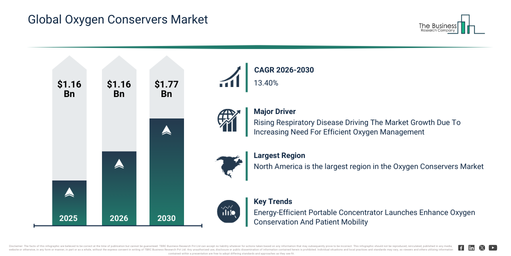
    The oxygen conservers market size is projected for substantial expansion in the coming years. It is anticipated to reach $3.46 billion by 2030, exhibiting a compound annual growth rate (CAGR) of 13.4%. This growth during the forecast period is fueled by several factors, including the increasing integration of smart connected oxygen devices, the escalating need for portable respiratory care options, the broader availability of home healthcare services, an intensified emphasis on the effectiveness of long-term oxygen therapy, and greater investments in respiratory devices designed with patients in mind. Key trends projected for the forecast period encompass a wider uptake of pulse-dose oxygen delivery systems, a growing preference for lightweight portable oxygen conservers, the increasing incorporation of smart oxygen monitoring sensors, an expansion of home-based oxygen therapy options, and a heightened commitment to enhancing patient mobility and comfort.

    Get A Free Sample Report With In-Depth Market Insights:

    https://thebusinessresearchcompany.com/sample_request?id=66850908&type=smp&name=Oxygen%20Conservers%20Market%20Report%202026&utm_source=Blogs&utm_medium=Paid&utm_campaign=Oct_PR

    Oxygen Conservers Market Development Factors: What’s Supporting Demand?

    The expanding incidence of respiratory illnesses is projected to fuel the expansion of the oxygen conservers market in the coming years. Respiratory diseases, which are medical conditions impacting the lungs and airways, make breathing challenging and frequently manifest as shortness of breath. Heightened exposure to air pollution contributes to an increased occurrence of respiratory conditions, as pollutants harm lung tissue, weaken the immune system, and initiate chronic ailments. Oxygen conservers improve respiratory treatment by optimizing the delivery of oxygen, making them highly suitable for individuals with persistent lung conditions. They extend the duration of oxygen supply by releasing it solely during inhalation, thereby boosting therapy effectiveness and patient mobility. For example, in November 2024, data from the Australian Institute of Health and Welfare, a government agency located in Australia, indicated that 2.8 million people (11%) suffered from asthma in 2022. This accounted for 2.5% of the total disease burden and 35% of the respiratory disease burden in 2023, with 467 deaths (1.8 per 100,000 population) recorded in 2022, representing 0.2% of all fatalities. Consequently, the increasing prevalence of respiratory diseases is stimulating the growth of the oxygen conservers market.

    Oxygen Conservers Market Segment Analysis Spotlighting Growth Areas

    The oxygen conservers market covered in this report is segmented –

    1) By Product Type: Continuous Flow Oxygen Conservers, Pulse Dose Oxygen Conservers, Wall-Mount Oxygen Conservers, Portable Oxygen Conservers

    2) By Technology: Electronic Oxygen Conservers, Mechanical Oxygen Conservers, Integrated Oxygen Delivery Systems

    3) By Application: Respiratory Diseases, Chronic Obstructive Pulmonary Disease (COPD), Liquid Oxygen Systems, Long-Term Oxygen Therapy Applications

    4) By End-User: Hospitals, Clinics, Nursing Homes, HomeCare, Other End-Users

    Subsegments:

    1) By Continuous Flow Oxygen Conservers: High-Flow Continuous Oxygen Conservers, Low-Flow Continuous Oxygen Conservers, Dual-Mode Continuous Flow Oxygen Conservers, Pediatric Continuous Flow Oxygen Conservers, Stationary Continuous Flow Oxygen Conservers

    2) By Pulse Dose Oxygen Conservers: Adjustable Pulse Dose Oxygen Conservers, Fixed-Setting Pulse Dose Oxygen Conservers, Smart Sensor Pulse Dose Oxygen Conservers, High-Volume Pulse Dose Oxygen Conservers, Battery-Operated Pulse Dose Oxygen Conservers

    3) By Wall-Mount Oxygen Conservers: Hospital Room Wall-Mount Oxygen Conservers, Intensive Care Unit (ICU) Wall-Mount Oxygen Conservers, Emergency Department Wall-Mount Oxygen Conservers, Modular Wall-Mount Oxygen Conservers, High-Capacity Wall-Mount Oxygen Conservers

    4) By Portable Oxygen Conservers: Wearable Portable Oxygen Conservers, Compact Travel-Friendly Oxygen Conservers, Rechargeable Battery-Powered Oxygen Conservers, Hybrid Portable And Stationary Oxygen Conservers, Lightweight Backpack Oxygen Conservers

    Oxygen Conservers Market Transformation Trends: What Innovations Are Driving Change?

    Leading companies within the oxygen conservers market are concentrating on developing energy-efficient portable concentrators, particularly lightweight pulse-dose POCs, which are engineered to optimize oxygen delivery per watt-hour. This focus helps conserve both oxygen and power while simultaneously improving patient mobility. Lightweight pulse-dose POCs refer to portable oxygen concentrators that are compact, simple to carry, and dispense oxygen in brief bursts exclusively upon the user’s inhalation, rather than a continuous stream. As an illustration, Inogen Inc., a US-based respiratory medical technology company, launched the Inogen Rove 4 portable oxygen concentrator in October 2024. The Rove 4 features four pulse-dose settings, delivering up to 840 mL/min of medical-grade oxygen. It also offers a selection of three battery options that support up to 5 hours and 45 minutes of continuous use, coupled with an ultra-lightweight design (2.9 lb / 1.3 kg) to enhance patient mobility. The system is powered by Inogen’s patented Intelligent Delivery Technology, which senses inhalation in under 250 ms to guarantee timely, efficient oxygen delivery only when needed. This innovation is designed to assist patients with chronic respiratory conditions in maintaining greater independence in daily activities, while ensuring reliable and clinically effective oxygen therapy.

    Oxygen Conservers Market Company Landscape And Competitive Strategy

    Major companies operating in the oxygen conservers market are Medline Industries LP, Drive DeVilbiss Healthcare LLC, React Health, GF Health Products Inc., Essex Industries Inc., Compass Health Brands, Sunset Healthcare Solutions Inc., CHAD Therapeutics, Precision Medical Inc., Air Liquide Healthcare, Inovo Inc., HERSILL, GCE Group, Responsive Respiratory Inc., Caire Inc., Inogen Inc., Philips Respironics, ResMed Inc., Fisher & Paykel Healthcare, Oxus America, Precision Oxygen Group, Longfian Scitech Co. Ltd.

    View The Full Oxygen Conservers Market Report:

    https://thebusinessresearchcompany.com/report/oxygen-conservers-global-market-report?utm_source=Blogs&utm_medium=Paid&utm_campaign=Oct_PR

    Oxygen Conservers Market Largest Region: Which Geography Holds The Highest Market Share?

    North America was the largest region in the oxygen conservers market in 2025. Asia-Pacific is expected to be the fastest-growing region in the forecast period. The regions covered in the oxygen conservers market report are Asia-Pacific, South East Asia, Western Europe, Eastern Europe, North America, South America, Middle East, Africa.

    Reach Out To Our Team:

    The Business Research Company: https://www.thebusinessresearchcompany.com/

    Americas: +1 310-496-7795

    Asia: +44 7882 955267 & +91 8897263534

    Europe: +44 7882 955267

    Email us at: marketing@tbrc.info

    Follow us on:

    LinkedIn: https://in.linkedin.com/company/the-business-research-company

    YouTube: https://www.youtube.com/channel/UC24_fI0rV8cR5DxlCpgmyFQ

    Global Market Model: https://www.thebusinessresearchcompany.com/global-market-model
  • Oxygen Concentrators Market Forecast To Reach $3.31 Billion By 2030: Key Trends Explained

    Oxygen Concentrators Market Forecast To Reach $3.31 Billion By 2030: Key Trends Explained

    Backed by market attractiveness analysis, total addressable market sizing, company benchmarking matrices, interactive Excel dashboards, wider supply chain intelligence, emerging startup coverage, and detailed product-level insights, The Business Research Company’s 2026 market reports are designed to offer research that is more actionable and strategically valuable than ever.

    Oxygen Concentrators Market Size And Revenue Outlook Through 2030

    The oxygen concentrators market has shown strong growth in recent years. This market is projected to expand from $2.38 billion in 2025 to $2.54 billion in 2026, achieving a compound annual growth rate (CAGR) of 7.1%. The historical growth experienced in this sector can be attributed to the increasing prevalence of respiratory disorders, the expansion of home healthcare services, rising awareness of oxygen therapy benefits, improved access to medical oxygen devices, and a growing elderly population.

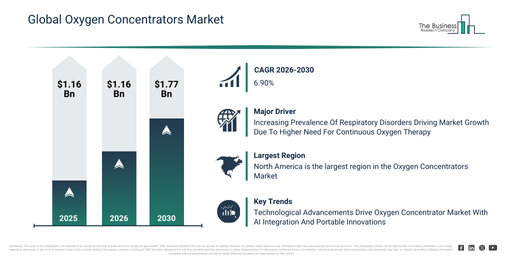
    The oxygen concentrators market is projected to experience substantial expansion over the upcoming years, reaching a valuation of $3.31 billion by 2030, driven by a compound annual growth rate (CAGR) of 6.9%. This anticipated growth stems from factors such as the wider uptake of remote patient monitoring, greater investment in home healthcare facilities, the expanded use of portable medical devices, an intensified emphasis on solutions for patient mobility, and ongoing progress in oxygen separation technologies. Key developments expected during this period involve a heightened demand for portable oxygen concentrators, a greater embrace of oxygen therapy delivered at home, the increasing incorporation of intelligent oxygen monitoring functions, the broader availability of lightweight and compact device designs, and a stronger emphasis on energy-efficient oxygen delivery methods.

    Get A Free Sample Report With In-Depth Market Insights:

    https://thebusinessresearchcompany.com/sample_request?id=92107389&type=smp&name=Oxygen%20Concentrators%20Market%20Report%202026&utm_source=Blogs&utm_medium=Paid&utm_campaign=Oct_PR

    Oxygen Concentrators Market Industry Drivers: What’s Behind The Revenue Growth?

    The global rise in the occurrence of respiratory ailments is anticipated to drive the future expansion of the oxygen concentrators market. Respiratory disorders encompass chronic or acute medical conditions, such as chronic obstructive pulmonary disease (COPD), asthma, pneumonia, and post-viral respiratory complications, which compromise lung function and diminish oxygen levels within the body. This escalation in respiratory illnesses is influenced by factors like air pollution, tobacco consumption, occupational risks, and the long-term health consequences of respiratory infections. The growing prevalence of respiratory disorders bolsters the oxygen concentrators market by intensifying the demand for dependable, continuous oxygen therapy devices utilized in homes, clinics, and emergency care settings. For instance, according to the Centers for Disease Control and Prevention, a US-based government agency, the number of tuberculosis cases rose from 8,320 in 2022 to 9,615 in 2023, marking an increase of 1,295 cases. Additionally, the incidence rate climbed from 2.5 per 100,000 individuals in 2022 to 2.9 in 2023. Thus, the increasing prevalence of respiratory disorders is fueling the growth of the oxygen concentrators market.

    Oxygen Concentrators Market Segment Performance And Emerging Opportunities

    The oxygen concentrators market covered in this report is segmented –

    1) By Type: Portable, Stationary

    2) By Technology: Pulse Dose, Continuous Flow

    3) By Application: Chronic Obstructive Pulmonary Disease (COPD), Lung Cancer, Pneumonia, Other Applications

    4) By End User: Hospitals, Home Care, Other End Users

    Subsegments:

    1) By Portable: Battery-Operated Portable Concentrators, Travel-Friendly Models, Compact And Lightweight Designs

    2) By Stationary: Continuous Flow Concentrators, Pulse Dose Concentrators, High-Flow Stationary Models

    #Oxygen Concentrators Market Growth Trends: What’s Shaping The Future Outlook?

    Leading companies within the oxygen concentrators market are increasingly channeling investments into technologies like artificial intelligence and low-cost portable devices to enhance the functionality of these concentrators. Artificial intelligence and low-cost portable devices are defined as affordable, compact diagnostic or monitoring tools that utilize artificial intelligence (AI) algorithms to provide swift, precise analyses and healthcare insights at the point of care or in remote locations. For instance, in March 2024, Drive DeVilbiss Healthcare, a US-based leading manufacturer of durable medical equipment, collaborating with Sanrai International, a US-based company that supplies innovative medical equipment, introduced the PulmO2 10L Oxygen Concentrator. This device is engineered to be energy-efficient and durable, making it suitable for use in rigorous clinical environments. The PulmO2 is intended to deliver reliable oxygen therapy, particularly in low-resource settings, and is anticipated to substantially reduce energy costs compared to traditional 10L concentrator.

    Oxygen Concentrators Market Key Players Shaping Industry Direction

    Major companies operating in the oxygen concentrators market are Inogen Inc, Koninklijke Philips N.V, Invacare Corporation, CAIRE Inc, O2 Concepts LLC, Nidek Medical Products Inc., Precision Medical Inc, Drive Devilbiss Healthcare Ltd, 3B Medical Inc, BPL, Evox Oxygen Concentrators, Nanjing Everich Medicare Import & Export Co. Ltd, AngelBiss Medical Technology Co. Ltd, Hefei DX Medical Co. Ltd, Longfian Scitech Co. Ltd, Pure O2, Heinen + Lowenstein GmbH & Co. KG, DeVilbiss Healthcare GmbH, ResMed, AirSep Corporation, Sequal Technologies Inc

    View The Full Oxygen Concentrators Market Report:

    https://thebusinessresearchcompany.com/report/oxygen-concentrators-global-market-report?utm_source=Blogs&utm_medium=Paid&utm_campaign=Oct_PR

    Oxygen Concentrators Market Regional Analysis: Which Region Leads By Revenue?

    North America was the largest region in the oxygen concentrators market in 2025. Europe was the second-largest region in the oxygen concentrators market. The regions covered in the oxygen concentrators market report are Asia-Pacific, South East Asia, Western Europe, Eastern Europe, North America, South America, Middle East, Africa.

    Reach Out To Our Team:

    The Business Research Company: https://www.thebusinessresearchcompany.com/

    Americas: +1 310-496-7795

    Asia: +44 7882 955267 & +91 8897263534

    Europe: +44 7882 955267

    Email us at: marketing@tbrc.info

    Follow us on:

    LinkedIn: https://in.linkedin.com/company/the-business-research-company

    YouTube: https://www.youtube.com/channel/UC24_fI0rV8cR5DxlCpgmyFQ

    Global Market Model: https://www.thebusinessresearchcompany.com/global-market-model
  • Ovulation Testing Kits Market Analysis: Understanding The Drivers Behind 9.1% CAGR Through 2030 Growth

    Ovulation Testing Kits Market Analysis: Understanding The Drivers Behind 9.1% CAGR Through 2030 Growth

    Featuring market attractiveness scoring, total addressable market sizing, company benchmarking matrices, interactive Excel dashboards, deeper supply chain intelligence, emerging startup tracking, and granular product-level insights, The Business Research Company’s 2026 market reports are built to deliver research that is both more actionable and more strategically valuable.

    Ovulation Testing Kits Market Growth From $3.66 Billion In 2026 To $5.19 Billion By 2030 At A CAGR Of 9.1%

    The market size for ovulation testing kits has seen swift expansion in recent years. This sector is anticipated to increase from $3.32 billion in 2025 to $3.66 billion in 2026, at a compound annual growth rate (CAGR) of 10.3%. Historically, this growth has stemmed from heightened awareness of fertility planning, a greater prevalence of delayed pregnancies, the expanding availability of home diagnostic products, rising adoption of self-testing healthcare devices, and improvements in hormone detection technologies.

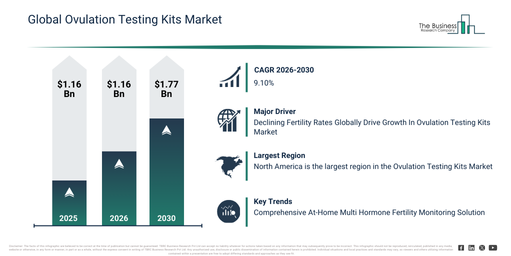
    The ovulation testing kits market is anticipated to show robust expansion in the coming years. It is projected to reach $5.19 billion in 2030 at a compound annual growth rate (CAGR) of 9.1%. The expansion during the forecast period can be attributed to an escalating demand for connected fertility solutions, the increasing adoption of personalized reproductive health tools, the widening reach of e-commerce distribution for diagnostic products, a heightened focus on women’s health management, and the growing incorporation of AI-enabled fertility tracking. Significant trends foreseen in this period encompass the rising uptake of digital ovulation testing kits, an increased preference for home-based fertility monitoring, the enhanced integration of mobile applications with testing kits, the availability of more disposable and user-friendly test formats, and an intensified emphasis on precision and early fertility detection.

    Get A Free Sample Report With In-Depth Market Insights:

    https://thebusinessresearchcompany.com/sample_request?id=85395321&type=smp&name=Ovulation%20Testing%20Kits%20Market%20Report%202026&utm_source=Blogs&utm_medium=Paid&utm_campaign=Oct_PR

    Ovulation Testing Kits Market Growth Factors: What’s Supporting Expansion?

    The future expansion of the ovulation testing kits market is anticipated to be driven by decreasing fertility rates. Fertility rates are defined as the annual count of live births per 1,000 women of childbearing age, usually 15-49, within a population. This decline in fertility is attributed to various factors including enhanced education and career opportunities for women, improved access to and use of contraceptives, delayed marriage and childbearing, and high costs of living. Ovulation testing kits serve as beneficial tools for individuals or couples experiencing low fertility by offering a non-invasive and accessible method to optimize the timing of intercourse and increase the likelihood of conception. For instance, in October 2024, according to the Office for National Statistics, a UK-based governmental organization, the total fertility rate (TFR) for England and Wales decreased from an average of 1.49 children per woman over their lifetime between 2022 and 2023 to 1.44, representing the lowest rate ever recorded. Consequently, the falling fertility rates are propelling the growth of the ovulation testing kits market.

    Ovulation Testing Kits Market Segment Landscape And Growth Outlook

    The ovulation testing kits market covered in this report is segmented –

    1) By Product Type: Urine-Based, Saliva-Based, Salivary Ferning

    2) By Distribution Channel: Pharmacies And Drugstores, Hypermarkets And Supermarkets, E-Commerce, Other Distribution Channels

    3) By End User: Hospitals, Clinics, Diagnostic Centers, Fertility Centers, Home Care Settings, Other End Uses

    Subsegments:

    1) By Urine-Based: Dipstick Tests, Midstream Tests, Digital Urine Tests

    2) By Saliva-Based: Saliva Ovulation Test Strips, Saliva Test Kits with Magnification

    3) By Salivary Ferning: Ferning Microscopes, Ferning Test Kits

    Ovulation Testing Kits Market Industry Trends: What’s Reshaping Demand?

    Leading firms in the ovulation testing kits market are concentrating on creating sophisticated solutions, including multi-hormone at-home testing systems, as substitutes for conventional single-hormone ovulation test strips. Such a multi-hormone solution represents a cutting-edge fertility-monitoring technology that boosts precision by simultaneously assessing multiple crucial reproductive hormones, offering more profound understanding of ovulation timing, cycle well-being, and general fertility. For example, in August 2025, Mira, a US-based women’s health technology company, unveiled Ultra4, which is the inaugural at-home hormone monitor featuring lab-quality 4-in-1 testing. This innovation supersedes traditional ovulation kits by evaluating four vital fertility hormones—FSH, E3G, LH, and PdG—via a fluorescent-based system that provides accurate, quantitative outcomes. It offers real-time hormone monitoring, enhanced cycle insights, and novel functionalities like 4D Ovulation Profiling™, which assesses ovulation timing, strength, and viability. When integrated with the Mira App, the Ultra4™ enables users to visualize hormone patterns, obtain tailored fertility predictions, and gain a clearer comprehension of their reproductive health. The Ultra4 system improves conception planning, refines diagnostic accuracy, and equips users with thorough, data-driven fertility monitoring within their homes.

    Ovulation Testing Kits Market Competitive Analysis Of Leading Industry Participants

    Major companies operating in the ovulation testing kits market are Church And Dwight Co Inc, Piramal Enterprises Inc., Meril Diagnostics Pvt Ltd, BIOSYNEX SA, Boditech Med Inc., Mankind Pharma Ltd., Innovita Biological Technology Co. Ltd., Hangzhou Clongene Biotech Co. Ltd., Swiss Precision Diagnostics GmbH, Artron Laboratories Inc., Wondfo Biotech Co. Ltd., AdvaCare Pharma, Proov, Shanghai Chemtron Biotech Co. Ltd., Ava Science Inc., Clinical Guard Ltd., Fairhaven Health LLC, Femometer Ltd., Easy Healthcare Corporation (Premom), Tulip Diagnostics Pvt. Ltd.

    View The Full Ovulation Testing Kits Market Report:

    https://thebusinessresearchcompany.com/report/ovulation-testing-kits-global-market-report?utm_source=Blogs&utm_medium=Paid&utm_campaign=Oct_PR

    Ovulation Testing Kits Market Geographic Distribution And Regional Opportunities

    North America was the largest region in the ovulation testing kits market in 2025. Asia-Pacific is expected to be the fastest-growing region in the forecast period. The regions covered in the ovulation testing kits market report are Asia-Pacific, South East Asia, Western Europe, Eastern Europe, North America, South America, Middle East, Africa.

    Reach Out To Our Team:

    The Business Research Company: https://www.thebusinessresearchcompany.com/

    Americas: +1 310-496-7795

    Asia: +44 7882 955267 & +91 8897263534

    Europe: +44 7882 955267

    Email us at: marketing@tbrc.info

    Follow us on:

    LinkedIn: https://in.linkedin.com/company/the-business-research-company

    YouTube: https://www.youtube.com/channel/UC24_fI0rV8cR5DxlCpgmyFQ

    Global Market Model: https://www.thebusinessresearchcompany.com/global-market-model
  • Over-The-Counter (OTC) Hearing Aids Market Growth To $1.82 Billion By 2030: What’s Driving The Expansion?

    Over-The-Counter (OTC) Hearing Aids Market Growth To $1.82 Billion By 2030: What’s Driving The Expansion?

    Built to provide research that’s more actionable and strategically valuable, The Business Research Company’s 2026 market reports include market attractiveness analysis, total addressable market sizing, company benchmarking matrices, interactive Excel dashboards, broader supply chain intelligence, emerging startup tracking, and in-depth product insights.

    Over-The-Counter (OTC) Hearing Aids Market Expansion Outlook: What Revenue Opportunities Are Ahead?

    The over-the-counter (otc) hearing aids market size has experienced strong growth in recent years. It is anticipated to expand from $1.24 billion in 2025 to $1.34 billion in 2026, demonstrating a compound annual growth rate (CAGR) of 8.1%. The expansion observed in the past can be attributed to several factors including the high cost of prescription hearing aids, unmet hearing loss needs, broader retail availability, an aging population, and regulatory approvals.

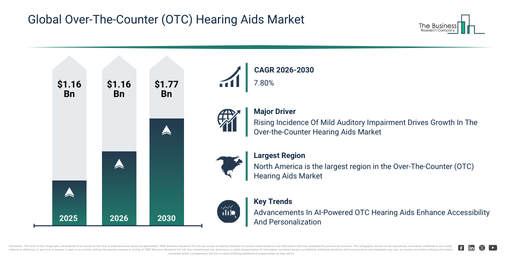
    The over-the-counter (otc) hearing aids market is poised for significant expansion in the coming years. This market is projected to reach a valuation of $1.82 billion by 2030, exhibiting a compound annual growth rate (CAGR) of 7.8%. Factors contributing to this anticipated growth include an increase in the prevalence of mild hearing loss, the expansion of e-commerce, advancements in technological miniaturization, greater health consciousness, and the uptake of smart hearing devices. Key trends expected during the forecast period involve a growing acceptance among consumers for self-fitted devices, the proliferation of direct-to-consumer sales channels, a rising need for cost-effective hearing solutions, the widespread availability of rechargeable hearing aids, and an emphasis on unobtrusive and small designs.

    Get A Free Sample Report With In-Depth Market Insights:

    https://thebusinessresearchcompany.com/sample_request?id=16794432&type=smp&name=Over-The-Counter%20%28OTC%29%20Hearing%20Aids%20Market%20Report%202026&utm_source=Blogs&utm_medium=Paid&utm_campaign=Oct_PR

    Over-The-Counter (OTC) Hearing Aids Market Demand Drivers: What’s Powering Industry Growth?

    A significant incidence of mild auditory impairment is anticipated to drive the expansion of the over-the-counter (OTC) hearing aids market in the future. This condition, mild auditory impairment, describes a minor decrease in hearing capability, where individuals might struggle with soft or far-off sounds yet typically comprehend speech in serene surroundings. Causes for mild auditory impairment include age-related hearing loss, continuous exposure to significant noise, and specific health issues. Over-the-counter hearing aids address slight hearing deficits by amplifying sounds and enhancing the clarity of speech. These devices feature adjustable settings for both volume and amplification, which sharpens everyday sounds and discussions. For example, data from May 2024, provided by the Australian Government Department of Health and Aged Care, an Australian government body, indicates that approximately 3.6 million individuals suffer from some level of hearing loss, a figure expected to reach roughly 7.8 million by 2060. Consequently, the widespread occurrence of mild auditory impairment is fueling the growth of the over-the-counter (OTC) hearing aids market.

    Over-The-Counter (OTC) Hearing Aids Market Breakdown By Product Type And Application

    The over-the-counter (otc) hearing aids market covered in this report is segmented –

    1) By Product Type: In-The-Ear Hearing Aids, Receiver-In-The-Ear Hearing Aids, Behind-The-Ear Hearing Aids, Canal Hearing Aids

    2) By Technology Type: Digital Hearing Aids, Analog Hearing Aids

    3) By Distribution Channel: Retail Stores, Online, Audiology Offices

    Subsegments:

    1) By In-The-Ear Hearing Aids: Full Shell In-The-Ear (ITE), Half Shell In-The-Ear (ITE), Completely-In-The-Canal (CIC), Invisible-In-The-Canal (IIC)

    2) By Receiver-In-The-Ear Hearing Aids: Open Fit Receiver-In-The-Ear (RITE), Standard Receiver-In-The-Ear (RITE), Mini Receiver-In-The-Ear (RITE)

    3) By Behind-The-Ear Hearing Aids: Standard Behind-The-Ear (BTE), Mini Behind-The-Ear (BTE), Power Behind-The-Ear (BTE)

    4) By Canal Hearing Aids: Completely-In-The-Canal (CIC), Invisible-In-The-Canal (IIC), Extended Wear Canal Hearing Aids

    Over-The-Counter (OTC) Hearing Aids Market Innovation Trends: What Developments Are Reshaping The Industry?

    Companies operating within the over-the-counter (OTC) hearing aids market are prioritizing the creation of next-generation AI-powered over-the-counter (OTC) hearing aids. This effort aims to offer more accessible and advanced hearing solutions to a broader consumer base. AI-powered over-the-counter (OTC) hearing aids employ artificial intelligence to automatically adjust sound settings, adapting them to the user’s environment and specific hearing requirements. These advanced instruments deliver a personalized experience through real-time noise reduction and seamless integration with smartphone applications for enhanced control. For instance, in September 2023, Elehear, a US-based provider of AI-powered hearing aids and audio solutions, introduced ELEHEAR Alpha and ELEHEAR Alpha Pro. The ELEHEAR Alpha is an economical OTC hearing aid featuring a behind-the-ear design and rechargeable batteries, recognized for its quality music streaming. The ELEHEAR Alpha Pro, a more sophisticated model, uses AI to better differentiate human voices from background noise, thereby improving clarity and reducing distortion. It incorporates Bluetooth for simple smartphone connectivity, managing both calls and music. With its lightweight, discreet construction, the Alpha Pro ensures comfort for extended wear and boasts a 20-hour battery life, complete with wireless charging.

    Over-The-Counter (OTC) Hearing Aids Market Leading Companies And Competitive Benchmarking

    Major companies operating in the over-the-counter (otc) hearing aids market are Sony Corporation, Jabra, Lucid Hearing, Eargo Inc., MDHearing, Lexie Hearing, Melosound, Audien Hearing, Austar Hearing Science and Technology Xiamen Co Ltd, Soundwave Hearing LLC, Hangzhou Acosund Technology Co Ltd, Olive Union Inc., Nano Hearing Aids, Tweak Hearing, Otofonix LLC, ELEHEAR, Audicus, Bose Corporation, NUHEARA, InnerScope Hearing Technologies, HearX Group, NuvoMed, Earsmate Technology Group Ltd, JLAB

    View The Full Over-The-Counter (OTC) Hearing Aids Market Report:

    https://thebusinessresearchcompany.com/report/over-the-counter-otc-hearing-aids-global-market-report?utm_source=Blogs&utm_medium=Paid&utm_campaign=Oct_PR

    Over-The-Counter (OTC) Hearing Aids Market Largest Region By Revenue And Market Share

    North America was the largest region in the over-the-counter (OTC) hearing aids market in 2025. Asia-Pacific is expected to be the fastest-growing region in the forecast period. The regions covered in the over-the-counter (otc) hearing aids market report are Asia-Pacific, South East Asia, Western Europe, Eastern Europe, North America, South America, Middle East, Africa.

    Reach Out To Our Team:

    The Business Research Company: https://www.thebusinessresearchcompany.com/

    Americas: +1 310-496-7795

    Asia: +44 7882 955267 & +91 8897263534

    Europe: +44 7882 955267

    Email us at: marketing@tbrc.info

    Follow us on:

    LinkedIn: https://in.linkedin.com/company/the-business-research-company

    YouTube: https://www.youtube.com/channel/UC24_fI0rV8cR5DxlCpgmyFQ

    Global Market Model: https://www.thebusinessresearchcompany.com/global-market-model