Blog

  • Hemodynamic Flow Alteration Devices Market Projected For Strong Expansion Through 2030: Key Trends And Future Outlook

    Hemodynamic Flow Alteration Devices Market Projected For Strong Expansion Through 2030: Key Trends And Future Outlook

    Built to provide research that’s more actionable and strategically valuable, The Business Research Company’s 2026 market reports include market attractiveness analysis, total addressable market sizing, company benchmarking matrices, interactive Excel dashboards, broader supply chain intelligence, emerging startup tracking, and in-depth product insights.

    Hemodynamic Flow Alteration Devices Market Growth Potential: How Will Market Size Shift Through 2030?

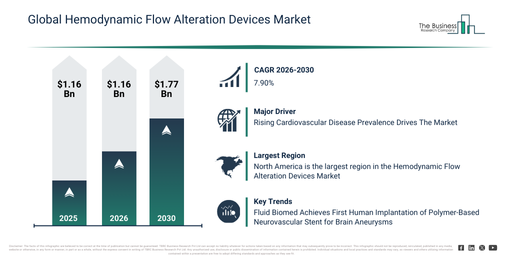
    The market for hemodynamic flow alteration devices has experienced robust growth in recent years. This market is projected to expand from $0.88 billion in 2025 to $0.96 billion in 2026, demonstrating a compound annual growth rate (CAGR) of 8.2%. Historically, this growth has been fueled by the rising prevalence of cardiovascular disorders, an increasing volume of vascular intervention procedures, advancements in catheter-based technologies, wider availability of specialized interventional devices, and improved clinical outcomes in flow management.

    The hemodynamic flow alteration devices market is anticipated to show robust expansion in the upcoming years. It is projected to reach $1.3 billion in 2030, growing at a compound annual growth rate (CAGR) of 7.9%. This projected growth can be ascribed to the increasing adoption of precision medicine in vascular care, the rising demand for minimally invasive cardiac procedures, the expansion of neurovascular intervention capabilities, increasing investment in advanced interventional cardiology devices, and a greater focus on reducing procedural complications. Noteworthy trends for the forecast period include the increasing adoption of advanced embolic protection technologies, a rising utilization of minimally invasive flow alteration devices, the growing integration of precision-guided cto devices, the expansion of procedure-specific device designs, and an enhanced focus on patient-specific hemodynamic optimization.

    Get A Free Sample Report With In-Depth Market Insights:

    https://thebusinessresearchcompany.com/sample_request?id=84359078&type=smp&name=Hemodynamic%20Flow%20Alteration%20Devices%20Market%20Report%202026&utm_source=Blogs&utm_medium=Paid&utm_campaign=Oct_PR

    Hemodynamic Flow Alteration Devices Market Growth Momentum: What Factors Are Shaping Demand?

    The rising incidence of cardiovascular diseases is anticipated to boost the hemodynamic flow alteration devices market in the coming years. Cardiovascular disease (CVD) is a comprehensive term for various conditions affecting the heart and blood vessels. This increase in cardiovascular disease prevalence stems from factors such as an aging population, unhealthy diets, inactive lifestyles, and a rise in conditions like hypertension and diabetes. Cardiovascular diseases create a demand for hemodynamic flow alteration devices, which help manage and improve blood flow in patients with conditions such as heart failure, hypertension, and arterial blockages. For instance, in September 2024, the British Heart Foundation, a UK-based cardiovascular research charity, reported that approximately 7.6 million individuals in the UK are currently affected by heart and circulatory diseases, comprising 4 million men and 3.6 million women. Projections suggest this number could increase by 1 million by 2030, and by 2040, it may rise to 2 million more than the current figures. Therefore, the growing prevalence of cardiovascular disease is driving the hemodynamic flow alteration devices market going forward.

    Hemodynamic Flow Alteration Devices Market Segment Landscape: Which Areas Lead Development?

    The hemodynamic flow alteration devices market covered in this report is segmented –

    1) By Type: Embolic Protection Device, Chronic Total Occlusion Device

    2) By Application: Cardiovascular Diseases, Neurological Disorders, Renal Disorders, Respiratory Disorders

    3) By End User: Hospitals, Clinics, Ambulatory Care Centre, Home Care Setting, Other End Users

    Subsegments:

    1) By Embolic Protection Device: Distal Embolic Protection Devices, Proximal Embolic Protection Devices, Filter-Based Embolic Protection Devices, Balloon-Based Embolic Protection Devices, Mesh Or Cage-Based Embolic Protection Devices

    2) By Chronic Total Occlusion Device: Crossing Guidewires For CTO, CTO Balloon Catheters, CTO Microcatheters, Re-Entry Devices For CTO, CTO Support Catheters

    Hemodynamic Flow Alteration Devices Market Trends Redefining Industry Growth

    Leading companies within the hemodynamic flow alteration devices market are concentrating on technological breakthroughs, including hybrid polymer-metal flow-diverting stents, to bolster the safety, effectiveness, and lasting results of neurovascular interventions. Hybrid Polymer-Metal Flow-Diverting Stents integrate the structural integrity of metal with the biocompatible and flexible properties of polymer, thereby facilitating regulated hemodynamic flow alteration, mitigating clot formation risk, and fostering improved vessel healing for patients afflicted with brain aneurysms. As an illustration, in June 2023, Fluid Biomed Inc., a medical device company headquartered in Canada, commenced REDIRECT, its initial human clinical trial, which successfully involved the implantation of ReSolv, recognized as the world’s first hybrid polymer-metal neurovascular stent. The Phase 1 study confirmed the safety of the implantation, with no adverse events observed during the 30-day follow-up, thus establishing a significant achievement in brain aneurysm treatment by merging sophisticated materials engineering with minimally invasive neurovascular therapy to enhance patient outcomes.

    Hemodynamic Flow Alteration Devices Market Competitive Overview And Top Companies

    Major companies operating in the hemodynamic flow alteration devices market are Cardinal Health Inc., Abbott Laboratories, Medtronic plc, Siemens Healthcare GmbH, Becton Dickinson and Company, Stryker Corporation, Boston Scientific Corporation, Edwards Lifesciences Corporation, W. L. Gore & Associates Inc., ZOLL Medical Corporation, Getinge AB, Lepu Medical Technology (Beijing) Co. Ltd., Abiomed Inc., LivaNova PLC, Cordis US Corp., Silk Road Medical Inc., Berlin Heart GmbH, CorWave SA, Jarvik Heart Inc., CARMAT SA

    View The Full Hemodynamic Flow Alteration Devices Market Report:

    https://thebusinessresearchcompany.com/report/hemodynamic-flow-alteration-devices-global-market-report?utm_source=Blogs&utm_medium=Paid&utm_campaign=Oct_PR

    Hemodynamic Flow Alteration Devices Market Leading Geography: Which Region Contributes The Most Revenue?

    North America was the largest region in the hemodynamic flow alteration devices market in 2025. The regions covered in the hemodynamic flow alteration devices market report are Asia-Pacific, South East Asia, Western Europe, Eastern Europe, North America, South America, Middle East, Africa.

    Reach Out To Our Team:

    The Business Research Company: https://www.thebusinessresearchcompany.com/

    Americas: +1 310-496-7795

    Asia: +44 7882 955267 & +91 8897263534

    Europe: +44 7882 955267

    Email us at: marketing@tbrc.info

    Follow us on:

    LinkedIn: https://in.linkedin.com/company/the-business-research-company

    YouTube: https://www.youtube.com/channel/UC24_fI0rV8cR5DxlCpgmyFQ

    Global Market Model: https://www.thebusinessresearchcompany.com/global-market-model
  • Hemodialysis Chairs Market Outlook 2026–2030: Growth Trends, Market Dynamics And Emerging Opportunities

    Hemodialysis Chairs Market Outlook 2026–2030: Growth Trends, Market Dynamics And Emerging Opportunities

    Backed by market attractiveness analysis, total addressable market sizing, company benchmarking matrices, interactive Excel dashboards, wider supply chain intelligence, emerging startup coverage, and detailed product-level insights, The Business Research Company’s 2026 market reports are designed to offer research that is more actionable and strategically valuable than ever.

    Hemodialysis Chairs Market Value Analysis: What Growth Lies Ahead Over The Forecast Period?

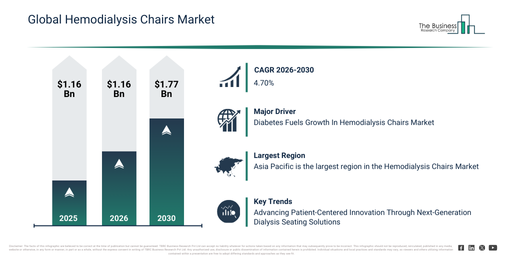
    The hemodialysis chairs market has demonstrated steady growth in its size over recent years. This market is projected to expand from $90.7 billion in 2025 to $95 billion in 2026, exhibiting a compound annual growth rate (CAGR) of 4.7%. Historically, this growth has been driven by factors such as the rising incidence of chronic kidney disease, the proliferation of dialysis treatment centers, an increasing need for patient-focused care settings, greater investments in healthcare infrastructure, and the accessibility of robust medical furniture.

    The market for hemodialysis chairs is projected to experience consistent expansion over the upcoming years. It is anticipated to reach a valuation of $114.04 billion by 2030, exhibiting a compound annual growth rate (CAGR) of 4.7%. This expansion during the forecast period is primarily driven by factors such as the increasing embrace of home-based dialysis services, a heightened emphasis on patient comfort and ease of movement, the proliferation of outpatient dialysis facilities, a growing need for intelligent and customizable medical furnishings, and greater investments in kidney care infrastructure. Key developments expected within this period include a rise in the use of electrically adjustable dialysis chairs, an increasing preference for improved patient comfort solutions, the greater incorporation of ergonomic and safety features, the widening availability of home dialysis furniture options, and a reinforced commitment to supporting long-duration treatments.

    Get A Free Sample Report With In-Depth Market Insights:

    https://thebusinessresearchcompany.com/sample_request?id=99493523&type=smp&name=Hemodialysis%20Chairs%20Market%20Report%202026&utm_source=Blogs&utm_medium=Paid&utm_campaign=Oct_PR

    Hemodialysis Chairs Market Expansion Drivers: What’s Shaping Future Growth?

    The increasing incidence of diabetes is anticipated to boost the expansion of the hemodialysis chairs market in the future. This condition, a chronic metabolic disorder, is characterized by elevated blood glucose levels. A significant factor contributing to the surge in diabetes cases is growing obesity, often linked to diets high in calories and processed foods, as excess body weight diminishes the body’s sensitivity to insulin. This escalation in diabetes prevalence consequently heightens the demand for hemodialysis chairs, given that individuals with diabetes frequently undergo hemodialysis to manage their condition, thus requiring more specialized equipment like these chairs. For example, the International Diabetes Federation, a Belgium-based global alliance of over 250 national diabetes associations, reported in April 2025 that in 2024, over 9.5 million people had type 1 diabetes, which included 1.9 million children and adolescents under 20. Projections indicate that the worldwide diabetes population will reach 853 million by 2050. Hence, the increasing occurrence of diabetes is a primary factor driving the expansion of the hemodialysis chairs market.

    Hemodialysis Chairs Market Segments: Where Is Growth Concentrated?

    The hemodialysis chairs market covered in this report is segmented –

    1) By Product: Manual Hemodialysis Chair, Electrical Hemodialysis Chair

    2) By Material: Leather, Vinyl, Other Material

    3) By End User: Hospitals, Hemodialysis Research Centers, Government Organizations, Ambulatory Centers, Home Care

    Subsegments:

    1) By Manual Hemodialysis Chair: Fixed Manual Hemodialysis Chair, Adjustable Manual Hemodialysis Chair

    2) By Electrical Hemodialysis Chair: Fully Electric Hemodialysis Chair, Semi-Electric Hemodialysis Chair

    Hemodialysis Chairs Market Strategic Trends: What Defines The Next Growth Phase?

    Leading companies within the hemodialysis chairs market are prioritizing the creation of technological advancements, such as ergonomically designed, electrically adjustable treatment chairs for home hemodialysis, aiming to enhance patient comfort, ensure safety, and improve workflow efficiency. These ergonomically optimized, electrically adjustable therapy chairs, developed for in-home hemodialysis, integrate features like motorized position controls, intuitive handsets, rapid emergency or Trendelenburg positioning, and specialized upholstery and structures suitable for dialysis, all to facilitate stable vascular access, lessen the burden on caregivers, and sustain comfort during frequent short-duration treatments. As an illustration, in June 2024, Digiterm Ltd., a Hungary-based manufacturer specializing in visual information systems and medical equipment, unveiled its Comfort-1 Eco therapy chair. This chair allows for the simultaneous electric adjustment of the backrest and legrest via an intuitive remote controller and provides quick Trendelenburg positioning, assisting patients in swiftly adopting comfortable or emergency positions during their home hemodialysis sessions. Its optional transport configuration and design focused on dialysis enable caregivers to effortlessly move patients within facilities while upholding ergonomic working conditions and procedural safety. Furthermore, its easy-to-clean, customizable upholstery coupled with its compact and cost-effective build are intended to support the wider adoption of dedicated hemodialysis seating solutions in both home and clinical environments.

    Hemodialysis Chairs Market Competitive Landscape: Which Companies Lead The Industry?

    Major companies operating in the hemodialysis chairs market are Fresenius Medical Care AG & Co KGaA, Baxter International Inc, B Braun Melsungen AG, Nipro Corporation, Champion Manufacturing Inc, Digiterm Ltd, Guangdong Dongpin Beauty & Medical Technology Co Ltd, Likamed GmbH, Acime‑Frame (Acime), IBIOM Instruments Ltée, Diasol Inc, SEERS Medical Limited, Toray Medical Co Ltd, JMS Co Ltd, Quanta Dialysis (Italy), Nanjing KangQiao Medical Equipment Co Ltd, Jiangsu Fengyuan Medical Equipment Co Ltd, Dongpin Beauty & Medical Co Ltd (China), Indtech Healthcare Pvt Ltd, Meditek Engineers Pvt Ltd

    View The Full Hemodialysis Chairs Market Report:

    https://thebusinessresearchcompany.com/report/hemodialysis-chairs-global-market-report?utm_source=Blogs&utm_medium=Paid&utm_campaign=Oct_PR

    Hemodialysis Chairs Market Regional Outlook: Where Is Opportunity Concentrated?

    Asia Pacific was the largest region in the hemodialysis chairs market in 2025. The regions covered in the hemodialysis chairs market report are Asia-Pacific, South East Asia, Western Europe, Eastern Europe, North America, South America, Middle East, Africa.

    Reach Out To Our Team:

    The Business Research Company: https://www.thebusinessresearchcompany.com/

    Americas: +1 310-496-7795

    Asia: +44 7882 955267 & +91 8897263534

    Europe: +44 7882 955267

    Email us at: marketing@tbrc.info

    Follow us on:

    LinkedIn: https://in.linkedin.com/company/the-business-research-company

    YouTube: https://www.youtube.com/channel/UC24_fI0rV8cR5DxlCpgmyFQ

    Global Market Model: https://www.thebusinessresearchcompany.com/global-market-model
  • Hemodialysis And Peritoneal Dialysis Market Growth Outlook From $97.07 Billion In 2026 To $141.72 Billion By 2030

    Hemodialysis And Peritoneal Dialysis Market Growth Outlook From $97.07 Billion In 2026 To $141.72 Billion By 2030

    Featuring market attractiveness scoring, total addressable market sizing, company benchmarking matrices, interactive Excel dashboards, deeper supply chain intelligence, emerging startup tracking, and granular product-level insights, The Business Research Company’s 2026 market reports are built to deliver research that is both more actionable and more strategically valuable.

    Hemodialysis And Peritoneal Dialysis Market Size Forecast: How Big Could The Market Get By 2030?

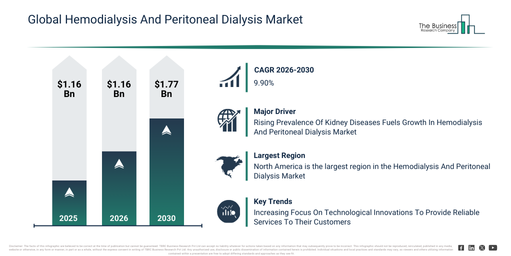
    The hemodialysis and peritoneal dialysis market has experienced strong growth in recent years. Looking ahead, it is projected to expand from $88.26 billion in 2025 to $97.07 billion in 2026 at a compound annual growth rate (CAGR) of 10.0%. This historical growth can be linked to factors such as the increasing prevalence of chronic kidney disease, a rising aging population, the expansion of dialysis center infrastructure, growing awareness of renal replacement therapies, and improvements in dialysis access technologies.

    The hemodialysis and peritoneal dialysis market is projected to experience substantial expansion in the coming years. This market is anticipated to reach $141.72 billion by 2030, exhibiting a compound annual growth rate (CAGR) of 9.9%. Factors driving this growth during the forecast period include an escalating demand for home dialysis treatments, increased investments in connected dialysis equipment, the broader implementation of personalized renal care strategies, a rise in remote patient monitoring adoption, and ongoing advancements in dialyzer and catheter technologies. Key trends anticipated over this period encompass a greater uptake of home-based dialysis options, an increasing need for portable and compact dialysis apparatus, expanded utilization of sophisticated dialysis monitoring systems, the proliferation of automated dialysis technologies, and a heightened emphasis on patient-centered care models.

    Get A Free Sample Report With In-Depth Market Insights:

    https://thebusinessresearchcompany.com/sample_request?id=87422738&type=smp&name=Hemodialysis%20And%20Peritoneal%20Dialysis%20Market%20Report%202026&utm_source=Blogs&utm_medium=Paid&utm_campaign=Oct_PR

    Hemodialysis And Peritoneal Dialysis Market Development Factors: What’s Supporting Demand?

    The increasing occurrence of kidney illnesses is poised to advance the expansion of the hemodialysis and peritoneal dialysis market in the foreseeable future. Kidney disorders represent a varied collection of conditions that impact both the architectural integrity and functional performance of the kidney. When chronic renal disease reaches an advanced stage, it can cause hazardous levels of fluid, electrolytes, and waste materials to build up in the body. Hemodialysis and peritoneal dialysis serve as treatments where blood is purified using a dialysis machine and a specialized filter, often referred to as an artificial kidney. As an illustration, PubMed, a US government agency, indicated in January 2023 that worldwide, approximately 788 million individuals aged 20 years and older were estimated to suffer from chronic kidney disease in 2023. This highlights how the rising incidence of kidney diseases is serving as a significant impetus for the hemodialysis and peritoneal dialysis market.

    Hemodialysis And Peritoneal Dialysis Market Segment Analysis: What Are The Core Market Categories?

    The hemodialysis and peritoneal dialysis market covered in this report is segmented –

    1) By Type: Hemodialysis, Peritoneal Dialysis

    2) By Modality: Conventional, Daily (Day Time, Night Time)

    3) By End User: Hospitals, Clinics, And Dialysis Centers, Home Dialysis

    Subsegments:

    1) By Hemodialysis: In-Center Hemodialysis, Home Hemodialysis

    2) By Peritoneal Dialysis: Continuous Ambulatory Peritoneal Dialysis (CAPD), Automated Peritoneal Dialysis (APD)

    Hemodialysis And Peritoneal Dialysis Market Transformation Trends: What Innovations Are Driving Change?

    Leading companies in the hemodialysis and peritoneal dialysis market are concentrating on innovative technologies, such as Versi HD with GuideMe software, to generate revenue. This advanced technology aims to improve the lives of both patients and medical professionals and marks a significant stride in chronic home hemodialysis (HHD) systems. For example, in September 2023, Fresenius Medical Care AG and Co. KGaA, a Germany-based healthcare entity specializing in kidney care, launched a new HD version featuring GuideMe software. Versi HD with GuideMe software incorporates a touchscreen interface, further streamlining the HHD experience. The Versi HD with Guideme software is expected to enable Fresenius Medical Care to increase the number of patients receiving home therapy. This expansion is a vital step in offering more individuals with renal failure the option of obtaining life-sustaining care conveniently at home.

    Hemodialysis And Peritoneal Dialysis Market Competitive Landscape: Who Leads The Industry?

    Major companies operating in the hemodialysis and peritoneal dialysis market are Fresenius Medical Care AG & Co. KGaA, Baxter International Inc., Nipro Corporation, B. Braun Melsungen AG, Nikkiso Co. Ltd., DaVita Inc., Asahi Kasei Corporation, Medtronic plc, Becton Dickinson and Company, Rockwell Medical Inc., NxStage Medical Inc., Quanta Dialysis Technologies Ltd., Outset Medical Inc., Toray Medical Co. Ltd., Medcomp, Medline Industries Inc., Diaverum, Satellite Healthcare Inc., U.S. Renal Care Inc., American Renal Associates Holdings Inc., Northwest Kidney Centers

    View The Full Hemodialysis And Peritoneal Dialysis Market Report:

    https://thebusinessresearchcompany.com/report/hemodialysis-and-peritoneal-dialysis-global-market-report?utm_source=Blogs&utm_medium=Paid&utm_campaign=Oct_PR

    Hemodialysis And Peritoneal Dialysis Market Geographic Landscape: Which Region Leads Industry Growth?

    North America was the largest region in the hemodialysis and peritoneal dialysis market in 2025. Asia-Pacific is expected to be the fastest-growing region in the forecast period. The regions covered in the hemodialysis and peritoneal dialysis market report are Asia-Pacific, South East Asia, Western Europe, Eastern Europe, North America, South America, Middle East, Africa.

    Reach Out To Our Team:

    The Business Research Company: https://www.thebusinessresearchcompany.com/

    Americas: +1 310-496-7795

    Asia: +44 7882 955267 & +91 8897263534

    Europe: +44 7882 955267

    Email us at: marketing@tbrc.info

    Follow us on:

    LinkedIn: https://in.linkedin.com/company/the-business-research-company

    YouTube: https://www.youtube.com/channel/UC24_fI0rV8cR5DxlCpgmyFQ

    Global Market Model: https://www.thebusinessresearchcompany.com/global-market-model
  • Hemodialysis Market Forecast To Reach $132.17 Billion By 2030: Key Growth Drivers And Industry Trends

    Hemodialysis Market Forecast To Reach $132.17 Billion By 2030: Key Growth Drivers And Industry Trends

    Built to provide research that’s more actionable and strategically valuable, The Business Research Company’s 2026 market reports include market attractiveness analysis, total addressable market sizing, company benchmarking matrices, interactive Excel dashboards, broader supply chain intelligence, emerging startup tracking, and in-depth product insights.

    Hemodialysis Market Revenue Outlook: What CAGR Lies Ahead Through 2030?

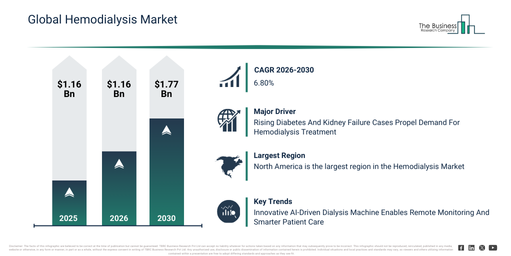
    The hemodialysis market has witnessed significant expansion in recent years. It is projected to increase from $95.52 billion in 2025 to $101.58 billion in 2026, achieving a compound annual growth rate (CAGR) of 6.3%. The market’s historical growth was largely driven by factors including the rising prevalence of chronic kidney disease, an increase in dialysis treatment centers, a growing aging population, improved reimbursement policies for dialysis, and technological advancements in dialyzers.

    The hemodialysis market is projected to experience robust expansion over the next few years. Its valuation is anticipated to climb to $132.17 billion in 2030, demonstrating a compound annual growth rate (CAGR) of 6.8%. This growth during the forecast period can be linked to a rising preference for home-based dialysis services, increased investment in remote dialysis monitoring solutions, a growing demand for compact dialysis devices, the broader implementation of personalized dialysis regimens, and continuous innovation within dialysis consumables. Significant trends for this forecast period include the increasing adoption of home hemodialysis systems, a heightened demand for advanced dialysis machines, the growing integration of digital patient monitoring technologies, an expansion in portable dialysis solutions, and a stronger focus on patient-centric dialysis care.

    Get A Free Sample Report With In-Depth Market Insights:

    https://thebusinessresearchcompany.com/sample_request?id=28462057&type=smp&name=Hemodialysis%20Market%20Report%202026&utm_source=Blogs&utm_medium=Paid&utm_campaign=Oct_PR

    Hemodialysis Market Industry Drivers: What’s Behind The Revenue Growth?

    The future expansion of the hemodialysis market is anticipated to be driven by the rising occurrence of kidney failure. This condition signifies when the kidneys become unable to efficiently remove waste products and excess fluids from the bloodstream. A primary reason for the increase in kidney failure cases stems from the growing incidence of chronic diseases like diabetes and high blood pressure, alongside an older demographic and lifestyle choices. To counteract their kidneys’ impaired function, patients suffering from kidney failure utilize hemodialysis to mechanically purify and eliminate waste, extra fluids, and harmful substances from their blood using specialized equipment. For example, in June 2023, data from reports released by the Nephrology Dialysis Transplantation (NDT), a UK-based journal, indicated that between 2022 and 2032, the count of individuals with Chronic Kidney Disease (CKD) in the UK is expected to increase by 4%, moving from 8.27 million to 8.61 million. Consequently, the increasing prevalence of kidney failure will significantly influence the hemodialysis market.

    Hemodialysis Market Segment Breakdown: Which Categories Lead On Revenue?

    The hemodialysis market covered in this report is segmented –

    1) By Type: Conventional Hemodialysis, Short Daily Hemodialysis Or Daily Hemodialysis, Nocturnal Hemodialysis

    2) By Component: Dialyzer, Dialysis Solution, Tubes, Catheter

    3) By End User: Hospitals, Specialty Clinics, Home-Care Settings

    Subsegments:

    1) By Conventional Hemodialysis: In-Center Hemodialysis, Home Hemodialysis

    2) By Short Daily Hemodialysis Or Daily Hemodialysis: Home-Based Short Daily Hemodialysis, In-Center Short Daily Hemodialysis

    3) By Nocturnal Hemodialysis: Home Nocturnal Hemodialysis, In-Center Nocturnal Hemodialysis

    #Hemodialysis Market Growth Trends: What’s Shaping The Future Outlook?

    Leading companies in the hemodialysis market are increasingly prioritizing the development of innovative solutions, such as cloud-enabled machines, to remotely observe patient data, optimize treatment, and improve health outcomes. A cloud-enabled machine operates as an internet-connected device that securely stores, processes, and shares data on cloud servers, thereby facilitating remote monitoring, analysis, and management. For instance, in June 2025, Renalyx Health Systems Pvt. Ltd., an India-based technology innovation company, launched India’s first completely indigenous AI-based smart hemodialysis machine, named RENALYX–RxT 21. These machines incorporate integrated nephrology information systems on the cloud, AI-based smart algorithms, real-time remote monitoring and alerts through telemetry, and Electronic Medical Records (EMR) integration, allowing doctors to oversee patient care from a distance. Additionally, the system includes advanced image processing and Internet of Medical Things (IoMT) capabilities for continuous performance monitoring, aiming to make dialysis more affordable, accessible, and safer for patients, especially in semi-urban and rural areas.

    Hemodialysis Market Company Landscape And Competitive Strategy

    Major companies operating in the hemodialysis market are Fresenius Medical Care AG & Co. KGaA, Baxter International Inc., B. Braun Melsungen AG, Nipro Corporation, Asahi Kasei Corporation, Nikkiso Co. Ltd., Toray Medical Co. Ltd., DaVita Inc., Diaverum AB, Outset Medical Inc., Quanta Dialysis Technologies Ltd., Rockwell Medical Inc., JMS Co. Ltd., Kawasumi Laboratories Inc., Terumo Corporation, Poly Medicure Ltd., Renax Biomedical Tech. Co. Ltd., Allmed Medical Care Corporation, Hemoclean Co. Ltd., Medcomp Holdings Inc.

    View The Full Hemodialysis Market Report:

    https://thebusinessresearchcompany.com/report/hemodialysis-global-market-report?utm_source=Blogs&utm_medium=Paid&utm_campaign=Oct_PR

    Hemodialysis Market Largest Region: Which Geography Holds The Biggest Share?

    North America was the largest region in the hemodialysis market in 2025. Asia-Pacific is expected to be the fastest growing region in the global hemodialysis market report during the forecast period. The regions covered in the hemodialysis market report are Asia-Pacific, South East Asia, Western Europe, Eastern Europe, North America, South America, Middle East, Africa.

    Reach Out To Our Team:

    The Business Research Company: https://www.thebusinessresearchcompany.com/

    Americas: +1 310-496-7795

    Asia: +44 7882 955267 & +91 8897263534

    Europe: +44 7882 955267

    Email us at: marketing@tbrc.info

    Follow us on:

    LinkedIn: https://in.linkedin.com/company/the-business-research-company

    YouTube: https://www.youtube.com/channel/UC24_fI0rV8cR5DxlCpgmyFQ

    Global Market Model: https://www.thebusinessresearchcompany.com/global-market-model
  • Hematology Diagnostic Devices And Equipment Market Research 2026: Market Size, Trends, Segments And Growth Forecast

    Hematology Diagnostic Devices And Equipment Market Research 2026: Market Size, Trends, Segments And Growth Forecast

    Backed by market attractiveness analysis, total addressable market sizing, company benchmarking matrices, interactive Excel dashboards, wider supply chain intelligence, emerging startup coverage, and detailed product-level insights, The Business Research Company’s 2026 market reports are designed to offer research that is more actionable and strategically valuable than ever.

    Hematology Diagnostic Devices And Equipment Market Growth Analysis: How Will Revenue Trend Over The Forecast Period?

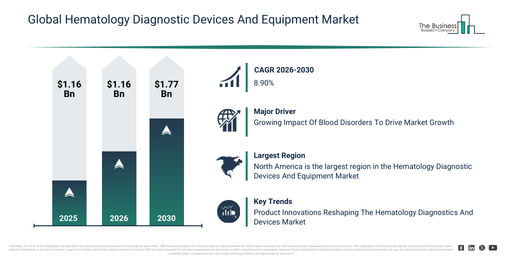
    The hematology diagnostic devices and equipment market has experienced swift expansion recently. It is projected to expand from $8.29 billion in 2025 to $9.13 billion in 2026, demonstrating a compound annual growth rate (CAGR) of 10.2%. Historically, this growth has been driven by factors such as the rising incidence of blood disorders, the proliferation of clinical diagnostic laboratories, increased need for routine blood analyses, advancements in laboratory automation, and the widespread availability of standardized hematology reagents.

    The hematology diagnostic devices and equipment market is projected to experience substantial growth in the upcoming years. This market is anticipated to reach $12.86 billion in 2030, exhibiting a compound annual growth rate (CAGR) of 8.9%. This expansion during the projection period stems from factors such as the growing integration of AI-assisted diagnostics, an increasing need for point-of-care hematology testing, the broadening of personalized medicine strategies, rising investments in automating laboratory processes, and a heightened emphasis on detecting diseases at early stages. Key trends expected over the forecast period encompass a greater uptake of automated hematology analyzers, an escalating requirement for high-throughput blood testing systems, expanded application of sophisticated flow cytometry, the development of integrated diagnostic platforms, and a strengthened commitment to improving diagnostic accuracy and speed.

    Get A Free Sample Report With In-Depth Market Insights:

    https://thebusinessresearchcompany.com/sample_request?id=53732605&type=smp&name=Hematology%20Diagnostic%20Devices%20And%20Equipment%20Market%20Report%202026&utm_source=Blogs&utm_medium=Paid&utm_campaign=Oct_PR

    Hematology Diagnostic Devices And Equipment Market Growth Factors: What’s Supporting Expansion?

    The rising occurrence of blood disorders is anticipated to stimulate the expansion of the hematology diagnostics devices and equipment market. These conditions affect the quantity of blood components such as red blood cells, white blood cells, and platelets. The surge in blood disorders can be attributed to the expanding aging population, which is more susceptible to developing hematologic ailments. Hematology diagnostic instruments are crucial in addressing the growing number of blood disorders by facilitating prompt detection, precise categorization, and ongoing observation of unusual blood conditions for effective treatment. For example, the Canadian Cancer Society, a charity based in Canada, predicts that approximately 23,600 Canadians will be diagnosed with blood cancer in 2024. Consequently, the increased prevalence of blood disorders is a key factor propelling the growth of the hematology diagnostics devices and equipment market. The increasing occurrence of chronic diseases, a key driver for the hematology diagnostic devices and equipment market, is anticipated to fuel its expansion. These enduring medical conditions, encompassing cardiovascular diseases, diabetes, cancer, and chronic respiratory disorders, advance over time and necessitate continuous oversight and treatment. With the growing worldwide prevalence of chronic illnesses, healthcare systems are increasingly dependent on hematology diagnostic instruments to assess blood markers, identify irregularities, and aid in precise diagnosis and therapeutic strategy. Hematology analyzers and associated diagnostic equipment are instrumental in tracking disease progression, informing treatment choices, and detecting complications early. For instance, in January 2023, the National Center for Biotechnology Information (NCBI), a US-based National Library of Medicine, predicted that by 2050, the population aged 50 years and older living with at least one chronic illness will climb dramatically from 99.5 to 142.66 million. Therefore, the rising incidence of chronic diseases is a significant impetus for the growth of the hematology diagnostic devices and equipment market.

    Hematology Diagnostic Devices And Equipment Market Segmentation: How Does The Market Break Down By Category?

    The hematology diagnostic devices and equipment market covered in this report is segmented –

    1) By Product: Instruments, Consumables

    2) By Instruments: Analyzers, Flow cytometers, Other Instruments

    3) By Consumables: Reagents, Stains, Other Consumables

    4) By Application: Auto-Immune Disease, Cancer, Infectious Disease, Other Applications

    5) By End User: Hospitals, Specialized Diagnostic Centers, Specialized Research Institutes

    Subsegments:

    1) By Instruments: Hematology Analyzers, Flow Cytometers, Coagulation Analyzers, Hemoglobin Analyzers, Blood Gas Analyzers

    2) By Consumables: Reagents, Test Strips, Blood Collection Tubes, Slides and Cover Slips, Others (calibration and quality control materials)

    Hematology Diagnostic Devices And Equipment Market Industry Trends: What’s Reshaping Demand?

    Leading companies operating in the hematology diagnostics and equipment market are concentrating on developing innovative solutions like hematology analyzers to gain a competitive advantage. Hematology analyzers are specialized medical devices utilized in clinical laboratories and healthcare settings to automate the analysis of blood samples. For instance, in May 2023, Siemens Healthineers, a Germany-based healthcare company, launched the Atellica HEMA 570 and Atellica HEMA 580 Analyzers, designed to streamline and enhance high-volume hematology testing. These analyzers offer automation, integrated intelligence, and user-friendly interfaces to overcome workflow challenges and deliver faster results, which is crucial for patient care. With the capability to process up to 120 tests per hour and advanced data management features, they empower healthcare professionals of varying expertise levels to interpret complex patient results more rapidly. Additionally, these analyzers facilitate direct result integration into laboratory information systems and provide guidance for follow-up actions when necessary.

    Hematology Diagnostic Devices And Equipment Market Key Players Shaping Industry Direction

    Major companies operating in the hematology diagnostic devices and equipment market are Abbott Diagnostics, Beckman Coulter Inc., Bio-Rad Laboratories Inc., Drucker Diagnostics Inc., Horiba Ltd., Instrumentation Laboratory Inc., Siemens Healthcare, Shenzhen Mindray Bio-Medical Electronics Co. Ltd., F. Hoffmann-La Roche AG, Thermo Fisher Scientific Inc., HemoCue AB, Mindray Medical International Limited, Danaher Corporation, Edan Instruments Inc., Sysmex Corporation, CellaVision, Maccura Biotechnology Co., DY mind Biotech, Balio Diagnostics, BioSystems Diagnostics Pvt. Ltd., Wiener Lab, Accurex Biomedical Pvt. Ltd., ARKRAY USA, Boule Diagnostics AB, Diatron Group, EKF Diagnostics Holdings, Grifols S.A., Nihon Kohden Corporation, Ortho Clinical Diagnostics, PixCell Medical, STRATEC Biomedical AG, Terumo BCT

    View The Full Hematology Diagnostic Devices And Equipment Market Report:

    https://thebusinessresearchcompany.com/report/hematology-diagnostic-devices-and-equipment-global-market-report?utm_source=Blogs&utm_medium=Paid&utm_campaign=Oct_PR

    Hematology Diagnostic Devices And Equipment Market Regional Analysis: Which Geography Leads On Revenue?

    North America was the largest region in the global hematology diagnostics devices and equipment market in 2025. Asia-Pacific was the second-largest region in the hematology diagnostics devices and equipment market. The regions covered in the hematology diagnostic devices and equipment market report are Asia-Pacific, South East Asia, Western Europe, Eastern Europe, North America, South America, Middle East, Africa.

    Reach Out To Our Team:

    The Business Research Company: https://www.thebusinessresearchcompany.com/

    Americas: +1 310-496-7795

    Asia: +44 7882 955267 & +91 8897263534

    Europe: +44 7882 955267

    Email us at: marketing@tbrc.info

    Follow us on:

    LinkedIn: https://in.linkedin.com/company/the-business-research-company

    YouTube: https://www.youtube.com/channel/UC24_fI0rV8cR5DxlCpgmyFQ

    Global Market Model: https://www.thebusinessresearchcompany.com/global-market-model
  • Hematology Analyzers and Reagents Market Forecast 2026: Market Size, Competitive Landscape And Growth Drivers

    Hematology Analyzers and Reagents Market Forecast 2026: Market Size, Competitive Landscape And Growth Drivers

    Featuring market attractiveness scoring, total addressable market sizing, company benchmarking matrices, interactive Excel dashboards, deeper supply chain intelligence, emerging startup tracking, and granular product-level insights, The Business Research Company’s 2026 market reports are built to deliver research that is both more actionable and more strategically valuable.

    Hematology Analyzers and Reagents Market Forecast: What Value Will The Market Reach By 2030?

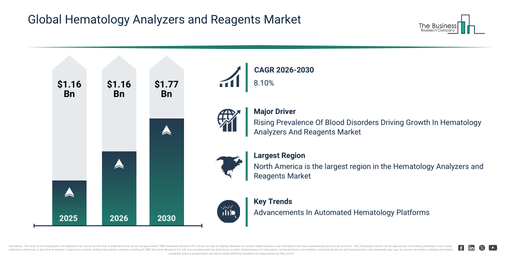
    The hematology analyzers and reagents market has seen marginal expansion in recent years. It is anticipated to increase from $5.25 billion in 2025 to $5.26 billion in 2026, exhibiting a compound annual growth rate (CAGR) of 0.2%. The historical development of this market can be attributed to the rising occurrence of anemia and various blood-related conditions, the expansion of hospital and diagnostic laboratory facilities, the reliance on manual and semi-automated analyzers, the growing demand for complete blood count testing, and the broadening scope of clinical diagnostic services.

    The hematology analyzers and reagents market is set for substantial expansion over the next few years, with an estimated value of $7.19 billion by 2030, growing at a compound annual growth rate (CAGR) of 8.1%. This projected growth is attributed to the integration of AI-based cell analysis, the increasing adoption of fully automated hematology systems, a heightened focus on precision medicine and personalized diagnostics, the expansion of diagnostic centers in emerging markets, and a rising demand for advanced reagents and consumables. Key trends anticipated during this period include the growing adoption of automated and high-throughput hematology analyzers, an increasing need for accurate and early diagnosis of blood disorders, the expanded use of point-of-care hematology testing, the development of reagent rental and consumable-based business models, and an intensified emphasis on standardization and quality control in hematology testing.

    Get A Free Sample Report With In-Depth Market Insights:

    https://thebusinessresearchcompany.com/sample_request?id=51348197&type=smp&name=Hematology%20Analyzers%20and%20Reagents%20Market%20Report%202026&utm_source=Blogs&utm_medium=Paid&utm_campaign=Oct_PR

    Hematology Analyzers and Reagents Market Demand Drivers: What’s Powering Industry Growth?

    An anticipated increase in the incidence of blood disorders is set to drive the expansion of the hematology analyzers and reagents market in the future. Blood disorders represent medical conditions that impair the normal operation of blood components, such as red blood cells, white blood cells, or platelets. Hematology analyzers and reagents serve as vital instruments for the diagnosis and monitoring of these disorders, including cancer, through the examination of blood cell counts and their morphology. For example, in July 2024, data from Cancer Research UK, a UK-based charity, indicated that the average annual number of new Hodgkin lymphoma cases in the UK is projected to climb from approximately 2,400 cases in 2023-2025 to around 2,900 cases in 2038-2040. Consequently, the rising prevalence of blood disorders is propelling the hematology analyzers and reagents market forward.

    Hematology Analyzers and Reagents Market Segment Trends And Revenue Contributors

    The hematology analyzers and reagents market covered in this report is segmented –

    1) By Product: Hematology Analyzers, Hemostasis Analyzers, Plasma Protein Analyzers, Hemoglobin Analyzers, Erythrocyte Sedimentation Rate Analyzer, Coagulation Analyzer

    2) By Applications: Anemias, Blood Cancers, Hemorrhagic Conditions, Infection Related Conditions, Immune System Related Conditions, Other Applications

    3) By End User: Specialized Research Institutes, Hospitals, Specialized Diagnostic Centers, Other End Users

    Subsegments:

    1) By Hematology Analyzers: Automated Hematology Analyzers, Semi-Automated Hematology Analyzers

    2) By Hemostasis Analyzers: Platelet Function Analyzers, Coagulation Testing Analyzers

    3) By Plasma Protein Analyzers: Electrophoresis Analyzers, Immunofixation Analyzers

    4) By Hemoglobin Analyzers: Point-Of-Care Hemoglobin Analyzers, Laboratory Hemoglobin Analyzers

    5) By Erythrocyte Sedimentation Rate Analyzer: Manual ESR Analyzers, Automated ESR Analyzers

    6) By Coagulation Analyzer: Clotting Time Analyzers, Thromboelastography (TEG) Analyzers

    Hematology Analyzers and Reagents Market Innovation Trends: What Developments Are Reshaping The Industry?

    Major companies operating in the hematology analyzers and reagents market are concentrating on developing innovative solutions, such as automated hematology platforms, to enhance diagnostic accuracy, streamline laboratory operations, and provide more comprehensive patient data. An automated hematology platform, frequently referred to as a hematology analyzer, is an advanced, computer-driven medical laboratory instrument engineered to execute complete blood counts (CBC) and other related tests on blood samples quickly, accurately, and with minimal human involvement. For instance, in January 2024, HORIBA Medical, a France-based in vitro diagnostics company, introduced the Yumizen Helo, a next-generation, fully automated and modular hematology solution. This system integrates a high-throughput analyzer with a digital cell morphology module and an automated reticulocyte module into a single, compact unit. Its primary feature is walkaway automation, utilizing an intelligent robotic arm to automatically sort and prepare blood smears, thereby significantly reducing manual steps and operator intervention compared to traditional benchtop analyzers, which necessitate separate, manual processes for slide preparation and review. This innovation aims to boost productivity in clinical laboratories by consolidating multiple hematology tasks into one continuous, automated workflow.

    Hematology Analyzers and Reagents Market Competitive Analysis Of Leading Industry Participants

    Major companies operating in the hematology analyzers and reagents market are Abbott Laboratories, Bio-Rad Laboratories, Horiba Ltd., Siemens AG, Sysmex Corporation, BioSystems Diagnostics Pvt. Ltd, Boule Diagnostics, Danaher Corporation, Diatron MI PLC, Drew Scientific, EKF Diagnostics, Mindray, Nihon Kohden, Ortho Clinical Diagnostics, Roche, Beckman Coulter, Bayer AG, Heska, Drucker, Instrumentation Laboratory, Abaxis Inc., Accriva Diagnostics, ACON, Diamond Diagnostics, ERBA Diagnostics, Hycel, Maccura Biotechnology Co. Ltd., Genrui Biotech Inc., A&T Corporation, Beijing Succeeder Technology Inc., Diagnostica Stago SAS

    View The Full Hematology Analyzers and Reagents Market Report:

    https://thebusinessresearchcompany.com/report/hematology-analyzers-and-reagents-global-market-report?utm_source=Blogs&utm_medium=Paid&utm_campaign=Oct_PR

    Hematology Analyzers and Reagents Market Geographic Spread And Regional Opportunities

    North America was the largest region in the hematology analyzers and reagents market in 2025. Western Europe was the second-largest region in the hematology analyzers and reagents market report. The regions covered in the hematology analyzers and reagents market report are Asia-Pacific, South East Asia, Western Europe, Eastern Europe, North America, South America, Middle East, Africa.

    Reach Out To Our Team:

    The Business Research Company: https://www.thebusinessresearchcompany.com/

    Americas: +1 310-496-7795

    Asia: +44 7882 955267 & +91 8897263534

    Europe: +44 7882 955267

    Email us at: marketing@tbrc.info

    Follow us on:

    LinkedIn: https://in.linkedin.com/company/the-business-research-company

    YouTube: https://www.youtube.com/channel/UC24_fI0rV8cR5DxlCpgmyFQ

    Global Market Model: https://www.thebusinessresearchcompany.com/global-market-model
  • Hematocrit Test Devices Market Size In 2026: Regional Growth, Key Segments And Future Outlook

    Hematocrit Test Devices Market Size In 2026: Regional Growth, Key Segments And Future Outlook

    Built to provide research that’s more actionable and strategically valuable, The Business Research Company’s 2026 market reports include market attractiveness analysis, total addressable market sizing, company benchmarking matrices, interactive Excel dashboards, broader supply chain intelligence, emerging startup tracking, and in-depth product insights.

    Hematocrit Test Devices Market Size Outlook: How Quickly Will Revenue Expand Through 2030?

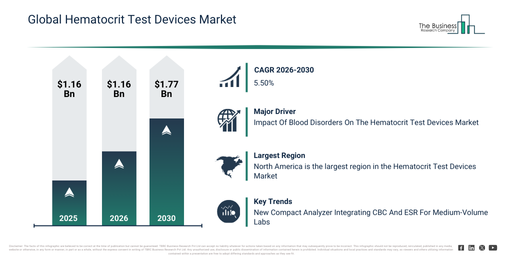
    The hematocrit test devices market size has experienced strong growth in recent years. It is projected to expand from $4.91 billion in 2025 to $5.22 billion in 2026, demonstrating a compound annual growth rate (CAGR) of 6.4%. The historical growth in this market can be attributed to several factors, including the increasing prevalence of anemia and blood disorders, a rise in hospital and laboratory diagnostic testing, growing demand for blood donor screening, the expansion of emergency and trauma care services, and an increasing awareness of hematocrit monitoring in clinical practice.

    The hematocrit test devices market is projected to experience robust expansion over the coming years. It is anticipated to reach a valuation of $6.47 billion by 2030, demonstrating a compound annual growth rate (CAGR) of 5.5%. This growth during the forecast period can be primarily ascribed to an escalating demand for point-of-care diagnostic solutions, a growing prevalence of chronic and lifestyle-related illnesses, the expansion of decentralized healthcare systems and at-home testing options, increasing capital allocation towards diagnostic infrastructure, and a heightened emphasis on early disease identification and preventative health measures. Key trends anticipated during this period encompass a surge in the adoption of point-of-care hematocrit testing devices, an increasing need for prompt and precise blood parameter evaluations, wider utilization of portable and handheld hematocrit meters, the broadening application of hematocrit testing within emergency and critical care environments, and a greater emphasis on routine health screenings and the management of chronic conditions.

    Get A Free Sample Report With In-Depth Market Insights:

    https://thebusinessresearchcompany.com/sample_request?id=87074484&type=smp&name=Hematocrit%20Test%20Devices%20Market%20Report%202026&utm_source=Blogs&utm_medium=Paid&utm_campaign=Oct_PR

    Hematocrit Test Devices Market Growth Drivers: What’s Behind The Acceleration?

    The increasing incidence of blood disorders is anticipated to stimulate the expansion of the hematocrit test devices market moving forward. A blood disorder is characterized as a condition impacting components of human blood, including red blood cells, white blood cells, platelets, and blood plasma. The rising occurrence of these disorders is linked to various factors such as genetic predispositions, environmental pollution, and changes in lifestyle. Hematocrit test devices primarily serve to quantify the volume percentage of red blood cells within whole blood, thereby offering vital data concerning a patient’s hematological well-being. Illustratively, in January 2024, a report by the American Cancer Society, a US-based non-profit organization, projected around 62,770 new cases of leukemia across all types in the United States for 2024, leading to an estimated 23,670 deaths. Among these, approximately 20,800 new instances of acute myeloid leukemia (AML) are expected, predominantly affecting adults, with about 11,220 deaths attributed to AML, almost exclusively among adult patients. Therefore, the growing number of blood disorder cases is propelling the growth of the hematocrit test devices market.

    Hematocrit Test Devices Market Segment Analysis Spotlighting Growth Areas

    The hematocrit test devices market covered in this report is segmented –

    1) By Product: Hematocrit Test Meter, Hematocrit Test Analyzer, Reagents And Consumables

    2) By Application: Anemia, Polycythemia Vera, Congenital Heart Diseases, Other Applications

    3) By End-User: Hospitals And Ambulatory Surgical Centers, Clinics, Diagnostic And Pathology Labs, Other End-Users

    Subsegments:

    1) By Hematocrit Test Meter: Handheld Hematocrit Meters, Portable Hematocrit Meters, Desktop Hematocrit Meters, Point-Of-Care Hematocrit Meters, Digital Hematocrit Meters, Battery-Powered Hematocrit Meters

    2) By Hematocrit Test Analyzer: Automated Hematocrit Analyzers, Benchtop Hematocrit Analyzers, Semi-Automated Hematocrit Analyzers, Microhematocrit Analyzers, High-Throughput Hematocrit Analyzers, Compact Hematocrit Analyzers

    3) By Reagents And Consumables: Hematocrit Test Strips, Hematocrit Pipettes And Capillaries, Blood Sample Collection Tubes For Hematocrit Testing, Quality Control Reagents For Hematocrit Testing, Calibration Standards For Hematocrit Devices, Disposable Test Kits And Consumables

    Hematocrit Test Devices Market Trends: What’s Defining The Industry’s Next Phase?

    Leading companies within the hematocrit test device sector are prioritizing sophisticated technologies, specifically user-friendly platforms tailored for laboratories with medium testing volumes. Such platforms are systems incorporating intuitive, simple-to-use features, allowing for rapid operation with very little training required. As an illustration, in March 2024, Mindray, a health technology firm based in China, launched the BC-700 Series—a streamlined, integrated hematology analyzer designed for small to medium laboratories, which merges CBC and ESR testing capabilities into a single unit. This device yields results in merely 1.5 minutes, significantly enhancing both efficiency and workflow. The system employs SF Cube 3D analysis technology to achieve precise cell differentiation and incorporates the PLT-H parameter to enhance platelet counting accuracy. Its integration of CBC and ESR into one instrument leads to a reduction in both equipment and consumable expenses. Offered in both open vial and autoloader configurations, the BC-700 Series offers dependable, automated, and compact testing solutions, demonstrating a strong alignment with conventional methods while also improving safety and repeatability.

    Hematocrit Test Devices Market Leading Companies And Competitive Benchmarking

    Major companies operating in the hematocrit test devices market are F. Hoffmann-La Roche Ltd., Thermo Fisher Scientific Inc., Abbott Laboratories, Danaher Corporation, Siemens Healthcare GmbH, Becton Dickinson and Company, Terumo Corporation, Beckman Coulter Inc., Mindray Medical International Limited, bioMérieux SA, Sysmex Corporation, Horiba Ltd., Nihon Kohden Corporation, Erba Mannheim, EKF Diagnostics Holding Plc., Nova Biomedical Corporation, Boule Diagnostics AB, Stanbio Laboratory LP, Drucker Diagnostics, A. Menarini Diagnostics Srl, Sensa Core, Mikroscan Technologies Inc.

    View The Full Hematocrit Test Devices Market Report:

    https://thebusinessresearchcompany.com/report/hematocrit-test-devices-global-market-report?utm_source=Blogs&utm_medium=Paid&utm_campaign=Oct_PR

    Hematocrit Test Devices Market Top Region By Revenue And Market Share

    North America was the largest region in the hematocrit test devices market in 2025. Asia-Pacific is expected to be the fastest-growing region in the forecast period. The regions covered in the hematocrit test devices market report are Asia-Pacific, South East Asia, Western Europe, Eastern Europe, North America, South America, Middle East, Africa.

    Reach Out To Our Team:

    The Business Research Company: https://www.thebusinessresearchcompany.com/

    Americas: +1 310-496-7795

    Asia: +44 7882 955267 & +91 8897263534

    Europe: +44 7882 955267

    Email us at: marketing@tbrc.info

    Follow us on:

    LinkedIn: https://in.linkedin.com/company/the-business-research-company

    YouTube: https://www.youtube.com/channel/UC24_fI0rV8cR5DxlCpgmyFQ

    Global Market Model: https://www.thebusinessresearchcompany.com/global-market-model
  • Hemato Oncology Testing Market Growth Forecast Through 2030: Market Size And Trends In 2026

    Hemato Oncology Testing Market Growth Forecast Through 2030: Market Size And Trends In 2026

    Backed by market attractiveness analysis, total addressable market sizing, company benchmarking matrices, interactive Excel dashboards, wider supply chain intelligence, emerging startup coverage, and detailed product-level insights, The Business Research Company’s 2026 market reports are designed to offer research that is more actionable and strategically valuable than ever.

    Hemato Oncology Testing Market Size, Value And Growth Trajectory Through 2030

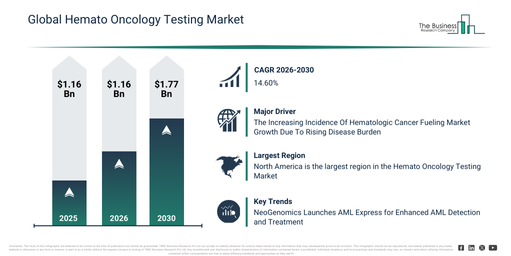
    The hemato oncology testing market size has experienced rapid growth in recent years. It is projected to expand from $3.93 billion in 2025 to $4.5 billion in 2026, achieving a compound annual growth rate (CAGR) of 14.4%. This historic growth can be attributed to several factors including the rising incidence of blood cancers, the expansion of hospital diagnostic laboratories, increasing awareness of early cancer detection, a surge in clinical research activities, and the availability of advanced testing reagents.

    The hemato oncology testing market is poised for significant expansion in the coming years. This market is projected to reach $7.76 billion by 2030, exhibiting a compound annual growth rate (CAGR) of 14.6%. This anticipated growth during the forecast period is fueled by factors such as the increasing adoption of precision oncology diagnostics, growing investments in genomic testing infrastructure, the expansion of AI-driven diagnostic platforms, the rising demand for companion diagnostics, and ongoing innovation in assay technologies. Key trends characterizing this period encompass the increasing uptake of molecular diagnostic testing, the expanding utilization of next-generation sequencing in oncology, the escalating demand for personalized cancer diagnostics, the proliferation of automated laboratory testing platforms, and the improved integration of data analytics within hemato-oncology.

    Get A Free Sample Report With In-Depth Market Insights:

    https://thebusinessresearchcompany.com/sample_request?id=41483315&type=smp&name=Hemato%20Oncology%20Testing%20Market%20Report%202026&utm_source=Blogs&utm_medium=Paid&utm_campaign=Oct_PR

    Hemato Oncology Testing Market Growth Factors Behind Sustained Expansion

    The hemato oncology testing market is anticipated to expand due to the growing occurrence of hematologic cancer. Hematologic cancer describes a category of cancers that originate in the blood, affecting the blood, bone marrow, and lymphatic system, and includes diseases such as leukemia, lymphoma, and myeloma. Early diagnosis, which can be accomplished through hemato oncology testing, is vital for reducing the impact of these diseases. As an illustration, in September 2025, Cancer Research UK, a UK-based charity, indicated that from 2024 to 2026, the incidence rate of leukemia in the UK is estimated to be approximately 17.9 cases per 100,000 people per year, with a projected decrease of 3% to about 17.4 per 100,000 by 2038 to 2040. Therefore, the rising incidence of hematologic cancer is a significant factor driving the growth of the hemato-oncology testing market.

    Hemato Oncology Testing Market Segment Performance And Emerging Opportunities

    The hemato oncology testing market covered in this report is segmented –

    1) By Product And Services: Assay Kits And Reagents, Services

    2) By Cancer Type: Leukemia, Lymphoma, Multiple Myeloma

    3) By Technology: Polymerase Chain Reaction (PCR), Immunohistochemistry (IHC), Next-Generation Sequencing (NGS)

    4) By End User: Hospitals, Academic And Research Institutes

    Subsegments:

    1) By Assay Kits And Reagents: PCR Kits, Next-Generation Sequencing (NGS) Kits, Flow Cytometry Reagents, Antibodies

    2) By Services: Testing Services, Data Analysis Services

    Hemato Oncology Testing Market Industry Trends Fueling Future Revenue Growth

    Leading companies within the hemato-oncology testing market are introducing advancements such as next-generation sequencing (NGS) to enhance the precision and speed of genetic analysis, enable thorough profiling of hematologic cancers, and support customized treatment approaches aligned with individual patient requirements. Next-generation sequencing (NGS) represents a high-throughput DNA sequencing method that facilitates the rapid and economical examination of entire genomes or specific DNA segments. A notable instance occurred in October 2024, when NeoGenomics Inc., a US-based entity specializing in cancer diagnostics and genomic testing, unveiled AML Express. This next-generation sequencing (NGS) tool is specifically designed for the swift identification of mutations linked to Acute Myeloid Leukemia (AML). This sophisticated diagnostic platform delivers superior accuracy and prompt results, thereby assisting oncologists in making well-timed, targeted therapeutic choices. AML Express aims to elevate patient outcomes by offering precise mutation insights relevant to AML-specific genetic profiles.

    Hemato Oncology Testing Market Industry Leaders And Competitive Landscape

    Major companies operating in the hemato oncology testing market are F. Hoffmann-La Roche Ltd., Abbott Laboratories, Thermo Fisher Scientific Inc., Illumina Inc., Invivoscribe Inc., Qiagen N.V., Bio-Rad Laboratories Inc., Archerdx Inc., ARUP Laboratories Inc., Asuragen Inc., Adaptive Biotechnologies Corp., Cepheid Inc., EntroGen Inc., CORE Diagnostics Inc., Genoptix Inc., GenPath Diagnostics, NeoGenomics Laboratories Inc., Siemens AG, Sysmex Corporation, Laboratory Corporation of America Holdings, Agilent Technologies, Danaher Corporation, Grifols SA, Diaorin SpA, HTG Molecular Diagnostics Inc., Admera Health

    View The Full Hemato Oncology Testing Market Report:

    https://thebusinessresearchcompany.com/report/hemato-oncology-testing-global-market-report?utm_source=Blogs&utm_medium=Paid&utm_campaign=Oct_PR

    Hemato Oncology Testing Market Regional Analysis And Top Geography

    North America was the largest region in the hemato oncology testing market in 2025. Asia-Pacific is expected to be the fastest-growing region in the global hemato oncology testing market report during the forecast period. The regions covered in the hemato oncology testing market report are Asia-Pacific, South East Asia, Western Europe, Eastern Europe, North America, South America, Middle East, Africa.

    Reach Out To Our Team:

    The Business Research Company: https://www.thebusinessresearchcompany.com/

    Americas: +1 310-496-7795

    Asia: +44 7882 955267 & +91 8897263534

    Europe: +44 7882 955267

    Email us at: marketing@tbrc.info

    Follow us on:

    LinkedIn: https://in.linkedin.com/company/the-business-research-company

    YouTube: https://www.youtube.com/channel/UC24_fI0rV8cR5DxlCpgmyFQ

    Global Market Model: https://www.thebusinessresearchcompany.com/global-market-model
  • Heavy Payload Robotic Arm Market Analysis: $14.84 Billion Market Size In 2026 And Future Growth Prospects

    Heavy Payload Robotic Arm Market Analysis: $14.84 Billion Market Size In 2026 And Future Growth Prospects

    Featuring market attractiveness scoring, total addressable market sizing, company benchmarking matrices, interactive Excel dashboards, deeper supply chain intelligence, emerging startup tracking, and granular product-level insights, The Business Research Company’s 2026 market reports are built to deliver research that is both more actionable and more strategically valuable.

    Heavy Payload Robotic Arm Market CAGR Outlook And Future Development

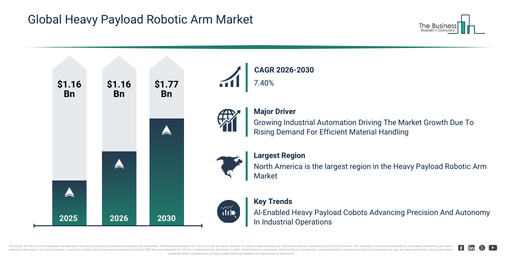
    The market size for heavy payload robotic arms has shown considerable growth in recent years. It is projected to increase from $13.79 billion in 2025 to $14.84 billion in 2026, exhibiting a compound annual growth rate (CAGR) of 7.6%. This historical growth can be linked to a significant reliance on labor in material handling, insufficient automation in welding and metal fabrication, an expanding industrial manufacturing sector, rising automotive production, and a dependence on standard robotic arm models.

    The heavy payload robotic arm market is projected for substantial expansion over the upcoming years. This market is anticipated to reach $19.72 billion by 2030, exhibiting a compound annual growth rate (CAGR) of 7.4%. Factors driving this growth during the projection period include the creation of sophisticated multi-axis robotic arms, the incorporation of AI and machine learning for enhanced accuracy, increased activity in the electronics and automotive sectors, growing use in construction and chemical industries, and improvements in wireless and computer-based control systems. Key developments expected during this timeframe involve a greater uptake of heavy payload robotic arms for material handling, a surging requirement for multi-axis robotic arms, broader automation in welding and metal fabrication, an increase in palletizing and packaging uses, and an emphasis on improving safety and precision in industrial operations.

    Get A Free Sample Report With In-Depth Market Insights:

    https://thebusinessresearchcompany.com/sample_request?id=92732137&type=smp&name=Heavy%20Payload%20Robotic%20Arm%20Market%20Report%202026&utm_source=Blogs&utm_medium=Paid&utm_campaign=Oct_PR

    Heavy Payload Robotic Arm Market Demand Drivers Opening New Revenue Streams

    The heavy payload robotic arms market is anticipated to experience growth driven by the expansion of industrial automation. This automation involves the deployment of control systems, machinery, and advanced technology to manage industrial processes with minimal human intervention. The increase in industrial automation is primarily attributed to the rising need for higher productivity, as automated systems facilitate quicker production rates, enhanced precision, and reduced operational downtime compared to manual operations. Heavy payload robotic arms contribute to industrial automation by accurately and rapidly managing heavy materials, which in turn boosts productivity, decreases labor requirements, and improves safety in manufacturing environments. For instance, in September 2024, a report published by the International Federation of Robotics (IFR), a Germany-based non-profit organization, indicated that the UK experienced a 51% rise in industrial robot installations in 2023, reaching a total of 3,830 units. Consequently, the growing industrial automation is a significant factor driving the development of the heavy payload robotic arms market.

    Heavy Payload Robotic Arm Market Segment Landscape And Growth Outlook

    The heavy payload robotic arm market covered in this report is segmented –

    1) By Type: Articulated, Cartesian, Selective Compliance Assembly Robot Arm (SCARA), Cylindrical, Other Types

    2) By Payload Capacity: Up To 500 Kilograms (Kg), 500 Kilograms (Kg) To 1000 Kilograms (Kg), 1000 Kilograms (Kg) To 2000 Kilograms (Kg), Above 2000 Kilograms (Kg)

    3) By Control System: Manual Control, Programmable Logic Controller (PLC), Computer-Based Control Systems, Wireless Control Systems

    4) By Application: Material Handling, Welding And Metal Fabrication, Palletizing And Packaging, Other Applications

    5) By End-User Industry: Automotive, Healthcare, Electrical Or Electronics, Metal And Machinery, Chemical, Construction, Other End-Users

    Subsegments:

    1) By Articulated: Four Axis Robotic Arm, Five Axis Robotic Arm, Six Axis Robotic Arm, Seven Axis Robotic Arm

    2) By Cartesian: Two Axis Cartesian Robot, Three Axis Cartesian Robot, Four Axis Cartesian Robot, Gantry Type Cartesian Robot

    3) By Selective Compliance Assembly Robot Arm (SCARA): Horizontal Arm Selective Compliance Assembly Robot Arm (SCARA) Robot, Vertically Articulated Selective Compliance Assembly Robot Arm (SCARA) Robot, Single Arm Selective Compliance Assembly Robot Arm (SCARA) Robot, Dual Arm Selective Compliance Assembly Robot Arm (SCARA) Robot

    4) By Cylindrical: Fixed Base Cylindrical Robot, Mobile Base Cylindrical Robot, Dual Arm Cylindrical Robot, Telescopic Cylindrical Robot

    5) By Other Types: Spherical Robotic Arm, Delta Robotic Arm, Polar Robotic Arm, Hybrid Robotic Arm

    Heavy Payload Robotic Arm Market Trends Powering Strategic Industry Growth

    Major companies operating in the heavy payload robotic arm market are concentrating on developing advanced products, such as heavy payload collaborative robots (cobots), to facilitate smooth collaboration between humans and machines in demanding industrial applications. A heavy payload cobot is a collaborative robotic arm designed to operate alongside humans while safely managing large and heavy loads, integrating significant lifting capacity with enhanced safety features and versatility for various industries. For example, in May 2024, Techman Robot Inc., a Taiwan-based collaborative robot manufacturer, introduced the TM30S. This advanced heavy payload robotic arm offers a maximum payload capacity of 35 kg and a reach of 1,702 mm. The TM30S incorporates built-in smart vision and a 3D camera that employs AI recognition technology to detect object size and position, allowing the robot to execute tasks such as palletizing, pick-and-place, and material handling without depending on predefined stacking patterns. This innovation supports real-time object detection, adaptive path planning, and efficient mixed-case palletizing, which reflects the increasing trend of integrating AI-enabled vision systems to improve operational precision and autonomy in complex industrial environments.

    Heavy Payload Robotic Arm Market Key Participants And Competitive Landscape

    Major companies operating in the heavy payload robotic arm market are Mitsubishi Electric Corporation, ABB Ltd., Kawasaki Heavy Industries Ltd., Seiko Epson Corporation, Hyundai Heavy Industries Co. Ltd., FANUC Corporation, Yaskawa Electric Corporation, Stäubli International AG, NACHI-FUJIKOSHI CORP., Comau S.p.A., SIASUN Robot & Automation Co. Ltd., Scott Technology Limited, Vulcan Engineering Co. Inc., Ellison Technologies Inc., Apex Automation and Robotics Pty. Ltd., TM Robotics Ltd., OTC DAIHEN Inc., Black-I Robotics Inc., CHAIFU Industries Co. Ltd., GS Automatic Co. Ltd.

    View The Full Heavy Payload Robotic Arm Market Report:

    https://thebusinessresearchcompany.com/report/heavy-payload-robotic-arm-global-market-report?utm_source=Blogs&utm_medium=Paid&utm_campaign=Oct_PR

    Heavy Payload Robotic Arm Market Geographic Analysis: Where Is Demand Rising Fastest?

    North America was the largest region in the heavy payload robotic arm market in 2025. Asia-Pacific is expected to be the fastest-growing region in the forecast period. The regions covered in the heavy payload robotic arm market report are Asia-Pacific, South East Asia, Western Europe, Eastern Europe, North America, South America, Middle East, Africa.

    Reach Out To Our Team:

    The Business Research Company: https://www.thebusinessresearchcompany.com/

    Americas: +1 310-496-7795

    Asia: +44 7882 955267 & +91 8897263534

    Europe: +44 7882 955267

    Email us at: marketing@tbrc.info

    Follow us on:

    LinkedIn: https://in.linkedin.com/company/the-business-research-company

    YouTube: https://www.youtube.com/channel/UC24_fI0rV8cR5DxlCpgmyFQ

    Global Market Model: https://www.thebusinessresearchcompany.com/global-market-model
  • Heated Shoulder Wrap Market 2026 Market Size And Growth Forecast: Key Trends To Watch

    Heated Shoulder Wrap Market 2026 Market Size And Growth Forecast: Key Trends To Watch

    Built to provide research that’s more actionable and strategically valuable, The Business Research Company’s 2026 market reports include market attractiveness analysis, total addressable market sizing, company benchmarking matrices, interactive Excel dashboards, broader supply chain intelligence, emerging startup tracking, and in-depth product insights.

    Heated Shoulder Wrap Market Set To Climb From $1.37 Billion In 2026 To $2 Billion By 2030

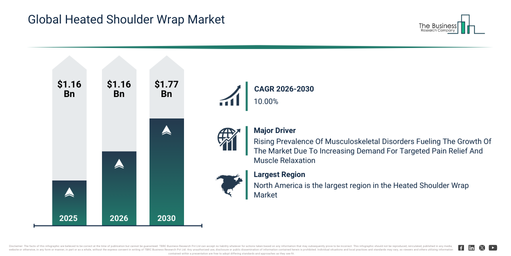
    The market for heated shoulder wraps has experienced significant expansion in recent years. Projections indicate it will increase from $1.24 billion in 2025 to $1.37 billion in 2026, demonstrating a compound annual growth rate (CAGR) of 10.3%. Historically, this expansion has been driven by factors such as an escalation in musculoskeletal disorders, the proliferation of home healthcare products, a rising elderly demographic, broader retail availability, and increased understanding of the therapeutic benefits of heat.

    The heated shoulder wrap market is projected for significant expansion in the coming years. It is anticipated to reach a valuation of $2 billion by 2030, demonstrating a compound annual growth rate (CAGR) of 10.0%. This projected growth throughout the forecast period stems from factors such as increasing demand for sports rehabilitation, the broadening reach of e-commerce channels, advancements in wearable heat therapy, a rise in the prevalence of chronic pain, and the wider adoption of smart therapeutic devices. Key trends during this period are expected to encompass an escalating demand for home-based therapy, the development of portable and lightweight designs, the emergence of smart heated wraps, expanded application in sports recovery, and a growing inclination towards drug-free pain management solutions.

    Get A Free Sample Report With In-Depth Market Insights:

    https://thebusinessresearchcompany.com/sample_request?id=33360293&type=smp&name=Heated%20Shoulder%20Wrap%20Market%20Report%202026&utm_source=Blogs&utm_medium=Paid&utm_campaign=Oct_PR

    Heated Shoulder Wrap Market Growth Backed By Core Demand Fundamentals

    The increasing occurrence of musculoskeletal disorders is anticipated to stimulate the expansion of the heated shoulder wrap market moving forward. Musculoskeletal disorders refer to conditions or injuries impacting muscles, bones, joints, ligaments, tendons, or nerves, leading to pain and limited mobility. These disorders are becoming more common due to sedentary lifestyles, as prolonged sitting and insufficient physical activity strain muscles and joints, resulting in persistent musculoskeletal issues. A heated shoulder wrap assists in managing musculoskeletal disorders by offering targeted heat therapy, which relaxes stiff muscles, improves blood circulation, reduces joint stiffness, and alleviates localized pain in the shoulder region. For example, in January 2024, according to the Office for Health Improvement and Disparities, a UK-based government department, in 2023, 18.4% of people aged 16 and over reported having a long-term musculoskeletal condition, a slight rise from 17.6% in 2022. Such conditions were reported less often by males (15.8%) compared with females (20.9%). Thus, the escalating prevalence of musculoskeletal disorders is propelling the growth of the heated shoulder wrap market.

    Heated Shoulder Wrap Market Breakdown By Product Type And Application

    The heated shoulder wrap market covered in this report is segmented –

    1) By Product Type: Electric Heated Shoulder Wraps, Microwaveable Heated Shoulder Wraps, Chemical Heated Shoulder Wraps, Other Product Types

    2) By Distribution Channel: Online Stores, Pharmacies, Specialty Stores, Supermarkets Or Hypermarkets, Other Distribution Channels

    3) By Application: Pain Relief, Injury Recovery, Sports Rehabilitation, Other Applications

    4) By End-User: Hospitals And Clinics, Home Care, Sports And Fitness Centers, Other End-Users

    Subsegments:

    1) By Electric Heated Shoulder Wraps: Battery-Powered Electric Heated Shoulder Wraps, Rechargeable Electric Heated Shoulder Wraps, Corded Electric Heated Shoulder Wraps, Infrared (IR) Electric Heated Shoulder Wraps

    2) By Microwaveable Heated Shoulder Wraps: Herbal-Filled Microwaveable Heated Shoulder Wraps, Gel-Filled Microwaveable Heated Shoulder Wraps, Bead-Filled Microwaveable Heated Shoulder Wraps, Grain-Filled Microwaveable Heated Shoulder Wraps

    3) By Chemical Heated Shoulder Wraps: Single-Use Chemical Heated Shoulder Wraps, Reusable Chemical Heated Shoulder Wraps, Air-Activated Chemical Heated Shoulder Wraps, Liquid-Based Chemical Heated Shoulder Wraps

    4) By Other Product Types: Hybrid Heated Shoulder Wraps, Smart Heated Shoulder Wraps, Water-Heated Shoulder Wraps, Portable Heat Pack-Integrated Shoulder Wraps

    Heated Shoulder Wrap Market Top Companies Driving Competitive Growth

    Major companies operating in the heated shoulder wrap market are Conair Corporation, DJO LLC, Beurer GmbH, TheraCare Inc., HoMedics Inc., Compass Health Brands, RENPHO, Pure Enrichment, ThermoTek Inc., Vive Health, iReliev, Nature Creation, UTK Technology, REVIX, TheraICE, Bedsure, Bearaby, Tech Love, Intelex Group, Fabludo

    View The Full Heated Shoulder Wrap Market Report:

    https://thebusinessresearchcompany.com/report/heated-shoulder-wrap-global-market-report?utm_source=Blogs&utm_medium=Paid&utm_campaign=Oct_PR

    Heated Shoulder Wrap Market Global Footprint: Which Region Leads The Market?

    North America was the largest region in the heated shoulder wrap market in 2025. The regions covered in the heated shoulder wrap market report are Asia-Pacific, South East Asia, Western Europe, Eastern Europe, North America, South America, Middle East, Africa.

    Reach Out To Our Team:

    The Business Research Company: https://www.thebusinessresearchcompany.com/

    Americas: +1 310-496-7795

    Asia: +44 7882 955267 & +91 8897263534

    Europe: +44 7882 955267

    Email us at: marketing@tbrc.info

    Follow us on:

    LinkedIn: https://in.linkedin.com/company/the-business-research-company

    YouTube: https://www.youtube.com/channel/UC24_fI0rV8cR5DxlCpgmyFQ

    Global Market Model: https://www.thebusinessresearchcompany.com/global-market-model