Blog

  • Ovarian Cancer Diagnostics Market Trends Reshaping Industry Growth Through 2030

    Ovarian Cancer Diagnostics Market Trends Reshaping Industry Growth Through 2030

    Backed by market attractiveness analysis, total addressable market sizing, company benchmarking matrices, interactive Excel dashboards, wider supply chain intelligence, emerging startup coverage, and detailed product-level insights, The Business Research Company’s 2026 market reports are designed to offer research that is more actionable and strategically valuable than ever.

    Ovarian Cancer Diagnostics Market Growth Potential: How Will Market Size Shift Through 2030?

    The ovarian cancer diagnostics market size has exhibited robust growth over recent years. It is anticipated to expand from $2.9 billion in 2025 to $3.11 billion in 2026, achieving a compound annual growth rate (CAGR) of 7.4%. The observed growth in the past can be attributed to several factors including an increased incidence of ovarian cancer, heightened awareness surrounding women’s health concerns, the development of diagnostic laboratory infrastructure, a rise in the adoption of imaging and biopsy procedures, and the widespread availability of cancer screening programs.

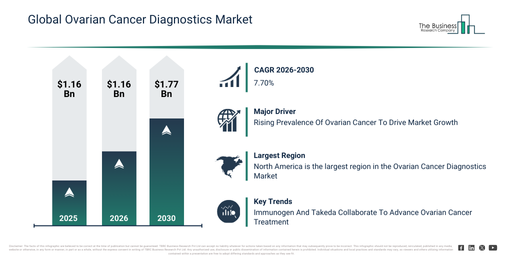
    The ovarian cancer diagnostics market is projected to experience robust expansion over the coming years. Its valuation is set to reach $4.2 billion by 2030, demonstrating a compound annual growth rate (CAGR) of 7.7%. This anticipated growth during the forecast period is primarily driven by heightened investments in precision oncology, an escalating need for the early identification of cancer, the proliferation of AI-powered diagnostic platforms, a growing emphasis on tailored treatment strategies, and increased research funding allocated to women’s cancers. Key developments expected in this period include the wider acceptance of diagnostic tests based on biomarkers, a greater utilization of sophisticated imaging techniques, the increasing incorporation of AI in cancer detection, the rollout of more early screening initiatives, and a sharpened focus on individualized oncology diagnostics.

    Get A Free Sample Report With In-Depth Market Insights:

    https://thebusinessresearchcompany.com/sample_request?id=95866469&type=smp&name=Ovarian%20Cancer%20Diagnostics%20Market%20Report%202026&utm_source=Blogs&utm_medium=Paid&utm_campaign=Oct_PR

    Ovarian Cancer Diagnostics Market Growth Drivers: What’s Behind The Acceleration?

    The rising occurrence of gynecological cancer is anticipated to propel the growth of the ovarian cancer diagnosis market moving forward. Gynecologic cancer refers to any cancer that begins in a woman’s reproductive organs. Ovarian cancer diagnosis drugs help decrease the prevalence of gynecological cancer by treating and managing the disease, preventing its recurrence, and improving patient outcomes through various therapies. For instance, in October 2025, according to Cancer Australia, an Australia-based government agency, about 6,963 new cases of gynecological cancer were diagnosed in Australia in 2024. Therefore, the high prevalence of gynecological cancer is driving the growth of the ovarian cancer diagnosis market.

    Ovarian Cancer Diagnostics Market Segment Analysis And Revenue Potential

    The ovarian cancer diagnostics market covered in this report is segmented –

    1) By Product Type: Instruments, Kits, Reagents

    2) By Diagnosis Type: Biopsy, Blood Test, Imaging, Other Diagnosis Types

    3) By Cancer Type: Epithelial Tumor, Germ Cell Tumor, Stromal Cell Tumor

    4) By End User: Cancer Diagnostic Centers, Hospital Laboratories

    Subsegments:

    1) By Instruments: Imaging Systems, Biopsy Devices, Molecular Diagnostic Instruments

    2) By Kits: Diagnostic Test Kits, Screening Kits

    3) By Reagents: Antibodies, Enzymes, Assay Reagents

    Ovarian Cancer Diagnostics Market Trends: What’s Defining The Industry’s Next Phase?

    Leading companies active in the ovarian cancer diagnostics market are establishing alliances to create novel products and bolster their market presence. These cooperative ventures and partnerships within the ovarian cancer diagnostics market enhance efforts in research, development, and commercialization by utilizing the specialized knowledge, assets, and networks of multiple organizations. For example, in August 2023, ImmunoGen Inc., a US-based biotechnology company, collaborated with Takeda Pharmaceutical Company Limited, a Japan-based pharmaceutical company, for the development and commercialization of ELAHERE (mirvetuximab soravtansine-gynx) in Japan. ImmunoGen is slated to receive upfront and milestone payments, along with double-digit royalties, while Takeda obtains exclusive rights to develop and commercialize ELAHERE in Japan, reaffirming the commitment to deliver this biomarker-directed ADC to patients with Folate Receptor Alpha (FRα)-Positive, Platinum-Resistant Ovarian Cancer in the Japanese market. This alliance assists in addressing an unmet need for individuals with platinum-resistant ovarian cancer and emphasizes a shared dedication to progressing cancer treatment options worldwide.

    Ovarian Cancer Diagnostics Market Industry Leaders And Competitive Landscape

    Major companies operating in the ovarian cancer diagnostics market are F. Hoffmann-La Roche Ltd., Thermo Fisher Scientific Inc., AstraZeneca plc, Abbott Laboratories, GlaxoSmithKline plc, Eli Lilly and Company, GE HealthCare Technologies Inc., Quest Diagnostics Incorporated, Agilent Technologies Inc., Hologic Inc., Illumina Inc., PerkinElmer Inc., Sysmex Corporation, Bio-rad Laboratories Inc., Qiagen N.V., Natera Inc., Myriad Genetics Inc., Invitae Corporation, Guardant Health, Luminex Corporation, NanoString Technologies Inc., Siemens Healthcare Private Limited, Menarini Silicon Biosystems S.p.A., Precipio Inc., Angle plc

    View The Full Ovarian Cancer Diagnostics Market Report:

    https://thebusinessresearchcompany.com/report/ovarian-cancer-diagnostics-global-market-report?utm_source=Blogs&utm_medium=Paid&utm_campaign=Oct_PR

    Ovarian Cancer Diagnostics Market Regional Analysis And Leading Geography

    North America was the largest region in the ovarian cancer diagnostics market in 2025. Asia-Pacific is expected to be the fastest-growing region in the forecast period. The regions covered in the ovarian cancer diagnostics market report are Asia-Pacific, South East Asia, Western Europe, Eastern Europe, North America, South America, Middle East, Africa.

    Reach Out To Our Team:

    The Business Research Company: https://www.thebusinessresearchcompany.com/

    Americas: +1 310-496-7795

    Asia: +44 7882 955267 & +91 8897263534

    Europe: +44 7882 955267

    Email us at: marketing@tbrc.info

    Follow us on:

    LinkedIn: https://in.linkedin.com/company/the-business-research-company

    YouTube: https://www.youtube.com/channel/UC24_fI0rV8cR5DxlCpgmyFQ

    Global Market Model: https://www.thebusinessresearchcompany.com/global-market-model
  • Otoscope Market Growth To $4.23 Billion Creates New Opportunities Across The Industry

    Otoscope Market Growth To $4.23 Billion Creates New Opportunities Across The Industry

    Featuring market attractiveness scoring, total addressable market sizing, company benchmarking matrices, interactive Excel dashboards, deeper supply chain intelligence, emerging startup tracking, and granular product-level insights, The Business Research Company’s 2026 market reports are built to deliver research that is both more actionable and more strategically valuable.

    Otoscope Market Value Analysis: What Growth Lies Ahead Over The Forecast Period?

    The otoscope market size has experienced strong development over recent years. It is projected to expand from $3.2 billion in 2025 to $3.37 billion in 2026, at a compound annual growth rate (CAGR) of 5.4%. The market’s past growth is attributable to an increasing prevalence of ear infections, a rising number of outpatient diagnostic visits, the expansion of primary healthcare facilities, the growing use of handheld diagnostic tools, and enhancements in basic medical device accessibility.

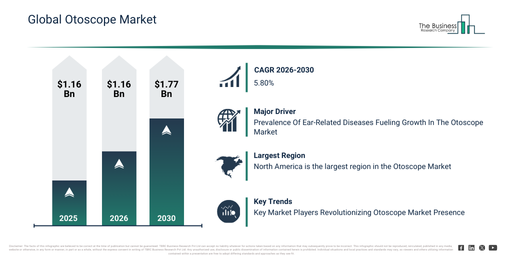
    The otoscope market is projected to experience robust expansion over the forthcoming years. It is anticipated to reach $4.23 billion in 2030, exhibiting a compound annual growth rate (CAGR) of 5.8%. This anticipated growth during the forecast period is primarily driven by factors such as the increasing embrace of telehealth services, the growing need for AI-assisted diagnostic solutions, the expansion of tools for remote patient examinations, a heightened emphasis on early disease diagnosis, and rising investments in digital healthcare equipment. Key developments expected within this period involve the greater adoption of digital and video otoscopes, an escalating demand for portable diagnostic equipment, the expanding integration of wireless connectivity, the proliferation of otoscopes compatible with telemedicine, and an intensified focus on high-resolution imaging capabilities.

    Get A Free Sample Report With In-Depth Market Insights:

    https://thebusinessresearchcompany.com/sample_request?id=19518293&type=smp&name=Otoscope%20Market%20Report%202026&utm_source=Blogs&utm_medium=Paid&utm_campaign=Oct_PR

    Otoscope Market Growth Factors Behind Sustained Expansion

    The otoscope market is anticipated to expand due to the rising occurrence of ear-related diseases. These conditions encompass a variety of ear affections, including infections like otitis media, hearing impairments such as presbycusis, and structural issues like otosclerosis, impacting both auditory and vestibular functions. Otoscopes are crucial in mitigating ear-related diseases by facilitating early detection, accurate diagnosis, and appropriate treatment. For instance, in February 2023, the World Health Organization, a Switzerland-based international public health organization, indicated that around 5% of the global population has disabling hearing loss, comprising 432 million adult patients and 34 million children. Furthermore, it is projected that by 2050, the number of individuals affected by hearing loss will reach up to 700 million. Consequently, the increasing prevalence of ear-related diseases is a primary driver for the otoscope market.

    Otoscope Market Segmentation And Category Overview

    The otoscope market covered in this report is segmented –

    1) By Type: Pocket Otoscope, Full-Sized Otoscope, Video Otoscope

    2) By Modality: Wired Digital, Wireless

    3) By Portability: Wall Mounted, Portable

    4) By End-User: Hospitals, ENT Clinics, Other End Users

    Subsegments:

    1) By Pocket Otoscope: Battery-Operated Pocket Otoscope, Rechargeable Pocket Otoscope

    2) By Full-Sized Otoscope: Wall-Mounted Full-Sized Otoscope, Tabletop Full-Sized Otoscope

    3) By Video Otoscope: Handheld Video Otoscope, Desktop Video Otoscope

    Otoscope Market Industry Trends Fueling Future Revenue Growth

    Major companies operating in the otoscopes market are focusing on product innovation, such as advanced wireless products, to enhance diagnostic accuracy, improve patient comfort, and address evolving healthcare needs, thereby strengthening their market presence and serving diverse clinical demands. This advanced wireless technology offers seamless connectivity and improved functionality for various applications. For instance, in January 2023, Portronics, an India-based provider of portable solutions, launched XLife, its latest otoscope innovation equipped with cutting-edge features. This upgraded device wirelessly streams a 360° Full HD view of the ear canal to smartphones, featuring a safe silicone scoop tip for gentle earwax removal. XLife ensures safety with its skin-friendly screw-furled silicone tip and a powerful 3-megapixel camera with a 3.5mm lens, offering clear visuals aided by a 6-LED spotlight. Additionally, it incorporates a 3-axis gyroscope for improved handling and a complete 360° view, prioritizing both safety and convenience.

    Otoscope Market Key Participants And Competitive Landscape

    Major companies operating in the otoscope market are American Diagnostic Corporation, Rudolf Riester GmbH & Co. KG, HEINE & Co. Medizinisch-Physikalische Werkstätten GmbH + Co. KG, Kirchner & Wilhelm GmbH & Co. KG, LUXAMED GmbH & CO. KG, Olympus Corporation, Midmark Corporation, CellScope Inc., Inventis SRL, Zhejiang Honsun Medical Instrument Co. Ltd., Firefly Global Ltd., Prestige Medical Ltd., Otopront Ltd., Spengler GmbH & Co. KG, Adam-Rouilly S.A.S., Keeler Ltd., AnMo Electronics Corporation (Dino-Lite), MedRx Solutions Inc., XION GmbH, ATMOS MedizinTechnik GmbH & Co. KG

    View The Full Otoscope Market Report:

    https://thebusinessresearchcompany.com/report/otoscope-global-market-report?utm_source=Blogs&utm_medium=Paid&utm_campaign=Oct_PR

    Otoscope Market Geographic Analysis: Where Is Demand Accelerating Fastest?

    North America was the largest region in the otoscope market in 2025.Asia-Pacific is expected to be the fastest-growing region in the global otoscope market report during the forecast period. The regions covered in the otoscope market report are Asia-Pacific, South East Asia, Western Europe, Eastern Europe, North America, South America, Middle East, Africa.

    Reach Out To Our Team:

    The Business Research Company: https://www.thebusinessresearchcompany.com/

    Americas: +1 310-496-7795

    Asia: +44 7882 955267 & +91 8897263534

    Europe: +44 7882 955267

    Email us at: marketing@tbrc.info

    Follow us on:

    LinkedIn: https://in.linkedin.com/company/the-business-research-company

    YouTube: https://www.youtube.com/channel/UC24_fI0rV8cR5DxlCpgmyFQ

    Global Market Model: https://www.thebusinessresearchcompany.com/global-market-model
  • Ostomy Drainage Bags Market Forecast: Breaking Down The Numbers Behind Future Expansion

    Ostomy Drainage Bags Market Forecast: Breaking Down The Numbers Behind Future Expansion

    Built to provide research that’s more actionable and strategically valuable, The Business Research Company’s 2026 market reports include market attractiveness analysis, total addressable market sizing, company benchmarking matrices, interactive Excel dashboards, broader supply chain intelligence, emerging startup tracking, and in-depth product insights.

    Ostomy Drainage Bags Market Size Forecast: How Big Could The Market Get By 2030?

    The ostomy drainage bags market has experienced robust expansion in recent years. It is projected to increase from $2.24 billion in 2025 to $2.36 billion in 2026, achieving a compound annual growth rate (CAGR) of 5.2%. The historical growth in this market can be attributed to an escalating prevalence of colorectal and bladder cancers, a rising number of ostomy surgical procedures, enhanced access to post-operative care products, the growing adoption of home healthcare, and the availability of advanced ostomy materials.

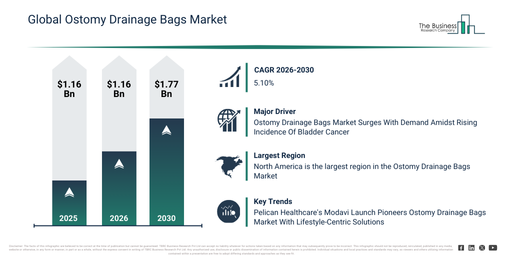
    The ostomy drainage bags market is poised for significant expansion in the upcoming years. It is projected to achieve a size of $2.88 billion by 2030, growing at a compound annual growth rate (CAGR) of 5.1%. The anticipated market growth in the forecast period stems from factors such as an increasing aging population suffering from urological disorders, a rising demand for long-term ostomy care solutions, the expansion of patient care provided in home environments, growing awareness regarding ostomy management products, and product innovations aimed at improving patient comfort. Key trends identified for the forecast period include the increasing adoption of skin-friendly ostomy materials, a rising demand for leak-resistant drainage systems, a growing preference for ostomy bags that are both discreet and comfortable, the expansion of multi-use ostomy products, and an enhanced focus on features for infection prevention.

    Get A Free Sample Report With In-Depth Market Insights:

    https://thebusinessresearchcompany.com/sample_request?id=92835553&type=smp&name=Ostomy%20Drainage%20Bags%20Market%20Report%202026&utm_source=Blogs&utm_medium=Paid&utm_campaign=Oct_PR

    Ostomy Drainage Bags Market Demand Drivers Opening New Revenue Streams

    The growing incidence of bladder cancer is anticipated to boost the demand for the ostomy drainage bags market in the future. Bladder cancer manifests when cells within the urinary bladder begin to multiply without control. This proliferation of cancer cells eventually forms a tumor and can spread to other areas of the body. Drainable ostomy bags enable users to empty and reuse their pouch contents, making them potentially preferable for individuals with urine-based conditions. For instance, according to Cancer Research UK, a UK-based charity, in September 2025, the European age-standardised incidence rate of bladder cancer among women in the UK is projected to decline by about 11% between 2024–2026 and 2038–2040, dropping from approximately 7.2 to 6.5 cases per 100,000 per year. For men, rates are also expected to decrease by around 14% over the same period, from approximately 21.7 to 18.7 cases per 100,000 annually. Consequently, the increasing incidence of bladder cancer is driving the demand for the ostomy drainage bags market.

    Ostomy Drainage Bags Market Segment Outlook: Which Categories Are Growing Fastest?

    The ostomy drainage bags market covered in this report is segmented –

    1) By Type: Colostomy Bags, Ileostomy Bags, Urostomy Bags

    2) By Clinical Application: Colorectal Cancer, Bladder Cancer, Colonic Diverticulitis, Inflammatory Bowel Disease, Other Diseases

    3) By End User: Hospitals, Home Care Setups

    Subsegments:

    1) By Colostomy Bags: One-Piece Colostomy Bags, Two-Piece Colostomy Bags

    2) By Ileostomy Bags: One-Piece Ileostomy Bags, Two-Piece Ileostomy Bags

    3) By Urostomy Bags: One-Piece Urostomy Bags, Two-Piece Urostomy Bags

    Ostomy Drainage Bags Market Trends Powering Strategic Industry Growth

    Leading companies in the ostomy drainage bag market are concentrating on product innovation, such as advanced leak prevention techniques and customizable models, to enhance comfort and improve the standard of living for ostomy patients. Leak Defense represents Convatec’s creative approach, which combines advanced adhesives with soft convexity designs in ostomy systems to establish a secure seal, thereby aiding in leak prevention and extending wear time for ostomy patients. For instance, in February 2024, Convatec Group plc introduced the new Esteem Body with Leak Defense. Convatec’s latest offering to address this growing patient need is a comprehensive, one-piece, soft convexity ostomy system portfolio crafted to suit a wide array of body types and stoma shapes. The portfolio includes drainable, closed-end, and urostomy pouching solutions.

    Ostomy Drainage Bags Market Top Companies Driving Competitive Growth

    Major companies operating in the ostomy drainage bags market are Coloplast A/S, Hollister Inc., ConvaTec Inc., B Braun Melsungen AG, Salts Healthcare Ltd., Welland Medical Ltd., Marlen Manufacturing and Development Co., Nu Hope Laboratories Inc., Cymed Ostomy Co., Torbot Group Inc., Securi T USA, Schena Ostomy Technologies Inc., Alcare Co Ltd, Pelcin Healthcare Ltd., Flexicare Medical Ltd., Rusch Inc., Smith and Nephew PLC, 3M Company, BSN Medical GmbH, Hubei Hendry Medical Appliance Co Ltd, EuroMed Inc., Safe n Simple LLC

    View The Full Ostomy Drainage Bags Market Report:

    https://thebusinessresearchcompany.com/report/ostomy-drainage-bags-global-market-report?utm_source=Blogs&utm_medium=Paid&utm_campaign=Oct_PR

    Ostomy Drainage Bags Market Global Footprint: Which Region Leads The Industry?

    North America was the largest region in the ostomy drainage bags market share in 2025. Asia-Pacific is expected to be the fastest-growing region in the forecast period The regions covered in the ostomy drainage bags market report are Asia-Pacific, South East Asia, Western Europe, Eastern Europe, North America, South America, Middle East, Africa.

    Reach Out To Our Team:

    The Business Research Company: https://www.thebusinessresearchcompany.com/

    Americas: +1 310-496-7795

    Asia: +44 7882 955267 & +91 8897263534

    Europe: +44 7882 955267

    Email us at: marketing@tbrc.info

    Follow us on:

    LinkedIn: https://in.linkedin.com/company/the-business-research-company

    YouTube: https://www.youtube.com/channel/UC24_fI0rV8cR5DxlCpgmyFQ

    Global Market Model: https://www.thebusinessresearchcompany.com/global-market-model
  • Ostomy Devices Market Expected To Grow At 5.5% CAGR Through 2030: What Businesses Need To Know

    Ostomy Devices Market Expected To Grow At 5.5% CAGR Through 2030: What Businesses Need To Know

    Backed by market attractiveness analysis, total addressable market sizing, company benchmarking matrices, interactive Excel dashboards, wider supply chain intelligence, emerging startup coverage, and detailed product-level insights, The Business Research Company’s 2026 market reports are designed to offer research that is more actionable and strategically valuable than ever.

    Ostomy Devices Market Revenue Outlook: What CAGR Lies Ahead Through 2030?

    The ostomy devices market has observed consistent expansion in recent years. This market is expected to increase from $2.9 billion in 2025 to $3.04 billion in 2026, demonstrating a compound annual growth rate (CAGR) of 4.6%. The historical growth of this market can be attributed to several factors including the rising incidence of colorectal cancer and inflammatory bowel diseases, an increase in colostomy and ileostomy surgeries conducted in hospital environments, the prompt availability of ostomy bags and support accessories, the growing acceptance among patients of post-surgical waste collection systems, and the broader application of ambulatory care for ostomy procedures.

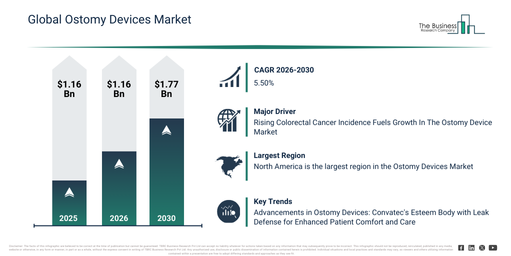
    The ostomy devices market is poised for significant expansion in the coming years, with its valuation expected to reach $3.76 billion by 2030, growing at a compound annual growth rate (CAGR) of 5.5%. This anticipated growth throughout the forecast period is driven by factors such as an aging demographic requiring ongoing ostomy care, a growing preference for at-home and self-managed ostomy solutions, increasing demand for advanced adhesive skin barriers and support garments, a rise in surgical volumes within the urostomy and ileostomy segments, and broader availability of ostomy care in developing healthcare markets. Noteworthy trends during this period include an escalating demand for ostomy bags and accessories for post-surgical waste management, increased adoption of both two-piece and one-piece ostomy system configurations, a stronger inclination towards ostomy products that prioritize skin health and comfort, greater use of home care services for long-term ostomy patients, and wider application of ostomy solutions in colostomy, ileostomy, and urostomy procedures.

    Get A Free Sample Report With In-Depth Market Insights:

    https://thebusinessresearchcompany.com/sample_request?id=21093211&type=smp&name=Ostomy%20Devices%20Market%20Report%202026&utm_source=Blogs&utm_medium=Paid&utm_campaign=Oct_PR

    Ostomy Devices Market Growth Backed By Core Demand Fundamentals

    The increasing prevalence of colorectal cancer is anticipated to fuel the expansion of the ostomy device market moving forward. Colorectal cancer develops in the tissues of the colon or rectum, involving the uncontrolled proliferation of abnormal cells in their lining, which form tumors that can spread to other parts of the body if not addressed early. The rising number of colorectal cancer cases leads to a greater necessity for ostomy surgeries, with ostomy devices supporting patients who have undergone surgical procedures for colorectal cancer by facilitating waste collection and efficient management of bodily functions post-surgery through attachment to a stoma. For instance, in January 2023, according to the American Cancer Society, a US-based nonprofit cancer advocacy organization, colorectal cancer cases increased to 153,020 cases in 2023. Consequently, the high occurrence of colorectal cancer is set to drive the growth of the ostomy device market.

    Ostomy Devices Market Segment Landscape: Which Areas Lead Development?

    The ostomy devices market covered in this report is segmented –

    1) By Product: Bags, Accessories

    2) By System Type: One-Piece System, Two-Piece System

    3) By Surgery Type: Colostomy, Urostomy, Ileostomy

    4) By End Users: Ambulatory Surgical Centers, Hospitals, Home Care, Other End-Users

    Subsegments:

    1) By Bags: Colostomy Bags, Ileostomy Bags, Urostomy Bags

    2) By Accessories: Skin Barriers, Adhesives And Pastes, Deodorants And Cleansing Products, Belts And Support Garments

    Ostomy Devices Market Growth Trends Reshaping The Competitive Landscape

    Leading companies within the ostomy device market are innovating materials, such as those gentle on skin, to lessen the chances of dermatological problems from extended device contact and to secure a competitive edge. The integration of skin-friendly materials into ostomy devices involves utilizing non-irritating substances to reduce the potential for skin irritation, allergies, or discomfort resulting from prolonged exposure to the device. For example, in February 2024, onvatec Group plc, a UK-based firm focused on medical products and technologies, unveiled the Esteem Body with Leak Defense, a new one-piece soft convex ostomy system intended to improve patient care and comfort. This product tackles significant issues faced by ostomy patients, especially given the global increase in obesity rates. The pioneering one-piece design features advanced adhesives and adjusts to different body shapes, significantly diminishing the risk of leaks, a frequent concern for users. Moreover, the system incorporates a modern 8-shaped pouch that minimizes sagging and is made from water-repellent materials, ensuring discretion during activities like swimming.

    Ostomy Devices Market Leading Players And Competitive Positioning

    Major companies operating in the ostomy devices market are 3M Company, B. Braun Melsungen AG, Smith & Nephew plc, Coloplast Corp., ConvaTec Group PLC, Hollister Incorporated, Perma-Type Company Inc., Dansac UK, Salts Healthcare, Zhejiang Longterm Medical Technology Co. Ltd, Vonco Products LLC, Angiplast Pvt. Ltd., Scapa Healthcare Ltd, Welland Medical Limited, Flexicare (Group) Limited, Marlen Manufacturing And Development Company, Nu-Hope Laboratories Inc., Torbot Group Inc., Genairex Inc, ALCARE Co. Ltd., OxMed International GmbH, Cymed Inc, Schena Ostomy Technologies Inc., Sarasota Medical Products, Safe N’ Simple LLC, Wuhan Sitaili Medical Apparatus Development Co. Ltd

    View The Full Ostomy Devices Market Report:

    https://thebusinessresearchcompany.com/report/ostomy-devices-global-market-report?utm_source=Blogs&utm_medium=Paid&utm_campaign=Oct_PR

    Ostomy Devices Market Regional Distribution: Which Areas Power Market Growth?

    North America was the largest region in the ostomy devices market in 2025. The regions covered in the ostomy devices market report are Asia-Pacific, South East Asia, Western Europe, Eastern Europe, North America, South America, Middle East, Africa.

    Reach Out To Our Team:

    The Business Research Company: https://www.thebusinessresearchcompany.com/

    Americas: +1 310-496-7795

    Asia: +44 7882 955267 & +91 8897263534

    Europe: +44 7882 955267

    Email us at: marketing@tbrc.info

    Follow us on:

    LinkedIn: https://in.linkedin.com/company/the-business-research-company

    YouTube: https://www.youtube.com/channel/UC24_fI0rV8cR5DxlCpgmyFQ

    Global Market Model: https://www.thebusinessresearchcompany.com/global-market-model
  • Osteosynthesis Devices Market Forecast To Reach $13.35 Billion By 2030: Key Trends Explained

    Osteosynthesis Devices Market Forecast To Reach $13.35 Billion By 2030: Key Trends Explained

    Featuring market attractiveness scoring, total addressable market sizing, company benchmarking matrices, interactive Excel dashboards, deeper supply chain intelligence, emerging startup tracking, and granular product-level insights, The Business Research Company’s 2026 market reports are built to deliver research that is both more actionable and more strategically valuable.

    Osteosynthesis Devices Market Growth Analysis: How Will Revenue Trend Over The Forecast Period?

    The osteosynthesis devices market has experienced significant growth in recent years. It is anticipated to expand from $10.09 billion in 2025 to $10.67 billion in 2026, demonstrating a compound annual growth rate (CAGR) of 5.7%. This historical growth can be attributed to several factors, including an increase in traumatic fractures and orthopedic injuries, the early clinical acceptance of plates, screws, and intramedullary nails for stabilizing fractures, and a greater utilization of internal fixation techniques in hospital trauma care. Furthermore, the expansion of orthopedic clinics performing fracture repair procedures and a growing demand for non-degradable metallic implants in adult fracture cases have also contributed to this market’s development.

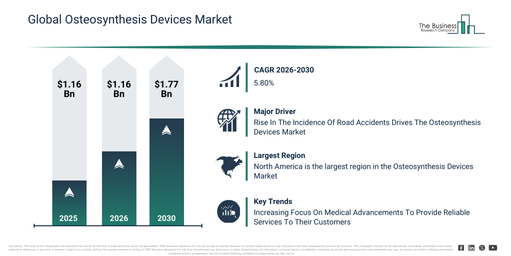
    The osteosynthesis devices market is anticipated to experience robust expansion over the next few years. It is projected to grow to $13.35 billion in 2030, demonstrating a compound annual growth rate (CAGR) of 5.8%. This growth during the forecast period can be attributed to an aging geriatric population suffering from osteoporosis-related fractures, the increasing adoption of degradable osteosynthesis materials, a rise in procedure volumes within ambulatory surgical centers, escalating treatment demand for hip and spine fracture segments, and broadening access to osteosynthesis care in emerging healthcare markets. Key trends expected in the forecast period include the increasing adoption of internal fixation devices for complex fracture management, a rising utilization of osteosynthesis implants in hip and spine fracture treatments, a growing preference for biodegradable and patient-compatible implant materials, the expansion of osteosynthesis procedures in ambulatory surgical centers, and increased utilization of compression plates and screws to enhance bone stability.

    Get A Free Sample Report With In-Depth Market Insights:

    https://thebusinessresearchcompany.com/sample_request?id=80226259&type=smp&name=Osteosynthesis%20Devices%20Market%20Report%202026&utm_source=Blogs&utm_medium=Paid&utm_campaign=Oct_PR

    Osteosynthesis Devices Market Growth Catalysts And Demand Drivers

    An increase in the occurrence of road accidents is anticipated to fuel the expansion of the osteosynthesis devices market in the foreseeable future. Road accidents are defined as incidents on roadways where vehicles collide with one another or with other objects, leading to vehicle damage and injuries to those involved. Such accidents frequently result in severe orthopedic injuries, including fractures and broken bones. Osteosynthesis devices play a crucial role in the rehabilitation and recovery of accident victims by helping restore their mobility and functionality. For example, a report released in January 2024 by The Road Safety Authority, an Ireland-based state government agency, indicated increases among drivers (+13), passengers (+12), motorcyclists (+4), pedal cyclists (+2), pedestrians (+1), and other road users (+1). Furthermore, the average monthly death toll climbed from 13 in 2022 to 16 deaths per month in 2023. Consequently, the rising incidence of road accidents is a key factor driving the growth of the osteosynthesis devices market.

    Osteosynthesis Devices Market Segments: Where Is Growth Concentrated?

    The osteosynthesis devices market covered in this report is segmented –

    1) By Device Type: Internal Fixation Devices, External Fixation Devices

    2) By Fracture Type: Hip Fracture, Knee Fracture, Spine Fracture, Shoulder Fracture, Foot And Ankle Fracture, Facial Bones Fracture, Other Fracture Types

    3) By Material: Non-Degradable, Degradable

    4) By End User: Hospitals, Orthopedic Clinics, Ambulatory Surgical Centers

    Subsegments:

    1) By Internal Fixation Devices: Plates and Screws, Intramedullary Nails (IM Nails), Spinal Fixation Devices, Bone Clamps, Bone Cement

    2) By External Fixation Devices: External Fixator Frames, Ring Fixators, Hybrid Fixators, Uniplanar External Fixators, Circular External Fixators

    Osteosynthesis Devices Market Trends Shaping Long-Term Demand

    Leading companies in the osteosynthesis device market are concentrating on creating innovative solutions, such as spinal fixation systems, to offer reliable services to their customers. A spinal fixation system is employed to stabilize and support the spine in situations involving fractures, deformities, or other spinal conditions. For example, in July 2024, Life Spine, a US-based medical device company, obtained FDA clearance for its ARx SAI Spinal Fixation System. This advanced system represents a significant progression in posterior fixation technology, engineered to deliver strong stabilization across the sacroiliac joint using a sacral alar iliac trajectory. The ARx SAI system incorporates adaptable, self-drilling screws that boost surgical efficiency by streamlining procedures. Its self-harvesting design allows for bone integration during insertion, thereby promoting healing. Furthermore, the system includes a low-profile Cobalt Chrome tulip head for durability and a universal T25 hexalobe drive for straightforward operation.

    Osteosynthesis Devices Market Competitive Overview And Top Companies

    Major companies operating in the osteosynthesis devices market are Medtronic plc, Stryker Corporation, B. Braun SE, DePuy Synthes Inc., Zimmer Biomet Holdings Inc., Smith & Nephew PLC, Arthrex Inc., NuVasive Inc., CONMED Corporation, Globus Medical Inc., LimaCorporate S.p.A., Medartis AG, Paragon 28 Inc., KLS Martin Group, Orthofix Medical Inc., Groupe Lepine SAS, Acumed LLC, Merete GmbH, Tyber Medical LLC, GPC Medical Ltd., Skeletal Dynamics LLC, Matrix Meditec Private Limited, Pega Medical Inc., Gauthier Biomedical Inc.

    View The Full Osteosynthesis Devices Market Report:

    https://thebusinessresearchcompany.com/report/osteosynthesis-devices-global-market-report?utm_source=Blogs&utm_medium=Paid&utm_campaign=Oct_PR

    Osteosynthesis Devices Market Leading Geography: Which Region Contributes The Most Revenue?

    North America was the largest region in the osteosynthesis devices market in 2025. Asia-Pacific is expected to be the fastest-growing region in the forecast period. The regions covered in the osteosynthesis devices market report are Asia-Pacific, South East Asia, Western Europe, Eastern Europe, North America, South America, Middle East, Africa.

    Reach Out To Our Team:

    The Business Research Company: https://www.thebusinessresearchcompany.com/

    Americas: +1 310-496-7795

    Asia: +44 7882 955267 & +91 8897263534

    Europe: +44 7882 955267

    Email us at: marketing@tbrc.info

    Follow us on:

    LinkedIn: https://in.linkedin.com/company/the-business-research-company

    YouTube: https://www.youtube.com/channel/UC24_fI0rV8cR5DxlCpgmyFQ

    Global Market Model: https://www.thebusinessresearchcompany.com/global-market-model
  • Hemostasis Diagnostic Devices And Equipment Market Analysis Through 2030: Market Size, Growth Trends And Industry Outlook

    Hemostasis Diagnostic Devices And Equipment Market Analysis Through 2030: Market Size, Growth Trends And Industry Outlook

    Backed by market attractiveness analysis, total addressable market sizing, company benchmarking matrices, interactive Excel dashboards, wider supply chain intelligence, emerging startup coverage, and detailed product-level insights, The Business Research Company’s 2026 market reports are designed to offer research that is more actionable and strategically valuable than ever.

    Hemostasis Diagnostic Devices And Equipment Market Value Growth And Long-Term Outlook

    In recent years, the hemostasis diagnostic devices and equipment market size has experienced swift expansion. It will grow from $5.66 billion in 2025 to $6.42 billion in 2026 at a compound annual growth rate (CAGR) of 13.4%. Factors contributing to its historical growth include a rise in bleeding disorder cases, an increase in surgical interventions that necessitate coagulation monitoring, the development of hospital laboratory services, the widespread use of standardized clotting tests, and the accessibility of advanced coagulation reagents.

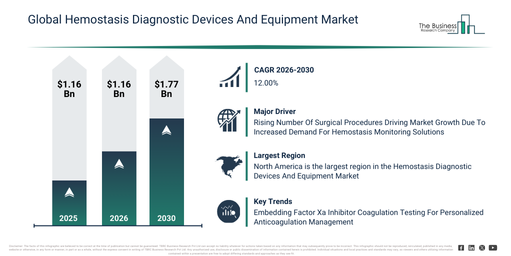
    The hemostasis diagnostic devices and equipment market is expected to experience substantial expansion in the coming years. It is projected to achieve a valuation of $10.12 billion by 2030, progressing at a compound annual growth rate (CAGR) of 12.0%. This anticipated growth throughout the forecast period is driven by factors such as an escalating need for rapid bedside diagnostics, increasing adoption of AI-assisted coagulation analysis, the broadening scope of personalized anticoagulant therapy, rising investments in advanced laboratory infrastructure, and a heightened focus on preventive diagnostics. Significant trends during this period are set to include the wider deployment of automated coagulation analyzers, growing demand for point-of-care hemostasis testing, enhanced integration of digital tools for result interpretation, the expansion of comprehensive clotting analysis systems, and an increased emphasis on swift diagnostic turnaround times.

    Get A Free Sample Report With In-Depth Market Insights:

    https://thebusinessresearchcompany.com/sample_request?id=20499902&type=smp&name=Hemostasis%20Diagnostic%20Devices%20And%20Equipment%20Market%20Report%202026&utm_source=Blogs&utm_medium=Paid&utm_campaign=Oct_PR

    Hemostasis Diagnostic Devices And Equipment Market Growth Factors Behind Sustained Expansion

    An increase in surgical operations is anticipated to drive expansion in the hemostasis diagnostic devices and equipment market moving ahead. These procedures involve medical interventions or treatments requiring incisions or invasive methods to access and treat bodily regions. This growth in surgeries stems from an aging demographic, leading to more chronic and complex health issues that necessitate operations. Hemostasis diagnostic devices greatly assist surgical procedures by optimizing blood clot management, reducing associated risks, and boosting overall operational efficiency, ultimately resulting in superior patient results. For example, the British Broadcasting Corporation, a UK-based public service broadcaster, reported in April 2025 that roughly 27,462 cosmetic surgical procedures were carried out in 2024, marking a 5 percent increase compared to 2023, with over nine in ten operations performed on women. Consequently, the growing volume of surgical procedures fuels the expansion of the hemostasis diagnostic devices and equipment market in the future.

    Hemostasis Diagnostic Devices And Equipment Market Segment Landscape And Growth Outlook

    The hemostasis diagnostic devices and equipment market covered in this report is segmented –

    1) By Product: Analyzers, Coagulation Instrument, Other Hemostasis Instruments, Reagents and Kits

    2) By Device Technology: Automated, Semi-Automated, Manual

    3) By End User: Hospitals, Clinics, Independent Diagnostic, Laboratories, Other End Users

    Subsegments:

    1) By Analyzers: Hematology Analyzers, Platelet Function Analyzers, Thromboelastography (TEG) Analyzers

    2) By Coagulation Instruments: Prothrombin Time (PT) Instruments, Activated Partial Thromboplastin Time (aPTT) Instruments, Fibrinogen Testing Instruments, Thrombin Time (TT) Instruments

    3) By Other Hemostasis Instruments: Blood Clotting Time (BCT) Instruments, Bleeding Time (BT) Test Devices

    4) By Reagents and Kits: Coagulation Reagents, Blood Collection Kits, Point-of-care Testing Kits, Thrombosis Kits

    Hemostasis Diagnostic Devices And Equipment Market Industry Trends Fueling Future Revenue Growth

    Leading companies in the hemostasis diagnostic devices and equipment market are concentrating on technological advancements, such as inhibitor-specific coagulation testing, with the aim of enhancing patient safety, optimizing anticoagulation therapy, and mitigating the risk of bleeding or thrombotic events in individuals using direct oral anticoagulants (DOACs). These sophisticated tests empower laboratories and clinicians to accurately quantify anticoagulant activity, guide appropriate dosage adjustments, and support personalized therapy management. For instance, in February 2024, Roche Diagnostics, a Switzerland-based manufacturer specializing in diagnostic equipment and reagents for research and medical diagnostic applications, unveiled three new Factor Xa inhibitor coagulation tests for their cobas platforms. These tests are specifically engineered to measure apixaban, rivaroxaban, and edoxaban activity in patient plasma samples. The objective of these tests is to deliver rapid, accurate, and dependable results, thereby informing clinical decision-making in critical situations like surgery, emergency care, or instances of suspected bleeding complications. This launch underscores the prevailing market trend towards personalized anticoagulation management, which boosts safety and efficacy for patients receiving direct Factor Xa inhibitor therapy, simultaneously providing laboratories with standardized, automated assay solutions.

    Hemostasis Diagnostic Devices And Equipment Market Leading Companies And Competitive Benchmarking

    Major companies operating in the hemostasis diagnostic devices and equipment market are Baxter International Inc., Johnson & Johnson, Abbott Laboratories, Beckman Coulter Inc., Becton Dickinson and Company, Chrono-Log Corporation, F. Hoffmann-La Roche Ltd., Grifols S.A., Siemens AG, Thermo Fisher Scientific Inc., Trinity Biotech plc., Ethicon Inc., B. Braun Interventional Systems Inc., Bio-Rad Laboratories Inc., CareFusion Corporation, Danaher Corporation, Diagnostica Stago SAS, Haemonetics Corporation, QuidelOrtho Corp, STAGO

    View The Full Hemostasis Diagnostic Devices And Equipment Market Report:

    https://thebusinessresearchcompany.com/report/hemostasis-diagnostic-devices-and-equipment-global-market-report?utm_source=Blogs&utm_medium=Paid&utm_campaign=Oct_PR

    Hemostasis Diagnostic Devices And Equipment Market Largest Region By Revenue And Market Share

    North America was the largest region in the global hemostasis diagnostic devices and equipment market in 2025. Asia-Pacific was the second-largest region in the hemostasis diagnostic devices and equipment market. The regions covered in the hemostasis diagnostic devices and equipment market report are Asia-Pacific, South East Asia, Western Europe, Eastern Europe, North America, South America, Middle East, Africa.

    Reach Out To Our Team:

    The Business Research Company: https://www.thebusinessresearchcompany.com/

    Americas: +1 310-496-7795

    Asia: +44 7882 955267 & +91 8897263534

    Europe: +44 7882 955267

    Email us at: marketing@tbrc.info

    Follow us on:

    LinkedIn: https://in.linkedin.com/company/the-business-research-company

    YouTube: https://www.youtube.com/channel/UC24_fI0rV8cR5DxlCpgmyFQ

    Global Market Model: https://www.thebusinessresearchcompany.com/global-market-model
  • Hemostasis Analyzers Market Outlook From 2026 To 2030: Key Growth Factors And Future Opportunities

    Hemostasis Analyzers Market Outlook From 2026 To 2030: Key Growth Factors And Future Opportunities

    Featuring market attractiveness scoring, total addressable market sizing, company benchmarking matrices, interactive Excel dashboards, deeper supply chain intelligence, emerging startup tracking, and granular product-level insights, The Business Research Company’s 2026 market reports are built to deliver research that is both more actionable and more strategically valuable.

    Hemostasis Analyzers Market Poised To Hit $5.66 Billion By 2030 With A 6.8% CAGR

    The hemostasis analyzers market has seen significant expansion in recent years. This market is expected to increase from $4.05 billion in 2025 to $4.34 billion in 2026, demonstrating a compound annual growth rate (CAGR) of 7.2%. The historical development of this market is attributed to a rise in the incidence of bleeding and clotting disorders, an increase in hospital-based diagnostic testing, the growing reliance on centralized clinical laboratories, a surge in surgical procedures, and the widespread adoption of standard coagulation assays.

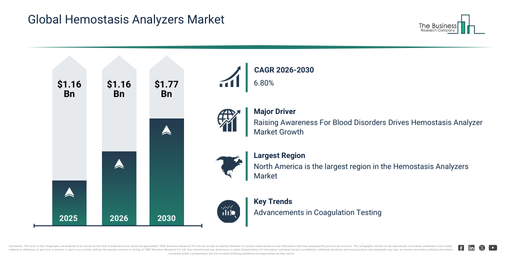
    The hemostasis analyzers market size is projected for significant expansion over the upcoming years. Its value is anticipated to reach $5.66 billion by 2030, demonstrating a compound annual growth rate (CAGR) of 6.8%. Factors contributing to this growth during the forecast period include innovations in optical and electrochemical testing technology, the broadening scope of point-of-care diagnostics, an expanding elderly population, an increase in cardiovascular disease incidence, and greater investment in diagnostic infrastructure. Key developments expected during this period involve the increasing embrace of point-of-care coagulation tests, a heightened need for automated and semi-automated analyzers, the expanding application of hemostasis testing in managing chronic illnesses, a surge in the utilization of reagents and consumables, and a sharpened emphasis on precision and swift results.

    Get A Free Sample Report With In-Depth Market Insights:

    https://thebusinessresearchcompany.com/sample_request?id=42166672&type=smp&name=Hemostasis%20Analyzers%20Market%20Report%202026&utm_source=Blogs&utm_medium=Paid&utm_campaign=Oct_PR

    Hemostasis Analyzers Market Demand Drivers Opening New Revenue Streams

    Heightened recognition of blood disorder conditions is projected to fuel the expansion of the hemostasis analyzers market in the future. Genetic conditions like Hemophilia and Von Willebrand disease (vWD) often remain unfamiliar to the general public, consequently leading to delayed identification of these blood disorders, impacting affected individuals. As an illustration, data from July 2024, provided by Cancer Research UK, a charity based in the UK, indicates that the average annual count of new Hodgkin lymphoma cases in the UK is anticipated to rise from roughly 2,400 cases between 2023 and 2025 to approximately 2,900 cases between 2038 and 2040. A rise in awareness is expected to enhance the diagnostic frequency of blood disorders, thereby stimulating the need for hemostasis analyzers.

    Hemostasis Analyzers Market Breakdown By Product Type And Application

    The hemostasis analyzers market covered in this report is segmented –

    1) By Product: Clinical Laboratory Analyzers, Point-Of-Care Testing Analyzers, Consumables

    2) By Test: APTT Tests, D Dimer Tests, Platelet Function Tests, Fibrinogen Tests, Prothrombin Time Tests, Other Tests

    3) By Technology: Optical Technology, Mechanical Technology, Electrochemical Technology, Other Technologies

    4) By End Use: Hospitals & Clinics, Diagnostic Centers, Research And Development Organizations, Ambulatory Surgical Centers, Other End Uses

    Subsegments:

    1) By Clinical Laboratory Analyzers: Automated Coagulation Analyzers, Semi-Automated Coagulation Analyzers

    2) By Point-Of-Care Testing Analyzers: Portable Coagulation Testing Devices, Handheld Coagulation Analyzers

    3) By Consumables: Reagents, Test Strips, Control Solutions

    Hemostasis Analyzers Market Trends Powering Strategic Industry Growth

    Major companies within the Hemostasis Analyzers market are prioritizing the development of advanced solutions, including coagulation tests, to improve diagnostic precision and streamline laboratory workflows, ultimately leading to enhanced patient outcomes. Coagulation tests are a type of blood analysis that evaluates the blood’s clotting ability and the time it takes for clotting to occur. For example, in February 2024, Roche AG, a Switzerland-based healthcare company, introduced three new Factor Xa inhibitor coagulation tests. These innovative liquid, ready-to-use reagents are engineered to precisely determine the blood concentrations of common anticoagulants like apixaban and rivaroxaban. A key benefit of these tests is their capacity to deliver accurate and standardized results within minutes using Roche’s cobas t 711 and cobas t 511 coagulation analyzers. This directly addresses the clinical challenge of patient management in urgent scenarios, such as episodes of bleeding or before critical surgery, where knowing the drug concentration is essential for personalized patient care. This represents a notable progression beyond conventional, non-specific coagulation tests like the PT/INR, which are not dependable for gauging the activity of these modern medications.

    Hemostasis Analyzers Market Industry Leaders And Competitive Landscape

    Major companies operating in the hemostasis analyzers market are Thermo Fisher Scientific Inc., Alere Inc., Siemens AG, F-Hoffmann La Roche, Nihon Kohden Corporation, Sysmex Corporation, Helena Laboratories, International Technidyne Corporation, Abbott Laboratories, Diagnostica Stago Inc., Grifols S.A., Beckman Coulter Inc., Diamond Diagnostics, Mindray Medical International Limited, Horiba Ltd., Becton Dickinson and Company, Transasia Bio-Medicals Ltd., Medtronic Inc., Sekisui Diagnostics, Technoclone, Trinity Biotech plc, Werfen S.A., ACON LABS INC., Accriva Diagnostics

    View The Full Hemostasis Analyzers Market Report:

    https://thebusinessresearchcompany.com/report/hemostasis-analyzers-global-market-report?utm_source=Blogs&utm_medium=Paid&utm_campaign=Oct_PR

    Hemostasis Analyzers Market Regional Analysis And Leading Geography

    North America was the largest region in the hemostasis analyzers market in 2025. Western Europe was the second-largest region in the hemostasis analyzers market report. The regions covered in the hemostasis analyzers market report are Asia-Pacific, South East Asia, Western Europe, Eastern Europe, North America, South America, Middle East, Africa.

    Reach Out To Our Team:

    The Business Research Company: https://www.thebusinessresearchcompany.com/

    Americas: +1 310-496-7795

    Asia: +44 7882 955267 & +91 8897263534

    Europe: +44 7882 955267

    Email us at: marketing@tbrc.info

    Follow us on:

    LinkedIn: https://in.linkedin.com/company/the-business-research-company

    YouTube: https://www.youtube.com/channel/UC24_fI0rV8cR5DxlCpgmyFQ

    Global Market Model: https://www.thebusinessresearchcompany.com/global-market-model
  • Hemoglobin Testing Market Growth Forecast: Market Size, Key Trends And Emerging Opportunities Through 2030

    Hemoglobin Testing Market Growth Forecast: Market Size, Key Trends And Emerging Opportunities Through 2030

    Built to provide research that’s more actionable and strategically valuable, The Business Research Company’s 2026 market reports include market attractiveness analysis, total addressable market sizing, company benchmarking matrices, interactive Excel dashboards, broader supply chain intelligence, emerging startup tracking, and in-depth product insights.

    Hemoglobin Testing Market Size And Revenue Outlook Through 2030

    The hemoglobin testing market has seen substantial expansion in recent years. It is anticipated to expand from $2.79 billion in 2025 to $3.03 billion in 2026, exhibiting a compound annual growth rate (CAGR) of 8.7%. This past growth can be attributed to the broader adoption of routine blood testing, an increase in anemia screening initiatives, a rise in diagnostic demands within hospitals, the availability of economical testing kits, and escalating public health endeavors.

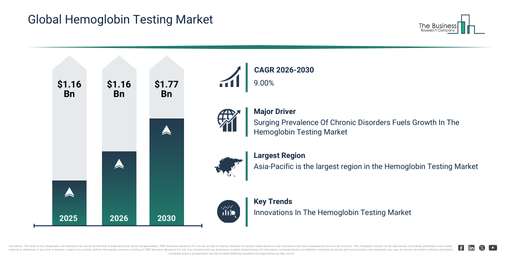
    The hemoglobin testing market size is anticipated to experience substantial expansion in the coming years. It is projected to reach $4.28 billion by 2030, exhibiting a compound annual growth rate (CAGR) of 9.0%. This growth over the forecast period is primarily driven by factors such as an escalating demand for decentralized diagnostic solutions, the increasing embrace of home testing devices, the broadening scope of digital health monitoring, a heightened emphasis on early disease detection, and ongoing advancements in diagnostic precision. Key trends anticipated during this period include a greater uptake of point-of-care hemoglobin testing, the increasing utilization of portable hemoglobin analyzers, a surging requirement for rapid blood screening, the wider availability of home-based diagnostic testing, and an intensified focus on preventive health screenings.

    Get A Free Sample Report With In-Depth Market Insights:

    https://thebusinessresearchcompany.com/sample_request?id=46411578&type=smp&name=Hemoglobin%20Testing%20Market%20Report%202026&utm_source=Blogs&utm_medium=Paid&utm_campaign=Oct_PR

    Hemoglobin Testing Market Growth Backed By Core Demand Fundamentals

    The escalating incidence of chronic illnesses, such as diabetes, is anticipated to stimulate the expansion of hemoglobin testing. Diabetes is a long-term condition that develops when the pancreas fails to produce adequate insulin or when the body does not properly utilize the insulin it generates. Hemoglobin A1c tests (HbA1c) are utilized to monitor glucose concentrations in diabetic patients and are endorsed by the American Diabetes Association as a suitable method for diagnosing diabetes, serving as an alternative to fasting blood glucose measurements. For example, in November 2022, the US Census Bureau, a federal statistical department based in the US, reported that more than 34 million Americans live with diabetes, with an additional 88 million identified as being at risk. Moreover, in December 2021, the IDF Diabetes Atlas 10th edition, issued by the International Diabetes Federation, a Belgium-based global diabetes organization, indicated that 536,000 individuals were affected by diabetes in 2021, a figure projected to increase to 642,800 by 2030 and reach 783,700 individuals globally by 2045. Consequently, the increasing occurrence of chronic diseases like anemia and diabetes is expected to propel the market for hemoglobin testing devices.

    Hemoglobin Testing Market Segment Analysis And Revenue Potential

    The hemoglobin testing market covered in this report is segmented –

    1) By Product: Reagents And Consumables, Equipment

    2) By Technology: Spectrophotometry, Chromatography, Biosensor-Based, Electrochemical-Based

    3) By End User: Hospitals, Clinics, Laboratories, Home Care Settings, Blood Banks, Other End Users

    Subsegments:

    1) By Reagents And Consumables: Hemoglobin Testing Kits, Control Solutions, Test Strips, Quality Control Products

    2) By Equipment: Hemoglobin Meters, Analyzers, Point-Of-Care Devices

    Hemoglobin Testing Market Growth Trends Reshaping The Competitive Landscape

    Leading companies in the hemoglobin testing market are devising advanced fingerstick blood test solutions, aiming to equip patients with the capacity to track their hemoglobin levels effortlessly at home, aid in the prompt identification of anemia, and elevate their overall health management. These innovative fingerstick blood test solutions represent sophisticated techniques that permit the rapid and simple collection of blood samples via a straightforward finger prick, thereby enabling efficient and less intrusive diagnostic assessments. For instance, in February 2024, Sanguina Inc., a US-based health technology company, unveiled AnemoCheck Home, the inaugural FDA-cleared home hemoglobin test kit. AnemoCheck Home stands as an inventive testing alternative crafted to deliver users precise hemoglobin measurements through a simple finger prick. This accessible kit encompasses all vital components, including a testing device and instructions, empowering individuals to readily conduct the test without requiring a laboratory visit. AnemoCheck Home not only allows patients to routinely monitor their hemoglobin levels but also supports the early detection of potential health conditions like anemia.

    Hemoglobin Testing Market Key Participants And Competitive Landscape

    Major companies operating in the hemoglobin testing market are Abbott Laboratories Inc, F Hoffmann La Roche Ltd, Danaher Corporation, Thermo Fisher Scientific Inc, Bio Rad Laboratories Inc, Sysmex Corporation, Siemens Healthineers AG, Mindray Medical International Limited, Nihon Kohden Corporation, EKF Diagnostics Holdings plc, ARKRAY Inc, Nova Biomedical Corporation, Beckman Coulter Inc, Radiometer A S, DiaSys Diagnostic Systems GmbH, Erba Diagnostics Inc, Tosoh Corporation, ACON Laboratories Inc, Diazyme Laboratories Inc, Humasis Co Ltd, BioMedomics Inc, NanoEntek Inc

    View The Full Hemoglobin Testing Market Report:

    https://thebusinessresearchcompany.com/report/hemoglobin-testing-global-market-report?utm_source=Blogs&utm_medium=Paid&utm_campaign=Oct_PR

    Hemoglobin Testing Market Geographic Analysis: Where Is Demand Accelerating Fastest?

    Asia-Pacific was the largest regions in the hemoglobin testing market in 2025. Asia-Pacific is expected to be the fastest-growing region in the global hemoglobin testing market report during the forecast period. The regions covered in the hemoglobin testing market report are Asia-Pacific, South East Asia, Western Europe, Eastern Europe, North America, South America, Middle East, Africa.

    Reach Out To Our Team:

    The Business Research Company: https://www.thebusinessresearchcompany.com/

    Americas: +1 310-496-7795

    Asia: +44 7882 955267 & +91 8897263534

    Europe: +44 7882 955267

    Email us at: marketing@tbrc.info

    Follow us on:

    LinkedIn: https://in.linkedin.com/company/the-business-research-company

    YouTube: https://www.youtube.com/channel/UC24_fI0rV8cR5DxlCpgmyFQ

    Global Market Model: https://www.thebusinessresearchcompany.com/global-market-model
  • Hemoglobin A1c Testing Devices Market CAGR Forecast Through 2030: Key Trends Shaping Industry Expansion

    Hemoglobin A1c Testing Devices Market CAGR Forecast Through 2030: Key Trends Shaping Industry Expansion

    Backed by market attractiveness analysis, total addressable market sizing, company benchmarking matrices, interactive Excel dashboards, wider supply chain intelligence, emerging startup coverage, and detailed product-level insights, The Business Research Company’s 2026 market reports are designed to offer research that is more actionable and strategically valuable than ever.

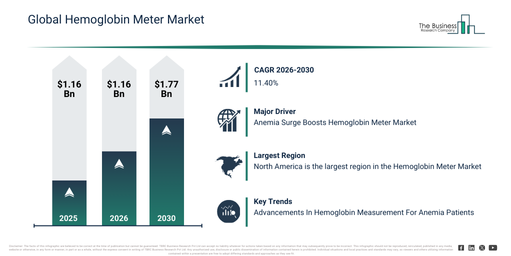
    Hemoglobin Meter Market Growth From $3.07 Billion In 2026 To $4.74 Billion By 2030 At A CAGR Of 11.4%

    In recent years, the hemoglobin meter market has seen substantial growth in its size. This market is projected to expand from $2.75 billion in 2025 to $3.07 billion in 2026, driven by a compound annual growth rate (CAGR) of 11.8%. The expansion observed in the past can be linked to several factors, including the increasing global prevalence of anemia, a rise in diagnostic testing conducted in hospitals, the established reliance on laboratory-based hemoglobin analysis, a heightened awareness concerning blood health monitoring, and the ongoing expansion of clinical laboratory infrastructure.

    The hemoglobin meter market is projected to experience swift expansion over the coming years. It is anticipated to reach $4.74 billion by 2030, demonstrating an 11.4% compound annual growth rate (CAGR). This projected growth during the forecast period is fueled by several factors, including the expansion of home healthcare diagnostics, the increasing use of portable and handheld devices, a rise in anemia screening initiatives, advancements in sensor accuracy through technology, and the broader implementation of point-of-care testing in underserved and distant regions. Key developments expected in this period encompass the growing preference for portable and home-based hemoglobin meters, a heightened need for quick point-of-care testing solutions, an increased emphasis on early identification and tracking of anemia, the wider integration of hemoglobin testing within primary healthcare environments, and enhanced precision and user-friendliness in handheld devices.

    Get A Free Sample Report With In-Depth Market Insights:

    https://thebusinessresearchcompany.com/sample_request?id=42895543&type=smp&name=Hemoglobin%20Meter%20Market%20Report%202026&utm_source=Blogs&utm_medium=Paid&utm_campaign=Oct_PR

    Hemoglobin Meter Market Growth Catalysts And Demand Drivers

    The increasing incidence of anemia is projected to fuel the expansion of the hemoglobin meter market. Anemia is identified by a shortage of red blood cells or hemoglobin, which impairs oxygen delivery throughout the body. The growing occurrence of anemia is primarily a result of nutritional deficiencies, particularly concerning iron, vitamin B12, and folate, often stemming from inadequate dietary practices and restricted availability of nutrient-dense foods. Furthermore, factors such as poverty, insufficient access to medical care, and inheritable conditions can lead to chronic anemia by disrupting the creation of red blood cells. A hemoglobin meter is employed in the context of anemia to assess the blood’s hemoglobin concentration, aiding in the diagnosis and oversight of the condition’s severity. For instance, in July 2023, data from the Institute for Health Metrics and Evaluation (IHME), a U.K.-based national and international public health agency and research institute, indicated that approximately 2 billion individuals globally were impacted by anemia, with a greater prevalence among women compared to men. Worldwide, 31.2% of women experienced anemia, in contrast to 17.5% for men. This gender difference was particularly pronounced in the reproductive age bracket (ages 15–49), where anemia affected 33.7% of women against 11.3% of men in this demographic. Consequently, the rising prevalence of anemia will significantly boost the growth of the hemoglobin meter market.

    Hemoglobin Meter Market Segmentation And Category Overview

    The hemoglobin meter market covered in this report is segmented –

    1) By Type: Full Automatic, Semi Automatic

    2) By Form Factor: Bench Top, Portable

    3) By Application: Hospitals, Labs, Other Applications

    Subsegments:

    1) By Full Automatic: Portable Full Automatic Hemoglobin Meters, Desktop Full Automatic Hemoglobin Meters, Integrated Full Automatic Hemoglobin Meters, Advanced Full Automatic Hemoglobin Meters

    2) By Semi-Automatic: Basic Semi-Automatic Hemoglobin Meters, Digital Display Semi-Automatic Hemoglobin Meters, Microcuvette-Based Semi-Automatic Hemoglobin Meters, Handheld Semi-Automatic Hemoglobin Meters

    Hemoglobin Meter Market Trends Shaping Long-Term Demand

    Leading companies operating within the hemoglobin meter market are prioritizing innovative solutions, such as fingerstick blood tests, to alleviate healthcare expenses linked to laboratory visits. This fingerstick blood test is a swift and minimally invasive method for acquiring blood samples via a small skin puncture, thereby facilitating quick and convenient health tracking from home. For example, in October 2023, Sanguina Inc., a US-based medical biotechnology company, secured clearance from the U.S. Food and Drug Administration (FDA) for its home hemoglobin test kit, AnemoCheck Home. This kit allows individuals to easily monitor their hemoglobin levels from the comfort of their own homes. Being the only FDA-approved home hemoglobin test in the United States, it caters to those with conditions like anemia caused by nutritional deficiencies, thalassemia, and sickle cell disease. The kit utilizes a straightforward fingerstick blood collection technique, enabling users to obtain a blood sample with minimal discomfort.

    Hemoglobin Meter Market Top Companies Driving Competitive Growth

    Major companies operating in the hemoglobin meter market are F Hoffmann-La Roche Ltd, Thermo Fisher Scientific Inc, Abbott Laboratories, Danaher Corporation, Siemens Healthcare GmbH, Terumo Corporation, Shenzhen Mindray Bio-Medical Electronics Co Ltd, Beckman Coulter Inc, Sysmex Corporation, Nihon Kohden Corporation, Nova Biomedical Corporation, Instrumentation Laboratory Company, ACON Laboratories Inc, Erba Diagnostics Mannheim GmbH, Transasia Bio-Medicals Ltd, Trinity Biotech, HemoCue AB, EKF Diagnostics Holdings plc, Boule Diagnostics AB, PTS Diagnostics, HUMAN Diagnostics Worldwide, PixCell Medical Technologies Ltd

    View The Full Hemoglobin Meter Market Report:

    https://thebusinessresearchcompany.com/report/hemoglobin-meter-global-market-report?utm_source=Blogs&utm_medium=Paid&utm_campaign=Oct_PR

    Hemoglobin Meter Market Global Footprint: Which Region Leads The Industry?

    North America was the largest region in the hemoglobin meter market in 2025. The regions covered in the hemoglobin meter market report are Asia-Pacific, South East Asia, Western Europe, Eastern Europe, North America, South America, Middle East, Africa.

    Reach Out To Our Team:

    The Business Research Company: https://www.thebusinessresearchcompany.com/

    Americas: +1 310-496-7795

    Asia: +44 7882 955267 & +91 8897263534

    Europe: +44 7882 955267

    Email us at: marketing@tbrc.info

    Follow us on:

    LinkedIn: https://in.linkedin.com/company/the-business-research-company

    YouTube: https://www.youtube.com/channel/UC24_fI0rV8cR5DxlCpgmyFQ

    Global Market Model: https://www.thebusinessresearchcompany.com/global-market-model
  • Hemoglobin A1c Testing Devices Market To Witness 11.1% CAGR Growth Through 2030: Key Industry Drivers

    Hemoglobin A1c Testing Devices Market To Witness 11.1% CAGR Growth Through 2030: Key Industry Drivers

    Featuring market attractiveness scoring, total addressable market sizing, company benchmarking matrices, interactive Excel dashboards, deeper supply chain intelligence, emerging startup tracking, and granular product-level insights, The Business Research Company’s 2026 market reports are built to deliver research that is both more actionable and more strategically valuable.

    Hemoglobin A1c Testing Devices Market Expansion Outlook: What Revenue Opportunities Are Ahead?

    The hemoglobin a1c testing devices market has expanded rapidly in recent years. It is projected to grow from $2.08 billion in 2025 to $2.32 billion in 2026, exhibiting a compound annual growth rate (CAGR) of 11.7%. This historic growth can be attributed to the increasing prevalence of diabetes, the wider adoption of routine blood glucose monitoring practices, improved availability of laboratory diagnostics, growing awareness regarding glycemic control, and the implementation of standardized diabetes testing protocols.

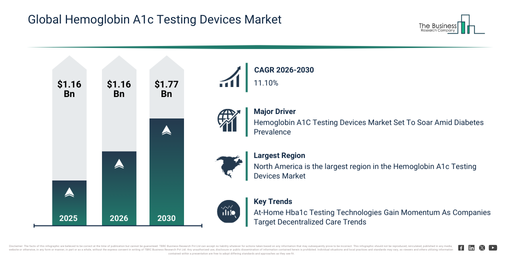
    The market for hemoglobin a1c testing devices is projected for substantial growth in the upcoming years. This market is anticipated to reach $3.53 billion in 2030, exhibiting a compound annual growth rate (CAGR) of 11.1%. Several factors are driving this expansion during the forecast period, including a heightened demand for home-based diabetes monitoring, greater integration of AI-driven analytics, the broadening scope of remote patient monitoring, an increasing emphasis on personalized diabetes care, and the wider adoption of smart diagnostic devices. Key trends projected for this period involve a surge in point-of-care HbA1c testing, the expanding utilization of portable and handheld devices, deeper integration with digital diabetes management platforms, the development of rapid and highly accurate assays, and an increased focus on patient-centric monitoring.

    Get A Free Sample Report With In-Depth Market Insights:

    https://thebusinessresearchcompany.com/sample_request?id=90796685&type=smp&name=Hemoglobin%20A1c%20Testing%20Devices%20Market%20Report%202026&utm_source=Blogs&utm_medium=Paid&utm_campaign=Oct_PR

    Hemoglobin A1c Testing Devices Market Opportunity Drivers: What’s Unlocking New Revenue Potential?

    The increasing occurrence of diabetes is anticipated to stimulate growth in the hemoglobin A1C testing devices market. Diabetes is a chronic metabolic condition characterized by elevated blood glucose levels. Hemoglobin A1C testing provides insights into average blood glucose levels in individuals, which is instrumental in the diagnosis of type 2 diabetes, pre-diabetes, and in diabetes management, enabling individuals to monitor their condition and make informed treatment decisions to prevent complications. For instance, in June 2024, the National Health Service, a UK-based government department, reported that in 2023, the NHS identified over half a million (549,000) new individuals in England at risk of developing type 2 diabetes. This increased the total number of people with non-diabetic hyperglycemia, or pre-diabetes, registered with a GP to 3,615,330. This marks a significant rise compared to 3,065,825 in 2022, reflecting an increase of nearly 20%. Therefore, the growing number of diabetes patients will propel the hemoglobin A1C testing devices market.

    Hemoglobin A1c Testing Devices Market Segment Outlook: Which Categories Are Growing Fastest?

    The hemoglobin a1c testing devices market covered in this report is segmented –

    1) By Type: Bench Top Device, Handheld Device

    2) By Technology: Ion-Exchange HPLC, Immunoassay, Boronate Affinity Chromatography, Direct Enzymatic Assay, Other Technologies

    3) By End Use: Hospitals, Pharmaceuticals, Medical Devices, Laboratory Testing

    Subsegments:

    1) By Bench Top Device: Automated Hemoglobin A1C Analyzers, Laboratory-Grade Analyzers, Multi-Parameter Testing Devices

    2) By Handheld Device: Portable Hemoglobin A1C Testers, Point-Of-Care Testing Devices, Smartphone-Integrated Testing Devices

    Hemoglobin A1c Testing Devices Market Innovation Trends Shaping Future Development

    Major companies operating in the hemoglobin A1c testing devices market are concentrating on developing innovative solutions, such as at-home or micro-sample HbA1c collection kits, to address the increasing demand driven by rising diabetes prevalence, the shift towards decentralized care and telehealth, and patients’ preference for convenient, lower-cost monitoring options. An at-home HbA1c collection kit is a user-friendly system enabling a patient to perform a small finger-prick blood collection (typically a few drops), stabilize the micro-sample for transport, and dispatch it to a certified laboratory for highly accurate analysis. For instance, in February 2023, Hurdle, a US-based diagnostics-as-a-service company, launched the Hemoglobin A1c (HbA1c) Test, an at-home HbA1c test available through its Chronomics direct-to-consumer store. This Hemoglobin A1c Test is supplied as a home collection kit that includes finger-prick lancets and a sample card/tube, secure registration via a personal dashboard, and courier return to partner CLIA-certified labs; the service promises lab-grade analysis with a typical turnaround of about three days after lab receipt, integrated result explanations, and optional one-to-one access to healthcare professionals for follow-up, thereby combining the convenience of point-of-care or home sampling with the accuracy and standardization of central laboratory assays.

    Hemoglobin A1c Testing Devices Market Leading Players And Competitive Positioning

    Major companies operating in the hemoglobin a1c testing devices market are Arkray Inc, Abbott Laboratories, Polymer Technology Systems Inc, Bio-Rad Laboratories Inc, Menarini Group, F Hoffmann-La Roche AG, Siemens Healthineers AG, Tosoh Corporation, Trinity Biotech plc, Transasia Bio-Medicals Limited, Beckman Coulter Inc, Diazyme Laboratories Inc, EKF Diagnostics Holdings plc, HemoCue AB, OSANG Healthcare Co Ltd, Danaher, Thermo Fisher Scientific Inc., PTS Diagnostics India Private Limited, Nova Biomedical, Randox Laboratories Ltd., ACON Laboratories Inc., DiaSys Diagnostic Systems GmbH, Erba Mannheim, Green Cross Medical Science Corp., Infopia Co. Ltd., TaiDoc Technology Corporation, Werfen, Zhejiang Orient Gene Biotech Co. Ltd.

    View The Full Hemoglobin A1c Testing Devices Market Report:

    https://thebusinessresearchcompany.com/report/hemoglobin-A1c-testing-devices-global-market-report?utm_source=Blogs&utm_medium=Paid&utm_campaign=Oct_PR

    Hemoglobin A1c Testing Devices Market Regional Distribution: Which Areas Power Market Growth?

    North America was the largest region in the hemoglobin A1C testing devices market in 2025. Asia-Pacific is expected to be the fastest-growing region in the hemoglobin A1C testing devices market during the forecast period. The regions covered in the hemoglobin a1c testing devices market report are Asia-Pacific, South East Asia, Western Europe, Eastern Europe, North America, South America, Middle East, Africa.

    Reach Out To Our Team:

    The Business Research Company: https://www.thebusinessresearchcompany.com/

    Americas: +1 310-496-7795

    Asia: +44 7882 955267 & +91 8897263534

    Europe: +44 7882 955267

    Email us at: marketing@tbrc.info

    Follow us on:

    LinkedIn: https://in.linkedin.com/company/the-business-research-company

    YouTube: https://www.youtube.com/channel/UC24_fI0rV8cR5DxlCpgmyFQ

    Global Market Model: https://www.thebusinessresearchcompany.com/global-market-model