Blog

  • Heart Rate Monitoring Devices Market Size Forecast: How The Industry Is Expected To Grow From 2026 To 2030

    Heart Rate Monitoring Devices Market Size Forecast: How The Industry Is Expected To Grow From 2026 To 2030

    Backed by market attractiveness analysis, total addressable market sizing, company benchmarking matrices, interactive Excel dashboards, wider supply chain intelligence, emerging startup coverage, and detailed product-level insights, The Business Research Company’s 2026 market reports are designed to offer research that is more actionable and strategically valuable than ever.

    Heart Rate Monitoring Devices Market Forecast: Value Set To Climb From $14.48 Billion To $19.67 Billion

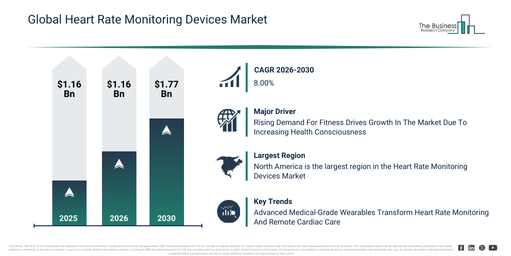
    The heart rate monitoring devices market has demonstrated significant growth over recent years. It is anticipated to expand from $13.37 billion in 2025 to $14.48 billion in 2026, achieving a compound annual growth rate (CAGR) of 8.3%. This historical growth can be attributed to factors such as the limited availability of wearable heart rate devices, a previous reliance on traditional monitoring methods, increasing awareness of cardiovascular health, a rise in sports and fitness participation, and the early integration with mobile devices.

    The heart rate monitoring devices market is projected to experience substantial growth in the upcoming years, reaching $19.67 billion in 2030 at a compound annual growth rate (CAGR) of 8.0%. This anticipated expansion over the forecast period is driven by several factors, including the advancement of sophisticated sensor technologies, a heightened demand for smartwatches and hybrid monitors, the increasing adoption of telemedicine and remote patient monitoring, the rising use of AI-enabled health analytics, and the broader implementation of sports performance monitoring solutions. Prominent trends within this forecast timeframe encompass the increasing adoption of wearable heart rate monitors, their integration with fitness and health applications, expanded utility in homecare and remote monitoring, a growing preference for non-invasive monitoring devices, and wider application in sports and fitness activities.

    Get A Free Sample Report With In-Depth Market Insights:

    https://thebusinessresearchcompany.com/sample_request?id=31265555&type=smp&name=Heart%20Rate%20Monitoring%20Devices%20Market%20Report%202026&utm_source=Blogs&utm_medium=Paid&utm_campaign=Oct_PR

    Heart Rate Monitoring Devices Market Growth Catalysts And Demand Drivers

    The escalating demand for fitness centers and athletic pursuits is anticipated to fuel the expansion of the heart rate monitoring devices market moving forward. Gyms and physical sports encompass activities and facilities designed to enhance physical fitness, overall health, and athletic capabilities through regular exercise, training, and competitive play. A growing awareness of health issues is spurring the increase in participation in gyms and physical sports as individuals prioritize fitness to prevent lifestyle-related ailments. Within these environments, heart rate monitoring devices deliver real-time feedback on workout intensity, enabling users to maintain their target heart rate zones. This contributes to better performance, helps avert overtraining, and supports faster recovery. For instance, in August 2025, according to the Time, a US-based media company, reported that as of a recent survey, 80% of Americans (~247 million people) participated in at least one sport or fitness activity in a year. Consequently, the surging demand for gyms and physical sports is a key factor driving the growth of the heart rate monitoring devices market.

    Heart Rate Monitoring Devices Market Segment Analysis And Revenue Potential

    The heart rate monitoring devices market covered in this report is segmented –

    1) By Type: Wrist Watch Heart Rate Monitor, Chest Strap Heart Rate Monitor, Strapless Heart Rate Monitors, Other Types

    2) By Application: Medical, Sports And Fitness, Exercise, Other Applications

    3) By End-User: Hospitals And Clinics, Homecare, Sport Care Centers

    Subsegments:

    1) By Wrist Watch Heart Rate Monitor: Fitness Smartwatches, Sports Watches, Medical-Grade Smartwatches, Hybrid Smartwatches

    2) By Chest Strap Heart Rate Monitor: Bluetooth-Enabled Chest Straps, Ant+ Compatible Chest Straps, Electrocardiogram (ECG)-Based Chest Straps, Waterproof Chest Straps For Swimming

    3) By Strapless Heart Rate Monitors: Finger-Based Pulse Monitors, Arm Or Forearm Band Monitors, Wearable Clothing With Embedded Sensors, Handheld Heart Rate Monitors

    4) By Other Types: Earbud Heart Rate Monitors, Smart Clothing, Clip-On Devices

    Heart Rate Monitoring Devices Market Trends Shaping Long-Term Demand

    Major companies operating in the heart rate monitoring devices market are focusing on developing advanced products, such as medical-grade wearable monitors, to enable continuous health tracking and support early detection of cardiovascular anomalies. A medical-grade wearable monitor is a certified device that accurately tracks vital signs in real time, finding extensive use in clinical settings and remote care for the early detection of health issues and continuous patient monitoring. For instance, in June 2023, Teltonika, a Lithuania-based electronics manufacturer, launched TeltoHeart. This multifunctional smart medical wristband offers continuous heart rate monitoring and automatic detection of arrhythmias using advanced photoplethysmography (PPG) technology. It is notable for recording a detailed 6-lead ECG and providing clinically valuable data that users can easily share with healthcare professionals through its integrated telemedicine platform. The device ensures high accuracy, safety, and reliability, significantly advancing early detection, disease management, and access to cardiac care, especially for patients in remote or underserved areas.

    Heart Rate Monitoring Devices Market Leading Players And Competitive Positioning

    Major companies operating in the heart rate monitoring devices market are Apple Inc, Samsung Electronics Co Ltd, Huawei Technologies Co Ltd, Koninklijke Philips N V, Garmin Ltd, Polar Electro, Whoop, Beurer GmbH, Suunto, VitalConnect, Wahoo Fitness, Empatica Inc, Bellabeat Inc, Fitbit LLC, Qardio Inc, Ouraring Inc, Zewa Medical Technology, Veepoo Technology, Aurora Shenzhen Manufacture Co Ltd, Xiaomi Corporation, Amazfit Zepp Health Corporation, Omron Healthcare Co Ltd

    View The Full Heart Rate Monitoring Devices Market Report:

    https://thebusinessresearchcompany.com/report/heart-rate-monitoring-devices-global-market-report?utm_source=Blogs&utm_medium=Paid&utm_campaign=Oct_PR

    Heart Rate Monitoring Devices Market Regional Split: Which Areas Are Fueling Growth?

    North America was the largest region in the heart rate monitoring devices market in 2025. The regions covered in the heart rate monitoring devices market report are Asia-Pacific, South East Asia, Western Europe, Eastern Europe, North America, South America, Middle East, Africa.

    Reach Out To Our Team:

    The Business Research Company: https://www.thebusinessresearchcompany.com/

    Americas: +1 310-496-7795

    Asia: +44 7882 955267 & +91 8897263534

    Europe: +44 7882 955267

    Email us at: marketing@tbrc.info

    Follow us on:

    LinkedIn: https://in.linkedin.com/company/the-business-research-company

    YouTube: https://www.youtube.com/channel/UC24_fI0rV8cR5DxlCpgmyFQ

    Global Market Model: https://www.thebusinessresearchcompany.com/global-market-model
  • Heart Pump Devices Market Reaches $10.37 Billion In 2026: Forecast And Growth Opportunities

    Heart Pump Devices Market Reaches $10.37 Billion In 2026: Forecast And Growth Opportunities

    Featuring market attractiveness scoring, total addressable market sizing, company benchmarking matrices, interactive Excel dashboards, deeper supply chain intelligence, emerging startup tracking, and granular product-level insights, The Business Research Company’s 2026 market reports are built to deliver research that is both more actionable and more strategically valuable.

    Heart Pump Devices Market Revenue Growth On Track For A 18.1% CAGR Through 2030

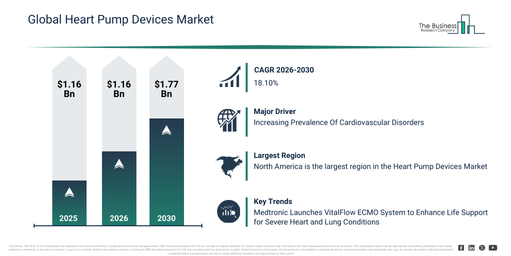
    The heart pump devices market size has experienced significant expansion recently. Projections indicate it will expand from $4.48 billion in 2025 to $5.32 billion in 2026, demonstrating a compound annual growth rate (CAGR) of 19.0%. Historically, this growth has been driven by factors such as the increasing occurrence of heart failure, the broadening of cardiac surgery initiatives, developments in mechanical pump technology, longer waiting periods for transplants, and the expanding application of extracorporeal support systems.

    The heart pump devices market size is expected to experience substantial expansion over the next few years. It will grow to $10.37 billion in 2030 at a compound annual growth rate (CAGR) of 18.1%. The growth predicted for this period can be attributed to a rising demand for long-term circulatory support, the increasing adoption of destination therapy devices, the expansion of minimally invasive cardiac procedures, the growing integration of smart monitoring technologies, and increasing investments in advanced cardiac care. Significant trends during the forecast period include a greater utilization of advanced ventricular assist devices, increasing adoption of temporary mechanical circulatory support, a growing emphasis on miniaturized implantable pumps, the expansion of bridge-to-transplant therapies, and enhanced monitoring of hemodynamic performance.

    Get A Free Sample Report With In-Depth Market Insights:

    https://thebusinessresearchcompany.com/sample_request?id=75230848&type=smp&name=Heart%20Pump%20Devices%20Market%20Report%202026&utm_source=Blogs&utm_medium=Paid&utm_campaign=Oct_PR

    Heart Pump Devices Market Opportunity Drivers: What’s Unlocking New Revenue Potential?

    The growing occurrence of cardiovascular conditions is anticipated to drive the heart pump devices market in the future. Cardiovascular disorders are health issues that impact the heart or blood vessels. The escalation in these diseases necessitates sophisticated diagnostic tools and therapies like heart pump devices, which assist in circulating blood from the lower left heart chamber, crucial for sustaining blood flow during high-risk protected percutaneous coronary interventions, thereby boosting market demand. As an illustration, the American Heart Association, a US-based non-profit organization, reported in January 2024 that the age-adjusted death rate from cardiovascular disease rose to 233.3 per 100,000 in 2024, a 4.0% increase from 224.4 per 100,000 in 2023. Consequently, the rising incidence of cardiovascular disorders is a key factor fueling the expansion of the heart pump devices market.

    Heart Pump Devices Market Segmentation And Category Overview

    The heart pump devices market covered in this report is segmented –

    1) By Type: Implantable Heart Pump Devices, Extracorporeal Heart Pump Devices

    2) By Therapy: Bridge-To-Transplant (BTT), Bridge-To-Candidacy (BTC), Destination Therapy (DT), Other Therapies

    3) By End-user: Hospitals, Cardiac Specialty Hospitals / Heart Centers, Transplant Centers, Other End-Users

    Subsegments:

    1) By Implantable Heart Pump Devices: Left Ventricular Assist Devices (LVADs), Right Ventricular Assist Devices (RVADs), Biventricular Assist Devices (BiVADs), Total Artificial Hearts (TAHs)

    2) By Extracorporeal Heart Pump Devices: Intra-Aortic Balloon Pumps (IABPs), Ventricular Assist Devices (Temporary): Centrifugal Blood Pumps

    Heart Pump Devices Market Innovation Trends Shaping Future Development

    Major companies operating in the heart pump devices market are actively developing extracorporeal membrane oxygenation (ECMO) systems, aiming to provide advanced life support for patients afflicted with severe heart and lung conditions. Extracorporeal membrane oxygenation (ECMO) systems are defined as sophisticated life support machines used to deliver prolonged cardiac and respiratory assistance to patients whose heart and lungs cannot properly function. For example, in September 2024, Medtronic plc, an Ireland-based medical device company, unveiled its VitalFlow system, an innovative extracorporeal membrane oxygenation (ECMO) solution specifically designed to offer circulatory support for patients experiencing severe heart or lung failure. The VitalFlow system functions effectively as a heart pump by employing a pump and oxygenator to take over the crucial work of the heart and lungs. This functionality is essential for patients confronting life-threatening conditions, enabling their organs to rest and begin the healing process.

    Heart Pump Devices Market Competitive Overview And Top Companies

    Major companies operating in the heart pump devices market are Abbott Laboratories, Medtronic plc, Getinge AB, Terumo Corporation, LivaNova plc, SynCardia Systems Inc, CARMAT SA, Jarvik Heart Inc, BiVACOR Inc, CorWave SA, Fresenius Kabi AG, Asahi Kasei Medical Co Ltd, Nipro Corporation, Eurosets Srl, CardioBridge GmbH, Hemovent GmbH, Evaheart Inc, Calon Cardio-Technology Ltd, Lepu Medical Technology Co Ltd, NewHeart Technologies Inc

    View The Full Heart Pump Devices Market Report:

    https://thebusinessresearchcompany.com/report/heart-pump-devices-global-market-report?utm_source=Blogs&utm_medium=Paid&utm_campaign=Oct_PR

    Heart Pump Devices Market Top Region: Where Does Most Revenue Come From?

    North America was the largest region in the heart pump devices market share in 2025. The regions covered in the heart pump devices market report are Asia-Pacific, South East Asia, Western Europe, Eastern Europe, North America, South America, Middle East, Africa.

    Reach Out To Our Team:

    The Business Research Company: https://www.thebusinessresearchcompany.com/

    Americas: +1 310-496-7795

    Asia: +44 7882 955267 & +91 8897263534

    Europe: +44 7882 955267

    Email us at: marketing@tbrc.info

    Follow us on:

    LinkedIn: https://in.linkedin.com/company/the-business-research-company

    YouTube: https://www.youtube.com/channel/UC24_fI0rV8cR5DxlCpgmyFQ

    Global Market Model: https://www.thebusinessresearchcompany.com/global-market-model
  • Heart Defect Closure Device Market Growth In 2026: Market Size, Key Drivers And Future Outlook

    Heart Defect Closure Device Market Growth In 2026: Market Size, Key Drivers And Future Outlook

    Built to provide research that’s more actionable and strategically valuable, The Business Research Company’s 2026 market reports include market attractiveness analysis, total addressable market sizing, company benchmarking matrices, interactive Excel dashboards, broader supply chain intelligence, emerging startup tracking, and in-depth product insights.

    Heart Defect Closure Device Market Value Growth And Long-Term Outlook

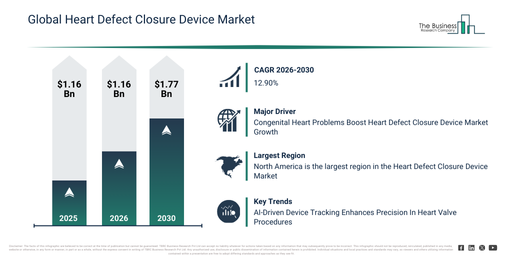
    The market size for heart defect closure devices has seen substantial growth recently. This market is projected to expand from $1.27 billion in 2025 to $1.45 billion in 2026, at a compound annual growth rate (CAGR) of 14.5%. The historical growth can be ascribed to the increasing prevalence of congenital heart defects, developments in interventional cardiology, heightened awareness regarding septal defect treatments, the expansion of cardiac catheterization labs, and a rising demand for minimally invasive cardiac procedures.

    The heart defect closure device market is poised for significant expansion in the coming years, with projections indicating it will reach $2.36 billion in 2030 at a compound annual growth rate (CAGR) of 12.9%. This anticipated growth during the forecast period is propelled by factors such as an expanding population of elderly and pediatric patients suffering from structural heart defects, an increasing adoption of transcatheter cardiac interventions, a rise in healthcare spending allocated to cardiovascular care, the proliferation of specialized cardiac centers, and an intensified focus on the early detection and management of heart defects. Furthermore, key market trends throughout the forecast period include the rising acceptance of minimally invasive transcatheter closure procedures, the growing utilization of nitinol-based and self-expanding closure devices, an increasing preference for device-based alternatives to open-heart surgery, the expansion of structural heart disease treatment programs, and an elevated emphasis on improving safety, efficacy, and long-term patient outcomes.

    Get A Free Sample Report With In-Depth Market Insights:

    https://thebusinessresearchcompany.com/sample_request?id=92023633&type=smp&name=Heart%20Defect%20Closure%20Device%20Market%20Report%202026&utm_source=Blogs&utm_medium=Paid&utm_campaign=Oct_PR

    Heart Defect Closure Device Market Growth Momentum: What Factors Are Shaping Demand?

    The future expansion of the heart defect closure device market is anticipated to be fueled by the increasing prevalence of individuals suffering from congenital heart conditions. These problems are defined as structural irregularities in the heart that exist from birth. The rise in congenital heart issues stems from genetic factors, environmental impacts, and maternal health complications like diabetes, obesity, contact with specific drugs, or infections during gestation. Heart defect closure devices aid in managing congenital heart issues through minimally invasive approaches that seal irregular heart openings, thereby re-establishing typical blood flow, lessening complications, and enhancing overall heart function. As an illustration, a report from August 2025 by the National Center for Biotechnology Information, a US governmental body, indicates a substantial projected increase in cardiovascular disease between 2025 and 2050. Prevalence is forecast to climb by 90.0%, crude mortality by 73.4%, and crude DALYs by 54.7%, resulting in an estimated 35.6 million cardiovascular fatalities in 2050, an increase from 20.5 million in 2025. Consequently, the expanding population affected by congenital heart problems is a key factor propelling the heart defect closure device market.

    Heart Defect Closure Device Market Segment Outlook: Which Categories Are Growing Fastest?

    The heart defect closure device market covered in this report is segmented –

    1) By Type: Atrial Septal Defect (ASD) Closure Device, Left Atrial Appendage (LAA) Closure Devices, Patent Foramen Ovale (PFO) Closure Devices, Patent Ductus Arteriosus (PDA) Closure Devices, Ventricular Septal Defect (VSD) Closure Devices

    2) By Material: Nitinol-Based Devices, Stainless Steel Devices, Other Materials

    3) By Mode Of Delivery: Transcatheter Delivery, Surgical Delivery, Other Modes

    4) By End-User: Hospitals, Clinics, Ambulatory Surgical Centers, Other End-Users

    Subsegments:

    1) By Atrial Septal Defect (ASD) Closure Device: Occluder Devices (Septal Occluders), Implantable Patch Devices, Self-Expanding Devices, Balloon-Expandable Devices

    2) By Left Atrial Appendage (LAA) Closure Devices: Occluder Devices (WATCHMAN Device), Clip-Based Devices, Self-Expanding LAA Closure Devices

    3) By Patent Foramen Ovale (PFO) Closure Devices: Septal Occluders, Self-Expanding Occluders, Balloon-Expandable Occluders

    4) By Patent Ductus Arteriosus (PDA) Closure Devices: Coil-Based Closure Devices, Stent-Based Closure Devices, Amplatzer Occluders

    5) By Ventricular Septal Defect (VSD) Closure Devices: Septal Occluder Devices, Balloon-Expandable Occluders, Self-Expanding Occluders

    Heart Defect Closure Device Market Trends Redefining Industry Growth

    Leading companies in the heart defect closure device market are progressing technologies such as device tracking tools, aiming to boost procedural exactness and elevate clinician confidence. A device tracking tool is a system offering real-time visualization of medical device position and movement during treatment. For instance, in November 2025, Philips, a Netherlands-based health technology company, unveiled DeviceGuide—an AI-driven tracking solution. This innovation is designed to assist clinicians during intricate minimally invasive heart valve repair procedures, particularly for mitral valve regurgitation. Operating in conjunction with the EchoNavigator platform, DeviceGuide merges live X-ray and ultrasound imaging to generate a real-time 3D model of the repair device within the beating heart, thereby enhancing visual clarity, spatial understanding, and overall precision. Developed through a partnership with Edwards Lifesciences, the system optimizes operational processes, strengthens team synergy, and facilitates wider global accessibility to sophisticated cardiac interventions.

    Heart Defect Closure Device Market Competitive Landscape: Which Companies Lead The Industry?

    Major companies operating in the heart defect closure device market are Abbott Laboratories, Medtronic, W L Gore and Associates, Occlutech, LifeTech Scientific Corporation, Lepu Medical Technology, Meril Life Sciences Pvt Ltd, MicroPort Scientific Corporation, Boston Scientific Corporation, Edwards Lifesciences, Terumo Corporation, Cardia Inc, Coherex Medical Inc, AtriCure Inc, Sahajanand Medical Technologies Limited, Vivasure Medical, Transmural Systems Inc, Cormatrix Cardiovascular Inc, Baylis Medical Company Inc, Biosense Webster Inc, BIOTRONIK SE and Co KG, B Braun

    View The Full Heart Defect Closure Device Market Report:

    https://thebusinessresearchcompany.com/report/heart-defect-closure-device-global-market-report?utm_source=Blogs&utm_medium=Paid&utm_campaign=Oct_PR

    Heart Defect Closure Device Market Regional Breakdown: Where Is Demand Concentrated?

    North America was the largest region in the heart defect closure device market in 2025. Asia-Pacific is expected to be the fastest-growing region in the forecast period. The regions covered in the heart defect closure device market report are Asia-Pacific, South East Asia, Western Europe, Eastern Europe, North America, South America, Middle East, Africa.

    Reach Out To Our Team:

    The Business Research Company: https://www.thebusinessresearchcompany.com/

    Americas: +1 310-496-7795

    Asia: +44 7882 955267 & +91 8897263534

    Europe: +44 7882 955267

    Email us at: marketing@tbrc.info

    Follow us on:

    LinkedIn: https://in.linkedin.com/company/the-business-research-company

    YouTube: https://www.youtube.com/channel/UC24_fI0rV8cR5DxlCpgmyFQ

    Global Market Model: https://www.thebusinessresearchcompany.com/global-market-model
  • Heart Closure Devices Market Size And Forecast 2026–2030: Trends Driving Industry Expansion

    Heart Closure Devices Market Size And Forecast 2026–2030: Trends Driving Industry Expansion

    Backed by market attractiveness analysis, total addressable market sizing, company benchmarking matrices, interactive Excel dashboards, wider supply chain intelligence, emerging startup coverage, and detailed product-level insights, The Business Research Company’s 2026 market reports are designed to offer research that is more actionable and strategically valuable than ever.

    Heart Closure Devices Market Poised To Hit $5.42 Billion By 2030 With A 11.9% CAGR

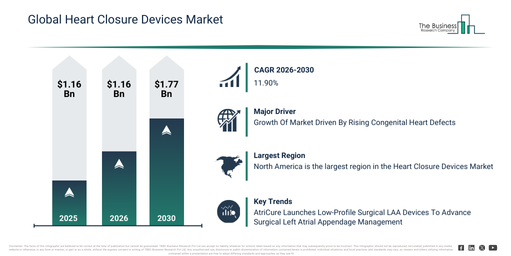
    The market for heart closure devices has expanded significantly in recent times. This market is projected to expand from $3.08 billion in 2025 to $3.46 billion in 2026, exhibiting a compound annual growth rate (CAGR) of 12.2%. Several factors have contributed to its historical growth, including the increasing prevalence of congenital heart defects, the expansion of catheterization laboratories, the growing adoption of minimally invasive cardiac treatments, a rising awareness of structural heart conditions, and the availability of advanced imaging guidance.

    The heart closure devices market size is projected for substantial growth in the upcoming years, with expectations to reach $5.42 billion by 2030, demonstrating a compound annual growth rate (CAGR) of 11.9%. This anticipated expansion during the forecast period is fueled by an escalating demand for catheter-based cardiac therapies, increased investments in structural heart disease treatment, the establishment of more specialized cardiac centers, a heightened emphasis on minimizing surgical risks, and continuous technological advancements in the design of closure devices. Prominent trends observed in this period include the wider adoption of transcatheter heart closure procedures, a rising preference for minimally invasive cardiac devices, the expanded application of nitinol-based closure systems, the growth of structural heart intervention programs, and an intensified focus on ensuring procedural safety and efficacy.

    Get A Free Sample Report With In-Depth Market Insights:

    https://thebusinessresearchcompany.com/sample_request?id=68570581&type=smp&name=Heart%20Closure%20Devices%20Market%20Report%202026&utm_source=Blogs&utm_medium=Paid&utm_campaign=Oct_PR

    Heart Closure Devices Market Expansion Drivers: What’s Shaping Future Growth?

    The rising occurrence of cardiovascular diseases (CVDs) is anticipated to propel the growth of the heart closure devices market going forward. This escalating incidence of CVDs stems from factors such as aging, unhealthy lifestyle choices, genetic predisposition, and the increasing prevalence of risk factors like hypertension, diabetes, and obesity. Heart closure devices play a crucial role in reducing complications from congenital heart defects by minimally invasively sealing abnormal openings in the heart, thereby enhancing blood flow and preventing further health issues. For instance, in May 2024, information from the Singapore Heart Foundation (SHF), a non-profit organization based in Singapore, revealed that the total number of deaths due to cardiovascular disease reached 26,885 in 2023. Additionally, ischemic heart disease led to 5,302 deaths, marking an increase from 5,290 deaths recorded in 2022. Thus, the escalating incidence of cardiovascular diseases (CVDs) is a key driver for the expansion of the heart closure devices market.

    Heart Closure Devices Market Segment Landscape: Which Areas Lead Development?

    The heart closure devices market covered in this report is segmented –

    1) By Product: Atrial Septal Defect (ASD) Closure Devices, Ventricular Septal Defect (VSD) Closure Devices, Patent Foramen Ovale (PFO) Closure Devices, Left Atrial Appendage (LAA) Closure Devices, Other Products

    2) By Material: Nitinol-Based Devices, Stainless Steel Devices, Other Materials

    3) By Mode of Delivery: Transcatheter Delivery, Surgical Delivery

    4) By End Use: Hospitals, Ambulatory Surgical Centers (ASCs), Cardiac Catheterization Laboratories, Other End Uses

    Subsegments:

    1) By Atrial Septal Defect (ASD) Closure Devices: Self-expanding Occluders, Balloon-expandable Occluders, Other ASD Closure Devices

    2) By Ventricular Septal Defect (VSD) Closure Devices: Transcatheter VSD Closure Devices, Surgical VSD Closure Devices, Other VSD Closure Devices

    3) By Patent Foramen Ovale (PFO) Closure Devices: Double-Disc Occluders, Single-Disc Occluders, Other PFO Closure Devices

    4) By Left Atrial Appendage (LAA) Closure Devices: LAA Occluders, LAA Clip Systems, Other LAA Closure Devices

    5) By Other Products: Septal Defect Closure Devices, Endovascular Closure Devices, Other Specialty Closure Devices

    Heart Closure Devices Market Strategic Trends: What Defines The Next Growth Phase?

    Major companies operating in the heart closure devices market are concentrating on technological advancements, such as creating low-profile, ergonomic surgical LAA devices featuring continuous closing force mechanisms. These innovations are designed to improve procedural precision, visibility, and ease of use for physicians, while simultaneously enhancing patient outcomes. Low-Profile Surgical LAA Devices enable secure and effective closure of the left atrial appendage, ensuring optimal tissue compression, simplified single-handed placement, and better access during minimally invasive procedures. For example, in August 2024, AtriCure, Inc., a US-based cardiac surgical solutions company, treated its first patient with the AtriClip FLEX-Mini device, which is currently the smallest-profile surgical LAA device available on the market. Building on the established AtriClip platform, this device incorporates a fully enclosed design with parallel beams for consistent closing force, offers improved visibility, and features an ergonomic handle for single-handed placement, thereby assisting physicians in providing precise, safe, and efficient LAA management for patients with atrial fibrillation.

    Heart Closure Devices Market Competitive Landscape: Who Leads The Industry?

    Major companies operating in the heart closure devices market are Abbott Laboratories, Medtronic plc, Boston Scientific Corp., Lepu Medical Technology Ltd., Terumo Corporation, Edwards Lifesciences, Teleflex Incorporated, Merit Medical Systems Inc., Cordis Corporation, AtriCure Inc., Lifetech Scientific Corp., Sahajanand Medical Technologies, W. L. Gore And Associates Inc., Occlutech GmbH, NMT Medical Inc., Sorin Group Italia S.p.A., Vivasure Medical Limited, B Braun Interventional Systems, HeartStitch Inc., MicroPort Scientific Corporation

    View The Full Heart Closure Devices Market Report:

    https://thebusinessresearchcompany.com/report/heart-closure-devices-global-market-report?utm_source=Blogs&utm_medium=Paid&utm_campaign=Oct_PR

    Heart Closure Devices Market Geographic Landscape: Which Region Dominates Industry Growth?

    North America was the largest region in the heart closure devices market in 2025. Asia-Pacific is expected to be the fastest-growing region in the forecast period. The regions covered in the heart closure devices market report are Asia-Pacific, South East Asia, Western Europe, Eastern Europe, North America, South America, Middle East, Africa.

    Reach Out To Our Team:

    The Business Research Company: https://www.thebusinessresearchcompany.com/

    Americas: +1 310-496-7795

    Asia: +44 7882 955267 & +91 8897263534

    Europe: +44 7882 955267

    Email us at: marketing@tbrc.info

    Follow us on:

    LinkedIn: https://in.linkedin.com/company/the-business-research-company

    YouTube: https://www.youtube.com/channel/UC24_fI0rV8cR5DxlCpgmyFQ

    Global Market Model: https://www.thebusinessresearchcompany.com/global-market-model
  • Heart Blocks Treatment Devices Market 2026 Outlook: Market Size, CAGR And Key Growth Opportunities

    Heart Blocks Treatment Devices Market 2026 Outlook: Market Size, CAGR And Key Growth Opportunities

    Featuring market attractiveness scoring, total addressable market sizing, company benchmarking matrices, interactive Excel dashboards, deeper supply chain intelligence, emerging startup tracking, and granular product-level insights, The Business Research Company’s 2026 market reports are built to deliver research that is both more actionable and more strategically valuable.

    Heart Blocks Treatment Devices Market Size And Revenue Outlook Through 2030

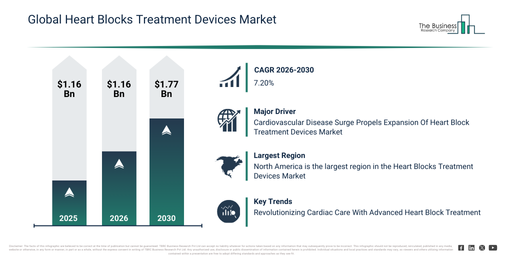
    The heart blocks treatment devices market has demonstrated substantial growth in recent years. Its value is projected to rise from $3.36 billion in 2025 to $3.59 billion in 2026, exhibiting a compound annual growth rate (CAGR) of 6.9%. Historically, this expansion can be ascribed to several factors, including the increasing occurrence of cardiovascular conditions, a growing elderly demographic, the enhancement of hospital cardiac care facilities, better availability of cardiac diagnostic services, and improvements in the dependability of implantable devices.

    The heart blocks treatment devices market is poised for significant expansion in the foreseeable future. It is forecast to grow to $4.74 billion in 2030, demonstrating a compound annual growth rate (CAGR) of 7.2%. This expected growth can be attributed to the increasing adoption of remote patient monitoring, rising investments in cardiac digital health solutions, a growing demand for personalized rhythm management, the expansion of home-based cardiac care models, and continuous innovation in implantable cardiac devices. Prominent trends for this period include the increasing adoption of advanced pacemaker technologies, a rising use of implantable cardiac rhythm devices, the growing integration of remote cardiac monitoring systems, an expansion of minimally invasive cardiac procedures, and an enhanced focus on long-term rhythm management.

    Get A Free Sample Report With In-Depth Market Insights:

    https://thebusinessresearchcompany.com/sample_request?id=45091098&type=smp&name=Heart%20Blocks%20Treatment%20Devices%20Market%20Report%202026&utm_source=Blogs&utm_medium=Paid&utm_campaign=Oct_PR

    Heart Blocks Treatment Devices Market Development Factors: What’s Supporting Demand?

    The increasing occurrence of cardiovascular disease is anticipated to stimulate the expansion of the heart blocks treatment devices market in the future. These conditions impact the heart and its associated blood vessels, encompassing ailments like coronary artery disease, heart failure, and stroke. The sharp rise in cardiovascular disease cases primarily stems from an aging population, evolving lifestyles and diets, alongside growing rates of obesity and diabetes. Heart blocks treatment devices offer a solution by correcting structural defects or abnormalities within the heart to manage these cardiovascular disorders. For example, data released in March 2024 by GOV.UK, a UK government services and information provider, indicated that by the financial year ending 2023, general practitioners had diagnosed over 1,862,500 people in England, representing approximately 3% of the population, with coronary heart disease (CHD). Consequently, the expanding prevalence of cardiovascular disease is serving as a key impetus for the growth of the heart blocks treatment devices market.

    Heart Blocks Treatment Devices Market Segments: Where Is Growth Concentrated?

    The heart blocks treatment devices market covered in this report is segmented –

    1) By Clinical Classification: First-Degree Heart Block, Second-Degree Heart Block, Third-Degree Heart Block

    2) By Product: Transcutaneous Pacing (TCP), Pacemaker

    3) By End-User: Hospitals & Cardiac Care Centers, Clinics, Home-Care & Remote Monitoring Users

    Subsegments:

    1) By First-Degree Heart Block: Cardiac Monitoring Devices, Temporary Pacing Devices (Rare / Symptomatic Cases)

    2) By Second-Degree Heart Block: Type I (Wenckebach) Management Devices, Type II Management Devices, Pacemakers

    3) By Third-Degree Heart Block: Permanent Pacemakers (Primary Treatment), Cardiac Resynchronization Therapy (CRT) Devices, Temporary Pacing Devices (Acute / Emergency Management)

    Heart Blocks Treatment Devices Market Transformation Trends: What Innovations Are Driving Change?

    Leading firms within the heart block treatment device market are prioritizing technological innovations, including dual-chamber pacemakers, to deliver dependable services to consumers. These dual-chamber pacemakers represent a leadless pacing system technology designed to address irregular or slow heart rhythms. As an illustration, Abbott Laboratories, a US-based medical device and health care corporation, introduced a dual-chamber pacemaker in November 2023, marking its initial U.S. implants. This launch is significant given that over 80% of individuals requiring a pacemaker need pacing in both the right atrium and right ventricle of the heart. The company specifically developed its i2i technology to employ high-frequency pulses, transmitting signals via the inherent conductive properties of the body’s blood between individual leadless pacemakers.

    Heart Blocks Treatment Devices Market Company Landscape And Competitive Strategy

    Major companies operating in the heart blocks treatment devices market are Medtronic plc, Abbott Laboratories, Boston Scientific Corporation, Biotronik SE & Co. KG, MicroPort Scientific Corporation, Lepu Medical Technology (Beijing) Co. Ltd., Nihon Kohden Corporation, ZOLL Medical Corporation, LivaNova PLC, Osypka Medical GmbH, Shree Pacetronix Ltd., EBR Systems Inc., Medico S.p.A., Cook Medical, B. Braun SE, Oscor Inc., Pacetronix Ltd., Fukuda Denshi Co. Ltd., Teleflex Incorporated, NIPRO Corporation

    View The Full Heart Blocks Treatment Devices Market Report:

    https://thebusinessresearchcompany.com/report/heart-blocks-treatment-devices-global-market-report?utm_source=Blogs&utm_medium=Paid&utm_campaign=Oct_PR

    Heart Blocks Treatment Devices Market Largest Region: Which Geography Holds The Highest Market Share?

    North America was the largest region in the heart blocks treatment devices market in 2025. Asia-Pacific is expected to be the fastest-growing region in the forecast period. The regions covered in the heart blocks treatment devices market report are Asia-Pacific, South East Asia, Western Europe, Eastern Europe, North America, South America, Middle East, Africa.

    Reach Out To Our Team:

    The Business Research Company: https://www.thebusinessresearchcompany.com/

    Americas: +1 310-496-7795

    Asia: +44 7882 955267 & +91 8897263534

    Europe: +44 7882 955267

    Email us at: marketing@tbrc.info

    Follow us on:

    LinkedIn: https://in.linkedin.com/company/the-business-research-company

    YouTube: https://www.youtube.com/channel/UC24_fI0rV8cR5DxlCpgmyFQ

    Global Market Model: https://www.thebusinessresearchcompany.com/global-market-model
  • Heart Attack Diagnostic Market Size Growth: From $12.64 Billion In 2026 To $17.9 Billion By 2030

    Heart Attack Diagnostic Market Size Growth: From $12.64 Billion In 2026 To $17.9 Billion By 2030

    Built to provide research that’s more actionable and strategically valuable, The Business Research Company’s 2026 market reports include market attractiveness analysis, total addressable market sizing, company benchmarking matrices, interactive Excel dashboards, broader supply chain intelligence, emerging startup tracking, and in-depth product insights.

    Heart Attack Diagnostic Market Growth From $12.64 Billion In 2026 To $17.9 Billion By 2030 At A CAGR Of 9.1%

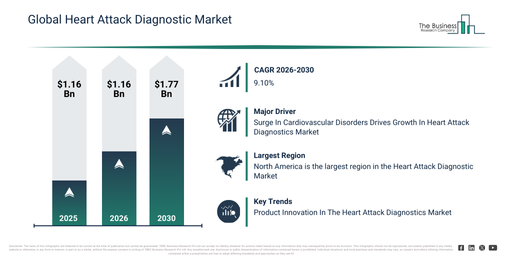
    The heart attack diagnostic market has experienced robust growth over the past few years. This market is anticipated to increase from $11.54 billion in 2025 to $12.64 billion in 2026, exhibiting a compound annual growth rate (CAGR) of 9.5%. Factors contributing to its historical growth include an escalating prevalence of cardiovascular conditions, expanded hospital diagnostic services, better access to cardiac imaging, increased recognition of the need for early heart attack detection, and innovations in lab testing.

    The heart attack diagnostic market size is anticipated to experience robust expansion over the coming years, with projections indicating a growth to $17.9 billion in 2030 at a compound annual growth rate (CAGR) of 9.1%. This growth during the forecast period is primarily driven by factors such as a heightened need for swift diagnostic methods, the expanding incorporation of digital health infrastructures, the proliferation of remote cardiac surveillance, increased capital injection into cutting-edge imaging technologies, and the wider embrace of accurate cardiology diagnostic tools. Key developments projected for this period encompass the widespread uptake of AI-powered diagnostic instruments, the growing application of highly sensitive cardiac biomarkers, the progressive inclusion of point-of-care testing apparatus, the broadening scope of non-invasive diagnostic processes, and a sharpened emphasis on prompt emergency diagnostics.

    Get A Free Sample Report With In-Depth Market Insights:

    https://thebusinessresearchcompany.com/sample_request?id=28132969&type=smp&name=Heart%20Attack%20Diagnostic%20Market%20Report%202026&utm_source=Blogs&utm_medium=Paid&utm_campaign=Oct_PR

    Heart Attack Diagnostic Market Industry Drivers: What’s Behind The Revenue Growth?

    The increasing prevalence of cardiac disorders is propelling the growth of the heart attack diagnostics market. Cardiac disorders (CVD) are a group of conditions affecting the heart and blood vessels. Unhealthy eating, inactivity, tobacco use, and alcohol abuse are the primary factors contributing to heart disease and stroke. Heart attack diagnosis aids in analyzing the causes and severity of heart attacks, strokes, and heart failure. For instance, in January 2024, according to the American Heart Association, a US-based non-profit organization, the age-adjusted death rate from cardiovascular disease increased to 233.3 per 100,000 in 2024, up 4.0% from 224.4 per 100,000 in 2023. Therefore, the rising frequency of cardiovascular illnesses will continue to drive the heart attack diagnostics market.

    Heart Attack Diagnostic Market Segment Analysis: What Are The Core Market Categories?

    The heart attack diagnostic market covered in this report is segmented –

    1) By Test Type: Electrocardiogram (ECG Or EKG), Blood Tests, Echocardiogram, Coronary Catheterization (Angiogram)

    2) By Procedure: Invasive Procedure, Non-Invasive Procedure

    3) By End-Use Industry: Hospitals, Ambulatory Surgical Centers, Diagnostics Centers, Other End-Users

    Subsegments:

    1) By Electrocardiogram (ECG Or EKG): Resting ECG, Holter Monitor, Event Monitor

    2) By Blood Tests: Cardiac Biomarkers, Lipid Panel, B-Type Natriuretic Peptide (BNP)

    3) By Echocardiogram: Transthoracic Echocardiogram (TTE), Transesophageal Echocardiogram (TEE), Doppler Echocardiogram

    4) By Coronary Catheterization (Angiogram): Coronary Angiography, Right Heart Catheterization, Left Heart Catheterization

    #Heart Attack Diagnostic Market Growth Trends: What’s Shaping The Future Outlook?

    Leading companies in the heart attack diagnostics market are developing innovative products, such as tests for detecting coronary heart disease, to cater to broader customer bases, increase sales, and boost revenue. Coronary heart disease (CHD) detection tests refer to medical assessments and diagnostic procedures designed to identify the presence of coronary heart disease, a condition characterized by the narrowing or blockage of coronary arteries that supply blood to the heart muscle. For instance, in August 2023, Cardio Diagnostics Holdings Inc., a US-based biotechnology company, launched PrecisionCHD. The PrecisionCHD test, a groundbreaking innovation, is a blood-based detection method for coronary heart disease (CHD), distinguishing itself as the sole detection technology that seamlessly combines epigenetic and genetic biomarkers with Artificial Intelligence (AI). This unique test requires only a straightforward blood sample, conveniently collected at a doctor’s office or through a simple at-home procedure, and utilizes the same highly scalable laboratory technique employed in COVID-19 testing. With results available for review within a swift 10 business days, the PrecisionCHD test offers a rapid and efficient alternative to traditional first-line CHD detection tools like stress echocardiograms.

    Heart Attack Diagnostic Market Key Players Shaping Industry Direction

    Major companies operating in the heart attack diagnostic market are Abbott Laboratories, F. Hoffmann-La Roche AG, General Electric Co., Koninklijke Philips NV, Siemens AG, Canon Medical Systems Corporation, GE Healthcare, Roche Diagnostics, Beckman Coulter Inc., Schiller AG, Becton Dickinson and Company, Danaher Corporation, Thermo Fisher Scientific Inc., Quest Diagnostics, Bio-Rad Laboratories Inc., Hitachi Ltd., Toshiba Corp., Fujifilm Holdings, Midmark Corp., Welch Allyn Inc., HILL ROM HOLDINGS Inc., HeartFlow, Cardio Diagnostics Holdings Inc.

    View The Full Heart Attack Diagnostic Market Report:

    https://thebusinessresearchcompany.com/report/heart-attack-diagnostic-global-market-report?utm_source=Blogs&utm_medium=Paid&utm_campaign=Oct_PR

    Heart Attack Diagnostic Market Regional Analysis: Which Region Leads By Revenue?

    North America was the largest region in the heart attack diagnostics market in 2025. Asia-Pacific is expected to be the fastest-growing region in the forecast period. The regions covered in the heart attack diagnostic market report are Asia-Pacific, South East Asia, Western Europe, Eastern Europe, North America, South America, Middle East, Africa.

    Reach Out To Our Team:

    The Business Research Company: https://www.thebusinessresearchcompany.com/

    Americas: +1 310-496-7795

    Asia: +44 7882 955267 & +91 8897263534

    Europe: +44 7882 955267

    Email us at: marketing@tbrc.info

    Follow us on:

    LinkedIn: https://in.linkedin.com/company/the-business-research-company

    YouTube: https://www.youtube.com/channel/UC24_fI0rV8cR5DxlCpgmyFQ

    Global Market Model: https://www.thebusinessresearchcompany.com/global-market-model
  • Hearing Screening And Diagnostic Devices Market Analysis 2026: Market Size, Growth Trends And Industry Outlook

    Hearing Screening And Diagnostic Devices Market Analysis 2026: Market Size, Growth Trends And Industry Outlook

    Backed by market attractiveness analysis, total addressable market sizing, company benchmarking matrices, interactive Excel dashboards, wider supply chain intelligence, emerging startup coverage, and detailed product-level insights, The Business Research Company’s 2026 market reports are designed to offer research that is more actionable and strategically valuable than ever.

    Hearing Screening And Diagnostic Devices Market Expansion Outlook: What Revenue Opportunities Are Ahead?

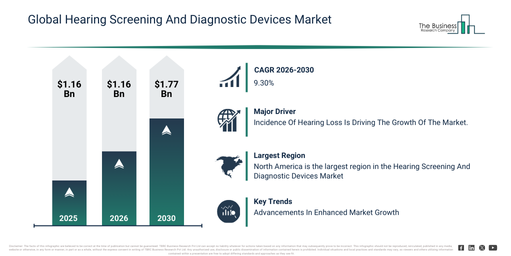
    The hearing screening and diagnostic devices market has experienced significant expansion recently. Its valuation is set to grow from $8.56 billion in 2025 to $9.37 billion in 2026, with a compound annual growth rate (CAGR) of 9.5%. The historical growth of the market can be attributed to factors such as increasing awareness of hearing health, the expansion of neonatal screening programs, a rising prevalence of age-related hearing loss, the availability of standardized diagnostic protocols, and the growth of audiology clinics.

    The market size for hearing screening and diagnostic devices is expected to demonstrate significant growth in the coming years. It is projected to expand to $13.39 billion in 2030, achieving a compound annual growth rate (CAGR) of 9.3%. This anticipated growth during the forecast period can be attributed to factors such as increasing demand for early intervention hearing care, a rising adoption of connected diagnostic platforms, the expansion of remote hearing assessment services, a growing emphasis on preventive healthcare, and continuous technological advancements in auditory testing devices. Major trends foreseen in the forecast period include an increasing adoption of portable hearing diagnostic devices, a rising demand for newborn hearing screening solutions, the growing integration of digital audiometry systems, the expansion of tele-audiology services, and an enhanced focus on the early detection of hearing loss.

    Get A Free Sample Report With In-Depth Market Insights:

    https://thebusinessresearchcompany.com/sample_request?id=43109669&type=smp&name=Hearing%20Screening%20And%20Diagnostic%20Devices%20Market%20Report%202026&utm_source=Blogs&utm_medium=Paid&utm_campaign=Oct_PR

    Hearing Screening And Diagnostic Devices Market Growth Factors: What’s Supporting Expansion?

    The increasing occurrence of hearing loss is projected to stimulate the expansion of the hearing screening and diagnostic devices market moving forward. Hearing loss signifies a condition marked by a diminished capacity to perceive sounds, thereby affecting communication and overall quality of life. The rising prevalence of this condition, also known as presbycusis, results from the degeneration of inner ear structures, the loss of sensory hair cells, and alterations in auditory nerve pathways. Hearing screening and diagnostic tools are instrumental in managing hearing loss by facilitating early detection, precise assessment, and customized treatment strategies. These tools enable individuals to better understand their auditory health, monitor changes over time, and access suitable interventions to enhance their quality of life and communication abilities. For instance, in February 2024, the World Health Organization (WHO), a Switzerland-based United Nations agency, estimated that 430 million people, including 34 million children, are anticipated to need rehabilitation for disabling hearing loss, accounting for over 5% of the global population. Furthermore, by 2050, this figure is predicted to climb to nearly 2.5 billion people experiencing some degree of hearing loss, with at least 700 million requiring hearing rehabilitation services. Consequently, the growing incidence of hearing loss serves as a key impetus for the hearing screening and diagnostic devices market. Future growth in the hearing screening and diagnostic devices market is expected to be propelled by increasing healthcare expenditure. Healthcare expenditure refers to the funds spent on healthcare costs, representing the total sum invested in healthcare-related products and services within a particular healthcare system or economy. The escalation in healthcare spending is fueled by the rising prevalence of chronic diseases, which necessitate long-term care, frequent medical interventions, and ongoing management. Healthcare expenditure plays a pivotal role in supporting the development, accessibility, and utilization of hearing screening and diagnostic devices. For example, in May 2023, a report issued by the Office for National Statistics, a UK-based government department, showed that healthcare spending in the UK grew by 5.6% between 2022 and 2023, in contrast to a 0.9% increase in 2022. The total UK healthcare expenditure reached approximately $317.63 billion (£292 billion) in 2023. Thus, the increasing healthcare expenditure is a primary driver for the hearing screening and diagnostic devices market’s expansion.

    Hearing Screening And Diagnostic Devices Market Segment Breakdown: Which Categories Lead On Revenue?

    The hearing screening and diagnostic devices market covered in this report is segmented –

    1) By Product Type: OAE (Otoacoustic Emission) And ABR (Auditory Brainstem Response) Testing Devices, Audiometers, Immittance Screeners

    2) By Age Group: Newborn Hearing Screening, Other Age Group

    3) By Indication: Conductive Hearing Loss, Sensorineural Hearing Loss, Combination Hearing Loss, Other Indications

    4) By Test: Pure-Tone Test, Bone Conduction Test, Tests Of The Middle Ear, Speech Discrimination Test, Speech Recognition Threshold Test, Most Comfortable Listening Test, Uncomfortable Loudness Level Test

    5) By End User: Hospitals And Clinics, Diagnostic Centers, Other End Users

    Subsegments:

    1) By OAE (Otoacoustic Emission) And ABR (Auditory Brainstem Response) Testing Devices: Portable OAE And ABR Testing Devices, Standalone OAE And ABR Testing Devices

    2) By Audiometers: Clinical Audiometers, Screening Audiometers, Diagnostic Audiometers

    3) By Immittance Screeners: Tympanometers, Acoustic Reflex Testers, Middle Ear Analyzers

    Hearing Screening And Diagnostic Devices Market Industry Trends: What’s Reshaping Demand?

    Leading companies in the hearing screening and diagnostic devices market are emphasizing technological innovations, such as AI-driven hearing technology, to improve diagnostic accuracy, enhance patient outcomes, and offer personalized hearing solutions. AI-based hearing technology refers to advanced hearing aids that employ artificial intelligence to automatically adjust sound processing for different surroundings, thereby enhancing speech clarity, reducing ambient noise, and customizing listening experiences by learning from user interactions. For instance, in February 2023, Starkey Hearing Technologies, a US-based manufacturer of hearing aids, launched its Edge AI and Genesis AI hearing aids, marking a significant progression in performance, connectivity, and user experience. These products offer unique features such as the G2 Neuro Processor for heightened speech clarity and noise reduction, up to 51 hours of battery life, and a waterproof design. They also provide Bluetooth LE Audio connectivity, health monitoring capabilities (including fall detection and balance assessments), and a voice-activated assistant powered by generative AI for simple adjustments.

    Hearing Screening And Diagnostic Devices Market Competitive Analysis Of Leading Industry Participants

    Major companies operating in the hearing screening and diagnostic devices market are Medtronic Plc, Baxter International Inc., Henry Schein Inc., Demant Group, William Demant Holding Group, Amplivox Limited, Starkey Hearing Technologies, Natus Medical Incorporated, Heine Optotechnik GmbH & Co. KG, Maico Diagnostics GmbH, Interacoustics A/S, Vivosonic Inc., Path Medical GmbH, Grason-Stadler Inc., Inventis Srl, Intelligent Hearing Systems Corporation, Otodynamics Limited, Echodia SAS, MeCan Medical Limited, Western Surgical & Medical

    View The Full Hearing Screening And Diagnostic Devices Market Report:

    https://thebusinessresearchcompany.com/report/hearing-screening-and-diagnostic-devices-global-market-report?utm_source=Blogs&utm_medium=Paid&utm_campaign=Oct_PR

    Hearing Screening And Diagnostic Devices Market Geographic Distribution And Regional Opportunities

    North America was the largest region in the hearing screening and diagnostic devices market in 2025. Asia Pacific is expected to be the fastest-growing region in the forecast period. The regions covered in the hearing screening and diagnostic devices market report are Asia-Pacific, South East Asia, Western Europe, Eastern Europe, North America, South America, Middle East, Africa.

    Reach Out To Our Team:

    The Business Research Company: https://www.thebusinessresearchcompany.com/

    Americas: +1 310-496-7795

    Asia: +44 7882 955267 & +91 8897263534

    Europe: +44 7882 955267

    Email us at: marketing@tbrc.info

    Follow us on:

    LinkedIn: https://in.linkedin.com/company/the-business-research-company

    YouTube: https://www.youtube.com/channel/UC24_fI0rV8cR5DxlCpgmyFQ

    Global Market Model: https://www.thebusinessresearchcompany.com/global-market-model
  • Hearing Loop Market Forecast To 2030: Starting From $18.13 Billion In 2026

    Hearing Loop Market Forecast To 2030: Starting From $18.13 Billion In 2026

    Featuring market attractiveness scoring, total addressable market sizing, company benchmarking matrices, interactive Excel dashboards, deeper supply chain intelligence, emerging startup tracking, and granular product-level insights, The Business Research Company’s 2026 market reports are built to deliver research that is both more actionable and more strategically valuable.

    Hearing Loop Market Growth Potential: How Will Market Size Shift Through 2030?

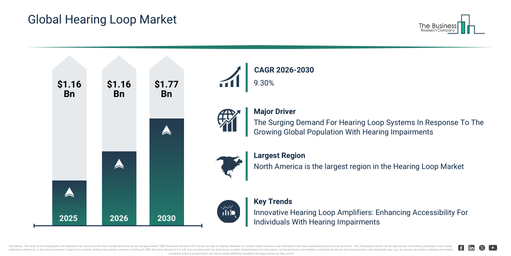
    The hearing loop market has demonstrated significant growth over recent years. It is anticipated to expand from $11.6 billion in 2025 to $12.72 billion in 2026, exhibiting a compound annual growth rate (CAGR) of 9.7%. This growth witnessed in the past can be ascribed to factors such as increased recognition of accessibility needs for hearing impairment, the enforcement of disability compliance regulations, the enlargement of healthcare facilities, a rise in the adoption of assistive listening devices, and an expanding elderly demographic.

    The hearing loop market is projected to experience robust expansion over the coming years. It is anticipated to reach a valuation of $18.13 billion by 2030, exhibiting a compound annual growth rate (CAGR) of 9.3%. This growth during the forecast period is fueled by several factors, including an increased emphasis on inclusive public infrastructure, a surge in the adoption of smart assistive audio technologies, the broadening availability of home-based hearing solutions, increased investments aimed at healthcare accessibility, and a rising need for retrofit hearing loop installations. Key trends expected in the forecast period encompass a growing number of hearing loop installations in public spaces, the increasing integration of wireless and interference-free audio systems, an escalating demand for inclusive accessibility solutions, the development of more compact and portable hearing loop systems, and a heightened emphasis on ensuring signal clarity and coverage quality.

    Get A Free Sample Report With In-Depth Market Insights:

    https://thebusinessresearchcompany.com/sample_request?id=76844141&type=smp&name=Hearing%20Loop%20Market%20Report%202026&utm_source=Blogs&utm_medium=Paid&utm_campaign=Oct_PR

    Hearing Loop Market Demand Drivers: What’s Powering Industry Growth?

    The increasing number of individuals with hearing impairments is anticipated to drive the expansion of the hearing loop market. Hearing impairment, defined as a partial or complete loss of auditory capabilities, is categorized by its severity and type, including mild hearing impairment, moderate hearing impairment, severe hearing impairment, and profound hearing impairment. These hearing loop systems offer advantages to all individuals experiencing hearing loss who seek to enhance their comprehension of speech and reduce background noise. As an illustration, data from September 2024 by the National Institutes of Health, a US-based government agency, indicates that in the United States, about 1 in 8 people (13%, or around 30 million) aged 12 and older suffer from hearing loss in both ears, confirmed by standard tests. Furthermore, approximately 5% of adults between 45-54 years old have disabling hearing loss, a figure that increases to 10% for those aged 55-64. Consequently, the growing population of patients with hearing impairments is a key factor fueling the expansion of the hearing loop market.

    Hearing Loop Market Segmentation: How Does The Market Break Down By Category?

    The hearing loop market covered in this report is segmented –

    1) By Component: Loop Amplifiers, Induction Loop Cables, Microphones And Audio Input Devices, Power Supplies, Control And Interface Units

    2) By Installation Type: Permanent Hearing Loop Systems, Portable Hearing Loop Systems

    3) By Coverage Area: Room-Level Hearing Loops, Counter-Level Hearing Loops, Large-Area Hearing Loops

    4) By Application Area: Healthcare Facilities, Educational Institutions, Transportation Hubs, Government And Public Buildings, Religious And Community Centers, Commercial Spaces

    Subsegments:

    1) By Loop Amplifiers: Small-Area Loop Amplifiers, Medium-Area Loop Amplifiers, Large-Area And Multi-Loop Amplifiers, Digital Signal Processing (DSP) Loop Amplifiers

    2) By Induction Loop Cables: Flat Copper Tape Cables, Round Insulated Loop Wires, Perimeter Loop Cables, Phased Array Loop Cables

    3) By Microphones And Audio Input Devices: Gooseneck Microphones, Boundary Microphones, Wireless Microphone Receivers, Line-Level Audio Inputs

    4) By Power Supplies: Internal Power Supply Units, External Power Supply Modules, Battery-Powered Power Units, Redundant Power Supply Systems

    5) By Control And Interface Units: Audio Mixers And Preamplifiers, Signal Conditioners And Equalizers, Monitoring And Status Indicator Units, Remote Control And Configuration Interfaces

    Hearing Loop Market Innovation Trends: What Developments Are Reshaping The Industry?

    Major companies operating in the hearing loop market are concentrating on developing innovative solutions, including hearing loop amplifiers, to enhance the audio experience for individuals with hearing impairments. A hearing loop amplifier is a device employed within assistive listening systems designed to improve the auditory experience for those with hearing impairments. For instance, in June 2024, Williams AV, a US-based manufacturer and designer of professional audiovisual equipment, introduced the Digi-Loop 104, a compact hearing loop amplifier crafted to bolster accessibility for individuals with hearing impairments in small venues such as meeting rooms and assisted living facilities. Featuring Class D amplification for high efficiency and automatic gain control for optimal sound quality, the Digi-Loop 104 can cover areas up to 919 square feet. Its user-friendly interface and discreet installation options render it suitable for various settings, while advanced safety features ensure reliable operation.

    Hearing Loop Market Leading Companies And Competitive Benchmarking

    Major companies operating in the hearing loop market are Ampetronic Ltd, Contacta Inc, Bo Edin AB, Williams AV, Audio Frequency Induction Loop Systems Ltd, Hearing Loop Systems Ltd, Oval Window Audio, Univox, Induction Loop Services, Loop America, Gent Sound Systems, P C Werth Ltd, Assistive Hearing Systems Ltd, Sound Induction Systems Ltd, Audionet Hearing Loop Systems, Hearing Enhancement Solutions, Aurora Group, Hal Hen Company Inc, Sarabec Ltd, TecEar, Global Deaf Solutions

    View The Full Hearing Loop Market Report:

    https://thebusinessresearchcompany.com/report/hearing-loop-global-market-report?utm_source=Blogs&utm_medium=Paid&utm_campaign=Oct_PR

    Hearing Loop Market Largest Region By Revenue And Market Share

    North America was the largest region in the hearing loop market in 2025. The regions covered in the hearing loop market report are Asia-Pacific, South East Asia, Western Europe, Eastern Europe, North America, South America, Middle East, Africa.

    Reach Out To Our Team:

    The Business Research Company: https://www.thebusinessresearchcompany.com/

    Americas: +1 310-496-7795

    Asia: +44 7882 955267 & +91 8897263534

    Europe: +44 7882 955267

    Email us at: marketing@tbrc.info

    Follow us on:

    LinkedIn: https://in.linkedin.com/company/the-business-research-company

    YouTube: https://www.youtube.com/channel/UC24_fI0rV8cR5DxlCpgmyFQ

    Global Market Model: https://www.thebusinessresearchcompany.com/global-market-model
  • Hearing Implants Market Size In 2026 And Beyond: Understanding Future Growth Potential

    Hearing Implants Market Size In 2026 And Beyond: Understanding Future Growth Potential

    Built to provide research that’s more actionable and strategically valuable, The Business Research Company’s 2026 market reports include market attractiveness analysis, total addressable market sizing, company benchmarking matrices, interactive Excel dashboards, broader supply chain intelligence, emerging startup tracking, and in-depth product insights.

    Hearing Implants Market Value Analysis: What Growth Lies Ahead Over The Forecast Period?

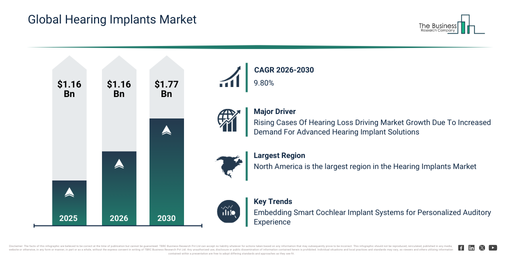
    The hearing implants market has experienced significant expansion in recent years. It will grow from $4.68 billion in 2025 to $5.1 billion in 2026 at a compound annual growth rate (CAGR) of 9.0%. The past period’s growth can be linked to a rising prevalence of hearing impairment, increased recognition of implantable hearing solutions, the expansion of specialized ENT clinics, continuous improvements in surgical implantation techniques, and the accessibility of government-backed hearing programs.

    The hearing implants market is projected to experience substantial expansion over the upcoming years. It is anticipated to reach $7.41 billion in 2030, demonstrating a compound annual growth rate (CAGR) of 9.8%. This anticipated growth during the forecast period can be attributed to several factors, including a heightened demand for tailored hearing solutions, the increasing embrace of intelligent and connected implant devices, the growing number of elderly individuals, escalating investments in technologies for auditory healthcare, and ongoing advancements in implant components and processing units. Key trends expected during the forecast timeframe encompass the wider acceptance of sophisticated cochlear implant innovations, a surging need for hearing implants specifically designed for children, the expanding incorporation of wireless and smart connectivity functionalities, the development of less invasive surgical methods for implantation, and a heightened emphasis on optimizing sound processing capabilities.

    Get A Free Sample Report With In-Depth Market Insights:

    https://thebusinessresearchcompany.com/sample_request?id=91412038&type=smp&name=Hearing%20Implants%20Market%20Report%202026&utm_source=Blogs&utm_medium=Paid&utm_campaign=Oct_PR

    Hearing Implants Market Growth Drivers: What’s Behind The Acceleration?

    The anticipated expansion of the hearing implants market is driven by the rising incidence of hearing loss. Hearing loss, which involves a partial or complete reduction in auditory capabilities, is categorized by its severity and type, encompassing moderate hearing impairment, mild hearing impairment, severe hearing impairment, and profound hearing impairment. This increase in hearing loss occurrences stems from prolonged exposure to high-volume sounds, leading to damage of the sensitive inner ear hair cells that transmit auditory signals to the brain. Hearing implant systems offer advantages to individuals with hearing loss seeking to enhance their comprehension of both speech and environmental sounds. As an illustration, the World Health Organization, a Switzerland-based intergovernmental body, reported in February 2023 that by 2050, around 2.5 billion individuals are projected to suffer from different levels of hearing impairment, with at least 700 million requiring hearing rehabilitation services. Consequently, the growing number of hearing loss cases is a key factor propelling the expansion of the hearing implants market.

    Hearing Implants Market Segment Trends And Revenue Contributors

    The hearing implants market covered in this report is segmented –

    1) By Type: Cochlear Implants, Middle Ear Implants, Bone Conduction Implants, Auditory Brainstem Implant

    2) By Age: Adult, Pediatric

    3) By End-User: Hospitals, ENT clinics, Ambulatory Surgical Centres

    Subsegments:

    1) By Cochlear Implants: Conventional Cochlear Implants, Hybrid Cochlear Implants

    2) By Middle Ear Implants: Active Middle Ear Implants, Passive Middle Ear Implants

    3) By Bone Conduction Implants: Softband Bone Conduction Implants, Surgically Implanted Bone Conduction Devices

    4) By Auditory Brainstem Implants: Implantable Auditory Brainstem Implants (ABI), Fully Implantable ABI Systems

    Hearing Implants Market Trends: What’s Defining The Industry’s Next Phase?

    Leading companies in the hearing implants market are concentrating on technological advancements like smart cochlear implant systems, aiming to enhance hearing performance, provide real-time sound environment adaptation, and foster greater patient engagement through connected digital tools. These systems allow users to modify settings using mobile applications, monitor device performance, and receive tailored auditory experiences based on their lifestyle and specific hearing requirements. For instance, in July 2025, Cochlear, an Australia-based manufacturer of hearing device implants, unveiled the world’s first and only smart cochlear implant system, designed to integrate AI-driven sound processing and mobile connectivity for a seamless hearing experience. The system facilitates real-time sound adaptation, personalized hearing profiles, and remote monitoring, enabling audiologists to fine-tune device performance from a distance. This innovation marks a significant progression in the smart hearing technology trend, offering patients improved auditory perception, convenience, and connectivity while providing clinicians with actionable data to achieve enhanced outcomes.

    Hearing Implants Market Industry Leaders And Competitive Landscape

    Major companies operating in the hearing implants market are Sonova Holdings AG, Advanced Bionics AG, William Demant Holding Group, Widex A/S, MED-EL, Cochlear Ltd., Oticon, Phonak, Unitron, Sonic Innovations Inc., Nurotron Biotechnology Co. Ltd., Envoy Medical Corporation, Sivantos Group, Neurelec SA, Otologics LLC, Ototronix LLC, Sonitus Medical Inc., Medtronic plc, Siemens AG

    View The Full Hearing Implants Market Report:

    https://thebusinessresearchcompany.com/report/hearing-implants-global-market-report?utm_source=Blogs&utm_medium=Paid&utm_campaign=Oct_PR

    Hearing Implants Market Regional Analysis And Leading Geography

    North America was the largest region in the global hearing implants devices and equipment market in 2025. Asia-Pacific was the second-largest region in the hearing implants devices and equipment market. The regions covered in the hearing implants market report are Asia-Pacific, South East Asia, Western Europe, Eastern Europe, North America, South America, Middle East, Africa.

    Reach Out To Our Team:

    The Business Research Company: https://www.thebusinessresearchcompany.com/

    Americas: +1 310-496-7795

    Asia: +44 7882 955267 & +91 8897263534

    Europe: +44 7882 955267

    Email us at: marketing@tbrc.info

    Follow us on:

    LinkedIn: https://in.linkedin.com/company/the-business-research-company

    YouTube: https://www.youtube.com/channel/UC24_fI0rV8cR5DxlCpgmyFQ

    Global Market Model: https://www.thebusinessresearchcompany.com/global-market-model
  • Hearing Diagnostic Devices And Equipment Market Reaches $4 Billion In 2026: Key Developments Shaping Expansion

    Hearing Diagnostic Devices And Equipment Market Reaches $4 Billion In 2026: Key Developments Shaping Expansion

    Backed by market attractiveness analysis, total addressable market sizing, company benchmarking matrices, interactive Excel dashboards, wider supply chain intelligence, emerging startup coverage, and detailed product-level insights, The Business Research Company’s 2026 market reports are designed to offer research that is more actionable and strategically valuable than ever.

    Hearing Diagnostic Devices And Equipment Market Size Forecast: How Big Could The Market Get By 2030?

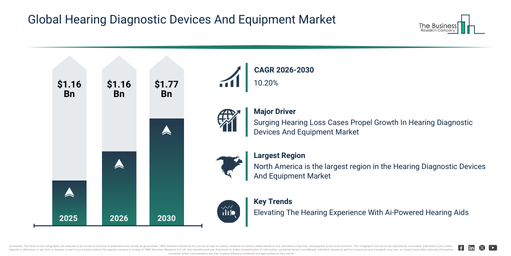
    The market size for hearing diagnostic devices and equipment has demonstrated significant growth in recent years. It is projected to increase from $2.48 billion in 2025 to $2.71 billion in 2026, exhibiting a compound annual growth rate (CAGR) of 9.4%. Key drivers for this expansion in the past include the wider adoption of clinical hearing assessment practices, a rise in the diagnosis of hearing disorders, enhanced availability of audiometric equipment, the expansion of ENT clinics, and the implementation of standardized diagnostic protocols.

    The hearing diagnostic devices and equipment market is projected to experience substantial growth in the upcoming years. It is anticipated to reach $4 billion in 2030, with a compound annual growth rate (CAGR) of 10.2%. This expansion during the forecast period can be attributed to factors such as the increasing demand for point-of-care diagnostics, the rising application of telehealth-enabled hearing tests, the broader implementation of pediatric and geriatric screening programs, continuous technological advancements improving diagnostic accuracy, and growing investments in digital healthcare diagnostics. Key trends expected over the forecast period involve a greater adoption of automated hearing screening systems, an increase in the utilization of portable diagnostic devices, the expanding integration of software-based audiometry, the development of remote hearing assessment solutions, and an enhanced focus on technologies for early detection.

    Get A Free Sample Report With In-Depth Market Insights:

    https://thebusinessresearchcompany.com/sample_request?id=26318757&type=smp&name=Hearing%20Diagnostic%20Devices%20And%20Equipment%20Market%20Report%202026&utm_source=Blogs&utm_medium=Paid&utm_campaign=Oct_PR

    Hearing Diagnostic Devices And Equipment Market Growth Factors Behind Sustained Expansion

    The increasing occurrence of hearing loss is anticipated to stimulate the expansion of the hearing diagnostic devices and equipment market in the future. Hearing loss, defined as a partial or complete inability to perceive sounds in one or both ears, is influenced by factors such as exposure to noise, hereditary conditions, ototoxic medications, specific hearing diseases, birth complications, and aging. The rise in cases of hearing loss is fueled by increasing noise pollution, a growing elderly population, and an uptick in medical conditions impacting auditory health. For example, as reported in February 2025 by the World Health Organization (WHO), a Switzerland-based intergovernmental organization, more than 5% of the global population, representing 430 million people, currently experience disabling hearing loss, with estimates suggesting 700 million people will be impacted by 2050. Nearly 80% of these individuals reside in low- and middle-income countries, and the severity escalates considerably with age, as over 25% of adults above 60 years old suffer from disabling hearing loss. Therefore, the escalating prevalence of hearing disorders and losses is propelling the expansion of the hearing diagnostic devices and equipment market.

    Hearing Diagnostic Devices And Equipment Market Segment Analysis Spotlighting Growth Areas

    The hearing diagnostic devices and equipment market covered in this report is segmented –

    1) By Type: Otoacoustic Emission (OAE), Audiometers, Otoscopes, Tympanometers, Other Types

    2) By Indication: Conductive Hearing Loss, Sensorineural Hearing Loss, Combination Hearing Loss, Other Indications

    3) By End-User: Hospitals, Clinics, Personal Care, Ambulatory Care

    Subsegments:

    1) By Otoacoustic Emission (OAE) Devices: Transient Evoked OAE (TEOAE) Devices, Distortion Product OAE (DPOAE) Devices

    2) By Audiometers: Diagnostic Audiometers, Screening Audiometers, Portable Audiometers, Computerized Audiometers

    3) By Otoscopes: Pocket Otoscopes, Video Otoscopes, Digital Otoscopes

    4) By Tympanometers: Conventional Tympanometers, Portable Tympanometers, Multifunction Tympanometers

    5) By Other Types: Hearing Screeners, Speech Audiometry Equipment, Impedance Audiometers

    Hearing Diagnostic Devices And Equipment Market Industry Trends Fueling Future Revenue Growth

    Leading companies in the hearing diagnostic devices and equipment market are engaged in developing AI-based hearing diagnostic devices to establish a competitive edge. AI-based hearing diagnostic devices are defined as medical instruments and tools that incorporate artificial intelligence (AI) technology to assist in the assessment and diagnosis of various hearing-related conditions and disorders. For example, in September 2023, Starkey Hearing Technologies, a US-based hearing aid company, introduced its Genesis AI hearing aids. Starkey presented a new Neuro Processor, which boasts six times more transistors and four times the speed. This processor is designed to replicate the central auditory system using a novel compression system and an on-chip Deep Neural Network (DNN) accelerator. The Edge Mode+, an intelligent, on-demand functionality, has been enhanced with improvements to its DNN algorithm, rendering it more effective across a wide array of sounds. Furthermore, Genesis AI provides additional advancements for both professionals and patients, including an offline mode, enhanced 2-way audio, updates to the feedback canceller, and firmware update notifications via the My Starkey app. These innovations are intended to offer a superior and flexible hearing experience.

    Hearing Diagnostic Devices And Equipment Market Key Participants And Competitive Landscape

    Major companies operating in the hearing diagnostic devices and equipment market are Demant A/S, WS Audiology, Natus Medical Incorporated, Grason Stadler, MeCan Medical, Amplivox, Inventis, Western Surgical, Xion Medical, Interacoustics, MAICO Diagnostics, Luxamed, Sibelmed, Vivosonic, Oticon, Phonak, KaWe Medical, Hangzhou AcoSound Technology Co. Ltd, Microson, Zumax Medical

    View The Full Hearing Diagnostic Devices And Equipment Market Report:

    https://thebusinessresearchcompany.com/report/hearing-diagnostic-devices-and-equipment-global-market-report?utm_source=Blogs&utm_medium=Paid&utm_campaign=Oct_PR

    Hearing Diagnostic Devices And Equipment Market Geographic Analysis: Where Is Demand Accelerating Fastest?

    North America was the largest region in the global hearing diagnostic devices and equipment market in 2025. Asia-Pacific was the second largest market in hearing diagnostic devices and equipment market. The regions covered in the hearing diagnostic devices and equipment market report are Asia-Pacific, South East Asia, Western Europe, Eastern Europe, North America, South America, Middle East, Africa.

    Reach Out To Our Team:

    The Business Research Company: https://www.thebusinessresearchcompany.com/

    Americas: +1 310-496-7795

    Asia: +44 7882 955267 & +91 8897263534

    Europe: +44 7882 955267

    Email us at: marketing@tbrc.info

    Follow us on:

    LinkedIn: https://in.linkedin.com/company/the-business-research-company

    YouTube: https://www.youtube.com/channel/UC24_fI0rV8cR5DxlCpgmyFQ

    Global Market Model: https://www.thebusinessresearchcompany.com/global-market-model