Blog

  • Fifth Generation (5G) Tele-Mentored Robotic Surgery Market Forecast Highlights A $6.15 Billion Opportunity For Industry Participants

    Fifth Generation (5G) Tele-Mentored Robotic Surgery Market Forecast Highlights A $6.15 Billion Opportunity For Industry Participants

    Built to provide research that’s more actionable and strategically valuable, The Business Research Company’s 2026 market reports include market attractiveness analysis, total addressable market sizing, company benchmarking matrices, interactive Excel dashboards, broader supply chain intelligence, emerging startup tracking, and in-depth product insights.

    Fifth Generation (5G) Tele-Mentored Robotic Surgery Market Value Growth And Long-Term Outlook

    The fifth generation (5g) tele-mentored robotic surgery market has experienced substantial expansion in recent years. This market is set to expand from $1.95 billion in 2025 to $2.46 billion in 2026, registering a compound annual growth rate (CAGR) of 26.0%. The historical growth of this market can be linked to factors such as the early embrace of telemedicine, the increasing prevalence of robotic surgery, the continuous requirement for surgeon training, advancements in wireless networks, and the escalating demand for surgical precision.

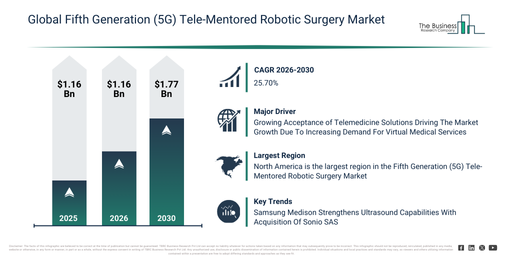
    The market size for fifth-generation (5G) tele-mentored robotic surgery is poised for significant expansion in the foreseeable future, with projections indicating it will reach $6.15 billion in 2030, exhibiting a compound annual growth rate (CAGR) of 25.7%. This expected growth during the forecast period is attributed to several factors, including 5G-enabled low-latency communication, a global shortage of medical specialists, the increasing demand for advanced surgical interventions, the proliferation of surgical education platforms, and increased investment in digital health. Key trends identified for this period encompass remote expert surgical mentorship, the real-time transfer of surgical skills, the expansion of virtual surgical training programs, a rise in its adoption for complex procedures, and the development of collaborative surgical networks.

    Get A Free Sample Report With In-Depth Market Insights:

    https://thebusinessresearchcompany.com/sample_request?id=28223&type=smp&name=Fifth%20Generation%20%285G%29%20Tele-Mentored%20Robotic%20Surgery%20Market%20Report%202026&utm_source=Blogs&utm_medium=Paid&utm_campaign=Oct_PR

    Fifth Generation (5G) Tele-Mentored Robotic Surgery Market Demand Drivers Opening New Revenue Streams

    The increasing embrace of telemedicine solutions is projected to fuel the expansion of the Fifth Generation (5G) Tele-Mentored Robotic Surgery Market in the future. Telemedicine encompasses provided remotely via digital communication, allowing for patient consultations and medical procedures without the need for in-person attendance. This rising acceptance of telemedicine is primarily propelled by the digitization of healthcare systems, with integrated electronic health records and advanced communication infrastructure enabling streamlined virtual care. The wider adoption of telemedicine solutions consequently escalates the demand for 5G tele-mentored robotic surgery systems, as medical experts rely on extremely fast, low-latency connectivity to deliver immediate surgical guidance and precise robotic operational instructions from distant locations. An example of this trend is seen in April 2025, when, as per the American Hospital Association (AHA), a US national trade group, more than 12.6% of Medicare beneficiaries utilized telehealth services during the final quarter of 2023. Hence, the increasing prevalence of telemedicine solutions is a key factor driving the growth of the Fifth Generation (5G) Tele-Mentored Robotic Surgery Market.

    Fifth Generation (5G) Tele-Mentored Robotic Surgery Market Segment Analysis: What Are The Core Market Categories?

    The fifth generation (5g) tele-mentored robotic surgery market covered in this report is segmented –

    1) By Component: Hardware, Software, Services

    2) By Surgery Type: General Surgery, Orthopedic Surgery, Neurosurgery, Urology, Gynecology, Other Surgery Types

    3) By Application: Training And Education, Remote Surgery, Consultation, Other Applications

    4) By End-User: Hospitals, Ambulatory Surgical Centers, Specialty Clinics, Other End-Users

    Subsegments:

    1) By Hardware: Surgical Robots, Imaging Devices, Communication Devices, Haptic Devices, Sensors

    2) By Software: Surgical Planning Software, Remote Monitoring Software, Data Analytics Software, Simulation Software, Control Software

    3) By Services: Installation And Integration, Training And Education, Maintenance And Support, Consulting Services, Telecommunication Services

    Fifth Generation (5G) Tele-Mentored Robotic Surgery Market Trends Powering Strategic Industry Growth

    Major corporations operating in the fifth generation (5G) tele-mentored robotic surgery market are dedicating efforts to developing innovative solutions, such as real-time force feedback systems, to improve surgical accuracy and provide tactile sensations to surgeons during remote operations. These real-time force feedback systems are technologies that furnish surgeons with instant tactile feelings from robotic instruments, mimicking the sense of touch during surgery, which aids in enhancing precision, decreasing tissue damage, and boosting safety in remote or minimally invasive procedures. For instance, in December 2024, Shanghai MicroPort MedBot (Group) Co., Ltd., a China-based manufacturing company, was granted market approval from Brazil’s National Health Surveillance Agency (ANVISA) for its Toumai Laparoscopic Surgical Robot. The Toumai Robot comes equipped with real-time force-sensing technology, allowing surgeons to receive tactile feedback during procedures, which consequently improves precision and lessens tissue damage. Additionally, it supports remote surgeries over extensive distances, facilitating intercontinental tele-mentored operations, and signifies a major leap forward in minimally invasive and 5G-enabled robotic surgical technology in Latin America. This development paves the way for a broader embrace of remote surgical solutions, enhances patient access to high-quality care, and establishes a new standard for integrating robotics, artificial intelligence, and advanced network technologies into modern healthcare systems.

    Fifth Generation (5G) Tele-Mentored Robotic Surgery Market Company Landscape And Competitive Strategy

    Major companies operating in the fifth generation (5g) tele-mentored robotic surgery market are Huawei Technologies Co. Ltd., Telefonaktiebolaget LM Ericsson (publ), Nokia Corporation, Siemens Healthineers AG, Stryker Corporation, Intuitive Surgical Inc., PT Telekomunikasi Selular, Karl Storz SE & Co. KG, CMR Surgical Limited, Proximie Ltd., Mentice AB, Tianjin Tinavi Medical Technology Co. Ltd., Sovato Inc., Virtual Incision Corporation, Avatera Medical GmbH, SS Innovations International Inc., Medicaroid Corporation, Shenzhen Edge Medical Co. Ltd., KangDuo Robot Co. Ltd., Sina Robotics Inc.

    View The Full Fifth Generation (5G) Tele-Mentored Robotic Surgery Market Report:

    https://thebusinessresearchcompany.com/report/fifth-generation-5g-tele-mentored-robotic-surgery-global-market-report?utm_source=Blogs&utm_medium=Paid&utm_campaign=Oct_PR

    Fifth Generation (5G) Tele-Mentored Robotic Surgery Market Largest Region: Which Geography Holds The Highest Market Share?

    North America was the largest region in the fifth generation (5G) tele-mentored robotic surgery market in 2025. Asia-Pacific is expected to be the fastest-growing region in the forecast period. The regions covered in the fifth generation (5g) tele-mentored robotic surgery market report are Asia-Pacific, South East Asia, Western Europe, Eastern Europe, North America, South America, Middle East, Africa.

    Reach Out To Our Team:

    The Business Research Company: https://www.thebusinessresearchcompany.com/

    Americas: +1 310-496-7795

    Asia: +44 7882 955267 & +91 8897263534

    Europe: +44 7882 955267

    Email us at: marketing@tbrc.info

    Follow us on:

    LinkedIn: https://in.linkedin.com/company/the-business-research-company

    YouTube: https://www.youtube.com/channel/UC24_fI0rV8cR5DxlCpgmyFQ

    Global Market Model: https://www.thebusinessresearchcompany.com/global-market-model
  • Fifth Generation (5G) Remote Orthopedic Robot Surgery Market Analysis: How The Industry Is Evolving Toward A $5.03 Billion Future

    Fifth Generation (5G) Remote Orthopedic Robot Surgery Market Analysis: How The Industry Is Evolving Toward A $5.03 Billion Future

    Backed by market attractiveness analysis, total addressable market sizing, company benchmarking matrices, interactive Excel dashboards, wider supply chain intelligence, emerging startup coverage, and detailed product-level insights, The Business Research Company’s 2026 market reports are designed to offer research that is more actionable and strategically valuable than ever.

    Fifth Generation (5G) Remote Orthopedic Robot Surgery Market Poised To Hit $5.03 Billion By 2030 With A 26.5% CAGR

    The fifth generation (5g) remote orthopedic robot surgery market has seen significant expansion in recent years. It is anticipated to grow from $1.55 billion in 2025 to $1.96 billion in 2026, exhibiting a compound annual growth rate (CAGR) of 26.8%. Historically, this market growth can be attributed to factors such as the increasing prevalence of orthopedic disorders, the early adoption of robotic surgery, a rising demand for minimally invasive procedures, a shortage of skilled surgeons, and ongoing digital transformation within hospitals.

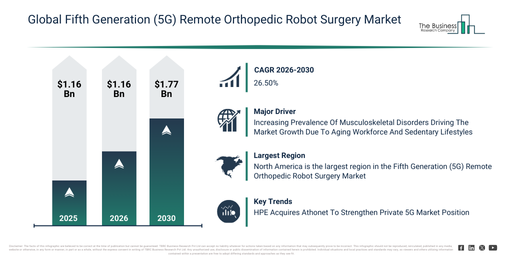
    The fifth generation (5g) remote orthopedic robot surgery market is expected to experience substantial growth in the coming years, with its size projected to reach $5.03 billion in 2030, exhibiting a compound annual growth rate (CAGR) of 26.5%. The expansion during the forecast period can be attributed to the widespread development of 5G infrastructure, the increasing adoption of remote healthcare models, rising investment in healthcare, the demand for highly precise surgical interventions, and an expanding aging population. Key trends identified for this period include the wider application of remote orthopedic procedures, continuous enhancements in real-time robotic precision, collaborative surgical efforts across international borders, advanced training for surgeons utilizing remote platforms, and the integration of multiple robot surgical suites.

    Get A Free Sample Report With In-Depth Market Insights:

    https://thebusinessresearchcompany.com/sample_request?id=99455840&type=smp&name=Fifth%20Generation%20%285G%29%20Remote%20Orthopedic%20Robot%20Surgery%20Market%20Report%202026&utm_source=Blogs&utm_medium=Paid&utm_campaign=Oct_PR

    Fifth Generation (5G) Remote Orthopedic Robot Surgery Market Growth Backed By Core Demand Fundamentals

    The rising incidence of musculoskeletal disorders is anticipated to fuel the expansion of the Fifth Generation (5G) Remote Orthopedic Robot Surgery Market in the coming period. These disorders are conditions impacting bones, joints, muscles, and connective tissues, resulting in pain and functional limitations throughout the body. The increasing occurrence of such conditions is primarily due to aging populations in developed nations, as age-related degenerative changes in joints and bones heighten the risk of developing ailments like osteoarthritis, osteoporosis, and chronic back pain. Fifth Generation (5G) remote orthopedic robot surgery delivers precise, minimally invasive treatments, leading to improved patient outcomes and accelerated recovery times for those afflicted with musculoskeletal disorders. For instance, in January 2024, data from the Office for Health Improvement and Disparities, a UK-based government department, showed that in 2023, 18.4% of individuals aged 16 and over reported a long-term musculoskeletal condition, a slight increase from 17.6% in 2022. These conditions were less frequently reported by males (15.8%) compared to females (20.9%). Thus, the growing prevalence of musculoskeletal disorders is a key driver for the growth of the Fifth Generation (5G) Remote Orthopedic Robot Surgery Market.

    Fifth Generation (5G) Remote Orthopedic Robot Surgery Market Segment Breakdown: Which Categories Lead On Revenue?

    The fifth generation (5g) remote orthopedic robot surgery market covered in this report is segmented –

    1) By Component: Robotic Systems, Fifth Generation (5G) Communication Devices, Software, Services

    2) By Application: Joint Replacement, Spine Surgery, Trauma Surgery, Sports Medicine, Other Applications

    3) By End-User: Hospitals, Ambulatory Surgical Centers, Specialty Clinics, Other End-Users

    Subsegments:

    1) By Robotic Systems: Surgical Robots, Navigation Systems, Imaging Robots, Rehabilitation Robots

    2) By Fifth Generation (5G) Communication Devices: Network Hardware, Communication Modules, Antenna Systems, Monitoring Devices

    3) By Software: Surgical Planning Software, Imaging And Visualization Software, Data Management Software, Artificial Intelligence Software

    4) By Services: Installation Services, Training Services, Maintenance Services, Technical Support Services

    Fifth Generation (5G) Remote Orthopedic Robot Surgery Market Growth Trends Reshaping The Competitive Landscape

    Major companies operating in the fifth generation (5G) remote orthopedic robot surgery market are focusing on developing innovative solutions, such as the integration with advanced imaging technologies, to enhance surgical precision, enable real-time remote guidance, reduce operative risks, and improve patient outcomes. The integration with advanced imaging technologies involves combining medical imaging systems with surgical robots to allow real-time visualization of patient anatomy, which assists surgeons in performing highly precise, minimally invasive procedures while reducing errors and surgical risks. For instance, in May 2023, Shanghai MicroPort MedBot (Group) Co. Ltd., a China-based manufacturing company, received market approval from Brazil’s ANVISA for its Honghu (marketed overseas as SkyWalker) orthopedic surgical robot. Honghu integrates 5G remote capabilities with CT-guided imaging to assist surgeons in performing highly precise joint replacement surgeries, including minimally invasive procedures. It utilizes robotic arms to enhance accuracy, allows detailed preoperative surgical planning, and can handle complex cases such as severe rheumatoid arthritis or surgeries following fractures. The robot has been approved in multiple regions and has been validated through hundreds of robotic-assisted procedures, demonstrating reliability and increasing adoption in various markets.

    Fifth Generation (5G) Remote Orthopedic Robot Surgery Market Key Players Shaping Industry Direction

    Major companies operating in the fifth generation (5g) remote orthopedic robot surgery market are Huawei Technologies Co. Ltd., Johnson & Johnson, Medtronic plc, Stryker Corporation, Zimmer Biomet Holdings Inc., Intuitive Surgical Inc., Smith & Nephew plc, Globus Medical Inc., Renishaw plc, Brainlab AG, CMR Surgical Limited, Vicarious Surgical Inc., Curexo Inc., Shanghai MicroPort MedBot (Group) Co. Ltd., Avatera Medical GmbH, Virtual Incision Corporation, Moon Surgical SAS, EndoQuest Robotics Inc., Medicaroid Corporation, Galen Robotics Inc.

    View The Full Fifth Generation (5G) Remote Orthopedic Robot Surgery Market Report:

    https://thebusinessresearchcompany.com/report/fifth-generation-5g-remote-orthopedic-robot-surgery-global-market-report?utm_source=Blogs&utm_medium=Paid&utm_campaign=Oct_PR

    Fifth Generation (5G) Remote Orthopedic Robot Surgery Market Regional Analysis: Which Region Leads By Revenue?

    North America was the largest region in the fifth generation (5G) remote orthopedic robot surgery market in 2025. The regions covered in the fifth generation (5g) remote orthopedic robot surgery market report are Asia-Pacific, South East Asia, Western Europe, Eastern Europe, North America, South America, Middle East, Africa.

    Reach Out To Our Team:

    The Business Research Company: https://www.thebusinessresearchcompany.com/

    Americas: +1 310-496-7795

    Asia: +44 7882 955267 & +91 8897263534

    Europe: +44 7882 955267

    Email us at: marketing@tbrc.info

    Follow us on:

    LinkedIn: https://in.linkedin.com/company/the-business-research-company

    YouTube: https://www.youtube.com/channel/UC24_fI0rV8cR5DxlCpgmyFQ

    Global Market Model: https://www.thebusinessresearchcompany.com/global-market-model
  • Field Hospital Oxygen Generator Market Outlook Through 2030: Understanding The Growth Opportunity

    Field Hospital Oxygen Generator Market Outlook Through 2030: Understanding The Growth Opportunity

    Featuring market attractiveness scoring, total addressable market sizing, company benchmarking matrices, interactive Excel dashboards, deeper supply chain intelligence, emerging startup tracking, and granular product-level insights, The Business Research Company’s 2026 market reports are built to deliver research that is both more actionable and more strategically valuable.

    Field Hospital Oxygen Generator Market Size And Revenue Outlook Through 2030

    The field hospital oxygen generator market has experienced rapid expansion in recent years. It is projected to increase from $1.58 billion in 2025 to $1.77 billion in 2026, maintaining a compound annual growth rate (CAGR) of 11.6%. Historically, this growth has been driven by several factors, including demand during disaster relief operations, the advancement of portable oxygen generators, government support for field healthcare, increasing military and defense applications, and technological progress in PSA and membrane systems.

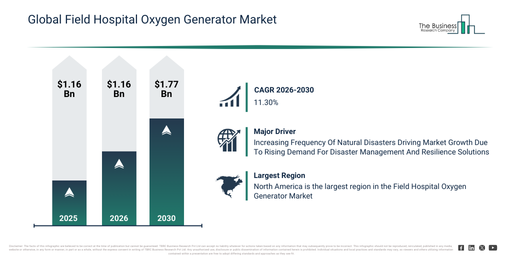
    The field hospital oxygen generator market size is anticipated to experience substantial expansion over the coming years. This market is projected to reach $2.71 billion by 2030, exhibiting a compound annual growth rate (CAGR) of 11.3%. The anticipated increase during the forecast period is driven by factors such as the integration with IoT monitoring platforms, the development of modular and portable systems, greater adoption in remote healthcare settings, progress in cryogenic oxygen technologies, and expanding global emergency preparedness initiatives. Prominent developments expected within this period encompass on-site oxygen production, quick deployment during emergencies, modular portable systems, capabilities for remote monitoring and control, and the generation of high-purity oxygen.

    Get A Free Sample Report With In-Depth Market Insights:

    https://thebusinessresearchcompany.com/sample_request?id=92340662&type=smp&name=Field%20Hospital%20Oxygen%20Generator%20Market%20Report%202026&utm_source=Blogs&utm_medium=Paid&utm_campaign=Oct_PR

    Field Hospital Oxygen Generator Market Growth Catalysts And Demand Drivers

    The field hospital oxygen generator market is anticipated to expand due to the growing occurrence of natural disasters. These events are sudden and severe environmental occurrences that lead to extensive harm, injuries, and community instability. Climate change contributes to the heightened incidence of natural disasters, as global warming exacerbates weather patterns and elevates the frequency of extreme events like hurricanes, floods, and wildfires. Field hospital oxygen generators mitigate the effects of natural disasters by supplying a dependable, localized source of medical oxygen, thereby guaranteeing continuous emergency care when standard supply mechanisms are compromised. For example, the National Oceanic and Atmospheric Administration (NOAA), a US-based federal scientific agency, reported in January 2024 that the United States recorded 28 weather and climate disasters in 2023, each incurring costs of at least 1 billion dollars, which is a rise from 18 such disasters in 2022. Consequently, the rising frequency of natural disasters is fostering the expansion of the field hospital oxygen generator market. The escalating occurrence of respiratory illnesses is projected to stimulate the growth of the Field Hospital Oxygen Generator Market in the future. Respiratory diseases encompass conditions impacting the airways and lung components, such as chronic obstructive pulmonary disease (COPD), asthma, and respiratory syncytial virus (RSV). The increase in these diseases is linked to greater environmental exposures, with older individuals being particularly susceptible to conditions necessitating respiratory assistance and oxygen treatment. Field hospital oxygen generator systems aid in managing respiratory diseases by delivering vital supplemental oxygen therapy to patients suffering from acute respiratory distress, facilitating the swift deployment of crucial respiratory support in provisional medical settings and urgent scenarios where immediate access to concentrated oxygen is fundamental for stabilizing severe breathing conditions. For instance, in June 2024, the Australian Institute of Health and Welfare, an Australia-based government agency, indicated that in 2023, chronic obstructive pulmonary disease (COPD) constituted 3.6% of Australia’s total disease burden and made up 50% of the aggregate burden from respiratory conditions. Therefore, the increasing prevalence of respiratory diseases is propelling the expansion of the Field Hospital Oxygen Generator Market.

    Field Hospital Oxygen Generator Market Segmentation: How Does The Market Break Down By Category?

    The field hospital oxygen generator market covered in this report is segmented –

    1) By Product Type: Pressure Swing Adsorption (PSA) Oxygen Generators, Membrane Oxygen Generators

    2) By Capacity: Small, Medium, Large

    3) By Distribution Channel: Direct Sales, Distributors

    4) By Application: Emergency Medical Services, Military Field Hospitals, Disaster Relief, Remote Healthcare Facilities, Other Applications

    5) By End-User: Government And Defense, Non-Governmental Organization (NGOs), Private Healthcare Providers, Other End-Users

    Subsegments:

    1) By Pressure Swing Adsorption (PSA) Oxygen Generators: Portable Pressure Swing Adsorption (PSA) Oxygen Generators, Modular Pressure Swing Adsorption (PSA) Oxygen Generators, Containerized Pressure Swing Adsorption (PSA) Oxygen Generators, High-Capacity Pressure Swing Adsorption (PSA) Oxygen Generators

    2) By Membrane Oxygen Generators: Flat Sheet Membrane Oxygen Generators, Hollow Fiber Membrane Oxygen Generators, High-Purity Membrane Oxygen Generators, Compact Membrane Oxygen Generators

    Field Hospital Oxygen Generator Market Competitive Analysis Of Leading Industry Participants

    Major companies operating in the field hospital oxygen generator market are Linde plc, Air Liquide S.A., Atlas Copco AB, Jiangsu Yuyue Medical Equipment Co. Ltd. (Yuwell), Universal Boschi S.p.A., PCI Gases Ltd., Denair Energy Saving Technology (Shanghai) PLC, MVS Engineering Pvt. Ltd., Nidek Medical Products Inc., Equinox Oxygen Solutions (India) Pvt. Ltd., Trimech Engineers Pvt. Ltd., MultiTech Compressors Pvt. Ltd., Absstem Inc., Thermo Sag S.A., Oxair Gas Systems Ltd., Mil’s SAS, Oxygen Solutions Inc. (OSI), Shenzhen Keyhub Medical Equipment Co. Ltd., Beijing Cape Golden Gas System Co. Ltd., CAN GAS Systems Company Limited

    View The Full Field Hospital Oxygen Generator Market Report:

    https://thebusinessresearchcompany.com/report/field-hospital-oxygen-generator-global-market-report?utm_source=Blogs&utm_medium=Paid&utm_campaign=Oct_PR

    Field Hospital Oxygen Generator Market Geographic Distribution And Regional Opportunities

    North America was the largest region in the field hospital oxygen generator market in 2025. Asia-Pacific is expected to be the fastest-growing region in the forecast period. The regions covered in the field hospital oxygen generator market report are Asia-Pacific, South East Asia, Western Europe, Eastern Europe, North America, South America, Middle East, Africa.

    Reach Out To Our Team:

    The Business Research Company: https://www.thebusinessresearchcompany.com/

    Americas: +1 310-496-7795

    Asia: +44 7882 955267 & +91 8897263534

    Europe: +44 7882 955267

    Email us at: marketing@tbrc.info

    Follow us on:

    LinkedIn: https://in.linkedin.com/company/the-business-research-company

    YouTube: https://www.youtube.com/channel/UC24_fI0rV8cR5DxlCpgmyFQ

    Global Market Model: https://www.thebusinessresearchcompany.com/global-market-model
  • Fibrin Sealants Market Growth Potential: What The Latest Forecast Reveals

    Fibrin Sealants Market Growth Potential: What The Latest Forecast Reveals

    Built to provide research that’s more actionable and strategically valuable, The Business Research Company’s 2026 market reports include market attractiveness analysis, total addressable market sizing, company benchmarking matrices, interactive Excel dashboards, broader supply chain intelligence, emerging startup tracking, and in-depth product insights.

    Fibrin Sealants Market Growth From $1.27 Billion In 2026 To $1.73 Billion By 2030 At A CAGR Of 8%

    The fibrin sealants market has shown robust growth over recent years. It is projected to expand from $1.17 billion in 2025 to $1.27 billion in 2026, demonstrating a compound annual growth rate (CAGR) of 8.4%. The growth observed in prior periods stems from factors such as the constrained supply of recombinant and synthetic sealants, a reliance on sealants derived from autologous and bovine sources, an uptick in surgical procedures, increasing awareness regarding hemostasis, and the broader integration of fibrin sealants in general surgical practices.

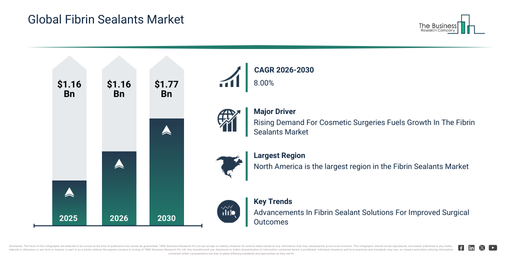
    The fibrin sealants market size is anticipated to undergo significant expansion in the coming years, reaching $1.73 billion in 2030 with a compound annual growth rate (CAGR) of 8.0%. This projected growth during the forecast period is due to advancements in recombinant fibrin production, the increasing prevalence of minimally invasive and robotic surgeries, rising demand in cardiovascular and orthopedic procedures, an increase in regulatory approvals and quality certifications, and the development of bioabsorbable and multifunctional sealants. Major trends for the forecast period include the rising adoption of fibrin sealants in minimally invasive surgeries, an increased use of recombinant and synthetic sealants, the expansion of orthopedic and cardiovascular surgeries, a growing emphasis on blood conservation and hemostasis, and a rising preference for bioabsorbable and patch-based sealants.

    Get A Free Sample Report With In-Depth Market Insights:

    https://thebusinessresearchcompany.com/sample_request?id=33761633&type=smp&name=Fibrin%20Sealants%20Market%20Report%202026&utm_source=Blogs&utm_medium=Paid&utm_campaign=Oct_PR

    Fibrin Sealants Market Opportunity Drivers: What’s Unlocking New Revenue Potential?

    The growing volume of cosmetic surgeries is projected to boost the fibrin sealants market in the coming years. Cosmetic surgeries are medical procedures primarily focused on enhancing or altering an individual’s appearance. The rise in these surgeries is attributed to increased societal emphasis on aesthetics, advancements in surgical techniques, and the expanding availability of minimally invasive procedures. Fibrin sealants play a crucial role in cosmetic surgeries by promoting faster wound healing, reducing bleeding, and minimizing scarring, thereby enhancing surgical outcomes and patient recovery. For instance, in September 2023, according to CosmetAssure, a US-based American Society of Plastic Surgeons, liposuction remained the top plastic surgery procedure in 2023, with 347,782 procedures performed, representing a 7% increase from 2022, while tummy tucks also saw a 5% rise, with 170,110 procedures performed. Therefore, the increasing number of cosmetic surgeries is a key driver for the fibrin sealants market.

    Fibrin Sealants Market Segment Trends And Revenue Contributors

    The fibrin sealants market covered in this report is segmented –

    1) By Type: Liquid, Patch, Powder

    2) By Technology: Autologous Donation, Viral Inactivation, Recombinant Production, Other Technologies

    3) By Application: General Surgery, Cardiovascular Surgery, Wound Management, Orthopedic Surgery, Urological Surgeries, Ophthalmic Surgeries, Transplant Surgery, Other Applications

    4) By End-User: Hospitals, Ambulatory Surgical Centers, Other End-Users

    Subsegments:

    1) By Liquid: Bovine-Derived Liquid Sealants, Human-Derived Liquid Sealants, Synthetic Liquid Sealants, Recombinant Fibrin Sealants

    2) By Patch: Bovine-Derived Fibrin Patches, Human-Derived Fibrin Patches, Synthetic Fibrin Patches, Bioabsorbable Fibrin Patches

    3) By Powder: Bovine-Derived Fibrin Powder, Human-Derived Fibrin Powder, Synthetic Fibrin Powder, Recombinant Fibrin Powder

    Fibrin Sealants Market Innovation Trends Shaping Future Development

    Leading companies in the Fibrin Sealants market are concentrating on creating innovative solutions, including fibrin sealant, to enhance hemostasis, reduce surgical complications, improve wound healing outcomes, and optimize patient recovery across diverse surgical procedures. Fibrin sealants, also known as fibrin glues, are biological adhesive products derived from human or animal blood components that emulate the final stages of the natural blood clotting process. For instance, in October 2024, Grifols S.A., a global biopharmaceutical company based in Spain, received FDA approval for its fibrin sealant solution designed to treat surgical bleeding in pediatric patients. This product is intended to bolster surgical safety, improve clot formation at the wound site, and decrease the risk of postoperative complications, offering a specialized option for pediatric surgeries where precise hemostasis is crucial. The solution’s versatility and efficiency further allow its use across various surgical settings compared to conventional approaches.

    Fibrin Sealants Market Leading Companies And Competitive Benchmarking

    Major companies operating in the fibrin sealants market are Johnson & Johnson, Takeda Pharmaceutical Company Limited, Asahi Kasei Medical Co. Ltd., Baxter International Inc., CSL Behring, Grifols S.A., Sigma-Aldrich, Nordson Corporation, Integra LifeSciences Corporation, Shanghai RAAS Blood Products Co. Ltd., Mallinckrodt Pharmaceuticals, Biotest AG, LFB Group, Hualan Biological Engineering Inc., Corza Medical, Aesculap Inc., Ethicon Inc., CryoLife Inc., VIVEX Biologics Inc., MediWound Ltd., Cohesion Technologies Inc

    View The Full Fibrin Sealants Market Report:

    https://thebusinessresearchcompany.com/report/fibrin-sealants-global-market-report?utm_source=Blogs&utm_medium=Paid&utm_campaign=Oct_PR

    Fibrin Sealants Market Largest Region By Revenue And Market Share

    North America was the largest region in the fibrin sealants market in 2025. Asia-Pacific is expected to be the fastest-growing region in the forecast period. The regions covered in the fibrin sealants market report are Asia-Pacific, South East Asia, Western Europe, Eastern Europe, North America, South America, Middle East, Africa.

    Reach Out To Our Team:

    The Business Research Company: https://www.thebusinessresearchcompany.com/

    Americas: +1 310-496-7795

    Asia: +44 7882 955267 & +91 8897263534

    Europe: +44 7882 955267

    Email us at: marketing@tbrc.info

    Follow us on:

    LinkedIn: https://in.linkedin.com/company/the-business-research-company

    YouTube: https://www.youtube.com/channel/UC24_fI0rV8cR5DxlCpgmyFQ

    Global Market Model: https://www.thebusinessresearchcompany.com/global-market-model
  • Fiberscopes Market Growth Outlook: Why Analysts Expect Continued Expansion

    Fiberscopes Market Growth Outlook: Why Analysts Expect Continued Expansion

    Backed by market attractiveness analysis, total addressable market sizing, company benchmarking matrices, interactive Excel dashboards, wider supply chain intelligence, emerging startup coverage, and detailed product-level insights, The Business Research Company’s 2026 market reports are designed to offer research that is more actionable and strategically valuable than ever.

    Fiberscopes Market Expansion Outlook: What Revenue Opportunities Are Ahead?

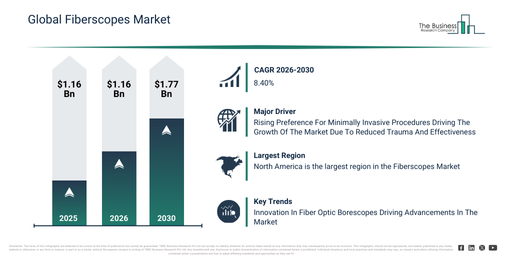
    The fiberscopes market has experienced robust expansion in recent years. It is anticipated to grow from $1.55 billion in 2025 to $1.68 billion in 2026, registering a compound annual growth rate (CAGR) of 8.5%. The historical growth can be attributed to factors such as industrial maintenance demand, the rise of endoscopic diagnostics, innovations in optical fiber, aerospace inspection requirements, and the increasing adoption of medical imaging.

    The fiberscopes market is projected to experience substantial expansion in the coming years. By 2030, its valuation is anticipated to reach $2.32 billion, progressing at a compound annual growth rate (CAGR) of 8.4%. This projected growth is fueled by factors such as increased investments in preventive maintenance, a heightened focus on infection control within healthcare, greater automation in inspection processes, a rising need for advanced imaging solutions, and the availability of portable inspection tools. Key developments expected during this period include a rising preference for disposable fiberscopes, broader application in industrial inspection, the integration of HD video fiberscopes, enhanced infection control protocols in medical endoscopy, and the ongoing miniaturization of optical systems.

    Get A Free Sample Report With In-Depth Market Insights:

    https://thebusinessresearchcompany.com/sample_request?id=73231785&type=smp&name=Fiberscopes%20Market%20Report%202026&utm_source=Blogs&utm_medium=Paid&utm_campaign=Oct_PR

    Fiberscopes Market Growth Momentum: What Factors Are Shaping Demand?

    The increasing demand for minimally invasive medical techniques is projected to drive the expansion of the fiberscopes market in the future. Minimally invasive procedures are medical methods characterized by small or absent incisions, designed to lessen physical trauma compared to conventional open operations. This growing preference for minimally invasive procedures stems from various factors, encompassing both patient advantages and breakthroughs in medical technology. Fiberscopes improve minimally invasive procedures by offering high-resolution imagery and adaptable navigation in confined or difficult-to-access regions, allowing for accurate diagnoses and treatments with minimal tissue damage. For example, in June 2024, the American Society of Plastic Surgeons, a US-based medication company, stated that in 2023, minimally invasive procedures saw a 7% increase, surpassing surgical procedures, with more than 9 million neuromodulator injections and 5 million hyaluronic acid fillers administered. During 2023, 347,782 liposuction procedures were carried out, marking a 7% rise from 2022. Consequently, the escalating favoritism towards minimally invasive procedures is fueling the growth of the fiberscopes market.

    Fiberscopes Market Segment Analysis Spotlighting Growth Areas

    The fiberscopes market covered in this report is segmented –

    1) By Product Type: Disposable Fiberscopes, Flexible Fiberscopes, Rigid Fiberscopes, Video Fiberscopes

    2) By Application: Industrial Inspection, Medical Diagnostics, Research And Development

    3) By End User: Aerospace Maintenance Facilities, Automotive Facilities, Clinics, Diagnostic Laboratories, Hospitals

    Subsegments:

    1) By Disposable Fiberscopes: Medical Disposable Fiberscopes, Industrial Disposable Fiberscopes

    2) By Flexible Fiberscopes: Diagnostic Flexible Fiberscopes, Therapeutic Flexible Fiberscopes

    3) By Rigid Fiberscopes: Short Rigid Fiberscopes, Long Rigid Fiberscopes

    4) By Video Fiberscopes: HD Video Fiberscopes, Standard-Definition Video Fiberscopes

    Fiberscopes Market Trends Redefining Industry Growth

    Prominent companies operating within the fiberscope market are actively developing innovative products, including fiber optic borescopes, to significantly enhance the precision, adaptability, and durability of imaging for industrial and medical inspections. Fiber optic borescopes are inspection devices that employ fiber optic technology to provide visual access to locations that are typically difficult to reach. These tools are composed of a flexible tube containing an optical fiber bundle, a light source, and either a camera or a lens at the tube’s extremity. For example, in June 2023, Titan Tool Supply Inc., a manufacturing company based in the US, unveiled its Industrial Micro Fiberscope Series. This series notably features the L-Series, which includes two models: the L-1 (with a 1 mm diameter, 42° field of view, and a 6-inch working range) and the L-2 (with a 2 mm diameter). These highly precise instruments are specifically engineered for conducting remote visual inspections within demanding environments, rendering them ideal for industries such as automotive, aerospace, and manufacturing. Additionally, the series is complemented by the Model TR.L1 16-LED Ring Illuminator, which supplies adjustable, shadow-free lighting to improve visibility during inspection processes.

    Fiberscopes Market Industry Leaders And Competitive Landscape

    Major companies operating in the fiberscopes market are Stryker Corporation, Boston Scientific Corporation, B. Braun Melsungen AG, Intuitive Surgical Inc., Olympus Corporation, Hill-Rom Holdings Inc., Richard Wolf GmbH, Moritex Corporation, Karl Storz GmbH & Co. KG, Optim Inc., Scope Technology Inc., Clarus Medical LLC, Zistos Corporation, Gradient Lens Corporation, Zibra Inc., Lenox Instrument Company Inc., Global Borescope Inspection Inc., Fiberscope.net Inc., Advanced Inspection Technologies Inc., Schölly Fiberoptic GmbH

    View The Full Fiberscopes Market Report:

    https://thebusinessresearchcompany.com/report/fiberscopes-global-market-report?utm_source=Blogs&utm_medium=Paid&utm_campaign=Oct_PR

    Fiberscopes Market Regional Analysis And Leading Geography

    North America was the largest region in the fiberscopes market in 2025. The regions covered in the fiberscopes market report are Asia-Pacific, South East Asia, Western Europe, Eastern Europe, North America, South America, Middle East, Africa.

    Reach Out To Our Team:

    The Business Research Company: https://www.thebusinessresearchcompany.com/

    Americas: +1 310-496-7795

    Asia: +44 7882 955267 & +91 8897263534

    Europe: +44 7882 955267

    Email us at: marketing@tbrc.info

    Follow us on:

    LinkedIn: https://in.linkedin.com/company/the-business-research-company

    YouTube: https://www.youtube.com/channel/UC24_fI0rV8cR5DxlCpgmyFQ

    Global Market Model: https://www.thebusinessresearchcompany.com/global-market-model
  • Fetal Monitoring Market Forecast Insights: The Road To $6.24 Billion By 2030

    Fetal Monitoring Market Forecast Insights: The Road To $6.24 Billion By 2030

    Featuring market attractiveness scoring, total addressable market sizing, company benchmarking matrices, interactive Excel dashboards, deeper supply chain intelligence, emerging startup tracking, and granular product-level insights, The Business Research Company’s 2026 market reports are built to deliver research that is both more actionable and more strategically valuable.

    Fetal Monitoring Market Growth Potential: How Will Market Size Shift Through 2030?

    The fetal monitoring market has experienced robust growth in recent years. Projections indicate it will grow from $4.05 billion in 2025 to $4.4 billion in 2026 at a compound annual growth rate (CAGR) of 8.7%. Historically, this expansion has been driven by factors such as rising hospital birth rates, the expansion of obstetric care infrastructure, increasing use of electronic fetal monitoring, improvements in ultrasound imaging technologies, and growing awareness of prenatal care standards.

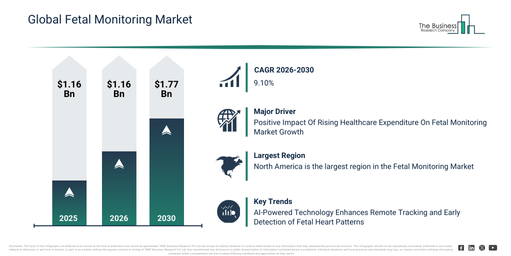
    The fetal monitoring market size is anticipated to experience substantial growth in the forthcoming years, expanding to $6.24 billion by 2030, demonstrating a compound annual growth rate (CAGR) of 9.1%. This projected growth during the forecast period is fueled by an escalating demand for remote patient monitoring, a greater embrace of digital maternity care solutions, the broadening of telehealth-supported fetal monitoring, a heightened emphasis on early risk detection, and increased capital directed towards maternal healthcare technologies. Notable trends expected in this period include the rising adoption of wireless fetal monitoring systems, an increased need for continuous intrapartum monitoring, the expanding integration of AI-based risk assessment tools, the proliferation of portable and home-based monitoring devices, and an intensified focus on maternal-fetal safety.

    Get A Free Sample Report With In-Depth Market Insights:

    https://thebusinessresearchcompany.com/sample_request?id=69031513&type=smp&name=Fetal%20Monitoring%20Market%20Report%202026&utm_source=Blogs&utm_medium=Paid&utm_campaign=Oct_PR

    Fetal Monitoring Market Expansion Drivers: What’s Shaping Future Growth?

    An anticipated increase in healthcare spending is set to stimulate expansion within the fetal monitoring market. This spending encompasses the complete sum of financial and non-financial resources that nations, governments, organizations, or individuals dedicate to healthcare goods and services. Increased healthcare investment fuels the fetal monitoring market’s advancement by encouraging technological innovations, enhancing access, backing research and development, and uplifting the overall quality of maternal and fetal healthcare provisions. To illustrate, as reported by the US-based government agency, the Centers for Medicare & Medicaid Services, in June 2025, national health expenditures (NHE) for 2023 saw a 7.5% rise, amounting to $4.9 trillion. This equates to an average of $14,570 per person and constitutes 17.6% of the Gross Domestic Product (GDP). Furthermore, Medicare spending rose by 8.1% to $1,029.8 billion, accounting for 21% of the total NHE. Consequently, the expanding healthcare expenditure is a key driver for the growth of the fetal monitoring market.

    Fetal Monitoring Market Segment Performance And Emerging Opportunities

    The fetal monitoring market covered in this report is segmented –

    1) By Product: Ultrasound Devices, Electronic Maternal Or Fetal Monitors, Uterine Contraction Monitor, Fetal Electrodes, Fetal Doppler Devices, Telemetry Devices

    2) By Method: Invasive, Non-Invasive

    3) By Application: Intrapartum Fetal Monitoring, Antepartum Fetal Monitoring

    4) By End-User: Diagnostic Laboratories, Hospitals And Clinics, Other End-Users

    Subsegments:

    1) By Ultrasound Devices: 2D Ultrasound, 3D Or 4D Ultrasound, Doppler Ultrasound

    2) By Electronic Maternal Or Fetal Monitors: Continuous Fetal Monitoring Systems, Wireless Fetal Monitoring Systems, Maternal Vital Signs Monitors

    3) By Uterine Contraction Monitor: External Uterine Contraction Monitors, Internal Uterine Pressure Catheters

    4) By Fetal Electrodes: Scalp Electrodes, Surface Electrodes

    5) By Fetal Doppler Devices: Handheld Dopplers, Tabletop Dopplers

    6) By Telemetry Devices: Wireless Telemetry Systems, Portable Monitoring Systems

    Fetal Monitoring Market Strategic Trends: What Defines The Next Growth Phase?

    Leading companies in the fetal monitoring market are prioritizing the development of innovative solutions, such as connected baby monitors, to enable real-time remote observation and enhance neonatal care. A connected baby monitor is a smart device designed to continuously track a baby’s vital signs and transmit real-time data to smartphones or cloud platforms, facilitating remote monitoring by either parents or clinicians. For instance, in February 2025, Perigean Technologies LLC, a US-based technology company, obtained approval from the U.S. Food and Drug Administration (FDA) for Patterns 3.0, expanding the utility of its proprietary fetal heart rate pattern recognition technology from 36 weeks to 32 weeks of gestation. This system employs advanced AI algorithms, including Long Short-Term Memory (LSTM) neural networks, to detect, label, and quantify fetal heart rate patterns—specifically accelerations, decelerations, baselines, and uterine contractions—starting from 32 weeks. Patterns 3.0 functions as an adjunct to clinical decision-making for both antepartum and intrapartum monitoring, providing early alerts for indeterminate and abnormal fetal heart rate patterns to support timely interventions in cases of high-risk pregnancies. It can operate in either networked or standalone environments, thereby streamlining clinical workflows by delivering standardized, consistent analysis, which allows clinicians to focus more on patient care rather than manual data interpretation.

    Fetal Monitoring Market Key Participants And Competitive Landscape

    Major companies operating in the fetal monitoring market are Koninklijke Philips N.V., Medtronic plc, Drägerwerk AG & Co. KGaA, Mindray Medical International Limited, Masimo Corporation, Neoventa Medical AB, EDAN Instruments Inc., Shenzhen Comen Medical Instruments Co. Ltd., Contec Medical Systems Co. Ltd., Bionet Co. Ltd., Atom Medical Corporation, Bistos Inc., OBMedical Company, PeriGen Inc., Sunray Medical Apparatus Co. Ltd., Mediana Co. Ltd., Nonin Medical Inc., Analogic Corporation, Dixion Vertrieb medizinischer Geräte GmbH, Fisher & Paykel Healthcare Corporation Limited

    View The Full Fetal Monitoring Market Report:

    https://thebusinessresearchcompany.com/report/fetal-monitoring-global-market-report?utm_source=Blogs&utm_medium=Paid&utm_campaign=Oct_PR

    Fetal Monitoring Market Geographic Analysis: Where Is Demand Accelerating Fastest?

    North America was the largest region in the fetal monitoring market in 2025. Asia-Pacific is expected to be the fastest-growing region in the global fetal monitoring market report forecast period. The regions covered in the fetal monitoring market report are Asia-Pacific, South East Asia, Western Europe, Eastern Europe, North America, South America, Middle East, Africa.

    Reach Out To Our Team:

    The Business Research Company: https://www.thebusinessresearchcompany.com/

    Americas: +1 310-496-7795

    Asia: +44 7882 955267 & +91 8897263534

    Europe: +44 7882 955267

    Email us at: marketing@tbrc.info

    Follow us on:

    LinkedIn: https://in.linkedin.com/company/the-business-research-company

    YouTube: https://www.youtube.com/channel/UC24_fI0rV8cR5DxlCpgmyFQ

    Global Market Model: https://www.thebusinessresearchcompany.com/global-market-model
  • Fetal And Neonatal Monitoring Devices Market Explained: What Is Fueling Growth To $13.57 Billion By 2030?

    Fetal And Neonatal Monitoring Devices Market Explained: What Is Fueling Growth To $13.57 Billion By 2030?

    Built to provide research that’s more actionable and strategically valuable, The Business Research Company’s 2026 market reports include market attractiveness analysis, total addressable market sizing, company benchmarking matrices, interactive Excel dashboards, broader supply chain intelligence, emerging startup tracking, and in-depth product insights.

    Fetal And Neonatal Monitoring Devices Market Value Analysis: What Growth Lies Ahead Over The Forecast Period?

    The fetal and neonatal monitoring devices market has experienced robust expansion in recent years. Projections indicate its growth from $9.92 billion in 2025 to $10.6 billion in 2026, achieving a compound annual growth rate (CAGR) of 6.8%. Historically, this market’s expansion is attributable to increasing institutional childbirth rates, expansion of neonatal intensive care units, rising focus on maternal and infant health outcomes, growing adoption of electronic fetal monitoring, and the availability of advanced neonatal care equipment.

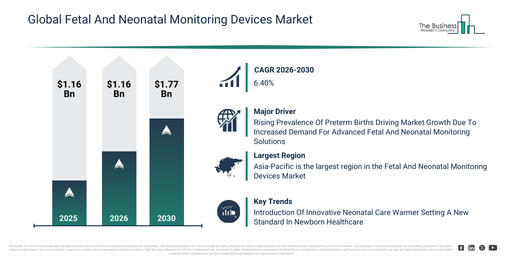
    The fetal and neonatal monitoring devices market size is projected to experience significant expansion in the upcoming years, with an anticipated valuation of $13.57 billion in 2030, growing at a compound annual growth rate (CAGR) of 6.4%. This growth during the forecast period is attributed to several factors, including increasing investments in smart maternity care solutions, a rising demand for remote patient monitoring, the expansion of neonatal care infrastructure in emerging markets, a growing emphasis on the early diagnosis of complications, and the increasing adoption of AI-assisted monitoring systems. Major trends influencing this period involve the increasing adoption of continuous fetal monitoring systems, the rising utilization of advanced neonatal vital sign monitors, the growing integration of wireless monitoring technologies, the expansion of portable monitoring devices, and an enhanced focus on early risk detection.

    Get A Free Sample Report With In-Depth Market Insights:

    https://thebusinessresearchcompany.com/sample_request?id=50850016&type=smp&name=Fetal%20And%20Neonatal%20Monitoring%20Devices%20Market%20Report%202026&utm_source=Blogs&utm_medium=Paid&utm_campaign=Oct_PR

    Fetal And Neonatal Monitoring Devices Market Development Factors: What’s Supporting Demand?

    The rising occurrence of preterm births is anticipated to drive the expansion of the fetal and neonatal monitoring devices market in the future. Preterm birth is defined as a baby being born prematurely, prior to 37 weeks of gestation, often resulting in adverse health and developmental outcomes such as poor growth, intellectual disabilities, vision and hearing problems, and cerebral palsy, among other issues. An increase in preterm birth instances stems from greater medical interventions for maternal or fetal health complications, including preeclampsia or intrauterine growth restriction, necessitating early labor induction or cesarean deliveries. Fetal and neonatal monitoring devices play a crucial role in managing preterm births and infants with low birth weight by continuously observing vital signs and health metrics, thus allowing for the prompt identification of complications and rapid medical interventions that enhance survival rates and overall long-term health. For example, data from January 2025, provided by the Department of Health and Social Care, a UK-based government department responsible for public health, indicated that in 2023, 8.1 percent of all births in England were preterm, occurring between 24 and 36 weeks of completed gestation, while the worldwide average stands at approximately 10 percent. Consequently, the heightened occurrence of preterm births and low birth weight in infants is fueling the expansion of the fetal and neonatal monitoring devices market.

    Fetal And Neonatal Monitoring Devices Market Segment Landscape And Growth Outlook

    The fetal and neonatal monitoring devices market covered in this report is segmented –

    1) By Equipment: Fetal, Neonatal

    2) By Portability: Portable, Non Portable

    3) By Fetal Care Equipment Type: Ultrasound Devices, Fetal Dopplers, Fetal Monitors, Fetal Pulse Oximeters

    4) By Neonatal Care Equipment Type: Infant Warmers, Incubators, Convertible Warmers And Incubators, Phototherapy Equipment, Respiratory Devices, Neonatal Monitoring Devices

    5) By End User: Hospitals, Diagnostic centers, Pediatric Clinics

    Subsegments:

    1) By Fetal Monitoring Equipment: Fetal Ultrasound Devices, Fetal Dopplers, Fetal Electrodes, Fetal Heart Rate Monitors, Fetal Pulse Oximeters, CTG (Cardiotocography) Machines

    2) By Neonatal Monitoring Equipment: Neonatal Incubators, Neonatal Pulse Oximeters, Neonatal Ventilators, Neonatal ECG Machines, Neonatal Respiratory Monitors, Neonatal Temperature Management Systems

    Fetal And Neonatal Monitoring Devices Market Transformation Trends: What Innovations Are Driving Change?

    Leading companies in the fatty acid market are prioritizing the development of innovative devices, such as the Neonatal Care Warmer Babyroo TN300, to strengthen their market position. A neonatal care warmer, also known as an infant radiant warmer, is a medical instrument designed to offer a controlled and warm setting for newborn babies, especially those born prematurely or with certain health conditions. For example, in June 2023, Dräger, a Germany-based company known for manufacturing gas detection and analysis systems, along with breathing and protective equipment, unveiled the Neonatal Care Warmer Babyroo TN300. The Babyroo TN300 significantly improves newborn care in labor rooms, delivery rooms, and NICUs. This open-care warmer, which includes resuscitation tools, provides a flexible design and advanced thermoregulation. The pre-warm function guarantees the mattress is prepared at the optimal temperature for the baby, underscoring the product’s commitment to creating a secure and comfortable environment for newborns.

    Fetal And Neonatal Monitoring Devices Market Top Companies Driving Competitive Growth

    Major companies operating in the fetal and neonatal monitoring devices market are GE Healthcare, Fisher & Paykel Healthcare Limited, Philips Healthcare, Atom Medical Corporation, Natus Medical Incorporated, Phoenix Medical Systems (P) Ltd., Becton Dickinson and Company, Masimo Corporation, Drägerwerk AG & Co. KGAA, CareFusion Corporation, Nonin Medical, Koninklijke Philips N.V., Welch Allyn Inc., Spacelabs Healthcare, Smiths Medical Inc., Getinge AB, FUJIFILM SonoSite Inc., Siemens Healthcare GMBH, Utah Medical Products Inc., Neoventa Medical AB, International Biomedical Ltd., Medtronic Plc, Hill-Rom, Shenzhen Mindray Bio-Medical Electronics Co. Ltd., CooperSurgical Inc., Huntleigh Healthcare Limited, Nihon Kohden Corporation, Arjohuntleigh Healthcare India Private Limited, Advanced Instrumentations, Dixion Vertrieb medizinischer Geräte GmbH, Mediana Co. Ltd., NCC Medical Co. Ltd.

    View The Full Fetal And Neonatal Monitoring Devices Market Report:

    https://thebusinessresearchcompany.com/report/fetal-and-neonatal-monitoring-devices-global-market-report?utm_source=Blogs&utm_medium=Paid&utm_campaign=Oct_PR

    Fetal And Neonatal Monitoring Devices Market Global Footprint: Which Region Leads The Industry?

    Asia-Pacific was the largest region in the global fetal and neonatal monitoring devices and equipment market in 2025. North America was the second-largest region in the fetal and neonatal monitoring devices and equipment market. The regions covered in the fetal and neonatal monitoring devices market report are Asia-Pacific, South East Asia, Western Europe, Eastern Europe, North America, South America, Middle East, Africa.

    Reach Out To Our Team:

    The Business Research Company: https://www.thebusinessresearchcompany.com/

    Americas: +1 310-496-7795

    Asia: +44 7882 955267 & +91 8897263534

    Europe: +44 7882 955267

    Email us at: marketing@tbrc.info

    Follow us on:

    LinkedIn: https://in.linkedin.com/company/the-business-research-company

    YouTube: https://www.youtube.com/channel/UC24_fI0rV8cR5DxlCpgmyFQ

    Global Market Model: https://www.thebusinessresearchcompany.com/global-market-model
  • Fetal And Neonatal Care Equipment Market Forecast To Reach $12.79 Billion By 2030: Key Trends Explained

    Fetal And Neonatal Care Equipment Market Forecast To Reach $12.79 Billion By 2030: Key Trends Explained

    Backed by market attractiveness analysis, total addressable market sizing, company benchmarking matrices, interactive Excel dashboards, wider supply chain intelligence, emerging startup coverage, and detailed product-level insights, The Business Research Company’s 2026 market reports are designed to offer research that is more actionable and strategically valuable than ever.

    Fetal And Neonatal Care Equipment Market Size Forecast: How Big Could The Market Get By 2030?

    The fetal and neonatal care equipment market has experienced robust expansion in recent years. Its valuation is set to increase from $8.99 billion in 2025 to $9.67 billion in 2026, achieving a compound annual growth rate (CAGR) of 7.6%. This historical growth can be attributed to several factors including the restricted access to advanced fetal and neonatal equipment, the continued use of traditional incubators and monitoring devices, heightened awareness surrounding neonatal care, enhancements in hospital infrastructure, and an uptick in birth rates across emerging economies.

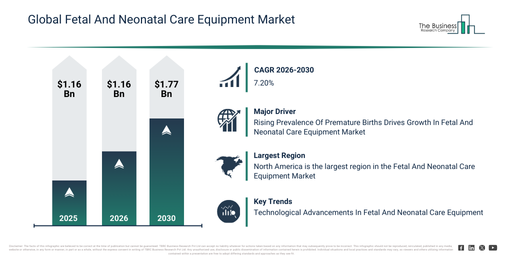
    The market for fetal and neonatal care equipment is projected to experience substantial expansion over the upcoming years. This market is anticipated to reach a valuation of $12.79 billion by 2030, exhibiting a compound annual growth rate (CAGR) of 7.2%. Factors contributing to this growth during the forecast period include innovations in portable and smart neonatal devices, the broader availability of prenatal and neonatal care services, increased funding for Neonatal Intensive Care Units (NICUs), the growing incidence of premature births, and the incorporation of connected monitoring systems. Key trends characterizing this period involve the increasing uptake of sophisticated fetal monitoring systems, a rise in the deployment of portable neonatal care devices, an escalating need for respiratory support equipment, the widening applications of phototherapy and feeding equipment, and a heightened emphasis on neonatal transport and safety measures.

    Get A Free Sample Report With In-Depth Market Insights:

    https://thebusinessresearchcompany.com/sample_request?id=84277158&type=smp&name=Fetal%20And%20Neonatal%20Care%20Equipment%20Market%20Report%202026&utm_source=Blogs&utm_medium=Paid&utm_campaign=Oct_PR

    Fetal And Neonatal Care Equipment Market Industry Drivers: What’s Behind The Revenue Growth?

    The increasing incidence of premature births is projected to stimulate expansion in the fetal and neonatal care equipment market moving forward. A premature birth is defined as the delivery of an infant prior to reaching 37 weeks of gestation. The growing frequency of premature births stems from factors like advanced maternal age, linked to increased complication risks, and mothers’ ongoing health conditions, including diabetes, hypertension, obesity, and infections, which often lead to preterm labor and delivery. This equipment for fetal and neonatal care enhances health results for premature infants, simultaneously aiding healthcare professionals in tracking vital signs, providing essential treatments, and safeguarding the welfare of newborns requiring intensive care. As an illustration, in January 2025, a UK legislative body, the Government response to the House of Lords inquiry into preterm birth, stated that in 2023, 8.1% of all deliveries happened prematurely, specifically between 24 and 36 completed weeks of gestation. Consequently, the expanding occurrence of premature births will fuel the development of the fetal and neonatal care equipment market.

    Fetal And Neonatal Care Equipment Market Breakdown By Product Type And Application

    The fetal and neonatal care equipment market covered in this report is segmented –

    1) By Type: Fetal Care Equipment, Neonatal Care Equipment

    2) By Portability: Portable Devices, Non-Portable Devices

    3) By End-User: Hospitals, Diagnostics Centers, Clinics, Other End-Users

    Subsegments:

    1) By Fetal Care Equipment: Fetal Monitoring Equipment, Ultrasound Equipment, Fetal Surgery Equipment, Fetal Diagnostics Equipment, Fetal Assessment Systems

    2) By Neonatal Care Equipment: Incubators, Phototherapy Equipment, Respiratory Support Equipment, Neonatal Monitoring Equipment, Feeding Equipment, Suction Devices, Transport Incubators

    #Fetal And Neonatal Care Equipment Market Growth Trends: What’s Shaping The Future Outlook?

    Leading companies within the fetal and neonatal care equipment market are concentrating on creating sophisticated technological solutions, such as wireless systems for maternal and fetal monitoring, to deliver dependable options for preterm and at-risk pregnancies. These wireless maternal and fetal monitoring solutions offer noninvasive observation and display of the fetal heart rate, maternal heart rate, and uterine activity. For example, in February 2024, GE HealthCare Technologies Inc., a medical technology firm based in the US, secured 510(k) clearance from the United States Food and Drug Administration (FDA) for its Novii+ Wireless Patch Solution. The Novii+ solution is engineered to monitor both maternal and fetal health in expectant patients beginning at 34 weeks of gestation, broadening its prior indication, which was for 37 weeks and above. This system incorporates a wireless, belt-free patch capable of noninvasively tracking fetal heart rate, maternal heart rate, and uterine activity. Such a design enables mothers to move unrestricted and remain active during labor, potentially shortening the duration of labor and improving comfort.

    Fetal And Neonatal Care Equipment Market Leading Players And Competitive Positioning

    Major companies operating in the fetal and neonatal care equipment market are Cardinal Health, Medtronic PLC, Becton Dickinson and Company, Koninklijke Philips N.V., GE Healthcare, B. Braun Melsungen AG, Shenzhen Mindray Bio-Medical Electronics Co. Ltd., Drägerwerk AG And Co KGaA, Canon Medical Systems Corporation, Masimo Corporation, Nihon Kohden Corporation, Fisher And Paykel Healthcare Limited, Contec Medical Systems Co. Ltd., Natus Medical Incorporated, Vyaire Medical Inc, Atom Medical Corporation, Amico Corporation, Mennen Medical Ltd, Phoenix Medical Systems Pvt Ltd, CareFusion Corporation, Olympus Corporation

    View The Full Fetal And Neonatal Care Equipment Market Report:

    https://thebusinessresearchcompany.com/report/fetal-and-neonatal-care-equipment-global-market-report?utm_source=Blogs&utm_medium=Paid&utm_campaign=Oct_PR

    Fetal And Neonatal Care Equipment Market Regional Distribution: Which Areas Power Market Growth?

    North America was the largest region in the fetal and neonatal care equipment market in 2025. Asia-Pacific is expected to be the fastest-growing region in the forecast period. The regions covered in the fetal and neonatal care equipment market report are Asia-Pacific, South East Asia, Western Europe, Eastern Europe, North America, South America, Middle East, Africa.

    Reach Out To Our Team:

    The Business Research Company: https://www.thebusinessresearchcompany.com/

    Americas: +1 310-496-7795

    Asia: +44 7882 955267 & +91 8897263534

    Europe: +44 7882 955267

    Email us at: marketing@tbrc.info

    Follow us on:

    LinkedIn: https://in.linkedin.com/company/the-business-research-company

    YouTube: https://www.youtube.com/channel/UC24_fI0rV8cR5DxlCpgmyFQ

    Global Market Model: https://www.thebusinessresearchcompany.com/global-market-model
  • Feminine Wipes Market Analysis: Understanding The Drivers Behind 8.2% CAGR Through 2030 Growth

    Feminine Wipes Market Analysis: Understanding The Drivers Behind 8.2% CAGR Through 2030 Growth

    Featuring market attractiveness scoring, total addressable market sizing, company benchmarking matrices, interactive Excel dashboards, deeper supply chain intelligence, emerging startup tracking, and granular product-level insights, The Business Research Company’s 2026 market reports are built to deliver research that is both more actionable and more strategically valuable.

    Feminine Wipes Market Revenue Outlook: What CAGR Lies Ahead Through 2030?

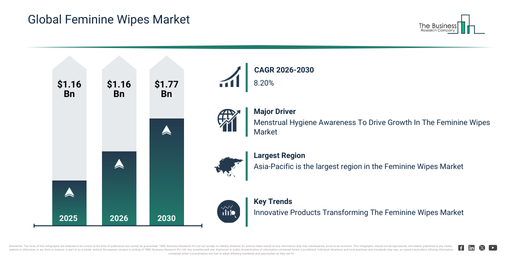
    The feminine wipes market has demonstrated robust growth in recent years. It is anticipated to expand from $2.4 billion in 2025 to $2.6 billion in 2026, achieving a compound annual growth rate (CAGR) of 8.6%. This historical growth can be attributed to several factors including increased awareness of feminine hygiene, a rise in female workforce participation, broader availability of personal care products, elevated disposable income levels, and the greater penetration of hygiene products.

    The feminine wipes market size is expected to undergo significant expansion in the coming years, with a projected growth to $3.56 billion in 2030 at a compound annual growth rate (CAGR) of 8.2%. This surge during the forecast period is primarily driven by an escalating demand for sustainable hygiene products, a heightened focus on eco-friendly packaging, the expansion of e-commerce personal care sales, increasing awareness of intimate health, and continuous product innovation in feminine care. Throughout this period, prominent trends are expected to include a rising demand for organic and natural feminine wipes, greater adoption of biodegradable wipe materials, a growing preference for pH-balanced hygiene products, the expansion of online distribution channels, and an enhanced focus on skin-safe formulations.

    Get A Free Sample Report With In-Depth Market Insights:

    https://thebusinessresearchcompany.com/sample_request?id=42856866&type=smp&name=Feminine%20Wipes%20Market%20Report%202026&utm_source=Blogs&utm_medium=Paid&utm_campaign=Oct_PR

    Feminine Wipes Market Growth Factors: What’s Supporting Expansion?

    An increasing focus on educating women about menstrual hygiene is anticipated to drive expansion in the feminine wipes market moving ahead. This refers to sanitary practices during menstruation, crucial for safeguarding women against infections in their reproductive and urinary systems. Educating women on menstrual hygiene positively impacts the feminine wipes market by fostering dignity, enhancing self-assurance, and improving sexual and reproductive well-being. For example, the World Health Organization, a specialized United Nations agency based in Switzerland focused on global public health, revealed in May 2024 that globally, only 2 out of 5 schools (39%) offer menstrual health education. This figure is higher in secondary schools, reaching 84% in Central and Southern Asia. Consequently, this heightened understanding of menstrual hygiene among women is projected to significantly increase demand and growth for the feminine wipes market throughout the forecast period.

    Feminine Wipes Market Segment Analysis And Revenue Potential

    The feminine wipes market covered in this report is segmented –

    1) By Type: Ordinary, Sanitary

    2) By Age Group: 5 – 15 years, 16 – 30 years, 31 – 45 years, 46 – 60 years, 61 and above

    3) By Distribution Channel: Supermarkets and Hypermarkets, Convenience Stores, Pharmacies and Drugstores, Online, Other Distribution Channels

    Subsegments:

    1) By Ordinary Wipes: Unscented Ordinary Wipes, Scented Ordinary Wipes, Sensitive Skin Ordinary Wipes

    2) By Sanitary Wipes: Antibacterial Sanitary Wipes, pH-Balanced Sanitary Wipes, Organic or Natural Sanitary Wipes

    Feminine Wipes Market Industry Trends: What’s Reshaping Demand?

    Leading players in the feminine wipes market are prioritizing the development of innovative products, such as tampon and liner systems, to improve user convenience, comfort, and general menstrual wellness for women. These systems present a dual-component solution for addressing menstrual care, utilizing tampons for internal application and liners or pads for external safeguarding during menstruation. For instance, in May 2023, Victoria’s Secret, a US-based company, introduced intimate care wipes, which are specifically designed cleansing wipes crafted for upholding intimate area hygiene. These wipes are commonly pH-balanced, hypoallergenic, and crafted from gentle substances to guarantee their suitability for sensitive skin. Optimal for periods, post-workout refreshment, or any moment a quick cleanse is desired, intimate care wipes aid in odor management and improve comfort. They offer a practical and private personal care alternative, enabling users to maintain a sense of freshness and confidence all day. With their conveniently portable packaging, these wipes are simple to transport and deploy as needed, establishing them as a preferred product in feminine hygiene.

    Feminine Wipes Market Competitive Overview And Top Companies

    Major companies operating in the feminine wipes market are Albaad Massuot Yitzhak Ltd., Corman SpA., LA Fresh Group Inc., Guy & O’Neill Inc., Healthy Hoohoo Inc., The Procter & Gamble Company, Kimberly-Clark Corporation, Edgewell Personal Care Brands LLC, Johnson & Johnson, Unicharm Corporation, Essity AB, Nice-Pak Products Inc., Rockline Industries Limited, Diamond Wipes International Inc., Body Wipe Company LLC, SweetSpot Labs LLC, Goodwipes Products Inc., Rael Inc., The Honey Pot Company Inc., Cora Health Inc., L. Organic Cotton LLC, Maxim Hygiene Products LLC, Natracare LLC, Seventh Generation Inc., The Honest Company Inc., PureTouch Skin Care Inc., Summer’s Eve

    View The Full Feminine Wipes Market Report:

    https://thebusinessresearchcompany.com/report/feminine-wipes-global-market-report?utm_source=Blogs&utm_medium=Paid&utm_campaign=Oct_PR

    Feminine Wipes Market Leading Geography: Which Region Contributes The Most Revenue?

    Asia-Pacific was the largest region in the feminine wipes market in 2025. The regions covered in the feminine wipes market report are Asia-Pacific, South East Asia, Western Europe, Eastern Europe, North America, South America, Middle East, Africa.

    Reach Out To Our Team:

    The Business Research Company: https://www.thebusinessresearchcompany.com/

    Americas: +1 310-496-7795

    Asia: +44 7882 955267 & +91 8897263534

    Europe: +44 7882 955267

    Email us at: marketing@tbrc.info

    Follow us on:

    LinkedIn: https://in.linkedin.com/company/the-business-research-company

    YouTube: https://www.youtube.com/channel/UC24_fI0rV8cR5DxlCpgmyFQ

    Global Market Model: https://www.thebusinessresearchcompany.com/global-market-model
  • Female Fertility And Pregnancy Rapid Test Market Growth To $2.05 Billion By 2030: What’s Driving The Expansion?

    Female Fertility And Pregnancy Rapid Test Market Growth To $2.05 Billion By 2030: What’s Driving The Expansion?

    Built to provide research that’s more actionable and strategically valuable, The Business Research Company’s 2026 market reports include market attractiveness analysis, total addressable market sizing, company benchmarking matrices, interactive Excel dashboards, broader supply chain intelligence, emerging startup tracking, and in-depth product insights.

    Female Fertility And Pregnancy Rapid Test Market Growth Analysis: How Will Revenue Trend Over The Forecast Period?

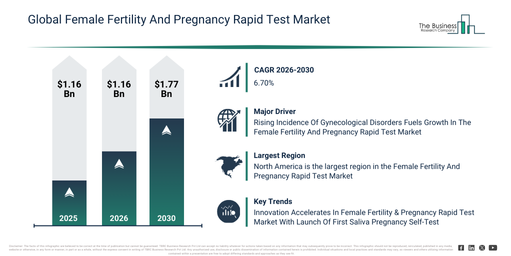
    The female fertility and pregnancy rapid test market size has demonstrated significant growth in recent years. It is anticipated to expand from $1.48 billion in 2025 to $1.58 billion in 2026, achieving a compound annual growth rate (CAGR) of 7.2%. The historical growth in this market can be attributed to factors such as increasing awareness of female reproductive health, a rise in the use of ovulation predictor kits, expanding retail availability of rapid tests, the growth of hospital-based diagnostic testing, and an increasing incidence of infertility diagnoses.

    The female fertility and pregnancy rapid test market is anticipated to show significant expansion over the upcoming years. It will grow to $2.05 billion in 2030 at a compound annual growth rate (CAGR) of 6.7%. This projected growth stems from several factors, including an escalating need for early pregnancy detection, the increasing integration of digital health monitoring solutions, a heightened emphasis on personalized fertility management, the broadening scope of telehealth-supported diagnostics, and the deeper market penetration of e-commerce healthcare products. Furthermore, significant trends for the forecast period involve a greater acceptance of at-home rapid testing kits, a surging requirement for digital and app-connected test devices, the expanding application of combo fertility and pregnancy tests, the widening of online distribution networks, and an intensified focus on creating user-friendly and precise test designs.

    Get A Free Sample Report With In-Depth Market Insights:

    https://thebusinessresearchcompany.com/sample_request?id=52448920&type=smp&name=Female%20Fertility%20And%20Pregnancy%20Rapid%20Test%20Market%20Report%202026&utm_source=Blogs&utm_medium=Paid&utm_campaign=Oct_PR

    Female Fertility And Pregnancy Rapid Test Market Demand Drivers: What’s Powering Industry Growth?

    The rising incidence of gynecological disorders is projected to boost the expansion of the female fertility and pregnancy rapid test market in the coming years. Gynecological issues are medical conditions affecting female reproductive organs, specifically the breasts, as well as abdominal and pelvic structures such as the womb (uterus), ovaries, vagina, fallopian tubes, and vulva. These rapid tests for female fertility and pregnancy assist with gynecological disorders by enabling early detection of hormonal imbalances or pregnancy-related problems, thereby supporting timely diagnosis and effective management of reproductive health conditions. For example, a report released in May 2025 by the National Library of Medicine, a US-based government organization, stated that approximately 61.2% of women experienced at least one gynecological morbidity, with dysmenorrhea being the most common (61.3%), followed by irregular menses (36.1%) and infertility (36.1%). Therefore, the increasing occurrence of gynecological disorders is propelling the growth of the female fertility and pregnancy rapid test market.

    Female Fertility And Pregnancy Rapid Test Market Segmentation And Category Overview

    The female fertility and pregnancy rapid test market covered in this report is segmented –

    1) By Product: Fertility Rapid Test Kits, Pregnancy Rapid Test Kits

    2) By Device Type: Digital Devices, Line-indicator Devices

    3) By Test Type: FSH Urine Test, LH Urine Test, hCG Blood Test, hCG Urine Test

    4) By Distribution Channel: Hospital Channel, Retail Channel, Online Channel

    Subsegments:

    1) By Fertility Rapid Test Kits: Ovulation Predictor Kits, Luteinizing Hormone (LH) Test Kits, Follicle-Stimulating Hormone (FSH) Test Kits

    2) By Pregnancy Rapid Test Kits: Urine-Based Pregnancy Tests, Blood-Based Pregnancy Tests, Combo Fertility And Pregnancy Tests

    Female Fertility And Pregnancy Rapid Test Market Innovation Trends: What Developments Are Reshaping The Industry?

    Major companies operating in the female fertility and pregnancy rapid test market are focusing on developing innovative solutions, such as saliva-based home pregnancy tests, to meet the rising demand for non-invasive methods. A saliva-based pregnancy test is a lateral-flow, point-of-care assay designed to detect pregnancy biomarkers in oral fluid instead of urine. For Instance, in May 2024, Abingdon Health plc, a UK-based lateral flow CDMO, launched the world’s first Boots-branded saliva pregnancy self-test, making this saliva-based technology available in mainstream retail through Boots stores and online. The product features a saliva collection interface and a proprietary lateral-flow immunoassay, developed with Salignostics and Crest Medical, crafted to bind and indicate the presence of the pregnancy biomarker in oral fluid. It functions as a rapid, single-use self-test that gives a result within minutes and is packaged for OTC sale. It uniquely removes urine collection from the testing workflow, thereby improving comfort and hygiene, supports consumer adoption through a familiar “stick/cassette” format, and is intended for routine home screening and early confirmation of pregnancy, leveraging the added retail reach and consumer trust of Boots.

    Female Fertility And Pregnancy Rapid Test Market Competitive Landscape: Which Companies Lead The Industry?

    Major companies operating in the female fertility and pregnancy rapid test market are Abbott Laboratories, Atlas Medical GmbH, bioMérieux SA, Church & Dwight Co. Inc., Quidel Corporation, Egens Group, Eurofins Scientific SE, Everlywell Inc., Genea Pty Limited, Geratherm Medical AG, SA Scientific Ltd., Artron Laboratories Inc., PRIMA Lab SA, The Procter & Gamble Company, Alere Inc., Prestige Brands Holdings Inc., SPD Swiss Precision Diagnostics GmbH, Fairhaven Health LLC, Fertility Focus Limited, HiLin Life Products Inc., Inverness Medical Innovations Inc., UEBE Medical GmbH, Wondfo Biotech Co. Ltd.

    View The Full Female Fertility And Pregnancy Rapid Test Market Report:

    https://thebusinessresearchcompany.com/report/female-fertility-and-pregnancy-rapid-test-global-market-report?utm_source=Blogs&utm_medium=Paid&utm_campaign=Oct_PR

    Female Fertility And Pregnancy Rapid Test Market Regional Outlook: Where Is Opportunity Concentrated?

    North America was the largest region in the female fertility and pregnancy rapid test market in 2025. The regions covered in the female fertility and pregnancy rapid test market report are Asia-Pacific, South East Asia, Western Europe, Eastern Europe, North America, South America, Middle East, Africa.

    Reach Out To Our Team:

    The Business Research Company: https://www.thebusinessresearchcompany.com/

    Americas: +1 310-496-7795

    Asia: +44 7882 955267 & +91 8897263534

    Europe: +44 7882 955267

    Email us at: marketing@tbrc.info

    Follow us on:

    LinkedIn: https://in.linkedin.com/company/the-business-research-company

    YouTube: https://www.youtube.com/channel/UC24_fI0rV8cR5DxlCpgmyFQ

    Global Market Model: https://www.thebusinessresearchcompany.com/global-market-model