Blog

  • Fast Biological Reader Market Trends Reshaping Industry Growth Through 2030

    Fast Biological Reader Market Trends Reshaping Industry Growth Through 2030

    Backed by market attractiveness analysis, total addressable market sizing, company benchmarking matrices, interactive Excel dashboards, wider supply chain intelligence, emerging startup coverage, and detailed product-level insights, The Business Research Company’s 2026 market reports are designed to offer research that is more actionable and strategically valuable than ever.

    Fast Biological Reader Market Forecast: What Value Will The Market Reach By 2030?

    The fast biological reader market size has seen substantial growth in recent years. It is anticipated to expand from $2.31 billion in 2025 to $2.58 billion in 2026, exhibiting a compound annual growth rate (CAGR) of 11.8%. This historical expansion can be attributed to the rising adoption of laboratory automation, the increasing need for quicker diagnostic results, the wider scope of pharmaceutical research activities, the growing utilization of fluorescence-based assays, and the increase in biomedical research funding.

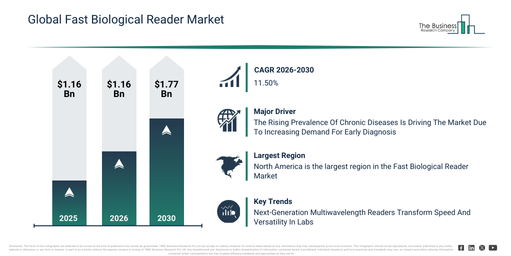
    The fast biological reader market size is anticipated to undergo significant expansion over the next few years, with projections indicating it will reach $3.99 billion in 2030, demonstrating a compound annual growth rate (CAGR) of 11.5%. This forecasted growth is primarily influenced by the escalating demand for rapid point-of-care testing, the integration of AI-driven data analytics, the progression of personalized medicine research, expanding uses in food and environmental testing, and the development of portable fast biological readers. Noteworthy trends expected during this period include swift real-time biological detection, high-throughput assay screening, the miniaturization of analytical instruments, multi-modal detection capabilities, and increased automation in laboratory workflows.

    Get A Free Sample Report With In-Depth Market Insights:

    https://thebusinessresearchcompany.com/sample_request?id=90084090&type=smp&name=Fast%20Biological%20Reader%20Market%20Report%202026&utm_source=Blogs&utm_medium=Paid&utm_campaign=Oct_PR

    Fast Biological Reader Market Growth Drivers: What’s Behind The Acceleration?

    The increasing occurrence of chronic illnesses is anticipated to fuel the expansion of the fast biological reader market in the future. These are enduring health issues that tend to develop gradually and necessitate continuous medical care, encompassing conditions such as cardiovascular disorders, diabetes, and respiratory illnesses, often originating from a combination of genetic, environmental, and lifestyle factors. A key contributor to the growing incidence of chronic diseases is the increased embrace of inactive lifestyles, which leads to diminished physical activity, poor eating patterns, and metabolic disturbances, subsequently heightening the likelihood of developing enduring health problems. Fast biological readers offer capabilities for quick and precise identification of biomarkers, aiding in early diagnosis and supporting prompt clinical actions to enhance patient outcomes. For instance, in July 2023, according to The Health Foundation, a UK-based independent charity, England is projected to have 9.1 million people living with major chronic diseases by 2040. Consequently, the escalating presence of chronic diseases is stimulating the expansion of the fast biological reader market.

    Fast Biological Reader Market Segment Outlook: Which Categories Are Growing Fastest?

    The fast biological reader market covered in this report is segmented –

    1) By Product Type: Portable Fast Biological Readers, Benchtop Fast Biological Readers

    2) By Technology: Fluorescence, Luminescence, Absorbance, Other Technologies

    3) By Application: Clinical Diagnostics, Research Laboratories, Pharmaceutical And Biotechnology Companies, Environmental Testing, Food And Beverage Testing, Other Applications

    4) By End-User: Hospitals, Diagnostic Centers, Academic And Research Institutes, Other End Users

    Subsegments:

    1) By Portable Fast Biological Readers: Colorimetric Detection, Electrochemical Detection, Surface Plasmon Resonance Detection, Molecular Hybridization Detection, Immunological Assay Detection

    2) By Benchtop Fast Biological Readers: Mass Spectrometry Detection, Chromatographic Detection, Isothermal Amplification Detection, Digital Image Analysis Detection, Optical Sensor Detection

    Fast Biological Reader Market Trends: What’s Defining The Industry’s Next Phase?

    Leading companies in the fast biological reader market are directing their efforts towards developing innovative solutions like multiwavelength microplate readers, aiming to enhance the speed, versatility, and integration of laboratory assays and growth monitoring. A multiwavelength microplate reader is a laboratory instrument designed to measure absorbance at multiple wavelengths across microplate wells, which allows for swift and adaptable analysis of biological, biochemical, and environmental samples in both endpoint and kinetic formats. For instance, in September 2025, Cerillo, a US-based biotechnology company, unveiled Rayo, its newest multiwavelength platform intended for ELISA assays, protein quantification, and kinetic growth curves for plant, algae, and microbial cells. Rayo provides multiwavelength absorbance at four distinct wavelengths, incorporating both rapid endpoint and continuous kinetic measurement capabilities, thereby offering laboratories a versatile platform for enzyme-linked immunosorbent assays, protein quantification, and microbial or plant growth monitoring. Its ultra-compact, automation-compatible design, featuring standalone operation, local data storage, and remote transfer, facilitates seamless integration into constrained laboratory spaces and automated workflows, leading to significant improvements in operational efficiency and data accessibility.

    Fast Biological Reader Market Competitive Landscape: Who Leads The Industry?

    Major companies operating in the fast biological reader market are Hoffmann-La Roche Ltd., Thermo Fisher Scientific Inc., Abbott Laboratories, Medtronic Plc, Danaher Corporation, Lonza Group AG, Agilent Technologies Inc., Sartorius AG, Revvity Inc., Bio-Rad Laboratories Inc., Horiba Ltd., Tecan Group Ltd., Eppendorf SE, Hamilton Company, Promega Corporation, Advanced Sterilization Products (ASP), Analytik Jena, Berthold Technologies GmbH & Co. KG, BMG LABTECH GmbH, Hidex Oy

    View The Full Fast Biological Reader Market Report:

    https://thebusinessresearchcompany.com/report/fast-biological-reader-global-market-report?utm_source=Blogs&utm_medium=Paid&utm_campaign=Oct_PR

    Fast Biological Reader Market Geographic Landscape: Which Region Leads Industry Growth?

    North America was the largest region in the fast biological reader market in 2025. Asia-Pacific is expected to be the fastest-growing region in the forecast period. The regions covered in the fast biological reader market report are Asia-Pacific, South East Asia, Western Europe, Eastern Europe, North America, South America, Middle East, Africa.

    Reach Out To Our Team:

    The Business Research Company: https://www.thebusinessresearchcompany.com/

    Americas: +1 310-496-7795

    Asia: +44 7882 955267 & +91 8897263534

    Europe: +44 7882 955267

    Email us at: marketing@tbrc.info

    Follow us on:

    LinkedIn: https://in.linkedin.com/company/the-business-research-company

    YouTube: https://www.youtube.com/channel/UC24_fI0rV8cR5DxlCpgmyFQ

    Global Market Model: https://www.thebusinessresearchcompany.com/global-market-model
  • Faecal Extraction Systems Market Growth To $2.21 Billion Creates New Opportunities Across The Industry

    Faecal Extraction Systems Market Growth To $2.21 Billion Creates New Opportunities Across The Industry

    Featuring market attractiveness scoring, total addressable market sizing, company benchmarking matrices, interactive Excel dashboards, deeper supply chain intelligence, emerging startup tracking, and granular product-level insights, The Business Research Company’s 2026 market reports are built to deliver research that is both more actionable and more strategically valuable.

    Faecal Extraction Systems Market Size Outlook: How Quickly Will Revenue Expand Through 2030?

    The faecal extraction systems market size has shown significant growth in recent years. It is anticipated to expand from $1.7 billion in 2025 to $1.79 billion in 2026, achieving a compound annual growth rate (CAGR) of 5.5%. This historical expansion can be attributed to several factors including the rising occurrence of gastrointestinal infections, the widening reach of diagnostic laboratory networks, an increase in the adoption of fecal biomarker testing, the growth in parasitic disease screening, and enhanced clinical understanding of gut health.

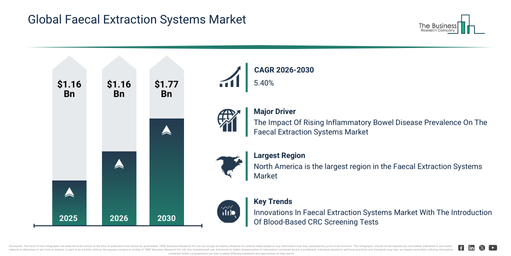
    The faecal extraction systems market is projected to experience substantial expansion over the coming years. This market is anticipated to reach $2.21 billion in 2030, exhibiting a compound annual growth rate (CAGR) of 5.4%. This projected growth can be attributed to several factors, including a heightened demand for early disease detection, increased investments in sophisticated diagnostic assays, the expansion of outpatient diagnostic services, a stronger emphasis on preventive healthcare, and the wider adoption of automated laboratory workflows. Key trends expected during this period involve the increasing use of automated sample collection systems, a growing demand for rapid stool diagnostics, the expanded application of immunological and molecular assays, the proliferation of point-of-care testing solutions, and a heightened emphasis on diagnostic accuracy and hygiene.

    Get A Free Sample Report With In-Depth Market Insights:

    https://thebusinessresearchcompany.com/sample_request?id=34456522&type=smp&name=Faecal%20Extraction%20Systems%20Market%20Report%202026&utm_source=Blogs&utm_medium=Paid&utm_campaign=Oct_PR

    Faecal Extraction Systems Market Growth Factors Behind Sustained Expansion

    The faecal extraction systems market is anticipated to expand due to the rising occurrence of inflammatory bowel disease. Inflammatory bowel disease (IBD) is defined as a group of conditions characterized by persistent inflammation of the digestive system’s tissues. Faecal extraction systems are instrumental in the diagnosis, monitoring of disease activity, guidance for treatment, and prediction of disease relapse and post-operative recurrence in inflammatory bowel disease, thereby increasing their demand as the prevalence of IBD grows. For instance, in September 2023, the Impact of IBD Report 2023, released by the IBD Clinical and Research Centre, indicated that Canada had an IBD prevalence of 825 per 100,000 in 2023, affecting over 320,000 people. With the prevalence projected to increase by 2.44% annually, it is estimated that 1.1% of the population, or 470,000 Canadians, will be living with IBD by 2035. Consequently, the increasing prevalence of inflammatory bowel disease is expected to propel the growth of the faecal extraction systems market.

    Faecal Extraction Systems Market Segment Landscape: Which Areas Lead Development?

    The faecal extraction systems market covered in this report is segmented –

    1) By Assay: Calprotectin, Hemoglobin

    2) By Analysis Test: Microscopic, Chemical, Immunological, Microbiological

    3) By Indication: Parasitic Infection, Bacterial Indication, Poor Nutrient Absorption

    4) By End-Use: Diagnostic Centers, Hospitals And Clinics

    Subsegments:

    1) By Calprotectin: Quantitative Calprotectin Assays, Qualitative Calprotectin Assays

    2) By Hemoglobin: Fecal Occult Blood Tests (FOBT), Immunochemical Fecal Hemoglobin Tests

    Faecal Extraction Systems Market Industry Trends Fueling Future Revenue Growth

    Major companies operating in the faecal extraction system market are introducing novel offerings, such as colorectal cancer (CRC) screening tests, to reach a wider customer base, increase sales, and boost revenue. Colorectal cancer (CRC) screening tests are diagnostic procedures designed to detect the presence of colorectal cancer or precancerous conditions in individuals who may not be experiencing symptoms. For instance, in November 2023, Guardant Health, a US-based diagnostics company, launched Shield, a blood-based colorectal cancer (CRC) screening test. Specifically, the Shield assay stands out by identifying particular DNA characteristics that could signal the presence of cancer. Its effectiveness in detecting colorectal cancer in average-risk individuals was proven through the ECLIPSE registrational study, which involved over 20,000 participants in the United States.

    Faecal Extraction Systems Market Company Landscape And Competitive Strategy

    Major companies operating in the faecal extraction systems market are Alpha Laboratories Ltd., Arbor Assays, Buhlmann Laboratories AG, Calpro AS, DRG Instruments GmbH, Biohit Healthcare Ltd., Meridian Bioscience Inc., Quidel Corporation, DiaSorin SpA, Sekisui Diagnostics LLC, Abbott Laboratories, Roche Diagnostics Corporation, Randox Laboratories Ltd., Trinity Biotech plc, bioMérieux SA, Werfen SA, Mobidiag Oy, Hologic Inc., Siemens Healthineers, Beckman Coulter Inc., Thermo Fisher Scientific Inc.

    View The Full Faecal Extraction Systems Market Report:

    https://thebusinessresearchcompany.com/report/faecal-extraction-systems-global-market-report?utm_source=Blogs&utm_medium=Paid&utm_campaign=Oct_PR

    Faecal Extraction Systems Market Largest Region: Which Geography Holds The Biggest Share?

    North America was the largest region in the faecal extraction systems market in 2025. The regions covered in the faecal extraction systems market report are Asia-Pacific, South East Asia, Western Europe, Eastern Europe, North America, South America, Middle East, Africa.

    Reach Out To Our Team:

    The Business Research Company: https://www.thebusinessresearchcompany.com/

    Americas: +1 310-496-7795

    Asia: +44 7882 955267 & +91 8897263534

    Europe: +44 7882 955267

    Email us at: marketing@tbrc.info

    Follow us on:

    LinkedIn: https://in.linkedin.com/company/the-business-research-company

    YouTube: https://www.youtube.com/channel/UC24_fI0rV8cR5DxlCpgmyFQ

    Global Market Model: https://www.thebusinessresearchcompany.com/global-market-model
  • Facial Implants Market Forecast: Breaking Down The Numbers Behind Future Expansion

    Facial Implants Market Forecast: Breaking Down The Numbers Behind Future Expansion

    Built to provide research that’s more actionable and strategically valuable, The Business Research Company’s 2026 market reports include market attractiveness analysis, total addressable market sizing, company benchmarking matrices, interactive Excel dashboards, broader supply chain intelligence, emerging startup tracking, and in-depth product insights.

    Facial Implants Market Size, Value And Growth Trajectory Through 2030

    The facial implants market has experienced significant growth in recent years. This market is expected to expand from $2.95 billion in 2025 to $3.19 billion in 2026, achieving a compound annual growth rate (CAGR) of 8.2%. The historical increase can be attributed to factors such as a growing awareness of facial aesthetics, increasing disposable income, the rising influence of beauty standards and media, the expanding availability of cosmetic surgery centers, and an increasing demand for facial reconstruction procedures.

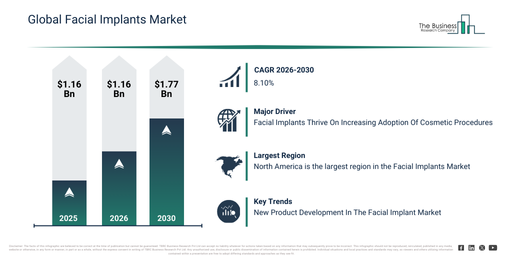
    The facial implants market is projected to experience substantial expansion over the coming years, reaching a valuation of $4.36 billion in 2030, propelled by a compound annual growth rate (CAGR) of 8.1%. This anticipated growth is primarily driven by factors such as the increasing desire for personalized facial treatments, a rising aging demographic seeking rejuvenation, greater acceptance of cosmetic surgery across all genders, the expansion of medical tourism for aesthetic procedures, and a heightened focus on facial symmetry and contour improvement. During this forecast period, significant market trends encompass a growing demand for facial aesthetic enhancement interventions, the increased uptake of customized and patient-specific implants, a preference for less invasive facial procedures, the proliferation of facial rejuvenation and anti-aging treatments, and broader acceptance of both cosmetic and reconstructive facial surgeries.

    Get A Free Sample Report With In-Depth Market Insights:

    https://thebusinessresearchcompany.com/sample_request?id=23727825&type=smp&name=Facial%20Implants%20Market%20Report%202026&utm_source=Blogs&utm_medium=Paid&utm_campaign=Oct_PR

    Facial Implants Market Demand Drivers Opening New Revenue Streams

    The escalating demand for cosmetic procedures is anticipated to fuel the expansion of the facial implants market in the foreseeable future. Cosmetic surgeries are elective interventions designed to improve or augment an individual’s aesthetic appearance. The increasing appeal of these surgeries stems from heightened societal acceptance, innovations in technology leading to safer and more efficacious treatments, and an increasing yearning for personal betterment and boosted self-assurance. The facial implants employed in cosmetic surgeries provide sophisticated options for shaping and enhancing the face, giving patients durable and natural-looking outcomes that effectively meet their aesthetic aspirations. As an illustration, in March 2025, the Yellow Bus ABA, a US-based therapy group, reported that in 2023, the global plastic surgery sector experienced significant activity, with approximately 34.9 million aesthetic procedures conducted globally, representing a 3.4% increase from 2022. Consequently, the increasing demand for cosmetic surgeries is propelling the growth of the facial implants market.

    Facial Implants Market Segments: Where Is Growth Concentrated?

    The facial implants market covered in this report is segmented –

    1) By Product: Chin And Mandibular, Cheek, Nasal

    2) By Material: Metal, Biologicals, Polymers, Ceramic

    3) By Procedure: Eyelid Surgery, Facelift, Rhinoplasty

    Subsegments:

    1) By Chin And Mandibular: Chin Implants, Mandibular (Jaw) Implants, Custom Chin And Mandibular Implants, Biocompatible Chin And Mandibular Implants, Silicone And Polyethylene Chin Implants

    2) By Cheek: Malar Implants (Cheekbone Implants), Submalar Implants, High-projection Cheek Implants, Biocompatible And Silicone Cheek Implants, Custom And 3D Printed Cheek Implants

    3) By Nasal: Nasal Implants (Nose Tip Or Bridge), Septal Implants, Rhinoplasty Implants, Custom Nasal Implants, Biocompatible Nasal Implants

    Facial Implants Market Trends Powering Strategic Industry Growth

    Major companies operating in the facial implants market are focusing on the development of new products, such as arthroplasty implants, to solidify their market position. Arthroplasty implants are prosthetic devices employed in facial reconstruction and cosmetic surgery to restore or improve the function and aesthetics of facial structures. For instance, in February 2024, Materialise, a Belgium-based 3D-printing company, introduced its Personalized TMJ Total Arthroplasty System. This system is specifically engineered for total temporomandibular joint (TMJ) arthroplasty, which involves replacing the joint that connects the jawbone to the skull. The system utilizes personalized titanium implants custom-designed to the patient’s anatomy, positioning it as a facial implant solution for addressing severe TMJ complications requiring joint replacement.

    Facial Implants Market Key Players Shaping Industry Direction

    Major companies operating in the facial implants market are Johnson & Johnson, Medtronic plc, Stryker Corporation, Zimmer Biomet Holdings Inc., Galderma SA, W.L. Gore & Associates Inc., Integra LifeSciences Corporation, Anthony Products Inc., Hugel Inc, Revance Therapeutics Inc., Sientra Inc., OsteoMed L.P., Spectrims Design Medicals Inc., Implantech Associates Inc., Sebbin International, AART Inc., Surgiform Technology Ltd., Guangzhou Wanhe Plastic Material Co. Ltd., Hanson Medical Inc., Xilloc Medical Int. B.V.

    View The Full Facial Implants Market Report:

    https://thebusinessresearchcompany.com/report/facial-implants-global-market-report?utm_source=Blogs&utm_medium=Paid&utm_campaign=Oct_PR

    Facial Implants Market Regional Analysis: Which Geography Leads On Revenue?

    North America was the largest region in the facial implants market in 2025. Asia-Pacific is expected to be the fastest-growing region in the forecast period. The regions covered in the facial implants market report are Asia-Pacific, South East Asia, Western Europe, Eastern Europe, North America, South America, Middle East, Africa.

    Reach Out To Our Team:

    The Business Research Company: https://www.thebusinessresearchcompany.com/

    Americas: +1 310-496-7795

    Asia: +44 7882 955267 & +91 8897263534

    Europe: +44 7882 955267

    Email us at: marketing@tbrc.info

    Follow us on:

    LinkedIn: https://in.linkedin.com/company/the-business-research-company

    YouTube: https://www.youtube.com/channel/UC24_fI0rV8cR5DxlCpgmyFQ

    Global Market Model: https://www.thebusinessresearchcompany.com/global-market-model
  • Eyewear Market Expected To Grow At 10.8% CAGR Through 2030: What Businesses Need To Know

    Eyewear Market Expected To Grow At 10.8% CAGR Through 2030: What Businesses Need To Know

    Backed by market attractiveness analysis, total addressable market sizing, company benchmarking matrices, interactive Excel dashboards, wider supply chain intelligence, emerging startup coverage, and detailed product-level insights, The Business Research Company’s 2026 market reports are designed to offer research that is more actionable and strategically valuable than ever.

    Eyewear Market CAGR Outlook And Future Development

    The eyewear market has expanded quickly in recent years. Its size is anticipated to grow from $173.89 billion in 2025 to $193.58 billion in 2026, reflecting an 11.3% compound annual growth rate (CAGR). Historically, this market’s growth has been due to the increasing occurrence of vision impairment, greater screen exposure among different age groups, the rising consumption of fashion eyewear, the expansion of optical retail networks, and the accessibility of reasonably priced eyewear products.

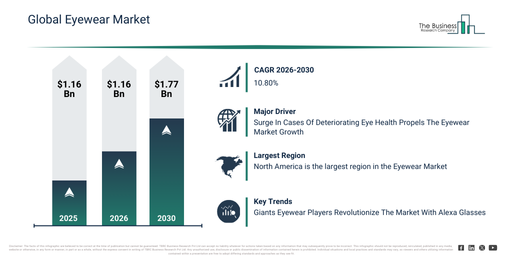
    The eyewear market is projected to experience substantial expansion in the coming years. It will grow to $291.65 billion in 2030 at a compound annual growth rate (CAGR) of 10.8%. This anticipated growth can be attributed to the rising adoption of smart eyewear technologies, increasing demand for personalized vision solutions, the proliferation of sustainable and eco-friendly eyewear products, expanding penetration of e-commerce for eyewear sales, and a heightened consumer focus on eye health. Significant trends expected during this forecast period include a surging demand for blue light blocking glasses, a greater embrace of sustainable eyewear materials, the increasing appeal of smart and connected eyewear, the widening reach of online and omnichannel eyewear retail, and an enhanced emphasis on fashion-oriented functional eyewear.

    Get A Free Sample Report With In-Depth Market Insights:

    https://thebusinessresearchcompany.com/sample_request?id=90322088&type=smp&name=Eyewear%20Market%20Report%202026&utm_source=Blogs&utm_medium=Paid&utm_campaign=Oct_PR

    Eyewear Market Growth Backed By Core Demand Fundamentals

    The rising prevalence of declining eye health is fueling the expansion of the eyewear market. Eye deterioration refers to a decline in visual clarity or the onset of various eye defects. Key factors contributing to eye deterioration include age-related macular degeneration, cataracts, diabetic retinopathy, glaucoma, and extended screen usage. The increasing incidence of these eye problems is expected to significantly drive the demand for eyewear, as it plays a crucial role in correcting eye disorders and restoring clear vision. For example, in May 2024, the Centers for Disease Control and Prevention, a US-based government agency, reported that roughly 3 in 5 Americans above 40 years of age, totaling approximately 90 million people, experience vision and eye issues. Projections for 2050 in the U.S. indicate a substantial increase in vision-related problems, with diabetic retinopathy expected to rise by 72%, cataracts by 87%, and both glaucoma and age-related macular degeneration projected to double. Furthermore, vision impairment and blindness are anticipated to increase by 150%, with the financial burden of vision problems escalating by 157% to $373 billion. Thus, the growing number of cases involving deteriorating eye health is poised to boost demand for eyewear throughout the forecast period.

    Eyewear Market Segment Analysis: What Are The Core Market Categories?

    The eyewear market covered in this report is segmented –

    1) By Product: Contact Lenses, Spectacles, Sunglasses

    2) By Gender: Men, Women, Unisex

    3) By Distribution Channel: Optical Stores, Independent Brand Showrooms, Online Stores, Retail Stores

    Subsegments:

    1) By Contact Lenses: Soft Contact Lenses, Rigid Gas Permeable (RGP) Lenses, Colored Contact Lenses

    2) By Spectacles: Prescription Glasses, Reading Glasses, Blue Light Blocking Glasses

    3) By Sunglasses: Polarized Sunglasses, Fashion Sunglasses, Sports Sunglasses

    Eyewear Market Growth Trends Reshaping The Competitive Landscape

    Leading companies in the eyewear sector are concentrating on developing advanced technologies, such as glasses powered by Alexa. These Alexa-integrated glasses incorporate Amazon’s virtual assistant, Alexa, enabling users to engage with the digital assistant hands-free through voice commands directly embedded into the eyewear. For instance, in September 2023, Amazon.com, Inc., an e-commerce firm based in the US, introduced ‘Echo Frames’. These intelligent frames feature integrated Alexa, allowing users to remain connected while seamlessly fitting into their daily routines even when not actively in use. These smart glasses provide a range of lens options, including UV400-protected sunglass lenses, prescription-ready variants, and blue light lenses. Furthermore, they are equipped with IPX4 water resistance and anti-scratch properties. A fully charged pair of these smart glasses delivers up to six hours of continuous media playback, offering an increase of 40% in audio playback and 80% in talk time compared to their predecessor. Equipped with practical functionalities, they enable users to initiate a playlist with a double-press of a button and support multipoint pairing.

    Eyewear Market Competitive Analysis Of Leading Industry Participants

    Major companies operating in the eyewear market are Silhouette International Schmied AG, JAND Inc., LVMH Moët Hennessy Louis Vuitton SE, Essilor International S.A., Carl Zeiss AG, Alcon Vision LLC, Hoya Corporation, Johnson & Johnson Vision Care Inc., Specsavers Optical Group Limited, GrandVision BV, Burberry Group plc, Bausch & Lomb Incorporated, The Cooper Companies Inc., Italia Independent Group S.p.A., Fielmann AG, Safilo Group S.p.A., Kering Eyewear, Marchon Eyewear Inc., Rodenstock GmbH, TAG Heuer SA, De Rigo Vision S.p.A., Marcolin S.p.A., Oakley Inc., Maui Jim Inc., Charmant Group Inc., Seiko Optical Products Co. Ltd., Lafont Paris, Luxottica Group S.p.A., Luxexcel Group BV

    View The Full Eyewear Market Report:

    https://thebusinessresearchcompany.com/report/eyewear-global-market-report?utm_source=Blogs&utm_medium=Paid&utm_campaign=Oct_PR

    Eyewear Market Geographic Spread And Regional Opportunities

    North America was the largest region in the eyewear market in 2025. Asia-Pacific is expected to be the fastest-growing region in the eyewear market during the forecast period. The regions covered in the eyewear market report are Asia-Pacific, South East Asia, Western Europe, Eastern Europe, North America, South America, Middle East, Africa.

    Reach Out To Our Team:

    The Business Research Company: https://www.thebusinessresearchcompany.com/

    Americas: +1 310-496-7795

    Asia: +44 7882 955267 & +91 8897263534

    Europe: +44 7882 955267

    Email us at: marketing@tbrc.info

    Follow us on:

    LinkedIn: https://in.linkedin.com/company/the-business-research-company

    YouTube: https://www.youtube.com/channel/UC24_fI0rV8cR5DxlCpgmyFQ

    Global Market Model: https://www.thebusinessresearchcompany.com/global-market-model
  • Eye Testing Equipment Market Forecast To Reach $4.92 Billion By 2030: Key Trends Explained

    Eye Testing Equipment Market Forecast To Reach $4.92 Billion By 2030: Key Trends Explained

    Featuring market attractiveness scoring, total addressable market sizing, company benchmarking matrices, interactive Excel dashboards, deeper supply chain intelligence, emerging startup tracking, and granular product-level insights, The Business Research Company’s 2026 market reports are built to deliver research that is both more actionable and more strategically valuable.

    Eye Testing Equipment Market Set To Climb From $3.78 Billion In 2026 To $4.92 Billion By 2030

    The eye testing equipment market size has experienced substantial growth in recent years. It is anticipated to expand from $3.51 billion in 2025 to $3.78 billion in 2026, registering a compound annual growth rate (CAGR) of 7.7%. The expansion witnessed in the historic period stems from factors such as the increasing prevalence of vision impairment, a rising geriatric population, an expanding number of eye clinics and hospitals, a higher incidence of cataract and glaucoma, and the broader adoption of routine eye examination practices.

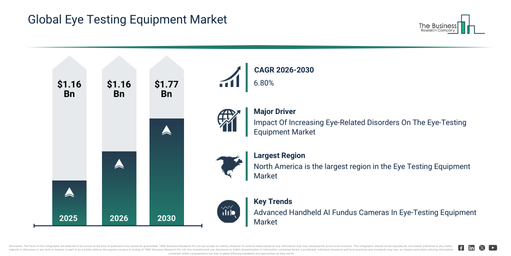
    The eye testing equipment market size is projected to experience substantial expansion in the coming years. It is forecast to reach $4.92 billion in 2030, demonstrating a compound annual growth rate (CAGR) of 6.8%. This expansion throughout the projection period is primarily driven by an increasing need for early identification of ocular conditions, greater public understanding regarding routine eye examinations, advancements in ophthalmology facilities, the proliferation of optometry education and training institutions, and a heightened emphasis on vision health among older demographics. Key developments anticipated in this timeframe involve the escalating adoption of sophisticated diagnostic eye testing apparatus, a growing requirement for thorough vision screening methodologies, the expanding utilization of versatile ophthalmic instruments, the broadening of proactive eye health measures and timely diagnoses, and the increasing incorporation of digital screens and automated measurement systems.

    Get A Free Sample Report With In-Depth Market Insights:

    https://thebusinessresearchcompany.com/sample_request?id=48456141&type=smp&name=Eye%20Testing%20Equipment%20Market%20Report%202026&utm_source=Blogs&utm_medium=Paid&utm_campaign=Oct_PR

    Eye Testing Equipment Market Growth Catalysts And Demand Drivers

    The anticipated rise in the prevalence of eye-related disorders is projected to fuel expansion within the eye-testing equipment market. These disorders encompass various ocular conditions, including diseases like glaucoma, cataracts, and macular degeneration, alongside refractive errors such as myopia and hyperopia. The growing patient count for eye-related ailments stems from factors such as an aging demographic, evolving lifestyles, environmental influences, and insufficient diagnostic tools that result in delayed detection. This equipment plays a crucial role in the early identification, precise diagnosis, and ongoing management of ocular conditions like glaucoma, cataracts, and macular degeneration. As an illustration, in January 2024, data from the Centers for Disease Control and Prevention, a US-based science and data-driven service organization that protects the public’s health, indicated that over 3.4 million Americans aged 40 years and older experienced blindness or visual impairment, a figure anticipated to double by 2030. Consequently, the expanding occurrence of eye disorders will be a primary catalyst for the growth of the eye-testing equipment market.

    Eye Testing Equipment Market Segment Breakdown: Which Categories Lead On Revenue?

    The eye testing equipment market covered in this report is segmented –

    1) By Device: Slit Lamp, Biometer, Perimeter, Tonometer, Optical Coherence Tomography (OCT), Fundus Camera, Autorefractor And Keratometer, Other Devices

    2) By Application: General Examination, Glaucoma, Cataract, Other Applications

    3) By End User: Hospital, Eye Clinic, Optometry Academic Institutes

    Subsegments:

    1) By Slit Lamp: Tabletop Slit Lamp, Handheld Slit Lamp, Digital Slit Lamp

    2) By Biometer: Optical Biometer, Ultrasound Biometer

    3) By Perimeter: Static Perimeter, Kinetic Perimeter

    4) By Tonometer: Applanation Tonometer, Non-Contact Tonometer, Rebound Tonometer, Indentation Tonometer

    5) By Optical Coherence Tomography (OCT): Spectral Domain OCT (SD-OCT), Swept-Source OCT (SS-OCT), Handheld OCT

    6) By Fundus Camera: Mydriatic Fundus Camera, Non-Mydriatic Fundus Camera, Hybrid Fundus Camera

    7) By Autorefractor And Keratometer: Standalone Autorefractor, Combined Autorefractor-Keratometer

    8) By Other Devices: Phoropter, Retinoscope, Visual Field Analyzer, Corneal Topographer

    Eye Testing Equipment Market Trends Shaping Long-Term Demand

    Leading companies in the eye-testing equipment market are developing advanced diagnostic instruments, such as handheld artificial intelligence fundus cameras, to improve diagnostic accuracy and streamline screening procedures. An AI-enhanced handheld fundus camera is employed to capture detailed images of the eye’s fundus, assisting in the diagnosis of various eye conditions. For instance, in May 2024, Optomed USA, a US-based medical technology company, introduced Optomed Aurora AEYE. This is a handheld, AI-powered fundus camera specifically designed for the quick detection of diabetic retinopathy beyond mild stages, enabling rapid eye screenings in primary care settings. The device simplifies the screening process with its intuitive design, needing only one image per eye and delivering results within a minute.

    Eye Testing Equipment Market Leading Companies And Competitive Benchmarking

    Major companies operating in the eye testing equipment market are Carl Zeiss Meditec AG, Topcon Corporation, Nidek Co. Ltd., Canon Medical Systems Inc., Heidelberg Engineering GmbH, Takagi Seiko Co. Ltd., Huvitz Co. Ltd., Revenio Group PLC, Tomey Corporation, Kowa Company Ltd., Oculus Optikgeräte GmbH, HEINE Optotechnik GmbH & Co. KG, Luneau Technology Group, Coburn Technologies Inc., Shanghai Bolan Optical Electric Co. Ltd., Rexxam Co. Ltd., CSO Costruzione Strumenti Oftalmici Srl, Righton Ophthalmic Instruments, Suoer Optical Technology Co. Ltd., Inami & Co. Ltd.

    View The Full Eye Testing Equipment Market Report:

    https://thebusinessresearchcompany.com/report/eye-testing-equipment-global-market-report?utm_source=Blogs&utm_medium=Paid&utm_campaign=Oct_PR

    Eye Testing Equipment Market Top Region By Revenue And Market Share

    North America was the largest region in the eye testing equipment market in 2025. Asia-Pacific is expected to be the fastest-growing region in the forecast period. The regions covered in the eye testing equipment market report are Asia-Pacific, South East Asia, Western Europe, Eastern Europe, North America, South America, Middle East, Africa.

    Reach Out To Our Team:

    The Business Research Company: https://www.thebusinessresearchcompany.com/

    Americas: +1 310-496-7795

    Asia: +44 7882 955267 & +91 8897263534

    Europe: +44 7882 955267

    Email us at: marketing@tbrc.info

    Follow us on:

    LinkedIn: https://in.linkedin.com/company/the-business-research-company

    YouTube: https://www.youtube.com/channel/UC24_fI0rV8cR5DxlCpgmyFQ

    Global Market Model: https://www.thebusinessresearchcompany.com/global-market-model
  • Eyewear Market Expected To Grow At 10.8% CAGR Through 2030: What Businesses Need To Know

    Eyewear Market Expected To Grow At 10.8% CAGR Through 2030: What Businesses Need To Know

    Backed by market attractiveness analysis, total addressable market sizing, company benchmarking matrices, interactive Excel dashboards, wider supply chain intelligence, emerging startup coverage, and detailed product-level insights, The Business Research Company’s 2026 market reports are designed to offer research that is more actionable and strategically valuable than ever.

    Eyewear Market CAGR Outlook And Future Development

    The eyewear market has expanded quickly in recent years. Its size is anticipated to grow from $173.89 billion in 2025 to $193.58 billion in 2026, reflecting an 11.3% compound annual growth rate (CAGR). Historically, this market’s growth has been due to the increasing occurrence of vision impairment, greater screen exposure among different age groups, the rising consumption of fashion eyewear, the expansion of optical retail networks, and the accessibility of reasonably priced eyewear products.

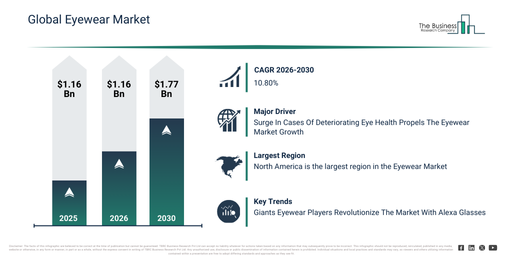
    The eyewear market is projected to experience substantial expansion in the coming years. It will grow to $291.65 billion in 2030 at a compound annual growth rate (CAGR) of 10.8%. This anticipated growth can be attributed to the rising adoption of smart eyewear technologies, increasing demand for personalized vision solutions, the proliferation of sustainable and eco-friendly eyewear products, expanding penetration of e-commerce for eyewear sales, and a heightened consumer focus on eye health. Significant trends expected during this forecast period include a surging demand for blue light blocking glasses, a greater embrace of sustainable eyewear materials, the increasing appeal of smart and connected eyewear, the widening reach of online and omnichannel eyewear retail, and an enhanced emphasis on fashion-oriented functional eyewear.

    Get A Free Sample Report With In-Depth Market Insights:

    https://thebusinessresearchcompany.com/sample_request?id=90322088&type=smp&name=Eyewear%20Market%20Report%202026&utm_source=Blogs&utm_medium=Paid&utm_campaign=Oct_PR

    Eyewear Market Growth Backed By Core Demand Fundamentals

    The rising prevalence of declining eye health is fueling the expansion of the eyewear market. Eye deterioration refers to a decline in visual clarity or the onset of various eye defects. Key factors contributing to eye deterioration include age-related macular degeneration, cataracts, diabetic retinopathy, glaucoma, and extended screen usage. The increasing incidence of these eye problems is expected to significantly drive the demand for eyewear, as it plays a crucial role in correcting eye disorders and restoring clear vision. For example, in May 2024, the Centers for Disease Control and Prevention, a US-based government agency, reported that roughly 3 in 5 Americans above 40 years of age, totaling approximately 90 million people, experience vision and eye issues. Projections for 2050 in the U.S. indicate a substantial increase in vision-related problems, with diabetic retinopathy expected to rise by 72%, cataracts by 87%, and both glaucoma and age-related macular degeneration projected to double. Furthermore, vision impairment and blindness are anticipated to increase by 150%, with the financial burden of vision problems escalating by 157% to $373 billion. Thus, the growing number of cases involving deteriorating eye health is poised to boost demand for eyewear throughout the forecast period.

    Eyewear Market Segment Analysis: What Are The Core Market Categories?

    The eyewear market covered in this report is segmented –

    1) By Product: Contact Lenses, Spectacles, Sunglasses

    2) By Gender: Men, Women, Unisex

    3) By Distribution Channel: Optical Stores, Independent Brand Showrooms, Online Stores, Retail Stores

    Subsegments:

    1) By Contact Lenses: Soft Contact Lenses, Rigid Gas Permeable (RGP) Lenses, Colored Contact Lenses

    2) By Spectacles: Prescription Glasses, Reading Glasses, Blue Light Blocking Glasses

    3) By Sunglasses: Polarized Sunglasses, Fashion Sunglasses, Sports Sunglasses

    Eyewear Market Growth Trends Reshaping The Competitive Landscape

    Leading companies in the eyewear sector are concentrating on developing advanced technologies, such as glasses powered by Alexa. These Alexa-integrated glasses incorporate Amazon’s virtual assistant, Alexa, enabling users to engage with the digital assistant hands-free through voice commands directly embedded into the eyewear. For instance, in September 2023, Amazon.com, Inc., an e-commerce firm based in the US, introduced ‘Echo Frames’. These intelligent frames feature integrated Alexa, allowing users to remain connected while seamlessly fitting into their daily routines even when not actively in use. These smart glasses provide a range of lens options, including UV400-protected sunglass lenses, prescription-ready variants, and blue light lenses. Furthermore, they are equipped with IPX4 water resistance and anti-scratch properties. A fully charged pair of these smart glasses delivers up to six hours of continuous media playback, offering an increase of 40% in audio playback and 80% in talk time compared to their predecessor. Equipped with practical functionalities, they enable users to initiate a playlist with a double-press of a button and support multipoint pairing.

    Eyewear Market Competitive Analysis Of Leading Industry Participants

    Major companies operating in the eyewear market are Silhouette International Schmied AG, JAND Inc., LVMH Moët Hennessy Louis Vuitton SE, Essilor International S.A., Carl Zeiss AG, Alcon Vision LLC, Hoya Corporation, Johnson & Johnson Vision Care Inc., Specsavers Optical Group Limited, GrandVision BV, Burberry Group plc, Bausch & Lomb Incorporated, The Cooper Companies Inc., Italia Independent Group S.p.A., Fielmann AG, Safilo Group S.p.A., Kering Eyewear, Marchon Eyewear Inc., Rodenstock GmbH, TAG Heuer SA, De Rigo Vision S.p.A., Marcolin S.p.A., Oakley Inc., Maui Jim Inc., Charmant Group Inc., Seiko Optical Products Co. Ltd., Lafont Paris, Luxottica Group S.p.A., Luxexcel Group BV

    View The Full Eyewear Market Report:

    https://thebusinessresearchcompany.com/report/eyewear-global-market-report?utm_source=Blogs&utm_medium=Paid&utm_campaign=Oct_PR

    Eyewear Market Geographic Spread And Regional Opportunities

    North America was the largest region in the eyewear market in 2025. Asia-Pacific is expected to be the fastest-growing region in the eyewear market during the forecast period. The regions covered in the eyewear market report are Asia-Pacific, South East Asia, Western Europe, Eastern Europe, North America, South America, Middle East, Africa.

    Reach Out To Our Team:

    The Business Research Company: https://www.thebusinessresearchcompany.com/

    Americas: +1 310-496-7795

    Asia: +44 7882 955267 & +91 8897263534

    Europe: +44 7882 955267

    Email us at: marketing@tbrc.info

    Follow us on:

    LinkedIn: https://in.linkedin.com/company/the-business-research-company

    YouTube: https://www.youtube.com/channel/UC24_fI0rV8cR5DxlCpgmyFQ

    Global Market Model: https://www.thebusinessresearchcompany.com/global-market-model
  • Eye Testing Equipment Market Forecast To Reach $4.92 Billion By 2030: Key Trends Explained

    Eye Testing Equipment Market Forecast To Reach $4.92 Billion By 2030: Key Trends Explained

    Featuring market attractiveness scoring, total addressable market sizing, company benchmarking matrices, interactive Excel dashboards, deeper supply chain intelligence, emerging startup tracking, and granular product-level insights, The Business Research Company’s 2026 market reports are built to deliver research that is both more actionable and more strategically valuable.

    Eye Testing Equipment Market Set To Climb From $3.78 Billion In 2026 To $4.92 Billion By 2030

    The eye testing equipment market size has experienced substantial growth in recent years. It is anticipated to expand from $3.51 billion in 2025 to $3.78 billion in 2026, registering a compound annual growth rate (CAGR) of 7.7%. The expansion witnessed in the historic period stems from factors such as the increasing prevalence of vision impairment, a rising geriatric population, an expanding number of eye clinics and hospitals, a higher incidence of cataract and glaucoma, and the broader adoption of routine eye examination practices.

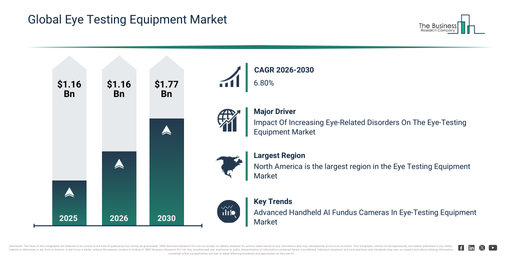
    The eye testing equipment market size is projected to experience substantial expansion in the coming years. It is forecast to reach $4.92 billion in 2030, demonstrating a compound annual growth rate (CAGR) of 6.8%. This expansion throughout the projection period is primarily driven by an increasing need for early identification of ocular conditions, greater public understanding regarding routine eye examinations, advancements in ophthalmology facilities, the proliferation of optometry education and training institutions, and a heightened emphasis on vision health among older demographics. Key developments anticipated in this timeframe involve the escalating adoption of sophisticated diagnostic eye testing apparatus, a growing requirement for thorough vision screening methodologies, the expanding utilization of versatile ophthalmic instruments, the broadening of proactive eye health measures and timely diagnoses, and the increasing incorporation of digital screens and automated measurement systems.

    Get A Free Sample Report With In-Depth Market Insights:

    https://thebusinessresearchcompany.com/sample_request?id=48456141&type=smp&name=Eye%20Testing%20Equipment%20Market%20Report%202026&utm_source=Blogs&utm_medium=Paid&utm_campaign=Oct_PR

    Eye Testing Equipment Market Growth Catalysts And Demand Drivers

    The anticipated rise in the prevalence of eye-related disorders is projected to fuel expansion within the eye-testing equipment market. These disorders encompass various ocular conditions, including diseases like glaucoma, cataracts, and macular degeneration, alongside refractive errors such as myopia and hyperopia. The growing patient count for eye-related ailments stems from factors such as an aging demographic, evolving lifestyles, environmental influences, and insufficient diagnostic tools that result in delayed detection. This equipment plays a crucial role in the early identification, precise diagnosis, and ongoing management of ocular conditions like glaucoma, cataracts, and macular degeneration. As an illustration, in January 2024, data from the Centers for Disease Control and Prevention, a US-based science and data-driven service organization that protects the public’s health, indicated that over 3.4 million Americans aged 40 years and older experienced blindness or visual impairment, a figure anticipated to double by 2030. Consequently, the expanding occurrence of eye disorders will be a primary catalyst for the growth of the eye-testing equipment market.

    Eye Testing Equipment Market Segment Breakdown: Which Categories Lead On Revenue?

    The eye testing equipment market covered in this report is segmented –

    1) By Device: Slit Lamp, Biometer, Perimeter, Tonometer, Optical Coherence Tomography (OCT), Fundus Camera, Autorefractor And Keratometer, Other Devices

    2) By Application: General Examination, Glaucoma, Cataract, Other Applications

    3) By End User: Hospital, Eye Clinic, Optometry Academic Institutes

    Subsegments:

    1) By Slit Lamp: Tabletop Slit Lamp, Handheld Slit Lamp, Digital Slit Lamp

    2) By Biometer: Optical Biometer, Ultrasound Biometer

    3) By Perimeter: Static Perimeter, Kinetic Perimeter

    4) By Tonometer: Applanation Tonometer, Non-Contact Tonometer, Rebound Tonometer, Indentation Tonometer

    5) By Optical Coherence Tomography (OCT): Spectral Domain OCT (SD-OCT), Swept-Source OCT (SS-OCT), Handheld OCT

    6) By Fundus Camera: Mydriatic Fundus Camera, Non-Mydriatic Fundus Camera, Hybrid Fundus Camera

    7) By Autorefractor And Keratometer: Standalone Autorefractor, Combined Autorefractor-Keratometer

    8) By Other Devices: Phoropter, Retinoscope, Visual Field Analyzer, Corneal Topographer

    Eye Testing Equipment Market Trends Shaping Long-Term Demand

    Leading companies in the eye-testing equipment market are developing advanced diagnostic instruments, such as handheld artificial intelligence fundus cameras, to improve diagnostic accuracy and streamline screening procedures. An AI-enhanced handheld fundus camera is employed to capture detailed images of the eye’s fundus, assisting in the diagnosis of various eye conditions. For instance, in May 2024, Optomed USA, a US-based medical technology company, introduced Optomed Aurora AEYE. This is a handheld, AI-powered fundus camera specifically designed for the quick detection of diabetic retinopathy beyond mild stages, enabling rapid eye screenings in primary care settings. The device simplifies the screening process with its intuitive design, needing only one image per eye and delivering results within a minute.

    Eye Testing Equipment Market Leading Companies And Competitive Benchmarking

    Major companies operating in the eye testing equipment market are Carl Zeiss Meditec AG, Topcon Corporation, Nidek Co. Ltd., Canon Medical Systems Inc., Heidelberg Engineering GmbH, Takagi Seiko Co. Ltd., Huvitz Co. Ltd., Revenio Group PLC, Tomey Corporation, Kowa Company Ltd., Oculus Optikgeräte GmbH, HEINE Optotechnik GmbH & Co. KG, Luneau Technology Group, Coburn Technologies Inc., Shanghai Bolan Optical Electric Co. Ltd., Rexxam Co. Ltd., CSO Costruzione Strumenti Oftalmici Srl, Righton Ophthalmic Instruments, Suoer Optical Technology Co. Ltd., Inami & Co. Ltd.

    View The Full Eye Testing Equipment Market Report:

    https://thebusinessresearchcompany.com/report/eye-testing-equipment-global-market-report?utm_source=Blogs&utm_medium=Paid&utm_campaign=Oct_PR

    Eye Testing Equipment Market Top Region By Revenue And Market Share

    North America was the largest region in the eye testing equipment market in 2025. Asia-Pacific is expected to be the fastest-growing region in the forecast period. The regions covered in the eye testing equipment market report are Asia-Pacific, South East Asia, Western Europe, Eastern Europe, North America, South America, Middle East, Africa.

    Reach Out To Our Team:

    The Business Research Company: https://www.thebusinessresearchcompany.com/

    Americas: +1 310-496-7795

    Asia: +44 7882 955267 & +91 8897263534

    Europe: +44 7882 955267

    Email us at: marketing@tbrc.info

    Follow us on:

    LinkedIn: https://in.linkedin.com/company/the-business-research-company

    YouTube: https://www.youtube.com/channel/UC24_fI0rV8cR5DxlCpgmyFQ

    Global Market Model: https://www.thebusinessresearchcompany.com/global-market-model
  • Single-Use Duodenoscope Market Outlook Through 2030: Understanding The Growth Opportunity

    Single-Use Duodenoscope Market Outlook Through 2030: Understanding The Growth Opportunity

    Featuring market attractiveness scoring, total addressable market sizing, company benchmarking matrices, interactive Excel dashboards, deeper supply chain intelligence, emerging startup tracking, and granular product-level insights, The Business Research Company’s 2026 market reports are built to deliver research that is both more actionable and more strategically valuable.

    Single-Use Duodenoscope Market Size Outlook: How Quickly Will Revenue Expand Through 2030?

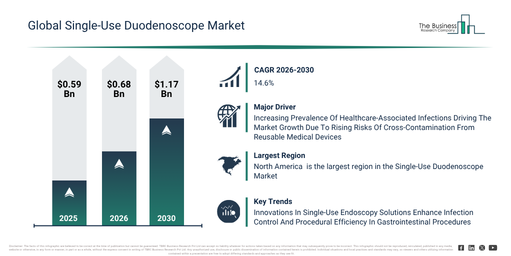
    The market size for single-use duodenoscopes has experienced rapid growth in recent years. It is forecast to increase from $0.59 billion in 2025 to $0.68 billion in 2026, achieving a compound annual growth rate (CAGR) of 14.3%. The historical expansion of this market can be attributed to several factors, including the rising incidence of bile duct and pancreatic disorders, increasing concerns over hospital-acquired infections associated with reusable scopes, the expansion of endoscopic retrograde cholangiopancreatography procedures, greater adoption of minimally invasive surgical techniques, and enhancements in hospital endoscopy infrastructure.

    The single-use duodenoscope market is projected for significant expansion in the coming years, reaching $1.17 billion by 2030 with a compound annual growth rate (CAGR) of 14.6%. This anticipated growth is driven by a greater move towards single-use medical devices to prevent infections, increasing spending on healthcare and higher procedure rates in gastroenterology, improvements in the imaging technology of disposable endoscopes, the expansion of ambulatory surgery centers and outpatient care, and more stringent global regulations for controlling cross-contamination. Key trends during this period involve a growing acceptance of single-use duodenoscopes to lower hospital-acquired infection rates, a stronger preference for sterile disposable endoscopy devices in ERCP procedures, an increased need for accurate minimally invasive gastrointestinal diagnostic tools, the broadening of outpatient and ambulatory endoscopy services, and increased regulatory scrutiny concerning infection control in alternatives to reusable endoscopes.

    Get A Free Sample Report With In-Depth Market Insights:

    https://thebusinessresearchcompany.com/sample_request?id=29948798&type=smp&name=Single-Use%20Duodenoscope%20Market%20Report%202026&utm_source=Blogs&utm_medium=Paid&utm_campaign=Oct_PR

    Single-Use Duodenoscope Market Development Factors: What’s Supporting Demand?

    The escalating occurrence of healthcare-acquired infections is anticipated to boost the expansion of the single-use duodenoscope market in the future. Healthcare-associated infections (HAIs) refer to infections contracted by patients while receiving medical care in a facility, which were not present upon their admission. These infections are primarily on the rise due to the increased application of invasive medical devices, which can introduce pathogens if not sterilized or managed correctly. Single-use duodenoscopes contribute to reducing HAIs by removing the necessity for reprocessing and sterilization procedures between patients, thereby eliminating the potential for cross-contamination from inadequately disinfected reusable instruments. For instance, in September 2024, according to the UK Health Security Agency, a UK-based government agency, in the fiscal year 2022–2023, the total count of hospital-onset healthcare-associated (HOHA) E. coli infections increased from 6,525 to 7,881 cases. Consequently, the growing incidence of healthcare-acquired infections is fueling the growth of the single-use duodenoscope market.

    Single-Use Duodenoscope Market Segments: Where Is Growth Concentrated?

    The single-use duodenoscope market covered in this report is segmented –

    1) By Product Type: Standard Duodenoscope, Specialized Duodenoscope, Flexible Duodenoscope

    2) By Material: Polymer, Metal, Composite

    3) By Application: Endoscopic Retrograde Cholangiopancreatography Diagnosis, Therapeutic Procedures

    4) By End User: Hospitals And Tertiary Care Centers, Ambulatory Surgery Centers And Outpatient Endoscopy Centers, Small Clinics And Rural Hospitals, Specialty Reference Centers

    Subsegments:

    1) By Standard Duodenoscope: Single Use Standard Imaging Duodenoscope, Single Use Basic Channel Duodenoscope, Single Use Conventional Visualization Duodenoscope

    2) By Specialized Duodenoscope: Single Use Therapeutic Duodenoscope, Single Use Advanced Imaging Duodenoscope, Single Use Narrow Band Imaging Duodenoscope, Single Use Artificial Intelligence Assisted Duodenoscope

    3) By Flexible Duodenoscope: Single Use High Flexibility Duodenoscope, Single Use Enhanced Maneuverability Duodenoscope, Single Use Lightweight Flexible Duodenoscope

    Single-Use Duodenoscope Market Transformation Trends: What Innovations Are Driving Change?

    Leading companies in the single-use duodenoscope market are concentrating on developing innovative solutions, such as new-generation duodenoscopy systems, with the aim of enhancing patient safety by eliminating cross-contamination risks, reducing healthcare-associated infections, and improving the efficiency of endoscopic procedures. A new-generation duodenoscopy system constitutes advanced endoscopy technology crafted to improve visualization, safety, and infection control during duodenal procedures, frequently integrating single-use or enhanced reprocessing functionalities. For instance, in April 2024, Ambu A/S, a Denmark-based medical technology company, obtained a 510(k) clearance from the US FDA for its new-generation duodenoscopy solution, the aScope Duodeno 2 and aBox 2, which is specifically designed for endoscopic retrograde cholangiopancreatography (ERCP) procedures. This sterile, single-use system addresses crucial challenges in ERCP, including high-performance requirements and the complexities of reprocessing reusable duodenoscopes.

    Single-Use Duodenoscope Market Top Companies Driving Competitive Growth

    Major companies operating in the single-use duodenoscope market are Medtronic Plc, Fujifilm Holdings Corporation, Boston Scientific Corporation, Olympus Corporation, Hoya Corporation, Karl Storz SE & Co. KG, PENTAX Medical, Ambu A/S, Shenzhen Hugemed Medical Technology Development Co. Ltd., Ottomed Medical Technologies Pvt. Ltd., EndoFresh, Micro-Tech (Nanjing) Co. Ltd.

    View The Full Single-Use Duodenoscope Market Report:

    https://thebusinessresearchcompany.com/report/single-use-duodenoscope-market-report?utm_source=Blogs&utm_medium=Paid&utm_campaign=Oct_PR

    Single-Use Duodenoscope Market Global Footprint: Which Region Leads The Industry?

    North America was the largest region in the single-use duodenoscope market in 2025. Europe is expected to be the fastest-growing region in the forecast period. The regions covered in the single-use duodenoscope market report are Asia-Pacific, South East Asia, Western Europe, Eastern Europe, North America, South America, Middle East, Africa.

    Reach Out To Our Team:

    The Business Research Company: https://www.thebusinessresearchcompany.com/

    Americas: +1 310-496-7795

    Asia: +44 7882 955267 & +91 8897263534

    Europe: +44 7882 955267

    Email us at: marketing@tbrc.info

    Follow us on:

    LinkedIn: https://in.linkedin.com/company/the-business-research-company

    YouTube: https://www.youtube.com/channel/UC24_fI0rV8cR5DxlCpgmyFQ

    Global Market Model: https://www.thebusinessresearchcompany.com/global-market-model
  • Rare Disease Contract Research Organization (CRO) Market Forecast 2026: Market Size, Competitive Landscape And Growth Drivers

    Rare Disease Contract Research Organization (CRO) Market Forecast 2026: Market Size, Competitive Landscape And Growth Drivers

    Featuring market attractiveness scoring, total addressable market sizing, company benchmarking matrices, interactive Excel dashboards, deeper supply chain intelligence, emerging startup tracking, and granular product-level insights, The Business Research Company’s 2026 market reports are built to deliver research that is both more actionable and more strategically valuable.

    Rare Disease Contract Research Organization (CRO) Market Value Growth And Long-Term Outlook

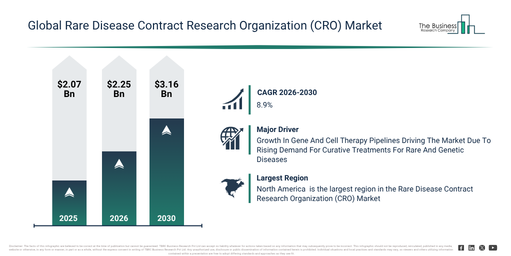
    The rare disease contract research organization (CRO) market size has experienced significant expansion in recent years. This market is set to increase from $2.07 billion in 2025 to $2.25 billion in 2026, achieving a compound annual growth rate (CAGR) of 8.6%. Historically, this growth can be ascribed to elements such as limited rare disease awareness hindering patient identification, fragmented clinical data systems impairing trial recruitment efficiency, the high expense of orphan drug development reducing the scale of trial outsourcing, a reliance on traditional site-based clinical research models, and the absence of standardized global rare disease regulatory frameworks.

    The rare disease contract research organization (CRO) market is set to experience robust expansion in the upcoming years. It is forecast to reach $3.16 billion in 2030, progressing at a compound annual growth rate (CAGR) of 8.9%. This growth throughout the forecast period can be attributed to advancements in genomic sequencing, which enable earlier detection of rare diseases; an increase in orphan drug approvals, thereby driving demand for CRO outsourcing; the expansion of precision medicine, accelerating niche clinical research; the rising adoption of decentralized trials, improving global patient access; and growing biotech investments in rare disease therapeutics. Notable trends during the forecast period include adaptive, patient-centric trial designs for ultra-rare disease cohorts, the expansion of global rare disease patient registry ecosystems, a greater embrace of decentralized and hybrid rare disease clinical trials, the development of specialized orphan drug regulatory consulting services, and the increasing integration of real-world evidence in rare disease clinical validation.

    Get A Free Sample Report With In-Depth Market Insights:

    https://thebusinessresearchcompany.com/sample_request?id=95686361&type=smp&name=Rare%20Disease%20Contract%20Research%20Organization%20%28CRO%29%20Market%20Report%202026&utm_source=Blogs&utm_medium=Paid&utm_campaign=Oct_PR

    Rare Disease Contract Research Organization (CRO) Market Expansion Drivers: What’s Shaping Future Growth?

    The expansion of gene and cell therapy pipelines is anticipated to fuel the future growth of the rare disease contract research organization market. These sophisticated treatments work by modifying genes or utilizing engineered cells to address the fundamental cause of illnesses. The increasing prevalence of chronic and rare genetic diseases primarily drives the rise in gene and cell therapies, as they provide focused, potentially curative solutions by targeting the underlying genetic or cellular issues rather than merely alleviating symptoms. Rare disease contract research organizations (CROs) aid gene and cell therapy by developing and overseeing highly specialized clinical studies, facilitating effective patient identification and enrollment for uncommon genetic conditions, ensuring adherence to regulations, and managing the intricate data and logistical demands of these cutting-edge, precision-based treatments. For instance, in March 2024, IQVIA Holdings Inc., a US-based provider of advanced analytics, technology solutions, and clinical research services for the life sciences and healthcare industries, noted that global expenditure on cell and gene therapies escalated to $5.9 billion in 2023, marking a 38% rise from 2022. Consequently, the development in gene and cell therapy pipelines is propelling the expansion of the rare disease contract research organization market. An anticipated increase in research and development (R&D) activities is set to boost the rare disease contract research organization (CRO) market in the coming years. R&D encompasses efforts aimed at generating novel knowledge and applying it to create or enhance products, services, or technologies. The surge in R&D endeavors stems from the escalating requirement for ongoing innovation to maintain a competitive edge in rapidly evolving markets, motivating companies to invest in advanced products and technologies that cater to shifting consumer demands and industry patterns. Rare disease contract research organizations (CROs) assist research and development by offering specialized knowledge, facilities, and patient sourcing abilities that help expedite the planning, execution, and oversight of intricate clinical trials and drug development initiatives for rare diseases. For example, in 2023, the Office for National Statistics, a UK-based government agency, stated that the UK government’s net expenditure on research and development (R&D) grew to £17.4 ($22.1 billion) in 2023, an increase from £16.1 billion ($20.45 billion) in 2022, signifying an 8.2% surge. Thus, the expansion of research and development activities is stimulating the growth of the rare disease contract research organization market.

    Rare Disease Contract Research Organization (CRO) Market Segmentation And Category Overview

    The rare disease contract research organization (CRO) market covered in this report is segmented –

    1) By Service Type: Drug Development Strategy, Clinical Trial Management, Patient Recruitment And Retention Services, Data Management And Biostatistics, Regulatory Affairs And Consulting, Pharmacovigilance Services, Medical Writing And Documentation, Decentralized Clinical Trial Services, Other Service Types

    2) By Phase: Pre Clinical, Phase One, Phase Two, Phase Three, Phase Four

    3) By Therapeutic Area: Oncology, Neurology, Cardiovascular Disorders, Metabolic Disorders, Genetic Disorders, Hematology, Immunology, Rare Infectious Diseases, Other Rare Indications

    4) By Delivery Model: On Site Clinical Trials, Decentralized Clinical Trials, Hybrid Clinical Trials

    5) By End User: Pharmaceutical And Biotechnology Companies, Non Profit And Government Organizations, Academic And Research Institutes, Other End Users

    Subsegments:

    1) By Drug Development Strategy: Preclinical Development Planning, Clinical Development Planning, Target Identification And Validation, Portfolio Strategy Optimization

    2) By Clinical Trial Management: Phase One Trial Management, Phase Two Trial Management, Phase Three Trial Management, Site Monitoring And Coordination

    3) By Patient Recruitment And Retention Services: Patient Identification Services, Patient Enrollment Support, Patient Engagement Programs, Patient Retention Strategies

    4) By Data Management And Biostatistics: Clinical Data Collection And Processing, Statistical Analysis And Modeling, Database Design And Management, Data Quality Assurance

    5) By Regulatory Affairs And Consulting: Regulatory Strategy Development, Submission Preparation And Filing, Compliance And Audit Support, Regulatory Advisory Services

    6) By Pharmacovigilance Services: Adverse Event Monitoring, Safety Data Analysis, Risk Management Planning, Signal Detection And Reporting

    7) By Medical Writing And Documentation: Clinical Study Report Writing, Protocol Development Documentation, Regulatory Writing Services, Scientific Publication Writing

    8) By Decentralized Clinical Trial Services: Remote Patient Monitoring, Virtual Trial Management, Home Healthcare Services, Digital Data Collection Solutions

    9) By Other Service Types: Rare Disease Consulting Services, Genetic Research Support, Biomarker Development Services, Translational Research Services

    Rare Disease Contract Research Organization (CRO) Market Leading Players And Competitive Positioning

    Major companies operating in the rare disease contract research organization (cro) market are Thermo Fisher Scientific Inc., IQVIA Holdings Inc., Laboratory Corporation of America Holdings, ICON plc, SGS SA, Charles River Laboratories International Inc., Fortrea Holdings Inc., Medpace Holdings Inc., ALS Limited, PSI CRO AG, Ratos AB, Precision for Medicine Inc., Allucent, QPS Holdings LLC, Alira Health SAS, Rho Inc., Veristat LLC, Quanticate Ltd., Cromos Pharma LLC, Frontage Laboratories Inc., ProTrials Research Inc., PROMETRIKA LLC, Machaon Diagnostics Inc., Sofpromed GmbH

    View The Full Rare Disease Contract Research Organization (CRO) Market Report:

    https://thebusinessresearchcompany.com/report/rare-disease-contract-research-organization-cro-market-report?utm_source=Blogs&utm_medium=Paid&utm_campaign=Oct_PR

    Rare Disease Contract Research Organization (CRO) Market Regional Distribution: Which Areas Power Market Growth?

    North America was the largest region in the rare disease contract research organization (CRO) market in 2025. Asia-Pacific is expected to be the fastest-growing region in the forecast period. The regions covered in the rare disease contract research organization (CRO) market report are Asia-Pacific, South East Asia, Western Europe, Eastern Europe, North America, South America, Middle East, Africa.

    Reach Out To Our Team:

    The Business Research Company: https://www.thebusinessresearchcompany.com/

    Americas: +1 310-496-7795

    Asia: +44 7882 955267 & +91 8897263534

    Europe: +44 7882 955267

    Email us at: marketing@tbrc.info

    Follow us on:

    LinkedIn: https://in.linkedin.com/company/the-business-research-company

    YouTube: https://www.youtube.com/channel/UC24_fI0rV8cR5DxlCpgmyFQ

    Global Market Model: https://www.thebusinessresearchcompany.com/global-market-model
  • Non-Wearable Sleep Tracker Market Expected To Grow At 11% CAGR Through 2030: What Businesses Need To Know

    Non-Wearable Sleep Tracker Market Expected To Grow At 11% CAGR Through 2030: What Businesses Need To Know

    Backed by market attractiveness analysis, total addressable market sizing, company benchmarking matrices, interactive Excel dashboards, wider supply chain intelligence, emerging startup coverage, and detailed product-level insights, The Business Research Company’s 2026 market reports are designed to offer research that is more actionable and strategically valuable than ever.

    Non-Wearable Sleep Tracker Market Expansion Outlook: What Revenue Opportunities Are Ahead?

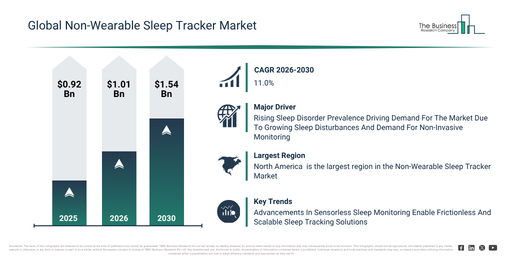
    The non-wearable sleep tracker market has experienced substantial growth in recent years. This market is set to expand from $0.92 billion in 2025 to $1.01 billion in 2026, demonstrating a compound annual growth rate (CAGR) of 10.8%. Several factors contributed to its historical development, including the increasing occurrence of sleep disorders and insomnia, a heightened public awareness regarding sleep health and wellness monitoring, the early uptake of rudimentary under-mattress sleep sensing devices, a rise in consumer demand for both wearable and non-wearable health monitoring, and the evolution of basic biometric sensing technologies for sleep analysis.

    The non-wearable sleep tracker market is anticipated to expand significantly in the near future. It is forecasted to achieve a value of $1.54 billion by 2030, growing at a compound annual growth rate (CAGR) of 11.0%. This expansion during the forecast period can be attributed to the broadening of digital health and remote patient monitoring ecosystems, an increasing demand for contactless health monitoring solutions within homecare settings, the enhanced integration of AI-powered sleep diagnostics and recommendations, a rise in preventive healthcare and wellness-oriented consumer behavior, and technological advancements in radar and acoustic sleep sensing systems. Noteworthy trends for the forecast period include AI-driven sleep analytics aimed at improving personalized sleep quality, the integration of IoT-enabled smart home ecosystems with sleep monitoring systems, a growing adoption of contactless radar-based sleep tracking technologies, increased utilization of cloud-based sleep health data platforms for remote monitoring, and the development of non-invasive multi-sensor devices designed for optimizing sleep environments.

    Get A Free Sample Report With In-Depth Market Insights:

    https://thebusinessresearchcompany.com/sample_request?id=41438033&type=smp&name=Non-Wearable%20Sleep%20Tracker%20Market%20Report%202026&utm_source=Blogs&utm_medium=Paid&utm_campaign=Oct_PR

    Non-Wearable Sleep Tracker Market Industry Drivers: What’s Behind The Revenue Growth?

    The increasing occurrence of sleep disturbances is anticipated to fuel the expansion of the non-wearable sleep tracker market in the future. These disorders are conditions that disrupt typical sleep patterns or cycles, leading to subpar sleep quality and diminished daytime alertness. The primary reason for the rise in sleep disorders is excessive screen exposure prior to sleep, which interferes with melatonin synthesis and postpones the body’s natural sleep rhythm. Non-wearable sleep trackers assist in addressing sleep disorders through ongoing observation of sleep patterns, respiration, and physical activity, all without the need for a user to wear a device. This allows for prompt identification of anomalies and offers insights based on data to enhance sleep quality. For example, data from November 2023, released by the National Health Service, a UK-based government health statistics body, indicated a slight increase in the percentage of young individuals aged 17 to 23 years reporting sleep issues three or more times weekly, reaching 64.9% from 64.0% in 2022. Consequently, the growing incidence of sleep disorders is stimulating the expansion of the non-wearable sleep tracker market.

    Non-Wearable Sleep Tracker Market Segment Analysis And Revenue Potential

    The non-wearable sleep tracker market covered in this report is segmented –

    1) By Product Type: Under Mattress Sleep Trackers, Smart Mattresses Sleep Trackers, Bedside Sleep Trackers, Other Product Types

    2) By Technology: Acoustic Analysis, Ballistocardiography, Infrared Sensors

    3) By Distribution Channel: Online Sales, Pharmacy And Retail Stores, Sleep Centres And Fitness Centres, Hypermarkets And Supermarkets, Other Distribution Channels

    4) By Application: Insomnia, Obstructive Sleep Apnoea, Other Applications

    5) By End Use: Homecare, Institutional

    Subsegments:

    1) By Under Mattress Sleep Trackers: Pressure Sensor Based Trackers, Piezoelectric Sensor Based Trackers, Ballistocardiography Based Trackers, Wireless Connectivity Based Trackers

    2) By Smart Mattresses Sleep Trackers: Integrated Sensor Mattresses, Temperature Regulating Smart Mattresses, Adjustable Smart Mattresses, Health Monitoring Smart Mattresses

    3) By Bedside Sleep Trackers: Radar Based Sleep Trackers, Infrared Sensor Based Trackers, Acoustic Sound Based Trackers, Camera Based Sleep Trackers

    4) By Other Product Types: Sleep Monitoring Pillows, Sleep Environment Monitoring Devices, Multi Functional Sleep Tracking Systems, Portable Non Wearable Sleep Devices

    #Non-Wearable Sleep Tracker Market Growth Trends: What’s Shaping The Future Outlook?

    Leading companies in the non-wearable sleep tracker market are concentrating on developing innovative solutions, such as frictionless sleep monitoring technology, to facilitate the non-invasive tracking of sleep behavior and provide personalized insights for enhancing sleep health and overall well-being. This frictionless technology involves non-intrusive systems that observe sleep patterns without requiring wearable devices, utilizing embedded or nearby sensors to continuously monitor movement, breathing, and heart rate during sleep. For example, in December 2025, Sleep.ai, a US-based digital health technology company, introduced Sleep Sense, a frictionless sleep monitoring solution that converts any smartphone into a passive sleep sensor. This enables nearly 100 percent population-level coverage without needing wearables, extra hardware, or daily user input. The solution includes AI boundary detection for precise identification of sleep and wake states, multimodal contextual modeling based on motion and environmental data, and a privacy-preserving architecture that does not use audio recording, thereby enabling accurate and scalable sleep tracking across extensive populations.

    Non-Wearable Sleep Tracker Market Key Players Shaping Industry Direction

    Major companies operating in the non-wearable sleep tracker market are ResMed Inc., Sleep Number Corporation, iFIT Health & Fitness Inc., Wakefit Innovations Private Limited, Withings S.A.S., Happiest Baby Inc., Sleepiz AG, Fullpower Technologies Inc., Sleepace RestOn, Sleepace Technology Co. Ltd., Emfit Ltd., Sleep.me, Somnox B.V., Tochtech Technologies Ltd., Infocusp, Beddit Oy, OXI Sleep Systems, EarlySense Ltd., Rest Devices Inc., Sleep.ai

    View The Full Non-Wearable Sleep Tracker Market Report:

    https://thebusinessresearchcompany.com/report/non-wearable-sleep-tracker-market-report?utm_source=Blogs&utm_medium=Paid&utm_campaign=Oct_PR

    Non-Wearable Sleep Tracker Market Regional Analysis: Which Region Leads By Revenue?

    North America was the largest region in the non-wearable sleep tracker market in 2025. Asia-Pacific is expected to be the fastest-growing region in the forecast period. The regions covered in the non-wearable sleep tracker market report are Asia-Pacific, South East Asia, Western Europe, Eastern Europe, North America, South America, Middle East, Africa.

    Reach Out To Our Team:

    The Business Research Company: https://www.thebusinessresearchcompany.com/

    Americas: +1 310-496-7795

    Asia: +44 7882 955267 & +91 8897263534

    Europe: +44 7882 955267

    Email us at: marketing@tbrc.info

    Follow us on:

    LinkedIn: https://in.linkedin.com/company/the-business-research-company

    YouTube: https://www.youtube.com/channel/UC24_fI0rV8cR5DxlCpgmyFQ

    Global Market Model: https://www.thebusinessresearchcompany.com/global-market-model