Blog

  • Actinic Keratosis Treatment Market Expected To Grow At 7.7% CAGR Through 2030: What Businesses Need To Know

    Actinic Keratosis Treatment Market Expected To Grow At 7.7% CAGR Through 2030: What Businesses Need To Know

    Backed by market attractiveness analysis, total addressable market sizing, company benchmarking matrices, interactive Excel dashboards, wider supply chain intelligence, emerging startup coverage, and detailed product-level insights, The Business Research Company’s 2026 market reports are designed to offer research that is more actionable and strategically valuable than ever.

    Actinic Keratosis Treatment Market Size Outlook: How Quickly Will Revenue Expand Through 2030?

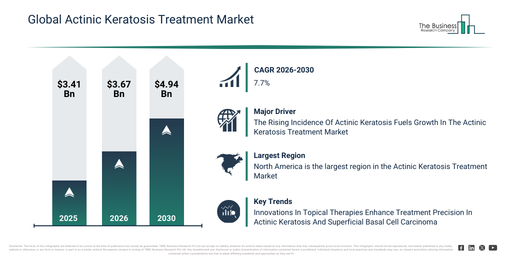
    The actinic keratosis treatment market has shown considerable expansion in recent years. It is forecast to grow from $3.41 billion in 2025 to $3.67 billion in 2026, at a compound annual growth rate (CAGR) of 7.7%. The growth observed in previous periods is attributable to the rising incidence of actinic keratoses due to UV exposure, a limited availability of treatment options in earlier stages, the proliferation of dermatology awareness campaigns, increased adoption rates of cryotherapy and laser therapy, and the accessibility of prescription medications.

    The actinic keratosis treatment market is anticipated to experience substantial expansion in the coming years. Its valuation is projected to reach $4.94 billion by 2030, exhibiting a compound annual growth rate (CAGR) of 7.7%. This projected growth during the forecast period is attributable to several factors, including the emergence of new topical and photodynamic therapies, increased capital expenditure in dermatology clinics, a surge in the use of combination treatments, the expansion of homecare and self-administration solutions, and advancements in minimally invasive procedural techniques. Key trends anticipated during the forecast period involve a growing embrace of topical treatments for actinic keratosis, a heightened inclination towards photodynamic therapy procedures, the increased utilization of medications such as fluorouracil, imiquimod, and diclofenac, the proliferation of dermatology clinics and laser therapy centers, and an enhanced understanding of the importance of sun protection and homecare treatments.

    Get A Free Sample Report With In-Depth Market Insights:

    https://thebusinessresearchcompany.com/sample_request?id=30361466&type=smp&name=Actinic%20Keratosis%20Treatment%20Market%20Report%202026&utm_source=Blogs&utm_medium=Paid&utm_campaign=Oct_PR

    Actinic Keratosis Treatment Market Growth Backed By Core Demand Fundamentals

    The actinic keratosis treatment market is anticipated to expand due to the increasing demand for minimally invasive therapies. These therapies involve medical interventions with minimal or no incisions, leading to less tissue damage and quicker recovery times than conventional open surgeries. The increasing preference for minimally invasive procedures stems from aging populations in developed nations, where older individuals increasingly look for treatments with faster recuperation and fewer adverse effects. Minimally invasive therapies directly contribute to the expansion of actinic keratosis treatment by providing patients with more convenient, effective options, characterized by less discomfort and quicker healing. For example, data from April 2025, published by the British Association of Aesthetic Plastic Surgeons, a UK-based surgical body, indicated a 5% rise in cosmetic surgical procedures between 2023 and 2024, totaling 27,462 procedures performed in 2024. Consequently, the escalating demand for minimally invasive therapies is a primary driver for the growth of the actinic keratosis treatment market.

    Actinic Keratosis Treatment Market Segment Analysis Spotlighting Growth Areas

    The actinic keratosis treatment market covered in this report is segmented –

    1) By Treatment: Topical Treatment, Procedural Modality, Photodynamic Therapy

    2) By Medication: Fluorouracil Cream, Imiquimod Cream, Ingenol Mebutate Gel, Diclofenac Gel

    3) By End User: Hospitals, Private Dermatology Clinics, Laser Therapy Centers, Homecare

    Subsegments:

    1) By Topical Treatment: 5-Fluorouracil (5-FU), Imiquimod, Ingenol Mebutate, Diclofenac

    2) By Procedural Modality: Cryotherapy, Curettage And Electrosurgery, Laser Therapy

    3) By Photodynamic Therapy: ALA-Based PDT, MAL-Based PDT

    Actinic Keratosis Treatment Market Growth Trends Reshaping The Competitive Landscape

    Companies operating within the actinic keratosis treatment market are prioritizing the development of advanced solutions, such as combination topical therapies, to boost treatment efficacy, minimize adverse reactions, and provide convenient prescription options for dermatology providers. Combination topical therapies are formulations that integrate multiple active ingredients to target abnormal skin growths while also supporting overall skin health. For instance, in April 2025, SKNV, a US-based dermatologic innovation company, introduced Kefunova Cream, a topical therapy containing fluorouracil 5% and calcipotriene 0.005%, which is utilized to treat actinic keratosis (AK) and superficial basal cell carcinoma (sBCC). This treatment involves direct application of the cream to affected skin areas, offering a prescription-only option that addresses the requirements of dermatology providers managing these conditions.

    Actinic Keratosis Treatment Market Leading Companies: Who Holds The Strongest Market Presence?

    Major companies operating in the actinic keratosis treatment market are Sun Pharmaceutical Industries Ltd., Hill Dermaceuticals Inc., Bausch Health Companies Inc., LEO Pharma A/S, Almirall SA, Biofrontera AG, Galderma SA, Mylan NV, Cipher Pharmaceuticals Inc., Pierre Fabre Pharmaceuticals Inc., Cutanea Life Sciences Inc., DUSA Pharmaceuticals Inc., Foamix Pharmaceuticals Ltd., Hikma Pharmaceuticals PLC, Innocutis Holdings LLC, Mayne Pharma Group Limited, Meda AB, Merz Pharma GmbH & Co KGaA, Perrigo Company PLC, Promius Pharma LLC, Ranbaxy Laboratories Limited, Sandoz International GmbH, Stiefel Laboratories Inc., Teva Pharmaceutical Industries Ltd., Valeant Pharmaceuticals International Inc., Zydus Pharmaceuticals Inc., Dermira Inc., Sol-Gel Technologies Ltd., Verrica Pharmaceuticals Inc.

    View The Full Actinic Keratosis Treatment Market Report:

    https://thebusinessresearchcompany.com/report/actinic-keratosis-treatment-global-market-report?utm_source=Blogs&utm_medium=Paid&utm_campaign=Oct_PR

    Actinic Keratosis Treatment Market Global Footprint: Which Region Leads The Market?

    North America was the largest region in the actinic keratosis treatment market in 2025. Asia-Pacific is expected to be the fastest-growing region in the forecast period. The regions covered in the actinic keratosis treatment market report are Asia-Pacific, South East Asia, Western Europe, Eastern Europe, North America, South America, Middle East, Africa.

    Reach Out To Our Team:

    The Business Research Company: https://www.thebusinessresearchcompany.com/

    Americas: +1 310-496-7795

    Asia: +44 7882 955267 & +91 8897263534

    Europe: +44 7882 955267

    Email us at: marketing@tbrc.info

    Follow us on:

    LinkedIn: https://in.linkedin.com/company/the-business-research-company

    YouTube: https://www.youtube.com/channel/UC24_fI0rV8cR5DxlCpgmyFQ

    Global Market Model: https://www.thebusinessresearchcompany.com/global-market-model
  • Actinic Keratosis Market Forecast To Reach $11.06 Billion By 2030: Key Trends Explained

    Actinic Keratosis Market Forecast To Reach $11.06 Billion By 2030: Key Trends Explained

    Featuring market attractiveness scoring, total addressable market sizing, company benchmarking matrices, interactive Excel dashboards, deeper supply chain intelligence, emerging startup tracking, and granular product-level insights, The Business Research Company’s 2026 market reports are built to deliver research that is both more actionable and more strategically valuable.

    Actinic Keratosis Market Size, Value And Growth Trajectory Through 2030

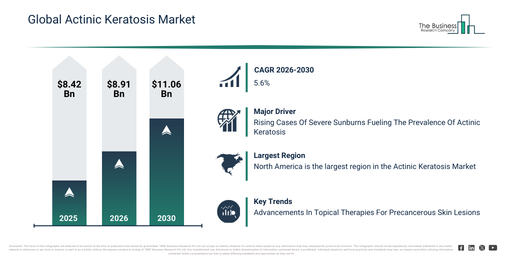
    The actinic keratosis market has demonstrated significant growth in recent years. It is anticipated to expand from $8.42 billion in 2025 to $8.91 billion in 2026, reflecting a compound annual growth rate (CAGR) of 5.8%. The historic period’s expansion is attributable to factors such as increasing UV exposure and sunburn incidence, the limited availability of effective topical agents, a rising prevalence of skin cancer, the development of dermatology infrastructure, and the adoption of conventional surgical procedures.

    The actinic keratosis market is projected to experience substantial expansion in the coming years, reaching $11.06 billion by 2030, demonstrating a compound annual growth rate (CAGR) of 5.6%. This anticipated growth during the forecast period is driven by factors such as the advancement of photodynamic therapies, a rise in the application of combined topical and procedural treatments, the broadening of hospital and dermatology clinic infrastructures, heightened consumer understanding of the benefits of early intervention, and the emergence of novel homecare treatment options. Key trends anticipated over this period encompass a greater emphasis on sun protection and overall skin health, an uptick in the utilization of non-invasive photodynamic therapy, increased adoption of topical therapeutics for early-stage actinic keratosis, the proliferation of dermatology clinics and homecare treatments, and a growing inclination towards combination therapy approaches.

    Get A Free Sample Report With In-Depth Market Insights:

    https://thebusinessresearchcompany.com/sample_request?id=64949120&type=smp&name=Actinic%20Keratosis%20Market%20Report%202026&utm_source=Blogs&utm_medium=Paid&utm_campaign=Oct_PR

    Actinic Keratosis Market Growth Catalysts And Demand Drivers

    A rise in severe sunburn incidents is anticipated to drive the expansion of the actinic keratosis market in the future. Intense skin burns, known as severe sunburns, stem from excessive ultraviolet (UV) radiation exposure, manifesting as redness, pain, swelling, and occasionally blisters. Factors contributing to sunburns include extended exposure to ultraviolet (UV) radiation, insufficient sun protection, more outdoor pursuits during intense UV periods, and escalating temperatures from climate change. Sunburns induce actinic keratosis by virtue of ultraviolet (UV) radiation harming the DNA within skin cells, causing mutations that interfere with regular cell processes and fostering the formation of precancerous lesions, particularly after recurrent or extended sun exposure. As an illustration, in May 2024, Melanoma Focus, a UK-based charity, reported 201 hospital admissions for sunburn in 2022-23, encompassing 89 children and 25 babies under one year old. The same charity also discovered that 66% of UK adults aged 16-65 recalled having sunburns in childhood, with 65% of these individuals experiencing severe sunburns accompanied by blisters at least once. This figure escalated to 77% for individuals possessing light, pale, or white skin tones. Consequently, the escalating incidence of severe sunburns is propelling the expansion of the actinic keratosis market.

    Actinic Keratosis Market Segment Performance And Emerging Opportunities

    The actinic keratosis market covered in this report is segmented –

    1) By Treatment Type: Topical Treatment, Surgical Procedure, Photodynamic Therapy, Other Treatment Types

    2) By Distribution Channels: Hospital Pharmacies, Drug Stores And Retail Pharmacies

    3) By End-User: Hospitals, Dermatology Clinics, Homecare Settings, Other End-Users

    Subsegments:

    1) By Topical Treatment: 5-Fluorouracil (5-FU), Imiquimod, Diclofenac

    2) By Surgical Procedure: Cryotherapy, Curettage And Electrodessication

    3) By Photodynamic Therapy: Aminolevulinic Acid (ALA) Plus Light Therapy, Methyl Aminolevulinate (MAL) Plus Light Therapy

    4) By Other Treatment Types: Laser Therapy, Combination Therapies

    Actinic Keratosis Market Trends Shaping Long-Term Demand

    Major companies operating within the actinic keratosis market are directing their focus toward developing topical ointments designed to effectively target and eliminate precancerous lesions. These efforts aim to decrease recurrence rates and enhance patient compliance through shorter treatment durations and improved safety profiles. Topical ointments represent medicated creams or gels applied directly to the affected skin, featuring active ingredients like tirbanibulin, which function by targeting abnormal keratinocytes to treat precancerous lesions. For instance, in June 2024, Almirall SA, a Spain-based biopharmaceutical company, obtained approval from the US Food and Drug Administration (FDA) for a supplemental new drug application (sNDA) to broaden the use area for its drug, Klisyri, to up to 100 cm2. Klisyri (tirbanibulin) 1% ointment operates as a microtubule inhibitor, engineered to prevent the proliferation of abnormal keratinocytes, thereby effectively reducing the number and size of precancerous lesions for the treatment of actinic keratosis (AK) on the face or scalp.

    Actinic Keratosis Market Key Players: Which Companies Lead Industry Competition?

    Major companies operating in the actinic keratosis market are Galderma SA, LEO Pharma A/S, Almirall S.A., Bausch Health Companies Inc., Perrigo Company plc, Pfizer Inc, F. Hoffmann-La Roche AG, Merck & Co. Inc., AbbVie Inc., Sanofi S.A., Novartis AG, GSK plc, Amgen Inc., Incyte Corporation, Aclaris Therapeutics Inc., Biofrontera AG, Hill Dermaceuticals Inc., Sun Pharmaceutical Industries Ltd., Dr. Reddy’s Laboratories Ltd., Viatris Inc.

    View The Full Actinic Keratosis Market Report:

    https://thebusinessresearchcompany.com/report/actinic-keratosis-global-market-report?utm_source=Blogs&utm_medium=Paid&utm_campaign=Oct_PR

    Actinic Keratosis Market Regional Split: Which Areas Are Fueling Growth?

    North America was the largest region in the actinic keratosis market in 2025. Asia-Pacific is expected to be the fastest-growing region in the forecast period. The regions covered in the actinic keratosis market report are Asia-Pacific, South East Asia, Western Europe, Eastern Europe, North America, South America, Middle East, Africa.

    Reach Out To Our Team:

    The Business Research Company: https://www.thebusinessresearchcompany.com/

    Americas: +1 310-496-7795

    Asia: +44 7882 955267 & +91 8897263534

    Europe: +44 7882 955267

    Email us at: marketing@tbrc.info

    Follow us on:

    LinkedIn: https://in.linkedin.com/company/the-business-research-company

    YouTube: https://www.youtube.com/channel/UC24_fI0rV8cR5DxlCpgmyFQ

    Global Market Model: https://www.thebusinessresearchcompany.com/global-market-model
  • Acromegaly Market Size Forecast From 2026 To 2030: Key Industry Trends

    Acromegaly Market Size Forecast From 2026 To 2030: Key Industry Trends

    Built to provide research that’s more actionable and strategically valuable, The Business Research Company’s 2026 market reports include market attractiveness analysis, total addressable market sizing, company benchmarking matrices, interactive Excel dashboards, broader supply chain intelligence, emerging startup tracking, and in-depth product insights.

    Acromegaly Market CAGR Outlook And Future Development

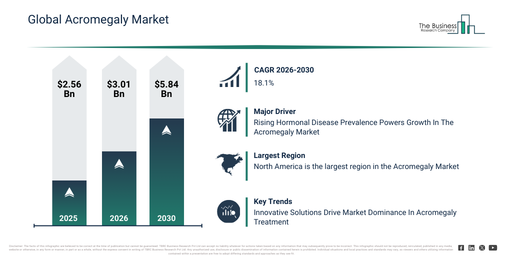
    The acromegaly market has experienced rapid expansion in recent years. It is projected to increase from $2.56 billion in 2025 to $3.01 billion in 2026, achieving a compound annual growth rate (CAGR) of 17.5%. The growth observed in the past can be attributed to various elements, including the limited availability of acromegaly diagnostic tools, an increasing prevalence of growth hormone disorders, the expansion of hospital and specialty clinic infrastructure, the adoption of conventional treatment methods, and a growing awareness of rare endocrine disorders.

    The acromegaly market is projected to experience substantial expansion over the upcoming years. Its value is anticipated to reach $5.84 billion by 2030, exhibiting a compound annual growth rate (CAGR) of 18.1%. This projected growth during the forecast timeframe is primarily driven by the advancement of sophisticated somatostatin analogues, an increase in parenteral treatment availability, the growing embrace of precision medicine techniques, the expansion of homecare and outpatient treatment paradigms, and the incorporation of digital health and remote monitoring technologies. Significant trends anticipated in this period encompass a greater acceptance of growth hormone measurement and IGF-I testing, an increased application of somatostatin analogues and dopamine agonists, the broadening scope of minimally invasive surgery and radiation therapy, an intensifying emphasis on tailored patient treatment strategies, and improved awareness and initiatives for early detection.

    Get A Free Sample Report With In-Depth Market Insights:

    https://thebusinessresearchcompany.com/sample_request?id=78209457&type=smp&name=Acromegaly%20Market%20Report%202026&utm_source=Blogs&utm_medium=Paid&utm_campaign=Oct_PR

    Acromegaly Market Opportunity Drivers: What’s Unlocking New Revenue Potential?

    The increasing incidence of hormonal conditions, such as diabetes, is projected to accelerate the expansion of the acromegaly market. These hormonal diseases, also known as endocrine disorders, are medical issues caused by a malfunction in the endocrine system. Diabetes is recognized as one of the most widespread and significant hormonal diseases. Acromegaly, along with other endocrine disorders, can develop from an overproduction of certain hormones, including growth hormone or cortisol. Moreover, high amounts of growth hormone can impact insulin synthesis, potentially leading to insulin resistance or type 2 diabetes mellitus in roughly 50% of individuals with acromegaly. For instance, in March 2024, the Office for Health Improvement and Disparities, a UK-based government department, indicated that from March 2022 to March 2023, the proportion of people with type 1 diabetes receiving all eight recommended care processes grew by 22%, and for type 2 diabetes, it increased by 21%, while the percentage achieving target HbA1c levels reached 37.9%, the highest value ever reported by the National Diabetes Audit (NDA). Hence, the rising number of hormonal diseases is propelling the growth of the acromegaly market.

    Acromegaly Market Segment Landscape And Growth Outlook

    The acromegaly market covered in this report is segmented –

    1) By Type: Ectopic Acromegaly, Acromegaly Due To Growth Hormone

    2) By Diagnosis: GH And IGF-I Measurement, Growth Hormone Suppression Test, Imaging, Other Diagnosis

    3) By Route Of Administration: Oral, Parental, Other Routes Of Administration

    4) By Treatment: Medication, Somatostatin analogues, Dopamine Agonists, Growth Hormone Antagonist, Surgery, Radiation, Other Treatments

    5) By End Users: Hospitals, Specialty Clinics, Other End Users

    Subsegments:

    1) By Ectopic Acromegaly: Tumor-Induced Ectopic Acromegaly, Non-Tumor-Induced Ectopic Acromegaly

    2) By Acromegaly Due To Growth Hormone: Primary Growth Hormone Excess, Secondary Growth Hormone Excess

    Acromegaly Market Innovation Trends Shaping Future Development

    Companies operating within the acromegaly market are actively pursuing the development of innovative products and solutions, such as generic lanreotide, to broaden treatment options and enhance patient outcomes. Generic lanreotide refers to a non-branded formulation of a medication used to treat acromegaly and certain neuroendocrine tumors. It functions as a somatostatin analogue, effectively reducing growth hormone secretion and improving patient accessibility to viable treatment choices. For instance, in October 2024, Teva Pharmaceutical Industries Ltd., an Israel-based pharmaceutical company focused on generic drugs, launched the first and only generic version of Sandostatin LAR Depot in the United States. This injectable suspension, octreotide acetate, is indicated for addressing acromegaly and severe diarrhea associated with carcinoid syndrome. Its introduction significantly improves access to crucial therapy for patients requiring these treatments.

    Acromegaly Market Competitive Landscape: Who Leads The Industry?

    Major companies operating in the acromegaly market are Pfizer Inc., Johnson & Johnson Private Limited, Merck & Co Inc., AbbVie Inc., Bayer AG, Novartis AG, Sanofi S.A., AstraZeneca plc, GlaxoSmithKline plc, Eli Lilly and Company, Gilead Sciences Inc., Boehringer Ingelheim International GmbH., Amgen Inc., Allergan Inc., Teva Pharmaceutical Industries Ltd., Mylan N.V., Ipsen Pharma S.A., Hikma Pharmaceuticals PLC, Lupin Ltd., Recordati S.p.A., Ionis Pharmaceuticals Inc., Amryt Pharma plc , Strongbridge Biopharma plc, Aquestive Therapeutics Inc., Peptron Inc., Crinetics Pharmaceuticals, Chiasma Inc.

    View The Full Acromegaly Market Report:

    https://thebusinessresearchcompany.com/report/acromegaly-global-market-report?utm_source=Blogs&utm_medium=Paid&utm_campaign=Oct_PR

    Acromegaly Market Top Region: Where Does Most Revenue Come From?

    North America was the largest region in the acromegaly market in 2025. The regions covered in the acromegaly market report are Asia-Pacific, South East Asia, Western Europe, Eastern Europe, North America, South America, Middle East, Africa.

    Reach Out To Our Team:

    The Business Research Company: https://www.thebusinessresearchcompany.com/

    Americas: +1 310-496-7795

    Asia: +44 7882 955267 & +91 8897263534

    Europe: +44 7882 955267

    Email us at: marketing@tbrc.info

    Follow us on:

    LinkedIn: https://in.linkedin.com/company/the-business-research-company

    YouTube: https://www.youtube.com/channel/UC24_fI0rV8cR5DxlCpgmyFQ

    Global Market Model: https://www.thebusinessresearchcompany.com/global-market-model

  • Acquired Immunodeficiency Syndrome (AIDS) Market 2026: Market Size, Growth Drivers And Emerging Opportunities

    Acquired Immunodeficiency Syndrome (AIDS) Market 2026: Market Size, Growth Drivers And Emerging Opportunities

    Backed by market attractiveness analysis, total addressable market sizing, company benchmarking matrices, interactive Excel dashboards, wider supply chain intelligence, emerging startup coverage, and detailed product-level insights, The Business Research Company’s 2026 market reports are designed to offer research that is more actionable and strategically valuable than ever.

    Acquired Immunodeficiency Syndrome (AIDS) Market Set To Climb From $35.53 Billion In 2026 To $43.28 Billion By 2030

    The market for acquired immunodeficiency syndrome (aids) has shown significant growth in recent years. It is anticipated to increase from $33.75 billion in 2025 to $35.53 billion in 2026, achieving a compound annual growth rate (CAGR) of 5.3%. Factors contributing to its historical expansion include the high global prevalence of HIV infections, expanded awareness and screening initiatives, government-backed HIV treatment programs, the introduction of first-generation antiretroviral drugs, and a rising occurrence of opportunistic infections.

    The acquired immunodeficiency syndrome (aids) market size is projected to experience substantial growth in the upcoming years. It is forecast to reach $43.28 billion by 2030, exhibiting a compound annual growth rate (CAGR) of 5.1%. This anticipated expansion can be attributed to the advancement of next-generation antiretroviral therapies, the broadening scope of PrEP and PEP initiatives, increased research in HIV vaccines, the adoption of digital health monitoring solutions, and a rise in public-private collaborations for HIV management. Key trends identified for the forecast period include the increasing uptake of antiretroviral therapy (ART), a growing reliance on pre-exposure prophylaxis (PrEP) and post-exposure prophylaxis (PEP), the expansion of HIV diagnostic and surveillance programs, a heightened emphasis on HIV vaccine research and development, and the integration of hospital and retail pharmacy services.

    Get A Free Sample Report With In-Depth Market Insights:

    https://thebusinessresearchcompany.com/sample_request?id=41529545&type=smp&name=Acquired%20Immunodeficiency%20Syndrome%20%28AIDS%29%20Market%20Report%202026&utm_source=Blogs&utm_medium=Paid&utm_campaign=Oct_PR

    Acquired Immunodeficiency Syndrome (AIDS) Market Growth Momentum: What Factors Are Shaping Demand?

    A rise in HIV infection rates is projected to stimulate the expansion of the acquired immunodeficiency syndrome (AIDS) market in the coming years. HIV infections denote a state resulting from the human immunodeficiency virus (HIV), which targets the immune system, thereby compromising the body’s defenses against illnesses and infections. The escalating incidence of HIV infections stems from factors such as unprotected sexual contact with an infected individual, the sharing of needles or syringes, exposure to contaminated blood products, engaging with multiple sexual partners, and having a compromised immune system or pre-existing sexually transmitted infections. Management of acquired immunodeficiency syndrome (AIDS) supports patients with HIV infection through fostering early diagnosis, broadening availability of potent antiretroviral therapies, improving prevention approaches, and reinforcing healthcare infrastructure, all of which aid in better containment of the virus’s propagation. For example, in November 2024, data released by the European Centre for Disease Prevention and Control (ECDC), a Sweden-based European Union agency, indicated that 112,883 HIV diagnoses were reported in 2023 across 47 of 53 countries in the region, including 24,731 cases in the European Union/European Economic Area (EU/EEA). The overall crude rate of HIV diagnoses reached 12.7 per 100,000 population, showing a 2.4% increase from the 12.4 per 100,000 rate noted in 2022. Consequently, the rise in HIV infections is serving as a primary impetus for the acquired immunodeficiency syndrome (AIDS) market.

    Acquired Immunodeficiency Syndrome (AIDS) Market Breakdown By Product Type And Application

    The acquired immunodeficiency syndrome (aids) market covered in this report is segmented –

    1) By Type: Human Immunodeficiency Virus 1, Human Immunodeficiency Virus 2

    2) By Drug Type: Nucleoside-Analog Reverse Transcriptase Inhibitors, Non-Nucleoside Reverse Transcriptase Inhibitors, Fusion Inhibitors, CCR5 Anatagonists And Post-Attachment Inhibitors, Protease Inhibitors, Integrase Inhibitors, Pre-Exposure Prophylaxis And Post-Exposure Prophylaxis

    3) By Route Of Administration: Oral, Parenteral

    4) By Application: Hospital Pharmacy, Retail Pharmacy, Other Applications

    5) By Distribution Channel: Offline, Online

    Subsegments:

    1) By Human Immunodeficiency Virus 1 (HIV-1): Antiretroviral Therapy (ART), Pre-Exposure Prophylaxis (PrEP), Post-Exposure Prophylaxis (PEP), HIV-1 Diagnostic Tests, HIV-1 Vaccine Development, HIV-1 Opportunistic Infection Management

    2) By Human Immunodeficiency Virus 2 (HIV-2): Antiretroviral Therapy (ART) For HIV-2, HIV-2 Diagnostic Tests, HIV-2 Surveillance And Epidemiology, HIV-2 Vaccine Research, Management Of HIV-2 Co-Infections

    Acquired Immunodeficiency Syndrome (AIDS) Market Trends Redefining Industry Growth

    Leading companies within the acquired immunodeficiency syndrome (AIDS) market are concentrating on developing innovative therapies, such as long-acting injectables, which offer enhanced patient compliance, reduce the frequency of administration, and provide a more convenient option compared to daily oral antiretroviral treatments. These long-acting injectables are medications delivered by injection, designed to release their active components gradually over an extended period, thereby requiring less frequent dosing than traditional oral medications. For example, in January 2025, GSK plc, a UK-based pharmaceutical company, announced that it had received approval from the European Commission for its long-acting injectable treatment, Vocabria (cabotegravir) combined with Rekambys (rilpivirine). This therapy is approved for use in adolescents aged 12 years and older who are living with HIV. It is administered via intramuscular injection, typically either every one or two months, depending on the specific treatment plan. The prolonged action of these injections has the potential to improve adherence rates among adolescents who face difficulties with daily pill regimens.

    Acquired Immunodeficiency Syndrome (AIDS) Market Company Landscape And Competitive Strategy

    Major companies operating in the acquired immunodeficiency syndrome (aids) market are Pfizer Inc., Johnson and Johnson, F. Hoffmann-La Roche Ltd, Merck & Co. Inc., Sanofi SA, Bristol-Myers Squibb Company, Abbott, GSK plc, Takeda Pharmaceuticals, Gilead Sciences, Viatris Inc., Teva Pharmaceuticals, Aurobindo Pharma, Cipla Ltd, Shionogi and Co., Dr. Reddy’s Laboratories, Lupin, Hetero Drugs Limited, Glenmark Pharmaceuticals Limited, ViiV Healthcare

    View The Full Acquired Immunodeficiency Syndrome (AIDS) Market Report:

    https://thebusinessresearchcompany.com/report/acquired-immunodeficiency-syndrome-aids-global-market-report?utm_source=Blogs&utm_medium=Paid&utm_campaign=Oct_PR

    Acquired Immunodeficiency Syndrome (AIDS) Market Regional Breakdown: Where Is Demand Concentrated?

    North America was the largest region in the acquired immunodeficiency syndrome (AIDS) market in 2025. Asia-Pacific is expected to be the fastest-growing region in the forecast period. The regions covered in the acquired immunodeficiency syndrome (aids) market report are Asia-Pacific, South East Asia, Western Europe, Eastern Europe, North America, South America, Middle East, Africa.

    Reach Out To Our Team:

    The Business Research Company: https://www.thebusinessresearchcompany.com/

    Americas: +1 310-496-7795

    Asia: +44 7882 955267 & +91 8897263534

    Europe: +44 7882 955267

    Email us at: marketing@tbrc.info

    Follow us on:

    LinkedIn: https://in.linkedin.com/company/the-business-research-company

    YouTube: https://www.youtube.com/channel/UC24_fI0rV8cR5DxlCpgmyFQ

    Global Market Model: https://www.thebusinessresearchcompany.com/global-market-model
  • Acquired Hemophilia Treatment Market Set To Expand From $15.91 Billion In 2026: Growth Outlook Through 2030

    Acquired Hemophilia Treatment Market Set To Expand From $15.91 Billion In 2026: Growth Outlook Through 2030

    Featuring market attractiveness scoring, total addressable market sizing, company benchmarking matrices, interactive Excel dashboards, deeper supply chain intelligence, emerging startup tracking, and granular product-level insights, The Business Research Company’s 2026 market reports are built to deliver research that is both more actionable and more strategically valuable.

    Acquired Hemophilia Treatment Market Forecast: Value Set To Climb From $13.39 Billion To $15.91 Billion

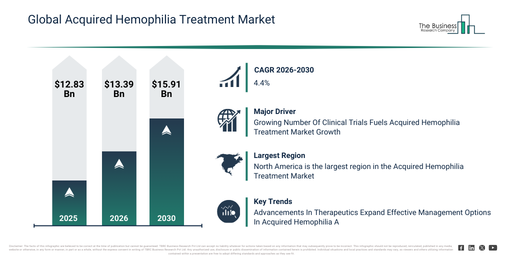
    The acquired hemophilia treatment market size has demonstrated consistent expansion in recent years. This market is expected to increase from $12.83 billion in 2025 to $13.39 billion in 2026, exhibiting a compound annual growth rate (CAGR) of 4.4%. The growth observed in prior periods stemmed from several factors, including the limited access to specialized hemophilia therapies, an increase in the prevalence of acquired hemophilia cases, a reliance on hospital-centric care, enhanced awareness regarding bleeding disorders, and the adoption of on-demand treatment protocols.

    The market for acquired hemophilia treatment is projected to experience consistent expansion over the upcoming years. Its valuation is anticipated to reach $15.91 billion by 2030, exhibiting a compound annual growth rate (CAGR) of 4.4%. This projected growth during the forecast timeframe is attributable to several factors, including breakthroughs in gene therapy technology, wider acceptance of prophylaxis treatment, the rise of personalized medicine approaches in hematology, escalating investments in hemophilia research, and improved availability of sophisticated treatment choices in developing areas. Key trends identified for the forecast period encompass a greater uptake of clotting factor replacement therapies, increased application of gene therapy for preventing hemophilia, the broadening of personalized treatment strategies for acquired hemophilia, enhanced awareness and initiatives for early diagnosis, and a concentrated effort on minimizing bleeding incidents and eliminating inhibitors.

    Get A Free Sample Report With In-Depth Market Insights:

    https://thebusinessresearchcompany.com/sample_request?id=42106255&type=smp&name=Acquired%20Hemophilia%20Treatment%20Market%20Report%202026&utm_source=Blogs&utm_medium=Paid&utm_campaign=Oct_PR

    Acquired Hemophilia Treatment Market Expansion Drivers: What’s Shaping Future Growth?

    An increasing number of active clinical trials is projected to fuel the future growth of the acquired hemophilia treatment market. These research studies involve human participants to assess the safety and effectiveness of novel medical treatments, interventions, or diagnostic procedures. Specifically, clinical trials evaluate the safety and efficacy of new treatments for acquired hemophilia, thereby advancing research to enhance patient outcomes and develop effective therapeutic interventions. For instance, in December 2024, the Association of the British Pharmaceutical Industry, a UK-based trade association, noted that the count of pharmaceutical industry trials launched in the UK grew for the second consecutive year, climbing from 411 in 2022 to 426 in 2023. Consequently, a growing number of ongoing clinical trials is driving the expansion of the acquired hemophilia treatment market.

    Acquired Hemophilia Treatment Market Segment Analysis And Revenue Potential

    The acquired hemophilia treatment market covered in this report is segmented –

    1) By Treatment Approach: Bleeding Control Therapy (On-Demand Treatment), Inhibitor Eradication Therapy (Immunosuppressive Treatment)

    2) By Route of Administration: Intravenous, Subcutaneous

    3) By End User: Hospitals, Specialty Hematology Clinics, Other End Users

    Subsegments:

    1) By Bleeding Control Therapy (On-Demand Treatment): Bypassing Agents, Recombinant Activated Factor VII (rFVIIa), Activated Prothrombin Complex Concentrates (aPCC), Recombinant Porcine Factor VIII, Desmopressin

    2) By Inhibitor Eradication Therapy (Immunosuppressive Treatment): Corticosteroid Monotherapy, Corticosteroids + Cytotoxic Agents (e.g., Cyclophosphamide), Rituximab-Based Immunotherapy, Combination Immunosuppressive Regimens

    Acquired Hemophilia Treatment Market Strategic Trends: What Defines The Next Growth Phase?

    Major companies in the acquired hemophilia treatment market are prioritizing the development of drugs with advanced features and securing their authorization to maintain their competitive position. Approvals for drugs intended for routine prophylaxis are on the rise, primarily driven by the demand for more effective and safer options. For instance, in June 2023, Chugai Pharmaceutical Co., Ltd., a pharmaceutical company based in Japan, disclosed the final analysis data from its Japanese Phase III clinical trial (AGEHA Study) involving Hemlibra (emicizumab) for acquired hemophilia A at the 31st ISTH Annual Congress. The trial enrolled patients receiving immunosuppressive therapy as well as those for whom such therapy was not suitable. Hemlibra exhibited sustained effectiveness in controlling bleeding episodes, thus supporting its wider use in individuals with acquired hemophilia A who require timely and efficient treatment.

    Acquired Hemophilia Treatment Market Key Players Shaping Industry Direction

    Major companies operating in the acquired hemophilia treatment market are Roche Holding AG, Novo Nordisk A/S, Takeda Pharmaceutical Company Limited, Pfizer Inc., Bayer AG, CSL Limited, Grifols SA, Octapharma AG, Kedrion Biopharma Inc., Sanofi SA, Sobi Inc., Chugai Pharmaceutical Co. Ltd., Novartis AG, Bristol-Myers Squibb Company, Johnson & Johnson, Medexus Pharmaceuticals Inc., Ferring Pharmaceuticals BV, Hema Biologics LLC, Bio Products Laboratory Ltd., LFB SA

    View The Full Acquired Hemophilia Treatment Market Report:

    https://thebusinessresearchcompany.com/report/acquired-hemophilia-treatment-global-market-report?utm_source=Blogs&utm_medium=Paid&utm_campaign=Oct_PR

    Acquired Hemophilia Treatment Market Geographic Landscape: Which Region Leads Industry Growth?

    North America was the largest region in the acquired hemophilia treatment market in 2025. Asia-Pacific is expected to be the fastest-growing region in the forecast period. The regions covered in the acquired hemophilia treatment market report are Asia-Pacific, South East Asia, Western Europe, Eastern Europe, North America, South America, Middle East, Africa.

    Reach Out To Our Team:

    The Business Research Company: https://www.thebusinessresearchcompany.com/

    Americas: +1 310-496-7795

    Asia: +44 7882 955267 & +91 8897263534

    Europe: +44 7882 955267

    Email us at: marketing@tbrc.info

    Follow us on:

    LinkedIn: https://in.linkedin.com/company/the-business-research-company

    YouTube: https://www.youtube.com/channel/UC24_fI0rV8cR5DxlCpgmyFQ

    Global Market Model: https://www.thebusinessresearchcompany.com/global-market-model
  • Acoustic Neuroma Market Size And Growth In 2026: Key Factors Shaping Future Demand

    Acoustic Neuroma Market Size And Growth In 2026: Key Factors Shaping Future Demand

    Built to provide research that’s more actionable and strategically valuable, The Business Research Company’s 2026 market reports include market attractiveness analysis, total addressable market sizing, company benchmarking matrices, interactive Excel dashboards, broader supply chain intelligence, emerging startup tracking, and in-depth product insights.

    Acoustic Neuroma Market Revenue Growth On Track For A 7.1% CAGR Through 2030

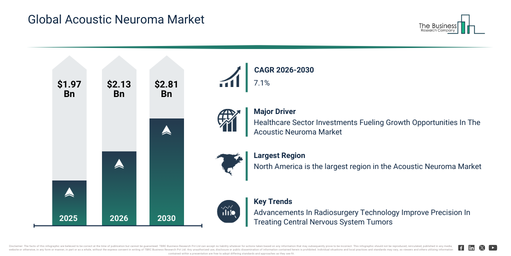
    The acoustic neuroma market size has experienced significant growth in recent years. It is projected to expand from $1.97 billion in 2025 to $2.13 billion in 2026, demonstrating a compound annual growth rate (CAGR) of 8.2%. This historical growth can be linked to limited awareness of acoustic neuroma, reliance on conventional radiation therapy, the slow adoption of advanced imaging modalities, an increasing prevalence of hearing disorders, and limited surgical treatment centers.

    The acoustic neuroma market is projected to experience robust expansion over the coming years. This market is anticipated to reach a valuation of $2.81 billion by 2030, exhibiting a compound annual growth rate (CAGR) of 7.1%. Factors contributing to this growth trajectory during the forecast period include innovations in MRI and CT-scan technologies, the expansion of proton therapy and stereotactic radiosurgery, increased investments in healthcare facilities like hospitals and surgical centers, heightened patient awareness leading to earlier diagnoses, and the proliferation of specialized treatment facilities. Key trends expected during the forecast timeframe encompass the wider embrace of sophisticated imaging methods, a growing inclination towards less invasive therapeutic options, continued development in proton therapy and stereotactic radiosurgery, the broadening of personalized treatment strategies, and enhanced understanding of vestibular schwannoma symptoms.

    Get A Free Sample Report With In-Depth Market Insights:

    https://thebusinessresearchcompany.com/sample_request?id=69703365&type=smp&name=Acoustic%20Neuroma%20Market%20Report%202026&utm_source=Blogs&utm_medium=Paid&utm_campaign=Oct_PR

    Acoustic Neuroma Market Development Factors: What’s Supporting Demand?

    The expanding financial commitments within the healthcare sector are anticipated to fuel the progression of the acoustic neuroma market in the coming period. The healthcare sector encompasses an extensive array of services and facilities focused on advancing health, delivering medical services, and enhancing the overall welfare of individuals and communities. Increased capital allocation in healthcare stems from factors such as growing demand, advancements in technology, shifts in regulations, and worldwide health crises. These investments specifically foster innovation in diagnostic methods and therapeutic approaches for acoustic neuroma conditions, thereby improving patient recovery and overall quality of life. For instance, in April 2025, the Office for National Statistics, a UK-based independent producer of official statistics, reported that the UK’s healthcare spending in 2024 attained approximately £317 billion, signifying a 6.5% nominal rise compared with 2023. Consequently, the escalating investment in the healthcare sector is a primary impetus behind the expansion of the acoustic neuroma market.

    Acoustic Neuroma Market Segmentation And Category Overview

    The acoustic neuroma market covered in this report is segmented –

    1) By Type: Unilateral Vestibular Schwannomas, Bilateral Vestibular Schwannomas

    2) By Treatment Type: Radiation Therapy, Proton Therapy, Stereotactic Radiosurgery

    3) By Diagnosis Type: Magnetic Resonance Imaging (MRI), Hearing Tests

    4) By End User: Hospitals, Surgical Centers

    Subsegments:

    1) By Unilateral Vestibular Schwannomas: Small Unilateral Vestibular Schwannomas, Medium Unilateral Vestibular Schwannomas, Large Unilateral Vestibular Schwannomas

    2) By Bilateral Vestibular Schwannomas: Familial Bilateral Vestibular Schwannomas, Sporadic Bilateral Vestibular Schwannomas

    Acoustic Neuroma Market Transformation Trends: What Innovations Are Driving Change?

    Leading companies operating in the acoustic neuroma market are concentrating on developing sophisticated solutions, such as high-precision image-guided delivery, to boost treatment precision, lessen harm to surrounding tissues, and better patient results. High-precision image-guided delivery is a technological feature within radiosurgery that enables real-time tumor targeting and tracking, ensuring accurate radiation delivery to the affected zone. An example includes Accuray Incorporated, a US-based medical device firm focused on advanced radiosurgery systems, which revealed new clinical data on its CyberKnife System in April 2025, showcasing its wide-ranging abilities for SRS and SBRT delivery. This system, engineered for central nervous system (CNS) tumors like acoustic neuroma, offers noninvasive, targeted treatment choices that enhance both safety and clinical effectiveness.

    Acoustic Neuroma Market Competitive Analysis Of Leading Industry Participants

    Major companies operating in the acoustic neuroma market are Pfizer Inc, F. Hoffmann-La Roche AG, Merck & Co. Inc., Sanofi S.A., AstraZeneca plc, Novartis AG, GSK plc, Amgen Inc., Teva Pharmaceuticals Industries Ltd, General Electric Company, Siemens Healthineers, Canon Medical Systems Corporation, Toshiba Medical Systems Corporation, Shimadzu Corporation, Varian Medical Systems, Elekta AB, Medtronic plc, Olympus Corporation, Cochlear Limited, Brainlab AG, Natus Medical Incorporated, Abbott Laboratories

    View The Full Acoustic Neuroma Market Report:

    https://thebusinessresearchcompany.com/report/acoustic-neuroma-global-market-report?utm_source=Blogs&utm_medium=Paid&utm_campaign=Oct_PR

    Acoustic Neuroma Market Largest Region: Which Geography Holds The Biggest Share?

    North America was the largest region in the acoustic neuroma market in 2025. The regions covered in the acoustic neuroma market report are Asia-Pacific, South East Asia, Western Europe, Eastern Europe, North America, South America, Middle East, Africa.

    Reach Out To Our Team:

    The Business Research Company: https://www.thebusinessresearchcompany.com/

    Americas: +1 310-496-7795

    Asia: +44 7882 955267 & +91 8897263534

    Europe: +44 7882 955267

    Email us at: marketing@tbrc.info

    Follow us on:

    LinkedIn: https://in.linkedin.com/company/the-business-research-company

    YouTube: https://www.youtube.com/channel/UC24_fI0rV8cR5DxlCpgmyFQ

    Global Market Model: https://www.thebusinessresearchcompany.com/global-market-model
  • Acne Vulgaris Market Forecast 2026–2030: Market Size, Trends And Growth Opportunities

    Acne Vulgaris Market Forecast 2026–2030: Market Size, Trends And Growth Opportunities

    Backed by market attractiveness analysis, total addressable market sizing, company benchmarking matrices, interactive Excel dashboards, wider supply chain intelligence, emerging startup coverage, and detailed product-level insights, The Business Research Company’s 2026 market reports are designed to offer research that is more actionable and strategically valuable than ever.

    Acne Vulgaris Market Value Growth And Long-Term Outlook

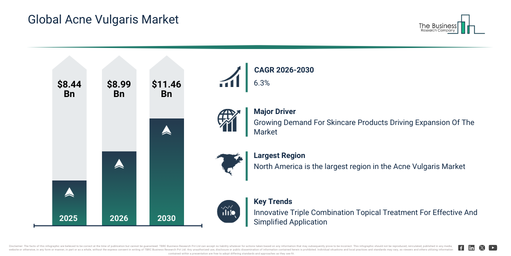
    The acne vulgaris market size has experienced significant expansion in recent years. It is anticipated to expand from $8.44 billion in 2025 to $8.99 billion in 2026, at a compound annual growth rate (CAGR) of 6.5%. The historical growth can be linked to the increasing occurrence of acne vulgaris among adolescents, a heightened awareness of dermatological treatments, the development of hospital and clinic networks, the accessibility of prescription acne medications, and a growing interest in cosmetic and skincare products.

    The acne vulgaris market is projected to experience robust expansion over the coming years, with its size set to reach $11.46 billion by 2030, driven by a compound annual growth rate (CAGR) of 6.3%. This growth during the forecast period can be attributed to several factors, including the advancement of targeted acne therapeutics, the wider embrace of teledermatology and digital health solutions, an increase in anti-inflammatory and retinoid product formulations, a growing desire for customized skincare regimens, and the proliferation of online pharmacy and e-commerce platforms. Key trends anticipated during this period encompass a heightened call for combination topical treatments, the increased integration of hormonal therapies in acne management, a rise in laser and light-based physical interventions, the broader use of oral retinoids and antibiotic therapies, and a growing inclination towards herbal, natural, and novel therapeutic options.

    Get A Free Sample Report With In-Depth Market Insights:

    https://thebusinessresearchcompany.com/sample_request?id=35583642&type=smp&name=Acne%20Vulgaris%20Market%20Report%202026&utm_source=Blogs&utm_medium=Paid&utm_campaign=Oct_PR

    Acne Vulgaris Market Industry Drivers: What’s Behind The Revenue Growth?

    The escalating need for skincare items is projected to fuel the expansion of the acne vulgaris market moving forward. Skincare products are specialized formulations crafted to improve skin health and aesthetic appeal, encompassing a wide array of goods that address various dermatological issues, from cleansing to hydration and environmental protection. This heightened consumer interest in skincare stems from influences such as social media, growing concerns about skin conditions, continuous product advancements, and a growing trend towards proactive skincare measures, all contributing to increased awareness. Skincare products play a crucial role in managing acne vulgaris by addressing its fundamental causes, including excessive sebum production, blocked pores, and bacterial proliferation, through the incorporation of active compounds like salicylic acid, benzoyl peroxide, and retinoids, which work to exfoliate, diminish inflammation, and foster clearer, healthier skin. For instance, in August 2024, the European cosmetics market, according to The Cosmetic, Toiletry and Perfumery Association (CTPA), a UK-based non-profit organization, was valued at €96 billion (approximately $105 billion) at retail sales price (RSP) in 2023, establishing it as one of the largest globally alongside the USA. This marked an increase from €88 billion (approximately $93 billion) RSP recorded in 2022. Consequently, the rising recognition of skincare’s importance is a significant factor driving the acne vulgaris market.

    Acne Vulgaris Market Segment Outlook: Which Categories Are Growing Fastest?

    The acne vulgaris market covered in this report is segmented –

    1) By Type: Systemic Therapy, Hormonal Therapy, Physical Treatment, Topical Combination Therapy, Other Types

    2) By Age Group: 10 To 17 Years, 18 To 44 Years, 45 To 64 Years

    3) By Distribution Channel: Hospital Pharmacies, Online Pharmacies

    Subsegments:

    1) By Systemic Therapy: Oral Antibiotics, Oral Retinoids, Oral Anti-Inflammatory Agents

    2) By Hormonal Therapy: Oral Contraceptives, Androgen Receptor Inhibitors

    3) By Physical Treatment: Laser Therapy, Light-Based Therapy, Chemical Peels, Microdermabrasion

    4) By Topical Combination Therapy: Retinoid And Antibiotic Combinations, Benzoyl Peroxide And Antibiotic Combinations, Retinoid And Benzoyl Peroxide Combinations

    5) By Other Types: Herbal And Natural Remedies, Biologic Therapies, Emerging Therapies

    #Acne Vulgaris Market Growth Trends: What’s Shaping The Future Outlook?

    Leading companies within the acne vulgaris market are prioritizing the development of novel solutions, specifically focusing on triple-combination topical treatments to deliver a simplified, once-daily application for acne vulgaris. These triple-combination topical treatments are formulations that unite three active ingredients, generally targeting various facets of a condition to offer enhanced therapeutic benefits for managing skin issues like acne or psoriasis. For example, in October 2023, Bausch Health Companies Inc., a Canada-based pharmaceutical company, announced that its product Cabtreo (clindamycin phosphate, adapalene, and benzoyl peroxide) had received Food and Drug Administration (FDA) approval. This topical gel is indicated for the treatment of acne vulgaris in patients aged 12 years and older. This advanced formulation brings together an antibiotic, a retinoid, and an antibacterial agent, effectively addressing acne lesions and preventing future occurrences. Cabtreo also offers a convenient application method and shows a favorable safety profile for a diverse patient population.

    Acne Vulgaris Market Leading Companies And Competitive Benchmarking

    Major companies operating in the acne vulgaris market are Pfizer Inc., Johnson and Johnson, AbbVie Inc., L’Oréal Paris, GlaxoSmithKline Plc., Reckitt Benckiser Group plc, Viatris Inc., Teva Pharmaceuticals, Bausch Health Companies, Sun Pharmaceutical Industries Ltd., Incyte, Aurobindo Pharma, Lupin Ltd., Torrent Pharmaceuticals, Biocon, Stiefel Laboratories, Mayne Pharma Group Limited, Paratek Pharmaceuticals, Cosmo Pharmaceuticals, AOBiome

    View The Full Acne Vulgaris Market Report:

    https://thebusinessresearchcompany.com/report/acne-vulgaris-global-market-report?utm_source=Blogs&utm_medium=Paid&utm_campaign=Oct_PR

    Acne Vulgaris Market Regional Analysis: Which Geography Leads On Revenue?

    North America was the largest region in the acne vulgaris market in 2025. Asia-Pacific is expected to be the fastest-growing region in the forecast period. The regions covered in the acne vulgaris market report are Asia-Pacific, South East Asia, Western Europe, Eastern Europe, North America, South America, Middle East, Africa.

    Reach Out To Our Team:

    The Business Research Company: https://www.thebusinessresearchcompany.com/

    Americas: +1 310-496-7795

    Asia: +44 7882 955267 & +91 8897263534

    Europe: +44 7882 955267

    Email us at: marketing@tbrc.info

    Follow us on:

    LinkedIn: https://in.linkedin.com/company/the-business-research-company

    YouTube: https://www.youtube.com/channel/UC24_fI0rV8cR5DxlCpgmyFQ

    Global Market Model: https://www.thebusinessresearchcompany.com/global-market-model
  • Acne Treatments Market Size Reaches $9.36 Billion In 2026: What Is Driving Growth?

    Acne Treatments Market Size Reaches $9.36 Billion In 2026: What Is Driving Growth?

    Featuring market attractiveness scoring, total addressable market sizing, company benchmarking matrices, interactive Excel dashboards, deeper supply chain intelligence, emerging startup tracking, and granular product-level insights, The Business Research Company’s 2026 market reports are built to deliver research that is both more actionable and more strategically valuable.

    Acne Treatments Market Poised To Hit $11.81 Billion By 2030 With A 6% CAGR

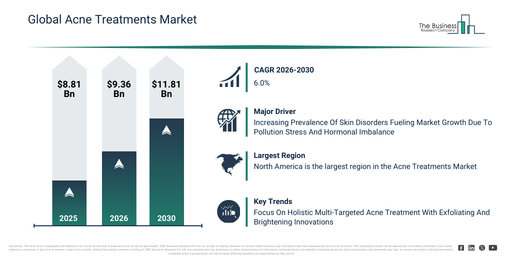
    The acne treatments market size has witnessed substantial growth in recent years. It is forecast to increase from $8.81 billion in 2025 to $9.36 billion in 2026, reflecting a compound annual growth rate (CAGR) of 6.3%. This historical expansion can be attributed to the rising prevalence of acne among various age groups, wider availability of dermatological treatments, the growth of clinical dermatology practices, increasing acceptance of prescription acne medications, and the expansion of skincare-focused healthcare services.

    The acne treatments market is anticipated to experience robust expansion over the coming years. It is projected to reach $11.81 billion by 2030, demonstrating a compound annual growth rate (CAGR) of 6.0%. This growth during the forecast period can be primarily ascribed to factors such as a heightened demand for customized dermatology solutions, the increasing embrace of cutting-edge therapeutic acne treatments, the broadening availability of teledermatology services, an intensified emphasis on preventing scars and repairing skin, and the greater incorporation of digital tools for skin assessment. Key trends anticipated within this period involve the wider acceptance of combination acne therapies, a surge in demand for tailored acne treatment programs, expanded utilization of topical prescription medications, the proliferation of laser and light-based treatments for acne, and a stronger commitment to managing long-term skin health.

    Get A Free Sample Report With In-Depth Market Insights:

    https://thebusinessresearchcompany.com/sample_request?id=31999764&type=smp&name=Acne%20Treatments%20Market%20Report%202026&utm_source=Blogs&utm_medium=Paid&utm_campaign=Oct_PR

    Acne Treatments Market Growth Factors: What’s Supporting Expansion?

    The rising occurrence of skin conditions is anticipated to fuel the expansion of the acne treatments market in the future. A skin disorder describes any health ailment impacting the skin, leading to alterations in its look, feel, or performance. The growing incidence of these conditions stems from increased pollution, stress, and hormonal imbalances, prompting individuals to seek specific treatments that offer clear outcomes, reduce adverse effects, and integrate smoothly into daily life. Acne treatments prove advantageous for various skin disorders by effectively reducing inflammation, stopping breakouts, and aiding the recovery of compromised skin. For example, in July 2024, according to Cancer Research UK, a UK-based charity, the average annual new melanoma skin cancer cases in the UK were around 20,800 between 2023-2025, a figure projected to increase to 26,500 by 2038-2040. Consequently, the escalating prevalence of skin disorders is propelling the growth of the acne treatments market.

    Acne Treatments Market Segment Landscape: Which Areas Lead Development?

    The acne treatments market covered in this report is segmented –

    1) By Product: Retinoids, Antibiotics, Isotretinoin, Other Products

    2) By Acne Type: Inflammatory Acne, Cystic Acne, Post-Surgical Or Wound Acne

    3) By Treatment: Medication, Therapeutic, Laser Treatment

    4) By End User: Hospitals, Clinics, Ambulatory Surgical Centers

    Subsegments:

    1) By Retinoids: Topical Retinoids, Oral Retinoids

    2) By Antibiotics: Topical Antibiotics, Oral Antibiotics

    3) By Isotretinoin: Oral Isotretinoin, Topical Isotretinoin

    4) By Other Products: Benzoyl Peroxide, Salicylic Acid, Hormonal Treatments, Herbal And Natural Products, Combination Formulations

    Acne Treatments Market Industry Trends: What’s Reshaping Demand?

    Major companies operating in the acne treatments market are prioritizing the holistic and multi-targeted acne treatment trend, specifically incorporating multi-functional exfoliating and brightening formulations. This approach seeks to provide consumers with effective solutions that not only treat acne but also improve skin texture and reduce discoloration. These multi-functional formulations integrate ingredients designed to gently remove dead skin cells, diminish dark spots, and enhance overall skin tone. For example, in November 2024, Proactiv Company, a US-based skincare company, introduced four new dermatologist-developed products aimed at addressing acne and related concerns such as skin texture, hyperpigmentation, and body blemishes. The newly launched range features a salicylic acid cleanser, a brightening resurfacing mask, a blemish control body cream, and a travel-sized mini kit, collectively offering a comprehensive and effective acne treatment routine for clearer, healthier skin.

    Acne Treatments Market Industry Leaders And Competitive Landscape

    Major companies operating in the acne treatments market are Pfizer Inc., Johnson & Johnson, AbbVie Inc., Bayer AG, Sanofi S.A., L’Oréal S.A., GlaxoSmithKline plc, Teva Pharmaceutical Industries Ltd., Shiseido Company Ltd., Sun Pharmaceutical Industries Ltd., Dr. Reddy’s Laboratories Ltd., Zydus Lifesciences Ltd., Glenmark Pharmaceuticals Ltd., Almirall S.A., Cipher Pharmaceuticals, Diomed Developments Limited, Galderma S.A., Bausch Health Companies Inc., F. Hoffmann-La Roche Ltd., Novartis AG, Leo Pharma A/S, Mayne Pharma Group Ltd.

    View The Full Acne Treatments Market Report:

    https://thebusinessresearchcompany.com/report/acne-treatments-global-market-report?utm_source=Blogs&utm_medium=Paid&utm_campaign=Oct_PR

    Acne Treatments Market Geographic Spread And Regional Opportunities

    North America was the largest region in the acne treatments market in 2025. Asia-Pacific is expected to be the fastest-growing region in the forecast period. The regions covered in the acne treatments market report are Asia-Pacific, South East Asia, Western Europe, Eastern Europe, North America, South America, Middle East, Africa.

    Reach Out To Our Team:

    The Business Research Company: https://www.thebusinessresearchcompany.com/

    Americas: +1 310-496-7795

    Asia: +44 7882 955267 & +91 8897263534

    Europe: +44 7882 955267

    Email us at: marketing@tbrc.info

    Follow us on:

    LinkedIn: https://in.linkedin.com/company/the-business-research-company

    YouTube: https://www.youtube.com/channel/UC24_fI0rV8cR5DxlCpgmyFQ

    Global Market Model: https://www.thebusinessresearchcompany.com/global-market-model
  • Acne Treatment Devices Market Valued At $9.54 Billion In 2026: Key Trends And Growth Drivers

    Acne Treatment Devices Market Valued At $9.54 Billion In 2026: Key Trends And Growth Drivers

    Built to provide research that’s more actionable and strategically valuable, The Business Research Company’s 2026 market reports include market attractiveness analysis, total addressable market sizing, company benchmarking matrices, interactive Excel dashboards, broader supply chain intelligence, emerging startup tracking, and in-depth product insights.

    Acne Treatment Devices Market Size And Revenue Outlook Through 2030

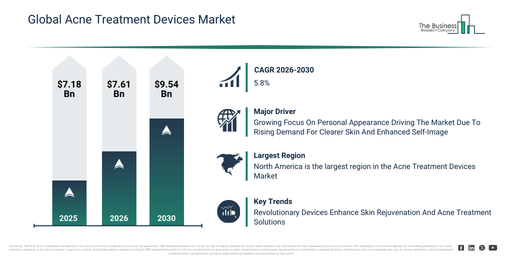
    The acne treatment devices market size has experienced robust growth in recent years. It is anticipated to increase from $7.18 billion in 2025 to $7.61 billion in 2026, exhibiting a compound annual growth rate (CAGR) of 6.0%. This historical growth can be attributed to several factors, including the limited availability of advanced acne treatment devices, growing acne prevalence among adolescents, rising awareness of skincare solutions, early adoption of light and laser therapies in dermatology, and an increasing number of dermatology clinic establishments.

    The acne treatment devices market is anticipated to show significant expansion over the next few years. It is expected to grow to $9.54 billion in 2030, demonstrating a compound annual growth rate (CAGR) of 5.8%. This growth during the forecast period can be linked to technological progress in LED, RF, and laser devices, the expansion of home-use options for acne treatment, increased investment in dermatology and beauty clinics, the growing integration of AI and smart technologies into devices, and a rising preference for non-invasive skin treatments. Notable trends predicted for the forecast period include the increasing adoption of light-based acne treatment devices, a rising demand for home-use dermatology devices, the proliferation of beauty and wellness clinics offering device-based therapies, an escalating preference for minimally invasive skin treatments, and the growing utilization of LED and microneedling devices in acne management.

    Get A Free Sample Report With In-Depth Market Insights:

    https://thebusinessresearchcompany.com/sample_request?id=64106445&type=smp&name=Acne%20Treatment%20Devices%20Market%20Report%202026&utm_source=Blogs&utm_medium=Paid&utm_campaign=Oct_PR

    Acne Treatment Devices Market Demand Drivers: What’s Powering Industry Growth?

    An increasing emphasis on personal appearance is anticipated to drive the expansion of the acne treatment devices market in the future. Personal appearance encompasses the external image a person projects through their grooming, attire, cleanliness, and overall physical display. This heightened attention to personal appearance stems from the visual culture prevalent on social media and a rising importance placed on self-expression and individual branding. Acne treatment devices significantly contribute to personal appearance by offering effective remedies for achieving clearer skin, which in turn enhances individual self-confidence and promotes a refined and well-cared-for look. As an illustration, in August 2024, the Bureau of Labor Statistics, a US-based federal agency, projected that employment in personal care and service occupations will experience above-average growth from 2023 to 2033, creating roughly 794,500 annual openings attributable to both expansion and the necessity of replacing workers. Consequently, the increasing emphasis on personal appearance is fueling the expansion of the acne treatment devices market.

    Acne Treatment Devices Market Segments: Where Is Growth Concentrated?

    The acne treatment devices market covered in this report is segmented –

    1) By Type: Light Therapy Devices, Microneedling Devices, Laser Therapy Devices, High-Frequency Devices, LED Acne Treatment Devices

    2) By Technology: Blue Light Therapy, Red Light Therapy, Fractional Laser, Radio Frequency Technology, Microcurrent Technology

    3) By Distribution Channel: Online Sales, Retail Pharmacies, Direct Sales, Beauty And Wellness Stores, Hypermarkets And Supermarkets

    4) By Application: Home Use, Dermatology Clinics, Beauty Clinics, Other Applications

    Subsegments:

    1) By Light Therapy Devices: Infrared Light Therapy, Yellow Light Therapy, Green Light Therapy, Pulsed Light Therapy

    2) By Microneedling Devices: Manual Dermarollers, Automated Microneedling Pens, Microneedling RF Devices, Microneedling Cartridges

    3) By Laser Therapy Devices: Carbon Dioxide (CO2) Lasers, Erbium YAG Lasers, Diode Lasers, Pulsed Dye Lasers (PDL)

    4) By High-Frequency Devices: Argon Gas Electrodes, Neon Gas Electrodes, Portable High-Frequency Wands, Salon-Grade High-Frequency Machines

    5) By LED Acne Treatment Devices: Multispectrum LED Devices, Wearable LED Masks, Handheld LED Devices, Professional LED Panels

    Acne Treatment Devices Market Innovation Trends: What Developments Are Reshaping The Industry?

    Leading companies in the acne treatment devices market are concentrating on developing novel advanced skin treatment devices, aiming to introduce state-of-the-art skincare technologies designed to address various skin concerns and improve treatment efficacy. Advanced skin treatment devices are defined as electronic or mechanical tools employing technologies like light therapy, radiofrequency, lasers, or ultrasound to manage diverse skin conditions, including acne, wrinkles, and pigmentation, thereby offering non-invasive options for skin rejuvenation and care. An example is Skinnovation Pvt. Ltd., an India-based dermatology company, which, in October 2024, introduced two advanced medical devices: Meta Cell Technology (MCT) and MIRApeel. The MCT device works by enhancing regenerative treatments such as platelet-rich plasma (PRP) and exosomes through the use of photothermal energy, facilitating skin rejuvenation and tissue repair. Concurrently, MIRApeel functions as a medi-facial device, combining hydrodermabrasion with serum-infused microchanneling to provide customized treatments for issues like pigmentation, acne scars, and uneven skin texture, thus delivering a comprehensive solution for improved skin health.

    Acne Treatment Devices Market Key Participants And Competitive Landscape

    Major companies operating in the acne treatment devices market are AbbVie Inc., L’Oréal S.A., Bausch Health Companies Inc., Conair Corp., Lumenis, Cynosure Inc., Syneron Medical, Alma Lasers, Cutera Inc., Venus Concept Ltd., Foreo, Palomar Medical Technologies, Sciton Inc., Quanta System S.p.A., TRIA Beauty, BeautyBio, LED Technologies Inc., LightStim, Pulsaderm, Rika Beauty.

    View The Full Acne Treatment Devices Market Report:

    https://thebusinessresearchcompany.com/report/acne-treatment-devices-global-market-report?utm_source=Blogs&utm_medium=Paid&utm_campaign=Oct_PR

    Acne Treatment Devices Market Top Region By Revenue And Market Share

    North America was the largest region in the acne treatment devices market in 2025. Asia-Pacific is expected to be the fastest-growing region in the forecast period. The regions covered in the acne treatment devices market report are Asia-Pacific, South East Asia, Western Europe, Eastern Europe, North America, South America, Middle East, Africa.

    Reach Out To Our Team:

    The Business Research Company: https://www.thebusinessresearchcompany.com/

    Americas: +1 310-496-7795

    Asia: +44 7882 955267 & +91 8897263534

    Europe: +44 7882 955267

    Email us at: marketing@tbrc.info

    Follow us on:

    LinkedIn: https://in.linkedin.com/company/the-business-research-company

    YouTube: https://www.youtube.com/channel/UC24_fI0rV8cR5DxlCpgmyFQ

    Global Market Model: https://www.thebusinessresearchcompany.com/global-market-model
  • Acne Teledermatology Market Size In 2026: Growth Outlook And Forecast Through 2030

    Acne Teledermatology Market Size In 2026: Growth Outlook And Forecast Through 2030

    Backed by market attractiveness analysis, total addressable market sizing, company benchmarking matrices, interactive Excel dashboards, wider supply chain intelligence, emerging startup coverage, and detailed product-level insights, The Business Research Company’s 2026 market reports are designed to offer research that is more actionable and strategically valuable than ever.

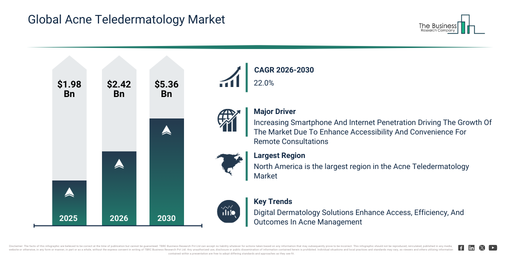
    Acne Teledermatology Market Growth From $2.42 Billion In 2026 To $5.36 Billion By 2030 At A CAGR Of 22%

    The acne teledermatology market size has experienced significant growth in recent years. It is projected to expand from $1.98 billion in 2025 to $2.42 billion in 2026, achieving a compound annual growth rate (CAGR) of 22.3%. Several factors contributed to its historical growth, including the growth of telemedicine adoption, rising prevalence of acne conditions, increased smartphone penetration, expansion of digital healthcare platforms, and improved acceptance of remote consultations.

    The acne teledermatology market is anticipated to experience substantial growth in the upcoming years, projected to reach $5.36 billion by 2030, exhibiting a compound annual growth rate (CAGR) of 22.0%. This expansion over the forecast period is driven by factors such as the increasing demand for personalized digital dermatology care, greater investments in telehealth platforms, the broadening of AI-assisted skin analysis tools, a rising emphasis on preventive dermatology, and enhanced integration with electronic health records. Prominent trends expected during this period include a greater embrace of image-based remote acne diagnosis, expanded utilization of app-based dermatology platforms, an evolving preference for hybrid teledermatology models, the proliferation of personalized acne treatment protocols, and a heightened focus on continuous treatment monitoring.

    Get A Free Sample Report With In-Depth Market Insights:

    https://thebusinessresearchcompany.com/sample_request?id=33467959&type=smp&name=Acne%20Teledermatology%20Market%20Report%202026&utm_source=Blogs&utm_medium=Paid&utm_campaign=Oct_PR

    Acne Teledermatology Market Growth Drivers: What’s Behind The Acceleration?

    The expanding adoption of smartphones and internet access is anticipated to drive the future growth of the acne teledermatology market. This penetration refers to the widespread usage and acceptance of these services among the population. The rise in smartphone and internet penetration is attributed to the increasing affordability and accessibility of mobile devices and online services, alongside improvements in network infrastructure and broader coverage in both urban and suburban regions. Enhanced smartphone and internet access makes it more convenient for individuals to utilize teledermatology platforms, enabling patients to remotely consult dermatologists, share high-quality images of their acne, receive timely diagnoses, and follow personalized treatment plans without the necessity of in-person visits. For instance, in May 2025, according to the Federal Communications Commission, a US-based government agency, total connections increased by approximately 2.5% between June 2023 and June 2024, reaching 549 million. Mobile connections advanced 2.5% year over year to 416 million as of June 2024, while fixed connections saw an increase of about 2.3% to 133 million during the same timeframe. Consequently, the rising smartphone and internet penetration is a significant driver for the growth of the acne teledermatology market.

    Acne Teledermatology Market Segment Analysis: What Are The Core Market Categories?

    The acne teledermatology market covered in this report is segmented –

    1) By Service Type: Store-And-Forward, Real-Time, Hybrid

    2) By Acne Type: Mild, Moderate, Severe

    3) By Platform: Web-Based, App-Based

    4) By End-Users: Hospitals And Clinics, Homecare, Dermatology Centers, Other End-Users

    Subsegments:

    1) By Store-And-Forward: Asynchronous Image-Based Consultations, Delayed Review Teleconsultations, Patient Data Upload Services, Specialist Follow-Up Reviews

    2) By Real-Time: Live Video Consultations, Synchronous Teleconsultations, Interactive Patient-Specialist Sessions, Real-Time Diagnostic Support

    3) By Hybrid: Combined Asynchronous and Synchronous Consultations, Mixed-Mode Teledermatology Services, Integrated Patient Monitoring and Consultation, Multi-Channel Dermatology Services

    Acne Teledermatology Market Trends: What’s Defining The Industry’s Next Phase?

    Leading companies in the acne teledermatology market are concentrating on employing innovative technologies such as artificial intelligence (AI)-driven skin analysis to deliver personalized, remote, and efficient solutions for acne diagnosis and treatment. AI-powered skin analysis involves the application of AI algorithms to assess skin conditions from images or scans, aiding in determining acne severity, monitoring changes over time, and recommending tailored treatments effectively and remotely. For instance, in September 2025, Nolla Health AS, a Norway-based digital healthcare company, launched its AI-powered Acne Treatment App in the U.S. This platform offers a teledermatology service that combines real-time skin scans, clinician-reviewed treatment plans, and custom-compounded medications shipped directly to patients’ homes, thereby making personalized acne care more accessible and convenient across 40+ states. The platform utilizes proprietary AI models to continuously observe patients’ skin, track the progress of treatment, and dynamically adjust care plans, which reduces the necessity for in-person consultations and shortens the average waiting time to receive effective treatment. Nolla Health AS integrates AI with clinician oversight to provide a comprehensive, end-to-end solution that improves patient outcomes, lowers costs, and modernizes acne management in the digital healthcare sector.

    Acne Teledermatology Market Top Companies Driving Competitive Growth

    Major companies operating in the acne teledermatology market are Teladoc Health Inc., Doctolib SAS, Amwell Inc., Curology Inc., Zocdoc Inc., Doctor Anywhere Pte. Ltd., Practo Technologies Private Limited, Skin + Me Ltd, Altibbi UK Ltd., Clinikally Ltd., SkyMD Inc., Dermatica Ltd., Cureskin Ltd., MetaOptima Technology Inc., First Derm Inc., Miiskin Ltd., Strut Health LLC, DermCafé Ltd., Nolla Health Inc., Acne Connect Inc.

    View The Full Acne Teledermatology Market Report:

    https://thebusinessresearchcompany.com/report/acne-teledermatology-global-market-report?utm_source=Blogs&utm_medium=Paid&utm_campaign=Oct_PR

    Acne Teledermatology Market Regional Analysis And Top Geography

    North America was the largest region in the acne teledermatology market in 2025. Asia-Pacific is expected to be the fastest-growing region in the forecast period. The regions covered in the acne teledermatology market report are Asia-Pacific, South East Asia, Western Europe, Eastern Europe, North America, South America, Middle East, Africa.

    Reach Out To Our Team:

    The Business Research Company: https://www.thebusinessresearchcompany.com/

    Americas: +1 310-496-7795

    Asia: +44 7882 955267 & +91 8897263534

    Europe: +44 7882 955267

    Email us at: marketing@tbrc.info

    Follow us on:

    LinkedIn: https://in.linkedin.com/company/the-business-research-company

    YouTube: https://www.youtube.com/channel/UC24_fI0rV8cR5DxlCpgmyFQ

    Global Market Model: https://www.thebusinessresearchcompany.com/global-market-model