Blog

  • Acne Pimple Patches Market Trends Supporting 11.4% CAGR Growth Through 2030

    Acne Pimple Patches Market Trends Supporting 11.4% CAGR Growth Through 2030

    Featuring market attractiveness scoring, total addressable market sizing, company benchmarking matrices, interactive Excel dashboards, deeper supply chain intelligence, emerging startup tracking, and granular product-level insights, The Business Research Company’s 2026 market reports are built to deliver research that is both more actionable and more strategically valuable.

    Acne Pimple Patches Market Expansion Outlook: What Revenue Opportunities Are Ahead?

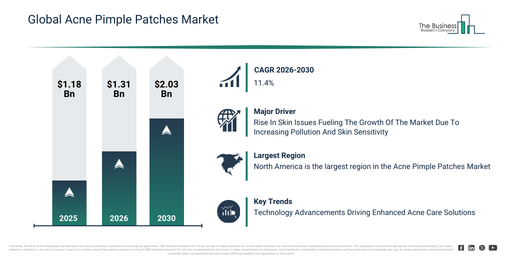
    The acne pimple patches market has witnessed rapid growth in recent years. It is anticipated to increase from $1.18 billion in 2025 to $1.31 billion in 2026, achieving a compound annual growth rate (CAGR) of 11.7%. This historical expansion can be ascribed to several factors, including the rising prevalence of acne among teenagers and adults, enhanced awareness of non-invasive acne care solutions, the development of personal skincare routines, the proliferation of over-the-counter dermatology products, and the growing influence of social media skincare trends.

    The acne pimple patches market size is projected to experience substantial growth in the upcoming years. It is foreseen to expand to $2.03 billion by 2030, exhibiting a compound annual growth rate (CAGR) of 11.4%. This anticipated growth is driven by several factors, including the increasing consumer demand for clean-label skincare products, a rise in the adoption of targeted spot treatment solutions, the broadening of e-commerce skincare channels, an escalating focus on multifunctional acne patches, and a growing consumer preference for quick-action acne care. Prominent trends throughout the forecast period involve an increasing demand for hydrocolloid-based acne solutions, the rising popularity of invisible and daywear patches, a growing utilization of ingredient-infused acne patches, the expansion of online skincare product distribution, and an enhanced focus on skin-safe adhesive technologies.

    Get A Free Sample Report With In-Depth Market Insights:

    https://thebusinessresearchcompany.com/sample_request?id=71889068&type=smp&name=Acne%20Pimple%20Patches%20Market%20Report%202026&utm_source=Blogs&utm_medium=Paid&utm_campaign=Oct_PR

    Acne Pimple Patches Market Growth Factors Behind Sustained Expansion

    The growing occurrence of skin conditions is expected to propel the acne pimple patches market going forward. Skin issues are conditions affecting the skin, which can manifest as rashes, inflammation, itchiness, or other changes. The increasing prevalence of these skin issues stems from rising pollution levels, which contribute to the problem by exposing skin to harmful airborne particles such as dust, smoke, and chemical pollutants. Acne pimple patches help address these concerns by forming a protective barrier that absorbs pus and oil, prevents bacterial contamination, reduces inflammation, and promotes faster healing with less risk of scarring. For instance, in October 2023, according to the European Academy of Dermatology and Venereology (EADV), a Switzerland-based nonprofit professional medical organization in Europe, approximately 43% of EU citizens reported having at least one skin disease in the previous 12 months, with fungal skin infections ranking among the most common conditions. Therefore, the increasing prevalence of skin issues is a key driver for the acne pimple patches market.

    Acne Pimple Patches Market Segment Breakdown: Which Categories Lead On Revenue?

    The acne pimple patches market covered in this report is segmented –

    1) By Type: Hydrocolloid Patches, Salicylic Acid Patches

    2) By Age Group: Teenagers, Adults

    3) By Distribution Channel: Online Stores, Supermarkets Or Hypermarkets, Specialty Stores, Pharmacies, Other Distribution Channels

    Subsegments:

    1) By Hydrocolloid Patches: Tea Tree Oil, Niacinamide, Transparent Hydrocolloid, Tinted Or Invisible Finish, Spot Treatment Dots, Microdart Hydrocolloid Patches

    2) By Salicylic Acid Patches: Low-Concentration (0.5–1%), Medium-Concentration (1–2%), Beta Hydroxy Acid or Alpha Hydroxy Acid, Soothing Ingredients, Overnight Patches, Daywear Patches

    Acne Pimple Patches Market Industry Trends Fueling Future Revenue Growth

    Major companies operating in the acne pimple patches market are prioritizing the development of innovative products, such as advanced hydrocolloid and microneedle patch technology, to improve the effectiveness of early-stage acne treatment and skin healing. This hydrocolloid and microneedle patch technology combines a hydrocolloid polymer layer with self-dissolving microneedles that penetrate the skin to deliver active ingredients directly beneath the surface, thereby enabling targeted delivery of actives, deeper absorption, and a potentially faster reduction of blemishes. For instance, in December 2023, Peace Out Skincare, a US-based clean-beauty skincare company, launched peace out early-stage acne dot, a patch designed to address early forming breakouts and minimize pimples before they fully surface. It incorporates 430 self-dissolving microneedles, along with 2% salicylic acid, niacinamide, and succinic acid, formulated to tackle clogged pores, excess sebum, and inflammation. The peace out early-stage acne dot aims to enhance proactive acne control, reduce redness and bump size, and support quicker surface-level healing in early acne lesions.

    Acne Pimple Patches Market Leading Players And Competitive Positioning

    Major companies operating in the acne pimple patches market are Neogen Dermalogy, Peace Out Skincare, Julep Beauty Inc., Peach & Lily, Dr. Jart+, Rael Beauty, Clearasil, Patchology LLC, Starface LLC, The Inkey List, DermaAngel, Acropass, COSRX, ZitSticka, Peach Slices, MediPatch, Mediheal, Peter Thomas Roth, AcneFree, Soothe & Heal, TULA Skincare, Dot & Key

    View The Full Acne Pimple Patches Market Report:

    https://thebusinessresearchcompany.com/report/acne-pimple-patches-global-market-report?utm_source=Blogs&utm_medium=Paid&utm_campaign=Oct_PR

    Acne Pimple Patches Market Geographic Analysis: Where Is Demand Rising Fastest?

    North America was the largest region in the acne pimple patches market in 2025. Asia-Pacific is expected to be the fastest-growing region in the forecast period. The regions covered in the acne pimple patches market report are Asia-Pacific, South East Asia, Western Europe, Eastern Europe, North America, South America, Middle East, Africa.

    Reach Out To Our Team:

    The Business Research Company: https://www.thebusinessresearchcompany.com/

    Americas: +1 310-496-7795

    Asia: +44 7882 955267 & +91 8897263534

    Europe: +44 7882 955267

    Email us at: marketing@tbrc.info

    Follow us on:

    LinkedIn: https://in.linkedin.com/company/the-business-research-company

    YouTube: https://www.youtube.com/channel/UC24_fI0rV8cR5DxlCpgmyFQ

    Global Market Model: https://www.thebusinessresearchcompany.com/global-market-model

  • ACL Reconstruction Procedures Market Forecast Highlights A $11.2 Billion Opportunity For Industry Participants

    ACL Reconstruction Procedures Market Forecast Highlights A $11.2 Billion Opportunity For Industry Participants

    Built to provide research that’s more actionable and strategically valuable, The Business Research Company’s 2026 market reports include market attractiveness analysis, total addressable market sizing, company benchmarking matrices, interactive Excel dashboards, broader supply chain intelligence, emerging startup tracking, and in-depth product insights.

    ACL Reconstruction Procedures Market Growth Potential: How Will Market Size Shift Through 2030?

    The acl reconstruction procedures market has experienced robust expansion in recent years. It is anticipated to increase from $7.94 billion in 2025 to $8.48 billion in 2026, achieving a compound annual growth rate (CAGR) of 6.9%. This historical growth can be linked to factors such as the limited availability of skilled orthopedic surgeons, a rising occurrence of sports-related knee injuries, greater awareness of acl injuries, the implementation of conventional reconstruction techniques, and the development of hospital infrastructure.

    The acl reconstruction procedures market size is anticipated to experience substantial growth in the forthcoming years. It is projected to expand to $11.2 billion by 2030, demonstrating a compound annual growth rate (CAGR) of 7.2%. This market expansion within the forecast period is primarily driven by technological advancements in graft fixation devices, an increasing inclination towards minimally invasive surgeries, the growing participation in sports and associated injuries, the creation of improved rehabilitation programs, and the global spread of orthopedic care centers. Significant trends expected during the forecast period involve the rising uptake of arthroscopic and minimally invasive techniques, a developing preference for autograft and allograft procedures, an escalating demand for knee ligament reconstruction surgeries, the expansion of orthopedic clinics and ambulatory surgical centers, and an intensified focus on post-operative rehabilitation and patient outcomes.

    Get A Free Sample Report With In-Depth Market Insights:

    https://thebusinessresearchcompany.com/sample_request?id=16590259&type=smp&name=ACL%20Reconstruction%20Procedures%20Market%20Report%202026&utm_source=Blogs&utm_medium=Paid&utm_campaign=Oct_PR

    ACL Reconstruction Procedures Market Demand Drivers Opening New Revenue Streams

    The increasing incidence of injuries and events resulting from sports is projected to drive the expansion of the ACL reconstruction procedure market in the coming years. Sports injuries are defined as physical harms that can occur during athletic activities or exercise, manifesting as either acute or chronic conditions. Inadequate training methods, skeletal abnormalities, muscle weakness, and unsafe practices are among the factors contributing to sports injuries. The ACL reconstruction procedure is an effective method for restoring knee stability and function by directly addressing the core problem. As a result, the rise in sports-related injuries and occurrences boosts the demand for ACL reconstruction procedures. For instance, in October 2024, data from Insideworldfootball, a UK-based web-based news service, reported that sports injuries reached a total of 4,123 during the 2023-24 season, showing a 4% increase compared to the 2022-23 season. Consequently, the growing number of injuries and occurrences caused by sports is propelling the growth of the home healthcare equipment market.

    ACL Reconstruction Procedures Market Segmentation: How Does The Market Break Down By Category?

    The acl reconstruction procedures market covered in this report is segmented –

    1) By Type: Intra-Articular ACL Reconstruction, Extra-Articular Augmentation ACL Reconstruction, Combined Intra-Articular and Extra-Articular Reconstruction

    2) By Fixation Type: Femoral, Tibial

    3) By End User: Hospitals, Orthopedic Clinics, Ambulatory Surgical Centers

    Subsegments:

    1) By Intra-Articular ACL Reconstruction: Hamstring Tendon Autograft, Bone–Patellar Tendon–Bone (BPTB) Autograft, Quadriceps Tendon Autograft, Allograft Reconstruction, Primary Arthroscopic ACL Reconstruction, Revision ACL Reconstruction

    2) By Extra-Articular Augmentation ACL Reconstruction: Iliotibial Band (ITB) Tenodesis, Anterolateral Ligament (ALL) Reconstruction, Lateral Extra-Articular Tenodesis (LET), Isolated Extra-Articular Augmentation

    3) By Combined Intra-Articular and Extra-Articular Reconstruction: Intra-Articular ACL + ALL Reconstruction, Intra-Articular ACL + ITB Tenodesis, Intra-Articular ACL + LET Procedure, Combined Primary Reconstruction, Combined Revision Reconstruction

    ACL Reconstruction Procedures Market Trends Powering Strategic Industry Growth

    Major companies engaged in the ACL reconstruction procedure market are directing their efforts toward developing technologies, such as integrated guide systems, to support minimally invasive techniques. The integrated guide system functions as a surgical instrument that enhances precision and control during tendon harvesting for ACL reconstruction, thereby streamlining the process and improving patient outcomes. For instance, in March 2023, Smith & Nephew plc, a UK-based medical equipment manufacturing company, introduced the UltraTRAC QUAD ACL Reconstruction Technique. This innovative surgical approach for ACL reconstruction utilizes the quadriceps tendon as the graft source. It incorporates advanced technologies, including the QUADTRAC Quadriceps Tendon Harvest Guide System, which enables precise and minimally invasive tendon harvesting. Additionally, the technique integrates the X-WING Graft Preparation System and UltraBUTTON Adjustable Fixation Devices to ensure the secure placement and positioning of the graft. By improving tendon visualization and simplifying graft harvesting, this method enhances the efficiency of ACL reconstruction procedures while promoting superior surgical results.

    ACL Reconstruction Procedures Market Competitive Overview And Top Companies

    Major companies operating in the acl reconstruction procedures market are Arthrex Inc., Citieffe s.r.l, CONMED Corporation., DJO Global LLC, Tissue Regenix Group, Medtronic plc, Miach Orthopaedics, MEIRA Inc., Zimmer Biomet Holdings Inc., Smith & Nephew plc, Stryker Corporation, Johnson & Johnson Services Inc., RTI Surgical Holdings Inc., Mathys AG Bettlach + Mathys (Schweiz) GmbH, United Orthopedic Corporation, Acumed LLC, Biomet Inc., Cayenne Medical, Corin Group plc, Ceterix Orthopaedics, Cousin Biotech, OrthoSpace Ltd., B. Braun Melsungen AG, Imperial Surgical Ltd., Vivorte Inc., LifeNet Health, Moximed Inc., ConforMIS Inc., Ossur

    View The Full ACL Reconstruction Procedures Market Report:

    https://thebusinessresearchcompany.com/report/ACL-reconstruction-procedures-global-market-report?utm_source=Blogs&utm_medium=Paid&utm_campaign=Oct_PR

    ACL Reconstruction Procedures Market Global Footprint: Which Region Leads The Market?

    North America was the largest region in the ACL reconstruction procedures market in 2025. The regions covered in the acl reconstruction procedures market report are Asia-Pacific, South East Asia, Western Europe, Eastern Europe, North America, South America, Middle East, Africa.

    Reach Out To Our Team:

    The Business Research Company: https://www.thebusinessresearchcompany.com/

    Americas: +1 310-496-7795

    Asia: +44 7882 955267 & +91 8897263534

    Europe: +44 7882 955267

    Email us at: marketing@tbrc.info

    Follow us on:

    LinkedIn: https://in.linkedin.com/company/the-business-research-company

    YouTube: https://www.youtube.com/channel/UC24_fI0rV8cR5DxlCpgmyFQ

    Global Market Model: https://www.thebusinessresearchcompany.com/global-market-model
  • Accountable Care Solutions Market Analysis: How The Industry Is Evolving Toward A $55.41 Billion Future

    Accountable Care Solutions Market Analysis: How The Industry Is Evolving Toward A $55.41 Billion Future

    Backed by market attractiveness analysis, total addressable market sizing, company benchmarking matrices, interactive Excel dashboards, wider supply chain intelligence, emerging startup coverage, and detailed product-level insights, The Business Research Company’s 2026 market reports are designed to offer research that is more actionable and strategically valuable than ever.

    Accountable Care Solutions Market Value Analysis: What Growth Lies Ahead Over The Forecast Period?

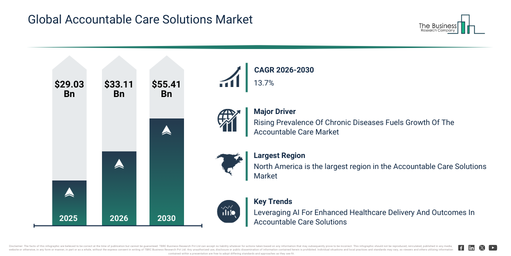
    The market for accountable care solutions has experienced rapid expansion over recent years. This market is projected to grow from $29.03 billion in 2025 to $33.11 billion in 2026, exhibiting a compound annual growth rate (CAGR) of 14.0%. Historically, this expansion can be attributed to factors such as increasing healthcare cost pressures, the early adoption of accountable care organizations, a rising utilization of electronic health records, the expansion of integrated care networks, and a regulatory push for outcome-based reimbursement.

    The accountable care solutions market is set to experience substantial growth in the upcoming years. Its value is projected to reach $55.41 billion by 2030, advancing at a compound annual growth rate (CAGR) of 13.7%. This expansion during the forecast period stems from a growing emphasis on value-based reimbursement models, increased investments in healthcare data analytics, the rising adoption of interoperable health IT systems, an expansion of patient-centric care models, and a growing demand for solutions that optimize costs. Significant trends expected in this period include the increasing uptake of value-based care platforms, a rising utilization of healthcare analytics solutions, the growing integration of population health management tools, the expansion of cloud-based accountable care systems, and an enhanced focus on care coordination.

    Get A Free Sample Report With In-Depth Market Insights:

    https://thebusinessresearchcompany.com/sample_request?id=52121531&type=smp&name=Accountable%20Care%20Solutions%20Market%20Report%202026&utm_source=Blogs&utm_medium=Paid&utm_campaign=Oct_PR

    Accountable Care Solutions Market Growth Backed By Core Demand Fundamentals

    The increasing prevalence of chronic diseases is projected to drive the expansion of the accountable care market in the future. Chronic diseases are long-term health conditions that endure for over a year, typically requiring ongoing management and impacting daily life. An aging populace, longer life expectancies, and a rise in cases of ailments such as heart disease and diabetes are primary factors contributing to chronic diseases. Accountable care solutions assist in managing chronic diseases by optimizing patient care, improving health outcomes, and decreasing expenses through synchronized and preventative strategies. For instance, in January 2023, according to the National Center for Biotechnology Information (NCBI), a US-based National Library of Medicine, it was estimated that by 2035, 35.66% of adults aged 50 and older will suffer from at least one chronic condition, a percentage expected to climb to 47.81% by 2050. Therefore, the growing incidence of chronic diseases is a key factor fueling the growth of the accountable care market.

    Accountable Care Solutions Market Segment Trends And Revenue Contributors

    The accountable care solutions market covered in this report is segmented –

    1) By Component: Software, Services

    2) By Solutions: Electronic Health Or Medical Records, Healthcare Analytics, Revenue Cycle Management Solutions (RCM), Patient Engagement Solutions, Population Health Management (PHM) Solutions, Claims Management Solutions, Healthcare Information Exchange (HIE), Other Solutions

    3) By Deployment: On-Premise, Web And Cloud-Based

    4) By End-User: Healthcare Providers, Healthcare Payers

    Subsegments:

    1) By Software: Population Health Management (PHM) Software, Electronic Health/Medical Records (EHR/EMR) Software, Care Management Software, Health Information Exchange (HIE) Software, Revenue Cycle Management (RCM) Software, Clinical Decision Support Systems (CDSS), Claims Management Software, Patient Engagement Software

    2) By Services: Implementation Services, Consulting Services, Support & Maintenance Services, Training & Education Services, Managed Services, Analytics and Reporting Services.

    Accountable Care Solutions Market Growth Trends Reshaping The Competitive Landscape

    Major companies in the accountable care solutions market are developing artificial intelligence (AI)-based models to better serve customers with more efficient and effective healthcare options. These AI-based models are advanced systems built with cutting-edge algorithms and technologies to enhance healthcare delivery, performance, and efficiency. They aim to improve patient care, optimize resource allocation, and ensure cost-effective management through advanced algorithms and data analytics. For instance, in April 2024, Innovaccer, a US-based digital healthcare company, launched an AI-assisted quality management solution. This solution is designed to assist accountable care organizations (ACOs) in meeting the new electronic clinical quality measures (eCQMs) reporting requirements set by the Centers for Medicare & Medicaid Services (CMS) for 2025. Key features of this solution include artificial intelligence (AI)-powered predictive models that optimize gap closure and patient outreach, advanced analytics and reporting capabilities for efficient processing of electronic clinical quality measures (eCQMs) and merit-based incentive payment system clinical quality measures (MIPS CQMs), and seamless data flow through optimized worklist management.

    Accountable Care Solutions Market Competitive Landscape: Which Companies Lead The Industry?

    Major companies operating in the accountable care solutions market are UnitedHealth Group, McKesson Corporation, Optum Inc., Oracle Corporation, Infosys Limited, Change Healthcare, Aetna Inc., Athenahealth Inc., Lumeris, Inovalon Holdings Inc., eClinicalWorks LLC, NXGN Management LLC, Health Catalyst, Innovaccer Inc., ZeOmega Inc., MedeAnalytics Inc., HealthEC LLC, Azara Healthcare LLC, ISalus Healthcare LLC, Ayoka L.L.C.,

    View The Full Accountable Care Solutions Market Report:

    https://thebusinessresearchcompany.com/report/accountable-care-solutions-global-market-report?utm_source=Blogs&utm_medium=Paid&utm_campaign=Oct_PR

    Accountable Care Solutions Market Regional Split: Which Areas Are Fueling Growth?

    North America was the largest region in the accountable care solutions market in 2025. Asia-Pacific is expected to be the fastest-growing region in the forecast period. The regions covered in the accountable care solutions market report are Asia-Pacific, South East Asia, Western Europe, Eastern Europe, North America, South America, Middle East, Africa.

    Reach Out To Our Team:

    The Business Research Company: https://www.thebusinessresearchcompany.com/

    Americas: +1 310-496-7795

    Asia: +44 7882 955267 & +91 8897263534

    Europe: +44 7882 955267

    Email us at: marketing@tbrc.info

    Follow us on:

    LinkedIn: https://in.linkedin.com/company/the-business-research-company

    YouTube: https://www.youtube.com/channel/UC24_fI0rV8cR5DxlCpgmyFQ

    Global Market Model: https://www.thebusinessresearchcompany.com/global-market-model
  • Academic Medical Center Market Outlook Through 2030: Understanding The Growth Opportunity

    Academic Medical Center Market Outlook Through 2030: Understanding The Growth Opportunity

    Featuring market attractiveness scoring, total addressable market sizing, company benchmarking matrices, interactive Excel dashboards, deeper supply chain intelligence, emerging startup tracking, and granular product-level insights, The Business Research Company’s 2026 market reports are built to deliver research that is both more actionable and more strategically valuable.

    Academic Medical Center Market Size Forecast: How Big Could The Market Get By 2030?

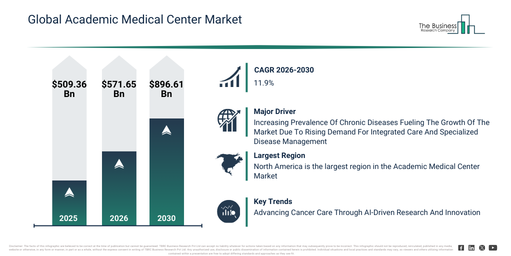
    In recent years, the academic medical center market size has experienced rapid expansion. It is projected to grow from $509.36 billion in 2025 to $571.65 billion in 2026, exhibiting a compound annual growth rate (CAGR) of 12.2%. Historically, this market’s growth can be attributed to the expansion of tertiary healthcare institutions, increased demand for medical education, higher government funding for research hospitals, the rising complexity of clinical cases, and the establishment of teaching hospital networks.

    The academic medical center market is projected to experience substantial expansion in the coming years. This market is anticipated to reach $896.61 billion by 2030, exhibiting a compound annual growth rate (CAGR) of 11.9%. Key drivers for this growth during the forecast period include greater financial commitments to precision medicine investigations, the widening reach of digital medical education platforms, an intensifying emphasis on partnerships between academia and industry, the increasing integration of AI into clinical research, and a heightened need for specialized referral institutions. Significant trends anticipated in this period encompass the growing merger of research with clinical care frameworks, the greater utilization of cutting-edge medical training technologies, the enlargement of translational research initiatives, the expanding application of data-informed clinical decision support systems, and a sharpened concentration on education across various disciplines.

    Get A Free Sample Report With In-Depth Market Insights:

    https://thebusinessresearchcompany.com/sample_request?id=44040703&type=smp&name=Academic%20Medical%20Center%20Market%20Report%202026&utm_source=Blogs&utm_medium=Paid&utm_campaign=Oct_PR

    Academic Medical Center Market Growth Catalysts And Demand Drivers

    The rising occurrence of chronic diseases is projected to stimulate the expansion of the academic medical center market in the coming years. Chronic diseases are enduring health conditions that manifest slowly and persist over extended periods, often demanding continuous medical attention. The escalating incidence of chronic diseases is partly attributed to inactive lifestyles, as prolonged sitting and minimal physical activity increase the risk of conditions like heart ailments and diabetes. Academic medical centers contribute to managing chronic diseases by providing integrated care, advanced diagnostic services, and specialized treatment programs, making them highly suitable for patients with complex health requirements. They enhance patient outcomes by merging clinical proficiency, research endeavors, and educational initiatives, thereby improving the overall quality and efficiency of healthcare delivery. For instance, in June 2024, according to the National Health Service, a UK-based government department, 3,615,330 individuals registered with a general practitioner (GP) were diagnosed with non-diabetic hyperglycemia or pre-diabetes (a condition with elevated blood sugar levels, not high enough to be classified as diabetes) in 2023, marking an 18% increase from 3,065,825 cases in 2022. Consequently, the increasing prevalence of chronic diseases is propelling the growth of the academic medical center market.

    Academic Medical Center Market Segment Analysis Spotlighting Growth Areas

    The academic medical center market covered in this report is segmented –

    1) By Academic Level: Undergraduate, Graduate, Postgraduate

    2) By Hospital Type: University Teaching Hospitals, Community Hospitals, Private Hospitals, Public Hospitals

    3) By Focus Area: Clinical Care, Research, Education

    4) By Funding Source: Government Funding, University Funding, Private Donations, Patient Revenue

    5) By Affiliation: Academic Health Centers, Independent Academic Medical Centers, Healthcare Networks

    Subsegments:

    1) By Undergraduate: MBBS Or MD, Bachelor Of Nursing, Bachelor Of Pharmacy, Bachelor Of Dentistry (BDS/DDS), Allied Health Sciences, Public Health And Health Administration

    2) By Graduate: Master Of Medicine Or Surgery (MS/MD), Master Of Nursing, Master Of Pharmacy, Master Of Dentistry (MDS), Master Of Public Health (MPH), Master Of Biomedical Sciences

    3) By Postgraduate: Doctor Of Philosophy (PhD) In Medical Or Health Sciences, Postdoctoral Fellowships, Clinical Fellowships, Residency Training Programs, Subspecialty Certifications, Advanced Professional Diplomas In Healthcare

    Academic Medical Center Market Trends Shaping Long-Term Demand

    Leading companies active in the academic medical center market are concentrating on strategic alliances with healthcare technology providers to integrate AI-driven diagnostic methods, sophisticated imaging equipment, and research informed by data. This integration aims to enhance early disease identification, individualized treatment plans, and overall patient well-being. For instance, in June 2025, Tata Memorial Centre (TMC), an India-based medical institute, collaborated with Wipro GE HealthCare, an India-based healthcare company, to establish a cutting-edge cancer research and innovation facility. This center is intended to advance precision-led cancer care within India. Tata Memorial Centre contributes its specialized knowledge in oncology and research, while Wipro GE HealthCare will furnish advanced imaging tools, AI-powered platforms, and digital healthcare solutions. This cooperative venture emphasizes AI-driven diagnostics, optimization of clinical workflows, and data-driven research to improve early detection and personalized treatment. This initiative is projected to bolster the cancer care infrastructure, promote cooperation between academic bodies and industry, and stand as an exemplar for public-private healthcare partnerships.

    Academic Medical Center Market Leading Companies: Who Holds The Strongest Market Presence?

    Major companies operating in the academic medical center market are University of Pennsylvania Health System, Mayo Clinic, Massachusetts General Hospital Inc., Northwestern Medicine, NYU Langone Health System, UCSF Health, The Cleveland Clinic Foundation, Mount Sinai Health System Inc., Johns Hopkins Medicine Inc., University of Michigan Health System, Yale New Haven Health Services Corporation, Emory Healthcare Inc., University of Chicago Medical Center, Stanford Health Care, The Ottawa Hospital, Sunnybrook Health Sciences Centre, Toronto General Hospital, Weill Cornell Medicine, University of Colorado Anschutz Medical Campus, Columbia University Irving Medical Center

    View The Full Academic Medical Center Market Report:

    https://thebusinessresearchcompany.com/report/academic-medical-center-global-market-report?utm_source=Blogs&utm_medium=Paid&utm_campaign=Oct_PR

    Academic Medical Center Market Top Region: Where Does Most Revenue Come From?

    North America was the largest region in the personalized genomics market in 2025. Asia-Pacific is expected to be the fastest-growing region in the forecast period. The regions covered in the academic medical center market report are Asia-Pacific, South East Asia, Western Europe, Eastern Europe, North America, South America, Middle East, Africa.

    Reach Out To Our Team:

    The Business Research Company: https://www.thebusinessresearchcompany.com/

    Americas: +1 310-496-7795

    Asia: +44 7882 955267 & +91 8897263534

    Europe: +44 7882 955267

    Email us at: marketing@tbrc.info

    Follow us on:

    LinkedIn: https://in.linkedin.com/company/the-business-research-company

    YouTube: https://www.youtube.com/channel/UC24_fI0rV8cR5DxlCpgmyFQ

    Global Market Model: https://www.thebusinessresearchcompany.com/global-market-model
  • Ablation Technology Market Growth Potential: What The Latest Forecast Reveals

    Ablation Technology Market Growth Potential: What The Latest Forecast Reveals

    Built to provide research that’s more actionable and strategically valuable, The Business Research Company’s 2026 market reports include market attractiveness analysis, total addressable market sizing, company benchmarking matrices, interactive Excel dashboards, broader supply chain intelligence, emerging startup tracking, and in-depth product insights.

    Ablation Technology Market Revenue Outlook: What CAGR Lies Ahead Through 2030?

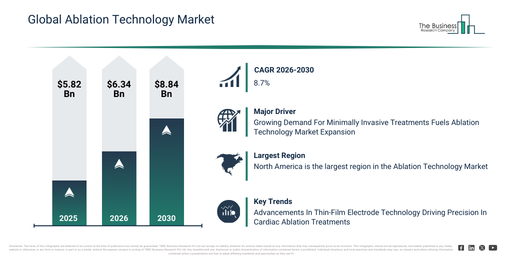
    The ablation technology market has experienced substantial growth in recent years. It is projected to expand from $5.82 billion in 2025 to $6.34 billion in 2026, exhibiting a compound annual growth rate (CAGR) of 8.8%. The historical growth of this market is attributable to the development of early ablation devices, an increasing prevalence of chronic pain and cardiovascular disorders, greater hospital adoption of minimally invasive technologies, rising awareness concerning cancer treatment alternatives, and the expansion of surgical centers.

    The ablation technology market is anticipated to experience robust expansion over the coming years. This market is projected to reach $8.84 billion by 2030, exhibiting a compound annual growth rate (CAGR) of 8.7%. The projected growth during this period stems from factors such as advancements in laser, radiofrequency (RF), and cryoablation devices, an increasing proliferation of ambulatory surgical centers, a growing demand for aesthetic and cosmetic procedures, escalating investments in precision surgical equipment, and the broadening application of ablation therapies within emerging markets. Key trends anticipated during the forecast encompass a heightened adoption of minimally invasive procedures, the extending scope of ablation therapies for cancer treatment, the expanding utilization of both thermal and non-thermal ablation technologies, increased application in cardiovascular and pain management, and an emphasis on enhancing precision and safety in ablation procedures.

    Get A Free Sample Report With In-Depth Market Insights:

    https://thebusinessresearchcompany.com/sample_request?id=90388735&type=smp&name=Ablation%20Technology%20Market%20Report%202026&utm_source=Blogs&utm_medium=Paid&utm_campaign=Oct_PR

    Ablation Technology Market Opportunity Drivers: What’s Unlocking New Revenue Potential?

    The increasing demand for minimally invasive procedures is anticipated to drive the future expansion of the ablation technology market. Minimally invasive treatments are defined as medical interventions performed through small incisions or natural body openings, using specialized instruments guided by imaging techniques. These treatments are becoming more prevalent due to their ability to shorten recovery times, mitigate surgical risks, and improve patient outcomes compared to traditional surgical methods. Ablation technology is utilized in minimally invasive procedures to precisely target and destroy diseased tissues while minimizing damage to surrounding healthy tissues. For instance, in January 2023, data published by the American Society of Plastic Surgeons, a US-based association of plastic surgeons, revealed that approximately 23,672,269 minimally invasive cosmetic surgeries were performed in the USA in 2022. This figure increased by 7% to reach 25,442,640 surgeries in the year 2023. Therefore, the growing demand for minimally invasive treatments is a key driver for the growth of the ablation technology market.

    Ablation Technology Market Segment Performance And Emerging Opportunities

    The ablation technology market covered in this report is segmented –

    1) By Product: Cryoablation Devices, Electrical Ablators, Hydrothermal Or Hydromechanical Ablators, Laser Or Light Ablators, Microwave Ablators, Radiofrequency Ablators, Ultrasound Ablators, Other Products

    2) By Technologies: Thermal Ablation Technology, Non-Thermal Ablation Technology, Other Technologies

    3) By Applications: Cardiovascular Disease Treatment, Cancer Treatment, Gynecological Treatment, Pain Management, Urological Treatment

    4) By End Users: Ambulatory Surgical Centers, Hospitals And Ablation Centers, Other End Users

    Subsegments:

    1) By Cryoablation Devices: Cryoprobes, Cryoablation Catheters

    2) By Electrical Ablators: Electrosurgical Units, Electrode Catheters

    3) By Hydrothermal Or Hydromechanical Ablators: Steam-Based Ablation Devices, Water-Jet Ablation Devices

    4) By Laser Or Light Ablators: Diode Laser Ablation Devices, Fiber-Optic Laser Ablation Systems

    5) By Microwave Ablators: Microwave Ablation Catheters, Microwave Generator Systems

    6) By Radiofrequency Ablators: RF Ablation Catheters, RF Ablation Generators

    7) By Ultrasound Ablators: Focused Ultrasound Ablation Devices, Ultrasound-Guided Ablation Systems

    8) By Other Products: Balloon Ablation Systems, Cryoanalgesia Systems

    Ablation Technology Market Innovation Trends Shaping Future Development

    Leading companies within the ablation technology market are innovating with sophisticated technologies, such as thin-film electrode technology, to enhance accuracy and effectiveness in addressing cardiac arrhythmias, shorten procedural durations, and improve patient results. This thin-film electrode technology involves a technique employing exceptionally thin conductive layers to form accurate electrodes for focused ablation therapies. For instance, in March 2024, NeuroOne, a US-based medical equipment manufacturer, unveiled its OneRF Ablation System. This particular system employs thin-film, stereoelectroencephalography (SEEG)-guided radiofrequency (RF) technology to both monitor electrical activity and execute precise ablation of nervous tissue while incorporating temperature controls, uniquely utilizing the identical electrode for both diagnostic and therapeutic purposes. The OneRF ablation system represents NeuroOne’s inaugural device approved for therapeutic use and marks its third product to receive FDA clearance. Furthermore, this system serves as a complement to the company’s existing Evo cortical and stereoelectroencephalography (sEEG) electrode product lines, which are predominantly utilized for documenting brain electrical activity for periods less than 30 days.

    Ablation Technology Market Key Players: Which Companies Lead Industry Competition?

    Major companies operating in the ablation technology market are Johnson & Johnson, Abbott Laboratories, Medtronic plc, Boston Scientific Corporation, Stryker Corporation, Olympus Corporation, Terumo Corporation, Smith & Nephew plc, Hologic Inc., ConMed Corporation, Accuray Incorporated, AtriCure Inc., AngioDynamics Inc., HealthTronics Inc., Creo Medical Group plc, Misonix Inc., MedWaves Inc., Theraclion SA, IceCure Medical Ltd, EDAP TMS SA, Merit Medical Systems Inc.

    View The Full Ablation Technology Market Report:

    https://thebusinessresearchcompany.com/report/ablation-technology-global-market-report?utm_source=Blogs&utm_medium=Paid&utm_campaign=Oct_PR

    Ablation Technology Market Regional Breakdown: Where Is Demand Concentrated?

    North America was the largest region in the ablation technology market in 2025. Asia-Pacific is expected to be the fastest-growing region in the forecast period. The regions covered in the ablation technology market report are Asia-Pacific, South East Asia, Western Europe, Eastern Europe, North America, South America, Middle East, Africa.

    Reach Out To Our Team:

    The Business Research Company: https://www.thebusinessresearchcompany.com/

    Americas: +1 310-496-7795

    Asia: +44 7882 955267 & +91 8897263534

    Europe: +44 7882 955267

    Email us at: marketing@tbrc.info

    Follow us on:

    LinkedIn: https://in.linkedin.com/company/the-business-research-company

    YouTube: https://www.youtube.com/channel/UC24_fI0rV8cR5DxlCpgmyFQ

    Global Market Model: https://www.thebusinessresearchcompany.com/global-market-model
  • Abetalipoproteinemia Management Market Growth Outlook: Why Analysts Expect Continued Expansion

    Abetalipoproteinemia Management Market Growth Outlook: Why Analysts Expect Continued Expansion

    Backed by market attractiveness analysis, total addressable market sizing, company benchmarking matrices, interactive Excel dashboards, wider supply chain intelligence, emerging startup coverage, and detailed product-level insights, The Business Research Company’s 2026 market reports are designed to offer research that is more actionable and strategically valuable than ever.

    Abetalipoproteinemia Management Market Growth Analysis: How Will Revenue Trend Over The Forecast Period?

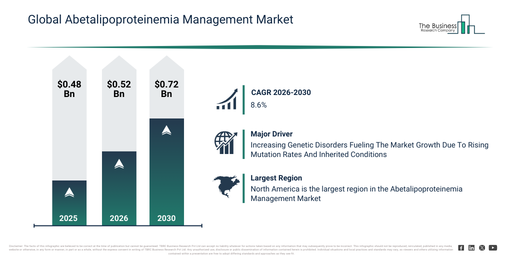
    The abetalipoproteinemia management market has demonstrated substantial growth in recent years. It is anticipated to expand from $0.48 billion in 2025 to $0.52 billion in 2026, achieving a compound annual growth rate (CAGR) of 8.9%. The historical progression of this market can be linked to factors such as limited public understanding of abetalipoproteinemia, the conventional reliance on vitamin supplementation, the scarcity of advanced molecular diagnostic tools, an increasing appreciation for rare genetic disorders, and the rise in hospital-based diagnosis programs.

    The abetalipoproteinemia management market size is anticipated to experience robust expansion over the coming years. This market is projected to reach $0.72 billion by 2030, exhibiting a compound annual growth rate (CAGR) of 8.6%. The anticipated expansion during this forecast period stems from progress in ngs and pcr testing, the evolution of gene therapy methods, an uptick in diagnosis rates among pediatric and adult patients, intensified research into mct and dietary interventions, and the increasing incorporation of personalized treatment strategies. Key trends for the forecast duration encompass the expansion of fat-soluble vitamin supplementation initiatives, a wider acceptance of molecular genetic testing for rare diseases, a heightened emphasis on managing pediatric patients, an increase in the application of mct therapy and dietary adjustments, and improved integration of supportive care alongside new therapeutic options.

    Get A Free Sample Report With In-Depth Market Insights:

    https://thebusinessresearchcompany.com/sample_request?id=66156218&type=smp&name=Abetalipoproteinemia%20Management%20Market%20Report%202026&utm_source=Blogs&utm_medium=Paid&utm_campaign=Oct_PR

    Abetalipoproteinemia Management Market Growth Momentum: What Factors Are Shaping Demand?

    The increasing occurrence of genetic conditions is anticipated to drive the expansion of the abetalipoproteinemia management market in the future. These disorders are conditions resulting from DNA mutations or abnormalities, which can be inherited or appear spontaneously, impacting health and development. Their prevalence is on the rise because enhanced medical treatments and interventions are leading to higher survival rates for those with genetic conditions. Abetalipoproteinemia management helps prevent complications of these genetic disorders by addressing nutritional deficiencies through high doses of fat-soluble vitamins (A, D, E, K) and a diet low in fat. Early intervention is crucial for preventing neurological and vision issues, thereby enhancing the quality of life. For example, the Cystic Fibrosis Trust, a UK national charity, reported in October 2024 that 11,148 individuals in the UK had cystic fibrosis (CF) in 2022, a number that grew to 11,318 by 2023. Consequently, the growing incidence of genetic disorders is fueling the expansion of the abetalipoproteinemia management market.

    Abetalipoproteinemia Management Market Segment Landscape And Growth Outlook

    The abetalipoproteinemia management market covered in this report is segmented –

    1) By Treatment: Molecular Genetic Testing Treatment, Blood Testing Treatment, Fat-Soluble Vitamins Supplementation, Other Treatments

    2) By Route Of Administration: Oral, Parenteral

    3) By Patient Population: Pediatric Patients, Adult Patients

    4) By Application: Hospitals And Clinics, Diagnostics Labs, Other Applications

    Subsegments:

    1) By Molecular Genetic Testing Treatment: Deoxyribonucleic Acid (DNA) Sequencing, Polymerase Chain Reaction (PCR) Testing, Microarray Analysis, Next-Generation Sequencing (NGS), Southern Blotting

    2) By Blood Testing Treatment: Lipid Panel Testing, Apolipoprotein B (ApoB) Testing, Complete Blood Count (CBC), Liver Function Tests (LFTs), Other Blood Biomarkers

    3) By Fat-Soluble Vitamins Supplementation: Vitamin A, Vitamin D, Vitamin E, Vitamin K, Multivitamin Combinations

    4) By Other Treatments: Dietary Modifications, Medium-Chain Triglycerides (MCT) Therapy, Supportive Care, Gene Therapy Research, Emerging Experimental Therapies

    Abetalipoproteinemia Management Market Competitive Landscape: Who Leads The Industry?

    Major companies operating in the abetalipoproteinemia management market are Abbott Laboratories, Laboratory Corporation of America, NYU Langone Health, Mayo Foundation for Medical Education and Research, Medicover Hospitals, Fulgent Genetics, Invitae Corp., Nutricia, Max Healthcare, Ambry Genetics Corporation, Pentec Health Inc., Prevention Genetics, Blueprint Genetics, Cambrooke Therapeutics, DNA Labs India, Siloam Hospitals, Abetalipoproteinemia and Related Disorders Foundation, Orphanet, Cleveland Clinic, Johns Hopkins Hospital, GeneDx, Baylor Genetics

    View The Full Abetalipoproteinemia Management Market Report:

    https://thebusinessresearchcompany.com/report/abetalipoproteinemia-management-global-market-report?utm_source=Blogs&utm_medium=Paid&utm_campaign=Oct_PR

    Abetalipoproteinemia Management Market Geographic Landscape: Which Region Leads Industry Growth?

    North America was the largest region in the abetalipoproteinemia management market in 2025. Asia-Pacific is expected to be the fastest-growing region in the forecast period. The regions covered in the abetalipoproteinemia management market report are Asia-Pacific, South East Asia, Western Europe, Eastern Europe, North America, South America, Middle East, Africa.

    Reach Out To Our Team:

    The Business Research Company: https://www.thebusinessresearchcompany.com/

    Americas: +1 310-496-7795

    Asia: +44 7882 955267 & +91 8897263534

    Europe: +44 7882 955267

    Email us at: marketing@tbrc.info

    Follow us on:

    LinkedIn: https://in.linkedin.com/company/the-business-research-company

    YouTube: https://www.youtube.com/channel/UC24_fI0rV8cR5DxlCpgmyFQ

    Global Market Model: https://www.thebusinessresearchcompany.com/global-market-model

  • 5-Alpha Reductase Deficiency Market Forecast Insights: The Road To $2.36 Billion By 2030

    5-Alpha Reductase Deficiency Market Forecast Insights: The Road To $2.36 Billion By 2030

    Featuring market attractiveness scoring, total addressable market sizing, company benchmarking matrices, interactive Excel dashboards, deeper supply chain intelligence, emerging startup tracking, and granular product-level insights, The Business Research Company’s 2026 market reports are built to deliver research that is both more actionable and more strategically valuable.

    5-Alpha Reductase Deficiency Market Forecast: What Value Will The Market Reach By 2030?

    In recent years, the 5-alpha reductase deficiency market has experienced significant growth. It is projected to expand from $1.5 billion in 2025 to $1.64 billion in 2026, at a compound annual growth rate (CAGR) of 9.6%. The historical growth was driven by factors such as limited awareness of rare genetic disorders, a primary reliance on clinical evaluation for diagnosis, the gradual adoption of hormone testing, increasing hospital-based treatment, and the slow development of specialized surgical procedures.

    The market size for 5-alpha reductase deficiency is set to observe significant expansion over the next few years. It is forecast to attain $2.36 billion by 2030, exhibiting a compound annual growth rate (CAGR) of 9.5%. This growth in the projected period stems from advancements in gene sequencing technologies, an increase in newborn and carrier screening programs, a heightened focus on personalized hormone therapy, the establishment of more specialty clinics for rare disorders, and expanding research in genetic endocrinology. Notable trends for the forecast period include a rise in the early diagnosis of 5-alpha reductase deficiency, increasing awareness of disorders of sexual development, wider adoption of genetic and hormonal testing, the expansion of specialized endocrinology and urology care, and improved accessibility to hormone replacement therapies.

    Get A Free Sample Report With In-Depth Market Insights:

    https://thebusinessresearchcompany.com/sample_request?id=75877421&type=smp&name=5-Alpha%20Reductase%20Deficiency%20Market%20Report%202026&utm_source=Blogs&utm_medium=Paid&utm_campaign=Oct_PR

    5-Alpha Reductase Deficiency Market Expansion Drivers: What’s Shaping Future Growth?

    An increasing volume of research and development endeavors within the field of genomics is notably fueling the expansion of the 5-alpha reductase deficiency market. Genomics involves the comprehensive study of an individual’s complete set of genes (genome), encompassing the interactions among these genes and their interplay with the surrounding environment. The application of genomics facilitates the diagnosis of 5-alpha reductase deficiency through the detection of particular genetic mutations linked to the condition. Consequently, genomic research and development efforts are instrumental in both identifying and addressing the disorder. To illustrate, data from February 2025 released by the National Center for Science and Engineering Statistics (NCSES), a US-based government statistical agency, indicated that U.S. research and development spending climbed from $892 billion in 2022 to $940 billion in 2023, representing a $48 billion increment. Hence, the escalating number of research and development initiatives in genomics is set to propel the 5-alpha reductase deficiency market forward.

    5-Alpha Reductase Deficiency Market Breakdown By Product Type And Application

    The 5-alpha reductase deficiency market covered in this report is segmented –

    1) By Diagnosis: Chromosome Analysis, Gene Sequencing, Hormone Tests, Imaging Tests, Genetic Screening, Other Diagnosis

    2) By Treatment: Surgery, Vaginoplasty, Feminizing Genitoplasty, Hormone Replacement Therapy, Other Treatments

    3) By End-Users: Hospitals, Specialty Clinics, Other End-Users

    Subsegments:

    1) By Chromosome Analysis: Karyotyping, Fluorescence In Situ Hybridization (FISH)

    2) By Gene Sequencing: Targeted Gene Panels, Whole Exome Sequencing

    3) By Hormone Tests: Testosterone Levels, Dihydrotestosterone (DHT) Levels

    4) By Imaging Tests: Ultrasound, MRI

    5) By Genetic Screening: Carrier Testing, Newborn Screening

    6) By Other Diagnosis: Clinical Evaluation, Family History Assessment

    5-Alpha Reductase Deficiency Market Strategic Trends: What Defines The Next Growth Phase?

    Leading companies active in the 5-alpha reductase deficiency market are concentrating on developing technologically advanced products, such as consumer-initiated genetic tests, to enable individuals to obtain personal genetic information directly and privately without needing a healthcare provider’s referral. A consumer-initiated genetic test is a type of genetic examination that individuals order straight from a laboratory or testing firm, typically without a healthcare professional’s involvement, to gain insights into their genetic predispositions, ancestry, or health-related characteristics. For example, in July 2023, Quest Diagnostics, a US-based provider of diagnostic information services, launched Genetic Insights, a consumer-initiated genetic test. This new offering aids individuals in evaluating their potential risk of developing certain hereditary health conditions. It incorporates advanced technology and comprehensive support, including personalized health reports and access to genetic counseling. By analyzing a saliva sample, Genetic Insights assesses 36 genes to identify the risk of nearly two dozen hereditary conditions, such as breast and colon cancer, various heart and blood disorders, as well as carrier status for cystic fibrosis, sickle cell anemia, and Tay-Sachs disease. This test is designed to bridge the gaps left by existing consumer genetic tests and utilizes cutting-edge next-generation sequencing (NGS) technology, which can analyze thousands of DNA variants in disease-related genes and examines more regions of a person’s genome compared to traditional microarray testing.

    5-Alpha Reductase Deficiency Market Company Landscape And Competitive Strategy

    Major companies operating in the 5-alpha reductase deficiency market are F. Hoffmann-La Roche Ltd, Sanofi SA, Pfizer Inc, GlaxoSmithKline plc, Novartis AG, Bayer AG, Eli Lilly and Company, Johnson and Johnson Services Inc, Novo Nordisk A S, Regeneron Pharmaceuticals Inc, Roivant Sciences Ltd, Sanofi Genzyme, Shionogi and Co Ltd, Sun Pharmaceutical Industries Ltd, Takeda Pharmaceutical Company Limited, Teva Pharmaceutical Industries Ltd, UCB S A, Vertex Pharmaceuticals Incorporated, Cadila Healthcare Limited, Endo International plc

    View The Full 5-Alpha Reductase Deficiency Market Report:

    https://thebusinessresearchcompany.com/report/5-alpha-reductase-deficiency-global-market-report?utm_source=Blogs&utm_medium=Paid&utm_campaign=Oct_PR

    5-Alpha Reductase Deficiency Market Largest Region: Which Geography Holds The Biggest Share?

    North America was the largest region in the 5-alpha reductase deficiency market in 2025. The regions covered in the 5-alpha reductase deficiency market report are Asia-Pacific, South East Asia, Western Europe, Eastern Europe, North America, South America, Middle East, Africa.

    Reach Out To Our Team:

    The Business Research Company: https://www.thebusinessresearchcompany.com/

    Americas: +1 310-496-7795

    Asia: +44 7882 955267 & +91 8897263534

    Europe: +44 7882 955267

    Email us at: marketing@tbrc.info

    Follow us on:

    LinkedIn: https://in.linkedin.com/company/the-business-research-company

    YouTube: https://www.youtube.com/channel/UC24_fI0rV8cR5DxlCpgmyFQ

    Global Market Model: https://www.thebusinessresearchcompany.com/global-market-model
  • 4D Printing In Healthcare Market Explained: What Is Fueling Growth To $13.45 Billion By 2030?

    4D Printing In Healthcare Market Explained: What Is Fueling Growth To $13.45 Billion By 2030?

    Built to provide research that’s more actionable and strategically valuable, The Business Research Company’s 2026 market reports include market attractiveness analysis, total addressable market sizing, company benchmarking matrices, interactive Excel dashboards, broader supply chain intelligence, emerging startup tracking, and in-depth product insights.

    4D Printing In Healthcare Market Size Outlook: How Quickly Will Revenue Expand Through 2030?

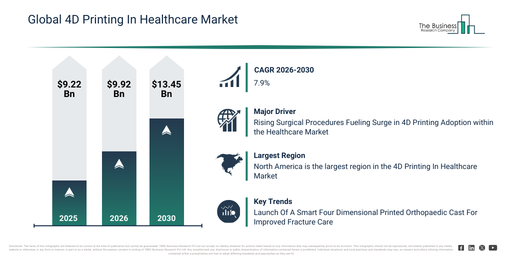
    The 4d printing in healthcare market size has experienced robust expansion in recent years. This market is projected to expand from $9.22 billion in 2025 to $9.92 billion in 2026, exhibiting a compound annual growth rate (CAGR) of 7.7%. Historically, this growth was fueled by factors such as the early adoption of 3d printing in healthcare, the increasing demand for customized medical devices, progress in material science, the rising need for intricate implant geometries, and increased research funding in additive manufacturing.

    The 4d printing in healthcare market is projected to experience robust expansion over the coming years, anticipated to reach $13.45 billion by 2030, exhibiting a compound annual growth rate (CAGR) of 7.9%. This projected growth is driven by several factors, including the advancement of programmable and shape-memory materials, the rise of personalized medicine approaches, increased partnerships between healthcare providers and technology companies, escalating investments in bioprinting technologies, and the broadening of regulatory support for advanced manufacturing. Key trends influencing this period encompass the wider integration of smart and shape-memory materials into medical devices, a surging need for customized and patient-specific implants, a greater emphasis on minimally invasive and adaptable medical solutions, the extended application of 4d printed implants in orthopedic and dental fields, and the increasing incorporation of self-transforming structures within regenerative medicine.

    Get A Free Sample Report With In-Depth Market Insights:

    https://thebusinessresearchcompany.com/sample_request?id=33941962&type=smp&name=4D%20Printing%20In%20Healthcare%20Market%20Report%202026&utm_source=Blogs&utm_medium=Paid&utm_campaign=Oct_PR

    4D Printing In Healthcare Market Development Factors: What’s Supporting Demand?

    The rising number of surgical procedures is projected to spur the growth of 4D printing in the healthcare market going forward. This technology allows for the development of bespoke medical implants and devices precisely adapted to individual patient anatomy. As surgeries become more frequent, there is an escalating demand for personalized medical solutions to optimize surgical results and patient recovery. 4D printing facilitates the creation of elaborate structures that can conform to specific patient needs, thereby enhancing treatment effectiveness and patient satisfaction. For instance, in May 2023, according to Austin Publishing Group, a US-based publishing company, the global healthcare system handled more than 300 million major surgical procedures each year. Therefore, the expanding volume of surgeries is a key driver for the advancement of 4D printing in the healthcare market.

    4D Printing In Healthcare Market Segment Analysis And Revenue Potential

    The 4d printing in healthcare market covered in this report is segmented –

    1) By Type: Fused Deposition Modeling (FDM), PolyJet, Stereolithography

    2) By Component: Equipment, 3D Bioprinters, Programmable Materials, Shape-Memory Materials, Hydrogels, Living Cells, Software And Services

    3) By End-User: Hospitals And Clinics, Dental Laboratories, Other End-Users

    Subsegments:

    1) By Fused Deposition Modeling (FDM): Biodegradable Polymers, Composite Materials

    2) By PolyJet: Rigid Materials, Flexible Materials, Biocompatible Materials

    3) By Stereolithography: Photopolymer Resins, Dental Resins, Bio-Resins

    4D Printing In Healthcare Market Transformation Trends: What Innovations Are Driving Change?

    Companies operating within the 4D printing in healthcare market are primarily focused on creating sophisticated solutions, such as smart 4D-printed orthopedic casts, to replace conventional plaster and fiberglass casting methods. A 4D-printed solution signifies an innovative medical technology that employs intelligent, stimuli-responsive materials capable of altering their form or characteristics over time to enhance patient comfort, expedite recovery, and improve clinical outcomes. For instance, in June 2025, Uni-Pharma, a Taiwan-based pharmaceutical and medical solutions provider, unveiled the innovative CASTOMIZE Smart Thermoplastic Cast for fracture support. This advanced solution supersedes conventional casting by presenting a lightweight, breathable, and customizable thermoplastic structure that can be rapidly molded to the patient’s limb using safe, controlled heating. It offers superior ventilation, minimizes skin irritation, and allows for more straightforward hygiene compared to traditional casts. Integrated with CASTOMIZE’s 4D-printing technology, the smart cast provides precise anatomical fitting, enhanced durability, and greater patient mobility, while simultaneously helping clinicians streamline treatment procedures. The introduction of this 4D-printed cast significantly improves patient experience, simplifies orthopedic care workflows, and supports enhanced therapeutic efficiency.

    4D Printing In Healthcare Market Key Players Shaping Industry Direction

    Major companies operating in the 4d printing in healthcare market are Stratasys Ltd, 3D Systems Inc., EOS GmbH Electro Optical Systems, Materialise NV, Desktop Metal Inc., Carbon Inc., HP Inc., Nanoscribe GmbH, RegenHU Ltd, Aspect Biosystems Ltd, Poietis SAS, Organovo Holdings Inc., T&R Biofab Co. Ltd, Rokit Healthcare Inc., Prellis Biologics Inc., Volumetric Biotechnologies Inc., Fluicell AB, CollPlant Biotechnologies Ltd, United Therapeutics Corporation, BICO Group AB

    View The Full 4D Printing In Healthcare Market Report:

    https://thebusinessresearchcompany.com/report/4d-printing-in-healthcare-global-market-report?utm_source=Blogs&utm_medium=Paid&utm_campaign=Oct_PR

    4D Printing In Healthcare Market Regional Analysis: Which Geography Leads On Revenue?

    North America was the largest region in the 4D printing in healthcare market in 2025. Asia-Pacific is expected to be the fastest-growing region in the forecast period. The regions covered in the 4d printing in healthcare market report are Asia-Pacific, South East Asia, Western Europe, Eastern Europe, North America, South America, Middle East, Africa.

    Reach Out To Our Team:

    The Business Research Company: https://www.thebusinessresearchcompany.com/

    Americas: +1 310-496-7795

    Asia: +44 7882 955267 & +91 8897263534

    Europe: +44 7882 955267

    Email us at: marketing@tbrc.info

    Follow us on:

    LinkedIn: https://in.linkedin.com/company/the-business-research-company

    YouTube: https://www.youtube.com/channel/UC24_fI0rV8cR5DxlCpgmyFQ

    Global Market Model: https://www.thebusinessresearchcompany.com/global-market-model
  • 3-in-1 Oral Cone Beam Computed Tomography (CBCT) Market Forecast To Reach $1.74 Billion By 2030: Key Trends Explained

    3-in-1 Oral Cone Beam Computed Tomography (CBCT) Market Forecast To Reach $1.74 Billion By 2030: Key Trends Explained

    Backed by market attractiveness analysis, total addressable market sizing, company benchmarking matrices, interactive Excel dashboards, wider supply chain intelligence, emerging startup coverage, and detailed product-level insights, The Business Research Company’s 2026 market reports are designed to offer research that is more actionable and strategically valuable than ever.

    3-in-1 Oral Cone Beam Computed Tomography (CBCT) Market Size, Value And Growth Trajectory Through 2030

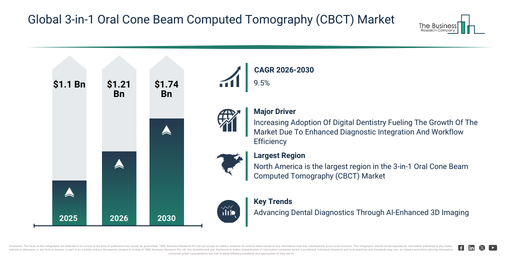
    The 3-in-1 oral cone beam computed tomography (cbct) market size has witnessed substantial expansion in recent years. This market is expected to increase from $1.1 billion in 2025 to $1.21 billion in 2026, achieving a compound annual growth rate (CAGR) of 9.7%. Historically, this growth can be ascribed to the escalating integration of digital dentistry, a rising necessity for dental implant procedures, the broadening scope of orthodontic treatments, an increase in private dental clinics, and breakthroughs in imaging sensor technology.

    The market for 3-in-1 oral cone beam computed tomography (CBCT) is anticipated to experience robust expansion over the coming years. This sector is projected to reach $1.74 billion by 2030, exhibiting a compound annual growth rate (CAGR) of 9.5%. The projected increase can be attributed to the rising integration of AI-based diagnostic tools, a growing need for chairside imaging solutions, the wider adoption of minimally invasive dental procedures, an increasing emphasis on radiation safety standards, and expanding investments in advanced dental imaging infrastructure. Significant trends during the forecast period include the increasing incorporation of AI-assisted image reconstruction, a rising demand for low-dose imaging systems, the growing integration of multi-modal dental imaging, the expansion of compact and integrated CBCT platforms, and an enhanced focus on workflow efficiency.

    Get A Free Sample Report With In-Depth Market Insights:

    https://thebusinessresearchcompany.com/sample_request?id=57769147&type=smp&name=3-in-1%20Oral%20Cone%20Beam%20Computed%20Tomography%20%28CBCT%29%20Market%20Report%202026&utm_source=Blogs&utm_medium=Paid&utm_campaign=Oct_PR

    3-in-1 Oral Cone Beam Computed Tomography (CBCT) Market Industry Drivers: What’s Behind The Revenue Growth?

    The anticipated growth of the 3-in-1 oral cone beam computed tomography (CBCT) market in upcoming years is linked to the expanding use of digital dentistry. This field incorporates advanced technologies like computer-aided design and manufacturing (CAD/CAM), intraoral scanners, 3D printing, and digital imaging systems to improve diagnostic precision, treatment strategies, and patient results. The increasing preference for digital solutions stems from their capacity to boost clinical efficiency, shorten treatment durations, and enhance accuracy in dental work, which translates to greater patient satisfaction and superior care. 3-in-1 oral CBCT systems facilitate this transition by consolidating several imaging types—namely, panoramic, cephalometric, and 3D CBCT—into one unit, enabling dental professionals to conduct extensive diagnostics and treatment planning smoothly within digital processes. As an illustration, in September 2023, the American Dental Association (ADA) Clinical Evaluators Panel, a U.S.-based professional organization, noted that roughly one in three dentists (30%) in the United States employed teledentistry in their clinics, with half of these users (50%) being recent adopters. Consequently, the growing acceptance of digital dentistry is a significant force propelling the global expansion of the 3-in-1 oral CBCT market.

    3-in-1 Oral Cone Beam Computed Tomography (CBCT) Market Segmentation And Category Overview

    The 3-in-1 oral cone beam computed tomography (cbct) market covered in this report is segmented –

    1) By Product Type: Standalone CBCT, Integrated CBCT

    2) By Modality: Computed Tomography (CT), X-Ray, Ultrasound

    3) By Imaging Technique: High-Resolution CBCT, Low Radiation Dose CBCT, Dynamic Imaging Techniques

    4) By Application: Dental Implants, Orthodontics, Endodontics, Oral Surgery, Other Applications

    5) By End-User: Hospitals, Dental Clinics, Research Institutes

    Subsegments:

    1) By Standalone CBCT: Cephalometric Imaging System, Panoramic Imaging System, Cone Beam Computed Tomography System

    2) By Integrated CBCT: Cephalometric And Panoramic Integrated System, Panoramic And Cone Beam Integrated System, Cephalometric, Panoramic, And Cone Beam Combined System

    #3-in-1 Oral Cone Beam Computed Tomography (CBCT) Market Growth Trends: What’s Shaping The Future Outlook?

    Companies operating in the 3-in-1 oral cone beam computed tomography (CBCT) market are primarily focused on fostering innovation in dental imaging workflow optimization, including the adoption of AI-enhanced 3D imaging to facilitate accurate, data-driven insights for diagnosis and treatment planning. AI-enhanced 3D imaging refers to the ability of a 3-in-1 oral CBCT system to analyze volumetric dental scans in real time and provide immediate feedback to the dentist or dental team. For instance, in October 2023, PreXion, Inc., a US-based company specializing in dental imaging solutions, launched its PreXion3D Evolve CBCT system. This innovative system integrates cone-beam computed tomography (CBCT), panoramic, and cephalometric imaging capabilities into a single device, presenting a comprehensive dental imaging solution. The PreXion3D Evolve system offers high-resolution 3D imaging, supporting accurate diagnosis and treatment planning. By combining advanced imaging technologies, the system enhances workflow efficiency and reduces radiation exposure when compared to traditional imaging methods.

    3-in-1 Oral Cone Beam Computed Tomography (CBCT) Market Competitive Analysis Of Leading Industry Participants

    Major companies operating in the 3-in-1 oral cone beam computed tomography (cbct) market are Dentsply Sirona, Planmeca, Castellini, Carestream Health, J. Morita Mfg. Corp., DEXIS, Dentium, Acteon Group, Vatech, Ziehm Imaging, Air Techniques, Rayence Inc, Villa Sistemi Medicali S.p.A., Perlove Medical, Fussen Technology, Genoray, NewTom, PreXion Corporation, Bondent GmbH, Trident Dental

    View The Full 3-in-1 Oral Cone Beam Computed Tomography (CBCT) Market Report:

    https://thebusinessresearchcompany.com/report/global-3-in-1-oral-cone-beam-computed-tomography-cbct-market-report?utm_source=Blogs&utm_medium=Paid&utm_campaign=Oct_PR

    3-in-1 Oral Cone Beam Computed Tomography (CBCT) Market Geographic Spread And Regional Opportunities

    North America was the largest region in the 3-in-1 oral cone beam computed tomography (CBCT) market in 2025. Asia-Pacific is expected to be the fastest-growing region in the forecast period. The regions covered in the 3-in-1 oral cone beam computed tomography (cbct) market report are Asia-Pacific, South East Asia, Western Europe, Eastern Europe, North America, South America, Middle East, Africa.

    Reach Out To Our Team:

    The Business Research Company: https://www.thebusinessresearchcompany.com/

    Americas: +1 310-496-7795

    Asia: +44 7882 955267 & +91 8897263534

    Europe: +44 7882 955267

    Email us at: marketing@tbrc.info

    Follow us on:

    LinkedIn: https://in.linkedin.com/company/the-business-research-company

    YouTube: https://www.youtube.com/channel/UC24_fI0rV8cR5DxlCpgmyFQ

    Global Market Model: https://www.thebusinessresearchcompany.com/global-market-model

  • 3D Printed Wearables Market Analysis: Understanding The Drivers Behind 6.9% CAGR Through 2030 Growth

    3D Printed Wearables Market Analysis: Understanding The Drivers Behind 6.9% CAGR Through 2030 Growth

    Featuring market attractiveness scoring, total addressable market sizing, company benchmarking matrices, interactive Excel dashboards, deeper supply chain intelligence, emerging startup tracking, and granular product-level insights, The Business Research Company’s 2026 market reports are built to deliver research that is both more actionable and more strategically valuable.

    3D Printed Wearables Market CAGR Outlook And Future Development

    The market size for 3D printed wearables has shown strong expansion in recent years. It is projected to increase from $4.37 billion in 2025 to $4.72 billion in 2026, demonstrating a compound annual growth rate (CAGR) of 8.0%. This historical growth can be attributed to the early adoption of additive manufacturing technologies, rising consumer interest in wearable devices, the development of fitness and health monitoring trends, the expansion of prosthetics and orthopedic solutions, and advancements in 3D printing materials.

    The 3D printed wearables market is anticipated to show significant expansion over the coming years. Its valuation is projected to reach $6.17 billion by 2030, expanding at a compound annual growth rate (CAGR) of 6.9%. The projected increase during this period can be attributed to advancements in multi-material 3D printing, the increasing integration of sensors and electronics, a rising need for patient-specific medical devices, the development of digital customization platforms, and the broadening of smart healthcare ecosystems. Key trends during the forecast period include a growing preference for customized and personalized wearables, the increasing adoption of lightweight and ergonomic designs, more widespread use of 3D printing for rapid prototyping, the expansion of medical and healthcare wearable applications, and enhanced aesthetic and design flexibility in wearables.

    Get A Free Sample Report With In-Depth Market Insights:

    https://thebusinessresearchcompany.com/sample_request?id=86447898&type=smp&name=3D%20Printed%20Wearables%20Market%20Report%202026&utm_source=Blogs&utm_medium=Paid&utm_campaign=Oct_PR

    3D Printed Wearables Market Growth Factors: What’s Supporting Expansion?

    An increasing incidence of diabetes is projected to fuel the expansion of the 3D-printed wearables market in the future. Diabetes is a persistent medical condition marked by elevated blood sugar levels, typically resulting from insufficient insulin production or inefficient insulin utilization. The increase in diabetes cases is primarily fueled by rising obesity, which interferes with insulin’s proper functioning and raises blood glucose, thereby heightening the risk of developing the illness. For diabetes management, 3D-printed wearables are custom-made devices leveraging 3D printing to track and regulate blood glucose, administer insulin, and provide immediate health information to individuals with diabetes. As an illustration, global data from April 2025, provided by the International Diabetes Federation (IDF), a non-profit entity based in Belgium, indicates that around 589 million adults between 20 and 79 years old are currently living with diabetes, constituting 11.1% of the worldwide population within this age bracket. This figure is anticipated to climb to 853 million (13%) by the year 2050. Furthermore, an estimated 252 million adults affected by diabetes are believed to be undiagnosed. Consequently, the expanding occurrence of diabetes is propelling the development of the 3D-printed wearables market.

    3D Printed Wearables Market Segment Outlook: Which Categories Are Growing Fastest?

    The 3D printed wearables market covered in this report is segmented –

    1) By Product Type: Prosthetics, Orthotics and Braces, Smart Wearable Housings and Structures, Fitness and Health Monitoring Wearables, Other Product Types

    2) By Technology: Polymer-Based 3D Printing, Metal-Based 3D Printing, Multi-Material 3D Printing, Flexible and Elastomeric 3D Printing, Other Technologies

    3) By Sales Channel: Online Retail Platforms, Offline Retail and Specialty Stores, Direct-to-Customer (DTC) Sales, Healthcare Provider Channels, Customization and Digital Design Platforms

    4) By End User: Individual Consumers, Hospitals and Clinics, Rehabilitation Centers and Prosthetic Clinics, Academic and Research Institutes, Other End Users

    Subsegments:

    1) By Prosthetics: Upper Limb Prosthetics, Lower Limb Prosthetics, Customized and Personalized Prosthetics, Lightweight and Modular Prosthetics

    2) By Orthotics and Braces: Foot Orthotics and Insoles, Knee Ankle and Limb Braces, Spinal and Posture Support Devices, Customized Orthotic Wearables

    3) By Smart Wearable Housings and Structures: Smartwatch Casings and Bands, Medical-Grade Wearable Enclosures, Modular and Customizable Wearable Frames

    4) By Fitness and Health Monitoring Wearables: Fitness Bands and Activity Trackers, Health Monitoring Wearables, Customized Fitness Wearables

    5) By Other Product Types: Fashion and Lifestyle Wearables, Protective and Ergonomic Wearables, Customized Sports Wearables

    3D Printed Wearables Market Industry Trends: What’s Reshaping Demand?

    Leading companies in the 3D printed wearables market are concentrating on developing advanced solutions, such as additive manufacturing with recycled metals, to improve product design, minimize material waste, and enhance production scalability. Additive manufacturing with recycled metals refers to a 3D printing technique that utilizes high-quality recycled metal powders to produce wearable device components, reducing raw material consumption while maintaining structural strength. For example, in November 2025, Apple Inc., a US-based technology company, unveiled 3D-printed titanium cases for the Apple Watch Ultra 3 and Apple Watch Series 11, representing the company’s first extensive use of additive manufacturing for millions of wearable device enclosures. This new process employs aerospace-grade recycled titanium powder, decreasing material usage by 50% compared to traditional subtractive machining. This innovation not only boosts durability and design flexibility but also aligns with Apple’s sustainability objectives by saving over 400 metric tons of raw titanium in 2025 alone.

    3D Printed Wearables Market Leading Companies And Competitive Benchmarking

    Major companies operating in the 3D printed wearables market are Open Bionics Ltd., UNYQ Design Inc., Ottobock SE & Co. KGaA, Össur hf., LIM Innovations Pty Ltd., WillowWood Global LLC, Myomo Inc., Ekso Bionics Holdings Inc., ReWalk Robotics Ltd., Materialise NV, 3D Systems Corporation, Stratasys Ltd., EOS GmbH Electro Optical Systems, Carbon Inc., Desktop Metal Inc., Markforged Inc., Formlabs Inc., Cyfuse Biomedical K.K., Align Technology Inc., Limb-Art LLC, Alleles Design Studio Ltd., Aqua-Leg Inc.

    View The Full 3D Printed Wearables Market Report:

    https://thebusinessresearchcompany.com/report/3d-printed-wearables-global-market-report?utm_source=Blogs&utm_medium=Paid&utm_campaign=Oct_PR

    3D Printed Wearables Market Top Region By Revenue And Market Share

    North America was the largest region in the 3D printed wearables market in 2025. Asia-Pacific is expected to be the fastest-growing region in the forecast period. The regions covered in the 3D printed wearables market report are Asia-Pacific, South East Asia, Western Europe, Eastern Europe, North America, South America, Middle East, Africa.

    Reach Out To Our Team:

    The Business Research Company: https://www.thebusinessresearchcompany.com/

    Americas: +1 310-496-7795

    Asia: +44 7882 955267 & +91 8897263534

    Europe: +44 7882 955267

    Email us at: marketing@tbrc.info

    Follow us on:

    LinkedIn: https://in.linkedin.com/company/the-business-research-company

    YouTube: https://www.youtube.com/channel/UC24_fI0rV8cR5DxlCpgmyFQ

    Global Market Model: https://www.thebusinessresearchcompany.com/global-market-model