Blog

  • 3D Printed Crownplace Market Growth To $3.23 Billion By 2030: What’s Driving The Expansion?

    3D Printed Crownplace Market Growth To $3.23 Billion By 2030: What’s Driving The Expansion?

    Built to provide research that’s more actionable and strategically valuable, The Business Research Company’s 2026 market reports include market attractiveness analysis, total addressable market sizing, company benchmarking matrices, interactive Excel dashboards, broader supply chain intelligence, emerging startup tracking, and in-depth product insights.

    3D Printed Crownplace Market Set To Climb From $1.74 Billion In 2026 To $3.23 Billion By 2030

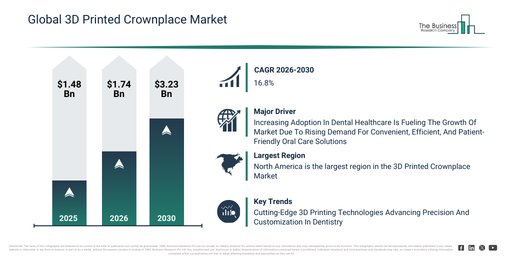
    The 3D printed crownplace market has experienced significant growth in recent years. It is projected to expand from $1.48 billion in 2025 to $1.74 billion in 2026, achieving a compound annual growth rate (CAGR) of 17.1%. This historical growth can be attributed to several factors, including the widespread adoption of CAD/CAM dentistry systems, a rising demand for aesthetic dental restorations, the ongoing digitization of dental laboratories, the initial availability of dental 3D printers, and an increasing patient preference for faster treatments.

    The 3D printed crownplace market is projected to experience substantial expansion in the coming years. By 2030, its value is anticipated to reach $3.23 billion, demonstrating a compound annual growth rate (CAGR) of 16.8%. This projected growth stems from factors such as the expanding embrace of completely digital dentistry, increasing financial commitments towards advanced dental materials, the spread of in-clinic additive manufacturing, a rising need for customized dental prosthetics, and a greater emphasis on economical dental restoration techniques. Key trends anticipated during this period encompass the wider implementation of chairside 3D printing, an uptick in the utilization of biocompatible printing substances, deeper integration of digital workflows in dentistry, the broadening of services for same-day dental restorations, and a heightened emphasis on accuracy and personalization.

    Get A Free Sample Report With In-Depth Market Insights:

    https://thebusinessresearchcompany.com/sample_request?id=73591776&type=smp&name=3D%20Printed%20Crownplace%20Market%20Report%202026&utm_source=Blogs&utm_medium=Paid&utm_campaign=Oct_PR

    3D Printed Crownplace Market Demand Drivers: What’s Powering Industry Growth?

    The rising integration of 3D printed crownplace technology within dental healthcare is projected to spur the growth of the 3D printed crownplace market moving forward. Dental healthcare encompasses the practices aimed at preserving and enhancing oral health through the prevention, diagnosis, and treatment of teeth, gums, and associated anatomical structures. This increased uptake in dental healthcare stems from patients’ demand for convenient, accessible, and effective oral care solutions that minimize treatment duration, boost comfort, and achieve superior overall oral health outcomes. 3D printed crownplace advancements significantly benefit dental healthcare by supplying precise, custom-fitted crowns that conserve time, elevate comfort, and streamline restorative procedures. For example, in 2024, the American Dental Association, a US-based professional organization supporting the dental profession, indicated that dental spending in the US saw an increase of $4 billion, or 2.5%, between 2022 and 2023. Thus, the growing adoption in dental healthcare is propelling the expansion of the 3D printed crownplace market.

    3D Printed Crownplace Market Segment Landscape: Which Areas Lead Development?

    The 3D printed crownplace market covered in this report is segmented –

    1) By Product Type: Metal 3D Printed Crownplace, Ceramic 3D Printed Crownplace, Resin 3D Printed Crownplace

    2) By Technology: Stereolithography, Selective Laser Sintering, Fused Deposition Modeling, Other Technologies

    3) By Application: Dental Clinics, Hospitals, Dental Laboratories, Other Applications

    4) By End-User: Adults, Pediatrics, Geriatrics

    Subsegments:

    1) By Metal 3D Printed Crownplace: Titanium, Cobalt-Chromium, Stainless Steel, Gold

    2) By Ceramic 3D Printed Crownplace: Zirconia, Alumina, Lithium Disilicate, Porcelain

    3) By Resin 3D Printed Crownplace: Photopolymer Resin, Biocompatible Resin, Composite Resin, Flexible Resin

    3D Printed Crownplace Market Innovation Trends: What Developments Are Reshaping The Industry?

    Major companies in the 3D printed crownplace market are prioritizing the development of sophisticated techniques, such as multi-material printing, to produce elaborate, patient-specific restorations with heightened precision, efficiency, and aesthetic quality. Multi-material printing is a 3D printing method that allows for the simultaneous creation of objects using two or more different materials, enabling complex, functional, and customized designs in a single print. For instance, in July 2024, Stratasys Ltd., a US-based manufacturer of industrial-grade 3D printers, materials, and software, introduced the DentaJet XL. This high-speed PolyJet 3D printer is specifically engineered for digital dental labs. It features a large print tray and 4 kg hot-swap resin cartridges, facilitating uninterrupted printing of up to 102 crown and bridge models concurrently. Its super high-speed mode enhances production efficiency by as much as 50%, while dual-material printing allows for complex, multi-component dental restorations to be completed in a single job. Integrated software for automatic part nesting and streamlined large-batch post-processing workflows reduces manual intervention, labor, and costs. Ultimately, the DentaJet XL significantly improves precision, productivity, and safety in high-volume dental manufacturing.

    3D Printed Crownplace Market Industry Leaders And Competitive Landscape

    Major companies operating in the 3D printed crownplace market are 3M Company, Dentsply Sirona Inc., Align Technology Incorporated, DMG Dental-Material Gesellschaft mbH, Straumann Group AG, Planmeca Oy, Ivoclar Vivadent AG, Renishaw pPlc, Stratasys Ltd., 3D Systems Corporation, Formlabs Inc., Prodways Group S.A., GC Corporation, SprintRay Inc., BEGO GmbH & Co. KG, Shining 3D Tech Co. Ltd., ZORTRAX Sp. z o.o., Asiga Pty Ltd., 3DRESYNS S.r.l, Sinterex Co. Ltd., Micron Dental Services LLC.

    View The Full 3D Printed Crownplace Market Report:

    https://thebusinessresearchcompany.com/report/3d-printed-crownplace-global-market-report?utm_source=Blogs&utm_medium=Paid&utm_campaign=Oct_PR

    3D Printed Crownplace Market Regional Analysis And Top Geography

    North America was the largest region in the 3D printed crownplace market in 2025. Asia-Pacific is expected to be the fastest-growing region in the forecast period. The regions covered in the 3D printed crownplace market report are Asia-Pacific, South East Asia, Western Europe, Eastern Europe, North America, South America, Middle East, Africa.

    Reach Out To Our Team:

    The Business Research Company: https://www.thebusinessresearchcompany.com/

    Americas: +1 310-496-7795

    Asia: +44 7882 955267 & +91 8897263534

    Europe: +44 7882 955267

    Email us at: marketing@tbrc.info

    Follow us on:

    LinkedIn: https://in.linkedin.com/company/the-business-research-company

    YouTube: https://www.youtube.com/channel/UC24_fI0rV8cR5DxlCpgmyFQ

    Global Market Model: https://www.thebusinessresearchcompany.com/global-market-model
  • 3D Imaging Market Trends Reshaping Industry Growth Through 2030

    3D Imaging Market Trends Reshaping Industry Growth Through 2030

    Backed by market attractiveness analysis, total addressable market sizing, company benchmarking matrices, interactive Excel dashboards, wider supply chain intelligence, emerging startup coverage, and detailed product-level insights, The Business Research Company’s 2026 market reports are designed to offer research that is more actionable and strategically valuable than ever.

    3D Imaging Market Forecast: Value Set To Climb From $52.39 Billion To $126.1 Billion

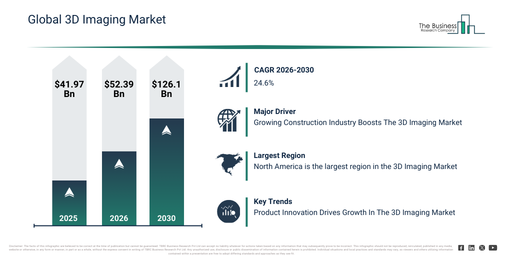
    The 3D imaging market has experienced substantial expansion in its size over recent years. Forecasts show its value will climb from $41.97 billion in 2025 to $52.39 billion in 2026, reflecting a compound annual growth rate (CAGR) of 24.8%. This historical growth can be linked to several key drivers, including the increasing adoption of digital imaging technologies, the expanded use of imaging in manufacturing inspection, a rising demand for visualization tools across media and entertainment sectors, the broadening reach of industrial automation, and the greater availability of advanced imaging hardware.

    The 3D imaging market is projected to experience substantial expansion over the coming years, with its valuation set to reach $126.1 billion by 2030, demonstrating a compound annual growth rate (CAGR) of 24.6%. This anticipated growth during the forecast period stems from several factors, including breakthroughs in AI-based image reconstruction, the increasing use of cloud-based 3D imaging solutions, escalating needs within healthcare and life sciences, the rise of smart manufacturing initiatives, and broader applications across the aerospace and automotive sectors. Key trends identified for the forecast timeframe encompass the increasing integration of 3D imaging for quality control, its greater deployment in industrial inspection, the escalating requirement for high-precision visualization tools, the expansion of 3D imaging into non-contact measurement, and its enhanced incorporation into design and prototyping processes.

    Get A Free Sample Report With In-Depth Market Insights:

    https://thebusinessresearchcompany.com/sample_request?id=94084488&type=smp&name=3D%20Imaging%20Market%20Report%202026&utm_source=Blogs&utm_medium=Paid&utm_campaign=Oct_PR

    3D Imaging Market Growth Drivers: What’s Behind The Acceleration?

    The expanding construction industry is projected to boost the growth of the 3D imaging market going forward. This sector refers to the commercial manufacturing and trade segment focused on developing, preserving, and repairing infrastructure. 3D imaging is increasingly utilized to generate precise and detailed 3D models of structures, which can subsequently be compared against initial designs to identify any flaws. For instance, in July 2024, according to the US Census Bureau, a US-based government agency, the value of construction operations rose from $2.01 trillion in May 2023 to $2.14 trillion in May 2024. Therefore, the consistent growth in the construction industry is driving the growth of the 3D imaging market.

    3D Imaging Market Segments: Where Is Growth Concentrated?

    The 3D imaging market covered in this report is segmented –

    1) By Component: Solutions, Hardware, Services

    2) By Deployment Mode: Cloud, On-premises

    3) By Application: 3D Modeling, 3D Scanning, Layout And Animation, 3D Rendering, Image Reconstruction

    4) By Vertical: Aerospace And Defense, Automotive And Transportation, Manufacturing, Healthcare And Life Sciences, Architecture And Construction, Media And Entertainment, Retail And Consumer Goods, Other Verticals

    Subsegments:

    1) By Solutions: Software (3D Modeling), Cloud-Based Solutions, Application-Specific Solutions

    2) By Hardware: 3D Scanners, Cameras, Display Systems (3D Monitors, Projectors), Sensors

    3) By Services: Consulting Services, Integration Services, Support And Maintenance, Training And Education

    3D Imaging Market Trends: What’s Defining The Industry’s Next Phase?

    Leading companies in the 3D imaging market are developing innovative offerings, such as 3D mapping tools, to attract a broader customer base, increase sales, and grow revenue. 3D mapping tools encompass various sensors, software, and techniques used to create three-dimensional representations of items, surfaces, and environments. For instance, in April 2023, Newsight Imaging Ltd., an Israel-based supplier of image sensor chips, launched the MT LiDAR 3.1. Utilizing the NSI9000 image sensor, which features an on-chip peak detection capability and a 1024 x 480-pixel resolution, the MT LiDAR 3.1 demonstrates Newsight’s multi-triangulation technology, specifically engineered for applications demanding ultra-high accuracy in short-distance measurement. This new reference design is well-suited for continuous production and oversight of structural inspections, as it enables full 3D mapping with just one scan and 480 depth points, supporting a depth resolution of 20um – 1mm while achieving hundreds of frames per second.

    3D Imaging Market Key Participants And Competitive Landscape

    Major companies operating in the 3D imaging market are Able Software Corporation, Tomtec Imaging Systems GmbH, FARO Technologies Inc., Koninklijke Philips N.V., Panasonic Corporation, Konica Minolta Inc., Trimble Inc., Bentley Systems Incorporated, Siemens AG, Dassault Systèmes SE, Visage Imaging Inc., Topcon Corporation, Autodesk Inc., Adobe Inc., Ametek Inc., Matterport Inc., Artec 3D Inc., 3D Systems Corporation, Zebra Imaging, Leica Geosystems, Planmeca Group, GOM GmbH, EON Reality Inc., Fuel3D Technologies, Basis Software Inc., RealD Inc., Euclideon Pty Ltd, Lightform Inc.

    View The Full 3D Imaging Market Report:

    https://thebusinessresearchcompany.com/report/3D-imaging-global-market-report?utm_source=Blogs&utm_medium=Paid&utm_campaign=Oct_PR

    3D Imaging Market Geographic Analysis: Where Is Demand Rising Fastest?

    North America was the largest region in the 3D imaging market in 2025. Asia-Pacific is expected to be the fastest-growing region in the 3D imaging market report forecast period. The regions covered in the 3D imaging market report are Asia-Pacific, South East Asia, Western Europe, Eastern Europe, North America, South America, Middle East, Africa.

    Reach Out To Our Team:

    The Business Research Company: https://www.thebusinessresearchcompany.com/

    Americas: +1 310-496-7795

    Asia: +44 7882 955267 & +91 8897263534

    Europe: +44 7882 955267

    Email us at: marketing@tbrc.info

    Follow us on:

    LinkedIn: https://in.linkedin.com/company/the-business-research-company

    YouTube: https://www.youtube.com/channel/UC24_fI0rV8cR5DxlCpgmyFQ

    Global Market Model: https://www.thebusinessresearchcompany.com/global-market-model
  • 3D Hydrogel Culture Market Growth To $4.91 Billion Creates New Opportunities Across The Industry

    3D Hydrogel Culture Market Growth To $4.91 Billion Creates New Opportunities Across The Industry

    Featuring market attractiveness scoring, total addressable market sizing, company benchmarking matrices, interactive Excel dashboards, deeper supply chain intelligence, emerging startup tracking, and granular product-level insights, The Business Research Company’s 2026 market reports are built to deliver research that is both more actionable and more strategically valuable.

    3D Hydrogel Culture Market Revenue Growth On Track For A 16.9% CAGR Through 2030

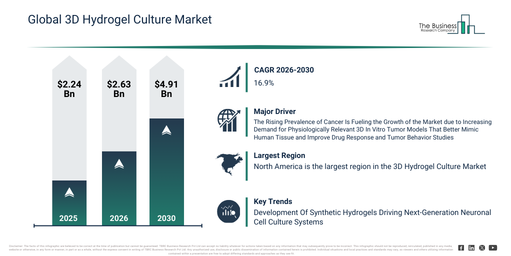
    The 3D hydrogel culture market has seen substantial expansion in recent years. It is projected to increase from $2.24 billion in 2025 to $2.63 billion in 2026, achieving a compound annual growth rate (CAGR) of 17.2%. This historical growth is attributable to advancements in cell culture techniques, the growing application of in vitro disease models, the expansion of pharmaceutical research and development activities, the escalating demand for predictive drug testing models, and the increasing adoption of tissue engineering tools.

    The 3D hydrogel culture market is poised for significant expansion over the coming years. This market is projected to reach $4.91 billion by 2030, exhibiting a compound annual growth rate (CAGR) of 16.9%. Several factors will drive this anticipated growth, including escalating investments in regenerative medicine research, a wider embrace of personalized medicine approaches, the broader implementation of organ-on-chip technologies, an increasing need for advanced toxicology testing platforms, and ongoing breakthroughs in hydrogel material science. During the forecast period, key trends observed will involve the increasing uptake of organoid and spheroid culture models, a growing utilization of biomimetic hydrogel matrices, the expanding integration of microfluidic 3D culture platforms, the proliferation of bioprinting-based cell culture systems, and a heightened emphasis on physiologically relevant drug screening.

    Get A Free Sample Report With In-Depth Market Insights:

    https://thebusinessresearchcompany.com/sample_request?id=95125360&type=smp&name=3D%20Hydrogel%20Culture%20Market%20Report%202026&utm_source=Blogs&utm_medium=Paid&utm_campaign=Oct_PR

    3D Hydrogel Culture Market Growth Factors Behind Sustained Expansion

    The growing occurrence of cancer is projected to drive the expansion of the 3D hydrogel culture market in the future. Cancer constitutes a range of illnesses defined by unchecked cellular proliferation and the capacity to infiltrate or disseminate throughout the body, presenting intricate obstacles for investigation and pharmaceutical innovation. The escalation in cancer diagnoses is fueling the need for sophisticated in vitro models capable of accurately replicating human tissue environments, thereby facilitating more precise examinations of tumor characteristics and treatment efficacy. 3D hydrogel culture aids cancer research by offering three-dimensional scaffolds that emulate the extracellular matrix, which permits investigators to examine cell-cell interactions, tumor advancement, and drug effectiveness within a physiologically pertinent setting. As an illustration, in October 2025, the Australian Institute of Health and Welfare, an Australia-based government agency, forecasts that approximately 969,000 individuals will be living after having been diagnosed with cancer over the preceding 10 years, and about 170,000 new cancer cases will be identified in Australia. This signifies a growth of about 93% over 25 years, with the age-standardized cancer incidence projected at 614 cases per 100,000 people and mortality rates anticipated to decline to 194 deaths per 100,000 people. Consequently, the growing frequency of cancer is propelling the 3D hydrogel culture market.

    3D Hydrogel Culture Market Segment Analysis: What Are The Core Market Categories?

    The 3D hydrogel culture market covered in this report is segmented –

    1) By Product: Scaffold Based, Scaffold Free, Bioreactors, Microfluidic, Bioprinting

    2) By Application: Cancer Research, Stem Cell Research And Tissue Engineering, Drug Discovery And Toxicology Testing, Other Applications

    3) By End-User: Pharmaceutical And Biotechnology Companies, Academic And Research Institutes, Hospitals, Other End-Users

    Subsegments:

    1) By Scaffold Based: Natural Polymer Hydrogels, Synthetic Polymer Hydrogels, Composite Hydrogels, Functionalized Hydrogels, Thermoresponsive Hydrogels

    2) By Scaffold Free: Multicellular Spheroids, Patient Derived Organoids, Cell Sheets, Low Attachment Plate Aggregates, Magnetic Levitation Microtissues

    3) By Bioreactors: Spinner Flask Bioreactors, Rotating Wall Vessel Bioreactors, Perfusion Bioreactors, Wave Bag Bioreactors, Stirred Tank Bioreactors

    4) By Microfluidic: Organ On A Chip Platforms, Perfusion Microfluidic Chips, Droplet Microfluidic Systems, Gradient Generation Chips, Barrier Model Chips

    5) By Bioprinting: Inkjet Bioprinting, Extrusion Bioprinting, Laser Assisted Bioprinting, Microvalve Bioprinting, Stereolithography Bioprinting

    3D Hydrogel Culture Market Industry Trends Fueling Future Revenue Growth

    Leading companies in the 3D hydrogel culture market are concentrating on innovations in tissue engineering, specifically the development of synthetic and xeno-free hydrogels. This focus aims to create more physiologically relevant, accurate, and reproducible three-dimensional neuronal cell culture systems. Synthetic and xeno-free hydrogel development involves crafting hydrogel formulations that exclude animal-derived components, yet effectively support robust cell-cell and cell matrix interactions, thereby improving in vitro modeling and enabling potential in vivo applications. For example, in September 2025, TheWell Bioscience Inc., a US-based company recognized for its advanced 3D cell culture platforms in precision medicine, cell therapy, and biomanufacturing, commercially launched its VitroGel NEURON. This innovative synthetic and xeno-free hydrogel delivers a defined, reproducible, and scalable environment conducive to neuronal growth, differentiation, and network formation. The product effectively overcomes the limitations associated with animal-derived matrices by efficiently supporting both 3D and 2D neuronal cultures and functioning as an injectable carrier for in vivo delivery. The hydrogel is specifically engineered to foster strong cell-cell and cell-matrix interactions, allowing researchers to construct more physiologically relevant neuronal models for studies pertaining to neurodevelopment and neurodegeneration.

    3D Hydrogel Culture Market Top Companies Driving Competitive Growth

    Major companies operating in the 3D hydrogel culture market are Merck KGaA, Thermo Fisher Scientific Inc., Corning Incorporated, Lonza Group AG, Sartorius, Bio-Techne Corporation, PromoCell GmbH, Cosmo Bio, AIM Biotech, AMSBIO (AMS Biotechnology), TheWell Bioscience, Cell Guidance Systems (CellGS), Cellendes GmbH, CD Bioparticles, Ferentis (Ferentis AG), Gelomics, TissueLabs, CELLINK (BICO), PepGel LLC, 3D Biotek Inc.

    View The Full 3D Hydrogel Culture Market Report:

    https://thebusinessresearchcompany.com/report/global-3d-hydrogel-culture-market-report?utm_source=Blogs&utm_medium=Paid&utm_campaign=Oct_PR

    3D Hydrogel Culture Market Global Footprint: Which Region Leads The Market?

    North America was the largest region in the 3D hydrogel culture market in 2025. Asia-Pacific is expected to be the fastest-growing region in the forecast period. The regions covered in the 3D hydrogel culture market report are Asia-Pacific, South East Asia, Western Europe, Eastern Europe, North America, South America, Middle East, Africa.

    Reach Out To Our Team:

    The Business Research Company: https://www.thebusinessresearchcompany.com/

    Americas: +1 310-496-7795

    Asia: +44 7882 955267 & +91 8897263534

    Europe: +44 7882 955267

    Email us at: marketing@tbrc.info

    Follow us on:

    LinkedIn: https://in.linkedin.com/company/the-business-research-company

    YouTube: https://www.youtube.com/channel/UC24_fI0rV8cR5DxlCpgmyFQ

    Global Market Model: https://www.thebusinessresearchcompany.com/global-market-model
  • 3D Diagnostic Imaging Services Market Forecast: Breaking Down The Numbers Behind Future Expansion

    3D Diagnostic Imaging Services Market Forecast: Breaking Down The Numbers Behind Future Expansion

    Built to provide research that’s more actionable and strategically valuable, The Business Research Company’s 2026 market reports include market attractiveness analysis, total addressable market sizing, company benchmarking matrices, interactive Excel dashboards, broader supply chain intelligence, emerging startup tracking, and in-depth product insights.

    3D Diagnostic Imaging Services Market Value Growth And Long-Term Outlook

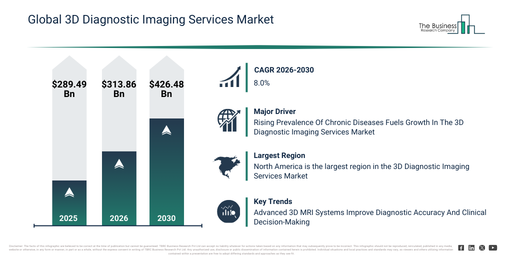
    The 3D diagnostic imaging services market has shown robust expansion in recent years. Its size is expected to grow from $289.49 billion in 2025 to $313.86 billion in 2026, demonstrating a compound annual growth rate (CAGR) of 8.4%. This growth in the past can be attributed to the increasing burden of chronic diseases, a growing demand for accurate diagnostic tools, the expansion of hospital imaging infrastructure, rising awareness of early disease diagnosis, and the adoption of conventional mri and ct imaging systems.

    The 3D diagnostic imaging services market is anticipated to experience substantial expansion over the upcoming years. This market is projected to reach $426.48 billion by 2030, exhibiting a compound annual growth rate (CAGR) of 8.0%. Factors contributing to this anticipated growth include progress in AI-powered 3D imaging analysis, increased capital allocation towards sophisticated diagnostic technologies, a heightened need for tailored and precise diagnostic approaches, the broadening availability of diagnostic imaging services within developing economies, and the greater incorporation of multi-modal imaging methodologies. Key developments expected during this period encompass the increased use of 3D imaging for detecting diseases early, a surge in the requirement for high-definition diagnostic imaging, a growing inclination towards non-surgical diagnostic methods, the broadening scope of advanced imaging facilities in diagnostic centers, and the expanding application of 3D imaging within the fields of oncology and cardiology.

    Get A Free Sample Report With In-Depth Market Insights:

    https://thebusinessresearchcompany.com/sample_request?id=69723375&type=smp&name=3D%20Diagnostic%20Imaging%20Services%20Market%20Report%202026&utm_source=Blogs&utm_medium=Paid&utm_campaign=Oct_PR

    3D Diagnostic Imaging Services Market Demand Drivers Opening New Revenue Streams

    The widespread occurrence of chronic illnesses is anticipated to propel the 3D diagnostic imaging services market. These conditions are defined as enduring health issues that require continuous management and treatment over prolonged durations. 3D diagnostic imaging services offer vital support in managing chronic diseases through intricate visualization of affected organs and tissues. This capability facilitates more accurate tracking of disease advancement and the effectiveness of treatments, ultimately leading to enhanced patient care and better clinical outcomes. For instance, in January 2023, the National Center for Biotechnology Information (NCBI), a US-based National Library of Medicine, projected that by 2050, the population of individuals 50 years and older suffering from at least one chronic ailment is expected to increase by 99.5%, amounting to 142.66 million people. Therefore, the prevalence of chronic diseases is predicted to fuel the expansion of the 3D diagnostic imaging services market.

    3D Diagnostic Imaging Services Market Segment Breakdown: Which Categories Lead On Revenue?

    The 3D diagnostic imaging services market covered in this report is segmented –

    1) By Technique: Ultrasound, MRI, Computed Tomography, Other Techniques

    2) By Application: Oncology, Cardiology, Orthopedic, Other Applications

    3) By End User: Diagnostic Centers, Hospitals

    Subsegments:

    1) By Ultrasound: 3D Or 4D Ultrasound, Contrast-Enhanced Ultrasound

    2) By MRI (Magnetic Resonance Imaging): Functional MRI (FMRI), Magnetic Resonance Spectroscopy (MRS), Cardiac MRI, Whole-Body MRI

    3) By Computed Tomography (CT): Spiral Or Helical CT, Cone Beam CT (CBCT), Positron Emission Tomography-Computed Tomography (PET-CT)

    4) By Other Techniques: Positron Emission Tomography (PET), Single Photon Emission Computed Tomography (SPECT), Optical Imaging

    3D Diagnostic Imaging Services Market Trends Powering Strategic Industry Growth

    Leading companies operating in the 3D diagnostic imaging services market are concentrating on developing advanced solutions, notably high-resolution 3D MRI systems, with the aim of enhancing image quality, improving diagnostic accuracy, and supporting efficient clinical decision-making. These high-resolution 3D MRI systems enable the detailed visualization of complex anatomical structures, thereby facilitating the early detection and precise diagnosis of various medical conditions. For instance, in November 2024, House of Diagnostics (HOD), an India-based diagnostics and pathology services provider, launched the uMR 780, a state-of-the-art digital 3T MRI system, at its Karkardooma center in Delhi. This system is designed to deliver superior image quality and redefine the diagnosis of complex medical conditions. The advanced 3T MRI offers high-resolution 3D imaging capabilities, supporting more accurate and efficient clinical decision-making.

    3D Diagnostic Imaging Services Market Leading Players And Competitive Positioning

    Major companies operating in the 3D diagnostic imaging services market are RadNet Inc, Quest Diagnostics Inc, Laboratory Corporation of America Holdings, Sonic Healthcare Limited, SYNLAB International GmbH InHealth Group Ltd, Cobalt Health Pty Ltd, Accurate Imaging Inc, Atlantic Medical Imaging Inc, Front Range Mobile Imaging Inc, TridentCare LLC, Digirad Corporation, Teleradiology Solutions, Spectra Laboratories Inc, Akumin Inc, Alliance Medical Group, Capitol Imaging Services, Medica Group Plc, Prenuvo Inc, Nox Medical Imaging

    View The Full 3D Diagnostic Imaging Services Market Report:

    https://thebusinessresearchcompany.com/report/3D-Diagnostic-Imaging-Services-Global-Market-Report?utm_source=Blogs&utm_medium=Paid&utm_campaign=Oct_PR

    3D Diagnostic Imaging Services Market Regional Split: Which Areas Are Fueling Growth?

    North America was the largest region in the 3D diagnostic imaging services market in 2025. Western Europe was the second largest region in the 3D diagnostic imaging services market. The regions covered in the 3D diagnostic imaging services market report are Asia-Pacific, South East Asia, Western Europe, Eastern Europe, North America, South America, Middle East, Africa.

    Reach Out To Our Team:

    The Business Research Company: https://www.thebusinessresearchcompany.com/

    Americas: +1 310-496-7795

    Asia: +44 7882 955267 & +91 8897263534

    Europe: +44 7882 955267

    Email us at: marketing@tbrc.info

    Follow us on:

    LinkedIn: https://in.linkedin.com/company/the-business-research-company

    YouTube: https://www.youtube.com/channel/UC24_fI0rV8cR5DxlCpgmyFQ

    Global Market Model: https://www.thebusinessresearchcompany.com/global-market-model
  • 3D Cell Culture Technologies Market Expected To Grow At 19.9% CAGR Through 2030: What Businesses Need To Know

    3D Cell Culture Technologies Market Expected To Grow At 19.9% CAGR Through 2030: What Businesses Need To Know

    Backed by market attractiveness analysis, total addressable market sizing, company benchmarking matrices, interactive Excel dashboards, wider supply chain intelligence, emerging startup coverage, and detailed product-level insights, The Business Research Company’s 2026 market reports are designed to offer research that is more actionable and strategically valuable than ever.

    3D Cell Culture Technologies Market Poised To Hit $9.8 Billion By 2030 With A 19.9% CAGR

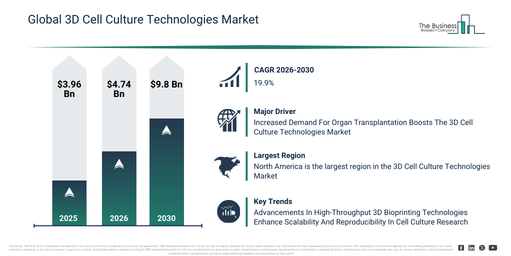
    The 3D cell culture technologies market has experienced significant expansion in recent years. This market is projected to expand from $3.96 billion in 2025 to $4.74 billion in 2026, demonstrating a compound annual growth rate (CAGR) of 19.7%. This historical growth can be linked to several factors, including the increasing application of cell culture in vaccine manufacturing, heightened cancer research efforts, the inherent limitations of 2D cell culture models, an increase in academic research funding, and the development of biotechnology research infrastructure.

    The 3D cell culture technologies market size is anticipated to undergo significant expansion over the next few years. It is projected to reach $9.8 billion by 2030, exhibiting a compound annual growth rate (CAGR) of 19.9%. This expansion during the forecast period is primarily attributed to advancements in 3D bioreactor technologies, increased investment in regenerative medicine, a growing number of pharmaceutical drug discovery pipelines, the rising adoption of personalized medicine, and technological improvements in scaffold materials. Prominent trends expected in this period include the wider integration of 3D cell culture in cancer research, an uptick in the use of organoids and spheroids for disease modeling, an escalating demand for advanced drug screening platforms, the broadening scope of stem cell and regenerative medicine research, and a heightened preference for in vitro models over animal testing.

    Get A Free Sample Report With In-Depth Market Insights:

    https://thebusinessresearchcompany.com/sample_request?id=57756938&type=smp&name=3D%20Cell%20Culture%20Technologies%20Market%20Report%202026&utm_source=Blogs&utm_medium=Paid&utm_campaign=Oct_PR

    3D Cell Culture Technologies Market Growth Backed By Core Demand Fundamentals

    The growing need for organ transplantation is projected to boost the expansion of the 3D cell culture technologies market in the coming years. This technology entails creating three-dimensional cellular arrangements that closely replicate the design and operation of actual tissues or organs, thereby facilitating tissue and organ regrowth and enabling comprehensive drug toxicology evaluations. The surge in organ transplantation stems from a rising prevalence of organ failure coupled with ongoing progress in medical science, which renders these procedures increasingly viable. 3D cell culture advancements contribute to this upward trajectory by supplying critical models for developing organs, advancing regenerative treatments, and conducting preclinical assessments. To illustrate, the United Network for Organ Sharing (UNOS), a US-based nonprofit organization, reported in January 2024 that the United States successfully completed an unprecedented 46,632 organ transplants in 2023. This figure not only exceeded all prior annual records but also signified sustained nationwide growth in transplant operations. Consequently, the heightened demand for organ transplantation is a key impetus behind the growth observed in the 3D cell culture technologies market.

    3D Cell Culture Technologies Market Segmentation: How Does The Market Break Down By Category?

    The 3D cell culture technologies market covered in this report is segmented –

    1) By Type: Scaffold-Based, Scaffold-Free, 3D Bioreactors

    2) By Application: Cancer Research, Stem Cell Research, Drug Discovery, Regenerative Medicine

    3) By End Users: Research Laboratories and Institutes, Biotechnology and Pharmaceutical Companies, Other End Users

    Subsegments:

    1) By Scaffold-Based: Natural Scaffolds, Synthetic Scaffolds, Hybrid Scaffolds

    2) By Scaffold-Free: Spheroid-Based, Organoid-Based

    3) By 3D Bioreactors: Spinner Flask Bioreactors, Rotating Wall Bioreactors, Microcarrier-Based Bioreactors, Hollow Fiber Bioreactors

    3D Cell Culture Technologies Market Growth Trends Reshaping The Competitive Landscape

    Companies active in the 3D cell culture technologies market are prioritizing the development of sophisticated high-throughput scalability systems to boost both efficiency and reproducibility. High-throughput scalability refers to platforms that can rapidly produce a large number of 3D cell models with consistent quality, thereby reducing both variation and the cost per sample. For instance, Inventia Life Science, an Australia-based company specializing in 3D cell culture technologies, introduced RASTRUM Allegro in January 2025, which incorporates drop-on-demand bioprinting and precision robotics. This system can generate a 96-well plate in approximately 6 minutes and a 384-well plate in 9 minutes, allowing for a throughput exceeding 35 plates daily. It achieves post-print intra- and inter-plate coefficient of variation (CV) of under 10 percent and downstream assay CVs under 19 percent, ensuring highly reproducible results. The platform is specifically designed for patient-derived samples, enabling the creation of up to 3.5× more 3D models from limited cell numbers, which reduces the cost per well and improves accessibility for translational research.

    3D Cell Culture Technologies Market Competitive Overview And Top Companies

    Major companies operating in the 3D cell culture technologies market are Becton Dickinson and Company, Corning Incorporated, Eppendorf AG, Merck KGaA, Thermo Fisher Scientific Inc., Lonza Group AG, HiMedia Laboratories Pvt. Ltd., PromoCell GmbH, CellGenix GmbH, Greiner Bio-One International GmbH, Irvine Scientific Sales Company Inc., American Type Culture Collection (ATCC), Miltenyi Biotec B.V. & Co. KG, Sartorius AG, CN Bio Innovations, Nortis Inc., Kiyatec, Nanofiber Solutions, Known Medicine, Synthecon Inc., 3D Biotek LLC, 3D Cell Culture Innovations LLC, 3D Matrix Inc., Allevi Inc., BioSpherix Ltd., Emulate Inc., MicroTissues Inc., Sumitomo Bakelite

    View The Full 3D Cell Culture Technologies Market Report:

    https://thebusinessresearchcompany.com/report/3D-Cell-Culture-Technologies-Global-Market-Report?utm_source=Blogs&utm_medium=Paid&utm_campaign=Oct_PR

    3D Cell Culture Technologies Market Top Region: Where Does Most Revenue Come From?

    North America was the largest region in the 3D cell culture technologies market in 2025. Western Europe was the second largest region in the 3D cell culture technologies market. The regions covered in the 3D cell culture technologies market report are Asia-Pacific, South East Asia, Western Europe, Eastern Europe, North America, South America, Middle East, Africa.

    Reach Out To Our Team:

    The Business Research Company: https://www.thebusinessresearchcompany.com/

    Americas: +1 310-496-7795

    Asia: +44 7882 955267 & +91 8897263534

    Europe: +44 7882 955267

    Email us at: marketing@tbrc.info

    Follow us on:

    LinkedIn: https://in.linkedin.com/company/the-business-research-company

    YouTube: https://www.youtube.com/channel/UC24_fI0rV8cR5DxlCpgmyFQ

    Global Market Model: https://www.thebusinessresearchcompany.com/global-market-model
  • 3D Cardiac Mapping System Market Forecast To Reach $2.97 Billion By 2030: Key Trends Explained

    3D Cardiac Mapping System Market Forecast To Reach $2.97 Billion By 2030: Key Trends Explained

    Featuring market attractiveness scoring, total addressable market sizing, company benchmarking matrices, interactive Excel dashboards, deeper supply chain intelligence, emerging startup tracking, and granular product-level insights, The Business Research Company’s 2026 market reports are built to deliver research that is both more actionable and more strategically valuable.

    3D Cardiac Mapping System Market Size And Revenue Outlook Through 2030

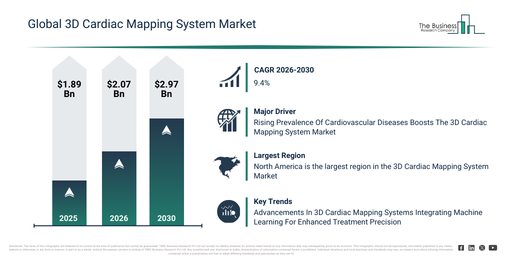
    The 3D cardiac mapping system market size has experienced significant growth over recent years. It is projected to expand from $1.89 billion in 2025 to $2.07 billion in 2026, showing a compound annual growth rate (CAGR) of 9.6%. The historical growth of this market can be attributed to factors such as the increasing prevalence of cardiac arrhythmias, the wider adoption of catheter ablation procedures, rising investment in cardiac care infrastructure, technological advancements in electrophysiology devices, and increased awareness for early arrhythmia diagnosis.

    The 3D cardiac mapping system market is projected to experience substantial expansion over the upcoming years. This market is anticipated to reach a valuation of $2.97 billion by 2030, exhibiting a compound annual growth rate (CAGR) of 9.4%. Drivers for this projected growth include the incorporation of AI-based cardiac mapping algorithms, an increasing need for precision-guided ablation therapies, the proliferation of ambulatory surgical centers, heightened healthcare spending on cardiovascular ailments, and ongoing advancements in mapping software and visualization tools. Key trends anticipated during this period encompass the growing acceptance of 3D mapping in intricate arrhythmia procedures, a surge in the requirement for high-resolution cardiac mapping, an increase in minimally invasive electrophysiology interventions, improvements in catheter design and electrode density, and the worldwide proliferation of cardiac electrophysiology laboratories.

    Get A Free Sample Report With In-Depth Market Insights:

    https://thebusinessresearchcompany.com/sample_request?id=29208867&type=smp&name=3D%20Cardiac%20Mapping%20System%20Market%20Report%202026&utm_source=Blogs&utm_medium=Paid&utm_campaign=Oct_PR

    3D Cardiac Mapping System Market Growth Catalysts And Demand Drivers

    The increasing occurrence of cardiovascular diseases is projected to drive the expansion of the 3D cardiac mapping system market moving forward. This escalation in heart conditions is fueled by factors such as aging, unhealthy lifestyles, obesity, diabetes, high blood pressure, stress, genetic predispositions, environmental pollution, limited access to healthcare, and socioeconomic disparities. A 3D Cardiac Mapping System provides crucial assistance to patients with cardiovascular diseases by offering detailed, real-time visual representations of heart activity, thereby guiding precise diagnosis and treatment for arrhythmias and other related conditions. For instance, in January 2024, data published by the British Heart Foundation, a UK-based cardiovascular research charity, indicated that approximately 7.6 million people in the UK are affected by heart and circulatory diseases, with around 4 million males and 3.6 million females living with these conditions. These ailments are responsible for about 27% of all deaths in the UK, amounting to over 170,000 deaths annually, or roughly 480 deaths each day, which translates to one death every three minutes. Consequently, the rising prevalence of cardiovascular diseases is stimulating the growth of the 3D cardiac mapping system market.

    3D Cardiac Mapping System Market Segment Trends And Revenue Contributors

    The 3D cardiac mapping system market covered in this report is segmented –

    1) By Product: Mapping Systems, Mapping Catheters, Mapping Accessories, Mapping Software

    2) By Application: Atrial Fibrillation, Ventricular Tachycardia, Atrial Flutter, Supraventricular Tachycardia, Other Applications

    3) By End Users: Hospitals, Cardiac Catheterization Laboratories, Ambulatory Surgical Centers, Academic And Research Institutes, Other End Users

    Subsegments:

    1) By Mapping Systems: Electroanatomical Mapping Systems, Contact Mapping Systems, Non-Contact Mapping Systems

    2) By Mapping Catheters: High-Density Mapping Catheters, Single-Point Mapping Catheters, Multi-Electrode Mapping Catheters

    3) By Mapping Accessories: Introducers, Sheaths, Electrodes

    4) By Mapping Software: Signal Analysis Software, 3D Visualization Software, Real-Time Mapping Software

    3D Cardiac Mapping System Market Trends Shaping Long-Term Demand

    Major companies operating in the 3D cardiac mapping system market are prioritizing the development of technologically advanced solutions, such as 3D cardiac mapping systems equipped with machine learning capabilities, to boost diagnostic accuracy and improve treatment outcomes. 3D cardiac mapping systems with machine learning refer to sophisticated medical technologies used in cardiology that combine three-dimensional mapping of the heart’s electrical activity with artificial intelligence algorithms. For instance, in May 2024, Biosense Webster Inc., a US-based cardiac arrhythmia treatment solutions company, introduced CARTO 3 System Version 8, a new 3D cardiac mapping system. This software integrates machine learning capabilities through innovative modules like the CARTO ELEVATE Module and the CARTOSOUND FAM Module. These modules were specifically engineered to improve efficiency, consistency, and precision during catheter ablation procedures performed by electrophysiologists. The CARTO 3 mapping and ablation system enhances signal analysis, refines substrate characterization, and incorporates ultrasound technology for a superior procedure experience.

    3D Cardiac Mapping System Market Competitive Landscape: Which Companies Lead The Industry?

    Major companies operating in the 3D cardiac mapping system market are Abbott Laboratories, Medtronic PLC, Boston Scientific Corporation, Biotronik SE & Co. KG, MicroPort Scientific Corporation, Stereotaxis Inc., Kardium Inc., Acutus Medical Inc., Catheter Precision Inc., BioSig Technologies Inc., Volta Medical, Osypka Medical, CoreMap Inc., APN Health LLC, Japan Lifeline Co. Ltd., Lepu Medical Technology, CathRx Ltd., Adagio Medical Inc., Nihon Kohden Corporation, EP Solutions SA, Sino Medical Sciences Technology

    View The Full 3D Cardiac Mapping System Market Report:

    https://thebusinessresearchcompany.com/report/3d-cardiac-mapping-system-global-market-report?utm_source=Blogs&utm_medium=Paid&utm_campaign=Oct_PR

    3D Cardiac Mapping System Market Regional Breakdown: Where Is Demand Concentrated?

    North America was the largest region in the 3D cardiac mapping system market in 2025. Asia-Pacific is expected to be the fastest-growing region in the forecast period. The regions covered in the 3D cardiac mapping system market report are Asia-Pacific, South East Asia, Western Europe, Eastern Europe, North America, South America, Middle East, Africa.

    Reach Out To Our Team:

    The Business Research Company: https://www.thebusinessresearchcompany.com/

    Americas: +1 310-496-7795

    Asia: +44 7882 955267 & +91 8897263534

    Europe: +44 7882 955267

    Email us at: marketing@tbrc.info

    Follow us on:

    LinkedIn: https://in.linkedin.com/company/the-business-research-company

    YouTube: https://www.youtube.com/channel/UC24_fI0rV8cR5DxlCpgmyFQ

    Global Market Model: https://www.thebusinessresearchcompany.com/global-market-model
  • Wearable Healthcare Devices Market Projected For Strong Expansion Through 2030: Key Trends And Future Outlook

    Wearable Healthcare Devices Market Projected For Strong Expansion Through 2030: Key Trends And Future Outlook

    Built to provide research that’s more actionable and strategically valuable, The Business Research Company’s 2026 market reports include market attractiveness analysis, total addressable market sizing, company benchmarking matrices, interactive Excel dashboards, broader supply chain intelligence, emerging startup tracking, and in-depth product insights.

    Wearable Healthcare Devices Market Poised To Hit $54.44 Billion By 2030 With A 12.2% CAGR

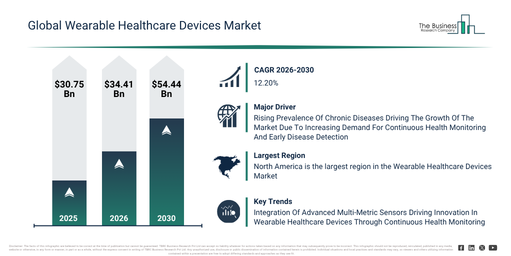
    The wearable healthcare devices market has experienced rapid growth in recent years. This market is projected to expand from $30.75 billion in 2025 to reach $34.41 billion in 2026, reflecting a compound annual growth rate (CAGR) of 11.9%. Its historical expansion can be attributed to several factors, including increasing consumer awareness of personal health and fitness tracking, the quick adoption of smartphones that enable wearable connectivity, a rising prevalence of lifestyle-related diseases, the broadening of digital health and telemedicine platforms, and the declining cost of sensor and wearable technology components.

    The wearable healthcare devices sector is projected to experience substantial expansion in the coming years. Its valuation is anticipated to reach $54. 44 billion by 2030, exhibiting a compound annual growth rate (CAGR) of 12. 2%. This projected increase is largely due to factors such as the increasing incorporation of AI-driven personalized health data into wearables, the growing implementation of remote patient monitoring within healthcare frameworks, the proliferation of interoperable cloud-based health data systems, the rising need for continuous, non-invasive health tracking tools, and developments in miniature biosensors and power-efficient wearable technologies. Key developments expected during this period involve the greater embedding of AI-powered predictive health analysis in wearable technology, the increasing deployment of ongoing remote patient monitoring via connected wearables, the expansion of cloud-based health data environments for live health tracking, the expanded application of wearable devices for proactive health management and early disease identification, and a surge in demand for multi-parameter biosensor wearables for customized health insights.

    Get A Free Sample Report With In-Depth Market Insights:

    https://thebusinessresearchcompany.com/sample_request?id=30866769&type=smp&name=Wearable%20Healthcare%20Devices%20Market%20Report%202026&utm_source=Blogs&utm_medium=Paid&utm_campaign=Oct_PR

    Wearable Healthcare Devices Market Demand Drivers Opening New Revenue Streams

    The rising incidence of chronic illnesses is anticipated to drive expansion in the wearable healthcare devices market. These conditions, which include cardiovascular diseases, diabetes, cancer, and chronic respiratory disorders, are enduring health issues that evolve over time, necessitating continuous care and impacting an increasing segment of the worldwide populace in both advanced and emerging economies. A sedentary lifestyle and poor eating habits are key contributors to the widespread occurrence of chronic diseases, leading to enduring metabolic and cardiovascular complications. Wearable healthcare devices bolster this trend by providing continuous monitoring of physiological parameters, aiding in the prompt identification of health deviations, and enhancing patient compliance with treatments via immediate health data. As an example, UnitedHealth Group, a U. S. -based health organization, reported in December 2023 that the incidence of eight significant chronic conditions hit unprecedented levels in 2023, with diabetes alone impacting roughly 11. 5% of adults (approximately 31. 9 million people). Consequently, the expanding occurrence of chronic diseases is fueling the development of the wearable healthcare devices market.

    Wearable Healthcare Devices Market Segment Trends And Revenue Contributors

    The wearable healthcare devices market covered in this report is segmented –

    1) By Type: Wearable Fitness Trackers, Smart Health Watches, Wearable Electrocardiogram Monitor, Wearable Blood Pressure Monitors

    2) By Distribution Channel: Retail Pharmacies, Online Channels, Other Distribution Channels

    3) By Application: Sports And Fitness, Home Healthcare, Remote Patient Monitoring

    4) By End User: Individuals, Healthcare Providers, Fitness And Wellness Centers, Insurance Companies, Corporate Wellness Programs, Research Institutions

    Subsegments:

    1) By Wearable Fitness Trackers: Activity Tracking Devices, Sleep Monitoring Devices, Heart Rate Tracking Devices, Calorie Tracking Devices, Multi Sport Tracking Devices

    2) By Smart Health Watches: Advanced Health Monitoring Watches, Lifestyle And Wellness Tracking Watches, Sports Performance Monitoring Watches, Connected Medical Alert Watches, Hybrid Analog Digital Health Watches

    3) By Wearable Electrocardiogram Monitor: Continuous Cardiac Monitoring Devices, On Demand Cardiac Recording Devices, Patch Based Cardiac Monitoring Devices, Chest Strap Cardiac Monitoring Devices, Portable Personal Cardiac Monitoring Devices

    4) By Wearable Blood Pressure Monitors: Wrist Based Blood Pressure Monitoring Devices, Upper Arm Blood Pressure Monitoring Devices, Continuous Blood Pressure Tracking Devices, Cuffless Blood Pressure Monitoring Devices, Ambulatory Blood Pressure Monitoring Devices

    Wearable Healthcare Devices Market Trends Powering Strategic Industry Growth

    Leading companies in the wearable healthcare devices market are prioritizing the integration of sophisticated multi-metric sensor technologies to enhance health understanding and support preventive care. Advanced multi-metric sensors are integrated sensing systems capable of simultaneously monitoring diverse physiological parameters, including heart rate variability, body temperature fluctuations, respiratory rate, and activity levels, thereby enabling comprehensive real-time health observation. For example, in August 2023, Withings, a digital health company from France, unveiled its new ScanWatch 2 and ScanWatch Light. These devices come with improved sensors that facilitate 24/7 monitoring of additional health metrics beyond standard tracking, such as baseline body temperature variation, heart-rate variability, respiratory rate, and female cycle tracking. The devices also incorporate advanced MultiWave PPG sensors and high dynamic range accelerometers to automatically identify over 40 activities, delivering deeper health insights and enhancing personalized health management.

    Wearable Healthcare Devices Market Competitive Landscape: Who Leads The Industry?

    Major companies operating in the wearable healthcare devices market are Apple Inc., Samsung Electronics Company Limited, Huawei Technologies Company Limited, Abbott Laboratories Inc., Medtronic PLC, Senseonics Holdings Incorporated, Koninklijke Philips Naamloze Vennootschap, GE HealthCare Technologies Inc., Garmin Limited, Omron Corporation, Dexcom Incorporated, Insulet Corporation, Sotera Wireless Incorporated, Tandem Diabetes Care Incorporated, Ypsomed Holding Aktiengesellschaft, Withings Société par Actions Simplifiée, Owlet Incorporated, AliveCor Incorporated, Qardio Incorporated, ForaCare Suisse AG, Corsano Health Besloten Vennootschap, Movano Health Incorporated, NeuroMetrix Incorporated, Shenzhen Viatom Technology Company Limited

    View The Full Wearable Healthcare Devices Market Report:

    https://thebusinessresearchcompany.com/report/wearable-healthcare-devices-market-report?utm_source=Blogs&utm_medium=Paid&utm_campaign=Oct_PR

    Wearable Healthcare Devices Market Geographic Landscape: Which Region Leads Industry Growth?

    North America was the largest region in the wearable healthcare devices market in 2025. Asia-Pacific is expected to be the fastest-growing region in the forecast period. The regions covered in the wearable healthcare devices market report are Asia-Pacific, South East Asia, Western Europe, Eastern Europe, North America, South America, Middle East and Africa.

    Reach Out To Our Team:

    The Business Research Company: https://www.thebusinessresearchcompany.com/

    Americas: +1 310-496-7795

    Asia: +44 7882 955267 & +91 8897263534

    Europe: +44 7882 955267

    Email us at: marketing@tbrc.info

    Follow us on:

    LinkedIn: https://in.linkedin.com/company/the-business-research-company

    YouTube: https://www.youtube.com/channel/UC24_fI0rV8cR5DxlCpgmyFQ

    Global Market Model: https://www.thebusinessresearchcompany.com/global-market-model
  • Wearable And IoMT Medical Devices Market Outlook 2026–2030: Growth Trends, Market Dynamics And Emerging Opportunities

    Wearable And IoMT Medical Devices Market Outlook 2026–2030: Growth Trends, Market Dynamics And Emerging Opportunities

    Backed by market attractiveness analysis, total addressable market sizing, company benchmarking matrices, interactive Excel dashboards, wider supply chain intelligence, emerging startup coverage, and detailed product-level insights, The Business Research Company’s 2026 market reports are designed to offer research that is more actionable and strategically valuable than ever.

    Wearable And IoMT Medical Devices Market Size And Revenue Outlook Through 2030

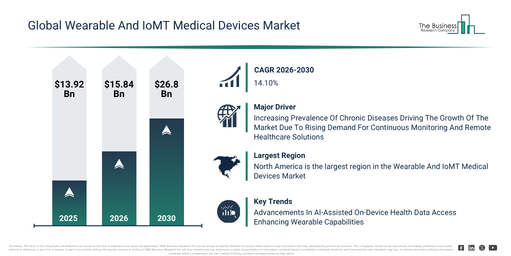
    The market size for wearable and IoMT medical devices has experienced rapid growth in recent years. This sector is forecast to increase from $13.92 billion in 2025 to $15.84 billion in 2026, achieving a compound annual growth rate (CAGR) of 13.8%. The expansion witnessed in the historic period is attributable to the rising prevalence of chronic diseases, a surge in wearable technology adoption, increasing digitization within healthcare, the broadening of telemedicine services, and advancements in sensor technologies.

    The market size for wearable and IoMT medical devices is poised for significant expansion over the next few years. It is predicted to reach $26.8 billion by 2030, exhibiting a compound annual growth rate (CAGR) of 14.1%. This projected growth is driven by several factors, including an escalating demand for personalized healthcare solutions, a greater adoption of remote patient monitoring systems, increased investment in digital health platforms, the expanding healthcare needs of an aging population, and a reinforced focus on preventive healthcare. During the same forecast period, major trends include the broader acceptance of remote patient monitoring devices, an increasing need for continuous real-time health tracking, enhanced integration of multi-parameter sensing into wearable devices, the expansion of home-based healthcare solutions, and the development of compact, energy-efficient wearable medical devices.

    Get A Free Sample Report With In-Depth Market Insights:

    https://thebusinessresearchcompany.com/sample_request?id=95213717&type=smp&name=Wearable%20And%20IoMT%20Medical%20Devices%20Market%20Report%202026&utm_source=Blogs&utm_medium=Paid&utm_campaign=Oct_PR

    Wearable And IoMT Medical Devices Market Growth Backed By Core Demand Fundamentals

    The rising occurrence of chronic illnesses is anticipated to drive the expansion of the wearable and IoMT medical devices market in the future. These long-lasting health conditions encompass ailments like diabetes, cardiovascular diseases, and respiratory disorders, which necessitate ongoing surveillance and extended care management. This surge in chronic illnesses is primarily fueled by an aging demographic and extended exposure to lifestyle-related risk factors in advanced economies. Wearable and IoMT medical devices facilitate this trend by providing real-time health monitoring, remote oversight of patients, and prompt identification of diseases via networked sensors and intelligent medical solutions. For instance, in January 2024, the American Heart Association, a US-based non-profit organization, reported that the age-adjusted death rate from cardiovascular disease rose to 233.3 per 100,000 in 2024, an increase of 4.0% from 224.4 per 100,000 in 2023. Consequently, the growing prevalence of chronic diseases is a key factor propelling the expansion of the wearable and IoMT medical devices market.

    Wearable And IoMT Medical Devices Market Segment Analysis Spotlighting Growth Areas

    The wearable and iomt medical devices market covered in this report is segmented –

    1) By Type: Wearable External Medical Devices, Implanted Medical Devices, Stationary Medical Devices, Other Types

    2) By Connectivity Technology: Bluetooth Or Bluetooth Low Energy, Wi Fi, Cellular, Zigbee, Other Connectivity Technologies

    3) By Application: Patient Monitoring, Telemedicine, Medication Management, Other Applications

    4) By End User: Healthcare Providers, Patients, Government Authorities, Other End Users

    Subsegments:

    1) By Wearable External Medical Devices: Smart Watches For Health Monitoring, Fitness And Activity Trackers, Wearable Blood Pressure Monitors, Wearable Glucose Monitors, Wearable Electrocardiogram Monitors

    2) By Implanted Medical Devices: Cardiac Pacemakers, Implantable Cardioverter Defibrillators, Neurostimulators, Cochlear Implants, Implantable Glucose Sensors

    3) By Stationary Medical Devices: Hospital Bedside Monitors, Diagnostic Imaging Machines, Stationary Oxygen Concentrators, Dialysis Machines, Stationary Vital Sign Monitoring Systems

    4) By Other Types: Smart Patches For Drug Delivery, Wearable Sleep Monitors, Portable Respiratory Devices, Continuous Temperature Monitors, Remote Patient Monitoring Hubs

    Wearable And IoMT Medical Devices Market Growth Trends Reshaping The Competitive Landscape

    Leading companies in the wearable and IoMT medical devices market are concentrating on integrated artificial intelligence health monitoring systems. These include AI-assisted on-device health data access software and sensors designed to gather and interpret user health metrics in real time, supporting personalized wellness insights and medical reporting to achieve a competitive advantage. AI-assisted on-device health data access empowers wearables to integrate multi-sensor inputs with machine-learning models, providing actionable health insights and tracking trends over time with minimal user involvement. For instance, in September 2023, Apple Inc., a US-based consumer electronics and wearable technology company, unveiled the Apple Watch Series 9. This device features the custom S9 SiP, allowing on-device Siri to securely access and log health data, alongside enhanced machine-learning-driven sensor fusion for more responsive health tracking, and expanded metrics support through watchOS 10. These advancements bolster continuous monitoring and user engagement, though regulatory validation and clinical acceptance for certain metrics are still progressing.

    Wearable And IoMT Medical Devices Market Company Landscape And Competitive Strategy

    Major companies operating in the wearable and iomt medical devices market are Apple Inc., Samsung Electronics Co. Ltd., Huawei Technologies Co. Ltd., Abbott Laboratories, Xiaomi Corporation, Medtronic plc, Siemens Healthineers AG, Philips Healthcare, GE HealthCare Technologies Inc., Boston Scientific Corporation, Omron Healthcare Co. Ltd., Garmin Ltd., ResMed Inc., Dexcom Inc., Masimo Corporation, BIOTRONIK SE & Co. KG, iRhythm Technologies Inc., BioIntelliSense Inc., Valencell Inc., LifeSignals Inc., VitalConnect Inc., Intelesens Ltd., Sempulse Private Limited, Biobeat Technologies Ltd.

    View The Full Wearable And IoMT Medical Devices Market Report:

    https://thebusinessresearchcompany.com/report/wearable-and-iomt-medical-devices-market-report?utm_source=Blogs&utm_medium=Paid&utm_campaign=Oct_PR

    Wearable And IoMT Medical Devices Market Largest Region: Which Geography Holds The Biggest Share?

    North America was the largest region in the wearable and IoMT medical market in 2025. Asia-Pacific is expected to be the fastest-growing region in the forecast period. The regions covered in the wearable and IoMT medical devices market report are Asia-Pacific, South East Asia, Western Europe, Eastern Europe, North America, South America, Middle East and Africa.

    Reach Out To Our Team:

    The Business Research Company: https://www.thebusinessresearchcompany.com/

    Americas: +1 310-496-7795

    Asia: +44 7882 955267 & +91 8897263534

    Europe: +44 7882 955267

    Email us at: marketing@tbrc.info

    Follow us on:

    LinkedIn: https://in.linkedin.com/company/the-business-research-company

    YouTube: https://www.youtube.com/channel/UC24_fI0rV8cR5DxlCpgmyFQ

    Global Market Model: https://www.thebusinessresearchcompany.com/global-market-model
  • Veterinary Wellness Plans Market Size In 2026: Regional Growth, Key Segments And Future Outlook

    Veterinary Wellness Plans Market Size In 2026: Regional Growth, Key Segments And Future Outlook

    Built to provide research that’s more actionable and strategically valuable, The Business Research Company’s 2026 market reports include market attractiveness analysis, total addressable market sizing, company benchmarking matrices, interactive Excel dashboards, broader supply chain intelligence, emerging startup tracking, and in-depth product insights.

    Veterinary Wellness Plans Market Size Forecast: How Big Could The Market Get By 2030?

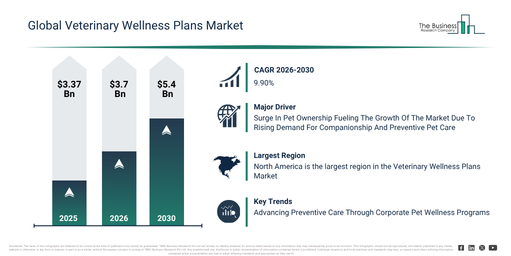
    The veterinary wellness plans market has experienced strong growth in recent years. It is anticipated to expand from $3.37 billion in 2025 to $3.7 billion in 2026, reflecting a compound annual growth rate (CAGR) of 9.7%. The historical expansion can be attributed to a global rise in pet ownership, increasing demand for preventive care, growing awareness of animal health and wellness benefits, high out-of-pocket veterinary treatment costs encouraging subscription adoption, the expansion of veterinary clinic networks offering packaged services, and an increasing focus on preventive healthcare rather than reactive treatment.

    The market size for veterinary wellness plans is projected to experience substantial growth over the upcoming years. It is set to reach $5.4 billion by 2030, exhibiting a compound annual growth rate (CAGR) of 9.9%. This expansion during the forecast period is driven by several factors, including the increased use of AI-based predictive health monitoring for pets, the growing uptake of subscription-based models for veterinary care, a rising need for customized and breed-specific wellness programs, greater integration of digital platforms for pet health, and enhanced awareness of preventive healthcare among pet owners. Key trends anticipated during this period encompass AI-powered platforms for preventive pet health monitoring and wellness plan optimization, subscription models for veterinary wellness plans that are bundled with predictive care analytics, the integration of cloud-enabled pet health records for ongoing wellness tracking, tailored preventive care plan customization informed by breed and lifestyle data, and automated systems for vaccination and appointment scheduling integrated into wellness subscriptions.

    Get A Free Sample Report With In-Depth Market Insights:

    https://thebusinessresearchcompany.com/sample_request?id=49825806&type=smp&name=Veterinary%20Wellness%20Plans%20Market%20Report%202026&utm_source=Blogs&utm_medium=Paid&utm_campaign=Oct_PR

    Veterinary Wellness Plans Market Development Factors: What’s Supporting Demand?

    The anticipated rise in pet ownership is poised to propel the future growth of the veterinary wellness plans market. Pet ownership refers to the condition of possessing and caring for a domesticated animal, such as a dog, cat, or another companion animal, as part of one’s household. This increase in pet ownership is primarily driven by heightened needs for companionship, as more individuals seek emotional support and social connection through their pets. Veterinary wellness plans assist pet ownership by delivering structured, affordable, and preventive healthcare, thereby ensuring pets remain healthy while simultaneously reducing unexpected medical costs for their owners. For example, in March 2025, the American Pet Products Association, a US-based trade association, reported that pet ownership in the US saw a resurgence, with 94 million households owning at least one pet, an increase from 82 million in 2023, and with 51% having a dog and 37% having a cat. Consequently, the growing trend of pet ownership is stimulating the expansion of the veterinary wellness plans market.

    Veterinary Wellness Plans Market Segmentation And Category Overview

    The veterinary wellness plans market covered in this report is segmented –

    1) By Plan Type: Preventive Care Plans, Comprehensive Wellness Plans, Senior Pet Plans, Puppy Or Kitten Plans, Other Plan Types

    2) By Service Type: Vaccinations, Routine Check-ups, Dental Care, Diagnostics, Parasite Control, Other Service Types

    3) By Animal Type: Dogs, Cats, Other Animal Types

    4) By Distribution Channel: Veterinary Clinics, Hospitals, Online Platforms, Other Distribution Channels

    5) By End User: Individual Pet Owners, Animal Shelters, Breeders, Other End Users

    Subsegments:

    1) By Preventive Care Plans: Routine Health Examinations, Vaccination Programs, Parasite Prevention Programs, Preventive Screening Tests, Nutritional Counseling

    2) By Comprehensive Wellness Plans: Annual Comprehensive Health Packages, Diagnostic Screening Packages, Dental Health Programs, Chronic Disease Monitoring Programs, Integrated Preventive Care Packages

    3) By Senior Pet Plans: Geriatric Health Screening Programs, Mobility And Joint Care Programs, Chronic Disease Management Programs, Age Related Diagnostic Monitoring, Senior Nutrition Management Programs

    4) By Puppy Or Kitten Plans: Early Life Vaccination Programs, Growth And Development Monitoring, Parasite Prevention For Young Pets, Behavioral Development Guidance, Early Diagnostic Screening

    5) By Other Plan Types: Customized Preventive Care Packages, Multi Pet Wellness Plans, Breed Specific Wellness Programs, Seasonal Preventive Care Programs, Lifestyle Based Wellness Programs

    Veterinary Wellness Plans Market Transformation Trends: What Innovations Are Driving Change?

    Major companies in the veterinary wellness plans market are focused on developing advanced solutions, such as comprehensive corporate pet wellness programs. These initiatives aim to improve preventive care, enhance pet health outcomes, and streamline veterinary services for pet owners. Corporate pet wellness programs are benefits sponsored by employers, providing employees’ pets with preventive veterinary care, health services, and wellness support. For instance, in August 2023, BetterVet, a US-based tech-enabled mobile veterinary services provider, launched BetterVet for Business, a corporate pet wellness benefits solution that offers customizable wellness plans for employees’ pets. This program includes routine check-ups, vaccinations, and preventive services, enabling pet owners and employers to proactively manage pet health, improve early detection of illnesses, and support overall wellness through a convenient and cost-effective subscription model.

    Veterinary Wellness Plans Market Key Participants And Competitive Landscape

    Major companies operating in the veterinary wellness plans market are New India Assurance Company Limited, VCA Animal Hospitals, Banfield Pet Hospital, Oriental Insurance Company Limited, Thrive Pet Healthcare, CVS Group plc, Animal Trust Vets CIC, Bajaj Allianz General Insurance Company Limited, Bond Vet, Wagmo Inc., Dutch Pet Inc., Small Door Veterinary, Pawp Inc., VitusVet Inc., Mars Veterinary Health, Wiggles Pet Health Inc., Snout Inc., Premier Veterinary Alliance, Blythman and Partners LLP, Nest Veterinary Partners

    View The Full Veterinary Wellness Plans Market Report:

    https://thebusinessresearchcompany.com/report/veterinary-wellness-plans-market-report?utm_source=Blogs&utm_medium=Paid&utm_campaign=Oct_PR

    Veterinary Wellness Plans Market Geographic Analysis: Where Is Demand Rising Fastest?

    North America was the largest region in the veterinary wellness plans market in 2025. Asia Pacific is expected to be the fastest-growing region in the forecast period. The regions covered in the veterinary wellness plans market report are Asia-Pacific, South East Asia, Western Europe, Eastern Europe, North America, South America, Middle East and Africa.

    Reach Out To Our Team:

    The Business Research Company: https://www.thebusinessresearchcompany.com/

    Americas: +1 310-496-7795

    Asia: +44 7882 955267 & +91 8897263534

    Europe: +44 7882 955267

    Email us at: marketing@tbrc.info

    Follow us on:

    LinkedIn: https://in.linkedin.com/company/the-business-research-company

    YouTube: https://www.youtube.com/channel/UC24_fI0rV8cR5DxlCpgmyFQ

    Global Market Model: https://www.thebusinessresearchcompany.com/global-market-model
  • Veterinary Telepresence Carts With Artificial Intelligence (AI) Market Growth Forecast Through 2030: Market Size And Trends In 2026

    Veterinary Telepresence Carts With Artificial Intelligence (AI) Market Growth Forecast Through 2030: Market Size And Trends In 2026

    Backed by market attractiveness analysis, total addressable market sizing, company benchmarking matrices, interactive Excel dashboards, wider supply chain intelligence, emerging startup coverage, and detailed product-level insights, The Business Research Company’s 2026 market reports are designed to offer research that is more actionable and strategically valuable than ever.

    Veterinary Telepresence Carts With Artificial Intelligence (AI) Market Revenue Outlook: What CAGR Lies Ahead Through 2030?

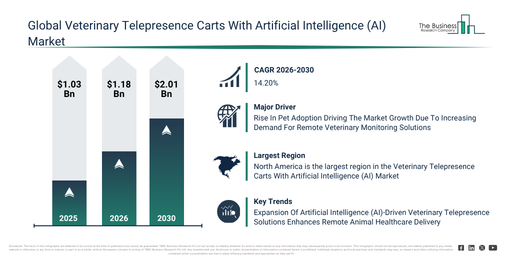
    The market size for veterinary telepresence carts that incorporate artificial intelligence (AI) has experienced swift growth in recent times. This market is expected to increase its value from $1.03 billion in 2025 to $1.18 billion in 2026, at a compound annual growth rate (CAGR) of 14.0%. Historically, this growth can be attributed to the early adoption of veterinary telemedicine platforms by urban clinics, a global increase in companion animal healthcare spending, the expansion of broadband and connectivity solutions in veterinary practices, the initial integration of digital imaging tools for animal diagnostics, and the heightened utilization of remote consultations during pandemic-related disruptions.

    The veterinary telepresence carts with artificial intelligence (AI) market is anticipated to experience substantial expansion over the next few years, with projections indicating it will reach $2.01 billion by 2030, exhibiting a compound annual growth rate (CAGR) of 14.2%. This projected growth during the forecast period is driven by factors such as the proliferation of autonomous mobile veterinary care units, the escalating adoption of advanced remote surgical guidance systems, the development of preventive animal health monitoring programs, wider application of cross-platform veterinary data interoperability standards, and the increasing deployment of high-definition real-time telepresence systems in field operations. Noteworthy trends for this period include the rising implementation of telepresence-enabled veterinary carts in emergency and rural care delivery, the broadening of subscription-based veterinary teleconsultation service models, greater standardization of remote veterinary practice protocols across regions, an increasing demand for portable and interoperable veterinary diagnostic hardware systems, and the expansion of mobile veterinary outreach and field care programs for companion and livestock animals.

    Get A Free Sample Report With In-Depth Market Insights:

    https://thebusinessresearchcompany.com/sample_request?id=81544050&type=smp&name=Veterinary%20Telepresence%20Carts%20With%20Artificial%20Intelligence%20%28AI%29%20Market%20Report%202026&utm_source=Blogs&utm_medium=Paid&utm_campaign=Oct_PR

    Veterinary Telepresence Carts With Artificial Intelligence (AI) Market Industry Drivers: What’s Behind The Revenue Growth?

    The veterinary telepresence carts with artificial intelligence (AI) market is projected to expand due to the increase in pet adoption. Pet adoption involves taking legal responsibility for an animal from a shelter, rescue organization, or an individual owner, providing it with a permanent home and ongoing care. This growing trend of pet adoption is largely fueled by heightened animal welfare awareness, as more individuals opt to rescue animals from shelters instead of purchasing from breeders, thereby enlarging the overall pet-owning population. The rising number of adopted pets boosts demand for AI-enabled veterinary telepresence carts, as pet owners seek accessible and timely remote consultations to monitor and manage their animals’ health without frequent in-person clinic visits. For example, data from the American Pet Products Association, a US-based nonprofit association, indicated that in March 2025, 94 million households in the US owned at least one pet, which is an increase from 82 million households in 2023. Consequently, the surge in pet adoption is a key factor driving the growth of the veterinary telepresence carts with artificial intelligence (AI) market. Increased animal healthcare expenditure is anticipated to drive the future growth of the veterinary telepresence carts with artificial intelligence (AI) market. Animal healthcare expenditure refers to the cumulative spending by pet owners, livestock producers, and associated stakeholders on veterinary services, pharmaceuticals, diagnostics, and other health-related products for animals. A significant contributor to this rise is the increasing trend of pet humanization, where pets are increasingly treated as family members, encouraging owners to invest more in advanced and preventive veterinary care for their animals. The surge in animal healthcare spending stimulates demand for AI-enabled veterinary telepresence carts, as higher expenditures suggest a greater willingness to adopt advanced remote diagnostic and consultation technologies that enhance access to quality veterinary care. For instance, according to the American Pet Products Association (APPA), a US-based trade association for the pet industry, total US pet industry expenditures reached $147 billion in 2023, further increasing to $152 billion in 2024, demonstrating continuous year-over-year growth, as reported in March 2025. Thus, the rising animal healthcare expenditure is a primary driver for the expansion of the veterinary telepresence carts with artificial intelligence (AI) market.

    Veterinary Telepresence Carts With Artificial Intelligence (AI) Market Segment Outlook: Which Categories Are Growing Fastest?

    The veterinary telepresence carts with artificial intelligence (ai) market covered in this report is segmented –

    1) By Component: Hardware, Software, Services

    2) By Animal Type: Companion Animals, Livestock, Other Animal Types

    3) By Distribution Channel: Direct Sales, Distributors, Online

    4) By Application: Remote Consultation, Telemedicine, Surgery Assistance, Education And Training, Other Applications

    5) By End User: Veterinary Hospitals And Clinics, Research Institutes, Academic Institutions, Other End Users

    Subsegments:

    1) By Hardware: High Definition Cameras, Display Monitors, Microphones And Speakers, Robotic Mobility Units, Sensors And Connectivity Modules

    2) By Software: Telemedicine Platform Software, Artificial Intelligence Diagnostic Software, Remote Monitoring Software, Data Analytics And Reporting Software, Security And Privacy Software

    3) By Services: Remote Technical Support Services, Installation And Setup Services, Maintenance And Repair Services, Training And Onboarding Services, Cloud Hosting And Management Services

    #Veterinary Telepresence Carts With Artificial Intelligence (AI) Market Growth Trends: What’s Shaping The Future Outlook?

    Key companies operating in the veterinary telepresence carts with artificial intelligence (AI) market are prioritizing the expansion of AI-enabled veterinary health assessments to improve remote diagnostics, enhance access to veterinary care, and support immediate clinical decision-making. AI veterinary health assessments refer to digital platforms that utilize artificial intelligence to facilitate remote consultations, analyze symptoms, and provide treatment recommendations for animals. As an illustration, in July 2024, SK Telecom, a South Korea-based telecommunications company, introduced an AI-powered veterinary assistance service in Southeast Asia. This service aims to support pet owners and veterinarians by delivering AI-based health evaluations, remote consultation functionalities, and data-driven insights, thereby strengthening the tele-veterinary infrastructure and broadening access to animal healthcare services within the region.

    Veterinary Telepresence Carts With Artificial Intelligence (AI) Market Top Companies Driving Competitive Growth

    Major companies operating in the veterinary telepresence carts with artificial intelligence (ai) market are IDEXX Laboratories Inc., Midmark Corporation, Capsa Healthcare, Clarius Mobile Health Corp., Scopio Labs Ltd., Narang Medical Limited, Shenzhen Mindray Bio-Medical Electronics Co. Ltd., Zomedica Corp., Vetology Innovations LLC, OneCup AI Ltd., Vet Instant Ltd., PetPace Ltd., EIO Diagnostics Inc., Digicare Biomedical Technology Inc., Dextronix Inc., Shanghai Huifeng Medical Instrument Co. Ltd., Aiforia Technologies Oyj, ParaVet, RemoteVet. ai, Lupa

    View The Full Veterinary Telepresence Carts With Artificial Intelligence (AI) Market Report:

    https://thebusinessresearchcompany.com/report/veterinary-telepresence-carts-with-artificial-intelligence-ai-market-report?utm_source=Blogs&utm_medium=Paid&utm_campaign=Oct_PR

    Veterinary Telepresence Carts With Artificial Intelligence (AI) Market Global Footprint: Which Region Leads The Market?

    North America was the largest region in the veterinary telepresence carts with artificial intelligence (AI) market in 2025. Asia-Pacific is expected to be the fastest-growing region in the forecast period. The regions covered in the veterinary telepresence carts with artificial intelligence (AI) market report are Asia-Pacific, South East Asia, Western Europe, Eastern Europe, North America, South America, Middle East and Africa.

    Reach Out To Our Team:

    The Business Research Company: https://www.thebusinessresearchcompany.com/

    Americas: +1 310-496-7795

    Asia: +44 7882 955267 & +91 8897263534

    Europe: +44 7882 955267

    Email us at: marketing@tbrc.info

    Follow us on:

    LinkedIn: https://in.linkedin.com/company/the-business-research-company

    YouTube: https://www.youtube.com/channel/UC24_fI0rV8cR5DxlCpgmyFQ

    Global Market Model: https://www.thebusinessresearchcompany.com/global-market-model