Blog

  • Ultraviolet (UV) Blocking Contact Lens Market Forecast 2025–2034: Where Businesses Should Invest Next

    Ultraviolet (UV) Blocking Contact Lens Market Forecast 2025–2034: Where Businesses Should Invest Next

    Unlock Global Insights – Save 20% on Market Reports with Code ONLINE20

    What Are The Forecasted Market Size Estimates For The Ultraviolet (UV) Blocking Contact Lens Market Between 2025 And 2029?

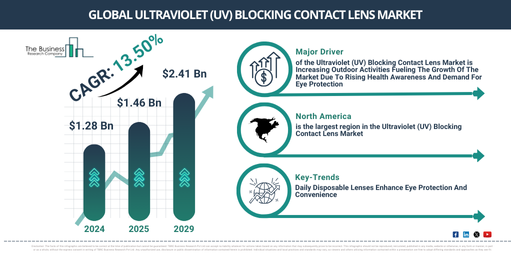
    The market size for ultraviolet (UV) blocking contact lenses has experienced rapid growth in recent years. This market is projected to expand from $1.28 billion in 2024 to $1.46 billion by 2025, achieving a compound annual growth rate (CAGR) of 13.8%. Historically, this growth can be attributed to the increasing prevalence of cataracts, growing awareness regarding eye health, a rise in ocular diseases, the increasing adoption of sunglasses and eye protection, and an increase in outdoor activities.

    The ultraviolet (UV) blocking contact lens market size is projected for substantial expansion in the coming years. It is anticipated to reach $2.41 billion by 2029, demonstrating a compound annual growth rate (CAGR) of 13.5%. This growth during the forecast period is driven by factors such as the increasing popularity of daily disposable lenses, the rising incidence of myopia, an increase in eye surgeries, greater use of digital devices, and expanding public awareness initiatives. Key developments anticipated in this period include improvements in broad-spectrum UV protection, the integration of blue light filtering technology, innovations in lightweight and durable lens materials, the creation of personalized lens designs, and progress in sustainable and environmentally friendly materials.

    Unlock Your Free Sample Report for Exclusive Market Data:

    https://www.thebusinessresearchcompany.com/sample.aspx?id=28346&type=smp

    What Are The Emerging Market Drivers Creating New Opportunities In The Ultraviolet (UV) Blocking Contact Lens Industry?

    Growing participation in outdoor pursuits is projected to fuel the expansion of the ultraviolet (UV) blocking contact lens market in the future. These activities encompass various recreational or physical endeavors undertaken outdoors in natural or open settings, including hiking, cycling, and sports. An uptick in outdoor recreational engagement stems from heightened health consciousness, with a greater number of individuals pursuing physical activities like hiking, cycling, and camping to enhance their physical condition and psychological health. Ultraviolet (UV) blocking contact lenses augment outdoor experiences by safeguarding eyes from detrimental UV radiation, rendering them suitable for sports, driving, and leisurely exposure. Such lenses mitigate the danger of UV-induced eye harm while preserving sharp and pleasant sight, thereby boosting overall ocular safety and user convenience. As an illustration, figures from April 2024 released by the U.S. Bureau of Economic Analysis (BEA), a government agency in the US, indicated that the outdoor recreation industry generated $563.7 billion in 2022, representing a 15.1% increase compared to 2021. Consequently, the expansion of outdoor activities is propelling the advancement of the ultraviolet (UV) blocking contact lens market.

    What Are The Major Segment Types Covered In The Ultraviolet (UV) Blocking Contact Lens Market?

    The ultraviolet (UV) blocking contact lens market covered in this report is segmented as

    1) By Product Type: Daily Disposable, Weekly Disposable, Monthly Disposable, Extended Wear, Other Product Types

    2) By Material: Hydrogel, Silicone Hydrogel, Hybrid, Other Materials

    3) By Application: Corrective, Therapeutic, Cosmetic, Other Applications

    4) By Distribution Channel: Optical Stores, Online Stores, Hospitals And Clinics, Other Distribution Channels

    5) By End-User: Adults, Children

    Subsegments:

    1) By Daily Disposable: Clear Vision Lenses, Blue Light Filtering Lenses, Hydration Enhanced Lenses, Comfort Plus Lenses

    2) By Weekly Disposable: Toric Lenses, Color Enhancement Lenses, Ultraviolet Shield Lenses, Breathable Hydrogel Lenses

    3) By Monthly Disposable: Multifocal Lenses, Silicone Hydrogel Lenses, Digital Eye Strain Lenses, Nighttime Wear Lenses

    4) By Extended Wear: Long-Term Comfort Lenses, Rigid Gas Permeable Lenses, High Oxygen Permeable Lenses, Scleral Support Lenses

    5) By Other Product Types: Orthokeratology Lenses, Cosmetic Lenses, Specialty Lenses For Keratoconus, Pediatric Ultraviolet Protection Lenses

    Which Trends Are Impacting The Ultraviolet (UV) Blocking Contact Lens Market?

    Leading companies within the ultraviolet (UV) blocking contact lens market are concentrating on creating innovative solutions, such as daily disposable contact lenses, to enhance eye protection and convenience for users. Daily disposable contact lenses are designed for a single day of wear before being discarded, offering ease of use and mitigating the risk of eye infections. For instance, in March 2023, CooperVision Inc., a medical device company based in the US, introduced the MyDay Energys contact lenses, which are specifically crafted to provide UV protection and alleviate digital eye strain. These lenses integrate DigitalBoost technology, delivering a +0.3D power boost to lessen fatigue caused by prolonged digital device usage. Furthermore, they employ Aquaform Technology, which allows the lenses to hold twice their weight in water, guaranteeing exceptional comfort and moisture. Moreover, being daily disposable lenses, they come with integrated UV protection, shielding the eyes from detrimental rays while upholding clear, sharp vision throughout the day.

    Which Major Firms Are Strengthening Their Position In The Ultraviolet (UV) Blocking Contact Lens Industry?

    Major companies operating in the ultraviolet (UV) blocking contact lens market are Alcon Inc., Hoya Corporation, Bausch + Lomb Incorporated, CooperVision Inc., Johnson And Johnson Vision Care Inc., Menicon Co. Ltd., ABB Optical Group LLC, St. Shine Optical Co. Ltd., Seed Co. Ltd., Interojo Inc., Unitech Enterprises Pvt. Ltd., Contamac Ltd., Clearlab International Pte. Ltd., Visioneering Technologies Inc., BostonSight Inc., Neo Vision Co. Ltd., UltraVision CLPL, Camax Optical Corp., MiSight, and Purecon Lenses Pvt. Ltd.

    Download The Full Report For Exclusive Market Findings:

    https://www.thebusinessresearchcompany.com/report/ultraviolet-uv-blocking-contact-lens-global-market-report

    Which Global Regions Are Influencing The Competitive Landscape Of The Ultraviolet (UV) Blocking Contact Lens Market?

    North America was the largest region in the ultraviolet (UV) blocking contact lens market in 2024. Asia-Pacific is expected to be the fastest-growing region in the forecast period. The regions covered in ultraviolet (UV) blocking contact lens report are Asia-Pacific, Western Europe, Eastern Europe, North America, South America, Middle East and Africa.

    Request A Customized Version Of The Ultraviolet (UV) Blocking Contact Lens Market Report:

    https://www.thebusinessresearchcompany.com/customise?id=28346&type=smp

    Browse Through More Reports Similar to the Global Ultraviolet (UV) Blocking Contact Lens Market 2025, By The Business Research Company

    Contact Lens Solution Global Market Report 2025

    https://www.thebusinessresearchcompany.com/report/contact-lens-solution-global-market-report

    Contact Lenses Global Market Report 2025

    https://www.thebusinessresearchcompany.com/report/contact-lenses-global-market-report

    Coloured Contact Lenses Global Market Report 2025

    https://www.thebusinessresearchcompany.com/report/coloured-contact-lenses-global-market-report

    Get in touch with us:

    The Business Research Company: https://www.thebusinessresearchcompany.com/

    Americas +1 310-496-7795

    Asia +44 7882 955267 & +91 8897263534

    Europe +44 7882 955267

    Email us at info@tbrc.info

    Follow us on:

    LinkedIn: https://in.linkedin.com/company/the-business-research-company

    YouTube: https://www.youtube.com/channel/UC24_fI0rV8cR5DxlCpgmyFQ

    Global Market Model: https://www.thebusinessresearchcompany.com/global-market-model
  • Global Direct-To-Patient Digitaling Market Overview: Trends Shaping Growth to 2029

    Global Direct-To-Patient Digitaling Market Overview: Trends Shaping Growth to 2029

    Unlock Global Insights – Save 20% on Market Reports with Code ONLINE20

    What Is The Global Market Value Of The Direct-To-Patient Digitaling Industry In 2025?

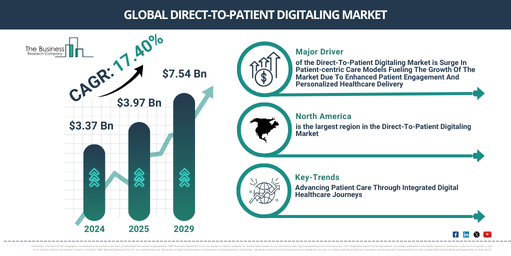
    The direct-to-patient digitaling market size has experienced rapid expansion in recent years. It is projected to increase from $3.37 billion in 2024 to $3.97 billion in 2025 at a compound annual growth rate (CAGR) of 17.8%. The historic growth of this market can be attributed to the increasing role of social media in patient engagement, rising digital literacy among patients, the growing influence of big data in healthcare decision-making, increasing acceptance of direct-to-patient communication by pharmaceutical companies, and the greater integration of digital tools in clinical workflows.

    The direct-to-patient digitaling market is projected for swift expansion over the coming years, with its size expected to grow to $7.54 billion in 2029 at a compound annual growth rate (CAGR) of 17.4%. This expansion during the forecast period is attributed to an escalating demand for real-time health data access, a surge in healthcare consumerism trends, increased investments and funding in digital health, improvements in healthcare infrastructure development in emerging markets, and a heightened emphasis on mental health digital solutions. Key trends anticipated during this period encompass advancements in wearable health technologies, the integration of omnichannel patient communication, enhanced cybersecurity for digital health platforms, novel approaches to automated adherence tracking, and sophisticated applications of big data to generate predictive health insights.

    Unlock Your Free Sample Report for Exclusive Market Data:

    https://www.thebusinessresearchcompany.com/sample.aspx?id=28206&type=smp

    Which Major Market Drivers Are Shaping The Future Of The Direct-To-Patient Digitaling Market?

    The increasing emphasis on patient-centric care models is anticipated to propel the expansion of the direct-to-patient digitaling market. These models are healthcare approaches that prioritize individual patient needs, preferences, and active involvement in their own care, with their rise driven by enhanced patient engagement. Direct-to-patient digitaling further strengthens these models by facilitating personalized, convenient, and real-time healthcare delivery directly to patients, empowering them to actively manage their health and treatment. For instance, in April 2025, Intuition Labs, a US-based organization, reported that 80% of Americans support remote patient monitoring, with clinician adoption climbing to 81% in 2023, marking a 305% increase. Thus, the growing adoption of patient-centric care models is a key driver for the direct-to-patient digitaling market.

    What Are The Major Segment Types Covered In The Direct-To-Patient Digitaling Market?

    The direct-to-patient digitaling market covered in this report is segmented as

    1) By Health Status: Chronic Conditions, Preventive Health, Mental Health

    2) By Psychographic: Lifestyle, Values And Beliefs, Personality Traits

    3) By Technological: Device Preference, Technical Proficiency, Preferred Communication Channels

    4) By Behavioral: Usage Rate, Benefits Sought, Loyalty Status

    5) By Demographic: Age Groups, Gender, Income Levels

    Subsegments:

    1) By Chronic Conditions: Diabetes Management, Cardiovascular Care, Respiratory Care, Cancer Care, Arthritis Management

    2) By Preventive Health: Vaccination Tracking, Routine Screening, Wellness Monitoring, Nutritional Guidance, Fitness Tracking

    3) By Mental Health: Anxiety Management, Depression Support, Stress Management, Sleep Improvement, Behavioral Therapy

    Which Trends Are Impacting The Direct-To-Patient Digitaling Market?

    Leading companies in the direct-to-patient digital market are concentrating on advanced innovations, specifically end-to-end digital experiences, to facilitate smoother treatment pathways and strengthen direct interactions between patients and healthcare providers. An end-to-end digital experience signifies a cohesive, integrated digital journey that encompasses all patient touchpoints, from initial engagement to care delivery and follow-up, within a singular ecosystem. This ensures convenience, personalized service, and efficiency by integrating technologies such as telehealth, e-prescriptions, and digital support platforms. For instance, in January 2024, Eli Lilly and Company, a US-based pharmaceutical manufacturing company, launched LillyDirect, a comprehensive digital healthcare platform. This solution directly connects patients to medical care, medications, and support services via a single, unified interface. It is engineered to improve accessibility and convenience while offering customized treatment options. This system streamlines access to medication and reduces obstacles to care, aiming to enhance patient outcomes. Additionally, consistent digital support promotes sustained patient engagement and adherence to therapy.

    Which Key Players Are Driving Competition In The Direct-To-Patient Digitaling Market?

    Major companies operating in the direct-to-patient digitaling market are Google LLC, OMRON Healthcare Co. Ltd., 1Life Healthcare Inc. (One Medical), Hims & Hers Health Inc., Cerebral Inc., American Well Corporation, Lyra Health Inc., MDLIVE Inc., Ro Inc., Doctor On Demand Inc., Spring Care Inc., Withings Health Solutions, HealthJoy LLC, Zocdoc Inc., Calm.com Inc., Ada Health GmbH, K Health Inc., MeMD Inc., Sesame Inc., PlushCare Inc.

    Download The Full Report For Exclusive Market Findings:

    https://www.thebusinessresearchcompany.com/report/direct-to-patient-digitaling-global-market-report

    What Regional Growth Trends Are Shaping The Direct-To-Patient Digitaling Market Outlook?

    North America was the largest region in the direct-to-patient digitaling market in 2024. Asia-Pacific is expected to be the fastest-growing region in the forecast period. The regions covered in direct-to-patient digitaling report are Asia-Pacific, Western Europe, Eastern Europe, North America, South America, Middle East and Africa.

    Request A Customized Version Of The Direct-To-Patient Digitaling Market Report:

    https://www.thebusinessresearchcompany.com/customise?id=28206&type=smp

    Browse Through More Reports Similar to the Global Direct-To-Patient Digitaling Market 2025, By The Business Research Company

    Digital Health Global Market Report 2025

    https://www.thebusinessresearchcompany.com/report/digital-health-global-market-report

    Digital Transformation In Healthcare Global Market Report 2025

    https://www.thebusinessresearchcompany.com/report/digital-transformation-in-healthcare-global-market-report

    Digital Twins In Healthcare Global Market Report 2025

    https://www.thebusinessresearchcompany.com/report/digital-twins-in-healthcare-global-market-report

    Get in touch with us:

    The Business Research Company: https://www.thebusinessresearchcompany.com/

    Americas +1 310-496-7795

    Asia +44 7882 955267 & +91 8897263534

    Europe +44 7882 955267

    Email us at info@tbrc.info

    Follow us on:

    LinkedIn: https://in.linkedin.com/company/the-business-research-company

    YouTube: https://www.youtube.com/channel/UC24_fI0rV8cR5DxlCpgmyFQ

    Global Market Model: https://www.thebusinessresearchcompany.com/global-market-model
  • Global Ultrasonic Tartar Remover Market Analysis 2025–2029: Opportunities for Strategic Growth

    Global Ultrasonic Tartar Remover Market Analysis 2025–2029: Opportunities for Strategic Growth

    Unlock Global Insights – Save 20% on Market Reports with Code ONLINE20

    How Is The Ultrasonic Tartar Remover Market Size Likely To Evolve From 2025 Through 2034?

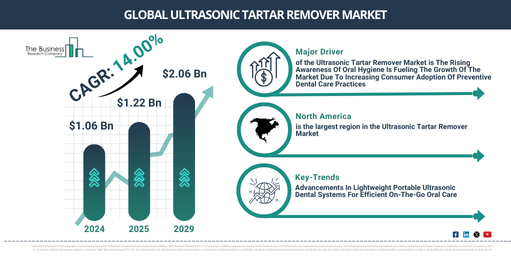
    The ultrasonic tartar remover market size has experienced rapid growth in recent years. It is forecast to expand from $1.06 billion in 2024 to $1.22 billion in 2025, at a compound annual growth rate (CAGR) of 14.4%. This historical growth can be attributed to an increasing prevalence of dental plaque and tartar, growing awareness of oral hygiene, a rising number of dental clinics, expanding awareness of ultrasonic devices, and the adoption of professional dental cleaning services.

    The ultrasonic tartar remover market is expected to witness significant expansion in the upcoming years. Its value is projected to reach $2.06 billion by 2029, growing at a compound annual growth rate (CAGR) of 14.0%. This anticipated growth can be attributed to several factors, including the increasing demand for at-home dental care devices, a rising preference for portable and cordless ultrasonic tartar removers, a broader shift towards smart dental technologies, an expanding geriatric population with concerns about oral health, and the growth of e-commerce and online sales channels for dental products. Major trends expected in this period include advancements in portable and cordless ultrasonic tartar removers, the integration of smart sensors for precise cleaning, app-enabled devices for personalized oral care, multi-functional units combining scaling and polishing, and the deployment of advanced ultrasonic frequencies for more thorough plaque removal.

    Unlock Your Free Sample Report for Exclusive Market Data:

    https://www.thebusinessresearchcompany.com/sample.aspx?id=28345&type=smp

    Which Drivers Are Impacting The Ultrasonic Tartar Remover Market?

    The anticipated expansion of the ultrasonic tartar remover market is linked to the growing recognition of oral hygiene. This practice involves keeping teeth, gums, and the mouth clean and healthy to avert problems like cavities, gum disease, and bad breath. The prevalence of this practice is increasing as people become more aware of its connection to overall well-being, leading to greater engagement in routine brushing, flossing, and dental visits to prevent cavities and gum disease. Ultrasonic tartar removers aid in oral hygiene by efficiently removing plaque and tartar, offering a deeper clean than manual methods, and helping users maintain healthier teeth and gums between professional dental visits. For instance, in August 2023, the National Health Service, a UK-based government data agency, reported that 32.5 million courses of oral treatment were delivered in 2022-23, marking a 23.2% increase from the previous year. Ultimately, enhanced awareness of oral hygiene is propelling the growth of the ultrasonic tartar remover market.

    What Are The Major Segment Categories Driving The Ultrasonic Tartar Remover Market Growth?

    The ultrasonic tartar remover market covered in this report is segmented as

    1) By Product Type: Handheld Ultrasonic Tartar Removers, Desktop Ultrasonic Tartar Removers

    2) By Distribution Channel: Online Retail, Offline Retail, Specialty Stores, Other Distribution Channels

    3) By Application: Home Use, Dental Clinics, Veterinary Clinics, Other Applications

    4) By End-User: Individuals, Dental Professionals, Veterinary Professionals

    Subsegments:

    1) By Handheld Ultrasonic Tartar Removers: Battery-Powered Handheld Ultrasonic Tartar Removers, Corded Handheld Ultrasonic Tartar Removers, Portable Dental Scalers, Rechargeable Ultrasonic Tartar Removers

    2) By Desktop Ultrasonic Tartar Removers: Tabletop Ultrasonic Scalers, Integrated Dental Ultrasonic Systems, Professional Dental Cleaning Units, Multi-Function Desktop Ultrasonic Tartar Removers

    What Long-Term Trends Will Shape The Future Growth Of The Ultrasonic Tartar Remover Industry?

    Leading firms within the ultrasonic tartar remover market are concentrating on creating sophisticated offerings, particularly lightweight portable dental systems, designed to facilitate both professional and personal dental hygiene. These portable dental systems are compact and convenient to transport, suitable for professional or home applications, offering effective tartar and plaque removal effortlessly, and incorporating advanced ultrasonic technology for optimal mobile oral hygiene. As an illustration, in June 2024, Aseptico, a US-based producer of mobile and portable dental equipment, unveiled its GO Ultra Portable Dental System, model AEU-350S. This system comes equipped with a fully integrated piezoelectric ultrasonic scaler that includes LED illumination. Weighing 32 pounds, this exceptionally compact and lightweight portable dental system is engineered for use in restorative dentistry and dental hygiene procedures in various unconventional, mobile environments. It delivers robust performance, quiet functionality, universal power compatibility, and a distinct capability to run off-the-grid using a 24V external battery, thereby simplifying oral hygiene processes by removing the necessity for distinct scaler apparatus.

    Who Are The Primary Competitors In The Global Ultrasonic Tartar Remover Market?

    Major companies operating in the ultrasonic tartar remover market are Dentsply Sirona Inc., Planmeca Oy, Morita Holdings Corporation, Ultradent Products Inc., A-dec Inc., Coltene Holding AG, Vatech Co., Ltd., GC Corporation, EMS Dental, Medtech Remedies Private Limited, Aseptico Inc., Narang Medical Limited, Young Innovations Inc., L&R Manufacturing Company, Nakanishi International Dental, Jain Laboratory Instruments, LYMI, Amici Care, HANNEA, Mastyle.

    Download The Full Report For Exclusive Market Findings:

    https://www.thebusinessresearchcompany.com/report/ultrasonic-tartar-remover-global-market-report

    What Are The Regional Market Dynamics Impacting The Ultrasonic Tartar Remover Industry?

    North America was the largest region in the ultrasonic tartar remover market in 2024. Asia-Pacific is expected to be the fastest-growing region in the forecast period. The regions covered in ultrasonic tartar remover report are Asia-Pacific, Western Europe, Eastern Europe, North America, South America, Middle East and Africa.

    Request A Customized Version Of The Ultrasonic Tartar Remover Market Report:

    https://www.thebusinessresearchcompany.com/customise?id=28345&type=smp

    Browse Through More Reports Similar to the Global Ultrasonic Tartar Remover Market 2025, By The Business Research Company

    Ultrasonic Cleaning Global Market Report 2025

    https://www.thebusinessresearchcompany.com/report/ultrasonic-cleaning-global-market-report

    Ultrasonic Technology Global Market Report 2025

    https://www.thebusinessresearchcompany.com/report/ultrasonic-technology-global-market-report

    Ultrasonic Surgical Cutters Global Market Report 2025

    https://www.thebusinessresearchcompany.com/report/ultrasonic-surgical-cutters-global-market-report

    Get in touch with us:

    The Business Research Company: https://www.thebusinessresearchcompany.com/

    Americas +1 310-496-7795

    Asia +44 7882 955267 & +91 8897263534

    Europe +44 7882 955267

    Email us at info@tbrc.info

    Follow us on:

    LinkedIn: https://in.linkedin.com/company/the-business-research-company

    YouTube: https://www.youtube.com/channel/UC24_fI0rV8cR5DxlCpgmyFQ

    Global Market Model: https://www.thebusinessresearchcompany.com/global-market-model
  • Ublituximab Industry Overview 2025: Growth Projections and Market Trends

    Ublituximab Industry Overview 2025: Growth Projections and Market Trends

    Unlock Global Insights – Save 20% on Market Reports with Code ONLINE20

    What Are The Growth Projections For The Ublituximab Market Size During 2025–2029?

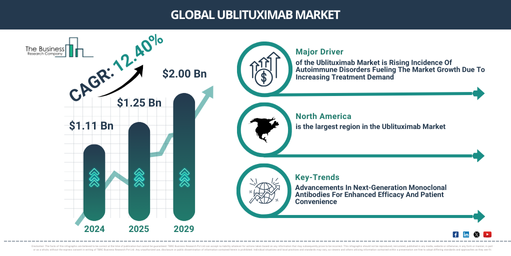
    The ublituximab market size has shown significant growth in recent years. It is anticipated to expand from $1.11 billion in 2024 to $1.25 billion in 2025, achieving a compound annual growth rate (CAGR) of 12.8%. This historical period of growth can be ascribed to factors such as increasing awareness of disease burden, rising adoption of monoclonal antibody therapies, growing healthcare expenditure, the expansion of hospital and clinical infrastructure, and an increasing prevalence of autoimmune disorders.

    The market for ublituximab is projected to experience swift expansion in the upcoming years. This market is anticipated to reach $2.00 billion by 2029, exhibiting a compound annual growth rate (CAGR) of 12.4%. The projected growth during this period stems from factors such as increasing demand for targeted therapies, the broadening of specialty care services, augmented research funding, an expanding patient demographic in developing markets, and a rising count of collaborations in healthcare. Key trends foreseen in the forecast timeframe encompass technological breakthroughs in monoclonal antibody treatments, advancements in drug delivery mechanisms, escalated investment in the research and development of novel therapies, pioneering changes in treatment guidelines, and technological progress in digital health platforms.

    Unlock Your Free Sample Report for Exclusive Market Data:

    https://www.thebusinessresearchcompany.com/sample.aspx?id=28344&type=smp

    Which Industry Drivers Are Expected To Accelerate The Ublituximab Market From 2025 To 2029?

    The increasing occurrence of autoimmune disorders is projected to boost the expansion of the ublituximab market moving forward. Autoimmune conditions involve the immune system erroneously attacking healthy cells or experiencing impaired blood cell production and function. The escalating prevalence of these disorders largely stems from improved diagnostic capabilities and greater awareness, as healthcare systems are now better equipped to identify previously undetected cases through sophisticated testing methods and expanded screening initiatives. Ublituximab, a glycoengineered anti-CD20 monoclonal antibody, aids in managing autoimmune disorders by selectively diminishing pathogenic B cells, thereby lessening abnormal immune activity and malignant cell proliferation. For instance, in November 2024, as per Versorgungsatlas.de, a government organization based in Germany, in 2022, out of 73,241,305 insured individuals, 6,304,340 received a diagnosis of at least one autoimmune disease, which correlates to a raw prevalence rate of 8.61%. Consequently, the rising incidence of autoimmune disorders is stimulating growth in the ublituximab market.

    How Is The Ublituximab Market Segmented?

    The ublituximab market covered in this report is segmented as

    1) By Formulation Type: Intravenous, Pre-Filled Syringes

    2) By Indication: Chronic Lymphocytic Leukemia, Multiple Sclerosis, Non-Hodgkin Lymphoma

    3) By Distribution Channel: Hospital Pharmacies, Retail Pharmacies, Online Pharmacies

    4) By End-User: Hospitals, Specialty Clinics, Research Institutes

    Subsegments:

    1) By Intravenous: Single Dose Vials, Multi Dose Vials, Lyophilized Powder, Liquid Solution

    2) By Pre Filled Syringes: Standard Pre Filled Syringes, Safety Engineered Pre Filled Syringes, Disposable Pre Filled Syringes, Reusable Pre Filled Syringes

    Which Market Trends Are Creating New Opportunities In The Ublituximab Industry?

    Leading companies within the ublituximab market are prioritizing the creation of innovative products, such as next-generation monoclonal antibodies, to boost efficacy, diminish side effects, and improve patient convenience. These next-generation monoclonal antibodies are engineered antibodies that possess enhanced targeting, potency, or safety profiles, thereby contributing to more effective treatments, minimized adverse reactions, and more convenient dosing. For example, in January 2023, TG Therapeutics Inc., a US-based biopharmaceutical company, introduced BRIUMVI (ublituximab-xiiy) for adult patients with relapsing forms of multiple sclerosis. This offering includes a one-hour infusion option and an extensive patient support program to enhance accessibility and treatment adherence. The drug is a glycoengineered anti-CD20 monoclonal antibody specifically designed to efficiently deplete B-cells, which reduces relapse rates and disease activity in patients with RMS, while also working to minimize potential side effects and provide a more convenient dosing schedule compared to traditional therapies. Its mechanism of action involves binding to a specific epitope on CD20-expressing B-cells, leading to their targeted depletion through antibody-dependent cellular cytotoxicity (ADCC) and apoptosis, which helps regulate the autoimmune response that underlies multiple sclerosis.

    Which Key Market Players Are Investing In Expansion And Innovation Of Ublituximab Market?

    Major companies operating in the ublituximab market are Samsung Biologics Co. Ltd., Neuraxpharm Group GmbH, TG Therapeutics Inc.

    Download The Full Report For Exclusive Market Findings:

    https://www.thebusinessresearchcompany.com/report/ublituximab-global-market-report

    Which Region Shows The Highest Potential For Future Expansion In The Ublituximab Market?

    North America was the largest region in the ublituximab market in 2024. Asia-Pacific is expected to be the fastest-growing region in the forecast period. The regions covered in ublituximab report are Asia-Pacific, Western Europe, Eastern Europe, North America, South America, Middle East and Africa.

    Request A Customized Version Of The Ublituximab Market Report:

    https://www.thebusinessresearchcompany.com/customise?id=28344&type=smp

    Browse Through More Reports Similar to the Global Ublituximab Market 2025, By The Business Research Company

    Tofacitinib Global Market Report 2025

    https://www.thebusinessresearchcompany.com/report/tofacitinib-global-market-report

    Ibrutinib Global Market Report 2025

    https://www.thebusinessresearchcompany.com/report/ibrutinib-global-market-report

    Denosumab Global Market Report 2025

    https://www.thebusinessresearchcompany.com/report/denosumab-global-market-report

    Get in touch with us:

    The Business Research Company: https://www.thebusinessresearchcompany.com/

    Americas +1 310-496-7795

    Asia +44 7882 955267 & +91 8897263534

    Europe +44 7882 955267

    Email us at info@tbrc.info

    Follow us on:

    LinkedIn: https://in.linkedin.com/company/the-business-research-company

    YouTube: https://www.youtube.com/channel/UC24_fI0rV8cR5DxlCpgmyFQ

    Global Market Model: https://www.thebusinessresearchcompany.com/global-market-model
  • Tumor Blood Testing Market Size Forecast: Revenue and CAGR by 2029

    Tumor Blood Testing Market Size Forecast: Revenue and CAGR by 2029

    Unlock Global Insights – Save 20% on Market Reports with Code ONLINE20

    What Is The Global Market Value Of The Tumor Blood Testing Industry In 2025?

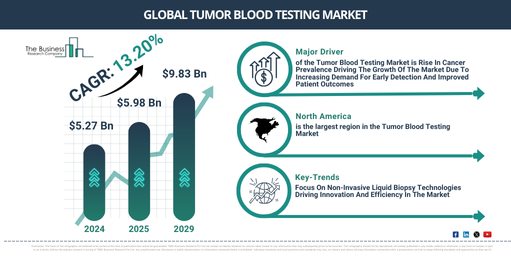
    The size of the tumor blood testing market has expanded significantly over recent years. This market is projected to expand from $5.27 billion in 2024 to reach $5.98 billion by 2025, demonstrating a compound annual growth rate (CAGR) of 13.5%. Historically, this expansion can be ascribed to increased research in genomics and proteomics, a growing patient need for quick test outcomes, the surge in developing targeted therapies that necessitate companion diagnostics, the expanding practice of decentralized diagnostics, and a heightened patient inclination towards sample collection at home.

    The tumor blood testing market is projected to experience substantial growth over the next few years. Its valuation is anticipated to reach $9.83 billion in 2029, growing at a compound annual growth rate (CAGR) of 13.2%. This expansion during the forecast period is attributed to several factors, including an increase in the adoption of point-of-care testing solutions, greater clinical validation of novel blood tests, a rise in government and private funding for cancer research, the enhanced availability of high-sensitivity tumor biomarkers, and a growing patient preference for less invasive procedures. Key trends anticipated during this period include advancements in multi-cancer early detection (MCED) tests, progress in companion diagnostics, innovative applications of synthetic biology in diagnostics, the integration of blockchain for data security in diagnostics, and the incorporation of robotics in laboratory processes.

    Unlock Your Free Sample Report for Exclusive Market Data:

    https://www.thebusinessresearchcompany.com/sample.aspx?id=28343&type=smp

    What Are The Top Growth Drivers Impacting The Tumor Blood Testing Market Outlook?

    The rising incidence of cancer is anticipated to propel the expansion of the tumor blood testing market in the foreseeable future. Older populations, alongside exposure to risk elements like unhealthy eating habits, tobacco use, and environmental contaminants, are leading to a greater occurrence of cancer, thereby boosting the need for early detection solutions. Tumor blood testing offers a non-invasive method to identify cancer prior to symptom onset, achieved by detecting specific biomarkers present in the bloodstream. This facilitates prompt diagnosis, allows for initial treatment, enhances patient results, and permits continuous tracking of disease advancement and treatment efficacy. For example, data from May 2024 from the National Cancer Institute, a US-based government entity, indicated that by January 2022, approximately 18.1 million cancer survivors were present in the United States, with forecasts suggesting this number will climb to 26 million by 2040. Consequently, the growing frequency of cancer is a key factor boosting the expansion of the tumor blood testing market.

    What Are The Key Segments In The Tumor Blood Testing Market?

    The tumor blood testing market covered in this report is segmented as

    1) By Test Type: Circulating Tumor Cells (CTC) Tests, Circulating Tumor DNA (CtDNA) Tests, Exosome-Based Tests, Other Test Types

    2) By Technology: Polymerase Chain Reaction (PCR)-Based Testing, Next-Generation Sequencing, Microarray-Based Testing, Mass Spectrometry, Immunoassays

    3) By Cancer Type: Breast Cancer, Colorectal Cancer, Lung Cancer, Prostate Cancer, Melanoma

    4) By Application: Early Cancer Screening, Therapy Selection, Treatment Monitoring, Recurrence Monitoring

    5) By End User: Hospitals, Diagnostic Laboratories, Research Institutes, Other End-Users

    Subsegments:

    1) By Circulating Tumor Cells Tests: Isolation Of Tumor Cells, Enumeration Of Tumor Cells, Characterization Of Tumor Cells

    2) By Circulating Tumor DNA Tests: Mutation Detection Of Tumor DNA, Methylation Analysis Of Tumor DNA, Copy Number Variation Analysis Of Tumor DNA, Fragmentation Analysis Of Tumor DNA

    3) By Exosome-Based Tests: Protein Profiling Of Exosomes, RNA Profiling Of Exosomes, Lipid Profiling Of Exosomes, Surface Marker Analysis Of Exosomes

    4) By Other Tests: Circulating RNA Tests, Tumor Educated Platelet Tests, Protein Biomarker Panels, Multiomics Blood Tests, Immuno Oncology Biomarker Tests

    How Are Trends Influencing The Tumor Blood Testing Market?

    Leading companies operating within the tumor blood testing market are concentrating on developing innovative technologies, such as non-invasive liquid biopsy methods, to facilitate early cancer detection, track treatment efficacy, and evaluate disease progression more effectively. These non-invasive liquid biopsy technologies represent diagnostic tests that identify and analyze cancer-related biomarkers from bodily fluids, offering a safer and more convenient alternative to conventional tissue biopsies. For instance, in February 2024, Delfi Diagnostics, a US-based biotechnology company, in collaboration with Immunocore Holdings plc, a UK-based biotechnology company, introduced the DELFI-Tumor Fraction (DELFI-TF) assay, a blood test designed for cancer monitoring. This assay examines cell-free DNA (cfDNA) fragments within the bloodstream to determine tumor burden and assess the response to treatment. This fragmentome-based liquid biopsy serves as a non-invasive, cost-effective option compared to traditional approaches, requiring only a minimal amount of plasma and yielding results within two weeks.

    Who Are The Core Companies Influencing The Tumor Blood Testing Market Landscape?

    Major companies operating in the tumor blood testing market are Bio-Techne Corporation, Roche Holding AG, Thermo Fisher Scientific Inc., Abbott Laboratories, Siemens Healthineers AG, Illumina Inc., Sysmex Corporation, Bio-Rad Laboratories Inc., Natera Inc., Myriad Genetics Inc., Neogenomics Laboratories Inc., Guardant Health Inc., Foundation Medicine Inc., Adaptive Biotechnologies Corporation, Freenome Holdings Inc., Grail Inc., Personal Genome Diagnostics Inc., Exosome Diagnostics Inc., Agena Bioscience Inc., Menarini Silicon Biosystems S.p.A.

    Download The Full Report For Exclusive Market Findings:

    https://www.thebusinessresearchcompany.com/report/tumor-blood-testing-global-market-report

    How Is Tumor Blood Testing Market Demand Varying Across Different Regions?

    North America was the largest region in the tumor blood testing market in 2024. Asia-Pacific is expected to be the fastest-growing region in the forecast period. The regions covered in tumor blood testing report are Asia-Pacific, Western Europe, Eastern Europe, North America, South America, Middle East and Africa.

    Request A Customized Version Of The Tumor Blood Testing Market Report:

    https://www.thebusinessresearchcompany.com/customise?id=28343&type=smp

    Browse Through More Reports Similar to the Global Tumor Blood Testing Market 2025, By The Business Research Company

    Solid Tumor Testing Global Market Report 2025

    https://www.thebusinessresearchcompany.com/report/solid-tumor-testing-global-market-report

    Hemato Oncology Testing Global Market Report 2025

    https://www.thebusinessresearchcompany.com/report/hemato-oncology-testing-global-market-report

    Cancer Diagnostics Global Market Report 2025

    https://www.thebusinessresearchcompany.com/report/cancer-diagnostics-global-market-report

    Get in touch with us:

    The Business Research Company: https://www.thebusinessresearchcompany.com/

    Americas +1 310-496-7795

    Asia +44 7882 955267 & +91 8897263534

    Europe +44 7882 955267

    Email us at info@tbrc.info

    Follow us on:

    LinkedIn: https://in.linkedin.com/company/the-business-research-company

    YouTube: https://www.youtube.com/channel/UC24_fI0rV8cR5DxlCpgmyFQ

    Global Market Model: https://www.thebusinessresearchcompany.com/global-market-model
  • Digital Vaccination Credential Verification Market Growth Opportunities: Insights from 2025–2029

    Digital Vaccination Credential Verification Market Growth Opportunities: Insights from 2025–2029

    Unlock Global Insights – Save 20% on Market Reports with Code ONLINE20

    By How Much Is The Digital Vaccination Credential Verification Market Expected To Expand Between 2025 And 2029?

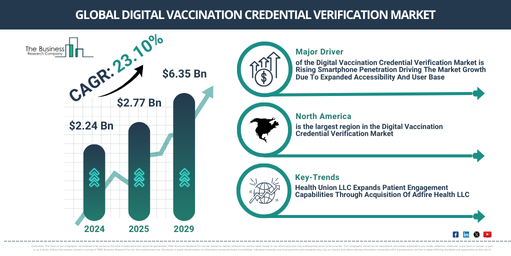
    The digital vaccination credential verification market has witnessed significant growth in its size over recent years. This market is projected to expand from $2.24 billion in 2024 to reach $2.77 billion in 2025, progressing at a compound annual growth rate (CAGR) of 23.4%. Factors contributing to this historical expansion include an increasing need for digital tools in public health administration, the expanding requirement for cross-border travel solutions, enhanced regulatory backing for digital health initiatives, a rise in public recognition and acceptance of digital health options, and a heightened emphasis on minimizing fraudulent and counterfeit credentials.

    The digital vaccination credential verification market is projected to experience significant growth in the upcoming years. It is forecast to expand to $6.35 billion by 2029, achieving a compound annual growth rate (CAGR) of 23.1%. This projected growth within the forecast period can be linked to the increasing embrace of digital health infrastructure, a rise in smartphone penetration and internet connectivity, a growing need for secure and verifiable health credentials, the increasing adoption of reusable digital identities, and a heightened focus on data privacy and security. Prominent trends for the forecast period include advancements in biometric-based verification methods, innovations in blockchain-enabled health credential systems, the integration of digital vaccination passes with travel and event platforms, progress in AI-powered fraud detection for health records, and the incorporation of vaccination credentials into national digital ID programs.

    Unlock Your Free Sample Report for Exclusive Market Data:

    https://www.thebusinessresearchcompany.com/sample.aspx?id=28205&type=smp

    What Are The Main Drivers Boosting The Digital Vaccination Credential Verification Industry’s Expansion?

    The expansion of smartphone penetration is projected to fuel the advancement of the digital vaccination credential verification market in the future. Smartphone penetration signifies the proportion of a population or target demographic that possesses or actively utilizes a smartphone. This rise is attributed to the enhanced affordability of smartphones, making them available to a broader segment of the population. Greater smartphone access facilitates the broader acceptance of digital vaccination credential verification, simplifying the process for individuals to store, retrieve, and disseminate their vaccination status. For example, in February 2023, a report from Uswitch Limited, a UK-based online and telephone comparison and switching service provider, indicated that 71.8 million mobile connections were active in 2022, representing a 3.8% increase from 2021. It is anticipated that 68.3 million people will reside in the UK by 2025, with 95% of them owning smartphones. Consequently, the growing smartphone penetration is propelling the expansion of the digital vaccination credential verification market. The expansion of travel activities is anticipated to stimulate the growth of the digital vaccination credential verification market in the coming years. Travel activities encompass a range of experiences and actions individuals engage in while exploring new places, such as sightseeing, tasting local cuisine, embarking on outdoor adventures, and engaging with local culture. The surge in these activities can be attributed to improved accessibility and affordability of transportation, allowing more individuals to explore novel destinations and partake in varied experiences. With the escalation of travel activities, digital vaccination credential verification proves advantageous by facilitating quicker and more precise passenger processing at airports and border crossings, thereby helping to diminish lengthy queues and reduce inaccuracies in health document verification. For example, in September 2024, the World Travel and Tourism Council, a UK-based non-profit organization, reported a 13% increase in travel and tourism investments, surpassing US$1 trillion in 2023, with expectations to reach pre-pandemic levels by 2025. Consequently, the uptick in travel activities is a significant factor driving the growth of the digital vaccination credential verification market.

    What Are The Major Segment Categories Driving The Digital Vaccination Credential Verification Market Growth?

    The digital vaccination credential verification market covered in this report is segmented as

    1) By Component: Software, Hardware, Services

    2) By Deployment Mode: On-Premises, Cloud-Based

    3) By Application: Airports And Border Control, Healthcare Facilities, Educational Institutions, Corporate Offices, Hospitality, Other Applications

    4) By End-User: Government, Healthcare Providers, Employers, Individuals, Other End-User

    Subsegments:

    1) By Software: Web Based Platforms, Mobile Applications, Analytics And Reporting Tools

    2) By Hardware: Near Field Communication Readers, Quick Response Code Scanners, Biometric Devices

    3) By Services: Implementation And Integration, Maintenance And Support, Consulting

    What Long-Term Trends Will Shape The Future Growth Of The Digital Vaccination Credential Verification Industry?

    Leading companies within the digital vaccination credential verification market are focusing on developing advanced solutions, such as web-based portals, to enable secure, real-time verification of vaccination records for both individuals and organizations. A web-based portal signifies an online platform reachable through a web browser, allowing users to securely access, manage, and interact with information or services from any device with internet connectivity. For instance, in February 2022, DC Health, a Colombia-based public health agency, introduced a Digital Vaccine Record (DVR) to provide District residents with secure, easy, and free access to their official COVID-19 vaccination records. This DVR stands as an official, secure, and convenient digital proof of COVID-19 vaccination issued by DC Health, accessible anytime via smartphone or computer. It features a SMART Health Card QR code, which allows for quick verification and is extensively accepted for travel and entry into venues. The key benefits of this system are improving record accuracy, strengthening data security, assisting public health monitoring, and empowering users with convenient access to their immunization information.

    Who Are The Top Performing Companies In The Digital Vaccination Credential Verification Market In Recent Years?

    Major companies operating in the digital vaccination credential verification market are Microsoft Corporation, IBM Corporation, SAP SE, Salesforce Inc., Infosys Limited, DocuSign Inc., NEC Corporation, Clear Secure Inc., Entrust Corporation, MATTR Limited, ID.me Inc., Jumio Inc., Daon Inc., IntelliCentrics Inc., EverCheck Inc., Evernym Inc., The Commons Project Foundation, BioRugged, IDEMIA Identity & Security USA LLC, Vault Health, and STChealth LLC.

    Download The Full Report For Exclusive Market Findings:

    https://www.thebusinessresearchcompany.com/report/digital-vaccination-credential-verification-global-market-report

    Which Regional Markets Are Contributing Most To The Digital Vaccination Credential Verification Industry Expansion?

    North America was the largest region in the digital vaccination credential verification market in 2024. Asia-Pacific is expected to be the fastest-growing region in the forecast period. The regions covered in digital vaccination credential verification report are Asia-Pacific, Western Europe, Eastern Europe, North America, South America, Middle East and Africa.

    Request A Customized Version Of The Digital Vaccination Credential Verification Market Report:

    https://www.thebusinessresearchcompany.com/customise?id=28205&type=smp

    Browse Through More Reports Similar to the Global Digital Vaccination Credential Verification Market 2025, By The Business Research Company

    Digital Immune System Global Market Report 2025

    https://www.thebusinessresearchcompany.com/report/digital-immune-system-global-market-report

    Digital Credential Management Software Global Market Report 2025

    https://www.thebusinessresearchcompany.com/report/digital-credential-management-software-global-market-report

    Vaccines Global Market Report 2025

    https://www.thebusinessresearchcompany.com/report/vaccines-global-market-report

    Get in touch with us:

    The Business Research Company: https://www.thebusinessresearchcompany.com/

    Americas +1 310-496-7795

    Asia +44 7882 955267 & +91 8897263534

    Europe +44 7882 955267

    Email us at info@tbrc.info

    Follow us on:

    LinkedIn: https://in.linkedin.com/company/the-business-research-company

    YouTube: https://www.youtube.com/channel/UC24_fI0rV8cR5DxlCpgmyFQ

    Global Market Model: https://www.thebusinessresearchcompany.com/global-market-model
  • Global Tokenized Health Loyalty Programs Market Trends and Growth Analysis 2025–2029

    Global Tokenized Health Loyalty Programs Market Trends and Growth Analysis 2025–2029

    Unlock Global Insights – Save 20% on Market Reports with Code ONLINE20

    By How Much Is The Tokenized Health Loyalty Programs Market Expected To Expand Between 2025 And 2029?

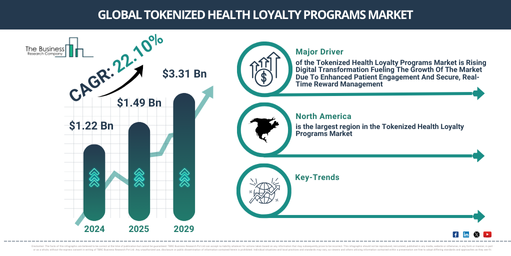
    The market size for tokenized health loyalty programs has expanded significantly in recent years. It is projected to increase from $1.22 billion in 2024 to $1.49 billion in 2025, achieving a compound annual growth rate (CAGR) of 22.4%. This historical growth can be attributed to the rising adoption of wearable health devices, greater reliance on electronic health records, the expanding use of blockchain in early healthcare pilot programs, increasing consumer awareness of digital rewards, and the growing number of healthcare provider partnerships within loyalty ecosystems.

    The market for tokenized health loyalty programs is projected to experience substantial expansion over the upcoming years. This market is anticipated to reach a valuation of $3.31 billion by 2029, exhibiting a compound annual growth rate (CAGR) of 22.1%. This projected growth is driven by several factors, including the increasing implementation of smart contracts for automated reward distribution, greater integration with metaverse health platforms, an expanding emphasis on sustainability-focused loyalty models, the rising application of personalized genomics in loyalty incentives, and the increasing convergence of wellness, fitness, and healthcare tokenized ecosystems. Key trends anticipated during this forecast period involve advancements in decentralized identity verification for secure patient rewards, enhanced token interoperability across multi-chain ecosystems, the creation of wellness-oriented non-fungible token (NFT)-based loyalty assets, innovations in gamified preventive health engagement models, and breakthroughs in artificial intelligence (AI)-driven dynamic reward optimization.

    Unlock Your Free Sample Report for Exclusive Market Data:

    https://www.thebusinessresearchcompany.com/sample.aspx?id=28342&type=smp

    Which Major Market Drivers Are Shaping The Future Of The Tokenized Health Loyalty Programs Market?

    The expansion of digital transformation is anticipated to fuel the growth of the tokenized health loyalty programs market in the future. Digital transformation involves incorporating digital technologies across all business functions to improve operations, user experiences, and overall value. This surge in digital adoption is motivated by a growing need for superior customer experiences, as companies implement digital tools like AI, cloud computing, and data analytics to offer quicker, customized, and more convenient services, thereby boosting customer satisfaction and loyalty. Digital transformation stimulates the need for tokenized health loyalty programs because it enables healthcare providers to manage rewards securely, transparently, and in real-time, thereby enhancing patient engagement and fostering trust in digital health services. For example, in November 2023, the Central Digital and Data Office, a UK government body, reported that in 2022, government digital transformation could generate over $1.17 billion (£1 billion) in savings by eliminating paper-based expenses. Furthermore, a competitive digital compensation system could save $122.12 million (£101 million) per year by 2025, lowering attrition and decreasing dependence on expensive labor. Consequently, the increasing digital transformation is a key driver for the growth of the tokenized health loyalty programs market.

    What Are The Leading Segments Analyzed In The Tokenized Health Loyalty Programs Market?

    The tokenized health loyalty programs market covered in this report is segmented as

    1) By Component: Platform, Services

    2) By Technology: Blockchain, Smart Contracts, Tokenization Platforms

    3) By Application: Patient Engagement, Wellness Programs, Prescription Management, Insurance Claims, Other Applications

    4) By End-User: Hospitals And Clinics, Pharmacies, Insurance Providers, Wellness Centers, Other End-Users

    Subsegments:

    1) By Platform: Patient Engagement Platform, Reward Management Platform, Data Analytics Platform, Blockchain-Based Platform

    2) By Services: Consulting Services, Implementation Services, Support And Maintenance Services, Integration Services

    Which Major Industry Participants Are Leading The Tokenized Health Loyalty Programs Market Growth?

    Major companies operating in the tokenized health loyalty programs market are TELUS Health, Health Hero, Calo, Vitality Group Inc., Brave Software, Wellable Inc., Sweatco Ltd., Solve.Care Inc., Sprout at Work, IncentFit Corp., VitaDAO, StepN, qiibee, Lympo, Genopets, Actifit Inc., Ocean Protocol, Streamr, Loyyal Corp., Dotmoovs, and IOTA.

    Download The Full Report For Exclusive Market Findings:

    https://www.thebusinessresearchcompany.com/report/tokenized-health-loyalty-programs-global-market-report

    Which Geographies Are Emerging As Strong Markets For The Tokenized Health Loyalty Programs Industry?

    North America was the largest region in the tokenized health loyalty programs market in 2024. Asia-Pacific is expected to be the fastest-growing region in the forecast period. The regions covered in tokenized health loyalty programs report are Asia-Pacific, Western Europe, Eastern Europe, North America, South America, Middle East and Africa.

    Request A Customized Version Of The Tokenized Health Loyalty Programs Market Report:

    https://www.thebusinessresearchcompany.com/customise?id=28342&type=smp

    Browse Through More Reports Similar to the Global Tokenized Health Loyalty Programs Market 2025, By The Business Research Company

    Financial Wellness Program Global Market Report 2025

    https://www.thebusinessresearchcompany.com/report/financial-wellness-program-global-market-report

    Connected Health And Wellness Solutions Global Market Report 2025

    https://www.thebusinessresearchcompany.com/report/connected-health-and-wellness-solutions-global-market-report

    Consumer Healthcare Global Market Report 2025

    https://www.thebusinessresearchcompany.com/report/consumer-healthcare-global-market-report

    Get in touch with us:

    The Business Research Company: https://www.thebusinessresearchcompany.com/

    Americas +1 310-496-7795

    Asia +44 7882 955267 & +91 8897263534

    Europe +44 7882 955267

    Email us at info@tbrc.info

    Follow us on:

    LinkedIn: https://in.linkedin.com/company/the-business-research-company

    YouTube: https://www.youtube.com/channel/UC24_fI0rV8cR5DxlCpgmyFQ

    Global Market Model: https://www.thebusinessresearchcompany.com/global-market-model
  • Thrombocythaemia Myelofibrosis Treatment Market Forecast: What to Expect by 2029

    Thrombocythaemia Myelofibrosis Treatment Market Forecast: What to Expect by 2029

    Unlock Global Insights – Save 20% on Market Reports with Code ONLINE20

    #What Is The Projected Market Size Of The Thrombocythaemia Myelofibrosis Treatment Market By 2029?

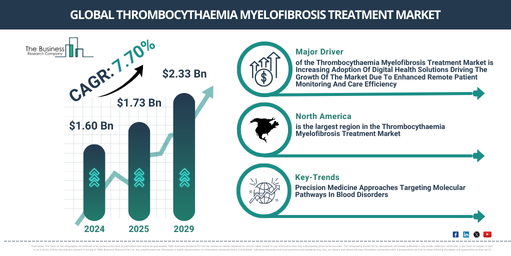
    The thrombocythaemia myelofibrosis treatment market has experienced robust expansion over recent years. This market is projected to expand from $1.60 billion in 2024 to reach $1.73 billion by 2025, demonstrating a compound annual growth rate (CAGR) of 8.0%. This past growth has been driven by factors such as the increasing occurrence of myeloproliferative disorders, enhanced understanding of myelofibrosis treatments, an expanding elderly demographic more prone to blood conditions, greater financial commitment to hematology research, and an uptick in genetic mutations leading to myeloproliferative disorders.

    The thrombocythaemia myelofibrosis treatment market is projected to experience substantial expansion over the upcoming years, with its size anticipated to reach $2.33 billion by 2029, exhibiting a compound annual growth rate (CAGR) of 7.7%. Factors contributing to this growth during the forecast period include the growing acceptance of targeted therapies, an increasing need for JAK/ACVR1 inhibitors, improvements in healthcare infrastructure within emerging economies, an uptick in clinical trials for new myelofibrosis medications, and enhanced governmental backing for rare disease treatments. Significant trends anticipated in the forecast period encompass progress in personalized medicine, sophisticated drug delivery technologies, the creation of dual-action JAK/ACVR1 inhibitors, novel approaches in minimally invasive treatments, and developments in combination therapy strategies.

    Unlock Your Free Sample Report for Exclusive Market Data:

    https://www.thebusinessresearchcompany.com/sample.aspx?id=28341&type=smp

    What Are The Main Drivers Boosting The Thrombocythaemia Myelofibrosis Treatment Industry’s Expansion?

    The thrombocythaemia myelofibrosis treatment market is projected to grow due to the increasing adoption of digital health solutions. Digital health solutions utilize digital technologies to improve healthcare delivery, patient outcomes, and overall health management. Their rising adoption is attributed to their ability to provide convenient, remote access to healthcare services, enhancing patient engagement and care efficiency. In the context of thrombocythaemia myelofibrosis treatment, digital health solutions are employed to remotely observe patient symptoms, monitor treatment responses, and aid personalized care management. For example, in April 2025, the American Hospital Association (AHA), a US-based nonprofit organization, reported that in 2022, 86.9% of hospitals offered telehealth services, an increase from 86% in 2021, demonstrating a consistent embrace of digital care solutions. Therefore, the expanding integration of digital health solutions is driving the growth of the thrombocythaemia myelofibrosis treatment market.

    What Are The Segment Types Shaping The Thrombocythaemia Myelofibrosis Treatment Market?

    The thrombocythaemia myelofibrosis treatment market covered in this report is segmented as

    1) By Treatment Type: Medication, Blood Transfusion, Stem Cell Transplantation, Other Treatment Types

    2) By Drug Type: JAK Inhibitors, Immunomodulatory Drugs, Chemotherapy, Other Drug Types

    3) By Route Of Administration: Oral, Intravenous, Subcutaneous

    4) By Distribution Channel: Hospital Pharmacies, Retail Pharmacies, Online Pharmacies, Specialty Pharmacies, Drug Stores

    5) By Application: Clinic, Hospital, Other Applications

    Subsegment:

    1) By Medication: Anti-inflammatory Drugs, Antiplatelet Drugs, Iron Chelators, Other Drugs

    2) By Blood Transfusion: Red Blood Cell Transfusion, Platelet Transfusion, Plasma Transfusion

    3) By Stem Cell Transplantation: Allogeneic Stem Cell Transplant, Autologous Stem Cell Transplant

    4) By Other Treatment Types: Splenectomy, Radiation Therapy, Supportive Care

    Which Ongoing Trends Are Expected To Shape The Thrombocythaemia Myelofibrosis Treatment Market Outlook?

    Leading companies in the thrombocythaemia myelofibrosis treatment market are concentrating on developing innovative treatments, including Janus Kinase or Activin A Receptor Type 1 (JAK/ACVR1) inhibitors. These are designed to target specific molecular pathways in myelofibrosis, thereby enhancing treatment efficacy and managing anemia. JAK/ACVR1 inhibitors operate by selectively blocking key enzymes involved in abnormal blood cell production, which helps reduce disease symptoms and improve patients’ quality of life. For instance, in September 2023, GlaxoSmithKline plc (GSK), a UK-based biopharmaceutical company, received US Food and Drug Administration (FDA) approval for Ojjaara (momelotinib), indicated for treating intermediate- or high-risk myelofibrosis. Its dual mechanism of action, which targets both JAK1/JAK2 and ACVR1, helps regulate inflammatory pathways while also improving hemoglobin levels and reducing the need for transfusions. This approval not only expands existing treatment options but also establishes a new standard in myelofibrosis management for patients experiencing anemia, a significant unmet need in the disease landscape.

    Who Are The Prominent Global Companies Shaping The Thrombocythaemia Myelofibrosis Treatment Market?

    Major companies operating in the thrombocythaemia myelofibrosis treatment market are Merck & Co. Inc., AbbVie Inc., Novartis AG, AstraZeneca PLC, Bristol Myers Squibb Company, GlaxoSmithKline PLC, Eli Lilly and Company, Takeda Pharmaceutical Company Limited, Amgen Inc., Gilead Sciences Inc., Teva Pharmaceutical Industries Ltd., Regeneron Pharmaceuticals Inc., Biogen Inc., Sun Pharmaceutical Industries Ltd., Sumitomo Pharma Oncology Inc., Incyte Corporation, Nippon Shinyaku Co. Ltd., Karyopharm Therapeutics, Celon Pharma S.A., Keros Therapeutics Inc.

    Download The Full Report For Exclusive Market Findings:

    https://www.thebusinessresearchcompany.com/report/thrombocythaemia-myelofibrosis-treatment-global-market-report

    Which Region Is Projected To Lead The Thrombocythaemia Myelofibrosis Treatment Market During The Forecast Period?

    North America was the largest region in the thrombocythaemia myelofibrosis treatment market in 2024. Asia-Pacific is expected to be the fastest-growing region in the forecast period. The regions covered in thrombocythaemia myelofibrosis treatment report are Asia-Pacific, Western Europe, Eastern Europe, North America, South America, Middle East and Africa.

    Request A Customized Version Of The Thrombocythaemia Myelofibrosis Treatment Market Report:

    https://www.thebusinessresearchcompany.com/customise?id=28341&type=smp

    Browse Through More Reports Similar to the Global Thrombocythaemia Myelofibrosis Treatment Market 2025, By The Business Research Company

    Myeloproliferative Disorders Drugs Global Market Report 2025

    https://www.thebusinessresearchcompany.com/report/myeloproliferative-disorders-drugs-global-market-report

    Myelodysplastic Syndrome Global Market Report 2025

    https://www.thebusinessresearchcompany.com/report/myelodysplastic-syndrome-global-market-report

    Chronic Myeloid Leukemia Treatment Global Market Report 2025

    https://www.thebusinessresearchcompany.com/report/chronic-myeloid-leukemia-treatment-global-market-report

    Get in touch with us:

    The Business Research Company: https://www.thebusinessresearchcompany.com/

    Americas +1 310-496-7795

    Asia +44 7882 955267 & +91 8897263534

    Europe +44 7882 955267

    Email us at info@tbrc.info

    Follow us on:

    LinkedIn: https://in.linkedin.com/company/the-business-research-company

    YouTube: https://www.youtube.com/channel/UC24_fI0rV8cR5DxlCpgmyFQ

    Global Market Model: https://www.thebusinessresearchcompany.com/global-market-model
  • Third-Generation Sequencing Technology Industry Insights: Market Forecast to 2029

    Third-Generation Sequencing Technology Industry Insights: Market Forecast to 2029

    Unlock Global Insights – Save 20% on Market Reports with Code ONLINE20

    How Much Was The Third-Generation Sequencing Technology Market Worth In 2025, And What Is Its Anticipated Value By 2029?

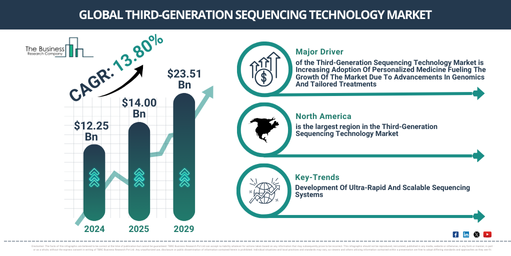
    The market size for third-generation sequencing technology has seen rapid expansion in recent years. It is forecast to rise from $12.25 billion in 2024 to $14.00 billion in 2025, at a compound annual growth rate (CAGR) of 14.2%. This historical increase can be attributed to several factors including the demand for long-read sequencing, a reduction in sequencing costs, the need for real-time pathogen detection, personalized medicine initiatives, growth in clinical diagnostics, and the emergence of precision agriculture.

    The market for third-generation sequencing technology is anticipated to grow significantly over the next few years, reaching a valuation of $23.51 billion by 2029, exhibiting a compound annual growth rate (CAGR) of 13.8%. This projected growth is largely due to the increasing prevalence of chronic and infectious diseases, the expanding use of the technology in clinical diagnostics, its extension into non-human genomics, a rise in both government and private sector funding, and the development of sequencing infrastructure in emerging markets. Key trends expected within this forecast period involve progress in AI integration to improve data analysis, the creation of real-time portable sequencing devices, advancements in enhancing long-read sequencing accuracy, reductions in cost to foster wider accessibility, and the evolution of personalized medicine applications.

    Unlock Your Free Sample Report for Exclusive Market Data:

    https://www.thebusinessresearchcompany.com/sample.aspx?id=28340&type=smp

    Which Factors And Drivers Are Influencing The Third-Generation Sequencing Technology Market In 2025?

    The future expansion of the third-generation sequencing technology market is anticipated to be fueled by the rising integration of personalized medicine. This medical strategy involves customizing treatment and prevention methods based on an individual’s distinct genetic profile, way of life, and surroundings. A key factor behind the growing acceptance of personalized medicine is the progress in genomics, allowing for accurate detection of genetic differences and bespoke therapies. Third-generation sequencing technology improves personalized medicine through its capacity to provide long-read, highly accurate genomic data, thus facilitating the precise detection of genetic variations. Furthermore, it aids customized treatment plans by offering extensive insights into individual genomes, which leads to better clinical results and furthers precision healthcare. As an illustration, in February 2024, the Personalized Medicine Coalition (PMC), a US-based nonprofit organization, reported that the U.S. Food and Drug Administration (FDA) cleared 26 new personalized medicines in 2023, marking a considerable rise from the 12 approved in 2022. Consequently, the expanding use of personalized medicine is propelling the advancement of the third-generation sequencing technology market.

    What Are The Different Segment Classifications Within The Third-Generation Sequencing Technology Market?

    The third-generation sequencing technology market covered in this report is segmented as

    1) By Technology Type: Single-Molecule Real-Time Sequencing (SMRT), Transcription-Mediated Amplification (TMA), Nanopore Sequencing, Sequencing By Synthesis (SBS), Other Technology Types

    2) By Workflow: Sample Preparation, Sequencing, Data Analysis, Data Interpretation, Data Storage And Management

    3) By Application: Genomics, Transcriptomics, Epigenomics, Metagenomics, Personalized Medicine, Synthetic Biology

    4) By End-User: Academic Institutions, Clinical Laboratories, Pharmaceutical And Biotechnology Companies, Research Organizations, Government And Non-Profit Organizations

    Subsegments:

    1) By Single-Molecule Real-Time Sequencing (SMRT): Zero-Mode Waveguides (ZMWs), Circular Consensus Sequencing (CCS), High-Fidelity (HiFi) Reads

    2) By Transcription-Mediated Amplification (TMA): Qualitative Transcription-Mediated Amplification (TMA) Assays, Quantitative Transcription-Mediated Amplification (TMA) Assays, Multiplex Transcription-Mediated Amplification (TMA) Assays

    3) By Nanopore Sequencing: Portable Nanopore Sequencers, Benchtop Nanopore Sequencers, High-Throughput Nanopore Platforms

    4) By Sequencing By Synthesis (SBS): Reversible Terminator Chemistry, Real-Time Sequencing By Synthesis (SBS) Platforms, Short-Read Sequencing By Synthesis (SBS), Long-Read Sequencing By Synthesis (SBS)

    5) By Other Technology Types: Hybrid Sequencing Platforms, Pyrosequencing, Ion Semiconductor Sequencing, Emerging Experimental Methods

    Which Competitive Trends Are Defining The Third-Generation Sequencing Technology Market Structure?

    Leading companies operating within the third-generation sequencing technology market are primarily focused on developing advanced sequencing platforms, including systems designed for ultra-rapid and scalable performance. This initiative aims to enhance research efficiency, broaden clinical applicability, and significantly reduce both turnaround times and costs. Ultra-rapid and scalable sequencing systems embody innovative technologies that facilitate high-throughput, real-time genomic analysis with remarkable speed and accuracy, thereby enabling comprehensive genomic profiling across diverse applications. As an example, in February 2025, Roche Holding AG, a pharmaceutical company based in Switzerland, launched its Sequencing by Expansion (SBX) technology. This fully integrated, next-generation sequencing system utilizes a patented biochemical process to encode DNA or RNA sequences into measurable surrogate polymers termed Xpandomers, which allows for highly accurate single-molecule nanopore sequencing. The SBX platform offers ultra-rapid, scalable sequencing capabilities and automated data analysis, delivering whole-genome sequencing results in mere hours rather than days, with minimal manual intervention.

    Which Key Players Are Driving Competition In The Third-Generation Sequencing Technology Market?

    Major companies operating in the third-generation sequencing technology market are F. Hoffmann-La Roche AG, Thermo Fisher Scientific Inc., Eurofins Scientific SE, Agilent Technologies Inc., Illumina Inc., Qiagen N.V., Macrogen Inc., Myriad Genetics Inc., 10x Genomics Inc., Twist Bioscience Corporation, Takara Bio Inc., Fulgent Genetics Inc., Oxford Nanopore Technologies Limited, Ultima Genomics Inc., Element Biosciences Inc., Sophia Genetics SA, Variantyx Inc., Quantapore Inc., Phase Genomics Inc., and Singular Genomics Systems Inc.

    Download The Full Report For Exclusive Market Findings:

    https://www.thebusinessresearchcompany.com/report/third-generation-sequencing-technology-global-market-report

    What Are The Key Regional Factors Influencing The Third-Generation Sequencing Technology Market Growth?

    North America was the largest region in the third-generation sequencing technology market in 2024. The regions covered in third-generation sequencing technology report are Asia-Pacific, Western Europe, Eastern Europe, North America, South America, Middle East and Africa.

    Request A Customized Version Of The Third-Generation Sequencing Technology Market Report:

    https://www.thebusinessresearchcompany.com/customise?id=28340&type=smp

    Browse Through More Reports Similar to the Global Third-Generation Sequencing Technology Market 2025, By The Business Research Company

    Next Generation Sequencing Market 2025

    https://www.thebusinessresearchcompany.com/report/next-generation-sequencing-market

    Clinical Oncology Next Generation Sequencing Global Market Report 2025

    https://www.thebusinessresearchcompany.com/report/clinical-oncology-next-generation-sequencing-global-market-report

    Dna Sequencing Global Market Report 2025

    https://www.thebusinessresearchcompany.com/report/dna-sequencing-global-market-report

    Get in touch with us:

    The Business Research Company: https://www.thebusinessresearchcompany.com/

    Americas +1 310-496-7795

    Asia +44 7882 955267 & +91 8897263534

    Europe +44 7882 955267

    Email us at info@tbrc.info

    Follow us on:

    LinkedIn: https://in.linkedin.com/company/the-business-research-company

    YouTube: https://www.youtube.com/channel/UC24_fI0rV8cR5DxlCpgmyFQ

    Global Market Model: https://www.thebusinessresearchcompany.com/global-market-model
  • Digital Therapeutics Migraine Market Expansion Outlook: $3.9 Billion by 2029 Forecast

    Digital Therapeutics Migraine Market Expansion Outlook: $3.9 Billion by 2029 Forecast

    Unlock Global Insights – Save 20% on Market Reports with Code ONLINE20

    #What Is The Projected Market Size Of The Digital Therapeutics Migraine Market By 2029?

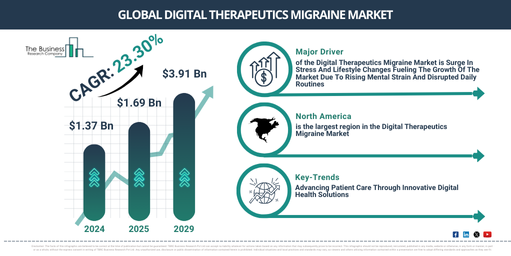
    The digital therapeutics migraine market size has seen significant expansion in recent years. It is anticipated to increase from $1.37 billion in 2024 to $1.69 billion in 2025, exhibiting a compound annual growth rate (CAGR) of 23.4%. The expansion observed in prior periods can be attributed to factors such as the rising incidence of migraine, growing demand for non-pharmacological treatments, an increasing patient inclination towards drug-free alternatives, a heightened focus on personalized healthcare, and greater availability of reimbursement for digital therapeutics.

    The digital therapeutics migraine market is projected to experience substantial expansion in the coming years. This market is anticipated to reach $3.91 billion by 2029, exhibiting a compound annual growth rate (CAGR) of 23.3%. Key drivers for this growth during the forecast period include the increasing adoption of wearable neuromodulation devices, heightened awareness regarding preventive migraine management, a surge in governmental support for digital health, enhanced patient involvement via gamified health applications, and an escalation in collaborations between insurance companies and digital therapeutics suppliers. Significant trends expected within the forecast timeframe encompass breakthroughs in personalized digital treatment strategies, the merging of mobile applications with electronic health records, progress in telemedicine-supported migraine care, enhancements in sophisticated sensor-driven monitoring technologies, and developments in scientifically validated digital therapies.

    Unlock Your Free Sample Report for Exclusive Market Data:

    https://www.thebusinessresearchcompany.com/sample.aspx?id=28204&type=smp

    Which Factors And Drivers Are Influencing The Digital Therapeutics Migraine Market In 2025?

    The increasing levels of stress and evolving lifestyle patterns are anticipated to drive the future growth of the digital therapeutics migraine market. Stress and lifestyle changes refer to the influence of daily demands and habits on an individual’s physical and mental health. The rise in these factors is attributed to contemporary work pressures and fast-paced living, which intensify mental strain and disrupt healthy daily routines. Digital therapeutics for migraine assist in managing stress and lifestyle changes by offering personalized behavioral interventions, tracking triggers, and encouraging healthier routines to diminish migraine frequency and enhance overall well-being. For instance, in February 2024, a survey conducted among 2,004 people aged 16 and over in the UK by Forthwithlife, a UK-based provider of at-home blood testing services, indicated that approximately 1 in 5 adults over 16 experiences stress every day, with women (24.5%) being more affected than men (15.3%). Therefore, the escalating stress and lifestyle changes are propelling the expansion of the digital therapeutics migraine market.

    How Is The Digital Therapeutics Migraine Market Segmented?

    The digital therapeutics migraine market covered in this report is segmented as

    1) By Product Type, Software, Devices, Services

    2) By Patient Type, Adult, Pediatric

    3) By Application, Prevention, Acute Treatment, Patient Education, Other Applications

    4) By Distribution Channel, Online, Offline

    5) By End-User, Hospitals, Clinics, Homecare, Other End-Users

    Subsegments:

    1) By Software, Mobile Application, Web Platform, Cloud-Based Platform, Wearable Integration Software

    2) By Devices, Wearable Devices, Neurostimulation Devices, Monitoring Devices, Biosensors

    3) By Services, Teleconsultation Services, Therapy Management Services, Patient Support Services, Data Analytics Services

    Which Market Trends Are Creating New Opportunities In The Digital Therapeutics Migraine Industry?

    Leading companies in the digital therapeutics migraine market are concentrating on developing advanced innovations, such as e-prescription technology, to improve treatment accessibility, medication adherence, and overall patient management. E-prescription technology refers to a digital system that allows healthcare providers to create, transmit, and manage prescriptions electronically, moving away from traditional paper-based methods while boosting accuracy, reducing medication errors, and enhancing efficiency in prescribing and dispensing processes. For instance, in April 2025, Tonix Pharmaceuticals Holding Corp., a US-based pharmaceutical company, introduced TONIX ONE, an extensive digital platform designed to assist patients in managing their migraine condition. The platform provides personalized tools, educational resources, and support services to deepen disease understanding and facilitate self-management. It aims to give patients greater control over their migraine care, promoting proactive health management. Additionally, TONIX ONE fosters stronger engagement and communication between patients and healthcare providers, streamlining care coordination.

    Which Leading Companies Dominate The Digital Therapeutics Migraine Market Share?

    Major companies operating in the digital therapeutics migraine market are Pfizer Inc., Novartis AG, Eli Lilly and Company, Dr. Reddy’s Laboratories Ltd., Sword Health, Biofourmis Inc., Click Therapeutics Inc., Sidekick Health, Kaia Health Software GmbH, Salvia BioElectronics, Theranica Bio-Electronics Ltd., Cefaly Technology S.A., Neurolief Ltd., Aptar Digital Health, NeuroMetrix Inc., Happify Health, Neura Health, Relivion MG, UpScriptHealth, N1-Headache.

    Download The Full Report For Exclusive Market Findings:

    https://www.thebusinessresearchcompany.com/report/digital-therapeutics-migraine-global-market-report

    How Does The Digital Therapeutics Migraine Market Perform Across Key Geographic Regions?

    North America was the largest region in the digital therapeutics migraine market in 2024. The regions covered in digital therapeutics migraine report are Asia-Pacific, Western Europe, Eastern Europe, North America, South America, Middle East and Africa.

    Request A Customized Version Of The Digital Therapeutics Migraine Market Report:

    https://www.thebusinessresearchcompany.com/customise?id=28204&type=smp

    Browse Through More Reports Similar to the Global Digital Therapeutics Migraine Market 2025, By The Business Research Company

    Migraine Drugs Global Market Report 2025

    https://www.thebusinessresearchcompany.com/report/migraine-drugs-global-market-report

    Migraine Treatment Global Market Report 2025

    https://www.thebusinessresearchcompany.com/report/migraine-treatment-global-market-report

    Migraine Global Market Report 2025

    https://www.thebusinessresearchcompany.com/report/migraine-global-market-report

    Get in touch with us:

    The Business Research Company: https://www.thebusinessresearchcompany.com/

    Americas +1 310-496-7795

    Asia +44 7882 955267 & +91 8897263534

    Europe +44 7882 955267

    Email us at info@tbrc.info

    Follow us on:

    LinkedIn: https://in.linkedin.com/company/the-business-research-company

    YouTube: https://www.youtube.com/channel/UC24_fI0rV8cR5DxlCpgmyFQ

    Global Market Model: https://www.thebusinessresearchcompany.com/global-market-model