Blog

  • Enamel Strengthening Varnish Industry Overview 2025: Growth Projections and Market Trends

    Enamel Strengthening Varnish Industry Overview 2025: Growth Projections and Market Trends

    Unlock Global Insights – Save 20% on Market Reports with Code ONLINE20

    #What Are The Current (2025) And Forecast (2029) Sizes Of The Enamel Strengthening Varnish Market?

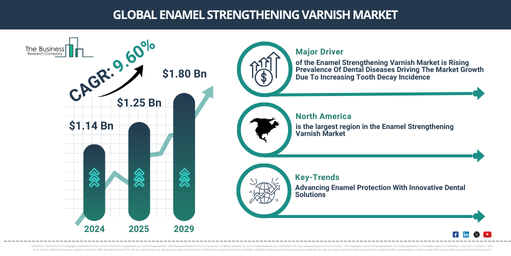
    The enamel strengthening varnish market size has experienced robust growth over recent years. It is projected to expand from $1.14 billion in 2024 to $1.25 billion in 2025, demonstrating a compound annual growth rate (CAGR) of 10.0%. This historical growth can be attributed to the increasing prevalence of dental caries, heightened awareness concerning oral hygiene, a growing demand for preventive dental care, the expansion of dental clinics, and the rising adoption of fluoride-based products.

    The enamel strengthening varnish market is projected to experience substantial expansion over the upcoming years. This market is anticipated to reach a valuation of $1.80 billion by 2029, exhibiting a compound annual growth rate (CAGR) of 9.6%. Factors contributing to this expansion during the forecast period include an increasing elderly population with dental issues, a heightened emphasis on cosmetic dentistry, broadened dental insurance coverage, enhanced understanding of enamel protection, and the increasing adoption of minimally invasive dental procedures. Key trends anticipated for the forecast period encompass progress in fluoride-releasing technologies, the incorporation of nanotechnology, new developments in biomimetic materials, improvements in sustained-release formulations, and the integration of calcium phosphate and bioactive glass.

    Unlock Your Free Sample Report for Exclusive Market Data:

    https://www.thebusinessresearchcompany.com/sample.aspx?id=28212&type=smp

    Which Drivers Are Shaping The Enamel Strengthening Varnish Industry’s Market Share?

    The increasing occurrence of dental ailments is projected to boost the expansion of the enamel-strengthening varnish market in the future. These conditions encompass various issues impacting the teeth, gums, and surrounding oral structures. A significant factor contributing to the increase in dental problems is elevated sugar intake, which fosters the proliferation of acid-generating bacteria, leading to enamel erosion and ultimately tooth decay. Enamel-strengthening varnish plays a role in averting dental diseases by creating a defensive barrier on the tooth’s surface, supplying fluoride or calcium-phosphate minerals that restore weakened enamel, thereby mitigating acid damage and decreasing the likelihood of cavities and decay. As an illustration, in September 2024, the Gov.UK, a UK-based government department, reported survey findings from the 2022 to 2023 school year, showing that 16.2% of Year 6 schoolchildren in England had experienced dental decay in their permanent teeth. Consequently, the increasing occurrence of dental diseases is stimulating the expansion of the enamel-strengthening varnish market.

    What Are The Different Segment Classifications Within The Enamel Strengthening Varnish Market?

    The enamel strengthening varnish market covered in this report is segmented as

    1) By Product Type: Fluoride Varnish, Calcium Phosphate Varnish, Combination Varnish, Other Product Types

    2) By Age Group: Pediatric, Adult, Geriatric

    3) By Distribution Channel: Online Pharmacies, Retail Pharmacies, Dental Supply Stores, Other Distribution Channels

    4) By Application: Dental Clinics, Hospitals, Home Care, Other Applications

    Subsegments:

    1) By Fluoride Varnish: Sodium Fluoride Varnish, Stannous Fluoride Varnish, Difluorosilane Varnish

    2) By Calcium Phosphate Varnish: Tricalcium Phosphate Varnish, Hydroxyapatite Varnish

    3) By Combination Varnish: Fluoride + Calcium Phosphate Varnish, Fluoride + Hydroxyapatite Varnish

    4) By Other Product Types: Herbal Varnish, Nano-Technology Based Varnish, Resin-Based Varnish

    What Trends Are Redefining The Enamel Strengthening Varnish Market Dynamics?

    Leading firms in the enamel-strengthening varnish market are concentrating on creating novel products, specifically advanced fluoride varnish, with the goals of bolstering enamel defense, increasing patient adherence, and providing extended cavity prevention. This advanced fluoride varnish signifies contemporary dental coatings featuring superior fluoride delivery mechanisms, supplementary active components, or refined application methods, all engineered to more efficiently fortify tooth enamel and offer sustained protection against deterioration. As an illustration, in May 2025, the US-based manufacturing company Kettenbach LP introduced profisil fluoride varnish plus. This product boosts enamel protection using cutting-edge fluoride technology that both reinforces tooth enamel and alleviates sensitivity, presented in a smooth, non-sticky, alcohol- and rosin-free formulation agreeable to individuals of any age. Its sophisticated makeup fosters remineralization through fluoride, calcium, and phosphate, while agreeable tastes and straightforward application improve patient willingness to use it. The varnish is engineered to safeguard teeth, avert decay, and offer enduring comfort, thereby streamlining and improving the efficacy of preventive care for dental professionals.

    Which Major Firms Are Strengthening Their Position In The Enamel Strengthening Varnish Industry?

    Major companies operating in the enamel strengthening varnish market are McKesson Corporation, Colgate-Palmolive Company, Dentsply Sirona Inc., Ivoclar Vivadent AG, Ultradent Products Inc., AMD Medicom Inc., VOCO GmbH, Safco Dental Supply LLC, GC Europe N.V., 3M Oral Care, Pulpdent Corporation, Sultan Healthcare Inc., Medicom Technologies Inc., Kettenbach Dental, Nanova Biomaterials Inc., DMG America, Elevate Oral Care, LLC, Preventive Technologies Inc., ApaCare GmbH, and Fygg Inc.

    Download The Full Report For Exclusive Market Findings:

    https://www.thebusinessresearchcompany.com/report/enamel-strengthening-varnish-global-market-report

    How Is Enamel Strengthening Varnish Market Demand Varying Across Different Regions?

    North America was the largest region in the enamel strengthening varnish market in 2024. Asia Pacific is expected to be the fastest-growing region in the forecast period. The regions covered in enamel-strengthening varnish report are Asia-Pacific, Western Europe, Eastern Europe, North America, South America, Middle East and Africa.

    Request A Customized Version Of The Enamel Strengthening Varnish Market Report:

    https://www.thebusinessresearchcompany.com/customise?id=28212&type=smp

    Browse Through More Reports Similar to the Global Enamel Strengthening Varnish Market 2025, By The Business Research Company

    Wood Coating Resins Global Market Report 2025

    https://www.thebusinessresearchcompany.com/report/wood-coating-resins-global-market-report

    Decorative Coatings Global Market Report 2025

    https://www.thebusinessresearchcompany.com/report/decorative-coatings-global-market-report

    Specialty Resins Global Market Report 2025

    https://www.thebusinessresearchcompany.com/report/specialty-resins-global-market-report

    Get in touch with us:

    The Business Research Company: https://www.thebusinessresearchcompany.com/

    Americas +1 310-496-7795

    Asia +44 7882 955267 & +91 8897263534

    Europe +44 7882 955267

    Email us at info@tbrc.info

    Follow us on:

    LinkedIn: https://in.linkedin.com/company/the-business-research-company

    YouTube: https://www.youtube.com/channel/UC24_fI0rV8cR5DxlCpgmyFQ

    Global Market Model: https://www.thebusinessresearchcompany.com/global-market-model
  • Zinc Cold Lozenges Market Expansion Outlook: $1.7 Billion by 2029 Forecast

    Zinc Cold Lozenges Market Expansion Outlook: $1.7 Billion by 2029 Forecast

    Unlock Global Insights – Save 20% on Market Reports with Code ONLINE20

    #What Is The Projected Market Size Of The Zinc Cold Lozenges Market By 2029?

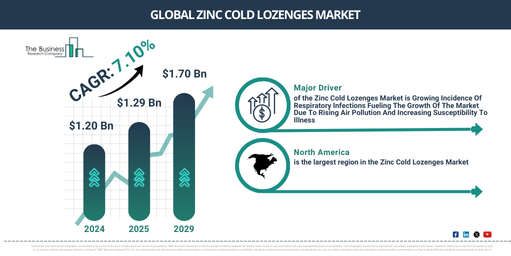
    The zinc cold lozenges market size has experienced significant growth in recent years. This market is anticipated to expand from $1.20 billion in 2024 to $1.29 billion in 2025, achieving a compound annual growth rate (CAGR) of 7.5%. The historical growth can be linked to the rising occurrence of common cold and respiratory infections, an increasing consumer preference for over-the-counter (OTC) remedies, heightened awareness of zinc’s immune-boosting properties, an elevated demand for natural and herbal cold relief products, and the growing adoption of self-medication and preventive healthcare practices.

    The zinc cold lozenges market size is projected to experience robust growth in the coming years. It is anticipated to expand to $1.70 billion by 2029, demonstrating a compound annual growth rate (CAGR) of 7.1%. This projected growth can be attributed to several factors including the increasing adoption of zinc lozenges for immune support, the rising popularity of elderberry and vitamin C combinations, the expanding availability of sugar-free and vegan formulations, the growing demand for travel-friendly and on-the-go health solutions, and a heightened focus on preventive healthcare and overall wellness. Significant trends expected during this forecast period involve advancements in zinc lozenge formulations with additional functional ingredients, the integration of e-commerce platforms for broader distribution, innovations in packaging to enhance convenience and sustainability, progress in personalized health solutions leveraging AI and data analytics, and the integration of wellness ecosystems combining supplements with lifestyle products.

    Unlock Your Free Sample Report for Exclusive Market Data:

    https://www.thebusinessresearchcompany.com/sample.aspx?id=28360&type=smp

    Which Factors And Drivers Are Influencing The Zinc Cold Lozenges Market In 2025?

    The increasing prevalence of respiratory infections is projected to drive the expansion of the zinc cold lozenges market moving forward. Respiratory infection describes the invasion and multiplication of harmful microorganisms within the respiratory tract, resulting in conditions such as colds, flu, or pneumonia. The occurrence of respiratory infections is growing primarily due to increased air pollution, which compromises the respiratory system and heightens individuals’ susceptibility to illness. Zinc cold lozenges assist in managing respiratory infections by bolstering immune support and lessening the severity and duration of common cold symptoms. They offer convenient, straightforward relief by soothing throat irritation and supporting the body’s protective mechanisms against infections. For instance, in May 2025, the New York Academy of Sciences, a US-based nonprofit organization, stated that whooping cough cases had surpassed 8,000, indicating a more than twofold increase compared to the same period in the prior year. Therefore, the rising incidence of respiratory infections is stimulating the growth of the zinc cold lozenges market.

    How Is The Zinc Cold Lozenges Market Segmented?

    The zinc cold lozenges market covered in this report is segmented as

    1) By Product Type: Sugar-Free Zinc Lozenges, Flavored Zinc Lozenges, Herbal Zinc Lozenges, Other Product Types

    2) By Form: Tablets, Gummies, Hard Lozenges, Other Forms

    3) By Distribution Channel: Pharmacies Or Drug Stores, Supermarkets Or Hypermarkets, Online Retail, Other Distribution Channels

    4) By Application: Cold And Flu Relief, Immune Support, Other Applications

    Subsegments:

    1) By Sugar-Free Zinc Lozenges: Aspartame-Based Lozenges, Sucralose-Based Lozenges, Stevia-Based Lozenges

    2) By Flavored Zinc Lozenges: Mint Flavor, Citrus Flavor, Berry Flavor, Honey Flavor

    3) By Herbal Zinc Lozenges: Echinacea-Infused Lozenges, Ginger-Infused Lozenges, Menthol Or Herbal Mint Lozenges, Honey And Herbal Extract Lozenges

    4) By Other Product Types: Chewable Zinc Lozenges, Dissolvable/Quick-Melt Lozenges, Combination Lozenges, Pediatric Zinc Lozenges

    Which Leading Companies Dominate The Zinc Cold Lozenges Market Share?

    Major companies operating in the zinc cold lozenges market are Church & Dwight Co. Inc., Prestige Consumer Healthcare Inc., Quantum Health Inc., NOW Health Group Inc., Swanson Health Products Inc., Life Extension Foundation Buyers Club Inc., Nature’s Way Products LLC, Sydler Remedies Pvt. Ltd., Douglas Laboratories (Atrium Innovations Inc. Nestlé Health Science), Kharkhana Zinda Tilismath, Seeking Health LLC, DaVinci Laboratories of Vermont (FoodScience Corporation), Nutri-West Inc., Vespyr Brands LLC, Nutritional Frontiers LLC, Wiscon Pharmaceuticals Pvt. Ltd., Sitnez Biocare Pvt. Ltd., Prason Foods Private Limited, Wellona Pharma Pvt. Ltd., and Vaegi Nutra Private Limited.

    Download The Full Report For Exclusive Market Findings:

    https://www.thebusinessresearchcompany.com/report/zinc-cold-lozenges-global-market-report

    How Does The Zinc Cold Lozenges Market Perform Across Key Geographic Regions?

    North America was the largest region in the zinc cold lozenges market in 2024. The regions covered in zinc cold lozenges report are Asia-Pacific, Western Europe, Eastern Europe, North America, South America, Middle East and Africa.

    Request A Customized Version Of The Zinc Cold Lozenges Market Report:

    https://www.thebusinessresearchcompany.com/customise?id=28360&type=smp

    Browse Through More Reports Similar to the Global Zinc Cold Lozenges Market 2025, By The Business Research Company

    Zinc Global Market Report 2025

    https://www.thebusinessresearchcompany.com/report/zinc-global-market-report

    Zinc Chemicals Global Market Report 2025

    https://www.thebusinessresearchcompany.com/report/zinc-chemicals-global-market-report

    Zinc Oxide Global Market Report 2025

    https://www.thebusinessresearchcompany.com/report/zinc-oxide-global-market-report

    Get in touch with us:

    The Business Research Company: https://www.thebusinessresearchcompany.com/

    Americas +1 310-496-7795

    Asia +44 7882 955267 & +91 8897263534

    Europe +44 7882 955267

    Email us at info@tbrc.info

    Follow us on:

    LinkedIn: https://in.linkedin.com/company/the-business-research-company

    YouTube: https://www.youtube.com/channel/UC24_fI0rV8cR5DxlCpgmyFQ

    Global Market Model: https://www.thebusinessresearchcompany.com/global-market-model
  • Global Virtual Reality Vision Therapy Industry Trends: Where the Market Is Headed by 2029

    Global Virtual Reality Vision Therapy Industry Trends: Where the Market Is Headed by 2029

    Unlock Global Insights – Save 20% on Market Reports with Code ONLINE20

    How Much Was The Virtual Reality Vision Therapy Market Worth In 2025, And What Is Its Anticipated Value By 2029?

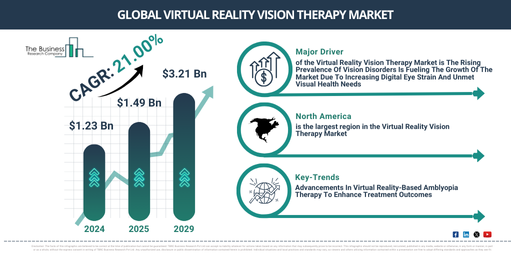
    The virtual reality vision therapy market has witnessed an exponential expansion in its size over recent years. Forecasts suggest it will grow from $1.23 billion in 2024 to $1.49 billion in 2025, achieving a compound annual growth rate (CAGR) of 21.4%. Historically, the market’s growth was driven by factors such as increasing awareness about vision disorders, the growing adoption of VR technology in ophthalmology, a rise in the prevalence of amblyopia and strabismus, government initiatives in support of digital therapeutics, and rising investments in research and development for vision therapy.

    The virtual reality vision therapy market is anticipated to experience substantial growth over the coming years. This market is projected to reach $3.21 billion by 2029, expanding at a compound annual growth rate (CAGR) of 21.0%. This expansion during the forecast period is driven by several factors, including the increasing acceptance of home-based VR vision therapy, the growing integration of AI and machine learning to provide personalized treatments, an escalating demand for telehealth and remote monitoring solutions, more frequent collaborations between VR developers and healthcare organizations, and improvements in the affordability and accessibility of VR therapy tools. Key trends emerging over the forecast period encompass the incorporation of artificial intelligence for adaptive therapeutic approaches, the creation of immersive and mixed reality applications, the utilization of eye-tracking and motion sensors to provide accurate feedback, cloud-based platforms designed for remote therapy oversight, and the gamification of vision therapy routines to boost patient engagement.

    Unlock Your Free Sample Report for Exclusive Market Data:

    https://www.thebusinessresearchcompany.com/sample.aspx?id=28359&type=smp

    What Are The Key Drivers Of Growth In The Virtual Reality Vision Therapy Market?

    The expanding occurrence of vision disorders is projected to fuel the advancement of the virtual reality vision therapy market moving forward. Vision disorders are conditions that obstruct clear sight, impacting sharpness, focus, or the extent of one’s vision. The escalation in vision disorders primarily stems from extended screen time, which strains the eyes and contributes to digital eye fatigue, thus compromising overall visual health. Virtual reality vision therapy addresses vision disorders by offering immersive exercises that enhance eye coordination, focus, and depth perception, simultaneously activating neural pathways to improve visual processing and general eye function. For instance, in August 2023, according to the World Health Organization, a Switzerland-based government organization, over 2.2 billion people globally experience vision impairment, affecting either near or distance vision. In nearly 1 billion of these situations, almost half, the impairment could have been avoided or remains untreated. Therefore, the increasing prevalence of vision disorders is propelling the growth of the virtual reality vision therapy market.

    What Are The Key Segments In The Virtual Reality Vision Therapy Market?

    The virtual reality vision therapy market covered in this report is segmented as

    1) By Product Type: Hardware, Software, Services

    2) By Therapy Type: Amblyopia, Strabismus, Convergence Insufficiency, Binocular Vision Dysfunction, Other Therapy Types

    3) By Distribution Channel: Direct Sales, Online Retail, Other Distribution Channels

    4) By End-User: Hospitals And Clinics, Vision Therapy Centers, Homecare Settings, Other End-Users

    Subsegments:

    1) By Hardware: Head-Mounted Displays (HMDs), Virtual Reality (VR) Glasses, Eye-Tracking Devices, Motion Sensors, Haptic Feedback Devices, Handheld Controllers

    2) By Software: Vision Therapy Applications, Virtual Reality (VR) Simulation Software, Eye Exercise Software, Gamified Vision Therapy Programs, Augmented Reality (AR) Integration Software

    3) By Services: Tele-Vision Therapy Services, Clinical Consultation Services, Rehabilitation Program Management, Training And Support Services, Software As A Service (SaaS) For Vision Therapy

    What Long-Term Trends Will Shape The Future Growth Of The Virtual Reality Vision Therapy Industry?

    Leading companies in the virtual reality vision therapy market are concentrating on developing advanced solutions, such as virtual reality-based amblyopia therapy, to boost treatment adherence and achieve better visual outcomes. This virtual reality amblyopia therapy works by engaging the weaker eye through immersive visual exercises to enhance focus, coordination, and depth perception, simultaneously stimulating neural pathways to improve visual processing and overall vision. For instance, in April 2025, Luminopia, Inc., a US-based digital therapeutics company, obtained approval from the Food and Drug Administration (FDA) for amblyopia treatment for children aged 8 to 12 years, expanding upon its prior clearance for ages 4 to 7. This authorization is supported by robust real-world evidence from Luminopia’s PUPiL Registry and clinical trials. Luminopia’s digital therapy utilizes a VR headset, allowing patients to watch familiar TV shows while therapeutic algorithms activate both eyes to enhance vision in children with amblyopia connected to anisometropia and mild strabismus.

    Who Are The Major Companies Operating In The Virtual Reality Vision Therapy Market?

    Major companies operating in the virtual reality vision therapy market are Meta Platforms Inc., Tobii AB, Varjo Technologies Inc., XRHealth Ltd., BIOPAC Systems Inc., VR Vision Group, Floreo Inc., AmblyoPlay, Vivid Vision Inc., Luminopia Inc., NovaSight Inc., Virtualis VR Corp., Wow Vision Therapy, Cognihab Inc., Fusion VR, Rendever Inc., Computer Orthoptics Inc., SyncThink Inc., NeuraSim Private Limited, and Coleman Vision.

    Download The Full Report For Exclusive Market Findings:

    https://www.thebusinessresearchcompany.com/report/virtual-reality-vision-therapy-global-market-report

    Which Region Is Expected To Witness The Fastest Growth In The Virtual Reality Vision Therapy Market?

    North America was the largest region in the virtual reality vision therapy market in 2024. Asia-Pacific is expected to be the fastest-growing region in the forecast period. The regions covered in virtual reality vision therapy report are Asia-Pacific, Western Europe, Eastern Europe, North America, South America, Middle East and Africa.

    Request A Customized Version Of The Virtual Reality Vision Therapy Market Report:

    https://www.thebusinessresearchcompany.com/customise?id=28359&type=smp

    Browse Through More Reports Similar to the Global Virtual Reality Vision Therapy Market 2025, By The Business Research Company

    Virtual Reality In Healthcare Global Market Report 2025

    https://www.thebusinessresearchcompany.com/report/virtual-reality-in-healthcare-global-market-report

    Virtual Rehabilitation Global Market Report 2025

    https://www.thebusinessresearchcompany.com/report/virtual-rehabilitation-global-market-report

    Virtual Reality Services Global Market Report 2025

    https://www.thebusinessresearchcompany.com/report/virtual-reality-services-global-market-report

    Get in touch with us:

    The Business Research Company: https://www.thebusinessresearchcompany.com/

    Americas +1 310-496-7795

    Asia +44 7882 955267 & +91 8897263534

    Europe +44 7882 955267

    Email us at info@tbrc.info

    Follow us on:

    LinkedIn: https://in.linkedin.com/company/the-business-research-company

    YouTube: https://www.youtube.com/channel/UC24_fI0rV8cR5DxlCpgmyFQ

    Global Market Model: https://www.thebusinessresearchcompany.com/global-market-model
  • Edema Clinical Trials Market Size Forecast: Revenue and CAGR by 2029

    Edema Clinical Trials Market Size Forecast: Revenue and CAGR by 2029

    Unlock Global Insights – Save 20% on Market Reports with Code ONLINE20

    What Market Value Is The Edema Clinical Trials Industry Expected To Reach By 2029, Starting From 2025 Levels?

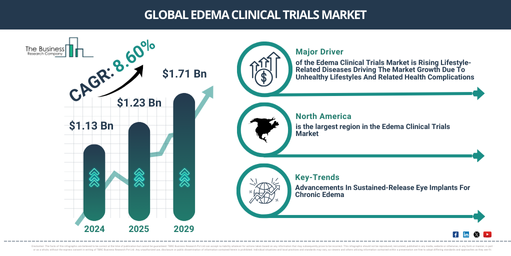
    The edema clinical trials market has seen robust growth over the past few years. It is anticipated to expand from $1.13 billion in 2024 to $1.23 billion in 2025, showing a compound annual growth rate (CAGR) of 8.9%. This historical growth can be attributed to several factors including the rising prevalence of edema conditions, an increasing burden of chronic diseases, greater healthcare awareness and improved diagnosis, a significant expansion of healthcare infrastructure, an aging global population, and increased funding from both public and private sources.

    The edema clinical trials market is projected to experience robust expansion in the coming years. By 2029, its valuation is anticipated to reach $1.71 billion, exhibiting a compound annual growth rate (CAGR) of 8.6%. This forecasted growth stems from several factors, including an increasing demand for personalized medicine, a heightened focus on diversifying patient recruitment, a rise in decentralized and virtual clinical trials, the proliferation of government support programs, and increased investment from global pharmaceutical firms. Significant trends during this period are expected to encompass technological progress in remote monitoring, breakthroughs in digital biomarkers, the evolution of artificial intelligence analytics, improvements in three-dimensional imaging, intensive research and development in personalized therapies, and the incorporation of telemedicine into trials.

    Unlock Your Free Sample Report for Exclusive Market Data:

    https://www.thebusinessresearchcompany.com/sample.aspx?id=28211&type=smp

    What Are The Drivers Pushing New Developments In The Edema Clinical Trials Market?

    A rise in lifestyle-related diseases is projected to boost the expansion of the edema clinical trials market in the future. These diseases are conditions stemming from everyday habits and decisions, such as a sedentary lifestyle, poor dietary choices, and substance abuse. The prevalence of lifestyle illnesses is on the rise, primarily due to poor eating habits, with the extensive intake of processed and calorie-dense foods leading to issues like obesity, diabetes, and cardiovascular conditions. Edema clinical trials aid in managing lifestyle-related diseases by creating and evaluating therapies aimed at resolving fluid accumulation associated with obesity, diabetes, and cardiovascular disorders. For example, in March 2024, data from the Office for Health Improvement & Disparities, a UK-based government department, revealed that from March 2022 to March 2023, there was a 22% increase in the proportion of individuals with type 1 diabetes receiving all eight recommended care processes, and a 21% increase for those with type 2 diabetes. Concurrently, the proportion reaching target HbA1c levels climbed to 37.9%, which was the highest figure ever recorded by the National Diabetes Audit (NDA). Consequently, the growing occurrence of lifestyle-related diseases is fueling the expansion of the edema clinical trials market.

    What Are The Primary Types Of Segments Analyzed In The Edema Clinical Trials Market?

    The edema clinical trials market covered in this report is segmented as

    1) By Phase: Phase I, Phase II, Phase III, Phase IV

    2) By Type: Peripheral Edema, Pulmonary Edema, Cerebral Edema, Nephrotic Syndrome Edema

    3) By Study Design: Interventional, Observational, Expanded Access

    4) By Participant: Pediatrics, Adults, Geriatrics

    5) By End User: Pharmaceutical Companies, Research Institutions, Contract Research Organizations (CROs), Academic Research Centers

    Subsegments:

    1) By Phase I: Single Ascending Dose, Multiple Ascending Dose

    2) By Phase II: Proof of Concept, Phase IIb Dose Optimization

    3) By Phase III: Pivotal Efficacy Trials, Comparative Trials

    4) By Phase IV: Post-Marketing Surveillance, Long-Term Safety Studies

    How Are Emerging Market Trends Shaping The Edema Clinical Trials Industry Landscape?

    Leading firms within the edema clinical trials market are concentrating on creating novel solutions, notably refillable ocular implants, to enhance the effectiveness of treatment and patient adherence in addressing chronic eye conditions linked to edema. This type of implant is a medical device placed in the eye designed to deliver medication continuously for prolonged durations, enabling regular drug refills without requiring the implant’s removal or replacement, thereby providing ongoing treatment for conditions such as macular edema. As an illustration, in February 2025, Roche Holding AG, a pharmaceutical firm based in Switzerland, gained FDA approval for Susvimo, recognized as the inaugural and sole continuous delivery therapy for diabetic macular edema (DME) and diabetic retinopathy (DR), which are significant contributors to diabetes-induced blindness. This offers a substitute for numerous eye injections by requiring considerably fewer yearly treatments. This groundbreaking approval signifies a notable progression in ophthalmic treatment, given that Susvimo’s implantable delivery mechanism aids in boosting patient compliance and lessening the demands of treatment, potentially leading to improved long-term results for those affected by these persistent ocular conditions.

    Who Are The Primary Competitors In The Global Edema Clinical Trials Market?

    Major companies operating in the edema clinical trials market are Roche Holding AG, Merck & Co. Inc., AbbVie Inc., Bayer AG, Novartis International AG, CSL Limited, Regeneron Pharmaceuticals Inc., Boehringer Ingelheim International GmbH, Genentech Inc., Ionis Pharmaceuticals Inc., ANI Pharmaceuticals Inc., BioCryst Pharmaceuticals Inc., Tactile Medical, REGENXBIO Inc., Koya Medical Inc., KalVista Pharmaceuticals Inc., Kodiak Sciences Inc., Pharvaris B.V., Oxurion NV, Outlook Therapeutics Inc., Adverum Biotechnologies Inc., Oculis Holding AG.

    Download The Full Report For Exclusive Market Findings:

    https://www.thebusinessresearchcompany.com/report/edema-clinical-trials-global-market-report

    Which Geographies Are Emerging As Strong Markets For The Edema Clinical Trials Industry?

    North America was the largest region in the edema clinical trials market in 2024. Asia-Pacific is expected to be the fastest-growing region in the forecast period. The regions covered in edema clinical trials report are Asia-Pacific, Western Europe, Eastern Europe, North America, South America, Middle East and Africa.

    Request A Customized Version Of The Edema Clinical Trials Market Report:

    https://www.thebusinessresearchcompany.com/customise?id=28211&type=smp

    Browse Through More Reports Similar to the Global Edema Clinical Trials Market 2025, By The Business Research Company

    Ecoa Esource And Clinical Trials Global Market Report 2025

    https://www.thebusinessresearchcompany.com/report/ecoa-esource-and-clinical-trials-global-market-report

    Cardiovascular Clinical Trials Global Market Report 2025

    https://www.thebusinessresearchcompany.com/report/cardiovascular-clinical-trials-global-market-report

    Healthcare Edi Global Market Report 2025

    https://www.thebusinessresearchcompany.com/report/healthcare-edi-global-market-report

    Get in touch with us:

    The Business Research Company: https://www.thebusinessresearchcompany.com/

    Americas +1 310-496-7795

    Asia +44 7882 955267 & +91 8897263534

    Europe +44 7882 955267

    Email us at info@tbrc.info

    Follow us on:

    LinkedIn: https://in.linkedin.com/company/the-business-research-company

    YouTube: https://www.youtube.com/channel/UC24_fI0rV8cR5DxlCpgmyFQ

    Global Market Model: https://www.thebusinessresearchcompany.com/global-market-model
  • Global Virtual Reality Therapy Hardware Market Overview: Trends Shaping Growth to 2029

    Global Virtual Reality Therapy Hardware Market Overview: Trends Shaping Growth to 2029

    Unlock Global Insights – Save 20% on Market Reports with Code ONLINE20

    What Is The Global Market Value Of The Virtual Reality Therapy Hardware Industry In 2025?

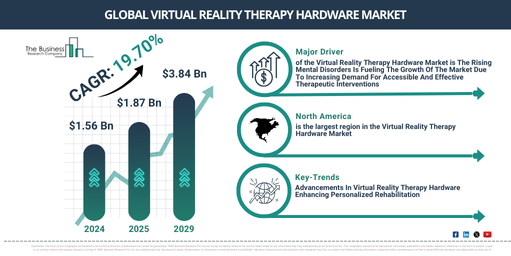
    The virtual reality therapy hardware market has expanded considerably in recent years. It is projected to increase from $1.56 billion in 2024 to $1.87 billion in 2025, achieving a compound annual growth rate (CAGR) of 20.1%. This historical growth can be linked to the growing adoption of VR in healthcare for exposure therapy, the increasing prevalence of anxiety disorders and PTSD, rising investments in healthcare innovation, supportive research studies validating VR effectiveness, and growing awareness among therapists and clinicians.

    The virtual reality therapy hardware market is anticipated to experience substantial expansion in the coming years, with its size projected to reach $3.84 billion by 2029, exhibiting a compound annual growth rate (CAGR) of 19.7%. This growth over the forecast period is propelled by factors such as the increasing demand for non-invasive and drug-free treatment methods, the inclusion of VR therapy within established mental health programs, growing governmental and insurance assistance for digital health instruments, enhanced affordability and access to VR hardware, and its expanding applications in rehabilitation, neurology, and pain management. Significant trends during this period are expected to include the development of lightweight and ergonomic VR headsets, the integration of eye-tracking and biofeedback sensors, the adoption of wireless and cloud-connected VR devices, the incorporation of AI-driven personalization in therapy content, and advancements in haptic feedback and immersive environments.

    Unlock Your Free Sample Report for Exclusive Market Data:

    https://www.thebusinessresearchcompany.com/sample.aspx?id=28358&type=smp

    What Are The Drivers Pushing New Developments In The Virtual Reality Therapy Hardware Market?

    The virtual reality therapy hardware market is anticipated to grow due to the increasing incidence of mental disorders. These conditions are characterized by effects on a person’s thinking, feeling, behavior, or mood, often leading to significant interference with daily functioning and quality of life. The expansion of mental disorders is linked to increasing social isolation, which contributes to elevated stress and anxiety, consequently harming emotional well-being and initiating mental health issues. Rising mental health conditions are boosting the demand for virtual reality therapy hardware, as these immersive technologies offer effective and accessible treatment alternatives that can provide exposure therapy, mindfulness training, and therapeutic interventions in controlled virtual environments. For instance, in May 2024, the American Psychiatric Association, a US-based professional organization of psychologists, reported that 43% of adults felt more anxious, compared to 37% in 2023 and 32% in 2022, indicating a consistent increase in anxiety levels. Therefore, rising mental disorders are driving the growth of the virtual reality therapy hardware market.

    What Are The Major Segment Types Covered In The Virtual Reality Therapy Hardware Market?

    The virtual reality therapy hardware market covered in this report is segmented as

    1) By Product Type: Head-Mounted Displays, Motion Tracking Devices, Haptic Feedback Devices, Virtual Reality (VR) Cameras, Other Product Types

    2) By Distribution Channel: Direct Sales, Online Retail, Specialty Stores, Other Distribution Channels

    3) By Application: Mental Health, Physical Rehabilitation, Pain Management, Phobia Treatment, Other Applications

    4) By End-User: Hospitals And Clinics, Rehabilitation Centers, Research And Academic Institutes, Other End-Users

    Subsegments:

    1) By Head-Mounted Displays (HMDs): Standalone Head-Mounted Displays (HMDs), Tethered Head-Mounted Displays (HMDs), Smartphone-based Head-Mounted Displays (HMDs), Mixed Reality Head-Mounted Displays (HMDs)

    2) By Motion Tracking Devices: Optical Motion Trackers, Inertial Motion Trackers, Magnetic Motion Trackers, Mechanical Motion Trackers

    3) By Haptic Feedback Devices: Gloves With Haptic Feedback, Suits With Haptic Feedback, Handheld Haptic Controllers, Exoskeleton-based Haptic Devices

    4) By Virtual Reality (VR) Cameras: 360-Degree Virtual Reality (VR) Cameras, Stereoscopic Virtual Reality (VR) Cameras, Monoscopic Virtual Reality (VR) Cameras, Multi-Lens Virtual Reality (VR) Cameras

    5) By Other Product Types: Virtual Reality (VR) Treadmills, Virtual Reality (VR) Sensors And Trackers, Virtual Reality (VR) Motion Platforms, Virtual Reality (VR) Interaction Controllers

    Which Market Trends Are Creating New Opportunities In The Virtual Reality Therapy Hardware Industry?

    Leading companies in the virtual reality therapy hardware market are concentrating on creating sophisticated offerings, specifically virtual reality-based healthcare tools, to elevate treatment efficacy and provide customized therapy experiences. These VR healthcare tools leverage immersive simulations to assist in diagnosis, treatment, and rehabilitation, thereby improving patient care through engaging, managed, and tailored therapeutic interactions. For example, in March 2022, Penumbra, Inc., a healthcare firm based in the US, introduced the REAL y-Series, an advanced VR therapy hardware platform. This system combines a VR headset, full-body motion sensors, and an improved clinician interface known as TherapyView, facilitating immersive, hands-free rehabilitation exercises designed for specific patient requirements. This launch broadened the company’s extensive VR-based healthcare system, incorporating considerably more activities and experiences intended to enhance patient care and clinical rehabilitation therapy, featuring updated hardware and a refined therapist interface to personalize therapy programs for a broader spectrum of rehabilitation patients.

    Which Key Market Players Are Investing In Expansion And Innovation Of Virtual Reality Therapy Hardware Market?

    Major companies operating in the virtual reality therapy hardware market are Apple Inc., Meta Platforms Inc., Penumbra Inc., HTC Corporation, Sony Interactive Entertainment Europe Limited, MindMaze SA, XRHealth Inc., MyndVR Inc., AppliedVR Inc., NuEyes Technologies Inc., Looxid Labs Inc., OpenBCI Inc., Karuna Labs Inc., Rewire Fitness Inc., Novobeing Inc., Amelia Virtual Care Inc., Twin Reality Technologies Inc., Pico Interactive Inc., Biomed India, and KineQuantum SAS.

    Download The Full Report For Exclusive Market Findings:

    https://www.thebusinessresearchcompany.com/report/virtual-reality-therapy-hardware-global-market-report

    What Are The Regional Market Dynamics Impacting The Virtual Reality Therapy Hardware Industry?

    North America was the largest region in the virtual reality therapy hardware market in 2024. The regions covered in virtual reality therapy hardware report are Asia-Pacific, Western Europe, Eastern Europe, North America, South America, Middle East and Africa.

    Request A Customized Version Of The Virtual Reality Therapy Hardware Market Report:

    https://www.thebusinessresearchcompany.com/customise?id=28358&type=smp

    Browse Through More Reports Similar to the Global Virtual Reality Therapy Hardware Market 2025, By The Business Research Company

    Virtual Reality Devices Global Market Report 2025

    https://www.thebusinessresearchcompany.com/report/virtual-reality-devices-global-market-report

    Virtual Reality In Healthcare Global Market Report 2025

    https://www.thebusinessresearchcompany.com/report/virtual-reality-in-healthcare-global-market-report

    Virtual Reality Software Global Market Report 2025

    https://www.thebusinessresearchcompany.com/report/virtual-reality-software-global-market-report

    Get in touch with us:

    The Business Research Company: https://www.thebusinessresearchcompany.com/

    Americas +1 310-496-7795

    Asia +44 7882 955267 & +91 8897263534

    Europe +44 7882 955267

    Email us at info@tbrc.info

    Follow us on:

    LinkedIn: https://in.linkedin.com/company/the-business-research-company

    YouTube: https://www.youtube.com/channel/UC24_fI0rV8cR5DxlCpgmyFQ

    Global Market Model: https://www.thebusinessresearchcompany.com/global-market-model
  • Virtual Reality Phantom Limb Pain Therapy Market Growth Opportunities: Insights from 2025–2029

    Virtual Reality Phantom Limb Pain Therapy Market Growth Opportunities: Insights from 2025–2029

    Unlock Global Insights – Save 20% on Market Reports with Code ONLINE20

    By How Much Is The Virtual Reality Phantom Limb Pain Therapy Market Expected To Expand Between 2025 And 2029?

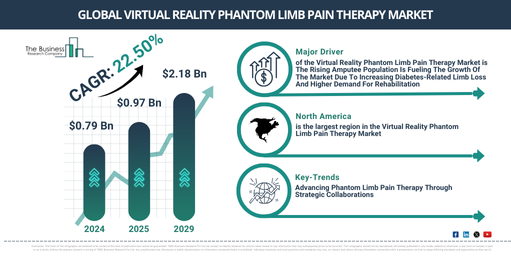
    The virtual reality phantom limb pain therapy market size has seen substantial expansion over recent years. Its valuation is anticipated to climb from $0.79 billion in 2024 to $0.97 billion in 2025, exhibiting a compound annual growth rate (CAGR) of 22.9%. This historical growth can be linked to the rising number of amputees experiencing phantom limb pain, increased recognition of non-pharmacological pain relief options, the integration of VR-based mirror therapy into clinical practice, a surge in research and clinical trials affirming VR therapy’s efficacy, and expanded investments in rehabilitation technologies.

    The virtual reality phantom limb pain therapy market is projected for significant expansion in the coming years. This market is set to reach $2.18 billion by 2029, exhibiting a robust compound annual growth rate (CAGR) of 22.5%. Factors driving this growth during the forecast period include the increasing adoption of home-based VR phantom limb pain therapy, the incorporation of AI and motion tracking for tailored treatment, increased partnerships between VR providers and healthcare facilities, a surging need for remote oversight and tele-rehabilitation, and improved accessibility and ease of transport for VR therapy devices. Key trends anticipated for this period involve the use of immersive VR environments to alleviate pain, motion sensors for precise limb tracking, artificial intelligence for customized therapeutic approaches, gamified exercises designed to boost patient involvement, and cloud-based platforms facilitating remote patient monitoring.

    Unlock Your Free Sample Report for Exclusive Market Data:

    https://www.thebusinessresearchcompany.com/sample.aspx?id=28357&type=smp

    What Are The Emerging Market Drivers Creating New Opportunities In The Virtual Reality Phantom Limb Pain Therapy Industry?

    The increasing number of individuals with limb loss is anticipated to drive the expansion of the virtual reality phantom limb pain therapy market moving forward. This demographic encompasses all persons who have experienced either partial or complete limb amputation, representing the primary target for specialized rehabilitation and therapeutic care. The growth in the amputee population stems from the escalating incidence of diabetes, which often results in complications like inadequate circulation and neural damage, leading to a greater number of limb amputations and an elevated need for rehabilitation and prosthetic services. Virtual reality phantom limb pain therapy offers a solution for the amputee community by delivering immersive, interactive settings designed to re-educate the brain, diminish the sensation of pain, and enhance patients’ overall quality of life. For instance, in February 2024, according to the Amputee Coalition, a US-based nonprofit organization, more than 5.6 million Americans live with limb loss or limb differences, including around 2.3 million people with limb loss and approximately 3.4 million with limb differences. Consequently, the growing amputee population is fueling the development of the virtual reality phantom limb pain therapy market.

    What Are The Major Segment Categories Driving The Virtual Reality Phantom Limb Pain Therapy Market Growth?

    The virtual reality phantom limb pain therapy market covered in this report is segmented as

    1) By Technology: Hardware, Software, Services

    2) By Therapy Type: Immersive Virtual Reality (VR) Therapy, Non-Immersive Virtual Reality (VR) Therapy, Mixed Reality Therapy

    3) By Patient Type: Upper Limb Amputees, Lower Limb Amputees

    4) By Application: Hospitals, Rehabilitation Centers, Homecare Settings, Other Applications

    Subsegments:

    1) By Hardware: Head-Mounted Displays (HMDs), Motion Tracking Sensors, Haptic Feedback Devices, Virtual Reality (VR) Gloves, Virtual Reality (VR) Treadmills, Eye-Tracking Devices

    2) By Software: Immersive Virtual Reality (VR) Therapy Applications, Non-Immersive Virtual Reality (VR) Therapy Applications, Mixed Reality Therapy Applications, artificial intelligence (AI)-Based Therapy Modules, Gamified Rehabilitation Software

    3) By Services: Clinical Implementation Services, Remote Patient Monitoring Services, Maintenance And Support Services, Training And Consultation Services, Therapy Customization Services

    How Are Trends Influencing The Virtual Reality Phantom Limb Pain Therapy Market?

    Leading firms within the virtual reality phantom limb pain therapy market are prioritizing strategic collaborations to improve their product portfolios and expand their reach in the market more quickly. These alliances represent structured cooperation between multiple entities, leveraging their respective strengths, assets, or specialized knowledge to achieve shared business objectives. Such partnerships foster quicker innovation, wider market presence, and a competitive edge, distinct from complete mergers or acquisitions. As an illustration, in December 2022, academics from the University of Texas at Dallas, a research body in the US, teamed up with the Veterans Affairs (VA) North Texas Health Care System, a US healthcare provider. Their collaboration led to the introduction of the Mixed Reality System for Managing Phantom Pain (Mr. MAPP), marking a significant stride in virtual treatment for phantom limb pain. Mr. MAPP integrates a VR headset, camera, and laptop to construct a three-dimensional virtual representation of an amputee’s absent limb. This setup enables users to participate in virtual activities designed to assist the brain in resolving conflicting pain signals resulting from amputation. The objective of this alliance is to deliver an accessible and engaging at-home alternative to conventional mirror therapy, aiming to alleviate pain, enhance functionality, and present a viable non-opioid treatment solution for phantom limb pain.

    Who Are The Core Companies Influencing The Virtual Reality Phantom Limb Pain Therapy Market Landscape?

    Major companies operating in the virtual reality phantom limb pain therapy market are Samsung Electronics Co Ltd, Lenovo Group Ltd, Mayo Clinic, The University of Texas at Dallas, Shirley Ryan AbilityLab, HTC Corporation, MindMaze SA, XRHealth Inc., HaptX Inc., Limber Health Inc., Virtualis, LimbPower Limited, OrthoCarolina Research Institute Inc., Karuna Labs Inc., Neuro Rehab VR, Tongji Hospital/University of Science and Technology of China, Bionic Hope Private Limited, Instalimb, Khymeia Group, and Veterans Affairs (VA) North Texas Health Care System.

    Download The Full Report For Exclusive Market Findings:

    https://www.thebusinessresearchcompany.com/report/virtual-reality-phantom-limb-pain-therapy-global-market-report

    Which Region Shows The Highest Potential For Future Expansion In The Virtual Reality Phantom Limb Pain Therapy Market?

    North America was the largest region in the virtual reality phantom limb pain therapy market in 2024. The regions covered in virtual reality phantom limb pain therapy report are Asia-Pacific, Western Europe, Eastern Europe, North America, South America, Middle East and Africa.

    Request A Customized Version Of The Virtual Reality Phantom Limb Pain Therapy Market Report:

    https://www.thebusinessresearchcompany.com/customise?id=28357&type=smp

    Browse Through More Reports Similar to the Global Virtual Reality Phantom Limb Pain Therapy Market 2025, By The Business Research Company

    Virtual Rehabilitation Global Market Report 2025

    https://www.thebusinessresearchcompany.com/report/virtual-rehabilitation-global-market-report

    Virtual Reality Vr In Medical Simulation Global Market Report 2025

    https://www.thebusinessresearchcompany.com/report/virtual-reality-vr-in-medical-simulation-global-market-report

    Virtual Reality In Healthcare Global Market Report 2025

    https://www.thebusinessresearchcompany.com/report/virtual-reality-in-healthcare-global-market-report

    Get in touch with us:

    The Business Research Company: https://www.thebusinessresearchcompany.com/

    Americas +1 310-496-7795

    Asia +44 7882 955267 & +91 8897263534

    Europe +44 7882 955267

    Email us at info@tbrc.info

    Follow us on:

    LinkedIn: https://in.linkedin.com/company/the-business-research-company

    YouTube: https://www.youtube.com/channel/UC24_fI0rV8cR5DxlCpgmyFQ

    Global Market Model: https://www.thebusinessresearchcompany.com/global-market-model
  • Global Dry Mouth Spray Market Trends and Growth Analysis 2025–2029

    Global Dry Mouth Spray Market Trends and Growth Analysis 2025–2029

    Unlock Global Insights – Save 20% on Market Reports with Code ONLINE20

    What Is The Anticipated Size Of The Dry Mouth Spray Market Over The Five-Year Period 2025–2029?

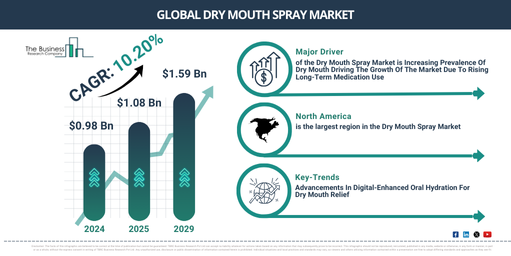
    The dry mouth spray market size has seen significant expansion in recent years. It is forecast to grow from $0.98 billion in 2024 to $1.08 billion in 2025, exhibiting a compound annual growth rate (CAGR) of 10.6%. The market’s growth in the past can be linked to factors such as a greater number of xerostomia cases, increased public awareness of oral hygiene, an expanding elderly demographic experiencing dry mouth problems, the proliferation of dental care products in retail outlets, and an uptick in chronic illnesses associated with dry mouth.

    The dry mouth spray market is projected to experience substantial expansion over the upcoming years, with its size forecast to reach $1.59 billion by 2029, exhibiting a compound annual growth rate (CAGR) of 10.2%. This anticipated growth during the forecast period is driven by several factors, including an increased emphasis on patient comfort and convenience, growing healthcare spending dedicated to dental wellness, the broadening of electronic-commerce platforms for oral care products, a greater uptake of preventive dental treatments, and the proliferation of awareness initiatives for effective oral health management. Key trends expected throughout this period encompass advancements in flavor and sustained efficacy, the emergence of herbal and natural dry mouth spray formulations, significant investments in research and development within the oral care sector, the launch of multifunctional oral sprays, and product range expansion incorporating eco-friendly packaging solutions.

    Unlock Your Free Sample Report for Exclusive Market Data:

    https://www.thebusinessresearchcompany.com/sample.aspx?id=28210&type=smp

    What Are The Emerging Market Drivers Creating New Opportunities In The Dry Mouth Spray Industry?

    The growing occurrence of dry mouth is anticipated to boost the expansion of the dry mouth spray market in the future. This condition, also known as xerostomia, involves the salivary glands failing to produce enough saliva, resulting in a sensation of dryness in the oral cavity. The increased incidence of dry mouth largely stems from the greater use of long-term medications, a common side effect of which is dry mouth. Dry mouth spray offers an effective solution for the rising prevalence of dry mouth, providing rapid alleviation through oral cavity moisturization, replication of natural saliva, and enhancement of comfort and oral well-being for those afflicted. As an illustration, data from November 2024, provided by the Aesthetic Dental Clinic, an oral health service provider in Australia, indicated that approximately 25% of older Australians suffered from dry mouth attributed to age, medications, and radiation treatments. Furthermore, Australians typically visited the dentist 2-3 times per year, with merely 1 in 7 (14%) accessing public dental services. Consequently, the expanding occurrence of dry mouth is projected to fuel the development of the dry mouth spray market.

    Which Key Segments Fueling The Dry Mouth Spray Market?

    The dry mouth spray market covered in this report is segmented as

    1) By Type: Sugary Dry Mouth Spray, Sugar-Free Dry Mouth Spray

    2) By Distribution Channel: Online Pharmacies, Retail Pharmacies, Supermarkets Or Hypermarkets, Other Distribution Channels

    3) By Application: Hospitals And Clinics, Home Care, Dental Clinics, Other Applications

    Subsegments:

    1) By Sugary Dry Mouth Spray: Mint-Flavored, Fruit-Flavored, Herbal-Flavored

    2) By Sugar-Free Dry Mouth Spray: Mint-Flavored, Fruit-Flavored, Herbal-Flavored, Medicated Or Flavored With Therapeutic Agents

    Which Key Trends Are Expected To Influence The Dry Mouth Spray Market In The Coming Years?

    Leading companies in the dry mouth spray market are prioritizing technological advancements, such as oxidized glycerol triesters (OGT), to enhance the effectiveness, precision of application, and user experience of oral hydration products, thereby offering quicker relief and improved oral health outcomes. Oxidized glycerol triesters (OGT) are a class of chemical compounds that emerge when fats and oils (triglycerides) undergo oxidation. For instance, in October 2023, K Pharmaceuticals Private Limited, a US-based telehealth company, introduced Aquoral, an oral spray clinically proven to alleviate dry mouth, also known as xerostomia. This product, available only by prescription, can be obtained exclusively through its integrated telehealth platform following a virtual consultation; it features a patented lipid-based formula that emulates natural saliva and delivers prolonged mucosal protection. Aquoral assists in boosting oral comfort and supporting overall oral health by preserving moisture in the mouth, especially for individuals experiencing chronic dry mouth conditions. Its lipid-based formula is specifically formulated to adhere to the oral mucosa, forming a protective barrier that diminishes dryness and irritation throughout the day.

    Which Key Market Players Are Investing In Expansion And Innovation Of Dry Mouth Spray Market?

    Major companies operating in the dry mouth spray market are 3M Company, Colgate-Palmolive Company, Haleon plc, Bausch Health Companies Inc., Perrigo Company plc, Lion Corporation, Sunstar Suisse S.A., Benco Dental Supply Co., Mission Pharmacal Company, Entod Pharma Ltd., Curaden AG, Xlear Inc., ICPA Health Products Ltd., You First Services Inc., Livealth Biopharma Private Limited, Tymk Health & Wellness Pvt. Ltd., Elevate Oral Care LLC, Essential Sprays LLC, Lubricity Innovations LLC, StellaLife Inc.

    Download The Full Report For Exclusive Market Findings:

    https://www.thebusinessresearchcompany.com/report/dry-mouth-spray-global-market-report

    Which Region Is Projected To Lead The Dry Mouth Spray Market During The Forecast Period?

    North America was the largest region in the dry mouth spray market in 2024. Asia-Pacific is expected to be the fastest-growing region in the forecast period. The regions covered in dry mouth spray report are Asia-Pacific, Western Europe, Eastern Europe, North America, South America, Middle East and Africa.

    Request A Customized Version Of The Dry Mouth Spray Market Report:

    https://www.thebusinessresearchcompany.com/customise?id=28210&type=smp

    Browse Through More Reports Similar to the Global Dry Mouth Spray Market 2025, By The Business Research Company

    Nasal Spray Bottle Global Market Report 2025

    https://www.thebusinessresearchcompany.com/report/nasal-spray-bottle-global-market-report

    Dry Powder Inhaler Global Market Report 2025

    https://www.thebusinessresearchcompany.com/report/dry-powder-inhaler-global-market-report

    Mouthwash Global Market Report 2025

    https://www.thebusinessresearchcompany.com/report/mouthwash-global-market-report

    Get in touch with us:

    The Business Research Company: https://www.thebusinessresearchcompany.com/

    Americas +1 310-496-7795

    Asia +44 7882 955267 & +91 8897263534

    Europe +44 7882 955267

    Email us at info@tbrc.info

    Follow us on:

    LinkedIn: https://in.linkedin.com/company/the-business-research-company

    YouTube: https://www.youtube.com/channel/UC24_fI0rV8cR5DxlCpgmyFQ

    Global Market Model: https://www.thebusinessresearchcompany.com/global-market-model
  • Virtual Reality Motion Desensitization Platform Market Expansion Outlook: $4.51 Billion by 2029 Forecast

    Virtual Reality Motion Desensitization Platform Market Expansion Outlook: $4.51 Billion by 2029 Forecast

    Unlock Global Insights – Save 20% on Market Reports with Code ONLINE20

    #What Is The Projected Market Size Of The Virtual Reality Motion Desensitization Platform Market By 2029?

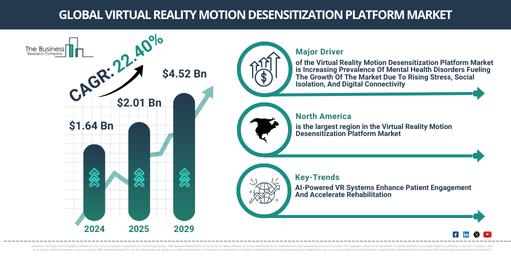
    The virtual reality motion desensitization platform market has seen substantial expansion in recent years. Its valuation is set to increase from $1.64 billion in 2024 to $2.01 billion in 2025, exhibiting a compound annual growth rate (CAGR) of 22.7%. The market’s past growth can be attributed to several factors, including the rising integration of virtual reality in healthcare, an escalating preference for non-pharmacological treatment methods, heightened public understanding of motion sickness disorders, increased capital committed to immersive therapeutic approaches, and a growing necessity for tailored rehabilitation plans.

    The market size for virtual reality motion desensitization platforms is poised for significant expansion in the upcoming years. It is forecast to achieve a valuation of $4.52 billion by 2029, growing at a compound annual growth rate (CAGR) of 22.4%. This anticipated growth during the forecast period is propelled by the increasing adoption of virtual reality-based therapeutic solutions, a rising demand for remote and home-based therapy options, escalating investments in virtual reality healthcare startups, and heightened awareness regarding mental health and motion disorders. Prominent trends for the forecast period include advancements in immersive virtual reality experiences, the integration of AI for personalized therapy, innovation within wearable and haptic devices, a growing uptake of cloud-based virtual reality platforms, and the incorporation of real-time patient monitoring systems.

    Unlock Your Free Sample Report for Exclusive Market Data:

    https://www.thebusinessresearchcompany.com/sample.aspx?id=28356&type=smp

    Which Drivers Are Impacting The Virtual Reality Motion Desensitization Platform Market?

    The escalating occurrence of mental health ailments is projected to fuel the expansion of the virtual reality motion desensitization platform market moving forward. Mental health disorders are conditions that profoundly affect a person’s emotions, thought processes, behavior, and overall psychological state. The increase in these disorders is attributed to heightened stress from modern lifestyles, encompassing work pressures, social isolation, and constant digital connectivity. Virtual reality motion desensitization platforms provide support for mental health disorders by delivering immersive and controlled environments, proving ideal for therapies related to anxiety, phobias, and PTSD. They mitigate psychological distress through gradual exposure and adaptive treatment, leading to improved patient outcomes and engagement. For example, in May 2024, the American Psychiatric Association, a US-based non-profit organization, reported that 43% of adults felt more anxious than they did the prior year, marking an increase from 37% in 2023 and 32% in 2022. Thus, the rising prevalence of mental health disorders is driving the virtual reality motion desensitization platform market.

    How Is The Virtual Reality Motion Desensitization Platform Market Segmented?

    The virtual reality motion desensitization platform market covered in this report is segmented as

    1) By Component: Hardware, Software, Services

    2) By Deployment Mode: On-Premises, Cloud-Based

    3) By Application: Healthcare And Therapy, Gaming And Entertainment, Education And Training, Military And Defense, Other Applications

    4) By End-User: Hospitals And Clinics, Rehabilitation Centers, Academic And Research Institutes, Military Organizations, Other End-Users

    Subsegments:

    1) By Hardware: Head Mounted Display, Sensors, Tracking Devices, Haptic Devices

    2) By Software: Virtual Reality Applications, Simulation Software, Analytics Software, Therapy Management Software

    3) By Services: Consulting Services, Maintenance Services, Training Services, Support Services

    What Key Innovation Trends Are Fueling Advancements In The Virtual Reality Motion Desensitization Platform Market?

    Companies operating in the virtual reality motion desensitization platform market are increasingly focused on developing advanced solutions, such as AI-powered personalized therapy systems. This strategic direction aims to enhance treatment effectiveness, boost patient engagement, and diminish therapeutic barriers and adaptation periods. Artificial intelligence (AI)-powered personalized therapy systems are defined as sophisticated virtual reality platforms that utilize AI to construct customized therapeutic environments and scenarios. These are specifically tailored to meet individual patient needs, thereby optimizing desensitization and rehabilitation outcomes. For example, in September 2024, Interacoustics A/S, a medical equipment manufacturer based in Denmark, introduced its Virtualis balance rehabilitation solutions. The Virtualis system integrates fully immersive virtual reality with dynamic posturography force plates, replicating real-life settings to foster rehabilitation strategies like adaptation, substitution, and habituation. It incorporates AI-driven adaptive modules, such as SkiVR and MotionVR, which automatically adjust training intensity based on patient performance, allowing for precise and motivating balance rehabilitation without the need for constant clinician intervention. Additionally, the system facilitates accurate motion desensitization for vestibular disorders through carefully graded VR exposure.

    Which Major Industry Participants Are Leading The Virtual Reality Motion Desensitization Platform Market Growth?

    Major companies operating in the virtual reality motion desensitization platform market are MindMaze SA, XRHealth Ltd., Bertec Corporation, NeuroSync Inc., Virtual Reality Medical Center Inc., PsyTech VR Inc., C2Care, Virtually Better Inc., Cyclops Medtech Pvt. Ltd., Kinequantum, Neuroequilibrium, Saebo Inc., Kinesix VR, Rey, Rewin Health, and PhysioSensing Vertigo.

    Download The Full Report For Exclusive Market Findings:

    https://www.thebusinessresearchcompany.com/report/virtual-reality-motion-desensitization-platform-global-market-report

    How Is Virtual Reality Motion Desensitization Platform Market Demand Varying Across Different Regions?

    North America was the largest region in the virtual reality motion desensitization platform market in 2024. The regions covered in virtual reality motion desensitization platform report are Asia-Pacific, Western Europe, Eastern Europe, North America, South America, Middle East and Africa.

    Request A Customized Version Of The Virtual Reality Motion Desensitization Platform Market Report:

    https://www.thebusinessresearchcompany.com/customise?id=28356&type=smp

    Browse Through More Reports Similar to the Global Virtual Reality Motion Desensitization Platform Market 2025, By The Business Research Company

    Virtual Reality Software Global Market Report 2025

    https://www.thebusinessresearchcompany.com/report/virtual-reality-software-global-market-report

    Virtual Reality Services Global Market Report 2025

    https://www.thebusinessresearchcompany.com/report/virtual-reality-services-global-market-report

    Virtual Reality Devices Global Market Report 2025

    https://www.thebusinessresearchcompany.com/report/virtual-reality-devices-global-market-report

    Get in touch with us:

    The Business Research Company: https://www.thebusinessresearchcompany.com/

    Americas +1 310-496-7795

    Asia +44 7882 955267 & +91 8897263534

    Europe +44 7882 955267

    Email us at info@tbrc.info

    Follow us on:

    LinkedIn: https://in.linkedin.com/company/the-business-research-company

    YouTube: https://www.youtube.com/channel/UC24_fI0rV8cR5DxlCpgmyFQ

    Global Market Model: https://www.thebusinessresearchcompany.com/global-market-model
  • Global Virtual Reality (VR)-Based Balance Confidence Training Platform Industry Trends: Where the Market Is Headed by 2029

    Global Virtual Reality (VR)-Based Balance Confidence Training Platform Industry Trends: Where the Market Is Headed by 2029

    Unlock Global Insights – Save 20% on Market Reports with Code ONLINE20

    How Much Was The Virtual Reality (VR)-Based Balance Confidence Training Platform Market Worth In 2025, And What Is Its Anticipated Value By 2029?

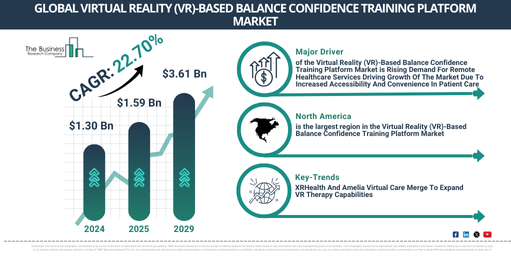
    The virtual reality (VR)-based balance confidence training platform market has experienced significant growth in recent years. This market is expected to expand from $1.30 billion in 2024 to $1.59 billion in 2025, achieving a compound annual growth rate (CAGR) of 23.0%. The historical growth can be attributed to several factors, including the increasing integration of VR in rehabilitation centers, its growing application in post-stroke recovery, the rising demand for mobility solutions for the elderly, heightened awareness of fall prevention programs, and the increasing clinical validation of VR therapies.

    The virtual reality (VR)-based balance confidence training platform market size is projected to experience substantial growth in the upcoming years. It is expected to expand to $3.61 billion by 2029, demonstrating a compound annual growth rate (CAGR) of 22.7%. This anticipated growth during the forecast period is driven by factors such as increasing investment in immersive balance training, the growing adoption of home-based VR therapy, the expanding integration of wearable motion sensors, a rise in collaborations between VR developers and healthcare providers, and a greater emphasis on personalized patient rehabilitation. Notable trends for the forecast period include advancements in motion tracking accuracy, the integration of AI-driven therapy personalization, innovation in gamified rehabilitation modules, the development of lightweight portable VR devices, and progress in real-time patient analytics.

    Unlock Your Free Sample Report for Exclusive Market Data:

    https://www.thebusinessresearchcompany.com/sample.aspx?id=28355&type=smp

    Which Industry Drivers Are Expected To Accelerate The Virtual Reality (VR)-Based Balance Confidence Training Platform Market From 2025 To 2029?

    The expanding need for remote healthcare services is anticipated to fuel the expansion of the virtual reality (VR)-based balance confidence training platform market in the future. Remote healthcare entails providing medical assistance through technology, linking patients with healthcare providers remotely. The escalating requirement for accessible and convenient medical attention, particularly for individuals in isolated or underserved regions, is contributing to the surge in demand for these services. Virtual reality (VR)-based balance confidence training platforms are utilized within remote healthcare to provide engaging rehabilitation and balance exercises to patients in their homes, thereby lessening the necessity for frequent clinic visits. As an illustration, a survey carried out by Rock Health, a US-based health technology company, in February 2023, involving 8,014 participants, revealed that 76% of individuals over the age of 55 had used telemedicine, and 80% of all participants had utilized telemedicine for care at some point in their lives, marking an 8% increase from 72% in 2021. Consequently, the growing demand for remote healthcare services is projected to propel the development of the virtual reality (VR)-based balance confidence training platform market. The increasing healthcare expenditure is anticipated to advance the expansion of the virtual reality (VR)-based balance confidence training platform market moving ahead. Healthcare expenditure refers to the aggregate spending by individuals, governmental bodies, and private entities on medical care, goods, and public health programs aimed at preserving and enhancing well-being. This spending is escalating primarily due to the growing occurrence of chronic illnesses, which necessitate ongoing treatment and continuous medical attention, thereby increasing costs for both patients and healthcare providers. Elevated healthcare spending enables the adoption of VR-based balance confidence training platforms by allocating funds for sophisticated rehabilitation technologies designed to enhance patient recovery. For example, the 2021–2030 National Health Expenditure (NHE) report, released by the Centers for Medicare & Medicaid Services, a US-based federal agency, in March 2022, projects an average annual increase of 5.1% in national health spending between 2021 and 2030, culminating in a sum close to $6.8 trillion. Furthermore, from 2021 to 2030, Medicare outlays are predicted to climb by 7.2% annually, while Medicaid expenditures are expected to increase by 5.6% annually. Consequently, the rising healthcare expenditure is propelling the growth of the virtual reality (VR)-based balance confidence training platform market.

    What Are The Key Segments In The Virtual Reality (VR)-Based Balance Confidence Training Platform Market?

    The virtual reality (VR)-based balance confidence training platform market covered in this report is segmented as

    1) By Component: Hardware, Software, Services

    2) By Deployment Mode: On-Premises, Cloud-Based

    3) By Application: Rehabilitation Centers, Hospitals And Clinics, Home Care Settings, Academic And Research Institutes, Other Applications

    4) By End-User: Adults, Geriatric Population, Athletes, Other End-User

    Subsegment:

    1) By Hardware: Head-Mounted Displays (HMDs), Sensors And Motion Trackers, Balance Boards And Platforms, Virtual Reality (VR) Gloves And Controllers, Cameras And Tracking Systems

    2) By Software: Virtual Reality (VR) Simulation And Training Software, Balance Assessment And Monitoring Software, Rehabilitation And Therapy Software, Data Analytics And Reporting Tool

    3) By Services: Training And Education Services, Installation And Integration Services, Maintenance And Support Services, Consulting Services, Cloud-Based Service Offerings

    Which Ongoing Trends Are Expected To Shape The Virtual Reality (VR)-Based Balance Confidence Training Platform Market Outlook?

    Leading companies within the virtual reality (VR)-based balance confidence training platform market are prioritizing the development of advanced solutions, such as non-tethered virtual reality rehabilitation platforms. This focus is aimed at improving patient mobility, boosting engagement in therapy, and offering more accessible and effective balance confidence training solutions. A non-tethered virtual reality rehabilitation platform is a wireless VR system that enables patients to move freely without being physically connected to a computer or console, facilitating more natural and flexible rehabilitation exercises. For example, in November 2022, Penumbra, Inc., a US-based healthcare company, launched the first hands-free, full-body virtual reality-based offering for rehabilitation by expanding its REAL System platform with the new REAL y-Series. This series incorporates upper and lower body sensors to generate a full-body avatar, providing immersive, non-tethered therapy. The system allows clinicians to customize exercises, monitor real-time movement and patient progress, and individualize therapy sessions, thereby improving engagement and outcomes for patients undergoing physical, occupational, or cognitive rehabilitation. By supporting activities for both the upper and lower body, the system intends to enhance motivation, intensity, and functional recovery across a wide spectrum of conditions and patient abilities.

    Who Are The Prominent Global Companies Shaping The Virtual Reality (VR)-Based Balance Confidence Training Platform Market?

    Major companies operating in the virtual reality (VR)-based balance confidence training platform market are Meta Platforms Inc., Interacoustics, MindMaze SA, Motek Medical, XRHealth, Evolv Rehabilitation Technologies, MindMotion, FYZICAL, Rehabtronics, Virtualis Co, Mieron Inc., Rehab-Robotics Co. Ltd., GaitBetter, Upright VR, Knoxlabs, Teslasuit, Neuro Rehab VR, SyncVR Medical, Immersive Reha, and WEART.

    Download The Full Report For Exclusive Market Findings:

    https://www.thebusinessresearchcompany.com/report/virtual-reality-vr-based-balance-confidence-training-platform-global-market-report

    Which Geographies Are Emerging As Strong Markets For The Virtual Reality (VR)-Based Balance Confidence Training Platform Industry?

    North America was the largest region in the virtual reality (VR)-based balance confidence training platform market in 2024. Asia-Pacific is expected to be the fastest-growing region in the forecast period. The regions covered in virtual reality (VR)-based balance confidence training platform report are Asia-Pacific, Western Europe, Eastern Europe, North America, South America, Middle East and Africa.

    Request A Customized Version Of The Virtual Reality (VR)-Based Balance Confidence Training Platform Market Report:

    https://www.thebusinessresearchcompany.com/customise?id=28355&type=smp

    Browse Through More Reports Similar to the Global Virtual Reality (VR)-Based Balance Confidence Training Platform Market 2025, By The Business Research Company

    Virtual Reality Vr Fitness Game Global Market Report 2025

    https://www.thebusinessresearchcompany.com/report/virtual-reality-vr-fitness-game-global-market-report

    Online Virtual Fitness Global Market Report 2025

    https://www.thebusinessresearchcompany.com/report/online-virtual-fitness-global-market-report

    Virtual Rehabilitation Global Market Report 2025

    https://www.thebusinessresearchcompany.com/report/virtual-rehabilitation-global-market-report

    Get in touch with us:

    The Business Research Company: https://www.thebusinessresearchcompany.com/

    Americas +1 310-496-7795

    Asia +44 7882 955267 & +91 8897263534

    Europe +44 7882 955267

    Email us at info@tbrc.info

    Follow us on:

    LinkedIn: https://in.linkedin.com/company/the-business-research-company

    YouTube: https://www.youtube.com/channel/UC24_fI0rV8cR5DxlCpgmyFQ

    Global Market Model: https://www.thebusinessresearchcompany.com/global-market-model
  • Drug Addiction Treatment Market Forecast: What to Expect by 2029

    Drug Addiction Treatment Market Forecast: What to Expect by 2029

    Unlock Global Insights – Save 20% on Market Reports with Code ONLINE20

    What Are The Forecasted Market Size Estimates For The Drug Addiction Treatment Market Between 2025 And 2029?

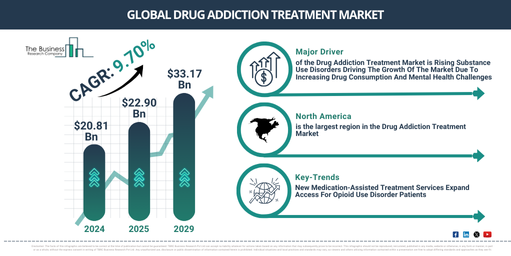
    The drug addiction treatment market size has recently seen substantial growth. This market is projected to expand from $20.81 billion in 2024 to $22.90 billion in 2025, exhibiting a compound annual growth rate (CAGR) of 10.1%. During previous periods, this expansion was driven by factors such as the increasing prevalence of substance use disorders, a heightened demand for effective and accessible treatment options, a rise in the incidence of drug dependency, growing awareness surrounding addiction recovery, and the broader integration of digital and personalized treatment solutions.

    The drug addiction treatment market is projected to experience substantial expansion in the coming years. It is anticipated to reach $33.17 billion by 2029, demonstrating a compound annual growth rate (CAGR) of 9.7%. This growth throughout the forecast period stems from factors such as the increasing uptake of medication-assisted treatments and behavioral therapies, broader availability of detoxification and counseling options, heightened understanding of holistic addiction recovery strategies, greater public awareness concerning addiction recovery, and fortified governmental efforts backing treatment programs. Key trends during this period are expected to encompass innovations in substance use disorder treatments, the introduction of medication regimens with lower dosages, integrated combination therapies merging behavioral and pharmacological methods, sophisticated treatment delivery techniques, and the creation of non-addictive substitute solutions.

    Unlock Your Free Sample Report for Exclusive Market Data:

    https://www.thebusinessresearchcompany.com/sample.aspx?id=28209&type=smp

    Which Drivers Are Impacting The Drug Addiction Treatment Market?

    The drug addiction treatment market is projected to grow due to the increasing incidence of substance use disorders. These disorders are chronic conditions marked by the compulsive consumption of drugs or alcohol, even when it leads to detrimental consequences for an individual’s mental, physical, and social health. The rise in substance use disorders is attributed to elevated stress and mental health issues, alongside modern lifestyles characterized by societal pressures, economic uncertainties, and easy access to addictive substances. Drug addiction treatment addresses substance use disorders by providing essential medical and psychological support to reduce dependence, improve overall well-being, and aid long-term recovery through structured rehabilitation. For example, in December 2023, the Office for Health Improvement & Disparities (OHID), a UK-based public health agency, stated that between April 2022 and March 2023, a total of 290,635 adults engaged with drug and alcohol services, which was a minor increase from 289,215 in the previous year. Therefore, the expanding prevalence of substance use disorders is anticipated to fuel the growth of the drug addiction treatment market.

    How Is The Drug Addiction Treatment Market Classified Into Different Segments?

    The drug addiction treatment market covered in this report is segmented as

    1) By Type Of Drug Addiction: Opioid Addiction, Benzodiazepine Addiction, Barbiturate Addiction, Other Types

    2) By Treatment Type: Inpatient Rehabilitation, Outpatient Rehabilitation, Detoxification Services, Aftercare And Continuity Programs, Medication-Assisted Treatment (MAT)

    3) By Route Of Administration: Oral, Parenteral, Other Route Of Administrations

    4) By Distribution Channel: Hospital Pharmacy, Retail Pharmacy, Online Pharmacies, Other Distribution Channel

    5) By End-User: Rehabilitation Centers, Hospitals, Clinics, Other End Users

    Subsegment:

    1) By Opioid Addiction: Prescription Opioid Addiction, Synthetic Opioid Addiction, Heroin Addiction

    2) By Benzodiazepine Addiction: Alprazolam Addiction, Diazepam Addiction, Lorazepam Addiction, Clonazepam Addiction

    3) By Barbiturate Addiction: Amobarbital Addiction, Pentobarbital Addiction, Phenobarbital Addiction, Secobarbital Addiction

    4) By Other Types: Cannabis Addiction, Cocaine Addiction, Hallucinogen Addiction, Inhalant Addiction, Stimulant Addiction

    What Are The Major Trends Driving The Growth Of The Drug Addiction Treatment Market?

    Key companies within the drug addiction treatment sector are increasingly prioritizing technological advancements, such as telehealth appointments, to improve accessibility, boost patient engagement, and offer convenient, remote care for those dealing with substance use disorders. Telehealth appointments encompass medical consultations and healthcare services conducted from a distance using digital communication technologies. For example, in February 2023, Jovive Health, a multispecialty healthcare provider based in the US, introduced Medication-Assisted Treatment (MAT) services for patients with Opioid Use Disorder (OUD) across its facilities in California, Nevada, and Illinois. This program utilizes FDA-approved medications like buprenorphine to lessen withdrawal symptoms and cravings, thereby assisting patients in safely stopping opioid use. Jovive’s initiative includes features such as personalized multi-appointment treatment plans, easy online booking, walk-in consultations, extended clinic hours, and telehealth appointments, collectively making OUD treatment more accessible and patient-focused.

    Who Are The Core Companies Influencing The Drug Addiction Treatment Market Landscape?

    Major companies operating in the drug addiction treatment market are Novartis AG, Dr. Reddy’s Laboratories Ltd., Acadia Healthcare, Hikma Pharmaceuticals plc, Alkermes plc, Indivior PLC, Emergent BioSolutions Inc., Workit Health, Rusan Pharma Pvt. Ltd., Boulder Care, Bicycle Health, Eleanor Health, Affect Therapeutics, Forge Health, Orexo AB, BioCorRx Inc., Kinoxis Therapeutics Pty. Ltd., Addinex Technologies Inc., PursueCare, Aliya Health Group.

    Download The Full Report For Exclusive Market Findings:

    https://www.thebusinessresearchcompany.com/report/drug-addiction-treatment-global-market-report

    What Are The Key Regional Factors Influencing The Drug Addiction Treatment Market Growth?

    North America was the largest region in the drug addiction treatment market in 2024. Asia-Pacific is expected to be the fastest-growing region in the forecast period. The regions covered in drug addiction treatment report are Asia-Pacific, Western Europe, Eastern Europe, North America, South America, Middle East and Africa.

    Request A Customized Version Of The Drug Addiction Treatment Market Report:

    https://www.thebusinessresearchcompany.com/customise?id=28209&type=smp

    Browse Through More Reports Similar to the Global Drug Addiction Treatment Market 2025, By The Business Research Company

    Nicotine Addiction Treatment Global Market Report 2025

    https://www.thebusinessresearchcompany.com/report/nicotine-addiction-treatment-global-market-report

    Substance Abuse And Addiction Treatment Global Market Report 2025

    https://www.thebusinessresearchcompany.com/report/substance-abuse-and-addiction-treatment-global-market-report

    Addictions Therapeutics Global Market Report 2025

    https://www.thebusinessresearchcompany.com/report/addictions-therapeutics-global-market-report

    Get in touch with us:

    The Business Research Company: https://www.thebusinessresearchcompany.com/

    Americas +1 310-496-7795

    Asia +44 7882 955267 & +91 8897263534

    Europe +44 7882 955267

    Email us at info@tbrc.info

    Follow us on:

    LinkedIn: https://in.linkedin.com/company/the-business-research-company

    YouTube: https://www.youtube.com/channel/UC24_fI0rV8cR5DxlCpgmyFQ

    Global Market Model: https://www.thebusinessresearchcompany.com/global-market-model