Blog

  • Onchocerciasis Treatment Industry Insights: Market Forecast to 2029

    Onchocerciasis Treatment Industry Insights: Market Forecast to 2029

    Unlock Global Insights – Save 20% on Market Reports with Code ONLINE20

    How Is The Onchocerciasis Treatment Market Size Likely To Evolve From 2025 Through 2034?

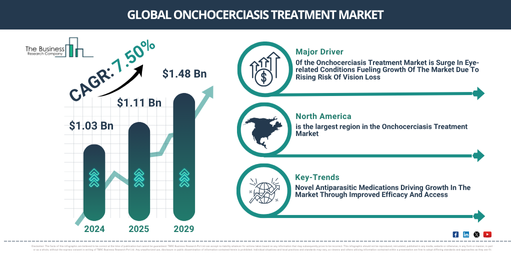
    The onchocerciasis treatment market size has shown substantial growth recently. It is forecast to increase from $1.03 billion in 2024 to $1.11 billion in 2025, achieving a compound annual growth rate (CAGR) of 7.8%. The expansion observed historically can be linked to a rise in individuals experiencing eye-related conditions, an uptick in parasitic infections, an increase in the availability of targeted treatment centers, a surge in awareness campaigns, and an expanding older population.

    The onchocerciasis treatment market is projected to experience substantial expansion in the coming years. It is forecast to reach $1.48 billion by 2029, demonstrating a compound annual growth rate (CAGR) of 7.5%. This anticipated growth is driven by factors such as an increasing incidence in affected areas, a greater need for surgical interventions, improvements in healthcare facilities, a rising occurrence of long-term illnesses, and increased spending in the healthcare sector. Key trends during this period are expected to encompass the adoption of single-dose treatments, progress in macrocyclic lactone formulations, the introduction of therapies aimed at Wolbachia, the incorporation of artificial intelligence (AI) into drug development, and the creation of treatments specifically for children.

    Unlock Your Free Sample Report for Exclusive Market Data:

    https://www.thebusinessresearchcompany.com/sample.aspx?id=24634&type=smp

    Which Drivers Are Shaping The Onchocerciasis Treatment Industry’s Market Share?

    An increase in individuals experiencing eye-related problems is anticipated to fuel the expansion of the onchocerciasis treatment market in the future. These problems encompass various conditions impacting sight and eye well-being, such as infections, injuries, and persistent diseases like glaucoma or cataracts. The rise in patients with eye conditions primarily stems from increased screen usage and extended contact with digital screens. Onchocerciasis therapy assists in averting and handling vision impairment and blindness in affected individuals by eradicating the parasitic infection responsible for inflammation and harm to eye tissues. For example, as reported in May 2024 by the Centers for Disease Control and Prevention (CDC), a US-based public health agency, approximately 20.5 million Americans aged over 40 suffer from cataracts in at least one eye, representing 17.2% of that demographic. Furthermore, projections indicate that close to 30 million individuals will develop cataracts by 2028. Consequently, the growing occurrence of eye-related ailments is stimulating the expansion of the onchocerciasis treatment market.

    What Are The Major Segments Identified In The Onchocerciasis Treatment Market?

    The onchocerciasis treatment market covered in this report is segmented –

    1) By Drug Type: Ivermectin, Doxycycline, Albendazole, Moxidectin

    2) By Treatment Strategy: Mass Drug Administration (MDA), Targeted Treatment

    3) By Mode Of Administration: Oral, Injectables, Topical

    4) By Distribution Channel: Hospital Pharmacies, Retail Pharmacies, Online Pharmacies

    5) By End User: Hospitals And Clinics, Home Care Settings, Government And Non-Governmental Programs

    Subsegments:

    1) By Ivermectin: Oral Tablets, Community-Based Mass Drug Administration (MDA) Kits, Fixed-Dose Combination Therapies, Pediatric Formulations

    2) By Doxycycline: Oral Capsules, Extended-Release Tablets, Combination With Anti-Wolbachia Therapy, Hospital-Based Prescription Treatments

    3) By Albendazole: Single-Dose Oral Tablets, Combination Therapy With Ivermectin, Government-Supplied Preventive Chemotherapy Packages, Over-The-Counter (OTC) Formulations In Endemic Areas

    4) By Moxidectin: Oral Tablets, Long-Acting Formulations, Adult-Only Dosing Regimens, Clinical Trial-Based Access Programs

    What Trends Are Redefining The Onchocerciasis Treatment Market Dynamics?

    Major companies operating in the onchocerciasis treatment market are concentrating on developing new antiparasitic medications to enhance treatment effectiveness and decrease its duration. Antiparasitic medications are drugs engineered to eliminate or suppress parasites, such as worms and protozoa, which cause human infections. For example, in December 2024, Medicines Development for Global Health (MDGH), an Australia-based non-profit biopharmaceutical company, obtained approval from the Ghana Food and Drugs Authority (FDA) for Moxidectin 2 mg oral tablets to treat river blindness in individuals aged 4 years and older. This approval empowers Ghana to implement community-based mass drug administration programs using moxidectin, which provides superior efficacy and more enduring effects compared to ivermectin. With this approval, MDGH aims to broaden access to an effective new onchocerciasis treatment, facilitating large-scale community initiatives in endemic regions.

    Which Key Players Are Driving Competition In The Onchocerciasis Treatment Market?

    Major companies operating in the onchocerciasis treatment market are Merck & Co. Inc., Teva Pharmaceutical Industries Limited, Hetero Labs Limited, Sun Pharmaceutical Industries Limited, Intas Pharmaceuticals Limited, Dr. Reddy’s Laboratories Inc., Cipla Limited, Endo Inc., Lupin Limited, Instituto de Tecnologia em Imunobiológicos Bio-Manguinhos – Fundação Oswaldo Cruz (Fiocruz), AMGIS Lifescience Ltd., Drugs for Neglected Diseases initiative (DNDi), Rakshit Drugs Pvt. Ltd., Hangzhou Longshine Bio-Tech Co. Ltd., OREX Pharma Private Limited, Angle Bio Pharma Pvt. Ltd., Senores Pharmaceuticals Inc., Avenacy LLC, Dolphin Pharma, Cerata Pharmaceuticals Inc.

    Download The Full Report For Exclusive Market Findings:

    https://www.thebusinessresearchcompany.com/report/onchocerciasis-treatment-global-market-report

    What Regional Growth Trends Are Shaping The Onchocerciasis Treatment Market Outlook?

    North America was the largest region in the onchocerciasis treatment market in 2024. Asia-Pacific is expected to be the fastest-growing region in the forecast period. The regions covered in the onchocerciasis treatment market report are Asia-Pacific, Western Europe, Eastern Europe, North America, South America, Middle East, Africa.

    Request A Customized Version Of The Onchocerciasis Treatment Market Report:

    https://www.thebusinessresearchcompany.com/customise?id=24634&type=smp

    Browse Through More Reports Similar to the Global Onchocerciasis Treatment Market 2025, By The Business Research Company

    Oncology Drugs Global Market Report 2025

    https://www.thebusinessresearchcompany.com/report/oncology-drugs-global-market-report

    Oncology Companion Diagnostics Global Market Report 2025

    https://www.thebusinessresearchcompany.com/report/oncology-companion-diagnostics-global-market-report

    Oncologists Global Market Report 2025

    https://www.thebusinessresearchcompany.com/report/oncologists-global-market-report

    Get in touch with us:

    The Business Research Company: https://www.thebusinessresearchcompany.com/

    Americas +1 310-496-7795

    Asia +44 7882 955267 & +91 8897263534

    Europe +44 7882 955267

    Email us at info@tbrc.info

    Follow us on:

    LinkedIn: https://in.linkedin.com/company/the-business-research-company

    YouTube: https://www.youtube.com/channel/UC24_fI0rV8cR5DxlCpgmyFQ

    Global Market Model: https://www.thebusinessresearchcompany.com/global-market-model
  • Global Implantable Medical Devices Industry Trends: Where the Market Is Headed by 2029

    Global Implantable Medical Devices Industry Trends: Where the Market Is Headed by 2029

    Unlock Global Insights – Save 20% on Market Reports with Code ONLINE20

    How Much Was The Implantable Medical Devices Market Worth In 2025, And What Is Its Anticipated Value By 2029?

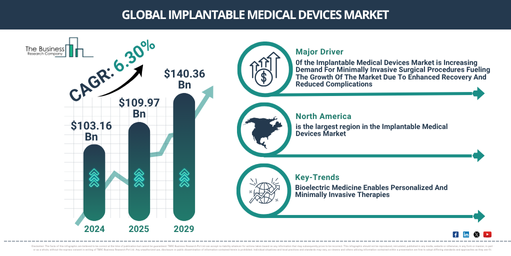
    The implantable medical devices market size has demonstrated robust growth in recent years. This market is set to expand from $103.16 billion in 2024 to $109.97 billion in 2025, exhibiting a compound annual growth rate (CAGR) of 6.6%. Historically, this expansion has been fueled by factors including the increasing prevalence of chronic diseases, a burgeoning aging population, a rising demand for minimally invasive surgeries, the extension of healthcare infrastructure in developing regions, and increased healthcare expenditure.

    The implantable medical devices market is projected to experience substantial expansion in the coming years. This market is set to reach $140.36 billion by 2029, demonstrating a compound annual growth rate (CAGR) of 6.3%. This anticipated growth during the forecast period is driven by factors such as the increasing prevalence of lifestyle-associated conditions, a heightened need for customized treatment options, the growth of outpatient surgical interventions, and the broader adoption of biocompatible materials. Key trends anticipated for this period encompass progress in implantable device technologies, extensive research and development efforts in bioengineered implants, the emergence of smart and interconnected implants, breakthroughs in miniaturized electronics specifically for implants, and an increasing emphasis on 3D printing and bespoke implant designs.

    Unlock Your Free Sample Report for Exclusive Market Data:

    https://www.thebusinessresearchcompany.com/sample.aspx?id=24569&type=smp

    Which Drivers Are Supporting Growth Of The Implantable Medical Devices Market?

    The rising demand for minimally invasive surgical procedures is anticipated to fuel the expansion of the implantable medical devices market. Minimally invasive procedures are medical interventions performed through small incisions or openings, effectively lessening patient trauma and shortening recovery periods. The increasing preference for these procedures stems from their benefits, including shorter recovery times, reduced risks of complications, less pain, and smaller scars, making them highly attractive to patients seeking quicker and safer treatment alternatives. Implantable medical devices augment minimally invasive surgical procedures by facilitating targeted treatment delivery and continuous monitoring. They aid in quicker recovery, decrease the likelihood of complications, and enhance long-term patient outcomes through personalized, precise interventions. For instance, in November 2024, according to the American Society of Plastic Surgeons, a US-based non-profit organization, the total number of cosmetic minimally invasive procedures reached 25,442,640 in 2023, marking a 7% increase from 23,672,269 in 2022. Consequently, the escalating demand for minimally invasive surgical procedures propels the growth of the implantable medical devices market.

    What Are The Key Segments In The Implantable Medical Devices Market?

    The implantable medical devices market covered in this report is segmented –

    1) By Product Type: Cardiovascular Implants, Orthopedic Implants, Ophthalmology Implants, Dental Implants, Cochlear Implants, Microchip Implants, Other Product Types

    2) By Biomaterial: Ceramic, Metallic, Polymers, Natural

    3) By End Use: Hospitals, Ambulatory Surgical Centers, Multi-Specialty Centers, Clinics, Other End Uses

    Subsegments:

    1) By Cardiovascular Implants: Pacemakers, Implantable Cardioverter Defibrillators, Stents, Heart Valves, Cardiac Resynchronization Therapy Devices

    2) By Orthopedic Implants: Hip Implants, Knee Implants, Spinal Implants, Shoulder Implants, Trauma Implants

    3) By Ophthalmology Implants: Intraocular Lenses, Glaucoma Drainage Implants, Corneal Implants, Retinal Implants

    4) By Dental Implants: Endosteal Implants, Subperiosteal Implants, Zygomatic Implants, Mini Dental Implants

    5) By Cochlear Implants: Unilateral Cochlear Implants, Bilateral Cochlear Implants

    6) By Microchip Implants: Radiofrequency Identification Implants, Biosensor Microchips, Neural Interface Microchips

    7) By Other Product Types: Neurostimulators, Contraceptive Implants, Drug Delivery Implants, Breast Implants, Penile Implants

    What Trends Are Redefining The Implantable Medical Devices Market Dynamics?

    Key players in the implantable medical devices market are concentrating on developing innovative products and securing necessary approvals, such as for bioelectric medicine, to boost treatment effectiveness, lessen adverse effects, and provide customized, minimally invasive therapeutic approaches. Bioelectric medicine involves employing electrical signals to diagnose, treat, or stimulate the nervous system to improve health and manage various illnesses. For example, in July 2023, Boston Scientific Corporation, a US-based biotechnology company, gained U.S. Food and Drug Administration (FDA) approval for its Vercise Neural Navigator 5 Software. This software, when utilized with Vercise Genus deep brain stimulation (DBS) systems, delivers straightforward and actionable data to clinicians, allowing for efficient programming in addressing Parkinson’s disease or essential tremor. It also offers increased programming flexibility, enabling personalized treatment plans that can be adapted to individual patient symptoms and needs.

    Who Are The Primary Competitors In The Global Implantable Medical Devices Market?

    Major companies operating in the implantable medical devices market are Cardinal Health Inc., Johnson & Johnson, Abbott Laboratories, Medtronic plc, Koninklijke Philips N.V., Stryker Corporation, Boston Scientific Corporation, Henry Schein Inc., Alcon Inc., Zimmer Biomet Holdings Inc., Terumo Corporation, Terumo Medical Corporation, Smith & Nephew plc, W. L. Gore & Associates Inc., Edwards Lifesciences Corporation, Dentsply Sirona Inc., Demant A/S, Institut Straumann AG, Biotronik SE & Co. KG, Integra LifeSciences Holdings Corporation, Conmed Corporation, Globus Medical Inc., LivaNova Public Limited Company, MicroPort Scientific Corporation, B. Braun Melsungen Aktiengesellschaft

    Download The Full Report For Exclusive Market Findings:

    https://www.thebusinessresearchcompany.com/report/implantable-medical-devices-global-market-report

    What Regional Growth Trends Are Shaping The Implantable Medical Devices Market Outlook?

    North America was the largest region in the implantable medical devices market in 2024. Asia-Pacific is expected to be the fastest-growing region in the forecast period. The regions covered in the implantable medical devices market report are Asia-Pacific, Western Europe, Eastern Europe, North America, South America, Middle East, Africa.

    Request A Customized Version Of The Implantable Medical Devices Market Report:

    https://www.thebusinessresearchcompany.com/customise?id=24569&type=smp

    Browse Through More Reports Similar to the Global Implantable Medical Devices Market 2025, By The Business Research Company

    Active Implantable Medical Devices Global Market Report 2025

    https://www.thebusinessresearchcompany.com/report/active-implantable-medical-devices-global-market-report

    Implantable Drug Delivery Devices Global Market Report 2025

    https://www.thebusinessresearchcompany.com/report/implantable-drug-delivery-devices-global-market-report

    Microelectronic Medical Implants Global Market Report 2025

    https://www.thebusinessresearchcompany.com/report/microelectronic-medical-implants-global-market-report

    Get in touch with us:

    The Business Research Company: https://www.thebusinessresearchcompany.com/

    Americas +1 310-496-7795

    Asia +44 7882 955267 & +91 8897263534

    Europe +44 7882 955267

    Email us at info@tbrc.info

    Follow us on:

    LinkedIn: https://in.linkedin.com/company/the-business-research-company

    YouTube: https://www.youtube.com/channel/UC24_fI0rV8cR5DxlCpgmyFQ

    Global Market Model: https://www.thebusinessresearchcompany.com/global-market-model
  • Immunoglobulin Fusion Protein Industry Forecast to Hit $76.89 Billion by 2029 With a Strong 13.7% CAGR

    Immunoglobulin Fusion Protein Industry Forecast to Hit $76.89 Billion by 2029 With a Strong 13.7% CAGR

    Unlock Global Insights – Save 20% on Market Reports with Code ONLINE20

    What Is The Future Market Size Estimation For The Immunoglobulin Fusion Protein Market Covering 2025–2034?

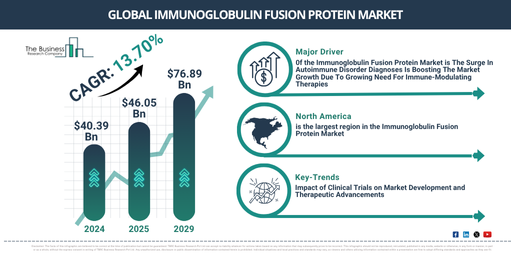
    The immunoglobulin fusion protein market has witnessed substantial growth in recent years. It is anticipated to expand from $40.39 billion in 2024 to $46.05 billion in 2025, progressing at a compound annual growth rate (CAGR) of 14.0%. This historical growth can be attributed to several factors including the rising occurrence of autoimmune diseases, increased utilization of biologics, an expanding need for targeted therapies, enhanced diagnostic abilities, and a surge in investment in biologics research and development.

    The immunoglobulin fusion protein market size is projected to experience substantial expansion over the coming years. This market is set to reach $76.89 billion by 2029, demonstrating a compound annual growth rate (CAGR) of 13.7%. This anticipated growth during the forecast period is driven by factors such as an increasing geriatric population, the broadening of clinical trials for fusion proteins, an escalating demand for personalized medicine, favorable regulatory support for orphan drugs, and a rise in home-based immunotherapy treatments. Key developments expected within this period involve a move towards subcutaneous formulations, the incorporation of ai in protein design, the creation of bispecific fusion proteins, collaborations between pharma and biotech firms, and progress in protein engineering.

    Unlock Your Free Sample Report for Exclusive Market Data:

    https://www.thebusinessresearchcompany.com/sample.aspx?id=24568&type=smp

    Which Drivers Are Shaping The Immunoglobulin Fusion Protein Industry’s Market Share?

    The immunoglobulin fusion protein market is anticipated to experience growth in the future due to the increasing prevalence of autoimmune disorders. These disorders are conditions where the body’s immune system mistakenly attacks its own healthy cells and tissues. The rising incidence of autoimmune disorders primarily results from a combination of genetic predisposition and environmental factors; inherited genes increase an individual’s susceptibility, while triggers like infections or lifestyle choices contribute to the development of these conditions. Immunoglobulin fusion protein assists in managing autoimmune disorders by modulating the immune response to reduce inflammation and prevent the immune system from targeting the body’s own tissues. For instance, in November 2024, according to Versorgungsatlas.de, a Germany-based organization, in 2022, among 73,241,305 insured individuals, 6,304,340 were diagnosed with at least one autoimmune disease, yielding a raw prevalence rate of 8.61%. Therefore, the increasing prevalence of autoimmune disorders is a key driver for the expansion of the immunoglobulin fusion protein market.

    What Are The Leading Segments Analyzed In The Immunoglobulin Fusion Protein Market?

    The immunoglobulin fusion protein market covered in this report is segmented –

    1) By Type: Monoclonal Antibodies, Polyclonal Antibodies, Bispecific Antibodies, Recombinant Antibodies

    2) By Drug Class: Immunosuppressive Drugs, Immunostimulatory Drugs

    3) By Mode of Administration: Intravenous, Subcutaneous, Intramuscular

    4) By Application: Autoimmune Disease, Eye Diseases, Diabetes, Hemophilia

    5)By End User: Hospitals, Clinics, Research Institutes

    Subsegments:

    1) By Monoclonal Antibodies: Human Monoclonal Antibodies, Humanized Monoclonal Antibodies, Chimeric Monoclonal Antibodies, Murine Monoclonal Antibodies

    2) By Polyclonal Antibodies: Animal-Derived Polyclonal Antibodies, Human-Derived Polyclonal Antibodies, Recombinant Polyclonal Antibodies

    3) By Bispecific Antibodies: Tandem Single-Chain Variable Fragment, Dual-Variable Domain Antibodies, Bispecific T-Cell Engagers (BiTEs), Dual-Affinity Re-Targeting Antibodies

    4) By Recombinant Antibodies: Fragment Antibodies, Full-Length Recombinant Antibodies, Antibody-Drug Conjugates (ADCs), Engineered Antibody Domains

    How Are Emerging Market Trends Shaping The Immunoglobulin Fusion Protein Industry Landscape?

    Leading companies in the immunoglobulin fusion protein market are concentrating on conducting clinical trials to develop innovative products, such as bispecific antibody fusion protein, aiming to enhance therapeutic efficacy and address multiple disease pathways. A bispecific antibody fusion protein is defined as a genetically engineered molecule capable of simultaneously binding to two distinct targets, thereby contributing to improved targeted therapy by either bringing immune cells closer to tumor cells or blocking multiple disease pathways concurrently. For instance, in February 2025, Innovent Biologics, Inc., a China-based biotechnology company, secured its second Fast Track Designation (FTD) from the U.S. Food and Drug Administration (FDA) for IBI343, a bispecific antibody fusion protein aimed at advanced solid tumors. IBI343 is engineered to simultaneously interact with tumor-associated antigens and immune effector cells, consequently boosting the precision and potency of anti-tumor immune responses. This designation is expected to speed up the clinical development and regulatory review of IBI343, highlighting its potential to meet significant unmet medical needs in oncology.

    Which Key Market Players Are Investing In Expansion And Innovation Of Immunoglobulin Fusion Protein Market?

    Major companies operating in the immunoglobulin fusion protein market are Pfizer Inc., AbbVie Inc., Bayer Aktiengesellschaft, Sanofi S.A., Bristol-Myers Squibb Company, Gilead Sciences Inc., Eli Lilly and Company, Amgen Inc., Teva Pharmaceutical Industries Limited, Regeneron Pharmaceuticals Inc., Sobi, 3SBio Inc., Innovent Biologics Inc., Chengdu Kanghong Pharmaceutical Group Co. Ltd., Samsung Bioepis Co. Ltd., Proteintech Group Inc., KRISHGEN Biosystems, Abnova (Taiwan) Corporation, Celgen Biopharma Inc., Chimerigen Laboratories LLC

    Download The Full Report For Exclusive Market Findings:

    https://www.thebusinessresearchcompany.com/report/immunoglobulin-fusion-protein-global-market-report

    Which Regional Markets Are Contributing Most To The Immunoglobulin Fusion Protein Industry Expansion?

    North America was the largest region in the immunoglobulin fusion proteins market in 2024. Asia-Pacific is expected to be the fastest-growing region in the forecast period. The regions covered in the immunoglobulin fusion protein market report are Asia-Pacific, Western Europe, Eastern Europe, North America, South America, Middle East, Africa.

    Request A Customized Version Of The Immunoglobulin Fusion Protein Market Report:

    https://www.thebusinessresearchcompany.com/customise?id=24568&type=smp

    Browse Through More Reports Similar to the Global Immunoglobulin Fusion Protein Market 2025, By The Business Research Company

    Immunoglobulins Global Market Report 2025

    https://www.thebusinessresearchcompany.com/report/immunoglobulins-global-market-report

    Monoclonal Antibodies Global Market Report 2025

    https://www.thebusinessresearchcompany.com/report/monoclonal-antibodies-global-market-report

    Recombinant Proteins Global Market Report 2025

    https://www.thebusinessresearchcompany.com/report/recombinant-proteins-global-market-report

    Get in touch with us:

    The Business Research Company: https://www.thebusinessresearchcompany.com/

    Americas +1 310-496-7795

    Asia +44 7882 955267 & +91 8897263534

    Europe +44 7882 955267

    Email us at info@tbrc.info

    Follow us on:

    LinkedIn: https://in.linkedin.com/company/the-business-research-company

    YouTube: https://www.youtube.com/channel/UC24_fI0rV8cR5DxlCpgmyFQ

    Global Market Model: https://www.thebusinessresearchcompany.com/global-market-model
  • Global Meibomian Gland Dysfunction Market 2025–2029: Competitive Insights and Opportunities

    Global Meibomian Gland Dysfunction Market 2025–2029: Competitive Insights and Opportunities

    Unlock Global Insights – Save 20% on Market Reports with Code ONLINE20

    What Is The Global Market Value Of The Meibomian Gland Dysfunction Industry In 2025?

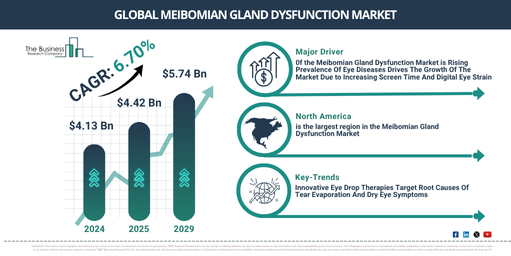
    The meibomian gland dysfunction market size has seen significant growth in recent years. It is projected to expand from $4.13 billion in 2024 to $4.42 billion in 2025, achieving a compound annual growth rate (CAGR) of 7.0%. This historical growth can be attributed to increasing awareness regarding dry eye disorders, a growing aging population, rising screen time among all age demographics, an increasing prevalence of lifestyle-related eye conditions, and a higher incidence of allergic and environmental irritants.

    The meibomian gland dysfunction market is anticipated to experience substantial growth in the coming years, with its size projected to reach $5.74 billion by 2029, growing at a compound annual growth rate (CAGR) of 6.7%. This expansion during the forecast period is driven by several factors, including the increased adoption of digital lifestyles following the pandemic, a rising incidence of contact lens-related complications, a growing inclination towards minimally invasive eye procedures, the wider embrace of thermal pulsation therapies, and an elevated focus on personalized eye care. Key trends for the forecast period include technological advancements in meibography imaging, the development of non-invasive monitoring tools, the integration of ophthalmic and dermatological care, the incorporation of machine learning in gland assessment, and innovations in lipid-based eye drop formulations.

    Unlock Your Free Sample Report for Exclusive Market Data:

    https://www.thebusinessresearchcompany.com/sample.aspx?id=24602&type=smp

    Which Drivers Are Supporting Growth Of The Meibomian Gland Dysfunction Market?

    An increase in eye disease occurrences is anticipated to fuel the expansion of the meibomian gland dysfunction (MGD) market in the future. Eye disease encompasses any ailment or condition impacting the eye or visual system, leading to deterioration in its structure, function, or general well-being. The surge in eye disease cases stems from extended screen usage and digital eye strain, manifesting as symptoms like dryness, blurred vision, and eventual retinal damage resulting from prolonged blue light exposure. Meibomian gland dysfunction exacerbates eye disease by destabilizing the tear film, leading to inflammation, dryness, and an elevated susceptibility to ocular surface disorders. As an illustration, a report released by the Association of Optometrists, a UK-based representative membership organization, in September 2023, indicated that England registered 22,552 new certifications for vision impairment in 2022. Among these, 1,344 instances were due to diabetic eye disease, 3,614 were connected to glaucoma, and 10,865 related to age-related macular degeneration. Consequently, the increasing prevalence of eye disease is driving the growth of the meibomian gland dysfunction (MGD) market.

    What Are The Different Segment Classifications Within The Meibomian Gland Dysfunction Market?

    The meibomian gland dysfunction market covered in this report is segmented –

    1) By Treatment Type: Medication, Surgery, Lifestyle Modifications

    2) By Dysfunction Type: Obstructive Meibomian Gland Dysfunction, Evaporative Meibomian Gland Dysfunction, Mixed Meibomian Gland Dysfunction

    3) By Disease Severity: Mild Meibomian Gland Dysfunction, Moderate Meibomian Gland Dysfunction, Severe Meibomian Gland Dysfunction

    4) By Distribution channel: Hospitals And Clinics, Pharmacies, Online Retailers

    5) By End-User: Hospitals, Ophthalmology Clinics, Home Care Settings

    Subsegments

    1) By Medication: Topical Antibiotics, Topical Steroids, Lubricating Eye Drops, Topical Cyclosporine, Omega-3 Supplements

    2) By Surgery: Meibomian Gland Probing, Intense Pulsed Light (IPL) Therapy, Thermal Pulsation Treatment, BlephEx

    3) By Lifestyle Modifications: Warm Compress Therapy, Lid Hygiene, Dietary Adjustments, Blinking Exercises

    What Long-Term Trends Will Shape The Future Growth Of The Meibomian Gland Dysfunction Industry?

    Leading companies in the meibomian gland dysfunction market are concentrating on developing advanced treatments, such as prescription eye drop solutions, to lessen tear evaporation and ease dry eye symptoms. Prescription eye drop solutions, including anti-inflammatory or antibiotic varieties, assist in managing meibomian gland dysfunction by reducing inflammation, clearing gland obstructions, and improving tear film stability. For example, in May 2023, Bausch + Lomb Corporation, a Canada-based eye health company, unveiled MIEBO (perfluorohexyloctane ophthalmic solution), a pioneering prescription eye drop created for addressing dry eye disease (DED). As the initial and sole prescription eye drop that directly targets tear evaporation, the main cause of DED, MIEBO creates a durable, protective layer over the eye’s surface. Its innovative water-free composition offers effective and prolonged relief, particularly for patients experiencing dry eye symptoms related to Meibomian gland dysfunction.

    Which Global Market Leaders Are Shaping The Future Of The Meibomian Gland Dysfunction Sector?

    Major companies operating in the meibomian gland dysfunction market are Johnson And Johnson, Alcon Inc., Cleveland Clinic Foundation, Bausch + Lomb Corporation, Santen Pharmaceutical, Lumenis Ltd, Topcon Healthcare Solutions Inc., AFT Pharmaceuticals, Sight Sciences Inc., OASIS Medical Inc., OCuSOFT Inc., Novaliq GmbH, Scope Ophthalmics Ltd, Medmont International Pty Ltd, Azura Ophthalmics Ltd, BlephEx LLC, Bruder Healthcare Company, ESW Vision Inc., MiBo Medical Group Inc., Kala Pharmaceuticals Inc.

    Download The Full Report For Exclusive Market Findings:

    https://www.thebusinessresearchcompany.com/report/meibomian-gland-dysfunction-global-market-report

    Which Region Shows The Highest Potential For Future Expansion In The Meibomian Gland Dysfunction Market?

    North America was the largest region in the meibomian gland dysfunction market in 2024. The regions covered in the meibomian gland dysfunction market report are Asia-Pacific, Western Europe, Eastern Europe, North America, South America, Middle East, Africa.

    Request A Customized Version Of The Meibomian Gland Dysfunction Market Report:

    https://www.thebusinessresearchcompany.com/customise?id=24602&type=smp

    Browse Through More Reports Similar to the Global Meibomian Gland Dysfunction Market 2025, By The Business Research Company

    Medication Adherence Global Market Report 2025

    https://www.thebusinessresearchcompany.com/report/medication-adherence-global-market-report

    Pharmacies And Drug Stores Global Market Report 2025

    https://www.thebusinessresearchcompany.com/report/pharmacies-and-drug-stores-global-market-report

    E Prescribing Global Market Report 2025

    https://www.thebusinessresearchcompany.com/report/e-prescribing-global-market-report

    Get in touch with us:

    The Business Research Company: https://www.thebusinessresearchcompany.com/

    Americas +1 310-496-7795

    Asia +44 7882 955267 & +91 8897263534

    Europe +44 7882 955267

    Email us at info@tbrc.info

    Follow us on:

    LinkedIn: https://in.linkedin.com/company/the-business-research-company

    YouTube: https://www.youtube.com/channel/UC24_fI0rV8cR5DxlCpgmyFQ

    Global Market Model: https://www.thebusinessresearchcompany.com/global-market-model
  • Omega-3 Supplements Market Size and Growth Forecast for Businesses 2025–2029

    Omega-3 Supplements Market Size and Growth Forecast for Businesses 2025–2029

    Unlock Global Insights – Save 20% on Market Reports with Code ONLINE20

    What Are The Growth Projections For The Omega-3 Supplements Market Size During 2025–2029?

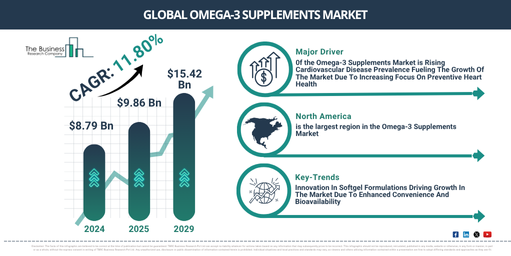
    The omega-3 supplements market size has experienced rapid expansion in recent years. It is projected to increase from $8.79 billion in 2024 to $9.86 billion in 2025, demonstrating a compound annual growth rate (CAGR) of 12.2%. The growth observed in the historical period stems from various factors, including increasing awareness of cardiovascular health, rising consumer interest in dietary supplements, the growing prevalence of chronic diseases, the expansion of the nutraceutical industry, and growing health concerns among the aging population.

    The omega-3 supplements market size is anticipated to undergo significant expansion over the coming years. It is projected to grow to $15.42 billion by 2029, exhibiting a compound annual growth rate (CAGR) of 11.8%. This growth during the forecast period stems from several factors, such as increased fish oil consumption, the expanding reach of e-commerce distribution channels, the rising numbers of vegan and vegetarian populations, greater inclusion in infant nutrition products, and official government recommendations for omega-3 intake. Prominent trends expected in the forecast period encompass a transition towards algae-based omega-3 supplements, a focus on clean labels and transparency in ingredient sourcing, the development of combination supplements that include omega-3, the premiumization of omega-3 products, and the introduction of flavored omega-3 liquids.

    Unlock Your Free Sample Report for Exclusive Market Data:

    https://www.thebusinessresearchcompany.com/sample.aspx?id=24633&type=smp

    What Are The Drivers Pushing New Developments In The Omega-3 Supplements Market?

    The increasing incidence of cardiovascular diseases is projected to drive the growth of the omega-3 supplements market moving forward. Cardiovascular diseases refer to a group of conditions affecting the heart and blood vessels. This rising prevalence of cardiovascular diseases is attributed to the growing embrace of unhealthy lifestyles, including poor diets high in saturated fats and sugars, physical inactivity, smoking, and excessive alcohol consumption. Omega-3 supplements are employed in cardiovascular diseases to help reduce triglyceride levels, lower blood pressure, lessen inflammation, and support overall heart health. For instance, in December 2024, a report published by the American Heart Association, Inc., a US-based national health agency, indicated that the prevalence of cardiovascular disease in the United States will increase from 11.3% to 15% of the population by 2050, affecting an estimated 45 million adults. Thus, the escalating prevalence of cardiovascular disease is fueling growth in the omega-3 supplements market.

    What Are The Emerging Segments Gaining Attention In The Omega-3 Supplements Market?

    The omega-3 supplements market covered in this report is segmented –

    1) By Product: Capsules, Powder, Soft Gel, Other Products

    2) By Source: Fish Oil, Krill Oil, Algae Oil, Other Sources

    3) By Distribution Channel: Supermarket And Hypermarkets, Convenience Stores, Specialty Stores, Online Channel, Other Distribution Channels

    4) By Functionality: Cardiovascular Health, Brain And Cognitive Health, Eye Health, Joint Health, Other Functionality

    5) By End Use: Adults, Geriatric, Pregnant Women, Children, Infants

    Subsegments:

    1) By Capsules: Fish Oil Capsules, Algal Oil Capsules, Krill Oil Capsules, Flaxseed Oil Capsules

    2) By Powder: Protein-Infused Omega-3 Powder, Algae-Based Omega-3 Powder, Fortified Beverage Mix Powders, Nutritional Supplement Powders

    3) By Soft Gel: Enteric-Coated Soft Gels, High-DHA Soft Gels, Triple Strength Soft Gels, Omega-3-6-9 Combination Soft Gels

    4) By Other Products: Gummies, Syrups, Emulsions, Effervescent Tablets

    How Are Emerging Market Trends Shaping The Omega-3 Supplements Industry Landscape?

    Leading companies operating in the omega-3 supplements market are concentrating on developing innovative products, such as softgels, to improve consumer convenience, enhance bioavailability, and differentiate their offerings in an increasingly competitive landscape. Omega-3 softgels are encapsulated dietary supplements containing omega-3 fatty acids, typically derived from fish oil or algae, designed for easy swallowing and improved absorption. For instance, in May 2025, Osteo Bi-Flex, a US-based joint health brand under Nestlé Health Science, introduced its Advanced Omega-3 Joint Complex. This supplement combines 100 mg of Joint Shield 5-LOXIN Advanced, a potent Boswellia serrata extract that supports joint comfort, with 360 mg of omega-3s sourced from algae oil. Crafted to promote joint, heart, and skin health while supporting circulation and cellular metabolism, this product simplifies wellness routines by delivering multiple benefits in just two softgels daily.

    Who Are The Top Performing Companies In The Omega-3 Supplements Market In Recent Years?

    Major companies operating in the omega-3 supplements market are GlaxoSmithKline plc, DSM-Firmenich AG, The Nature’s Bounty Co., Nestlé Health Science U.S., Arkopharma, Pharmavite LLC, VAYA Pharma, Now Foods, Jarrow Formulas Inc., KD Pharma Group SA, Nordic Naturals Inc., Natrol LLC, Pharma Nord B.V, Carlson Laboratories, Optimum Nutrition Inc., Vital Choice Wild Seafood & Organics, SPC, Barlean’s Organic Oils LLC, Reckitt Benckiser Group plc, NutriGold Inc., Luhua Biomarine (Shandong) Co., Ltd.

    Download The Full Report For Exclusive Market Findings:

    https://www.thebusinessresearchcompany.com/report/omega-3-supplements-global-market-report

    Which Regional Markets Are Contributing Most To The Omega-3 Supplements Industry Expansion?

    North America was the largest region in the omega-3 supplements market in 2024. Asia-Pacific is expected to be the fastest-growing region in the forecast period. The regions covered in the omega-3 supplements market report are Asia-Pacific, Western Europe, Eastern Europe, North America, South America, Middle East, Africa.

    Request A Customized Version Of The Omega-3 Supplements Market Report:

    https://www.thebusinessresearchcompany.com/customise?id=24633&type=smp

    Browse Through More Reports Similar to the Global Omega-3 Supplements Market 2025, By The Business Research Company

    Omega 3 Prescription Drugs Global Market Report 2025

    https://www.thebusinessresearchcompany.com/report/omega-3-prescription-drugs-global-market-report

    Omega 3 Global Market Report 2025

    https://www.thebusinessresearchcompany.com/report/omega-3-global-market-report

    Nutritional Supplements Global Market Report 2025

    https://www.thebusinessresearchcompany.com/report/nutritional-supplements-global-market-report

    Get in touch with us:

    The Business Research Company: https://www.thebusinessresearchcompany.com/

    Americas +1 310-496-7795

    Asia +44 7882 955267 & +91 8897263534

    Europe +44 7882 955267

    Email us at info@tbrc.info

    Follow us on:

    LinkedIn: https://in.linkedin.com/company/the-business-research-company

    YouTube: https://www.youtube.com/channel/UC24_fI0rV8cR5DxlCpgmyFQ

    Global Market Model: https://www.thebusinessresearchcompany.com/global-market-model
  • Global Obstetrics Device Market Overview: Trends Shaping Growth to 2029

    Global Obstetrics Device Market Overview: Trends Shaping Growth to 2029

    Unlock Global Insights – Save 20% on Market Reports with Code ONLINE20

    What Is The Global Market Value Of The Obstetrics Device Industry In 2025?

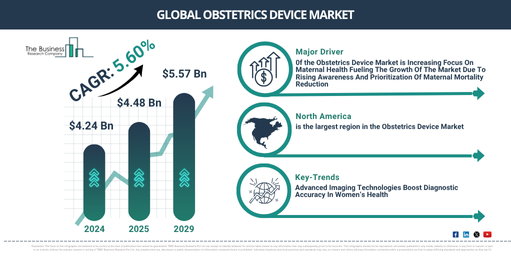
    The obstetrics device market has experienced substantial growth in recent years. It is projected to expand from $4.24 billion in 2024 to $4.48 billion in 2025, achieving a compound annual growth rate (CAGR) of 5.9%. Historically, this growth can be attributed to factors such as increasing birth rates in developing countries, a rise in institutional deliveries, higher cesarean section rates, growing awareness of prenatal care, and the implementation of government maternal health programs.

    The obstetrics device market is projected to experience robust growth over the coming years, with an expected expansion to $5.57 billion by 2029, demonstrating a compound annual growth rate (CAGR) of 5.6%. This anticipated growth during the forecast period is driven by an increasing global emphasis on reducing maternal mortality, an aging maternal population in developed nations, the expansion of healthcare infrastructure in emerging markets, a rise in fertility treatments, and growing health insurance penetration. Significant trends during this period are set to include the integration of artificial intelligence (AI) and machine learning, advancements in imaging technologies, the development of customized and smart delivery rooms, a focus on sustainability and eco-friendly product design, and the emergence of smart and wearable monitoring devices.

    Unlock Your Free Sample Report for Exclusive Market Data:

    https://www.thebusinessresearchcompany.com/sample.aspx?id=24632&type=smp

    What Are The Emerging Market Drivers Creating New Opportunities In The Obstetrics Device Industry?

    A heightened emphasis on maternal health is projected to fuel the expansion of the obstetrics device market in the future. Maternal health encompasses the overall well-being of women throughout pregnancy, childbirth, and the postpartum period. This intensified focus on maternal health stems from growing global awareness, as governments and organizations actively prioritize reducing maternal mortality and improving pregnancy outcomes worldwide. Obstetrics devices contribute to maternal health by offering precise monitoring and diagnostic capabilities, facilitating the prompt identification of potential complications, and thereby promoting safer pregnancies. These tools enhance clinical decision-making and support more favorable outcomes for both mothers and babies. For instance, in April 2025, the Centers for Disease Control and Prevention, a US-based government agency, reported that births in 2024 totaled 3,622,673, marking a 1% increase from 3,591,328 recorded in 2023. Consequently, the increasing focus on maternal health is driving the growth of the obstetrics device market.

    What Are The Major Segment Types Covered In The Obstetrics Device Market?

    The obstetrics device market covered in this report is segmented –

    1) By Type: Monitoring Devices, Surgical Instruments, Diagnostic Devices, Catheters

    2) By Technology: Digital Monitoring, Ultrasound Imaging, Wireless Technologies

    3) By Application: Pregnancy Monitoring, Labor And Delivery, Cesarean Sections, Neonatal Care, Reproductive Health

    4) By End User: Hospitals, Clinics, Birthing Centers, Ambulatory Surgical Centers

    Subsegments:

    1) By Monitoring Devices: Fetal Monitors, Contraction Monitors, Maternal Vital Sign Monitors, Ultrasound Monitoring Devices

    2) By Surgical Instruments: Forceps, Scissors, Retractors, Curettes, Needle Holders

    3) By Diagnostic Devices: Ultrasound Machines, Dopplers, Amniotic Fluid Analyzers, Biochemical Analyzers

    4) By Catheters: Intrauterine Catheters, Foley Catheters, Balloon Catheters, Cervical Ripening Catheters

    Which Key Trends Are Expected To Influence The Obstetrics Device Market In The Coming Years?

    Key companies within the obstetrics device market are dedicated to developing technologically advanced offerings, such as innovative premium ultrasound systems, to bolster diagnostic accuracy and simplify workflows in obstetric and cardiovascular care. A premium ultrasound system is characterized as a high-end diagnostic imaging instrument that provides sophisticated imaging features, superior image quality, and pioneering technologies for accurate medical assessments. For example, in September 2024, Samsung Medison Co. Ltd., a medical device company headquartered in South Korea, unveiled HERA Z20, a new premium ultrasound system designed for obstetrics and gynecology. The HERA Z20 incorporates advanced imaging technologies that ensure remarkable clarity and precision, along with enhanced diagnostic capabilities specifically for women’s health, and an intuitive user interface that improves workflow efficiency. Moreover, it integrates artificial intelligence (AI)-driven tools to support clinicians in reaching faster and more precise decisions, thereby establishing a new standard for ultrasound systems in obstetrics and gynecology.

    Which Leading Companies Dominate The Obstetrics Device Market Share?

    Major companies operating in the obstetrics device market are Medtronic plc, Siemens Healthineers AG, Fujifilm Holdings Corporation, Becton, Dickinson and Company, Royal Philips N.V., Stryker Corporation, GE Healthcare, Boston Scientific Corporation, Olympus Corporation, Shenzhen Mindray Bio-Medical Electronics Co Ltd., Hologic Inc., Mindray Medical International Limited, CooperSurgical Inc., Canon Medical Systems Corporation, Karl Storz GmbH & Co. KG, Cook Medical Incorporated, Natus Medical Incorporated, Esaote SpA, Atom Medical Corporation, CHISON Medical Technologies Co Ltd.

    Download The Full Report For Exclusive Market Findings:

    https://www.thebusinessresearchcompany.com/report/obstetrics-device-global-market-report

    How Does The Obstetrics Device Market Perform Across Key Geographic Regions?

    North America was the largest region in the obstetrics device market in 2024. Asia-Pacific is expected to be the fastest-growing region in the forecast period. The regions covered in the obstetrics device market report are Asia-Pacific, Western Europe, Eastern Europe, North America, South America, Middle East, Africa.

    Request A Customized Version Of The Obstetrics Device Market Report:

    https://www.thebusinessresearchcompany.com/customise?id=24632&type=smp

    Browse Through More Reports Similar to the Global Obstetrics Device Market 2025, By The Business Research Company

    Medical Device Technologies Global Market Report 2025

    https://www.thebusinessresearchcompany.com/report/medical-device-technologies-global-market-report

    Fetal And Neonatal Monitoring Devices Global Market Report 2025

    https://www.thebusinessresearchcompany.com/report/fetal-and-neonatal-monitoring-devices-global-market-report

    Baby Monitoring Devices Global Market Report 2025

    https://www.thebusinessresearchcompany.com/report/baby-monitoring-devices-global-market-report

    Get in touch with us:

    The Business Research Company: https://www.thebusinessresearchcompany.com/

    Americas +1 310-496-7795

    Asia +44 7882 955267 & +91 8897263534

    Europe +44 7882 955267

    Email us at info@tbrc.info

    Follow us on:

    LinkedIn: https://in.linkedin.com/company/the-business-research-company

    YouTube: https://www.youtube.com/channel/UC24_fI0rV8cR5DxlCpgmyFQ

    Global Market Model: https://www.thebusinessresearchcompany.com/global-market-model
  • Medication Adherence Devices Market Trends 2025–2029: Forecasts for Key Growth Segments

    Medication Adherence Devices Market Trends 2025–2029: Forecasts for Key Growth Segments

    Unlock Global Insights – Save 20% on Market Reports with Code ONLINE20

    By How Much Is The Medication Adherence Devices Market Expected To Expand Between 2025 And 2029?

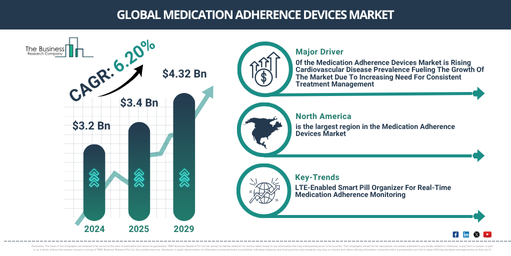
    The medication adherence devices market size has experienced significant growth over recent years. It is projected to increase from $3.2 billion in 2024 to $3.4 billion in 2025, achieving a compound annual growth rate (CAGR) of 6.4%. This expansion during the historic period can be linked to the rising prevalence of chronic diseases, an increasing geriatric population, enhanced awareness regarding medication adherence, governmental initiatives designed to lower hospital readmissions, and the development of home healthcare services.

    The medication adherence devices market is projected to experience robust expansion over the coming years. This market is forecast to reach $4.32 billion by 2029, achieving a compound annual growth rate (CAGR) of 6.2%. Factors driving this growth during the forecast period include the increasing uptake of connected health devices, a surge in demand for personalized healthcare, the expansion of telehealth services, governmental endorsement for digital health solutions, and a heightened emphasis on lowering healthcare expenditures. Key trends anticipated during this period encompass technological progress in Internet of Things devices, breakthroughs in artificial intelligence for monitoring adherence, advancements in cloud-based data analytics, ongoing research and development in smart packaging, and the incorporation of machine learning for forecasting adherence patterns.

    Unlock Your Free Sample Report for Exclusive Market Data:

    https://www.thebusinessresearchcompany.com/sample.aspx?id=24601&type=smp

    Which Drivers Are Shaping The Medication Adherence Devices Industry’s Market Share?

    The escalating occurrence of cardiovascular diseases is anticipated to drive the future expansion of the medication adherence devices market. These conditions involve a range of ailments affecting the heart and blood vessels, frequently resulting in serious health complications like heart attacks, strokes, and heart failure. The rise in cardiovascular disease prevalence stems from increasingly sedentary lifestyles, as more individuals hold desk jobs and spend extended periods in front of screens with limited physical activity. Medication adherence devices contribute to managing cardiovascular diseases by ensuring patients take their medications regularly and on schedule, thus mitigating the risk of complications such as heart attacks and strokes. For example, in January 2024, the American Heart Association, a US-based nonprofit organization, indicated that the age-adjusted death rate from cardiovascular disease climbed to 233.3 per 100,000, representing a 4.0% increase from the prior year’s rate of 224.4 per 100,000, in contrast to a 4.6% rise recorded the year before that. Therefore, the increasing prevalence of cardiovascular diseases is a key factor boosting the growth of the medication adherence devices market.

    What Are The Primary Types Of Segments Analyzed In The Medication Adherence Devices Market?

    The medication adherence devices market covered in this report is segmented –

    1) By Type: Hardware Centric, Software Centric

    2) By Medication: Cardiovascular, Central Nervous System, Diabetes, Oncology, Gastrointestinal, Musculoskeletal, Other Medications

    3) By End User: Hospitals, Homecare Settings, Pharmacies, Long-Term Care Facilities, Clinics

    Subsegments:

    1) By Hardware Centric: Smart Pill Bottles, Smart Pill Dispensers, Wearable Medication Reminders, Smart Packaging, Ingestible Sensors

    2) By Software Centric: Mobile Health Apps, SMS Or IVR Reminders, Web-Based Platforms, Electronic Health Record (EHR)-Integrated Adherence Systems, Cloud-Based Medication Management Platforms

    Which Market Trends Are Creating New Opportunities In The Medication Adherence Devices Industry?

    Major companies in the medication adherence devices market are focusing on developing innovative solutions, such as smart pill organizers, to enable real-time remote monitoring of medication adherence. A smart pill organizer is an electronic device designed to help users manage their medication through automated reminders, scheduled pill dispensing, and synchronization with mobile applications for tracking and alerts. For instance, in April 2025, Centor Inc., a US-based manufacturer of prescription containers for medication dispensing, launched a new smart weekly pill organizer utilizing LTE and cloud technology to support medication adherence. This device tracks medication intake in real time, transmitting data directly to pharmacies and clinical partners, thereby removing the need for patients to install or pair a smartphone app, making it particularly suitable for elderly or less tech-savvy users. Co-developed with RxCap, the organizer is user-friendly and integrates seamlessly with Centor’s remote monitoring services, allowing pharmacies to offer reimbursable adherence programs and provide timely interventions as required.

    Which Industry Leaders Are Driving Innovation Across The Medication Adherence Devices Market?

    Major companies operating in the medication adherence devices market are McKesson Corporation, Cardinal Health Inc., Johnson & Johnson Services Inc., Novartis AG, Becton Dickinson and Company, Koninklijke Philips N.V., AptarGroup Inc., Insulet Corporation, Omnicell Inc., Ypsomed Holding AG, MedMinder Systems Inc., Propeller Health Inc., Bigfoot Biomedical Inc., Information Mediary Corp., AARDEX Group SA, Hero Health Inc., CareRight Technologies, Adherium Limited, Popit Oy, SMRxT Inc., Wisepill Technologies Inc., SeamlessMD.

    Download The Full Report For Exclusive Market Findings:

    https://www.thebusinessresearchcompany.com/report/medication-adherence-devices-global-market-report

    How Is Medication Adherence Devices Market Demand Varying Across Different Regions?

    North America was the largest region in the medication adherence devices market in 2024. The regions covered in the medication adherence devices market report are Asia-Pacific, Western Europe, Eastern Europe, North America, South America, Middle East, Africa.

    Request A Customized Version Of The Medication Adherence Devices Market Report:

    https://www.thebusinessresearchcompany.com/customise?id=24601&type=smp

    Browse Through More Reports Similar to the Global Medication Adherence Devices Market 2025, By The Business Research Company

    Personal Care Ingredients Global Market Report 2025

    https://www.thebusinessresearchcompany.com/report/personal-care-ingredients-global-market-report

    Personalized Medicine Global Market Report 2025

    https://www.thebusinessresearchcompany.com/report/personalized-medicine-global-market-report

    Other Health And Personal Care Stores Global Market Report 2025

    https://www.thebusinessresearchcompany.com/report/other-health-and-personal-care-stores-global-market-report

    Get in touch with us:

    The Business Research Company: https://www.thebusinessresearchcompany.com/

    Americas +1 310-496-7795

    Asia +44 7882 955267 & +91 8897263534

    Europe +44 7882 955267

    Email us at info@tbrc.info

    Follow us on:

    LinkedIn: https://in.linkedin.com/company/the-business-research-company

    YouTube: https://www.youtube.com/channel/UC24_fI0rV8cR5DxlCpgmyFQ

    Global Market Model: https://www.thebusinessresearchcompany.com/global-market-model
  • Nursing Robots Market Growth Opportunities: Insights from 2025–2029

    Nursing Robots Market Growth Opportunities: Insights from 2025–2029

    Unlock Global Insights – Save 20% on Market Reports with Code ONLINE20

    By How Much Is The Nursing Robots Market Expected To Expand Between 2025 And 2029?

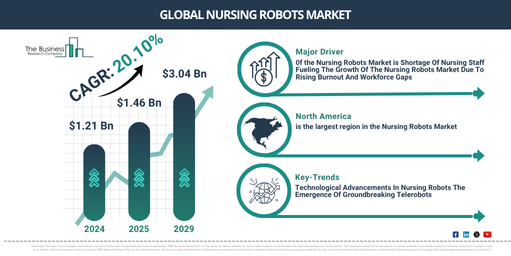
    The nursing robots market has seen substantial growth in its size over recent years. It is anticipated to expand from $1.21 billion in 2024 to $1.46 billion in 2025, achieving a compound annual growth rate (CAGR) of 20.5%. The expansion witnessed during the historic period can be ascribed to initiatives like pilot programs in hospitals, heightened media and public awareness, the evolution of user-friendly interfaces, valuable research and academic contributions, and the establishment of standardization and regulatory frameworks.

    The nursing robots market is projected to experience substantial expansion over the upcoming years, with an anticipated valuation of $3.04 billion by 2029, demonstrating a compound annual growth rate (CAGR) of 20.1%. Factors driving this growth during the forecast period include the ongoing increase in the global elderly population, the broadening scope into home care environments, improvements in mobility and dexterity, more personalized interactions with patients, and the implementation of training and education initiatives. Key trends anticipated for the forecast period encompass wearable robotic exoskeletons, the application of natural language processing (NLP), diagnostic tools powered by artificial intelligence (AI), the integration of 5G connectivity, and the development of touch-sensitive interfaces.

    Unlock Your Free Sample Report for Exclusive Market Data:

    https://www.thebusinessresearchcompany.com/sample.aspx?id=24631&type=smp

    Which Drivers Are Impacting The Nursing Robots Market?

    The escalating scarcity of nursing personnel is projected to drive the growth of the nursing robots market moving forward. Nursing staff consists of healthcare professionals who deliver care and support to patients, mainly in hospitals, clinics, nursing homes, and various other healthcare settings. This shortage of nursing staff is intensifying as high levels of burnout contribute to early resignations, reduced work hours, and fewer individuals remaining in the profession. Nursing robots aid nursing staff by managing repetitive or physically strenuous duties, such as lifting patients, transporting supplies, or monitoring vital signs. This effectively lessens their workload and permits nurses to concentrate on crucial patient care. For instance, in May 2024, a report released by the World Health Organization, a Switzerland-based intergovernmental body, indicated that the global nursing workforce totals approximately 29 million nurses and 2.2 million midwives, with the WHO anticipating a deficit of 4.5 million nurses and 310,000 midwives by 2030. Thus, the rising shortage of nursing staff is propelling the expansion of the nursing robots market.

    What Are The Major Segment Categories Driving The Nursing Robots Market Growth?

    The nursing robots market covered in this report is segmented –

    1) By Type: Humanoid Robots, Assistive Robots, Autonomous Robots

    2) By Product Type: Independent Support Robots, Daily Care And Transportation Robots, Medication Dispensing Robots, Other Product Types

    3) By Application: Elderly Care, Post-Surgical Care, Mental Health Support, Patient Monitoring And Assistance, Rehabilitation And Physical Therapy

    4) By End User: Hospitals And Clinics, Home Care Settings, Nursing Home, Other End Users

    Subsegments:

    1) By Humanoid Robots: Social Assistance Robots, Caregiving Robots, Communication Robots, Monitoring And Surveillance Robots

    2) By Assistive Robots: Physical Assistance Robots, Mobility Aid Robots, Rehabilitation Robots, Prosthetic And Orthotic Assistive Devices

    3) By Autonomous Robots: Autonomous Delivery Robots, Autonomous Medication Management Robots, Autonomous Monitoring Robots, Autonomous Disinfection Robots

    What Are The Major Trends Driving The Growth Of The Nursing Robots Market?

    Leading companies in the nursing robot market are directing their efforts towards technological progress, particularly telerobots, to improve patient care and reduce the workload for healthcare staff. A telerobot denotes an advanced robotic system controlled remotely, which introduces inventive features or functionalities, thereby significantly advancing the field of robotics. As an illustration, in June 2023, Touchlab, a deep-tech company from Scotland, launched Välkky, an innovative telerobot designed to aid nurses, at Laakso Hospital in Helsinki, Finland. This was part of a three-month pilot scheme intended to explore how cutting-edge robotics can ease the burden on healthcare workers and elevate patient care. Välkky incorporates distinctive capabilities, including ultra-thin electronic skin for tactile perception, live remote operation through haptic systems, the capacity to undertake routine healthcare assignments, and integrated safety protocols for safe patient interaction.

    Who Are The Major Companies Operating In The Nursing Robots Market?

    Major companies operating in the nursing robots market are Toyota Motor Corporation, Panasonic Holdings Corporation, KUKA Robotics Corporation, Sumitomo Riko Company Limited, Nikkei Inc., NCS Group, RIKEN, SoftBank Robotics Group Corp., Softeq Development Corporation, Shine Technology Co Ltd., DocCheck Community GmbH, Shenzhen Zuowei Technology Co Ltd., Diligent Robotics Inc., SARA Robotics & Automation Services, Hansen Medical Inc., Chang Robotics Co Ltd., CT Asia Robotics Co Ltd., Takayama Shoji Co Ltd., Club First Roboptics Co Ltd., Hstar Technologies.

    Download The Full Report For Exclusive Market Findings:

    https://www.thebusinessresearchcompany.com/report/nursing-robots-global-market-report

    Which Region Is Expected To Witness The Fastest Growth In The Nursing Robots Market?

    North America was the largest region in the nursing robots market in 2024. Asia-Pacific is expected to be the fastest-growing region in the forecast period. The regions covered in the nursing robots market report are Asia-Pacific, Western Europe, Eastern Europe, North America, South America, Middle East, Africa.

    Request A Customized Version Of The Nursing Robots Market Report:

    https://www.thebusinessresearchcompany.com/customise?id=24631&type=smp

    Browse Through More Reports Similar to the Global Nursing Robots Market 2025, By The Business Research Company

    Medical Robots Global Market Report 2025

    https://www.thebusinessresearchcompany.com/report/medical-robots-global-market-report

    Healthcare Companion Robots Global Market Report 2025

    https://www.thebusinessresearchcompany.com/report/healthcare-companion-robots-global-market-report

    Hospital Robots Global Market Report 2025

    https://www.thebusinessresearchcompany.com/report/hospital-robots-global-market-report

    Get in touch with us:

    The Business Research Company: https://www.thebusinessresearchcompany.com/

    Americas +1 310-496-7795

    Asia +44 7882 955267 & +91 8897263534

    Europe +44 7882 955267

    Email us at info@tbrc.info

    Follow us on:

    LinkedIn: https://in.linkedin.com/company/the-business-research-company

    YouTube: https://www.youtube.com/channel/UC24_fI0rV8cR5DxlCpgmyFQ

    Global Market Model: https://www.thebusinessresearchcompany.com/global-market-model
  • Nuclear Radiation Scanner Market Expansion Outlook: $1.81 Billion by 2029 Forecast

    Nuclear Radiation Scanner Market Expansion Outlook: $1.81 Billion by 2029 Forecast

    Unlock Global Insights – Save 20% on Market Reports with Code ONLINE20

    #What Is The Projected Market Size Of The Nuclear Radiation Scanner Market By 2029?

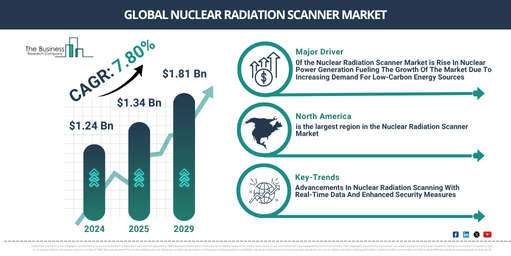
    The nuclear radiation scanner market has shown significant expansion in its size over recent years. Forecasts predict its expansion from $1.24 billion in 2024 to $1.34 billion in 2025, driven by a compound annual growth rate (CAGR) of 8.1%. This historical growth is attributable to several factors, including an increase in industrial applications, elevated security concerns pertaining to radioactive materials, progress in research and development, the broadening of nuclear medicine, and the emergence of nuclear terrorism threats.

    The nuclear radiation scanner market is anticipated to experience robust expansion in the coming years. Projections indicate it will reach $1.81 billion by 2029, exhibiting a compound annual growth rate (CAGR) of 7.8%. Factors driving this growth during the forecast period include the rise in nuclear power generation, enhanced government funding and initiatives aimed at nuclear safety, heightened public awareness concerning radiation hazards, expanding nuclear waste management efforts, and an uptick in radiation-related accidents. Key trends influencing this period encompass breakthroughs in sensor technology, the creation of portable radiation detection devices, a growing need for real-time radiation surveillance, improvements in detector sensitivity, and the integration of automated and digital functionalities.

    Unlock Your Free Sample Report for Exclusive Market Data:

    https://www.thebusinessresearchcompany.com/sample.aspx?id=24630&type=smp

    Which Industry Drivers Are Expected To Accelerate The Nuclear Radiation Scanner Market From 2025 To 2029?

    The increasing output of nuclear power is expected to drive the expansion of the nuclear radiation scanner market in the foreseeable future. Nuclear power involves generating electricity from controlled nuclear reactions, primarily fission. This generation is increasing due to a greater need for low-carbon energy sources, as it offers a dependable and extensive substitute for fossil fuels, aiding in the reduction of greenhouse gas emissions. Nuclear radiation scanners play a crucial role in nuclear power production, ensuring personnel and environmental safety by detecting and tracking radiation levels, averting dangerous exposure, and upholding regulatory standards. For example, a report from the European Commission, a Belgium-based executive body, indicated in February 2025 that the 13 European Union nuclear electricity generating nations collectively produced 619,601 gigawatt hours (GWh) in 2023, representing a 1.7% increase from the 2022 output. Consequently, the uptick in nuclear power generation will propel the growth of the nuclear radiation scanner market.

    How Is The Nuclear Radiation Scanner Market Segmented?

    The nuclear radiation scanner market covered in this report is segmented –

    1) By Product Type: Portable Scanners, Fixed Scanners, Handheld Scanners

    2) By Technology: Geiger-Muller Counters, Scintillation Detectors, Semiconductor Detectors, Others Technologies

    3) By Distribution Channel: Direct Sales, Online Sales, Distributors And Resellers, Aftermarket Services

    4) By End-User: Hospitals, Research Institutes, Nuclear Power Plants, Defense And Security Agencies, Other End Users

    Subsegments:

    1) By Portable Scanners: Backpack Radiation Detectors, Vehicle-Mounted Radiation Detectors, Portable Radiation Portal Monitors

    2) By Fixed Scanners: Fixed Radiation Portal Monitors, Area Radiation Monitors, Continuous Emission Monitoring Systems

    3) By Handheld Scanners: Handheld Gamma Spectrometers, Handheld Geiger Counters, Personal Radiation Detectors

    What Trends Are Expected To Drive The Nuclear Radiation Scanner Market?

    Companies operating within the nuclear radiation scanner market are concentrating on developing advanced solutions, such as software tools, to achieve greater accuracy and consistency in tasks. Software tools are digital applications or programs designed to carry out specific functions, improve productivity, or assist in the development and management of other software or systems. For example, in June 2023, the International Atomic Energy Agency, an Austria-based organization for nuclear cooperation, launched the Mobile-Integrated Nuclear Security Network (M-INSN), a software tool providing real-time radiation data. This tool ensures effective nuclear security by delivering current radiation data for high-traffic areas like border crossings, seaports, and airports. It empowers decision-makers to visualize radiation information and make informed judgments to protect the public during potential nuclear or radioactive material incidents. A crucial aspect of M-INSN is its vendor-neutral design, allowing it to integrate with any detection equipment and providing administrators immediate access to radiation data along with the exact positions of users, including radiation experts and security officers. Additionally, an interactive map illustrating the equipment’s status is regularly updated, supplying essential information for monitoring nuclear security activities.

    Which Global Market Leaders Are Shaping The Future Of The Nuclear Radiation Scanner Sector?

    Major companies operating in the nuclear radiation scanner market are Bruker Corporation, HORIBA Ltd., LANDAUER INC., Canon Electron Tubes & Devices Co. Ltd., Atomtex Co., Berkeley Nucleonics Corporation, Rotem Industries Ltd., LND Inc., AMPTEK Inc., Radiation Monitoring Devices Inc., Mediso Ltd., Advacam s.r.o., Arktis Radiation Detectors Ltd., INNORIID GMBH, CapeSym Inc., M.C. TEC B.V., Radiation Detection Technologies Inc., US Nuclear Corp., John Caunt Scientific Ltd., ELSE NUCLEAR S.r.l

    Download The Full Report For Exclusive Market Findings:

    https://www.thebusinessresearchcompany.com/report/nuclear-radiation-scanner-global-market-report

    Which Global Regions Are Influencing The Competitive Landscape Of The Nuclear Radiation Scanner Market?

    North America was the largest region in the nuclear radiation scanner market in 2024. Asia-Pacific is expected to be the fastest-growing region in the forecast period. The regions covered in the nuclear radiation scanner market report are Asia-Pacific, Western Europe, Eastern Europe, North America, South America, Middle East, Africa.

    Request A Customized Version Of The Nuclear Radiation Scanner Market Report:

    https://www.thebusinessresearchcompany.com/customise?id=24630&type=smp

    Browse Through More Reports Similar to the Global Nuclear Radiation Scanner Market 2025, By The Business Research Company

    Nuclear Imaging Devices And Equipment Global Market Report 2025

    https://www.thebusinessresearchcompany.com/report/nuclear-imaging-devices-and-equipment-global-market-report

    Nuclear Medicine Radioisotopes Global Market Report 2025

    https://www.thebusinessresearchcompany.com/report/nuclear-medicine-radioisotopes-global-market-report

    Nuclear Medicine Diagnostics Global Market Report 2025

    https://www.thebusinessresearchcompany.com/report/nuclear-medicine-diagnostics-global-market-report

    Get in touch with us:

    The Business Research Company: https://www.thebusinessresearchcompany.com/

    Americas +1 310-496-7795

    Asia +44 7882 955267 & +91 8897263534

    Europe +44 7882 955267

    Email us at info@tbrc.info

    Follow us on:

    LinkedIn: https://in.linkedin.com/company/the-business-research-company

    YouTube: https://www.youtube.com/channel/UC24_fI0rV8cR5DxlCpgmyFQ

    Global Market Model: https://www.thebusinessresearchcompany.com/global-market-model
  • Hypoparathyroidism Industry Anticipated to Expand at 8.3% CAGR During the Forecast Period

    Hypoparathyroidism Industry Anticipated to Expand at 8.3% CAGR During the Forecast Period

    Unlock Global Insights – Save 20% on Market Reports with Code ONLINE20

    What Is The Predicted Market Size Trajectory For The Hypoparathyroidism Market From 2025 To 2034?

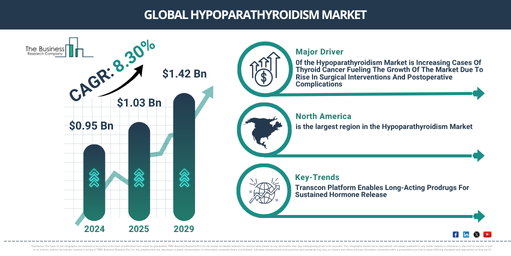
    The hypoparathyroidism market has experienced significant expansion recently. It is projected to expand from $0.95 billion in 2024 to reach $1.03 billion by 2025, demonstrating a compound annual growth rate (CAGR) of 8.6%. Historically, this expansion has been driven by factors such as the increasing occurrence of thyroid surgeries, greater public understanding of hypoparathyroidism, a rise in complications following surgery, a growing need for calcium and vitamin D supplements, and enhanced efforts in managing endocrine disorders.

    The hypoparathyroidism market is anticipated to experience substantial expansion in the coming years, with its valuation projected to reach $1.42 billion by 2029, exhibiting a compound annual growth rate (CAGR) of 8.3%. This projected growth during the forecast period is attributable to several factors, including the increasing uptake of recombinant parathyroid hormone therapies, greater investment in hypoparathyroidism research, the expansion of healthcare infrastructure, a growing elderly population susceptible to endocrine disorders, and improved awareness coupled with early diagnosis programs. Key trends anticipated during this period encompass advancements in parathyroid hormone therapies, sophisticated diagnostic methods for hypoparathyroidism, the creation of sustained-release calcium supplements, innovations in minimally invasive thyroid surgery, and enhancements in patient monitoring technologies.

    Unlock Your Free Sample Report for Exclusive Market Data:

    https://www.thebusinessresearchcompany.com/sample.aspx?id=24565&type=smp

    Which Drivers Are Impacting The Hypoparathyroidism Market?

    The rise in thyroid cancer incidents is anticipated to propel the growth of the hypoparathyroidism market. Thyroid cancer is characterized by the proliferation of abnormal cells within the thyroid gland, often manifesting as a neck lump. The increasing prevalence of thyroid cancer is attributed to enhanced diagnostic imaging technologies, which facilitate earlier and more frequent identification of small, asymptomatic thyroid nodules. This form of cancer accelerates hypoparathyroidism primarily through an increased requirement for thyroid surgeries; such procedures can inadvertently harm the parathyroid glands. This damage results in calcium imbalance and chronic hormone deficiency, thereby escalating the need for long-term disease management solutions. For instance, data from the American Cancer Society, a US-based non-profit organization, indicated in May 2024 that new thyroid cancer cases are projected to reach 44,020 in 2025, an increase from 43,720 in 2023. Consequently, the growing number of thyroid cancer cases is a key driver for the hypoparathyroidism market’s expansion.

    What Are The Primary Types Of Segments Analyzed In The Hypoparathyroidism Market?

    The hypoparathyroidism market covered in this report is segmented –

    1) By Treatment: Hormone Replacement Therapy, Adjunctive Therapies

    2) By Type: Hormone Replacement Therapy, Calcium And Vitamin D Supplements, Emerging Therapies

    3) By Route Of Administration: Oral, Parenteral

    4) By Distribution Channel: Hospital Pharmacy, Retail Pharmacy, Online Pharmacy

    5) By End User: Hospitals, Specialty Clinics, Homecare Settings

    Subsegments:

    1) By Hormone Replacement Therapy: Recombinant Parathyroid Hormone, Parathyroid Hormone Analogues, Calcimimetics, Calcium And Vitamin D Supplements

    2) By Adjunctive Therapies: Magnesium Supplements, Phosphate Binders, Other Supportive Therapies

    What Trends Are Expected To Drive The Hypoparathyroidism Market?

    Leading companies in the hypoparathyroidism market are concentrating on developing technologically advanced products, such as those built on transition technology, to enhance the effectiveness of treatments and improve patient outcomes. TransCon technology-based products represent therapeutic solutions crafted utilizing TransCon (Transient Conjugation) technology, an exclusive platform engineered to optimize drug delivery. For example, in January 2024, Ascendis Pharma A/S, a Denmark-based biopharmaceutical company, introduced YORVIPATH (palopegteriparatide), its second product leveraging TransCon technology, in Germany and Austria for managing chronic hypoparathyroidism in adults. YORVIPATH operates as a once-daily prodrug of parathyroid hormone (PTH 1-34), formulated to maintain physiological PTH levels over 24 hours, thereby addressing the fundamental hormone deficiency characteristic of chronic hypoparathyroidism.

    Who Are The Prominent Global Companies Shaping The Hypoparathyroidism Market?

    Major companies operating in the hypoparathyroidism market are Pfizer Inc., F. Hoffmann-La Roche Ltd., Merck & Co Inc., AbbVie Inc., Sanofi S.A., Novartis AG, GlaxoSmithKline plc , Takeda Pharmaceutical Company Limited, Eli Lilly and Company, Amgen Inc., Teva Pharmaceutical Industries Ltd., Dr. Reddy’s Laboratories Ltd., Cipla Limited , Lupin Limited, Torrent Pharmaceuticals Ltd., Eagle Pharmaceuticals Inc., BridgeBio Pharma Inc., Ascendis Pharma A/S, Extend Biosciences Inc., Entera Bio Ltd.

    Download The Full Report For Exclusive Market Findings:

    https://www.thebusinessresearchcompany.com/report/hypoparathyroidism-global-market-report

    Which Global Regions Are Influencing The Competitive Landscape Of The Hypoparathyroidism Market?

    North America was the largest region in the hypoparathyroidism market in 2024. Asia-Pacific is expected to be the fastest-growing region in the forecast period. The regions covered in the hypoparathyroidism market report are Asia-Pacific, Western Europe, Eastern Europe, North America, South America, Middle East, Africa.

    Request A Customized Version Of The Hypoparathyroidism Market Report:

    https://www.thebusinessresearchcompany.com/customise?id=24565&type=smp

    Browse Through More Reports Similar to the Global Hypoparathyroidism Market 2025, By The Business Research Company

    Homeopathy Global Market Report 2025

    https://www.thebusinessresearchcompany.com/report/homeopathy-global-market-report

    Thyroid Function Test Global Market Report 2025

    https://www.thebusinessresearchcompany.com/report/thyroid-function-test-global-market-report

    Anti Thyroid Drugs Global Market Report 2025

    https://www.thebusinessresearchcompany.com/report/anti-thyroid-drugs-global-market-report

    Get in touch with us:

    The Business Research Company: https://www.thebusinessresearchcompany.com/

    Americas +1 310-496-7795

    Asia +44 7882 955267 & +91 8897263534

    Europe +44 7882 955267

    Email us at info@tbrc.info

    Follow us on:

    LinkedIn: https://in.linkedin.com/company/the-business-research-company

    YouTube: https://www.youtube.com/channel/UC24_fI0rV8cR5DxlCpgmyFQ

    Global Market Model: https://www.thebusinessresearchcompany.com/global-market-model