Blog

  • Central Nervous System (CNS) Lymphoma Market Forecast 2025–2034: Trends Reshaping Demand, Investment, and Innovation

    Central Nervous System (CNS) Lymphoma Market Forecast 2025–2034: Trends Reshaping Demand, Investment, and Innovation

    Our market reports now include the latest updates on global tariffs, trade impacts, and evolving supply chain dynamics.

    How Has The Central Nervous System Lymphoma Treatment Market Size Shifted, And What Is the Outlook Through 2034?

    The market for central nervous system lymphoma treatments has significantly expanded in the past few years. Its size is projected to escalate from $1.19 billion in 2024 to $1.28 billion in 2025, with a compound annual growth rate (CAGR) of 7.2%. The previous growth can be credited to factors such as the rising incidence of central nervous system (CNS) lymphoma, increased utilization of targeted therapies, and the expansion of cancer awareness initiatives. Additional contributing factors include heightened healthcare spending, advancements in immunotherapy, the advent of high-dose chemotherapy, an increase in clinical trial activities, and better access to specialized healthcare services.

    The market for central nervous system lymphoma treatment is predicted to significantly expand in the subsequent years, escalating to a projected $1.67 billion by 2029, courtesy of an annual growth rate (CAGR) of 6.9%. The forthcoming period of expansion can be linked to several factors such as increased demand for customized treatment plans, a focused approach toward early disease detection, rising investment in cancer-related research, the emergence of innovative drug delivery systems, improvement of healthcare infrastructure in developing regions, increasing incidence of auto-immune diseases, and the creation of treatment plans that combine therapies. Further contributing are increased access to biosimilar drugs and wider acceptance of telemedicine in cancer care. The advancements to look out for during the predicted phase of growth include precision medicine, the integration of artificial intelligence into diagnostics, the use of liquid biopsies for tracking progress, adoption of nanotechnology in drug delivery, improvements in imaging technologies and development of bispecific antibodies. With the utilization of gene-editing systems such as CRISPR, implementation of wearable health tracking devices and the expansion of telehealth platforms for oncology care, the market is set to see substantial growth.

    Download a free sample to assess the report’s scope and structure:

    https://www.thebusinessresearchcompany.com/sample.aspx?id=21134&type=smp

    What Are the Primary Drivers Supporting the Market Growth of the Central Nervous System Lymphoma Treatment Market?

    The swift expansion of the pharmaceutical industry is anticipated to accelerate the central nervous system lymphoma treatment market’s growth. The pharmaceutical industry, centred around drug research, development, manufacturing, and distribution, fuels this growth. Factors such as medical research advancements, aging population, widespread healthcare access, rising chronic diseases, global health crises, regulatory aid, and increased healthcare expenditure, drive the pharmaceutical industry’s growth. This expansion leads to advancements in the central nervous system lymphoma treatment market by catalyzing innovation in targeted therapies, boosting diagnostic capabilities, and raising funds for research and development for rare cancers. For example, in June 2024, the European Federation of Pharmaceutical Industries and Associations (EFPIA) reported that total pharmaceutical production in Europe was up to $4,17,300 million (€390,000 million) in 2023, a rise from $3,88,141 million (€363,300 million) in 2022. Therefore, the swift expansion of the pharmaceutical industry incites the growth of the central nervous system lymphoma treatment market. Driving Market Expansion Through Personalized Medicine Innovations

    Which Primary Segments of the Central Nervous System Lymphoma Treatment Market Are Driving Growth and Industry Transformations?

    The central nervous system lymphoma treatment market covered in this report is segmented –

    1) By Treatment Type: Chemotherapy, Radiation Therapy, Targeted Therapy, Corticosteroids, Immunotherapy

    2) By Route Of Administration: Intravenous, Oral, Intrathecal

    3) By Distribution Channel: Direct Sales, Third-Party Distributors

    4) By End User: Hospitals, Clinics, Ambulatory Surgical Centers

    Subsegments:

    1) By Chemotherapy: High-Dose Methotrexate, Temozolomide, Rituximab-Based Regimens, Carmustine, Cytarabine

    2) By Radiation Therapy: Whole Brain Radiation Therapy (WBRT), Stereotactic Radiosurgery (SRS), Brachytherapy

    3) By Targeted Therapy: Monoclonal Antibodies, Tyrosine Kinase Inhibitors, B-Cell Antigen Inhibitors, PI3K Inhibitors

    4) By Corticosteroids: Dexamethasone, Prednisone, Methylprednisolone

    5) By Immunotherapy: Checkpoint Inhibitors, Chimeric Antigen Receptor T-Cell (CAR-T) Therapy, Monoclonal Antibodies, Immune Modulators

    Request customized data on this market:

    https://www.thebusinessresearchcompany.com/customise?id=21134&type=smp

    Which Regions Are Key Players in the Growth of the #What Are the Primary Drivers Supporting the Market Growth of the Central Nervous System Lymphoma Treatment Market?# Market?

    North America was the largest region in the central nervous system lymphoma treatment market in 2024. Asia-Pacific is expected to be the fastest-growing region in the forecast period. The regions covered in the central nervous system lymphoma treatment market report are Asia-Pacific, Western Europe, Eastern Europe, North America, South America, Middle East, Africa.

    What Are the Most Significant Market Trends in the Central Nervous System Lymphoma Treatment Market?

    Big-name corporations in the central nervous system lymphoma market are concentrating on creating unique therapies, like chimeric antigen receptor (CAR) T-cell therapy, to boost the efficacy of treatments, offer bespoke therapies, and promote better patient outcomes, particularly for those with recurring or stubborn cases. CAR T-cell therapy, an immunological treatment, alters a patient’s T-cells allowing them to identify and combat cancer cells more efficiently. For instance, in June 2024, Kite Pharma, an American pharmaceutical firm, alongside Dana-Farber Cancer Institute, a prominent American cancer therapy center, introduced Yescarta (axicabtagene ciloleucel), a treatment found to be well-tolerated by patients with either primary or secondary central nervous system lymphoma that is relapsed or refractory (R/R). This CAR T-cell therapy involves gathering a patient’s T-cells, altering them to target cancer cells, and reintroducing them into the body. These altered T-cells play a crucial role in exterminating lymphoma cells, including those in the central nervous system, particularly in recurrent or tough-to-treat situations.

    View the full report here:

    https://www.thebusinessresearchcompany.com/report/central-nervous-system-lymphoma-treatment-global-market-report

    What Parameters Are Used to Define the Central Nervous System Lymphoma Treatment Market?

    Central nervous system (CNS) lymphoma treatment refers to the medical approaches to managing and treating primary or secondary lymphoma affecting the brain, spinal cord, or cerebrospinal fluid (CSF). Treatment typically includes high-dose methotrexate-based chemotherapy, often combined with other drugs, immunotherapy, radiation therapy, and autologous stem cell transplantation (ASCT). Central nervous system (CNS) lymphoma treatment aims to eliminate cancer cells while preserving neurological function and preventing relapse. Treatment plans are tailored based on the patient’s age, overall health, and disease severity.

    Purchase the full report and get a swift delivery:

    https://www.thebusinessresearchcompany.com/purchaseoptions.aspx?id=21134

    About The Business Research Company:

    With over 15000+ reports from 27 industries covering 60+ geographies, The Business Research Company has built a reputation for offering comprehensive, data-rich research and insights. Armed with 1,500,000 datasets, the optimistic contribution of in-depth secondary research, and unique insights from industry leaders, you can get the information you need to stay ahead in the game.

    Get in touch with us:

    The Business Research Company: https://www.thebusinessresearchcompany.com/

    Americas +1 3156230293

    Asia +44 2071930708

    Europe +44 2071930708

    Email us at info@tbrc.info

    Follow us on:

    LinkedIn: https://in.linkedin.com/company/the-business-research-company

    YouTube: https://www.youtube.com/channel/UC24_fI0rV8cR5DxlCpgmyFQ

    Global Market Model: https://www.thebusinessresearchcompany.com/global-market-model

  • Major Trends and Emerging Patterns in the Eosinophilic Asthma Market: Advancements In Targeted Therapies For Severe Asthma Management

    Major Trends and Emerging Patterns in the Eosinophilic Asthma Market: Advancements In Targeted Therapies For Severe Asthma Management

    Our market reports now include the latest updates on global tariffs, trade impacts, and evolving supply chain dynamics.

    What Are the Key Projections for the CAGR of the Eosinophilic Asthma Market Size From 2025 to 2034?

    The market size for eosinophilic asthma has seen substantial growth in recent times. It is set to rise from $2.69 billion in 2024 to $3.17 billion in 2025, with a compound annual growth rate (CAGR) of 17.7%. The expansion during the historic period can be linked to the increase in pollution, a decrease in population immunity, a surge in the occurrence of eosinophilic asthma, a rise in allergens and respiratory conditions, an increase in healthcare spending, and an elevation in research and development activities.

    In the upcoming years, the eosinophilic asthma market is set to experience accelerated growth. It is predicted to expand to a worth of $6.01 billion by 2029, displaying a compound annual growth rate (CAGR) of 17.4%. This growth over the projection period can be linked to several factors, including the rising prevalence of respiratory illnesses, greater awareness and diagnosis rates, broadening applications for monoclonal antibodies, increased healthcare infrastructure investment, and an upsurge in bespoke medical approaches. Noteworthy trends for this forecasted period encompass the establishment of targeted biologics, advancement in diagnostic tools, tailored treatment methods, bolstered drug delivery systems, merging with digital health technologies, and augmented clinical trials for new therapies.

    Download a free sample to assess the report’s scope and structure:

    https://www.thebusinessresearchcompany.com/sample.aspx?id=21184&type=smp

    What Are the Primary Drivers Supporting the Market Growth of the Eosinophilic Asthma Market?

    The growth of the eosinophilic asthma market is propelled by increasing smoking habits. The term ‘smoking habits’ encompasses regular usage and patterns of tobacco consumption, including the frequency, context, and duration of smoking, which are generally influenced by psychological, social, and environmental factors. The increase in smoking habits can be attributed to factors such as elevated stress levels, targeted advertising campaigns by tobacco manufacturers, lack of understanding of health-related risks, and the social acceptance of smoking in specific cultures. Eosinophilic asthma treatment reduces airway inflammation and improves lung function, which can promote smoking cessation by easing the respiratory complications that often compel patients to keep smoking. For example, in December 2023, the National Health Service, a UK-based government agency, reported an estimated 408,700 hospital admissions due to smoking in 2022–23, which is an increase of 4.8% from 389,800 in 2021–22. Hence, the escalating smoking rates contribute towards the growth of the eosinophilic asthma market.

    Which Primary Segments of the Eosinophilic Asthma Market Are Driving Growth and Industry Transformations?

    The eosinophilic asthma market covered in this report is segmented –

    1) By Disease: Severe Eoisnophilic Asthma, Mild To Moderate Eosinophilic Asthma

    2) By Treatment: Biologics, Bronchodilators, Corticosteroids, Immunomodulators, Other Treatments

    3) By End User: Hospitals, Clinics, Other End Users

    Subsegments:

    1) By Severe Eosinophilic Asthma: Refractory Eosinophilic Asthma, Late-Onset Eosinophilic Asthma

    2) By Mild To Moderate Eosinophilic Asthma: Early-Onset Eosinophilic Asthma, Intermittent Eosinophilic Asthma

    Request customized data on this market:

    https://www.thebusinessresearchcompany.com/customise?id=21184&type=smp

    Which Regions Are Key Players in the Growth of the What Are the Primary Drivers Supporting the Market Growth of the Eosinophilic Asthma Market? Market?

    North America was the largest region in the eosinophilic asthma market in 2024. Asia-Pacific is expected to be the fastest-growing region in the forecast period. The regions covered in the eosinophilic asthma market report are Asia-Pacific, Western Europe, Eastern Europe, North America, South America, Middle East, Africa.

    What Are the Most Significant Market Trends in the Eosinophilic Asthma Market?

    Key players in the eosinophilic asthma market are focusing on the creation of novel drugs to specifically target immune pathways, reduce inflammation, and better the results of patient treatment through individualized treatments. One such method involves the use of monoclonal antibodies, which are essentially laboratory-created molecules that replicate the immune system’s ability to combat harmful viruses and bacteria. The creation of these antibodies involves merging a specific antibody-producing cell with a cancer cell, thus allowing for the mass production of identical antibodies. For example, in August 2024, AstraZeneca plc, a biopharmaceutical firm based in the UK, made public the approval of Fasenra by the China’s National Medical Products Association for the treatment of severe eosinophilic asthma. The condition, severe eosinophilic asthma, is distinguished by high eosinophil counts which can trigger inflammation and an exacerbation of asthma symptoms. Fasenra, a monoclonal antibody, aims to target and eliminate eosinophils using a distinctive mechanism. By latching onto the IL-5 receptor on eosinophils, Fasenra can boost the immune system’s capability and lower eosinophil levels in blood and tissue. The treatment regimen starts with a loading phase before transitioning to maintenance doses. Generally, patients receive injections every four weeks for the first three doses, with the frequency reducing to every eight weeks subsequently.

    View the full report here:

    https://www.thebusinessresearchcompany.com/report/eosinophilic-asthma-global-market-report

    What Parameters Are Used to Define the Eosinophilic Asthma Market?

    Eosinophilic asthma is a form of asthma where high eosinophil counts, a specific white blood cell type, cause airway inflammation. This condition results in severe symptoms such as breathing issues and recurring flare-ups, with limited effectiveness from standard treatments such as inhaled steroids.

    Purchase the full report and get a swift delivery:

    https://www.thebusinessresearchcompany.com/purchaseoptions.aspx?id=21184

    About The Business Research Company:

    With over 15000+ reports from 27 industries covering 60+ geographies, The Business Research Company has built a reputation for offering comprehensive, data-rich research and insights. Armed with 1,500,000 datasets, the optimistic contribution of in-depth secondary research, and unique insights from industry leaders, you can get the information you need to stay ahead in the game.

    Get in touch with us:

    The Business Research Company: https://www.thebusinessresearchcompany.com/

    Americas +1 3156230293

    Asia +44 2071930708

    Europe +44 2071930708

    Email us at info@tbrc.info

    Follow us on:

    LinkedIn: https://in.linkedin.com/company/the-business-research-company

    YouTube: https://www.youtube.com/channel/UC24_fI0rV8cR5DxlCpgmyFQ

    Global Market Model: https://www.thebusinessresearchcompany.com/global-market-model

  • Central Nervous System (CNS) Lymphoma Market 2025-2034: Key Highlights, Growth Dynamics, and Emerging Trends

    Central Nervous System (CNS) Lymphoma Market 2025-2034: Key Highlights, Growth Dynamics, and Emerging Trends

    Our market reports now include the latest updates on global tariffs, trade impacts, and evolving supply chain dynamics.

    How Has the Central Nervous System (CNS) Lymphoma Market Growth Performance Trended Historically, And What Lies Ahead?

    The market size for central nervous system (CNS) lymphoma has experienced substantial growth in recent times. From $1.44 billion in 2024, it is expected to expand to $1.54 billion in 2025, with a compound annual growth rate (CAGR) of 7.0%. Numerous factors have led to the growth observed during the historical period, including heightened awareness and improved diagnosis, an uptick in lymphoma cases, an increase in clinical trials, greater funding for cancer research, and the escalating use of biomarkers for specialized therapies.

    The market size for central nervous system (CNS) lymphoma is projected to exhibit substantial growth in the coming years, skyrocketing to $1.99 billion in 2029 with a 6.6% compound annual growth rate (CAGR). The surge in the forecast period could be attributed to several factors like the increasing adoption of immunotherapy, a heightened focus on specific treatments, a rise in CNS lymphoma prevalence, improved patient access to healthcare, and government efforts and initiatives. Key trends within this forecast period comprise the incorporation of artificial intelligence in diagnostic procedures, evolving next-generation monoclonal antibodies, a lean towards less invasive treatments, breakthroughs in precision medicine, and advancements in diagnostic technologies.

    Download a free sample to assess the report’s scope and structure:

    https://www.thebusinessresearchcompany.com/sample.aspx?id=21133&type=smp

    How Are Key Drivers in the Industry Acting as Catalysts for the Growth of the Central Nervous System (CNS) Lymphoma Market?

    The surge in cases of psychological disorders is foreseen to drive the growth of the central nervous system (CNS) lymphoma market. Psychological disorders, characterized by disrupted thoughts, feelings, and actions, create distress or impairment. Factors such as stress, social isolation, economic strain, genes, drug misuse, and digital overusage are triggering the prevalence of these disorders. Advances in CNS lymphoma enhance the research in neuro-oncology, fostering a deeper understanding of cerebral inflammation, immune interactions, and the blood-brain barrier. This, in turn, aids in devising improved treatments for cancer and psychological disorders alike. For instance, it was reported in 2024 by the National Alliance On Mental Illness, a U.S. organization, that psychosis spectrum and mood disorders caused almost 600,000 hospitalizations annually among the U.S. population aged 18-44. Thus, the growing episodes of psychological disorders are contributing to the expansion of the CNS lymphoma market. Moreover, the escalating prevalence of neurological disorders is anticipated to fuel the growth of the CNS lymphoma market. These disorders, affecting the nervous system including the brain, spinal cord, and nerves, is on the rise due to factors such as genetic influences, infections, injuries, toxins, autoimmune reactions, and decay. The CNS lymphoma field aids in gaining insights about brain functionality, immune reaction, and neuroinflammation, thereby facilitating enhanced diagnosis and treatments for neurological disorder patients. For example, the European Brain Council, a Belgium-based non-profit organization, stated in April 2022 that over 600 neurological diseases and nearly 300 psychiatric conditions exist, globally affecting millions, including 65 million epilepsy patients. In Europe, dementia affects 10.5 million people, with future projections estimating the number to increase to 18.7 million by 2050. Consequently, the growing prevalence of neurological disorders is projected to stimulate the expansion of the CNS lymphoma market.

    Which Segments in the Central Nervous System (CNS) Lymphoma Offer the Most Growth?

    The central nervous system (CNS) lymphoma market covered in this report is segmented –

    1) By Class Of Drugs: Monoclonal antibodies, Chemotherapeutic Agents, Corticosteroids

    2) By Treatment: Chemotherapy, Radiation Therapy, Steroid Therapy, Targeted Therapy

    3) By Application: Hospitals, Clinics, Ambulatory Surgical Services, Other Applications

    Subsegments:

    1) By Monoclonal Antibodies: Anti-CD20 Monoclonal Antibodies, Anti-PD-1 Monoclonal Antibodies, Other Targeted Monoclonal Antibodies

    2) By Chemotherapeutic Agents: Alkylating Agents, Antimetabolites, Topoisomerase Inhibitors

    3) By Corticosteroids: Dexamethasone, Prednisolone, Methylprednisolone

    Request customized data on this market:

    https://www.thebusinessresearchcompany.com/customise?id=21133&type=smp

    What Are the Fastest-Growing Geographies in the #How Are Key Drivers in the Industry Acting as Catalysts for the Growth of the Central Nervous System (CNS) Lymphoma Market?# Market?

    North America was the largest region in the central nervous system (CNS) lymphoma market in 2024. Asia-Pacific is expected to be the fastest-growing region in the forecast period. The regions covered in the central nervous system (CNS) lymphoma market report are Asia-Pacific, Western Europe, Eastern Europe, North America, South America, Middle East, Africa.

    What Are the Current Market Growth and Trends in the Central Nervous System (CNS) Lymphoma Industry?

    Leading firms in the central nervous system (CNS) lymphoma market are currently aiming on the development of novel therapies like Tirabrutinib for treating primary central nervous system (CNS) lymphoma. Tirabrutinib is a specifically designed Bruton’s tyrosine kinase (BTK) inhibitor, made to treat B-cell malignancies, prominently primary central nervous system lymphoma (PCNSL), by directly targeting the pathways essential for the survival and multiplication of cancer cells. The prestigious American-based pharmaceutical company, ONO Pharma Inc., announced in March 2023 that tirabrutinib (ONO-4059) has been accorded the label of an orphan drug by the U.S. Food and Drug Administration (FDA) for the treatment of primary central nervous system lymphoma (PCNSL). Presently, under examination in the phase 2 PROSPECT study (NCT04947319), tirabrutinib is an intense, selective BTK inhibitor that targets the proliferation and survival of B-cells. It manages the proliferation and activation of cellular entities via the B-cell receptor, thereby aiding survival, differentiation, and clonal proliferation of B-cells.

    View the full report here:

    https://www.thebusinessresearchcompany.com/report/central-nervous-system-cns-lymphoma-global-market-report

    What Are the Key Elements That Define the Central Nervous System (CNS) Lymphoma Market?

    Central nervous system (CNS) lymphoma is a rare and aggressive type of lymphoma that originates in the brain or spinal cord. Its treatment aims to target and shrink cancerous cells in the CNS, alleviate symptoms, and improve survival rates through a combination of medications, targeted therapies, and focused high-energy treatments.

    Purchase the full report and get a swift delivery:

    https://www.thebusinessresearchcompany.com/purchaseoptions.aspx?id=21133

    About The Business Research Company:

    With over 15000+ reports from 27 industries covering 60+ geographies, The Business Research Company has built a reputation for offering comprehensive, data-rich research and insights. Armed with 1,500,000 datasets, the optimistic contribution of in-depth secondary research, and unique insights from industry leaders, you can get the information you need to stay ahead in the game.

    Get in touch with us:

    The Business Research Company: https://www.thebusinessresearchcompany.com/

    Americas +1 3156230293

    Asia +44 2071930708

    Europe +44 2071930708

    Email us at info@tbrc.info

    Follow us on:

    LinkedIn: https://in.linkedin.com/company/the-business-research-company

    YouTube: https://www.youtube.com/channel/UC24_fI0rV8cR5DxlCpgmyFQ

    Global Market Model: https://www.thebusinessresearchcompany.com/global-market-model

  • Key Developments and Trends Steering the Entecavir Market Forward: Advancements In Clinical Trials And Innovative Drug Development For Chronic Hepatitis B Treatment

    Key Developments and Trends Steering the Entecavir Market Forward: Advancements In Clinical Trials And Innovative Drug Development For Chronic Hepatitis B Treatment

    Our market reports now include the latest updates on global tariffs, trade impacts, and evolving supply chain dynamics.

    How Has The Entecavir Market Growth Evolved From 2024 To 2025, And What’s Ahead?

    The entecavir market has seen robust growth in recent years. The market is projected to expand from a size of $0.71 billion in 2024 to $0.75 billion in 2025, reflecting a compound annual growth rate (CAGR) of 4.9%. This upsurge during the historic phase can be ascribed to factors such as the rising occurrences of Hepatitis B, heightened awareness about liver-associated conditions, the growing focus on tailored treatment approaches, the trend of procuring medications online, and increased accessibility of entecavir.

    It is projected that the entecavir market will experience robust growth in the coming years, expanding to a value of $0.89 billion in 2029, with a compound annual growth rate (CAGR) of 4.5%. This market expansion in the forecast period can be accredited to escalating initiatives to battle liver diseases, the growing uptake of digital healthcare solutions, enhanced healthcare infrastructure, increasing health insurance coverage, and a burgeoning demand for antiviral medications. The forecast period is also expected to see several significant trends such as the incorporation of genetic testing, utilization of advanced diagnostic tools, advancements in personalized medicine, the preference for combination therapies, and the evolution of monitoring techniques.

    Download a free sample to assess the report’s scope and structure:

    https://www.thebusinessresearchcompany.com/sample.aspx?id=21183&type=smp

    How Are Key Drivers in the Industry Acting as Catalysts for the Growth of the Entecavir Market?

    The surge in liver diseases is anticipated to fuel the entecavir market’s growth. Liver conditions, spanning from infections and genetic disorders to lifestyle-related problems such as fatty liver, hepatitis, cirrhosis, and liver cancer, hamper liver function. The rising instances of liver diseases are attributable to factors like viral hepatitis (HBV and HCV), escalating obesity rates, alcohol misuse, and metabolic disorders. Entecavir, an antiviral drug, aids patients suffering from liver diseases by effectively curtailing the proliferation of the hepatitis B virus. This results in reduced viral load, enhanced liver function, and decreased risk of cirrhosis and liver cancer. It is particularly helpful in managing chronic hepatitis B infections and preventing additional liver damage. For example, Cancer Council Victoria, a US-based non-profit, reported in June 2024 that 617 Victorians were diagnosed with liver cancer in 2022. The same source stated that 419 of these patients were male and 198 female, accounting for 67.9% and 32.1% of the total Victorian liver cancer diagnoses, respectively. The Liver Foundation, an Australian non-profit, stated in 2025 that each year, around 3,000 individuals are diagnosed with Hepatocellular carcinoma (HCC). Consequently, the growing instances of liver diseases are pushing the entecavir market growth. Expanding Hepatitis B prevalence is set to spur the entecavir market’s growth. Hepatitis B is a viral infection that impacts the liver, leading to symptoms like jaundice, fatigue, and abdominal pain. If left untreated, it can progress to chronic liver disease or liver cancer. The increase in hepatitis B cases can be attributed to unprotected sexual contact, needle sharing, transmission from mother to child during delivery, and insufficient vaccination coverage in certain areas. Entecavir aids in combating hepatitis B by inhibiting the replication of the hepatitis B virus (HBV) DNA, lessening viral load, and preventing liver damage. For instance, the UK Health Security Agency reported in January 2025 that in 2022, around 270,000 individuals, or 0.6% of the population, were living with hepatitis B. This figure is projected to double by 2030 among diagnosed cases. Therefore, the increasing prevalence of hepatitis B is fueling the growth of the entecavir market.

    Which Segments in the Entecavir Offer the Most Growth?

    The entecavir market covered in this report is segmented –

    1) By Product Type: Tablets, Oral Solution

    2) By Application: Hepatitis B Treatment, Liver Transplantation, Other Applications

    3) By Distribution Channel: Hospital Pharmacies, Retail Pharmacies, Online Pharmacies

    Subsegments:

    1) By Tablets: Standard Dose Tablets, High Dose Tablets

    2) By Oral Solution: Ready-to-Use Liquid Solution, Powder For Oral Solution

    Request customized data on this market:

    https://www.thebusinessresearchcompany.com/customise?id=21183&type=smp

    What Are the Fastest-Growing Geographies in the How Are Key Drivers in the Industry Acting as Catalysts for the Growth of the Entecavir Market? Market?

    Asia-Pacific was the largest region in the entecavir market in 2024. North America is expected to be the fastest-growing region in the forecast period. The regions covered in the entecavir market report are Asia-Pacific, Western Europe, Eastern Europe, North America, South America, Middle East, Africa.

    What Are the Current Market Growth and Trends in the Entecavir Industry?

    Major players in the entecavir market are advancing innovative medications through clinical research to improve therapeutic outcomes for chronic hepatitis B patients, potentially improving long-term virus control and minimizing resistance. For example, Aligos Therapeutics Inc., a biotech firm in the United States, is in the second phase of clinical trials for ALG-000184, a capsid assembly modulator treatment for hepatitis B, in October 2024. Such a treatment interferes with the formation of the virus’s protective shell, known as the capsid. The fourth phase of the trial is currently evaluating the long-term impact of ALG-000184 (300 mg), either alone or used in tandem with the approved antiviral entecavir (marketed as Baraclude, also available in generics), on chronic hepatitis B patients. The combination of ALG-000184 and entecavir led to more substantial decreases in viral load than entecavir on its own, with ALG-000184 showing comparable effectiveness whether used with entecavir or not. The virus’s suppression remained consistent throughout the study, in both HBeAg-positive and HBeAg-negative patients.

    View the full report here:

    https://www.thebusinessresearchcompany.com/report/entecavir-global-market-report

    What Are the Key Elements That Define the Entecavir Market?

    Entecavir is an antiviral drug prescribed for managing chronic hepatitis B. It functions by blocking the replication of the hepatitis B virus, thereby lowering the viral load. This helps reduce the chances of severe liver damage and complications such as cirrhosis or liver cancer.

    Purchase the full report and get a swift delivery:

    https://www.thebusinessresearchcompany.com/purchaseoptions.aspx?id=21183

    About The Business Research Company:

    With over 15000+ reports from 27 industries covering 60+ geographies, The Business Research Company has built a reputation for offering comprehensive, data-rich research and insights. Armed with 1,500,000 datasets, the optimistic contribution of in-depth secondary research, and unique insights from industry leaders, you can get the information you need to stay ahead in the game.

    Get in touch with us:

    The Business Research Company: https://www.thebusinessresearchcompany.com/

    Americas +1 3156230293

    Asia +44 2071930708

    Europe +44 2071930708

    Email us at info@tbrc.info

    Follow us on:

    LinkedIn: https://in.linkedin.com/company/the-business-research-company

    YouTube: https://www.youtube.com/channel/UC24_fI0rV8cR5DxlCpgmyFQ

    Global Market Model: https://www.thebusinessresearchcompany.com/global-market-model

  • CD40 Ligand (CD40L) Antibody Market Trends 2025-2034: Growth, Strategic Insights, and Opportunities Ahead

    CD40 Ligand (CD40L) Antibody Market Trends 2025-2034: Growth, Strategic Insights, and Opportunities Ahead

    Our market reports now include the latest updates on global tariffs, trade impacts, and evolving supply chain dynamics.

    What Are the Projected Market Size and Growth Rates for the CD40 Ligand (CD40L) Antibody Market From 2025 To 2029?

    The market size for the CD40 ligand (CD40L) antibody has seen fast-paced growth in the past few years. From a worth of $0.63 billion in 2024, it is predicted to rise to $0.70 billion in 2025, marking a 10.7% compound annual growth rate (CAGR). Factors for such growth during the historical period include a surge in autoimmune diseases, an increased demand for targeted cancer therapies, broader research on immune modulation, regulatory sanction for innovative biologics, escalating healthcare expenses, and a growing preference for personalized medicine methods.

    The market for CD40 ligand (CD40L) antibody is predicted to experience rapid expansion in the coming years, reaching a value of $1.03 billion by 2029 at a 10.4% compound annual growth rate (CAGR). The predicted growth in the forecast period can be attributed to several factors including the increasing adoption of personalized medicine, greater investments in research for autoimmune and transplant therapies, increasing numbers of regulatory approvals for new treatments, increased awareness of the benefits of CD40L antibody in organ transplantation, and the growth of clinical trials in immunosuppressive applications. Key trends projected for the forecast period include advances in antibody engineering, the development of bispecific antibodies for specific therapies, innovative delivery methods, advances in combined therapies, expansion in personalized medicine and improvements in the development of biomarkers for more appropriate patient selection.

    Download a free sample to assess the report’s scope and structure:

    https://www.thebusinessresearchcompany.com/sample.aspx?id=21132&type=smp

    What Are the Major Market Drivers Behind the Rising Adoption of CD40 Ligand (CD40L) Antibody Market?

    An escalating frequency of autoimmune diseases, where the immune system wrongly attacks the body’s own cells, is seen as a propelling factor for the expansion of the CD40 ligand (CD40L) antibody market. This includes conditions such as rheumatoid arthritis, lupus, and type 1 diabetes. The surge in autoimmune disorders can be traced back to environmental instigators, hereditary tendencies, lifestyle shifts, and heightened awareness about diagnostics, which collectively result in a boosted detection and incidence rate. CD40 Ligand (CD40L) antibodies represent a promising treatment strategy for these disorders by curbing the hyperactive reaction of the immune system. For instance, statistics presented by the Australian Institute of Health and Welfare, a governmental information agency, in July 2024 reported that in 2022, approximately 514,000 Australians (or 2.0% of the population) were living with rheumatoid arthritis, a form of autoimmune disorders, with a higher percentage among females (2.5%) compared to males (1.6%). Thus, the intensifying occurrence of autoimmune diseases is propelling the growth of the CD40 ligand (CD40L) antibody market.

    Which Key Market Segments Comprise the CD40 Ligand (CD40L) Antibody Market and Drive Its Revenue Growth?

    The CD40 ligand (CD40L) antibody market covered in this report is segmented –

    1) By Type: Monoclonal Antibody, Polyclonal Antibody

    2) By Application: Flow Cytometry, Enzyme-Linked Immunosorbent Assay (ELISA), Western Blot, Immunoprecipitation, Immunofluorescence, Other Applications

    3) By End-User: Hospitals, Research Institutes, Specialty Clinics, Other End-Users

    Subsegments:

    1) By Monoclonal Antibody: Fully Human Monoclonal Antibodies, Humanized Monoclonal Antibodies, Chimeric Monoclonal Antibodies

    2) By Polyclonal Antibody: Rabbit Polyclonal Antibodies, Goat Polyclonal Antibodies, Mouse Polyclonal Antibodies

    Request customized data on this market:

    https://www.thebusinessresearchcompany.com/customise?id=21132&type=smp

    Which Areas Are Leading Regions in the CD40 Ligand (CD40L) Antibody Market Expansion Across the Globe?

    North America was the largest region in the CD40 ligand (CD40L) antibody market in 2024. Asia-Pacific is expected to be the fastest-growing region in the forecast period. The regions covered in the CD40 ligand (CD40L) antibody market report are Asia-Pacific, Western Europe, Eastern Europe, North America, South America, Middle East, Africa.

    What Are the Strategic Trends Steering theCD40 Ligand (CD40L) Antibody Market Direction?

    Leading firms in the CD40 ligand (CD40L) antibody market are prioritizing the advancement of clinical studies and broadening therapeutic uses. Clinical trials are systematic researches that assess the safety, effectiveness, and best way to utilize a medical treatment or intervention. For example, Eledon Pharmaceuticals Inc., a biotechnology company based in the US, in September 2023, revealed its usage of the Tegoprubart anti-CD40L antibody in a clinical study after the second genetically modified pig heart transplantation ever. The study’s goal was to examine its usefulness in preventing organ rejection and broadening therapeutic uses in organ transplantation. Tegoprubart has also demonstrated potential in treating autoimmune diseases by controlling immune responses.

    View the full report here:

    https://www.thebusinessresearchcompany.com/report/cd40-ligand-cd40l-antibody-global-market-report

    How Is the CD40 Ligand (CD40L) Antibody Market Conceptually Defined?

    CD40 ligand (CD40L) antibody is a therapeutic agent targeting the CD40L protein to block CD40-CD40L interactions, modulating immune responses for applications in autoimmune diseases, transplant rejection, and cancer immunotherapy. It modulates the immune system by blocking the interaction between CD40L and CD40, which is crucial in immune activation.

    Purchase the full report and get a swift delivery:

    https://www.thebusinessresearchcompany.com/purchaseoptions.aspx?id=21132

    About The Business Research Company:

    With over 15000+ reports from 27 industries covering 60+ geographies, The Business Research Company has built a reputation for offering comprehensive, data-rich research and insights. Armed with 1,500,000 datasets, the optimistic contribution of in-depth secondary research, and unique insights from industry leaders, you can get the information you need to stay ahead in the game.

    Get in touch with us:

    The Business Research Company: https://www.thebusinessresearchcompany.com/

    Americas +1 3156230293

    Asia +44 2071930708

    Europe +44 2071930708

    Email us at info@tbrc.info

    Follow us on:

    LinkedIn: https://in.linkedin.com/company/the-business-research-company

    YouTube: https://www.youtube.com/channel/UC24_fI0rV8cR5DxlCpgmyFQ

    Global Market Model: https://www.thebusinessresearchcompany.com/global-market-model

  • Tick Borne Encephalitis Growth Trajectory: Key Forecasts and Strategic Insights

    Tick Borne Encephalitis Growth Trajectory: Key Forecasts and Strategic Insights

    Get 30% off on our Global Market Reports with code ONLINE30 – Hurry, limited time offer!

    How Fast Is The Tick Borne Encephalitis Market Expected to Grow Between 2025 And 2029?

    The market size for tick borne encephalitis has shown robust growth lately. The market is expected to rise from $9.77 billion in 2024 to $10.56 billion in 2025, displaying a compound annual growth rate (CAGR) of 8.0%. The uptick during the historical phase can be linked to a surge in the elderly population, escalation in tick bite cases, a rise in disease prevalence, and the heightened demand for reliable and safe vaccinations.

    In the coming years, a significant surge is projected in the market size of tick borne encephalitis, escalating to $14.21 billion in 2029 at a compound annual growth rate (CAGR) of 7.7%. This anticipated expansion during the forecast period can be accredited to factors such as the escalating number of tick-borne encephalitis cases, enhanced government funding for healthcare facilities, a rise in Japanese encephalitis incidences, and an expanding middle class. Key trends for the forecast period encompass progress in vaccine development, technological enhancements in diagnostics and therapeutics, government-led initiatives for surveillance and control, environmental modifications impacting disease transmission, and government-led efforts for control of infectious diseases.

    Download a free sample to assess the report’s scope and structure:

    https://www.thebusinessresearchcompany.com/sample.aspx?id=23542&type=smp

    Which Factors and External Forces Are Driving Demand in the Tick Borne Encephalitis Market?

    Climate change, marked by significant shifts in worldwide temperatures and weather patterns, is boosting the tick-borne encephalitis market. Primarily attributed to activities like the burning of fossil fuels and deforestation, this climatic shift releases large volumes of greenhouse gases into the atmosphere, thereby escalating global temperatures. Consequently, this propels the need for tick-borne encephalitis treatment as disease bearing ticks thrive in the modified habitats, leading to greater infection rates. The World Meteorological Organization reported a rise in global mean surface air temperature by 1.54°C in September 2024, thus validating the impact that an increasing climate change has on the growth of the tick-borne encephalitis market. As more people travel internationally due to improved disposable income, exposure to endemic regions is also on the rise, consequently stimulating the tick-borne encephalitis market. Cross-border movement of individuals for purposes like tourism, business ties, education, or migration contributes to higher instances of tick-borne encephalitis. This necessitates the demand for preventive vaccinations and post-exposure medical attention. The United Nations World Tourism Organization announced that an estimated 1.4 billion people undertook international travel in 2024, registering an 11% increase from the previous year. This reflects how rising cross-border travels impact the upward trajectory of the tick-borne encephalitis market.

    Which Segments in the Tick Borne Encephalitis Offer the Most Growth?

    The tick borne encephalitis market covered in this report is segmented –

    1) By Product Type: Tick-Borne Encephalitis (TBE) Vaccines, Tick Repellents, Diagnostic Tests, Antiviral Drugs

    2) By Virus Type: European Tick Borne Encephalitis Virus, Siberian Tick Borne Encephalitis Virus, Far Eastern Tick Borne Encephalitis Virus

    3) By Route of Administration: Parenteral, Other Routes Of Administration

    4) By Distribution Channel: Online, Offline

    5) By End-User: Travelers, Outdoor Enthusiasts, Healthcare Providers, Research Institutions

    Subsegments:

    1) By Tick-Borne Encephalitis (TBE) Vaccines: Inactivated (Killed) Vaccines, Live Attenuated Vaccines

    2) By Tick Repellents: DEET-Based Repellents, Picaridin-Based Repellents, Natural Or Plant-Based Repellents, Permethrin-Treated Clothing And Gear

    3) By Diagnostic Tests: ELISA (Enzyme-Linked Immunosorbent Assay), PCR (Polymerase Chain Reaction), Rapid Diagnostic Tests (RDTs), Neutralization Tests

    4) By Antiviral Drugs: Nucleoside Analogs, Interferons, Immunoglobulin Therapy, Supportive Therapy (Symptomatic Treatment)

    Request customized data on this market:

    https://www.thebusinessresearchcompany.com/customise?id=23542&type=smp

    What Are the Fastest-Growing Geographies in the Tick Borne Encephalitis Market?

    Europe was the largest region in the tick borne encephalitis market in 2024. North America is expected to be the fastest-growing region in the forecast period. The regions covered in the tick borne encephalitis market report are Asia-Pacific, Western Europe, Eastern Europe, North America, South America, Middle East, Africa.

    View the full report here:

    https://www.thebusinessresearchcompany.com/report/tick-borne-encephalitis-global-market-report

    What Are the Key Elements That Define the Tick Borne Encephalitis Market?

    Tick-borne encephalitis (TBE) is a viral infection transmitted to humans through the bite of an infected tick, primarily the Ixodes species. The virus affects the central nervous system, causing brain inflammation (encephalitis). The symptoms range from mild flu-like signs to severe neurological issues, including fever, headache, confusion, and, in some cases, paralysis or seizures.

    Purchase the full report and get a swift delivery:

    https://www.thebusinessresearchcompany.com/purchaseoptions.aspx?id=23542

    About The Business Research Company:

    With over 15000+ reports from 27 industries covering 60+ geographies, The Business Research Company has built a reputation for offering comprehensive, data-rich research and insights. Armed with 1,500,000 datasets, the optimistic contribution of in-depth secondary research, and unique insights from industry leaders, you can get the information you need to stay ahead in the game.

    Get in touch with us:

    The Business Research Company: https://www.thebusinessresearchcompany.com/

    Americas +1 3156230293

    Asia +44 2071930708

    Europe +44 2071930708

    Email us at info@tbrc.info

    Follow us on:

    LinkedIn: https://in.linkedin.com/company/the-business-research-company

    YouTube: https://www.youtube.com/channel/UC24_fI0rV8cR5DxlCpgmyFQ

    Global Market Model: https://www.thebusinessresearchcompany.com/global-market-model

  • Market Trends Influencing Strategic Decisions in the Encephalomyelitis Industry: Advancements In Monoclonal Antibody Therapies For Encephalomyelitis Treatment

    Market Trends Influencing Strategic Decisions in the Encephalomyelitis Industry: Advancements In Monoclonal Antibody Therapies For Encephalomyelitis Treatment

    Our market reports now include the latest updates on global tariffs, trade impacts, and evolving supply chain dynamics.

    What is the Projected CAGR for the Encephalomyelitis Market Size from 2025 to 2034?

    The market size for encephalomyelitis has experienced a notable growth spurt in the past few years. It is projected to increase from $21.16 billion in 2024 to $22.65 billion in 2025, boasting a compound annual growth rate (CAGR) of 7.0%. This growth I observed during the historic period is credited to a rise in cases of autoimmune and infectious diseases, heightened awareness of neurological disorders, escalation in research and development investments, enhancement in healthcare infrastructure, and the widened use of immunotherapy applications.

    It is projected that the market for encephalomyelitis will experience robust expansion in the upcoming years, with an expectation to escalate to $29.31 billion in 2029, reflecting a compound annual growth rate (CAGR) of 6.7%. The projected market growth during the forecast period can be ascribed to factors such as the growing acceptance of immunotherapy treatments, a heightened incidence of autoimmune disorders, increasing healthcare expenditure, broadening clinical research, improved consciousness and knowledge of encephalomyelitis, as well as escalating government and private sector investments into research on rare diseases. Notable market trends expected during this period encompass the creation of cutting-edge immunomodulatory therapies, progress in precision biologics, breakthrough biomarkers for preliminary diagnosis, advances in personalized treatments, the creation of next-generation antivirals, the incorporation of AI into clinical research, and novel gene therapy methods.

    Download a free sample to assess the report’s scope and structure:

    https://www.thebusinessresearchcompany.com/sample.aspx?id=21182&type=smp

    What Are the Major Market Drivers Behind the Rising Adoption of Encephalomyelitis Market?

    The escalating occurrence of autoimmune diseases, conditions where the immune system mistakenly attacks healthy cells and tissues, is anticipated to fuel the growth of the encephalomyelitis market. The increase in autoimmune diseases is linked to elements like genetic predisposition, environmental triggers, infections, and lifestyle modifications, such as diet and exposure to chemicals. Treatments for encephalomyelitis assist patients with autoimmune diseases by lessening inflammation, regulating immune system malfunctions, diminishing neurological symptoms, and halting disease proliferation, which ultimately enhances their general health and functional prosperity. For example, as reported by the Germany-based organization, Versorgungsatlas.de, in November 2024, among 73,241,305 insured individuals in 2022, an estimated 6,304,340 were diagnosed with at least one autoimmune disease, marking a crude prevalence rate of 8.61%. Hence, the escalating occurrence of autoimmune diseases is spearheading the growth of the encephalomyelitis market.

    Which Key Market Segments Comprise the Encephalomyelitis Market and Drive Its Revenue Growth?

    The encephalomyelitis market covered in this report is segmented –

    1) By Type: Equine Encephalomyelitis, Associated Encephalomyelitis, Anti-Myelin Oligodendrocyte Glycoprotein Antibody (AntiMOG), Encephalomyelitis Disseminata, Acute Disseminated Encephalomyelitis, AIDS-Related Encephalomyelitis, Other Types

    2) By Treatment: Surgery , Plasmapheresis, Drug Treatment, Other Treatments

    3) By End-users: Clinics , Hospitals, Other End-Users

    Subsegments:

    1) By Equine Encephalomyelitis: Eastern Equine Encephalomyelitis, Western Equine Encephalomyelitis, Venezuelan Equine Encephalomyelitis

    2) By Associated Encephalomyelitis: Acute Disseminated Encephalomyelitis, Paraneoplastic Encephalomyelitis, Infectious Encephalomyelitis

    3) By Anti-Myelin Oligodendrocyte Glycoprotein Antibody: Monophasic Myelin Oligodendrocyte Glycoprotein Antibody Encephalomyelitis, Relapsing Myelin Oligodendrocyte Glycoprotein Antibody Encephalomyelitis

    4) By Encephalomyelitis: Viral Encephalomyelitis, Bacterial Encephalomyelitis, Autoimmune Encephalomyelitis

    Request customized data on this market:

    https://www.thebusinessresearchcompany.com/customise?id=21182&type=smp

    Which Areas Are Leading Regions in the Encephalomyelitis Market Expansion Across the Globe?

    North America was the largest region in the encephalomyelitis market in 2024. Asia-Pacific is expected to be the fastest-growing region in the forecast period. The regions covered in the encephalomyelitis market report are Asia-Pacific, Western Europe, Eastern Europe, North America, South America, Middle East, Africa.

    What Are the Strategic Trends Steering theEncephalomyelitis Market Direction?

    Key players in the encephalomyelitis market are concentrating on the development of innovative monoclonal antibody for improved treatment effectiveness and targeted therapies for managing encephalomyelitis. Monoclonal antibody is a man-made protein that connects to unique antigens, facilitating the immune system’s fight against diseases. For example, Chugai Pharmaceutical Co. Ltd, a pharmaceutical firm based in Japan, disclosed in March 2023 that its humanized anti-IL-6 receptor monoclonal antibody, Enspryng, had been given forerunner designation by the Ministry of Health, Labor and Welfare (MHLW) for possible use in treating MOGAD and AIE. This designation highlights Enspryng’s potential as a groundbreaking treatment, hastening its development and regulatory scrutiny to meet the unmet health needs of individuals with these neurological disorders.

    View the full report here:

    https://www.thebusinessresearchcompany.com/report/encephalomyelitis-global-market-report

    How Is the Encephalomyelitis Market Conceptually Defined?

    Encephalomyelitis refers to the inflammation affecting both the brain and spinal cord, resulting from infections, immune system dysfunction, or other medical conditions. This condition causes neurological issues, including muscle weakness, paralysis, and cognitive disturbances.

    Purchase the full report and get a swift delivery:

    https://www.thebusinessresearchcompany.com/purchaseoptions.aspx?id=21182

    About The Business Research Company:

    With over 15000+ reports from 27 industries covering 60+ geographies, The Business Research Company has built a reputation for offering comprehensive, data-rich research and insights. Armed with 1,500,000 datasets, the optimistic contribution of in-depth secondary research, and unique insights from industry leaders, you can get the information you need to stay ahead in the game.

    Get in touch with us:

    The Business Research Company: https://www.thebusinessresearchcompany.com/

    Americas +1 3156230293

    Asia +44 2071930708

    Europe +44 2071930708

    Email us at info@tbrc.info

    Follow us on:

    LinkedIn: https://in.linkedin.com/company/the-business-research-company

    YouTube: https://www.youtube.com/channel/UC24_fI0rV8cR5DxlCpgmyFQ

    Global Market Model: https://www.thebusinessresearchcompany.com/global-market-model
  • Phenylketonuria (PKU) Market Forecast Reaching $1.3 Billion by 2029 at 8.8% CAGR

    Phenylketonuria (PKU) Market Forecast Reaching $1.3 Billion by 2029 at 8.8% CAGR

    Our market reports now include the latest updates on global tariffs, trade impacts, and evolving supply chain dynamics.

    #What is the Anticipated CAGR of the Phenylketonuria (PKU) Market, and What Factors Will Drive It?#_x000D_

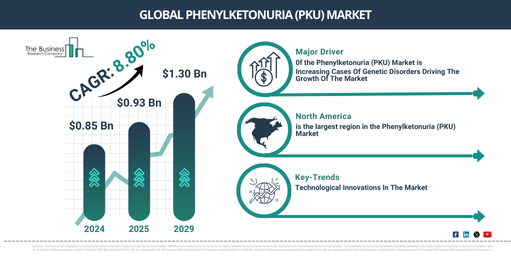
    The value of the phenylketonuria (PKU) industry has expanded substantially over the past few years. It’s expected to increase from $0.85 billion in 2024 to $0.93 billion in 2025, boasting a compound annual growth rate (CAGR) of 9.1%. Several factors have contributed to the growth during the historic period, including the proliferation of newborn screening programs, enhanced awareness about metabolic disorders, management of PKU through dietary approaches, wider availability of medical foods, and regulatory authorizations of treatments for PKU._x000D_

    _x000D_

    The market size for phenylketonuria (PKU) is predicted to experience significant growth in the upcoming years, expanding to a $1.30 billion valuation in 2029, with a compound annual growth rate (CAGR) of 8.8%. Factors contributing to this growth during the forecast period include increased usage of gene therapy, growth of enzyme replacement therapies, heightening investments in rare disease research, an escalated demand for personalized medicine, and governmental backing for PKU treatment coverage. Important trends during this prediction period encompass the emergence of RNA-based therapies, digital health strategies for PKU management, growing partnerships amongst biotech companies and research organizations, emphasis on non-dietary treatment options, and the broadening of telehealth services for patients with PKU._x000D_

    _x000D_

    #Download a free sample to assess the report’s scope and structure:#_x000D_

    https://www.thebusinessresearchcompany.com/sample.aspx?id=21257&type=smp_x000D_

    _x000D_

    #Which Major Market Drivers Are Expected to Boost the Growth Potential of the Phenylketonuria (PKU) Market?#_x000D_

    The escalation in genetic disorder incidences is anticipated to drive the phenylketonuria (PKU) market’s expansion. Genetic disorders are health issues resulting from DNA abnormalities like mutations, gene or chromosome deletions or duplications. The spike in genetic disorder cases is due to factors such as increased maternal age, environmental impacts, advancements in diagnostic technology, and enhanced awareness leading to higher detection rates. Phenylketonuria helps comprehend genetic disorders by demonstrating the potential serious metabolic complications from inherited enzyme deficiencies. For example, in March 2024, Gene People, a UK registered charity, indicated that genetic conditions affect an estimated 1 in 25 children, which is over 2.4 million children and adults in the UK. Also, roughly 30,000 newborns and children in the UK are diagnosed with a genetic condition each year. Thus, the rising cases of genetic disorders are propelling the phenylketonuria (PKU) market’s growth._x000D_

    _x000D_

    #Which Key Market Segments Comprise the Phenylketonuria (PKU) Market and Drive Its Revenue Growth?#_x000D_

    The phenylketonuria (PKU) market covered in this report is segmented –_x000D_

    _x000D_

    1) By Type: Hyperphenylalaninemia, Mild Phenylketonuria (PKU), Moderate And Variant, Classic Phenylketonuria (PKU)_x000D_

    2) By Treatment Type: Enzyme Replacement Therapy, Gene Therapy, Medication, Dietary Therapy_x000D_

    3) By Diagnosis: Genetic Testing, Biochemical Testing, Newborn Screening_x000D_

    4) By End-User: Specialty Clinics, Research Institutes, Home Healthcare, Hospitals_x000D_

    _x000D_

    Subsegments:_x000D_

    1) By Hyperphenylalaninemia: Mild Hyperphenylalaninemia, Moderate Hyperphenylalaninemia, Severe Hyperphenylalaninemia_x000D_

    2) By Mild Phenylketonuria (PKU): Mild PKU with dietary management, Mild PKU with enzyme supplementation_x000D_

    3) By Moderate And Variant: Moderate PKU with medication, Variant PKU with treatment variations_x000D_

    4) By Classic Phenylketonuria (PKU): Classic PKU with strict dietary management, Classic PKU with enzyme replacement therapy_x000D_

    _x000D_

    #Request customized data on this market:#_x000D_

    https://www.thebusinessresearchcompany.com/customise?id=21257&type=smp_x000D_

    _x000D_

    #Which Areas Are Leading Regions in the Phenylketonuria (PKU) Market Expansion Across the Globe?#_x000D_

    North America was the largest region in the phenylketonuria (PKU) market in 2024. Europe is expected to be the fastest-growing region in the forecast period. The regions covered in the phenylketonuria (PKU) market report are Asia-Pacific, Western Europe, Eastern Europe, North America, South America, Middle East, Africa._x000D_

    _x000D_

    #What Are the Key Market Trends in thePhenylketonuria (PKU) Market Over the Coming Years?#_x000D_

    Key enterprises within the phenylketonuria (PKU) market are prioritizing the creation of innovative offerings through the utilization of diverse technologies like physiognomic technology. This is aimed at magnifying the effectiveness and safety of PKU remedies by mimicking human physiological conditions for superior drug absorption and metabolism. Physiomimic technology is a holistic combination of hardware, consumables, and assay protocols, developed to mirror complex human biology and accurately anticipate human medication responses. As an example, Relief Therapeutics Holding SA, a biopharmaceutical firm based in Switzerland, unveiled PKU Golike in October 2022. PKU Golike, a medical food product of the latest generation, was created with patented, pharmaceutical-grade Physiomimic technology for managing diet in phenylketonuria (PKU) cases. Available as granules, packets, and medical food bars, PKU Golike is an extended-release amino acid product. It boasts a unique coating that facilitates the physiological absorption of amino acids like natural proteins and effectively masks their disagreeable taste, smell, and aftertaste._x000D_

    _x000D_

    #View the full report here:#_x000D_

    https://www.thebusinessresearchcompany.com/report/phenylketonuria-pku-global-market-report_x000D_

    _x000D_

    #How Is the Phenylketonuria (PKU) Market Conceptually Defined?#_x000D_

    Phenylketonuria (PKU) is a rare inherited metabolic disorder in which the body cannot break down an amino acid called phenylalanine (Phe) found in many protein-containing foods. This inability is due to a deficiency or malfunction of the phenylalanine hydroxylase (PAH) enzyme, which normally converts phenylalanine into another amino acid called tyrosine._x000D_

    _x000D_

    #Purchase the full report and get a swift delivery:#_x000D_

    https://www.thebusinessresearchcompany.com/purchaseoptions.aspx?id=21257_x000D_

    _x000D_

    #About The Business Research Company:#_x000D_

    With over 15000+ reports from 27 industries covering 60+ geographies, The Business Research Company has built a reputation for offering comprehensive, data-rich research and insights. Armed with 1,500,000 datasets, the optimistic contribution of in-depth secondary research, and unique insights from industry leaders, you can get the information you need to stay ahead in the game._x000D_

    _x000D_

    #Get in touch with us:#_x000D_

    The Business Research Company: https://www.thebusinessresearchcompany.com/_x000D_

    Americas +1 3156230293_x000D_

    Asia +44 2071930708_x000D_

    Europe +44 2071930708_x000D_

    Email us at info@tbrc.info_x000D_

    _x000D_

    #Follow us on:#_x000D_

    _x000D_

    LinkedIn: https://in.linkedin.com/company/the-business-research-company_x000D_

    YouTube: https://www.youtube.com/channel/UC24_fI0rV8cR5DxlCpgmyFQ_x000D_

    Global Market Model: https://www.thebusinessresearchcompany.com/global-market-model

  • CD20 Antibody Market Insights: In-Depth Look at Growth Trends, Market Size, and Opportunities for 2025-2034

    CD20 Antibody Market Insights: In-Depth Look at Growth Trends, Market Size, and Opportunities for 2025-2034

    Our market reports now include the latest updates on global tariffs, trade impacts, and evolving supply chain dynamics.

    What Is the Estimated Market Size of the CD20 Antibody Market In 2029?

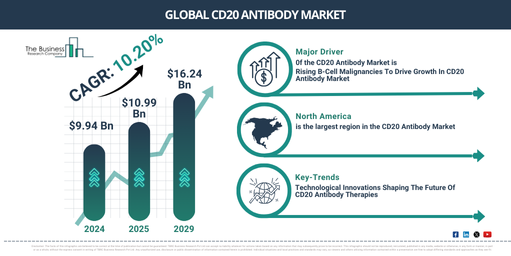
    The market size for the CD20 antibody has seen a quick expansion in the recent past. The growth is projected to rise from $9.94 billion in 2024 to $10.99 billion in 2025, with a compound annual growth rate (CAGR) of 10.6%. The surge in growth during the historic period is due to several factors including increasing cases of b-cell malignancies, growing incidence of autoimmune diseases, heightened demand for targeted therapies, more approvals of biosimilars, an increase in healthcare spending, enhanced healthcare infrastructure, and a rise in awareness of the advantages of immunotherapy.

    In the coming years, the CD20 antibody market is projected to experience rapid expansion. By the year 2029, it is anticipated to reach a market size of $16.24 billion, presenting a compound annual growth rate (CAGR) of 10.2%. This surge during the projected period can be accredited to escalating demand for cutting-edge cancer immunotherapies, rising occurrences of autoimmune diseases, increasing utilization of biosimilar CD20 antibodies, the broadening scope of applications in combination treatments, growing investments in biopharmaceutical research, and heightened understanding of personalized medicine. Notable forthcoming trends encompass the creation of next-generation CD20 antibodies, advancements in antibody-drug conjugate technology, incorporation of artificial intelligence in antibody blueprinting, enhancements in bispecific antibody technology, the emergence of CAR-T cell therapies targeting CD20, application of nanotechnology for improved delivery, and advancements in high-throughput screening techniques.

    Download a free sample to assess the report’s scope and structure:

    https://www.thebusinessresearchcompany.com/sample.aspx?id=21131&type=smp

    What External and Internal Drivers Are Contributing to the Growth of the CD20 Antibody Market?

    The expansion of the CD20 antibody market is expected to be fuelled by the escalating occurrences of B-cell malignancies. An increase in B-cell malignancies corresponds to a rise in the number of cancer cases impacting B cells, a variety of white blood cell integral to the immune response. Numerous factors contribute to this, including an aging population, genetics, exposure to the environment, lifestyle choices, enhanced detection methods, and shifts in the immune system. CD20 antibodies, like rituximab, are employed to target and eradicate malignant B-cells in B-cell malignancies such as non-Hodgkin lymphoma and chronic lymphocytic leukemia, leading to improved treatment results. For example, as per the report by the American College of Cardiology in 2024, it is estimated around 80,350 people, encompassing both children and adults (45,140 males and 35,210 females), will be diagnosed with non-Hodgkin lymphoma (NHL) in 2025. Furthermore, it is anticipated that around 19,390 individuals, comprising 11,060 males and 8,330 females, will succumb to this cancer. Consequently, the surging incidence of B-cell malignancies is spurring the growth of the CD-19 antibody market.

    What Segment Types Define the CD20 Antibody Market Structure?

    The CD20 antibody market covered in this report is segmented –

    1) By Type: Monoclonal Antibody, Polyclonal Antibody

    2) By Application: Flow Cytometry, Enzyme-Linked Immunosorbent Assay (ELISA), Western Blot, Immunoprecipitation, Immunofluorescence

    3) By End User: Hospitals, Specialty Clinics, Ambulatory Surgical Centers, Other End Users

    Subsegments:

    1) By Monoclonal Antibody: Rituximab, Obinutuzumab, Ofatumumab

    2) By Polyclonal Antibody: Conventional Polyclonal Antibodies, Human Polyclonal Antibodies, Recombinant Polyclonal Antibodies

    Request customized data on this market:

    https://www.thebusinessresearchcompany.com/customise?id=21131&type=smp

    Which Geographic Areas Hold the Strongest Growth Potential in the CD20 Antibody Market?

    North America was the largest region in the CD20 antibody market in 2024. The regions covered in the CD20 antibody market report are Asia-Pacific, Western Europe, Eastern Europe, North America, South America, Middle East, Africa.

    What Long-Term Trends Are Transforming the Competitive Landscape of the CD20 Antibody Market?

    Leading firms in the CD20 antibody market are honing in on the development of technological novelties, including biosimilars. Their aim is to improve the availability of treatments, decrease medical expenses, and meet the escalating demand for cost-effective and successful therapies for B-cell malignancies and autoimmune diseases. Biosimilars are biologic medicinal products that closely resemble a previously approved reference product without any significant variations in terms of safety, purity or effectiveness. For example, in July 2024, Indian-based Dr. Reddy’s Laboratories reported that they have received a complete response letter (CRL) from the US Food and Drug Administration (USFDA) regarding their rituximab biosimilar candidate. They also plan to work extensively with the USFDA to clear any issues within the set timelines with a goal to bring rituximab biosimilar to the patients in the United States. Rituximab biosimilar targets the CD20 protein on B-cells, triggering a response that leads to the elimination of these abnormal or hyperactive B-cells.

    View the full report here:

    https://www.thebusinessresearchcompany.com/report/cd20-antibody-global-market-report

    What Is the Definition of the CD20 Antibody Market?

    CD20 antibodies are monoclonal antibodies that specifically target CD20, a protein found on the surface of B cells (a type of white blood cell involved in the immune response). These antibodies are used primarily to treat diseases related to abnormal B-cell function, such as cancers and autoimmune disorders. The main function of CD20 antibodies is to bind to the CD20 protein on B cells and trigger their destruction.

    Purchase the full report and get a swift delivery:

    https://www.thebusinessresearchcompany.com/purchaseoptions.aspx?id=21131

    About The Business Research Company:

    With over 15000+ reports from 27 industries covering 60+ geographies, The Business Research Company has built a reputation for offering comprehensive, data-rich research and insights. Armed with 1,500,000 datasets, the optimistic contribution of in-depth secondary research, and unique insights from industry leaders, you can get the information you need to stay ahead in the game.

    Get in touch with us:

    The Business Research Company: https://www.thebusinessresearchcompany.com/

    Americas +1 3156230293

    Asia +44 2071930708

    Europe +44 2071930708

    Email us at info@tbrc.info

    Follow us on:

    LinkedIn: https://in.linkedin.com/company/the-business-research-company

    YouTube: https://www.youtube.com/channel/UC24_fI0rV8cR5DxlCpgmyFQ

    Global Market Model: https://www.thebusinessresearchcompany.com/global-market-model
  • Top Trends Driving Innovation and Change in the Embolotherapy Market: Introduction Of Absorbable Embolic Systems

    Top Trends Driving Innovation and Change in the Embolotherapy Market: Introduction Of Absorbable Embolic Systems

    Our market reports now include the latest updates on global tariffs, trade impacts, and evolving supply chain dynamics.

    What Is the Current and Projected Market Size of the Embolotherapy Market Through 2034?

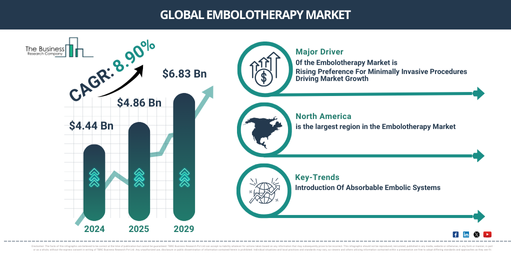
    The market size for embolotherapy has seen robust expansion in the past years. Its value is expected to increase from $4.44 billion in 2024 to $4.86 billion in 2025, with a compound annual growth rate (CAGR) of 9.3%. Elements contributing to the past period growth include a surge in the need for embolotherapy treatments, an escalating number of cancer cases, the rising prevalence of peripheral vascular diseases, increasing healthcare spending, and burgeoning investments aimed at research.

    In the following years, the embolotherapy market is projected to experience significant expansion, reaching a value of $6.83 billion in 2029 with a compound annual growth rate (CAGR) of 8.9%. This increase during the forecasted period is due to several factors such as an increase in disposable income, a rise in chronic disease prevalence, the expansion of its use in reproductive health, an uptick in cheoembolization procedures, and a growing incidence of liver cancer. The forecasted period will also see significant trends like advanced technologies, digital and analog devices, the inclusion of an insertable cardiac monitor, embolotherapy techniques, and strategic partnerships.

    Download a free sample to assess the report’s scope and structure:

    https://www.thebusinessresearchcompany.com/sample.aspx?id=21181&type=smp

    What External and Internal Drivers Are Contributing to the Growth of the Embolotherapy Market?

    The embolotherapy market is expected to expand due to the increased preference for minimally invasive procedures. These are cosmetic treatments that involve little to no surgical intervention, leading to less downtime and lower risks. The popularity of these procedures stems from quicker recovery times, less pain, fewer scars, diminished risk of complications, and ongoing technological developments. Embolotherapy contributes to the efficacy of minimally invasive procedures by specifically blocking blood circulation to specific vessels. This helps reduce bleeding, treat tumors, and control vascular irregularities more accurately and with fewer complications. According to the American Society of Plastic Surgeons, a non-profit organization based in the USA, there was a 7% increase in cosmetic minimally invasive procedures by September 2023, resulting in a rise from 23,672,269 in 2022 to 25,442,640. Consequently, this growing inclination towards minimally invasive procedures is fuelling the expansion of the embolotherapy market.

    What Segment Types Define the Embolotherapy Market Structure?

    The embolotherapy market covered in this report is segmented –

    1) By Product: Embolization Coil, Embolic Agents, Detachable Balloons, Embolic Plug Systems, Support Devices

    2) By Application: Oncology, Peripheral Vascular Diseases, Urology and Nephrology, Neurology, Gastrointestinal (GIT) Disorders

    3) By Procedure: Transcatheter Arterial Embolization (TAE), Transcatheter Arterial Radioembolization (TARE) Or Selective Internal Radiation Therapy (SIRT), Transarterial Chemoembolization (TACE)

    4) By End User: Ambulatory Surgical Centre, Hospitals And Clinics, Other End Users

    Subsegments:

    1) By Embolization Coil: Bare Coils, Coated Coils, Micro Coils

    2) By Embolic Agents: Liquid Embolic Agents, Particulate Embolic Agents, Gelatin Sponge, Polyvinyl Alcohol (PVA) Particles

    3) By Detachable Balloons: Single-Use Balloons, Multi-Use Balloons

    4) By Embolic Plug Systems: Plug Kits, Distal Occlusion Systems

    5) By Support Devices: Guidewires, Catheters, Sheath Introducers

    Request customized data on this market:

    https://www.thebusinessresearchcompany.com/customise?id=21181&type=smp

    Which Geographic Areas Hold the Strongest Growth Potential in the Embolotherapy Market?

    North America was the largest region in the embolotherapy market in 2024. Asia-Pacific is expected to be the fastest-growing region in the forecast period. The regions covered in the embolotherapy market report are Asia-Pacific, Western Europe, Eastern Europe, North America, South America, Middle East, Africa.

    What Long-Term Trends Are Transforming the Competitive Landscape of the Embolotherapy Market?

    Leading firms in the embolotherapy field are striving to develop revolutionary products like absorbable embolics systems to improve patient results and widen the range of treatment alternatives. Absorbable embolic systems utilize bioresorbable materials in embolization procedures to hinder blood supply to specific tissues such as tumors or aneurysms, and these materials eventually disintegrate within the body. To illustrate, in January 2025, Instylla Inc., a medical equipment manufacturer based in the U.S., obtained FDA 510(k) approval for its bioresorbable embolization agent named Tembo embolic system, constructed with dry-gelatin particles irregular in shape and ranging from 85 to 255 µm in size. This system is engineered to embolize hypervascular tumors and seal off blood vessels in the peripheral vasculature. As per Instylla, Tembo provides benefits like simple preparation, high visibility, and the capability to densely fill treated vessels, potentially enhancing the efficacy of existing permanent embolic solutions.

    View the full report here:

    https://www.thebusinessresearchcompany.com/report/embolotherapy-global-market-report

    What Is the Definition of the Embolotherapy Market?

    Embolotherapy is a minimally invasive medical procedure involving intentionally blocking blood vessels to treat various medical conditions. It is achieved by injecting embolic agents, such as microspheres, coils, gels, or liquid embolic, into targeted blood vessels to cut off blood supply to abnormal tissues or structures. Embolotherapy is a highly targeted and less invasive alternative to traditional surgery, often performed by interventional radiologists to improve patient outcomes with minimal recovery time.

    Purchase the full report and get a swift delivery:

    https://www.thebusinessresearchcompany.com/purchaseoptions.aspx?id=21181

    About The Business Research Company:

    With over 15000+ reports from 27 industries covering 60+ geographies, The Business Research Company has built a reputation for offering comprehensive, data-rich research and insights. Armed with 1,500,000 datasets, the optimistic contribution of in-depth secondary research, and unique insights from industry leaders, you can get the information you need to stay ahead in the game.

    Get in touch with us:

    The Business Research Company: https://www.thebusinessresearchcompany.com/

    Americas +1 3156230293

    Asia +44 2071930708

    Europe +44 2071930708

    Email us at info@tbrc.info

    Follow us on:

    LinkedIn: https://in.linkedin.com/company/the-business-research-company

    YouTube: https://www.youtube.com/channel/UC24_fI0rV8cR5DxlCpgmyFQ

    Global Market Model: https://www.thebusinessresearchcompany.com/global-market-model