Blog

  • Warming Cabinet Market Analysis 2026: Market Size, Growth Trends And Industry Outlook

    Warming Cabinet Market Analysis 2026: Market Size, Growth Trends And Industry Outlook

    Backed by market attractiveness analysis, total addressable market sizing, company benchmarking matrices, interactive Excel dashboards, wider supply chain intelligence, emerging startup coverage, and detailed product-level insights, The Business Research Company’s 2026 market reports are designed to offer research that is more actionable and strategically valuable than ever.

    Warming Cabinet Market Size Forecast: How Big Could The Market Get By 2030?

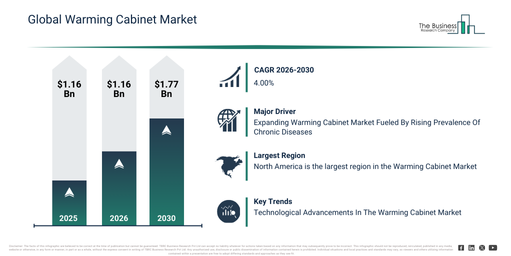
    The warming cabinet market size has shown consistent expansion over recent years. It is anticipated to grow from $1.75 billion in 2025 to $1.82 billion in 2026, exhibiting a compound annual growth rate of 4.0%. The expansion observed in the past can be linked to factors such as the development of hospital infrastructure, the increasing demand for temperature-controlled storage of medical supplies, the greater integration of warming cabinets in surgical and recovery areas, the broader application of blanket and fluid warming in patient care, and the rising acquisition of durable heating storage equipment.

    The warming cabinet market is projected to experience consistent expansion over the coming years, reaching a valuation of $2.12 billion in 2030, driven by a compound annual growth rate (CAGR) of 4.0%. This anticipated growth during the forecast period stems from several factors, including an increasing need for multi-cavity and stackable warming cabinet solutions, a heightened emphasis on optimizing workflows within healthcare environments, the rising uptake of compact countertop and built-in warming devices, a broadening use of warming cabinets in outpatient and emergency care facilities, and augmented investment in sophisticated temperature management technologies. Key trends anticipated during this period involve the expanded application of warming cabinets in hospitals for the regulated storage of blankets and intravenous fluids, a growing preference for multi-cavity and modular warming units in busy healthcare settings, their increasing deployment in clinics and outpatient facilities, a broader application of both floor-standing and countertop models across various medical departments, and an escalating requirement for dependable temperature stability to enhance patient care and operational effectiveness.

    Get A Free Sample Report With In-Depth Market Insights:

    https://thebusinessresearchcompany.com/sample_request?id=40113589&type=smp&name=Warming%20Cabinet%20Market%20Report%202026&utm_source=Blogs&utm_medium=Paid&utm_campaign=Oct_PR

    Warming Cabinet Market Growth Momentum: What Factors Are Shaping Demand?

    The expanding occurrence of chronic diseases is projected to stimulate the growth of the warming cabinet market moving forward. The increasing prevalence of these conditions is a result of factors like aging global populations, unhealthy lifestyle choices, and prolonged exposure to risk factors such as poor nutrition, physical inactivity, pollution, and stress, all contributing to a greater worldwide burden of long-term illnesses. Chronic diseases are health conditions that endure for an extended duration and often demand ongoing medical attention, management, and care. Warming cabinets are utilized in managing chronic diseases to guarantee that medical supplies and treatments are kept at optimal temperatures, thus enhancing patient comfort and ensuring effective therapeutic outcomes. For example, in February 2024, the Centers for Disease Control and Prevention, a US-based public health agency, reported that the proportion of Zip Code Tabulation Areas with the highest quartile of chronic disease prevalence reached 26.5% in 2024, an increase from 24% in 2023. Therefore, the escalating prevalence of chronic diseases is a key driver for the warming cabinet market’s expansion.

    Warming Cabinet Market Segmentation: How Does The Market Break Down By Category?

    The warming cabinet market covered in this report is segmented –

    1) By Type: Single Cavity, Multiple Cavity

    2) By Design: Built-In, Countertop, Floor-standing

    3) By End-Use: Hospital, Clinic, Other End-Uses

    Subsegments:

    1) By Single Cavity: Countertop Warming Cabinets, Floor-Standing Warming Cabinets

    2) By Multiple Cavity: Stackable Warming Cabinets, Modular Warming Cabinets

    Warming Cabinet Market Trends Redefining Industry Growth

    Leading companies within the warming cabinet market are prioritizing the creation of technologically advanced products, such as heated cases integrated with LED lights, to offer both illumination and temperature regulation. An LED lights integrated heated case functions as a protective enclosure equipped with LED lighting and internal heating elements, engineered to maintain optimal temperature and visibility for its contents. For instance, in July 2024, Alto-Shaam, a US-based foodservice equipment provider, unveiled its Heated Display Cases. This new collection of deli cases presents three models in different dimensions: a 48-inch (122 cm) version with three pan zones, a 72-inch (183 cm) version with five pan zones, and a 96-inch (244 cm) version with seven pan zones. Each model features Alto-Shaam’s patented Halo Heat technology, enhanced by ceramic top heat to extend holding times. This dual heating system guarantees even and high-quality prolonged holding for a variety of food items, including pastas, vegetables, and fried chicken, by maintaining stable temperatures that prevent significant fluctuations and drying. With independent temperature control available for each pan zone, food can be showcased for extended periods without diminishing its quality, ultimately assisting foodservice operations in increasing profitability and reducing waste.

    Warming Cabinet Market Leading Companies And Competitive Benchmarking

    Major companies operating in the warming cabinet market are Medline Industries Inc., Arjo AB, CME Corp., Getinge AB, STERIS PLC, Rational AG, Midmark Corporation, Fri-Jado, Memmert GmbH + Co. KG, Ferno, Vollrath Company, Skytron LLC, MAC Medical Inc., Pedigo Products Inc., Blickman Inc., Continental Metal Products Inc., Barkey GmbH & Co. KG, Hupfer Metallwerke GmbH & Co. KG, Future Health Concepts Inc., Kanmed AB

    View The Full Warming Cabinet Market Report:

    https://thebusinessresearchcompany.com/report/warming-cabinet-global-market-report?utm_source=Blogs&utm_medium=Paid&utm_campaign=Oct_PR

    Warming Cabinet Market Top Region By Revenue And Market Share

    North America was the largest region in the warming cabinet market in 2025. Asia-Pacific is expected to be the fastest-growing region in the forecast period. The regions covered in the warming cabinet market report are Asia-Pacific, South East Asia, Western Europe, Eastern Europe, North America, South America, Middle East, Africa.

    Reach Out To Our Team:

    The Business Research Company: https://www.thebusinessresearchcompany.com/

    Americas: +1 310-496-7795

    Asia: +44 7882 955267 & +91 8897263534

    Europe: +44 7882 955267

    Email us at: marketing@tbrc.info

    Follow us on:

    LinkedIn: https://in.linkedin.com/company/the-business-research-company

    YouTube: https://www.youtube.com/channel/UC24_fI0rV8cR5DxlCpgmyFQ

    Global Market Model: https://www.thebusinessresearchcompany.com/global-market-model

  • Walking Assist Devices Market Forecast To 2030: Starting From $9.64 Billion In 2026

    Walking Assist Devices Market Forecast To 2030: Starting From $9.64 Billion In 2026

    Featuring market attractiveness scoring, total addressable market sizing, company benchmarking matrices, interactive Excel dashboards, deeper supply chain intelligence, emerging startup tracking, and granular product-level insights, The Business Research Company’s 2026 market reports are built to deliver research that is both more actionable and more strategically valuable.

    Walking Assist Devices Market Revenue Outlook: What CAGR Lies Ahead Through 2030?

    The walking assist devices market has shown robust expansion in recent years. It will grow from $6.7 billion in 2025 to $7.21 billion in 2026 at a compound annual growth rate (CAGR) of 7.7%. The market’s historical development is attributable to factors such as an increasing elderly population, a higher occurrence of mobility limitations, growing requirements for post-operative rehabilitation, broader access to assistive mobility products, and heightened awareness of fall prevention.

    The walking assist devices market size is anticipated to expand significantly over the next few years. It is projected to reach $9.64 billion in 2030, demonstrating a compound annual growth rate (CAGR) of 7.5%. The projected increase during this period stems from factors such as the growing integration of smart mobility aids, the escalating need for home-based care solutions, the expanding infrastructure for elderly care, a heightened emphasis on supporting independent living, and increased customization options for walking assist devices. Prominent trends for the forecast period encompass a rising adoption of ergonomic and adjustable walking aids, the increasing incorporation of smart sensors into mobility devices, a surging demand for lightweight and foldable designs, the development of more homecare-focused mobility solutions, and an enhanced concentration on features designed to prevent falls.

    Get A Free Sample Report With In-Depth Market Insights:

    https://thebusinessresearchcompany.com/sample_request?id=52790019&type=smp&name=Walking%20Assist%20Devices%20Market%20Report%202026&utm_source=Blogs&utm_medium=Paid&utm_campaign=Oct_PR

    Walking Assist Devices Market Expansion Drivers: What’s Shaping Future Growth?

    An increasing number of road accidents is projected to fuel the expansion of the walking assist devices market in the coming years. Road accidents are unforeseen occurrences on roadways involving vehicles or pedestrians, frequently leading to damage, injuries, or fatalities. The increase in these incidents can be attributed to heightened driver distractions, such as the pervasive use of mobile phones, which divert attention from driving and reduce reaction times, thereby increasing the probability of collisions. These road accidents underscore the necessity for enhanced safety and consequently boost the demand for walking assist devices, which assist individuals in recovering from injuries and improving their mobility. For instance, in March 2024, according to Eurostat, a Luxembourg-based statistical office of the European Union, wide road‑traffic fatalities in 2023 were 20,380, marking a 1.3% decrease compared to 20,652 in 2022, indicating that while the number of deaths is gradually decreasing, the rate of improvement remains very slow. Therefore, the escalating incidence of road accidents is propelling the growth of the walking assist devices market.

    Walking Assist Devices Market Segment Trends And Revenue Contributors

    The walking assist devices market covered in this report is segmented –

    1) By Product Type: Gait Belt And Lift Vest, Cane, Crutch, Walker, Wheelchair, Power Scooter

    2) By Age Group: Geriatric, Adults

    3) By Distribution Channel: Online, Offline

    4) By End-User: Hospitals, Homecare, Other End-Users

    Subsegments:

    1) By Gait Belt And Lift Vest: Standard Gait Belts, Padded Gait Belts, Quick-Release Gait Belts, Transfer And Lift Vests

    2) By Cane: Standard Canes, Quad Canes, Folding Canes, Offset Canes, Seat Canes

    3) By Crutch: Underarm Crutches, Forearm Crutches, Platform Crutches, Strutter Crutches

    4) By Walker: Standard Walkers, Rolling Walkers, Hemi Walkers, Knee Walkers

    5) By Wheelchair: Manual Wheelchairs, Electric Wheelchairs, Transport Wheelchairs, Sports Wheelchairs, Bariatric Wheelchairs

    6) By Power Scooter: Travel Scooters, Heavy-Duty Scooters, Folding Scooters, Three-Wheel Scooters, Four-Wheel Scooters

    Walking Assist Devices Market Strategic Trends: What Defines The Next Growth Phase?

    Leading companies operating in the walking assist devices market are concentrating on developing innovative products, such as wearable robots, to enhance worker efficiency, reduce physical strain, and improve safety during tree maintenance and forestry operations. A wearable robot is defined as a robotic exoskeleton or an assistive device worn on the body, designed to augment mobility, strength, or endurance across various applications, including healthcare, rehabilitation, and industrial work. For instance, in January 2024, Samsung Electronics Co., Ltd., a South Korea-based technology company, introduced the Samsung EX1, a wearable robot. This device stands out for its capacity to improve mobility and stability in older adults by providing hip-worn robotic assistance. Unlike traditional walking aids, the EX1 actively supports movement while guiding users through structured exercise routines to enhance muscle strength and balance. Research indicates that consistent use can boost stride length by over 12% and propulsion by approximately 21%, underscoring its potential as a groundbreaking innovation in wearable assistive technology.

    Walking Assist Devices Market Industry Leaders And Competitive Landscape

    Major companies operating in the walking assist devices market are Comfort Company, Ottobock SE & Co. KGaA, Invacare Corporation, Permobil, Sunrise Medical, Drive DeVilbiss Healthcare, Pride Mobility Products Corp, Etac AB, Besco Medical Limited, GF Health Products Inc., LEVO AG, Ossenberg GmbH, Bischoff & Bischoff, Cobi Rehab, CHINESPORT S.p.a., MEYRA GmbH, Eurovema Mobility AB, Karman Healthcare, Drive Medical GmbH & Co. KG, Handicare Group AB

    View The Full Walking Assist Devices Market Report:

    https://thebusinessresearchcompany.com/report/walking-assist-devices-global-market-report?utm_source=Blogs&utm_medium=Paid&utm_campaign=Oct_PR

    Walking Assist Devices Market Regional Analysis And Top Geography

    North America was the largest region in the walking assist devices market in 2025. Asia-Pacific is expected to be the fastest-growing region in the forecast period. The regions covered in the walking assist devices market report are Asia-Pacific, South East Asia, Western Europe, Eastern Europe, North America, South America, Middle East, Africa.

    Reach Out To Our Team:

    The Business Research Company: https://www.thebusinessresearchcompany.com/

    Americas: +1 310-496-7795

    Asia: +44 7882 955267 & +91 8897263534

    Europe: +44 7882 955267

    Email us at: marketing@tbrc.info

    Follow us on:

    LinkedIn: https://in.linkedin.com/company/the-business-research-company

    YouTube: https://www.youtube.com/channel/UC24_fI0rV8cR5DxlCpgmyFQ

    Global Market Model: https://www.thebusinessresearchcompany.com/global-market-model
  • Walking Aids Market Size In 2026 And Beyond: Understanding Future Growth Potential

    Walking Aids Market Size In 2026 And Beyond: Understanding Future Growth Potential

    Built to provide research that’s more actionable and strategically valuable, The Business Research Company’s 2026 market reports include market attractiveness analysis, total addressable market sizing, company benchmarking matrices, interactive Excel dashboards, broader supply chain intelligence, emerging startup tracking, and in-depth product insights.

    Walking Aids Market Growth Analysis: How Will Revenue Trend Over The Forecast Period?

    Recent years have seen substantial growth in the size of the walking aids market. Projections indicate a rise in this market’s value from $3.22 billion in 2025 to $3.42 billion by 2026, maintaining a compound annual growth rate (CAGR) of 6.2%. Past growth is attributable to several factors, including a higher incidence of mobility issues among the elderly, an increase in rehabilitation and post-operative recovery cases, enhanced adoption of basic mobility aids in home care, the wider clinical application of walkers, crutches, and canes, and improved awareness regarding fall prevention and stability support.

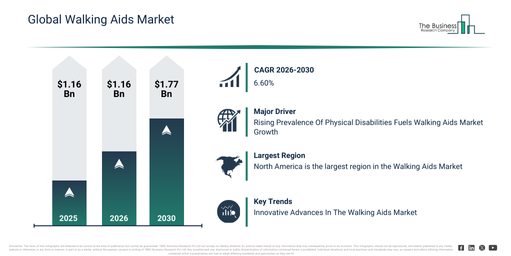
    The walking aids market is projected to experience substantial expansion in the coming years. Its valuation is anticipated to reach $4.42 billion in 2030, demonstrating a compound annual growth rate (CAGR) of 6.6%. This projected growth over the forecast period stems from several factors, including an escalating demand for sophisticated rollators and automated mobility assistance products, a heightened emphasis on patient-focused and comfort-driven walking aid designs, the broader deployment of mobility support solutions within home care environments, a greater incorporation of robust and lightweight materials in product creation, and the increasing adoption of mobility devices in developing healthcare markets. Key developments expected during this period involve a surge in demand for ergonomically designed walking aids to improve balance and support mobility, the rising acceptance of adjustable and customizable mobility assistance devices tailored for various user requirements, increased utilization of walking aids among older demographics and individuals recovering from injuries, an expanded availability of light yet durable mobility products for assistance in daily activities, and a greater focus on user comfort, safety, and autonomy in mobility support offerings.

    Get A Free Sample Report With In-Depth Market Insights:

    https://thebusinessresearchcompany.com/sample_request?id=75929499&type=smp&name=Walking%20Aids%20Market%20Report%202026&utm_source=Blogs&utm_medium=Paid&utm_campaign=Oct_PR

    Walking Aids Market Development Factors: What’s Supporting Demand?

    A significant presence of physical disabilities is projected to drive expansion within the walking aid market in the future. These disabilities are defined as physical conditions that considerably restrict a person’s participation in major life activities. Walking aids assist those with physical disabilities by improving their ability to move, maintain balance, and live independently. For example, data from March 2023, provided by the World Health Organization, a Switzerland-based intergovernmental organization, indicates that around 16% of the worldwide population, translating to one out of every six people or approximately 1.3 billion individuals, is anticipated to experience significant disabilities in 2023. Consequently, the widespread occurrence of physical disabilities is a key factor boosting the growth of the walking aid market.

    Walking Aids Market Segment Analysis Spotlighting Growth Areas

    The walking aids market covered in this report is segmented –

    1) By Product Type: Crutches, Canes, Walkers, Rollators, Other Products

    2) By Technology: Automated, Manual

    3) By End-User: Hospitals And Clinics, Home Care Settings, Other End Users

    Subsegments:

    1) By Crutches: Axillary Crutches, Forearm Crutches, Platform Crutches

    2) By Canes: Standard Canes, Quad Canes, Folding Canes, Seat Canes

    3) By Walkers: Standard Walkers, Wheeled Walkers, Rollator Walkers

    4) By Rollators: Three-Wheeled Rollators, Four-Wheeled Rollators, Heavy-Duty Rollators

    5) By Other Products: Walking Frames, Gait Trainers, Knee Walkers

    Walking Aids Market Transformation Trends: What Innovations Are Driving Change?

    Companies primarily engaged in the walking aids market are innovating technologically advanced items, such as precision-controlled rollators, with the goal of improving safety and stability. A precision-controlled rollator serves as a mobility aid equipped with advanced braking and steering systems, offering improved stability, control, and user safety, and is frequently used by individuals who need help with walking or balance. For example, in May 2024, Drive Medical, a US-based medical equipment provider, introduced the Nitro Sprint. This Nitro Sprint rollator is crafted with innovative precision-control characteristics that boost safety and mobility for users requiring support with balance or strength. Its notable patented elements feature a Euro-style frame with a sturdy 350-pound weight capacity, a redesigned braking system for swift component swaps, and a distinct slowdown brake to enhance control on slopes and difficult landscapes. Supplementary features include an expanded backrest with a viewing window for better obstacle awareness, an integrated accessory mount, and a flexible storage bag with three attachment possibilities, making it exceptionally useful and trustworthy.

    Walking Aids Market Key Participants And Competitive Landscape

    Major companies operating in the walking aids market are Hill-Rom Holdings Inc., OttoBock Healthcare GmbH, Invacare Corporation, Numotion LLC, Permobil AB, Sunrise Medical LLC, Pride Mobility Products Corporation, Etac Ab, Golden Technologies, Direct Healthcare Group Ltd., Graham-Field Health Products Inc., Vermeiren Group, Levo AG, Merits Health Products Co. Ltd., Nova Medical Products Inc., Meyra GmbH, Human Care HC AB, Karman Healthcare Inc., Timago, Besco Medical Limited, TOPRO Industri AS, Bischoff & Bischoff

    View The Full Walking Aids Market Report:

    https://thebusinessresearchcompany.com/report/walking-aids-global-market-report?utm_source=Blogs&utm_medium=Paid&utm_campaign=Oct_PR

    Walking Aids Market Geographic Analysis: Where Is Demand Rising Fastest?

    North America was the largest region in the walking aids market in 2025. Asia-Pacific is expected to be the fastest-growing region in the forecast period. The regions covered in the walking aids market report are Asia-Pacific, South East Asia, Western Europe, Eastern Europe, North America, South America, Middle East, Africa.

    Reach Out To Our Team:

    The Business Research Company: https://www.thebusinessresearchcompany.com/

    Americas: +1 310-496-7795

    Asia: +44 7882 955267 & +91 8897263534

    Europe: +44 7882 955267

    Email us at: marketing@tbrc.info

    Follow us on:

    LinkedIn: https://in.linkedin.com/company/the-business-research-company

    YouTube: https://www.youtube.com/channel/UC24_fI0rV8cR5DxlCpgmyFQ

    Global Market Model: https://www.thebusinessresearchcompany.com/global-market-model

  • Voice Prosthesis Devices And Equipment Market Reaches $2.26 Billion In 2026: Key Developments Shaping Expansion

    Voice Prosthesis Devices And Equipment Market Reaches $2.26 Billion In 2026: Key Developments Shaping Expansion

    Backed by market attractiveness analysis, total addressable market sizing, company benchmarking matrices, interactive Excel dashboards, wider supply chain intelligence, emerging startup coverage, and detailed product-level insights, The Business Research Company’s 2026 market reports are designed to offer research that is more actionable and strategically valuable than ever.

    Voice Prosthesis Devices And Equipment Market Forecast: What Value Will The Market Reach By 2030?

    The voice prosthesis devices and equipment market has shown rapid expansion in recent years. This market is projected to expand from $1.35 billion in 2025 to $1.48 billion in 2026, demonstrating a compound annual growth rate (CAGR) of 10.3%. Historically, this growth is primarily due to factors such as the rising incidence of laryngeal cancer, an increasing number of laryngectomy procedures, advancements in surgical techniques, improved access to post-surgical rehabilitation, and the availability of silicone-based prosthetic materials.

    The voice prosthesis devices and equipment market is projected to experience substantial growth in the upcoming years. This market is forecast to reach $2.26 billion by 2030, exhibiting a compound annual growth rate (CAGR) of 11.1%. This anticipated expansion throughout the forecast period stems from a heightened emphasis on enhancing quality of life, increased investments in sophisticated prosthetic materials, the wider availability of personalized medical devices, the increasing uptake of reusable prosthetic options, and stronger partnerships between surgeons and manufacturers of these devices. Key trends expected during this period involve the wider embrace of durable indwelling voice prostheses, a growing need for customizable prosthetic designs, the expanded application of biocompatible materials, the development of hands-free voice prosthesis solutions, and a stronger focus on ensuring patient comfort and extending device lifespan.

    Get A Free Sample Report With In-Depth Market Insights:

    https://thebusinessresearchcompany.com/sample_request?id=35730941&type=smp&name=Voice%20Prosthesis%20Devices%20And%20Equipment%20Market%20Report%202026&utm_source=Blogs&utm_medium=Paid&utm_campaign=Oct_PR

    Voice Prosthesis Devices And Equipment Market Industry Drivers: What’s Behind The Revenue Growth?

    A projected increase in larynx cancer cases is anticipated to stimulate the growth of the voice prosthesis devices and equipment market. Laryngeal cancer, a type of malignancy that develops in the tissues of the voice box (larynx), often requires a total laryngectomy, which is the surgical removal of the larynx, as a treatment. This surgical intervention causes patients to lose their natural voice, prompting individuals who undergo laryngectomy to seek voice restoration solutions, thereby generating demand for voice prosthesis devices. For illustration, a report released by the American Cancer Society, a US-based health organization, in January 2023, estimated approximately 12,380 new laryngeal cancer cases for 2023 (9,900 cases impacting men and 2,480 cases impacting women). Furthermore, laryngeal cancer is expected to lead to the deaths of around 3,820 individuals in 2023 (comprising 3,070 men and 750 women). Consequently, the growing prevalence of larynx cancers is a significant driver for the expansion of the voice prosthesis devices and equipment market.

    Voice Prosthesis Devices And Equipment Market Segment Performance And Emerging Opportunities

    The voice prosthesis devices and equipment market covered in this report is segmented –

    1) By Device Type: Indwelling Voice Prosthesis Devices, Non-Indwelling Voice Prosthesis Devices

    2) By Product Type: Soft Valve Assembly, Hard Valve Assembly, Other Product Types

    3) By Valve Type: Blom-Singer valve, Provox valve, Groningen valve

    4) By Material: Silicone Rubber, Silicone, Fluoroplastic, Silver Oxide, Other Materials

    5) By End User: Hospitals, Ambulatory Surgical Centers, Clinics

    Subsegments:

    1) By Indwelling Voice Prosthesis Devices: Silicone Indwelling Voice Prosthesis, Hydrophilic Indwelling Voice Prosthesis, Customizable Indwelling Prosthesis, Disposable Indwelling Prosthesis

    2) By Non-Indwelling Voice Prosthesis Devices: Hands-Free Voice Prosthesis, Removable Voice Prosthesis, Oral Voice Prosthesis, Reusable Non-Indwelling Prosthesis

    #Voice Prosthesis Devices And Equipment Market Growth Trends: What’s Shaping The Future Outlook?

    Major companies within the voice prosthesis devices and equipment market are concentrating on technological breakthroughs, such as AI-assisted bioelectric wearable systems incorporating magnetoelastic sensing, to facilitate speech restoration for patients with vocal cord impairment. These AI-assisted bioelectric wearable systems work by identifying subtle laryngeal muscle movements beneath the skin and transforming these signals into high-fidelity audible speech, thereby offering a non-invasive solution for individuals with voice disorders stemming from conditions such as laryngeal cancer, vocal cord pathology, or surgical removal. As an illustration, in March 2024, the UCLA Samueli School of Engineering, a US-based bioengineering research institution, unveiled a soft, patch-like AI-assisted wearable device that attaches to the skin near the throat. This device combines a self-powered magnetoelastic sensing component with a machine-learning algorithm to detect laryngeal muscle activity and translate it into nearly natural speech with 95% accuracy. Being lightweight, flexible, and reusable, this innovation allows patients with dysfunctional vocal cords to communicate effectively without invasive procedures, marking a substantial progression in voice prosthesis technology.

    Voice Prosthesis Devices And Equipment Market Top Companies Driving Competitive Growth

    Major companies operating in the voice prosthesis devices and equipment market are Atos Medical AB, Andreas Fahl Medizintechnik – Vertrieb GmbH, Servona GmBH, Acclarent Inc., Karl Storz Gmbh & Co. Kg, Smith & Nephew PLC, InHealth Technologies, HEIMOMED Heinze GmbH & Co. KG, Sonova Holding AG, William Demant Holding A/S, Smiths Medical Inc., ICU Medical Inc., Coloplast A/S, Orbisana Healthcare GmbH, Teleflex Incorporated, Innaumation Medical Devices Private Limited, Hood Laboratories, Caden Companies LLC, Calmoseptine Inc., Ajinomoto Cambrooke Inc., Cara Incorporated, Cardinal Health Inc., Blom-Singer Indwelling Voice Prostheses, CooperSurgical Inc., Cook Medical, Dale Medical Products Inc., Stryker Corporation, Halyard Health, Integra LifeSciences Holdings Corporation, Medtronic plc, Olympus Corporation

    View The Full Voice Prosthesis Devices And Equipment Market Report:

    https://thebusinessresearchcompany.com/report/voice-prosthesis-devices-and-equipment-global-market-report?utm_source=Blogs&utm_medium=Paid&utm_campaign=Oct_PR

    Voice Prosthesis Devices And Equipment Market Global Footprint: Which Region Leads The Market?

    North America was the largest region in the global voice prosthesis devices and equipment market in 2025. Asia-Pacific was the second-largest region in the voice prosthesis devices and equipment market share. The regions covered in the voice prosthesis devices and equipment market report are Asia-Pacific, South East Asia, Western Europe, Eastern Europe, North America, South America, Middle East, Africa.

    Reach Out To Our Team:

    The Business Research Company: https://www.thebusinessresearchcompany.com/

    Americas: +1 310-496-7795

    Asia: +44 7882 955267 & +91 8897263534

    Europe: +44 7882 955267

    Email us at: marketing@tbrc.info

    Follow us on:

    LinkedIn: https://in.linkedin.com/company/the-business-research-company

    YouTube: https://www.youtube.com/channel/UC24_fI0rV8cR5DxlCpgmyFQ

    Global Market Model: https://www.thebusinessresearchcompany.com/global-market-model

  • Vitreoretinal Surgery Devices Market Growth Outlook For 2026: Drivers, Trends And Future Opportunities

    Vitreoretinal Surgery Devices Market Growth Outlook For 2026: Drivers, Trends And Future Opportunities

    Featuring market attractiveness scoring, total addressable market sizing, company benchmarking matrices, interactive Excel dashboards, deeper supply chain intelligence, emerging startup tracking, and granular product-level insights, The Business Research Company’s 2026 market reports are built to deliver research that is both more actionable and more strategically valuable.

    Vitreoretinal Surgery Devices Market Size Outlook: How Quickly Will Revenue Expand Through 2030?

    The vitreoretinal surgery devices market has demonstrated robust growth in recent years. It is anticipated to increase from $2.13 billion in 2025 to $2.26 billion in 2026, achieving a compound annual growth rate (CAGR) of 6.0%. Historically, this expansion was fueled by several factors such as the broadening scope of vitreoretinal surgical procedures, the increasing prevalence of diabetic eye diseases, a greater adoption of modern ophthalmic equipment, enhancements in surgeon training programs, and the availability of advanced surgical probes.

    The vitreoretinal surgery devices market is anticipated to undergo substantial growth in the upcoming years. It is projected to reach $2.89 billion in 2030, demonstrating a compound annual growth rate (CAGR) of 6.3%. The expansion expected during the forecast period can be attributed to factors such as a rising need for precision in retinal surgeries, increased financial commitments to ophthalmic innovation, the proliferation of ambulatory surgery centers, a heightened emphasis on patient safety outcomes, and the greater adoption of digitally assisted surgical procedures. Major trends identified for this period include the increased deployment of advanced fluid control systems, the growing integration of vitreoretinal platforms, an escalating demand for high-speed vitrectomy probes, the broadening availability of single-use surgical accessories, and an enhanced focus on mitigating retinal trauma.

    Get A Free Sample Report With In-Depth Market Insights:

    https://thebusinessresearchcompany.com/sample_request?id=97917140&type=smp&name=Vitreoretinal%20Surgery%20Devices%20Market%20Report%202026&utm_source=Blogs&utm_medium=Paid&utm_campaign=Oct_PR

    Vitreoretinal Surgery Devices Market Growth Factors: What’s Supporting Expansion?

    The increasing prevalence of minimally invasive surgeries is anticipated to propel the growth of the vitreoretinal surgery devices market moving forward. Minimally invasive surgeries (MIS) are medical interventions performed to achieve therapeutic effects while minimizing bodily trauma. Vitreoretinal surgery devices are integral to these minimally invasive procedures, enabling precise operations within the eye, typically through small incisions. These advanced instruments enhance visualization, facilitate delicate surgical steps, and contribute to quicker patient recovery times in vitreoretinal surgeries. For instance, in June 2024, data from the American Society of Plastic Surgeons, a US-based specialty organization, indicated a 7 percent growth in minimally invasive procedures in 2023, which surpassed traditional surgical procedures by 2 percent, with neuromodulator injections and hyaluronic acid fillers each exceeding 9 million and 5 million treatments, respectively. Therefore, the rising number of minimally invasive surgeries is a key driver for the expansion of the vitreoretinal surgery devices market.

    Vitreoretinal Surgery Devices Market Segment Landscape And Growth Outlook

    The vitreoretinal surgery devices market covered in this report is segmented –

    1) By Product: Photocoagulation Lasers, Illumination Devices, Vitrectomy Machines, Vitrectomy Probes, Vitreoretinal Packs, Other Products

    2) By Surgery: Anterior Vitreoretinal Surgery, Posterior Vitreoretinal Surgery

    3) By Application: Diabetic Vitreous Hemorrhage, Retinal Detachment, Macular Hole, Other Applications

    4) By End-Users: Hospitals, Specialty Clinics, Ambulatory Surgery Centers, Other End-Users

    Subsegments:

    1) By Photocoagulation Lasers: Argon Lasers, Diode Lasers, Solid-State Lasers

    2) By Illumination Devices: Fiber Optic Illumination Devices, LED Illumination Devices, Halogen Illumination Devices

    3) By Vitrectomy Machines: 20-Gauge Vitrectomy Systems, 23-Gauge Vitrectomy Systems, 25-Gauge Vitrectomy Systems

    4) By Vitrectomy Probes: Single-Use Vitrectomy Probes, Multi-Use Vitrectomy Probes

    5) By Vitreoretinal Packs: Single-Use Vitreoretinal Packs, Multi-Use Vitreoretinal Packs

    6) By Other Products: Surgical Instruments, Fluid Management Systems, Scleral Buckles

    Vitreoretinal Surgery Devices Market Industry Trends: What’s Reshaping Demand?

    Leading companies active in the vitreoretinal surgery devices market are concentrating on developing advanced solutions, like integrated surgical platforms, to enhance surgical precision, procedural efficiency, and patient outcomes. These integrated surgical platforms denote comprehensive vitreoretinal systems that unify fluidics, high-speed cutting, micro-injection, and a broad array of surgical instruments into a single workflow, allowing surgeons to execute complex procedures with superior accuracy and control. For example, in October 2024, Carl Zeiss Meditec AG, a medical technology company based in Germany, expanded its D.O.R.C. EVA NEXUS vitreo-retinal surgical system, incorporating it into the ZEISS Retina Workflow during its AAO 2024 announcement. The EVA NEXUS system is equipped with a VTi pump featuring advanced FLOW & VACUUM fluidics, a TDC vitrectomy cutter capable of speeds reaching 20,000 cuts per minute (CPM), the EVA INICIO micro-injection system, and an assortment of posterior instruments, including 27G ULTRA instruments and surgical liquids/tamponades, all designed to streamline vitreoretinal surgeries and improve clinical decision-making.

    Vitreoretinal Surgery Devices Market Leading Players And Competitive Positioning

    Major companies operating in the vitreoretinal surgery devices market are Alcon Inc., Carl Zeiss Meditec AG, Bausch & Lomb Inc., D.O.R.C. Dutch Ophthalmic Research Center B.V., Topcon Corporation, IRIDEX Corporation, Ellex Medical Lasers Ltd, Geuder AG, BVI Medical Inc., MedOne Surgical Inc., Oculus Optikgeräte GmbH, Inami & Co. Ltd, Hoya Corporation, Nidek Co. Ltd, Leica Microsystems GmbH, Katalyst Surgical LLC, Synergetics USA Inc., Lumenis Ltd, Optos plc, Alimera Sciences Inc., Oertli Instrumente AG, MicroSurgical Technology Inc

    View The Full Vitreoretinal Surgery Devices Market Report:

    https://thebusinessresearchcompany.com/report/vitreoretinal-surgery-devices-global-market-report?utm_source=Blogs&utm_medium=Paid&utm_campaign=Oct_PR

    Vitreoretinal Surgery Devices Market Regional Split: Which Areas Are Fueling Growth?

    North America was the largest region in the vitreoretinal surgery devices market in 2025. Asia-Pacific is expected to be the fastest-growing region in the global vitreoretinal surgery devices market report during the forecast period. The regions covered in the vitreoretinal surgery devices market report are Asia-Pacific, South East Asia, Western Europe, Eastern Europe, North America, South America, Middle East, Africa.

    Reach Out To Our Team:

    The Business Research Company: https://www.thebusinessresearchcompany.com/

    Americas: +1 310-496-7795

    Asia: +44 7882 955267 & +91 8897263534

    Europe: +44 7882 955267

    Email us at: marketing@tbrc.info

    Follow us on:

    LinkedIn: https://in.linkedin.com/company/the-business-research-company

    YouTube: https://www.youtube.com/channel/UC24_fI0rV8cR5DxlCpgmyFQ

    Global Market Model: https://www.thebusinessresearchcompany.com/global-market-model
  • Vitrectomy Devices Market Size Forecast From 2026 To 2030: Key Industry Trends

    Vitrectomy Devices Market Size Forecast From 2026 To 2030: Key Industry Trends

    Built to provide research that’s more actionable and strategically valuable, The Business Research Company’s 2026 market reports include market attractiveness analysis, total addressable market sizing, company benchmarking matrices, interactive Excel dashboards, broader supply chain intelligence, emerging startup tracking, and in-depth product insights.

    Vitrectomy Devices Market Size, Value And Growth Trajectory Through 2030

    The vitrectomy devices market size has experienced robust expansion in recent years. It is projected to increase from $1.74 billion in 2025 to $1.89 billion in 2026, exhibiting a compound annual growth rate (CAGR) of 8.4%. The historical growth of this market can be attributed to factors such as the increasing prevalence of retinal disorders, the expansion of ophthalmic surgical procedures, a rising aging population, improved access to eye care services, and the adoption of advanced ophthalmic surgical equipment.

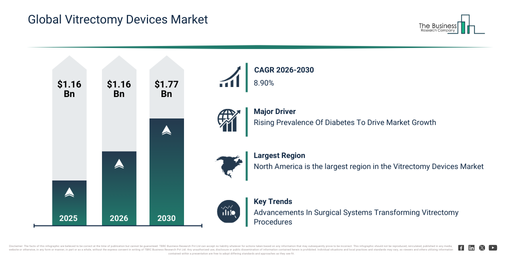
    The vitrectomy devices market size is projected to experience robust expansion over the coming years. This market is set to reach $2.65 billion by 2030, demonstrating a compound annual growth rate (CAGR) of 8.9%. The anticipated growth during this period stems from factors such as the rising demand for outpatient eye surgeries, increased capital allocation towards eye care facilities, the broadening availability of sophisticated retinal treatments, an intensified emphasis on surgical safety and operational efficiency, and the greater uptake of advanced vitrectomy systems. Key developments expected in the forecast include a surge in the adoption of minimally invasive vitrectomy approaches, increased utilization of small-gauge vitrectomy tools, the progressive integration of cutting-edge illumination technologies, the wider availability of single-use surgical kits, and a heightened commitment to surgical accuracy and oversight.

    Get A Free Sample Report With In-Depth Market Insights:

    https://thebusinessresearchcompany.com/sample_request?id=97964222&type=smp&name=Vitrectomy%20Devices%20Market%20Report%202026&utm_source=Blogs&utm_medium=Paid&utm_campaign=Oct_PR

    Vitrectomy Devices Market Demand Drivers: What’s Powering Industry Growth?

    The increasing prevalence of diabetes is expected to propel the growth of the vitrectomy devices market going forward. Diabetes is a chronic medical condition characterized by elevated levels of blood glucose, often caused by the body’s inability to produce or properly use insulin. Vitrectomy is a surgical procedure commonly used to treat advanced stages of diabetic retinopathy, particularly when there is bleeding into the vitreous humor or the formation of scar tissue affecting vision. The growing prevalence of diabetes contributes to an expanding patient pool requiring vitrectomy procedures, thereby driving the demand for vitrectomy devices. For instance, in June 2024, according to the National Health Service, a UK-based publicly funded healthcare system in England, there were 3,615,330 people registered with a GP who were found to have non-diabetic hyperglycemia, also known as pre-diabetes, in 2023, compared to 3,065,825 in 2022, an increase of almost a fifth (18%). Therefore, the increasing prevalence of diabetes is driving the growth of the vitrectomy devices market.

    Vitrectomy Devices Market Breakdown By Product Type And Application

    The vitrectomy devices market covered in this report is segmented –

    1) By Products: Vitrectomy Machines, Vitrectomy Packs, Illumination Devices

    2) By Surgery Approach: Posterior Or Pars Plana Vitrectomy, Anterior Vitrectomy

    3) By Applications: Diabetic Retinopathy, Retinal Detachment, Macular Hole, Vitreous Hemorrhage, Other Applications

    4) By End-Users: Hospitals, Ophthalmic Clinics, Ambulatory Surgical Centers

    Subsegments:

    1) By Vitrectomy Machines: 20-Gauge Vitrectomy Systems, 23-Gauge Vitrectomy Systems, 25-Gauge Vitrectomy Systems

    2) By Vitrectomy Packs: Single-Use Vitrectomy Packs, Multi-Use Vitrectomy Packs

    3) By Illumination Devices: Fiber Optic Illumination Devices, LED Illumination Devices

    Vitrectomy Devices Market Innovation Trends: What Developments Are Reshaping The Industry?

    Companies operating significantly within the vitrectomy devices market are concentrating on creating advanced products, such as innovative surgical systems, to boost precision and efficiency in eye surgeries. An innovative surgical system represents a state-of-the-art technological solution engineered to enhance visualization and control during vitreoretinal procedures, ultimately resulting in improved patient outcomes. For instance, in September 2024, Alcon, a Switzerland-based provider of eye care solutions, unveiled its newest digital innovations, SmartCataract DX and NGENUITY 1.5. SMARTCataract DX offers real-time data analytics during cataract surgery, while NGENUITY 1.5 improves visualization with high-definition capabilities.

    Vitrectomy Devices Market Competitive Overview And Top Companies

    Major companies operating in the vitrectomy devices market are Alcon Inc., Bausch and Lomb Incorporated, Beaver-Visitec International Holdings Inc., Nidek Co. Ltd., Topcon Corporation, Carl Zeiss Meditec AG, IRIDEX Corporation, Dutch Ophthalmic Research Center, Lumenis Ltd., Synergetics Inc., Advanced Optisurgical Inc., MedOne Surgical Inc., Geuder AG, Ellex Medical Lasers Ltd., Oertli Instrumente AG, FCI Ophthalmics Inc., Rhein Medical Inc., Accutome Inc., Rumex International Corporation, HOYA Medical Singapore Pte Ltd., Insight Instruments Corp., Ophthalmic Instruments Inc.

    View The Full Vitrectomy Devices Market Report:

    https://thebusinessresearchcompany.com/report/vitrectomy-devices-global-market-report?utm_source=Blogs&utm_medium=Paid&utm_campaign=Oct_PR

    Vitrectomy Devices Market Top Region: Where Does Most Revenue Come From?

    North America was the largest region in the vitrectomy devices market in 2025. Asia-pacific is expected to be the fastest-growing region in the global vitrectomy devices market report during the forecast period. The regions covered in the vitrectomy devices market report are Asia-Pacific, South East Asia, Western Europe, Eastern Europe, North America, South America, Middle East, Africa.

    Reach Out To Our Team:

    The Business Research Company: https://www.thebusinessresearchcompany.com/

    Americas: +1 310-496-7795

    Asia: +44 7882 955267 & +91 8897263534

    Europe: +44 7882 955267

    Email us at: marketing@tbrc.info

    Follow us on:

    LinkedIn: https://in.linkedin.com/company/the-business-research-company

    YouTube: https://www.youtube.com/channel/UC24_fI0rV8cR5DxlCpgmyFQ

    Global Market Model: https://www.thebusinessresearchcompany.com/global-market-model

  • Vital Signs Monitoring Devices Market 2026: Market Size, Growth Drivers And Emerging Opportunities

    Vital Signs Monitoring Devices Market 2026: Market Size, Growth Drivers And Emerging Opportunities

    Backed by market attractiveness analysis, total addressable market sizing, company benchmarking matrices, interactive Excel dashboards, wider supply chain intelligence, emerging startup coverage, and detailed product-level insights, The Business Research Company’s 2026 market reports are designed to offer research that is more actionable and strategically valuable than ever.

    Vital Signs Monitoring Devices Market CAGR Outlook And Future Development

    The vital signs monitoring devices market has seen significant expansion in recent years. It is anticipated to increase from $11.07 billion in 2025 to $12.32 billion in 2026, achieving a compound annual growth rate (CAGR) of 11.3%. This historical growth can be linked to several factors, including rising hospitalization rates, an increasing prevalence of chronic diseases, the expanding use of fundamental patient monitoring equipment, developments in healthcare infrastructure, and the need for regular vital sign assessment.

    The vital signs monitoring devices market size is projected for swift expansion in the coming years. It is anticipated to reach $18.68 billion by 2030, exhibiting a compound annual growth rate (CAGR) of 11.0%. This growth during the forecast period can be primarily attributed to factors such as the expansion of home healthcare services, advancements in sensor technologies, a growing elderly demographic, the increasing uptake of remote patient monitoring, and the need for real-time clinical decision support. Key trends expected in this period include the rising adoption of continuous and remote vital signs monitoring, increasing demand for portable and home healthcare monitoring devices, a greater emphasis on early detection and preventive care, the broader availability of multi-parameter monitoring solutions, and enhanced accuracy and reliability in non-invasive monitoring devices.

    Get A Free Sample Report With In-Depth Market Insights:

    https://thebusinessresearchcompany.com/sample_request?id=95210053&type=smp&name=Vital%20Signs%20Monitoring%20Devices%20Market%20Report%202026&utm_source=Blogs&utm_medium=Paid&utm_campaign=Oct_PR

    Vital Signs Monitoring Devices Market Growth Drivers: What’s Behind The Acceleration?

    The anticipated rise in cardiovascular diseases is expected to propel the expansion of the vital signs monitoring devices market over the next few years. These conditions encompass various heart and blood vessel disorders, frequently resulting in issues like heart attacks, strokes, and other complications within the circulatory system. The surge in cardiovascular diseases is linked to increasing obesity rates, which heighten the chances of developing hypertension, diabetes, and elevated cholesterol, all major factors in heart complications. Vital signs monitoring devices serve as essential instruments for the management, diagnosis, and prevention of cardiovascular diseases (CVDs), aiding in identifying early indicators, tracking disease progression, and informing treatment choices. For example, data from October 2024, provided by the US Centers for Disease Control and Prevention (CDC), a US-based government public health agency, indicated that 919,032 people in the US succumbed to cardiovascular disease in 2023, accounting for roughly one in every three deaths across the nation. Consequently, the growing occurrence of cardiovascular diseases is set to stimulate expansion in the vital signs monitoring devices market.

    Vital Signs Monitoring Devices Market Segment Analysis And Revenue Potential

    The vital signs monitoring devices market covered in this report is segmented –

    1) By Product: Pulse Oximeters, Blood Pressure Monitors, Temperature Monitoring Devices, Glucose Monitoring Devices

    2) By Mount Type: Standalone, Portable

    3) By End-Use: Hospitals, Physician’s Office, Home Healthcare, Ambulatory Centers, Emergency Care Centers, Other End-Uses

    Subsegments:

    1) By Pulse Oximeters: Fingertip Pulse Oximeters, Handheld Pulse Oximeters, Tabletop Or Benchtop Pulse Oximeters, Wrist-Worn Pulse Oximeters, Pediatric Pulse Oximeters

    2) By Blood Pressure Monitors: Automated Or Digital Blood Pressure Monitors, Manual Blood Pressure Monitors, Ambulatory Blood Pressure Monitors, Wrist Blood Pressure Monitors, Upper Arm Blood Pressure Monitors

    3) By Temperature Monitoring Devices: Digital Thermometers, Infrared Thermometers, Non-Contact Clinical Thermometers, Wearable Continuous Temperature Monitoring Devices, Smart Thermometers

    4) By Glucose Monitoring Devices: Self-Monitoring Blood Glucose (SMBG) Devices, Continuous Glucose Monitoring (CGM) Systems

    Vital Signs Monitoring Devices Market Trends: What’s Defining The Industry’s Next Phase?

    Leading firms within the vital signs monitoring devices market are concentrating on creating sophisticated solutions, including early warning scoring tools incorporated with monitoring devices, to minimize the potential for human error. These integrated early warning scoring tools are systems designed for continuous assessment of patient vital signs, enabling the detection of early indicators of clinical decline and facilitating prompt medical intervention. As an illustration, in July 2024, Huntleigh, a medical equipment producer based in the US, introduced its SC500 Series vital signs monitor. This monitor provides high-performance capabilities, supporting both spot checks and observations over medium to long durations, thereby bridging the gap between basic and multi-parameter monitoring devices. The device incorporates built-in early warning scoring tools and three-level alarms, rendering it highly suitable for long COVID-19 monitoring. Featuring an 8-inch color display and capable of operating on either battery or mains power, the instrument delivers extensive vital signs monitoring for adult, pediatric, and neonatal patients, covering non-invasive blood pressure, pulse rate, pulse oximetry, 3-lead ECG, and an optional wireless tympanic temperature sensor. Furthermore, the SC500 facilitates optimized workflows due to its standard connectivity choices and compatibility with Smartsigns Central View monitoring software, enabling centralized data management.

    Vital Signs Monitoring Devices Market Competitive Landscape: Which Companies Lead The Industry?

    Major companies operating in the vital signs monitoring devices market are Medtronic Plc, Koninklijke Philips NV, GE Healthcare Technologies Inc, Omron Healthcare, Mindray Ltd, Masimo Corp, Nihon Kohden Corp, Lepu Medical Technology Co Ltd, Contec Medical Systems Co Ltd, A And D Company Ltd, Spacelabs Healthcare Inc, Schiller AG, Edan Instruments Inc, Shenzhen Comen Medical Instruments Co Ltd, Nonin Medical Inc, Recorders And Medicare Systems P Ltd, BPL Medical Technologies, SunTech Medical Inc, Rossmax International Ltd, Allengers Medical Systems Ltd, Huntleigh Healthcare LLC, BioBeat Technologies, Ababil Healthcare

    View The Full Vital Signs Monitoring Devices Market Report:

    https://thebusinessresearchcompany.com/report/vital-signs-monitoring-devices-global-market-report?utm_source=Blogs&utm_medium=Paid&utm_campaign=Oct_PR

    Vital Signs Monitoring Devices Market Regional Breakdown: Where Is Demand Concentrated?

    North America was the largest region in the vital signs monitoring devices market in 2025. Asia-Pacific is expected to be the fastest-growing region in the forecast period. The regions covered in the vital signs monitoring devices market report are Asia-Pacific, South East Asia, Western Europe, Eastern Europe, North America, South America, Middle East, Africa.

    Reach Out To Our Team:

    The Business Research Company: https://www.thebusinessresearchcompany.com/

    Americas: +1 310-496-7795

    Asia: +44 7882 955267 & +91 8897263534

    Europe: +44 7882 955267

    Email us at: marketing@tbrc.info

    Follow us on:

    LinkedIn: https://in.linkedin.com/company/the-business-research-company

    YouTube: https://www.youtube.com/channel/UC24_fI0rV8cR5DxlCpgmyFQ

    Global Market Model: https://www.thebusinessresearchcompany.com/global-market-model
  • Vital Sign Monitors Market Set To Expand From $2.09 Billion In 2026: Growth Outlook Through 2030

    Vital Sign Monitors Market Set To Expand From $2.09 Billion In 2026: Growth Outlook Through 2030

    Featuring market attractiveness scoring, total addressable market sizing, company benchmarking matrices, interactive Excel dashboards, deeper supply chain intelligence, emerging startup tracking, and granular product-level insights, The Business Research Company’s 2026 market reports are built to deliver research that is both more actionable and more strategically valuable.

    Vital Sign Monitors Market Set To Climb From $1.56 Billion In 2026 To $2.09 Billion By 2030

    The market for vital sign monitors has experienced robust growth in recent years. It is projected to expand from $1.45 billion in 2025 to $1.56 billion in 2026, demonstrating a compound annual growth rate (CAGR) of 7.9%. This historical expansion can be attributed to several factors, including the limited adoption of wireless monitoring technologies, a reliance on traditional wired monitors, growing hospital infrastructure, an increasing prevalence of chronic diseases, and heightened awareness of continuous patient monitoring.

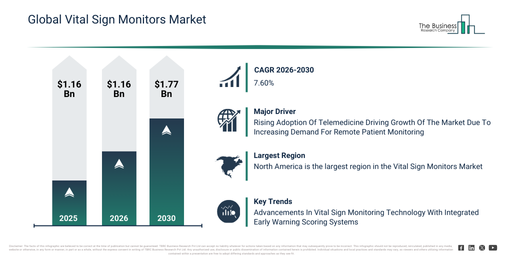
    The vital sign monitors market is projected to experience robust expansion over the coming years. Its valuation is anticipated to reach $2.09 billion by 2030, demonstrating a compound annual growth rate (CAGR) of 7.6%. This projected growth throughout the forecast period can be linked to several factors, including developments in wearable and wireless monitoring technology, the broadening scope of home healthcare services, the incorporation of artificial intelligence and big data analytics, increasing capital directed towards cloud-based healthcare platforms, and the uptake of remote patient monitoring systems. Key developments expected during this period involve the increasing use of wireless and wearable vital signs monitors, the incorporation of remote patient monitoring capabilities, a heightened emphasis on monitoring within home healthcare settings, an escalating need for multiparameter monitors in clinical environments, and improvements in data analytics and visualization for patient observation.

    Get A Free Sample Report With In-Depth Market Insights:

    https://thebusinessresearchcompany.com/sample_request?id=88055888&type=smp&name=Vital%20Sign%20Monitors%20Market%20Report%202026&utm_source=Blogs&utm_medium=Paid&utm_campaign=Oct_PR

    Vital Sign Monitors Market Growth Factors Behind Sustained Expansion

    The anticipated expansion of the vital sign monitor market is linked to the rising need for telemedicine in the future. Telemedicine involves leveraging technology to deliver medical services and consultations remotely, eliminating the necessity of physical appointments. Its popularity is growing because it offers convenient healthcare access, enabling patients to rapidly connect with physicians from home, thereby conserving time and lessening travel requirements. The expansion of telemedicine consequently boosts the need for vital sign monitors, which facilitate distant tracking of patient health metrics and guarantee precise, live monitoring throughout online consultations. As an illustration, data from November 2025 by the Australian Bureau of Statistics (ABS), an Australian government statistical body, revealed that 22.5% of Australians utilized telehealth services during 2024–25. Of those who had a telehealth appointment, 90.3% indicated a willingness to use telehealth again if available, a rise from 89.2% in the 2023–24 period. Consequently, the growing adoption of telemedicine is set to stimulate the expansion of the vital sign monitor market.

    Vital Sign Monitors Market Segmentation And Category Overview

    The vital sign monitors market covered in this report is segmented –

    1) By Component: Hardware, Software, Services

    2) By Technology: Wired Vital Signs Monitors, Wireless Vital Signs Monitors

    3) By Application: Hospitals, Ambulatory Surgical Centers, Home Care Settings, Other Applications

    4) By End-User: Healthcare Providers, Patients, Research Institutes

    Subsegments:

    1) By Hardware: Blood Pressure Monitors, Pulse Oximeters, Temperature Monitors, Electrocardiogram (ECG) Monitors, Respiration Rate Monitors, Capnography Devices, Multiparameter Monitors, Wearable Vital Sign Monitors

    2) By Software: On-Premise Software, Cloud-Based Software, Data Integration And Management Tools, Remote Monitoring Software, Analytics And Visualization Tools, Mobile Applications

    3) By Services: Installation And Maintenance Services, Training And Education Services, Technical Support Services, Remote Monitoring Services, Integration Services, Upgradation And Software Support Services

    Vital Sign Monitors Market Industry Trends Fueling Future Revenue Growth

    Key players within the vital sign monitors market are concentrating on creating sophisticated solutions, like monitoring devices with integrated early warning scoring tools, to mitigate the potential for human error. These integrated early warning scoring tools function as systems that continuously evaluate patient vital signs, enabling the early identification of clinical decline and facilitating swift, appropriate medical intervention. As an illustration, during July 2024, Huntleigh, a medical equipment producer based in the US, introduced its SC500 Series vital signs monitor. This device delivers high-performance monitoring, suitable for both spot checks and observations over medium to long durations, effectively bridging the gap between basic and multi-parameter monitoring systems. Equipped with built-in early warning scoring tools and three-level alarms, it is particularly suitable for monitoring patients with long COVID-19. Featuring an 8-inch color display and capable of operating on battery or mains power, the monitor offers extensive vital signs tracking for adult, pediatric, and neonatal patients, covering non-invasive blood pressure, pulse rate, pulse oximetry, 3-lead ECG, and an optional wireless tympanic temperature sensor. Furthermore, the SC500 facilitates optimized workflows via its standard connectivity features and its compatibility with Smartsigns Central View monitoring software, enabling centralized data management.

    Vital Sign Monitors Market Competitive Landscape: Who Leads The Industry?

    Major companies operating in the vital sign monitors market are Medtronic Plc, Koninklijke Philips NV, GE Healthcare Technologies Inc, Omron Healthcare, Mindray Ltd, Masimo Corp, Nihon Kohden Corp, Lepu Medical Technology Co Ltd, Contec Medical Systems Co Ltd, A And D Company Ltd, Spacelabs Healthcare Inc, Schiller AG, Edan Instruments Inc, Shenzhen Comen Medical Instruments Co Ltd, Nonin Medical Inc, Recorders And Medicare Systems P Ltd, BPL Medical Technologies, SunTech Medical Inc, Rossmax International Ltd, Allengers Medical Systems Ltd, Huntleigh Healthcare LLC, BioBeat Technologies, Ababil Healthcare

    View The Full Vital Sign Monitors Market Report:

    https://thebusinessresearchcompany.com/report/vital-sign-monitors-global-market-report?utm_source=Blogs&utm_medium=Paid&utm_campaign=Oct_PR

    Vital Sign Monitors Market Geographic Landscape: Which Region Dominates Industry Growth?

    North America was the largest region in the vital sign monitors market in 2025. Europe is expected to be the fastest-growing region in the forecast period. The regions covered in the vital sign monitors market report are Asia-Pacific, South East Asia, Western Europe, Eastern Europe, North America, South America, Middle East, Africa.

    Reach Out To Our Team:

    The Business Research Company: https://www.thebusinessresearchcompany.com/

    Americas: +1 310-496-7795

    Asia: +44 7882 955267 & +91 8897263534

    Europe: +44 7882 955267

    Email us at: marketing@tbrc.info

    Follow us on:

    LinkedIn: https://in.linkedin.com/company/the-business-research-company

    YouTube: https://www.youtube.com/channel/UC24_fI0rV8cR5DxlCpgmyFQ

    Global Market Model: https://www.thebusinessresearchcompany.com/global-market-model
  • Vital Parameter Monitoring Devices And Equipment Market Size And Growth In 2026: Key Factors Shaping Future Demand

    Vital Parameter Monitoring Devices And Equipment Market Size And Growth In 2026: Key Factors Shaping Future Demand

    Built to provide research that’s more actionable and strategically valuable, The Business Research Company’s 2026 market reports include market attractiveness analysis, total addressable market sizing, company benchmarking matrices, interactive Excel dashboards, broader supply chain intelligence, emerging startup tracking, and in-depth product insights.

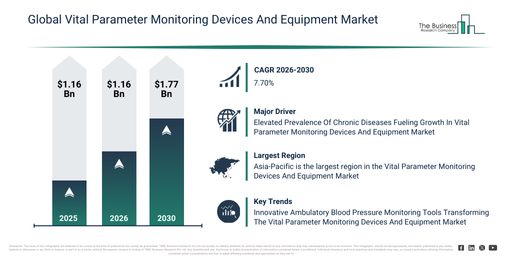
    Vital Parameter Monitoring Devices And Equipment Market Forecast: Value Set To Climb From $9.2 Billion To $12.38 Billion

    The vital parameter monitoring devices and equipment market has experienced robust expansion in recent years. It is projected to increase from $8.53 billion in 2025 to $9.2 billion in 2026, exhibiting a compound annual growth rate (CAGR) of 7.8%. This historical growth can be attributed to factors such as the increasing incidence of chronic illnesses, a rise in hospitalizations, the expansion of intensive care facilities, a greater need for non-invasive monitoring solutions, and enhanced access to digital monitoring technologies.

    The vital parameter monitoring devices and equipment market size is projected to experience substantial growth in the upcoming years, reaching $12.38 billion in 2030, demonstrating a compound annual growth rate (CAGR) of 7.7%. This expansion during the forecast period is fueled by several factors, including the increasing implementation of remote patient monitoring programs, a heightened emphasis on preventive healthcare, the broadening of telemedicine services, the surging demand for wearable monitoring devices, and the greater incorporation of AI-driven analytics within monitoring systems. Furthermore, notable developments anticipated during this period encompass the growing acceptance of remote vital monitoring systems, the increasing need for multi-parameter monitoring devices, the expanding integration of wireless connectivity into monitoring equipment, the proliferation of home-based patient monitoring solutions, and a stronger focus on continuous and real-time monitoring.

    Get A Free Sample Report With In-Depth Market Insights:

    https://thebusinessresearchcompany.com/sample_request?id=2532&type=smp&name=Vital%20Parameter%20Monitoring%20Devices%20And%20Equipment%20Market%20Report%202026&utm_source=Blogs&utm_medium=Paid&utm_campaign=Oct_PR

    Vital Parameter Monitoring Devices And Equipment Market Demand Drivers Opening New Revenue Streams

    The future expansion of the vital parameter monitoring devices and equipment market is anticipated to be propelled by the increasing occurrence of chronic illnesses. These conditions, also identified as non-communicable diseases (NCDs), are long-lasting health issues marked by their extended period and frequently gradual development. The widespread presence of chronic ailments like cardiovascular diseases, diabetes, and respiratory disorders mandates continuous vital sign observation for their effective management. For example, global statistics from September 2023, provided by the World Health Organization, a Switzerland-based intergovernmental organization, showed 41 million annual deaths, accounting for 74% of all fatalities, were attributable to non-communicable diseases (NCDs) or chronic diseases. Specifically, cardiovascular diseases were responsible for 17.9 million deaths, cancer for 9.3 million deaths, chronic respiratory diseases for 4.1 million deaths, and diabetes for 2.0 million deaths. Consequently, the increasing incidence of chronic illnesses is propelling the expansion of the vital parameter monitoring devices and equipment market.

    Vital Parameter Monitoring Devices And Equipment Market Segment Outlook: Which Categories Are Growing Fastest?

    The vital parameter monitoring devices and equipment market covered in this report is segmented –

    1) By Product Type: Blood Pressure Monitoring Devices, Pulse Oximeters, Temperature Monitoring Devices

    2) By Patient Type: Adult Patients, Pediatric Patients, Neonatal Patients

    3) By End User: Hospitals, Clinics, Ambulatory Surgery Centers, Home Care Settings

    Subsegments:

    1) By Blood Pressure Monitoring Devices: Digital Blood Pressure Monitors, Aneroid Blood Pressure Monitors, Mercury Sphygmomanometers, Ambulatory Blood Pressure Monitors, Wrist Blood Pressure Monitors

    2) By Pulse Oximeters: Finger Pulse Oximeters, Handheld Pulse Oximeters, Fingertip Pulse Oximeters, Pediatric Pulse Oximeters, Wrist Pulse Oximeters

    3) By Temperature Monitoring Devices: Digital Thermometers, Infrared Thermometers, Ear Thermometers, Forehead Thermometers, Clinical Thermometers

    Vital Parameter Monitoring Devices And Equipment Market Trends Powering Strategic Industry Growth

    Major companies operating in the vital parameter monitoring devices and equipment market are prioritizing the creation of advanced products such as Multi-Vital Remote Patient Monitoring to enhance patient care, improve health outcomes, and enable real-time data collection and analysis, ultimately facilitating early detection of health issues and reducing hospital readmissions. Multi-Vital Remote Patient Monitoring (MVRPM) involves leveraging technology for the remote tracking and analysis of multiple patient vital signs outside traditional healthcare settings, such as hospitals or clinics. For instance, in January 2024, Blue Spark Technologies Inc., a US-based company that offers remote patient monitoring, unveiled VitalTraq, an innovative multi-vital remote patient monitoring platform, representing a significant advancement in digital health technology. This platform employs Remote Photoplethysmography (rPPG), allowing users to collect vital sign measurements via a simple 30 to 60-second selfie scan. The readings include heart rate, heart rate variability, blood pressure, and respiratory rate, all captured in a single contactless experience.

    Vital Parameter Monitoring Devices And Equipment Market Company Landscape And Competitive Strategy

    Major companies operating in the vital parameter monitoring devices and equipment market are Hill-Rom Holdings Inc., Halma plc, Masimo Corporation, General Electric Company, Medtronic plc, Nihon Kohden Corporation, Koninklijke Philips N.V., A&D Company Limited, Contec Medical Systems Co. Ltd., Nonin Medical Inc., Omron Corporation, Smiths Group plc, Spacelabs Healthcare, CAS Medical Systems Inc., Dragerwerk AG & Co., Briggs Healthcare Corp., OSI Systems Inc., Mindray Medical International Limited, Caretaker Medical LLC, Shenzhen Mindray Bio-Medical Electronics Co. Ltd., Boston Scientific Corporation, Hicks Inc., Covidien plc, Bosch GmbH, Biotronik Inc., Intel Corporation, Health anywhere Inc, Johnson & Johnson, Schiller AG, Edwards Lifesciences, Nonin Medical Inc., Hill-Rom Holdings Inc., Midmark Corporation, Baxter International Inc., ICU Medical Inc.

    View The Full Vital Parameter Monitoring Devices And Equipment Market Report:

    https://thebusinessresearchcompany.com/report/vital-parameter-monitoring-devices-and-equipment-global-market-report?utm_source=Blogs&utm_medium=Paid&utm_campaign=Oct_PR

    Vital Parameter Monitoring Devices And Equipment Market Largest Region: Which Geography Holds The Highest Market Share?

    Asia-Pacific was the largest region in the global vital parameter monitoring devices and equipment market in 2025. North America was the second-largest region in the vital parameter monitoring devices and equipment market share. The regions covered in the vital parameter monitoring devices and equipment market report are Asia-Pacific, South East Asia, Western Europe, Eastern Europe, North America, South America, Middle East, Africa.

    Reach Out To Our Team:

    The Business Research Company: https://www.thebusinessresearchcompany.com/

    Americas: +1 310-496-7795

    Asia: +44 7882 955267 & +91 8897263534

    Europe: +44 7882 955267

    Email us at: marketing@tbrc.info

    Follow us on:

    LinkedIn: https://in.linkedin.com/company/the-business-research-company

    YouTube: https://www.youtube.com/channel/UC24_fI0rV8cR5DxlCpgmyFQ

    Global Market Model: https://www.thebusinessresearchcompany.com/global-market-model
  • Vision Screeners Market Forecast 2026–2030: Market Size, Trends And Growth Opportunities

    Vision Screeners Market Forecast 2026–2030: Market Size, Trends And Growth Opportunities

    Backed by market attractiveness analysis, total addressable market sizing, company benchmarking matrices, interactive Excel dashboards, wider supply chain intelligence, emerging startup coverage, and detailed product-level insights, The Business Research Company’s 2026 market reports are designed to offer research that is more actionable and strategically valuable than ever.

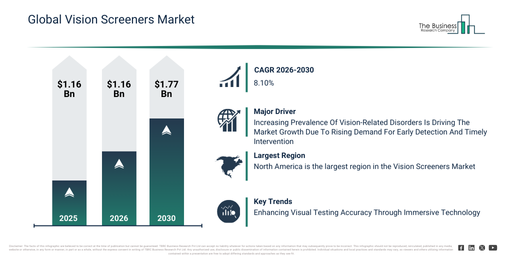
    Vision Screeners Market Revenue Growth On Track For A 8.1% CAGR Through 2030

    The vision screeners market has demonstrated significant expansion in recent years. Its valuation is set to increase from $0.76 billion in 2025 to $0.83 billion in 2026, indicating a compound annual growth rate (CAGR) of 8.4%. This historical growth can be attributed to several factors, including the constrained supply of portable vision screeners, the reliance on fixed vision testing apparatus, an escalating understanding of eye health, the increasing prevalence of visual impairments, and the adoption of hospital-based vision screening initiatives.

    The vision screeners market size is anticipated to undergo significant expansion in the next few years, projected to reach $1.13 billion in 2030, demonstrating a compound annual growth rate (CAGR) of 8.1%. This growth during the forecast period can be linked to improvements in smartphone-based and app-integrated vision screeners, a rise in investment in telehealth solutions, increasing government initiatives aimed at pediatric and geriatric eye care, the incorporation of AI and imaging technology, and the broadening of homecare and remote vision assessment services. Prominent trends for this period include a growing acceptance of handheld and portable vision screeners, an increase in pediatric and geriatric vision screening programs, the integration of telehealth and remote vision assessment, more widespread use of smartphone-based vision testing tools, and an increased focus on early detection and preventive eye care.

    Get A Free Sample Report With In-Depth Market Insights:

    https://thebusinessresearchcompany.com/sample_request?id=80671614&type=smp&name=Vision%20Screeners%20Market%20Report%202026&utm_source=Blogs&utm_medium=Paid&utm_campaign=Oct_PR

    Vision Screeners Market Growth Backed By Core Demand Fundamentals

    The future expansion of the vision screeners market is anticipated to be driven by the rising occurrence of vision-related disorders. These disorders are medical conditions impacting the eyes or the visual system, resulting in diminished sight or challenges in processing visual information. The growing incidence of such disorders largely stems from aging populations, given that conditions like cataracts, glaucoma, macular degeneration, and diabetic retinopathy become considerably more likely with age, resulting in their increased occurrence among older individuals. Vision screeners play a crucial role in early detection of these conditions by identifying visual impairments before they worsen, thereby allowing prompt intervention and treatment. This approach mitigates the risk of extended complications, fosters improved eye health results, and elevates the overall quality of life through enhanced vision care. For example, data from May 2024, provided by the Office for Health Improvement and Disparities (OHID), a UK government public-health agency, revealed that England recorded over 8.9 million vision-related outpatient attendances in the financial year ending 2023, concerning more than 3.4 million individual patients. Consequently, the expanding prevalence of vision-related disorders is a key driver for the growth of the vision screeners market.

    Vision Screeners Market Segment Landscape: Which Areas Lead Development?

    The vision screeners market covered in this report is segmented –

    1) By Product Type: Handheld Vision Screeners, Stationary Vision Screeners, Portable Vision Screeners, Smartphone-Based Vision Screeners

    2) By Technology: Autorefractors, Vision Test Software, Ophthalmic Imaging Technology, Telehealth Solutions

    3) By Application: Pediatric Vision Screening, Adult Vision Screening, Geriatric Vision Screening, Occupational Health Screening

    4) By Distribution Channel: Direct Sales, Online Sales, Distributors And Retailers, Healthcare Service Providers

    5) By End User: Hospitals, Homecare Settings, Specialized Clinics, Vision Care Centers, Ambulatory Surgical Centers

    Subsegments:

    1) By Handheld Vision Screeners: Infrared-Based Screeners, Autorefractor-Based Screeners

    2) By Stationary Vision Screeners: Computer-Based Vision Screeners, Tabletop Vision Screeners

    3) By Portable Vision Screeners: Foldable Screeners, Lightweight Digital Screeners

    4) By Smartphone-Based Vision Screeners: App-Based Vision Testing Tools, Smartphone Attachment Devices

    Vision Screeners Market Growth Trends Reshaping The Competitive Landscape

    Leading companies within the vision screeners market are concentrating on incorporating advanced technologies, such as virtual reality (VR), to transform initial vision evaluations. VR technology establishes engaging, interactive three-dimensional environments accessible through headsets, thereby boosting user involvement and precision. This technology also assists in vision screening by replicating diverse visual situations and testing parameters within a regulated, appealing setting, enabling exact measurement of visual acuity, perception of depth, and eye coordination. For instance, in September 2024, Zenni Optical Inc., an optical products manufacturer based in the US, unveiled the VR Vision Screener. This innovative and easy-to-use instrument utilizes VR to conduct rapid, clinically validated vision screenings, evaluating clarity, color, and depth perception within approximately five minutes. It is designed to supplement, rather than substitute, conventional eye examinations and is compatible with popular headsets like Meta Quest 3. The screener’s objective is to enhance the availability and effectiveness of vision care, especially in environments such as educational institutions and medical facilities, by bridging the divide between initial evaluations and thorough eye assessments.

    Vision Screeners Market Key Players Shaping Industry Direction

    Major companies operating in the vision screeners market are Visibly Inc, Essilor Instruments USA, Oculus Inc, Optomed Oyj, Good Lite Co, Visionix USA Inc, EyeQue Inc, Tomey Corporation, Stereo Optical Company Inc, EyeNetra Inc, Vmax Vision Inc, Frastema Ophthalmics Inc, Plusoptix Inc, FIM Medical SAS, Titmus LLC, Smart Vision Labs Inc, NIDEK Co Ltd, Adaptica S r l, Welch Allyn Vision Care, Reichert Technologies, Haag Streit Diagnostics, Righton Ophthalmic Instruments

    View The Full Vision Screeners Market Report:

    https://thebusinessresearchcompany.com/report/vision-screeners-global-market-report?utm_source=Blogs&utm_medium=Paid&utm_campaign=Oct_PR

    Vision Screeners Market Regional Analysis: Which Region Leads By Revenue?

    North America was the largest region in the vision screeners market in 2025. Asia-Pacific is expected to be the fastest-growing region in the forecast period. The regions covered in the vision screeners market report are Asia-Pacific, South East Asia, Western Europe, Eastern Europe, North America, South America, Middle East, Africa.

    Reach Out To Our Team:

    The Business Research Company: https://www.thebusinessresearchcompany.com/

    Americas: +1 310-496-7795

    Asia: +44 7882 955267 & +91 8897263534

    Europe: +44 7882 955267

    Email us at: marketing@tbrc.info

    Follow us on:

    LinkedIn: https://in.linkedin.com/company/the-business-research-company

    YouTube: https://www.youtube.com/channel/UC24_fI0rV8cR5DxlCpgmyFQ

    Global Market Model: https://www.thebusinessresearchcompany.com/global-market-model