Blog

  • Patient Transport Services Market Explained: What Is Fueling Growth To $75.49 Billion By 2030?

    Patient Transport Services Market Explained: What Is Fueling Growth To $75.49 Billion By 2030?

    Backed by market attractiveness analysis, total addressable market sizing, company benchmarking matrices, interactive Excel dashboards, wider supply chain intelligence, emerging startup coverage, and detailed product-level insights, The Business Research Company’s 2026 market reports are designed to offer research that is more actionable and strategically valuable than ever.

    Patient Transport Services Market Size And Revenue Outlook Through 2030

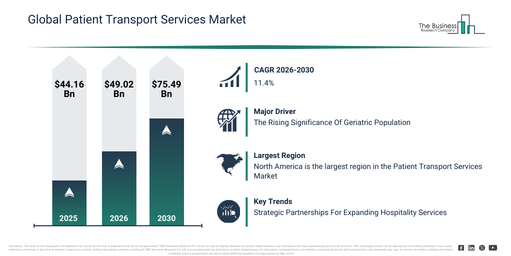
    The patient transport services market size has experienced rapid expansion in recent years. It is projected to expand from $44.16 billion in 2025 to $49.02 billion in 2026, exhibiting a compound annual growth rate (CAGR) of 11.0%. The expansion observed during the historic period stemmed from factors including a strong reliance on traditional ground ambulances, manual processes for dispatch and scheduling, inadequate coordination for inter-facility transport, a high dependence on human drivers and staff, and the absence of sophisticated patient transport monitoring systems.

    The patient transport services market is poised for significant expansion in the coming years. This market is projected to reach $75.49 billion by 2030, exhibiting a compound annual growth rate (CAGR) of 11.4%. This anticipated growth is driven by factors such as the increasing use of electric and hybrid ambulances, a surge in demand for non-emergency medical transport (NEMT), the integration with telemedicine and hospital management platforms, the application of AI-based predictive routing, and an enhanced emphasis on patient safety and real-time oversight. Key trends anticipated during this period involve the greater integration of IoT-enabled ambulance tracking systems, an increase in the deployment of electric and hybrid patient transport vehicles, the expanding application of AI for route optimization and scheduling, wider adoption of cloud-based patient transport management platforms, and the increasing automation of patient handover and documentation procedures.

    Get A Free Sample Report With In-Depth Market Insights:

    https://thebusinessresearchcompany.com/sample_request?id=47134037&type=smp&name=Patient%20Transport%20Services%20Market%20Report%202026&utm_source=Blogs&utm_medium=Paid&utm_campaign=Nov_PR

    Patient Transport Services Market Growth Momentum: What Factors Are Shaping Demand?

    The expanding geriatric population is expected to propel the growth of the patient transport services market going forward. This demographic refers to individuals who are 65 years of age or older, often characterized by specific healthcare and social needs associated with aging. Patient transport services provide efficient and timely transportation solutions, ensuring improved access to healthcare facilities and contributing to overall well-being in an aging society. Therefore, the increasing geriatric population is driving the growth of the patient transport services market.

    Patient Transport Services Market Segment Analysis And Revenue Potential

    The patient transport services market covered in this report is segmented –

    1) By Transport Vehicle: Ground Ambulance, Air Ambulance, Water Ambulance

    2) By Equipment Type: Advanced Life Support (ALS) Patient Transport Service, Basic Life Support (ALS) Patient Transport Service

    3) By Application: Emergency, Non-Emergency

    4) By End-Users: Hospitals, Medical Centers, Retirement Communities, Hospice Care Facilities, Private Paying Customers, Nursing Care Facilities

    Subsegments:

    1) By Ground Ambulance: Basic Life Support (BLS) Ambulance, Advanced Life Support (ALS) Ambulance, Non-Emergency Medical Transport (NEMT)

    2) By Air Ambulance: Helicopter Ambulance, Fixed-Wing Air Ambulance

    3) By Water Ambulance: Coastal Water Ambulance, Inland Water Ambulance

    Patient Transport Services Market Trends: What’s Defining The Industry’s Next Phase?

    Major companies operating in the patient transport services market are adopting strategic partnerships to expand their hospitality services. These collaborations involve leveraging each other’s strengths and resources for mutual benefits and success.

    Patient Transport Services Market Key Players Shaping Industry Direction

    Major companies operating in the patient transport services market are Envision Healthcare, Acadian Ambulance Service, Falck A/S, American Ambulance Service Inc., First Ambulance, National Patient Transport Pty. Ltd., Express Medical Transporters, North West Ambulance Service, RNR Patient Transfer Services Inc., South Central Ambulance Service, London Ambulance Service, America Patient Transport Services Inc., ATS Healthcare Solutions, Xpress Non-Emergency Medical Transportation, AeroCare Medical Transport System, ModivCare, Southeastrans Inc, ERS Medical, Lyft Inc, MTM Inc, EgyCross, SafeRide Health, American Medical Response, EMED Patient Care, United Care Transport

    View The Full Patient Transport Services Market Report:

    https://thebusinessresearchcompany.com/report/patient-transport-services-global-market-report?utm_source=Blogs&utm_medium=Paid&utm_campaign=Nov_PR

    Patient Transport Services Market Top Region: Where Does Most Revenue Come From?

    North America was the largest region in the patient transport services market in 2025. Asia-Pacific is expected to be the fastest-growing region in the forecast period. The regions covered in the patient transport services market report are Asia-Pacific, South East Asia, Western Europe, Eastern Europe, North America, South America, Middle East, Africa.

    Reach Out To Our Team:

    The Business Research Company: https://www.thebusinessresearchcompany.com/

    Americas: +1 310-496-7795

    Asia: +44 7882 955267 & +91 8897263534

    Europe: +44 7882 955267

    Email us at: marketing@tbrc.info

    Follow us on:

    LinkedIn: https://in.linkedin.com/company/the-business-research-company

    YouTube: https://www.youtube.com/channel/UC24_fI0rV8cR5DxlCpgmyFQ

    Global Market Model: https://www.thebusinessresearchcompany.com/global-market-model
  • Patient Temperature Monitoring Market Forecast To Reach $8.08 Billion By 2030: Key Trends Explained

    Patient Temperature Monitoring Market Forecast To Reach $8.08 Billion By 2030: Key Trends Explained

    Featuring market attractiveness scoring, total addressable market sizing, company benchmarking matrices, interactive Excel dashboards, deeper supply chain intelligence, emerging startup tracking, and granular product-level insights, The Business Research Company’s 2026 market reports are built to deliver research that is both more actionable and more strategically valuable.

    Patient Temperature Monitoring Market Growth From $5.63 Billion In 2026 To $8.08 Billion By 2030 At A CAGR Of 9.5%

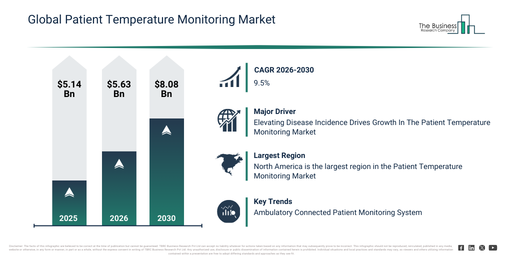
    The patient temperature monitoring market has experienced robust expansion in recent years. This market is projected to expand from $5.14 billion in 2025 to $5.63 billion in 2026, demonstrating a compound annual growth rate (CAGR) of 9.6%. Historically, this expansion has been driven by factors such as manual temperature monitoring employing traditional thermometers, dependence on intermittent patient assessments, paper-based methods for recording temperature, restricted adoption of wearable temperature sensors, and insufficient integration with hospital information systems.

    The patient temperature monitoring market is projected to experience substantial expansion over the coming years. By 2030, its valuation is anticipated to reach $8.08 billion, exhibiting a compound annual growth rate (CAGR) of 9.5%. This anticipated growth throughout the forecast period stems from several factors, including the escalating need for continuous and remote patient surveillance, the wider acceptance of non-contact temperature measurement tools, their incorporation into telehealth systems, an increased emphasis on monitoring patients in postoperative and critical care settings, and the creation of sophisticated wearable and disposable temperature sensors. Key trends shaping this period encompass the growing uptake of AI-driven temperature monitoring solutions, the seamless integration of IoT-enabled wearable temperature sensors, a surge in the deployment of cloud-based patient monitoring platforms, the automation of processes for gathering and reporting temperature data, and breakthroughs in precision medicine tailored for temperature-guided interventions.

    Get A Free Sample Report With In-Depth Market Insights:

    https://thebusinessresearchcompany.com/sample_request?id=78787776&type=smp&name=Patient%20Temperature%20Monitoring%20Market%20Report%202026&utm_source=Blogs&utm_medium=Paid&utm_campaign=Nov_PR

    Patient Temperature Monitoring Market Expansion Drivers: What’s Shaping Future Growth?

    The escalating incidence of diseases is anticipated to propel the expansion of the patient temperature monitoring market going forward. Diseases are conditions caused by organisms such as bacteria, viruses, fungi, or parasites. Some infectious diseases can spread directly from person to person, while others are transmitted by insects or other animals. Changes in temperature are a crucial factor in diagnosing sickness. It is expected that the correlation between temperature variations and the occurrence of illness will increase the uptake of monitoring systems. Therefore, the increasing prevalence of diseases will continue to drive the patient temperature monitoring market.

    Patient Temperature Monitoring Market Segmentation And Category Overview

    The patient temperature monitoring market covered in this report is segmented –

    1) By Type: Contact-Based Temperature Monitoring Systems, Non-Contact-Based Temperature Monitoring System

    2) By Site: Non Invasive Temperature Monitoring, Invasive Temperature Monitoring

    3) By Application: Pyrexia Or Fever, Hypothermia, Blood Transfusion, Anesthesia, Other Applications

    4) By End User: Hospital And Surgical Centers, Nursing Facilities, Ambulatory Care Centers, Home Care, Other End Users

    Subsegments:

    1) By Contact-Based Temperature Monitoring Systems: Digital Thermometers, Infrared Ear Thermometers, Glass Thermometers, Disposable Thermometers

    2) By Non-Contact-Based Temperature Monitoring Systems: Forehead (Temporal) Thermometers, Infrared Non-Contact Thermometers, Wearable Temperature Sensors

    Patient Temperature Monitoring Market Industry Trends Fueling Future Revenue Growth

    Major companies in the patient temperature monitoring market are adopting new products, such as ambulatory-connected patient monitoring systems, to sustain their presence. An ambulatory-connected patient monitoring system is a wearable technology that wirelessly gathers and transmits real-time health data from patients, enabling the remote monitoring of vital signs and medical parameters outside of traditional healthcare settings.

    Patient Temperature Monitoring Market Competitive Analysis Of Leading Industry Participants

    Major companies operating in the patient temperature monitoring market are Cardinal Health Inc., 3M Company, Koninklijke Philips NV, Drägerwerk AG & Co., Microlife Corporation, Becton Dickinson and Company, Omron Healthcare Inc., Masimo Corporation, Braun GmbH, Terumo Corporation, Paul Hartmann AG, Beurer GmbH, Easytem Co. Ltd., Omega Engineering Inc., iHealth Lab Inc., DeltaTrak Inc., Exergen Corporation, Medisana GmbH, Geratherm Medical AG, Nureca Healthcare Private Limited, A&D Company Ltd., Actherm Inc., Cosinuss GmbH, Vandelay Brands Limited, Kinsa Inc., Abbott Laboratories, American Diagnostic Corporation, CAS Medical Systems Inc., C.R. Bard Inc., Edwards Lifesciences Corporation, GE HealthCare Technologies Inc., Hill-Rom Holdings Inc., Honeywell International Inc., ICU Medical Inc., Medtronic PLC, Natus Medical Incorporated, Nonin Medical Inc., Procter & Gamble Co., Quest Products Inc., Riester GmbH & Co. KG, Rossmax International Ltd., Smiths Medical International Ltd., Spacelabs Healthcare LLC, SunTech Medical Inc., Thermomedics Inc., Tyco Healthcare Group Canada Inc., Vital Signs Inc., Vyaire Medical Inc., Welch Allyn Inc., ZOLL Medical Corporation

    View The Full Patient Temperature Monitoring Market Report:

    https://thebusinessresearchcompany.com/report/patient-temperature-monitoring-global-market-report?utm_source=Blogs&utm_medium=Paid&utm_campaign=Nov_PR

    Patient Temperature Monitoring Market Regional Breakdown: Where Is Demand Concentrated?

    North America was the largest region in the patient temperature monitoring market in 2025. Asia-Pacific is expected to be the fastest-growing region in the patient temperature monitoring market report forecast period. The regions covered in the patient temperature monitoring market report are Asia-Pacific, South East Asia, Western Europe, Eastern Europe, North America, South America, Middle East, Africa.

    Reach Out To Our Team:

    The Business Research Company: https://www.thebusinessresearchcompany.com/

    Americas: +1 310-496-7795

    Asia: +44 7882 955267 & +91 8897263534

    Europe: +44 7882 955267

    Email us at: marketing@tbrc.info

    Follow us on:

    LinkedIn: https://in.linkedin.com/company/the-business-research-company

    YouTube: https://www.youtube.com/channel/UC24_fI0rV8cR5DxlCpgmyFQ

    Global Market Model: https://www.thebusinessresearchcompany.com/global-market-model
  • Patient Self-Service Kiosk Market Analysis: Understanding The Drivers Behind 7.4% CAGR Through 2030 Growth

    Patient Self-Service Kiosk Market Analysis: Understanding The Drivers Behind 7.4% CAGR Through 2030 Growth

    Built to provide research that’s more actionable and strategically valuable, The Business Research Company’s 2026 market reports include market attractiveness analysis, total addressable market sizing, company benchmarking matrices, interactive Excel dashboards, broader supply chain intelligence, emerging startup tracking, and in-depth product insights.

    Patient Self-Service Kiosk Market Expansion Outlook: What Revenue Opportunities Are Ahead?

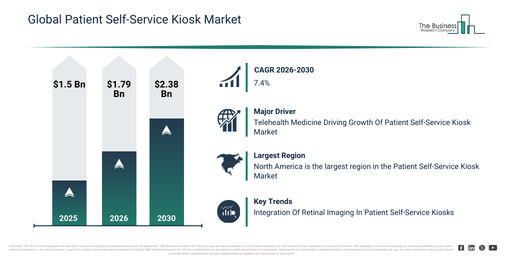
    The patient self-service kiosk market size has experienced significant growth in recent years. This market is projected to expand from $1.5 billion in 2025 to $1.79 billion in 2026, demonstrating a compound annual growth rate (CAGR) of 19.3%. Historically, this expansion has been driven by factors such as manual patient data collection, fragmented healthcare databases, limited interoperability between systems, reliance on paper-based registries, and the slow adoption of digital health tools.

    The patient self-service kiosk market is projected to experience robust expansion over the coming years. This market is anticipated to reach $2.38 billion by 2030, exhibiting a compound annual growth rate (CAGR) of 7.4%. This expansion during the projected timeframe is driven by factors such as the expanding application of predictive analytics for patient outcomes, escalating demand for cloud-based registries, a heightened focus on real-time population health management, the broader implementation of integrated ehr and registry solutions, and the increasing employment of registries for clinical trials and research. Key trends anticipated during this period encompass the wider embrace of ai-enabled self-service kiosks, greater integration with cloud-based hospital management systems, the expanding deployment of iot-connected kiosks for real-time data collection, improvements in user experience through ar/vr interfaces, and the greater automation of patient administrative tasks.

    Get A Free Sample Report With In-Depth Market Insights:

    https://thebusinessresearchcompany.com/sample_request?id=11811360&type=smp&name=Patient%20Self-Service%20Kiosk%20Market%20Report%202026&utm_source=Blogs&utm_medium=Paid&utm_campaign=Nov_PR

    Patient Self-Service Kiosk Market Development Factors: What’s Supporting Demand?

    The growing adoption of telehealth medicine is anticipated to fuel the expansion of the patient self-service kiosk market in the future. Telehealth medicine is defined as the provision of healthcare services from a distance, utilizing telecommunications technology. The significance of telehealth medicine has increased owing to its enhanced accessibility to healthcare, convenience, and its capacity to serve populations that are typically underserved. Patient self-service kiosks offer easy access to healthcare resources and enable individuals to manage their health from afar, promoting a healthcare delivery model that prioritizes the patient. Consequently, the expanding use of telehealth medicine is a key factor propelling the development of the patient self-service kiosk market.

    Patient Self-Service Kiosk Market Segment Outlook: Which Categories Are Growing Fastest?

    The patient self-service kiosk market covered in this report is segmented –

    1) By Product Type: Freestanding Kiosks, Wall-Mounted Kiosks, Countertop Kiosks, Mobile Kiosks

    2) By Component: Data Entry, Touchscreens, Barcode Readers, Keyboard And Trackball, Electronic Number Pad, Audio Speakers, Electronic Signature Pad, Printer, Point-Of-Sales (POS), Other Components

    3) By Application: Self-Check-In, Floor Map, Prescription Order Refilling And Updating, Collection Of Co-Payments, Hospital News

    4) By End User: Hospitals, Laboratories, Specialty Clinics, Pharmaceutical Stores

    Subsegments:

    1) By Freestanding Kiosks: Interactive Kiosks, Digital Signage Kiosks, Payment Kiosks

    2) By Wall-Mounted Kiosks: Touchscreen Kiosks, Check-In Kiosks, Information Kiosks

    3) By Countertop Kiosks: Self-Check-In Kiosks, Payment And Billing Kiosks

    4) By Mobile Kiosks: Tablet-Based Kiosks, Smartphone-Based Kiosks, Portable Check-In Kiosks

    Patient Self-Service Kiosk Market Trends Powering Strategic Industry Growth

    Companies operating in the patient self-service kiosk market are increasingly focusing on superior technological options, such as retinal imaging kiosk technology, to gain a competitive advantage and enhance healthcare services. These kiosks are equipped with advanced retinal imaging technology and intuitive interfaces, enabling users to perform retinal scans without requiring professional assistance.

    Patient Self-Service Kiosk Market Leading Companies And Competitive Benchmarking

    Major companies operating in the patient self-service kiosk market are NCR Corporation, Clearwave Corporation, KIOSK Information Systems Inc., Telpo Technology Co Ltd, Meridian Kiosks LLC, Frank Mayer and Associates Inc, Pyramid Computer, Pursuant Health Inc, Olea Kiosks Inc, Diebold Nixdorf, SlabbKiosks, Phoenix Kiosk Inc, RedyRef Interactive Kiosks, Advantech Co Ltd, ZIVELO, Acante Solutions Limited, DynaTouch, TouchSource, Kiosk Group Inc, Advanced Kiosks, Aila Technologies Inc, SBS Kiosks, 10 Squared, Aidio Technologies, AIT Inc, BestDoc, SelfMaker, Hongzhou Digital

    View The Full Patient Self-Service Kiosk Market Report:

    https://thebusinessresearchcompany.com/report/patient-self-service-kiosk-global-market-report?utm_source=Blogs&utm_medium=Paid&utm_campaign=Nov_PR

    Patient Self-Service Kiosk Market Geographic Landscape: Which Region Leads Industry Growth?

    North America was the largest region in the patient self-service kiosk market in 2025. Asia-Pacific is expected to be the fastest-growing region in the forecast period. The regions covered in the patient self-service kiosk market report are Asia-Pacific, South East Asia, Western Europe, Eastern Europe, North America, South America, Middle East, Africa.

    Reach Out To Our Team:

    The Business Research Company: https://www.thebusinessresearchcompany.com/

    Americas: +1 310-496-7795

    Asia: +44 7882 955267 & +91 8897263534

    Europe: +44 7882 955267

    Email us at: marketing@tbrc.info

    Follow us on:

    LinkedIn: https://in.linkedin.com/company/the-business-research-company

    YouTube: https://www.youtube.com/channel/UC24_fI0rV8cR5DxlCpgmyFQ

    Global Market Model: https://www.thebusinessresearchcompany.com/global-market-model
  • Patient Risk Stratification Market Growth To $10.64 Billion By 2030: What’s Driving The Expansion?

    Patient Risk Stratification Market Growth To $10.64 Billion By 2030: What’s Driving The Expansion?

    Backed by market attractiveness analysis, total addressable market sizing, company benchmarking matrices, interactive Excel dashboards, wider supply chain intelligence, emerging startup coverage, and detailed product-level insights, The Business Research Company’s 2026 market reports are designed to offer research that is more actionable and strategically valuable than ever.

    Patient Risk Stratification Market Growth Potential: How Will Market Size Shift Through 2030?

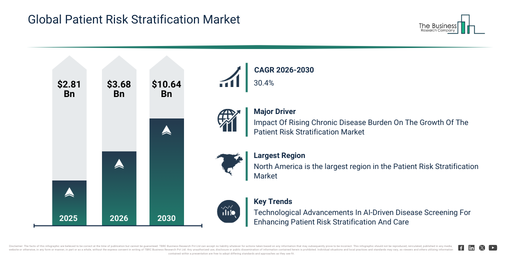
    The patient risk stratification market has experienced substantial growth in recent years. It is projected to expand from $2.81 billion in 2025 to $3.68 billion in 2026, at a compound annual growth rate (CAGR) of 31.0%. Factors contributing to the market’s historical growth include manual patient risk assessments, reliance on historical patient data, fragmented healthcare information systems, limited use of predictive analytics, and a lack of standardized risk models.

    The patient risk stratification market size is anticipated to undergo significant growth in the upcoming years. This market is projected to reach $10.64 billion by 2030, exhibiting a compound annual growth rate (CAGR) of 30.4%. Factors contributing to this expansion during the forecast period include the incorporation of machine learning and artificial intelligence into risk stratification, increased uptake by healthcare providers and payers, the expansion of cloud-based risk stratification solutions, an escalating need for real-time clinical decision support, and the broadening of population health management programs. Key trends anticipated during the forecast period involve a greater embrace of AI-powered risk prediction models, the increasing deployment of cloud-based risk stratification platforms, enhanced integration of risk stratification within clinical workflows, a heightened emphasis on continuous patient risk monitoring, and a growing application of data analytics for population health management.

    Get A Free Sample Report With In-Depth Market Insights:

    https://thebusinessresearchcompany.com/sample_request?id=28203367&type=smp&name=Patient%20Risk%20Stratification%20Market%20Report%202026&utm_source=Blogs&utm_medium=Paid&utm_campaign=Nov_PR

    Patient Risk Stratification Market Industry Drivers: What’s Behind The Revenue Growth?

    The increasing prevalence of chronic illnesses is anticipated to drive the expansion of the patient risk stratification market in the future. Chronic diseases are enduring medical conditions that persist for extended durations, typically three months or longer. The rising occurrence of chronic diseases stems from factors such as an aging demographic, unhealthy habits, increasing urbanization, environmental elements, restricted access to healthcare, economic inequalities, and heightened stress levels. Patient risk stratification assists in identifying individuals at varying levels of risk for chronic diseases, thereby enabling tailored care, timely interventions, more effective allocation of resources, and enhanced health outcomes. As an illustration, in June 2025, the World Health Organization, an international specialized agency based in Switzerland, indicated that noncommunicable diseases (NCDs) continue to be the primary reason for death and disability globally, including within the WHO European Region. In this region, 1 in 5 men and 1 in 10 women succumb before 70 years of age due to NCDs like cardiovascular diseases, cancers, chronic respiratory diseases, and diabetes. Consequently, the escalating burden of chronic diseases is a key factor propelling the patient risk stratification market.

    Patient Risk Stratification Market Segment Landscape: Which Areas Lead Development?

    The patient risk stratification market covered in this report is segmented –

    1) By Type: Predictive Risk Stratification Model, Retrospective Risk Stratification Model, Prospective Risk Stratification Model, Concurrent Risk Stratification Model

    2) By Component: Software, Services

    3) By Delivery Model: On-Premise, Cloud-Based

    4) By Application: Risk Adjustment, Clinical Workflow, Revenue Cycle Management, Other Applications

    5) By End User: Healthcare Providers, Healthcare Payers, Other End Users

    Subsegments:

    1) By Predictive Risk Stratification Model: Machine Learning-Based Predictive Models, Statistical Predictive Models, AI-Powered Predictive Models

    2) By Retrospective Risk Stratification Model: Historical Data-Based Risk Models, Data Mining Retrospective Models

    3) By Prospective Risk Stratification Model: Longitudinal Cohort-Based Models, Real-Time Risk Assessment Models

    4) By Concurrent Risk Stratification Model: In-Hospital Risk Assessment Models, Real-Time Clinical Decision Support Models

    Patient Risk Stratification Market Growth Trends Reshaping The Competitive Landscape

    Leading companies in the patient risk stratification market are prioritizing technological advancements in healthcare, particularly the application of artificial intelligence (AI) in disease screening. This strategic focus aims to improve early detection, enhance patient outcomes, and reduce healthcare costs by enabling more accurate risk assessments and personalized treatment plans. AI in disease screening leverages sophisticated algorithms and machine learning to analyze medical data, thereby facilitating early disease detection and boosting diagnostic accuracy through the rapid processing of vast information.

    Patient Risk Stratification Market Industry Leaders And Competitive Landscape

    Major companies operating in the patient risk stratification market are NextGen Healthcare Inc., Health Catalyst, Freenome, Strive Health, Medeanalytics Inc., Lightbeam Health Solutions, Graphnet Health Ltd., Equipo Health Inc., Epic Systems Corporation, Cerner Corporation, IBM Corporation, Allscripts Healthcare Solutions Inc., Medecision Inc., Cotiviti Inc., SAS Institute Inc., SCIO Health Analytics, Arcadia io, HealthEC LLC, Conifer Health Solutions LLC, Wellcentive Inc., ZeOmega Inc., LexisNexis Risk Solutions, Milliman Inc., NVision Health, RLDatix, Verisk Analytics Inc., Innovaccer Inc., eClinicalWorks, Enli Health Intelligence, Athenahealth Inc., i2i Population Health, 3M Health Information Systems, Change Healthcare, Cognizant Technology Solutions, McKesson Corporation, Evolent Health Inc.

    View The Full Patient Risk Stratification Market Report:

    https://thebusinessresearchcompany.com/report/patient-risk-stratification-global-market-report?utm_source=Blogs&utm_medium=Paid&utm_campaign=Nov_PR

    Patient Risk Stratification Market Largest Region: Which Geography Holds The Biggest Share?

    North America was the largest region in the patient risk stratification market in 2025. Asia-Pacific is expected to be the fastest-growing region in the forecast period. The regions covered in the patient risk stratification market report are Asia-Pacific, South East Asia, Western Europe, Eastern Europe, North America, South America, Middle East, Africa.

    Reach Out To Our Team:

    The Business Research Company: https://www.thebusinessresearchcompany.com/

    Americas: +1 310-496-7795

    Asia: +44 7882 955267 & +91 8897263534

    Europe: +44 7882 955267

    Email us at: marketing@tbrc.info

    Follow us on:

    LinkedIn: https://in.linkedin.com/company/the-business-research-company

    YouTube: https://www.youtube.com/channel/UC24_fI0rV8cR5DxlCpgmyFQ

    Global Market Model: https://www.thebusinessresearchcompany.com/global-market-model
  • Patient Registry Software Market Trends Reshaping Industry Growth Through 2030

    Patient Registry Software Market Trends Reshaping Industry Growth Through 2030

    Featuring market attractiveness scoring, total addressable market sizing, company benchmarking matrices, interactive Excel dashboards, deeper supply chain intelligence, emerging startup tracking, and granular product-level insights, The Business Research Company’s 2026 market reports are built to deliver research that is both more actionable and more strategically valuable.

    Patient Registry Software Market Value Analysis: What Growth Lies Ahead Over The Forecast Period?

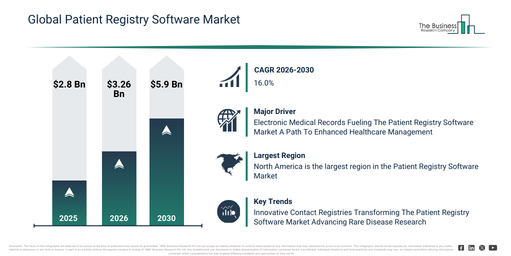
    The patient registry software market size has shown substantial growth in recent years. It is forecast to expand from $2.8 billion in 2025 to $3.26 billion in 2026, exhibiting a compound annual growth rate (CAGR) of 16.2%. The increase observed in previous periods can be linked to manual patient data collection, fragmented healthcare databases, limited interoperability between systems, reliance on paper-based registries, and slow adoption of digital health tools.

    The patient registry software market size is projected to experience swift expansion in the coming years. This market is anticipated to reach $5.9 billion by 2030, demonstrating a compound annual growth rate (CAGR) of 16.0%. Factors contributing to this growth during the projected timeframe include the expanded application of predictive analytics for patient outcomes, an increasing need for cloud-based registry systems, a heightened focus on managing real-time population health, the proliferation of integrated EHR and registry solutions, and greater use of registries in clinical trials and research. Key trends observed during this period are the wider embrace of AI-driven patient data analytics, an increase in the implementation of cloud-based patient registries, the evolving integration of EHR and PMS with registry software, a sharpened focus on continuous population health monitoring, and the growing application of data for clinical research and to assess outcomes.

    Get A Free Sample Report With In-Depth Market Insights:

    https://thebusinessresearchcompany.com/sample_request?id=16702507&type=smp&name=Patient%20Registry%20Software%20Market%20Report%202026&utm_source=Blogs&utm_medium=Paid&utm_campaign=Nov_PR

    Patient Registry Software Market Growth Factors: What’s Supporting Expansion?

    The increasing uptake of electronic medical records (EMRs) is fostering the expansion of the patient registry software market going forward. An EMR serves as the digital version of a patient’s paper chart, offering assistance with tasks such as billing, inter-practice referrals, scheduling appointments, and refilling medications. Patient registry software capabilities are often incorporated as an extra feature within EMR and EHR offerings, thus boosting the patient registry software market. Consequently, the growing adoption of electronic medical records will propel the patient registry software market’s growth.

    Patient Registry Software Market Segments: Where Is Growth Concentrated?

    The patient registry software market covered in this report is segmented –

    1) By Product: Standalone Software, Integrated Software

    2) By Type Of Database: Disease Registries, Health Service Registries, Product Registries

    3) By Deployment Model: On-Premise Models, Cloud-Based Models

    4) By Functionality: Population Health Management (PHM), Patient Care Management, Health Information Exchange (HIE), Point Of Care, Product Outcome Evaluation, Medical Research And Clinical Studies

    5) By End User: Government Organizations And Third-Party Administrators, Hospitals And Medical Practices, Private Payers, Pharmaceutical, Biotechnology, And Medical Device Companies, Research Centers

    Subsegments:

    1) By Standalone Software: Disease-Specific Registries, Patient-Centered Registries, Research Registries, Population Health Registries

    2) By Integrated Software: Electronic Health Record (EHR) Integrated Software, Practice Management System (PMS) Integrated Software, Clinical Decision Support System (CDSS) Integrated Software, Health Information Exchange (HIE) Integrated Software

    Patient Registry Software Market Trends Shaping Long-Term Demand

    Leading companies within the patient registry software market are concentrating on developing innovative products, such as contact registries, to better serve the needs of their existing customers. A contact registry is a system or inventory that collects and stores contact information for a specific group of individuals. These registries are utilized for various reasons, including emergency management, clinical trial patient recruitment, and disease surveillance. For example, in November 2025, the National Organization for Rare Disorders (NORD), a U.S.-based non-profit organization supporting rare-disease research, advocacy, and patient registries, issued a request for proposals (RFP) to establish new patient registries on its IAMRARE® platform. This registry initiative aims to connect patients with rare diseases to researchers and facilitate their participation in research studies. The registries will gather and securely store contact details of individuals who wish to receive updates about rare-disease research, and will also inform participants about available research opportunities and studies. NORD manages these registries in collaboration with patient-advocacy organizations, providing infrastructure, training, data management, and governance oversight to ensure the long-term sustainability of the registries.

    Patient Registry Software Market Key Participants And Competitive Landscape

    Major companies operating in the patient registry software market are Armus Digital Pvt. Ltd., Dacima Software Inc., Evado Clinical, Global Vision Technology Co. Ltd., Gz Technology Pvt. Ltd., Healthmonix LLC, Imagetrend Inc., QVIA Holdings Inc., Lumedx Healthcare Technologies Private Limited, M2s Industries Private Limited, Mckesson Corporation, Opentext Corporation, Optum Health & Technology Private Limited, Phytel Inc., Premier Inc., Syneos Health Inc., Telligen Inc., Advarra Inc., Advera Health Analytics, ArborMetrix Inc., EResearch Technology, FIGmd Inc., Flatiron Health Inc., Healex Systems Ltd., IFA Systems AG, Liaison Technologies Inc., Medrio Inc., Molecular Corp., OM1 Inc., Open Registry, Orion Health Corp.

    View The Full Patient Registry Software Market Report:

    https://thebusinessresearchcompany.com/report/patient-registry-software-global-market-report?utm_source=Blogs&utm_medium=Paid&utm_campaign=Nov_PR

    Patient Registry Software Market Regional Analysis: Which Geography Leads On Revenue?

    North America was the largest region in the patient registry software market in 2025. Asia-Pacific is expected to be the fastest-growing region in the forecast period. The regions covered in the patient registry software market report are Asia-Pacific, South East Asia, Western Europe, Eastern Europe, North America, South America, Middle East, Africa.

    Reach Out To Our Team:

    The Business Research Company: https://www.thebusinessresearchcompany.com/

    Americas: +1 310-496-7795

    Asia: +44 7882 955267 & +91 8897263534

    Europe: +44 7882 955267

    Email us at: marketing@tbrc.info

    Follow us on:

    LinkedIn: https://in.linkedin.com/company/the-business-research-company

    YouTube: https://www.youtube.com/channel/UC24_fI0rV8cR5DxlCpgmyFQ

    Global Market Model: https://www.thebusinessresearchcompany.com/global-market-model
  • Patient Referral Tracking Systems Market Growth To $19.37 Billion Creates New Opportunities Across The Industry

    Patient Referral Tracking Systems Market Growth To $19.37 Billion Creates New Opportunities Across The Industry

    Built to provide research that’s more actionable and strategically valuable, The Business Research Company’s 2026 market reports include market attractiveness analysis, total addressable market sizing, company benchmarking matrices, interactive Excel dashboards, broader supply chain intelligence, emerging startup tracking, and in-depth product insights.

    Patient Referral Tracking Systems Market Size Forecast: How Big Could The Market Get By 2030?

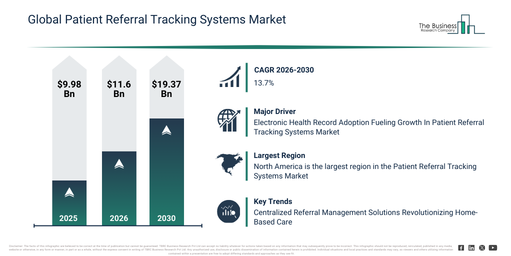
    The market for patient referral tracking systems has experienced significant expansion recently. This market is projected to expand from $9.98 billion in 2025 to $11.6 billion in 2026, exhibiting a compound annual growth rate (CAGR) of 16.2%. Factors contributing to this historical growth include the prevalence of manual referral tracking processes, restricted interoperability among healthcare systems, prolonged patient follow-up and referral cycles, disjointed communication between providers, and a heavy reliance on paper-based documentation.

    The patient referral tracking systems market size is anticipated to experience rapid growth in the upcoming years. It is projected to expand to $19.37 billion by 2030, exhibiting a compound annual growth rate (CAGR) of 13.7%. This growth in the forecast period can be attributed to the increasing demand for real-time referral tracking, a rising adoption of cloud-based referral solutions, a growing focus on care coordination and patient outcomes, the integration of mobile and virtual referral platforms, and the expanding use of predictive analytics for referral management. Major trends for the forecast period include increasing adoption of AI-powered referral management, rising integration of cloud-based referral platforms, growing utilization of data analytics for referral optimization, increasing deployment of interoperable EHR-integrated systems, and rising use of mobile and virtual referral tracking solutions.

    Get A Free Sample Report With In-Depth Market Insights:

    https://thebusinessresearchcompany.com/sample_request?id=43319319&type=smp&name=Patient%20Referral%20Tracking%20Systems%20Market%20Report%202026&utm_source=Blogs&utm_medium=Paid&utm_campaign=Nov_PR

    Patient Referral Tracking Systems Market Demand Drivers: What’s Powering Industry Growth?

    The expanding integration of electronic health records is anticipated to fuel the expansion of the patient referral tracking system market in the future. An electronic health record (EHR) represents a digital compilation of a patient’s medical background, encompassing extensive health data accessible and shareable securely among healthcare professionals. The uptake of electronic health records is on the rise, driven by increasing awareness of their advantages in enhancing healthcare efficiency, ensuring patient safety, and streamlining care coordination. Within patient referral tracking systems, electronic health records serve to enable smooth communication and collaboration among healthcare providers, achieving this by documenting referral details, monitoring patient advancement, and guaranteeing uninterrupted care. Consequently, the rising incorporation of electronic health records is a key factor propelling the expansion of the patient referral tracking system market.

    Patient Referral Tracking Systems Market Segment Analysis: What Are The Core Market Categories?

    The patient referral tracking systems market covered in this report is segmented –

    1) By Type: Inbound, Outbound

    2) By Deployment Mode: Cloud-Based, On-Premise

    3) By End-User: Healthcare Providers, Healthcare Payers, Patients, Other End-Users

    Subsegments:

    1) By Inbound: Physician Referrals, Hospital Referrals, Specialist Referrals

    2) By Outbound: Patient Referral To Specialists, Referral To Diagnostic Services, Referral To Rehabilitation Services

    Patient Referral Tracking Systems Market Innovation Trends Shaping Future Development

    Leading companies operating within the patient referral tracking systems market are creating integrated referral management solutions, such as enterprise referral managers, to enhance efficiency and coordination in healthcare environments. An enterprise referral manager is a referral management software designed to offer various benefits to healthcare organizations, including reducing referral leakage, decreasing lead times, providing automatic reminders, and ensuring secure patient information exchange, among others.

    Patient Referral Tracking Systems Market Top Companies Driving Competitive Growth

    Major companies operating in the patient referral tracking systems market are McKesson Corporation, GE Healthcare, Cerner Corporation, Epic Systems Corporation, Athenahealth Inc., eClinicalWorks LLC, Allscripts Healthcare Solutions Inc., NextGen Healthcare Inc., Netsmart Technologies Inc., Greenway Health LLC, CareCloud Corporation, Kareo Inc., PracticeSuite LLC, Practice Fusion Inc., AdvancedMD Inc., ReferralMD, Phreesia, HealthViewX, GridSocial, HealOS, Lightbeam Health Solutions, Tacklit

    View The Full Patient Referral Tracking Systems Market Report:

    https://thebusinessresearchcompany.com/report/patient-referral-tracking-systems-global-market-report?utm_source=Blogs&utm_medium=Paid&utm_campaign=Nov_PR

    Patient Referral Tracking Systems Market Geographic Spread And Regional Opportunities

    North America was the largest region in the patient referral tracking systems market in 2025. The regions covered in the patient referral tracking systems market report are Asia-Pacific, South East Asia, Western Europe, Eastern Europe, North America, South America, Middle East, Africa.

    Reach Out To Our Team:

    The Business Research Company: https://www.thebusinessresearchcompany.com/

    Americas: +1 310-496-7795

    Asia: +44 7882 955267 & +91 8897263534

    Europe: +44 7882 955267

    Email us at: marketing@tbrc.info

    Follow us on:

    LinkedIn: https://in.linkedin.com/company/the-business-research-company

    YouTube: https://www.youtube.com/channel/UC24_fI0rV8cR5DxlCpgmyFQ

    Global Market Model: https://www.thebusinessresearchcompany.com/global-market-model
  • Patient Recruitment and Retention Services Market Forecast: Breaking Down The Numbers Behind Future Expansion

    Patient Recruitment and Retention Services Market Forecast: Breaking Down The Numbers Behind Future Expansion

    Backed by market attractiveness analysis, total addressable market sizing, company benchmarking matrices, interactive Excel dashboards, wider supply chain intelligence, emerging startup coverage, and detailed product-level insights, The Business Research Company’s 2026 market reports are designed to offer research that is more actionable and strategically valuable than ever.

    Patient Recruitment and Retention Services Market Revenue Outlook: What CAGR Lies Ahead Through 2030?

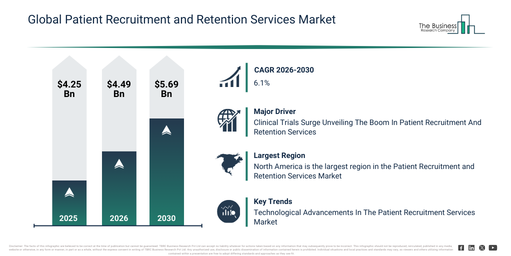
    The patient recruitment and retention services market has seen significant growth recently. Its projected expansion will take it from $4.25 billion in 2025 to $4.49 billion in 2026, with a compound annual growth rate (CAGR) of 5.7%. Historically, this expansion has been driven by factors such as a reliance on manual patient recruitment methods, limited patient awareness about clinical trials, slower enrollment rates in early-phase trials, fragmented patient databases, and a dependency on local recruitment strategies.

    The patient recruitment and retention services market size is projected to undergo substantial growth in the upcoming years. It is forecast to reach $5.69 billion by 2030, demonstrating a compound annual growth rate (CAGR) of 6.1%. The anticipated expansion during the forecast period can be attributed to several factors, including the increasing adoption of AI and digital recruitment platforms, a rising focus on patient retention strategies, the growing utilization of remote and decentralized clinical trials, the integration of real-time monitoring and analytics, and the expansion of global patient recruitment networks. Key trends expected in the forecast period encompass the increasing use of AI-driven patient identification and outreach, a rising adoption of digital and media campaigns for recruitment, the growing integration of genomic and biomarker data for patient matching, increasing utilization of virtual platforms for engagement and retention, and the rising deployment of real-time analytics for recruitment efficiency.

    Get A Free Sample Report With In-Depth Market Insights:

    https://thebusinessresearchcompany.com/sample_request?id=79649578&type=smp&name=Patient%20Recruitment%20and%20Retention%20Services%20Market%20Report%202026&utm_source=Blogs&utm_medium=Paid&utm_campaign=Nov_PR

    Patient Recruitment and Retention Services Market Growth Drivers: What’s Behind The Acceleration?

    The growing volume of clinical trials is fueling the expansion of the patient recruitment and retention services market. Clinical trials constitute a research domain that investigates novel procedures and medications, assessing their influence on individuals’ health outcomes. Patient recruitment and retention services are essential for identifying and enrolling eligible participants in these studies and supporting the overall development of clinical trials; consequently, the increased number of clinical trials elevates the demand for the patient recruitment and retention services market. Therefore, the rise in the number of clinical trials propels the patient recruitment and retention services market.

    Patient Recruitment and Retention Services Market Segment Breakdown: Which Categories Lead On Revenue?

    The patient recruitment and retention services market covered in this report is segmented –

    1) By Patient Recruitment Steps: Pre-Screening, Screening

    2) By Trial Phases: Phases I, Phases II, Phases III, Phases IV

    3) By Therapeutic Areas: Cardiovascular Diseases, Oncological Disorders, Infectious Diseases, Central Nervous System Disorders, Respiratory Disorders, Hematological Disorders, Other Therapeutic Areas

    Subsegments:

    1) By Pre-Screening: Patient Identification, Initial Outreach And Engagement, Eligibility Questionnaire, Patient Database Review, Digital And Media Campaigns For Recruitment

    2) By Screening: In-Depth Eligibility Assessment, Medical History Review, Diagnostic Testing, Informed Consent Process, Clinical Trial Enrollment Confirmation

    Patient Recruitment and Retention Services Market Trends Redefining Industry Growth

    Leading companies within the patient recruitment and retention services market are concentrating on creating innovative solutions, including sophisticated AI-driven recruitment platforms, to satisfy the increasing need for quicker enrollment, better retention, and more effective clinical trial execution. AI-based recruitment systems scrutinize vast amounts of patient data to identify qualified candidates with greater precision, presenting a more scalable and accurate option compared to traditional manual screening techniques that consume significant time and resources.

    Patient Recruitment and Retention Services Market Leading Players And Competitive Positioning

    Major companies operating in the patient recruitment and retention services market are IQVIA Holdings Inc, ICON PLC, Medpace Holdings Inc., Worldwide Clinical Trials Inc., Bioclinica Inc., Altasciences, BMC Group, Evolution Research Group (ERG), Science37, Veristat LLC, Elligo Health Research Inc., CROee Inc., Linical Co. Ltd, Clinrol, Antidote Technologies Inc., BBK Worldwide LLC, Integrated Clinical Trial Services (ICTS) Inc., Syneos Health Inc., Fidelis Research Ltd., S4 Research Pvt. Ltd, Clinical Accelerator Ltd., Polaris BioPharma Consulting Ltd, CSSi Lifesciences

    View The Full Patient Recruitment and Retention Services Market Report:

    https://thebusinessresearchcompany.com/report/patient-recruitment-and-retention-services-global-market-report?utm_source=Blogs&utm_medium=Paid&utm_campaign=Nov_PR

    Patient Recruitment and Retention Services Market Top Region By Revenue And Market Share

    North America was the largest region in the patient recruitment and retention services market in 2025. Asia-Pacific is expected to be the fastest-growing region in the patient recruitment and retention services market report during the forecast period. The regions covered in the patient recruitment and retention services market report are Asia-Pacific, South East Asia, Western Europe, Eastern Europe, North America, South America, Middle East, Africa.

    Reach Out To Our Team:

    The Business Research Company: https://www.thebusinessresearchcompany.com/

    Americas: +1 310-496-7795

    Asia: +44 7882 955267 & +91 8897263534

    Europe: +44 7882 955267

    Email us at: marketing@tbrc.info

    Follow us on:

    LinkedIn: https://in.linkedin.com/company/the-business-research-company

    YouTube: https://www.youtube.com/channel/UC24_fI0rV8cR5DxlCpgmyFQ

    Global Market Model: https://www.thebusinessresearchcompany.com/global-market-model
  • Patient Portal Market Expected To Grow At 20.2% CAGR Through 2030: What Businesses Need To Know

    Patient Portal Market Expected To Grow At 20.2% CAGR Through 2030: What Businesses Need To Know

    Featuring market attractiveness scoring, total addressable market sizing, company benchmarking matrices, interactive Excel dashboards, deeper supply chain intelligence, emerging startup tracking, and granular product-level insights, The Business Research Company’s 2026 market reports are built to deliver research that is both more actionable and more strategically valuable.

    Patient Portal Market Growth Analysis: How Will Revenue Trend Over The Forecast Period?

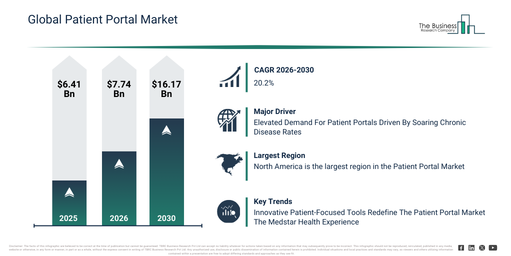
    The patient portal market has demonstrated remarkable growth in recent years. This market is set to expand from $6.41 billion in 2025 to $7.74 billion in 2026, at a compound annual growth rate (CAGR) of 20.7%. The historical development of this market is attributable to factors such as limited access to patient health information, an escalating need for digital patient engagement, a past reliance on paper-based recordkeeping, increasing patient awareness regarding personal health data, and the early adoption of standalone patient portal solutions.

    The patient portal market is poised for significant expansion in the upcoming years. It is predicted to attain a valuation of $16.17 billion by 2030, demonstrating a robust compound annual growth rate (CAGR) of 20.2%. This anticipated growth throughout the forecast period stems from various factors, including the increasing adoption of integrated patient portals, a heightened demand for cloud-based deployment options, a sharpened focus on telehealth integration, the ongoing expansion of interoperability standards and secure data sharing, and escalating investments in patient engagement platforms by healthcare providers. Prominent trends expected during this timeframe include a rising uptake of cloud-based patient portals, enhanced integration of EHR and HIE systems, expanding utilization of mobile and web-based portal applications, a growing emphasis on patient self-service capabilities and access to health records, and an increasing necessity for secure data exchange and interoperability.

    Get A Free Sample Report With In-Depth Market Insights:

    https://thebusinessresearchcompany.com/sample_request?id=35155477&type=smp&name=Patient%20Portal%20Market%20Report%202026&utm_source=Blogs&utm_medium=Paid&utm_campaign=Nov_PR

    Patient Portal Market Growth Factors Behind Sustained Expansion

    The increasing incidence of long-term illnesses is projected to drive expansion within the patient portal market over the forthcoming period. These are enduring health issues that, while often incurable, are manageable through appropriate medical interventions and lifestyle adjustments. Patient portals empower individuals facing chronic conditions to actively participate in their healthcare, enhance compliance with treatment regimens, and improve dialogue with medical practitioners, leading to more effective disease management and improved health results. Consequently, the rising occurrence of chronic illnesses is a key factor fueling the patient portal market.

    Patient Portal Market Segmentation: How Does The Market Break Down By Category?

    The patient portal market covered in this report is segmented –

    1) By Type: Standalone Patient Portals, Integrated Patient Portals

    2) By Deployment Mode: On-Premise, Cloud-Based

    3) By End-Users: Providers, Payers, Pharmacies, Other End-Users

    Subsegments:

    1) By Standalone Patient Portals: Web-Based Portals, Mobile Application Portals, Desktop Application Portals

    2) By Integrated Patient Portals: Electronic Health Record (EHR) Integrated Portals, Health Information Exchange (HIE) Integrated Portals, Practice Management System (PMS) Integrated Portals

    Patient Portal Market Strategic Trends: What Defines The Next Growth Phase?

    Leading companies in the patient portal market are concentrating on developing innovative products, such as patient-centric instruments, to more effectively satisfy the requirements of their current customers. Patient-focused tools are either digital or non-digital resources designed to elevate the patient experience and foster patient-centered care. These tools empower healthcare professionals to deliver therapy that is attentive to and respectful of individual patient preferences, needs, and values.

    Patient Portal Market Competitive Overview And Top Companies

    Major companies operating in the patient portal market are Allscripts Healthcare Solutions Inc., McKesson Corporation, athenahealth Inc., Cerner Corporation, eClinicalWorks, CureMD Healthcare, NextGen Healthcare Information Systems LLC, Greenway Health LLC, Medfusion Inc., Epic Systems Corporation Inc., GE HealthCare Technologies Inc., InteliChart, QSI Management LLC, Optum Inc., ZH Healthcare Inc., Oracle Corporation, Advanced Data Systems Corporation, Nextech Systems LLC, AdvancedMD Inc., Kareo Inc., CareCloud Corporation, eMDs Inc., Meditech, Medhost Inc., Napier Healthcare Solutions Pte. Ltd., RelayHealth Corp., Kryptiq Corporation, Nuesoft Technologies Inc., Zocdoc Inc., Medseek GmbH

    View The Full Patient Portal Market Report:

    https://thebusinessresearchcompany.com/report/patient-portal-global-market-report?utm_source=Blogs&utm_medium=Paid&utm_campaign=Nov_PR

    Patient Portal Market Regional Analysis And Top Geography

    North America was the largest region in the patient portal market in 2025. Asia-Pacific is expected to be the fastest-growing region in the forecast period. The regions covered in the patient portal market report are Asia-Pacific, South East Asia, Western Europe, Eastern Europe, North America, South America, Middle East, Africa.

    Reach Out To Our Team:

    The Business Research Company: https://www.thebusinessresearchcompany.com/

    Americas: +1 310-496-7795

    Asia: +44 7882 955267 & +91 8897263534

    Europe: +44 7882 955267

    Email us at: marketing@tbrc.info

    Follow us on:

    LinkedIn: https://in.linkedin.com/company/the-business-research-company

    YouTube: https://www.youtube.com/channel/UC24_fI0rV8cR5DxlCpgmyFQ

    Global Market Model: https://www.thebusinessresearchcompany.com/global-market-model
  • Patient Flow Management Solutions Market Forecast To Reach $5.79 Billion By 2030: Key Trends Explained

    Patient Flow Management Solutions Market Forecast To Reach $5.79 Billion By 2030: Key Trends Explained

    Built to provide research that’s more actionable and strategically valuable, The Business Research Company’s 2026 market reports include market attractiveness analysis, total addressable market sizing, company benchmarking matrices, interactive Excel dashboards, broader supply chain intelligence, emerging startup tracking, and in-depth product insights.

    Patient Flow Management Solutions Market Forecast: What Value Will The Market Reach By 2030?

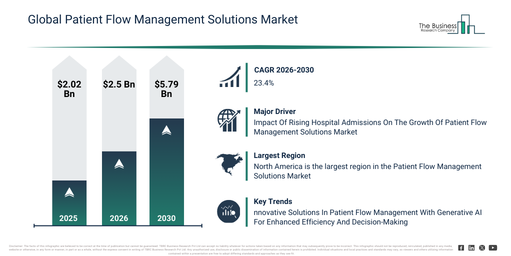
    The size of the patient flow management solutions market has seen substantial growth over recent years. This market is projected to expand from $2.02 billion in 2025 to $2.5 billion by 2026, exhibiting a compound annual growth rate (CAGR) of 23.4%. Historically, this expansion has been driven by inefficient patient movement processes in hospitals, increasing patient numbers and subsequent overcrowding, a lack of automation in healthcare workflows, reliance on manual scheduling and tracking, and the initial implementation of digital patient management solutions.

    The patient flow management solutions market size is projected for substantial expansion in the next few years. It is anticipated to reach $5.79 billion in 2030, exhibiting a compound annual growth rate (CAGR) of 23.4%. The growth during this forecast period is largely attributed to the expanding use of AI-powered patient flow analytics, an increasing demand for integrated real-time locating systems (RTLS), the proliferation of cloud-based patient management solutions, a heightened focus on patient experience and satisfaction, and growing investment in telehealth and remote patient monitoring technologies. Significant trends expected in the forecast period involve the increasing adoption of real-time patient tracking systems, rising utilization of queue management and scheduling software, wider implementation of data analytics for patient flow optimization, greater integration of EHR software with patient flow solutions, and an increasing emphasis on telehealth and virtual patient management.

    Get A Free Sample Report With In-Depth Market Insights:

    https://thebusinessresearchcompany.com/sample_request?id=17360208&type=smp&name=Patient%20Flow%20Management%20Solutions%20Market%20Report%202026&utm_source=Blogs&utm_medium=Paid&utm_campaign=Nov_PR

    Patient Flow Management Solutions Market Demand Drivers Opening New Revenue Streams

    An increasing number of hospital admissions is anticipated to fuel the expansion of the patient flow management solutions market. Hospital admission is defined as the entry of an individual into a hospital for medical treatment that cannot be administered at home or in an outpatient facility. These patient flow management solutions are instrumental in hospital admissions and patient care, facilitating services like scheduling appointments and live patient tracking, which in turn leads to shorter waiting periods, enhanced patient satisfaction, and optimized utilization of hospital resources. Consequently, the increasing volume of hospital admissions is a key factor propelling the expansion of the patient flow management solutions market.

    Patient Flow Management Solutions Market Segment Trends And Revenue Contributors

    The patient flow management solutions market covered in this report is segmented –

    1) By Component: Hardware, Software, Services

    2) By Tracking Method: Event-Driven Patient Tracking, Real-Time Locating Systems

    3) By Product: Integrated, Standalone

    4) By Delivery Mode: Web-Based, On-Premise, Cloud-Based

    5) By End User: Hospitals, Clinics, Other End Users

    Subsegments:

    1) By Hardware: Patient Tracking Systems, Kiosks And Check-In Devices, Real-Time Location Systems (RTLS), Display Boards And Digital Signage, Mobile Devices And Tablets

    2) By Software: Patient Scheduling Software, Queue Management Software, Data Analytics And Reporting Tools, Electronic Health Record (EHR) Integration Software, Telehealth Solutions

    3) By Services: Consulting Services, Implementation And Integration Services, Training And Support Services, Maintenance And Upgrades, Customization Services

    Patient Flow Management Solutions Market Transformation Trends: What Innovations Are Driving Change?

    Companies operating in the patient flow management solutions market are concentrating on developing innovative products, such as generative AI operational assistants, to achieve a competitive edge. These systems merge advanced conversational AI with predictive and prescriptive analytics to anticipate capacity constraints, direct staffing decisions, and support command center operations throughout hospital units.

    Patient Flow Management Solutions Market Competitive Landscape: Which Companies Lead The Industry?

    Major companies operating in the patient flow management solutions market are McKesson Corporation, Cerner Corporation, Epic Systems Corporation, Hill-Rom Holdings Inc., Getinge AB, Allscripts Healthcare Solutions Inc., TeleTracking Technologies, CarePort Health LLC, ProModel Corporation, Central Logic Inc., Qventus, Awarepoint Corporation, Novari Health, Intelligent Insites Inc., Sonitor Technologies Inc., SeamlessMD, Medworxx Solutions Inc., AiRISTA, Securitas Healthcare, Midmark, Litum, Kontakt.io, Qwaiting, Queberry, Earlyone, LeanTaaS, CenTrak, Meditech, Patient Placement Systems

    View The Full Patient Flow Management Solutions Market Report:

    https://thebusinessresearchcompany.com/report/patient-flow-management-solutions-global-market-report?utm_source=Blogs&utm_medium=Paid&utm_campaign=Nov_PR

    Patient Flow Management Solutions Market Geographic Analysis: Where Is Demand Rising Fastest?

    North America was the largest region in the patient flow management solutions market in 2025. The regions covered in the patient flow management solutions market report are Asia-Pacific, South East Asia, Western Europe, Eastern Europe, North America, South America, Middle East, Africa.

    Reach Out To Our Team:

    The Business Research Company: https://www.thebusinessresearchcompany.com/

    Americas: +1 310-496-7795

    Asia: +44 7882 955267 & +91 8897263534

    Europe: +44 7882 955267

    Email us at: marketing@tbrc.info

    Follow us on:

    LinkedIn: https://in.linkedin.com/company/the-business-research-company

    YouTube: https://www.youtube.com/channel/UC24_fI0rV8cR5DxlCpgmyFQ

    Global Market Model: https://www.thebusinessresearchcompany.com/global-market-model
  • Patient Engagement Technology Market Analysis Through 2030: Market Size, Growth Trends And Industry Outlook

    Patient Engagement Technology Market Analysis Through 2030: Market Size, Growth Trends And Industry Outlook

    Backed by market attractiveness analysis, total addressable market sizing, company benchmarking matrices, interactive Excel dashboards, wider supply chain intelligence, emerging startup coverage, and detailed product-level insights, The Business Research Company’s 2026 market reports are designed to offer research that is more actionable and strategically valuable than ever.

    Patient Engagement Technology Market Size Outlook: How Quickly Will Revenue Expand Through 2030?

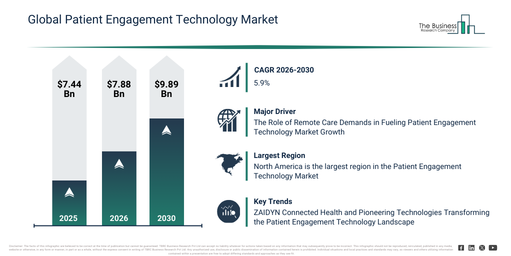
    The patient engagement technology market has experienced robust growth recently. This market is projected to expand from $7.44 billion in 2025 to $7.88 billion in 2026, demonstrating a compound annual growth rate (CAGR) of 5.8%. Historically, this expansion has been driven by factors such as insufficient patient involvement in conventional healthcare, the increasing prevalence of smartphones and internet access, greater understanding of digital health options, a heightened demand for better communication between patients and providers, and the rollout of telemedicine pilot projects and initial implementation programs.

    The patient engagement technology market is projected to experience substantial expansion over the coming years, reaching a valuation of $9.89 billion by 2030, demonstrating a compound annual growth rate (CAGR) of 5.9%. This anticipated expansion throughout the forecast period stems from factors such as the increasing integration of AI-driven personalized health recommendations, a growing acceptance of remote patient monitoring, the widespread adoption of cloud-based patient engagement platforms, an escalating need for virtual and home healthcare options, and the expanded application of patient engagement analytics to enhance clinical outcomes. Key developments shaping the forecast period encompass a greater embrace of mobile health applications and telehealth systems, increased use of wearable devices for ongoing health tracking, the broader deployment of patient portal software for improved engagement, a surge in the integration of analytics tools to deliver personalized health insights, and an intensified emphasis on communication and messaging platforms to foster better patient interaction.

    Get A Free Sample Report With In-Depth Market Insights:

    https://thebusinessresearchcompany.com/sample_request?id=84102658&type=smp&name=Patient%20Engagement%20Technology%20Market%20Report%202026&utm_source=Blogs&utm_medium=Paid&utm_campaign=Nov_PR

    Patient Engagement Technology Market Growth Backed By Core Demand Fundamentals

    The increasing demand for remote care is projected to fuel the advancement of the patient engagement technology market in the coming years. The demand for remote care pertains to the growing necessity and expectations for health services that can be provided remotely, eliminating the need for in-person visits to healthcare facilities. Remote care allows patients to access healthcare from their homes. This heightened accessibility and ease result in greater patient engagement, as individuals are more inclined to actively participate in their healthcare when it is easily and readily available. Thus, the rising demands for remote care are stimulating the expansion of the patient engagement technology market.

    Patient Engagement Technology Market Segment Analysis Spotlighting Growth Areas

    The patient engagement technology market covered in this report is segmented –

    1) By Type: Hardware, Software, Services

    2) By Delivery Mode: Web-Based And Cloud-Based, On-Premise

    3) By Application: Health Management, Social Management, Home Healthcare Management, Financial Health Management

    4) By End User: Providers, Payers, Patients

    Subsegments:

    1) By Hardware: Patient Kiosks, Wearable Devices, Tablets And Mobile Devices, Telehealth Equipment

    2) By Software: Patient Portal Software, Mobile Health Applications, Communication And Messaging Platforms, Telemedicine Software, Analytics Tools

    3) By Services: Consulting Services, Implementation Services, Training And Support Services, Engagement Strategy Development

    #Patient Engagement Technology Market Growth Trends: What’s Shaping The Future Outlook?

    Leading firms within the patient engagement technology market are introducing pioneering solutions like ZAIDYN connected health, aiming to boost their market profitability. This particular platform, ZAIDYN Connected Health, utilizes artificial intelligence to enable pharmaceutical organizations, healthcare service providers, and insurers to drive innovation across the healthcare sector.

    Patient Engagement Technology Market Leading Companies: Who Holds The Strongest Market Presence?

    Major companies operating in the patient engagement technology market are Mckesson Corporation, The International Business Machines Corporation, Oracle Corporation, Northwell Health, IQVIA, Cerner Corporation, Epic Systems Corporation, Athenahealth Inc, eClinical Works LLC, Allscripts Healthcare Solutions Inc., Computer Programs and Systems Inc., Medical Information Technology Inc., Medecision Inc., PATIENTPOINT LLC, MEDHOST, Orion Health Limited, GetWellNetwork Inc., HealthHub Patient Engagement Solutions, DrChrono Inc., Luma Health Inc., Lincor Solutions Ltd., CipherHealth Inc., Phytel Inc., Oneview Healthcare Plc, SONIFI Health Incorporated., Get Real Health, WelVU Inc., Yourcareuniverse Inc.

    View The Full Patient Engagement Technology Market Report:

    https://thebusinessresearchcompany.com/report/patient-engagement-technology-global-market-report?utm_source=Blogs&utm_medium=Paid&utm_campaign=Nov_PR

    Patient Engagement Technology Market Global Footprint: Which Region Leads The Market?

    North America was the largest region in the patent engagement technology market in 2025. Asia-Pacific is expected to be the fastest-growing region in the forecast period. The regions covered in the patient engagement technology market report are Asia-Pacific, South East Asia, Western Europe, Eastern Europe, North America, South America, Middle East, Africa.

    Reach Out To Our Team:

    The Business Research Company: https://www.thebusinessresearchcompany.com/

    Americas: +1 310-496-7795

    Asia: +44 7882 955267 & +91 8897263534

    Europe: +44 7882 955267

    Email us at: marketing@tbrc.info

    Follow us on:

    LinkedIn: https://in.linkedin.com/company/the-business-research-company

    YouTube: https://www.youtube.com/channel/UC24_fI0rV8cR5DxlCpgmyFQ

    Global Market Model: https://www.thebusinessresearchcompany.com/global-market-model